EP1889413B1 - Verfahren und vorrichtung zur verbesserung der ablaufplanung in paketdatennetzen - Google Patents
Verfahren und vorrichtung zur verbesserung der ablaufplanung in paketdatennetzen Download PDFInfo
- Publication number
- EP1889413B1 EP1889413B1 EP06751209A EP06751209A EP1889413B1 EP 1889413 B1 EP1889413 B1 EP 1889413B1 EP 06751209 A EP06751209 A EP 06751209A EP 06751209 A EP06751209 A EP 06751209A EP 1889413 B1 EP1889413 B1 EP 1889413B1
- Authority
- EP
- European Patent Office
- Prior art keywords
- data
- incoming
- packet data
- delays
- packet
- Prior art date
- Legal status (The legal status is an assumption and is not a legal conclusion. Google has not performed a legal analysis and makes no representation as to the accuracy of the status listed.)
- Not-in-force
Links
- 238000000034 method Methods 0.000 title claims abstract description 37
- 230000001934 delay Effects 0.000 claims abstract description 127
- 238000012384 transportation and delivery Methods 0.000 claims abstract description 55
- 230000006870 function Effects 0.000 description 14
- 230000005540 biological transmission Effects 0.000 description 12
- 238000010586 diagram Methods 0.000 description 10
- 238000004364 calculation method Methods 0.000 description 5
- 238000012913 prioritisation Methods 0.000 description 2
- 238000000926 separation method Methods 0.000 description 2
- 101000989653 Homo sapiens Membrane frizzled-related protein Proteins 0.000 description 1
- 235000008694 Humulus lupulus Nutrition 0.000 description 1
- 102100029357 Membrane frizzled-related protein Human genes 0.000 description 1
- 230000001413 cellular effect Effects 0.000 description 1
- 230000008859 change Effects 0.000 description 1
- 230000007423 decrease Effects 0.000 description 1
- 230000003247 decreasing effect Effects 0.000 description 1
- 230000008569 process Effects 0.000 description 1
- 230000004044 response Effects 0.000 description 1
Images
Classifications
-
- H—ELECTRICITY
- H04—ELECTRIC COMMUNICATION TECHNIQUE
- H04L—TRANSMISSION OF DIGITAL INFORMATION, e.g. TELEGRAPHIC COMMUNICATION
- H04L47/00—Traffic control in data switching networks
- H04L47/50—Queue scheduling
-
- H—ELECTRICITY
- H04—ELECTRIC COMMUNICATION TECHNIQUE
- H04L—TRANSMISSION OF DIGITAL INFORMATION, e.g. TELEGRAPHIC COMMUNICATION
- H04L47/00—Traffic control in data switching networks
- H04L47/10—Flow control; Congestion control
-
- H—ELECTRICITY
- H04—ELECTRIC COMMUNICATION TECHNIQUE
- H04L—TRANSMISSION OF DIGITAL INFORMATION, e.g. TELEGRAPHIC COMMUNICATION
- H04L65/00—Network arrangements, protocols or services for supporting real-time applications in data packet communication
- H04L65/60—Network streaming of media packets
- H04L65/65—Network streaming protocols, e.g. real-time transport protocol [RTP] or real-time control protocol [RTCP]
-
- H—ELECTRICITY
- H04—ELECTRIC COMMUNICATION TECHNIQUE
- H04L—TRANSMISSION OF DIGITAL INFORMATION, e.g. TELEGRAPHIC COMMUNICATION
- H04L47/00—Traffic control in data switching networks
- H04L47/10—Flow control; Congestion control
- H04L47/43—Assembling or disassembling of packets, e.g. segmentation and reassembly [SAR]
Definitions
- the present invention generally relates to packet data communication networks, such as wireless communication networks adapted for packet data services, and particularly relates to improving service scheduling in such networks.
- Service scheduling plays an increasingly prevalent role in at least some types of packet data networks.
- wireless communication networks such as cellular radio networks
- service schedulers on the forward and/or reverse radio links to control the scheduling of data transmissions to selected users or groups of users.
- a service scheduler within the radio base station transmits data from individual queues according to overall service objectives and according to connection-specific service criteria. That is, given ones of the data connections may have specific Quality-of-service (QoS) and/or Grade-of-Service (GoS) constraints associated with them that require specific consideration by the service scheduler. For example, certain data connections may have minimum or maximum requirements for data rate, packet latency or overall packet delay, packet jitter, etc., that cannot (or should not) be violated by the service scheduler.
- QoS Quality-of-service
- GoS Grade-of-Service
- Video conferencing and voice applications based on packet data protocols represent two types of delay sensitive applications, each associated with specified maximum delay budgets that stipulate the maximum delivery delay that can be tolerated while still maintaining acceptable application performance.
- the ITU G.114 for voice delay recommends a maximum end-to-end delay of 280 milliseconds (ms) for satisfactory service.
- US 2003/0013451 A1 relates to data communication, and more specifically to a novel and improved method and apparatus for controlling uplink transmission of a wireless communication system by prioritizing the terminals based on e.g. the delay experienced by the terminals.
- Constrained delay budgets present service schedulers with significant challenges. For example, maximizing aggregate data throughput and/or maximizing the number of users simultaneously supported represent common goals in wireless communication networks.
- air interface service schedulers commonly include scheduling functions that tend to give scheduling preference to users in better radio conditions, as those users can be served at higher data rates. Serving users at higher data rates decreases the amount of time needed, serves them via the oftentimes-limited interface resources, and improves the aggregate data throughput of the scheduler.
- the scheduler may be forced to schedule such data for delivery, even if the user(s) targeted to receive the data are not in good radio conditions. More particularly, the conventional scheduler does not know how much of the delay budget has already been consumed by the time it receives a given data packet for transmission, and thus it does not know how much delay budget time remains available for scheduling actual delivery of that packet to the targeted user(s) via transmission over the air interface.
- a packet data scheduler and corresponding scheduling methods provide packet data delivery scheduling for incoming (delay sensitive) packet data based on considering the incoming delays of the packet data. Incorporating knowledge of the incoming delays, e.g., the packet ages and/or transit network delays, into the scheduler's operations reduces or eliminates the violation of end-to-end delay budgets, and increases the scheduler's overall capacity for handling such data.
- a network node is adapted to deliver data packets incoming to the network node to targeted ones of a plurality of users at scheduled service intervals.
- the node includes hardware, software, or some combination thereof, implementing a method of scheduling packet data delivery that is based on determining incoming delays associated with the data packets, and setting scheduling priorities for delivering the data packets as a function of their incoming delays and corresponding delay budgets.
- the network node may comprise a base station configured for use in a wireless communication network
- the packet data may comprise Voice-over-Internet-Protocol (VoIP) data packets, and/or other delay-sensitive types of data packets, incoming on one or more data connections being supported by the base station.
- VoIP Voice-over-Internet-Protocol
- the scheduler operates on the basis that, for a given end-to-end delay budget, the allowable scheduling delay is a function of the time remaining in the data packets' end-to-end delay budget(s). That is, for a given delay budget, packet data having longer incoming delays generally should be scheduled in advance of packet data having shorter incoming delays.
- a method of scheduling delivery of delay-sensitive packet data incoming to a network node comprises determining incoming delays associated with the packet data and scheduling delivery of the packet data as a function of the incoming delays and corresponding delay budgets. Determining incoming delays associated with the packet data may comprise estimating a network transit time of incoming data packets on one or more data connections being supported by the network node.
- the transit time may comprise the overall accumulated delays associated with transmission of the data packets from the originating network, e.g., a data packet "age.”
- the transit time may be calculated dynamically for individual data packets, or groups of packets.
- the transit times for individual data packets, groups of data packets, or for one or more data connections, may be based on default values, or calculated dynamically.
- a default transit time estimate may be selected from a set of default transit time estimates. Selecting the default transmit time estimate from the set of default transmit time estimates may be based on one or more variables associated with a given data connection. Such variables may include at least one of an originating network type variable, a call type variable, a network conditions variable, and an originating/terminating network locations variable.
- the incoming delay for packet data incoming on a given data connection may be selected as a particular default value based on, for example, the call type and/or originating network type associated with the packet data.
- the incoming delays may be calculated dynamically for individual data packets, groups of data packets, or given data connections.
- the network node, or another entity in the node's network which may be a terminating or intermediate network, may "ping" the originating network to determine transit times. Pinging may occur once, or may be ongoing, and the transit time may represent the most current pinged value, or may represent an average of multiple pings.
- the incoming delays of packet data may be determined dynamically based on time information included in the packet data, or associated with the packet data.
- incoming data packets may include time stamp information in them (e.g., time information within their headers), or such information may be available in association with receiving the incoming data packets.
- RTP Real-time Transport Protocol
- RTCP Real-time Control Protocol
- These and other internet protocols include provisions to carry absolute packet time stamps or other timing information, or can be adapted to provide such information, for use in determining the accumulated incoming delays at an intermediate or terminating network node.
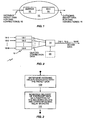
- Fig. 1 illustrates a network node 10, including a buffer 12 and a packet data service scheduler 14.
- the node 10 which may be an intermediate node or a terminating node, receives incoming packet data for one or more logical data connections 16, and outputs that packet data according to a delivery schedule managed by the scheduler 14.
- the term "logical data connection” generally connotes a given end-to-end data connection, such that the packet data traffic for that end-to-end connection flows through the node 10 as a distinct packet data stream.
- the scheduler 14 of the node 10 schedules the "delivery" (i.e., output) of the packet data according to a defined scheduling algorithm. As explained later herein, such scheduling may be necessary where the delivery targets are wireless communication terminals having differing service requirements and dynamically changing radio conditions, but it should be understood that the scheduling methods taught herein are not limited to such applications.
- Fig. 2 illustrates one embodiment of the node 10, wherein the scheduler 14 uses packet data delivery scheduling to determine the order of its output multiplexing of packet data flowing on the data connections 16.
- multiplexing may be performed, for example, where the node 10 is configured as a radio base station providing a shared downlink channel.
- Shared downlink channels support a potentially large number of users at high data rates, and operate according to a Time Division Multiplexing arrangement, wherein the packet data for a plurality of data connections 16 is time-multiplexed onto the channel according to a delivery schedule.
- the buffer 12 comprises individual data queues 18-1 through 18-N, that queue packet data incoming to the node 10 for each of the logical data connections 16-1 through 16-N.
- the scheduler 14 multiplexes data from respective ones of the queues 18 for output from the node 10, according to its scheduling operations, which include consideration of the incoming delays associated with the packet data incoming to the node 10 for the data connections 16.
- the scheduler 14 may include, or may be associated with, a memory 20 or other storage device, which may be used to store delay information supporting the determination of incoming delays.
- the memory 20 may be used to store one or more default delay estimates.
- the node 10 generally is configured to schedule delivery of delay-sensitive packet data incoming to the node 10.
- the scheduler 14 may be implemented as one or more processing circuits, comprising hardware, software, or any combination thereof, that are configured according to the processing logic of Fig. 3 .
- the scheduler 14 determines incoming delays associated with the packet data (Step 100), and schedules delivery of the packet data as a function of the incoming delays and corresponding delay budgets (Step 102).
- delay budget connotes an end-to-end delay for packet data flowing on a given one of the data connections 16, and it should be understood that different types of packet data generally have different delay budgets.
- the scheduler 14 determines the incoming delays associated with the packet data by estimating a network transit time of incoming data packets on one or more data connections 16 being supported by the node 10, based on a default transit time estimate selected from a set of default transit time estimates. For any given one of the data connections 16, the scheduler 14 may be configured to select the default transit time estimate from the set of default transmit time estimates based on one or more variables associated with the given data connection.
- the one or more variables comprise at least one of an originating network type variable, a call type variable, a network conditions variable, and an originating/terminating network locations variable.
- the originating network type variable may be used to identify the type of network involved in originating the packet data, e.g., the Public Switched Telephone Network (PSTN), a Public Land Mobile (wireless) network, etc.
- PSTN Public Switched Telephone Network
- wireless Public Land Mobile
- Different network transit delays can be assumed for different network types.
- different transit delays can be assumed for different call types, changing network conditions (high/low call volumes), and for the differing distances/locations involved between the originating network and the network that includes the node 10, which may be a terminating network.
- the aggregate incoming delay estimated for incoming data packets on individual ones of the data connections 16 may be based on a combination of default assumptions corresponding to network/call type, network conditions, geographic locations, etc.
- the scheduler 14 may be configured generally to schedule delivery of the packet data as a function of the incoming delays and corresponding delay budgets by setting scheduling priorities for delivering the packet data as a function of the incoming delays and the corresponding delay budgets.
- Setting scheduling priorities for delivering the packet data as a function of the incoming delays and the corresponding delay budgets may comprise setting higher scheduling priorities for higher incoming delays. That is, for two data packets incoming to the scheduler 14 on different ones of the data connections 16, the scheduler 14 may assign a higher scheduling priority (for outgoing packet data delivery) to one of them versus the other, as a function of one of them having a greater incoming delay than the other.
- a more general scheduling method comprises the scheduler 14 determining incoming delays for data packets incoming on one or more data connections being supported by the node 10, and, for each data packet incoming on each data connection, determining an allowable scheduling delay for the data packet as a function of the incoming delay of the data packet and the corresponding delay budget for the data packet. The scheduler 14 can then prioritize its outgoing delivery of data packets on one or more of the data connections 16 being supported by it as a function of the allowable scheduling delays.
- Data packets having relatively short allowable scheduling delays i.e., relatively little remaining time in their overall delay budgets, may be given scheduling preference over other data packets having relatively longer allowable scheduling delays, i.e., relatively large amounts of time remaining in their overall delay budgets.
- the scheduler 14 can determine incoming delays by estimating them based on default values. Additionally or alternatively, the scheduler 14 can be configured to determine incoming delays for each data packet incoming on each data connection 16 (or for groups of packets incoming on one or more of the data connections 16) by determining a network transit delay experienced by the data packet before its arrival at the network node. In at least one embodiment, network transit delays represent the accumulated transit time for the packet data to travel from their respective originating systems/networks to the node 10.
- the transit time for a given data packet may be thought of as the packet's age, or thought of as the amount of time out of the packet's overall end-to-end delay budget that is used in getting the packet to the node 10. From that perspective, one sees that the scheduler 14 can set priorities for scheduling packet data deliveries based on determining the remaining times in the delay budget(s) corresponding to the packet data it is scheduling.
- the scheduler 14 can be configured to schedule delivery of the packet data as a function of the incoming delays and corresponding delay budgets, such that the combination of incoming delays and any scheduling delays imposed by the node 10 do not exceed the corresponding delay budgets.
- the scheduler 14 may determine the network transit delays for data packets incoming to the node 10, and schedule delivery of the packet data by determining allowable scheduling delays for the data packets based on the difference between their network transit delays and corresponding delay budgets and thereby prioritize data packet deliveries based on the allowable scheduling delays.
- FIGs. 4-9 provide practical illustrations of different types of originating, terminating, and intermediate networks, and illustrate how the incoming delays may vary as a function of different call types and different originating/terminating network types and locations.
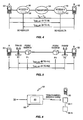
- Fig. 4 illustrates an example of the packet data scheduling methods taught herein, as applied to a Voice-over-Internet-Protocol (VoIP) data connection between a first mobile station 30 and a second mobile station 32.
- the data connection is supported by a transport network 34, e.g., the Internet, and has an endpoint "A" at the mobile station 30, and an endpoint "B" at the mobile station 32.
- a transport network 34 e.g., the Internet
- the mobile station 30 is supported by an Access Network (AN) 36, which includes a scheduler 38 that may be configured the same as, or similar to, the previously described scheduler 14. That is, the scheduler 38 may be configured to schedule the delivery of packet data incoming to the AN 36 for delivery to the mobile station 30 and any other devices or systems supported by the AN 36.
- the mobile station 32 is supported by the AN 40, which also may have a scheduler 42 that is the same or similar to the scheduler 38.
- the data connection extends between the mobile stations 30 and 32, and is supported by the AN 36 and the AN 40, with the two ANs 36 and 40 being communicatively coupled together via the transport network 34.
- the users of mobile stations 30 and 32 are engaged in a voice call that is carried via VoIP packet data transmission, it may be seen that data packets originating from the AN 36 are incoming to the scheduler 42 of the AN 40 for delivery to the mobile station 32.
- data packets originating from the AN 40 are incoming to the scheduler 38 of the AN 36 for delivery to the mobile station 30.
- the incoming delay for packet data originating from the mobile station 32 is t delay (A-to-B).
- the incoming delay for packet data originating from the mobile station 30 is t delay (B-to-A).
- the ANs 36 and 40 each may be wireless communication networks.
- one or both of the ANs 36 and 40 may operate according to cdma2000 standards (e.g., 1xEV-DV), 1xEV-DO standards, or Wideband CDMA (W-CDMA) standards.
- cdma2000 standards e.g., 1xEV-DV
- W-CDMA Wideband CDMA
- One characteristic of all such networks is the use of Time-Division-Multiplexing to increase carrier capacity.
- the W-CDMA standards define a High Speed Downlink Packet Access (HSDPA) channel that is time-shared by a potentially large number of users. Note that recent literature sometimes refers to the HSDPA channel as the High Speed Downlink Shared Channel (HS-DSCH).
- HSDPA High Speed Downlink Packet Access
- HS-DSCH High Speed Downlink Shared Channel
- the scheduler 38 of the AN 36 may be configured to schedule packet data incoming to it from the transport network 34 for scheduled transmission on a TDM-based air interface channel.
- the scheduler 42 of the AN 40 may be similarly configured for scheduling TDM-based over-the-air delivery of packet data incoming to it from the transport network 34.
- the scheduling methods taught herein use the allowed end-to-end delay budget(s) corresponding to that delay-sensitive packet data in a manner that optimizes (or at least increases) system capacity.
- the scheduling methods taught herein provide the scheduler 38 (or scheduler 42) with knowledge of the incoming delays of packet data, scheduling can be based on the time remaining in the end-to-end delay budget(s) defined for that packet data traffic.
- the delay budget limits the amount of time allowed for delivering data between endpoints A and B of the data connection linking mobile stations 30 and 32.
- the variance of time taken for a data packet originating from endpoint A and traveling to endpoint B, for delivery to the mobile station 32 varies considerably, and can be as little as several milliseconds, to as much as several hundred milliseconds.
- the relevant standards recommend a maximum mouth-to-ear delay for Voice using VoIP data packets or other bearer of 280 milliseconds.
- the delay budgets and incoming delays can vary for different call types, as well as for different terminating and originating network locations, different access network types, different access, originating, or terminating network conditions, and other factors.
- FIG. 5 illustrates network configurations similar to those shown in Fig. 4 , but explicitly illustrates first and second Radio Access Networks (RANs) 50 and 52, also labeled as “R1” and “R2,” respectively, and first and second Packet Data Serving Nodes (PDSNs) or Gateway GPRS Support Nodes (GGSNs) 54 and 56, also labeled as “P1" and “P2,” respectively.
- the RAN 50 and the PDSN/GGSN 54 support transmission of packet data to and from the mobile station 30 and, likewise, the RAN 52 and the PDSN/GGSN 56 support the mobile station 32.
- Both the RAN 50 and the RAN 52 generally comprise one or more radio base stations, or other wireless access points.
- Fig. 6 illustrates that RAN 50 may comprise a base station 58, that includes a scheduler 60, which may be configured according to the scheduling method(s) taught herein. (Note that RAN 52 may be similarly configured.)
- the scheduler 60 may schedule packet data for transmission on a HS-DSCH or other TDM-based channel being transmitted from the base station 58 based on determining the incoming delays of that packet data.
- the scheduler 60 may optimize or otherwise improve its packet data scheduling of the packet data to be transmitted to the mobile station 30, and to any number of additional mobile stations 62-1 through 62-N, by determining the allowable scheduling delays for the delay-sensitive packet data incoming to the base station 58.
- the scheduler 60 may be programmed to "steal from the rich,” wherein it allows longer scheduling delays for packet data having relatively large amounts of time remaining in their delay budgets (i.e., packet data having small incoming delays as compared to the overall delay budget allowed for that packet data). By allowing longer scheduling delays for such packet data, the scheduler 60 has more flexibility in quickly scheduling the delivery of packet data that arrives at the base station 58 with little time remaining in the delay budget(s) defined for such packet data. That is, the scheduler 60 may be programmed to borrow scheduling time/opportunities from packet data that can afford to wait for scheduled transmission, and use the borrowed time/opportunities to provide quick scheduling for packet data that cannot afford to wait
- the delays from A to B can be different than the delays from B to A, and the scheduler in R1 should be made aware of the delay t delay (B-to-A), while the scheduler in R2 should be made aware of the delay t delay (A-to-B).
- Such knowledge may be based on estimating delays using default information stored in the RANs, or may be based on dynamic determinations done on a per-packet basis, a per-call/connection basis, or performed for groups of packets and/or groups of data connections.
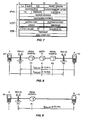
- Fig. 7 illustrates one embodiment of timestamp-based incoming delay determination, wherein packet and header information is illustrated for RTP/UDP/IPv4.
- R1 and/or P1 can extract timestamp information in either RTP or RTCP for data packets outgoing from endpoint B to endpoint A.
- R2 and/or P2 can extract timestamp information in the data packets outgoing from endpoint A to endpoint B.
- Such timestamp information may comprise a relative time or an absolute time.
- the scheduler of R1 at endpoint A can inspect the timestamps of RTP packets incoming from endpoint B to determine an elapsed time representing the network transit delays for those incoming data packets.
- the scheduler of R2 at endpoint B likewise can inspect the timestamps of the RTP packets incoming from endpoint A to determine the incoming delays of those data packets.
- the method may be modified by the introduction of a preamble packet to the RTP flow that includes an absolute time stamp for reference, such that relative timestamps may be included in the subsequent RTP packets.
- the schedulers of R1 and/or R2 can be configured to initiate a "pinging" process, wherein the relevant A-R2 and/or B-R1 transit times can be discerned by timing a query/response message exchange between the two endpoints.
- Pinging may be done once for a given data connection, such that the incoming delays assumed for the packet data incoming on that data connection are based on that initial ping (or an average of multiple pings).
- pinging may be done on an ongoing basis for a given data connection. Refreshing the incoming delay estimate using subsequent pings performed while the packet data connection is active may be useful as a means of "capturing" the affects of changing network conditions. That is, the network transit delays may change over time, and performing subsequent pings provides visibility into such changes.
- Fig. 8 illustrates that the incoming delay for packet data received at R1 can be expressed as t delay (B-to-R1). Similarly, the incoming delay for packet data received at R2 can be expressed as t delay (A-to-R2). Because of the network symmetry, the A-to-B and B-to-A incoming delay calculations span like network entities, but the delays still may be different for the A-B direction than for the B-A direction.
- Fig. 8 also illustrates the use of a Media Resource Function Processor (MRFP) 70.
- the MRFP 70 may be used to support the transmission of delay-sensitive packet data for a variety of call types, including the previously mentioned VoIP calls, and for "live" videoconferencing calls (e.g., H.323 or SIP based conferencing), and other real-time packet data streams.
- RTP is used for each half or leg of the call between mobile stations 30 and 32. That is, RTP is used between P1 and the MRFP 70 for packet data traffic outgoing from endpoint A toward endpoint B, and RTP is used for sending that traffic on from the MFRP 70 toward endpoint B.
- a similar flow applies to traffic flowing from endpoint B toward endpoint A.
- the MRFP 70 can be configured to use its internal timer to determine the time elapsed during the transit of packet data from endpoint B to the MRFP 70, and then use that information to recreate the absolute timestamp information originally embedded in the packet information as it was outgoing from endpoint B.
- the incoming packet data received at R1 from endpoint B has absolute timestamp information that can be used to calculate the total delay, t delay (B-to-R1).
- the same method can be used in the opposite direction for packet data flowing from endpoint A to endpoint B, so that the scheduler in R2 can base its scheduling on the total incoming delay of packet data originating from endpoint A.
- Fig. 9 illustrates a different and simpler network configuration that corresponds, for example, to a mobile-to-land VoIP call.
- scheduling as taught herein is practiced at endpoint A for the packet data traffic incoming to R1 from endpoint B to schedule the transmission of such data to the mobile station 30 via a shared link, but no such scheduling is needed (or used) at endpoint B.
- Scheduling is not needed at endpoint B in the illustrated network configuration, because endpoint B corresponds to a landline or other network connection that provides a non-scheduled service channel for the communication terminal 76 at endpoint B.
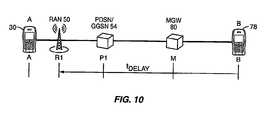
- Fig. 10 illustrates a network configuration corresponding to a call between the mobile station 30, which is configured as a VoIP terminal, and the communication device 78, which may be a PSTN telephone, or other type of landline circuit-switched communication device.
- the incoming delay of interest B-to-R1
- t delay spans the networks and connections from the device 78 at endpoint B, up to R1. Determining such delays may comprise a combination of calculation and estimation.
- the delay from the Media Gateway (MGW) 80 to R1 may be calculated as an elapsed time based on timestamp information, while the preceding delay from the device 78 (and its corresponding circuit-switched supporting network) to the MGW 80 may be estimated.
- the total incoming delay to be considered by R1 in scheduling packet data delivery to the mobile station 30 would thus comprise a calculated portion and an estimated portion.
- a default delay value may be assumed for PSTN calls, and one may consider the relative locations or distances involved between the endpoints A and B, or at least between the endpoint B and the MGW 80.
- a default delay assumption for a given type of network may be increased for long separation distances, or complex network arrangements (e.g., satellite hops, transcoding stations, etc.), or may be decreased for short separation distances, and simple network arrangements.
- the information supporting these flexible and informed estimation techniques may be programmed into a memory or other storage device for use by the scheduler, and thus represent provisioning information that could be included in a base station, for example.
- provisioning information that could be included in a base station, for example.
- identifying information regarding the calling party and the calling and intermediate network types, locations, etc. can be used to index into the stored information for selection of the appropriate default assumptions.
- estimation, calculation, and combinations of estimation and calculation can be used for any of the embodiments described herein, although there may be advantages to performing "live" calculations of incoming delay, based on packet timing information or active pinging. In particular, there may be advantages to maintaining dynamically calculated incoming delay values for the data packets flowing on individual data connections, since those values arguably provide the greatest opportunity for aggressively scheduling packet data deliveries based on actual knowledge of the allowable scheduling delays for individual data packets or groups of packets.
Landscapes
- Engineering & Computer Science (AREA)
- Multimedia (AREA)
- Computer Networks & Wireless Communication (AREA)
- Signal Processing (AREA)
- Data Exchanges In Wide-Area Networks (AREA)
- Mobile Radio Communication Systems (AREA)
Claims (29)
- Verfahren zum Disponieren der Übergabe von Paketdaten von einem Ursprungsnetz, die an einem Netzknoten empfangen werden, an Zielnetze einer Mehrzahl von Benutzern in disponierten Dienstintervallen, wobei das Verfahren vom Netzknoten durchgeführt wird und umfasst:Bestimmen von Eingangsverzögerungen, die mit dem Transport der Paketdaten vom Ursprungsnetz zum Netzknoten vor dem Empfang am Netzknoten verbunden sind; undDisponieren der Übergabe der Paketdaten in Abhängigkeit von den Eingangsverzögerungen und Verzögerungsbilanzen, die den Paketdaten entsprechen,wobei die Verzögerungsbilanzen, die den Paketdaten entsprechen, Ende-zu-Ende-Verzögerungen der Paketdaten bedeuten.
- Verfahren nach Anspruch 1, wobei das Bestimmen von Eingangsverzögerungen, die mit dem Transport des Pakets vor dem Empfang am Netzknoten verbunden sind, ein Schätzen einer Netzdurchlaufzeit von eingehenden Datenpaketen auf einer oder mehreren Datenverbindungen, die vom Netzknoten unterstützt werden, auf der Basis einer Standard-Durchlaufzeitschätzung umfasst, die aus einem Satz von Standard-Durchlaufzeitschätzungen ausgewählt wird.
- Verfahren nach Anspruch 2, ferner umfassend für eine bestimmte der Datenverbindungen ein Auswählen der Standard-Durchlaufzeitschätzung aus dem Satz von Standard-Durchlaufzeitschätzungen auf der Basis einer oder mehrerer Variablen umfasst, die mit der bestimmten Datenverbindung assoziiert sind, wobei die eine oder die mehreren Variablen mindestens eine von einer Netztyp-Variablen, einer Ruftyp-Variablen, einer Netzbedingungen-Variablen und einer Ursprungs-/Endnetzstandorte-Variablen umfasst.
- Verfahren nach Anspruch 1, wobei das Disponieren der Übergabe der Paketdaten in Abhängigkeit von den Eingangsverzögerungen und Verzögerungsbilanzen, die den Paketdaten entsprechen, ein Festlegen von Dispositionsprioritäten für die Übergabe der Paketdaten in Abhängigkeit von den Eingangsverzögerungen und den Verzögerungsbilanzen, die den Paketdaten entsprechen, umfasst.
- Verfahren nach Anspruch 4, wobei für Paketdaten mit der gleichen Verzögerungsbilanz das Festlegen von Dispositionsprioritäten für die Übergabe der Paketdaten in Abhängigkeit von den Eingangsverzögerungen und den Verzögerungsbilanzen, die den Paketdaten entsprechen, ein Festlegen höherer Dispositionsprioritäten für höhere Eingangsverzögerungen umfasst.
- Verfahren nach Anspruch 1, wobei das Bestimmen von Eingangsverzögerungen, die mit dem Transport der Paketdaten vor dem Empfang am Netzknoten verbunden sind, ein Bestimmen von Eingangsverzögerungen für Datenpakete umfasst, die auf einer oder mehreren Datenverbindungen eingehen, die vom Netzknoten unterstützt werden.
- Verfahren nach Anspruch 6 wobei das Disponieren der Übergabe der Paketdaten in Abhängigkeit von den Eingangsverzögerungen und Verzögerungsbilanzen, die den Paketdaten entsprechen, für jedes Datenpaket, das auf jeder Datenverbindung eingeht, ein Bestimmen einer zulässigen Dispositionsverzögerung für das Datenpaket in Abhängigkeit von der Eingangsverzögerung des Datenpakets und der entsprechenden Verzögerungsbilanz für das Datenpaket umfasst.
- Verfahren nach Anspruch 6, wobei das Bestimmen von Eingangsverzögerungen für Datenpakete, die auf einer oder mehreren Datenverbindungen eingehen, die vom Netzknoten unterstützt werden, für jedes Datenpaket, das auf jeder Datenverbindung eingeht, ein Bestimmen einer Netzdurchlaufverzögerung umfasst, die vom Datenpaket vor seiner Ankunft am Netzknoten erfahren wird.
- Verfahren nach Anspruch 1, wobei die verzögerungsvariablen Paketdaten Paketdaten umfassen, die auf einer oder mehreren Voice-over-Internet-Protokoll (VoIP)-Datenverbindungen eingehen, und wobei das Disponieren der Übergabe der Paketdaten in Abhängigkeit von den Eingangsverzögerungen und Verzögerungsbilanzen, die den Paketdaten entsprechen, ein Bestimmen von zulässigen Dispositionsverzögerungen für Datenpakete, die auf jeder Datenverbindung eingehen, in Abhängigkeit von der Eingangsverzögerung, die mit jedem eingehenden Datenpaket verbunden ist, und einem entsprechenden Ende-zu-Ende-Verzögerungsbilanzwert umfasst, der für die VoIP-Datenverbindungen definiert wird.
- Verfahren nach Anspruch 1, wobei das Bestimmen von Eingangsverzögerungen, die mit dem Transport der Paketdaten vor dem Empfang am Netzknoten verbunden sind, ein Bestimmen von Netzdurchlaufzeiten für einzelne Datenpakete umfasst, die zum Netzknoten auf einer oder mehreren Datenverbindungen eingehen, die vom Netzknoten unterstützt werden.
- Verfahren nach Anspruch 10, wobei das Bestimmen von Netzdurchlaufzeiten für einzelne Datenpakete, die zum Netzknoten auf einer oder mehreren Datenverbindungen eingehen, die vom Netzknoten unterstützt werden, ein Prüfen von Zeitstempelinformationen umfasst, die in den eingehenden Datenpaketen enthalten oder damit assoziiert sind.
- Verfahren nach Anspruch 11, wobei das Disponieren der Übergabe der Paketdaten in Abhängigkeit von den Eingangsverzögerungen und Verzögerungsbilanzen, die den Paketdaten entsprechen, ein Berechnen von zulässigen Dispositionsverzögerungen für jedes Datenpaket auf der Basis der Zeitstempelinformationen, die im Datenpaket enthalten oder damit assoziiert sind, und der entsprechenden Verzögerungsbilanz für das Datenpaket umfasst.
- Verfahren nach Anspruch 1, wobei das Disponieren der Übergabe der Paketdaten in Abhängigkeit von den Eingangsverzögerungen und Verzögerungsbilanzen, die den Paketdaten entsprechen, ein derartiges Disponieren der Übergabe der Paketdaten umfasst, dass die Kombination von Eingangsverzögerungen und jeglichen Dispositionsverzögerungen, die vom Netzknoten auferlegt werden, die Verzögerungsbilanzen, die den Paketdaten entsprechen, nicht überschreitet.
- Verfahren nach Anspruch 1, wobei das Bestimmen von Eingangsverzögerungen, die mit dem Transport der Paketdaten vor dem Empfang am Netzknoten verbunden sind, ein Bestimmen von Netzdurchlaufverzögerungen für Datenpakete umfasst, die zum Netzknoten eingehen, und wobei das Disponieren der Übergabe der Paketdaten in Abhängigkeit von den Eingangsverzögerungen und Verzögerungsbilanzen, die den Paketdaten entsprechen, ein Bestimmen von zulässigen Dispositionsverzögerungen für die Paketdaten auf der Basis der Differenz zwischen ihren Netzdurchlaufverzögerungen und Verzögerungsbilanzen, die den Datenpaket entsprechen, und Priorisieren von Datenpaketübergaben auf der Basis der zulässigen Dispositionsverzögerungen umfasst.
- Netzknoten, der so konfiguriert ist, dass er die Übergabe von verzögerungsvariablen Paketdaten, die von einem Ursprungsnetz zum Netzknoten eingehen, an Zielnetze einer Mehrzahl von Benutzer in disponierten Dienstintervallen disponiert, wobei der Netzkoten eine oder mehrere Verarbeitungsschaltungen umfasst, die konfiguriert sind zum:Bestimmen von Eingangsverzögerungen, die mit dem Transport der Paketdaten vom Ursprungsnetz zum Netzknoten vor dem Empfang am Netzknoten verbunden sind; undDisponieren der Übergabe der Paketdaten in Abhängigkeit von den Eingangsverzögerungen und Verzögerungsbilanzen, die den Paketdaten entsprechen,wobei die Verzögerungsbilanzen, die den Paketdaten entsprechen, Ende-zu-Ende-Verzögerungen der Paketdaten bedeuten.
- Netzknoten nach Anspruch 15, wobei der Netzknoten eines Basisstation umfasst, die zur Verwendung in einem drahtlosen Kommunikationsnetz konfiguriert ist.
- Netzknoten nach Anspruch 15, wobei die eine oder die mehreren Verarbeitungsschaltungen so konfiguriert sind, dass sie Eingangsverzögerungen, die mit dem Transport der Paketdaten vor dem Empfang am Netzknoten verbunden sind, durch Schätzen einer Netzdurchlaufzeit von eingehenden Datenpaketen auf einer oder mehreren Datenverbindungen, die vom Netzknoten unterstützt werden, auf der Basis einer Standard-Durchlaufzeitschätzung bestimmen, die aus einem Satz von Standard-Durchlaufzeitschätzungen ausgewählt ist.
- Netzknoten nach Anspruch 17, wobei die eine oder die mehreren Verarbeitungsschaltungen ferner so konfiguriert sind, dass sie für eine bestimmte der Datenverbindungen die Standard-Durchlaufzeitschätzung aus dem Satz von Standard-Durchlaufzeitschätzungen auf der Basis einer oder mehrerer Variablen auswählen, die mit der bestimmten Datenverbindung assoziiert sind, wobei die eine oder die mehreren Variablen mindestens eine von einer Netztyp-Variablen, einer Ruftyp-Variablen, einer Netzbedingungen-Variablen und einer Ursprungs-/Endnetzstandorte-Variablen umfasst.
- Netzknoten nach Anspruch 16, wobei die eine oder die mehreren Verarbeitungsschaltungen so konfiguriert sind, dass sie die Übergabe der Paketdaten in Abhängigkeit von den Eingangsverzögerungen und Verzögerungsbilanzen, die den Paketdaten entsprechen, durch Festlegen von Dispositionsprioritäten für die Übergabe der Paketdaten in Abhängigkeit von den Eingangsverzögerungen und den Verzögerungsbilanzen, die den Paketdaten entsprechen, disponieren.
- Netzknoten nach Anspruch 19, wobei die eine oder die mehreren Verarbeitungsschaltungen so konfiguriert sind, dass sie für Paketdaten mit der gleichen Verzögerungsbilanz Dispositionsprioritäten für die Übergabe der Paketdaten in Abhängigkeit von den Eingangsverzögerungen und den Verzögerungsbilanzen, die den Paketdaten entsprechen, durch Festlegen höherer Dispositionsprioritäten für höhere Eingangsverzögerungen festlegen.
- Netzknoten nach Anspruch 16, wobei die eine oder die mehreren Verarbeitungsschaltungen so konfiguriert sind, dass sie Eingangsverzögerungen, die mit dem Transport der Paketdaten vor dem Empfang am Netzknoten verbunden sind, durch Bestimmen von Eingangsverzögerungen für Datenpakete bestimmen, die auf einer oder mehreren Datenverbindungen eingehen, die vom Netzknoten unterstützt werden.
- Netzknoten nach Anspruch 21, wobei die eine oder die mehreren Verarbeitungsschaltungen so konfiguriert sind, dass sie die Übergabe der Paketdaten in Abhängigkeit von den Eingangsverzögerungen und Verzögerungsbilanzen, die den Paketdaten entsprechen, für jedes Datenpaket, das auf jeder Datenverbindung eingeht, durch Bestimmen einer zulässigen Dispositionsverzögerung für das Datenpaket in Abhängigkeit von der Eingangsverzögerung des Datenpakets und der entsprechenden Verzögerungsbilanz für das Datenpaket disponieren.
- Netzknoten nach Anspruch 21, wobei die eine oder die mehreren Verarbeitungsschaltungen so konfiguriert sind, dass sie Eingangsverzögerungen für Datenpakete, die auf einer oder mehreren Datenverbindungen eingehen, die vom Netzknoten unterstützt werden, für jedes Datenpaket, das auf jeder Datenverbindung eingeht, durch Bestimmen einer Netzdurchlaufverzögerung bestimmt, die vom Datenpaket vor seiner Ankunft am Netzknoten erfahren wird.
- Netzknoten nach Anspruch 15, wobei die verzögerungsvariablen Paketdaten Paketdaten umfassen, die auf einer oder mehreren Voice-over-Internet-Protokoll (VoIP)-Datenverbindungen eingehen, und wobei die eine oder die mehreren Verarbeitungsschaltungen so konfiguriert sind, dass sie die Übergabe der Paketdaten in Abhängigkeit von den Eingangsverzögerungen und Verzögerungsbilanzen, die den Paketdaten entsprechen, durch Bestimmen von zulässigen Dispositionsverzögerungen für Datenpakete, die auf jeder Datenverbindung eingehen, in Abhängigkeit von der Eingangsverzögerung, die mit jedem eingehenden Datenpaket verbunden ist, und einem entsprechenden Ende-zu-Ende-Verzögerungsbilanzwert disponieren, der für die VoIP-Datenverbindungen definiert ist.
- Netzknoten nach Anspruch 15, wobei die eine oder die mehreren Verarbeitungsschaltungen so konfiguriert sind, dass sie Eingangsverzögerungen, die mit dem Transport der Paketdaten vor dem Empfang am Netzknoten verbunden sind, durch Bestimmen von Netzdurchlaufzeiten für einzelne Datenpakete bestimmen, die zum Netzknoten auf einer oder mehreren Datenverbindungen eingehen, die vom Netzknoten unterstützt werden.
- Netzknoten nach Anspruch 25, wobei die eine oder die mehreren Verarbeitungsschaltungen so konfiguriert sind, dass sie Netzdurchlaufzeiten für einzelne Datenpakete, die zum Netzknoten auf einer oder mehreren Datenverbindungen eingehen, die vom Netzknoten unterstützt werden, durch Prüfen von Zeitstempelinformationen bestimmen, die in den eingehenden Datenpaketen enthalten oder damit assoziiert sind.
- Netzknoten nach Anspruch 26, wobei die eine oder die mehreren Verarbeitungsschaltungen so konfiguriert sind, dass sie die Übergabe der Paketdaten in Abhängigkeit von den Eingangsverzögerungen und Verzögerungsbilanzen, die den Paketdaten entsprechen, durch Berechnen von zulässigen Dispositionsverzögerungen für jedes Datenpaket auf der Basis der Zeitstempelinformationen, die im Datenpaket enthalten oder damit assoziiert sind, und der entsprechenden Verzögerungsbilanz für das Datenpaket disponieren.
- Verfahren nach Anspruch 15, wobei die eine oder die mehreren Verarbeitungsschaltungen so konfiguriert sind, dass sie die Übergabe der Paketdaten in Abhängigkeit von den Eingangsverzögerungen und Verzögerungsbilanzen, die den Paketdaten entsprechen, durch derartiges Disponieren der Übergabe der Paketdaten disponieren, dass die Kombination von Eingangsverzögerungen und jeglichen Dispositionsverzögerungen, die vom Netzknoten auferlegt werden, die Verzögerungsbilanzen, die den Paketdaten entsprechen, nicht überschreiten.
- Netzknoten nach Anspruch 15, wobei die eine oder die mehreren Verarbeitungsschaltungen so konfiguriert sind, dass sie Eingangsverzögerungen, die mit dem Transport der Paketdaten vor dem Empfang am Netzknoten verbunden sind, durch Bestimmen von Netzdurchlaufverzögerungen für Paketdaten bestimmen, die zum Netzknoten eingehen, und die Übergabe der Paketdaten in Abhängigkeit von den Eingangsverzögerungen und Verzögerungsbilanzen, die den Paketdaten entsprechen, durch Bestimmen von zulässigen Dispositionsverzögerungen für die Paketdaten auf der Basis der Differenz zwischen ihren Netzdurchlaufverzögerungen und Verzögerungsbilanzen, die den Paketdaten entsprechen, disponieren und Datenpaketübergaben auf der Basis der zulässigen Dispositionsverzögerungen priorisieren.
Applications Claiming Priority (2)
| Application Number | Priority Date | Filing Date | Title |
|---|---|---|---|
| US11/140,385 US7872972B2 (en) | 2005-05-27 | 2005-05-27 | Method and apparatus for improving scheduling in packet data networks |
| PCT/US2006/015424 WO2006130270A1 (en) | 2005-05-27 | 2006-04-24 | A method and apparatus for improving scheduling in packet data networks |
Publications (2)
| Publication Number | Publication Date |
|---|---|
| EP1889413A1 EP1889413A1 (de) | 2008-02-20 |
| EP1889413B1 true EP1889413B1 (de) | 2012-07-04 |
Family
ID=36677220
Family Applications (1)
| Application Number | Title | Priority Date | Filing Date |
|---|---|---|---|
| EP06751209A Not-in-force EP1889413B1 (de) | 2005-05-27 | 2006-04-24 | Verfahren und vorrichtung zur verbesserung der ablaufplanung in paketdatennetzen |
Country Status (6)
| Country | Link |
|---|---|
| US (1) | US7872972B2 (de) |
| EP (1) | EP1889413B1 (de) |
| JP (1) | JP5133876B2 (de) |
| CN (1) | CN101185297B (de) |
| BR (1) | BRPI0610270A2 (de) |
| WO (1) | WO2006130270A1 (de) |
Cited By (1)
| Publication number | Priority date | Publication date | Assignee | Title |
|---|---|---|---|---|
| US9247559B2 (en) | 2014-01-31 | 2016-01-26 | International Business Machines Corporation | Dynamically delayed delivery of content in a network |
Families Citing this family (37)
| Publication number | Priority date | Publication date | Assignee | Title |
|---|---|---|---|---|
| US8054826B2 (en) * | 2005-07-29 | 2011-11-08 | Alcatel Lucent | Controlling service quality of voice over Internet Protocol on a downlink channel in high-speed wireless data networks |
| KR100881925B1 (ko) * | 2006-01-16 | 2009-02-04 | 삼성전자주식회사 | 이동통신 기지국 시스템에서 하향 음성 패킷망 패킷스케줄링 장치 및 방법 |
| US7768923B2 (en) * | 2007-02-09 | 2010-08-03 | Cisco Technology, Inc. | Packet aging in a wireless network |
| KR100773416B1 (ko) * | 2007-03-21 | 2007-11-05 | (주)소만사 | P2p 및 인스턴트 메신저의 네트워크 트래픽 제어 방법및 시스템 |
| EP2181532B1 (de) * | 2007-08-21 | 2016-04-06 | Optis Cellular Technology, LLC | Scheduling in drahtlosen netzen |
| US7912968B2 (en) * | 2007-08-29 | 2011-03-22 | International Business Machines Corporation | End-to-end (e2e) service level agreement (SLA) compliance across both managed and unmanaged network segments |
| KR101403799B1 (ko) | 2007-09-17 | 2014-06-11 | 삼성전자주식회사 | 복수 개의 채널이 연동된 tdm 시스템에서의 패킷 할당장치 및 방법 |
| US7940655B2 (en) * | 2007-10-31 | 2011-05-10 | Futurewei Technologies, Inc. | Cross-layer optimization of VoIP services in advanced wireless networks |
| US8873543B2 (en) * | 2008-03-07 | 2014-10-28 | Arcsoft (Shanghai) Technology Company, Ltd. | Implementing a high quality VOIP device |
| US8385210B1 (en) * | 2008-12-18 | 2013-02-26 | Cisco Technology, Inc. | System and method for detection and delay control in a network environment |
| US8159944B2 (en) * | 2008-12-24 | 2012-04-17 | At&T Intellectual Property I, L.P. | Time based queuing |
| WO2010092532A1 (en) * | 2009-02-13 | 2010-08-19 | Koninklijke Philips Electronics N.V. | Method for communicating in a network comprising a batteryless zigbee device, network and device therefor |
| US8396133B2 (en) * | 2009-04-21 | 2013-03-12 | Qualcomm Incorporated | Synchronizing video frames without hardware timestamps |
| US8966110B2 (en) * | 2009-09-14 | 2015-02-24 | International Business Machines Corporation | Dynamic bandwidth throttling |
| WO2011072738A1 (en) * | 2009-12-16 | 2011-06-23 | Telefonaktiebolaget L M Ericsson (Publ) | Optimized delay |
| US8861352B2 (en) * | 2010-05-28 | 2014-10-14 | Alcatel Lucent | Dynamic delay budget allocation using single-point estimation of end-to-end delay |
| CN102457933B (zh) * | 2010-10-29 | 2015-06-24 | 富士通株式会社 | 无线网络设备、无线网络系统和路由选择控制方法 |
| JP5716365B2 (ja) * | 2010-11-30 | 2015-05-13 | 富士通株式会社 | 基地局装置、通信方法、および、通信システム |
| US9124482B2 (en) * | 2011-07-19 | 2015-09-01 | Cisco Technology, Inc. | Delay budget based forwarding in communication networks |
| CN103369559A (zh) * | 2012-03-28 | 2013-10-23 | 中兴通讯股份有限公司 | 获取时延的最小化路测方法及装置 |
| US8407306B1 (en) * | 2012-06-25 | 2013-03-26 | Google Inc. | Systems and methods for managing message delivery based on message priority |
| CN103841041B (zh) * | 2012-11-23 | 2018-12-28 | 中兴通讯股份有限公司 | 一种多流业务并发传输控制方法及装置 |
| WO2014094818A1 (en) * | 2012-12-17 | 2014-06-26 | Telefonaktiebolaget L M Ericsson (Publ) | Technique for monitoring data traffic |
| KR20140093088A (ko) * | 2013-01-17 | 2014-07-25 | 삼성전자주식회사 | 전자 장치에서 트래픽 제어 방법 및 장치 |
| US20140281034A1 (en) * | 2013-03-13 | 2014-09-18 | Futurewei Technologies, Inc. | System and Method for Compressing Data Associated with a Buffer |
| US9680905B2 (en) | 2013-12-23 | 2017-06-13 | David Arthur Yost | System for intelligible audio conversation over unreliable digital transmission media |
| BR112017000812A2 (pt) * | 2014-07-17 | 2017-12-05 | Ericsson Telefon Ab L M | método para programação de um dispositivo de comunicação de uma rede sem fio, elemento de rede, programa de computador, e, produto de programa de computador. |
| US9923836B1 (en) * | 2014-11-21 | 2018-03-20 | Sprint Spectrum L.P. | Systems and methods for configuring a delay based scheduler for an access node |
| US10855597B2 (en) * | 2015-06-29 | 2020-12-01 | T-Mobile Usa, Inc. | Channel coding for real time wireless traffic |
| US11736405B2 (en) * | 2015-08-31 | 2023-08-22 | Comcast Cable Communications, Llc | Network packet latency management |
| US10506074B2 (en) * | 2015-09-25 | 2019-12-10 | Verizon Patent And Licensing Inc. | Providing simultaneous access to content in a network |
| CA3031250C (en) * | 2016-07-19 | 2025-07-08 | Schneider Electric Industries Sas | TIME-SENSITIVE SOFTWARE-DEFINED NETWORK |
| WO2020013739A1 (en) * | 2018-07-10 | 2020-01-16 | Telefonaktiebolaget Lm Ericsson (Publ) | Method and network nodes for handling end-to-end delays for voice calls in a communication network |
| US11533749B2 (en) * | 2019-05-01 | 2022-12-20 | Qualcomm Incorporated | In-advance scheduling for low-latency traffic |
| EP3997844A1 (de) | 2019-07-10 | 2022-05-18 | Telefonaktiebolaget LM Ericsson (publ) | Verfahren zur bestimmung eines paketverzögerungsbudgets |
| WO2023187651A1 (en) * | 2022-03-28 | 2023-10-05 | Lenovo (Singapore) Pte. Ltd. | Configuring channel occupancy time |
| CN116956756B (zh) * | 2023-09-21 | 2024-02-09 | 浪潮电子信息产业股份有限公司 | 模型部署方法、任务处理方法、装置、设备及存储介质 |
Family Cites Families (18)
| Publication number | Priority date | Publication date | Assignee | Title |
|---|---|---|---|---|
| JPS56110370A (en) * | 1980-02-05 | 1981-09-01 | Hitachi Ltd | Packet exchange system |
| JP3625302B2 (ja) * | 1994-07-19 | 2005-03-02 | 株式会社東芝 | ネットワークシステムのデータ送達装置および方法 |
| US5796719A (en) * | 1995-11-01 | 1998-08-18 | International Business Corporation | Traffic flow regulation to guarantee end-to-end delay in packet switched networks |
| US6532213B1 (en) * | 1998-05-15 | 2003-03-11 | Agere Systems Inc. | Guaranteeing data transfer delays in data packet networks using earliest deadline first packet schedulers |
| JP3511918B2 (ja) * | 1998-11-24 | 2004-03-29 | 富士通株式会社 | 優先転送制御装置 |
| US6198725B1 (en) * | 1999-03-16 | 2001-03-06 | Fujitsu Network Communications, Inc. | Network element delay allocation for efficient use of network resources |
| US7054267B2 (en) * | 1999-09-10 | 2006-05-30 | Lucent Technologies Inc. | Method and apparatus for scheduling traffic to meet quality of service requirements in a communication network |
| AU2002213502A1 (en) * | 2000-10-17 | 2002-04-29 | Sprint Communications Company, L.P. | Performance management system |
| US6834053B1 (en) * | 2000-10-27 | 2004-12-21 | Nortel Networks Limited | Distributed traffic scheduler |
| US6879561B1 (en) * | 2000-11-03 | 2005-04-12 | Nortel Networks Limited | Method and system for wireless packet scheduling with per packet QoS support and link adaptation |
| US7277962B2 (en) * | 2000-12-01 | 2007-10-02 | Fujitsu Limited | Method and apparatus for packet scheduling using virtual time stamp for high capacity combined input and output queued switching system |
| JP2002314610A (ja) * | 2001-04-18 | 2002-10-25 | Nippon Telegr & Teleph Corp <Ntt> | 情報配信方法及び装置及び情報配信プログラム及び情報配信プログラムを格納した記憶媒体 |
| US7042856B2 (en) * | 2001-05-03 | 2006-05-09 | Qualcomm, Incorporation | Method and apparatus for controlling uplink transmissions of a wireless communication system |
| US6944678B2 (en) * | 2001-06-18 | 2005-09-13 | Transtech Networks Usa, Inc. | Content-aware application switch and methods thereof |
| US7453801B2 (en) * | 2001-11-08 | 2008-11-18 | Qualcomm Incorporated | Admission control and resource allocation in a communication system supporting application flows having quality of service requirements |
| US7164919B2 (en) * | 2002-07-01 | 2007-01-16 | Qualcomm Incorporated | Scheduling of data transmission for terminals with variable scheduling delays |
| JP2004266874A (ja) * | 2002-07-12 | 2004-09-24 | Nec Corp | ネットワークにおけるフレーム転送方法及びノード、フレーム転送プログラム |
| EP1714428A4 (de) * | 2004-02-06 | 2009-07-08 | Apparent Networks Inc | Verfahren und vorrichtung zur charakterisierung eines ende-zu-ende-weges eines auf paketen basierenden netzwerks |
-
2005
- 2005-05-27 US US11/140,385 patent/US7872972B2/en not_active Expired - Fee Related
-
2006
- 2006-04-24 JP JP2008513491A patent/JP5133876B2/ja not_active Expired - Fee Related
- 2006-04-24 EP EP06751209A patent/EP1889413B1/de not_active Not-in-force
- 2006-04-24 BR BRPI0610270-0A patent/BRPI0610270A2/pt not_active IP Right Cessation
- 2006-04-24 CN CN2006800185143A patent/CN101185297B/zh not_active Expired - Fee Related
- 2006-04-24 WO PCT/US2006/015424 patent/WO2006130270A1/en not_active Ceased
Cited By (1)
| Publication number | Priority date | Publication date | Assignee | Title |
|---|---|---|---|---|
| US9247559B2 (en) | 2014-01-31 | 2016-01-26 | International Business Machines Corporation | Dynamically delayed delivery of content in a network |
Also Published As
| Publication number | Publication date |
|---|---|
| JP2008543172A (ja) | 2008-11-27 |
| JP5133876B2 (ja) | 2013-01-30 |
| US20060268713A1 (en) | 2006-11-30 |
| US7872972B2 (en) | 2011-01-18 |
| CN101185297A (zh) | 2008-05-21 |
| EP1889413A1 (de) | 2008-02-20 |
| BRPI0610270A2 (pt) | 2012-09-25 |
| WO2006130270A1 (en) | 2006-12-07 |
| CN101185297B (zh) | 2011-07-06 |
Similar Documents
| Publication | Publication Date | Title |
|---|---|---|
| EP1889413B1 (de) | Verfahren und vorrichtung zur verbesserung der ablaufplanung in paketdatennetzen | |
| US7729247B2 (en) | Voice over internet protocol (VoIP) downlink packet scheduling apparatus and method in a mobile communication base station (BS) system | |
| CN103650440B (zh) | 用于在通信网络中优先化并调度数据包的检测系统和方法 | |
| US7522924B2 (en) | Slot allocation apparatus and slot allocation method | |
| CN101946463B (zh) | 无线网络中的上行链路调度 | |
| Wongthavarawat et al. | IEEE 802.16 based last mile broadband wireless military networks with quality of service support | |
| CN101480092B (zh) | 增强高速下行链路分组接入(hsdpa)信道的有效区 | |
| US8750329B2 (en) | Optimized scheduling method for delay-sensitive traffic on high speed shared packet data channels | |
| US8081579B2 (en) | Communication control apparatus, wireless communication apparatus, communication control method and wireless communication method | |
| US20060268692A1 (en) | Transmission of electronic packets of information of varying priorities over network transports while accounting for transmission delays | |
| US20070025264A1 (en) | Controlling service quality of voice over Internet protocol on a downlink channel in high-speed wireless data networks | |
| IL147513A (en) | Scheduling and admission control of packet data traffic | |
| KR20030071823A (ko) | 세션 대기열을 사용하는 다중접속 통신에 대한 동적대역폭 할당 방법 | |
| WO2003085903A1 (en) | Packet scheduling of real time packet data | |
| US8542633B2 (en) | Admission control | |
| US20070230413A1 (en) | Method for measuring airlink transmission latency in a 1x-EVDO wireless network | |
| US20080102772A1 (en) | Carrier growth planning based on measured airlink transmission latency in 1x-EVDO wireless network | |
| US20050281244A1 (en) | Information transmission in a communications system | |
| Park et al. | Minimizing application-level delay of multi-path TCP in wireless networks: A receiver-centric approach | |
| US9166924B2 (en) | Packet scheduling method and apparatus considering virtual port | |
| CN121367956A (zh) | 负载均衡方法、装置以及负载均衡报文转发方法 | |
| KR100881442B1 (ko) | 통신 시스템의 QoS 패킷 스케줄링 방법 및 기지국 | |
| Jayasuriya et al. | Packet value based scheduling for wireless local area networks | |
| Sarvagya et al. | A new packet scheduling scheme and performance analysis of high speed packet data access | |
| Bonald et al. | Opportunistic scheduling of voice and data traffic in wireless networks |
Legal Events
| Date | Code | Title | Description |
|---|---|---|---|
| PUAI | Public reference made under article 153(3) epc to a published international application that has entered the european phase |
Free format text: ORIGINAL CODE: 0009012 |
|
| 17P | Request for examination filed |
Effective date: 20071218 |
|
| AK | Designated contracting states |
Kind code of ref document: A1 Designated state(s): AT BE BG CH CY CZ DE DK EE ES FI FR GB GR HU IE IS IT LI LT LU LV MC NL PL PT RO SE SI SK TR |
|
| 17Q | First examination report despatched |
Effective date: 20080506 |
|
| RIN1 | Information on inventor provided before grant (corrected) |
Inventor name: LUNDSTROM, STIG, ANDERS |
|
| DAX | Request for extension of the european patent (deleted) | ||
| GRAP | Despatch of communication of intention to grant a patent |
Free format text: ORIGINAL CODE: EPIDOSNIGR1 |
|
| GRAS | Grant fee paid |
Free format text: ORIGINAL CODE: EPIDOSNIGR3 |
|
| GRAA | (expected) grant |
Free format text: ORIGINAL CODE: 0009210 |
|
| AK | Designated contracting states |
Kind code of ref document: B1 Designated state(s): AT BE BG CH CY CZ DE DK EE ES FI FR GB GR HU IE IS IT LI LT LU LV MC NL PL PT RO SE SI SK TR |
|
| REG | Reference to a national code |
Ref country code: GB Ref legal event code: FG4D |
|
| REG | Reference to a national code |
Ref country code: CH Ref legal event code: EP |
|
| REG | Reference to a national code |
Ref country code: AT Ref legal event code: REF Ref document number: 565506 Country of ref document: AT Kind code of ref document: T Effective date: 20120715 |
|
| REG | Reference to a national code |
Ref country code: IE Ref legal event code: FG4D |
|
| REG | Reference to a national code |
Ref country code: DE Ref legal event code: R096 Ref document number: 602006030561 Country of ref document: DE Effective date: 20120830 |
|
| REG | Reference to a national code |
Ref country code: AT Ref legal event code: MK05 Ref document number: 565506 Country of ref document: AT Kind code of ref document: T Effective date: 20120704 |
|
| REG | Reference to a national code |
Ref country code: NL Ref legal event code: VDEP Effective date: 20120704 |
|
| PG25 | Lapsed in a contracting state [announced via postgrant information from national office to epo] |
Ref country code: SI Free format text: LAPSE BECAUSE OF FAILURE TO SUBMIT A TRANSLATION OF THE DESCRIPTION OR TO PAY THE FEE WITHIN THE PRESCRIBED TIME-LIMIT Effective date: 20120704 |
|
| REG | Reference to a national code |
Ref country code: LT Ref legal event code: MG4D Effective date: 20120704 |
|
| PG25 | Lapsed in a contracting state [announced via postgrant information from national office to epo] |
Ref country code: LT Free format text: LAPSE BECAUSE OF FAILURE TO SUBMIT A TRANSLATION OF THE DESCRIPTION OR TO PAY THE FEE WITHIN THE PRESCRIBED TIME-LIMIT Effective date: 20120704 Ref country code: IS Free format text: LAPSE BECAUSE OF FAILURE TO SUBMIT A TRANSLATION OF THE DESCRIPTION OR TO PAY THE FEE WITHIN THE PRESCRIBED TIME-LIMIT Effective date: 20121104 Ref country code: BE Free format text: LAPSE BECAUSE OF FAILURE TO SUBMIT A TRANSLATION OF THE DESCRIPTION OR TO PAY THE FEE WITHIN THE PRESCRIBED TIME-LIMIT Effective date: 20120704 Ref country code: CY Free format text: LAPSE BECAUSE OF FAILURE TO SUBMIT A TRANSLATION OF THE DESCRIPTION OR TO PAY THE FEE WITHIN THE PRESCRIBED TIME-LIMIT Effective date: 20120704 Ref country code: FI Free format text: LAPSE BECAUSE OF FAILURE TO SUBMIT A TRANSLATION OF THE DESCRIPTION OR TO PAY THE FEE WITHIN THE PRESCRIBED TIME-LIMIT Effective date: 20120704 Ref country code: AT Free format text: LAPSE BECAUSE OF FAILURE TO SUBMIT A TRANSLATION OF THE DESCRIPTION OR TO PAY THE FEE WITHIN THE PRESCRIBED TIME-LIMIT Effective date: 20120704 |
|
| PG25 | Lapsed in a contracting state [announced via postgrant information from national office to epo] |
Ref country code: PL Free format text: LAPSE BECAUSE OF FAILURE TO SUBMIT A TRANSLATION OF THE DESCRIPTION OR TO PAY THE FEE WITHIN THE PRESCRIBED TIME-LIMIT Effective date: 20120704 Ref country code: LV Free format text: LAPSE BECAUSE OF FAILURE TO SUBMIT A TRANSLATION OF THE DESCRIPTION OR TO PAY THE FEE WITHIN THE PRESCRIBED TIME-LIMIT Effective date: 20120704 Ref country code: PT Free format text: LAPSE BECAUSE OF FAILURE TO SUBMIT A TRANSLATION OF THE DESCRIPTION OR TO PAY THE FEE WITHIN THE PRESCRIBED TIME-LIMIT Effective date: 20121105 Ref country code: SE Free format text: LAPSE BECAUSE OF FAILURE TO SUBMIT A TRANSLATION OF THE DESCRIPTION OR TO PAY THE FEE WITHIN THE PRESCRIBED TIME-LIMIT Effective date: 20120704 Ref country code: GR Free format text: LAPSE BECAUSE OF FAILURE TO SUBMIT A TRANSLATION OF THE DESCRIPTION OR TO PAY THE FEE WITHIN THE PRESCRIBED TIME-LIMIT Effective date: 20121005 |
|
| PG25 | Lapsed in a contracting state [announced via postgrant information from national office to epo] |
Ref country code: NL Free format text: LAPSE BECAUSE OF FAILURE TO SUBMIT A TRANSLATION OF THE DESCRIPTION OR TO PAY THE FEE WITHIN THE PRESCRIBED TIME-LIMIT Effective date: 20120704 |
|
| PG25 | Lapsed in a contracting state [announced via postgrant information from national office to epo] |
Ref country code: CZ Free format text: LAPSE BECAUSE OF FAILURE TO SUBMIT A TRANSLATION OF THE DESCRIPTION OR TO PAY THE FEE WITHIN THE PRESCRIBED TIME-LIMIT Effective date: 20120704 Ref country code: DK Free format text: LAPSE BECAUSE OF FAILURE TO SUBMIT A TRANSLATION OF THE DESCRIPTION OR TO PAY THE FEE WITHIN THE PRESCRIBED TIME-LIMIT Effective date: 20120704 Ref country code: RO Free format text: LAPSE BECAUSE OF FAILURE TO SUBMIT A TRANSLATION OF THE DESCRIPTION OR TO PAY THE FEE WITHIN THE PRESCRIBED TIME-LIMIT Effective date: 20120704 Ref country code: EE Free format text: LAPSE BECAUSE OF FAILURE TO SUBMIT A TRANSLATION OF THE DESCRIPTION OR TO PAY THE FEE WITHIN THE PRESCRIBED TIME-LIMIT Effective date: 20120704 Ref country code: ES Free format text: LAPSE BECAUSE OF FAILURE TO SUBMIT A TRANSLATION OF THE DESCRIPTION OR TO PAY THE FEE WITHIN THE PRESCRIBED TIME-LIMIT Effective date: 20121015 |
|
| PLBE | No opposition filed within time limit |
Free format text: ORIGINAL CODE: 0009261 |
|
| STAA | Information on the status of an ep patent application or granted ep patent |
Free format text: STATUS: NO OPPOSITION FILED WITHIN TIME LIMIT |
|
| PG25 | Lapsed in a contracting state [announced via postgrant information from national office to epo] |
Ref country code: IT Free format text: LAPSE BECAUSE OF FAILURE TO SUBMIT A TRANSLATION OF THE DESCRIPTION OR TO PAY THE FEE WITHIN THE PRESCRIBED TIME-LIMIT Effective date: 20120704 Ref country code: SK Free format text: LAPSE BECAUSE OF FAILURE TO SUBMIT A TRANSLATION OF THE DESCRIPTION OR TO PAY THE FEE WITHIN THE PRESCRIBED TIME-LIMIT Effective date: 20120704 |
|
| RAP2 | Party data changed (patent owner data changed or rights of a patent transferred) |
Owner name: UNWIRED PLANET, LLC |
|
| 26N | No opposition filed |
Effective date: 20130405 |
|
| PG25 | Lapsed in a contracting state [announced via postgrant information from national office to epo] |
Ref country code: BG Free format text: LAPSE BECAUSE OF FAILURE TO SUBMIT A TRANSLATION OF THE DESCRIPTION OR TO PAY THE FEE WITHIN THE PRESCRIBED TIME-LIMIT Effective date: 20121004 |
|
| REG | Reference to a national code |
Ref country code: DE Ref legal event code: R097 Ref document number: 602006030561 Country of ref document: DE Effective date: 20130405 |
|
| REG | Reference to a national code |
Representative=s name: EIP EUROPE LLP, GB Ref country code: DE Ref legal event code: R082 Ref document number: 602006030561 Country of ref document: DE |
|
| REG | Reference to a national code |
Ref country code: DE Ref legal event code: R081 Ref document number: 602006030561 Country of ref document: DE Owner name: UNWIRED PLANET LLC, US Free format text: FORMER OWNER: TELEFONAKTIEBOLAGET LM ERICSSON (PUBL), STOCKHOLM, SE Effective date: 20130903 Ref country code: DE Ref legal event code: R081 Ref document number: 602006030561 Country of ref document: DE Owner name: UNWIRED PLANET INTERNATIONAL LTD., IE Free format text: FORMER OWNER: TELEFONAKTIEBOLAGET LM ERICSSON (PUBL), STOCKHOLM, SE Effective date: 20130903 |
|
| PG25 | Lapsed in a contracting state [announced via postgrant information from national office to epo] |
Ref country code: MC Free format text: LAPSE BECAUSE OF FAILURE TO SUBMIT A TRANSLATION OF THE DESCRIPTION OR TO PAY THE FEE WITHIN THE PRESCRIBED TIME-LIMIT Effective date: 20120704 |
|
| REG | Reference to a national code |
Ref country code: CH Ref legal event code: PL |
|
| REG | Reference to a national code |
Ref country code: GB Ref legal event code: 732E Free format text: REGISTERED BETWEEN 20131205 AND 20131211 |
|
| REG | Reference to a national code |
Ref country code: GB Ref legal event code: 732E Free format text: REGISTERED BETWEEN 20131212 AND 20131218 |
|
| REG | Reference to a national code |
Ref country code: IE Ref legal event code: MM4A |
|
| PG25 | Lapsed in a contracting state [announced via postgrant information from national office to epo] |
Ref country code: CH Free format text: LAPSE BECAUSE OF NON-PAYMENT OF DUE FEES Effective date: 20130430 Ref country code: LI Free format text: LAPSE BECAUSE OF NON-PAYMENT OF DUE FEES Effective date: 20130430 |
|
| PG25 | Lapsed in a contracting state [announced via postgrant information from national office to epo] |
Ref country code: IE Free format text: LAPSE BECAUSE OF NON-PAYMENT OF DUE FEES Effective date: 20130424 |
|
| REG | Reference to a national code |
Ref country code: DE Ref legal event code: R082 Ref document number: 602006030561 Country of ref document: DE Representative=s name: EIP EUROPE LLP, GB |
|
| REG | Reference to a national code |
Ref country code: DE Ref legal event code: R079 Ref document number: 602006030561 Country of ref document: DE Free format text: PREVIOUS MAIN CLASS: H04L0012560000 Ipc: H04L0012815000 |
|
| REG | Reference to a national code |
Ref country code: DE Ref legal event code: R081 Ref document number: 602006030561 Country of ref document: DE Owner name: UNWIRED PLANET INTERNATIONAL LTD., IE Free format text: FORMER OWNER: UNWIRED PLANET LLC, RENO, NEV., US Effective date: 20140731 Ref country code: DE Ref legal event code: R082 Ref document number: 602006030561 Country of ref document: DE Representative=s name: EIP EUROPE LLP, GB Effective date: 20140731 Ref country code: DE Ref legal event code: R079 Ref document number: 602006030561 Country of ref document: DE Free format text: PREVIOUS MAIN CLASS: H04L0012560000 Ipc: H04L0012815000 Effective date: 20140801 Ref country code: DE Ref legal event code: R082 Ref document number: 602006030561 Country of ref document: DE Representative=s name: EIP EUROPE LLP, GB Effective date: 20130903 |
|
| REG | Reference to a national code |
Ref country code: FR Ref legal event code: TP Owner name: UNWIRED PLANET INTERNATIONAL LIMITED, IE Effective date: 20140903 |
|
| REG | Reference to a national code |
Ref country code: FR Ref legal event code: PLFP Year of fee payment: 10 |
|
| PG25 | Lapsed in a contracting state [announced via postgrant information from national office to epo] |
Ref country code: TR Free format text: LAPSE BECAUSE OF FAILURE TO SUBMIT A TRANSLATION OF THE DESCRIPTION OR TO PAY THE FEE WITHIN THE PRESCRIBED TIME-LIMIT Effective date: 20120704 |
|
| REG | Reference to a national code |
Ref country code: GB Ref legal event code: 732E Free format text: REGISTERED BETWEEN 20150618 AND 20150624 |
|
| PG25 | Lapsed in a contracting state [announced via postgrant information from national office to epo] |
Ref country code: LU Free format text: LAPSE BECAUSE OF NON-PAYMENT OF DUE FEES Effective date: 20130424 Ref country code: HU Free format text: LAPSE BECAUSE OF FAILURE TO SUBMIT A TRANSLATION OF THE DESCRIPTION OR TO PAY THE FEE WITHIN THE PRESCRIBED TIME-LIMIT; INVALID AB INITIO Effective date: 20060424 |
|
| PGFP | Annual fee paid to national office [announced via postgrant information from national office to epo] |
Ref country code: DE Payment date: 20150421 Year of fee payment: 10 Ref country code: GB Payment date: 20150420 Year of fee payment: 10 |
|
| PGFP | Annual fee paid to national office [announced via postgrant information from national office to epo] |
Ref country code: FR Payment date: 20150421 Year of fee payment: 10 |
|
| REG | Reference to a national code |
Ref country code: FR Ref legal event code: CL Name of requester: CLUSTER LLC, US Effective date: 20160922 |
|
| REG | Reference to a national code |
Ref country code: DE Ref legal event code: R119 Ref document number: 602006030561 Country of ref document: DE |
|
| GBPC | Gb: european patent ceased through non-payment of renewal fee |
Effective date: 20160424 |
|
| REG | Reference to a national code |
Ref country code: FR Ref legal event code: ST Effective date: 20161230 |
|
| PG25 | Lapsed in a contracting state [announced via postgrant information from national office to epo] |
Ref country code: GB Free format text: LAPSE BECAUSE OF NON-PAYMENT OF DUE FEES Effective date: 20160424 Ref country code: DE Free format text: LAPSE BECAUSE OF NON-PAYMENT OF DUE FEES Effective date: 20161101 Ref country code: FR Free format text: LAPSE BECAUSE OF NON-PAYMENT OF DUE FEES Effective date: 20160502 |
|
| REG | Reference to a national code |
Ref country code: GB Ref legal event code: 732E Free format text: REGISTERED BETWEEN 20180510 AND 20180516 |