EP1884491A1 - Elevator landing call register - Google Patents
Elevator landing call register Download PDFInfo
- Publication number
- EP1884491A1 EP1884491A1 EP06746219A EP06746219A EP1884491A1 EP 1884491 A1 EP1884491 A1 EP 1884491A1 EP 06746219 A EP06746219 A EP 06746219A EP 06746219 A EP06746219 A EP 06746219A EP 1884491 A1 EP1884491 A1 EP 1884491A1
- Authority
- EP
- European Patent Office
- Prior art keywords
- call
- speech
- elevator
- speech recognition
- destination floor
- Prior art date
- Legal status (The legal status is an assumption and is not a legal conclusion. Google has not performed a legal analysis and makes no representation as to the accuracy of the status listed.)
- Withdrawn
Links
Images

Classifications
-
- B—PERFORMING OPERATIONS; TRANSPORTING
- B66—HOISTING; LIFTING; HAULING
- B66B—ELEVATORS; ESCALATORS OR MOVING WALKWAYS
- B66B3/00—Applications of devices for indicating or signalling operating conditions of elevators
-
- B—PERFORMING OPERATIONS; TRANSPORTING
- B66—HOISTING; LIFTING; HAULING
- B66B—ELEVATORS; ESCALATORS OR MOVING WALKWAYS
- B66B1/00—Control systems of elevators in general
- B66B1/34—Details, e.g. call counting devices, data transmission from car to control system, devices giving information to the control system
- B66B1/46—Adaptations of switches or switchgear
- B66B1/468—Call registering systems
-
- B—PERFORMING OPERATIONS; TRANSPORTING
- B66—HOISTING; LIFTING; HAULING
- B66B—ELEVATORS; ESCALATORS OR MOVING WALKWAYS
- B66B1/00—Control systems of elevators in general
- B66B1/02—Control systems without regulation, i.e. without retroactive action
- B66B1/06—Control systems without regulation, i.e. without retroactive action electric
- B66B1/14—Control systems without regulation, i.e. without retroactive action electric with devices, e.g. push-buttons, for indirect control of movements
-
- B—PERFORMING OPERATIONS; TRANSPORTING
- B66—HOISTING; LIFTING; HAULING
- B66B—ELEVATORS; ESCALATORS OR MOVING WALKWAYS
- B66B2201/00—Aspects of control systems of elevators
- B66B2201/40—Details of the change of control mode
- B66B2201/46—Switches or switchgear
- B66B2201/4607—Call registering systems
- B66B2201/4615—Wherein the destination is registered before boarding
-
- B—PERFORMING OPERATIONS; TRANSPORTING
- B66—HOISTING; LIFTING; HAULING
- B66B—ELEVATORS; ESCALATORS OR MOVING WALKWAYS
- B66B2201/00—Aspects of control systems of elevators
- B66B2201/40—Details of the change of control mode
- B66B2201/46—Switches or switchgear
- B66B2201/4607—Call registering systems
- B66B2201/4623—Wherein the destination is registered after boarding
-
- B—PERFORMING OPERATIONS; TRANSPORTING
- B66—HOISTING; LIFTING; HAULING
- B66B—ELEVATORS; ESCALATORS OR MOVING WALKWAYS
- B66B2201/00—Aspects of control systems of elevators
- B66B2201/40—Details of the change of control mode
- B66B2201/46—Switches or switchgear
- B66B2201/4607—Call registering systems
- B66B2201/4638—Wherein the call is registered without making physical contact with the elevator system
- B66B2201/4646—Wherein the call is registered without making physical contact with the elevator system using voice recognition
-
- B—PERFORMING OPERATIONS; TRANSPORTING
- B66—HOISTING; LIFTING; HAULING
- B66B—ELEVATORS; ESCALATORS OR MOVING WALKWAYS
- B66B2201/00—Aspects of control systems of elevators
- B66B2201/40—Details of the change of control mode
- B66B2201/46—Switches or switchgear
- B66B2201/4607—Call registering systems
- B66B2201/4661—Call registering systems for priority users
Definitions
- the present invention relates to an elevator landing call register that are placed at a landing hall and usable for both physically handicapped persons and able-bodied persons.
- a conventional call register is equipped with means for exercising a speech recognition function by detecting existence of a user.
- an elevator landing register disclosed in Patent Document 1
- human detecting means detects whether a user of an elevator stands in front of the microphone
- speech recognizing means is made operable only when it is detected by the human detecting means that an elevator user stands in front of the microphone.
- an elevator calling register disclosed in Patent Document 2
- a call registering speech from a user is input by a microphone only when human detecting means detects that a person stands in front of the microphone.
- the human detecting means does not detect existence of any person, even if there is a speech input to the microphone, it is judged as a noise and the recognition processing operation is not operated, thereby preventing malfunction.
- Patent Document 1 Japanese Patent Number 2,557,939
- Patent Document 2 Japanese Patent Number 2,647,207
- the conventional elevator landing call register has a problem that speech of a user for which speech recognition is not required is also recognized if a person is detected because the speech recognition functions when a person enters a detection range. Furthermore, when the conventional device is designed so that all users use this conventional device, a user who hurries and thus does not need speech recognition is required to execute speech recognition with spending some time every time. Therefore, some users may have sense of discomfort with their unnecessary speech input.
- the present invention has been implemented to solve the problem as described above.
- An elevator landing call register comprises a call register button operated at a landing hall by a user, a speech input device for inputting utterance of a destination floor by the user, a speech recognizing device for receiving a speech signal of the user output from the speech input device and recognizing the destination floor, and a call control unit for receiving the respective outputs of the call registering button, the speech input device and the speech recognizing device and reporting to an elevator control device, wherein when the call registering button is operated according to a predetermined procedure, the call control unit enables the speech recognition function of the speech recognizing device and also reports the destination floor recognized by the speech recognizing device to the elevator control device.
- the speech recognizing means is actuated to perform call registration when an elevator user is detected at a landing hall.
- the call control unit enables the speech recognition function only when an elevator user needing the speech recognition function operates a call registering button at a landing hall according to a predetermined procedure. Therefore, only the speech of the user needing the speech recognition function is recognized, and the call control unit reports the recognized destination floor to the elevator control device to register the destination floor. Accordingly, a user who does not need the speech recognition function is not required to utter a destination floor by using cumbersome speech recognition function means, and thus there can be provided a landing call register that is highly convenient for any user and has little mis-recognition.
- the present invention relates to a elevator landing call register set at an elevator landing hall, and relates to a landing call register equipped with a speech recognizing device with which an elevator user needing speech recognition function registers a destination floor by speech.
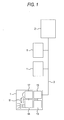
- Fig. 1 is a diagram showing the overall construction of an elevator landing call register according to a first embodiment of the present invention.
- one or more elevator landing call registers 1 according to an embodiment 1 of the present invention are set up at each landing hall.
- Each elevator landing call register 1 comprises a call registering button 11, a speech input device 12, a speech recognizing device 13, a sound output device 14, a call control unit 15, etc., and each of these elements is connected to the elevator control device 2 through the communication path 3.
- the call registering button 11 comprises call upward and downward buttons on intermediate floors as in the case of the normal call registering button, comprises a call upward button on the lowermost floor, and comprises a downward button on the uppermost floor.
- the operation procedure to be executed by an elevator user requiring speech recognition is changed from the operation to be normally executed on the upward or downward button of the call registering button 11 (for example, the button is once operated for one second or less), whereby the operation based on the user and the normal operation can be discriminated from each other.
- the user concerned pushes the call registering button 11 for a long time (for example, one second or more), pushes the call registering button 11 at plural times (for twice or more) within a fixed time, or strongly pushes the call registering button 11, a direction call of the call registering button 11 operated on that floor is input, and also the speech input device 12 and the speech recognizing device 13 described below function respectively. That is, even when an elevator user which does not need speech recognition normally operates the call registering button 11, a direction call of the call registering button operated on that floor is input, however, the speech recognition function is not enabled.
- the speech input device 12 is enabled only when the call control unit 15 detects that an elevator user who needs the speech recognition function carries out a different operation from the normal operation on the call registering button 11, and a speech (a destination floor name) of the user is input through a microphone or the like. That is, only when the operation different from the normal operation (for example, once operation for one second or less) is carried out on the call registering button 11, the input (destination floor name) of the speech of the user is accepted.
- the speech recognition device 13 is enabled only when the call control unit 15 detects the operation of the call registering button 11 which is different from the normal operation as in the case of the speech input device 12, and it recognizes the destination floor based on the speech which is input by the speech input device 12. That is, the speech recognition device 13 recognizes a speech only when the elevator user needing the speech recognition function carries out a predetermined operation on the call registering button 11, and recognizes the destination floor on the basis of the user' s speech input from the speech input device 12.
- the call control unit 15 When the normal operation (pushing for one second or less) is carried out on the call control unit 15, the call control unit 15 reports the name of the floor having the call registering button 11 concerned set thereon and the call direction (upward or downward) through the communication path 3 to the elevator control device 2. In addition, when the operation different from the normal operation is carried out on the call registering button 11, the call control unit 15 reports the destination floor recognized on the basis of the speech of the speech recognition device 13 to the elevator control device 2. That is, when the call registering button 11 is operated in a predetermined procedure different from the normal procedure, the functions of the speech input device 12 and the speech recognition device 13 are enabled, and the destination floor recognized by the speech recognition device 13 is reported to the elevator control device 2.
- the call control unit 15 records the existence or non-existence of the destination floor, and it has a function of collating the direction of the operated call registering button 11 with the existence or non-existence of the destination floor recognized by the speech recognition device 13 and the destination direction to the destination floor, and then reporting to the elevator control device 2.
- the call control unit 15 enables the speech recognition function, and recognizes only the speech of the requiring user, so that mis-recognition can be suppressed. Furthermore, the elevator user who does not need the speech recognition function is not required to utter the destination floor by using the cumbersome speech recognition device 13, and thus there can be provided the landing call register 1 which has high convenience and reliability to any user.
- the speech recognition device 13 and the call control unit 15 may be constructed by a microcomputer, a memory, etc. Furthermore, a memory may be contained in a microcomputer. Furthermore, the functions of parts of the speech input device 12 and a sound output device 14 described later may be contained in a microcomputer. Accordingly, the landing call register can be constructed by using more general parts, and thus the cost can be reduced.
- the speech recognition function of the speech recognition device 13 is enabled, and the destination floor which is recognized on the basis of the speech of the user by the speech recognition device 13 is reported to the elevator control device 2 through the communication path 3 to register the recognized destination floor.
- necessary sound information is taken out from the sound information stored in the call control unit 15 of Fig. 1, and the sound output device 14 reports the completion of the call registration of the destination floor to the user with a voice (for example, "OO floor accepted") or a response sound (for example, "piche”) from a speaker.
- the elevator user needing the speech recognition for example, a vision-impaired person can check with sounds that the speech uttered by the person concerned is correctly recognized, and thus he/she feels reassured.
- the call control unit 15 collates the recognized destination floor with the stored floor destination floors so as to judge whether the recognized destination floor exists. If the recognized destination floor does not exist, it is reported to the user from the sound output device 14 that the destination floor concerned does not exist. At this time, the call control unit 15 takes out stored sound information, for example, "the recognized floor is not registrable, and please utter once again", a response sound "piche piche” or the like, and outputs it from the sound output device 14. Accordingly, the vision-impaired person recognizes it with the sound that the uttered floor name cannot be registered and thus can retry to utter or the like, and thus the convenience can be enhanced.
- the speech recognition function of the speech recognition device 13 is enabled, and the destination floor recognized on the basis of the utterance of the user by the speech recognition device 13 is reported through the communication path 3 to the elevator control device 2.
- the call control unit 15 of this embodiment 3 checks whether the direction of the operated call registering button 11 is coincident with the destination direction to the destination floor recognized by the speech recognition device 13, and further checks whether the recognized destination floor exists or not. If the destination floor exists and both the directions are coincident with each other, the destination floor is reported to the elevator control device 2.
- the recognized floor destination is judged as being invalid, and nothing is reported to the elevator control device 2. Accordingly, only the matched destination floor is reported, and thus there can be provided the landing call register 1 having a high recognition rate. Therefore, the convenience for the users can be enhanced.
- the call control unit 15 may instruct the sound output device 14 to emit a sound such as an utterance of "please utter once again” or the like, a warning sound "piche piche” or the like, and report from the sound output device 14 to the user. Accordingly, the user can know whether the destination floor uttered by himself/herself is correctly registered, and if he/she can known that it is not registrable, he/she can retry the utterance and repeat the utterance until the speech recognition device 13 correctly recognizes the utterance. Accordingly, there can be provided the landing call register 1 that puts the user at his/her ease and has high recognition rate. Therefore, the convenience can be enhanced.
- Fig. 2 is a flowchart showing the operation of an elevator landing call register according to the embodiments 1 to 3.
- the operation of the elevator landing call register according to the embodiments 1 to 3 will be described hereunder with reference to Fig. 2.
- the landing call register 1 is set to a standby state for the operation of the call registering button 11 (S1).
- the call control unit 15 judges that the operation of the call registering button 11 is normally operated (S2), and it reports the floor of the operated calling registering button 11 and the pushed call direction (upward, downward) through the communication path 3 to the elevator control device 2 and registers the call (S3).
- the elevator control device 2 allocates an elevator in accordance with the reported floor and call direction (upward, downward) (S3).
- the landing call register 1 is set to a standby state for the call registration button 11 again (S1).
- the operation by an elevator user who needs the speech recognition device for example, a physically handicapped person
- a physically handicapped person operates the button according to the predetermined procedure, that is, when the operation of the call registering button 11 is a special operation different from the normal operation (for example, long-time pushing for one second or more, pushing at plural times within a fixed time, strongly pushing, or the like)
- the speech recognition device 13 takes out necessary sound information (in this case, "please utter destination floor” or a response sound "pi") or the like, and outputs the sound to the sound output device 14, whereby the physically handicapped person is informed of a using manner or that the device has responded (S4).
- the speech recognition device 13 is set to a standby state for an input from the speech input device 12 (S5).
- the speech recognition device 13 recognizes the input concerned (S7). For example, when "fourth floor” is input, the speech recognition device 13 recognizes "fourth floor", and the call control unit 15 judges whether the direction (upward, downward) of the call registering button 11 operated in S2 is coincident with the destination direction of the recognized floor (S8). If no speech input can be detected during a fixed time or more, the function of the speech recognition function is disabled, and a standby state for the normal operation of the call registering button is set (S6).
- the sound information stored in the call control unit 15, for example, "please utter once again” or a response sound “piche piche” is taken out and output from the sound output device 14 (S9) and then the standby state is set again (S5). If the recognized floor destination direction and the direction of the call registering button 11 are coincident with each other, the call control unit 15 reports the destination floor (fourth floor in this case) to the elevator control device 2 through the communication path 3 (S10). When no recognized destination floor exists (S11), the call control unit 15 reports to the landing call register 1 that the destination floor is a non-existing floor.
- the call control unit 15 takes out the stored sound information, for example, "please utter once again” or a response sound “piche piche”, outputs it from the sound output device 14 (S9), and is set to the standby state again (S5).
- the elevator controller 2 registers the destination floor, allocates an elevator on the basis of the reported destination floor (S12), and reports the registration concerned to the landing call register 1.
- the call control unit 15 takes the stored sound information, for example, "fourth floor registered", “fourth floor accepted” or a response sound "piche”, and outputs it from the sound output device 14 (S13).
- the landing call register 1 itself records the existence or non-existence of the destination floor, and collates the existence or non-existence of the recognized destination floor and the destination direction with the direction of the operated call registering button.
- the elevator control device 2 receiving a report of the recognized destination floor from the landing call register 1 collates the existence or non-existence of the recognized destination floor and reports to the landing call register 1, the same effect can be achieved.
- the present invention is suitably used as a landing call register for an elevator, particularly, an elevator usable for both physically handicapped persons and able-bodied persons.
Landscapes
- Engineering & Computer Science (AREA)
- Automation & Control Theory (AREA)
- Computer Networks & Wireless Communication (AREA)
- Indicating And Signalling Devices For Elevators (AREA)
- Elevator Control (AREA)
Abstract
An elevator landing call register comprising a landing call registering button (11), a speech input device (12), a speech recognizing device (13) for receiving a speech signal of a user and recognizing a destination floor, and a call control unit (15) for receiving the outputs from the registering button, the speech input device and the speech recognition device and reporting to the elevator control device (2) wherein when the call registering button (11) is operated in predetermined procedures, the call control unit (15) enables the speech recognition function of the speech recognition device, and reports the destination floor recognized by the speech recogniting device to the elevator control device.
Description
- The present invention relates to an elevator landing call register that are placed at a landing hall and usable for both physically handicapped persons and able-bodied persons.
- A conventional call register is equipped with means for exercising a speech recognition function by detecting existence of a user. For example, according to an elevator landing register disclosed in Patent Document 1, when call registration is made by a microphone set in an elevator hall, human detecting means detects whether a user of an elevator stands in front of the microphone, and speech recognizing means is made operable only when it is detected by the human detecting means that an elevator user stands in front of the microphone. Furthermore, according to an elevator calling register disclosed in
Patent Document 2, a call registering speech from a user is input by a microphone only when human detecting means detects that a person stands in front of the microphone. However, in a case where the human detecting means does not detect existence of any person, even if there is a speech input to the microphone, it is judged as a noise and the recognition processing operation is not operated, thereby preventing malfunction. - [Patent Document 1]
Japanese Patent Number 2,557,939
[Patent Document 2]Japanese Patent Number 2,647,207 - The conventional elevator landing call register has a problem that speech of a user for which speech recognition is not required is also recognized if a person is detected because the speech recognition functions when a person enters a detection range. Furthermore, when the conventional device is designed so that all users use this conventional device, a user who hurries and thus does not need speech recognition is required to execute speech recognition with spending some time every time. Therefore, some users may have sense of discomfort with their unnecessary speech input.
The present invention has been implemented to solve the problem as described above. - An elevator landing call register according to the present invention comprises a call register button operated at a landing hall by a user, a speech input device for inputting utterance of a destination floor by the user, a speech recognizing device for receiving a speech signal of the user output from the speech input device and recognizing the destination floor, and a call control unit for receiving the respective outputs of the call registering button, the speech input device and the speech recognizing device and reporting to an elevator control device, wherein when the call registering button is operated according to a predetermined procedure, the call control unit enables the speech recognition function of the speech recognizing device and also reports the destination floor recognized by the speech recognizing device to the elevator control device.
- In the conventional landing call register using elevator speech recognition, the speech recognizing means is actuated to perform call registration when an elevator user is detected at a landing hall. However, according to the elevator landing call register of the present invention, the call control unit enables the speech recognition function only when an elevator user needing the speech recognition function operates a call registering button at a landing hall according to a predetermined procedure. Therefore, only the speech of the user needing the speech recognition function is recognized, and the call control unit reports the recognized destination floor to the elevator control device to register the destination floor. Accordingly, a user who does not need the speech recognition function is not required to utter a destination floor by using cumbersome speech recognition function means, and thus there can be provided a landing call register that is highly convenient for any user and has little mis-recognition.
-
- [Fig. 1] is a diagram showing the overall construction of an elevator landing call register according to embodiments 1 to 3 of the present invention.
- [Fig. 2] is a flowchart showing the operation of the elevator landing call register according to the embodiments 1 to 3.
-
- 1
- landing call register
- 2
- elevator control device
- 3
- communication path
- 11
- call registering button
- 12
- speech input device
- 13
- speech recognition device
- 14
- sound output device
- 15
- call control unit
- The present invention relates to a elevator landing call register set at an elevator landing hall, and relates to a landing call register equipped with a speech recognizing device with which an elevator user needing speech recognition function registers a destination floor by speech.
Each embodiment of the present invention will be described hereunder with reference to the drawings. In the figures, the same reference numerals represent the same or corresponding portions. - Fig. 1 is a diagram showing the overall construction of an elevator landing call register according to a first embodiment of the present invention.
In Fig. 1, one or more elevator landing call registers 1 according to an embodiment 1 of the present invention are set up at each landing hall. Each elevator landing call register 1 comprises acall registering button 11, aspeech input device 12, aspeech recognizing device 13, asound output device 14, acall control unit 15, etc., and each of these elements is connected to theelevator control device 2 through the communication path 3. - Next, the respective functions of the
call registering button 11, thespeech input device 12, thespeech recognizing device 13, thesound output device 14, thecall control unit 15 and theelevator control device 2 will be described.
The call registeringbutton 11 comprises call upward and downward buttons on intermediate floors as in the case of the normal call registering button, comprises a call upward button on the lowermost floor, and comprises a downward button on the uppermost floor. The operation procedure to be executed by an elevator user requiring speech recognition is changed from the operation to be normally executed on the upward or downward button of the call registering button 11 (for example, the button is once operated for one second or less), whereby the operation based on the user and the normal operation can be discriminated from each other.
For example, when the user concerned pushes the call registeringbutton 11 for a long time (for example, one second or more), pushes the call registeringbutton 11 at plural times (for twice or more) within a fixed time, or strongly pushes the call registeringbutton 11, a direction call of the call registeringbutton 11 operated on that floor is input, and also thespeech input device 12 and thespeech recognizing device 13 described below function respectively.
That is, even when an elevator user which does not need speech recognition normally operates the call registeringbutton 11, a direction call of the call registering button operated on that floor is input, however, the speech recognition function is not enabled. - The
speech input device 12 is enabled only when thecall control unit 15 detects that an elevator user who needs the speech recognition function carries out a different operation from the normal operation on the call registeringbutton 11, and a speech (a destination floor name) of the user is input through a microphone or the like. That is, only when the operation different from the normal operation (for example, once operation for one second or less) is carried out on the call registeringbutton 11, the input (destination floor name) of the speech of the user is accepted. - The
speech recognition device 13 is enabled only when thecall control unit 15 detects the operation of thecall registering button 11 which is different from the normal operation as in the case of thespeech input device 12, and it recognizes the destination floor based on the speech which is input by thespeech input device 12.
That is, thespeech recognition device 13 recognizes a speech only when the elevator user needing the speech recognition function carries out a predetermined operation on the call registeringbutton 11, and recognizes the destination floor on the basis of the user' s speech input from thespeech input device 12. - When the normal operation (pushing for one second or less) is carried out on the
call control unit 15, thecall control unit 15 reports the name of the floor having the call registeringbutton 11 concerned set thereon and the call direction (upward or downward) through the communication path 3 to theelevator control device 2. In addition, when the operation different from the normal operation is carried out on the call registeringbutton 11, thecall control unit 15 reports the destination floor recognized on the basis of the speech of thespeech recognition device 13 to theelevator control device 2. That is, when thecall registering button 11 is operated in a predetermined procedure different from the normal procedure, the functions of thespeech input device 12 and thespeech recognition device 13 are enabled, and the destination floor recognized by thespeech recognition device 13 is reported to theelevator control device 2.
Furthermore, thecall control unit 15 records the existence or non-existence of the destination floor, and it has a function of collating the direction of the operated call registeringbutton 11 with the existence or non-existence of the destination floor recognized by thespeech recognition device 13 and the destination direction to the destination floor, and then reporting to theelevator control device 2. - With the above construction, only when the elevator user needing the speech recognition function operates the call registering
button 11 in the predetermined procedure, thecall control unit 15 enables the speech recognition function, and recognizes only the speech of the requiring user, so that mis-recognition can be suppressed. Furthermore, the elevator user who does not need the speech recognition function is not required to utter the destination floor by using the cumbersomespeech recognition device 13, and thus there can be provided the landing call register 1 which has high convenience and reliability to any user. - The
speech recognition device 13 and thecall control unit 15 may be constructed by a microcomputer, a memory, etc. Furthermore, a memory may be contained in a microcomputer. Furthermore, the functions of parts of thespeech input device 12 and asound output device 14 described later may be contained in a microcomputer. Accordingly, the landing call register can be constructed by using more general parts, and thus the cost can be reduced. - In the embodiment 1, only when it is detected that the
call registering button 11 is operated by the elevator user needing the speech recognition, the speech recognition function of thespeech recognition device 13 is enabled, and the destination floor which is recognized on the basis of the speech of the user by thespeech recognition device 13 is reported to theelevator control device 2 through the communication path 3 to register the recognized destination floor.
On the other hand, in thesecond embodiment 2, in addition to the above operation, necessary sound information is taken out from the sound information stored in thecall control unit 15 of Fig. 1, and thesound output device 14 reports the completion of the call registration of the destination floor to the user with a voice (for example, "OO floor accepted") or a response sound (for example, "piche") from a speaker. Accordingly, the elevator user needing the speech recognition, for example, a vision-impaired person can check with sounds that the speech uttered by the person concerned is correctly recognized, and thus he/she feels reassured. - The
call control unit 15 collates the recognized destination floor with the stored floor destination floors so as to judge whether the recognized destination floor exists. If the recognized destination floor does not exist, it is reported to the user from thesound output device 14 that the destination floor concerned does not exist. At this time, thecall control unit 15 takes out stored sound information, for example, "the recognized floor is not registrable, and please utter once again", a response sound "piche piche" or the like, and outputs it from thesound output device 14. Accordingly, the vision-impaired person recognizes it with the sound that the uttered floor name cannot be registered and thus can retry to utter or the like, and thus the convenience can be enhanced. - In the embodiment 1, only when it is detected that the
call registering button 11 is operated by the elevator user who needs the speech recognition, the speech recognition function of thespeech recognition device 13 is enabled, and the destination floor recognized on the basis of the utterance of the user by thespeech recognition device 13 is reported through the communication path 3 to theelevator control device 2.
On the other hand, thecall control unit 15 of this embodiment 3 checks whether the direction of the operatedcall registering button 11 is coincident with the destination direction to the destination floor recognized by thespeech recognition device 13, and further checks whether the recognized destination floor exists or not. If the destination floor exists and both the directions are coincident with each other, the destination floor is reported to theelevator control device 2. However, if both the directions are not coincident with each other, the recognized floor destination is judged as being invalid, and nothing is reported to theelevator control device 2. Accordingly, only the matched destination floor is reported, and thus there can be provided the landing call register 1 having a high recognition rate. Therefore, the convenience for the users can be enhanced. - Furthermore, the
call control unit 15 may instruct thesound output device 14 to emit a sound such as an utterance of "please utter once again" or the like, a warning sound "piche piche" or the like, and report from thesound output device 14 to the user. Accordingly, the user can know whether the destination floor uttered by himself/herself is correctly registered, and if he/she can known that it is not registrable, he/she can retry the utterance and repeat the utterance until thespeech recognition device 13 correctly recognizes the utterance. Accordingly, there can be provided the landing call register 1 that puts the user at his/her ease and has high recognition rate. Therefore, the convenience can be enhanced. - Fig. 2 is a flowchart showing the operation of an elevator landing call register according to the embodiments 1 to 3.
The operation of the elevator landing call register according to the embodiments 1 to 3 will be described hereunder with reference to Fig. 2.
First, the normal operation by an elevator user who does not need the speech recognition device, for example, an able-bodied person will be described.
First, the landing call register 1 is set to a standby state for the operation of the call registering button 11 (S1). When thecall registering button 11 pushes for a normal short time (for one second or less), thecall control unit 15 judges that the operation of thecall registering button 11 is normally operated (S2), and it reports the floor of the operated callingregistering button 11 and the pushed call direction (upward, downward) through the communication path 3 to theelevator control device 2 and registers the call (S3).
Theelevator control device 2 allocates an elevator in accordance with the reported floor and call direction (upward, downward) (S3). When the elevator allocation is completed and the call registration is released, the landing call register 1 is set to a standby state for thecall registration button 11 again (S1). - Next, the operation by an elevator user who needs the speech recognition device, for example, a physically handicapped person will be described.
When a physically handicapped person operates the button according to the predetermined procedure, that is, when the operation of thecall registering button 11 is a special operation different from the normal operation (for example, long-time pushing for one second or more, pushing at plural times within a fixed time, strongly pushing, or the like), thespeech recognition device 13 takes out necessary sound information (in this case, "please utter destination floor" or a response sound "pi") or the like, and outputs the sound to thesound output device 14, whereby the physically handicapped person is informed of a using manner or that the device has responded (S4).
Thespeech recognition device 13 is set to a standby state for an input from the speech input device 12 (S5). When utterance of a destination floor is input (S6), thespeech recognition device 13 recognizes the input concerned (S7). For example, when "fourth floor" is input, thespeech recognition device 13 recognizes "fourth floor", and thecall control unit 15 judges whether the direction (upward, downward) of thecall registering button 11 operated in S2 is coincident with the destination direction of the recognized floor (S8).
If no speech input can be detected during a fixed time or more, the function of the speech recognition function is disabled, and a standby state for the normal operation of the call registering button is set (S6).
If the destination direction of the recognized floor and the direction of the operatedcall registering button 11 are not coincident with each other, the sound information stored in thecall control unit 15, for example, "please utter once again" or a response sound "piche piche" is taken out and output from the sound output device 14 (S9) and then the standby state is set again (S5).
If the recognized floor destination direction and the direction of thecall registering button 11 are coincident with each other, thecall control unit 15 reports the destination floor (fourth floor in this case) to theelevator control device 2 through the communication path 3 (S10).
When no recognized destination floor exists (S11), thecall control unit 15 reports to the landing call register 1 that the destination floor is a non-existing floor. At this time, thecall control unit 15 takes out the stored sound information, for example, "please utter once again" or a response sound "piche piche", outputs it from the sound output device 14 (S9), and is set to the standby state again (S5).
When the destination floor recognized by thecall control unit 15 exists (S11), theelevator controller 2 registers the destination floor, allocates an elevator on the basis of the reported destination floor (S12), and reports the registration concerned to the landing call register 1. Thecall control unit 15 takes the stored sound information, for example, "fourth floor registered", "fourth floor accepted" or a response sound "piche", and outputs it from the sound output device 14 (S13). - With respect to the stored sound information, plural segments such as "four" and "floor accepted" are connected to each other and then output, whereby the same phrases can be repetitively used. Therefore, the memory capacity for storing the sound information can be reduced, and thus the cost can be reduced.
Furthermore, when no speech input is detected during a fixed time or more after thecall registering button 11 is once operated according to the predetermined procedure (the operation of the call registering button by a physically handicapped person) different from the normal procedure, the function of the speech recognition is disabled again, and the standby state for the normal call registering button is set. Accordingly, the convenience can be enhanced without disturbing the convenience for able-bodied persons. - In the above embodiment, the landing call register 1 itself records the existence or non-existence of the destination floor, and collates the existence or non-existence of the recognized destination floor and the destination direction with the direction of the operated call registering button. However, even when the
elevator control device 2 receiving a report of the recognized destination floor from the landing call register 1 collates the existence or non-existence of the recognized destination floor and reports to the landing call register 1, the same effect can be achieved. - The present invention is suitably used as a landing call register for an elevator, particularly, an elevator usable for both physically handicapped persons and able-bodied persons.
Claims (6)
- An elevator call register characterized by comprising: a call registering button operated at a landing hall by a user; a speech input device for inputting an utterance of a destination floor by the user; a speech recognition device for receiving a speech signal of the user output from the speech input device and recognizing the destination floor; and a call control unit for receiving the respective outputs of the call registering button, the speech input device and the speech recognition device and reporting to the elevator control device, wherein when the call registering button is operated according to a predetermined procedure, the call control unit enables a speech recognition function of the speech recognition device, and reports the destination floor recognized by the speech recognition device to the elevator control device.
- The elevator call register according to claim 1, further comprising a sound output device for making a sound guidance indicating that the destination floor recognized by the speech recognition device is call-registered.
- The elevator call register according to claim 2, wherein the direction of the operated call registering button and the destination direction to the destination floor recognized by the speech recognition device are collated with each other, and when the call control unit judges that both the direction and the destination direction are not coincident with each other, the call control unit invalidates the call registration, and the sound output device makes a sound guidance so as to promote a speech to be input again.
- The elevator call register according to any one of claims 1 to 3, wherein the operation in the predetermined procedure is to push the call registering button for a predetermined time or more.
- The elevator call register according to any one of claims 1 to 3, wherein the operation in the predetermined procedure is to push the call registering button at plural times within a fixed time.
- The elevator call register according to any one of claims 1 to 3, wherein the operation in the predetermined procedure is to push the call registering button more strongly than a normal operation.
Applications Claiming Priority (2)
| Application Number | Priority Date | Filing Date | Title |
|---|---|---|---|
| JP2005152337A JP2006327739A (en) | 2005-05-25 | 2005-05-25 | Elevator hall call registration device |
| PCT/JP2006/309405 WO2006126395A1 (en) | 2005-05-25 | 2006-05-10 | Elevator landing call register |
Publications (1)
| Publication Number | Publication Date |
|---|---|
| EP1884491A1 true EP1884491A1 (en) | 2008-02-06 |
Family
ID=37451821
Family Applications (1)
| Application Number | Title | Priority Date | Filing Date |
|---|---|---|---|
| EP06746219A Withdrawn EP1884491A1 (en) | 2005-05-25 | 2006-05-10 | Elevator landing call register |
Country Status (5)
| Country | Link |
|---|---|
| EP (1) | EP1884491A1 (en) |
| JP (1) | JP2006327739A (en) |
| KR (1) | KR20070067191A (en) |
| CN (1) | CN101061050A (en) |
| WO (1) | WO2006126395A1 (en) |
Cited By (5)
| Publication number | Priority date | Publication date | Assignee | Title |
|---|---|---|---|---|
| EP2399857A4 (en) * | 2009-02-18 | 2012-07-25 | Mitsubishi Electric Corp | ELEVATOR SYSTEM |
| CN103193124A (en) * | 2013-04-07 | 2013-07-10 | 上海微频莱机电科技有限公司 | Voice announcement device |
| EP2332873A4 (en) * | 2008-10-03 | 2014-05-14 | Mitsubishi Electric Corp | ELEVATOR DESTINATION STAGE RECORDING DEVICE |
| EP2573034A4 (en) * | 2010-05-18 | 2017-06-28 | Mitsubishi Electric Corporation | Elevator call registration device |
| EP3285160A1 (en) * | 2016-08-19 | 2018-02-21 | Otis Elevator Company | Intention recognition for triggering voice recognition system |
Families Citing this family (28)
| Publication number | Priority date | Publication date | Assignee | Title |
|---|---|---|---|---|
| EP2311766B1 (en) * | 2008-08-11 | 2016-05-04 | Mitsubishi Electric Corporation | Elevator operation control device |
| CN101746650B (en) * | 2008-11-28 | 2012-02-08 | 上海三菱电梯有限公司 | Storey setting method for elevator storey station controller |
| JP5402021B2 (en) * | 2009-01-26 | 2014-01-29 | 三菱電機株式会社 | Elevator call registration device |
| WO2011104817A1 (en) * | 2010-02-23 | 2011-09-01 | 三菱電機株式会社 | Destination floor registration device for elevator |
| CN102762477B (en) * | 2010-03-12 | 2014-11-05 | 三菱电机株式会社 | Voice call registration device for elevator |
| JP2012116575A (en) * | 2010-11-29 | 2012-06-21 | Toshiba Elevator Co Ltd | Call registration device for elevator |
| KR101530468B1 (en) | 2011-01-26 | 2015-06-19 | 미쓰비시덴키 가부시키가이샤 | Elevator device |
| JP5743321B2 (en) * | 2011-03-23 | 2015-07-01 | 東芝エレベータ株式会社 | Elevator system |
| CN103415458B (en) * | 2011-03-25 | 2015-11-25 | 三菱电机株式会社 | The call registration device of elevator |
| CN102303797B (en) * | 2011-08-12 | 2014-11-05 | 上海富士电梯有限公司 | Elevator control system with voice recognition device |
| WO2013076862A1 (en) * | 2011-11-25 | 2013-05-30 | 三菱電機株式会社 | Elevator apparatus |
| US9598263B2 (en) | 2012-03-02 | 2017-03-21 | Mitsubishi Electric Corporation | Elevator device |
| CN103193118B (en) * | 2013-03-28 | 2015-06-10 | 日立电梯(上海)有限公司 | System and method for reminding passengers entering elevator cars of calling |
| WO2015025341A1 (en) * | 2013-08-21 | 2015-02-26 | 三菱電機株式会社 | Elevator control device |
| JP6248717B2 (en) * | 2014-03-12 | 2017-12-20 | 三菱電機株式会社 | Elevator control device |
| CN106163956A (en) * | 2014-03-28 | 2016-11-23 | 因温特奥股份公司 | Elevator device |
| JP6159364B2 (en) * | 2015-06-09 | 2017-07-05 | 東芝エレベータ株式会社 | Interactive elevator |
| CN105967015A (en) * | 2016-07-13 | 2016-09-28 | 海宁德尔格电梯股份有限公司 | Control box integrated with voice function |
| JP2018135188A (en) * | 2017-02-22 | 2018-08-30 | 株式会社日立ビルシステム | Elevator call system |
| JP6466516B2 (en) * | 2017-06-19 | 2019-02-06 | 東芝エレベータ株式会社 | Destination floor control device and elevator operation method |
| CN107601190B (en) * | 2017-08-29 | 2019-05-17 | 日立楼宇技术(广州)有限公司 | A kind of voice calls terraced method and device together |
| JP6786459B2 (en) * | 2017-09-15 | 2020-11-18 | 株式会社日立製作所 | Building management system equipment |
| US11708240B2 (en) | 2018-07-25 | 2023-07-25 | Otis Elevator Company | Automatic method of detecting visually impaired, pregnant, or disabled elevator passenger(s) |
| CN111348499A (en) * | 2020-03-02 | 2020-06-30 | 北京声智科技有限公司 | Elevator control method, elevator control device, electronic equipment and computer-readable storage medium |
| JP7538687B2 (en) * | 2020-10-28 | 2024-08-22 | 株式会社日立製作所 | Elevator and call registration device |
| KR102582344B1 (en) | 2021-07-05 | 2023-09-26 | 현대엘리베이터주식회사 | Voice recognition elevator calling system and method |
| CN114476881A (en) * | 2021-12-20 | 2022-05-13 | 任中涛 | Intelligent sound box device capable of accurately identifying and controlling elevator keys and electric appliance switch keys |
| CN117963661A (en) * | 2022-10-26 | 2024-05-03 | 东芝电梯株式会社 | Elevator voice operating system and elevator equipped with the same |
Family Cites Families (11)
| Publication number | Priority date | Publication date | Assignee | Title |
|---|---|---|---|---|
| JPS5688077A (en) * | 1979-12-19 | 1981-07-17 | Hitachi Ltd | Cryptograph type operation changeeover device for elevator |
| JPS5757173A (en) * | 1980-09-18 | 1982-04-06 | Mitsubishi Electric Corp | Controller for elevator |
| JPH0518362Y2 (en) * | 1987-06-03 | 1993-05-17 | ||
| JPH02147577A (en) * | 1988-11-30 | 1990-06-06 | Toshiba Corp | Elevator calling registration device |
| JPH0373775A (en) * | 1989-08-14 | 1991-03-28 | Toshiba Corp | Information input device for elevator |
| JPH04191259A (en) * | 1990-11-27 | 1992-07-09 | Toshiba Corp | Group control unit for elevator |
| JPH04191256A (en) * | 1990-11-27 | 1992-07-09 | Toshiba Corp | Information input unit for elevator |
| JPH0592881A (en) * | 1991-09-30 | 1993-04-16 | Toshiba Corp | Elevator call registration controller |
| JPH0597330A (en) * | 1991-10-03 | 1993-04-20 | Toshiba Corp | Cipher input type landing place call registering device for elevator |
| JPH05178548A (en) * | 1991-12-26 | 1993-07-20 | Toda Constr Co Ltd | Floor indicating method for elevator |
| JPH08268653A (en) * | 1995-03-29 | 1996-10-15 | Fujitec Co Ltd | Elevator controller |
-
2005
- 2005-05-25 JP JP2005152337A patent/JP2006327739A/en active Pending
-
2006
- 2006-05-10 EP EP06746219A patent/EP1884491A1/en not_active Withdrawn
- 2006-05-10 CN CNA2006800011870A patent/CN101061050A/en active Pending
- 2006-05-10 WO PCT/JP2006/309405 patent/WO2006126395A1/en not_active Ceased
- 2006-05-10 KR KR1020077010433A patent/KR20070067191A/en not_active Ceased
Non-Patent Citations (1)
| Title |
|---|
| See references of WO2006126395A1 * |
Cited By (5)
| Publication number | Priority date | Publication date | Assignee | Title |
|---|---|---|---|---|
| EP2332873A4 (en) * | 2008-10-03 | 2014-05-14 | Mitsubishi Electric Corp | ELEVATOR DESTINATION STAGE RECORDING DEVICE |
| EP2399857A4 (en) * | 2009-02-18 | 2012-07-25 | Mitsubishi Electric Corp | ELEVATOR SYSTEM |
| EP2573034A4 (en) * | 2010-05-18 | 2017-06-28 | Mitsubishi Electric Corporation | Elevator call registration device |
| CN103193124A (en) * | 2013-04-07 | 2013-07-10 | 上海微频莱机电科技有限公司 | Voice announcement device |
| EP3285160A1 (en) * | 2016-08-19 | 2018-02-21 | Otis Elevator Company | Intention recognition for triggering voice recognition system |
Also Published As
| Publication number | Publication date |
|---|---|
| WO2006126395A1 (en) | 2006-11-30 |
| KR20070067191A (en) | 2007-06-27 |
| CN101061050A (en) | 2007-10-24 |
| JP2006327739A (en) | 2006-12-07 |
Similar Documents
| Publication | Publication Date | Title |
|---|---|---|
| EP1884491A1 (en) | Elevator landing call register | |
| JP5274569B2 (en) | Elevator destination floor registration device | |
| US9384733B2 (en) | Call registration device for elevator | |
| JP5447659B2 (en) | Elevator call registration device | |
| EP4008658B1 (en) | Elevator car space allocation based on detecting voices of potential passengers | |
| EP2615052A1 (en) | Operation device of elevator | |
| JP2002128404A (en) | Elevator call registration device | |
| EP2573034A1 (en) | Elevator call registration device | |
| JP2015101442A (en) | Elevator system | |
| JP4237876B2 (en) | elevator | |
| JP2647207B2 (en) | Elevator call registration device | |
| KR100448869B1 (en) | An apparatus for controling service of elevator by recognize voice | |
| JP2000034066A (en) | Elevator control device | |
| KR200271438Y1 (en) | An apparatus for controling service of elevator by recognize voice | |
| JP6422365B2 (en) | Elevator voice call registration device and elevator voice call registration method | |
| JP2012197126A (en) | Call registering device for elevator | |
| JPH02147577A (en) | Elevator calling registration device | |
| KR20230091479A (en) | Elevator voice recognition operation control device for the visually impaired | |
| JPWO2020003449A1 (en) | Notification control device | |
| CN114506755A (en) | Elevator calling action control device and method | |
| JP3782508B2 (en) | Elevator driving equipment | |
| JP2003122392A (en) | Method and apparatus for determining voice input | |
| JP2002167128A (en) | Elevator call registration device | |
| JPH01256470A (en) | Driving device for elevator | |
| JPS5957874A (en) | Messaging device for elevator for physically handicapped pe-rson |
Legal Events
| Date | Code | Title | Description |
|---|---|---|---|
| PUAI | Public reference made under article 153(3) epc to a published international application that has entered the european phase |
Free format text: ORIGINAL CODE: 0009012 |
|
| 17P | Request for examination filed |
Effective date: 20070418 |
|
| AK | Designated contracting states |
Kind code of ref document: A1 Designated state(s): DE |
|
| DAX | Request for extension of the european patent (deleted) | ||
| RBV | Designated contracting states (corrected) |
Designated state(s): DE |
|
| STAA | Information on the status of an ep patent application or granted ep patent |
Free format text: STATUS: THE APPLICATION HAS BEEN WITHDRAWN |
|
| 18W | Application withdrawn |
Effective date: 20111202 |