EP1843618A2 - Funkbasisstation und Verfahren zum Erkennen von Überlappungen von Funkkommunikationsparametern - Google Patents
Funkbasisstation und Verfahren zum Erkennen von Überlappungen von Funkkommunikationsparametern Download PDFInfo
- Publication number
- EP1843618A2 EP1843618A2 EP20070007111 EP07007111A EP1843618A2 EP 1843618 A2 EP1843618 A2 EP 1843618A2 EP 20070007111 EP20070007111 EP 20070007111 EP 07007111 A EP07007111 A EP 07007111A EP 1843618 A2 EP1843618 A2 EP 1843618A2
- Authority
- EP
- European Patent Office
- Prior art keywords
- base station
- radio base
- common control
- control channel
- reception level
- Prior art date
- Legal status (The legal status is an assumption and is not a legal conclusion. Google has not performed a legal analysis and makes no representation as to the accuracy of the status listed.)
- Withdrawn
Links
Images




Classifications
-
- H—ELECTRICITY
- H04—ELECTRIC COMMUNICATION TECHNIQUE
- H04W—WIRELESS COMMUNICATION NETWORKS
- H04W88/00—Devices specially adapted for wireless communication networks, e.g. terminals, base stations or access point devices
- H04W88/08—Access point devices
-
- H—ELECTRICITY
- H04—ELECTRIC COMMUNICATION TECHNIQUE
- H04W—WIRELESS COMMUNICATION NETWORKS
- H04W72/00—Local resource management
- H04W72/50—Allocation or scheduling criteria for wireless resources
- H04W72/54—Allocation or scheduling criteria for wireless resources based on quality criteria
Definitions
- the present invention relates to a radio base station, which performs radio communications with a mobile station, and a method of detecting overlap of a radio communications parameter.
- the present invention relates to a radio base station and a method of detecting overlap of the radio communications parameter, both of which detect whether or not a parameter for radio communications such as a spreading code for each radio base station is assigned in an overlap manner to a plurality of radio base stations.
- each radio communications channel used in the communications needs to be identified.
- a radio communications system (what is so called the third generation mobile communications system) based on a code division multiple access (hereinafter, referred to as CDMA)
- CDMA code division multiple access
- each communications channel is identified with a spreading code (radio communications parameter), which is a random code sequence.
- a channelization code and a scrambling code (hereinafter, referred to as ScC) are set as the spreading code.
- the channelization code is used for spreading user data in wideband, and the scrambling code is used for preventing interference between cells.
- W-CDMA wideband code division multiple access
- 512 scrambling codes downlink are specified. Since the number of scrambling codes is limited, the same scrambling code is repeatedly assigned in a system while attempting not to assign the same scrambling code to near cells.
- the same scrambling code is not assigned to base stations having overlapping coverage areas which are estimated by the simulation.
- the coverage area means an area where radio waves can reach from the base station. Accordingly, when a radio base station is to be newly provided in due to an increase in traffic, it is necessary to reconsider the assignment of scrambling codes. Moreover, the assignment of scrambling codes needs to be also reconsidered when a difference occurred between the coverage area based on a simulation using a computer and the actual coverage area.
- a radio communications system radio base station and mobile stations
- the radio base stations autonomously determine scrambling codes of a downlink.
- Each mobile station detects the overlap of a scrambling code (downlink) used by a radio base station and a different radio base station located near the radio base station.
- the mobile station notifies the radio base station of the overlap of the scrambling codes which have been autonomously assigned by the base station.
- the radio base station changes the scrambling code to a different scrambling code.
- An object of the present invention is to provide a radio base station and a method of detecting the overlap of a radio communications parameter, both of which are capable of detecting overlap of a radio communications parameter with other base stations without installing a overlap detecting function to a mobile station.
- a first feature of the present invention is summarized as a radio base station (for example, radio base station 100D) performing radio communications with mobile stations (for example, mobile stations 300A to 300N) including a common control channel transmission unit (common control channel transmission unit 114) configured to transmit a common control channel (common control channel CH D ) used commonly for all of the mobile stations located within a cell (cell 10 D ) by using a predetermined radio communications parameter (scrambling code C D ) to be assigned to each radio base station; a transmission pattern controller (transmission level determination unit 110) configured to cause the common control channel to be transmitted from the common control channel transmission unit according to a predetermined transmission pattern (transmission pattern P1); a common control channel reception level acquisition unit (reception unit 104 and reception level observing unit 108) configured to acquire a reception level of the common control channel received by at least any one of the mobile stations; and a overlap determination unit (overlap determination unit 106) configured to determine whether or not the pre
- a predetermined radio communications parameter such as a spreading code overlaps with a radio communications parameter used by a different radio base station is determined based on a reception level of a common control transmission channel received by a mobile station and a predetermined transmission pattern. It should be noted that the measurement of the reception level of a common control channel by a mobile station can be realized by use of an existing function of the mobile station.
- a second feature of the present invention is summarized as the radio base station according to the first feature of the present invention further including a parameter changing unit (parameter changing unit 116) configured to change a value of the predetermined radio communications parameter in a case where the overlap determination unit determines that the predetermined radio communications parameter overlaps with a radio communications parameter used in the different radio base station.
- a parameter changing unit parameter changing unit 116 configured to change a value of the predetermined radio communications parameter in a case where the overlap determination unit determines that the predetermined radio communications parameter overlaps with a radio communications parameter used in the different radio base station.
- a third feature of the present invention is summarized as the radio base station according to second feature of the present invention further including a parameter notification unit (parameter notification unit 118) configured to notify the different radio base station of a radio communications parameter after a change of the predetermined radio communications parameter in a case where the value of the predetermined radio communications parameter is changed by the parameter changing unit.
- a parameter notification unit configured to notify the different radio base station of a radio communications parameter after a change of the predetermined radio communications parameter in a case where the value of the predetermined radio communications parameter is changed by the parameter changing unit.
- a fourth feature of the present invention is summarized as follows.
- the transmission pattern controller causes the common control channel to be transmitted from the common control channel transmission unit according to the predetermined transmission pattern in which transmission of the common control channel, and stopping of the transmission of the common control channel are repeated.
- a fifth feature of the present invention is summarized as follows.
- a period of time, in which the transmission of the common control channel is stopped is shorter than any one of a period of time until the mobile station determines that the mobile station has moved out of the cell (interval S1), and a period of time until the mobile station determines to move to communications via the different base station.
- the overlap determination unit determines that the predetermined radio communications parameter overlaps with the radio communications parameter used by the different radio base station in a case where the reception level, at the time of stopping the transmission of the common control channel, is equal to or greater than a first threshold value (overlap determination threshold value 1).
- a seventh feature of the present invention is summarized as follows.
- the common control channel reception level acquisition unit acquires a reception level of a common control channel (common control channel CH10 A ) which is received from the different radio base station by a mobile station located within a cell (for example, cell 10 A ) served by the different radio base station and wherein the common control channel reception level acquisition unit acquires the reception level from the different radio base station.
- a common control channel common control channel CH10 A
- the overlap determination unit determines that the predetermined radio communications parameter overlaps with the radio communications parameter used in the different radio base station, in a case where a pattern of the reception level of the mobile station located within the cell served by the different radio base station matches the predetermined transmission pattern, while the different radio base station continuously transmits a common control channel.
- a ninth feature of the present invention is summarized as follows.
- the overlap determination unit determines that the predetermined radio communications parameter overlaps with the radio communications parameter used by the different radio base station in a case where a timing at which the reception level becomes equal to or less than a second threshold value synchronizes with a timing at which the transmission of the common control channel is stopped.
- the transmission pattern controller causes the common control channel to be transmitted from the common control channel transmission unit according to the predetermined transmission pattern, in a case where the number of mobile stations located within the cell becomes equal to or greater than a predetermined number.
- An eleventh feature of the present invention provides a method of detecting overlap of a radio communications parameter, which is used for detecting that the radio communications parameter to be assigned to each radio base station performing radio communications with mobile stations is assigned in an overlap manner.
- the method of detecting overlap of a radio communications parameter is summarized as the method including the steps of: transmitting a common control channel used commonly for all of the mobile stations located within a cell served by the radio base station, according to a predetermined transmission pattern; acquiring a reception level of the common control transmission channel received by at least any one of the mobile stations; and determining whether or not the predetermined radio communications parameter overlaps with a radio communications parameter used by a different radio base station based on the reception level acquired in the acquiring step and the predetermined transmission pattern.
- the method may further include the step of changing a value of the predetermined radio communications parameter in a case where it is determined that the predetermined radio communications parameter overlaps with a radio communications parameter used in the different radio base station in the step of determining the overlap of the radio communications parameter.
- the method may further include the step of notifying the different radio base station of a radio communications parameter after a change of the predetermined radio communications parameter in a case where the value of the predetermined radio communications parameter is changed in the step of changing the value of the predetermined radio communications parameter.
- the radio base station may transmit the common control channel according to the predetermined transmission pattern. Then, in the step of acquiring a reception level of the common control transmission channel received by at least any one of the mobile stations, the reception level from the mobile station which has received the common control channel transmitted from the radio base station may be acquired. In the step of determining the overlap of a radio communications parameter, whether or not the predetermined radio communications parameter overlaps with the radio communications parameter used by the different radio base station may be determined based on the reception level acquired from the mobile station which has received the common control channel transmitted from the radio base station.
- the common control channel may be continuously transmitted. Then, in the step of acquiring a reception level of the common control transmission channel received by at least any one of the mobile stations, the reception level may be acquired from the mobile station which has received the common control transmission channel transmitted from the different radio base station. In the step of determining the overlap of a radio communications parameter, whether or not the predetermined radio communications parameter overlaps with the radio communications parameter used by the different radio base station may be determined based on the reception level acquired from the mobile station which has received the common control channel transmitted from the different radio base station.
- the radio base station and the method of detecting overlap of a radio communications parameter, both of which are capable of detecting overlap of a radio communications parameter with other base stations without installing a overlap detecting function to a mobile station.
- Fig. 1 is a schematic configuration diagram of a radio access network according to an embodiment of the present invention.
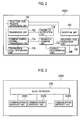
- Fig. 2 is a functional block diagram of a radio base station according to an embodiment of the present invention.
- Fig. 3 is a functional block diagram of a control router according to an embodiment of the present invention.
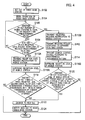
- Fig. 4 is an operation flowchart of the radio base station according to an embodiment of the present invention.
- Figs. 5A to 5C are explanatory diagrams for illustrating an operation of the radio base station according to an embodiment of the present invention.
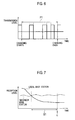
- Fig. 6 is a diagram showing an example of a transmission pattern of a common control channel according to the embodiment of the present invention.
- Fig. 7 is a diagram showing a reception level of a common control channel transmitted from a radio base station communicating with a mobile station according to an embodiment of the present invention.
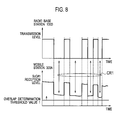
- Fig. 8 is an explanatory diagram showing an operation of detecting overlap of a radio communications parameter by a radio base station according to an embodiment of the present invention.
- Fig. 9 is an explanatory diagram for explaining an operation of detecting the overlap of a radio communications parameter by the radio base station according to an embodiment of the present invention.
- Fig. 10 is an explanatory diagram showing an operation of detecting the overlap of a parameter for radio communications by the radio base station according to an embodiment of the present invention.
- Fig. 1 is a schematic configuration diagram of a radio access network according to an embodiment of the present invention.
- the radio access network according to the embodiment constitutes a CDMA-based radio communications system as shown in Fig. 1.
- the radio access network includes radio base stations 100A to 100D, and control routers 200A and 200B.
- the radio base stations 100A to 100D perform radio communications with mobile stations 300A, 300B and 300N based on CDMA.
- the radio base stations 100A to 100D are capable of transmitting common control channels CH A to CH D which are commonly used for all of the mobile stations located within a cell.
- the control router 200A is connected to the radio base stations 100A, 100B and 100D.
- the control router 200B is connected to the radio base station 100C. Additionally, the control routers 200A and 200B are connected to communicate with each other.
- the control routers 200A and 200B execute the routing process for a control packet or the like which is transmitted or received by the radio base stations 100A to 100D. It should be noted that the number of radio base stations, control routers, and mobile stations is not limited to the number of these devices shown in Fig. 1.
- a frequency division duplex (FDD) mode of CDMA, or a time division duplex (TDD) mode of CDMA is used.
- a spreading code which is different from each of the radio base stations, specifically, a scrambling code (ScC) is set in each of the radio base stations 100A to 100D.
- a scrambling code C A of the radio base station 100A is set to ScC#1.
- a scrambling code C B of the radio base station 100B is set to ScC#2.
- a scrambling code C C of the radio base station 100C is set to ScC#3.
- the same scrambling codes are not set, and a different scrambling code is set to each radio base station.
- the radio base station 100D is a new radio base station which is added to the existing radio base stations 100A to 100C.
- a scrambling code C D of the radio base station 100D is autonomously set to ScC#1 by the radio base station 100D.
- the radio base station 100D detects that ScC#1 overlaps with the scrambling code C A after the scrambling code C D of the radio base station D is autonomously set to ScC#1.
- the radio base station 100D set the scrambling code C D to ScC#4 which is not used in the radio base stations 100A to 100C.
- the radio base stations 100A to 100C have the same functional block configuration as that of the radio base station 100D.
- the control router 200B has the same functional block configuration as that of the control router 200A.
- the radio base station 100D and the control router 200A may have a logical block, which is not illustrated, or the description of which is omitted, but which is required to function as a device (such as a power supply).
- the transmission unit 102 transmits a predetermined radio signal based on an instruction outputted from the reception level request notification unit 112 or the parameter notification unit 118. Further, the transmission unit 102 transmits various types of packets to the control router 200A.
- the transmission unit 102 modulates a common control channel signal outputted from the common control channel transmission unit 114 into a radio signal, and transmits the modulated radio signal.
- a common control channel signal outputted from the common control channel transmission unit 114 is modulated into a radio signal and the modulated radio signal is transmitted, is described as "a common control channel is transmitted" when appropriate.
- the reception unit 104 receives a radio signal transmitted from the mobile station 300A, 300B or 300N. Further, the reception unit 104 receives various packets from the control router 200A.
- the overlap determination unit 106 determines whether or not a scrambling code C D used in the downlink of the radio base station 100D overlaps with a scrambling code set in a different radio base station. Specifically, based on a reception level of a mobile station (for example, the mobile station 300A) acquired by the reception level supervision unit 108 and a transmission pattern P1 of a common control channel (a predetermined transmission pattern, refer to Fig. 6) transmitted from the transmission unit 102, the overlap determination unit 106 determines whether or not the scrambling code C D (a predetermined parameter for radio communications) overlaps with the scrambling code set in the different mobile station.
- a reception level of a mobile station for example, the mobile station 300A
- a transmission pattern P1 of a common control channel a predetermined transmission pattern, refer to Fig. 6
- the overlap determination unit 106 can determine that the scrambling code C D overlaps with a scrambling code used by a different radio base station (for example, the radio base station 100A) in a case where a reception level of a mobile station is equal to or greater than overlap determination threshold value 1 (the first threshold value) when the transmission of the common control channel CH D is stopped (refer to Fig. 8).
- the overlap determination unit 106 can determine that a scrambling code C D does not overlap with a scrambling code used by a different radio base station in a case where a reception level of a mobile station is less than the overlap determination threshold value 1, when the transmission of the common control channel CH D is stopped (refer to Fig. 10).
- the mobile stations transmit information indicating a reception level of each scrambling code together with the type of scrambling codes (for example, ScC#1).
- the mobile stations transmit the information to the base station.
- the overlap determination unit 106 determines whether or not the scrambling code overlaps with a scrambling code used by a different radio base station by comparing the reception level with the transmission pattern P1 of the common control channel CH D based on the reception level of the mobile station and the type of scrambling code received from the mobile station.
- the overlap determination unit 106 can determine that the scrambling code C D overlaps with a scrambling code C D used by a different radio base station in a case where a receiving pattern P2 (refer to Fig. 9) of the reception level of a mobile station located within a cell (cell 10 A ) served by the different radio base station matches the transmission pattern P1, during a period of time in which the different radio base station (for example, the radio base station 100A) continuously transmits the common control channel (common control channel CH A ).
- a receiving pattern P2 (refer to Fig. 9) of the reception level of a mobile station located within a cell (cell 10 A ) served by the different radio base station matches the transmission pattern P1, during a period of time in which the different radio base station (for example, the radio base station 100A) continuously transmits the common control channel (common control channel CH A ).
- the overlap determination unit 106 determines that the scrambling code C D overlaps with a scrambling code used by a different radio base station in a case where a timing, at which the reception level of the mobile station becomes equal to or less than an overlap determination threshold value 2 (the second threshold value) , is synchronized with a timing at which the transmission of the common control channel CH D is stopped (refer to Fig. 9).
- the reception level supervision unit 108 supervises the reception level of the common control channel CH D received by the mobile station 300A, 300B or 300N. Specifically, the reception level supervision unit 108 receives information from the corresponding mobile stations indicating the reception level of the common control channel CH D received by the mobile stations 300A, 300B or 300D.
- a common control channel reception level acquisition unit is configured of the reception unit 104 and the reception level supervision unit 108.
- the reception level supervision unit 108 is capable of acquiring the information from a different radio base station (for example, the radio base station 100A) indicating a reception level of the common control channel CH A received by a mobile station located within a cell served by the different radio base station.
- a different radio base station for example, the radio base station 100A
- the transmission level determination unit 110 determines a transmission level (a transmission power) of the common control channel CH D transmitted from the common control channel transmission unit 114 via the transmission unit 102. Specifically, according to the transmission pattern P1 (refer to Fig. 6), the transmission level determination unit 110 causes the common control channel CH D to be transmitted from the common control channel transmission unit 114. In this embodiment, the transmission level determination unit 110 constitutes a transmission pattern controller.
- the transmission level determination unit 110 fluctuates the transmission power of a radio signal which a common control signal is modulated based on the transmission pattern P1 in a predetermined cycle. Specifically, the transmission level determination unit 110 causes the common control channel CH D to be transmitted from the common control channel transmission unit 114 according to the transmission pattern P1, in which transmission of the common control channel CH D and stopping transmission of the common control channel CH D are repeated.
- a period of time, in which the stopping of transmission of the common channel CH D continues is set to be shorter than a period of time until a mobile station (for example, the mobile station 300A) determines that the mobile station has moved out of a cell 10 D (refer to Fig. 5A) of the radio base station 100D (a timing t1 in Fig. 7), or a period of time until the mobile station determines to move to communications via a different radio base station (an interval S1 in Fig. 7).
- a period of time, in which the stopping of transmission of the common control channel continues is set to be shorter than a period of a specific hysteresis time (corresponding to interval S1) in order to avoid a situation where a mobile station has moved to communications via a different radio base station, or has moved out of the current communications area (cell) , when the reception level of the common control channel of the radio base station in which the mobile station is located (a local area base station) becomes continuously smaller than the specific hysteresis time.
- the transmission level determination unit 110 is capable of causing the common control channel CH D to be transmitted continuously from the common control channel transmission unit 114 (refer to Fig. 9), which is different from the transmission pattern P1.
- the transmission level determination unit 110 is also capable of causing the common control channel CH D to be transmitted from the common control channel transmission unit 114 according to the transmission pattern P1 when the number of mobile stations located within the cell 10 D of the radio base station 100D (refer to Fig. 5A) becomes equal to or greater than a predetermined number.
- the reception level request notification unit 112 generates a reception level request notification requesting each mobile station located in the cell 10 D to report information indicating the reception level of the common control channel CH D according to an instruction from the reception level supervision unit 108.
- the generated reception level request notifications are transmitted to the mobile stations via the transmission unit 112. Further, the reception level request notification unit 112 is capable of requesting the mobile stations to periodically report information indicating the reception level of the common control channel CH D .
- the reception level request notification unit 112 is capable of generating a reception level request notification requesting a different mobile station to report information indicating the reception level of the common control channel CH A received by a mobile station located within a cell served by the different radio base station (for example, the radio base station 100A) according to an instruction from the reception level supervision unit 108.
- the generated reception level request notification is transmitted to the different radio base station via the transmission unit 102 and a control router.
- the reception level request notification unit 112 when the reception level request notification unit 112 receives a reception level request notification from a different radio base station, the reception level request notification unit 112 is also capable of reporting the information indicating the reception level of the common control channel CH A received by a mobile station located within the cell 10 D to the different radio base station.
- the common control channel transmission unit 114 transmits the common control channel CH D with the scrambling code C D based on the transmission level determined by the transmission level determination unit 110.
- the parameter changing unit 116 changes a value of the scrambling code C D when the overlap determination unit 106 determined that the scrambling code C D overlaps with one used by a different radio base station. For example, the parameter changing unit 116 changes the value of the scrambling code C D to ScC#4, when it is determined that the scrambling code C D to which ScC#1 has been originally set overlaps with the value set to the scrambling code C A of the radio base station 100A.
- the parameter notification unit 118 notifies the different radio base station of a parameter which is changed for radio communications after the change when the value of the scrambling code C D is changed by the parameter changing unit 116.
- Fig. 3 is a functional block diagram of the control router 200A. As shown in Fig. 3, the control router 200A includes communications interface units 202A to 202N and a relay processor 204.
- the communications interface units 202A to 202N connect communications lines between the radio base stations 100A, 100B and 100D.
- the relay processor 204 executes the relay process of a packet transmitted and received via the communications interface units 202A to 202N. Particularly, in this embodiment, the relay processor 204 executes the relay process of a packet including a reception level request notification transmitted and received by the radio base stations 100A to 100D or information indicating a reception level.
- the radio base station 100D detects that the scrambling code C D which has been originally set to itself overlaps with the scrambling code C A of the radio base station 100A, and thus changes the value of the scrambling code C D .
- Fig. 4 is an operation flowchart of the radio base station 100D.
- the radio base station 100D which is newly deployed sets the scrambling code C D used in the downlink, as well as the frequency or the like.
- the radio base station 100D sets ScC#1 as the scrambling code C D .
- Step S104 the radio base station 100D starts an operation as a radio base station, such as transmission of the common control channel CH D or the like using the scrambling code C D (ScC#1) which has been set.
- Step S106 the radio base station 100D determines whether or not the number of mobile stations located within the cell 10 D is equal to or greater than a predetermined value.
- Step S108 the radio base station 100D determines whether or not a reception level request notification, which periodically reports the reception level of the common control channel CH D in a mobile station, is received from a different radio base station (for example, the radio base station 100A).
- Step S110A the radio base station 100D transmits the reception level request notification requesting the mobile station (for example, the mobile station 300A) located within the cell 10 D to periodically report the reception level of the common control channel CH D .
- the radio base station 100D repeats the processing from Step S106.
- Step S116A the radio base station 100D acquires information indicating the reception level of the common control channel CH D and the type of scrambling code, both of which are transmitted from the mobile station.
- the radio base station 100D supervises the reception level of the common control channel CH D in the mobile station based on the acquired information.
- Step S118 the radio base station 100D determines whether or not a timing, at which the reception, level of the common control channel CH D in the mobile station becomes equal to or less than the overlap determination threshold value 2 (refer to Fig. 9), is synchronized with a timing at which the transmission of the common control channel CH D is stopped.
- Step S110B the radio base station 100D transmits the reception level request notification, which requests a mobile station located within the cell 10 D (for example, the mobile station 300A) to periodically report the reception level of the common control channel CH D , as in Step S110A.
- the radio base station 100D transmits a reception level request notification, which requests a different radio base station to report information indicating the reception level of the common control channel CH A received by a mobile station (for example, the mobile station 300B) located within the cell 10 A (refer to Fig. 5B) served by the radio base station 100A.
- a mobile station for example, the mobile station 300B located within the cell 10 A (refer to Fig. 5B) served by the radio base station 100A.
- Step S114 the radio base station 100D transmits the common control channel CH D according to a predetermined transmission pattern, that is, the transmission pattern P1.
- Step S116B the radio base station 100D supervises the reception level of the common control channel CH D in the mobile station as in Step S116A.
- Step S120 the radio base station 100D determines whether or not the reception level of the mobile station is equal to or greater than the overlap determination threshold value 1 when the transmission of the common control channel CH D is stopped.
- the mobile base station 100D changes a scrambling code to a new scrambling code when a timing, at which the reception level of the common control channel CH D becomes equal to or greater than the overlap determination threshold value 2, is synchronized with a timing at which the transmission of the common control channel CH D is stopped (YES in Step S118).
- the mobile base station 100D also changes the scrambling code to a new scrambling code in Step S122, when the reception level of the mobile station, at a time when the transmission of the common control channel CH D is stopped, is equal to or greater than the overlap determination threshold value 1 (YES in Step S120).
- the radio base station 100D changes the value of the scrambling code CH D to ScC#4 which is not used by any of the radio base stations near the radio base station 100D.
- Step S124 the radio base station 100D notifies the near radio base stations (the radio base stations 100A to 100C) of the new scrambling code (ScC#4).
- the radio base station 100D ends the operation of detecting the overlap of scrambling codes when a timing, at which the reception level of the common control channel CH D becomes equal to or less than the overlap determination threshold value 2, is not synchronized with a timing, at which the transmission of the common control channel CH D is stopped (NO in Step S118).
- the radio base station 100D also ends the operation of detecting the overlap of scrambling codes in a case where a reception level of a mobile station is less than the overlap determination threshold value 1 when the transmission of the common control channel CH D is stopped (NO in Step S120).
- Fig. 5A shows a state in which the same scrambling code is used in a radio base station near the radio base station 100D; specifically, the radio base station 100A, and the radio base station 100D use the same scrambling codes. Further, in the state shown in Fig. 5A, the radio base station 100D transmits the common control channel CH D to the mobile station 300A located within the cell 10 D according to the transmission pattern P1 (refer to Fig. 6).
- Fig. 5B shows a state in which the radio base stations 100A and 100D use the same scrambling codes, and the radio base station 100A continuously transmits the common control channel CH A to the mobile station 300B located within the cell 10 A .
- Fig. 5C shows a state in which the radio base stations 100A and 100D use different scrambling codes, and the radio base station 100D transmits the common control channel CH D to the mobile station 300N located within the cell 10 D according to the transmission pattern P1 (refer to Fig. 6).
- the radio base stations 100A to 100D hold the transmission pattern P1 in common, and thus can transmit the common control channels (common control channels CH A to CH D ) according to the transmission pattern P1 as shown in Fig. 6.
- a period of time, in which the transmission of the common channel is stopped is set to be shorter than a period of time until a mobile station determines that the mobile station has moved out of the cell of the radio base station (the timing t1 in Fig. 7) , or a period of time until the mobile station determines to move to communications via a different radio base station (the interval S1 in Fig. 7).
- Fig. 8 corresponds to Fig. 5A. Specifically, Fig. 8 shows the transmission level of the common control channel transmitted from the radio base station 100D according to the transmission pattern P1, and the reception level of the common control channel received by the mobile station 300A.
- the mobile station 100D determines that the scrambling code C D overlaps with one used by a different mobile station (for example, the mobile station 100A).
- Fig. 9 corresponds to Fig. 5B. Specifically, Fig. 9 shows a transmission level of a common control channel continuously transmitted from the radio base station 100A, and a reception level of a common control channel received by the mobile station 300B.
- the radio base station 100D determines that the scrambling code C D overlaps with one used by the radio base station 100A. Specifically, the radio base station 100D determines that the scrambling code C D overlaps with a different radio base station, when a timing, at which a reception level of the mobile station 300B becomes equal to or less than the overlap determination threshold value 2, is in synchronized with a timing at which a transmission of the common control channel CH D is stopped. Note that a reception level of the mobile station 300B is transmitted to the radio base station 100D from the radio base station 100A.
- Fig. 10 corresponds to Fig. 5C. Specifically, Fig. 10 shows a transmission level of a common control channel transmitted from the radio base station 100D according to the transmission pattern P1, and a reception level of a common control channel received by the mobile station 300N.
- the radio base station 100D determines that the scrambling code C D does not overlap with one used by the radio base station 100A.
- the radio base station 100A and 100D use different scrambling codes, and a mobile station is located within the cell 10 D of a radio base station (for example, the radio base station 100D) which transmits a common control channel, the radio base station determines that the scrambling codes do not overlap with each other when a reception pattern of the common control channel is not synchronized with the transmission pattern of the common control channel.
- the radio base stations 100A to 100D whether or not a scrambling code overlaps with one used by a different radio base station is determined based on the reception level of the common control channel received by a mobile station and the transmission pattern P1. Further, the measurement of the reception level of the common control channel at a mobile station can be realized by using an exiting function of the mobile station.
- the radio base station 100A to 100D when the radio base station determines that a scrambling code overlaps with one used by a different radio base station, a value of the scrambling code is automatically changed. Thus, the operation to set a scrambling code by an operator of the radio base station can be avoided. Further, scrambling codes are not necessarily assigned based on a computer simulation.
- the different radio base station can promptly recognize that an assignment of a scrambling code in an overlap manner has been avoided. Thus, it is also possible to avoid unnecessarily changing a scrambling code by the different radio base station.
- a radio base station can determine more easily whether or not a reception level of a mobile station matches the transmission pattern P1 than a case where a transmission level (transmission power) of a radio signal in which a common control channel has been modulated is changed.
- a period of time, in which a transmission of a common channel is stopped is shorter than a period of time until a mobile station determines that the mobile station has moved out of a cell or a period of time (an interval S1 in Fig. 7) until a mobile station determines to move to communications via a different radio base station.
- the radio base station 100A to 100D in a case where a pattern of a reception level of a mobile station located within a cell served by a different radio base station matches the transmission pattern P1 during a period of time when a communication control channel is continuously transmitted by the different radio base station, the radio base station determines that a scrambling code overlaps with one used by the different radio base station. Thus, whether or not the scrambling code overlaps with one used in the different radio base station can be determined based on the reception level of the mobile station located within the cell served by the different radio base station instead of its own radio base station.
- the radio base stations 100A to 100D in a case where the number of mobile stations located within a cell becomes equal to or greater than a predetermined number, a common control channel is transmitted according to the transmission pattern P1.
- the event at which the transmission level (transmission power) of the common control channel is changed can be limited to only a case where the overlap of the scrambling codes can be further accurately determined by observing the reception level of the common control channel from a number of mobile stations equal to or greater than the predetermined number.
- the scrambling code C D overlaps with one used in a different base station when a timing, at which a reception level of the mobile base station 300B becomes equal to or less than the overlap determination threshold value 2, is synchronized with a timing at which a transmission of the common control channel CH D is stopped.
- the scrambling code C D overlaps with one used in a different base station by determining whether or not a changing pattern of a reception level matches a predetermined pattern, instead of using the overlap determination threshold value 2.
- the parameter changing unit 116 and the parameter notification unit 118 provided in the radio base station 100D in the aforementioned embodiment may not necessarily be provided therein.
- a change of a scrambling code due to a detection of an overlap of a scrambling code may be performed by an operator of the radio base station, or by another system.
- a transmission pattern of a common control channel is not limited to the transmission pattern P1 shown in Fig. 6, and a pattern which varies a transmission level may be used. Moreover, a period of time, in which stopping of transmission of a common control channel will be continued, may not be necessarily shorter than the interval S1 shown in Fig. 7.
- the applicable scope of the present invention is not limited to a radio communications system with CDMA.
- the present invention can be applied to a radio communications system with TDMA or FDMA.
- the content of the peripheral zone table can be automatically changed as well in a case of TDMA where a downlink timeslot is included in the peripheral zone table broadcasted by a radio base station to be newly provided.
- the content of the peripheral zone table can also be automatically changed as well in a case of FDMA where a downlink frequency range is included in the peripheral zone table broadcasted by a radio base station to be newly provided.
Landscapes
- Engineering & Computer Science (AREA)
- Computer Networks & Wireless Communication (AREA)
- Signal Processing (AREA)
- Mobile Radio Communication Systems (AREA)
Applications Claiming Priority (1)
| Application Number | Priority Date | Filing Date | Title |
|---|---|---|---|
| JP2006103134A JP4755935B2 (ja) | 2006-04-04 | 2006-04-04 | 無線基地局及び無線通信用パラメータの重複検出方法 |
Publications (2)
| Publication Number | Publication Date |
|---|---|
| EP1843618A2 true EP1843618A2 (de) | 2007-10-10 |
| EP1843618A3 EP1843618A3 (de) | 2012-01-04 |
Family
ID=38226363
Family Applications (1)
| Application Number | Title | Priority Date | Filing Date |
|---|---|---|---|
| EP20070007111 Withdrawn EP1843618A3 (de) | 2006-04-04 | 2007-04-04 | Funkbasisstation und Verfahren zum Erkennen von Überlappungen von Funkkommunikationsparametern |
Country Status (4)
| Country | Link |
|---|---|
| US (1) | US7734312B2 (de) |
| EP (1) | EP1843618A3 (de) |
| JP (1) | JP4755935B2 (de) |
| CN (1) | CN101052193B (de) |
Cited By (10)
| Publication number | Priority date | Publication date | Assignee | Title |
|---|---|---|---|---|
| EP2104386A1 (de) * | 2008-03-19 | 2009-09-23 | Fujitsu Limited | Drahtloses Kommunikationsverfahren, Kontrollgerät und Verfahren zur Zuweisung von drahtlosen Ressourcen |
| WO2009140310A1 (en) * | 2008-05-13 | 2009-11-19 | Qualcomm Incorporated | Autonomous downlink code selection for femto cells |
| WO2009156765A1 (en) * | 2008-06-27 | 2009-12-30 | Ubiquisys Limited | Scrambling code selection for a femtocell base station |
| CN102197704A (zh) * | 2008-10-30 | 2011-09-21 | 摩托罗拉移动公司 | 在使用共享无线载波资源时帮助避免控制信令冲突的方法和装置 |
| CN102547790A (zh) * | 2010-11-30 | 2012-07-04 | 日本电气株式会社 | 参考信号冲突检测 |
| EP2204068A4 (de) * | 2007-10-22 | 2013-06-26 | Ericsson Telefon Ab L M | Verfahren zum konfigurieren einer kleinzellen-funkbasisstation |
| US8718696B2 (en) | 2008-05-13 | 2014-05-06 | Qualcomm Incorporated | Transmit power selection for user equipment communicating with femto cells |
| US8725083B2 (en) | 2008-05-13 | 2014-05-13 | Qualcomm Incorporated | Self calibration of downlink transmit power |
| US8737317B2 (en) | 2008-05-13 | 2014-05-27 | Qualcomm Incorporated | Autonomous carrier selection for femtocells |
| US8983388B2 (en) | 2008-09-30 | 2015-03-17 | Google Technology Holdings LLC | Method and apparatus to facilitate preventing interference as between base stations sharing carrier resources |
Families Citing this family (7)
| Publication number | Priority date | Publication date | Assignee | Title |
|---|---|---|---|---|
| BRPI0811040A2 (pt) | 2007-04-27 | 2014-12-09 | Ntt Docomo Inc | Estação móvel, estação-base e método de formação de área, realizado por estação-base especificada |
| EP2048901A1 (de) * | 2007-10-08 | 2009-04-15 | Nokia Siemens Networks Oy | Verfahren und Vorrichtung zur Auswahl eines Verwürfelungskodes und Kommunikationssystem mit einer derartigen Vorrichtung |
| GB2467796A (en) | 2009-02-17 | 2010-08-18 | Nec Corp | Changing operating parameters between a home NodeB and a mobile terminal |
| JP4901947B2 (ja) * | 2009-12-16 | 2012-03-21 | 株式会社エヌ・ティ・ティ・ドコモ | 制御装置及び移動通信方法 |
| CN114171066B (zh) | 2014-03-25 | 2024-09-10 | 踏途音乐公司 | 具有改进的用户界面的数字点播设备和相关方法 |
| FI129031B (en) * | 2019-12-04 | 2021-05-31 | Elisa Oyj | Analysis of cell overlap |
| US12640827B2 (en) | 2023-05-19 | 2026-05-26 | Honeywell International Inc. | System and method for detecting and alerting about radio communication anomalies |
Family Cites Families (9)
| Publication number | Priority date | Publication date | Assignee | Title |
|---|---|---|---|---|
| JP3585333B2 (ja) * | 1996-12-26 | 2004-11-04 | 松下電器産業株式会社 | Cdma基地局装置 |
| JP3149399B2 (ja) * | 1998-09-24 | 2001-03-26 | 松下電器産業株式会社 | Cdma基地局装置及びコード割当方法 |
| US6747969B1 (en) * | 1999-11-23 | 2004-06-08 | Olaf Hirsch | Transmission gap interference measurement |
| JP2003219478A (ja) * | 2002-01-22 | 2003-07-31 | Nec Corp | W−cdma携帯電話システム及び下りスクランブリングコード自動割当方法 |
| JP2005142967A (ja) * | 2003-11-07 | 2005-06-02 | Ntt Docomo Inc | 拡散符号の割当方法、無線基地局、及び移動局 |
| JP4313169B2 (ja) * | 2003-12-08 | 2009-08-12 | 株式会社エヌ・ティ・ティ・ドコモ | 移動通信システム、無線基地局及び移動局並びに拡散符号割当方法 |
| KR100815052B1 (ko) * | 2004-03-24 | 2008-03-18 | 닛본 덴끼 가부시끼가이샤 | 기지국 장치, 및 그 초기 설정 방법 |
| CN100544241C (zh) * | 2004-03-31 | 2009-09-23 | 华为技术有限公司 | 一种宽带码分多址上行扰码分配方法 |
| CN100369401C (zh) * | 2005-02-03 | 2008-02-13 | 北京北方烽火科技有限公司 | Wcdma系统中的上行扰码的分配方法 |
-
2006
- 2006-04-04 JP JP2006103134A patent/JP4755935B2/ja not_active Expired - Fee Related
-
2007
- 2007-04-03 US US11/695,882 patent/US7734312B2/en not_active Expired - Fee Related
- 2007-04-04 EP EP20070007111 patent/EP1843618A3/de not_active Withdrawn
- 2007-04-04 CN CN2007100922979A patent/CN101052193B/zh not_active Expired - Fee Related
Non-Patent Citations (1)
| Title |
|---|
| None |
Cited By (18)
| Publication number | Priority date | Publication date | Assignee | Title |
|---|---|---|---|---|
| US8768334B2 (en) | 2007-10-22 | 2014-07-01 | Telefonaktiebolaget L M Ericsson (Publ) | Method of configuring a small cell radio base station |
| EP2204068A4 (de) * | 2007-10-22 | 2013-06-26 | Ericsson Telefon Ab L M | Verfahren zum konfigurieren einer kleinzellen-funkbasisstation |
| US8364161B2 (en) | 2008-03-19 | 2013-01-29 | Fujitsu Limited | Wireless communication system and method of assigning wireless resources in the same system and controller |
| EP2104386A1 (de) * | 2008-03-19 | 2009-09-23 | Fujitsu Limited | Drahtloses Kommunikationsverfahren, Kontrollgerät und Verfahren zur Zuweisung von drahtlosen Ressourcen |
| US8718696B2 (en) | 2008-05-13 | 2014-05-06 | Qualcomm Incorporated | Transmit power selection for user equipment communicating with femto cells |
| US8737317B2 (en) | 2008-05-13 | 2014-05-27 | Qualcomm Incorporated | Autonomous carrier selection for femtocells |
| US9386541B2 (en) | 2008-05-13 | 2016-07-05 | Qualcomm Incorporated | Self calibration of downlink transmit power |
| US8711786B2 (en) | 2008-05-13 | 2014-04-29 | Qualcomm Incorporated | Autonomous downlink code selection for femto cells |
| WO2009140310A1 (en) * | 2008-05-13 | 2009-11-19 | Qualcomm Incorporated | Autonomous downlink code selection for femto cells |
| US8725083B2 (en) | 2008-05-13 | 2014-05-13 | Qualcomm Incorporated | Self calibration of downlink transmit power |
| WO2009156765A1 (en) * | 2008-06-27 | 2009-12-30 | Ubiquisys Limited | Scrambling code selection for a femtocell base station |
| US8797975B2 (en) | 2008-06-27 | 2014-08-05 | Ubiquisys Limited | Scrambling code selection |
| US8983388B2 (en) | 2008-09-30 | 2015-03-17 | Google Technology Holdings LLC | Method and apparatus to facilitate preventing interference as between base stations sharing carrier resources |
| EP2340682A4 (de) * | 2008-10-30 | 2014-05-21 | Motorola Mobility Llc | Verfahren und vorrichtung zur leichteren vermeidung von steuersignalkonflikten bei gemeinsamer verwendung drahtloser trägerressourcen |
| US8996018B2 (en) | 2008-10-30 | 2015-03-31 | Google Technology Holdings LLC | Method and apparatus to facilitate avoiding control signaling conflicts when using shared wireless carrier resources |
| CN102197704A (zh) * | 2008-10-30 | 2011-09-21 | 摩托罗拉移动公司 | 在使用共享无线载波资源时帮助避免控制信令冲突的方法和装置 |
| CN102547790A (zh) * | 2010-11-30 | 2012-07-04 | 日本电气株式会社 | 参考信号冲突检测 |
| EP2458911A3 (de) * | 2010-11-30 | 2014-12-10 | Nec Corporation | Referenzsignalkollisionserkennung |
Also Published As
| Publication number | Publication date |
|---|---|
| EP1843618A3 (de) | 2012-01-04 |
| US7734312B2 (en) | 2010-06-08 |
| CN101052193B (zh) | 2010-09-22 |
| JP4755935B2 (ja) | 2011-08-24 |
| CN101052193A (zh) | 2007-10-10 |
| JP2007281682A (ja) | 2007-10-25 |
| US20070232313A1 (en) | 2007-10-04 |
Similar Documents
| Publication | Publication Date | Title |
|---|---|---|
| US7734312B2 (en) | Radio base station and method of detecting overlap of radio communications parameter | |
| KR100699714B1 (ko) | 셀룰러 통신 시스템에서 통신 리소스들을 시공유하는 방법 | |
| KR101167794B1 (ko) | 셀 핸드오프 과정에서의 측정 방법, 중계기 및 기지국 | |
| US8743798B2 (en) | Device, system, and method for establishing wireless communication between LANS | |
| US8626182B2 (en) | Communication system and method for controlling interference caused by different kinds of base stations | |
| US6275518B1 (en) | Frequency hopping radio LAN system and frequency hopping control method | |
| CN101911533B (zh) | 用于多模式系统中频谱共享的方法以及相关设备 | |
| JP4933558B2 (ja) | ピア・ツー・ピア通信の干渉を制限する方法および装置 | |
| EP3826350B1 (de) | Verfahren zur interferenzfindung, empfangsvorrichtung und übertragungsvorrichtung | |
| US20070117517A1 (en) | Method for dynamic frequency selection and system supporting the same in a cognitive radio wireless communication system | |
| US7583966B2 (en) | Mobile communications system, radio network controller, and active set control method | |
| JP5283443B2 (ja) | 複合通信システム、禁止信号送信装置、無線基地局及び方法 | |
| US10149120B2 (en) | Group message based carrier aggregation control | |
| KR19990007356A (ko) | 이동 무선 통신 시스템 및 무선 회선 제어 방법 | |
| KR20210055065A (ko) | 시간 영역 리소스 구성 방법 및 액세스 네트워크 디바이스 | |
| KR20070046845A (ko) | 동적 주파수 재사용에 대한 방법 및 장치 | |
| TW201328386A (zh) | 用於電信網路的用戶設備及其方法 | |
| US20210175992A1 (en) | Method and apparatus for adjacent channel interference mitigation | |
| WO2013033907A1 (en) | Methods and apparatus for inter-cell interference coordination | |
| CN109863779B (zh) | 控制无线通信网络中的测量的方法、装置、节点和系统 | |
| KR20100132064A (ko) | 조정되지 않은 시간 분할 듀플렉스 통신 네트워크들 간의 동기화 | |
| US20090111383A1 (en) | Methods for signaling and determining the time of the beginning of a measurement time interval, communication device and communication network element | |
| JP3707952B2 (ja) | 無線通信システムおよびその制御方法 | |
| JP2002190768A (ja) | 無線通信システム及び干渉波監視方法 | |
| KR102571817B1 (ko) | 비면허 대역을 통해 데이터를 송수신하는 수신 장치 및 송신 장치 |
Legal Events
| Date | Code | Title | Description |
|---|---|---|---|
| PUAI | Public reference made under article 153(3) epc to a published international application that has entered the european phase |
Free format text: ORIGINAL CODE: 0009012 |
|
| 17P | Request for examination filed |
Effective date: 20070404 |
|
| AK | Designated contracting states |
Kind code of ref document: A2 Designated state(s): AT BE BG CH CY CZ DE DK EE ES FI FR GB GR HU IE IS IT LI LT LU LV MC MT NL PL PT RO SE SI SK TR |
|
| AX | Request for extension of the european patent |
Extension state: AL BA HR MK YU |
|
| PUAL | Search report despatched |
Free format text: ORIGINAL CODE: 0009013 |
|
| AK | Designated contracting states |
Kind code of ref document: A3 Designated state(s): AT BE BG CH CY CZ DE DK EE ES FI FR GB GR HU IE IS IT LI LT LU LV MC MT NL PL PT RO SE SI SK TR |
|
| AX | Request for extension of the european patent |
Extension state: AL BA HR MK RS |
|
| 17Q | First examination report despatched |
Effective date: 20120424 |
|
| AKX | Designation fees paid |
Designated state(s): DE GB |
|
| GRAP | Despatch of communication of intention to grant a patent |
Free format text: ORIGINAL CODE: EPIDOSNIGR1 |
|
| INTG | Intention to grant announced |
Effective date: 20150417 |
|
| RIC1 | Information provided on ipc code assigned before grant |
Ipc: H04W 88/08 20090101AFI20150407BHEP Ipc: H04W 72/08 20090101ALN20150407BHEP |
|
| STAA | Information on the status of an ep patent application or granted ep patent |
Free format text: STATUS: THE APPLICATION IS DEEMED TO BE WITHDRAWN |
|
| 18D | Application deemed to be withdrawn |
Effective date: 20150828 |