EP1824528B1 - Implantat mit modifizierter Oberfläche - Google Patents
Implantat mit modifizierter Oberfläche Download PDFInfo
- Publication number
- EP1824528B1 EP1824528B1 EP05812909.9A EP05812909A EP1824528B1 EP 1824528 B1 EP1824528 B1 EP 1824528B1 EP 05812909 A EP05812909 A EP 05812909A EP 1824528 B1 EP1824528 B1 EP 1824528B1
- Authority
- EP
- European Patent Office
- Prior art keywords
- carbon
- containing layer
- implant according
- diamond
- layer
- Prior art date
- Legal status (The legal status is an assumption and is not a legal conclusion. Google has not performed a legal analysis and makes no representation as to the accuracy of the status listed.)
- Expired - Lifetime
Links
Images


Classifications
-
- A—HUMAN NECESSITIES
- A61—MEDICAL OR VETERINARY SCIENCE; HYGIENE
- A61L—METHODS OR APPARATUS FOR STERILISING MATERIALS OR OBJECTS IN GENERAL; DISINFECTION, STERILISATION OR DEODORISATION OF AIR; CHEMICAL ASPECTS OF BANDAGES, DRESSINGS, ABSORBENT PADS OR SURGICAL ARTICLES; MATERIALS FOR BANDAGES, DRESSINGS, ABSORBENT PADS OR SURGICAL ARTICLES
- A61L27/00—Materials for grafts or prostheses or for coating grafts or prostheses
- A61L27/28—Materials for coating prostheses
- A61L27/30—Inorganic materials
- A61L27/303—Carbon
-
- A—HUMAN NECESSITIES
- A61—MEDICAL OR VETERINARY SCIENCE; HYGIENE
- A61L—METHODS OR APPARATUS FOR STERILISING MATERIALS OR OBJECTS IN GENERAL; DISINFECTION, STERILISATION OR DEODORISATION OF AIR; CHEMICAL ASPECTS OF BANDAGES, DRESSINGS, ABSORBENT PADS OR SURGICAL ARTICLES; MATERIALS FOR BANDAGES, DRESSINGS, ABSORBENT PADS OR SURGICAL ARTICLES
- A61L27/00—Materials for grafts or prostheses or for coating grafts or prostheses
- A61L27/50—Materials characterised by their function or physical properties, e.g. injectable or lubricating compositions, shape-memory materials, surface modified materials
- A61L27/54—Biologically active materials, e.g. therapeutic substances
-
- A—HUMAN NECESSITIES
- A61—MEDICAL OR VETERINARY SCIENCE; HYGIENE
- A61L—METHODS OR APPARATUS FOR STERILISING MATERIALS OR OBJECTS IN GENERAL; DISINFECTION, STERILISATION OR DEODORISATION OF AIR; CHEMICAL ASPECTS OF BANDAGES, DRESSINGS, ABSORBENT PADS OR SURGICAL ARTICLES; MATERIALS FOR BANDAGES, DRESSINGS, ABSORBENT PADS OR SURGICAL ARTICLES
- A61L29/00—Materials for catheters, medical tubing, cannulae, or endoscopes or for coating catheters
- A61L29/08—Materials for coatings
- A61L29/10—Inorganic materials
- A61L29/103—Carbon
-
- A—HUMAN NECESSITIES
- A61—MEDICAL OR VETERINARY SCIENCE; HYGIENE
- A61L—METHODS OR APPARATUS FOR STERILISING MATERIALS OR OBJECTS IN GENERAL; DISINFECTION, STERILISATION OR DEODORISATION OF AIR; CHEMICAL ASPECTS OF BANDAGES, DRESSINGS, ABSORBENT PADS OR SURGICAL ARTICLES; MATERIALS FOR BANDAGES, DRESSINGS, ABSORBENT PADS OR SURGICAL ARTICLES
- A61L29/00—Materials for catheters, medical tubing, cannulae, or endoscopes or for coating catheters
- A61L29/14—Materials characterised by their function or physical properties, e.g. lubricating compositions
- A61L29/16—Biologically active materials, e.g. therapeutic substances
-
- A—HUMAN NECESSITIES
- A61—MEDICAL OR VETERINARY SCIENCE; HYGIENE
- A61L—METHODS OR APPARATUS FOR STERILISING MATERIALS OR OBJECTS IN GENERAL; DISINFECTION, STERILISATION OR DEODORISATION OF AIR; CHEMICAL ASPECTS OF BANDAGES, DRESSINGS, ABSORBENT PADS OR SURGICAL ARTICLES; MATERIALS FOR BANDAGES, DRESSINGS, ABSORBENT PADS OR SURGICAL ARTICLES
- A61L31/00—Materials for other surgical articles, e.g. stents, stent-grafts, shunts, surgical drapes, guide wires, materials for adhesion prevention, occluding devices, surgical gloves, tissue fixation devices
- A61L31/08—Materials for coatings
- A61L31/082—Inorganic materials
- A61L31/084—Carbon; Graphite
Definitions
- the present invention relates to implants.
- proteins or biomolecules which are intended to influence and modulate cell growth in vitro and in vivo .
- proteins can be endogenous (form in the body itself) or exogenous (triggered by external conditions) origin.
- these proteins or biomolecules in the cell culture or in the organism can be done via different ways.
- cell culture such proteins are added to the nutrient medium and thereby presented to the cells in culture. This starts a not directly influenced way.
- This procedure corresponds in vivo to a systemic administration of a drug or a protein.
- tissue engineering with the exception of drug administration, such a systemic administration is generally undesirable, since local, organ-specific effects are usually to be achieved. Therefore, different methods are given in the literature to transport proteins to their site of action.
- the simplest method is the local application of proteins, biomolecules or substrates to the desired site of action. This can be done, for example, by suspending these substances in a liquid, which are then dried on a carrier which is finally to be introduced into the organism ( AU 688406 ; WO 2004/024199 ). Due to the existing, local perfusion and the diffusion processes, a systemic effect can not be prevented by this application technique. Another disadvantage is that in the local application, the effect of this "single-shot" on a short period is limited and high concentrations are necessary. Therefore, systems have been developed that allow introduction of the proteins into the organism and at the same time a delayed release of the proteins.
- One method is the use of so-called “slow releasing systems” or “biomimetic coatings” ( WO 2004/024201 ; US 6,129,928 ; CN 1393218 ).
- proteins or similar active substances can be embedded in a resorbable or degradable material and introduced into the organism. There, the proteins are then released by the dissolution of the carrier gradually. This results in a delayed release of the applied substances, a “single-shot” effect can be avoided, a systemic effect, however, can not be avoided.
- An alternative technique is the transfer of gene segments. This is intended to stimulate local cells to disperse or differentiate a particular protein.
- vectors especially adenoviruses
- the use of vectors, especially adenoviruses, has proven to be particularly efficient.
- the viruses are called vectors because they are transmitters of the corresponding gene segment.
- the prerequisite for the use of viruses for gene transfer is to suppress both the activation of the viral promoters and the progression of the lytic infection, ie the destruction of the target cells. Nevertheless, the direct infection of the target tissue should remain possible and thus enable gene transfer. For example, these conditions may be met in the adenovirus by deletion of certain viral gene segments. Despite the deletion of organism-damaging gene segments, viral gene products are found in cells infected with adenovectors.
- liposomes By applying liposomes, vectors can also be introduced into cells, infectivity is not given ( US 5,755,788 ). Liposomes can be bound to surfaces, in this way activation of the surrounding tissue can be achieved ( Thorwarth M et al., Mouth Jaw Facial. (2004); 8: 250-255 ).
- the decisive advantage of the use of this form of therapy is the fact that an expression of the transferred gene over a longer period than in conventional carrier materials is possible. After a very high initial expression, the production of the transferred genes usually falls after ca. 4 weeks from. This method is already being used in therapeutic approaches to cystic fibrosis treatment.
- a disadvantage of all the methods described is the fact that a systemic effect can not be avoided by the application or by the release of the introduced substances. Furthermore, doses above physiological needs are necessary to compensate for the removal, for example, of a body used as an implant, surgical instrument or cell growth container.
- Such “drug release” systems are used in implantology.
- a medical implant which discloses a biocompatible surface consisting of a carbonaceous layer and a drug release system.
- the active ingredient concentration released on the surface is reduced in a short time to a level at which no or insufficient action in the body can be triggered.
- WO 02/080996 A1 describes the coating of medical implants with a diamond-like carbon coating. This coating is additionally provided with a biodegradable coating in which medically relevant substances are incorporated. These substances should be released in a controlled manner.
- the US 2004/0198049 relates to the use of "diamondoid" materials in microelectronics.
- a substrate provided with a coating comprising amorphous carbon to which metal ions immobilized with an antimicrobial metal are immobilized Have effect.
- the US 2003/0199741 relates to a medical device provided with diamonds, DLC, borosilicate, carbides and nitrides.
- a catheter is provided which has a diamond or DLC coating.
- the WO 1998/02100 relates to implants provided with a thromboresistant material, where coatings comprising DLC are considered to be particularly advantageous.
- antithrombogenic or thrombogenic active substances can be applied to the DLC coating either directly or via a further coating, such as biodegradable matrices.
- DE 101 52 055 discloses a method for depositing mechanically and thermodynamically stable amorphous carbon layers by means of a low pressure plasma deposition method.
- amorphous carbon layers to which a pharmaceutical agent is applied is mentioned.
- the DE 20 2004 000061 U1 relates to medical implants having a carbon-containing DLC layer which is activated by creating porosity and functionalization.
- the WO 01 / 41825A1 relates to medical devices for cell adhesion, which have flexible coatings such as DLC.
- Carbon-containing layers are often used for coating implants, since such layers have a high biocompatibility and thus greatly reduce the repulsion reactions, so that in some cases no such reactions are caused. Furthermore, carbonaceous layers also proved to be robust and low in friction ( US 6,447,295 ; EP 0 302 717 )
- biocompatible bodies in particular implants, which allow growth factors, which cause a reaction in the body of a human or an animal, over a long period of time in a predetermined concentration at a predefined location of the environment to thereby, for example, promote the growth of cells, especially body cells, or ossification after fractures or bone fractures.
- Another object of the present invention is to provide medical compositions which are contained in a body of a body Mammals have a high acceptance and thus cause no or very low negative body reactions (eg, rejection reactions), wherein, for example, an increase in osseointegration can be induced.
- the present invention relates to an implant comprising a substrate at least partially coated with a carbonaceous layer, characterized in that the carbonaceous layer has a diamond crystal content of at least 80% and is at least partially functionalized with growth factors directly or via at least one linker or functional group bonded to the carbonaceous layer.
- the present invention is defined in the claims. The further description now concerns the present invention with regard to the claims.
- the implants to be coated are referred to below as the basic body.
- the carbon atoms of the coating enable covalent attachment of molecules, such as proteins or other biomolecules, or linkers to which biomolecules can be covalently or non-covalently bound, to the carbonaceous layer, and thus to the implant (cf. AT-A-589/2004 ).
- the carbon-containing layer must be applied to a base body in such a way that, nevertheless, the microtexture and porosity of the base body surface are not disturbed.
- the "substrate” itself, as a constituent part of the main body, can be made of any materials which are suitable as carriers for carbon-containing layers and for base bodies, wherein the substrates can be both electrically conductive and electrically nonconductive.
- “Functionalized” in the sense of the present invention means that a growth factor is bound to the surface of a base body in such a way that diffusion of the growth factor is essentially impossible or only slightly possible and thus a systemic effect can be avoided.
- a diamond layer surface is ideal for attaching proteins ( Nature Materials 3, 736 - 742 (01 Oct 2004 )).
- the carbon atoms can be broken down by chemical and physical methods so that functional groups can be attached. The chemical bond ensures a local effect.
- the biological activity of the growth factors is not influenced by the covalent binding to the carbonaceous surface and can thus develop locally ( Nature Materials 3, 736 - 742 (01 Oct 2004 )).
- growth factors can also be bound to the carbonaceous layer by non-covalent bonds, provided that binding is so strong that diffusion under physiological conditions is or is not possible in a restricted region (compare Biotin-streptavidin linkage).
- the carbon-containing layer located on the surface of the substrate is chemically-physically modified so that growth factors according to the invention can be bound thereto.
- the surface can be changed in such a way that growth factors can be bound specifically or selectively thereto.
- Binding of the growth factors may be covalent or via affinity or bioaffinity chromatography using, for example, amino acid sequences to the chemically and / or physically modified carbonaceous layer.
- the functionalization of the carbon-containing layer, preferably of the diamond layer, can be directly connected to the dangling bonds of the carbon or via a linker (according to the invention, a "linker” is understood to mean a chemical compound having a functional group which can be attached either directly to the pure and / or chemical bond. physically coupled diamond layer or to the pure and / or chemically-physically modified carbon-containing layer or to the functional group of another "linker” docks and binds, the "linker” may even have a binding functionality) take place.
- Several substances can also be bound to the carbonaceous surface.
- binding functionality denotes a functional group which can bind, preferably covalently bind, growth factors.
- a non-covalent bond should be so strong that, under physiological conditions, the growth factors bound to the carbonaceous layer do not diffuse or diffuse only to a slight extent.
- a “functional group” means that part of a molecule which is responsible for the binding of another molecule.
- These functional groups e.g., amino groups, hydroxyl groups, carboxyl groups, sulfhydryl groups
- Carbon-containing layers in particular diamond layers, can be applied to a substrate by means of electroplating.
- the hot filament method is based on the thermal excitation of carbonaceous gases in the low pressure range. Different forms of carbonaceous layers are deposited on a substrate. By the thermal excitation of a second gas - usually hydrogen, which is split into atomic hydrogen - then the components are etched away, in which the carbon is present in sp 1 - or sp 2 -Hybridmaschine. With a suitable choice of parameters, the application of carbon-containing layers with very high crystalline sp 3 hybrid content is thus possible.
- One embodiment of this technology is in " Diamond and Related Materials "(PK Bachmann et al., 1991 ) and in the JP 2 092 895 described. In the plasma process, the excitation of the gases by a plasma excitation takes place in various embodiments.
- the technology is again based on the above-described principle of depositing various carbon modifications, which in turn are etched by the excited atomic hydrogen or other auxiliary gases, such as argon, so that the net balance produces a high proportion of sp 3 -hybridized crystalline diamond , Examples of this technology can be found in the JP 1 157 498 and in the EP 0 376 694 ,
- the hybrid methods use a combination of the two described technologies, ie the thermal excitation by filaments is supported by various plasma excitations.
- An embodiment is in US 4,504,519 described.
- the carbonaceous layer consists of polycrystalline, microcrystalline, nanocrystalline, ultrananocrystalline ( John A. Carlisle and Orlando Auciello, Ultrananocrystalline Diamond Properties and Applications in Biomedical Devices, The Electrochemical Society Interface, 12 (1), 28-31 (2003 )) or monocrystalline diamond crystals.
- the advantage of the basic body according to the invention lies in the high biocompatibility, the high chemical stability, in the regenerability and in the defined chemical and physical modification / functionalization of the carbon-containing surface, in particular because the surface comprises diamonds.
- biocompatibility refers to the main body of the implant according to the invention and requires that it neither negatively influences nor destroys the environment in pure as well as in chemically or physically modified form.
- Nanocrystalline diamond surface is resitant to bacterial colonization, Diamond and Related Materials, Volume 13, Issue 10, October 2004, 1761-1763 .
- the carbonaceous layer has a diamond crystal content of at least 80%, preferably of at least 90%, of at least 95%, of at least 99%, in particular of at least 99.5%.
- the carbonaceous layer comprises diamond crystals having a crystallite size of less than 500 nm, preferably from 5 to 100 nm, in particular from 8 to 30 nm.
- the carbon-containing layer has as a diamond layer a crystallite size of less than 500 nm, preferably less than 300 nm, in particular less than 100 nm. These crystallite sizes are particularly advantageous in the preparation of specific morphologies of the main body. Other crystallite sizes are usable according to the invention.
- the carbon-containing layer preferably has a layer thickness of 100 nm to 50 ⁇ m, preferably 100 nm to 40 ⁇ m, in particular from 1 to 20 ⁇ m.
- the carbonaceous layer can be embodied differently thick, closed or not closed, in order to achieve optimum results in the functionalization and / or influencing of certain cell behavior. Therefore, even small layer thicknesses, in which the layer is not yet closed, quite possible to reduce the cost.
- the carbon-containing layer is electrically insulating or electrically conductive, wherein the electrical conductivity is conductive due to doping.
- the bulk material or the surface of the diamond is doped with the elements known in the art, such as boron or bromine or phosphorus or nitrogen. Find examples of such doped diamond layers in " Thin Film Diamond “(edited by A. Lettington and JW Steeds, III Royal Society (GB), 1994, ISBN 0412496305) ). Electrical conductivity may be important in operations, for example, when electrical voltages are applied to sclerotherapy or the like.
- the carbon-containing layer is conductive on the base body of the implant due to adsorbed substances.
- the adsorption of hydrogen causes the surface of diamond to become conductive ( OA Williams and RB Jackman, Surface Conduction on hydrogen terminated diamond, Semicond. Sci. Technol. 18, 34-40 (2003 )).
- a surface conductivity can be achieved by saturation of the so-called dangling bonds by hydrogen.
- Such a hydrogen-terminated diamond layer surface exhibits hydrophobic character, while termination of the free bonds by oxygen causes a hydrophilic surface.
- Such an oxygen-terminated surface is in turn electrically non-conductive.
- the substrate comprises a material selected from the group consisting of metal, in particular gold, steel, molybdenum and titanium, metal alloys, in particular steel alloys, molybdenum alloys and titanium alloys, hard metals, cermets, metal oxides, mineral oxides, carbon, in particular pyrocarbon and graphite, semiconductors, Polymer, plastic, in particular carbon fiber or glass fiber reinforced plastics, ceramics (eg Si 2 N 3 , Al 2 O 3 , zirconium oxide), porcelain, glass, quartz glass, silica gel, composite materials, nanotubes, nanowires, nanoparticles, fullerenes, silicon compounds, in particular, silicone, metal silicides and silicon carbide, sapphire, multi-matrix compounds (MMC), glassy carbon, cellulose and mixtures thereof.
- metal in particular gold, steel, molybdenum and titanium
- metal alloys in particular steel alloys, molybdenum alloys and titanium alloys
- hard metals cermets
- metal oxides e
- At least one intermediate layer may be applied between the substrate and the carbon-containing layer.
- the intermediate layer preferably comprises a material selected from the group consisting of metal, metal alloys, metal oxides, metal carbides, silicon compounds, in particular metal silicides such as cobalt silicide, and silicon carbide, mineral oxides, graphite, semiconductors, polymer, plastic, ceramic, glass, quartz glass, silica gel, Steel, steel alloys, composite materials, Nanotubes, nanowires, nanoparticles, fullerenes, pyrocarbon, glassy carbon and mixtures thereof.
- metal silicides such as cobalt silicide
- silicon carbide mineral oxides, graphite, semiconductors, polymer, plastic, ceramic, glass, quartz glass, silica gel, Steel, steel alloys, composite materials, Nanotubes, nanowires, nanoparticles, fullerenes, pyrocarbon, glassy carbon and mixtures thereof.
- An intermediate layer lends itself to substrates which have a different thermal expansion coefficient to the carbon-containing layer, in particular diamond layer. By such an intermediate layer layer stresses can be reduced and thus the layer adhesion can be improved. Furthermore, it is possible by intermediate layers to coat substrates that would form a chemical bond with the carbon layer.
- An example of this is cemented carbides, in which the cobalt constituents of the cemented carbide are chemically deactivated or passivated by a suitable intermediate layer, and thus the formation of cobalt carbide is either prevented or shifted into regions which are not active for the carbon layer.
- Several intermediate layers may be provided so that a multilayer system is formed on the substrate.
- the multilayered layer may comprise a diamond, a DLC and a polymer layer.
- the carbon-containing layer has hydrophilic and / or hydrophobic regions.
- Areas may be provided on the surface of the carbon-containing layer which can have different chemical and / or physical properties, such as, for example, hydrophilic, hydrophobic or differently functionalized regions. These areas can be structured by specific technologies (masks, lithography, electron beam lithography, etc.) and controlled by subsequent termination, for example in an oxygen or hydrogen plasma, wet-chemical, in an ozone atmosphere or in an atomic hydrogen atmosphere. By means of the corresponding surface termination, for example with diamond layers on the so-called dangling bonds, a hydrophobic surface property can be generated by hydrogen and a hydrophilic surface property by oxygen. In this case, the surface may be designed such that the hydrophilic regions on which the biomolecules are applied are limited by hydrophobic regions.
- hydrophilic or hydrophobic areas on the diamond surface is carried out according to the methods disclosed in the prior art ( US 2002/045270 A1 ). This structuring is not limited to the properties of hydrophobicity or
- Hydrophilicity limited, but it can detect any other physical and / or chemical properties.
- the functionalization can be structured directly.
- the hydrophilic and hydrophobic areas of the carbonaceous surface are structured.
- the chemically and / or physically modified carbon-containing layer has at least one binding functionality selected from the group consisting of polar, non-polar, hydrophobic, hydrophilic, ionic, affine, specific, metal-complexing groups and mixtures thereof.
- affinity groups include all those functional groups or molecules which have an affinity for other chemical compounds and groups.
- Specific functional groups include all chemical compounds that are capable of specifically binding other chemical compounds and groups. By way of example, mention may be made in this context of antibody-antigen, enzyme-substrate, enzyme-inhibitor and protein-ligand compounds.
- the carbonaceous layer has by chemical modification hydrogen atoms, halogens, hydroxyl groups, carbonyl groups, aromatic ring systems, sulfur, sulfur derivatives, Grignard compounds, amino groups, epoxides, metals or carbon chains on the surface.
- the carbonaceous layer has at least one bonding functionality selected from the group consisting of carbon double bonds, epoxides, halogens, amino groups, hydroxy group, acid groups, acid chlorides, cyanide groups, aldehyde groups, sulfate groups, sulfonate groups, phosphate groups, metal complexing groups, thiethers , Biotin, thiols and mixtures thereof, on the surface.
- bonding functionality selected from the group consisting of carbon double bonds, epoxides, halogens, amino groups, hydroxy group, acid groups, acid chlorides, cyanide groups, aldehyde groups, sulfate groups, sulfonate groups, phosphate groups, metal complexing groups, thiethers , Biotin, thiols and mixtures thereof, on the surface.
- the chemically-physically modified carbon-containing layer optionally has binding functionalities, which allows the direct covalent binding of biomolecules or the condition for further functionalization via a linker is created.
- the carbonaceous layer is chemically modified with at least one linker, the linker comprising at least one linking functionality, preferably selected from the groups consisting of carbon double bonds, epoxides, halogens, amino groups, hydroxy group, acid groups, acid chlorides, cyanide groups, aldehyde groups, sulfate groups , Sulfonate groups, phosphate groups, metal-complexing groups, thiethers, biotin, thiols, and mixtures thereof.
- the linker comprising at least one linking functionality, preferably selected from the groups consisting of carbon double bonds, epoxides, halogens, amino groups, hydroxy group, acid groups, acid chlorides, cyanide groups, aldehyde groups, sulfate groups , Sulfonate groups, phosphate groups, metal-complexing groups, thiethers, biotin, thiols, and mixtures thereof.
- the linker (s) is (are) using methods known per se in the art ( MA Fox and JK Whitesell, Organic Chemistry, 1995, pp. 255, 297-298, 335-338, 367-368, 406-408, 444-446, 493-496, 525-526, 550-551, 586-587 , 879-884 ) is bonded to the chemically-physically modified carbon-containing layer, eg a diamond layer (for example, a compound containing a carbon double bond is bonded to the diamond layer by photochemical reactions ( Todd Strother et al., Photochemical Functionalization of Diamond Films, Langmuir 18 (4): 968-971 (2002 )).
- the introduction of the growth factors bound to the carbonaceous surface of a base body according to the invention, preferably a substrate coated with mono-, micro- or nanocrystalline diamond layer, by definition allows a local action without Abdiffusion, whereby a systemic effect can be prevented.
- Proteins in particular from the TGF- ⁇ superfamily, are preferably bound to the base body to the chemically and / or physically modified carbon-containing layer.
- Growth factors are well suited for binding to the main body of an implant according to the invention, since this makes it possible, for example, to influence the growth of a tissue surrounding the basic body in a biological system.
- the body is bound with bone morphogenetic protein (e.g., BMP-2) to the chemically and / or physically modified carbonaceous layer.
- bone morphogenetic protein e.g., BMP-2
- One aim of this invention is to accelerate the healing time of implants.
- One possibility for shortening the healing time is the use of growth factors in implantology.
- the most important osteogenic growth and differentiation factors include the bone morphogenetic proteins belonging to the TGF-gamma superfamily (US Pat. BMP), of which there are at least 18 (BMP-2 to 18) different.
- BMP-2 and -7 are currently the most important in this group, leading to the induction and differentiation of human osteoblasts from bone marrow stromal cells. Numerous animal experiments could prove this effect.
- the focus is on the use of cytokines for the regeneration of bone defects.
- One approach is the direct application of BMPs, in combination with different carrier materials, to a bony defect. Significantly increased bony regeneration was achieved in animal experiments.
- cytokines are predominantly used experimentally, since so far a systemic effect can not be prevented by the methods used.
- Predominantly used are the introduction of the proteins into the implant well, the drying of the proteins on the implant ( AU 688406 ; WO 2004/024199 ) or the use of "biomimetic coatings" ( WO 2004/024201 ; US 6,129,928 ; CN 139318 ).
- the illustrated applications equally apply to prostheses and artificial joints anchored in the bone, since similar requirements can be imposed here. Again, the ingrowth behavior can be influenced.
- implant surfaces of, for example, parts in traumatology that are not intended to grow together with the bone do not have a textured or porous surface, but instead are smooth.
- a carbon layer is suitable, in particular a nanocrystalline diamond layer, which can be specifically structured and / or functionalized to ensure the desired influence on site.
- an implant consists of a substrate and a carbon-containing layer, growth factors are applied to this implant, and these implants can be used both in humans and in animals.
- growth factors can be covalently bonded to an implant coated with carbon layers, in particular with nanocrystalline diamond layers, and thus a local effect, that is to say an improved and accelerated osseointegration, can be achieved, especially in the weak bone bed. A systemic effect can thus be avoided, with which a routine clinical use could be possible.
- the implant is selected from the group consisting of dental implant, knee implant, hip implant, studs, screws, nail, heart valves, catheters, stents, plates, skull plates, splints and prostheses.
- the main body is placed in an illumination chamber through which nitrogen flows.
- the cover (lid) of the illumination chamber is made of quartz glass.
- the linker substance preferably protected trifluoroacetamide with a long-chain, unsaturated amine, in particular 3-aminopropene, is applied to the H-terminated carbon-containing layer of the main body and illuminated with UV light for 8 to 12 hours.
- the protecting group of the trifluoroacetamide is removed by a methanolic-HCl solution at 65 ° C.
- the protein preferably from the TGF- ⁇ superfamily, especially the bone morphogenetic protein (e.g., BMP-2), is covalently attached to the amine of the linker.
Landscapes
- Health & Medical Sciences (AREA)
- Chemical & Material Sciences (AREA)
- Life Sciences & Earth Sciences (AREA)
- Public Health (AREA)
- Veterinary Medicine (AREA)
- Epidemiology (AREA)
- Animal Behavior & Ethology (AREA)
- General Health & Medical Sciences (AREA)
- Inorganic Chemistry (AREA)
- Medicinal Chemistry (AREA)
- Transplantation (AREA)
- Dermatology (AREA)
- Oral & Maxillofacial Surgery (AREA)
- Engineering & Computer Science (AREA)
- Biomedical Technology (AREA)
- Molecular Biology (AREA)
- Vascular Medicine (AREA)
- Surgery (AREA)
- Heart & Thoracic Surgery (AREA)
- Materials For Medical Uses (AREA)
Description
- Die vorliegende Erfindung betrifft Implantate.
- In der biomedizinischen Wissenschaft ist das Gebiet der Gewebetechnologie, des sogenannten "Tissue Engineerings" oder "Cell-Engineerings", eine neue attraktive, hoffnungsvolle Methode, die unterschiedliche Ziele hat:
- 1.Zellen sollen kultiviert und vermehrt werden, um sie ggf. einem Patienten einzusetzen;
- 2.Gewebe soll in vitro kultiviert werden, um Untersuchungen und Analysen vornehmen zu können;
- 3.Wachstum und Organfunktionen sollen durch den Einfluss von Biomolekülen, Proteinen in vitro und in vivo beeinflusst werden.
- Eine besondere Rolle spielt dabei die Anwendung von unterschiedlichsten Proteinen oder Biomolekülen, die das Zellwachstum in vitro und in vivo beeinflussen und modulieren sollen. Diese Proteine können endogenen (bilden sich im Körper selbst) oder exogenen (durch äußere Bedingungen ausgelöst) Ursprungs sein.
- Das Einbringen dieser Proteine bzw. Biomoleküle in die Zellkultur oder in den Organismus kann über verschiedene Wege geschehen. In der Zellkultur werden solche Proteine in das Nährmedium gegeben und dadurch den in der Kultur befindlichen Zellen präsentiert. Dies startet einen nicht direkt beeinflussbaren Weg. Dieses Vorgehen entspricht in vivo einer systemischen Gabe eines Medikamentes oder eines Proteins. Beim Tissue-Engineering ist mit Ausnahme einer Medikamentengabe eine solche systemische Gabe in der Regel nicht erwünscht, da meist lokale, organspezifische Wirkungen erzielt werden sollen. Daher werden in der Literatur unterschiedliche Methoden angegeben, um Proteine an ihren Wirkort zu transportieren.
- Die einfachste Methode ist die lokale Applikation von Proteinen, Biomolekülen oder Substraten an den gewünschten Wirkort. Dies kann zum Beispiel geschehen, indem diese Stoffe in einer Flüssigkeit suspendiert werden, die dann auf einen Träger aufgetrocknet werden, der schließlich in den Organismus eingebracht werden soll (
AU 688406 WO 2004/024199 ). Durch die vorhandene, lokale Durchblutung und die Diffusionsvorgänge kann durch diese Anwendungstechnik eine systemische Wirkung nicht verhindert werden. Ein weiterer Nachteil besteht darin, dass bei der lokalen Applikation die Wirkung aufgrund dieses "single-shot" auf einen kurzen Zeitraum beschränkt ist und hohe Konzentrationen notwendig sind. Daher wurden Systeme entwickelt, die ein Einbringen der Proteine in den Organismus und gleichzeitig eine verzögerte Freisetzung der Proteine ermöglichen. Eine Methode stellt der Einsatz sogenannter "slow releasing systems" oder "biomimetic coatings" dar (WO 2004/024201 ;US 6,129,928 ;CN 1393218 ). Dabei können Proteine oder ähnliche Wirksubstanzen in ein resorbierbares bzw. degradierbares Material eingebettet und in den Organismus eingebracht werden. Dort werden dann die Proteine durch das Auflösen der Trägersubstanz nach und nach freigesetzt. Somit entsteht eine verzögerte Freisetzung der angewandten Substanzen, ein "single-Shot" Effekt kann vermieden werden, eine systemische Wirkung kann dagegen nicht vermieden werden. - Eine alternative Technik stellt der Transfer von Genabschnitten dar. Dadurch sollen ortsständige Zellen angeregt werden ein bestimmtes Protein auszuschütten oder sich zu differenzieren. Der Einsatz von Vektoren, darunter vor allem Adenoviren, hat sich dabei als besonders effizient erwiesen. Man bezeichnet die Viren als Vektoren, da sie Übermittler des entsprechenden Genabschnittes sind. Voraussetzung für die Nutzung der Viren zur Genübertragung ist es, sowohl die Aktivierung der viralen Promotoren als auch die Progression der lytischen Infektion, also die Zerstörung der Zielzellen zu unterdrücken. Trotzdem soll die direkte Infektion des Zielgewebes möglich bleiben und damit der Gentransfer ermöglicht werden. Diese Bedingungen können zum Beispiel im Adenovirus durch Deletion von bestimmten vireneigenen Genabschnitten erfüllt werden. Trotz der Deletion von für den Organismus schädlichen Genabschnitten werden virale Genprodukte in Zellen, welche mit Adenovektoren infiziert wurden, gefunden. Durch Anwendung von Liposomen können ebenfalls Vektoren in Zellen eingebracht werden, eine Infektiosität ist nicht gegeben (
US 5,755,788 ). Liposome können an Oberflächen gebunden werden, auf diese Weise kann eine Aktivierung des umgebenden Gewebes erzielt werden (Thorwarth M et al., Mund Kiefer Gesichtschir. (2004); 8:250-255). - Den entscheidenden Vorteil der Nutzung dieser Therapieform stellt die Tatsache dar, dass eine Expression des transferierten Gens über einen längeren Zeitraum als bei herkömmlichen Trägermaterialien möglich ist. Nach sehr hoher initialer Expression fällt die Produktion der transferierten Gene meist erst nach ca. 4 Wochen ab. Diese Methode wird bereits in therapeutischen Ansätzen zur Mukoviszidosebehandlung genutzt.
- Als nachteilig bei all den beschriebenen Methoden wirkt sich die Tatsache aus, dass durch die Applikation bzw. durch die Freisetzung der eingebrachten Substanzen eine systemische Wirkung nicht vermieden werden kann. Des Weiteren sind Dosen oberhalb der physiologischen Bedürfnisse notwendig, um den Abtransport, beispielsweise von einem Grundkörper weg, der als Implantat, chirurgisches Instrument oder Zellwachstumsbehälter verwendet wird, zu kompensieren.
- Derartige "drug release" Systeme werden in der Implantologie eingesetzt. So wird beispielsweise in der
DE 10216971 ein medizinisches Implantat offenbart, welches eine biokompatible Oberfläche bestehend aus einer kohlenstoffhaltigen Schicht und einem "drug release" System offenbart. Auch hierbei reduziert sich in kurzer Zeit die an der Oberfläche abgegebene Wirkstoffkonzentration bis auf ein Niveau, bei dem keine oder eine nicht ausreichende Wirkung im Körper mehr ausgelöst werden kann. - In der
WO 02/080996 A1 - In der
DE 101 07 795 A1 ist unter anderem ein Verfahren zur Verringerung von Folgekomplikationen bei der Implantation von Gefäßstützen beschrieben. Um derartige Komplikationen zu reduzieren, werden an den Implantaten Substanzen, vorzugsweise 17β-Östradiol, vorgesehen, welche das Wachstum von glatter Muskulatur verhindern und zur selben Zeit die Ausbildung des Endothels fördern. Über den Zeitraum der Einheilung soll es zu einer Freisetzung des Wirkstoffs 17β-Östradiol kommen. - Die
US 2004/0198049 betrifft die Verwendung von "diamondoid" aufweisenden Materialien in der Mikroelektronik. - In der
WO 2003/035924 wird ein Substrat geoffenbart, welches mit einer Beschichtung umfassend amorphen Kohlenstoff versehen ist, an welcher Metallionen immobilisiert sind, die eine antimikrobielle Wirkung aufweisen. - Die
US 2003/0199741 betrifft eine medizinische Vorrichtung, welche mit Diamanten, DLC, Borosilikat, Karbiden und Nitriden versehen sind. Dabei ist auch ein Katheter vorgesehen, der eine Diamant- oder DLC-Beschichtung aufweist. - Die
WO 1998/02100 - In der
DE 101 52 055 ist ein Verfahren zur Abscheidung mechanisch und thermodynamisch stabiler amorpher Kohlenstoffschichten mit Hilfe eines Niederdruckplasma-Abscheideverfahrens geoffenbart. Unter anderem wird auch die Möglichkeit der Verwendung von amorphen Kohlenstoffschichten, auf die ein pharmazeutischer Wirkstoff aufgebracht ist, erwähnt. - Die
DE 20 2004 000061 U1 betrifft medizinische Implantate mit einer kohlenstoffhaltigen DLC Schicht, welche durch Schaffung von Porosität und Funktionalisierung aktiviert wird. - Die
WO 01/41825A1 - Kohlenstoffhaltige Schichten werden häufig zur Beschichtung von Implantaten herangezogen, da derartige Schichten eine hohe Biokompatibilität aufweisen und somit die Abstoßungsreaktionen derart stark reduzieren, dass zum Teil keine derartigen Reaktionen mehr hervorgerufen werden. Ferner erwiesen sich kohlenstoffhaltige Schichten auch als robust und eine geringe Reibung aufweisend (
US 6,447,295 ;EP 0 302 717 ) - Somit ist es eine Aufgabe der vorliegenden Erfindung biokompatible Grundkörper, insbesondere Implantate zur Verfügung zu stellen, die es ermöglichen Wachstumsfaktoren, welche im Körper eines Menschen bzw. eines Tieres eine Reaktion bewirken, über einen langen Zeitraum in einer vorbestimmten Konzentration an einer vordefinierten Stelle der Umgebung auszusetzen, um dadurch beispielsweise das Wachstum von Zellen, insbesondere Körperzellen, oder Ossifikation nach Frakturen bzw. Knochenbrüchen zu fördern. Eine weitere Aufgabe der vorliegenden Erfindung ist es medizinische Mittel bereit zu stellen, die in einem Körper eines Säugetiers eine hohe Akzeptanz aufweisen und somit keine bzw. sehr geringe negative Körperreaktionen (z.B. Abstoßungsreaktionen) hervorrufen, wobei beispielsweise auch eine Steigerung der Osseointegration induziert werden kann.
- Daher betrifft die vorliegende Erfindung ein Implantat umfassend ein zumindest teilweise mit einer kohlenstoffhaltigen Schicht überzogenes Substrat, dadurch gekennzeichnet, dass die kohlenstoffhaltige Schicht einen Diamantkristallanteil von mindestens 80% aufweist und zumindest teilweise mit Wachstumsfaktoren funktionalisiert ist, die direkt oder über mindestens einen Linker oder funktionelle Gruppe an die kohlenstoffhaltige Schicht gebunden sind. Die vorliegende Erfindung wird in den Ansprüchen definiert. Die weitere Beschreibung betrifft nun im Hinblick auf die Anspruchsgegenstände die vorliegende Erfindung.
- Die zu beschichtenden Implantate werden in der Folge auch als Grundkörper bezeichnet.
- Die Kohlenstoffatome der Beschichtung ermöglichen eine kovalente Bindung von Molekülen, wie z.B. Proteinen oder sonstigen Biomolekülen, oder von Linkern, an denen Biomoleküle kovalent oder nicht-kovalent gebunden werden können, an die kohlenstoffhaltige Schicht und somit an das Implantat (vgl.
AT-A-589/2004 AT 399726 B - Das "Substrat" selbst, als formgebender Bestandteil des Grundkörpers, kann aus beliebigen Materialien bestehen, die sich als Träger für kohlenstoffhaltige Schichten und für Grundkörper eignen, wobei die Substrate sowohl elektrisch leitfähig als auch elektrisch nicht leitfähig sein können.
- "Funktionalisiert" im Sinne der vorliegenden Erfindung bedeutet, dass ein Wachstumsfaktor an die Oberfläche eines Grundkörpers derart gebunden wird, dass eine Abdiffusion des Wachstumsfaktors im Wesentlichen nicht oder nur geringfügig möglich ist und damit eine systemische Wirkung vermieden werden kann. Eine Diamantschichtoberfläche beispielsweise eignet sich ideal zur Anbindung von Proteinen (Nature Materials 3, 736 - 742 (01 Oct 2004)). Die Kohlenstoffatome können durch chemische und physikalische Methoden so aufgeschlüsselt werden, dass funktionelle Gruppen gebunden werden können. Durch die chemische Bindung wird eine lokale Wirkung sichergestellt. Die biologische Aktivität der Wachstumsfaktoren wird durch die kovalente Bindung an die kohlenstoffhaltige Oberfläche nicht beeinflusst und kann sich so lokal entfalten (Nature Materials 3, 736 - 742 (01 Oct 2004)). Neben kovalenten Bindungen können Wachstumsfaktoren auch durch nicht-kovalente Bindungen an die kohlenstoffhaltige Schicht gebunden werden, sofern diese Bindung derart stark ist, dass ein Abdiffundieren unter physiologischen Bedingungen in einem eingeschränkten Bereich bzw. nicht möglich ist (vgl. Biotin-Streptavidin-Bindung).
- Erfindungsgemäß ist die auf der Oberfläche des Substrats befindliche kohlenstoffhaltige Schicht chemisch-physikalisch modifiziert, so dass erfindungsgemäße Wachstumsfaktoren daran gebunden werden können. Durch eine chemische Modifikation kann beispielsweise die Oberfläche derart verändert werden, dass daran Wachstumsfaktoren spezifisch oder selektiv gebunden werden können. Die Bindung der Wachstumsfaktoren kann kovalent oder über Affinitäts- bzw. Bioaffinitätschromatographie unter Verwendung von beispielsweise Aminosäurensequenzen an die chemisch und/oder physikalisch modifizierte kohlenstoffhaltige Schicht erfolgen. Das Vorhandensein von biologisch aktiven Wachstumsfaktoren auf einem erfindungsgemäßen Grundkörper erlaubt es, wenn mit biologischen Systemen (Zellkulturen, Gewebekulturen, Tieren, Menschen usw.) in Kontakt gebracht, diese zu beeinflussen.
- Das Funktionalisieren der kohlenstoffhaltigen Schicht, vorzugsweise der Diamantschicht, kann direkt an die dangling bonds des Kohlenstoffs oder über einen Linker (erfindungsgemäß wird unter einem "Linker" eine chemische Verbindung mit einer funktionellen Gruppe verstanden, die entweder direkt an die reine und/oder chemisch-physikalisch modifizierte Diamantschicht oder an die reine und/oder chemisch-physikalisch modifizierte kohlenstoffhaltige Schicht oder an die funktionelle Gruppe eines weiteren "Linkers" andockt und bindet; der "Linker" kann selbst über eine Bindefunktionalität verfügen) erfolgen. Es können auch mehrere Substanzen an die kohlenstoffhaltige Oberfläche gebunden werden.
- Im Rahmen der vorliegenden Erfindung wird mit "Bindefunktionalität" eine funktionelle Gruppe, die Wachstumsfaktoren, binden, vorzugsweise kovalent binden, kann, bezeichnet. Eine nicht-kovalente Bindung soll aber derart stark sein, dass unter physiologischen Bedingungen die an die kohlenstoffhaltige Schicht gebundenen Wachstumsfaktoren nicht oder nur in geringem Maße abdiffundieren.
- Erfindungsgemäß versteht man unter einer "funktionellen Gruppe" jenen Teil eines Moleküls, der für die Bindung eines weiteren Moleküls verantwortlich ist. Diese funktionellen Gruppen (z.B. Aminogruppen, Hydroxylgruppen, Carboxylgruppen, Sulfhydrylgruppen) werden entsprechend der spezifisch zu bindenden Wachstumsfaktoren gewählt.
- Kohlenstoffhaltige Schichten, insbesondere Diamantschichten, können mittels Galvanisierung auf ein Substrat aufgebracht werden.
- Weitere Herstellungsverfahren lassen sich in drei wesentliche Kategorien einteilen: "hot-filament-Verfahren", "Plasmaverfahren" und "Hybrid-Verfahren". Weiters existieren noch Alternativtechnologien, die jedoch in der Anwendung derzeit wenig etabliert sind. Einen Überblick über verschiedene Technologien findet man zum Beispiel in "Diamond Films Handbook (edited by Jes Asmussen and D.K. Reinhard, Marcel Dekker, 2002, ISBN 0-8247-9577-6) oder in "Synthetic Diamond - Emerging CVD Science and Technology" (edited by K.E. Spear and J.P. Dismukes, The Electrochemical Society Series, John Wiley & Sons, ISBN 0-471-53589-3).
- Das hot-filament Verfahren beruht auf der thermischen Anregung von kohlenstoffhaltigen Gasen im Niederdruck-Bereich. Dabei scheiden sich verschiedene Formen von kohlenstoffhaltigen Schichten auf einem Substrat ab. Durch die thermische Anregung eines zweiten Gases - meist Wasserstoff, der in atomaren Wasserstoff aufgespalten wird - werden anschließend die Komponenten weggeätzt, bei denen der Kohlenstoff in sp1- oder sp2-Hybridisierung vorliegt. Bei geeigneter Parameterwahl ist somit die Aufbringung von kohlenstoffhaltigen Schichten mit sehr hohem kristallinen sp3-Hybrid-Anteil möglich. Eine Ausführungsform dieser Technologie ist in "Diamond and Related Materials" (P.K. Bachmann et al., 1991) und in der
JP 2 092 895 JP 1 157 498 EP 0 376 694 . - Die Hybrid-Verfahren verwenden eine Kombination der beiden beschriebenen Technologien, d.h. die thermische Anregung durch Filamente wird durch verschiedenartige Plasmaanregungen unterstützt. Eine Ausführungsform ist in der
US 4,504,519 beschrieben. - Ein weiteres bevorzugtes Herstellungsverfahren ist in der
AT 399 726 B - Vorzugsweise besteht die kohlenstoffhaltige Schicht aus polykristallinen, mikrokristallinen, nanokristallinen, ultrananokristallinen (John A. Carlisle and Orlando Auciello, Ultrananocrystalline Diamond- Properties and Applications in Biomedical Devices, The Electrochemical Society Interface, 12 (1), 28-31 (2003)) oder monokristallinen Diamantkristallen.
- Im Gegensatz zu den im Stand der Technik genannten Oberflächen liegt der Vorteil des erfindungsgemäßen Grundkörpers in der hohen Biokompatibilität, der hohen chemischen Stabilität, in der Regenerierbarkeit und in der definierten chemischen und physikalischen Modifikation/Funktionalisierung der kohlenstoffhaltigen Oberfläche, insbesondere da die Oberfläche Diamanten umfasst.
- Der Begriff "Biokompatibilität" bezieht sich auf den Grundkörper des erfindungsgemäßen Implantats und bedingt, dass er sowohl in reiner als auch in chemisch bzw. physikalisch modifizierter Form die Umgebung weder negativ beeinflusst noch zerstört.
- Aus der Literatur ist bekannt, dass reiner Diamant biokompatible Eigenschaften aufweist (Wensha Yang et al., DNA-modified nanocrystalline diamond thin-films as stable, biologically active substrates; Nature Materials, November 24, 2002, 253-257). Durch entsprechende Vorbehandlung der Diamantschichten können Eigenschaften erreicht werden, die die Biokompatibilität gegenüber einzelnen Substanzen drastisch und vor allem dauerhaft erhöhen.
- Durch die Vielzahl möglicher chemischer Modifikationen - speziell bei Diamantschichten, die ein sehr breites elektrochemisches Fenster für Anbindungen von Biomolekülen besitzen (Nature Materials 3, 736 - 742 (01 Oct 2004)) - können beispielsweise kontrollierte Beeinflussungen des Differenzierungsgrades von Zellen, der zelleigenen Expression von Proteinen, der Ausschüttung von chemotaktischen Substanzen, das heißt von Lockstoffen, aber auch die Beeinflussung von Zellabwehrmechanismen erfolgen. Die zusätzliche Möglichkeit, lokalisierte Bereiche (mit unterschiedlichen Eigenschaften) der kohlenstoffhaltigen Oberfläche (speziell einer nanokristallinen (auch poly-, mono- oder ultrananokristallinen) Diamantschicht) spezifisch zu funktionalisieren, erweitert den Anwendungsbereich für die Anbindung von unterschiedlichen Wachstumsfaktoren auf einer Grundkörper-O-berfläche.
- Eine weitere Eigenschaft einer nanokristallinen Diamantoberfläche, nämlich die Widerstandsfähigkeit gegenüber Bakterien (Jakubowski W. et al., Nanocrystalline diamond surface is resitant to bacterial colonization, Diamond and Related materials, Volume 13, Issue 10, October 2004, 1761-1763) ist für die Anwendungen solcher Grundkörper von Vorteil.
- Gemäß der Erfindung weist die kohlenstoffhaltige Schicht einen Diamantkristallanteil von mindestens 80%, vorzugsweise von mindestens 90%, von mindestens 95%, von mindestens 99%, insbesondere von mindestens 99,5%, auf.
- Gemäß einer weiteren bevorzugten Ausführungsform weist die kohlenstoffhaltige Schicht Diamantkristalle mit einer Kristallitgröße von weniger als 500 nm, vorzugsweise von 5 bis 100 nm, insbesondere von 8 bis 30 nm, auf.
- Erfindungsgemäß ist es günstig, wenn die kohlenstoffhaltige Schicht als Diamantschicht eine Kristallitgröße von weniger als 500 nm, vorzugsweise von weniger als 300 nm, insbesondere von weniger als 100 nm, aufweist. Diese Kristallitgrößen sind besonders vorteilhaft bei der Herstellung von speziellen Morphologien des Grundkörpers. Auch andere Kristallitgrößen sind erfindungsgemäß verwendbar.
- Vorzugsweise weist die kohlenstoffhaltige Schicht eine Schichtdicke von 100 nm bis 50 µm, bevorzugt 100 nm bis 40 µm, insbesondere von 1 bis 20 µm, auf.
- Erfindungsgemäß kann die kohlenstoffhaltige Schicht unterschiedlich dick, geschlossen oder nicht geschlossen ausgeführt sein, um jedenfalls optimale Ergebnisse bei der Funktionalisierung und/oder Beeinflussung bestimmten Zellverhaltens zu erzielen. Daher sind auch geringe Schichtdicken, bei denen die Schicht noch nicht geschlossen ist, durchaus möglich, um die Kosten zu reduzieren.
- Gemäß einer bevorzugten Ausführungsform ist die kohlenstoffhaltige Schicht elektrisch isolierend oder elektrisch leitend, wobei die elektrische Leitfähigkeit aufgrund von Dotierung leitfähig ist.
- Dabei wird das Volumsmaterial oder die Oberfläche des Diamanten mit den im Stand der Technik bekannten Elementen, wie beispielsweise Bor oder Brom oder Phosphor oder Stickstoff, dotiert. Beispiele für solche dotierten Diamantschichten finden sich in "Thin Film Diamond" (edited by A. Lettington and J.W. Steeds, III. Royal Society (GB), 1994, ISBN 0412496305). Elektrische Leitfähigkeit kann beispielsweise bei Operationen von Bedeutung sein, wenn zur Verödung oder dgl. elektrische Spannungen angelegt werden.
- Gemäß einer weiteren bevorzugten Ausführungsform ist die kohlenstoffhaltige Schicht auf dem Grundkörper des Implantats aufgrund von adsorbierten Substanzen leitfähig. Durch die Adsorption von Wasserstoff wird beispielsweise die Oberfläche von Diamant leitfähig (O.A. Williams and R.B. Jackman, Surface conductivity on hydrogen terminated diamond, Semicond. Sci. Technol. 18, 34-40 (2003)). Eine Oberflächenleitfähigkeit kann durch Absättigung der sogenannten freien Bindungen (dangling bonds) durch Wasserstoff erreicht werden Eine solche wasserstoff-terminierte Diamantschicht-Oberfläche zeigt hydrophoben Charakter, während eine Terminierung der freien Bindungen durch Sauerstoff eine hydrophile Oberfläche verursacht. Eine solche sauerstoff-terminierte Oberfläche ist wiederum elektrisch nicht leitend.
- Vorzugsweise umfasst das Substrat ein Material ausgewählt aus der Gruppe bestehend aus Metall, insbesondere Gold, Stahl, Molybdän und Titan, Metalllegierungen, insbesondere Stahllegierungen, Molybdänlegierungen und Titanlegierungen, Hartmetallen, Cermets, Metalloxiden, mineralischen Oxiden, Kohlenstoff, insbesondere Pyrokohlenstoff und Grafit, Halbleiter, Polymer, Kunststoff, insbesondere kohlefaser- bzw. glasfaserverstärkte Kunststoffe, Keramik (z.B. Si2N3, Al2O3, Zirkonoxid), Porzellan, Glas, Quarzglas, Kieselgel, Komposit-Materialien, Nanotubes, Nanowires, Nanopartikel, Fullerene, Siliziumverbindungen, insbesondere Silikon, Metallsilizide und Siliziumkarbid, Saphir, Multi-Matrix-Compounds (MMC), Glassy Carbon, Zellulose und Mischungen davon.
- Zwischen dem Substrat und der kohlenstoffhaltigen Schicht kann mindestens eine Zwischenschicht aufgebracht sein.
- Die Zwischenschicht umfasst vorzugsweise ein Material ausgewählt aus der Gruppe bestehend aus Metall, Metalllegierungen, Metalloxiden, Metallkarbiden, Siliziumverbindungen, insbesondere Metallsilizide, wie Kobaltsilizid, und Siliziumkarbid, mineralischen Oxiden, Grafit, Halbleiter, Polymer, Kunststoff, Keramik, Glas, Quarzglas, Kieselgel, Stahl, Stahllegierungen, Komposit-Materialien, Nanotubes, Nanowires, Nanopartikel, Fullerene, Pyrokohlenstoff, Glassy Carbon und Mischungen davon.
- Eine Zwischenschicht bietet sich für Substrate an, die einen unterschiedlichen Wärmeausdehnungskoeffizienten zur kohlenstoffhaltigen Schicht, insbesondere Diamantschicht, aufweist. Durch eine solche Zwischenschicht können Schichtspannungen abgebaut und somit die Schichthaftung verbessert werden. Weiters ist es durch Zwischenschichten möglich, Substrate zu beschichten, die mit der Kohlenstoffschicht eine chemische Bindung eingehen würden. Ein Beispiel dafür sind Hartmetalle, bei denen durch eine geeignete Zwischenschicht die Kobalt-Bestandteile des Hartmetalls chemisch deaktiviert bzw. abgedeckt (passiviert) werden und somit die Bildung von Kobalt-Karbid entweder verhindert oder in für die Kohlenstoffschicht nicht aktive Bereiche verlegt werden. Es können mehrere Zwischenschichten vorgesehen werden, so dass ein Multilayer-System auf dem Substrat ausgebildet wird. Beispielsweise kann die mehrlagige Schicht eine Diamant-, eine DLC- und eine Polymer-Schicht umfassen.
- Gemäß einer weiteren Ausführungsform weist die kohlenstoffhaltige Schicht hydrophile und/oder hydrophobe Bereiche auf.
- Auf der Oberfläche der kohlenstoffhaltigen Schicht können Bereiche vorgesehen sein, die unterschiedliche chemische und/oder physikalische Eigenschaften aufweisen können, wie z.B. hydrophile, hydrophobe oder unterschiedlich funktionalisierte Bereiche. Diese Bereiche können durch bestimmte Technologien (Masken, Lithografie, Elektronenstrahllithografie etc.) strukturiert und durch anschließende Terminierung zum Beispiel in einem Sauerstoff- oder Wasserstoffplasma, nasschemisch, in Ozon-Atmosphäre oder in atomarer Wasserstoff-Atmosphäre kontrolliert hergestellt werden. Durch die entsprechende Oberflächenterminierung, zum Beispiel bei Diamantschichten an den sogenannten dangling bonds, kann durch Wasserstoff eine hydrophobe und durch Sauerstoff eine hydrophile Oberflächeneigenschaft erzeugt werden. Dabei kann die Oberfläche so gestaltet sein, dass die hydrophilen Bereiche, auf denen die Biomoleküle aufgetragen werden, von hydrophoben Bereichen begrenzt sind. Somit ist es möglich, dass spezielle - unterschiedliche - Biomoleküle bzw. Proteine lokalisiert zur Verfügung gestellt werden können, was bisher nicht möglich gewesen ist. Die Herstellung von hydrophilen bzw. hydrophoben Bereichen auf der Diamantoberfläche erfolgt gemäß den im Stand der Technik offenbarten Methoden (
US 2002/045270 A1 ). Diese Strukturierung ist nicht nur auf die Eigenschaften der Hydrophobie bzw. - Hydrophilie beschränkt, sondern sie kann beliebige andere physikalische und/oder chemische Eigenschaften erfassen. Insbesondere kann natürlich auch die Funktionalisierung direkt strukturiert werden.
- Vorzugsweise sind die hydrophilen und hydrophoben Bereiche der kohlenstoffhaltigen Oberfläche dabei strukturiert.
- Gemäß einer bevorzugten Ausführungsform weist die chemisch und/oder physikalisch modifizierte kohlenstoffhaltige Schicht mindestens eine Bindefunktionalität ausgewählt aus der Gruppe bestehend aus polaren, apolaren, hydrophoben, hydrophilen, ionischen, affinen, spezifischen, metallkomplexierenden Gruppen und Mischungen davon, auf.
- Erfindungsgemäß zählen zu "affinen" Gruppen all jene funktionellen Gruppen bzw. Moleküle, die gegenüber anderen chemischen Verbindungen und Gruppen eine Affinität aufweisen.
- "Spezifische" funktionelle Gruppen umfassen alle chemischen Verbindungen, die andere chemische Verbindungen und Gruppen spezifisch zu binden vermögen. Beispielhaft erwähnt seien in diesem Zusammenhang Antikörper-Antigen-, Enzym-Substrat-, Enzym-Inhibitor- und Protein-Ligand-Verbindungen.
- Vorzugsweise weist die kohlenstoffhaltige Schicht durch chemische Modifikation Wasserstoffatome, Halogene, Hydroxylgruppen, Carbonylgruppen, aromatische Ringsysteme, Schwefel, Schwefelderivate, Grignardverbindungen, Aminogruppen, Epoxide, Metalle oder Kohlenstoffketten an der Oberfläche auf.
- Gemäß einer bevorzugten Ausführungsform weist die kohlenstoffhaltige Schicht mindestens eine Bindefunktionalität ausgewählt aus der Gruppe, bestehend aus Kohlenstoff-Doppelbindungen, Epoxiden, Halogenen, Aminogruppen, Hydroxygruppe, Säuregruppen, Säurechloriden, Cyanidgruppen, Aldehydgruppen, Sulfatgruppen, Sulfonatgruppen, Phosphatgruppen, Metall-komplexierenden Gruppen, Thiethern, Biotin, Thiolen und Mischungen davon, an der Oberfläche auf.
- Vorzugsweise ist die kohlenstoffhaltige Schicht kovalent mit Wasserstoff (-H) (Toshiki Tsubota et al., Reactivity of the hydrogen atoms on diamond surface with various radical initiators in mild condition, Diamond and Related materials, 11 (7) 1360-1365 (2002)), Halogenen (-Cl, -Br, -I, -F), Hydroxylfunktion (-OH), Carbonylfunktion (=O), aromatischen Ringsystemen, Schwefel und Schwefelderivaten, Grignardverbindungen (-MgBr), Aminen (-NH2), Epoxiden, Metallen (-Li) oder Kohlenstoffketten modifiziert. Die chemisch-physikalisch modifizierte kohlenstoffhaltige Schicht verfügt gegebenenfalls über Bindefunktionalitäten, wodurch das direkte kovalente Binden von Biomolekülen ermöglicht oder die Voraussetzung für eine weitere Funktionalisierung über einen Linker geschaffen wird.
- Vorzugsweise ist die kohlenstoffhaltige Schicht mit mindestens einem Linker chemisch modifiziert, wobei der Linker mindestens eine Bindefunktionalität umfasst, welche bevorzugterweise ausgewählt aus den Gruppen, bestehend aus Kohlenstoff-Doppelbindungen, Epoxiden, Halogenen, Aminogruppen, Hydroxygruppe, Säuregruppen, Säurechloriden, Cyanidgruppen, Aldehydgruppen, Sulfatgruppen, Sulfonatgruppen, Phosphatgruppen, Metall-komplexierenden Gruppen, Thiethern, Biotin, Thiolen und Mischungen davon, ist.
- Durch das direkte Aufbringen von funktionellen Gruppen auf die kohlenstoffhaltige Oberfläche ist es möglich die gewünschten Wachstumsfaktoren an den Grundkörper zu binden.
- Der bzw. die Linker wird/werden dabei mit an sich im Stand der Technik bekannten Methoden (M.A. Fox and J.K. Whitesell, Organische Chemie, 1995, S. 255, 297-298, 335-338, 367-368, 406-408, 444-446, 493-496, 525-526, 550-551, 586-587, 879-884) an die chemisch-physikalisch modifizierte kohlenstoffhaltige Schicht, z.B. eine Diamantschicht, gebunden (beispielsweise wird eine Verbindung, enthaltend eine Kohlenstoff-Doppelbindung, durch photochemische Reaktionen an die Diamantschicht gebunden (Todd Strother et al., Photochemical Functionalisation of Diamond Films, Langmuir 18 (4): 968-971 (2002)).
- Das Einbringen der Wachstumsfaktoren, gebunden an die kohlenstoffhaltige Oberfläche eines erfindungsgemäßen Grundkörpers, vorzugsweise eines mit mono-, mikro- oder nanokristalliner Diamantschicht beschichteten Substrats, erlaubt definitionsgemäß eine lokale Wirkung ohne Abdiffusion, womit eine systemische Wirkung verhindert werden kann.
- Vorzugsweise sind am Grundkörper Proteine, insbesondere aus der TGF-β-Superfamilie, an die chemisch und/oder physikalisch modifizierte kohlenstoffhaltige Schicht gebunden.
- Wachstumsfaktoren eignen sich gut zur Bindung an den Grundkörper eines erfindungsgemäßen Implantats, da es dadurch beispielsweise ermöglicht wird, in einem biologischen System das Wachstum eines den Grundkörper umgebenden Gewebes zu beeinflussen.
- Gemäß einer bevorzugten Ausführungsform sind am Grundkörper Bone Morphogenetic Proteins (z.B. BMP-2) an der chemisch und/oder physikalisch modifizierten kohlenstoffhaltigen Schicht gebunden.
- Ein Ziel dieser Erfindung stellt die Beschleunigung der Einheilzeit von Implantaten dar. Eine Möglichkeit der Verkürzung der Einheilzeit stellt die Nutzung von Wachstumsfaktoren in der Implantologie dar. Zu den wichtigsten osteogenen Wachstums- und Differenzierungsfaktoren zählen die zur TGF-gamma-Superfamilie gehörenden Bone morphogenetic proteins (BMP), von denen es mindestens 18 (BMP-2 bis 18) verschiedene gibt. BMP-2 und -7 sind derzeit die wichtigsten dieser Gruppe, die zur Induktion und Differenzierung von humanen Osteoblasten aus Knochenmark-Stromazellen führen. Zahlreiche tierexperimentelle Untersuchungen konnten diesen Effekt belegen. In der klinischen Forschung steht der Einsatz der Zytokine zur Regeneration von Knochendefekten im Vordergrund. Ein Ansatz liegt in der direkten Applikation von BMP's, in Kombination mit unterschiedlichen Trägermaterialien, auf einen knöchernen Defekt. Dabei konnte in tierexperimentellen Arbeiten eine signifikant verstärkte knöcherne Regeneration erzielt werden. Im Rahmen der Implantologie finden Zytokine vorwiegend experimentell Einsatz, da bislang eine systemische Wirkung durch die angewandten Methoden nicht verhindert werden kann. Vorwiegend zum Einsatz kommen das Einbringen der Proteine in den Implantatschacht, das Auftrocknen der Proteine auf das Implantat (
AU 688406 WO 2004/024199 ) oder der Einsatz von "biomimetic coatings" (WO 2004/024201 ;US 6,129,928 ;CN 139318 ). - Die dargestellten Anwendungen gelten neben Implantaten gleichermaßen für im Knochen verankerte Prothesen und künstliche Gelenke, da hier ähnliche Anforderungen gestellt werden können. Auch hier kann das Einwachsverhalten beeinflusst werden.
- Die Implantatoberflächen von zum Beispiel Teilen in der Traumatologie, die nicht mit dem Knochen zusammen wachsen sollen, besitzen keine strukturierte bzw. poröse Oberfläche, sondern sind glatt. Um diese Topografie zu erhalten, eignet sich eine Kohlenstoffschicht, im besonderen eine nanokristalline Diamantschicht, welche gezielt strukturiert und/oder funktionalisiert werden kann, um den gewünschten Einfluss vor Ort zu gewährleisten.
- Erfindungsgemäß besteht ein Implantat" aus einem Substrat und einer kohlenstoffhaltigen Schicht. Auf diesem Implantat werden die Wachstumsfaktoren aufgebracht. Diese Implantate können sowohl bei Menschen als auch bei Tieren eingesetzt werden.
- Wachstumsfaktoren können erfindungsgemäß kovalent an ein mit Kohlenstoffschichten, insbesondere mit nanokristallinen Diamantschichten, beschichtetes Implantat gebunden werden und damit eine lokale Wirkung, das heißt eine verbesserte und beschleunigte Osseointegration gerade im schwachen Knochenlager erzielt werden. Eine systemische Wirkung kann damit vermieden werden, womit ein routinemäßiger klinischer Einsatz möglich werden könnte.
- Gemäß einer weiteren bevozugten Ausführungsform ist das Implantat ausgewählt aus der Gruppe bestehend aus Dentalimplantat, Knieimplantat, Hüftimplantat, Bolzen, Schrauben, Nagel, Herzklappen, Katheter, Stent, Platten, Schädelplatten, Schienen und Prothesen.
- Die Erfindung wird anhand der folgenden Figuren und Beispiele näher erläutert, ohne jedoch auf diese beschränkt zu sein.
-
Fig. 1 zeigt einen künstlichen Zahn aus Keramik 1, welcher mittels eines Dentalimplantats aus einer Titanlegierung 2 in den Kiefer eingeschraubt wird. -
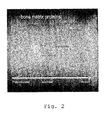
Fig. 2 ist ein schematische Darstellung der wichtigsten Knochenmatrixproteine in ihrem zeitlichen Auftreten bei der Differenzierung vom Präosteoblasten zur reifen Knochenzelle. Durch das unterschiedlich zeitliche Auftreten und die dadurch mögliche Zugabe kann die Differenzierung zur knochenbildenden Zelle in jeder Phase der Reifung beeinflusst werden. -
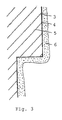
Fig. 3 zeigt eine nanokristalline, diamantbeschichtete 3 Grundkörperoberfläche 4, die chemisch durch ein Protein (BMP2) modifiziert wurde 5 und damit die Knochenbildung im Kiefer vor Ort beschleunigt 6. -
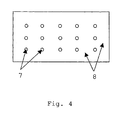
Fig. 4 zeigt eine strukturierte nanokristalline Diamantschicht auf einem Substrat (hydrophile Bereiche - lokalisiert im Kreis 7 und hydrophobe Bereiche in der Umgebung der Kreisbereiche 8) als Grundlage zur Anbindung unterschiedlicher Proteine, damit sind unter anderem auch Konzentrationsvariationen vor Ort möglich. -
Fig. 5 zeigt ein Substrat, welches eine Diamantschicht 9 mit strukturierter Oberfläche aufweist, die lokalisiert eine Sauerstoff- oder Wasserstoff-Terminierung besitzt. Der entsprechende Linker/funktionelle Gruppe (L1, L2) stellt das Bindeglied für die Anbindung des gewünschten Proteins (P1 oder P2). - Bei der Rehabilitation des Kauapparates nach Zahnverlust, traumatischen oder tumorbedingten Defekten, sowie der Versorgung von Gesichtsdefekten nach Tumoroperationen oder angeborenen Anomalien durch Gesichtsprothesen, haben sich enorale, also im Kiefer befestigte (
Fig. 1 ), und extraorale, also am Gesichtsschädel befestigte Implantate als Verankerungselemente bewährt. Ein entscheidender Faktor für die Erfolgssicherheit enossaler, d.h. im Knochen verankerter Implantate ist das Ausmaß des Knochenverbunds bzw. Einheilens, der sogenannten Osseointegration. Die Osseointegration hängt dabei entscheidend von der Beschaffenheit des ortsständigen Knochens ab. So ist die Erfolgssicherheit von Implantaten im vorbestrahlten Empfängerbett reduziert. Die verminderte Durchblutung in diesen Bereichen führt zu einem geringeren Regenerationspotenzial des Knochens nach chirurgischer Manipulation, so dass auch die Osseointegration von Implantaten gefährdet sein kann. Zur Verbesserung der Osseointegration wurden daher unterschiedliche Oberflächenbeschichtungen konzipiert (Buser D et al., J Dent Res (2004) 83: 529-533; Thorwarth M et al., Mund Kiefer Gesichtschir (2004) 8:250-255; Cochran DL et al., J Periodontol (1999) 70: 139-150). - Der Grundkörper wird in eine Illuminationskammer gegeben, die mit Stickstoff durchströmt wird. Die Abdeckung (Deckel) der Illuminationskammer besteht aus Quarzglas. Auf die H-terminierte kohlenstoffhaltige Schicht des Grundkörpers wird die Linkersubstanz, vorzugsweise geschütztes Trifluoracetamid mit langkettigem, ungesättigtem Amin, insbesondere 3-Aminopropen, aufgebracht und für 8 bis 12 Stunden mit UV-Licht illuminiert. Die Schutzgruppe des Trifluoracetamides wird durch eine methanolische-HCl Lösung bei 65° C entfernt. Anschließend wird am Amin des Linkers das Protein, vorzugsweise aus der TGF-β-Superfamilie, insbesondere das Bone Morphogenetic Protein (z.B. BMP-2), kovalent gebunden.
Claims (12)
- Implantat umfassend ein zumindest teilweise mit einer kohlenstoffhaltigen Schicht überzogenes Substrat, dadurch gekennzeichnet, dass die kohlenstoffhaltige Schicht einen Diamantkristallanteil von mindestens 80% aufweist und zumindest teilweise mit Wachstumsfaktoren funktionalisiert ist, die direkt oder über mindestens einen Linker oder funktionelle Gruppe an die kohlenstoffhaltige Schicht gebunden sind.
- Implantat nach Anspruch 1, dadurch gekennzeichnet, dass die kohlenstoffhaltige Schicht weiters ein Material ausgewählt aus der Gruppe bestehend aus Polymeren, amorphem Kohlenstoff, DLC (diamond-like-carbon), Grafit, Nanotubes, Nanowires, Nanopartikeln, Fullerenen, Pyrokohlenstoff, Glassy Carbon und Mischungen davon, umfasst.
- Implantat nach Anspruch 1 oder 2, dadurch gekennzeichnet, dass die kohlenstoffhaltige Schicht polykristalline, mikrokristalline, nanokristalline, ultrananokristalline oder monokristalline Diamantkristalle umfasst.
- Implantat nach einem der Ansprüche 1 bis 3, dadurch gekennzeichnet, dass die kohlenstoffhaltige Schicht Diamantkristalle mit einer Kristallitgröße von weniger als 500 nm aufweist.
- Implantat nach Anspruch 4, dadurch gekennzeichnet, dass die kohlenstoffhaltige Schicht Diamantkristalle mit einer Kristallitgröße von 5 bis 100 nm aufweist.
- Implantat nach Anspruch 5, dadurch gekennzeichnet, dass die kohlenstoffhaltige Schicht Diamantkristalle mit einer Kristallitgröße von 8 bis 30 nm aufweist.
- Implantat nach einem der Ansprüche 1 bis 6, dadurch gekennzeichnet, dass die kohlenstoffhaltige Schicht eine Schichtdicke von 100 nm bis 50 µm aufweist.
- Implantat nach Anspruch 7, dadurch gekennzeichnet, dass die kohlenstoffhaltige Schicht eine Schichtdicke von 100 nm bis 40 µm aufweist.
- Implantat nach Anspruch 8, dadurch gekennzeichnet, dass die kohlenstoffhaltige Schicht eine Schichtdicke von 1 bis 20 µm aufweist.
- Implantat nach einem der Ansprüche 1 bis 9, dadurch gekennzeichnet, dass die chemisch und/oder physikalisch modifizierte kohlenstoffhaltige Schicht mindestens eine Bindefunktionalität ausgewählt aus der Gruppe bestehend aus polaren, apolaren, hydrophoben, hydrophilen, ionischen, affinen, spezifischen, metallkomplexierenden Gruppen und Mischungen davon, aufweist.
- Implantat nach einem der Ansprüche 1 bis 10, dadurch gekennzeichnet, dass die kohlenstoffhaltige Schicht durch chemische Modifikation Wasserstoffatome, Halogene, Hydroxylgruppen, Carbonylgruppen, aromatische Ringsysteme, Schwefel, Schwefelderivate, Grignardverbindungen, Aminogruppen, Epoxide, Metalle oder Kohlenstoffketten aufweist.
- Implantat nach einem der Ansprüche 1 bis 10, dadurch gekennzeichnet, dass die kohlenstoffhaltige Schicht einen Diamantkristallanteil von mindestens 90% aufweist.
Applications Claiming Priority (2)
| Application Number | Priority Date | Filing Date | Title |
|---|---|---|---|
| AT0206304A AT501408B1 (de) | 2004-12-07 | 2004-12-07 | Biologische oberflächen |
| PCT/AT2005/000495 WO2006060836A1 (de) | 2004-12-07 | 2005-12-07 | Biologische oberflächen |
Publications (2)
| Publication Number | Publication Date |
|---|---|
| EP1824528A1 EP1824528A1 (de) | 2007-08-29 |
| EP1824528B1 true EP1824528B1 (de) | 2015-01-21 |
Family
ID=35788698
Family Applications (1)
| Application Number | Title | Priority Date | Filing Date |
|---|---|---|---|
| EP05812909.9A Expired - Lifetime EP1824528B1 (de) | 2004-12-07 | 2005-12-07 | Implantat mit modifizierter Oberfläche |
Country Status (6)
| Country | Link |
|---|---|
| US (1) | US8753661B2 (de) |
| EP (1) | EP1824528B1 (de) |
| AT (1) | AT501408B1 (de) |
| DK (1) | DK1824528T3 (de) |
| ES (1) | ES2529740T3 (de) |
| WO (1) | WO2006060836A1 (de) |
Families Citing this family (38)
| Publication number | Priority date | Publication date | Assignee | Title |
|---|---|---|---|---|
| US8220489B2 (en) | 2002-12-18 | 2012-07-17 | Vapor Technologies Inc. | Faucet with wear-resistant valve component |
| US7866342B2 (en) * | 2002-12-18 | 2011-01-11 | Vapor Technologies, Inc. | Valve component for faucet |
| US7866343B2 (en) * | 2002-12-18 | 2011-01-11 | Masco Corporation Of Indiana | Faucet |
| US8555921B2 (en) * | 2002-12-18 | 2013-10-15 | Vapor Technologies Inc. | Faucet component with coating |
| US8128688B2 (en) * | 2006-06-27 | 2012-03-06 | Abbott Cardiovascular Systems Inc. | Carbon coating on an implantable device |
| US7442575B2 (en) * | 2006-09-29 | 2008-10-28 | Texas Christian University | Method of manufacturing semiconductor nanowires |
| US8602780B2 (en) | 2006-10-16 | 2013-12-10 | Natural Dental Implants, Ag | Customized dental prosthesis for periodontal or osseointegration and related systems and methods |
| US7708557B2 (en) * | 2006-10-16 | 2010-05-04 | Natural Dental Implants Ag | Customized dental prosthesis for periodontal- or osseointegration, and related systems and methods |
| US9539062B2 (en) | 2006-10-16 | 2017-01-10 | Natural Dental Implants, Ag | Methods of designing and manufacturing customized dental prosthesis for periodontal or osseointegration and related systems |
| US8454362B2 (en) | 2006-10-16 | 2013-06-04 | Natural Dental Implants Ag | Customized dental prosthesis for periodontal- or osseointegration, and related systems and methods |
| US10426578B2 (en) | 2006-10-16 | 2019-10-01 | Natural Dental Implants, Ag | Customized dental prosthesis for periodontal or osseointegration and related systems |
| GB2459604B (en) * | 2007-02-26 | 2011-07-06 | Wisconsin Alumni Res Found | Surface plasmon resonance compatible carbon thin films |
| ES2545781T3 (es) * | 2008-01-28 | 2015-09-15 | Biomet 3I, Llc | Implante superficial con mayor hidrofilia |
| US20110282421A1 (en) * | 2010-05-11 | 2011-11-17 | Chien-Min Sung | Diamond neural devices and associated methods |
| WO2010133705A2 (en) | 2010-09-27 | 2010-11-25 | Advanced Bionics Ag | Hearing instrument for round window stimulation |
| RS62297B1 (sr) | 2011-11-23 | 2021-09-30 | Therapeuticsmd Inc | Prirodne kombinovane hormonske supstitucione formulacije i terapije |
| US9301920B2 (en) | 2012-06-18 | 2016-04-05 | Therapeuticsmd, Inc. | Natural combination hormone replacement formulations and therapies |
| EP2606917A1 (de) | 2011-12-20 | 2013-06-26 | Steinmüller-Nethl, Doris | Poröses Gerüst mit Nanopartikeln auf Kohlenstoffbasis |
| US10806740B2 (en) | 2012-06-18 | 2020-10-20 | Therapeuticsmd, Inc. | Natural combination hormone replacement formulations and therapies |
| US10806697B2 (en) | 2012-12-21 | 2020-10-20 | Therapeuticsmd, Inc. | Vaginal inserted estradiol pharmaceutical compositions and methods |
| US20130338122A1 (en) | 2012-06-18 | 2013-12-19 | Therapeuticsmd, Inc. | Transdermal hormone replacement therapies |
| US20150196640A1 (en) | 2012-06-18 | 2015-07-16 | Therapeuticsmd, Inc. | Progesterone formulations having a desirable pk profile |
| DE102012021003B4 (de) | 2012-10-26 | 2015-02-12 | Otto Bock Healthcare Products Gmbh | Perkutanes lmplantat und Verfahren zum Herstellen eines solchen lmplantates |
| US11266661B2 (en) | 2012-12-21 | 2022-03-08 | Therapeuticsmd, Inc. | Vaginal inserted estradiol pharmaceutical compositions and methods |
| US10537581B2 (en) | 2012-12-21 | 2020-01-21 | Therapeuticsmd, Inc. | Vaginal inserted estradiol pharmaceutical compositions and methods |
| US10568891B2 (en) | 2012-12-21 | 2020-02-25 | Therapeuticsmd, Inc. | Vaginal inserted estradiol pharmaceutical compositions and methods |
| US11246875B2 (en) | 2012-12-21 | 2022-02-15 | Therapeuticsmd, Inc. | Vaginal inserted estradiol pharmaceutical compositions and methods |
| US10471072B2 (en) | 2012-12-21 | 2019-11-12 | Therapeuticsmd, Inc. | Vaginal inserted estradiol pharmaceutical compositions and methods |
| US9180091B2 (en) | 2012-12-21 | 2015-11-10 | Therapeuticsmd, Inc. | Soluble estradiol capsule for vaginal insertion |
| US20140272794A1 (en) * | 2013-03-15 | 2014-09-18 | Clarion University of Pennsylvania | Surface modified dental implant |
| RU2016143081A (ru) | 2014-05-22 | 2018-06-26 | Терапьютиксмд, Инк. | Натуральные комбинированные гормонозаместительные составы и терапии |
| US10328087B2 (en) | 2015-07-23 | 2019-06-25 | Therapeuticsmd, Inc. | Formulations for solubilizing hormones |
| US10813847B2 (en) * | 2015-10-30 | 2020-10-27 | University Of Florida Research Foundation, Inc. | Dielectric coatings for fixed and removable oral prosthetic restorations |
| US10286077B2 (en) | 2016-04-01 | 2019-05-14 | Therapeuticsmd, Inc. | Steroid hormone compositions in medium chain oils |
| US9931349B2 (en) | 2016-04-01 | 2018-04-03 | Therapeuticsmd, Inc. | Steroid hormone pharmaceutical composition |
| US11633405B2 (en) | 2020-02-07 | 2023-04-25 | Therapeuticsmd, Inc. | Steroid hormone pharmaceutical formulations |
| CN115233172B (zh) * | 2022-06-30 | 2024-07-09 | 湖南碳康生物科技有限公司 | 一种表面耐磨及高生物相容的碳基材料及其制备方法 |
| WO2025034774A1 (en) * | 2023-08-07 | 2025-02-13 | Wisys Technology Foundation, Inc. | Bioactive glass-silicide coatings for osseointegratable metal implants |
Citations (2)
| Publication number | Priority date | Publication date | Assignee | Title |
|---|---|---|---|---|
| WO2001041825A1 (en) * | 1999-12-13 | 2001-06-14 | St. Jude Medical, Inc. | Medical articles prepared for cell adhesion |
| DE202004009061U1 (de) * | 2003-05-28 | 2004-08-12 | Blue Membranes Gmbh | Implantate mit funktionalisierten Kohlenstoffoberflächen |
Family Cites Families (29)
| Publication number | Priority date | Publication date | Assignee | Title |
|---|---|---|---|---|
| US4504519A (en) * | 1981-10-21 | 1985-03-12 | Rca Corporation | Diamond-like film and process for producing same |
| US5755788A (en) * | 1987-02-19 | 1998-05-26 | Rutgers, The State University | Prosthesis and implants having liposomes bound thereto and methods of preparation |
| EP0302717A1 (de) | 1987-08-04 | 1989-02-08 | Ion Tech Limited | Implantierbare Körperprothese |
| JPH01157498A (ja) | 1987-12-14 | 1989-06-20 | Natl Inst For Res In Inorg Mater | 高温プラズマによるダイヤモンドの製造法 |
| JPH08757B2 (ja) | 1988-12-26 | 1996-01-10 | 住友電気工業株式会社 | ダイヤモンドおよびその気相合成法 |
| JPH0292895A (ja) | 1988-09-29 | 1990-04-03 | Kawasaki Steel Corp | 熱フィラメントcvd法によるダイヤモンドあるいはダイヤモンド状薄膜の合成方法 |
| AT399726B (de) | 1993-08-25 | 1995-07-25 | Bertel Erminald Dr | Einrichtung zur aufbringung diamantartiger kohlenstoffschichten auf ein substrat |
| US5404835A (en) * | 1993-09-29 | 1995-04-11 | The United States Of America As Represented By The Secretary Of The Navy | Method of making large area single crystalline diamond films |
| US5503558A (en) | 1993-11-12 | 1996-04-02 | Mcgill University | Osseointegration promoting implant composition, implant assembly and method therefor |
| US7494507B2 (en) * | 2000-01-30 | 2009-02-24 | Diamicron, Inc. | Articulating diamond-surfaced spinal implants |
| US5716404A (en) | 1994-12-16 | 1998-02-10 | Massachusetts Institute Of Technology | Breast tissue engineering |
| GB9614950D0 (en) | 1996-07-16 | 1996-09-04 | Anson Medical Ltd | A ductus stent and delivery catheter |
| US6129928A (en) | 1997-09-05 | 2000-10-10 | Icet, Inc. | Biomimetic calcium phosphate implant coatings and methods for making the same |
| EP1171054B1 (de) * | 1999-04-15 | 2007-06-06 | Nobel Biocare AB | Mit diamantähnlichem kohlenstoff überzogene zahnärztliche halterungschraube |
| US6592519B1 (en) * | 2000-04-28 | 2003-07-15 | Medtronic, Inc. | Smart microfluidic device with universal coating |
| US6783589B2 (en) * | 2001-01-19 | 2004-08-31 | Chevron U.S.A. Inc. | Diamondoid-containing materials in microelectronics |
| DE10107795B4 (de) * | 2001-02-13 | 2014-05-15 | Berlex Ag | Gefäßstütze mit einem Grundkörper, Verfahren zur Herstellung der Gefäßstütze, Vorrichtung zur Beschichtung der Gefäßstütze |
| WO2002080996A1 (de) * | 2001-04-03 | 2002-10-17 | Franz Herbst | Medizinisches implantat und verfahren zu seiner herstellung |
| CN1393218A (zh) | 2001-07-04 | 2003-01-29 | 中国科学院化学研究所 | 生物可降解性持续释药体系 |
| US6565913B2 (en) * | 2001-07-24 | 2003-05-20 | Southwest Research Institute | Non-irritating antimicrobial coatings and process for preparing same |
| US6494916B1 (en) * | 2001-07-30 | 2002-12-17 | Biomed Solutions, Llc | Apparatus for replacing musculo-skeletal parts |
| DE10152055A1 (de) * | 2001-10-25 | 2003-05-08 | Nttf Gmbh | Mechanisch und thermodynamisch stabile amorphe Kohlenstoffschichten für temperaturempfindliche Oberflächen |
| DE10216971A1 (de) | 2002-04-16 | 2003-10-30 | Lothar Sellin | Medizinisches Implantat, vorzugsweise Stent und Verfahren zu dessen Herstellung |
| GB0215916D0 (en) * | 2002-07-10 | 2002-08-21 | Univ Dundee | Coatings |
| CN100522241C (zh) | 2002-09-10 | 2009-08-05 | Scil技术股份有限公司 | 在低氧气浓度下用骨诱导蛋白包被的金属植入物 |
| EP1551470A2 (de) | 2002-09-13 | 2005-07-13 | The University of British Columbia | Calciumphosphat-beschichtete, implantierbare, medizinische geräte und methode zu deren herstellung |
| BRPI0410377A (pt) * | 2003-05-16 | 2006-06-13 | Blue Membranes Gmbh | implantes medicinais revestidos bio-compatìveis |
| US7250060B2 (en) * | 2004-01-27 | 2007-07-31 | Sdgi Holdings, Inc. | Hybrid intervertebral disc system |
| AT500618B1 (de) | 2004-04-02 | 2006-02-15 | Physikalisches Buero Steinmuel | Target für maldi/seldi-ms |
-
2004
- 2004-12-07 AT AT0206304A patent/AT501408B1/de not_active IP Right Cessation
-
2005
- 2005-12-07 ES ES05812909.9T patent/ES2529740T3/es not_active Expired - Lifetime
- 2005-12-07 US US11/792,613 patent/US8753661B2/en active Active
- 2005-12-07 DK DK05812909T patent/DK1824528T3/en active
- 2005-12-07 EP EP05812909.9A patent/EP1824528B1/de not_active Expired - Lifetime
- 2005-12-07 WO PCT/AT2005/000495 patent/WO2006060836A1/de not_active Ceased
Patent Citations (2)
| Publication number | Priority date | Publication date | Assignee | Title |
|---|---|---|---|---|
| WO2001041825A1 (en) * | 1999-12-13 | 2001-06-14 | St. Jude Medical, Inc. | Medical articles prepared for cell adhesion |
| DE202004009061U1 (de) * | 2003-05-28 | 2004-08-12 | Blue Membranes Gmbh | Implantate mit funktionalisierten Kohlenstoffoberflächen |
Also Published As
| Publication number | Publication date |
|---|---|
| WO2006060836A1 (de) | 2006-06-15 |
| US8753661B2 (en) | 2014-06-17 |
| EP1824528A1 (de) | 2007-08-29 |
| AT501408A1 (de) | 2006-08-15 |
| ES2529740T3 (es) | 2015-02-25 |
| DK1824528T3 (en) | 2015-04-13 |
| AT501408B1 (de) | 2011-03-15 |
| US20080044451A1 (en) | 2008-02-21 |
Similar Documents
| Publication | Publication Date | Title |
|---|---|---|
| AT501408B1 (de) | Biologische oberflächen | |
| EP1539253B1 (de) | Antiinfektiöse, biokompatible titanoxid-beschichtungen für implantate sowie verfahren zu deren herstellung | |
| EP1626749B1 (de) | Implantate mit funktionalisierten kohlenstoffoberflächen | |
| EP1385449B1 (de) | Biologisch funktionalisierte, metabolisch induktive implantatoberflächen | |
| Lai et al. | Surface modification of TiO2 nanotubes with osteogenic growth peptide to enhance osteoblast differentiation | |
| EP2318060B1 (de) | Biokompatibilitätsschicht und beschichtete gegenstände | |
| US20110125263A1 (en) | Method for producing nanostructures on a surface of a medical implant | |
| EP1626752A2 (de) | Biokompatibel beschichtete medizinische implantate | |
| WO2008025840A2 (de) | Strukturierte beschichtungen für implantate sowie verfahren zu deren herstellung | |
| Pang et al. | Nanostructured coating of non-crystalline tantalum pentoxide on polyetheretherketone enhances RBMS cells/HGE cells adhesion | |
| Pisarek et al. | Biomimetic and electrodeposited calcium-phosphates coatings on Ti-formation, surface characterization, biological response | |
| TWI414328B (zh) | 可植入性神經再生導管 | |
| EP3432941B1 (de) | Implantatkörper mit wirkstoffträgerschicht und abgabekontrollschicht | |
| US20220000588A1 (en) | High strength intraosseous implants | |
| CN101410144A (zh) | 用于生物材料附着的改良表面 | |
| JP2008529652A (ja) | インプラント用の、dnaをベースとしたコーティング | |
| KR100829452B1 (ko) | 생리활성형 단백질-인산칼슘 복합체 및 그 제조 방법 | |
| DE10333099A1 (de) | Implantate mit funktionalisierten Kohlenstoffoberflächen | |
| WO2019179978A1 (de) | Verfahren zur verbesserung und/oder steuerung der zelladhäsion und medizinisches implantat, zellkultursystem oder zellassay mit verbesserter zelladhäsion |
Legal Events
| Date | Code | Title | Description |
|---|---|---|---|
| PUAI | Public reference made under article 153(3) epc to a published international application that has entered the european phase |
Free format text: ORIGINAL CODE: 0009012 |
|
| 17P | Request for examination filed |
Effective date: 20070706 |
|
| AK | Designated contracting states |
Kind code of ref document: A1 Designated state(s): AT BE BG CH CY CZ DE DK EE ES FI FR GB GR HU IE IS IT LI LT LU LV MC NL PL PT RO SE SI SK TR |
|
| DAX | Request for extension of the european patent (deleted) | ||
| 17Q | First examination report despatched |
Effective date: 20090728 |
|
| RAP1 | Party data changed (applicant data changed or rights of an application transferred) |
Owner name: STEINMUELLER-NETHL, DORIS |
|
| GRAP | Despatch of communication of intention to grant a patent |
Free format text: ORIGINAL CODE: EPIDOSNIGR1 |
|
| INTG | Intention to grant announced |
Effective date: 20131024 |
|
| RAP1 | Party data changed (applicant data changed or rights of an application transferred) |
Owner name: DIACOATING GMBH |
|
| GRAP | Despatch of communication of intention to grant a patent |
Free format text: ORIGINAL CODE: EPIDOSNIGR1 |
|
| INTG | Intention to grant announced |
Effective date: 20140623 |
|
| GRAS | Grant fee paid |
Free format text: ORIGINAL CODE: EPIDOSNIGR3 |
|
| GRAA | (expected) grant |
Free format text: ORIGINAL CODE: 0009210 |
|
| AK | Designated contracting states |
Kind code of ref document: B1 Designated state(s): AT BE BG CH CY CZ DE DK EE ES FI FR GB GR HU IE IS IT LI LT LU LV MC NL PL PT RO SE SI SK TR |
|
| REG | Reference to a national code |
Ref country code: GB Ref legal event code: FG4D Free format text: NOT ENGLISH |
|
| REG | Reference to a national code |
Ref country code: CH Ref legal event code: EP |
|
| REG | Reference to a national code |
Ref country code: IE Ref legal event code: FG4D Free format text: LANGUAGE OF EP DOCUMENT: GERMAN |
|
| REG | Reference to a national code |
Ref country code: CH Ref legal event code: NV Representative=s name: ISLER AND PEDRAZZINI AG, CH |
|
| REG | Reference to a national code |
Ref country code: AT Ref legal event code: REF Ref document number: 707634 Country of ref document: AT Kind code of ref document: T Effective date: 20150215 |
|
| REG | Reference to a national code |
Ref country code: ES Ref legal event code: FG2A Ref document number: 2529740 Country of ref document: ES Kind code of ref document: T3 Effective date: 20150225 |
|
| REG | Reference to a national code |
Ref country code: DE Ref legal event code: R096 Ref document number: 502005014669 Country of ref document: DE Effective date: 20150312 |
|
| REG | Reference to a national code |
Ref country code: DK Ref legal event code: T3 Effective date: 20150407 |
|
| REG | Reference to a national code |
Ref country code: SE Ref legal event code: TRGR |
|
| REG | Reference to a national code |
Ref country code: LT Ref legal event code: MG4D |
|
| PG25 | Lapsed in a contracting state [announced via postgrant information from national office to epo] |
Ref country code: LT Free format text: LAPSE BECAUSE OF FAILURE TO SUBMIT A TRANSLATION OF THE DESCRIPTION OR TO PAY THE FEE WITHIN THE PRESCRIBED TIME-LIMIT Effective date: 20150121 Ref country code: FI Free format text: LAPSE BECAUSE OF FAILURE TO SUBMIT A TRANSLATION OF THE DESCRIPTION OR TO PAY THE FEE WITHIN THE PRESCRIBED TIME-LIMIT Effective date: 20150121 Ref country code: BG Free format text: LAPSE BECAUSE OF FAILURE TO SUBMIT A TRANSLATION OF THE DESCRIPTION OR TO PAY THE FEE WITHIN THE PRESCRIBED TIME-LIMIT Effective date: 20150421 |
|
| PG25 | Lapsed in a contracting state [announced via postgrant information from national office to epo] |
Ref country code: GR Free format text: LAPSE BECAUSE OF FAILURE TO SUBMIT A TRANSLATION OF THE DESCRIPTION OR TO PAY THE FEE WITHIN THE PRESCRIBED TIME-LIMIT Effective date: 20150422 Ref country code: IS Free format text: LAPSE BECAUSE OF FAILURE TO SUBMIT A TRANSLATION OF THE DESCRIPTION OR TO PAY THE FEE WITHIN THE PRESCRIBED TIME-LIMIT Effective date: 20150521 Ref country code: PL Free format text: LAPSE BECAUSE OF FAILURE TO SUBMIT A TRANSLATION OF THE DESCRIPTION OR TO PAY THE FEE WITHIN THE PRESCRIBED TIME-LIMIT Effective date: 20150121 Ref country code: LV Free format text: LAPSE BECAUSE OF FAILURE TO SUBMIT A TRANSLATION OF THE DESCRIPTION OR TO PAY THE FEE WITHIN THE PRESCRIBED TIME-LIMIT Effective date: 20150121 |
|
| REG | Reference to a national code |
Ref country code: DE Ref legal event code: R097 Ref document number: 502005014669 Country of ref document: DE |
|
| PG25 | Lapsed in a contracting state [announced via postgrant information from national office to epo] |
Ref country code: EE Free format text: LAPSE BECAUSE OF FAILURE TO SUBMIT A TRANSLATION OF THE DESCRIPTION OR TO PAY THE FEE WITHIN THE PRESCRIBED TIME-LIMIT Effective date: 20150121 Ref country code: SK Free format text: LAPSE BECAUSE OF FAILURE TO SUBMIT A TRANSLATION OF THE DESCRIPTION OR TO PAY THE FEE WITHIN THE PRESCRIBED TIME-LIMIT Effective date: 20150121 Ref country code: CZ Free format text: LAPSE BECAUSE OF FAILURE TO SUBMIT A TRANSLATION OF THE DESCRIPTION OR TO PAY THE FEE WITHIN THE PRESCRIBED TIME-LIMIT Effective date: 20150121 Ref country code: RO Free format text: LAPSE BECAUSE OF FAILURE TO SUBMIT A TRANSLATION OF THE DESCRIPTION OR TO PAY THE FEE WITHIN THE PRESCRIBED TIME-LIMIT Effective date: 20150121 |
|
| PLBE | No opposition filed within time limit |
Free format text: ORIGINAL CODE: 0009261 |
|
| STAA | Information on the status of an ep patent application or granted ep patent |
Free format text: STATUS: NO OPPOSITION FILED WITHIN TIME LIMIT |
|
| 26N | No opposition filed |
Effective date: 20151022 |
|
| REG | Reference to a national code |
Ref country code: FR Ref legal event code: PLFP Year of fee payment: 11 |
|
| PG25 | Lapsed in a contracting state [announced via postgrant information from national office to epo] |
Ref country code: SI Free format text: LAPSE BECAUSE OF FAILURE TO SUBMIT A TRANSLATION OF THE DESCRIPTION OR TO PAY THE FEE WITHIN THE PRESCRIBED TIME-LIMIT Effective date: 20150121 |
|
| PGFP | Annual fee paid to national office [announced via postgrant information from national office to epo] |
Ref country code: FR Payment date: 20160107 Year of fee payment: 11 |
|
| PGFP | Annual fee paid to national office [announced via postgrant information from national office to epo] |
Ref country code: NL Payment date: 20160112 Year of fee payment: 11 |
|
| PGFP | Annual fee paid to national office [announced via postgrant information from national office to epo] |
Ref country code: ES Payment date: 20160115 Year of fee payment: 11 Ref country code: DK Payment date: 20160104 Year of fee payment: 11 Ref country code: IT Payment date: 20160111 Year of fee payment: 11 |
|
| PG25 | Lapsed in a contracting state [announced via postgrant information from national office to epo] |
Ref country code: BE Free format text: LAPSE BECAUSE OF NON-PAYMENT OF DUE FEES Effective date: 20151231 |
|
| PGFP | Annual fee paid to national office [announced via postgrant information from national office to epo] |
Ref country code: SE Payment date: 20160104 Year of fee payment: 11 |
|
| PG25 | Lapsed in a contracting state [announced via postgrant information from national office to epo] |
Ref country code: MC Free format text: LAPSE BECAUSE OF FAILURE TO SUBMIT A TRANSLATION OF THE DESCRIPTION OR TO PAY THE FEE WITHIN THE PRESCRIBED TIME-LIMIT Effective date: 20150121 Ref country code: LU Free format text: LAPSE BECAUSE OF FAILURE TO SUBMIT A TRANSLATION OF THE DESCRIPTION OR TO PAY THE FEE WITHIN THE PRESCRIBED TIME-LIMIT Effective date: 20151207 |
|
| GBPC | Gb: european patent ceased through non-payment of renewal fee |
Effective date: 20151207 |
|
| REG | Reference to a national code |
Ref country code: IE Ref legal event code: MM4A |
|
| PG25 | Lapsed in a contracting state [announced via postgrant information from national office to epo] |
Ref country code: GB Free format text: LAPSE BECAUSE OF NON-PAYMENT OF DUE FEES Effective date: 20151207 Ref country code: IE Free format text: LAPSE BECAUSE OF NON-PAYMENT OF DUE FEES Effective date: 20151207 |
|
| REG | Reference to a national code |
Ref country code: AT Ref legal event code: MM01 Ref document number: 707634 Country of ref document: AT Kind code of ref document: T Effective date: 20151207 |
|
| PG25 | Lapsed in a contracting state [announced via postgrant information from national office to epo] |
Ref country code: HU Free format text: LAPSE BECAUSE OF FAILURE TO SUBMIT A TRANSLATION OF THE DESCRIPTION OR TO PAY THE FEE WITHIN THE PRESCRIBED TIME-LIMIT; INVALID AB INITIO Effective date: 20051207 Ref country code: AT Free format text: LAPSE BECAUSE OF NON-PAYMENT OF DUE FEES Effective date: 20151207 |
|
| PG25 | Lapsed in a contracting state [announced via postgrant information from national office to epo] |
Ref country code: CY Free format text: LAPSE BECAUSE OF FAILURE TO SUBMIT A TRANSLATION OF THE DESCRIPTION OR TO PAY THE FEE WITHIN THE PRESCRIBED TIME-LIMIT Effective date: 20150121 |
|
| REG | Reference to a national code |
Ref country code: DK Ref legal event code: EBP Effective date: 20161231 |
|
| REG | Reference to a national code |
Ref country code: SE Ref legal event code: EUG |
|
| REG | Reference to a national code |
Ref country code: NL Ref legal event code: MM Effective date: 20170101 |
|
| PG25 | Lapsed in a contracting state [announced via postgrant information from national office to epo] |
Ref country code: TR Free format text: LAPSE BECAUSE OF FAILURE TO SUBMIT A TRANSLATION OF THE DESCRIPTION OR TO PAY THE FEE WITHIN THE PRESCRIBED TIME-LIMIT Effective date: 20150121 Ref country code: SE Free format text: LAPSE BECAUSE OF NON-PAYMENT OF DUE FEES Effective date: 20161208 |
|
| PG25 | Lapsed in a contracting state [announced via postgrant information from national office to epo] |
Ref country code: NL Free format text: LAPSE BECAUSE OF NON-PAYMENT OF DUE FEES Effective date: 20170101 |
|
| REG | Reference to a national code |
Ref country code: FR Ref legal event code: ST Effective date: 20170831 |
|
| PG25 | Lapsed in a contracting state [announced via postgrant information from national office to epo] |
Ref country code: IT Free format text: LAPSE BECAUSE OF NON-PAYMENT OF DUE FEES Effective date: 20161207 Ref country code: FR Free format text: LAPSE BECAUSE OF NON-PAYMENT OF DUE FEES Effective date: 20170102 |
|
| PG25 | Lapsed in a contracting state [announced via postgrant information from national office to epo] |
Ref country code: DK Free format text: LAPSE BECAUSE OF NON-PAYMENT OF DUE FEES Effective date: 20161231 |
|
| PG25 | Lapsed in a contracting state [announced via postgrant information from national office to epo] |
Ref country code: ES Free format text: LAPSE BECAUSE OF NON-PAYMENT OF DUE FEES Effective date: 20161208 |
|
| PG25 | Lapsed in a contracting state [announced via postgrant information from national office to epo] |
Ref country code: PT Free format text: LAPSE BECAUSE OF FAILURE TO SUBMIT A TRANSLATION OF THE DESCRIPTION OR TO PAY THE FEE WITHIN THE PRESCRIBED TIME-LIMIT Effective date: 20150121 |
|
| REG | Reference to a national code |
Ref country code: ES Ref legal event code: FD2A Effective date: 20181120 |
|
| PGFP | Annual fee paid to national office [announced via postgrant information from national office to epo] |
Ref country code: CH Payment date: 20201211 Year of fee payment: 16 |
|
| PGFP | Annual fee paid to national office [announced via postgrant information from national office to epo] |
Ref country code: DE Payment date: 20201228 Year of fee payment: 16 |
|
| REG | Reference to a national code |
Ref country code: DE Ref legal event code: R119 Ref document number: 502005014669 Country of ref document: DE |
|
| REG | Reference to a national code |
Ref country code: CH Ref legal event code: PL |
|
| PG25 | Lapsed in a contracting state [announced via postgrant information from national office to epo] |
Ref country code: DE Free format text: LAPSE BECAUSE OF NON-PAYMENT OF DUE FEES Effective date: 20220701 |
|
| PG25 | Lapsed in a contracting state [announced via postgrant information from national office to epo] |
Ref country code: LI Free format text: LAPSE BECAUSE OF NON-PAYMENT OF DUE FEES Effective date: 20211231 Ref country code: CH Free format text: LAPSE BECAUSE OF NON-PAYMENT OF DUE FEES Effective date: 20211231 |