EP1814534B1 - Derivatives of 5-aminolevulinic acid for the treatment of acne - Google Patents
Derivatives of 5-aminolevulinic acid for the treatment of acne Download PDFInfo
- Publication number
- EP1814534B1 EP1814534B1 EP05800149A EP05800149A EP1814534B1 EP 1814534 B1 EP1814534 B1 EP 1814534B1 EP 05800149 A EP05800149 A EP 05800149A EP 05800149 A EP05800149 A EP 05800149A EP 1814534 B1 EP1814534 B1 EP 1814534B1
- Authority
- EP
- European Patent Office
- Prior art keywords
- ala ester
- ala
- acne
- ester
- photosensitiser
- Prior art date
- Legal status (The legal status is an assumption and is not a legal conclusion. Google has not performed a legal analysis and makes no representation as to the accuracy of the status listed.)
- Expired - Lifetime
Links
Images



Classifications
-
- A—HUMAN NECESSITIES
- A61—MEDICAL OR VETERINARY SCIENCE; HYGIENE
- A61K—PREPARATIONS FOR MEDICAL, DENTAL OR TOILETRY PURPOSES
- A61K31/00—Medicinal preparations containing organic active ingredients
- A61K31/185—Acids; Anhydrides, halides or salts thereof, e.g. sulfur acids, imidic, hydrazonic or hydroximic acids
- A61K31/19—Carboxylic acids, e.g. valproic acid
- A61K31/195—Carboxylic acids, e.g. valproic acid having an amino group
- A61K31/197—Carboxylic acids, e.g. valproic acid having an amino group the amino and the carboxyl groups being attached to the same acyclic carbon chain, e.g. gamma-aminobutyric acid [GABA], beta-alanine, epsilon-aminocaproic acid or pantothenic acid
-
- A—HUMAN NECESSITIES
- A61—MEDICAL OR VETERINARY SCIENCE; HYGIENE
- A61N—ELECTROTHERAPY; MAGNETOTHERAPY; RADIATION THERAPY; ULTRASOUND THERAPY
- A61N5/00—Radiation therapy
- A61N5/06—Radiation therapy using light
- A61N5/0613—Apparatus adapted for a specific treatment
- A61N5/0616—Skin treatment other than tanning
-
- A—HUMAN NECESSITIES
- A61—MEDICAL OR VETERINARY SCIENCE; HYGIENE
- A61K—PREPARATIONS FOR MEDICAL, DENTAL OR TOILETRY PURPOSES
- A61K41/00—Medicinal preparations obtained by treating materials with wave energy or particle radiation ; Therapies using these preparations
- A61K41/0057—Photodynamic therapy with a photosensitizer, i.e. agent able to produce reactive oxygen species upon exposure to light or radiation, e.g. UV or visible light; photocleavage of nucleic acids with an agent
- A61K41/0061—5-aminolevulinic acid-based PDT: 5-ALA-PDT involving porphyrins or precursors of protoporphyrins generated in vivo from 5-ALA
-
- A—HUMAN NECESSITIES
- A61—MEDICAL OR VETERINARY SCIENCE; HYGIENE
- A61P—SPECIFIC THERAPEUTIC ACTIVITY OF CHEMICAL COMPOUNDS OR MEDICINAL PREPARATIONS
- A61P17/00—Drugs for dermatological disorders
-
- A—HUMAN NECESSITIES
- A61—MEDICAL OR VETERINARY SCIENCE; HYGIENE
- A61P—SPECIFIC THERAPEUTIC ACTIVITY OF CHEMICAL COMPOUNDS OR MEDICINAL PREPARATIONS
- A61P17/00—Drugs for dermatological disorders
- A61P17/10—Anti-acne agents
Definitions
- This invention relates to the treatment of acne, and in particular to the use of derivatives of 5-aminolevulinic acid (5-ALA) in a method of treating acne, e.g. acne vulgaris. Most particularly, the invention relates to the use of 5-ALA esters for the treatment of such conditions.
- 5-ALA 5-aminolevulinic acid
- Acne is one of the most common skin disorders throughout the world. Although particularly prevalent during puberty, it may continue for many years. It affects approximately 83-95% of 16 year olds of both sexes in the UK and about 20% of sufferers seek help from a clinician. It can in some cases cause permanent scarring and is often the source of considerable emotional distress.
- acne is a superficial disorder which is accompanied by slight, spotty irritations.
- bacterial invasion of or about the pilosebaceous follicles occurs resulting in the formation of pustules, infected cysts, etc. These lesions may become extensive and often leave permanent, disfiguring scars.
- spots Blackheads, whiteheads, papules, pustules and cysts are commonly referred to as "spots". Each type of spot may be present to a different degree in any acne sufferer and most commonly a range of different types are found. Spots generally occur on the face and back, especially the facial skin areas (e.g. on the chin, nose and forehead) where sebaceous glands are the largest, most prevalent and most active.
- Established treatments of acne are designed to prevent the formation of new lesions and to facilitate the healing of existing lesions.
- Conventional treatments include, for example, the systemic and topical administration of antibiotics which aim to reduce the bacterial population of the pilosebaceous follicles and the topical application of peroxides, e.g. benzoyl peroxide, which are both anti-bacterial and mildly comedolytic.
- peroxides e.g. benzoyl peroxide
- Vitamin A analogs such as retinoids, are comedolytic and have also been used with a some degree of success in topical acne treatment compositions.
- Photodynamic therapy is a relatively new technique which has been used in the treatment of various abnormalities or disorders of the skin or other epithelial organs or mucosa, especially cancer or pre-cancerous lesions, as well as certain non-malignant lesions such as psoriasis.
- PDT involves the administration of photosensitizing agents followed by exposure to photoactivating light in order to activate the photosensitizing agents and convert them into cytotoxic form resulting in the destruction of cells and thus treatment of the disease.
- photosensitizing agents are known and described in the literature, for example various porphyrins psoralens, chlorins, phthalocyanines, as well as 5-aminolevulinic acid (5-ALA) and certain derivatives thereof, e.g. 5-ALA esters.
- 5-ALA in therapy
- PDT Pharcose
- 5-ALA is typically presented as an acidic composition (it is most stable below pH 5) but this in turn further reduces its acceptability as a therapeutic substance.
- 5-ALA also has a relatively low bioavailability which means it often has to be used in high doses, thus exacerbating the problems associated with the acidity of many 5-ALA compositions.
- the invention provides the use of a photosensitiser which is a derivative of 5-aminolevulinic acid (5-ALA), or a pharmaceutically acceptable salt thereof, in the manufacture of a medicament for use in the prevention or treatment of acne, wherein said photosensitiser is a compound of general formula I: R 2 2 N-CH 2 COCH 2 -CH 2 CO-OR 1 (I) (wherein R 1 represents an unsubstituted alkyl group (preferably C 1-8 alkyl, e.g. C 1-6 alkyl) or an alkyl group (e.g. C 1-2 alkyl, especially C 1 alkyl) substituted by an aryl group; and each R 2 independently represents a hydrogen atom or an optionally substituted alkyl group).
- R 1 represents an unsubstituted alkyl group (preferably C 1-8 alkyl, e.g. C 1-6 alkyl) or an alkyl group (e.g. C 1-2 alkyl, especially C 1 alkyl) substituted
- the 5-ALA derivatives which are used in accordance with the invention may be capable of forming protoporphyrin IX (PpIX) or any other photosensitiser (e.g. a PpIX derivative) in vivo.
- PpIX protoporphyrin IX
- any other photosensitiser e.g. a PpIX derivative
- such derivatives will be a precursor of PpIX or of a PpIX derivative (e.g. a PpIX ester) in the biosynthetic pathway for haem and which are therefore capable of inducing an accumulation of PpIX at the site of the acne following administration in vivo.
- Suitable precursors of PpIX or PpIX derivatives include 5-ALA prodrugs which might be able to form 5-ALA in vivo as an intermediate in the biosynthesis of PpIX or which may be converted (e.g. enzymatically) to porphyrins without forming 5-ALA as an intermediate.
- 5-ALA esters are among the preferred compounds for use in the methods herein described.
- Esters of 5-aminolevulinic acid and N-substituted derivatives thereof are used as photosensitisers in the invention.
- Those compounds in which the 5-amino group is unsubstituted i.e. the ALA esters
- Such compounds are generally known and described in the literature (see, for example, WO96/28412 and WO02/10120 to PhotoCure ASA, the contents of which are incorporated herein by reference).
- Photosensitisers for use in the invention are compounds of general formula I: R 2 2 N-CH 2 COCH 2 -CH 2 CO-OR 1 (I) (wherein R 1 represents an unsubstituted alkyl group or an alkyl group substituted by an aryl group; and each R 2 independently represents a hydrogen atom or an optionally substituted alkyl group, e.g. a group R 1 ) and pharmaceutically acceptable salts thereof.
- alkyl includes any long or short chain, cyclic, straight-chained or branched aliphatic saturated or unsaturated hydrocarbon group.
- the unsaturated alkyl groups may be mono- or polyunsaturated and include both alkenyl and alkynyl groups. Unless stated otherwise, such groups may contain up to 40 atoms. However, alkyl groups containing up to 30, preferably up to 10, particularly preferably up to 8, especially preferably up to 6, e.g. up to 4 carbon atoms are preferred.
- the substituted alkyl R 1 and R 2 groups maybe mono or poly-substituted. Suitable substituents may be selected from hydroxy, alkoxy, acyloxy, alkoxycarbonyloxy, amino, aryl, nitro, oxo, fluoro, -SR 3 , -NR 3 2 and -PR 3 2 groups, and each alkyl group may be optionally interrupted by one or more -O-, -NR 3 -, -S-or -PR 3 - groups, in which R 3 is a hydrogen atom or a C 1-6 alkyl group).
- Particularly preferred for use in the invention are those compounds of formula I in which at least one R 2 represents a hydrogen atom.
- each R 2 represents a hydrogen atom.
- R 1 represents an unsubstituted alkyl group (preferably C 1-8 alkyl, e.g. C 1-6 alkyl) or more preferably an alkyl group (e.g. C 1-2 alkyl, especially C 1 alkyl) substituted by an aryl group such as phenyl are also preferred.
- R 1 represents an unsubstituted alkyl group (preferably C 1-8 alkyl, e.g. C 1-6 alkyl) or more preferably an alkyl group (e.g. C 1-2 alkyl, especially C 1 alkyl) substituted by an aryl group such as phenyl are also preferred.
- Unsubstituted alkyl groups which may be used in the invention include both branched and straight-chained hydrocarbon groups.
- Compounds of formula I in which R 1 is a C 4-8 , preferably a C 5-8 , straight chain alkyl group which is branched by one or more C 1-6 (e.g. C 1-2 alkyl) groups are preferred.
- Representative examples of suitable unsubstituted branched alkyl groups include 2-methylpentyl, 4-methylpentyl, 1-ethylbutyl and 3,3-dimethyl-1-butyl. 4-methylpentyl is particularly preferred.
- R 1 is a C 1-10 straight-chained alkyl group
- suitable unsubstituted alkyl groups include methyl, ethyl, propyl, butyl, pentyl, hexyl and octyl (e.g. n-propyl, n-butyl, n-pentyl, n-hexyl and n-octyl).
- Hexyl, especially n-hexyl is a particularly preferred group.
- Methyl is also particularly preferred.
- R 1 represents a C 1-2 alkyl group (preferably a C 1 alkyl group) optionally substituted by an aryl group.
- R 1 represents an alkyl group (e.g. C 1-2 alkyl, especially C 1 alkyl) substituted by an aryl group (e.g. phenyl).
- Preferred substituted alkyl R 1 groups which may be present in compounds of formula I include C 1-6 alkyl, preferably C 1-4 alkyl, particularly preferably C 1 or C 2 alkyl (e.g. C 1 alkyl) substituted (preferably terminally substituted) by an optionally substituted aryl group.
- aryl group is meant a group which is aromatic.
- Preferred aryl groups comprise up to 20 carbon atoms, more preferably up to 12 carbon atoms, for example, 10 or 6 carbon atoms.
- Aryl groups which may be present in the compounds of the invention may be heteroaromatic (e.g. 5-7 membered heteroaromatics) but are preferably non-heteroaromatic.
- non-heteroaromatic is meant an aryl group having an aromatic system comprising electrons originating solely from carbon atoms.
- Preferred aryl groups include phenyl and napthyl, especially phenyl.
- one or two aryl groups may be present, preferably one.
- a photosensitiser which is a compound of formula I wherein R 1 represents an aryl substituted C 1-4 alkyl group (preferably C 1-2 , e.g. C 1 ), preferably wherein said aryl group comprises up to 20 carbon atoms (e.g. up to 12 carbon atoms, especially 6 carbon atoms) and is itself optionally substituted, and each R 2 is as hereinbefore defined (e.g. each R 2 is hydrogen), or a pharmaceutically acceptable salt thereof in the manufacture of a medicament for use in the prevention or treatment of acne.
- Aryl groups which may be present in the compounds of the invention may optionally be substituted by one or more (e.g. 1 to 5), more preferably one or two, groups (e.g. one group).
- the aryl group is substituted at the meta or para position, most preferably the para position.
- Suitable substituent groups may include haloalkyl (e.g. trifluoromethyl), alkoxy (i.e. -OR groups wherein R is preferably a C 1-6 alkyl group), halo (e.g. iodo, bromo, more especially chloro and fluoro), nitro and C 1-6 alkyl (preferably C 1-4 alkyl).
- Preferred C 1-6 alkyl groups include methyl, isopropyl and t-butyl, particularly methyl.
- Particularly preferred substituent groups include chloro and nitro. Still more preferably the aryl group is unsubstituted.
- Preferred compounds for use in the invention include methyl ALA ester, ethyl ALA ester, propyl ALA ester, butyl ALA ester, pentyl ALA ester, hexyl ALA ester, octyl ALA ester, 2-methylpentyl ALA ester, 4-methylpentyl ALA ester, 1-ethylbutyl ALA ester, 3,3-dimethyl-1-butyl ALA ester, benzyl ALA ester, 4-isopropylbenzyl ALA ester, 4-methylbenzyl ALA ester, 2-methylbenzyl ALA ester, 3-methylbenzyl ALA ester, 4-[t-butyl]benzyl ALA ester, 4-[trifluoromethyl]benzyl ALA ester, 4-methoxybenzyl ALA ester, 3,4-[di-chloro]benzyl ALA ester, 4-chlorobenzyl ALA ester, 4-fluor
- Still further preferred compounds for use in the invention include methyl ALA ester, ethyl ALA ester, benzyl ALA ester, 4-isopropylbenzyl ALA ester, 4-methylbenzyl ALA ester, 2-methylbenzyl ALA ester, 3-methylbenzyl ALA ester, 4-[t-butyl]benzyl ALA ester, 4-[trifluoromethyl]benzyl ALA ester, 4-methoxybenzyl ALA ester, 3,4-[di-chloro]benzyl ALA ester, 4-chlorobenzyl ALA ester, 4-fluorobenzyl ALA ester, 2-fluorobenzyl ALA ester, 3-fluorobenzyl ALA ester, 2,3,4,5,6-pentafluorobenzyl ALA ester, 3-nitrobenzyl ALA ester, 4-nitrobenzyl ALA ester, 2-phenylethyl ALA ester, 4-phenylbutyl ALA ester
- Particularly preferred compounds for use in the invention include benzyl ALA ester, 4-isopropylbenzyl ALA ester, 4-methylbenzyl ALA ester, 2-methylbenzyl ALA ester, 3-methylbenzyl ALA ester, 4-[t-butyl]benzyl ALA ester, 4-[trifluoromethyl]benzyl ALA ester, 4-methoxybenzyl ALA ester, 3,4-[di-chloro]benzyl ALA ester, 4-chlorobenzyl ALA ester, 4-fluorobenzyl ALA ester, 2-fluorobenzyl ALA ester, 3-fluorobenzyl ALA ester, 2,3,4,5,6-pentafluorobenzyl ALA ester, 3-nitrobenzyl ALA ester, 4-nitrobenzyl ALA ester, 2-phenylethyl ALA ester, 4-phenylbutyl ALA ester, 3-pyridinyl-methyl ALA ester, 4-diphen
- Especially preferred compounds for use in the methods herein described include benzyl ALA ester, 4-isopropylbenzyl ALA ester and 4-methylbenzyl ALA ester, especially benzyl ALA ester.
- 4-Nitrobenzyl ALA ester, 4-chlorobenzyl ALA ester and benzyl ALA ester are especially preferred.
- the compounds for use in the invention may be prepared by any conventional procedure available in the art (e.g. as described in WO02/10120 to PhotoCure ASA).
- esters of 5-ALA may be prepared by reaction of 5-ALA with the appropriate alcohol in the presence of base.
- compounds for use in the invention may be available commercially (e.g. from PhotoCure ASA, Norway).
- the compounds for use according to the method of the invention may be in the form of a free amine (e.g. -NH 2 , -NHR 2 or -NR 2 R 2 ) or preferably in the form of a physiologically acceptable salt.
- Such salts preferably are acid addition salts with physiologically acceptable organic or inorganic acids. Suitable acids include, for example, hydrochloric, nitric, hydrobromic, phosphoric, sulphuric, sulphonic and sulphonic acid derivatives.
- Particularly preferred salts are acid addition salts with sulphonic acid or sulphonic acid derivatives as described in WO2005/092838 to PhotoCure ASA, the entire contents of which are incorporated herein by reference. Procedures for salt formation are conventional in the art.
- a single photosensitiser i.e. a derivative of 5-ALA
- a combination of two or more, preferably two, photosensitisers may be used wherein at least one of the photosensitisers is a derivative of 5-ALA or a pharmaceutically acceptable salt thereof.
- photosensitisers which may be formulated with a derivative of 5-ALA (e.g. a 5-ALA ester) or co-administered in accordance with the invention include:
- the second photosensitiser will be a Hematoporphyrin (e.g. Photofrin®), a chlorin (particularly m-THPC or chlorin e6) or a sulphonated phthalocyanine (particularly aluminium phthalocyanine di-sulfonate or aluminium phthalocyanine tetra-sulfonate).
- a Hematoporphyrin e.g. Photofrin®
- a chlorin particularly m-THPC or chlorin e6
- a sulphonated phthalocyanine particularly aluminium phthalocyanine di-sulfonate or aluminium phthalocyanine tetra-sulfonate.
- the invention thus provides the use of a first photosensitiser which is a derivative of 5-ALA as hereinbefore defined, or a pharmaceutically acceptable salt thereof, together with a second photosensitiser in the manufacture of a medicament for use in the prevention or treatment of acne.
- the invention provides the use of a first photosensitiser which is a derivative of 5-ALA as hereinbefore defined, or a pharmaceutically acceptable salt thereof, together with a second photosensitiser in the manufacture of medicaments for simultaneous, separate or sequential use in a method of treating or preventing acne.
- the invention provides a kit or pack containing a first photosensitiser which is a derivative of 5-ALA as hereinbefore defined, or a pharmaceutically acceptable salt thereof, and separately a second photosensitiser for simultaneous, separate or sequential use in a method of treating or preventing acne.
- prevention of acne means prophylactic treatment of acne.
- the compounds described herein may be used according to the invention for treatment of areas of the skin which need not necessarily have developed acne at the time of treatment, but which are prone to acne.
- the compounds for use in accordance with the invention are for treatment of acne once established, in particular treatment of inflammatory acne.
- the term "acne” includes both inflammatory and non-inflammatory diseases of the pilosebaceous unit. Primarily, however, the methods herein described will be used for treating the more inflammatory types of acne where bacterial invasion of the pilosebaceous unit or follicles has occurred. As previously noted, the precise cause of acne is unknown though it is commonly associated with increased production of sebum (lipids secreted by the androgen-sensitive sebaceous glands), proliferation of bacteria such as Propionibacterium (e.g. P. acnes, P. granulosum and P. avidum ), increased turnover of epithelial cells and/or the development of inflammation (e.g. redness, swelling and/or pus).
- the compounds described herein are preferably used for the treatment or prevention (preferably for the treatment) of acne associated with Propionibacterium acnes.
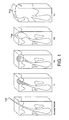
- Acne can manifest itself in a number of different ways (see attached Figure 1 ).
- Common characteristics of acne include blackheads (comedones) and whiteheads. These are caused by pores becoming clogged (e.g. with sebum and/or dead cells). If the pore stays open, a blackhead results ( Figure 1(i) ), whereas if the pore closes and bulges out a whitehead is produced ( Figure 1(ii) ). Papules, pustules and cysts are believed to be produced if the pore wall becomes damaged and bacteria infect the pore.
- Acne is categorised into different forms depending, for example, on the nature, severity and/or location of the blackheads, whiteheads, papules, pustules and/or cysts.
- Representative types of acne which may be treated according to the invention include acne vulgaris, acne rosacea, acne conglobate, acne papulosa and premenstrual acne, preferably acne vulgaris which is a chronic inflammatory disease of the pilosebaceous apparatus.
- Acne may occur on the back, chest, upper arms and/or face; the compounds described herein may be used for treating any of these areas of the body, especially the face.
- Certain milder forms of acne may not always be considered to be a "disease" and treatment thereof may be carried out purely for cosmetic reasons. This might be the case, for example, when acne is relatively infrequent and/or not widespread (i.e. few spots occur).
- the invention provides a method of cosmetic treatment of acne (e.g. on the face), said method comprising administering (e.g. topically applying) to an affected site a photosensitiser which is a derivative (e.g. an ester) of 5-aminolevulinic acid (5-ALA) as hereinbefore defined, or a pharmaceutically acceptable salt thereof, and photoactivating said photosensitiser at the affected site.
- a photosensitiser which is a derivative (e.g. an ester) of 5-aminolevulinic acid (5-ALA) as hereinbefore defined, or a pharmaceutically acceptable salt thereof
- the compounds for use according to the invention may be formulated in any conventional manner with one or more physiologically acceptable carriers or excipients according to techniques well known in the art.
- compositions may be administered systemically (e.g. orally or parenterally) or more preferably locally (e.g. by injection or more preferably topically) at or near the affected site.
- the route of administration will depend on the severity and nature of the acne to be treated, the location of the acne and the photosensitiser (or combination of photosensitisers) used. Generally, however, local administration, still more preferably topical application, will be preferred.
- Preferred formulations include gels, creams, ointments, sprays, lotions, salves, sticks, soaps, powders, aerosols, drops, solutions and any other conventional pharmaceutical forms in the art. Gels, creams and ointments are generally preferred.
- Ointments, gels and creams may, for example, be formulated with an aqueous or oily base with the addition of suitable thickening and/or gelling agents.
- Lotions may be formulated with an aqueous or oily base and will, in general, also contain one or more emulsifying, dispersing, suspending, thickening or colouring agents.
- Powders may be formed with the aid of any suitable powder base.
- Drops and solutions may be formulated with an aqueous or non-aqueous base also comprising one or more dispersing, solubilising or suspending agents. Aerosol sprays are conveniently delivered from pressurised packs, with the use of a suitable propellant.
- compositions may additionally include lubricating agents, wetting agents, emulsifying agents, suspending agents, preserving agents, flavouring agents, odour enhancers and/or adsorption enhancers, e.g. surface penetrating agents as mentioned below, and the like.
- the compositions for use in the method of the invention may be formulated so as to provide quick, sustained or delayed release of the active ingredient after administration to the patient by employing procedures well known in the art. Solubilizing and/or stabilizing agents may also be used, e.g. cyclodextrins (CD) ⁇ , ⁇ , ⁇ and HP-cyclodextrin.
- CD cyclodextrins
- compositions may be in any appropriate dosage form, for example as an emulsion or in liposomes, niosomes, microspheres, nanoparticles or the like.
- the compound for use in the invention may then be absorbed to, incorporated in or bound to these forms.
- compositions for PDT treatment of acne will be in the form of a ready-to-use formulation such as a cream or as a kit consisting of a two component system (e.g. containing two photosensitizing agents).
- the pH in the final formulation is preferably in the range 2.5 to 7.4. Slightly acidic pH, for example pH 5-7, is preferred if the formulation is a ready-to-use formulation.
- concentration of the 5-ALA compounds described herein in the final formulation for treatment of acne will vary depending on several factors including the chemical nature of the compound, the chemical composition, mode of administration and nature of the acne to be treated. Generally, however, concentration ranges between 0.01 to 30% (w/w) are suitable. The most preferred concentrations for acne treatment with local administration is in the range 0.02 to 25% (w/w), e.g. about 5% (w/w).
- the site to be treated is exposed to light to achieve the desired photosensitizing effect.
- the length of time following administration at which the light exposure takes place will depend on the nature of the composition, the condition to be treated and the form of administration.
- the photosensitiser should reach an effective tissue concentration at the site of the acne prior to photoactivation. This can generally take in the region of from 0.5 to 24 hours (e.g. 1 to 3 hours).
- the photosensitiser(s) is/are applied to the affected site followed by irradiation (e.g. after a period of about 3 hours). If necessary, this procedure may be repeated, e.g. up to a further 3 times, at intervals of up to 14 days (e.g. 7-14 days). In those cases where this procedure does not lead to a satisfactory reduction in, or complete healing of, the acne, an additional treatment may be performed several months later.
- irradiation of different areas of the body eg. by lamps or lasers are well known in the art (see for example Van den Bergh, Chemistry in England, May 1986 p. 430-439 ).
- the irradiation will in general be applied at a dose level of 40 to 200 Joules/cm 2 , for example at 100 Joules/cm 2 .
- the wavelength of light used for irradiation may be selected to achieve a more efficacious photosensitizing effect.
- the most effective light is light in the wavelength range 300-800 nm, typically 400-700 nm.
- the compounds for use in the invention may be formulated and/or administered with other photosensitizing agents, for example 5-ALA or another 5-ALA derivative, or a porphyrin derivative such as Photofrin ® .
- the compounds for use according to the invention may be formulated and/or administered with other active components which are able to increase the photosensitizing effect and thus enhance the treatment of acne.
- chelating agents may beneficially be included and/or co-administered in order to enhance the accumulation of Pp; the chelation of iron by the chelating agent prevents its incorporation into Pp to form haem by the action of the enzyme ferrochelatase, thereby leading to a build-up of Pp. The photosensitizing effect is thus enhanced.
- Suitable chelating agents include aminopolycarboxylic acids, including any of the chelants described in the literature for metal detoxification or for the chelation of paramagnetic metal ions in magnetic resonance imaging contrast agents. Particular mention may be made of EDTA, CDTA (cyclohexane diamine tetraacetic acid), DTPA and DOTA and well known derivatives/analogues thereof. EDTA and DTPA are particularly preferred. To achieve the iron-chelating effect, desferrioxamine and other siderophores may also be used, e.g. in conjunction with aminopolycarboxylic acid chelating agents such as EDTA.
- the chelating agent may conveniently be used at a concentration of 0.05 to 20%, e.g. 0.1 to 10% (w/w).
- Penetration enhancers may also have a beneficial effect in enhancing the photosensitizing effect of the compounds for use in the invention.
- Surface-penetration assisting agents especially dialkylsuphoxides such as dimethylsulphoxide (DMSO), may therefore also be included in the compositions for use in the invention and/or co-administered.
- the surface-penetration assisting agent may be any of the skin-penetration assisting agents described in the pharmaceutical literature e.g. chelators (e.g. EDTA), surfactants (e.g. sodium dodecyl sulphate), non-surfactants, bile salts (e.g. sodium deoxycholate) and fatty acids (e.g. oleic acid).
- Examples of appropriate surface penetrating assisting agents include isopropanol, HPE-101 (available from Hisamitsu), DMSO and other dialkylsulphoxides, in particular n-decylmethyl-sulphoxide (NDMS), dimethylsulphacetamide, dimethylformamide (DMFA), dimethylacetamide, glycols, various pyrrolidone derivatives ( Woodford et al., J. Toxicol. Cut. & Ocular Toxicology, 1986, 5: 167-177 ), and Azone ® ( Stoughton et al., Drug Dpv. Ind. Pharm. 1983, 9: 725-744 ), or mixtures thereof.
- NDMS n-decylmethyl-sulphoxide
- DMFA dimethylsulphacetamide
- glycols glycols
- various pyrrolidone derivatives Woodford et al., J. Toxicol. Cut. & Ocular Toxicology, 1986, 5
- the surface penetration agent may conveniently be provided in a concentration range of 0.2 to 50% (w/w), e.g. about 10% (w/w).
- the invention thus provides the use of a photosensitiser which is a derivative of 5-ALA as hereinbefore defined (e.g. a 5-ALA ester), or a pharmaceutically acceptable salt thereof, together with at least one surface-penetration assisting agent, and optionally one or more chelating agents, in the manufacture of a medicament or medicaments for use in the treatment or prevention of acne.
- a photosensitiser which is a derivative of 5-ALA as hereinbefore defined (e.g. a 5-ALA ester), or a pharmaceutically acceptable salt thereof, together with at least one surface-penetration assisting agent, and optionally one or more chelating agents, in the manufacture of a medicament or medicaments for use in the treatment or prevention of acne.
- the compounds for use in the invention may additionally be used in combination with other non-photosensitizing agents that improve treatment or prevention of acne.
- agents include one or more conventional acne treatment agents.
- Representative examples of such agents include:
- these acne treatment agents may be present as part of the formulation, typically these will be used as a separate treatment to be administered simultaneously, separately or sequentially.
- Administration of any supplementary agent should be performed in terms of route, concentration and formulation, according to known methods for using these agents.
- These additional agents may be administered before, during or after PDT, depending on their function.
- the invention thus provides a product or kit for use in a method of treating or preventing acne comprising:
- kits may also be provided such as a second photosensitizing agent, a surface-penetrating agent or a chelating agent as herein described.
- the invention thus provides the use of a photosensitiser which is a derivative of 5-ALA as hereinbefore defined (e.g. a 5-ALA ester), or a pharmaceutically acceptable salt thereof, together with a non-photosensitising acne treatment agent in the manufacture of a medicament or medicaments for use in the prevention or treatment of acne.
- a photosensitiser which is a derivative of 5-ALA as hereinbefore defined (e.g. a 5-ALA ester), or a pharmaceutically acceptable salt thereof, together with a non-photosensitising acne treatment agent in the manufacture of a medicament or medicaments for use in the prevention or treatment of acne.
- the invention provides the use of a photosensitiser which is a derivative of 5-ALA as hereinbefore defined (e.g. a 5-ALA ester), or a pharmaceutically acceptable salt thereof, together with a non-photosensitising acne treatment agent in the manufacture of medicaments for simultaneous, separate or sequential use in a method of treating or preventing acne.
- a photosensitiser which is a derivative of 5-ALA as hereinbefore defined (e.g. a 5-ALA ester), or a pharmaceutically acceptable salt thereof, together with a non-photosensitising acne treatment agent in the manufacture of medicaments for simultaneous, separate or sequential use in a method of treating or preventing acne.
- this may be co-administered with the 5-ALA derivative, for example in a single composition, or this may be administered sequentially or separately.
- this will be administered in a separate step prior to administration of the compounds for use in the invention.
- a surface-penetration assisting agent is used in pre-treatment this may be used at high concentrations, e.g. up to 100% (w/w). If such a pre-treatment step is employed, the photosensitizing agent may subsequently be administered up to several hours following pre-treatment, e.g. at an interval of 5-60 minutes following pre-treatment.
- Propionibacterium acnes was obtained from American Type Culture Collection (ATCC No. 6919), and bacteria were grown anaerobically in the dark on blood-agar plates at 37°C.
- Propionibacterium granulosum ( P. granulosum ) was obtained from American Type Culture Collection (ATCC No. 25564).
- Propionibacterium avidum was obtained from ATCC (ATCC. No. 25577).
- PIPES buffer (ca. 1 ml) was added to each blood-agar petri-plate and with the help of a sterile glass-rod and a Pasteur pipette, the bacteria solution was transferred to a 20 ml test-tube. The suspension was then diluted with PIPES buffer until the optical density (OD) was 1.00 ⁇ 0.01 at 550 nm as measured by a spectrophotometer. At this OD the bacteria density is approximately 5x10 8 cells per ml.
- illumination was performed on the bacteria-suspensions treated with ALA esters. The exact conditions are described in the Examples below. After illumination, survival was assayed as described below.
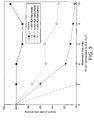
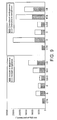
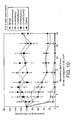
- Bacteria suspensions ( P. acnes ) were treated with 4 mM ALA methyl ester, 4 mM benzyl ester and 1 mM hexyl ester (due to high dark toxicity results for this ester) as described in the general section above, diluted and illuminated using a CureLight BroadBand lamp (available from PhotoCure ASA, Norway, red light of 580 - 740 nm and a fluence rate of ⁇ 840 W/m 2 ) under temperature controlled conditions (e.g. at ambient temperature). During illumination, 2x20 ⁇ l aliquots were collected every second minute for at total of 10 minutes and assayed for survival as described in the general section above. Relative survival after illumination was calculated relative to the control sample without red light exposure. The results are shown in Figure 3 .
- Example 3 PDT with Curelight LED Lamp (sold under the tradename Aktilite by PhotoCure ASA)
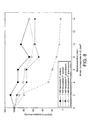
- Bacteria suspensions ( P. granulosum and P. avidum ) were treated with 4 mM ALA methyl ester, 4 mM benzyl ester and 1 mM hexyl ester (due to high dark toxicity for this ester) as described in the general section above, diluted and illuminated using a CureLight BroadBand lamp (available from Photo Cure ASA, Norway - red light of 580 - 740 nm and a fluence rate of ⁇ 840 W/m 2 ) under temperature controlled conditions (e.g. at ambient temperature).
- a CureLight BroadBand lamp available from Photo Cure ASA, Norway - red light of 580 - 740 nm and a fluence rate of ⁇ 840 W/m 2
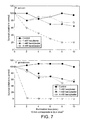
- the concentration of 1 mM for this experiment was chosen since the hexylester showed high dark toxicity at 4 mM (see Example 5).
- the experiment was performed as described in Example 4, and both the amount of endogenously retained porhyrins as well as the amount of exogenous porphyrins were determined by fluorescence spectroscopy.
- HEC Hydroxyethyl cellulose
- the gel contains 3 % 5-ALA benzyl ester HCl and is ready for use.
- 5-ALA isopropylbenzyl ester HCl 500 mg is mixed into Ung. Merck (10g) using a mortar and pestle. The resulting cream is filled into a vial.
- the cream contains 5 % 5-ALA isopropylbenzyl ester HCl and is ready for use.
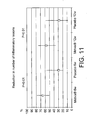
- the objective of this clinical study was to investigate the efficacy and tolerability of photodynamic therapy (PDT) after topical application of methyl ALA ester for treatment of moderate inflammatory facial acne.
- PDT photodynamic therapy
- the cream was gently wiped off both sides of the face immediately before illumination with non-coherent red light using the Aktilite® CL 128 lamp (PhotoCure ASA, average wavelength 635 nm, light dose 37 J cm -2 ). Illumination was then repeated for the other side of the face: The side of the face not receiving illumination was covered when the other side was illuminated.
- Metvix® PDT is effective in the treatment of moderate to severe inflammatory facial acne.
Landscapes
- Health & Medical Sciences (AREA)
- Life Sciences & Earth Sciences (AREA)
- Chemical & Material Sciences (AREA)
- Public Health (AREA)
- Veterinary Medicine (AREA)
- General Health & Medical Sciences (AREA)
- Animal Behavior & Ethology (AREA)
- Medicinal Chemistry (AREA)
- Pharmacology & Pharmacy (AREA)
- Engineering & Computer Science (AREA)
- Epidemiology (AREA)
- Nuclear Medicine, Radiotherapy & Molecular Imaging (AREA)
- Biomedical Technology (AREA)
- General Chemical & Material Sciences (AREA)
- Biochemistry (AREA)
- Chemical Kinetics & Catalysis (AREA)
- Bioinformatics & Cheminformatics (AREA)
- Dermatology (AREA)
- Molecular Biology (AREA)
- Organic Chemistry (AREA)
- Radiology & Medical Imaging (AREA)
- Pathology (AREA)
- Biophysics (AREA)
- Acyclic And Carbocyclic Compounds In Medicinal Compositions (AREA)
- Medicines That Contain Protein Lipid Enzymes And Other Medicines (AREA)
- Pharmaceuticals Containing Other Organic And Inorganic Compounds (AREA)
- Semiconductor Lasers (AREA)
Priority Applications (2)
| Application Number | Priority Date | Filing Date | Title |
|---|---|---|---|
| PL05800149T PL1814534T3 (pl) | 2004-11-10 | 2005-11-04 | Pochodne kwasu 5-aminolewulinowego do leczenia trądziku |
| SI200531079T SI1814534T1 (sl) | 2004-11-10 | 2005-11-04 | Derivati aminolevulinske kisline za zdravljenjeaken |
Applications Claiming Priority (2)
| Application Number | Priority Date | Filing Date | Title |
|---|---|---|---|
| GB0424833A GB0424833D0 (en) | 2004-11-10 | 2004-11-10 | Method |
| PCT/GB2005/004253 WO2006051269A1 (en) | 2004-11-10 | 2005-11-04 | Treatment of acne using derivatives of 5-aminolevulinic acid |
Publications (2)
| Publication Number | Publication Date |
|---|---|
| EP1814534A1 EP1814534A1 (en) | 2007-08-08 |
| EP1814534B1 true EP1814534B1 (en) | 2010-06-02 |
Family
ID=33523497
Family Applications (1)
| Application Number | Title | Priority Date | Filing Date |
|---|---|---|---|
| EP05800149A Expired - Lifetime EP1814534B1 (en) | 2004-11-10 | 2005-11-04 | Derivatives of 5-aminolevulinic acid for the treatment of acne |
Country Status (16)
| Country | Link |
|---|---|
| US (2) | US20080188558A1 (enExample) |
| EP (1) | EP1814534B1 (enExample) |
| JP (1) | JP5134370B2 (enExample) |
| CN (1) | CN101056626B (enExample) |
| AT (1) | ATE469674T1 (enExample) |
| AU (1) | AU2005303565B2 (enExample) |
| CA (1) | CA2586195C (enExample) |
| DE (1) | DE602005021677D1 (enExample) |
| DK (1) | DK1814534T3 (enExample) |
| ES (1) | ES2344986T3 (enExample) |
| GB (1) | GB0424833D0 (enExample) |
| PL (1) | PL1814534T3 (enExample) |
| PT (1) | PT1814534E (enExample) |
| RU (1) | RU2385718C2 (enExample) |
| SI (1) | SI1814534T1 (enExample) |
| WO (1) | WO2006051269A1 (enExample) |
Cited By (1)
| Publication number | Priority date | Publication date | Assignee | Title |
|---|---|---|---|---|
| CN106801037A (zh) * | 2017-01-06 | 2017-06-06 | 中国人民解放军南京军区福州总医院 | 体外痤疮炎症模型的建立方法及其应用 |
Families Citing this family (41)
| Publication number | Priority date | Publication date | Assignee | Title |
|---|---|---|---|---|
| GB0525504D0 (en) | 2005-12-14 | 2006-01-25 | Bristol Myers Squibb Co | Antimicrobial composition |
| US20110224598A1 (en) * | 2010-03-12 | 2011-09-15 | Daniel Barolet | Radiant near infrared light emitting diode exposure as skin preparation |
| GB0609809D0 (en) * | 2006-05-17 | 2006-06-28 | Photocure Asa | Product |
| KR100796450B1 (ko) | 2006-06-29 | 2008-01-22 | 전남대학교산학협력단 | 5-아미노레불린산의 불포화 알킬 에스터 및 약학적으로허용되는 그의 염, 이의 제조방법 및 이의 용도 |
| GB0700580D0 (en) * | 2007-01-11 | 2007-02-21 | Photocure Asa | Use |
| WO2009003173A1 (en) | 2007-06-27 | 2008-12-31 | The General Hospital Corporation | Method and apparatus for optical inhibition of photodymanic therapy |
| JP2011506425A (ja) * | 2007-12-14 | 2011-03-03 | フォトデルマ エスアー | 治療的及び美容的方法に有用な新規化合物 |
| GB0823265D0 (en) * | 2008-12-20 | 2009-01-28 | Convatec Technologies Inc | Antimicrobial Composition |
| GB0823472D0 (en) | 2008-12-23 | 2009-01-28 | Photocure Asa | Product |
| GB0900461D0 (en) | 2009-01-12 | 2009-02-11 | Photocure Asa | Photodynamic therapy device |
| CN102458388B (zh) | 2009-06-11 | 2016-09-28 | 光治疗Asa公司 | 半固体组合物及药物制品 |
| JP2013521251A (ja) | 2010-03-01 | 2013-06-10 | フォトキュア エイエスエイ | 美容組成物 |
| EP2585111A1 (en) | 2010-06-23 | 2013-05-01 | Photocure ASA | Hyperosmotic preparations comprising 5 -amino levulinic acid or derivative as photosensitizing agent |
| BR112013000613A2 (pt) | 2010-07-09 | 2016-06-28 | Photocure Asa | composições secas e dispositivos que contêm tais composições secas |
| US9572880B2 (en) | 2010-08-27 | 2017-02-21 | Sienna Biopharmaceuticals, Inc. | Ultrasound delivery of nanoparticles |
| PL3222266T3 (pl) | 2010-08-27 | 2018-10-31 | Sienna Biopharmaceuticals, Inc. | Kompozycje i sposoby do termomodulacji celowanej |
| GB201020236D0 (en) | 2010-11-30 | 2011-01-12 | Convatec Technologies Inc | A composition for detecting biofilms on viable tissues |
| CN104152530B (zh) | 2010-12-24 | 2017-09-19 | 爱科来株式会社 | 癌细胞的检测方法 |
| KR101308652B1 (ko) * | 2011-05-19 | 2013-09-13 | 제너럴바이오(주) | Mal을 이용한 여드름 치료 조성물 |
| EP2779956A1 (en) | 2011-10-14 | 2014-09-24 | Photocure ASA | Stent |
| US20140276107A1 (en) | 2011-10-14 | 2014-09-18 | Photocure Asa | Photodynamic diagnosis |
| WO2013092505A1 (en) | 2011-12-19 | 2013-06-27 | Photocure Asa | Irradiation apparatus |
| WO2013092936A2 (en) * | 2011-12-20 | 2013-06-27 | Galderma Research & Development | Use of 5-aminolevulinic acid and esters, in combination with a vitamin d derivative or analog in photochemotherapy, and their uses in treating acne |
| WO2014020164A1 (en) * | 2012-08-03 | 2014-02-06 | Photocure Asa | Compounds |
| CA2881439C (en) * | 2012-08-10 | 2017-08-29 | Dusa Pharmaceuticals, Inc. | Method for the treatment of acne |
| US20140067024A1 (en) | 2012-08-30 | 2014-03-06 | Photocure Asa | Dual panel photodynamic therapy lamp |
| EP2906286B1 (en) | 2012-10-11 | 2017-06-14 | Nanocomposix, Inc. | Silver nanoplate compositions and methods |
| JP2016507663A (ja) | 2012-12-20 | 2016-03-10 | コンバテック・テクノロジーズ・インコーポレイテッドConvatec Technologies Inc | 化学修飾セルロース系繊維の加工 |
| KR101623553B1 (ko) * | 2013-07-23 | 2016-05-23 | 동성제약주식회사 | 여드름 치료, 예방 또는 개선에 유효한 클로린 e6 |
| BR112016014073A2 (pt) | 2013-12-20 | 2017-08-08 | Galderma Res & Dev | Tratamento fotodinâmico de pulso de pele fotodanificada |
| CA2935865A1 (en) | 2014-01-10 | 2015-07-16 | Sebacia, Inc. | Treatment intervals for use of compositions comprising energy absorbing materials for dermatological applications |
| US9956426B2 (en) | 2015-02-26 | 2018-05-01 | Amol Punjabi | Upconverting nanoparticles |
| US20160287615A1 (en) * | 2015-04-03 | 2016-10-06 | BioPharmX, Inc. | Novel encapsulation of fluorescent, photo-sensitive, or oxygen-sensitive active ingredient for topical application |
| US10603508B2 (en) | 2015-10-15 | 2020-03-31 | Dusa Pharmaceuticals, Inc. | Adjustable illuminators and methods for photodynamic therapy and diagnosis |
| EP3851161A1 (en) | 2015-10-15 | 2021-07-21 | DUSA Pharmaceuticals, Inc. | Adjustable illuminator for photodynamic therapy and diagnosis |
| US10632324B2 (en) | 2017-04-27 | 2020-04-28 | 9127-4910 Quebec Inc. | Method for the treatment of skin tissues |
| AU2018302103B2 (en) * | 2017-07-17 | 2024-03-07 | Sun Pharmaceutical Industries, Inc. | Photodynamic therapy method for skin disorders |
| US10357567B1 (en) | 2018-01-12 | 2019-07-23 | Dusa Pharmaceuticals, Inc. | Methods for photodynamic therapy |
| KR102171200B1 (ko) * | 2018-11-20 | 2020-10-28 | 제너럴바이오(주) | 5-아미노레불린산 수화염화물과 그 유도체를 유효성분으로 함유하는 여드름성 피부염 개선 또는 그의 조성물 |
| KR102265592B1 (ko) * | 2020-10-29 | 2021-06-17 | 김진왕 | 5-아미노레불린산 수화염화물을 포함하는 조성물 |
| KR20250021825A (ko) | 2023-08-07 | 2025-02-14 | 주식회사 아스트로젠 | 5-아미노레불린산 유도체 및 이를 포함하는 약학 조성물 |
Family Cites Families (21)
| Publication number | Priority date | Publication date | Assignee | Title |
|---|---|---|---|---|
| US5234940A (en) | 1989-07-28 | 1993-08-10 | Queen's University | Photochemotherapeutic method using 5-aminolevulinic acid and precursors thereof |
| US6710066B2 (en) * | 1989-07-28 | 2004-03-23 | Queen's University At Kingston | Photochemotherapeutic method using 5-aminolevulinic acid and other precursors of endogenous porphyrins |
| US5079262A (en) * | 1989-07-28 | 1992-01-07 | Queen's University At Kingston | Method of detection and treatment of malignant and non-malignant lesions utilizing 5-aminolevulinic acid |
| US5955490A (en) * | 1989-07-28 | 1999-09-21 | Queen's University At Kingston | Photochemotherapeutic method using 5-aminolevulinic acid and other precursors of endogenous porphyrins |
| US5422093A (en) * | 1989-07-28 | 1995-06-06 | Queen's University | Photochemotherapeutic method using 5-aminolevulinic acid and precursors thereof |
| US5713845A (en) * | 1991-10-29 | 1998-02-03 | Thermolase Corporation | Laser assisted drug delivery |
| EP0660712B1 (en) | 1992-09-21 | 2001-05-30 | Quadra Logic Technologies Inc. | Transcutaneous in vivo activation of photosensitive agents in blood |
| FR2714602B1 (fr) * | 1993-12-30 | 1996-02-09 | Oreal | Composition antiacnéique pour le traitement simultané des couches superficielles et profondes de la peau, son utilisation. |
| CZ291132B6 (cs) * | 1995-03-10 | 2002-12-11 | Photocure Asa | Estery kyselin 5-aminolevulových a farmaceutický prostředek s jejich obsahem |
| GB9700396D0 (en) * | 1997-01-10 | 1997-02-26 | Photocure As | Photochemotherapeutic compositions |
| JPH1112197A (ja) | 1997-06-18 | 1999-01-19 | Cosmo Sogo Kenkyusho:Kk | 悪性腫瘍診断剤及び治療剤 |
| US6183773B1 (en) * | 1999-01-04 | 2001-02-06 | The General Hospital Corporation | Targeting of sebaceous follicles as a treatment of sebaceous gland disorders |
| DE10003620A1 (de) * | 2000-01-28 | 2001-08-02 | Asat Ag Applied Science & Tech | 5-Aminolävulinsäure-Formulierung in nichtwässrigen Lösungsmitteln |
| GB0018528D0 (en) * | 2000-07-27 | 2000-09-13 | Photocure Asa | Compounds |
| CA2422865C (en) * | 2000-08-16 | 2012-10-16 | The General Hospital Corporation D/B/A Massachusetts General Hospital | Aminolevulinic acid photodynamic therapy for treating sebaceous gland disorders |
| GB0118251D0 (en) * | 2001-07-26 | 2001-09-19 | Photocure Asa | Method |
| WO2003039597A1 (en) * | 2001-11-09 | 2003-05-15 | Qlt Inc. | Compositions comprising a photosensitizer and a skin-penetration enhancer and their use in photodynamic treatment |
| US20040048842A1 (en) * | 2002-09-10 | 2004-03-11 | Mcmillan Kathleen | Method of treating skin disorders |
| US20050209331A1 (en) * | 2004-03-22 | 2005-09-22 | Syneron Medical Ltd. | Method of treatment of skin |
| US20050209330A1 (en) * | 2004-03-22 | 2005-09-22 | Syneron Medical Ltd. | Method of treatment of skin |
| GB0406917D0 (en) | 2004-03-26 | 2004-04-28 | Photocure Asa | Compounds |
-
2004
- 2004-11-10 GB GB0424833A patent/GB0424833D0/en not_active Ceased
-
2005
- 2005-11-04 SI SI200531079T patent/SI1814534T1/sl unknown
- 2005-11-04 DK DK05800149.6T patent/DK1814534T3/da active
- 2005-11-04 EP EP05800149A patent/EP1814534B1/en not_active Expired - Lifetime
- 2005-11-04 CA CA2586195A patent/CA2586195C/en not_active Expired - Fee Related
- 2005-11-04 JP JP2007540703A patent/JP5134370B2/ja not_active Expired - Fee Related
- 2005-11-04 RU RU2007115601/15A patent/RU2385718C2/ru not_active IP Right Cessation
- 2005-11-04 AT AT05800149T patent/ATE469674T1/de active
- 2005-11-04 ES ES05800149T patent/ES2344986T3/es not_active Expired - Lifetime
- 2005-11-04 WO PCT/GB2005/004253 patent/WO2006051269A1/en not_active Ceased
- 2005-11-04 CN CN2005800384462A patent/CN101056626B/zh not_active Expired - Fee Related
- 2005-11-04 PL PL05800149T patent/PL1814534T3/pl unknown
- 2005-11-04 AU AU2005303565A patent/AU2005303565B2/en not_active Ceased
- 2005-11-04 PT PT05800149T patent/PT1814534E/pt unknown
- 2005-11-04 US US11/667,504 patent/US20080188558A1/en not_active Abandoned
- 2005-11-04 DE DE602005021677T patent/DE602005021677D1/de not_active Expired - Lifetime
-
2012
- 2012-11-09 US US13/673,704 patent/US8546447B2/en not_active Expired - Fee Related
Cited By (2)
| Publication number | Priority date | Publication date | Assignee | Title |
|---|---|---|---|---|
| CN106801037A (zh) * | 2017-01-06 | 2017-06-06 | 中国人民解放军南京军区福州总医院 | 体外痤疮炎症模型的建立方法及其应用 |
| CN106801037B (zh) * | 2017-01-06 | 2021-01-19 | 中国人民解放军南京军区福州总医院 | 体外痤疮炎症模型的建立方法及其应用 |
Also Published As
| Publication number | Publication date |
|---|---|
| JP5134370B2 (ja) | 2013-01-30 |
| US20130066256A1 (en) | 2013-03-14 |
| CN101056626A (zh) | 2007-10-17 |
| US20080188558A1 (en) | 2008-08-07 |
| RU2007115601A (ru) | 2008-12-20 |
| ATE469674T1 (de) | 2010-06-15 |
| CA2586195C (en) | 2013-12-31 |
| EP1814534A1 (en) | 2007-08-08 |
| AU2005303565A1 (en) | 2006-05-18 |
| ES2344986T3 (es) | 2010-09-13 |
| JP2008519812A (ja) | 2008-06-12 |
| DE602005021677D1 (de) | 2010-07-15 |
| PL1814534T3 (pl) | 2010-11-30 |
| SI1814534T1 (sl) | 2010-09-30 |
| PT1814534E (pt) | 2010-06-15 |
| RU2385718C2 (ru) | 2010-04-10 |
| CN101056626B (zh) | 2011-12-14 |
| AU2005303565B2 (en) | 2011-04-14 |
| GB0424833D0 (en) | 2004-12-15 |
| WO2006051269A1 (en) | 2006-05-18 |
| US8546447B2 (en) | 2013-10-01 |
| CA2586195A1 (en) | 2006-05-18 |
| DK1814534T3 (da) | 2010-09-20 |
Similar Documents
| Publication | Publication Date | Title |
|---|---|---|
| EP1814534B1 (en) | Derivatives of 5-aminolevulinic acid for the treatment of acne | |
| US10543272B2 (en) | Use of aminolevulinic acid and derivatives thereof | |
| Sakamoto et al. | Photodynamic therapy for acne vulgaris: a critical review from basics to clinical practice: part II. Understanding parameters for acne treatment with photodynamic therapy | |
| EP3082788B1 (en) | Pulse photodynamic treatment of acne | |
| US20040259949A1 (en) | Method | |
| Stritt et al. | Photodynamic therapy in the treatment of actinic keratosis | |
| Monfrecola et al. | A critical reappraisal of off-label use of photodynamic therapy for the treatment of non-neoplastic skin conditions | |
| WO2013092936A2 (en) | Use of 5-aminolevulinic acid and esters, in combination with a vitamin d derivative or analog in photochemotherapy, and their uses in treating acne | |
| Mikolajewska | Asta Juzeniene |
Legal Events
| Date | Code | Title | Description |
|---|---|---|---|
| PUAI | Public reference made under article 153(3) epc to a published international application that has entered the european phase |
Free format text: ORIGINAL CODE: 0009012 |
|
| 17P | Request for examination filed |
Effective date: 20070510 |
|
| AK | Designated contracting states |
Kind code of ref document: A1 Designated state(s): AT BE BG CH CY CZ DE DK EE ES FI FR GB GR HU IE IS IT LI LT LU LV MC NL PL PT RO SE SI SK TR |
|
| DAX | Request for extension of the european patent (deleted) | ||
| 17Q | First examination report despatched |
Effective date: 20090218 |
|
| GRAP | Despatch of communication of intention to grant a patent |
Free format text: ORIGINAL CODE: EPIDOSNIGR1 |
|
| RIC1 | Information provided on ipc code assigned before grant |
Ipc: A61P 17/10 20060101AFI20091113BHEP |
|
| RTI1 | Title (correction) |
Free format text: DERIVATIVES OF 5-AMINOLEVULINIC ACID FOR THE TREATMENT OF ACNE |
|
| GRAS | Grant fee paid |
Free format text: ORIGINAL CODE: EPIDOSNIGR3 |
|
| GRAA | (expected) grant |
Free format text: ORIGINAL CODE: 0009210 |
|
| AK | Designated contracting states |
Kind code of ref document: B1 Designated state(s): AT BE BG CH CY CZ DE DK EE ES FI FR GB GR HU IE IS IT LI LT LU LV MC NL PL PT RO SE SI SK TR |
|
| REG | Reference to a national code |
Ref country code: GB Ref legal event code: FG4D |
|
| REG | Reference to a national code |
Ref country code: PT Ref legal event code: SC4A Free format text: AVAILABILITY OF NATIONAL TRANSLATION Effective date: 20100604 Ref country code: CH Ref legal event code: EP |
|
| REG | Reference to a national code |
Ref country code: IE Ref legal event code: FG4D |
|
| REF | Corresponds to: |
Ref document number: 602005021677 Country of ref document: DE Date of ref document: 20100715 Kind code of ref document: P |
|
| REG | Reference to a national code |
Ref country code: CH Ref legal event code: NV Representative=s name: BOHEST AG |
|
| REG | Reference to a national code |
Ref country code: SE Ref legal event code: TRGR |
|
| REG | Reference to a national code |
Ref country code: NL Ref legal event code: T3 |
|
| REG | Reference to a national code |
Ref country code: GR Ref legal event code: EP Ref document number: 20100401711 Country of ref document: GR |
|
| REG | Reference to a national code |
Ref country code: ES Ref legal event code: FG2A Ref document number: 2344986 Country of ref document: ES Kind code of ref document: T3 |
|
| REG | Reference to a national code |
Ref country code: DK Ref legal event code: T3 |
|
| REG | Reference to a national code |
Ref country code: PL Ref legal event code: T3 |
|
| PG25 | Lapsed in a contracting state [announced via postgrant information from national office to epo] |
Ref country code: CY Free format text: LAPSE BECAUSE OF FAILURE TO SUBMIT A TRANSLATION OF THE DESCRIPTION OR TO PAY THE FEE WITHIN THE PRESCRIBED TIME-LIMIT Effective date: 20100602 |
|
| PG25 | Lapsed in a contracting state [announced via postgrant information from national office to epo] |
Ref country code: EE Free format text: LAPSE BECAUSE OF FAILURE TO SUBMIT A TRANSLATION OF THE DESCRIPTION OR TO PAY THE FEE WITHIN THE PRESCRIBED TIME-LIMIT Effective date: 20100602 |
|
| PG25 | Lapsed in a contracting state [announced via postgrant information from national office to epo] |
Ref country code: SK Free format text: LAPSE BECAUSE OF FAILURE TO SUBMIT A TRANSLATION OF THE DESCRIPTION OR TO PAY THE FEE WITHIN THE PRESCRIBED TIME-LIMIT Effective date: 20100602 Ref country code: RO Free format text: LAPSE BECAUSE OF FAILURE TO SUBMIT A TRANSLATION OF THE DESCRIPTION OR TO PAY THE FEE WITHIN THE PRESCRIBED TIME-LIMIT Effective date: 20100602 |
|
| REG | Reference to a national code |
Ref country code: HU Ref legal event code: AG4A Ref document number: E009086 Country of ref document: HU |
|
| PLBE | No opposition filed within time limit |
Free format text: ORIGINAL CODE: 0009261 |
|
| STAA | Information on the status of an ep patent application or granted ep patent |
Free format text: STATUS: NO OPPOSITION FILED WITHIN TIME LIMIT |
|
| 26N | No opposition filed |
Effective date: 20110303 |
|
| REG | Reference to a national code |
Ref country code: DE Ref legal event code: R097 Ref document number: 602005021677 Country of ref document: DE Effective date: 20110302 |
|
| PG25 | Lapsed in a contracting state [announced via postgrant information from national office to epo] |
Ref country code: BG Free format text: LAPSE BECAUSE OF FAILURE TO SUBMIT A TRANSLATION OF THE DESCRIPTION OR TO PAY THE FEE WITHIN THE PRESCRIBED TIME-LIMIT Effective date: 20100602 |
|
| PG25 | Lapsed in a contracting state [announced via postgrant information from national office to epo] |
Ref country code: BG Free format text: LAPSE BECAUSE OF FAILURE TO SUBMIT A TRANSLATION OF THE DESCRIPTION OR TO PAY THE FEE WITHIN THE PRESCRIBED TIME-LIMIT Effective date: 20100902 |
|
| REG | Reference to a national code |
Ref country code: CH Ref legal event code: PCAR Free format text: NEW ADDRESS: HOLBEINSTRASSE 36-38, 4051 BASEL (CH) |
|
| REG | Reference to a national code |
Ref country code: FR Ref legal event code: PLFP Year of fee payment: 11 |
|
| REG | Reference to a national code |
Ref country code: FR Ref legal event code: PLFP Year of fee payment: 12 |
|
| REG | Reference to a national code |
Ref country code: FR Ref legal event code: PLFP Year of fee payment: 13 |
|
| PGFP | Annual fee paid to national office [announced via postgrant information from national office to epo] |
Ref country code: LU Payment date: 20171127 Year of fee payment: 13 |
|
| PGFP | Annual fee paid to national office [announced via postgrant information from national office to epo] |
Ref country code: LT Payment date: 20171018 Year of fee payment: 13 Ref country code: HU Payment date: 20171024 Year of fee payment: 13 Ref country code: DK Payment date: 20171127 Year of fee payment: 13 Ref country code: TR Payment date: 20171025 Year of fee payment: 13 Ref country code: FI Payment date: 20171129 Year of fee payment: 13 Ref country code: NL Payment date: 20171126 Year of fee payment: 13 Ref country code: MC Payment date: 20171020 Year of fee payment: 13 Ref country code: CZ Payment date: 20171025 Year of fee payment: 13 |
|
| PGFP | Annual fee paid to national office [announced via postgrant information from national office to epo] |
Ref country code: CH Payment date: 20171023 Year of fee payment: 13 Ref country code: IS Payment date: 20171018 Year of fee payment: 13 Ref country code: BE Payment date: 20171127 Year of fee payment: 13 Ref country code: SE Payment date: 20171129 Year of fee payment: 13 Ref country code: GR Payment date: 20171129 Year of fee payment: 13 Ref country code: IE Payment date: 20171129 Year of fee payment: 13 Ref country code: LV Payment date: 20171027 Year of fee payment: 13 Ref country code: PL Payment date: 20171020 Year of fee payment: 13 Ref country code: PT Payment date: 20171018 Year of fee payment: 13 |
|
| REG | Reference to a national code |
Ref country code: LT Ref legal event code: MM4D Effective date: 20181104 |
|
| REG | Reference to a national code |
Ref country code: DK Ref legal event code: EBP Effective date: 20181130 |
|
| REG | Reference to a national code |
Ref country code: CH Ref legal event code: PL |
|
| REG | Reference to a national code |
Ref country code: SE Ref legal event code: EUG |
|
| REG | Reference to a national code |
Ref country code: NL Ref legal event code: MM Effective date: 20181201 |
|
| REG | Reference to a national code |
Ref country code: AT Ref legal event code: MM01 Ref document number: 469674 Country of ref document: AT Kind code of ref document: T Effective date: 20181104 |
|
| PG25 | Lapsed in a contracting state [announced via postgrant information from national office to epo] |
Ref country code: PT Free format text: LAPSE BECAUSE OF NON-PAYMENT OF DUE FEES Effective date: 20190506 Ref country code: SE Free format text: LAPSE BECAUSE OF NON-PAYMENT OF DUE FEES Effective date: 20181105 Ref country code: CZ Free format text: LAPSE BECAUSE OF NON-PAYMENT OF DUE FEES Effective date: 20181104 Ref country code: MC Free format text: LAPSE BECAUSE OF NON-PAYMENT OF DUE FEES Effective date: 20181130 Ref country code: LT Free format text: LAPSE BECAUSE OF NON-PAYMENT OF DUE FEES Effective date: 20181104 Ref country code: FI Free format text: LAPSE BECAUSE OF NON-PAYMENT OF DUE FEES Effective date: 20181104 Ref country code: LU Free format text: LAPSE BECAUSE OF NON-PAYMENT OF DUE FEES Effective date: 20181104 |
|
| REG | Reference to a national code |
Ref country code: BE Ref legal event code: MM Effective date: 20181130 |
|
| REG | Reference to a national code |
Ref country code: IE Ref legal event code: MM4A |
|
| PG25 | Lapsed in a contracting state [announced via postgrant information from national office to epo] |
Ref country code: HU Free format text: LAPSE BECAUSE OF NON-PAYMENT OF DUE FEES Effective date: 20181105 Ref country code: CH Free format text: LAPSE BECAUSE OF NON-PAYMENT OF DUE FEES Effective date: 20181130 Ref country code: IS Free format text: LAPSE BECAUSE OF FAILURE TO SUBMIT A TRANSLATION OF THE DESCRIPTION OR TO PAY THE FEE WITHIN THE PRESCRIBED TIME-LIMIT Effective date: 20190531 Ref country code: GR Free format text: LAPSE BECAUSE OF NON-PAYMENT OF DUE FEES Effective date: 20190605 Ref country code: LI Free format text: LAPSE BECAUSE OF NON-PAYMENT OF DUE FEES Effective date: 20181130 Ref country code: NL Free format text: LAPSE BECAUSE OF NON-PAYMENT OF DUE FEES Effective date: 20181201 Ref country code: SI Free format text: LAPSE BECAUSE OF NON-PAYMENT OF DUE FEES Effective date: 20181105 Ref country code: LV Free format text: LAPSE BECAUSE OF NON-PAYMENT OF DUE FEES Effective date: 20181104 |
|
| REG | Reference to a national code |
Ref country code: SI Ref legal event code: KO00 Effective date: 20190708 |
|
| PG25 | Lapsed in a contracting state [announced via postgrant information from national office to epo] |
Ref country code: DK Free format text: LAPSE BECAUSE OF NON-PAYMENT OF DUE FEES Effective date: 20181130 Ref country code: AT Free format text: LAPSE BECAUSE OF NON-PAYMENT OF DUE FEES Effective date: 20181104 Ref country code: IE Free format text: LAPSE BECAUSE OF NON-PAYMENT OF DUE FEES Effective date: 20181104 |
|
| PG25 | Lapsed in a contracting state [announced via postgrant information from national office to epo] |
Ref country code: BE Free format text: LAPSE BECAUSE OF NON-PAYMENT OF DUE FEES Effective date: 20181130 |
|
| PGFP | Annual fee paid to national office [announced via postgrant information from national office to epo] |
Ref country code: DE Payment date: 20191127 Year of fee payment: 15 |
|
| PG25 | Lapsed in a contracting state [announced via postgrant information from national office to epo] |
Ref country code: PL Free format text: LAPSE BECAUSE OF NON-PAYMENT OF DUE FEES Effective date: 20181104 |
|
| PGFP | Annual fee paid to national office [announced via postgrant information from national office to epo] |
Ref country code: FR Payment date: 20191125 Year of fee payment: 15 Ref country code: IT Payment date: 20191125 Year of fee payment: 15 Ref country code: ES Payment date: 20191202 Year of fee payment: 15 |
|
| PGFP | Annual fee paid to national office [announced via postgrant information from national office to epo] |
Ref country code: GB Payment date: 20191127 Year of fee payment: 15 |
|
| REG | Reference to a national code |
Ref country code: DE Ref legal event code: R082 Ref document number: 602005021677 Country of ref document: DE Representative=s name: DEHNSGERMANY PARTNERSCHAFT VON PATENTANWAELTEN, DE |
|
| REG | Reference to a national code |
Ref country code: DE Ref legal event code: R119 Ref document number: 602005021677 Country of ref document: DE |
|
| GBPC | Gb: european patent ceased through non-payment of renewal fee |
Effective date: 20201104 |
|
| PG25 | Lapsed in a contracting state [announced via postgrant information from national office to epo] |
Ref country code: FR Free format text: LAPSE BECAUSE OF NON-PAYMENT OF DUE FEES Effective date: 20201130 Ref country code: IT Free format text: LAPSE BECAUSE OF NON-PAYMENT OF DUE FEES Effective date: 20201104 |
|
| PG25 | Lapsed in a contracting state [announced via postgrant information from national office to epo] |
Ref country code: GB Free format text: LAPSE BECAUSE OF NON-PAYMENT OF DUE FEES Effective date: 20201104 Ref country code: DE Free format text: LAPSE BECAUSE OF NON-PAYMENT OF DUE FEES Effective date: 20210601 |
|
| REG | Reference to a national code |
Ref country code: ES Ref legal event code: FD2A Effective date: 20220131 |
|
| PG25 | Lapsed in a contracting state [announced via postgrant information from national office to epo] |
Ref country code: ES Free format text: LAPSE BECAUSE OF NON-PAYMENT OF DUE FEES Effective date: 20201105 |
|
| PG25 | Lapsed in a contracting state [announced via postgrant information from national office to epo] |
Ref country code: TR Free format text: LAPSE BECAUSE OF NON-PAYMENT OF DUE FEES Effective date: 20181104 |
|
| P01 | Opt-out of the competence of the unified patent court (upc) registered |
Effective date: 20230524 |