EP1800460B1 - A system and method of streaming audio from a common video device - Google Patents
A system and method of streaming audio from a common video device Download PDFInfo
- Publication number
- EP1800460B1 EP1800460B1 EP05738271A EP05738271A EP1800460B1 EP 1800460 B1 EP1800460 B1 EP 1800460B1 EP 05738271 A EP05738271 A EP 05738271A EP 05738271 A EP05738271 A EP 05738271A EP 1800460 B1 EP1800460 B1 EP 1800460B1
- Authority
- EP
- European Patent Office
- Prior art keywords
- audio
- wireless communication
- communication device
- video
- audio signal
- Prior art date
- Legal status (The legal status is an assumption and is not a legal conclusion. Google has not performed a legal analysis and makes no representation as to the accuracy of the status listed.)
- Expired - Lifetime
Links
- 238000000034 method Methods 0.000 title claims description 29
- 238000004891 communication Methods 0.000 claims description 141
- 230000005236 sound signal Effects 0.000 claims description 56
- 230000001413 cellular effect Effects 0.000 claims description 5
- 230000010267 cellular communication Effects 0.000 claims 20
- 238000009877 rendering Methods 0.000 claims 3
- 238000001514 detection method Methods 0.000 description 4
- 230000003993 interaction Effects 0.000 description 3
- 230000007423 decrease Effects 0.000 description 2
- 238000010586 diagram Methods 0.000 description 2
- 238000005516 engineering process Methods 0.000 description 2
- 230000004913 activation Effects 0.000 description 1
- 230000005540 biological transmission Effects 0.000 description 1
- 238000004590 computer program Methods 0.000 description 1
- 230000000694 effects Effects 0.000 description 1
- 230000006870 function Effects 0.000 description 1
- 239000004973 liquid crystal related substance Substances 0.000 description 1
- 238000010295 mobile communication Methods 0.000 description 1
- 239000012466 permeate Substances 0.000 description 1
- 230000011664 signaling Effects 0.000 description 1
- 230000001360 synchronised effect Effects 0.000 description 1
Images


Classifications
-
- H—ELECTRICITY
- H04—ELECTRIC COMMUNICATION TECHNIQUE
- H04L—TRANSMISSION OF DIGITAL INFORMATION, e.g. TELEGRAPHIC COMMUNICATION
- H04L65/00—Network arrangements, protocols or services for supporting real-time applications in data packet communication
- H04L65/1066—Session management
- H04L65/1069—Session establishment or de-establishment
-
- H—ELECTRICITY
- H04—ELECTRIC COMMUNICATION TECHNIQUE
- H04L—TRANSMISSION OF DIGITAL INFORMATION, e.g. TELEGRAPHIC COMMUNICATION
- H04L65/00—Network arrangements, protocols or services for supporting real-time applications in data packet communication
- H04L65/1066—Session management
- H04L65/1083—In-session procedures
- H04L65/1094—Inter-user-equipment sessions transfer or sharing
-
- H—ELECTRICITY
- H04—ELECTRIC COMMUNICATION TECHNIQUE
- H04L—TRANSMISSION OF DIGITAL INFORMATION, e.g. TELEGRAPHIC COMMUNICATION
- H04L65/00—Network arrangements, protocols or services for supporting real-time applications in data packet communication
- H04L65/1066—Session management
- H04L65/1101—Session protocols
-
- H—ELECTRICITY
- H04—ELECTRIC COMMUNICATION TECHNIQUE
- H04M—TELEPHONIC COMMUNICATION
- H04M1/00—Substation equipment, e.g. for use by subscribers
- H04M1/72—Mobile telephones; Cordless telephones, i.e. devices for establishing wireless links to base stations without route selection
- H04M1/724—User interfaces specially adapted for cordless or mobile telephones
- H04M1/72403—User interfaces specially adapted for cordless or mobile telephones with means for local support of applications that increase the functionality
- H04M1/72409—User interfaces specially adapted for cordless or mobile telephones with means for local support of applications that increase the functionality by interfacing with external accessories
- H04M1/72412—User interfaces specially adapted for cordless or mobile telephones with means for local support of applications that increase the functionality by interfacing with external accessories using two-way short-range wireless interfaces
-
- H—ELECTRICITY
- H04—ELECTRIC COMMUNICATION TECHNIQUE
- H04N—PICTORIAL COMMUNICATION, e.g. TELEVISION
- H04N21/00—Selective content distribution, e.g. interactive television or video on demand [VOD]
- H04N21/20—Servers specifically adapted for the distribution of content, e.g. VOD servers; Operations thereof
- H04N21/25—Management operations performed by the server for facilitating the content distribution or administrating data related to end-users or client devices, e.g. end-user or client device authentication, learning user preferences for recommending movies
- H04N21/258—Client or end-user data management, e.g. managing client capabilities, user preferences or demographics, processing of multiple end-users preferences to derive collaborative data
- H04N21/25808—Management of client data
- H04N21/25841—Management of client data involving the geographical location of the client
-
- H—ELECTRICITY
- H04—ELECTRIC COMMUNICATION TECHNIQUE
- H04N—PICTORIAL COMMUNICATION, e.g. TELEVISION
- H04N21/00—Selective content distribution, e.g. interactive television or video on demand [VOD]
- H04N21/20—Servers specifically adapted for the distribution of content, e.g. VOD servers; Operations thereof
- H04N21/25—Management operations performed by the server for facilitating the content distribution or administrating data related to end-users or client devices, e.g. end-user or client device authentication, learning user preferences for recommending movies
- H04N21/258—Client or end-user data management, e.g. managing client capabilities, user preferences or demographics, processing of multiple end-users preferences to derive collaborative data
- H04N21/25866—Management of end-user data
- H04N21/25891—Management of end-user data being end-user preferences
-
- H—ELECTRICITY
- H04—ELECTRIC COMMUNICATION TECHNIQUE
- H04N—PICTORIAL COMMUNICATION, e.g. TELEVISION
- H04N21/00—Selective content distribution, e.g. interactive television or video on demand [VOD]
- H04N21/40—Client devices specifically adapted for the reception of or interaction with content, e.g. set-top-box [STB]; Operations thereof
- H04N21/41—Structure of client; Structure of client peripherals
- H04N21/4104—Peripherals receiving signals from specially adapted client devices
- H04N21/4126—The peripheral being portable, e.g. PDAs or mobile phones
-
- H—ELECTRICITY
- H04—ELECTRIC COMMUNICATION TECHNIQUE
- H04N—PICTORIAL COMMUNICATION, e.g. TELEVISION
- H04N21/00—Selective content distribution, e.g. interactive television or video on demand [VOD]
- H04N21/40—Client devices specifically adapted for the reception of or interaction with content, e.g. set-top-box [STB]; Operations thereof
- H04N21/41—Structure of client; Structure of client peripherals
- H04N21/414—Specialised client platforms, e.g. receiver in car or embedded in a mobile appliance
- H04N21/41415—Specialised client platforms, e.g. receiver in car or embedded in a mobile appliance involving a public display, viewable by several users in a public space outside their home, e.g. movie theatre, information kiosk
-
- H—ELECTRICITY
- H04—ELECTRIC COMMUNICATION TECHNIQUE
- H04N—PICTORIAL COMMUNICATION, e.g. TELEVISION
- H04N21/00—Selective content distribution, e.g. interactive television or video on demand [VOD]
- H04N21/40—Client devices specifically adapted for the reception of or interaction with content, e.g. set-top-box [STB]; Operations thereof
- H04N21/43—Processing of content or additional data, e.g. demultiplexing additional data from a digital video stream; Elementary client operations, e.g. monitoring of home network or synchronising decoder's clock; Client middleware
- H04N21/436—Interfacing a local distribution network, e.g. communicating with another STB or one or more peripheral devices inside the home
- H04N21/4363—Adapting the video stream to a specific local network, e.g. a Bluetooth® network
- H04N21/43637—Adapting the video stream to a specific local network, e.g. a Bluetooth® network involving a wireless protocol, e.g. Bluetooth, RF or wireless LAN [IEEE 802.11]
-
- H—ELECTRICITY
- H04—ELECTRIC COMMUNICATION TECHNIQUE
- H04N—PICTORIAL COMMUNICATION, e.g. TELEVISION
- H04N21/00—Selective content distribution, e.g. interactive television or video on demand [VOD]
- H04N21/40—Client devices specifically adapted for the reception of or interaction with content, e.g. set-top-box [STB]; Operations thereof
- H04N21/43—Processing of content or additional data, e.g. demultiplexing additional data from a digital video stream; Elementary client operations, e.g. monitoring of home network or synchronising decoder's clock; Client middleware
- H04N21/436—Interfacing a local distribution network, e.g. communicating with another STB or one or more peripheral devices inside the home
- H04N21/4367—Establishing a secure communication between the client and a peripheral device or smart card
-
- H—ELECTRICITY
- H04—ELECTRIC COMMUNICATION TECHNIQUE
- H04N—PICTORIAL COMMUNICATION, e.g. TELEVISION
- H04N21/00—Selective content distribution, e.g. interactive television or video on demand [VOD]
- H04N21/40—Client devices specifically adapted for the reception of or interaction with content, e.g. set-top-box [STB]; Operations thereof
- H04N21/43—Processing of content or additional data, e.g. demultiplexing additional data from a digital video stream; Elementary client operations, e.g. monitoring of home network or synchronising decoder's clock; Client middleware
- H04N21/439—Processing of audio elementary streams
-
- H—ELECTRICITY
- H04—ELECTRIC COMMUNICATION TECHNIQUE
- H04N—PICTORIAL COMMUNICATION, e.g. TELEVISION
- H04N21/00—Selective content distribution, e.g. interactive television or video on demand [VOD]
- H04N21/40—Client devices specifically adapted for the reception of or interaction with content, e.g. set-top-box [STB]; Operations thereof
- H04N21/45—Management operations performed by the client for facilitating the reception of or the interaction with the content or administrating data related to the end-user or to the client device itself, e.g. learning user preferences for recommending movies, resolving scheduling conflicts
- H04N21/4508—Management of client data or end-user data
- H04N21/4532—Management of client data or end-user data involving end-user characteristics, e.g. viewer profile, preferences
-
- H—ELECTRICITY
- H04—ELECTRIC COMMUNICATION TECHNIQUE
- H04N—PICTORIAL COMMUNICATION, e.g. TELEVISION
- H04N21/00—Selective content distribution, e.g. interactive television or video on demand [VOD]
- H04N21/60—Network structure or processes for video distribution between server and client or between remote clients; Control signalling between clients, server and network components; Transmission of management data between server and client, e.g. sending from server to client commands for recording incoming content stream; Communication details between server and client
- H04N21/61—Network physical structure; Signal processing
- H04N21/6106—Network physical structure; Signal processing specially adapted to the downstream path of the transmission network
- H04N21/6131—Network physical structure; Signal processing specially adapted to the downstream path of the transmission network involving transmission via a mobile phone network
-
- H—ELECTRICITY
- H04—ELECTRIC COMMUNICATION TECHNIQUE
- H04N—PICTORIAL COMMUNICATION, e.g. TELEVISION
- H04N21/00—Selective content distribution, e.g. interactive television or video on demand [VOD]
- H04N21/60—Network structure or processes for video distribution between server and client or between remote clients; Control signalling between clients, server and network components; Transmission of management data between server and client, e.g. sending from server to client commands for recording incoming content stream; Communication details between server and client
- H04N21/61—Network physical structure; Signal processing
- H04N21/6156—Network physical structure; Signal processing specially adapted to the upstream path of the transmission network
- H04N21/6181—Network physical structure; Signal processing specially adapted to the upstream path of the transmission network involving transmission via a mobile phone network
-
- H—ELECTRICITY
- H04—ELECTRIC COMMUNICATION TECHNIQUE
- H04N—PICTORIAL COMMUNICATION, e.g. TELEVISION
- H04N21/00—Selective content distribution, e.g. interactive television or video on demand [VOD]
- H04N21/60—Network structure or processes for video distribution between server and client or between remote clients; Control signalling between clients, server and network components; Transmission of management data between server and client, e.g. sending from server to client commands for recording incoming content stream; Communication details between server and client
- H04N21/65—Transmission of management data between client and server
- H04N21/654—Transmission by server directed to the client
-
- H—ELECTRICITY
- H04—ELECTRIC COMMUNICATION TECHNIQUE
- H04N—PICTORIAL COMMUNICATION, e.g. TELEVISION
- H04N21/00—Selective content distribution, e.g. interactive television or video on demand [VOD]
- H04N21/60—Network structure or processes for video distribution between server and client or between remote clients; Control signalling between clients, server and network components; Transmission of management data between server and client, e.g. sending from server to client commands for recording incoming content stream; Communication details between server and client
- H04N21/65—Transmission of management data between client and server
- H04N21/658—Transmission by the client directed to the server
- H04N21/6582—Data stored in the client, e.g. viewing habits, hardware capabilities, credit card number
-
- H—ELECTRICITY
- H04—ELECTRIC COMMUNICATION TECHNIQUE
- H04N—PICTORIAL COMMUNICATION, e.g. TELEVISION
- H04N21/00—Selective content distribution, e.g. interactive television or video on demand [VOD]
- H04N21/80—Generation or processing of content or additional data by content creator independently of the distribution process; Content per se
- H04N21/81—Monomedia components thereof
- H04N21/8106—Monomedia components thereof involving special audio data, e.g. different tracks for different languages
-
- H—ELECTRICITY
- H04—ELECTRIC COMMUNICATION TECHNIQUE
- H04N—PICTORIAL COMMUNICATION, e.g. TELEVISION
- H04N5/00—Details of television systems
- H04N5/44—Receiver circuitry for the reception of television signals according to analogue transmission standards
- H04N5/60—Receiver circuitry for the reception of television signals according to analogue transmission standards for the sound signals
-
- H—ELECTRICITY
- H04—ELECTRIC COMMUNICATION TECHNIQUE
- H04W—WIRELESS COMMUNICATION NETWORKS
- H04W24/00—Supervisory, monitoring or testing arrangements
-
- H—ELECTRICITY
- H04—ELECTRIC COMMUNICATION TECHNIQUE
- H04W—WIRELESS COMMUNICATION NETWORKS
- H04W76/00—Connection management
- H04W76/10—Connection setup
-
- H—ELECTRICITY
- H04—ELECTRIC COMMUNICATION TECHNIQUE
- H04W—WIRELESS COMMUNICATION NETWORKS
- H04W84/00—Network topologies
- H04W84/18—Self-organising networks, e.g. ad-hoc networks or sensor networks
Definitions
- the present invention relates generally to wireless communication devices, and particularly to wireless communication devices that render audio associated with remotely displayed video signals.
- the public may view video that is output to a common display.
- airlines typically show in-flight movies to their passengers.
- Airports usually have some kind of news or other program playing on televisions throughout their terminals.
- some large cities, such as Tokyo, Japan display commercial advertisements, news, and weather on oversized display screens in areas where the public is likely to congregate.
- the public benefits from being able to view the video output as well as listen to the associated audio over one or more speakers.
- audible noise is inherently present in public areas. As a result, viewers often have difficulty in actually hearing the audio over the loudspeakers. Further, users viewing the video output typically have little or no control over the availability of the associated audio. Therefore, it would be advantageous for users to be able to view video on a display while permitting them the ability to control the audio using a remote device. Because wireless communication devices permeate the marketplace, they would be ideal devices over which users may listen to and control the audio associated with a particular video.
- the international patent application WO2004/056052-A2 discloses an example of broadcasting an audio stream associated with a video signal to multiple mobile devices by using a short-range radio link according to the Bluetooth TM protocol.
- the present invention comprises a device according to claim 1, methods according to claims 11, 33 and a system according to claim 21 for use in an audio video network.
- FIG. 1 illustrates a wireless communication device 10 according to one embodiment of the present invention.
- wireless communication device 10 comprises a cellular telephone.
- PDAs Personal Digital Assistants
- PCS Personal Communication Services
- Wireless communication device 10 includes a display 12, keypad 14, microphone 16, speaker 18, a controller 20, memory 22, and an audio processing circuit 24.
- Display 12 is connected to wireless communication device 10, and permits users to view dialed digits, call status, menu options, and other service information.
- Keypad 14 is disposed on a face of wireless communication device 10, and includes an alphanumeric keypad and other input controls such as a joystick, button controls, or dials (not shown). Keypad 14 allows the user to dial numbers, enter commands, and select options from menu systems. Additionally, keypad 14 permits the user to enter information responsive to queries originating from remote networks.
- Microphone 16 converts the user's speech into electrical audio signals
- speaker 18 converts received audio signals into audible sounds that can be heard by the user.
- Microphone 16 and speaker 18 are communicatively coupled to controller 20 via audio processing circuit 24, and may be comprised of any type of audio transducer known in the art. It should be noted that speaker 18 may be contained within the housing of wireless communication device 10, as part of a headset 34 ( Figure 4 ) typically coupled to wireless communication device 10, or both. As will be described later in more detail, speaker 18 and/or headset 34 permit the user to listen to audio associated with a particular video signal being displayed on a remote display.
- Controller 20 controls the operation of wireless communication device 10 according to programs stored in memory 22, and may be implemented in a single microprocessor, or in multiple microprocessors. Suitable controllers 20 may include, for example, both general purpose and special purpose microprocessors and digital signal processors. Controller 20 may interface with audio processing circuit 24, which provides basic analog output signals to speaker 18 and receives analog audio inputs from microphone 16. Memory 22 may include both random access memory (RAM) and read-only memory (ROM). Computer program instructions and data required for operation are stored in non-volatile memory, such as EPROM, EEPROM, and/or flash memory, and may be implemented as discrete devices, stacked devices, or integrated with controller 20.
- RAM random access memory
- ROM read-only memory
- Wireless communication device 10 also includes a long-range transceiver 26 and optionally a short-range transceiver 30.
- Long-range transceiver 26 is coupled to antenna 28 for receiving signals from and transmitting signals to one or more base stations subsystems in a wireless communication network.
- Long-range transceiver 26 is a fully functional cellular radio transceiver, and operates according to any known standard, including Global System for Mobile Communications (GSM), TIA/EIA-136, cdmaOne, cdma2000, UMTS, and Wideband CDMA.
- GSM Global System for Mobile Communications
- TIA/EIA-136 TIA/EIA-136
- cdmaOne cdmaOne
- cdma2000 UMTS
- Wideband CDMA Wideband Code Division Multiple Access
- Short-range transceiver 30 may be coupled to antenna 32 for transmitting signals to and receiving signals from a corresponding short-range transceiver via a short-range interface.
- short-range transceiver 30 is a BLUETOOTH transceiver or RF transceiver operating according to the IEEE 802.11 family of standards.
- BLUETOOTH is a universal radio interface that permits the creation of ad hoc networks, and is particularly well-suited for communications over short distances.
- the interested reader may refer to "Bluetooth - The Universal Radio Interface for ad hoc, wireless connectivity," presented by Jaap Haartsen in Ericsson Review No.
- short-range transceiver 30 is shown as operating according to the BLUETOOTH standard, those skilled in the art will understand that short-range transceiver 30 may utilize any technology known in the art operable to transmit and receive signals over short distances including, but not limited to, infra-red.
- Audio-video system 40 comprises a server 42, a display 48, an optional short-range transceiver 54, and a long-range transceiver 50.
- Audio-video system 40 may be, for example, disposed on an aircraft for playing in-flight movies, or within an airport for displaying television programs on one or more televisions distributed throughout the terminal. In one embodiment, audio-video system 40 is located in a publicly accessible area, such as a town square, for example. Audio-video system 40 outputs video to a display screen connected to audio-video system 40, and delivers audio signals to one or more nearby wireless communication devices 10.
- Server 42 may be any server known in the art, for example, a computing device, and includes controller 44 and memory 46. As described in more detail below, server 42 is responsible for outputting a video signal to the display 48 and outputting an associated audio signal to one or more wireless communication devices 10 via long-range transceiver 50 and optional short-range transceiver 54. While not explicitly shown in the figures, server 42 may be connected to both public IP networks (e.g., the Internet), and private IP networks to permit the operators of audio-video system 40 to perform system and administrative functions.
- public IP networks e.g., the Internet
- private IP networks to permit the operators of audio-video system 40 to perform system and administrative functions.
- Controller 44 like controller 20, controls the operation of audio-video system 40 according to programs and data stored in memory 46, and may be implemented as a single microprocessor or multiple microprocessors. In accordance with the present invention, controller 44 outputs the video signal for display on display 48, and the audio signal associated with the video signal to one or more user wireless communication devices 10. If desired, controller 44 may be configured to use known standards to encrypt the audio signal prior to transmission to wireless communication device 10, and further, may be configured to authenticate wireless communication device 10 according to known authentication techniques. Additionally, controller 44 may be configured to use preference information associated with a particular user in determining how to deliver the audio to the user.
- Memory 46 is much like memory 22 of wireless communication device 10. However, in some embodiments, memory 46 stores the user preference information. As previously stated, controller 44 would read and use these files as needed or desired, and establish a communications link between audio-video system 40 and wireless communication device 10 responsive to a request, or alternatively, to detection of wireless communication device 10.
- Video display 48 may be any display known in the art including, but not limited to, a television, a Liquid Crystal Display (LCD), plasma screen, or a projection screen.
- Video display 48 provides a medium on which video signals output by controller 44 are displayed, and may be any size desired to ensure that one or more people could view the output video signals.
- video display 48 is fixedly attached to a substantially permanent structure in a publicly accessible area, such as the side of a building in a large city.
- Optional short-range transceiver 54 includes an antenna 56 to communicate with short-range transceiver 30 of wireless communication device 10 via a short-range interface. Like transceiver 30 of wireless communication device 10, optional short-range transceiver 54 may also be a BLUETOOTH transceiver, or any transceiver known in the art operable to transmit and receive signals over short distances. Short-range transceiver 54 communicates signals between wireless communication device 10 and controller 44 whenever a communications link is established between transceivers 30 and 54.
- Long-range transceiver 50 is coupled according to the invention, to antenna 52 for receiving signals from and transmitting signals to one or more base station subsystems in a wireless communication network ( Figure 3 ). Like long-range transceiver 26 of wireless communication device 10, long-range transceiver 50 is also a fully functional cellular radio transceiver operating according to any known standard. To facilitate communications with the wireless communication network, long-range transceiver 50 might be assigned a unique identifier by the network, and thus, communicate with wireless communication device 10 via the wireless communication network. While Figure 2 illustrates long-range transceiver 50 and short-range transceiver 54 as being separate from server 42, it should be noted that one or both transceivers 50 and/or 54 might in fact be part of server 42.
- FIG. 3 illustrates a typical configuration of a wireless communication network 60 suitable for use with long-range transceiver 26 and/or 50 according to one embodiment of the present invention.
- Network 60 operates according to any known standard, and comprises one or more Base Station Subsystems (BSS) 62 connected to a Mobile Switching Center (MSC) 66.
- BSS 62 may include one or more antennas 64, and provides cellular services to wireless communication device 10 and long-range transceiver 50 over a specified geographic region known as a cell.
- BSS 62 facilitates communications between the user of wireless communication device 10 and audio-video system 40, and transmits control signals and data to wireless communication device 10 and long-range transceiver 50. As described later in more detail, these signals may include, for example, messages regarding audio, video, preferences, and location.
- MSC 66 routes calls to and from wireless communication device 10 and transceiver 50 through BSS 62, and communicates with Home Location Register (HLR) 68, Visitor Location Register (VLR) 70, and Location Server (LS) 72.
- HLR 68 and VLR 70 store information concerning the location and activity status of wireless communication device 10 and long-range transceiver 50.
- HLR 68 and VLR 70 may or may not be co-located with MSC 66, or may be integrated with MSC 66.
- LS 72 typically serves a plurality of cells in addition to serving the cell covered by BSS 62, and preferably includes one or more databases (DB) 74 that contains, for example, up-to-date positioning data for determining the geographic location of wireless communication device 10.
- DB 74 may also store information regarding the location of the long-range transceiver 50 and/or audio-video system 40. This information might include coordinates defining a boundary of a geographical area identified as the zone over which audio-video system 40 may communicate. Typically, the area of the zone would generally coincide with an area in which display 48 is viewable by a user of wireless communication device 10; however, the boundaries may be as large or as small as desired.
- Network 60 might signal audio-video system 40 with the identity of wireless communication device 10 whenever it detects that wireless communication device 10 is in or proximate audio-video system 40.
- the present invention delivers an audio signal that is associated with a video signal being displayed on a common display 48 to wireless communication device 10.
- the audio signal is typically synchronized to the video being displayed, encrypted if desired, and transmitted to wireless communication device 10 via the wireless communication network 60 and the optional short-range interface.
- audio processing circuit 24 renders the audio signal as audible sound over speaker 18 or headset 34.
- the present invention separates the video and audio streams, and delivers them to different devices (i.e., common display 48 and wireless communication device 10, respectively).
- FIG. 4 illustrates how wireless communication device 10, audio-video system 40, and network 60 might interact to deliver an audio signal to wireless communication device 10 according to the present invention.
- wireless communication device 10 enters into a zone that is proximate audio-video system 40.
- optional short-range transceivers 30, 54 may detect one another in accordance with well-known BLUETOOTH or other short-range interface standards, and establish a short-range communications link between short-range transceivers 30, 54. Detection and establishment of the communications link may either be done automatically, or with user interaction using keypad 14.
- audio-video system 40 may detect the presence of wireless communication device 10, and send a message via short-range transceiver 54 to ask the user if he or she would like to receive the audio signal. Additionally, the message may be transmitted by long-range transceiver 50 via network 60.
- the request may be in the form of a text message over the user's display 12 or audible alarm, for example, and the user may decline or accept the request using keypad 14.
- the user may notice the presence of audio-video system 40, and send an explicit request to join the ad-hoc network of audio-video system 40.
- the present invention includes an embodiment wherein the audio signal is delivered to wireless communication device 10 via network 60.
- network 60 may relay the signaling between wireless communication device 10 and audio-video system 40.
- MSC 66 is aware of both the zone within which audio-video system 40 operates, and the current geographical location of wireless communication device 10. When MSC 66 determines that wireless communication device 10 is within or proximate this zone, it may send a request to wireless communication device 10 asking the user whether he or she wishes to receive an audio signal associated with the video being displayed. The user can then accept or decline the request using keypad 14.
- audio-video system 40 may periodically request the identities from network 60 of devices 10 that are proximate audio-video system 40 (e.g., within some predetermined threshold distance). Network 60 could then report the information to audio-video system 40, or transmit requests to those devices 10 that are within the threshold distance on behalf of audio-video system 40. If wireless communication device 10 responds positively to the request, audio-video system 40 can deliver the audio signal to wireless communication device 10 via network 60.
- the establishment of an optional short-range and long-range communications link and delivery of audio signals over the link may be accomplished with or without interaction by the user.
- the user may pre-configure and store a profile that on wireless communication device 10 or audio-video system 40, or alternatively, along with other user-specific data in network 60.
- the profile might contain information regarding certain preferences with respect to receiving the audio signal from audio-video system 40. These may include whether the user is amenable to receiving a particular audio signal, a selected language in which the user wants to listen to the audio signal, the identity of wireless communication device 10, billing information, a selected method of encryption, and information to assist in the establishment of the optional short-range and long-range interface according to the invention.
- this list of preferences is not exhaustive, and other preferences may or may not be contained in the user's profile.
- the profile Upon the automatic detection of wireless communication device 10/audio-video system 40 or manual activation, the profile would be read from memory and used to establish the communications channel and/or control how the audio signal is delivered to wireless communication device 10.
- the information in the profile indicates whether controller 44 should transmit the audio to wireless communication device 10 in the English language or some other language.
- the user preference information instructs controller 44 whether to even establish a link based on the content of the video being displayed.
- audio-video system 40 were displaying video relating to sports, a communications channel would be established only if the user's profile contained information that indicated that the user is interested in sports. If the user's preference information indicated otherwise, no communications link would be established.
- a user profile while useful, is not necessary for operation of the present invention as the user may manually enter this information via keypad 14.
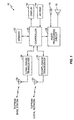
- FIG 5 illustrates one example wherein both wireless communication device 10 and audio-video system 40 are equipped to communicate via an optional short-range interface.
- audio-video system 40 is displaying a video signal on display 48 (box 80).
- BLUETOOTH-enabled devices are typically in a stand-by mode from which they periodically listen for a signal from other BLUETOOTH-enabled devices.
- wireless communication device 10 receives a paging message from audio-video system 40 when wireless communication device 10 enters an area that is within close proximity to audio-video system 40 (box 82). Once detection occurs, a service level communications link is established between transceivers 30 and 54 (box 84).
- wireless communication device 10 may retrieve the user preference information from memory 22, and transmit it to audio-video system 40 (box 86).
- the preference information may include, inter alia, a language in which the user wishes to hear the audio.
- the user may enter the preference information using keypad 14 responsive to one or more request messages sent by audio-video system 40, and transmit the preference information to audio-video system 40.
- controller 44 may first encrypt the audio (box 90). Controller 44 then transmits the audio signal associated with the video being displayed to wireless communication device 10 in the user's selected language (box 92). Upon reception, controller 20 will decrypt the received audio signal (box 94), and audio processing circuit 24 will render the audio signal as audible sound through speaker 18 or headset 34. It should be understood that upon failure of any of these steps, audio-video system 40 and/or wireless communication device 10 could terminate the communications link.
- FIG. 6 illustrates an embodiment of the invention wherein wireless communication device 10 and/or audio-video system 40 may not be equipped with an optional short-range interface.
- audio-video system 40 delivers the audio signal to wireless communication device 10 via network 60.
- audio-video system 40 is displaying a video signal on display 48 (box 100).
- Network 60 is aware of geographic positions of both audio-video system 40 and wireless communication device 10, and brokers a communications link between wireless communication device 10 and audio-video system 40 (box 102). For example, it is known that wireless communication device 10 periodically transmits or receives information regarding its position to network 60. This information may be stored in HLR 68, VLR 70, or Location DB 74. Network 60 might compare this position information to coordinates that define a boundary around audio-video system 40.
- this boundary may be thought of as a piconet cell, or an area within which a user could view the video being displayed on display 48.
- Network 60 could then send a message to wireless communication device 10 offering the user of wireless communication device 10 the opportunity to receive an audio signal from audio-video system 40. If the user answers affirmatively, network 60 forwards the user's preference information to audio-video system 40 (box 104).
- the user's preference information may include a selected language.
- audio-video system 40 Upon receipt of the user's information, audio-video system 40 encrypts the audio signal associated with the video signal currently being displayed, and transmits the audio signal via long-range transceiver 50 to BSS 62 (box 106). BSS 62 then relays the audio signal to wireless communication device 10 (box 108), which renders the audio as audible sound to the user (box 110).
- BSS 62 Upon receipt of the user's information, audio-video system 40 encrypts the audio signal associated with the video signal currently being displayed, and transmits the audio signal via long-range transceiver 50 to BSS 62 (box 106). BSS 62 then relays the audio signal to wireless communication device 10 (box 108), which renders the audio as audible sound to the user (box 110).
- termination of one or both of the communications links may be effected upon failure of any of the steps, or upon an explicit request by wireless communication device 10, audio-video system 40, or network 60.
- the present invention may be used to deliver an audio signal to individual user wireless communication devices 10 even when the devices 10 are not typically part of a network that displays the video signal. This is useful in many situations, such as when a video is being displayed in an area with an unacceptable level of ambient noise.
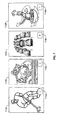
- the present invention might also be used in situations where a plurality of different video segments is being displayed. For example, sports bars typically display sports related programming on a plurality of televisions placed around the room. Considering the variety of patrons, each television usually has a different program associated with it.
- display 48 is separated into a plurality of segments 112a-112d. These segments 112 may be portions of a single display 48, or may be a plurality of displays 48, such as a bank of televisions.
- controller 44 is configured to display a different video signal on each segment 12a-112d.
- controller 44 is also configured to superimpose or display an indicator 114a-114d that identifies the particular video being displayed.
- the user as part of the service level communications link establishment, for example, could identify which particular video he is interested in by entering the indicator 114 via keypad 14. In this case, the user enters indicator 114a - the number eleven (11) - to indicate interest in segment 112a.
- controller 44 Upon receipt by audio-video system 40, controller 44 would then deliver only the audio signal associated with the indicator 114a entered by the user. The user could then enter other indicators as desired to cause transceiver 50 or 54 to transmit a different audio signal associated with the selected video signal.
Landscapes
- Engineering & Computer Science (AREA)
- Signal Processing (AREA)
- Multimedia (AREA)
- Computer Networks & Wireless Communication (AREA)
- Databases & Information Systems (AREA)
- Business, Economics & Management (AREA)
- General Business, Economics & Management (AREA)
- Computer Graphics (AREA)
- Human Computer Interaction (AREA)
- Mobile Radio Communication Systems (AREA)
- Telephone Function (AREA)
Applications Claiming Priority (2)
| Application Number | Priority Date | Filing Date | Title |
|---|---|---|---|
| US10/951,826 US8719874B2 (en) | 2004-09-28 | 2004-09-28 | System and method of streaming audio from a common video device |
| PCT/US2005/012567 WO2006036207A1 (en) | 2004-09-28 | 2005-04-14 | A system and method of streaming audio from a common video device |
Publications (2)
| Publication Number | Publication Date |
|---|---|
| EP1800460A1 EP1800460A1 (en) | 2007-06-27 |
| EP1800460B1 true EP1800460B1 (en) | 2008-05-07 |
Family
ID=34966542
Family Applications (1)
| Application Number | Title | Priority Date | Filing Date |
|---|---|---|---|
| EP05738271A Expired - Lifetime EP1800460B1 (en) | 2004-09-28 | 2005-04-14 | A system and method of streaming audio from a common video device |
Country Status (6)
| Country | Link |
|---|---|
| US (1) | US8719874B2 (enExample) |
| EP (1) | EP1800460B1 (enExample) |
| JP (1) | JP4629733B2 (enExample) |
| CN (1) | CN101073244A (enExample) |
| DE (1) | DE602005006600D1 (enExample) |
| WO (1) | WO2006036207A1 (enExample) |
Families Citing this family (30)
| Publication number | Priority date | Publication date | Assignee | Title |
|---|---|---|---|---|
| US7366295B2 (en) * | 2003-08-14 | 2008-04-29 | John David Patton | Telephone signal generator and methods and devices using the same |
| US7599719B2 (en) * | 2005-02-14 | 2009-10-06 | John D. Patton | Telephone and telephone accessory signal generator and methods and devices using the same |
| KR100801002B1 (ko) * | 2006-06-05 | 2008-02-11 | 삼성전자주식회사 | 무선 네트워크 상에서 멀티미디어 데이터를 전송/재생하는방법, 및 그 방법을 이용한 무선 기기 |
| US7849420B1 (en) | 2007-02-26 | 2010-12-07 | Qurio Holdings, Inc. | Interactive content representations enabling content sharing |
| US9098167B1 (en) | 2007-02-26 | 2015-08-04 | Qurio Holdings, Inc. | Layered visualization of content representations |
| US7840903B1 (en) | 2007-02-26 | 2010-11-23 | Qurio Holdings, Inc. | Group content representations |
| US8316308B2 (en) | 2007-06-08 | 2012-11-20 | Google Inc. | Adaptive user interface for multi-source systems |
| US9111285B2 (en) | 2007-08-27 | 2015-08-18 | Qurio Holdings, Inc. | System and method for representing content, user presence and interaction within virtual world advertising environments |
| US8400961B1 (en) | 2007-08-27 | 2013-03-19 | Qurio Holdings, Inc. | Wireless multimedia brokerage service for real time content provisioning |
| US8261307B1 (en) | 2007-10-25 | 2012-09-04 | Qurio Holdings, Inc. | Wireless multimedia content brokerage service for real time selective content provisioning |
| US9448814B2 (en) * | 2008-02-19 | 2016-09-20 | Google Inc. | Bridge system for auxiliary display devices |
| US10061742B2 (en) * | 2009-01-30 | 2018-08-28 | Sonos, Inc. | Advertising in a digital media playback system |
| US10080061B1 (en) * | 2009-12-18 | 2018-09-18 | Joseph F. Kirley | Distributing audio signals for an audio/video presentation |
| AR079832A1 (es) * | 2010-01-05 | 2012-02-22 | Rovi Tech Corp | Sistemas y metodos para proporcionar una funcionalidad de aplicacion a la guia de medios usando un dispositivo de comunicacion inalambrico |
| WO2011085407A1 (en) * | 2010-01-11 | 2011-07-14 | Signet Media Inc. | System and method for providing an audio component of a multimedia content displayed on an electronic display device to one or more wireless computing devices |
| US9819840B2 (en) * | 2010-01-11 | 2017-11-14 | Bryan Nunes | Audio device that extracts the audio of a multimedia stream and serves the audio on a network while the video is displayed |
| US8457118B2 (en) * | 2010-05-17 | 2013-06-04 | Google Inc. | Decentralized system and method for voice and video sessions |
| US20120308033A1 (en) | 2011-06-03 | 2012-12-06 | Airborne Media Group | Communication node for venue-oriented communications |
| KR101945812B1 (ko) * | 2012-06-08 | 2019-02-08 | 엘지전자 주식회사 | 이동 단말기, 및 그 동작방법 |
| WO2014019176A1 (zh) * | 2012-08-01 | 2014-02-06 | 华为技术有限公司 | 用于同步的方法、装置及系统 |
| CN103297824A (zh) * | 2013-05-29 | 2013-09-11 | 华为技术有限公司 | 视频处理方法、电视棒、控制终端和系统 |
| US9094702B2 (en) | 2013-06-26 | 2015-07-28 | International Business Machines Corporation | Customizing language and content of media for an announcement |
| US9749874B2 (en) * | 2013-07-17 | 2017-08-29 | Qualcomm Incorporated | Multi-band management of wireless relaying networks |
| IN2013CH04475A (enExample) * | 2013-10-02 | 2015-04-10 | Nokia Corp | |
| US9584871B2 (en) | 2013-12-19 | 2017-02-28 | Echostar Technologies L.L.C. | Smartphone bluetooth headset receiver |
| US9959840B2 (en) | 2016-06-23 | 2018-05-01 | Bryan Nunes | Multimedia servers that broadcast packet-switched audio with second screen content |
| US9854302B1 (en) | 2016-06-23 | 2017-12-26 | Bryan Nunes | Multimedia servers that broadcast a channel listing and packet-switched audio |
| US10291964B2 (en) | 2016-12-06 | 2019-05-14 | At&T Intellectual Property I, L.P. | Multimedia broadcast system |
| US11451855B1 (en) | 2020-09-10 | 2022-09-20 | Joseph F. Kirley | Voice interaction with digital signage using mobile device |
| CN112637556A (zh) * | 2020-12-07 | 2021-04-09 | 苏州热工研究院有限公司 | 一种核电厂火灾通信平台、装置及系统 |
Family Cites Families (19)
| Publication number | Priority date | Publication date | Assignee | Title |
|---|---|---|---|---|
| US5510828A (en) * | 1994-03-01 | 1996-04-23 | Lutterbach; R. Steven | Interactive video display system |
| US6698020B1 (en) * | 1998-06-15 | 2004-02-24 | Webtv Networks, Inc. | Techniques for intelligent video ad insertion |
| US6408278B1 (en) * | 1998-11-10 | 2002-06-18 | I-Open.Com, Llc | System and method for delivering out-of-home programming |
| US6549768B1 (en) * | 1999-08-24 | 2003-04-15 | Nokia Corp | Mobile communications matching system |
| AU2773301A (en) * | 2000-01-06 | 2001-07-16 | Hd Media, Inc. | System and method for distributing and controlling the output of media in publicspaces |
| US6977909B2 (en) * | 2000-01-19 | 2005-12-20 | Phonepages Of Sweden, Inc. | Method and apparatus for exchange of information in a communication network |
| US20020094787A1 (en) * | 2000-04-07 | 2002-07-18 | Avnet Mark S. | Method and apparatus for transmitting information from point-to-point |
| JP2001292238A (ja) | 2000-04-10 | 2001-10-19 | Nec Saitama Ltd | 移動電話端末広告表示システム |
| US7058356B2 (en) | 2000-06-15 | 2006-06-06 | Benjamin Slotznick | Telephone device with enhanced audio-visual features for interacting with nearby displays and display screens |
| US7136999B1 (en) * | 2000-06-20 | 2006-11-14 | Koninklijke Philips Electronics N.V. | Method and system for electronic device authentication |
| JP2002109102A (ja) | 2000-09-28 | 2002-04-12 | Toshiba Corp | データ送受信システム、受信システム、著作権管理サーバ、データ課金方法及びデータ利用方法 |
| US8086287B2 (en) * | 2001-01-24 | 2011-12-27 | Alcatel Lucent | System and method for switching between audio sources |
| JP3986863B2 (ja) | 2001-03-30 | 2007-10-03 | 株式会社日本総合研究所 | 情報配信システム、情報配信方法およびその方法をコンピュータに実行させるプログラム |
| US6965770B2 (en) | 2001-09-13 | 2005-11-15 | Nokia Corporation | Dynamic content delivery responsive to user requests |
| JP3629253B2 (ja) | 2002-05-31 | 2005-03-16 | 株式会社東芝 | 音声再生装置および同装置で用いられる音声再生制御方法 |
| JP2004032160A (ja) | 2002-06-24 | 2004-01-29 | Toppan Printing Co Ltd | 沿線情報案内システム、携帯受信機、及び沿線情報案内方法 |
| JP2004128673A (ja) * | 2002-09-30 | 2004-04-22 | Toshiba Corp | 電子機器およびコンテンツ再生方法 |
| AU2003280195A1 (en) | 2002-12-18 | 2004-07-09 | Koninklijke Philips Electronics N.V. | Bluetooth broadcast data stream to multiple bluetooth mobile terminals |
| US20040125136A1 (en) * | 2002-12-30 | 2004-07-01 | Jukka Wallenius | Provision of services through a display system |
-
2004
- 2004-09-28 US US10/951,826 patent/US8719874B2/en not_active Expired - Fee Related
-
2005
- 2005-04-14 CN CNA200580032545XA patent/CN101073244A/zh active Pending
- 2005-04-14 EP EP05738271A patent/EP1800460B1/en not_active Expired - Lifetime
- 2005-04-14 DE DE602005006600T patent/DE602005006600D1/de not_active Expired - Lifetime
- 2005-04-14 JP JP2007533452A patent/JP4629733B2/ja not_active Expired - Fee Related
- 2005-04-14 WO PCT/US2005/012567 patent/WO2006036207A1/en not_active Ceased
Also Published As
| Publication number | Publication date |
|---|---|
| DE602005006600D1 (de) | 2008-06-19 |
| JP2008515277A (ja) | 2008-05-08 |
| JP4629733B2 (ja) | 2011-02-09 |
| US20060075439A1 (en) | 2006-04-06 |
| CN101073244A (zh) | 2007-11-14 |
| EP1800460A1 (en) | 2007-06-27 |
| WO2006036207A1 (en) | 2006-04-06 |
| US8719874B2 (en) | 2014-05-06 |
Similar Documents
| Publication | Publication Date | Title |
|---|---|---|
| EP1800460B1 (en) | A system and method of streaming audio from a common video device | |
| US7929904B2 (en) | Methods, systems, and computer program products for transmitting streaming media to a mobile terminal using the bandwidth associated with a wireless network | |
| CN100367808C (zh) | 使用即按即说方案的移动通信系统及其方法 | |
| US7756533B2 (en) | Mobile terminals with media tuning and methods and computer program products for operating the same | |
| US20060083194A1 (en) | System and method rendering audio/image data on remote devices | |
| EP1887769A2 (en) | Mobile communication terminal and method for inputting/outputting voice during playback of music data by using bluetooth | |
| US20070287410A1 (en) | Position location system and method for mobile terminal | |
| EP2920899B1 (en) | A relay device, method and computer program | |
| US20060270460A1 (en) | Mobile communication terminal and mobile communication system, and method therefore | |
| CN101238739B (zh) | 向位于无线通信网络小区中的一组移动终端传送紧急告警消息的方法及相关无线网络控制器 | |
| US20120033825A1 (en) | Captioned Audio and Content Delivery System with Localizer and Sound Enhancement | |
| JP4000597B2 (ja) | 携帯電話機 | |
| US7599704B2 (en) | Voice call connection method during a push to talk call in a mobile communication system | |
| JP2006141020A (ja) | デジタルマルチメディア放送を受信する移動通信端末機及びシステム | |
| EP1771017A2 (en) | Method and system for providing accident broadcasting guidance service in a mobile communications system | |
| US7215949B2 (en) | Cellular subscriber radio service | |
| JP4992548B2 (ja) | 情報配信システム | |
| KR100677480B1 (ko) | 발신 메시지를 이용하여 dmb 정보를 전송하기 위한시스템 및 그 방법 | |
| KR100695200B1 (ko) | 라디오를 내장하고 있는 이동 통신 단말기에서의 라디오 채널 자동 설정 방법 | |
| JP2003078482A (ja) | 地域情報配信方法、地域情報配信システムおよび移動携帯端末 | |
| EP1566978A2 (en) | Mobile communications systems, methods and terminals for handling group calls related informations | |
| US20070178924A1 (en) | Apparatus for notifying a mobile user of a push-to-talk communication call in a mobile communication system and method therefor | |
| KR101463107B1 (ko) | 무선 네트워크 공유 기반의 전화 착신 알림 서비스 시스템 | |
| KR20060039888A (ko) | 라디오를 내장하고 있는 이동 통신 단말기에서의 방송 정보제공 방법 | |
| CA2539771A1 (en) | Communications method and system to convert messages into television signals |
Legal Events
| Date | Code | Title | Description |
|---|---|---|---|
| PUAI | Public reference made under article 153(3) epc to a published international application that has entered the european phase |
Free format text: ORIGINAL CODE: 0009012 |
|
| 17P | Request for examination filed |
Effective date: 20070418 |
|
| AK | Designated contracting states |
Kind code of ref document: A1 Designated state(s): DE FR GB |
|
| 17Q | First examination report despatched |
Effective date: 20070712 |
|
| GRAP | Despatch of communication of intention to grant a patent |
Free format text: ORIGINAL CODE: EPIDOSNIGR1 |
|
| DAX | Request for extension of the european patent (deleted) | ||
| RBV | Designated contracting states (corrected) |
Designated state(s): DE FR GB |
|
| GRAS | Grant fee paid |
Free format text: ORIGINAL CODE: EPIDOSNIGR3 |
|
| GRAA | (expected) grant |
Free format text: ORIGINAL CODE: 0009210 |
|
| AK | Designated contracting states |
Kind code of ref document: B1 Designated state(s): DE FR GB |
|
| REG | Reference to a national code |
Ref country code: GB Ref legal event code: FG4D |
|
| REF | Corresponds to: |
Ref document number: 602005006600 Country of ref document: DE Date of ref document: 20080619 Kind code of ref document: P |
|
| PLBE | No opposition filed within time limit |
Free format text: ORIGINAL CODE: 0009261 |
|
| STAA | Information on the status of an ep patent application or granted ep patent |
Free format text: STATUS: NO OPPOSITION FILED WITHIN TIME LIMIT |
|
| 26N | No opposition filed |
Effective date: 20090210 |
|
| PGFP | Annual fee paid to national office [announced via postgrant information from national office to epo] |
Ref country code: FR Payment date: 20090427 Year of fee payment: 5 |
|
| GBPC | Gb: european patent ceased through non-payment of renewal fee |
Effective date: 20100414 |
|
| REG | Reference to a national code |
Ref country code: FR Ref legal event code: ST Effective date: 20101230 |
|
| PG25 | Lapsed in a contracting state [announced via postgrant information from national office to epo] |
Ref country code: DE Free format text: LAPSE BECAUSE OF NON-PAYMENT OF DUE FEES Effective date: 20101103 |
|
| REG | Reference to a national code |
Ref country code: DE Ref legal event code: R073 Ref document number: 602005006600 Country of ref document: DE |
|
| PG25 | Lapsed in a contracting state [announced via postgrant information from national office to epo] |
Ref country code: GB Free format text: LAPSE BECAUSE OF NON-PAYMENT OF DUE FEES Effective date: 20100414 |
|
| REG | Reference to a national code |
Ref country code: GB Ref legal event code: S28 Free format text: APPLICATION FILED |
|
| REG | Reference to a national code |
Ref country code: DE Ref legal event code: R073 Ref document number: 602005006600 Country of ref document: DE |
|
| REG | Reference to a national code |
Ref country code: DE Ref legal event code: R074 Ref document number: 602005006600 Country of ref document: DE |
|
| REG | Reference to a national code |
Ref country code: GB Ref legal event code: S28 Free format text: RESTORATION ALLOWED Effective date: 20111024 |
|
| REG | Reference to a national code |
Ref country code: DE Ref legal event code: R074 Ref document number: 602005006600 Country of ref document: DE Effective date: 20110930 |
|
| PG25 | Lapsed in a contracting state [announced via postgrant information from national office to epo] |
Ref country code: FR Free format text: LAPSE BECAUSE OF NON-PAYMENT OF DUE FEES Effective date: 20100430 |
|
| PGFP | Annual fee paid to national office [announced via postgrant information from national office to epo] |
Ref country code: GB Payment date: 20120411 Year of fee payment: 8 |
|
| PGRI | Patent reinstated in contracting state [announced from national office to epo] |
Ref country code: DE Effective date: 20110927 |
|
| GBPC | Gb: european patent ceased through non-payment of renewal fee |
Effective date: 20130414 |
|
| PG25 | Lapsed in a contracting state [announced via postgrant information from national office to epo] |
Ref country code: GB Free format text: LAPSE BECAUSE OF NON-PAYMENT OF DUE FEES Effective date: 20130414 |
|
| PGFP | Annual fee paid to national office [announced via postgrant information from national office to epo] |
Ref country code: DE Payment date: 20170411 Year of fee payment: 13 |
|
| REG | Reference to a national code |
Ref country code: DE Ref legal event code: R119 Ref document number: 602005006600 Country of ref document: DE |
|
| PG25 | Lapsed in a contracting state [announced via postgrant information from national office to epo] |
Ref country code: DE Free format text: LAPSE BECAUSE OF NON-PAYMENT OF DUE FEES Effective date: 20181101 |