EP1795796A1 - Leitungsrohr für den Transport von tiefgekühlten Medien - Google Patents
Leitungsrohr für den Transport von tiefgekühlten Medien Download PDFInfo
- Publication number
- EP1795796A1 EP1795796A1 EP05292659A EP05292659A EP1795796A1 EP 1795796 A1 EP1795796 A1 EP 1795796A1 EP 05292659 A EP05292659 A EP 05292659A EP 05292659 A EP05292659 A EP 05292659A EP 1795796 A1 EP1795796 A1 EP 1795796A1
- Authority
- EP
- European Patent Office
- Prior art keywords
- vacuum
- welded
- conduit
- smooth
- metal tube
- Prior art date
- Legal status (The legal status is an assumption and is not a legal conclusion. Google has not performed a legal analysis and makes no representation as to the accuracy of the status listed.)
- Granted
Links
Images


Classifications
-
- F—MECHANICAL ENGINEERING; LIGHTING; HEATING; WEAPONS; BLASTING
- F16—ENGINEERING ELEMENTS AND UNITS; GENERAL MEASURES FOR PRODUCING AND MAINTAINING EFFECTIVE FUNCTIONING OF MACHINES OR INSTALLATIONS; THERMAL INSULATION IN GENERAL
- F16L—PIPES; JOINTS OR FITTINGS FOR PIPES; SUPPORTS FOR PIPES, CABLES OR PROTECTIVE TUBING; MEANS FOR THERMAL INSULATION IN GENERAL
- F16L59/00—Thermal insulation in general
- F16L59/06—Arrangements using an air layer or vacuum
- F16L59/065—Arrangements using an air layer or vacuum using vacuum
-
- F—MECHANICAL ENGINEERING; LIGHTING; HEATING; WEAPONS; BLASTING
- F16—ENGINEERING ELEMENTS AND UNITS; GENERAL MEASURES FOR PRODUCING AND MAINTAINING EFFECTIVE FUNCTIONING OF MACHINES OR INSTALLATIONS; THERMAL INSULATION IN GENERAL
- F16L—PIPES; JOINTS OR FITTINGS FOR PIPES; SUPPORTS FOR PIPES, CABLES OR PROTECTIVE TUBING; MEANS FOR THERMAL INSULATION IN GENERAL
- F16L41/00—Branching pipes; Joining pipes to walls
-
- F—MECHANICAL ENGINEERING; LIGHTING; HEATING; WEAPONS; BLASTING
- F16—ENGINEERING ELEMENTS AND UNITS; GENERAL MEASURES FOR PRODUCING AND MAINTAINING EFFECTIVE FUNCTIONING OF MACHINES OR INSTALLATIONS; THERMAL INSULATION IN GENERAL
- F16L—PIPES; JOINTS OR FITTINGS FOR PIPES; SUPPORTS FOR PIPES, CABLES OR PROTECTIVE TUBING; MEANS FOR THERMAL INSULATION IN GENERAL
- F16L59/00—Thermal insulation in general
- F16L59/14—Arrangements for the insulation of pipes or pipe systems
- F16L59/141—Arrangements for the insulation of pipes or pipe systems in which the temperature of the medium is below that of the ambient temperature
-
- F—MECHANICAL ENGINEERING; LIGHTING; HEATING; WEAPONS; BLASTING
- F16—ENGINEERING ELEMENTS AND UNITS; GENERAL MEASURES FOR PRODUCING AND MAINTAINING EFFECTIVE FUNCTIONING OF MACHINES OR INSTALLATIONS; THERMAL INSULATION IN GENERAL
- F16L—PIPES; JOINTS OR FITTINGS FOR PIPES; SUPPORTS FOR PIPES, CABLES OR PROTECTIVE TUBING; MEANS FOR THERMAL INSULATION IN GENERAL
- F16L9/00—Rigid pipes
Definitions
- the invention relates to a conduit for the transport of frozen media according to the preamble of claim 1.
- the EP 1 363 062 A1 is a conduit for the transport of frozen media known, which consists of at least two concentric and spaced metal tubes, wherein in the annular gap between the metal pipes, an insulating layer is arranged and the annular gap is evacuated.
- the metal tubes are longitudinally welded and corrugated stainless steel tubes according to an advantageous embodiment. Due to the corrugation can be produced pipes of the type described in long lengths.
- the insulation layer consists of mutually superimposed layers of insulating material and a material with a reflective surface. Preference is given to glass fiber fleece and aluminum foils. Insulation of these materials in combination with a high vacuum is referred to in cryotechnology as superinsulation.
- the known conduits are preferably used as transfer lines for liquefied gases but also as cryostats for superconducting cables.
- the known conduits are characterized by a high level of economic efficiency, since a large number of connection connections can be dispensed with due to the large length that can be produced compared to conduits made of smooth tubes. Due to the flexibility, the cables can also be laid in tight radii.
- a disadvantage of the known lines is that due to the large length evacuation from the ends is very time consuming.
- EP 1 363 062 A1 Therefore, the exterior of the metal tubes to be separated at predetermined intervals and a pump neck over each opening vacuum-tight welded to the outer metal tube.
- metal ring halves are placed on the two ends of the outer metal tube in the region of the opening and welded to the ends of the outer metal tube.
- Half shells of a smooth-walled metal tube are then placed on the metal ring halves and welded to the metal ring halves as well as to their longitudinal directions.
- One of the half shells has a connecting piece for a vacuum pump.
- a disadvantage of this construction is that the metal ring halves and the connecting piece protruding from the peripheral surface of the outer metal tube. As a result, it is not possible to feed the conduit into narrow channels.
- a component and a device for closing which has side walls in which an access opening is arranged, which is gas-tight coverable by a closure plate.
- the interior of the component is evacuated from the environment.
- the access opening is surrounded by an annular flange, which rests in the region of the interior of the side wall.
- the annular flange has a bearing surface, in which an annular groove is provided with a seal.
- a stud is attached, which serves to guide the closure plate in a lock for introducing the vacuum into the component and for pressing the closure plate on the seal.
- the EP-A-1 586 715 discloses an evacuable bottom plate for refrigerated and cling cells with a walk-on plate and a bottom support plate which are laterally sealed with a side edge profile.
- a closable with a lid opening in one of the two plates is provided for evacuation of the interior.
- the opening is formed as a recess projecting into the interior, in which a non-return valve in communication with the interior is arranged with connection for a suction line.
- the present invention has for its object to provide a conduit of the type mentioned above, which can be installed in large lengths in narrow cable channels and can be nachevakuiert quickly and easily, if by any leaks, the vacuum should have deteriorated.
- the main advantage of the invention is the fact that in the conduit according to the teachings of the invention no protruding parts are present, which are cumbersome when pulling in a cable channel.
- the provided in the prior art outwardly projecting pump nozzle is replaced by an adapter, which is mounted only in the case when it must be pumped.
- the adapter is then screwed vacuum-tight with the valve body and a gas lock known per se releases a screw plug screwed into the valve body and thus provides access to the annulus.
- the "cryogenic envelope” is designed as a conduit made of an inner tube 2, a superinsulation 3 and an outer tube 4.
- the inner tube 2 is a longitudinally welded corrugated austenitic steel tube.
- a spacer 5 is wound helically.
- the super insulation layer 3 is arranged, which consists of alternately applied layers of reflective metal foils z.
- B. glass fiber fleece consists.
- the outer tube 4 is also a longitudinally welded, corrugated metal tube made of austenitic steel, which may be surrounded by a plastic sheath 6.
- the superconductor cable shown can be made in the usual way in cable technology continuously factory in great lengths, the maximum length is limited by the capacity of the transport, z. B. by the size of the cable drum.
- half-shells 7a, 7b and 8a, 8b are placed and welded at their joints as well as at their mutually facing end sides with the ends of the outer tube 4 vacuum-tight.
- the half-shells 7a, 7b and 8a, 8b are also made of austenitic steel.
- half-shells 7a, 7b and 8a, 8b formed rings are two half-shells 9a and 9b, which are made of sheet metal sections made of austenitic steel, wrapped and end welded to the half-shells 7a, 7b and 8a, 8b and at its parting plane vacuum-tight.
- the half-shell 9a has a valve body 10, to which a vacuum pump can be connected.
- half shells 7a, 7b, 8a and 8b placed on the outer tube 4
- half shells which are screwed into the outer tube 4 after the longitudinal seams have been welded together it is also possible to use half shells which are screwed into the outer tube 4 after the longitudinal seams have been welded together.
- the annular gap between inner tube 2 and outer tube 4, which is partially filled with the superinsulation layer, is sealed off at both ends of a cable length in a vacuum-tight manner to the outside.
- vacuum pumps 10 are connected, which evacuate the annular gap.
- valve bodies 10 With a cable length of about 500 m four valve bodies 10 are provided at a distance of 100 m. In order to trap residual gases which are released in the annular gap after evacuation, a getter material can be introduced into the annular gap, preferably during the production of the pump connections.
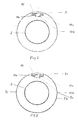
- FIGS 2 and 3 show a section through the area in which the outer tube 4 of the conduit is removed.
- a Valve body 10 is welded in a hole in a smooth-walled metal tube 9, which is welded at its ends to the ends of the outer tube 4 .
- the valve body 10 protrudes into the interior of the smooth-walled metal tube 9 and is adapted to its outwardly facing surface of the rounding of the metal tube 9, so that the outwardly facing surface of the valve body 10 is flush with the lateral surface of the metal tube 9.
- the valve body 10 has a threaded bore 10a, in which a screw plug 10b is screwed vacuum-tight.
- a sealing ring 10c provides the required seal.
- the embodiment shown in Figure 2 is suitable for attachment to the end of the conduit.
- the smooth-walled metal tube 9 is here, however, formed from the two half-shells 9a and 9b, which are welded together at their longitudinal seams 9c. This design is used between the two ends of the conduit.
- FIG. 1 to 3 shows the state of the conduit after evacuation. Since there is no significant outer diameter increase, the conduit can be retracted in large lengths in existing cable ducts. It is particularly advantageous if the areas where the outer tube 4 is removed, are accessible from the outside, d. H. if there is a so-called. Manhole or a cable shaft is provided.
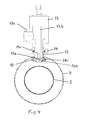
- an adapter 12 is placed on the valve body 10 and connected by means not shown bolts, which are screwed into corresponding threaded holes, not shown in the valve body 10, with the valve body 10 vacuum-tight.
- a sealing ring 12a provides the required tightness.
- a known gas lock 13 by means of a clamping ring 14 with connected to the adapter 12 vacuum-tight.
- a sealing ring 13 a is located at the interface between the adapter 12 and gas lock thirteenth
- the rotatably mounted in the housing of the gas lock 13 bolt 13b is lowered and penetrates with its valve body 10 facing the end in an unspecified opening in the screw plug 10b and solves them by turning.
- the bolt 13b is lifted together with it after loosening the closure screw 10b, whereby the access to the annular gap between the inner tube 2 and the outer tube 4 or smooth tube 9 becomes free.
- a vacuum pump not shown, which is connected to the flange 13 c of the gas lock 13, set the evacuation process in motion.
- Removal of the adapter 12 may be omitted if the evacuation process has been performed on an already laid conduit.
Landscapes
- Engineering & Computer Science (AREA)
- General Engineering & Computer Science (AREA)
- Mechanical Engineering (AREA)
- Thermal Insulation (AREA)
- Rigid Pipes And Flexible Pipes (AREA)
- Pipe Accessories (AREA)
- Valve Housings (AREA)
- Extrusion Moulding Of Plastics Or The Like (AREA)
Abstract
Description
- Die Erfindung betrifft ein Leitungsrohr für den Transport von tiefgekühlten Medien nach dem Oberbegriff des Anspruchs 1.
- Aus der
EP 1 363 062 A1 ist ein Leitungsrohr für den Transport von tiefgekühlten Medien bekannt, welches aus mindestens zwei konzentrisch und im Abstand zueinander angeordneten Metallrohren besteht, wobei in dem Ringspalt zwischen den Metallrohren eine Isolierungsschicht angeordnet ist und der Ringspalt evakuiert ist. Die Metallrohre sind nach einer vorteilhaften Ausgestaltung längsnahtgeschweißte und gewellte Edelstahlrohre. Aufgrund der Wellung lassen sich Leitungsrohre der beschriebenen Art in großen Längen herstellen. Die Isolierungsschicht besteht aus wechselweise übereinander angeordneten Lagen aus Isoliermaterial und einem Material mit reflektierender Oberfläche. Bevorzugt werden Glasfaservlies und Aluminiumfolien. Eine Isolierung aus diesen Materialien in Kombination mit einem Hochvakuum wird in der Kryotechnik als Superisolierung bezeichnet. Die bekannten Leitungsrohre finden bevorzugt Anwendung als Transferleitungen für verflüssigte Gase aber auch als Kryostaten für Supraleiterkabel. - Die bekannten Leitungsrohre zeichnen sich durch eine hohe Wirtschaftlichkeit aus, da aufgrund der herstellbaren großen Länge gegenüber Leitungen aus Glattrohren eine Vielzahl von Anschlußverbindungen entbehrlich ist. Aufgrund der Flexibilität können die Leitungen auch in engen Radien verlegt werden.
- Ein Nachteil der bekannten Leitungen besteht darin, daß aufgrund der großen Länge eine Evakuierung von den Enden her sehr zeitaufwendig ist.
- Gemäß
EP 1 363 062 A1 soll deshalb das Äußere der Metallrohre in vorbestimmten Abständen aufgetrennt und über jeder Öffnung ein Pumpstutzen vakuumdicht mit dem äußeren Metallrohr verschweißt werden. Hierzu werden auf die beiden Enden des äußeren Metallrohres im Bereich der Öffnung Metallringhälften aufgelegt und mit den Enden des äußeren Metallrohres verschweißt. An die Metallringhälften werden sodann Halbschalen aus einem glattwandigen Metallrohr aufgelegt und mit den Metallringhälften sowie an ihren Längsrichtungen verschweißt. Eine der Halbschalen weist einen Anschlußstutzen für eine Vakuumpumpe auf. Nachteilig bei dieser Konstruktion ist, daß die Metallringhälften sowie der Anschlußstutzen aus der Umfangsfläche des äußeren Metallrohres hervorspringen. Dadurch ist es nicht möglich, das Leitungsrohr in enge Kanäle einzuziehen. - Ähnlich nachteilige Konstruktionen mit einem hervorspringenden Pumpstutzen sind in der
DE 31 42 702 A , derUS 6 257 282 B1 , derWO 01/27514 A1 US 4 046 407 B1 offenbart. - Aus der
DE 196 02 940 A1 ist ein Bauteil sowie eine Vorrichtung zum Verschließen bekannt, welches Seitenwandungen aufweist, in welchen eine Zugangsöffnung angeordnet ist, die gasdicht von einer Verschlußplatte abdeckbar ist. Der Innenraum des Bauteils ist gegenüber der Umgebung evakuiert. Die Zugangsöffnung ist von einem Ringflansch umgeben, der im Bereich des Innenraums an der Seitenwandung anliegt. Der Ringflansch weist eine Auflagefläche auf, in welcher eine Ringnut mit einer Dichtung vorgesehen ist. An der Verschlußplatte ist ein Stehbolzen angebracht, der zur Führung der Verschlußplatte in einer Schleuse zur Einbringung des Vakuums in das Bauteil und zum Andrücken der Verschlußplatte auf die Dichtung dient. - Die
EP-A-1 586 715 offenbart eine evakuierbare Bodenplatte für Kühl- und Frischhaltezellen mit einer begehbaren Platte und einer Bodenauflageplatte, die seitlich mit einem Seitenrandprofil abgedichtet sind. Zur Evakuierung des Innenraums ist eine mit einem Deckel verschließbare Öffnung in einer der beiden Platten vorgesehen. Die Öffnung ist als eine in den Innenraum hineinragende Eintiefung ausgebildet, in welcher ein mit dem Innenraum in Verbindung stehendes Rückschlagventil mit Anschluß für eine Absaugleitung angeordnet ist. - Der vorliegenden Erfindung liegt die Aufgabe zugrunde, ein Leitungsrohr der eingangs erwähnten Art bereitzustellen, welches auch in großen Längen in engen Kabelkanälen verlegt und schnell und einfach nachevakuiert werden kann, wenn durch eventuelle Leckstellen sich das Vakuum verschlechtert haben sollte.
- Diese Aufgabe wird durch das im Kennzeichen des Anspruchs 1 Erfaßte gelöst.
- Weitere vorteilhafte Ausgestaltungen der Erfindung sind in den Unteransprüchen erfaßt.
- Der wesentliche Vorteil der Erfindung ist darin zu sehen, daß bei dem Leitungsrohr nach der Lehre der Erfindung keine hervorspringenden Teile vorhanden sind, welche beim Einziehen in einem Kabelkanal hinderlich sind. Der beim Stand der Technik vorgesehene nach außen vorspringende Pumpstutzen wird durch einen Adapter ersetzt, der erst in dem Fall angebracht wird, wenn nachgepumpt werden muß. Der Adapter wird dann mit dem Ventilkörper vakuumdicht verschraubt und eine an sich bekannte Gasschleuse löst eine in den Ventilkörper eingeschraubte Verschlußschraube und schafft somit einen Zugang zum Ringraum.
- Die Erfindung ist anhand der in den Figuren 1 bis 5 schematisch dargestellten Ausführungsbeispiele für ein Supraleiterkabel näher erläutert.
- Die Figur 1 zeigt einen Schnitt durch eine seitliche Ansicht eines Supraleiterkabels, welches aus der supraleitenden Kabelseele 1 und einem die supraleitende Kabelseele 1 umgebenden "cryogenic envelope" besteht. Der "cryogene envelope" ist als ein Leitungsrohr aus einem Innenrohr 2, einer Superisolierung 3 sowie einem Außenrohr 4 ausgebildet. Das Innenrohr 2 ist ein längsnahtgeschweißtes gewelltes Rohr aus austenitischem Stahl. Auf das Innenrohr 2 ist ein Abstandshalter 5 schraubenlinienförmig aufgewickelt. Auf dem Innenrohr 2 und dem Abstandhalter 5 ist die Superisolierungsschicht 3 angeordnet, die aus wechselweise aufgebrachten Lagen aus reflektierenden Metallfolien z. B. mit Aluminium beschichteten Kunststofffolien und Folien aus nicht wärmeleitendem Material z. B. Glasfaservlies besteht.
- Das Außenrohr 4 ist ebenfalls ein längsnahtgeschweißtes, gewelltes Metallrohr aus austenitischem Stahl, welches von einem Kunststoffmantel 6 umgeben sein kann. Das dargestellte Supraleiterkabel kann auf in der Kabeltechnik übliche Weise kontinuierlich werksseitig in großen Längen hergestellt werden, wobei die maximale Länge durch das Fassungsvermögen der Transportmittel begrenzt ist, z. B. durch die Größe der Kabeltrommel.
- Um den Evakuierungsprozeß sowohl direkt nach der Fertigung als auch nach der Verlegung zu beschleunigen oder überhaupt zu ermöglichen, sind in vorbestimmten Abständen von z. B. 100 m der Kunststoffmantel 6 und das Außenrohr 4 über eine begrenzte Länge entfernt.
- Auf die Enden des Außenrohres 4 werden je zwei Halbschalen 7a, 7b und 8a, 8b aufgesetzt und an ihren Trennfugen sowie an ihren einander zugekehrten Stirnseiten mit den Enden des Außenrohres 4 vakuumdicht verschweißt. Die Halbschalen 7a, 7b und 8a, 8b bestehen ebenfalls aus austenitischem Stahl. Wie aus der Figur 1 erkennbar ist, weisen die Halbschalen 7a, 7b und 8a, 8b an ihren dem Außenrohr 4 zugekehrten Oberflächen eine der Form der Wellung des Außenrohres 4 angepaßte Profilierung auf, welche die Halbschalen bzw. die aus den Halbschalen 7a, 7b und 8a, 8b geschweißten Ringe formschlüssig mit den Außenrohr 4 verbinden und somit die Schweißnaht entlasten. Über die aus den Halbschalen 7a, 7b und 8a, 8b gebildeten Ringe werden zwei Halbschalen 9a und 9b, die aus Blechabschnitten aus austenitischen Stahl hergestellt sind, herumgelegt und endseitig mit den Halbschalen 7a, 7b und 8a, 8b sowie an ihrer Trennebene vakuumdicht verschweißt. Die Halbschale 9a weist einen Ventilkörper 10 auf, an den eine Vakuumpumpe anschließbar ist.
- An Stelle der auf das Außenrohr 4 aufgelegten Halbschalen 7a, 7b, 8a und 8b können auch Halbschalen verwendet werden, die nach dem Verschweißen der Längsnähte in das Außenrohr 4 eingeschraubt werden.
- Über die Halbschalen 9a, 9b und den Kunststoffmantel 6 kann noch eine Schutzmanschette 11 herumgelegt werden.
- Der zwischen dem Innenrohr 2 und dem Außenrohr 4 befindliche Ringspalt, der teilweise mit der Superisolierungsschicht ausgefüllt ist, ist an beiden Enden einer Kabellänge vakuumdicht nach außen abgeschottet.
- Nach Fertigstellung dieser Vorarbeiten werden an die Ventilkörper 10 nicht dargestellte Vakuumpumpen angeschlossen, welche den Ringspalt evakuieren.
- Bei einer Kabellänge von ca. 500 m sind im Abstand von jeweils 100 m vier Ventilkörper 10 vorgesehen. Um Restgase, die nach dem Evakuieren in dem Ringspalt frei werden, abzufangen, kann in den Ringspalt ein Gettermaterial eingebracht werden, vorzugsweise bei der Herstellung der Pumpanschlüsse.
- Die Figuren 2 und 3 zeigen einen Schnitt durch den Bereich, in welchem das Außenrohr 4 des Leitungsrohres entfernt ist. In eine Bohrung in einem glattwandigen Metallrohr 9, welches an seinen Enden mit den Enden des Außenrohres 4 verschweißt ist, ist ein Ventilkörper 10 eingeschweißt. Der Ventilkörper 10 ragt in den Innenraum des glattwandigen Metallrohres 9 hinein und ist an seiner nach außen weisenden Oberfläche der Rundung des Metallrohres 9 angepaßt, so daß die nach außen weisende Oberfläche des Ventilkörpers 10 bündig mit der Mantelfläche des Metallrohres 9 ist.
- Der Ventilkörper 10 weist eine Gewindebohrung 10a auf, in welche eine Verschlußschraube 10b vakuumdicht eingeschraubt ist. Ein Dichtring 10c sorgt für die erforderliche Abdichtung.
- Die in Figur 2 dargestellte Ausführung ist für die Anbringung am Ende des Leitungsrohres geeignet.
- In der Figur 3 ist die gleiche Ausführung dargestellt, das glattwandige Metallrohr 9 ist hier jedoch aus den beiden Halbschalen 9a und 9b gebildet, die an ihren Längsnähten 9c miteinander verschweißt sind. Diese Ausführung wird zwischen den beiden Enden des Leitungsrohres eingesetzt.
- Die in den Figuren 1 bis 3 dargestellte Ausführung zeigt den Zustand des Leitungsrohres nach dem Evakuieren. Da keine wesentlichen äußeren Durchmesservergrößerung vorhanden sind, kann das Leitungsrohr in großen Längen in vorhandene Kabelkanäle eingezogen werden. Von besonderem Vorteil ist es, wenn die Bereiche, an dem das Außenrohr 4 entfernt ist, von außen zugänglich sind, d. h. wenn dort ein sog. Mannloch bzw. ein Kabelschacht vorgesehen ist.
- Im Folgenden soll der Vorgang des Evakuierens bzw. Nachevakuierens anhand der Figuren 4 und 5 näher beschrieben werden.
- Zunächst wird ein Adapter 12 auf den Ventilkörper 10 aufgesetzt und mittels nicht dargestellter Schraubbolzen, die in entsprechende nicht dargestellte Gewindebohrungen im Ventilkörper 10 eingeschraubt werden, mit dem Ventilkörper 10 vakuumdicht verbunden. Ein Dichtring 12a sorgt für die erforderliche Dichtigkeit. Sodann wird eine an sich bekannte Gasschleuse 13 mittels eines Spannringes 14 mit dem Adapter 12 vakuumdicht verbunden. Ein Dichtring 13a liegt an der Nahtstelle zwischen Adapter 12 und Gasschleuse 13.
- Der drehbar im Gehäuse der Gasschleuse 13 gelagerte Bolzen 13b wird abgesenkt und dringt mit seinem dem Ventilkörper 10 zugekehrten Ende in eine nicht näher bezeichnete Öffnung in der Verschlußschraube 10b und löst diese durch Drehen.
- Wie in der Figur 5 dargestellt wird der Bolzen 13b nach dem Lösen der Verschlußschraube 10b gemeinsam mit dieser angehoben, wodurch der Zugang zum Ringspalt zwischen Innenrohr 2 und Außenrohr 4 bzw. Glattrohr 9 frei wird. Nun kann eine nicht dargestellte Vakuumpumpe, die an den Flansch 13c der Gasschleuse 13 angeschlossen wird, den Evakuierungsvorgang in Gang setzen.
- Nach Erzeugung des erforderlichen Vakuums fährt der Bolzen 13b mit der Verschlußschraube 10b abwärts und schraubt diese wieder in die Gewindebohrung 10a des Ventilkörpers 10 ein.
- Im Falle des Nachevakuierens ist es erforderlich, den Innenraum der Gasschleuse 13 vor dem Herausschrauben der Verschlußschraube 10b zu evakuieren.
- Eine Entfernung des Adapters 12 kann unterbleiben, wenn der Evakuierungsprozeß bei einem bereits verlegten Leitungsrohr vorgenommen wurde.
Claims (4)
- Leitungsrohr für den Transport von tiefgekühlten Medien, bestehend aus mindestens zwei konzentrisch und im Abstand zueinander angeordneten gewellten Metallrohren (2,4), wobei in dem Ringspalt zwischen den beiden Metallrohren (2,4) eine Isolierungsschicht (3) angeordnet, der Ringspalt evakuiert und ein in dem äußeren Metallrohr (4) vorgesehenes Verschlußventil (10) an eine Vakuumpumpe anschließbar ist, wobei das Verschlußventil in ein glattwandiges, an das Äußere der Metallrohre (4) vakuumdicht angeschweißtes Metallrohr (9) vakuumdicht eingeschweißt ist, dadurch gekennzeichnet, daß der Ventilkörper (10) des Verschlußventils in den Innenraum des glattwandigen Metallrohres (9) hineinragt und bündig mit der äußeren Mantelfläche des glattwandigen Metallrohres (9) abschließt, daß der Ventilkörper (10) in das Metallrohr (9) eingeschweißt ist und daß der Ventilkörper (10) eine Gewindebohrung (10a) aufweist, in welche eine Verschlußschraube (10b) vakuumdicht eingeschraubt ist.
- Leitungsrohr nach Anspruch 1, dadurch gekennzeichnet, daß das glattwandige Metallrohr (9) an zumindest einem Ende des Leitungsrohres angeschweißt ist.
- Leitungsrohr nach Anspruch 1 oder 2, dadurch gekennzeichnet, daß das glattwandige Metallrohr (9) in Abständen von 50 m bis 200 m in das Äußere der Metallrohre (4) eingeschweißt ist.
- Leitungsrohr nach einem der Ansprüche 1 bis 3, dadurch gekennzeichnet, daß das glattwandige Metallrohr (9) aus zwei Halbschalen (9a,9b) zusammengesetzt ist, die miteinander vakuumdicht verschweißt sind.
Priority Applications (9)
| Application Number | Priority Date | Filing Date | Title |
|---|---|---|---|
| ES05292659T ES2322073T3 (es) | 2005-12-09 | 2005-12-09 | Conducto para el transporte de medios ultracongelados. |
| AT05292659T ATE429609T1 (de) | 2005-12-09 | 2005-12-09 | Leitungsrohr für den transport von tiefgekühlten medien |
| DK05292659T DK1795796T3 (da) | 2005-12-09 | 2005-12-09 | Ledningsrör til transport af dybfrosne medier |
| DE502005007151T DE502005007151D1 (de) | 2005-12-09 | 2005-12-09 | Leitungsrohr für den Transport von tiefgekühlten Medien |
| EP05292659A EP1795796B1 (de) | 2005-12-09 | 2005-12-09 | Leitungsrohr für den Transport von tiefgekühlten Medien |
| NO20065234A NO20065234L (no) | 2005-12-09 | 2006-11-14 | Ledningsror |
| US11/599,186 US7681599B2 (en) | 2005-12-09 | 2006-11-14 | Line pipe for the transport of deep-frozen media |
| JP2006330734A JP5101094B2 (ja) | 2005-12-09 | 2006-12-07 | 冷凍媒体の輸送に使用するラインパイプ |
| KR1020060124365A KR101398116B1 (ko) | 2005-12-09 | 2006-12-08 | 심온 냉동 매체 수송용 라인 파이프 |
Applications Claiming Priority (1)
| Application Number | Priority Date | Filing Date | Title |
|---|---|---|---|
| EP05292659A EP1795796B1 (de) | 2005-12-09 | 2005-12-09 | Leitungsrohr für den Transport von tiefgekühlten Medien |
Publications (2)
| Publication Number | Publication Date |
|---|---|
| EP1795796A1 true EP1795796A1 (de) | 2007-06-13 |
| EP1795796B1 EP1795796B1 (de) | 2009-04-22 |
Family
ID=36121505
Family Applications (1)
| Application Number | Title | Priority Date | Filing Date |
|---|---|---|---|
| EP05292659A Expired - Lifetime EP1795796B1 (de) | 2005-12-09 | 2005-12-09 | Leitungsrohr für den Transport von tiefgekühlten Medien |
Country Status (9)
| Country | Link |
|---|---|
| US (1) | US7681599B2 (de) |
| EP (1) | EP1795796B1 (de) |
| JP (1) | JP5101094B2 (de) |
| KR (1) | KR101398116B1 (de) |
| AT (1) | ATE429609T1 (de) |
| DE (1) | DE502005007151D1 (de) |
| DK (1) | DK1795796T3 (de) |
| ES (1) | ES2322073T3 (de) |
| NO (1) | NO20065234L (de) |
Cited By (2)
| Publication number | Priority date | Publication date | Assignee | Title |
|---|---|---|---|---|
| RU2352750C1 (ru) * | 2007-08-13 | 2009-04-20 | Открытое акционерное общество "Газпром" | Теплоизолированная колонна |
| EP2604904A3 (de) * | 2011-12-14 | 2014-03-05 | Spirax-Sarco Limited | Vakuumisolierter Kanalabschnitt und Stopfen |
Families Citing this family (9)
| Publication number | Priority date | Publication date | Assignee | Title |
|---|---|---|---|---|
| KR100799740B1 (ko) * | 2006-02-13 | 2008-02-01 | 김석윤 | 단열 파이프 고정장치 |
| EP2021670B8 (de) | 2006-05-08 | 2018-07-04 | Dunlop Oil and Marine Ltd. | Schläuchebetreffende verbesserungen |
| BRPI0710425A8 (pt) | 2006-05-08 | 2019-01-15 | Bhp Billiton Petroleum Pty Ltd | mangueira, uso de uma mangueira , método para fabricar mangueira e aparelho para fabricar mangueira |
| FR2963817B1 (fr) | 2010-08-16 | 2013-10-18 | Technip France | Embout de connexion d'une conduite flexible de transport d'un fluide cryogenique. |
| CN102758973B (zh) * | 2012-07-17 | 2014-02-12 | 东北石油大学 | 双层管壁的复合型燃气管道及泄漏监测方法 |
| CN103986115A (zh) * | 2014-05-06 | 2014-08-13 | 昆山达功电子有限公司 | 超导电缆绝缘连接管 |
| DE202016004781U1 (de) | 2016-08-04 | 2016-09-09 | Nexans | Anordnung für eine Rohrleitung mit einer Vakuumisolierung |
| EP3670997B1 (de) * | 2018-12-19 | 2022-07-06 | Nexans | Flexible vakuumisolierte leitung |
| JP2021181796A (ja) * | 2020-05-18 | 2021-11-25 | 三恵技研工業株式会社 | 真空断熱配管及びそのメンテナンス方法 |
Citations (7)
| Publication number | Priority date | Publication date | Assignee | Title |
|---|---|---|---|---|
| US4046407A (en) | 1975-04-18 | 1977-09-06 | Cryogenic Technology, Inc. | Elongated cryogenic envelope |
| DE3142702A1 (de) | 1981-10-28 | 1983-05-05 | kabelmetal electro GmbH, 3000 Hannover | "anordnung zum verbinden von zwei leitungsrohren bzw. zum anschluss eines leitungsrohres an eine armatur, einen behaelter etc." |
| DE19602940A1 (de) * | 1996-01-27 | 1997-07-31 | Thyssen Vakuum Isolationstechn | Bauteil sowie Vorrichtung zum Verschließen |
| WO2001027514A1 (en) | 1999-10-13 | 2001-04-19 | Chart Inc. | Vacuum-jacketed bayonet pipe spool and pipe spool system for cryogenic fluid |
| US6257282B1 (en) | 1998-10-28 | 2001-07-10 | Mve, Inc. | Vacuum insulated pipe |
| EP1363062A1 (de) | 2002-05-15 | 2003-11-19 | Nexans | Leitungsrohr für den Transport von tiefgekühlten Medien |
| EP1586715A1 (de) * | 2004-04-14 | 2005-10-19 | Viessmann Kältetechnik AG | Evakuierbare Bodenplatte |
Family Cites Families (11)
| Publication number | Priority date | Publication date | Assignee | Title |
|---|---|---|---|---|
| US4332401A (en) * | 1979-12-20 | 1982-06-01 | General Electric Company | Insulated casing assembly |
| US4415184A (en) * | 1981-04-27 | 1983-11-15 | General Electric Company | High temperature insulated casing |
| JPS5983519A (ja) * | 1982-11-04 | 1984-05-15 | 日新電機株式会社 | 管路接続構造 |
| US4515397A (en) * | 1983-04-01 | 1985-05-07 | Union Carbide Corporation | Vacuum insulated conduit |
| JPS6291094U (de) * | 1985-11-29 | 1987-06-10 | ||
| JPS6396386A (ja) * | 1986-10-13 | 1988-04-27 | 松下電器産業株式会社 | 接続フランジ |
| JPH0640341Y2 (ja) * | 1987-10-23 | 1994-10-19 | 大同ほくさん株式会社 | 真空部材用防震ベローズ |
| JPH06159567A (ja) * | 1992-11-25 | 1994-06-07 | Ebara Res Co Ltd | 真空用継手 |
| JP3093957B2 (ja) * | 1995-06-02 | 2000-10-03 | 象印マホービン株式会社 | 可とう性断熱二重管 |
| JPH11159696A (ja) * | 1997-11-28 | 1999-06-15 | Nittetsu Elex Co Ltd | 真空容器の排気閉栓方法 |
| US6094922A (en) * | 1998-09-09 | 2000-08-01 | Ziegler; Alex R. | Vacuum-insulated refrigerant line for allowing a vaccum chamber system with water-vapor cryocoil compressor to be locatable outside cleanroom |
-
2005
- 2005-12-09 DK DK05292659T patent/DK1795796T3/da active
- 2005-12-09 EP EP05292659A patent/EP1795796B1/de not_active Expired - Lifetime
- 2005-12-09 AT AT05292659T patent/ATE429609T1/de not_active IP Right Cessation
- 2005-12-09 ES ES05292659T patent/ES2322073T3/es not_active Expired - Lifetime
- 2005-12-09 DE DE502005007151T patent/DE502005007151D1/de not_active Expired - Lifetime
-
2006
- 2006-11-14 NO NO20065234A patent/NO20065234L/no not_active Application Discontinuation
- 2006-11-14 US US11/599,186 patent/US7681599B2/en active Active
- 2006-12-07 JP JP2006330734A patent/JP5101094B2/ja not_active Expired - Fee Related
- 2006-12-08 KR KR1020060124365A patent/KR101398116B1/ko not_active Expired - Fee Related
Patent Citations (7)
| Publication number | Priority date | Publication date | Assignee | Title |
|---|---|---|---|---|
| US4046407A (en) | 1975-04-18 | 1977-09-06 | Cryogenic Technology, Inc. | Elongated cryogenic envelope |
| DE3142702A1 (de) | 1981-10-28 | 1983-05-05 | kabelmetal electro GmbH, 3000 Hannover | "anordnung zum verbinden von zwei leitungsrohren bzw. zum anschluss eines leitungsrohres an eine armatur, einen behaelter etc." |
| DE19602940A1 (de) * | 1996-01-27 | 1997-07-31 | Thyssen Vakuum Isolationstechn | Bauteil sowie Vorrichtung zum Verschließen |
| US6257282B1 (en) | 1998-10-28 | 2001-07-10 | Mve, Inc. | Vacuum insulated pipe |
| WO2001027514A1 (en) | 1999-10-13 | 2001-04-19 | Chart Inc. | Vacuum-jacketed bayonet pipe spool and pipe spool system for cryogenic fluid |
| EP1363062A1 (de) | 2002-05-15 | 2003-11-19 | Nexans | Leitungsrohr für den Transport von tiefgekühlten Medien |
| EP1586715A1 (de) * | 2004-04-14 | 2005-10-19 | Viessmann Kältetechnik AG | Evakuierbare Bodenplatte |
Cited By (2)
| Publication number | Priority date | Publication date | Assignee | Title |
|---|---|---|---|---|
| RU2352750C1 (ru) * | 2007-08-13 | 2009-04-20 | Открытое акционерное общество "Газпром" | Теплоизолированная колонна |
| EP2604904A3 (de) * | 2011-12-14 | 2014-03-05 | Spirax-Sarco Limited | Vakuumisolierter Kanalabschnitt und Stopfen |
Also Published As
| Publication number | Publication date |
|---|---|
| JP5101094B2 (ja) | 2012-12-19 |
| ATE429609T1 (de) | 2009-05-15 |
| ES2322073T3 (es) | 2009-06-16 |
| US7681599B2 (en) | 2010-03-23 |
| DE502005007151D1 (de) | 2009-06-04 |
| EP1795796B1 (de) | 2009-04-22 |
| JP2007162942A (ja) | 2007-06-28 |
| KR20070061430A (ko) | 2007-06-13 |
| US20070164246A1 (en) | 2007-07-19 |
| NO20065234L (no) | 2007-06-11 |
| DK1795796T3 (da) | 2009-08-03 |
| KR101398116B1 (ko) | 2014-05-22 |
Similar Documents
| Publication | Publication Date | Title |
|---|---|---|
| DE1525658C3 (de) | Wärmeisoliertes Leitungsrohr | |
| EP1363062B1 (de) | Leitungsrohr für den Transport von tiefgekühlten Medien | |
| EP0952382B1 (de) | Flexibles Leitungsrohr | |
| EP2054561B1 (de) | Vakuumisolationspaneel mit durchführung | |
| EP1795796B1 (de) | Leitungsrohr für den Transport von tiefgekühlten Medien | |
| DE60129172T2 (de) | Stromtransportsystem mit einem kalten dielektrischen supraleitenden kabel | |
| DE4431367C2 (de) | Verfahren zur Überwachung der Dichtheit von Rohrleitungen, insbesondere Abwasserleitungssystemen, und eine Vorrichtung zur Durchführung des Verfahrens | |
| DE102004011614A1 (de) | Vakuum-Isolations-Element | |
| EP1457729B1 (de) | Abstandshalter für ein langgestrecktes Substrat | |
| DE7314756U (de) | Armatur fur Rohrleitungen | |
| EP1657483B1 (de) | Verfahren und Vorrichtung zur Sanierung oder zur Optimierung der Effizienz eines Fernwärmeleitungssystems | |
| DE1869220U (de) | Rohrleitungs-fertigbauteil fuer die herstellung von leitungen zum transport verfluessigter gase. | |
| DE2600415A1 (de) | Beton- und beschichtetes metallrohr sowie verfahren zu seiner herstellung | |
| DE102019113528A1 (de) | Verfahren und Vorrichtungen bzw. System zur Montage, Verlegung und/oder Demontage von Kabeln oder anderen linienförmigen Nutzlasten | |
| EP0217343B1 (de) | Verfahren und Einrichtung zur Herstellung eines temperaturisolierten Leitungsrohres | |
| EP4317875A1 (de) | Kühl- und/oder gefriergerät | |
| DE2911448A1 (de) | Rohrverbindung | |
| DE433895C (de) | Rohrverbindung | |
| DE3724360A1 (de) | Verfahren zur herstellung von waermeisolierten leitungsrohren | |
| CN114263805A (zh) | 一种管线不停输不动火带压封堵的装置及方法 | |
| DE102022123428A1 (de) | Kühl- und/oder Gefriergerät | |
| AT256956B (de) | Supraleitende Energieübertragungsleitung | |
| EP2774670B1 (de) | System umfassend einen Reaktor und eine Unterdruckerzeugungseinrichtung | |
| DE29616774U1 (de) | Anordnung zur T-förmigen Abzweigung eines Leitungsrohres | |
| DE3929325A1 (de) | Doppelwandiges leitungsrohr |
Legal Events
| Date | Code | Title | Description |
|---|---|---|---|
| PUAI | Public reference made under article 153(3) epc to a published international application that has entered the european phase |
Free format text: ORIGINAL CODE: 0009012 |
|
| 17P | Request for examination filed |
Effective date: 20060519 |
|
| AK | Designated contracting states |
Kind code of ref document: A1 Designated state(s): AT BE BG CH CY CZ DE DK EE ES FI FR GB GR HU IE IS IT LI LT LU LV MC NL PL PT RO SE SI SK TR |
|
| AX | Request for extension of the european patent |
Extension state: AL BA HR MK YU |
|
| AKX | Designation fees paid |
Designated state(s): AT BE BG CH CY CZ DE DK EE ES FI FR GB GR HU IE IS IT LI LT LU LV MC NL PL PT RO SE SI SK TR |
|
| GRAP | Despatch of communication of intention to grant a patent |
Free format text: ORIGINAL CODE: EPIDOSNIGR1 |
|
| GRAS | Grant fee paid |
Free format text: ORIGINAL CODE: EPIDOSNIGR3 |
|
| GRAA | (expected) grant |
Free format text: ORIGINAL CODE: 0009210 |
|
| AK | Designated contracting states |
Kind code of ref document: B1 Designated state(s): AT BE BG CH CY CZ DE DK EE ES FI FR GB GR HU IE IS IT LI LT LU LV MC NL PL PT RO SE SI SK TR |
|
| REG | Reference to a national code |
Ref country code: GB Ref legal event code: FG4D Free format text: NOT ENGLISH |
|
| REG | Reference to a national code |
Ref country code: CH Ref legal event code: EP |
|
| REG | Reference to a national code |
Ref country code: IE Ref legal event code: FG4D |
|
| REF | Corresponds to: |
Ref document number: 502005007151 Country of ref document: DE Date of ref document: 20090604 Kind code of ref document: P |
|
| REG | Reference to a national code |
Ref country code: ES Ref legal event code: FG2A Ref document number: 2322073 Country of ref document: ES Kind code of ref document: T3 |
|
| REG | Reference to a national code |
Ref country code: DK Ref legal event code: T3 |
|
| PG25 | Lapsed in a contracting state [announced via postgrant information from national office to epo] |
Ref country code: PT Free format text: LAPSE BECAUSE OF FAILURE TO SUBMIT A TRANSLATION OF THE DESCRIPTION OR TO PAY THE FEE WITHIN THE PRESCRIBED TIME-LIMIT Effective date: 20090822 Ref country code: LT Free format text: LAPSE BECAUSE OF FAILURE TO SUBMIT A TRANSLATION OF THE DESCRIPTION OR TO PAY THE FEE WITHIN THE PRESCRIBED TIME-LIMIT Effective date: 20090422 Ref country code: FI Free format text: LAPSE BECAUSE OF FAILURE TO SUBMIT A TRANSLATION OF THE DESCRIPTION OR TO PAY THE FEE WITHIN THE PRESCRIBED TIME-LIMIT Effective date: 20090422 |
|
| PG25 | Lapsed in a contracting state [announced via postgrant information from national office to epo] |
Ref country code: LV Free format text: LAPSE BECAUSE OF FAILURE TO SUBMIT A TRANSLATION OF THE DESCRIPTION OR TO PAY THE FEE WITHIN THE PRESCRIBED TIME-LIMIT Effective date: 20090422 Ref country code: PL Free format text: LAPSE BECAUSE OF FAILURE TO SUBMIT A TRANSLATION OF THE DESCRIPTION OR TO PAY THE FEE WITHIN THE PRESCRIBED TIME-LIMIT Effective date: 20090422 Ref country code: IS Free format text: LAPSE BECAUSE OF FAILURE TO SUBMIT A TRANSLATION OF THE DESCRIPTION OR TO PAY THE FEE WITHIN THE PRESCRIBED TIME-LIMIT Effective date: 20090822 Ref country code: SE Free format text: LAPSE BECAUSE OF FAILURE TO SUBMIT A TRANSLATION OF THE DESCRIPTION OR TO PAY THE FEE WITHIN THE PRESCRIBED TIME-LIMIT Effective date: 20090722 Ref country code: SI Free format text: LAPSE BECAUSE OF FAILURE TO SUBMIT A TRANSLATION OF THE DESCRIPTION OR TO PAY THE FEE WITHIN THE PRESCRIBED TIME-LIMIT Effective date: 20090422 |
|
| REG | Reference to a national code |
Ref country code: IE Ref legal event code: FD4D |
|
| PG25 | Lapsed in a contracting state [announced via postgrant information from national office to epo] |
Ref country code: CZ Free format text: LAPSE BECAUSE OF FAILURE TO SUBMIT A TRANSLATION OF THE DESCRIPTION OR TO PAY THE FEE WITHIN THE PRESCRIBED TIME-LIMIT Effective date: 20090422 Ref country code: IE Free format text: LAPSE BECAUSE OF FAILURE TO SUBMIT A TRANSLATION OF THE DESCRIPTION OR TO PAY THE FEE WITHIN THE PRESCRIBED TIME-LIMIT Effective date: 20090422 Ref country code: EE Free format text: LAPSE BECAUSE OF FAILURE TO SUBMIT A TRANSLATION OF THE DESCRIPTION OR TO PAY THE FEE WITHIN THE PRESCRIBED TIME-LIMIT Effective date: 20090422 Ref country code: RO Free format text: LAPSE BECAUSE OF FAILURE TO SUBMIT A TRANSLATION OF THE DESCRIPTION OR TO PAY THE FEE WITHIN THE PRESCRIBED TIME-LIMIT Effective date: 20090422 |
|
| PG25 | Lapsed in a contracting state [announced via postgrant information from national office to epo] |
Ref country code: SK Free format text: LAPSE BECAUSE OF FAILURE TO SUBMIT A TRANSLATION OF THE DESCRIPTION OR TO PAY THE FEE WITHIN THE PRESCRIBED TIME-LIMIT Effective date: 20090422 |
|
| PLBE | No opposition filed within time limit |
Free format text: ORIGINAL CODE: 0009261 |
|
| STAA | Information on the status of an ep patent application or granted ep patent |
Free format text: STATUS: NO OPPOSITION FILED WITHIN TIME LIMIT |
|
| 26N | No opposition filed |
Effective date: 20100125 |
|
| PG25 | Lapsed in a contracting state [announced via postgrant information from national office to epo] |
Ref country code: BG Free format text: LAPSE BECAUSE OF FAILURE TO SUBMIT A TRANSLATION OF THE DESCRIPTION OR TO PAY THE FEE WITHIN THE PRESCRIBED TIME-LIMIT Effective date: 20090722 |
|
| PG25 | Lapsed in a contracting state [announced via postgrant information from national office to epo] |
Ref country code: MC Free format text: LAPSE BECAUSE OF NON-PAYMENT OF DUE FEES Effective date: 20100701 |
|
| PG25 | Lapsed in a contracting state [announced via postgrant information from national office to epo] |
Ref country code: GR Free format text: LAPSE BECAUSE OF FAILURE TO SUBMIT A TRANSLATION OF THE DESCRIPTION OR TO PAY THE FEE WITHIN THE PRESCRIBED TIME-LIMIT Effective date: 20090723 |
|
| PG25 | Lapsed in a contracting state [announced via postgrant information from national office to epo] |
Ref country code: LU Free format text: LAPSE BECAUSE OF NON-PAYMENT OF DUE FEES Effective date: 20091209 |
|
| PG25 | Lapsed in a contracting state [announced via postgrant information from national office to epo] |
Ref country code: AT Free format text: LAPSE BECAUSE OF NON-PAYMENT OF DUE FEES Effective date: 20091209 |
|
| PG25 | Lapsed in a contracting state [announced via postgrant information from national office to epo] |
Ref country code: HU Free format text: LAPSE BECAUSE OF FAILURE TO SUBMIT A TRANSLATION OF THE DESCRIPTION OR TO PAY THE FEE WITHIN THE PRESCRIBED TIME-LIMIT Effective date: 20091023 |
|
| PG25 | Lapsed in a contracting state [announced via postgrant information from national office to epo] |
Ref country code: TR Free format text: LAPSE BECAUSE OF FAILURE TO SUBMIT A TRANSLATION OF THE DESCRIPTION OR TO PAY THE FEE WITHIN THE PRESCRIBED TIME-LIMIT Effective date: 20090422 |
|
| PG25 | Lapsed in a contracting state [announced via postgrant information from national office to epo] |
Ref country code: CY Free format text: LAPSE BECAUSE OF FAILURE TO SUBMIT A TRANSLATION OF THE DESCRIPTION OR TO PAY THE FEE WITHIN THE PRESCRIBED TIME-LIMIT Effective date: 20090422 |
|
| PGFP | Annual fee paid to national office [announced via postgrant information from national office to epo] |
Ref country code: ES Payment date: 20121217 Year of fee payment: 8 |
|
| PGFP | Annual fee paid to national office [announced via postgrant information from national office to epo] |
Ref country code: BE Payment date: 20121219 Year of fee payment: 8 |
|
| BERE | Be: lapsed |
Owner name: NEXANS Effective date: 20131231 |
|
| PG25 | Lapsed in a contracting state [announced via postgrant information from national office to epo] |
Ref country code: BE Free format text: LAPSE BECAUSE OF NON-PAYMENT OF DUE FEES Effective date: 20131231 |
|
| PGFP | Annual fee paid to national office [announced via postgrant information from national office to epo] |
Ref country code: GB Payment date: 20141219 Year of fee payment: 10 Ref country code: CH Payment date: 20141219 Year of fee payment: 10 |
|
| PGFP | Annual fee paid to national office [announced via postgrant information from national office to epo] |
Ref country code: FR Payment date: 20141219 Year of fee payment: 10 Ref country code: NL Payment date: 20141219 Year of fee payment: 10 |
|
| PGFP | Annual fee paid to national office [announced via postgrant information from national office to epo] |
Ref country code: IT Payment date: 20141218 Year of fee payment: 10 |
|
| REG | Reference to a national code |
Ref country code: ES Ref legal event code: FD2A Effective date: 20150709 |
|
| PG25 | Lapsed in a contracting state [announced via postgrant information from national office to epo] |
Ref country code: ES Free format text: LAPSE BECAUSE OF NON-PAYMENT OF DUE FEES Effective date: 20131210 |
|
| REG | Reference to a national code |
Ref country code: CH Ref legal event code: PL |
|
| GBPC | Gb: european patent ceased through non-payment of renewal fee |
Effective date: 20151209 |
|
| REG | Reference to a national code |
Ref country code: NL Ref legal event code: MM Effective date: 20160101 |
|
| REG | Reference to a national code |
Ref country code: FR Ref legal event code: ST Effective date: 20160831 |
|
| PG25 | Lapsed in a contracting state [announced via postgrant information from national office to epo] |
Ref country code: GB Free format text: LAPSE BECAUSE OF NON-PAYMENT OF DUE FEES Effective date: 20151209 Ref country code: CH Free format text: LAPSE BECAUSE OF NON-PAYMENT OF DUE FEES Effective date: 20151231 Ref country code: LI Free format text: LAPSE BECAUSE OF NON-PAYMENT OF DUE FEES Effective date: 20151231 Ref country code: NL Free format text: LAPSE BECAUSE OF NON-PAYMENT OF DUE FEES Effective date: 20160101 |
|
| PG25 | Lapsed in a contracting state [announced via postgrant information from national office to epo] |
Ref country code: FR Free format text: LAPSE BECAUSE OF NON-PAYMENT OF DUE FEES Effective date: 20151231 |
|
| PG25 | Lapsed in a contracting state [announced via postgrant information from national office to epo] |
Ref country code: IT Free format text: LAPSE BECAUSE OF NON-PAYMENT OF DUE FEES Effective date: 20151209 |
|
| PGFP | Annual fee paid to national office [announced via postgrant information from national office to epo] |
Ref country code: DK Payment date: 20231227 Year of fee payment: 19 Ref country code: DE Payment date: 20231214 Year of fee payment: 19 |
|
| REG | Reference to a national code |
Ref country code: DE Ref legal event code: R119 Ref document number: 502005007151 Country of ref document: DE |
|
| REG | Reference to a national code |
Ref country code: DK Ref legal event code: EBP Effective date: 20241231 |
|
| PG25 | Lapsed in a contracting state [announced via postgrant information from national office to epo] |
Ref country code: DE Free format text: LAPSE BECAUSE OF NON-PAYMENT OF DUE FEES Effective date: 20250701 |
|
| PG25 | Lapsed in a contracting state [announced via postgrant information from national office to epo] |
Ref country code: DK Free format text: LAPSE BECAUSE OF NON-PAYMENT OF DUE FEES Effective date: 20241231 |