EP1764091B1 - Improvements in or relating to amphoteric liposomes - Google Patents
Improvements in or relating to amphoteric liposomes Download PDFInfo
- Publication number
- EP1764091B1 EP1764091B1 EP06254821.9A EP06254821A EP1764091B1 EP 1764091 B1 EP1764091 B1 EP 1764091B1 EP 06254821 A EP06254821 A EP 06254821A EP 1764091 B1 EP1764091 B1 EP 1764091B1
- Authority
- EP
- European Patent Office
- Prior art keywords
- liposomes
- mochol
- popc
- dope
- mol
- Prior art date
- Legal status (The legal status is an assumption and is not a legal conclusion. Google has not performed a legal analysis and makes no representation as to the accuracy of the status listed.)
- Active
Links
- DSUWCWCIVKDBDN-UHFFFAOYSA-N CC(C)CCCC(C)C(CC1)C(C)(CC2)C1C1C2C(C)(CCC(C2)OC(CCC(NCCc3c[nH]cn3)=O)=O)C2=CC1 Chemical compound CC(C)CCCC(C)C(CC1)C(C)(CC2)C1C1C2C(C)(CCC(C2)OC(CCC(NCCc3c[nH]cn3)=O)=O)C2=CC1 DSUWCWCIVKDBDN-UHFFFAOYSA-N 0.000 description 1
Images


Classifications
-
- A—HUMAN NECESSITIES
- A61—MEDICAL OR VETERINARY SCIENCE; HYGIENE
- A61K—PREPARATIONS FOR MEDICAL, DENTAL OR TOILETRY PURPOSES
- A61K9/00—Medicinal preparations characterised by special physical form
- A61K9/10—Dispersions; Emulsions
- A61K9/127—Synthetic bilayered vehicles, e.g. liposomes or liposomes with cholesterol as the only non-phosphatidyl surfactant
- A61K9/1271—Non-conventional liposomes, e.g. PEGylated liposomes or liposomes coated or grafted with polymers
-
- A—HUMAN NECESSITIES
- A61—MEDICAL OR VETERINARY SCIENCE; HYGIENE
- A61K—PREPARATIONS FOR MEDICAL, DENTAL OR TOILETRY PURPOSES
- A61K47/00—Medicinal preparations characterised by the non-active ingredients used, e.g. carriers or inert additives; Targeting or modifying agents chemically bound to the active ingredient
- A61K47/06—Organic compounds, e.g. natural or synthetic hydrocarbons, polyolefins, mineral oil, petrolatum or ozokerite
- A61K47/16—Organic compounds, e.g. natural or synthetic hydrocarbons, polyolefins, mineral oil, petrolatum or ozokerite containing nitrogen, e.g. nitro-, nitroso-, azo-compounds, nitriles, cyanates
-
- A—HUMAN NECESSITIES
- A61—MEDICAL OR VETERINARY SCIENCE; HYGIENE
- A61K—PREPARATIONS FOR MEDICAL, DENTAL OR TOILETRY PURPOSES
- A61K31/00—Medicinal preparations containing organic active ingredients
- A61K31/70—Carbohydrates; Sugars; Derivatives thereof
- A61K31/7088—Compounds having three or more nucleosides or nucleotides
- A61K31/713—Double-stranded nucleic acids or oligonucleotides
-
- A—HUMAN NECESSITIES
- A61—MEDICAL OR VETERINARY SCIENCE; HYGIENE
- A61K—PREPARATIONS FOR MEDICAL, DENTAL OR TOILETRY PURPOSES
- A61K48/00—Medicinal preparations containing genetic material which is inserted into cells of the living body to treat genetic diseases; Gene therapy
-
- A—HUMAN NECESSITIES
- A61—MEDICAL OR VETERINARY SCIENCE; HYGIENE
- A61K—PREPARATIONS FOR MEDICAL, DENTAL OR TOILETRY PURPOSES
- A61K9/00—Medicinal preparations characterised by special physical form
- A61K9/0012—Galenical forms characterised by the site of application
- A61K9/0019—Injectable compositions; Intramuscular, intravenous, arterial, subcutaneous administration; Compositions to be administered through the skin in an invasive manner
-
- A—HUMAN NECESSITIES
- A61—MEDICAL OR VETERINARY SCIENCE; HYGIENE
- A61K—PREPARATIONS FOR MEDICAL, DENTAL OR TOILETRY PURPOSES
- A61K9/00—Medicinal preparations characterised by special physical form
- A61K9/10—Dispersions; Emulsions
- A61K9/127—Synthetic bilayered vehicles, e.g. liposomes or liposomes with cholesterol as the only non-phosphatidyl surfactant
-
- A—HUMAN NECESSITIES
- A61—MEDICAL OR VETERINARY SCIENCE; HYGIENE
- A61K—PREPARATIONS FOR MEDICAL, DENTAL OR TOILETRY PURPOSES
- A61K9/00—Medicinal preparations characterised by special physical form
- A61K9/10—Dispersions; Emulsions
- A61K9/127—Synthetic bilayered vehicles, e.g. liposomes or liposomes with cholesterol as the only non-phosphatidyl surfactant
- A61K9/1271—Non-conventional liposomes, e.g. PEGylated liposomes or liposomes coated or grafted with polymers
- A61K9/1272—Non-conventional liposomes, e.g. PEGylated liposomes or liposomes coated or grafted with polymers comprising non-phosphatidyl surfactants as bilayer-forming substances, e.g. cationic lipids or non-phosphatidyl liposomes coated or grafted with polymers
-
- A—HUMAN NECESSITIES
- A61—MEDICAL OR VETERINARY SCIENCE; HYGIENE
- A61P—SPECIFIC THERAPEUTIC ACTIVITY OF CHEMICAL COMPOUNDS OR MEDICINAL PREPARATIONS
- A61P1/00—Drugs for disorders of the alimentary tract or the digestive system
-
- A—HUMAN NECESSITIES
- A61—MEDICAL OR VETERINARY SCIENCE; HYGIENE
- A61P—SPECIFIC THERAPEUTIC ACTIVITY OF CHEMICAL COMPOUNDS OR MEDICINAL PREPARATIONS
- A61P1/00—Drugs for disorders of the alimentary tract or the digestive system
- A61P1/04—Drugs for disorders of the alimentary tract or the digestive system for ulcers, gastritis or reflux esophagitis, e.g. antacids, inhibitors of acid secretion, mucosal protectants
-
- A—HUMAN NECESSITIES
- A61—MEDICAL OR VETERINARY SCIENCE; HYGIENE
- A61P—SPECIFIC THERAPEUTIC ACTIVITY OF CHEMICAL COMPOUNDS OR MEDICINAL PREPARATIONS
- A61P1/00—Drugs for disorders of the alimentary tract or the digestive system
- A61P1/16—Drugs for disorders of the alimentary tract or the digestive system for liver or gallbladder disorders, e.g. hepatoprotective agents, cholagogues, litholytics
-
- A—HUMAN NECESSITIES
- A61—MEDICAL OR VETERINARY SCIENCE; HYGIENE
- A61P—SPECIFIC THERAPEUTIC ACTIVITY OF CHEMICAL COMPOUNDS OR MEDICINAL PREPARATIONS
- A61P11/00—Drugs for disorders of the respiratory system
- A61P11/06—Antiasthmatics
-
- A—HUMAN NECESSITIES
- A61—MEDICAL OR VETERINARY SCIENCE; HYGIENE
- A61P—SPECIFIC THERAPEUTIC ACTIVITY OF CHEMICAL COMPOUNDS OR MEDICINAL PREPARATIONS
- A61P17/00—Drugs for dermatological disorders
- A61P17/06—Antipsoriatics
-
- A—HUMAN NECESSITIES
- A61—MEDICAL OR VETERINARY SCIENCE; HYGIENE
- A61P—SPECIFIC THERAPEUTIC ACTIVITY OF CHEMICAL COMPOUNDS OR MEDICINAL PREPARATIONS
- A61P19/00—Drugs for skeletal disorders
- A61P19/02—Drugs for skeletal disorders for joint disorders, e.g. arthritis, arthrosis
-
- A—HUMAN NECESSITIES
- A61—MEDICAL OR VETERINARY SCIENCE; HYGIENE
- A61P—SPECIFIC THERAPEUTIC ACTIVITY OF CHEMICAL COMPOUNDS OR MEDICINAL PREPARATIONS
- A61P25/00—Drugs for disorders of the nervous system
-
- A—HUMAN NECESSITIES
- A61—MEDICAL OR VETERINARY SCIENCE; HYGIENE
- A61P—SPECIFIC THERAPEUTIC ACTIVITY OF CHEMICAL COMPOUNDS OR MEDICINAL PREPARATIONS
- A61P25/00—Drugs for disorders of the nervous system
- A61P25/28—Drugs for disorders of the nervous system for treating neurodegenerative disorders of the central nervous system, e.g. nootropic agents, cognition enhancers, drugs for treating Alzheimer's disease or other forms of dementia
-
- A—HUMAN NECESSITIES
- A61—MEDICAL OR VETERINARY SCIENCE; HYGIENE
- A61P—SPECIFIC THERAPEUTIC ACTIVITY OF CHEMICAL COMPOUNDS OR MEDICINAL PREPARATIONS
- A61P29/00—Non-central analgesic, antipyretic or antiinflammatory agents, e.g. antirheumatic agents; Non-steroidal antiinflammatory drugs [NSAID]
-
- A—HUMAN NECESSITIES
- A61—MEDICAL OR VETERINARY SCIENCE; HYGIENE
- A61P—SPECIFIC THERAPEUTIC ACTIVITY OF CHEMICAL COMPOUNDS OR MEDICINAL PREPARATIONS
- A61P3/00—Drugs for disorders of the metabolism
- A61P3/08—Drugs for disorders of the metabolism for glucose homeostasis
- A61P3/10—Drugs for disorders of the metabolism for glucose homeostasis for hyperglycaemia, e.g. antidiabetics
-
- A—HUMAN NECESSITIES
- A61—MEDICAL OR VETERINARY SCIENCE; HYGIENE
- A61P—SPECIFIC THERAPEUTIC ACTIVITY OF CHEMICAL COMPOUNDS OR MEDICINAL PREPARATIONS
- A61P35/00—Antineoplastic agents
-
- A—HUMAN NECESSITIES
- A61—MEDICAL OR VETERINARY SCIENCE; HYGIENE
- A61P—SPECIFIC THERAPEUTIC ACTIVITY OF CHEMICAL COMPOUNDS OR MEDICINAL PREPARATIONS
- A61P37/00—Drugs for immunological or allergic disorders
-
- A—HUMAN NECESSITIES
- A61—MEDICAL OR VETERINARY SCIENCE; HYGIENE
- A61P—SPECIFIC THERAPEUTIC ACTIVITY OF CHEMICAL COMPOUNDS OR MEDICINAL PREPARATIONS
- A61P37/00—Drugs for immunological or allergic disorders
- A61P37/02—Immunomodulators
- A61P37/06—Immunosuppressants, e.g. drugs for graft rejection
-
- A—HUMAN NECESSITIES
- A61—MEDICAL OR VETERINARY SCIENCE; HYGIENE
- A61P—SPECIFIC THERAPEUTIC ACTIVITY OF CHEMICAL COMPOUNDS OR MEDICINAL PREPARATIONS
- A61P5/00—Drugs for disorders of the endocrine system
- A61P5/14—Drugs for disorders of the endocrine system of the thyroid hormones, e.g. T3, T4
-
- A—HUMAN NECESSITIES
- A61—MEDICAL OR VETERINARY SCIENCE; HYGIENE
- A61P—SPECIFIC THERAPEUTIC ACTIVITY OF CHEMICAL COMPOUNDS OR MEDICINAL PREPARATIONS
- A61P5/00—Drugs for disorders of the endocrine system
- A61P5/14—Drugs for disorders of the endocrine system of the thyroid hormones, e.g. T3, T4
- A61P5/16—Drugs for disorders of the endocrine system of the thyroid hormones, e.g. T3, T4 for decreasing, blocking or antagonising the activity of the thyroid hormones
-
- C—CHEMISTRY; METALLURGY
- C12—BIOCHEMISTRY; BEER; SPIRITS; WINE; VINEGAR; MICROBIOLOGY; ENZYMOLOGY; MUTATION OR GENETIC ENGINEERING
- C12N—MICROORGANISMS OR ENZYMES; COMPOSITIONS THEREOF; PROPAGATING, PRESERVING, OR MAINTAINING MICROORGANISMS; MUTATION OR GENETIC ENGINEERING; CULTURE MEDIA
- C12N15/00—Mutation or genetic engineering; DNA or RNA concerning genetic engineering, vectors, e.g. plasmids, or their isolation, preparation or purification; Use of hosts therefor
- C12N15/09—Recombinant DNA-technology
- C12N15/11—DNA or RNA fragments; Modified forms thereof; Non-coding nucleic acids having a biological activity
- C12N15/113—Non-coding nucleic acids modulating the expression of genes, e.g. antisense oligonucleotides; Antisense DNA or RNA; Triplex- forming oligonucleotides; Catalytic nucleic acids, e.g. ribozymes; Nucleic acids used in co-suppression or gene silencing
- C12N15/1138—Non-coding nucleic acids modulating the expression of genes, e.g. antisense oligonucleotides; Antisense DNA or RNA; Triplex- forming oligonucleotides; Catalytic nucleic acids, e.g. ribozymes; Nucleic acids used in co-suppression or gene silencing against receptors or cell surface proteins
-
- C—CHEMISTRY; METALLURGY
- C12—BIOCHEMISTRY; BEER; SPIRITS; WINE; VINEGAR; MICROBIOLOGY; ENZYMOLOGY; MUTATION OR GENETIC ENGINEERING
- C12N—MICROORGANISMS OR ENZYMES; COMPOSITIONS THEREOF; PROPAGATING, PRESERVING, OR MAINTAINING MICROORGANISMS; MUTATION OR GENETIC ENGINEERING; CULTURE MEDIA
- C12N15/00—Mutation or genetic engineering; DNA or RNA concerning genetic engineering, vectors, e.g. plasmids, or their isolation, preparation or purification; Use of hosts therefor
- C12N15/09—Recombinant DNA-technology
- C12N15/87—Introduction of foreign genetic material using processes not otherwise provided for, e.g. co-transformation
- C12N15/88—Introduction of foreign genetic material using processes not otherwise provided for, e.g. co-transformation using microencapsulation, e.g. using amphiphile liposome vesicle
-
- C—CHEMISTRY; METALLURGY
- C12—BIOCHEMISTRY; BEER; SPIRITS; WINE; VINEGAR; MICROBIOLOGY; ENZYMOLOGY; MUTATION OR GENETIC ENGINEERING
- C12N—MICROORGANISMS OR ENZYMES; COMPOSITIONS THEREOF; PROPAGATING, PRESERVING, OR MAINTAINING MICROORGANISMS; MUTATION OR GENETIC ENGINEERING; CULTURE MEDIA
- C12N2310/00—Structure or type of the nucleic acid
- C12N2310/10—Type of nucleic acid
- C12N2310/11—Antisense
-
- C—CHEMISTRY; METALLURGY
- C12—BIOCHEMISTRY; BEER; SPIRITS; WINE; VINEGAR; MICROBIOLOGY; ENZYMOLOGY; MUTATION OR GENETIC ENGINEERING
- C12N—MICROORGANISMS OR ENZYMES; COMPOSITIONS THEREOF; PROPAGATING, PRESERVING, OR MAINTAINING MICROORGANISMS; MUTATION OR GENETIC ENGINEERING; CULTURE MEDIA
- C12N2320/00—Applications; Uses
- C12N2320/30—Special therapeutic applications
- C12N2320/32—Special delivery means, e.g. tissue-specific
Definitions
- the present invention relates to amphoteric liposomes and has particular reference to such liposomes having improved stability in human or animal serum.
- the present invention also comprehends mixtures of lipids capable of encapsulating active agents or ingredients such, for example, as drugs to form liposomes and pharmaceutical compositions comprising such liposomes.
- Oligonucleotides represent a novel class of drugs that can very specifically down-regulate or interfere with protein expression.
- Such oligonucleotides include antisense, locked nucleic acids (LNA), peptide nucleic acids (PNA), morpholino nucleic acids (Morpholinos), small interfering RNAs (siRNA) and transcription factors decoys of various chemistries.
- LNA locked nucleic acids
- PNA peptide nucleic acids
- Moorpholinos morpholino nucleic acids
- siRNA small interfering RNAs
- a detailed description of the different mechanisms of action of such oligonucleotide therapeutics can be found in the literature (e.g., Crooke in BBA (1999), 1489(1), 31-44 ; Tijsterman, et al. in Cell (2004), 117(1), 1-3 ; and Mann, et al. in J Clin Invest, (2000), 106(9), 1071-5
- oligonucleotides for gene repair applications (see, e.g., Richardson, et al. in Stem Cells (2002), 20, 105-118 ) and micro RNAs are other examples from this rapidly growing field.
- nucleic acid therapeutics may lack therapeutic efficacy owing to their instability in body fluids or because of inefficient uptake into cells, or both.
- Chemical modifications of such oligonucleotide including the above-mentioned variants, as well as the formation of conjugates with ligands or polymers, represent one strategy to overcome such practical limitations.
- a second set of strategies involves the use of carrier systems, in particular liposomes, for protecting, targeting and affording enhanced uptake into cells.
- Liposomes are artificial single, oligo or multilamellar vesicles having an aqueous core and being formed from amphiphilic molecules having both hydrophobic and hydrophilic components (amphiphiles).
- the cargo may be trapped in the core of the liposome, disposed in the membrane layer or at the membrane surface.
- carrier systems should meet an optimum score of the following criteria: high encapsulation efficiency and economical manufacture, colloidal stability, enhanced uptake into cells and of course low toxicity and immunogenicity.
- Anionic or neutral liposomes are often excellent in terms of colloidal stability, as no aggregation occurs between the carrier and the environment. Consequently their biodistribution is excellent and the potential for irritation and cytotoxicity is low.
- such carriers lack encapsulation efficiency and do not provide an endosomolytic signal that facilitates further uptake into cells ( Journal of Pharmacology and experimental Therapeutics (2000), 292, 480-488 by Klimuk , et al.).
- cationic liposomal systems provide high loading efficiencies, they lack colloidal stability, in particular after contact with body fluids. Ionic interactions with proteins and/or other biopolymers lead to in situ aggregate formation with the extracellular matrix or with cell surfaces. Cationic lipids have often been found to be toxic as shown by Filion, et al.
- PEG does not solve the intrinsic toxicity problems associated with cationic lipids. It is also known that PEG substantially inhibits the productive entry of such liposomes into the cells or their intracellular delivery ( Song, et al. in BBA (2002), 1558(1), 1-13 ). Quite recently, Morrissey, et al. (Nature Biotechnology (2005), 23 (8), 1002 - 1007 ) described a diffusible PEG-lipid for a cationic vector that is able to transfer siRNA into liver cells in vivo. However, the huge demand for such solutions and the given attrition rate of clinical development more than motivates the development of conceptually independent solutions.
- Amphoteric liposomes represent a recently described class of liposomes having an anionic or neutral charge at pH 7.5 and a cationic charge at pH 4.
- WO 02/066490 , WO 02/066012 and WO 03/070735, all to Panzner, et al. give a detailed description of amphoteric liposomes and suitable lipids therefor. Further disclosures are made in WO 03/070220 and WO 03/070735, also to Panzner , et al. which describe further pH sensitive lipids for the manufacture of such amphoteric liposomes. Amphoteric liposomes have an excellent biodistribution and are very well tolerated in animals.
- amphoteric liposomes as carriers for drugs for the prevention or treatment of different conditions or diseases in mammals requires stability of the liposomes after their injection into the bloodstream.
- the drug must be stably encapsulated in the liposomes until eventual uptake in the target tissue or cells.
- the FDA's guidelines prescribe specific preclinical tests for drugs comprising liposomal formulations (http://www.fda.gov/cder/guidance/2191dft.pdf). For example, the ratio of encapsulated drug to free drug must be determined during the circulation time in the bloodstream.
- An object of the present invention therefore is to provide liposomes and mixtures of lipids capable of forming such liposomes having improved stability upon contact with human or animal serum.
- an object of the present invention is to provide amphoteric liposomes having such improved serum stability.
- Another object of the invention is to provide pharmaceutical compositions comprising such liposomes as a carrier for the targeted delivery of active agents or ingredients, including drugs such as nucleic acid drugs, e.g., oligonucleotides and plasmids.
- active agents or ingredients including drugs such as nucleic acid drugs, e.g., oligonucleotides and plasmids.
- a particular object of the present invention is to provide such a pharmaceutical composition for the treatment or prophylaxis of inflammatory, immune or autoimmune disorders of humans or non-human animals.
- Yet another object of the present invention is to provide a pharmaceutical composition for use in the treatment of human or non-human animals, wherein said composition comprises an active agent and is targeted to a specific organ or organs, tumours or sites of infection or inflammation.
- a mixture of lipids capable of encapsulating an active agent to form a liposome comprising phosphatidylcholine (PC) and phosphatidylethanolamine (PE) in a molar ratio of phosphatidylethanolamine to phosphatidylcholine in the range of 0.5 to 8 and further comprising a plurality of charged amphiphiles which in combination with one another have amphoteric character, said plurality of charged amphiphiles being negatively charged or neutral at pH 7.4 and positively charged at pH 4, and comprising at least one pH sensitive anionic lipid and at least one pH sensitive cationic lipid, wherein said anionic lipid is selected from DOGSucc, POGSucc, DMGSucc, DPGScc and CHEMS, and said cationic lipid is selected from MoChol, HisChol and CHIM.
- PC phosphatidylcholine
- PE phosphatidylethanolamine
- said ratio ranges from 0.75 to 5, preferably from 1 to 4.
- said phosphatidylcholine may be selected from DMPC, DPPC, DSPC, POPC or DOPC, or from phosphatidylcholines from natural sources such, for example, as soy bean PC and egg PC.
- Said phosphatidylethanolamines may be selected from DOPE, DMPE and DPPE.
- Preferred neutral lipids include DOPE, POPC, soy bean PC and egg PC. It is known that cholesterol may stabilise phosphatidylcholine bilayers against serum attack. However, neither POPC nor DOPE form serum stable structures by themselves.
- mixtures of DOPE and POPC may form serum stable liposomes.
- amphoteric herein is meant a substance, a mixture of substances or a supra-molecular complex (e.g., a liposome) comprising charged groups of both anionic and cationic character wherein:
- said mixture may comprise a plurality of charged amphiphiles which in combination with one another have amphoteric character.
- said one or more charged amphiphiles comprise a pH sensitive anionic lipid and a pH sensitive cationic lipid.
- such a combination of a chargeable cation and chargeable anion is referred to as an "amphoteric II" lipid pair.
- Said chargeable cation may have a pK value of between about 4 and about 8, preferably between about 5.0 or 5.5 and about 7.0 or 7.5.
- Said chargeable anion may have a pK value of between about 3.5 and about 7, preferably between about 4 or 4.5 and about 6.0 or 6.5. Examples include MoChol/CHEMS, DPIM/CHEMS and DPIM/DGSucc.
- An “amphoteric I” lipid pair comprises a stable cation (e.g., DDAB/CHEMS, DOTAP/CHEMS and DOTAP/DOPS) and a chargeable anion
- an “amphoteric III” lipid pair comprises a stable anion and a chargeable cation (e.g., MoChol/DOPG and MoChol/Chol-SO 4 ).
- amphiphiles with multiple charges such, for example, as amphipathic dicarboxylic acids, phosphatidic acid, amphipathic piperazine derivatives and the like.
- Such multi-charged amphiphiles may be pH sensitive amphiphiles or stable anions or cations, or they may have "mixed" character.
- said anionic lipid is selected from DOGSucc, POGSucc, DMGSucc, DPGSucc and CHEMS.
- Said cationic lipid is selected from MoChol, HisChol and CHIM.
- amphoteric liposomes comprising the mixture of lipids in accordance with the present invention.
- Said amphoteric liposomes may be negatively or neutrally charged at pH 7.4 and cationic at pH 4.
- said liposomes encapsulate at least one active agent.
- Said active agent may comprise a drug.
- said active agent may comprise a nucleic acid such, for example, as an oligonucleotide or DNA plasmid that is capable of being transcribed in a vertebrate cell into one or more RNAs, said RNAs being mRNAs, shRNAs, miRNAs or ribozymes, said mRNAs coding for one or more proteins or polypeptides.
- Said oligonucleotide or other nucleic acid based drug may be encapsulated in said amphoteric liposomes.
- a substantial portion or all of said oligonucleotides may be physically entrapped in the amphoteric liposomes.
- the serum stable amphoteric liposomal formulations can be used for the intracellular delivery of drugs or for the prevention or treatment of a condition and/or disease in mammals or part of mammals, especially humans or their organs.
- said oligonucleotide may be adapted to target a nucleic acid encoding CD40, thereby to modulate expression of CD40 in mammalian cells.
- said oligonucleotide may be directed against the mRNA of CD40.
- composition comprising active agent-loaded amphoteric liposomes in accordance with the present invention and a pharmaceutically acceptable vehicle therefor.
- Said composition may be formulated for high or low lipid doses, and suitably therefore the drug / lipid ratio may be adjusted to a desired lipid concentration.
- said composition may further comprise empty liposomes to decrease said drug / lipid ratio, said empty liposomes having the same or similar size and composition to said active agent-loaded liposomes.
- Said empty liposomes may comprise a mixture of lipids according to the present invention.
- the present invention comprehends the amphoteric liposomes according to the present invention for use in the prevention or treatment of an inflammatory, immune or autoimmune disorder of a human or non-human animal, wherein said amphoteric liposomes encapsulate an oligonucleotide adapted to target a nucleic acid encoding CD40 gene, its sense or antisense strand, any exons or introns or untranslated regions thereof thereby to modulate the expression of CD40 in mammalian cells.
- Said amphoteric liposomes may be formulated for systemic or local administration.
- the present invention comprises said amphoteric liposomes for use in the prevention or treatment of graft rejection, graft-versus-host disease, diabetes type I, multiple sclerosis, systemic lupus erythematosus, rheumatoid arthritis, asthma, inflammatory bowel disease, psoriasis or thyroiditis.
- the invention comprises said amphoteric liposomes for use in the prevention or treatment of graft rejection, graft-versus-host disease, inflammatory bowel disease, asthma, Crohn's disease or ulcerative colitis.
- compositions according to the invention for use in administration systemically at a low lipid dose wherein said liposomes have a size of greater than 150 nm, thereby targeting said active agent to the liver.
- the present invention provides a pharmaceutical composition according to the invention for use in administration systemically at a high lipid dose wherein said liposomes have a size of greater than 150 nm, thereby targeting said active agent to the spleen, sites of infections and inflammations or solid tumours.
- the present invention provides a pharmaceutical composition according to the invention for use in administration systemically at a low lipid dose wherein said liposomes have a size of less than 150 nm, thereby targeting the active agent to the liver.
- the present invention provides a pharmaceutical composition according to the invention for use in administration systemically at a high lipid dose wherein said liposomes have a size of less than 150 nm, thereby targeting the active agent to sites of infections and inflammations or solid tumours, excluding the spleen.
- amphoteric liposomes of the present invention comprise anionic and cationic components, wherein both components are pH-sensitive, as disclosed in WO 02/066012 .
- Cationic lipids that are sensitive to pH are disclosed in WO 02/066489 and WO 03/070220 , and in the references made therein, in particular Budker, et al. 1996, Nat Biotechnol. 14(6): 760-4 .
- the cationic lipid is selected from MoChol, HisChol and CHIM, and is preferably MoChol.
- the anionic lipid is selected from DOGSucc, POGSucc, DMGSucc, DPGSucc and CHEMS, and is preferably DOGSucc, DMGSucc or CHEMS.
- the ratio between the cationic and anionic lipids (the charge ratio) not only determines the isoelectric point, but may also affect the serum stability of the composition. Accordingly, said charge ratio may vary from 4:1 to 1:4, preferably between 3:1 and 1:3 (cation : anion).
- the cation may be present in excess over the anion.
- charge ratio is between 3:1 and 2:1.
- the total amount of charged lipids may vary from 5 to 95 ml.% of the lipid mixture, preferably from 30 to 80 mol.%, and more preferably from 45 or 50 mol.% to 75 mol.%, with the remaining lipids being formed from the neutral phospholipids PC and PE.
- the cation and anion may be present in substantially equal amounts.
- the total amount of charged lipids may vary from 5 to 75 mol.% of the lipid mixture, preferably from 20 to 65 ml.%, with the remaining lipids being formed from the neutral phospholipids PC and PE.
- the anion may be present in excess over the cation.
- Said charge ratio may be between 1:3 and 1:2, preferably about 1:2 (cation : anion).
- the total amount of charged lipids may vary from 40 mol.% to 75 or 80 mol.% of the lipid mixture, preferably from 45 or 50 mol.% to 70 or 75 mol.%, and more preferably from 55 to 65 mol.%, with the remaining lipids being formed from the neutral phospholipids PC and PE.
- a number of different combinations of cations and anions may be selected from the lists of suitable components given above.
- the invention may be practised using MoChol or CHIM as a chargeable cation and CHEMS, DMGSucc or DOGSucc as a chargeable anion.
- Presently preferred liposomes are made from a mixture of lipids comprising POPC and DOPE in a ratio between 1:1 and 1:4 and an amphoteric lipid pair selected from MoChol and CHEMS, MoChol and DMGSucc, MoChol and DOGSucc, CHIM and CHEMS, and CHIM and DMGSucc, in a ratio between 3:1 and 1:1, wherein the amount of charged lipids is between 30 and 80 mol.% of the lipid mixture.
- liposomes in accordance with the present invention include, but are not limited to: POPC/DOPE/MoChol/CHEMS 6 : 24: 53 : 17 POPC/DOPE/MoChol/CHEMS 6 : 24 : 47 : 23 POPC/DOPE/MoChol/CHEMS 15 : 45 : 20 : 20 POPC/DOPE/MoChol/CHEMS 10 : 30 : 30 : 30 POPC/DOPE/MoChol/CHEMS 24.5 : 35.5 : 20 : 20 POPC/DOPE/MoChol/CHEMS 16 : 24 : 30 : 30 POPC/DOPE/MoChol/DMGSucc 6 : 24 : 53 : 17 POPC/DOPE/MoChol/DMGSucc 6 : 24 : 47 : 23 POPC/DOPE/MoChol/DMGSucc 15 : 45 : 20 : 20 POPC/DOPE/MoChol/DMGSucc 10 : 30 : 30 : 30
- liposomes comprise a mixture of lipids comprising POPC and DOPE in a ratio between 1:1 and 1:4, DMGSucc or DOGSucc, and MoChol, wherein the molar amount of DMGSucc or DOGSucc exceeds the molar amount of MoChol and the amount of charged lipids is between 30 and 80 ml.%.
- the charge ratio is between 1:2 and 1:3 and charged components constitute between 45 or 50 mol.% and 70 or 75 mol.% of the lipid mixture.
- Such further liposomes include, but are not limited to: POPC/DOPE/MoChol/DMGSucc 6 : 24 : 23 : 47 POPC/DOPE/MoChol/DMGSucc 8 : 32 : 20 : 40 POPC/DOPE/MoChol/DMGSucc 10 : 40 : 17 : 33 POPC/DOPE/MoChol/DMGSucc 10 : 20 : 23 : 47 POPC/DOPE/MoChol/DMGSucc 13 : 27 : 20 : 40 POPC/DOPE/MoChol/DMGSucc 10 : 30 : 20 : 40 POPC/DOPE/MoChol/DMGSucc 17 : 33 : 17 : 33 POPC/DOPE/MoChol/DOGSucc 12.5 : 37.5 : 17 : 33
- nucleic acid-based drugs such for example as oligonucleotides and DNA plasmids.
- These drugs are classified into nucleic acids that encode one or more specific sequences for proteins, polypeptides or RNAs and into oligonucleotides that can specifically regulate protein expression levels or affect the protein structure through inter alia interference with splicing and artificial truncation.
- the nucleic acid-based therapeutic may comprise a nucleic acid that is capable of being transcribed in a vertebrate cell into one or more RNAs, which RNAs may be mRNAs, shRNAs, miRNAs or ribozymes, wherein such mRNAs code for one or more proteins or polypeptides.
- RNAs may be mRNAs, shRNAs, miRNAs or ribozymes, wherein such mRNAs code for one or more proteins or polypeptides.
- Such nucleic acid therapeutics may be circular DNA plasmids, linear DNA constructs, like MIDGE vectors (Minimalistic Immunogenically Defined Gene Expression) as disclosed in WO 98/21322 or DE 19753182 , or mRNAs ready for translation (e.g., EP 1392341 ).
- oligonucleotides may be used that can target existing intracellular nucleic acids or proteins.
- Said nucleic acids may code for a specific gene, such that said oligonucleotide is adapted to attenuate or modulate transcription, modify the processing of the transcript or otherwise interfere with the expression of the protein.
- target nucleic acid encompasses DNA encoding a specific gene, as well as all RNAs derived from such DNA, being pre-mRNA or mRNA.
- a specific hybridisation between the target nucleic acid and one or more oligonucleotides directed against such sequences may result in an inhibition or modulation of protein expression.
- the oligonucleotide should suitably comprise a continuous stretch of nucleotides that is substantially complementary to the sequence of the target nucleic acid.
- Oligonucleotides fulfilling the abovementioned criteria may be built with a number of different chemistries and topologies. Oligonucleotides may be single stranded or double stranded.
- oligonucleotides may vary and might comprise effects on inter alia splicing, transcription, nuclear-cytoplasmic transport and translation.
- single stranded oligonucleotides may be used, including, but not limited to, DNA-based oligonucleotides, locked nucleic acids, 2'-modified oligonucleotides and others, commonly known as antisense oligonucleotides.
- Backbone or base or sugar modifications may include, but are not limited to, Phosphothioate DNA (PTO), 2'O-methyl RNA (2'Ome), 2' O- methoxyethyl-RNA (2'MOE), peptide nucleic acids (PNA), N3'-P5' phosphoamidates (NP), 2'fluoroarabino nucleic acids (FANA), locked nucleic acids (LNA), Morpholine phosphoamidate (Morpholino), Cyclohexene nucleic acid (CeNA), tricyclo-DNA (tcDNA) and others.
- PTO Phosphothioate DNA
- PTO 2'O-methyl RNA
- 2'MOE 2' O- methoxyethyl-RNA
- PNA peptide nucleic acids
- NP N3'-P5' phosphoamidates
- FANA 2'fluoroarabino nucleic acids
- LNA locked nucleic acids
- MeNA Cyclohexene nucle
- RNA molecules are known as siRNA molecules in the art (e.g., WO 99/32619 or WO 02/055693 ). Again, various chemistries were adapted to this class of oligonucleotides. Also, DNA / RNA hybrid systems are known in the art.
- decoy oligonucleotides can be used. These double stranded DNA molecules and chemical modifications thereof do not target nucleic acids but transcription factors. This means that decoy oligonucleotides bind sequence-specific DNA-binding proteins and interfere with the transcription (e.g. Cho-Chung, et al. in Curr. Opin. Mol. Ther., 1999 ).
- oligonucleotides that may influence transcription by hybridizing under physiological conditions to the promoter region of a gene may be used. Again various chemistries may adapt to this class of oligonucleotides.
- DNAzymes may be used.
- DNAzymes are single-stranded oligonucleotides and chemical modifications therof with enzymatic activity.
- Typical DNAzymes known as the "10-23" model, are capable of cleaving single-stranded RNA at specific sites under physiological conditions.
- the 10-23 model of DNAzymes has a catalytic domain of 15 highly conserved deoxyribonucleotides, flanked by 2 substrate-recognition domains complementary to a target sequence on the RNA._Cleavage of the target mRNAs may result in their destruction and the DNAzymes recycle and cleave multiple substrates.
- Ribozymes can be used. Ribozymes are single-stranded oligoribonucleotides and chemical modifications thereof with enzymatic activity. They can be operationally divided into two components, a conserved stem-loop structure forming the catalytic core and flanking sequences which are reverse complementary to sequences surrounding the target site in a given RNA transcript. Flanking sequences may confer specificity and may generally constitute 14-16 nt in total, extending on both sides of the target site selected.
- aptamers may be used to target proteins.
- Aptamers are macromolecules composed of nucleic acids, such as RNA or DNA, and chemical modifications thereof that bind tightly to a specific molecular target and are typically 15-60 nt long.
- the chain of nucleotides may form intramolecular interactions that fold the molecule into a complex three-dimensional shape.
- the shape of the aptamer allows it to bind tightly against the surface of its target molecule including but not limited to acidic proteins, basic proteins, membrane proteins, transcription factors and enzymes. Binding of aptamer molecules may influence the function of a target molecule.
- All of the above-mentioned oligonucleotides may vary in length between as little as 10, preferably 15 and even more preferably 18, and 50, preferably 30 and more preferably 25, nucleotides.
- the fit between the oligonucleotide and the target sequence is preferably perfect with each base of the oligonucleotide forming a base pair with its complementary base on the target nucleic acid over a continuous stretch of the abovementioned number of oligonucleotides.
- the pair of sequences may contain one or more mismatches within the said continuous stretch of base pairs, although this is less preferred.
- nucleic acids are of little impact for the performance of the inventive liposomes as vehicles be it in vivo or in vitro, and the skilled artisan may find other types of oligonucleotides or nucleic acids suitable for combination with the inventive liposomes.
- oligonucleotides may be used that are adapted to target a nucleic acid encoding the CD40 gene, its sense or antisense strand, any exons or introns or untranslated regions thereof, thereby to modulate expression of CD40 in mammalian cells.
- said oligonucleotides may directed against any mRNA of CD40, wherein such mRNAs include pre-mRNA and their subsequently matured forms.
- Protein expression can be specifically down-regulated using oligonucleotides such, for example, as antisense, locked nucleic acids (LNA), peptide nucleic acids (PNA), morpholino nucleic acids (Morpholinos) and small interfering RNAs (siRNA) of various chemistries.
- oligonucleotides such, for example, as antisense, locked nucleic acids (LNA), peptide nucleic acids (PNA), morpholino nucleic acids (Morpholinos) and small interfering RNAs (siRNA) of various chemistries.
- CD40 was first described by Pauli, et al. 1984 (Cancer Immunol. Immunotherapy 17: 173-179 ). The protein is primarily expressed on dendritic cells, endothelia cells and B-cells and interacts with its ligand (CD40 ligand or CD154) on T-cells. The signalling between CD40 and CD154 is crucial for the development of a humoral immune response. Overstimulation of the pathway may lead to a variety of immune-associated disorders, including graft rejection, graft-versus-host disease, multiple sclerosis, systemic lupus erythematosous, rheumatoid arthritis, asthma, inflammatory bowel disease, psoriasis and thyroiditis.
- CD40 over-expression might also be involved in tumour growth ( Gruss, et al. 1997, Leuk. Lymphoma. 24(5-6): 393-422 ) and enhanced levels of a soluble form of CD40 were reported to be associated with Alzheimers disease ( Mocali et all. 2004, Exp Gerontol. 39(10):1555-61 .
- CD40 signals into the NF- ⁇ B pathway, consequently leading to activation of the transcription factor and the eventual release of cytokines such as IL-1, TNF ⁇ and IFN ⁇ , which in turn activate other cells, thus promoting inflammation using a positive feedback mechanism.
- a pharmaceutical composition comprising an oligonucleotide directed against CD40 as an active agent and an amphoteric liposome of the present invention as an excipient.
- Such formulations have been found to be therapeutically active in the treatment of inflammations and autoimmune disorders, and accordingly the invention further comprehends the use of the composition of the invention for the prevention or treatment of inflammations, immune or autoimmune disorders, including graft rejection, graft-versus-host disease, multiple sclerosis, systemic lupus erythematosous, rheumatoid arthritis, asthma, asthma bronchiale, inflammatory bowel disease, psoriasis, thyroiditis, Morbus Crohn, Colitis ulcerosa, COPD and atopic dermatitis.
- composition of the present invention may also be used for topical treatments, for example the treatment of inflamed mucosa.
- the composition of the invention may be used for the treatment or prophylaxis of inflammatory bowel disease or graft rejection.
- the composition of the present invention may also be adapted for topical application to the skin or lungs.
- Liposomes have been widely used to alter the pharmacokinetic and biodistribution profile of encapsulated drugs in vivo.
- the liposomes of the present invention, together with their cargo, may be cleared rapidly and to a great extent by the liver.
- the pharmacokinetic parameters as well as the biodistribution pattern may be controlled by adjusting the size of the liposomes and/or the lipid dose as illustrated in the examples below.
- the liposomes of the present invention may have a size greater than about 150 nm. Such liposomes may be administered at a low lipid dose. Said liposomes may be unilamellar, oligolamellar or multilamellar. Such a dosing scheme allows for effective and rapid targeting to the liver and avoids the accumulation of liposomes and drug in other organs, such as the spleen.
- such liposomes having a size greater than about 150 nm may be administered at a high lipid dose, leading to saturation of the liver and an alteration of the biodistribution pattern to an accumulation of the liposomes in the spleen and more distal sites in the circulation, such as sites of infection or inflammation or tumours. These areas of the body have fenestrated or incomplete capillaries through which liposomes may be filtered out. Furthermore, it is known that the spleen and such other areas of infection or inflammation and many tumors often have high contents of macrophages which can remove the liposomes from the circulation.
- Said pharmaceutical composition according to the present invention may be provided with a high lipid dose by different methods.
- the drug / lipid ratio of the composition can be lowered to achieve the desired lipid concentration.
- the lipid concentration of the pharmaceutical composition may be controlled by adding empty liposomes of comparable composition and size to the drug loaded liposomes.
- the liposomes according to the present invention may have a size of less than about 150 nm.
- Said liposomes may be unilamellar, oligolamellar or multilamellar.
- the spleen acts as a filter which removes unwanted red blood cells and particles from the blood. Large liposomes are also retained by the reticular filter in the same way. However, small liposomes may escape and thus do not accumulate in spleen. Accordingly, liposomes according to the present invention, having a size of less than 150 nm may circumvent the spleen as an organ.
- Such liposomes having a size of less than 150 nm may be administered at a low lipid dose in order to target liver cells.
- Such liposomes are particularly well adapted to penetrate fully the entire liver and to reach a substantial portion of the parenchymal cells of the liver such as hepatocytes.
- said liposomes having a size of less than 150 nm may be administered at a high lipid dose to target more distal sites in the circulation, such as areas of infection or inflammation or solid tumours, and simultaneously to circumvent the spleen.
- the pharmacokinetic profile and the biodistribution of the liposomes of the present invention may depend upon many factors.
- the size and lipid dose determine the in vivo fate of the liposomes.
- the liposomes of the invention may be unilamellar, oligolamellar or multilamellar, irrespective of their size.
- the liposomes of the present invention may be used to target an inflamed lung by systemic administration to a human or non-human animal patient.
- lipid dose in another species can be determined by pharmacokinetic data.
- the pharmacokinetic of liposomes follows a two compartment model. As mentioned above, high lipid doses lead to a saturation of the liver and an alteration of the biodistribution pattern. This leads to enhanced Cmax values in the terminal part of the pharmacokinetic curve.
- composition of the present invention may be formulated for use as a colloid in a suitable pharmacologically acceptable vehicle.
- Vehicles such as water, saline, phosphate buffered saline and the like are well known to those skilled in the art for this purpose.
- the composition of the present invention may be administered at a physiological pH of between about 7 and about 8.
- the composition comprising the active agent, excipient and vehicle may be formulated to have a pH in this range.
- Liposomes are known to those skilled in the art. They include, but are not limited to, extrusion through membranes of defined pore size, injection of lipid solutions in ethanol into the water phase containing cargo or high pressure homogenisation.
- nucleic acid therapeutics can be contacted with the lipids at neutral pH, resulting in volume inclusion of a certain percentage of the solution containing the nucleic acid.
- High concentrations of lipids ranging from 50 mM to 150 mM are preferred to achieve substantial encapsulation of the drug.
- amphoteric liposomes offer the distinct advantage of binding nucleic acids at or below their isoelectric point, thereby concentrating the drug at the liposome surface.
- a process is described in WO 02/066012 in more detail.
- physiological pH about pH 7.4
- the negatively charged nucleic acids dissociate from the liposomal membrane.
- the non-encapsulated active drug can be removed from the liposomes after the initial production step, wherein liposomes are formed as tight containers.
- suitable process steps may include, but are not limited to, size exclusion chromatography, sedimentation, dialysis, ultrafiltration, diafiltration and the like.
- more than 80 wt.% of the drug may be disposed inside said liposomes.
- composition may comprises entrapped as well as free drug.
- the particle size of the liposomes may be between 50 and 500 nm, preferably between 50 and 300 nm.
- Example 1 Preparation of carboxyfluorescein (CF) loaded liposomes with the amphoteric II lipids MoChol and CHEMS
- Example 3 Preparation of carboxyfluorescein (CF) loaded liposomes with the amphoteric II lipids MoChol and DOGSucc
- Liposomes were prepared as described in Example 1.
- Table 7 Variation of the ratio MoChol/DOGSucc and the total amount of charged components Lipids Composition Serum stability POPC/DOPE/MoChol/DOGSucc 12.5:37.5:17:33 + POPC/DOPE/MoChol/DOGSucc 12.5:37.5:33:17 + POPC/DOPE/MoChol/DOGSucc 7.5:22.5:23:47 - POPC/DOPE/MoChol/DOGSucc 7.5:22.5:47:23 +
- Example 4 Preparation of carboxyfluorescein (CF) loaded liposomes with the amphoteric II lipids CHIM and CHEMS
- Liposomes were prepared as described in Example 1. Table 8: Variation of the ratio CHIM/CHEMS and the total amount of charged components Lipids Composition Serum stability POPC/DOPE/CHIM/CHEMS 12.5:37.5:17:33 - POPC/DOPE/CHIM/CHEMS 12.5:37.5:33:17 + POPC/DOPE/CHIM/CHEMS 7.5:22.5:23:47 - POPC/DOPE/CHIM/CHEMS 7.5:22.5:47:23 +
- Example 5 Preparation of carboxyfluorescein (CF) loaded liposomes with the amphoteric II lipids CHIM and DMGSucc
- Liposomes were prepared as described in Example 1.
- Table 8 Variation of the ratio CHIM/DMGSucc and the total amount of charged components Lipids Composition Serum stability POPC/DOPE/CHIM/DMGSucc 12.5:37.5:17:33 - POPC/DOPE/CHIM/DMGSucc 12.5:37.5:33:17 + POPC/DOPE/CHIM/DMGSucc 7.5:22.5:23:47 - POPC/DOPE/CHIM/DMGSucc 7.5:22.5:47:23 +
- Example 6 Serum stability test of CF-loaded amphoteric liposomes of Examples 1 and 2
- Carboxyfluorescein was used as model drug to determine the serum stability of amphoteric liposomes. As well as oligonucleotides, CF is negatively charged.
- 25 ⁇ l of the CF-loaded liposomes were mixed with 100 ⁇ l prewarmed full human serum or PBS, respectively and incubated at 37°C. At defined time points 5 ⁇ l sample was transferred into a 96-well microtiter plate to 20 ⁇ l PBS, pH 7.5 or 20 ⁇ l 20% Triton X-100. Finally 275 ⁇ l PBS were added to each well and fluorescence intensity was measured at 475 / 530 nm.
- the serum stability was observed over a period of 4 hours by determining the release of CF from the liposomes via the fluorescence measurement.
- the released amount of CF (in %) is measured at defined time points as well as after a treatment of the liposomes with a detergent (Triton X-100) to get a 100 % release value.
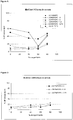
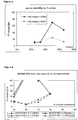
- Charged components and neutral lipids are independent variables. Serum sensitivity for a 1:1 ratio of both MoChol/CHEMS or MoChol/DMGSucc is low to very low and stable particles are formed over a wide range of mixtures. At least 60 or 70 mol.% of total charged components was required to affect significantly the bilayer stability.
- lipids (+/- 1 % 14C-DPPC) in chloroform were mixed and finally evaporated in a round bottom flask to dryness under vacuum.
- Lipid films were hydrated with 1.5 ml 3H-Inulin in PBS pH 7.5 or 5 ml PBS alone. The resulting lipid concentration was 100 mM.
- the suspensions were hydrated for 45 minutes in a water bath at room temperature, sonicated for 30 minutes following by three freeze/thaw cycles at -70°C. After thawing the liposomal suspensions were extruded 15 times through polycarbonate membranes with an appropriate pore size. Liposomes were separated from non-encapsulated 3H-Inulin by ultracentrifugation (twice).
- Lipid recovery and concentration was analysed by organic phosphate assay and in case of radiolabelled particles, the encapsulation efficiency was measured by liquid scintillation. Particle size was measured by dynamic light scattering on a Malvern Zetasizer 3000 HSA. The resulting unlabelled and radiolabelled preparations were mixed up and diluted with PBS to the final lipid concentrations.
- Formulations Number Formulation Size [nm] Lipid [mM] 3H [kBq/ml] 14C [kBq/ml] LD-1 POPC/DOPE/MoChol/CHEMS 229 12,3 332 52 15:45:20:20 HD-2 POPC/DOPE/MoChol/CHEMS 231 54,8 453 70 15:45:20:20 LD-3 POPC/DOPE/MoChol/CHEMS 148 10 173 53 15:45:20:20 HD-4 POPC/DOPE/MoChol/CHEMS 140 50 182 58 15:45:20:20
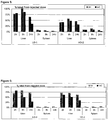
- FIG. 5-6 The results of the biodistribution study is shown in Figures 5-6 wherein biodistribution of the different liposomal formulations in liver and spleen is shown. The accumulation of the liposomes in other organs did not exceed 5 % and is therefore not shown.
- Figure 5 clearly demonstrates that amphoteric liposomes of the present invention having a size > 150 nm accumulate solely in the liver when administered in low lipid doses. In contrast, by administering the same liposomal formulation in a high lipid dose it could be shown that the biodistribution pattern is changed. Next to the liver the liposomes with a size > 150 nm accumulate in spleen as well.
- Figure 6 shows the biodistribution of amphoteric liposomes of the present invention prepared in a size ⁇ 150 nm. Whereas the biodistribution of these liposomes administered at low lipid dose does not differ from the liposomes with a size > 150 nm, it can be demonstrated that an administration of the liposomes having a size ⁇ 150 nm in high lipid dose does not lead to an accumulation in spleen.
- Lipid recovery and concentration was analysed by organic phosphate assay. Encapsulation efficiency was measured by fluorescence spectroscopy. Particle size was measured by dynamic light scattering on a Malvern Zetasizer 3000 HSA.
- Empty liposomes were produced by injecting 10 Vol-% of an ethanolic lipid solution (a mixture of 15 ml.% POPC, 45 mol.% DOPE, 20 mol.% MoChol and 20 mol.% CHEMS) into 10 mM NaAc 50 mM NaCl pH 4.5. The resulting lipid concentration was 2 mM. The pH of this solution was immediately shifted with 1/10 volume 1M Hepes pH 8. To concentrate the diluted liposomes the suspension was diafiltered.
- an ethanolic lipid solution a mixture of 15 ml.% POPC, 45 mol.% DOPE, 20 mol.% MoChol and 20 mol.% CHEMS
- Formulation Size [nm] Lipid [mM] Cargo Encapsulation efficiency POPC/DOPE/MoChol/CHEMS 192 19 Cy5.5 CD40-ODN 77 % 15:45:20:20 POPC/DOPE/MoChol/CHEMS 104 195 empty --- 15:45:20:20
- mice were sacrificed ten hours after the injection of the liposomal suspension. Organs and paws were removed and immediately freezed in liquid nitrogen. The biodistribution of the Cy5.5 labelled CD40 antisense encapsulated in the liposomes was assessed by NIR-Imaging and compared with tissue samples of untreated mice. Specific enrichment was found for inflamed paws in mice with active disease. More specifically, accumulation of the amphoteric liposomes coincides with the highly active sites of the disease on individual paws or even toes or fingers (see Figure 7 ).
- Liposomes were produced by injecting 10 Vol-% of an ethanolic lipid solution (a mixture of 15 mol.% POPC, 45 ml.% DOPE, 20 mol.% MoChol and 20 ml.% CHEMS) into 10 mM NaAc 50 mM NaCl pH 4.5 containing 60 ⁇ g/ml of a 18 bp antisense against CD40.
- an ethanolic lipid solution a mixture of 15 mol.% POPC, 45 ml.% DOPE, 20 mol.% MoChol and 20 ml.% CHEMS
- the amount of encapsulated ODN was measured by checking the optical density (OD) by 260 nm. The following amount of ODN was encapsulated in the Smarticles formulation.
- Table 10 encapsulated amount of ODN in the Smarticles formulation Lipid Mol.% ⁇ g ODN/ ⁇ mol lipid Encapsulation efficacy POPC/DOPE/MoChol/CHEMS 15:45:20:20 8,87 29,58%
- DBA/1 mice were immunized by subcutaneous injections of type II collagen (200 ⁇ g/mouse) emulsified in complete Freund's adjuvant. Treatment with Smarticles or controls was initiated at day 1 of arthritis induction (around day 21 after single immunization with collagen type II) and repeated at day 3 and 5. Day one was defined as the day where the inflammation was obvious (clinical score after R.O. Williams of at least 2).
- CD40-ODN liposomal CD40-ODN was injected intravenously into the tail vein of rats with established inflammation. Each dosage contains 4 mg CD40-ODN per kg bodyweight (encapsulated CD40-ODN).
- This example provides non-limiting examples of CD40 nucleotide sequences that may be targeted by oligonucleotides that modulate the expression of CD40 and that are suitable for use in the compositions in accordance with the present invention.
- SEQ ID NO: 1 Human CD40 mRNA sequence for targeting in accordance with the present invention is presented in SEQ ID NO: 1. Related sequence information is found in published patent application number US 2004/0186071 (i.e., SEQ ID NO: 85) to Bennett, et al. and in US patent no. 6197584 (i.e., SEQ ID NO: 85) to Bennett, et al. and in Pluvinet, et al., Blood, 2004, 104(12), 3642-3646 .
- Murine CD40 mRNA sequence for targeting in accordance with the present invention is presented in SEQ ID NO: 2.
- Related sequence information is found in published patent application number US 2004/0186071 (i.e. SEQ ID NO: 132) to Bennett, et al.
- Rat CD40 mRNA (GenBank accession no. AF 241231)
- Rat CD40 mRNA sequence for targeting in accordance with the present invention is presented in SEQ ID NO: 3. (See, Gao, Ph.D. thesis, Goettingen 2003 ).
- Porcine CD40 cDNA sequence for targeting in accordance with the present invention is presented in SEQ ID NO: 4. ( FIG. 10 ). Related sequence information is found in Rushworth, et al., Transplantation, 2002, 73(4), 635-642 .
- anti-CD40 oligonucleotides e.g., antisense CD40 nucleic acid sequences, that are suitable for use in the present invention:
- SEQ ID NO: 8 gcagaggcag acgaacca Seq ID No: 5 of Bennett et al.
- SEQ ID NO: 9 gcaagcagcc ccagagga Seq ID No: 6 of Bennett et al.
- SEQ ID NO: 10 ggtcagcaag cagcccca Seq ID No.:7 of Bennett et al.
- SEQ ID NO: 11 gacagcggtc agcaagca Seq ID No: 8 of Bennett et al.
- SEQ ID NO: 12 gatggacagc ggtcagca Seq ID No: 9 of Bennett et al.
- SEQ ID NO: 33 gactgggcag ggctcgca Seq ID No: 49 of Bennett et al.
- SEQ ID NO: 34 gcagatgaca cattggag Seq ID No: 52 of Bennett et al.
- SEQ ID NO: 35 tcgaaagcag atgacaca Seq ID No: 53 of Bennett et al.
- SEQ ID NO: 36 gtccaagggt gacatttt Seq ID No: 54 of Bennett et al.
- SEQ ID NO: 37 caggtctttg gtctcaca Seq ID No: 57 of Bennett et al.
- SEQ ID NO: 38 ctgttgcaca accaggtc Seq ID No: 58 of Bennett et al.
- SEQ ID NO: 39 gtttgtgcct gcctgttg Seq ID No: 59 of Bennett et al.
- SEQ ID NO: 40 gtcttgtttg tgcctgcc Seq ID No: 60 of Bennett et al.
- SEQ ID NO: 41 caccaccagg gctctcag Seq ID No: 64 of Bennett et al.
- SEQ ID NO: 42 gggatcacca ccagggct Seq ID No: 65 of Bennett et al.
- siRNA sequences are suitable for use in the present invention.
- Murine antisense CD40 oligonucleotides are presented below. Further sequence information is found in published patent application number US 2004/0186071 to Bennett, et al. The SEQ ID NOS. referred to by Bennett, et al. are provided to the right.
- Murine SEQ ID NO: 52 agacaccatc gcag Seq. ID No. 116 of Bennett et al.
- SEQ ID NO: 53 gcgagatcag aagag Seq. ID No. 117 of Bennett et al.
- SEQ ID NO: 54 cgctgtcaac aagca Seq. ID No. 118 of Bennett et al.
- SEQ ID NO: 72 accacagatg acatt Seq. ID No. 147 of Bennett et al.
- SEQ ID NO: 73 agatgacatt ag Seq. ID No. 153 of Bennett et al.
- SEQ ID NO: 74 cagatgacat tag Seq. ID No. 154 of Bennett et al.
- SEQ ID NO: 75 acagatgaca ttag Seq. ID No. 155 of Bennett et al.
- SEQ ID NO: 76 ccacagatga cattag Seq. ID No. 156 of Bennett et al.
- SEQ ID NO: 77 accacagatg acattag Seq. ID No. 157 of Bennett et al.
- rat antisense CD40 oligonucleotides are presented below. (See, Gao, Ph.D. thesis, 2003, University of Göttingen, Germany ). SEQ ID NO: 81 accgctgtcaacaagcagc (rAS2 of Gao) SEQ ID NO: 82 tcctagatggaccgctgt (rAS3 of Gao) SEQ ID NO: 83 taacacactgtcctag (rAS4 of Gao)
- porcine antisense CD40 oligonucleotides are presented below. See, Rushworth, et al., Transplantation, 2002, 73(4), 635-642 .
- SEQ ID NO: 84 gctgatgacagtgtttct (Aso3 of Rushworth et al.)
- SEQ ID NO: 85 gcctcactctcgctcctg (Aso8 of Rushworth et al.)
- SEQ ID NO: 86 ggactgtatctggactgc Aso9 of Rushworth et al.
- SEQ ID NO: 87 gtggacagtcatgtatat Aso10 of Rushworth et al.
- the present invention therefore provides formulations of amphoteric liposomes that exhibit improved stability upon contact with mammalian serum, releasing less or no encapsulated drugs.
- Such liposomal formulations may be useful in the delivery of drugs after a systemic administration into the blood stream.
- the invention especially suits the delivery of oligonucleotides, a new class of drugs that is currently under development, and DNA plasmids, without being limited to such uses. The majority of such compounds have an intracellular site of action. Carrier systems are used to overcome the poor uptake of such substances and are sometimes an indispensable prerequisite.
Landscapes
- Health & Medical Sciences (AREA)
- Life Sciences & Earth Sciences (AREA)
- Chemical & Material Sciences (AREA)
- General Health & Medical Sciences (AREA)
- Pharmacology & Pharmacy (AREA)
- Animal Behavior & Ethology (AREA)
- Veterinary Medicine (AREA)
- Public Health (AREA)
- Medicinal Chemistry (AREA)
- Engineering & Computer Science (AREA)
- Organic Chemistry (AREA)
- Bioinformatics & Cheminformatics (AREA)
- General Chemical & Material Sciences (AREA)
- Chemical Kinetics & Catalysis (AREA)
- Nuclear Medicine, Radiotherapy & Molecular Imaging (AREA)
- Genetics & Genomics (AREA)
- Epidemiology (AREA)
- Biomedical Technology (AREA)
- Molecular Biology (AREA)
- Biotechnology (AREA)
- Dispersion Chemistry (AREA)
- General Engineering & Computer Science (AREA)
- Wood Science & Technology (AREA)
- Zoology (AREA)
- Biochemistry (AREA)
- Biophysics (AREA)
- Diabetes (AREA)
- Immunology (AREA)
- Microbiology (AREA)
- Plant Pathology (AREA)
- Physics & Mathematics (AREA)
- Dermatology (AREA)
- Neurology (AREA)
- Endocrinology (AREA)
- Neurosurgery (AREA)
- Rheumatology (AREA)
- Pulmonology (AREA)
- Transplantation (AREA)
- Physical Education & Sports Medicine (AREA)
- Hematology (AREA)
Priority Applications (5)
| Application Number | Priority Date | Filing Date | Title |
|---|---|---|---|
| EP06254821.9A EP1764091B1 (en) | 2005-09-15 | 2006-09-15 | Improvements in or relating to amphoteric liposomes |
| PCT/EP2007/002349 WO2007107304A2 (en) | 2006-03-17 | 2007-03-16 | An efficient method for loading amphoteric liposomes with nucleic acid active substances |
| US12/225,030 US20120021042A1 (en) | 2005-09-15 | 2007-03-16 | Efficient Method For Loading Amphoteric Liposomes With Nucleic Acid Active Substances |
| EP07723327A EP2004141A2 (en) | 2006-03-17 | 2007-03-16 | An efficient method for loading amphoteric liposomes with nucleic acid active substances |
| US14/066,616 US20140056970A1 (en) | 2005-09-15 | 2013-10-29 | Efficient method for loading amphoteric liposomes with nucleic acid active substances |
Applications Claiming Priority (13)
| Application Number | Priority Date | Filing Date | Title |
|---|---|---|---|
| US71729305P | 2005-09-15 | 2005-09-15 | |
| US71719905P | 2005-09-15 | 2005-09-15 | |
| US71729105P | 2005-09-15 | 2005-09-15 | |
| EP05020217A EP1764090A1 (en) | 2005-09-15 | 2005-09-15 | Amphoteric liposomes for local drug applications |
| EP05020218 | 2005-09-15 | ||
| EP05020216A EP1764089A1 (en) | 2005-09-15 | 2005-09-15 | Serum stable liposomes comprising amphoter II lipid mixtures |
| US11/267,423 US20060159737A1 (en) | 2004-11-19 | 2005-11-04 | Pharmaceutical compositions for local administration |
| US11/266,999 US20060216343A1 (en) | 2004-11-05 | 2005-11-04 | Pharmaceutical compositions comprising an oligonucleotide as an active agent |
| PCT/EP2005/011905 WO2006048329A1 (en) | 2004-11-05 | 2005-11-04 | Improvements in or relating to pharmaceutical compositions comprising an oligonucleotide as an active agent |
| PCT/EP2005/011908 WO2006053646A2 (en) | 2004-11-19 | 2005-11-04 | Improvements in or relating to pharmaceutical compositions for local administration |
| EP05090322A EP1658839A1 (en) | 2004-11-05 | 2005-11-21 | Oligonucleotide/carrier combinations targeting CD40 |
| EP06113784 | 2006-05-10 | ||
| EP06254821.9A EP1764091B1 (en) | 2005-09-15 | 2006-09-15 | Improvements in or relating to amphoteric liposomes |
Publications (3)
| Publication Number | Publication Date |
|---|---|
| EP1764091A2 EP1764091A2 (en) | 2007-03-21 |
| EP1764091A3 EP1764091A3 (en) | 2007-06-13 |
| EP1764091B1 true EP1764091B1 (en) | 2017-08-30 |
Family
ID=37631866
Family Applications (1)
| Application Number | Title | Priority Date | Filing Date |
|---|---|---|---|
| EP06254821.9A Active EP1764091B1 (en) | 2005-09-15 | 2006-09-15 | Improvements in or relating to amphoteric liposomes |
Country Status (7)
| Country | Link |
|---|---|
| US (3) | US20070104775A1 (https=) |
| EP (1) | EP1764091B1 (https=) |
| JP (1) | JP5571308B2 (https=) |
| KR (1) | KR20080082956A (https=) |
| AU (1) | AU2006291429B2 (https=) |
| CA (2) | CA2889540A1 (https=) |
| WO (1) | WO2007031333A2 (https=) |
Cited By (1)
| Publication number | Priority date | Publication date | Assignee | Title |
|---|---|---|---|---|
| EP3632403A4 (en) * | 2017-05-23 | 2021-03-10 | TCI Co., Ltd. | EMULSIFIED LIPOSOME COMPOSITION AND PROCESS FOR PREPARATION |
Families Citing this family (41)
| Publication number | Priority date | Publication date | Assignee | Title |
|---|---|---|---|---|
| DE10109897A1 (de) * | 2001-02-21 | 2002-11-07 | Novosom Ag | Fakultativ kationische Liposomen und Verwendung dieser |
| US8815599B2 (en) | 2004-06-01 | 2014-08-26 | Pronai Therapeutics, Inc. | Methods and compositions for the inhibition of gene expression |
| KR20080082956A (ko) | 2005-09-15 | 2008-09-12 | 노보솜 아게 | 양쪽성 리포솜의 개선 또는 양쪽성 리포솜에 관련된 개선 |
| CA2631677C (en) * | 2005-12-01 | 2014-08-12 | Pronai Therapeutics, Inc. | Amphoteric liposome formulation |
| EP2004141A2 (en) * | 2006-03-17 | 2008-12-24 | Novosom AG | An efficient method for loading amphoteric liposomes with nucleic acid active substances |
| JP5118139B2 (ja) * | 2006-08-04 | 2013-01-16 | バクスター・インターナショナル・インコーポレイテッド | 新規発症自己免疫性糖尿病を予防および/または逆転させるためのマイクロスフィアに基づく組成物 |
| JP5424885B2 (ja) | 2006-10-13 | 2014-02-26 | マリーナ バイオテック,インコーポレイテッド | 両性リポソームにおけるまたは両性リポソームに関する改善、両性リポソームを処方する方法および両性リポソームに充填する方法 |
| WO2008103431A2 (en) * | 2007-02-23 | 2008-08-28 | Pronai Therapeutics, Inc. | Dnai - liposomes |
| GB0719367D0 (en) | 2007-10-03 | 2007-11-14 | Procarta Biosystems Ltd | Transcription factor decoys, compositions and methods |
| CA2702103A1 (en) * | 2007-10-12 | 2009-04-16 | Novosom Ag | Improvements in or relating to amphotaric liposomes comprising neutral lipids |
| US9186343B2 (en) * | 2007-12-26 | 2015-11-17 | Nanoveson, Llc | Nanoveso™: treatment, biomarkers and diagnostic tests for liver diseases and comorbid diseases |
| CN102112110A (zh) * | 2008-06-06 | 2011-06-29 | 米尔纳医疗股份有限公司 | 用于RNAi试剂体内递送的新型组合物 |
| JP5588619B2 (ja) * | 2009-03-11 | 2014-09-10 | 一丸ファルコス株式会社 | pH応答性リポソーム |
| US9937128B2 (en) * | 2009-08-03 | 2018-04-10 | The University Of North Carolina At Chapel Hill | Liposomes comprising a calcium phosphate-containing precipitate |
| GB201002413D0 (en) * | 2010-02-12 | 2010-03-31 | Procarta Biosystems Ltd | Nucleic acid complexes |
| GB201005545D0 (en) | 2010-04-01 | 2010-05-19 | Procarta Biosystems Ltd | Transcription factor decoys |
| IT1404011B1 (it) | 2010-12-03 | 2013-11-08 | Uni Degli Studi Magna Graecia Di Catanzaro | Nanovettore coniugato con tsh per il trattamento del cancro della tiroide |
| EP2691101A2 (en) | 2011-03-31 | 2014-02-05 | Moderna Therapeutics, Inc. | Delivery and formulation of engineered nucleic acids |
| RU2677658C2 (ru) | 2012-07-05 | 2019-01-18 | Тайвэн Липосом Ко, Лтд. | Способы лечения артрита |
| KR20160127828A (ko) * | 2014-03-12 | 2016-11-04 | 글락소스미스클라인 바이오로지칼즈 에스.에이. | 면역원성 리포솜 제형 |
| CN108064175A (zh) | 2014-08-04 | 2018-05-22 | 米拉根医疗股份有限公司 | Myh7b的抑制剂及其用途 |
| AU2015315298B2 (en) | 2014-09-08 | 2020-05-14 | MiRagen Therapeutics, Inc. | miR-29 mimics and uses thereof |
| US9885042B2 (en) | 2015-01-20 | 2018-02-06 | MiRagen Therapeutics, Inc. | miR-92 inhibitors and uses thereof |
| MX368314B (es) | 2015-06-05 | 2019-09-27 | Miragen Therapeutics Inc | Inhibidores del mir-155 para tratar linfoma cutáneo de células t (ctcl). |
| CN115404196A (zh) | 2016-07-13 | 2022-11-29 | 哈佛学院院长等 | 抗原呈递细胞模拟支架及其制备和使用方法 |
| WO2019048645A1 (en) | 2017-09-08 | 2019-03-14 | Mina Therapeutics Limited | STABILIZED COMPOSITIONS OF SMALL ACTIVATOR RNA (PARNA) FROM CEBPA AND METHODS OF USE |
| EP3775211B1 (en) | 2018-04-12 | 2023-04-05 | MiNA Therapeutics Limited | Sirt1-sarna compositions and methods of use |
| EP3953473A1 (en) | 2019-04-12 | 2022-02-16 | MiNA Therapeutics Limited | Sirt1-sarna compositions and methods of use |
| GB2603454A (en) | 2020-12-09 | 2022-08-10 | Ucl Business Ltd | Novel therapeutics for the treatment of neurodegenerative disorders |
| EP4314292A1 (en) | 2021-03-26 | 2024-02-07 | MiNA Therapeutics Limited | Tmem173 sarna compositions and methods of use |
| JP7761921B2 (ja) * | 2021-05-21 | 2025-10-29 | 国立大学法人北海道大学 | 脂質ナノ粒子 |
| US20230181644A1 (en) | 2021-10-28 | 2023-06-15 | Lyell Immunopharma, Inc. | Methods of generating cells |
| WO2023099884A1 (en) | 2021-12-01 | 2023-06-08 | Mina Therapeutics Limited | Pax6 sarna compositions and methods of use |
| GB202117758D0 (en) | 2021-12-09 | 2022-01-26 | Ucl Business Ltd | Therapeutics for the treatment of neurodegenerative disorders |
| WO2023170435A1 (en) | 2022-03-07 | 2023-09-14 | Mina Therapeutics Limited | Il10 sarna compositions and methods of use |
| WO2024077174A1 (en) | 2022-10-05 | 2024-04-11 | Lyell Immunopharma, Inc. | Methods for culturing nr4a-deficient cells |
| WO2024125597A1 (en) | 2022-12-14 | 2024-06-20 | Providence Therapeutics Holdings Inc. | Compositions and methods for infectious diseases |
| WO2024134199A1 (en) | 2022-12-22 | 2024-06-27 | Mina Therapeutics Limited | Chemically modified sarna compositions and methods of use |
| WO2025217398A1 (en) | 2024-04-10 | 2025-10-16 | Lyell Immunopharma, Inc. | Methods for culturing cells with improved culture medium |
| WO2026006604A1 (en) | 2024-06-26 | 2026-01-02 | Lyell Immunopharma, Inc. | Feeder cell replacement |
| WO2026027887A2 (en) | 2024-08-02 | 2026-02-05 | Mina Therapeutics Limited | Hbg1/2-sarna compositions and methods of use |
Family Cites Families (28)
| Publication number | Priority date | Publication date | Assignee | Title |
|---|---|---|---|---|
| US5077211A (en) * | 1988-07-06 | 1991-12-31 | Applied Genetics, Inc. | Purification and administration of dna repair enzymes |
| ATE209887T1 (de) * | 1993-04-02 | 2001-12-15 | Anticancer Inc | Verfahren zur verabreichung von förderlichen zusammensetzungen auf die haarfollikel |
| US5834012A (en) * | 1995-05-03 | 1998-11-10 | Roman Perez-Soler | Lipid complexed topoisomerase I inhibitors |
| JPH09248182A (ja) * | 1996-03-15 | 1997-09-22 | Oyo Seikagaku Kenkyusho | プラスミド包埋多重膜リポソーム |
| DE19648625A1 (de) | 1996-11-13 | 1998-05-14 | Soft Gene Gmbh | Mikroprojektil für das Einbringen von Substanzen in Zellen durch ballistischen Transfer |
| NZ500694A (en) * | 1997-04-30 | 2001-09-28 | Univ Minnesota | Use of chimeric mutational vector (CMV), a macromolecule and a ligand for cell surface receptor adhesion molecule (clatherin) in gene therapy; the CMV vector derived from REC2 homologous pairing with Ustilago maydis |
| CA2289702C (en) * | 1997-05-14 | 2008-02-19 | Inex Pharmaceuticals Corp. | High efficiency encapsulation of charged therapeutic agents in lipid vesicles |
| US6506559B1 (en) | 1997-12-23 | 2003-01-14 | Carnegie Institute Of Washington | Genetic inhibition by double-stranded RNA |
| US20040186071A1 (en) * | 1998-04-13 | 2004-09-23 | Bennett C. Frank | Antisense modulation of CD40 expression |
| US6197584B1 (en) * | 1998-05-01 | 2001-03-06 | Isis Pharmaceuticals, Inc. | Antisense modulation of CD40 expression |
| US6897200B1 (en) * | 1998-10-14 | 2005-05-24 | University Of Kentucky Research Foundation | Oligonucleotide delivery systems for camptothecins |
| US6379698B1 (en) * | 1999-04-06 | 2002-04-30 | Isis Pharmaceuticals, Inc. | Fusogenic lipids and vesicles |
| DE10160151A1 (de) | 2001-01-09 | 2003-06-26 | Ribopharma Ag | Verfahren zur Hemmung der Expression eines vorgegebenen Zielgens |
| DE10109898A1 (de) | 2001-02-21 | 2002-09-05 | Novosom Gmbh | Lipide mit veränderlicher Ladung |
| DE10109897A1 (de) * | 2001-02-21 | 2002-11-07 | Novosom Ag | Fakultativ kationische Liposomen und Verwendung dieser |
| EP1361862B1 (en) * | 2001-02-22 | 2007-04-18 | Opperbas Holding B.V. | Liposome-mediated dna administration |
| ATE490267T1 (de) | 2001-06-05 | 2010-12-15 | Curevac Gmbh | Stabilisierte mrna mit erhöhtem g/c-gehalt, kodierend für ein virales antigen |
| DE10207178A1 (de) | 2002-02-19 | 2003-09-04 | Novosom Ag | Komponenten für die Herstellung amphoterer Liposomen |
| DE10207177A1 (de) | 2002-02-19 | 2003-09-04 | Novosom Ag | Fakultativ kationische Lipide |
| WO2003097805A2 (en) * | 2002-05-15 | 2003-11-27 | California Pacific Medical Center | Delivery of nucleic acid-like compounds |
| AU2002953285A0 (en) * | 2002-12-12 | 2003-01-02 | Protech Research Pty Ltd | Yeast treatment |
| AU2004227414A1 (en) | 2003-04-03 | 2004-10-21 | Alnylam Pharmaceuticals | iRNA conjugates |
| ES2559828T3 (es) * | 2003-07-16 | 2016-02-16 | Protiva Biotherapeutics Inc. | ARN de interferencia encapsulado en lípidos |
| EP1807050A1 (en) * | 2004-11-05 | 2007-07-18 | Novosom AG | Improvements in or relating to pharmaceutical compositions comprising an oligonucleotide as an active agent |
| EP1811960A2 (en) * | 2004-11-19 | 2007-08-01 | Novosom AG | Improvements in or relating to pharmaceutical compositions for local administration |
| EP1764090A1 (en) | 2005-09-15 | 2007-03-21 | Novosom AG | Amphoteric liposomes for local drug applications |
| EP1764089A1 (en) | 2005-09-15 | 2007-03-21 | Novosom AG | Serum stable liposomes comprising amphoter II lipid mixtures |
| KR20080082956A (ko) * | 2005-09-15 | 2008-09-12 | 노보솜 아게 | 양쪽성 리포솜의 개선 또는 양쪽성 리포솜에 관련된 개선 |
-
2006
- 2006-09-15 KR KR1020087008987A patent/KR20080082956A/ko not_active Withdrawn
- 2006-09-15 EP EP06254821.9A patent/EP1764091B1/en active Active
- 2006-09-15 JP JP2008530426A patent/JP5571308B2/ja active Active
- 2006-09-15 US US11/521,857 patent/US20070104775A1/en not_active Abandoned
- 2006-09-15 WO PCT/EP2006/009013 patent/WO2007031333A2/en not_active Ceased
- 2006-09-15 CA CA2889540A patent/CA2889540A1/en not_active Abandoned
- 2006-09-15 CA CA2622584A patent/CA2622584C/en active Active
- 2006-09-15 AU AU2006291429A patent/AU2006291429B2/en active Active
-
2010
- 2010-09-09 US US12/807,707 patent/US9066867B2/en active Active
-
2014
- 2014-11-12 US US14/538,809 patent/US9737484B2/en not_active Expired - Lifetime
Cited By (1)
| Publication number | Priority date | Publication date | Assignee | Title |
|---|---|---|---|---|
| EP3632403A4 (en) * | 2017-05-23 | 2021-03-10 | TCI Co., Ltd. | EMULSIFIED LIPOSOME COMPOSITION AND PROCESS FOR PREPARATION |
Also Published As
| Publication number | Publication date |
|---|---|
| EP1764091A3 (en) | 2007-06-13 |
| WO2007031333A2 (en) | 2007-03-22 |
| CA2622584C (en) | 2015-08-11 |
| EP1764091A2 (en) | 2007-03-21 |
| CA2889540A1 (en) | 2007-03-22 |
| JP2009507876A (ja) | 2009-02-26 |
| US9066867B2 (en) | 2015-06-30 |
| AU2006291429B2 (en) | 2013-04-04 |
| JP5571308B2 (ja) | 2014-08-13 |
| US20110076322A1 (en) | 2011-03-31 |
| WO2007031333A3 (en) | 2007-07-19 |
| US20070104775A1 (en) | 2007-05-10 |
| KR20080082956A (ko) | 2008-09-12 |
| US9737484B2 (en) | 2017-08-22 |
| CA2622584A1 (en) | 2007-03-22 |
| US20150231073A1 (en) | 2015-08-20 |
| AU2006291429A1 (en) | 2007-03-22 |
Similar Documents
| Publication | Publication Date | Title |
|---|---|---|
| EP1764091B1 (en) | Improvements in or relating to amphoteric liposomes | |
| US10155945B2 (en) | Method of producing lipid nanoparticles for drug delivery | |
| US20060159737A1 (en) | Pharmaceutical compositions for local administration | |
| EP2773326B1 (en) | Method for sterilely producing lipid-nucleic acid particles | |
| US20060216343A1 (en) | Pharmaceutical compositions comprising an oligonucleotide as an active agent | |
| US20120021042A1 (en) | Efficient Method For Loading Amphoteric Liposomes With Nucleic Acid Active Substances | |
| EP2892505B1 (en) | Lipid assemblies comprising anionic lysolipids and use thereof | |
| US20250269053A1 (en) | Lipid nanoparticles comprising mannose or uses thereof | |
| JP2011503070A (ja) | 全身遺伝子送達のための自己構築型ミセル様ナノ粒子 | |
| EP1764089A1 (en) | Serum stable liposomes comprising amphoter II lipid mixtures | |
| EP1764090A1 (en) | Amphoteric liposomes for local drug applications | |
| HK40060954A (en) | Lipid nanoparticle | |
| Escrioua et al. | AUTO-ASSOCIATIVE SYSTEMS FOR NON-VIRAL NUCLEIC ACID DELIVERY LIPIDS |
Legal Events
| Date | Code | Title | Description |
|---|---|---|---|
| PUAI | Public reference made under article 153(3) epc to a published international application that has entered the european phase |
Free format text: ORIGINAL CODE: 0009012 |
|
| AK | Designated contracting states |
Kind code of ref document: A2 Designated state(s): AT BE BG CH CY CZ DE DK EE ES FI FR GB GR HU IE IS IT LI LT LU LV MC NL PL PT RO SE SI SK TR |
|
| AX | Request for extension of the european patent |
Extension state: AL BA HR MK YU |
|
| PUAL | Search report despatched |
Free format text: ORIGINAL CODE: 0009013 |
|
| AK | Designated contracting states |
Kind code of ref document: A3 Designated state(s): AT BE BG CH CY CZ DE DK EE ES FI FR GB GR HU IE IS IT LI LT LU LV MC NL PL PT RO SE SI SK TR |
|
| AX | Request for extension of the european patent |
Extension state: AL BA HR MK YU |
|
| 17P | Request for examination filed |
Effective date: 20071212 |
|
| AKX | Designation fees paid |
Designated state(s): AT BE BG CH CY CZ DE DK EE ES FI FR GB GR HU IE IS IT LI LT LU LV MC NL PL PT RO SE SI SK TR |
|
| 17Q | First examination report despatched |
Effective date: 20080319 |
|
| RAP1 | Party data changed (applicant data changed or rights of an application transferred) |
Owner name: MARINA BIOTECH, INC. |
|
| GRAP | Despatch of communication of intention to grant a patent |
Free format text: ORIGINAL CODE: EPIDOSNIGR1 |
|
| INTG | Intention to grant announced |
Effective date: 20160208 |
|
| RIN1 | Information on inventor provided before grant (corrected) |
Inventor name: ENDERT, GEROLD Inventor name: LUTZ, SILKE Inventor name: KERWITZ, YVONNE Inventor name: RAUCHHAUS, UNA Inventor name: PANZNER, STEFFEN |
|
| GRAJ | Information related to disapproval of communication of intention to grant by the applicant or resumption of examination proceedings by the epo deleted |
Free format text: ORIGINAL CODE: EPIDOSDIGR1 |
|
| INTC | Intention to grant announced (deleted) | ||
| GRAP | Despatch of communication of intention to grant a patent |
Free format text: ORIGINAL CODE: EPIDOSNIGR1 |
|
| STAA | Information on the status of an ep patent application or granted ep patent |
Free format text: STATUS: GRANT OF PATENT IS INTENDED |
|
| INTG | Intention to grant announced |
Effective date: 20170310 |
|
| GRAS | Grant fee paid |
Free format text: ORIGINAL CODE: EPIDOSNIGR3 |
|
| GRAA | (expected) grant |
Free format text: ORIGINAL CODE: 0009210 |
|
| STAA | Information on the status of an ep patent application or granted ep patent |
Free format text: STATUS: THE PATENT HAS BEEN GRANTED |
|
| AK | Designated contracting states |
Kind code of ref document: B1 Designated state(s): AT BE BG CH CY CZ DE DK EE ES FI FR GB GR HU IE IS IT LI LT LU LV MC NL PL PT RO SE SI SK TR |
|
| REG | Reference to a national code |
Ref country code: DE Ref legal event code: R081 Ref document number: 602006053456 Country of ref document: DE Owner name: BIONTECH DELIVERY TECHNOLOGIES GMBH, DE Free format text: FORMER OWNER: NOVOSOM AG, 06120 HALLE, DE Ref country code: GB Ref legal event code: FG4D |
|
| REG | Reference to a national code |
Ref country code: CH Ref legal event code: EP |
|
| REG | Reference to a national code |
Ref country code: AT Ref legal event code: REF Ref document number: 922878 Country of ref document: AT Kind code of ref document: T Effective date: 20170915 |
|
| REG | Reference to a national code |
Ref country code: IE Ref legal event code: FG4D |
|
| REG | Reference to a national code |
Ref country code: DE Ref legal event code: R096 Ref document number: 602006053456 Country of ref document: DE |
|
| REG | Reference to a national code |
Ref country code: FR Ref legal event code: PLFP Year of fee payment: 12 |
|
| REG | Reference to a national code |
Ref country code: CH Ref legal event code: NV Representative=s name: VENI GMBH, CH |
|
| REG | Reference to a national code |
Ref country code: SE Ref legal event code: TRGR |
|
| REG | Reference to a national code |
Ref country code: NL Ref legal event code: FP |
|
| REG | Reference to a national code |
Ref country code: LT Ref legal event code: MG4D |
|
| REG | Reference to a national code |
Ref country code: AT Ref legal event code: MK05 Ref document number: 922878 Country of ref document: AT Kind code of ref document: T Effective date: 20170830 |
|
| PG25 | Lapsed in a contracting state [announced via postgrant information from national office to epo] |
Ref country code: LT Free format text: LAPSE BECAUSE OF FAILURE TO SUBMIT A TRANSLATION OF THE DESCRIPTION OR TO PAY THE FEE WITHIN THE PRESCRIBED TIME-LIMIT Effective date: 20170830 Ref country code: AT Free format text: LAPSE BECAUSE OF FAILURE TO SUBMIT A TRANSLATION OF THE DESCRIPTION OR TO PAY THE FEE WITHIN THE PRESCRIBED TIME-LIMIT Effective date: 20170830 Ref country code: FI Free format text: LAPSE BECAUSE OF FAILURE TO SUBMIT A TRANSLATION OF THE DESCRIPTION OR TO PAY THE FEE WITHIN THE PRESCRIBED TIME-LIMIT Effective date: 20170830 |
|
| PG25 | Lapsed in a contracting state [announced via postgrant information from national office to epo] |
Ref country code: GR Free format text: LAPSE BECAUSE OF FAILURE TO SUBMIT A TRANSLATION OF THE DESCRIPTION OR TO PAY THE FEE WITHIN THE PRESCRIBED TIME-LIMIT Effective date: 20171201 Ref country code: ES Free format text: LAPSE BECAUSE OF FAILURE TO SUBMIT A TRANSLATION OF THE DESCRIPTION OR TO PAY THE FEE WITHIN THE PRESCRIBED TIME-LIMIT Effective date: 20170830 Ref country code: BG Free format text: LAPSE BECAUSE OF FAILURE TO SUBMIT A TRANSLATION OF THE DESCRIPTION OR TO PAY THE FEE WITHIN THE PRESCRIBED TIME-LIMIT Effective date: 20171130 Ref country code: IS Free format text: LAPSE BECAUSE OF FAILURE TO SUBMIT A TRANSLATION OF THE DESCRIPTION OR TO PAY THE FEE WITHIN THE PRESCRIBED TIME-LIMIT Effective date: 20171230 Ref country code: LV Free format text: LAPSE BECAUSE OF FAILURE TO SUBMIT A TRANSLATION OF THE DESCRIPTION OR TO PAY THE FEE WITHIN THE PRESCRIBED TIME-LIMIT Effective date: 20170830 |
|
| PG25 | Lapsed in a contracting state [announced via postgrant information from national office to epo] |
Ref country code: DK Free format text: LAPSE BECAUSE OF FAILURE TO SUBMIT A TRANSLATION OF THE DESCRIPTION OR TO PAY THE FEE WITHIN THE PRESCRIBED TIME-LIMIT Effective date: 20170830 Ref country code: RO Free format text: LAPSE BECAUSE OF FAILURE TO SUBMIT A TRANSLATION OF THE DESCRIPTION OR TO PAY THE FEE WITHIN THE PRESCRIBED TIME-LIMIT Effective date: 20170830 Ref country code: PL Free format text: LAPSE BECAUSE OF FAILURE TO SUBMIT A TRANSLATION OF THE DESCRIPTION OR TO PAY THE FEE WITHIN THE PRESCRIBED TIME-LIMIT Effective date: 20170830 Ref country code: CZ Free format text: LAPSE BECAUSE OF FAILURE TO SUBMIT A TRANSLATION OF THE DESCRIPTION OR TO PAY THE FEE WITHIN THE PRESCRIBED TIME-LIMIT Effective date: 20170830 |
|
| PG25 | Lapsed in a contracting state [announced via postgrant information from national office to epo] |
Ref country code: SK Free format text: LAPSE BECAUSE OF FAILURE TO SUBMIT A TRANSLATION OF THE DESCRIPTION OR TO PAY THE FEE WITHIN THE PRESCRIBED TIME-LIMIT Effective date: 20170830 Ref country code: MC Free format text: LAPSE BECAUSE OF FAILURE TO SUBMIT A TRANSLATION OF THE DESCRIPTION OR TO PAY THE FEE WITHIN THE PRESCRIBED TIME-LIMIT Effective date: 20170830 Ref country code: EE Free format text: LAPSE BECAUSE OF FAILURE TO SUBMIT A TRANSLATION OF THE DESCRIPTION OR TO PAY THE FEE WITHIN THE PRESCRIBED TIME-LIMIT Effective date: 20170830 |
|
| REG | Reference to a national code |
Ref country code: DE Ref legal event code: R097 Ref document number: 602006053456 Country of ref document: DE |
|
| REG | Reference to a national code |
Ref country code: IE Ref legal event code: MM4A |
|
| REG | Reference to a national code |
Ref country code: BE Ref legal event code: MM Effective date: 20170930 |
|
| PG25 | Lapsed in a contracting state [announced via postgrant information from national office to epo] |
Ref country code: LU Free format text: LAPSE BECAUSE OF NON-PAYMENT OF DUE FEES Effective date: 20170915 |
|
| PLBE | No opposition filed within time limit |
Free format text: ORIGINAL CODE: 0009261 |
|
| STAA | Information on the status of an ep patent application or granted ep patent |
Free format text: STATUS: NO OPPOSITION FILED WITHIN TIME LIMIT |
|
| PG25 | Lapsed in a contracting state [announced via postgrant information from national office to epo] |
Ref country code: IE Free format text: LAPSE BECAUSE OF NON-PAYMENT OF DUE FEES Effective date: 20170915 |
|
| 26N | No opposition filed |
Effective date: 20180531 |
|
| PG25 | Lapsed in a contracting state [announced via postgrant information from national office to epo] |
Ref country code: BE Free format text: LAPSE BECAUSE OF NON-PAYMENT OF DUE FEES Effective date: 20170930 Ref country code: SI Free format text: LAPSE BECAUSE OF FAILURE TO SUBMIT A TRANSLATION OF THE DESCRIPTION OR TO PAY THE FEE WITHIN THE PRESCRIBED TIME-LIMIT Effective date: 20170830 |
|
| REG | Reference to a national code |
Ref country code: FR Ref legal event code: PLFP Year of fee payment: 13 |
|
| PG25 | Lapsed in a contracting state [announced via postgrant information from national office to epo] |
Ref country code: HU Free format text: LAPSE BECAUSE OF FAILURE TO SUBMIT A TRANSLATION OF THE DESCRIPTION OR TO PAY THE FEE WITHIN THE PRESCRIBED TIME-LIMIT; INVALID AB INITIO Effective date: 20060915 |
|
| PG25 | Lapsed in a contracting state [announced via postgrant information from national office to epo] |
Ref country code: CY Free format text: LAPSE BECAUSE OF NON-PAYMENT OF DUE FEES Effective date: 20170830 |
|
| PG25 | Lapsed in a contracting state [announced via postgrant information from national office to epo] |
Ref country code: TR Free format text: LAPSE BECAUSE OF FAILURE TO SUBMIT A TRANSLATION OF THE DESCRIPTION OR TO PAY THE FEE WITHIN THE PRESCRIBED TIME-LIMIT Effective date: 20170830 |
|
| PG25 | Lapsed in a contracting state [announced via postgrant information from national office to epo] |
Ref country code: PT Free format text: LAPSE BECAUSE OF FAILURE TO SUBMIT A TRANSLATION OF THE DESCRIPTION OR TO PAY THE FEE WITHIN THE PRESCRIBED TIME-LIMIT Effective date: 20170830 |
|
| REG | Reference to a national code |
Ref country code: DE Ref legal event code: R082 Ref document number: 602006053456 Country of ref document: DE Representative=s name: PATENTANWALTSKANZLEI MEYER, DE Ref country code: DE Ref legal event code: R081 Ref document number: 602006053456 Country of ref document: DE Owner name: BIONTECH DELIVERY TECHNOLOGIES GMBH, DE Free format text: FORMER OWNER: MARINA BIOTECH, INC., BOTHELL, WASH., US |
|
| REG | Reference to a national code |
Ref country code: DE Ref legal event code: R082 Ref document number: 602006053456 Country of ref document: DE Representative=s name: PATENTANWALTSKANZLEI MEYER, DE Ref country code: DE Ref legal event code: R081 Ref document number: 602006053456 Country of ref document: DE Owner name: BIONTECH DELIVERY TECHNOLOGIES GMBH, DE Free format text: FORMER OWNER: NOVOSOM VERWALTUNGS GMBH, 06120 HALLE, DE |
|
| REG | Reference to a national code |
Ref country code: GB Ref legal event code: 732E Free format text: REGISTERED BETWEEN 20210128 AND 20210203 |
|
| P01 | Opt-out of the competence of the unified patent court (upc) registered |
Effective date: 20230515 |
|
| REG | Reference to a national code |
Ref country code: GB Ref legal event code: 732E Free format text: REGISTERED BETWEEN 20241003 AND 20241009 |
|
| PGFP | Annual fee paid to national office [announced via postgrant information from national office to epo] |
Ref country code: NL Payment date: 20250820 Year of fee payment: 20 |
|
| REG | Reference to a national code |
Ref country code: CH Ref legal event code: U11 Free format text: ST27 STATUS EVENT CODE: U-0-0-U10-U11 (AS PROVIDED BY THE NATIONAL OFFICE) Effective date: 20251001 |
|
| PGFP | Annual fee paid to national office [announced via postgrant information from national office to epo] |
Ref country code: DE Payment date: 20250820 Year of fee payment: 20 |
|
| PGFP | Annual fee paid to national office [announced via postgrant information from national office to epo] |
Ref country code: IT Payment date: 20250820 Year of fee payment: 20 |
|
| PGFP | Annual fee paid to national office [announced via postgrant information from national office to epo] |
Ref country code: GB Payment date: 20250822 Year of fee payment: 20 |
|
| PGFP | Annual fee paid to national office [announced via postgrant information from national office to epo] |
Ref country code: FR Payment date: 20250821 Year of fee payment: 20 |
|
| PGFP | Annual fee paid to national office [announced via postgrant information from national office to epo] |
Ref country code: SE Payment date: 20250820 Year of fee payment: 20 |
|
| PGFP | Annual fee paid to national office [announced via postgrant information from national office to epo] |
Ref country code: CH Payment date: 20251001 Year of fee payment: 20 |