EP1722839B1 - Vorrichtung zur zeitlichen dosierung von arzneistoffen - Google Patents
Vorrichtung zur zeitlichen dosierung von arzneistoffen Download PDFInfo
- Publication number
- EP1722839B1 EP1722839B1 EP05715413.0A EP05715413A EP1722839B1 EP 1722839 B1 EP1722839 B1 EP 1722839B1 EP 05715413 A EP05715413 A EP 05715413A EP 1722839 B1 EP1722839 B1 EP 1722839B1
- Authority
- EP
- European Patent Office
- Prior art keywords
- application
- profile
- methods
- dosage
- time
- Prior art date
- Legal status (The legal status is an assumption and is not a legal conclusion. Google has not performed a legal analysis and makes no representation as to the accuracy of the status listed.)
- Expired - Lifetime
Links
Images


Classifications
-
- A—HUMAN NECESSITIES
- A61—MEDICAL OR VETERINARY SCIENCE; HYGIENE
- A61M—DEVICES FOR INTRODUCING MEDIA INTO, OR ONTO, THE BODY; DEVICES FOR TRANSDUCING BODY MEDIA OR FOR TAKING MEDIA FROM THE BODY; DEVICES FOR PRODUCING OR ENDING SLEEP OR STUPOR
- A61M5/00—Devices for bringing media into the body in a subcutaneous, intra-vascular or intramuscular way; Accessories therefor, e.g. filling or cleaning devices, arm-rests
- A61M5/14—Infusion devices, e.g. infusing by gravity; Blood infusion; Accessories therefor
- A61M5/168—Means for controlling media flow to the body or for metering media to the body, e.g. drip meters, counters ; Monitoring media flow to the body
- A61M5/172—Means for controlling media flow to the body or for metering media to the body, e.g. drip meters, counters ; Monitoring media flow to the body electrical or electronic
- A61M5/1723—Means for controlling media flow to the body or for metering media to the body, e.g. drip meters, counters ; Monitoring media flow to the body electrical or electronic using feedback of body parameters, e.g. blood-sugar, pressure
-
- A—HUMAN NECESSITIES
- A61—MEDICAL OR VETERINARY SCIENCE; HYGIENE
- A61M—DEVICES FOR INTRODUCING MEDIA INTO, OR ONTO, THE BODY; DEVICES FOR TRANSDUCING BODY MEDIA OR FOR TAKING MEDIA FROM THE BODY; DEVICES FOR PRODUCING OR ENDING SLEEP OR STUPOR
- A61M15/00—Inhalators
- A61M15/0065—Inhalators with dosage or measuring devices
- A61M15/0068—Indicating or counting the number of dispensed doses or of remaining doses
- A61M15/0083—Timers
-
- G—PHYSICS
- G16—INFORMATION AND COMMUNICATION TECHNOLOGY [ICT] SPECIALLY ADAPTED FOR SPECIFIC APPLICATION FIELDS
- G16B—BIOINFORMATICS, i.e. INFORMATION AND COMMUNICATION TECHNOLOGY [ICT] SPECIALLY ADAPTED FOR GENETIC OR PROTEIN-RELATED DATA PROCESSING IN COMPUTATIONAL MOLECULAR BIOLOGY
- G16B45/00—ICT specially adapted for bioinformatics-related data visualisation, e.g. displaying of maps or networks
-
- G—PHYSICS
- G16—INFORMATION AND COMMUNICATION TECHNOLOGY [ICT] SPECIALLY ADAPTED FOR SPECIFIC APPLICATION FIELDS
- G16B—BIOINFORMATICS, i.e. INFORMATION AND COMMUNICATION TECHNOLOGY [ICT] SPECIALLY ADAPTED FOR GENETIC OR PROTEIN-RELATED DATA PROCESSING IN COMPUTATIONAL MOLECULAR BIOLOGY
- G16B5/00—ICT specially adapted for modelling or simulations in systems biology, e.g. gene-regulatory networks, protein interaction networks or metabolic networks
-
- G—PHYSICS
- G16—INFORMATION AND COMMUNICATION TECHNOLOGY [ICT] SPECIALLY ADAPTED FOR SPECIFIC APPLICATION FIELDS
- G16B—BIOINFORMATICS, i.e. INFORMATION AND COMMUNICATION TECHNOLOGY [ICT] SPECIALLY ADAPTED FOR GENETIC OR PROTEIN-RELATED DATA PROCESSING IN COMPUTATIONAL MOLECULAR BIOLOGY
- G16B5/00—ICT specially adapted for modelling or simulations in systems biology, e.g. gene-regulatory networks, protein interaction networks or metabolic networks
- G16B5/30—Dynamic-time models
-
- G—PHYSICS
- G16—INFORMATION AND COMMUNICATION TECHNOLOGY [ICT] SPECIALLY ADAPTED FOR SPECIFIC APPLICATION FIELDS
- G16H—HEALTHCARE INFORMATICS, i.e. INFORMATION AND COMMUNICATION TECHNOLOGY [ICT] SPECIALLY ADAPTED FOR THE HANDLING OR PROCESSING OF MEDICAL OR HEALTHCARE DATA
- G16H20/00—ICT specially adapted for therapies or health-improving plans, e.g. for handling prescriptions, for steering therapy or for monitoring patient compliance
- G16H20/10—ICT specially adapted for therapies or health-improving plans, e.g. for handling prescriptions, for steering therapy or for monitoring patient compliance relating to drugs or medications, e.g. for ensuring correct administration to patients
- G16H20/17—ICT specially adapted for therapies or health-improving plans, e.g. for handling prescriptions, for steering therapy or for monitoring patient compliance relating to drugs or medications, e.g. for ensuring correct administration to patients delivered via infusion or injection
-
- G—PHYSICS
- G16—INFORMATION AND COMMUNICATION TECHNOLOGY [ICT] SPECIALLY ADAPTED FOR SPECIFIC APPLICATION FIELDS
- G16H—HEALTHCARE INFORMATICS, i.e. INFORMATION AND COMMUNICATION TECHNOLOGY [ICT] SPECIALLY ADAPTED FOR THE HANDLING OR PROCESSING OF MEDICAL OR HEALTHCARE DATA
- G16H50/00—ICT specially adapted for medical diagnosis, medical simulation or medical data mining; ICT specially adapted for detecting, monitoring or modelling epidemics or pandemics
- G16H50/50—ICT specially adapted for medical diagnosis, medical simulation or medical data mining; ICT specially adapted for detecting, monitoring or modelling epidemics or pandemics for simulation or modelling of medical disorders
-
- G—PHYSICS
- G16—INFORMATION AND COMMUNICATION TECHNOLOGY [ICT] SPECIALLY ADAPTED FOR SPECIFIC APPLICATION FIELDS
- G16H—HEALTHCARE INFORMATICS, i.e. INFORMATION AND COMMUNICATION TECHNOLOGY [ICT] SPECIALLY ADAPTED FOR THE HANDLING OR PROCESSING OF MEDICAL OR HEALTHCARE DATA
- G16H50/00—ICT specially adapted for medical diagnosis, medical simulation or medical data mining; ICT specially adapted for detecting, monitoring or modelling epidemics or pandemics
- G16H50/70—ICT specially adapted for medical diagnosis, medical simulation or medical data mining; ICT specially adapted for detecting, monitoring or modelling epidemics or pandemics for mining of medical data, e.g. analysing previous cases of other patients
-
- G—PHYSICS
- G16—INFORMATION AND COMMUNICATION TECHNOLOGY [ICT] SPECIALLY ADAPTED FOR SPECIFIC APPLICATION FIELDS
- G16H—HEALTHCARE INFORMATICS, i.e. INFORMATION AND COMMUNICATION TECHNOLOGY [ICT] SPECIALLY ADAPTED FOR THE HANDLING OR PROCESSING OF MEDICAL OR HEALTHCARE DATA
- G16H70/00—ICT specially adapted for the handling or processing of medical references
- G16H70/40—ICT specially adapted for the handling or processing of medical references relating to drugs, e.g. their side effects or intended usage
-
- A—HUMAN NECESSITIES
- A61—MEDICAL OR VETERINARY SCIENCE; HYGIENE
- A61M—DEVICES FOR INTRODUCING MEDIA INTO, OR ONTO, THE BODY; DEVICES FOR TRANSDUCING BODY MEDIA OR FOR TAKING MEDIA FROM THE BODY; DEVICES FOR PRODUCING OR ENDING SLEEP OR STUPOR
- A61M15/00—Inhalators
-
- A—HUMAN NECESSITIES
- A61—MEDICAL OR VETERINARY SCIENCE; HYGIENE
- A61M—DEVICES FOR INTRODUCING MEDIA INTO, OR ONTO, THE BODY; DEVICES FOR TRANSDUCING BODY MEDIA OR FOR TAKING MEDIA FROM THE BODY; DEVICES FOR PRODUCING OR ENDING SLEEP OR STUPOR
- A61M16/00—Devices for influencing the respiratory system of patients by gas treatment, e.g. ventilators; Tracheal tubes
- A61M16/01—Devices for influencing the respiratory system of patients by gas treatment, e.g. ventilators; Tracheal tubes specially adapted for anaesthetising
-
- A—HUMAN NECESSITIES
- A61—MEDICAL OR VETERINARY SCIENCE; HYGIENE
- A61M—DEVICES FOR INTRODUCING MEDIA INTO, OR ONTO, THE BODY; DEVICES FOR TRANSDUCING BODY MEDIA OR FOR TAKING MEDIA FROM THE BODY; DEVICES FOR PRODUCING OR ENDING SLEEP OR STUPOR
- A61M5/00—Devices for bringing media into the body in a subcutaneous, intra-vascular or intramuscular way; Accessories therefor, e.g. filling or cleaning devices, arm-rests
- A61M5/14—Infusion devices, e.g. infusing by gravity; Blood infusion; Accessories therefor
- A61M5/142—Pressure infusion, e.g. using pumps
- A61M2005/14208—Pressure infusion, e.g. using pumps with a programmable infusion control system, characterised by the infusion program
Definitions
- the invention relates to a device for the timed dosage of drugs by means of a method for determining a corresponding dosage profile and appropriate control of the metering device.
- TCI Target Controlled Infusion
- PK-Sim® a physiologically based pharmacokinetic 'whole-body'model", Biosilico 1, 121-124 (2003 )
- B organ size and composition, blood flow rates, etc. on the temporal pharmacokinetic behavior of drugs to describe (eg DENo.
- the invention is based on the cited prior art, the object to develop an improved device, which allows an exact time dosage of a drug taking into account individual physiological, anatomical, biochemical and genetic factors of the patient.
- the exact time course of the dosage of a drug is in many areas of indication (eg anesthesia, diabetes, shock, sepsis, cardiovascular failure, asthma, cancer) crucial for the safety and success of the treatment.
- Electronically controlled infusion pumps can be used to administer drugs at any given time-varying rate.
- the resulting concentration-time profile and effect-time profile does not only depend on the dosage profile, but is essentially determined by the pharmacokinetic (PK) and pharmacodynamic (PD) properties of the particular substance.
- PK pharmacokinetic
- PD pharmacodynamic
- PBPK pharmacokinetic
- pharmacodynamic computer models are able to simulate the concentration-time profile and effect-time profile of a chemical substance in the body of a patient, taking into account individual physiological, anatomical, biochemical and genetic parameters.
- the invention therefore relates to a device in which a PBPK / PD model is used in order to optimize a time course of the dosage optimal for the individual patient by iterative adaptation of either the concentration-time course in the plasma or at the target or the pharmacodynamic effect. Time course to determine a given temporal target profile. This optimized time course of administration then serves as the input function for a dosing device. In combination with real-time measurements of physiological parameters, it is possible to realize a closed control loop, which is clearly superior to the black box methods mentioned in the prior art, which dispense with the use of physiological knowledge.
- the essential feature of the invention is the combination of a physiology-based pharmacokinetic and / or pharmacodynamic model (PBPK / PD) with an automated dosing device such.
- PBPK / PD models are advantageous over non-physiological compartment models because they are able to describe in detail the influence of individual physiological, anatomical, biochemical and genetic factors on pharmacokinetics and dynamics.
- the PBPK / PD model calculates the individual concentration-time profile or effect-time profile for the considered substance on the basis of the information from 1.) - 2.) ("IST Profile ", 106).
- the drug may be administered intravenously, intraarterially, intraperitoneally, intramuscularly, subcutaneously, topically, orally or by inhalation via the upper respiratory tract and / or the lungs. Particularly important and preferred is the intravenous administration.
- the next step of the method consists of an iterative optimization process in which the dosage profile is varied until the simulated concentration-time profile or effect-time profile agrees with the TARGET profile (107, 108).
- the temporal dosage profile is obtained which effects the desired concentration-time or effect-time profile for the substance under consideration in the individual patient or shows the slightest deviation from this.
- Numerical optimization methods include, for example, gradient methods, gradient-free methods, stochastic methods or evolutionary methods. Particularly preferred in the gradient method, the quasi-Newton or Newton method and in particular the interval nesting method in the gradient-free method.
- the stochastic methods in particular the Monte Carlo method is preferred, the method of genetic optimization is a particularly preferred form of an evolutionary process.
- This dosage profile is used in the last step to control an automatic dosing device.
- the device according to the invention is particularly advantageous when physiological parameters which have an influence on the pharmacokinetic or pharmacodynamic behavior of the drug are variable over time.
- physiological parameters that change during the therapy process include, for example, the blood flows of the gastrointestinal tract and the liver, which are influenced and altered inter alia by the intake of food, or (on a longer time scale) also the expression rates of Transporters or metabolically active enzymes. If such parameters are measured in real time during the therapy, their time-variable influence in the optimization of the dosage profile can be taken into account with the device according to the invention.
- the therapeutic success is additionally by one or more suitable probes, the z. B. measure the depth of anesthesia in anesthesia, monitored online and integrated the measurement signals as additional input variables in the process.
- the control of the dosing device is then not controlled purely by the pharmacodynamic or pharmacokinetic time profile, but involves external measurement signals.
- the supply of an anesthetic can be increased if the measured depth of anesthesia falls below a critical value. In this way, a closed loop can be realized, which optimizes the time dosage of the drug, including online measurements and physiological simulations in real time.
- the response of the pharmacodynamic or pharmacokinetic profile known from physiological simulation to changes in the rate of application is used to readjust the rate of drug delivery to the patient's needs indicated by the probe.
- only the signal of the measuring probe is briefly used for regulation, if a critical condition is present (for example if the patient threatens to wake up prematurely from the anesthetic).
- the method according to the invention can also be used as an aid in clinical trials or animal experiments, for example to enter the test series with clinically meaningful dosages and the typical leveling-off of the dosage That is, to minimize the empirical-iterative approximation of too large over-too-small dosages that approach each other to the optimum, thus minimizing the burden on the treated organisms and maximizing the probability of success of the experiment.
- the device As a target group for the application of the device according to the invention are accordingly humans and animals, especially humans and livestock, breeding, laboratory, experimental and hobby animals in question. Most preferably, the device is used as an aid for the therapeutic treatment of humans or clinical trials in humans.
- the livestock and breeding animals include mammals such as e.g. Cattle, horses, sheep, pigs, goats, camels, water buffalo, donkeys, rabbits, fallow deer, reindeer, fur animals such as e.g. Mink, chinchilla, raccoon, birds, e.g. Chickens, geese, turkeys, ducks, pigeons, bird species for home and zoo keeping.
- mammals such as e.g. Cattle, horses, sheep, pigs, goats, camels, water buffalo, donkeys, rabbits, fallow deer, reindeer, fur animals such as e.g. Mink, chinchilla, raccoon, birds, e.g. Chickens, geese, turkeys, ducks, pigeons, bird species for home and zoo keeping.
- Laboratory and experimental animals include mice, rats, guinea pigs, hamsters, rabbits, dogs, cats, pigs and monkeys in all species, subspecies and breeds.
- electronically controlled dosing device are electronically controlled infusion pumps, inhalers or electronically controlled release capsules for oral administration in question. Particularly suitable are electronically controlled infusion pumps.
- the device according to the invention is particularly advantageous in those indications and active ingredients which have only a narrow "therapeutic window".
- a narrow therapeutic window means that there is only a small concentration range in which the desired pharmacological effects occur, but at the same time no unwanted side effects are observed.
- Examples of therapeutic areas with narrow therapeutic window are all types of cancers, infectious diseases, especially bacterial and viral infections, cardiovascular diseases, especially hypertension. Lipidemia, angina pectoris and myocardial infarction, diseases of the central nervous system such as Alzheimer's disease, schizophrenia, epilepsy, chronic headache (migraine), pain therapy and anesthesia, mental illnesses, especially depression and anxiety, metabolic diseases such.
- asthma and bronchitis As diabetes and disorders of lipid metabolism (obesity), respiratory diseases such as asthma and bronchitis, immune diseases, especially allergies, rheumatism and multiple sclerosis, diseases of the gastrointestinal tract, in particular ulcers of the stomach and duodenum and Crohn's disease, and diseases of the vessels, especially those that cause erectile dysfunction and acute states of shock.
- immune diseases especially allergies, rheumatism and multiple sclerosis
- diseases of the gastrointestinal tract in particular ulcers of the stomach and duodenum and Crohn's disease
- diseases of the vessels especially those that cause erectile dysfunction and acute states of shock.
- the example is based on simulations with the physiology-based pharmacokinetic model PK-Sim ® developed by Bayer Technology Services.
- theophylline As an exemplified substance, theophylline, a drug for the treatment of asthma, was chosen.
- the special feature of this substance is that it has only a very narrow concentration range in which the substance is therapeutically effective. This so-called “therapeutic window” is reported in the literature as 5-10 to 20 mg / L (plasma concentration) ( A. Ohnishi: "A Review of Clinical Use of Theophylline in Acute Asthma: Factors Influencing Kinetic Disposition and Drug Interactions," Methods Find. Exp. Clin. Pharmacol. 22, 253-258 (2000 )).
- the used value of 59% for the free plasma fraction represents a mean value for an adult human being ( Z. Trnavska: “Theophylline Protein Binding", Arzneim.-Forsch. 40, 166-170 (1990 ); Z. Kato, O. Fukutomi, N. Kondo: “Developmental Changes of unbound theophylline,” Ann Allergy Asthma Immunol. 80, 517 (1998 )).
- a plasma concentration of 15 mg / L is chosen in this example, which should be kept constant over a period of 12 hours.
- Z min t ⁇ 0 . t ⁇ 0 14 mg / L . 0 ⁇ t ⁇ 12 H 0 . t > 12 H
- Z Max t ⁇ 0 . t ⁇ 0 16 mg / L . 0 ⁇ t ⁇ 12 H 0 . t > 12 H ,
- the iterative rate of infusion i. H. the intravenously administered dose per time interval varies.
- the amount applied in the corresponding time step is varied until, overall, the actual profile within the tolerance range coincides with the nominal profile.
- the optimization of the application profile was done by manual iteration.
- suitable numerical optimization methods are to be used at this point.
- Appropriate optimization methods include, for example, gradient methods, in particular Quasi-Newton or Newton methods, as well as gradient-free methods such as interval nesting and stochastic methods such as Monte Carlo methods.
Landscapes
- Health & Medical Sciences (AREA)
- Engineering & Computer Science (AREA)
- Life Sciences & Earth Sciences (AREA)
- General Health & Medical Sciences (AREA)
- Medical Informatics (AREA)
- Public Health (AREA)
- Bioinformatics & Cheminformatics (AREA)
- Physics & Mathematics (AREA)
- Biomedical Technology (AREA)
- Data Mining & Analysis (AREA)
- Epidemiology (AREA)
- Primary Health Care (AREA)
- Biophysics (AREA)
- Spectroscopy & Molecular Physics (AREA)
- Theoretical Computer Science (AREA)
- Bioinformatics & Computational Biology (AREA)
- Evolutionary Biology (AREA)
- Biotechnology (AREA)
- Animal Behavior & Ethology (AREA)
- Heart & Thoracic Surgery (AREA)
- Anesthesiology (AREA)
- Veterinary Medicine (AREA)
- Hematology (AREA)
- Pathology (AREA)
- Molecular Biology (AREA)
- Databases & Information Systems (AREA)
- Physiology (AREA)
- Chemical & Material Sciences (AREA)
- Medicinal Chemistry (AREA)
- Vascular Medicine (AREA)
- Diabetes (AREA)
- Pulmonology (AREA)
- Pharmacology & Pharmacy (AREA)
- Toxicology (AREA)
- Pharmaceuticals Containing Other Organic And Inorganic Compounds (AREA)
- Infusion, Injection, And Reservoir Apparatuses (AREA)
Description
- Die Erfindung betrifft eine Vorrichtung zur zeitlich gesteuerten Dosierung von Arzneistoffen mittels eines Verfahrens zur Bestimmungen eines entsprechenden Dosierungsprofils und entsprechender Steuerung der Dosiereinrichtung.
- Computergesteuerte Infusionspumpen, deren Eingabefunktion mittels eines pharmakokinetischen Modells ermittelt werden, sind nach dem Stand der Technik unter dem Stichwort "TCI" (= Target Controlled Infusion) bekannt und kommerziell erhältlich. Hauptanwendungsgebiet von TCI ist die Steuerung von intravenös verabreichten Narkosemitteln (z. B. Propofol, vermarktet als Diprifusor™ von AstraZeneca (Produktin-formation "Diprifusor™: Target Controlled Infusion (TCI) in anaesthetic practice", AstraZeneca Anaesthesia, New Edition (1998)). Nachteilig bei diesen bekannten Verfahren ist, dass das pharmakokinetische Modell ein an experimentellen Plasma-Daten gefittetes Drei-Kompartiment-Modell ist. Bei einem solchen "Black-Box" Verfahren besteht keine Möglichkeit, individuelle physiologische Faktoren des Patienten im pharmakokinetischen Modell zu berücksichtigen. Im Gegensatz hierzu erlauben physiologie-basierte PK/PD Modelle wie das von Bayer Technology Services GmbH entwickelte PK-Sim® (www.PK-Sim.com; S. Willmann, J. Lippert, M. Sevestre, J. Solodenko, F. Fois, W. Schmitt: "PK-Sim®: a physiologically based pharmacokinetic 'whole-body' model", Biosilico 1, 121-124 (2003)), den Einfluss von individuellen physiologischen und anatomischen Parametern wie z. B. Organgröße und -zusammensetzung, Blutflussraten, etc. auf das zeitliche pharmakokinetische Verhalten von Arzneistoffen zu beschreiben (z.B.
DE Anm. Nr. 10160270 undDE Anm. Nr. 10345836 ). Diese physiologischen und anatomischen Parameter lassen sich wiederum auf einige wenige leicht messbare Größen wie z.B. Körpergewicht und Body Mass Index zurückführen. InDE Anm. Nr. 10345837 wurde darüber hinaus beschrieben, wie auch biochemische und genetische Informationen wie z.B. Expressionsdaten metabolisch aktiver Enzyme oder aktiver Transporter zur Bestimmung einer individuell an den Patienten angepassten Dosierung herangezogen werden können. Diese Systeme sind jedoch reine Simulationsmodelle, die keine direkte Unterstützung einer Anwendung am Patienten oder von klinischen Anwendungen zulassen. - Dokument
US 2002/173729 offenbart eine Dosiervorrichtung, die ein Pharmakodynamik und/oder ein Pharmakokinetik-Model mit den gemessenen Patientenparameternkombiniert, um eine zeitliche Steuerung der Dosierung eines Arzneistoffs zu erreichen. - Dokument
US 568 7208 offenbart ein Verfahren zur Selektion eines Applikationsprotokolls für Kontrastmittell in einem Patienten in Vorbereitung einer Computertomographie. - Der Erfindung liegt ausgehend vom genannten Stand der Technik die Aufgabe zu Grunde, eine Verbesserte Vorrichtung zu entwickeln, welche eine exakte zeitliche Dosierung eines Medikaments unter Berücksichtigung individueller physiologischer, anatomischer, biochemischer und genetischer Faktoren des Patienten ermöglicht.
- Der exakte zeitliche Verlauf der Dosierung eines Medikamentes ist in vielen Indikationsgebieten (z. B. Anästhesie, Diabetes, Schock, Sepsis, Herz-Kreislauf-Versagen, Asthma, Krebs) ausschlaggebend für die Sicherheit und den Erfolg der Behandlung. Mithilfe von elektronisch gesteuerten Infusionspumpen können Arzneistoffe mit einer beliebig vorgegebenen zeitlich variablen Rate verabreicht werden. Das resultierende Konzentrations-Zeit-Profil und Effekt-Zeit-Profil hängt aber nicht nur von dem Dosierungsprofil ab, sondern es ist wesentlich durch die pharmakokinetischen (PK) und pharmakodynamischen (PD) Eigenschaften der jeweiligen Substanz bestimmt. Physiologiebasierte pharmakokinetische (PBPK) und pharmakodynamische Computermodelle sind prinzipiell in der Lage, das Konzentrations-Zeit-Profil sowie das Effekt-Zeit-Profil einer chemischen Substanz im Körper eines Patienten unter Berücksichtigung individueller physiologischer, anatomischer, biochemischer und genetischer Parameter zu simulieren.
- Die Erfindung betrifft daher eine Vorrichtung in welchem ein PBPK/PD Modell verwendet wird, um einen für den individuellen Patienten optimalen zeitlichen Verlauf der Dosierung durch iterative Anpassung entweder des Konzentration-Zeit-Verlaufs im Plasma oder am Zielort (Target) oder des pharmakodynamischen Effekt-Zeit-Verlaufs an ein vorgegebenes zeitliches Zielprofil zu ermitteln. Dieser optimierte zeitliche Verlauf der Verabreichung dient dann als Eingangsfunktion für eine Dosierungsvorrichtung. In Kombination mit Echtzeit-Messungen physiologischer Parameter lässt sich ein geschlossener Regelkreis verwirklichen, der den im Stand der Technik genannten Blackbox-Verfahren, die auf die Nutzung physiologischen Wissens verzichten, deutlich überlegen ist.
- Besonders vorteilhaft ist die weitere Kombination des Obigen mit einer Echtzeit-Messung von physiologischen Parametern, die zeitlichen Schwankungen unterliegen können, wie es z.B. im Falle der Expression von metabolisch aktiven Enzymen der Fall ist.
- Das wesentliche Merkmal der Erfindung besteht in der Kombination eines physiologie-basierten Pharmakokinetik- und/oder Pharmakodynamik-Modells (PBPK/PD) mit einer automatisierten Dosiervorrichtung wie z. B. einer elektronisch gesteuerten Infusionspumpe. PBPK/PD-Modelle sind gegenüber nicht-physiologischen Kompartimentmodellen vorteilhaft, da sie in der Lage sind, den Einfluss individueller physiologischer, anatomischer, biochemischer und genetischer Faktoren auf die Pharmakokinetik und -dynamik detailliert zu beschreiben.
- Durch Verwendung der PBK/PD Modelle ist es überraschenderweise nun möglich sehr individuelle, an den Patienten angepasste Dosierraten zu bestimmen.
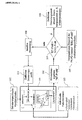
- Eine schematische Darstellung eines Verfahrens auf der die erfindungsgemäße Vorrichtung basiert ist in
Abbildung 1 gezeigt. Hauptbestandteil ist ein PBPK/PD-Modell (101), welches eine bestimmte Art von Organismus, besonders bevorzugt den eines Säugetieres, beschreibt und als Eingangsgrößen eine Reihe unterschiedlicher Parameter benötigt: - 1.) Substanzspezifische Parameter des zu verabreichenden Arzneistoffes (102). Typische substanzspezifische Parameter sind z. B. physikochemische Parameter wie Lipophilie, Bindungskonstante an humanes Serumalbumin und/oder weitere Plasmaproteine, ungebundene Plasmafraktion, Löslichkeit in wässriger Pufferlösung oder in intestinaler Flüssigkeit, Größe des Moleküls (ausgedrückt durch das Molekülgewicht oder Molvolumen), hepatische und/oder renale Clearance, Permeabilitätskoeffizienten, bspw. über künstliche oder biologische Membranen, und Gleichgewichtsverteilungskoeffizienten zwischen Plasma (oder Blut) und den diversen Organen.
- 2.) Spezies-spezifische physiologische, anatomische, biochemische und/oder genetische Eingangsparameter, die charakteristisch für den betrachteten Patienten sind (103). Zu dieser Sorte von Parametern zählen insbesondere Körpergewicht, Volumenanteile einzelner Organe am gesamten Körpervolumen, Blutflussraten einzelner Organe, Wasser-, Fett- und Lipidanteil der einzelnen Organe, sowie Parameter, die die Expression und Funktion von metabolisch aktiven Enzymen (insbesondere in Leber und Darm) oder die Expression und Funktion von Proteinen für den aktiven Transport von Molekülen durch Zellmembranen charakterisieren. Diese Parameter können entweder direkt gemessen werden oder sind für bestimmte Populationen mit einfach bestimmbaren Patientenparametern wie Alter, Geschlecht, Körpergewicht und Lean Body Mass korreliert (P. S. Price, R. B. Conolly, C. F. Chaisson, E. A. Gross, J. S. Young, E. T. Mathis, D. R. Tedder: "Modeling interindividual variation in physiological factors used in PBPK models of humans", Crit. Rev. Toxicol. 33, 469-503 (2003)). Es können einzelne oder mehrere dieser Parameter im erfindungsgemäßen Verfahren eingesetzt werden.
- 3.) Ein Dosierungsprofil, dass die verabreichte Dosis als Funktion der Zeit beschreibt (104).
-
- 4.) Ein Zielprofil, das den gewünschten Konzentrations-Zeit-Verlauf des zu verabreichenden Arzneistoffs im Plasma, Blut, oder direkt am biochemischen Target im Zielorgan oder den gewünschten Effekt-Zeit-Verlauf angibt ("SOLL-Profil", 105). Dieses Zielprofil ist indikationsspezifisch und abhängig von dem betrachteten Arzneistoff. In vielen klinisch relevanten Fällen wie beispielsweise bei der Verabreichung von Narkosemitteln wird ein rechteckiges Effekt-Profil mit möglichst steilen Flanken angestrebt, d. h. die gewünschte Wirkung (hier: Narkose) soll spontan einsetzen, dann über einen definierten Zeitraum möglichst konstant bleiben, und am Ende der Behandlung wieder rasch abklingen. Das Zielprofil kann entweder eine einfache zeitliche Funktion Z(t) sein oder auch alternativ oder zusätzlich als Toleranzbereich (definiert als Intervall über einen Maximalwert und einen Minimalwert [Zmin(t)..Zmax(t)]) vorgegeben sein.
- Ausgehend von einer sinnvoll zu wählenden Startfunktion für das Dosierungsprofil, errechnet das PBPK/PD-Modell anhand der Informationen aus 1.) - 2.) das individuelle Konzentrations-Zeit-Profil bzw. Effekt-Zeit-Profil für die betrachtete Substanz ("IST-Profil", 106).
- Dabei sind grundsätzlich verschiedene Routen der Administration des Arzneistoffs im PBPK/PD-Modell denkbar. Der Arzneistoff kann intravenös, intraarteriell, intraperitoneal, intramuskulär, subkutan, topikal, oral oder inhalativ über die oberen Atemwege und/oder die Lunge verabreicht werden. Besonders wichtig und bevorzugt ist die intravenöse Applikation.
- Der nächste Schritt des Verfahrens besteht aus einem iterativen Optimierungsprozess, in dem das Dosierungsprofil solange variiert wird, bis das simulierte Konzentrations-Zeit-Profil bzw. Effekt-Zeit-Profil mit dem SOLL-Profil übereinstimmt (107, 108). Als Resultat dieser numerischen Optimierung wird dasjenige zeitliche Dosierungsprofil erhalten, welches den gewünschten Konzentrations-Zeit- bzw. Effekt-Zeit-Verlauf für die betrachtete Substanz bei dem individuellen Patienten bewirkt oder von diesem die geringste Abweichung zeigt. Als numerische Optimierungsverfahren kommen zum Beispiel Gradientenverfahren, gradientenfreie Verfahren, stochastische Verfahren oder evolutionäre Verfahren in Betracht. Besonders bevorzugt sind bei den Gradientenverfahren das Quasi-Newton- oder Newton-Verfahren und insbesondere das Intervallschachtelungsverfahren bei den gradientenfreien Verfahren. Bei den stochastischen Methoden ist insbesondere das Monte-Carlo-Verfahren bevorzugt, die Methode der genetischen Optimierung stellt eine besonders bevorzugte Form eines evolutionären Verfahrens dar.
- Dieses Dosierungsprofil wird im letzten Schritt zur Steuerung einer automatischen Dosierungsvorrichtung herangezogen.
- Dementsprechend betrifft die vorliegende Erfindung also eine Vorrichtung zur zeitlich gesteuerten Dosierung eines Arzneistoffs in der folgende Schritte angewendet werden:
- a) Vorgabe eines indikations- und substanzabhängigen Zielprofils, welches einen gewünschten Konzentrations-Zeit-Verlauf oder einen gewünschten Effekt-Zeitverlauf angibt,
- b) Physiologie-basierte pharmakokinetische und/oder pharmakodynamische Simulation mit zeitlich variablem Applikationsprofil unter Berücksichtigung individueller Parameter des Patienten und substanzspezifischer Inputparameter des zu verabreichenden Arzneistoffes,
- c) Iterative numerische Anpassung des Applikationsprofils, bis das simulierte zeitliche Profil mit dem vorgegebenen Zielprofil übereinstimmt oder mit diesem die maximal erreichbare Übereinstimmung zeigt,
- d) Steuerung einer Dosierungsvorrichtung auf Basis des Ergebnisses unter c).
- Besonders vorteilhaft ist das erfindungsgemäße Vorrichtung, wenn physiologische Parameter, die einen Einfluss auf das pharmakokinetische oder pharmakodynamische Verhalten des Arzneistoffes haben, zeitlich variabel sind. Zu den physiologischen Parametern, die sich während des Therapieverfahrens ändern, zählen beispielsweise die Blutflüsse des Magen-Darm-Trakts und der Leber, die unter anderem durch die Aufnahme von Nahrung beeinflusst und verändert werden, oder (auf einer längeren Zeitskala) auch die Exprimierungsraten von Transportern oder metabolisch aktiven Enzymen. Sofern solche Parameter in Echtzeit während der Therapie gemessen werden, kann deren zeitlich veränderlicher Einfluss bei der Optimierung des Dosierungsprofils mit der erfindungsgemäßen Vorrichtung mitberücksichtigt werden.
- In bestimmten Fällen wie z. B. in der Anästhesie kann es sinnvoll sein, die Regelung der Dosierungsvorrichtung nicht alleine auf das gewünschte pharmakokinetische oder pharmakodynamische Zielprofil hin vorzunehmen, sondern eine externe Messgröße als weiteren Eingangsparameter heranzuziehen.
- In einer besonderen Ausführungsform wird der Therapieerfolg zusätzlich durch eine oder mehrere geeignete Messsonden, die z. B. die Narkosetiefe bei einer Anästhesie messen, online überwacht und die Messsignale als zusätzliche Eingangsgrößen in das Verfahren integriert. Die Steuerung der Dosierungsvorrichtung wird dann nicht rein durch das pharmakodynamische oder pharmakokinetische Zeitprofil geregelt, sondern bezieht externe Messsignale mit ein. So kann beispielsweise die Zufuhr eines Narkosemittels erhöht werden, wenn die gemessene Narkosetiefe einen kritischen Wert unterschreitet. Auf diese Weise lässt sich ein geschlossener Regelkreis verwirklichen, der unter Einbeziehung von online Messwerten und physiologischen Simulationen in Echtzeit die zeitliche Dosierung des Arzneimittels optimiert. In dieser Ausführungsform wird die aus der physiologischen Simulation bekannte Response des pharmakodynamischen bzw. pharmakokinetischen Profils auf Änderungen in der Applikationsrate benutzt, um die Rate der Arzneistoffzufuhr den durch die Messsonde angezeigten Bedürfnissen des Patienten neu anzupassen. In einer weiteren besonderen Ausführungsform wird kurzzeitig alleine das Signal der Messsonde zur Regelung herangezogen, sofern ein kritischer Zustand vorliegt (z. B. wenn der Patient vorzeitig aus der Narkose zu erwachen droht).
- Als Simulationsverfahren sind grundsätzlich alle auf den genannten Parametern basierenden Verfahren geeignet, besonders geeignet und erfindungsgemäß bevorzugt sind die in
DE Anm. Nr. 10160270 undDE Anm. Nr. 10345836 beanspruchten Verfahren. - Neben der Anwendung der erfindungsgemäßen Vorrichtung als Hilfsmittel zur Durchführung einer medizinischen Therapie lässt sich das erfindungsgemäße Verfahren auch bereits in klinischen Versuchen oder Tierversuchen als Hilfsmittel einsetzen, bspw. um in die Testreihen mit klinisch "sinnvollen" Dosierungen einzusteigen und das typische "Einpendeln" der Dosierung, also die empirisch-iterative Annäherung von zu großen über zu kleine Dosierungen, die sich abwechselnd an das Optimum annähern, auf ein Minimum zu reduzieren und damit die Belastung der behandelten Organismen zu minimieren und die Wahrscheinlichkeit eines Erfolgs des Experiments zu maximieren.
- Als Zielgruppe für die Anwendung der erfindungsgemäßen Vorrichtung kommen dementsprechend Menschen und Tiere, insbesondere Menschen sowie Nutz-, Zucht-, Labor-, Versuchs- und Hobbytiere in Frage. Ganz besonders bevorzugt wird die Vorrichtung als Hilfsmittel für die therapeutische Behandlung von Menschen oder klinischen Versuchen an Menschen eingesetzt.
- Zu den Nutz- und Zuchttieren gehören Säugetiere wie z.B. Rinder, Pferde, Schafe, Schweine, Ziegen, Kamele, Wasserbüffel, Esel, Kaninchen, Damwild, Rentiere, Pelztiere wie z.B. Nerze, Chinchilla, Waschbär, Vögel wie z.B. Hühner, Gänse, Puten, Enten, Tauben, Vogelarten für Heim- und Zoohaltung.
- Zu Labor- und Versuchstieren gehören Mäuse, Ratten, Meerschweinchen, Hamster, Kaninchen, Hunde, Katzen, Schweine und Affen jeweils in allen Arten, Unterarten und Rassen.
- Zu den Hobbytieren gehören Hunde und Katzen.
- Als elektronisch gesteuerte Dosierungsvorrichtung kommen elektronisch gesteuerte Infusionspumpen, Inhalatoren oder elektronisch gesteuerte Freisetzungskapseln für die orale Applikation in Frage. Besonders geeignet sind elektronisch gesteuerte Infusionspumpen.
- Die erfindungsgemäße Vorrichtung ist besonders vorteilhaft bei solchen Indikationen und Wirkstoffen, die nur über ein schmales "therapeutisches Fenster" verfügen. Ein schmales therapeutisches Fenster bedeutet, dass nur ein kleiner Konzentrationsbereich existiert, bei dem zwar die erwünschten pharmakologischen Effekte auftreten, aber gleichzeitig noch keine unerwünschten Nebenwirkungen zu beobachten sind. Beispiele für Indikationsgebiete mit schmalem therapeutischen Fenster sind alle Arten von Krebserkrankungen, Infektionskrankheiten, insbesondere bakterielle und virale Infektionen, Herz-Kreislauferkrankungen, insbesondere Bluthochdruck. Lipidämie, Angina Pectoris und Herzinfarkt, Erkrankungen des Zentralnervensystems wie Morbus Alzheimer, Schizophrenie, Epilepsie, chronische Kopfschmerzen (Migräne), Schmerztherapie und Anästhesie, psychische Erkrankungen, insbesondere Depressionen und Angstzustände, Stoffwechselerkrankungen wie z. B. Diabetes und Störungen des Fettstoffwechsels (Adipositas), Atemwegserkrankungen wie Asthma und Bronchitis, Immunerkrankungen, insbesondere Allergien, Rheuma und Multiple Sklerose, Erkrankungen des Magen-Darm Traktes, insbesondere Geschwüre des Magens und des Zwölffingerdarms und Morbus Crohn, sowie Erkrankungen der Gefäße, insbesondere solche, die zur erektalen Dysfunktion führen, und akute Schockzustände.
- Die Erfindung wird im Folgenden anhand eines Beispiels näher erläutert, dieses Beispiel illustriert die vorliegende Erfindung ist jedoch keinesfalls als Einschränkung zu betrachten.
- Dem Beispiel liegen Simulationen mit dem bei Bayer Technology Services entwickelten physiologie-basierten Pharmakokinetik-Modell PK-Sim® zu Grunde.
- Als Beispielsubstanz wurde Theophyllin, ein Arzneistoff zur Therapie von Asthma, gewählt. Das besondere an dieser Substanz ist, dass sie nur über einen sehr schmalen Konzentrationsbereich verfügt, in dem die Substanz therapeutisch wirksam ist. Dieses sog. "therapeutische Fenster" wird in der Literatur mit 5-10 bis 20 mg/L (Plasma-Konzentration) angegeben (A. Ohnishi: "A Review of Clinical Use of Theophylline in Acute Asthma: Factors Influencing Kinetic Disposition and Drug Interactions", Methods Find. Exp. Clin. Pharmacol. 22, 253-258 (2000)). Bei Plasma-Konzentrationen unterhalb von 5 mg/L wird im allgemeinen keine ausreichende anti-asthmatische Wirkung erzielt, oberhalb einer Plasma-Konzentration von 20 mg/L steigt das Risiko unerwünschter Nebenwirkungen wie Übelkeit, Zittern und beschleunigter Herzschlag stark an (A. Ohnishi: "A Review of Clinical Use of Theophylline in Acute Asthma: Factors Influencing Kinetic Disposition and Drug Interactions", Methods Find. Exp. Clin. Pharmacol. 22, 253-258 (2000)). Erschwerend kommt beim therapeutischen Einsatz von Theophyllin der bekannte Umstand hinzu, dass die Pharmakokinetik dieses Arzneistoffs stark von individuellen Faktoren des Patienten wie z. B. Alter, Geschlecht, oder Körperfettanteil abhängt. Besonders die Metabolisierungsrate (P. A. Mitenko, R. I. Ogilvie: "Pharmacokinetics of intravenous Theophylline", Clin. Pharm. Therap. 14, 509-513 (1973); J. P. Jameson, A. Munyika: "Theophylline Pharmacokinetics in Black Zimbabwean Males", Therap. Drug Monitoring 12, 54-58 (1990); P. Gal, W. J. Jusko, A. M. Yurchak, B. A. Franklin: " Theophylline disposition in obesity", Clin. Pharmacol. Ther. 23, 438-44 (1978); S. H. D. Jackson, A. Johnston, R. Woollard, P. Turner: "The Relationship between Theophylline Clearance and Age in Adult Life", Eur. J. Clin. Pharmacol. 36, 29-34 (1989)), sowie die freie Plasmafraktion (Z. Trnavska: "Theophylline Protein Binding", Arzneim.-Forsch. 40, 166-170 (1990); Z. Kato, O. Fukutomi, N. Kondo: "Developmental Changes of unbound Theophylline", Ann Allergy Asthma Immunol. 80, 517 (1998)), sind individuell unterschiedlich und führen folglich zu individuell unterschiedlichen Plasma-Konzentrationsverläufen. Im klinischen Einsatz wird man diesem Problem dadurch gerecht, dass die Plasma-Konzentration von Theophyllin experimentell überwacht wird (A. Ohnishi: "A Review of Clinical Use of Theophylline in Acute Asthma: Factors Influencing Kinetic Disposition and Drug Interactions", Methods Find. Exp. Clin. Pharmacol. 22, 253-258 (2000)). Dieses Verfahren ist vergleichsweise aufwändig, es erfordert wiederholte Entnahmen von Blutproben beim Patienten und ist darüber hinaus nur bei der Langzeittherapie mit Theophyllin sinnvoll anzuwenden.
- Wie das Problem einer individuell auf den Patienten zugeschnittenen, optimalen Dosierung von Theophyllin mit dem erfindungsgemäßen Verfahren gelöst werden kann, wird im folgenden beschrieben:
- Als substanzabhängige Inputparameter werden die folgenden Werte für Theophyllin verwendet (Tabelle 1):
- Der verwendete Wert von 59 % für die freie Plasmafraktion stellt einen mittleren Wert für einen erwachsenen Menschen dar (Z. Trnavska: "Theophylline Protein Binding", Arzneim.-Forsch. 40, 166-170 (1990); Z. Kato, O. Fukutomi, N. Kondo: "Developmental Changes of unbound Theophylline", Ann Allergy Asthma Immunol. 80, 517 (1998)). Weiterhin wurden die folgenden physiologischen und anatomischen Parameter bei den Berechnungen mit PK-Sim® zugrunde gelegt (Default-Parameter für den Menschen, Tabelle 2):
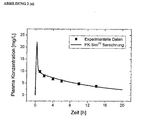
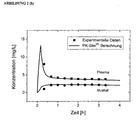
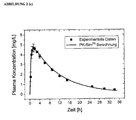
Tabelle 2 Organ / Kompartiment Volumina [ml] Blutflussraten [ml/min] venöser Blutpool 250 -/- arterieller Blutpool 140 -/- Lunge 670 4670 Magen 150 60 Dünndarm 640 600 Dickdarm 370 240 Pankreas 100 60 Milz 180 180 Leber 1710 390 Gallenblase 20 0 Niere 720 1133 Gehirn 1486 700 Herz 330 240 Muskel 30200 550 Knochen 12060 167 Haut 3020 50 Fett 10060 300 Hoden 35 2.6 - Zunächst wird gezeigt, dass es grundsätzlich auf der Basis der vorgenannten Werte möglich ist, mit PK-Sim® den Plasma-Konzentrations-Zeitverlauf von Theophyllin korrekt zu beschreiben. Dazu wurden Simulationsergebnisse mit experimentell gemessenen Plasma-Konzentrations-Zeitverläufen (S. Valenti, P. Crimi, V. Brusasco: "Bioavailability and Pharmacokinetics of a New Controlled Release Theophylline Preparation in the Form of Capsules Containing Pellets", Respiration 52, 195-200 (1987); M.Müller, B. v. Osten, R. Schmid, E. Piegler, I. Gerngross, H. Buchegger, H. G. Eichler: "Theophylline kinetics in peripheral tissues in vivo in humans", Naunyn-Schmiedeberg's Arch. Pharmacol. 352, 438-441 (1995); M. C. Meyer, E. J. Jarvi, A. B. Straughn, F. R: Pelsor, R. L. Williams, V. P. Shah: "Bioequivalence of Immediate-release Theophylline Capsules", Biopharm. Drug Dispos. 20, 417-419 (1999)) und einem Muskel-Konzentrations-Zeitverlauf aus der Literatur (M.Müller, B. v. Osten, R. Schmid, E. Piegler, I. Gerngross, H. Buchegger, H. G. Eichler: "Theophylline kinetics in peripheral tissues in vivo in humans", Naunyn-Schmiedeberg's Arch. Pharmacol. 352, 438-441 (1995)) verglichen (
Abbildung 2 ). Wie in Abbildung 2 zu sehen ist, ist die Übereinstimmung der simulierten Kurven mit den experimentell bestimmten Kurven sehr gut. - Zur Optimierung von individuellen Dosierungsprofilen werden im folgenden zwei virtuelle Individuen betrachtet, die sich beispielhaft in ihrer gesamten Metabolisierungsrate ("Clearance") unterscheiden. Individuum A weist eine totale Plasma Clearance (CL) von 0.4 ml/min/kg, Individuum B von 1.0 ml/min/kg auf. Diese Werte liegen innerhalb der typischen Schwankungsbreite derPlasma-Clearance von Theophyllin im Menschen (P. A. Mitenko, R I. Ogilvie: "Pharmacokinetics_ of intravenous Theophylline", Clin. Pharm. Therap. 14, 509-513 (1973); J. P. Jameson, A. Munyika: "Theophylline Pharmacokinetics in Black Zimbabwean Males", Therap. Drug Monitoring 12, 54-58 (1990); P. Gal, W. J. Jusko, A. M. Yurchak, B. A. Franklin: " Theophylline disposition in obesity", Clin. Pharmacol. Ther. 23, 438-44 (1978); S. H. D. Jackson, A. Johnston, R. Woollard, P. Turner: "The Relationship between Theophylline Clearance and Age in Adult Life", Eur. J. Clin. Pharmacol. 36, 29-34 (1989)). Die übrigen relevanten, physiologischen und anatomischen Parameter, die in den folgenden Simulationen verwendet werden, sind für beide Individuen gleich angenommen und identisch mit den in Tabelle 2 zusammengefassten Werten. Denkbar ist an dieser Stelle natürlich auch die Berücksichtigung von einer Vielzahl weiterer individueller Unterschiede wie z. B. in der freien Plasmafraktion, im Körpergewicht, im Fettanteil des Körpers, oder in der Blutflussrate in einem oder mehreren Organen.
- Als SOLL-Profil wird in diesem Beispiel eine Plasma-Konzentration von 15 mg/L gewählt, die über einen Zeitraum von 12 Stunden konstant gehalten werden soll. Der gewählte Toleranzbereich beträgt ± 1 mg/L (dargestellt in
Abbildung 3 ), d. h. es gilt

- In
Abbildung 4 sind die mit PK-Sim® simulierten Plasma-Konzentrations-Zeitverläufe für die beiden Individuen nach einer intravenösen Bolus-Administration von 1 mg/kg Theophyllin gezeigt. Diese Kurven dienen als Startpunkt für die Optimierung des Dosierungsprofils. - Im nächsten Schritt wird nun iterativ die Infusionsrate, d. h. die intravenös applizierte Dosis pro Zeitintervall, variiert. Die Schrittweite des Dosierungsintervalls beträgt in diesem Beispiel 0.1 Stunde = 6 Minuten. Diese Größe ist sinnvollerweise so zu wählen, dass sie an die Verteilungs- und Eliminationskinetik der Substanz angepasst wird.
- Das erhaltene Simulationsergebnis (= IST-Profil) wird dann mit dem SOLL-Profil verglichen. Im Falle einer Abweichung des IST-Profils vom SOLL-Profil, die außerhalb des gültigen Toleranzbereichs liegt, wird die im entsprechenden Zeitschritt applizierte Menge variiert, bis insgesamt das IST-Profil im Rahmen des Toleranzbereichs mit dem SOLL-Profil übereinstimmt. Im vorliegenden Beispiel wurde die Optimierung des Applikationsprofils durch manuelle Iteration vorgenommen. Im Rahmen einer echten Therapieoptimierung sind an dieser Stelle geeignete numerische Optimierungsverfahren einzusetzen. Als geeignete Optimierungsverfahren kommen hier beispielsweise Gradientenverfahren, insbesondere Quasi-Newton- oder Newton-Verfahren, sowie gradientenfreie Verfahren wie Intervallschachtelung und stochastische Verfahren wie Monte-Carlo-Verfahren in Betracht.
- Ein jeweiliges Ergebnis eines solchen manuellen iterativen Optimierungsprozesses ist in den Abbildungen 5 (a) und (b) dargestellt. Die zu diesen IST-Profilen gehörenden Dosierungsprofile sind in den Abbildungen 6 (a) und (b) gezeigt. Diese so ermittelten Dosierungsprofile dienen im letzten Schritt des Verfahrens als Eingabefunktion zur Steuerung eines herkömmlichen Dosierungsautomaten, z. B. einer elektronisch gesteuerten Infusionspumpe.
-
-
Abbildung 1 : Schematische Darstellung des Verfahrens zur zeitlichen Dosierung von Arzneistoffen. -
Abbildung 2 : Vergleich zwischen experimentellen Konzentrations-Zeitverläufen von Theophyllin aus der Literatur mit Simulationsergebnissen von PK-Sim® mit an die jeweiligen experimentellen Daten angepassten Metabolisierungsraten:- a) Intravenöse Infusion von 5.58 mg/kg über 20 Minuten. Die Plasma-Clearance beträgt hier CL = 0.40 ml/min/kg. (Quelle: [12])
- b) Intravenöse Infusion von 240 mg über 10 Minuten. Die Plasma-Clearance beträgt hier CL = 0.25 ml/min/kg. (Quelle: [13])
- c) Perorale Administration von 200 mg einer sofort freisetzenden Formulierung (Mittelwert und Standardabweichung dreier bioäquivalenter immediate release-Kapseln [14]). Die
Plasma-Clearance beträgt hier CL = 0.50 ml/min/kg.
-
Abbildung 3 : Vorgabe des Zielprofils (= SOLL-Profil) -
Abbildung 4 : Simulationsergebnis für die intravenöse Bolus-Administration von 1 mg/kg Theophyllin im Individuum A (CL = 0.4 ml/min/kg) und B (CL = 1.0 ml/min/kg). -
Abbildung 5 : Simuliertes Plasma-Konzentrations-Zeitprofil (IST-Profil) nach iterativer Anpassung des Dosierungsprofils für Individuum A (a) und B (b). -
Abbildung 6 : Optimiertes Dosierungsprofil für Individuum A (a) und B (b).
| PARAMETER | WERT |
| Lipophilie (LogMA) | -0.2 |
| Freie Plasmafraktion | 59 % |
| Löslichkeit | 2800 mg/L |
| Molgewicht | 180 Dalton |
| Intestinale Permeabilität (nur bei oraler Aufnahme, | 2.97 x 10⁻⁶ cm/s |
Claims (7)
- Vorrichtung zur zeitlichen Steuerung der Dosierung eines Arzneistoffs, umfassend die Kombination eines physiologie-basierten Pharmakokinetik- und Pharmakodynamik-Modells mit einer automatisierten Dosiervorrichtung, das zur Durchführung der folgenden Schritte hergerichtet ist:a) Physiologie-basierte pharmakokinetische und pharmakodynamische Simulation mit zeitlich variablem Applikationsprofil unter Berücksichtigung individueller anatomischer, physiologischer und/oder genetischer Parameter des zu behandelnden Organismus ausgewählt aus der Gruppe bestehend aus Blutflussraten, Volumina und Zusammensetzung einzelner Organe, Genexpressionsdaten von metabolisch aktiven Enzymen oder aktiven Transportern und substanzspezifischer Inputparameter des zu verabreichenden Arzneistoffes, auf Basis eines vorzugebenden indikations- und substanzabhängigen Zielprofils, welches einen gewünschten Konzentrations-Zeit-Verlauf oder einen gewünschten Effekt-Zeit-Verlauf angibt,b) Iterative numerische Anpassung des Applikationsprofils, bis das simulierte zeitliche Profil mit dem vorgegebenen Zielprofil übereinstimmt,c) Steuerung der Dosierungsvorrichtung auf Basis des Ergebnisses unter b).
- Vorrichtung nach Anspruch 1, wobei es sich bei der Art der Applikation um eine der folgenden Arten handelt: Intravenöse Applikation, intraarterielle Applikation, intraperitoneale Applikation, intramuskuläre Applikation, subkutane Applikation, topikale Applikation, orale Applikation oder inhalative Applikation.
- Vorrichtung nach einem der Ansprüche 1 bis 2, wobei es sich bei den zu berücksichtigenden substanzspezifischen Parametern um eine Auswahl aus den folgenden handelt: Lipophilie, Bindungskonstante an Plasmaproteine, freie Fraktion im Plasma, Löslichkeit, Permeabilitätskoeffizient, Molgewicht, Molvolumen, Organ/Plasma- bzw. Organ/Blut-Verteilungskoeffizient.
- Vorrichtung nach einem der Ansprüche 1 bis 3, wobei als Methode zur Anpassung des Applikationsprofils eines der folgenden numerischen Optimierungsverfahren zum Einsatz kommt: Gradientenverfahren, insbesondere Quasi-Newton- oder Newton-Verfahren; Gradientenfreie Verfahren wie Intervallschachtelung; stochastische Verfahren wie Monte-Carlo-Verfahren.
- Vorrichtung nach einem der Ansprüche 1 bis 4, wobei es sich bei der Dosierungsvorrichtung um eine elektronisch gesteuerte Infusionspumpe, einen Inhalator oder eine elektronisch gesteuerte Freisetzungskapsel für die orale Applikation handelt.
- Vorrichtung nach Anspruch 1, ausgebildet zur Messung einer oder mehrere der anatomischen, physiologischen und/oder genetischen Parameter in Echtzeit während der Applikation.
- Vorrichtung nach einem der Ansprüche 1 bis 6, ausgebildet um zusätzlich den Therapieerfolg online durch eine oder mehrere geeignete Messsonden zu überwachen und deren Messsignal bzw. Messsignale mit zur Steuerung der Dosierungsvorrichtung heranzuziehen.
Applications Claiming Priority (2)
| Application Number | Priority Date | Filing Date | Title |
|---|---|---|---|
| DE200410010516 DE102004010516A1 (de) | 2004-03-04 | 2004-03-04 | Verbessertes Verfahren zur zeitlichen Dosierung von Arzneistoffen |
| PCT/EP2005/001745 WO2005084731A2 (de) | 2004-03-04 | 2005-02-19 | Verbessertes verfahren zur zeitlichen dosierung von arzneistoffen |
Publications (2)
| Publication Number | Publication Date |
|---|---|
| EP1722839A1 EP1722839A1 (de) | 2006-11-22 |
| EP1722839B1 true EP1722839B1 (de) | 2013-12-11 |
Family
ID=34877345
Family Applications (1)
| Application Number | Title | Priority Date | Filing Date |
|---|---|---|---|
| EP05715413.0A Expired - Lifetime EP1722839B1 (de) | 2004-03-04 | 2005-02-19 | Vorrichtung zur zeitlichen dosierung von arzneistoffen |
Country Status (9)
| Country | Link |
|---|---|
| US (1) | US9095653B2 (de) |
| EP (1) | EP1722839B1 (de) |
| JP (1) | JP4560081B2 (de) |
| AU (1) | AU2005218736B2 (de) |
| CA (1) | CA2558452C (de) |
| DE (1) | DE102004010516A1 (de) |
| DK (1) | DK1722839T3 (de) |
| ES (1) | ES2443651T3 (de) |
| WO (1) | WO2005084731A2 (de) |
Families Citing this family (20)
| Publication number | Priority date | Publication date | Assignee | Title |
|---|---|---|---|---|
| DE102005028080A1 (de) * | 2005-06-17 | 2006-12-21 | Bayer Technology Services Gmbh | Verfahren zur zeitlich gesteuerten intravenösen Verabreichung des Narkosemittels Propofol |
| WO2007127237A2 (en) * | 2006-04-25 | 2007-11-08 | Huntington Medical Research Institutes | Methods of diagnosing and treating migraine |
| DE102006028232A1 (de) * | 2006-06-20 | 2007-12-27 | Bayer Technology Services Gmbh | Vorrichtung und Verfahren zur Berechnung und Bereitstellung einer Medikamentendosis |
| US8536987B2 (en) * | 2006-11-17 | 2013-09-17 | Meadwestvaco Corporation | Medication dosing monitor |
| WO2008081830A1 (ja) * | 2006-12-27 | 2008-07-10 | Nemoto Kyorindo Co., Ltd. | 薬液注入装置および薬液注入方法 |
| WO2008099356A2 (en) * | 2007-02-15 | 2008-08-21 | Koninklijke Philips Electronics N.V. | Drug delivery device |
| WO2011082421A1 (en) * | 2010-01-04 | 2011-07-07 | Mayo Foundation For Medical Education And Research | Erythropoietic stimulating agent (esa) dosage determination |
| WO2014173558A1 (en) | 2013-04-24 | 2014-10-30 | Fresenius Kabi Deutschland Gmbh | Method of operating a control device for controlling an infusion device |
| WO2017180807A1 (en) | 2016-04-15 | 2017-10-19 | Baxalta Incorporated | Method and apparatus for providing a pharmacokinetic drug dosing regiment |
| DE102014105058A1 (de) * | 2014-04-09 | 2015-10-15 | Stephanie Ittstein | Vorrichtung zu einer Herstellung und/oder zu einer Verabreichung |
| US10478544B2 (en) * | 2014-09-25 | 2019-11-19 | Nxstage Medical, Inc. | Medicament preparation and treatment devices, methods, and systems |
| US10534895B2 (en) * | 2015-01-20 | 2020-01-14 | Icpd Technologies, Llc | System and method for ranking options for medical treatments |
| US11227680B2 (en) | 2015-01-20 | 2022-01-18 | Prxcision Llc | System and method for ranking options for medical treatments |
| AU2016326714B2 (en) | 2015-09-25 | 2020-03-12 | C. R. Bard, Inc. | Catheter assembly including monitoring capabilities |
| SG11201805570WA (en) | 2015-12-30 | 2018-07-30 | Corium Int Inc | Systems and methods for long term transdermal administration |
| JP6920669B2 (ja) * | 2016-07-12 | 2021-08-18 | 国立大学法人 熊本大学 | 薬物動態解析方法、薬物動態解析装置及びプログラム |
| US10896749B2 (en) | 2017-01-27 | 2021-01-19 | Shire Human Genetic Therapies, Inc. | Drug monitoring tool |
| EP3349217B1 (de) * | 2017-09-20 | 2021-06-30 | Siemens Healthcare GmbH | Verfahren und datenverarbeitungseinheit zum ermitteln eines patientenspezifischen pharmakokinetischen parameters |
| KR20220124749A (ko) | 2020-01-07 | 2022-09-14 | 바드 액세스 시스템즈, 인크. | 온도-감지 관내 디바이스를 포함하는 진단 시스템 및 방법(diagnostic systems and methods including temperature-sensing vascular devices) |
| CO2022007433A1 (es) | 2022-05-29 | 2022-06-30 | Bioin Soluciones S A S | Sistema y método implementado por computador para control de fluidos anestésicos mediante control fuzzy |
Citations (5)
| Publication number | Priority date | Publication date | Assignee | Title |
|---|---|---|---|---|
| US4533346A (en) * | 1979-06-26 | 1985-08-06 | Pharmacontrol Corporation | System for automatic feedback-controlled administration of drugs |
| US5687208A (en) * | 1995-10-06 | 1997-11-11 | Bhb General Partnership | Method of and apparatus for predicting computed tomography contrast enhancement with feedback |
| DE20005004U1 (de) * | 2000-03-17 | 2000-06-08 | B. Braun Melsungen Ag, 34212 Melsungen | Narkoseregler |
| WO2001083007A2 (en) * | 2000-05-03 | 2001-11-08 | Aspect Medical Systems, Inc. | System and method for adaptive drug delivery |
| US20020173729A1 (en) * | 2001-05-18 | 2002-11-21 | Hanna Viertio-Oja | Closed loop drug administration method and apparatus using eeg complexity for control purposes |
Family Cites Families (11)
| Publication number | Priority date | Publication date | Assignee | Title |
|---|---|---|---|---|
| US5597377A (en) * | 1994-05-06 | 1997-01-28 | Trustees Of Boston University | Coronary sinus reperfusion catheter |
| ES2268712T3 (es) * | 1995-10-24 | 2007-03-16 | Grunenthal Gmbh | Montirelina para inhibir la apnea del sueño. |
| US5944680A (en) * | 1996-06-26 | 1999-08-31 | Medtronic, Inc. | Respiratory effort detection method and apparatus |
| US6739332B1 (en) * | 1998-07-07 | 2004-05-25 | The University Of Sheffield | Inhalers |
| JP2003523940A (ja) * | 1999-05-11 | 2003-08-12 | オーソ−マクネイル ファーマシューティカル インコーポレイテッド | エリスロポエチン投与の薬物速度論的および薬力学的モデリング |
| EP1300155A1 (de) * | 2000-07-11 | 2003-04-09 | Shionogi & Co., Ltd. | Enterische präparation mit physiologisch aktiven peptiden |
| US20050010193A1 (en) * | 2002-05-06 | 2005-01-13 | Laurent Philippe E. | Novel methods for administration of drugs and devices useful thereof |
| DE10160270A1 (de) | 2001-12-07 | 2003-06-26 | Bayer Ag | Computersystem und Verfahren zur Berechnung von ADME-Eigenschaften |
| DE10345837A1 (de) | 2003-10-02 | 2005-04-21 | Bayer Technology Services Gmbh | Verfahren zur Bestimmung einer Wirkstoffdosierung |
| DE10345836A1 (de) | 2003-10-02 | 2005-04-21 | Bayer Technology Services Gmbh | Verfahren zur Simulation der Wechselwirkung von chemischen Substanzen mit lebenden Organismen |
| DE102005028080A1 (de) * | 2005-06-17 | 2006-12-21 | Bayer Technology Services Gmbh | Verfahren zur zeitlich gesteuerten intravenösen Verabreichung des Narkosemittels Propofol |
-
2004
- 2004-03-04 DE DE200410010516 patent/DE102004010516A1/de not_active Withdrawn
-
2005
- 2005-02-19 JP JP2007501157A patent/JP4560081B2/ja not_active Expired - Lifetime
- 2005-02-19 EP EP05715413.0A patent/EP1722839B1/de not_active Expired - Lifetime
- 2005-02-19 ES ES05715413.0T patent/ES2443651T3/es not_active Expired - Lifetime
- 2005-02-19 AU AU2005218736A patent/AU2005218736B2/en not_active Expired
- 2005-02-19 US US10/598,416 patent/US9095653B2/en active Active
- 2005-02-19 CA CA2558452A patent/CA2558452C/en not_active Expired - Lifetime
- 2005-02-19 WO PCT/EP2005/001745 patent/WO2005084731A2/de not_active Ceased
- 2005-02-19 DK DK05715413.0T patent/DK1722839T3/en active
Patent Citations (5)
| Publication number | Priority date | Publication date | Assignee | Title |
|---|---|---|---|---|
| US4533346A (en) * | 1979-06-26 | 1985-08-06 | Pharmacontrol Corporation | System for automatic feedback-controlled administration of drugs |
| US5687208A (en) * | 1995-10-06 | 1997-11-11 | Bhb General Partnership | Method of and apparatus for predicting computed tomography contrast enhancement with feedback |
| DE20005004U1 (de) * | 2000-03-17 | 2000-06-08 | B. Braun Melsungen Ag, 34212 Melsungen | Narkoseregler |
| WO2001083007A2 (en) * | 2000-05-03 | 2001-11-08 | Aspect Medical Systems, Inc. | System and method for adaptive drug delivery |
| US20020173729A1 (en) * | 2001-05-18 | 2002-11-21 | Hanna Viertio-Oja | Closed loop drug administration method and apparatus using eeg complexity for control purposes |
Also Published As
| Publication number | Publication date |
|---|---|
| WO2005084731A2 (de) | 2005-09-15 |
| US9095653B2 (en) | 2015-08-04 |
| JP2007526051A (ja) | 2007-09-13 |
| AU2005218736A1 (en) | 2005-09-15 |
| AU2005218736B2 (en) | 2011-09-08 |
| US20070196479A1 (en) | 2007-08-23 |
| CA2558452C (en) | 2013-04-23 |
| DE102004010516A1 (de) | 2005-09-22 |
| CA2558452A1 (en) | 2005-09-15 |
| EP1722839A1 (de) | 2006-11-22 |
| ES2443651T3 (es) | 2014-02-20 |
| JP4560081B2 (ja) | 2010-10-13 |
| DK1722839T3 (en) | 2014-02-17 |
Similar Documents
| Publication | Publication Date | Title |
|---|---|---|
| DE102005028080A1 (de) | Verfahren zur zeitlich gesteuerten intravenösen Verabreichung des Narkosemittels Propofol | |
| WO2005084731A2 (de) | Verbessertes verfahren zur zeitlichen dosierung von arzneistoffen | |
| Schindler et al. | Reinforcing and neurochemical effects of the “bath salts” constituents 3, 4-methylenedioxypyrovalerone (MDPV) and 3, 4-methylenedioxy-N-methylcathinone (methylone) in male rats | |
| LeSage et al. | Nicotine self-administration in the rat: effects of hypocretin antagonists and changes in hypocretin mRNA | |
| DE602004008673T2 (de) | Computergesteuertes intravenöses arzneimittelabgabesystem | |
| Shepard et al. | Pharmacodynamics of alfaxalone after single‐dose intramuscular administration in red‐eared sliders (Trachemys scripta elegans): a comparison of two different doses at two different ambient temperatures | |
| EP2035985A1 (de) | Vorrichtung und verfahren zur berechnung und bereitstellung einer medikamentendosis | |
| EP1316324A1 (de) | Vorrichtung zur Verabreichung einer Substanz | |
| Reeves et al. | Early postnatal chronic intermittent hypoxia modifies hypoxic respiratory responses and long-term phrenic facilitation in adult rats | |
| DE4212640A1 (de) | Betablocker enthaltende, stabile arzneimittelzusammensetzungen mit regulierter wirkstoffabgabe fuer orale verabreichung und verfahren zu ihrer herstellung | |
| EP1671250A2 (de) | Verfahren zur bestimmung einer wirkstoffdosierung | |
| WO2014124745A1 (de) | Vorrichtung zur atemunterstützung | |
| DE102021117940A1 (de) | Infusionsvorrichtung | |
| Long et al. | Use of 20% intravenous lipid emulsion for the treatment of loperamide toxicosis in a Collie homozygous for the ABCB1‐1∆ mutation | |
| DE102004025534A1 (de) | Verfahren zur (zweistufigen) Dosis- und Dosierungsfindung | |
| Vassal et al. | Assessment of neurological toxicity of hydroxyethyl starch 130/0.4 injected in the intrathecal space in rats | |
| EP1764716B1 (de) | Verfahren und Vorrichtung zum Planen einer Direktinfusion in Lebergewebe | |
| Gessert | Hippocampal corticosterone impairs memory consolidation during sleep but improves consolidation in the wake state: Running title: hippocampal memory consolidation and corticosterone | |
| Wang et al. | Developmental neurotoxicology research: principles, models, techniques, strategies, and mechanisms | |
| CN121130083A (zh) | FKBP5抑制剂SAFit2在制备预防创伤后应激障碍的药物中的应用 | |
| Durst | Evaluating the Pain Management in a Mouse Osteotomy Model-Integrating a Refinement Approach in a Basic Research Study | |
| Lagos | Alternative Techniques for Alfaxalone Anesthesia Induction in Dogs and Cats | |
| Rogacheva et al. | P. 5.041 Clinical encephalographic analysis of the use of nooclerin with patients suffering from epilepsy | |
| DE4408890A1 (de) | Verwendung von Il-1-Antagonisten als Arzneimittel zur Behandlung von Erkrankungen mit einem erhöhten Interleukin-6 Serumspiegel |
Legal Events
| Date | Code | Title | Description |
|---|---|---|---|
| PUAI | Public reference made under article 153(3) epc to a published international application that has entered the european phase |
Free format text: ORIGINAL CODE: 0009012 |
|
| 17P | Request for examination filed |
Effective date: 20061004 |
|
| AK | Designated contracting states |
Kind code of ref document: A1 Designated state(s): AT BE BG CH CY CZ DE DK EE ES FI FR GB GR HU IE IS IT LI LT LU MC NL PL PT RO SE SI SK TR |
|
| DAX | Request for extension of the european patent (deleted) | ||
| 17Q | First examination report despatched |
Effective date: 20081007 |
|
| RAP1 | Party data changed (applicant data changed or rights of an application transferred) |
Owner name: BAYER INTELLECTUAL PROPERTY GMBH |
|
| GRAP | Despatch of communication of intention to grant a patent |
Free format text: ORIGINAL CODE: EPIDOSNIGR1 |
|
| INTG | Intention to grant announced |
Effective date: 20130906 |
|
| GRAS | Grant fee paid |
Free format text: ORIGINAL CODE: EPIDOSNIGR3 |
|
| GRAA | (expected) grant |
Free format text: ORIGINAL CODE: 0009210 |
|
| AK | Designated contracting states |
Kind code of ref document: B1 Designated state(s): AT BE BG CH CY CZ DE DK EE ES FI FR GB GR HU IE IS IT LI LT LU MC NL PL PT RO SE SI SK TR |
|
| REG | Reference to a national code |
Ref country code: GB Ref legal event code: FG4D Free format text: NOT ENGLISH |
|
| REG | Reference to a national code |
Ref country code: DE Ref legal event code: R081 Ref document number: 502005014116 Country of ref document: DE Owner name: BAYER AKTIENGESELLSCHAFT, DE Free format text: FORMER OWNER: BAYER TECHNOLOGY SERVICES GMBH, 51373 LEVERKUSEN, DE |
|
| REG | Reference to a national code |
Ref country code: CH Ref legal event code: EP |
|
| REG | Reference to a national code |
Ref country code: AT Ref legal event code: REF Ref document number: 644139 Country of ref document: AT Kind code of ref document: T Effective date: 20140115 |
|
| REG | Reference to a national code |
Ref country code: IE Ref legal event code: FG4D Free format text: LANGUAGE OF EP DOCUMENT: GERMAN |
|
| REG | Reference to a national code |
Ref country code: DE Ref legal event code: R096 Ref document number: 502005014116 Country of ref document: DE Effective date: 20140206 |
|
| REG | Reference to a national code |
Ref country code: DK Ref legal event code: T3 Effective date: 20140214 |
|
| REG | Reference to a national code |
Ref country code: ES Ref legal event code: FG2A Ref document number: 2443651 Country of ref document: ES Kind code of ref document: T3 Effective date: 20140220 |
|
| REG | Reference to a national code |
Ref country code: SE Ref legal event code: TRGR |
|
| REG | Reference to a national code |
Ref country code: NL Ref legal event code: VDEP Effective date: 20131211 |
|
| PG25 | Lapsed in a contracting state [announced via postgrant information from national office to epo] |
Ref country code: LT Free format text: LAPSE BECAUSE OF FAILURE TO SUBMIT A TRANSLATION OF THE DESCRIPTION OR TO PAY THE FEE WITHIN THE PRESCRIBED TIME-LIMIT Effective date: 20131211 Ref country code: NL Free format text: LAPSE BECAUSE OF FAILURE TO SUBMIT A TRANSLATION OF THE DESCRIPTION OR TO PAY THE FEE WITHIN THE PRESCRIBED TIME-LIMIT Effective date: 20131211 Ref country code: FI Free format text: LAPSE BECAUSE OF FAILURE TO SUBMIT A TRANSLATION OF THE DESCRIPTION OR TO PAY THE FEE WITHIN THE PRESCRIBED TIME-LIMIT Effective date: 20131211 |
|
| REG | Reference to a national code |
Ref country code: LT Ref legal event code: MG4D |
|
| PG25 | Lapsed in a contracting state [announced via postgrant information from national office to epo] |
Ref country code: CY Free format text: LAPSE BECAUSE OF FAILURE TO SUBMIT A TRANSLATION OF THE DESCRIPTION OR TO PAY THE FEE WITHIN THE PRESCRIBED TIME-LIMIT Effective date: 20131211 |
|
| PG25 | Lapsed in a contracting state [announced via postgrant information from national office to epo] |
Ref country code: IS Free format text: LAPSE BECAUSE OF FAILURE TO SUBMIT A TRANSLATION OF THE DESCRIPTION OR TO PAY THE FEE WITHIN THE PRESCRIBED TIME-LIMIT Effective date: 20140411 Ref country code: EE Free format text: LAPSE BECAUSE OF FAILURE TO SUBMIT A TRANSLATION OF THE DESCRIPTION OR TO PAY THE FEE WITHIN THE PRESCRIBED TIME-LIMIT Effective date: 20131211 |
|
| PG25 | Lapsed in a contracting state [announced via postgrant information from national office to epo] |
Ref country code: CZ Free format text: LAPSE BECAUSE OF FAILURE TO SUBMIT A TRANSLATION OF THE DESCRIPTION OR TO PAY THE FEE WITHIN THE PRESCRIBED TIME-LIMIT Effective date: 20131211 Ref country code: PT Free format text: LAPSE BECAUSE OF FAILURE TO SUBMIT A TRANSLATION OF THE DESCRIPTION OR TO PAY THE FEE WITHIN THE PRESCRIBED TIME-LIMIT Effective date: 20140411 Ref country code: RO Free format text: LAPSE BECAUSE OF FAILURE TO SUBMIT A TRANSLATION OF THE DESCRIPTION OR TO PAY THE FEE WITHIN THE PRESCRIBED TIME-LIMIT Effective date: 20131211 Ref country code: PL Free format text: LAPSE BECAUSE OF FAILURE TO SUBMIT A TRANSLATION OF THE DESCRIPTION OR TO PAY THE FEE WITHIN THE PRESCRIBED TIME-LIMIT Effective date: 20131211 Ref country code: SK Free format text: LAPSE BECAUSE OF FAILURE TO SUBMIT A TRANSLATION OF THE DESCRIPTION OR TO PAY THE FEE WITHIN THE PRESCRIBED TIME-LIMIT Effective date: 20131211 |
|
| BERE | Be: lapsed |
Owner name: BAYER INTELLECTUAL PROPERTY G.M.B.H. Effective date: 20140228 |
|
| REG | Reference to a national code |
Ref country code: DE Ref legal event code: R097 Ref document number: 502005014116 Country of ref document: DE |
|
| PG25 | Lapsed in a contracting state [announced via postgrant information from national office to epo] |
Ref country code: LU Free format text: LAPSE BECAUSE OF FAILURE TO SUBMIT A TRANSLATION OF THE DESCRIPTION OR TO PAY THE FEE WITHIN THE PRESCRIBED TIME-LIMIT Effective date: 20140219 Ref country code: MC Free format text: LAPSE BECAUSE OF FAILURE TO SUBMIT A TRANSLATION OF THE DESCRIPTION OR TO PAY THE FEE WITHIN THE PRESCRIBED TIME-LIMIT Effective date: 20131211 |
|
| PLBE | No opposition filed within time limit |
Free format text: ORIGINAL CODE: 0009261 |
|
| STAA | Information on the status of an ep patent application or granted ep patent |
Free format text: STATUS: NO OPPOSITION FILED WITHIN TIME LIMIT |
|
| 26N | No opposition filed |
Effective date: 20140912 |
|
| REG | Reference to a national code |
Ref country code: DE Ref legal event code: R097 Ref document number: 502005014116 Country of ref document: DE Effective date: 20140912 |
|
| PG25 | Lapsed in a contracting state [announced via postgrant information from national office to epo] |
Ref country code: BE Free format text: LAPSE BECAUSE OF NON-PAYMENT OF DUE FEES Effective date: 20140228 |
|
| PG25 | Lapsed in a contracting state [announced via postgrant information from national office to epo] |
Ref country code: SI Free format text: LAPSE BECAUSE OF FAILURE TO SUBMIT A TRANSLATION OF THE DESCRIPTION OR TO PAY THE FEE WITHIN THE PRESCRIBED TIME-LIMIT Effective date: 20131211 |
|
| REG | Reference to a national code |
Ref country code: AT Ref legal event code: MM01 Ref document number: 644139 Country of ref document: AT Kind code of ref document: T Effective date: 20140219 |
|
| PG25 | Lapsed in a contracting state [announced via postgrant information from national office to epo] |
Ref country code: AT Free format text: LAPSE BECAUSE OF NON-PAYMENT OF DUE FEES Effective date: 20140219 |
|
| REG | Reference to a national code |
Ref country code: FR Ref legal event code: PLFP Year of fee payment: 12 |
|
| PG25 | Lapsed in a contracting state [announced via postgrant information from national office to epo] |
Ref country code: BG Free format text: LAPSE BECAUSE OF FAILURE TO SUBMIT A TRANSLATION OF THE DESCRIPTION OR TO PAY THE FEE WITHIN THE PRESCRIBED TIME-LIMIT Effective date: 20131211 |
|
| PG25 | Lapsed in a contracting state [announced via postgrant information from national office to epo] |
Ref country code: GR Free format text: LAPSE BECAUSE OF FAILURE TO SUBMIT A TRANSLATION OF THE DESCRIPTION OR TO PAY THE FEE WITHIN THE PRESCRIBED TIME-LIMIT Effective date: 20140312 |
|
| REG | Reference to a national code |
Ref country code: DE Ref legal event code: R081 Ref document number: 502005014116 Country of ref document: DE Owner name: BAYER AKTIENGESELLSCHAFT, DE Free format text: FORMER OWNER: BAYER INTELLECTUAL PROPERTY GMBH, 40789 MONHEIM, DE |
|
| PG25 | Lapsed in a contracting state [announced via postgrant information from national office to epo] |
Ref country code: HU Free format text: LAPSE BECAUSE OF FAILURE TO SUBMIT A TRANSLATION OF THE DESCRIPTION OR TO PAY THE FEE WITHIN THE PRESCRIBED TIME-LIMIT; INVALID AB INITIO Effective date: 20050219 Ref country code: TR Free format text: LAPSE BECAUSE OF FAILURE TO SUBMIT A TRANSLATION OF THE DESCRIPTION OR TO PAY THE FEE WITHIN THE PRESCRIBED TIME-LIMIT Effective date: 20131211 |
|
| REG | Reference to a national code |
Ref country code: FR Ref legal event code: TP Owner name: BAYER AKTIENGESELLSCHAFT, DE Effective date: 20160922 |
|
| REG | Reference to a national code |
Ref country code: CH Ref legal event code: PUE Owner name: BAYER AKTIENGESELLSCHAFT, DE Free format text: FORMER OWNER: BAYER INTELLECTUAL PROPERTY GMBH, DE |
|
| REG | Reference to a national code |
Ref country code: GB Ref legal event code: 732E Free format text: REGISTERED BETWEEN 20161229 AND 20170104 |
|
| REG | Reference to a national code |
Ref country code: FR Ref legal event code: PLFP Year of fee payment: 13 |
|
| REG | Reference to a national code |
Ref country code: ES Ref legal event code: PC2A Owner name: BAYER AKTIENGESELLSCHAFT BAYER AKTIENGESELLSCHAFT Effective date: 20170711 |
|
| REG | Reference to a national code |
Ref country code: FR Ref legal event code: PLFP Year of fee payment: 14 |
|
| PGFP | Annual fee paid to national office [announced via postgrant information from national office to epo] |
Ref country code: IE Payment date: 20240124 Year of fee payment: 20 Ref country code: ES Payment date: 20240306 Year of fee payment: 20 |
|
| PGFP | Annual fee paid to national office [announced via postgrant information from national office to epo] |
Ref country code: DE Payment date: 20240116 Year of fee payment: 20 Ref country code: CH Payment date: 20240301 Year of fee payment: 20 Ref country code: GB Payment date: 20240118 Year of fee payment: 20 |
|
| PGFP | Annual fee paid to national office [announced via postgrant information from national office to epo] |
Ref country code: SE Payment date: 20240130 Year of fee payment: 20 Ref country code: IT Payment date: 20240126 Year of fee payment: 20 Ref country code: FR Payment date: 20240123 Year of fee payment: 20 Ref country code: DK Payment date: 20240214 Year of fee payment: 20 |
|
| REG | Reference to a national code |
Ref country code: DE Ref legal event code: R071 Ref document number: 502005014116 Country of ref document: DE |
|
| REG | Reference to a national code |
Ref country code: DK Ref legal event code: EUP Expiry date: 20250219 |
|
| REG | Reference to a national code |
Ref country code: ES Ref legal event code: FD2A Effective date: 20250226 |
|
| REG | Reference to a national code |
Ref country code: CH Ref legal event code: PL |
|
| REG | Reference to a national code |
Ref country code: GB Ref legal event code: PE20 Expiry date: 20250218 |
|
| REG | Reference to a national code |
Ref country code: IE Ref legal event code: MK9A |
|
| REG | Reference to a national code |
Ref country code: SE Ref legal event code: EUG |
|
| PG25 | Lapsed in a contracting state [announced via postgrant information from national office to epo] |
Ref country code: ES Free format text: LAPSE BECAUSE OF EXPIRATION OF PROTECTION Effective date: 20250220 |
|
| PG25 | Lapsed in a contracting state [announced via postgrant information from national office to epo] |
Ref country code: IE Free format text: LAPSE BECAUSE OF EXPIRATION OF PROTECTION Effective date: 20250219 |
|
| PG25 | Lapsed in a contracting state [announced via postgrant information from national office to epo] |
Ref country code: GB Free format text: LAPSE BECAUSE OF EXPIRATION OF PROTECTION Effective date: 20250218 |