EP1720575B1 - Therapeutic and diagnostic conjugates for use with multispecific antibodies - Google Patents
Therapeutic and diagnostic conjugates for use with multispecific antibodies Download PDFInfo
- Publication number
- EP1720575B1 EP1720575B1 EP20050726492 EP05726492A EP1720575B1 EP 1720575 B1 EP1720575 B1 EP 1720575B1 EP 20050726492 EP20050726492 EP 20050726492 EP 05726492 A EP05726492 A EP 05726492A EP 1720575 B1 EP1720575 B1 EP 1720575B1
- Authority
- EP
- European Patent Office
- Prior art keywords
- compound
- peptide
- antibody
- tumor
- antibodies
- Prior art date
- Legal status (The legal status is an assumption and is not a legal conclusion. Google has not performed a legal analysis and makes no representation as to the accuracy of the status listed.)
- Expired - Lifetime
Links
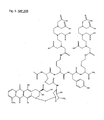
- GVQMGEHEPBVSCS-DZXHWIIASA-M CC[C@](C(C=C1N2Cc3c1nc(cccc1)c1c3)=C(CO1)C2=O)(C1=O)OC(CSCC(C(NC(CCCCNC(CN(CCN(CCN(CC([O-])=O)CC(O)=O)CC([OH2+])=O)CC(O)=O)=O)C(NC(Cc(cc1)ccc1O)C(NC(CCCCNC(CN(CCN(CCN(CC([O-])=O)CC([OH2+])=O)CC([O-])=O)CC(O)=O)O)CN)=O)=O)=O)NC(C)=O)=O Chemical compound CC[C@](C(C=C1N2Cc3c1nc(cccc1)c1c3)=C(CO1)C2=O)(C1=O)OC(CSCC(C(NC(CCCCNC(CN(CCN(CCN(CC([O-])=O)CC(O)=O)CC([OH2+])=O)CC(O)=O)=O)C(NC(Cc(cc1)ccc1O)C(NC(CCCCNC(CN(CCN(CCN(CC([O-])=O)CC([OH2+])=O)CC([O-])=O)CC(O)=O)O)CN)=O)=O)=O)NC(C)=O)=O GVQMGEHEPBVSCS-DZXHWIIASA-M 0.000 description 1
Images






Classifications
-
- A—HUMAN NECESSITIES
- A61—MEDICAL OR VETERINARY SCIENCE; HYGIENE
- A61K—PREPARATIONS FOR MEDICAL, DENTAL OR TOILETRY PURPOSES
- A61K51/00—Preparations containing radioactive substances for use in therapy or testing in vivo
- A61K51/02—Preparations containing radioactive substances for use in therapy or testing in vivo characterised by the carrier, i.e. characterised by the agent or material covalently linked or complexing the radioactive nucleus
- A61K51/04—Organic compounds
- A61K51/0497—Organic compounds conjugates with a carrier being an organic compounds
-
- A—HUMAN NECESSITIES
- A61—MEDICAL OR VETERINARY SCIENCE; HYGIENE
- A61K—PREPARATIONS FOR MEDICAL, DENTAL OR TOILETRY PURPOSES
- A61K47/00—Medicinal preparations characterised by the non-active ingredients used, e.g. carriers or inert additives; Targeting or modifying agents chemically bound to the active ingredient
- A61K47/50—Medicinal preparations characterised by the non-active ingredients used, e.g. carriers or inert additives; Targeting or modifying agents chemically bound to the active ingredient the non-active ingredient being chemically bound to the active ingredient, e.g. polymer-drug conjugates
- A61K47/51—Medicinal preparations characterised by the non-active ingredients used, e.g. carriers or inert additives; Targeting or modifying agents chemically bound to the active ingredient the non-active ingredient being chemically bound to the active ingredient, e.g. polymer-drug conjugates the non-active ingredient being a modifying agent
- A61K47/62—Medicinal preparations characterised by the non-active ingredients used, e.g. carriers or inert additives; Targeting or modifying agents chemically bound to the active ingredient the non-active ingredient being chemically bound to the active ingredient, e.g. polymer-drug conjugates the non-active ingredient being a modifying agent the modifying agent being a protein, peptide or polyamino acid
- A61K47/66—Medicinal preparations characterised by the non-active ingredients used, e.g. carriers or inert additives; Targeting or modifying agents chemically bound to the active ingredient the non-active ingredient being chemically bound to the active ingredient, e.g. polymer-drug conjugates the non-active ingredient being a modifying agent the modifying agent being a protein, peptide or polyamino acid the modifying agent being a pre-targeting system involving a peptide or protein for targeting specific cells
- A61K47/665—Medicinal preparations characterised by the non-active ingredients used, e.g. carriers or inert additives; Targeting or modifying agents chemically bound to the active ingredient the non-active ingredient being chemically bound to the active ingredient, e.g. polymer-drug conjugates the non-active ingredient being a modifying agent the modifying agent being a protein, peptide or polyamino acid the modifying agent being a pre-targeting system involving a peptide or protein for targeting specific cells the pre-targeting system, clearing therapy or rescue therapy involving biotin-(strept) avidin systems
-
- A—HUMAN NECESSITIES
- A61—MEDICAL OR VETERINARY SCIENCE; HYGIENE
- A61K—PREPARATIONS FOR MEDICAL, DENTAL OR TOILETRY PURPOSES
- A61K51/00—Preparations containing radioactive substances for use in therapy or testing in vivo
- A61K51/02—Preparations containing radioactive substances for use in therapy or testing in vivo characterised by the carrier, i.e. characterised by the agent or material covalently linked or complexing the radioactive nucleus
- A61K51/04—Organic compounds
-
- A—HUMAN NECESSITIES
- A61—MEDICAL OR VETERINARY SCIENCE; HYGIENE
- A61K—PREPARATIONS FOR MEDICAL, DENTAL OR TOILETRY PURPOSES
- A61K51/00—Preparations containing radioactive substances for use in therapy or testing in vivo
- A61K51/02—Preparations containing radioactive substances for use in therapy or testing in vivo characterised by the carrier, i.e. characterised by the agent or material covalently linked or complexing the radioactive nucleus
- A61K51/04—Organic compounds
- A61K51/041—Heterocyclic compounds
- A61K51/044—Heterocyclic compounds having nitrogen as a ring hetero atom, e.g. guanethidine, rifamycins
- A61K51/0455—Heterocyclic compounds having nitrogen as a ring hetero atom, e.g. guanethidine, rifamycins having six-membered rings with one nitrogen as the only ring hetero atom
-
- A—HUMAN NECESSITIES
- A61—MEDICAL OR VETERINARY SCIENCE; HYGIENE
- A61K—PREPARATIONS FOR MEDICAL, DENTAL OR TOILETRY PURPOSES
- A61K51/00—Preparations containing radioactive substances for use in therapy or testing in vivo
- A61K51/02—Preparations containing radioactive substances for use in therapy or testing in vivo characterised by the carrier, i.e. characterised by the agent or material covalently linked or complexing the radioactive nucleus
- A61K51/04—Organic compounds
- A61K51/0474—Organic compounds complexes or complex-forming compounds, i.e. wherein a radioactive metal (e.g. 111In3+) is complexed or chelated by, e.g. a N2S2, N3S, NS3, N4 chelating group
- A61K51/0478—Organic compounds complexes or complex-forming compounds, i.e. wherein a radioactive metal (e.g. 111In3+) is complexed or chelated by, e.g. a N2S2, N3S, NS3, N4 chelating group complexes from non-cyclic ligands, e.g. EDTA, MAG3
- A61K51/048—DTPA (diethylenetriamine tetraacetic acid)
-
- A—HUMAN NECESSITIES
- A61—MEDICAL OR VETERINARY SCIENCE; HYGIENE
- A61K—PREPARATIONS FOR MEDICAL, DENTAL OR TOILETRY PURPOSES
- A61K51/00—Preparations containing radioactive substances for use in therapy or testing in vivo
- A61K51/02—Preparations containing radioactive substances for use in therapy or testing in vivo characterised by the carrier, i.e. characterised by the agent or material covalently linked or complexing the radioactive nucleus
- A61K51/04—Organic compounds
- A61K51/08—Peptides, e.g. proteins, carriers being peptides, polyamino acids, proteins
- A61K51/10—Antibodies or immunoglobulins; Fragments thereof, the carrier being an antibody, an immunoglobulin or a fragment thereof, e.g. a camelised human single domain antibody or the Fc fragment of an antibody
- A61K51/1045—Antibodies or immunoglobulins; Fragments thereof, the carrier being an antibody, an immunoglobulin or a fragment thereof, e.g. a camelised human single domain antibody or the Fc fragment of an antibody against animal or human tumor cells or tumor cell determinants
- A61K51/1048—Antibodies or immunoglobulins; Fragments thereof, the carrier being an antibody, an immunoglobulin or a fragment thereof, e.g. a camelised human single domain antibody or the Fc fragment of an antibody against animal or human tumor cells or tumor cell determinants the tumor cell determinant being a carcino embryonic antigen
-
- A—HUMAN NECESSITIES
- A61—MEDICAL OR VETERINARY SCIENCE; HYGIENE
- A61K—PREPARATIONS FOR MEDICAL, DENTAL OR TOILETRY PURPOSES
- A61K51/00—Preparations containing radioactive substances for use in therapy or testing in vivo
- A61K51/02—Preparations containing radioactive substances for use in therapy or testing in vivo characterised by the carrier, i.e. characterised by the agent or material covalently linked or complexing the radioactive nucleus
- A61K51/04—Organic compounds
- A61K51/08—Peptides, e.g. proteins, carriers being peptides, polyamino acids, proteins
- A61K51/10—Antibodies or immunoglobulins; Fragments thereof, the carrier being an antibody, an immunoglobulin or a fragment thereof, e.g. a camelised human single domain antibody or the Fc fragment of an antibody
- A61K51/1045—Antibodies or immunoglobulins; Fragments thereof, the carrier being an antibody, an immunoglobulin or a fragment thereof, e.g. a camelised human single domain antibody or the Fc fragment of an antibody against animal or human tumor cells or tumor cell determinants
- A61K51/1063—Antibodies or immunoglobulins; Fragments thereof, the carrier being an antibody, an immunoglobulin or a fragment thereof, e.g. a camelised human single domain antibody or the Fc fragment of an antibody against animal or human tumor cells or tumor cell determinants the tumor cell being from stomach or intestines
-
- A—HUMAN NECESSITIES
- A61—MEDICAL OR VETERINARY SCIENCE; HYGIENE
- A61P—SPECIFIC THERAPEUTIC ACTIVITY OF CHEMICAL COMPOUNDS OR MEDICINAL PREPARATIONS
- A61P1/00—Drugs for disorders of the alimentary tract or the digestive system
- A61P1/04—Drugs for disorders of the alimentary tract or the digestive system for ulcers, gastritis or reflux esophagitis, e.g. antacids, inhibitors of acid secretion, mucosal protectants
-
- A—HUMAN NECESSITIES
- A61—MEDICAL OR VETERINARY SCIENCE; HYGIENE
- A61P—SPECIFIC THERAPEUTIC ACTIVITY OF CHEMICAL COMPOUNDS OR MEDICINAL PREPARATIONS
- A61P1/00—Drugs for disorders of the alimentary tract or the digestive system
- A61P1/16—Drugs for disorders of the alimentary tract or the digestive system for liver or gallbladder disorders, e.g. hepatoprotective agents, cholagogues, litholytics
-
- A—HUMAN NECESSITIES
- A61—MEDICAL OR VETERINARY SCIENCE; HYGIENE
- A61P—SPECIFIC THERAPEUTIC ACTIVITY OF CHEMICAL COMPOUNDS OR MEDICINAL PREPARATIONS
- A61P13/00—Drugs for disorders of the urinary system
- A61P13/12—Drugs for disorders of the urinary system of the kidneys
-
- A—HUMAN NECESSITIES
- A61—MEDICAL OR VETERINARY SCIENCE; HYGIENE
- A61P—SPECIFIC THERAPEUTIC ACTIVITY OF CHEMICAL COMPOUNDS OR MEDICINAL PREPARATIONS
- A61P17/00—Drugs for dermatological disorders
-
- A—HUMAN NECESSITIES
- A61—MEDICAL OR VETERINARY SCIENCE; HYGIENE
- A61P—SPECIFIC THERAPEUTIC ACTIVITY OF CHEMICAL COMPOUNDS OR MEDICINAL PREPARATIONS
- A61P17/00—Drugs for dermatological disorders
- A61P17/06—Antipsoriatics
-
- A—HUMAN NECESSITIES
- A61—MEDICAL OR VETERINARY SCIENCE; HYGIENE
- A61P—SPECIFIC THERAPEUTIC ACTIVITY OF CHEMICAL COMPOUNDS OR MEDICINAL PREPARATIONS
- A61P19/00—Drugs for skeletal disorders
-
- A—HUMAN NECESSITIES
- A61—MEDICAL OR VETERINARY SCIENCE; HYGIENE
- A61P—SPECIFIC THERAPEUTIC ACTIVITY OF CHEMICAL COMPOUNDS OR MEDICINAL PREPARATIONS
- A61P19/00—Drugs for skeletal disorders
- A61P19/02—Drugs for skeletal disorders for joint disorders, e.g. arthritis, arthrosis
-
- A—HUMAN NECESSITIES
- A61—MEDICAL OR VETERINARY SCIENCE; HYGIENE
- A61P—SPECIFIC THERAPEUTIC ACTIVITY OF CHEMICAL COMPOUNDS OR MEDICINAL PREPARATIONS
- A61P21/00—Drugs for disorders of the muscular or neuromuscular system
-
- A—HUMAN NECESSITIES
- A61—MEDICAL OR VETERINARY SCIENCE; HYGIENE
- A61P—SPECIFIC THERAPEUTIC ACTIVITY OF CHEMICAL COMPOUNDS OR MEDICINAL PREPARATIONS
- A61P21/00—Drugs for disorders of the muscular or neuromuscular system
- A61P21/04—Drugs for disorders of the muscular or neuromuscular system for myasthenia gravis
-
- A—HUMAN NECESSITIES
- A61—MEDICAL OR VETERINARY SCIENCE; HYGIENE
- A61P—SPECIFIC THERAPEUTIC ACTIVITY OF CHEMICAL COMPOUNDS OR MEDICINAL PREPARATIONS
- A61P25/00—Drugs for disorders of the nervous system
-
- A—HUMAN NECESSITIES
- A61—MEDICAL OR VETERINARY SCIENCE; HYGIENE
- A61P—SPECIFIC THERAPEUTIC ACTIVITY OF CHEMICAL COMPOUNDS OR MEDICINAL PREPARATIONS
- A61P25/00—Drugs for disorders of the nervous system
- A61P25/28—Drugs for disorders of the nervous system for treating neurodegenerative disorders of the central nervous system, e.g. nootropic agents, cognition enhancers, drugs for treating Alzheimer's disease or other forms of dementia
-
- A—HUMAN NECESSITIES
- A61—MEDICAL OR VETERINARY SCIENCE; HYGIENE
- A61P—SPECIFIC THERAPEUTIC ACTIVITY OF CHEMICAL COMPOUNDS OR MEDICINAL PREPARATIONS
- A61P29/00—Non-central analgesic, antipyretic or antiinflammatory agents, e.g. antirheumatic agents; Non-steroidal antiinflammatory drugs [NSAID]
-
- A—HUMAN NECESSITIES
- A61—MEDICAL OR VETERINARY SCIENCE; HYGIENE
- A61P—SPECIFIC THERAPEUTIC ACTIVITY OF CHEMICAL COMPOUNDS OR MEDICINAL PREPARATIONS
- A61P3/00—Drugs for disorders of the metabolism
-
- A—HUMAN NECESSITIES
- A61—MEDICAL OR VETERINARY SCIENCE; HYGIENE
- A61P—SPECIFIC THERAPEUTIC ACTIVITY OF CHEMICAL COMPOUNDS OR MEDICINAL PREPARATIONS
- A61P3/00—Drugs for disorders of the metabolism
- A61P3/08—Drugs for disorders of the metabolism for glucose homeostasis
- A61P3/10—Drugs for disorders of the metabolism for glucose homeostasis for hyperglycaemia, e.g. antidiabetics
-
- A—HUMAN NECESSITIES
- A61—MEDICAL OR VETERINARY SCIENCE; HYGIENE
- A61P—SPECIFIC THERAPEUTIC ACTIVITY OF CHEMICAL COMPOUNDS OR MEDICINAL PREPARATIONS
- A61P31/00—Antiinfectives, i.e. antibiotics, antiseptics, chemotherapeutics
-
- A—HUMAN NECESSITIES
- A61—MEDICAL OR VETERINARY SCIENCE; HYGIENE
- A61P—SPECIFIC THERAPEUTIC ACTIVITY OF CHEMICAL COMPOUNDS OR MEDICINAL PREPARATIONS
- A61P31/00—Antiinfectives, i.e. antibiotics, antiseptics, chemotherapeutics
- A61P31/04—Antibacterial agents
-
- A—HUMAN NECESSITIES
- A61—MEDICAL OR VETERINARY SCIENCE; HYGIENE
- A61P—SPECIFIC THERAPEUTIC ACTIVITY OF CHEMICAL COMPOUNDS OR MEDICINAL PREPARATIONS
- A61P31/00—Antiinfectives, i.e. antibiotics, antiseptics, chemotherapeutics
- A61P31/04—Antibacterial agents
- A61P31/06—Antibacterial agents for tuberculosis
-
- A—HUMAN NECESSITIES
- A61—MEDICAL OR VETERINARY SCIENCE; HYGIENE
- A61P—SPECIFIC THERAPEUTIC ACTIVITY OF CHEMICAL COMPOUNDS OR MEDICINAL PREPARATIONS
- A61P31/00—Antiinfectives, i.e. antibiotics, antiseptics, chemotherapeutics
- A61P31/10—Antimycotics
-
- A—HUMAN NECESSITIES
- A61—MEDICAL OR VETERINARY SCIENCE; HYGIENE
- A61P—SPECIFIC THERAPEUTIC ACTIVITY OF CHEMICAL COMPOUNDS OR MEDICINAL PREPARATIONS
- A61P31/00—Antiinfectives, i.e. antibiotics, antiseptics, chemotherapeutics
- A61P31/12—Antivirals
-
- A—HUMAN NECESSITIES
- A61—MEDICAL OR VETERINARY SCIENCE; HYGIENE
- A61P—SPECIFIC THERAPEUTIC ACTIVITY OF CHEMICAL COMPOUNDS OR MEDICINAL PREPARATIONS
- A61P31/00—Antiinfectives, i.e. antibiotics, antiseptics, chemotherapeutics
- A61P31/12—Antivirals
- A61P31/14—Antivirals for RNA viruses
-
- A—HUMAN NECESSITIES
- A61—MEDICAL OR VETERINARY SCIENCE; HYGIENE
- A61P—SPECIFIC THERAPEUTIC ACTIVITY OF CHEMICAL COMPOUNDS OR MEDICINAL PREPARATIONS
- A61P31/00—Antiinfectives, i.e. antibiotics, antiseptics, chemotherapeutics
- A61P31/12—Antivirals
- A61P31/14—Antivirals for RNA viruses
- A61P31/16—Antivirals for RNA viruses for influenza or rhinoviruses
-
- A—HUMAN NECESSITIES
- A61—MEDICAL OR VETERINARY SCIENCE; HYGIENE
- A61P—SPECIFIC THERAPEUTIC ACTIVITY OF CHEMICAL COMPOUNDS OR MEDICINAL PREPARATIONS
- A61P31/00—Antiinfectives, i.e. antibiotics, antiseptics, chemotherapeutics
- A61P31/12—Antivirals
- A61P31/14—Antivirals for RNA viruses
- A61P31/18—Antivirals for RNA viruses for HIV
-
- A—HUMAN NECESSITIES
- A61—MEDICAL OR VETERINARY SCIENCE; HYGIENE
- A61P—SPECIFIC THERAPEUTIC ACTIVITY OF CHEMICAL COMPOUNDS OR MEDICINAL PREPARATIONS
- A61P31/00—Antiinfectives, i.e. antibiotics, antiseptics, chemotherapeutics
- A61P31/12—Antivirals
- A61P31/20—Antivirals for DNA viruses
-
- A—HUMAN NECESSITIES
- A61—MEDICAL OR VETERINARY SCIENCE; HYGIENE
- A61P—SPECIFIC THERAPEUTIC ACTIVITY OF CHEMICAL COMPOUNDS OR MEDICINAL PREPARATIONS
- A61P31/00—Antiinfectives, i.e. antibiotics, antiseptics, chemotherapeutics
- A61P31/12—Antivirals
- A61P31/20—Antivirals for DNA viruses
- A61P31/22—Antivirals for DNA viruses for herpes viruses
-
- A—HUMAN NECESSITIES
- A61—MEDICAL OR VETERINARY SCIENCE; HYGIENE
- A61P—SPECIFIC THERAPEUTIC ACTIVITY OF CHEMICAL COMPOUNDS OR MEDICINAL PREPARATIONS
- A61P33/00—Antiparasitic agents
-
- A—HUMAN NECESSITIES
- A61—MEDICAL OR VETERINARY SCIENCE; HYGIENE
- A61P—SPECIFIC THERAPEUTIC ACTIVITY OF CHEMICAL COMPOUNDS OR MEDICINAL PREPARATIONS
- A61P33/00—Antiparasitic agents
- A61P33/02—Antiprotozoals, e.g. for leishmaniasis, trichomoniasis, toxoplasmosis
-
- A—HUMAN NECESSITIES
- A61—MEDICAL OR VETERINARY SCIENCE; HYGIENE
- A61P—SPECIFIC THERAPEUTIC ACTIVITY OF CHEMICAL COMPOUNDS OR MEDICINAL PREPARATIONS
- A61P33/00—Antiparasitic agents
- A61P33/02—Antiprotozoals, e.g. for leishmaniasis, trichomoniasis, toxoplasmosis
- A61P33/06—Antimalarials
-
- A—HUMAN NECESSITIES
- A61—MEDICAL OR VETERINARY SCIENCE; HYGIENE
- A61P—SPECIFIC THERAPEUTIC ACTIVITY OF CHEMICAL COMPOUNDS OR MEDICINAL PREPARATIONS
- A61P33/00—Antiparasitic agents
- A61P33/10—Anthelmintics
- A61P33/12—Schistosomicides
-
- A—HUMAN NECESSITIES
- A61—MEDICAL OR VETERINARY SCIENCE; HYGIENE
- A61P—SPECIFIC THERAPEUTIC ACTIVITY OF CHEMICAL COMPOUNDS OR MEDICINAL PREPARATIONS
- A61P35/00—Antineoplastic agents
-
- A—HUMAN NECESSITIES
- A61—MEDICAL OR VETERINARY SCIENCE; HYGIENE
- A61P—SPECIFIC THERAPEUTIC ACTIVITY OF CHEMICAL COMPOUNDS OR MEDICINAL PREPARATIONS
- A61P35/00—Antineoplastic agents
- A61P35/02—Antineoplastic agents specific for leukemia
-
- A—HUMAN NECESSITIES
- A61—MEDICAL OR VETERINARY SCIENCE; HYGIENE
- A61P—SPECIFIC THERAPEUTIC ACTIVITY OF CHEMICAL COMPOUNDS OR MEDICINAL PREPARATIONS
- A61P35/00—Antineoplastic agents
- A61P35/04—Antineoplastic agents specific for metastasis
-
- A—HUMAN NECESSITIES
- A61—MEDICAL OR VETERINARY SCIENCE; HYGIENE
- A61P—SPECIFIC THERAPEUTIC ACTIVITY OF CHEMICAL COMPOUNDS OR MEDICINAL PREPARATIONS
- A61P37/00—Drugs for immunological or allergic disorders
-
- A—HUMAN NECESSITIES
- A61—MEDICAL OR VETERINARY SCIENCE; HYGIENE
- A61P—SPECIFIC THERAPEUTIC ACTIVITY OF CHEMICAL COMPOUNDS OR MEDICINAL PREPARATIONS
- A61P37/00—Drugs for immunological or allergic disorders
- A61P37/02—Immunomodulators
-
- A—HUMAN NECESSITIES
- A61—MEDICAL OR VETERINARY SCIENCE; HYGIENE
- A61P—SPECIFIC THERAPEUTIC ACTIVITY OF CHEMICAL COMPOUNDS OR MEDICINAL PREPARATIONS
- A61P37/00—Drugs for immunological or allergic disorders
- A61P37/02—Immunomodulators
- A61P37/06—Immunosuppressants, e.g. drugs for graft rejection
-
- A—HUMAN NECESSITIES
- A61—MEDICAL OR VETERINARY SCIENCE; HYGIENE
- A61P—SPECIFIC THERAPEUTIC ACTIVITY OF CHEMICAL COMPOUNDS OR MEDICINAL PREPARATIONS
- A61P43/00—Drugs for specific purposes, not provided for in groups A61P1/00-A61P41/00
-
- A—HUMAN NECESSITIES
- A61—MEDICAL OR VETERINARY SCIENCE; HYGIENE
- A61P—SPECIFIC THERAPEUTIC ACTIVITY OF CHEMICAL COMPOUNDS OR MEDICINAL PREPARATIONS
- A61P5/00—Drugs for disorders of the endocrine system
-
- A—HUMAN NECESSITIES
- A61—MEDICAL OR VETERINARY SCIENCE; HYGIENE
- A61P—SPECIFIC THERAPEUTIC ACTIVITY OF CHEMICAL COMPOUNDS OR MEDICINAL PREPARATIONS
- A61P5/00—Drugs for disorders of the endocrine system
- A61P5/38—Drugs for disorders of the endocrine system of the suprarenal hormones
-
- A—HUMAN NECESSITIES
- A61—MEDICAL OR VETERINARY SCIENCE; HYGIENE
- A61P—SPECIFIC THERAPEUTIC ACTIVITY OF CHEMICAL COMPOUNDS OR MEDICINAL PREPARATIONS
- A61P7/00—Drugs for disorders of the blood or the extracellular fluid
-
- A—HUMAN NECESSITIES
- A61—MEDICAL OR VETERINARY SCIENCE; HYGIENE
- A61P—SPECIFIC THERAPEUTIC ACTIVITY OF CHEMICAL COMPOUNDS OR MEDICINAL PREPARATIONS
- A61P7/00—Drugs for disorders of the blood or the extracellular fluid
- A61P7/02—Antithrombotic agents; Anticoagulants; Platelet aggregation inhibitors
-
- A—HUMAN NECESSITIES
- A61—MEDICAL OR VETERINARY SCIENCE; HYGIENE
- A61P—SPECIFIC THERAPEUTIC ACTIVITY OF CHEMICAL COMPOUNDS OR MEDICINAL PREPARATIONS
- A61P7/00—Drugs for disorders of the blood or the extracellular fluid
- A61P7/06—Antianaemics
-
- A—HUMAN NECESSITIES
- A61—MEDICAL OR VETERINARY SCIENCE; HYGIENE
- A61P—SPECIFIC THERAPEUTIC ACTIVITY OF CHEMICAL COMPOUNDS OR MEDICINAL PREPARATIONS
- A61P9/00—Drugs for disorders of the cardiovascular system
-
- A—HUMAN NECESSITIES
- A61—MEDICAL OR VETERINARY SCIENCE; HYGIENE
- A61P—SPECIFIC THERAPEUTIC ACTIVITY OF CHEMICAL COMPOUNDS OR MEDICINAL PREPARATIONS
- A61P9/00—Drugs for disorders of the cardiovascular system
- A61P9/10—Drugs for disorders of the cardiovascular system for treating ischaemic or atherosclerotic diseases, e.g. antianginal drugs, coronary vasodilators, drugs for myocardial infarction, retinopathy, cerebrovascula insufficiency, renal arteriosclerosis
-
- A—HUMAN NECESSITIES
- A61—MEDICAL OR VETERINARY SCIENCE; HYGIENE
- A61P—SPECIFIC THERAPEUTIC ACTIVITY OF CHEMICAL COMPOUNDS OR MEDICINAL PREPARATIONS
- A61P9/00—Drugs for disorders of the cardiovascular system
- A61P9/14—Vasoprotectives; Antihaemorrhoidals; Drugs for varicose therapy; Capillary stabilisers
-
- B—PERFORMING OPERATIONS; TRANSPORTING
- B82—NANOTECHNOLOGY
- B82Y—SPECIFIC USES OR APPLICATIONS OF NANOSTRUCTURES; MEASUREMENT OR ANALYSIS OF NANOSTRUCTURES; MANUFACTURE OR TREATMENT OF NANOSTRUCTURES
- B82Y5/00—Nanobiotechnology or nanomedicine, e.g. protein engineering or drug delivery
-
- C—CHEMISTRY; METALLURGY
- C07—ORGANIC CHEMISTRY
- C07K—PEPTIDES
- C07K16/00—Immunoglobulins [IG], e.g. monoclonal or polyclonal antibodies
- C07K16/18—Immunoglobulins [IG], e.g. monoclonal or polyclonal antibodies against material from animals or humans
-
- C—CHEMISTRY; METALLURGY
- C07—ORGANIC CHEMISTRY
- C07K—PEPTIDES
- C07K16/00—Immunoglobulins [IG], e.g. monoclonal or polyclonal antibodies
- C07K16/18—Immunoglobulins [IG], e.g. monoclonal or polyclonal antibodies against material from animals or humans
- C07K16/28—Immunoglobulins [IG], e.g. monoclonal or polyclonal antibodies against material from animals or humans against receptors, cell surface antigens or cell surface determinants
- C07K16/30—Immunoglobulins [IG], e.g. monoclonal or polyclonal antibodies against material from animals or humans against receptors, cell surface antigens or cell surface determinants from tumour cells
- C07K16/3007—Carcino-embryonic Antigens
-
- C—CHEMISTRY; METALLURGY
- C07—ORGANIC CHEMISTRY
- C07K—PEPTIDES
- C07K16/00—Immunoglobulins [IG], e.g. monoclonal or polyclonal antibodies
- C07K16/18—Immunoglobulins [IG], e.g. monoclonal or polyclonal antibodies against material from animals or humans
- C07K16/28—Immunoglobulins [IG], e.g. monoclonal or polyclonal antibodies against material from animals or humans against receptors, cell surface antigens or cell surface determinants
- C07K16/30—Immunoglobulins [IG], e.g. monoclonal or polyclonal antibodies against material from animals or humans against receptors, cell surface antigens or cell surface determinants from tumour cells
- C07K16/3046—Stomach, Intestines
-
- C—CHEMISTRY; METALLURGY
- C07—ORGANIC CHEMISTRY
- C07K—PEPTIDES
- C07K16/00—Immunoglobulins [IG], e.g. monoclonal or polyclonal antibodies
- C07K16/44—Immunoglobulins [IG], e.g. monoclonal or polyclonal antibodies against material not provided for elsewhere, e.g. haptens, metals, DNA, RNA, amino acids
-
- C—CHEMISTRY; METALLURGY
- C07—ORGANIC CHEMISTRY
- C07K—PEPTIDES
- C07K16/00—Immunoglobulins [IG], e.g. monoclonal or polyclonal antibodies
- C07K16/46—Hybrid immunoglobulins
- C07K16/468—Immunoglobulins having two or more different antigen binding sites, e.g. multifunctional antibodies
-
- C—CHEMISTRY; METALLURGY
- C07—ORGANIC CHEMISTRY
- C07K—PEPTIDES
- C07K5/00—Peptides containing up to four amino acids in a fully defined sequence; Derivatives thereof
- C07K5/04—Peptides containing up to four amino acids in a fully defined sequence; Derivatives thereof containing only normal peptide links
- C07K5/06—Dipeptides
- C07K5/06008—Dipeptides with the first amino acid being neutral
- C07K5/06078—Dipeptides with the first amino acid being neutral and aromatic or cycloaliphatic
-
- C—CHEMISTRY; METALLURGY
- C07—ORGANIC CHEMISTRY
- C07K—PEPTIDES
- C07K5/00—Peptides containing up to four amino acids in a fully defined sequence; Derivatives thereof
- C07K5/04—Peptides containing up to four amino acids in a fully defined sequence; Derivatives thereof containing only normal peptide links
- C07K5/10—Tetrapeptides
- C07K5/1002—Tetrapeptides with the first amino acid being neutral
- C07K5/1005—Tetrapeptides with the first amino acid being neutral and aliphatic
- C07K5/1013—Tetrapeptides with the first amino acid being neutral and aliphatic the side chain containing O or S as heteroatoms, e.g. Cys, Ser
-
- C—CHEMISTRY; METALLURGY
- C07—ORGANIC CHEMISTRY
- C07K—PEPTIDES
- C07K5/00—Peptides containing up to four amino acids in a fully defined sequence; Derivatives thereof
- C07K5/04—Peptides containing up to four amino acids in a fully defined sequence; Derivatives thereof containing only normal peptide links
- C07K5/10—Tetrapeptides
- C07K5/1002—Tetrapeptides with the first amino acid being neutral
- C07K5/1016—Tetrapeptides with the first amino acid being neutral and aromatic or cycloaliphatic
-
- C—CHEMISTRY; METALLURGY
- C07—ORGANIC CHEMISTRY
- C07K—PEPTIDES
- C07K5/00—Peptides containing up to four amino acids in a fully defined sequence; Derivatives thereof
- C07K5/04—Peptides containing up to four amino acids in a fully defined sequence; Derivatives thereof containing only normal peptide links
- C07K5/10—Tetrapeptides
- C07K5/1019—Tetrapeptides with the first amino acid being basic
-
- C—CHEMISTRY; METALLURGY
- C07—ORGANIC CHEMISTRY
- C07K—PEPTIDES
- C07K7/00—Peptides having 5 to 20 amino acids in a fully defined sequence; Derivatives thereof
- C07K7/04—Linear peptides containing only normal peptide links
- C07K7/06—Linear peptides containing only normal peptide links having 5 to 11 amino acids
-
- A—HUMAN NECESSITIES
- A61—MEDICAL OR VETERINARY SCIENCE; HYGIENE
- A61K—PREPARATIONS FOR MEDICAL, DENTAL OR TOILETRY PURPOSES
- A61K39/00—Medicinal preparations containing antigens or antibodies
- A61K2039/505—Medicinal preparations containing antigens or antibodies comprising antibodies
-
- C—CHEMISTRY; METALLURGY
- C07—ORGANIC CHEMISTRY
- C07K—PEPTIDES
- C07K2317/00—Immunoglobulins specific features
- C07K2317/10—Immunoglobulins specific features characterized by their source of isolation or production
- C07K2317/12—Immunoglobulins specific features characterized by their source of isolation or production isolated from milk
-
- C—CHEMISTRY; METALLURGY
- C07—ORGANIC CHEMISTRY
- C07K—PEPTIDES
- C07K2317/00—Immunoglobulins specific features
- C07K2317/10—Immunoglobulins specific features characterized by their source of isolation or production
- C07K2317/13—Immunoglobulins specific features characterized by their source of isolation or production isolated from plants
-
- C—CHEMISTRY; METALLURGY
- C07—ORGANIC CHEMISTRY
- C07K—PEPTIDES
- C07K2317/00—Immunoglobulins specific features
- C07K2317/20—Immunoglobulins specific features characterized by taxonomic origin
- C07K2317/24—Immunoglobulins specific features characterized by taxonomic origin containing regions, domains or residues from different species, e.g. chimeric, humanized or veneered
-
- C—CHEMISTRY; METALLURGY
- C07—ORGANIC CHEMISTRY
- C07K—PEPTIDES
- C07K2317/00—Immunoglobulins specific features
- C07K2317/30—Immunoglobulins specific features characterized by aspects of specificity or valency
- C07K2317/31—Immunoglobulins specific features characterized by aspects of specificity or valency multispecific
-
- C—CHEMISTRY; METALLURGY
- C07—ORGANIC CHEMISTRY
- C07K—PEPTIDES
- C07K2317/00—Immunoglobulins specific features
- C07K2317/50—Immunoglobulins specific features characterized by immunoglobulin fragments
- C07K2317/55—Fab or Fab'
-
- C—CHEMISTRY; METALLURGY
- C07—ORGANIC CHEMISTRY
- C07K—PEPTIDES
- C07K2317/00—Immunoglobulins specific features
- C07K2317/60—Immunoglobulins specific features characterized by non-natural combinations of immunoglobulin fragments
- C07K2317/62—Immunoglobulins specific features characterized by non-natural combinations of immunoglobulin fragments comprising only variable region components
- C07K2317/622—Single chain antibody (scFv)
-
- C—CHEMISTRY; METALLURGY
- C07—ORGANIC CHEMISTRY
- C07K—PEPTIDES
- C07K2319/00—Fusion polypeptide
Definitions
- the present invention is related to a compound comprising two diethylene triamine pentaacetate moieties and one effector molecule, the compound for use in a method of treating a disease or condition, and the use of the compound for the manufacture of a medicament.
- a general approach to cancer therapy and diagnosis involves directing antibodies or antibody fragments to disease tissues, whereby the antibody or antibody fragment can target a diagnostic agent or therapeutic agent to the disease site.
- One specific approach to this methodology which has been under investigation, involves the use of bsAbs having at least one arm that specifically binds a targeted diseased tissue and at least one other arm that specifically binds a low molecular weight hapten.
- a bsAb is administered and allowed to localize to a target and to clear normal tissue.
- a radiolabeled low molecular weight hapten is given, which, being recognized by the second specificity of the bsAb, also localizes to the original target.
- low MW haptens used in combination with bsAbs possess a large number of specific imaging and therapy uses, it is impractical to prepare individual bsAbs for each possible application. Further, the application of a bsAb/low MW hapten system has several other requirements. First, the arm of the bsAb that binds to the low MW hapten must bind with high affinity, because a low MW hapten is designed to clear the living system rapidly when not bound by bsAb. Second, the non-bsAb-bound low MW hapten actually needs to clear the living system rapidly to avoid non-target tissue uptake and retention. Third, the detection and/or therapy agent must remain associated with the low MW hapten throughout its application within the bsAb protocol.
- chelators and metal chelate complexes that direct chelators and metal chelate complexes to cancers using Abs of appropriate dual specificity.
- the chelators and metal chelate complexes used are often radioactive, using radionuclides for radioimmuno-imaging.
- radionuclides for radioimmuno-imaging.
- pretargeting methodologies have received considerable attention for cancer imaging and therapy.
- an effector molecule e.g., a radionuclide or a drug linked to a small carrier
- the targeting agent e.g., a binding molecule such as a bsAb
- the effector molecule is given some time after the targeting agent. This allows time for the targeting agent to localize in tumor lesions and, more importantly, clear from the body. Because most targeting agents have been binding proteins such as antibodies, they tend to clear much more slowly from the body (usually days) than the smaller effector molecules (usually in minutes).
- the body in particular the highly vulnerable red marrow, may be exposed to the radiation all the while the targeting agent is slowly reaching its peak levels in the tumor and clearing from the body.
- the radionuclide i.e., an effector
- a small "carrier" molecule such as a chelate or peptide
- maximum tumor uptake of the radionuclide is also very rapid because the small carrier molecule efficiently transverses the tumor vasculature and binds to the primary targeting agent.
- the small size of a carrier molecule may also encourage a more uniform distribution in the tumor.
- Pretargeting methods have used a number of different strategies, but often involve an avidin/streptavidin-biotin recognition system or bi-specific antibodies that co-recognize a tumor antigen and one or mole haptens on the carrier molecule, which includes an effector molecule.
- the avidin/streptavidin system is highly versatile and has been used in several configurations. In this system, antibodies coupled with streptavidin or biotin are used as the primary targeting agent. This is followed sometime later by administration of the effector molecule, which may be conjugated with biotin or with avidin/streptavidin, respectively.
- Another configuration relies on a 3-step approach: (1) first targeting a biotin-conjugated antibody; (2) followed by a bridging with streptavidin/avidin; and (3) then the biotin-conjugated effector is given.
- These systems can be easily converted for use with a variety of effector substances so long as the effector and the targeting agent can be coupled with biotin or streptavidin/avidin depending on the configuration used.
- This type of pretargeting has considerable advantages over other proposed systems.
- avidin and streptavidin are foreign proteins and therefore can be immunogenic, which may limit the number of times they can be administered in a clinical application.
- bsAbs have the advantage of being able to be engineered as a relatively non-immunogenic humanized protein.
- the binding affinity of a bsAb typically 10 -9 to 10 -10 M
- both pretargeting systems are dependent on the binding affinity of the primary targeting agent, and therefore the higher affinity of the streptavidin/avidin-biotin systems may not offer a substantial advantage over a bsAb pretargeting system.
- Pretargeting with a bsAb also requires one arm of the antibody to recognize an effector molecule or a molecule that contains an effector molecule (e.g., a carrier with an effector together as a "targetable construct").
- an effector molecule or a molecule that contains an effector molecule e.g., a carrier with an effector together as a "targetable construct”
- Most radionuclide targeting systems reported to date have relied on an antibody to a chelate-metal complex, such as antibodies directed against indium-loaded DTPA or antibodies to other chelates. Because the antibody is generally selective for a particular chelate-metal complex, new bsAbs typically need to be constructed for each selected chelate-metal complex. This can be avoided by using a carrier molecule that includes the effector molecule and a hapten, which is specifically recognized by the antibody.
- the carrier including the effector and hapten, functions as a targetable construct.
- the targetable construct is "modular" in nature, in that different effectors can be included in the construct without having to use a different antibody in the pretargeting system, because the antibody recognizes the hapten on the targetable construct. In this way, a variety of effectors can be used in the pretargeting system, provided that the targetable construct that includes the effector maintains the same recognized hapten.
- the binding molecule must not be internalized by the targeted tissue prior to administering the effector molecule.
- the binding molecule is bivalent and bispecific, internalization of the binding molecule may be hindered or delayed until after the effector molecule is administered, even if the binding molecule recognizes an antigen that is part of an internalizing receptor on the surface of the targeted tissue.
- the effector molecule can crosslink two or more binding molecules on the surface of the targeted tissue to facilitate internalization of the crosslinked complex.
- the effector molecule may also include one or more moieties that facilitate internalization by binding to internalizing receptors on the surface of the targeted tissue (e.g., the folate receptor).
- International patent application WO 03/101496 A1 discloses a method for treating bladder cancer by administering via the urethra a multispecific antibody comprising at least one targeting arm that binds a bladder cancer antigen and at least one capture arm that binds a carrier conjugated to one or more therapeutic agents; allowing said multispecific antibody to localize at the site of said bladder cancer; allowing any free multispecific antibody to substantially clear from the patient; and administering a therapeutically effective amount of the carrier conjugated to one or more therapeutic agents.
- International patent application WO 03/101495 A1 discloses a method for treating a brain tumor by administering to a patient a multispecific antibody comprising at least one targeting arm that binds to a brain cancer antigen and at least one capture arm that binds to a radionuclide carrier, and a therapeutic radionuclide carrier to which is bound a therapeutic radionuclide, wherein the multispecific antibody, radionuclide carrier and therapeutic radionuclide are administered in a substantially equimolar ratio.
- the diethylenetriaminepentaacetate (DTPA) moiety of the compound is attached to an indium cation.
- the peptide moiety Cys-Lys-Tyr-Lys of the compound comprises one or more D-amino acids.
- the compound further comprises an isotope selected from 18 F, 32 P, 33 P, 45 Ti, 47 Sc, 52 Fe, 59 Fe, 62 Cu, 64 Cu, 67 Cu, 67 Ga, 68 Ga, 75 Se, 77 As, B6 Y, 89 Sr, 89 Zr, 90 Y, 94 Tc, 94m Tc, 99 Mo, 99 mTc, 105 Pd, 105 Rh, 111 Ag, 111 In, 123 I, 124 I, 125 I, 131 I, 142 Pr, 143 Pr, 149 Pm, 153 Sm, 154-158 Gd, 161 Tb, 166 Dy, 166 Ho, 169 Er, 175 Lu, 177 Lu, 186 Re, 188 Re, 189 Re, 194 Ir, 198 Au, 199 Au, 211 At, 211 Pb, 212 Bi, 212 Pb, 213 Bi, 223 Ra, 225 Ac, or combinations thereof.
- an isotope selected from 18 F, 32 P
- the problem underlying the present invention is solved by the compound of any embodiment of the first aspect, for use in a method of treating a disease or condition that may lead to a disease in a patient comprising: (A) administering to the patient a bispecific antibody or fragment thereof, wherein the bispecific antibody or fragment thereof has at least one arm that binds a targeted tissue and at least one other arm that binds the compound; (B) optionally, administering to the patient a clearing composition, whereby the clearing composition is capable of clearing non-localized bispecific antibodies and fragments thereof from circulation, and allowing the composition to clear non-localized bispecific antibodies or fragments thereof from circulation; and (C) administering to the patient the compound.
- the bispecific antibody or fragment thereof comprises a human, chimeric or humanized antibody or a fragment of a human, chimeric or humanized antibody.
- the antibody comprises Mab 679, Mab 734, Mab Mu-9, MN-14, or combinations thereof.
- the antibody comprises the CDRs of Mab 679, Mab 734, Mab Mu-9, Mab MN-14, or combinations thereof.
- the disease or condition is a malignant disease.
- the targeted tissue comprises a tumor.
- the tumor produces or is associated with antigens selected from the group consisting of colon-specific antigen-p (CSAp), carcinoembryonic antigen (CEA), CD4, CD5, CDS,CD14, CD15, CD 19, CD20, CD21, CD22, CD23, CD25, CD30, CD45, CD74, CD80, HLA-DR, 1a, 1i, MUC 1, MUC 2, MUC 3, MUC 4, NCA, EGFR, HER 2/neu, PAM-4, TAG-72, EGP-1, EGP-2, A3, KS-1, Le (y), S100, PSMA, PSA, tenascin, folate receptor, VEGF, PIGF,ILGF-1, necrosis antigens, IL-2, IL-6, T101, MAGE, and combinations thereof.
- CSAp colon-specific antigen-p
- CEA carcinoembryonic antigen
- CD4 CD5, CDS,CD14, CD15, CD 19, CD20, CD21, CD22, CD23
- the disease or condition is a malignant disease and the targeted tissue comprises an antigen selected from the group consisting of carcinoembryonic antigen, tenascin, epidermal growth factor receptor, platelet derived growth factor receptor, fibroblast growth factor receptors, vascular endothelial growth factor receptors, gangliosides, HER/2neu receptors and mixtures thereof.
- an antigen selected from the group consisting of carcinoembryonic antigen, tenascin, epidermal growth factor receptor, platelet derived growth factor receptor, fibroblast growth factor receptors, vascular endothelial growth factor receptors, gangliosides, HER/2neu receptors and mixtures thereof.
- the targeted tissue comprises a multiple myeloma, a B-cell malignancy, a T-cell malignancy, or combinations thereof
- the method further comprises administering one or more therapeutic or diagnostic agents.
- the method further comprises administering a therapeutic agent selected from antibodies, antibody fragments, drugs, prodrugs, toxins, enzymes, enzyme-inhibitors, nuclease, hormones, hormone antagonists, oligonucleotides, immunomodulators, cytokines, chelators, boron compounds, uranium atoms, photoactive agents, radionuclides, and combinations thereof.
- a therapeutic agent selected from antibodies, antibody fragments, drugs, prodrugs, toxins, enzymes, enzyme-inhibitors, nuclease, hormones, hormone antagonists, oligonucleotides, immunomodulators, cytokines, chelators, boron compounds, uranium atoms, photoactive agents, radionuclides, and combinations thereof.
- the method further comprises administering a cytokine selected from the group consisting of IL-1, IL-2, IL-3, IL-6, IL-10, IL-12, IL-18, IL-21, interferon- ⁇ , interferon-ß, interferon- ⁇ , G-CSF and GM-CSF, and mixtures thereof.
- a cytokine selected from the group consisting of IL-1, IL-2, IL-3, IL-6, IL-10, IL-12, IL-18, IL-21, interferon- ⁇ , interferon-ß, interferon- ⁇ , G-CSF and GM-CSF, and mixtures thereof.
- the method further comprises administering an anti-angiogenic agent selected from the group consisting of angiostatin, endostatin, basculostatin, canstatin, maspin, anti-VEGF antibodies, anti-placental growth factor antibodies, anti-vascular growth factor antibodies, and mixtures thereof.
- an anti-angiogenic agent selected from the group consisting of angiostatin, endostatin, basculostatin, canstatin, maspin, anti-VEGF antibodies, anti-placental growth factor antibodies, anti-vascular growth factor antibodies, and mixtures thereof.
- the method further comprises administering a diagnostic agent selected from radioisotopes, dyes, radioopaque materials, contrast agents, fluorescent compounds, enhancing agents, and combinations thereof.
- a diagnostic agent selected from radioisotopes, dyes, radioopaque materials, contrast agents, fluorescent compounds, enhancing agents, and combinations thereof.
- the problem underlying the present invention is solved by the use of the compound of any embodiment of the first aspect for the manufacture of a medicament.
- the compound as defined in the claims is for therapeutic use, for example, in radioimmunotherapy (RAIT), and diagnostic use, for example, in radioimmunodetection (RAID) and magnetic resonance imaging (MRI).
- RAIT radioimmunotherapy
- RAID radioimmunodetection
- MRI magnetic resonance imaging
- the coompound as defined in the claims can be used with binding molecules (i.e. targeting molecules), such as bi-specific antibodies (bsAb) and bi-specific antibody fragments (bsFab) that have at least one arm that specifically binds the targetable construct and at least one other arm that specifically binds a targeted tissue.
- binding molecules i.e. targeting molecules
- bsAb bi-specific antibodies
- bsFab bi-specific antibody fragments
- the compound is multivalent to facilitate crosslinking of one or more binding molecules on the surface of a targeted tissue to facilitate internalization of the crosslinked complex.
- the compound may also include one or more moieties that facilitate internalization by binding to an internalized receptor on the surface of the targeted tissue (e.g., the folate receptor).
- the compound also includes an effector molecule conjugated to the spacer .
- the spacer may function as carrier molecules for the effector.
- the linkage is stable under physiological conditions in serum, but the linkage is sensitive to hydrolysis when the compounds are localized to target cells or internalized by target cells. It is disclosed that the linkages may be subject to acid hydrolysis under the physiological conditions present within lysosomes. Alternatively, hydrolysis of a particular linkage may be catalyzed by one or more enzymes localized at the target cells or internal to the target cells.
- Suitable linkages may include an ester linkage, an imino linkage, an amino linkage, a sulfide linkage, a thiosemicarbazone linkage, a semicarbazone linkage, an oxime linkage, an ether linkage, or combinations of these linkages.
- the compound as defined in the claims may also include metal ions.
- the compound includes indium cations.
- metal ions, such as indium are chelated by a hapten such as DTPA.
- the spacer may include one or more amino acids, and preferably the spacer includes three or more amino acids.
- the peptide may include one or more D-amino acids, (e.g., to create a more stable molecule that is not easily metabolized in serum).
- the spacer includes a peptide with one or more lysine residues and one or more cysteine residues.
- the spacer may include a penicillamine moiety or a moiety that is a derivative of penicillamine.
- the spacer may include a thiolactic acid moiety or a moiety that is a derivative of thiolactic acid.
- the haptens and/or effectors may be conjugated to one or more residues of the spacer.
- the haptens may be conjugated to an ⁇ -nitrogen atom of a lysine residue, or a sulfur atom of a cysteine residue.
- the effector is conjugated to a penicillamine moiety or a derivative thereof, or a thiolactic acid moiety or a derivative thereof.
- the effector molecule is linked by an ester linkage, or another linkage which may be hydrolyzed under physiological conditions after being administered to a subject.
- an effector molecule includes any molecule that brings about a desirable result.
- an effector molecule many include drugs, prodrugs, toxins, enzymes, radioisotopes, immunomodulators, cytokines, hormones, nucleotide sequences (e.g ., antisense nucleotides or interference RNAs), binding molecules (e.g., antibodies), or combinations of these types of molecules.
- nucleotide sequences e.g ., antisense nucleotides or interference RNAs
- binding molecules e.g., antibodies
- An effector may also include a lipid or a polymer, which may be capable of forming a higher-ordered structure, (e.g ., a micelle, liposome, or polymeric structure), which may incorporate other effectors as described herein.
- the effector may be a higher-ordered structure itself (e.g., a micelle, liposome, polymeric structure, and/or a nanoparticle).
- the effector is a lipid
- the lipid-conjugated compound may form an emulsion that is associated with any of the effectors as described herein.
- Therapeutic effector molecules may include cytotoxic drugs, such as aplidin, azaribine, anastrozole, azacytidine, bleomycin, bortezomib, bryostatin-1, busulfan, calicheamycin, camptothecin, 10-hydroxycamptothecin, carmustine, celebrex, chlorambucil, cisplatin, irinotecan (CPT-11), SN-38, carboplatin, cladribine, cyclophosphamide, cytarabine, dacarbazine, docetaxel, dactinomycin, daunomycin glucuronide, daunorubicin, dexamethasone, diethylstilbestrol, doxorubicin, 2-pyrrolinodoxorubicin (2P-DOX), cyano-morpholino doxorubicin, doxorubicin glucuronide, epirubicin glucuronide, eth
- the effector molecule may be a prodrug that is activated after the compound is administered to a subject.
- a prodrug may be activated after it is localized to a targeted cell and/or internalized by the targeted cell.
- the prodrug may be activated by physiological conditions in the cell (e.g., the acidic environment of lysosomes).
- the prodrug may be activated by one or more enzymes, (e.g., carboxylesterase can activate prodrugs such as irinotecan (CPT-11).
- the effector molecule includes camptothecin, doxorubicin, or derivatives and/or analogs thereof, and preferably the effector molecule is conjugated by an ester linkage.
- Doxorubicin derivatives and/or analogs include 2-pyrrolinodoxorubicin (2P-DOX) and cyano-morpholino doxorubicin.
- an effector molecule is not water soluble, preferably one or more of the haptens, the spacer (e.g., a peptide), and/or the linkage makes the effector molecule more water soluble.
- an insoluble effector molecule may be administered as part of an emulsion or liposome, wherein the lipid that forms the emulsion or liposome may be conjugated to one or more of the administered compounds (e.g., the targetable construct).
- one or more of the haptens, the spacer, and/or the linkage may reduce the toxicity of the effector molecule.
- one or more of the haptens, the spacer, and/or the linkage facilitate localization of the compound (which includes the effector molecule) to a targeted tissue, while non-targeted compounds (and/or effector molecules) can be rapidly excreted.
- the biodistribution of the effector molecule may be altered by conjugating the effector to one or more of the haptens, the spacer, and/or the linkage.
- the compound as defined in the claims may also include an isotope.
- Examples include 18 F, 32 P, 33 P, 45 Ti, 47 Sc, 52 Fe, 59 Fe, 62 Cu, 64 Cu, 67 Cu, 67 Ga, 68 Ga, 78 Se, 77 As, 86 Y, 89 Sr, 89 Zr, 90 Y, 94 Tc, 94m Tc, 99 Mo, 99m Tc, 105 Pd, 105 Rh, 111 Ag, 111 In, 123 I, 124 I, 125 I, 131 I, 142 Pr, 143 Pr, 149 Pm, 153 Sm, 154-158 Gd, 161 Tb, 166 Dy, 166 Ho, 169 Er, 175 Lu, 177 Lu, 186 Re, 188 Re, 189 Re, 194 Ir, 198 Au, 199 Au, 211 At, 211 Pb 212 Bi, 212 Pb, 213 Bi, 223 Ra, or 225 Ac.
- the isotope may be
- the compound includes a peptide, one or more haptens, and one or more effector molecules.
- the peptide may include one or more sequences R 1 -Lys(X)-R 2 -Lys(Y) or Lys(X)-R 2 -Lys(Y)-R 1 , where R 1 and R 2 include one or more amino acids, and where (X) and (Y) include one or more conjugated moieties selected from antigenic molecules, haptens, hard acid chelators, and soft acid chelators.
- the effector molecule, as described herein, may be conjugated by a linkage to the haptens and/or one or more amino acids present in R 1 or R 2 .
- the linkage is stable in physiological conditions in serum, but the linkage is susceptible to hydrolysis when the compound is internalized in a cell.
- the linkage may be susceptible to hydrolysis under the acidic conditions in a lysosome or the linkage may be susceptible to hydrolysis as facilitated by an enzyme (e.g., carboxylesterase).
- Linkages may include an ester linkage, an imino linkage, an amino linkage, a sulfide linkage, a thiosemicarbazone linkage, a semicarbazone linkage, an oxime linkage, an ether linkage, an amide, and combinations of these linkages.
- the effector molecule may include drugs, prodrugs, toxins, enzymes, radioisotopes, immunomodulators, cytokines, hormones, nucleotide sequences, binding molecules, or combinations of these.
- the moiety may be a hard acid chelator, and where the compound includes a hard acid chelator, preferably the compound further includes a cation selected from the group consisting of Group IIa and Group IIIa metal cations.
- the compound may also include one or more isotopes as described above.
- the moiety may include DTPA, HSG, DOTA, NOTA, TETA, Tscg-Cys, Tsca-Cys, nitroloacetic acid, or combinations of these moieties.
- the compound includes DTPA, HSG, or combinations of DTPA and HSG.
- the compound includes DTPA.
- the moieties, designated by (X) and (Y), may be the same or different.
- compound may also include a soft acid chelator.
- the compound may also include a cation selected from the group consisting of transition metals, Bi, lanthanides, and actinides.
- the compound may include Tc, Re, Bi, or combinations of these cations.
- R 2 may include tyrosine.
- the compound as defined in the claims may be used in a method of treating and/or diagnosing a disease or condition that may lead to a disease in a patient, which may include: (1) administering a binding molecule to the patient, where the binding molecule has at least one arm that binds a targeted tissue and at least one other arm that binds a targetable construct; (2) optionally, administering a clearing composition to the patient and allowing the composition to clear non-localized binding molecules from circulation; and (3) administering to the patient one or more targetable constructs that include one or more of the compounds as defined in the claims.
- the targetable construct may include one or more compounds that include: (1) two or more haptens linked by a spacer, where one or more haptens are DTPA or HSG; and (2) one or more effector molecules conjugated to one or more of the haptens, the spacer, or both.
- the targetable construct includes a compound that includes: (1) a peptide having one or more of the sequences R 1 -lys(X)-R 2 -Lys(Y) or Lys(X)-R 2 -Lys(Y)-R 1 , where R 1 and R 2 include one or more amino acids and where (X) and (Y) include a conjugated moiety; and (2) an effector molecule conjugated to the peptide.
- the moiety may include an antigenic molecule, a hapten, a hard acid chelator, a soft acid chelator or combinations of these types of moieties.
- a binding molecule may include an antibody or a fragment of an antibody.
- Particular suitable antibodies or binding molecules may be multivalent and multispecific (e.g., bi-specific antibodies).
- the binding molecule may include a monoclonal antibody or a fragment of a monoclonal antibody.
- the antibody or antibody fragment (e.g., monoclonal) may include a human, chimeric or humanized antibody or a fragment of a human, chimeric or humanized antibody.
- Examples of particular suitable antibodies include MAb 679, MAb 734, MAb Mu-9, MN-14, RS-7, 679, 734, or combinations of these antibodies.
- the binding molecule or antibody may include a fusion protein. In some embodiments, it may be desirable to use antibodies, fragments thereof, or binding molecules that include the CDRs of Mab 679, Mab 734, Mab Mu-9, MN-14, RS-7, 679, or 734.
- the targetable construct may include a compound as defined in the claims.
- the effector molecule may include any molecule that brings about a desirable result.
- the effector molecule may include one or more drugs, prodrugs, toxins, enzymes, radioisotopes, immunomodulators, cytokines, hormones, nucleotide sequences (e.g., antisense oligonucleotide or interference RNAs), binding molecules, or molecules that facilitate administration of the foregoing categories of molecules (e.g., a lipid or polymer capable of forming a higher-ordered structure, or a higher-ordered structure itself, such as a micelle, liposome, polymeric structure, and/or nanoparticle), which may be useful as drug carriers.
- a lipid or polymer capable of forming a higher-ordered structure, or a higher-ordered structure itself such as a micelle, liposome, polymeric structure, and/or nanoparticle
- effector molecules are exemplified herein.
- the effector molecule may include camptothecin or a derivative of camptothecin, (e.g., SN-38, 10-hydroxy-CPT, 9-amino-CPT, irinotecan (CPT-11), etc.).
- Doxorubicin, or derivatives and/or analogs thereof may also be a particularly suitable effector molecule.
- Doxorubicin derivatives are described in Nagy et al., Proc. Natl. Acad. Sci. USA, 1996, 93:2464-9 .
- Antitumor anthracyclines may also be particularly suitable effector molecules, as described in Monneret, Eur. J. Med. Chem.
- the effector molecule may be conjugated to the targetable construct and/or associated with a drug-carrier such as a micelle/liposome or an emulsion, wherein the drug-carrier is conjugated to the targetable construct.
- a drug-carrier such as a micelle/liposome or an emulsion
- suitable enzymes may include carboxylesterases, glucuronidases, carboxypeptidases, beta-lactamases, phosphatases, or mixtures of these enzymes.
- the methods of treating and/or diagnosing diseases or conditions may be used to treat/diagnose a variety of diseases or conditions.
- diseases or conditions For example, a malignant disease, a cardiovascular disease, an infectious disease, an inflammatory disease, an autoimmune disease, a metabolic disease, a neurological disease, or combinations of these diseases or conditions.
- the binding molecule may specifically bind to a targeted tissue that includes an antigen selected from the group consisting of carcinoembryonic antigen, tenascin, epidermal growth factor receptor, platelet derived growth factor receptor, fibroblast growth factor receptors, vascular endothelial growth factor receptors, gangliosides, HER/2neu receptors and mixtures of these antigens.
- the targeted tissue may also include a tumor.
- the binding molecule may specifically bind to antigens produced by or associated with the tumor including colon-specific antigen-p (CSAp), carcinoembryonic antigen (CEA), CD4, CD5, CD8, CD14, CD15, CD19, CD20, CD21, CD22, CD23, CD25, CD30, CD45, CD74, CD80, HLA-DR, Ia, Ii, MUC 1, MUC 2, MUC 3, MUC 4, NCA, EGFR, HER 2/neu, PAM-4, TAG-72, EGP-1, EGP-2, A3, KS-1, Le(y), S100, PSMA, PSA, tenascin, folate receptor, VEGF, PIGF, ILGF-1, necrosis antigens, IL-2, IL-6, T101, MAGE, and combinations of these antigens.
- CSAp colon-specific antigen-p
- CEA carcinoembryonic antigen
- CD4 CD5, CD8, CD14, CD15, CD19, CD20,
- Antibodies that recognize CD74 include LL1, the use of which is described in U.S. 6,458,933 ; U.S. 6,395,276 ; U.S. 6,083,477 ; and U.S. 2003-0103982 .
- Antibodies that recognize EGP-1 include RS7, which is described in U.S. 10/377,121 ; U.S. 5,635,603 ; and Stein et al., 1990, Cancer Res., 50, 1330-1336 .
- the targeted tissue may include a multiple myleoma, a B-cell malignancy, or a T-cell malignancy.
- Specific B-cell malignancies may include indolent forms of B-cell lymphomas, aggressive forms of B-cell lymphomas, chronic leukemias, multiple myeloma, and acute lymphatic leukemias.
- the targeted tissue may also include a lymphoma such as a non-Hodgkin's lymphoma or a Hodgkin's lymphoma.
- the targeted tissue(s) may include a solid tumor, such as a melanoma, a carcinoma, a sarcoma, a glioma, or combinations of these malignancies.
- a solid tumor such as a melanoma, a carcinoma, a sarcoma, a glioma, or combinations of these malignancies.
- carcinomas may include esophageal, gastric, colonic, rectal, pancreatic, lung, breast, ovarian, urinary bladder, endometrial, cervical, testicular, renal, adrenal, liver cancer, or combinations of these carcinomas.
- the disease or condition may also include a cardiovascular disease that is associated with granulocytes, lymphocytes, monocytes, D-dimer, and/or fibrin deposits.
- the binding molecule i.e., targeting molecule
- the binding molecule may specifically bind to antigens that are present on granulocytes, lymphocytes, monocytes, and/or fibrin.
- Particular cardiovascular diseases or conditions may include a myocardial infarction, ischemic heart disease, atherosclerotic plaques, fibrin clots, emboli, or a combinations of these disease or conditions.
- the method may also be used to treat and/or diagnose infectious diseases, for example, bacterial disease, fungal disease, parasitic disease, viral disease, protozoan disease, mycoplasmal, and combinations of these infectious diseases.
- infectious disease may be caused by a pathogen selected from the group consisting of Microsporum, Trichophyton, Epidermophyton, Sporothrix schenckii, Cryptococcus neoformans, Coccidioides immitis, Histoplasma capsulatum, Blastomyces dermatitidis, Candida albicans, human immunodeficiency virus (HIV), herpes virus, cytomegalovirus, rabies virus, influenza virus, hepatitis B virus, Sendai virus, feline leukemia virus, Reovirus, poliovirus, human serum parvo-like virus, simian virus 40, respiratory syncytial virus, mouse mammary tumor virus, Varicella-Zoster virus, Dengue virus, rubella virus, measles virus
- the method may also be used to treat and/or diagnose autoimmune diseases or conditions, such as acute idiopathic thrombocytopenic purpura, chronic idiopathic thrombocytopenic purpura, dermatomyositis, Sydenham's chorea, myasthenia gravis, systemic lupus erythematosus, lupus nephritis, rheumatic fever, polyglandular syndromes, bullous pemphigoid, diabetes mellitus, Henoch-Schonlein purpura, post-streptococcalnephritis, erythema nodosurn, Takayasu's arteritis, Addison's disease, rheumatoid arthritis, multiple sclerosis, sarcoidosis, ulcerative colitis, erythema multiforme, IgA nephropathy, polyarteritis nodosa, ankylosing spondylitis
- Neurological diseases may also be treated or diagnosed by using the method.
- a neurological disease characterized by a metabolic disorder, such as amyloidosis may be treated or diagnosed by the method where the targeted tissue includes an amyloid deposit.
- the method may also include administering one or more additional therapeutic or diagnostic agents.
- Suitable therapeutic or diagnostic agents may include binding molecules (e.g., antibodies or fragments thereof), drugs, prodrugs, toxins, enzymes, enzyme-inhibitors, nucleases, hormones, hormone antagonists, immunomodulators, cytokines, chelators, boron compounds, uranium atoms, photoactive agents, radionuclides, and combinations of these agents.
- the agents may be administering before, simultaneously, or after administration of the binding molecule, the optional clearing agent, and the targetable molecule.
- the agents may be conjugated to one or more of the binding molecule, clearing agent, and/or the targetable construct.
- the agents may also be administered in combination with an emulsion or liposome, which may be conjugated to a compound such as the targetable construct.
- the therapeutic agent includes a cytokine selected from the group consisting of IL-1, IL-2, IL-3, IL-6, IL-10, IL-12, IL-18, IL-21, interferon- ⁇ , interferon- ⁇ , interferon- ⁇ , G-CSF, and GM-CSF, and mixtures of these cytokines.
- the therapeutic agent includes an anti-angiogenic agent selected from the group consisting of angiostatin, endostatin, basculostatin, canstatin, maspin, anti-VEGF antibodies, anti-placental growth factor antibodies, anti-vascular growth factor antibodies, and mixtures of these anti-angiogenic agents.
- the method may include administering a diagnostic agent selected from radioisotopes, dyes, radioopaque materials, contrast agents, fluorescent compounds, enhancing agents, and combinations of these diagnostic agents.
- a diagnostic agent selected from radioisotopes, dyes, radioopaque materials, contrast agents, fluorescent compounds, enhancing agents, and combinations of these diagnostic agents.
- a metal as a therapeutic or diagnostic agent.
- a metal for example, zinc, aluminum, gallium, lutetium, palladium, boron, gandolinium, uranium, manganese, iron, chrominum, copper, cobalt, nickel, dysprosium, rhenium, europium, terbium, holmium, neodymium, and combinations of these metals may be administered.
- paramagnetic ions useful for diagnostic procedures, may also be administered.
- paramagnetic ions include chromium (III), manganese (II), iron (III), iron (II), cobalt (II), nickel (II), copper (II), neodymium (III), samarium (III), ytterbium (III), gadolinium (III), vanadium (II), terbium (III), dysprosium (III), holmium (III), erbium (III), or combinations of these paramagnetic ions.
- the therapeutic and/or diagnostic agent may include one or more agents for photodynamic therapy, (e.g., a photosensitizer).
- Photosensitizers may include a benzoporphyrin monoacid ring A (BDP-MA), tin etiopurpurin (SnET2), sulfonated aluminum phthalocyanine (AISPc) and lutetium texaphyrin (Lutex).
- Therapeutic or diagnostic nuclides may also be administered, including 18 F, 32 P, 33 P, 45 Ti, 47 Sc, 52 Fe, 59 Fe, 62 Cu, 64 Cu, 67 Cu, 67 Ga, 68 Ga, 75 Se, 77 As, 86 Y, 89 Sr, 89 Zr, 90 Y, 94 Tc, 94m Tc, 99 Mo, 99m Tc, 105 Pd, 105 Rh, 111 Ag, 111 In, 123 I, 124 I, 125 I, 131 I, 142 Pr, 143 Pr, 149 Pm, 153 Sm, 154-158 Gd, 161 Tb, 166 Dy, 166 Ho, 169 Er, 175 Lu, 177 Lu, 186 Re, 188 Re, 189 Re, 194 Ir, 198 Au, 199 Au, 211 At, 211 Pb 212 Bi, 212 Pb, 213 Bi, 223 Ra, 225 Ac, and mixtures of these nuclides.
- Particularly suitable therapeutic nuclides may include 32 P, 33 P, 47 Sc, 64 Cu, 67 Cu, 67 Ga, 90 Y, 111 Ag, 111 In, 123 I, 131 I, 142 Pr, 153 Sm, 161 Tb, 166 Dy, 166 Ho, 177 Lu, 186 Re, 188 Re, 189 Re, 211 At, 212 Pb, 212 Bi, 213 Bi, 223 Ra, 225 Ac, or mixtures of these nuclides.
- Therapeutic nuclides may emit gamma particles and/or positrons that have an energy of about 70 to about 700 keV.
- diagnostic nuclides may include 18 F, 52 Fe, 62 Cu, 64 Cu, 67 Cu, 67 Ga, 68 Ga, 86 Y, 89 Zr, 94 Tc, 94m Tc, 99m Tc, 111 In, 123 I, 124 I, 125 I, 131 I, or mixtures of these nuclides. Diagnostic nuclides may emit gamma particles and/or positrons that have an energy of between about 25 to about 4000 keV.
- the diagnostic agent may be useful when imaging methods are performed.
- nuclides such as 18 F may be included to perform positron emission tomography (PET).
- image enhancing agents useful for performing magnetic resonance imaging (MRI) may be included.
- Image enhancing agents may include gadolinium ions, lanthanum ions, manganese ions, iron, chromium, copper, cobalt, nickel, fluorine, dysprosium, rhenium, europium, terbium, holmium, neodymium, or mixtures of these agents.
- one or more radiopaque agents or contrast agents for X-ray or computed tomography (CT) may be included.
- Radiopaque or contrast agents may include barium, diatrizoate, ethiodized oil, gallium citrate, iocarmic acid, iocetamic acid, iodamide, iodipamide, iodoxamic acid, iogulamide, iohexol, iopamidol, iopanoic acid, ioprocemic acid, iosefamic acid, ioseric acid, iosulamide meglumine, iosemetic acid, iotasul, iotetric acid, iothalamic acid, iotroxic acid, ioxaglic acid, ioxotrizoic acid, ipodate, meglumine, metrizamide, metrizoate, propyliodone, thallous chloride, or combinations of these agents.
- the method may also include administering one or more ultrasound contrast agents such as a liposome or dextran.
- Liposomes may be gas-filled.
- the therapeutic and/or diagnostic method may also include performing an operative, intravascular, laparoscopic, or endoscopic procedure, either before, simultaneously, or after the therapeutic and /or diagnostic method.
- Predominantly means “substantially” and/or at least 90%.
- the invention is related to a compound as defined in the claims that may be useful as targetable constructs for therapeutic or diagnostic methods.
- the targetable construct may be specifically bound by a binding molecule such as a bi-specific antibody (bsAb) or antibody fragment (bsFab), which has at least one arm that binds the targetable It is disclosed that construct and at least one other arm that binds a targeted tissue. It is disclosed that the targetable construct includes a peptide having at least two units of a recognizable hapten. Examples of recognizable haptens include, but are not limited to, DTPA and HSG.
- the targetable construct is conjugated to an effector molecule, which includes a variety of agents useful for treating or identifying diseased tissue.
- conjugated haptens and/or effector molecules include, but are not limited to, chelators, metal chelate complexes, drugs, enzymes, and toxins (e.g., ricin, abrin, ribonuclease (e.g., RNase), DNase I, Staphylococcal enterotoxin-A, pokeweed antiviral protein, gelonin, diphtherin toxin, Pseudomonas exotoxin, Pseudomonas endotoxin).
- Effector molecules may include lipids or polymers, which may be associated with other effector molecules described herein. For example, lipids or polymers may form higher-ordered structures such as micelles/liposomes or polymeric structures. Effector molecules may include nanoparticles, which can be used to deliver effector molecules as described herein.
- Bi-specific antibody (bsAb) pretargeting represents a potentially non-immunogenic, highly selective alternative for diagnostic and therapeutic applications.
- the bsAb pretargeting system described herein represents an additional significant advantage over other pretargeting systems in that it potentially can be developed for use with a variety of different imaging or therapeutic agents.
- the flexibility of this system is based on use of an antibody directed against DTP or HSG and the development of peptides containing the DTP or HSG residue.
- DTP-containing and/or HSG-containing peptides can be synthesized, and where the peptide contains DTP, the peptide can be labeled with chelated nuclides, such as 111 In, 90 Y, or 177 Lu, which may be useful in therapy or diagnosis.
- Antibodies have been generated against the DTPA-. 111 In moiety.
- the selected peptides can be used in combination with bi-specific antibodies using the anti-DTPA- 111 In Fab' fragment or the anti-HSG Fab' fragment chemically stabilized with the Fab' fragment of either an anti-carcinoembryonic antigen antibody (anti-CEA) or an anti-colon-specific antigen-p antibody (anti-CSAp) to provide tumor targeting capability for tumors expressing these antigens.
- anti-CEA anti-carcinoembryonic antigen antibody
- anti-CSAp anti-colon-specific antigen-p antibody
- antigen targets may include diverse tumor-associated antigens known in the art, such as against CD19, CD20, CD21, CD22, CD23, CD30, CD74, CD 80, HLA-DR, Ia, MUC 1, MUC 2, MUC 3, MUC 4, EGFR, HER 2/neu, PAM-4, BrE3, TAG-72 (B72.3, CC49), EGP-1 (e.g., RS7), EGP-2 (e.g., 17-1A and other Ep-CAM targets), Le(y) (e.g., B3), A3, KS-1, S100, IL-2, T101, necrosis antigens, folate receptors, angiogenesis markers (e.g., VEGF), tenascin, PSMA, PSA, tumor-associated cytokines, MAGE and/or fragments thereof.
- EGP-1 e.g., RS7
- EGP-2 e.g., 17-1A and other Ep-CAM targets
- Le(y) e.
- Tissue-specific antibodies e.g. , against bone marrow cells, such as CD34, CD74, etc., and parathyroglobulin antibodies, etc.
- antibodies against non-malignant diseased tissues such as fibrin and/or D-dimer of clots, macrophage antigens of atherosclerotic plaques (e.g ., CD74 antibodies), and also specific pathogen antibodies (e.g ., against bacteria, viruses, and parasites) are well known in the art.
- the peptide described herein can be radiolabeled to a high specific activity in a facile manner that avoids the need for purification.
- In vivo studies in tumor bearing nude mice showed the radiolabeled peptides cleared rapidly from the body with minimal retention in tumor or normal tissues. See, e.g ., Tables 1-12, 14, and 16-18, which show that the pretargeting system is highly flexible, being capable of using a wide array of compounds of diagnostic imaging and therapeutic interest. By achieving excellent tumor uptake and targeting ratios, the disclosed pretargeting system is highly promising for use in many applications.
- a binding molecule e.g ., a bi-specific antibody or antibody fragment
- a binding molecule comprising at least one arm that specifically binds a targeted tissue and at least one other arm that specifically binds a targetable construct.
- pathogen includes, but is not limited to fungi (e.g ., Microsporum, Trichophyton, Epidermophyton, Sporothrix schenckii, Cryptococcus neoformans, Coccidioides immitis, Histoplasma Capsulatum, Blastomyces dermatitidis, Candida albicans), viruses (e.g.
- human immunodeficiency virus HAV
- herpes virus cytomegalovirus
- rabies virus influenza virus
- Sendai virus feline leukemia virus
- Reo virus polio virus
- human serum parvo-like virus simian virus 40
- respiratory syncytial virus mouse mammary tumor virus
- Varicella-Zoster virus Dengue virus, rubella virus, measles virus, adenovirus
- human T-cell leukemia viruses Epstein-Barr virus
- murine leukemia virus mumps virus
- vesicular stomatitis virus Sindbis virus
- lymphocytic choriomeningitis virus wart virus and blue tongue virus
- parasites e.g.
- Anthrax bacillus Streptococcus agalactiae, Legionella pneumophilia, Streptococcus pyogenes, Escherichia coli, Neisseria gonorrhoeae, Neisseria meningitidis, Pneumococcus, Hemophilis influenzae B, Treponema pallidum, Lyme disease spirochetes, Pseudomonas aeruginosa, Mycobacterium leprae, Brucella abortus, Mycobacterium tuberculosis and Tetanus toxin), mycoplasma ( e.g. , Mycoplasma arthritidis, M.
- mycoplasma e.g. , Mycoplasma arthritidis, M.
- hyorhinis M. orale, M. arginini, Acholeplasma laidlawii, M. salivarum, and M. pneumoniae
- protozoans e.g., Plasmodium falciparum, Plasmodium vivax, Toxoplasma gondii, Trypanosoma rangeli, Trypanosoma cruzi, Trypanosoma rhodesiensei, Trypanosoma brucei, Schistosoma mansoni, Schistosoma japanicum, Babesia bovis, Elmeria tenella, Onchocerca volvulus, Leishmania tropica, Trichinella spiralis, Onchocerca volvulus, Theileria parva, Taenia hydatigena, Taenia ovis, Taenia saginata, Echinococcus granulosus and Mesocestoides corti). See U.S. Patent No. 5,332,567 .
- binding molecules which include antibodies and antibody fragments.
- the antibody fragments are antigen binding portions of an antibody, such as Fab or F(ab) 2 and the like.
- the antibody fragments bind to the same antigen that is recognized by the intact antibody.
- an anti-CD22 monoclonal antibody fragment binds to an epitope of CD22.
- antibody fragment also includes any synthetic or genetically engineered protein that acts like an antibody by binding to a specific antigen to form a complex.
- antibody fragments include isolated fragments, "Fv” fragments, consisting of the variable regions of the heavy and light chains, recombinant single chain polypeptide molecules in which light and heavy chain variable regions are connected by a peptide linker ("sFv proteins"), and minimal recognition units consisting of the amino acid residues that mimic the "hypervariable region.”
- Fv proteins recombinant single chain polypeptide molecules in which light and heavy chain variable regions are connected by a peptide linker
- minimal recognition units consisting of the amino acid residues that mimic the "hypervariable region.”
- CDR complementarity-determining regions
- the FR are thought to maintain the structural integrity of the variable region.
- the CDRs of a light chain and the CDRs of a corresponding heavy chain form the antigen-binding site.
- the "hypervariability" of the CDRs accounts for the diversity of specificity of antibodies.
- the term "subject" and "patient” refer to any animal (i.e., vertebrates and invertebrates) including, but not limited to humans and other primates, rodents (e.g ., mice, rats, and guinea pigs), lagamorphs ( e.g., rabbits), bovines ( e.g ., cattle), ovines ( e.g ., sheep), caprines ( e.g ., goats), porcines ( e.g ., swine), equines ( e.g., horses), canines ( e.g.
- rodents e.g ., mice, rats, and guinea pigs
- lagamorphs e.g., rabbits
- bovines e.g ., cattle
- ovines e.g ., sheep
- caprines e.g ., goats
- porcines e.g ., swine
- dogs dogs
- felines e.g., cats
- domestic fowl e.g ., chickens, turkeys, ducks, geese, other gallinaceous birds, etc .
- feral or wild animals including, but not limited to, such animals as ungulates (e.g., deer), bear, fish, lagamorphs, rodents, birds, etc. It is not intended that the term be limited to a particular age or sex. Thus, adult and newborn subjects, as well as fetuses, whether male or female, are encompassed by the term.
- the above-described compounds can be used as targetable constructs.
- the targetable construct can be of diverse structure, but is selected not only to diminish the elicitation of immune responses, but also for rapid in vivo clearance when used within the bsAb targeting method.
- Hydrophobic agents are best at eliciting strong immune responses, whereas hydrophilic agents are preferred for rapid in vivo clearance, thus, an ideal construct will possess both hydrophobic and hydrophilic qualities. This is accomplished, in part, by relying on the use of hydrophilic chelating agents (such as DTPA) to offset the inherent hydrophobicity of many organic effectors (e.g., toxins such as camptothecin).
- sub-units of the targetable construct may be chosen which have opposite solution properties, for example, peptides, which contain amino acids, some of which are hydrophobic and some of which are hydrophilic. Aside from peptides, carbohydrates may also be used or other suitable molecules may be used to synthesize the compounds described herein.
- the targetable construct may include a peptide backbone (e.g ., as a spacer) having as few as two amino-acid residues, (with preferably two to ten amino acid residues), and the backbone may be coupled to other moieties such as chelating agents.
- the targetable construct should be a low molecular weight construct, preferably having a molecular weight of less than 50,000 daltons, and advantageously less than about 20,000 daltons, 10,000 daltons or 5,000 daltons, including any metal ions that may be bound to the chelating agents.
- the known peptide DTPA-Tyr-Lys(DTPA)-OH (wherein DTPA is diethylenetriaminepentaacetic acid) has been used to generate antibodies against the indium-DTPA portion of the molecule, as noted above.
- DTPA diethylenetriaminepentaacetic acid
- new Abs against the tyrosyl-lysine dipeptide can also be made.
- the antigenic peptide of the targetable construct will have four or more residues, such as the peptide N-acetyl-Cys-Lys(DTPA)-Tyr-Lys(DTPA)-NH 2 (SEQ ID NO:1).
- the haptens of the targetable construct also provide an immunogenic recognition moiety.
- a hapten such as a DTPA or HSG hapten
- bsAbs with high specificity for the construct can be generated. This occurs because antibodies raised to the DTPA or HSG hapten are known and can be easily incorporated into the appropriate bsAb.
- coupling of the haptens to the peptide backbone would result in a targetable construct that is specifically recognized by the bsAb or bsFab.
- the compound may incorporate unnatural amino acids, e.g ., D-amino acids, into a peptide backbone structure to ensure that, when used with the final bsAb/construct system, the arm of the bsAb which recognizes the targetable construct is completely specific. Further, other backbone structures such as those constructed from other non-natural amino acids and peptoids may be present in the compound. Incorporation of D-amino acids and/or L-amino acids can also be used to control the stability of a peptide
- Peptides to be used as immunogens are synthesized conveniently on an automated peptide synthesizer using a solid-phase support and standard techniques of repetitive orthogonal deprotection and coupling. Free amino groups in the peptide, that are to be used later for chelate conjugation, are advantageously blocked with standard protecting groups such as an acetyl group. Such protecting groups will be known to the skilled artisan. See Greene and Wuts Protective Groups in Organic Synthesis, 1999 (John Wiley and Sons, N.Y .). When the peptides are prepared for later use within the bsAb system, they are advantageously cleaved from the resins to generate the corresponding C-terminal amides, in order to inhibit in vivo carboxypeptidase activity. Methods for preparing targetable constructs are described in U.S. patent applications 09/337,756 ; 09/382,186 ; 09/823,746 ; and 10/150,654 .
- hydrophilic chelate moieties on the targetable construct helps to ensure rapid in vivo clearance.
- chelators are chosen for their metal-binding properties, and may be changed at will because, at least for those targetable constructs for which the bsAb epitope is not the chelator, recognition of the metal-chelate complex is not required.
- Particularly useful metal-chelate combinations include 2-benzyl-DTPA and its monomethyl and cyclohexyl analogs, used with 47 Sc, 52 Fe, 55 Co, 67 Ga, 68 Ga, 111 In, 89 Zr, 90 Y, 161 Tb, 177 Lu, 212 Bi, 213 Bi, and 225 Ac for radio-imaging and RAIT.
- the same chelators, when complexed with non-radioactive metals such as Mn, Fe and Gd for use with MRI, may be used along with the bsAbs of the methods described herein.
- Macrocyclic chelators such as NOTA (1,4,7-triaza-cyclononane-N,N,N-triacetic acid), DOTA, and TETA (p-bromoacetamido-benzyl-tetraethylaminetetraacetic acid) are of use with a variety of metals and radiometals, most particularly with radionuclides of Ga, Y and Cu, respectively.
- DTPA and DOTA-type chelators where the ligand includes hard base chelating functions, such as carboxylate or amine groups, are most effective for chelating hard acid cations, especially Group IIa and Group IIIa metal cations.
- Such metal-chelate complexes can be made very stable by tailoring the ring size to the metal of interest.
- Other ring-type chelators such as macrocyclic polyethers are of interest for stably binding nuclides such as 223 Ra for RAIT.
- Porphyrin chelators may be used with numerous radiometals, and are also useful as certain cold metal complexes for bsAb-directed immuno-phototherapy.
- more than one type of chelator may be conjugated to the targetable construct to bind multiple metal ions, e.g., cold ions, diagnostic radionuclides and/or therapeutic radionuclides.
- Particularly useful diagnostic radionuclides that can be bound to the chelating agents of the targetable construct include, but are not limited to, 110 In, 111 In, 177 Lu, 18 F, 52 Fe, 62 Cu, 64 Cu, 67 Cu, 67 Ga, 68 Ga, 86 Y, 90 Y, 89 Zr, 94m Tc, 94 Tc, 99m Tc, 120 I, 123 I, 124 I, 125 I, 131 I, 154-158 Gd, 32 P, 11 C, 13 N, 15 O, 186 Re, 188 Re, 51 Mn, 52m Mn, 55 Co, 72 As, 75 Br, 76 Br, 82m Rb, 83 Sr, or other gamma-, beta-, or positron-emitters.
- the diagnostic radionuclides include a decay energy in the range of 25 to 10,000 keV, more preferably in the range of 25 to 4,000 keV, and even more preferably in the range of 20 to 1,000 keV, and still more preferably in the range of 70 to 700 keV.
- Total decay energies of useful positron-emitting radionuclides are preferably ⁇ 2,000 keV, more preferably under 1,000 keV, and most preferably ⁇ 700 keV.
- Radionuclides useful as diagnostic agents utilizing gamma-ray detection include, but are not limited to: 51 Cr, 57 Co, 58 Co, 59 Fe, 67 Cu, 67 Ga, 75 Se, 97 Ru, 99m Tc, 111 In, 114m In, 123 I, 125 I, 131 I, 169 Yb, 197 Hg, and 201 Tl. Decay energies of useful gamma-ray emitting radionuclides are preferably 20-2000 keV, more preferably 60-600 keV, and most preferably 100-300 keV.
- Particularly useful therapeutic radionuclides that can be bound to the chelating agents of the targetable construct include, but are not limited to, 111 In, 177 Lu, 212 Bi, 213 Bi, 211 At, 62 Cu, 64 Cu, 67 Cu, 90 Y, 125 I, 131 I, 32 P, 33 P, 47 Sc, 111 Ag, 67 Ga, 142 Pr, 153 Sm, 161 Tb, 166 Dy, 166 Ho, 186 Re, 188 Re, 189 Re, 212 Pb, 223 Ra , 225 Ac, 59 Fe, 75 Se, 77 As, 89 Sr, 99 Mo, 105 Rh, 109 Pd, 143 Pr, 149 Pm, 169 Er, 194 Ir, 198 Au, 199 Au, and 211 Pb.
- the therapeutic radionuclide preferably has a decay energy in the range of 25 to 10,000 keV. Decay energies of useful beta-particle-emitting nuclides are preferably 25-5,000 keV, more preferably 100-4,000 keV, and most preferably 500-2,500 keV. Also preferred are radionuclides that substantially decay with Auger-emitting particles. For example, 58 Co, 67 Ga, 80m Br, 99m Tc, 103m Rh, 109 Pt, 111 In, 119 Sb, 125 I, 161 Ho, 189m Os and 192 Ir.
- Decay energies of useful beta-particle-emitting nuclides are preferably ⁇ 1,000 keV, more preferably ⁇ 100 keV, and most preferably ⁇ 70 keV.
- radionuclides that substantially decay with generation of alpha-particles.
- Such radionuclides include, but are not limited to: 152 Dy, 211 At, 212 Bi, 223 Ra, 219 Rn, 215 Po, 211 Bi, 225 Ac, 221 Fr, 217 At, 213 Bi and 225 Fm.
- Decay energies of useful alpha-particle-emitting radionuclides are preferably 2,000-9,000 keV, more preferably 3,000-8,000 keV, and most preferably 4,000-7,000 keV.
- Chelators such as those disclosed in U.S. Patent 5,753,206 , especially thiosemi-carbazonylglyoxylcysteine (Tscg-Cys) and thiosemicarbazinyl-acetylcysteine (Tsca-Cys) chelators are advantageously used to bind soft acid cations of Tc, Re, Bi and other transition metals, lanthanides and actinides that are tightly bound to soft base ligands, especially sulfur- or phosphorus-containing ligands.
- Tscg-Cys thiosemi-carbazonylglyoxylcysteine
- Tsca-Cys thiosemicarbazinyl-acetylcysteine
- chelator it may be useful to link more than one type of chelator to a peptide, (e.g., a hard acid chelator like DTPA for In(III) cations, and a soft acid chelator like Tscg-Cys for Tc cations).
- a di-DTPA hapten is known (Barbet '395, supra ) and are readily coupled to a targeting antibody to form a bsAb
- a peptide is Ac-Lys(DTPA)-Tyr-Lys(DTPA)-Lys(Tscg-Cys)-NH 2 (SEQ ID NO:2).
- This peptide can be preloaded with In(III) and then labeled with 99M Tc cations, the In(III) ions being preferentially chelated by the DTPA and the Tc cations binding preferentially to the thiol-containing Tscg-Cys.
- Other hard acid chelators such as NOTA, DOTA, TETA and the like can be substituted for the DTPA groups, and Mabs specific to them can be produced using analogous techniques to those used to generate the anti-di-DTPA Mab.
- two different hard acid or soft acid chelators can be incorporated into the linker, (e.g., with different chelate ring sizes), to bind preferentially to two different hard acid or soft acid cations, based on the differing sizes of the cations, the geometries of the chelate rings, and the preferred complex ion structures of the cations.
- This will permit two different metals, one or both of which may be radioactive or useful for MRI enhancement, to be incorporated into a linker for eventual capture by a pretargeted bsAb.
- Chelators are coupled to the peptides of the targetable construct using standard chemistries, some of which are discussed more fully in the working examples below. See also Karacay et al. Bioconjugate Chem. 11:842-854 (2000 ); and U.S. patent applications 09/337,756 ; 09/382,186 ; 09/823,746 ; and 10/150,654 .
- the protecting group abbreviations "Aloc” and “Fmoc” used herein refer to the groups allyloxycarbonyl and fluorenylmethyloxy carbonyl.
- Chelator-peptide conjugates may be stored for long periods as solids. They may be metered into unit doses for metal-binding reactions, and stored as unit doses either as solids, aqueous or semi-aqueous solutions, frozen solutions or lyophilized preparations. They may be labeled by well-known procedures.
- a hard acid cation is introduced as a solution of a convenient salt, and is taken up by the hard acid chelator and possibly by the soft acid chelator.
- later addition of soft acid cations leads to binding thereof by the soft acid chelator, displacing any hard acid cations which may be chelated therein.
- a soft acid chelator may be labeled quantitatively with Tc cations provided by 99m Tc(V) glucoheptonate or generated in situ with stannous chloride and 99m Na-TcO 4 .
- soft acid cations such as 186 Re, 188 Re, 213 Bi and divalent or trivalent cations of Mn, Co, Ni, Pb, Cu, Cd, Au, Fe, Ag (monovalent), Zn and Hg, especially 64 Cu and 67 Cu, and the like, some of which are useful for radioimmunodetection or radioimmunotherapy, may be loaded onto the linker peptide by analogous methods.
- Rhenium cations also can be generated in situ from perrhenate and stannous ions or a prereduced rhenium glucoheptonate or other transchelator can be used.
- tissue refers to tissues, including but not limited to, tissues from the ovary, thymus, parathyroid, bone marrow or spleen.
- An important use when targeting normal tissues is to identify and treat them when they are ectopic ( i.e., displaced from their normal location), such as in endometriosis.
- the targetable construct and/or bsAb may be administered intravenously, intraarterially, intraoperatively, endoscopically, intraperitoneally, intramuscularly, subcutaneously, intrapleurally, intrathecally, by perfusion through a regional catheter, or by direct intralesional injection, orally, and can be by continuous infusion or by single or multiple boluses or through other methods known to those skilled in the art for diagnosing (detecting) and treating diseased tissue.
- the targetable construct may include agents for other methods of detecting and treating diseased tissue including, without limitation, conjugating dextran or liposome formulations to the targetable construct for use with ultrasound, or other contrast agents for use with other imaging modalities, such as X-ray, CT, PET, SPECT and ultrasound, as previously described.
- a bsAb and the targetable construct discussed above may be conducted by administering the bsAb at some time prior to administration of the therapeutic agent (i.e., effector) which is associated with the linker moiety.
- the doses and timing of the reagents can be readily devised by a skilled artisan, and are dependent on the specific nature of the reagents employed. If a bsAb-F(ab') 2 derivative is given first, then a waiting time of 1-6 days before administration of the targetable construct may be appropriate. If an IgG-Fab' bsAb conjugate is the primary targeting vector, then a longer waiting period before administration of the linker moiety may be indicated, in the range of 3-15 days. Alternatively, the bsAb and the targetable construct may be administered substantially at the same time in either a cocktail form or by administering one after the other.
- diagnostic and therapeutic reagents can be advantageously conjugated to the targetable construct.
- diagnostic and therapeutic agents can include isotopes, drugs, toxins, oligonucleotides (e.g., antisense oligonucleotides and interference RNAs), cytokines, conjugates with cytokines, hormones, growth factors, conjugates, radionuclides, contrast agents, metals, cytotoxic drugs, and immune modulators.
- isotopes drugs, toxins, oligonucleotides (e.g., antisense oligonucleotides and interference RNAs), cytokines, conjugates with cytokines, hormones, growth factors, conjugates, radionuclides, contrast agents, metals, cytotoxic drugs, and immune modulators.
- gadolinium metal is used for magnetic resonance imaging and fluorochromes can be conjugated for photodynamic therapy.
- contrast agents can be MRI contrast agents, such as gadolinium ions, lanthanum ions, manganese ions, iron, chromium, copper, cobalt, nickel, dysprosium, rhenium, europium, terbium, holmium, neodymium or other comparable label, CT contrast agents, and ultrasound contrast agents.
- MRI contrast agents such as gadolinium ions, lanthanum ions, manganese ions, iron, chromium, copper, cobalt, nickel, dysprosium, rhenium, europium, terbium, holmium, neodymium or other comparable label
- CT contrast agents and ultrasound contrast agents.
- Additional diagnostic agents can include fluorescent labeling compounds such as fluorescein isothiocyanate, rhodamine, phycoerytherin, phycocyanin, allophycocyanin, o-phthaldehyde and fluorescamine, chemiluminescent compounds including luminol, isoluminol, an aromatic acridinium ester, an imidazole, an acridinium salt and an oxalate ester, and bioluminescent compounds including luciferin, luciferase and aequorin.
- fluorescent labeling compounds such as fluorescein isothiocyanate, rhodamine, phycoerytherin, phycocyanin, allophycocyanin, o-phthaldehyde and fluorescamine
- chemiluminescent compounds including luminol, isoluminol, an aromatic acridinium ester, an imidazole, an acridinium salt and an oxalate este
- Radionuclides can also be used as diagnostic and/or therapeutic agents, including for example, 90 Y, 111 In, 131 I, 99m Tc, 186 Re, 188 Re, 177 Lu, 67 Cu, 212 Bi, 213 Bi, and 211 At.
- Therapeutic agents also include, for example, chemotherapeutic drugs such as vinca alkaloids, anthracyclines, epidophyllotoxins, taxanes, antimetabolites, alkylating agents, antibiotics, Cox-2 inhibitors, antimitotics, antiangiogenic and apoptotoic agents, particularly doxorubicin, methotrexate, taxol, CPT-11, camptothecins, and others from these and other classes of anticancer agents. Conjugation of camptothecins to Poly-(L-Glutamic Acid) has been described. See Singer et al., Annals of N.Y. Acad. of Sci., 2000;922:136-50O .
- Suitable therapeutic agents for the preparation of immunoconjugates and antibody fusion proteins include nitrogen mustards, alkyl sulfonates, nitrosoureas, triazenes, folic acid analogs, COX-2 inhibitors, pyrimidine analogs, purine analogs, platinum coordination complexes, hormones, and the like. Suitable therapeutic agents are described in REMINGTON'S PHARMACEUTICAL SCIENCES, 19th Ed. (Mack Publishing Co. 1995 ), and in GOODMAN AND GILMAN'S THE PHARMACOLOGICAL BASIS OF THERAPEUTICS, 7th Ed. (MacMillan Publishing Co. 1985 ), as well as revised editions of these publications.
- Therapeutic agents may also include, without limitation, others drugs, prodrugs and/or toxins.
- drug drug
- prodrug and “toxin” are defined throughout the specification.
- diagnostic agent or “diagnosis” include, but are not limited to, detection agent, detection, or localization.
- the therapeutic and diagnostic agents may be associated with lipids capable of forming emulsions or liposomes or polymers capable of forming polymeric structures.
- the bsAb is preferably administered prior to administration of the targetable construct (which includes the diagnostic agent).
- the targetable construct including the diagnostic agent i.e., effector
- Tumors can be detected in body cavities by means of directly or indirectly viewing various structures to which light of the appropriate wavelength is delivered and then collected, or even by special detectors, such as radiation probes or fluorescent detectors, and the like. Lesions at any body site can be viewed so long as nonionizing radiation can be delivered and recaptured from these structures.
- PET which is a high resolution, non-invasive, imaging technique can be used with antibodies and targetable constructs for the visualization of human disease.
- 511 keV gamma photons produced during positron annihilation decay are detected.
- X-ray, computed tomography (CT), MRI and gamma imaging e.g., Single Photon Emission Computed Tomography (SPECT)
- CT computed tomography
- MRI e.g., Single Photon Emission Computed Tomography
- SPECT Single Photon Emission Computed Tomography
- the targetable construct may include radioactive diagnostic agents that emit 25-10,000 keV gamma-, beta-, alpha- and auger- particles and/or positrons.
- Such agents include, but are not limited to 18 F, 45 Ti, 52 Fe, 62 Cu, 64 Cu, 67 Cu, 67 Ga, 68 Ga, 86 Y, 89 Zr, 94m Tc, 94 Tc, 99m Tc, 111 In, 123 I, 124 I, 125 I, 131 I, 154-158 Gd and 175 Lu.
- the present bsAbs or bsFabs can be used in a method of photodynamic therapy (PDT) as discussed in U.S. Patent Nos. 6,096,289 ; 4,331,647 ; 4,818,709 ; 4,348,376 ; 4,361,544 ; 4,444,744 ; 5,851,527 .
- a photosensitizer e.g ., a hematoporphyrin derivative such as dihematoporphyrin ether
- Anti-tumor activity is initiated by the use of light, e.g ., 630 nm.
- photosensitizers can be utilized, including those useful at longer wavelengths, where skin is less photosensitized by the sun.
- photosensitizers include, but are not limited to, benzoporphyrin monoacid ring A (BPD-MA), tin etiopurpurin (SnET2), sulfonated aluminum phthalocyanine (AISPc) and lutetium texaphyrin (Lutex).
- a diagnostic agent may be injected, for example, systemically, and laser-induced fluorescence can be used by endoscopes including wireless capsule-sized endoscopes or cameras to detect sites of cancer which have accreted the light-activated agent. For example, this has been applied to fluorescence bronchoscopic disclosure of early lung tumors. Doiron et al. Chest 76:32 (1979 ).
- the antibodies and antibody fragments can be used in single photon emission.
- a Tc-99m-labeled diagnostic agent can be administered to a subject following administration of antibodies or antibody fragments. The subject is then scanned with a gamma camera which produces single-photon emission computed tomographic images and defines the lesion or tumor site.
- Photoactive agents or dyes may be useful as therapeutic and/or diagnostic reagents.
- therapeutically useful immunoconjugates can be obtained by conjugating photoactive agents or dyes to an antibody composite.
- Fluorescent and other chromogens, or dyes, such as porphyrins sensitive to visible light have been used to detect and to treat lesions by directing the suitable light to the lesion. In therapy, this has been termed photoradiation, phototherapy, or photodynamic therapy ( Jori et al. (eds.), Photodynamic Therapy of Tumors and Other Diseases (Libreria Progetto 1985 ); van den Bergh, Chem. Britain 22:430 (1986 )).
- monoclonal antibodies have been coupled with photoactivated dyes for achieving phototherapy.
- the immunoconjugates may include photoactive agents or dyes. Endoscopic methods of detection and therapy are described in U.S. patent numbers 4,932,412 ; 5,525,338 ; 5,716,595 ; 5,736,119 ; 5,922,302 ; 6,096,289 ; and 6,387,350 .
- Radiopaque and contrast materials are used for enhancing X-rays and computed tomography, and include iodine compounds, barium compounds, gallium compounds, thallium compounds, etc. Specific compounds include barium, diatrizoate, ethiodized oil, gallium citrate, iocarmic acid, iocetamic acid, iodamide, iodipamide, iodoxamic acid, iogulamide, iohexol, iopamidol, iopanoic acid, ioprocemic acid, iosefamic acid, ioseric acid, iosulamide meglumine, iosemetic acid, iotasul, iotetric acid, iothalamic acid, iotroxic acid, ioxaglic acid, ioxotrizoic acid, ipodate, meglumine, metrizamide, metrizo
- an immunomodulator such as a cytokine
- cytokine may also be conjugated to the targetable construct by a linker or through other methods known by those skilled in the art.
- the term "immunomodulator” includes cytokines, stem cell growth factors, lymphotoxins, such as tumor necrosis factor (TNF), and hematopoietic factors, such as interleukins (e.g., interleukin-1 (IL-1), IL-2, IL-3, IL-6, IL-10, IL-12, IL-18, and IL-21), colony stimulating factors (e.g., granulocyte-colony stimulating factor (G-CSF) and granulocyte macrophage-colony stimulating factor (GM-CSF)), interferons (e.g., interferons- ⁇ , - ⁇ and - ⁇ ), the stem cell growth factor designated "S1 factor,” erythropoietin and thrombopoietin.
- suitable immunomodulator include
- cytotoxic drugs that are useful for anticancer therapy are relatively insoluble in serum.
- some cytotoxic drugs are also quite toxic in an unconjugated form, and their toxicity is considerably reduced by conversion to prodrugs.
- Conversion of a poorly soluble drug to a more soluble conjugate, e.g ., a glucuronide, an ester of a hydrophilic acid or an amide of a hydrophilic amine will improve its solubility in the aqueous phase of serum and its ability to pass through venous, arterial or capillary cell walls and to reach the interstitial fluid bathing the tumor.
- Cleavage of the prodrug deposits the less soluble drug at the target site.
- Many examples of such prodrug-to-drug conversions are disclosed in U.S. Patent No. 5,851,527, to Hansen .
- Conversion of certain toxic substances such as aromatic or alicyclic alcohols, thiols, phenols and amines to glucuronides in the liver is the body's method of detoxifying them and making them more easily excreted in the urine.
- One type of antitumor drug that can be converted to such a substrate is epirubicin, a 4-epimer of doxorubicin (Adriamycin), which is an anthracycline glycoside and has been shown to be a substrate for human beta-D-glucuronidase. See, e.g., Arcamone Cancer Res. 45:5995 (1985 ).
- Other analogues with fewer polar groups are expected to be more lipophilic and show greater promise for such an approach.
- Other drugs or toxins with aromatic or alicyclic alcohol, thiol or amine groups are candidates for such conjugate formation. These drugs, or other prodrug forms thereof, are suitable candidates for the site-specific enhancement methods of the presently described compounds and methods.
- the prodrug CPT- 11 (irinotecan) is converted in vivo by carboxylesterase to the active metabolite SN-38.
- One application of the therapeutic method is to use a bsAb targeted against a tumor and a hapten (e.g. di-DTPA) followed by injection of a di-DTPA-carboxylesterase conjugate.
- a bsAb targeted against a tumor and a hapten e.g. di-DTPA
- the CPT-11 is given and the tumor-localized carboxylesterase serves to convert CPT-11 to SN-38 at the tumor. Due to its poor solubility, the active SN-38 will remain in the vicinity of the tumor and, consequently, will exert an effect on adjacent tumor cells that are negative for the antigen being targeted.
- CPT-11 may be conjugated to a targetable construct that includes DTPA or a targeting molecule, which can further enhance localization and activation of CPT-11 to SN-38 at the tumor.
- Etoposide is a widely used cancer drug that is detoxified to a major extent by formation of its glucuronide and is within the scope of the disclosed compounds and methods. See, e.g., Hande et al. Cancer Res. 48:1829-1834 (1988 ).
- Glucuronide conjugates can be prepared from cytotoxic drugs and can be injected as therapeutics for tumors pre-targeted with mAb-glucuronidase conjugates. See, e.g., Wang et al. Cancer Res. 52:4484-4491 (1992 ). Accordingly, such conjugates also can be used with the pre-targeting approach described here.
- prodrug/enzyme pairs that can be used within the present methods include, but are not limited to, glucuronide prodrugs of hydroxy derivatives of phenol mustards and beta-glucuronidase; phenol mustards or CPT-11 and carboxypeptidase; methotrexate-substituted alpha-amino acids and carboxypeptidase A; penicillin or cephalosporin conjugates of drugs such as 6-mercaptopurine and doxorubicin and beta-lactamase; etoposide phosphate and alkaline phosphatase.
- An enzyme capable of activating a prodrug at the target site or improving the efficacy of a normal therapeutic by controlling the body's detoxification pathways may be a component of the compound (e.g ., conjugated to the spacer or hapten).
- An enzyme-hapten conjugate can be administered to the subject following administration of the pre-targeting bsAb and can be directed to the target site. After the enzyme is localized at the target site, a cytotoxic drug is injected, which is known to act at the target site, or a prodrug form thereof which is converted to the drug in situ by the pretargeted enzyme. After being administered, the drug may be detoxified to form an intermediate of lower toxicity, most commonly a glucuronide, using the mammal's ordinary detoxification processes.
- the detoxified intermediate e.g., the glucuronide
- the pretargeted enzyme improves the efficacy of the treatment by recycling the detoxified drug. This approach can be adopted for use with any enzyme-drug pair.
- the enzyme-hapten conjugate can be mixed with the targeting bsAb prior to administration to the patient. After a sufficient time has passed for the enzyme-hapten-bsAb conjugate to localize to the target site and for unbound conjugate to clear from circulation, a prodrug is administered. As discussed above, the prodrug is then converted to the drug in situ by the pre-targeted enzyme.
- the pre-targeting bsAb is administered to the patient and allowed to localize to the target and substantially clear circulation.
- a targetable construct comprising a prodrug, for example poly-glutamic acid (SN-38-ester) 10 , is given, thereby localizing the prodrug specifically at the tumor target.
- SN-38-ester poly-glutamic acid
- carboxylesterase activates the prodrug poly-glutamic acid (SN-38-ester) 10 by cleaving the ester bond of the poly-glutamic acid (SN-38-ester) 10 releasing large concentrations of free SN-38 at the tumor.
- the appropriate enzyme also can be targeted to the tumor site.
- the drug After cleavage from the targetable construct, the drug is internalized by the tumor cells.
- the drug can be internalized as part of an intact complex by virtue of cross-linking at the target.
- the targetable construct can induce internalization of tumor-bound bsAb and thereby improve the efficacy of the treatment by causing higher levels of the drug to be internalized.
- a variety of peptide carriers are well-suited for conjugation to prodrugs, including polyamino acids, such as polylysine, polyglutamic (E) and aspartic acids (D), including D-amino acid analogs of the same, and copolymers, such as poly(Lys-Glu) ⁇ poly[KE] ⁇ , advantageously at a ratio from 1:10 to 10:1.
- Copolymers based on amino acid mixtures such as poly(Lys-Ala-Glu-Tyr (SEQ ID NO: 3) (KAEY; 5:6:2:1) can also be employed.
- Smaller polymeric carriers of defined molecular weight can be synthesized by solid-phase peptide synthesis techniques, readily producing polypeptides of from 2-50 residues in chain length.
- Another advantage of this type of reagent, other than precise structural definition, is the ability to place single or any desired number of chemical handles at certain points in the chain. These can be used later for attachment of recognition and therapeutic haptens at chosen levels of each moiety.
- Poly(ethylene) glycol [PEG] has desirable in vivo properties for a bi-specific antibody prodrug approach.
- the desirable in vivo properties of PEG derivatives and the limited loading capacity due to their dimeric functionality has led to the preparation of PEG co-polymers having greater hapten-bearing capacity such as those described by Poiani et al. See, e.g., Poiani et al. Bioconjugate Chem., 5:621-630, 1994 .
- PEG can be used to conjugate any component of the compound, (such as drugs or prodrugs to lysine residues).
- PEG derivatives can be activated at both ends to create bis(succinimidyl)carbonate derivatives and copolymerized with multi-functional diamines such as lysine.
- the product of such copolymerization containing (-Lys(COOH)-PEG-Lys(COOH)-PEG-) n repeat units wherein the lysyl carboxyl group is not involved in the polymerization process, can be used for attachment of SN-38 residues.
- the SN-38 residues are reacted with the free carboxyl groups to produce SN-38 esters of the (-Lys-(COOH)-PEG-Lys(COOH)-PEG-)n chain.
- HMPA N-(2-hydroxypropyl)methacrylamide
- SMA poly(styrene-co-maleic acid/anhydride
- SMA poly(divinylether maleic anhydride)
- DIVEMA polyethyleneimine, ethoxylated polyethylene-imine, starburst dendrimers and poly(N-vinylpyrrolidone) (PVP).
- DIVEMA polymer comprised of multiple anhydride units is reacted with a limited amount of SN-38 to produce a desired substitution ratio of drug on the polymer backbone. Remaining anhydride groups are opened under aqueous conditions to produce free carboxylate groups.
- a limited number of the free carboxylate groups are activated using standard watersoluble peptide coupling agents, (e.g., 1-ethyl-3-(3-dimethylaminopropyl)carbodiimide hydrochloride (EDC)), and coupled to a recognition moiety bearing a free amino group.
- EDC 1-ethyl-3-(3-dimethylaminopropyl)carbodiimide hydrochloride
- An example of the latter is histamine, to which antibodies have been raised in the past.
- SN-38 which is the active metabolite of the prodrug CPT-11 (irinotecan).
- SN-38 has an aromatic hydroxyl group that was used in the above descriptions to produce aryl esters susceptible to esterase-type enzymes.
- camptothecin analog topotecan widely used in chemotherapy, has an available aromatic hydroxyl residue that can be used in a similar manner as described for SN-38, producing esterase-susceptible polymer-prodrugs, Water soluble derivatives of camptothecin are described in U.S. 4,943,579 . Conjugation of camptothecins to poly-(L-glutamic acid) has been described. See Singer et al., Annals of the N. Y. Acad. Sci., 922:136-150 (2000 ).
- Doxorubicin also contains aromatic hydroxyl groups that can be coupled to carboxylate-containing polymeric carriers using acid-catalyzed reactions similar to those described for the camptothecin family.
- doxorubicin analogs like daunomycin, epirubicin and idarubicin can be coupled in the same manner.
- Doxorubicin and other drugs with amino 'chemical handles' active enough for chemical coupling to polymeric carriers can be effectively coupled to carrier molecules via these free amino groups in a number of ways.
- Polymers bearing free carboxylate groups can be activated in situ (EDC) and the activated polymers mixed with doxorubicin to directly attach the drug to the side-chains of the polymer via amide bonds.
- Amino-containing drugs can also be coupled to amino-pendant polymers by mixing commercially available and cleavable cross-linking agents, such as ethylene glycobis(succinimidylsuccinate) (EGS, Pierce Chemical Co., Rockford, IL) or bis-[2-(succinimido-oxycarbonyloxy)ethyl]sulfone (BSOCOES, Molecular Biosciences, Huntsville, AL), to cross-link the two amines as two amides after reaction with the bis(succinimidyl) ester groups. This is advantageous as these groups remain susceptible to enzymatic cleavage.
- ethylene glycobis(succinimidylsuccinate) EHS, Pierce Chemical Co., Rockford, IL
- BSOCOES bis-[2-(succinimido-oxycarbonyloxy)ethyl]sulfone
- (doxorubicin-EGS) n -poly-lysine remains susceptible to enzymatic cleavage of the diester groups in the EGS linking chain by enzymes such as esterases.
- a therapeutic conjugate can be synthesized which includes camptothecin, a derivative of camptothecin, or doxorubicin coupled to a carrier comprising amine residues and a chelating agent, such as DTPA, to form a DTPA-peptide-doxorubicin conjugate, wherein the DTPA forms the recognition moiety for a pretargeted bsAb.
- the carrier comprises a tyrosyl-lysine dipeptide, (e.g., Tyr-Lys(DTPA)-NH 2 ), and more preferably still it comprises Lys(DTPA)-Tyr-Lys(DTPA)-NH 2 .
- Doxorubicin phenyl hydrazone conjugated to bis-DPTA containing peptides are particularly desirable in a therapeutic context.
- Methotrexate also has an available amino group for coupling to activated carboxylate-containing polymers, in a similar manner to that described for doxorubicin. It also has two glutamyl carboxyl groups (alpha and gamma) that can be activated for coupling to amino-group containing polymers.
- the free carboxylate groups of methotrexate can be activated in situ (EDC) and the activated drug mixed with an amino-containing polymer to directly attach the drug to the side-chains of the polymer via amide bonds. Excess unreacted or cross-reacted drug is separated readily from the polymer-drug conjugate using size-exclusion or ion-exchange chromatography.
- Maytansinoids and calicheamicins (such as esperamycin) contain mixed di-and tri-sulfide bonds that can be cleaved to generate species with a single thiol useful for chemical manipulation.
- the thiomaytensinoid or thioespera-mycin is first reacted with a cross-linking agent such as a maleimido-peptide that is susceptible to cleavage by peptidases.
- the C-terminus of the peptide is then activated and coupled to an amino-containing polymer such as polylysine.
- the aforementioned compounds (e.g., targetable constructs and components thereof) and binding molecules (e.g ., bsAbs) may be conjugated to: (1) lipids capable of delivering an effector (such as a drug); (2) molecules that can form a higher-ordered structure, (such as amphiphilic lipids or polymers), which are capable of delivering an effector (such as a drug); and/or (3) higher-ordered structures capable of delivering an effector, (such as a micelle, liposome, polymeric structure, or nanoparticle).
- lipids capable of delivering an effector such as a drug
- molecules that can form a higher-ordered structure such as amphiphilic lipids or polymers
- higher-ordered structures capable of delivering an effector such as a micelle, liposome, polymeric structure, or nanoparticle.
- Nanoparticles or nanocapsules formed from polymers, silica, or metals, which are useful for drug delivery or imaging, have been described as well. (See, e.g., West et al., Applications of Nanotechnology to Biotechnology, 11:215-217 (2000 ); U.S. 5,620,708 ; U.S. 5,702,727 ; and U.S. 6,530,944 ).
- the lipid is capable of forming an emulsion or a higher-ordered structure such as a micelle or liposome.
- the lipid may be amphiphilic (e.g ., a phospholipid).
- the lipid may contain one or more groups capable of reacting with the targetable construct such as nucleophilic carbons, ( e.g ., at a distal terminus).
- PEG polyethyleneglycol
- maleimide is a suitable lipid, wherevby the maleimide can react with free thiol groups present on the targetable construct (e.g., on reduced cysteine residues).
- Maleimide groups may also be present on other carriers as described herein for conjugating targetable constructs or binding molecules.
- nanoparticles may contain maleimide groups for conjugating a targetable construct.
- other groups for conjugating targetable constructs or binding molecules may include vinylsulfones as described in U.S. 6,306,393 .
- the lipid-conjugated, targetable constructs may form emulsions or liposomes that can incorporate effector molecules as described herein ( e.g ., hydrophobic drugs).
- Lipid-conjugated molecules can form emulsions or liposomes that include effectors such as drugs.
- the emulsions are composed of two major parts: (1) an oil core, (e.g., triglyceride); and (2) emulsifiers that stabilize the oil core, (e.g., phospholipids).
- an oil core e.g., triglyceride
- emulsifiers that stabilize the oil core e.g., phospholipids.
- Triolein (TO) egg phosphatidylcholine (EPC), dipalmitoyl phosphatidylethanolamine (DPPE), cholesterol (CHOL), 8-hydroxy-1,3,6-pyrenetrisulfonate (HPTS), polyoxyethylenesorbitan monooleate (sorbitan 80), methoxypolyethyleneglycol (PEG mean mol.
- TO Triolein
- EPC egg phosphatidylcholine
- DPPE dipalmit
- oleoyl chloride 3-(4,5-dimethylthiazol-2-yl)-2,5-diphenyltetrazolium bromide (MTT) and DL-dithiotreitol (DTT) are obtained from commercial sources such as Sigma Chemical Co. (St. Louis, MO).
- MAL-PEG 2000 -NHS Poly(ethylene glycol)-maleimide-N-hydroxy-succinimidyl ester (MAL-PEG 2000 -NHS) can be purchased from Shearwater Polymers Europe (Enschede, The Netherlands).
- [ 3 H]Cholesteryl oleoyl ether (COE) and [ 14 C]dipalmitoyl phosphatidylcholine are obtained from Amersham International plc (Amersham, UK).
- a PEG 2000 derivative of dipalmitoyl phosphatidylethanolamine (DPPE) with a maleimide group at the distal terminus of the PEG chain (DPPE-PEG-MAL) is synthesized by reacting 25 mol NHS-PEG-MAL with 23 mol DPPE and 50 mol triethylamine in chloroform for 6 h at 40°C.
- the product can be purified by preparative silica gel TLC.
- Submicron lipid emulsions can be prepared as described in detail elsewhere. ( See , Lundberg, J. Pharm. Sci., 83:72-75 (1994 ); Lundberg et al., Int. J. Pharm., 134:119-127 (1996 ); U.S serial no. 60/478,830, filed June 17, 2003 ; and U.S. 6,306,393 ).
- the drug-loaded emulsions include TO, EPC, polysorbate 80, DPPE-PEG 2000 -MAL, and an effector (such as the drug FUdR-dO), at a ratio of 2:2:0.8:0.6:0.3 (w/w).
- PBS Phosphate-buffered saline
- Drug loaded liposomes are composed of EPC, DPPE-PEG 2000 -MAL, FUdR-dO 1:0.2:0.1 (w/w).
- a ratio of EPC, CHOL, DPPE-PEG 2000 -MAL 2:0.5:0.4 is suitable.
- Dried lipid films are hydrated in 25 mM HEPES and 140 mM NaCl buffer (pH 7.4), (containing 35 mM HPTS when appropriate); and are subsequently subjected to five freezing-thawing cycles and sonication for 2 min with a Branson probe sonicator.
- the phospholipid concentration are quantitated by incorporating [ 14 C]DPPC.
- Coupling of the aforementioned compounds (i.e., targetable constructs) or binding molecules to lipid drug-carriers can be performed by reacting the maleimide (MAL) groups at the distal PEG termini on the surface of a carrier and a free thiol group, or other suitable group, on a targetable construct or binding molecule.
- MAL maleimide
- the targetable construct or binding molecule contains disulfide groups
- the disulfide groups can be reduced before the coupling reaction with 50 mM dithiotreitol for 1 h at 4°C in 0.2 M tris buffer (pH 6.5) to provide free thiol groups.
- the reduced molecule can be separated from excess dithiotreitol by use of Sephadex G-25 spin-columns, equilibrated with 50 mM sodium acetate buffered 0.9 % saline (pH 5.3).
- the conjugation can be performed in HEPES-buffered saline (pH 7.4) for 16 h at room temperature under argon.
- Excess maleimide groups can be blocked with 2 mM 2-mercaptoethanol for 30 min, whereafter excess Ab and 2-mercaptoethanol can be removed on a Sepharose CL-4B column.
- the conjugated-liposomes can be collected near the void volume of the column, passed through a 0.22 ⁇ m sterile filter and stored at 4°C.
- the coupling efficiency can be estimated by use of a fluorescein labeled targetable construct or binding molecule.
- the bi-specific antibody-directed delivery of therapeutics or prodrug polymers to in vivo targets can be combined with bi-specific antibody delivery of radionuclides, such that combination chemotherapy and radioimmunotherapy is achieved.
- Each effector e.g ., nuclide and drug
- the nuclide may be conjugated to or non-covalently associated with the targetable construct and administered simultaneously, or the nuclide can be given as part of a first targetable construct and the drug given in a later step as part of a second targetable construct.
- a peptide containing a single prodrug and a single nuclide is constructed.
- the tripeptide Ac-Glu-Gly-Lys-NH 2 can be used as a carrier portion of a targetable construct, whereby SN-38 is attached to the gamma glutamyl carboxyl group as an aryl ester, while a chelate is attached to the epsilon amino group as an amide, to produce the complex Ac-Glu(SN-38)-Gly-Lys(chelate)-NH 2 .
- the chelate can then be radiolabeled with various metals for imaging and therapy purposes including 111 In, 90 Y, 153 Sm, 177 Lu and 89 Zr.
- the antibody can be designed to recognize and bind a selected metal-chelate complex at a sufficiently high affinity. Generally, this affinity (log K a ) is between 6-11. Polymeric peptides can be given as readily as the more chemically defined lower MW reagent above, and are indeed preferred. Also, triply substituted polymers can be used, such as poly[Glu(Sn-38) 10 -Lys(Y-90-chelate) n (histamine-succinate) m , where n and m are integers, such that the recognition agent is independent of the radioimmunotherapy agent.
- the prodrug can be activated by carboxylesterases present at the tumor site or by carboxylesterases targeted to the site using a second targetable construct.
- a combination therapy can be achieved by administering the chemotherapy and radioimmunotherapy agents in separate steps.
- a patient expressing CEA-tumors is first administered bsAb with at least one arm which specifically binds CEA and at least one other arm which specifically binds the targetable construct whose hapten is a complex (e.g ., indium-DTPA or yttrium-DOTA). Later the patient is treated with a targetable construct comprising a conjugate (e.g ., indium-DTPA-beta-glucuronidase or yttrium-DOTA-beta-glucuronidase.
- a conjugate e.g ., indium-DTPA-beta-glucuronidase or yttrium-DOTA-beta-glucuronidase.
- a second targetable construct comprising Ac-Cys(Campto-COCH 2 )-Lys(indium-DTPA)-Tyr-Lys(indium-DTPA)-NH 2 or Ac-Glu(SN-38)-Gly-Lys(Y-90-DOTA)-NH 2 .
- the second targetable construct localizes to the tumor by virtue of bsAb at the tumor that are not already bound to a first targetable construct.
- First targetable constructs which are localized to the target site act on the Ac-Cys(CPT)-Lys(indium-DTPA)-Tyr-Lys(indium-DTPA)-NH 2 or Ac-Glu(SN-38)-Gly-Lys(Y-90-DOTA)-NH 2 to liberate CPT or SN-38.
- Localization of both the prodrug and its respective enzyme to the target site enhances the production of active drug by ensuring that the enzyme is not substrate limited. This embodiment constitutes a marked improvement of current prodrug methodologies currently practiced in the art.
- Another advantage of administering the prodrug-polymer in a later step, after the nuclide has been delivered as part of a previously given targetable construct, is that the synergistic effects of radiation and drug therapy can be manipulated and, therefore, maximized. It is hypothesized that tumors become more 'leaky' after RAIT due to radiation damage. This can allow a polymer-prodrug to enter a tumor more completely and deeply. This results in improved chemotherapy.
- the RAIT therapy agent can be attached to the bsAb rather than to the targetable construct.
- an anti-CEA x anti-DTPA bsAb conjugated to Y-90-DOTA can be administered first to a patient with CEA-expressing tumors.
- advantage is taken of the selectivity of certain anti-chelate mabs in that an anti-indium-DTPA antibody do not bind to a yttrium-DOTA chelate.
- a conjugate of indium-DTPA-glucuronidase is injected and localized specifically to the CEA tumor sites.
- the patient is then injected with a polymer-prodrug such as poly(Glu)(SN-38) 10 .
- the latter is cleaved selectively at the tumor to active monomeric SN-38, successfully combining chemotherapy with the previously administered RAIT.
- Bi-specific antibodies or antibody fragments can be used in the present method, with at least one binding site specific to an antigen at a target site and at least one other binding site specific to the enzyme component of the antibody-enzyme conjugate.
- an antibody can bind the enzyme prior to injection, thereby obviating the need to covalently conjugate the enzyme to the antibody.
- the antibody can be injected and localized at the target site and, after non-targeted antibody has substantially cleared from the circulatory system of the mammal, an enzyme can be injected in an amount and by a route which enables a sufficient amount of the enzyme to reach a localized antibody or antibody fragment and bind to it to form the antibody-enzyme conjugate in situ.
- Multivalent target binding proteins which have at least three different target binding sites as described in Patent Appl. Serial No. 60/220,782 filed July 25, 2000 .
- Multivalent target binding proteins have been made by cross-linking several Fab-like fragments via chemical linkers. See U.S. Patent Nos. 5,262,524 ; 5,091,542 and Landsdorp et al., Euro. J. Immunol. 16: 679-83 (1986 ).
- Multivalent target binding proteins also have been made by covalently linking several single chain Fv molecules (scFv) to form a single polypeptide. See U.S. Patent No. 5,892,020 .
- a multivalent target binding protein which is basically an aggregate of scFv molecules has been disclosed in U.S. Patent Nos. 6,025,165 and 5,837,242 .
- a trivalent target binding protein comprising three scFv molecules has been described in Krott et al., Protein Engineering 10(4): 423-433 (1997 ).
- a clearing agent can be used which is given between doses of the bsAb and the targetable construct. It has been discovered that a clearing agent of novel mechanistic action can be used with the methods described herein, namely a glycosylated anti-idiotypic Fab' fragment targeted against the disease targeting arm(s) of the bsAb.
- Anti-CEA (MN-14 Ab) x anti-peptide bsAb is given and allowed to accrete in disease targets to its maximum extent.
- an anti-idiotypic Ab to MN-14 termed WI2 is given, preferably as a glycosylated Fab' fragment.
- the clearing agent binds to the bsAb in a monovalent manner, while its appended glycosyl residues direct the entire complex to the liver, where rapid metabolism takes place. Then the therapeutic or diagnostic agent which is associated with the targetable construct is given to the subject.
- the WI2 Ab to the MN-14 arm of the bsAb has a high affinity and the clearance mechanism differs from other disclosed mechanisms (see Goodwin et al., ibid), as it does not involve cross-linking, because the WI2-Fab' is a monovalent moiety. Clearing agents and uses thereof are described in U.S. 6,667,024 ; U.S. 6,468,530 ; U.S. 6,387,350 ; U.S. 6,096,289 ; U.S. 5,922,302 ; U.S. 5,736,119 ; U.S. 5,698,405 ; U.S. 5,698,178 ; U.S. 5,686,578 ; and U.S. 5,525,338 .
- the compounds may be packaged as a kit suitable for use in treating or identifying diseased tissues in a patient by performing the methods disclosed herein.
- the kit includes one or more of the compounds herein (e.g ., as a targetable construct or targetable molecule).
- the kit can also include one or more binding molecules (e.g ., antibodies or fragments thereof as targeting molecules) and/or one or more clearing agents.
- the kit can also include instruments which facilitate identifying or treating diseased tissue. Examples include, but are not limited to application devices, such as syringes.
- the kit can also include solutions required for identifying or treating diseased tissue.
- the kit can also include instructions and/or labels with instructions.
- Abs to peptide backbones and/or haptens are generated by well-known methods for Ab production.
- an immunogen can be injected into an immunocompetent animal.
- the primary injection may be followed by two subsequent injections of the same immunogen suspended in incomplete Freund's adjuvant, and these injections may be followed by a subsequent i.v. boost of antigen (i.e., peptide).
- a subsequent i.v. boost of antigen i.e., peptide.
- spleen cells are harvested and fused with Sp2/0-Ag14 myeloma cells. Culture supernatants of the resulting clones are then analyzed for anti-peptide reactivity using a direct-binding ELISA. Fine specificity mapping of the generated Abs can be analyzed by using peptide fragments of the original antigen/peptide. These fragments can be prepared readily using an automated peptide synthesizer. For Ab production, enzyme-deficient hybridomas are isolated to enable selection of fused cell lines. This technique also can be used to raise antibodies to one or more of the chelates comprising the linker, e.g ., In(III)-DTPA chelates. Monoclonal mouse antibodies to an In(III)-di-DTPA are known (Barbet '395 supra ).
- the antibodies used in the present compounds and methods are specific to a variety of cell surface or intracellular tumor-associated antigens as marker substances.
- These markers may be substances produced by the tumor or may be substances which accumulate at a tumor site, on tumor cell surfaces or within tumor cells, whether in the cytoplasm, the nucleus or in various organelles or sub-cellular structures.
- tumor-associated markers are those disclosed by Herberman, "Immunodiagnosis of Cancer", in Fleisher ed., "The Clinical Biochemistry of Cancer", page 347 (American Association of Clinical Chemists, 1979 ) and in U.S. Patent Nos. 4,150,149 ; 4,361,544 ; and 4,444,744 . See also U.S. Patent No.
- Tumor-associated markers have been categorized by Herberman, supra, in a number of categories including oncofetal antigens, placental antigens, oncogenic or tumor virus associated antigens, tissue associated antigens, organ associated antigens, ectopic hormones and normal antigens or variants thereof.
- a sub-unit of a tumor-associated marker is advantageously used to raise antibodies having higher tumor-specificity, e.g., the beta-subunit of human chorionic gonadotropin (HCG) or the gamma region of carcinoembryonic antigen (CEA), which stimulate the production of antibodies having a greatly reduced cross-reactivity to non-tumor substances as disclosed in U.S. Patent Nos.
- Markers of tumor vasculature e.g., VEGF
- tumor necrosis Epstein patents
- membrane receptors e.g., folate receptor, EGFR
- transmembrane antigens e.g ., PSMA
- oncogene products can also serve as suitable tumor-associated targets for antibodies or antibody fragments.
- Markers of normal cell constituents which are expressed copiously on tumor cells such as B-cell complex antigens (e.g ., CD19, CD20, CD21, CD22, CD23, and HLA-DR on B-cell malignancies), as well as cytokines expressed by certain tumor cells (e.g ., IL-2 receptor in T-cell malignancies) are also suitable targets for the antibodies and antibody fragments as used herein.
- B-cell complex antigens e.g ., CD19, CD20, CD21, CD22, CD23, and HLA-DR on B-cell malignancies
- cytokines expressed by certain tumor cells e.g ., IL-2 receptor in T-cell malignancies
- tumor associated antigens that can be targeted by the antibodies and antibody fragments used herein include, but are not limited to, CEA, CSAp, TAG-72, MUC-1, MUC-2, MUC-3, MUC-4, EGP-1, EGP-2, BrE3, PAM-4, KC-4, A3, KS-1, PSMA, PSA, tenascin, T101, S100, MAGE, HLA-DR, CD19, CD20, CD22, CD30, CD74, IFG, ILG-1, and IL-6.
- Preferred bi-specific antibodies are those which incorporate the Fv of MAb Mu-9 and the Fv of MAb 734, the Fv of MAb MN-14 and the Fv of MAb 734, the Fv of MAb RS-7 and the Fv of MAb 734, the Fv of MAb Mu-9 and the Fv of MAb 679, the Fv of MAb RS-7 and the Fv of MAb 679, or the Fv of MAb MN-14 and the Fv of MAb 679, and their human, chimerized or humanized counterparts.
- the monoclonal antibody MN-14, as well as its chimerized and humanized counterparts, are disclosed in U.S. Patent No. 5,874,540 .
- bi-specific antibodies which incorporate one or more of the CDRs of Mu-9 or 679.
- Particularly suitable bi-specifica antibodies may include LL2 x 734, LL2 x 679, PAM4 x 734, PAM4 x 679, LL1 x 734, and LL1 x 679.
- the antibody can also be a fusion protein or a bi-specific antibody that incorporates a Class-III anti-CEA antibody and the Fv of 679.
- Class-III antibodies, including Class-III anti-CEA are discussed in detail in U.S. Patent No. 4,818,709 .
- Camptothecin (1.0 gm) was dissolved in 40 mL of CHCl 3 . Chloroacetic anhydride (1.2 eq), pyridine (1.0 eq) and DMAP (0.1 eq) was added to this mixture which was then refluxed for two hours. After no observable change in the reaction mixture, additional chloroacetic anhydride (1.2 eq) and pyridine (1.0 eq) was subsequently added and the mixture was refluxed for an additional 2 hrs. HPLC showed the reaction taking place.
- the IMP 274 peptide (see FIG. 1 ) was synthesized using a protocol similar to that described by Karacay et. al. Bioconjugate Chem. 11:842-854 (2000 ).
- IMP 222, (Ac-Cys-Lys(DTPA)-Tyr-Lys(DTPA)-NH 2 )(38.1 mg) and 11.7 mg (1.0 eq) of 20-O-chloroacetyl camptothecin were each dissolved separately in 150 ⁇ L DMF. The two quantities were combined and stirred. Pyridine (100 ⁇ L) was added and the reaction vessel was purged with Argon and sealed with parafilm. Little change was noted by HPLC after 1.5 hrs.
- Labeling kits were made by dissolving citric acid (0.414 gm), HPCD (5.0074 gm), in 80 mL of DI H 2 O. This mixture was then adjusted to pH 4.25 after which IMP 274 (0.0021 gm) was added. The volume was QS to 100 mL with DI H 2 O and 1 mL aliquots of this solution, filtered through a 0.22 ⁇ m filter, were added to lyophilization vials which were then frozen, lyophilized, and stoppered under vacuum.
- a IMP 274 In-111 labeling kit was dissolved in 0.5 mL DI water. 110 ⁇ L of the solution was removed and placed in an acid washed Eppendorf tube. 1.8 mCi of the In-111 (preferably from Perkin Elmer) was added to the Eppendorf tube. The solution was allowed to incubate at room temperature for 20 min then 250 ⁇ L of the 1.0 x 10 -4 M In(III) solution (0.1 M NaOAc pH4.5) was added. The solution containing the cold indium was incubated at room temperature for 30 min. An aliquot, 140 ⁇ L, was removed and diluted with PBS or saline to 7.0 mL in a serum stoppered vial.
- kits containing 1 mg of IMP 274 were prepared for in-vitro testing.
- the kits contain 2-hydroxypropyl-p-cyclodextrin (an excipient and solubilizer), a buffer, and cold Indium to form a complex with the DTPA moieties.
- 2-hydroxypropyl-p-cyclodextrin an excipient and solubilizer
- the kits were thawed; aliquots were withdrawn and examined by reverse phase HPLC and size exclusion HPLC (without dilution or manipulation).
- the solutions were examined using a Waters 4.6 x 250 mm X Terra RP C 18 5 ⁇ m column.
- the UV was monitored at 220 nm,
- the HPLC conditions were as follows: flow rate of 1 mL/min, linear gradient 100 % A (0.1 % TFA in water) to 100 % B (90% CH 3 CN, 10 % water, 0.1 % TFA) over 30 min.
- the peptide demonstrated stability in the formulation buffer. See FIGS. 7 and 8 .
- 111 InCl 3 (31 ⁇ L and 21 ⁇ L) was added respectively to 500 ⁇ L of DI H 2 O. These quantities were added to the prepared vial of IMP 274 and allowed to sit for approximately 20 minutes. An additional 900 ⁇ L of cold In Acetate Buffer (1.0x10 -4 M, 0.5M NaOAc, pH 6.5) was added to each and were allowed to sit for an additional 45 minutes. The total volume for each vial was 1431 ⁇ L and 1421 ⁇ L with a molar quantity of 1.220x10 -8 moles of IMP 274 yielding a concentration of 8.526x10 -6 M for the mouse serum study and 8.586x10 -6 M for the human serum study.
- 111 In-IMP 274 (10 ⁇ L) was added to 3 ⁇ L of the antibody (antibody/peptide ratio of ⁇ 22:1) and 290 ⁇ l of 0.9% Saline. The mixture was vortexed and analyzed by size exclusion HPLC. ( FIG. 11 ).
- the peptide on the resin was synthesized by reacting the resin with six equivalents of amino acid per coupling.
- the activating agents were diisopropylcarbodiimide and N-hydroxybenzotriazole. The couplings were run at room temperature overnight.
- the resin (2.109 g Ac-Phe-Lys(Aloc)-Tyr(But)-Lys(Aloc)NH-Sieber Amide Resin ( ⁇ 7 x 10 -4 mol)) was washed with 2 x 40 mL CH 2 Cl 2 .
- Tributyltin hydride 5 mL was added to the resin. Piperidine, 2 mL was mixed with 1 mL of acetic acid, the mixture became hot and crystals formed.
- the crystals were dissolved in 40 mL CH 2 Cl 2 and mixed with 0.729 g Pd[P(Ph) 3 ] 4 . This solution was added to the resin mixture and mixed at room temperature for 1.5 hr. The cleavage solution was drained from the resin. The resin was then treated with a second one hour treatment with fresh Aloc cleavage reagents. The resin was washed with 40 mL portions of 3 x CH 2 Cl 2 , 2 x 50 mL portions of 25 % piperidine in DMF, 40 mL portions of NMP, IPA, NMP, IPA, IPA, and 4 x NMP.
- DTPA tetra-t-butyl ester 3.679 g (5.95 x 10 -3 mol) was dissolved in 20 mL NMP and mixed with 1 mL diisopropylcarbodiimide and 0.991 g N-hydroxybenzotriazole monohydrate. This solution was incubated at room temperature for 10 min and then added to the resin. The DTPA was reacted with the resin for 15 hr at room temperature. The resin was then washed with 40 mL portions of NMP, IPA, NMP, IPA, IPA, (the resin was ninhydrin negative) 4 x NMP, 4 x CH 2 Cl 2 and then dried under a stream of nitrogen.
- the peptide was cleaved from the resin by a 3 hr treatment with a solution containing 14 mL TFA, 0.5 mL triisopropylsilane, and 0.5 mL anisole.
- the crude peptide was precipitated in ether, collected by centrifugation and dried in a vacuum oven at room temperature.
- the crude peptide was resuspended in TFA for 1.5 hr to finish cleaving the protecting groups from the peptide.
- the peptide was purified by reverse phase HPLC using 0.1 % TFA buffers to afford 0.54 g of pure product after lyophilization (ESMS MH + 1377).
- Fmoc-Lys(Aloc)-Tyr(But)-Lys(Aloc)-NH-Sieber Amide Resin (5.148 g, -1.0 x 10 -2 mol) was added to a column, rinsed with 50 mL NMP, and then swelled by addition of a second 50 mL portion of NMP. N 2 gas was added and bubbled through the resin for -30 minutes (i.e., the column was bubbled). The solution was removed and 40 mL 25% Piperidine/NMP was added. The column was bubbled for 4 minutes and the solution was removed. A second 40 mL portion of 25% Piperidine/NMP was added. The column was bubbled for an additional 15 minutes and the solution was removed.
- the resin was rinsed with 50 mL portions of NMP, IPA, NMP, IPA, and then 4xNMP.
- Fmoc-Cys(Trt)OH (5.860 g), and N-hydroxybenzotriazole (1.535 g) were both dissolved in -35 mL NMP.
- Diisopropylcarbodiimide (1.6 mL) was added. After the reagents were dissolved, the solution was added to the resin and the column was bubbled using N 2 gas for -18 hrs. The solution was removed and the resin was rinsed with 50 mL portions of NMP, IPA, NMP, IPA, and then 4xNMP. A 25% Piperidine/NMP solution was added.
- the column was again bubbled with N 2 gas for 4 minutes and the solution was removed. This was repeated again for 15 minutes with the 25% Piperidine/NMP solution and the solution was removed.
- the resin was rinsed with 50 mL portions of NMP, IPA, NMP, IPA, and then 4xNMP.
- Acetic Anhydride (4.8 mL) was added to 40 mL of NMP and then Diisopropylethylamine (8.9 mL) was added. This solution was added to the resin and the column was bubbled with N 2 gas for -2 hrs.
- the resin was rinsed with 50 mL portions of NMP, IPA, NMP, IPA, and then 4xNMP. The resin was then rinsed with 2x50 mL CH 2 Cl 2 .
- Tributyltin hydride (5 mL) was added to the resin. A previously mixed solution of Tetrakis(Triphenylphosphine)Palladium(0) (1.095 g), Glacial acetic acid (2 mL), Piperidine (4 mL) and -55 mL of CH 2 Cl 2 was also added to the resin. The column was bubbled with N 2 gas for ⁇ 2 hrs. and the solution was removed. The procedure was repeated with Tributyltin hydride (5 mL), Tetrakis(Triphenylphosphine)Palladium(0) (1.001 g), Glacial acetic acid (2 mL), Piperidine (4 mL) and ⁇ 55 mL of CH 2 Cl 2 .
- the resin was dried by slow purge of N 2 gas for -30 minutes.
- the peptide was cleaved from the resin and deprotected by addition of premixed solution consisting of 60 mL Trifluoroacetic acid, 2 mL Anisole, and 2 mL Triisopropylsilane.
- the column was bubbled with N 2 gas for ⁇ 2 hrs, the solution was removed, and the supernatant was collected.
- the resin was rinsed with an additional amount of 25 mL Trifluoroacetic acid, which was collected as well.
- the supernatant was poured into 50 mL polyethylene centrifuge tubes ( ⁇ 10 mL per tube).
- the peptide was precipitated out of solution by addition of 40 mL Diethyl ether to each followed by vortexing and centrifuging for approximately 5 minutes. The supernatant was decanted and the procedure was repeated twice more. The remaining crude peptide was dried under vacuum overnight. The crude peptide was redissolved with approximately 10 mL trifluoroacetic acid and monitored by HPLC due to incomplete cleavage. The precipitation procedure using diethyl ether was repeated after ⁇ 2 hrs. All the crude dried peptide was combined and dissolved in 8 mL of deionized water.
- the peptide solution was loaded onto a Waters RCM ® Preperative Column and, using mobile phases A (0.1 % TFA in DI H 2 O) and B (0.1 % TFA in 90% Acetonitrile/10% DI H 2 O), purified using a gradient of 100%/0% to 70%/30% over 80 minutes at 65 mL min -1 .
- Fractions #7,8,9, &10 contained pure material by analytical HPLC. The fractions were frozen and lyophilized to yield a total of 521.4 mg of pure material. Samples were sent for ESMS analysis which showed MH + : 1333 and [M-H] - : 1331 for each fraction.
- Doxorubicin hydrochloride 0.9993 g (1.72 x 10 -3 mol) was dissolved in 10 mL DMF and mixed with 0.5 mL pyridine. The solution was cooled in an ice bath. Bromo acetyl bromide, 160 ⁇ L (1.84 x 10 -3 mol), was added to the reaction mixture. Diisopropylethyl amine, 0.6 mL was added after 3.5 hr. HPLC analysis showed mostly starting material so the starting material was precipitated by mixing with ether. The precipitate was washed with 2 x 30 mL portions of ether and dried in a vacuum oven at room temperature. The doxorubicin was redissolved in 10 mL DMF.
- the crude product was then purified by flash chromatography by dissolving the crude product in CHCl 3 and placing on flash silica 3 ⁇ 4 full in a 150 mL sintered glass funnel.
- the silica was eluted with 200 mL portions of ether, chloroform, 4 x 95:5 chloroform/methanol and 2 x 90:10 chloroform/methanol.
- the product was in the second (0.1390 g) and third (0.2816 g) 95:5 chloroform/methanol fractions.
- the bromoacetyl doxorubicin (0.0714 g, 1.08 x 10 -4 mol) was mixed with 0.1333 g (1.00 x 10 -4 mol) IMP 222 and dissolved in 1.0 mL DMF.
- Potassium bicarbonate, 0.4544 g was suspended in 1 mL H 2 O and then added to the DMF solution, which warmed slightly.
- the reaction mixture was incubated at room temperature overnight.
- the reaction mixture was poured into 30 mL of ether in a 50 mL centrifuge tube. The contents of the tube were mixed and the ether layer was decanted.
- the ether wash was repeated with a second 30 mL portion of ether.
- the solution was then acidified with 1 M HCl and purified in two portions by HPLC on a Waters 19 x 300 mm Prep Nova-Pak HRC18 6 ⁇ m 60 ⁇ column.
- the gradient started at 100 % 0.1 % TFA in water (Buffer A) flowing at 25 mL/min and, using a linear gradient, it went to 50:50 Buffer A:B (buffer B being 90 % CH 3 CN 0.1 % TFA, 10 % H 2 O) over 80 min.
- Buffer A:B buffer B being 90 % CH 3 CN 0.1 % TFA, 10 % H 2 O
- the fractions containing the desired product were collected and lyophilized to afford 0.0895 g (47 % yield) of the desired product (ESMS MH + 1916). See FIG. 5 for chemical structure of IMP 225.
- a 0.1 M citric acid buffer was prepared by dissolving 0.386 g of citric acid in 15 mL H 2 O.
- the buffer solution was adjusted to pH 3.60 by the addition of 1 M NaOH and the solution was diluted to 20 mL.
- the peptide, 0.293 g (1.53 x 10 -5 mol, 100 mol %) was mixed with 0.0128 g (5.79 x 10⁻⁵ mol, 378 mol %) InCl 3 and dissolved in 5 mL of the citrate buffer.
- the reaction solution was incubated at room temperature overnight and then purified by HPLC on a Waters 19 x 300 mm Prep Nova-Pak HRC18 6 ⁇ m 60 ⁇ column.
- the gradient started at 90 % Buffer A (defined above) and 10 % Buffer B (defined above) flowing at 25 mL/min and, using a linear gradient, it went to 60:40 Buffer A:B over 80 min.
- the fractions containing the desired product were collected and lyophilized to afford 0.0160 g (49 % yield) of the desired product (ESMS MH - 2318).
- the peptide, IMP 156, 0.1299 g (9.43 x 10 -5 mol, 100 mol %) was mixed with 0.0740 g (3.34 x 10 -4 mol, 355 mol %) and dissolved in 5 mL of the 0.1 M, pH 3.6 citrate buffer.
- the reaction solution was incubated at room temperature for ⁇ 4 hr then purified by HPLC on a Waters 19 x 300 mm Prep Nova-Pak HRC18 6 ⁇ m 60 ⁇ column.
- the gradient started at 100 % Buffer A (defined above) flowing at 25 mL/min and, using a linear gradient, it went to 50:50 Buffer A:B over 80 min.
- the fractions containing the desired product were collected and lyophilized to afford 0.1095 g (73 % yield) of the desired product (ESMS MH - 1598).
- a phosphate buffered saline (PBS) solution was prepared by mixing 2.535 g Na 2 HPO 4 , 0.450 g NaH 2 PO 4 .H 2 O, 4.391 g NaCl and diluting to 500 mL with H 2 O.
- a stock solution of IMP 294 was prepared by dissolving 0.0011 g of the peptide in 5.00 mL of PBS.
- a 2.0 mL aliquot of the stock solution was removed and mixed with 4.9 mL of PBS to provide a 3 x 10 -5 M solution of the IMP 294 (In 2 IMP 225) in PBS.
- a stock solution of IMP 295 was prepared by dissolving 0.0011 g of the peptide in 5.00 mL of PBS.
- the peptide of Example 14 was formulated into kits for In-111 labeling.
- a solution was prepared which contained 5.014 g 2-hydroxypropyl- ⁇ -cyclodextrin, and 0.598 g citric acid in 85 mL.
- the solution was adjusted to pH 4.20 by the addition of 1 M NaOH and diluted with water to 100 mL.
- An amount of 0.0010 g of the peptide IMP 224 was dissolved in 100 mL of the buffer, and 1 mL aliquots were sterile filtered through a 0.22 ⁇ m Millex GV filter into 2 mL lyophilization vials which were immediately frozen and lyophilized.
- the In-111 was dissolved in 0.5 mL water and injected into the lyophilized kit.
- the kit solution was incubated at room temperature for 10 min then 0.5 mL of a pH 7.2 buffer which contained 0.5 M NaOAc and 2.56 x M cold indium was added.
- Table 1 In-Vitro Stability of In/In-111 IMP 224 Kit pH 4.0 pH 5.0 pH 7.5 Time % Intact Peptide Time % Intact Peptide Time % Intact Peptide Time % Intact Peptide 0 100 24 min 100 0 100 24 min 100 2 hr 100* 2 hr 100* 21 hr 89 19 hr 25 21 hr 89 19 hr 25 *Some peptide decomposed but was not included in the calculation of the areas of the peaks
- mice Seventy nude mice were implanted with CALU-3 cells. These mice were used to look at the possibility of doing pretargeting with EGP-1 expressing tumors. Tumor binding and in-vivo clearance of the bispecific antibody I-125 hRS-7 x 734 was assayed using time points of 2, 4, 24 and 48 hr.
- I-125 hRS-7 x 734 was assayed using time points of 2, 4, 24 and 48 hr.
- the peptide In-111/In IMP 274 was injected at 16 and 24 hr after the injection of the bispecific antibody hRS-7 x 734.
- the animals in the pretargeting study were sacrificed at 3 and 24 hr after the injection of the peptide.
- a third group of animals received only the In-111/In IMP 274 peptide. These animals were sacrificed at 1, 3, 6 and 24 hr post injection of the peptide. Typically, five mice were used for each time point. The following tissues were weighed and counted: Tumor, Liver, Spleen, Kidney, Lung, Blood, Stomach, Small Intestine, Large Intestine, Heart and Urine.
- Antibody Clearing Group At least 35 animals were injected with 100 ⁇ L of a solution containing the bispecific antibody I-125 hRS-7 x 734 (5 ⁇ Ci, 15 ⁇ g, 1.5 x 10 -10 mol). The 20 animals in the antibody clearance group were split into five groups of five animals each and sacrificed at 2, 4, 24 and 48 hr postinjection.
- Pretargeting Group The 30 animals in the pretargeting group were split into six groups of approximately five animals each. Approximately 24 hours later, the I-125 labeled bispecific antibody was injected into another 10 animals, and the peptide 100 ⁇ L (10 ⁇ Ci, 1.5 x 10 -11 mol) was injected into those 10 animals at 4 hr postinjection of the antibody. The animals were sacrificed at 3 and 24 hr after the injection of the peptide. Approximately 24 hours later, the peptide, 100 ⁇ L (10 ⁇ Ci, 1.5 x 10 -11 mol), was injected into 10 animals at 24 hr postinjection of the antibody. The animals were sacrificed at 3 and 24 hr after the injection of the peptide. Approximately 48 hours later, 10 animals were injected with 100 p.L of the peptide. Five animals per time point were sacrificed at 3 hr and 24 hr post injection of the peptide.
- Peptide Alone Group Approximately 24 hours after the start of the study, the peptide 100 ⁇ L (10 ⁇ Ci, 1.5 x 10 -11 mol) was injected into 15 animals. The animals were split into three groups and sacrificed at 1, 3, 6 and 24 hr post injection of the peptide. The results of the study are summarized in Tables 2-9.
- Biodistribution of In-111-Labeled IMP 274 was determined in GW-39 Tumor Bearing Nude Mice and is summarized in Table 10. Biodistribution of In-111-Labeled IMP 274 in GW-39 Tumor Bearing Nude Mice pretargeted with hMN-14 x m734 is shown in Tables 11. Table 10 In-111-Labeled IMP 274 Biodistribution in GW-39 Tumor Bearing Nude Mice. ID/g Determined at 0.5 hr, 1 hr, 4 hr, and 24 hr Post Injection of the Peptide.
- Tissue 0.5 hr 1 hr 4 hr 24 hr Tumor 1.44 ⁇ 0.37 0.91 ⁇ 0.07 0.23 ⁇ 0.05 0.12 ⁇ 0.01 Liver 0.35 ⁇ 0.07 0.29 ⁇ 0.10 0.18 ⁇ 0.03 0.20 ⁇ 0.03 Spleen 0.34 ⁇ 0.11 0.20 ⁇ 0.04 0.08 ⁇ 0.04 0.16 ⁇ 0.01 Kidney 4.48 ⁇ 0.83 2.75 ⁇ 0.56 1.77 ⁇ 0.32 1.65 ⁇ 0.32 Lung 0.75 ⁇ 0.21 0.39 ⁇ 0.20 0.10 ⁇ 0.01 0.07 ⁇ 0.01 Blood 1.12 ⁇ 0.24 0.60 ⁇ 0.09 0.18 ⁇ 0.10 0.06 ⁇ 0.01 Stomach 0.22 ⁇ 0.07 0.13 ⁇ 0.02 0.09 ⁇ 0.04 0.13 ⁇ 0.12 Sm.
- Biodistribution of In-111-Labeled IMP 225 was determined in GW-39 Tumor Bearing Nude Mice and is summarized in Table 12. Biodistribution of In-111-Labeled IMP 225 in GW-39 Tumor Bearing Nude Mice pretargeted with hMN-14 x m734 is shown in Table 13. Table 12 In-111-Labeled IMP 225 Biodistribution in GW-39 Tumor Bearing Nude Mice. ID/g Determined at 0.5 hr, 1 hr, 4 hr, and 24 hr Post Injection of the Peptide.
- Tissue 0.5 hr 1 hr 4 hr 24 hr Tumor 1.62 ⁇ 0.45 1.03 ⁇ 0.26 0.21 ⁇ 0.03 0.10 ⁇ 0.01 Liver 0.39 ⁇ 0.05 0.26 ⁇ 0.12 0.19 ⁇ 0.05 0.14 ⁇ 0.02 Spleen 0.21 ⁇ 0.06 0.69 ⁇ 1.19 0.11 ⁇ 0.02 0.08 ⁇ 0.02 Kidney 6.86 ⁇ 1.41 4.18 ⁇ 1.06 2.66 ⁇ 0.69 1.21 ⁇ 0.39 Lung 0.72 ⁇ 0.21 0.54 ⁇ 0.50 0.14 ⁇ 0.04 0.04 ⁇ 0.01 Blood 1.28 ⁇ 0.23 0.62 ⁇ 0.35 0.18 ⁇ 0.04 0.04 ⁇ 0.01 Stomach 0.27 ⁇ 0.05 0.55 ⁇ 0.37 0.14 ⁇ 0.10 0.06 ⁇ 0.03 Sm.
- Kits were reconstituted with 400 ⁇ Ci In-111 in 0.5 mL water.
- the In-111 kit solution was incubated at room temperature for 10 min and then diluted with 1.5 mL of the cold indium containing pH 7.2, 0.5 M acetate buffer.
- the labeled peptide was analyzed by ITLC in saturated NaCl.
- the loose In-111 was at the top 20 % of the ITLC strip.
- mice Each mouse was injected with 100 ⁇ L (20 ⁇ Ci) of the In-111 labeled peptide.
- the animals were anesthetized and sacrificed at 30 minutes, 1 hours, 2 hours, 4 hours, and 24 hours using three mice per time point.
- Blood, muscle, liver, lungs, kidneys, spleen, large intestine, small intestine, stomach, urine, and tail were collected and counted.
- the results of the biodistribution study are shown in Table 14.
- Kits were reconstituted with 4 mCi In-111 in 0.5 mL water.
- the In-111 kit was incubated at room temperature for 10 min and then diluted with 0.5 mL of the cold indium containing 0.5 M pH 7.2 acetate buffer.
- the labeled peptide was analyzed by ITLC in saturated NaCl.
- the loose In-111 was at the top 20 % of the ITLC strip.
- Each mouse was injected with 100 ⁇ L (400 ⁇ Ci) of the In-111 labeled peptide.
- the animals were anesthetized and sacrificed at 30 min and 1 hr using two animals per time point.
- the serum and urine samples were collected, stored on ice, and sent on ice as soon as possible for HPLC analysis.
- the HPLC by size exclusion chromatography
- the reverse phase HPLC analysis showed that the radiolabeled peptide was excreted intact in the urine.
- the amount of activity remaining in the serum was too low to be analyzed by reverse phase HPLC due to the poor sensitivity of the detector.
- Doxorubicin has -95 % hepatobiliary clearance.
- the biodistribution of the drug is altered to give ⁇ 100 % renal excretion. This renders the drug far less toxic because all of the nontargeted drug is rapidly excreted intact. Clearance results are shown in Table 15.
- a lyophilized kit of IMP 224 containing 10 micrograms of peptide was used.
- the kit was lyophilized in 2 mL vials and reconstituted with 1 mL sterile water. A 0.5 mL aliquot was removed and mixed with 1.0 mCi In-111.
- the In-111 kit solution was incubated at room temperature for 10 minutes then 0.1 mL was removed and diluted with 1.9 mL of the cold indium containing acetate buffer BM 8-12 in a sterile vial.
- the labeled peptide was analyzed by ITLC in saturated NaCl. The loose In-111 was at the top 20% of the ITLC strip.
- mice Female nude mice (Taconic NCRNU, 3-4 weeks old) with GW 39 tumor xenografts were used for the pretargeting experiments. Tumors were 0.3-0.8 g. Each animal was injected with 100 microliters (5 Ci, 15 g, 1.5 x 10 -10 mol) of the I-125 labeled antibody F6 x 734-F(ab') 2 .
- each mouse was injected with 100 L (10Ci) of the In-111 labeled peptide.
- the animals were anesthetized and sacrificed at 1 hour, 4 hours and 24 hours using five mice per time point. Tumor, blood, muscle, liver, lungs, kidneys, spleen, large intestine, small intestine, stomach, urine and tail were collected and counted.
- n 5 .
- Tissue 1 h 4 h 24 h I-125 In-111 I-125 In-111 I-125 In-111 GW-39 6.2 ⁇ 5.9 14.6 ⁇ 14 10.5 ⁇ 3.8 16.5 ⁇ 4.8 8.3 ⁇ 3.0 10.1 ⁇ 2.3
- SCID mice were inoculated with Daudi (Burkitt's lymphoma) cells to produce disseminating disease.
- Daudi Backitt's lymphoma
- One group of mice received four i.p. injections of LL2x734 administered on days 1,3,7, and 9. This was followed by four i.p. injections of IMP-225 on days 2, 4, 8, and 10.
- a control group no IMP-225) received IMP-225 alone on days 2, 4, 8, and 10. See FIG. 14A .
- Mice were observed daily for signs of paralysis as the endpoint of survival. Median percent survival was calculated and analyzed using Kaplan-Meier plots (log-rank analysis). See FIG. 14 B.
- DTPA may be synthesized as outlined in the schematics shown in FIGS. 15 and 16 .
- the DTPA, 5 g was dissolved in 40 mL 1.0 M tetrabutylammonium hydroxide in methanol. The methanol was removed under hi-vacuum to obtain a viscous oil. The oil was dissolved in 50 mL DMF and the volatile solvents were removed under hi-vacuum on the rotary evaporator. The DMF treatment was repeated two more times. The viscous oil was then dissolved in 50 ml DMF and mixed with 5 g HBTU. An 8 ml aliquot of the activated DTPA solution was then added to the resin which was vortex mixed for 14 hr. The DTPA treatment was repeated until the resin gave a negative test for amines using the Kaiser test.
- DTPA Tetra-t-butyl ester could be used with conventional coupling agents such as DIC and HBTU. ( See Arano Y et al., J Med Chem. 1996 Aug 30;39(18):3451-60 ).
- Carboxylesterase (5 mg) in 0.2 M phosphate buffer, pH 8.0, is treated with a five-fold molar excess of the cross-linking agent sulfo-succinimidyl-[4-maleimidomethyl]-cyclohexane-1-carboxylate (sulfo-SMCC). After stirring two hours at room temperature, the activated enzyme is separated from low molecular weight contaminants using a spin-column of G-25 Sephadex and equilibrated in 0.1 M phosphate buffer, pH 7, containing 1 mM EDTA.
- sulfo-SMCC cross-linking agent sulfo-succinimidyl-[4-maleimidomethyl]-cyclohexane-1-carboxylate
- the tetrapeptide N-acetyl-Cys-Lys(DTPA)-Tyr-Lys(DTPA)-NH 2 (SEQ ID NO: 1) (ten-fold molar excess) is added to the activated enzyme and dissolved in the same buffer as used in the spin-column. After stirring for one hour at room temperature, the peptide carboxylesterase conjugate is purified from unreacted peptide by spin-column chromatography on G-25 Sephadex in 0.25 M acetate buffer, pH 6.0. Successful conjugation is demonstrated by indium-111 labeling of an aliquot of the conjugate, and analysis by size-exclusion HPLC.
- Two vials of rabbit liver carboxylesterase (SIGMA; protein content - 17 mg) are reconstituted in 2.2 ml of 0.1 M sodium phosphate buffer, pH 7.7 and mixed with a 25-fold molar excess of CA-DTPA using a freshly prepared stock solution ( ⁇ 25 mg/ml) of the latter in DMSO.
- the final concentration of DMSO in the conjugation mixture is 3 % (v/v).
- the mixture is pre-purified on two 5-mL spin-columns (Sephadex G50/80 in 0.1 M sodium phosphate pH 7.3) to remove excess reagent and DMSO.
- the eluate is purified on a TSK 3000G Supelco column using 0.2 M sodium phosphate pH 6.8 at 4 ml/min.
- the fraction containing conjugate is concentrated on a Centricon-10TM concentrator, and buffer-exchanged with 0.1 M sodium acetate pH 6.5.
- Mass spectral analyses (MALDI mode) of both unmodified and DTPA-modified CE shows an average DTPA substitution ratio near 1.5.
- a metal-binding assay using a known excess of indium spiked with radioactive indium confirmed the DTPA:enzyme ratio to be 1.24 and 1.41 in duplicate experiments.
- Carboxytesterase-DTPA is labeled with In-111 acetate at a specific activity of 12.0 mCi/mg, then treated with excess of non-radioactive indium acetate, and finally treated with 10 mM EDTA to scavenge off excess non-radioactive indium. Incorporation by HPLC and ITLC analyses is 97.7%.
- a HPLC sample is completely complexed with a 20-fold molar excess of bi-specific antibody hMN-14 Fab' x 734 Fab', and the resultant product further complexes with WI2 (anti-ID to hMN-14), with the latter in 80-fold molar excess with respect to bi-specific antibody.
Landscapes
- Health & Medical Sciences (AREA)
- Chemical & Material Sciences (AREA)
- Life Sciences & Earth Sciences (AREA)
- Organic Chemistry (AREA)
- Medicinal Chemistry (AREA)
- General Health & Medical Sciences (AREA)
- Veterinary Medicine (AREA)
- Pharmacology & Pharmacy (AREA)
- Public Health (AREA)
- Animal Behavior & Ethology (AREA)
- Chemical Kinetics & Catalysis (AREA)
- Nuclear Medicine, Radiotherapy & Molecular Imaging (AREA)
- General Chemical & Material Sciences (AREA)
- Engineering & Computer Science (AREA)
- Proteomics, Peptides & Aminoacids (AREA)
- Bioinformatics & Cheminformatics (AREA)
- Immunology (AREA)
- Molecular Biology (AREA)
- Biophysics (AREA)
- Genetics & Genomics (AREA)
- Oncology (AREA)
- Biochemistry (AREA)
- Epidemiology (AREA)
- Virology (AREA)
- Physics & Mathematics (AREA)
- Optics & Photonics (AREA)
- Cell Biology (AREA)
- Communicable Diseases (AREA)
- Diabetes (AREA)
- Tropical Medicine & Parasitology (AREA)
- Hematology (AREA)
- Neurology (AREA)
- Physical Education & Sports Medicine (AREA)
- Biotechnology (AREA)
- Nanotechnology (AREA)
- Cardiology (AREA)
- Heart & Thoracic Surgery (AREA)
- Orthopedic Medicine & Surgery (AREA)
- Biomedical Technology (AREA)
- Neurosurgery (AREA)
Applications Claiming Priority (2)
| Application Number | Priority Date | Filing Date | Title |
|---|---|---|---|
| US10/776,470 US7405320B2 (en) | 1998-06-22 | 2004-02-11 | Therapeutic and diagnostic conjugates for use with multispecific antibodies |
| PCT/US2005/004177 WO2005077071A2 (en) | 2004-02-11 | 2005-02-11 | Therapeutic and diagnostic conjugates for use with multispecific antibodies |
Publications (3)
| Publication Number | Publication Date |
|---|---|
| EP1720575A2 EP1720575A2 (en) | 2006-11-15 |
| EP1720575A4 EP1720575A4 (en) | 2011-09-07 |
| EP1720575B1 true EP1720575B1 (en) | 2015-05-20 |
Family
ID=34860853
Family Applications (1)
| Application Number | Title | Priority Date | Filing Date |
|---|---|---|---|
| EP20050726492 Expired - Lifetime EP1720575B1 (en) | 2004-02-11 | 2005-02-11 | Therapeutic and diagnostic conjugates for use with multispecific antibodies |
Country Status (6)
| Country | Link |
|---|---|
| US (2) | US7405320B2 (https=) |
| EP (1) | EP1720575B1 (https=) |
| JP (1) | JP5084267B2 (https=) |
| AU (2) | AU2005211754B2 (https=) |
| CA (2) | CA2819492C (https=) |
| WO (1) | WO2005077071A2 (https=) |
Families Citing this family (52)
| Publication number | Priority date | Publication date | Assignee | Title |
|---|---|---|---|---|
| US7591994B2 (en) | 2002-12-13 | 2009-09-22 | Immunomedics, Inc. | Camptothecin-binding moiety conjugates |
| US8491896B2 (en) * | 2002-06-14 | 2013-07-23 | Immunomedics, Inc. | Anti-pancreatic cancer antibodies |
| US8877901B2 (en) | 2002-12-13 | 2014-11-04 | Immunomedics, Inc. | Camptothecin-binding moiety conjugates |
| US8435529B2 (en) | 2002-06-14 | 2013-05-07 | Immunomedics, Inc. | Combining radioimmunotherapy and antibody-drug conjugates for improved cancer therapy |
| ES2524767T3 (es) * | 2002-06-14 | 2014-12-12 | Immunomedics, Inc. | Anticuerpo monoclonal humanizado HPAM4 |
| US9599619B2 (en) | 2002-06-14 | 2017-03-21 | Immunomedics, Inc. | Anti-pancreatic cancer antibodies |
| RU2005100777A (ru) * | 2002-06-14 | 2005-08-27 | Иммуномедикс, Инк. (Us) | Моноклональное антитело рам4 и его применение для диагностики и лечения рака поджелудочной железы |
| US8821868B2 (en) | 2002-06-14 | 2014-09-02 | Immunomedics, Inc. | Anti-pancreatic cancer antibodies |
| US7601351B1 (en) | 2002-06-26 | 2009-10-13 | Human Genome Sciences, Inc. | Antibodies against protective antigen |
| US7651689B2 (en) * | 2002-11-15 | 2010-01-26 | Albert Einstein College Of Medicine Of Yeshiva University | Methods of applying ionization radiation for therapy of infections |
| US9005613B2 (en) | 2003-06-16 | 2015-04-14 | Immunomedics, Inc. | Anti-mucin antibodies for early detection and treatment of pancreatic cancer |
| US8652484B2 (en) * | 2004-02-13 | 2014-02-18 | Immunomedics, Inc. | Delivery system for cytotoxic drugs by bispecific antibody pretargeting |
| ES2665422T3 (es) | 2005-03-03 | 2018-04-25 | Immunomedics Inc. | Anticuerpos L243 humanizados |
| US20060222592A1 (en) * | 2005-04-05 | 2006-10-05 | Clemens Burda | Nanoparticles and methods of manufacturing nanoparticles for electronic and non-electronic applications |
| US8067006B2 (en) | 2005-04-06 | 2011-11-29 | Immunomedics, Inc. | Polymeric carriers of therapeutic agents and recognition moieties for antibody-based targeting of disease sites |
| US8540965B2 (en) * | 2005-07-29 | 2013-09-24 | Sloan-Kettering Institute For Cancer Research | Single wall nanotube constructs and uses therefor |
| US7842279B2 (en) * | 2005-08-31 | 2010-11-30 | Immunomedics, Inc. | F-18 peptides for pre targeted positron emission tomography imaging |
| EP1942944A2 (en) * | 2005-10-31 | 2008-07-16 | Genentech, Inc. | Macrocyclic depsipeptide antibody-drug conjugates and methods |
| US7622128B2 (en) * | 2005-12-13 | 2009-11-24 | University Of Washington | Porphyromonas gingivalis 1435/1449 LPS as an immune modulator |
| EP2674440B1 (en) | 2005-12-16 | 2019-07-03 | IBC Pharmaceuticals, Inc. | Multivalent immunoglobulin-based bioactive assemblies |
| WO2007134037A2 (en) * | 2006-05-15 | 2007-11-22 | Immunomedics, Inc. | Methods and compositions for treatment of human immunodeficiency virus infection with conjugated antibodies or antibody fragments |
| WO2008012701A1 (en) | 2006-07-24 | 2008-01-31 | Philips Intellectual Property And Standards Gmbh | Capsule camera with variable illumination of the surrounding tissue |
| AU2007343610C1 (en) * | 2007-01-17 | 2013-11-07 | Immunomedics, Inc. | Polymeric carriers of therapeutic agents and recognition moieties for antibody-based targeting of disease sites |
| EP2114461A2 (en) * | 2007-01-19 | 2009-11-11 | Mallinckrodt Inc. | Diagnostic and therapeutic cyclooxygenase-2 binding ligands |
| US20110159523A1 (en) * | 2007-06-27 | 2011-06-30 | Cedars-Sinai Medical Center | N-terminal specific chemical labeling for proteomics applications |
| PL2039679T3 (pl) * | 2007-09-20 | 2015-10-30 | Przed Produkcyjno Consultingowe Adob Sp Z O O Sp K | Sposób wytwarzania kwasu N,N'-di(2-hydroksybenzylo)etylenodiamino-N,N'-dioctowego i jego pochodnych |
| WO2009146099A2 (en) | 2008-04-02 | 2009-12-03 | Georgia State University Research Foundation, Inc. | Contrast agents, methods for preparing contrast agents, and methods of imaging |
| EP2147683A1 (en) * | 2008-07-25 | 2010-01-27 | DKFZ Deutsches Krebsforschungszentrum | Construct and method for the internalization of cargo molecules into a cell |
| AU2011207189B2 (en) | 2008-08-08 | 2014-01-16 | Immunomedics, Inc. | Detection of early-stage pancreatic adenocarcinoma |
| ES3000111T3 (en) | 2009-02-13 | 2025-02-27 | Immunomedics Inc | Intermediates for preparing conjugates with an intracellularly-cleavable linkage |
| US20160095939A1 (en) | 2014-10-07 | 2016-04-07 | Immunomedics, Inc. | Neoadjuvant use of antibody-drug conjugates |
| EP2478110B1 (en) | 2009-09-16 | 2016-01-06 | Immunomedics, Inc. | Class i anti-cea antibodies and uses thereof |
| ES2978177T3 (es) | 2009-12-02 | 2024-09-06 | Immunomedics Inc | Combinación de radio inmunoterapia y conjugados anticuerpo-fármaco para mejorar la terapia contra el cáncer |
| AU2010326004B2 (en) * | 2009-12-04 | 2016-04-21 | Immunomedics, Inc. | Methods and compositions for improved F-18 labeling of proteins, peptides and other molecules |
| WO2011139379A2 (en) | 2010-05-06 | 2011-11-10 | Duke University | A method of treating patients undergoing protein replacement therapy, gene replacement therapy, or other therapeutic modalities |
| EP2675485A4 (en) | 2011-02-15 | 2014-10-15 | Immunomedics Inc | ANTI-MUCIN ANTIBODY FOR THE EARLY RECOGNITION AND TREATMENT OF PANCREATIC CANCER |
| US9623117B2 (en) * | 2011-04-04 | 2017-04-18 | Wisconsin Alumni Research Foundation | Method for selective targeting and entry of bacterial toxins to cells |
| EP2699596A4 (en) | 2011-04-22 | 2015-01-14 | Emergent Product Dev Seattle | PROSTATE-SPECIFIC MEMBRANE-BINDING PROTEINS AND COMPOSITIONS AND METHOD THEREFOR |
| US9757458B2 (en) | 2011-12-05 | 2017-09-12 | Immunomedics, Inc. | Crosslinking of CD22 by epratuzumab triggers BCR signaling and caspase-dependent apoptosis in hematopoietic cancer cells |
| US9382329B2 (en) | 2012-08-14 | 2016-07-05 | Ibc Pharmaceuticals, Inc. | Disease therapy by inducing immune response to Trop-2 expressing cells |
| CN104379169A (zh) | 2012-08-14 | 2015-02-25 | Ibc药品公司 | 用于治疗疾病的t-细胞重定向双特异性抗体 |
| CN107753954A (zh) | 2012-12-13 | 2018-03-06 | 免疫医疗公司 | 功效改进且毒性降低的抗体与sn‑38的免疫缀合物的剂量 |
| WO2017004144A1 (en) | 2015-07-01 | 2017-01-05 | Immunomedics, Inc. | Antibody-sn-38 immunoconjugates with a cl2a linker |
| US9452228B2 (en) | 2013-04-01 | 2016-09-27 | Immunomedics, Inc. | Antibodies reactive with an epitope located in the N-terminal region of MUC5AC comprising cysteine-rich subdomain 2 (Cys2) |
| GB201314718D0 (en) * | 2013-08-16 | 2013-10-02 | Algeta As | Quantification method |
| JP6447933B2 (ja) | 2014-02-21 | 2019-01-09 | アイビーシー ファーマスーティカルズ,インコーポレイテッド | Trop−2発現細胞に対する免疫応答を誘発することによる疾患治療 |
| WO2016161102A1 (en) * | 2015-04-02 | 2016-10-06 | The Research Foundation For The State University Of New York | A supramolecular chitosan complex drug delivery platform |
| AU2016252771B2 (en) | 2015-04-22 | 2021-12-16 | Immunomedics, Inc. | Isolation, detection, diagnosis and/or characterization of circulating Trop-2-positive cancer cells |
| JP6980980B2 (ja) | 2015-06-25 | 2021-12-15 | イミューノメディクス、インコーポレイテッドImmunomedics, Inc. | 抗hla‐drまたは抗trop‐2抗体と微小管阻害剤、parp阻害剤、ブルトンキナーゼ阻害剤またはホスホイノシチド3‐キナーゼ阻害剤との併用は癌の治療効果を有意に改善する |
| WO2017053469A2 (en) | 2015-09-21 | 2017-03-30 | Aptevo Research And Development Llc | Cd3 binding polypeptides |
| WO2017161356A1 (en) * | 2016-03-18 | 2017-09-21 | Wake Forest University | Compounds, compositions and associated methods using zirconium-89 in immuno-positron emission tomography |
| US11040973B2 (en) | 2017-03-29 | 2021-06-22 | Purdue Research Foundation | Inhibitors of kinase networks and uses thereof |
Family Cites Families (67)
| Publication number | Priority date | Publication date | Assignee | Title |
|---|---|---|---|---|
| US2668165A (en) * | 1951-12-22 | 1954-02-02 | American Cyanamid Co | Condensation products of higher fatty acids, polyalkylene polyamines, and organic halides |
| US4468457A (en) | 1981-06-01 | 1984-08-28 | David M. Goldenberg | Method for producing a CSAp tryptic peptide and anti-CSAp antibodies |
| US4818709A (en) | 1983-01-21 | 1989-04-04 | Primus Frederick J | CEA-family antigens, Anti-CEA antibodies and CEA immunoassay |
| US4737453A (en) | 1984-12-12 | 1988-04-12 | Immunomedics, Inc. | Sandwich immunoassay utilizing a separation specific binding substance |
| US4735210A (en) | 1985-07-05 | 1988-04-05 | Immunomedics, Inc. | Lymphographic and organ imaging method and kit |
| US5101827A (en) | 1985-07-05 | 1992-04-07 | Immunomedics, Inc. | Lymphographic and organ imaging method and kit |
| US5776093A (en) | 1985-07-05 | 1998-07-07 | Immunomedics, Inc. | Method for imaging and treating organs and tissues |
| US5078998A (en) | 1985-08-02 | 1992-01-07 | Bevan Michael J | Hybrid ligand directed to activation of cytotoxic effector T lymphocytes and target associated antigen |
| US4792521A (en) | 1985-08-15 | 1988-12-20 | Immunomedics, Inc. | Non-enzymatic immunohistochemical staining system and reagents |
| US4863713A (en) | 1986-06-23 | 1989-09-05 | The Board Of Trustees Of Leland Stanford Jr. Univ. | Method and system for administering therapeutic and diagnostic agents |
| US6121424A (en) | 1991-11-25 | 2000-09-19 | Enzon, Inc. | Multivalent antigen-binding proteins |
| FR2604092B1 (fr) | 1986-09-19 | 1990-04-13 | Immunotech Sa | Immunoreactifs destines a cibler les cellules animales pour leur visualisation ou leur destruction in vivo |
| US5225541A (en) | 1987-03-05 | 1993-07-06 | Peralta Cancer Research Institute | Composition containing CEA/NCA-specific monoclonal antibody XMMBR-B14 conjugated to a detectable moiety and a kit containing the antibody |
| US4971792A (en) | 1987-03-27 | 1990-11-20 | The Wistar Institute | Monoclonal antibodies against glycolipid antigens |
| US5328679A (en) | 1988-04-01 | 1994-07-12 | Immunomedics, Inc. | Methods for technetium/rhenium labeling of proteins |
| US5541297A (en) * | 1988-04-01 | 1996-07-30 | Immunomedics, Inc. | Therapeutic conjugates of toxins and drugs |
| US5128119A (en) | 1989-06-12 | 1992-07-07 | Immunomedics, Inc. | Methods for technetium/rhenium labeling of f(ab1)2 fragments |
| US5851527A (en) | 1988-04-18 | 1998-12-22 | Immunomedics, Inc. | Method for antibody targeting of therapeutic agents |
| US5632990A (en) | 1988-04-22 | 1997-05-27 | Cancer Research Campaign Tech. Ltd. | Treatment for tumors comprising conjugated antibody A5B7 and a prodrug |
| US5183756A (en) | 1988-08-19 | 1993-02-02 | The United States Of America As Represented By The Department Of Health And Human Services | Monoclonal antibody (D612) having selective reactivity for gastrointestinal caricinomas and method for employing the same |
| US5530101A (en) | 1988-12-28 | 1996-06-25 | Protein Design Labs, Inc. | Humanized immunoglobulins |
| AU648022B2 (en) | 1989-03-14 | 1994-04-14 | Bionebraska, Inc. | Monoclonal antibodies for metallic cations on small molecules |
| DE3920358A1 (de) | 1989-06-22 | 1991-01-17 | Behringwerke Ag | Bispezifische und oligospezifische, mono- und oligovalente antikoerperkonstrukte, ihre herstellung und verwendung |
| FR2652004B1 (fr) | 1989-09-21 | 1994-10-28 | Immunotech Partners | Nouveaux derives hydrophiles, application au diagnostic et a la therapeutique, kits diagnostiques ou therapeutiques et reactifs immunologiques. |
| US5469854A (en) | 1989-12-22 | 1995-11-28 | Imarx Pharmaceutical Corp. | Methods of preparing gas-filled liposomes |
| CA2108451A1 (en) | 1991-04-26 | 1992-10-27 | Beverley J. Randle | Novel antibodies, and methods for their use |
| DE4118120A1 (de) | 1991-06-03 | 1992-12-10 | Behringwerke Ag | Tetravalente bispezifische rezeptoren, ihre herstellung und verwendung |
| CA2372813A1 (en) | 1992-02-06 | 1993-08-19 | L.L. Houston | Biosynthetic binding protein for cancer marker |
| WO1993021940A1 (en) | 1992-05-06 | 1993-11-11 | Immunomedics, Inc. | Intraoperative, intravascular and endoscopic tumor and lesion detection and therapy |
| US6096289A (en) | 1992-05-06 | 2000-08-01 | Immunomedics, Inc. | Intraoperative, intravascular, and endoscopic tumor and lesion detection, biopsy and therapy |
| TW244342B (https=) | 1992-07-29 | 1995-04-01 | Procter & Gamble | |
| ZA938243B (en) | 1992-11-12 | 1995-05-04 | Hybritech Inc | Altered affinity polypeptides of metal chelate binding antibodies |
| ES2156149T3 (es) | 1992-12-04 | 2001-06-16 | Medical Res Council | Proteinas de union multivalente y multiespecificas, su fabricacion y su uso. |
| US5336278A (en) * | 1993-05-13 | 1994-08-09 | The Lubrizol Corporation | Fuel composition containing an aromatic amide detergent |
| US5502037A (en) | 1993-07-09 | 1996-03-26 | Neuromed Technologies, Inc. | Pro-cytotoxic drug conjugates for anticancer therapy |
| IL113610A0 (en) | 1994-06-03 | 1995-08-31 | Immunomedics Inc | A method of radiolabeling a protein, radiolabeled proteins prepared thereby and diagnostic kits containing the same |
| US5746996A (en) | 1994-06-03 | 1998-05-05 | Immunomedics, Inc. | Thiolation of peptides for radionuclide-based radiodetection and radiotherapy |
| DE4425857A1 (de) * | 1994-07-07 | 1996-01-11 | Schering Ag | Kaskaden-Polymer-Komplexe, Verfahren zur ihrer Herstellung und diese enthaltende pharmazeutische Mittel |
| US5686578A (en) | 1994-08-05 | 1997-11-11 | Immunomedics, Inc. | Polyspecific immunoconjugates and antibody composites for targeting the multidrug resistant phenotype |
| GB2293299A (en) | 1994-09-15 | 1996-03-20 | Ibm | Electric field emission reduction system |
| DE19508058A1 (de) * | 1995-02-21 | 1996-08-22 | Schering Ag | Verfahren zur Herstellung von DTPA-Tetraestern der terminalen Carbonsäuren und deren Verwendung zur Herstellung pharmazeutischer Mittel |
| DE19507822B4 (de) * | 1995-02-21 | 2006-07-20 | Schering Ag | Substituierte DTPA-Monoamide der zentralen Carbonsäure und deren Metallkomplexe, diese Komplexe enthaltende pharmazeutische Mittel, deren Verwendung in der Diagnostik und Therapie sowie Verfahren zur Herstellung der Komplexe und Mittel |
| US5753206A (en) | 1995-06-07 | 1998-05-19 | Immunomedics, Inc. | Radiometal-binding analogues of luteinizing hormone releasing hormone |
| US6410690B1 (en) | 1995-06-07 | 2002-06-25 | Medarex, Inc. | Therapeutic compounds comprised of anti-Fc receptor antibodies |
| DE19525924A1 (de) * | 1995-07-04 | 1997-01-09 | Schering Ag | Kaskaden-Polymer-Komplexe, Verfahren zu ihrer Herstellung und diese enthaltende pharmazeutische Mittel |
| JP2759627B2 (ja) * | 1995-07-21 | 1998-05-28 | 東北大学長 | 非エステル結合性dtpa誘導体およびその製造方法 |
| US5874061A (en) * | 1995-12-22 | 1999-02-23 | Schering Aktiengesellschaft | Cascade polymer complexes, process for their production and pharmaceutical agents containing said complexes |
| DE19549286A1 (de) * | 1995-12-22 | 1997-06-26 | Schering Ag | Kaskaden-Polymer-Komplexe, Verfahren zu ihrer Herstellung und diese enthaltende pharmazeutische Mittel |
| DE19601060C2 (de) * | 1996-01-04 | 2002-04-25 | Schering Ag | Neue monofunktionalisierte EDTA-, DTPA- und TTHA-Derivate und deren Verwendung in der medizinischen Diagnostik und Therapie |
| EP0954340B1 (en) | 1996-05-03 | 2007-06-27 | Immunomedics, Inc. | Targeted combination immunotherapy of cancer |
| US5736120A (en) * | 1996-06-07 | 1998-04-07 | Srinivasan; Ananthachari | Method for preparing radiolabeled peptides |
| EP0975374B1 (en) | 1996-07-12 | 2007-12-05 | Immunomedics, Inc. | Radiometal-binding peptide analogues |
| AU4119397A (en) | 1996-08-28 | 1998-03-19 | Viva Diagnostika Diagnostische Produkte Gmbh | Novel combination preparations and their use in immunodiagnosis and immunotherapy |
| US6004529A (en) * | 1997-04-11 | 1999-12-21 | Nycomed Imaging As | Chelating agents |
| US6187284B1 (en) | 1997-09-03 | 2001-02-13 | Immunomedics, Inc. | Fluorination of proteins and peptides for F-18 positron emission tomography |
| US6039773A (en) * | 1997-12-22 | 2000-03-21 | Chevron Chemical Company Llc | Fuel compositions containing polyamines of polyalkyl aromatic esters |
| US6962702B2 (en) * | 1998-06-22 | 2005-11-08 | Immunomedics Inc. | Production and use of novel peptide-based agents for use with bi-specific antibodies |
| US7138103B2 (en) * | 1998-06-22 | 2006-11-21 | Immunomedics, Inc. | Use of bi-specific antibodies for pre-targeting diagnosis and therapy |
| US7074405B1 (en) | 1998-06-22 | 2006-07-11 | Immunomedics, Inc. | Use of bi-specific antibodies for pre-targeting diagnosis and therapy |
| AU776910B2 (en) | 1998-12-08 | 2004-09-23 | Merck Patent Gesellschaft Mit Beschrankter Haftung | Modifying protein immunogenicity |
| IL160126A0 (en) * | 2001-07-31 | 2004-06-20 | Immunomedics Inc | A kit for targeting a target site containing a polymer conjugate |
| EP1507562B1 (en) * | 2002-05-29 | 2010-03-24 | Immunomedics, Inc. | Compositions for radioimmunotherapy of brain |
| US20040022726A1 (en) * | 2002-06-03 | 2004-02-05 | Goldenberg David M. | Methods and compositions for intravesical therapy of bladder cancer |
| MXPA05008222A (es) * | 2003-01-31 | 2005-10-05 | Immunomedics Inc | Metodos y composiciones para administrar agentes terapeuticos y de diagnostico. |
| KR20060041205A (ko) * | 2003-07-01 | 2006-05-11 | 이뮤노메딕스, 인코오포레이티드 | 양특이성 항체들의 다가 담체들 |
| JP4318985B2 (ja) * | 2003-08-21 | 2009-08-26 | 日本メジフィジックス株式会社 | ソマトスタチンアナログ誘導体およびその利用 |
| US7199268B2 (en) * | 2003-12-16 | 2007-04-03 | Schering Aktiengesellschaft | Process for the production of dendritic trimesic acid triamides |
-
2004
- 2004-02-11 US US10/776,470 patent/US7405320B2/en not_active Expired - Fee Related
-
2005
- 2005-02-11 AU AU2005211754A patent/AU2005211754B2/en not_active Ceased
- 2005-02-11 JP JP2006553216A patent/JP5084267B2/ja not_active Expired - Fee Related
- 2005-02-11 CA CA2819492A patent/CA2819492C/en not_active Expired - Fee Related
- 2005-02-11 WO PCT/US2005/004177 patent/WO2005077071A2/en not_active Ceased
- 2005-02-11 EP EP20050726492 patent/EP1720575B1/en not_active Expired - Lifetime
- 2005-02-11 CA CA2555666A patent/CA2555666C/en not_active Expired - Fee Related
-
2008
- 2008-06-12 US US12/138,065 patent/US8158573B2/en not_active Expired - Fee Related
-
2010
- 2010-12-09 AU AU2010249265A patent/AU2010249265C1/en not_active Ceased
Also Published As
| Publication number | Publication date |
|---|---|
| AU2005211754A1 (en) | 2005-08-25 |
| US7405320B2 (en) | 2008-07-29 |
| US20050002945A1 (en) | 2005-01-06 |
| CA2555666C (en) | 2013-09-17 |
| JP5084267B2 (ja) | 2012-11-28 |
| EP1720575A4 (en) | 2011-09-07 |
| AU2005211754B2 (en) | 2010-11-11 |
| AU2010249265A1 (en) | 2011-01-06 |
| EP1720575A2 (en) | 2006-11-15 |
| CA2555666A1 (en) | 2005-08-25 |
| WO2005077071A3 (en) | 2009-04-09 |
| WO2005077071A2 (en) | 2005-08-25 |
| CA2819492A1 (en) | 2005-08-25 |
| JP2007528372A (ja) | 2007-10-11 |
| AU2010249265C1 (en) | 2013-06-27 |
| AU2010249265B2 (en) | 2012-12-13 |
| US20120063993A1 (en) | 2012-03-15 |
| US8158573B2 (en) | 2012-04-17 |
| CA2819492C (en) | 2016-09-06 |
Similar Documents
| Publication | Publication Date | Title |
|---|---|---|
| EP1720575B1 (en) | Therapeutic and diagnostic conjugates for use with multispecific antibodies | |
| EP1506018B1 (en) | Drug pre-targeting by means of bi-specific antibodies and hapten constructs comprising a carrier peptide and the active agent(s) | |
| US7776311B1 (en) | D-amino acid peptides | |
| US8038983B2 (en) | Fluorinated carbohydrate conjugates |
Legal Events
| Date | Code | Title | Description |
|---|---|---|---|
| PUAI | Public reference made under article 153(3) epc to a published international application that has entered the european phase |
Free format text: ORIGINAL CODE: 0009012 |
|
| 17P | Request for examination filed |
Effective date: 20060904 |
|
| AK | Designated contracting states |
Kind code of ref document: A2 Designated state(s): AT BE BG CH CY CZ DE DK EE ES FI FR GB GR HU IE IS IT LI LT LU MC NL PL PT RO SE SI SK TR |
|
| AX | Request for extension of the european patent |
Extension state: AL BA HR LV MK YU |
|
| DAX | Request for extension of the european patent (deleted) | ||
| RIC1 | Information provided on ipc code assigned before grant |
Ipc: A61K 47/48 20060101AFI20081113BHEP |
|
| PUAK | Availability of information related to the publication of the international search report |
Free format text: ORIGINAL CODE: 0009015 |
|
| RIC1 | Information provided on ipc code assigned before grant |
Ipc: A61K 51/00 20060101ALI20090518BHEP Ipc: C07C 69/74 20060101ALI20090518BHEP Ipc: A61K 39/395 20060101AFI20090518BHEP Ipc: A01N 37/02 20060101ALI20090518BHEP |
|
| A4 | Supplementary search report drawn up and despatched |
Effective date: 20110808 |
|
| RIC1 | Information provided on ipc code assigned before grant |
Ipc: A01N 37/02 20060101ALI20110802BHEP Ipc: C07C 69/74 20060101ALI20110802BHEP Ipc: A61K 39/395 20060101AFI20110802BHEP Ipc: A61K 51/00 20060101ALI20110802BHEP |
|
| 17Q | First examination report despatched |
Effective date: 20120529 |
|
| GRAP | Despatch of communication of intention to grant a patent |
Free format text: ORIGINAL CODE: EPIDOSNIGR1 |
|
| RIC1 | Information provided on ipc code assigned before grant |
Ipc: A01N 37/02 20060101ALI20141110BHEP Ipc: A61P 35/00 20060101ALI20141110BHEP Ipc: C07C 69/74 20060101ALI20141110BHEP Ipc: A61K 51/00 20060101ALI20141110BHEP Ipc: A61K 39/395 20060101AFI20141110BHEP |
|
| INTG | Intention to grant announced |
Effective date: 20141125 |
|
| RIN1 | Information on inventor provided before grant (corrected) |
Inventor name: HANSEN, HANS, J. Inventor name: NOREN, CARL Inventor name: GOLDENBERG, DAVID, M. Inventor name: MCBRIDE, WILLIAM J. |
|
| GRAS | Grant fee paid |
Free format text: ORIGINAL CODE: EPIDOSNIGR3 |
|
| GRAA | (expected) grant |
Free format text: ORIGINAL CODE: 0009210 |
|
| AK | Designated contracting states |
Kind code of ref document: B1 Designated state(s): AT BE BG CH CY CZ DE DK EE ES FI FR GB GR HU IE IS IT LI LT LU MC NL PL PT RO SE SI SK TR |
|
| REG | Reference to a national code |
Ref country code: GB Ref legal event code: FG4D |
|
| REG | Reference to a national code |
Ref country code: CH Ref legal event code: EP |
|
| REG | Reference to a national code |
Ref country code: AT Ref legal event code: REF Ref document number: 727402 Country of ref document: AT Kind code of ref document: T Effective date: 20150615 |
|
| REG | Reference to a national code |
Ref country code: IE Ref legal event code: FG4D |
|
| REG | Reference to a national code |
Ref country code: DE Ref legal event code: R096 Ref document number: 602005046593 Country of ref document: DE Effective date: 20150702 |
|
| REG | Reference to a national code |
Ref country code: AT Ref legal event code: MK05 Ref document number: 727402 Country of ref document: AT Kind code of ref document: T Effective date: 20150520 |
|
| REG | Reference to a national code |
Ref country code: LT Ref legal event code: MG4D |
|
| REG | Reference to a national code |
Ref country code: NL Ref legal event code: MP Effective date: 20150520 |
|
| PG25 | Lapsed in a contracting state [announced via postgrant information from national office to epo] |
Ref country code: LT Free format text: LAPSE BECAUSE OF FAILURE TO SUBMIT A TRANSLATION OF THE DESCRIPTION OR TO PAY THE FEE WITHIN THE PRESCRIBED TIME-LIMIT Effective date: 20150520 Ref country code: FI Free format text: LAPSE BECAUSE OF FAILURE TO SUBMIT A TRANSLATION OF THE DESCRIPTION OR TO PAY THE FEE WITHIN THE PRESCRIBED TIME-LIMIT Effective date: 20150520 Ref country code: ES Free format text: LAPSE BECAUSE OF FAILURE TO SUBMIT A TRANSLATION OF THE DESCRIPTION OR TO PAY THE FEE WITHIN THE PRESCRIBED TIME-LIMIT Effective date: 20150520 Ref country code: PT Free format text: LAPSE BECAUSE OF FAILURE TO SUBMIT A TRANSLATION OF THE DESCRIPTION OR TO PAY THE FEE WITHIN THE PRESCRIBED TIME-LIMIT Effective date: 20150921 |
|
| PG25 | Lapsed in a contracting state [announced via postgrant information from national office to epo] |
Ref country code: IS Free format text: LAPSE BECAUSE OF FAILURE TO SUBMIT A TRANSLATION OF THE DESCRIPTION OR TO PAY THE FEE WITHIN THE PRESCRIBED TIME-LIMIT Effective date: 20150920 Ref country code: BG Free format text: LAPSE BECAUSE OF FAILURE TO SUBMIT A TRANSLATION OF THE DESCRIPTION OR TO PAY THE FEE WITHIN THE PRESCRIBED TIME-LIMIT Effective date: 20150820 Ref country code: AT Free format text: LAPSE BECAUSE OF FAILURE TO SUBMIT A TRANSLATION OF THE DESCRIPTION OR TO PAY THE FEE WITHIN THE PRESCRIBED TIME-LIMIT Effective date: 20150520 Ref country code: GR Free format text: LAPSE BECAUSE OF FAILURE TO SUBMIT A TRANSLATION OF THE DESCRIPTION OR TO PAY THE FEE WITHIN THE PRESCRIBED TIME-LIMIT Effective date: 20150821 |
|
| PG25 | Lapsed in a contracting state [announced via postgrant information from national office to epo] |
Ref country code: EE Free format text: LAPSE BECAUSE OF FAILURE TO SUBMIT A TRANSLATION OF THE DESCRIPTION OR TO PAY THE FEE WITHIN THE PRESCRIBED TIME-LIMIT Effective date: 20150520 Ref country code: DK Free format text: LAPSE BECAUSE OF FAILURE TO SUBMIT A TRANSLATION OF THE DESCRIPTION OR TO PAY THE FEE WITHIN THE PRESCRIBED TIME-LIMIT Effective date: 20150520 |
|
| REG | Reference to a national code |
Ref country code: FR Ref legal event code: PLFP Year of fee payment: 12 |
|
| REG | Reference to a national code |
Ref country code: DE Ref legal event code: R097 Ref document number: 602005046593 Country of ref document: DE |
|
| PG25 | Lapsed in a contracting state [announced via postgrant information from national office to epo] |
Ref country code: RO Free format text: LAPSE BECAUSE OF NON-PAYMENT OF DUE FEES Effective date: 20150520 Ref country code: PL Free format text: LAPSE BECAUSE OF FAILURE TO SUBMIT A TRANSLATION OF THE DESCRIPTION OR TO PAY THE FEE WITHIN THE PRESCRIBED TIME-LIMIT Effective date: 20150520 Ref country code: CZ Free format text: LAPSE BECAUSE OF FAILURE TO SUBMIT A TRANSLATION OF THE DESCRIPTION OR TO PAY THE FEE WITHIN THE PRESCRIBED TIME-LIMIT Effective date: 20150520 Ref country code: SK Free format text: LAPSE BECAUSE OF FAILURE TO SUBMIT A TRANSLATION OF THE DESCRIPTION OR TO PAY THE FEE WITHIN THE PRESCRIBED TIME-LIMIT Effective date: 20150520 |
|
| PLBE | No opposition filed within time limit |
Free format text: ORIGINAL CODE: 0009261 |
|
| STAA | Information on the status of an ep patent application or granted ep patent |
Free format text: STATUS: NO OPPOSITION FILED WITHIN TIME LIMIT |
|
| 26N | No opposition filed |
Effective date: 20160223 |
|
| PG25 | Lapsed in a contracting state [announced via postgrant information from national office to epo] |
Ref country code: IT Free format text: LAPSE BECAUSE OF FAILURE TO SUBMIT A TRANSLATION OF THE DESCRIPTION OR TO PAY THE FEE WITHIN THE PRESCRIBED TIME-LIMIT Effective date: 20150520 |
|
| PG25 | Lapsed in a contracting state [announced via postgrant information from national office to epo] |
Ref country code: SI Free format text: LAPSE BECAUSE OF FAILURE TO SUBMIT A TRANSLATION OF THE DESCRIPTION OR TO PAY THE FEE WITHIN THE PRESCRIBED TIME-LIMIT Effective date: 20150520 Ref country code: BE Free format text: LAPSE BECAUSE OF NON-PAYMENT OF DUE FEES Effective date: 20160229 |
|
| PG25 | Lapsed in a contracting state [announced via postgrant information from national office to epo] |
Ref country code: BE Free format text: LAPSE BECAUSE OF FAILURE TO SUBMIT A TRANSLATION OF THE DESCRIPTION OR TO PAY THE FEE WITHIN THE PRESCRIBED TIME-LIMIT Effective date: 20150520 |
|
| PG25 | Lapsed in a contracting state [announced via postgrant information from national office to epo] |
Ref country code: MC Free format text: LAPSE BECAUSE OF FAILURE TO SUBMIT A TRANSLATION OF THE DESCRIPTION OR TO PAY THE FEE WITHIN THE PRESCRIBED TIME-LIMIT Effective date: 20150520 Ref country code: LU Free format text: LAPSE BECAUSE OF FAILURE TO SUBMIT A TRANSLATION OF THE DESCRIPTION OR TO PAY THE FEE WITHIN THE PRESCRIBED TIME-LIMIT Effective date: 20160211 |
|
| REG | Reference to a national code |
Ref country code: CH Ref legal event code: PL |
|
| PG25 | Lapsed in a contracting state [announced via postgrant information from national office to epo] |
Ref country code: CH Free format text: LAPSE BECAUSE OF NON-PAYMENT OF DUE FEES Effective date: 20160229 Ref country code: LI Free format text: LAPSE BECAUSE OF NON-PAYMENT OF DUE FEES Effective date: 20160229 |
|
| REG | Reference to a national code |
Ref country code: IE Ref legal event code: MM4A |
|
| PG25 | Lapsed in a contracting state [announced via postgrant information from national office to epo] |
Ref country code: IE Free format text: LAPSE BECAUSE OF NON-PAYMENT OF DUE FEES Effective date: 20160211 |
|
| REG | Reference to a national code |
Ref country code: FR Ref legal event code: PLFP Year of fee payment: 13 |
|
| PG25 | Lapsed in a contracting state [announced via postgrant information from national office to epo] |
Ref country code: SE Free format text: LAPSE BECAUSE OF FAILURE TO SUBMIT A TRANSLATION OF THE DESCRIPTION OR TO PAY THE FEE WITHIN THE PRESCRIBED TIME-LIMIT Effective date: 20150520 Ref country code: NL Free format text: LAPSE BECAUSE OF FAILURE TO SUBMIT A TRANSLATION OF THE DESCRIPTION OR TO PAY THE FEE WITHIN THE PRESCRIBED TIME-LIMIT Effective date: 20150520 |
|
| REG | Reference to a national code |
Ref country code: FR Ref legal event code: PLFP Year of fee payment: 14 |
|
| PGFP | Annual fee paid to national office [announced via postgrant information from national office to epo] |
Ref country code: DE Payment date: 20180219 Year of fee payment: 14 Ref country code: GB Payment date: 20180216 Year of fee payment: 14 |
|
| PG25 | Lapsed in a contracting state [announced via postgrant information from national office to epo] |
Ref country code: HU Free format text: LAPSE BECAUSE OF FAILURE TO SUBMIT A TRANSLATION OF THE DESCRIPTION OR TO PAY THE FEE WITHIN THE PRESCRIBED TIME-LIMIT; INVALID AB INITIO Effective date: 20050211 Ref country code: CY Free format text: LAPSE BECAUSE OF FAILURE TO SUBMIT A TRANSLATION OF THE DESCRIPTION OR TO PAY THE FEE WITHIN THE PRESCRIBED TIME-LIMIT Effective date: 20150520 |
|
| PGFP | Annual fee paid to national office [announced via postgrant information from national office to epo] |
Ref country code: FR Payment date: 20180223 Year of fee payment: 14 |
|
| PG25 | Lapsed in a contracting state [announced via postgrant information from national office to epo] |
Ref country code: TR Free format text: LAPSE BECAUSE OF FAILURE TO SUBMIT A TRANSLATION OF THE DESCRIPTION OR TO PAY THE FEE WITHIN THE PRESCRIBED TIME-LIMIT Effective date: 20150520 |
|
| REG | Reference to a national code |
Ref country code: DE Ref legal event code: R119 Ref document number: 602005046593 Country of ref document: DE |
|
| GBPC | Gb: european patent ceased through non-payment of renewal fee |
Effective date: 20190211 |
|
| PG25 | Lapsed in a contracting state [announced via postgrant information from national office to epo] |
Ref country code: DE Free format text: LAPSE BECAUSE OF NON-PAYMENT OF DUE FEES Effective date: 20190903 Ref country code: GB Free format text: LAPSE BECAUSE OF NON-PAYMENT OF DUE FEES Effective date: 20190211 |
|
| PG25 | Lapsed in a contracting state [announced via postgrant information from national office to epo] |
Ref country code: FR Free format text: LAPSE BECAUSE OF NON-PAYMENT OF DUE FEES Effective date: 20190228 |