EP1706133B1 - Verfahren zum schutz vor strahlung mit flagellin - Google Patents
Verfahren zum schutz vor strahlung mit flagellin Download PDFInfo
- Publication number
- EP1706133B1 EP1706133B1 EP04813124A EP04813124A EP1706133B1 EP 1706133 B1 EP1706133 B1 EP 1706133B1 EP 04813124 A EP04813124 A EP 04813124A EP 04813124 A EP04813124 A EP 04813124A EP 1706133 B1 EP1706133 B1 EP 1706133B1
- Authority
- EP
- European Patent Office
- Prior art keywords
- flagellin
- cells
- cell
- radiation
- composition
- Prior art date
- Legal status (The legal status is an assumption and is not a legal conclusion. Google has not performed a legal analysis and makes no representation as to the accuracy of the status listed.)
- Expired - Lifetime
Links
Images








Classifications
-
- A—HUMAN NECESSITIES
- A61—MEDICAL OR VETERINARY SCIENCE; HYGIENE
- A61K—PREPARATIONS FOR MEDICAL, DENTAL OR TOILETRY PURPOSES
- A61K38/00—Medicinal preparations containing peptides
- A61K38/16—Peptides having more than 20 amino acids; Gastrins; Somatostatins; Melanotropins; Derivatives thereof
-
- A—HUMAN NECESSITIES
- A61—MEDICAL OR VETERINARY SCIENCE; HYGIENE
- A61K—PREPARATIONS FOR MEDICAL, DENTAL OR TOILETRY PURPOSES
- A61K38/00—Medicinal preparations containing peptides
- A61K38/16—Peptides having more than 20 amino acids; Gastrins; Somatostatins; Melanotropins; Derivatives thereof
- A61K38/17—Peptides having more than 20 amino acids; Gastrins; Somatostatins; Melanotropins; Derivatives thereof from animals; from humans
- A61K38/18—Growth factors; Growth regulators
-
- A—HUMAN NECESSITIES
- A61—MEDICAL OR VETERINARY SCIENCE; HYGIENE
- A61K—PREPARATIONS FOR MEDICAL, DENTAL OR TOILETRY PURPOSES
- A61K31/00—Medicinal preparations containing organic active ingredients
- A61K31/33—Heterocyclic compounds
- A61K31/335—Heterocyclic compounds having oxygen as the only ring hetero atom, e.g. fungichromin
- A61K31/35—Heterocyclic compounds having oxygen as the only ring hetero atom, e.g. fungichromin having six-membered rings with one oxygen as the only ring hetero atom
- A61K31/352—Heterocyclic compounds having oxygen as the only ring hetero atom, e.g. fungichromin having six-membered rings with one oxygen as the only ring hetero atom condensed with carbocyclic rings, e.g. methantheline
- A61K31/353—3,4-Dihydrobenzopyrans, e.g. chroman, catechin
- A61K31/355—Tocopherols, e.g. vitamin E
-
- A—HUMAN NECESSITIES
- A61—MEDICAL OR VETERINARY SCIENCE; HYGIENE
- A61K—PREPARATIONS FOR MEDICAL, DENTAL OR TOILETRY PURPOSES
- A61K31/00—Medicinal preparations containing organic active ingredients
- A61K31/56—Compounds containing cyclopenta[a]hydrophenanthrene ring systems; Derivatives thereof, e.g. steroids
- A61K31/565—Compounds containing cyclopenta[a]hydrophenanthrene ring systems; Derivatives thereof, e.g. steroids not substituted in position 17 beta by a carbon atom, e.g. estrane, estradiol
- A61K31/568—Compounds containing cyclopenta[a]hydrophenanthrene ring systems; Derivatives thereof, e.g. steroids not substituted in position 17 beta by a carbon atom, e.g. estrane, estradiol substituted in positions 10 and 13 by a chain having at least one carbon atom, e.g. androstanes, e.g. testosterone
-
- A—HUMAN NECESSITIES
- A61—MEDICAL OR VETERINARY SCIENCE; HYGIENE
- A61K—PREPARATIONS FOR MEDICAL, DENTAL OR TOILETRY PURPOSES
- A61K31/00—Medicinal preparations containing organic active ingredients
- A61K31/66—Phosphorus compounds
- A61K31/661—Phosphorus acids or esters thereof not having P—C bonds, e.g. fosfosal, dichlorvos, malathion or mevinphos
-
- A—HUMAN NECESSITIES
- A61—MEDICAL OR VETERINARY SCIENCE; HYGIENE
- A61K—PREPARATIONS FOR MEDICAL, DENTAL OR TOILETRY PURPOSES
- A61K38/00—Medicinal preparations containing peptides
- A61K38/16—Peptides having more than 20 amino acids; Gastrins; Somatostatins; Melanotropins; Derivatives thereof
- A61K38/164—Peptides having more than 20 amino acids; Gastrins; Somatostatins; Melanotropins; Derivatives thereof from bacteria
-
- A—HUMAN NECESSITIES
- A61—MEDICAL OR VETERINARY SCIENCE; HYGIENE
- A61K—PREPARATIONS FOR MEDICAL, DENTAL OR TOILETRY PURPOSES
- A61K38/00—Medicinal preparations containing peptides
- A61K38/16—Peptides having more than 20 amino acids; Gastrins; Somatostatins; Melanotropins; Derivatives thereof
- A61K38/17—Peptides having more than 20 amino acids; Gastrins; Somatostatins; Melanotropins; Derivatives thereof from animals; from humans
- A61K38/18—Growth factors; Growth regulators
- A61K38/1841—Transforming growth factor [TGF]
-
- A—HUMAN NECESSITIES
- A61—MEDICAL OR VETERINARY SCIENCE; HYGIENE
- A61K—PREPARATIONS FOR MEDICAL, DENTAL OR TOILETRY PURPOSES
- A61K38/00—Medicinal preparations containing peptides
- A61K38/16—Peptides having more than 20 amino acids; Gastrins; Somatostatins; Melanotropins; Derivatives thereof
- A61K38/17—Peptides having more than 20 amino acids; Gastrins; Somatostatins; Melanotropins; Derivatives thereof from animals; from humans
- A61K38/19—Cytokines; Lymphokines; Interferons
-
- A—HUMAN NECESSITIES
- A61—MEDICAL OR VETERINARY SCIENCE; HYGIENE
- A61K—PREPARATIONS FOR MEDICAL, DENTAL OR TOILETRY PURPOSES
- A61K45/00—Medicinal preparations containing active ingredients not provided for in groups A61K31/00 - A61K41/00
- A61K45/06—Mixtures of active ingredients without chemical characterisation, e.g. antiphlogistics and cardiaca
-
- A—HUMAN NECESSITIES
- A61—MEDICAL OR VETERINARY SCIENCE; HYGIENE
- A61P—SPECIFIC THERAPEUTIC ACTIVITY OF CHEMICAL COMPOUNDS OR MEDICINAL PREPARATIONS
- A61P17/00—Drugs for dermatological disorders
- A61P17/02—Drugs for dermatological disorders for treating wounds, ulcers, burns, scars, keloids, or the like
-
- A—HUMAN NECESSITIES
- A61—MEDICAL OR VETERINARY SCIENCE; HYGIENE
- A61P—SPECIFIC THERAPEUTIC ACTIVITY OF CHEMICAL COMPOUNDS OR MEDICINAL PREPARATIONS
- A61P31/00—Antiinfectives, i.e. antibiotics, antiseptics, chemotherapeutics
- A61P31/04—Antibacterial agents
-
- A—HUMAN NECESSITIES
- A61—MEDICAL OR VETERINARY SCIENCE; HYGIENE
- A61P—SPECIFIC THERAPEUTIC ACTIVITY OF CHEMICAL COMPOUNDS OR MEDICINAL PREPARATIONS
- A61P35/00—Antineoplastic agents
-
- A—HUMAN NECESSITIES
- A61—MEDICAL OR VETERINARY SCIENCE; HYGIENE
- A61P—SPECIFIC THERAPEUTIC ACTIVITY OF CHEMICAL COMPOUNDS OR MEDICINAL PREPARATIONS
- A61P39/00—General protective or antinoxious agents
-
- A—HUMAN NECESSITIES
- A61—MEDICAL OR VETERINARY SCIENCE; HYGIENE
- A61P—SPECIFIC THERAPEUTIC ACTIVITY OF CHEMICAL COMPOUNDS OR MEDICINAL PREPARATIONS
- A61P43/00—Drugs for specific purposes, not provided for in groups A61P1/00-A61P41/00
-
- A—HUMAN NECESSITIES
- A61—MEDICAL OR VETERINARY SCIENCE; HYGIENE
- A61P—SPECIFIC THERAPEUTIC ACTIVITY OF CHEMICAL COMPOUNDS OR MEDICINAL PREPARATIONS
- A61P9/00—Drugs for disorders of the cardiovascular system
-
- C—CHEMISTRY; METALLURGY
- C07—ORGANIC CHEMISTRY
- C07K—PEPTIDES
- C07K14/00—Peptides having more than 20 amino acids; Gastrins; Somatostatins; Melanotropins; Derivatives thereof
- C07K14/195—Peptides having more than 20 amino acids; Gastrins; Somatostatins; Melanotropins; Derivatives thereof from bacteria
- C07K14/24—Peptides having more than 20 amino acids; Gastrins; Somatostatins; Melanotropins; Derivatives thereof from bacteria from Enterobacteriaceae (F), e.g. Citrobacter, Serratia, Proteus, Providencia, Morganella, Yersinia
- C07K14/255—Salmonella (G)
-
- G—PHYSICS
- G01—MEASURING; TESTING
- G01N—INVESTIGATING OR ANALYSING MATERIALS BY DETERMINING THEIR CHEMICAL OR PHYSICAL PROPERTIES
- G01N33/00—Investigating or analysing materials by specific methods not covered by groups G01N1/00 - G01N31/00
- G01N33/48—Biological material, e.g. blood, urine; Haemocytometers
- G01N33/50—Chemical analysis of biological material, e.g. blood, urine; Testing involving biospecific ligand binding methods; Immunological testing
-
- G—PHYSICS
- G01—MEASURING; TESTING
- G01N—INVESTIGATING OR ANALYSING MATERIALS BY DETERMINING THEIR CHEMICAL OR PHYSICAL PROPERTIES
- G01N33/00—Investigating or analysing materials by specific methods not covered by groups G01N1/00 - G01N31/00
- G01N33/48—Biological material, e.g. blood, urine; Haemocytometers
- G01N33/50—Chemical analysis of biological material, e.g. blood, urine; Testing involving biospecific ligand binding methods; Immunological testing
- G01N33/5005—Chemical analysis of biological material, e.g. blood, urine; Testing involving biospecific ligand binding methods; Immunological testing involving human or animal cells
- G01N33/5008—Chemical analysis of biological material, e.g. blood, urine; Testing involving biospecific ligand binding methods; Immunological testing involving human or animal cells for testing or evaluating the effect of chemical or biological compounds, e.g. drugs, cosmetics
- G01N33/502—Chemical analysis of biological material, e.g. blood, urine; Testing involving biospecific ligand binding methods; Immunological testing involving human or animal cells for testing or evaluating the effect of chemical or biological compounds, e.g. drugs, cosmetics for testing non-proliferative effects
-
- G—PHYSICS
- G01—MEASURING; TESTING
- G01N—INVESTIGATING OR ANALYSING MATERIALS BY DETERMINING THEIR CHEMICAL OR PHYSICAL PROPERTIES
- G01N2333/00—Assays involving biological materials from specific organisms or of a specific nature
- G01N2333/435—Assays involving biological materials from specific organisms or of a specific nature from animals; from humans
- G01N2333/46—Assays involving biological materials from specific organisms or of a specific nature from animals; from humans from vertebrates
- G01N2333/47—Assays involving proteins of known structure or function as defined in the subgroups
- G01N2333/4701—Details
- G01N2333/4703—Regulators; Modulating activity
-
- G—PHYSICS
- G01—MEASURING; TESTING
- G01N—INVESTIGATING OR ANALYSING MATERIALS BY DETERMINING THEIR CHEMICAL OR PHYSICAL PROPERTIES
- G01N2333/00—Assays involving biological materials from specific organisms or of a specific nature
- G01N2333/435—Assays involving biological materials from specific organisms or of a specific nature from animals; from humans
- G01N2333/46—Assays involving biological materials from specific organisms or of a specific nature from animals; from humans from vertebrates
- G01N2333/47—Assays involving proteins of known structure or function as defined in the subgroups
- G01N2333/4701—Details
- G01N2333/4748—Details p53
-
- G—PHYSICS
- G01—MEASURING; TESTING
- G01N—INVESTIGATING OR ANALYSING MATERIALS BY DETERMINING THEIR CHEMICAL OR PHYSICAL PROPERTIES
- G01N2333/00—Assays involving biological materials from specific organisms or of a specific nature
- G01N2333/435—Assays involving biological materials from specific organisms or of a specific nature from animals; from humans
- G01N2333/475—Assays involving growth factors
- G01N2333/495—Transforming growth factor [TGF]
-
- G—PHYSICS
- G01—MEASURING; TESTING
- G01N—INVESTIGATING OR ANALYSING MATERIALS BY DETERMINING THEIR CHEMICAL OR PHYSICAL PROPERTIES
- G01N2500/00—Screening for compounds of potential therapeutic value
-
- Y—GENERAL TAGGING OF NEW TECHNOLOGICAL DEVELOPMENTS; GENERAL TAGGING OF CROSS-SECTIONAL TECHNOLOGIES SPANNING OVER SEVERAL SECTIONS OF THE IPC; TECHNICAL SUBJECTS COVERED BY FORMER USPC CROSS-REFERENCE ART COLLECTIONS [XRACs] AND DIGESTS
- Y02—TECHNOLOGIES OR APPLICATIONS FOR MITIGATION OR ADAPTATION AGAINST CLIMATE CHANGE
- Y02A—TECHNOLOGIES FOR ADAPTATION TO CLIMATE CHANGE
- Y02A50/00—TECHNOLOGIES FOR ADAPTATION TO CLIMATE CHANGE in human health protection, e.g. against extreme weather
- Y02A50/30—Against vector-borne diseases, e.g. mosquito-borne, fly-borne, tick-borne or waterborne diseases whose impact is exacerbated by climate change
Definitions
- This invention relates to a composition comprising flagellin for use as set out in claim 1 and to the use of this composition as set out in claim 2.
- This invention relates to a composition comprising flagellin for use as set out in claim 1 and to the use of this composition as set out in claim 2.
- the following methods and compositions form part of the present disclosure, but are not part of the invention.
- Disclosed herein is a method of treating a mammal suffering from a constitutively active NF- ⁇ B cancer comprising administering to the mammal a composition comprising a pharmaceutically acceptable amount of an agent which induces NP-kB.
- the agent may be flagellin or TGF ⁇ , which may be latent TGF ⁇ .
- the agent may be administered prior to, together with, or after a treatment for the cancer.
- the treatment may be chemotherapy or radiation therapy.
- Disclosed herein is a method of treating a mammal suffering from damage to normal tissue attributable to treatment of a cancer comprising administering to the mammal a composition comprising a pharmaceutically acceptable amount of an agent which induces NF-kB.
- the agent may be flagellin or TGF ⁇ , which may be latent TGF ⁇ .
- the agent may be administered prior to, together with, or after a treatment for the cancer.
- the treatment may be chemotherapy or radiation therapy.
- Disclosed herein is a method of treating a mammal suffering from damage to normal tissue attributable to stress, comprising administering to the mammal a composition comprising a pharmaceutically acceptable amount of an agent which induces NF- ⁇ B.
- the agent may be flagallin or TGF ⁇ , which may be latent TGF ⁇ .
- the agent may be administered prior to, together with, or after a treatment for a disease suffered by the mammal.
- Disclosed herein is a method of modulating cell aging in a mammal, comprising administering to the mammal a composition comprising a pharmaceutically acceptable amount of an agent which induces NF-kB.
- the agent may be flagellin or TGF ⁇ , which may be latent TGF ⁇ .
- the agent may be administered prior to, together with, or after a treatment for a disease suffered by the mammal.
- composition comprising an agent which induces NF- ⁇ B activity, a chemotherapeutic drug, and optionally a pharmaceutically acceptable adjuvant, diluent, or carrier.
- agent may be flagellin or TGF ⁇ , which may be latent TGF ⁇ .
- Disclosed herein is a method of screening for an inducer of NF- ⁇ B comprising adding a suspected inducer to an NF- ⁇ B activated expression system, and separately adding a control to an NF- ⁇ B activated expression system, whereby an inducer of NF- ⁇ B is identified by the ability to increase the level of NF- ⁇ B activated expression.
- a method of protecting a mammal from the effects of radiation comprising administering to said mammal a composition comprising a pharmaceutically effective amount of an agent which induces NF- ⁇ B.
- the agent may be flagellin, which may be derived from a species of Salmonella.
- the composition may be administered in combination with a radioprotectant.
- the radioprotectant may be an antioxidant, which may be amifostine or vitamine E.
- the radioprotectant may also be a cytokine, which may be stem cell factor.
- a method of protecting a patient from one or more treatments or conditions that trigger apoptosis comprising administering to said patient a composition comprising a pharmaceutically effective amount of an agent which induces NF- ⁇ B flagellin.
- the agent may be flagellin, which may be derived from a species of Salmonella .
- the treatment may be a cancer treatment, which may be chemotherapy or radiation therapy.
- the condition may be a stress, which may be radiation, wounding, poisoning, infection and temperature shock.
- Disclosed herein is a method of screening for a modulator of apoptosis comprising adding a suspected modulator to a cell-based apoptosis system, and separately adding a control to a cell-based apoptosis system, whereby a modulator of apoptosis is identified by the ability to alter the rate of apoptosis, wherein the suspected modulator is derived from a mammalian parasite.
- a method of screening for a modulator of NF- ⁇ B comprising gadding a suspected modulator to an NF- ⁇ B activated expression system, and separately adding a control to an NF- ⁇ B activated expression system, whereby a modulator of NF- ⁇ B is identified by the ability to alter the rate of NF- ⁇ B activated expression, wherein the suspected modulator is derived from a mammalian parasite.
- the parasite may be of a species including, but not limited to, Salmonella, Mycoplasma , and Chlamydia.
- a method of screening for a modulator of TGF ⁇ comprising adding a suspected modulator to an TGF ⁇ activated expression system, and separately adding a control to an TGF ⁇ activated expression system, whereby a modulator of TGF ⁇ is identified by the ability to alter the rate of TGF ⁇ activated expression, wherein the suspected modulator is derived from a mammalian parasite.
- the TGF ⁇ may be latent TGF ⁇ .
- the parasite may be of a species including, but not limited to, Salmonella, Mycoplasma, and Chlamydia.
- a method of screening for a modulator of p53 comprising adding a suspected modulator to an p53 activated expression system, and separately adding a control to an p53 activated expression system, whereby a modulator of p53 is identified by the ability to alter the rate of p53 activated expression, wherein the suspected modulator is derived from a mammalian parasite.
- the parasite may be of a species including, but not limited to, Salmonella, Mycoplasma , and Chlamydia .
- a modulator identified by any of the screening methods described herein.
- a composition comprising a modulator described herein.
- the composition may be a pharmaceutical composition comprising a pharmaceutically acceptable amount of a modulator described herein.
- Disclosed herein is a method of treating cancer comprising administering to a subject in need of such treatment a pharmaceutical composition comprising a modulator that enhances apoptosis.
- a method of protecting a patient from one or more treatments that trigger apoptosis comprising administering to said patient a pharmaceutical composition comprising a modulator that inhibits apoptosis.
- the one or more treatments may be a cancer treatment.
- the cancer treatment may be chemotherapy or radiation therapy.
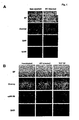
- Fig. 1 demonstrates that Salmonella infection leads to NF- ⁇ B nuclear localization even in non-infected cells.
- HT29 cells were grown on glass coverslips and either mock-infected, left untreated, infected with Salmonella typhimurium, or treated with TNF ⁇ (10ng/ml).
- Panel A HT29 cells were mock-infected or infected at an MOI of 100 with Salmonella typhimurium strain SJW1103G which expresses GFP from the ssaH promoter that is only active inside infected host cells. Cells were photographed using bright field microscopy (BF), and immunoflourescence to detect GFP or DAPI staining as indicated. Images were merged (overlay) to reveal cells that were infected.
- BF bright field microscopy
- Panel B HT29 cells were left untreated, infected with Salmonella typhimurium strain 1103 or treated with TNF ⁇ . NF- ⁇ B p65(RelA) localization under various conditions as indicated was monitored by indirect immunofluorescence. Cells were visualized by bright field microscopy (BF), cell nuclei were stained with DAPI and p65(RelA) was visualized with FITC. DAPI staining was falsely colored red to make visualization of the merge (overlay) easier to distinguish.
- BF bright field microscopy
- DAPI p65(RelA) was visualized with FITC.
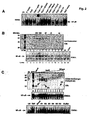
- Fig. 2 demonstrates that a protein factor in Salmonella culture broth leads to NF- ⁇ B activation.
- Panel A Salmomella dublin culture broth concentrated 100-fold was treated as indicated or infectious bacteria, as indicated was used to challenge HT29 cells.
- NF- ⁇ B DNA binding activity was assayed by EMSA from whole cell extracts prepared 45 min after treatment. Authenticity of the NF- ⁇ B DNA:protein complex was determined using p65(RelA)-specific and p50-specific antibody supershifts.
- Panel B Concentrated Salmonella dublin culture broth (IN) was chromatographed by gel permeation on a Superose 12 column.
- Eluted protein fractions were analyzed by fractionation on 10% SDS-PAGE and visualized by Coomassie blue (CB) staining. Molecular weight markers for chromatography and on the gels are indicated. Aliquots of each fraction as indicated was used to stimulate HT29 cells and resultant WCEs were analyzed by EMSA for NF- ⁇ B DNA binding activity.
- Panel C Concentrated Salmonella dublin culture broth (IN) was chromatographed by anion exchange chromatography on POROS HQ matrix. Proteins were eluted with an increasing NaCl gradient as indicated and analyzed on 10% SDS-PAGE and visualized by Coomassie blue (CB) staining.
- Fig. 3 demonstrates that the NF- ⁇ B activating factor in Salmonella culture broth is flagellin, as identified by mass spectrometry.
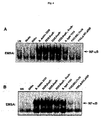
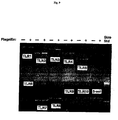
- Fig. 4 demonstrates that flagellin mutants fail to activate NF- ⁇ B.
- Panel A EMSAs assaying for NF- ⁇ B DNA binding activity in WCEs prepared 45 min from non-infected cells (UN) and after direct infection of HT29 cells with wild-type E. coli DH5 ⁇ , wild-type Salmonella dublin or SopE - mutant, SopB - mutant, the SopE - /SopB - double mutant, wild-type Salmonella typhimurium strain 1103, the fliC - mutant (fliC::Tn 10 ), the fliC - /fljB - double mutant as indicated at an MOI of 50.
- Panel B EMSAs assaying for NF- ⁇ B DNA binding activity in WCEs prepared 45 min after challenge of HT29 cells from non-infected cells (UN) or with sterile-filtered concentrated culture broths from wild-type and mutant bacteria as indicated.
- Fig. 5 demonstrates that flagellin is required for activating multiple signaling pathways during Salmonella infection and leads to nuclear localization of NF- ⁇ B.
- Panel A HT29 cells were left untreated, stimulated with TNF ⁇ (10ng/ml) or a cocktail of anisomycin [An] (20 ⁇ g/ml)/PMA (12.5ng/ml) for 15 min, or infected with either wild-type (WT) Salmonella typhimurium strain 1103 or the Salmonella typhimurium double fliC - /fljB - mutant strain 134 as indicated.
- WCE were prepared at the indicated times or at 10 min for TNF-treated cells or 15 min for anisomycin/PMA treated cells and used in EMSAs to analyze NF- ⁇ B DNA binding activity, or in immuno-kinase assays (KA) using anti-IKK or anti-JNK antibodies to measure IKK and JNK kinase activity on their respective substrates GST-I ⁇ B ⁇ 1-54 and GST-cJun 1-79 (as indicated).
- Panel B Immunofluorescence demonstrating that flagellin mutant Salmonella fail to infect HT29 cells and that purified flagellin stimulation of HT29 cells leads to NF- ⁇ B nuclear p65 (RelA) localization as determined by indirect immunofluorescence. Imaging of the treatment indicated HT29 cells grown on coverslips was essentially the same as in Fig. 1A & B . False coloring of the DAPI stain was used to enhance the visualization of both DAPI stained nuclei and p65 nuclear localization.
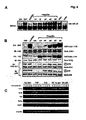
- Fig. 6 demonstrates that purified flagellin activates signaling pathways and proinflammatory gene expression in intestinal epithelial cells mimicking that of a wild-type Salmonella infection.
- HT29 cells were left untreated or treated with TNF ⁇ (10ng/ml) or a cocktail of anisomycin [An] (20 ⁇ g/ml)/PMA (12.5ng/ml) for 10 min, or with flagellin (1 ⁇ g/ml) for the indicated times.
- WCE were prepared and analyzed by EMSA for NF- ⁇ B DNA binding activity, immuno-kinase assays (KA) or immunoblot analysis using phospho-specific antibodies for ERK or p38 to detect activation and with kinase-specific antibodies as described in Fig.
- KA immuno-kinase assays
- Panel A EMSA to detect NF- ⁇ B DNA binding activity.
- Panel B immunoblot and kinase assays to detect IKK, JNK, ERK and p38 kinase activities and protein abundance as in Fig. 5A .
- Panel C semi-quantitative RT-PCR of proinflammatory gene expression of non-treated, wild-type and flagellin double mutant Salmonella typhimurium infected, TNF ⁇ (10ng/ml) or flagellin (1mg/ml) stimulated cells.
- HT29 cells were harvested at the indicated times after the indicated treatments and isolated RNA was used to make first strand cDNA that subsequently used in RT-PCR reactions using gene-specific primers for IL1 ⁇ , IL1 ⁇ , IL-8, TNF ⁇ , MCP1 and ⁇ -actin.
- ⁇ -actin was used as a standard for normalizing expression patterns. Resulting PCR products were fractionated on 2% agarose gels and visualized by eithidium bromide staining.
- Fig 7 demonstrates that flagellin-mediated activation of NF- ⁇ B is MyD88 dependent.
- Infectious wild-type Salmonella dublin MOI of 100
- IL-1 (20ng/ml) purified flagellin (1 ⁇ g/ml) (as indicated)
- sterile-filtered and concentrated 100 kDa filter retentate supernatant (spt) from wild-type Salmonella dublin and SopE - /SopB - double mutant Salmonella dublin strain SE1 SB2 (S2, as indicated) was used to challenge wild-type, MyD88 -/- knockout or TLR2 -/- /TLR4 -/- double knockout MEFs as indicated.
- WCEs were prepared 45 min after treatments and examined by EMSA to analyze NF- ⁇ B DNA binding activity.
- IL-1 (20ng/ml) was used as a positive control to monitor MyD88 function.
- Fig. 8 demonstrates that TLR5 inhibits flagellin-mediated NF- ⁇ B reporter gene activity.
- HT29 cells were transfected in triplicate in 6-well dishes using the indicated DN-TLR mammalian expression vectors or antisense TLR5 (AS TLR5) (2 ⁇ g/well), 2x NF- ⁇ B Luc reporter gene (100ng/well), pRL-TK Renilla luciferase for normalization (50ng/well) adjusted to 4 ⁇ g total DNA/well with empty vector pCDNA3.1 DNA.
- Panel A Fold-induction of 2x NF- ⁇ B Luc reporter gene in non-stimulated cells (light shading) and in TNF ⁇ (10ng/ml) treated cells (dark shading). Lysates were prepared 12h after stimulation.
- Panel B HT29 cells transfected as in Fig 8A were treated with flagellin (1 ⁇ g/ml) and cell lysates were prepared and analyzed as in Fig. 8A . Results of a representative experiment are shown.
- Fig. 9 demonstrates that flagellin stimulation of intestinal epithelial cells leads to activation of a subset of TLR genes.
- HT29 cells were stimulated with flagellin (1mg/ml) and RNA was isolated after 3h using Trizol and used to make first strand cDNA.
- RT-PCR products generated using gene-specific primers for each TLR as indicated are pictured.
- ⁇ -action was used as a standard for normalizing expression patterns.
- Fig. 10 demonstrates that TLR5 is expressed in numerous cell types and has variable responses to flagellin.
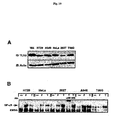
- Panel A whole cell extracts were prepared from non-stimulated T84, HT29, A549, HeLa, 293T and T98G cells and fractionated on a 8% SDS-PAGE gel, proteins were transferred to PVDF membrane and probed with anti-TLR5 antibody for immunoblot analysis (IB). Protein loading was examined by probing with anti-actin antibody.
- Panel B HT29, A549, HeLa, 293T and T98G cells were left untreated (--), treated with flagellin (F) or TNF ⁇ (T) and WCEs were prepared after 45 min and used in EMSA to monitor NF- ⁇ B DNA binding activity. Authenticity of the NF- ⁇ B bandshift was tested with supershift of the complex with p65(RelA)-specific antibody.
- Fig. 11 demonstrates that p53 deficiency accelerated development of GI syndrome in mice.
- Panel A I.P. injection of PFT ⁇ (10 mg/kg) protects C57B1/6J mice (if not indicated otherwise, here and below 6-8 weeks old males were used) from a single 9 Gy dose of gamma radiation and a fractioned cumulative radiation dose 12.5 Gy (5 x 2.5 Gy).
- PFT ⁇ has no effect on survival of mice treated with single 12.5 and 25 Gy doses of IR: (results of representative experiments are shown; Shepherd 4000 Ci Cesium 137 source at a dose rate of 4 Gy per minute was used).
- Panel B Wild-type and p53-null C57B1/6J mice differ in their relative sensitivity to low (10 Gy) and high (15Gy) doses of gamma radiation: wild-type mice were more sensitive to 10 Gy but more resistant to 15 Gy as compared to p53-null mice.
- Panel C Mice treated with 11 Gy of total body gamma irradiation were injected 12h later with 1.5x10 7 bone marrow cells from wild type or p53-null syngeneic C57B1/6J mice. (This dose causes 100% lethality in nonreconstituted controls group of mice).
- Panel D Comparison of dynamics of injury to small intestines of wild-type and p53-null mice at the indicated time points after 15 Gy of gamma radiation indicates accelerated damage in p53-null mice (haematoxylin-eosin stained paraffin sections; magnification x125). 24h panels include images of TUNEL staining if sections of crypts: massive apoptosis is evident in wild type but not in p53-deficient epithelium.
- Fig. 12 demonstrates the dynamics of cell proliferation and survival in small intestine of wild type and p53-null mice.
- Panel A Comparison of proliferation rates in intestines of wild-type and p53 null mice after treatment with IR. (Left) Autoradiographs of whole-body sections (1.7 x magnification) of 4-week-old wild-type and p53 null mice injected intraperitoneally with 14 C-thymidine (10 ⁇ Ci per animal) treated or untreated with 15 Gy of gamma radiation (Westphal et al 1997). Arrows point at intestines.
- Panel C Tracing the number and position of BrdU-labeled cells in small intestine of wild type and p53-null mice during different time points after 15 Gy of gamma radiation. BrdU was injected 30 min. before irradiation and mice were sacrificed at the indicated time points. Accelerated migration from crypts to villi followed by rapid elimination of labeled cells was observed in p53-null mice.
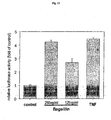
- Fig. 13 demonstrates that recombinant flagellin is capable of NF- ⁇ B activation.
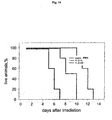
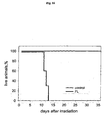
- Fig. 14 shows a representative experiment testing the ability of flagellin to protect mice from radiation.
- C56BL6 mice (6 week old males, 10 animals per group) were injected i.v. with 2.0 ⁇ g (0.1 mg/kg) or 5 ⁇ g (0.25 mg/kg) of flagellin in PBS. Four hours later, mice were irradiated with 15 Gy and mouse survival was monitored daily.
- Fig. 15 shows histological sections (HE stained) of small intestinal epithelium of mice that were treated with 15 Gy of gamma radiation with or without i.v. injection of 0.25 mg/kg of flagellin. Complete destruction of crypts and villi in control mouse contrasts with close to normal morphology of tissue from flagellin-treated animal.
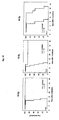
- Fig. 16 shows the effect of flagellin on mouse sensitivity to 10Gy of total body gamma radiation.
- Fig 17 shows the effect of flagellin injected i.v. at indicated times before irradiation on mouse sensitivity to 13Gy (left) and 10Gy (right) of total body gamma radiation.
- Fig 18 shows the effect of flagellin on mouse sensitivity to 10, 13 and 15 Gy of total body gamma radiation.
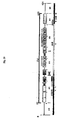
- Fig 19 shows the domain structure of bacterial flagellin.
- All the hydrophobic side-chain atoms are displayed with the Ca backbone.
- Side-chain atoms are color coded: Ala, yellow; Leu, Ile or Val, orange; Phe and Tyr, purple (carbon atoms) and red (oxygen atoms).
- c 'Position and region of various structural features in the amino-acid sequence of flagellin.
- This invention is based on protecting normal cells and tissues from apoptosis caused by stresses including radiation therapy and radiation.
- apoptosis There are two major mechanisms controlling apoptosis in the cell: the p53 pathway (pro-apoptotic) and the NF- ⁇ B pathway (anti-apoptotic). Both pathways are frequently deregulated in tumors: p53 is usually lost, while NF- ⁇ B becomes constitutively active.
- p53 and activation of NF- ⁇ B in normal cells may protect them from death caused by stresses, such as cancer treatment, but would not make tumor cells more resistant to treatment because they have these control mechanisms deregulated. This contradicts the conventional view on p53 and NF- ⁇ B, which are considered as targets for activation and repression, respectively.
- This disclosure relates to inducing NF- ⁇ B activity to protect normal cells from apoptosis.
- normal calls may be protected from apoptosis attributable to cellular stress, which occurs in cancer treatments and hyperthermia; exposure to harmtful doses of radiation, for example, workers in nuclear power plants, the defense industry or radiopharmaceutical production, and soldiers; and cell aging.
- NF- ⁇ B is constitutively active in many tumor cells, the induction of NF- ⁇ B activity may protect normal cells from apoptosis without providing a beneficial effect to tumor cells.
- NF- ⁇ B activity may be restored to normal levels.
- NF- ⁇ B activity may be induced to protect such radiation- and chemotherapy-sensitive tissues as the hematopoietic system (including immune system), the epithelium of the gut, and hair follicles.
- Inducers of NF- ⁇ B activity may also be used for several other applications.
- Pathological consequences and death caused by exposure of mammals to a variety of severe conditions including, but not limited to, radiation, wounding, poisoning, infection, aging, and temperature shock, may result from the activity of normal physiological mechanisms of stress response, such as induction of programmed cell death (apoptosis) or release of bioactive proteins, cytokines.
- Apoptosis normally functions to "clean" tissues from wounded and genetically damaged cells, while cytokines serve to mobilize the defense system of the organism against the pathogen.
- both stress response mechanisms can by themselves act as causes of death.
- lethality from radiation may result from massive p53-mediated apoptosis occurring in hematopoietic, immune and digestive systems.
- Rational pharmacological regulation of NF- ⁇ B may increase survival under conditions of severe stress. Control over these factors may allow control of both inflammatory response and the life-death decision of cells from the injured organs.
- NF- ⁇ B The protective role of NF- ⁇ B is mediated by transcriptional activation of multiple genes coding for: a) anti-apoptotic proteins that block both major apoptotic pathways, b) cytokines and growth factors that induce proliferation and survival of HP and other stem cells, and c) potent ROS-scavenging antioxidant proteins, such as MnSOD (SOD-2).
- SOD-2 potent ROS-scavenging antioxidant proteins
- PAMPs pathogen-associated molecular patterns
- TLRs Toll-like receptors
- TLRs type I membrane proteins, known to work as homo-and heterodimers. Upon ligand binding, TLRs recruit MyD88 protein, an indispensable signaling adaptor for most TLRs.
- the signaling cascade that follows leads to effects including (i) activation of NF- ⁇ B pathway, and (ii) activation of MAPKs, including Jun N-terminal kinease (JNK).
- JNK Jun N-terminal kinease
- the activation of the NF- ⁇ B pathway by Toll-like receptor ligands makes the ligands attractive as potential radioprotectors. Unlike cytokines, many PAMPs have little effect besides activating TLRs and thus are unlikely to produce side effects. Moreover, many PAMPs are present in humans.
- TLRs are expressed in spleen and peripheral blood leukocytes, with more TLR-specific patterns of expression in other lymphoid organs and subsets of leukocytes.
- TLRs are also expressed in other tissues and organs of the body, e.g., TLR1 is expressed ubiquitously, TLR5 is also found in GI epithelium and endothelium, while TLRs 2, 6, 7 and 8 are known to be expressed in lung.
- administer when used to describe the dosage of an agent that induces NF- ⁇ B activity, means a single dose or multiple doses of the agent.
- analog when used in the context of a peptide or polypeptide, means a peptide or polypeptide comprising one or more non-standard amino acids or other structural variations from the conventional set of amino acids.
- the term "antibody” means an antibody of classes IgG, IgM, IgA, IgD or IgE, or fragments or derivatives thereof, including Fab, F(ab') 2 , Fd, and single chain antibodies, diabodies, bispecific antibodies, bifunctional antibodies and derivatives thereof.
- the antibody may be a monoclonal antibody, polyclonaf antibody, affinity purified antibody, or mixtures thereof which exhibits sufficient binding specificity to a desired epitope or a sequence derived therefrom.
- the antibody may also be a chimeric antibody.
- the antibody may be derivatized by the attachment of one or more chemical, peptide, or polypeptide moieties known in the art.
- the antibody may be conjugated with a chemical moiety.
- apoptosis refers to a form of cell death that includes progressive contraction of cell volume with the preservation of the integrity of cytoplasmic organelles; condensation of chromatin (i.e., nuclear condensation), as viewed by light or electron microcopy; and/or DNA cleavage into nucleosome-sized fragments, as determined by centrifuged sedimentation assays.
- Cell death occurs when the membrane integrity of the cell is lost (e.g., membrane blebbing) with engulfment of intact cell fragments ("apoptotic bodies") by phagocytic cells.
- cancer means any condition characterized by resistance to apoptotic stimuli.
- cancer treatment means any treatment for cancer known in the art including, but not limited to, chemotherapy and radiation therapy.
- the term "combination with” when used to describe administration of an agent that induces NF- ⁇ B activity and an additional treatment means that the agent may be administered prior to, together with, or after the additional treatment, or a combination thereof.
- derivative when used in the context of a peptide or polypeptide, means a peptide or polypeptide different other than in primary structure (amino acids and amino acid analogs).
- derivatives may differ by being glycosylated, one form of post-translational modification.
- peptides or polypeptides may exhibit glycosylation patterns due to expression in heterologous systems. If at least one biological activity is retained, then these peptides or polypeptides are derivatives according to the invention.
- fusion peptides or fusion polypeptides having a covalently modified N- or C-terminus PEGylated peptides or polypeptides, peptides or polypeptides associated with lipid moieties, alkylated peptides or polypeptides, peptides or polypeptides linked via an amino acid side-chain functional group to other peptides, polypeptides or chemicals, and additional modifications as would be understood in the art.
- flagellin means flagellin from any source including, but not limited to, any bacterial species.
- the flagellin may be from a species of Salmonella .
- the various fragments, variants, analogs, homologs or derivatives described herein may be 50%, 55%, 60%, 65%, 70%, 75%, 80%, 85%, 90%, 95%, 97%, 98%, or 99% identical to a wild-type flagellin.
- fragment when used in the context of a peptide or polypeptide, means a peptides of from about 8 to about 50 amino acids in length.
- the fragment may be 8, 9, 10, 11, 12, 13, 14, 15, 16, 17, 18, 19, 20, 21, 22, 23, 24, 25, 26, 27, 28, 29, 30, 31, 32, 33, 34, 35, 36, 37, 38, 39, 40, 41, 42, 43, 44, 45, 46, 47, 48, 49 or 50 amino acids in length.
- homolog when used in the context of a peptide or polypeptide, means a peptide or polypeptide sharing a common evolutionary ancestor.
- latent TGF ⁇ means a precursor of TGF ⁇ that is not in an active form.
- a latent TGF ⁇ may be a precursor of TGF ⁇ containing active TGF ⁇ and latency-associated peptide (LAP).
- LAP latency-associated peptide
- a latent TGF ⁇ may also comprise LAP linked to latent TGF ⁇ binding protein.
- a latent TGF ⁇ may also be the large latent complex.
- a latent TGF ⁇ may be a latent TGF ⁇ that is modified so that the rate of conversion to active TGF ⁇ or ability to be converted to TGF ⁇ has been reduced.
- the modified latent TGF ⁇ may be, for example, a TGF ⁇ mutant that prevents or reduces conversion to active TGF ⁇ .
- TGF ⁇ means any isoform of active or latent TGF ⁇ including, but not limited to, TGF ⁇ 1, TGF ⁇ 2, TGF ⁇ 3, TGF ⁇ 4 or TGF ⁇ 5, and combinations thereof. Also specifically contemplated are fragments, variants, analogs, homologs, or derivatives of said TGF ⁇ isoforms, and combinations thereof.
- the various fragments, variants, analogs, homologs or derivatives described herein may be 50%, 55%, 60%, 65%, 70%, 75%, 80%, 85%, 90%, 95%, 97%, 98%, or 99% identical to a TGF ⁇ isoform.
- the term "treat” or “treating” when referring to protection of a mammal from a condition means preventing, suppressing, repressing, or eliminating the condition.
- Preventing the condition involves administering a composition of this invention to a mammal prior to onset of the condition.
- Suppressing the condition involves administering a composition of this invention to a mammal after induction of the condition but before its clinical appearance.
- Repressing the condition involves administering a composition of this invention to a mammal after clinical appearance of the condition such that the condition is reduced or maintained.
- Elimination the condition involves administering a composition of this invention to a mammal after clinical appearance of the condition such that the mammal no longer suffers the condition.
- tumor cell means any cell characterized by resistance to apoptotic stimuli.
- the term "variant”, when used in the context of a peptide or polypeptide, means a peptide or polypeptide that differs in amino acid sequence by the insertion, deletion, or conservative substitution of amino acids, but retain at least one biological activity.
- biological activity includes, but is not limited to, the ability to be bound by a specific antibody.
- a conservative substitution of an amino acid i.e ., replacing an amino acid with a different amino acid of similar properties (e.g ., hydrophilicity, degree and distribution of charged regions) is recognized in the art as typically involving a minor change. These minor changes can be identified, in part, by considering the hydropathic index of amino acids, as understood in the art.
- the hydropathic index of an amino acid is based on a consideration of its hydrophobicity and charge. It is known in the art that amino acids of similar hydropathic indexes can be substituted and still retain protein function. In one aspect, amino acids having hydropathic indexes of ⁇ 2 are substituted.
- the hydrophilicity of amino acids can also be used to reveal substitutions that would result in proteins retaining biological function. A consideration of the hydrophilicity of amino acids in the context of a peptide permits calculation of the greatest local average hydrophilicity of that peptide, a useful measure that has been reported to correlate well with antigenicity and immunogenicity.
- Substitution of amino acids having similar hydrophilicity values can result in peptides retaining biological activity, for example immunogenicity, as is understood in the art.
- substitutions are performed with amino acids having hydrophilicity values within ⁇ 2 of each other. Both the hyrophobicity index and the hydrophilicity value of amino acids are influenced by the particular side chain of that amino acid. Consistent with that observation, amino acid substitutions that are compatible with biological function are understood to depend on the relative similarity of the amino acids, and particularly the side chains of those amino acids, as revealed by the hydrophobicity, hydrophilicity, charge, size, and other properties.
- Disclosed herein is a method of treating a mammal suffering from a constitutively active NF- ⁇ B cancer comprising administering to the mammal a composition comprising a therapeutically effective amount of an agent that induces NF- ⁇ B activity.
- the agent that induces NF- ⁇ B activity may be administered in combination with a cancer treatment.
- the agent may be administered simultaneously or metronomically with other anti-cancer treatments such as chemotherapy and radiation therapy.
- anti-cancer treatments such as chemotherapy and radiation therapy.
- the term “metronomically” as used herein means the administration of the compounds at times different from the chemotherapy and at certain frequency relative to repeat administration and/or the chemotherapy regiment.
- the agent may be administered at any point prior to exposure to the cancer treatment including, but not limited to, about 48 hr, 46 hr, 44 hr, 42 hr, 40 hr, 38 hr, 36 hr, 34 hr, 32 hr, 30 hr, 28 hr, 26 hr, 24 hr, 22 hr, 20 hr, 18 hr, 16 hr, 14 hr, 12 hr,10 hr, 8 hr, 6 hr, 4 hr, 3 hr, 2 hr, or 1 hr prior to exposure.
- the agent may be administered at any point after exposure to the cancer treatment including, but not limited to, about 1 hr, 2 hr, 3 hr, 4 hr, 6 hr, 8 hr, 10 hr, 12 hr, 14 hr, 16 hr, 18 hr, 20 hr, 22 hr, 24 hr, 26 hr, 28 hr, 30 hr, 32 hr, 34 hr, 36 hr, 38 hr, 40 hr, 42 hr, 44 hr, 46 hr, or 48 hr after exposure.
- the cancer treatment may comprise administration of a cytotoxic agent or cytostatic agent, or combination thereof.
- Cytotoxic agents prevent cancer cells from multiplying by: (1) interfering with the cell's ability to replicate DNA and (2) inducing cell death and/or apoptosis in the cancer cells.
- Cytostatic agents act via modulating, interfering or inhibiting the processes of cellular signal transduction which regulate cell proliferation and sometimes at low continuous levels.
- Classes of compounds that may be used as cytotoxic agents include the following: alkylating agents (including, without limitation, nitrogen mustards, ethylenimine derivatives, alkyl sulfonates, nitrosoureas and triazenes): uracil mustard, chlormethine, cyclophosphamide (Cytoxan®), ifosfamide, melphalan, chlorambucil, pipobroman, triethylene-melamine, triethylenethiophosphoramine, busulfan, carmustine, lomustine, streptozocin, dacarbazine, and temozolomide; antimetabolites (including, without limitation, folic acid antagonists, pyrimidine analogs, purine analogs and adenosine deaminase inhibitors): methotrexate, 5-fluorouracil, floxuridine, cytarabine, 6-mercaptopurine, 6-thioguanine, fludarabine phosphate, pen
- proliferative cytotoxic agents are navelbene, CPT-11, anastrazole, letrazole, capecitabine, reloxafine, cyclophosphamide, ifosamide, and droloxafine.
- Microtubule affecting agents interfere with cellular mitosis and are well known in the art for their cytotoxic activity.
- Microtubule affecting agents useful in the invention include, but are not limited to, allocolchicine (NSC 406042), halichondrin B (NSC 609395), colchicine (NSC 757), colchicine derivatives (e.g., NSC 33410), dolastatin 10 (NSC 376128), maytansine (NSC 153858), rhizoxin (NSC 332598), paclitaxel (Taxol®, NSC 125973), Taxol® derivatives (e.g., derivatives (e.g., NSC 608832), thiocolchicine NSC 361792), trityl cysteine (NSC 83265), vinblastine sulfate (NSC 49842), vincristine sulfate (NSC 67574), natural and synthetic epothilones including but not limited to
- cytotoxic agents such as epidophyllotoxin; an antineoplastic enzyme; a topoisomerase inhibitor; procarbazine; mitoxantrone; platinum coordination complexes such as cis-platin and carboplatin; biological response modifiers; growth inhibitors; antihormonal therapeutic agents; leucovorin; tegafur; and hematopoietic growth factors.
- Cytostatic agents that may be used include, but are not limited to, hormones and steroids (including synthetic analogs): 17.alpha.-ethinylestradiol, diethylstilbestrol, testosterone, prednisone, fluoxymesterone, dromostanolone proplonate, testolactone, megestrolacetate, methylprednisolone, methyl-testosterone, prednisolone, triamcinolone, hlorotrianisene, hydroxyprogesterone, amino glutethimide, estramustine, medroxyprogesteroneacetate, leuprolide, flutamide, toremifene, zoladex.
- hormones and steroids including synthetic analogs
- cytostatic agents are antiangiogenics such as matrix metalloproteinase inhibitors, and other VEGF inhibitors, such as anti-VEGF antibodies and small molecules such as ZD6474 and SU6668 are also included.
- VEGF inhibitors such as anti-VEGF antibodies and small molecules such as ZD6474 and SU6668 are also included.
- Anti-Her2 antibodies from Genetech may also be utilized.
- a suitable EGFR inhibitor is EKB-569 (an irreversible inhibitor). Also included are Imolone antibody C225 immunospecific for the EGFR, and src inhibitors.
- cytostatic agent also suitable for use as an cytostatic agent is Casodex® (bicalutamide, Astra Zeneca) which renders androgen-dependent carcinomas non-proliferative.
- Casodex® (bicalutamide, Astra Zeneca) which renders androgen-dependent carcinomas non-proliferative.
- antiestrogen Tamoxifen® which inhibits the proliferation or growth of estrogen dependent breast cancer.
- Inhibitors of the transduction of cellular proliferative signals are cytostatic agents. Representative examples include epidermal growth factor inhibitors, Her-2 inhibitors, MEK-1 kinase inhibitors, MAPK kinase inhibitors, PI3 inhibitors, Src kinase inhibitors, and PDGF inhibitors.
- carcinoma including that of the bladder (including accelerated and metastatic bladder cancer), breast, colon (including colorectal cancer), kidney, liver, lung (including small and non-small cell lung cancer and lung adenocarcinoma), ovary, prostate, tastes, genitourinary tract, lymphatic system, rectum, larynx, pancreas (including exocrine pancreatic carcinoma), esophagus, stomach, gall bladder, cervix, thyroid, and skin (including squamous cell carcinoma); hematopoietic tumors of lymphoid lineage including leukemia, acute lymphocytic leukemia, acute lymphoblastic leukemia, B-cell lymphoma, T-cell lymphoma, Hodgkins lymphoma, non-Hodgkins lymphoma, hairy cell lymphoma, histiocytic lymphoma, and Burkatts lymphoma; hematopoietic tumors of lymphoid lineage including leukemia
- Disclosed herein is a method of treating a mammal suffering from damage to normal tissue attributable to treatment of a constitutively active NF- ⁇ B cancer comprising administering to the mammal a composition comprising a therapeutically effective amount of an agent that induces NF- ⁇ B activity.
- the agent that induces NF- ⁇ B activity may be administered in combination with a cancer treatment described above.
- Disclosed herein is a method of modulating cell aging in a mammal, comprising administering to the mammal a therapeutically effective amount of an agent that induces NF- ⁇ B activity.
- the agent that induces NF- ⁇ B activity may be administered in combination with other treatments.
- the agent may be administered at any point prior to administration of the other treatment including, but not limited to, about 48 hr, 46 hr, 44 hr, 42 hr, 40 hr, 38 hr, 36 hr, 34 hr, 32 hr, 30 hr, 28 hr, 26 hr, 24 hr, 22 hr, 20 hr,18 hr, 16 hr, 14 hr, 12 hr, 10 hr, 8 hr, 6 hr, 4 hr, 3 hr, 2 hr, or 1 hr prior to administration.
- the agent may be administered at any point after administration of the other treatment including, but not limited to, about 1 hr, 2 hr, 3 hr, 4 hr, 6 hr, 8 hr, 10 hr, 12 hr, 14 hr, 16 hr, 18 hr, 20 hr, 22 hr, 24 hr, 26 hr, 28 hr, 30 hr, 32 hr, 34 hr, 36 hr, 38 hr, 40 hr, 42 hr, 44 hr, 46 hr, or 48 hr after administration.
- This disclosure also relates to a method of treating a mammal suffering from damage to normal tissue attributable to stress, comprising administering to the mammal a composition comprising a therapeutically effective amount of an agent that induces NF- ⁇ B activity.
- the agent that induces NF- ⁇ B activity may be administered in combination with other treatments.
- the stress may be attributable to any source including, but not limited to, radiation, wounding, poisoning, infection, and temperature shock.
- composition comprising an inducer of NF- ⁇ B may be administered at any point prior to exposure to the stress including, but not limited to, about 48 hr, 46 hr, 44 hr, 42 hr, 40 hr, 38 hr, 36 hr, 34 hr, 32 hr, 30 hr, 28 hr, 26 hr, 24 hr, 22 hr, 20 hr, 18 hr, 16 hr, 14 hr, 12 hr, 10 hr, 8 hr, 6 hr, 4 hr, 3 hr, 2 hr, or 1 hr prior to exposure.
- composition comprising an inducer of NF- ⁇ B may be administered at any point after exposure to the stress including, but not limited to, about 1 hr, 2 hr, 3 hr, 4 hr, 6 hr, 8 hr, 10 hr, 12 hr, 14 hr, 16 hr, 18 hr, 20 hr, 22 hr, 24 hr, 26 hr, 28 hr, 30 hr, 32 hr, 34 hr, 36 hr, 38 hr, 40 hr, 42 hr, 44 hr, 46 hr, or 48 hr after exposure.
- This invention is related to the protection of cells from the effects of exposure to radiation.
- Injury and death of normal cells from ionizing radiation is a combination of a direct radiation-induced damage to the exposed cells and an active genetically programmed cell reaction to radiation-induced stress resulting in a suicidal death or apoptosis.
- Apoptosis plays a key role in massive cell loss occurring in several radiosensitive organs (i.e., hematopoietic and immune systems, epithelium of digestive tract, etc.), the failure of which determines general radiosensitivity of the organism.
- Exposure to ionizing radiation may be short- or long-term, it may be applied as a single or multiple doses, to the whole body or locally.
- ionizing radiation may involve exposure to a single high dose of whole body irradiation (sometimes followed by a long-term poisoning with radioactive isotopes).
- the same is true (with strict control of the applied dose) for pretreatment of patients for bone marrow transplantation when it is necessary to prepare hematopoietic organs for donor's bone marrow by "cleaning" them from the host blood precursors.
- Cancer treatment may involve multiple doses of local irradiation that greatly exceeds lethal dose if it were applied as a total body irradiation.
- Poisoning or treatment with radioactive isotopes results in a long-term local exposure to radiation of targeted organs (e.g., thyroid gland in the case of inhalation of 125I).
- targeted organs e.g., thyroid gland in the case of inhalation of 125I.
- ionizing radiation differing significantly in the severity of biological effects.
- Radiosensitivity of the organism is determined by pathological alterations developed in several sensitive tissues that include hematopoietic system, reproductive system and different epithelia with high rate of cell turnover.
- Acute pathological outcome of gamma irradiation leading to death is different for different doses and is determined by the failure of curtain organs that define the threshold of organism's sensitivity to each particular dose.
- lethality at lower doses occurs from bone marrow aplasia, while moderate doses kill faster by inducing a gastrointestinal (GI) syndrome.
- GI gastrointestinal
- Organisms that survive a period of acute toxicity of radiation can suffer from long-term remote consequences that include radiation-induced carcinogenesis and fibrosis developing in exposed organs (e.g.; kidney, liver or lungs) months and years after irradiation.
- exposed organs e.g.; kidney, liver or lungs
- Cellular DNA is the major target of IR that causes a variety of types of DNA damage (genotoxic stress) by direct and indirect (free radical-based) mechanisms. All organisms maintain DNA repair system capable of effective recovery of radiation-damaged DNA; errors in DNA repair process may lead to mutations.
- Tumors are generally more sensitive to gamma radiation and can be treated with multiple local doses that cause relatively low damage to normal tissue. Nevertheless, in some instances, damage of normal tissues is a limiting factor in application of gamma radiation for cancer treatment.
- the use of gamma-irradiation during cancer therapy by conventional, three-dimensional conformal or even more focused BeamCath delivery has also dose-limiting toxicities caused by cumulative effect of irradiation and inducing the damage of the stem cells of rapidly renewing normal tissues, such as bone marrow and gastrointestinal (GI) tract.
- GI gastrointestinal
- Hematopoietic syndrome is characterized by loss of hematopoietic cells and their progenitors making it impossible to regenerate blood and lymphoid system. The death usually occurs as a consequence of infection (result of immunosuppression), hemorrhage and/or anemia.
- GI syndrome is caused by massive cell death in the intestinal epithelium, predominantly in the small intestine, followed by disintegration of intestinal wall and death from bacteriemia and sepsis. Hematopoietic syndrome usually prevails at the lower doses of radiation and leads to the more delayed death than GI syndrome.
- radioprotectants were typically antioxidants - both synthetic and natural. More recently, cytokines and growth factors have been added to the list of radioprotectants; the mechanism of their radioprotection is considered to be a result of facilitating effect on regeneration of sensitive tissues. There is no clear functional distinction between both groups of radioprotectants, however, since some cytokines induce the expression of the cellular antioxidant proteins, such as manganese superoxide dismutase (MnSOD) and metallothionein.
- MnSOD manganese superoxide dismutase
- metallothionein metallothionein
- DMF dose modification factor
- inducers of NF- ⁇ B possess strong pro-survival activity at the cellular level and on the organism as a whole.
- inducers of NF- ⁇ B inhibit both gastrointestinal and hematopoietic syndromes, which are the major causes of death from acute radiation exposure.
- inducers of NF- ⁇ B may be used to treat the effects of natural radiation events and nuclear accidents.
- inducers of NF- ⁇ B acts through mechanism different from all presently known radioprotectants, they can be used in combination with other radioprotectants, thereby, dramatically increasing the scale of protection from ionizing radiation.
- anti-apoptotic agents may not reduce primary radiation-mediated damage but may act against secondary events involving active cell reaction on primary damage, therefore complementing the existing lines of defense.
- Pifithrin-alpha a pharmacological inhibitor of p53 (a key mediator of radiation response in mammalian cells)
- the activity of p53 inhibitors is limited to protection of the hematopoietic system and has no protective effect in digestive tract (gastrointestinal syndrome), therefore, reducing therapeutic value of these compounds.
- Auti-apoptotic pharmaceuticals with broader range of activity are urgent needed.
- Inducers of NF- ⁇ B may be used as a radioprotective agent to extend the range of tolerable radiation doses by increasing radioresistance of human organism beyond the levels achievable by currently available measures (shielding and application of existing bioprotective agents) and drastically increase the chances of crew survival in case of onboard nuclear accidents or large-scale sonar particle events. With an approximate DMF (30-day survival) greater than 1.5, the NF- ⁇ B inducer flagellin is more effective than any currently reported natural compound.
- Inducers of NF- ⁇ B are also useful for treating irreplaceable cell loss caused by low-dose irradiation, for example, in the central nervous system and reproductive organs. Inducers of NF- ⁇ B may also be used during cancer chemotherapy to treat the side effects associated with chemotherapy, including alopecia.
- a mammal may be treated for exposure to radiation, by administering to the mammal a composition comprising a therapeutically effective amount of a composition comprising an inducer of NF- ⁇ B,
- the composition comprising an inducer of NF- ⁇ B may be administered in combination with one or more radioprotectants.
- the one or more radioprotectants may be any agent that treats the effects of radiation exposure including, but not limited to, antioxidants, free radical scavengers and cytokines.
- Inducers of NF- ⁇ B may inhibit radiation-induced programmed cell death in response to damage in DNA and other cellular structures; however, inducers of NF- ⁇ B may not deal with damage at the cellular and may not prevent mutations.
- Free radicals and reactive oxygen species (ROS) are the major cause of mutations and other intracellular damage.
- Antioxidants and free radical scavengers are effective at preventing damage by free radicals.
- the combination of an inducer of NF- ⁇ B and an antioxidant or free radical scavenger may result in less extensive injury, higher survival, and improved health for mammal exposed to radiation.
- Antioxidants and free radical scavengers that may be used in the practice of the invention include, but are not limited to, thiols, such as cysteine, cysteamine, glutathione and bilirubin; amifostine (WR-2721); vitamin A; vitamin C; vitamin E; and flavonoids such as Indian holy basil (Ocimum sanctum), orientin and vicenin.
- Inducers of NF- ⁇ B may also be administered in combination with a number of cytokines and growth factors that confer radioprotection by replenishing and/or protecting the radiosensitive stem cell populations. Radioprotection with minimal side effects may be achieved by the use of stem cell factor (SCF, c-kit ligand), Flt-3 ligand, and interleukin-1 fragment IL-1b-rd. Protection may be achieved through induction of proliferation of stem cells (all mentioned cytokines), and prevention of their apoptosis (SCF). The treatment allows accumulation of leukocytes and their precursors prior to irradiation thus enabling quicker reconstitution of the immune system after irradiation.
- SCF stem cell factor
- c-kit ligand c-kit ligand
- Flt-3 ligand Flt-3 ligand
- interleukin-1 fragment IL-1b-rd interleukin-1 fragment IL-1b-rd. Protection may be achieved through induction of proliferation of stem cells (all mentioned cytok
- 5-AED (5-androstenediol) is a steroid that stimulates the expression of cytokines and increases resistance to bacterial and viral infections.
- Synthetic compounds, such as ammonium tri-chloro(dioxoethylene-O,O'-) tellurate (AS-101) may also be used to induce secretion of numerous cytokines and for combination with inducers of NF- ⁇ B.
- Keratinocyte growth factor promotes proliferation and differentiation in the intestinal mucosa, and increases the post-irradiation cell survival in the intestinal crypts.
- Hematopoietic cytokine and radioprotectant SCF may also increase intestinal stem cell survival and associated short-term organism survival.
- Inducers of NF- ⁇ B may offer protection against both gastrointestinal (GI) and hematopoietic syndromes. Since mice exposed to 15 Gy of whole-body lethal irradiation died mostly from GI syndrome, a composition comprising an inducer of NF- ⁇ B and one or more inhibitors of GI syndrome may be more effective. Inhibitors of GI syndrome that may be used in the practice of the invention include, but are not limited to, cytokines such as SCF and KGF.
- composition comprising an inducer of NF- ⁇ B may be administered at any point prior to exposure to radiation including, but not limited to, about 48 hr, 46 hr, 44 hr, 42 hr, 40 hr, 38 hr, 36 hr, 34 hr, 32 hr, 30 hr, 28 hr, 26 hr, 24 hr, 22 hr, 20 hr, 18 hr, 16 hr, 14 hr, 12 hr, 10 hr, 8 hr, 6 hr, 4 hr, 3 hr, 2 hr, or 1 hr prior to exposure.
- composition comprising an inducer of NF- ⁇ B may be administered at any point after exposure to radiation including, but not limited to, about 1 hr, 2 hr, 3 hr, 4 hr, 6 hr, 8 hr, 10 hr, 12 hr, 14 hr, 16 hr, 18 hr, 20 hr, 22 hr, 24 hr, 26 hr, 28 hr, 30 hr, 32 hr, 34 hr, 36 hr, 38 hr, 40 hr, 42 hr, 44 hr, 46 hr, or 48 hr after exposure to radiation.
- the agent may be an artificially synthesized compound or a naturally occurring compound.
- the agent may be a low molecular weight compound, polypeptide or peptide, or a fragment, analog, homolog, variant or derivative thereof.
- the agent may also be an NF- ⁇ B inducing cytokine including, but not limited to, IL2, IL6, TNF and TGF ⁇ .
- the agent may also be a prostaglandin.
- the agent may also be a growth factor including, but not limited to, KGF and PDGF.
- the agent may also be an antibody that induces NF- ⁇ B activity.
- the agent may be flagellin, which may be from a bacteria including, but not limited to, a species of Salmonella, such as S. typhimurium. As shown in the Examples below, flagellin possesses strong pro-survival activity at the cellular level and on the organism as a whole.
- a fragment, variant, analog, homolog, or derivative of an inducer of NF- ⁇ B, such as flagellin, with beneficial properties may be obtained by rational-based design based on the domain structure of flagellin.
- the domain structure of Salmonella flagellin is described in the literature ( Fig. 19 ).
- Flagellin has conserved domains (D1 and D2) at the N terminus and C terminus and a middle hypervariable domain (D3) (Samatey, et at 2001, Eaves-Pyles T, et al 2001a).
- results with a recombinant protein containing the amino D1 and D2 and carboxyl D1 and D2 separated by an Escherichia coli hinge indicate that D1 and D2 are bioactive when coupled to an ECH element.
- This chimera but not the hinge alone, induced I ⁇ B ⁇ degradation, NF- ⁇ B activation, and NO and IL-8 production in two intestinal epithelial cell lines.
- the non-conserved D3 domain is on the surface of the flagellar filament and contains the major antigenic epitopes.
- the potent proinflammatory activity of flagellin may reside in the highly conserved N and C D1 and D2 regions.
- flagellin The properties of flagellin suggest that additional modulators of NF- ⁇ B may be found in parasites.
- parasites There are a number of parasites that depend on the repression of apoptosis since they cannot survive without the cells of the host. These organisms may have adapted for effective persistence in the host organism by secreting anti-apoptotic factors. Like advanced tumors, these organisms secrete factors may be capable of increasing their own survival and resolving their conflict with the stress response defensive mechanism of the host.
- Anti-apoptotic factors from parasitic or symbiotic organisms have passed through millions of years of adaptation to minimize harm on the host organism that would affect viability. As a result, these factors may require little, if any, additional modifications and may be used directly as they are or with minimal modifications.
- the factors may be useful to treat stress-mediated apoptosis, such as side effects associated with chemo- and radiation therapy.
- the candidate modulators may be from parasites of humans or non-human primates.
- the parasites are preferably extracellular parasites of the host.
- the parasites may also be symbionts.
- Parasites from which modulators may be isolated include, but are not limited to, Mycoplasma, Chlamydia and Salmonella. These modulators may be identified using the screening methods described herein, as well as by biochemical and genetic selection approaches, in vitro testing, cell death protecting agents, and in vivo.
- composition comprising a therapeutically effective amount of an inducer of NF- ⁇ B.
- the composition may be a pharmaceutical composition, which may be produced using methods well known in the art, As described above, the composition comprising an inducer of NT- ⁇ B may be administered to a mammal for the treatment of conditions associated with apoptosis including, but not limited to, exposure to radiation, side effect from cancer treatments, stress and cell aging.
- the composition may also comprise additional agents including, but not limited to, a radioprotectant or a chemotherapeutic drug.
- compositions for use according to this invention may be administered in any mannet including, but not limited to, orally, parenterally, sublingually, transdermally, rectally, transmucosally, topically, via inhalation, via buccal administration, or combinations thereof.
- Parenteral administration includes, but is not limited to, intravenous, intraarterial, intraperitoneal, subcutaneous, intramuscular, intrathecal, and intraarticular.
- the composition may be administered as a suitably acceptable formulation in accordance with normal veterinary practice. The veterinarian can readily determine the dosing regimen and route of administration that is most appropriate for a particular animal.
- compositions for use according to this invention may be in the form of tablets or lozenges formulated in a conventional manner.
- tablets and capsules for oral administration may contain conventional excipients including, but not limited to, binding agents, fillers, lubricants, disintegrants and wetting agents.
- Binding agents include, but are not limited to, syrup, accacia, gelatin, sorbitol, tragacanth, mucilage of starch and polyvinylpyrrolidone.
- Fillers include, but are not limited to, lactose, sugar, microcrystalline cellulose, maizestarch, calcium phosphato, and sorbitol.
- Lubricants include, but are not limited to, magnesium stearate, stearic acid, talc, polyethylene glycol, and silica.
- Disintegrants include, but are not limited to, potato starch and sodium starch glycollate.
- Wetting agents include, but are not limited to, sodium lauryl sulfate). Tablets may be coated according to methods well known in the art,
- compositions for use according to this invention may also be liquid formulations including, but not limited to, aqueous or oily suspensions, solutions, emulsions, syrups, and elixirs.
- the compositions may also be formulated as a dry product for constitution with water or other suitable vehicle before use.
- Such liquid preparations may contain additives including, but not limited to, suspending agents, emulsifying agents, nonaqueous vehicles and preservatives.
- Suspending agent include, but are not limited to, sorbitol syrup, methyl cellulose, glucose/sugar syrup, gelatin, hydroxyethylcellulose, carboxymethyl cellulose, aluminum stearate gel, and hydrogenated edible fats.
- Emulsifying agents include, but are not limited to, lecithin, sorbitan monooleate, and acacia.
- Nonaqueous vehicles include, but are not limited to, edible oils, almond oil, fractionated coconut oil, oily esters, propylene glycol, and ethyl alcohol.
- Preservatives include, but are not limited to, methyl or propyl p-hydroxybenzoate and sorbic acid.
- compositions for use according to this invention may also be formulated as suppositories, which may contain suppository bases including, but not limited to, cocoa butter or glycerides.
- Compositions for use according to this invention may also be formulated tor inhalation, which may be in a form including, but not limited to, a solution, suspension, or emulsion that may be administered as a dry powder or in the form of an aerosol using a propellant, such as dichlorodifluoromethane or trichlorofluoromethane.
- Compositions for use according to this invention may also be formulated transdermal formulations comprising aqueous or nonaqueous vehicles including, but not limited to, creams, ointments, lotions, pastes, medicated plaster, patch, or membrane.
- compositions for use according to this invention may also be formulated for parenteral administration including, but not limited to, by injection or continuous infusion.
- Formulations for injection may be in the form of suspensions, solutions, or emulsions in oily or aqueous vehicles, and may contain formulation agents including, but not limited to, suspending, stabilizing, and dispersing agents.
- the composition may also be provided in a powder form for reconstitution with a suitable vehicle including, but not limited to, sterile, pyrogen-free water.
- compositions for use according to this invention may also be formulated as a depot preparation, which may be administered by implantation or by intramuscular injection.
- the compositions may be formulated with suitable polymeric or hydrophobic materials (as an emulsion in an acceptable oil, for example), ion exchange resins, or as sparingly soluble derivatives (as a sparingly soluble salt, for example).
- a therapeutically effective amount of the agent required for use in therapy varies with the nature of the condition being treated, the length of time that induction of NF- ⁇ B activity is desired, and the age and the condition of the patient, and is ultimately determined by the attendant physician.
- doses employed for adult human treatment typically are in the range of 0.001 mg/kg to about 200 mg/kg per day.
- the dose may be about 1 ⁇ g/kg to about 100 ⁇ g/kg per day.
- the desired dose may be conveniently administered in a single dose, or as multiple doses administered at appropriate intervals, for example as two, three, four or more subdoses per day. Multiple doses often are desired, or required, because NF- ⁇ B activity in normal cells may be decreased once the agent is no longer administered.
- the dosage of an inducer of NF- ⁇ B may be at any dosage including, but not limited to, about 1 ⁇ g/kg, 25 ⁇ g/kg, 50 ⁇ g/kg, 75 ⁇ g/kg, 100 ⁇ g/kg, 125 ⁇ g/kg, 150 ⁇ g/kg, 175 ⁇ g/kg, 200 ⁇ g/kg, 225 ⁇ g/kg, 250 ⁇ g/kg, 275 ⁇ g/kg, 300 ⁇ g/kg, 325 ⁇ g/kg, 350 ⁇ g/kg, 375 ⁇ g/kg, 400 ⁇ g/kg, 425 ⁇ g/kg, 450 ⁇ g/kg, 475 ⁇ g/kg, 500 ⁇ g/kg, 525 ⁇ g/kg, 550 ⁇ g/kg, 575 ⁇ g/kg, 600 ⁇ g/kg, 625 ⁇ g/kg, 650 ⁇ g/kg, 675 ⁇ g/kg, 700 ⁇ g/kg, 725 ⁇ g/kg, 750
- An agent that induces NF- ⁇ B activity may be identified by a method comprising adding a suspected inducer of NF- ⁇ B activity to an NF- ⁇ B activated expression system, comparing the level of NF- ⁇ B activated expression to a control, whereby an inducer of NF- ⁇ B activity is identified by the ability to increase the level of NF- ⁇ B activated expression system.
- Candidate agents may be present within a library (i.e., a collection of compounds). Such agents may, for example, be encoded by DNA molecules within an expression library. Candidate agent be present in conditioned media or in cell extracts. Other such agents include compounds known in the art as "small molecules," which have molecular weights less than 10 5 daltons, preferably less than 10 4 daltons and still more preferably less than 10 3 daltons. Such candidate agents may be provided as members of a combinatorial library, which includes synthetic agents (e.g., peptides) prepared according to multiple predetermined chemical reactions. Those having ordinary skill in the art will appreciate that a diverse assortment of such libraries may be prepared according to established procedures, and members of a library of candidate agents can be simultaneously or sequentially screened as described herein.
- the screening methods may be performed in a variety of formats, including in vitro, cell-based and in vivo assays. Any cells may be used with cell-based assays. Preferably, cells include mammalian cells, more preferably human and non-human primate cells. Cell-base screening may be performed using genetically modified tumor cells expressing surrogate markers for activation of NF- ⁇ B. Such markers include, but are not limited to, bacterial beta-galactosidase, luciferase and enhanced green fluorescent protein (EGFP). The amount of expression of the surrogate marker may be measured using techniques standard in the art including, but not limited to, colorimetery, luminometery and fluorimetery.
- markers include, but are not limited to, bacterial beta-galactosidase, luciferase and enhanced green fluorescent protein (EGFP).
- EGFP enhanced green fluorescent protein
- the amount of expression of the surrogate marker may be measured using techniques standard in the art including, but not limited to, colorimetery,
- the conditions under which a suspected modulator is added to a cell are conditions in which the cell can undergo apoptosis or signaling if essentially no other regulatory compounds are present that would interfere with apoptosis or signaling.
- Effective conditions include, but are not limited to, appropriate medium, temperature, pH and oxygen conditions that permit cell growth.
- An appropriate medium is typically a solid or liquid medium comprising growth factors and assimilable carbon, nitrogen and phosphate sources, as well as appropriate salts, minerals, metals and other nutrients, such as vitamins, and includes an effective medium in which the cell can be cultured such that the cell can exhibit apoptosis or signaling.
- the media may comprise Dulbecco's modified Eagle's medium containing 10% fetal calf serum.
- Cells may be cultured in a variety of containers including, but not limited to tissue culture flasks, test tubes, microtiter dishes, and petri plates, Culturing is carried out at a temperature, pH and carbon dioxide content appropriate for the cell. Such culturing conditions are also within the skill in the art.
- Methods for adding a suspected modulator to the cell include electroporation, microinjection, cellular expression (i.e., using an expression system including naked nucleic acid molecules, recombinant virus, retrovirus expression vectors and adenovirus expression), use of ion pairing agents and use of detergents for cell permeabilization.
- IR ionizing radiation
- mice die 12-20 days later, primarily from lethal bone marrow depletion-hematopoietic (HP) syndrome.
- HP bone marrow depletion-hematopoietic
- mice can be rescued from lethality by bone marrow transplantation.
- Animals that received >15 Gy die between 7-12 days after treatment (before hematopoietic syndrome could kill them) from complications of damage to the small intestine-gastrointestinal (GI) syndrome (Gudkov & Komarova 2003).
- GI small intestine-gastrointestinal
- p53 as a factor sensitizing tissues to genotoxic stress was further strengthened by demonstrating the p53 dependence of hair loss (alopecia) occurring as a result of experimental chemotherapy or radiation (Botchkarev et al 2000). Hence, based on previous observations, one could expect that p53 continues to play an important role in development of lethal GI syndrome after higher doses of IR. Surprisingly, p53-deficiency sensitizes mice to higher doses of IR causing lethal gastro-intestinal syndrome ( Fig. 11 ). Continuous cell proliferation in the crypts of p53-deficient epithelium after IR correlates with accelerated death of damaged cells of crypt and rapid destruction of villi.
- p53 prolongs survival by inducing growth arrest in the crypts of small intestine thereby preserving integrity of the guts ( Fig. 12 ).
- proapoptotic function of p53 promotes hematopoietic syndrome while its growth arrest function delays development of gastro-intestinal syndrome.
- Salmonella infection leads to potent IKK and NF- ⁇ B activation and activation of the proinflammatory gene program (Elewaut et al 1999).
- Previous studies suggest that about 30-40% of intestinal epithelial cells are infected during a typical Salmonella infection in cultured intestinal epithelial cells (Valdivia et al 1996).
- HT29 cells were either mock-infected or infected at a MOI of 50 for one hour with wild-type S. typhimurium that had been transformed with the plasmid pFM10.1 that encodes green fluorescent protein (GFP) under the control of the Salmonella ssaH promoter and only functions once the bacteria has invaded the host cell (Valdivia et al. 1997).
- GFP green fluorescent protein
- Cells that were invaded by Salmonella were detected by direct fluorescence microscopy of GFP expression.
- p65(RelA) localization was monitored by indirect immunoflourescence of rabbit anti-p65 antibody detected with FITC-conjugated donkey anti-rabbit antibody.
- DAPI was used to stain nuclei.
- Fig. 1A GFP expression occurs in about thirty to forty percent of the cells.
- P65 (RelA) was localized to the cytoplasm in non-treated cells
- p65 (RelA) was localized to the nucleus in Salmonella infected cells or in TNF ⁇ treated cells ( Fig. 1B ).
- Flagellin Activates NF- ⁇ B
- the native sterile-filtered concentrated broth was subsequently treated with DNase, RNase, proteinase K or crudely size fractionated on 100 kDa centricon filters.
- the variously treated broths were then used to challenge HT29 intestinal epithelial cells and WCEs were prepared after forty-five minutes and NF- ⁇ B DNA binding activity was analyzed by EMSA ( Fig 2A ).
- EMSA Fig 2A
- NF- ⁇ B inducing activity sterile-filtered concentrated broth culture was fractionated by Superose 12 gel permeation chromatography ( Fig. 2B ) and by anion exchange chromatography ( Fig. 2C ). Aliquots of chromatography fractions were assayed for their ability to activate NF- ⁇ B in HT29 cells and analyzed by EMSA. As can be seen from the Coomassie blue stained gel ( Fig. 2B , top panel), increased NF- ⁇ B DNA binding activity ( Fig. 2B , lower panel lanes 4-6) corresponded to the increased abundance of an approximately 55 kDa protein.
- Fig. 2C Anion exchange chromatography on POROS HQ matrix and elution of bound proteins with an increasing salt gradient as indicated ( FIG. 2C ) demonstrated that NF- ⁇ B DNA binding-inducing activity corresponded to chromatographic fractions containing an increased abundance of the 55 kDa protein ( FIG. 2C top panel, and data not shown). Eluted fractions observed in Fig. 2C were concentrated and fractionated on preparative 12% SDS-PAGE gels and bands corresponding to B1-B6 were cut from the gels and the proteins eluted, precipitated, renatured, and used to stimulate HT29 cells.
- Proteins corresponding to protein bands B1-B6 and blank areas of the gel were further processed for peptide sequencing. Trypsin digestion of the protein corresponding to B2 and analysis by electrospray ion trap LC/MS identified the amino acid sequence of twenty-one peptides. Flagellin (seventy-five percent coverage by the twenty-one peptides) was unambiguously identified as the protein consistent with inducing NF- ⁇ B DNA binding activity ( Fig. 3 ).
- SopE is a pathogenic Salmonella bacteriophage encoded protein that is injected into the host cell and acts as an exchange factor for the small Rho GTPases Rac1 and CdC42 initiating cytoskeleton rearrangements and eventual activation of the MAPK, SAPK and NF- ⁇ B pathways (7, 15), while SopB is a Salmonella protein that functions as an inositol phosphate phosphatase and participates in cytoskeletal rearrangements and stimulates host cell chloride secretion (44).
- Bacteria and culture broths were used to challenge HT29 intestinal epithelial cells and WCE extracts were prepared after forty-five minutes and analyzed for NF- ⁇ B DNA binding activity by EMSA.
- Salmonella strains could activate NF- ⁇ B while Salmonella strains failing to produce flagellin (fliC and fliC - /fljB - mutants as indicated) also failed to activate NF- ⁇ B ( Fig. 4A & B ).
- E. Coli DH5 ⁇ is non-flagellated and does not produce flagellin failed to activate NF- ⁇ B.
- S. dublin direct infections always activated NF- ⁇ B to a greater extent than S. typhimurium as observed in Fig.
- flagellin appears required for activation of the NF- ⁇ B pathway upon direct inflection of intestinal epithelial cells it appeared possible that flagellin may also be the major determinant of other major mitogenic and stress activated signaling pathways activated upon pathogenic Salmonella infection of intestinal epithelial cells: Direct Salmonella infection of intestinal epithelial cells results in JNK activation (8) and also the activation of NF- ⁇ B via IKK (3).
- Flagellin Triggers Activation Of The Mitogen Activated Protein Kinase, Stress Activated Protein Kinase And IKK Signaling Pathways
- Intestinal epithelial cells act as sentinels for invasion of luminal surfaces and orchestrate the attraction of effector immune cells to the area by production of chemokine genes like IL-8 and macrophage chemoattractant protein 1 (MCP1) proinflammatory cytokine genes such as TNF ⁇ , IL-1 and IL-6 (1, 4-6). Expression of these genes primarily depends upon the action of transcription factors that are activated in response to the transmission of signals via the MAPK, SAPK and IKK signaling pathways.
- chemokine genes like IL-8 and macrophage chemoattractant protein 1 (MCP1) proinflammatory cytokine genes such as TNF ⁇ , IL-1 and IL-6 (1, 4-6).
- MCP1 macrophage chemoattractant protein 1
- NF- ⁇ B is considered a central regulator/activator of the proinflammatory gene program
- NF- ⁇ B is considered a central regulator/activator of the proinflammatory gene program
- Infection of HT29 cells with wild-type S. typhimurium resulted in activation of MAPKs ERK1&2, the SAPKs p38 and JNK and IKK ( Fig.
- the f]iC - /fljB - double mutant Salmonella failed to invade HT29 cells compared to the wild-type Salmonella strains as determined by gentamycin protection/invasion assay.
- the flagellin fliC - /fljB - double mutant displayed a four orders of magnitude difference in its ability to invade HT29 cells.
- strain 134 we infected HT29 cells with either wild-type Salmonella or the fliC - /fljB - double mutant Salmonella (strain 134), both strains were transformed with the plasmid pFM10.1 that encodes GFP under the control of the Salmonella ssaH promoter and only functions once the bacteria has invaded the host cell (10, 36).
- the wild-type Salmonella clearly was able to infect HT29 cells (GFP, Fig. 5B ) while the flagellin mutant bacteria failed to invade HT29 cells as evidenced by the lack of GFP expression ( Fig. 5B ).
- GFP GFP
- Fig. 5B GFP expression
- Fig. 6A Purified flagellin (0.5 ⁇ g/ml) potently activated NF- ⁇ B in HT29 cells similar to that observed for TNF (10ng/ml) treatment of HT29 cells in a time dependent manner ( Fig. 6A ) when WCE were prepared at the various times as indicated after exposure and assayed for NF- ⁇ B DNA binding activity in EMSAs. Analysis of the MAPK, SAPK and IKK signaling pathways ( Fig.
- HT29 cells were left untreated, stimulated with TNF ⁇ (10ng/ml), or stimulated with flagellin (0.5ug/ml), or infected with wild-type Salmonella typhimurium or the Salmonella fliC/fljB double mutant (at MOI of 50).
- HT29 cells were harvested in ice-cold PBS and the cell pellets lysed in Trizol and RNA was purified and used to prepare first-strand cDNA (see Experimental Procedures). Aliquots of the cDNA were used in semi-quantitative RT-PCR reactions using IL1 ⁇ , IL-1 ⁇ , IL-8, TNF ⁇ , MCP1 and ⁇ -actin gene specific primers (sequences available upon request) and the products were fractionated on ethidium bromide containing 1.2% agarose gels. Expression of the known NF- ⁇ B target genes IL-1 ⁇ , IL-8, TNF ⁇ and MCP1 was increased in response to TNF ⁇ or purified flagellin exposure ( Fig.
- Flagellin Activates NF- ⁇ B DNA Binding In An MyD88-Dependent Manner.
- flagellin was capable of activating the requisite signaling pathways consistent with proinflammatory gene activation and this activity was pronounced of the action of a cytokine like TNF ⁇ that activates all cells on which a functional cell surface receptor for it is present (see p65 [RelA] nuclear localization in Fig. 1 and Fig. 5C) we decided to examine the potential of the Toll-like receptors, known pathogen pattern recognition receptors, to activate the NF- ⁇ B pathway in response to flagellin exposure. To test this hypothesis we examined the effect that a dominant-negative MyD88 (aa 152-296) (47) expressing adenovirus had on flagellin-mediated NF- ⁇ B activation in HT29 cells.
- MyD88 is an adapter protein utilized by the IL-1 receptor and all of the known TLRs, which share homology to IL-1 through their cytoplasmic signaling domain and is required for immediate activation of the NF- ⁇ B pathway (48, 49).
- Expression of DN-MyD88 in HT29 cells blocked the activation of NF- ⁇ B DNA binding activity assayed by EMSA analysis in response to IL-1 or flagellin exposure, consistent with the action of a TLR-mediated activation of NF- ⁇ B.
- MyD88 -/- and TLR2 -1- /TLR4 -/- MEFs (a gift of S. Akira, Univ.
- NF- ⁇ B was potently activated in wild-type MEFs by exposure to purified flagellin (0.5 ⁇ g/ml) and therefore eliminated the possibility that LPS played a role in NF- ⁇ B activation in these experiments.
- the exclusion of LPS as a major contributor to NF- ⁇ B activation is also provided by the potent activation of the TLR2/4 double deficient MEFs (lanes 16 & 17).
- TLRs 2 and 4 respond to bacterial lipopeptides, peptidoglycans, certain LPSs and gram negative LPS respectively (50-52).
- IL-1 stimulation verified the functional requirement of MyD88 in transmission of IL-1 and flagellin-mediated signals.
- TLRs in flagellin recognition we assayed for the ability of overexpressed TLRs to activate NF- ⁇ B in cells that normally respond poorly to flagellin exposure. Choosing cells that responded slightly to purified flagellin ensured that the signaling components and adapters that flagellin uses were present and functional and that the limiting factor was likely only to be the receptor that responds to flagellin.
- HeLa cells and HEK293T cells activated NF- ⁇ B DNA binding activity in response to IL-1 stimulation but poorly to flagellin exposure and we chose HEK293T cells to use further because of their greater transfection efficiency.
- Amino-terminus FLAG epitope-tagged TLRs 1-9 (kind gifts of R.
- TLR5 was the only TLR whose expression resulted in a noticeable response to flagellin challenge of the cells (Table 1).
- TLR5 being the TLR through which flagellin activated NF- ⁇ B
- dominant-negative signaling mutations by deletion of the carboxyl portion of each TLR to a conserved tryptophan in the TIR domain.
- a similar mutation in the IL-1 receptor abrogates its ability to lead to NF- ⁇ B activation (54, 55).
- Each DN-TLR along with a reverse cloned TLR5 (AS-TLR5) was cloned into the mammalian expression vector pCDNA3.1 (Invitrogen). All mutant proteins were expressed well.
- Each DN-TLR mammalian expression vector and empty expression vector along with 2x NF- ⁇ B Luc was transfected as previously described (3) into HT29 cells which respond very well to flagellin.
- the transfected cells were left untreated, stimulated with TNF ⁇ (10 ng/ml) or with purified flagellin (0.5 ⁇ g/ml). Reporter gene expression was observed not to be affected by DN-TLR expression in response to TNF ⁇ stimulation of transfected cells ( Fig. 8A ); however, only expression of either the DN-TLR5 or an antisense TLR5 construct resulted in a nearly fifty percent and twenty-five percent inhibition of flagellin-mediated reporter gene activation respectively ( Fig.
- DN-TLR2 While DN-TLR2 also was found to mildly inhibit flagellin-mediated reporter expression. These results imply that TLR5 takes part in cell surface recognition of flagellin and initiates the signaling pathway leading to NF- ⁇ B activation. The effect of DN-TLR2 on NF- ⁇ B-dependent reporter gene activation may be non-specific since its expression also inhibited TNF ⁇ -mediated reporter activation as compared to the other DN-TLRs. DN-TLR2 may also compete for an unknown adapter protein that both TLR2 and TLR5 might share In any event, TLR2 and TLR4 were shown by the results presented in Fig. 7 not to be required for flagellin-mediated activation of NF- ⁇ B.
- TLR genes Stimulation of intestinal epithelial cells with S. typhimurium or with purified flagellin led to activation of the proinflammatory gene program ( Fig. 6C ).
- HT29 cells were treated with purified flagellin (0.5 ⁇ g/ml) and total RNA was isolated from non-treated and treated cells three hours after stimulation and used to make first-strand cDNA.
- Semi-quantitative RT-PCR using gene-specific primers for each of the TLRs and first-strand cDNA prepared from non-stimulated or flagellin stimulated cells was used to generate DNA products that were fractionated on ethidium bromide containing 1.2% agarose gels.
- TLRs 2, 3 and 7 were increased in expression after flagellin stimulation ( Fig. 9 ). The expression pattern of the other TLRs remained unchanged, ⁇ -actin expression served as an internal abundance control.
- TLR5 is expressed in cells that don't respond well to flagellin. This study and others (22, 33) have identified TLR5 as the likely TLR through which flagellin activates NF- ⁇ B. Previous reports made no determination on the presence or abundance of TLR5 in the cells that they used to ascertain its function (22, 33). We wished to determine if TLR5 protein abundance was absent or greatly decreased in cells that failed to respond or responded poorly to challenge by flagellin. TLR5 abundance in a number of cell lines was examined by immunoblot analysis using a TLR5-specific antibody and compared with the ability of purified flagellin to induce NF- ⁇ B DNA binding activity of WCEs prepared from them.
- Intestinal epithelial cell lines T84 and HT29 were used as was the lung adenocarcinoma cell line A549, the human cervical adenocarcinoma cell line HeLa, the human embryonic kidney cell line expressing large T antigen HEK293T, and the glioblastoma cell line T98G.
- TLR5 protein was detected in all cell lines examined by immunoblot with TLR5-specific antibody ( Fig. 10A ).
- T84 cells exhibited the highest abundance while expression levels of the other cell lines were similar and appeared not to differ by more than two-fold ( Fig. 10A ).
- NF- ⁇ B DNA binding activity in non-stimulated, TNF ⁇ and flagellin stimulated cells was analyzed by EMSA assays of WCEs prepared from each cell type ( Fig 10B ).
- HT29 and A549 cells responded strongly to flagellin and to TNF ⁇ stimulation while HeLa, 293T and T98C cells responded poorly (HeLa, 293T) or not at all (T98G) to flagellin stimulation.
- the authenticity of the NF- ⁇ B DNA binding complex was determined using p65-specific antibody to supershift the NF- ⁇ B DNA:protein complex. It is of interest that some cells that express TLR5 either do not respond at all or do so very poorly.
- IL-1 can activate NF- ⁇ B DNA binding activity in all of the examined cell lines so it appears that the signaling apparatus downstream of MyD88 to NF- ⁇ B is intact.
- NF- ⁇ B-responsive luciferase reporter cells carrying NF- ⁇ B-responsive luciferase (luc).
- the reporter construct contains three NF- ⁇ B-binding sites from the E-selectin promoter combined with the Hsp70 minimal promoter and is routinely used for the detection of NF- ⁇ B.
- Luciferase activity was measured in cell lysates 6 hours after addition of flagellin into the medium. TNF ⁇ was used as a positive control. The results of a representative experiment are shown in Fig. 13 and indicate that recombinant flagelling is capable of NF- ⁇ B activation.
- Flagellin Delays Mouse Death Caused By IR-Induced GI Syndrome
- flagellin is a potent activator of NF- ⁇ B and presumably can act as an inhibitor of apoptotic death. Since cytokines capable of inducing NF- ⁇ B act as radioprotectants, we tested whether flagellin might also serve as a radioprotectant.
- Flagellin Rescues Mice From Lethal IR-Induced Hematopoietic Syndrome
- mice were injected at several time points relative to the moment of gamma-irradiation. Experiments were done essentially as explained above, using intraperitoneal injection of 5 ⁇ g/mouse (0.2 mg/kg) of CBLB-501 or, for control mice, 5 ⁇ g/mouse (0.2 mg/kg) of bacterial RNA polymerase. The experiments were performed on NIH-Swiss mouse strain. The results show that flagellin -501 provides ⁇ 90% survival after 13 Gy irradiation if injected at 1 or 2 hours before treatment ( Fig. 17 ).
- NF- ⁇ B normalizing expression fold induction was cell/reporter gene determined.
- transfected wild-type untreated reporter to control calculated as activity in with TLR alleles (No activity Renilla reporter non-stimulated empty vector (pCDNA3.1) or in triplicate in 6-well Srim), TNP ⁇ (10ng/ml) or was adjusted by luciferase activity and gene activity in treated cells.
- ND is not No Stim TNF FliC Vector 1 13.5 4.9 TLR1 1.7 ND 5.1 TLR2 1.6 ND 5.3 TLR3 1.5 ND 5.0 TLR4 1.8 ND 5.4 TLR5 1.6 ND 9.2* TLR7 1.5 ND 5.2 TLR8 1.4 ND 5.0 TLR9 1.5 ND 5.1
Landscapes
- Health & Medical Sciences (AREA)
- Life Sciences & Earth Sciences (AREA)
- Chemical & Material Sciences (AREA)
- General Health & Medical Sciences (AREA)
- Medicinal Chemistry (AREA)
- Engineering & Computer Science (AREA)
- Animal Behavior & Ethology (AREA)
- Veterinary Medicine (AREA)
- Public Health (AREA)
- Pharmacology & Pharmacy (AREA)
- Immunology (AREA)
- Epidemiology (AREA)
- Bioinformatics & Cheminformatics (AREA)
- Proteomics, Peptides & Aminoacids (AREA)
- Gastroenterology & Hepatology (AREA)
- Biomedical Technology (AREA)
- Organic Chemistry (AREA)
- Zoology (AREA)
- Molecular Biology (AREA)
- Hematology (AREA)
- Urology & Nephrology (AREA)
- General Chemical & Material Sciences (AREA)
- Nuclear Medicine, Radiotherapy & Molecular Imaging (AREA)
- Chemical Kinetics & Catalysis (AREA)
- Biochemistry (AREA)
- Toxicology (AREA)
- Food Science & Technology (AREA)
- Physics & Mathematics (AREA)
- Biotechnology (AREA)
- Cell Biology (AREA)
- Analytical Chemistry (AREA)
- Microbiology (AREA)
- General Physics & Mathematics (AREA)
- Pathology (AREA)
- Tropical Medicine & Parasitology (AREA)
- Biophysics (AREA)
- Genetics & Genomics (AREA)
- Cardiology (AREA)
- Dermatology (AREA)
- Heart & Thoracic Surgery (AREA)
Claims (13)
- Zusammensetzung, die Flagellin umfasst, zur Verwendung in einem Verfahren, um ein Säugetier vor den Wirkungen von Strahlung zu schützen.
- Verwendung einer Zusammensetzung, die Flagellin umfasst, zur Herstellung eines Medikaments, um ein Säugetier vor den Wirkungen von Strahlung zu schützen.
- Zusammensetzung zur Verwendung nach Anspruch 1 oder Verwendung nach Anspruch 2, worin die Zusammensetzung oder das Medikament zur Verabreichung in Kombination mit einem Strahlenschutzmittel dient.
- Zusammensetzung zur Verwendung oder Verwendung nach Anspruch 3, worin das Strahlenschutzmittel ein Antioxidationsmittel ist.
- Zusammensetzung zur Verwendung oder Verwendung nach Anspruch 4, worin das Antioxidationsmittel aus der aus Amifostin und Vitamin E bestehenden Gruppe ausgewählt ist.
- Zusammensetzung zur Verwendung oder Verwendung nach Anspruch 3, worin das Strahlenschutzmittel ein Cytokin ist.
- Zusammensetzung zur Verwendung oder Verwendung nach Anspruch 6, worin das Cytokin ein Stammzellenfaktor ist.
- Zusammensetzung zur Verwendung nach Anspruch 1 oder Verwendung nach Anspruch 2, worin die Zusammensetzung oder das Medikament zur Verabreichung in Kombination mit einem Wachstumsfaktor dient.
- Zusammensetzung zur Verwendung oder Verwendung nach Anspruch 8, worin der Wachstumsfaktor Keratinozyten-Wachstumsfaktor ist.
- Zusammensetzung zur Verwendung nach Anspruch 1 oder Verwendung nach Anspruch 2, worin die Zusammensetzung oder das Medikament zur Verabreichung in Kombination mit 5-Androstendiol dient.
- Zusammensetzung zur Verwendung nach Anspruch 1 oder Verwendung nach Anspruch 2, worin die Zusammensetzung oder das Medikament zur Verabreichung in Kombination mit Ammoniumtrichlor(dioxoethylen-O'O-)tellurat dient.
- Zusammensetzung zur Verwendung oder Verwendung nach einem der vorangegangenen Ansprüche, worin die Zusammensetzung oder das Medikament zur Verabreichung vor, gleichzeitig mit oder nach der Strahlungsbehandlung dient.
- Zusammensetzung zur Verwendung oder Verwendung nach einem der vorangegangenen Ansprüche, worin das Säugetier ein Mensch ist.
Priority Applications (2)
| Application Number | Priority Date | Filing Date | Title |
|---|---|---|---|
| SI200431577T SI1706133T1 (sl) | 2003-12-02 | 2004-12-02 | Postopki zaščite proti sevanju z uporabo flagelina |
| PL04813124T PL1706133T3 (pl) | 2003-12-02 | 2004-12-02 | Sposoby ochrony przed promieniowaniem z użyciem flageliny |
Applications Claiming Priority (5)
| Application Number | Priority Date | Filing Date | Title |
|---|---|---|---|
| US52646103P | 2003-12-02 | 2003-12-02 | |
| US52666603P | 2003-12-02 | 2003-12-02 | |
| US52649603P | 2003-12-02 | 2003-12-02 | |
| US52646003P | 2003-12-02 | 2003-12-02 | |
| PCT/US2004/040753 WO2005056042A2 (en) | 2003-12-02 | 2004-12-02 | Methods of protecting against radiation using flagellin |
Publications (2)
| Publication Number | Publication Date |
|---|---|
| EP1706133A2 EP1706133A2 (de) | 2006-10-04 |
| EP1706133B1 true EP1706133B1 (de) | 2010-10-06 |
Family
ID=34682348
Family Applications (1)
| Application Number | Title | Priority Date | Filing Date |
|---|---|---|---|
| EP04813124A Expired - Lifetime EP1706133B1 (de) | 2003-12-02 | 2004-12-02 | Verfahren zum schutz vor strahlung mit flagellin |
Country Status (18)
| Country | Link |
|---|---|
| US (2) | US11235028B2 (de) |
| EP (1) | EP1706133B1 (de) |
| JP (1) | JP4750716B2 (de) |
| KR (1) | KR101287905B1 (de) |
| CN (1) | CN1913915B (de) |
| AT (1) | ATE483467T1 (de) |
| AU (1) | AU2004296828B2 (de) |
| CA (1) | CA2547869C (de) |
| DE (1) | DE602004029500D1 (de) |
| DK (1) | DK1706133T3 (de) |
| EA (1) | EA010291B1 (de) |
| IL (1) | IL175974A (de) |
| PL (1) | PL1706133T3 (de) |
| PT (1) | PT1706133E (de) |
| SG (2) | SG148215A1 (de) |
| SI (1) | SI1706133T1 (de) |
| UA (1) | UA83272C2 (de) |
| WO (3) | WO2005056042A2 (de) |
Families Citing this family (19)
| Publication number | Priority date | Publication date | Assignee | Title |
|---|---|---|---|---|
| US8580321B2 (en) * | 2003-12-02 | 2013-11-12 | The Cleveland Clinic Foundation | Method for reducing the effects of chemotherapy using flagellin related polypeptides |
| EP2460534A1 (de) | 2004-12-22 | 2012-06-06 | Cleveland Clinic Foundation | Flagellinverwandte Polypeptide und deren Verwendungen |
| EP2554181B1 (de) * | 2005-06-13 | 2015-03-18 | Cleveland Biolabs, Inc. | Verfahren zum Schutz vor Apoptose unter Verwendung von Lipopeptiden |
| DK2200431T3 (en) | 2007-09-10 | 2016-08-15 | Boston Biomedical Inc | UNKNOWN COMPOSITIONS AND PROCEDURES FOR CANCER TREATMENT |
| CA2732763A1 (en) | 2008-08-01 | 2010-02-04 | Cleveland Biolabs, Inc. | Methods for treating reperfusion injuries |
| KR101254244B1 (ko) * | 2010-11-01 | 2013-04-12 | 한국원자력의학원 | TGF-β1을 유효성분으로 함유하는 방사선 피폭 또는 조사에 의한 세포손상의 예방 또는 치료용 조성물 |
| EP2663367A4 (de) | 2011-01-10 | 2014-08-06 | Cleveland Biolabs Inc | Verwendung von toll-ähnlichen rezeptoragonisten zur behandlung von krebs |
| CN102965386A (zh) * | 2011-09-02 | 2013-03-13 | 中国人民解放军军事医学科学院放射与辐射医学研究所 | 一种重组细菌鞭毛蛋白衍生多肽的制备和活性鉴定方法 |
| WO2014169078A2 (en) | 2013-04-09 | 2014-10-16 | Boston Biomedical, Inc. | Methods for treating cancer |
| KR20150085146A (ko) * | 2014-01-13 | 2015-07-23 | 한국원자력의학원 | 소포체 스트레스 저해제를 포함하는 방사선 방호용 조성물 |
| EA035372B1 (ru) | 2014-07-30 | 2020-06-03 | Джиноум Протекшн, Инк. | Флагеллиновые композиции и их применение |
| WO2016109002A2 (en) | 2014-10-16 | 2016-07-07 | Cleveland Biolabs, Inc. | Methods and compositions for the treatment of radiation-related disorders |
| KR101634380B1 (ko) | 2015-06-23 | 2016-06-28 | 한국생산기술연구원 | Tlr5 아고니스트 단백질의 생산방법 |
| EP3390653B1 (de) * | 2015-12-16 | 2022-08-10 | F. Hoffmann-La Roche AG | Verbessertes rekombinantes herstellungsverfahren |
| CA3045306A1 (en) | 2016-11-29 | 2018-06-07 | Boston Biomedical, Inc. | Naphthofuran derivatives, preparation, and methods of use thereof |
| CA3062656A1 (en) | 2017-05-17 | 2018-11-22 | Boston Biomedical, Inc. | Methods for treating cancer |
| SG11202010485VA (en) * | 2018-04-24 | 2020-11-27 | Genome Protection Inc | Methods for improving frailty and aging |
| KR102524577B1 (ko) * | 2019-04-22 | 2023-04-21 | 전남대학교산학협력단 | 플라젤린 융합 단백질 및 이의 용도 |
| US20250263450A1 (en) * | 2020-10-20 | 2025-08-21 | Medispan Co., Ltd | Flagellin fusion protein and use thereof |
Family Cites Families (9)
| Publication number | Priority date | Publication date | Assignee | Title |
|---|---|---|---|---|
| US5399494A (en) | 1983-03-04 | 1995-03-21 | The University Of Maryland System | Vibrio cholerae strain CVD103Hgr, method of making same, and vaccines derived therefrom |
| US6130082A (en) * | 1988-05-05 | 2000-10-10 | American Cyanamid Company | Recombinant flagellin vaccines |
| US20020009747A1 (en) * | 1997-08-25 | 2002-01-24 | Freda Diane Miller | Methods and reagents for identifying modulators of neuronal apoptosis |
| US7300749B2 (en) * | 2000-02-17 | 2007-11-27 | Millennium Pharmaceuticals, Inc. | Molecules of the pyrin domain protein family and uses thereof |
| AU2002216500A1 (en) * | 2000-11-28 | 2002-06-11 | Genesis Research And Development Corporation Limited | Methods for modulating apoptotic cell death |
| EP1453467A4 (de) * | 2001-10-02 | 2008-01-09 | Univ Chicago | Verfahren und zusammensetzungen zur modulierung der apoptose |
| US7078165B2 (en) * | 2003-03-27 | 2006-07-18 | Institut Pasteur | Method for modulating Nod1 activity, use of a MTP related molecule for modulating Nod1 activity, and therapeutic applications thereof |
| US7638485B2 (en) | 2003-12-02 | 2009-12-29 | Cleveland Biolabs, Inc. | Modulating apoptosis |
| EP2460534A1 (de) | 2004-12-22 | 2012-06-06 | Cleveland Clinic Foundation | Flagellinverwandte Polypeptide und deren Verwendungen |
-
2004
- 2004-12-02 CN CN2004800412595A patent/CN1913915B/zh not_active Expired - Fee Related
- 2004-12-02 JP JP2006542849A patent/JP4750716B2/ja not_active Expired - Fee Related
- 2004-12-02 CA CA2547869A patent/CA2547869C/en not_active Expired - Lifetime
- 2004-12-02 KR KR1020067010934A patent/KR101287905B1/ko not_active Expired - Fee Related
- 2004-12-02 DE DE602004029500T patent/DE602004029500D1/de not_active Expired - Lifetime
- 2004-12-02 AU AU2004296828A patent/AU2004296828B2/en not_active Ceased
- 2004-12-02 PL PL04813124T patent/PL1706133T3/pl unknown
- 2004-12-02 SG SG200809013-6A patent/SG148215A1/en unknown
- 2004-12-02 AT AT04813124T patent/ATE483467T1/de active
- 2004-12-02 SI SI200431577T patent/SI1706133T1/sl unknown
- 2004-12-02 PT PT04813124T patent/PT1706133E/pt unknown
- 2004-12-02 WO PCT/US2004/040753 patent/WO2005056042A2/en not_active Ceased
- 2004-12-02 WO PCT/US2004/040750 patent/WO2005056055A2/en not_active Ceased
- 2004-12-02 EA EA200601079A patent/EA010291B1/ru not_active IP Right Cessation
- 2004-12-02 WO PCT/US2004/040579 patent/WO2005057218A2/en not_active Ceased
- 2004-12-02 EP EP04813124A patent/EP1706133B1/de not_active Expired - Lifetime
- 2004-12-02 DK DK04813124.7T patent/DK1706133T3/da active
- 2004-12-02 UA UAA200607304A patent/UA83272C2/uk unknown
- 2004-12-02 SG SG2011087681A patent/SG176524A1/en unknown
-
2006
- 2006-05-28 IL IL175974A patent/IL175974A/en active IP Right Grant
-
2019
- 2019-07-31 US US16/527,770 patent/US11235028B2/en not_active Expired - Fee Related
-
2021
- 2021-12-21 US US17/557,438 patent/US20220105155A1/en not_active Abandoned
Non-Patent Citations (2)
| Title |
|---|
| HUANG YING ET AL: "Transforming growth factor-beta1 suppresses serum deprivation-induced death of A549 cells through differential effects on c-Jun and JNK activities", JOURNAL OF BIOLOGICAL CHEMISTRY, vol. 275, no. 24, 16 June 2000 (2000-06-16), pages 18234 - 18242, XP002347904 * |
| KOENIG H.-G. ET AL: "TRANSFORMING GROWTH FACTOR BETA 1 ACTIVATES NFKB IN RAT PHEOCHROMOCYTOMA PC 12 CELLS", ABSTRACTS OF THE SOCIETY FOR NEUROSCIENCE, SOCIETY FOR NEUROSCIENCE,, vol. 27, no. 1, 2001, WASHINGTON, DC, USA, pages 1244, XP008053612 * |
Also Published As
Similar Documents
| Publication | Publication Date | Title |
|---|---|---|
| US11235028B2 (en) | Protection against stress-mediated damage from ionizing radiation | |
| US10406206B2 (en) | Protection against stress-mediated damage from ionizing radiation | |
| US10898543B2 (en) | Flagellin related polypeptides and uses thereof | |
| US8580321B2 (en) | Method for reducing the effects of chemotherapy using flagellin related polypeptides | |
| WO2005056054A2 (en) | METHODS OF INHIBITING APOPTOSIS USING INDUCERS OF NF-κB |
Legal Events
| Date | Code | Title | Description |
|---|---|---|---|
| PUAI | Public reference made under article 153(3) epc to a published international application that has entered the european phase |
Free format text: ORIGINAL CODE: 0009012 |
|
| 17P | Request for examination filed |
Effective date: 20060621 |
|
| AK | Designated contracting states |
Kind code of ref document: A2 Designated state(s): AT BE BG CH CY CZ DE DK EE ES FI FR GB GR HU IE IS IT LI LT LU MC NL PL PT RO SE SI SK TR |
|
| 17Q | First examination report despatched |
Effective date: 20061115 |
|
| DAX | Request for extension of the european patent (deleted) | ||
| GRAP | Despatch of communication of intention to grant a patent |
Free format text: ORIGINAL CODE: EPIDOSNIGR1 |
|
| GRAS | Grant fee paid |
Free format text: ORIGINAL CODE: EPIDOSNIGR3 |
|
| GRAA | (expected) grant |
Free format text: ORIGINAL CODE: 0009210 |
|
| AK | Designated contracting states |
Kind code of ref document: B1 Designated state(s): AT BE BG CH CY CZ DE DK EE ES FI FR GB GR HU IE IS IT LI LT LU MC NL PL PT RO SE SI SK TR |
|
| REG | Reference to a national code |
Ref country code: GB Ref legal event code: FG4D |
|
| REG | Reference to a national code |
Ref country code: CH Ref legal event code: EP |
|
| REG | Reference to a national code |
Ref country code: IE Ref legal event code: FG4D |
|
| REF | Corresponds to: |
Ref document number: 602004029500 Country of ref document: DE Date of ref document: 20101118 Kind code of ref document: P |
|
| REG | Reference to a national code |
Ref country code: PT Ref legal event code: SC4A Free format text: AVAILABILITY OF NATIONAL TRANSLATION Effective date: 20101130 |
|
| REG | Reference to a national code |
Ref country code: NL Ref legal event code: T3 |
|
| REG | Reference to a national code |
Ref country code: DK Ref legal event code: T3 |
|
| REG | Reference to a national code |
Ref country code: SE Ref legal event code: TRGR |
|
| REG | Reference to a national code |
Ref country code: ES Ref legal event code: FG2A Effective date: 20110215 |
|
| REG | Reference to a national code |
Ref country code: PL Ref legal event code: T3 |
|
| PG25 | Lapsed in a contracting state [announced via postgrant information from national office to epo] |
Ref country code: FI Free format text: LAPSE BECAUSE OF FAILURE TO SUBMIT A TRANSLATION OF THE DESCRIPTION OR TO PAY THE FEE WITHIN THE PRESCRIBED TIME-LIMIT Effective date: 20101006 Ref country code: BG Free format text: LAPSE BECAUSE OF FAILURE TO SUBMIT A TRANSLATION OF THE DESCRIPTION OR TO PAY THE FEE WITHIN THE PRESCRIBED TIME-LIMIT Effective date: 20110106 |
|
| PG25 | Lapsed in a contracting state [announced via postgrant information from national office to epo] |
Ref country code: GR Free format text: LAPSE BECAUSE OF FAILURE TO SUBMIT A TRANSLATION OF THE DESCRIPTION OR TO PAY THE FEE WITHIN THE PRESCRIBED TIME-LIMIT Effective date: 20110107 |
|
| PG25 | Lapsed in a contracting state [announced via postgrant information from national office to epo] |
Ref country code: EE Free format text: LAPSE BECAUSE OF FAILURE TO SUBMIT A TRANSLATION OF THE DESCRIPTION OR TO PAY THE FEE WITHIN THE PRESCRIBED TIME-LIMIT Effective date: 20101006 |
|
| PLBE | No opposition filed within time limit |
Free format text: ORIGINAL CODE: 0009261 |
|
| STAA | Information on the status of an ep patent application or granted ep patent |
Free format text: STATUS: NO OPPOSITION FILED WITHIN TIME LIMIT |
|
| PG25 | Lapsed in a contracting state [announced via postgrant information from national office to epo] |
Ref country code: RO Free format text: LAPSE BECAUSE OF FAILURE TO SUBMIT A TRANSLATION OF THE DESCRIPTION OR TO PAY THE FEE WITHIN THE PRESCRIBED TIME-LIMIT Effective date: 20101006 Ref country code: SK Free format text: LAPSE BECAUSE OF FAILURE TO SUBMIT A TRANSLATION OF THE DESCRIPTION OR TO PAY THE FEE WITHIN THE PRESCRIBED TIME-LIMIT Effective date: 20101006 |
|
| 26N | No opposition filed |
Effective date: 20110707 |
|
| REG | Reference to a national code |
Ref country code: DE Ref legal event code: R097 Ref document number: 602004029500 Country of ref document: DE Effective date: 20110707 |
|
| PG25 | Lapsed in a contracting state [announced via postgrant information from national office to epo] |
Ref country code: CY Free format text: LAPSE BECAUSE OF FAILURE TO SUBMIT A TRANSLATION OF THE DESCRIPTION OR TO PAY THE FEE WITHIN THE PRESCRIBED TIME-LIMIT Effective date: 20101006 |
|
| PG25 | Lapsed in a contracting state [announced via postgrant information from national office to epo] |
Ref country code: HU Free format text: LAPSE BECAUSE OF FAILURE TO SUBMIT A TRANSLATION OF THE DESCRIPTION OR TO PAY THE FEE WITHIN THE PRESCRIBED TIME-LIMIT Effective date: 20110407 |
|
| PG25 | Lapsed in a contracting state [announced via postgrant information from national office to epo] |
Ref country code: TR Free format text: LAPSE BECAUSE OF FAILURE TO SUBMIT A TRANSLATION OF THE DESCRIPTION OR TO PAY THE FEE WITHIN THE PRESCRIBED TIME-LIMIT Effective date: 20101006 |
|
| PGFP | Annual fee paid to national office [announced via postgrant information from national office to epo] |
Ref country code: LT Payment date: 20131120 Year of fee payment: 10 Ref country code: MC Payment date: 20131030 Year of fee payment: 10 |
|
| PGFP | Annual fee paid to national office [announced via postgrant information from national office to epo] |
Ref country code: LU Payment date: 20131212 Year of fee payment: 10 Ref country code: SI Payment date: 20131111 Year of fee payment: 10 |
|
| PGFP | Annual fee paid to national office [announced via postgrant information from national office to epo] |
Ref country code: BE Payment date: 20131217 Year of fee payment: 10 |
|
| PG25 | Lapsed in a contracting state [announced via postgrant information from national office to epo] |
Ref country code: BE Free format text: LAPSE BECAUSE OF NON-PAYMENT OF DUE FEES Effective date: 20141231 |
|
| REG | Reference to a national code |
Ref country code: LT Ref legal event code: MM4D Effective date: 20141202 |
|
| PG25 | Lapsed in a contracting state [announced via postgrant information from national office to epo] |
Ref country code: SI Free format text: LAPSE BECAUSE OF NON-PAYMENT OF DUE FEES Effective date: 20141203 Ref country code: LT Free format text: LAPSE BECAUSE OF NON-PAYMENT OF DUE FEES Effective date: 20141202 Ref country code: LU Free format text: LAPSE BECAUSE OF NON-PAYMENT OF DUE FEES Effective date: 20141202 |
|
| REG | Reference to a national code |
Ref country code: SI Ref legal event code: KO00 Effective date: 20150717 |
|
| REG | Reference to a national code |
Ref country code: FR Ref legal event code: PLFP Year of fee payment: 12 |
|
| PG25 | Lapsed in a contracting state [announced via postgrant information from national office to epo] |
Ref country code: MC Free format text: LAPSE BECAUSE OF NON-PAYMENT OF DUE FEES Effective date: 20141231 |
|
| REG | Reference to a national code |
Ref country code: FR Ref legal event code: PLFP Year of fee payment: 13 |
|
| REG | Reference to a national code |
Ref country code: FR Ref legal event code: PLFP Year of fee payment: 14 |
|
| REG | Reference to a national code |
Ref country code: FR Ref legal event code: PLFP Year of fee payment: 15 |
|
| PGFP | Annual fee paid to national office [announced via postgrant information from national office to epo] |
Ref country code: NL Payment date: 20211014 Year of fee payment: 18 |
|
| PGFP | Annual fee paid to national office [announced via postgrant information from national office to epo] |
Ref country code: SE Payment date: 20211110 Year of fee payment: 18 Ref country code: PT Payment date: 20211202 Year of fee payment: 18 Ref country code: AT Payment date: 20211129 Year of fee payment: 18 Ref country code: CZ Payment date: 20211116 Year of fee payment: 18 Ref country code: DK Payment date: 20211209 Year of fee payment: 18 Ref country code: IE Payment date: 20211109 Year of fee payment: 18 |
|
| PGFP | Annual fee paid to national office [announced via postgrant information from national office to epo] |
Ref country code: IT Payment date: 20211110 Year of fee payment: 18 Ref country code: IS Payment date: 20211108 Year of fee payment: 18 Ref country code: CH Payment date: 20211116 Year of fee payment: 18 |
|
| PGFP | Annual fee paid to national office [announced via postgrant information from national office to epo] |
Ref country code: ES Payment date: 20220104 Year of fee payment: 18 |
|
| PGFP | Annual fee paid to national office [announced via postgrant information from national office to epo] |
Ref country code: PL Payment date: 20220914 Year of fee payment: 19 |
|
| PGFP | Annual fee paid to national office [announced via postgrant information from national office to epo] |
Ref country code: FR Payment date: 20221010 Year of fee payment: 19 |
|
| PGFP | Annual fee paid to national office [announced via postgrant information from national office to epo] |
Ref country code: GB Payment date: 20221013 Year of fee payment: 19 Ref country code: DE Payment date: 20221004 Year of fee payment: 19 |
|
| REG | Reference to a national code |
Ref country code: DK Ref legal event code: EBP Effective date: 20221231 |
|
| PG25 | Lapsed in a contracting state [announced via postgrant information from national office to epo] |
Ref country code: PT Free format text: LAPSE BECAUSE OF NON-PAYMENT OF DUE FEES Effective date: 20230602 Ref country code: CZ Free format text: LAPSE BECAUSE OF NON-PAYMENT OF DUE FEES Effective date: 20221202 |
|
| REG | Reference to a national code |
Ref country code: CH Ref legal event code: PL |
|
| REG | Reference to a national code |
Ref country code: SE Ref legal event code: EUG |
|
| REG | Reference to a national code |
Ref country code: NL Ref legal event code: MM Effective date: 20230101 |
|
| REG | Reference to a national code |
Ref country code: AT Ref legal event code: MM01 Ref document number: 483467 Country of ref document: AT Kind code of ref document: T Effective date: 20221202 |
|
| PG25 | Lapsed in a contracting state [announced via postgrant information from national office to epo] |
Ref country code: NL Free format text: LAPSE BECAUSE OF NON-PAYMENT OF DUE FEES Effective date: 20230101 |
|
| PG25 | Lapsed in a contracting state [announced via postgrant information from national office to epo] |
Ref country code: SE Free format text: LAPSE BECAUSE OF NON-PAYMENT OF DUE FEES Effective date: 20221203 Ref country code: LI Free format text: LAPSE BECAUSE OF NON-PAYMENT OF DUE FEES Effective date: 20221231 Ref country code: IE Free format text: LAPSE BECAUSE OF NON-PAYMENT OF DUE FEES Effective date: 20221202 Ref country code: CH Free format text: LAPSE BECAUSE OF NON-PAYMENT OF DUE FEES Effective date: 20221231 Ref country code: AT Free format text: LAPSE BECAUSE OF NON-PAYMENT OF DUE FEES Effective date: 20221202 |
|
| REG | Reference to a national code |
Ref country code: ES Ref legal event code: FD2A Effective date: 20240126 |
|
| PG25 | Lapsed in a contracting state [announced via postgrant information from national office to epo] |
Ref country code: IT Free format text: LAPSE BECAUSE OF NON-PAYMENT OF DUE FEES Effective date: 20221202 Ref country code: DK Free format text: LAPSE BECAUSE OF NON-PAYMENT OF DUE FEES Effective date: 20221231 |
|
| PG25 | Lapsed in a contracting state [announced via postgrant information from national office to epo] |
Ref country code: ES Free format text: LAPSE BECAUSE OF NON-PAYMENT OF DUE FEES Effective date: 20221203 |
|
| PG25 | Lapsed in a contracting state [announced via postgrant information from national office to epo] |
Ref country code: ES Free format text: LAPSE BECAUSE OF NON-PAYMENT OF DUE FEES Effective date: 20221203 |
|
| REG | Reference to a national code |
Ref country code: DE Ref legal event code: R119 Ref document number: 602004029500 Country of ref document: DE |
|
| GBPC | Gb: european patent ceased through non-payment of renewal fee |
Effective date: 20231202 |
|
| PG25 | Lapsed in a contracting state [announced via postgrant information from national office to epo] |
Ref country code: DE Free format text: LAPSE BECAUSE OF NON-PAYMENT OF DUE FEES Effective date: 20240702 |
|
| PG25 | Lapsed in a contracting state [announced via postgrant information from national office to epo] |
Ref country code: GB Free format text: LAPSE BECAUSE OF NON-PAYMENT OF DUE FEES Effective date: 20231202 |
|
| PG25 | Lapsed in a contracting state [announced via postgrant information from national office to epo] |
Ref country code: FR Free format text: LAPSE BECAUSE OF NON-PAYMENT OF DUE FEES Effective date: 20231231 |
|
| PG25 | Lapsed in a contracting state [announced via postgrant information from national office to epo] |
Ref country code: GB Free format text: LAPSE BECAUSE OF NON-PAYMENT OF DUE FEES Effective date: 20231202 Ref country code: FR Free format text: LAPSE BECAUSE OF NON-PAYMENT OF DUE FEES Effective date: 20231231 Ref country code: DE Free format text: LAPSE BECAUSE OF NON-PAYMENT OF DUE FEES Effective date: 20240702 |
|
| PG25 | Lapsed in a contracting state [announced via postgrant information from national office to epo] |
Ref country code: IS Free format text: LAPSE BECAUSE OF NON-PAYMENT OF DUE FEES Effective date: 20230705 |