EP1695172B1 - Vorrichtung, system, verfahren und computerprogrammprodukt zur erzeugung von abkürzungen zu funktionen in einer persönlichen kommunikationseinrichtung - Google Patents
Vorrichtung, system, verfahren und computerprogrammprodukt zur erzeugung von abkürzungen zu funktionen in einer persönlichen kommunikationseinrichtung Download PDFInfo
- Publication number
- EP1695172B1 EP1695172B1 EP04801316.3A EP04801316A EP1695172B1 EP 1695172 B1 EP1695172 B1 EP 1695172B1 EP 04801316 A EP04801316 A EP 04801316A EP 1695172 B1 EP1695172 B1 EP 1695172B1
- Authority
- EP
- European Patent Office
- Prior art keywords
- shortcut
- communication device
- personal communication
- tag
- information
- Prior art date
- Legal status (The legal status is an assumption and is not a legal conclusion. Google has not performed a legal analysis and makes no representation as to the accuracy of the status listed.)
- Expired - Lifetime
Links
Images






Classifications
-
- G—PHYSICS
- G06—COMPUTING OR CALCULATING; COUNTING
- G06F—ELECTRIC DIGITAL DATA PROCESSING
- G06F3/00—Input arrangements for transferring data to be processed into a form capable of being handled by the computer; Output arrangements for transferring data from processing unit to output unit, e.g. interface arrangements
- G06F3/01—Input arrangements or combined input and output arrangements for interaction between user and computer
- G06F3/048—Interaction techniques based on graphical user interfaces [GUI]
- G06F3/0481—Interaction techniques based on graphical user interfaces [GUI] based on specific properties of the displayed interaction object or a metaphor-based environment, e.g. interaction with desktop elements like windows or icons, or assisted by a cursor's changing behaviour or appearance
-
- G—PHYSICS
- G06—COMPUTING OR CALCULATING; COUNTING
- G06F—ELECTRIC DIGITAL DATA PROCESSING
- G06F1/00—Details not covered by groups G06F3/00 - G06F13/00 and G06F21/00
- G06F1/16—Constructional details or arrangements
- G06F1/1613—Constructional details or arrangements for portable computers
- G06F1/1626—Constructional details or arrangements for portable computers with a single-body enclosure integrating a flat display, e.g. Personal Digital Assistants [PDAs]
-
- G—PHYSICS
- G06—COMPUTING OR CALCULATING; COUNTING
- G06F—ELECTRIC DIGITAL DATA PROCESSING
- G06F1/00—Details not covered by groups G06F3/00 - G06F13/00 and G06F21/00
- G06F1/16—Constructional details or arrangements
- G06F1/1613—Constructional details or arrangements for portable computers
- G06F1/1633—Constructional details or arrangements of portable computers not specific to the type of enclosures covered by groups G06F1/1615 - G06F1/1626
- G06F1/1684—Constructional details or arrangements related to integrated I/O peripherals not covered by groups G06F1/1635 - G06F1/1675
-
- G—PHYSICS
- G06—COMPUTING OR CALCULATING; COUNTING
- G06F—ELECTRIC DIGITAL DATA PROCESSING
- G06F3/00—Input arrangements for transferring data to be processed into a form capable of being handled by the computer; Output arrangements for transferring data from processing unit to output unit, e.g. interface arrangements
- G06F3/002—Specific input/output arrangements not covered by G06F3/01 - G06F3/16
-
- G—PHYSICS
- G06—COMPUTING OR CALCULATING; COUNTING
- G06F—ELECTRIC DIGITAL DATA PROCESSING
- G06F3/00—Input arrangements for transferring data to be processed into a form capable of being handled by the computer; Output arrangements for transferring data from processing unit to output unit, e.g. interface arrangements
- G06F3/01—Input arrangements or combined input and output arrangements for interaction between user and computer
- G06F3/048—Interaction techniques based on graphical user interfaces [GUI]
- G06F3/0481—Interaction techniques based on graphical user interfaces [GUI] based on specific properties of the displayed interaction object or a metaphor-based environment, e.g. interaction with desktop elements like windows or icons, or assisted by a cursor's changing behaviour or appearance
- G06F3/0482—Interaction with lists of selectable items, e.g. menus
Definitions
- the present invention is directed generally to the integration of machine-readable tags and tag readers with a personal communication device to improve device functionality.
- Personal communication devices have become ubiquitous in every day life not only for busy adults but for young people as well. Additionally, the demand for increased functions performed by such devices has also increased. Thus, it is not enough to just perform more functions quickly. It is equally important to perform functions that are more relevant to the user. The more personalized the functions, the more useful the personal communication device becomes.
- RFID wireless systems use RFID labels known as tags or transponders that can contain varying amounts of information, and a controller unit usually referred to as a reader or interrogator.
- RFID interrogators communicate with the tags through the use of radio frequency (RF) energy.
- RFID wireless network principles are described in a publication entitled " Radio Frequency Identification: A Basic Primer,” published by the Automatic Identification Manufacturers (AIM) web site (http://www.aimglobal.org), October 23, 2001 and fully incorporated herein by reference.
- the apparatus and system of the present invention include a personal communication device with an RFID tag reader, at least one RFID tag, a memory location, at least one shortcut stored in the memory location and a processor for processing the shortcut and prompting the selection or creation of a new shortcut.
- the personal communication device is a cellular telephone, a satellite telephone, a personal digital assistant or a Bluetooth device.
- the RFID tags are active or passive and provide at least RFID information to the RIFD reader when the personal communication device is proximate to an RFID tag. Additionally, the RFID tags can be programmable and have the ability of being write-protected.
- Shortcuts include RFID tag information, a command for selecting an application program and a wrapper that defines the format and properties of a shortcut (e.g., XML or SMIL). Additionally, the shortcuts when executed can be used to activate a personal command, macro or script when the personal communication device receives the tag information.
- the shortcut can be stored in a memory location in the personal communication, RFID tag or network server.
- the shortcuts can also be shared with other devices by sending a shortcut or part of it over a Bluetooth, cellular or other carrier, or by publishing the same on a public network for access by other devices.
- the system includes a network connection for communication between the public network and the personal communication device.
- the network connection can be a wireless connection using a wireless protocol for transmitting data to and receiving data from the personal communication device.
- the network connection may use GSM, WAP EDGE, UMTS or other similar wireless mobile telephone network protocol.
- the method of the present invention includes receiving and decoding the RFID tag information using the RFID tag reader in the personal communication device.
- the processor can execute a preset shortcut stored in a memory, or in the alternative prompt a user to select or create a new shortcut to be stored in the memory.
- the shortcut initiates at least one function of the personal communication device identified by the shortcut. At least part of the shortcut can be determined by the user of a personal communication, therefore, the same RFID information can be used to control different functions in different personal communication devices. For example, RFID information from one tag can be used to send a text message from one device and take a photo in another device.
- the computer program product of the present invention includes a computer readable medium with executable code for receiving and decoding the RFID tag information as well as for executing the preset shortcut based on the received RFID tag information.
- Executable program code is provided for the selection and creation of a new shortcut, and for selecting and executing a function in the personal communication device based on the shortcut.
- the computer program product further comprises program code for storing a shortcut in a memory location regardless of whether the memory is in the personal communication device, the RFID tag or the network server.
- the computer program product further includes program code for establishing and maintaining the network connection to a public network for communication between a network server and the personal communication device as well as communicating to other devices using a wireless protocol (e.g., MMS or Bluetooth) or connecting to the Internet.
- a wireless protocol e.g., MMS or Bluetooth
- the selection and creation of shortcuts can also be prioritized for more efficient use of network resources. For example, upon receiving RF information, the personal communication device may first scan a memory in the RFID tag, then scan a memory in the personal communication device, and then scan a memory of a network server for a shortcut that corresponds to received RFID tag information.
- RFID tags can also be replaced with other machine-readable data such as barcodes, which can be used to then program various functions of a personal communication device. Communication between a barcode and the personal communication device can be achieved by a camera function in the device that takes a picture of the barcode. The barcode can then be decoded and processed by the personal communication device for executing a function.
- Fig. 1 illustrates a system in accordance with an embodiment of the present invention.
- the system for simplicity, includes two personal communication devices 1 in communication with a radio frequency identification (RFID) tag 2 via a wireless communication channel 5.
- RFID radio frequency identification
- the RFID tag 2 is passive or active and emits a wireless RF signal.
- both the personal communication devices 1 and the RFID tag 2 include several internal components that are essential to their operation.
- the RFID tag 2 includes a central processor 3, a memory 7 and an antenna 6. Additionally, the RFID tag 2 can also include an optional power supply 8 depending on whether the tag 2 is active or passive.
- the central processor 3 enables the RFID tag 2 to execute instructions for the transmission, reception and storage of data.
- the memory 7 may comprise read-only (ROM), random access (RAM) and non-volatile programmable memory that can be write-protected depending on the type and sophistication of the RFID tag 2.
- a simple RFID tag may be capable of storing data between 16 and 200 bits while a more complex RFID tag may be able to store at least tens of kilobytes of data.
- the RFID tag 2 used could be, for example, the type manufactured by Innovision, Gemplus or Philips Mifare.
- One or more RFID tags 2 can be placed in locations and on objects that are pertinent to a user or a plurality of users of personal communication devices 1.
- an RFID tag 2 is integrated with another personal communication device 1 for executing functions on two or more devices 1 as users come in contact with each other.
- the antenna 6 enables the RFID tag 2 to transmit and receive the wireless communications from the personal communication devices 1.
- the range of transmission of an RFID tag 2 will vary depending on its sophistication and the application.
- the personal communication device 1 can be a cellular telephone, a satellite telephone, a personal digital assistant or a Bluetooth device.
- the personal communication device 1 includes a tag reader module 13, an internal memory 9, a processor 10, an operating system 11, application programs 12, a display 14, a user interface 15, a persistent memory 16 and a network interface 18.
- the tag reader module 13 also includes an antenna and decoder (not shown).
- the antenna 6 enables RF wireless signals to be transmitted to and received from the personal communication device 1.
- the decoder reads the data in the signal received from the tag 2 and forwards the information to the internal memory 9.
- the internal memory 9 accommodates the processor 10, operating system 11 and application programs 12 and the persistent memory 16.
- the personal communication device 1 may further include an RFID tag (not shown), which allows other devices 1 to communicate with the device 1 through the RFID interface.
- the RFID readers 13 can establish a direct communication interface between the devices 1.
- the RFID reader module 13 may include a dedicated transponder logic (not shown) that enables the reader module 13 to act as an RFID tag 2 in a transponder operation mode, as described in PCT Application No. PCT/1B03/02900 "Reader Device For Radio Frequency Identification Transponder With Transponder Functionality" filed on July 11, 2003 by the Applicant and fully incorporated herein by reference.
- the processor 10 executes instructions for the reception, transmission, storage and display of data.
- the operating system 11 enables the execution of the application programs 12 that control various functions of the personal communication device 1.
- the persistent memory 16 provides storage protection for data that a user deems critical or sensitive.
- the user is able to communicate with the personal communication device 1 via the user interface 15.
- the user interface 15 can be a keyboard, keypad, touch screen or similar user interface for inputting user instructions or otherwise communicating with the personal communication device 1.
- Communication between the internal components of the personal communication device 1 is achieved via a bus 17, which provides as a common point of electrical connection for all the internal components of the device 1.
- the communication between the RFID tag 2 and the personal communication device 1 is achieved when the personal communication device 1 comes within the proper range of the RFID tag 2, which, as stated previously, will vary depending on the sophistication of the RFID system.
- the network interface 18 enables communication between the personal communication device 1 and a network or another wireless device.
- the network interface 18 may conform to Bluetooth standard protocols or other wireless LAN standard protocols such as, but in no way limited to, shared wireless access protocol (SWAP), Wireless Personal Area Network (WPAN) protocol, High Performance Radio Local Area Network (HIPERLAN) protocol, or Multimedia Mobile Access Communication (MMAC) protocol.
- SWAP shared wireless access protocol
- WPAN Wireless Personal Area Network
- HIPERLAN High Performance Radio Local Area Network
- MMAC Multimedia Mobile Access Communication
- the network interface 18 can also be used to connect with any ordinary mobile telephone connection such as e.g. GSM, WAP EDGE, UMTS, or any similar connection.
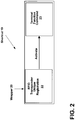
- Fig. 2 illustrates in more detail a shortcut in accordance with an embodiment of the present invention. It is contemplated by the invention that there are generally three types of shortcuts that will be used by the personal communication device to control functions: 1) personal shortcuts; 2) preset shortcuts; and 3) public shortcuts. These three types of shortcuts will be discussed in more detail in the figures that follow. For simplicity, Fig. 2 will discuss shortcuts in general.
- the shortcut 19 has three elements:1) the tag registration or ID 22; 2) a description or information regarding a personal command, macro or script 23; and 3) a wrapper 20 that defines the format and properties of the data contained in the RFID tag 2 (e.g., XML/SMIL).
- Each shortcut 19 is related to an application 12 for controlling a particular function of the personal communication device 1.
- a user can personalize the shortcuts 19 so that each RFID tag registration or ID 22 is associated with a different desired application 12 and function in the personal communication device 1.
- the command or macro 23 included in the shortcut 19 may be written in Java Script, Perl, Visual Basic, Python or in some other scripting language. It can also be a binary program that is Operating System Independent (e.g. Java) or dependent on the microprocessor of the system (e.g. Binary executables for certain device using certain microprocessor running, e.g. Symbian OS).
- Java Operating System Independent
- microprocessor e.g. Binary executables for certain device using certain microprocessor running, e.g. Symbian OS.
- the macro may also comprise an operating system dependent UID (user interface Identification Code) codes that the operating system uses to pass on information and commands in the system, e.g. Opening of certain menus, keyboard input, user selections etc.
- UID codes such as EeikCmdFileOpen or EeikCmdIrdaSend, which are used to carry out a specific function in the program or even to launch programs.
- the macro can also contain keycodes, such as EkeyOK, EaknSoftkeyBack, EkeyRightArrow and EkeyMenu (these are used in Symbian OS), which are generated and passed on in the system when a user interface (UI) is used.
- UI user interface
- the macro mimics the actions of the user as if the user him/herself had used the UI.
- the most simplistic use of macro would be to store a program name and a parameter in the macro, e.g. webbrowser http: ⁇ www.intemet.com ⁇ http_parameters, which would launch a webbrowser, feed it with stored URL as a parameter from where the desired content eventually is loaded.
- Fig. 3 illustrates a method of creating and using a personal shortcut in accordance with an embodiment of the present invention.
- RFID tag information is received by the RFID reader 13 of the personal communication device 1 via the RF channel 5 .
- the RFID tag information includes at least a tag registration or ID 22.
- the RFID tag information (e.g. registration or ID) is decoded by the RFID reader 13 and is forwarded to the processor 10.
- the personal shortcut 19 that corresponds to the RFID information is stored in the internal memory 9 of the personal communication device 1.
- the processor 10 determines if a shortcut 19 corresponding to the RFID tag information can be found in the internal memory 9.
- step S6 the processor 10 continues to step S6 and executes the command, macro or script 23 in the shortcut 19.
- step S4 the processor 10 prompts the user to either select or create another shortcut 19.
- step S5 the processor 10 saves the new shortcut 19 in the internal memory 9 for future use by the personal communication device 1.
- step S6 the processor 10 executes the command, macro or script 23 of the shortcut 19.
- the user can define a personal shortcut 19 for any particular RFID tag 2. This means that a certain RFID tag 2 can correspond to different shortcuts 19 in different personal communication devices 1.
- a first user can use an RFID tag to change a device to a "Silent" mode, while another user can use the same RFID tag to program his device to fetch a WAP-page containing today's lunch menu.
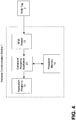
- Figs. 4 & 5 provide systems for using and creating a personal shortcut in accordance with the method described in Fig. 3 .
- the system illustrates how a personal shortcut 19 is used while in Fig. 5 , the system illustrates how a new personal shortcut 19 is selected or created.
- the RFID tag 2 is sending RFID tag information to the personal communication device 1 and the information is received by the RFID reader 13 of the personal communication device 1.
- the RFID reader 13 decodes the RF signal and sends the decoded RFID tag information to the processor 10.
- the RFID tag information includes an RFID tag registration or ID 22 that is used to identify a particular RFID tag 2.
- the RFID tag 2 can also transmit more data if desired.
- the processor 10 searches the persistent memory 16 in the internal memory 9 of the personal communication device 1 for a corresponding command 23.
- the command 23 is then retrieved from the persistent memory 16 and executed by the processor 10.
- the command 23 is used to select and initiate application software or programs 12 in the personal communication device 1 to control a particular device function such as, but not limited to, displaying data, sending an e-mail, making a call, taking a photo, accessing the Internet or other similar functions.
- the processor 10 was unable to find a corresponding shortcut 19 for the RFID information received by the personal communication device 1.
- the processor 10 prompts the user to either select a new command or create a command. Accordingly, the user can select a command 23 from any available shortcut 23 stored in the internal memory 9 or create a new shortcut 19 that can be subsequently stored in the internal memory 9 of the personal communication device 1.
- the user communicates with the personal communication device 1 using the user interface 15 and display 14. If a new shortcut is created, the processor 10 will store the shortcut in the persistent memory 16.
- Figs. 6A & 6B illustrate in more detail the user interface for using a personal shortcut in a personal communication device consistent with the systems described in Figs 4 & 5 .
- the user 25 has a personal communication device 1 and initiates communication with an RFID tag 2 placed at a particular location. In this case, communication between the RFID tag 2 and the personal communication device 1 is initiated upon touching the personal communication device 1 to the RFID tag 1.
- the user interface (UI) 15 in the display 14 of the personal communication device 1 indicates the existence of a shortcut 19 in the personal communication device 1 for the RFID tag 2.
- the UI 15 indicates that the shortcut triggers a call to a friend named "Sandy"(i.e., "Calling Sandy").
- the device 1 upon initiation of the communication session between the personal communication device 1 and the RFID tag 2, the device 1 confirms the RFID tag information received and prompts the user 25 to make a selection. Specifically, the user 25 is prompted to make a selection between two shortcuts 19 related to the RFID tag 2: 1) one related to a phone call; and 2) the other related to a web page.
- the UI 15 of the personal communication device indicate the execution of the selected shortcut 19. In this case, the selected shortcut is related to a phone call to a friend (i.e., Calling Sandy).
- Fig. 7 illustrates in more detail the user interface for creating a personal shortcut in a personal communication device consistent with the system described in Figs 4 & 5 .
- a recording macro-function is activated.
- the device 1 returns to a basic state (e.g. idle state).
- the user 25 uses the UI 15 as if it was a normal usage situation.
- the recorder records all the inputs the user 25 makes. The recording can be stopped for example by using a specific key or key combination. All the inputs by the user 25 are stored as being part of that macro 23 or activity shortcut 19. Thus, when the macro 23 is run, it mimics the user inputs. Delays between user inputs can be shortened.
- the macro recorder (not shown) can investigate the status of the operating system 11 while the user 25 is recording the macro 23 and instead of recording and later replaying key presses as such, it detects which applications 12 are being activated and what parameters are given to these applications 12.
- the macro recorder can also investigate which menu commands are given and passed through the operating system 11.
- the macro replay system activates the same applications 12 with the same parameters as were running in the recording phase.
- menu and other commands can be given in the same order as was given by the user during the recording phase.
- the recorded macro could contain for example following commands:
- the above macro 23 could for example first mimic the user input so that the device 1 is set up in some certain state, then the macro 23 activates an application 12 and gives menu commands to the application 12 (rather than user key inputs), which would clear the cache of the web browser. After a little pause, the macro 23 would, for example, answer to a system dialog window "Are you sure you want to clear cache" by mimicking user's key press for OK option. Pauses are needed in order for the system to be able to carry out activities, e.g. display option windows etc.
- the macro 23 can be stored in a memory 16, 27 or in an RFID tag 2.
- the macro 23 is stored in the memory 16, 27, there needs to be a reference in an RFID-Macro table (not shown) in the memory 16, 27 for RFID tag ID 22 to refer to a corresponding Macro/Script/binary executable location.
- the RFID information may optionally be part of the macro 23 as well.
- the user 25 of the personal communication device 1 initiates a communication session with an RFID tag 2.
- the personal communication device 1 determines that there is no shortcut created for the RFID tag 2. Accordingly, the user 25 is prompted to create a shortcut 19 to correspond to the RFID tag 2.
- the UI 15 of the device 1 prompts the user 25 to select from various device functions that will be triggered in future communications with the RFID tag 2. In this case, the user 25 selects a phone call function that will execute a phone call to a friend, e.g. "Sandy.”
- the new shortcut 19 is then saved in a memory location as indicated by the display 14 of the device 1.
- the user 25 can also specify format and protocol for a particular shortcut 19 as well as make changes to shortcut information. Once the new shortcut 19 is complete, the shortcut 19 can be executed upon future communications between the RFID tag 2 and the personal communication device 1, which will be indicated by the display 14 of the device 1.
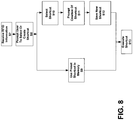
- Fig. 8 illustrates a method of using and creating a preset shortcut that is stored in the RFID tag 2. 1. It is contemplated by the invention that the user has access to an RFID writer and the RFID tags 2 are programmable. Additionally, it is preferable that the user will have the option to set "programmed" tags as write-protected to ensure the integrity of the preset shortcuts 19. A new shortcut 19 can also be selected or created in an RFID tag 2. Selection and creation of a shortcut 19 in an RFID tag 2 will be discussed in detail in the figures that follow.
- the method in Fig. 8 starts with RFID tag information being received by the RFID reader 13 of the personal communication device 1 via the channel 5 (step S7).
- the RFID tag information received includes a preset shortcut 19 stored in the RFID tag memory 7.
- the preset shortcut 19 includes a registration or ID 22 and at least one command 23.
- the processor 10 in step S8 prompts the user to either use the preset shortcut 23 stored in the RFID tag 2 or, select or create a new shortcut 19.
- This preset shortcut 19 will be proposed to all users who touch or come in the range of the RFID tag 2.
- one RFID tag 2 may contain multiple preset shortcuts 19 so that after reading the RFID tag 2, a user can select among several shortcuts 19.
- the user decides to use the preset shortcut 19 and in step S13, the processor executes the corresponding command 23 of the shortcut 19.
- step S8 the user decides instead to select or create a new shortcut 19.
- step S10 the user cannot find a suitable alternate shortcut 19 in the memory 7, so in step S11 the user is prompted to create a new shortcut 19 to be stored in the RFID memory 7.
- step S12 the processor 10 stores the newly created shortcut 19 in the memory of the RFID tag, and in step S13 the new shortcut 19 is executed by the processor 10. It is also contemplated by the present invention that the selection and creation of shortcuts 19 can be prioritized for more efficient use of network resources, which will be discussed in more detail in Fig. 14 .
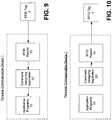
- Figs. 9 & 10 provide a system for using and creating a preset shortcut in an RFID tag 2 in accordance with the method described in Fig. 8 .
- Fig. 9 illustrates a system for using the preset shortcut while Fig. 10 illustrates a system for creating the preset shortcut.
- the RFID tag 2 is sending RFID tag information that is received by the RFID reader 13 of the personal communication device 1.
- the RFID reader 13 decodes the RF signal and sends the decoded RFID tag information to the processor 10.
- the RFID tag information includes a preset shortcut 19 that includes at least an RFID ID 22 and a command 23.
- the processor 10 prompts the user to select a preset shortcut 19 stored in the RFID tag 2 or create a new shortcut via the user interface 15 and display 14.
- the processor 10 will then use the corresponding command 23 in the shortcut to select and initiate application software or programs 12 in the personal communication device 1.
- Fig. 10 illustrates a similar system for creating a preset shortcut in accordance with the method described in Fig. 8 .
- the user chooses to create a new preset shortcut 19 when prompted by the processor 10.
- the personal communication device 1 is equipped with an RFID tag writer (not shown) as well as an RFID reader 13.
- the user creates a new preset shortcut 19 using the user interface 15 and display 14.
- the processor 10 then forwards the information for the preset shortcut 19 to the RFID tag 2 via the RFID reader 13.
- the new preset shortcut 19 is programmed and stored in the memory of the RFID tag 2 for future use by the personal communication device 1.
- Fig. 11 illustrates a method of using and creating a public shortcut in accordance with an embodiment of the present invention. This description will discuss only the distinguishable features between this method and the methods already discussed in Figs. 3 &8.
- the processor 10 searches the memory of the personal communication device 1 for a stored shortcut 19 that correspond to the received RFID tag information (steps S16 & S25).
- step S17 if no shortcut 19 can be found, the processor 10 in step S18, will send a query to an external memory or server 27.
- the personal communication device 1 sends the RFID tag information to a predefined address.
- the RFID tag 2 may contain the information, or there could be a predefined address stored in the memory 9 of the personal communication device 1. Additionally, an identification or ID for the personal communication device 1 may also be included in the information sent to the server 27, which enables more personalized shortcuts 19 for different devices 1.
- step S19 if no command 23 corresponding to the RFID tag 2 can be found in the server 27, the user is prompted to create a new shortcut 19 in step S21.
- the personal communication device 1 or the server 27 may initiate the prompting to create the new shortcut 19.
- the server will prompt the personal communication device 1 to create a shortcut 19, or provide the device 1 with shortcut information in order to perform the preferred action.
- the processor 10 in the personal communication device 1 sends the shortcut 19 to the server 27 for registration and storage.
- the user receives a message from the server 27 regarding the registration.
- the shortcut corresponding to the RFID tag 2 is executed in step S25.
- Figs. 12 & 13 provide systems for using and creating a public shortcut 19 that is stored in a server in accordance with the method described in Fig.11 .
- Fig. 12 illustrates a system for using a public shortcut while Fig. 13 illustrates a system for creating a public shortcut.
- the main distinction between these systems and the systems in Figs 9 & 10 is the communication between the personal communication device 1 and the server 27.
- the processor 10 After receiving the RFID tag information, the processor 10 sends a query to the server 27 via a network interface 18.
- the connection to the server 27 is via the Internet 25.
- the query includes at least the RFID tag information. If a corresponding shortcut 19 is found, the shortcut 19 is returned to the personal communication device 1 via the same network connection 18.
- ID information relating to the device or the user is added to the request allowing one additional way for creating personalized shortcuts.
- This type of approach may allow also directing shortcuts to certain devices, e.g. a user of device A wants to make a shortcut to devices B's user, which is possible if the ID of the request is somehow commonly recognized.
- Fig. 13 illustrates a system for creating a shortcut 19 that is stored and registered in the server 27.
- the processor 10 is unable to find a corresponding shortcut 19 either in the server 27 or in the personal communication device 1.
- the user sends the new shortcut 19 via the network connection to the server 27.
- the server 27 stores and registers the shortcut 19 for use by any user having access to the network 25.
- Fig. 14 illustrates a method of prioritizing the selection and creation of shortcuts in accordance with an embodiment of the present invention.
- the personal communication device 1 receives RF information from an RFID tag 2.
- the personal communication device 1 reads the tag ID 22 and searches for a corresponding preset shortcut 19. If a preset shortcut 19 exists, then in step S26 the user is prompted to execute the preset shortcut 19. If the user selects the preset shortcut 19, then in step S27, the preset shortcut 19 is executed. However, in step S26, if the user decides to select or create a new shortcut 19, then in step S33 a new short cut 19 is created. In steps S34 , the newly created shortcut 19 is stored in the RFID tag 2 for future execution in step S27 .
- step S25 if no shortcut is found in the RFID tag 2, then in step S29 the personal communication device 1 checks for a corresponding personal shortcut 19 in the memory 16 of the device 1. If a personal short 19 exists in the memory 16, then in step S30 the user is prompted to select the personal shortcut 19 for execution. If the personal shortcut 19 is selected, then in step S27, the shortcut 19 is executed. In step S30 , if the user decides instead to select or create a new shortcut, then in steps S33 and S34 the new shortcut is created and stored in the memory 16 for future execution in step S27 .
- step S29 if no personal shortcut 19 exists, then in step S31 the personal communication device 1 checks for a corresponding public shortcut 19 in the external memory 27. If a public shortcut 19 is found, then in step S32 the user is prompted to select the public shortcut 19 for execution in step S27 . In step S32, if the user decides instead to select or create a new shortcut, then in steps S33 and S34, the new shortcut is created and stored in the external memory 27 for future execution in step S27.
- the prioritization discussed above ensures that no unnecessary network resources are utilized in connection with reading machine-readable tags, such as RIFD tags.
- step S29 is performed before step S25.
- steps S25 and S29 are performed before S31.
- the present invention as described above can be used in a barcode environment.
- RFID tags can be replaced with a barcode tag, which can be used to "program" various functions of a personal communication device.
- Communication between the barcode and the personal communication device can be achieved, in addition to integrating the personal communication device with a conventional barcode reader, by the use of a camera in the device that takes a picture of the barcode.
- the barcode can then be decoded and processed by the personal communication device.
- Figs. 15 and 16 illustrate the barcode environment as described above.
- the user of the personal communication device 1 uses an interface 15 to take an image of a bar cod.
- the image is taken using an imaging device (not shown) such as a digital camera in the device 1.
- the barcode 35 is place on an item or at a location pertinent to a user or plurality of users.
- the image of the barcode is shown in the display 14 of the device 1.
- Fig. 16 illustrates a method of selecting or creating a shortcut using machine-readable code such as barcode.
- the imaging device in the personal communication device 1 either reads or takes an image of the barcode 35.
- the processor of the personal communication device 1 decodes the barcode data and searches the memory 16 in the personal communication device 1. If no corresponding shortcut 19 is found in the memory 16, then in step S38 the user is prompted to select or create a new shortcut 19, which can be executed in step S39. On the other hand, in step S37 if a corresponding shortcut 19 is found, then in step S39, the stored shortcut is selected and executed.
- barcode 35 itself by "rewriting” is not contemplated, only the aspects of programming the device memory 16, and network location updates are contemplated by the present invention. It is also contemplated that the barcode aspect includes the use of optical codes or "2D barcodes" that can vary in color, shape and size.
- local hot spots can be implemented with the present invention as described above.
- local hot spots transmit wireless shortcuts to proximate personal communication devices.
- the user of the device can then re-program the shortcuts in the device using any of the techniques herein.
Landscapes
- Engineering & Computer Science (AREA)
- Theoretical Computer Science (AREA)
- General Engineering & Computer Science (AREA)
- Human Computer Interaction (AREA)
- Physics & Mathematics (AREA)
- General Physics & Mathematics (AREA)
- Computer Hardware Design (AREA)
- Mobile Radio Communication Systems (AREA)
- Telephonic Communication Services (AREA)
Claims (16)
- Verfahren zum Erzeugen von Abkürzungen zu personalisierten Funktionen in einer persönlichen Kommunikationsvorrichtung (1), umfassend:Empfangen (S1) und Decodieren von Informationen einer RF-Markierung (2) unter Verwendung eines RF-Markierungslesers (13) in der persönlichen Kommunikationsvorrichtung;Abtasten eines Orts eines Speichers (9) in der persönlichen Kommunikationsvorrichtung (19) auf eine Abkürzung basierend auf den empfangenen RF-Markierungsinformationen, wobei die Abkürzung mindestens die RF-Markierungsinformationen (22) und einen korrespondierenden Befehl (23) enthält; undAusführen der in dem Speicherort gespeicherten Abkürzung, wenn die Abkürzung gefunden wird; undwenn die Abkürzung nicht gefunden wird, verwenden einer Benutzerschnittstelle zum Auswählen oder Erzeugen einer neuen Abkürzung (S4), die in dem Speicherort zu speichern ist (S5) und basierend auf den empfangenen RF-Markierungsinformationen auszuführen ist;wobei jede Abkürzung zu einer Anwendung zum Steuern einer bestimmten Funktion der persönlichen Kommunikationsvorrichtung in Beziehung steht und konfiguriert ist, mindestens eine personalisierte Funktion in der persönlichen Kommunikationsvorrichtung als Reaktion auf die Ausführung der Abkürzung auszuführen.
- Verfahren nach Anspruch 1, wobei das Verwenden der Benutzerschnittstelle enthält, einen Befehl einzuleiten, der das in der persönlichen Kommunikationsvorrichtung gespeicherte Anwendungsprogramm zum Assoziieren der ausgewählten oder neu erzeugten Abkürzung mit den RF-Markierungsinformationen in dem Speicherort zum Ermöglichen der Ausführung eines Befehlsmakros oder -skripts als Reaktion auf die Ausführung der Abkürzung zuordnet.
- Verfahren nach Anspruch 1 oder 2, wobei RF-Markierungsinformationen Markierungsidentifikationsinformationen enthalten.
- Verfahren nach einem der vorstehenden Ansprüche, wobei die mindestens eine Funktion enthält, Daten anzuzeigen, einen Telefonanruf durchzuführen, eine Kommunikation an eine andere Vorrichtung zu senden, eine Fotografie zu machen, mit einem öffentlichen Netzwerk zu verbinden, Einstellungen oder Werkzeuge oder ähnliche Funktionen, die von der persönlichen Kommunikationsvorrichtung durchgeführt werden, zu modifizieren.
- Verfahren nach Anspruch 4, wobei die Kommunikation mit einer anderen Vorrichtung enthält, eine Abkürzung an eine andere Vorrichtung durch Veröffentlichen der Abkürzung im Internet zu senden.
- Verfahren nach einem der vorstehenden Ansprüche, ferner umfassend, RF-Informationen an eine Vielzahl von Benutzern, jeder mit einer persönlichen Kommunikationsvorrichtung, zu übertragen, wobei die RF-Informationen in jeder persönlichen Kommunikationsvorrichtung eine andere Funktion ausführen.
- Verfahren nach einem der vorstehenden Ansprüche, wobei die RF-Markierung eine RFID-Markierung ist und der RF-Leser ein RFID-Leser ist.
- Computerprogramm, umfassend Computerprogrammcodemittel, angepasst zum Durchführen der Schritte des Verfahrens nach einem der vorstehenden Ansprüche bei Ausführung auf einem Computer.
- Computerprogramm nach Anspruch 8, verkörpert in einem computerlesbaren Medium.
- Persönliche Kommunikationsvorrichtung (1), konfiguriert zum Erzeugen von Abkürzungen (19) zu personalisierten Funktionen in der persönlichen Kommunikationsvorrichtung, umfassend:einen RF-Markierungsleser (13), konfiguriert zum Empfangen und Decodieren von RF-Markierungsinformationen von mindestens einer RF-Markierung;einen Ort eines Speichers (9), konfiguriert zum Speichern mindestens einer Abkürzung, die mindestens die RF-Markierungsinformationen (22) und einen korrespondierenden Befehl (23) enthält; undeinen Prozessor (10), konfiguriert zum:Abtasten des Speicherorts auf die Abkürzung; undAusführen der in dem Speicherort gespeicherten Abkürzung, wenn die Abkürzung gefunden wird; undwenn die Abkürzung nicht gefunden wird, Auffordern eines Benutzers der persönlichen Kommunikationsvorrichtung zum Auswählen oder Erzeugen einer neuen Abkürzung, die in dem Speicherort zu speichern ist und basierend auf dem Empfang der RF-Markierungsinformationen auszuführen ist;wobei jede Abkürzung zu einem Anwendungsprogramm in Beziehung steht, das eine bestimmte Funktion der persönlichen Kommunikationsvorrichtung steuert, und zum Ausführen mindestens einer personalisierten Funktion in der persönlichen Kommunikationsvorrichtung als Reaktion auf die Ausführung der Abkürzung.
- Persönliche Kommunikationsvorrichtung nach Anspruch 10, ferner umfassend eine Benutzerschnittstelle, die verwendet wird, einen Befehl zum Zuordnen des in der persönlichen Kommunikationsvorrichtung gespeicherten Anwendungsprogramms zum Assoziieren der ausgewählten oder neu erzeugten Abkürzung mit den RF-Markierungsinformationen in dem Speicherort zum Ermöglichen der Ausführung eines Befehlsmakros oder -skripts als Reaktion auf die Ausführung der Abkürzung einzuleiten.
- Persönliche Kommunikationsvorrichtung nach Anspruch 10 oder 11, wobei die RF-Markierung eine RFID-Markierung ist und der RF-Leser ein RFID-Leser ist.
- System zum Erzeugen von Abkürzungen zu personalisierten Funktionen in einer persönlichen Kommunikationsvorrichtung, umfassend:die persönliche Kommunikationsvorrichtung nach einem der Ansprüche 10 bis 12; undmindestens eine RF-Markierung, die an einem spezifischen Ort platziert ist, und Senden von mindestens RF-Markierungsinformationen an den RF-Leser.
- System nach Anspruch 13, wobei die RF-Markierungsinformationen Markierungsidentifikationsinformationen enthalten.
- System nach einem der Ansprüche 13 oder 14, ferner umfassend eine Netzwerkverbindung für Kommunikation zwischen einem Netzwerkserver und der persönlichen Kommunikationsvorrichtung.
- System nach einem der Ansprüche 13 bis 15, wobei die RF-Markierung eine RFID-Markierung ist und der RF-Leser ein RFID-Leser ist.
Applications Claiming Priority (2)
| Application Number | Priority Date | Filing Date | Title |
|---|---|---|---|
| US10/728,915 US7407107B2 (en) | 2003-12-08 | 2003-12-08 | Apparatus, system, method and computer program product for creating shortcuts to functions in a personal communication device |
| PCT/IB2004/004000 WO2005057316A2 (en) | 2003-12-08 | 2004-12-06 | Cell phone with rf tag reading capabilities |
Publications (3)
| Publication Number | Publication Date |
|---|---|
| EP1695172A2 EP1695172A2 (de) | 2006-08-30 |
| EP1695172A4 EP1695172A4 (de) | 2012-01-04 |
| EP1695172B1 true EP1695172B1 (de) | 2017-03-15 |
Family
ID=34633811
Family Applications (1)
| Application Number | Title | Priority Date | Filing Date |
|---|---|---|---|
| EP04801316.3A Expired - Lifetime EP1695172B1 (de) | 2003-12-08 | 2004-12-06 | Vorrichtung, system, verfahren und computerprogrammprodukt zur erzeugung von abkürzungen zu funktionen in einer persönlichen kommunikationseinrichtung |
Country Status (5)
| Country | Link |
|---|---|
| US (1) | US7407107B2 (de) |
| EP (1) | EP1695172B1 (de) |
| JP (1) | JP4268640B2 (de) |
| CN (1) | CN101366043B (de) |
| WO (1) | WO2005057316A2 (de) |
Families Citing this family (52)
| Publication number | Priority date | Publication date | Assignee | Title |
|---|---|---|---|---|
| US7420458B1 (en) | 2004-01-20 | 2008-09-02 | Charles A. Eldering | Secondary card reader |
| US7298264B1 (en) | 2004-01-20 | 2007-11-20 | Charles A. Eldering | RFID tag filtering and monitoring |
| JP2007522719A (ja) * | 2004-01-21 | 2007-08-09 | コーニンクレッカ フィリップス エレクトロニクス エヌ ヴィ | Rf通信システムおよび方法 |
| PL1794665T3 (pl) * | 2004-09-29 | 2008-10-31 | Swisscom Ag | Sposób i system do wprowadzania instrukcji użytkownika urządzenia telekomunikacyjnego sterowanego przez użytkownika |
| US7316352B1 (en) * | 2004-12-23 | 2008-01-08 | Storage Technology Corporation | System and method for locked code on a radio frequency identification tag |
| US7941376B2 (en) | 2005-03-16 | 2011-05-10 | Dt Labs, Llc | System and method for customer authentication of an item |
| US8261058B2 (en) | 2005-03-16 | 2012-09-04 | Dt Labs, Llc | System, method and apparatus for electronically protecting data and digital content |
| US10636040B2 (en) | 2005-03-16 | 2020-04-28 | Dt Labs, Llc | Apparatus for customer authentication of an item |
| US8613107B2 (en) | 2005-03-16 | 2013-12-17 | Dt Labs Development, Llc | System, method and apparatus for electronically protecting data associated with RFID tags |
| WO2007009020A2 (en) * | 2005-07-12 | 2007-01-18 | The Siemon Company | Telecommunications connector with modular element |
| US20070076862A1 (en) * | 2005-09-30 | 2007-04-05 | Chatterjee Manjirnath A | System and method for abbreviated text messaging |
| JP5036022B2 (ja) * | 2005-12-16 | 2012-09-26 | 株式会社 ゼネテック | 携帯電話 |
| US8384525B2 (en) | 2006-05-15 | 2013-02-26 | Nokia Corporation | Contactless programming and testing of memory elements |
| WO2008026590A1 (fr) * | 2006-08-28 | 2008-03-06 | Brother Kogyo Kabushiki Kaisha | Dispositif de communication par radio-émetteur, dispositif de traitement de communication par radio-émetteur et système de communication par radio-émetteur |
| US10157368B2 (en) * | 2006-09-25 | 2018-12-18 | International Business Machines Corporation | Rapid access to data oriented workflows |
| KR101121439B1 (ko) * | 2006-11-27 | 2012-03-15 | 엘지전자 주식회사 | 이미지 코드를 이용한 기능 실행 방법 및 그 단말기 |
| EP2140411A1 (de) * | 2007-03-22 | 2010-01-06 | Deutsche Post AG | Überwachungseinrichtung für ein tracking-system |
| US8087033B2 (en) * | 2007-08-31 | 2011-12-27 | Yahoo! Inc. | Task-based tool for speeding and customizing interactions with web documents |
| CN101884056A (zh) * | 2007-10-18 | 2010-11-10 | 法国电信公司 | 用于非接触式智能卡的系统及方法 |
| SK50042008A3 (sk) * | 2008-01-04 | 2009-09-07 | Logomotion, S. R. O. | Spôsob a systém autentifikácie najmä pri platbách, identifikátor totožnosti a/alebo súhlasu |
| SK288721B6 (sk) * | 2008-03-25 | 2020-01-07 | Smk Kk | Spôsob, zapojenie a nosič na vykonávanie opakovaných operácií na klávesnici mobilného komunikačného zariadenia |
| EP2297634A2 (de) * | 2008-05-22 | 2011-03-23 | Nxp B.V. | Verfahren, systeme und anordnungen für drahtlose kommunikation zwischen nahfeldkommunikationsendgeräten |
| EP2329563A2 (de) * | 2008-08-29 | 2011-06-08 | Logomotion, s.r.o. | Entfernbare karte für eine kontaktlose kommunikation, ihre benutzung und herstellungsverfahren |
| US9098845B2 (en) * | 2008-09-19 | 2015-08-04 | Logomotion, S.R.O. | Process of selling in electronic shop accessible from the mobile communication device |
| SK288757B6 (sk) * | 2008-09-19 | 2020-05-04 | Smk Kk | Systém a spôsob bezkontaktnej autorizácie pri platbe |
| SK50862008A3 (sk) * | 2008-09-19 | 2010-06-07 | Logomotion, S. R. O. | Systém na elektronické platobné aplikácie a spôsob autorizácie platby |
| WO2010128442A2 (en) * | 2009-05-03 | 2010-11-11 | Logomotion, S.R.O. | A payment terminal using a mobile communication device, such as a mobile phone; a method of direct debit payment transaction |
| SK288747B6 (sk) | 2009-04-24 | 2020-04-02 | Smk Kk | Spôsob a systém bezhotovostnej platobnej transakcie, najmä s použitím bezkontaktného platobného prostriedku |
| KR101523979B1 (ko) * | 2008-10-02 | 2015-05-29 | 삼성전자주식회사 | 휴대 단말기 및 그 휴대 단말기에서 기능 수행 방법 |
| SK288641B6 (sk) * | 2008-10-15 | 2019-02-04 | Smk Corporation | Spôsob komunikácie s POS terminálom, frekvenčný konventor k POS terminálu |
| CN101739574B (zh) * | 2008-11-07 | 2014-06-18 | 晨星软件研发(深圳)有限公司 | 识别标签信息提醒系统、方法及装置 |
| US8866699B2 (en) * | 2008-12-02 | 2014-10-21 | Fuji Xerox Co., Ltd. | Systems and methods for interacting with mobile devices using external displays |
| SK500092009A3 (sk) * | 2009-02-27 | 2010-09-07 | Logomotion, S. R. O. | Počítačová myš na zapojenie na prenos údajov, najmä pri elektronických platbách, spôsob prenosu údajov |
| US8720780B2 (en) * | 2009-04-08 | 2014-05-13 | Blackberry Limited | Systems, devices, and methods for displaying a barcode at a computing device |
| US8879994B2 (en) | 2009-10-02 | 2014-11-04 | Blackberry Limited | Methods and devices for facilitating Bluetooth pairing using a camera as a barcode scanner |
| US20110131450A1 (en) * | 2009-11-30 | 2011-06-02 | Microsoft Corporation | Using synchronized event types for testing an application |
| US9591133B2 (en) * | 2009-12-30 | 2017-03-07 | Motorola Solutions, Inc. | Method and apparatus for determining a communication target and facilitating communications based on an object descriptor |
| US9105023B2 (en) * | 2010-02-26 | 2015-08-11 | Blackberry Limited | Methods and devices for transmitting and receiving data used to activate a device to operate with a server |
| US9010641B2 (en) | 2010-12-07 | 2015-04-21 | Hand Held Products, Inc. | Multiple platform support system and method |
| US8792939B2 (en) * | 2011-01-03 | 2014-07-29 | Michelle Fisher | Non-wireless bidirectional communication between a mobile device and associated secure element using an audio port |
| CN102655547A (zh) * | 2011-03-01 | 2012-09-05 | 凹凸电子(武汉)有限公司 | 数据传输的电子设备、控制器及其控制方法 |
| US9496925B2 (en) | 2011-09-30 | 2016-11-15 | Nokia Technologies Oy | Method, apparatus, and computer program product for remote wireless powering and control of an electronic device |
| US9417793B2 (en) * | 2011-09-30 | 2016-08-16 | Google Inc. | Global keyboard shortcuts management for web applications |
| US20130139113A1 (en) * | 2011-11-30 | 2013-05-30 | Microsoft Corporation | Quick action for performing frequent tasks on a mobile device |
| CN103020676A (zh) * | 2012-12-06 | 2013-04-03 | 上海摩普网络技术有限公司 | 媒体系统及其实现方法 |
| CN103559516B (zh) * | 2013-10-25 | 2017-09-22 | 小米科技有限责任公司 | 一种nfc数据传输方法、终端设备及服务器 |
| CN103559518B (zh) * | 2013-10-25 | 2017-06-16 | 小米科技有限责任公司 | 一种nfc数据传输方法、装置及终端设备 |
| JP6361321B2 (ja) * | 2014-06-27 | 2018-07-25 | 富士通株式会社 | 携帯端末装置,機能制限方法,プログラム |
| EP3002665B1 (de) * | 2014-10-01 | 2022-05-11 | Vodafone Holding GmbH | Kommunikationsvorrichtungsraupenkette |
| US11169831B1 (en) * | 2017-11-27 | 2021-11-09 | Parallels International Gmbh | System and method for providing a customized graphical user interface based on user inputs |
| IL276237B2 (en) | 2018-02-04 | 2024-09-01 | Wix Com Ltd | System and method for handling overlapping objects in visual editing systems |
| CN114650330A (zh) * | 2020-12-18 | 2022-06-21 | 华为技术有限公司 | 一种添加操作序列的方法、电子设备和系统 |
Citations (1)
| Publication number | Priority date | Publication date | Assignee | Title |
|---|---|---|---|---|
| WO2006034732A1 (de) * | 2004-09-29 | 2006-04-06 | Swisscom Mobile Ag | Verfahren und system zur eingabe von benutzerbefehlen einer benutzersteuerbaren telekommunikationsvorrichtung |
Family Cites Families (184)
| Publication number | Priority date | Publication date | Assignee | Title |
|---|---|---|---|---|
| US3971917A (en) | 1971-08-27 | 1976-07-27 | Maddox James A | Labels and label readers |
| US3916160A (en) | 1971-12-13 | 1975-10-28 | Bendix Corp | Coded label for automatic reading systems |
| US4692603A (en) | 1985-04-01 | 1987-09-08 | Cauzin Systems, Incorporated | Optical reader for printed bit-encoded data and method of reading same |
| US4782221A (en) | 1985-04-01 | 1988-11-01 | Cauzin Systems, Incorporated | Printed data strip including bit-encoded information and scanner control |
| NL8501460A (nl) | 1985-05-22 | 1986-12-16 | Philips Nv | Werkwijze voor het identificeren van voorwerpen die voorzien zijn van een kodeveld met stipkode, inrichting voor het identificeren van zo een stipkode, en produkt voorzien van zo een stipkode. |
| US4728783A (en) | 1985-11-15 | 1988-03-01 | Cauzin Systems, Incorporated | Method and apparatus for transforming digitally encoded data into printed data strips |
| US4754127A (en) | 1985-11-15 | 1988-06-28 | Cauzin Systems, Incorporated | Method and apparatus for transforming digitally encoded data into printed data strips |
| US4972475A (en) | 1987-02-10 | 1990-11-20 | Veritec Inc. | Authenticating pseudo-random code and apparatus |
| US4794239A (en) | 1987-10-13 | 1988-12-27 | Intermec Corporation | Multitrack bar code and associated decoding method |
| US4882724A (en) | 1987-10-14 | 1989-11-21 | Leo Vela | Shoppers communication system and processes relating thereto |
| US4924078A (en) | 1987-11-25 | 1990-05-08 | Sant Anselmo Carl | Identification symbol, system and method |
| US4896029A (en) | 1988-04-08 | 1990-01-23 | United Parcel Service Of America, Inc. | Polygonal information encoding article, process and system |
| US4874936A (en) | 1988-04-08 | 1989-10-17 | United Parcel Service Of America, Inc. | Hexagonal, information encoding article, process and system |
| US4998010A (en) | 1988-04-08 | 1991-03-05 | United Parcel Service Of America, Inc. | Polygonal information encoding article, process and system |
| US4939354A (en) | 1988-05-05 | 1990-07-03 | Datacode International, Inc. | Dynamically variable machine readable binary code and method for reading and producing thereof |
| US5053609A (en) | 1988-05-05 | 1991-10-01 | International Data Matrix, Inc. | Dynamically variable machine readable binary code and method for reading and producing thereof |
| US5124536A (en) | 1988-05-05 | 1992-06-23 | International Data Matrix, Inc. | Dynamically variable machine readable binary code and method for reading and producing thereof |
| US5412193A (en) | 1988-05-11 | 1995-05-02 | Symbol Technologies, Inc. | Mobile point-of-sale supermarket checkout system |
| US5206490A (en) | 1988-08-12 | 1993-04-27 | Esselte Meto International Produktions Gmbh | Bar code printing |
| MY104857A (en) | 1989-01-24 | 1994-06-30 | Rohm Co Ltd | Semiconductor lasers |
| US4958064A (en) | 1989-01-30 | 1990-09-18 | Image Recognition Equipment Corporation | Bar code locator for video scanner/reader system |
| CA2053261A1 (en) | 1989-04-28 | 1990-10-29 | Gary D. Hornbuckle | Method and apparatus for remotely controlling and monitoring the use of computer software |
| US5687322A (en) | 1989-05-01 | 1997-11-11 | Credit Verification Corporation | Method and system for selective incentive point-of-sale marketing in response to customer shopping histories |
| US5572653A (en) | 1989-05-16 | 1996-11-05 | Rest Manufacturing, Inc. | Remote electronic information display system for retail facility |
| US5478989A (en) | 1989-09-27 | 1995-12-26 | Shepley; Kenneth J. | Nutritional information system for shoppers |
| US5243655A (en) | 1990-01-05 | 1993-09-07 | Symbol Technologies Inc. | System for encoding and decoding data in machine readable graphic form |
| DE69126231T2 (de) | 1990-03-28 | 1997-09-11 | Omniplanar Inc | Leser für Strichkodierungen |
| GB2246491B (en) | 1990-07-26 | 1994-09-14 | Technophone Ltd | Telephone with bar code reader |
| US5118369A (en) | 1990-08-23 | 1992-06-02 | Colorcode Unlimited Corporation | Microlabelling system and process for making microlabels |
| US5223701A (en) | 1990-10-30 | 1993-06-29 | Ommiplanar Inc. | System method and apparatus using multiple resolution machine readable symbols |
| US5189292A (en) | 1990-10-30 | 1993-02-23 | Omniplanar, Inc. | Finder pattern for optically encoded machine readable symbols |
| US5378883A (en) | 1991-07-19 | 1995-01-03 | Omniplanar Inc. | Omnidirectional wide range hand held bar code reader |
| US5250789A (en) | 1991-10-31 | 1993-10-05 | Johnsen Edward L | Shopping cart |
| US5415167A (en) | 1992-01-10 | 1995-05-16 | Wilk; Peter J. | Medical system and associated method for automatic diagnosis and treatment |
| US5369261A (en) | 1992-02-12 | 1994-11-29 | Shamir; Harry | Multi-color information encoding system |
| US5331176A (en) | 1992-04-10 | 1994-07-19 | Veritec Inc. | Hand held two dimensional symbol reader with a symbol illumination window |
| US5550535A (en) | 1992-08-14 | 1996-08-27 | Seiko Communications Holding N.V. | Bank balance notification by wristwatch pager |
| US5438430A (en) | 1992-09-25 | 1995-08-01 | Xerox Corporation | Paper user interface for image manipulations such as cut and paste |
| ES2107689T3 (es) | 1992-11-11 | 1997-12-01 | Finland Telecom Oy | Metodo para llevar a cabo transacciones financieras por medio de un sistema telefonico movil. |
| US5581630A (en) | 1992-12-21 | 1996-12-03 | Texas Instruments Incorporated | Personal identification |
| AU5988394A (en) | 1993-01-22 | 1994-08-15 | Taligent, Inc. | Flexible network system |
| GB2282906B (en) | 1993-10-13 | 1996-11-06 | Dataquill Ltd | Data enty systems |
| US5493692A (en) | 1993-12-03 | 1996-02-20 | Xerox Corporation | Selective delivery of electronic messages in a multiple computer system based on context and environment of a user |
| US5449895A (en) | 1993-12-22 | 1995-09-12 | Xerox Corporation | Explicit synchronization for self-clocking glyph codes |
| JPH07220035A (ja) | 1993-12-22 | 1995-08-18 | Xerox Corp | 光学的読み取り可能レコード |
| US5561702A (en) | 1994-01-18 | 1996-10-01 | Uniden America Corporation | Pager having remotely programmable canned messages |
| US5591956A (en) | 1995-05-15 | 1997-01-07 | Welch Allyn, Inc. | Two dimensional data encoding structure and symbology for use with optical readers |
| US5592375A (en) | 1994-03-11 | 1997-01-07 | Eagleview, Inc. | Computer-assisted system for interactively brokering goods or services between buyers and sellers |
| US5559707A (en) | 1994-06-24 | 1996-09-24 | Delorme Publishing Company | Computer aided routing system |
| US5948040A (en) | 1994-06-24 | 1999-09-07 | Delorme Publishing Co. | Travel reservation information and planning system |
| US5561705A (en) | 1994-07-25 | 1996-10-01 | International Business Machines Corporation | Apparatus for auto dialing telephone numbers and DTMF tones in a personal communication device |
| US5508695A (en) | 1994-07-28 | 1996-04-16 | Motorola, Inc. | Method and apparatus for identifying messages associated with a sports team in a communication system |
| US5629981A (en) | 1994-07-29 | 1997-05-13 | Texas Instruments Incorporated | Information management and security system |
| US5682142A (en) | 1994-07-29 | 1997-10-28 | Id Systems Inc. | Electronic control system/network |
| US5715314A (en) | 1994-10-24 | 1998-02-03 | Open Market, Inc. | Network sales system |
| JPH08138018A (ja) | 1994-11-10 | 1996-05-31 | Rikagaku Kenkyusho | データ・キャリア・システム |
| US6029064A (en) | 1995-01-12 | 2000-02-22 | Bell Atlantic Network Services, Inc. | Mobile audio program selection system using public switched telephone network |
| US5729697A (en) | 1995-04-24 | 1998-03-17 | International Business Machines Corporation | Intelligent shopping cart |
| US5642303A (en) | 1995-05-05 | 1997-06-24 | Apple Computer, Inc. | Time and location based computing |
| US5752186A (en) | 1995-06-07 | 1998-05-12 | Jeman Technologies, Inc. | Access free wireless telephony fulfillment service system |
| US5978773A (en) | 1995-06-20 | 1999-11-02 | Neomedia Technologies, Inc. | System and method for using an ordinary article of commerce to access a remote computer |
| US5559870A (en) | 1995-06-30 | 1996-09-24 | Scientific-Atlanta, Inc. | Method and apparatus for providing information to a subscriber over an electronic network |
| US5764736A (en) | 1995-07-20 | 1998-06-09 | National Semiconductor Corporation | Method for switching between a data communication session and a voice communication session |
| US6650761B1 (en) | 1999-05-19 | 2003-11-18 | Digimarc Corporation | Watermarked business cards and methods |
| WO1997010558A1 (en) | 1995-09-14 | 1997-03-20 | Bell Communications Research, Inc. | Method and system for providing continually updated personalized information |
| FI101581B1 (fi) | 1995-11-07 | 1998-07-15 | Nokia Telecommunications Oy | Kiinteän verkon protokollien sovittaminen matkaviestinverkkoon signalointituen puuttuessa |
| US5886646A (en) | 1995-12-07 | 1999-03-23 | Kokusai Electric Co., Ltd. | Data display system based on a paging signal |
| US5970469A (en) | 1995-12-26 | 1999-10-19 | Supermarkets Online, Inc. | System and method for providing shopping aids and incentives to customers through a computer network |
| US5794142A (en) | 1996-01-29 | 1998-08-11 | Nokia Mobile Phones Limited | Mobile terminal having network services activation through the use of point-to-point short message service |
| FI960636A7 (fi) | 1996-02-12 | 1997-08-13 | Nokia Corp | Menetelmä potilaan terveydentilan valvomiseksi |
| FI102869B (fi) | 1996-02-26 | 1999-02-26 | Nokia Mobile Phones Ltd | Laite, menetelmä ja järjestelmä eri sovelluksiin liittyvien tietojen l ähettämiseksi ja vastaanottamiseksi |
| US5811776A (en) | 1996-02-26 | 1998-09-22 | Intermec Corporation | Method and apparatus for accurately locating data regions in stored images of symbols |
| US6098882A (en) | 1996-03-01 | 2000-08-08 | Cobblestone Software, Inc. | Variable formatting of digital data into a pattern |
| US5850187A (en) | 1996-03-27 | 1998-12-15 | Amtech Corporation | Integrated electronic tag reader and wireless communication link |
| US5995943A (en) | 1996-04-01 | 1999-11-30 | Sabre Inc. | Information aggregation and synthesization system |
| FI100441B (fi) | 1996-04-09 | 1997-11-28 | Nokia Mobile Phones Ltd | Valikko-ohjattu lyhytsanomien muodostus |
| AUPN955096A0 (en) | 1996-04-29 | 1996-05-23 | Telefonaktiebolaget Lm Ericsson (Publ) | Telecommunications information dissemination system |
| DE19618218C1 (de) | 1996-05-07 | 1997-06-05 | Orga Kartensysteme Gmbh | Mobilfunknetz |
| US5799091A (en) | 1996-05-24 | 1998-08-25 | Lsi Logic Corporation | Single chip solution for multimedia GSM mobile station systems |
| GB2313941B (en) | 1996-06-06 | 2000-01-26 | Intellident Limited | Product selection system |
| US5821513A (en) | 1996-06-26 | 1998-10-13 | Telxon Corporation | Shopping cart mounted portable data collection device with tethered dataform reader |
| US5979757A (en) | 1996-09-05 | 1999-11-09 | Symbol Technologies, Inc. | Method and system for presenting item information using a portable data terminal |
| US6223988B1 (en) | 1996-10-16 | 2001-05-01 | Omniplanar, Inc | Hand-held bar code reader with laser scanning and 2D image capture |
| WO1998020411A1 (en) | 1996-11-08 | 1998-05-14 | Neomedia Technologies, Inc. | Automatic access of electronic information through machine-readable codes on printed documents |
| FI106990B (fi) | 1996-12-31 | 2001-05-15 | Nokia Mobile Phones Ltd | Menetelmä informaation välittämiseksi käyttäjälle |
| SE512110C2 (sv) | 1997-06-17 | 2000-01-24 | Ericsson Telefon Ab L M | System och förfarande för att kundanpassa trådlösa kommunikationsenheter |
| AU8250098A (en) | 1997-09-26 | 1999-04-23 | Johan Schlasberg | A message information system |
| JP3922482B2 (ja) | 1997-10-14 | 2007-05-30 | ソニー株式会社 | 情報処理装置および方法 |
| FI107080B (fi) | 1997-10-27 | 2001-05-31 | Nokia Mobile Phones Ltd | Mittauslaite |
| US6177860B1 (en) | 1997-11-17 | 2001-01-23 | International Business Machines Corporation | Method and economical direct connected apparatus for deploying and tracking computers |
| US6356543B2 (en) | 1997-11-25 | 2002-03-12 | Telefonaktiebolaget Lm Ericsson (Publ) | Controlling mobile phone system user views from the world-wide web |
| US6026375A (en) | 1997-12-05 | 2000-02-15 | Nortel Networks Corporation | Method and apparatus for processing orders from customers in a mobile environment |
| US6311058B1 (en) | 1998-06-30 | 2001-10-30 | Microsoft Corporation | System for delivering data content over a low bit rate transmission channel |
| US5949335A (en) | 1998-04-14 | 1999-09-07 | Sensormatic Electronics Corporation | RFID tagging system for network assets |
| US6019449A (en) | 1998-06-05 | 2000-02-01 | Hewlett-Packard Company | Apparatus controlled by data from consumable parts with incorporated memory devices |
| US6039430A (en) | 1998-06-05 | 2000-03-21 | Hewlett-Packard Company | Method and apparatus for storing and retrieving information on a replaceable printing component |
| US6196466B1 (en) | 1998-06-09 | 2001-03-06 | Symbol Technologies, Inc. | Data compression method using multiple base number systems |
| US6587684B1 (en) | 1998-07-28 | 2003-07-01 | Bell Atlantic Nynex Mobile | Digital wireless telephone system for downloading software to a digital telephone using wireless data link protocol |
| US5959530A (en) | 1998-07-29 | 1999-09-28 | Xerox Corporation | Remote computer security system for computers, printers and multifunction devices |
| US6494562B1 (en) | 1998-09-03 | 2002-12-17 | Hewlett-Packard Company | Method and apparatus for identifying a sales channel |
| US6312106B1 (en) | 1999-04-20 | 2001-11-06 | Hewlett-Packard Company | Method and apparatus for transferring information between a replaceable consumable and a printing device |
| US6249226B1 (en) | 1998-09-10 | 2001-06-19 | Xerox Corporation | Network printer document interface using electronic tags |
| US6446208B1 (en) | 1998-09-10 | 2002-09-03 | Xerox Corporation | User interface system based on sequentially read electronic tags |
| US5982741A (en) | 1998-09-17 | 1999-11-09 | Tut Systems, Inc. | Method and apparatus for automatically reducing cross-talk between wires coupled to a common network device |
| US20010011247A1 (en) | 1998-10-02 | 2001-08-02 | O'flaherty Kenneth W. | Privacy-enabled loyalty card system and method |
| US6327570B1 (en) | 1998-11-06 | 2001-12-04 | Dian Stevens | Personal business service system and method |
| US6470096B2 (en) | 1998-11-13 | 2002-10-22 | Xerox Corporation | Method for locating user interface tags in a document processing system |
| US6023241A (en) | 1998-11-13 | 2000-02-08 | Intel Corporation | Digital multimedia navigation player/recorder |
| US6512919B2 (en) | 1998-12-14 | 2003-01-28 | Fujitsu Limited | Electronic shopping system utilizing a program downloadable wireless videophone |
| US6448979B1 (en) | 1999-01-25 | 2002-09-10 | Airclic, Inc. | Printed medium activated interactive communication of multimedia information, including advertising |
| US6401085B1 (en) | 1999-03-05 | 2002-06-04 | Accenture Llp | Mobile communication and computing system and method |
| WO2000060484A1 (en) | 1999-04-05 | 2000-10-12 | Neomedia Technologies, Inc. | System and method of using machine-readable or human-readable linkage codes for accessing networked data resources |
| ES2209408T3 (es) | 1999-04-07 | 2004-06-16 | Swisscom Mobile Ag | Procedimiento y sistema para el encargo, la carga y la utilizacion de billetes de entrada. |
| US6314457B1 (en) | 1999-04-21 | 2001-11-06 | Airclic, Inc. | Method for managing printed medium activated revenue sharing domain name system schemas |
| US6389278B1 (en) | 1999-05-17 | 2002-05-14 | Ericsson Inc. | Systems and methods for identifying a service provider from a wireless communicator based on categories of service providers that are called |
| SE516100C2 (sv) | 1999-05-26 | 2001-11-19 | Henry Duhs | Arrangemang med moblil kommunikationsenhet och RFID-krets för att tillhandahålla en tjänst |
| EP1059599A3 (de) | 1999-06-08 | 2002-09-25 | Nokia Corporation | Verfahren und Apparat zum Auffinden spezifischer und mit einer erhaltenen Kennzeichnung assoziierter Information |
| EP1186150A1 (de) | 1999-06-18 | 2002-03-13 | Swisscom Mobile AG | Auswechselbarer batteriesatz für mobilfunktelefon |
| US6611673B1 (en) | 1999-07-12 | 2003-08-26 | Oliver T. Bayley | Radio frequency-controlled telecommunication device |
| AU6199800A (en) | 1999-07-15 | 2001-02-05 | Iomega Corporation | Radio-frequency identification (rfid) tag for data storage cartridges |
| US6301484B1 (en) | 1999-08-31 | 2001-10-09 | Qualcomm Incorporated | Method and apparatus for remote activation of wireless device features using short message services (SMS) |
| US6608551B1 (en) | 1999-09-13 | 2003-08-19 | Intermec Ip Corp | Low-cost radio replacement utilizing RFID technology |
| US7225979B2 (en) | 1999-09-17 | 2007-06-05 | Silverbrook Research Pty Ltd | Methods and systems for object identification and interaction |
| US6641051B1 (en) | 1999-09-24 | 2003-11-04 | Xerox Corporation | System for embedded digital data that allows embedding of data around known obstructions |
| US6259367B1 (en) | 1999-09-28 | 2001-07-10 | Elliot S. Klein | Lost and found system and method |
| US6954735B1 (en) | 1999-10-01 | 2005-10-11 | Nokia Corporation | Method and system of shopping with a mobile device to purchase goods and/or services |
| DE10042914A1 (de) | 1999-10-01 | 2001-04-19 | Hewlett Packard Co | Dynamische Mitteilungsübermittlung unter Verwendung von ersetzbaren Druckerkomponenten |
| DE19957390A1 (de) | 1999-11-24 | 2001-06-07 | Andreas Kuntze | Individualisierungssystem für einen Gegenstand |
| SE515289C2 (sv) | 1999-11-29 | 2001-07-09 | Tagmaster Ab | Portabel kommunikationsenhet för läsning och/eller skrivning av data i identifieringsbrickor |
| US6678425B1 (en) | 1999-12-06 | 2004-01-13 | Xerox Corporation | Method and apparatus for decoding angular orientation of lattice codes |
| US7308254B1 (en) | 1999-12-15 | 2007-12-11 | Nokia Corporation | Wireless electronic couponing technique |
| WO2001045038A2 (en) | 1999-12-15 | 2001-06-21 | Starlab Nv/Sa | Short range communication system |
| SE9904683L (sv) | 1999-12-17 | 2001-06-18 | Ericsson Telefon Ab L M | Metod och system för att etablera en radioförbindelse med kort räckvidd |
| US6832230B1 (en) | 1999-12-22 | 2004-12-14 | Nokia Corporation | Apparatus and associated method for downloading an application with a variable lifetime to a mobile terminal |
| US7136634B1 (en) | 1999-12-22 | 2006-11-14 | Nokia Corporation | System and method for displaying information included in predetermined messages automatically |
| US7933968B1 (en) | 2000-06-20 | 2011-04-26 | Koninklijke Philips Electronics N.V. | Token-based personalization of smart appliances |
| US6587835B1 (en) | 2000-02-09 | 2003-07-01 | G. Victor Treyz | Shopping assistance with handheld computing device |
| US6622017B1 (en) | 2000-02-25 | 2003-09-16 | Cellco Parntership | Over-the-air programming of wireless terminal features |
| FI112433B (fi) | 2000-02-29 | 2003-11-28 | Nokia Corp | Sijaintiin sidotut palvelut |
| US7319847B2 (en) | 2000-03-20 | 2008-01-15 | Nielsen Mobile, Inc. | Bitwise monitoring of network performance |
| US7117374B2 (en) | 2000-03-24 | 2006-10-03 | Intermec Ip Corp | Apparatus and method for gathering and utilizing data |
| GB0007617D0 (en) | 2000-03-29 | 2000-05-17 | Psion Dacom Plc | A short range radio transceiver device |
| DE10015775A1 (de) | 2000-03-30 | 2001-10-04 | Deutsche Telekom Ag | Kartenmaterial und Verfahren zum Betreiben eines Kartenterminals |
| NO315140B1 (no) | 2000-05-12 | 2003-07-14 | Brand Village As | Fremgangsmåte og system for tilveiebringelse av nettverkskommunikasjon mellom en tilbyder av et produkt og en potensiell interessent |
| EP1296744A2 (de) | 2000-06-23 | 2003-04-02 | Medtronic, Inc. | Netzkompatible drahtlose rf verbindung für die datenverwaltung einer medizinischen vorrichtung |
| JP2002092303A (ja) | 2000-07-13 | 2002-03-29 | Fumio Ri | 個人情報の管理システムおよび利用プログラム |
| WO2002007474A1 (en) | 2000-07-14 | 2002-01-24 | Cellpoint Systems Ab | A method and system for broadcasting messages including location dependant targeted advertisement in a cellular network |
| US6647269B2 (en) | 2000-08-07 | 2003-11-11 | Telcontar | Method and system for analyzing advertisements delivered to a mobile unit |
| US6782253B1 (en) | 2000-08-10 | 2004-08-24 | Koninklijke Philips Electronics N.V. | Mobile micro portal |
| US6628938B1 (en) | 2000-08-14 | 2003-09-30 | Koninklijke Philips Electronics N.V. | Wireless system, a method of selecting an application while receiving application specific messages and user location method using user location awareness |
| US7017804B2 (en) | 2000-08-28 | 2006-03-28 | Axalto S.A. | Method for providing identification data of a banking card to a user |
| IL142021A0 (en) | 2000-09-20 | 2002-03-10 | Ibm | Method and system for dynamic tracking of a user |
| WO2002033669A1 (en) | 2000-10-18 | 2002-04-25 | Ultra Proizvodnja Elektronskih Naprav D.O.O. | System for payment data exchange and payment terminal device used therein |
| US6957076B2 (en) | 2000-11-22 | 2005-10-18 | Denso Corporation | Location specific reminders for wireless mobiles |
| AU2002227014A1 (en) | 2000-12-07 | 2002-06-18 | Verisign, Inc. | System and method for a digital business card |
| US7493565B2 (en) | 2000-12-22 | 2009-02-17 | Microsoft Corporation | Environment-interactive context-aware devices and methods |
| CN1456002A (zh) | 2001-01-18 | 2003-11-12 | 皇家菲利浦电子有限公司 | 无连接广播信号传输 |
| US20030017848A1 (en) | 2001-07-17 | 2003-01-23 | Engstrom G. Eric | Personalizing electronic devices and smart covering |
| US6462660B1 (en) | 2001-01-25 | 2002-10-08 | Agere Systems Guardian Corp. | Wireless piconet-based personal electronic property reminder |
| US6446004B1 (en) | 2001-02-28 | 2002-09-03 | International Business Machines Corporation | System and method for implementing proximity or location driven activities |
| JP2002259882A (ja) | 2001-03-02 | 2002-09-13 | Fujitsu Ltd | カード情報入力方法、プログラム、および、カード情報処理装置 |
| AU2002252405A1 (en) * | 2001-03-19 | 2002-10-03 | Accenture Llp | Mobile valet |
| US6766947B2 (en) | 2001-03-19 | 2004-07-27 | Accenture | Real world showroom |
| US6491217B2 (en) | 2001-03-31 | 2002-12-10 | Koninklijke Philips Electronics N.V. | Machine readable label reader system with versatile response selection |
| JP3763349B2 (ja) | 2001-04-03 | 2006-04-05 | 日本電気株式会社 | 加入者カードを用いる携帯電話機 |
| KR100765904B1 (ko) | 2001-04-12 | 2007-10-10 | 엔에이치엔(주) | 모바일 게임방법 |
| US6873861B2 (en) | 2001-04-12 | 2005-03-29 | International Business Machines Corporation | Business card presentation via mobile phone |
| US6988667B2 (en) | 2001-05-31 | 2006-01-24 | Alien Technology Corporation | Methods and apparatuses to identify devices |
| CN1393788A (zh) * | 2001-06-22 | 2003-01-29 | 英业达集团(南京)电子技术有限公司 | 网上讯息服务提供系统与方法 |
| US20030030542A1 (en) | 2001-08-10 | 2003-02-13 | Von Hoffmann Gerard | PDA security system |
| US6996537B2 (en) | 2001-08-13 | 2006-02-07 | Qualcomm Incorporated | System and method for providing subscribed applications on wireless devices over a wireless network |
| US6986050B2 (en) | 2001-10-12 | 2006-01-10 | F-Secure Oyj | Computer security method and apparatus |
| US20030088496A1 (en) | 2001-11-02 | 2003-05-08 | Koninklijke Philips Electronics N.V. | Tag processing terminal for facilitating competitive internet bid transactions |
| US6687793B1 (en) | 2001-12-28 | 2004-02-03 | Vignette Corporation | Method and system for optimizing resources for cache management |
| US20060158341A1 (en) | 2002-06-26 | 2006-07-20 | Jan Chipchase | Device for directing the operation of a user's personal communication apparatus |
| US6731930B2 (en) | 2002-08-14 | 2004-05-04 | Motorola, Inc. | Over-the-air programming method for wireless communication device |
| US20040203693A1 (en) | 2002-09-18 | 2004-10-14 | Dell Products L.P. | Over the air firmware and policy programming |
| GB0222062D0 (en) | 2002-09-23 | 2002-10-30 | British Telecomm | A data input device |
| US20040075675A1 (en) | 2002-10-17 | 2004-04-22 | Tommi Raivisto | Apparatus and method for accessing services via a mobile terminal |
| US7156289B2 (en) | 2002-10-25 | 2007-01-02 | Silverbrook Research Pty Ltd | Methods and systems for object identification and interaction |
| US7274909B2 (en) | 2002-10-31 | 2007-09-25 | Nokia Corporation | Method and system for selecting data items for service requests |
| FI20022288A0 (fi) | 2002-12-31 | 2002-12-31 | Nokia Corp | Menetelmä ja laite elektroniseen laitteeseen tallennetun tiedon tuomiseksi laitteen käyttäjälle |
| US7135976B2 (en) | 2003-03-31 | 2006-11-14 | Rftrax, Inc. | Wireless monitoring device |
| US8407097B2 (en) | 2004-04-15 | 2013-03-26 | Hand Held Products, Inc. | Proximity transaction apparatus and methods of use thereof |
-
2003
- 2003-12-08 US US10/728,915 patent/US7407107B2/en not_active Expired - Lifetime
-
2004
- 2004-12-06 JP JP2006543647A patent/JP4268640B2/ja not_active Expired - Fee Related
- 2004-12-06 WO PCT/IB2004/004000 patent/WO2005057316A2/en not_active Ceased
- 2004-12-06 EP EP04801316.3A patent/EP1695172B1/de not_active Expired - Lifetime
- 2004-12-06 CN CN2004800363495A patent/CN101366043B/zh not_active Expired - Fee Related
Patent Citations (1)
| Publication number | Priority date | Publication date | Assignee | Title |
|---|---|---|---|---|
| WO2006034732A1 (de) * | 2004-09-29 | 2006-04-06 | Swisscom Mobile Ag | Verfahren und system zur eingabe von benutzerbefehlen einer benutzersteuerbaren telekommunikationsvorrichtung |
Also Published As
| Publication number | Publication date |
|---|---|
| WO2005057316A3 (en) | 2007-11-29 |
| EP1695172A2 (de) | 2006-08-30 |
| WO2005057316A2 (en) | 2005-06-23 |
| CN101366043A (zh) | 2009-02-11 |
| US7407107B2 (en) | 2008-08-05 |
| EP1695172A4 (de) | 2012-01-04 |
| JP2007524154A (ja) | 2007-08-23 |
| JP4268640B2 (ja) | 2009-05-27 |
| US20050125745A1 (en) | 2005-06-09 |
| CN101366043B (zh) | 2012-05-02 |
Similar Documents
| Publication | Publication Date | Title |
|---|---|---|
| US7407107B2 (en) | Apparatus, system, method and computer program product for creating shortcuts to functions in a personal communication device | |
| EP1564679A2 (de) | Zugriff auf Daten in einem Funk-Kommunikationsnetzwerk mit kurzer Reichweite | |
| US7126481B2 (en) | Methods, systems, devices and computer program products for providing dynamic product information in short-range communication | |
| EP1537517B1 (de) | Einrichtung zum anleiten des betriebs einer persönlichen kommunikationsvorrichtung eines benutzers | |
| EP2275982A1 (de) | Abfragen eines Benutzers eines mobilen Kommunikationsgeräts | |
| WO2004036492A2 (en) | Smart card network interface device | |
| CN103354586B (zh) | 用于预览主题的系统及方法 | |
| TWI238968B (en) | Mobile communication terminal, initiating device of application software, initiating system of application software, initiating method of application software and initiating program of application software | |
| KR20090046124A (ko) | 프레즌스를 이용한 상대방 단말 정보 표시방법 및 그방법에 따른 이동통신 단말기 | |
| US20060123041A1 (en) | Mode based action invocation through tag scanning | |
| US20030167230A1 (en) | Method and communication terminal for handling payment of downloadable content | |
| EP3281387B1 (de) | Verfahren zur konfiguration einer intelligenten mobilen vorrichtung zur fernsteuerung eines zielprozesses | |
| CA2737030C (en) | Virtual machine readable communication tag | |
| JP2009232359A (ja) | 携帯電話の操作支援装置 | |
| KR100537858B1 (ko) | 이동통신단말기에서 메시지의 내용을 폰북에 저장하기위한 방법 | |
| JP2004506357A (ja) | デバイス制御装置および方法 | |
| EP1783658B1 (de) | Vorrichtung und Verfahren zur Änderung von RFID-Etikettdaten in einem tragbaren Endgerät | |
| US8244288B2 (en) | Context-sensitive data handling | |
| JP2005269565A (ja) | 携帯端末及びid読み取り携帯端末システム | |
| US7567780B2 (en) | Data exchange systems and methods employing RF data transmission | |
| CN1951094B (zh) | 如用于移动装置上的客户自支持的用户接口方法 | |
| JP4361781B2 (ja) | 受信装置およびプログラム | |
| KR20080093241A (ko) | 이동통신 시스템에서 메신저를 이용한 단말기 제어 장치 및방법 | |
| KR20010081414A (ko) | 바코드가 구비된 명함, 바코드 인식장치가 구비된 무선단말기 및 명함정보관리 장치 | |
| KR20060089308A (ko) | 이동통신 단말기를 이용한 이메일 전송 장치 및 방법 |
Legal Events
| Date | Code | Title | Description |
|---|---|---|---|
| PUAI | Public reference made under article 153(3) epc to a published international application that has entered the european phase |
Free format text: ORIGINAL CODE: 0009012 |
|
| 17P | Request for examination filed |
Effective date: 20060622 |
|
| AK | Designated contracting states |
Kind code of ref document: A2 Designated state(s): AT BE BG CH CY CZ DE DK EE ES FI FR GB GR HU IE IS IT LI LT LU MC NL PL PT RO SE SI SK TR |
|
| AX | Request for extension of the european patent |
Extension state: AL BA HR LV MK YU |
|
| DAX | Request for extension of the european patent (deleted) | ||
| RIN1 | Information on inventor provided before grant (corrected) |
Inventor name: HOISKO, JYRKI Inventor name: ENGESTROEM, JYRI Inventor name: AHTISAARI, MARKO |
|
| PUAK | Availability of information related to the publication of the international search report |
Free format text: ORIGINAL CODE: 0009015 |
|
| RIC1 | Information provided on ipc code assigned before grant |
Ipc: G06K 7/10 20060101AFI20080117BHEP |
|
| A4 | Supplementary search report drawn up and despatched |
Effective date: 20111207 |
|
| RIC1 | Information provided on ipc code assigned before grant |
Ipc: G06F 3/048 20060101ALI20111201BHEP Ipc: G06F 1/16 20060101ALI20111201BHEP Ipc: G06F 3/00 20060101ALI20111201BHEP Ipc: G06K 7/10 20060101AFI20111201BHEP |
|
| RAP1 | Party data changed (applicant data changed or rights of an application transferred) |
Owner name: NOKIA CORPORATION |
|
| 17Q | First examination report despatched |
Effective date: 20150407 |
|
| RAP1 | Party data changed (applicant data changed or rights of an application transferred) |
Owner name: NOKIA TECHNOLOGIES OY |
|
| REG | Reference to a national code |
Ref country code: DE Ref legal event code: R079 Ref document number: 602004050926 Country of ref document: DE Free format text: PREVIOUS MAIN CLASS: G06F0001000000 Ipc: G06F0003048100 |
|
| RIC1 | Information provided on ipc code assigned before grant |
Ipc: G06F 1/16 20060101ALI20160928BHEP Ipc: G06F 3/00 20060101ALI20160928BHEP Ipc: G06F 3/0482 20130101ALI20160928BHEP Ipc: G06F 3/0481 20130101AFI20160928BHEP |
|
| GRAP | Despatch of communication of intention to grant a patent |
Free format text: ORIGINAL CODE: EPIDOSNIGR1 |
|
| STAA | Information on the status of an ep patent application or granted ep patent |
Free format text: STATUS: GRANT OF PATENT IS INTENDED |
|
| INTG | Intention to grant announced |
Effective date: 20161110 |
|
| GRAS | Grant fee paid |
Free format text: ORIGINAL CODE: EPIDOSNIGR3 |
|
| GRAA | (expected) grant |
Free format text: ORIGINAL CODE: 0009210 |
|
| STAA | Information on the status of an ep patent application or granted ep patent |
Free format text: STATUS: THE PATENT HAS BEEN GRANTED |
|
| AK | Designated contracting states |
Kind code of ref document: B1 Designated state(s): AT BE BG CH CY CZ DE DK EE ES FI FR GB GR HU IE IS IT LI LT LU MC NL PL PT RO SE SI SK TR |
|
| REG | Reference to a national code |
Ref country code: CH Ref legal event code: EP Ref country code: GB Ref legal event code: FG4D |
|
| REG | Reference to a national code |
Ref country code: IE Ref legal event code: FG4D |
|
| REG | Reference to a national code |
Ref country code: AT Ref legal event code: REF Ref document number: 876212 Country of ref document: AT Kind code of ref document: T Effective date: 20170415 |
|
| REG | Reference to a national code |
Ref country code: DE Ref legal event code: R096 Ref document number: 602004050926 Country of ref document: DE |
|
| REG | Reference to a national code |
Ref country code: NL Ref legal event code: FP |
|
| REG | Reference to a national code |
Ref country code: LT Ref legal event code: MG4D |
|
| PG25 | Lapsed in a contracting state [announced via postgrant information from national office to epo] |
Ref country code: FI Free format text: LAPSE BECAUSE OF FAILURE TO SUBMIT A TRANSLATION OF THE DESCRIPTION OR TO PAY THE FEE WITHIN THE PRESCRIBED TIME-LIMIT Effective date: 20170315 Ref country code: LT Free format text: LAPSE BECAUSE OF FAILURE TO SUBMIT A TRANSLATION OF THE DESCRIPTION OR TO PAY THE FEE WITHIN THE PRESCRIBED TIME-LIMIT Effective date: 20170315 Ref country code: GR Free format text: LAPSE BECAUSE OF FAILURE TO SUBMIT A TRANSLATION OF THE DESCRIPTION OR TO PAY THE FEE WITHIN THE PRESCRIBED TIME-LIMIT Effective date: 20170616 |
|
| REG | Reference to a national code |
Ref country code: AT Ref legal event code: MK05 Ref document number: 876212 Country of ref document: AT Kind code of ref document: T Effective date: 20170315 |
|
| PG25 | Lapsed in a contracting state [announced via postgrant information from national office to epo] |
Ref country code: SE Free format text: LAPSE BECAUSE OF FAILURE TO SUBMIT A TRANSLATION OF THE DESCRIPTION OR TO PAY THE FEE WITHIN THE PRESCRIBED TIME-LIMIT Effective date: 20170315 Ref country code: BG Free format text: LAPSE BECAUSE OF FAILURE TO SUBMIT A TRANSLATION OF THE DESCRIPTION OR TO PAY THE FEE WITHIN THE PRESCRIBED TIME-LIMIT Effective date: 20170615 |
|
| PG25 | Lapsed in a contracting state [announced via postgrant information from national office to epo] |
Ref country code: SK Free format text: LAPSE BECAUSE OF FAILURE TO SUBMIT A TRANSLATION OF THE DESCRIPTION OR TO PAY THE FEE WITHIN THE PRESCRIBED TIME-LIMIT Effective date: 20170315 Ref country code: CZ Free format text: LAPSE BECAUSE OF FAILURE TO SUBMIT A TRANSLATION OF THE DESCRIPTION OR TO PAY THE FEE WITHIN THE PRESCRIBED TIME-LIMIT Effective date: 20170315 Ref country code: RO Free format text: LAPSE BECAUSE OF FAILURE TO SUBMIT A TRANSLATION OF THE DESCRIPTION OR TO PAY THE FEE WITHIN THE PRESCRIBED TIME-LIMIT Effective date: 20170315 Ref country code: IT Free format text: LAPSE BECAUSE OF FAILURE TO SUBMIT A TRANSLATION OF THE DESCRIPTION OR TO PAY THE FEE WITHIN THE PRESCRIBED TIME-LIMIT Effective date: 20170315 Ref country code: AT Free format text: LAPSE BECAUSE OF FAILURE TO SUBMIT A TRANSLATION OF THE DESCRIPTION OR TO PAY THE FEE WITHIN THE PRESCRIBED TIME-LIMIT Effective date: 20170315 Ref country code: ES Free format text: LAPSE BECAUSE OF FAILURE TO SUBMIT A TRANSLATION OF THE DESCRIPTION OR TO PAY THE FEE WITHIN THE PRESCRIBED TIME-LIMIT Effective date: 20170315 Ref country code: EE Free format text: LAPSE BECAUSE OF FAILURE TO SUBMIT A TRANSLATION OF THE DESCRIPTION OR TO PAY THE FEE WITHIN THE PRESCRIBED TIME-LIMIT Effective date: 20170315 |
|
| PG25 | Lapsed in a contracting state [announced via postgrant information from national office to epo] |
Ref country code: PT Free format text: LAPSE BECAUSE OF FAILURE TO SUBMIT A TRANSLATION OF THE DESCRIPTION OR TO PAY THE FEE WITHIN THE PRESCRIBED TIME-LIMIT Effective date: 20170717 Ref country code: IS Free format text: LAPSE BECAUSE OF FAILURE TO SUBMIT A TRANSLATION OF THE DESCRIPTION OR TO PAY THE FEE WITHIN THE PRESCRIBED TIME-LIMIT Effective date: 20170715 Ref country code: PL Free format text: LAPSE BECAUSE OF FAILURE TO SUBMIT A TRANSLATION OF THE DESCRIPTION OR TO PAY THE FEE WITHIN THE PRESCRIBED TIME-LIMIT Effective date: 20170315 |
|
| REG | Reference to a national code |
Ref country code: DE Ref legal event code: R097 Ref document number: 602004050926 Country of ref document: DE |
|
| PLBE | No opposition filed within time limit |
Free format text: ORIGINAL CODE: 0009261 |
|
| STAA | Information on the status of an ep patent application or granted ep patent |
Free format text: STATUS: NO OPPOSITION FILED WITHIN TIME LIMIT |
|
| PG25 | Lapsed in a contracting state [announced via postgrant information from national office to epo] |
Ref country code: DK Free format text: LAPSE BECAUSE OF FAILURE TO SUBMIT A TRANSLATION OF THE DESCRIPTION OR TO PAY THE FEE WITHIN THE PRESCRIBED TIME-LIMIT Effective date: 20170315 |
|
| 26N | No opposition filed |
Effective date: 20171218 |
|
| PG25 | Lapsed in a contracting state [announced via postgrant information from national office to epo] |
Ref country code: SI Free format text: LAPSE BECAUSE OF FAILURE TO SUBMIT A TRANSLATION OF THE DESCRIPTION OR TO PAY THE FEE WITHIN THE PRESCRIBED TIME-LIMIT Effective date: 20170315 |
|
| REG | Reference to a national code |
Ref country code: CH Ref legal event code: PL |
|
| REG | Reference to a national code |
Ref country code: IE Ref legal event code: MM4A |
|
| PG25 | Lapsed in a contracting state [announced via postgrant information from national office to epo] |
Ref country code: LU Free format text: LAPSE BECAUSE OF NON-PAYMENT OF DUE FEES Effective date: 20171206 |
|
| REG | Reference to a national code |
Ref country code: FR Ref legal event code: ST Effective date: 20180831 |
|
| REG | Reference to a national code |
Ref country code: BE Ref legal event code: MM Effective date: 20171231 |
|
| PG25 | Lapsed in a contracting state [announced via postgrant information from national office to epo] |
Ref country code: FR Free format text: LAPSE BECAUSE OF NON-PAYMENT OF DUE FEES Effective date: 20180102 Ref country code: IE Free format text: LAPSE BECAUSE OF NON-PAYMENT OF DUE FEES Effective date: 20171206 |
|
| PG25 | Lapsed in a contracting state [announced via postgrant information from national office to epo] |
Ref country code: BE Free format text: LAPSE BECAUSE OF NON-PAYMENT OF DUE FEES Effective date: 20171231 Ref country code: LI Free format text: LAPSE BECAUSE OF NON-PAYMENT OF DUE FEES Effective date: 20171231 Ref country code: CH Free format text: LAPSE BECAUSE OF NON-PAYMENT OF DUE FEES Effective date: 20171231 |
|
| PG25 | Lapsed in a contracting state [announced via postgrant information from national office to epo] |
Ref country code: MC Free format text: LAPSE BECAUSE OF FAILURE TO SUBMIT A TRANSLATION OF THE DESCRIPTION OR TO PAY THE FEE WITHIN THE PRESCRIBED TIME-LIMIT Effective date: 20170315 Ref country code: HU Free format text: LAPSE BECAUSE OF FAILURE TO SUBMIT A TRANSLATION OF THE DESCRIPTION OR TO PAY THE FEE WITHIN THE PRESCRIBED TIME-LIMIT; INVALID AB INITIO Effective date: 20041206 |
|
| PG25 | Lapsed in a contracting state [announced via postgrant information from national office to epo] |
Ref country code: CY Free format text: LAPSE BECAUSE OF NON-PAYMENT OF DUE FEES Effective date: 20170315 |
|
| PG25 | Lapsed in a contracting state [announced via postgrant information from national office to epo] |
Ref country code: TR Free format text: LAPSE BECAUSE OF FAILURE TO SUBMIT A TRANSLATION OF THE DESCRIPTION OR TO PAY THE FEE WITHIN THE PRESCRIBED TIME-LIMIT Effective date: 20170315 |
|
| PGFP | Annual fee paid to national office [announced via postgrant information from national office to epo] |
Ref country code: DE Payment date: 20211102 Year of fee payment: 18 Ref country code: GB Payment date: 20211104 Year of fee payment: 18 Ref country code: NL Payment date: 20211116 Year of fee payment: 18 |
|
| REG | Reference to a national code |
Ref country code: DE Ref legal event code: R119 Ref document number: 602004050926 Country of ref document: DE |
|
| REG | Reference to a national code |
Ref country code: NL Ref legal event code: MM Effective date: 20230101 |
|
| GBPC | Gb: european patent ceased through non-payment of renewal fee |
Effective date: 20221206 |
|
| PG25 | Lapsed in a contracting state [announced via postgrant information from national office to epo] |
Ref country code: NL Free format text: LAPSE BECAUSE OF NON-PAYMENT OF DUE FEES Effective date: 20230101 |
|
| PG25 | Lapsed in a contracting state [announced via postgrant information from national office to epo] |
Ref country code: GB Free format text: LAPSE BECAUSE OF NON-PAYMENT OF DUE FEES Effective date: 20221206 Ref country code: DE Free format text: LAPSE BECAUSE OF NON-PAYMENT OF DUE FEES Effective date: 20230701 |