EP1692162B1 - Tool für den transfer und die herstelung von proteinen mit dem pseudomonas-typ-iii-sekretionssystem - Google Patents
Tool für den transfer und die herstelung von proteinen mit dem pseudomonas-typ-iii-sekretionssystem Download PDFInfo
- Publication number
- EP1692162B1 EP1692162B1 EP04805807A EP04805807A EP1692162B1 EP 1692162 B1 EP1692162 B1 EP 1692162B1 EP 04805807 A EP04805807 A EP 04805807A EP 04805807 A EP04805807 A EP 04805807A EP 1692162 B1 EP1692162 B1 EP 1692162B1
- Authority
- EP
- European Patent Office
- Prior art keywords
- exos
- strain
- terminal end
- protein
- sequence
- Prior art date
- Legal status (The legal status is an assumption and is not a legal conclusion. Google has not performed a legal analysis and makes no representation as to the accuracy of the status listed.)
- Expired - Lifetime
Links
- 108090000623 proteins and genes Proteins 0.000 title claims abstract description 115
- 102000004169 proteins and genes Human genes 0.000 title claims description 93
- 238000004519 manufacturing process Methods 0.000 title claims description 30
- 108010069584 Type III Secretion Systems Proteins 0.000 title description 13
- 241000589516 Pseudomonas Species 0.000 title description 11
- 238000012546 transfer Methods 0.000 title description 9
- 108020001507 fusion proteins Proteins 0.000 claims abstract description 47
- 102000037865 fusion proteins Human genes 0.000 claims abstract description 47
- 150000001413 amino acids Chemical class 0.000 claims abstract description 36
- 238000002347 injection Methods 0.000 claims abstract description 35
- 239000007924 injection Substances 0.000 claims abstract description 35
- 230000004927 fusion Effects 0.000 claims abstract description 24
- 241000589517 Pseudomonas aeruginosa Species 0.000 claims abstract description 20
- 210000003527 eukaryotic cell Anatomy 0.000 claims abstract description 18
- 239000013604 expression vector Substances 0.000 claims abstract description 15
- 239000013599 cloning vector Substances 0.000 claims abstract description 7
- 238000000338 in vitro Methods 0.000 claims abstract description 7
- 230000028327 secretion Effects 0.000 claims description 33
- 238000000034 method Methods 0.000 claims description 25
- 125000003729 nucleotide group Chemical group 0.000 claims description 21
- 239000002773 nucleotide Substances 0.000 claims description 20
- 230000006698 induction Effects 0.000 claims description 19
- 239000012228 culture supernatant Substances 0.000 claims description 13
- 125000003275 alpha amino acid group Chemical group 0.000 claims description 11
- 239000013598 vector Substances 0.000 claims description 9
- 230000009466 transformation Effects 0.000 claims description 5
- 230000037430 deletion Effects 0.000 claims description 4
- 238000012217 deletion Methods 0.000 claims description 4
- 230000035772 mutation Effects 0.000 claims description 3
- 238000002560 therapeutic procedure Methods 0.000 claims description 3
- 230000012010 growth Effects 0.000 claims description 2
- LWGJTAZLEJHCPA-UHFFFAOYSA-N n-(2-chloroethyl)-n-nitrosomorpholine-4-carboxamide Chemical compound ClCCN(N=O)C(=O)N1CCOCC1 LWGJTAZLEJHCPA-UHFFFAOYSA-N 0.000 claims description 2
- 238000011084 recovery Methods 0.000 claims 1
- 230000000694 effects Effects 0.000 abstract description 22
- 230000003110 anti-inflammatory effect Effects 0.000 abstract description 2
- 239000003963 antioxidant agent Substances 0.000 abstract description 2
- 230000003078 antioxidant effect Effects 0.000 abstract description 2
- 230000010534 mechanism of action Effects 0.000 abstract description 2
- 230000001772 anti-angiogenic effect Effects 0.000 abstract 1
- 239000000824 cytostatic agent Substances 0.000 abstract 1
- 230000001085 cytostatic effect Effects 0.000 abstract 1
- 210000004898 n-terminal fragment Anatomy 0.000 abstract 1
- 210000004027 cell Anatomy 0.000 description 36
- 241000894006 Bacteria Species 0.000 description 32
- 239000013612 plasmid Substances 0.000 description 26
- 102100023174 Methionine aminopeptidase 2 Human genes 0.000 description 18
- 231100000765 toxin Toxicity 0.000 description 14
- 108010002998 NADPH Oxidases Proteins 0.000 description 13
- 102000004722 NADPH Oxidases Human genes 0.000 description 13
- 230000014509 gene expression Effects 0.000 description 13
- 210000004698 lymphocyte Anatomy 0.000 description 13
- 239000003053 toxin Substances 0.000 description 13
- 108700012359 toxins Proteins 0.000 description 13
- 210000000172 cytosol Anatomy 0.000 description 12
- 239000006228 supernatant Substances 0.000 description 10
- 102000004190 Enzymes Human genes 0.000 description 9
- 108090000790 Enzymes Proteins 0.000 description 9
- 101100280248 Pseudomonas aeruginosa (strain ATCC 15692 / DSM 22644 / CIP 104116 / JCM 14847 / LMG 12228 / 1C / PRS 101 / PAO1) exoS gene Proteins 0.000 description 9
- 101100327931 Rhizobium meliloti (strain 1021) chvG gene Proteins 0.000 description 9
- 210000003719 b-lymphocyte Anatomy 0.000 description 9
- 229940088598 enzyme Drugs 0.000 description 9
- 231100000419 toxicity Toxicity 0.000 description 9
- 230000001988 toxicity Effects 0.000 description 9
- 230000002950 deficient Effects 0.000 description 8
- 101150115756 exoT gene Proteins 0.000 description 8
- 102000018803 Calgranulin A Human genes 0.000 description 7
- 108010052500 Calgranulin A Proteins 0.000 description 7
- OUUQCZGPVNCOIJ-UHFFFAOYSA-M Superoxide Chemical compound [O-][O] OUUQCZGPVNCOIJ-UHFFFAOYSA-M 0.000 description 7
- 230000001580 bacterial effect Effects 0.000 description 7
- 238000003501 co-culture Methods 0.000 description 7
- 230000001086 cytosolic effect Effects 0.000 description 7
- 208000015181 infectious disease Diseases 0.000 description 7
- 101150092697 ivy gene Proteins 0.000 description 7
- 239000002609 medium Substances 0.000 description 7
- 230000002588 toxic effect Effects 0.000 description 7
- PXHVJJICTQNCMI-UHFFFAOYSA-N Nickel Chemical compound [Ni] PXHVJJICTQNCMI-UHFFFAOYSA-N 0.000 description 6
- 238000010367 cloning Methods 0.000 description 6
- 238000003780 insertion Methods 0.000 description 6
- 230000037431 insertion Effects 0.000 description 6
- 231100000331 toxic Toxicity 0.000 description 6
- 102100035342 Cysteine dioxygenase type 1 Human genes 0.000 description 5
- 125000001429 N-terminal alpha-amino-acid group Chemical group 0.000 description 5
- 239000011575 calcium Substances 0.000 description 5
- 230000002255 enzymatic effect Effects 0.000 description 5
- -1 for example Proteins 0.000 description 5
- 239000001963 growth medium Substances 0.000 description 5
- 230000008569 process Effects 0.000 description 5
- 230000005945 translocation Effects 0.000 description 5
- RAXXELZNTBOGNW-UHFFFAOYSA-N 1H-imidazole Chemical compound C1=CNC=N1 RAXXELZNTBOGNW-UHFFFAOYSA-N 0.000 description 4
- 108010006519 Molecular Chaperones Proteins 0.000 description 4
- 101100038645 Streptomyces griseus rppA gene Proteins 0.000 description 4
- 238000004520 electroporation Methods 0.000 description 4
- 238000002474 experimental method Methods 0.000 description 4
- 210000004962 mammalian cell Anatomy 0.000 description 4
- VLTRZXGMWDSKGL-UHFFFAOYSA-N perchloric acid Chemical compound OCl(=O)(=O)=O VLTRZXGMWDSKGL-UHFFFAOYSA-N 0.000 description 4
- 210000001539 phagocyte Anatomy 0.000 description 4
- 230000003248 secreting effect Effects 0.000 description 4
- OYPRJOBELJOOCE-UHFFFAOYSA-N Calcium Chemical compound [Ca] OYPRJOBELJOOCE-UHFFFAOYSA-N 0.000 description 3
- 108010052495 Calgranulin B Proteins 0.000 description 3
- 101001112224 Homo sapiens Neutrophil cytosol factor 2 Proteins 0.000 description 3
- 102000016943 Muramidase Human genes 0.000 description 3
- 108010014251 Muramidase Proteins 0.000 description 3
- 108010062010 N-Acetylmuramoyl-L-alanine Amidase Proteins 0.000 description 3
- 102100023618 Neutrophil cytosol factor 2 Human genes 0.000 description 3
- 108091028043 Nucleic acid sequence Proteins 0.000 description 3
- 102100032420 Protein S100-A9 Human genes 0.000 description 3
- 150000001450 anions Chemical class 0.000 description 3
- 239000003242 anti bacterial agent Substances 0.000 description 3
- 230000008901 benefit Effects 0.000 description 3
- 229910052791 calcium Inorganic materials 0.000 description 3
- 230000009920 chelation Effects 0.000 description 3
- 238000010276 construction Methods 0.000 description 3
- DEFVIWRASFVYLL-UHFFFAOYSA-N ethylene glycol bis(2-aminoethyl)tetraacetic acid Chemical compound OC(=O)CN(CC(O)=O)CCOCCOCCN(CC(O)=O)CC(O)=O DEFVIWRASFVYLL-UHFFFAOYSA-N 0.000 description 3
- 231100000776 exotoxin Toxicity 0.000 description 3
- 239000002095 exotoxin Substances 0.000 description 3
- 230000006872 improvement Effects 0.000 description 3
- 238000011534 incubation Methods 0.000 description 3
- 230000005764 inhibitory process Effects 0.000 description 3
- 229960000274 lysozyme Drugs 0.000 description 3
- 235000010335 lysozyme Nutrition 0.000 description 3
- 239000004325 lysozyme Substances 0.000 description 3
- 210000002540 macrophage Anatomy 0.000 description 3
- 239000012528 membrane Substances 0.000 description 3
- 210000000440 neutrophil Anatomy 0.000 description 3
- 229910052759 nickel Inorganic materials 0.000 description 3
- 229920002401 polyacrylamide Polymers 0.000 description 3
- 238000011160 research Methods 0.000 description 3
- 230000000638 stimulation Effects 0.000 description 3
- 230000001225 therapeutic effect Effects 0.000 description 3
- 238000001262 western blot Methods 0.000 description 3
- OTLLEIBWKHEHGU-UHFFFAOYSA-N 2-[5-[[5-(6-aminopurin-9-yl)-3,4-dihydroxyoxolan-2-yl]methoxy]-3,4-dihydroxy-6-(hydroxymethyl)oxan-2-yl]oxy-3,5-dihydroxy-4-phosphonooxyhexanedioic acid Chemical compound C1=NC=2C(N)=NC=NC=2N1C(C(C1O)O)OC1COC1C(CO)OC(OC(C(O)C(OP(O)(O)=O)C(O)C(O)=O)C(O)=O)C(O)C1O OTLLEIBWKHEHGU-UHFFFAOYSA-N 0.000 description 2
- 206010006956 Calcium deficiency Diseases 0.000 description 2
- 102000000584 Calmodulin Human genes 0.000 description 2
- 108010041952 Calmodulin Proteins 0.000 description 2
- 108091026890 Coding region Proteins 0.000 description 2
- 102000016680 Dioxygenases Human genes 0.000 description 2
- 108010028143 Dioxygenases Proteins 0.000 description 2
- 241000588724 Escherichia coli Species 0.000 description 2
- ACFIXJIJDZMPPO-NNYOXOHSSA-N NADPH Chemical compound C1=CCC(C(=O)N)=CN1[C@H]1[C@H](O)[C@H](O)[C@@H](COP(O)(=O)OP(O)(=O)OC[C@@H]2[C@H]([C@@H](OP(O)(O)=O)[C@@H](O2)N2C3=NC=NC(N)=C3N=C2)O)O1 ACFIXJIJDZMPPO-NNYOXOHSSA-N 0.000 description 2
- 102000007056 Recombinant Fusion Proteins Human genes 0.000 description 2
- 108010008281 Recombinant Fusion Proteins Proteins 0.000 description 2
- 241000607142 Salmonella Species 0.000 description 2
- 239000002253 acid Substances 0.000 description 2
- 230000009471 action Effects 0.000 description 2
- 230000004913 activation Effects 0.000 description 2
- 238000001042 affinity chromatography Methods 0.000 description 2
- 238000004458 analytical method Methods 0.000 description 2
- 229940088710 antibiotic agent Drugs 0.000 description 2
- 239000000427 antigen Substances 0.000 description 2
- 108091007433 antigens Proteins 0.000 description 2
- 102000036639 antigens Human genes 0.000 description 2
- 230000015572 biosynthetic process Effects 0.000 description 2
- 238000005119 centrifugation Methods 0.000 description 2
- 230000007123 defense Effects 0.000 description 2
- 210000004443 dendritic cell Anatomy 0.000 description 2
- 239000012636 effector Substances 0.000 description 2
- 238000001727 in vivo Methods 0.000 description 2
- 230000002779 inactivation Effects 0.000 description 2
- 230000001939 inductive effect Effects 0.000 description 2
- 230000003834 intracellular effect Effects 0.000 description 2
- 238000005259 measurement Methods 0.000 description 2
- 108010007451 neutrophil cytosol factor 67K Proteins 0.000 description 2
- 229930027945 nicotinamide-adenine dinucleotide Natural products 0.000 description 2
- YCIMNLLNPGFGHC-UHFFFAOYSA-N o-dihydroxy-benzene Natural products OC1=CC=CC=C1O YCIMNLLNPGFGHC-UHFFFAOYSA-N 0.000 description 2
- 238000005457 optimization Methods 0.000 description 2
- 230000036961 partial effect Effects 0.000 description 2
- 108090000765 processed proteins & peptides Proteins 0.000 description 2
- 230000001681 protective effect Effects 0.000 description 2
- 238000000746 purification Methods 0.000 description 2
- 238000011002 quantification Methods 0.000 description 2
- 230000009467 reduction Effects 0.000 description 2
- 210000002966 serum Anatomy 0.000 description 2
- SQGYOTSLMSWVJD-UHFFFAOYSA-N silver(1+) nitrate Chemical compound [Ag+].[O-]N(=O)=O SQGYOTSLMSWVJD-UHFFFAOYSA-N 0.000 description 2
- 230000001131 transforming effect Effects 0.000 description 2
- 230000032258 transport Effects 0.000 description 2
- 238000005406 washing Methods 0.000 description 2
- QFVHZQCOUORWEI-UHFFFAOYSA-N 4-[(4-anilino-5-sulfonaphthalen-1-yl)diazenyl]-5-hydroxynaphthalene-2,7-disulfonic acid Chemical compound C=12C(O)=CC(S(O)(=O)=O)=CC2=CC(S(O)(=O)=O)=CC=1N=NC(C1=CC=CC(=C11)S(O)(=O)=O)=CC=C1NC1=CC=CC=C1 QFVHZQCOUORWEI-UHFFFAOYSA-N 0.000 description 1
- 230000005730 ADP ribosylation Effects 0.000 description 1
- 241000193830 Bacillus <bacterium> Species 0.000 description 1
- 208000035143 Bacterial infection Diseases 0.000 description 1
- 108091003079 Bovine Serum Albumin Proteins 0.000 description 1
- 101001110283 Canis lupus familiaris Ras-related C3 botulinum toxin substrate 1 Proteins 0.000 description 1
- 241000251204 Chimaeridae Species 0.000 description 1
- 108020004705 Codon Proteins 0.000 description 1
- 206010011409 Cross infection Diseases 0.000 description 1
- 101710095468 Cyclase Proteins 0.000 description 1
- 201000003883 Cystic fibrosis Diseases 0.000 description 1
- 102100025621 Cytochrome b-245 heavy chain Human genes 0.000 description 1
- 102000004127 Cytokines Human genes 0.000 description 1
- 108090000695 Cytokines Proteins 0.000 description 1
- 101710112752 Cytotoxin Proteins 0.000 description 1
- 241000206602 Eukaryota Species 0.000 description 1
- 206010018691 Granuloma Diseases 0.000 description 1
- 241000238631 Hexapoda Species 0.000 description 1
- 108090000144 Human Proteins Proteins 0.000 description 1
- 102000003839 Human Proteins Human genes 0.000 description 1
- 241000701044 Human gammaherpesvirus 4 Species 0.000 description 1
- 102000003855 L-lactate dehydrogenase Human genes 0.000 description 1
- 108700023483 L-lactate dehydrogenases Proteins 0.000 description 1
- 241001465754 Metazoa Species 0.000 description 1
- 102000005431 Molecular Chaperones Human genes 0.000 description 1
- 241001529936 Murinae Species 0.000 description 1
- 206010028980 Neoplasm Diseases 0.000 description 1
- 102000011931 Nucleoproteins Human genes 0.000 description 1
- 108010061100 Nucleoproteins Proteins 0.000 description 1
- 108010001267 Protein Subunits Proteins 0.000 description 1
- 102000002067 Protein Subunits Human genes 0.000 description 1
- 108010052646 Protein Translocation Systems Proteins 0.000 description 1
- 102000018819 Protein Translocation Systems Human genes 0.000 description 1
- 101150058540 RAC1 gene Proteins 0.000 description 1
- 102100022122 Ras-related C3 botulinum toxin substrate 1 Human genes 0.000 description 1
- 240000004808 Saccharomyces cerevisiae Species 0.000 description 1
- 210000001744 T-lymphocyte Anatomy 0.000 description 1
- 108091023040 Transcription factor Proteins 0.000 description 1
- 102000040945 Transcription factor Human genes 0.000 description 1
- 102100023935 Transmembrane glycoprotein NMB Human genes 0.000 description 1
- 241000607734 Yersinia <bacteria> Species 0.000 description 1
- 241000607447 Yersinia enterocolitica Species 0.000 description 1
- 230000005856 abnormality Effects 0.000 description 1
- 230000003213 activating effect Effects 0.000 description 1
- 230000002411 adverse Effects 0.000 description 1
- 150000001412 amines Chemical class 0.000 description 1
- 230000003527 anti-angiogenesis Effects 0.000 description 1
- 230000000259 anti-tumor effect Effects 0.000 description 1
- 230000006907 apoptotic process Effects 0.000 description 1
- 208000022362 bacterial infectious disease Diseases 0.000 description 1
- 230000003115 biocidal effect Effects 0.000 description 1
- 230000004071 biological effect Effects 0.000 description 1
- 230000033228 biological regulation Effects 0.000 description 1
- 210000004899 c-terminal region Anatomy 0.000 description 1
- 230000015556 catabolic process Effects 0.000 description 1
- 230000001413 cellular effect Effects 0.000 description 1
- 230000007969 cellular immunity Effects 0.000 description 1
- 210000004978 chinese hamster ovary cell Anatomy 0.000 description 1
- 230000001684 chronic effect Effects 0.000 description 1
- 208000016532 chronic granulomatous disease Diseases 0.000 description 1
- 238000003776 cleavage reaction Methods 0.000 description 1
- IQFVPQOLBLOTPF-HKXUKFGYSA-L congo red Chemical compound [Na+].[Na+].C1=CC=CC2=C(N)C(/N=N/C3=CC=C(C=C3)C3=CC=C(C=C3)/N=N/C3=C(C4=CC=CC=C4C(=C3)S([O-])(=O)=O)N)=CC(S([O-])(=O)=O)=C21 IQFVPQOLBLOTPF-HKXUKFGYSA-L 0.000 description 1
- 230000021615 conjugation Effects 0.000 description 1
- 210000004748 cultured cell Anatomy 0.000 description 1
- 238000012258 culturing Methods 0.000 description 1
- 108020003468 cytochrome b558 Proteins 0.000 description 1
- 102000003675 cytokine receptors Human genes 0.000 description 1
- 108010057085 cytokine receptors Proteins 0.000 description 1
- 230000009089 cytolysis Effects 0.000 description 1
- 231100000599 cytotoxic agent Toxicity 0.000 description 1
- 231100000135 cytotoxicity Toxicity 0.000 description 1
- 230000003013 cytotoxicity Effects 0.000 description 1
- 239000002619 cytotoxin Substances 0.000 description 1
- 230000006378 damage Effects 0.000 description 1
- 230000003247 decreasing effect Effects 0.000 description 1
- 230000007547 defect Effects 0.000 description 1
- 230000007812 deficiency Effects 0.000 description 1
- 238000006731 degradation reaction Methods 0.000 description 1
- 238000001514 detection method Methods 0.000 description 1
- 238000003745 diagnosis Methods 0.000 description 1
- 238000000502 dialysis Methods 0.000 description 1
- 201000010099 disease Diseases 0.000 description 1
- 208000037265 diseases, disorders, signs and symptoms Diseases 0.000 description 1
- 230000008030 elimination Effects 0.000 description 1
- 238000003379 elimination reaction Methods 0.000 description 1
- 238000010828 elution Methods 0.000 description 1
- 210000002472 endoplasmic reticulum Anatomy 0.000 description 1
- 230000007717 exclusion Effects 0.000 description 1
- 230000001747 exhibiting effect Effects 0.000 description 1
- 238000004880 explosion Methods 0.000 description 1
- 239000012894 fetal calf serum Substances 0.000 description 1
- 238000001914 filtration Methods 0.000 description 1
- 239000012634 fragment Substances 0.000 description 1
- 210000002288 golgi apparatus Anatomy 0.000 description 1
- 210000003714 granulocyte Anatomy 0.000 description 1
- 238000001114 immunoprecipitation Methods 0.000 description 1
- 230000002401 inhibitory effect Effects 0.000 description 1
- 210000005061 intracellular organelle Anatomy 0.000 description 1
- 230000004068 intracellular signaling Effects 0.000 description 1
- 238000005342 ion exchange Methods 0.000 description 1
- 108020004999 messenger RNA Proteins 0.000 description 1
- 230000002503 metabolic effect Effects 0.000 description 1
- 244000000010 microbial pathogen Species 0.000 description 1
- 230000005012 migration Effects 0.000 description 1
- 238000013508 migration Methods 0.000 description 1
- 230000004048 modification Effects 0.000 description 1
- 238000012986 modification Methods 0.000 description 1
- 238000010369 molecular cloning Methods 0.000 description 1
- 230000004001 molecular interaction Effects 0.000 description 1
- 108091006026 monomeric small GTPases Proteins 0.000 description 1
- 244000039328 opportunistic pathogen Species 0.000 description 1
- 230000000242 pagocytic effect Effects 0.000 description 1
- 244000052769 pathogen Species 0.000 description 1
- 230000001717 pathogenic effect Effects 0.000 description 1
- 239000008188 pellet Substances 0.000 description 1
- 210000001322 periplasm Anatomy 0.000 description 1
- 229920001184 polypeptide Polymers 0.000 description 1
- 230000003389 potentiating effect Effects 0.000 description 1
- 238000001556 precipitation Methods 0.000 description 1
- 102000004196 processed proteins & peptides Human genes 0.000 description 1
- 238000012545 processing Methods 0.000 description 1
- 230000035755 proliferation Effects 0.000 description 1
- 238000001742 protein purification Methods 0.000 description 1
- 238000001243 protein synthesis Methods 0.000 description 1
- 230000006798 recombination Effects 0.000 description 1
- 238000005215 recombination Methods 0.000 description 1
- 230000002829 reductive effect Effects 0.000 description 1
- 230000001105 regulatory effect Effects 0.000 description 1
- 230000003252 repetitive effect Effects 0.000 description 1
- 102000007268 rho GTP-Binding Proteins Human genes 0.000 description 1
- 108010033674 rho GTP-Binding Proteins Proteins 0.000 description 1
- 230000007017 scission Effects 0.000 description 1
- 229910001961 silver nitrate Inorganic materials 0.000 description 1
- 102000030938 small GTPase Human genes 0.000 description 1
- 238000002415 sodium dodecyl sulfate polyacrylamide gel electrophoresis Methods 0.000 description 1
- 241000894007 species Species 0.000 description 1
- 238000010186 staining Methods 0.000 description 1
- 238000003786 synthesis reaction Methods 0.000 description 1
- 238000012360 testing method Methods 0.000 description 1
- 238000010361 transduction Methods 0.000 description 1
- 230000026683 transduction Effects 0.000 description 1
- 238000001890 transfection Methods 0.000 description 1
- 230000014616 translation Effects 0.000 description 1
- 108091007466 transmembrane glycoproteins Proteins 0.000 description 1
- 241000712461 unidentified influenza virus Species 0.000 description 1
- 241001515965 unidentified phage Species 0.000 description 1
- 238000011144 upstream manufacturing Methods 0.000 description 1
- 229940098232 yersinia enterocolitica Drugs 0.000 description 1
Images

Classifications
-
- C—CHEMISTRY; METALLURGY
- C12—BIOCHEMISTRY; BEER; SPIRITS; WINE; VINEGAR; MICROBIOLOGY; ENZYMOLOGY; MUTATION OR GENETIC ENGINEERING
- C12N—MICROORGANISMS OR ENZYMES; COMPOSITIONS THEREOF; PROPAGATING, PRESERVING, OR MAINTAINING MICROORGANISMS; MUTATION OR GENETIC ENGINEERING; CULTURE MEDIA
- C12N15/00—Mutation or genetic engineering; DNA or RNA concerning genetic engineering, vectors, e.g. plasmids, or their isolation, preparation or purification; Use of hosts therefor
- C12N15/09—Recombinant DNA-technology
- C12N15/63—Introduction of foreign genetic material using vectors; Vectors; Use of hosts therefor; Regulation of expression
- C12N15/74—Vectors or expression systems specially adapted for prokaryotic hosts other than E. coli, e.g. Lactobacillus, Micromonospora
- C12N15/78—Vectors or expression systems specially adapted for prokaryotic hosts other than E. coli, e.g. Lactobacillus, Micromonospora for Pseudomonas
-
- C—CHEMISTRY; METALLURGY
- C07—ORGANIC CHEMISTRY
- C07K—PEPTIDES
- C07K14/00—Peptides having more than 20 amino acids; Gastrins; Somatostatins; Melanotropins; Derivatives thereof
- C07K14/195—Peptides having more than 20 amino acids; Gastrins; Somatostatins; Melanotropins; Derivatives thereof from bacteria
- C07K14/21—Peptides having more than 20 amino acids; Gastrins; Somatostatins; Melanotropins; Derivatives thereof from bacteria from Pseudomonadaceae (F)
-
- C—CHEMISTRY; METALLURGY
- C07—ORGANIC CHEMISTRY
- C07K—PEPTIDES
- C07K2319/00—Fusion polypeptide
- C07K2319/01—Fusion polypeptide containing a localisation/targetting motif
- C07K2319/02—Fusion polypeptide containing a localisation/targetting motif containing a signal sequence
-
- C—CHEMISTRY; METALLURGY
- C07—ORGANIC CHEMISTRY
- C07K—PEPTIDES
- C07K2319/00—Fusion polypeptide
- C07K2319/01—Fusion polypeptide containing a localisation/targetting motif
- C07K2319/036—Fusion polypeptide containing a localisation/targetting motif targeting to the medium outside of the cell, e.g. type III secretion
Definitions
- the invention relates to a novel tool for transferring into eucaryotic cells or to producing, in the supernatant of a bacterial culture, chimeric proteins from the type III secretion system present in the bacterium Pseudomonas, in particular Pseudomonas aeruginosa. More specifically, the invention relates to novel expression vectors for chimeric proteins or, more generally, amino acid sequences, in P. aeruginosa. It also relates to P. aeruginosa strains transformed with said expression for the secretion or injection vectors, the TTSS of P. aeruginosa of chimeric proteins in the culture supernatant or in eukaryotic cells, respectively.
- This secretory apparatus is a complex system consisting of a number of elements forming a channel through the inner membrane, the periplasmic space and the outer membrane of the bacterium, this channel allowing the passage of specific toxins. In most bacterial species, this secretory system can be activated either by contact with the target eukaryotic cell, resulting in the injection of toxins into the cytosol of the target cell, or by the chelation of Ca 2+ in the medium. outside, resulting in the secretion of specific toxins in the culture medium.
- Type III secretion systems could be used for the injection of proteins of interest into eukaryotic cells by fusing the nucleotide sequence encoding the toxin secreted by the SSTT with a second nucleotide sequence encoding a protein of interest.
- the document US-B-6,306,387 reports the presence of a type III secretion system in bacteria of the genus Salmonella.
- This document demonstrates in particular the possibility of translocating, in host cells, a chimeric protein called SptP-NPc obtained by fusion of the 173 N-terminal amino acids constituting the toxic protein SptP secreted naturally by the type III system of Salmonella with a Partial sequence encoding a nucleoprotein Influenza virus , the detection being carried out using antibodies capable of detecting the chimeric protein in the infected cell.
- the amino acid sequence of the toxic protein injected is relatively long since it has not less than at least 173 amino acids thus prohibiting the transfer into a host cell of large fused proteins. Indeed, the injected proteins are not subsequently cleaved, it is necessary to have a toxic protein of the smallest possible size.
- P. aeruginosa is a Gram-negative bacillus, an opportunistic pathogen responsible for serious nosocomial infections in hospitals. It is also one of the leading causes of morbidity and mortality in people with cystic fibrosis.
- the type III secretion system P. aeruginosa is a very effective defense, especially against phagocytes, especially neutrophil granulocytes, the first line of defense of cellular immunity.
- This system is also used by the bacterium to induce the proliferation and apoptosis of T lymphocytes. It is known that P. aeruginosa secretes four toxins through the type III secretion system, respectively ExoS, ExoT, ExoY and ExoU.
- ExoS is a protein whose sequence consisting of 454 AA is known and published in GenBank. Upstream of the gene encoding ExoS, there is a nucleotide sequence that can code a chaperone protein that is supposed to be specific for ExoS, called "Orf 1". ExoS has ADP-ribosylation activity on small G-proteins of the Ras family, as well as an ability to activate Rho-GTPases. ExoT has, meanwhile, also ADP-ribosylating activity, however 100 times less than ExoS.
- ExoS and ExoT are known to have 75% identical nucleotide sequences (according to the LFASTA program, WR Pearson & DJ Lipman PNAS (1998) 85: 2444-2448 ).
- the mechanism of action of ExoU is not known, but it is a potent cytotoxin on epithelia and macrophages.
- Polack [3] refers to a natural strain isolated from P. aeruginosa whose characteristics are not mentioned (strain CHA) transformed with a plasmid pBP31 essentially containing two fused nucleotide sequences corresponding respectively to the nucleotide sequence encoding the 129 amino acids N-terminals of ExoS and the sequence encoding the p67 phox protein involved in the reconstitution of an enzyme complex NADPH oxidase.
- Polack demonstrates the ability of this transformed strain to not only secrete the p67 protein but also to reconstitute the NADPH oxidase activity after injection of the fused protein into the cytosol of EBV-B cells, thus testifying to the intracellular activity of the injected proteins.
- the 129 AA sequence of Exo S used by Polack is therefore the shortest sequence ever described for the injection of target proteins.
- KRISTEN J. PEDERSON et al. (Mol Microbiol, Vol 46, No. 5, 2002, pp 1381-1390). ) have described a vector carrying ExoS fragment 1-107 fused to GFP to test the expression of this fusion protein in the CHO cell line.
- the Applicant has discovered that protein secretion and injection of these same proteins into a host cell are possible by using ExoS sequences of P. aeruginosa even shorter, respectively the 48 (SEQ ID 4) to 96 (SEQ ID 6), advantageously the 54 (SEQ ID 5) first N-terminal amino acids of ExoS, and any sequence identical to at least 70%, advantageously 75 such as for example the corresponding amino acid sequence of ExoT.
- the Applicant has demonstrated that secretion and injection were more effective when using shorter sequences.
- nucleotide sequence of ExoS can be advantageously modified to encode at least the 48 AA N-terminal of ExoS, at most the first 96 N-terminal AA of ExoS so that strains of P. aeruginosa transformed with said modified nucleotide sequence can be used either for the injection of large proteins into the cytosol of a host cell, either for secretion into the culture medium, protein for their production.
- amino acid sequence of interest denotes any amino acid sequence comprising at least 8 amino acids constituting a peptide, a polypeptide or else a natural or synthetic protein exhibiting a biological activity of pharmaceutical (therapeutic, diagnostic) or agri-food industrial interest.
- sequences may correspond to sequences encoding tumor antigens, pathogen antigens, proteins with antitumor activity, anti-inflammatory, anti-angiogenesis, antioxidant, antibodies, epitopes, cytokines, cytokine receptor, transcription factor, intracellular signaling factor, enzymes, or element of an enzymatic complex.
- sequence identical to at least 70% denotes a sequence containing at least 70%, advantageously 75% of AA identical to the 48, 96 or 54 AA of ExoS. It has indeed been found that the nucleotide sequence of ExoT was 75% identical to the nucleotide sequence of ExoS, this percentage being obtained by the aforementioned LFASTA program. In addition, this identity of structure is confirmed by the secretory activity of ExoT which, as will be seen later, is of the same level as that of ExoS.
- the nucleotide sequence of the expression vector contains two fused nucleotide sequences, respectively a first sequence coding a sequence consisting of the 48 to 96, advantageously 54 first N-terminal amino acids of ExoS and a second sequence coding the sequence of amino acids of interest.
- the promoter may be an SSTT promoter or any other inducible or non-inducible promoter.
- the vector may, moreover, comprise other elements such as a 3 'terminal sequence (including a stop codon) or an antibiotic resistance gene.
- the expression vector is constructed according to techniques that are well known to those skilled in the art, in particular by ligation of the nucleotide sequence encoding the AA sequence of interest in a cloning vector encoding the N-terminus of ExoS, specifically 48 to 96 AA, advantageously 54 AA from the N-terminus of ExoS.
- the cloning vector may further contain other elements such as a nucleotide sequence coding for a cleavage site allowing elimination of the N-terminal end of ExoS in the chimeric protein, or for at least one cloning site. allowing the cloning of any protein of interest.
- the chimeric proteins whose N-terminal end consists of 48 to 96 AA, advantageously 54 first AA of the N-terminus of ExoS or any sequence identical to at least 70% of P. aeruginosa are also part of the invention.
- the subject of the invention is also the gene coding for the aforementioned chimeric protein.
- the invention also relates to an isolated strain of P. aeruginosa, transformed with the expression vector described above, this strain can be used either for the production of the chimeric protein in the culture supernatant, or, after contact with a target cell, for the transfer of the chimeric protein into said target cell.
- the Applicant has sought to improve the secretion and the transfer of the chimeric protein by reducing the toxicity of the strains by modifying at least one gene encoding the ExoS, ExoT, ExoU or ExoY proteins so that ExoS and / or ExoT are incompetent for their production or secretion by the SSTT system.
- the modifications consist of mutations or deletions.
- the strain on which the transformation is carried out corresponds to the CHA-003 strain deposited at the CNCM (INSTITUT PASTEUR, 25 rue du Do Budapest Roux, F-75724 Paris cedex 15) under the number I-3090 on September 17, 2003, resulting from the strain CHA [3] and in which the genes encoding exotoxin S ( exoS ) and exotoxin T ( exoT ) were inactivated.
- This strain has the following advantages over the parent strain CHA: a toxicity reduced to 20% of that of CHA, a performance 10 times higher secretion and / or injection.
- the invention therefore also relates to an isolated strain of Pseudomonas, advantageously P. aeruginosa, at least one gene encoding the ExoS, ExoT, ExoU or ExoY proteins is modified by deletion or mutation.
- the mutated Pseudomonas strain corresponds to the aforementioned CHA-003 strain.
- the strain used for the transformation is a strain of Pseudomonas, advantageously Pseudomonas aeruginosa, at least one gene encoding the ExoS, ExoT, ExoU or ExoY proteins, advantageously exoS and exoT are inactivated.
- the strain is the CHA-003 strain.
- eukaryotic cells denotes human or animal eukaryotic cells used for research, diagnostic or therapeutic purposes, in vitro, ex vivo or in vivo.
- the strain used for transformation is preferably a strain of Pseudomonas, preferably Pseudonaonas aeruginosa, of which at least one gene encoding the ExoS proteins, ExoT, ExoU or ExoY advantageously ExoS and ExoT are inactivated.
- the strain is the CHA-003 strain.
- Induction of secretion of the chimeric protein can be achieved by depletion of Ca 2+ or any other method activating the SSTT: fetal calf serum, human serum or any other serum, Congo red, or any other medium.
- the culture is continued until optimal production of the chimeric protein.
- the supernatant is recovered by any method known to those skilled in the art such as, for example, centrifugation, filtration and derived methods.
- the protein of interest can then be purified using any protein purification technique known to those skilled in the art, for example: affinity chromatography, ion exchange, exclusion, immunoprecipitation, etc.
- This example demonstrates that a protein of interest can be produced and secreted by P. aeruginosa when fused with the first 54 amino acids of ExoS or ExoT.
- the genes encoding the proteins of interest for example MRP8, MRP14, XylE, IVY, p67phox, are cloned in-frame with the coding sequence for toxins secreted by the SSTT, for example ExoS and ExoT.
- This sequence, optimally coding the first 54 amino acids is placed under the control of the natural promoter of said toxin.
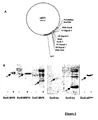
- the whole construction is carried by a plasmid that replicates in P. aeruginosa ( Figure 1A ).
- the plasmid was electroporated into a strain of P.aeruginosa.
- the bacteria are cultured either in the absence of induction of SSTT (LB medium) or in the presence of 5 mM EGTA, 20 mM MgCl 2 which allow the induction of protein synthesis and their secretions in the supernatant.
- the analysis of the culture supernatants in the absence or in the presence of induction of secretion is carried out on polyacrylamide gel under denaturing conditions (SDS-PAGE) after precipitation of the proteins of 1 ml of supernatant with 10% perchloric acid. .
- This example demonstrates that a protein of interest can be produced and injected into a cell of interest by P. aeruginosa when it is fused with the first 54 amino acids of ExoS.
- the genes coding for the proteins of interest for example P67phox, MRP8 and MRP14, are cloned in-frame with the sequence coding for the toxins secreted by the SSTT, for example ExoS and ExoT.
- This sequence, optimally coding the first 54 amino acids, is placed under the control of the natural promoter of said toxin.
- the whole construction is carried by a plasmid that replicates in P. aeruginosa.
- the plasmid is introduced by electroporation into a P. aeruginosa strain .
- the bacteria are cultured in LB medium in the absence of induction of SSTT and are then placed in the presence of the target eukaryotic cell (B-lymphocytes for p67phox).
- the bacterium / eukaryotic cell (MOI) ratio is from 1 to 50, optimally 10.
- MOI eukaryotic cell
- the NADPH oxidase activity resulting from the transduction of the above-described proteins is measured by the production of superoxide ions on whole cells, by chemiluminescence as described in article [3].
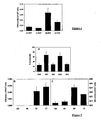
- the Figure 2A shows the effect of the infection ratio on the effectiveness of the injection.
- the kinetics of production of the superoxide ion by B lymphocytes thus modified is in favor of an infection ratio of between 5 and 10.
- Example 2B shows that this in vitro injection method can be used to measure the respective and / or concomitant effects of two or more proteins of interest.
- Bar 1 shows the basal level of activity in relative chemiluminescence unit when normal B cells are placed in the presence of CHA-003 carrying a control plasmid containing no gene of interest.
- Bar 3 shows the absence of an increase in the basal activity of NADPH oxidase during the injection by the bacterium of the ExoS54-MRP14 fusion protein.
- Bar 4 shows the inhibition of the increase of NADPH oxidase activity when the cells are incubated in the presence of the two previously described strains and allowing the expression of ExoS54-MRP8 and ExoS54-MRP14
- This system therefore also makes it possible to perform the concomitant injection of one, two or more proteins.
- Example 3 Improved secretion with ExoS54
- the optimum length of the ExoS sequence allowing secretion was determined using variable length constructs fused with XylE protein whose enzymatic catechol dioxygenase activity was measured in the culture supernatant [4].
- the CHA-003 strain was transformed by different plasmids allowing ExoS-XylE fusion expressions containing the first 129 amino acids (SEQ ID 7), 96, 54 and 17 (SEQ ID1) of ExoS.
- SEQ ID 7 the first 129 amino acids
- SEQ ID1 the first 129 amino acids
- SEQ ID1 the first 129 amino acids
- SEQ ID1 the first 129 amino acids
- SEQ ID1 96, 54 and 17
- the reduction from 129 to 54 amino acids of ExoS allows an increase of at least 6-fold in the measured CDO activity in the culture supernatant.
- the same results were obtained with the MRP8 protein.
- the figure 3B was obtained as before with the MRP8 protein instead of XylE.
- the transformed bacteria are activated to secrete the fusion proteins by calcium depletion for 3 hours. 1 ml of culture supernatant is precipitated with perchloric acid for 1 hour as described above.
- the proteins are separated on a polyacrylamide gel in the presence of SDS and stained with Coomasie blue.
- MRP8 the fusions 129, 96 and 54 allow excellent secretion.
- the figure 3C shows, however, that the secretion of ExoS-MRP8 stops as soon as less than 48 amino acids of ExoS are used.
- Examples of XylE ( 3A ) and MRP8 ( 3B and C ) and other tested proteins show that a fusion with the first 54 amino acids of ExoS is optimal for most proteins.
- the optimum length of the ExoS sequence allowing injection into eukaryotic cells was also determined using variable length constructs fused with XylE protein whose enzymatic catechol dioxygenase activity was measured in the cytosol of the cells. PLB985 after one hour of bacteria / cell co-culture in a ratio of 10 to 1. As expected, since the secretion is optimal with the first 54 amino acids of ExoS, the injection follows the same rules ( figure 4 ).
- the ExoS54 sequence can therefore be used as a universal label allowing either the secretion or the injection of proteins of interest for research, diagnosis or therapy.
- ExoS and ExoT toxins are also transported by the SSTT, we measured the effect of this inactivation for the improvement of the injection of proteins of interest.
- the ExoS54-XylE construct was introduced into the different mutants and the bacteria were co-cultured with PLB985 cells at a ratio of 10 which allowed us to quantify the gain of the injection. A ten times higher injection is obtained thanks to the use of the CHA-003 strain deleted in ExoS and ExoT.
- the injection method described below can be applied to cells in culture or in a living whole organism when the toxicity due to the injection of P. aeruginosa can be tolerated.
- This process applies to any type of protein. Optimizations must possibly be made to each of the steps of the process depending on the type of protein and / or the type of cells that one wants to transform.
- the main optimizations can relate to: the infection ratio to use, the time of co-culture, the medium used during coculture.
- the process can be schematically described in the following manner for cultured cells.
- the gene coding for the protein of interest is cloned in phase with the N-terminal part of ExoS or ExoT, optimally with the first 54 amino acids of ExoS. Any type of plasmid that replicates in P. aeruginosa is used, allowing the expression of such fusions as for example that described in Example 1.
- the plasmid is introduced by electroporation or any other method known to those skilled in the art, into a strain of P. aeruginosa, optimally the CHA-003 strain.
- the bacteria are cultured in LB medium in the absence of induction of SSTT until the middle of the exponential phase of growth. The bacteria are then recovered by centrifugation, washed and resuspended in the culture medium used for the mammalian cells that are to be transformed. The bacteria are placed in the presence of the target cells.
- the bacterium / eukaryotic cell (MOI) ratio is from 1 to 50, optimally 10. After one hour of co-culture, the bacteria can be removed by washing and adding antibiotics to the culture medium. The phenotype produced can then be observed or the cells cultured if the phenotype produced requires a longer duration of action.
- Example intracytosolic injection of a human protein into human B cells.
- NADPH oxidase an active protein capable of reconstituting a highly regulated enzymatic assembly complex, NADPH oxidase, in cells from patients with deficiency in this enzyme.
- NADPH oxidase produces superoxide radicals which, during the phagocytic metabolic explosion, will allow the destruction of pathogenic microorganisms.
- This enzyme is also present in other cells including B cells immortalized by the Epstein-Barr virus (EBV B-cell).
- Activation of NADPH oxidase involves the assembly of 4 cytosolic proteins (p47 phox , p67 phox , p40 phox and a small Rac1 or Rac2 monomeric G protein) with a heterodimeric transmembrane glycoprotein, flavocytochrome b 558 composed of two subunits , p22 phox and gp91 phox .
- CTD chronic septic granulomatous disease
- the vectors were developed from the bacterium P. aeruginosa (strain CHA-003).
- This construct is placed in front of the natural promoter of ExoS and the whole is carried by the plasmid pUCp20.
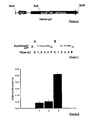
- the ExoS-specific chaperone, Orf1 is included in its original orientation to optimize the cytosolic transfer of the chimeric protein ( Fig. 6 ).
- P. aeruginosa strain CHA-003 containing plasmid pBPS54-p67 synthesizes and secretes the hybrid protein after stimulation by calcium chelation ( Fig. 7A and B
- the hybrid protein is thus synthesized and secreted under the same conditions as the native ExoS protein.
- ExoS-p67 phox hybrid protein is also injected into the cytosol of EBV B-cells.
- the cytosolic concentration reached there is comparable to that of the endogenous p67 phox protein. This cytosolic injection is well under the control of the type III secretion system.
- recombinant proteins can be obtained from bacteria such as Escherichia coli, or from eukaryotic cells (yeasts, insect cells or mammalian cells).
- bacteria such as Escherichia coli
- eukaryotic cells yeasts, insect cells or mammalian cells
- experience shows that many proteins can not be obtained by these conventional production hosts either because their expression is toxic to the production host, or because of degradation due to misfolding of the protein due to adverse conditions. in the production host.
- P.aeruginosa type III secretion system allows expression and direct secretion of proteins in the culture supernatant. This system is therefore well suited to the production of recombinant proteins having either an intracellular toxicity or a production or folding defect within the bacteria.
- production rates can reach 10 mg per liter of culture.
- the strain CHA-003 which does not secrete the exotoxins S and T the protein produced becomes predominant in the culture supernatant which facilitates the subsequent purification steps.
- the example given is that of the protein Ivy which encodes a factor of inhibition of lysozyme in bacteria. This protein is very difficult to obtain in recombinant form in E. coli.
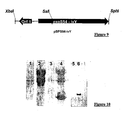
- the gene encoding the P. aeruginosa Ivy protein was amplified by PCR using primers containing the cloning sites in phase with the first 54 amino acids of ExoS.
- the plasmid pBPS54-Ivy was introduced by electroporation into the strain CHA-003.
- the bacteria were cultured overnight at 37 ° C. and then diluted in the fresh LB medium in the morning in the presence or absence of EGTA which allows the calcium depletion and therefore the induction of the SSTT.
- the band shown with an arrow on the figure 10 lane 4 migrates at the size of 22 kDa and corresponds to a quantity of the order of 10 ⁇ g of protein per ml of supernatant, ie 10 mg / l.
- IMAC immobilized nickel affinity chromatography
Landscapes
- Health & Medical Sciences (AREA)
- Genetics & Genomics (AREA)
- Chemical & Material Sciences (AREA)
- Organic Chemistry (AREA)
- Life Sciences & Earth Sciences (AREA)
- Engineering & Computer Science (AREA)
- Biophysics (AREA)
- Biomedical Technology (AREA)
- General Engineering & Computer Science (AREA)
- Molecular Biology (AREA)
- General Health & Medical Sciences (AREA)
- Bioinformatics & Cheminformatics (AREA)
- Biochemistry (AREA)
- Wood Science & Technology (AREA)
- Zoology (AREA)
- Biotechnology (AREA)
- Microbiology (AREA)
- Plant Pathology (AREA)
- Physics & Mathematics (AREA)
- Gastroenterology & Hepatology (AREA)
- Medicinal Chemistry (AREA)
- Proteomics, Peptides & Aminoacids (AREA)
- Peptides Or Proteins (AREA)
- Micro-Organisms Or Cultivation Processes Thereof (AREA)
- Preparation Of Compounds By Using Micro-Organisms (AREA)
Claims (13)
- Vektor zur Expression eines chimären Proteins, dessen N-terminales Ende der Fusion zwischen dem N-terminalen Ende von ExoS von Pseudomonas aeruginosa und einer Aminosäurensequenz von Interesse entspricht, wobei das N-terminale Ende von ExoS dem N-terminalen Ende des chimären Proteins entspricht, wobei dieser Vektor dadurch gekennzeichnet ist, dass er in 5'-nach-3'-Richtung enthält:- einen Promotor,- eine Nukleotidsequenz, die für die 54 (SEQ ID 5) ersten Aminosäuren des N-terminalen Endes von ExoS oder für jede zu mindestens 75% mit SEQ ID 5 identische Sequenz kodiert;- eine Nukleotidsequenz, die die Aminosäurensequenz von Interesse kodiert.
- Vektor nach Anspruch 1, dadurch gekennzeichnet, dass die Nukleotidsequenz für die ersten 54 Aminosäuren des N-terminalen Endes von ExoT von P. aeruginosa kodiert.
- Klonierungsvektor, umfassend in 5'-nach-3'-Richtung:- einen Promotor,- eine Nukleotidsequenz, die für die ersten 54 (SEQ ID 5) Aminosäuren des N-terminalen Endes von ExoS oder für jede zu mindestens 75% mit SEQ ID 5 identische Sequenz kodiert.
- Klonierungsvektor nach Anspruch 3, dadurch gekennzeichnet, dass die Nukleotidsequenz für die ersten 54 Aminosäuren des N-terminalen Endes von ExoT von Pseudomonas aeruginosa kodiert.
- Chimäres Protein, dessen N-terminales Ende aus den ersten 54 (SEQ ID 5) Aminosäuren des N-terminalen Endes von ExoS oder jeder zu mindestens 75% mit SEQ ID 5 identischen Sequenz besteht.
- Chimäres Protein nach Anspruch 5, dadurch gekennzeichnet, dass sein N-terminales Ende aus den ersten 54 Aminosäuren des N-terminalen Endes von ExoT von P. aeruginosa besteht.
- Gen, das für das chimäre Protein kodiert, das Gegenstand eines der Ansprüche 5 oder 6 ist.
- Isolierter Stamm von Pseudomonas aeruginosa, der mit dem Expressionsvektor, der Gegenstand eines der Ansprüche 1 bis 4 ist, transformiert wurde.
- Stamm nach Anspruch 8, dadurch gekennzeichnet, dass der Stamm durch Deletion oder Mutation mindestens eines Gens modifiziert ist, das aus den die Proteine ExoS, ExoT, ExoU und ExoY kodierenden Genen selektiert ist.
- Stamm nach Anspruch 9, dadurch gekennzeichnet, dass der Stamm bei CNCM (Institut Pasteur Paris) unter der Nummer I-3090 hinterlegt wurde.
- Verfahren zur ex-vivo- oder in-vitro-Injektion eines chimären Proteins nach Anspruch 5 oder 6 oder eines durch einen Vektor nach einem der Ansprüche 1 bis 4 kodierten chimären Proteins in eine eukaryotische Zelle, umfassend das In-Kontakt-Bringen eines Stamms nach einem der Ansprüche 8 bis 10 mit der eukaryotischen Zelle.
- Verfahren zur Herstellung eines chimären Proteins nach Anspruch 5 oder 6 oder eines durch einen Vektor nach einem der Ansprüche 1 bis 4 kodierten chimären Proteins, umfassend die folgenden Schritte:- einen Stamm nach einem der Ansprüche 8 bis 10 züchten,- die Sekretion des chimären Proteins induzieren,- den Kulturüberstand gewinnen.
- Stamm nach einem der Ansprüche 8 bis 10 für seine Verwendung in der Therapie.
Applications Claiming Priority (2)
| Application Number | Priority Date | Filing Date | Title |
|---|---|---|---|
| FR0313286A FR2862312B1 (fr) | 2003-11-13 | 2003-11-13 | Outil de transfert et de production de proteines mettant en oeuvre le systeme de secretion de type iii de pseudomonas |
| PCT/FR2004/050564 WO2005049644A2 (fr) | 2003-11-13 | 2004-11-04 | Outil de transfert et de production de proteines mettant en oeuvre le systeme de secretion de type iii de pseudomonas |
Publications (2)
| Publication Number | Publication Date |
|---|---|
| EP1692162A2 EP1692162A2 (de) | 2006-08-23 |
| EP1692162B1 true EP1692162B1 (de) | 2010-01-13 |
Family
ID=34508435
Family Applications (1)
| Application Number | Title | Priority Date | Filing Date |
|---|---|---|---|
| EP04805807A Expired - Lifetime EP1692162B1 (de) | 2003-11-13 | 2004-11-04 | Tool für den transfer und die herstelung von proteinen mit dem pseudomonas-typ-iii-sekretionssystem |
Country Status (7)
| Country | Link |
|---|---|
| US (1) | US7939319B2 (de) |
| EP (1) | EP1692162B1 (de) |
| AT (1) | ATE455125T1 (de) |
| DE (1) | DE602004025139D1 (de) |
| ES (1) | ES2339118T3 (de) |
| FR (1) | FR2862312B1 (de) |
| WO (1) | WO2005049644A2 (de) |
Cited By (1)
| Publication number | Priority date | Publication date | Assignee | Title |
|---|---|---|---|---|
| WO2013087667A1 (en) | 2011-12-12 | 2013-06-20 | Universite Joseph Fourier - Grenoble 1 | Attenuated and adapted strain of pseudomonas for delivering antigens |
Families Citing this family (19)
| Publication number | Priority date | Publication date | Assignee | Title |
|---|---|---|---|---|
| US20080124355A1 (en) | 2006-09-22 | 2008-05-29 | David Gordon Bermudes | Live bacterial vaccines for viral infection prophylaxis or treatment |
| ES2331271B1 (es) * | 2007-06-29 | 2010-10-14 | Universidad Del Pais Vasco | Metodo para la internalizacion de bacterias no invasivas en celulas eucariotas. |
| US8617888B2 (en) * | 2010-07-23 | 2013-12-31 | University Of Florida Research Foundation, Inc. | Bacterial mediated delivery of nuclear protein into pluripotent and differentiated cells |
| US20160002667A1 (en) * | 2013-03-15 | 2016-01-07 | Rush University Medical Center | Pseudomonas exotoxins for cancer treatment |
| CA2948570C (en) | 2014-05-21 | 2023-09-12 | Universitaet Basel | Bacteria-based protein delivery |
| US9616114B1 (en) | 2014-09-18 | 2017-04-11 | David Gordon Bermudes | Modified bacteria having improved pharmacokinetics and tumor colonization enhancing antitumor activity |
| US10676723B2 (en) | 2015-05-11 | 2020-06-09 | David Gordon Bermudes | Chimeric protein toxins for expression by therapeutic bacteria |
| EP3101134A1 (de) | 2015-06-05 | 2016-12-07 | Apcure SAS | Therapeutischer impfstoff zur behandlung oder prävention von tumoren im zusammenhang mit merkelzell-polyomavirus |
| SG11201803642WA (en) * | 2015-11-19 | 2018-06-28 | Univ Basel | Bacteria-based protein delivery |
| CA3003563A1 (en) | 2015-11-19 | 2017-05-26 | Universitat Basel | Virulence attenuated bacteria for treatment of malignant solid tumors |
| US11129906B1 (en) | 2016-12-07 | 2021-09-28 | David Gordon Bermudes | Chimeric protein toxins for expression by therapeutic bacteria |
| US11180535B1 (en) | 2016-12-07 | 2021-11-23 | David Gordon Bermudes | Saccharide binding, tumor penetration, and cytotoxic antitumor chimeric peptides from therapeutic bacteria |
| ES2886672T3 (es) | 2016-12-20 | 2021-12-20 | Univ Basel | Administración de proteína basada en bacterias de virulencia atenuada |
| EP3363460A1 (de) | 2017-02-16 | 2018-08-22 | Université Grenoble Alpes | Abgeschwächter stamm von pseudomonas als impfstoff gegen pseudomonas-infektionen |
| US11471497B1 (en) | 2019-03-13 | 2022-10-18 | David Gordon Bermudes | Copper chelation therapeutics |
| CN110922454B (zh) * | 2019-12-05 | 2020-11-06 | 中国科学院深圳先进技术研究院 | 绿脓杆菌毒素ExoS和ExoT的免疫用途及其制备方法 |
| US10973908B1 (en) | 2020-05-14 | 2021-04-13 | David Gordon Bermudes | Expression of SARS-CoV-2 spike protein receptor binding domain in attenuated salmonella as a vaccine |
| US12537071B1 (en) | 2020-07-22 | 2026-01-27 | David Gordon Bermudes | Bacteria having boolean control pathways expressing therapeutic proteins including immunotherapeutic cytotoxins |
| CN112237623B (zh) * | 2020-10-30 | 2023-10-03 | 中国人民解放军陆军军医大学第二附属医院 | 铜绿假单胞菌III型分泌型蛋白PcrV及其诱导极化的巨噬细胞的应用 |
Family Cites Families (2)
| Publication number | Priority date | Publication date | Assignee | Title |
|---|---|---|---|---|
| US6306387B1 (en) | 1997-05-29 | 2001-10-23 | The Research Foundation Of State University Of New York | Antigen delivery system |
| US5965381A (en) | 1998-03-06 | 1999-10-12 | Ludwig Institute For Cancer Research | Delivery of proteins into eukaryotic cells with recombinant yersinia |
-
2003
- 2003-11-13 FR FR0313286A patent/FR2862312B1/fr not_active Expired - Fee Related
-
2004
- 2004-11-04 EP EP04805807A patent/EP1692162B1/de not_active Expired - Lifetime
- 2004-11-04 AT AT04805807T patent/ATE455125T1/de not_active IP Right Cessation
- 2004-11-04 ES ES04805807T patent/ES2339118T3/es not_active Expired - Lifetime
- 2004-11-04 DE DE602004025139T patent/DE602004025139D1/de not_active Expired - Lifetime
- 2004-11-04 WO PCT/FR2004/050564 patent/WO2005049644A2/fr not_active Ceased
-
2006
- 2006-05-12 US US11/433,391 patent/US7939319B2/en active Active
Cited By (1)
| Publication number | Priority date | Publication date | Assignee | Title |
|---|---|---|---|---|
| WO2013087667A1 (en) | 2011-12-12 | 2013-06-20 | Universite Joseph Fourier - Grenoble 1 | Attenuated and adapted strain of pseudomonas for delivering antigens |
Also Published As
| Publication number | Publication date |
|---|---|
| ATE455125T1 (de) | 2010-01-15 |
| DE602004025139D1 (de) | 2010-03-04 |
| EP1692162A2 (de) | 2006-08-23 |
| US7939319B2 (en) | 2011-05-10 |
| ES2339118T3 (es) | 2010-05-17 |
| WO2005049644A2 (fr) | 2005-06-02 |
| WO2005049644A3 (fr) | 2005-11-17 |
| FR2862312A1 (fr) | 2005-05-20 |
| FR2862312B1 (fr) | 2006-02-17 |
| US20080187520A1 (en) | 2008-08-07 |
Similar Documents
| Publication | Publication Date | Title |
|---|---|---|
| EP1692162B1 (de) | Tool für den transfer und die herstelung von proteinen mit dem pseudomonas-typ-iii-sekretionssystem | |
| Terashima et al. | The Vibrio motor proteins, MotX and MotY, are associated with the basal body of Na+‐driven flagella and required for stator formation | |
| WO2019157098A1 (en) | Compositions comprising a recombinant listeria strain and an anti-ccr8 antibody and methods of use | |
| EP0551506A1 (de) | Expressionssystem und Sekretion von Proteinen brauchbar insbesondere in Corynebakterien. | |
| CN113413466B (zh) | 用于治疗癌症的amuc_1100和免疫检查点调节剂的组合疗法 | |
| CN112654702A (zh) | 改进的核酸酶的组合物和方法 | |
| US20180201940A1 (en) | Therapeutic vaccine for treating or preventing merkel cell polyoma virus-associated tumors | |
| Blanco et al. | Bacterial‐associated cholera toxin and GM1 binding are required for transcytosis of classical biotype Vibrio cholerae through an in vitro M cell model system | |
| Artier et al. | Comparative proteomic analysis of Xanthomonas citri ssp. citri periplasmic proteins reveals changes in cellular envelope metabolism during in vitro pathogenicity induction | |
| US20200323926A1 (en) | Bacteria for Targeting Tumors and Treating Cancer | |
| CN114908077A (zh) | 噬菌体裂解酶、其嵌合物及应用 | |
| EP2906593B1 (de) | Verfahren zur herstellung von rekombinantem c1q-protein | |
| Kim et al. | Is Ffh required for export of secretory proteins? | |
| EP2310511B1 (de) | Selbstreplizierender vektor ohne antibiotikaresistenzgen | |
| CN105579053A (zh) | 非糖基化溶葡球菌素变体蛋白 | |
| JP2014531896A (ja) | ヒト型結核菌ポリンおよび毒素ならびに関連方法 | |
| Polack et al. | Protein delivery by Pseudomonas type III secretion system: ex vivo complementation of p67phox-deficient chronic granulomatous disease | |
| Dittmar et al. | Complementation studies with human ClpP in Bacillus subtilis | |
| JP7280366B2 (ja) | 外来タンパク質を発現する微生物、及びその用途 | |
| FR2807764A1 (fr) | Mutants de bacteries lactiques surproducteurs d'exopolysaccharides | |
| EP0991663B1 (de) | Mycobacterium stämme mit einem modifizierten erp gen und enthaltende impfstoffzusammensetzung | |
| EP0594776A1 (de) | Plasmid-replikationsursprung, welcher die kopienzahl von ihn enthaltenden plasmiden erhöht | |
| EP4114987A1 (de) | Gram-positive bakterien der spezies lactococcus lactis oder streptococcus thermophilus mit sehr geringer oberflächenproteolyse, verfahren zu ihrer herstellung und ihre verwendung | |
| CN111979162A (zh) | 重组卡介苗菌株、其制备方法和用途 | |
| CN113677794A (zh) | 抗微生物内溶素多肽、组合物和制剂 |
Legal Events
| Date | Code | Title | Description |
|---|---|---|---|
| PUAI | Public reference made under article 153(3) epc to a published international application that has entered the european phase |
Free format text: ORIGINAL CODE: 0009012 |
|
| 17P | Request for examination filed |
Effective date: 20060515 |
|
| AK | Designated contracting states |
Kind code of ref document: A2 Designated state(s): AT BE BG CH CY CZ DE DK EE ES FI FR GB GR HU IE IS IT LI LU MC NL PL PT RO SE SI SK TR |
|
| DAX | Request for extension of the european patent (deleted) | ||
| 17Q | First examination report despatched |
Effective date: 20071108 |
|
| GRAP | Despatch of communication of intention to grant a patent |
Free format text: ORIGINAL CODE: EPIDOSNIGR1 |
|
| GRAS | Grant fee paid |
Free format text: ORIGINAL CODE: EPIDOSNIGR3 |
|
| GRAA | (expected) grant |
Free format text: ORIGINAL CODE: 0009210 |
|
| AK | Designated contracting states |
Kind code of ref document: B1 Designated state(s): AT BE BG CH CY CZ DE DK EE ES FI FR GB GR HU IE IS IT LI LU MC NL PL PT RO SE SI SK TR |
|
| REG | Reference to a national code |
Ref country code: GB Ref legal event code: FG4D Free format text: NOT ENGLISH |
|
| REG | Reference to a national code |
Ref country code: CH Ref legal event code: EP |
|
| REG | Reference to a national code |
Ref country code: IE Ref legal event code: FG4D |
|
| REF | Corresponds to: |
Ref document number: 602004025139 Country of ref document: DE Date of ref document: 20100304 Kind code of ref document: P |
|
| REG | Reference to a national code |
Ref country code: NL Ref legal event code: T3 |
|
| REG | Reference to a national code |
Ref country code: ES Ref legal event code: FG2A Ref document number: 2339118 Country of ref document: ES Kind code of ref document: T3 |
|
| PG25 | Lapsed in a contracting state [announced via postgrant information from national office to epo] |
Ref country code: AT Free format text: LAPSE BECAUSE OF FAILURE TO SUBMIT A TRANSLATION OF THE DESCRIPTION OR TO PAY THE FEE WITHIN THE PRESCRIBED TIME-LIMIT Effective date: 20100113 |
|
| PG25 | Lapsed in a contracting state [announced via postgrant information from national office to epo] |
Ref country code: PT Free format text: LAPSE BECAUSE OF FAILURE TO SUBMIT A TRANSLATION OF THE DESCRIPTION OR TO PAY THE FEE WITHIN THE PRESCRIBED TIME-LIMIT Effective date: 20100513 Ref country code: IS Free format text: LAPSE BECAUSE OF FAILURE TO SUBMIT A TRANSLATION OF THE DESCRIPTION OR TO PAY THE FEE WITHIN THE PRESCRIBED TIME-LIMIT Effective date: 20100513 |
|
| REG | Reference to a national code |
Ref country code: IE Ref legal event code: FD4D |
|
| PG25 | Lapsed in a contracting state [announced via postgrant information from national office to epo] |
Ref country code: SI Free format text: LAPSE BECAUSE OF FAILURE TO SUBMIT A TRANSLATION OF THE DESCRIPTION OR TO PAY THE FEE WITHIN THE PRESCRIBED TIME-LIMIT Effective date: 20100113 Ref country code: PL Free format text: LAPSE BECAUSE OF FAILURE TO SUBMIT A TRANSLATION OF THE DESCRIPTION OR TO PAY THE FEE WITHIN THE PRESCRIBED TIME-LIMIT Effective date: 20100113 Ref country code: FI Free format text: LAPSE BECAUSE OF FAILURE TO SUBMIT A TRANSLATION OF THE DESCRIPTION OR TO PAY THE FEE WITHIN THE PRESCRIBED TIME-LIMIT Effective date: 20100113 |
|
| PG25 | Lapsed in a contracting state [announced via postgrant information from national office to epo] |
Ref country code: SE Free format text: LAPSE BECAUSE OF FAILURE TO SUBMIT A TRANSLATION OF THE DESCRIPTION OR TO PAY THE FEE WITHIN THE PRESCRIBED TIME-LIMIT Effective date: 20100113 Ref country code: RO Free format text: LAPSE BECAUSE OF FAILURE TO SUBMIT A TRANSLATION OF THE DESCRIPTION OR TO PAY THE FEE WITHIN THE PRESCRIBED TIME-LIMIT Effective date: 20100113 Ref country code: IE Free format text: LAPSE BECAUSE OF FAILURE TO SUBMIT A TRANSLATION OF THE DESCRIPTION OR TO PAY THE FEE WITHIN THE PRESCRIBED TIME-LIMIT Effective date: 20100113 Ref country code: GR Free format text: LAPSE BECAUSE OF FAILURE TO SUBMIT A TRANSLATION OF THE DESCRIPTION OR TO PAY THE FEE WITHIN THE PRESCRIBED TIME-LIMIT Effective date: 20100414 Ref country code: EE Free format text: LAPSE BECAUSE OF FAILURE TO SUBMIT A TRANSLATION OF THE DESCRIPTION OR TO PAY THE FEE WITHIN THE PRESCRIBED TIME-LIMIT Effective date: 20100113 Ref country code: CY Free format text: LAPSE BECAUSE OF FAILURE TO SUBMIT A TRANSLATION OF THE DESCRIPTION OR TO PAY THE FEE WITHIN THE PRESCRIBED TIME-LIMIT Effective date: 20100113 |
|
| PLBE | No opposition filed within time limit |
Free format text: ORIGINAL CODE: 0009261 |
|
| STAA | Information on the status of an ep patent application or granted ep patent |
Free format text: STATUS: NO OPPOSITION FILED WITHIN TIME LIMIT |
|
| PG25 | Lapsed in a contracting state [announced via postgrant information from national office to epo] |
Ref country code: SK Free format text: LAPSE BECAUSE OF FAILURE TO SUBMIT A TRANSLATION OF THE DESCRIPTION OR TO PAY THE FEE WITHIN THE PRESCRIBED TIME-LIMIT Effective date: 20100113 Ref country code: CZ Free format text: LAPSE BECAUSE OF FAILURE TO SUBMIT A TRANSLATION OF THE DESCRIPTION OR TO PAY THE FEE WITHIN THE PRESCRIBED TIME-LIMIT Effective date: 20100113 Ref country code: BG Free format text: LAPSE BECAUSE OF FAILURE TO SUBMIT A TRANSLATION OF THE DESCRIPTION OR TO PAY THE FEE WITHIN THE PRESCRIBED TIME-LIMIT Effective date: 20100413 |
|
| 26N | No opposition filed |
Effective date: 20101014 |
|
| PG25 | Lapsed in a contracting state [announced via postgrant information from national office to epo] |
Ref country code: DK Free format text: LAPSE BECAUSE OF FAILURE TO SUBMIT A TRANSLATION OF THE DESCRIPTION OR TO PAY THE FEE WITHIN THE PRESCRIBED TIME-LIMIT Effective date: 20100113 |
|
| PG25 | Lapsed in a contracting state [announced via postgrant information from national office to epo] |
Ref country code: MC Free format text: LAPSE BECAUSE OF NON-PAYMENT OF DUE FEES Effective date: 20101130 |
|
| PG25 | Lapsed in a contracting state [announced via postgrant information from national office to epo] |
Ref country code: HU Free format text: LAPSE BECAUSE OF FAILURE TO SUBMIT A TRANSLATION OF THE DESCRIPTION OR TO PAY THE FEE WITHIN THE PRESCRIBED TIME-LIMIT Effective date: 20100714 Ref country code: LU Free format text: LAPSE BECAUSE OF NON-PAYMENT OF DUE FEES Effective date: 20101104 |
|
| PG25 | Lapsed in a contracting state [announced via postgrant information from national office to epo] |
Ref country code: TR Free format text: LAPSE BECAUSE OF FAILURE TO SUBMIT A TRANSLATION OF THE DESCRIPTION OR TO PAY THE FEE WITHIN THE PRESCRIBED TIME-LIMIT Effective date: 20100113 |
|
| REG | Reference to a national code |
Ref country code: FR Ref legal event code: PLFP Year of fee payment: 12 |
|
| REG | Reference to a national code |
Ref country code: FR Ref legal event code: PLFP Year of fee payment: 13 |
|
| REG | Reference to a national code |
Ref country code: FR Ref legal event code: PLFP Year of fee payment: 14 |
|
| REG | Reference to a national code |
Ref country code: DE Ref legal event code: R081 Ref document number: 602004025139 Country of ref document: DE Owner name: UNIVERSITE GRENOBLE ALPES, FR Free format text: FORMER OWNER: UNIVERSITE JOSEPH FOURIER, GRENOBLE, FR |
|
| REG | Reference to a national code |
Ref country code: NL Ref legal event code: PD Owner name: UNIVERSITE GRENOBLE ALPES; FR Free format text: DETAILS ASSIGNMENT: CHANGE OF OWNER(S), MERGE; FORMER OWNER NAME: UNIVERSITE JOSEPH FOURIER Effective date: 20210804 |
|
| REG | Reference to a national code |
Ref country code: GB Ref legal event code: 732E Free format text: REGISTERED BETWEEN 20210902 AND 20210908 |
|
| REG | Reference to a national code |
Ref country code: BE Ref legal event code: PD Owner name: UNIVERSITE GRENOBLE ALPES; FR Free format text: DETAILS ASSIGNMENT: CHANGE OF OWNER(S), MERGE; FORMER OWNER NAME: UNIVERSITE JOSEPH FOURIER Effective date: 20211005 |
|
| REG | Reference to a national code |
Ref country code: ES Ref legal event code: PC2A Owner name: UNIVERSITE GRENOBLE ALPES Effective date: 20220223 |
|
| P01 | Opt-out of the competence of the unified patent court (upc) registered |
Effective date: 20230811 |
|
| PGFP | Annual fee paid to national office [announced via postgrant information from national office to epo] |
Ref country code: NL Payment date: 20230915 Year of fee payment: 20 Ref country code: GB Payment date: 20230914 Year of fee payment: 20 |
|
| PGFP | Annual fee paid to national office [announced via postgrant information from national office to epo] |
Ref country code: FR Payment date: 20230915 Year of fee payment: 20 |
|
| PGFP | Annual fee paid to national office [announced via postgrant information from national office to epo] |
Ref country code: ES Payment date: 20231218 Year of fee payment: 20 |
|
| PGFP | Annual fee paid to national office [announced via postgrant information from national office to epo] |
Ref country code: IT Payment date: 20231109 Year of fee payment: 20 Ref country code: DE Payment date: 20230915 Year of fee payment: 20 Ref country code: CH Payment date: 20231201 Year of fee payment: 20 |
|
| PGFP | Annual fee paid to national office [announced via postgrant information from national office to epo] |
Ref country code: BE Payment date: 20231113 Year of fee payment: 20 |
|
| REG | Reference to a national code |
Ref country code: DE Ref legal event code: R071 Ref document number: 602004025139 Country of ref document: DE |
|
| REG | Reference to a national code |
Ref country code: NL Ref legal event code: MK Effective date: 20241103 |
|
| REG | Reference to a national code |
Ref country code: CH Ref legal event code: PL |
|
| REG | Reference to a national code |
Ref country code: ES Ref legal event code: FD2A Effective date: 20241126 |
|
| REG | Reference to a national code |
Ref country code: GB Ref legal event code: PE20 Expiry date: 20241103 |
|
| REG | Reference to a national code |
Ref country code: BE Ref legal event code: MK Effective date: 20241104 |
|
| PG25 | Lapsed in a contracting state [announced via postgrant information from national office to epo] |
Ref country code: GB Free format text: LAPSE BECAUSE OF EXPIRATION OF PROTECTION Effective date: 20241103 |
|
| PG25 | Lapsed in a contracting state [announced via postgrant information from national office to epo] |
Ref country code: ES Free format text: LAPSE BECAUSE OF EXPIRATION OF PROTECTION Effective date: 20241105 |
|
| PG25 | Lapsed in a contracting state [announced via postgrant information from national office to epo] |
Ref country code: GB Free format text: LAPSE BECAUSE OF EXPIRATION OF PROTECTION Effective date: 20241103 Ref country code: ES Free format text: LAPSE BECAUSE OF EXPIRATION OF PROTECTION Effective date: 20241105 |