EP1683480B1 - Basal metabolic rate measuring device - Google Patents
Basal metabolic rate measuring device Download PDFInfo
- Publication number
- EP1683480B1 EP1683480B1 EP06000196A EP06000196A EP1683480B1 EP 1683480 B1 EP1683480 B1 EP 1683480B1 EP 06000196 A EP06000196 A EP 06000196A EP 06000196 A EP06000196 A EP 06000196A EP 1683480 B1 EP1683480 B1 EP 1683480B1
- Authority
- EP
- European Patent Office
- Prior art keywords
- data
- metabolic rate
- basal metabolic
- acquiring means
- subject
- Prior art date
- Legal status (The legal status is an assumption and is not a legal conclusion. Google has not performed a legal analysis and makes no representation as to the accuracy of the status listed.)
- Ceased
Links
Images



Classifications
-
- A—HUMAN NECESSITIES
- A61—MEDICAL OR VETERINARY SCIENCE; HYGIENE
- A61B—DIAGNOSIS; SURGERY; IDENTIFICATION
- A61B5/00—Measuring for diagnostic purposes; Identification of persons
- A61B5/48—Other medical applications
- A61B5/4869—Determining body composition
- A61B5/4872—Body fat
-
- A—HUMAN NECESSITIES
- A61—MEDICAL OR VETERINARY SCIENCE; HYGIENE
- A61B—DIAGNOSIS; SURGERY; IDENTIFICATION
- A61B5/00—Measuring for diagnostic purposes; Identification of persons
- A61B5/05—Detecting, measuring or recording for diagnosis by means of electric currents or magnetic fields; Measuring using microwaves or radio waves
- A61B5/053—Measuring electrical impedance or conductance of a portion of the body
- A61B5/0537—Measuring body composition by impedance, e.g. tissue hydration or fat content
-
- A—HUMAN NECESSITIES
- A61—MEDICAL OR VETERINARY SCIENCE; HYGIENE
- A61B—DIAGNOSIS; SURGERY; IDENTIFICATION
- A61B5/00—Measuring for diagnostic purposes; Identification of persons
- A61B5/22—Ergometry; Measuring muscular strength or the force of a muscular blow
- A61B5/221—Ergometry, e.g. by using bicycle type apparatus
- A61B5/222—Ergometry, e.g. by using bicycle type apparatus combined with detection or measurement of physiological parameters, e.g. heart rate
Definitions
- the present invention relates to a basal metabolic rate measuring device capable of calculating a basal metabolic rate based on the fat free mass data and age data of a subject, particularly, to a basal metabolic rate measuring device capable of calculating the basal metabolic rate of a subject even when the subject is a pregnant woman.
- Patent Literatures 1 and 2 The method of calculating and the device of measuring a basal metabolic rate that are disclosed in Patent Literatures 1 and 2 have been incorporated and practically used in, for example, a body fat meter and a body composition meter that use a so-called bioelectrical impedance method as disclosed in Patent Literatures 3 and 4 and calculate the basal metabolic rate of a subject by an estimation formula that takes fat free mass measured based on the bioelectrical impedance method as an important parameter.
- Nonpatent Literature 2 discloses amounts of increase of oxygen consumption in organs in each week of the gestational period.
- the present applicant has confirmed that the body weight of fetus, the weight of amniotic fluid, the weight of placenta and the weight of the fetal part that is the total of these weights can be basically uniformly estimated based on the number of weeks of pregnancy.
- a body fat measuring device for pregnant women has been developed by use of the relationship between the number of weeks of pregnancy and the fetal part weight (intrauterine component weight) and the above bioelectrical impedance method and also applied for patent, as exemplified by Patent Literature 5.
- Nonpatent Literature 1 which is presented by the Ministry of Health, Labor and Welfare
- the calculation method and measurement device as disclosed in Patent Literatures 1 and 2 which have been developed by the present applicant are easy to use, they are intended for non-pregnant subjects.
- results when they are used for pregnant women can be used as a useful reference, it is difficult to say that the results are accurate, and the methods and device are not suitable for measurement of the basal metabolic rate of a pregnant woman.
- the present applicant has examined the accuracy of the calculation method presented by the Ministry of Health, Labor and Welfare and the calculation method and measurement device disclosed in Patent Literatures 1 and 2 with the help of pregnant women.
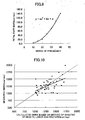
- the horizontal axis represents basal metabolic rates calculated by use of the calculation method presented by the Ministry of Health, Labor and Welfare
- the vertical axis represents basal metabolic rates measured by use of a scentometer
- the calculated basal metabolic rates and measured basal metabolic rates of the pregnant subjects are plotted as examination data.
- Broken lines in Fig. 10 indicate matching between values on the horizontal axis and values on the vertical axis. It is understood that it is difficult to calculate the basal metabolic rate of a pregnant woman accurately by this calculation method since the average line (solid line) obtained from the examination data of the subjects deviates from the broken lines.
- EP 1 195 138 A1 discloses an apparatus for measuring basal metabolism of a subject using the fat free mass, age and body weight of the subject.
- EP 1 279 367 A1 discloses body fat measuring system and health care system for pregnant women.
- a basal metabolic rate measuring device capable of measuring the basal metabolic rate of a pregnant woman easily and accurately by improving a known basal metabolic rate measuring device capable of calculating a basal metabolic rate based on the fat free mass data and age data of a subject.
- a basal metabolic rate measuring device of the present invention comprises:
- the basal metabolic rate calculating means calculates the basal metabolic rate of the pregnant subject based on weight data obtained by adding the fetal part weight data to the fat free mass data of mother and the age data.
- the fetal part weight data acquiring means comprises gestational period data acquiring means for acquiring the data of time elapsed after pregnancy of the pregnant subject, and fetal part weight data determining means for determining the weight data of the fetal part based on the gestational period data.
- the basal metabolic rate measuring device of the present invention further comprises:
- the fetal part weight data acquiring means comprises fetal part weight data determining means for determining the weight data of the fetal part based on the gestational period data acquired by the gestational period data acquiring means.
- the gestational period data acquiring means provided to the basal metabolic rate measuring device of the present invention comprises:
- the basal metabolic rate measuring device of the present invention is a known basal metabolic rate measuring device comprising basal metabolic rate calculating means for calculating a basal metabolic rate based on the fat free mass data and age data of a subject with an additional feature that the device calculates the fat free mass data of the body of the pregnant subject and calculates the basal metabolic rate of the subject based on at least the fat free mass data and age data.
- the fat free mass data of mother is calculated by the known basal metabolic rate measuring device provided with fetal part weight data acquiring means based on at least the body height data, body weight data, impedance data and fetal part weight data of the subject.
- the basal metabolic rate measuring device of the present invention can measure the basal metabolic rate of a pregnant woman easily and accurately.
- the basal metabolic rate measuring device of the present invention when the above basal metabolic rate calculating means calculates the basal metabolic rate of the pregnant subject based on weight data obtained by adding the fetal part weight data to the fat free mass data of mother and age data, the basal metabolic rate measuring device of the present invention can be achieved by use of an estimation formula obtained by merely making minor changes on an estimation formula used in the known basal metabolic rate measuring device.
- the above fetal part weight data acquiring means comprises gestational period data acquiring means for acquiring the data of time elapsed after pregnancy of the pregnant subject and fetal part weight data determining means for determining the weight data of the fetal part based on the acquired gestational period data
- the fetal part weight data used in calculations of the fat free mass and eventually acquired basal metabolic rate of mother can be determined based on the gestational period data such as the number of weeks of pregnancy, thereby making the basal metabolic rate measuring device of the present invention easier to use.
- the basal metabolic rate measuring device of the present invention when the above basal metabolic rate calculating means calculates the basal metabolic rate of mother based on the fat free mass data and age data of mother, calculates the basal metabolic rate of the fetal part based on the gestational period data and calculates the basal metabolic rate of the pregnant subject by totaling the basal metabolic rate of mother and the basal metabolic rate of the fetal part, provided that the gestational period data acquiring means for acquiring the data of time elapsed after pregnancy of the pregnant subject is provided, the basal metabolic rate measuring device of the present invention can be achieved by a simple arithmetic processing program which comprises calculating the basal metabolic rate of mother by use of an estimation formula obtained by merely making minor changes on an estimation formula used in the known basal metabolic rate measuring device, calculating the basal metabolic rate of the fetal part based on the gestational period data such as the number of weeks of pregnancy and eventually totaling these basal metabolic rates.
- the above fetal part weight data acquiring means comprises fetal part weight data determining means for determining the weight data of the fetal part based on the gestational period data acquired by the above gestational period data acquiring means
- the fetal part weight data used in calculation of the fat free mass of mother can be determined based on the gestational period data such as the number of weeks of pregnancy, thereby making the basal metabolic rate measuring device of the present invention easier to use.
- the gestational period data acquiring means provided to the basal metabolic rate measuring device of the present invention comprises measurement date data acquiring means for acquiring measurement date data, expected date of confinement data acquiring means for acquiring the data of the expected date of confinement of the pregnant subject and gestational period data determining means for determining the data of time elapsed after pregnancy based on the acquired measurement date data and data of the expected date of confinement, the gestational period data and the fetal part weight data based on the gestational period data are determined or the basal metabolic rate of the feta part is calculated from easily specifiable date data such as measurement date on which the basal metabolic rate measuring device of the present invention is used and expected date of confinement, thereby making the basal metabolic rate measuring device of the present invention easier to use.
- a basal metabolic rate measuring device of the present invention comprises:
- the basal metabolic rate calculating means desirably calculates the basal metabolic rate of the pregnant subject based on weight data obtained by adding the fetal part weight data to the fat free mass data of mother and the age data.
- the fetal part weight data acquiring means desirably comprises gestational period data acquiring means for acquiring the data of time elapsed after pregnancy of the pregnant subject, and fetal part weight data determining means for determining the weight data of the fetal part based on the gestational period data.
- the basal metabolic rate measuring device of the present invention desirably further comprises gestational period data acquiring means for acquiring the data of time elapsed after pregnancy of the pregnant subject, and the basal metabolic rate calculating means desirably calculates the basal metabolic rate of the body of the pregnant subject based on the fat free mass data and age data of mother, calculates the basal metabolic rate of the fetal part based on the gestational period data and calculates the basal metabolic rate of the pregnant subject by totaling the basal metabolic rate of mother and the basal metabolic rate of the fetal part.
- the fetal part weight data acquiring means desirably comprises fetal part weight data determining means for determining the weight data of the fetal part based on the gestational period data acquired by the gestational period data acquiring means.
- the gestational period data acquiring means provided to the basal metabolic rate measuring device of the present invention desirably comprises:
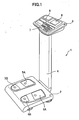
- Fig. 1 is an external perspective view of a basal metabolic rate measuring device 1 as an example of the present invention.
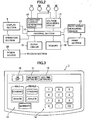
- Fig. 2 is an enlarged view of the operation section of the basal metabolic rate measuring device 1.
- Fig. 3 is a schematic diagram illustrating the electric circuit configuration of the basal metabolic rate measuring device 1.
- Fig. 4 is a flowchart of a control processing program to be executed in the basal metabolic rate measuring device 1 as the first example.
- Fig. 5 is a diagram illustrating the relationship between the number of weeks of pregnancy and fetal part weight data that are used in the basal metabolic rate measuring device 1 as the first example.
- Fig. 1 is an external perspective view of a basal metabolic rate measuring device 1 as an example of the present invention.
- Fig. 2 is an enlarged view of the operation section of the basal metabolic rate measuring device 1.
- Fig. 3 is a schematic diagram illustrating the electric circuit configuration of the basal metabolic rate measuring device 1.
- Fig. 4 is a flowchart of a control processing program
- Fig. 6 is a diagram illustrating the result of examining the accuracy of basal metabolic rate calculation formula for pregnant women that is used in the basal metabolic rate measuring device 1 as the first example.
- Fig. 7 is a diagram illustrating an example of printout from the basal metabolic rate measuring device 1 as the first example.
- the basal metabolic rate measuring device 1 (hereinafter may be abbreviated simply as "device 1") that is an example of the present invention is a body composition meter capable of calculating various body composition data of a subject, such as body fat mass, fat free mass, a body water content, a muscle amount and bone mass, by use of a so-called bioelectrical impedance method. More specifically, the device 1 is an improved version of a body composition meter incorporating a known basal metabolic rate measuring device capable of calculating the basal metabolic rate of a subject based on the fat free mass data and age data of the subject.
- the device 1 comprises a platform 2 on which a subject stands upright, an input/output unit 3 by which a subject or an operator (hereinafter may be generically referred to as "user") of the device inputs or outputs various data, and a support 4 which fixes the input/output unit 3 to the platform 2 and incorporates wires for electrically connecting them.
- a so-called load cell for detecting a load generated when a subject stands on the platform 2 is incorporated as a body weight measuring sensor 2A. Further, on the top surface of the platform 2, electrodes 5A and 5B that make contact with the bottom of the left foot of a subject and electrodes 6A and 6B that make contact with the bottom of the right foot of the subject are provided in an insulated state.
- the input/output unit 3 incorporates an operation section 7 which comprises a switch panel for accepting operations of a user, a display section 8 which comprises a liquid crystal screen for displaying various data acquired by the device 1, and a print section 9 which comprises a thermal printer for printing out the data.
- an operation section 7 which comprises a switch panel for accepting operations of a user, a display section 8 which comprises a liquid crystal screen for displaying various data acquired by the device 1, and a print section 9 which comprises a thermal printer for printing out the data.
- a power key 10 for turning on or off the device 1
- a tare weight setting key 11 for setting the weight of the clothes of a subject
- a date/time setting key 12 for setting a date and time
- status setting keys 13 for setting the gender and body type of a subject or whether the subject is a pregnant woman
- a numeric keypad 14 for setting the body height, birth date and expected date of confinement of a subject.
- the input/output unit 3 also incorporates a control section 15 that comprises a processor and a temporary storage memory for executing various control processing programs to be described later, a constant current generating circuit 16 that is electrically connected to the above electrodes 5A and 6A to supply an alternating constant current to these electrodes, a voltage measuring circuit 17 that is electrically connected to the above electrodes 5B and 6B to measure a potential difference between these electrodes, a memory 18 that comprises a read-only mask memory storing the control processing programs to be executed by the control section 15 and a rewritable flash memory for storing the results of the control processings, and a clock circuit 19 for controlling the control processings in the control section 15. Further, the input/output unit 3 also incorporates a power source 20 for supplying electric power to be consumed by the control section 15 and other sections in the device 1.
- the control section 15 is electrically connected to the body weight measuring sensor 2A, the operation section 7, the display section 8, the print section 9, the constant current generating circuit 16, the voltage measuring circuit 17, the memory 18 and the clock circuit 19.
- the control section 15 executes such control processings as measurement of the body weight of a subject, acceptance of input operations from the user, supply of current to the electrodes 5A and 6A, measurement of potential difference between the electrodes 5B and 6B, measurement of the bioelectrical impedance of the subject, calculations of body compositions based on the bioelectrical impedance, and display and printing of the results of the calculations.
- control processings to be executed by the device 1 will be described with reference to the flowchart.
- the control section 15 executes control processing described by the flowchart of Fig. 4 .
- initialization processing is executed. More specifically, for example, temporary data of the last measurement which remains in the temporary storage memory of the control section 15 is deleted, and a maternity mode flag to be described later is cleared.
- the current date and time data timed by the clock circuit 19 is acquired, the initial data (for example, 1.5 kg) of tare weight is retrieved and acquired from the memory 18, and they are displayed on the display section 8. Further, on the display section 8, a sign or message which urges the user to set the gender and body type of the subject is displayed.
- STEP S2 it is checked whether the date/time setting key 12 has been pressed. If it has been pressed, the control section 15 proceeds to STEP S3 and then to STEP S4, while if it has not been pressed, the control section 15 skips STEP S3 and proceeds to STEP S4. The user does not need to press the date/time setting key 12 unless there is a need to change the current date and time data displayed on the display section 8.
- the current date and time data is acquired again. That is, when the user enters date and time data by use of the numeric keypad 14, the control section 15 accepts the data entered from the numeric keypad 14, whereby the current date and time timed by the clock circuit 19 is replaced by the entered date and time data. Subsequently, the entered date and time data will be timed in the clock circuit 19 as the current date and time date.
- STEP S4 it is checked whether the tare weight setting key 11 has been pressed. If it has been pressed, the control section 15 proceeds to STEP S5 and then to STEP S6, while if it has not been pressed, the control section 15 skips STEP S5 and proceeds to STEP S6. The user does not need to press the tare weight setting key 11 unless there is a need to change the tare weight data displayed on the display section 8.
- the tare weight data of the subject is acquired again. That is, when the user enters tare weight data by use of the numeric keypad 14, the control section 15 accepts the data entered from the numeric keypad 14, whereby the initial data of tare weight read from the memory 18 is replaced by the entered tare weight data.
- the entered tare weight data is stored in the temporary storage memory as the actual tare weight of the subj ect and subj ected to measurement of body weight to be described later.
- the status data of the subject is acquired. That is, when the user selects and presses any one of 5 key switches constituting the status setting keys 13, i.e., "male standard”, “male athlete”, “female standard”, “female athlete” and "maternity", the control section 15 accepts the input from the status setting keys 13, whereby the status data of the subject is determined according to the pressed key switch and stored in the temporary storage memory.
- the "maternity" key switch has been pressed, a flag for executing the control processing of maternity mode to be described later is set. This flag has been cleared in advance in the above initialization processing of STEP S1.
- the age data of the subject is acquired.
- a sign or message which urges the user to enter the birth date of the subject is displayed, and the control section 15 accepts input from the numeric keypad 14.
- the age data of the subject is calculated based on the birth date data and the current date and time data and stored in the temporary storage memory. Alternatively, it is also possible to directly enter the age data in place of entering the birth date data.
- the body height data of the subject is acquired.
- a sign or message which urges the user to enter the body height of the subject is displayed, and the control section 15 accepts input from the numeric keypad 14.
- the body height data is stored in the temporary storage memory.
- an electronic body height meter comprising a position sensor using electricity or magnetism is attached to the device 1 and the control section 15 accepts body height data measured by the electronic body height meter.
- the daily activity intensity data of the subject is acquired.
- a sign or message which urges the user to enter the daily activity intensity data of the subject is displayed, and the control section 15 accepts input from the numeric keypad 14.
- the daily activity intensity data is stored in the temporary storage memory.
- the daily activity intensity refers to indexed daily activities classified into different levels and is widely known as in the foregoing Nonpatent Literature 1.
- STEP S10 it is checked whether the maternity mode flag is set. If it is already set, the control section 15 proceeds to STEPS S101 and S102 to be described later and then to STEP S11, while if it has been cleared, the control section 15 skips STEPS S101 and S102 and proceeds to STEP S11. That is, in this device 1, it is determined whether a subject is a pregnant woman based on the status of the flag set by a user by operating the status setting keys 13.
- the body weight data of the subject is acquired. That is, when the subject stands on the top surface of the platform 2 in the above status of STEP S10 or after completion of the process of STEP S102 to be described later, a load signal corresponding to the body weight of the subject is output from the body weight measuring sensor 2A. In fact, this STEP S11 is started by detecting the load signal in the control section 15. Then, a value resulting from subtracting the tare weight data from weight data corresponding to the detected load signal is stored in the temporary storage memory as the body weight data of the subject.
- the potential difference between both feet is detected by the voltage measuring circuit 17 through the electrodes 5B and 6B and stored in the temporary storage memory as potential difference data ascribable to a bioelectrical impedance.
- this device 1 in addition to the above constitution in which the potential difference data between both feet is acquired by use of the electrodes 5A, 5B, 6A and 6B which make contact with the bottoms of the left and right feet of the subject, it is also possible that potential difference data between both hands is acquired by use of electrodes which make contact with the left and right palms or that potential difference data between a hand and a foot is acquired by use of an electrode which makes contact with a palm and an electrode which makes contact with the bottom of a foot. Alternatively, it is also possible that potential difference data between any body parts is acquired by use of attachable electrodes which can be attached to a body.
- the bioelectrical impedance data (hereinafter may be abbreviated as "BI data") of the subject is acquired. That is, the BI data of the subject is calculated based on the Ohm's law by use of the current value data supplied to the body of the subject from the constant current generating circuit 16 and the potential difference data acquired in the above STEP S12 and stored in the temporary storage memory. It is also possible that a plurality of reference resistances having known and different resistance values are attached to the body in series or in parallel, potential difference data occurring due to each resistance together with potential difference data occurring in the body is acquired, and the BI data of the subject is calculated based on the ratio between each potential difference data acquired and the resistance value of the reference resistance. In this case, the BI data can still be acquired even if the current value data supplied to the body is unknown.
- STEP S14 it is checked again whether the maternity mode flag is set. If it is set, the control section 15 proceeds to STEPS S141 and S142 to be described later and skips STEP S15 and proceeds to STEP S16, while if it has been cleared, the control section 15 skips STEPS S141 and S142 and proceeds to STEP S15 and then to STEP S16.
- the basal metabolic rate of a non-pregnant person who is the subject is acquired.
- the fat free mass data of a subject is calculated based on the body weight data and body fat mass (or body fat percentage) data of the subject, and the body fat mass (or body fat percentage) data is calculated based on at least the body height data, body weight data and BI data of the subject. That is, calculation formulas for calculating these basal metabolic rate, fat free mass data and body fat mass (or body fat percentage) data are stored in the memory 18 in advance, and the basal metabolic rate of the non-pregnant subject is calculated by substituting required data out of various data stored in the temporary storage memory into the calculation formulas. Further, calculation formulas for calculating other body composition data of the subject such as a body water content, muscle amount and bone mass are also stored in the memory 18, and these body composition data are also calculated at the same time.
- control processing when the maternity mode flag is set in the above STEP S10 will be described.
- the control section 15 proceeds from STEP S10 to STEP S101.
- the data of time elapsed after pregnancy i.e., gestational period data
- the control section 15 accepts input from the numeric keypad 14.
- the gestational period data of the subject is calculated based on the birth date data and the current date and time data and stored in the temporary storage memory.
- the number of weeks of pregnancy is calculated as the gestational period data.
- the gestational period data may be the number of days of pregnancy or the number of months of pregnancy. It is also possible to directly enter the gestational period data in place of entering the data of expected date of confinement.
- the weight data of the fetal part (fetal part weight data) of the pregnant subject is acquired.
- fetal part weight refers to the total of the body weight of fetus, the weight of amniotic fluid and the weight of placenta.
- the fetal part weight can be basically uniquely estimated based on the number of weeks of pregnancy. That is, in the memory 18 of the device 1, fetal part weight data corresponding to the number of weeks of pregnancy are stored, and in this STEP S102, fetal part weight data corresponding to the number of weeks of pregnancy calculated in the above STEP S101 is retrieved and stored in the temporary storage memory.
- the fetal part weight data can also be calculated by use of calculation formulas (function formulas represented by curves of Fig. 5 ) for calculating fetal part weight data from the number of weeks of pregnancy.
- the gestational period data is acquired in STEP S101, and the fetal part weight data is acquired based on the acquired gestational period data in STEP S102.
- the fetal part weight data can also be provided by the user by directly entering data measured by a medical specialist using ultrasonotomography by use of the numeric keypad 14.
- the fat free mass data of the body of the pregnant subject is acquired.
- the fat free mass data of a subject is calculated based on the body weight data and body fat mass (or body fat percentage) data of the subject, and the body fat mass (or body fat percentage) data is calculated based on at least the body height data, body weight data and BI data of the subject.
- the fat free mass data of the body of the pregnant subject can be calculated by using the body weight data of the body as body weight data which is a parameter for calculating the fat free mass data.
- the body weight data of mother is calculated by subtracting the fetal part weight data from the body weight data of the pregnant subject.
- this STEP S141 based on the body height data, body weight data, BI data and fetal part weight data stored in the temporary storage memory, more specifically, based on the body height data, the weight data (body weight data of mother) obtained by subtracting the fetal part weight data from the body weight data and the BI data, the fat free mass data of the body of the pregnant subject is calculated and stored in the temporary storage memory.
- the basal metabolic rate of the pregnant subject is acquired.
- This calculation formula is a simple formula obtained by merely replacing the fat free mass data in the calculation formula for non-pregnant women with weight data (mother's body FFM + fetus Wt) obtained by adding the fetal part weight data to the fat free mass data of mother and replacing the body weight data in the calculation formula for non-pregnant women with the body weight data of mother and merely provided with appropriate constants specified by regression analysis based on a basal metabolic rate measured by use of a scentometer.
- this calculation formula is stored in the memory 18 in advance, and in this step S142, the basal metabolic rate of the pregnant subject is calculated by substituting the fat free mass data of mother, the fetal part weight data, the age data and the body weight data of mother which are stored in the temporary storage memory into this calculation formula.
- Fig. 6 shows the result of examining the accuracy of the above calculation formula for pregnant women with the help of the same pregnant women as those in the case of Figs. 10 and 11 .
- the horizontal axis represents basal metabolic rates calculated by use of this calculation formula
- the vertical axis represents basal metabolic rates measured by use of a scentometer
- the calculated basal metabolic rates and measured basal metabolic rates of the pregnant subjects are plotted as examination data.
- broken lines indicate matching between values on the horizontal axis and values on the vertical axis.
- the average line (solid line) obtained from the examination data of the subjects nearly matches the broken lines. That is, it is understood that the basal metabolic rate of a pregnant woman can be calculated accurately by use of this calculation formula.
- any of the following calculation formulas obtained by replacing fat free mass data in other basal metabolic rate calculation formulas disclosed in the foregoing Patent Literatures 1 and 2 with weight data (mother's body FFM + fetus Wt) obtained by adding the fetal part weight data to the fat free mass data of mother may be used.
- the basal metabolic rate of the subject is calculated based on the fat free mass data of mother acquired in the above STEP S141 and the age data acquired in the above STEP S7.
- other body composition data of the subject such as a body water content, muscle amount and bone mass are also calculated at the same time.
- the control section 15 proceeds to the above STEP S16 to display and print the calculated body composition data as described above.
- Fig. 7 is a diagram showing an example of data printed out in STEP S16.
- Various data acquired in accordance with the flowchart of Fig. 4 are listed on the printout.
- “Total energy consumption” and “energy requirement” shown below “basal metabolic rate” are calculated based on a basal metabolic rate and are well known by the foregoing Nonpatent Literature 1 and other literatures. That is, the total energy consumption is calculated by multiplying the basal metabolic rate calculated in the above STEP S15 or S142 by the daily activity intensity data acquired in the above STEP S9. Further, while the energy requirement is the same as the total energy consumption for non-pregnant subjects, it is calculated by adding 350 kcal to the total energy consumption for pregnant subjects. These calculations may be performed together with calculations of other body composition data in the above STEPS S15 and S142.
- age data acquiring means and body height data acquiring means are primarily constituted by the operation section 7 and the control section 15
- body weight data acquiring means is primarily constituted by the body weight measuring sensor 2A and the control section
- impedance data acquiring means is primarily constituted by the electrodes 5A, 5B, 6A and 6B
- the constant current generating circuit 16 is primarily constituted by the voltage measuring circuit 17 and the control section 15
- fat free mass data acquiring means basal metabolic rate calculating means and fetal part weight data acquiring means are primarily constituted by the control section 15 and the memory 18.
- the control section 15 as the fat free mass data acquiring means calculates the fat free mass data of the body of a pregnant subject based on at least body height data, body weight data, impedance data and fetal part weight data, as in STEP S141.
- the control section 15 as the basal metabolic rate calculating means calculates the basal metabolic rate of a pregnant subject based on at least the fat free mass data and age data of mother, as in STEP S142.
- the control section 15 as the basal metabolic rate calculating means calculates the basal metabolic rate of a pregnant subject based on weight data obtained by adding fetal part weight data to the fat free mass data of mother and age data, as in STEP S142.
- the fetal part weight data acquiring means comprises gestational period data acquiring means and fetal part weight data determining means.
- the gestational period data acquiring means is primarily constituted by the operation section 7, the control section 15 and the clock circuit 19 and acquires the data of time elapsed after pregnancy of a pregnant subject, as in STEP S101.
- the fetal part weight data determining means is primarily constituted by the control section 15 and the memory 18 and determines the weight data of fetal part based on gestational period data, as in STEP S102.
- Fig. 8 is a flowchart of a control processing program to be executed in the basal metabolic rate measuring device 1 as the second example.
- Fig. 9 is a diagram illustrating the relationship between the number of weeks of pregnancy and the basal metabolic rate of fetal part that are used in the basal metabolic rate measuring device 1 as the second example.
- control processing program represented by the flowchart of Fig. 8 is executed.
- This control processing program is the same as the control processing program of Fig. 4 except that the processings of STEPS S143 to S145 are carried out immediately after STEP S141. Thus, descriptions of processings other than the processings of these STEPS S143 to S145 will be omitted.
- control section 15 proceeds to STEP S143.
- the basal metabolic rate of the body of the pregnant subject is acquired.
- This calculation formula is a simple formula obtained by merely replacing the fat free mass data in the calculation formula for non-pregnant women with the fat free mass data of mother and replacing the body weight data in the calculation formula for non-pregnant women with the body weight data of mother and merely provided with appropriate constants. That is, this calculation formula is stored in the memory 18 in advance, and in this step S143, the basal metabolic rate of the body of the pregnant subject is calculated by substituting the fat free mass data of mother, the age data and the body weight data of mother which are stored in the temporary storage memory into this calculation formula and stored in the temporary storage memory.
- any of the following calculation formulas obtained by replacing fat free mass data in other basal metabolic rate calculation formulas disclosed in the foregoing Patent Literatures 1 and 2 with the fat free mass data of mother may be used.
- the basal metabolic rate of the fetal part of the pregnant subject is acquired.
- the basal metabolic rate of the fetal part refers to a basal metabolic rate which increases due to the presence of a fetus in the uterus.
- amounts of increases (ml/min) in oxygen consumption of the uterus, placenta and fetus constituting a fetal part are 0.5, 0 and 0 in the 10 th week of pregnancy, 1.2, 0.5 and 1.1 in the 20 th week of pregnancy, 2.2, 2.2 and 5.5 in the 30 th week of pregnancy, and 3.6, 3.7 and 12.4 in the 40 th week of pregnancy, respectively.
- this calculation formula is stored in the memory 18 of the device 1 in advance, and in this STEP S144, the basal metabolic rate of the fetal part of the pregnant subject is calculated by substituting the number of weeks of pregnancy stored in the temporary storage memory into this calculation formula and stored in the temporary storage memory.
- the basal metabolic rate of the pregnant subject is acquired.
- the basal metabolic rate of the pregnant woman is equivalent to the total of the basal metabolic rate of mother and the basal metabolic rate of the fetal part. That is, in this STEP S145, the basal metabolic rate of the pregnant subject is calculated by adding the basal metabolic rate of mother acquired in the above STEP S143 to the basal metabolic rate of the fetal part acquired in the above STEP S144 (i.e., mother's body BMR + fetus BMR). Further, in this STEP S145, in addition to calculation of the basal metabolic rate, other body composition data of the subject such as a body water content, a muscle amount and bone mass are also calculated, as in the case of the above STEP S15.
- age data acquiring means and body height data acquiring means are primarily constituted by the operation section 7 and the control section 15
- body weight data acquiring means is primarily constituted by the body weight measuring sensor 2A and the control section
- impedance data acquiring means is primarily constituted by the electrodes 5A, 5B, 6A and 6B
- the constant current generating circuit 16 is primarily constituted by the voltage measuring circuit 17 and the control section 15
- fat free mass data acquiring means basal metabolic rate calculating means and fetal part weight data acquiring means are primarily constituted by the control section 15 and the memory 18.
- the control section 15 as the fat free mass data acquiring means calculates the fat free mass data of the body of a pregnant subject based on at least body height data, body weight data, impedance data and fetal part weight data, as in STEP S141.
- the control section 15 as the basal metabolic rate calculating means calculates the basal metabolic rate of a pregnant subject based on at least the fat free mass data and age data of mother, as in STEPS S143 to S145.
- the gestational period data acquiring means for acquiring the data of time elapsed after pregnancy of the pregnant subject as in STEP S101 is primarily constituted by the operation section 7, the control section 15 and the clock circuit 19, and the control section 15 as the basal metabolic rate calculating means calculates the basal metabolic rate of mother based on the fat free mass data and age data of mother as in STEP S143, calculates the basal metabolic rate of the fetal part based on the gestational period data as in STEP S144 and calculates the basal metabolic rate of the pregnant subject by totaling the basal metabolic rate of mother and the basal metabolic rate of the fetal part as in STEP S145.
- the fetal part weight data acquiring means comprises fetal part weight data determining means.
- the fetal part weight data determining means is primarily constituted by the control section 15 and the memory 18 and determines the weight data of the fetal part based on the gestational period data, as in STEP S102.
Landscapes
- Health & Medical Sciences (AREA)
- Life Sciences & Earth Sciences (AREA)
- Medical Informatics (AREA)
- Molecular Biology (AREA)
- Veterinary Medicine (AREA)
- Biophysics (AREA)
- Pathology (AREA)
- Engineering & Computer Science (AREA)
- Biomedical Technology (AREA)
- Heart & Thoracic Surgery (AREA)
- Public Health (AREA)
- Physics & Mathematics (AREA)
- Surgery (AREA)
- Animal Behavior & Ethology (AREA)
- General Health & Medical Sciences (AREA)
- Nuclear Medicine, Radiotherapy & Molecular Imaging (AREA)
- Radiology & Medical Imaging (AREA)
- Cardiology (AREA)
- Physiology (AREA)
- Physical Education & Sports Medicine (AREA)
- Measurement And Recording Of Electrical Phenomena And Electrical Characteristics Of The Living Body (AREA)
- Measurement Of The Respiration, Hearing Ability, Form, And Blood Characteristics Of Living Organisms (AREA)
Applications Claiming Priority (2)
| Application Number | Priority Date | Filing Date | Title |
|---|---|---|---|
| JP2005014664 | 2005-01-21 | ||
| JP2005112973A JP4667938B2 (ja) | 2005-01-21 | 2005-04-11 | 基礎代謝量測定装置 |
Publications (2)
| Publication Number | Publication Date |
|---|---|
| EP1683480A1 EP1683480A1 (en) | 2006-07-26 |
| EP1683480B1 true EP1683480B1 (en) | 2009-10-14 |
Family
ID=36147039
Family Applications (1)
| Application Number | Title | Priority Date | Filing Date |
|---|---|---|---|
| EP06000196A Ceased EP1683480B1 (en) | 2005-01-21 | 2006-01-05 | Basal metabolic rate measuring device |
Country Status (4)
| Country | Link |
|---|---|
| US (1) | US20060167373A1 (enExample) |
| EP (1) | EP1683480B1 (enExample) |
| JP (1) | JP4667938B2 (enExample) |
| DE (1) | DE602006009716D1 (enExample) |
Families Citing this family (2)
| Publication number | Priority date | Publication date | Assignee | Title |
|---|---|---|---|---|
| JP4589776B2 (ja) * | 2005-03-28 | 2010-12-01 | 株式会社タニタ | 妊婦用生体測定システム |
| US10178965B2 (en) * | 2007-06-22 | 2019-01-15 | Ipventure, Inc. | Activity monitoring system for pregnant women |
Family Cites Families (17)
| Publication number | Priority date | Publication date | Assignee | Title |
|---|---|---|---|---|
| US549050A (en) * | 1895-10-29 | Sheet-metal-folding machine | ||
| US100122A (en) * | 1870-02-22 | Improved wagon-spring | ||
| US169023A (en) * | 1875-10-19 | Improvement in farm-fences | ||
| US2835662A (en) * | 1955-06-03 | 1958-05-20 | Saul & Co | Copperable polyazo dyestuffs |
| US4951197A (en) * | 1986-05-19 | 1990-08-21 | Amc Of America | Weight loss management system |
| JP2001104254A (ja) * | 1999-10-13 | 2001-04-17 | Sunnyhealth Co Ltd | 体内栄養代謝動態測定方法及びその装置 |
| US6480736B1 (en) * | 2000-08-30 | 2002-11-12 | Tanita Corporation | Method for determining basal metabolism |
| US6477409B2 (en) * | 2000-10-04 | 2002-11-05 | Tanita Corporation | Apparatus for measuring basal metabolism |
| US20020112982A1 (en) * | 2001-02-21 | 2002-08-22 | Kimberly-Clark Worldwide, Inc. | Flexible package and handle and method of using same |
| JP4828720B2 (ja) * | 2001-05-17 | 2011-11-30 | セイコーインスツル株式会社 | アナログ電子時計 |
| JP3792547B2 (ja) * | 2001-07-19 | 2006-07-05 | 株式会社タニタ | 生体測定装置 |
| DE60204262T2 (de) * | 2001-07-24 | 2006-01-26 | Tanita Corp. | Körperfettmesssystem für schwangere Frauen |
| JP4279481B2 (ja) * | 2001-07-24 | 2009-06-17 | 株式会社タニタ | 妊婦用健康管理装置 |
| JP4279502B2 (ja) * | 2001-07-24 | 2009-06-17 | 株式会社タニタ | 妊婦用体脂肪測定装置 |
| JP4032702B2 (ja) * | 2001-10-31 | 2008-01-16 | マツダ株式会社 | 車両の後部車体構造 |
| JP2004290335A (ja) * | 2003-03-26 | 2004-10-21 | Tanita Corp | 婦人用体調管理装置 |
| JP2004351053A (ja) * | 2003-05-30 | 2004-12-16 | Tanita Corp | 妊婦用体組成管理装置 |
-
2005
- 2005-04-11 JP JP2005112973A patent/JP4667938B2/ja not_active Expired - Fee Related
-
2006
- 2006-01-05 DE DE602006009716T patent/DE602006009716D1/de active Active
- 2006-01-05 EP EP06000196A patent/EP1683480B1/en not_active Ceased
- 2006-01-20 US US11/335,505 patent/US20060167373A1/en not_active Abandoned
Also Published As
| Publication number | Publication date |
|---|---|
| US20060167373A1 (en) | 2006-07-27 |
| JP2006223823A (ja) | 2006-08-31 |
| DE602006009716D1 (de) | 2009-11-26 |
| JP4667938B2 (ja) | 2011-04-13 |
| EP1683480A1 (en) | 2006-07-26 |
Similar Documents
| Publication | Publication Date | Title |
|---|---|---|
| EP1279367B1 (en) | Body fat measuring system for pregnant women | |
| JP4589776B2 (ja) | 妊婦用生体測定システム | |
| US7184823B2 (en) | Body composition management apparatus for pregnant woman | |
| US7160257B2 (en) | Health management device for pregnant woman | |
| EP1683480B1 (en) | Basal metabolic rate measuring device | |
| CN100428910C (zh) | 基础代谢率测定装置 | |
| US6587716B2 (en) | Method and instrument for estimating condition of growing ovum | |
| JP4279502B2 (ja) | 妊婦用体脂肪測定装置 | |
| JP2005095384A (ja) | 患部回復状態判定装置、及びプログラム | |
| JP4279481B2 (ja) | 妊婦用健康管理装置 | |
| JP5134660B2 (ja) | 妊婦用生体測定システム | |
| JP2007203086A (ja) | 妊婦用健康管理装置 | |
| JP2006288678A (ja) | 基礎代謝量測定装置 | |
| JP4553252B2 (ja) | 基礎代謝量測定システム | |
| JP2003111741A5 (enExample) | ||
| JP2007244893A (ja) | 妊婦用体脂肪測定装置 |
Legal Events
| Date | Code | Title | Description |
|---|---|---|---|
| PUAI | Public reference made under article 153(3) epc to a published international application that has entered the european phase |
Free format text: ORIGINAL CODE: 0009012 |
|
| 17P | Request for examination filed |
Effective date: 20060112 |
|
| AK | Designated contracting states |
Kind code of ref document: A1 Designated state(s): AT BE BG CH CY CZ DE DK EE ES FI FR GB GR HU IE IS IT LI LT LU LV MC NL PL PT RO SE SI SK TR |
|
| AX | Request for extension of the european patent |
Extension state: AL BA HR MK YU |
|
| 17Q | First examination report despatched |
Effective date: 20061031 |
|
| AKX | Designation fees paid |
Designated state(s): DE FR GB |
|
| GRAP | Despatch of communication of intention to grant a patent |
Free format text: ORIGINAL CODE: EPIDOSNIGR1 |
|
| GRAS | Grant fee paid |
Free format text: ORIGINAL CODE: EPIDOSNIGR3 |
|
| GRAA | (expected) grant |
Free format text: ORIGINAL CODE: 0009210 |
|
| AK | Designated contracting states |
Kind code of ref document: B1 Designated state(s): DE FR GB |
|
| REG | Reference to a national code |
Ref country code: GB Ref legal event code: FG4D |
|
| REF | Corresponds to: |
Ref document number: 602006009716 Country of ref document: DE Date of ref document: 20091126 Kind code of ref document: P |
|
| PLBE | No opposition filed within time limit |
Free format text: ORIGINAL CODE: 0009261 |
|
| STAA | Information on the status of an ep patent application or granted ep patent |
Free format text: STATUS: NO OPPOSITION FILED WITHIN TIME LIMIT |
|
| 26N | No opposition filed |
Effective date: 20100715 |
|
| REG | Reference to a national code |
Ref country code: FR Ref legal event code: PLFP Year of fee payment: 11 |
|
| REG | Reference to a national code |
Ref country code: FR Ref legal event code: PLFP Year of fee payment: 12 |
|
| REG | Reference to a national code |
Ref country code: FR Ref legal event code: PLFP Year of fee payment: 13 |
|
| PGFP | Annual fee paid to national office [announced via postgrant information from national office to epo] |
Ref country code: FR Payment date: 20171211 Year of fee payment: 13 |
|
| PGFP | Annual fee paid to national office [announced via postgrant information from national office to epo] |
Ref country code: GB Payment date: 20180103 Year of fee payment: 13 Ref country code: DE Payment date: 20171228 Year of fee payment: 13 |
|
| REG | Reference to a national code |
Ref country code: DE Ref legal event code: R119 Ref document number: 602006009716 Country of ref document: DE |
|
| GBPC | Gb: european patent ceased through non-payment of renewal fee |
Effective date: 20190105 |
|
| PG25 | Lapsed in a contracting state [announced via postgrant information from national office to epo] |
Ref country code: DE Free format text: LAPSE BECAUSE OF NON-PAYMENT OF DUE FEES Effective date: 20190801 Ref country code: FR Free format text: LAPSE BECAUSE OF NON-PAYMENT OF DUE FEES Effective date: 20190131 |
|
| PG25 | Lapsed in a contracting state [announced via postgrant information from national office to epo] |
Ref country code: GB Free format text: LAPSE BECAUSE OF NON-PAYMENT OF DUE FEES Effective date: 20190105 |