EP1680449B1 - Nicht-humaner säuger, welcher transgen ist für die konstante region der schweren kette vom humanem klasse a immunoglobulin und verwendung dafür - Google Patents
Nicht-humaner säuger, welcher transgen ist für die konstante region der schweren kette vom humanem klasse a immunoglobulin und verwendung dafür Download PDFInfo
- Publication number
- EP1680449B1 EP1680449B1 EP04805265A EP04805265A EP1680449B1 EP 1680449 B1 EP1680449 B1 EP 1680449B1 EP 04805265 A EP04805265 A EP 04805265A EP 04805265 A EP04805265 A EP 04805265A EP 1680449 B1 EP1680449 B1 EP 1680449B1
- Authority
- EP
- European Patent Office
- Prior art keywords
- human
- gene
- fragment
- transgenic mammal
- human transgenic
- Prior art date
- Legal status (The legal status is an assumption and is not a legal conclusion. Google has not performed a legal analysis and makes no representation as to the accuracy of the status listed.)
- Expired - Lifetime
Links
Images




Classifications
-
- C—CHEMISTRY; METALLURGY
- C07—ORGANIC CHEMISTRY
- C07K—PEPTIDES
- C07K16/00—Immunoglobulins [IG], e.g. monoclonal or polyclonal antibodies
- C07K16/18—Immunoglobulins [IG], e.g. monoclonal or polyclonal antibodies against material from animals or humans
-
- A—HUMAN NECESSITIES
- A01—AGRICULTURE; FORESTRY; ANIMAL HUSBANDRY; HUNTING; TRAPPING; FISHING
- A01K—ANIMAL HUSBANDRY; AVICULTURE; APICULTURE; PISCICULTURE; FISHING; REARING OR BREEDING ANIMALS, NOT OTHERWISE PROVIDED FOR; NEW BREEDS OF ANIMALS
- A01K67/00—Rearing or breeding animals, not otherwise provided for; New or modified breeds of animals
- A01K67/027—New or modified breeds of vertebrates
- A01K67/0275—Genetically modified vertebrates, e.g. transgenic
- A01K67/0278—Knock-in vertebrates, e.g. humanised vertebrates
-
- A—HUMAN NECESSITIES
- A61—MEDICAL OR VETERINARY SCIENCE; HYGIENE
- A61P—SPECIFIC THERAPEUTIC ACTIVITY OF CHEMICAL COMPOUNDS OR MEDICINAL PREPARATIONS
- A61P31/00—Antiinfectives, i.e. antibiotics, antiseptics, chemotherapeutics
-
- A—HUMAN NECESSITIES
- A61—MEDICAL OR VETERINARY SCIENCE; HYGIENE
- A61P—SPECIFIC THERAPEUTIC ACTIVITY OF CHEMICAL COMPOUNDS OR MEDICINAL PREPARATIONS
- A61P35/00—Antineoplastic agents
-
- C—CHEMISTRY; METALLURGY
- C12—BIOCHEMISTRY; BEER; SPIRITS; WINE; VINEGAR; MICROBIOLOGY; ENZYMOLOGY; MUTATION OR GENETIC ENGINEERING
- C12N—MICROORGANISMS OR ENZYMES; COMPOSITIONS THEREOF; PROPAGATING, PRESERVING, OR MAINTAINING MICROORGANISMS; MUTATION OR GENETIC ENGINEERING; CULTURE MEDIA
- C12N15/00—Mutation or genetic engineering; DNA or RNA concerning genetic engineering, vectors, e.g. plasmids, or their isolation, preparation or purification; Use of hosts therefor
- C12N15/09—Recombinant DNA-technology
- C12N15/63—Introduction of foreign genetic material using vectors; Vectors; Use of hosts therefor; Regulation of expression
- C12N15/79—Vectors or expression systems specially adapted for eukaryotic hosts
- C12N15/85—Vectors or expression systems specially adapted for eukaryotic hosts for animal cells
- C12N15/8509—Vectors or expression systems specially adapted for eukaryotic hosts for animal cells for producing genetically modified animals, e.g. transgenic
-
- A—HUMAN NECESSITIES
- A01—AGRICULTURE; FORESTRY; ANIMAL HUSBANDRY; HUNTING; TRAPPING; FISHING
- A01K—ANIMAL HUSBANDRY; AVICULTURE; APICULTURE; PISCICULTURE; FISHING; REARING OR BREEDING ANIMALS, NOT OTHERWISE PROVIDED FOR; NEW BREEDS OF ANIMALS
- A01K2207/00—Modified animals
- A01K2207/15—Humanized animals
-
- A—HUMAN NECESSITIES
- A01—AGRICULTURE; FORESTRY; ANIMAL HUSBANDRY; HUNTING; TRAPPING; FISHING
- A01K—ANIMAL HUSBANDRY; AVICULTURE; APICULTURE; PISCICULTURE; FISHING; REARING OR BREEDING ANIMALS, NOT OTHERWISE PROVIDED FOR; NEW BREEDS OF ANIMALS
- A01K2217/00—Genetically modified animals
-
- A—HUMAN NECESSITIES
- A01—AGRICULTURE; FORESTRY; ANIMAL HUSBANDRY; HUNTING; TRAPPING; FISHING
- A01K—ANIMAL HUSBANDRY; AVICULTURE; APICULTURE; PISCICULTURE; FISHING; REARING OR BREEDING ANIMALS, NOT OTHERWISE PROVIDED FOR; NEW BREEDS OF ANIMALS
- A01K2227/00—Animals characterised by species
- A01K2227/10—Mammal
- A01K2227/105—Murine
-
- A—HUMAN NECESSITIES
- A01—AGRICULTURE; FORESTRY; ANIMAL HUSBANDRY; HUNTING; TRAPPING; FISHING
- A01K—ANIMAL HUSBANDRY; AVICULTURE; APICULTURE; PISCICULTURE; FISHING; REARING OR BREEDING ANIMALS, NOT OTHERWISE PROVIDED FOR; NEW BREEDS OF ANIMALS
- A01K2267/00—Animals characterised by purpose
- A01K2267/01—Animal expressing industrially exogenous proteins
-
- C—CHEMISTRY; METALLURGY
- C07—ORGANIC CHEMISTRY
- C07K—PEPTIDES
- C07K2317/00—Immunoglobulins specific features
- C07K2317/20—Immunoglobulins specific features characterized by taxonomic origin
- C07K2317/21—Immunoglobulins specific features characterized by taxonomic origin from primates, e.g. man
-
- C—CHEMISTRY; METALLURGY
- C07—ORGANIC CHEMISTRY
- C07K—PEPTIDES
- C07K2317/00—Immunoglobulins specific features
- C07K2317/20—Immunoglobulins specific features characterized by taxonomic origin
- C07K2317/24—Immunoglobulins specific features characterized by taxonomic origin containing regions, domains or residues from different species, e.g. chimeric, humanized or veneered
-
- C—CHEMISTRY; METALLURGY
- C12—BIOCHEMISTRY; BEER; SPIRITS; WINE; VINEGAR; MICROBIOLOGY; ENZYMOLOGY; MUTATION OR GENETIC ENGINEERING
- C12N—MICROORGANISMS OR ENZYMES; COMPOSITIONS THEREOF; PROPAGATING, PRESERVING, OR MAINTAINING MICROORGANISMS; MUTATION OR GENETIC ENGINEERING; CULTURE MEDIA
- C12N2800/00—Nucleic acids vectors
- C12N2800/30—Vector systems comprising sequences for excision in presence of a recombinase, e.g. loxP or FRT
Definitions
- the present invention relates to a transgenic non-human mammal for the human immunoglobulin heavy chain constant region of class A and its applications for the production of humanized class IgA antibodies.
- Immunoglobulin A comprises two identical heavy chains, ⁇ 1 (subclass IgA1) or ⁇ 2 (subclass IgA2) in humans, associated via disulfide bridges, to two identical light chains. isotype kappa ( ⁇ ) or lambda ( ⁇ ).
- the ⁇ -heavy chain which is specific for this class of immunoglobulins, exists in membrane form and in secreted form.
- the secreted form comprises four domains of about 110 amino acids: a variable domain VH and three constant domains CH1, CH2 and CH3, as well as a hinge region (H) between CH2 and CH3 and a C-terminal octapeptide.
- the penultimate cysteine of this octapeptide can form a covalent bond with the J chain (or junction piece) which serves to associate two IgA heavy chains so as to form dimeric IgA.
- the membrane form further comprises a hydrophobic domain for anchoring the protein in the membrane, as well as an intracytoplasmic domain.
- variable region The region of the heavy chain corresponding to the CH1, CH2, H, CH3 domains associated with either the C-terminal octapeptide (secreted form) or the hydrophobic and intracytoplasmic domain (membrane form) is referred to as a constant region as opposed to the region corresponding to the variable domain VH, which is called variable region.
- the light chains ⁇ and ⁇ which are common to all classes and subclasses of immunoglobulins, comprise two domains: a variable domain (VL) and a constant domain (CL).
- VL variable domain
- CL constant domain
- the expression of the ⁇ and ⁇ chains is equivalent, whereas in the mouse the expression of the ⁇ locus is very low, so that 95% of the light chains are of type ⁇ .
- the region of the light chain corresponding to the CL domain is referred to as the constant region as opposed to the region corresponding to the variable domain VL, which is referred to as the variable region.
- immunoglobulin genes are organized in locus, one locus for the heavy chains (IgH locus) and one locus for each of the light chains (lambda and kappa locus).
- the light chain loci each comprise V and J genes encoding the variable domain and C genes encoding the constant domain; during the differentiation of B cells, a V gene is rearranged with a J gene and a C gene, and the V region is further mutated with somatic mutations that produce high affinity antibodies for the antigen.
- the heavy chain locus comprises genes V, D and J coding for the variable domain and C (C ⁇ , C ⁇ , C ⁇ , C ⁇ and C ⁇ ) genes encoding the constant domains of the isotypes of the different classes of immunoglobulins; each C gene, except C ⁇ , is preceded by a switching sequence or "switch" (S).
- the C ⁇ genes (C ⁇ 1 and C ⁇ 2 in humans) contain introns separating the exons coding for the constant domains CH1, CH2 and CH3 and the membrane exon (mb); the sequence coding for the hinge region is included in exon CH2.
- V gene is rearranged with a D gene and a J gene, and the V region is also somatic mutated to produce antibodies with high affinity for the antigen.
- the primary response to the antigen is predominantly IgM
- the secondary response is associated with the class switching mechanism in which the S ⁇ switching sequence, upstream from C ⁇ recombines with another sequence of switching thus leading to the production of another class of immunoglobulin (IgG, IgE or IgA).
- the immunoglobulin heavy chain locus also comprises regulatory sequences in 5 '(pVH promoter and E ⁇ intron activator) and in 3' (reverse transcriptional activators C ⁇ 3 '/ hs3 (hs3a), ⁇ 3'E / hs1-2, hs3 (hs3b) and hs4). Deletion of the last two 3 'activators (hs3b and hs4) has been shown to severely reduce germ line transcription and class switching to most immunoglobulin isotypes and could also affect gene expression. in resting B cells ( Pinaud et al., Immunity, 2001, 15, 187-199 ).
- the 5 'and 3' regulatory sequences of the mouse heavy chain locus were used to construct an expression vector comprising a cassette allowing a stable and efficient expression of a transgene including a cDNA encoding a human immunoglobulin light chain in mouse B cell lines having inserted this expression cassette into their genome ( Chauveau et al., Gene, 1998. 222, 279-285 ).
- the immunoglobulin heavy chain locus may also be modified by homologous recombination, in particular to produce mouse monoclonal immunoglobulins from hybridomas whose IgH locus has been modified using a universal replacement vector comprising 5 'and 3' homologies constituted respectively by the JH-S ⁇ segment and a 3 'DNA fragment of the C ⁇ gene ( Ronai et al., Journal of Immunological Methods, 2003, 275, 191-202 ).
- the diversity of antibodies produced in response to antigen stimulation comes from the combination of several mechanisms: the multiplicity of V genes, the somatic mutation of these V genes, the somatic recombination of V genes and the somatic recombination of switching sequences.
- IgA exists in the body in two different forms: serum IgA and secretory IgA (s-IgA).
- Serum IgA accounts for 15 to 20% of serum immunoglobulins; more than 80% of human serum IgA is in monomeric form, whereas in the most other species of mammals, it is essentially in the form of dimer.
- Secretory IgA is the major immunoglobulin secretions (ocular, salivary, mammary, tracheobronchial and urogenital), where it exists as an IgA dimer associated with another protein, the secretory component, which is probably wrapped around IgA dimer and attached by disulfide bridges to the CH2 domain of each IgA monomer. Unlike the J chain, the secretory part is not synthesized by plasma cells but by epithelial cells. The dimer IgA secreted by the subepithelial plasma cells binds to the poly-Ig receptors present at the basal pole of the epithelial cells.
- the s-IgA / receptor complex is then endocytosed and transported through the cell while remaining attached to the membrane of the transport vesicles. These fuse with the plasma membrane at the luminal surface and release the dimeric IgA associated with the secretory patch that originates from the cleavage of the receptor. Thus the secretory part facilitates the transport of IgA in secretions and protects them from proteolysis.
- IgA Due to their ability to cross the mucosal epithelium and to prevent the entry of pathogens such as viruses, bacteria, parasites and toxins, IgA plays a major role in local immunity: ocular, respiratory, digestive and urogenital.
- the mode of action of IgA includes active mechanisms (complement activation, Fc receptor binding) and passive mechanisms (receptor blocking of pathogens (virus) and inhibition of bacterial motility).
- a close correlation between a specific IgA response and protection against infection has been demonstrated, especially for viruses (rotavirus, influenza virus, poliovirus, cyto-megalovirus, respiratory syncytial virus, Epstein-Barr virus).
- Protective IgA class antibodies against many human pathogens HAV, influenza A virus, bacteria, toxins, parasites
- IgAs have specific applications for the diagnosis and treatment of infectious diseases and cancer. They could be used in passive immunotherapy to neutralize pathogens (serotherapy). They could also be used in active immunotherapy (vaccination) as a vector to target antigens of tumors or pathogenic microorganisms in mucous membranes, so as to induce local immunity specific of these antigens. In addition, they are useful as a reliable, safe, stable and well-defined reagent for the diagnosis of diseases such as celiac disease, replacing human IgA (anti-transglutaminase, anti-endomysial IgA, anti-gliadin) from patients who expose manipulators to the risk of transmission of human pathogens (virus, prion).
- IgA anti-transglutaminase, anti-endomysial IgA, anti-gliadin
- humanized antibody means an antibody derived from a non-human mammal by fusing the constant domains of the heavy and light chains of a human antibody with the variable domains of the heavy and light chains of an antibody of a non-mammalian mammal. human.
- transgenic mouse lines which produce large quantities of IgA class humanized immunoglobulins (of the order of one gram per liter in the mouse).
- the antibodies produced by these animals are predominantly humanized IgA; they do not contain IgM and only very small amounts of other immunoglobulin classes (IgG and IgE).
- the subject of the invention is a transgenic non-human mammal, characterized in that it comprises a modified IgH locus by replacement of the S ⁇ switching sequence by all or part of a transgene constituted by the C ⁇ gene of class A human immunoglobulin, including at least the exon coding for the CH3 domain and the membrane exon.
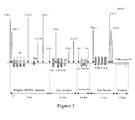
- the C ⁇ transgene or the part of this transgene including at least the exon coding for the CH3 domain and the membrane exon, which is inserted in place of the S ⁇ switching sequence, is therefore located between the 5 'E ⁇ intron activator and the 3' C ⁇ gene ( figure 1 ).
- the deletion of the S ⁇ switching sequence associated with the insertion of the C ⁇ transgene instead of this sequence abolishes the expression of the endogenous ⁇ gene responsible for the synthesis of IgM heavy chains.
- that of the other immunoglobulin heavy chain genes is greatly reduced due to the blocking of class switching to the constant immunoglobulin genes located downstream of C ⁇ on the endogenous IgH locus.
- the transgenic animals obtained produce large amounts of chimeric IgA whose constant domain of the heavy chain is humanized and the variable domains are of murine origin.
- the human ⁇ transgenic heavy chain benefits from a totally diversified repertoire since it corresponds to the normal repertoire generated by the rearrangements of the VH, D and JH segments of the murine IgH locus.
- the transgenic animals are capable of producing high affinity antibodies in response to the antigen, since their B cells can recruit the somatic hypermutation phenomenon.
- said transgenic non-human mammal is homozygous for said modified IgH locus.
- said IgH locus is modified by replacing the S ⁇ switching sequence by the entire C ⁇ gene, including exons CH1, CH2, CH3 and mb, separated by the corresponding introns.
- said IgH locus is modified by replacing the S ⁇ switching sequence by the segment of the C ⁇ gene including the exon coding for the CH3 domain and the membrane exon.
- said C ⁇ gene is C ⁇ 1.
- said transgenic non-human mammal comprises another transgene encoding a human immunoglobulin light chain.
- said light chain is a kappa chain.
- said transgene is a human kappa gene comprising the intron activator E ⁇ , upstream and the palindrome hs3a / hs1,2 / hs3b , downstream.
- said sequences which are described in Chauveau et al., Gene, 1998, 222, 279-285 , allow to obtain a strong expression of the human kappa chain in B cells and to induce the somatic hypermutation of the human kappa transgene.
- said transgene is under the control of the human heavy chain (pVH) promoter.
- said transgenic non-human mammal is dizygotic for said transgene.
- said transgenic non-human mammals comprising another transgene encoding a human kappa light chain have an endogenous locus of the inactivated immunoglobulin kappa light chain (deleted or mutated), especially by homologous recombination.
- said transgenic non-human mammals are homozygous for said inactivation; preferably it is transgenic mice.
- the transgenic non-human mammals whose endogenous locus of the immunoglobulin kappa light chain has been inactivated by homologous recombination mention may be made in particular of the mouse line described in FIG. Zou et al., EMBO J., 1993, 12, 811-820 .
- Such transgenic non-human mammals produce humanized IgA, of which virtually all light chains are of human origin.
- said non-human mammals transgenic for the ⁇ 1 heavy chain and possibly for the human kappa light chain have an endogenous locus of the inactivated J chain (deleted or mutated), in particular by homologous recombination.
- said transgenic non-human mammals are homozygous for said inactivation; in a preferred way they comprise another transgene encoding a human J chain, more preferably it is transgenic mice.
- Such transgenic non-human mammals are humanized both for the production of IgA and for a protein that associates with IgA, the J chain.
- the invention encompasses transgenic animals from any mammalian species.
- said transgenic non-human mammal is a transgenic mouse.
- Animals of this double-transgenic line produce partially humanized IgAs for the heavy chain and are fully humanized with respect to the light chain.
- the expression of the transgenic kappa chain in this line is capable of leading to allelic exclusion, that is to say of preventing, in most transgenic B cells, the expression of endogenous chain genes mild murine immunoglobulins.
- the antigen response repertoire of this mouse line is normal since it is essentially the VH domain of the heavy chain that contributes to the formation of the antibody site.
- the human ⁇ transgenic heavy chain benefits from a totally diversified repertoire since it corresponds to the normal repertoire generated by the rearrangements of the VH, D and JH segments of the murine IgH locus, as specified above.
- mice of this transgenic line are capable of producing high affinity antibodies in response to the antigen secondary to the fact that their B lymphocytes can recruit the phenomenon of somatic hypermutation, both at the level of the heavy chain gene and the kappa light chain transgene.
- transgenic animals according to the invention are obtained by the conventional methods of animal transgenesis, according to the standard protocols as described in Transgenic Mouse: Methods and Protocols; Methods in Molecular Biology, Clifton, NJ, Volume. 209, October 2002. Edited by: Marten H. Hofker, Jan Van Deursen, Martern H. Hofker and Jan Van Deursen. Posted by Holly T. Sklar: Humana Press .
- sequences of the human and murine immunoglobulin genes which serve to construct the transgenic animals according to the invention are known and accessible in the databases.
- the exon sequence CH1, CH2 and CH3 and the membrane exon of the human C ⁇ 1 gene correspond respectively to access numbers J00220 and M60326 in the Genbank / EMBL database.
- V ⁇ gene The construction of the V ⁇ gene is as described in Chauveau et al., Gene, 1998, 222, 279-285 ; the sequence of the V ⁇ I gene rearranged with the J ⁇ 5 gene and the C ⁇ gene corresponds to the sequence having the accession number X64133 in the EMBL / Genbank database, which encodes a human light chain having the sequence corresponding to the access number CAA45494 in the EMBL database.
- the insertions of gene fragments in the genome of non-human mammals can be randomly performed, preferably they are carried out in a targeted manner, by homologous recombination with a suitable targeting vector optionally comprising recombination sequences of a recombinase site-specific. specific as the LoxP sites of Cre recombinase.
- Inactivations or deletions of gene fragments in the genome of non-human mammals are carried out by homologous recombination with a suitable targeting vector optionally comprising recombination sequences of a site-specific recombinase such as the LoxP sites of the recombinase.
- the double-transgenic animals are obtained by crossing transgenic animals for the alpha heavy chain with transgenic animals for the light chain, as defined above.
- the double-transgenic animals are possibly crossed with transgenic animals whose endogenous locus of the kappa light chain immunoglobulin has been inactivated by homologous recombination and / or with animals whose endogenous locus of the immunoglobulin J chain has been inactivated and which furthermore possess a human transgene, as defined above.
- the subject of the present invention is also a homologous recombination targeting vector, characterized in that it comprises the C ⁇ gene of a class A human immunoglobulin or a segment of this gene including at least the exon coding for the CH3 domain. and the membrane exon, flanked by fragments of IgH locus sequences of a non-human mammal that are adjacent to the S ⁇ sequence.
- said targeting vector comprises an expression cassette of an appropriate selection marker, adjacent to said C ⁇ gene or to the segment of said gene as defined above.
- said expression cassette is flanked by site-specific recombination sequences.
- said sequences are the LoxP sequences of Cre recombinase. This arrangement may optionally excise said expression cassette.
- said fragments of sequences which are adjacent to the S ⁇ sequence are of murine origin.
- the C ⁇ gene or the segment of said gene is flanked in 5 'by a fragment of approximately 5 kb corresponding to the JH / E ⁇ region and at 3' of a fragment of approximately 5 kb corresponding to the C ⁇ region, which fragments respectively corresponding to the positions 131281 to 136441 and 140101 to 145032 in the sequence of the murine chromosome 12 (accession number AC073553 in the EMBL / Genbank database).
- the present invention also relates to embryonic cells of a non-human mammal, modified with a targeting vector as defined above.
- Said modified embryonic stem cells are useful for obtaining transgenic mammals as defined above; they are injected into mammalian blastocysts, according to conventional techniques of animal transgenesis.
- the present invention also relates to the use of a transgenic non-human mammal as defined above for the production of humanized IgA class antibodies or fragments of these antibodies.
- the transgenic non-human mammals according to the invention have the advantage of allowing the production of IgA class monoclonal antibodies which are straight away humanized class IgA chimeric antibodies.
- the process for producing humanized monoclonal antibodies class IgA according to the invention is therefore simpler, faster and more economical than the methods of the prior art since it does not require additional steps of cloning the genes of said antibodies. and melting the variable domains of said antibodies with the human immunoglobulin constant domains.
- the invention encompasses the production of polyclonal or monoclonal antibodies consisting of monomeric, dimeric IgA and s-IgA, as well as fragments thereof, in particular the Fab, Fab'2 and Fc fragments.
- humanized class IgA antibodies as defined above and their fragments are prepared by standard techniques known to those skilled in the art, such as those described in US Pat. Antibodies: A Laboratory Manual, E. Howell and D Lane, Cold Spring Harbor Laboratory, 1988 .
- the antibodies or their fragments as defined above are purified by standard techniques known to those skilled in the art, such as affinity chromatography.
- the subject of the present invention is also a humanized IgA class antibody that can be obtained by the process as defined above, characterized in that it comprises a chimeric heavy chain whose constant domain (s) (s) are of human origin and a human light chain whose variable domain is encoded by V ⁇ I-J ⁇ 5.
- the invention encompasses humanized IgA class antibodies whose light chain is encoded by the V ⁇ I-J ⁇ 5 gene having the EMBL / Genbank X64133 sequence or a sequence produced by hypermutation of this sequence, in particular after activation of B lymphocytes in the presence of antigen.
- the subject of the present invention is also a fragment of a humanized IgA class antibody that can be obtained by the process as defined above, characterized in that it comprises a fragment of said heavy and light chains as defined above.
- the invention encompasses polyclonal antibodies, monoclonal antibodies and fragments thereof (Fab, Fc, Fab'2).
- humanized antibodies according to the invention and their fragments as defined above are well tolerated in humans (minimizing the risk of allergic reaction by inter-species immunization) and have a prolonged half-life in humans, being Since the constant region of the heavy chain and all of the light chain of these antibodies are of human origin.
- the present invention also relates to a medicament comprising a humanized IgA class antibody or a fragment of this antibody, as defined above; such an antibody or its fragment is particularly used in passive immunotherapy (serotherapy) for the prevention and treatment of an infectious disease or cancer.
- the subject of the present invention is also an immunogenic or vaccinal composition, characterized in that it comprises at least one humanized IgA class antibody or a fragment of this antibody, as defined above, associated with an antigen, preferably under the form of an antigen-antibody complex comprising a humanized IgA class antibody or a fragment thereof that is directed against said antigen; such a composition makes it possible both to target the antigen towards the mucosal epithelium and to protect it from proteolysis.
- the subject of the present invention is also a pharmaceutical composition, characterized in that it comprises at least one humanized IgA class antibody or a fragment of this antibody, as defined above, combined by any appropriate means with an active principle; such a composition makes it possible both to target the active ingredient towards the mucosal epithelium and to protect it from proteolysis.
- compositions according to the invention also contain at least one pharmaceutically acceptable vehicle and optionally carrier substances and / or adjuvants.
- the pharmaceutically acceptable vehicles, the carrier substances and the adjuvants are those conventionally used.
- the adjuvants are advantageously chosen from the group consisting of oily emulsions, saponin, mineral substances, bacterial extracts, alumina hydroxide and squalene.
- the carrier substances are advantageously selected from the group consisting of unilamellar liposomes, multilamellar liposomes, saponin micelles or solid microspheres of saccharide or auriferous nature.
- compositions according to the invention are administered by the general route (oral, intramuscular, subcutaneous, intraperitoneal or intravenous) or locally (ocular, nasal, vaginal, rectal); the dose and the rate of administration vary according to the species (human or animal) and the disease to be treated.
- the present invention also relates to a diagnostic reagent comprising a humanized IgA class antibody or a fragment of this antibody, as defined above.
- the subject of the present invention is also the use of a humanized IgA class antibody or a fragment of this antibody, as defined above, for the preparation of a medicament for the prevention and treatment of infectious diseases and cancer.
- the present invention also relates to the use of a humanized IgA class antibody or a fragment of this antibody, as defined above, for the preparation of a reagent for the diagnosis of infectious diseases and cancer.
- the human alpha 1 gene including the three exons encoding the CH1, CH2 and CH3 constant domains and the membrane exon (mb), was inserted by homologous recombination, in place of the chain S? heavy mouse (S ⁇ ), so as to block the class switching towards the constant immunoglobulin genes located downstream of C ⁇ on the endogenous locus (murine IgH locus, figure 1 ).
- S ⁇ chain S? heavy mouse
- the targeted region abolishes expression of the endogenous ⁇ gene responsible for the synthesis of IgM heavy chains, and strongly decreases that of other immunoglobulin heavy chain genes.
- the resulting transgenic line produces a large amount of chimeric IgA whose humanized constant domain corresponds to the IgA1 isotype.
- the plasmid constructs were made from the bluescript SK (pSK) plasmid (STRATAGENE) and the E. coli TG1 bacterial strain (STRATAGENE), using the standard preparation, cloning and DNA analysis protocols such as than those described in Current Protocols in Molecular Biology (Frederick M. AUSUBEL, 2000, Wiley and his Inc, Library of Congress, USA ).
- the homologous recombination vector or targeting vector derived from pSK comprises: a 5.5 kb fragment of the human alpha 1 gene including three exons encoding the CH1, CH2 and CH3 constant domains and the membrane exon (mb) and a neo cassette (1.6 kb fragment), flanked upstream of a fragment of about 5 kb corresponding to the JH-E ⁇ region (fragment DQ 52 / JH) and downstream of another fragment of about 5 kb corresponding to the C ⁇ gene (fragment C ⁇ ).
- the 5.5 kb fragment flanked by Cla I adapters thus obtained was inserted between the JH fragment and the neo cassette at the Cla I site of the plasmid pC to give the targeting vector called p-alpha1KI. .
- the p-alpha1KI sequence was verified by automatic sequencing and by restriction analysis with Cla I and Xho I enzymes ( figure 3 ).
- ES cell clones from the 129 / SJ line were isolated, analyzed and then injected into C57 / Black 6 mouse blastocysts, using standard transgenesis and genomic DNA analysis protocols, such as those described. in and in Current Protocols in Molecular Biology (Frederick M. AUSUBEL, 2000, Wiley and his Inc, Library of Congress, USA ).
- ES cells were transfected by electroporation of the linearized p-alpha1KI DNA at the NotI site .
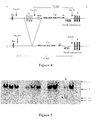
- the clones selected in the presence of geneticin were removed and the genomic DNA digested with EcoR I was analyzed by Southern blot using a radioactive probe hybridizing outside the homologous recombination site, 5 'of the constant gene Delta ( ⁇ ) and its EcoR I site ( figure 4 ); this PCR amplified probe using appropriate specific primers corresponds to positions 140101 to 145032 of the murine chromosome 12 sequence (EMBL / Genbank AC073553).
- mice were injected into C57 / Black 6 mouse blastocysts using standard transgenesis protocols such as those described in Transgenic Mouse: Methods and Protocols , supra.
- those with the highest degree of chimerism were analyzed by PCR and by ELISA.
- a line of mice homozygous for the recombinant IgH locus hereinafter referred to as the alpha 1 knock-in or alpha1KI line , was then obtained by crossing the heterozygous animals with the highest degree of chimerism.
- the amplification reaction was carried out with a hybridization temperature of 55 ° C. This PCR amplifies in 30 cycles a fragment of 120 base pairs specific to the recombinant IgH locus carrying the human C ⁇ 1 gene (alpha 1 knock-in or alpha1KI mutation ).
- alpha 1 knock-in or alpha1KI line A line of mice homozygous for the alpha1KI mutation, hereinafter referred to as the alpha 1 knock-in or alpha1KI line, has been established; the animals of this line are systematically and simultaneously negative in PCR with primers specific for the wild-type ⁇ allele and PCR-positive with the primer specific for the alpha 1 knock-in allele.
- Serum IgA was measured by nephelometry on a BNII TM (BEHRING) automated system using the IgA assay kit (BEHRING), according to the supplier's recommendations.
- 96-well plates (Maxisorb TM, NUNC) were covered with either unlabeled anti-human IgA antibodies or non-labeled anti-human antibodies.
- Murine IgM by incubation overnight at + 4 ° C. in the presence of goat anti-human IgA or anti-mouse IgM Fab'2 (Southern Biotechnologies Associates), diluted 1/500 th in 0.1 M carbonate buffer, pH 8.3 (100 microliters / well).
- the quantitative data are obtained by extrapolation with a range of a standard serum (BEHRING) for the determination of human IgA, and a murine monoclonal IgM (SOUTHERN BIOTECHNOLOGIES ASSOCIATES) for the determination of murine IgM.
- BEHRING a standard serum
- ASSOCIATES a murine monoclonal IgM
- Serum IgA ELISA showed a significant difference between homozygotes and heterozygotes; homozygote sera contain 0.4 and 0.6 g / l of IgA1, whereas no or very low absorbance values are observed for the sera of heterozygotes even at the lowest dilution (at 1 / 100 th ).
- a normal level of murine IgM (of the order of 1 g / l) is observed in the "non-mutant" control mice as well as in the animals heterozygous for the ⁇ 1-KI mutation.
- the level of murine IgM is zero in animals homozygous for the ⁇ 1-KI mutation.
- a CD19 + peripheral B cell compartment is able to differentiate in these animals and accounts for 10-12% of splenic lymphocytes or 40-60% of Peyer's lymphocytes.
- This compartment expresses membrane IgA whose humanized heavy chain is recognized by a specific IgA1 antibody and fluorescein-labeled ( figure 6 ).
- a line of transgenic animals expressing in all their B cells, a human kappa light chain encoded by the V ⁇ I-J ⁇ 5 variable region and the C ⁇ region was obtained by direct transgenesis, from of the expression vector described in Chauveau et al, Gene, 1998, 222, 279-285 .
- the transgenesis vector is the plasmid pALIE ⁇ described in Chauveau et al, Gene, 1998, 222, 279-285 ; it contains both the VH promoter and the 5 'enhancer E ⁇ of the cassette coding for the kappa RNA chain, and at 3' of this cassette: the three enhancer hs3a, hs12 and hs3b located 3 'of the IgH locus in 3 '.
- the coding sequence corresponds to the V ⁇ I-J ⁇ 5-C ⁇ chain (Genbank / EMBL X64133).
- the plasmid pALIE ⁇ was linearized by the restriction enzymes Not I and Pvu I which cut inside the plasmid sequence, Not I being located upstream of the promoter which precedes the cloned V ⁇ segment and Pvu I being situated within the gene. resistance to ampicillin carried by the plasmid.
- the fragment including the entire kappa expression cassette flanked by all promoter and expression regulatory elements was then randomly inserted into mouse blastocysts using standard direct transgenesis protocols such as those described in US Pat. Transgenic Mouse: Methods and Protocols , supra.
- a transgenic mouse line possessing the ⁇ RNA transgene was obtained after injection of the expression vector; the presence of this human transgene was verified on the DNA of the mice by Southern blot using a probe specific for the human C ⁇ region (2.5 kb EcoRI-EcoRI fragment including all of the exon C ⁇ human). Animals carrying the insertion of the transgene on both insertion point alleles (homozygous animals) have a double amount of the transgene and can be distinguished by the Southern blot of animals carrying a single copy of the transgene (heterozygous animals). Alternatively, the presence of the transgene was detected by PCR using primers that specifically amplify the human V ⁇ I-J ⁇ 5-C ⁇ sequence (Genbank / EMBL X64133).
- the dizygotic animals carrying the kappa RNA transgene were phenotyped in flow cytometry, by double labeling with a murine anti-K antibody (labeled with phycoerythrin) in conjunction with a human anti- ⁇ antibody (labeled with fluorescein isothiocyanate), according to the protocol as described in Example 1.
- this human ⁇ light chain is able to associate with heavy chains and to diversify thanks to the phenomenon of somatic hypermutation (triggered by an antigen response).
- This transgene respecting the endogenous architecture of an ⁇ gene with the presence of the J ⁇ -C ⁇ intron between V ⁇ J ⁇ and C ⁇ also benefit from a strong expression provided by the promoter combination P VH / enhancer E ⁇ + palindrome regulator 3'IgH (hs3a, hs1,2, hs3b).
- the cumulative action of all these regulatory elements makes it possible to recruit the somatic hypermutation machinery at the level of the transgene. More specifically, the Peyer's plates of the transgenic mice are removed by dissection of the intestine.
- the cell suspension is prepared by grinding the Peyer's plates through a nylon membrane. The cells are washed three times at + 4 ° C. in DMEM containing 10% fetal calf serum. The dead cells were removed after each wash and the cell suspension was adjusted to 10 6 cells / ml.
- the cells were incubated for 30 min at + 4 ° C. in the presence of biotinylated anti-B220 antibody. After two washes with DMEM containing 5% fetal calf serum, the cells were incubated for 30 min at + 4 ° C in the presence of streptavidin coupled with phycoerythrin, then washed and resuspended in PBS containing 5% serum. fetal calf. After addition of FITC-conjugated activated B-cell-specific lectin (PNA for peanut agglutinin ), the cell suspension was incubated for 30 min at + 4 ° C. After two washes with DMEM, the cells were resuspended. suspension in DMEM and then B were then sorted, by flow cytometry, into two populations: B220 + PNA high (B activated) and B220 + PNA low (B at rest).
- PNA FITC-conjugated activated B-cell-specific lect
- Genomic DNA was extracted from both cell populations sorted using the QIAamp Tissue kit (QIAGEN). Polymerase chain reaction (PCR) amplification was performed on 2 ⁇ l of genomic DNA using primers corresponding to the human V ⁇ 1 signal region (5'-AAGTCGACATGGACATGAGGGTGCC-3 ') (SEQ ID NO: 5) and beginning of the human J ⁇ 5 region (5'-TTCTCGAGACTTAGGTTTAATCTCCAG-3 ') (SEQ ID NO: 6).
- PCR Polymerase chain reaction
- the amplification program consisted of: an initial denaturation step at 94 ° C for 5 min; followed by 35 cycles alternating a denaturation step at 94 ° C for 30 s, a hybridization step at 52 ° C for 30 s, and an elongation step at 72 ° C for 30 s; then a final step of elongation at 72 ° C for 7 min.
- the amplification product was purified on a 1.2% agarose gel, eluted (QIAquick Gel Extraction Kit, QIAGEN) and then cloned into the vector pCRII-TOPO (INVITROGEN).
- the recombinant clones were tested by enzyme restriction then purified (Flexiprep kit, PHARMACIA) and sequenced by the Sanger method.
- the sequencing reactions were carried out by PCR using the M13 reverse and M13 (-20) primers and fluorescent dideoxynucleotides and then analyzed by capillary electrophoresis on an automatic sequencer (ABI-PRISM 310, PERKIN-ELMER).
- the sequences obtained from the activated B cells were then aligned with the original sequence of the unmutated transgene (Genbank / EMBL X64133). The number and position of the mutations were analyzed ( figure 8 ).
- the ⁇ transgene undergoes this somatic hypermutation at a rate almost as high (17 mutations per 1000 bases) as the endogenous immunoglobulin genes (which mutate at a rate of 40 mutations per 1000 bases). This unique transgene is able to generate a kappa "directory" with a certain diversity.
- one animal out of 16 could thus be selected as carrying both the alpha1-KI mutation in the homozygous state and as carrying the transgene ⁇ RNA in the homozygous state.
- These animals are the founders of the HAMIGA line and they stably transmit to their offspring the genes that simultaneously allow the production of a humanized alpha1 heavy chain to replace the production of murine IgM as well as the production and diversification by hypermutation of a human ⁇ chain.
- HAMIGA line Humanized Antibodies Made Up Of Monoclonal Immunoglobulin A
- transgene ⁇ RNA was followed by Southern Blot using a probe specific for the human C ⁇ region (2.5 kb EcoRI-EcoRI fragment including all of the human CK exon).
- the expression of the human kappa transgene was analyzed by flow cytometry as described in Example 2. The results show that the presence of the transgene ⁇ RNA leads to an important phenomenon of exclusion. allelic, such as among peripheral lymphocytes more than 50% express the human light chain and thus do not rearrange the murine light chain genes to express a murine light chain.
- the first simple element indicating ⁇ 1-KI homozygosity is the presence of a high level of human IgA1 in the serum of animals.
- homozygosity was confirmed by PCR by the positivity of the " ⁇ 1-KI PCR” associated with the negativity of the "wild-type ⁇ allele PCR”.
- the flow cytometry analysis showed on the lymphocytes of the spleen and Peyer's plates that all the B lymphocytes (CD19 +) express membrane human IgA1 whereas in parallel no cell B expresses murine IgM.
- the animals were immunized a first time by intraperitoneal injection of 10 micrograms of ovalbumin (SIGMA) diluted in 100 microliters of saline and emulsified with 200 microliters of Freund's complete adjuvant (SIGMA).
- SIGMA ovalbumin
- SIGMA Freund's complete adjuvant
- mice were vaccinated by intraperitoneal injection of 10 micrograms of ovalbumin (SIGMA) diluted in 100 microliters of saline and emulsified with 200 microliters of incomplete Freund's adjuvant (SIGMA).
- SIGMA ovalbumin
- SIGMA incomplete Freund's adjuvant
- results presented at figure 9 show the presence of antibodies specific to the ovalbumin antigen 4 weeks (rate of anti-ovalbumin human IgA antibodies at 388 units), then 7 weeks after the second injection of the antigen (level of anti-ovalbumin IgA antibodies at 162 units). In parallel, it was also verified that in the absence of immunization of the animals, the level of anti-ovalbumin IgA antibodies detected remained less than 30 units.
- mice The antigen response repertoire of these mice is expected to be subnormal since it is known that it is essentially the VH domain of the heavy chain that contributes to the formation of the antibody site (or the human ⁇ 1 transgenic heavy chain benefits from a repertory totally diversified since it corresponds to the normal repertoire generated by the rearrangements of the VH, D and JH segments of the murine IgH locus.) These mice are capable of producing high affinity antibodies in the secondary response, which results from the fact that their B lymphocytes can recruit the somatic hypermutation phenomenon at the level of the heavy chain gene and the ⁇ RNA light chain transgene. .
Landscapes
- Health & Medical Sciences (AREA)
- Life Sciences & Earth Sciences (AREA)
- Chemical & Material Sciences (AREA)
- Genetics & Genomics (AREA)
- Organic Chemistry (AREA)
- Engineering & Computer Science (AREA)
- General Health & Medical Sciences (AREA)
- Zoology (AREA)
- Veterinary Medicine (AREA)
- Biotechnology (AREA)
- General Engineering & Computer Science (AREA)
- Animal Behavior & Ethology (AREA)
- Bioinformatics & Cheminformatics (AREA)
- Environmental Sciences (AREA)
- Wood Science & Technology (AREA)
- Molecular Biology (AREA)
- Biophysics (AREA)
- Biochemistry (AREA)
- Biomedical Technology (AREA)
- Medicinal Chemistry (AREA)
- Biodiversity & Conservation Biology (AREA)
- Public Health (AREA)
- Proteomics, Peptides & Aminoacids (AREA)
- Microbiology (AREA)
- Immunology (AREA)
- Chemical Kinetics & Catalysis (AREA)
- General Chemical & Material Sciences (AREA)
- Nuclear Medicine, Radiotherapy & Molecular Imaging (AREA)
- Physics & Mathematics (AREA)
- Pharmacology & Pharmacy (AREA)
- Plant Pathology (AREA)
- Animal Husbandry (AREA)
- Oncology (AREA)
- Communicable Diseases (AREA)
- Peptides Or Proteins (AREA)
- Medicines Containing Antibodies Or Antigens For Use As Internal Diagnostic Agents (AREA)
- Preparation Of Compounds By Using Micro-Organisms (AREA)
- Micro-Organisms Or Cultivation Processes Thereof (AREA)
Claims (35)
- Nicht-menschlisches transgenes Säugetier, dadurch gekennzeichnet, dass es einen IgH-Locus umfasst, der durch Ersatz der Kommutationssequenz Sµ durch ein Transgen, als ganzes oder einen Teil davon, das durch das Gen Cα eines menschlichen Immunglobulins der Klasse A, umfassend wenigstens das Exon, das für die Domäne CH3 codiert, und das Membranexon, gebildet wird, modifiziert ist.
- Nicht-menschliches transgenes Säugetier gemäß Anspruch 1, dadurch gekennzeichnet, dass es bezüglich des modifizierten IgH-Locus homozygot ist.
- Nicht-menschliches transgenes Säugetier gemäß Anspruch 1 oder Anspruch 2, dadurch gekennzeichnet, dass der IgH-Locus durch Ersatz der Kommutationssequenz Sµ durch die Gesamtheit des Gens Cα modifiziert ist.
- Nicht-menschliches transgenes Säugetier gemäß Anspruch 1 oder Anspruch 2, dadurch gekennzeichnet, dass der IgH-Locus durch Ersatz der Kommutationssequenz Sµ durch das Segment des Gens Cα, das das Exon, das für die Domäne CH3 codiert, und das Membranexon umfasst, modifiziert ist.
- Nicht-menschliches transgenes Säugetier gemäß einem der Ansprüche 1 bis 4, dadurch gekennzeichnet, dass das Gen Cα Cα1 ist.
- Nicht-menschliches transgenes Säugetier gemäß einem der Ansprüche 1 bis 5, dadurch gekennzeichnet, dass es ein anderes Transgen umfasst, das für eine leichte Kette von menschlichem Immunglobulin codiert.
- Nicht-menschliches transgenes Säugetier gemäß Anspruch 6, dadurch gekennzeichnet, dass die leichte Kette eine Kappa-Kette ist.
- Nicht-menschliches transgenes Säugetier gemäß Anspruch 7, dadurch gekennzeichnet, dass das Transgen den intronischen Aktivator Eµ stromaufwärts und das Palindrom hs3a/hs1,2/hs3b stromabwärts umfasst.
- Nicht-menschliches transgenes Säugetier gemäß Anspruch 8, dadurch gekennzeichnet, dass das Transgen unter der Kontrolle des Promotors der schweren Kette von menschlichem Immunglobulin ist.
- Nicht-menschliches transgenes Säugetier gemäß einem der Ansprüche 6 bis 8, dadurch gekennzeichnet, dass es bezüglich des genannten Transgens dizygot ist.
- Nicht-menschliches transgenes Säugetier gemäß einem der Ansprüche 6 bis 10, dadurch gekennzeichnet, dass es einen inaktivierten endogenen Locus der Kappa-Kette besitzt.
- Nicht-menschliches transgenes Säugetier gemäß Anspruch 11, dadurch gekennzeichnet, dass es bezüglich des inaktivierten endogenen Locus der Kappa-Kette homozygot ist.
- Nicht-menschliches transgenes Säugetier gemäß einem der Ansprüche 1 bis 12, dadurch gekennzeichnet, dass es ein inaktiviertes Gen besitzt, das für die Kette J codiert.
- Nicht-menschliches transgenes Säugetier gemäß Anspruch 13, dadurch gekennzeichnet, dass es bezüglich des Gens, das für die inaktivierte Kette J codiert, homozygot ist.
- Nicht-menschliches transgenes Säugetier gemäß Anspruch 13 oder Anspruch 14, dadurch gekennzeichnet, dass es ein anderes Transgen umfasst, das für eine Kette J von menschlichem Immunglobulin codiert.
- Nicht-menschliches transgenes Säugetier gemäß einem der Ansprüche 1 bis 15, dadurch gekennzeichnet, dass es sich um eine transgene Maus handelt.
- Transgene Maus gemäß Anspruch 16, dadurch gekennzeichnet, dass sie umfasst:- einen IgH-Locus, der durch Ersatz der Kommutationssequenz Sµ durch das ganze Gen Cα1 eines menschlichen Immunglobulins der Klasse A modifiziert ist, und- ein vollständiges Gen Vκ, das das Gen VκI, neu geordnet mit einem Gen Jκ5, das Intron Jκ-Cκ und das Gen Cκ umfasst, unter der Transkriptionskontrolle des Promotors der menschlichen schweren Kette (pVH) und des intronischen Aktivators Eµ stromaufwärts und des Palindroms hs3a/hs1,2/hs3b stromabwärts.
- Targeting-Vektor für die homologe Rekombination, dadurch gekennzeichnet, dass er das Gen Cα eines menschlichen Immunglobulins der Klasse A oder ein Segment dieses Gens, das wenigstens das Exon, das für die Domäne CH3 codiert, und das Membranexon umfasst, flankiert von Fragmenten der Sequenzen des IgH-Locus eines nicht-menschlichen Säugetiers, die an die Sequenz Sµ angrenzen, umfasst.
- Targeting-Vektor gemäß Anspruch 18, dadurch gekennzeichnet, dass er eine Expressionskassette eines geeigneten Selektionsmarkers, benachbart zu dem Gen Cα oder einem Segment des genannten Gens, umfasst.
- Targeting-Vektor gemäß Anspruch 19, dadurch gekennzeichnet, dass die Expressionskassette von Sequenzen der ortsspezifischen Rekombination flankiert wird.
- Targeting-Vektor gemäß Anspruch 19, dadurch gekennzeichnet, dass die Sequenzen die Sequenzen LoxP der Rekombinase Cre sind.
- Targeting-Vektor gemäß einem der Ansprüche 18 bis 21, dadurch gekennzeichnet, dass die Fragmente von Sequenzen, die an die Sequenz Sµ angrenzen, muriner Herkunft sind.
- Targeting-Vektor gemäß Anspruch 22, dadurch gekennzeichnet, dass das Gen Cα oder das Segment des Gens in 5' bzw. in 3' von Fragmenten flankiert wird, die den Positionen 131281 bis 136441 und 140101 bis 145032 in der Sequenz des murinen Chromosoms 12 (Eingangsnummer AC073553 in der Datenbank EMBL/Genbank) entsprechen.
- Embryonale nicht-menschliche Säugerzelle, modifiziert durch einen Targeting-Vektor gemäß einem der Ansprüche 18 bis 23.
- Verwendung eines nicht-menschlichen transgenen Säugetiers gemäß einem der Ansprüche 1 bis 16 oder einer transgenen Maus gemäß Anspruch 17 für die Produktion von humanisierten Antikörpern der Klasse IgA oder von Fragmenten dieser Antikörper.
- Verfahren zur Herstellung von humanisierten Antikörpern der Klasse IgA oder von Fragmenten dieser Antikörper, dadurch gekennzeichnet, dass es wenigstens die folgenden Stufen umfasst:- Immunisierung eines nicht-menschlichen transgenen Säugetiers gemäß einem der Ansprüche 1 bis 16 oder einer transgenen Maus gemäß Anspruch 17 und- Erhalt, durch jedes geeignete Mittel, von humanisierten Antikörpern der Klasse IgA oder von Fragmenten dieser Antikörper aus Serum, Ausscheidungen oder Lymphozyten B des nicht-menschlichen transgenen Säugetiers, das vorher getötet wurde.
- Humanisierter Antikörper der Klasse IgA, der durch das Verfahren gemäß Anspruch 26 erhalten werden kann, dadurch gekennzeichnet, dass er eine chimäre schwere Kette, deren konstante Domänen menschlicher Herkunft sind, und eine menschliche leichte Kette, deren variable Domäne durch VκI-Jκ5 codiert wird, umfasst.
- Fragment eines humanisierten Antikörpers der Klasse IgA gemäß Anspruch 27, dadurch gekennzeichnet, dass es ein Fragment der genannten schweren und leichten Ketten umfasst.
- Fragment eines humanisierten Antikörpers der Klasse IgA gemäß Anspruch 28, dadurch gekennzeichnet, dass es aus der Gruppe selektioniert ist, die aus den Fragmenten Fab, Fab'2 und Fc besteht.
- Medikament, dadurch gekennzeichnet, dass es einen humanisierten Antikörper der Klasse IgA gemäß Anspruch 27 oder ein Fragment dieses Antikörpers gemäß Anspruch 28 oder Anspruch 29 umfasst.
- Diagnosereagenz, dadurch gekennzeichnet, dass es einen humanisierten Antikörper der Klasse IgA gemäß Anspruch 27 oder ein Fragment dieses Antikörpers gemäß Anspruch 28 oder Anspruch 29 umfasst.
- Immunogene oder vakzinale Zusammensetzung, dadurch gekennzeichnet, dass sie wenigstens einen humanisierten Antikörper der Klasse IgA gemäß Anspruch 27 oder ein Fragment dieses Antikörpers gemäß Anspruch 28 oder Anspruch 29, assoziiert mit einem Antigen, umfasst.
- Pharmazeutische Zusammensetzung, dadurch gekennzeichnet, dass sie wenigstens einen humanisierten Antikörper der Klasse IgA gemäß Anspruch 27 oder ein Fragment dieses Antikörpers gemäß Anspruch 28 oder Anspruch 29, assoziiert durch jedes geeignete Mittel mit einem Wirkstoff, umfasst.
- Verwendung eines humanisierten Antikörpers der Klasse IgA gemäß Anspruch 27 oder eines Fragments dieses Antikörpers gemäß Anspruch 28 oder Anspruch 29 für die Herstellung eines Medikaments, das zur Prävention oder Behandlung von infektiösen Krankheiten und Krebs bestimmt ist.
- Verwendung eines humanisierten Antikörpers der Klasse IgA gemäß Anspruch 27 oder eines Fragments dieses Antikörpers gemäß Anspruch 28 oder Anspruch 29 für die Herstellung eines Reagenzes, das für die Diagnose von infektiösen Krankheiten und Krebs bestimmt ist.
Applications Claiming Priority (2)
| Application Number | Priority Date | Filing Date | Title |
|---|---|---|---|
| FR0312502A FR2861255B1 (fr) | 2003-10-24 | 2003-10-24 | Mammifere non-humain transgenique pour la region constante de la chaine lourde des immunoglobulines humaines de classe a et ses applications. |
| PCT/FR2004/002701 WO2005047333A1 (fr) | 2003-10-24 | 2004-10-21 | Mammifere non-humain transgenique pour la region constante de la chaine lourde des immunoglobulines humaines de classe a et ses applications. |
Publications (2)
| Publication Number | Publication Date |
|---|---|
| EP1680449A1 EP1680449A1 (de) | 2006-07-19 |
| EP1680449B1 true EP1680449B1 (de) | 2009-10-14 |
Family
ID=34400790
Family Applications (1)
| Application Number | Title | Priority Date | Filing Date |
|---|---|---|---|
| EP04805265A Expired - Lifetime EP1680449B1 (de) | 2003-10-24 | 2004-10-21 | Nicht-humaner säuger, welcher transgen ist für die konstante region der schweren kette vom humanem klasse a immunoglobulin und verwendung dafür |
Country Status (8)
| Country | Link |
|---|---|
| US (1) | US8629317B2 (de) |
| EP (1) | EP1680449B1 (de) |
| JP (1) | JP2008501303A (de) |
| AT (1) | ATE445647T1 (de) |
| DE (1) | DE602004023637D1 (de) |
| ES (1) | ES2335018T3 (de) |
| FR (1) | FR2861255B1 (de) |
| WO (1) | WO2005047333A1 (de) |
Cited By (2)
| Publication number | Priority date | Publication date | Assignee | Title |
|---|---|---|---|---|
| EP3398967A1 (de) | 2017-05-04 | 2018-11-07 | B Cell Design | Antikörper gegen karzinoembryonisches antigen zur krebstherapie und -diagnose |
| WO2025257185A1 (en) | 2024-06-11 | 2025-12-18 | Abcely | Humanized anti-human-carcinoembryonic antigen antibody |
Families Citing this family (20)
| Publication number | Priority date | Publication date | Assignee | Title |
|---|---|---|---|---|
| FR2926438B1 (fr) * | 2008-01-22 | 2013-01-11 | Univ Limoges | Mammifere non-humain transgenique pour la region constante de la chaine lourde des immunoglobulines humaines de classe g et ses applications |
| KR102362774B1 (ko) | 2008-09-30 | 2022-02-15 | 아블렉시스, 엘엘씨 | 키메라 항체의 제조를 위한 인간 이외의 포유동물 |
| AU2010217934A1 (en) * | 2009-02-27 | 2011-08-18 | Genentech, Inc. | Hyper IgE animal model with enhanced immunoglobulin heavy chain class switching to c-epsilon |
| PL2954779T3 (pl) * | 2009-12-10 | 2019-07-31 | Regeneron Pharmaceuticals, Inc. | Myszy wytwarzające przeciwciała ciężkołańcuchowe |
| KR20210010942A (ko) | 2010-03-31 | 2021-01-28 | 아블렉시스, 엘엘씨 | 키메라 항체의 제조를 위한 비-인간 동물의 유전적 조작 |
| EP2947151A1 (de) | 2010-08-02 | 2015-11-25 | Regeneron Pharmaceuticals, Inc. | Bindeproteine mit vl-domänen |
| EP2820947A1 (de) | 2013-07-05 | 2015-01-07 | B Cell Design | Transgenes nichtmenschliches Säugetier zur Herstellung chimärer humaner Immunglobulin-E-Antikörper |
| EP2905031A1 (de) | 2014-02-10 | 2015-08-12 | B Cell Design | Neues, nicht-HIV-Impfstoff-Antigen aus der vaginalen Mikrobiota zur Induzierung einer mukosalen, neutralisierenden, schützenden Antikörperreaktion gegen eine HIV-Infektion |
| RU2016141123A (ru) | 2014-03-21 | 2018-04-23 | Регенерон Фармасьютикалз, Инк. | Антигенсвязывающие белки vl, проявляющие различные связывающие характеристики |
| RU2016141307A (ru) | 2014-03-21 | 2018-04-24 | Регенерон Фармасьютикалз, Инк. | Отличные от человека животные, которые вырабатывают однодоменные связывающие белки |
| CA2944647C (en) | 2014-04-03 | 2025-07-08 | Igm Biosciences, Inc. | Modified j-chain |
| DK3265575T3 (da) | 2015-03-04 | 2021-05-31 | Igm Biosciences Inc | Cd20-bindende molekyler og anvendelser deraf |
| HK1250038A1 (zh) | 2015-03-19 | 2018-11-23 | 瑞泽恩制药公司 | 选择结合抗原的轻链可变区的非人动物 |
| US11639389B2 (en) | 2015-09-30 | 2023-05-02 | Igm Biosciences, Inc. | Binding molecules with modified J-chain |
| AU2016329197B2 (en) | 2015-09-30 | 2021-01-21 | Igm Biosciences, Inc. | Binding molecules with modified J-chain |
| CN108486126A (zh) * | 2018-03-27 | 2018-09-04 | 重庆金迈博生物科技有限公司 | 一种核酸分子及其在人源化抗体中的应用 |
| EP3844290A4 (de) * | 2018-09-13 | 2022-07-06 | Ramot at Tel-Aviv University Ltd. | Genetische manipulation eines b-zell-rezeptors und verwendung davon in der antigen-induzierten antikörpersekretion |
| WO2020240876A1 (ja) * | 2019-05-27 | 2020-12-03 | 株式会社トランスジェニック | エクソンヒト化マウス |
| CN115197942A (zh) * | 2021-04-09 | 2022-10-18 | 北京大学第一医院 | 一种可表达人源IgA1蛋白的鼠模型及其构建方法和应用 |
| WO2026035843A2 (en) * | 2024-08-06 | 2026-02-12 | Regeneron Pharmaceuticals, Inc. | Non-human animals having modified immunoglobulin heavy chain constant region locus and uses thereof |
Family Cites Families (5)
| Publication number | Priority date | Publication date | Assignee | Title |
|---|---|---|---|---|
| GB8823869D0 (en) * | 1988-10-12 | 1988-11-16 | Medical Res Council | Production of antibodies |
| JPH08140528A (ja) * | 1993-12-03 | 1996-06-04 | Genpharm Internatl Inc | 異種抗体を産生することができるトランスジェニック非ヒト動物 |
| US5714352A (en) * | 1996-03-20 | 1998-02-03 | Xenotech Incorporated | Directed switch-mediated DNA recombination |
| US6833268B1 (en) * | 1999-06-10 | 2004-12-21 | Abgenix, Inc. | Transgenic animals for producing specific isotypes of human antibodies via non-cognate switch regions |
| CA2436091A1 (en) * | 2001-01-26 | 2002-08-01 | Abgenix, Inc. | Neutralizing human monoclonal antibodies against hiv-1, their production and uses |
-
2003
- 2003-10-24 FR FR0312502A patent/FR2861255B1/fr not_active Expired - Lifetime
-
2004
- 2004-10-21 ES ES04805265T patent/ES2335018T3/es not_active Expired - Lifetime
- 2004-10-21 WO PCT/FR2004/002701 patent/WO2005047333A1/fr not_active Ceased
- 2004-10-21 JP JP2006536126A patent/JP2008501303A/ja active Pending
- 2004-10-21 AT AT04805265T patent/ATE445647T1/de not_active IP Right Cessation
- 2004-10-21 EP EP04805265A patent/EP1680449B1/de not_active Expired - Lifetime
- 2004-10-21 US US10/577,061 patent/US8629317B2/en active Active
- 2004-10-21 DE DE602004023637T patent/DE602004023637D1/de not_active Expired - Lifetime
Cited By (3)
| Publication number | Priority date | Publication date | Assignee | Title |
|---|---|---|---|---|
| EP3398967A1 (de) | 2017-05-04 | 2018-11-07 | B Cell Design | Antikörper gegen karzinoembryonisches antigen zur krebstherapie und -diagnose |
| WO2018202794A1 (en) | 2017-05-04 | 2018-11-08 | B Cell Design | Antibodies against carcinoembryonic antigen for cancer therapy and diagnosis |
| WO2025257185A1 (en) | 2024-06-11 | 2025-12-18 | Abcely | Humanized anti-human-carcinoembryonic antigen antibody |
Also Published As
| Publication number | Publication date |
|---|---|
| US8629317B2 (en) | 2014-01-14 |
| JP2008501303A (ja) | 2008-01-24 |
| ES2335018T3 (es) | 2010-03-18 |
| FR2861255A1 (fr) | 2005-04-29 |
| DE602004023637D1 (de) | 2009-11-26 |
| EP1680449A1 (de) | 2006-07-19 |
| FR2861255B1 (fr) | 2006-02-17 |
| WO2005047333A1 (fr) | 2005-05-26 |
| ATE445647T1 (de) | 2009-10-15 |
| US20070248601A1 (en) | 2007-10-25 |
Similar Documents
| Publication | Publication Date | Title |
|---|---|---|
| EP1680449B1 (de) | Nicht-humaner säuger, welcher transgen ist für die konstante region der schweren kette vom humanem klasse a immunoglobulin und verwendung dafür | |
| US11230697B2 (en) | Enhanced expression of human or humanized immunoglobulin in non-human transgenic animals | |
| JP4318736B2 (ja) | ヒト抗体遺伝子を発現する非ヒト動物とその利用 | |
| KR20030074634A (ko) | 인간 항체의 제조를 위한 형질전환 트랜스염색체 설치류 | |
| US10370641B2 (en) | Enhanced expression of human or humanized immunoglobulin in non-human transgenic animals | |
| CN100396699C (zh) | 导入ganp基因的转基因哺乳动物及其应用 | |
| EP2242847B1 (de) | Transgenmause für das cgamma-gen der menschlichen g- immunoglobuline | |
| JP3030092B2 (ja) | キメラ動物およびその作製法 | |
| FR2822161A1 (fr) | Cellule et animal transgenique modelisant les reponses humaines allergiques mediees par les ige, et leurs utilisations | |
| CA2258872A1 (fr) | Procede de preparation d'organes de mammiferes non humains transgeniques en vue de leur transplantation chez l'homme, et sequences nucleotidiques pour la mise en oeuvre de ce procede | |
| JP2008154468A (ja) | ヒトcd16トランスジェニック非ヒト動物とその利用 | |
| US20180344760A1 (en) | Use of Antisense Oligonucleotides for Producing Truncated Ig by Exon Skipping for the Treatment of Diseases Involving B Cells | |
| Erickson | A Novel B-1b Precursor Stage in the Peritoneal Cavity | |
| JP2007312792A (ja) | キメラ動物およびその作製法 | |
| Villemin | Generation of transgenic vectors encoding human immunoglobulins, functionality assays and transgenesis in mice | |
| HK1124363B (en) | Transgenic mammal carrying ganp gene transferred thereinto and utilization thereof | |
| JPH11313576A (ja) | キメラ動物およびその作製法 |
Legal Events
| Date | Code | Title | Description |
|---|---|---|---|
| PUAI | Public reference made under article 153(3) epc to a published international application that has entered the european phase |
Free format text: ORIGINAL CODE: 0009012 |
|
| 17P | Request for examination filed |
Effective date: 20060522 |
|
| AK | Designated contracting states |
Kind code of ref document: A1 Designated state(s): AT BE BG CH CY CZ DE DK EE ES FI FR GB GR HU IE IT LI LU MC NL PL PT RO SE SI SK TR |
|
| RIN1 | Information on inventor provided before grant (corrected) |
Inventor name: BARDEL, MICAEL Inventor name: DECOURT, CATHERINE Inventor name: COGNE, MICHEL Inventor name: LE MORVAN, CAROLINE Inventor name: SIRAC, CHRISTOPHE |
|
| DAX | Request for extension of the european patent (deleted) | ||
| 17Q | First examination report despatched |
Effective date: 20081110 |
|
| GRAP | Despatch of communication of intention to grant a patent |
Free format text: ORIGINAL CODE: EPIDOSNIGR1 |
|
| GRAJ | Information related to disapproval of communication of intention to grant by the applicant or resumption of examination proceedings by the epo deleted |
Free format text: ORIGINAL CODE: EPIDOSDIGR1 |
|
| GRAP | Despatch of communication of intention to grant a patent |
Free format text: ORIGINAL CODE: EPIDOSNIGR1 |
|
| GRAS | Grant fee paid |
Free format text: ORIGINAL CODE: EPIDOSNIGR3 |
|
| GRAA | (expected) grant |
Free format text: ORIGINAL CODE: 0009210 |
|
| AK | Designated contracting states |
Kind code of ref document: B1 Designated state(s): AT BE BG CH CY CZ DE DK EE ES FI FR GB GR HU IE IT LI LU MC NL PL PT RO SE SI SK TR |
|
| REG | Reference to a national code |
Ref country code: GB Ref legal event code: FG4D Free format text: NOT ENGLISH |
|
| REG | Reference to a national code |
Ref country code: CH Ref legal event code: EP |
|
| REG | Reference to a national code |
Ref country code: IE Ref legal event code: FG4D |
|
| REF | Corresponds to: |
Ref document number: 602004023637 Country of ref document: DE Date of ref document: 20091126 Kind code of ref document: P |
|
| REG | Reference to a national code |
Ref country code: ES Ref legal event code: FG2A Ref document number: 2335018 Country of ref document: ES Kind code of ref document: T3 |
|
| BERE | Be: lapsed |
Owner name: UNIVERSITE DE LIMOGES Effective date: 20091031 Owner name: CENTRE NATIONAL DE LA RECHERCHE SCIENTIFIQUE (CNR Effective date: 20091031 |
|
| PG25 | Lapsed in a contracting state [announced via postgrant information from national office to epo] |
Ref country code: FI Free format text: LAPSE BECAUSE OF FAILURE TO SUBMIT A TRANSLATION OF THE DESCRIPTION OR TO PAY THE FEE WITHIN THE PRESCRIBED TIME-LIMIT Effective date: 20091014 Ref country code: SE Free format text: LAPSE BECAUSE OF FAILURE TO SUBMIT A TRANSLATION OF THE DESCRIPTION OR TO PAY THE FEE WITHIN THE PRESCRIBED TIME-LIMIT Effective date: 20091014 Ref country code: PT Free format text: LAPSE BECAUSE OF FAILURE TO SUBMIT A TRANSLATION OF THE DESCRIPTION OR TO PAY THE FEE WITHIN THE PRESCRIBED TIME-LIMIT Effective date: 20100215 |
|
| PG25 | Lapsed in a contracting state [announced via postgrant information from national office to epo] |
Ref country code: MC Free format text: LAPSE BECAUSE OF NON-PAYMENT OF DUE FEES Effective date: 20091031 Ref country code: SI Free format text: LAPSE BECAUSE OF FAILURE TO SUBMIT A TRANSLATION OF THE DESCRIPTION OR TO PAY THE FEE WITHIN THE PRESCRIBED TIME-LIMIT Effective date: 20091014 Ref country code: PL Free format text: LAPSE BECAUSE OF FAILURE TO SUBMIT A TRANSLATION OF THE DESCRIPTION OR TO PAY THE FEE WITHIN THE PRESCRIBED TIME-LIMIT Effective date: 20091014 |
|
| REG | Reference to a national code |
Ref country code: CH Ref legal event code: PL |
|
| PG25 | Lapsed in a contracting state [announced via postgrant information from national office to epo] |
Ref country code: AT Free format text: LAPSE BECAUSE OF FAILURE TO SUBMIT A TRANSLATION OF THE DESCRIPTION OR TO PAY THE FEE WITHIN THE PRESCRIBED TIME-LIMIT Effective date: 20091014 |
|
| PG25 | Lapsed in a contracting state [announced via postgrant information from national office to epo] |
Ref country code: EE Free format text: LAPSE BECAUSE OF FAILURE TO SUBMIT A TRANSLATION OF THE DESCRIPTION OR TO PAY THE FEE WITHIN THE PRESCRIBED TIME-LIMIT Effective date: 20091014 Ref country code: BG Free format text: LAPSE BECAUSE OF FAILURE TO SUBMIT A TRANSLATION OF THE DESCRIPTION OR TO PAY THE FEE WITHIN THE PRESCRIBED TIME-LIMIT Effective date: 20100114 Ref country code: DK Free format text: LAPSE BECAUSE OF FAILURE TO SUBMIT A TRANSLATION OF THE DESCRIPTION OR TO PAY THE FEE WITHIN THE PRESCRIBED TIME-LIMIT Effective date: 20091014 Ref country code: RO Free format text: LAPSE BECAUSE OF FAILURE TO SUBMIT A TRANSLATION OF THE DESCRIPTION OR TO PAY THE FEE WITHIN THE PRESCRIBED TIME-LIMIT Effective date: 20091014 |
|
| PLBE | No opposition filed within time limit |
Free format text: ORIGINAL CODE: 0009261 |
|
| STAA | Information on the status of an ep patent application or granted ep patent |
Free format text: STATUS: NO OPPOSITION FILED WITHIN TIME LIMIT |
|
| PG25 | Lapsed in a contracting state [announced via postgrant information from national office to epo] |
Ref country code: CZ Free format text: LAPSE BECAUSE OF FAILURE TO SUBMIT A TRANSLATION OF THE DESCRIPTION OR TO PAY THE FEE WITHIN THE PRESCRIBED TIME-LIMIT Effective date: 20091014 Ref country code: SK Free format text: LAPSE BECAUSE OF FAILURE TO SUBMIT A TRANSLATION OF THE DESCRIPTION OR TO PAY THE FEE WITHIN THE PRESCRIBED TIME-LIMIT Effective date: 20091014 |
|
| 26N | No opposition filed |
Effective date: 20100715 |
|
| PG25 | Lapsed in a contracting state [announced via postgrant information from national office to epo] |
Ref country code: CH Free format text: LAPSE BECAUSE OF NON-PAYMENT OF DUE FEES Effective date: 20091031 Ref country code: GR Free format text: LAPSE BECAUSE OF FAILURE TO SUBMIT A TRANSLATION OF THE DESCRIPTION OR TO PAY THE FEE WITHIN THE PRESCRIBED TIME-LIMIT Effective date: 20100115 Ref country code: LI Free format text: LAPSE BECAUSE OF NON-PAYMENT OF DUE FEES Effective date: 20091031 Ref country code: BE Free format text: LAPSE BECAUSE OF NON-PAYMENT OF DUE FEES Effective date: 20091031 |
|
| PG25 | Lapsed in a contracting state [announced via postgrant information from national office to epo] |
Ref country code: IT Free format text: LAPSE BECAUSE OF FAILURE TO SUBMIT A TRANSLATION OF THE DESCRIPTION OR TO PAY THE FEE WITHIN THE PRESCRIBED TIME-LIMIT Effective date: 20091014 |
|
| PG25 | Lapsed in a contracting state [announced via postgrant information from national office to epo] |
Ref country code: LU Free format text: LAPSE BECAUSE OF NON-PAYMENT OF DUE FEES Effective date: 20091021 |
|
| PG25 | Lapsed in a contracting state [announced via postgrant information from national office to epo] |
Ref country code: HU Free format text: LAPSE BECAUSE OF FAILURE TO SUBMIT A TRANSLATION OF THE DESCRIPTION OR TO PAY THE FEE WITHIN THE PRESCRIBED TIME-LIMIT Effective date: 20100415 |
|
| PG25 | Lapsed in a contracting state [announced via postgrant information from national office to epo] |
Ref country code: TR Free format text: LAPSE BECAUSE OF FAILURE TO SUBMIT A TRANSLATION OF THE DESCRIPTION OR TO PAY THE FEE WITHIN THE PRESCRIBED TIME-LIMIT Effective date: 20091014 |
|
| PG25 | Lapsed in a contracting state [announced via postgrant information from national office to epo] |
Ref country code: CY Free format text: LAPSE BECAUSE OF FAILURE TO SUBMIT A TRANSLATION OF THE DESCRIPTION OR TO PAY THE FEE WITHIN THE PRESCRIBED TIME-LIMIT Effective date: 20091014 |
|
| REG | Reference to a national code |
Ref country code: FR Ref legal event code: PLFP Year of fee payment: 12 |
|
| REG | Reference to a national code |
Ref country code: FR Ref legal event code: PLFP Year of fee payment: 13 |
|
| REG | Reference to a national code |
Ref country code: FR Ref legal event code: PLFP Year of fee payment: 14 |
|
| REG | Reference to a national code |
Ref country code: FR Ref legal event code: PLFP Year of fee payment: 15 |
|
| P01 | Opt-out of the competence of the unified patent court (upc) registered |
Effective date: 20230523 |
|
| PGFP | Annual fee paid to national office [announced via postgrant information from national office to epo] |
Ref country code: NL Payment date: 20230926 Year of fee payment: 20 Ref country code: IE Payment date: 20230919 Year of fee payment: 20 |
|
| PGFP | Annual fee paid to national office [announced via postgrant information from national office to epo] |
Ref country code: GB Payment date: 20231013 Year of fee payment: 20 |
|
| PGFP | Annual fee paid to national office [announced via postgrant information from national office to epo] |
Ref country code: ES Payment date: 20231102 Year of fee payment: 20 |
|
| PGFP | Annual fee paid to national office [announced via postgrant information from national office to epo] |
Ref country code: FR Payment date: 20231019 Year of fee payment: 20 Ref country code: DE Payment date: 20231011 Year of fee payment: 20 |
|
| REG | Reference to a national code |
Ref country code: DE Ref legal event code: R071 Ref document number: 602004023637 Country of ref document: DE |
|
| REG | Reference to a national code |
Ref country code: NL Ref legal event code: MK Effective date: 20241020 |
|
| REG | Reference to a national code |
Ref country code: ES Ref legal event code: FD2A Effective date: 20241028 |
|
| REG | Reference to a national code |
Ref country code: GB Ref legal event code: PE20 Expiry date: 20241020 |
|
| REG | Reference to a national code |
Ref country code: IE Ref legal event code: MK9A |
|
| PG25 | Lapsed in a contracting state [announced via postgrant information from national office to epo] |
Ref country code: GB Free format text: LAPSE BECAUSE OF EXPIRATION OF PROTECTION Effective date: 20241020 |
|
| PG25 | Lapsed in a contracting state [announced via postgrant information from national office to epo] |
Ref country code: IE Free format text: LAPSE BECAUSE OF EXPIRATION OF PROTECTION Effective date: 20241021 |
|
| PG25 | Lapsed in a contracting state [announced via postgrant information from national office to epo] |
Ref country code: ES Free format text: LAPSE BECAUSE OF EXPIRATION OF PROTECTION Effective date: 20241022 |
|
| PG25 | Lapsed in a contracting state [announced via postgrant information from national office to epo] |
Ref country code: IE Free format text: LAPSE BECAUSE OF EXPIRATION OF PROTECTION Effective date: 20241021 Ref country code: GB Free format text: LAPSE BECAUSE OF EXPIRATION OF PROTECTION Effective date: 20241020 Ref country code: ES Free format text: LAPSE BECAUSE OF EXPIRATION OF PROTECTION Effective date: 20241022 |