EP1674584A1 - Methode zur Aktivierung eines Proteins aus einem extrem thermophilen Bakterium in einer Nukleinsäure-Amplifikationsreaktion und dessen Verwendung - Google Patents
Methode zur Aktivierung eines Proteins aus einem extrem thermophilen Bakterium in einer Nukleinsäure-Amplifikationsreaktion und dessen Verwendung Download PDFInfo
- Publication number
- EP1674584A1 EP1674584A1 EP05026839A EP05026839A EP1674584A1 EP 1674584 A1 EP1674584 A1 EP 1674584A1 EP 05026839 A EP05026839 A EP 05026839A EP 05026839 A EP05026839 A EP 05026839A EP 1674584 A1 EP1674584 A1 EP 1674584A1
- Authority
- EP
- European Patent Office
- Prior art keywords
- triphosphate
- reca
- nucleic acid
- nucleotide
- amplification
- Prior art date
- Legal status (The legal status is an assumption and is not a legal conclusion. Google has not performed a legal analysis and makes no representation as to the accuracy of the status listed.)
- Granted
Links
- 238000006243 chemical reaction Methods 0.000 title claims abstract description 239
- 238000003199 nucleic acid amplification method Methods 0.000 title claims abstract description 167
- 230000003321 amplification Effects 0.000 title claims abstract description 148
- 150000007523 nucleic acids Chemical class 0.000 title claims abstract description 104
- 108020004707 nucleic acids Proteins 0.000 title claims abstract description 102
- 102000039446 nucleic acids Human genes 0.000 title claims abstract description 102
- 238000000034 method Methods 0.000 title claims abstract description 60
- 241000894006 Bacteria Species 0.000 title claims abstract description 42
- 230000004913 activation Effects 0.000 title claims description 11
- 108090000623 proteins and genes Proteins 0.000 title description 32
- 102000004169 proteins and genes Human genes 0.000 title description 15
- 108010055016 Rec A Recombinases Proteins 0.000 claims abstract description 254
- 102000001218 Rec A Recombinases Human genes 0.000 claims abstract description 254
- 239000002773 nucleotide Substances 0.000 claims abstract description 74
- 125000003729 nucleotide group Chemical group 0.000 claims abstract description 74
- 239000001226 triphosphate Substances 0.000 claims abstract description 55
- 238000003752 polymerase chain reaction Methods 0.000 claims abstract description 11
- 230000003213 activating effect Effects 0.000 claims abstract description 6
- ZKHQWZAMYRWXGA-KQYNXXCUSA-N Adenosine triphosphate Chemical compound C1=NC=2C(N)=NC=NC=2N1[C@@H]1O[C@H](COP(O)(=O)OP(O)(=O)OP(O)(O)=O)[C@@H](O)[C@H]1O ZKHQWZAMYRWXGA-KQYNXXCUSA-N 0.000 claims description 113
- ZKHQWZAMYRWXGA-UHFFFAOYSA-N Adenosine triphosphate Natural products C1=NC=2C(N)=NC=NC=2N1C1OC(COP(O)(=O)OP(O)(=O)OP(O)(O)=O)C(O)C1O ZKHQWZAMYRWXGA-UHFFFAOYSA-N 0.000 claims description 112
- 108010014303 DNA-directed DNA polymerase Proteins 0.000 claims description 76
- 102000016928 DNA-directed DNA polymerase Human genes 0.000 claims description 76
- 238000007403 mPCR Methods 0.000 claims description 23
- XKMLYUALXHKNFT-UUOKFMHZSA-N Guanosine-5'-triphosphate Chemical compound C1=2NC(N)=NC(=O)C=2N=CN1[C@@H]1O[C@H](COP(O)(=O)OP(O)(=O)OP(O)(O)=O)[C@@H](O)[C@H]1O XKMLYUALXHKNFT-UUOKFMHZSA-N 0.000 claims description 16
- PGAVKCOVUIYSFO-XVFCMESISA-N UTP Chemical compound O[C@@H]1[C@H](O)[C@@H](COP(O)(=O)OP(O)(=O)OP(O)(O)=O)O[C@H]1N1C(=O)NC(=O)C=C1 PGAVKCOVUIYSFO-XVFCMESISA-N 0.000 claims description 16
- XKMLYUALXHKNFT-UHFFFAOYSA-N rGTP Natural products C1=2NC(N)=NC(=O)C=2N=CN1C1OC(COP(O)(=O)OP(O)(=O)OP(O)(O)=O)C(O)C1O XKMLYUALXHKNFT-UHFFFAOYSA-N 0.000 claims description 16
- PGAVKCOVUIYSFO-UHFFFAOYSA-N uridine-triphosphate Natural products OC1C(O)C(COP(O)(=O)OP(O)(=O)OP(O)(O)=O)OC1N1C(=O)NC(=O)C=C1 PGAVKCOVUIYSFO-UHFFFAOYSA-N 0.000 claims description 16
- 229960001456 adenosine triphosphate Drugs 0.000 claims description 14
- 241000589499 Thermus thermophilus Species 0.000 claims description 10
- 238000001514 detection method Methods 0.000 claims description 9
- PCDQPRRSZKQHHS-UHFFFAOYSA-N Cytidine 5'-triphosphate Natural products O=C1N=C(N)C=CN1C1C(O)C(O)C(COP(O)(=O)OP(O)(=O)OP(O)(O)=O)O1 PCDQPRRSZKQHHS-UHFFFAOYSA-N 0.000 claims description 8
- OPTASPLRGRRNAP-UHFFFAOYSA-N cytosine Chemical compound NC=1C=CNC(=O)N=1 OPTASPLRGRRNAP-UHFFFAOYSA-N 0.000 claims description 8
- UYTPUPDQBNUYGX-UHFFFAOYSA-N guanine Chemical compound O=C1NC(N)=NC2=C1N=CN2 UYTPUPDQBNUYGX-UHFFFAOYSA-N 0.000 claims description 8
- RWQNBRDOKXIBIV-UHFFFAOYSA-N thymine Chemical compound CC1=CNC(=O)NC1=O RWQNBRDOKXIBIV-UHFFFAOYSA-N 0.000 claims description 8
- 229930024421 Adenine Natural products 0.000 claims description 4
- GFFGJBXGBJISGV-UHFFFAOYSA-N Adenine Chemical compound NC1=NC=NC2=C1N=CN2 GFFGJBXGBJISGV-UHFFFAOYSA-N 0.000 claims description 4
- 229960000643 adenine Drugs 0.000 claims description 4
- 229940104302 cytosine Drugs 0.000 claims description 4
- 229940113082 thymine Drugs 0.000 claims description 4
- 230000002401 inhibitory effect Effects 0.000 claims description 3
- 238000012216 screening Methods 0.000 claims description 3
- PCDQPRRSZKQHHS-ZAKLUEHWSA-N cytidine-5'-triphosphate Chemical compound O=C1N=C(N)C=CN1[C@H]1[C@H](O)[C@@H](O)[C@H](CO[P@](O)(=O)O[P@@](O)(=O)OP(O)(O)=O)O1 PCDQPRRSZKQHHS-ZAKLUEHWSA-N 0.000 claims 3
- 230000008827 biological function Effects 0.000 abstract description 20
- 239000000243 solution Substances 0.000 description 144
- 108020004414 DNA Proteins 0.000 description 54
- TWRXJAOTZQYOKJ-UHFFFAOYSA-L Magnesium chloride Chemical compound [Mg+2].[Cl-].[Cl-] TWRXJAOTZQYOKJ-UHFFFAOYSA-L 0.000 description 50
- CSNNHWWHGAXBCP-UHFFFAOYSA-L Magnesium sulfate Chemical compound [Mg+2].[O-][S+2]([O-])([O-])[O-] CSNNHWWHGAXBCP-UHFFFAOYSA-L 0.000 description 46
- 239000000203 mixture Substances 0.000 description 42
- 238000012408 PCR amplification Methods 0.000 description 36
- 239000000872 buffer Substances 0.000 description 36
- 230000000694 effects Effects 0.000 description 36
- 241000282414 Homo sapiens Species 0.000 description 29
- UEGPKNKPLBYCNK-UHFFFAOYSA-L magnesium acetate Chemical compound [Mg+2].CC([O-])=O.CC([O-])=O UEGPKNKPLBYCNK-UHFFFAOYSA-L 0.000 description 26
- 239000011654 magnesium acetate Substances 0.000 description 26
- 235000011285 magnesium acetate Nutrition 0.000 description 26
- 229940069446 magnesium acetate Drugs 0.000 description 26
- 229910001629 magnesium chloride Inorganic materials 0.000 description 25
- 235000011147 magnesium chloride Nutrition 0.000 description 24
- 229910052943 magnesium sulfate Inorganic materials 0.000 description 23
- 235000019341 magnesium sulphate Nutrition 0.000 description 23
- 239000000463 material Substances 0.000 description 23
- 238000001962 electrophoresis Methods 0.000 description 22
- 239000000499 gel Substances 0.000 description 16
- 241000588724 Escherichia coli Species 0.000 description 14
- PCDQPRRSZKQHHS-XVFCMESISA-N CTP Chemical compound O=C1N=C(N)C=CN1[C@H]1[C@H](O)[C@H](O)[C@@H](COP(O)(=O)OP(O)(=O)OP(O)(O)=O)O1 PCDQPRRSZKQHHS-XVFCMESISA-N 0.000 description 13
- 230000007423 decrease Effects 0.000 description 11
- 238000000137 annealing Methods 0.000 description 10
- PEDCQBHIVMGVHV-UHFFFAOYSA-N Glycerine Chemical compound OCC(O)CO PEDCQBHIVMGVHV-UHFFFAOYSA-N 0.000 description 9
- 239000012536 storage buffer Substances 0.000 description 9
- 239000007853 buffer solution Substances 0.000 description 8
- 210000000349 chromosome Anatomy 0.000 description 8
- 238000010186 staining Methods 0.000 description 8
- 102000013674 S-100 Human genes 0.000 description 7
- 108700021018 S100 Proteins 0.000 description 7
- 108010006785 Taq Polymerase Proteins 0.000 description 7
- 239000013604 expression vector Substances 0.000 description 7
- 230000006870 function Effects 0.000 description 7
- 238000003786 synthesis reaction Methods 0.000 description 7
- QTBSBXVTEAMEQO-UHFFFAOYSA-N Acetic acid Chemical compound CC(O)=O QTBSBXVTEAMEQO-UHFFFAOYSA-N 0.000 description 6
- 108010003730 Cone Opsins Proteins 0.000 description 6
- IAZDPXIOMUYVGZ-UHFFFAOYSA-N Dimethylsulphoxide Chemical compound CS(C)=O IAZDPXIOMUYVGZ-UHFFFAOYSA-N 0.000 description 6
- 239000011543 agarose gel Substances 0.000 description 6
- 125000003275 alpha amino acid group Chemical group 0.000 description 6
- SUYVUBYJARFZHO-RRKCRQDMSA-N dATP Chemical compound C1=NC=2C(N)=NC=NC=2N1[C@H]1C[C@H](O)[C@@H](COP(O)(=O)OP(O)(=O)OP(O)(O)=O)O1 SUYVUBYJARFZHO-RRKCRQDMSA-N 0.000 description 6
- 238000004925 denaturation Methods 0.000 description 6
- 230000036425 denaturation Effects 0.000 description 6
- ZMMJGEGLRURXTF-UHFFFAOYSA-N ethidium bromide Chemical compound [Br-].C12=CC(N)=CC=C2C2=CC=C(N)C=C2[N+](CC)=C1C1=CC=CC=C1 ZMMJGEGLRURXTF-UHFFFAOYSA-N 0.000 description 6
- 229960005542 ethidium bromide Drugs 0.000 description 6
- 238000002474 experimental method Methods 0.000 description 6
- 230000002829 reductive effect Effects 0.000 description 6
- 230000015572 biosynthetic process Effects 0.000 description 5
- HAAZLUGHYHWQIW-KVQBGUIXSA-N dGTP Chemical compound C1=NC=2C(=O)NC(N)=NC=2N1[C@H]1C[C@H](O)[C@@H](COP(O)(=O)OP(O)(=O)OP(O)(O)=O)O1 HAAZLUGHYHWQIW-KVQBGUIXSA-N 0.000 description 5
- 235000013305 food Nutrition 0.000 description 5
- 239000012634 fragment Substances 0.000 description 5
- 159000000003 magnesium salts Chemical class 0.000 description 5
- -1 GC content Chemical class 0.000 description 4
- 210000004027 cell Anatomy 0.000 description 4
- 230000000295 complement effect Effects 0.000 description 4
- SUYVUBYJARFZHO-UHFFFAOYSA-N dATP Natural products C1=NC=2C(N)=NC=NC=2N1C1CC(O)C(COP(O)(=O)OP(O)(=O)OP(O)(O)=O)O1 SUYVUBYJARFZHO-UHFFFAOYSA-N 0.000 description 4
- RGWHQCVHVJXOKC-SHYZEUOFSA-N dCTP Chemical compound O=C1N=C(N)C=CN1[C@@H]1O[C@H](CO[P@](O)(=O)O[P@](O)(=O)OP(O)(O)=O)[C@@H](O)C1 RGWHQCVHVJXOKC-SHYZEUOFSA-N 0.000 description 4
- NHVNXKFIZYSCEB-XLPZGREQSA-N dTTP Chemical compound O=C1NC(=O)C(C)=CN1[C@@H]1O[C@H](COP(O)(=O)OP(O)(=O)OP(O)(O)=O)[C@@H](O)C1 NHVNXKFIZYSCEB-XLPZGREQSA-N 0.000 description 4
- 230000007613 environmental effect Effects 0.000 description 4
- 238000004519 manufacturing process Methods 0.000 description 4
- 244000052769 pathogen Species 0.000 description 4
- 230000001717 pathogenic effect Effects 0.000 description 4
- 239000003153 chemical reaction reagent Substances 0.000 description 3
- MWEQTWJABOLLOS-UHFFFAOYSA-L disodium;[[[5-(6-aminopurin-9-yl)-3,4-dihydroxyoxolan-2-yl]methoxy-hydroxyphosphoryl]oxy-oxidophosphoryl] hydrogen phosphate;trihydrate Chemical compound O.O.O.[Na+].[Na+].C1=NC=2C(N)=NC=NC=2N1C1OC(COP(O)(=O)OP([O-])(=O)OP(O)([O-])=O)C(O)C1O MWEQTWJABOLLOS-UHFFFAOYSA-L 0.000 description 3
- 238000010494 dissociation reaction Methods 0.000 description 3
- 230000005593 dissociations Effects 0.000 description 3
- 230000006872 improvement Effects 0.000 description 3
- 108091008146 restriction endonucleases Proteins 0.000 description 3
- 108700026220 vif Genes Proteins 0.000 description 3
- 230000004568 DNA-binding Effects 0.000 description 2
- 101000899111 Homo sapiens Hemoglobin subunit beta Proteins 0.000 description 2
- NBIIXXVUZAFLBC-UHFFFAOYSA-N Phosphoric acid Chemical compound OP(O)(O)=O NBIIXXVUZAFLBC-UHFFFAOYSA-N 0.000 description 2
- 241000589500 Thermus aquaticus Species 0.000 description 2
- 239000007983 Tris buffer Substances 0.000 description 2
- 241000700605 Viruses Species 0.000 description 2
- 239000000654 additive Substances 0.000 description 2
- 150000001413 amino acids Chemical class 0.000 description 2
- 238000006073 displacement reaction Methods 0.000 description 2
- KWIUHFFTVRNATP-UHFFFAOYSA-N glycine betaine Chemical compound C[N+](C)(C)CC([O-])=O KWIUHFFTVRNATP-UHFFFAOYSA-N 0.000 description 2
- 238000010438 heat treatment Methods 0.000 description 2
- 238000002744 homologous recombination Methods 0.000 description 2
- 230000006801 homologous recombination Effects 0.000 description 2
- 230000003993 interaction Effects 0.000 description 2
- 238000007852 inverse PCR Methods 0.000 description 2
- 238000002372 labelling Methods 0.000 description 2
- 230000036961 partial effect Effects 0.000 description 2
- 238000011160 research Methods 0.000 description 2
- 238000003757 reverse transcription PCR Methods 0.000 description 2
- 239000000126 substance Substances 0.000 description 2
- LENZDBCJOHFCAS-UHFFFAOYSA-N tris Chemical compound OCC(N)(CO)CO LENZDBCJOHFCAS-UHFFFAOYSA-N 0.000 description 2
- QKNYBSVHEMOAJP-UHFFFAOYSA-N 2-amino-2-(hydroxymethyl)propane-1,3-diol;hydron;chloride Chemical compound Cl.OCC(N)(CO)CO QKNYBSVHEMOAJP-UHFFFAOYSA-N 0.000 description 1
- HRPVXLWXLXDGHG-UHFFFAOYSA-N Acrylamide Chemical compound NC(=O)C=C HRPVXLWXLXDGHG-UHFFFAOYSA-N 0.000 description 1
- 108700028369 Alleles Proteins 0.000 description 1
- 241000203069 Archaea Species 0.000 description 1
- 102100026398 Cyclic AMP-responsive element-binding protein 3 Human genes 0.000 description 1
- 125000000824 D-ribofuranosyl group Chemical group [H]OC([H])([H])[C@@]1([H])OC([H])(*)[C@]([H])(O[H])[C@]1([H])O[H] 0.000 description 1
- 102000053602 DNA Human genes 0.000 description 1
- KCXVZYZYPLLWCC-UHFFFAOYSA-N EDTA Chemical compound OC(=O)CN(CC(O)=O)CCN(CC(O)=O)CC(O)=O KCXVZYZYPLLWCC-UHFFFAOYSA-N 0.000 description 1
- YQYJSBFKSSDGFO-UHFFFAOYSA-N Epihygromycin Natural products OC1C(O)C(C(=O)C)OC1OC(C(=C1)O)=CC=C1C=C(C)C(=O)NC1C(O)C(O)C2OCOC2C1O YQYJSBFKSSDGFO-UHFFFAOYSA-N 0.000 description 1
- 108010010803 Gelatin Proteins 0.000 description 1
- 241000193385 Geobacillus stearothermophilus Species 0.000 description 1
- 241000238631 Hexapoda Species 0.000 description 1
- 101000721661 Homo sapiens Cellular tumor antigen p53 Proteins 0.000 description 1
- 101000855520 Homo sapiens Cyclic AMP-responsive element-binding protein 3 Proteins 0.000 description 1
- 101001066129 Homo sapiens Glyceraldehyde-3-phosphate dehydrogenase Proteins 0.000 description 1
- 101001045740 Homo sapiens Hepatocyte nuclear factor 4-alpha Proteins 0.000 description 1
- 101001055219 Homo sapiens Interleukin-9 receptor Proteins 0.000 description 1
- 101100403718 Homo sapiens MYC gene Proteins 0.000 description 1
- 101000990990 Homo sapiens Midkine Proteins 0.000 description 1
- 101000611338 Homo sapiens Rhodopsin Proteins 0.000 description 1
- 101000766306 Homo sapiens Serotransferrin Proteins 0.000 description 1
- 101000664737 Homo sapiens Somatotropin Proteins 0.000 description 1
- 101000861263 Homo sapiens Steroid 21-hydroxylase Proteins 0.000 description 1
- 101000641239 Homo sapiens Synaptic vesicular amine transporter Proteins 0.000 description 1
- 108010038414 Interleukin-9 Receptors Proteins 0.000 description 1
- 102000010682 Interleukin-9 Receptors Human genes 0.000 description 1
- WJXSXWBOZMVFPJ-NENRSDFPSA-N N-[(2R,3R,4R,5S,6R)-4,5-dihydroxy-6-methoxy-2,4-dimethyloxan-3-yl]-N-methylacetamide Chemical compound CO[C@@H]1O[C@H](C)[C@@H](N(C)C(C)=O)[C@@](C)(O)[C@@H]1O WJXSXWBOZMVFPJ-NENRSDFPSA-N 0.000 description 1
- 229930193140 Neomycin Natural products 0.000 description 1
- 108091028043 Nucleic acid sequence Proteins 0.000 description 1
- 108010061100 Nucleoproteins Proteins 0.000 description 1
- 102000011931 Nucleoproteins Human genes 0.000 description 1
- 108091034117 Oligonucleotide Proteins 0.000 description 1
- 108010002747 Pfu DNA polymerase Proteins 0.000 description 1
- 108010076504 Protein Sorting Signals Proteins 0.000 description 1
- 241000205160 Pyrococcus Species 0.000 description 1
- 241000205156 Pyrococcus furiosus Species 0.000 description 1
- 102000007056 Recombinant Fusion Proteins Human genes 0.000 description 1
- 108010008281 Recombinant Fusion Proteins Proteins 0.000 description 1
- PYMYPHUHKUWMLA-LMVFSUKVSA-N Ribose Natural products OC[C@@H](O)[C@@H](O)[C@@H](O)C=O PYMYPHUHKUWMLA-LMVFSUKVSA-N 0.000 description 1
- 240000004808 Saccharomyces cerevisiae Species 0.000 description 1
- 235000014680 Saccharomyces cerevisiae Nutrition 0.000 description 1
- 101710164184 Synaptic vesicular amine transporter Proteins 0.000 description 1
- 102100034333 Synaptic vesicular amine transporter Human genes 0.000 description 1
- 241000718541 Tetragastris balsamifera Species 0.000 description 1
- 241000205188 Thermococcus Species 0.000 description 1
- 241000205180 Thermococcus litoralis Species 0.000 description 1
- 101000865057 Thermococcus litoralis DNA polymerase Proteins 0.000 description 1
- 241000204652 Thermotoga Species 0.000 description 1
- 241000589596 Thermus Species 0.000 description 1
- 102000004338 Transferrin Human genes 0.000 description 1
- 108090000901 Transferrin Proteins 0.000 description 1
- AZJLCKAEZFNJDI-DJLDLDEBSA-N [[(2r,3s,5r)-5-(4-aminopyrrolo[2,3-d]pyrimidin-7-yl)-3-hydroxyoxolan-2-yl]methoxy-hydroxyphosphoryl] phosphono hydrogen phosphate Chemical compound C1=CC=2C(N)=NC=NC=2N1[C@H]1C[C@H](O)[C@@H](COP(O)(=O)OP(O)(=O)OP(O)(O)=O)O1 AZJLCKAEZFNJDI-DJLDLDEBSA-N 0.000 description 1
- NLTUCYMLOPLUHL-KQYNXXCUSA-N adenosine 5'-[gamma-thio]triphosphate Chemical compound C1=NC=2C(N)=NC=NC=2N1[C@@H]1O[C@H](COP(O)(=O)OP(O)(=O)OP(O)(O)=S)[C@@H](O)[C@H]1O NLTUCYMLOPLUHL-KQYNXXCUSA-N 0.000 description 1
- 238000001042 affinity chromatography Methods 0.000 description 1
- HMFHBZSHGGEWLO-UHFFFAOYSA-N alpha-D-Furanose-Ribose Natural products OCC1OC(O)C(O)C1O HMFHBZSHGGEWLO-UHFFFAOYSA-N 0.000 description 1
- 229910000147 aluminium phosphate Inorganic materials 0.000 description 1
- 229960000723 ampicillin Drugs 0.000 description 1
- AVKUERGKIZMTKX-NJBDSQKTSA-N ampicillin Chemical compound C1([C@@H](N)C(=O)N[C@H]2[C@H]3SC([C@@H](N3C2=O)C(O)=O)(C)C)=CC=CC=C1 AVKUERGKIZMTKX-NJBDSQKTSA-N 0.000 description 1
- 238000007846 asymmetric PCR Methods 0.000 description 1
- 229960003237 betaine Drugs 0.000 description 1
- 230000027455 binding Effects 0.000 description 1
- 230000004071 biological effect Effects 0.000 description 1
- 239000001506 calcium phosphate Substances 0.000 description 1
- 235000011010 calcium phosphates Nutrition 0.000 description 1
- 230000008859 change Effects 0.000 description 1
- 238000012512 characterization method Methods 0.000 description 1
- 125000003636 chemical group Chemical group 0.000 description 1
- 229960005091 chloramphenicol Drugs 0.000 description 1
- WIIZWVCIJKGZOK-RKDXNWHRSA-N chloramphenicol Chemical compound ClC(Cl)C(=O)N[C@H](CO)[C@H](O)C1=CC=C([N+]([O-])=O)C=C1 WIIZWVCIJKGZOK-RKDXNWHRSA-N 0.000 description 1
- 238000010367 cloning Methods 0.000 description 1
- 239000002299 complementary DNA Substances 0.000 description 1
- 150000001875 compounds Chemical class 0.000 description 1
- 238000012790 confirmation Methods 0.000 description 1
- 238000007796 conventional method Methods 0.000 description 1
- 230000003247 decreasing effect Effects 0.000 description 1
- 239000003398 denaturant Substances 0.000 description 1
- 238000013461 design Methods 0.000 description 1
- 238000003745 diagnosis Methods 0.000 description 1
- 238000001976 enzyme digestion Methods 0.000 description 1
- 210000003527 eukaryotic cell Anatomy 0.000 description 1
- 239000008273 gelatin Substances 0.000 description 1
- 229920000159 gelatin Polymers 0.000 description 1
- 235000019322 gelatine Nutrition 0.000 description 1
- 235000011852 gelatine desserts Nutrition 0.000 description 1
- 238000010353 genetic engineering Methods 0.000 description 1
- 235000003869 genetically modified organism Nutrition 0.000 description 1
- 102000006602 glyceraldehyde-3-phosphate dehydrogenase Human genes 0.000 description 1
- 108020004445 glyceraldehyde-3-phosphate dehydrogenase Proteins 0.000 description 1
- 238000004128 high performance liquid chromatography Methods 0.000 description 1
- 238000009396 hybridization Methods 0.000 description 1
- 125000002887 hydroxy group Chemical group [H]O* 0.000 description 1
- 206010022000 influenza Diseases 0.000 description 1
- 229960000318 kanamycin Drugs 0.000 description 1
- 229930027917 kanamycin Natural products 0.000 description 1
- SBUJHOSQTJFQJX-NOAMYHISSA-N kanamycin Chemical compound O[C@@H]1[C@@H](O)[C@H](O)[C@@H](CN)O[C@@H]1O[C@H]1[C@H](O)[C@@H](O[C@@H]2[C@@H]([C@@H](N)[C@H](O)[C@@H](CO)O2)O)[C@H](N)C[C@@H]1N SBUJHOSQTJFQJX-NOAMYHISSA-N 0.000 description 1
- 229930182823 kanamycin A Natural products 0.000 description 1
- 238000005259 measurement Methods 0.000 description 1
- 238000002844 melting Methods 0.000 description 1
- 230000008018 melting Effects 0.000 description 1
- 108020004999 messenger RNA Proteins 0.000 description 1
- 244000005700 microbiome Species 0.000 description 1
- 210000003470 mitochondria Anatomy 0.000 description 1
- 238000012986 modification Methods 0.000 description 1
- 230000004048 modification Effects 0.000 description 1
- 238000002703 mutagenesis Methods 0.000 description 1
- 231100000350 mutagenesis Toxicity 0.000 description 1
- 229960004927 neomycin Drugs 0.000 description 1
- 230000001537 neural effect Effects 0.000 description 1
- 230000009871 nonspecific binding Effects 0.000 description 1
- 238000001668 nucleic acid synthesis Methods 0.000 description 1
- 239000003960 organic solvent Substances 0.000 description 1
- 150000003013 phosphoric acid derivatives Chemical class 0.000 description 1
- 239000013612 plasmid Substances 0.000 description 1
- XAEFZNCEHLXOMS-UHFFFAOYSA-M potassium benzoate Chemical compound [K+].[O-]C(=O)C1=CC=CC=C1 XAEFZNCEHLXOMS-UHFFFAOYSA-M 0.000 description 1
- 238000000746 purification Methods 0.000 description 1
- 230000006798 recombination Effects 0.000 description 1
- 238000005215 recombination Methods 0.000 description 1
- 230000004044 response Effects 0.000 description 1
- 230000002207 retinal effect Effects 0.000 description 1
- 125000000548 ribosyl group Chemical group C1([C@H](O)[C@H](O)[C@H](O1)CO)* 0.000 description 1
- 150000003839 salts Chemical class 0.000 description 1
- 230000028327 secretion Effects 0.000 description 1
- 230000035945 sensitivity Effects 0.000 description 1
- 238000002741 site-directed mutagenesis Methods 0.000 description 1
- 229910001467 sodium calcium phosphate Inorganic materials 0.000 description 1
- 239000001488 sodium phosphate Substances 0.000 description 1
- 229910000162 sodium phosphate Inorganic materials 0.000 description 1
- 241000894007 species Species 0.000 description 1
- 230000006641 stabilisation Effects 0.000 description 1
- 238000011105 stabilization Methods 0.000 description 1
- 230000000087 stabilizing effect Effects 0.000 description 1
- 239000000758 substrate Substances 0.000 description 1
- 230000001629 suppression Effects 0.000 description 1
- 210000002504 synaptic vesicle Anatomy 0.000 description 1
- 239000012581 transferrin Substances 0.000 description 1
- QORWJWZARLRLPR-UHFFFAOYSA-H tricalcium bis(phosphate) Chemical compound [Ca+2].[Ca+2].[Ca+2].[O-]P([O-])([O-])=O.[O-]P([O-])([O-])=O QORWJWZARLRLPR-UHFFFAOYSA-H 0.000 description 1
- 235000011178 triphosphate Nutrition 0.000 description 1
- RYFMWSXOAZQYPI-UHFFFAOYSA-K trisodium phosphate Chemical compound [Na+].[Na+].[Na+].[O-]P([O-])([O-])=O RYFMWSXOAZQYPI-UHFFFAOYSA-K 0.000 description 1
- GPRLSGONYQIRFK-MNYXATJNSA-N triton Chemical compound [3H+] GPRLSGONYQIRFK-MNYXATJNSA-N 0.000 description 1
Images



Classifications
-
- C—CHEMISTRY; METALLURGY
- C12—BIOCHEMISTRY; BEER; SPIRITS; WINE; VINEGAR; MICROBIOLOGY; ENZYMOLOGY; MUTATION OR GENETIC ENGINEERING
- C12Q—MEASURING OR TESTING PROCESSES INVOLVING ENZYMES, NUCLEIC ACIDS OR MICROORGANISMS; COMPOSITIONS OR TEST PAPERS THEREFOR; PROCESSES OF PREPARING SUCH COMPOSITIONS; CONDITION-RESPONSIVE CONTROL IN MICROBIOLOGICAL OR ENZYMOLOGICAL PROCESSES
- C12Q1/00—Measuring or testing processes involving enzymes, nucleic acids or microorganisms; Compositions therefor; Processes of preparing such compositions
- C12Q1/68—Measuring or testing processes involving enzymes, nucleic acids or microorganisms; Compositions therefor; Processes of preparing such compositions involving nucleic acids
- C12Q1/6844—Nucleic acid amplification reactions
-
- C—CHEMISTRY; METALLURGY
- C12—BIOCHEMISTRY; BEER; SPIRITS; WINE; VINEGAR; MICROBIOLOGY; ENZYMOLOGY; MUTATION OR GENETIC ENGINEERING
- C12Q—MEASURING OR TESTING PROCESSES INVOLVING ENZYMES, NUCLEIC ACIDS OR MICROORGANISMS; COMPOSITIONS OR TEST PAPERS THEREFOR; PROCESSES OF PREPARING SUCH COMPOSITIONS; CONDITION-RESPONSIVE CONTROL IN MICROBIOLOGICAL OR ENZYMOLOGICAL PROCESSES
- C12Q1/00—Measuring or testing processes involving enzymes, nucleic acids or microorganisms; Compositions therefor; Processes of preparing such compositions
- C12Q1/68—Measuring or testing processes involving enzymes, nucleic acids or microorganisms; Compositions therefor; Processes of preparing such compositions involving nucleic acids
- C12Q1/6844—Nucleic acid amplification reactions
- C12Q1/686—Polymerase chain reaction [PCR]
Definitions
- the present invention relates to an activation method of a protein derived from an extremely thermophilic bacterium in a nucleic acid amplification reaction, and a nucleic acid amplification method and a kit for amplifying nucleic acids using the same.
- PCR polymerase chain reaction
- the hot start method is known as a method for making it difficult to cause non-specific amplification of nucleotide 5'-triphosphate.
- a procedure is used such that a thermostable DNA polymerase does not undergo an extension reaction until the temperature reaches the annealing temperature or more.
- the procedure is carried out by a method in which an antibody is bound to a DNA polymerase to inhibit the activity, or the like.
- RecA protein derived from an extremely thermophilic bacterium (hereinafter, simply referred to as "RecA”) can interact with a template or a primer to promote binding of the primer only to a specific template sequence, thereby it can suppress mis-priming (for example, see WO 2004/027060).
- RecA extremely thermophilic bacterium
- the antibody protein used therein is denatured and deactivated in the first heating cycle of PCR.
- RecA suppresses mis-priming without losing its activity throughout the PCR cycles, which makes it possible to amplify only the specific PCR products.
- RecA is a protein which binds to a single-stranded nucleic acid cooperatively, searches a homologous region between the single-stranded nucleic acid and a double-stranded nucleic acid and undergoes homologous recombination of nucleic acids.
- various researches have been conducted for Escherichia coli (for example, see Watanabe R., et al., Interaction of Escherichia coli RecA'protein with ATP and its analogues, J. Biochem., November 1994, Vol. 116, No. 5, pp.
- RecA requires ATP or dATP for its strand displacement activity, and the formation of a strong complex of RecA and DNA is necessary.
- adenosine 5'-O-3-thiotriphosphate has an influence on the strand displacement activity of RecA, and the contact between the chemical group at ⁇ position of the nucleotide and the protein has an influence on the stability of a RecA-DNA complex.
- RecA derived from Escherichia coli there are almost no research reports on RecA derived from an extremely thermophilic bacterium which is used in the above-mentioned PCR technique reported by the present inventors.
- RecA derived from the extremely thermophilic bacterium and RecA derived from Escherichia coli are remarkably different in their properties, for example, resistance to a denaturant, thermostability, pH resistance, amino acid sequence and the like. Therefore, it was not possible to apply the technique for RecA derived from Escherichia coli as itself to RecA derived from the extremely thermophilic bacterium.
- an object of the present invention is to provide a method which makes it possible to activate RecA and maintain its biological function in all the PCR cycles by improving the above-mentioned method. Furthermore, an object of the present invention is to provide a nucleic acid amplification method and a kit for amplifying nucleic acids, which makes it possible to suppress non-specific amplification more specifically and efficiently, and to amplify only a desired nucleic acid, by maintaining the biological function of RecA.
- the present inventors have studied extensively, and as a result, have found that non-specific binding can be suppressed effectively by carrying out PCR in the presence of NTP in addition to RecA, and only the desired nucleic acid can be amplified specifically. Furthermore, as a result of the extensive study, the present inventors have found that RecA can be activated in PCR by the presence of NTP, which makes it possible to maintain well its biological function. Based on these findings, the present invention has been completed.
- the invention provides a method of activating a RecA protein derived from an extremely thermophilic bacterium in a polymerase chain reaction carried out in the presence of the RecA protein derived from the extremely thermophilic bacterium, wherein the RecA protein is activated carrying out the reaction with the addition of nucleotide 5'-triphosphate (provided that the nucleotide 5'-triphosphate is neither deoxynucleotide 5'-triphosphate nor nucleotide 5'-O-3-thiotriphosphate).
- the nucleotide 5'-triphosphate is preferably selected from the group consisting of adenosine 5'-triphosphate, uridine 5'-triphosphate, guanosine 5'-triphosphate and cytidine 5'-triphosphate. Particularly preferably, the nucleotide 5'-triphosphate is adenosine 5'-triphosphate.
- the RecA protein derived from the extremely thermophilic bacterium is preferably a RecA protein derived from Thermus thermophilus.
- the invention provides a nucleic acid amplification method of amplifying a target nucleic acid, which comprises carrying out a polymerase chain reaction in the presence of a RecA protein derived from the extremely thermophilic bacterium and nucleotide 5'-triphosphate (provided that the nucleotide 5'-triphosphate is neither deoxynucleotide 5'-triphosphate nor nucleotide 5'-0-3-thiotriphosphate).
- nucleotide 5'-triphosphate is preferably selected from the group consisting of adenosine 5'-triphosphate, uridine 5'-triphosphate, guanosine 5'-triphosphate and cytidine 5'-triphosphate. More preferably. the nucleotide 5'-triphosphate is adenosine 5'-triphosphate.
- the RecA protein derived from the extremely thermophilic bacterium is preferably a RecA protein derived from Thermus thermophilus.
- the target nucleic acid preferably has a region of an inhibitory or suppressive secondary structure.
- the polymerase chain reaction is preferably a multiplex polymerase chain reaction.
- the present invention provides a detection method of a single nucleotide polymorphism, wherein the single nucleotide polymorphism is detected by screening amplification products amplified by the above-mentioned nucleic acid amplification method of the present invention.
- the present invention provides a kit for amplifying nucleic acids.
- the kit for amplifying nucleic acids according to the present invention is a kit for amplifying nucleic acids, comprising a DNA polymerase, four kinds of deoxynucleotide 5'-triphosphate corresponding to each of adenine, thymine, guanine and cytosine, a RecA protein derived from an extremely thermophilic bacterium, and nucleotide 5'-triphosphate (provided that the nucleotide 5'-triphosphate is neither deoxynucleotide 5'-triphosphate nor nucleotide 5'-O-3-thiotriphosphate).
- the nucleotide 5'-triphosphate is preferably selected from the group consisting of adenosine 5'-triphosphate, uridine 5'-triphosphate, guanosine 5'-triphosphate and cytidine 5'-triphosphate. Particularly preferably, the nucleotide 5'-triphosphate is adenosine 5'-triphosphate.
- the RecA protein derived from the extremely thermophilic bacterium is preferably a RecA protein derived from Thermus thermophilus.
- the nucleic acid amplification is preferably based on a multiplex polymerase chain reaction.
- the activation method of the RecA protein derived from the extremely thermophilic bacterium in the polymerase chain reaction according to the present invention has made it possible to activate the biological function of the RecA protein derived from the extremely thermophilic bacterium, and to maintain the activity further well in all the PCR cycles.
- RecA exerts its biological function effectively in PCR and suppresses mis-priming more effectively.
- nucleic acids can be amplified more efficiently and specifically.
- nucleic acid amplification method of the present invention which uses the above-mentioned activation method of the present invention, mis-priming can be suppressed more effectively, making it possible to suppress non-specific amplification. As a result, nucleic acids can be amplified more efficiently and specifically.
- the present invention provides a method of activating a RecA protein derived from an extremely thermophilic bacterium in PCR carried out in the presence of the RecA protein derived from the extremely thermophilic bacterium.
- the activation is made by carrying out the reaction with the addition of nucleotide 5'-triphosphate (provided that the nucleotide 5'-triphosphate is neither deoxynucleotide 5'-triphosphate nor nucleotide 5'-O-3-thiotriphosphate).
- nucleotide 5'-triphosphate in the present specification below refers to one that does not contain deoxynucleotide 5'-triphosphate and nucleotide 5'-0-3-thiotriphosphate, unless noted otherwise.
- nucleotide 5'-triphosphate in the present specification below may be simply referred to as "NTP”.
- deoxynucleotide 5' - triphosphate may be simply referred to as "dNTP”
- nucleotide 5'-0-3-thiotriphosphate may be simply referred to as "NTP ⁇ S”.
- PCR is a method of amplifying DNA in a chain reaction with a thermostable DNA polymerase.
- the principle of PCR is that a nucleic acid for amplification (hereinafter, simply referred to as a target nucleic acid) is amplified by 2 n times by repeating three steps of temperature changes in n cycles in the presence of primers and the thermostable DNA polymerase.
- a PCR reaction solution in the present invention is prepared as a solution containing a target DNA, a thermostable DNA polymerase, primer DNA, dNTP and a suitable buffer in the presence of NTP and RecA.
- the primer DNA and the dNTP may be labeled with a suitable labeling substance for detection if necessary.
- the labeling substance is known and can be suitably selected and used by the person skilled in the art.
- RecA is a protein which binds to a single-stranded nucleic acid cooperatively, searches a homologous region between the single-stranded nucleic acid and the double-stranded nucleic acid and undergoes the homologous recombination of nucleic acids.
- RecA used in the present invention is a protein derived from an extremely thermophilic bacterium. RecA which is suitably used in the present invention is., for example, RecA derived from the genus Thermus, the genus Thermococcus, the genus Pyrococcus, the genus Thermotoga, or the like. Specifically, RecA derived from Thermus thermophilus or Thermus aquaticus is exemplified. RecA derived from Thermus thermophilus is particularly preferable.
- RecA also includes RecA which is artificially synthesized in a chemical synthesis or genetic engineering in addition to RecA derived from the nature.
- RecA extracted from an extremely thermophilic bacterium according to the conventional method.
- it can be purified easily using a host/expression vector system such as the known Escherichia coli.
- Escherichia coli which are a host, is transformed by an expression vector to which a gene encoding the RecA is introduced by the known method and incubated, and the RecA is expressed.
- proteins derived from Escherichia coli other than the RecA are thermally denatured and thermally aggregated, thereby they can be separated and removed by a centrifuge and the like.
- the RecA which is not thermally denatured, can be separated from the protein derived from Escherichia coli as a soluble fraction, and purified with affinity chromatography and the like.
- the RecA is stable in the structure at room temperature since it is derived from an extremely thermophilic bacterium, and further has high stability to an organic solvent. This makes it possible to carry out the above-mentioned purification process at room temperature.
- the host cell is not limited to Escherichia coli, but it is possible to use eukaryotic cells such as Saccharomyces cerevisiae and an insect (Sf9 cell) as the host cell.
- any expression vector can be used as long as it can be expressed in the above-mentioned host cell, and includes a promoter sequence and a sequence such as a multi-cloning site having at least one restriction enzyme site into which a gene encoding RecA derived from the extremely thermophilic bacterium can be inserted.
- a T71ac promoter is preferably used as the suitable promoter.
- the expression vector may include other known base sequences.
- the other known base sequences are not particularly limited.
- it includes stability leader sequences which provide the stability of the expression product, a signal sequence which provide secretion of the expression product, and marking sequences which are capable of providing phenotypic selection in the transformed host such as a neomycin-resistant gene, a kanamycin-resistant gene, a chloramphenicol-resistant gene, an ampicillin-resistant gene, a hygromycin-resistant gene and the like.
- a commercially available expression vector for Escherichia coli for example, pET protein expression system, manufactured by Novagen Inc.
- an expression vector into which a suitable desired sequence is inserted can be prepared and used.
- it also includes a protein which has a structure similar to that of the above-mentioned RecA and is functionally equivalent.
- a protein which is modified by artificial mutagenesis or gene recombination in addition to naturally existing RecA-like proteins.
- it may include a modified body which has an amino acid sequence in which one or more amino acids are substituted, deleted or added in an amino acid sequence of RecA derived from the nature, and further has the same biological function as the above-mentioned RecA.
- the number of variation in the amino acid sequence is not particularly limited as long as the original biological function of the protein is maintained.
- the modification for the amino acid sequence can be artificially carried out using known manipulation means for variation such as the method of site-specific mutagenesis or the like to an amino acid sequence to be modified (Nucleic Acid Res. 1982, 10, pp. 64-87). Furthermore, it also includes a modified body generated by variation of the amino acid in the nature.
- NTP is a molecule in which three molecules of phosphoric acid are successively bonded by ester bonding to the hydroxyl group at 5-position of the ribose of the nucleotide in which a nucleic acid residue is bound with ⁇ glucoside bond to 1-position of D-ribofuranose. It is preferably, for example, adenosine 5'-triphosphate, uridine 5'-triphosphate, guanosine 5'-triphosphate and cytidine 5'-triphosphate. However, the NTP used in the present invention does not include dNTP.
- deoxyadenosine 5'-triphosphate, deoxythymidine 5'-triphosphate, deoxyguanosine 5'-triphosphate and deoxycytidine 5'-triphosphate are excluded from the application to the present invention.
- nucleotide 5'-O-3-thiotriphosphate which is a nonhydrolyzable analogue of NTP is also similarly excluded from the application to the present invention.
- adenosine 5'-O-3-thiotriphosphate which is an analogue of adenosine 5'-triphosphate, and the like is exemplified.
- RecA derived from the extremely thermophilic bacterium
- RecA is efficiently activated by adding NTP in addition to dNTP which is incorporated into the synthesized nucleic acid and consumed in PCR as a substrate.
- nonhydrolyzable NTPyS such as ATPyS is not suitable for use in the invention in view of effective nucleic acid amplification.
- adenosine 5'-triphosphate, uridine 5'-triphosphate, guanosine 5'-triphosphate and cytidine 5'-triphosphate may be simply referred to as "ATP”, “UTP”, “GTP” and “CTP”.
- deoxyadenosine 5'-triphosphate, deoxythymidine 5'-triphosphate,' deoxyguanosine 5'-triphosphate and deoxycytidine 5'-triphosphate may be simply referred to as "dATP”, “dTTP”, “dGTP” and “dCTP”.
- adenosine 5'-O-3-thiotriphosphate may be simply referred to as "ATP ⁇ S”.
- the target nucleic acid for amplification in the present invention is not limited in its origin, length and base sequence. It may be any one of either single-stranded or double-stranded nucleic acids. Specifically, it may be a genome DNA of an organism, or a fragment which is cleaved from the genome DNA by physical means or restriction enzyme digestion. Furthermore, a DNA fragment which is inserted ' into a plasmid, a phage or the like can be suitably used. Furthermore, it may be one that is prepared or isolated from a sample which possibly contains a nucleic acid. In addition, it may be any target nucleic acid such as artificial products such as a DNA fragment synthesized with a DNA automatic synthesizer which is commonly used in the related technical field, and a cDNA fragment synthesized with mRNA as a template.
- the method of the present invention can be suitably utilized for amplifying a nucleic acid which has a region forming a secondary structure that inhibits or suppresses the nucleic acid amplification when general PCR is carried out.
- a nucleic acid which has a region forming a secondary structure that inhibits or suppresses the nucleic acid amplification when general PCR is carried out.
- it includes a template nucleic acid having high GC content or a template nucleic acid having short repeating sequences. They were an inhibitory factor in the nucleic acid amplification, since a higher order structure is formed when they become single stranded by thermal denaturation.
- RecA of which its biological function is well maintained by NTP binds to a template nucleic acid. Thereby, it is possible to dissociate such higher order structure and amplify the template nucleic acid efficiently.
- a primer is a sequence which is designed to be complementary to a specific sequence of a target nucleic acid. Particularly, it has preferably a base sequence complementary to both ends of the target sequence to be amplified. For the simplest system, two primers are required, but when multiplex PCR or the like is carried out, three or more primers may be used. Furthermore, only one primer may be used suitably for the amplification reaction. Design of the primer is determined by searching the sequence of the target nucleic acid in advance, except that a random primer is used. And, in searching the base sequence of the target nucleic acid, database such as GeneBank and EBI can be suitably used.
- a primer may be prepared by a chemical synthesis based on the phosphoamidite method and the like, and when the nucleic acid to be targeted has been already acquired, its restriction enzyme fragment or the like can be used.
- the primer When preparing the primer based on the chemical synthesis, it is designed based on sequence information of the target nucleic acid before synthesis. After the synthesis, the primer is purified by means such as HPLC.
- a commercially available automatic synthesizer cdn be also used.
- the term complementary means that the primer and the target nucleic acid can specifically bind to each other according to the base-paring rule, and form a stable double-stranded structure.
- a suitable length is determined depending on many factors such as the sequence information of the target nucleic acid such as GC content, and hybridization reaction conditions such as reaction temperature and salt concentration in the reaction solution, but it is preferably 20 to 50 bases in length.
- the DNA polymerase to be used is not particularly limited as long as it is a thermostable DNA polymerase which can be usually used in PCR.
- it includes a DNA polymerase derived from thermophilic bacteria such as a Taq polymerase derived from Thermus aquaticus, a T. th. polymerase derived from Thermus thermophilus, a Bst polymerase derived from Bacillus Stearothermophilus, Vent DNA polymerase derived from Thermococcus litoralis, a DNA polymerase derived from thermophilic Archaea such as a Pfu polymerase derived from Pyrococcus furiosus and the like.
- dNTP For dNTP, four kinds of deoxynucleotide corresponding to each base of adenine, thymine, guanine and cytosine, are used. Particularly, a mixture of dGTP, dATP, dTTP and dCTP is preferably used. Furthermore, a derivative of deoxynucleotide may be also included as long as it can be incorporated by a thermostable DNA polymerase into a DNA molecule which is synthesized and extended in PCR. Such derivative is, for example, 7-deaza-dGTP, 7-deaza-dATP and the like, which can be used, for example, by replacing dGTP or dATP with them, or in the presence of both of them. Therefore, as long as four kinds are included corresponding to each base of adenine, thymine, guanine and cytosine which are necessary for nucleic acid synthesis, use of any derivative is not excluded.
- the buffer solution is generally prepared by containing suitable buffer components, magnesium salts and the like.
- suitable buffer components Tris acetic acid, Tris-HCI, and a phosphate salt such as sodium phosphate and calcium phosphate can be suitably used, and particularly, Tris acetic acid is preferably used.
- the final concentration of the buffer components is adjusted in the range of 5 mM to 100 mM.
- pH of the buffer solution is adjusted preferably in the range of 6.0 to 9.5, more preferably 7.0 to 8.0.
- the magnesium salt is not particularly limited, but magnesium chloride, magnesium acetate and the like can be, suitably used, and magnesium acetate is particularly preferable.
- the buffer solution which is accompanied in the commercially available thermostable DNA polymerase for PCR.
- the composition of the buffer solution can be suitably varied depending on the kind of the DNA polymerase to be used, or the like. Particularly, it can be suitably set, taking into consideration of the influence on the ionic strength of compounds such as MgCl 2 , KCl and the like, the various additives such as DMSO, glycerol and the like that may affect the melting point of DNA, and the concentration of the additives.
- the method of the present invention can improve resistance of RecA to a PCR reaction solution as shown in Example 2. Therefore, in the present invention, it is possible to use the PCR reaction solution in a broad range of the composition.
- the reaction solution is preferably prepared in a volume of 100 ⁇ l or less, particularly in the range of 10 to 50 ⁇ l.
- nucleotide 5'-triphosphate is contained preferably 50 ⁇ M or more in the reaction system, particularly preferably 400 ⁇ M or more, but it is preferably prepared as 1 mM or less in view of economic efficiency and the like.
- RecA is preferably used to be contained with the concentration of 0.004 to 0.02 ⁇ g/ ⁇ l in the reaction solution. Concentrations of the components other than RecA can be suitably set by the person skilled in the art since PCR is known.
- the target nucleic acid is preferably prepared in a concentration of 10 pg to 1 ⁇ g per 100 ⁇ l
- the primer DNA is preferably prepared in a final concentration of 0.01 to 10 ⁇ M, particularly 0.1 to 1 ⁇ M.
- the DNA polymerase is preferably used in a concentration of 0.1 to 50 Units, particularly 1 to 5 Units per 100 ⁇ l.
- dNTP is preferably prepared in a final concentration of 0.1 mM to 1 M.
- the magnesium salt is preferably prepared in a final concentration of 0.1 to 50 mM, particularly 1 to 5 mM.
- PCR is carried out according to the following steps, and these steps are carried out in the presence of RecA and NTP.
- thermocycle number is determined depending on the kind, amount, purity and the like of the target nucleic acid as a template, but preferably 20 to 40 cycles, particularly 32 to 36 cycles from a viewpoint of the efficient nucleic acid amplification and suppression of the non-specific amplification.
- the method of the present invention makes it possible to keep the activity of RecA by maintaining well the functions of RecA even after the PCR cycle numbers. Therefore, it can be also applied to high-cycle PCR.
- a double-stranded nucleic acid is denatured and dissociated to single stranded one by heating. Preferably, it is carried out at 92 to 98 °C for 10 to 60 seconds.
- only the first thermal denaturation can be set to a low temperature (for example, 92°C or so) in order to prevent dissociation of the template DNA.
- the annealing is preferably carried out for 30 to 60 seconds.
- the annealing temperature is preferably set as Tm of the oligonucleotide used as the primer after estimating the Tm. Usually, it is carried out at 50 to 70°C.
- An extension reaction of a nucleic acid strand at a primer is carried out by a thermostable polymerase at the 3' end.
- the extension reaction temperature is suitably set depending on the kind of the thermostable polymerase, and the reaction is preferably carried out at 65 to 75°C.
- the target sequence is 1 kb or less, the extension time is sufficient with about 1 minute.
- the target sequence is more than the above range, it is preferably elongat6d at a rate of 1 minute per 1 kb.
- the present invention also provides a nucleic acid amplification method of amplifying a target nucleic acid by carrying out a polymerase chain reaction in the presence of RecA derived from an extremely thermophilic bacterium and NTP (provided that the NTP is neither dNTP nor NTP ⁇ S).
- the nucleic acid amplification method of the present invention it is possible to suppress non-specific amplification through all the cycles and amplify nucleic acids efficiently as well. As described above, this is considered to be due to the reason that in the presence of NTP, the stability of the biological function of RecA against external factors can be improved. Particularly, it is considered that NTP has a role of improving the thermostability of RecA, improving resistance to a PCR reaction solution, and the like. That is, in the presence of NTP, the functions of RecA are well maintained and activated throughout all the PCR cycles. Therefore, it is possible to maintain a state in which the sequence specificity of the primer to the template nucleic acid is improved throughout all the PCR cycles.
- the amplification method of the present invention may be used in various uses.
- it may be used in many fields such as the medical field, the biochemical field, the environmental field, the food field and the like.
- the medical field includes gene diagnosis commencing with the detection of a single nucleotide polymorphism, the detection of a pathogen such as a virus or a bacterium like SARS and influenza, and the like.
- the biochemical field includes the identification of individuals, the identification of organic species such as the certification of fake brand food, and the like.
- the environmental field includes environmental measurements such as the detection of the pathogen such as viruses or bacteria in the environment, a search for novel useful microorganisms, and the like.
- the food field includes the examination whether or not the food contains genetically modified organisms. However, it is not limited thereto. The method of the present invention can be applied without limitation if it is a use to which PCR can be applied.
- the present invention also provides a detection method of a single nucleotide polymorphism.
- the single nucleotide polymorphism is detected by screening amplification products amplified by the nucleic acid amplification method of the present invention as described above.
- the amplification method of the present invention makes it possible to suppress non-specific bonding between the template DNAs of the primer and between the primers. Since this effect is maintained in all the PCR cycles, it is possible to suppress mis-priming of the primer effectively.
- the primer which is complementary to the nucleic acid having the desired single nucleotide polymorphism the nucleic acid having the single nucleotide polymorphism can be efficiently amplified.
- the nucleic acid not having the single nucleotide polymorphism is not amplified or its amplification is suppressed, thereby it is possible to amplify specifically the nucleic acid having the single nucleotide polymorphism. Therefore, it is possible to detect the single nucleotide polymorphism with good sensitivity and efficiency.
- the present invention also provides a kit for nucleic acid amplification to amplify nucleic acids by PCR.
- the kit for amplifying nucleic acids of the present invention comprises a DNA polymerase, dNTP, RecA derived from an extremely thermophilic bacterium and NTP. Furthermore, it may suitably contain components necessary for PCR, such as a suitable buffer solution, a magnesium salt and the like.
- any primer specific for amplifying the desired nucleic acid may be contained.
- the nucleic acid amplification method of the present invention can be used by various modified methods of PCR.
- it includes adaptor ligation PCR, mutant allele-specific amplification method (MASA method), asymmetric PCR, inverse PCR (IPCR), reverse transcription PCR (RT-PCR), PCR-single strand conformation polymorphism (PCR-SSCP method), arbitrarily primed PCR (AP PCR), RACE, multiplex PCR or the like.
- MASA method mutant allele-specific amplification method
- IPCR inverse PCR
- RT-PCR reverse transcription PCR
- PCR-SSCP method PCR-single strand conformation polymorphism
- AP PCR arbitrarily primed PCR
- RACE multiplex PCR or the like.
- the multiplex PCR is a preferable example. Since the method of the present invention makes PCR amplification possible with a state in which the activity of RecA which is a homologous recombinant protein, is maintained, the sequence specificity of the template DNA to the primer is Improved. Therefore, since specific amplification is made possible in response to the presence of the target nucleic acid, the method of the present invention can be suitably used in the multiplex PCR that uses a plurality of primers.
- the term Multiplex PCR is a method in which a plurality of target sequences of the target nucleic acid are simultaneously amplified in one reaction vessel.
- a primer set capable of amplifying each of the target sequences is put into one reaction,vessel, and amplified by single PCR manipulation.
- the primer set capable of amplifying a plurality of target sequences it is possible to reduce significantly time, labor and cost of a reagent which are required for amplification of the target DNA compared to single PCR.
- the present method can be used in applications at an on-site level.
- the present invention provides a kit for amplifying nucleic acids in order to provide in a multiplex PCR reaction.
- the kit for amplifying nucleic acids comprises a DNA polymerase, dNTP, RecA derived from an extremely thermophilic bacterium and NTP. Furthermore, it may suitably contain components necessary for PCR, such as a suitable buffer solution, a magnesium salt and the like.
- any primer which is specific for amplifying the desired nucleic acid may be included.
- a necessary detection device may be included.
- a genome DNA (Human genomic DNA, Catalogue No. G3041, manufactured by Promega) was used as a template.
- RecA derived from Thermus thermophilus (hereinafter, simply referred to as T. th. RecA) was used as RecA.
- T. th. RecA was prepared and used by the present inventors referring to the description of Masui R, Mikawa T, Kato R, Kuramitsu S., Characterization of the oligomeric states of RecA protein: monomeric RecA protein can form a nucleoprotein filament., Biochemistry, 20 October 1998, Vol. 37, No. 42, pp.14788-14797.
- GPD glyceraldehyde-3-phosphate dehydrogenase
- I9R interleukin 9 receptor
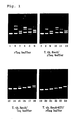
- Example 1 Improvement of decrease of T. th. RecA protein performance by the composition of a PCR reaction solution
- the PCR amplification reaction was carried out using a human genome DNA as a template and Primer Set 1.
- Four kinds of PCR reaction solution were prepared as shown below. Specifically, Reaction solution A was prepared by using 1 x rTaq buffer (manufactured by Takara Bio Inc.) as a buffer solution, and Reaction solution B was prepared by adding T. th. RecA further to Reaction solution A.
- Reaction solution C was prepared by using Taq buffer (manufactured by Takara Bio Inc.) as a buffer solution and adding T. th. RecA.
- Reaction solution D was prepared by adding T. th. RecA and ATP further to Reaction solution A.
- the composition of each of the reaction solutions is as shown below.
- As a DNA polymerase an rTaq-HS polymerase (manufactured by Takara Bio Inc.) was used.
- the above materials were mixed in a 1 x Taq buffer to make a total volume of 25 ⁇ l.
- reaction solutions were thermally denatured at 94°C for 30 seconds. Thereafter, the amplification reaction was carried out with 35 cycles (1 cycle: at 94°C for 15 seconds, at 55°C for 30 seconds and at 72°C for 90 seconds). Thereafter, the amplification reaction was completed by the final reaction cycle at 72°C for 3 minutes and at 4°C for 10 minutes. After the amplification, 10 ⁇ l of the reaction solution was subjected to electrophoresis with 1.2% agarose gel. After the electrophoresis, the bands were visualized by staining the gel with ethidium bromide, and then the electrophoresis gel was photographed. Furthermore, the same experiment was conducted using Primer Sets 2, 3, 4, 5 and 6.
- Lanes 1 to 6 show the results after carrying out the amplification reaction using Primer Sets 1, 2, 3, 4, 5 and 6, respectively, without adding any of T. th. RecA and ATP in an rTaq Buffer (Reaction solution A).
- Lanes 7 to 12 show the results after carrying out the amplification reaction using Primer Sets 1, 2, 3, 4, 5 and 6, respectively, with adding only T. th. RecA and without adding ATP in an rTaq Buffer (Reaction solution B).
- Lanes 13 to 18 show the results after carrying out the amplification reaction using Primer Sets 1, 2, 3, 4, 5 and 6, respectively, with adding only T. th. RecA in a Taq Buffer (Reaction solution C).
- Lanes 19 to 24 show the results after carrying out the amplification reaction using Primer Sets 1, 2, 3, 4, 5 and 6, respectively, with adding T. th. RecA and ATP in an rTaq Buffer (Reaction solution D).
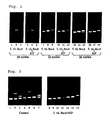
- Example 2 Improvement of decrease in the performance of T. th. RecA in PCR
- the PCR amplification reaction was carried out using a human genome DNA as a template and Primer Set 7.
- Two kinds of PCR reaction solution were prepared as shown below. Specifically, Reaction solution E was prepared by adding T. th. RecA only. Reaction solution F was prepared by adding ATP in addition to T. th. RecA. The composition of each of the reaction solutions is as shown below.
- As a DNA polymerase an rTaq-HS polymerase was used.
- the above materials were mixed in a 1 x Taq buffer (manufactured by Takara Bio Inc.) to make a total volume of 25 ⁇ l.
- the above materials were mixed in a 1 x Taq buffer (manufactured by Takara Bio Inc.) to make a total volume of 25 ⁇ l.
- the above reaction solutions were thermally denatured at 94°C for 30 seconds. Thereafter, the amplification reaction was conducted in 28, 32 or 36 cycles (1 cycle: at 94° C for 15 seconds, at 55°C for 30 seconds and at 72° C for 90 seconds). And Thereafter, the amplification reaction was completed by the final reaction cycle at 72°C for 3 minutes and at 4°C for 10 minutes. After the amplification, 10 ⁇ l of the reaction solution was subjected to electrophoresis with 1.2% agarose gel. After the electrophoresis, the bands were visualized by staining the gel with ethidium bromide, and then the electrophoresis gel was photographed. Furthermore, the same experiment was conducted using Primer Sets 8 and 9.
- Lanes 1 to 3 show the results after carrying out the amplification reaction for 28 cycles by Primer Sets 7, 8 and 9, respectively, without adding ATP and with adding only T. th. RecA (Reaction solution E).
- Lanes 4 to 6 show the results after carrying out the amplification reaction for 28 cycles by Primer Sets 7, 8 and 9, respectively, with adding T. th. RecA and ATP (Reaction solution F).
- Lanes 7 to 9 show the results after carrying out the amplification reaction for 32 cycles by Primer Sets 7, 8 and 9, respectively, without adding ATP and with adding only T. th. RecA (Reaction solution E).
- Lanes 10 to 12 show the results after carrying out the amplification reaction for 32 cycles by Primer Sets 7, 8 and 9, respectively, with adding T. th. RecA and ATP (Reaction solution F).
- Lanes 13 to 15 show the results after carrying out the amplification reaction for 36 cycles by Primer Sets 7, 8 and 9, respectively, without adding ATP and with adding only T. th. RecA (Reaction solution E).
- Lanes 16 to 18 show the results after carrying out the amplification reaction for 36 cycles by Primer Sets 7, 8 and 9, respectively, with adding T. th. RecA and ATP (Reaction solution F).
- RecA and maintaining its biological function in the PCR cycles.
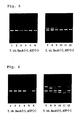
- the PCR amplification reaction was carried out using a human genome DNA as a template and Primer Set 1.
- Two kinds of PCR reaction solutions were prepared as shown below. Specifically, Reaction solution G was prepared with a composition of a general PCR reaction solution without adding any of T. th. RecA and ATP (Control). Reaction solution H was prepared by adding T. th. RecA and ATP further to Reaction solution G. The composition of each of the reaction solutions is as shown below.
- As a DNA polymerase an Ex Taq-HS polymerase was used.
- the above materials were mixed in a 1 x Taq buffer (manufactured by Takara Bio Inc.) to make a total volume of 25 ⁇ l.
- the above materials were mixed in a 1 x Taq buffer (manufactured by Takara Bio Inc.) to make a total volume of 25 ⁇ l.
- reaction solutions were thermally denatured at 94°C for 30 seconds. Thereafter, the amplification reaction was carried out with 36 cycles (1 cycle: at 94°C for 15 seconds, at 55°C for 30 seconds and at 72°C for 90 seconds). Thereafter, the amplification reaction was completed by the final reaction cycle at 72°C for 3 minutes and at 4°C for 10 minutes. After the amplification, 10 ⁇ l of the reaction solution was subjected to electrophoresis with 1.2% agarose gel. After the electrophoresis, the bands were visualized by staining the gel with ethidium bromide, and then the electrophoresis gel was photographed. Furthermore, the same experiment was conducted using Primer Sets 2, 3, 4, 5, 6 and 8.
- Lanes 1 to 7 show the results after carrying out the amplification reaction in the general PCR reaction solution using Primer Sets 1, 2, 3, 4, 5, 6 and 8, respectively, without adding any of T. th. RecA and ATP (Control: Reaction solution G).
- Lanes 8 to 14 show the results after carrying out the amplification reaction using Primer Sets 1, 2, 3, 4, 5, 6 and 8, respectively, by adding T. th. RecA and ATP (Reaction solution H).
- T. th. RecA stabilization of T. th. RecA is achieved by various nucleotide 5'-triphosphates as in the case of ATP by carrying out PCR amplification in the presence of various nucleotide 5'-triphosphates and T. th. RecA.
- the PCR amplification reaction was carried out using a human genome DNA as a template and Primer Set 1. Seven kinds of PCR reaction solution were prepared as shown below. Specifically, Reaction solution I was a general PCR reaction solution and prepared without adding any of T. th. RecA and nucleotide 5'-triphosphate (Control). Reaction solution J was prepared by adding T. th. RecA to Reaction solution I. Reaction solutions K, L, M and N were prepared by adding GTP, ATP, UTP and CTP to Reaction solution J, respectively. Reaction solution O was prepared by adding only ATP to Reaction solution I without adding T. th. RecA. The composition of each of the reaction solutions is as shown below. As a DNA polymerase, an rTaq-HS polymerase was used.
- reaction solutions were thermally denatured at 94°C for 30 seconds. Thereafter, the amplification reaction was carried out with 36 cycles (1 cycle: at 94°C for 15 seconds, at 55°C for 30 seconds and at 72°C for 90 seconds). Thereafter, the amplification reaction was completed by the final reaction cycle at 72°C for 3 minutes and at 4° C for 10 minutes. After the amplification, 10 ⁇ l of the reaction solution was subjected to electrophoresis with 1.2% agarose gel. After the electrophoresis, the bands were visualized by staining the gel with ethidium bromide, and then the electrophoresis gel was photographed. Furthermore, the same experiment was conducted using Primer Sets 2, 3, 4, 5, 6 and 8.
- Lanes 1 to 7 show the results after carrying out the amplification reaction in the general PCR reaction solution using Primer Sets 1, 2, 3, 4, 5, 6 and 8, respectively, without adding any of T. th. RecA and NTP (Control: Reaction solution I).
- Lanes 8 to 14 show the results after carrying out the amplification reaction using Primer Sets 1, 2, 3, 4, 5, 6 and 8, respectively, by adding only T. th. RecA and without adding any NTP (Reaction solution J).
- Lanes 15 to 21 show the results after carrying out the amplification reaction using Primer Sets 1, 2, 3, 4, 5, 6 and 8, respectively, by adding T. th. RecA and GTP (Reaction solution K).
- Lanes 22 to 28 show the results after carrying out the amplification reaction using Primer Sets 1, 2, 3, 4, 5, 6 and 8, respectively, by adding T. th. RecA and ATP (Reaction solution L).
- Lanes 29 to 35 show the results after carrying out the amplification reaction using Primer Sets 1, 2, 3, 4, 5, 6 and 8, respectively, by adding T. th. RecA and UTP (Reaction solution M).
- Lanes 36 to 42 show the results after carrying out the amplification reaction using Primer Sets 1, 2, 3, 4, 5, 6 and 8, respectively, by adding T. th. RecA and CTP (Reaction solution N).
- Lanes 43 to 49 show the results after carrying out the amplification reaction using Primer Sets 1, 2, 3, 4, 5, 6 and 8, respectively, by adding only ATP and without adding T. th. RecA (Reaction solution O).
- nucleotide 5'-triphosphate such as GTP, CTP and UTP as well as ATP can activate T. th. RecA, and that it plays an important role in stabilizing the functions of T. th. RecA. It is considered that the stability of the biological function of RecA against external factors, especially to heat, can be improved and the biological function of RecA can be activated.
- the PCR amplification reaction was carried out using a human genome DNA as a template and the primer sets of various lengths.
- the primer sets used here were Primer Sets 10, 11, 12, 13, 14 and 15 with the base length of 20, 25, 30, 35, 40 and 45, respectively.
- Two kinds of PCR reaction solution were prepared as shown below. Specifically, Reaction solution P was prepared by adding T. th. RecA and ATP. Reaction solution Q was prepared similarly to Reaction solution P except that ATP was not added. The composition of each of the reaction solutions is as shown below.
- As a DNA polymerase an ExTaq-HS polymerase (manufactured by Takara Bio Inc.) was used.
- reaction solutions were thermally denatured at 94°C for 30 seconds. Thereafter, the amplification reaction was carried out with 35 cycles (1 cycle: at 94°C for 15 seconds, at 55°C for 30 seconds and at 72°C for 90 seconds). Thereafter, the amplification reaction was completed by the final reaction cycle at 72°C for 3 minutes and at 4°C for 10 minutes. After the amplification, 10 ⁇ l of the reaction solution was subjected to electrophoresis with 1.2% agarose gel. After the electrophoresis, the bands were visualized by staining the gel with ethidium bromide, and then the electrophoresis gel was photographed.
- Lanes 1 to 6 show the results after carrying out the amplification reaction using Primer Sets 10, 11, 12, 13, 14 and 15, respectively, by adding T. th. RecA and ATP (Reaction solution P).
- Lanes 7 to 12 show the results after carrying out the amplification reaction using Primer Sets 10, 11, 12, 13, 14 and 15, respectively, without adding ATP and by adding only T. th. RecA (Reaction solution Q).
- the PCR amplification reaction was carried out using a human genome DNA as a template and the primer sets of various lengths.
- the primer sets used here were Primer Sets 16, 17, 18, 19, 20 and 21 with the base lengths of 20, 25, 30, 35, 40 and 45.
- the same PCR reaction solutions as in Example 5 were used. Specifically, Reaction solution P was prepared by adding T. th. RecA and ATP. Reaction solution Q was prepared similarly to Reaction solution P except that ATP was not added.
- As a DNA polymerase an ExTaq-HS polymerase (manufactured by Takara Bio Inc.) was used. Then, the PCR reaction was carried out under the same conditions as in Example 5, then electrophoresis and staining of the electrophoresed gel were conducted, and then photographing was conducted according to the same procedures as in Example 5.
- Lanes 1 to 6 show the results after carrying out the amplification reaction using Primer Sets 16, 17, 18, 19, 20 and 21, respectively, with adding T. th. RecA and ATP (Reaction solution P).
- Lanes 7 to 12 show the results after carrying out the amplification reaction using Primer Sets 16, 17, 18, 19, 20 and 21, respectively, with adding only T. th. RecA (Reaction solution Q).
- PCR amplification by the T. th. DNA polymerase was carried out using a human genome DNA as a template and Primer Set 1.
- Five kinds of PCR reaction solution were prepared as shown below. Specifically, Reaction solution R was prepared by adding T. th. RecA and ATP. Reaction solution S was prepared similarly to Reaction solution R except that ATP was not added. Reaction solution T was prepared similarly to Reaction solution R except that ATP and T. th. RecA were not added, and had a composition of a general PCR reaction solution. Reaction solution U was prepared similarly to Reaction solution R except that T. th. RecA and ATP were not added but a T. th. RecA storage buffer was added instead. Further, Reaction solution V was prepared similarly to Reaction solution R except that T. th. RecA was not added. The composition of each of the reaction solutions is as shown below.
- T. th. RecA storage buffer used herein is as shown below.
- reaction solutions were thermally denatured at 92°C for 30 seconds. Then, amplification reaction was carried out with 35 cycles (1 cycle: at 94°C for 15 seconds, at 55°C for 30 seconds and at 68°C for 90 seconds). Thereafter, the amplification reaction was completed by the final reaction cycle at 68°C for 3 minutes and at 4°C for 10 minutes. After the amplification, 10 ⁇ l of the reaction solution was subjected to electrophoresis with 1.2% agarose gel. After the electrophoresis, the bands were visualized by staining the gel with ethidium bromide, and then the electrophoresis gel was photographed. Furthermore, the same amplification reaction was conducted using Primer Sets 2, 3, 4, 5, 6 and 8.
- Lanes 1 to 7 show the results after carrying out the amplification reaction using Primer Sets 1, 2, 3, 4, 5, 6 and 8, respectively, by adding T. th. RecA and ATP (Reaction solution R).
- Lanes 8 to 14 show the results after carrying out the amplification reaction using Primer Sets 1, 2, 3, 4, 5, 6 and 8, respectively, without adding ATP and by adding T. th. RecA (Reaction solution S).
- Lanes 15 to 21 show the results after carrying out the amplification reaction using Primer Sets 1, 2, 3, 4, 5, 6 and 8, respectively, without adding any of T. th. RecA and ATP (Reaction solution T).
- Lanes 22 to 28 show the results after carrying out the amplification reaction using Primer Sets 1, 2, 3, 4, 5, 6 and 8, respectively, without adding any of T. th. RecA and ATP but with adding a T. th. RecA storage buffer (Reaction solution U).
- Lanes 29 to 35 show the results after carrying out the amplification reaction using Primer Sets 1, 2, 3, 4, 5, 6 and 8, respectively, without adding T. th. RecA but with adding ATP only (Reaction solution V).
- the present invention is not limited in its use to the kinds of the DNA polymerase used in PCR amplification. In addition, particularly, it was found that the present invention can be suitably used in the PCR amplification reaction by the T. th. DNA polymerase.
- the PCR amplification reaction by the T. th. DNA polymerase was carried out using a human genome DNA as a template.
- the primer sets used herein were Primer Sets 22, 23, 24, 25, 26, 27, 28, 29, 30, 31, 32, 33, 1 and 2.
- multiplex PCR was carried out in which these primer sets were added in one reaction system and amplified.
- Two kinds of PCR reaction solution were prepared as shown below. Specifically, Reaction solution W was prepared by adding T. th. RecA and ATP. Reaction solution X was prepared similarly to Reaction solution W except that T. th. RecA and ATP were not added but a T. th. RecA storage buffer was added instead.
- T. th. DNA polymerase buffer Product No. N8080187, manufactured by Applied Biosystems
- the T. th. RecA storage buffer used here was the same as used in Example 7.
- reaction solutions were thermally denatured at 92°C for 30 seconds. Thereafter, the amplification reaction was carried out with 35 cycles (1 cycle: at 94°C for 15 seconds, at 55°C for 30 seconds and at 68°C for 2 minutes). Thereafter, the amplification reaction was completed by the final reaction cycle at 68°C for 3 minutes and at 4°C for 10 minutes. After the amplification, 3 ⁇ l of the reaction solution was subjected to electrophoresis with 12.5% acrylamide gel. After the electrophoresis, the bands were visualized by staining the gel with cyber green, and then the electrophoresis gel was photographed.
- Lanes 1 to 14 show the results after carrying out the amplification reaction using Primer Sets 22, 23, 24, 25, 26, 27, 28, 29, 30, 31, 32, 33, 1 and 2, respectively, by adding T. th. RecA and ATP (Reaction solution W).
- Lane 15 show the results of multiplex PCR in which the amplification reaction was carried out in one reaction system by adding all of the above-mentioned primer sets in the presence of T. th. RecA and ATP (Reaction solution W).
- Lanes 16 to 29 show the results after carrying out the amplification reaction using Primer Sets 22, 23, 24, 25, 26, 27, 28, 29, 30, 31, 32, 33, 1 and 2, respectively, in the ' presence of T. th. RecA storage buffer (Reaction solution X).
- Lane 30 show the results of multiplex PCR in which the amplification reaction was carried out in one reaction system by adding all of the above-mentioned primer sets in the presence of T. th. RecA storage buffer (Reaction solution X).
- mis-priming can be effectively suppressed and specific amplification of the target sequences can be performed in multiplex PCR in which a plurality of primer sets are reacted in one reaction system.
- the invention can be particularly suitably applied to multiplex PCR.
- the present invention provides a nucleic acid amplification method which is useful in the medical field, the biochemical field, the environmental field, the food field and the like.
- the present invention is to provide a method which makes it possible to activate RecA, and maintain its biological function in all the PCR cycles. Also, the Invention is to provide a nucleic acid amplification method, and a kit for amplifying a nucleic acid which makes it possible to suppress non-specific amplification more specifically and efficiently to amplify only the desired nucleic acid.
Landscapes
- Chemical & Material Sciences (AREA)
- Organic Chemistry (AREA)
- Life Sciences & Earth Sciences (AREA)
- Zoology (AREA)
- Wood Science & Technology (AREA)
- Proteomics, Peptides & Aminoacids (AREA)
- Health & Medical Sciences (AREA)
- Engineering & Computer Science (AREA)
- Chemical Kinetics & Catalysis (AREA)
- Biophysics (AREA)
- Immunology (AREA)
- Microbiology (AREA)
- Molecular Biology (AREA)
- Biotechnology (AREA)
- Analytical Chemistry (AREA)
- Physics & Mathematics (AREA)
- Biochemistry (AREA)
- Bioinformatics & Cheminformatics (AREA)
- General Engineering & Computer Science (AREA)
- General Health & Medical Sciences (AREA)
- Genetics & Genomics (AREA)
- Measuring Or Testing Involving Enzymes Or Micro-Organisms (AREA)
Applications Claiming Priority (1)
| Application Number | Priority Date | Filing Date | Title |
|---|---|---|---|
| JP2004368831A JP4534138B2 (ja) | 2004-12-21 | 2004-12-21 | 核酸増幅反応における高度好熱菌由来タンパク質の活性化方法およびその利用 |
Publications (2)
| Publication Number | Publication Date |
|---|---|
| EP1674584A1 true EP1674584A1 (de) | 2006-06-28 |
| EP1674584B1 EP1674584B1 (de) | 2008-05-07 |
Family
ID=36190777
Family Applications (1)
| Application Number | Title | Priority Date | Filing Date |
|---|---|---|---|
| EP05026839A Expired - Lifetime EP1674584B1 (de) | 2004-12-21 | 2005-12-08 | Methode zur Aktivierung eines Proteins aus einem extrem thermophilen Bakterium in einer Nukleinsäure-Amplifikationsreaktion und dessen Verwendung |
Country Status (4)
| Country | Link |
|---|---|
| US (1) | US7662593B2 (de) |
| EP (1) | EP1674584B1 (de) |
| JP (1) | JP4534138B2 (de) |
| DE (1) | DE602005006512D1 (de) |
Families Citing this family (1)
| Publication number | Priority date | Publication date | Assignee | Title |
|---|---|---|---|---|
| JP6387722B2 (ja) * | 2014-07-24 | 2018-09-12 | アイシン精機株式会社 | 改変型の耐熱性RecAタンパク質、該タンパク質をコードする核酸分子、該タンパク質を用いた核酸の増幅方法、及び核酸増幅用キット |
Citations (2)
| Publication number | Priority date | Publication date | Assignee | Title |
|---|---|---|---|---|
| US20030219792A1 (en) * | 2002-02-21 | 2003-11-27 | Armes Niall A. | Recombinase polymerase amplification |
| WO2004027060A1 (ja) * | 2002-09-17 | 2004-04-01 | Aisin Cosmos R & D Co., Ltd. | 核酸増幅方法、核酸増幅用試薬キット、一塩基多型検出方法、及び、一塩基多型検出用試薬キット |
Family Cites Families (8)
| Publication number | Priority date | Publication date | Assignee | Title |
|---|---|---|---|---|
| US4683202A (en) * | 1985-03-28 | 1987-07-28 | Cetus Corporation | Process for amplifying nucleic acid sequences |
| WO1991006679A1 (en) | 1989-10-24 | 1991-05-16 | Stratagene | An improved method for hybridizing nucleic acids using single-stranded nucleic acid binding protein |
| US5223414A (en) * | 1990-05-07 | 1993-06-29 | Sri International | Process for nucleic acid hybridization and amplification |
| US5510473A (en) * | 1990-11-09 | 1996-04-23 | The United States Of American As Represented By The Secretary Of Health And Human Services | Cloning of the recA gene from thermus aquaticus YT-1 |
| WO1994014978A1 (de) | 1992-12-18 | 1994-07-07 | Strack Hans B | Verbesserte ausbeuten von pcr-produkten in gegenwart von dna-einzelstrang bindendem protein und dessen präparation aus thermus flavus |
| AU7208394A (en) | 1993-06-17 | 1995-01-17 | Research Foundation Of The State University Of New York, The | Improved nucleic acid reactions |
| US7468244B2 (en) * | 2001-09-27 | 2008-12-23 | University Of Delaware | Polymorphism detection and separation |
| JP2004222631A (ja) * | 2003-01-24 | 2004-08-12 | Aisin Cosmos R & D Co Ltd | 核酸結合体の形成方法、核酸結合体形成用キット、核酸結合体、及び、核酸検出方法 |
-
2004
- 2004-12-21 JP JP2004368831A patent/JP4534138B2/ja not_active Expired - Fee Related
-
2005
- 2005-12-08 EP EP05026839A patent/EP1674584B1/de not_active Expired - Lifetime
- 2005-12-08 DE DE602005006512T patent/DE602005006512D1/de not_active Expired - Lifetime
- 2005-12-12 US US11/298,875 patent/US7662593B2/en not_active Expired - Fee Related
Patent Citations (2)
| Publication number | Priority date | Publication date | Assignee | Title |
|---|---|---|---|---|
| US20030219792A1 (en) * | 2002-02-21 | 2003-11-27 | Armes Niall A. | Recombinase polymerase amplification |
| WO2004027060A1 (ja) * | 2002-09-17 | 2004-04-01 | Aisin Cosmos R & D Co., Ltd. | 核酸増幅方法、核酸増幅用試薬キット、一塩基多型検出方法、及び、一塩基多型検出用試薬キット |
Non-Patent Citations (2)
| Title |
|---|
| ANGOV E ET AL: "The recA gene from the thermophile Thermus aquaticus YT-1: cloning, expression, and characterization", JOURNAL OF BACTERIOLOGY, WASHINGTON, DC, US, vol. 176, no. 5, March 1994 (1994-03-01), pages 1405 - 1412, XP002343424, ISSN: 0021-9193 * |
| CAMPBELL M J ET AL: "On the in vivo function of the RecA ATPase", JOURNAL OF MOLECULAR BIOLOGY, LONDON, GB, vol. 286, no. 2, 19 February 1999 (1999-02-19), pages 437 - 445, XP004459763, ISSN: 0022-2836 * |
Also Published As
| Publication number | Publication date |
|---|---|
| JP4534138B2 (ja) | 2010-09-01 |
| US20060160115A1 (en) | 2006-07-20 |
| US7662593B2 (en) | 2010-02-16 |
| DE602005006512D1 (de) | 2008-06-19 |
| EP1674584B1 (de) | 2008-05-07 |
| JP2006174722A (ja) | 2006-07-06 |
Similar Documents
| Publication | Publication Date | Title |
|---|---|---|
| EP2294225B1 (de) | Verfahren zur direkten amplifikation aus rohen nukeinsäureproben | |
| JP5886755B2 (ja) | 核酸の対立遺伝子特異的増幅 | |
| US10301675B2 (en) | Compositions and methods for reducing inhibition of RT-PCR | |
| EP3601593B1 (de) | Universelle hairpin-primer | |
| JPH11503919A (ja) | 核酸の同時配列決定 | |
| JP6417032B2 (ja) | オリゴヌクレオチドフラグメント、ならびにこれを用いる標的核酸配列の変異体の選択的増幅の方法および用途 | |
| CN103534356B (zh) | 使用内部对照定量人类dna的方法 | |
| EP1876246A1 (de) | Selbst-komplementierenden Primer zur Verwendung bei dem LAMP Genamplifikationsverfahren | |
| CN104011224A (zh) | 用于降低非特异性扩增的方法和试剂 | |
| EP3498861A1 (de) | Verfahren für reverse rna-transkriptionsverstärkung | |
| CN107267615A (zh) | G形夹用于改进的等位基因特异性pcr的用途 | |
| US7662593B2 (en) | Activation method of protein derived from extremely thermophilic bacterium in nucleic acid amplification reaction and use thereof | |
| EP1548112B1 (de) | Verfahren zur amplifikation von nukleinsäure, kit zur amplifikation von nukleinsäure, verfahren zum nachweis von einzelnukleotid-polymorphismus und reagentienkit zum nachweis von einzelnukleotid-polymorphismus | |
| Broll | Polymerase chain reaction | |
| JP2004141105A (ja) | Dna合成反応を促進する方法、およびそのための組成物 | |
| JP2006325522A (ja) | Dnaポリメラーゼ伸長反応の不活性化制御用組成物、及び核酸の増幅方法。 | |
| TWI614344B (zh) | 用以偵測突變的方法與引子組 | |
| JP2008178338A (ja) | 断片化核酸が混入する核酸試料中の標的核酸を増幅する核酸増幅方法、及びそのキット | |
| JPWO2002024901A1 (ja) | 複合体の形成方法 | |
| JP2007325534A (ja) | RecAタンパク質を利用した核酸の等温増幅法 | |
| JP2005013122A (ja) | 遺伝子増幅試薬の安定化方法 | |
| JP2006141347A (ja) | 高度好熱菌由来RecAタンパク質を用いた核酸塩基配列決定方法および核酸塩基配列決定キット | |
| JP2006271250A (ja) | 塩基配列決定方法 |
Legal Events
| Date | Code | Title | Description |
|---|---|---|---|
| PUAI | Public reference made under article 153(3) epc to a published international application that has entered the european phase |
Free format text: ORIGINAL CODE: 0009012 |
|
| AK | Designated contracting states |
Kind code of ref document: A1 Designated state(s): AT BE BG CH CY CZ DE DK EE ES FI FR GB GR HU IE IS IT LI LT LU LV MC NL PL PT RO SE SI SK TR |
|
| AX | Request for extension of the european patent |
Extension state: AL BA HR MK YU |
|
| 17P | Request for examination filed |
Effective date: 20061129 |
|
| AKX | Designation fees paid |
Designated state(s): DE FR GB |
|
| 17Q | First examination report despatched |
Effective date: 20070502 |
|
| GRAP | Despatch of communication of intention to grant a patent |
Free format text: ORIGINAL CODE: EPIDOSNIGR1 |
|
| GRAS | Grant fee paid |
Free format text: ORIGINAL CODE: EPIDOSNIGR3 |
|
| GRAA | (expected) grant |
Free format text: ORIGINAL CODE: 0009210 |
|
| AK | Designated contracting states |
Kind code of ref document: B1 Designated state(s): DE FR GB |
|
| REG | Reference to a national code |
Ref country code: GB Ref legal event code: FG4D |
|
| REF | Corresponds to: |
Ref document number: 602005006512 Country of ref document: DE Date of ref document: 20080619 Kind code of ref document: P |
|
| PLBE | No opposition filed within time limit |
Free format text: ORIGINAL CODE: 0009261 |
|
| STAA | Information on the status of an ep patent application or granted ep patent |
Free format text: STATUS: NO OPPOSITION FILED WITHIN TIME LIMIT |
|
| 26N | No opposition filed |
Effective date: 20090210 |
|
| PGFP | Annual fee paid to national office [announced via postgrant information from national office to epo] |
Ref country code: DE Payment date: 20131204 Year of fee payment: 9 Ref country code: GB Payment date: 20131204 Year of fee payment: 9 |
|
| PGFP | Annual fee paid to national office [announced via postgrant information from national office to epo] |
Ref country code: FR Payment date: 20131209 Year of fee payment: 9 |
|
| REG | Reference to a national code |
Ref country code: DE Ref legal event code: R119 Ref document number: 602005006512 Country of ref document: DE |
|
| GBPC | Gb: european patent ceased through non-payment of renewal fee |
Effective date: 20141208 |
|
| REG | Reference to a national code |
Ref country code: FR Ref legal event code: ST Effective date: 20150831 |
|
| PG25 | Lapsed in a contracting state [announced via postgrant information from national office to epo] |
Ref country code: DE Free format text: LAPSE BECAUSE OF NON-PAYMENT OF DUE FEES Effective date: 20150701 Ref country code: GB Free format text: LAPSE BECAUSE OF NON-PAYMENT OF DUE FEES Effective date: 20141208 |
|
| PG25 | Lapsed in a contracting state [announced via postgrant information from national office to epo] |
Ref country code: FR Free format text: LAPSE BECAUSE OF NON-PAYMENT OF DUE FEES Effective date: 20141231 |