EP1670925B1 - Packaging cells for recombinant adenovirus - Google Patents
Packaging cells for recombinant adenovirus Download PDFInfo
- Publication number
- EP1670925B1 EP1670925B1 EP04791140.9A EP04791140A EP1670925B1 EP 1670925 B1 EP1670925 B1 EP 1670925B1 EP 04791140 A EP04791140 A EP 04791140A EP 1670925 B1 EP1670925 B1 EP 1670925B1
- Authority
- EP
- European Patent Office
- Prior art keywords
- sequences
- cells
- nucleic acid
- genome
- cell
- Prior art date
- Legal status (The legal status is an assumption and is not a legal conclusion. Google has not performed a legal analysis and makes no representation as to the accuracy of the status listed.)
- Expired - Lifetime
Links
- 241000701161 unidentified adenovirus Species 0.000 title claims description 78
- 238000004806 packaging method and process Methods 0.000 title description 39
- 150000007523 nucleic acids Chemical class 0.000 claims description 57
- 108020004707 nucleic acids Proteins 0.000 claims description 41
- 102000039446 nucleic acids Human genes 0.000 claims description 41
- 108090000623 proteins and genes Proteins 0.000 claims description 35
- 101710175001 E1B protein, small T-antigen Proteins 0.000 claims description 29
- 238000000034 method Methods 0.000 claims description 29
- 102000004169 proteins and genes Human genes 0.000 claims description 24
- 108091028043 Nucleic acid sequence Proteins 0.000 claims description 21
- 101150075174 E1B gene Proteins 0.000 claims description 15
- 108010024878 Adenovirus E1A Proteins Proteins 0.000 claims description 11
- 101710199711 Early E1A protein Proteins 0.000 claims description 9
- 238000012217 deletion Methods 0.000 claims description 8
- 230000037430 deletion Effects 0.000 claims description 8
- 239000002243 precursor Substances 0.000 claims description 8
- 108010087905 Adenovirus E1B Proteins Proteins 0.000 claims description 5
- 238000005304 joining Methods 0.000 claims description 5
- 108700019031 adenovirus E1B55K Proteins 0.000 claims description 4
- 238000012258 culturing Methods 0.000 claims description 2
- 238000003306 harvesting Methods 0.000 claims description 2
- 101710114676 E1B 55 kDa protein Proteins 0.000 claims 2
- 210000004027 cell Anatomy 0.000 description 214
- 239000012634 fragment Substances 0.000 description 111
- 108020004414 DNA Proteins 0.000 description 63
- 239000013598 vector Substances 0.000 description 58
- 241001135569 Human adenovirus 5 Species 0.000 description 37
- 239000013612 plasmid Substances 0.000 description 36
- 239000000499 gel Substances 0.000 description 29
- 230000014509 gene expression Effects 0.000 description 27
- 108091026890 Coding region Proteins 0.000 description 22
- 230000001105 regulatory effect Effects 0.000 description 18
- 238000001890 transfection Methods 0.000 description 18
- 239000002245 particle Substances 0.000 description 17
- 241000700605 Viruses Species 0.000 description 15
- 230000010076 replication Effects 0.000 description 14
- 230000009466 transformation Effects 0.000 description 14
- 239000011543 agarose gel Substances 0.000 description 13
- 230000029087 digestion Effects 0.000 description 13
- 238000000605 extraction Methods 0.000 description 13
- IAZDPXIOMUYVGZ-UHFFFAOYSA-N Dimethylsulphoxide Chemical compound CS(C)=O IAZDPXIOMUYVGZ-UHFFFAOYSA-N 0.000 description 12
- 238000002744 homologous recombination Methods 0.000 description 12
- 238000000746 purification Methods 0.000 description 12
- 125000006850 spacer group Chemical group 0.000 description 12
- 230000006801 homologous recombination Effects 0.000 description 11
- 239000000523 sample Substances 0.000 description 11
- 238000001502 gel electrophoresis Methods 0.000 description 9
- 230000010354 integration Effects 0.000 description 9
- 230000008488 polyadenylation Effects 0.000 description 9
- 102000004190 Enzymes Human genes 0.000 description 8
- 108090000790 Enzymes Proteins 0.000 description 8
- 241000829100 Macaca mulatta polyomavirus 1 Species 0.000 description 8
- 108091034117 Oligonucleotide Proteins 0.000 description 8
- 238000010367 cloning Methods 0.000 description 8
- 102000011755 Phosphoglycerate Kinase Human genes 0.000 description 7
- 101001099217 Thermotoga maritima (strain ATCC 43589 / DSM 3109 / JCM 10099 / NBRC 100826 / MSB8) Triosephosphate isomerase Proteins 0.000 description 7
- 230000000644 propagated effect Effects 0.000 description 7
- 108700026244 Open Reading Frames Proteins 0.000 description 6
- 230000003321 amplification Effects 0.000 description 6
- 230000015572 biosynthetic process Effects 0.000 description 6
- 210000000349 chromosome Anatomy 0.000 description 6
- 210000005260 human cell Anatomy 0.000 description 6
- 239000002773 nucleotide Substances 0.000 description 6
- 125000003729 nucleotide group Chemical group 0.000 description 6
- NKDFYOWSKOHCCO-YPVLXUMRSA-N 20-hydroxyecdysone Chemical compound C1[C@@H](O)[C@@H](O)C[C@]2(C)[C@@H](CC[C@@]3([C@@H]([C@@](C)(O)[C@H](O)CCC(C)(O)C)CC[C@]33O)C)C3=CC(=O)[C@@H]21 NKDFYOWSKOHCCO-YPVLXUMRSA-N 0.000 description 5
- 230000002950 deficient Effects 0.000 description 5
- 230000001419 dependent effect Effects 0.000 description 5
- 238000002474 experimental method Methods 0.000 description 5
- 238000003780 insertion Methods 0.000 description 5
- 239000000203 mixture Substances 0.000 description 5
- 239000013641 positive control Substances 0.000 description 5
- 239000000126 substance Substances 0.000 description 5
- 230000003612 virological effect Effects 0.000 description 5
- 241000700721 Hepatitis B virus Species 0.000 description 4
- 101710185720 Putative ethidium bromide resistance protein Proteins 0.000 description 4
- 108700019146 Transgenes Proteins 0.000 description 4
- 230000000295 complement effect Effects 0.000 description 4
- 230000000120 cytopathologic effect Effects 0.000 description 4
- 230000037431 insertion Effects 0.000 description 4
- 238000003199 nucleic acid amplification method Methods 0.000 description 4
- -1 spacer nucleic acids Chemical class 0.000 description 4
- 238000011144 upstream manufacturing Methods 0.000 description 4
- 238000001262 western blot Methods 0.000 description 4
- 108010019653 Pwo polymerase Proteins 0.000 description 3
- 108091081062 Repeated sequence (DNA) Proteins 0.000 description 3
- 210000001776 amniocyte Anatomy 0.000 description 3
- 239000013601 cosmid vector Substances 0.000 description 3
- 230000000694 effects Effects 0.000 description 3
- 238000009396 hybridization Methods 0.000 description 3
- 208000015181 infectious disease Diseases 0.000 description 3
- 238000002955 isolation Methods 0.000 description 3
- 239000006166 lysate Substances 0.000 description 3
- 230000008569 process Effects 0.000 description 3
- 230000006798 recombination Effects 0.000 description 3
- 238000005215 recombination Methods 0.000 description 3
- 108091008146 restriction endonucleases Proteins 0.000 description 3
- 210000001525 retina Anatomy 0.000 description 3
- 230000001131 transforming effect Effects 0.000 description 3
- 241000283690 Bos taurus Species 0.000 description 2
- HEDRZPFGACZZDS-UHFFFAOYSA-N Chloroform Chemical compound ClC(Cl)Cl HEDRZPFGACZZDS-UHFFFAOYSA-N 0.000 description 2
- 108010077544 Chromatin Proteins 0.000 description 2
- 102100036213 Collagen alpha-2(I) chain Human genes 0.000 description 2
- LFQSCWFLJHTTHZ-UHFFFAOYSA-N Ethanol Chemical compound CCO LFQSCWFLJHTTHZ-UHFFFAOYSA-N 0.000 description 2
- 101000875067 Homo sapiens Collagen alpha-2(I) chain Proteins 0.000 description 2
- 101001053946 Homo sapiens Dystrophin Proteins 0.000 description 2
- 238000012181 QIAquick gel extraction kit Methods 0.000 description 2
- 101710197208 Regulatory protein cro Proteins 0.000 description 2
- 238000002105 Southern blotting Methods 0.000 description 2
- 108010006785 Taq Polymerase Proteins 0.000 description 2
- JLCPHMBAVCMARE-UHFFFAOYSA-N [3-[[3-[[3-[[3-[[3-[[3-[[3-[[3-[[3-[[3-[[3-[[5-(2-amino-6-oxo-1H-purin-9-yl)-3-[[3-[[3-[[3-[[3-[[3-[[5-(2-amino-6-oxo-1H-purin-9-yl)-3-[[5-(2-amino-6-oxo-1H-purin-9-yl)-3-hydroxyoxolan-2-yl]methoxy-hydroxyphosphoryl]oxyoxolan-2-yl]methoxy-hydroxyphosphoryl]oxy-5-(5-methyl-2,4-dioxopyrimidin-1-yl)oxolan-2-yl]methoxy-hydroxyphosphoryl]oxy-5-(6-aminopurin-9-yl)oxolan-2-yl]methoxy-hydroxyphosphoryl]oxy-5-(6-aminopurin-9-yl)oxolan-2-yl]methoxy-hydroxyphosphoryl]oxy-5-(6-aminopurin-9-yl)oxolan-2-yl]methoxy-hydroxyphosphoryl]oxy-5-(6-aminopurin-9-yl)oxolan-2-yl]methoxy-hydroxyphosphoryl]oxyoxolan-2-yl]methoxy-hydroxyphosphoryl]oxy-5-(5-methyl-2,4-dioxopyrimidin-1-yl)oxolan-2-yl]methoxy-hydroxyphosphoryl]oxy-5-(4-amino-2-oxopyrimidin-1-yl)oxolan-2-yl]methoxy-hydroxyphosphoryl]oxy-5-(5-methyl-2,4-dioxopyrimidin-1-yl)oxolan-2-yl]methoxy-hydroxyphosphoryl]oxy-5-(5-methyl-2,4-dioxopyrimidin-1-yl)oxolan-2-yl]methoxy-hydroxyphosphoryl]oxy-5-(6-aminopurin-9-yl)oxolan-2-yl]methoxy-hydroxyphosphoryl]oxy-5-(6-aminopurin-9-yl)oxolan-2-yl]methoxy-hydroxyphosphoryl]oxy-5-(4-amino-2-oxopyrimidin-1-yl)oxolan-2-yl]methoxy-hydroxyphosphoryl]oxy-5-(4-amino-2-oxopyrimidin-1-yl)oxolan-2-yl]methoxy-hydroxyphosphoryl]oxy-5-(4-amino-2-oxopyrimidin-1-yl)oxolan-2-yl]methoxy-hydroxyphosphoryl]oxy-5-(6-aminopurin-9-yl)oxolan-2-yl]methoxy-hydroxyphosphoryl]oxy-5-(4-amino-2-oxopyrimidin-1-yl)oxolan-2-yl]methyl [5-(6-aminopurin-9-yl)-2-(hydroxymethyl)oxolan-3-yl] hydrogen phosphate Polymers Cc1cn(C2CC(OP(O)(=O)OCC3OC(CC3OP(O)(=O)OCC3OC(CC3O)n3cnc4c3nc(N)[nH]c4=O)n3cnc4c3nc(N)[nH]c4=O)C(COP(O)(=O)OC3CC(OC3COP(O)(=O)OC3CC(OC3COP(O)(=O)OC3CC(OC3COP(O)(=O)OC3CC(OC3COP(O)(=O)OC3CC(OC3COP(O)(=O)OC3CC(OC3COP(O)(=O)OC3CC(OC3COP(O)(=O)OC3CC(OC3COP(O)(=O)OC3CC(OC3COP(O)(=O)OC3CC(OC3COP(O)(=O)OC3CC(OC3COP(O)(=O)OC3CC(OC3COP(O)(=O)OC3CC(OC3COP(O)(=O)OC3CC(OC3COP(O)(=O)OC3CC(OC3COP(O)(=O)OC3CC(OC3COP(O)(=O)OC3CC(OC3CO)n3cnc4c(N)ncnc34)n3ccc(N)nc3=O)n3cnc4c(N)ncnc34)n3ccc(N)nc3=O)n3ccc(N)nc3=O)n3ccc(N)nc3=O)n3cnc4c(N)ncnc34)n3cnc4c(N)ncnc34)n3cc(C)c(=O)[nH]c3=O)n3cc(C)c(=O)[nH]c3=O)n3ccc(N)nc3=O)n3cc(C)c(=O)[nH]c3=O)n3cnc4c3nc(N)[nH]c4=O)n3cnc4c(N)ncnc34)n3cnc4c(N)ncnc34)n3cnc4c(N)ncnc34)n3cnc4c(N)ncnc34)O2)c(=O)[nH]c1=O JLCPHMBAVCMARE-UHFFFAOYSA-N 0.000 description 2
- 238000000137 annealing Methods 0.000 description 2
- 238000004113 cell culture Methods 0.000 description 2
- 239000013592 cell lysate Substances 0.000 description 2
- 238000006243 chemical reaction Methods 0.000 description 2
- 210000003483 chromatin Anatomy 0.000 description 2
- 230000002759 chromosomal effect Effects 0.000 description 2
- 238000012761 co-transfection Methods 0.000 description 2
- 238000010276 construction Methods 0.000 description 2
- 239000013613 expression plasmid Substances 0.000 description 2
- 238000002509 fluorescent in situ hybridization Methods 0.000 description 2
- 238000001415 gene therapy Methods 0.000 description 2
- 239000005090 green fluorescent protein Substances 0.000 description 2
- 238000010348 incorporation Methods 0.000 description 2
- 230000003993 interaction Effects 0.000 description 2
- 150000002605 large molecules Chemical class 0.000 description 2
- 229920002521 macromolecule Polymers 0.000 description 2
- 239000003550 marker Substances 0.000 description 2
- 230000007246 mechanism Effects 0.000 description 2
- 239000002609 medium Substances 0.000 description 2
- 239000013642 negative control Substances 0.000 description 2
- 239000000047 product Substances 0.000 description 2
- 238000012163 sequencing technique Methods 0.000 description 2
- 238000013518 transcription Methods 0.000 description 2
- 230000035897 transcription Effects 0.000 description 2
- 238000012795 verification Methods 0.000 description 2
- 102000005869 Activating Transcription Factors Human genes 0.000 description 1
- 108010005254 Activating Transcription Factors Proteins 0.000 description 1
- 208000010370 Adenoviridae Infections Diseases 0.000 description 1
- 206010060931 Adenovirus infection Diseases 0.000 description 1
- 101100519158 Arabidopsis thaliana PCR2 gene Proteins 0.000 description 1
- 101000583086 Bunodosoma granuliferum Delta-actitoxin-Bgr2b Proteins 0.000 description 1
- 208000037051 Chromosomal Instability Diseases 0.000 description 1
- 108010014303 DNA-directed DNA polymerase Proteins 0.000 description 1
- 102000016928 DNA-directed DNA polymerase Human genes 0.000 description 1
- 101100364969 Dictyostelium discoideum scai gene Proteins 0.000 description 1
- 241000255581 Drosophila <fruit fly, genus> Species 0.000 description 1
- 239000006144 Dulbecco’s modified Eagle's medium Substances 0.000 description 1
- 108010069091 Dystrophin Proteins 0.000 description 1
- 102000001039 Dystrophin Human genes 0.000 description 1
- 101150084967 EPCAM gene Proteins 0.000 description 1
- 101001035782 Gallus gallus Hemoglobin subunit beta Proteins 0.000 description 1
- 101100175482 Glycine max CG-3 gene Proteins 0.000 description 1
- 108010043121 Green Fluorescent Proteins Proteins 0.000 description 1
- 102000004144 Green Fluorescent Proteins Human genes 0.000 description 1
- 101100060533 Homo sapiens COL1A2 gene Proteins 0.000 description 1
- 241000598171 Human adenovirus sp. Species 0.000 description 1
- 108091092195 Intron Proteins 0.000 description 1
- 101100364971 Mus musculus Scai gene Proteins 0.000 description 1
- 239000004677 Nylon Substances 0.000 description 1
- 108700020796 Oncogene Proteins 0.000 description 1
- 102000010292 Peptide Elongation Factor 1 Human genes 0.000 description 1
- 108010077524 Peptide Elongation Factor 1 Proteins 0.000 description 1
- ISWSIDIOOBJBQZ-UHFFFAOYSA-N Phenol Chemical compound OC1=CC=CC=C1 ISWSIDIOOBJBQZ-UHFFFAOYSA-N 0.000 description 1
- 244000078856 Prunus padus Species 0.000 description 1
- 108020004511 Recombinant DNA Proteins 0.000 description 1
- 241001068263 Replication competent viruses Species 0.000 description 1
- 241000283984 Rodentia Species 0.000 description 1
- 208000003028 Stuttering Diseases 0.000 description 1
- 102000006467 TATA-Box Binding Protein Human genes 0.000 description 1
- 108010044281 TATA-Box Binding Protein Proteins 0.000 description 1
- 108700005077 Viral Genes Proteins 0.000 description 1
- 230000004913 activation Effects 0.000 description 1
- 208000011589 adenoviridae infectious disease Diseases 0.000 description 1
- 125000003275 alpha amino acid group Chemical group 0.000 description 1
- 238000004458 analytical method Methods 0.000 description 1
- 108010086721 apolipoprotein E1 Proteins 0.000 description 1
- 238000013459 approach Methods 0.000 description 1
- 210000004436 artificial bacterial chromosome Anatomy 0.000 description 1
- 238000003556 assay Methods 0.000 description 1
- OWMVSZAMULFTJU-UHFFFAOYSA-N bis-tris Chemical compound OCCN(CCO)C(CO)(CO)CO OWMVSZAMULFTJU-UHFFFAOYSA-N 0.000 description 1
- 230000010261 cell growth Effects 0.000 description 1
- 238000002659 cell therapy Methods 0.000 description 1
- 230000001413 cellular effect Effects 0.000 description 1
- 239000013599 cloning vector Substances 0.000 description 1
- 238000000975 co-precipitation Methods 0.000 description 1
- 238000007796 conventional method Methods 0.000 description 1
- 238000001816 cooling Methods 0.000 description 1
- 210000000805 cytoplasm Anatomy 0.000 description 1
- 230000003247 decreasing effect Effects 0.000 description 1
- 238000013461 design Methods 0.000 description 1
- 238000001514 detection method Methods 0.000 description 1
- 230000008030 elimination Effects 0.000 description 1
- 238000003379 elimination reaction Methods 0.000 description 1
- 238000012869 ethanol precipitation Methods 0.000 description 1
- 210000003754 fetus Anatomy 0.000 description 1
- 238000001943 fluorescence-activated cell sorting Methods 0.000 description 1
- 239000012909 foetal bovine serum Substances 0.000 description 1
- 230000030279 gene silencing Effects 0.000 description 1
- 239000011491 glass wool Substances 0.000 description 1
- 230000006658 host protein synthesis Effects 0.000 description 1
- 210000004408 hybridoma Anatomy 0.000 description 1
- 238000011534 incubation Methods 0.000 description 1
- 230000006882 induction of apoptosis Effects 0.000 description 1
- 239000012212 insulator Substances 0.000 description 1
- 210000003292 kidney cell Anatomy 0.000 description 1
- 230000002101 lytic effect Effects 0.000 description 1
- 230000001404 mediated effect Effects 0.000 description 1
- 239000012528 membrane Substances 0.000 description 1
- 238000001823 molecular biology technique Methods 0.000 description 1
- 238000010369 molecular cloning Methods 0.000 description 1
- 230000006740 morphological transformation Effects 0.000 description 1
- 238000010899 nucleation Methods 0.000 description 1
- 210000004940 nucleus Anatomy 0.000 description 1
- 229920001778 nylon Polymers 0.000 description 1
- 238000002360 preparation method Methods 0.000 description 1
- 230000002265 prevention Effects 0.000 description 1
- 239000003531 protein hydrolysate Substances 0.000 description 1
- 230000002441 reversible effect Effects 0.000 description 1
- 239000012723 sample buffer Substances 0.000 description 1
- 238000000926 separation method Methods 0.000 description 1
- 239000002356 single layer Substances 0.000 description 1
- 238000002415 sodium dodecyl sulfate polyacrylamide gel electrophoresis Methods 0.000 description 1
- 210000001082 somatic cell Anatomy 0.000 description 1
- 230000002269 spontaneous effect Effects 0.000 description 1
- 239000006228 supernatant Substances 0.000 description 1
- 230000002459 sustained effect Effects 0.000 description 1
- 238000002255 vaccination Methods 0.000 description 1
- 230000029812 viral genome replication Effects 0.000 description 1
Images







Classifications
-
- C—CHEMISTRY; METALLURGY
- C12—BIOCHEMISTRY; BEER; SPIRITS; WINE; VINEGAR; MICROBIOLOGY; ENZYMOLOGY; MUTATION OR GENETIC ENGINEERING
- C12N—MICROORGANISMS OR ENZYMES; COMPOSITIONS THEREOF; PROPAGATING, PRESERVING, OR MAINTAINING MICROORGANISMS; MUTATION OR GENETIC ENGINEERING; CULTURE MEDIA
- C12N5/00—Undifferentiated human, animal or plant cells, e.g. cell lines; Tissues; Cultivation or maintenance thereof; Culture media therefor
- C12N5/10—Cells modified by introduction of foreign genetic material
-
- C—CHEMISTRY; METALLURGY
- C07—ORGANIC CHEMISTRY
- C07K—PEPTIDES
- C07K14/00—Peptides having more than 20 amino acids; Gastrins; Somatostatins; Melanotropins; Derivatives thereof
- C07K14/005—Peptides having more than 20 amino acids; Gastrins; Somatostatins; Melanotropins; Derivatives thereof from viruses
-
- C—CHEMISTRY; METALLURGY
- C12—BIOCHEMISTRY; BEER; SPIRITS; WINE; VINEGAR; MICROBIOLOGY; ENZYMOLOGY; MUTATION OR GENETIC ENGINEERING
- C12N—MICROORGANISMS OR ENZYMES; COMPOSITIONS THEREOF; PROPAGATING, PRESERVING, OR MAINTAINING MICROORGANISMS; MUTATION OR GENETIC ENGINEERING; CULTURE MEDIA
- C12N15/00—Mutation or genetic engineering; DNA or RNA concerning genetic engineering, vectors, e.g. plasmids, or their isolation, preparation or purification; Use of hosts therefor
- C12N15/09—Recombinant DNA-technology
- C12N15/63—Introduction of foreign genetic material using vectors; Vectors; Use of hosts therefor; Regulation of expression
- C12N15/79—Vectors or expression systems specially adapted for eukaryotic hosts
- C12N15/85—Vectors or expression systems specially adapted for eukaryotic hosts for animal cells
- C12N15/86—Viral vectors
-
- C—CHEMISTRY; METALLURGY
- C12—BIOCHEMISTRY; BEER; SPIRITS; WINE; VINEGAR; MICROBIOLOGY; ENZYMOLOGY; MUTATION OR GENETIC ENGINEERING
- C12N—MICROORGANISMS OR ENZYMES; COMPOSITIONS THEREOF; PROPAGATING, PRESERVING, OR MAINTAINING MICROORGANISMS; MUTATION OR GENETIC ENGINEERING; CULTURE MEDIA
- C12N15/00—Mutation or genetic engineering; DNA or RNA concerning genetic engineering, vectors, e.g. plasmids, or their isolation, preparation or purification; Use of hosts therefor
- C12N15/09—Recombinant DNA-technology
- C12N15/63—Introduction of foreign genetic material using vectors; Vectors; Use of hosts therefor; Regulation of expression
- C12N15/79—Vectors or expression systems specially adapted for eukaryotic hosts
- C12N15/85—Vectors or expression systems specially adapted for eukaryotic hosts for animal cells
- C12N15/86—Viral vectors
- C12N15/861—Adenoviral vectors
-
- C—CHEMISTRY; METALLURGY
- C12—BIOCHEMISTRY; BEER; SPIRITS; WINE; VINEGAR; MICROBIOLOGY; ENZYMOLOGY; MUTATION OR GENETIC ENGINEERING
- C12N—MICROORGANISMS OR ENZYMES; COMPOSITIONS THEREOF; PROPAGATING, PRESERVING, OR MAINTAINING MICROORGANISMS; MUTATION OR GENETIC ENGINEERING; CULTURE MEDIA
- C12N7/00—Viruses; Bacteriophages; Compositions thereof; Preparation or purification thereof
-
- C—CHEMISTRY; METALLURGY
- C12—BIOCHEMISTRY; BEER; SPIRITS; WINE; VINEGAR; MICROBIOLOGY; ENZYMOLOGY; MUTATION OR GENETIC ENGINEERING
- C12N—MICROORGANISMS OR ENZYMES; COMPOSITIONS THEREOF; PROPAGATING, PRESERVING, OR MAINTAINING MICROORGANISMS; MUTATION OR GENETIC ENGINEERING; CULTURE MEDIA
- C12N2710/00—MICROORGANISMS OR ENZYMES; COMPOSITIONS THEREOF; PROPAGATING, PRESERVING, OR MAINTAINING MICROORGANISMS; MUTATION OR GENETIC ENGINEERING; CULTURE MEDIA dsDNA viruses
- C12N2710/00011—Details
- C12N2710/10011—Adenoviridae
- C12N2710/10311—Mastadenovirus, e.g. human or simian adenoviruses
- C12N2710/10322—New viral proteins or individual genes, new structural or functional aspects of known viral proteins or genes
-
- C—CHEMISTRY; METALLURGY
- C12—BIOCHEMISTRY; BEER; SPIRITS; WINE; VINEGAR; MICROBIOLOGY; ENZYMOLOGY; MUTATION OR GENETIC ENGINEERING
- C12N—MICROORGANISMS OR ENZYMES; COMPOSITIONS THEREOF; PROPAGATING, PRESERVING, OR MAINTAINING MICROORGANISMS; MUTATION OR GENETIC ENGINEERING; CULTURE MEDIA
- C12N2710/00—MICROORGANISMS OR ENZYMES; COMPOSITIONS THEREOF; PROPAGATING, PRESERVING, OR MAINTAINING MICROORGANISMS; MUTATION OR GENETIC ENGINEERING; CULTURE MEDIA dsDNA viruses
- C12N2710/00011—Details
- C12N2710/10011—Adenoviridae
- C12N2710/10311—Mastadenovirus, e.g. human or simian adenoviruses
- C12N2710/10341—Use of virus, viral particle or viral elements as a vector
- C12N2710/10343—Use of virus, viral particle or viral elements as a vector viral genome or elements thereof as genetic vector
-
- C—CHEMISTRY; METALLURGY
- C12—BIOCHEMISTRY; BEER; SPIRITS; WINE; VINEGAR; MICROBIOLOGY; ENZYMOLOGY; MUTATION OR GENETIC ENGINEERING
- C12N—MICROORGANISMS OR ENZYMES; COMPOSITIONS THEREOF; PROPAGATING, PRESERVING, OR MAINTAINING MICROORGANISMS; MUTATION OR GENETIC ENGINEERING; CULTURE MEDIA
- C12N2710/00—MICROORGANISMS OR ENZYMES; COMPOSITIONS THEREOF; PROPAGATING, PRESERVING, OR MAINTAINING MICROORGANISMS; MUTATION OR GENETIC ENGINEERING; CULTURE MEDIA dsDNA viruses
- C12N2710/00011—Details
- C12N2710/10011—Adenoviridae
- C12N2710/10311—Mastadenovirus, e.g. human or simian adenoviruses
- C12N2710/10351—Methods of production or purification of viral material
- C12N2710/10352—Methods of production or purification of viral material relating to complementing cells and packaging systems for producing virus or viral particles
-
- C—CHEMISTRY; METALLURGY
- C12—BIOCHEMISTRY; BEER; SPIRITS; WINE; VINEGAR; MICROBIOLOGY; ENZYMOLOGY; MUTATION OR GENETIC ENGINEERING
- C12N—MICROORGANISMS OR ENZYMES; COMPOSITIONS THEREOF; PROPAGATING, PRESERVING, OR MAINTAINING MICROORGANISMS; MUTATION OR GENETIC ENGINEERING; CULTURE MEDIA
- C12N2830/00—Vector systems having a special element relevant for transcription
- C12N2830/38—Vector systems having a special element relevant for transcription being a stuffer
Definitions
- the invention relates to the field of molecular and cell biology, more in particular to packaging cells and use thereof for the generation of batches of recombinant adenovirus.
- Replication deficient recombinant adenoviruses are useful for instance in gene therapy and for vaccination purposes. They usually lack the E1-region of an adenovirus, and are therefore propagated on complementing cells providing the E1 sequences.
- the packaging cells provide all information required for replication of a vector that is packaged in the cells to form recombinant viral particles.
- An example of a packaging cell is a 293 cell, which contains nucleotides 1-4344 of the adenovirus 5 genome (Louis et al, 1997), which include the 5' inverted terminal repeat (ITR), the packaging signal, the E1A and E1B coding sequences and the pLX coding sequences.
- HDEP is replication deficient since it lacks the necessary viral genes for autonomous replication and therefore HDEP will not disseminate in a host.
- the present invention provides methods for preparing new cell lines, new cell lines, and use thereof to make batches of RCA-free and HDEP-free recombinant adenovirus vectors.
- the invention describes methods to generate a packaging cell comprising adenoviral E1A and E1B sequences, wherein E1A and at least one of the E1B coding regions are separated from each other in the genome of the cell.
- E1A and at least one of the E1B coding regions are introduced by virtue of one nucleic acid molecule whereon these sequences are separated by a given distance.
- two or more nucleic acid molecules can be introduced, which would satisfy the criterion that the E1A and at least one of the E1B coding regions are separated by a given distance, in case these two or more molecules would form one molecule, e.g. by ligation, recombination, and the like.
- the resulting packaging cells are characterized in that E1A and both E1B coding regions are present at a distance from each other, and hence the chances of E1A and both E1B coding sequences together being incorporated into the genome of a recombinant adenovirus that is propagated on such packaging cells are reduced.
- the invention provides a method of preparing a cell having adenovirus E1A and E1B-19K and E1B-55K coding sequences in its genome, wherein nucleic acid sequences comprising said sequences are introduced into a precursor cell, the method characterized in that: said nucleic acid sequences comprising E1A and at least one of the E1B coding sequences are separated by at least 8 kb on a single nucleic acid molecule or on two or more nucleic acid molecules when these would form a single nucleic acid molecule.
- said sequences are separated by at least 10 kb, more preferably at least 34.5 kb or more.
- the separating sequences are non-E1 sequences, so that integration of both expression cassettes of E1A and E1B together in a single virus genome is rendered very unlikely or impossible.
- the invention also provides cells obtainable by the method according to the invention.
- the invention further provides a cell comprising adenovirus E1A and E1B-55K and E1B-19K coding sequences in its genome, characterized in that said cell lacks stretches of nucleic acid sequence wherein said E1A and both E1B coding sequences are separated by less than 8 kb in said genome.
- said cell lacks stretches of nucleic acid sequence wherein said E1A and both E1B coding sequences are separated by less than 10 kb in said genome, more preferably said cell lacks stretches of nucleic acid sequence wherein said E1A and both E1B coding sequences are separated by less than 34.5 kb in said genome.
- a recombinant adenovirus may also be a genome of the recombinant adenovirus.
- said recombinant adenovirus lacks substantial sequence overlap with the E1 sequences present in said cell, which could otherwise lead to homologous recombination.
- packaging system comprising a packaging cell comprising E1 sequences in its genome and a recombinant adenovirus vector with a deletion in the E1 region, wherein the genome of said vector lacks substantial overlap with the E1 sequences in the genome of said packaging cell, characterized in that said packaging cell is a cell according to the present invention.
- a replication competent adenovirus is an adenoviral particle that is capable of replication in cells without the need for helper adenovirus.
- An 'HDEP' helper dependent E1-containing particle as used herein is defined as a viral particle comprising at least E1A and E1B-55K coding sequences from an adenovirus, said particle not being able to replicate in a cell lacking functional E1 A and/or E1B-55K in the absence of 'helper virus'.
- a helper virus may be wild type or mutant adenovirus but also any adenoviral vector providing the functions missing in HDEP, and can therefore be provided by the (E1 defective) desired product recombinant adenovirus propagated on the packaging cell.
- the E1A and E1B 55K sequences are required for propagation of an adenovirus.
- the HDEP usually further contains E1B-19K coding sequences.
- the E1 sequences present in HDEP should be able to complement the recombinant E1-defective adenovirus, which can serve as a helper virus for HDEP.
- HDEP can be generated by homologous recombination on overlap between the E1 sequences in a packaging cell and a vector (Murakami et al, 2002), but as now unexpectedly appears from several studies, it can also be generated in the absence of substantial homology/overlap between sequences in the packaging cell and vector, i.e.
- nt nucleotides
- the chromosomal conformation of the cells according to one embodiment of the invention is such that E1A and at least one of the E1B coding regions are separated in the genome of the novel cells.
- the cells of the invention comprise adenovirus E1A and E1B coding sequences in their genome, and preferably they comprise the coding sequences for all functional E1A and both E1B (E1B-55K and E1B-19K) proteins in their genome.
- E1A and at least one of the E1B proteins may be of the same or optionally be of different serotype according to the invention.
- at least one of E1A and E1B are regulated by a promoter different from an E1A and E1B promoter, respectively.
- a recombinant adenovirus may be able to take up >20 kb of DNA from the cell line in which it is propagated, and the maximum genome length of an adenovirus allowing efficient packaging is approximately 38 kb (for an adenovirus type 5 based vector; this figure may depend somewhat on the serotype).
- This feature is used to prepare novel complementing cells according to the invention, said cells comprising E1A and E1B coding sequences, and said cells characterized in that said E1A and at least one of the E1B sequences are separated by at least 8 kb, preferably at least 10 kb, more preferably at least 34.5 kb in said genome.
- the cells of the invention comprise adenovirus sequences in their genome, and preferably said adenovirus sequences encode all E1 proteins but lack sequences encoding pIX, or a part thereof (i.e. such cells preferably do not contain sequences from the open reading frame of pIX (for cells with Ad5 E1 sequences, this means that they preferably not contain nt 3609-4031 of wt Ad5 or parts thereof), and more preferably they also have deletions in the pIX promoter (for cells with Ad5 E1 sequence, preferably no sequences of the pIX promoter downstream from nt 3550, more preferably 3525), in order to prevent significant overlap with adenovirus vectors having pIX under control of its own promoter.
- the absence of pIX sequences from the genome of the packaging cells aids in preventing overlap between said genome and a recombinant adenovirus vector ( US patent 5,994,128 ).
- the cells according to the invention may be derived from immortalized cells such as A549, Hela and the like, in which case a selection marker is required to establish the cells.
- the cells according to the invention are derived from primary cells, in which case selection is provided by the E1A and E1B transforming activity (see examples).
- said cells are derived from retina cells. They may be cells of any origin, including of human origin. For the propagation of human adenovirus, cells of human origin are preferred. The cells may for instance also be of bovine origin for the propagation of recombinant bovine adenovirus ( US patent 6,379,944 ). The origin of the cells may be chosen by the person skilled in the art to be compatible with the recombinant adenovirus, of choice.
- the cells are derived from primary human retina cells (also referred to as HER cells). Immortalization of such cells with adenoviral E1 sequences has for instance been described in US patent 5,994,128 , in Byrd et al, 1982, 1988, and Gallimore et al, 1986.
- Primary HER cells can be isolated from fetuses (Byrd et al, 1982, 1988).
- the cells are derived from primary human embryonic kidney cells (see e.g. Graham et al, 1977).
- the cells are derived from primary amniocytes, such as human primary amniocytes (see e.g. US patent 6,558,948 for methods of immortalizing primary amniocytes with adenovirus E1 sequences).
- the cells according to the invention can be generated by introducing adenovirus E1A and E1B-55K and E1B-19K coding sequence into a precursor or ancestor cell (hence the cells are derived from the precursor or ancestor cell by introduction of the E1 sequences therein).
- said E1A and at least one of the E1B coding sequences are to be introduced into said precursor cells in an unlinked manner.
- 'Unlinked' as used in this connotation is meant to refer to a configuration that is different from the natural configuration of E1A and E1B as found in an adenovirus, i.e. directly adjacent to each other (see e.g. Fig. 14 where the natural -i.e.
- E1A and E1B are shown as present in plasmid pIG.E1A.E1B). It is to be noted that prior to the present invention, the person skilled in the art that wished to obtain a packaging cell comprising in its genome adenovirus E1A and both E1B coding sequences, would not contemplate introducing E1A and at least one E1B sequence in an unlinked manner, because: a) it is more work and hence less convenient, and b) both E1A and E1B sequences are required for immortalization.
- the regulatory sequences such as promoter and/or polyadenylation signal, and the E1B-55K and E1B-19K overlapping sequence likely results in the co-integration of E1A and both E1B coding regions in the same locus in the genome. Indeed such co-integration was observed by van den Elsen et al (1982).
- the cells of the invention are human cells. In a preferred aspect, the cells are derived from HER cells.
- the cells wherein the E1 sequences are introduced according to the present invention preferably are free from adenovirus E1A and E1B coding sequences in their genome, and only upon introduction of the sequences will obtain the E1 sequences in their genome, thereby becoming immortalize and capable of packaging recombinant adenovirus with deletions in the E1 region.
- WO 03/031633 describes the introduction of Ad11 E1B-55k into 293 cells: this will clearly not lead to the advantages of the present invention, since the E1 sequences as already present in 293 remain in the original configuration and will have a E1B ORF less than 4 kb apart from the E1A ORF.
- the present invention provides methods for generating cells having adenovirus E1A and E1B-19K and E1B-55K coding sequences in their genome, as well as the resulting cells from the methods, whereby the nucleic acid sequences comprising E1A and at least one of the E1B coding sequences are sufficiently separated from each other to prevent the simultaneous introduction of all E1A and E1B sequences from the genome of the cells into the genome of a single adenovirus particle.
- the sequences encoding E1A and at least one of the E1B coding sequences are unlinked by placing them on a single nucleic acid molecule, wherein said E1A and at least one of the E1B coding sequences (obviously this may as well be both E1B coding sequences) are separated by at least 8 kb, preferably at least 10 kb, more preferably at least 15 kb, most preferably at least 34.5 kb of nucleic acid, herein referred to as 'spacer' or 'stuffer' nucleic acid.
- the spacer nucleic acid sequence may advantageously have the characteristics as described infra for spacer nucleic acid sequences, in particular said sequence lacks E1A and E1B coding sequences, may be built up at least in part of intron sequences, and may comprise regulatory sequences of the E1A and/or E1B coding sequence.
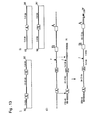
- said E1A and at least one of the E1B coding sequences may be present on different nucleic acid molecules instead of on one molecule (see e.g. Fig. 13 I, II , and for instance example 3), as long as the sequences are still separated by at least the indicated distance when said different nucleic acid molecules would form a single molecule, e.g.
- the E1A and at least one E1B coding sequence will still be separated by at least 8 kb, preferably at least 10 kb, more preferably at least 15 kb, most preferably at least 34.5 kb, when integrating into the genome of the precursor cell (see e.g. example 3 and Fig. 21 ).
- the embodiment of the invention can therefore be performed by a introducing into a precursor cell a single nucleic acid molecule ('molecule A') comprising the E1A and E1B-19K and E1B-55K coding wherein said E1A and at least one of the E1B sequences, coding sequences are separated by at least 8 kb (embodiment a); or equally well by introducing two or more nucleic acid molecules that when these would form a single nucleic acid molecule would form 'molecule A' (embodiment b).
- the total insertion in the genome of an adenovirus cannot be larger than 37.5 kb (including about 3 kb for the E1A and E1B region), but only when it inserts directly 3' from the minimal packaging signal. Therefore, when E1A and at least one of the E1B coding sequences are separated by at least 34.5 kb in the genome of the packaging cell, insertion of both of these sequences into a recombinant adenovirus is prevented. Furthermore, the whole adenovirus genome should then be deleted in a subsequent step, which process may further be much less efficient in the absence of inverted repeat sequences (Steinwaerder et al, 1999).
- the chance of generating particles containing E1A and E1B sequences is reduced when the E1A and at least one of the E1B coding sequences are further apart in the genome.
- said E1A and at least one of E1B coding sequences are separated by at least 4 kb, 6 kb, 8 kb, 10 kb, 12 kb in the genome of the cells according to the present invention.
- the E1 sequences are not present in the form of inverted repeats.
- said sequences are separated by at least 15 kb and no inverted E1 sequences are present, which will ensure that the theoretical possibility of generating HDEP in such a cell line by introduction of E1 sequences from the genome of said cell line into an adenovirus is practically reduced to zero (see Fig. 13 ).
- said E1A and at least one of the E1B coding sequences are separated by at least 18 kb, 20 kb, 25 kb, 30 kb. Most preferably, said sequences are separated by at least 34.5 kb. This will ensure that no single integration of both E1A and E1B derived from the genome of the cell can result in the generation of HDEP.
- said E1A and at least one E1B coding sequence are present on different chromosomes of the genome of the cell.
- the invention provides a recombinant molecule comprising nucleic acid sequences encoding the adenoviral E1A proteins and at least one adenoviral E1B protein, characterized in that said nucleic acid sequence encoding E1A proteins and said nucleic acid sequence encoding at least one E1B protein are separated by at least 8 kb, preferably at least 10 kb, more preferably at least 34.5 kb.
- a molecule may be used in the method according to the invention to generate the cells according to the invention.
- Such a molecule may take various forms known to the person skilled in the art, such as a plasmid, cosmid, bacterial artificial chromosome, YAC, and the like.
- E1A and E1B protein encoding nucleic acid initially present as separate molecules.
- Such molecules may optionally be capable of forming a single molecule by homologous recombination, ligation, site-specific recombination, end-to-end joining, and the like.
- nucleic acid molecules comprising: a) a nucleic acid molecule encoding the E1A proteins of an adenovirus, wherein said nucleic acid molecule has at least 5kb, preferably at least 17 kb of spacer nucleic acid sequence on both sides of said E1A coding sequence, said spacer nucleic acid not encoding an E1B protein; and b) a nucleic acid molecule encoding an E1B protein of an adenovirus, wherein said nucleic acid molecule has at least 5 kb, preferably at least 17 kb of spacer nucleic acid sequence on both sides of said E1B coding sequence, said spacer nucleic acid not encoding an E1A protein.
- Said spacer nucleic acid may be any other nucleic acid, and preferably is chosen such that it is inert, i.e. does not contain coding sequences, preferably no known regulatory elements, no highly repeated regions that may lead to chromosomal instability, and the like.
- said spacer nucleic acid sequence flanking E1A encoding sequences does not contain substantial homology with said spacer nucleic acid sequence flanking an E1B protein encoding sequence.
- the spacer fragment may include regulatory sequences of the E1A or E1B expression cassettes, such as a heterologous promoter and/or polyadenylation site.
- the propagation of the recombinant molecules in a host can usually conveniently be performed when the molecules are in circular form.
- the recombinant molecules of the invention are in a linear form. This may aid in the transfection of the precursor cell lines, which is generally more efficient when linear molecules are used. Linearization may for instance be effected by digestion of the recombinant molecule with one or more convenient restriction enzymes, as known to the person skilled in the art.
- the invention provides a method for generating recombinant adenovirus in the cells of the invention.
- This will generate recombinant adenovirus batches having a significantly reduced frequency of HDEP compared to the batches produced on the systems known in the art, preferably no HDEP at all.
- the vector and packaging cell used for the generation of said recombinant adenovirus lack substantial sequence overlap (i.e. preferably less than 10 nt, or more preferably no overlap at all), and preferably have no overlap, thereby minimizing the chance of homologous recombination between vector and sequences in the packaging cell, resulting in virus batches having no E1-containing particles (HDEP, RCA).
- the serotype or the nature of the transgene is not critical to the invention. It will for instance be immediately clear that the adenoviral E1 coding sequences that are used for the generation of the cells can be taken from any convenient serotype compatible with the adenovirus that is to be propagated on the cells, such as Ad5, Ad35, Ad11, Ad16, Ad49 etc, or combinations thereof, i.e. E1A from one serotype and at least one of the E1B coding sequences from another serotype (see e.g. WO 02/40665 ). It will also be clear that in many other aspects the invention may be varied without departing from the scope or the spirit thereof. The invention will now be illustrated by the following examples, which should not be construed to limit the scope thereof.
- Example 1 Generation of complementing cell / ines using separate nucleic acids encoding E1A and E1B proteins
- the complete morphological transformation of primary cells by adenovirus E1 genes is the result of the combined activities of the proteins encoded by the E1A and E1B regions.
- the roles of the different E1 proteins in lytic infection and in transformation have been studied extensively (reviewed in Zantema and van der Eb, 1995; White, 1995, 1996).
- the adenovirus E1A proteins are essential for transformation of primary cells.
- the concomitant induction of apoptosis is counteracted by both E1B-19K and E1B-55K, although by different mechanism.
- the E1A region encodes several proteins, the whole region is usually referred to as the E1A coding region, and in all embodiments the 'E1A coding sequence' as used herein refers to the sequences encoding all E1A proteins.
- E1A In rodent cells, the activity of E1A together with either E1B-19K or 55K is sufficient for full transformation although expression of both E1B proteins together is twice as efficient (Gallimore et al., 1985; Rao et al., 1992). In human cells however, the activity of the E1B-55K protein seems to be more important given the observation that E1B-55K is indispensable for the establishment of an immortal transformed cell line (Gallimore et al., 1986). In adenovirus infection and virus propagation the E1A proteins function in activation of the adenovirus genes including E1B and other early regions probably via interaction with the TATA-binding protein (reviewed in Zantema and van der Eb,1995).
- E1B-55K expression is important in the late phase of infection for shut-off of host protein synthesis and selective transport from the nucleus to the cytoplasm of viral-encoded proteins (Babiss et al., 1985; Pilder et al., 1986).
- Adenoviruses that are deleted for E1B-55K show decreased replication on non-complementing human cell lines (Harada and Berk, 1999).
- the E1A- and E1B-55K-encoded proteins are necessary for transformation of primary human cells and for efficient virus replication in human cells.
- Non-homologous recombination can result in incorporation of E1 sequences from the cellular genome of the packaging cell into the recombinant adenovirus.
- the helper-dependent E1-containing particles that finally result from the initial recombined adenovirus are able to complement replication of the replication-deficient vector on non-complementing (human) cells but are not capable of autonomous replication.
- This complementation is mediated by both E1A and E1B-55K and possibly E1B-19K functions.
- E1A and E1B-19K E1B (E1B-19K + E1B-55K) or E1B-55K that are used to generate adenoviral packaging cell lines with E1A and E1B-55k regions separated from each other.
- Construct pIG.E1A.E1B ( Fig. 14 ; SEQ.ID.NO. 1), containing the Ad5-E1 regions (nucl. 459-3510 of the Ad5 genome (Genbank Acc. No. M73260) operatively linked to the human phosphoglycerate kinase (PGK) promoter and hepatitis B virus poly-adenylation sequence, has been described previously ( US patent 5,994,128 ).
- PGK human phosphoglycerate kinase
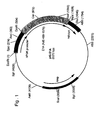
- pIG.E1A was made by digestion of pIG.E1A.E1B with HincII followed by purification of the resulting 5 kb fragment from gel using QLAEX II: gel extraction kit (Qiagen) according to manufacturers instructions. Relegation of the isolated fragment and transformation into STBL2 competent cells (Invitrogen) gave pIG.E1A ( Fig. 1 ).
- This construct contains nt. 459 to 1578 from the Ad5 genome (Genbank Acc. No. M73260)
- Construct pIG.E1A was digested with XbaI and HpaI and the resulting 4.8 kb fragment was isolated from gel as above.
- Construct pIG.E1A.E1B was digested with BsrGI and treated with Klenow enzyme (New England Biolabs) to blunt the 5' protruding ends. DNA was then purified with the QIAquick PCR purification kit (Qiagen) according to manufacturers instructions and subsequently digested with XbaI. The resulting 913 bp fragment containing the 3' part of E1A and the E1B19K coding sequence was isolated from gel as described.
- the Ad5 E1B-19K gene is sometimes also referred to as the Ad5 E1B-21K gene, because the predicted amino acid sequence constitutes a 20.6 KD protein (for instance, several of the plasmids and primers in this application have 21K as part of their names).
- a construct containing the Ad5-E1B region was then generated as follows. First a PCR fragment was generated with primers 5E1Bfor-1: 5'- CGG AAT TCG GCG TGT TAA ATG GGG CG-3' (SEQ.ID.NO. 2) and 5E1B-rev: 5'- TAG CAG GCG ATT CTT GTG TC-3' (SEQ.ID.NO. 3), using pIG.E1A.E1B DNA as template and Pwo DNA polymerase (Roche) according to manufacturers instructions with DMSO at 3% final concentration.
- the amplification program was 94°C for 2 minutes followed by 30 cycles of (94°C for 30 seconds, 50°C for 30 seconds and 72°C for 1 minute) and ended by 72°C for 10 minutes.
- the resulting 481 bp amplified fragment was purified with the QIAquick PCR purification kit (Qiagen) and ligated to the pCR-ScriptAmp vector from the PCR cloning kit (Stratagene) in the presence of SrfI enzyme according to manufacturers instructions.
- the (blunt) ligation gave two orientations of the insert in the vector of which the one with the largest fragment between the EcoRI site in the (5') end of the insert and the EcoRI site in the vector was arbitrarily chosen. This resulted in construct pCR5B. Correct amplification of the target sequence (between KpnI and EcoRI sites) was verified by sequencing.
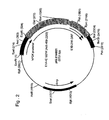
- pCR5B was digested with Kpnl and EcoRI and the 415 bp fragment was isolated from gel using the QIAquick gel extraction kit (Qiagen). Construct pIG.E1A.E1B was then also digested with EcoRI and KpnI and the resulting 5.2 kb vector fragment was isolated from gel as above. Ligation of the isolated fragments and transformation into DH5 ⁇ -T1 r cells (Invitrogen) resulted in construct pE1B ( Fig. 3 ). The E1B sequence in this construct constitutes nt. 1642 to 3510 from the Ad5 genome.
- transfection with pIG.E1AB21 initially resulted in transformed cells, it is possible to re-transfect the cells with an E1B-55K expression construct, e.g. 5-10 days following the first transfection. This ensures that cells are obtained that have incorporated both expression cassettes on different loci in the genome.
- sequence overlap can be remove from regulatory elements, such as the promoters and polyadenylation (polyA) sequences, by using different regulatory sequences for the two expression constructs with the E1A and E1B sequences.
- polyA polyadenylation
- these sequences are sufficiently divergent to prevent overlap that could lead to the formation of paired structures found during a homologous recombination process.
- Any promoter and polyA sequence can be used.
- the regulatory sequences are different from those from the transgenes in the recombinant adenovirus that will be propagated on these cells.
- the E1A sequence was amplified with the following primers:
- a second PCR fragment was generated using primer 5E1A-For with reverse primer: 5E1AB21-rev: 5'- CGG GAT CCT CAT TCC CGA GGG TCC AG-3' (SEQ.ID.NO. 6), using the same conditions.
- the resulting 1.8 kb fragment contains the E1A and E1B-19K sequence from Ad5 (nucleotide 459 to 2244 as in Genbank Acc. No. M73260) flanked by EcoRI (5') and BamHI (3') sites.
- Both PCR fragments were isolated from agarose gel, purified with QIAEX II gel extraction kit (Qiagen) and cloned in a PCR cloning vector; pCR-TOPOblunt (Invitrogen) and the sequence was verified. The constructs were then digested with EcoRI and BamHI and the insert fragments were isolated from gel using the QIAEX II gel extraction kit (Qiagen) as above.
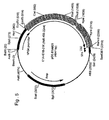
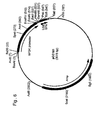
- Each of the isolated fragments was then ligated into vector pCC101 (see below) that was first digested with EcoRI and BamHI and purified from gel as above. Transformation into electro competent DH108 cells (Invitrogen) generated constructs pCC.E1A ( Fig. 4 ) and pCC.E1AB21 ( Fig. 5 ). A synthetic polyadenylation signal (SPA) is present in these plasmids (derived from construct pCC271 as described in WO 02/40665 ).
- SPA polyadenylation signal
- pCC100 (see below) was digested with XbaI and the resulting linear fragment was purified from gel using the QIAEX II gel extraction kit as above.
- a linker was prepared by annealing the oligonucleotides X-SM-1: 5'- CTAGGTCGACCAATTG-3' (SEQ.ID.NO. 7) with X-SM-2: 5'- CTAGCAATTGGTCGAC-3' (SEQ.ID.NO. 8).
- 1 ⁇ g of each oligonucleotide was mixed with 2 ⁇ l 10x NEB2 buffer (NEB) and milliQ H 2 O to a final volume of 20 ⁇ l.
- the mixture was placed at 98°C and slowly cooled to 4°C in a PCR machine (cooling rate of 2°C /minute).
- the annealed linker was then ligated to the isolated XbaI digested fragment using a 4x molar excess of linker over fragment.
- the ligated DNA was purified with the QIAquick PCR purification kit (Qiagen) according to manufacturers instructions and digested with XbaI to remove self-ligated vector DNA. Following heat-inactivation of the XbaI enzyme, the mixture was then used to transform DH5 ⁇ -T1 r competent cells resulting in pCC101 ( Fig. 6 ).
- Construct pCC271 (described in WO 02/40665 ) was digested with EcoRI and PstI and the 3 kb vector fragment was isolated from gel as described above.
- a linker was prepared by annealing oligonuclootide EcoPst-3: 5'- AAT TGA TAT CGA ATT CGC CGA GCT CGT AAG CTT GGA TCC CTG CA-3' (SEQ.ID.NO. 9) with oligonucleotide EcoPst-4: 5'- GGG ATC CAA GCT TAC GAG CTC GGC GAA TTC GAT ATC-3' (SEQ.ID.NO. 10).
- oligonucleotides were mixed as described above and annealed by incubation at 98°C for 2 minutes, 65°C for 30 minutes and room temperature for 2 hrs.
- the isolated vector fragment was then ligated to excess annealed oligo and transformed into DH5 ⁇ -T1 r competent cells resulting in construct pCC100.
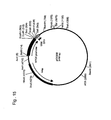
- Plasmid pBR322 (GenBank J01749.1) was digested with EcoRI and then blunted with Klenow enzyme, followed by purification with QIAquick PCR purification kit (Qiagen). After a second digestion with NheI, the 4150 bp vector fragment was isolated from agarose gel using the II gel extraction kit (Qiagen). In parallel, construct pCC100 was digested with BsaAI, blunted with Klenow enzyme and purified with the QIAquick. PCR purification kit (Qiagen), followed by a second digestion with Xbal and isolation of the 350bp fragment from agarose gel. The fragments were then ligated and transformed into chemical competent STBL-2 cells (Invitrogen), resulting in TCC200 ( Fig. 15 ).
- Construct pCC105 contains the human PGK promoter and a poly-adenylation sequence derived from the human COL1A2 gene.
- the COL1A2 poly-adenylation sequence (Natalizio et al., 2002) was amplified by PCR from human genomic DNA as described by the authors using recombinant Taq polymerase (Invitrogen) and primers COL1A2F: 5'- CAG CTA GCC TGC AGG AAG TAT GCA GAT TAT TTG -3' (SEQ.ID.NO. 11) and COL1A2R-sal: 5'- ACA CGT CGA CGG CTG GTA GAG ATG C -3' (SEQ.ID.NO. 12).
- the published sequence is extended at the 5'-end by a Sbfl restriction sequence and at the 3'- end by a SalI restriction sequence.
- the resulting PCR fragment was cloned into pGR-TOPO-TA using the pCR-TOPO4 TA cloning kit (Invitrogen).
- the 277bp insert was isolated from the TOPO vector by digestion with SbfI and SalI, and purified with the QIAquick PCR purification kit (Qiagen).
- the plasmid pCC101 was also digested with SbfI and SalI, followed by gel electrophoresis.
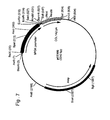
- the 2965 bp vector fragment was isolated from agarose gel using GoneClean Kit (Bio101) according to manufacturers instructions. This vector fragment was ligated to the purified COL1A2pA fragment in equimolar amounts and transformed to chemical competent STBL-2 cells (Invitrogen). This gave plasmid pCC105 ( Fig. 7 ).
- Construct pCC205 was made by digestion of pCC200 with SalI and EcoRI, followed by purification of the 4225 nt vector fragment from agarose gel, using QIAEX II gel extraction kit (Qiagen).
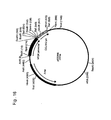
- the 310 nt COL1A2 polyA was isolated from construct pCC105 by digestion with EcoRI and SalI, followed by gel electrophoresis and purification of the fragment using the QIAEX II gel extraction kit. The two fragments were then ligated in equimolar amounts and transformed to DH5 ⁇ -T1r, resulting in pCC205 ( Fig. 16 ).
- Vector pCC205 is used for the construction of a plasmid expressing the Ad5 E1B-55k protein.
- a PCR product is generated using the following primers: 55KforE: 5'-GGA ATT CGC CAC CAT GGA GCG AAG AAA CCC ATC TGA-3' (SEQ.ID.NO. 13) and 55KrevB: 5'-gga tcc TCA ATC TGT ATC TTC ATC GCT AGA GCC-3' (SEQ.ID.NO. 14).
- PCR is performed with Pwo DNA polymerase according to the manufacturers protocol in the presence of 3% DMSO.
- the amplification is done on pIG.E1A.E1B and the program is set on 94°C for 2 minutes followed by 30 cycles of (94°C for 30 seconds, 60 °C for 30 seconds and 72 °C for 90 seconds) and ended by 72 °C for 8 minutes.
- the resulting 1510 bp amplified fragment contains the E1B-55K sequence nt. 2019 to 3510 from the Ad5 sequence.
- the fragment is purified with the QIAquick PCR purification kit (Qiagen), digested with EcoRI and BamHI followed by gel electrophoresis for the removal of the cleaved ends.
- This fragment is then purified from agarose gel using the GeneCleanII kit (Bio101) and ligated to pCC205, which is also digested with EcoRI and BamHI and isolated from agarose gel as described above.
- the ligation mixture is transformed to chemical competent STBL2 cells (Invitrogen) resulting in construct pCC.55Kcol ( Fig. 8 ).
- a PCR fragment was generated with Pwo DNA polymerise (Roche) according to manufacturer's instruction in the presence of 3% DMSO.
- the following primers were used in the amplification reaction: 5E1Bstart: 5'-GGA ATT CCT CAT GGA GGC TTG GG-3' (SEQ.ID.NO. 15) and 5E1Brev2: 5'-GTG TCT CAC AAC CGA TCT C -3' (SEQ.ID.NO. 16).
- the amplification was done on pIG.E1A.E1B and the program was set on 94°C for 2 minutes followed by 5 cycles of (94°C for 30 seconds, 56 °C for 30 seconds and 72 °C for 60 seconds) these cycles were then followed by another 35 cycles (94°C for 30 seconds, 60 °C for 30 seconds and 72 °C for 60 seconds) and ended by 68 °C for 8 minutes.
- the 390 nt PCR fragment was then digested with KpnI and EcoRI resulting in a 347 nt fragment that was isolated from agarose gel using the QIAEX II Gel Extraction Kit (Qiagen).
- the plasmid pCC.55Kcol is digested with EcoRI and KpnI.
- the 5970nt vector fragment is isolated by gel electrophoresis and purified from agarose gel with the GeneClean kitII (Bio101) as above.
- Construct pIG.E1B is then also digested with KpnI and EcoRI and the 347 nt fragment is isolated from gel and purified with the QIAquick gel extraction kit (Qiagen). Ligation of this insert and the isolated pCC.55Kcol vector fragment and transformation into STBL2 cells gives construct pCG.E1Bcol ( Fig. 10 ). This construct contains nt. 1711 to 3510 from the Ad5 genome sequence.
- the Human Elongation Factor 1- ⁇ promoter (EF1- ⁇ ) is isolated from plasmid pEF/myc/nuc (Invitrogen) by digestion with EcoRI and PmlI. After digestion the fragment is blunted with Klenow enzyme and the 1183 nt EF1- ⁇ promoter fragment is then isolated by gel electrophoresis and purified with the GeneCleanII kit (Bio101). In parallel, the vector pCC.E1Hcol is digested with BstXI, followed by T4 DNA polymerase treatment to make the ends blunt and purified over a PCR purification column (Qiagea). Then a second digestion is performed with EcoRV, followed by gel electrophoresis.
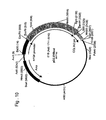
- the 5827 nt vector fragment is then purified with the GeneCleanII kit (Bio101). Both the EF1- ⁇ fragment and vector fragment are ligated together in an equimolar amount and transformed to chemical competent STBL-2 cells (invitrogen), which results in the plasmid pEG.E1B ( Fig. 11 ) that contains the same Ad5-E1B sequence as in plasmid pCC.E1Bcol.
- the SV40 promoter was amplified from pEF/myc/nuc plasmid DNA (Invitrogen) by using recombinant Taq DNA polymerase (Invitrogen) and the following primers: SV40.forS: 5'-CAA CTA GTA CAT GTG GAA TGT GTG TCA GTT AGG-3' (SEQ.ID.N-O. 17) and SV40.RevERI:5'-GGA ATT CAG CTT TTT GCA AAA GCC TAG G-3' (SEQ.ID.NO. 18).
- the amplification program was set at 94°C for 2 minutes followed by 5 cycles of (94°C for 30 seconds, 48 °C for 30 seconds and 72 °C for 45 seconds) then 25 additional cycles of (94°C for 30 seconds, 58 °C for 30 seconds and 72 °C for 45 seconds) and ended by 68 °C for 8 minutes.
- the resulting 357 bp amplified fragment (nucleotide 266 to -71 from SV40 sequence GenBank Acc. No. J02400) was isolated from agarose gel with the QIAEX II gel extraction kit (Qiagen). This fragment was then cloned into pCR-TOPO, using the PCR TOPO4blunt cloning kit (Invitrogen).
- the 357bp insert was isolated from the TOPO vector by digestion with EcoRI and SpeI, and isolated from agarose gel with the QIAEX II gel extraction kit (Qiagen).
- the plasmid pCC.55Kcol (which has a pBR322-backbone) is digested with AvrII and EcoRI, followed by gel electrophoresis.
- the 5508 nt vector fragment is isolated from gel as described above and ligated in equimolar amount to the digested PCR fragment.
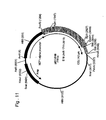
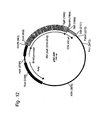
- the ligation mixture is transformed into chemical competent STBL-2 cells resulting in the plasmid pSC.55K ( Fig. 12 ) that contains the same Ad5 E1B-55K sequence as in pCC.55Kcol.
- DNA fragments containing the appropriate expression cassettes are isolated from gel.
- the elimination of (overlapping) vector sequences is believed to reduce the chance of co-integration.
- pCC.E1A and pCC.E1AB21 are digested with BsaAI and AflIII and the insert fragments are purified from gel using an ELU-Trap apparatus (Schleier and Schuell) according to manufacturers instructions. This apparatus enables isolation of large amounts of DNA fragments.
- Constructs pEC.E1B and pSC.55K are digested with AatII/HincII and AflIII/HincII respectively and insert fragments are isolated as above.
- HER cells are cultured and transfected as described above. Fragments isolated from pCC.E1A and pEC.E1B are combined for transfection. The DNA fragments isolated from pCC.E1AB21 are combined with pSC.55K or transfected alone. The latter cultures are then retransfected with the DNA fragment isolated from pSC.55K 7-10 days following the first transfection depending on the size of the observed clones. One day before transfection half of the dishes transfected with E1AB21 alone is passed to 10 cm dishes and then re-transfected, the other half of the dishes is re-transfected without prior passage.
- Example 2 Generation of complementing cell lines using nucleic acids that have E1A and E1B regions separated by large spacer sequences.
- E1A and E1B expression cassette integration with less than 30 kb non-E1 sequence in between in the chromosome can be avoided by flanking the different E1 expression cassettes with large pieces of non-(E1-)coding DNA sequences (so called 'spacer' fragments).
- the large flanking sequences should create enough distance to eliminate the chance that the E1A and E1B encoding sequences recombine into the same recombinant vector molecule upon propagation of a recombinant adenoviral vector in said packaging cell.
- large spacer DNA fragments that can be used are large sequences derived from e.g. the human dystrophin gene or the human Apo-E1 gene. Other spacing molecules can also be used, even from non-human sources.
- the flanking sequences do not contain coding regions for functional proteins and can thus be derived from intron sequences.
- the E1A and E1B sequences do not need to be on different molecules but may be situated on the same large molecule, such as a cosmid. Examples of these E1A and E1B carrying molecules are given in Fig. 13 .
- the distance between the E1A and E1B coding regions is >34.5 kb because then co-insertion of the two regions into a virus results in a genome that is too large to be packaged. This situation will for instance be reached when two separate cosmid fragments of approximately 40 kb having the expression cassettes roughly in the middle are used.
- DNA sequences that integrate into the genome of a cell are not always accessible for activating transcription factors due to chromatin-associated repression. Especially when large fragments of intron DNA are used that originate from genomic regions that are normally not active in the cell that will be transduced with these sequences, gene expression may be shut-off due to inactive chromatin. Recently, sequences were identified that can inhibit this repression.
- Examples are the chicken ⁇ -globin HS4 element ( US patent 5,610,053 ) that functions as an insulator sequence, a Drosophila scs or scs' element (Kellum et al, 1991, Farkas et al, 1992), and a series of sequences in the human genome (so-called anti-repressor elements or STAR elements) identified by a specific screen for anti-repressor elements ( Kwaks et al., 2003; WO 03/004704 ). Incorporation of such sequences in the E1A and E1B expression constructs, which sequences prevent positional silencing of the E1A and/or E1B genes, also enhances the amount of immortalised clones.
- one or more STAR-elements are present in at least one of the E1 A and/or E1B expression constructs.
- said elements are flanking both sides of the E1A and/or E1B coding sequences, i.e. the expression constructs may comprise from 5' to 3': STAR element - expression regulatory sequence (e.g. promoter) - E1A coding sequence; or E1A + one E1B coding sequence; or one E1B coding sequence; or both E1B coding sequences - polyadenylation sequences - STAR element.
- STAR element - expression regulatory sequence e.g. promoter
- This example describes the generation of new cell lines according to the invention by co-transfection of a first DNA fragment having an E1A expression cassette flanked by large stuffer DNA and a second DNA fragment having an E1B expression cassette flanked by plasmid DNA.
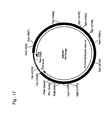
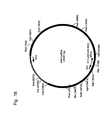
- the human dystrophin intron 44 sequence (Genbank Acc. No. M86524) cloned in a cosmid vector backbone (pdys44; Fig. 17 ) was taken in this example as a stuffer DNA surrounding the E1A expression plasmid.
- Construct pCC.E1A (described in example 1; Fig. 4 ) was digested with AflIII and AvrII (New England Biolabs) and protruding ends were made blunt with Klenow enzyme (New England Biolabs). Digested fragments were separated on a 0,5% TAE agarose gel and the 2 kb fragment corresponding to the PGK-E1A expression cassette was purified using the gel extraction kit (Qiagen) according to manufacturers description.
- the construct pdys44 ( Fig 17 ) was digested with BgIII (New England Biolabs) and protruding ends were made blunt with Klenow enzyme. Fragments were separated on a 0,5% TAE agarose gel and the 27 kb fragment containing the backbone plasmid and part of the dystrophin intron was excised. The gel slice was then put in a syringe containing a bit of glass wool and, using the plunger, the buffer containing DNA was pushed in an eppendorf tube. The thus obtained DNA solution contained approximately 5ng/ ⁇ l and was used directly in the ligation reaction with the purified 2 kb PGK-E1A fragment. Transformation into DH5 ⁇ T1 competent cells resulted in construct p44-1.ccE1A ( Fig. 18 ). The construct contains E1A under control of the human PGK promoter and a synthetic polyA signal.
- Construct pE1B (described in example 1; Fig 3 ) was used in this example as the E1B expression plasmid.
- the plasmid contains E1B under control of its own promoter and a hepatitis B virus (HBV) polyA signal.
- HBV hepatitis B virus
- Construct p44-.1.ccE1A was digested with XhoI and PmeI and digested DNA was purified by phenol/chloroform (1:1) extraction followed by Ethanol precipitation (resulting in E1A coding sequences flanked by a stuffer of about 11.6 kb upstream (including the PGK promoter) and about 6.5 kb downstream (including the synthetic polyA signal) of the E1A coding sequences). DNA was then pelleted, washed with 70% ethanol and aseptically dissolved in sterile endotoxin-free TE.
- Plasmid pE1B was digested with ScaI and purified as above (resulting in E1B coding sequences flanked by a stuffer of about 1.4 kb upstream and more than 2.3 kb downstream of the E1B coding sequences, the downstream stuffer including the HBV polyA sequence).
- HER cell culture and transfections were done according to the method described in Example 1.
- the E1A and E1B containing DNAs prepared above were mixed in different proportions in separate transfections (both fragments lack significant overlap with respect to each other derived from vector sequences or regulatory sequences, thereby reducing the chances of homologous recombination between the two fragments; if both fragments would form a single nucleic acid molecule (e.g.
- a total of 8 dishes were transfected with approximate equimolar ratios of both constructs (17 ⁇ g E1A and 3 ⁇ g E1B plasmid) and 3 dishes were transfected with 10 ⁇ g of each fragment.
- E1 genes were analysed using specific antibodies for the E1 proteins on Western Blots.
- a total amount of 10 ⁇ g protein from a lysate of the generated cell clones was used in the Western blot assay.
- the samples were denatured for 15 minutes at 70°C, after addition of 1 ⁇ 4 volume NuPage sample buffer (Invitrogen).
- PER.C6 ® cell lysate was used as a positive control.
- Untransfected primary HER cell lysate (passage number 6) served as a negative control.
- the samples were run on a 10% BisTris SDS page gel (Invitrogen), alongside a Seeblue plus2 prestained marker (Invitrogen).
- a Western blot was prepared from the gel.
- E1A mouse anti-human Ad2.E1A (1:400, Santa Cruz)
- E1B.19K rat anti-human E1B 21K monoclonal (1:500, Oncogene)
- E1B.55K mouse anti-human 55Kda (harvested from hybridoma cell line C9A1C6, obtained from Dr. R. Hoeben, LUMC, Leiden).
- E1A Goat-anti mouse IgG-HRP (Biorad)
- E1B.19K Goat-anti rat IgG-HRP (Epcam)
- E1B.55K ⁇ l Goat-anti mouse IgG-HRP (Biorad).
- the proteins were visualized by the use of an ECL+ assay (Amersham).
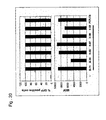
- Ad5 E1 genes in these cell lines can also be tested by showing that the cells are able to complement E1-deleted Ad5 viruses. Therefore, the 6 different cell clones were tested for replication of an Ad5.eGFP vector, an E1-deleted (deletion of nt. 455-3510 of the Ad5 sequence) Ad5-based adenovirus vector expressing Green Fluorescent Protein.
- Ad5.eGFP vector an E1-deleted (deletion of nt. 455-3510 of the Ad5 sequence)
- Ad5-based adenovirus vector expressing Green Fluorescent Protein Ad5-based adenovirus vector expressing Green Fluorescent Protein.
- MOI multiplicity of infection
- VP virus particles
- PER.C6 ® cells were also seeded and infected with an MOI of 5.
- CPE cytopathogenic effect
- the adenovirus vector (E1-deleted, lacks nt 455-3510) has no overlap with the E1 sequences present in the cell line (Ad5 nt 459-3510), and therefore the combination of adenovirus vector with the new cell lines in this example amounts to a packaging system according to the invention, and the generation of recombinant adenovirus in this example amounts to a method of generating a batch of recombinant adenovirus according to the invention.
- Genomic DNA from the generated cell lines is tested on Southern blots, using E1A and E1B probes, to demonstrate that the E1A and E1B coding sequences are separated by more than 4 kb in the genome of the cells.
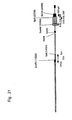
- the genomic DNA is digested with the restriction endonucleases Eco RV and Bgl II ( Fig. 21 ).
- the digested DNA is size separated by gel electrophoresis (e.g. using field inversed gel electrophoresis, FIGE, to enable separation of large DNA fragments) and then transferred to a nylon membrane by capillary blotting.
- Three different probes are radioactively labeled for hybridization of the blots.
- Ad5.E1A probe is generated from an Eco RV- Sal I restriction fragment (1330 bp; see Fig 21 ) located 3' from the Eco RV site in the Ad5.E1A gene.
- Two Ad5.E1B probes are generated; Ad5.E1B(5'), from a Bss HII -Bgl II fragment (1354 bp) and Ad5.E1B(3'), from a Bgl II- Bsr GI fragment (652 bp), which are located at the 5' side and the 3'side of the Bgl II site in the Ad5.E1B gene respectively.
- Identical blots containing the digested genomic DNA of the generated cell lines are prepared or, alternatively, the blot is stripped after hybridization of the first probe and then hybridized to a second. Either method should allow overlay of the signals obtained with E1A and the E1B probes.
- the probes for E1A and E1B detect the same bands on the blots, the size of the band identifying the distance between the two genes. Since the orientation of the E1A and E1B fragment relative to each other is not known, the two E1B probes are used separately enabling hybridization either to the fragment 5' or 3' of the BglII restriction site. If an E1A fragment becomes integrated next to another E1A fragment then the band resulting from EcoRV digestion will not be recognized by the E1B probe. Also single integrants or end fragments will generate bands that are not recognized by both probes.
- these cell lines express E1 proteins in quantities sufficient for efficient complementation of E1-deleted Ad5 vectors.
- the E1A and E1B sequences are cloned into a single construct, with a stuffer fragment between these sequences, after which cell lines are created using the single construct.
- the E1B coding sequences may also be flanked by a longer stuffer nucleic acid, and/or the length of the stutters flanking the E1A and E1B coding sequences could be increased by standard routine molecular biology techniques, following the teachings of the present disclosure.
- this example should not be construed to limit the scope of the invention to the actually performed experiments, but rather as an exemplification of the concepts of the present invention.
- Table II Transformation of primary HER cells with Ad5-E1 expression constructs. Construct Amount # dishes foci/dish pIG.E1A.E1B 20 ⁇ gr 2 31 pIG.E1A 20 ⁇ gr 2 0 pIG.E1A+pE1B 10 ⁇ gr each 4 15 pIG.E1AB21 20 ⁇ gr 2 11.5 pIG.E1AB21+pE1B 10 ⁇ gr each 4 10 AdApt.eGFP 20 ⁇ gr 1 0
Landscapes
- Health & Medical Sciences (AREA)
- Life Sciences & Earth Sciences (AREA)
- Genetics & Genomics (AREA)
- Chemical & Material Sciences (AREA)
- Engineering & Computer Science (AREA)
- Organic Chemistry (AREA)
- Wood Science & Technology (AREA)
- Zoology (AREA)
- Bioinformatics & Cheminformatics (AREA)
- Biomedical Technology (AREA)
- Biotechnology (AREA)
- General Engineering & Computer Science (AREA)
- General Health & Medical Sciences (AREA)
- Biochemistry (AREA)
- Virology (AREA)
- Microbiology (AREA)
- Biophysics (AREA)
- Molecular Biology (AREA)
- Medicinal Chemistry (AREA)
- Plant Pathology (AREA)
- Physics & Mathematics (AREA)
- Immunology (AREA)
- Gastroenterology & Hepatology (AREA)
- Proteomics, Peptides & Aminoacids (AREA)
- Cell Biology (AREA)
- Micro-Organisms Or Cultivation Processes Thereof (AREA)
- Apparatus Associated With Microorganisms And Enzymes (AREA)
Priority Applications (2)
| Application Number | Priority Date | Filing Date | Title |
|---|---|---|---|
| SI200432052T SI1670925T1 (sl) | 2003-10-02 | 2004-10-04 | Pakirne celice za rekombinantni adenovirus |
| EP04791140.9A EP1670925B1 (en) | 2003-10-02 | 2004-10-04 | Packaging cells for recombinant adenovirus |
Applications Claiming Priority (3)
| Application Number | Priority Date | Filing Date | Title |
|---|---|---|---|
| EP0350679 | 2003-10-02 | ||
| PCT/EP2004/052428 WO2005033320A1 (en) | 2003-10-02 | 2004-10-04 | Packaging cells for recombinant adenovirus |
| EP04791140.9A EP1670925B1 (en) | 2003-10-02 | 2004-10-04 | Packaging cells for recombinant adenovirus |
Publications (2)
| Publication Number | Publication Date |
|---|---|
| EP1670925A1 EP1670925A1 (en) | 2006-06-21 |
| EP1670925B1 true EP1670925B1 (en) | 2013-05-01 |
Family
ID=34400432
Family Applications (1)
| Application Number | Title | Priority Date | Filing Date |
|---|---|---|---|
| EP04791140.9A Expired - Lifetime EP1670925B1 (en) | 2003-10-02 | 2004-10-04 | Packaging cells for recombinant adenovirus |
Country Status (15)
| Country | Link |
|---|---|
| US (2) | US7816104B2 (enExample) |
| EP (1) | EP1670925B1 (enExample) |
| JP (1) | JP4749334B2 (enExample) |
| KR (1) | KR101203817B1 (enExample) |
| CN (2) | CN1863918B (enExample) |
| AU (1) | AU2004278517B2 (enExample) |
| BR (1) | BRPI0414670A (enExample) |
| CA (1) | CA2538025C (enExample) |
| DK (1) | DK1670925T3 (enExample) |
| EA (1) | EA010924B1 (enExample) |
| HR (1) | HRP20130616T1 (enExample) |
| IL (2) | IL174489A (enExample) |
| NZ (1) | NZ545501A (enExample) |
| SI (1) | SI1670925T1 (enExample) |
| WO (1) | WO2005033320A1 (enExample) |
Families Citing this family (10)
| Publication number | Priority date | Publication date | Assignee | Title |
|---|---|---|---|---|
| US6492169B1 (en) | 1999-05-18 | 2002-12-10 | Crucell Holland, B.V. | Complementing cell lines |
| EP1670925B1 (en) | 2003-10-02 | 2013-05-01 | Crucell Holland B.V. | Packaging cells for recombinant adenovirus |
| EP1998804B1 (en) * | 2006-03-27 | 2014-04-16 | Crucell Holland B.V. | Compositions comprising a recombinant adenovirus and an adjuvant |
| WO2008134720A2 (en) * | 2007-04-30 | 2008-11-06 | Medtronic, Inc. | Inert dna sequences for efficient viral packaging and methods of use |
| CA2742474C (en) | 2008-11-03 | 2016-05-31 | Crucell Holland B.V. | Method for the production of adenoviral vectors |
| KR101427200B1 (ko) * | 2011-11-24 | 2014-08-07 | 주식회사 바이로메드 | 아데노바이러스 생산 신규 세포주 및 그의 용도 |
| MY170927A (en) | 2011-11-28 | 2019-09-19 | Janssen Vaccines & Prevention Bv | Influenza virus vaccines and uses thereof |
| AP2014007993A0 (en) * | 2012-03-22 | 2014-10-31 | Crucell Holland Bv | Vaccine against RSV |
| CN110832072B (zh) | 2017-04-21 | 2023-11-07 | 真基因太科公司 | 用于生产非复制型腺病毒的细胞系以及制备所述细胞系的方法 |
| CN108342362A (zh) * | 2018-01-31 | 2018-07-31 | 武汉枢密脑科学技术有限公司 | 一种用于扩增重组犬腺病毒cav2的稳定细胞系mdck及其构建方法 |
Family Cites Families (16)
| Publication number | Priority date | Publication date | Assignee | Title |
|---|---|---|---|---|
| US4889806A (en) * | 1987-04-15 | 1989-12-26 | Washington University | Large DNA cloning system based on yeast artificial chromosomes |
| US5610053A (en) | 1993-04-07 | 1997-03-11 | The United States Of America As Represented By The Department Of Health And Human Services | DNA sequence which acts as a chromatin insulator element to protect expressed genes from cis-acting regulatory sequences in mammalian cells |
| US5834256A (en) | 1993-06-11 | 1998-11-10 | Cell Genesys, Inc. | Method for production of high titer virus and high efficiency retroviral mediated transduction of mammalian cells |
| US5820868A (en) | 1993-12-09 | 1998-10-13 | Veterinary Infectious Disease Organization | Recombinant protein production in bovine adenovirus expression vector system |
| WO1995034671A1 (en) | 1994-06-10 | 1995-12-21 | Genvec, Inc. | Complementary adenoviral vector systems and cell lines |
| FI972225A7 (fi) | 1994-11-28 | 1997-07-16 | Genetic Therapy Inc | Vektorit kudosspesifistä replikaatiota varten |
| CA2206683A1 (en) | 1994-12-12 | 1996-06-20 | Genetic Therapy, Inc. | Improved adenoviral vectors and producer cells |
| EP1445322B2 (en) * | 1995-06-15 | 2012-06-06 | Crucell Holland B.V. | Packaging systems for human recombinant adenovirus to be used in gene therapy |
| ATE289354T1 (de) | 1999-04-15 | 2005-03-15 | Crucell Holland Bv | Verwendung von adenovirus e1 protein sequenzen kodierenden, zur herstellung von rekombinanten proteinen in menschlichen zellen. |
| US6492169B1 (en) * | 1999-05-18 | 2002-12-10 | Crucell Holland, B.V. | Complementing cell lines |
| US6558948B1 (en) | 1999-11-23 | 2003-05-06 | Stefan Kochanek | Permanent amniocytic cell line, its production and use for the production of gene transfer vectors |
| EP1103610A1 (en) | 1999-11-26 | 2001-05-30 | Introgene B.V. | Production of vaccines from immortalised mammalian cell lines |
| CA2812799C (en) | 2001-07-04 | 2016-01-26 | Chromagenics B.V. | Dna sequences comprising gene transcription regulatory qualities and methods for detecting and using such dna sequences |
| WO2003031633A2 (de) * | 2001-10-04 | 2003-04-17 | Probiogen Ag | Adenovirales vektorsystem |
| US7026164B2 (en) | 2003-07-03 | 2006-04-11 | Cell Genesys, Inc. | Adenovirus packaging cell lines |
| EP1670925B1 (en) | 2003-10-02 | 2013-05-01 | Crucell Holland B.V. | Packaging cells for recombinant adenovirus |
-
2004
- 2004-10-04 EP EP04791140.9A patent/EP1670925B1/en not_active Expired - Lifetime
- 2004-10-04 BR BRPI0414670-0A patent/BRPI0414670A/pt not_active Application Discontinuation
- 2004-10-04 WO PCT/EP2004/052428 patent/WO2005033320A1/en not_active Ceased
- 2004-10-04 CA CA2538025A patent/CA2538025C/en not_active Expired - Fee Related
- 2004-10-04 AU AU2004278517A patent/AU2004278517B2/en not_active Ceased
- 2004-10-04 JP JP2006530273A patent/JP4749334B2/ja not_active Expired - Fee Related
- 2004-10-04 DK DK04791140.9T patent/DK1670925T3/da active
- 2004-10-04 CN CN2004800286959A patent/CN1863918B/zh not_active Expired - Fee Related
- 2004-10-04 SI SI200432052T patent/SI1670925T1/sl unknown
- 2004-10-04 KR KR1020067006263A patent/KR101203817B1/ko not_active Expired - Fee Related
- 2004-10-04 CN CN2011100542020A patent/CN102174536B/zh not_active Expired - Fee Related
- 2004-10-04 EA EA200600693A patent/EA010924B1/ru not_active IP Right Cessation
- 2004-10-04 NZ NZ545501A patent/NZ545501A/en not_active IP Right Cessation
- 2004-10-04 HR HRP20130616TT patent/HRP20130616T1/hr unknown
-
2006
- 2006-03-20 US US11/384,850 patent/US7816104B2/en not_active Expired - Fee Related
- 2006-03-22 IL IL174489A patent/IL174489A/en active IP Right Grant
-
2010
- 2010-07-14 US US12/804,179 patent/US8114637B2/en not_active Expired - Fee Related
-
2013
- 2013-07-18 IL IL227543A patent/IL227543A/en active IP Right Grant
Also Published As
| Publication number | Publication date |
|---|---|
| US20100311172A1 (en) | 2010-12-09 |
| IL174489A (en) | 2013-10-31 |
| CN102174536B (zh) | 2013-02-13 |
| CN1863918A (zh) | 2006-11-15 |
| AU2004278517A1 (en) | 2005-04-14 |
| HRP20130616T1 (en) | 2013-08-31 |
| CN102174536A (zh) | 2011-09-07 |
| BRPI0414670A (pt) | 2006-11-21 |
| CN1863918B (zh) | 2011-03-30 |
| US20060183232A1 (en) | 2006-08-17 |
| IL227543A (en) | 2015-08-31 |
| HK1084974A1 (en) | 2006-08-11 |
| KR20060095557A (ko) | 2006-08-31 |
| CA2538025A1 (en) | 2005-04-14 |
| IL174489A0 (en) | 2006-08-01 |
| EP1670925A1 (en) | 2006-06-21 |
| AU2004278517B2 (en) | 2010-04-01 |
| KR101203817B1 (ko) | 2012-11-23 |
| DK1670925T3 (da) | 2013-07-08 |
| US8114637B2 (en) | 2012-02-14 |
| SI1670925T1 (sl) | 2013-10-30 |
| NZ545501A (en) | 2010-12-24 |
| JP4749334B2 (ja) | 2011-08-17 |
| WO2005033320A1 (en) | 2005-04-14 |
| CA2538025C (en) | 2012-07-17 |
| EA010924B1 (ru) | 2008-12-30 |
| US7816104B2 (en) | 2010-10-19 |
| EA200600693A1 (ru) | 2006-10-27 |
| JP2007507216A (ja) | 2007-03-29 |
Similar Documents
| Publication | Publication Date | Title |
|---|---|---|
| US8114637B2 (en) | Packaging cells for recombinant adenovirus | |
| US6869794B2 (en) | Complementing cell lines | |
| Lusky et al. | In vitro and in vivo biology of recombinant adenovirus vectors with E1, E1/E2A, or E1/E4 deleted | |
| JP6721797B2 (ja) | 異種遺伝子発現のための強力で短いプロモーター | |
| CN100374574C (zh) | 稳定的腺病毒载体及其增殖方法 | |
| AU2002218569A1 (en) | Complementing cell lines | |
| Catalucci et al. | An adenovirus type 5 (Ad5) amplicon-based packaging cell line for production of high-capacity helper-independent ΔE1-E2-E3-E4 Ad5 vectors | |
| Ruzsics et al. | Transposon-Assisted Cloning and Traceless Mutagenesis of Adenoviruses: Development of a Novel Vector Based on SpeciesD | |
| He | Adenoviral vectors | |
| Youil et al. | Comparative analysis of the effects of packaging signal, transgene orientation, promoters, polyadenylation signals, and E3 region on growth properties of first-generation adenoviruses | |
| HK1084974B (en) | Packaging cells for recombinant adenovirus | |
| Elahi et al. | Protease-deleted adenovirus as an alternative for replication-competent adenovirus vector | |
| Ng et al. | Adenoviral vector construction I: mammalian systems | |
| EA045609B1 (ru) | Высокоактивный и короткий промотор, предназначенный для экспрессии гетерологичных генов | |
| Ng et al. | Mammalian Systems | |
| Class et al. | Patent application title: COMPLEMENTING CELL LINES Inventors: Ronald Vogels (Linschoten, NL) Menzo Jans Emco Havenga (Alphen A/d Rijn, NL) Majid Mehtall (Plobsheim, FR) | |
| Cultured | Epstein-Barr Virus Hybrid− An Adenovirus |
Legal Events
| Date | Code | Title | Description |
|---|---|---|---|
| PUAI | Public reference made under article 153(3) epc to a published international application that has entered the european phase |
Free format text: ORIGINAL CODE: 0009012 |
|
| AK | Designated contracting states |
Kind code of ref document: A1 Designated state(s): AT BE BG CH CY CZ DE DK EE ES FI FR GB GR HU IE IT LI LU MC NL PL PT RO SE SI SK TR |
|
| AX | Request for extension of the european patent |
Extension state: AL HR LT LV MK |
|
| 17P | Request for examination filed |
Effective date: 20060621 |
|
| REG | Reference to a national code |
Ref country code: HK Ref legal event code: DE Ref document number: 1084974 Country of ref document: HK |
|
| 17Q | First examination report despatched |
Effective date: 20070529 |
|
| GRAP | Despatch of communication of intention to grant a patent |
Free format text: ORIGINAL CODE: EPIDOSNIGR1 |
|
| GRAS | Grant fee paid |
Free format text: ORIGINAL CODE: EPIDOSNIGR3 |
|
| RIN1 | Information on inventor provided before grant (corrected) |
Inventor name: ZUIJDGEEST, DAVID A.T.M. Inventor name: VOGELS, RONALD Inventor name: HAVENGA, MENZO, JANS, EMCO |
|
| GRAP | Despatch of communication of intention to grant a patent |
Free format text: ORIGINAL CODE: EPIDOSNIGR1 |
|
| GRAA | (expected) grant |
Free format text: ORIGINAL CODE: 0009210 |
|
| AK | Designated contracting states |
Kind code of ref document: B1 Designated state(s): AT BE BG CH CY CZ DE DK EE ES FI FR GB GR HU IE IT LI LU MC NL PL PT RO SE SI SK TR |
|
| AX | Request for extension of the european patent |
Extension state: AL HR LT LV MK |
|
| REG | Reference to a national code |
Ref country code: GB Ref legal event code: FG4D |
|
| REG | Reference to a national code |
Ref country code: CH Ref legal event code: EP Ref country code: AT Ref legal event code: REF Ref document number: 609990 Country of ref document: AT Kind code of ref document: T Effective date: 20130515 |
|
| REG | Reference to a national code |
Ref country code: IE Ref legal event code: FG4D |
|
| REG | Reference to a national code |
Ref country code: HR Ref legal event code: TUEP Ref document number: P20130616 Country of ref document: HR |
|
| REG | Reference to a national code |
Ref country code: DE Ref legal event code: R096 Ref document number: 602004041996 Country of ref document: DE Effective date: 20130704 |
|
| REG | Reference to a national code |
Ref country code: DK Ref legal event code: T3 |
|
| REG | Reference to a national code |
Ref country code: SE Ref legal event code: TRGR |
|
| REG | Reference to a national code |
Ref country code: HK Ref legal event code: GR Ref document number: 1084974 Country of ref document: HK |
|
| REG | Reference to a national code |
Ref country code: HR Ref legal event code: T1PR Ref document number: P20130616 Country of ref document: HR |
|
| REG | Reference to a national code |
Ref country code: NL Ref legal event code: T3 |
|
| REG | Reference to a national code |
Ref country code: AT Ref legal event code: MK05 Ref document number: 609990 Country of ref document: AT Kind code of ref document: T Effective date: 20130501 |
|
| PG25 | Lapsed in a contracting state [announced via postgrant information from national office to epo] |
Ref country code: GR Free format text: LAPSE BECAUSE OF FAILURE TO SUBMIT A TRANSLATION OF THE DESCRIPTION OR TO PAY THE FEE WITHIN THE PRESCRIBED TIME-LIMIT Effective date: 20130802 Ref country code: AT Free format text: LAPSE BECAUSE OF FAILURE TO SUBMIT A TRANSLATION OF THE DESCRIPTION OR TO PAY THE FEE WITHIN THE PRESCRIBED TIME-LIMIT Effective date: 20130501 Ref country code: PT Free format text: LAPSE BECAUSE OF FAILURE TO SUBMIT A TRANSLATION OF THE DESCRIPTION OR TO PAY THE FEE WITHIN THE PRESCRIBED TIME-LIMIT Effective date: 20130902 Ref country code: ES Free format text: LAPSE BECAUSE OF FAILURE TO SUBMIT A TRANSLATION OF THE DESCRIPTION OR TO PAY THE FEE WITHIN THE PRESCRIBED TIME-LIMIT Effective date: 20130812 |
|
| PG25 | Lapsed in a contracting state [announced via postgrant information from national office to epo] |
Ref country code: BG Free format text: LAPSE BECAUSE OF FAILURE TO SUBMIT A TRANSLATION OF THE DESCRIPTION OR TO PAY THE FEE WITHIN THE PRESCRIBED TIME-LIMIT Effective date: 20130801 Ref country code: CY Free format text: LAPSE BECAUSE OF FAILURE TO SUBMIT A TRANSLATION OF THE DESCRIPTION OR TO PAY THE FEE WITHIN THE PRESCRIBED TIME-LIMIT Effective date: 20130501 Ref country code: PL Free format text: LAPSE BECAUSE OF FAILURE TO SUBMIT A TRANSLATION OF THE DESCRIPTION OR TO PAY THE FEE WITHIN THE PRESCRIBED TIME-LIMIT Effective date: 20130501 |
|
| PG25 | Lapsed in a contracting state [announced via postgrant information from national office to epo] |
Ref country code: BE Free format text: LAPSE BECAUSE OF FAILURE TO SUBMIT A TRANSLATION OF THE DESCRIPTION OR TO PAY THE FEE WITHIN THE PRESCRIBED TIME-LIMIT Effective date: 20130501 Ref country code: SK Free format text: LAPSE BECAUSE OF FAILURE TO SUBMIT A TRANSLATION OF THE DESCRIPTION OR TO PAY THE FEE WITHIN THE PRESCRIBED TIME-LIMIT Effective date: 20130501 Ref country code: CZ Free format text: LAPSE BECAUSE OF FAILURE TO SUBMIT A TRANSLATION OF THE DESCRIPTION OR TO PAY THE FEE WITHIN THE PRESCRIBED TIME-LIMIT Effective date: 20130501 Ref country code: EE Free format text: LAPSE BECAUSE OF FAILURE TO SUBMIT A TRANSLATION OF THE DESCRIPTION OR TO PAY THE FEE WITHIN THE PRESCRIBED TIME-LIMIT Effective date: 20130501 |
|
| PG25 | Lapsed in a contracting state [announced via postgrant information from national office to epo] |
Ref country code: IT Free format text: LAPSE BECAUSE OF FAILURE TO SUBMIT A TRANSLATION OF THE DESCRIPTION OR TO PAY THE FEE WITHIN THE PRESCRIBED TIME-LIMIT Effective date: 20130501 Ref country code: RO Free format text: LAPSE BECAUSE OF FAILURE TO SUBMIT A TRANSLATION OF THE DESCRIPTION OR TO PAY THE FEE WITHIN THE PRESCRIBED TIME-LIMIT Effective date: 20130501 |
|
| PLBE | No opposition filed within time limit |
Free format text: ORIGINAL CODE: 0009261 |
|
| STAA | Information on the status of an ep patent application or granted ep patent |
Free format text: STATUS: NO OPPOSITION FILED WITHIN TIME LIMIT |
|
| 26N | No opposition filed |
Effective date: 20140204 |
|
| REG | Reference to a national code |
Ref country code: DE Ref legal event code: R097 Ref document number: 602004041996 Country of ref document: DE Effective date: 20140204 |
|
| REG | Reference to a national code |
Ref country code: HU Ref legal event code: AG4A Ref document number: E018619 Country of ref document: HU |
|
| REG | Reference to a national code |
Ref country code: HR Ref legal event code: ODRP Ref document number: P20130616 Country of ref document: HR Payment date: 20141001 Year of fee payment: 11 |
|
| PGFP | Annual fee paid to national office [announced via postgrant information from national office to epo] |
Ref country code: MC Payment date: 20140926 Year of fee payment: 11 |
|
| PGFP | Annual fee paid to national office [announced via postgrant information from national office to epo] |
Ref country code: LU Payment date: 20141013 Year of fee payment: 11 |
|
| PGFP | Annual fee paid to national office [announced via postgrant information from national office to epo] |
Ref country code: FI Payment date: 20141009 Year of fee payment: 11 |
|
| PGFP | Annual fee paid to national office [announced via postgrant information from national office to epo] |
Ref country code: SI Payment date: 20141006 Year of fee payment: 11 |
|
| REG | Reference to a national code |
Ref country code: FR Ref legal event code: PLFP Year of fee payment: 12 |
|
| PG25 | Lapsed in a contracting state [announced via postgrant information from national office to epo] |
Ref country code: TR Free format text: LAPSE BECAUSE OF FAILURE TO SUBMIT A TRANSLATION OF THE DESCRIPTION OR TO PAY THE FEE WITHIN THE PRESCRIBED TIME-LIMIT Effective date: 20130501 |
|
| REG | Reference to a national code |
Ref country code: HR Ref legal event code: PBON Ref document number: P20130616 Country of ref document: HR Effective date: 20151004 |
|
| REG | Reference to a national code |
Ref country code: LT Ref legal event code: MM9D Effective date: 20151004 |
|
| PG25 | Lapsed in a contracting state [announced via postgrant information from national office to epo] |
Ref country code: LU Free format text: LAPSE BECAUSE OF NON-PAYMENT OF DUE FEES Effective date: 20151004 |
|
| PG25 | Lapsed in a contracting state [announced via postgrant information from national office to epo] |
Ref country code: MC Free format text: LAPSE BECAUSE OF NON-PAYMENT OF DUE FEES Effective date: 20151102 |
|
| REG | Reference to a national code |
Ref country code: SI Ref legal event code: KO00 Effective date: 20160606 |
|
| PG25 | Lapsed in a contracting state [announced via postgrant information from national office to epo] |
Ref country code: SI Free format text: LAPSE BECAUSE OF NON-PAYMENT OF DUE FEES Effective date: 20151005 |
|
| REG | Reference to a national code |
Ref country code: FR Ref legal event code: PLFP Year of fee payment: 13 |
|
| PG25 | Lapsed in a contracting state [announced via postgrant information from national office to epo] |
Ref country code: FI Free format text: LAPSE BECAUSE OF NON-PAYMENT OF DUE FEES Effective date: 20151004 |
|
| REG | Reference to a national code |
Ref country code: FR Ref legal event code: PLFP Year of fee payment: 14 |
|
| REG | Reference to a national code |
Ref country code: FR Ref legal event code: PLFP Year of fee payment: 15 |
|
| PGFP | Annual fee paid to national office [announced via postgrant information from national office to epo] |
Ref country code: FR Payment date: 20200914 Year of fee payment: 17 Ref country code: NL Payment date: 20200915 Year of fee payment: 17 Ref country code: GB Payment date: 20200923 Year of fee payment: 17 |
|
| PGFP | Annual fee paid to national office [announced via postgrant information from national office to epo] |
Ref country code: DK Payment date: 20201012 Year of fee payment: 17 Ref country code: CH Payment date: 20201015 Year of fee payment: 17 Ref country code: SE Payment date: 20201012 Year of fee payment: 17 Ref country code: IE Payment date: 20201009 Year of fee payment: 17 Ref country code: DE Payment date: 20200922 Year of fee payment: 17 Ref country code: HU Payment date: 20200915 Year of fee payment: 17 |
|
| REG | Reference to a national code |
Ref country code: DE Ref legal event code: R119 Ref document number: 602004041996 Country of ref document: DE |
|
| REG | Reference to a national code |
Ref country code: DK Ref legal event code: EBP Effective date: 20211031 |
|
| REG | Reference to a national code |
Ref country code: CH Ref legal event code: PL Ref country code: SE Ref legal event code: EUG |
|
| REG | Reference to a national code |
Ref country code: NL Ref legal event code: MM Effective date: 20211101 |
|
| GBPC | Gb: european patent ceased through non-payment of renewal fee |
Effective date: 20211004 |
|
| PG25 | Lapsed in a contracting state [announced via postgrant information from national office to epo] |
Ref country code: SE Free format text: LAPSE BECAUSE OF NON-PAYMENT OF DUE FEES Effective date: 20211005 Ref country code: NL Free format text: LAPSE BECAUSE OF NON-PAYMENT OF DUE FEES Effective date: 20211101 Ref country code: HU Free format text: LAPSE BECAUSE OF NON-PAYMENT OF DUE FEES Effective date: 20211005 Ref country code: GB Free format text: LAPSE BECAUSE OF NON-PAYMENT OF DUE FEES Effective date: 20211004 Ref country code: DE Free format text: LAPSE BECAUSE OF NON-PAYMENT OF DUE FEES Effective date: 20220503 |
|
| PG25 | Lapsed in a contracting state [announced via postgrant information from national office to epo] |
Ref country code: LI Free format text: LAPSE BECAUSE OF NON-PAYMENT OF DUE FEES Effective date: 20211031 Ref country code: CH Free format text: LAPSE BECAUSE OF NON-PAYMENT OF DUE FEES Effective date: 20211031 |
|
| PG25 | Lapsed in a contracting state [announced via postgrant information from national office to epo] |
Ref country code: FR Free format text: LAPSE BECAUSE OF NON-PAYMENT OF DUE FEES Effective date: 20211031 |
|
| PG25 | Lapsed in a contracting state [announced via postgrant information from national office to epo] |
Ref country code: IE Free format text: LAPSE BECAUSE OF NON-PAYMENT OF DUE FEES Effective date: 20211004 Ref country code: DK Free format text: LAPSE BECAUSE OF NON-PAYMENT OF DUE FEES Effective date: 20211031 |