EP1667947B1 - Methods of 11c -radiolabelling phenothiazine and pheno thiazine-like compounds - Google Patents
Methods of 11c -radiolabelling phenothiazine and pheno thiazine-like compounds Download PDFInfo
- Publication number
- EP1667947B1 EP1667947B1 EP04768696A EP04768696A EP1667947B1 EP 1667947 B1 EP1667947 B1 EP 1667947B1 EP 04768696 A EP04768696 A EP 04768696A EP 04768696 A EP04768696 A EP 04768696A EP 1667947 B1 EP1667947 B1 EP 1667947B1
- Authority
- EP
- European Patent Office
- Prior art keywords
- ring
- phenothiazine
- compound
- methyl
- group
- Prior art date
- Legal status (The legal status is an assumption and is not a legal conclusion. Google has not performed a legal analysis and makes no representation as to the accuracy of the status listed.)
- Expired - Lifetime
Links
- 0 *Nc(ccc1nc(c2c3)ccc3N(*)*)cc1s2=I Chemical compound *Nc(ccc1nc(c2c3)ccc3N(*)*)cc1s2=I 0.000 description 3
- MGTISLRHMWCSLR-UHFFFAOYSA-N C1CC2NC(CCCC3)C3SC2CC1 Chemical compound C1CC2NC(CCCC3)C3SC2CC1 MGTISLRHMWCSLR-UHFFFAOYSA-N 0.000 description 1
- KKGWEPLBCABCDN-YBEGLDIGSA-N CN(C)c(cc1S2)ccc1N=C(C=C1)C2=C/C1=N\C Chemical compound CN(C)c(cc1S2)ccc1N=C(C=C1)C2=C/C1=N\C KKGWEPLBCABCDN-YBEGLDIGSA-N 0.000 description 1
- LJIMRGWJQPMJSH-UHFFFAOYSA-N CNc1cc2sc(cc(cc3)N(C)C)c3nc2cc1 Chemical compound CNc1cc2sc(cc(cc3)N(C)C)c3nc2cc1 LJIMRGWJQPMJSH-UHFFFAOYSA-N 0.000 description 1
- WDVSHHCDHLJJJR-UHFFFAOYSA-N Nc1cc2nc(cc(cc3)N)c3cc2cc1 Chemical compound Nc1cc2nc(cc(cc3)N)c3cc2cc1 WDVSHHCDHLJJJR-UHFFFAOYSA-N 0.000 description 1
Images
Classifications
-
- C—CHEMISTRY; METALLURGY
- C07—ORGANIC CHEMISTRY
- C07B—GENERAL METHODS OF ORGANIC CHEMISTRY; APPARATUS THEREFOR
- C07B59/00—Introduction of isotopes of elements into organic compounds ; Labelled organic compounds per se
-
- A—HUMAN NECESSITIES
- A61—MEDICAL OR VETERINARY SCIENCE; HYGIENE
- A61P—SPECIFIC THERAPEUTIC ACTIVITY OF CHEMICAL COMPOUNDS OR MEDICINAL PREPARATIONS
- A61P25/00—Drugs for disorders of the nervous system
- A61P25/28—Drugs for disorders of the nervous system for treating neurodegenerative disorders of the central nervous system, e.g. nootropic agents, cognition enhancers, drugs for treating Alzheimer's disease or other forms of dementia
-
- A—HUMAN NECESSITIES
- A61—MEDICAL OR VETERINARY SCIENCE; HYGIENE
- A61P—SPECIFIC THERAPEUTIC ACTIVITY OF CHEMICAL COMPOUNDS OR MEDICINAL PREPARATIONS
- A61P35/00—Antineoplastic agents
-
- C—CHEMISTRY; METALLURGY
- C07—ORGANIC CHEMISTRY
- C07D—HETEROCYCLIC COMPOUNDS
- C07D279/00—Heterocyclic compounds containing six-membered rings having one nitrogen atom and one sulfur atom as the only ring hetero atoms
- C07D279/10—1,4-Thiazines; Hydrogenated 1,4-thiazines
- C07D279/14—1,4-Thiazines; Hydrogenated 1,4-thiazines condensed with carbocyclic rings or ring systems
- C07D279/18—[b, e]-condensed with two six-membered rings
- C07D279/20—[b, e]-condensed with two six-membered rings with hydrogen atoms directly attached to the ring nitrogen atom
Definitions
- This invention pertains generally to the field of radiochemical synthesis, and more specifically to methods of [ 11 C]-radiolabelling "phenothiazine” and "phenothiazine-like” compounds, which have a pendant group (which is a primary amino group; a cationic primary imino group; a secondary amino group; a cationic secondary imino group; a primary imino group; or a secondary imino group), by reaction with [ 11 C]methyl trifluoromethanesulfonate (CF 3 SO 2 O 11 CH 3 ), also known as [ 11 C]methyl triflate. This reaction converts the pendant group into a [ 11 C]methyl-labelled pendant group.
- CF 3 SO 2 O 11 CH 3 also known as [ 11 C]methyl triflate
- the resulting [ 11 C]-radiolabelling product is useful, for example, as an in vivo positron emission tomography (PET) tracer, for example, for patients suffering from melanoma, the most serious form of skin cancer, and tauopathy (e.g., Alzheimer's disease).
- PET positron emission tomography
- the present invention also pertains to the resulting [ 11 C]-radiolabelling products, compositions comprising them, their use in methods of (e.g., PET) imaging, their use in methods of medical treatment and diagnosis, etc.
- Ranges are often expressed herein as from “about” one particular value, and/or to “about” another particular value. When such a range is expressed, another embodiment includes from the one particular value and/or to the other particular value. Similarly, when values are expressed as approximations, by the use of the antecedent "about,” it will be understood that the particular value forms another embodiment.
- Melanoma is the most serious form of skin cancer and claims around 2,000 lives each year in the United Kingdom of Great Britain (see, e.g., Cancer Research UK Website).
- malignant melanoma is the 11th most common cancer in women, and the 12th most common cancer in men with over 5,700 new cases of melanoma each year in the UK.
- Melanoma develops from cells producing melanin, a pigment that protects the deeper layers of the skin from the damaging effects of the sun:
- Methylene blue (3,7-bis(dimethylamino)phenothiazine-5-ium chloride) is a low molecular weight, water soluble, tricyclic organic compound, which diffuses through the cellular membranes and accumulates selectively in melanoma cells (see, e.g., Link et a., 1998).
- Methylene blue possesses a very high affinity to melanin by forming a charge transfer complex with the pigment (see, e.g., Potts, 1964).
- the synthesis method is both fast (e.g., fast enough to compensate for the short half life), and efficient (e.g., efficient enough to provide sufficient radioactive yield to be useful).
- 11 C-labelled methylene blue is structurally identical to unlabelled methylene blue, and hence would show the same biodistribution, which is important for PET studies. Therefore [N-methyl- 11 C]methylene blue is very useful, in particular as an in vivo PET tracer for patients suffering from melanoma, the most serious form of skin cancer, tauopathy (e.g., Alzheimer's disease), and other diseases.
- Also described herein is a [ 11 C]-radiolabelled phenothiazine or phenothiazine-like compound.
- Also described herein is a [ 11 C]-radiolabelled phenothiazine or phenothiazine-like compound which is obtained by, or obtainable by, a method as described herein.
- composition e.g., a pharmaceutical composition
- a composition comprising a [ 11 C]-radiolabelled phenothiazine or phenothiazine-like compound as described herein.
- Also described herein is a method of PET imaging which employs a [ 11 C]-radiolabelled phenothiazine or phenothiazine-like compound as described herein.
- Also described herein is a [ 11 C]-radiolabelled phenothiazine or phenothiazine-like compound as described herein for use in a method of treatment of the human or animal body by therapy.
- a [ 11 C]-radiolabelled phenothiazine or phenothiazine-like compound as described herein in the manufacture of a medicament for use in the treatment of, e.g., skin cancer (e.g., melanoma) or a tauopathy (e.g., Alzheimer's disease).
- skin cancer e.g., melanoma
- tauopathy e.g., Alzheimer's disease
- Also described herein is a method of [ 11 C]-radiolabelling a phenothiazine compound or a phenothiazine-like compound, as described herein, as part of a method of manufacturing a medicament for use in the treatment of, e.g., skin cancer (e.g., melanoma) a tauopathy (e.g., Alzheimer's disease).
- skin cancer e.g., melanoma
- tauopathy e.g., Alzheimer's disease
- Another aspect of the invention pertains to use of:
- Also described herein is a method of treatment of, e.g., skin cancer (e.g., melanoma) or a tauopathy (e.g., Alzheimer's disease) in a patient, comprising administering to said patient a therapeutically-effective amount of a [ 11 C]-radiolabelled phenothiazine or phenothiazine-like compound as described herein.
- skin cancer e.g., melanoma
- tauopathy e.g., Alzheimer's disease
- Also described herein is a [ 11 C]-radiolabelled phenothiazine or phenothiazine-like compound as described herein for use in a diagnostic or prognostic method practiced on the human or animal body.
- Also described herein is a method of diagnosis or prognosis (e.g., of skin cancer (e.g., melanoma) or a tauopathy (e.g., Alzheimer's disease)) which employs a [ 11 C]-radiolabelled phenothiazine or phenothiazine-like compound as described herein.
- diagnosis or prognosis e.g., of skin cancer (e.g., melanoma) or a tauopathy (e.g., Alzheimer's disease)
- a tauopathy e.g., Alzheimer's disease
- a [ 11 C]-radiolabelled phenothiazine or phenothiazine-like compound as described herein in the manufacture of a medicament (e.g., a diagnostic or prognostic reagent) for use in diagnosis or prognosis, e.g., of skin cancer (e.g., melanoma) or a tauopathy (e.g., Alzheimer's disease).
- a medicament e.g., a diagnostic or prognostic reagent
- diagnosis or prognosis e.g., of skin cancer (e.g., melanoma) or a tauopathy (e.g., Alzheimer's disease).
- a [ 11 C]-radiolabelled phenothiazine or phenothiazine-like compound as described herein as part of a method of manufacturing a medicament (e.g., a diagnostic or prognostic reagent) for use in diagnosis or prognosis e.g., of skin cancer (e.g., melanoma) or a tauopathy (e.g., Alzheimer's disease).
- a medicament e.g., a diagnostic or prognostic reagent
- diagnosis or prognosis e.g., of skin cancer (e.g., melanoma) or a tauopathy (e.g., Alzheimer's disease).
- Another aspect of the invention pertains to use of:
- One aspect of the present invention pertains to methods of [ 11 C]-radiolabelling "phenothiazine” and "phenothiazine-like” compounds, which have a pendant group which is independently:
- An especially preferred embodiment of novel methods of the present invention is a method of [ 11 C]-radiolabelling Azure B (a "phenothiazine" compound having a pendant secondary amino group; an example of an (unlabelled) phenothiazine compound or (unlabelled) phenothiazine-like compound) to produce [N-methyl- 11 C]methylene blue, by reaction with the [ 11 C]methyl trifluoromethanesulfonate.
- the reaction is performed in the presence of K 2 CO 3 in H 2 O, as shown, for example, in the following scheme.
- the reaction is performed in the presence of a suitable Bronsted base.
- suitable Bronsted bases include, but are not limited to carbonates and bicarbonates, e.g., alkali metal carbonates and bicarbonate, e.g., sodium and potassium carbonates and bicarbonate, e.g., potassium carbonate (K 2 CO 3 ).
- the reaction is carried out in aqueous media.
- the [ 11 C]methyl triflate is introduced into an aqueous solution (or suspension) of the phenothiazine or phenothiazine-like compound and (optionally) a suitable Bronsted base, e.g., potassium carbonate (K 2 CO 3 ), to form a reaction mixture.
- a suitable Bronsted base e.g., potassium carbonate (K 2 CO 3
- the reaction mixture (of [ 11 C]methyl triflate; phenothiazine or phenothiazine-like compound; and optionally Bronsted base) is mixed (e.g., stirred), e.g., for a mixing (e.g., stirring) time of about 1-30 minutes (e.g., about 1-10 minutes; e.g., about 5 minutes).
- the reaction is carried out at ambient or room temperature (e.g., 20°C-25°C).
- the reaction is carried out under an inert atmosphere (e.g., argon).
- an inert atmosphere e.g., argon
- an argon filled vial equipped with a magnetic stirring bar is filled with a solution of phenothiazine or phenothiazine-like compound and K 2 CO 3 in sterile water and subsequently placed on a magnetic stirrer 5 minutes prior to end of bombardment (EOB).
- [ 11 C]methyl triflate is then trapped in the purple solution.
- the trapped amount usually reaches a maximum (on average 2.6 GBq) after 15 minutes (from EOB).
- the magnetic stirrer is then switched on and the solution stirred for 5 minutes at room temperature (e.g., 20°C-25°C) resulting in the [ 11 C]methylation of the phenothiazine or phenothiazine-like compound with [ 11 C]methyl triflate.
- the resulting [ 11 C]-radiolabelled product is purified using ion exchange methods, e.g., with ion exchange media, e.g., using cation exchange methods, e.g., with cation exchange media, e.g., a cation exchange cartridge, e.g., a small disposable cation exchange cartridge.
- the reaction mixture may be transferred to a cation exchange cartridge (immobilising the [ 11 C]-radiolabelled product), which is then washed, e.g., with ethanol and sterile water. Washing removes not only unreacted starting material but also up to 98% of the radioactive [ 11 C]by-products.
- the cartridge is then eluted, e.g., with sodium chloride solution, e.g., sterile 0.9% w/v sodium chloride solution, to release the [ 11 C]-radiolabelled product.
- the synthesis may readily be performed very quickly, e.g., in less than 60 minutes, e.g., in less than 45 minutes, e.g., in less than 40 minutes, e.g., in less than 35 minutes, e.g., in 10-60 minutes, e.g., in 10-45 minutes, e.g., in 10-40 minutes, e.g., in 10-35 minutes, e.g., in 15-60 minutes, e.g., in 15-45 minutes, e.g., in 15-40 minutes, e.g., in 15-35 minutes, e.g., in 20-60 minutes, e.g., in 20-45 minutes, e.g., in 20-40 minutes, e.g., in 20-35 minutes; from the end of bombardment (EOB).
- EAB end of bombardment
- synthesis yield and product purity can be further improved by optimisation, for example, optimisation of the bombard time and intensity, reaction solvents, reaction conditions (e.g., temperature), etc.
- Radiochemical purity and specific activity of the [ 11 C]-radiolabelled product (solution) may be determined using, for example, HPLC.
- the identity of the [ 11 C]-radiolabelled product may be confirmed, for example, by co-injection with the corresponding unlabelled product, and noting that the retention time is identical for both.
- the method provides a radiochemical purity greater than 90%, preferably greater than 95%, preferably greater than 96%, preferably greater than 97%.
- the method provides a radiochemical yield of at least 2%, preferably at least 3%, preferably at least 4%, e.g., 4-10%, e.g., 4-6%.
- the method provides a product with a specific average activity of at least 0.5 GBq/ ⁇ mol, preferably at least 1.0 GBq/ ⁇ mol, preferably at least 1.5 GBq/ ⁇ mol.
- the present invention pertains to methods of [ 11 C]-radiolabelling "phenothiazine” and "phenothiazine-like” compounds.
- Such compounds are characterized by a polycyclic core of three six-membered rings fused together in a linear fashion, said polycyclic core having 14 ring atoms, including exactly 1 or exactly 2 ring heteroatom(s), each of which is independently selected from nitrogen, oxygen, and sulfur; and remainder of the ring atoms being C. More specifically, one of the ring atoms is independently N, O, or S; another of the ring atoms is independently C, N, O, or S; and the remainder of the ring atoms is C. No other rings are fused to the polycyclic core.
- said polycyclic core has 14 ring atoms, including exactly 1 ring heteroatom selected from nitrogen, oxygen, and sulfur; and the remainder of the rings atoms is C. More specifically, one of the ring atoms is independently N, O, or S; and the remainder of the ring atoms is C.
- said polycyclic core has 14 ring atoms, including exactly 2 ring heteroatoms selected from nitrogen, oxygen, and sulfur; and the remainder of the rings atoms is C. More specifically, one of the ring atoms is independently N, O, or S; another of the ring atoms is independently N, O, or S; and the remainder of the ring atoms is C.
- the three six-membered rings are fused together in a linear fashion, and denoted the A-ring, B-ring, and C-ring, where the B-ring is the "middle" ring, as shown in the following depiction of the polycyclic core.
- the exactly 1 or exactly 2 ring heteroatom(s) form part of the B-ring, but not part of the A-ring or C-ring, and so are located at one or both of the "central" positions denoted by a hash-mark (#) in the following depiction of the polycyclic core.
- the core has exactly 1 ring heteroatom. In one embodiment, the core has exactly 1 ring heteroatom which is independently selected from O, N, and S. In one embodiment, the core has exactly 1 ring heteroatom which is independently selected from O and N. In one embodiment, the core has exactly 1 ring heteroatom: O. In one embodiment, the core has exactly 1 ring heteroatom: N. In one embodiment, the core has exactly 1 ring heteroatom: S.
- the core has exactly 2 ring heteroatoms. In one embodiment, the core has exactly 2 ring heteroatoms, each of which is independently selected from O, N and S. In one embodiment, the core has exactly 2 ring heteroatoms, each of which is independently selected from N and S. In one embodiment, the core has exactly 2 ring heteroatoms: N and S. In one embodiment, the core has exactly 2 ring heteroatoms: N and O. In one embodiment, the core has exactly 2 ring heteroatoms: N and N. In one embodiment, the core has exactly 2 ring heteroatoms: O and O. In one embodiment, the core has exactly 2 ring heteroatoms: O and S. In one embodiment, the core has exactly 2 ring heteroatoms: S and S.
- the polycyclic core is partially-aromatic (i.e., not all of the ring atoms contribute to the aromatic character of the polycyclic core), or fully-aromatic (i.e., all of the ring atoms contribute to the aromatic character of the polycyclic core). In one embodiment, the polycyclic core is fully-aromatic.
- the exactly 1 or 2 heteroatom(s) are N and S (and are referred to herein as "phenothiazine” compounds):
- the exactly 1 or 2 heteroatom(s) are as defined herein, but are other than N and S (and are referred to herein as "phenothiazine-like" compounds).
- the phenothiazine and phenothiazine-like compounds have a pendant group which is independently:
- pendant group refers to a group which is covalently attached to a ring atom of the polycyclic core of the phenothiazine compound or phenothiazine-like compound.
- the pendant group does not form part of a ring of the polycyclic core of (i.e., is not fused to) the phenothiazine compound or phenothiazine-like compound.
- a pendant primary amino group is a group of the formula -NH 2 .
- a pendant secondary amino group is a group of the formula -NHR.
- the pendant group is independently selected from:
- the pendant group is independently a secondary amino group or a cationic secondary imino group.
- the pendant group is independently selected from:
- a pendant primary amino group (-NH 2 ) gives rise to a corresponding [ 11 C]methyl-labelled secondary amino group: -NH-( 11 CH 3 ).
- a pendant secondary amino group (-NHR) gives rise to a corresponding [ 11 C]methyl-labelled tertiary amino group: -NR-( 11 CH 3 ).
- the [ 11 C]methyl-labelled pendant group is independently a secondary amino group, or a corresponding cationic imino group.
- the pendant group is independently attached to a ring carbon atom of the polycyclic core of the phenothiazine or phenothiazine-like compound.
- the pendant group is independently attached to a ring carbon atom of the A-ring or C-ring of the polycyclic core of the phenothiazine or phenothiazine-like compound.
- the pendant group is independently attached to a ring carbon atom of the A-ring or C-ring, but not of the B-ring, of the polycyclic core of the phenothiazine or phenothiazine-like compound.
- the pendant group is independently attached at one of the "distal" positions of the A-ring or C-ring of the polycyclic core of the phenothiazine or phenothiazine-like compound, which positions are denoted by asterisks (*) in the following depiction of the polycyclic core:
- R is independently selected from: C 1-6 alkyl, C 1-6 alkenyl, C 1-6 alkynyl, C 1-6 cycloalkyl, and C 1-6 cycloalkenyl, and is optionally substituted with one or more (e.g., 1, 2, 3, 4, etc.) groups selected from halo (e.g., fluoro, chloro, bromo, iodo), hydroxy, and C 1-4 alkoxy.
- halo e.g., fluoro, chloro, bromo, iodo
- R is independently C 1-6 alkyl. In one embodiment, R is independently C 1-4 alkyl. In one embodiment, R is independently -Me, -Et, -nPr, -iPr, -nBu, -iBu, -sBu, or -tBu. In one embodiment, R is independently -Me or -Et. In one embodiment, R is independently -Et. In one embodiment, R is independently -Me.
- additional substituents for example, selected from: amino (-NH 2 ), methylamino (-NHMe), dimethylamino (-NMe
- phenothiazine or phenothiazine-like compound may be in any ionic (e.g., with a suitable counter-ion), salt (e.g., acid addition salt, e.g., hydrochloride salt), or solvate (e.g., hydrate) form.
- salt e.g., acid addition salt, e.g., hydrochloride salt
- solvate e.g., hydrate
- an amino group may be in the form of an HCl addition salt: -NH 2 .HCl (or -N (+) H 3 Cl - ).
- the phenothiazine or phenothiazine-like compound is a compound of the following formula: wherein each of R 1 , R 2 , and R 3 is independently -H or as defined above for R; and M - is an anion (e.g., to achieve electrical neutrality).
- R 1 is independently as defined above for R.
- -NHR 1 is independently -NHMe.
- -NR 2 R 3 is independently -NH 2 . In one embodiment, -NR 2 R 3 is independently -NHMe. In one embodiment, -NR 2 R 3 is independently -NMe 2 .
- M - is independently a halide ion. In one embodiment, M - is independently F - , Cl - , Br - , or I - . In one embodiment, M - is independently Cl - , Br - , or I - . In one embodiment, M - is independently Cl - . In one embodiment, M - is independently Br - . In one embodiment, M - is independently I - .
- phenothiazine or phenothiazine-like compound is Azure B (wherein -NHR 1 is -NHMe; -NR 2 R 3 is -NMe 2 ; and M - is Cl - ). and the resulting [ 11 C]-radiolabelled phenothiazine or phenothiazine-like compounds is [N-methyl- 11 C]methylene blue:
- phenothiazine and phenothiazine-like compounds include, but are not limited to, the following:
- [ 11 C]methyl iodide is not only the fastest reacting methyl halide in nucleophilic substitution (S N 2) reactions such as N-, O-and S-methylation procedures (see, e.g., Bolton, 2001), but it is also regarded as the most commonly used labelling agent for the preparation of 11 C-radiotracers (see, e.g., Nagren et al., 1995).
- S N 2 nucleophilic substitution
- Azure B the highest radiochemical yield was less than 0.5%.
- [ 11 C]Methyl triflate has been used in radioactive labelling reactions (see, e.g., Bolton, 2001; Jewett, 1992; Iwata et al., 2001; Nagren et al., 1995; Lundkvist et al., 1998; Nagren et al., 1998). None of these publications teach or suggest the use of [ 11 C]methyl triflate in the methods described herein.
- [ 11 C]Methyl triflate may be prepared, for example, using the methods discussed below.
- a mixture of nitrogen and oxygen, at high pressure e.g., about 1-5 MPa, e.g., about 2 MPa
- high pressure e.g., about 1-5 MPa, e.g., about 2 MPa
- high energy e.g., about 5-20 MeV, e.g., about 10 MeV
- a beam current of about 10-100 ⁇ A (e.g., about 30 ⁇ A) and an irradiation time of about 1-120 minutes (e.g., about 10 minutes) is suitable.
- the resulting 11 CO 2 is reduced to form 11 CH 3 O - , using a suitable reducing agent, for example, lithium aluminium hydride (LiAlH 4 , LAH).
- a suitable reducing agent for example, lithium aluminium hydride (LiAlH 4 , LAH).
- LAH lithium aluminium hydride
- EAB end of bombardment
- 11 CO 2 is transferred, for example, in a stream of helium gas, into a solution of LAH, for example, a cooled 0.1 M solution of LAH in tetrahydrofuran (THF).
- the 11 CO 2 reacts with LAH to produce the 11 CH 3 O - .
- the solvent e.g., THF
- THF may be removed by heating, for example, to 130°C.
- a third step (“neutralisation"), the resulting 11 CH 3 O - is neutralised to form the corresponding alcohol, 11 CH 3 OH, using, for example, a Bronsted acid, for example, phosphoric acid.
- a Bronsted acid for example, phosphoric acid.
- the 11 CH 3 O - is cooled, for example, to 0°C, phosphoric acid (e.g., 1 ml of 10% phosphoric acid) is added.
- the resulting 11 CH 3 OH is then reacted with hydroiodic acid (HI).
- HI hydroiodic acid
- the 11 CH 3 OH is transferred, e.g., distilled, to another reaction containing HI, and, for example, heated, for example, to 100-150°C (e.g., 135°C) to produce 11 CH 3 I.
- a suitable triflate salt for example silver triflate (AgCF 3 SO 3 ).
- the reaction may conveniently be performed using column methods, for example, using a column packed with silver triflate. See, for example, Jewett, 1992.
- a suitable column e.g., stainless steel HPLC C-18 Luna column (250 x 3 mm)
- the column is suitably conditioned, for example, under argon gas flow for 30 minutes at 300°C.
- a suitable temperature for example, about 100-300°C (e.g., about 200°C)
- the methods of [ 11 C]-radiolabelling a phenothiazine compound or a phenothiazine-like compound further comprise the earlier step of (5) triflate formation.
- the methods further comprise the earlier step of (4) iodination and (5) triflate formation.
- the methods further comprise the earlier step of (3) neutralisation, (4) iodination, and (5) triflate formation.
- the methods further comprise the earlier step of (2) methoxide formation, (3) neutralisation, (4) iodination, and (5) triflate formation.
- the methods further comprise the earlier step of (1) irradiation, (2) methoxide formation, (3) neutralisation, (4) iodination, and (5) triflate formation.
- the method of [ 11 C]-radiolabelling a phenothiazine compound or a phenothiazine-like compound is partially or fully automated.
- the method is fully automated.
- the method may be automated using well known apparatus and techniques.
- the compound is a [ 11 C]-radiolabelled phenothiazine compound having the following formula wherein R 1 , R 2 , R 3 , and M - is as defined herein:
- -NHR 1 is independently -NHMe.
- -NR 2 R 3 is independently -NH 2 .
- -NR 2 R 3 is independently -NHMe.
- -NR 2 R 3 is independently -NMe 2 .
- M - is independently a halide ion. In one embodiment, M - is independently Cl - .
- the compound is [N-methyl- 11 C]methylene blue:
- compositions comprising a [ 11 C]-radiolabelled phenothiazine and phenothiazine-like compound, as described herein.
- compositions comprising a [ 11 C]-radioiabelled phenothiazine and phenothiazine-like compound which is obtained by, or is obtainable by, a method as described herein.
- the composition further comprises a pharmaceutically acceptable carrier.
- the methods of imaging comprise the following steps:
- the step of (ii) imaging the subject is the step of (ii) determining the presence and/or location and/or amount of [ 11 C]-radiolabelled phenothiazine or phenothiazine-like compound in (e.g., a part of, the whole of) the subject.
- PET imaging Methods of PET imaging are well known. See, for example, Czernin et al., 2002; Goh et al., 2003; Van Heertum et al., 2003; Fowler et al., 1999; Kennedy et al., 1997.
- the method is a method of PET imaging comprising the steps of:
- Also described herein is a [ 11 C]-radiolabelled phenothiazine or phenothiazine-like compound, as described herein, for use in a method of treatment (e.g., of a disease condition) of the human or animal body by therapy.
- a method of treatment e.g., of a disease condition
- a [ 11 C]-radiolabelled phenothiazine or phenothiazine-like compound which is obtained by, or is obtainable by, a method as described herein, for use in a method of treatment (e.g., of a disease condition) of the human or animal body by therapy.
- Also described herein is use of a [ 11 C]-radiolabelled phenothiazine or phenothiazine-like compound, as described herein, in the manufacture of a medicament for use in the treatment of a disease condition.
- Also described herein is use of a [ 11 C]-radiolabelled phenothiazine or phenothiazine-like compound, which is obtained by, or is obtainable by, a method as described herein, in the manufacture of a medicament for use in the treatment of a disease condition.
- One aspect of the present invention pertains to use of a method of [ 11 C]-radiolabelling a phenothiazine or a phenothiazine-like compound, as described herein, as part of a method of manufacturing a medicament for use in the treatment of a disease condition.
- One aspect of the present invention pertains to a method of manufacturing a medicament for use in the treatment of a disease condition which includes the steps of [ 11 C]-radiolabelling a phenothiazine or a phenothiazine-like compound, as described herein.
- One aspect of the present invention pertains to use of:
- Also described herein is a method of treatment of a disease condition in a patient, comprising administering to said patient a therapeuticatly-effective amount of a [ 11 C]-radiolabelled phenothiazine or phenothiazine-like compound, as described herein.
- Also described herein is a method of treatment of a disease condition in a patient, comprising administering to said patient a therapeutical-effective amount of a [ 11 C]-radiolabelled phenothiazine or phenothiazine-like compound, which is obtained by, or is obtainable by, a method as described herein.
- Also described herein is a method of treatment of a disease condition in a patient, comprising administering to said patient a therapauticaily-effective amount of a [ 11 C]-radiolabelled phenothiazine or phenothiazine-like compound, and which includes, as additional prior steps, the steps of a method of [ 11 C]-radiolabelling a phenothiazine or phenothiazine-like compound, as described herein.
- the disease condition is skin cancer. In one embodiment, the disease condition is melanoma.
- the disease condition is a tauopathy. In one embodiment, the disease condition is Alzheimer's disease (AD).
- AD Alzheimer's disease
- phenothiazine and phenothiazine-like compounds of the type described herein can bind to "Paired Helical Filaments" (PHFs) and can serve as ligands for tau aggregates.
- PHFs Pointed Helical Filaments
- Such compounds may therefore be used in methods of labelling aggregated PHF tau, for example, for the purpose of diagnosis or prognosis of a tauopathy, such as Alzheimer's Disease (AD).
- AD Alzheimer's Disease
- tau protein and aberrant function or processing thereof
- tau protein and aberrant function or processing thereof
- PSP Progressive Supranuclear Palsy
- TDD fronto-temporal dementia
- FTDP-17 parkinsonism linked to chromosome 17
- DDPAC disinhibition-dementia-parkinsonism-amyotrophy complex
- PPND pallido-ponto-nigral degeneration
- PNLD pallido-nigro-luysian degeneration
- CBD cortico-basal degeneration
- tauopathy Each of these diseases, which is characterized primarily or partially by abnormal tau aggregation, is referred to herein as a "tauopathy.”
- the compounds may be used to assess neurofibrillary degeneration associated with tauopathies, e.g., in a subject who may be believed to suffer from any of the above-mentioned diseases.
- Also described herein is a [ 11 C]-radiolabelled phenothiazine or phenothiazine-like compound, as described herein; for use in a diagnostic or prognostic method (e.g., of a disease condition) practiced on the human or animal body.
- a [ 11 C]-radiolabelled phenothiazine or phenothiazine-like compound which is obtained by, or obtainable by, a method described herein, for use in a diagnostic or prognostic method (e.g., diagnosis or prognosis of a disease condition) practiced on the human or animal body.
- Also described herein is a method of diagnosis or prognosis (e.g., of a disease condition) which employs a [ 11 C]-radiolabelled phenothiazine or phenothiazine-like compound, as described herein.
- Also described herein is a method of diagnosis or prognosis (e.g., of a disease condition) which employs a [ 11 C]-radiolabelled phenothiazine or phenothiazine-like compound, which is obtained by, or obtainable by, a method described herein.
- Also described herein is a method of diagnosis or prognosis (e.g., of a disease condition) which employs a [ 11 C]-radiolabelled phenothiazine or phenothiazine-like compound, and which includes, as additional prior steps, the steps of a method of [ 11 C]-radiolabelling a phenothiazine or phenothiazine-like compound, as described herein.
- a [ 11 C]-radiolabelled phenothiazine or phenothiazine-like compound as described herein, in the manufacture of a medicament (e.g., a diagnostic or prognostic reagent) for use in the diagnosis or prognosis of a disease condition.
- a medicament e.g., a diagnostic or prognostic reagent
- a [ 11 C]-radiolabelled phenothiazine or phenothiazine-like compound which is obtained by, or obtainable by, a method described herein, in the manufacture of a medicament (e.g., a diagnostic or prognostic reagent) for use in the diagnosis or prognosis of a disease condition.
- One aspect of the present invention pertains to use of a method of [ 11 C]-radiolabelling a phenothiazine or a phenothiazine-like compound, as described herein, as part of a method of preparing a diagnostic or prognostic reagent suitable for use in a method of diagnosis or prognosis (e.g., of a disease condition).
- One aspect of the present invention pertains to a method of manufacturing a medicament for use in the diagnosis or prognosis (e.g., of a disease condition) which includes the steps of [ 11 C]-radiolabelling a phenothiazine or a phenothiazine-like compound, as described herein.
- One aspect of the present invention pertains to use of:
- the disease condition is a tauopathy. In one embodiment, the disease condition is Alzheimer's disease (AD). In one embodiment, the diagnostic or prognostic method is determining the AD state of a subject.
- AD Alzheimer's disease
- the method of diagnosis or prognosis includes, as additional prior steps, the steps of a method of [ 11 C]-radiolabelling a phenothiazine or phenothiazine-like compound, as described herein.
- the methods of diagnosis or prognosis comprise the following steps:
- the methods of diagnosis or prognosis of a tauopathy comprise the following steps:
- treatment pertains generally to treatment and therapy, whether of a human or an animal (e.g., in veterinary applications), in which some desired therapeutic effect is achieved, for example, the inhibition of the progress of the condition, and includes a reduction in the rate of progress, a halt in the rate of progress, regression of the condition, amelioration of the condition, and cure of the condition.
- Treatment as a prophylactic measure i.e., prophylaxis, prevention is also included.
- terapéuticaally-effective amount pertains to that amount of an active compound, or a material, composition or dosage from comprising an active compound, which is effective for producing some desired therapeutic effect, commensurate with a reasonable benefit/risk ratio, when administered in accordance with a desired treatment regimen.
- treatment includes combination treatments and therapies, in which two or more treatments or therapies are combined, for example, sequentially or simultaneously.
- treatments and therapies include, but are not limited to, chemotherapy (the administration of active agents, including, e.g., drugs, antibodies (e.g., as in immunotherapy), prodrugs (e.g., as in photodynamic therapy, GDEPT, ADEPT, etc.); surgery; radiation therapy; and gene therapy.
- the [ 11 C]-radiolabelled phenothiazine or phenothiazine-like compound, or pharmaceutical composition comprising it may be administered to a subject/patient by any convenient route of administration, whether systemically/peripherally or topically (i.e., at the site of desired action).
- Routes of administration include, but are not limited to, oral (e.g., by ingestion); buccal; sublingual; transdermal (including, e.g., by a patch, plaster, etc.); transmucosal (including, e.g., by a patch, plaster, etc.); intranasal (e.g., by nasal spray); ocular (e.g., by eyedrops); pulmonary (e.g., by inhalation or insufflation therapy using, e.g., via an aerosol, e.g., through the mouth or nose); rectal (e.g., by suppository or enema); vaginal (e.g., by pessary); parenteral, for example, by injection, including subcutaneous, intradermal, intramuscular, intravenous, intraarterial, intracardiac, intrathecal, intraspinal, intracapsular, subcapsular, intraorbital, intraperitoneal, intratracheal, subcuticular
- the subject/patient may be an animal, mammal, a placental mammal, a marsupial (e.g., kangaroo, wombat), a monotreme (e.g., duckbilled platypus), a rodent (e.g., a guinea pig, a hamster, a rat, a mouse), murine (e.g., a mouse), a lagomorph (e.g., a rabbit), avian (e.g., a bird), canine (e.g., a dog), feline (e.g., a cat), equine (e.g., a horse), porcine (e.g., a pig), ovine (e.g., a sheep), bovine (e.g., a cow), a primate, simian (e.g., a monkey or ape), a monkey (e.g., marmoset, baboon), an
- the subject/patient may be any of its forms of development, for example, a foetus.
- the subject/patient is a human.
- compositions comprising a [ 11 C]-radiolabelled phenothiazine and phenothiazine-like compound which is obtained by, or is obtainable by, a method as described herein, and a carrier.
- compositions comprising a [ 11 C]-radiolabelled phenothiazine and phenothiazine-like compound, as described herein, and a carrier.
- the composition is a pharmaceutical composition (e.g., formulation, preparation, medicament) comprising a compound, as described herein, and a pharmaceutically acceptable carrier.
- a pharmaceutical composition e.g., formulation, preparation, medicament
- the composition is a pharmaceutical composition comprising at least one compound, as described herein, together with one or more other pharmaceutically acceptable ingredients well known to those skilled in the art, including, but not limited to, pharmaceutically acceptable carriers, diluents, excipients, adjuvants, fillers, buffers, preservatives, anti-oxidants, lubricants, stabilisers, solubilisers, surfactants (e.g., wetting agents), masking agents, colouring agents, flavouring agents, and sweetening agents.
- pharmaceutically acceptable carriers diluents, excipients, adjuvants, fillers, buffers, preservatives, anti-oxidants, lubricants, stabilisers, solubilisers, surfactants (e.g., wetting agents), masking agents, colouring agents, flavouring agents, and sweetening agents.
- the composition further comprises other active agents, for example, other therapeutic or prophylactic agents.
- Suitable carriers, diluents, excipients, etc. can be found in standard pharmaceutical texts. See, for example, Handbook of Pharmaceutical Additives , 2nd Edition (eds. M. Ash and I.
- Also described herein are methods of making a pharmaceutical composition comprising admixing at least one [ 11 C]-radiolabelled phenothiazine or phenothiazine-like compound, as defined herein, together with one or more other pharmaceutically acceptable ingredients well known to those skilled in the art, e.g., carriers, diluents, excipients, etc. If formulated as discrete units (e.g., tablets, etc.), each unit contains a predetermined amount (dosage) of the active compound.
- pharmaceutically acceptable refers to compounds, ingredients, materials, compositions, dosage forms, etc., which are, within the scope of sound medical judgment, suitable for use in contact with the tissues of the subject in question (e.g., human) without excessive toxicity, irritation, allergic response, or other problem or complication, commensurate with a reasonable benefit/risk ratio.
- Each carrier, diluent, excipient, etc. must also be “acceptable” in the sense of being compatible with the other ingredients of the formulation.
- the formulations may be prepared by any methods well known in the art of pharmacy. Such methods include the step of bringing into association the active compound with a carrier +which constitutes one or more accessory ingredients. In general, the formulations are prepared by uniformly and intimately bringing into association the active compound with carriers (e.g:, liquid carriers, finely divided solid carrier, etc.), and then shaping the product, if necessary.
- carriers e.g:, liquid carriers, finely divided solid carrier, etc.
- the formulation may be prepared to provide for rapid or slow release; immediate, delayed, timed, or sustained release; or a combination thereof.
- Formulations suitable for parenteral administration include aqueous or non-aqueous, isotonic, pyrogen-free, sterile liquids (e.g., solutions, suspensions), in which the active ingredient is dissolved, suspended, or otherwise provided (e.g., in a liposome or other microparticulate).
- Such liquids may additional contain other pharmaceutically acceptable ingredients, such as anti-oxidants, buffers, preservatives, stabilisers, bacteriostats, suspending agents, thickening agents, and solutes which render the formulation isotonic with the blood (or other relevant bodily fluid) of the intended recipient.
- excipients include, for example, water, alcohols, polyols, glycerol, vegetable oils, and the like.
- suitable isotonic carriers for use in such formulations include Sodium Chloride Injection, Ringer's Solution, or Lactated Ringer's Injection.
- concentration of the active ingredient in the liquid is from about 1 ng/ml to about 10 ⁇ g/ml, for example from about 10 ng/ml to about 1 ⁇ g/ml.
- the formulations may be presented in unit-dose or multi-dose sealed containers, for example, ampoules and vials, and may be stored in a freeze-dried (lyophilised) condition requiring only the addition of the sterile liquid carrier, for example water for injections, immediately prior to use.
- sterile liquid carrier for example water for injections, immediately prior to use.
- Extemporaneous injection solutions and suspensions may be prepared from sterile powders, granules, and tablets.
- appropriate dosages of the active compounds, and compositions comprising the active compounds can vary from patient to patient. Determining the optimal dosage will generally involve the balancing of the level of therapeutic benefit against any risk or deleterious side effects.
- the selected dosage level will depend on a variety of factors including, but not limited to, the activity of the particular compound, the route of administration, the time of administration, the rate of excretion of the compound, the duration of the treatment, other drugs, compounds, and/or materials used in combination, the severity of the condition, and the species, sex, age, weight, condition, general health, and prior medical history of the patient.
- the amount of compound and route of administration will ultimately be at the discretion of the physician, veterinarian, or clinician, although generally the dosage will be selected to achieve local concentrations at the site of action which achieve the desired effect without causing substantial harmful or deleterious side-effects.
- Administration can be effected in one dose, continuously or intermittently (e.g., in divided doses at appropriate intervals) throughout the course of treatment. Methods of determining the most effective means and dosage of administration are well known to those of skill in the art and will vary with the formulation used for therapy, the purpose of the therapy, the target cell(s) being treated, and the subject being treated. Single or multiple administrations can be carried out with the dose level and pattern being selected by the treating physician, veterinarian, or clinician.
- a suitable dose of the active compound is in the range of about 100 ng to about 25 mg (more typically about 1 ⁇ g to about 10 mg) per kilogram body weight of the subject per day.
- the active compound is a salt, an ester, an amide, a prodrug, or the like
- the amount administered is calculated on the basis of the parent compound and so the actual weight to be used is increased proportionately.
- a silver trifluoromethanesulfonate (silver triflate) column was prepared according to the method described by Jewett, 1992. Coarse silver triflate (1.0 g) and Graphpac-GC 80/100 (2.0 g, Alltech) was ground to a homogenous mixture. An empty stainless steel HPLC C-18 Luna column (250 x 3 mm) was loosely packed (10 cm length) with the mixture in the central region, and to restrain the packing material, both ends of the column were then fitted with glass wool. Before the first reaction, the column was inserted into a tube furnace (Carbolite furnaces) and conditioned under argon gas flow for 30 minutes at 300°C.
- a tube furnace Carbolite furnaces
- [ 11 C]Carbon dioxide was prepared by proton bombardment of a gas mixture (98% N 2 , 2% O 2 ) by the 14 N(p, ⁇ ) 11 C nuclear reaction.
- the gas target was pressurised to 270 psi (1.9 MPa) and irradiated with 11 MeV protons produced by the CTI RDS-111 cyclotron at the John Mallard Scottish P.E.T. Centre in Aberdeen, Scotland. Irradiations of 10 minutes with a beam current of 27 ⁇ A were typically used.
- [ 11 C]Methyl iodide was prepared according to the traditional lithium aluminium hydride (LAH)/hydroiodic acid (HI) method (see, for example, Crouzel et al., 1987).
- LAH lithium aluminium hydride
- HI hydroiodic acid
- [ 11 C]carbon dioxide was transferred from the target in a stream of helium gas to the remote controlled automated [ 11 C]methyl iodide module, where it was passed into 200 ⁇ l of a cooled 0.1 M solution of LAH in tetrahydrofuran (THF).
- THF tetrahydrofuran
- the [ 11 C]carbon dioxide reacted with LAH to produce the [ 11 C]methoxide anion.
- the first reaction vessel was then heated to 130°C to evaporate the solvent.
- [ 11 C]Methyl trifluoromethanesulfonate ([ 11 C]methyl triflate) was prepared according to the method described by Jewett, 1992. In a stream of helium gas, the [ 11 C]methyl iodide was passed through the silver triflate graphpac column which was connected in series to the [ 11 C]methyl iodide module. The column was inserted into a tube furnace operated at 200°C, synthesising on average 2.0 GBq of [ 11 C]methyl triflate.
- [N-methyl- 11 C]methylene blue was prepared from Azure B using [ 11 C]methyl triflate.
- the [ 11 C]methyl triflate was trapped in a reaction vessel containing a solution of Azure B (1 mg, 3.27 ⁇ mol) and potassium carbonate (K 2 CO 3 ) (20 mg, 144.72 ⁇ mol) in 1.5 mL of sterile water. After the collection of [ 11 C]methyl triflate, the solution was stirred at room temperature (RT, 20°C) for 5 minutes.
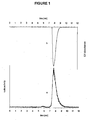
- the identity of the radiolabelled product was confirmed via co-injection with a commercial sample of methylene blue.
- the retention time in the UV-chromatogram was identical to the retention time of [N-methyl- 11 C]methylene blue in the radioactivity-chromatogram.
- Azure B On average, only 7-10 ⁇ g/ml of Azure B could be found in the product rinse, as determined by the UV detection spectrum.
- the total synthesis time from EOB was 35 minutes.
Landscapes
- Organic Chemistry (AREA)
- Chemical & Material Sciences (AREA)
- Health & Medical Sciences (AREA)
- Veterinary Medicine (AREA)
- Bioinformatics & Cheminformatics (AREA)
- Nuclear Medicine, Radiotherapy & Molecular Imaging (AREA)
- General Chemical & Material Sciences (AREA)
- Pharmacology & Pharmacy (AREA)
- Life Sciences & Earth Sciences (AREA)
- Animal Behavior & Ethology (AREA)
- General Health & Medical Sciences (AREA)
- Public Health (AREA)
- Chemical Kinetics & Catalysis (AREA)
- Engineering & Computer Science (AREA)
- Medicinal Chemistry (AREA)
- Biomedical Technology (AREA)
- Neurosurgery (AREA)
- Neurology (AREA)
- Hospice & Palliative Care (AREA)
- Psychiatry (AREA)
- Nitrogen- Or Sulfur-Containing Heterocyclic Ring Compounds With Rings Of Six Or More Members (AREA)
- Medicines Containing Antibodies Or Antigens For Use As Internal Diagnostic Agents (AREA)
- Catalysts (AREA)
- Cephalosporin Compounds (AREA)
- Pharmaceuticals Containing Other Organic And Inorganic Compounds (AREA)
Priority Applications (2)
| Application Number | Priority Date | Filing Date | Title |
|---|---|---|---|
| PL04768696T PL1667947T3 (pl) | 2003-09-29 | 2004-09-27 | Sposoby znakowania izotopem [11C] fenotiazyny i związków fenotiazynowych |
| SI200430921T SI1667947T1 (sl) | 2003-09-29 | 2004-09-27 | Postopki 11C-radiooznačevanja fenotiazina in fenotiazinu podobnih spojin |
Applications Claiming Priority (2)
| Application Number | Priority Date | Filing Date | Title |
|---|---|---|---|
| GBGB0322756.8A GB0322756D0 (en) | 2003-09-29 | 2003-09-29 | Methods of chemical synthesis |
| PCT/GB2004/004153 WO2005030676A1 (en) | 2003-09-29 | 2004-09-27 | Methods of [11c]-radiolabelling phenothiazine and phenothiazine-like compounds |
Publications (2)
| Publication Number | Publication Date |
|---|---|
| EP1667947A1 EP1667947A1 (en) | 2006-06-14 |
| EP1667947B1 true EP1667947B1 (en) | 2008-08-20 |
Family
ID=29287034
Family Applications (1)
| Application Number | Title | Priority Date | Filing Date |
|---|---|---|---|
| EP04768696A Expired - Lifetime EP1667947B1 (en) | 2003-09-29 | 2004-09-27 | Methods of 11c -radiolabelling phenothiazine and pheno thiazine-like compounds |
Country Status (13)
| Country | Link |
|---|---|
| US (1) | US20060275209A1 (https=) |
| EP (1) | EP1667947B1 (https=) |
| JP (1) | JP2007508282A (https=) |
| CN (2) | CN1886353B (https=) |
| AT (1) | ATE405533T1 (https=) |
| AU (1) | AU2004276071B2 (https=) |
| CA (1) | CA2540827A1 (https=) |
| DE (1) | DE602004016010D1 (https=) |
| ES (1) | ES2313063T3 (https=) |
| GB (1) | GB0322756D0 (https=) |
| PL (1) | PL1667947T3 (https=) |
| SI (1) | SI1667947T1 (https=) |
| WO (1) | WO2005030676A1 (https=) |
Cited By (1)
| Publication number | Priority date | Publication date | Assignee | Title |
|---|---|---|---|---|
| US20210011008A1 (en) * | 2019-07-09 | 2021-01-14 | Vanderbilt University | Amyloid-binding compounds and methods of use thereof |
Families Citing this family (21)
| Publication number | Priority date | Publication date | Assignee | Title |
|---|---|---|---|---|
| GB9506197D0 (en) | 1995-03-27 | 1995-05-17 | Hoffmann La Roche | Inhibition of tau-tau association. |
| GB0100119D0 (en) | 2001-01-03 | 2001-02-14 | Univ Aberdeen | Materials and methods relating to protein aggregation in neurodegenerative disease |
| GB0101049D0 (en) | 2001-01-15 | 2001-02-28 | Univ Aberdeen | Materials and methods relating to protein aggregation in neurodegenerative disease |
| GB0106953D0 (en) | 2001-03-20 | 2001-05-09 | Univ Aberdeen | Neufofibrillary labels |
| GB0117326D0 (en) | 2001-07-16 | 2001-09-05 | Univ Aberdeen | Napthoquinone-type inhibitors of protein aggregation |
| CN101084204B (zh) | 2004-09-23 | 2012-12-05 | 卫思道制药有限公司 | 包括亚甲蓝(mtc)在内的二氨基吩噻嗪鎓化合物的化学合成和纯化方法 |
| ES2349322T7 (es) | 2006-03-29 | 2019-10-17 | Wista Lab Ltd | Sales de 3,7-diamino-10H-fenotiazina y su utilización |
| SI2004155T1 (en) | 2006-03-29 | 2018-05-31 | Wista Laboratories Ltd. | Inhibitors of protein aggregation |
| WO2007110630A1 (en) | 2006-03-29 | 2007-10-04 | Wista Laboratories Ltd. | Thioninium compounds and their use |
| MY148145A (en) | 2006-07-11 | 2013-03-15 | Wista Lab Ltd | Methods of synthesis and/or purification of diaminophenothiazinium compounds |
| CA2701075C (en) | 2007-10-03 | 2019-02-12 | Wista Laboratories Ltd. | Therapeutic use of diaminophenothiazines. |
| MX355627B (es) | 2009-09-24 | 2018-04-25 | Wista Lab Ltd | Clorhidratos de metiltioninio (azul de metileno) cristalinos. |
| JP6093707B2 (ja) | 2010-11-30 | 2017-03-08 | ウィスタ ラボラトリーズ リミテッド | 化合物製剤 |
| JP5898701B2 (ja) | 2011-02-11 | 2016-04-13 | ウィスタ ラボラトリーズ リミテッド | フェノチアジンジアミニウム塩およびそれらの使用 |
| US20130315825A1 (en) * | 2012-05-03 | 2013-11-28 | Washington University | Tricyclic heteroaromatic compounds as alpha-synuclein ligands |
| US11001562B2 (en) | 2013-10-31 | 2021-05-11 | Beth Israel Deaconess Medical Center | Near-infrared fluorescent nerve contrast agents and methods of use thereof |
| JP7023604B2 (ja) | 2013-10-31 | 2022-02-22 | ベス・イスラエル・ディーコネス・メディカル・センター,インコーポレイテッド | 近赤外蛍光造影バイオイメージング剤及びその使用方法 |
| GB201512678D0 (en) | 2015-07-20 | 2015-08-26 | Wista Lab Ltd | Methods of chemical synthesis |
| CN109796465B (zh) * | 2017-11-16 | 2020-07-14 | 华中科技大学同济医学院附属协和医院 | 靶向pet显像化合物、包含该化合物的显象剂及其制备方法和用途 |
| CN115304633B (zh) * | 2022-07-20 | 2023-12-26 | 山西大学 | 一种无重原子光动力光敏剂及其制备方法和应用 |
| US12440585B2 (en) | 2023-09-12 | 2025-10-14 | Curadel Surgical Innovations, Inc. | Zwitterionic metal chelators |
Family Cites Families (4)
| Publication number | Priority date | Publication date | Assignee | Title |
|---|---|---|---|---|
| JP2000344685A (ja) * | 1999-03-26 | 2000-12-12 | Bf Kenkyusho:Kk | アズールa類似化合物によるアミロイドが蓄積する疾患の画像診断プローブおよびそれを含む画像診断用組成物 |
| JP4275819B2 (ja) * | 1999-09-17 | 2009-06-10 | 飯田 秀博 | デメチルラクロプライドの非求核性酸塩およびこれを用いる[c−11]ラクロプライドの製造法 |
| GB0106953D0 (en) * | 2001-03-20 | 2001-05-09 | Univ Aberdeen | Neufofibrillary labels |
| GB0113121D0 (en) * | 2001-05-30 | 2001-07-18 | Univ Leeds | Biologically active photosensitisers |
-
2003
- 2003-09-29 GB GBGB0322756.8A patent/GB0322756D0/en not_active Ceased
-
2004
- 2004-09-27 EP EP04768696A patent/EP1667947B1/en not_active Expired - Lifetime
- 2004-09-27 ES ES04768696T patent/ES2313063T3/es not_active Expired - Lifetime
- 2004-09-27 CN CN2004800350118A patent/CN1886353B/zh not_active Expired - Fee Related
- 2004-09-27 JP JP2006530567A patent/JP2007508282A/ja active Pending
- 2004-09-27 CA CA002540827A patent/CA2540827A1/en not_active Abandoned
- 2004-09-27 SI SI200430921T patent/SI1667947T1/sl unknown
- 2004-09-27 CN CNA2007101666344A patent/CN101172162A/zh active Pending
- 2004-09-27 AT AT04768696T patent/ATE405533T1/de not_active IP Right Cessation
- 2004-09-27 PL PL04768696T patent/PL1667947T3/pl unknown
- 2004-09-27 DE DE602004016010T patent/DE602004016010D1/de not_active Expired - Lifetime
- 2004-09-27 WO PCT/GB2004/004153 patent/WO2005030676A1/en not_active Ceased
- 2004-09-27 AU AU2004276071A patent/AU2004276071B2/en not_active Ceased
- 2004-09-27 US US10/573,882 patent/US20060275209A1/en not_active Abandoned
Cited By (1)
| Publication number | Priority date | Publication date | Assignee | Title |
|---|---|---|---|---|
| US20210011008A1 (en) * | 2019-07-09 | 2021-01-14 | Vanderbilt University | Amyloid-binding compounds and methods of use thereof |
Also Published As
| Publication number | Publication date |
|---|---|
| ATE405533T1 (de) | 2008-09-15 |
| EP1667947A1 (en) | 2006-06-14 |
| SI1667947T1 (sl) | 2009-02-28 |
| AU2004276071B2 (en) | 2011-02-03 |
| AU2004276071A1 (en) | 2005-04-07 |
| CN1886353A (zh) | 2006-12-27 |
| PL1667947T3 (pl) | 2009-01-30 |
| HK1087394A1 (en) | 2006-10-13 |
| CN1886353B (zh) | 2010-06-02 |
| WO2005030676A1 (en) | 2005-04-07 |
| ES2313063T3 (es) | 2009-03-01 |
| CN101172162A (zh) | 2008-05-07 |
| DE602004016010D1 (de) | 2008-10-02 |
| JP2007508282A (ja) | 2007-04-05 |
| CA2540827A1 (en) | 2005-04-07 |
| US20060275209A1 (en) | 2006-12-07 |
| GB0322756D0 (en) | 2003-10-29 |
Similar Documents
| Publication | Publication Date | Title |
|---|---|---|
| EP1667947B1 (en) | Methods of 11c -radiolabelling phenothiazine and pheno thiazine-like compounds | |
| US20250222006A1 (en) | Methods of synthesis and/or purification of diaminophenothiazinium compounds | |
| EP2322517B1 (en) | Methods of chemical synthesis and purification of diaminophenothiazinium compounds including methylthioninium chloride (mtc) | |
| US20080207603A1 (en) | Methods of Chemical Synthesis and Purification of Diaminophenothiazinium Compounds Including Methylthioninium Chloride (Mtc) | |
| HK1087394B (en) | Methods of 11c -radiolabelling phenothiazine and pheno thiazine-like compounds | |
| WO2009001046A2 (en) | [11c]methoxy-radiolabelled 2,3',4,5'-tetramethylstilbene (tms) and its preparation and use | |
| HK40014432A (en) | Methods of chemical synthesis and purification of diaminophenothiazinium compounds including methylthioninium chloride (mtc) | |
| HK1233267A1 (en) | Methods of synthesis and/or purification of diaminophenothiazinium compounds | |
| HK1233267B (en) | Methods of synthesis and/or purification of diaminophenothiazinium compounds | |
| HK1156316B (en) | Methods of chemical synthesis and purification of diaminophenothiazinium compounds including methylthioninium chloride (mtc) | |
| HK1129675B (en) | Methods of synthesis and/or purification of diaminophenothiazinium compounds | |
| HK1100001B (en) | Methods of chemical synthesis and purification of diaminophenothiazinium compounds including methylthioninium chloride (mtc) | |
| HK1156316A (en) | Methods of chemical synthesis and purification of diaminophenothiazinium compounds including methylthioninium chloride (mtc) | |
| BR122023024801B1 (pt) | Métodos para síntese química de compostos de diaminofenotiazínio incluindo cloreto de metiltionínio (mtc) |
Legal Events
| Date | Code | Title | Description |
|---|---|---|---|
| PUAI | Public reference made under article 153(3) epc to a published international application that has entered the european phase |
Free format text: ORIGINAL CODE: 0009012 |
|
| 17P | Request for examination filed |
Effective date: 20060330 |
|
| AK | Designated contracting states |
Kind code of ref document: A1 Designated state(s): AT BE BG CH CY CZ DE DK EE ES FI FR GB GR HU IE IT LI LU MC NL PL PT RO SE SI SK TR |
|
| DAX | Request for extension of the european patent (deleted) | ||
| REG | Reference to a national code |
Ref country code: HK Ref legal event code: DE Ref document number: 1087394 Country of ref document: HK |
|
| 17Q | First examination report despatched |
Effective date: 20060913 |
|
| GRAP | Despatch of communication of intention to grant a patent |
Free format text: ORIGINAL CODE: EPIDOSNIGR1 |
|
| GRAS | Grant fee paid |
Free format text: ORIGINAL CODE: EPIDOSNIGR3 |
|
| GRAA | (expected) grant |
Free format text: ORIGINAL CODE: 0009210 |
|
| AK | Designated contracting states |
Kind code of ref document: B1 Designated state(s): AT BE BG CH CY CZ DE DK EE ES FI FR GB GR HU IE IT LI LU MC NL PL PT RO SE SI SK TR |
|
| REG | Reference to a national code |
Ref country code: GB Ref legal event code: FG4D |
|
| REG | Reference to a national code |
Ref country code: CH Ref legal event code: EP |
|
| REG | Reference to a national code |
Ref country code: IE Ref legal event code: FG4D |
|
| REF | Corresponds to: |
Ref document number: 602004016010 Country of ref document: DE Date of ref document: 20081002 Kind code of ref document: P |
|
| REG | Reference to a national code |
Ref country code: HK Ref legal event code: GR Ref document number: 1087394 Country of ref document: HK |
|
| REG | Reference to a national code |
Ref country code: PL Ref legal event code: T3 |
|
| PG25 | Lapsed in a contracting state [announced via postgrant information from national office to epo] |
Ref country code: FI Free format text: LAPSE BECAUSE OF FAILURE TO SUBMIT A TRANSLATION OF THE DESCRIPTION OR TO PAY THE FEE WITHIN THE PRESCRIBED TIME-LIMIT Effective date: 20080820 Ref country code: AT Free format text: LAPSE BECAUSE OF FAILURE TO SUBMIT A TRANSLATION OF THE DESCRIPTION OR TO PAY THE FEE WITHIN THE PRESCRIBED TIME-LIMIT Effective date: 20080820 |
|
| REG | Reference to a national code |
Ref country code: ES Ref legal event code: FG2A Ref document number: 2313063 Country of ref document: ES Kind code of ref document: T3 |
|
| PG25 | Lapsed in a contracting state [announced via postgrant information from national office to epo] |
Ref country code: BE Free format text: LAPSE BECAUSE OF FAILURE TO SUBMIT A TRANSLATION OF THE DESCRIPTION OR TO PAY THE FEE WITHIN THE PRESCRIBED TIME-LIMIT Effective date: 20080820 |
|
| PG25 | Lapsed in a contracting state [announced via postgrant information from national office to epo] |
Ref country code: DK Free format text: LAPSE BECAUSE OF FAILURE TO SUBMIT A TRANSLATION OF THE DESCRIPTION OR TO PAY THE FEE WITHIN THE PRESCRIBED TIME-LIMIT Effective date: 20080820 Ref country code: BG Free format text: LAPSE BECAUSE OF FAILURE TO SUBMIT A TRANSLATION OF THE DESCRIPTION OR TO PAY THE FEE WITHIN THE PRESCRIBED TIME-LIMIT Effective date: 20081120 Ref country code: MC Free format text: LAPSE BECAUSE OF NON-PAYMENT OF DUE FEES Effective date: 20080930 |
|
| PG25 | Lapsed in a contracting state [announced via postgrant information from national office to epo] |
Ref country code: RO Free format text: LAPSE BECAUSE OF FAILURE TO SUBMIT A TRANSLATION OF THE DESCRIPTION OR TO PAY THE FEE WITHIN THE PRESCRIBED TIME-LIMIT Effective date: 20080820 Ref country code: CZ Free format text: LAPSE BECAUSE OF FAILURE TO SUBMIT A TRANSLATION OF THE DESCRIPTION OR TO PAY THE FEE WITHIN THE PRESCRIBED TIME-LIMIT Effective date: 20080820 |
|
| PLBE | No opposition filed within time limit |
Free format text: ORIGINAL CODE: 0009261 |
|
| STAA | Information on the status of an ep patent application or granted ep patent |
Free format text: STATUS: NO OPPOSITION FILED WITHIN TIME LIMIT |
|
| 26N | No opposition filed |
Effective date: 20090525 |
|
| PG25 | Lapsed in a contracting state [announced via postgrant information from national office to epo] |
Ref country code: EE Free format text: LAPSE BECAUSE OF FAILURE TO SUBMIT A TRANSLATION OF THE DESCRIPTION OR TO PAY THE FEE WITHIN THE PRESCRIBED TIME-LIMIT Effective date: 20080820 |
|
| PG25 | Lapsed in a contracting state [announced via postgrant information from national office to epo] |
Ref country code: SE Free format text: LAPSE BECAUSE OF FAILURE TO SUBMIT A TRANSLATION OF THE DESCRIPTION OR TO PAY THE FEE WITHIN THE PRESCRIBED TIME-LIMIT Effective date: 20081120 |
|
| PG25 | Lapsed in a contracting state [announced via postgrant information from national office to epo] |
Ref country code: CY Free format text: LAPSE BECAUSE OF FAILURE TO SUBMIT A TRANSLATION OF THE DESCRIPTION OR TO PAY THE FEE WITHIN THE PRESCRIBED TIME-LIMIT Effective date: 20080820 Ref country code: HU Free format text: LAPSE BECAUSE OF FAILURE TO SUBMIT A TRANSLATION OF THE DESCRIPTION OR TO PAY THE FEE WITHIN THE PRESCRIBED TIME-LIMIT Effective date: 20090221 |
|
| PG25 | Lapsed in a contracting state [announced via postgrant information from national office to epo] |
Ref country code: TR Free format text: LAPSE BECAUSE OF FAILURE TO SUBMIT A TRANSLATION OF THE DESCRIPTION OR TO PAY THE FEE WITHIN THE PRESCRIBED TIME-LIMIT Effective date: 20080820 |
|
| PG25 | Lapsed in a contracting state [announced via postgrant information from national office to epo] |
Ref country code: GR Free format text: LAPSE BECAUSE OF FAILURE TO SUBMIT A TRANSLATION OF THE DESCRIPTION OR TO PAY THE FEE WITHIN THE PRESCRIBED TIME-LIMIT Effective date: 20081121 |
|
| PGFP | Annual fee paid to national office [announced via postgrant information from national office to epo] |
Ref country code: LU Payment date: 20110824 Year of fee payment: 8 |
|
| PG25 | Lapsed in a contracting state [announced via postgrant information from national office to epo] |
Ref country code: PT Free format text: LAPSE BECAUSE OF FAILURE TO SUBMIT A TRANSLATION OF THE DESCRIPTION OR TO PAY THE FEE WITHIN THE PRESCRIBED TIME-LIMIT Effective date: 20080820 |
|
| PGFP | Annual fee paid to national office [announced via postgrant information from national office to epo] |
Ref country code: IE Payment date: 20110825 Year of fee payment: 8 Ref country code: CH Payment date: 20110824 Year of fee payment: 8 |
|
| PGFP | Annual fee paid to national office [announced via postgrant information from national office to epo] |
Ref country code: FR Payment date: 20110901 Year of fee payment: 8 Ref country code: GB Payment date: 20110819 Year of fee payment: 8 Ref country code: SI Payment date: 20110719 Year of fee payment: 8 Ref country code: PL Payment date: 20110908 Year of fee payment: 8 Ref country code: SK Payment date: 20110726 Year of fee payment: 8 Ref country code: DE Payment date: 20110824 Year of fee payment: 8 Ref country code: ES Payment date: 20110727 Year of fee payment: 8 |
|
| PGFP | Annual fee paid to national office [announced via postgrant information from national office to epo] |
Ref country code: NL Payment date: 20110826 Year of fee payment: 8 Ref country code: IT Payment date: 20110826 Year of fee payment: 8 |
|
| REG | Reference to a national code |
Ref country code: NL Ref legal event code: V1 Effective date: 20130401 |
|
| REG | Reference to a national code |
Ref country code: CH Ref legal event code: PL |
|
| GBPC | Gb: european patent ceased through non-payment of renewal fee |
Effective date: 20120927 |
|
| REG | Reference to a national code |
Ref country code: SK Ref legal event code: MM4A Ref document number: E 4416 Country of ref document: SK Effective date: 20120927 |
|
| REG | Reference to a national code |
Ref country code: IE Ref legal event code: MM4A |
|
| REG | Reference to a national code |
Ref country code: FR Ref legal event code: ST Effective date: 20130531 Ref country code: SI Ref legal event code: KO00 Effective date: 20130508 |
|
| PG25 | Lapsed in a contracting state [announced via postgrant information from national office to epo] |
Ref country code: CH Free format text: LAPSE BECAUSE OF NON-PAYMENT OF DUE FEES Effective date: 20120930 Ref country code: GB Free format text: LAPSE BECAUSE OF NON-PAYMENT OF DUE FEES Effective date: 20120927 Ref country code: LI Free format text: LAPSE BECAUSE OF NON-PAYMENT OF DUE FEES Effective date: 20120930 Ref country code: SK Free format text: LAPSE BECAUSE OF NON-PAYMENT OF DUE FEES Effective date: 20120927 Ref country code: IE Free format text: LAPSE BECAUSE OF NON-PAYMENT OF DUE FEES Effective date: 20120927 Ref country code: DE Free format text: LAPSE BECAUSE OF NON-PAYMENT OF DUE FEES Effective date: 20130403 |
|
| PG25 | Lapsed in a contracting state [announced via postgrant information from national office to epo] |
Ref country code: FR Free format text: LAPSE BECAUSE OF NON-PAYMENT OF DUE FEES Effective date: 20121001 Ref country code: SI Free format text: LAPSE BECAUSE OF NON-PAYMENT OF DUE FEES Effective date: 20120928 Ref country code: IT Free format text: LAPSE BECAUSE OF NON-PAYMENT OF DUE FEES Effective date: 20120927 Ref country code: NL Free format text: LAPSE BECAUSE OF NON-PAYMENT OF DUE FEES Effective date: 20130401 |
|
| REG | Reference to a national code |
Ref country code: DE Ref legal event code: R119 Ref document number: 602004016010 Country of ref document: DE Effective date: 20130403 |
|
| REG | Reference to a national code |
Ref country code: ES Ref legal event code: FD2A Effective date: 20131021 |
|
| PG25 | Lapsed in a contracting state [announced via postgrant information from national office to epo] |
Ref country code: ES Free format text: LAPSE BECAUSE OF NON-PAYMENT OF DUE FEES Effective date: 20120928 |
|
| PG25 | Lapsed in a contracting state [announced via postgrant information from national office to epo] |
Ref country code: PL Free format text: LAPSE BECAUSE OF NON-PAYMENT OF DUE FEES Effective date: 20120927 |
|
| REG | Reference to a national code |
Ref country code: PL Ref legal event code: LAPE |
|
| PG25 | Lapsed in a contracting state [announced via postgrant information from national office to epo] |
Ref country code: LU Free format text: LAPSE BECAUSE OF NON-PAYMENT OF DUE FEES Effective date: 20120927 |