EP1663177B1 - Preparations topiques comprenant un excipient hydrophile et une matrice de silicone - Google Patents
Preparations topiques comprenant un excipient hydrophile et une matrice de silicone Download PDFInfo
- Publication number
- EP1663177B1 EP1663177B1 EP04780975A EP04780975A EP1663177B1 EP 1663177 B1 EP1663177 B1 EP 1663177B1 EP 04780975 A EP04780975 A EP 04780975A EP 04780975 A EP04780975 A EP 04780975A EP 1663177 B1 EP1663177 B1 EP 1663177B1
- Authority
- EP
- European Patent Office
- Prior art keywords
- silicone
- topical preparation
- preparation
- topical
- protease
- Prior art date
- Legal status (The legal status is an assumption and is not a legal conclusion. Google has not performed a legal analysis and makes no representation as to the accuracy of the status listed.)
- Expired - Lifetime
Links
- 229920001296 polysiloxane Polymers 0.000 title claims abstract description 115
- 238000002360 preparation method Methods 0.000 title claims abstract description 94
- 239000011159 matrix material Substances 0.000 title claims abstract description 60
- 230000000699 topical effect Effects 0.000 title claims abstract description 56
- 239000012052 hydrophilic carrier Substances 0.000 title claims abstract description 31
- 239000013543 active substance Substances 0.000 claims abstract description 75
- 108091005804 Peptidases Proteins 0.000 claims description 120
- 102000004190 Enzymes Human genes 0.000 claims description 116
- 108090000790 Enzymes Proteins 0.000 claims description 116
- 239000004365 Protease Substances 0.000 claims description 101
- DNIAPMSPPWPWGF-UHFFFAOYSA-N Propylene glycol Chemical group CC(O)CO DNIAPMSPPWPWGF-UHFFFAOYSA-N 0.000 claims description 57
- 239000002674 ointment Substances 0.000 claims description 30
- 229920002451 polyvinyl alcohol Polymers 0.000 claims description 26
- 239000004372 Polyvinyl alcohol Substances 0.000 claims description 25
- 229920002379 silicone rubber Polymers 0.000 claims description 25
- 239000004094 surface-active agent Substances 0.000 claims description 19
- 230000001338 necrotic effect Effects 0.000 claims description 15
- XLYOFNOQVPJJNP-UHFFFAOYSA-N water Substances O XLYOFNOQVPJJNP-UHFFFAOYSA-N 0.000 claims description 15
- 108090000623 proteins and genes Proteins 0.000 claims description 14
- 102000004169 proteins and genes Human genes 0.000 claims description 13
- PEDCQBHIVMGVHV-UHFFFAOYSA-N Glycerine Chemical compound OCC(O)CO PEDCQBHIVMGVHV-UHFFFAOYSA-N 0.000 claims description 12
- 229920001971 elastomer Polymers 0.000 claims description 11
- 229920000036 polyvinylpyrrolidone Polymers 0.000 claims description 11
- 239000001267 polyvinylpyrrolidone Substances 0.000 claims description 11
- 235000013855 polyvinylpyrrolidone Nutrition 0.000 claims description 11
- 239000012530 fluid Substances 0.000 claims description 10
- 235000013870 dimethyl polysiloxane Nutrition 0.000 claims description 8
- 229920000435 poly(dimethylsiloxane) Polymers 0.000 claims description 8
- -1 polydimethylsiloxanes Polymers 0.000 claims description 7
- 239000004945 silicone rubber Substances 0.000 claims description 7
- 239000004820 Pressure-sensitive adhesive Substances 0.000 claims description 6
- 239000003814 drug Substances 0.000 claims description 6
- 239000000806 elastomer Substances 0.000 claims description 6
- 239000002202 Polyethylene glycol Substances 0.000 claims description 5
- 235000011187 glycerol Nutrition 0.000 claims description 5
- 229920001223 polyethylene glycol Polymers 0.000 claims description 5
- 230000008961 swelling Effects 0.000 claims description 4
- LFQSCWFLJHTTHZ-UHFFFAOYSA-N Ethanol Chemical compound CCO LFQSCWFLJHTTHZ-UHFFFAOYSA-N 0.000 claims description 3
- RVGRUAULSDPKGF-UHFFFAOYSA-N Poloxamer Chemical compound C1CO1.CC1CO1 RVGRUAULSDPKGF-UHFFFAOYSA-N 0.000 claims description 3
- 230000001413 cellular effect Effects 0.000 claims description 3
- 229920001983 poloxamer Polymers 0.000 claims description 3
- 229960000502 poloxamer Drugs 0.000 claims description 3
- 150000005846 sugar alcohols Polymers 0.000 claims description 3
- 239000002562 thickening agent Substances 0.000 claims description 2
- 229920002554 vinyl polymer Polymers 0.000 claims description 2
- 102100037486 Reverse transcriptase/ribonuclease H Human genes 0.000 claims 4
- 238000004519 manufacturing process Methods 0.000 claims 2
- 229920001451 polypropylene glycol Polymers 0.000 claims 1
- QQONPFPTGQHPMA-UHFFFAOYSA-N propylene Natural products CC=C QQONPFPTGQHPMA-UHFFFAOYSA-N 0.000 claims 1
- 125000004805 propylene group Chemical group [H]C([H])([H])C([H])([*:1])C([H])([H])[*:2] 0.000 claims 1
- 239000013464 silicone adhesive Substances 0.000 claims 1
- 238000000034 method Methods 0.000 abstract description 14
- 102000035195 Peptidases Human genes 0.000 description 116
- 229940088598 enzyme Drugs 0.000 description 114
- 235000019419 proteases Nutrition 0.000 description 94
- 239000000203 mixture Substances 0.000 description 63
- 239000012071 phase Substances 0.000 description 54
- 238000012360 testing method Methods 0.000 description 40
- 206010051814 Eschar Diseases 0.000 description 39
- 231100000333 eschar Toxicity 0.000 description 39
- 238000009472 formulation Methods 0.000 description 36
- 238000004090 dissolution Methods 0.000 description 32
- 239000000872 buffer Substances 0.000 description 29
- 239000000243 solution Substances 0.000 description 29
- 230000000694 effects Effects 0.000 description 26
- 229920002799 BoPET Polymers 0.000 description 25
- 239000005041 Mylar™ Substances 0.000 description 25
- 210000001519 tissue Anatomy 0.000 description 23
- 239000011248 coating agent Substances 0.000 description 22
- 238000000576 coating method Methods 0.000 description 22
- LOKCTEFSRHRXRJ-UHFFFAOYSA-I dipotassium trisodium dihydrogen phosphate hydrogen phosphate dichloride Chemical compound P(=O)(O)(O)[O-].[K+].P(=O)(O)([O-])[O-].[Na+].[Na+].[Cl-].[K+].[Cl-].[Na+] LOKCTEFSRHRXRJ-UHFFFAOYSA-I 0.000 description 22
- 239000002953 phosphate buffered saline Substances 0.000 description 22
- 235000019422 polyvinyl alcohol Nutrition 0.000 description 22
- 206010052428 Wound Diseases 0.000 description 17
- 208000027418 Wounds and injury Diseases 0.000 description 17
- 238000004458 analytical method Methods 0.000 description 15
- 108090001060 Lipase Proteins 0.000 description 14
- 102000004882 Lipase Human genes 0.000 description 14
- 238000002474 experimental method Methods 0.000 description 14
- 239000007788 liquid Substances 0.000 description 14
- 239000004367 Lipase Substances 0.000 description 13
- 235000019421 lipase Nutrition 0.000 description 13
- 238000003756 stirring Methods 0.000 description 13
- 101710180012 Protease 7 Proteins 0.000 description 12
- FAPWRFPIFSIZLT-UHFFFAOYSA-M Sodium chloride Chemical compound [Na+].[Cl-] FAPWRFPIFSIZLT-UHFFFAOYSA-M 0.000 description 12
- 238000002835 absorbance Methods 0.000 description 11
- 235000018102 proteins Nutrition 0.000 description 11
- 108060005980 Collagenase Proteins 0.000 description 10
- 102000029816 Collagenase Human genes 0.000 description 10
- 239000000839 emulsion Substances 0.000 description 10
- 230000002255 enzymatic effect Effects 0.000 description 10
- 239000003795 chemical substances by application Substances 0.000 description 9
- 235000010482 polyoxyethylene sorbitan monooleate Nutrition 0.000 description 9
- 229920000053 polysorbate 80 Polymers 0.000 description 9
- 239000011550 stock solution Substances 0.000 description 9
- UXVMQQNJUSDDNG-UHFFFAOYSA-L Calcium chloride Chemical compound [Cl-].[Cl-].[Ca+2] UXVMQQNJUSDDNG-UHFFFAOYSA-L 0.000 description 8
- VYPSYNLAJGMNEJ-UHFFFAOYSA-N Silicium dioxide Chemical compound O=[Si]=O VYPSYNLAJGMNEJ-UHFFFAOYSA-N 0.000 description 8
- 239000001110 calcium chloride Substances 0.000 description 8
- 229910001628 calcium chloride Inorganic materials 0.000 description 8
- 238000003860 storage Methods 0.000 description 8
- 238000013268 sustained release Methods 0.000 description 8
- 239000012730 sustained-release form Substances 0.000 description 8
- 108090000787 Subtilisin Proteins 0.000 description 7
- 239000000853 adhesive Substances 0.000 description 7
- 230000001070 adhesive effect Effects 0.000 description 7
- 150000001413 amino acids Chemical group 0.000 description 7
- 238000003556 assay Methods 0.000 description 7
- 238000001804 debridement Methods 0.000 description 7
- 239000010408 film Substances 0.000 description 7
- 239000000499 gel Substances 0.000 description 7
- 230000000717 retained effect Effects 0.000 description 7
- 238000005406 washing Methods 0.000 description 7
- 102000004157 Hydrolases Human genes 0.000 description 6
- 108090000604 Hydrolases Proteins 0.000 description 6
- 229960002424 collagenase Drugs 0.000 description 6
- 238000001704 evaporation Methods 0.000 description 6
- 230000008020 evaporation Effects 0.000 description 6
- 230000005764 inhibitory process Effects 0.000 description 6
- 239000011541 reaction mixture Substances 0.000 description 6
- 239000011780 sodium chloride Substances 0.000 description 6
- 239000002904 solvent Substances 0.000 description 6
- MTCFGRXMJLQNBG-UHFFFAOYSA-N Serine Natural products OCC(N)C(O)=O MTCFGRXMJLQNBG-UHFFFAOYSA-N 0.000 description 5
- 239000004280 Sodium formate Substances 0.000 description 5
- 230000001580 bacterial effect Effects 0.000 description 5
- 239000000463 material Substances 0.000 description 5
- 238000002156 mixing Methods 0.000 description 5
- 230000008569 process Effects 0.000 description 5
- 239000005060 rubber Substances 0.000 description 5
- HLBBKKJFGFRGMU-UHFFFAOYSA-M sodium formate Chemical compound [Na+].[O-]C=O HLBBKKJFGFRGMU-UHFFFAOYSA-M 0.000 description 5
- 235000019254 sodium formate Nutrition 0.000 description 5
- 235000012431 wafers Nutrition 0.000 description 5
- 229920001817 Agar Polymers 0.000 description 4
- 239000007983 Tris buffer Substances 0.000 description 4
- 239000008272 agar Substances 0.000 description 4
- 230000008033 biological extinction Effects 0.000 description 4
- 230000015572 biosynthetic process Effects 0.000 description 4
- 230000015556 catabolic process Effects 0.000 description 4
- 239000004568 cement Substances 0.000 description 4
- 150000001875 compounds Chemical class 0.000 description 4
- 238000006731 degradation reaction Methods 0.000 description 4
- 238000009792 diffusion process Methods 0.000 description 4
- 239000006185 dispersion Substances 0.000 description 4
- 229940079593 drug Drugs 0.000 description 4
- 239000011521 glass Substances 0.000 description 4
- 239000007791 liquid phase Substances 0.000 description 4
- 244000005700 microbiome Species 0.000 description 4
- 239000002245 particle Substances 0.000 description 4
- 239000000546 pharmaceutical excipient Substances 0.000 description 4
- 102000004196 processed proteins & peptides Human genes 0.000 description 4
- 108090000765 processed proteins & peptides Proteins 0.000 description 4
- 238000005070 sampling Methods 0.000 description 4
- 239000000377 silicon dioxide Substances 0.000 description 4
- 235000020183 skimmed milk Nutrition 0.000 description 4
- LENZDBCJOHFCAS-UHFFFAOYSA-N tris Chemical compound OCC(N)(CO)CO LENZDBCJOHFCAS-UHFFFAOYSA-N 0.000 description 4
- 241000193422 Bacillus lentus Species 0.000 description 3
- 235000014469 Bacillus subtilis Nutrition 0.000 description 3
- XEKOWRVHYACXOJ-UHFFFAOYSA-N Ethyl acetate Chemical compound CCOC(C)=O XEKOWRVHYACXOJ-UHFFFAOYSA-N 0.000 description 3
- 241000193159 Hathewaya histolytica Species 0.000 description 3
- 108090000854 Oxidoreductases Proteins 0.000 description 3
- 102000004316 Oxidoreductases Human genes 0.000 description 3
- 238000013006 addition curing Methods 0.000 description 3
- 230000008859 change Effects 0.000 description 3
- KRKNYBCHXYNGOX-UHFFFAOYSA-N citric acid Chemical compound OC(=O)CC(O)(C(O)=O)CC(O)=O KRKNYBCHXYNGOX-UHFFFAOYSA-N 0.000 description 3
- 238000013005 condensation curing Methods 0.000 description 3
- 238000013270 controlled release Methods 0.000 description 3
- 238000001723 curing Methods 0.000 description 3
- 230000000593 degrading effect Effects 0.000 description 3
- 239000004205 dimethyl polysiloxane Substances 0.000 description 3
- 239000000137 peptide hydrolase inhibitor Substances 0.000 description 3
- 230000002797 proteolythic effect Effects 0.000 description 3
- 239000010409 thin film Substances 0.000 description 3
- BHKKSKOHRFHHIN-MRVPVSSYSA-N 1-[[2-[(1R)-1-aminoethyl]-4-chlorophenyl]methyl]-2-sulfanylidene-5H-pyrrolo[3,2-d]pyrimidin-4-one Chemical compound N[C@H](C)C1=C(CN2C(NC(C3=C2C=CN3)=O)=S)C=CC(=C1)Cl BHKKSKOHRFHHIN-MRVPVSSYSA-N 0.000 description 2
- FHVDTGUDJYJELY-UHFFFAOYSA-N 6-{[2-carboxy-4,5-dihydroxy-6-(phosphanyloxy)oxan-3-yl]oxy}-4,5-dihydroxy-3-phosphanyloxane-2-carboxylic acid Chemical class O1C(C(O)=O)C(P)C(O)C(O)C1OC1C(C(O)=O)OC(OP)C(O)C1O FHVDTGUDJYJELY-UHFFFAOYSA-N 0.000 description 2
- 241000193830 Bacillus <bacterium> Species 0.000 description 2
- 241000193744 Bacillus amyloliquefaciens Species 0.000 description 2
- 229920001661 Chitosan Polymers 0.000 description 2
- 206010053567 Coagulopathies Diseases 0.000 description 2
- 208000008960 Diabetic foot Diseases 0.000 description 2
- LYCAIKOWRPUZTN-UHFFFAOYSA-N Ethylene glycol Chemical compound OCCO LYCAIKOWRPUZTN-UHFFFAOYSA-N 0.000 description 2
- 108010010803 Gelatin Proteins 0.000 description 2
- 108090000769 Isomerases Proteins 0.000 description 2
- 102000004195 Isomerases Human genes 0.000 description 2
- 108010006035 Metalloproteases Proteins 0.000 description 2
- IMNFDUFMRHMDMM-UHFFFAOYSA-N N-Heptane Chemical compound CCCCCCC IMNFDUFMRHMDMM-UHFFFAOYSA-N 0.000 description 2
- 239000004952 Polyamide Substances 0.000 description 2
- 241000589755 Pseudomonas mendocina Species 0.000 description 2
- 101001069700 Saccharomyces cerevisiae (strain ATCC 204508 / S288c) Saccharolysin Proteins 0.000 description 2
- PXIPVTKHYLBLMZ-UHFFFAOYSA-N Sodium azide Chemical compound [Na+].[N-]=[N+]=[N-] PXIPVTKHYLBLMZ-UHFFFAOYSA-N 0.000 description 2
- 229920002125 Sokalan® Polymers 0.000 description 2
- 108010056079 Subtilisins Proteins 0.000 description 2
- 102000005158 Subtilisins Human genes 0.000 description 2
- 108090000992 Transferases Proteins 0.000 description 2
- 102000004357 Transferases Human genes 0.000 description 2
- 238000010521 absorption reaction Methods 0.000 description 2
- 239000002253 acid Substances 0.000 description 2
- 239000012131 assay buffer Substances 0.000 description 2
- 230000008901 benefit Effects 0.000 description 2
- 239000007853 buffer solution Substances 0.000 description 2
- 239000001768 carboxy methyl cellulose Substances 0.000 description 2
- 239000005018 casein Substances 0.000 description 2
- BECPQYXYKAMYBN-UHFFFAOYSA-N casein, tech. Chemical compound NCCCCC(C(O)=O)N=C(O)C(CC(O)=O)N=C(O)C(CCC(O)=N)N=C(O)C(CC(C)C)N=C(O)C(CCC(O)=O)N=C(O)C(CC(O)=O)N=C(O)C(CCC(O)=O)N=C(O)C(C(C)O)N=C(O)C(CCC(O)=N)N=C(O)C(CCC(O)=N)N=C(O)C(CCC(O)=N)N=C(O)C(CCC(O)=O)N=C(O)C(CCC(O)=O)N=C(O)C(COP(O)(O)=O)N=C(O)C(CCC(O)=N)N=C(O)C(N)CC1=CC=CC=C1 BECPQYXYKAMYBN-UHFFFAOYSA-N 0.000 description 2
- 235000021240 caseins Nutrition 0.000 description 2
- 230000035602 clotting Effects 0.000 description 2
- 239000006071 cream Substances 0.000 description 2
- 230000003247 decreasing effect Effects 0.000 description 2
- 238000013461 design Methods 0.000 description 2
- 229940008099 dimethicone Drugs 0.000 description 2
- 239000012153 distilled water Substances 0.000 description 2
- 238000009826 distribution Methods 0.000 description 2
- 238000012377 drug delivery Methods 0.000 description 2
- 238000004945 emulsification Methods 0.000 description 2
- 239000006260 foam Substances 0.000 description 2
- 239000008273 gelatin Substances 0.000 description 2
- 229920000159 gelatin Polymers 0.000 description 2
- 235000019322 gelatine Nutrition 0.000 description 2
- 235000011852 gelatine desserts Nutrition 0.000 description 2
- 238000013038 hand mixing Methods 0.000 description 2
- 230000035876 healing Effects 0.000 description 2
- 238000011065 in-situ storage Methods 0.000 description 2
- 239000003112 inhibitor Substances 0.000 description 2
- 230000002401 inhibitory effect Effects 0.000 description 2
- 230000002262 irrigation Effects 0.000 description 2
- 238000003973 irrigation Methods 0.000 description 2
- 235000019626 lipase activity Nutrition 0.000 description 2
- 229920002521 macromolecule Polymers 0.000 description 2
- 108010003855 mesentericopeptidase Proteins 0.000 description 2
- 108010020132 microbial serine proteinases Proteins 0.000 description 2
- 239000001814 pectin Substances 0.000 description 2
- 229920001277 pectin Polymers 0.000 description 2
- 235000010987 pectin Nutrition 0.000 description 2
- 150000002978 peroxides Chemical class 0.000 description 2
- 150000004965 peroxy acids Chemical class 0.000 description 2
- 229920002647 polyamide Polymers 0.000 description 2
- 239000002243 precursor Substances 0.000 description 2
- 108010042388 protease C Proteins 0.000 description 2
- 239000003001 serine protease inhibitor Substances 0.000 description 2
- 239000007787 solid Substances 0.000 description 2
- 150000003573 thiols Chemical class 0.000 description 2
- 238000013271 transdermal drug delivery Methods 0.000 description 2
- 230000004584 weight gain Effects 0.000 description 2
- 235000019786 weight gain Nutrition 0.000 description 2
- LKDMKWNDBAVNQZ-WJNSRDFLSA-N 4-[[(2s)-1-[[(2s)-1-[(2s)-2-[[(2s)-1-(4-nitroanilino)-1-oxo-3-phenylpropan-2-yl]carbamoyl]pyrrolidin-1-yl]-1-oxopropan-2-yl]amino]-1-oxopropan-2-yl]amino]-4-oxobutanoic acid Chemical compound OC(=O)CCC(=O)N[C@@H](C)C(=O)N[C@@H](C)C(=O)N1CCC[C@H]1C(=O)N[C@H](C(=O)NC=1C=CC(=CC=1)[N+]([O-])=O)CC1=CC=CC=C1 LKDMKWNDBAVNQZ-WJNSRDFLSA-N 0.000 description 1
- 108091005508 Acid proteases Proteins 0.000 description 1
- GUBGYTABKSRVRQ-XLOQQCSPSA-N Alpha-Lactose Chemical compound O[C@@H]1[C@@H](O)[C@@H](O)[C@@H](CO)O[C@H]1O[C@@H]1[C@@H](CO)O[C@H](O)[C@H](O)[C@H]1O GUBGYTABKSRVRQ-XLOQQCSPSA-N 0.000 description 1
- 108010065511 Amylases Proteins 0.000 description 1
- 102000013142 Amylases Human genes 0.000 description 1
- 241000194108 Bacillus licheniformis Species 0.000 description 1
- 244000063299 Bacillus subtilis Species 0.000 description 1
- 102100032487 Beta-mannosidase Human genes 0.000 description 1
- 229920002134 Carboxymethyl cellulose Polymers 0.000 description 1
- 108010053835 Catalase Proteins 0.000 description 1
- 102000016938 Catalase Human genes 0.000 description 1
- 108010084185 Cellulases Proteins 0.000 description 1
- 102000005575 Cellulases Human genes 0.000 description 1
- 102000004127 Cytokines Human genes 0.000 description 1
- 108090000695 Cytokines Proteins 0.000 description 1
- FBPFZTCFMRRESA-FSIIMWSLSA-N D-Glucitol Natural products OC[C@H](O)[C@H](O)[C@@H](O)[C@H](O)CO FBPFZTCFMRRESA-FSIIMWSLSA-N 0.000 description 1
- FBPFZTCFMRRESA-KVTDHHQDSA-N D-Mannitol Chemical compound OC[C@@H](O)[C@@H](O)[C@H](O)[C@H](O)CO FBPFZTCFMRRESA-KVTDHHQDSA-N 0.000 description 1
- FBPFZTCFMRRESA-JGWLITMVSA-N D-glucitol Chemical compound OC[C@H](O)[C@@H](O)[C@H](O)[C@H](O)CO FBPFZTCFMRRESA-JGWLITMVSA-N 0.000 description 1
- 239000012591 Dulbecco’s Phosphate Buffered Saline Substances 0.000 description 1
- 108010083608 Durazym Proteins 0.000 description 1
- 241000196324 Embryophyta Species 0.000 description 1
- 108090000371 Esterases Proteins 0.000 description 1
- 241000206602 Eukaryota Species 0.000 description 1
- 108010091443 Exopeptidases Proteins 0.000 description 1
- 102000018389 Exopeptidases Human genes 0.000 description 1
- 208000003790 Foot Ulcer Diseases 0.000 description 1
- 206010017711 Gangrene Diseases 0.000 description 1
- 229920002153 Hydroxypropyl cellulose Polymers 0.000 description 1
- DGAQECJNVWCQMB-PUAWFVPOSA-M Ilexoside XXIX Chemical compound C[C@@H]1CC[C@@]2(CC[C@@]3(C(=CC[C@H]4[C@]3(CC[C@@H]5[C@@]4(CC[C@@H](C5(C)C)OS(=O)(=O)[O-])C)C)[C@@H]2[C@]1(C)O)C)C(=O)O[C@H]6[C@@H]([C@H]([C@@H]([C@H](O6)CO)O)O)O.[Na+] DGAQECJNVWCQMB-PUAWFVPOSA-M 0.000 description 1
- 238000012404 In vitro experiment Methods 0.000 description 1
- 108010029541 Laccase Proteins 0.000 description 1
- GUBGYTABKSRVRQ-QKKXKWKRSA-N Lactose Natural products OC[C@H]1O[C@@H](O[C@H]2[C@H](O)[C@@H](O)C(O)O[C@@H]2CO)[C@H](O)[C@@H](O)[C@H]1O GUBGYTABKSRVRQ-QKKXKWKRSA-N 0.000 description 1
- 102000003960 Ligases Human genes 0.000 description 1
- 108090000364 Ligases Proteins 0.000 description 1
- 101150014058 MMP1 gene Proteins 0.000 description 1
- 108030000089 Metallocarboxypeptidases Proteins 0.000 description 1
- 102000006166 Metallocarboxypeptidases Human genes 0.000 description 1
- 102000005741 Metalloproteases Human genes 0.000 description 1
- 241001465754 Metazoa Species 0.000 description 1
- 208000029578 Muscle disease Diseases 0.000 description 1
- WHNWPMSKXPGLAX-UHFFFAOYSA-N N-Vinyl-2-pyrrolidone Chemical compound C=CN1CCCC1=O WHNWPMSKXPGLAX-UHFFFAOYSA-N 0.000 description 1
- 108030001564 Neutrophil collagenases Proteins 0.000 description 1
- 102000056189 Neutrophil collagenases Human genes 0.000 description 1
- BPQQTUXANYXVAA-UHFFFAOYSA-N Orthosilicate Chemical compound [O-][Si]([O-])([O-])[O-] BPQQTUXANYXVAA-UHFFFAOYSA-N 0.000 description 1
- 108700020962 Peroxidase Proteins 0.000 description 1
- 102000003992 Peroxidases Human genes 0.000 description 1
- 108010059820 Polygalacturonase Proteins 0.000 description 1
- 239000004743 Polypropylene Substances 0.000 description 1
- 239000004614 Process Aid Substances 0.000 description 1
- 101710118538 Protease Proteins 0.000 description 1
- 229940124158 Protease/peptidase inhibitor Drugs 0.000 description 1
- 241000589516 Pseudomonas Species 0.000 description 1
- 241000589540 Pseudomonas fluorescens Species 0.000 description 1
- 241000589630 Pseudomonas pseudoalcaligenes Species 0.000 description 1
- 101000968491 Pseudomonas sp. (strain 109) Triacylglycerol lipase Proteins 0.000 description 1
- 241000589614 Pseudomonas stutzeri Species 0.000 description 1
- 108091007187 Reductases Proteins 0.000 description 1
- 108010022999 Serine Proteases Proteins 0.000 description 1
- 102000008847 Serpin Human genes 0.000 description 1
- 108050000761 Serpin Proteins 0.000 description 1
- 229920002323 Silicone foam Polymers 0.000 description 1
- 101710135785 Subtilisin-like protease Proteins 0.000 description 1
- 208000002847 Surgical Wound Diseases 0.000 description 1
- 101710097834 Thiol protease Proteins 0.000 description 1
- 101000621261 Xanthomonas sp. (strain T-22) Xanthomonalisin Proteins 0.000 description 1
- 238000005299 abrasion Methods 0.000 description 1
- 230000001133 acceleration Effects 0.000 description 1
- DPXJVFZANSGRMM-UHFFFAOYSA-N acetic acid;2,3,4,5,6-pentahydroxyhexanal;sodium Chemical compound [Na].CC(O)=O.OCC(O)C(O)C(O)C(O)C=O DPXJVFZANSGRMM-UHFFFAOYSA-N 0.000 description 1
- 150000001252 acrylic acid derivatives Chemical class 0.000 description 1
- 125000004442 acylamino group Chemical group 0.000 description 1
- 239000000654 additive Substances 0.000 description 1
- 230000002411 adverse Effects 0.000 description 1
- 238000004220 aggregation Methods 0.000 description 1
- 230000002776 aggregation Effects 0.000 description 1
- 125000000217 alkyl group Chemical group 0.000 description 1
- 125000005376 alkyl siloxane group Chemical group 0.000 description 1
- 125000000539 amino acid group Chemical group 0.000 description 1
- 235000019418 amylase Nutrition 0.000 description 1
- 229940025131 amylases Drugs 0.000 description 1
- 239000005557 antagonist Substances 0.000 description 1
- 230000002924 anti-infective effect Effects 0.000 description 1
- 229940019748 antifibrinolytic proteinase inhibitors Drugs 0.000 description 1
- 239000007864 aqueous solution Substances 0.000 description 1
- 230000009286 beneficial effect Effects 0.000 description 1
- 108010005774 beta-Galactosidase Proteins 0.000 description 1
- 102000005936 beta-Galactosidase Human genes 0.000 description 1
- 108010055059 beta-Mannosidase Proteins 0.000 description 1
- 230000033228 biological regulation Effects 0.000 description 1
- 230000000740 bleeding effect Effects 0.000 description 1
- 230000000903 blocking effect Effects 0.000 description 1
- 150000001719 carbohydrate derivatives Chemical class 0.000 description 1
- 125000002915 carbonyl group Chemical group [*:2]C([*:1])=O 0.000 description 1
- 235000010948 carboxy methyl cellulose Nutrition 0.000 description 1
- 239000008112 carboxymethyl-cellulose Substances 0.000 description 1
- 230000003197 catalytic effect Effects 0.000 description 1
- 108700004333 collagenase 1 Proteins 0.000 description 1
- 239000000599 controlled substance Substances 0.000 description 1
- 229920001577 copolymer Polymers 0.000 description 1
- 238000004132 cross linking Methods 0.000 description 1
- 230000037029 cross reaction Effects 0.000 description 1
- 108010005400 cutinase Proteins 0.000 description 1
- 206010012601 diabetes mellitus Diseases 0.000 description 1
- 238000007865 diluting Methods 0.000 description 1
- 239000003085 diluting agent Substances 0.000 description 1
- 229940042399 direct acting antivirals protease inhibitors Drugs 0.000 description 1
- 238000007922 dissolution test Methods 0.000 description 1
- 108010093305 exopolygalacturonase Proteins 0.000 description 1
- 230000002538 fungal effect Effects 0.000 description 1
- 125000005456 glyceride group Chemical group 0.000 description 1
- 239000003102 growth factor Substances 0.000 description 1
- 108010002430 hemicellulase Proteins 0.000 description 1
- 239000008240 homogeneous mixture Substances 0.000 description 1
- 239000005556 hormone Substances 0.000 description 1
- 229940088597 hormone Drugs 0.000 description 1
- 239000012943 hotmelt Substances 0.000 description 1
- 230000003301 hydrolyzing effect Effects 0.000 description 1
- 150000002433 hydrophilic molecules Chemical class 0.000 description 1
- WGCNASOHLSPBMP-UHFFFAOYSA-N hydroxyacetaldehyde Natural products OCC=O WGCNASOHLSPBMP-UHFFFAOYSA-N 0.000 description 1
- 239000001863 hydroxypropyl cellulose Substances 0.000 description 1
- 235000010977 hydroxypropyl cellulose Nutrition 0.000 description 1
- 239000001866 hydroxypropyl methyl cellulose Substances 0.000 description 1
- 235000010979 hydroxypropyl methyl cellulose Nutrition 0.000 description 1
- 229920003088 hydroxypropyl methyl cellulose Polymers 0.000 description 1
- UFVKGYZPFZQRLF-UHFFFAOYSA-N hydroxypropyl methyl cellulose Chemical compound OC1C(O)C(OC)OC(CO)C1OC1C(O)C(O)C(OC2C(C(O)C(OC3C(C(O)C(O)C(CO)O3)O)C(CO)O2)O)C(CO)O1 UFVKGYZPFZQRLF-UHFFFAOYSA-N 0.000 description 1
- 238000007654 immersion Methods 0.000 description 1
- 230000001900 immune effect Effects 0.000 description 1
- 239000007943 implant Substances 0.000 description 1
- 238000010874 in vitro model Methods 0.000 description 1
- 238000010348 incorporation Methods 0.000 description 1
- 208000015181 infectious disease Diseases 0.000 description 1
- 239000004615 ingredient Substances 0.000 description 1
- 208000014674 injury Diseases 0.000 description 1
- 239000008101 lactose Substances 0.000 description 1
- 230000005923 long-lasting effect Effects 0.000 description 1
- 239000012528 membrane Substances 0.000 description 1
- 229920000609 methyl cellulose Polymers 0.000 description 1
- 239000001923 methylcellulose Substances 0.000 description 1
- 235000010981 methylcellulose Nutrition 0.000 description 1
- 230000003278 mimic effect Effects 0.000 description 1
- 230000003232 mucoadhesive effect Effects 0.000 description 1
- 210000003205 muscle Anatomy 0.000 description 1
- 230000007935 neutral effect Effects 0.000 description 1
- CXQXSVUQTKDNFP-UHFFFAOYSA-N octamethyltrisiloxane Chemical class C[Si](C)(C)O[Si](C)(C)O[Si](C)(C)C CXQXSVUQTKDNFP-UHFFFAOYSA-N 0.000 description 1
- 239000003960 organic solvent Substances 0.000 description 1
- 125000005375 organosiloxane group Chemical group 0.000 description 1
- 150000002926 oxygen Chemical class 0.000 description 1
- 125000000914 phenoxymethylpenicillanyl group Chemical group CC1(S[C@H]2N([C@H]1C(=O)*)C([C@H]2NC(COC2=CC=CC=C2)=O)=O)C 0.000 description 1
- 239000011505 plaster Substances 0.000 description 1
- 229920000191 poly(N-vinyl pyrrolidone) Polymers 0.000 description 1
- 229920000570 polyether Polymers 0.000 description 1
- 229920001184 polypeptide Polymers 0.000 description 1
- 229920001155 polypropylene Polymers 0.000 description 1
- 229920000136 polysorbate Polymers 0.000 description 1
- 239000011148 porous material Substances 0.000 description 1
- 235000019833 protease Nutrition 0.000 description 1
- 229940024999 proteolytic enzymes for treatment of wounds and ulcers Drugs 0.000 description 1
- 230000001105 regulatory effect Effects 0.000 description 1
- 239000011347 resin Substances 0.000 description 1
- 229920005989 resin Polymers 0.000 description 1
- 239000011369 resultant mixture Substances 0.000 description 1
- 230000028327 secretion Effects 0.000 description 1
- 238000000926 separation method Methods 0.000 description 1
- 108010059841 serine carboxypeptidase Proteins 0.000 description 1
- 229920005573 silicon-containing polymer Polymers 0.000 description 1
- 208000017520 skin disease Diseases 0.000 description 1
- 206010040882 skin lesion Diseases 0.000 description 1
- 231100000444 skin lesion Toxicity 0.000 description 1
- 239000011734 sodium Substances 0.000 description 1
- 229910052708 sodium Inorganic materials 0.000 description 1
- 235000019812 sodium carboxymethyl cellulose Nutrition 0.000 description 1
- 229920001027 sodium carboxymethylcellulose Polymers 0.000 description 1
- 239000011343 solid material Substances 0.000 description 1
- 239000007790 solid phase Substances 0.000 description 1
- 239000000600 sorbitol Substances 0.000 description 1
- 241000894007 species Species 0.000 description 1
- 239000007921 spray Substances 0.000 description 1
- 230000006641 stabilisation Effects 0.000 description 1
- 238000011105 stabilization Methods 0.000 description 1
- 238000012289 standard assay Methods 0.000 description 1
- 238000004659 sterilization and disinfection Methods 0.000 description 1
- 239000000758 substrate Substances 0.000 description 1
- 230000009885 systemic effect Effects 0.000 description 1
- 230000008733 trauma Effects 0.000 description 1
- 230000000007 visual effect Effects 0.000 description 1
- 239000001993 wax Substances 0.000 description 1
- 238000005303 weighing Methods 0.000 description 1
- 238000009736 wetting Methods 0.000 description 1
- 230000029663 wound healing Effects 0.000 description 1
Images





Classifications
-
- A—HUMAN NECESSITIES
- A61—MEDICAL OR VETERINARY SCIENCE; HYGIENE
- A61K—PREPARATIONS FOR MEDICAL, DENTAL OR TOILETRY PURPOSES
- A61K47/00—Medicinal preparations characterised by the non-active ingredients used, e.g. carriers or inert additives; Targeting or modifying agents chemically bound to the active ingredient
- A61K47/30—Macromolecular organic or inorganic compounds, e.g. inorganic polyphosphates
- A61K47/36—Polysaccharides; Derivatives thereof, e.g. gums, starch, alginate, dextrin, hyaluronic acid, chitosan, inulin, agar or pectin
- A61K47/38—Cellulose; Derivatives thereof
-
- A—HUMAN NECESSITIES
- A61—MEDICAL OR VETERINARY SCIENCE; HYGIENE
- A61K—PREPARATIONS FOR MEDICAL, DENTAL OR TOILETRY PURPOSES
- A61K9/00—Medicinal preparations characterised by special physical form
- A61K9/70—Web, sheet or filament bases ; Films; Fibres of the matrix type containing drug
- A61K9/7023—Transdermal patches and similar drug-containing composite devices, e.g. cataplasms
- A61K9/703—Transdermal patches and similar drug-containing composite devices, e.g. cataplasms characterised by shape or structure; Details concerning release liner or backing; Refillable patches; User-activated patches
- A61K9/7038—Transdermal patches of the drug-in-adhesive type, i.e. comprising drug in the skin-adhesive layer
- A61K9/7046—Transdermal patches of the drug-in-adhesive type, i.e. comprising drug in the skin-adhesive layer the adhesive comprising macromolecular compounds
- A61K9/7069—Transdermal patches of the drug-in-adhesive type, i.e. comprising drug in the skin-adhesive layer the adhesive comprising macromolecular compounds obtained otherwise than by reactions only involving carbon to carbon unsaturated bonds, e.g. polysiloxane, polyesters, polyurethane, polyethylene oxide
-
- A—HUMAN NECESSITIES
- A61—MEDICAL OR VETERINARY SCIENCE; HYGIENE
- A61K—PREPARATIONS FOR MEDICAL, DENTAL OR TOILETRY PURPOSES
- A61K38/00—Medicinal preparations containing peptides
- A61K38/16—Peptides having more than 20 amino acids; Gastrins; Somatostatins; Melanotropins; Derivatives thereof
- A61K38/43—Enzymes; Proenzymes; Derivatives thereof
-
- A—HUMAN NECESSITIES
- A61—MEDICAL OR VETERINARY SCIENCE; HYGIENE
- A61K—PREPARATIONS FOR MEDICAL, DENTAL OR TOILETRY PURPOSES
- A61K38/00—Medicinal preparations containing peptides
- A61K38/16—Peptides having more than 20 amino acids; Gastrins; Somatostatins; Melanotropins; Derivatives thereof
- A61K38/43—Enzymes; Proenzymes; Derivatives thereof
- A61K38/46—Hydrolases (3)
- A61K38/465—Hydrolases (3) acting on ester bonds (3.1), e.g. lipases, ribonucleases
-
- A—HUMAN NECESSITIES
- A61—MEDICAL OR VETERINARY SCIENCE; HYGIENE
- A61K—PREPARATIONS FOR MEDICAL, DENTAL OR TOILETRY PURPOSES
- A61K38/00—Medicinal preparations containing peptides
- A61K38/16—Peptides having more than 20 amino acids; Gastrins; Somatostatins; Melanotropins; Derivatives thereof
- A61K38/43—Enzymes; Proenzymes; Derivatives thereof
- A61K38/46—Hydrolases (3)
- A61K38/48—Hydrolases (3) acting on peptide bonds (3.4)
- A61K38/482—Serine endopeptidases (3.4.21)
-
- A—HUMAN NECESSITIES
- A61—MEDICAL OR VETERINARY SCIENCE; HYGIENE
- A61K—PREPARATIONS FOR MEDICAL, DENTAL OR TOILETRY PURPOSES
- A61K47/00—Medicinal preparations characterised by the non-active ingredients used, e.g. carriers or inert additives; Targeting or modifying agents chemically bound to the active ingredient
- A61K47/02—Inorganic compounds
-
- A—HUMAN NECESSITIES
- A61—MEDICAL OR VETERINARY SCIENCE; HYGIENE
- A61K—PREPARATIONS FOR MEDICAL, DENTAL OR TOILETRY PURPOSES
- A61K47/00—Medicinal preparations characterised by the non-active ingredients used, e.g. carriers or inert additives; Targeting or modifying agents chemically bound to the active ingredient
- A61K47/06—Organic compounds, e.g. natural or synthetic hydrocarbons, polyolefins, mineral oil, petrolatum or ozokerite
- A61K47/24—Organic compounds, e.g. natural or synthetic hydrocarbons, polyolefins, mineral oil, petrolatum or ozokerite containing atoms other than carbon, hydrogen, oxygen, halogen, nitrogen or sulfur, e.g. cyclomethicone or phospholipids
-
- A—HUMAN NECESSITIES
- A61—MEDICAL OR VETERINARY SCIENCE; HYGIENE
- A61K—PREPARATIONS FOR MEDICAL, DENTAL OR TOILETRY PURPOSES
- A61K47/00—Medicinal preparations characterised by the non-active ingredients used, e.g. carriers or inert additives; Targeting or modifying agents chemically bound to the active ingredient
- A61K47/30—Macromolecular organic or inorganic compounds, e.g. inorganic polyphosphates
- A61K47/34—Macromolecular compounds obtained otherwise than by reactions only involving carbon-to-carbon unsaturated bonds, e.g. polyesters, polyamino acids, polysiloxanes, polyphosphazines, copolymers of polyalkylene glycol or poloxamers
-
- A—HUMAN NECESSITIES
- A61—MEDICAL OR VETERINARY SCIENCE; HYGIENE
- A61K—PREPARATIONS FOR MEDICAL, DENTAL OR TOILETRY PURPOSES
- A61K9/00—Medicinal preparations characterised by special physical form
- A61K9/0012—Galenical forms characterised by the site of application
- A61K9/0014—Skin, i.e. galenical aspects of topical compositions
-
- A—HUMAN NECESSITIES
- A61—MEDICAL OR VETERINARY SCIENCE; HYGIENE
- A61K—PREPARATIONS FOR MEDICAL, DENTAL OR TOILETRY PURPOSES
- A61K9/00—Medicinal preparations characterised by special physical form
- A61K9/70—Web, sheet or filament bases ; Films; Fibres of the matrix type containing drug
- A61K9/7007—Drug-containing films, membranes or sheets
-
- A—HUMAN NECESSITIES
- A61—MEDICAL OR VETERINARY SCIENCE; HYGIENE
- A61L—METHODS OR APPARATUS FOR STERILISING MATERIALS OR OBJECTS IN GENERAL; DISINFECTION, STERILISATION OR DEODORISATION OF AIR; CHEMICAL ASPECTS OF BANDAGES, DRESSINGS, ABSORBENT PADS OR SURGICAL ARTICLES; MATERIALS FOR BANDAGES, DRESSINGS, ABSORBENT PADS OR SURGICAL ARTICLES
- A61L26/00—Chemical aspects of, or use of materials for, wound dressings or bandages in liquid, gel or powder form
- A61L26/0009—Chemical aspects of, or use of materials for, wound dressings or bandages in liquid, gel or powder form containing macromolecular materials
- A61L26/0019—Chemical aspects of, or use of materials for, wound dressings or bandages in liquid, gel or powder form containing macromolecular materials obtained otherwise than by reactions only involving carbon-to-carbon unsaturated bonds
-
- A—HUMAN NECESSITIES
- A61—MEDICAL OR VETERINARY SCIENCE; HYGIENE
- A61L—METHODS OR APPARATUS FOR STERILISING MATERIALS OR OBJECTS IN GENERAL; DISINFECTION, STERILISATION OR DEODORISATION OF AIR; CHEMICAL ASPECTS OF BANDAGES, DRESSINGS, ABSORBENT PADS OR SURGICAL ARTICLES; MATERIALS FOR BANDAGES, DRESSINGS, ABSORBENT PADS OR SURGICAL ARTICLES
- A61L26/00—Chemical aspects of, or use of materials for, wound dressings or bandages in liquid, gel or powder form
- A61L26/0061—Use of materials characterised by their function or physical properties
- A61L26/0066—Medicaments; Biocides
-
- A—HUMAN NECESSITIES
- A61—MEDICAL OR VETERINARY SCIENCE; HYGIENE
- A61P—SPECIFIC THERAPEUTIC ACTIVITY OF CHEMICAL COMPOUNDS OR MEDICINAL PREPARATIONS
- A61P17/00—Drugs for dermatological disorders
- A61P17/02—Drugs for dermatological disorders for treating wounds, ulcers, burns, scars, keloids, or the like
-
- A—HUMAN NECESSITIES
- A61—MEDICAL OR VETERINARY SCIENCE; HYGIENE
- A61P—SPECIFIC THERAPEUTIC ACTIVITY OF CHEMICAL COMPOUNDS OR MEDICINAL PREPARATIONS
- A61P7/00—Drugs for disorders of the blood or the extracellular fluid
- A61P7/02—Antithrombotic agents; Anticoagulants; Platelet aggregation inhibitors
-
- A—HUMAN NECESSITIES
- A61—MEDICAL OR VETERINARY SCIENCE; HYGIENE
- A61P—SPECIFIC THERAPEUTIC ACTIVITY OF CHEMICAL COMPOUNDS OR MEDICINAL PREPARATIONS
- A61P7/00—Drugs for disorders of the blood or the extracellular fluid
- A61P7/12—Antidiuretics, e.g. drugs for diabetes insipidus
-
- A—HUMAN NECESSITIES
- A61—MEDICAL OR VETERINARY SCIENCE; HYGIENE
- A61L—METHODS OR APPARATUS FOR STERILISING MATERIALS OR OBJECTS IN GENERAL; DISINFECTION, STERILISATION OR DEODORISATION OF AIR; CHEMICAL ASPECTS OF BANDAGES, DRESSINGS, ABSORBENT PADS OR SURGICAL ARTICLES; MATERIALS FOR BANDAGES, DRESSINGS, ABSORBENT PADS OR SURGICAL ARTICLES
- A61L2300/00—Biologically active materials used in bandages, wound dressings, absorbent pads or medical devices
- A61L2300/20—Biologically active materials used in bandages, wound dressings, absorbent pads or medical devices containing or releasing organic materials
- A61L2300/252—Polypeptides, proteins, e.g. glycoproteins, lipoproteins, cytokines
- A61L2300/254—Enzymes, proenzymes
-
- A—HUMAN NECESSITIES
- A61—MEDICAL OR VETERINARY SCIENCE; HYGIENE
- A61L—METHODS OR APPARATUS FOR STERILISING MATERIALS OR OBJECTS IN GENERAL; DISINFECTION, STERILISATION OR DEODORISATION OF AIR; CHEMICAL ASPECTS OF BANDAGES, DRESSINGS, ABSORBENT PADS OR SURGICAL ARTICLES; MATERIALS FOR BANDAGES, DRESSINGS, ABSORBENT PADS OR SURGICAL ARTICLES
- A61L2300/00—Biologically active materials used in bandages, wound dressings, absorbent pads or medical devices
- A61L2300/60—Biologically active materials used in bandages, wound dressings, absorbent pads or medical devices characterised by a special physical form
- A61L2300/602—Type of release, e.g. controlled, sustained, slow
-
- A—HUMAN NECESSITIES
- A61—MEDICAL OR VETERINARY SCIENCE; HYGIENE
- A61L—METHODS OR APPARATUS FOR STERILISING MATERIALS OR OBJECTS IN GENERAL; DISINFECTION, STERILISATION OR DEODORISATION OF AIR; CHEMICAL ASPECTS OF BANDAGES, DRESSINGS, ABSORBENT PADS OR SURGICAL ARTICLES; MATERIALS FOR BANDAGES, DRESSINGS, ABSORBENT PADS OR SURGICAL ARTICLES
- A61L2300/00—Biologically active materials used in bandages, wound dressings, absorbent pads or medical devices
- A61L2300/60—Biologically active materials used in bandages, wound dressings, absorbent pads or medical devices characterised by a special physical form
- A61L2300/62—Encapsulated active agents, e.g. emulsified droplets
- A61L2300/622—Microcapsules
Definitions
- the present invention relates in general to preparations for topical skin treatment and, more particularly, to preparations comprising silicone matrices and hydrophilic carriers that provide sustained release of active agents.
- Silicones are compounds based on alkylsiloxane or organosiloxane chemistry and include polydimethylsiloxane materials that have been used as excipients and process aids in pharmaceutical applications. Some of these materials have attained the status of pharmacopoeial compounds.
- Known in the art is the use of such silicone compounds in controlled drug delivery systems, especially in applications where the association of specific properties is criticai to meet the requirements of product design, i.e., biocompatibility and versatility.
- New long lasting drug delivery applications including implant, insert, mucoadhesive, transdermal, and topical forms draw on the unique and intrinsic properties of silicone. These delivery systems allow controlled release of active molecules with biologically appropriate kinetics to a targeted area, and prevent the adverse effects, such as peak dosages, low compliance, and drug degradation, commonly observed with traditional oral and parenteral medication.
- Transdermal drug delivery systems consist of drug containing adhesive patches, which adhere to intact skin up to 7 days.
- the patch design controls the release of the active agent, which is then carried through the organism by the circulatory system for a systemic activity.
- topical forms which consist of an adhesive plaster or a film-forming and substantive material (e.g., cream or gel), are used for local treatment (muscle or skin disease).
- these transdermal drug delivery systems have not been incorporated into topical dressing applications such as wound dressings and ointments wherein a biochemical agents dispersed within a silicone matrix is released onto skin or a wound to accelerate healing.
- the present invention meets that need by providing a topical preparation comprising: an internal phase; and an external phase; wherein:
- the silicone matrix can comprise high Mw polydimethylsiloxanes, loosely or lightly cross-linked silicone elastomers, cross-linked silicone elastomers such as gels (fillerless elastomers), silica reinforced rubbers or foam, in which the cross-linking is achieved using addition and condensation cure systems, silicone pressure sensitive adhesives, and silicone-organic copolymers such as silicone polyamide.
- the preparations may be used to form dressings, ointments, and the like.
- the prepration may comprise a thin film dressing that can be applied over the skin, including damaged tissue.
- the preparation comprises a patch dressing.
- the preparation comprises a spread-on bandage dressing.
- the preparation comprises an ointment.
- the thin film, the patch, the spread-on bandage, and the ointment can all be applied to the skin, over a surgical incision, a wound, or other skin lesion, abrasion, scrape, scratch, or other damaged tissue.
- the preparations are occlusive to liquids and may be effective in blocking microorganisms that cause infection from the skin surface.
- active agents including LG12 protease
- active agents can be released from the preparations at the site of a wound for enzymatic debridement, clotting formation and clot removal, as well as in situ peroxide and/or peracid generation to accelerate wound healing at different stages thereof.
- the topical preparation comprises a mixture of a hydrophilic carrier containing at least one active agent comprising an LG12 protease enzyme that is dispersed throughout a silicone matrix.
- the mixture together with the silicone matrix forms the topical preparation of this embodiment of the present invention.
- the hydrophilic carrier is, for example, a solution of propylene glycol, which may be mixed with a water soluble or hydrophilic component such as, for example, polyvinyl alcohol (“PVA”) or polyvinylpyrrolidone (PVP").
- PVA polyvinyl alcohol
- PVP polyvinylpyrrolidone
- the hydrophilic carrier and active agent mixture may form an internal phase that is an emulsion or dispersion, and this internal phase is disposed within the silicone matrix (external phase). Consequently, a silicone-based surfactant can be added to disperse or emulsify the internal phase into very small droplets and enhance the release of active agent.
- the present invention relates to a topical preparation incorporating a silicone matrix.
- the preparation effectively provides controlled and sustained release of active agents comprising an LG12 protease enzyme from the silicone matrix.
- the active agents are blended with a hydrophilic carrier to form a mixture that is dispersed within the silicone matrix.
- the active agents remain stable within the silicone matrix and are controllably and freely released from the matrix.
- a topical preparation comprises at least one active agent comprising an LG12 protease enzyme.
- Surfactant shall be understood as referring to a surface-active agent added to a suspending medium to promote uniform and maximum separation of immiscible liquids or liquids and extremely fine solid particles, often of colloidal size. Surfactants promote wetting, efficient distribution of immiscible liquids, droplets, or fine solid particles in a liquid dispersing medium and stabilization against particle aggregation. The surfactant is generally added in the dispersing medium in amount sufficient to provide complete surface coverage of the particle surface.
- Dressing shall be understood as referring to any of the various types of coverings that are suitable for application directly to skin, wounded tissue, or diseased tissue for absorption of secretions, protection of the tissue from trauma, administration of medication to the tissue, protection of the tissue from the environment, to stop bleeding, to maintain or provide a moist environment, and combinations thereof.
- the dressing may be in the form of films, patches, bandages, gels and the like.
- Emulsion shall be understood as referring to a temporary or permanent dispersion of one liquid phase within a second liquid phase.
- one of the liquids is water or an aqueous solution, and the other is an oil or other water-immiscible liquid.
- the second liquid is generally referred to as the continuous or external phase.
- Emulsions can be further classified as either simple emulsions, wherein the dispersed liquid or internal phase is a simple homogeneous liquid, or a more complex emulsion, wherein the dispersed liquid phase is a heterogeneous combination of liquid or solid phases, such as a double emulsion or a multiple-emulsion.
- Hydrophilic carrier shall be understood as referring to at least one component of a phase of the preparations of the present invention that acts as the solvent for the active agents.
- the hydrophilic carrier aids in the release of the active agent from the silicone matrices used in embodiments of the present invention.
- Hydrophilic component shall be understood as referring to at least one component added to the mixture of the hydrophilic carrier and active agent in embodiments of the present invention.
- the hydrophilic component may aid in the release of the active agent from the silicone matrices used in embodiments of the present invention.
- Protein shall be understood as referring to natural, synthetic and engineered enzymes such as oxidoreductases transferases, isomerases, ligases, hydrolases; antibodies; polypeptides; peptides; hormones; cytokines; growth factors; and other biological modulators.
- enzymes such as oxidoreductases transferases, isomerases, ligases, hydrolases; antibodies; polypeptides; peptides; hormones; cytokines; growth factors; and other biological modulators.
- Ointment shall be understood as referring to any suitable semisolid preparation for external application, such as to skin, wounded tissue, and diseased tissue.
- the preparation may be used in a variety of topical dressings that may be applied to skin, wounded tissue, and diseased tissue.
- the topical dressings allow the at least one active agent comprising an LG12 protease enzyme to be released and applied to the underlying skin, wounded tissue, and diseased tissue.
- the preparation may be used to form ointments, and the ointments allow the active agents to be released and applied to the underlying skin, wounded, or diseased tissue.
- a preparation comprising an internal or non-miscible dispersed phase within an external or continuous phase.
- the external phase comprises a silicone matrix
- the internal phase comprises at least one hydrophilic carrier containing at least one active agent.
- the internal phase further comprises at least one hydrophilic component.
- the internal and external phase may be mixed in any suitable manner to form the preparations of the present invention.
- a high-shear mixer can be used to mix the internal and external phases in the formation of the preparations of the present invention.
- the internal and external phases may be mixed by hand.
- the droplet size of the internal phase may vary.
- the droplet size may be from about 0.1 ⁇ m up to about 2000 ⁇ m, from about 0.1 ⁇ m up to about 1000 ⁇ m, from about 0.1 ⁇ m up to about 500 ⁇ m, from about 0.1 ⁇ m up to about 200 ⁇ m, or from about 0.1 ⁇ m up to about 100 ⁇ m.
- the internal phase may comprise at least one of any suitable hydrophilic carrier containing at least one active agent.
- the at least one hydrophilic carrier is a liquid at relevant temperatures, and solid materials (for example sorbitol, manitol, lactose, sodium chloride and citric acid) dissolved in suitable solvent also may be used.
- the active agent may be contained in a solution of propylene glycol (PPG), polyethylene glycol, poloxamer, glycerin, alcohol, polyhydric alcohol, water, or other suitable hydrophilic carrier.
- the internal phase further comprises at least one hydrophilic component that may be water soluble.
- the hydrophilic component generally does not serve as a solvent for the active agent.
- the hydrophilic component may enhance the release rate of the active agent from the silicone matrix and can include polyvinyl afcohol(PVA or PVOH) (such as, for example, Mowiol ® 3-83 available from Clariant Corporation, Charlotte, N.C.) or polyvinylpyrrolidone (PVP), such as, for example, Luviskol ® K-30 available from BASF Corporation, Mount Olive, N.J.
- the internal phase solution can include up to about 35 wt.% PVA solution in water or up to about 50 wt.% PVP solution in water.
- the at least one hydrophilic component can also be a water-thickening agent diluted in water such as cellulosic derivatives (such as carboxymethylcellulose, methylcellulose, sodium carboxymethyl cellulose, hydroxypropylcellulose, hydroxypropylmethylcellulose), polyacrylic acids, alginate derivatives, chitosan derivatives, gelatin, pectin, polyethylene glycol, propylene glycol, glycerol and other suitable hydrophilic molecules and macromolecules in which the active agent may or may not be soluble.
- cellulosic derivatives such as carboxymethylcellulose, methylcellulose, sodium carboxymethyl cellulose, hydroxypropylcellulose, hydroxypropylmethylcellulose
- polyacrylic acids such as carboxymethylcellulose, methylcellulose, sodium carboxymethyl cellulose, hydroxypropylcellulose, hydroxypropylmethylcellulose
- alginate derivatives such as carboxymethylcellulose, methylcellulose, sodium carboxymethyl cellulose, hydroxypropylcellulose, hydroxypropylmethylcellulose
- the hydrophilic components may create pores, crevices, cracks, or fissures within the silicone matrix, which facilitate the release of the active agent.
- the addition of increasing amounts of PVA or PVP to the hydrophilic carrier in creating the internal phase may increase the percentage of active agent that is released.
- increasing the amount of the hydrophilic carrier in the internal phase may increase the percentage of active agent that is released.
- excipients can be employed to stabilize or compatibilize the active agents, as well as assist in their release from the silicone matrix.
- Silicone excipients for use with the present invention can include silicone polyethers, silicone fluids, dimethicones, dimethicone copolyols, dimethiconols, silicone alkyl waxes, silicone polyamides and the like.
- hydrophilic organics such as (poly)saccharide derivatives, acrylate derivatives, PVA derivatives, glycol, glycerol, glyceride derivatives, propylene glycol (PPG), polyethylene glycol, poloxamer, glycerin, alcohol, cellulosic derivatives, polyacrylic acids, alginate derivatives, chitosan derivatives, gelatin, pectin and polyhydric alcohol.
- the silicone matrix of the present invention may be comprised of high molecular weight polydimethylsiloxanes (12,500 cSt to gum-type materia!), such as those described in EP 966972 A1 , WO 01/19190 A1 , and WO 200122923 .
- the silicone matrix may be comprised of loosely or lightly cross-linked silicone elastomers, for example, Dow Corning ® 9040 SILICONE ELASTOMER BLEND (available from Dow Corning Corporation, Midland, Ml). Loosely or lightly cross-linked silicone elastomers are described in the following U.S. patents which describe loosely cross-linked polydimethylsiloxanes disposed in a volatile silicone solvent (D5): U.S. Patent Nos. 6,200,581 , 6,238,657 , 6,177,071 , 6,168,782 , and 6,207,717 . As the volatile silicone solvent evaporates, the lightly or loosely cross-iinked silicone elastomer thickens from a paste-like consistency to an elastomeric silicone gel.
- D5 volatile silicone solvent
- the silicone matrix may also be comprised of fillerless elastomers, such as those described in U.S. Patent Nos. 5,145,937 and 4,991,574 , and EP 0955347 . These patents teach the use of silicone gels such as, for example, Dow Corning ® 7-9800 SSA KIT (available from Dow Corning Corporation, Midland, MI).
- the silicone matrix may alternatively be comprised of a cellular elastomer (fillerless or reinforced with silica), such as those described in EP 0425164 , EP 0506241 , and U.S. 5,010,115 .
- a cellular elastomer illerless or reinforced with silica
- These patents teach the use of silicone foams such as, for example, Dow Corning ® 7-0192 FOAM PART A and PART B (available from Dow Corning Corporation, Midland, Ml).
- the silicone matrix can be comprised of a silicone rubber, such as an addition cure (similar to a gel, but reinforced with silica) or a condensation cure, for example, Dow Corning ® 7-5300 FILM-IN-PLACE COATING or Dow Corning ® 7-FC4210 FILM FORMING BASE AND CURE AGENT (available from Dow Corning Corporation, Midland, MI).
- a silicone rubber such as an addition cure (similar to a gel, but reinforced with silica) or a condensation cure, for example, Dow Corning ® 7-5300 FILM-IN-PLACE COATING or Dow Corning ® 7-FC4210 FILM FORMING BASE AND CURE AGENT (available from Dow Corning Corporation, Midland, MI).
- the silicone matrix may be comprised of a silicone pressure sensitive adhesive (silicone PSA), such as a silicate resin in silicone polymers, which can be solvent based or hot-melt, such as those described in U.S. Patent Nos. 2,736,721 , 2,814,601 , 2,857,356 , 3,528,940 , and 6,337,086 .
- silicone PSAs such as, for example, Dow Corning ® PSA 7-4402 (available from Dow Corning Corporation, Midland, MI).
- the silicone matrix of the present invention may further comprise a silicone-based surfactant, for example, Dow Corning ® 9011 SILICONE ELASTOMER BLEND (available from Dow Corning Corporation, Midland, MI) that facilitates the dispersion or emulsification of the hydrophilic carrier and active agent into small droplets and prevents these smaller droplets from coalescing into larger droplets.
- a silicone-based surfactant for example, Dow Corning ® 9011 SILICONE ELASTOMER BLEND (available from Dow Corning Corporation, Midland, MI) that facilitates the dispersion or emulsification of the hydrophilic carrier and active agent into small droplets and prevents these smaller droplets from coalescing into larger droplets.
- the droplets of the internal phase may be from about 0.1-500 ⁇ m when a silicone based surfactant is employed.
- the silicone-based surfactant may also be employed to produce a stable emulsion in the formation of the topical dressings of the present invention.
- the external phase of the present invention may include a diluent for delivering the silicone matrix, such as a volatile silicone (i.e., D5 (Dow Corning ® 245 fluid), an MDM (Dow Corning ® 200 fluid 1 cSt)), or an organic solvent (i.e., heptane or ethyl acetate).
- a volatile silicone i.e., D5 (Dow Corning ® 245 fluid)
- MDM Low Corning ® 200 fluid 1 cSt
- organic solvent i.e., heptane or ethyl acetate
- the further active agents of the present invention are generally proteins, such as enzymes, that may be incorporated into the hydrophilic carrier.
- the active agents may be hydrophilic.
- Enzymes suitable for incorporation in the dressing may be any enzyme or enzymes. Enzymes include, but are not limited to, commercially available types, improved types, recombinant types, wild types, variants not found in nature, and mixtures thereof.
- suitable enzymes include hydrolases, cutinases, oxidases, transferases, reductases, hemicellulases, esterases, isomerases, pectinases, lactases, peroxidases, laccases, catalases, and mixtures thereof.
- Hydrolases include, but are not limited to, proteases (bacterial, fungal, acid, neutral or alkaline), amylases (alpha or beta), lipases, mannanases, cellulases, collagenases and mixtures thereof.
- Lipase enzymes which may be considered to be suitable for inclusion in the preparations of the present invention include those produced by microorganisms of the Pseudomonas group, such as Pseudomonas stutzeri ATCC 19.154, as disclosed in British Patent 1,372,034 ; Pseudomonas mendocina, as described in U.S. Patent No. 5,389,536 , and Pseudomonas pseudoalcaligenes, as disclosed in U.S. Patent No 5,153,135 . Lipases further include those that show a positive immunological cross-reaction with the antibody of the lipase, produced by the microorganism Pseudomonas fluorescens IAM 1057.
- Lipases include M1 Lipase® and Lipomax® (Gist-Brocades NV, Delft, Netherlands) and Lipolase® (Novozymes A/S, Bagsvaerd, Denmark).
- the lipases are normally incorporated in the silicone matrix at levels from about 0.0001 % to about 2% of active enzyme by weight of the silicone matrix, or from about 0.001 mg/g to about 20 mg/g.
- Proteases are carbonyl hydrolases which generally act to cleave peptide bonds of proteins or peptides.
- protease means a naturally-occurring protease or a recombinant protease.
- Naturally-occurring proteases include ⁇ -aminoacyipeptide hydroiase, peptidylamino acid hydrolase, acylamino hydrolase, serine carboxypeptidase, metallocarboxypeptidase, thiol proteinase, carboxylproteinase and metalloproteinase. Serine, metallo, thiol and acid proteases are included, as well as endo and exo-proteases.
- the protease can be of animal, plant, or microorganism origin.
- the protease may be a serine proteolytic enzyme of bacterial origin. Purified or nonpurified forms of enzyme may be used. Protease enzymes produced by chemically or genetically modified mutants are included by definition, as are close structural enzyme variants.
- Particularly preferred by way of protease enzyme is bacterial serine proteolytic enzyme obtained from Bacillus, particularly subtilases, for example Bacillus subtilis, Bacillus lentus, Bacillus amyloliquefaciens, and/or Bacillus licheniformis .
- Suitable commercial proteolytic enzymes which may be considered for inclusion in the present invention compositions include Alcalase®, Esperase®, Durazym®, Everlase®, Kannase®, Relase®, Savinase®, Maxatase®, Maxacal®, and Maxapem® 15 (protein engineered Maxacal); Purafect®, Properase® (protein engineered Purafect) and subtilisin BPN and BPN'.
- Protease enzymes also encompass protease variants having an amino acid sequence not found in nature, which is derived from a precursor protease by substituting a different amino acid sequence not found in nature, which is derived from a precursor protease by substituting a different amino acid for the amino acid residue at a position in said protease equivalent to positions equivalent to those selected from the group consisting of +76, +87, +99, +101, +103, +104, +107, +123, +27, +105, +109, +126, +128, +135, +156, +166, 195, 197,+204, +206, +210, +216, +217, +218, +222, +260, +265, and/or +274 according to the numbering of Bacillus amyloliquefaciens subtilisin, as described in U.S. Patent Nos. RE 34,606 ; 5,700,676 ; 5,972,682 and/or 6,482,628 .
- protease variants include a subtilisin variant derived from Bacillus lentus , as described in U.S. Patent No. RE 34,606 , hereinafter referred to as Protease A.
- Another suitable protease is a Y217L variant derived from Bacillus amyloliquesfaciens, as described in U.S. Patent No. 5,700,676 , hereinafter referred to as Protease B.
- Protease C which is a modified bacterial serine proteolytic enzyme described in U.S. Patent No. 6,482,628
- Protease D which is a modified bacterial serine proteolytic enzyme described in U.S. Patent No. 5,972,682 .
- proteases useful in the practice of this invention can be selected from the group consisting of Savinase®, Esperase®, Maxacal®, Purafect®, BPN', Protease A, Protease B, Protease C, Protease D and mixtures thereof.
- Protease enzymes are generally present in the preparations of the present invention at levels from about 0.01% to about 0.5% by weight of the silicone matrix, or from about 0.1 mg/g to about 10.0 mg/g, and preferably from about 0.1 mg/g to about 5.0 mg/g.
- the active agents may perform a variety of functions
- the matrix can release proteases and other enzymatic debriding agents topically for removal of necrotic tissues and general wound cleansing, clotting formation and clot removal enzymes, agents which generate peroxide, peracid, activated oxygen specie, and anti-adhesion catalytic antagonists for self-sterilization, anti-infection, and acceleration of healing, and agents for skin treatment and the like.
- the preparations in accordance with the present invention may have any suitable amounts of the components.
- the external phase may comprise about 50.000% to about 99.999% of the topical preparation.
- the internal phase may comprise about 0.001% to about 2.000% active agent and about 0.001% to about 49.999% hydrophilic carrier.
- the surfactant may comprise about 0.001 % to about 60.000%, more generally about 0.100% to about 50.000%.
- the at least one hydrophilic component may comprise about 0.001% to about 50.000% of the preparation, and the hydrophilic component may more generally comprise about 5.000% to about 40.000% of the topical preparation.
- the at least one hydrophilic component may comprise about 10.000% to about 35.000% of the preparation.
- the at least one hydrophilic component may comprise about 15.000% to about 35.000% of the preparation.
- a preparation in accordance with the present invention may be created by preparing the internal phase by mixing a hydrophilic carrier solution, such as a propylene glycol solution, containing the active agent together with a hydrophilic component solution on a rotating mixer at about 30 rpm for about 15 minutes.
- a hydrophilic carrier solution such as a propylene glycol solution
- the ingredients of the external phase such as a silicone matrix and silicone-based surfactant, are pre-mixed to obtain a homogeneous mixture.
- the mechanical operation of emulsification or dispersion can be carried out.
- the internal phase is added to the external phase and vigorously stirred with a high shear laboratory mixer, i.e., a Silverson L4R with a square hole high shear screen (available from Silverson Machines, Inc., East Longmeadow, MA).
- a high shear laboratory mixer i.e., a Silverson L4R with a square hole high shear screen (available from Silverson Machines, Inc., East Longmeadow, MA).
- Such high shear mixing results in droplets having diameters of between about 0.1 and 50 ⁇ m, about 0.1 and 10 ⁇ m, and about 0.1 and 5 ⁇ m with very narrow size distribution.
- Stirring of the mixture can be carried out at about 5400 rpm for about 90 seconds.
- the resultant mixture may then be transferred to a suitable container to cure.
- the container can be sized and/or shaped to provide a desired patch.
- the dressings can be prepared by hand mixing.
- the internal and external phases are prepared as described above, and the internal phase is added to the external phase. The mixture is then vigorously stirred for about 30 seconds in a container by applying circular motion with a small spatula to form the dressings. Hand mixing of the internal and external phases may result in internal phase droplets having diameters between about 10 and about 1000 ⁇ m.
- preparations of the present invention may be cast into a film prior to application to the skin or applied to the skin directly where they polymerize in situ.
- a "spread-on" film polymerizes when applied to the skin and may be delivered as a cream or ointment from a tube, sachet, roll-on, spray, patch, bandage and the like in accordance with the present invention.
- the film can be created by incorporating a silicone rubber, such as an addition cure (similar to a gel, but reinforced with silica) or a condensation cure, for example, Dow Corning ® 7-5300 FILM-IN-PLACE COASTING available from Dow Corning Corporation (Midland, MI), into the external phase, Upon mixing with the internal phase, the resultant emulsion is allowed to cure and provides a "spread-on" film, patch, or bandage, which polymerizes when an applied to the skin and effectively releases an active agent comprising an LG12 protease.
- the emulsion may be spread onto a substrate to achieve a desired thickness. It will be understood by those having skill in the art that the dressings of the present invention may be prepared by any suitable method and that the preparation methods are not limited to those described herein.
- An ointment in accordance with the present invention may be created stirring together a silicone elastomer, such as Dow Gorning ® 9041 SILICONE ELASTOMER BLEND, and a silicone surfactant, such as Dow Corning ® 5200 FORMULATION AID available from Dow Corning Corporation (Midland, MI), to form the external phase.
- the internal phase may be prepared by mixing together an active agent solution and a hydrophilic carrier such as PVA, The internal phase may be incorporated into the external phase by adding the internal phase to the external phase slowly with constant stirring.
- the preparations of the present invention may be prepared to optimize the release rate of the active agent for a given application.
- the silicone matrix may be selected to provide an increased or decreased rate of active agent release,
- the rate of active agent release may be increased by the addition of hydrophilic components such as PSA and PVP to the silicone matrix.
- adding increased amounts of a hydrophilic carrier may increase the rate of active agent release, for example, up to about 50% by weight of hydrophilic carrier may be used to form the preparations.
- the silicone matrix may be chosen to increase the rate of active agent release. For example, a silicone matrix having a low cross-link density will provide a faster active agent release rate than a silicone matrix having a high cross-link density.
- the thickness of the dressing patch may also be changed to affect the active agent release rate.
- the thickness of the patch may be adjusted downwardly in order to increase the active agent release rate.
- the dressing may be prepared to be more occlusive to air. As the occlusivity of the dressing increases, the release rate of the active agent may increase.
- the parameters of the wound bed may cause the active agent release rate to be increased or decreased. For example, as the amount of moisture in the wound bed increases, the active agent release rate may also increase. Alternatively, as the temperature of the wound bed increases, the active agent release rate may increase.
- the various parameters of the preparations may be chosen to optimally deliver the active agent at a desired release rate for a given set of wound bed and dressing or ointment conditions.
- the preparations should be formulated to provide a dressing or ointment that may be stored for a given period of time without lousing a significant proportion of its active agent activity
- the dressings or ointments may be stable at room temperature for a period of up to six months without losing more than an effective percentage of their activity.
- the preparations may be prepared such that an active agent or agents comprising an LG12 protease enzyme is released from the silicone matrix to remove necrotic tissues.
- the preparations are occlusive to fluids, and this occlusivity may promote a moist wound environment in areas covered by the preparations.
- the moist wound environment may allow the swelling of necrotic tissues covered by the preparations, and this swelling may allow the active agents to more effectively and selectively remove the swollen necrotic tissues.
- the area around a wound having necrotic tissues may have an adhesive applied thereon, and the adhesive may be used to adhere the preparations over the wound.
- the adhesive may comprise a silicone matrix comprising a silicone pressure sensitive adhesive as described herein such as Dow Corning ® PSA 7-4402, a hydrophilic carrier such as PVA, and an active agent that is selected to inhibit the active agent selected to remove necrotic tissue so that the healthy tissue is protected.
- the active agent may be released from the adhesive as described herein.
- the active agent in the adhesive may be a protease inhibitor.
- protease inhibitors include, but are not limited to, serine protease inhibitors such as those found in the serpin, Kunitz, Kazal, and leukoproteinase classes of inhibitors. Such suitable inhibitors are found in R.M. Robert, et al., Regulation and Regulatory Role of Proteinase inhibitors, Crit. Rev. Eukaryot. Gene Expr 5 (3-4) 385-436 (1995 ).
- a first experiment was conducted to evaluate the sustained release of protease from a silicone matrix.
- a loosely or lightly cross-linked silicone elastomer composition (Dow Corning ® 9040) and a silicone-based surfactant (Dow Corning ® 9011), both commercially available from Dow Corning Corporation (Midland, MI), were used to form a Dow Corning ® 9040 and a Dow Corning ® 9040/9011 silicone elastomer formulation.
- a 1.1 mg/ml protease A, derived from B. lentus, stock solution dissolved in propylene glycol was added to both Dow Corning ® compositions.
- sample of the stock solution was added to 20 grams of the 9040 formulation and also to 20 grams of the 9040/9011 formulation, which comprises 10 grams of the 9040 formulation and 10 grams of the 9011 formulation, Controls comprising 9040 and 9040/9011 plus water instead of the stock enzyme solution were prepared.
- controls comprising 9040 and 9040/9011 plus water instead of the stock enzyme solution were prepared.
- further samples were prepared having an equal amount of the Dow Corning ® 9040 and 9040/9011 enzyme formulations, and the controls with water which were free of protease. These inhibition controls were prepared by taking aliquots from these protease-free samples and adding them to equal amounts of aliquots from the enzyme formulation samples to observe for inhibition of protease activity.
- the sample materials were then air dried in a hood for two weeks.
- the Dow Corning ® 9040/9011 formulation dried to a thin film and the Dow Corning ® 9040 composition dried in cakes.
- the samples were assayed using a standard assay for protease using N-succinyl-L-Ala-L-Ala-L-Pro-L-Phe-p-nitroanilide (SAAPFpNA) as described by Delmar, E.G., et al. (1979) Anal. Biochem. 94, 316-320 ; Achtstetter, Arch. Biochem. Biophys 207:445-54 (1981 )) (pH 6.5, 25°C).
- SAAPFpNA N-succinyl-L-Ala-L-Ala-L-Pro-L-Phe-p-nitroanilide
- the assay measured released protease in units of mAbs/min at 410 nanometers using a Hewlett Packard 8451A Diode Assay Spectrophotometer.
- Table 1 The results of this first example are shown in Table 1 below: Table 1.
- the controls of protease-free silicone formulations and the inhibition controls were incubated with the same volume and for the same duration as the silicone formulations containing protease.
- the inhibition samples show a fairly consistent value of protease activity lower than the protease activity of the enzyme formulations. The results indicate that some slightly inhibitory compound may be present when additional formulation is added to the enzyme sample.
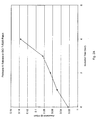
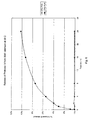
- Fig. 2A illustrates the release/delivery of Protease A
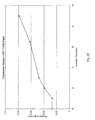
- Fig. 2B illustrates the release/delivery of lipase from the Dow Corning ® 7-5300 silicone rubber solution. The figure indicates a linear release over time of ⁇ 2-4% of added enzyme from the silicone matrix.
- test dressings or, more specifically, patches containing protease were cast into small petri-dishes (approximately 3 cm in diameter) such that the total weight of the patches was constant (about 2 grams) and the concentration of enzyme in the patches was also constant (about 0.6 mg agent per gram of patch).
- the patches were comprised of a loosely or lightly cross-linked silicone elastomer composition (Dow Corning ® 9040) and a silicone-based surfactant (Dow Corning ® 9011), both commercially available from Dow Corning Corporation (Midland, MI).
- Dow Corning ® 7-5300 (a silicone rubber composition) was also tested. Additionally, the formulations contained varying amounts of PVA, PVA at high propylene glycol levels, or PVP that were added by stirring.
- Enzyme release was evaluated using two methods.
- the patches were washed to remove any enzyme that may have been present on the surface of the patch and very close to the patch surface.
- About 1 ml of dissolution buffer (10 mM Tris, 10 mM CaCl 2 , and 0.005% Tween 80 at pH 5.4) was added to the petri dish on top of the test patch.
- the buffer was then swirled for 20 seconds and the buffer was decanted into an Eppendorf tube for analysis.
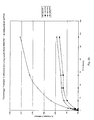
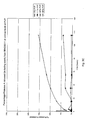
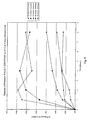
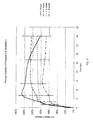
- the wash step was repeated three (3) times and the enzyme activity was measured for each wash. The results were summed to give the total amount of enzyme released during the washing process. This amount of enzyme was included at the zero time point in Figs. 3A-3C .
- the alternative method does not include the washing step.
- About 5 ml of dissolution buffer was pipetted on top of the test patch and the petri dish was covered with a lid to eliminate evaporation.
- the petri dish containing the test patch and the dissolution buffer was then swirled at about 75 rpm on an elliptical mixer and 10 ⁇ l aliquots of dissolution buffer were removed at one hour increments for analysis of enzyme activity.
- the aliquots were pipetted directly into a cuvette containing assay buffer (100 mM Tris and 0.005% Tween 80 at pH 8.6) and the enzyme activity was measured on a UV/Visible spectrometer, which gave the concentration of enzyme in the dissolution buffer in mg/ml.
- Fig. 3A illustrates the release of the enzyme with varying amounts of PVA and with a high PG (propylene glycol) content from the Dow Corning ® 9040/9011 silicone matrix.
- PG propylene glycol
- Fig. 3B illustrates the percentage of Protease A released from the Dow Corning ® 7-5300 formulations at various levels of PVA.
- the rate of release increases as the amount of PVA increases.
- Fig. 3C illustrates the release of the enzyme from a Dow Corning ® 9040/9011 silicone matrix with varying amounts of PVP.
- the addition of hydrophilic PVP to the silicone matrix increases the rate of release of the enzyme.
- test dressings or, more specifically, patches containing protease were cast into small petri-dishes (approximately 3 cm in diameter) such that the total weight of the patches was constant (about 2 grams) and the concentration of enzyme in the patches was also constant (about 0.6 mg agent per gram of patch).
- the patches were comprised of a loosely or lightly cross-linked silicone elastomer composition (Dow Corning ® 9040) and a silicone-based surfactant (Dow Corning ® 9011), both commercially available from Dow Corning Corporation (Midland, MI).
- the patches were comprised of Dow Corning ® PSA 7-4402 a pressure sensitive adhesive or Dow Corning ® 7-FC- 4210 a cellular elastomer both available from Dow Corning Corporation (Midland, MI). Additionally, the formulations contained 0% or 20% PVA.
- Enzyme release was evaluated using two methods.
- the patches were washed to remove any enzyme that may have been present on the surface of the patch and very close to the patch surface.
- About 1 ml of dissolution buffer (10 mM Tris, 10 mM CaCl 2 , and 0.005% Tween 80 at pH 5.4) was added to the petri dish on top of the test patch.
- the buffer was then swirled for 20 seconds and the buffer was decanted into an Eppendorf tube for analysis.
- the wash step was repeated three (3) times and the enzyme activity was measured for each wash. The results are summed to give the total amount of enzyme released during the washing process. This amount of enzyme was included at the zero time point in Fig. 4 .
- the alternative method does not include the washing step.
- About 5 ml of dissolution buffer was pipetted on top of the test patch and the petri dish was covered with a lid to eliminate evaporation.
- the petri dish containing the test patch and the dissolution buffer was then swirled at about 75 rpm on an elliptical mixer and 10 ⁇ l aliquots of dissolution buffer were removed at one hour increments for analysis of enzyme activity.
- the aliquots were pipetted directly into a cuvette containing assay buffer (100 mM Tris and 0.005% Tween 80 at pH 8.6) and the enzyme activity was measured on a UV/Visible spectrometer, which gave the concentration of enzyme in the dissolution buffer in mg/ml.
- Fig. 4 illustrates the results of this enzyme release study. As can be seen from the graph, the PSA 7-4402 matrix has the greatest release rate. The release rate of the enzyme is affected by the cross-link density of the silicone matrix.
- Test formulations containing Protease B, 7-5300 silicone, and other components such as PVA were emulsified.
- the formulations were spread onto a Mylar ® sheet using a Blade Applicator (UV Process Supply, Inc., Chicago).
- the thickness of the applied coating was controlled by adjusting the gap between the blade and the Mylar ® sheet.
- the coating was applied at 13 and 25 ⁇ m respectively. After the coating was allowed to dry or cure completely, 25 mm diameter test discs were cut from the Mylar ® sheet.
- the final dry thickness of the coating was measured using a digital coating thickness gauge (Elcometer, Manchester, UK).
- the final dry weight of the test sample disks was also measured so that the enzyme payload was accurately known.
- the weight and thickness of the Mylar ® alone was measured and subtracted from that of the samples on the Mylar ® to yield the weight and thickness of the sample alone.
- the enzyme release studies were performed using a Franz Diffusion Cell (Amie Systems, Riegelsville, PA). The test samples were mounted on the top of the diffusion cell and the cell was filled with 13.7 milliliters of dissolution buffer (10 mM MES with 10 mM NaCl and 0.005% Tween 80 at pH 5.5) that was preheated to 37 °C. Care was taken to remove any air bubbles that were inside the diffusion cell. The stirring rate of the cell was preset to 50 rpms. Sample aliquots of 0.1 ml were withdrawn from the diffusion cell at regular time intervals and analyzed for enzyme activity to give an active enzyme concentration in units of mg/ml. The percentage of enzyme released was also calculated.
- dissolution buffer 10 mM MES with 10 mM NaCl and 0.005% Tween 80 at pH 5.5
- the release rate was found to be inversely proportional to patch thickness. Therefore, 100% release of the enzyme was achieved from the thinnest patches.
- Test ointment formulations were prepared by preparing an external phase containing a silicone elastomer Dow Corning 9041 and a silicone surfactant Dow Corning 5200 formulation aid both available from Dow Corning Corporation (Midland, MI).
- An internal phase was prepared containing Protease B stock solution. Additionally, the internal phase was prepared to have 0 or 20% of a 40% PVA solution.
- the Protease B stock solution contained active enzyme, sodium formate, calcium chloride, water, and PG.
- the internal and external phases were mixed using a mechanical stirrer.
- the ointment had about 3 milligrams of enzyme per gram of ointment.
- ointment formulations were prepared, their release rate was measured using a Hansen Ointment Cell (Hansen, Chatworth, CA) to determine the stability of the formulation, Approximately 0.5 grams of ointment was loaded into the ointment cell in the ointment dose area. A 0.45 ⁇ m HT Tuffryn® Membrane (Pall Corp., Ann Arbor, MI) was placed on top of the ointment dose and the ointment cell was sealed closed.
- Hansen Ointment Cell Hansen, Chatworth, CA
- the ointment cell was then placed in the ointment cell flask and the flask was filled with 25 milliliters of pH 5.5 buffer solution (10mM MES, 10mM CaCl 2 , 0.005% Tween), submersing the ointment cell in the buffer solution.
- the test was run at 30°C and the buffer was stirred at a constant 50 rpms using a paddle. After 10min, 1 hr, 2 hrs, 4 hrs, 8hrs, 16 hrs and 24 hrs, a 0.5ml aliquot is withdrawn via an autosampler, The enzyme activity is measured on a UV/Visibte spectrometer to give the concentration of enzyme in the dissolution buffer in mg/ml. The dissolution test is done on 6 replicates and the average amount is reported.
- the addition of the PVA solution allows the enzyme to be partially released from the ointment over a period of 24 hours. It is apparent from Fig. 6 that the ointment provides a preparation that may be used to topically treat skin.
- a stability study was performed to measure the stability of the enzyme within a dry patch stored at room temperature. Release of enzyme after storage comparable to the initial release data reported in the Examples above indicates that the enzyme remains stable during storage.
- the dry patches were stored for a period of time ranging from 0 to 6 months and the enzyme release was measured at the appropriate time points.
- Test formulations containing Protease A, 9040/9011 silicone and other components were emulsified. The test formulations comprised 3.1250g dry weight of DC-9040 silicone, 3.2500g dry weight DC-9011 silicone surfactant, 2.5 mg/g Protease A and 4.2000g dry weight PVA. The formulations were spread onto a Mylar ® sheet using a Blade Applicator (UV Process Supply, Inc., Chicago).
- the thickness of the applied coating was controlled by adjusting the gap between the blade and the Mylar ® sheet. After the coating was allowed to dry or cure completely, 25 mm diameter test discs were cut from the Mylar ® sheet. The final dry thickness of the coating was measured using a digital coating thickness gauge (Elcometer, Manchester, UK), and the samples were approximately 100 ⁇ m thick. The final dry weight of the test sample disks was also measured so that the enzyme payload is accurately known. The weight and thickness of the Mylar ® alone was measured and subtracted from that of the samples on the Mylar ® to yield the weight and thickness of the samples alone.
- a control comprising Protease A stock solution (50% Sodium formate buffer containing 400 ppm calcium chloride at pH 5.5) in 50% propylene glycol was prepared. The control was stored at room temperature, and the enzymatic activity retained was tested at various time points. The Protease A enzyme is expected to be stable in the control solution.
- the enzyme release studies were performed using a Hanson (Hanson, Chatsworth, CA) dissolution tester equipped with an auto sampling attachment and a small volume dissolution kit.
- the test samples were fastened to a 3/16" thick glass disc of the same diameter as the sample (25 mm) using rubber cement.
- the samples were then loaded into the dissolution vessels with the test sample side facing upward 25 milliliters of dissolution buffer (10 mM MES with 10 mM NaCl and 0.005% Tween 80 at pH 5.5) was poured on top of each sample and the stirring paddles along with auto sampler tubes were immediately lowered into the buffer.
- the dissolution vessel was capped to minimize evaporation and the stirring was started at 50 rpm's.
- Fig. 7 the enzymatic stability of Protease A from a 9040/9011 dry patch stored for 0, 1, 3, and 6 months are illustrated.
- the data points are from an average of 6 replicates for each time point.
- the loss of activity is greater in the control solution than in the silicone patch. Therefore, the silicone patch provides a more stable means of storing and subsequently releasing the enzyme.
- a stability study was performed to measure the stability of the enzyme within a dry patch having PSA 7-4402 stored at room temperature. Release of enzyme after storage comparable to the initial release data reported in the Examples above indicates that the enzyme remains stable during storage.
- the dry patches were stored for a period of time ranging from 0 to 6 months and the enzyme release was measured at the appropriate time points.
- Test formulations containing Protease B, PSA 7-4402 silicone and other components were emulsified.
- the test formulations comprised 33.7500 dry weight of PSA 7-4402 silicone, 2.3500g dry weight of DC 193 fluid (available from Dow Corning Corp., Midland, MI), 3.8612 mg/g Protease B, and 9.4100g dry weight PVA.
- the formulations were spread onto a Mylar ® sheet using a Blade Applicator (UV Process Supply, Inc., Chicago). The thickness of the applied coating was controlled by adjusting the gap between the blade and the Mylar ® sheet. After the coating was allowed to dry or cure completely, 25 mm diameter test discs were cut from the Mylar ® sheet. The final dry thickness of the coating was measured using a digital coating thickness gauge (Elcometer, Manchester, UK), and the samples were approximately 100 ⁇ m thick. The final dry weight of the test sample disks was also measured so that the enzyme payload is accurately known. The weight and thickness of the Mylar ® alone was measured and subtracted from that of the samples on the Mylar ® to yield the weight and thickness of the samples alone.
- a control comprising Protease B stock solution (50% Sodium formate buffer containing 400 ppm calcium chloride at pH 5.5) in 50% propylene glycol was prepared. The control was stored at room temperature, and the enzymatic activity retained was tested at various time points. The Protease B enzyme is expected to be stable in the control solution.
- the enzyme release studies were performed using a Hanson (Hanson, Chatsworth, CA) dissolution tester equipped with an auto sampling attachment and a small volume dissolution kit.
- the test samples were fastened to a 3/16" thick glass disc of the same diameter as the sample (25 mm) using rubber cement.
- the samples were then loaded into the dissolution vessels with the test sample side facing upward.
- 25 milliters of dissolution buffer (10 mM MES with 10 mM NaCl and 0.005% Tween 80 at pH 5.5) was poured on top of each sample and the stirring paddles along with auto sampler tubes were immediately lowered into the buffer.
- the dissolution vessel was capped to minimize evaporation and the stirring was started at 50 rpm's.
- Fig. 8 the enzymatic stability of Protease B from a PSA 7-4402 dry patch stored for 0, 1, 3, and 6 months are illustrated.
- the data points are from an average of 6 replicates for each time point.
- the silicone patch provides a stable means of storing and subsequently releasing the enzyme.
- the percentage of Protease B released is less than the percentage of activity retained in the Protease B control solution.
- a stability study was performed to measure the stability of the enzyme within a dry patch having PSA 7-4401 stored at room temperature. Release of enzyme after storage comparable to the initial release data reported in the Examples above indicates that the enzyme remains stable during storage.
- the dry patches were stored for a period of time ranging from 0 to 3 months and the enzyme release was measured at the appropriate time points.
- Test formulations containing Protease B, PSA 7-440 silicone and other components were emulsified.
- the test formulations comprised 33.9088 dry weight of PSA 7-4401 silicone, 2.3500g dry weight of DC 193 fluid, 3.8723 mg/g Protease B, and 9.6170g dry weight PVA.
- the formulations were spread onto a Mylar ® sheet using a Blade Applicator (UV Process Supply, Inc., Chicago). The thickness of the applied coating was controlled by adjusting the gap between the blade and the Mylar ® sheet. After the coating was allowed to dry or cure completely, 25 mm diameter test discs were cut from the Mylar ® sheet. The final dry thickness of the coating was measured using a digital coating thickness gauge (Elcometer, Manchester, UK), and the samples were approximately 100 ⁇ m thick. The final dry weight of the test sample disks was also measured so that the enzyme payload is accurately known. The weight and thickness of the Mylar ® alone was measured and subtracted from that of the samples on the Mylar ® to yield the weight and thickness of the samples alone.
- a control comprising Protease B stock solution (50% Sodium formate buffer containing 400 ppm calcium chloride at pH 5.5) in 50% propylene glycol was prepared. The control was stored at room temperature, and the enzymatic activity retained was tested at various time points.
- the enzyme release studies were performed using a Hanson (Hanson, Chatsworth, CA) dissolution tester equipped with an auto sampling attachment and a small volume dissolution kit.
- the test samples were fastened to a 3/16" thick glass disc of the same diameter as the sample (25 mm) using rubber cement.
- the samples were then loaded into the dissolution vessels with the test sample side facing upward.
- 25 milliters of dissolution buffer (10 mM MES with 10 mM NaCl and 0.005% Tween 80 at pH 5.5) was poured on top of each sample and the stirring paddles along with auto sampler tubes were immediately lowered into the buffer.
- the dissolution vessel was capped to minimize evaporation and the stirring was started at 50 rpm's.
- Fig. 9 the enzymatic stability of Protease B released from a PSA 7-4401 dry patch stored for 0, 1, and 3 months are illustrated.
- the data points are from an average of 6 replicates for each time point.
- the silicone patch provides a stable means of storing and subsequently releasing the enzyme.
- the percentage of Protease B released is less than the percentage of activity retained in the Protease B control solution.
- a stability study was performed to measure the stability of the enzyme within a dry patch having 7-FC 4210 stored at room temperature. Release of enzyme after storage comparable to the initial release data reported in the Examples above indicates that the enzyme remains stable during storage.
- the dry patches were stored for a period of time ranging from 0 to 1 months and the enzyme release was measured at the appropriate time points.
- Test formulations containing Protease B, 7-FC 4210 base and curing agent silicone and other components were emulsified.
- test formulations comprised 36.0000g dry weight of 7-FC 4210 base silicone, 7.2000g dry weight of 7-FC 4210 curing agent, 4.08000g dry weight of DC 225 dimethicone fluid (available from Dow Corning Corp., Midland, MI), 4.2006 mg/g Protease B, and 12.2880g dry weight PVA.
- the formulations were spread onto a Mylar ® sheet using a Blade Applicator (UV Process Supply, Inc., Chicago). The thickness of the applied coating was controlled by adjusting the gap between the blade and the Mylar ® sheet. After the coating was allowed to dry or cure completely, 25 mm diameter test discs were cut from the Mylar ® sheet.
- the final dry thickness of the coating was measured using a digital coating thickness gauge (Elcometer, Manchester, UK), and the samples were approximately 100 ⁇ m thick.
- the final dry weight of the test sample disks was also measured so that the enzyme payload is accurately known.
- the weight and thickness of the Mylar ® alone was measured and subtracted from that of the samples on the Mylar ® to yield the weight and thickness of the samples alone.
- a control comprising Protease B stock solution (50% Sodium formate buffer containing 400 ppm calcium chloride at pH 5.5) in 50% propylene glycol was prepared. The control was stored at room temperature, and the enzymatic activity retained was tested at various time points.
- the enzyme release studies were performed using a Hanson (Hanson, Chatsworth, CA) dissolution tester equipped with an auto sampling attachment and a small volume dissolution kit.
- the test samples were fastened to a 3/16" thick glass disc of the same diameter as the sample (25 mm) using rubber cement.
- the samples were then loaded into the dissolution vessels with the test sample side facing upward.
- 25 milliters of dissolution buffer (10 mM MES with 10 mM NaCl and 0.005% Tween 80 at pH 5.5) was poured on top of each sample and the stirring paddles along with auto sampler tubes were immediately lowered into the buffer.
- the dissolution vessel was capped to minimize evaporation and the stirring was started at 50 rpm's.
- enzymatic stability of Protease B released from a 7-FC 4210 dry patch stored for 0 and 1 months are illustrated.
- the data points are from an average of 6 replicates for each time point.
- the silicone patch provides a stable means of storing and subsequently releasing the enzyme.
- the percentage of Protease B released is less than the percentage of activity retained in the Protease B control solution.
- Discarded eschar was used as an in vitro model for testing the efficacy of enzymes suitable for debridement.
- Eschar is sloughed off dead tissue from a wound or gangrene.
- Enzymes provide an alternative to sharp debridement of wounds for patients having limited or no access to facilities for sharp debridement, which utilizes a surgical scalpel or other sharp surgical tool.
- the discarded eschar was obtained from sharp debridement of foot ulcers occurring in human diabetic patients.
- eschar Two large pieces of eschar were obtained on the same day of debridement and divided into two pieces. Each of the two pieces was further subdivided into three sections. A 3X3 fine mesh gauze pad was placed in each of six petrie dishes and the dishes were weighed. A section of eschar was placed on each gauze pad and the petrie dishes were weighed again. The dry weight of the eschar was obtained by subtracting the weight of the petrie dish and gauze from the weight of the petrie dish, gauze and eschar. 20 ml of commercially available phosphate buffered saline (PBS) was added to each petrie dish.
- PBS phosphate buffered saline
- the PBS in the next two of the six petrie dishes contained 250 ⁇ g/20ml PBS of a proteolytic collagenase enzyme from Clostridium histolyticum (Sigma).
- Each of the PBS solutions in the last two petrie dishes contained 250 ⁇ g/20 ml PBS of Protease B subtilisin enzyme from Genencor International, Inc.
- the gauze pads with the eschar were then kept immersed in the PBS solutions for 48 hours. After 48 hours, the samples were inspected and a second 20 ml dose of PBS was added to each petrie dish, including an identical 250 ⁇ g/20 ml PBS enzyme sample to each of the four enzyme sample petrie dishes. After an additional 48 hours of immersion, the eschar from each petrie dish was transferred to a new 3X3 gauze pad in a new petrie dish. The petrie dishes were weighed.
- Table 3 shows the changes in weight of the 6 samples. All samples were heavier at the end of 96 hours presumably because of swelling as the eschar absorbed liquid. The collagenase samples had a lower percent weight gain presumably due to degradation of the eschar. The protease samples also had a lower percent weight gain presumably due to degradation of the eschar.
- the pad was transferred after draining (touching the pad the side of the petri dish to drain off excess liquid) to a 0.22 micrometer filter in a sterile filter flask with a vacuum attached and open. The pad dried and adhered to the filter. 1 ml of the residual reaction mixture in the petri dish was withdrawn and place in an eppendorf tube for A 280 analysis at 48 hours.
- a 280 analysis was performed by diluting the sample in the eppendorf tube with PBS solution until the absorbance of the sample was within the linear range of 0.0-2.0 Absorption units. The analysis was performed at 280nm on an Amersham Bioscience Ultrospec 3100pro UVNIS spectrophotometer. The A 280 analysis provides a measure of whether the enzyme is hydrolyzing the eschar and releasing free amino acids or soluble peptides from the hydrolyzed eschar into the residual reaction mixture.
- a second application of enzyme was provided. An appropriate volume of enzyme was added to the gauze pad to introduce 250 micrograms of enzyme. 10 ml of PBS solution was immediately added proximate to the spot where the enzyme was absorbed into the gauze. The petri dish was covered and transfered to a sterile hood. The petri dish was incubated an additional 48 hours.
- the pad was transferred after draining (touching the pad the side of the petri dish to drain off excess liquid) to a 0.22 micrometer filter in a sterile filter flask with a vacuum attached and open. The pad dried and adhered to the filter. 1 ml of the residual reaction mixture in the petri dish was withdrawn and place in an eppendorf tube for A 280 analysis at 96 hours.
- the petri dish with the gauze pad was left in a hood overnight and subsequently weighed.
- the gauze plus eschar weight was calculated.
- the gauze pad plus eschar was re-weighed after another 24 hours.
- the experiment was performed with a blank having only the PBS and an eschar sample.
- a proteolytic collagenase enzyme from Clostridium histolyticum (Sigma) was used. Additionally, Protease B subtilisin enzyme from Genencor International, Inc. was used.
- Table 4 shows the weights of the eschar samples before and after the samples were subjected to the enzyme and washes. As can be seen from the table, Protease B appeared to degrade the eschar the most efficiently. TABLE 4: Change in Eschar Weight Sample Starting weight End Weight Difference Blank 0.05 g 0.06 g 0.01 g Collagenase 0.07 g 0.08 g 0.01 g Protease B 0.06 g 0.04 g -0.02 g
- Table 5 shows the results of the A 280 analysis at 48 hours and 96 hours of the residual reaction mixture. As can be seen in the table, more free amino acids were present in the Protease B samples. Thus, it appears that Protease B was more effective at degrading the eschar. TABLE 5: A 280 Analysis Enzyme Absorbance 48 hours Difference between Blank Absorbance 96 Hours Difference Between Blank Blank 1.647 0.241 Collagenase 1.51 0 0.360 0.119 Protease B 2.12 0.473 0.615 0.374
- Example 12 An additional experiment was performed as outlined in Example 12. The experiment was performed with a blank having only the PBS and an eschar sample. A proteolytic collagenase enzyme from Clostridium histolyticum (Sigma) was used. Additionally, Protease B subtilisin enzyme from Genencor International, Inc was used.
- Table 6 shows the results of the A 280 analysis at 48 hours and 96 hours of the residual reaction mixture. As can be seen in the table, more free amino acids were present in the Protease B samples. Thus, it appears that Protease B was more effective at degrading the eschar. TABLE 6: A 280 Analysis Enzyme Absorbance 48 hours Difference between Blank Absorbance 96 Hours Difference Between Blank Blank 0.505 0.069 Collagenase 0.510 .005 0.107 0.042 Protease B 1.135 0.630 0.182 0.113
- Example 12 An additional experiment was performed as outlined in Example 12. The experiment was performed with a blank having only the PBS and an eschar sample. Protease B subtilisin enzyme from Genencor International, Inc was used. Additionally, LG12 a B. subtilis as described in US Pat. No. 5,677,163 , was used.
- Table 7 shows the results of the A 280 analysis at 48 hours and 96 hours of the residual reaction mixture. As can be seen in the table, more free amino acids were present in the LG12 solution. Thus, it appears that LG12 was more effective at degrading the eschar. TABLE 7: A 280 Analysis Enzyme Absorbance 48 hours Difference between Blank Absorbance 96 Hours Difference Between Blank Blank 0.868 0.109 Collagenase 0.794 0 0.122 0.013 Protease B 1.007 0.139 0.167 0.058 LG12 1.064 0.196 0.179 0.070
- Wafers containing Protease B and 7-5300 silicone were prepared in accordance with Example 5. Additionally a control wafer comprising 7-5300 silicone was prepared. The wafers were placed on a 1.6% casein agar media plate and incubated at 37°C for 1 hour. The wafers containing the protease B enzyme hydrolyzed the skim milk to give clearing of the agar. The control wafer did not dissolve the skim milk to give clearing.
- a patch containing Protease B and PSA 7-4402 silicone were prepared in accordance with Example 8.
- the patch was stored for 13 months at room temperature.
- the patch was placed on a 1.6% casein agar media plate and incubated at 37°C for 1 hour.
- the patch hydrolyzed the skim milk to give a small amount of clearing of the agar.
- the plate was then incubated overnight at 37°C, and the patch further hydrolyzed the skim milk to give about the same amount of clearing as the 7-5300 Protease B patches in Example 15.
Landscapes
- Health & Medical Sciences (AREA)
- Life Sciences & Earth Sciences (AREA)
- Chemical & Material Sciences (AREA)
- Public Health (AREA)
- General Health & Medical Sciences (AREA)
- Animal Behavior & Ethology (AREA)
- Veterinary Medicine (AREA)
- Engineering & Computer Science (AREA)
- Epidemiology (AREA)
- Medicinal Chemistry (AREA)
- Pharmacology & Pharmacy (AREA)
- Bioinformatics & Cheminformatics (AREA)
- Proteomics, Peptides & Aminoacids (AREA)
- Chemical Kinetics & Catalysis (AREA)
- Dermatology (AREA)
- General Chemical & Material Sciences (AREA)
- Inorganic Chemistry (AREA)
- Gastroenterology & Hepatology (AREA)
- Immunology (AREA)
- Materials Engineering (AREA)
- Nuclear Medicine, Radiotherapy & Molecular Imaging (AREA)
- Organic Chemistry (AREA)
- Diabetes (AREA)
- Hematology (AREA)
- Biophysics (AREA)
- Molecular Biology (AREA)
- Oil, Petroleum & Natural Gas (AREA)
- Medicinal Preparation (AREA)
- Medicines That Contain Protein Lipid Enzymes And Other Medicines (AREA)
- Materials For Medical Uses (AREA)
- Cosmetics (AREA)
Claims (28)
- Préparation topique comprenant:une phase interne ; etune phase externe ;
ladite phase interne étant dispersée au sein de ladite phase externe ;
ladite phase interne comprenant au moins un support hydrophile, au moins un composant hydrophile et au moins un principe actif comprenant une protéine ou une enzyme pouvant être libérée de ladite phase externe pour enlever des tissus nécrosés ; ladite phase externe comprenant une matrice de silicone ; ladite préparation topique étant occlusive vis-à-vis des fluides pour ainsi promouvoir un environnement humide lorsqu'elle est appliquée sur la peau, et l'au moins un principe actif comprenant une enzyme de type LG12 protéase. - Préparation topique selon la revendication 1, ladite phase interne comprenant des gouttelettes dispersées au sein de ladite phase externe et lesdites gouttelettes présentant un diamètre compris entre environ 0,1 µm et environ 2000 µm ou un diamètre compris entre environ 0,1 µm et environ 1000 µm ou un diamètre compris entre environ 0,1 µm et environ 500 µm.
- Préparation topique selon la revendication 1, lesdites gouttelettes présentant un diamètre compris entre environ 0,1 µm et environ 200 µm ou un diamètre compris entre environ 0,1 µm et environ 100 µm ou un diamètre compris entre environ 0,1 µm et environ 50 µm ou un diamètre compris entre environ 0,1 µm et environ 10 µm ou un diamètre compris entre environ 0,1 µm et environ 5 µm.
- Préparation topique selon la revendication 1, ledit au moins un support hydrophile étant choisi parmi le propylène glycol, le polyéthylèneglycol, le poloxamère, le glycérol, l'alcool, le polyol, l'eau et leurs combinaisons.
- Préparation topique selon la revendication 1, ledit au moins un support hydrophile comprenant le polypropylèneglycol.
- Préparation topique selon la revendication 1, ledit au moins un support hydrophile représentant jusqu'à environ 50 % en poids de ladite préparation topique.
- Préparation topique selon la revendication 1, ledit au moins un composant hydrophile étant choisi parmi l'alcool polyvinylique et la polyvinylpyrrolidone et leurs combinaisons.
- Préparation topique selon la revendication 7, ledit au moins un composant hydrophile représentant jusqu'à environ 50 % en poids de ladite phase interne ou jusqu'à environ 35 % en poids de ladite phase interne.
- Préparation topique selon la revendication 1, ledit au moins un composant hydrophile représentant environ 5 à environ 40 % en poids de ladite préparation topique ou environ 10 à environ 35 % en poids de ladite préparation topique ou environ 15 à environ 35 % en poids de ladite préparation topique.
- Préparation topique selon la revendication 1, ledit au moins un composant hydrophile comprenant un épaississant d'eau.
- Préparation topique selon la revendication 1, ladite matrice de silicone étant choisie parmi les polydiméthylsiloxanes à masse moléculaire élevée, les élastomères de silicone à réticulation de faible tenue ou de faible degré, les élastomères dépourvus de charges, les élastomères cellulaires, les caoutchoucs de silicone, les adhésifs de silicone sensibles à la pression et leurs combinaisons.
- Préparation topique selon la revendication 1, ladite phase externe comprenant en outre un agent tensioactif à base de silicone.
- Préparation topique selon la revendication 1, ladite phase interne et ladite phase externe étant choisies de façon à ce que ladite préparation topique comprenne un dispositif de pansement, ledit dispositif de pansement comprenant un pansement adhésif.
- Préparation topique selon la revendication 13, ledit pansement adhésif présentant une épaisseur pouvant atteindre environ 25 µm.
- Préparation topique selon la revendication 13, ladite phase externe comprenant un élastomère de silicone à réticulation de faible tenue ou de faible degré.
- Préparation topique selon la revendication 15, ladite phase interne comprenant du propylène glycol et une protéase.
- Préparation topique selon la revendication 16, ladite phase interne comprenant en outre un composant hydrophile choisi parmi l'alcool polyvinylique et le polyvinyl propylène.
- Préparation topique selon la revendication 1, ladite phase interne et ladite phase externe étant choisies de façon à ce que ladite préparation topique comprenne un dispositif de pansement, ledit dispositif de pansement comprenant un film enduit d'une matière étalée.
- Préparation topique selon la revendication 18, ladite phase externe comprenant un caoutchouc de silicone.
- Préparation topique selon la revendication 1, ladite phase interne et ladite phase externe étant choisies de façon à ce que ladite préparation topique comprenne une pommade.
- Préparation topique selon la revendication 20, ladite phase externe comprenant au moins un élastomère de silicone et au moins un agent tensioactif de silicone.
- Préparation topique selon la revendication 21, ladite phase interne comprenant ledit principe actif, du propylène glycol et de l'alcool polyvinylique.
- Utilisation d'une préparation comprenant une phase interne et une phase externe ; ladite phase interne étant dispersée au sein de ladite phase externe ; ladite phase interne comprenant au moins un support hydrophile, au moins un composant hydrophile et au moins un principe actif comprenant une protéine ou une enzyme pouvant être libérée de ladite phase externe pour enlever des tissus nécrosés ; ladite phase externe comprenant une matrice de silicone ; et ledit au moins un principe actif comprenant une enzyme de type LG12 protéase ; dans la fabrication d'un médicament topique destiné à enlever du tissu nécrosé.
- Utilisation selon la revendication 23, ledit composant hydrophile étant choisi de façon à ce que ledit principe actif est libéré à partir de ladite matrice de silicone avec un débit souhaité.
- Utilisation selon la revendication 23, ladite préparation topique comprenant un pansement adhésif ayant une épaisseur, ladite épaisseur étant choisie de façon à ce que ledit principe actif soit libéré de ladite matrice de silicone avec un débit souhaité.
- Utilisation selon la revendication 23, ladite préparation étant présentant une occlusivité vis-à-vis d'un fluide, ce qui promeut un environnement humide permettant le gonflement de tissus nécrosés recouverts par ladite préparation, ledit tissu nécrosé atteignant alors un état gonflé; et ledit principe actif, qui est libéré de ladite matrice de silicone, enlevant de façon sélective lesdits tissus nécrosés gonflés.
- Utilisation selon la revendication 26, comprenant en outre la mise à disposition d'une deuxième préparation autour de ladite préparation, ladite deuxième préparation comprenant une phase interne et une phase externe, ladite phase interne étant dispersée au sein de ladite phase externe ; ladite phase interne comprenant au moins un support hydrophile et au moins un deuxième principe actif, ledit deuxième principe actif étant choisi de façon à ce qu'il inhibe ledit principe actif choisi pour enlever du tissu nécrosé ; ladite phase externe comprenant une matrice de silicone ; et ladite matrice de silicone comprenant un adhésif de silicone.
- Utilisation d'une enzyme de type LG12 protéase dans la fabrication d'un médicament destiné à l'enlèvement de tissu nécrosé.
Applications Claiming Priority (2)
| Application Number | Priority Date | Filing Date | Title |
|---|---|---|---|
| US10/660,101 US7223386B2 (en) | 2002-03-11 | 2003-09-10 | Preparations for topical skin use and treatment |
| PCT/US2004/026218 WO2005025548A1 (fr) | 2003-09-10 | 2004-08-13 | Preparations topiques comprenant un excipient hydrophile et une matrice de silicone |
Publications (2)
| Publication Number | Publication Date |
|---|---|
| EP1663177A1 EP1663177A1 (fr) | 2006-06-07 |
| EP1663177B1 true EP1663177B1 (fr) | 2010-03-17 |
Family
ID=34312711
Family Applications (1)
| Application Number | Title | Priority Date | Filing Date |
|---|---|---|---|
| EP04780975A Expired - Lifetime EP1663177B1 (fr) | 2003-09-10 | 2004-08-13 | Preparations topiques comprenant un excipient hydrophile et une matrice de silicone |
Country Status (9)
| Country | Link |
|---|---|
| US (3) | US7223386B2 (fr) |
| EP (1) | EP1663177B1 (fr) |
| JP (1) | JP4993184B2 (fr) |
| KR (1) | KR101121461B1 (fr) |
| CN (1) | CN1849114B (fr) |
| AT (1) | ATE460929T1 (fr) |
| CA (1) | CA2537250C (fr) |
| DE (1) | DE602004026080D1 (fr) |
| WO (1) | WO2005025548A1 (fr) |
Families Citing this family (20)
| Publication number | Priority date | Publication date | Assignee | Title |
|---|---|---|---|---|
| CN1893931B (zh) * | 2003-10-27 | 2011-07-20 | 陶氏康宁公司 | 局部用制剂及将活性剂传递给基底的方法 |
| US20070218115A1 (en) * | 2003-10-27 | 2007-09-20 | Bott Richard R | Preparation for Topical Application and Methods of Delivering an Active Agent to a Substrate |
| KR100558751B1 (ko) * | 2004-10-18 | 2006-03-14 | 주식회사 태평양 | 피부보습용 화장료 조성물 |
| WO2006138035A1 (fr) * | 2005-06-13 | 2006-12-28 | Dow Corning Corporation | Vehicule pour l'administration d'agents pharmaceutiques solubles lipidiques topiques |
| US8034323B2 (en) * | 2005-12-21 | 2011-10-11 | Avon Products, Inc. | Cosmetic compositions having in-situ silicone condensation cross-linking |
| WO2008136699A1 (fr) * | 2007-05-04 | 2008-11-13 | Igor Alexandrovich Bazikov | Patch transdermique à microcapsules et procédé de fabrication correspondant |
| FR2924349B1 (fr) | 2007-12-03 | 2010-01-01 | Dbv Tech | Methode de desensibilitation aux allergenes |
| WO2009097508A2 (fr) * | 2008-01-30 | 2009-08-06 | Mcanulty, Jonathan | Procédés et compositions pour la cicatrisation |
| US9174839B2 (en) | 2008-01-30 | 2015-11-03 | Imbed Biosciences, Inc. | Methods and compositions for wound healing |
| CA2782622C (fr) * | 2009-12-08 | 2018-05-22 | Healthpoint, Ltd. | Compositions enzymatiques de debridage des plaies, presentant une activite enzymatique augmentee |
| CZ308891B6 (cs) | 2014-10-01 | 2021-08-11 | Wald Pharmaceuticals s.r.o | Aplikační směs pro zvýšení účinnosti antiseptik a/nebo dezinficiens, aplikační prostředek obsahující aplikační směs, a použití této směsi |
| US10238719B2 (en) | 2014-10-10 | 2019-03-26 | Rochal Industries, Llc | Compositions and kits for enzymatic debridement and methods of using the same |
| US9592280B2 (en) * | 2014-10-10 | 2017-03-14 | Rochal Industries Llc | Compositions and kits for enzymatic debridement and methods of using the same |
| US20160101166A1 (en) * | 2014-10-10 | 2016-04-14 | Rochal Industries, Llp | Compositions and kits for treating pruritus and methods of using the same |
| KR102637746B1 (ko) | 2016-07-29 | 2024-02-16 | 임베드 바이오사이언시스 아이엔씨. | 상처 치유를 위한 방법 및 조성물 |
| CN106386862A (zh) * | 2016-08-31 | 2017-02-15 | 江西天人生态股份有限公司 | 一种展膜油悬浮剂及其在防治水稻土传病害方面的应用 |
| TWI615159B (zh) * | 2017-07-07 | 2018-02-21 | 泰陞國際科技股份有限公司 | 液體皮膚保護組合物 |
| US12383509B2 (en) | 2017-09-04 | 2025-08-12 | Lts Lohmann Therapie-Systeme Ag | Transdermal delivery system including an emulsifier |
| US11878050B2 (en) * | 2018-07-16 | 2024-01-23 | Texas Tech University System | Glycoside hydrolases to treat biofilm-associated infections |
| JP2023553332A (ja) * | 2020-11-25 | 2023-12-21 | トピックス ファーマシューティカルズ,インコーポレイテッド | 瘢痕治療用組成物 |
Citations (1)
| Publication number | Priority date | Publication date | Assignee | Title |
|---|---|---|---|---|
| US5677163A (en) * | 1992-09-24 | 1997-10-14 | Genencor International, Inc. | Cleaning compositions comprising the subtilisin enzyme encoded by the gene sprC |
Family Cites Families (46)
| Publication number | Priority date | Publication date | Assignee | Title |
|---|---|---|---|---|
| US2736721A (en) * | 1952-10-08 | 1956-02-28 | Optionally | |
| US2814601A (en) * | 1954-04-29 | 1957-11-26 | Dow Corning | Organopolysiloxane adhesive and pressure-sensitive adhesive tape containing same |
| DE1017883B (de) * | 1954-07-08 | 1957-10-17 | Fellows Gear Shaper Co | Schalt- und Vorschubeinrichtung fuer Zahnradherstellungsmaschinen |
| US3528940A (en) * | 1966-12-15 | 1970-09-15 | Gen Electric | Silicone pressure-sensitive adhesive of improved strength |
| GB1372034A (en) | 1970-12-31 | 1974-10-30 | Unilever Ltd | Detergent compositions |
| US4053580A (en) | 1975-01-01 | 1977-10-11 | G. D. Searle & Co. | Microsealed pharmaceutical delivery device |
| DE3379589D1 (en) * | 1982-10-25 | 1989-05-18 | Hellgren Lars G I | Enzyme composition for cleaning, the use thereof and preparation of the composition |
| US4760025A (en) * | 1984-05-29 | 1988-07-26 | Genencor, Inc. | Modified enzymes and methods for making same |
| US5972682A (en) * | 1984-05-29 | 1999-10-26 | Genencor International, Inc. | Enzymatically active modified subtilisins |
| US5763257A (en) * | 1984-05-29 | 1998-06-09 | Genencor International, Inc. | Modified subtilisins having amino acid alterations |
| EP0218272B1 (fr) * | 1985-08-09 | 1992-03-18 | Gist-Brocades N.V. | Enzymes lipolytiques et leur usage dans des compositions détergentes |
| US5389536A (en) * | 1986-11-19 | 1995-02-14 | Genencor, Inc. | Lipase from Pseudomonas mendocina having cutinase activity |
| GB8704755D0 (en) | 1987-02-28 | 1987-04-01 | Dow Corning Ltd | Pharmaceutical delivery device |
| FR2618337B1 (fr) * | 1987-07-22 | 1989-12-15 | Dow Corning Sa | Pansement chirurgical et procede pour le fabriquer |
| FR2653438B1 (fr) * | 1989-10-23 | 1993-06-11 | Dow Corning Sa | Composition de silicone expansible et son utilisation. |
| US5145937A (en) * | 1989-11-09 | 1992-09-08 | The United States Of America As Represented By The Administrator Of The National Aeronautics And Space Administration | Polyimides with carbonyl and ether connecting groups between the aromatic rings |
| CA2046802C (fr) * | 1990-08-15 | 2007-05-22 | Donald Zane Fortney | Compositions contenant de la protease produite par un vibrion et mode d'utilisation dans l'excision des debris et la guerison de plaies |
| FR2673948B1 (fr) | 1991-03-13 | 1995-03-10 | Dow Corning Sa | Compositions de silicone expansibles utiles a la realisation de pansements medicaux. |
| FR2681246B1 (fr) * | 1991-04-05 | 1995-02-10 | Oreal | Composition cosmetique sous forme d'emulsion triple. |
| US5232702A (en) * | 1991-07-22 | 1993-08-03 | Dow Corning Corporation | Silicone pressure sensitive adhesive compositons for transdermal drug delivery devices and related medical devices |
| FR2686510A1 (fr) | 1992-01-27 | 1993-07-30 | Oreal | Emulsion eau-dans-huile stable au cours du temps a haute teneur en silicone. |
| GB9316323D0 (en) | 1993-08-06 | 1993-09-22 | Procter & Gamble | Cosmetic compositions |
| FR2715563B1 (fr) * | 1994-01-31 | 1996-03-15 | Oreal | Emulsion stabilisée, destinée à hydrater la peau et son utilisation. |
| FR2725366B1 (fr) * | 1994-10-10 | 1996-11-22 | Oreal | Composition cosmetique comprenant des huiles siliconees |
| PL181582B1 (pl) * | 1995-06-07 | 2001-08-31 | Ortho Mcneil Pharm Inc | Plaster na skóre do zapobiegania owulacji u kobiety oraz plaster na skóre do przeprowadzania hormonalnej terapii substytucyjnej PL PL PL PL PL PL PL PL |
| GB9519094D0 (en) * | 1995-09-19 | 1995-11-22 | Warwick Int Group | Granulated active with controlled release |
| US5976682A (en) * | 1996-03-12 | 1999-11-02 | Tenneco Packaging | Stretch wrap films |
| US6060546A (en) * | 1996-09-05 | 2000-05-09 | General Electric Company | Non-aqueous silicone emulsions |
| AR016969A1 (es) * | 1997-10-23 | 2001-08-01 | Procter & Gamble | VARIANTE DE PROTEASA, ADN, VECTOR DE EXPRESIoN, MICROORGANISMO HUESPED, COMPOSICIoN DE LIMPIEZA, ALIMENTO PARA ANIMALES Y COMPOSICIoN PARA TRATAR UN TEXTIL |
| KR20000076053A (ko) * | 1998-01-08 | 2000-12-26 | 윌리암 로엘프 드 보에르 | 박리성 필름을 사용한 효소의 국소적 적용 |
| EP0955347B1 (fr) | 1998-05-06 | 2011-08-31 | Dow Corning France S.A. | Procédé de collage de substrats utilisant des dispositifs adhésifs contenant un gel de silicone |
| EP0966972B1 (fr) | 1998-06-18 | 2003-09-24 | Dow Corning France S.A. | Composition topique contenant de la gomme de silicone |
| FR2780645B1 (fr) | 1998-07-06 | 2000-08-11 | Oreal | Produit pour application topique contenant une lipase, un precurseur de vitamine et un alcool gras |
| FR2783713B1 (fr) * | 1998-09-29 | 2002-05-31 | Oreal | Utilisation d'une gomme de silicone pour stabiliser l'acide ascorbique et nouvelles compositions contenant ces composants |
| US6207717B1 (en) * | 1999-01-12 | 2001-03-27 | Dow Corning Corporation | Entrapment of vitamins with an elastomeric silicone polyether |
| US6337086B1 (en) * | 1999-02-06 | 2002-01-08 | Dow Corning Corporation | Pressure sensitive adhesive compositions for transdermal drug delivery devices |
| US6200581B1 (en) * | 1999-04-28 | 2001-03-13 | Dow Corning Corporation | Elastomeric silicone terpolymer |
| US6168782B1 (en) * | 1999-05-24 | 2001-01-02 | Dow Corning Corporation | Elastomeric silicone containing an active ingredient |
| US6238657B1 (en) * | 1999-07-12 | 2001-05-29 | Dow Corning Corporation | Oil-in-oil and three-phase emulsions |
| ES2211606T3 (es) | 1999-09-16 | 2004-07-16 | Durminster Limited | Metodo y composicion para el control de antropodos. |
| GB0007140D0 (en) | 1999-09-27 | 2000-05-17 | Dow Corning Sa | Scar treatment composition |
| US6080394A (en) * | 1999-11-08 | 2000-06-27 | Dow Corning Corporation | Polar solvent-in-oil emulsions and multiple emulsions |
| JP2001278738A (ja) * | 2000-03-30 | 2001-10-10 | Kose Corp | 油中水型乳化化粧料 |
| DE10107628A1 (de) | 2001-02-15 | 2002-08-22 | Beiersdorf Ag | Kosmetische und dermatologische Zubereitungen in Form von W/O-Emulsionen mit einem Gehalt an Siliconölen und Talkum |
| US20030180281A1 (en) * | 2002-03-11 | 2003-09-25 | Bott Richard R. | Preparations for topical skin use and treatment |
| US7235249B2 (en) | 2002-03-28 | 2007-06-26 | The Procter & Gamble Company | Methods for regulating the condition of mammalian keratinous tissue via topical application of vitamin B6 compositions |
-
2003
- 2003-09-10 US US10/660,101 patent/US7223386B2/en not_active Expired - Lifetime
-
2004
- 2004-08-13 EP EP04780975A patent/EP1663177B1/fr not_active Expired - Lifetime
- 2004-08-13 WO PCT/US2004/026218 patent/WO2005025548A1/fr not_active Ceased
- 2004-08-13 CN CN2004800260840A patent/CN1849114B/zh not_active Expired - Fee Related
- 2004-08-13 JP JP2006526089A patent/JP4993184B2/ja not_active Expired - Fee Related
- 2004-08-13 CA CA2537250A patent/CA2537250C/fr not_active Expired - Fee Related
- 2004-08-13 KR KR1020067004845A patent/KR101121461B1/ko not_active Expired - Fee Related
- 2004-08-13 AT AT04780975T patent/ATE460929T1/de not_active IP Right Cessation
- 2004-08-13 DE DE602004026080T patent/DE602004026080D1/de not_active Expired - Lifetime
-
2007
- 2007-02-20 US US11/676,660 patent/US20070148199A1/en not_active Abandoned
- 2007-02-20 US US11/676,668 patent/US20070190152A1/en not_active Abandoned
Patent Citations (1)
| Publication number | Priority date | Publication date | Assignee | Title |
|---|---|---|---|---|
| US5677163A (en) * | 1992-09-24 | 1997-10-14 | Genencor International, Inc. | Cleaning compositions comprising the subtilisin enzyme encoded by the gene sprC |
Non-Patent Citations (1)
| Title |
|---|
| SCHMIDT B.F. ET AL: "ALKALPOPHILIC BACILLUS SP. STRAIN LG12 HAS A SERIES OF SERINE PROTEASE GENES", APPLIED AND ENVIRONMENTAL MICROBIOLOGY, vol. 61, no. 12, 1 December 1995 (1995-12-01), pages 4490 - 4493, XP000942440 * |
Also Published As
| Publication number | Publication date |
|---|---|
| CN1849114A (zh) | 2006-10-18 |
| JP2007505107A (ja) | 2007-03-08 |
| KR101121461B1 (ko) | 2012-03-16 |
| US7223386B2 (en) | 2007-05-29 |
| JP4993184B2 (ja) | 2012-08-08 |
| US20070148199A1 (en) | 2007-06-28 |
| CA2537250C (fr) | 2013-01-22 |
| EP1663177A1 (fr) | 2006-06-07 |
| US20070190152A1 (en) | 2007-08-16 |
| CA2537250A1 (fr) | 2005-03-24 |
| DE602004026080D1 (de) | 2010-04-29 |
| KR20060119946A (ko) | 2006-11-24 |
| US20040105874A1 (en) | 2004-06-03 |
| ATE460929T1 (de) | 2010-04-15 |
| WO2005025548A1 (fr) | 2005-03-24 |
| CN1849114B (zh) | 2011-02-02 |
Similar Documents
| Publication | Publication Date | Title |
|---|---|---|
| CA2478871C (fr) | Preparations topiques pour le soin et le traitement de la peau | |
| US20070190152A1 (en) | Method for providing an active agent topically to the skin | |
| JP2005528425A5 (fr) | ||
| JP4745976B2 (ja) | 局所適用のための調製物及び活性剤の基体への送達方法 | |
| US20060083776A1 (en) | Preparations for topical application and methods of delivering an active agent to a substrate | |
| US20240382433A1 (en) | Dissolvable gel-forming film for delivery of active agents | |
| EP0928206B1 (fr) | Gel hydrocolloidal cicatrisant | |
| US20080014169A1 (en) | Compositions for Topical Enzymatic Debridement | |
| CN1182364A (zh) | 用于向伤口释放胶原酶的给药剂型及其制备方法 | |
| US20070218115A1 (en) | Preparation for Topical Application and Methods of Delivering an Active Agent to a Substrate | |
| EP0498532A1 (fr) | Poudre pour le débridement des tissus nécropés contenant une enzyme protéolytique | |
| WO1991019480A1 (fr) | Preparation pharmaceutique | |
| WO2025114817A1 (fr) | Méthodes et compositions pour débridement de plaies par voie enzymatique |
Legal Events
| Date | Code | Title | Description |
|---|---|---|---|
| PUAI | Public reference made under article 153(3) epc to a published international application that has entered the european phase |
Free format text: ORIGINAL CODE: 0009012 |
|
| 17P | Request for examination filed |
Effective date: 20060331 |
|
| AK | Designated contracting states |
Kind code of ref document: A1 Designated state(s): AT BE BG CH CY CZ DE DK EE ES FI FR GB GR HU IE IT LI LU MC NL PL PT RO SE SI SK TR |
|
| DAX | Request for extension of the european patent (deleted) | ||
| RIN1 | Information on inventor provided before grant (corrected) |
Inventor name: GEBERT, MARK, S. Inventor name: THOMAS, XAVIER, JEAN-PAUL Inventor name: BOTT, RICHARD, R. Inventor name: KLYKKEN, PAAL, CHRISTIAN Inventor name: MAZEAUD, ISABELLE |
|
| 17Q | First examination report despatched |
Effective date: 20070306 |
|
| GRAP | Despatch of communication of intention to grant a patent |
Free format text: ORIGINAL CODE: EPIDOSNIGR1 |
|
| GRAS | Grant fee paid |
Free format text: ORIGINAL CODE: EPIDOSNIGR3 |
|
| GRAA | (expected) grant |
Free format text: ORIGINAL CODE: 0009210 |
|
| AK | Designated contracting states |
Kind code of ref document: B1 Designated state(s): AT BE BG CH CY CZ DE DK EE ES FI FR GB GR HU IE IT LI LU MC NL PL PT RO SE SI SK TR |
|
| REG | Reference to a national code |
Ref country code: GB Ref legal event code: FG4D |
|
| REG | Reference to a national code |
Ref country code: CH Ref legal event code: EP |
|
| REG | Reference to a national code |
Ref country code: SE Ref legal event code: TRGR |
|
| REG | Reference to a national code |
Ref country code: IE Ref legal event code: FG4D |
|
| REF | Corresponds to: |
Ref document number: 602004026080 Country of ref document: DE Date of ref document: 20100429 Kind code of ref document: P |
|
| RAP2 | Party data changed (patent owner data changed or rights of a patent transferred) |
Owner name: DANISCO US INC. Owner name: DOW CORNING CORPORATION |
|
| REG | Reference to a national code |
Ref country code: NL Ref legal event code: VDEP Effective date: 20100317 |
|
| PG25 | Lapsed in a contracting state [announced via postgrant information from national office to epo] |
Ref country code: SI Free format text: LAPSE BECAUSE OF FAILURE TO SUBMIT A TRANSLATION OF THE DESCRIPTION OR TO PAY THE FEE WITHIN THE PRESCRIBED TIME-LIMIT Effective date: 20100317 Ref country code: FI Free format text: LAPSE BECAUSE OF FAILURE TO SUBMIT A TRANSLATION OF THE DESCRIPTION OR TO PAY THE FEE WITHIN THE PRESCRIBED TIME-LIMIT Effective date: 20100317 Ref country code: AT Free format text: LAPSE BECAUSE OF FAILURE TO SUBMIT A TRANSLATION OF THE DESCRIPTION OR TO PAY THE FEE WITHIN THE PRESCRIBED TIME-LIMIT Effective date: 20100317 Ref country code: PL Free format text: LAPSE BECAUSE OF FAILURE TO SUBMIT A TRANSLATION OF THE DESCRIPTION OR TO PAY THE FEE WITHIN THE PRESCRIBED TIME-LIMIT Effective date: 20100317 |
|
| PG25 | Lapsed in a contracting state [announced via postgrant information from national office to epo] |
Ref country code: GR Free format text: LAPSE BECAUSE OF FAILURE TO SUBMIT A TRANSLATION OF THE DESCRIPTION OR TO PAY THE FEE WITHIN THE PRESCRIBED TIME-LIMIT Effective date: 20100618 Ref country code: ES Free format text: LAPSE BECAUSE OF FAILURE TO SUBMIT A TRANSLATION OF THE DESCRIPTION OR TO PAY THE FEE WITHIN THE PRESCRIBED TIME-LIMIT Effective date: 20100628 Ref country code: EE Free format text: LAPSE BECAUSE OF FAILURE TO SUBMIT A TRANSLATION OF THE DESCRIPTION OR TO PAY THE FEE WITHIN THE PRESCRIBED TIME-LIMIT Effective date: 20100317 Ref country code: CY Free format text: LAPSE BECAUSE OF FAILURE TO SUBMIT A TRANSLATION OF THE DESCRIPTION OR TO PAY THE FEE WITHIN THE PRESCRIBED TIME-LIMIT Effective date: 20100317 Ref country code: NL Free format text: LAPSE BECAUSE OF FAILURE TO SUBMIT A TRANSLATION OF THE DESCRIPTION OR TO PAY THE FEE WITHIN THE PRESCRIBED TIME-LIMIT Effective date: 20100317 Ref country code: RO Free format text: LAPSE BECAUSE OF FAILURE TO SUBMIT A TRANSLATION OF THE DESCRIPTION OR TO PAY THE FEE WITHIN THE PRESCRIBED TIME-LIMIT Effective date: 20100317 Ref country code: BE Free format text: LAPSE BECAUSE OF FAILURE TO SUBMIT A TRANSLATION OF THE DESCRIPTION OR TO PAY THE FEE WITHIN THE PRESCRIBED TIME-LIMIT Effective date: 20100317 |
|
| PG25 | Lapsed in a contracting state [announced via postgrant information from national office to epo] |
Ref country code: BG Free format text: LAPSE BECAUSE OF FAILURE TO SUBMIT A TRANSLATION OF THE DESCRIPTION OR TO PAY THE FEE WITHIN THE PRESCRIBED TIME-LIMIT Effective date: 20100617 Ref country code: SK Free format text: LAPSE BECAUSE OF FAILURE TO SUBMIT A TRANSLATION OF THE DESCRIPTION OR TO PAY THE FEE WITHIN THE PRESCRIBED TIME-LIMIT Effective date: 20100317 Ref country code: CZ Free format text: LAPSE BECAUSE OF FAILURE TO SUBMIT A TRANSLATION OF THE DESCRIPTION OR TO PAY THE FEE WITHIN THE PRESCRIBED TIME-LIMIT Effective date: 20100317 |
|
| PLBE | No opposition filed within time limit |
Free format text: ORIGINAL CODE: 0009261 |
|
| STAA | Information on the status of an ep patent application or granted ep patent |
Free format text: STATUS: NO OPPOSITION FILED WITHIN TIME LIMIT |
|
| PG25 | Lapsed in a contracting state [announced via postgrant information from national office to epo] |
Ref country code: DK Free format text: LAPSE BECAUSE OF FAILURE TO SUBMIT A TRANSLATION OF THE DESCRIPTION OR TO PAY THE FEE WITHIN THE PRESCRIBED TIME-LIMIT Effective date: 20100317 Ref country code: PT Free format text: LAPSE BECAUSE OF FAILURE TO SUBMIT A TRANSLATION OF THE DESCRIPTION OR TO PAY THE FEE WITHIN THE PRESCRIBED TIME-LIMIT Effective date: 20100719 |
|
| 26N | No opposition filed |
Effective date: 20101220 |
|
| PG25 | Lapsed in a contracting state [announced via postgrant information from national office to epo] |
Ref country code: MC Free format text: LAPSE BECAUSE OF NON-PAYMENT OF DUE FEES Effective date: 20100831 Ref country code: IT Free format text: LAPSE BECAUSE OF FAILURE TO SUBMIT A TRANSLATION OF THE DESCRIPTION OR TO PAY THE FEE WITHIN THE PRESCRIBED TIME-LIMIT Effective date: 20100317 |
|
| REG | Reference to a national code |
Ref country code: CH Ref legal event code: PL |
|
| PG25 | Lapsed in a contracting state [announced via postgrant information from national office to epo] |
Ref country code: LI Free format text: LAPSE BECAUSE OF NON-PAYMENT OF DUE FEES Effective date: 20100831 Ref country code: CH Free format text: LAPSE BECAUSE OF NON-PAYMENT OF DUE FEES Effective date: 20100831 |
|
| PG25 | Lapsed in a contracting state [announced via postgrant information from national office to epo] |
Ref country code: IE Free format text: LAPSE BECAUSE OF NON-PAYMENT OF DUE FEES Effective date: 20100813 |
|
| PG25 | Lapsed in a contracting state [announced via postgrant information from national office to epo] |
Ref country code: HU Free format text: LAPSE BECAUSE OF FAILURE TO SUBMIT A TRANSLATION OF THE DESCRIPTION OR TO PAY THE FEE WITHIN THE PRESCRIBED TIME-LIMIT Effective date: 20100918 Ref country code: LU Free format text: LAPSE BECAUSE OF NON-PAYMENT OF DUE FEES Effective date: 20100813 |
|
| PG25 | Lapsed in a contracting state [announced via postgrant information from national office to epo] |
Ref country code: TR Free format text: LAPSE BECAUSE OF FAILURE TO SUBMIT A TRANSLATION OF THE DESCRIPTION OR TO PAY THE FEE WITHIN THE PRESCRIBED TIME-LIMIT Effective date: 20100317 |
|
| REG | Reference to a national code |
Ref country code: FR Ref legal event code: PLFP Year of fee payment: 13 |
|
| REG | Reference to a national code |
Ref country code: FR Ref legal event code: PLFP Year of fee payment: 14 |
|
| REG | Reference to a national code |
Ref country code: FR Ref legal event code: PLFP Year of fee payment: 15 |
|
| PGFP | Annual fee paid to national office [announced via postgrant information from national office to epo] |
Ref country code: FR Payment date: 20210714 Year of fee payment: 18 |
|
| PGFP | Annual fee paid to national office [announced via postgrant information from national office to epo] |
Ref country code: GB Payment date: 20210707 Year of fee payment: 18 Ref country code: SE Payment date: 20210810 Year of fee payment: 18 Ref country code: DE Payment date: 20210706 Year of fee payment: 18 |
|
| REG | Reference to a national code |
Ref country code: DE Ref legal event code: R119 Ref document number: 602004026080 Country of ref document: DE |
|
| REG | Reference to a national code |
Ref country code: SE Ref legal event code: EUG |
|
| GBPC | Gb: european patent ceased through non-payment of renewal fee |
Effective date: 20220813 |
|
| PG25 | Lapsed in a contracting state [announced via postgrant information from national office to epo] |
Ref country code: SE Free format text: LAPSE BECAUSE OF NON-PAYMENT OF DUE FEES Effective date: 20220814 |
|
| PG25 | Lapsed in a contracting state [announced via postgrant information from national office to epo] |
Ref country code: FR Free format text: LAPSE BECAUSE OF NON-PAYMENT OF DUE FEES Effective date: 20220831 Ref country code: DE Free format text: LAPSE BECAUSE OF NON-PAYMENT OF DUE FEES Effective date: 20230301 |
|
| PG25 | Lapsed in a contracting state [announced via postgrant information from national office to epo] |
Ref country code: GB Free format text: LAPSE BECAUSE OF NON-PAYMENT OF DUE FEES Effective date: 20220813 |