EP1662004B1 - Method of preparing a proliferation-regulated recombinant adenoviral vector, kit and vector - Google Patents
Method of preparing a proliferation-regulated recombinant adenoviral vector, kit and vector Download PDFInfo
- Publication number
- EP1662004B1 EP1662004B1 EP04748157.7A EP04748157A EP1662004B1 EP 1662004 B1 EP1662004 B1 EP 1662004B1 EP 04748157 A EP04748157 A EP 04748157A EP 1662004 B1 EP1662004 B1 EP 1662004B1
- Authority
- EP
- European Patent Office
- Prior art keywords
- proliferation
- region
- therapeutic gene
- promoter
- sequence
- Prior art date
- Legal status (The legal status is an assumption and is not a legal conclusion. Google has not performed a legal analysis and makes no representation as to the accuracy of the status listed.)
- Expired - Lifetime
Links
- 230000035755 proliferation Effects 0.000 title claims abstract description 111
- 230000001105 regulatory effect Effects 0.000 title claims abstract description 101
- 239000013598 vector Substances 0.000 title claims abstract description 78
- 238000000034 method Methods 0.000 title claims abstract description 40
- 108090000623 proteins and genes Proteins 0.000 claims abstract description 166
- 210000000056 organ Anatomy 0.000 claims abstract description 35
- 108700026244 Open Reading Frames Proteins 0.000 claims abstract description 16
- 108010076504 Protein Sorting Signals Proteins 0.000 claims abstract description 12
- 108091034057 RNA (poly(A)) Proteins 0.000 claims abstract description 9
- 239000013600 plasmid vector Substances 0.000 claims description 116
- 230000001225 therapeutic effect Effects 0.000 claims description 108
- 206010028980 Neoplasm Diseases 0.000 claims description 56
- 238000009739 binding Methods 0.000 claims description 22
- 108050002653 Retinoblastoma protein Proteins 0.000 claims description 18
- 101150075174 E1B gene Proteins 0.000 claims description 16
- 108010091086 Recombinases Proteins 0.000 claims description 14
- 102000018120 Recombinases Human genes 0.000 claims description 14
- 102000004169 proteins and genes Human genes 0.000 claims description 13
- 241000588724 Escherichia coli Species 0.000 claims description 6
- 206010059866 Drug resistance Diseases 0.000 claims description 5
- 230000033228 biological regulation Effects 0.000 claims description 5
- 101150038013 PIR gene Proteins 0.000 claims description 2
- 108010052160 Site-specific recombinase Proteins 0.000 claims 2
- 101710199711 Early E1A protein Proteins 0.000 claims 1
- 239000013612 plasmid Substances 0.000 abstract description 65
- 238000011144 upstream manufacturing Methods 0.000 abstract description 12
- 230000002950 deficient Effects 0.000 abstract description 9
- 210000004027 cell Anatomy 0.000 description 122
- 241000701161 unidentified adenovirus Species 0.000 description 56
- 201000011510 cancer Diseases 0.000 description 55
- 230000000120 cytopathologic effect Effects 0.000 description 45
- 108020004414 DNA Proteins 0.000 description 35
- 108010048367 enhanced green fluorescent protein Proteins 0.000 description 35
- 239000000243 solution Substances 0.000 description 31
- 230000006798 recombination Effects 0.000 description 25
- 238000005215 recombination Methods 0.000 description 25
- 238000006243 chemical reaction Methods 0.000 description 22
- 239000000047 product Substances 0.000 description 22
- 108091008146 restriction endonucleases Proteins 0.000 description 22
- 241000701022 Cytomegalovirus Species 0.000 description 20
- 238000002360 preparation method Methods 0.000 description 20
- 101150036876 cre gene Proteins 0.000 description 18
- 230000005779 cell damage Effects 0.000 description 16
- 208000037887 cell injury Diseases 0.000 description 16
- 108010022366 Carcinoembryonic Antigen Proteins 0.000 description 15
- 102100025475 Carcinoembryonic antigen-related cell adhesion molecule 5 Human genes 0.000 description 15
- 102000012410 DNA Ligases Human genes 0.000 description 14
- 108010061982 DNA Ligases Proteins 0.000 description 14
- 108010014303 DNA-directed DNA polymerase Proteins 0.000 description 14
- 102000016928 DNA-directed DNA polymerase Human genes 0.000 description 14
- 208000015181 infectious disease Diseases 0.000 description 14
- 230000000692 anti-sense effect Effects 0.000 description 12
- 230000003612 virological effect Effects 0.000 description 12
- AIYUHDOJVYHVIT-UHFFFAOYSA-M caesium chloride Chemical compound [Cl-].[Cs+] AIYUHDOJVYHVIT-UHFFFAOYSA-M 0.000 description 11
- 238000010367 cloning Methods 0.000 description 11
- 238000003780 insertion Methods 0.000 description 10
- 230000037431 insertion Effects 0.000 description 10
- 239000013603 viral vector Substances 0.000 description 10
- PEDCQBHIVMGVHV-UHFFFAOYSA-N Glycerine Chemical compound OCC(O)CO PEDCQBHIVMGVHV-UHFFFAOYSA-N 0.000 description 9
- 239000001963 growth medium Substances 0.000 description 9
- 239000000203 mixture Substances 0.000 description 8
- 239000000126 substance Substances 0.000 description 8
- 108010051219 Cre recombinase Proteins 0.000 description 7
- 238000011160 research Methods 0.000 description 7
- 238000001890 transfection Methods 0.000 description 7
- 230000029087 digestion Effects 0.000 description 6
- 238000001415 gene therapy Methods 0.000 description 6
- 239000002245 particle Substances 0.000 description 6
- 238000000746 purification Methods 0.000 description 6
- 239000006228 supernatant Substances 0.000 description 6
- 241000700605 Viruses Species 0.000 description 5
- 108010030074 endodeoxyribonuclease MluI Proteins 0.000 description 5
- 238000002474 experimental method Methods 0.000 description 5
- 230000001605 fetal effect Effects 0.000 description 5
- 208000037584 hereditary sensory and autonomic neuropathy Diseases 0.000 description 5
- 230000008488 polyadenylation Effects 0.000 description 5
- 108091026890 Coding region Proteins 0.000 description 4
- 239000004098 Tetracycline Substances 0.000 description 4
- 239000013599 cloning vector Substances 0.000 description 4
- 230000000694 effects Effects 0.000 description 4
- 239000003550 marker Substances 0.000 description 4
- 229960002180 tetracycline Drugs 0.000 description 4
- 229930101283 tetracycline Natural products 0.000 description 4
- 235000019364 tetracycline Nutrition 0.000 description 4
- 150000003522 tetracyclines Chemical class 0.000 description 4
- 206010060862 Prostate cancer Diseases 0.000 description 3
- 208000000236 Prostatic Neoplasms Diseases 0.000 description 3
- FAPWRFPIFSIZLT-UHFFFAOYSA-M Sodium chloride Chemical compound [Na+].[Cl-] FAPWRFPIFSIZLT-UHFFFAOYSA-M 0.000 description 3
- DBMJMQXJHONAFJ-UHFFFAOYSA-M Sodium laurylsulphate Chemical compound [Na+].CCCCCCCCCCCCOS([O-])(=O)=O DBMJMQXJHONAFJ-UHFFFAOYSA-M 0.000 description 3
- 108090000631 Trypsin Proteins 0.000 description 3
- 102000004142 Trypsin Human genes 0.000 description 3
- 230000032683 aging Effects 0.000 description 3
- 230000015572 biosynthetic process Effects 0.000 description 3
- 239000006285 cell suspension Substances 0.000 description 3
- 238000012790 confirmation Methods 0.000 description 3
- 230000003013 cytotoxicity Effects 0.000 description 3
- 231100000135 cytotoxicity Toxicity 0.000 description 3
- 230000018109 developmental process Effects 0.000 description 3
- 239000000835 fiber Substances 0.000 description 3
- 238000000338 in vitro Methods 0.000 description 3
- 239000013605 shuttle vector Substances 0.000 description 3
- 235000019333 sodium laurylsulphate Nutrition 0.000 description 3
- 239000012588 trypsin Substances 0.000 description 3
- 230000005727 virus proliferation Effects 0.000 description 3
- 229920000936 Agarose Polymers 0.000 description 2
- IJGRMHOSHXDMSA-UHFFFAOYSA-N Atomic nitrogen Chemical compound N#N IJGRMHOSHXDMSA-UHFFFAOYSA-N 0.000 description 2
- 241000283690 Bos taurus Species 0.000 description 2
- HEDRZPFGACZZDS-UHFFFAOYSA-N Chloroform Chemical compound ClC(Cl)Cl HEDRZPFGACZZDS-UHFFFAOYSA-N 0.000 description 2
- 206010009944 Colon cancer Diseases 0.000 description 2
- 238000012270 DNA recombination Methods 0.000 description 2
- KCXVZYZYPLLWCC-UHFFFAOYSA-N EDTA Chemical compound OC(=O)CN(CC(O)=O)CCN(CC(O)=O)CC(O)=O KCXVZYZYPLLWCC-UHFFFAOYSA-N 0.000 description 2
- 102000004190 Enzymes Human genes 0.000 description 2
- 108090000790 Enzymes Proteins 0.000 description 2
- LFQSCWFLJHTTHZ-UHFFFAOYSA-N Ethanol Chemical compound CCO LFQSCWFLJHTTHZ-UHFFFAOYSA-N 0.000 description 2
- 108700039691 Genetic Promoter Regions Proteins 0.000 description 2
- 206010058467 Lung neoplasm malignant Diseases 0.000 description 2
- TWRXJAOTZQYOKJ-UHFFFAOYSA-L Magnesium chloride Chemical compound [Mg+2].[Cl-].[Cl-] TWRXJAOTZQYOKJ-UHFFFAOYSA-L 0.000 description 2
- 102000004067 Osteocalcin Human genes 0.000 description 2
- 108090000573 Osteocalcin Proteins 0.000 description 2
- NBIIXXVUZAFLBC-UHFFFAOYSA-N Phosphoric acid Chemical compound OP(O)(O)=O NBIIXXVUZAFLBC-UHFFFAOYSA-N 0.000 description 2
- 108020005091 Replication Origin Proteins 0.000 description 2
- 240000004808 Saccharomyces cerevisiae Species 0.000 description 2
- 235000014680 Saccharomyces cerevisiae Nutrition 0.000 description 2
- 238000004458 analytical method Methods 0.000 description 2
- 239000001506 calcium phosphate Substances 0.000 description 2
- 229910000389 calcium phosphate Inorganic materials 0.000 description 2
- 235000011010 calcium phosphates Nutrition 0.000 description 2
- 244000309466 calf Species 0.000 description 2
- 230000030833 cell death Effects 0.000 description 2
- 208000029742 colonic neoplasm Diseases 0.000 description 2
- 239000002299 complementary DNA Substances 0.000 description 2
- 230000034994 death Effects 0.000 description 2
- 230000007812 deficiency Effects 0.000 description 2
- 238000005115 demineralization Methods 0.000 description 2
- 230000002328 demineralizing effect Effects 0.000 description 2
- 201000010099 disease Diseases 0.000 description 2
- 208000037265 diseases, disorders, signs and symptoms Diseases 0.000 description 2
- 230000008030 elimination Effects 0.000 description 2
- 238000003379 elimination reaction Methods 0.000 description 2
- 239000003623 enhancer Substances 0.000 description 2
- 238000011156 evaluation Methods 0.000 description 2
- 238000007429 general method Methods 0.000 description 2
- 230000002068 genetic effect Effects 0.000 description 2
- 238000010353 genetic engineering Methods 0.000 description 2
- 238000002744 homologous recombination Methods 0.000 description 2
- 230000006801 homologous recombination Effects 0.000 description 2
- 230000000415 inactivating effect Effects 0.000 description 2
- 230000001965 increasing effect Effects 0.000 description 2
- 239000003446 ligand Substances 0.000 description 2
- 239000007788 liquid Substances 0.000 description 2
- 201000005202 lung cancer Diseases 0.000 description 2
- 208000020816 lung neoplasm Diseases 0.000 description 2
- 201000001441 melanoma Diseases 0.000 description 2
- 239000007758 minimum essential medium Substances 0.000 description 2
- 230000004048 modification Effects 0.000 description 2
- 238000012986 modification Methods 0.000 description 2
- 238000002703 mutagenesis Methods 0.000 description 2
- 231100000350 mutagenesis Toxicity 0.000 description 2
- 231100000219 mutagenic Toxicity 0.000 description 2
- 230000003505 mutagenic effect Effects 0.000 description 2
- 108091033319 polynucleotide Proteins 0.000 description 2
- 102000040430 polynucleotide Human genes 0.000 description 2
- 239000002157 polynucleotide Substances 0.000 description 2
- 230000002265 prevention Effects 0.000 description 2
- 238000012216 screening Methods 0.000 description 2
- 239000011780 sodium chloride Substances 0.000 description 2
- 239000007787 solid Substances 0.000 description 2
- 238000006467 substitution reaction Methods 0.000 description 2
- 230000008685 targeting Effects 0.000 description 2
- 238000012360 testing method Methods 0.000 description 2
- 238000002560 therapeutic procedure Methods 0.000 description 2
- 238000013518 transcription Methods 0.000 description 2
- 230000035897 transcription Effects 0.000 description 2
- QORWJWZARLRLPR-UHFFFAOYSA-H tricalcium bis(phosphate) Chemical compound [Ca+2].[Ca+2].[Ca+2].[O-]P([O-])([O-])=O.[O-]P([O-])([O-])=O QORWJWZARLRLPR-UHFFFAOYSA-H 0.000 description 2
- JKMHFZQWWAIEOD-UHFFFAOYSA-N 2-[4-(2-hydroxyethyl)piperazin-1-yl]ethanesulfonic acid Chemical compound OCC[NH+]1CCN(CCS([O-])(=O)=O)CC1 JKMHFZQWWAIEOD-UHFFFAOYSA-N 0.000 description 1
- 206010001258 Adenoviral infections Diseases 0.000 description 1
- VWEWCZSUWOEEFM-WDSKDSINSA-N Ala-Gly-Ala-Gly Chemical compound C[C@H](N)C(=O)NCC(=O)N[C@@H](C)C(=O)NCC(O)=O VWEWCZSUWOEEFM-WDSKDSINSA-N 0.000 description 1
- 102000002260 Alkaline Phosphatase Human genes 0.000 description 1
- 108020004774 Alkaline Phosphatase Proteins 0.000 description 1
- 102100021253 Antileukoproteinase Human genes 0.000 description 1
- 241000972773 Aulopiformes Species 0.000 description 1
- 208000003174 Brain Neoplasms Diseases 0.000 description 1
- 206010006187 Breast cancer Diseases 0.000 description 1
- 208000026310 Breast neoplasm Diseases 0.000 description 1
- UXVMQQNJUSDDNG-UHFFFAOYSA-L Calcium chloride Chemical compound [Cl-].[Cl-].[Ca+2] UXVMQQNJUSDDNG-UHFFFAOYSA-L 0.000 description 1
- 102100025064 Cellular tumor antigen p53 Human genes 0.000 description 1
- 108090000695 Cytokines Proteins 0.000 description 1
- 108010067770 Endopeptidase K Proteins 0.000 description 1
- 241000283073 Equus caballus Species 0.000 description 1
- 241000702191 Escherichia virus P1 Species 0.000 description 1
- 208000034454 F12-related hereditary angioedema with normal C1Inh Diseases 0.000 description 1
- 101710145505 Fiber protein Proteins 0.000 description 1
- 201000008808 Fibrosarcoma Diseases 0.000 description 1
- 101000834253 Gallus gallus Actin, cytoplasmic 1 Proteins 0.000 description 1
- 239000007995 HEPES buffer Substances 0.000 description 1
- 101000615334 Homo sapiens Antileukoproteinase Proteins 0.000 description 1
- 241000701109 Human adenovirus 2 Species 0.000 description 1
- 241001135569 Human adenovirus 5 Species 0.000 description 1
- 241000598171 Human adenovirus sp. Species 0.000 description 1
- 102000000588 Interleukin-2 Human genes 0.000 description 1
- 108010002350 Interleukin-2 Proteins 0.000 description 1
- 206010027476 Metastases Diseases 0.000 description 1
- 241001465754 Metazoa Species 0.000 description 1
- 101710135898 Myc proto-oncogene protein Proteins 0.000 description 1
- 102100038895 Myc proto-oncogene protein Human genes 0.000 description 1
- 102000048850 Neoplasm Genes Human genes 0.000 description 1
- 108700019961 Neoplasm Genes Proteins 0.000 description 1
- 108091028043 Nucleic acid sequence Proteins 0.000 description 1
- 206010033128 Ovarian cancer Diseases 0.000 description 1
- 206010061535 Ovarian neoplasm Diseases 0.000 description 1
- 101150101654 PSR1 gene Proteins 0.000 description 1
- ISWSIDIOOBJBQZ-UHFFFAOYSA-N Phenol Chemical compound OC1=CC=CC=C1 ISWSIDIOOBJBQZ-UHFFFAOYSA-N 0.000 description 1
- 229940124158 Protease/peptidase inhibitor Drugs 0.000 description 1
- 101710200251 Recombinase cre Proteins 0.000 description 1
- 206010041067 Small cell lung cancer Diseases 0.000 description 1
- 108091081024 Start codon Proteins 0.000 description 1
- 101000879712 Streptomyces lividans Protease inhibitor Proteins 0.000 description 1
- 108010017842 Telomerase Proteins 0.000 description 1
- 102100032938 Telomerase reverse transcriptase Human genes 0.000 description 1
- 108700009124 Transcription Initiation Site Proteins 0.000 description 1
- 108700029229 Transcriptional Regulatory Elements Proteins 0.000 description 1
- 101710150448 Transcriptional regulator Myc Proteins 0.000 description 1
- 239000007983 Tris buffer Substances 0.000 description 1
- 102100039094 Tyrosinase Human genes 0.000 description 1
- 108060008724 Tyrosinase Proteins 0.000 description 1
- 108010053099 Vascular Endothelial Growth Factor Receptor-2 Proteins 0.000 description 1
- 102000005789 Vascular Endothelial Growth Factors Human genes 0.000 description 1
- 108010019530 Vascular Endothelial Growth Factors Proteins 0.000 description 1
- 102100033178 Vascular endothelial growth factor receptor 1 Human genes 0.000 description 1
- 102100033177 Vascular endothelial growth factor receptor 2 Human genes 0.000 description 1
- 108010003533 Viral Envelope Proteins Proteins 0.000 description 1
- 208000036142 Viral infection Diseases 0.000 description 1
- 208000027418 Wounds and injury Diseases 0.000 description 1
- 241000235033 Zygosaccharomyces rouxii Species 0.000 description 1
- 230000004913 activation Effects 0.000 description 1
- 239000011543 agarose gel Substances 0.000 description 1
- 229910000147 aluminium phosphate Inorganic materials 0.000 description 1
- 230000006907 apoptotic process Effects 0.000 description 1
- 230000003115 biocidal effect Effects 0.000 description 1
- 108010006025 bovine growth hormone Proteins 0.000 description 1
- 239000007975 buffered saline Substances 0.000 description 1
- 230000003139 buffering effect Effects 0.000 description 1
- 239000001110 calcium chloride Substances 0.000 description 1
- 229910001628 calcium chloride Inorganic materials 0.000 description 1
- 238000004113 cell culture Methods 0.000 description 1
- 230000001413 cellular effect Effects 0.000 description 1
- 238000002512 chemotherapy Methods 0.000 description 1
- YTRQFSDWAXHJCC-UHFFFAOYSA-N chloroform;phenol Chemical compound ClC(Cl)Cl.OC1=CC=CC=C1 YTRQFSDWAXHJCC-UHFFFAOYSA-N 0.000 description 1
- 238000003776 cleavage reaction Methods 0.000 description 1
- 238000010276 construction Methods 0.000 description 1
- 210000004748 cultured cell Anatomy 0.000 description 1
- 208000035250 cutaneous malignant susceptibility to 1 melanoma Diseases 0.000 description 1
- 230000006378 damage Effects 0.000 description 1
- 230000007423 decrease Effects 0.000 description 1
- 230000001419 dependent effect Effects 0.000 description 1
- 239000012153 distilled water Substances 0.000 description 1
- 238000001962 electrophoresis Methods 0.000 description 1
- 238000012869 ethanol precipitation Methods 0.000 description 1
- 239000013604 expression vector Substances 0.000 description 1
- 239000012634 fragment Substances 0.000 description 1
- 230000008014 freezing Effects 0.000 description 1
- 238000007710 freezing Methods 0.000 description 1
- 239000005090 green fluorescent protein Substances 0.000 description 1
- 239000003102 growth factor Substances 0.000 description 1
- 208000016861 hereditary angioedema type 3 Diseases 0.000 description 1
- 238000001727 in vivo Methods 0.000 description 1
- 230000001939 inductive effect Effects 0.000 description 1
- 208000014674 injury Diseases 0.000 description 1
- 210000000936 intestine Anatomy 0.000 description 1
- 229930027917 kanamycin Natural products 0.000 description 1
- 229960000318 kanamycin Drugs 0.000 description 1
- SBUJHOSQTJFQJX-NOAMYHISSA-N kanamycin Chemical compound O[C@@H]1[C@@H](O)[C@H](O)[C@@H](CN)O[C@@H]1O[C@H]1[C@H](O)[C@@H](O[C@@H]2[C@@H]([C@@H](N)[C@H](O)[C@@H](CO)O2)O)[C@H](N)C[C@@H]1N SBUJHOSQTJFQJX-NOAMYHISSA-N 0.000 description 1
- 229930182823 kanamycin A Natural products 0.000 description 1
- 201000007270 liver cancer Diseases 0.000 description 1
- 208000014018 liver neoplasm Diseases 0.000 description 1
- 239000012139 lysis buffer Substances 0.000 description 1
- 229910001629 magnesium chloride Inorganic materials 0.000 description 1
- 230000036210 malignancy Effects 0.000 description 1
- 238000004519 manufacturing process Methods 0.000 description 1
- 230000007246 mechanism Effects 0.000 description 1
- 210000004779 membrane envelope Anatomy 0.000 description 1
- 230000009401 metastasis Effects 0.000 description 1
- 238000002156 mixing Methods 0.000 description 1
- 238000012544 monitoring process Methods 0.000 description 1
- 229910052757 nitrogen Inorganic materials 0.000 description 1
- 201000008968 osteosarcoma Diseases 0.000 description 1
- 239000000137 peptide hydrolase inhibitor Substances 0.000 description 1
- 230000007505 plaque formation Effects 0.000 description 1
- 239000013641 positive control Substances 0.000 description 1
- 230000008569 process Effects 0.000 description 1
- 238000012545 processing Methods 0.000 description 1
- 230000002062 proliferating effect Effects 0.000 description 1
- 238000001959 radiotherapy Methods 0.000 description 1
- 230000003362 replicative effect Effects 0.000 description 1
- 230000004044 response Effects 0.000 description 1
- 235000019515 salmon Nutrition 0.000 description 1
- 230000007017 scission Effects 0.000 description 1
- 230000035945 sensitivity Effects 0.000 description 1
- 208000000587 small cell lung carcinoma Diseases 0.000 description 1
- 210000000813 small intestine Anatomy 0.000 description 1
- 229940083575 sodium dodecyl sulfate Drugs 0.000 description 1
- 239000000725 suspension Substances 0.000 description 1
- 230000002195 synergetic effect Effects 0.000 description 1
- 238000010257 thawing Methods 0.000 description 1
- 230000009466 transformation Effects 0.000 description 1
- 230000001131 transforming effect Effects 0.000 description 1
- LENZDBCJOHFCAS-UHFFFAOYSA-N tris Chemical compound OCC(N)(CO)CO LENZDBCJOHFCAS-UHFFFAOYSA-N 0.000 description 1
- 210000004881 tumor cell Anatomy 0.000 description 1
- 238000005199 ultracentrifugation Methods 0.000 description 1
- 230000009385 viral infection Effects 0.000 description 1
- XLYOFNOQVPJJNP-UHFFFAOYSA-N water Chemical compound O XLYOFNOQVPJJNP-UHFFFAOYSA-N 0.000 description 1
Images




Classifications
-
- C—CHEMISTRY; METALLURGY
- C12—BIOCHEMISTRY; BEER; SPIRITS; WINE; VINEGAR; MICROBIOLOGY; ENZYMOLOGY; MUTATION OR GENETIC ENGINEERING
- C12N—MICROORGANISMS OR ENZYMES; COMPOSITIONS THEREOF; PROPAGATING, PRESERVING, OR MAINTAINING MICROORGANISMS; MUTATION OR GENETIC ENGINEERING; CULTURE MEDIA
- C12N7/00—Viruses; Bacteriophages; Compositions thereof; Preparation or purification thereof
-
- A—HUMAN NECESSITIES
- A61—MEDICAL OR VETERINARY SCIENCE; HYGIENE
- A61K—PREPARATIONS FOR MEDICAL, DENTAL OR TOILETRY PURPOSES
- A61K35/00—Medicinal preparations containing materials or reaction products thereof with undetermined constitution
- A61K35/66—Microorganisms or materials therefrom
- A61K35/76—Viruses; Subviral particles; Bacteriophages
- A61K35/761—Adenovirus
-
- A—HUMAN NECESSITIES
- A61—MEDICAL OR VETERINARY SCIENCE; HYGIENE
- A61P—SPECIFIC THERAPEUTIC ACTIVITY OF CHEMICAL COMPOUNDS OR MEDICINAL PREPARATIONS
- A61P35/00—Antineoplastic agents
-
- C—CHEMISTRY; METALLURGY
- C07—ORGANIC CHEMISTRY
- C07K—PEPTIDES
- C07K14/00—Peptides having more than 20 amino acids; Gastrins; Somatostatins; Melanotropins; Derivatives thereof
- C07K14/005—Peptides having more than 20 amino acids; Gastrins; Somatostatins; Melanotropins; Derivatives thereof from viruses
-
- C—CHEMISTRY; METALLURGY
- C12—BIOCHEMISTRY; BEER; SPIRITS; WINE; VINEGAR; MICROBIOLOGY; ENZYMOLOGY; MUTATION OR GENETIC ENGINEERING
- C12N—MICROORGANISMS OR ENZYMES; COMPOSITIONS THEREOF; PROPAGATING, PRESERVING, OR MAINTAINING MICROORGANISMS; MUTATION OR GENETIC ENGINEERING; CULTURE MEDIA
- C12N15/00—Mutation or genetic engineering; DNA or RNA concerning genetic engineering, vectors, e.g. plasmids, or their isolation, preparation or purification; Use of hosts therefor
- C12N15/09—Recombinant DNA-technology
- C12N15/63—Introduction of foreign genetic material using vectors; Vectors; Use of hosts therefor; Regulation of expression
- C12N15/79—Vectors or expression systems specially adapted for eukaryotic hosts
- C12N15/85—Vectors or expression systems specially adapted for eukaryotic hosts for animal cells
- C12N15/86—Viral vectors
-
- A—HUMAN NECESSITIES
- A61—MEDICAL OR VETERINARY SCIENCE; HYGIENE
- A61K—PREPARATIONS FOR MEDICAL, DENTAL OR TOILETRY PURPOSES
- A61K48/00—Medicinal preparations containing genetic material which is inserted into cells of the living body to treat genetic diseases; Gene therapy
-
- C—CHEMISTRY; METALLURGY
- C12—BIOCHEMISTRY; BEER; SPIRITS; WINE; VINEGAR; MICROBIOLOGY; ENZYMOLOGY; MUTATION OR GENETIC ENGINEERING
- C12N—MICROORGANISMS OR ENZYMES; COMPOSITIONS THEREOF; PROPAGATING, PRESERVING, OR MAINTAINING MICROORGANISMS; MUTATION OR GENETIC ENGINEERING; CULTURE MEDIA
- C12N2710/00—MICROORGANISMS OR ENZYMES; COMPOSITIONS THEREOF; PROPAGATING, PRESERVING, OR MAINTAINING MICROORGANISMS; MUTATION OR GENETIC ENGINEERING; CULTURE MEDIA dsDNA viruses
- C12N2710/00011—Details
- C12N2710/10011—Adenoviridae
- C12N2710/10311—Mastadenovirus, e.g. human or simian adenoviruses
- C12N2710/10322—New viral proteins or individual genes, new structural or functional aspects of known viral proteins or genes
-
- C—CHEMISTRY; METALLURGY
- C12—BIOCHEMISTRY; BEER; SPIRITS; WINE; VINEGAR; MICROBIOLOGY; ENZYMOLOGY; MUTATION OR GENETIC ENGINEERING
- C12N—MICROORGANISMS OR ENZYMES; COMPOSITIONS THEREOF; PROPAGATING, PRESERVING, OR MAINTAINING MICROORGANISMS; MUTATION OR GENETIC ENGINEERING; CULTURE MEDIA
- C12N2710/00—MICROORGANISMS OR ENZYMES; COMPOSITIONS THEREOF; PROPAGATING, PRESERVING, OR MAINTAINING MICROORGANISMS; MUTATION OR GENETIC ENGINEERING; CULTURE MEDIA dsDNA viruses
- C12N2710/00011—Details
- C12N2710/10011—Adenoviridae
- C12N2710/10311—Mastadenovirus, e.g. human or simian adenoviruses
- C12N2710/10332—Use of virus as therapeutic agent, other than vaccine, e.g. as cytolytic agent
-
- C—CHEMISTRY; METALLURGY
- C12—BIOCHEMISTRY; BEER; SPIRITS; WINE; VINEGAR; MICROBIOLOGY; ENZYMOLOGY; MUTATION OR GENETIC ENGINEERING
- C12N—MICROORGANISMS OR ENZYMES; COMPOSITIONS THEREOF; PROPAGATING, PRESERVING, OR MAINTAINING MICROORGANISMS; MUTATION OR GENETIC ENGINEERING; CULTURE MEDIA
- C12N2710/00—MICROORGANISMS OR ENZYMES; COMPOSITIONS THEREOF; PROPAGATING, PRESERVING, OR MAINTAINING MICROORGANISMS; MUTATION OR GENETIC ENGINEERING; CULTURE MEDIA dsDNA viruses
- C12N2710/00011—Details
- C12N2710/10011—Adenoviridae
- C12N2710/10311—Mastadenovirus, e.g. human or simian adenoviruses
- C12N2710/10341—Use of virus, viral particle or viral elements as a vector
- C12N2710/10343—Use of virus, viral particle or viral elements as a vector viral genome or elements thereof as genetic vector
-
- C—CHEMISTRY; METALLURGY
- C12—BIOCHEMISTRY; BEER; SPIRITS; WINE; VINEGAR; MICROBIOLOGY; ENZYMOLOGY; MUTATION OR GENETIC ENGINEERING
- C12N—MICROORGANISMS OR ENZYMES; COMPOSITIONS THEREOF; PROPAGATING, PRESERVING, OR MAINTAINING MICROORGANISMS; MUTATION OR GENETIC ENGINEERING; CULTURE MEDIA
- C12N2800/00—Nucleic acids vectors
- C12N2800/30—Vector systems comprising sequences for excision in presence of a recombinase, e.g. loxP or FRT
-
- C—CHEMISTRY; METALLURGY
- C12—BIOCHEMISTRY; BEER; SPIRITS; WINE; VINEGAR; MICROBIOLOGY; ENZYMOLOGY; MUTATION OR GENETIC ENGINEERING
- C12N—MICROORGANISMS OR ENZYMES; COMPOSITIONS THEREOF; PROPAGATING, PRESERVING, OR MAINTAINING MICROORGANISMS; MUTATION OR GENETIC ENGINEERING; CULTURE MEDIA
- C12N2830/00—Vector systems having a special element relevant for transcription
- C12N2830/008—Vector systems having a special element relevant for transcription cell type or tissue specific enhancer/promoter combination
Definitions
- the present invention relates to a method of rapidly and easily preparing a multifactorial proliferation-regulated recombination adenoviral vector for use in gene therapy that proliferates specifically in a target organ and introduces a therapeutic gene specifically in the target organ, and a kit for preparing the same
- nonproliferating viral vectors are indeed safer, but such a viral vector does not, of course, introduce the gene into the regions other than those into which the liquid containing the vector penetrates by in-vivo administration in actual clinical settings, even if the viral vector shows an excellent transferring efficiency in an in-vitro test using cultured cell.
- a nonproliferating vector it is not possible to overcome the problem of the recurrence of cancer from cancer cells in the organs where no gene is introduced, and that is the biggest cause for the gene therapy not giving expected clinical results.
- ADV a variant adenovirus
- an attempt was made to proliferate an adenovirus specifically in prostatic cancer cells by expressing the adenoviral E1A gene with a prostatic Cancer-specific PSA promoter Rodruguez, R., et al., Cancer Res., 57, 2559-2563, 1997 ).
- US 2003/0099616 describes that the specificity of multiple transcriptional regulatory elements can be combined to make vector systems that selectively target cancer cells.
- the promoter for telomerase reverse transcriptase can be combined in a remarkably synergistic fashion with another promoter that has expression restricted to cancer cells or a particular tissue type.
- WO 01/92299 discloses mutated adenoviral fiber proteins and adenovirus particles containing such proteins. It further relates to polynucleotides encoding the proteins and vectors containing polynucleotides. It describes further methods for making and using the adenoviral particles.
- WO 00/52187 describes a system for constructing adenovirus vectors, comprising site-specific recombination.
- proliferation-regulated viral vectors hitherto reported were designed to be regulated by a single factor, or the vectors were designed to proliferate only in cancer cells in response to a single factor by using the difference in expression of the factor in cancer cells and normal cells, to make the vectors specific to cancer.
- the difference between cancer and normal cells is not specified definitely only by a single factor, and thus, conventional proliferation-regulated viral vectors were far from specifically targeted to cancer. It would be necessary to use multiple factors different in properties simultaneously, to make the vector more specifically targeted to cancer, but there is no such a report so far.
- each of the traditional proliferation-regulated viral vectors should be prepared one by one separately in gene recombination.
- Adenovirus is a long DNA virus of 36 kB in length and thus, there are many restrictions in gene recombination thereof; for example, the number of the restriction enzymes for use in recombination of a plasmid vector containing the same is limited; and thus, it was impossible to perform the recombination efficiently.
- the invention in its broadest sense is as defined in the independent claims.
- the invention provides methods of preparing a proliferation-regulated recombinant adenoviral vector having an integrated therapeutic gene, kits for use in such a method, and a vector, as defined in the claims.
- the present invention provides a new method of preparing a multifactorial proliferation-regulated recombinant adenoviral vector specifically targeted to cancer or the like efficiently, rapidly and easily, for use in screening and preparing viral vectors that are completely targeted to and proliferated in organs such as cancer, and a kit for preparing the same, all as defined in the claims.
- the present invention also provides a preparative kit as defined in claim 8, including a plasmid vector having a proliferation-regulating unit as defined in claim 8, a plasmid vector having a therapeutic gene-expressing unit as defined in claim 8, and a plasmid vector having an adenoviral genome at least lacking the E1A region as defined in claim 8, for use in the method of preparing a proliferation-regulated recombinant adenoviral vector having an integrated therapeutic gene efficiently as defined in claim 1 or 5.
- the preparative kit allows easy preparation of a proliferation-regulated recombinant adenoviral vector proliferating only in a target organ, having specific two or more promoters expressing specifically in a target organ and a specific therapeutic gene expressing in a target organ.
- the proliferation-regulated recombinant adenoviral vector is useful in the treatment of various diseases including malignant tumors.
- adenoviruses for use in the present invention include human adenovirus type 5, human adenovirus type 2, other types of human adenoviruses, adenoviruses of other animal species, and the like.
- the plasmid vector having a proliferation-regulating unit can be prepared by using a general method in genetic engineering as follows:
- An E1A region including a poly (A) signal sequence but containing no endogenous promoter is amplified by PCR, while using an adenoviral plasmid at least containing a 5'-side genome as the template; and the PCR products obtained and a cloning vector are digested with a restriction enzyme and ligated into a cloning vector, to give p ⁇ Pr.E1A (hereinafter, Pr is a promoter).
- Pr is a promoter.
- a specific restriction enzyme-recognizing sequence is inserted into the sense primer and the antisense primer of PCR, and the specific restriction enzyme-recognizing sequence is inserted into the endogenous promoter-deficient site.
- the template plasmid is not particularly limited, if it contains at least an adenoviral 5'-side genome.
- the cloning vector is also not particularly limited.
- At least one protein-coding region of the E1B having no endogenous promoter regulating expression of the protein-coding genes in the protein-coding region is amplified by PCR by using a plasmid containing an adenoviral genome as the template; and the PCR products and the p ⁇ Pr.E1A are digested with a restriction enzyme and ligated into p ⁇ Pr.E1A, to give p ⁇ Pr.E1A- ⁇ Pr.Xk ⁇ pA (hereinafter, pA means a poly(A) signal sequence).
- XK represents at least one protein-coding region coding some proteins such as X55KDa and 19KDa in the E1B region.
- telomere sequence is amplified by PCR by using a plasmid containing a poly(A) signal sequence as the template; and the PCR products obtained is digested with p ⁇ Pr.E1A- ⁇ Pr.Xk ⁇ pA with a restriction enzyme and ligated into p ⁇ Pr.E1A- ⁇ Pr.Xk ⁇ pA, to give p ⁇ Pr.E1A- ⁇ Pr.XKpA.
- a recombinase-recognizing sequence is inserted into the PCR primer, and inserted into downstream of the poly(A) signal sequence.
- the plasmid containing a poly(A) signal sequence is not particularly limited.
- the plasmid vector having a proliferation-regulating unit p ⁇ Pr.E1A- ⁇ Pr.XK ⁇ pA thus obtained has no endogenous promoter in the E1A region and no endogenous promoter regulating expression of the protein-coding genes in the protein-coding region of E1B region, and restriction enzyme-recognizing sequences are inserted to these deficient sites.
- the restriction enzyme-recognizing sequence preferably has a site for a restriction enzyme that digests it blunt end such as SnaBI, EcoRV, HaeIII, AluI, or SmaI.
- the Rb protein-binding sequence in the E1A region may be deleted.
- the Rb protein-binding sequence-deficient E1A ⁇ 24 is obtained by mutagenesis of the E1A region by a mutagenic method using PCR, specifically by using a primer designed from the Rb protein-binding sequence by using the adenoviral plasmid above at least containing a 5'-side genome as the template and ( Current Protocols in Molecular Biology, John Wiley & Sons, Inc., 8.5.7 to 8. 5. 9, 1999 ).
- E1A ⁇ 24 and the plasmid vector having a proliferation-regulating unit p ⁇ Pr.E1A- ⁇ Pr.XkpA are digested with a restriction enzyme and then ligated, to give a Rb protein-binding sequence-deficient plasmid vector having a proliferation-regulating unit p ⁇ Pr.E1A ⁇ 24- ⁇ Pr.XKpA.
- the recombinase-recognizing sequence is a base sequence recognized by recombinase, a specific DNA-recombination enzyme, and is also a base sequence that causes DNA-recombination reactions such as cleavage, substitution, and binding of the DNA chain located between two recombinase-recognizing sequences recognized by the recombinase.
- the recombinase-expressing gene is a gene expressing a recombinase, and typical examples thereof include, but are not limited to, genes expressing a bacteriophage P1-derived recombinase Cre recognizing other mutant sequences such as recombinase-recognizing sequences LoxP and LoxH ( Sternberg et al. J. Mol.
- a sequence having the E1B region in a plasmid vector containing a proliferation-regulating unit as the entire region of E1B, p ⁇ Pr.E1A- ⁇ Pr.E1BpA, may also be used. It is amplified by PCR by using a primer designed based on the E1B base sequence and a plasmid at least containing a 5'-side genome of the adenovirus described above as the template, to give PCR products.
- the PCR products and the plasmid vector having a proliferation-regulating unit p ⁇ Pr.E1A ⁇ 24- ⁇ Pr.XKpA are digested with a restriction enzyme and then ligated, to give a plasmid vector having a proliferation-regulating unit p ⁇ Pr.E1A- ⁇ Pr.E1BpA wherein E1BXK is replaced with the entire E1B sequence.
- a proliferation-regulated plasmid vector can be prepared by inserting an organ-specific expressing promoter into the restriction enzyme-recognizing sequences inserted to the respective endogenous promoter-deficient sites in the plasmid vector having a proliferation-regulating unit prepared, p ⁇ Pr.E1A- ⁇ Pr.XKpA.
- Examples of the target organ-specific expressing promoters when the target organ is cancer cell include CEA (carcinoembryonic antigen) promoters expressing only in cancer cells ( Mol. Cell. Biol., 10(6), 2738-2748, 1990 ), E2F promoter ( Neuman, E., et al., Mol. Cell. Biol., 14 (10) 6607-6615, 1994 ), OC (osteocalcin) promoter ( Morrison, N.A. , et al., Science, 246, 1158-1161, 1989 ), FLK-1 promoter specific to malignant melanoma, fibrosarcoma, and others ( Xie, B., et al., Br. J.
- VEGF promoter specific to lung cancer and others Koshikawa, N., et al., Cancer Res., 60, 2936-2941, 2000
- c-Myc promoter specific to small cell lung cancer and others Kumagai T., et al., Cancer Res., 354-358, 1996
- SLPI promoter specific to lung cancer, ovarian cancer, and others Garver, RI, et al., Gene Ther, 1, 46-50, 1994
- PSA promoter specific to prostatic cancer Latham, JP, et al., Cancer Res, 60, 334-342, 2000
- tyrosinase promoter specific to malignancy melanoma and others Vile, RG, et al., Cancer Res.
- AP-2 promoter specific to breast cancer Pandha, HS, et al., J. Clin. Oncol., 17, 2180-2189, 1999
- TERT promoter specific to brain tumor and many cancers Takakura M, et al., Cancer Res., 59, 551-557, 1999 ), and the like.
- a multifactorial proliferation-regulated adenoviral plasmid vector that proliferates only in target organs but not in other organs by regulation of the two organ-specific expressing promoters, by introducing the proliferation-regulated vector plasmid in a plasmid having an adenoviral genome prepared by deleting its E1 region.
- the proliferation-regulated adenoviral plasmid vector prepared can be transfected and proliferated in cell constitutively producing adenoviral E1-region proteins such as human fetal renal cell-derived 293 cell ( Graham, FL, et al., J. Gen. Virol., 36 (1): 59-74 ).
- the fiber in the plasmid having an adenoviral genome prepared by deleting the E1 region may be substituted with such a ligand.
- plasmid vector containing a therapeutic gene-expressing unit can be prepared according to a general method in gene engineering as follows:
- a plasmid having a constitutive high-expression promoter or an expression promoter regulating expression of the therapeutic gene and a restriction enzyme-recognizing sequence for integrating the therapeutic gene in downstream of LoxP or the variant sequence thereof is prepared.
- the drug resistance gene in the plasmid vector containing a therapeutic gene-expressing unit and the drug resistance gene in the plasmid vector having a proliferation-regulating unit are the same, it becomes possible to select only correct recombinant plasmids efficiently and easily, by modifying one of them to make the drug resistance genes different from each other, and making Ori in the plasmid vector having a therapeutic gene-expressing unit duplicate only in competent cells expressing a pir gene such as R6K ⁇ .
- a first therapeutic gene-expressing plasmid vector is prepared by inserting a constitutive high-expression promoter or a promoter expressing a therapeutic gene for treatment of targeted organ such as cancer cell and the therapeutic gene in that order from upstream into the restriction enzyme-recognizing sequence in the plasmid vector containing a therapeutic gene-expressing unit prepared.
- the constitutive high-expression promoter is a promoter expressing most genes including the therapeutic gene strongly and constitutively, and examples thereof include CA promoter (hybrid promoter of cytomegalovirus enhancer and chicken ⁇ -actin promoter), CMV promoter (cytomegalovirus early-gene enhancer/promoter), and the like.
- the therapeutic gene is a gene treating a disease at the molecular level when introduced and expressed in a diseased organ, and examples thereof, for example for treatment of cancer, include cancer-suppressing genes such as P53 gene, cytokine genes such as IL-2, suicide genes such as HSV-tk gene, apoptosis-inducing genes such as Fas, antisense genes, and the like.
- cancer-suppressing genes such as P53 gene, cytokine genes such as IL-2, suicide genes such as HSV-tk gene, apoptosis-inducing genes such as Fas, antisense genes, and the like.
- the therapeutic gene-expressing promoter is a promoter regulating expression of these therapeutic genes.
- the proliferation-regulated plasmid vector and the first therapeutic gene-expressing plasmid vector recombine to each other in the presence of a recombinase, giving a second therapeutic gene-expressing plasmid vector having an introduced promoter expressing specifically in a target organ and a therapeutic gene expressing in the target organ. It is possible to prepare a proliferation-regulated adenovirus plasmid vector containing a therapeutic gene, by integrating the second therapeutic gene-expressing plasmid vector with the plasmid having an adenoviral genome prepared by deleting the E1 region.
- a proliferation-regulated adenoviral plasmid vector having a therapeutic gene by mixing a proliferation-regulated adenoviral plasmid vector not having the therapeutic gene and the first therapeutic gene-expressing plasmid vector, treating with a recombinase, and allowing them to recombine.
- a proliferation-regulated adenoviral plasmid vector having a therapeutic gene may be prepared by allowing a recombinase to react with a proliferation-regulated adenoviral plasmid vector and the first therapeutic gene-expressing plasmid vector and then transforming these plasmids.
- a proliferation-regulated recombinant adenoviral vector by transfecting the proliferation-regulated adenoviral plasmid vector not containing a therapeutic gene or the proliferation-regulated adenoviral plasmid vector having a therapeutic gene thus prepared, to a cell constitutively expressing adenoviral E1-region proteins, such as human fetal renal cell-derived 293 cell.
- a proliferation-regulated adenoviral plasmid vector may be prepared by cotransfecting the proliferation-regulated adenoviral plasmid vector not having the therapeutic gene and the first therapeutic gene-expressing plasmid vector to a recombinase-expressing cell.
- Proliferation, collection and purification of the proliferation-regulated recombination adenoviral vector not containing a therapeutic gene and the proliferation-regulated recombinant adenoviral vector having a therapeutic gene thus obtained may be performed according to a common method of handling adenoviral vectors, for example, by using a cell constitutively generating adenoviral E1-region proteins such as human fetal renal cell-derived 293 cell.
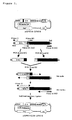
- (1 ) represents a promoter regulating expression of E1A; (2), a promoter regulating expression of E1B; (3), deficiency of Rb protein-binding domain; (4), deficiency of E1B55KDa and/or E1B 19KDa; (5), a promoter regulating a therapeutic gene; (6), a therapeutic gene; and (7), modification of adenovirus structure protein gene.
- E1A is a region first transcribed after infection of the adenovirus, and, if not, virus proliferation does not occur.
- genes in the E1A region are deleted and desirable therapeutic genes are introduced instead.
- the E1B region which codes some proteins such as 55KDa and 19KDa, is also transcribed in the early stage after transcription of E1A, and transcription and activation of the E1B region are also said to be important in viral proliferation.
- endogenous viral promoters in the regions E1A and E1B are removed and restriction enzyme-recognizing sequences (multicloning sites) are inserted in the regions for easier introduction of other promoters. It is possible then to make the adenovirus proliferate specifically to cancer, simply by introducing two different cancer cell-specific high-expression promoters.
- the region (7) is a region for easier modification of the adenoviral structure protein-coding genes such as fibers in the adenovirus plasmid vector having an adenoviral genome.
- the present invention is characterized in that it is possible to perform gene recombination for preparation of a desirable proliferation-regulated recombinant adenoviral vector extremely efficiently and freely, by using three independent plasmid vectors, a plasmid having a proliferation-regulating unit, a plasmid vector having a therapeutic gene-expressing unit, and a plasmid having an adenoviral genome lacking the E1A region. That is, it is possible to prepare these three plasmids independently by recombination, integrate and insert these plasmids easily among them, and combine the respective factors freely and rapidly.
- Such advantages are obtained by the following methods:
- a shuttle vector may be used as the vector according to the present invention.
- the plasmid vector used in preparing the adenoviral vector was pHM5.
- pHM5 was a cloning vector having restriction enzyme sequences of SphI, PstI, HincII, XbaI, BamHI, KpnI, SacI, and EcoRI, which was provided from by Dr. Mark A. Kay (Stanford University) (see for details in Human Gene Therapy, 10: 2013-2017, 1999 ).
- the plasmid pXC1 containing a human type-5 adenoviral genome 5'-sequence was purchased from Microbix (Toronto, Canada).
- the region from the adenovirus genomic E1A protein-coding region to the polyadenylation signal containing no endogenous promoter (474 to 1658bp) and the region only containing E1B 19KDa protein-coding region (1684 to 2285bp) but not containing an endogenous promoter or a polyadenylation signal are amplified and cloned, by using pXC1 as the template and the Bovine growth hormone polyadenylation signal sequence (BGHp: bovine growth factor polyadenylation signal sequence), pRC/RSV (Invitrogen, catalogue No.: A-150307) as the template, by PCR using KOD DNA polymerase (Toyobo, catalogue No.
- the E1A sense primer (S-E1A, sequence No. 1) used had added restriction enzyme-recognizing sequences of SphI, NotI, SnaBI, and MluI; the E1A antisense primer (AS-E1A, sequence No. 2), Sail and AvrII-recognizing sequences; the E1B 19KDa sense primer (S-E1B19K, sequence No. 3), restriction enzyme-recognizing sequences of AvrII, SalI, NdeI, EcoRV, and MfeI; the E1A antisense primer (AS-E1B19K, sequence No.
- BGHpA the PCR product obtained above, and p ⁇ Pr.E1A- ⁇ Pr19K ⁇ pA were digested with BamHI and EcoRI (Toyobo, catalogue No.: ER0271) and ligated, to give a plasmid p ⁇ Pr.E1A- ⁇ Pr.19K-BGHpA (hereinafter, referred to as p ⁇ Pr.E1A- ⁇ Pr.19 K, as BGHpA is omitted).
- the plasmid p ⁇ Pr.E1A- ⁇ Pr.19K thus prepared was a plasmid having a background of pHM5 and has, from upstream, a multicloning site containing restriction enzyme-recognizing sequences of SphI, NotI, SnaBI, and MluI, an E1A protein-coding region, a multicloning site containing restriction enzyme-recognizing sequences of SalI, NdeI, EcoRV, and MfeI, an E1B 19KD protein-coding region, and the BGHpA and LoxH sequences. Accordingly, it is possible to insert promoters freely in the upstream region by using the upstream multicloning sites of E1A and E1B191KDa.
- the upstream multicloning sites of E1A and E1B 19KDa have at least one restriction enzyme site giving a blunt end, SnaBI or EcoRV, and thus, it is possible to integrate a promoter sequence digested by any restriction enzyme into the plasmid vector having a proliferation-regulating unit p ⁇ Pr.E1A- ⁇ Pr.19K easily and reliably, if it is ligated after blunt end processing.
- mutagenesis by PCR using pXC1 shown in Figure 3 as the template was performed as described below, to delete the pXC1 923 to 947-bp region corresponding to the Rb protein-binding sequence.
- PCR by using the sense primer having restriction enzyme-recognizing sequences SphI, NotI, SnaBI, and MluI inserted in the E1A 5'-terminal sequence (S-E1A, sequence No.
- Both of the PCR products were combined and subjected to second PCR by using a sense primer S-E1A and an antisense primer AS-E1A as the templates, to give a bound product, i.e., E1A lacking the Rb protein-binding sequence (24 bp) (referred to as E1A ⁇ 24).
- E1A ⁇ 24 The primer sequences and the condition of the PCR reaction are shown in Figure 4 .
- the E1A ⁇ 24 was digested with restriction enzymes SphI and SalI (Toyobo, catalogue No.: SAL-111) into p ⁇ Pr.E1A- ⁇ Pr.19K, which was then inserted with a DNA ligase (Takara Shuzo, catalogue No.: 6022) into wild type E1A, to give p ⁇ Pr.E1A ⁇ 24- ⁇ Pr.19K.
- p ⁇ Pr.E1A ⁇ 24- ⁇ Pr.10K was a plasmid vector having a proliferation-regulating unit having a similar base sequence and structure, except that the Rb protein-binding sequence in E1A was removed from p ⁇ Pr.E1A- ⁇ Pr.19K.
- a shuttle vector having not only an E1B gene 19-KDa protein region but also the entire E1B sequence including 55KDa and other regions of wild type adenovirus was prepared in the following manner: First, a sense primer having the same sequence as that of the 20-bp region from 14 bp to 33 bp upstream of the KpnI-recognizing sequence in E1B (2015 to 2034 bp in pXC1 ) (S-E1B-2015, sequence No.
- the PCR products were digested with a restriction enzymes KpnI (Toyobo, catalogue No.: KPN-111) and EcoRI (Toyobo, catalogue No.: ECO-111), and inserted with a DNA ligase (Takara Shuzo, catalogue No.: 6022) into the digestion product of p ⁇ Pr.E1A- ⁇ Pr.19K digested similarly with KpnI and EcoRI.
- KpnI Toyobo, catalogue No.: KPN-111
- EcoRI Toyobo, catalogue No.: ECO-111
- p ⁇ Pr.E1A- ⁇ Pr.E1B thus prepared is a plasmid allowing expression by external promoters respectively having entire proteins of E1A and E1B, and having a base sequence and a structure similar to those of p ⁇ Pr.E1A- ⁇ Pr.19K, except that the E1B 19-KDa region in p ⁇ Pr.E1A- ⁇ Pr.E1B is the entire E1B coding region.
- a plasmid vector having a proliferation-regulating unit containing the entire E1B sequence p ⁇ Pr.E1A ⁇ 24- ⁇ Pr.E1B was obtained from the p ⁇ Pr.E1A ⁇ 24- ⁇ Pr.19K lacking the Rb protein-binding sequence in E1A in a similar manner.
- the CMV promoter was amplified by PCR, by using a plasmid pRC/CMV (Invitrogen, catalogue No.: A-150307) as the template, a sense primer having a SalI recognition site (S-CMVp, sequence No. 11), and an antisense primer having an MfeI recognition site (AS-CMVp, sequence No. 12) (see Figure 5 for the sequences of respective primers and the condition of PCR).
- S-CMVp SalI recognition site
- AS-CMVp antisense primer having an MfeI recognition site
- PCR products pRC/CMV 231 to 893
- plasmids p ⁇ Pr.E1A- ⁇ Pr.19K and p ⁇ Pr.E1A ⁇ 24- ⁇ Pr.19K were digested with SalI (Toyobo, catalogue No.: SAL-111) and MfeI (New England Biolabs, catalogue No.: R0589s) and ligated with T4 DNA ligase while inserting the CMV promoter into the upstream region of E1B19K, to give proliferation-regulated vector plasmids p ⁇ Pr.E1A-CMV-19K and p ⁇ Pr.E1A ⁇ 24-CMV-19K respectively.
- a CEA promoter was inserted into the upstream region of E1A respectively of p ⁇ Pr.E1A-CMV-19K and p ⁇ Pr.E1A ⁇ 24-CMV-19K.
- 10 ⁇ l (5.6 ⁇ 10 10 pfu/ ⁇ l) of adenovirus AxCEAprTK having the CEA promoter was mixed with 10 ⁇ l of 10% SDS (Sodium dodecylsulfate, Wako Pure Chemical Industries, catalogue No.: 199-07145), 8 ⁇ l of 0.5M EDTA (Ethylenediaminetetraacetic acid, Wako Pure Chemical Industries, catalogue No.: 311-90075), and 170.75 ⁇ l of distilled water, and the mixture was stirred well.
- a region of 424 bp to 2 bp upstream of the CEA coding a regional initiation codon was amplified by PCRby using the DNA as the template, a sense primer having a restriction enzyme NotI-recognizing sequence (S-CEAp, sequence No.: 13), and an antisense primer having a restriction enzyme MluI-recognizing sequence (AS-CEAp, sequence No. 14) (see Figure 5 for the sequences of respective primers and the PCR condition).
- the PCR products were digested with MluI (Toyobo, catalogue No.: MLU-101) and NotI (Toyobo, catalogue No.: NOT-111).
- the pCEA-E1A-CMV-19K and the pCEA-E1A ⁇ 24-CMV-19K thus prepared are proliferation-regulated plasmid vector expressing respectively E1A and E1A ⁇ 24 by a CEA promoter and E1B19K by a CMV promoter (see Figures 6 and 7 ).
- E2F promoter was prepared by cleaving the plasmid pABS.4:E2F-GFP provided from by Dr. Fine, H. (National Cancer Institute, Bethesda, MD) with restriction enzymes SpeI (Toyobo, catalogue No.: SPE-101) and XhoI (Toyobo, catalogue No.: XHO-101) and blunting with T4 DNA polymerase (NMBI, catalogue No.: EP0061).
- the p ⁇ Pr.E1A-CMV-19K and p ⁇ Pr.E1A ⁇ 24-CMV-19K above were digested with SalI, blunted with T4 DNA polymerase, dephosphorylated with a calf intestine alkaliphosphatase (CIP: calf small-intestine alkaline phosphatase, Takara Shuzo, catalogue No.: 2250A) for prevention of autoligation, and ligated to the cleaved E2F promoter with T4 DNA ligase, to give pE2F-E1A-CMV-19K and pE2F-E1A ⁇ 24-CMV-19K respectively.
- CIP calf small-intestine alkaline phosphatase
- the PE2F-E1A-CMV-19K and pE2F-E1A ⁇ 24-CMV-19K thus prepared were proliferation-regulated plasmid vector expressing E1A or E1A ⁇ 24 by an E2F promoter and E1B19K by a CMV promoter (see Figures 6 and 7 ).
- the CMV promoter regions of pCEA-E1A-CMV-19K and pCEA-E1A ⁇ 24-CMV-19K were removed by digestion with SalI and MfeI, the remaining vector regions were treated with T4 DNA polymerase and CIP, and ligated with the cleaved E2f promoter with T4 DNA ligase, to give respectively plasmids of pCEA-E1A-E2F-19K and pCEA-E1A ⁇ 24-E2F-19K.
- the pCEA-E1A-E2F-19K and pCEA-E1A ⁇ 24-E2F-19K thus prepared were proliferation-regulated plasmid vectors expressing E1A or E1A ⁇ 24 by a CEA promoter and E1319K by an E2F promoter (see Figures 6 and 7 ).
- p ⁇ Pr.-E1A-CMV-19K and p ⁇ Pr.-E1A ⁇ 24-CMV-19K were digested with SalI, blunted with T4 DNA polymerase, and additionally, treated with CIP while inserting the OC promoter in the ligation reaction with a T4 DNA ligase, to give pOC-E1A-CMV-19K and pOC-E1A ⁇ 24-CMV-19K respectively.
- the pOC-E1A-CMV-19K and pOC-E1A ⁇ 24-CMV-19K thus prepared were proliferation-regulated plasmid vectors expressing E1A or E1A ⁇ 24 by an OC promoter and E1B19K by a CMV promoter (see Figures 6 and 7 ) .
- a plasmid allowing insertion of a therapeutic gene freely into a proliferation-regulated vector plasmid previously or into a recombinant proliferation-regulated adenovirus plasmid vector afterward was prepared by using a Cre recombination reaction.
- a plasmid having an LoxP sequence that allows insertion of a therapeutic gene and the promoter thereof was prepared as follows: A Kn (kanamycin)-resistance gene of pUni/V5-HisC (Invitrogen, Carlsbad, CA, Product Number: ET003-11) was cleaved with BglII (Toyobo, catalogue No.: BGL-211) and SmaI (Toyobo, catalogue No.
- Tc tetracycline-resistance gene in pBR322 (Toyobo, catalogue No.: DNA-003) was digested with SspI (Toyobo, catalogue No. : SSP-101) and StyI (New England Biolabs, Beverly, MA, catalogue No.: R0050S) and blunted with T4 DNA polymerase.
- the product was ligated and inserted to pUni/V5-HisC that had no Kn-resistant gene and was blunted similarly to above by using T4 DNA ligase, to give a plasmid vector containing a therapeutic gene-expressing unit pUni/V5-HisC-Tc in which the Kn-resistant gene was replaced with the Tc-resistance gene (see Figure 8 ).
- the pUni/V5-HisC-Tc was digested with XhoI, blunted with T4 DNA polymerase, and subjected to a CIP treatment.
- DNA's obtained by cleaving the CMV promoter region prepared by amplifying a sense primer having a SalI site inserted by using a plasmid pRC/CMV as the template (S-CMVp, sequence No. 11) and an antisense primer having an MfeI site (AS-CMVp, sequence No. 12) by PCR with SalI and MfeI enzymes and blunting the products with T4 DNA polymerase, and the blunted pUni/V5-HisC-Tc were ligated with T4 DNA ligase, to give pUni/V5-HisC-Tc-CMV.
- the pUni/V5-HisC-Tc-CMV is a plasmid having a CMV promoter inserted in pUni/V5-HisC-Tc that allows insertion of a desirably expressed therapeutic gene to the region downstream of the CMV promoter by using any one of multicloning sites, AgeI, ApaI, and StuI.
- the CMV promoter and the gene inserted downstream thereof allows insertion of a therapeutic gene into the proliferation-regulated plasmid vector regulating the E1 region described in the former section by Cre expression or to the finally prepared proliferation-regulated adenoviral plasmid vector by Cre expression.
- the CMV promoter can be cleaved with restriction enzymes HincII and AgeI as needed, and an organ-specific promoter can be inserted thereto easily (see Figure 8 ).
- a plasmid vector having an inserted marker gene EGFP (enhanced green-fluorescent protein) was prepared as follows: First, pEGFP-C1 (CLONETECH, catalogue No.: 6084-1) was digested with BclI and blunted with T4 DNA polymerase; and then, EGFP cDNA was cleaved by AgeI digestion.
- pUni/V5-HisC-Tc-CMV was digested with ApaI, blunted with T4 DNA polymerase, and digested with AgeI; and the cleaved EGFP cDNA fragment was ligated and inserted thereto with T4 DNA ligase, to give pUni/V5-HisC-Tc-CMV-EGFP.
- the first therapeutic gene-expressing plasmid vector pUni/V5-HisC-Tc-CMV-EGFP is an expression vector expressing EGFP from the CMV promoter and allowing insertion of the CMV-EGFP gene to the proliferation-regulated plasmid vector regulating the E1A region and the finally prepared proliferation-regulated adenoviral plasmid vector in the Cre recombination reaction (see Figure 8 ).
- the EGFP is not a therapeutic gene but inserted as a substitute of therapeutic gene for convenience in experiment.
- Each of proliferation-regulated vector plasmids (pCEA-E1A-CMV-19K, pCEA-E1A ⁇ 24-CMV-19K, pE2F-E1A-CMV-19K, pE2F-E1A ⁇ 24-CMV-19K, pCEA-E1A-E2F-19K, pCEA-E1A ⁇ 24-E2F-19K, pOC-E1A-CMV-19K, and pOC-E1A ⁇ 24-CMV-19K) and a first therapeutic gene-expressing plasmid vector (pUni/V5-HisC-Tc-CMV-EGFP) in an amount of 100 ng was allowed to react with a Cre recombinase (Invitrogen, catalogue No.: R100-10) at 37°C for 20 minutes.
- a Cre recombinase Invitrogen, catalogue No.: R100-10
- the reaction was terminated by inactivating Cre by treatment at 65°C for 5 minutes.
- the reaction solution was transformed into competent cells DH5 ⁇ (Toyobo, catalogue No.:- DNA-903), and the resulting cell was incubated on an LB (Luria-Bertani, Nacalai Tesque, catalogue No.: 20066-95) agarose plate containing tetracycline (7.5 ⁇ g/ml, Wako Pure Chemical Industries, catalogue No.: 205-08591).
- the proliferation-regulated plasmid vector does not form colonies because it has a Kn-resistant gene, while the first therapeutic gene-expressing plasmid vector, which has a special Ori (E.
- the second therapeutic gene-expressing plasmid vector which was prepared in recombination of a proliferation-regulated plasmid vector and the first therapeutic gene-expressing plasmid vector, forms colonies of DH5 ⁇ cells, because it contains both UCOri and Tc r , (see Figure 9 ; in the Figure, the product in recombination of pPrA-E1A-PrB-E1B and pUni/V5-HisC-Tc-CMV-GENE is the second therapeutic gene-expressing plasmid vector).
- the reaction was performed by using a Cre recombinase purchased from Invitrogen (Invitrogen, catalogue No.: R100-10) at first, but there were no E. coli colonies formed on the LB plate.
- a similar reaction was performed by using the plasmids pUni/V5-HisC and pcDNA4/HisMax-Ea attached to a cloning kit of Invitrogen (Echo cloning system, catalogue No.: ET401-30C), resulting in formation of five or less colonies.
- the activity of the Cre recombinase seemed to be low.
- the Cre recombinase was extracted by using an adenoviral vector AxCANCre expressing the Cre gene (provided from by the DNA bank of Riken Institute of Physical and Chemical Research).
- HepG2 cell a human liver cancer cell higher in adenoviral gene-transferring efficiency (provided from by the Cell Research Center for Biomedical Research, Institute of Development, Aging and Cancer, Tohoku University), was infected onto a 10cm-diameter culture dish at a concentration of 30 MOI (multiplicity of infection, 1 MOI: 1 plaque-forming unit/cell) ; the cells were removed after three days by trypsin (nacalai tesque, catalogue No.: 35555-54) treatment, washed with PBS, dissolved in 200 ⁇ l of a lysis buffer (containing 20 mM Tris at pH 7.5, 150 mM NaCl, 10 mM MgCl 2 , 10% glycerol, and 1% protease inhibitor cocktail (SIGMA, catalogue
- the second therapeutic gene-expressing plasmid vector obtained in the reaction were named respectively pCEA-E1A-CMV-19K/CMV-EGFP, pCEA-E1A ⁇ 24-CMV-19K/CMV-EGFP, pE2F-E1A-CMV-19K/CMV-EGFP, pE2F-E1A ⁇ 24-CMV-19K/CMV-EGFP, pCEA-E1A-E2F-19K/CMV-EGFP, pCEA-E1A ⁇ 24-E2F-19K/CMV-EGFP, pOC-E1A-CMV-19K/CMV-EGFP, and pOC-E1A ⁇ 24-CMV-19K/CMV-EGFP.
- a proliferation-regulated adenoviral plasmid vector having no therapeutic gene was prepared, in addition to the second therapeutic gene-expressing plasmid vector (the Cre recombination described above), and the system and the function thereof were analyzed.
- a 30.3-kb plasmid pAdHM4 having an adenoviral genome (E1 region: 342 to 3523 bp, lacking part of E3 region 23133 to 30813 bp) (provided from by Dr. Mark A. Kay, Stanford University) has a sequence-recognizing restriction enzymes I-CeuI and PI-SceI in the deficient E1 region for insertion of foreign genes.
- pAdHM4 was first digested with a restriction enzyme I-CeuI (New England Biolabs, catalogue No.: R0699S) (0.2 U/ ⁇ g DNA, 37°C, 1 hour), purified with phenol and chloroform, and then precipitated with ethanol. It was then digested with PI-SceI (New England Biolabs, catalogue No.: R0696S) and purified similarly.
- I-CeuI New England Biolabs, catalogue No.: R0699S
- PI-SceI New England Biolabs, catalogue No.: R0696S
- pCEA-E1A-CMV-19K, pCEA-E1A ⁇ 24-CMV-19K, pE2F-E1A-CMV-19K, pE2F-E1A ⁇ 24-CMV-19K, pCEA-E1A-E2F-19K, pCEA-E1A ⁇ 24-E2F-19K, pOC-E1A-CMV-19K, and pOC-E1A ⁇ 24-CMV-19K were digested with I-CeuI and PI-SceI and inserted to pAdHM4 respectively by using T4 DNA ligase.
- the plasmids obtained were always digested with I-CeuI and PI-SceI, and the inserted genes were confirmed.
- the proliferation-regulated adenoviral plasmid vectors thus obtained were designated as pAd.HM4-CEA-E1A-CMV-19K, pAd.HM4-CEA-E1A ⁇ 24-CMV-19K, pAd.HM4-E2F-E1A-CMV-19K, pAd.HM4F-E2F-E1A ⁇ 24-CMV-19K, pAd.HM4-CEA-E1A-E2F-19K, pAd.HM4-CEA-E1A ⁇ 24-E2F-19K, pAd.HM4-OC-E1A-CMV-19K, and pAd.HM4-OC-E1A ⁇ 24-CMV-19K.
- These plasmids are plasmids having adenovirus genome regions other than E
- the proliferation-regulated adenoviral plasmid vector obtained in Example 6 was transfected to human fetal renal cell-derived 293 cells.
- the 293-cell culture solution used was DMEM (Dulbecco's Minimum Essential Medium, SIGMA, catalogue No.: D5796) containing inactivated 10% fetal bovine sera (MBL, catalogue No. : 268-1).
- Transfection was performed by a calcium phosphate method ( Current Protocols in Molecular Biology, John Wiley & Sons, Inc., 9.1.4 to 9.1.9, 1999 ); a total of 40/ ⁇ g of DNA's, 20 ⁇ g of linear chain DNA containing the adenoviral genome above and 20 ⁇ g of salmon testoid DNA (SIGMA, catalogue No.: D-7656), were added to 1.5 ml HEPES-buffered saline (pH7.1); 75 ⁇ l of 2. 5 M CaCl 2 was added dropwise thereto while the solution was stirred, and the mixture was left at a room temperature for 30 minutes; and then, the culture solution was added dropwise to the 293 cells while the mixture was stirred.
- HEPES-buffered saline pH7.1
- 5 M CaCl 2 was added dropwise thereto while the solution was stirred, and the mixture was left at a room temperature for 30 minutes; and then, the culture solution was added dropwise to the 293 cells while the mixture was stirred.
- the mixture was incubated in a CO 2 incubator for 4 hours and 30 minutes; a solution containing a mixture of ⁇ -MEM (GIBCO BRL, catalogue No.: 12000-022) in 10% inactivated equine sera (GIBCO BRL, catalogue No. : 26050-088) and 1% agarose gel in the same amounts were piled up; and the 293 cells were incubated additionally on the solid culture medium.
- pEGFP-C1 was transfected in the same protocol and the positive cells were observed under a fluorescence microscope after 43 hours, showing that the gene was transfected to the cells at a rate of about 30% every time.
- the 293 cells form plaques by the cytopathic effect (CPE).
- CPE cytopathic effect
- ADV's in a greater number of combinations rapidly and easily by cloning, if it is possible to integrate only a therapeutic genetic freely after cloning a proliferation-regulated plasmid vector having no therapeutic gene (e.g., pCEA-E1A-CMV-19K) into an adenovirus plasmid vector (pAdHM4, etc.).
- a proliferation-regulated plasmid vector having no therapeutic gene e.g., pCEA-E1A-CMV-19K
- pAdHM4 a proliferation-regulated plasmid vector having no therapeutic gene
- pAdHM4-CEA-E1A-CMV-19K e.g., pAdHM4, etc.
- This modified method eliminates the need for inserting a therapeutic gene into a shuttle vector and then cloning it into an adenoviral vector, in comparing the effects of various therapeutic genes and their promoters while integrating the E1A and E1B promoters.
- the inventors have established a method of preparing an adenovirus having a therapeutic gene by recombination of two plasmids in the cell, by cotransfection the first therapeutic gene-expressing plasmid vector into a Cre-expressing cell without integrating the plasmid vector into the proliferation-regulated adenoviral plasmid vector pAd.HM4-CEA-E1A-CMV-19K or the like.
- pAd.HM4-CEA-E1A-CMV-19K and expressing EGFP gene as a marker pUni/V5-HisC-Tc-CMV-EGFP were cotransfected to 293 cells expressing constitutively Cre, respectively in amounts of 20 ⁇ g by the calcium phosphate method.
- pEGFP-C1 expressing the EGFP gene plasmid was transfected by the same method; the culture medium was changed to a new one after 4 hours and a half; the cells were treated with trypsin and collected after 48 hours; the EGFP positive cells were counted under a fluorescence microscope, showing a positive rate (gene-transferring efficiency) of 21%. Plaques were formed after six days, and ten perfect plaques are formed after twelve days; and ten plaques were harvested after 14 days. Among these plaques, plaques of ADV having EGFP integrated in Cre recombination were EGFP-positive all over the plaques, when observed under a fluorescence microscope.
- plaques There were twelve plaques formed seven days after transfection of pAd.HM4-CEA-E1A-CMV-19K. A state when the cell disappeared completely in the center of a plaque and the bottom of the dish was observable was regarded as "complete plaque formation", and the plaques were collected together with the solid culture medium by using a 1,000- ⁇ l micropipetter chip which was previously broadened at the tip, resuspended in a 800- ⁇ l culture medium, and stored at -80°C. Ten plaques were collected for each virus.
- the suspension was thawed in a thermostat bath at 37°C and frozen in liquid nitrogen repeatedly for three time, to give 600 ⁇ l of an adenoviral solution obtained by destructing the cell, which was then infected to the 293 cell that was grown previously in 24-well culture plate to a concentration of 1 ⁇ 10 5 .
- 200 ⁇ l of the culture medium is added every three days, and CPE appears roughly in 5 to 7 days.
- the culture medium and the cells were collected and stored at -80°C.
- 800 ⁇ l of the solution (80% of total volume) was thawed and frozen similarly for three times, and infected to 70 to 80% confluent 293 cells on a 10-cm culture plate.
- CPE appeared in 2 to 4 days, and the culture medium and the cell were collected and stored at -80°C.
- the solution was thawed and frozen similarly for three times, and 80% of the total volume (generally, 8 ml) was infected to 70 to 80% confluent 293 cells in 15-cm culture dishes (six dishes).
- CPE appeared in 2 to 3 days, and the culture medium and the cell were collected and stored at -80°C.
- the solution was thawed and frozen similarly for three times, and 80% of the total volume (generally, 100 ml) was infected to 70 to 80% confluent 293 cells on forty 15-cm culture dishes.
- CPE appeared generally in 2 days; the culture medium and the cell were collected and centrifuged at 1,000 rpm; after removal of the supernatant the cells were resuspended in PBS (phosphoric acid buffering saline) in an amount of 1.5 ml per 50 ml of the cell suspension; and cell suspension in an amount of 24 ml containing the cells on all 40 plates was stored at -80°C.
- PBS phosphoric acid buffering saline
- the tubes were centrifuged first at 10°C and 35,000 rpm for 1 hour in a cooled high-speed centrifuge (Hitachi Koki, Himac CP65 ⁇ ) by using a swing rotor (Hitachi Koki, RPS40T). There were generally three bands observable and the lowest bluish white band contains the adenovirus, and thus, the layer was collected in an amount of 1 ml (up to 1.5 ml) after careful removal of the supernatant. Four tubes gave a viral solution in a total amount of approximately 4 ml (up to 6 ml).
- the viral solution was placed in a centrifugal tube containing 6 ml of 1.35 g/ml CsCl, and ultracentrifuged at 10°C and 35, 000 rpm for 13 hours, while balanced strictly with a balance tube similarly containing 1.35 g/ml CsCl.
- the virus was detected as a single band, and all of the viral solution in an amount of 1 to 2 ml was collected, after removal of the supernatant.
- the virus was then purified in a demineralization column as follows: the solution in the demineralization column (Biorad, Econopac 10DG, Product Number: 732-2011) was discharged and washed with 15 ml of PBS. X ml of the viral solution was added therein. The eluant from the column were collected in 1.5-ml microtubes numbered from 1 (Nos. 1 to 7) in an amount of 1 ml. Then, (3-X) ml of PBS was added to the column, and the eluant was collected similarly in an amount of 1 ml. Further, 4 ml of PBS was added, and the eluant was collected similarly in an amount of 1 ml.
- the ADV concentration in all tubes was determined by the following method. 94 ⁇ l of PBS, 5 ⁇ l of 10% SDS, and 1 ⁇ l of the viral solution were mixed and agitated well with Voltex (SCIENTIFIC INDUSTRIES, Inc., BOHEMIA, MY), to destroy its viral envelope. The resulting solution was centrifuge at 15,000rpm for 3 minutes; the supernatant was removed; and the OD 260nm of the solution is determined.
- the ADV solution after purification was divided into smaller aliquots together with 10% glycerol (Wako Pure Chemical Industries, catalogue No.: 075-00616), and the glycerol solutions were stored at -30°C.
- glycerol Wako Pure Chemical Industries, catalogue No.: 075-00616
- eight kinds of adenoviruses Ad.CEA-E1A-CMV-19K, Ad. E2F-E1A-CMV-19K, Ad.
- Ad.CEA-E1A-CMV-19K was infected to a CEA-expressing colon-cancer cell line colo-205, Lovo, HCT-15 cells (provided from by the Cell Research Center for Biomedical Research, Institute of Development, Aging and Cancer, Tohoku University), non-CEA-expressing Hela cells, and a positive control 293 cells in which all adenoviruses proliferate, respectively at MOI's of 100, 10, 1, 0.1, 0.01, and 0, and appearance of CPE was observed. All cells in the wells infected at an MOI of 100 showed strong cytotoxicity 2 days after infection.
- an EGFP gene was introduced into the vector to which a therapeutic gene is integrated as a marker, to give Ad.CEA-E1A-CMV-19K/CMV-EGFP. It is possible to study proliferation of this ADV, by monitoring the positive rate of EGFP after infection to cell.
- Table 1 shown are the data concerning the proliferation potential of the proliferation-regulated recombinant adenoviral vectors 12 days after infection as expressed by cell death (CPE). Both in Tables 2 and 3, the term "intact" means unchanged (without injury).
- Ad.CEA-EIA-CMV-19K/CMV-EGFP was prepared according to a method similar to above and purified by ultracentrifugation, to give 2 ml of a viral solution at a concentration of 2.0 ⁇ 10 12 particle/ml.
- the viral solution was infected to CEA-expressing cancer cells MKN-1, MKN-28, MKN-45, HCT-15, Lovo, and colo-205 respectively at MOI's of 100, 10, 1, 0.1, 0.01, and 0, and proliferation of ADV's was evaluated with occurrence of cell injury (CPE) while observing the EGFP positive rate under a fluorescence microscope.
- CPE cell injury
- Tables 2 and 3 are respectively those showing the proliferation potential of proliferation-regulated recombinant adenoviral vectors 12 days after infection as a function of EGFP-positive rate, and the proliferation potential 12 days after infection as a function of cell death (CPE).
- Table 3 MOI 100 10 1 0.1 0.01 0 MKN-1 CPE Cell injury intact intact intact MKN-28 CPE CPE CPE Cell injury intact intact MKN-45 CPE CPE intact intact intact intact intact HCT-15 CPE CPE CPE Cell injury intact intact LOVO CPE CPE CPE CPE intact intact Colo-25 Cell injury Intact intact intact intact intact intact 293 CPE CPE CPE CPE intact
- the method of preparing a proliferation-regulated recombinant adenoviral vector efficiently according to the present invention which permits insertion of a promoter expressing only in a target organ in adenovirus easily, allows efficient and rapid preparation of an adenoviral vector target organ that does not proliferate in organs other than those targeted but proliferates specifically only in the target organ guided by multiple tissue-specific factors, and suppresses proliferation of cancer cell or the like.
- the method of preparing a proliferation-regulated recombinant adenoviral vector having an integrated therapeutic gene efficiently which allows easy insertion of a promoter expressing only in a targeted organ and a therapeutic gene in adenovirus, allows efficient and rapid preparation of an adenoviral vector target organ that does not proliferate in organs other than those targeted but proliferates specifically only in the target organ guided by multiple tissue-specific factors, suppresses proliferation of cancer cell or the like, and introduces a selectively therapeutic gene into the target organ.
- the present invention allows easy preparation and analysis of a multifactorial adenoviral vector completely specific to cancer by introducing various proliferation-regulated recombinant adenoviral vectors freely and efficiently, and rapidly, and is also applicable widely to the biological study on the fundamental problem on what is the difference between normal and cancer cells and other basic studies on cancer.
- the preparative kit according to the present invention allows preparation of a proliferation-regulated recombinant adenoviral vector having a specific promoter expressing only in target cells and a therapeutic gene, as defined in the claims.
Landscapes
- Health & Medical Sciences (AREA)
- Life Sciences & Earth Sciences (AREA)
- Chemical & Material Sciences (AREA)
- Genetics & Genomics (AREA)
- Organic Chemistry (AREA)
- Virology (AREA)
- Engineering & Computer Science (AREA)
- General Health & Medical Sciences (AREA)
- Zoology (AREA)
- Wood Science & Technology (AREA)
- Bioinformatics & Cheminformatics (AREA)
- Medicinal Chemistry (AREA)
- General Engineering & Computer Science (AREA)
- Microbiology (AREA)
- Biotechnology (AREA)
- Biochemistry (AREA)
- Biomedical Technology (AREA)
- Molecular Biology (AREA)
- Biophysics (AREA)
- Animal Behavior & Ethology (AREA)
- Veterinary Medicine (AREA)
- Pharmacology & Pharmacy (AREA)
- Public Health (AREA)
- Proteomics, Peptides & Aminoacids (AREA)
- Mycology (AREA)
- Plant Pathology (AREA)
- Epidemiology (AREA)
- Immunology (AREA)
- Gastroenterology & Hepatology (AREA)
- Physics & Mathematics (AREA)
- Nuclear Medicine, Radiotherapy & Molecular Imaging (AREA)
- General Chemical & Material Sciences (AREA)
- Chemical Kinetics & Catalysis (AREA)
- Medicines Containing Material From Animals Or Micro-Organisms (AREA)
- Medicines That Contain Protein Lipid Enzymes And Other Medicines (AREA)
- Micro-Organisms Or Cultivation Processes Thereof (AREA)
Applications Claiming Priority (2)
| Application Number | Priority Date | Filing Date | Title |
|---|---|---|---|
| JP2003283427A JP4478775B2 (ja) | 2003-07-31 | 2003-07-31 | 増殖制御型組換えアデノウイルスベクターの効率的な作製方法及びその作製用キット |
| PCT/JP2004/010998 WO2005012536A1 (ja) | 2003-07-31 | 2004-07-26 | 増殖制御型組換えアデノウイルスベクターの効率的な作製方法及びその作製用キット |
Publications (3)
| Publication Number | Publication Date |
|---|---|
| EP1662004A1 EP1662004A1 (en) | 2006-05-31 |
| EP1662004A4 EP1662004A4 (en) | 2007-01-10 |
| EP1662004B1 true EP1662004B1 (en) | 2013-11-20 |
Family
ID=34113809
Family Applications (1)
| Application Number | Title | Priority Date | Filing Date |
|---|---|---|---|
| EP04748157.7A Expired - Lifetime EP1662004B1 (en) | 2003-07-31 | 2004-07-26 | Method of preparing a proliferation-regulated recombinant adenoviral vector, kit and vector |
Country Status (4)
| Country | Link |
|---|---|
| US (1) | US8034589B2 (ja) |
| EP (1) | EP1662004B1 (ja) |
| JP (1) | JP4478775B2 (ja) |
| WO (1) | WO2005012536A1 (ja) |
Families Citing this family (6)
| Publication number | Priority date | Publication date | Assignee | Title |
|---|---|---|---|---|
| KR101448653B1 (ko) * | 2007-10-01 | 2014-10-15 | 엘지전자 주식회사 | 주파수 호핑 패턴 및 이를 이용한 상향링크 신호 전송 방법 |
| JP5963363B2 (ja) * | 2010-09-30 | 2016-08-03 | 国立大学法人 鹿児島大学 | Auroraキナーゼプロモーターを含む増殖制御型ウイルスベクター |
| US10980853B2 (en) * | 2015-12-31 | 2021-04-20 | Development Center For Biotechnology | Process for preparing a crassocephalum crepidioides extract, extract prepared thereby and use of the extract |
| WO2017191501A2 (en) * | 2016-05-04 | 2017-11-09 | D'oosterlynck André | Simmondsin formulation |
| WO2019093435A1 (ja) | 2017-11-08 | 2019-05-16 | 国立大学法人 鹿児島大学 | 安全を確保しながら転移性がんまで効果的に治療可能な、搭載する免疫誘導遺伝子の最適発現レベルを与える発現制御システムを有する腫瘍溶解性ウイルス(腫瘍溶解性免疫治療) |
| EP4342480A4 (en) | 2021-05-19 | 2025-04-30 | Surv Biopharma Inc. | THERAPEUTIC PHARMACEUTICAL COMPOSITION FOR BONE AND SOFT TISSUE TUMORS |
Family Cites Families (7)
| Publication number | Priority date | Publication date | Assignee | Title |
|---|---|---|---|---|
| JP4216350B2 (ja) * | 1994-09-19 | 2009-01-28 | 大日本住友製薬株式会社 | 動物細胞感染用の組換えdnaウイルスベクター |
| CA2366914C (en) * | 1999-03-05 | 2010-05-11 | Merck & Co., Inc. | Enhanced system for construction of adenovirus vectors |
| US6692736B2 (en) * | 2000-03-24 | 2004-02-17 | Cell Genesys, Inc. | Cell-specific adenovirus vectors comprising an internal ribosome entry site |
| EP1266022B1 (en) | 2000-03-24 | 2008-10-22 | Cell Genesys, Inc. | Cell-specific adenovirus vectors comprising an internal ribosome entry site |
| IL153143A0 (en) | 2000-06-02 | 2003-06-24 | Novartis Ag | Adenovirus particles with mutagenized fiber proteins |
| CA2440044A1 (en) * | 2001-03-02 | 2002-09-12 | Riken | Cloning vectors and method for molecular cloning |
| US20030099616A1 (en) * | 2001-07-25 | 2003-05-29 | Irving John M. | Dual specificity tumor killing vectors driven by the telomerase promoter |
-
2003
- 2003-07-31 JP JP2003283427A patent/JP4478775B2/ja not_active Expired - Lifetime
-
2004
- 2004-07-26 WO PCT/JP2004/010998 patent/WO2005012536A1/ja not_active Ceased
- 2004-07-26 US US10/567,010 patent/US8034589B2/en active Active
- 2004-07-26 EP EP04748157.7A patent/EP1662004B1/en not_active Expired - Lifetime
Also Published As
| Publication number | Publication date |
|---|---|
| EP1662004A4 (en) | 2007-01-10 |
| WO2005012536A1 (ja) | 2005-02-10 |
| JP4478775B2 (ja) | 2010-06-09 |
| EP1662004A1 (en) | 2006-05-31 |
| US8034589B2 (en) | 2011-10-11 |
| JP2005046101A (ja) | 2005-02-24 |
| US20070036759A1 (en) | 2007-02-15 |
Similar Documents
| Publication | Publication Date | Title |
|---|---|---|
| EP0791050B1 (en) | Vectors for tissue-specific replication | |
| US5998205A (en) | Vectors for tissue-specific replication | |
| US7067310B2 (en) | Method for the preparation of a viral vector by inter-molecular homologous recombination | |
| EP1771570B1 (en) | Addition of transgenes into adenoviral vectors | |
| CN109295096B (zh) | 腺病毒载体系统及重组腺病毒构建方法 | |
| AU2787599A (en) | A simplified system for generating recombinant adenoviruses | |
| EP1466001B1 (en) | Viruses with enhanced lytic potency medikament | |
| WO1996017053A9 (en) | Vectors for tissue-specific replication | |
| US20070275915A1 (en) | Tmprss2 Regulatory Sequences and Uses Thereof | |
| BRPI0418805B1 (pt) | construção de recombinante de adenovírus oncolítico expressando especificamente um fator imunomodulatório gmcsf em células tumorais e seus usos | |
| JP4214239B2 (ja) | 二機能性レトロウイルス/アデノウイルス系 | |
| CN104212802B (zh) | 一种肿瘤细胞广谱高活性启动子及其用途 | |
| US20020164799A1 (en) | Adenovirus vectors specific for cells expressing alpha-fetoprotein and methods of use thereof | |
| WO2002068627A2 (en) | Vector constucts | |
| WO2008023572A1 (en) | Chimeric adenovirus, method for producing the same and pharmaceutical using the same | |
| US8034589B2 (en) | Method of preparing a proliferation-regulated recombinant adenoviral vector efficiently and kit for preparing the same | |
| JP2002543792A (ja) | ベクターによるトランスポゾン配列の供給及び組込み | |
| WO2005035744A1 (en) | Tumor targeting two genes-virus, the methods to construct it and the use thereof | |
| CN103484462B (zh) | Survivin启动子调控CD基因的重组腺病毒载体构建及其应用 | |
| CN114317463A (zh) | 一种携带TMTP1和tBid的溶瘤腺病毒重组体、其构建方法及应用 | |
| CA2466889C (en) | Use of the adenoviral e2 late promoter | |
| EP2048954A2 (en) | An isolated dna fragment of the sparc human promoter and its use | |
| US20060228336A1 (en) | Human prolyl isomerase 1 (PIN 1) promoter and uses thereof | |
| CN100420742C (zh) | 一种肝癌靶向性溶瘤腺病毒,其制备方法及用途 | |
| CN117417962B (zh) | 一种多靶点溶瘤腺病毒的构建方法及应用 |
Legal Events
| Date | Code | Title | Description |
|---|---|---|---|
| PUAI | Public reference made under article 153(3) epc to a published international application that has entered the european phase |
Free format text: ORIGINAL CODE: 0009012 |
|
| 17P | Request for examination filed |
Effective date: 20060228 |
|
| AK | Designated contracting states |
Kind code of ref document: A1 Designated state(s): AT BE BG CH CY CZ DE DK EE ES FI FR GB GR HU IE IT LI LU MC NL PL PT RO SE SI SK TR |
|
| DAX | Request for extension of the european patent (deleted) | ||
| RIC1 | Information provided on ipc code assigned before grant |
Ipc: A61K 35/76 20060101ALI20061128BHEP Ipc: C12N 15/34 20060101ALI20061128BHEP Ipc: C12N 15/861 20060101AFI20050216BHEP Ipc: A61K 48/00 20060101ALI20061128BHEP Ipc: A61P 35/00 20060101ALI20061128BHEP |
|
| A4 | Supplementary search report drawn up and despatched |
Effective date: 20061213 |
|
| 17Q | First examination report despatched |
Effective date: 20070516 |
|
| GRAP | Despatch of communication of intention to grant a patent |
Free format text: ORIGINAL CODE: EPIDOSNIGR1 |
|
| INTG | Intention to grant announced |
Effective date: 20130705 |
|
| GRAS | Grant fee paid |
Free format text: ORIGINAL CODE: EPIDOSNIGR3 |
|
| GRAA | (expected) grant |
Free format text: ORIGINAL CODE: 0009210 |
|
| AK | Designated contracting states |
Kind code of ref document: B1 Designated state(s): AT BE BG CH CY CZ DE DK EE ES FI FR GB GR HU IE IT LI LU MC NL PL PT RO SE SI SK TR |
|
| REG | Reference to a national code |
Ref country code: GB Ref legal event code: FG4D |
|
| REG | Reference to a national code |
Ref country code: CH Ref legal event code: EP |
|
| REG | Reference to a national code |
Ref country code: AT Ref legal event code: REF Ref document number: 641691 Country of ref document: AT Kind code of ref document: T Effective date: 20131215 |
|
| REG | Reference to a national code |
Ref country code: IE Ref legal event code: FG4D |
|
| REG | Reference to a national code |
Ref country code: DE Ref legal event code: R096 Ref document number: 602004043837 Country of ref document: DE Effective date: 20140116 |
|
| REG | Reference to a national code |
Ref country code: NL Ref legal event code: VDEP Effective date: 20131120 |
|
| REG | Reference to a national code |
Ref country code: AT Ref legal event code: MK05 Ref document number: 641691 Country of ref document: AT Kind code of ref document: T Effective date: 20131120 |
|
| PG25 | Lapsed in a contracting state [announced via postgrant information from national office to epo] |
Ref country code: FI Free format text: LAPSE BECAUSE OF FAILURE TO SUBMIT A TRANSLATION OF THE DESCRIPTION OR TO PAY THE FEE WITHIN THE PRESCRIBED TIME-LIMIT Effective date: 20131120 Ref country code: NL Free format text: LAPSE BECAUSE OF FAILURE TO SUBMIT A TRANSLATION OF THE DESCRIPTION OR TO PAY THE FEE WITHIN THE PRESCRIBED TIME-LIMIT Effective date: 20131120 Ref country code: SE Free format text: LAPSE BECAUSE OF FAILURE TO SUBMIT A TRANSLATION OF THE DESCRIPTION OR TO PAY THE FEE WITHIN THE PRESCRIBED TIME-LIMIT Effective date: 20131120 |
|
| PG25 | Lapsed in a contracting state [announced via postgrant information from national office to epo] |
Ref country code: AT Free format text: LAPSE BECAUSE OF FAILURE TO SUBMIT A TRANSLATION OF THE DESCRIPTION OR TO PAY THE FEE WITHIN THE PRESCRIBED TIME-LIMIT Effective date: 20131120 Ref country code: ES Free format text: LAPSE BECAUSE OF FAILURE TO SUBMIT A TRANSLATION OF THE DESCRIPTION OR TO PAY THE FEE WITHIN THE PRESCRIBED TIME-LIMIT Effective date: 20131120 Ref country code: BE Free format text: LAPSE BECAUSE OF FAILURE TO SUBMIT A TRANSLATION OF THE DESCRIPTION OR TO PAY THE FEE WITHIN THE PRESCRIBED TIME-LIMIT Effective date: 20131120 |
|
| PG25 | Lapsed in a contracting state [announced via postgrant information from national office to epo] |
Ref country code: PT Free format text: LAPSE BECAUSE OF FAILURE TO SUBMIT A TRANSLATION OF THE DESCRIPTION OR TO PAY THE FEE WITHIN THE PRESCRIBED TIME-LIMIT Effective date: 20140320 |
|
| PG25 | Lapsed in a contracting state [announced via postgrant information from national office to epo] |
Ref country code: EE Free format text: LAPSE BECAUSE OF FAILURE TO SUBMIT A TRANSLATION OF THE DESCRIPTION OR TO PAY THE FEE WITHIN THE PRESCRIBED TIME-LIMIT Effective date: 20131120 |
|
| REG | Reference to a national code |
Ref country code: DE Ref legal event code: R097 Ref document number: 602004043837 Country of ref document: DE |
|
| PG25 | Lapsed in a contracting state [announced via postgrant information from national office to epo] |
Ref country code: PL Free format text: LAPSE BECAUSE OF FAILURE TO SUBMIT A TRANSLATION OF THE DESCRIPTION OR TO PAY THE FEE WITHIN THE PRESCRIBED TIME-LIMIT Effective date: 20131120 Ref country code: RO Free format text: LAPSE BECAUSE OF FAILURE TO SUBMIT A TRANSLATION OF THE DESCRIPTION OR TO PAY THE FEE WITHIN THE PRESCRIBED TIME-LIMIT Effective date: 20131120 Ref country code: CZ Free format text: LAPSE BECAUSE OF FAILURE TO SUBMIT A TRANSLATION OF THE DESCRIPTION OR TO PAY THE FEE WITHIN THE PRESCRIBED TIME-LIMIT Effective date: 20131120 Ref country code: SK Free format text: LAPSE BECAUSE OF FAILURE TO SUBMIT A TRANSLATION OF THE DESCRIPTION OR TO PAY THE FEE WITHIN THE PRESCRIBED TIME-LIMIT Effective date: 20131120 |
|
| PLBE | No opposition filed within time limit |
Free format text: ORIGINAL CODE: 0009261 |
|
| STAA | Information on the status of an ep patent application or granted ep patent |
Free format text: STATUS: NO OPPOSITION FILED WITHIN TIME LIMIT |
|
| PG25 | Lapsed in a contracting state [announced via postgrant information from national office to epo] |
Ref country code: DK Free format text: LAPSE BECAUSE OF FAILURE TO SUBMIT A TRANSLATION OF THE DESCRIPTION OR TO PAY THE FEE WITHIN THE PRESCRIBED TIME-LIMIT Effective date: 20131120 |
|
| 26N | No opposition filed |
Effective date: 20140821 |
|
| REG | Reference to a national code |
Ref country code: DE Ref legal event code: R097 Ref document number: 602004043837 Country of ref document: DE Effective date: 20140821 |
|
| REG | Reference to a national code |
Ref country code: DE Ref legal event code: R119 Ref document number: 602004043837 Country of ref document: DE |
|
| PG25 | Lapsed in a contracting state [announced via postgrant information from national office to epo] |
Ref country code: SI Free format text: LAPSE BECAUSE OF FAILURE TO SUBMIT A TRANSLATION OF THE DESCRIPTION OR TO PAY THE FEE WITHIN THE PRESCRIBED TIME-LIMIT Effective date: 20131120 Ref country code: LU Free format text: LAPSE BECAUSE OF FAILURE TO SUBMIT A TRANSLATION OF THE DESCRIPTION OR TO PAY THE FEE WITHIN THE PRESCRIBED TIME-LIMIT Effective date: 20140726 |
|
| REG | Reference to a national code |
Ref country code: CH Ref legal event code: PL |
|
| REG | Reference to a national code |
Ref country code: IE Ref legal event code: MM4A |
|
| PG25 | Lapsed in a contracting state [announced via postgrant information from national office to epo] |
Ref country code: LI Free format text: LAPSE BECAUSE OF NON-PAYMENT OF DUE FEES Effective date: 20140731 Ref country code: CH Free format text: LAPSE BECAUSE OF NON-PAYMENT OF DUE FEES Effective date: 20140731 Ref country code: DE Free format text: LAPSE BECAUSE OF NON-PAYMENT OF DUE FEES Effective date: 20150203 Ref country code: IT Free format text: LAPSE BECAUSE OF FAILURE TO SUBMIT A TRANSLATION OF THE DESCRIPTION OR TO PAY THE FEE WITHIN THE PRESCRIBED TIME-LIMIT Effective date: 20131120 |
|
| REG | Reference to a national code |
Ref country code: DE Ref legal event code: R119 Ref document number: 602004043837 Country of ref document: DE Effective date: 20150203 |
|
| PG25 | Lapsed in a contracting state [announced via postgrant information from national office to epo] |
Ref country code: IE Free format text: LAPSE BECAUSE OF NON-PAYMENT OF DUE FEES Effective date: 20140726 |
|
| PG25 | Lapsed in a contracting state [announced via postgrant information from national office to epo] |
Ref country code: MC Free format text: LAPSE BECAUSE OF FAILURE TO SUBMIT A TRANSLATION OF THE DESCRIPTION OR TO PAY THE FEE WITHIN THE PRESCRIBED TIME-LIMIT Effective date: 20131120 |
|
| PG25 | Lapsed in a contracting state [announced via postgrant information from national office to epo] |
Ref country code: BG Free format text: LAPSE BECAUSE OF FAILURE TO SUBMIT A TRANSLATION OF THE DESCRIPTION OR TO PAY THE FEE WITHIN THE PRESCRIBED TIME-LIMIT Effective date: 20131120 |
|
| PG25 | Lapsed in a contracting state [announced via postgrant information from national office to epo] |
Ref country code: GR Free format text: LAPSE BECAUSE OF FAILURE TO SUBMIT A TRANSLATION OF THE DESCRIPTION OR TO PAY THE FEE WITHIN THE PRESCRIBED TIME-LIMIT Effective date: 20140221 Ref country code: CY Free format text: LAPSE BECAUSE OF FAILURE TO SUBMIT A TRANSLATION OF THE DESCRIPTION OR TO PAY THE FEE WITHIN THE PRESCRIBED TIME-LIMIT Effective date: 20131120 |
|
| REG | Reference to a national code |
Ref country code: FR Ref legal event code: PLFP Year of fee payment: 13 |
|
| PG25 | Lapsed in a contracting state [announced via postgrant information from national office to epo] |
Ref country code: TR Free format text: LAPSE BECAUSE OF FAILURE TO SUBMIT A TRANSLATION OF THE DESCRIPTION OR TO PAY THE FEE WITHIN THE PRESCRIBED TIME-LIMIT Effective date: 20131120 Ref country code: HU Free format text: LAPSE BECAUSE OF FAILURE TO SUBMIT A TRANSLATION OF THE DESCRIPTION OR TO PAY THE FEE WITHIN THE PRESCRIBED TIME-LIMIT; INVALID AB INITIO Effective date: 20040726 |
|
| REG | Reference to a national code |
Ref country code: FR Ref legal event code: PLFP Year of fee payment: 14 |
|
| REG | Reference to a national code |
Ref country code: GB Ref legal event code: 732E Free format text: REGISTERED BETWEEN 20171026 AND 20171101 |
|
| REG | Reference to a national code |
Ref country code: FR Ref legal event code: TP Owner name: WYK BIOTECH PHARMA CO, LTD, JP Effective date: 20171221 |
|
| REG | Reference to a national code |
Ref country code: FR Ref legal event code: PLFP Year of fee payment: 15 |
|
| PGFP | Annual fee paid to national office [announced via postgrant information from national office to epo] |
Ref country code: GB Payment date: 20230724 Year of fee payment: 20 |
|
| PGFP | Annual fee paid to national office [announced via postgrant information from national office to epo] |
Ref country code: FR Payment date: 20230724 Year of fee payment: 20 |
|
| REG | Reference to a national code |
Ref country code: GB Ref legal event code: PE20 Expiry date: 20240725 |
|
| PG25 | Lapsed in a contracting state [announced via postgrant information from national office to epo] |
Ref country code: GB Free format text: LAPSE BECAUSE OF EXPIRATION OF PROTECTION Effective date: 20240725 |
|
| PG25 | Lapsed in a contracting state [announced via postgrant information from national office to epo] |
Ref country code: GB Free format text: LAPSE BECAUSE OF EXPIRATION OF PROTECTION Effective date: 20240725 |