EP1630232B1 - Optimierte Nukleotidsequenzen die für sgp130 kodieren - Google Patents
Optimierte Nukleotidsequenzen die für sgp130 kodieren Download PDFInfo
- Publication number
- EP1630232B1 EP1630232B1 EP04020455A EP04020455A EP1630232B1 EP 1630232 B1 EP1630232 B1 EP 1630232B1 EP 04020455 A EP04020455 A EP 04020455A EP 04020455 A EP04020455 A EP 04020455A EP 1630232 B1 EP1630232 B1 EP 1630232B1
- Authority
- EP
- European Patent Office
- Prior art keywords
- sgp130
- nucleic acid
- sgp130fc
- cells
- expression
- Prior art date
- Legal status (The legal status is an assumption and is not a legal conclusion. Google has not performed a legal analysis and makes no representation as to the accuracy of the status listed.)
- Expired - Lifetime
Links
Images




Classifications
-
- C—CHEMISTRY; METALLURGY
- C07—ORGANIC CHEMISTRY
- C07K—PEPTIDES
- C07K14/00—Peptides having more than 20 amino acids; Gastrins; Somatostatins; Melanotropins; Derivatives thereof
- C07K14/435—Peptides having more than 20 amino acids; Gastrins; Somatostatins; Melanotropins; Derivatives thereof from animals; from humans
- C07K14/705—Receptors; Cell surface antigens; Cell surface determinants
- C07K14/715—Receptors; Cell surface antigens; Cell surface determinants for cytokines; for lymphokines; for interferons
- C07K14/7155—Receptors; Cell surface antigens; Cell surface determinants for cytokines; for lymphokines; for interferons for interleukins [IL]
-
- C—CHEMISTRY; METALLURGY
- C12—BIOCHEMISTRY; BEER; SPIRITS; WINE; VINEGAR; MICROBIOLOGY; ENZYMOLOGY; MUTATION OR GENETIC ENGINEERING
- C12N—MICROORGANISMS OR ENZYMES; COMPOSITIONS THEREOF; PROPAGATING, PRESERVING, OR MAINTAINING MICROORGANISMS; MUTATION OR GENETIC ENGINEERING; CULTURE MEDIA
- C12N15/00—Mutation or genetic engineering; DNA or RNA concerning genetic engineering, vectors, e.g. plasmids, or their isolation, preparation or purification; Use of hosts therefor
- C12N15/09—Recombinant DNA-technology
- C12N15/11—DNA or RNA fragments; Modified forms thereof; Non-coding nucleic acids having a biological activity
- C12N15/113—Non-coding nucleic acids modulating the expression of genes, e.g. antisense oligonucleotides; Antisense DNA or RNA; Triplex- forming oligonucleotides; Catalytic nucleic acids, e.g. ribozymes; Nucleic acids used in co-suppression or gene silencing
- C12N15/1138—Non-coding nucleic acids modulating the expression of genes, e.g. antisense oligonucleotides; Antisense DNA or RNA; Triplex- forming oligonucleotides; Catalytic nucleic acids, e.g. ribozymes; Nucleic acids used in co-suppression or gene silencing against receptors or cell surface proteins
Definitions
- the present invention relates to codon optimized sgp130 encoding nucleic acid molecules as characterized in the claims as well as a method for the highly efficient recombinant production of sgp130 in mammalian cells using a nucleic acid molecule of the invention.
- a soluble gp130-dimer in particular an IgG-Fc fusion protein or a PEGylated version of sgp130, efficiently inhibits the anti-apoptotic effect of sIL-6R from LPMC from Crohn's disease (CD) patients and that, thus, said compound is useful for the treatment of said disease and related diseases like, e.g. , colitis or rheumatoid arthritis.
- CD Crohn's disease
- US 2002/012962 discloses a human gp130-Fc fusion protein and the production of said protein in mammalian cells (CHO, 293 cells).
- WO 95/33059 discloses an N-terminal fragment of gp13o and the nucleotide sequence encoding it.
- Chow et al., Biochemistry, American Chemical Society, Easton, PA, US, Vol. 40(25), (2001), 7593-7603 discloses a soluble gp130 (D1-D3) named gp130-IGD-CHR comprising amino acids 1-291 of human gp130.
- Horsten et al., FEBS LETTERS 360(1) (1995), 43-46 discloses a soluble gp130 D1-D3 fused to Fc, comprising residues 1-301 of human gp130.
- 16968-72 discloses a fusion protein of gp130 (D1-D3) fused to IL-6R-alpha D2-D3 domains. Tanaka et al., J. Clin. Invest. 106 (2000), 137-44 discloses a soluble gp130 (D1-D3)-RAPS fusion protein.
- WO 95/33059 discloses a soluble gp130 (D1-D3)-RAPS fusion protein.
- the technical problem underlying the present invention was to provide means allowing to improve the efficiency of recombinant production of sgp130Fc.
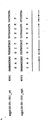
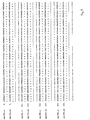
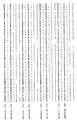
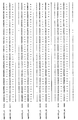
- the present invention relates to a nucleic acid molecule encoding sgp130 comprising the nucleic acid sequence (a) as depicted in Figure 3 (sgp130Fc_opt) or (b) a fragment thereof which maintains the codon usage pattern thereof.
- the letter "s” of sgp130 means “soluble”.
- the term "soluble” as used herein refers to a gp130 molecule lacking the intracellular domain and the transmembrane domain.
- fragment refers to sgp130 fragments which comprise the entire or smaller parts of the optimized cDNA encoding the extracellular domain of gp130.
- fragments show a biological activity of the full length molecule, e. g. maintain the ability to inhibit the activity of the agonistic complex IL-6/sIL-6R.
- sgp130 without the eukaryotic secretory leader sequence (MLTLQTWWQALFIFLTTESTG, Pos. 1 to 22).
- a prokaryotic secretory leader sequence e. g.
- pelB or OmpA could be cloned in front of the sgp130 sequence or parts of it and could be derived from the respective suitable expression plasmid, e. g. pET22b (Merck Biosciences GmbH, Bad Soden, Germany), pASK-IBA2, pASK-IBA12 (IBA, Goettingen, Germany).
- the sgp130 protein can be expressed with or without Tag for purification purposes, e. g. His 6 , Strep, Myc or others.
- the present invention relates to a nucleic acid molecule, wherein at least 80%, preferably at least 90%, more preferably at least 95% and, most preferably at least 98% of the codons altered in the nucleic acid sequence of Figure 3 vs. the wild type sequence are present.
- the nucleic acid molecule of the present invention is a DNA molecule.
- the present invention includes expression vectors that comprise the nucleic acid molecules of the invention.
- the expression vectors can be constructed according to methods well known to the person skilled in the art; see, e.g., Sambrook, Molecular Cloning A Laboratory Manual, Cold Spring Harbor Laboratory (1989) N.Y .
- the "control elements” or “regulatory sequences” used for recombinant expression are those non-translated regions of the vector-enhancers, promoters, 5' and 3' untranslated regions which interact with host cellular proteins to carry out transcription and translation. Such elements may vary in their strength and specificity. Depending on the vector system and host utilised, any number of suitable transcription and translation elements, including constitutive and inducible promoters, may be used.
- promoters from mammalian genes or from mammalian viruses are preferable. Promoters and other expression regulation signals may be selected to be compatible with the host cell for which expression is designed.
- mammalian promoters include the metallothionein promoter, which can be induced in response to heavy metals such as cadmium, and the ⁇ -actin 30 promoter.
- Viral promoters such as the SV40 large T antigen promoter, human cytomegalovirus (CMV) immediate early (IE) promoter, rous sarcoma virus LTR promoter, adenovirus promoter, or a HPV promoter, particularly the HPV upstream regulatory region (URR) may also be used. All these promoters are well described and readily available in the art.
- a number of viral-based expression systems may be utilised.
- sequences encoding the polypeptide(s) of the present invention may be ligated into an adenovirus transcription/translation complex consisting of the late promoter and tripartite leader sequence. Insertion in a non-essential E1 or E3 region of the viral genome may be used to obtain a viable virus which is capable of expressing the antibody in infected host cells ( Logan, J. and Shenk, T. (1984) Proc. Natl. Acad. Sci. 81:3655-3659 ).
- transcription enhancers such as the Rous sarcoma virus (RSV) enhancer, may be used to increase expression in mammalian host cells.
- RSV Rous sarcoma virus
- suitable viral vectors include herpes simplex viral vectors, vaccinia or alpha-virus vectors and retroviruses, including lentiviruses and adeno-associated viruses. Gene transfer techniques using these viruses are known to those skilled in the art. Retrovirus vectors for example may be used to stably integrate the nucleic acid molecules of the invention into the host genome, although such recombination is not preferred. Replication-defective adenovirus vectors by contrast remain episomal and therefore allow transient expression. If it is necessary to generate a cell line that contains multiple copies of the sequence encoding the spg130 polypeptides, vectors based on SV40 or EBV may be used with an appropriate selectable marker.
- HACs Human artificial chromosomes
- HACs may also be employed to deliver larger fragments of DNA than can be contained and expressed in a plasmid.
- HACs of 6 to 10 M are constructed and delivered via conventional delivery methods (liposomes, polycationic amino polymers, or vesicles) for therapeutic purposes.
- Specific initiation signals may also be used to achieve more efficient translation. Such signals include the ATG initiation codon and adjacent sequences. In cases where sequences encoding the sgp130, its initiation codon, and upstream sequences are inserted into the appropriate expression vector, no additional transcriptional or translational control signals may be needed. However, in case where only a coding sequence for a fragment is inserted, exogenous translational control signals including the ATG initiation codon should be provided. Furthermore, the initiation codon should be in the correct reading frame to ensure translation of the entire insert. Exogenous translational elements and initiation codons may be of various origins, both natural and synthetic.
- Enhancers which are appropriate for the particular cell system which is used, such as those described in the literature ( Scharf, D. et al. (1994) Results Probl. Cell Differ. 20:125-162 ).
- a host cell strain may be chosen for its ability to modulate the expression of the inserted sequences or to process the expressed polypeptide chains in the desired fashion.
- Post-translational processing which cleaves a "prepro" form of the polypeptide may also be used to facilitate correct insertion, folding and/or function.
- Different mammalian host cells which have specific cellular machinery and characteristic mechanisms for post-translational activities (e.g., CHO, HeLa, MDCK, HEK293, 293, COS-7 and W138), are available from the American Type Culture Collection (ATCC; Bethesda, Md.) and may be chosen to ensure the correct modification and processing of the foreign polypeptide chains.
- cell lines which stably express sgp130Fc may be transfected using expression vectors which may contain viral origins of replication and/or endogenous expression elements and one or more selectable marker genes on the same or on a separate vector. Following the introduction of the vector, cells may be allowed to grow for 1-2 days in enriched media before they are switched to selective media.
- the purpose of the selectable marker is to confer resistance to selection, and its presence allows growth and recovery of cells which successfully express the introduced sequences.
- Resistant clones of stably transformed cells may be proliferated using tissue culture techniques appropriate to the cell type.
- the host cells After the introduction of the recombinant vector(s), the host cells are grown in a selective medium, which selects for the growth of vector-containing cells. Any number of selection systems may be used to recover transformed cell lines. These include, but are not limited to, the herpes simplex virus thymidine kinase ( Wigler, M. et al. (1977) Cell 11:223-32 ) and adenine phosphoribosyltransferase ( Lowy, I. et al. (1980) Cell 22:817-23 ) genes which can be employed in tk.sup.- or aprt.sup.- cells, respectively.
- the herpes simplex virus thymidine kinase Wigler, M. et al. (1977) Cell 11:223-32
- adenine phosphoribosyltransferase Lowy, I. et al. (1980) Cell 22:817-23
- antimetabolite, antibiotic or herbicide resistance can be used as the basis for selection; for example, dhfr which confers resistance to methotrexate ( Wigler, M. et al. (1980) Proc. Natl. Acad. Sci. 77:3567-70 ); npt, which confers resistance to the aminoglycosides neomycin and G-418 ( Colbere-Garapin, F. et al (1981) J. Mol. Biol. 150:1-14 ) and als or pat, which confer resistance to chlorsulfuron and phosphinotricin acetyltransferase, respectively (Murry, supra).
- trpB which allows cells to utilise indole in place of tryptophan
- hisD which allows cells to utilise histinol in place of histidine
- visible markers have gained popularity with such markers as anthocyanins, beta-glucuronidase and its substrate GUS, and luciferase and its substrate luciferin, being widely used not only to identify transformants, but also to quantify the amount of transient or stable protein expression attributable to a specific vector system ( Rhodes, C. A. et al. (1995) Methods Mol. Biol. 55:121-131 ).
- Purification of the recombinant sgp130 is carried out by any one of the methods known for this purpose, i.e., any conventional procedure involving extraction, precipitation, chromatography, electrophoresis, or the like.
- a further purification procedure that may be used is affinity chromatography using monoclonal antibodies which bind the target polypeptide or a Tag fused to it, e.g., His, Strep or Myc, and which are produced and immobilized on a gel matrix contained within a column.
- Impure preparations containing the recombinant sgp130 are passed through the column.
- the sgp130 will be bound to the column by the specific antibody while the impurities will pass through.
- After washing the polypeptide is eluted from the gel by a change in pH or ionic strength and can then, if desired, dimerized and/or PEGylated.
- the present invention also relates to a method of producing the sgp130 of the present invention, comprising culturing a host cell transformed with a nucleic acid molecule of the invention and recovering the sgp130 polypeptide from said host cell or the culture.
- the sgp130 polypeptide produced from a nucleic acid molecule of the present invention is useful in the treatment and/or prevention of all the pathologies, in which the activity of the agonistic complex IL-6/slL6R must be inhibited, e.g., for the treatment/prevention of bone resorption, hypercalcemia, cachexia, tumours (such as colon cancer), autoimmune diseases (e.g. systemic lupus erythematosis, SLE), chronic inflammations (such as Crohn's disease or rheumatoid arthritis) and bacterial or viral infections.
- autoimmune diseases e.g. systemic lupus erythematosis, SLE
- chronic inflammations such as Crohn's disease or rheumatoid arthritis
- the cDNA encoding either wildtype or optimized sgp130Fc was cloned into the expression plasmid pDEST40 (Invitrogen, Carlsbad, CA, USA) according to standard procedures.
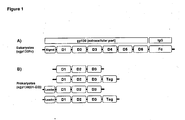
- the wildtype sequence was derived from an expression plasmid which has been described in Jostock et al., Eur. J. Biochem. 268 (2001), 160-7 ( Figure 1 ; upper panel).
- the construct was sequence verified. 3 x 10 5 HEK293 cells were transiently transfected with 1 ⁇ g of plasmid and 3 ⁇ l of Fugene (Roche Diagnostics, Mannheim, Germany) in 3 ml of medium according to the manufacturer's manual. The cells were subsequently incubated for 24 h at 37°C and supernatants and cells were harvested for further preparations of either total proteins or RNA, respectively.
- the sgp130Fc protein was precipitated from the cell supernatants by adding 20 ⁇ l of Protein-A/G-Plus Agarose (Santa Cruz, CA, USA). The slurry was incubated overnight at 4°C and finally centrifuged. Bound proteins were extracted by boiling the agarose pellet in SDS sample buffer for 5 minutes at 100°C. In parallel the cells were scraped from the plates using a rubber policeman, harvested in 100 ⁇ l of PBS and centrifuged. All protein samples were separated on a standard acrylamide gel, transferred to a PDVF-membrane by semi-dry blotting and stained with a gp130-specific antibody (Hölzel Diagnostika, GmbH, Germany). 50 ng of recombinant sgp130 served as positive control (sgp130).
- the following primers were used to determine RNA transcribed from the transfected plasmid DNA by RT-PCR: sgp130Fc_f: 5'-ATGAGGTGTGAGTGGGATGG-3', sgp130Fc_r: 5'-ACCTTGCACTTGTACTCCTTGC-3'; neomycin resistance gene NeoR_s: 5'-GATGCCTGCTTGCCGAATATC-3'; NeoR_r: 5'-CGCCAAGCTCTTCAGCAATATC-3'.
- RNA was initially reverse transcribed and the cDNA was amplified by 30 cycles of 30 seconds at 95°C followed by 2 minutes at 57°C and a final elongation step of 5 minutes at 72°C.
- Expected amplicon sizes gp130: 1.712 bp, NeoR: 133 bp.
- the amplification of NeoR was performed to document an equal transfection efficiency of the plasmid.
- ⁇ -actin was amplified to demonstrated the use of equal amounts of total RNA in each experiment.
- Example 2 Highly efficient recombinant production of sgp130Fc in HEK293 cells
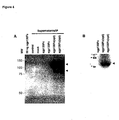
- Figure 4 demonstrates that in comparison to the wildtype expression plasmid the production of sgp130Fc was increased at least 10 to 20-fold in HEK293 cells transfected with the optimized sgp130Fc expression plasmid.
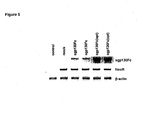
- Figure 5 On the RNA level ( Figure 5 ) a similar increase of sgp130Fc expression was detected with the optimized construct. This elevation of sgp130Fc RNA amounts was not due to a different transfection efficiency as shown by equal amounts of RNA encoded by the neomycin resistance gene which was also located on the expression plasmid.
- results indicate that the significant increase of sgp130Fc production after optimization of the cDNA sequence is partially based on an improved codon usage during translation but is mainly derived from the elevation of the corresponding RNA levels. This might be due to a more efficient transcription or a higher stability of the RNA.
Landscapes
- Health & Medical Sciences (AREA)
- Life Sciences & Earth Sciences (AREA)
- Genetics & Genomics (AREA)
- Chemical & Material Sciences (AREA)
- Engineering & Computer Science (AREA)
- Organic Chemistry (AREA)
- Zoology (AREA)
- Biomedical Technology (AREA)
- Molecular Biology (AREA)
- Biophysics (AREA)
- Biochemistry (AREA)
- Bioinformatics & Cheminformatics (AREA)
- General Health & Medical Sciences (AREA)
- Wood Science & Technology (AREA)
- General Engineering & Computer Science (AREA)
- Biotechnology (AREA)
- Physics & Mathematics (AREA)
- Microbiology (AREA)
- Plant Pathology (AREA)
- Cell Biology (AREA)
- Immunology (AREA)
- Toxicology (AREA)
- Gastroenterology & Hepatology (AREA)
- Medicinal Chemistry (AREA)
- Proteomics, Peptides & Aminoacids (AREA)
- Preparation Of Compounds By Using Micro-Organisms (AREA)
- Micro-Organisms Or Cultivation Processes Thereof (AREA)
- Amplifiers (AREA)
Claims (8)
- Nukleinsäuremolekül, das sgp130 codiert, das (a) die Nukleinsäuresequenz, wie dargestellt in Figur 3 (sgp130Fc_opt) oder (b) ein Fragment davon umfasst, um die Fähigkeit zu erhalten, die Aktivität des Agonistenkomplexes IL-6/sIL-6R zu inhibieren.
- Nukleinsäuremolekül gemäß Anspruch 1, wobei mindestens 80% der Codons, die in der Nukleinsäuresequenz von Figur 3 im Vergleich zum Wildtyp verändert sind, vorhanden sind.
- Nukleinsäuremolekül gemäß Anspruch 1 oder 2, welches ein DNA-Molekül ist.
- Expressionsvektor, der das Nukleinsäuremolekül gemäß einem der Ansprüche 1 bis 3 beinhaltet.
- Wirtszelle, die den Expressionsvektor gemäß Anspruch 4 beinhaltet.
- Wirtszelle gemäß Anspruch 5, welche eine Säugetierwirtszelle ist.
- Wirtszelle gemäß Anspruch 6, welche eine CHO- oder HEK293-Zelle ist.
- Verfahren, um ein sgp130 Polypeptid herzustellen, das das Kultivieren einer Wirtszelle gemäß einem der Ansprüche 5 bis 7 und die Wiedergewinnung des Polypeptids aus dieser Wirtszelle oder der Kultur umfasst.
Priority Applications (12)
| Application Number | Priority Date | Filing Date | Title |
|---|---|---|---|
| ES04020455T ES2309427T3 (es) | 2004-08-27 | 2004-08-27 | Secuencias de nucleotidos optimizidas que codifican para sgp130. |
| DK04020455T DK1630232T3 (da) | 2004-08-27 | 2004-08-27 | Optimerede nukleotidsekvenser kodende for sgp130 |
| DE602004014758T DE602004014758D1 (de) | 2004-08-27 | 2004-08-27 | Optimierte Nukleotidsequenzen die für sgp130 kodieren |
| EP04020455A EP1630232B1 (de) | 2004-08-27 | 2004-08-27 | Optimierte Nukleotidsequenzen die für sgp130 kodieren |
| PT04020455T PT1630232E (pt) | 2004-08-27 | 2004-08-27 | Sequências de nucleótidos optimizadas que codificam sgp130 |
| AT04020455T ATE399868T1 (de) | 2004-08-27 | 2004-08-27 | Optimierte nukleotidsequenzen die für sgp130 kodieren |
| PCT/EP2005/009247 WO2006021453A2 (en) | 2004-08-27 | 2005-08-26 | Optimized nucleotide sequences encoding sgp 130 |
| JP2007528753A JP4615016B2 (ja) | 2004-08-27 | 2005-08-26 | sgp130をコードする最適化ヌクレオチド配列 |
| CA2575800A CA2575800C (en) | 2004-08-27 | 2005-08-26 | Optimized nucleotide sequences encoding sgp130 |
| AU2005276581A AU2005276581A1 (en) | 2004-08-27 | 2005-08-26 | Optimized nucleotide sequences encoding sgp 130 |
| EP05776083A EP1791960A2 (de) | 2004-08-27 | 2005-08-26 | Optimierte für sgp 130 codierende nukleotidsequenzen |
| US11/660,461 US8206948B2 (en) | 2004-08-27 | 2005-08-26 | Optimized nucleotide sequences encoding sgp130 |
Applications Claiming Priority (1)
| Application Number | Priority Date | Filing Date | Title |
|---|---|---|---|
| EP04020455A EP1630232B1 (de) | 2004-08-27 | 2004-08-27 | Optimierte Nukleotidsequenzen die für sgp130 kodieren |
Publications (2)
| Publication Number | Publication Date |
|---|---|
| EP1630232A1 EP1630232A1 (de) | 2006-03-01 |
| EP1630232B1 true EP1630232B1 (de) | 2008-07-02 |
Family
ID=34926337
Family Applications (2)
| Application Number | Title | Priority Date | Filing Date |
|---|---|---|---|
| EP04020455A Expired - Lifetime EP1630232B1 (de) | 2004-08-27 | 2004-08-27 | Optimierte Nukleotidsequenzen die für sgp130 kodieren |
| EP05776083A Withdrawn EP1791960A2 (de) | 2004-08-27 | 2005-08-26 | Optimierte für sgp 130 codierende nukleotidsequenzen |
Family Applications After (1)
| Application Number | Title | Priority Date | Filing Date |
|---|---|---|---|
| EP05776083A Withdrawn EP1791960A2 (de) | 2004-08-27 | 2005-08-26 | Optimierte für sgp 130 codierende nukleotidsequenzen |
Country Status (11)
| Country | Link |
|---|---|
| US (1) | US8206948B2 (de) |
| EP (2) | EP1630232B1 (de) |
| JP (1) | JP4615016B2 (de) |
| AT (1) | ATE399868T1 (de) |
| AU (1) | AU2005276581A1 (de) |
| CA (1) | CA2575800C (de) |
| DE (1) | DE602004014758D1 (de) |
| DK (1) | DK1630232T3 (de) |
| ES (1) | ES2309427T3 (de) |
| PT (1) | PT1630232E (de) |
| WO (1) | WO2006021453A2 (de) |
Families Citing this family (8)
| Publication number | Priority date | Publication date | Assignee | Title |
|---|---|---|---|---|
| EP1873166B1 (de) | 2006-06-30 | 2010-09-08 | CONARIS research institute AG | Verbesserte sgp 130Fc Dimere |
| SI3227325T1 (sl) * | 2014-12-01 | 2024-06-28 | Ferring B.V. | Selektivni sestavki zaviralcev IL-6-trans-signalizacije |
| JP6775513B2 (ja) | 2014-12-01 | 2020-10-28 | フェリング・ベー・フェー | 選択的il−6−トランス−シグナル伝達阻害剤の投与 |
| GB201522186D0 (en) | 2015-12-16 | 2016-01-27 | Singapore Health Services Pte Ltd And Nat University Of Singapore The | Treatment of fibrosis |
| AU2017378111A1 (en) | 2016-12-16 | 2019-06-13 | National University Of Singapore | IL-11 antibodies |
| GB201621439D0 (en) | 2016-12-16 | 2017-02-01 | Singapore Health Services Pte Ltd And Nat Univ Of Singapore | IL-11Ra Antibodies |
| GB201621431D0 (en) | 2016-12-16 | 2017-02-01 | Singapore Health Services Pte Ltd And Nat Univ Of Singapore The | Decoy cytokine receptor |
| MX2021008727A (es) | 2019-01-21 | 2021-11-04 | Singapore Health Serv Pte Ltd | Tratamiento de la hepatotoxicidad. |
Family Cites Families (5)
| Publication number | Priority date | Publication date | Assignee | Title |
|---|---|---|---|---|
| US5783672A (en) * | 1994-05-26 | 1998-07-21 | Immunex Corporation | Receptor for oncostatin M |
| US6472179B2 (en) * | 1998-09-25 | 2002-10-29 | Regeneron Pharmaceuticals, Inc. | Receptor based antagonists and methods of making and using |
| EP1148065B1 (de) * | 2000-04-21 | 2008-01-02 | CONARIS research institute AG | Fusionsproteine, die zwei lösliche gp130 Moleküle enthalten |
| JP2004182638A (ja) * | 2002-12-03 | 2004-07-02 | Yakult Honsha Co Ltd | 炎症性疾患又は悪性腫瘍の予防治療剤 |
| EP1491554A1 (de) * | 2003-06-23 | 2004-12-29 | CONARIS research institute AG | PEGlierte lösliche gp130-Dimeren geignet als Medikament |
-
2004
- 2004-08-27 EP EP04020455A patent/EP1630232B1/de not_active Expired - Lifetime
- 2004-08-27 AT AT04020455T patent/ATE399868T1/de active
- 2004-08-27 PT PT04020455T patent/PT1630232E/pt unknown
- 2004-08-27 DK DK04020455T patent/DK1630232T3/da active
- 2004-08-27 ES ES04020455T patent/ES2309427T3/es not_active Expired - Lifetime
- 2004-08-27 DE DE602004014758T patent/DE602004014758D1/de not_active Expired - Lifetime
-
2005
- 2005-08-26 EP EP05776083A patent/EP1791960A2/de not_active Withdrawn
- 2005-08-26 AU AU2005276581A patent/AU2005276581A1/en not_active Abandoned
- 2005-08-26 US US11/660,461 patent/US8206948B2/en active Active
- 2005-08-26 CA CA2575800A patent/CA2575800C/en not_active Expired - Lifetime
- 2005-08-26 JP JP2007528753A patent/JP4615016B2/ja not_active Expired - Lifetime
- 2005-08-26 WO PCT/EP2005/009247 patent/WO2006021453A2/en not_active Ceased
Also Published As
| Publication number | Publication date |
|---|---|
| US20080199906A1 (en) | 2008-08-21 |
| WO2006021453A2 (en) | 2006-03-02 |
| CA2575800C (en) | 2018-06-05 |
| JP4615016B2 (ja) | 2011-01-19 |
| ES2309427T3 (es) | 2008-12-16 |
| US8206948B2 (en) | 2012-06-26 |
| DK1630232T3 (da) | 2008-10-20 |
| EP1791960A2 (de) | 2007-06-06 |
| EP1630232A1 (de) | 2006-03-01 |
| PT1630232E (pt) | 2008-10-02 |
| CA2575800A1 (en) | 2006-03-02 |
| AU2005276581A1 (en) | 2006-03-02 |
| ATE399868T1 (de) | 2008-07-15 |
| WO2006021453A3 (en) | 2006-06-22 |
| DE602004014758D1 (de) | 2008-08-14 |
| JP2008510474A (ja) | 2008-04-10 |
Similar Documents
| Publication | Publication Date | Title |
|---|---|---|
| US20230227530A1 (en) | T-cell modulatory multimeric polypeptides and methods of use thereof | |
| TWI352737B (en) | Promoter | |
| US8017738B2 (en) | Hemopoietin receptor protein, NR10 | |
| CN116970059A (zh) | T细胞调节性多聚体多肽及其使用方法 | |
| WO2017201131A1 (en) | Variant pd-l1 polypeptides, t-cell modulatory multimeric polypeptides, and methods of use thereof | |
| CN113767168B (zh) | 高效引入赖氨酸衍生物的氨酰基—tRNA合成酶 | |
| EP1630232B1 (de) | Optimierte Nukleotidsequenzen die für sgp130 kodieren | |
| EA015620B1 (ru) | УЛУЧШЕННЫЕ ДИМЕРЫ sgp130FC | |
| KR20040032105A (ko) | 재조합 단백질의 조성물 및 재조합 단백질의 고수준대규모 생산방법 | |
| CN111718949B (zh) | 利用双质粒系统在蛋白中引入非天然氨基酸 | |
| US20040115775A1 (en) | Homogeneity and secretion of recombinant proteins in mammalian systems | |
| CN113614226A (zh) | 在蛋白中高效引入赖氨酸衍生物的氨酰基-tRNA合成酶 | |
| JP2024542318A (ja) | 修飾された5’utr | |
| CN113396221A (zh) | 作为非抗生素选择标记的β-半乳糖苷酶α肽及其用途 | |
| WO2024153120A1 (zh) | 突变的pd1胞外域片段及含有该片段的car和nk细胞 | |
| JP2005506053A (ja) | アポエクオリンをコードするコドン最適化核酸およびそれらの使用方法 | |
| Gibbons Jr et al. | Genomic organization, expression, and subcellular localization of mouse mitochondrial seryl-tRNA synthetase | |
| JPH0638773A (ja) | 薬剤耐性構造タンパク質遺伝子を選択遺伝子として用いた発現ベクター | |
| KR20090046780A (ko) | Ραs 변이체 및 이를 포함하는 벡터 | |
| JPWO2000026365A1 (ja) | 新規遺伝子及びそれにコードされる蛋白質ERRγ |
Legal Events
| Date | Code | Title | Description |
|---|---|---|---|
| PUAI | Public reference made under article 153(3) epc to a published international application that has entered the european phase |
Free format text: ORIGINAL CODE: 0009012 |
|
| AK | Designated contracting states |
Kind code of ref document: A1 Designated state(s): AT BE BG CH CY CZ DE DK EE ES FI FR GB GR HU IE IT LI LU MC NL PL PT RO SE SI SK TR |
|
| AX | Request for extension of the european patent |
Extension state: AL HR LT LV MK |
|
| AKX | Designation fees paid | ||
| 17P | Request for examination filed |
Effective date: 20060705 |
|
| RBV | Designated contracting states (corrected) |
Designated state(s): AT BE BG CH CY CZ DE DK EE ES FI FR GB GR HU IE IT LI LU MC NL PL PT RO SE SI SK TR |
|
| 17Q | First examination report despatched |
Effective date: 20070118 |
|
| 17Q | First examination report despatched |
Effective date: 20070118 |
|
| GRAP | Despatch of communication of intention to grant a patent |
Free format text: ORIGINAL CODE: EPIDOSNIGR1 |
|
| GRAS | Grant fee paid |
Free format text: ORIGINAL CODE: EPIDOSNIGR3 |
|
| GRAA | (expected) grant |
Free format text: ORIGINAL CODE: 0009210 |
|
| AK | Designated contracting states |
Kind code of ref document: B1 Designated state(s): AT BE BG CH CY CZ DE DK EE ES FI FR GB GR HU IE IT LI LU MC NL PL PT RO SE SI SK TR |
|
| REG | Reference to a national code |
Ref country code: GB Ref legal event code: FG4D |
|
| REG | Reference to a national code |
Ref country code: CH Ref legal event code: EP |
|
| REF | Corresponds to: |
Ref document number: 602004014758 Country of ref document: DE Date of ref document: 20080814 Kind code of ref document: P |
|
| REG | Reference to a national code |
Ref country code: IE Ref legal event code: FG4D |
|
| REG | Reference to a national code |
Ref country code: SE Ref legal event code: TRGR |
|
| REG | Reference to a national code |
Ref country code: CH Ref legal event code: NV Representative=s name: ING. MARCO ZARDI C/O M. ZARDI & CO. S.A. |
|
| REG | Reference to a national code |
Ref country code: PT Ref legal event code: SC4A Free format text: AVAILABILITY OF NATIONAL TRANSLATION Effective date: 20080919 |
|
| REG | Reference to a national code |
Ref country code: GR Ref legal event code: EP Ref document number: 20080402388 Country of ref document: GR |
|
| PG25 | Lapsed in a contracting state [announced via postgrant information from national office to epo] |
Ref country code: SI Free format text: LAPSE BECAUSE OF FAILURE TO SUBMIT A TRANSLATION OF THE DESCRIPTION OR TO PAY THE FEE WITHIN THE PRESCRIBED TIME-LIMIT Effective date: 20080702 |
|
| REG | Reference to a national code |
Ref country code: ES Ref legal event code: FG2A Ref document number: 2309427 Country of ref document: ES Kind code of ref document: T3 |
|
| PG25 | Lapsed in a contracting state [announced via postgrant information from national office to epo] |
Ref country code: BG Free format text: LAPSE BECAUSE OF FAILURE TO SUBMIT A TRANSLATION OF THE DESCRIPTION OR TO PAY THE FEE WITHIN THE PRESCRIBED TIME-LIMIT Effective date: 20081002 |
|
| PG25 | Lapsed in a contracting state [announced via postgrant information from national office to epo] |
Ref country code: EE Free format text: LAPSE BECAUSE OF FAILURE TO SUBMIT A TRANSLATION OF THE DESCRIPTION OR TO PAY THE FEE WITHIN THE PRESCRIBED TIME-LIMIT Effective date: 20080702 |
|
| PLBE | No opposition filed within time limit |
Free format text: ORIGINAL CODE: 0009261 |
|
| PG25 | Lapsed in a contracting state [announced via postgrant information from national office to epo] |
Ref country code: SK Free format text: LAPSE BECAUSE OF FAILURE TO SUBMIT A TRANSLATION OF THE DESCRIPTION OR TO PAY THE FEE WITHIN THE PRESCRIBED TIME-LIMIT Effective date: 20080702 Ref country code: RO Free format text: LAPSE BECAUSE OF FAILURE TO SUBMIT A TRANSLATION OF THE DESCRIPTION OR TO PAY THE FEE WITHIN THE PRESCRIBED TIME-LIMIT Effective date: 20080702 Ref country code: CZ Free format text: LAPSE BECAUSE OF FAILURE TO SUBMIT A TRANSLATION OF THE DESCRIPTION OR TO PAY THE FEE WITHIN THE PRESCRIBED TIME-LIMIT Effective date: 20080702 |
|
| 26N | No opposition filed |
Effective date: 20090403 |
|
| PGFP | Annual fee paid to national office [announced via postgrant information from national office to epo] |
Ref country code: MC Payment date: 20090901 Year of fee payment: 6 |
|
| PGFP | Annual fee paid to national office [announced via postgrant information from national office to epo] |
Ref country code: TR Payment date: 20090826 Year of fee payment: 6 Ref country code: PT Payment date: 20090825 Year of fee payment: 6 Ref country code: FI Payment date: 20090828 Year of fee payment: 6 |
|
| PG25 | Lapsed in a contracting state [announced via postgrant information from national office to epo] |
Ref country code: PL Free format text: LAPSE BECAUSE OF FAILURE TO SUBMIT A TRANSLATION OF THE DESCRIPTION OR TO PAY THE FEE WITHIN THE PRESCRIBED TIME-LIMIT Effective date: 20080702 |
|
| PGFP | Annual fee paid to national office [announced via postgrant information from national office to epo] |
Ref country code: GR Payment date: 20090831 Year of fee payment: 6 |
|
| PG25 | Lapsed in a contracting state [announced via postgrant information from national office to epo] |
Ref country code: LU Free format text: LAPSE BECAUSE OF NON-PAYMENT OF DUE FEES Effective date: 20080827 Ref country code: HU Free format text: LAPSE BECAUSE OF FAILURE TO SUBMIT A TRANSLATION OF THE DESCRIPTION OR TO PAY THE FEE WITHIN THE PRESCRIBED TIME-LIMIT Effective date: 20090103 Ref country code: CY Free format text: LAPSE BECAUSE OF FAILURE TO SUBMIT A TRANSLATION OF THE DESCRIPTION OR TO PAY THE FEE WITHIN THE PRESCRIBED TIME-LIMIT Effective date: 20080702 |
|
| REG | Reference to a national code |
Ref country code: PT Ref legal event code: MM4A Free format text: LAPSE DUE TO NON-PAYMENT OF FEES Effective date: 20110228 |
|
| PG25 | Lapsed in a contracting state [announced via postgrant information from national office to epo] |
Ref country code: MC Free format text: LAPSE BECAUSE OF NON-PAYMENT OF DUE FEES Effective date: 20100831 |
|
| PLAA | Information modified related to event that no opposition was filed |
Free format text: ORIGINAL CODE: 0009299DELT |
|
| PLBE | No opposition filed within time limit |
Free format text: ORIGINAL CODE: 0009261 |
|
| STAA | Information on the status of an ep patent application or granted ep patent |
Free format text: STATUS: NO OPPOSITION FILED WITHIN TIME LIMIT |
|
| PG25 | Lapsed in a contracting state [announced via postgrant information from national office to epo] |
Ref country code: IT Free format text: LAPSE BECAUSE OF NON-PAYMENT OF DUE FEES Effective date: 20100827 Ref country code: PT Free format text: LAPSE BECAUSE OF NON-PAYMENT OF DUE FEES Effective date: 20110228 Ref country code: FI Free format text: LAPSE BECAUSE OF NON-PAYMENT OF DUE FEES Effective date: 20100827 |
|
| 26N | No opposition filed |
Effective date: 20090403 |
|
| RIN2 | Information on inventor provided after grant (corrected) |
Inventor name: ROSE-JOHN, STEFAN Inventor name: DAECKE, JESSICA, DR. Inventor name: RAHAUS, NIKOLAUS Inventor name: WAETZIG, GEORG, DR. Inventor name: SEEGERT, DIRK |
|
| PG25 | Lapsed in a contracting state [announced via postgrant information from national office to epo] |
Ref country code: GR Free format text: LAPSE BECAUSE OF NON-PAYMENT OF DUE FEES Effective date: 20110302 |
|
| PG25 | Lapsed in a contracting state [announced via postgrant information from national office to epo] |
Ref country code: TR Free format text: LAPSE BECAUSE OF NON-PAYMENT OF DUE FEES Effective date: 20100827 |
|
| REG | Reference to a national code |
Ref country code: FR Ref legal event code: PLFP Year of fee payment: 13 |
|
| REG | Reference to a national code |
Ref country code: FR Ref legal event code: PLFP Year of fee payment: 14 |
|
| REG | Reference to a national code |
Ref country code: FR Ref legal event code: PLFP Year of fee payment: 15 |
|
| P01 | Opt-out of the competence of the unified patent court (upc) registered |
Effective date: 20230504 |
|
| PGFP | Annual fee paid to national office [announced via postgrant information from national office to epo] |
Ref country code: NL Payment date: 20230825 Year of fee payment: 20 |
|
| PGFP | Annual fee paid to national office [announced via postgrant information from national office to epo] |
Ref country code: IT Payment date: 20230822 Year of fee payment: 20 Ref country code: IE Payment date: 20230818 Year of fee payment: 20 Ref country code: GB Payment date: 20230822 Year of fee payment: 20 Ref country code: ES Payment date: 20230914 Year of fee payment: 20 Ref country code: CH Payment date: 20230902 Year of fee payment: 20 Ref country code: AT Payment date: 20230818 Year of fee payment: 20 |
|
| PGFP | Annual fee paid to national office [announced via postgrant information from national office to epo] |
Ref country code: SE Payment date: 20230823 Year of fee payment: 20 Ref country code: FR Payment date: 20230824 Year of fee payment: 20 Ref country code: DK Payment date: 20230824 Year of fee payment: 20 Ref country code: DE Payment date: 20230828 Year of fee payment: 20 Ref country code: BE Payment date: 20230825 Year of fee payment: 20 |
|
| REG | Reference to a national code |
Ref country code: DE Ref legal event code: R071 Ref document number: 602004014758 Country of ref document: DE |
|
| REG | Reference to a national code |
Ref country code: NL Ref legal event code: MK Effective date: 20240826 |
|
| REG | Reference to a national code |
Ref country code: CH Ref legal event code: PL |
|
| REG | Reference to a national code |
Ref country code: BE Ref legal event code: MK Effective date: 20240827 |
|
| REG | Reference to a national code |
Ref country code: ES Ref legal event code: FD2A Effective date: 20240903 |
|
| REG | Reference to a national code |
Ref country code: GB Ref legal event code: PE20 Expiry date: 20240826 |
|
| REG | Reference to a national code |
Ref country code: IE Ref legal event code: MK9A |
|
| REG | Reference to a national code |
Ref country code: SE Ref legal event code: EUG |
|
| PG25 | Lapsed in a contracting state [announced via postgrant information from national office to epo] |
Ref country code: IE Free format text: LAPSE BECAUSE OF EXPIRATION OF PROTECTION Effective date: 20240827 |
|
| PG25 | Lapsed in a contracting state [announced via postgrant information from national office to epo] |
Ref country code: GB Free format text: LAPSE BECAUSE OF EXPIRATION OF PROTECTION Effective date: 20240826 |
|
| REG | Reference to a national code |
Ref country code: AT Ref legal event code: MK07 Ref document number: 399868 Country of ref document: AT Kind code of ref document: T Effective date: 20240827 |
|
| PG25 | Lapsed in a contracting state [announced via postgrant information from national office to epo] |
Ref country code: ES Free format text: LAPSE BECAUSE OF EXPIRATION OF PROTECTION Effective date: 20240828 |
|
| PG25 | Lapsed in a contracting state [announced via postgrant information from national office to epo] |
Ref country code: IE Free format text: LAPSE BECAUSE OF EXPIRATION OF PROTECTION Effective date: 20240827 Ref country code: GB Free format text: LAPSE BECAUSE OF EXPIRATION OF PROTECTION Effective date: 20240826 Ref country code: ES Free format text: LAPSE BECAUSE OF EXPIRATION OF PROTECTION Effective date: 20240828 |
|
| REG | Reference to a national code |
Ref country code: DK Ref legal event code: EUP Expiry date: 20240827 |