EP1628067B1 - In situ Reparaturverfahren einer Rohrleitung oder eines Behälters aus wärmeschmelzendem Material sowie Vorrichtung zur Durchführung des genannten Verfahrens - Google Patents
In situ Reparaturverfahren einer Rohrleitung oder eines Behälters aus wärmeschmelzendem Material sowie Vorrichtung zur Durchführung des genannten Verfahrens Download PDFInfo
- Publication number
- EP1628067B1 EP1628067B1 EP20050291430 EP05291430A EP1628067B1 EP 1628067 B1 EP1628067 B1 EP 1628067B1 EP 20050291430 EP20050291430 EP 20050291430 EP 05291430 A EP05291430 A EP 05291430A EP 1628067 B1 EP1628067 B1 EP 1628067B1
- Authority
- EP
- European Patent Office
- Prior art keywords
- conduit
- reservoir
- electric power
- heating element
- repaired
- Prior art date
- Legal status (The legal status is an assumption and is not a legal conclusion. Google has not performed a legal analysis and makes no representation as to the accuracy of the status listed.)
- Expired - Lifetime
Links
Images



Classifications
-
- F—MECHANICAL ENGINEERING; LIGHTING; HEATING; WEAPONS; BLASTING
- F16—ENGINEERING ELEMENTS AND UNITS; GENERAL MEASURES FOR PRODUCING AND MAINTAINING EFFECTIVE FUNCTIONING OF MACHINES OR INSTALLATIONS; THERMAL INSULATION IN GENERAL
- F16L—PIPES; JOINTS OR FITTINGS FOR PIPES; SUPPORTS FOR PIPES, CABLES OR PROTECTIVE TUBING; MEANS FOR THERMAL INSULATION IN GENERAL
- F16L55/00—Devices or appurtenances for use in, or in connection with, pipes or pipe systems
- F16L55/16—Devices for covering leaks in pipes or hoses, e.g. hose-menders
- F16L55/168—Devices for covering leaks in pipes or hoses, e.g. hose-menders from outside the pipe
-
- B—PERFORMING OPERATIONS; TRANSPORTING
- B29—WORKING OF PLASTICS; WORKING OF SUBSTANCES IN A PLASTIC STATE IN GENERAL
- B29B—PREPARATION OR PRETREATMENT OF THE MATERIAL TO BE SHAPED; MAKING GRANULES OR PREFORMS; RECOVERY OF PLASTICS OR OTHER CONSTITUENTS OF WASTE MATERIAL CONTAINING PLASTICS
- B29B13/00—Conditioning or physical treatment of the material to be shaped
- B29B13/02—Conditioning or physical treatment of the material to be shaped by heating
- B29B13/023—Half-products, e.g. films, plates
- B29B13/024—Hollow bodies, e.g. tubes or profiles
-
- B—PERFORMING OPERATIONS; TRANSPORTING
- B29—WORKING OF PLASTICS; WORKING OF SUBSTANCES IN A PLASTIC STATE IN GENERAL
- B29C—SHAPING OR JOINING OF PLASTICS; SHAPING OF MATERIAL IN A PLASTIC STATE, NOT OTHERWISE PROVIDED FOR; AFTER-TREATMENT OF THE SHAPED PRODUCTS, e.g. REPAIRING
- B29C65/00—Joining or sealing of preformed parts, e.g. welding of plastics materials; Apparatus therefor
- B29C65/02—Joining or sealing of preformed parts, e.g. welding of plastics materials; Apparatus therefor by heating, with or without pressure
- B29C65/34—Joining or sealing of preformed parts, e.g. welding of plastics materials; Apparatus therefor by heating, with or without pressure using heated elements which remain in the joint, e.g. "verlorenes Schweisselement"
- B29C65/3404—Joining or sealing of preformed parts, e.g. welding of plastics materials; Apparatus therefor by heating, with or without pressure using heated elements which remain in the joint, e.g. "verlorenes Schweisselement" characterised by the type of heated elements which remain in the joint
- B29C65/344—Joining or sealing of preformed parts, e.g. welding of plastics materials; Apparatus therefor by heating, with or without pressure using heated elements which remain in the joint, e.g. "verlorenes Schweisselement" characterised by the type of heated elements which remain in the joint being a woven or non-woven fabric or being a mesh
-
- B—PERFORMING OPERATIONS; TRANSPORTING
- B29—WORKING OF PLASTICS; WORKING OF SUBSTANCES IN A PLASTIC STATE IN GENERAL
- B29C—SHAPING OR JOINING OF PLASTICS; SHAPING OF MATERIAL IN A PLASTIC STATE, NOT OTHERWISE PROVIDED FOR; AFTER-TREATMENT OF THE SHAPED PRODUCTS, e.g. REPAIRING
- B29C66/00—General aspects of processes or apparatus for joining preformed parts
- B29C66/01—General aspects dealing with the joint area or with the area to be joined
- B29C66/05—Particular design of joint configurations
- B29C66/10—Particular design of joint configurations particular design of the joint cross-sections
- B29C66/11—Joint cross-sections comprising a single joint-segment, i.e. one of the parts to be joined comprising a single joint-segment in the joint cross-section
- B29C66/112—Single lapped joints
- B29C66/1122—Single lap to lap joints, i.e. overlap joints
-
- B—PERFORMING OPERATIONS; TRANSPORTING
- B29—WORKING OF PLASTICS; WORKING OF SUBSTANCES IN A PLASTIC STATE IN GENERAL
- B29C—SHAPING OR JOINING OF PLASTICS; SHAPING OF MATERIAL IN A PLASTIC STATE, NOT OTHERWISE PROVIDED FOR; AFTER-TREATMENT OF THE SHAPED PRODUCTS, e.g. REPAIRING
- B29C66/00—General aspects of processes or apparatus for joining preformed parts
- B29C66/50—General aspects of joining tubular articles; General aspects of joining long products, i.e. bars or profiled elements; General aspects of joining single elements to tubular articles, hollow articles or bars; General aspects of joining several hollow-preforms to form hollow or tubular articles
- B29C66/51—Joining tubular articles, profiled elements or bars; Joining single elements to tubular articles, hollow articles or bars; Joining several hollow-preforms to form hollow or tubular articles
- B29C66/53—Joining single elements to tubular articles, hollow articles or bars
- B29C66/532—Joining single elements to the wall of tubular articles, hollow articles or bars
- B29C66/5326—Joining single elements to the wall of tubular articles, hollow articles or bars said single elements being substantially flat
-
- B—PERFORMING OPERATIONS; TRANSPORTING
- B29—WORKING OF PLASTICS; WORKING OF SUBSTANCES IN A PLASTIC STATE IN GENERAL
- B29C—SHAPING OR JOINING OF PLASTICS; SHAPING OF MATERIAL IN A PLASTIC STATE, NOT OTHERWISE PROVIDED FOR; AFTER-TREATMENT OF THE SHAPED PRODUCTS, e.g. REPAIRING
- B29C66/00—General aspects of processes or apparatus for joining preformed parts
- B29C66/90—Measuring or controlling the joining process
- B29C66/91—Measuring or controlling the joining process by measuring or controlling the temperature, the heat or the thermal flux
- B29C66/912—Measuring or controlling the joining process by measuring or controlling the temperature, the heat or the thermal flux by measuring the temperature, the heat or the thermal flux
- B29C66/9121—Measuring or controlling the joining process by measuring or controlling the temperature, the heat or the thermal flux by measuring the temperature, the heat or the thermal flux by measuring the temperature
- B29C66/91211—Measuring or controlling the joining process by measuring or controlling the temperature, the heat or the thermal flux by measuring the temperature, the heat or the thermal flux by measuring the temperature with special temperature measurement means or methods
- B29C66/91212—Measuring or controlling the joining process by measuring or controlling the temperature, the heat or the thermal flux by measuring the temperature, the heat or the thermal flux by measuring the temperature with special temperature measurement means or methods involving measurement means being part of the welding jaws, e.g. integrated in the welding jaws
-
- B—PERFORMING OPERATIONS; TRANSPORTING
- B29—WORKING OF PLASTICS; WORKING OF SUBSTANCES IN A PLASTIC STATE IN GENERAL
- B29C—SHAPING OR JOINING OF PLASTICS; SHAPING OF MATERIAL IN A PLASTIC STATE, NOT OTHERWISE PROVIDED FOR; AFTER-TREATMENT OF THE SHAPED PRODUCTS, e.g. REPAIRING
- B29C66/00—General aspects of processes or apparatus for joining preformed parts
- B29C66/90—Measuring or controlling the joining process
- B29C66/91—Measuring or controlling the joining process by measuring or controlling the temperature, the heat or the thermal flux
- B29C66/912—Measuring or controlling the joining process by measuring or controlling the temperature, the heat or the thermal flux by measuring the temperature, the heat or the thermal flux
- B29C66/9121—Measuring or controlling the joining process by measuring or controlling the temperature, the heat or the thermal flux by measuring the temperature, the heat or the thermal flux by measuring the temperature
- B29C66/91231—Measuring or controlling the joining process by measuring or controlling the temperature, the heat or the thermal flux by measuring the temperature, the heat or the thermal flux by measuring the temperature of the joining tool
-
- B—PERFORMING OPERATIONS; TRANSPORTING
- B29—WORKING OF PLASTICS; WORKING OF SUBSTANCES IN A PLASTIC STATE IN GENERAL
- B29C—SHAPING OR JOINING OF PLASTICS; SHAPING OF MATERIAL IN A PLASTIC STATE, NOT OTHERWISE PROVIDED FOR; AFTER-TREATMENT OF THE SHAPED PRODUCTS, e.g. REPAIRING
- B29C66/00—General aspects of processes or apparatus for joining preformed parts
- B29C66/90—Measuring or controlling the joining process
- B29C66/91—Measuring or controlling the joining process by measuring or controlling the temperature, the heat or the thermal flux
- B29C66/914—Measuring or controlling the joining process by measuring or controlling the temperature, the heat or the thermal flux by controlling or regulating the temperature, the heat or the thermal flux
- B29C66/9141—Measuring or controlling the joining process by measuring or controlling the temperature, the heat or the thermal flux by controlling or regulating the temperature, the heat or the thermal flux by controlling or regulating the temperature
- B29C66/91411—Measuring or controlling the joining process by measuring or controlling the temperature, the heat or the thermal flux by controlling or regulating the temperature, the heat or the thermal flux by controlling or regulating the temperature of the parts to be joined, e.g. the joining process taking the temperature of the parts to be joined into account
-
- B—PERFORMING OPERATIONS; TRANSPORTING
- B29—WORKING OF PLASTICS; WORKING OF SUBSTANCES IN A PLASTIC STATE IN GENERAL
- B29C—SHAPING OR JOINING OF PLASTICS; SHAPING OF MATERIAL IN A PLASTIC STATE, NOT OTHERWISE PROVIDED FOR; AFTER-TREATMENT OF THE SHAPED PRODUCTS, e.g. REPAIRING
- B29C66/00—General aspects of processes or apparatus for joining preformed parts
- B29C66/90—Measuring or controlling the joining process
- B29C66/91—Measuring or controlling the joining process by measuring or controlling the temperature, the heat or the thermal flux
- B29C66/914—Measuring or controlling the joining process by measuring or controlling the temperature, the heat or the thermal flux by controlling or regulating the temperature, the heat or the thermal flux
- B29C66/9141—Measuring or controlling the joining process by measuring or controlling the temperature, the heat or the thermal flux by controlling or regulating the temperature, the heat or the thermal flux by controlling or regulating the temperature
- B29C66/91421—Measuring or controlling the joining process by measuring or controlling the temperature, the heat or the thermal flux by controlling or regulating the temperature, the heat or the thermal flux by controlling or regulating the temperature of the joining tools
-
- B—PERFORMING OPERATIONS; TRANSPORTING
- B29—WORKING OF PLASTICS; WORKING OF SUBSTANCES IN A PLASTIC STATE IN GENERAL
- B29C—SHAPING OR JOINING OF PLASTICS; SHAPING OF MATERIAL IN A PLASTIC STATE, NOT OTHERWISE PROVIDED FOR; AFTER-TREATMENT OF THE SHAPED PRODUCTS, e.g. REPAIRING
- B29C66/00—General aspects of processes or apparatus for joining preformed parts
- B29C66/90—Measuring or controlling the joining process
- B29C66/91—Measuring or controlling the joining process by measuring or controlling the temperature, the heat or the thermal flux
- B29C66/914—Measuring or controlling the joining process by measuring or controlling the temperature, the heat or the thermal flux by controlling or regulating the temperature, the heat or the thermal flux
- B29C66/9141—Measuring or controlling the joining process by measuring or controlling the temperature, the heat or the thermal flux by controlling or regulating the temperature, the heat or the thermal flux by controlling or regulating the temperature
- B29C66/91441—Measuring or controlling the joining process by measuring or controlling the temperature, the heat or the thermal flux by controlling or regulating the temperature, the heat or the thermal flux by controlling or regulating the temperature the temperature being non-constant over time
- B29C66/91443—Measuring or controlling the joining process by measuring or controlling the temperature, the heat or the thermal flux by controlling or regulating the temperature, the heat or the thermal flux by controlling or regulating the temperature the temperature being non-constant over time following a temperature-time profile
-
- B—PERFORMING OPERATIONS; TRANSPORTING
- B29—WORKING OF PLASTICS; WORKING OF SUBSTANCES IN A PLASTIC STATE IN GENERAL
- B29C—SHAPING OR JOINING OF PLASTICS; SHAPING OF MATERIAL IN A PLASTIC STATE, NOT OTHERWISE PROVIDED FOR; AFTER-TREATMENT OF THE SHAPED PRODUCTS, e.g. REPAIRING
- B29C66/00—General aspects of processes or apparatus for joining preformed parts
- B29C66/90—Measuring or controlling the joining process
- B29C66/91—Measuring or controlling the joining process by measuring or controlling the temperature, the heat or the thermal flux
- B29C66/914—Measuring or controlling the joining process by measuring or controlling the temperature, the heat or the thermal flux by controlling or regulating the temperature, the heat or the thermal flux
- B29C66/9161—Measuring or controlling the joining process by measuring or controlling the temperature, the heat or the thermal flux by controlling or regulating the temperature, the heat or the thermal flux by controlling or regulating the heat or the thermal flux, i.e. the heat flux
- B29C66/91641—Measuring or controlling the joining process by measuring or controlling the temperature, the heat or the thermal flux by controlling or regulating the temperature, the heat or the thermal flux by controlling or regulating the heat or the thermal flux, i.e. the heat flux the heat or the thermal flux being non-constant over time
- B29C66/91643—Measuring or controlling the joining process by measuring or controlling the temperature, the heat or the thermal flux by controlling or regulating the temperature, the heat or the thermal flux by controlling or regulating the heat or the thermal flux, i.e. the heat flux the heat or the thermal flux being non-constant over time following a heat-time profile
- B29C66/91645—Measuring or controlling the joining process by measuring or controlling the temperature, the heat or the thermal flux by controlling or regulating the temperature, the heat or the thermal flux by controlling or regulating the heat or the thermal flux, i.e. the heat flux the heat or the thermal flux being non-constant over time following a heat-time profile by steps
-
- B—PERFORMING OPERATIONS; TRANSPORTING
- B29—WORKING OF PLASTICS; WORKING OF SUBSTANCES IN A PLASTIC STATE IN GENERAL
- B29C—SHAPING OR JOINING OF PLASTICS; SHAPING OF MATERIAL IN A PLASTIC STATE, NOT OTHERWISE PROVIDED FOR; AFTER-TREATMENT OF THE SHAPED PRODUCTS, e.g. REPAIRING
- B29C66/00—General aspects of processes or apparatus for joining preformed parts
- B29C66/90—Measuring or controlling the joining process
- B29C66/91—Measuring or controlling the joining process by measuring or controlling the temperature, the heat or the thermal flux
- B29C66/914—Measuring or controlling the joining process by measuring or controlling the temperature, the heat or the thermal flux by controlling or regulating the temperature, the heat or the thermal flux
- B29C66/9161—Measuring or controlling the joining process by measuring or controlling the temperature, the heat or the thermal flux by controlling or regulating the temperature, the heat or the thermal flux by controlling or regulating the heat or the thermal flux, i.e. the heat flux
- B29C66/91651—Measuring or controlling the joining process by measuring or controlling the temperature, the heat or the thermal flux by controlling or regulating the temperature, the heat or the thermal flux by controlling or regulating the heat or the thermal flux, i.e. the heat flux by controlling or regulating the heat generated by Joule heating or induction heating
- B29C66/91653—Measuring or controlling the joining process by measuring or controlling the temperature, the heat or the thermal flux by controlling or regulating the temperature, the heat or the thermal flux by controlling or regulating the heat or the thermal flux, i.e. the heat flux by controlling or regulating the heat generated by Joule heating or induction heating by controlling or regulating the voltage, i.e. the electric potential difference or electric tension
-
- B—PERFORMING OPERATIONS; TRANSPORTING
- B29—WORKING OF PLASTICS; WORKING OF SUBSTANCES IN A PLASTIC STATE IN GENERAL
- B29C—SHAPING OR JOINING OF PLASTICS; SHAPING OF MATERIAL IN A PLASTIC STATE, NOT OTHERWISE PROVIDED FOR; AFTER-TREATMENT OF THE SHAPED PRODUCTS, e.g. REPAIRING
- B29C66/00—General aspects of processes or apparatus for joining preformed parts
- B29C66/90—Measuring or controlling the joining process
- B29C66/91—Measuring or controlling the joining process by measuring or controlling the temperature, the heat or the thermal flux
- B29C66/914—Measuring or controlling the joining process by measuring or controlling the temperature, the heat or the thermal flux by controlling or regulating the temperature, the heat or the thermal flux
- B29C66/9161—Measuring or controlling the joining process by measuring or controlling the temperature, the heat or the thermal flux by controlling or regulating the temperature, the heat or the thermal flux by controlling or regulating the heat or the thermal flux, i.e. the heat flux
- B29C66/91651—Measuring or controlling the joining process by measuring or controlling the temperature, the heat or the thermal flux by controlling or regulating the temperature, the heat or the thermal flux by controlling or regulating the heat or the thermal flux, i.e. the heat flux by controlling or regulating the heat generated by Joule heating or induction heating
- B29C66/91655—Measuring or controlling the joining process by measuring or controlling the temperature, the heat or the thermal flux by controlling or regulating the temperature, the heat or the thermal flux by controlling or regulating the heat or the thermal flux, i.e. the heat flux by controlling or regulating the heat generated by Joule heating or induction heating by controlling or regulating the current intensity
-
- B—PERFORMING OPERATIONS; TRANSPORTING
- B29—WORKING OF PLASTICS; WORKING OF SUBSTANCES IN A PLASTIC STATE IN GENERAL
- B29C—SHAPING OR JOINING OF PLASTICS; SHAPING OF MATERIAL IN A PLASTIC STATE, NOT OTHERWISE PROVIDED FOR; AFTER-TREATMENT OF THE SHAPED PRODUCTS, e.g. REPAIRING
- B29C66/00—General aspects of processes or apparatus for joining preformed parts
- B29C66/90—Measuring or controlling the joining process
- B29C66/91—Measuring or controlling the joining process by measuring or controlling the temperature, the heat or the thermal flux
- B29C66/919—Measuring or controlling the joining process by measuring or controlling the temperature, the heat or the thermal flux characterised by specific temperature, heat or thermal flux values or ranges
- B29C66/9192—Measuring or controlling the joining process by measuring or controlling the temperature, the heat or the thermal flux characterised by specific temperature, heat or thermal flux values or ranges in explicit relation to another variable, e.g. temperature diagrams
- B29C66/91921—Measuring or controlling the joining process by measuring or controlling the temperature, the heat or the thermal flux characterised by specific temperature, heat or thermal flux values or ranges in explicit relation to another variable, e.g. temperature diagrams in explicit relation to another temperature, e.g. to the softening temperature or softening point, to the thermal degradation temperature or to the ambient temperature
-
- B—PERFORMING OPERATIONS; TRANSPORTING
- B29—WORKING OF PLASTICS; WORKING OF SUBSTANCES IN A PLASTIC STATE IN GENERAL
- B29C—SHAPING OR JOINING OF PLASTICS; SHAPING OF MATERIAL IN A PLASTIC STATE, NOT OTHERWISE PROVIDED FOR; AFTER-TREATMENT OF THE SHAPED PRODUCTS, e.g. REPAIRING
- B29C66/00—General aspects of processes or apparatus for joining preformed parts
- B29C66/90—Measuring or controlling the joining process
- B29C66/91—Measuring or controlling the joining process by measuring or controlling the temperature, the heat or the thermal flux
- B29C66/919—Measuring or controlling the joining process by measuring or controlling the temperature, the heat or the thermal flux characterised by specific temperature, heat or thermal flux values or ranges
- B29C66/9192—Measuring or controlling the joining process by measuring or controlling the temperature, the heat or the thermal flux characterised by specific temperature, heat or thermal flux values or ranges in explicit relation to another variable, e.g. temperature diagrams
- B29C66/91921—Measuring or controlling the joining process by measuring or controlling the temperature, the heat or the thermal flux characterised by specific temperature, heat or thermal flux values or ranges in explicit relation to another variable, e.g. temperature diagrams in explicit relation to another temperature, e.g. to the softening temperature or softening point, to the thermal degradation temperature or to the ambient temperature
- B29C66/91931—Measuring or controlling the joining process by measuring or controlling the temperature, the heat or the thermal flux characterised by specific temperature, heat or thermal flux values or ranges in explicit relation to another variable, e.g. temperature diagrams in explicit relation to another temperature, e.g. to the softening temperature or softening point, to the thermal degradation temperature or to the ambient temperature in explicit relation to the fusion temperature or melting point of the material of one of the parts to be joined
-
- B—PERFORMING OPERATIONS; TRANSPORTING
- B29—WORKING OF PLASTICS; WORKING OF SUBSTANCES IN A PLASTIC STATE IN GENERAL
- B29C—SHAPING OR JOINING OF PLASTICS; SHAPING OF MATERIAL IN A PLASTIC STATE, NOT OTHERWISE PROVIDED FOR; AFTER-TREATMENT OF THE SHAPED PRODUCTS, e.g. REPAIRING
- B29C66/00—General aspects of processes or apparatus for joining preformed parts
- B29C66/90—Measuring or controlling the joining process
- B29C66/91—Measuring or controlling the joining process by measuring or controlling the temperature, the heat or the thermal flux
- B29C66/919—Measuring or controlling the joining process by measuring or controlling the temperature, the heat or the thermal flux characterised by specific temperature, heat or thermal flux values or ranges
- B29C66/9192—Measuring or controlling the joining process by measuring or controlling the temperature, the heat or the thermal flux characterised by specific temperature, heat or thermal flux values or ranges in explicit relation to another variable, e.g. temperature diagrams
- B29C66/91951—Measuring or controlling the joining process by measuring or controlling the temperature, the heat or the thermal flux characterised by specific temperature, heat or thermal flux values or ranges in explicit relation to another variable, e.g. temperature diagrams in explicit relation to time, e.g. temperature-time diagrams
-
- B—PERFORMING OPERATIONS; TRANSPORTING
- B29—WORKING OF PLASTICS; WORKING OF SUBSTANCES IN A PLASTIC STATE IN GENERAL
- B29C—SHAPING OR JOINING OF PLASTICS; SHAPING OF MATERIAL IN A PLASTIC STATE, NOT OTHERWISE PROVIDED FOR; AFTER-TREATMENT OF THE SHAPED PRODUCTS, e.g. REPAIRING
- B29C73/00—Repairing of articles made from plastics or substances in a plastic state, e.g. of articles shaped or produced by using techniques covered by this subclass or subclass B29D
- B29C73/24—Apparatus or accessories not otherwise provided for
- B29C73/30—Apparatus or accessories not otherwise provided for for local pressing or local heating
- B29C73/34—Apparatus or accessories not otherwise provided for for local pressing or local heating for local heating
-
- F—MECHANICAL ENGINEERING; LIGHTING; HEATING; WEAPONS; BLASTING
- F16—ENGINEERING ELEMENTS AND UNITS; GENERAL MEASURES FOR PRODUCING AND MAINTAINING EFFECTIVE FUNCTIONING OF MACHINES OR INSTALLATIONS; THERMAL INSULATION IN GENERAL
- F16L—PIPES; JOINTS OR FITTINGS FOR PIPES; SUPPORTS FOR PIPES, CABLES OR PROTECTIVE TUBING; MEANS FOR THERMAL INSULATION IN GENERAL
- F16L47/00—Connecting arrangements or other fittings specially adapted to be made of plastics or to be used with pipes made of plastics
- F16L47/02—Welded joints; Adhesive joints
- F16L47/03—Welded joints with an electrical resistance incorporated in the joint
-
- F—MECHANICAL ENGINEERING; LIGHTING; HEATING; WEAPONS; BLASTING
- F16—ENGINEERING ELEMENTS AND UNITS; GENERAL MEASURES FOR PRODUCING AND MAINTAINING EFFECTIVE FUNCTIONING OF MACHINES OR INSTALLATIONS; THERMAL INSULATION IN GENERAL
- F16L—PIPES; JOINTS OR FITTINGS FOR PIPES; SUPPORTS FOR PIPES, CABLES OR PROTECTIVE TUBING; MEANS FOR THERMAL INSULATION IN GENERAL
- F16L55/00—Devices or appurtenances for use in, or in connection with, pipes or pipe systems
- F16L55/18—Appliances for use in repairing pipes
-
- H—ELECTRICITY
- H05—ELECTRIC TECHNIQUES NOT OTHERWISE PROVIDED FOR
- H05B—ELECTRIC HEATING; ELECTRIC LIGHT SOURCES NOT OTHERWISE PROVIDED FOR; CIRCUIT ARRANGEMENTS FOR ELECTRIC LIGHT SOURCES, IN GENERAL
- H05B3/00—Ohmic-resistance heating
- H05B3/40—Heating elements having the shape of rods or tubes
- H05B3/54—Heating elements having the shape of rods or tubes flexible
- H05B3/58—Heating hoses; Heating collars
-
- B—PERFORMING OPERATIONS; TRANSPORTING
- B29—WORKING OF PLASTICS; WORKING OF SUBSTANCES IN A PLASTIC STATE IN GENERAL
- B29C—SHAPING OR JOINING OF PLASTICS; SHAPING OF MATERIAL IN A PLASTIC STATE, NOT OTHERWISE PROVIDED FOR; AFTER-TREATMENT OF THE SHAPED PRODUCTS, e.g. REPAIRING
- B29C65/00—Joining or sealing of preformed parts, e.g. welding of plastics materials; Apparatus therefor
- B29C65/02—Joining or sealing of preformed parts, e.g. welding of plastics materials; Apparatus therefor by heating, with or without pressure
- B29C65/34—Joining or sealing of preformed parts, e.g. welding of plastics materials; Apparatus therefor by heating, with or without pressure using heated elements which remain in the joint, e.g. "verlorenes Schweisselement"
- B29C65/3468—Joining or sealing of preformed parts, e.g. welding of plastics materials; Apparatus therefor by heating, with or without pressure using heated elements which remain in the joint, e.g. "verlorenes Schweisselement" characterised by the means for supplying heat to said heated elements which remain in the join, e.g. special electrical connectors of windings
-
- B—PERFORMING OPERATIONS; TRANSPORTING
- B29—WORKING OF PLASTICS; WORKING OF SUBSTANCES IN A PLASTIC STATE IN GENERAL
- B29C—SHAPING OR JOINING OF PLASTICS; SHAPING OF MATERIAL IN A PLASTIC STATE, NOT OTHERWISE PROVIDED FOR; AFTER-TREATMENT OF THE SHAPED PRODUCTS, e.g. REPAIRING
- B29C65/00—Joining or sealing of preformed parts, e.g. welding of plastics materials; Apparatus therefor
- B29C65/02—Joining or sealing of preformed parts, e.g. welding of plastics materials; Apparatus therefor by heating, with or without pressure
- B29C65/34—Joining or sealing of preformed parts, e.g. welding of plastics materials; Apparatus therefor by heating, with or without pressure using heated elements which remain in the joint, e.g. "verlorenes Schweisselement"
- B29C65/3472—Joining or sealing of preformed parts, e.g. welding of plastics materials; Apparatus therefor by heating, with or without pressure using heated elements which remain in the joint, e.g. "verlorenes Schweisselement" characterised by the composition of the heated elements which remain in the joint
- B29C65/3476—Joining or sealing of preformed parts, e.g. welding of plastics materials; Apparatus therefor by heating, with or without pressure using heated elements which remain in the joint, e.g. "verlorenes Schweisselement" characterised by the composition of the heated elements which remain in the joint being metallic
-
- B—PERFORMING OPERATIONS; TRANSPORTING
- B29—WORKING OF PLASTICS; WORKING OF SUBSTANCES IN A PLASTIC STATE IN GENERAL
- B29C—SHAPING OR JOINING OF PLASTICS; SHAPING OF MATERIAL IN A PLASTIC STATE, NOT OTHERWISE PROVIDED FOR; AFTER-TREATMENT OF THE SHAPED PRODUCTS, e.g. REPAIRING
- B29C66/00—General aspects of processes or apparatus for joining preformed parts
- B29C66/70—General aspects of processes or apparatus for joining preformed parts characterised by the composition, physical properties or the structure of the material of the parts to be joined; Joining with non-plastics material
- B29C66/71—General aspects of processes or apparatus for joining preformed parts characterised by the composition, physical properties or the structure of the material of the parts to be joined; Joining with non-plastics material characterised by the composition of the plastics material of the parts to be joined
-
- B—PERFORMING OPERATIONS; TRANSPORTING
- B29—WORKING OF PLASTICS; WORKING OF SUBSTANCES IN A PLASTIC STATE IN GENERAL
- B29C—SHAPING OR JOINING OF PLASTICS; SHAPING OF MATERIAL IN A PLASTIC STATE, NOT OTHERWISE PROVIDED FOR; AFTER-TREATMENT OF THE SHAPED PRODUCTS, e.g. REPAIRING
- B29C66/00—General aspects of processes or apparatus for joining preformed parts
- B29C66/90—Measuring or controlling the joining process
- B29C66/92—Measuring or controlling the joining process by measuring or controlling the pressure, the force, the mechanical power or the displacement of the joining tools
- B29C66/929—Measuring or controlling the joining process by measuring or controlling the pressure, the force, the mechanical power or the displacement of the joining tools characterized by specific pressure, force, mechanical power or displacement values or ranges
-
- B—PERFORMING OPERATIONS; TRANSPORTING
- B29—WORKING OF PLASTICS; WORKING OF SUBSTANCES IN A PLASTIC STATE IN GENERAL
- B29C—SHAPING OR JOINING OF PLASTICS; SHAPING OF MATERIAL IN A PLASTIC STATE, NOT OTHERWISE PROVIDED FOR; AFTER-TREATMENT OF THE SHAPED PRODUCTS, e.g. REPAIRING
- B29C66/00—General aspects of processes or apparatus for joining preformed parts
- B29C66/90—Measuring or controlling the joining process
- B29C66/94—Measuring or controlling the joining process by measuring or controlling the time
-
- B—PERFORMING OPERATIONS; TRANSPORTING
- B29—WORKING OF PLASTICS; WORKING OF SUBSTANCES IN A PLASTIC STATE IN GENERAL
- B29C—SHAPING OR JOINING OF PLASTICS; SHAPING OF MATERIAL IN A PLASTIC STATE, NOT OTHERWISE PROVIDED FOR; AFTER-TREATMENT OF THE SHAPED PRODUCTS, e.g. REPAIRING
- B29C66/00—General aspects of processes or apparatus for joining preformed parts
- B29C66/90—Measuring or controlling the joining process
- B29C66/95—Measuring or controlling the joining process by measuring or controlling specific variables not covered by groups B29C66/91 - B29C66/94
- B29C66/954—Measuring or controlling the joining process by measuring or controlling specific variables not covered by groups B29C66/91 - B29C66/94 by measuring or controlling the thickness of the parts to be joined
-
- B—PERFORMING OPERATIONS; TRANSPORTING
- B29—WORKING OF PLASTICS; WORKING OF SUBSTANCES IN A PLASTIC STATE IN GENERAL
- B29C—SHAPING OR JOINING OF PLASTICS; SHAPING OF MATERIAL IN A PLASTIC STATE, NOT OTHERWISE PROVIDED FOR; AFTER-TREATMENT OF THE SHAPED PRODUCTS, e.g. REPAIRING
- B29C66/00—General aspects of processes or apparatus for joining preformed parts
- B29C66/90—Measuring or controlling the joining process
- B29C66/95—Measuring or controlling the joining process by measuring or controlling specific variables not covered by groups B29C66/91 - B29C66/94
- B29C66/959—Measuring or controlling the joining process by measuring or controlling specific variables not covered by groups B29C66/91 - B29C66/94 characterised by specific values or ranges of said specific variables
- B29C66/9592—Measuring or controlling the joining process by measuring or controlling specific variables not covered by groups B29C66/91 - B29C66/94 characterised by specific values or ranges of said specific variables in explicit relation to another variable, e.g. X-Y diagrams
-
- B—PERFORMING OPERATIONS; TRANSPORTING
- B29—WORKING OF PLASTICS; WORKING OF SUBSTANCES IN A PLASTIC STATE IN GENERAL
- B29C—SHAPING OR JOINING OF PLASTICS; SHAPING OF MATERIAL IN A PLASTIC STATE, NOT OTHERWISE PROVIDED FOR; AFTER-TREATMENT OF THE SHAPED PRODUCTS, e.g. REPAIRING
- B29C66/00—General aspects of processes or apparatus for joining preformed parts
- B29C66/90—Measuring or controlling the joining process
- B29C66/96—Measuring or controlling the joining process characterised by the method for implementing the controlling of the joining process
- B29C66/961—Measuring or controlling the joining process characterised by the method for implementing the controlling of the joining process involving a feedback loop mechanism, e.g. comparison with a desired value
-
- B—PERFORMING OPERATIONS; TRANSPORTING
- B29—WORKING OF PLASTICS; WORKING OF SUBSTANCES IN A PLASTIC STATE IN GENERAL
- B29C—SHAPING OR JOINING OF PLASTICS; SHAPING OF MATERIAL IN A PLASTIC STATE, NOT OTHERWISE PROVIDED FOR; AFTER-TREATMENT OF THE SHAPED PRODUCTS, e.g. REPAIRING
- B29C66/00—General aspects of processes or apparatus for joining preformed parts
- B29C66/90—Measuring or controlling the joining process
- B29C66/96—Measuring or controlling the joining process characterised by the method for implementing the controlling of the joining process
- B29C66/967—Measuring or controlling the joining process characterised by the method for implementing the controlling of the joining process involving special data inputs or special data outputs, e.g. for monitoring purposes
- B29C66/9672—Measuring or controlling the joining process characterised by the method for implementing the controlling of the joining process involving special data inputs or special data outputs, e.g. for monitoring purposes involving special data inputs, e.g. involving barcodes, RFID tags
-
- B—PERFORMING OPERATIONS; TRANSPORTING
- B29—WORKING OF PLASTICS; WORKING OF SUBSTANCES IN A PLASTIC STATE IN GENERAL
- B29K—INDEXING SCHEME ASSOCIATED WITH SUBCLASSES B29B, B29C OR B29D, RELATING TO MOULDING MATERIALS OR TO MATERIALS FOR MOULDS, REINFORCEMENTS, FILLERS OR PREFORMED PARTS, e.g. INSERTS
- B29K2023/00—Use of polyalkenes or derivatives thereof as moulding material
- B29K2023/04—Polymers of ethylene
- B29K2023/06—PE, i.e. polyethylene
-
- B—PERFORMING OPERATIONS; TRANSPORTING
- B29—WORKING OF PLASTICS; WORKING OF SUBSTANCES IN A PLASTIC STATE IN GENERAL
- B29L—INDEXING SCHEME ASSOCIATED WITH SUBCLASS B29C, RELATING TO PARTICULAR ARTICLES
- B29L2023/00—Tubular articles
- B29L2023/22—Tubes or pipes, i.e. rigid
Definitions
- the invention relates to a method of in-situ repair of a heat-fusible material transport or distribution pipe inside which a fluid such as water or a gas circulates, as well as a device for repairing in situ a led in hot melt material.
- the invention also relates to a method of in situ repair of a tank of hot melt material within which is stored a fluid such as water or a gas, and a device for repairing such a tank in situ.
- the invention thus relates to the field of intervention on a damaged section of a pipe or conduit made of thermofusible material or a tank of hot melt material, wherein conduit or tank circulates, or is stored, a fluid.
- a fluid may be flammable and / or explosive. It can also be under pressure. It can be for example natural gas.
- the distribution networks consist for the most part of pipes formed from tubes or pipes made of polyethylene or polyamide, polybutylene, polypropylene or polyvinyl chloride.
- To assemble such pipes several techniques exist. One example is to heat the tips of two pipes arranged facing each other until the hot melt material is sufficiently fluid so that the two endpieces, brought together under a slight pressure, merge into each other. the other and form a junction substantially gas-tight and with a mechanical strength compatible with the use of the ducts to be formed.
- This joining technique can also be applied, similarly, to form a reservoir from the elements of a hot melt material.
- the ducts and tanks made of hot-melt material demonstrate a good durability of this material, used, at least for ducts, in gas distribution networks since the mid-1970s in France.
- it is necessary to have in-situ repair procedures which make it possible to avoid, as far as possible, the systematic integral replacement of a damaged section of the pipeline. 'a pipeline or the complete replacement of a reservoir, and strongly impacting the operation of the network.
- Hot-melt ducts can be damaged in different ways. One of them is that which results from a piercing of a section not making it more watertight. In such a situation, the complete replacement of the section is almost inevitable.
- the generally acceptable threshold of harmfulness is close to 10% of the thickness of the wall with respect to the pressure pipes, for example.
- the object of the invention is to provide a method of repair in situ of a conduit or a tank of hot melt material, which is simple to implement, does not generate any particular costs and which allows to obtain a reliable and durable repair of a section of duct or a damaged tank likely to avoid a systematic integral replacement of the damaged section or tank.
- the method of the invention must make it possible to carry out the repair of the conduit or the tank without necessarily emptying it beforehand.
- a piece of modified polyethylene is melted by friction by printing an alternating translational movement at a high frequency by means of a suitable external generator.
- the polyethylene part is then applied, in its melting state, on the damaged section.
- This technique has two disadvantages. The first is to have available different types of duct piece to always have an adaptable element to the configuration of the conduit to repair.
- the second is the repair elements that should be in a standard material to be adaptable to any kind of polyethylene depending on the specific material of the conduit to repair. At the same time, this first technique is difficult to apply to small diameter pipes.
- this second technique the melting of a modified polyethylene element is obtained by friction, not in translation, but in rapid rotation.
- this second technique is preferably applied to the case of through defects, that is to say the whole thickness of the tube, this second technique requires, as the first, the use of a material of reloading.
- both of these two techniques require the prior establishment of a means acting as a seal to prevent a flow of polyethylene at the time of melting the part that is melted under the effect of friction.
- first and second techniques seem rather suited to the repair of flaws, poorly representative faults and which, moreover, are generally treated by replacing the damaged section. This limits these two techniques to off-load applications that are detrimental to the normal operation of the network.
- a mold is placed on the pipe section to be repaired and molten polyethylene is injected therein.
- This technique is similar in principle to an injection process, requiring several molds adapted to all the diameters of ducts that can be repaired and involving bulky and heavy equipment, especially for the injection of polyethylene molten.
- This third technique like the two previous ones, seems completely unsuited to the repair of small diameter damaged pipes.
- a saddle of reinforcement made of a modified polyethylene fluidity improved is welded on the conduit at the location of the defect, a saddle of reinforcement made of a modified polyethylene fluidity improved, previously heated by means of a tool.
- This technique is derived from the conventional welding technique and requires the manufacture of a complete range of reinforcement saddles from a modified polyethylene, for all diameters existing in a distribution network.
- the document JP 11,304,080 teaches a method of repairing a plastic pipe by fixing and welding by a heating blanket, a thermoplastic plate intended to cover the damage.
- the present invention provides a method according to claim 1.
- the method of the invention thus relies on a moderate and local heating of the damaged zone of a hot-melt material pipe, in particular polyethylene, by means of an electric heating element such as a metal mesh of a metal alloy, by example copper, forming a heating resistor, covering the entire damaged area, and this without any contribution of reloading material.
- an electric heating element such as a metal mesh of a metal alloy, by example copper, forming a heating resistor, covering the entire damaged area, and this without any contribution of reloading material.
- the supply of the conductors of the heating element with appropriate electrical energy is advantageously, but not exclusively, provided by controllers, for example, by welding automatons such as those used for electrofusion welding, or manually , either automatically.
- the technical characteristic of the pipe or tank to be repaired, according to which the application of electrical energy is regulated, is mainly the wall thickness of the pipe or tank.
- the duration of application of the thermal energy profile comprises at least one heating phase of the damaged area and at least one cooling phase of the damaged area.
- the electrical energy is applied to the electrical conductors either with a setpoint voltage, ie with a set current.
- the duration of application of the electrical energy is based on the management of at least three parameters, for example the voltage delivered by the controller, the time during which this voltage is applied and the temperature of the heating element.
- the selection parameters of the heating-cooling cycle can be adapted for the repair of the damages present either on the outer surface of the duct (notches, scratches), or located in the same thickness of the duct or tank (empty, inclusions), or even on the inside surface of the duct or tank (crushed-straightened areas, extrusion defects); in all cases, these defects are not through.
- the method of the invention makes it possible to locally reach at least the melting temperature of the hot melt material, in the damaged area to be repaired to a depth of up to 50% of the thickness. Indeed, the melting to repair the fault does not affect the inner surface of the tube which can hold the pressure when the fluid is under pressure, and thus does not affect the continuity of operation of the network.
- the method of the invention makes it possible locally to obtain an annealing temperature lower than, for example, close to the softening point of the hot-melt material in which the conduit or the tank are made, allowing the partial or total regeneration of the original microstructure of the material.
- the temperature of the material constituting the inner surface of the conduit or reservoir is always lower than the softening point thereof.
- the method of the invention thus makes it possible to regulate the temperature of the heating element, and thereby the temperature of the hot melt material in the zone to be repaired, so that the pipe or tank is not completely softened and that in particular, he can continue to perform his function.
- the management of the heat flux generated by the heating-cooling cycle can be optimized. For example by adding an insulating layer attached to the heating element
- the cooling phase comprises controlled cooling of the zone or damage to be repaired.
- the heating-cooling cycle includes natural cooling or controlled cooling, depending on the maximum temperature reached and therefore depending on the nature of the fault to be repaired, the heating element may or may not remain in place around the repaired area.
- the heating element is advantageously covered with a heat-conducting device.
- This device is, for example, an aluminum sheet attached to the heating element.
- the duration of application of the electrical energy profile is advantageously managed for example by a welding automaton which comprises means for introducing at least one criterion of regulation of the electrical energy to apply.
- This introduction means may be, for example, a bar code reader.
- the automation can be managed, for example, from technical data contained in a suitable medium, such as a barcode or an electronic chip.
- the duration profile of the electrical energy is managed according to a management system with at least three parameters, namely the voltage with which the electrical energy is applied, the duration of application of this energy and the temperature of the heating element.
- this management system can be completed so that it includes, in addition, the temperature and / or the cooling rate.
- the object of the invention is also achieved with a device for repairing in situ a conduit or a tank of hot melt material according to claim 15.
- the device of the invention comprises a means for applying the electrical energy to the electrical conductors either with a setpoint voltage or with a target current intensity, or according to specifically studied current curves.
- the device of the invention comprises means for adjusting the cooling of the area to be repaired.
- the method of the invention like the device of the invention, provides the possibility of repairing ducts or tanks of hot melt material both when they are damaged either externally or in the thickness, or internally and especially when they are in charge and when the fluid carried is a flammable gas under pressure.
- a heating element 1 consisting of, for example, an electric heating element 1 is introduced according to the method of the invention. of a net resulting from the knitting of an electrical resistance copper alloy wire and coated with a circuit breaker material, for example by melting.
- This heating element 1, which is shaped so as to completely cover the damage of the section of the conduit 10, comprises electrical conductors 2, 3 connected to this thread and intended to be connected to a power supply device 20 of the electrical conductors 2 , 3 with appropriate electrical energy.
- the heating element is covered with an aluminum film 4, this aluminum film serving as a flexible system reported to prevent encrustation of the heating element in the area to repair the conduit.
- the performance of the heating element 1 can be further improved by wrapping the heating element 1, provided or not with the flexible anti-incrustation system 4, with a thermal insulation means 6, for example an insulating rockwool layer, for thermally insulating the heating element 1 relative to its environment.
- This thermal insulation means 6 may, in turn, be regulated to obtain better management, in particular of the cooling phase of the repaired section.
- the holding in place of the heating element 1, wrapped or not respectively with an aluminum film 4 and / or an insulating layer 6 made of rock wool, is provided by means of removable fastening means 5 such as than Velcro® or Scotch® type hanging tapes.
- the heating element 1 is connected to the supply device 20 by means of connectors 8.
- the supply device 20, which can be for example a welding machine, capable of imposing on the heating element 1 a cycle of Programmable heating, either manually or automatically, comprises means for programming the device 20, for example by reading a bar code.
- an internal memory of the controller 20 will provide the necessary indications to the internal programmer of the controller 20, in the form of electrical signals routed respectively to a means of adjusting the current (voltage, intensity), in order to apply to the electrical conductors 2, 3 of the heating element 1, the electrical energy with a voltage or a desired current intensity.
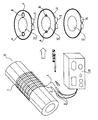
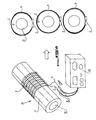
- the figure 3 schematically represents a heating element 1 with its two connecting ducts 2, 3 pre-shaped so as to be arranged around the damaged zone of a duct 10 having an outer surface 11 and an inner surface 12.
- the duct 10 is shown in this figure in perspective and in an axial view with indication of the two inner damages A, B located on the inner surface 12.
- the figure 4 represents these elements in the assembled state, namely the duct 10 with a heating element 1 applied on its outer surface 11 and wound entirely around this duct since the duct 10 has two diametrically opposite damages on the inner surface 12.
- the heating element it is best to apply the heating element to the area with the defect to be repaired.
- the repair method must adapt to extreme conditions such as those known on a construction site, the complete recovery of the object by the heating element may be more suitable without altering the quality of the repair.
- the figure 4 represents the heating element 1, an aluminum film 4 preventing incrustation and a thermal insulation layer 6 applied to a pipe 10 having two damages A, B.
- the aluminum film 4 is fixed by means of, for example, fasteners 5 and the insulating layer 6 is fixed for example by Velcro® strips.
- the figure 5 represents the duct 10 equipped with a heating element 1, an aluminum film 4 and an insulating layer 6, first in perspective with its electrical connection to a welding machine 20 and, then, in axial views, at three different times of the implementation of the method of the invention, namely at the beginning of a heating-cooling cycle, being implemented at the end of the cycle. It is more particularly seen that the damage A, B is reduced in size as the hot melt material is melted and the wall of the duct 10 is remelted so as to give a homogeneous element without defects or with a persistent defect but not crippling for the life of the duct.
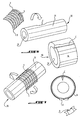
- the figure 6 and the figure 7 represent a situation of the duct 10 comparable to that represented on the Figures 3 and 4 .
- the conduit 10 with its outer surface 11 and its inner surface 12 and its damage C in the form of a notch on the outer surface 11, is surrounded, in the damaged zone, by a heating element 1 having electrical conduits 2 , 3 for the electrical connection to a welding machine 20.
- the heating element 1 is itself covered with a thermally insulating layer of rockwool 6 fixed by means of fasteners 5.
- the size of the damage C decreases until it disappears at the third of the three periods of time. implementation represented on the figure 8 .
- the figure 9 represents an example of a heating-cooling cycle for the repair of a damage of the type outer cut, to a depth of about 10% of the thickness of the tube, the repair being performed on a polyethylene tube with a diameter of 63 mm, single wall thickness 5.8 mm.
- the effect of this heating cycle is evaluated by a hydraulic pressure test at 80 ° C, with a circumferential stress of 4 MPa, on tubes with calibrated notches, made in the laboratory.
Landscapes
- Engineering & Computer Science (AREA)
- Mechanical Engineering (AREA)
- Physics & Mathematics (AREA)
- Thermal Sciences (AREA)
- General Engineering & Computer Science (AREA)
- Textile Engineering (AREA)
- High Energy & Nuclear Physics (AREA)
- Plasma & Fusion (AREA)
- Pipe Accessories (AREA)
- Application Of Or Painting With Fluid Materials (AREA)
- Lining Or Joining Of Plastics Or The Like (AREA)
Claims (18)
- Verfahren zum In-Situ-Reparieren einer Leitung (10) bzw. eines Behälters, die bzw. der nur aus einem wärmeschmelzenden Material hergestellt ist und worin ein Medium fließt bzw. gespeichert wird, mit einem Schritt zum Einsetzen eines elektrischen Heizelements (1), das dazu bestimmt ist, die zu reparierende Schadstelle (A, B, C) vollständig zu überdecken, wobei das Heizelement (1) elektrische Leiter (2, 3) aufweist, die einen Heizwiderstand bilden, und mit einem Schritt zum Versorgen der Leiter (2, 3) mit einer geeigneten elektrischen Energie,
dadurch gekennzeichnet, dass die Versorgung der elektrischen Leiter (2, 3) gemäß einer vor der Reparatur erstellten Regelungstabelle erfolgt, bei der für verschiedene wärmeschmelzbare Materialien und verschiedene Schädigungsarten der zu reparierenden Leitung (10) bzw. des zu reparierenden Behälters zumindest ein technisches Merkmal der Leitung bzw. des Behälters, ein Merkmal der anzulegenden elektrischen Energie und ein Zeitdauerprofil der anzulegenden elektrischen Energie in Übereinstimmung gebracht wird, wobei die Versorgung der elektrischen Leiter (2, 3) so geregelt wird, dass in dem zu reparierenden Bereich die Temperatur des die Innenfläche der Leitung bzw. des Behälters bildenden Materials stets unter dem Erweichungspunkt desselben liegt. - Verfahren nach Anspruch 1, dadurch gekennzeichnet, dass das technische Merkmal der Leitung bzw. des Behälters, gemäß welchem die anzulegende elektrische Energie geregelt wird, die Wanddicke der Leitung bzw. des Behälters ist.
- Verfahren nach Anspruch 1 oder 2, dadurch gekennzeichnet, dass das Zeitdauerprofil der anzulegenden elektrischen Energie zumindest eine Phase zum Erhitzen der Schadstelle und zumindest eine Phase zum Abkühlen der Schadstelle umfasst.
- Verfahren nach einem der Ansprüche 1 bis 3, dadurch gekennzeichnet, dass die elektrische Energie mit einer Sollspannung an die elektrischen Leiter angelegt wird.
- Verfahren nach einem der Ansprüche 1 bis 3, dadurch gekennzeichnet, dass die elektrische Energie mit einer Sollstromstärke an die elektrischen Leiter angelegt wird.
- Verfahren nach einem der Ansprüche 1 bis 5, dadurch gekennzeichnet, dass zum Reparieren einer außenliegenden bzw. nicht zur Innenfläche der Leitung bzw. des Behälters mündenden Schadstelle die Temperatur des Materials derselben bzw. desselben in dem zu reparierenden Bereich bereichsweise die Schmelztemperatur über eine Tiefe bis zu 50 % der Materialdicke erreichen kann, dass die Temperatur der strukturellen Schadstelle nur bereichsweise über der Schmelztemperatur des wärmeschmelzbaren Materials der Leitung bzw. des Behälters liegt und dass die Temperatur des die Innenfläche der Leitung bzw. des Behälters bildenden Materials stets unter dem Erweichungspunkt desselben liegt.
- Verfahren nach einem der Ansprüche 1 bis 5, dadurch gekennzeichnet, dass die Temperatur der mikrostrukturellen Schadstelle bereichsweise bei einer Nachhärtungstemperatur nahe dem Erweichungspunkt des wärmeschmelzbaren Materials der Leitung bzw. des Behälters liegt.
- Verfahren nach einem der Ansprüche 1 bis 7, dadurch gekennzeichnet, dass das Heizelement mit einer Isolierschicht überdeckt ist.
- Verfahren nach Anspruch 8, dadurch gekennzeichnet, dass die Isolierschicht eine nach Befestigung des Heizelements aufgebrachte Schicht ist.
- Verfahren nach einem der Ansprüche 3 bis 9, dadurch gekennzeichnet, dass die Abkühlphase ein kontrolliertes Abkühlen der zu reparierenden Leitung bzw. des zu reparierenden Behälters umfasst.
- Verfahren nach einem der Ansprüche 1 bis 10, dadurch gekennzeichnet, dass das Heizelement mit einer wärmeleitenden Vorrichtung überdeckt ist, die dazu bestimmt ist, eine Verkrustung des Heizelements in dem Material des zu reparierenden Abschnitts bzw. Behälters zu vermeiden.
- Verfahren nach einem der Ansprüche 1 bis 11, dadurch gekennzeichnet, dass das Zeitdauerprofil der anzulegenden elektrischen Energie von einem Automaten erzeugt wird, der ein Mittel zum Eingeben zumindest eines Kriteriums zum Regeln der anzulegenden elektrischen Energie enthält.
- Verfahren nach einem der Ansprüche 1 bis 12, dadurch gekennzeichnet, dass das Zeitdauerprofil der anzulegenden elektrischen Energie nach einem Minimalkontrollsystem von zumindest drei Parametern erzeugt wird, nämlich der Spannung, mit welcher die elektrische Energie angelegt wird, der Zeitdauer dieser angelegten Energie und der Temperatur des Heizelements.
- Verfahren nach Anspruch 13, dadurch gekennzeichnet, dass das Minimalkontrollsystem ferner einen vierten Parameter umfasst, nämlich die Abkühlgeschwindigkeit.
- Vorrichtung zum In-Situ-Reparieren einer Leitung (10) bzw. eines Behälters, die bzw. der nur aus einem wärmeschmelzenden Material hergestellt ist,
dadurch gekennzeichnet, dass sie ein elektrisches Heizelement (1) enthält, das dazu bestimmt ist, die Schadstelle (A, B, C) vollständig zu überdecken, wobei das Heizelement (1) elektrische Leiter (2, 3) aufweist, die einen Heizwiderstand in Form von einem Netz bzw. einer Lage bilden, sowie eine einstellbare Versorgungsquelle (20) zum Versorgen der Leiter mit einer geeigneten elektrischen Energie, wobei die Versorgungsquelle (20) ein Programmschaltwerk, einen internen Speicher, der eine vor der Reparatur erstellte Regelungstabelle speichert, bei der für verschiedene wärmeschmelzbare Materialien und verschiedene Arten der zu reparierenden Schadstelle zumindest ein technisches Merkmal der Leitung bzw. des Behälters, ein Merkmal der anzulegenden elektrischen Energie und ein Zeitdauerprofil der anzulegenden elektrischen Energie in Übereinstimmung gebracht werden, sowie ein Mittel zum Einstellen des Stroms, mit dem an die elektrischen Leiter (2, 3) des Heizelements (1) die elektrische Energie mit einer Sollspannung bzw. einer Sollstromstärke so angelegt wird, dass in dem zu reparierenden Bereich die Temperatur des die Innenfläche der Leitung bzw. des Behälters bildenden Materials stets unter dem Erweichungspunkt desselben liegt. - Vorrichtung nach Anspruch 15, dadurch gekennzeichnet, dass sie ein Mittel aufweist, mit dem die elektrische Energie mit einer Sollspannung an die elektrischen Leiter angelegt werden kann.
- Vorrichtung nach Anspruch 15, dadurch gekennzeichnet, dass sie ein Mittel aufweist, mit dem die elektrische Energie mit einer Sollstromstärke an die elektrischen Leiter angelegt werden kann.
- Vorrichtung nach einem der Ansprüche 15 bis 17, dadurch gekennzeichnet, dass sie ein Mittel aufweist, mit dem das Abkühlen der zu reparierenden Leitung bzw. des zu reparierenden Behälters eingestellt werden kann.
Applications Claiming Priority (1)
| Application Number | Priority Date | Filing Date | Title |
|---|---|---|---|
| FR0409024A FR2874415B1 (fr) | 2004-08-20 | 2004-08-20 | Procede de reparation in situ d'un conduit ou d'un reservoir en matiere thermofusible et dispositf pour la mise en oeuvre de ce procede |
Publications (3)
| Publication Number | Publication Date |
|---|---|
| EP1628067A1 EP1628067A1 (de) | 2006-02-22 |
| EP1628067B1 true EP1628067B1 (de) | 2008-10-08 |
| EP1628067B8 EP1628067B8 (de) | 2008-12-31 |
Family
ID=34948527
Family Applications (1)
| Application Number | Title | Priority Date | Filing Date |
|---|---|---|---|
| EP20050291430 Expired - Lifetime EP1628067B8 (de) | 2004-08-20 | 2005-07-01 | In situ Reparaturverfahren einer Rohrleitung oder eines Behälters aus wärmeschmelzendem Material sowie Vorrichtung zur Durchführung des genannten Verfahrens |
Country Status (8)
| Country | Link |
|---|---|
| US (1) | US8507832B2 (de) |
| EP (1) | EP1628067B8 (de) |
| AT (1) | ATE410632T1 (de) |
| CA (1) | CA2514771C (de) |
| DE (1) | DE602005010163D1 (de) |
| ES (1) | ES2315817T3 (de) |
| FR (1) | FR2874415B1 (de) |
| PT (1) | PT1628067E (de) |
Families Citing this family (14)
| Publication number | Priority date | Publication date | Assignee | Title |
|---|---|---|---|---|
| DE102008032509A1 (de) * | 2008-07-10 | 2010-01-14 | Epcos Ag | Heizungsvorrichtung und Verfahren zur Herstellung der Heizungsvorrichtung |
| US9174299B2 (en) * | 2009-05-15 | 2015-11-03 | Ef Technologies, Inc. | Apparatus and method for portable calibration of electrofusion controllers |
| SE0901171A1 (sv) | 2009-09-10 | 2011-03-11 | Leif Jilken | Förfarande och anordning att förbättra ett åldrat ytskikt |
| EP2305453A1 (de) * | 2009-09-30 | 2011-04-06 | Logstor A/S | Verbessertes Wasserstoppverfahren in einzelnen isolierten Leitungen |
| DE102010061271A1 (de) * | 2010-12-15 | 2012-06-21 | Contitech Schlauch Gmbh | Beheizbare Anschlussvorrichtung für medienführende, elektrisch beheizbare Schläuche |
| MC200156B1 (fr) * | 2013-07-30 | 2014-02-19 | 3X Eng | Bande de renforcement améliorée pour la réparation des canalisations de transport de fluides |
| CA2824557A1 (en) | 2013-08-23 | 2015-02-23 | Andrew Voisin | Heating system |
| JP6619127B2 (ja) * | 2013-10-30 | 2019-12-11 | サンドビック株式会社 | 加熱装置および加熱炉 |
| US10471661B2 (en) * | 2014-10-24 | 2019-11-12 | Shawcor, Ltd. | Apparatus and system for electro-fusion of polyethylene pipeline |
| GB201421801D0 (en) | 2014-12-08 | 2015-01-21 | Ge Oil & Gas Uk Ltd | Layer Repair |
| EP3593972A1 (de) * | 2018-07-09 | 2020-01-15 | Airbus Operations, S.L. | Plattenstruktur für ein flugzeug und herstellungsverfahren dafür |
| CN108824838A (zh) * | 2018-08-29 | 2018-11-16 | 中国水利水电科学研究院 | 预应力钢筒混凝土管体外预应力加固系统及其施工方法 |
| US12535172B2 (en) * | 2021-11-22 | 2026-01-27 | University Of Maryland, College Park | Systems, devices, and methods for in situ pipe repair |
| CN117366340B (zh) * | 2023-11-24 | 2024-09-20 | 成都建工第三建筑工程有限公司 | 一种库区深水隧道管道安装装置及施工方法 |
Family Cites Families (30)
| Publication number | Priority date | Publication date | Assignee | Title |
|---|---|---|---|---|
| US2506574A (en) * | 1947-10-27 | 1950-05-09 | Robert G Boydstun | Plastic cylinder heater coil and method of making same |
| US3022209A (en) * | 1956-11-23 | 1962-02-20 | Phillips Petroleum Co | Method of welding butted pipe sections of polyethylene to form a reinforced joint |
| NL236188A (de) * | 1958-02-17 | |||
| US3315986A (en) * | 1964-05-05 | 1967-04-25 | Carl F Quick | Means and methods for connecting tubular conduits |
| US4163145A (en) * | 1978-05-30 | 1979-07-31 | Neff Paul C | Aquarium heater |
| FR2618097B1 (fr) * | 1987-07-15 | 1989-11-10 | Gaz De France | Procede et machine pour la soudure entre-elles de pieces en matiere plastique comportant un bobinage integre |
| FI884125A7 (fi) * | 1987-09-09 | 1989-03-10 | Raychem As | Lämpöpalautuva tuote |
| US5407514A (en) * | 1988-02-03 | 1995-04-18 | E. O. Butts Consultants Ltd. | Method for welding thermoplastic materials |
| US5137591A (en) * | 1988-09-08 | 1992-08-11 | Raychem Ltd. | Conductive polymeric heater |
| US5254824A (en) * | 1989-04-07 | 1993-10-19 | Minnesota Mining And Manufacturing Company | Method and article for microwave bonding of polyethylene pipe |
| US5064994A (en) * | 1989-10-18 | 1991-11-12 | Urban Paul L | Fast-heating high-temperature fiber cutting tool |
| JP2927560B2 (ja) * | 1990-12-27 | 1999-07-28 | 大阪瓦斯株式会社 | 管の修繕用シート |
| DE4209522A1 (de) * | 1992-03-24 | 1993-09-30 | Siemens Ag | Verfahren zur Reparatur von Defekten in thermoplastischen Isolationen |
| FR2690036B1 (fr) * | 1992-04-10 | 1998-10-09 | Gaz De France | Filet formant resistance, son application au soudage de tubes aboutes et au raccordement transversal de canalisations, ensembles ainsi constitues et prise de branchement electrosoudable ainsi equipee. |
| US5369248A (en) * | 1992-09-01 | 1994-11-29 | Gaz De France | Electro-weldable connecting piece having connection terminals and its method of manufacture |
| FR2695173B1 (fr) | 1992-09-01 | 1994-10-14 | Gaz De France | Pièce d'assemblage de type rivet, ensemble constitué par un tel rivet fixé sur une pièce électriquement conductrice, pièces de raccordement équipées d'un tel ensemble et leur procédé de fabrication. |
| JPH08247378A (ja) * | 1995-03-10 | 1996-09-27 | Osaka Gas Co Ltd | プラスチック管の補修方法 |
| GB2302490B (en) * | 1995-06-21 | 2000-01-19 | Exotherm Prod Ltd | Thermally insulated heating device |
| DE69801051T2 (de) * | 1997-05-16 | 2002-03-21 | Uponor Ltd., Alfreton | Vorrichtung zum schmelzverbinden |
| DE19818130C2 (de) * | 1997-12-18 | 2003-03-20 | Friatec Ag | Elektro-Schweißeinrichtung |
| JPH11254539A (ja) * | 1998-03-10 | 1999-09-21 | Kubota Corp | 電気融着接合方法および装置 |
| JPH11304080A (ja) * | 1998-04-24 | 1999-11-05 | Kubota Corp | プラスチック管用補修部材および補修方法 |
| JP2000035184A (ja) * | 1998-07-17 | 2000-02-02 | Kubota Corp | プラスチック管用補修部材およびその融着方法 |
| US6278096B1 (en) * | 1999-08-03 | 2001-08-21 | Shell Oil Company | Fabrication and repair of electrically insulated flowliness by induction heating |
| FR2804366B1 (fr) * | 2000-01-28 | 2002-04-26 | Joseph Sauron Materiel Ind | Dispositif d'electro-soudage a signal de sortie regule |
| US6953917B2 (en) * | 2000-04-10 | 2005-10-11 | Chenault David O | System and method for ensuring the qualification of a workman to perform a task having established required standards |
| US6386236B1 (en) * | 2000-05-31 | 2002-05-14 | Air Logistics Corporation | Method of prestressing and reinforcing damaged cylindrical structures |
| US6781099B2 (en) * | 2001-03-12 | 2004-08-24 | Karl-Heinz Krah Gmbh | Electrofusion socket forming system |
| DE10124999A1 (de) * | 2001-05-22 | 2002-12-12 | Pf Schweistechnologie Gmbh | Verfahren und Vorrichtung zum automatischen Protokollieren von Rohrnetz-Verbindungsvorgängen auf Basis von bauteilspezifischen Daten |
| US6710312B2 (en) * | 2002-04-12 | 2004-03-23 | B H Thermal Corporation | Heating jacket assembly with field replaceable thermostat |
-
2004
- 2004-08-20 FR FR0409024A patent/FR2874415B1/fr not_active Expired - Fee Related
-
2005
- 2005-07-01 DE DE200560010163 patent/DE602005010163D1/de not_active Expired - Lifetime
- 2005-07-01 PT PT05291430T patent/PT1628067E/pt unknown
- 2005-07-01 ES ES05291430T patent/ES2315817T3/es not_active Expired - Lifetime
- 2005-07-01 AT AT05291430T patent/ATE410632T1/de active
- 2005-07-01 EP EP20050291430 patent/EP1628067B8/de not_active Expired - Lifetime
- 2005-08-08 CA CA2514771A patent/CA2514771C/fr not_active Expired - Fee Related
- 2005-08-16 US US11/204,651 patent/US8507832B2/en not_active Expired - Fee Related
Also Published As
| Publication number | Publication date |
|---|---|
| EP1628067B8 (de) | 2008-12-31 |
| PT1628067E (pt) | 2009-01-16 |
| DE602005010163D1 (de) | 2008-11-20 |
| US8507832B2 (en) | 2013-08-13 |
| ATE410632T1 (de) | 2008-10-15 |
| US20060037955A1 (en) | 2006-02-23 |
| FR2874415B1 (fr) | 2006-11-24 |
| EP1628067A1 (de) | 2006-02-22 |
| ES2315817T3 (es) | 2009-04-01 |
| CA2514771A1 (fr) | 2006-02-20 |
| FR2874415A1 (fr) | 2006-02-24 |
| CA2514771C (fr) | 2013-04-09 |
Similar Documents
| Publication | Publication Date | Title |
|---|---|---|
| EP1628067B1 (de) | In situ Reparaturverfahren einer Rohrleitung oder eines Behälters aus wärmeschmelzendem Material sowie Vorrichtung zur Durchführung des genannten Verfahrens | |
| EP0430762B1 (de) | Verfahren und Vorrichtung zum Ermitteln des Erwärmungszustandes eines Teiles aus thermoplastischem Material und Verbindungsstück zum Verschweissen von Kunststoffteilen | |
| EP1899638B1 (de) | Kanalverbindungsstück mit innenauskleidung, beschichtungsverfahren und montageverfahren | |
| EP0565397B1 (de) | Verfahren zur Herstellung eines Widerstandes zum Verschweissen in Form eines Netzes, eine mit diesem Verfahren hergestellter Widerstand für das Zusammenfügen paralleller oder transversaler Kunststoffröhren und damit ausgerüstete Rohrverzweigung | |
| EP2601429B1 (de) | Rohrförmige kunststoffverbindungsmuffe für ein rohr mit innenauskleidung | |
| FR2654977A1 (fr) | Procede et piece de raccordement utilisant une resistance electrique pour le soudage d'elements en matiere plastique. | |
| RU2641925C2 (ru) | Усовершенствованные способы создания электрофузионного соединения | |
| WO2007096548A2 (fr) | Element de conduites coaxiales dont la conduite interne est sous contrainte de traction et procede de fabrication | |
| CN102387907A (zh) | 包含用于管状物品的多个相继使用的红外加热区的装置 | |
| EP3535111B1 (de) | Verfahren zur montage von thermoplastischen rohren durch induktionsschweissen | |
| CZ279082B6 (en) | Polyolefin coupling and the use thereof for joining polyolefin tubes | |
| EP0299833A1 (de) | Verfahren und Vorrichtung für das Zusammenschweissen von mit einer integrierten Spule versehenen Kunststoffteilen | |
| FR2516439A1 (fr) | Procede de soudage electrique de pieces en matiere plastique, en particulier pour canalisations de fluides et manchons de raccordement pour de telles canalisations | |
| CA2588554C (fr) | Dispositif et procede pour le soudage de deux pieces en polymere par fusion | |
| FR2789179A1 (fr) | Procede a utiliser dans le controle de pieces de detail en matiere plastique | |
| FR2952269A1 (fr) | Ruban thermique, procede de mise en place d'un revetement sur une jonction entre deux tuyaux et procede de fabrication d'un pipeline. | |
| EP0222643A1 (de) | Verfahren und Vorrichtung zum Verbinden fluidumführender Leitungselemente | |
| EP4028723B1 (de) | Vorrichtung zum messen von bauteilen eines rohres vor dem schweissen | |
| FR2699984A1 (fr) | Procédé et dispositif pour la réparation, en charge, de canalisations en matière plastique. | |
| EP2525129A2 (de) | Verfahren und Hülse zur Kupplung von Fernheizrohrleitungen | |
| FI117894B (sv) | Förfarande för fogning och/eller tätning av termoplaströr | |
| EP1219407B1 (de) | Vorrichtung zum Verschweissen von thermoplastischen Kunststoffteilen durch elektromagnetische Strahlung, insbesondere Infrarotstrahlung | |
| CA3150834A1 (fr) | Procede de verification et dispositif de mesure avant soudage de composants d'une canalisation | |
| EP4306740A1 (de) | Verfahren und vorrichtung zur reparatur einer vorspannkabelhülse | |
| OA19065A (en) | Méthode d'assemblage de tubes thermoplastiques par soudage par induction. |
Legal Events
| Date | Code | Title | Description |
|---|---|---|---|
| PUAI | Public reference made under article 153(3) epc to a published international application that has entered the european phase |
Free format text: ORIGINAL CODE: 0009012 |
|
| AK | Designated contracting states |
Kind code of ref document: A1 Designated state(s): AT BE BG CH CY CZ DE DK EE ES FI FR GB GR HU IE IS IT LI LT LU LV MC NL PL PT RO SE SI SK TR |
|
| AX | Request for extension of the european patent |
Extension state: AL BA HR MK YU |
|
| 17P | Request for examination filed |
Effective date: 20060619 |
|
| AKX | Designation fees paid |
Designated state(s): AT BE BG CH CY CZ DE DK EE ES FI FR GB GR HU IE IS IT LI LT LU LV MC NL PL PT RO SE SI SK TR |
|
| 17Q | First examination report despatched |
Effective date: 20061120 |
|
| 17Q | First examination report despatched |
Effective date: 20061120 |
|
| GRAP | Despatch of communication of intention to grant a patent |
Free format text: ORIGINAL CODE: EPIDOSNIGR1 |
|
| GRAS | Grant fee paid |
Free format text: ORIGINAL CODE: EPIDOSNIGR3 |
|
| GRAA | (expected) grant |
Free format text: ORIGINAL CODE: 0009210 |
|
| AK | Designated contracting states |
Kind code of ref document: B1 Designated state(s): AT BE BG CH CY CZ DE DK EE ES FI FR GB GR HU IE IS IT LI LT LU LV MC NL PL PT RO SE SI SK TR |
|
| REG | Reference to a national code |
Ref country code: GB Ref legal event code: FG4D Free format text: NOT ENGLISH |
|
| REG | Reference to a national code |
Ref country code: CH Ref legal event code: EP |
|
| RAP2 | Party data changed (patent owner data changed or rights of a patent transferred) |
Owner name: GDF SUEZ |
|
| REG | Reference to a national code |
Ref country code: IE Ref legal event code: FG4D Free format text: LANGUAGE OF EP DOCUMENT: FRENCH |
|
| REF | Corresponds to: |
Ref document number: 602005010163 Country of ref document: DE Date of ref document: 20081120 Kind code of ref document: P |
|
| REG | Reference to a national code |
Ref country code: RO Ref legal event code: EPE |
|
| REG | Reference to a national code |
Ref country code: CH Ref legal event code: NV Representative=s name: TROESCH SCHEIDEGGER WERNER AG |
|
| NLT2 | Nl: modifications (of names), taken from the european patent patent bulletin |
Owner name: GDF SUEZ Effective date: 20081029 |
|
| REG | Reference to a national code |
Ref country code: PT Ref legal event code: SC4A Free format text: AVAILABILITY OF NATIONAL TRANSLATION Effective date: 20090107 |
|
| PG25 | Lapsed in a contracting state [announced via postgrant information from national office to epo] |
Ref country code: SI Free format text: LAPSE BECAUSE OF FAILURE TO SUBMIT A TRANSLATION OF THE DESCRIPTION OR TO PAY THE FEE WITHIN THE PRESCRIBED TIME-LIMIT Effective date: 20081008 |
|
| REG | Reference to a national code |
Ref country code: ES Ref legal event code: FG2A Ref document number: 2315817 Country of ref document: ES Kind code of ref document: T3 |
|
| PG25 | Lapsed in a contracting state [announced via postgrant information from national office to epo] |
Ref country code: BG Free format text: LAPSE BECAUSE OF FAILURE TO SUBMIT A TRANSLATION OF THE DESCRIPTION OR TO PAY THE FEE WITHIN THE PRESCRIBED TIME-LIMIT Effective date: 20090108 Ref country code: LT Free format text: LAPSE BECAUSE OF FAILURE TO SUBMIT A TRANSLATION OF THE DESCRIPTION OR TO PAY THE FEE WITHIN THE PRESCRIBED TIME-LIMIT Effective date: 20081008 |
|
| PG25 | Lapsed in a contracting state [announced via postgrant information from national office to epo] |
Ref country code: PL Free format text: LAPSE BECAUSE OF FAILURE TO SUBMIT A TRANSLATION OF THE DESCRIPTION OR TO PAY THE FEE WITHIN THE PRESCRIBED TIME-LIMIT Effective date: 20081008 Ref country code: IS Free format text: LAPSE BECAUSE OF FAILURE TO SUBMIT A TRANSLATION OF THE DESCRIPTION OR TO PAY THE FEE WITHIN THE PRESCRIBED TIME-LIMIT Effective date: 20090208 Ref country code: FI Free format text: LAPSE BECAUSE OF FAILURE TO SUBMIT A TRANSLATION OF THE DESCRIPTION OR TO PAY THE FEE WITHIN THE PRESCRIBED TIME-LIMIT Effective date: 20081008 Ref country code: LV Free format text: LAPSE BECAUSE OF FAILURE TO SUBMIT A TRANSLATION OF THE DESCRIPTION OR TO PAY THE FEE WITHIN THE PRESCRIBED TIME-LIMIT Effective date: 20081008 |
|
| REG | Reference to a national code |
Ref country code: IE Ref legal event code: FD4D |
|
| PG25 | Lapsed in a contracting state [announced via postgrant information from national office to epo] |
Ref country code: DK Free format text: LAPSE BECAUSE OF FAILURE TO SUBMIT A TRANSLATION OF THE DESCRIPTION OR TO PAY THE FEE WITHIN THE PRESCRIBED TIME-LIMIT Effective date: 20081008 Ref country code: IE Free format text: LAPSE BECAUSE OF FAILURE TO SUBMIT A TRANSLATION OF THE DESCRIPTION OR TO PAY THE FEE WITHIN THE PRESCRIBED TIME-LIMIT Effective date: 20081008 Ref country code: EE Free format text: LAPSE BECAUSE OF FAILURE TO SUBMIT A TRANSLATION OF THE DESCRIPTION OR TO PAY THE FEE WITHIN THE PRESCRIBED TIME-LIMIT Effective date: 20081008 |
|
| PLBE | No opposition filed within time limit |
Free format text: ORIGINAL CODE: 0009261 |
|
| STAA | Information on the status of an ep patent application or granted ep patent |
Free format text: STATUS: NO OPPOSITION FILED WITHIN TIME LIMIT |
|
| PG25 | Lapsed in a contracting state [announced via postgrant information from national office to epo] |
Ref country code: CZ Free format text: LAPSE BECAUSE OF FAILURE TO SUBMIT A TRANSLATION OF THE DESCRIPTION OR TO PAY THE FEE WITHIN THE PRESCRIBED TIME-LIMIT Effective date: 20081008 Ref country code: SE Free format text: LAPSE BECAUSE OF FAILURE TO SUBMIT A TRANSLATION OF THE DESCRIPTION OR TO PAY THE FEE WITHIN THE PRESCRIBED TIME-LIMIT Effective date: 20090108 |
|
| 26N | No opposition filed |
Effective date: 20090709 |
|
| PG25 | Lapsed in a contracting state [announced via postgrant information from national office to epo] |
Ref country code: GR Free format text: LAPSE BECAUSE OF FAILURE TO SUBMIT A TRANSLATION OF THE DESCRIPTION OR TO PAY THE FEE WITHIN THE PRESCRIBED TIME-LIMIT Effective date: 20090109 |
|
| PG25 | Lapsed in a contracting state [announced via postgrant information from national office to epo] |
Ref country code: CY Free format text: LAPSE BECAUSE OF FAILURE TO SUBMIT A TRANSLATION OF THE DESCRIPTION OR TO PAY THE FEE WITHIN THE PRESCRIBED TIME-LIMIT Effective date: 20081008 |
|
| REG | Reference to a national code |
Ref country code: FR Ref legal event code: PLFP Year of fee payment: 12 |
|
| REG | Reference to a national code |
Ref country code: FR Ref legal event code: PLFP Year of fee payment: 13 |
|
| REG | Reference to a national code |
Ref country code: FR Ref legal event code: PLFP Year of fee payment: 14 |
|
| PGFP | Annual fee paid to national office [announced via postgrant information from national office to epo] |
Ref country code: TR Payment date: 20180621 Year of fee payment: 14 |
|
| REG | Reference to a national code |
Ref country code: GB Ref legal event code: 732E Free format text: REGISTERED BETWEEN 20190131 AND 20190206 |
|
| PGFP | Annual fee paid to national office [announced via postgrant information from national office to epo] |
Ref country code: NL Payment date: 20190625 Year of fee payment: 15 Ref country code: IT Payment date: 20190624 Year of fee payment: 15 Ref country code: MC Payment date: 20190627 Year of fee payment: 15 Ref country code: LU Payment date: 20190624 Year of fee payment: 15 Ref country code: PT Payment date: 20190626 Year of fee payment: 15 |
|
| REG | Reference to a national code |
Ref country code: ES Ref legal event code: PC2A Owner name: GRTGAZ Effective date: 20190823 |
|
| PGFP | Annual fee paid to national office [announced via postgrant information from national office to epo] |
Ref country code: CZ Payment date: 20190529 Year of fee payment: 10 Ref country code: BE Payment date: 20190624 Year of fee payment: 15 |
|
| PGFP | Annual fee paid to national office [announced via postgrant information from national office to epo] |
Ref country code: CH Payment date: 20190624 Year of fee payment: 15 Ref country code: SK Payment date: 20190620 Year of fee payment: 15 |
|
| PGFP | Annual fee paid to national office [announced via postgrant information from national office to epo] |
Ref country code: HU Payment date: 20190726 Year of fee payment: 15 |
|
| PG25 | Lapsed in a contracting state [announced via postgrant information from national office to epo] |
Ref country code: MC Free format text: LAPSE BECAUSE OF NON-PAYMENT OF DUE FEES Effective date: 20200731 |
|
| REG | Reference to a national code |
Ref country code: CH Ref legal event code: PL |
|
| REG | Reference to a national code |
Ref country code: NL Ref legal event code: MM Effective date: 20200801 |
|
| REG | Reference to a national code |
Ref country code: SK Ref legal event code: MM4A Ref document number: E 4817 Country of ref document: SK Effective date: 20200701 |
|
| REG | Reference to a national code |
Ref country code: BE Ref legal event code: MM Effective date: 20200731 |
|
| PG25 | Lapsed in a contracting state [announced via postgrant information from national office to epo] |
Ref country code: RO Free format text: LAPSE BECAUSE OF NON-PAYMENT OF DUE FEES Effective date: 20200701 Ref country code: LU Free format text: LAPSE BECAUSE OF NON-PAYMENT OF DUE FEES Effective date: 20200701 Ref country code: NL Free format text: LAPSE BECAUSE OF NON-PAYMENT OF DUE FEES Effective date: 20200801 Ref country code: PT Free format text: LAPSE BECAUSE OF NON-PAYMENT OF DUE FEES Effective date: 20210203 Ref country code: HU Free format text: LAPSE BECAUSE OF NON-PAYMENT OF DUE FEES Effective date: 20200702 Ref country code: LI Free format text: LAPSE BECAUSE OF NON-PAYMENT OF DUE FEES Effective date: 20200731 Ref country code: CH Free format text: LAPSE BECAUSE OF NON-PAYMENT OF DUE FEES Effective date: 20200731 |
|
| PG25 | Lapsed in a contracting state [announced via postgrant information from national office to epo] |
Ref country code: BE Free format text: LAPSE BECAUSE OF NON-PAYMENT OF DUE FEES Effective date: 20200731 |
|
| PG25 | Lapsed in a contracting state [announced via postgrant information from national office to epo] |
Ref country code: SK Free format text: LAPSE BECAUSE OF NON-PAYMENT OF DUE FEES Effective date: 20200701 |
|
| PGFP | Annual fee paid to national office [announced via postgrant information from national office to epo] |
Ref country code: GB Payment date: 20210623 Year of fee payment: 17 |
|
| PG25 | Lapsed in a contracting state [announced via postgrant information from national office to epo] |
Ref country code: IT Free format text: LAPSE BECAUSE OF NON-PAYMENT OF DUE FEES Effective date: 20200701 |
|
| PGFP | Annual fee paid to national office [announced via postgrant information from national office to epo] |
Ref country code: AT Payment date: 20210624 Year of fee payment: 17 |
|
| PGFP | Annual fee paid to national office [announced via postgrant information from national office to epo] |
Ref country code: ES Payment date: 20210802 Year of fee payment: 17 Ref country code: DE Payment date: 20210622 Year of fee payment: 17 |
|
| REG | Reference to a national code |
Ref country code: DE Ref legal event code: R081 Ref document number: 602005010163 Country of ref document: DE Owner name: GRTGAZ S.A., FR Free format text: FORMER OWNER: GDF SUEZ, PARIS, FR |
|
| PG25 | Lapsed in a contracting state [announced via postgrant information from national office to epo] |
Ref country code: TR Free format text: LAPSE BECAUSE OF NON-PAYMENT OF DUE FEES Effective date: 20200701 |
|
| REG | Reference to a national code |
Ref country code: DE Ref legal event code: R119 Ref document number: 602005010163 Country of ref document: DE |
|
| REG | Reference to a national code |
Ref country code: AT Ref legal event code: MM01 Ref document number: 410632 Country of ref document: AT Kind code of ref document: T Effective date: 20220701 |
|
| GBPC | Gb: european patent ceased through non-payment of renewal fee |
Effective date: 20220701 |
|
| PG25 | Lapsed in a contracting state [announced via postgrant information from national office to epo] |
Ref country code: AT Free format text: LAPSE BECAUSE OF NON-PAYMENT OF DUE FEES Effective date: 20220701 |
|
| PG25 | Lapsed in a contracting state [announced via postgrant information from national office to epo] |
Ref country code: GB Free format text: LAPSE BECAUSE OF NON-PAYMENT OF DUE FEES Effective date: 20220701 Ref country code: DE Free format text: LAPSE BECAUSE OF NON-PAYMENT OF DUE FEES Effective date: 20230201 |
|
| REG | Reference to a national code |
Ref country code: ES Ref legal event code: FD2A Effective date: 20230825 |
|
| PG25 | Lapsed in a contracting state [announced via postgrant information from national office to epo] |
Ref country code: ES Free format text: LAPSE BECAUSE OF NON-PAYMENT OF DUE FEES Effective date: 20220702 |
|
| PGFP | Annual fee paid to national office [announced via postgrant information from national office to epo] |
Ref country code: FR Payment date: 20240729 Year of fee payment: 20 |