EP1625199B1 - Procedes d'augmentation de la tolerance du stress abiotique des plantes et plantes ainsi produites - Google Patents
Procedes d'augmentation de la tolerance du stress abiotique des plantes et plantes ainsi produites Download PDFInfo
- Publication number
- EP1625199B1 EP1625199B1 EP04734072.4A EP04734072A EP1625199B1 EP 1625199 B1 EP1625199 B1 EP 1625199B1 EP 04734072 A EP04734072 A EP 04734072A EP 1625199 B1 EP1625199 B1 EP 1625199B1
- Authority
- EP
- European Patent Office
- Prior art keywords
- plant
- promoter
- plants
- polynucleotide
- abiotic stress
- Prior art date
- Legal status (The legal status is an assumption and is not a legal conclusion. Google has not performed a legal analysis and makes no representation as to the accuracy of the status listed.)
- Expired - Lifetime
Links
- 238000000034 method Methods 0.000 title claims description 69
- 230000036579 abiotic stress Effects 0.000 title claims description 52
- 230000001965 increasing effect Effects 0.000 title claims description 14
- 239000002028 Biomass Substances 0.000 title description 13
- 108091033319 polynucleotide Proteins 0.000 claims description 87
- 102000040430 polynucleotide Human genes 0.000 claims description 87
- 239000002157 polynucleotide Substances 0.000 claims description 87
- 241000700605 Viruses Species 0.000 claims description 33
- 150000007523 nucleic acids Chemical class 0.000 claims description 23
- 102000039446 nucleic acids Human genes 0.000 claims description 20
- 108020004707 nucleic acids Proteins 0.000 claims description 20
- 238000013518 transcription Methods 0.000 claims description 11
- 230000035897 transcription Effects 0.000 claims description 11
- XLYOFNOQVPJJNP-UHFFFAOYSA-N water Substances O XLYOFNOQVPJJNP-UHFFFAOYSA-N 0.000 claims description 10
- 230000001131 transforming effect Effects 0.000 claims description 9
- 230000001939 inductive effect Effects 0.000 claims description 8
- 239000002773 nucleotide Substances 0.000 claims 1
- 125000003729 nucleotide group Chemical group 0.000 claims 1
- 241000196324 Embryophyta Species 0.000 description 258
- 108020004414 DNA Proteins 0.000 description 76
- 108090000623 proteins and genes Proteins 0.000 description 63
- 210000004027 cell Anatomy 0.000 description 42
- 230000035882 stress Effects 0.000 description 38
- 235000007688 Lycopersicon esculentum Nutrition 0.000 description 28
- 240000003768 Solanum lycopersicum Species 0.000 description 28
- 241000219195 Arabidopsis thaliana Species 0.000 description 26
- 210000001519 tissue Anatomy 0.000 description 25
- 230000009466 transformation Effects 0.000 description 25
- 230000009261 transgenic effect Effects 0.000 description 21
- 108091034117 Oligonucleotide Proteins 0.000 description 18
- 230000003612 virological effect Effects 0.000 description 18
- 108060001084 Luciferase Proteins 0.000 description 17
- 239000005089 Luciferase Substances 0.000 description 16
- FAPWRFPIFSIZLT-UHFFFAOYSA-M Sodium chloride Chemical compound [Na+].[Cl-] FAPWRFPIFSIZLT-UHFFFAOYSA-M 0.000 description 16
- 108091027544 Subgenomic mRNA Proteins 0.000 description 14
- 230000012010 growth Effects 0.000 description 14
- 241000589158 Agrobacterium Species 0.000 description 12
- 101710132601 Capsid protein Proteins 0.000 description 12
- 101710094648 Coat protein Proteins 0.000 description 12
- 101710125418 Major capsid protein Proteins 0.000 description 12
- 101710141454 Nucleoprotein Proteins 0.000 description 12
- 101710083689 Probable capsid protein Proteins 0.000 description 12
- 239000013598 vector Substances 0.000 description 12
- 210000003763 chloroplast Anatomy 0.000 description 11
- 239000013612 plasmid Substances 0.000 description 11
- 229920001184 polypeptide Polymers 0.000 description 11
- 108090000765 processed proteins & peptides Proteins 0.000 description 11
- 102000004196 processed proteins & peptides Human genes 0.000 description 11
- 102100021181 Golgi phosphoprotein 3 Human genes 0.000 description 10
- 240000007594 Oryza sativa Species 0.000 description 8
- 235000007164 Oryza sativa Nutrition 0.000 description 8
- 240000008042 Zea mays Species 0.000 description 8
- 239000013615 primer Substances 0.000 description 8
- 230000001105 regulatory effect Effects 0.000 description 8
- 239000011780 sodium chloride Substances 0.000 description 8
- 239000000243 solution Substances 0.000 description 8
- 108091026890 Coding region Proteins 0.000 description 7
- 108700008625 Reporter Genes Proteins 0.000 description 7
- 108700019146 Transgenes Proteins 0.000 description 7
- 238000011144 upstream manufacturing Methods 0.000 description 7
- 241000219194 Arabidopsis Species 0.000 description 6
- 102000004169 proteins and genes Human genes 0.000 description 6
- 102000004190 Enzymes Human genes 0.000 description 5
- 108090000790 Enzymes Proteins 0.000 description 5
- 244000020551 Helianthus annuus Species 0.000 description 5
- 235000003222 Helianthus annuus Nutrition 0.000 description 5
- 235000016383 Zea mays subsp huehuetenangensis Nutrition 0.000 description 5
- 235000002017 Zea mays subsp mays Nutrition 0.000 description 5
- 238000012258 culturing Methods 0.000 description 5
- 238000002955 isolation Methods 0.000 description 5
- 235000009973 maize Nutrition 0.000 description 5
- 108091008146 restriction endonucleases Proteins 0.000 description 5
- 230000001052 transient effect Effects 0.000 description 5
- 238000013519 translation Methods 0.000 description 5
- 108091032973 (ribonucleotides)n+m Proteins 0.000 description 4
- 108020004684 Internal Ribosome Entry Sites Proteins 0.000 description 4
- 238000013459 approach Methods 0.000 description 4
- 238000004113 cell culture Methods 0.000 description 4
- 241001493065 dsRNA viruses Species 0.000 description 4
- 230000000694 effects Effects 0.000 description 4
- 238000004520 electroporation Methods 0.000 description 4
- 238000011534 incubation Methods 0.000 description 4
- 229930027917 kanamycin Natural products 0.000 description 4
- 229960000318 kanamycin Drugs 0.000 description 4
- SBUJHOSQTJFQJX-NOAMYHISSA-N kanamycin Chemical compound O[C@@H]1[C@@H](O)[C@H](O)[C@@H](CN)O[C@@H]1O[C@H]1[C@H](O)[C@@H](O[C@@H]2[C@@H]([C@@H](N)[C@H](O)[C@@H](CO)O2)O)[C@H](N)C[C@@H]1N SBUJHOSQTJFQJX-NOAMYHISSA-N 0.000 description 4
- 229930182823 kanamycin A Natural products 0.000 description 4
- 239000002609 medium Substances 0.000 description 4
- 239000000203 mixture Substances 0.000 description 4
- 239000002245 particle Substances 0.000 description 4
- 230000008569 process Effects 0.000 description 4
- 230000022532 regulation of transcription, DNA-dependent Effects 0.000 description 4
- 230000010076 replication Effects 0.000 description 4
- 239000012266 salt solution Substances 0.000 description 4
- 238000012360 testing method Methods 0.000 description 4
- 241000701489 Cauliflower mosaic virus Species 0.000 description 3
- 241000588724 Escherichia coli Species 0.000 description 3
- 108091060211 Expressed sequence tag Proteins 0.000 description 3
- 235000002637 Nicotiana tabacum Nutrition 0.000 description 3
- 244000061176 Nicotiana tabacum Species 0.000 description 3
- 108091028043 Nucleic acid sequence Proteins 0.000 description 3
- 240000004713 Pisum sativum Species 0.000 description 3
- 235000010582 Pisum sativum Nutrition 0.000 description 3
- 108091081024 Start codon Proteins 0.000 description 3
- 235000007244 Zea mays Nutrition 0.000 description 3
- 230000004075 alteration Effects 0.000 description 3
- 150000001413 amino acids Chemical group 0.000 description 3
- 238000010367 cloning Methods 0.000 description 3
- 239000002299 complementary DNA Substances 0.000 description 3
- 238000010276 construction Methods 0.000 description 3
- 238000005516 engineering process Methods 0.000 description 3
- 230000001747 exhibiting effect Effects 0.000 description 3
- 239000001963 growth medium Substances 0.000 description 3
- 238000005286 illumination Methods 0.000 description 3
- 238000011081 inoculation Methods 0.000 description 3
- 229940113601 irrigation solution Drugs 0.000 description 3
- 239000003550 marker Substances 0.000 description 3
- 239000000463 material Substances 0.000 description 3
- 238000010369 molecular cloning Methods 0.000 description 3
- 238000001543 one-way ANOVA Methods 0.000 description 3
- 239000013600 plasmid vector Substances 0.000 description 3
- 150000003839 salts Chemical class 0.000 description 3
- 238000012546 transfer Methods 0.000 description 3
- 239000013603 viral vector Substances 0.000 description 3
- 238000004260 weight control Methods 0.000 description 3
- 241000589155 Agrobacterium tumefaciens Species 0.000 description 2
- 240000001436 Antirrhinum majus Species 0.000 description 2
- 235000004977 Brassica sinapistrum Nutrition 0.000 description 2
- 108020004635 Complementary DNA Proteins 0.000 description 2
- 244000000626 Daucus carota Species 0.000 description 2
- 235000002767 Daucus carota Nutrition 0.000 description 2
- 102100031780 Endonuclease Human genes 0.000 description 2
- LFQSCWFLJHTTHZ-UHFFFAOYSA-N Ethanol Chemical compound CCO LFQSCWFLJHTTHZ-UHFFFAOYSA-N 0.000 description 2
- 229930182566 Gentamicin Natural products 0.000 description 2
- CEAZRRDELHUEMR-URQXQFDESA-N Gentamicin Chemical compound O1[C@H](C(C)NC)CC[C@@H](N)[C@H]1O[C@H]1[C@H](O)[C@@H](O[C@@H]2[C@@H]([C@@H](NC)[C@@](C)(O)CO2)O)[C@H](N)C[C@@H]1N CEAZRRDELHUEMR-URQXQFDESA-N 0.000 description 2
- 235000010469 Glycine max Nutrition 0.000 description 2
- 244000068988 Glycine max Species 0.000 description 2
- 244000299507 Gossypium hirsutum Species 0.000 description 2
- 206010020649 Hyperkeratosis Diseases 0.000 description 2
- 239000006142 Luria-Bertani Agar Substances 0.000 description 2
- CSNNHWWHGAXBCP-UHFFFAOYSA-L Magnesium sulfate Chemical compound [Mg+2].[O-][S+2]([O-])([O-])[O-] CSNNHWWHGAXBCP-UHFFFAOYSA-L 0.000 description 2
- 108020005089 Plant RNA Proteins 0.000 description 2
- 108010092799 RNA-directed DNA polymerase Proteins 0.000 description 2
- 108020004511 Recombinant DNA Proteins 0.000 description 2
- 235000002595 Solanum tuberosum Nutrition 0.000 description 2
- 244000061456 Solanum tuberosum Species 0.000 description 2
- 229930006000 Sucrose Natural products 0.000 description 2
- CZMRCDWAGMRECN-UGDNZRGBSA-N Sucrose Chemical compound O[C@H]1[C@H](O)[C@@H](CO)O[C@@]1(CO)O[C@@H]1[C@H](O)[C@@H](O)[C@H](O)[C@@H](CO)O1 CZMRCDWAGMRECN-UGDNZRGBSA-N 0.000 description 2
- 108020005202 Viral DNA Proteins 0.000 description 2
- 230000006978 adaptation Effects 0.000 description 2
- 230000001580 bacterial effect Effects 0.000 description 2
- 230000008901 benefit Effects 0.000 description 2
- 230000015572 biosynthetic process Effects 0.000 description 2
- 230000001413 cellular effect Effects 0.000 description 2
- 244000038559 crop plants Species 0.000 description 2
- 230000004069 differentiation Effects 0.000 description 2
- 230000007613 environmental effect Effects 0.000 description 2
- 208000015181 infectious disease Diseases 0.000 description 2
- 230000000977 initiatory effect Effects 0.000 description 2
- 239000007788 liquid Substances 0.000 description 2
- 238000004519 manufacturing process Methods 0.000 description 2
- 230000004060 metabolic process Effects 0.000 description 2
- 238000012986 modification Methods 0.000 description 2
- 230000004048 modification Effects 0.000 description 2
- 230000000877 morphologic effect Effects 0.000 description 2
- 239000003415 peat Substances 0.000 description 2
- 230000001766 physiological effect Effects 0.000 description 2
- 238000003976 plant breeding Methods 0.000 description 2
- 210000001938 protoplast Anatomy 0.000 description 2
- 238000000746 purification Methods 0.000 description 2
- 230000006798 recombination Effects 0.000 description 2
- 238000005215 recombination Methods 0.000 description 2
- 235000009566 rice Nutrition 0.000 description 2
- 239000006152 selective media Substances 0.000 description 2
- 238000002791 soaking Methods 0.000 description 2
- 210000001082 somatic cell Anatomy 0.000 description 2
- UCSJYZPVAKXKNQ-HZYVHMACSA-N streptomycin Chemical compound CN[C@H]1[C@H](O)[C@@H](O)[C@H](CO)O[C@H]1O[C@@H]1[C@](C=O)(O)[C@H](C)O[C@H]1O[C@@H]1[C@@H](NC(N)=N)[C@H](O)[C@@H](NC(N)=N)[C@H](O)[C@H]1O UCSJYZPVAKXKNQ-HZYVHMACSA-N 0.000 description 2
- 239000005720 sucrose Substances 0.000 description 2
- 230000009885 systemic effect Effects 0.000 description 2
- 239000008399 tap water Substances 0.000 description 2
- 235000020679 tap water Nutrition 0.000 description 2
- 230000035899 viability Effects 0.000 description 2
- 102000007469 Actins Human genes 0.000 description 1
- 108010085238 Actins Proteins 0.000 description 1
- 229920001817 Agar Polymers 0.000 description 1
- 102000010637 Aquaporins Human genes 0.000 description 1
- 108010063290 Aquaporins Proteins 0.000 description 1
- 101100194010 Arabidopsis thaliana RD29A gene Proteins 0.000 description 1
- 235000017060 Arachis glabrata Nutrition 0.000 description 1
- 244000105624 Arachis hypogaea Species 0.000 description 1
- 235000010777 Arachis hypogaea Nutrition 0.000 description 1
- 235000018262 Arachis monticola Nutrition 0.000 description 1
- 244000075850 Avena orientalis Species 0.000 description 1
- 235000007319 Avena orientalis Nutrition 0.000 description 1
- 235000007558 Avena sp Nutrition 0.000 description 1
- 241000894006 Bacteria Species 0.000 description 1
- 235000014698 Brassica juncea var multisecta Nutrition 0.000 description 1
- 240000002791 Brassica napus Species 0.000 description 1
- 235000006008 Brassica napus var napus Nutrition 0.000 description 1
- 235000006618 Brassica rapa subsp oleifera Nutrition 0.000 description 1
- 244000188595 Brassica sinapistrum Species 0.000 description 1
- 101100297347 Caenorhabditis elegans pgl-3 gene Proteins 0.000 description 1
- 101100411570 Caenorhabditis elegans rab-28 gene Proteins 0.000 description 1
- UXVMQQNJUSDDNG-UHFFFAOYSA-L Calcium chloride Chemical compound [Cl-].[Cl-].[Ca+2] UXVMQQNJUSDDNG-UHFFFAOYSA-L 0.000 description 1
- 235000002566 Capsicum Nutrition 0.000 description 1
- 108090000565 Capsid Proteins Proteins 0.000 description 1
- 235000000882 Citrus x paradisi Nutrition 0.000 description 1
- 240000000560 Citrus x paradisi Species 0.000 description 1
- 229920000742 Cotton Polymers 0.000 description 1
- 102000012410 DNA Ligases Human genes 0.000 description 1
- 108010061982 DNA Ligases Proteins 0.000 description 1
- 108020001019 DNA Primers Proteins 0.000 description 1
- 239000003155 DNA primer Substances 0.000 description 1
- 108010014303 DNA-directed DNA polymerase Proteins 0.000 description 1
- 102000016928 DNA-directed DNA polymerase Human genes 0.000 description 1
- 102000004163 DNA-directed RNA polymerases Human genes 0.000 description 1
- 108090000626 DNA-directed RNA polymerases Proteins 0.000 description 1
- 241000255601 Drosophila melanogaster Species 0.000 description 1
- 241000380130 Ehrharta erecta Species 0.000 description 1
- 244000004281 Eucalyptus maculata Species 0.000 description 1
- 108091029865 Exogenous DNA Proteins 0.000 description 1
- 235000009432 Gossypium hirsutum Nutrition 0.000 description 1
- 235000007340 Hordeum vulgare Nutrition 0.000 description 1
- 240000005979 Hordeum vulgare Species 0.000 description 1
- 235000014647 Lens culinaris subsp culinaris Nutrition 0.000 description 1
- 244000043158 Lens esculenta Species 0.000 description 1
- 240000004658 Medicago sativa Species 0.000 description 1
- 235000017587 Medicago sativa ssp. sativa Nutrition 0.000 description 1
- 241001465754 Metazoa Species 0.000 description 1
- 102100027983 Molybdenum cofactor sulfurase Human genes 0.000 description 1
- 101710132461 Molybdenum cofactor sulfurase Proteins 0.000 description 1
- NWBJYWHLCVSVIJ-UHFFFAOYSA-N N-benzyladenine Chemical compound N=1C=NC=2NC=NC=2C=1NCC1=CC=CC=C1 NWBJYWHLCVSVIJ-UHFFFAOYSA-N 0.000 description 1
- 241000208128 Nicotiana glauca Species 0.000 description 1
- 108091005461 Nucleic proteins Proteins 0.000 description 1
- 238000012408 PCR amplification Methods 0.000 description 1
- 240000004371 Panax ginseng Species 0.000 description 1
- 235000002789 Panax ginseng Nutrition 0.000 description 1
- 239000006002 Pepper Substances 0.000 description 1
- 240000000020 Picea glauca Species 0.000 description 1
- 235000008127 Picea glauca Nutrition 0.000 description 1
- 235000016761 Piper aduncum Nutrition 0.000 description 1
- 240000003889 Piper guineense Species 0.000 description 1
- 235000017804 Piper guineense Nutrition 0.000 description 1
- 235000008184 Piper nigrum Nutrition 0.000 description 1
- 108700001094 Plant Genes Proteins 0.000 description 1
- 108010076504 Protein Sorting Signals Proteins 0.000 description 1
- 241000589516 Pseudomonas Species 0.000 description 1
- 241001112090 Pseudovirus Species 0.000 description 1
- 108091034057 RNA (poly(A)) Proteins 0.000 description 1
- 235000019057 Raphanus caudatus Nutrition 0.000 description 1
- 244000088415 Raphanus sativus Species 0.000 description 1
- 235000011380 Raphanus sativus Nutrition 0.000 description 1
- 241000700157 Rattus norvegicus Species 0.000 description 1
- 235000007238 Secale cereale Nutrition 0.000 description 1
- 244000082988 Secale cereale Species 0.000 description 1
- 235000002597 Solanum melongena Nutrition 0.000 description 1
- 244000061458 Solanum melongena Species 0.000 description 1
- 101710151717 Stress-related protein Proteins 0.000 description 1
- 235000021307 Triticum Nutrition 0.000 description 1
- 244000098338 Triticum aestivum Species 0.000 description 1
- 240000001866 Vernicia fordii Species 0.000 description 1
- 108700005077 Viral Genes Proteins 0.000 description 1
- 108020000999 Viral RNA Proteins 0.000 description 1
- 208000036142 Viral infection Diseases 0.000 description 1
- 108700041896 Zea mays Ubi-1 Proteins 0.000 description 1
- 230000002411 adverse Effects 0.000 description 1
- 239000008272 agar Substances 0.000 description 1
- 239000011543 agarose gel Substances 0.000 description 1
- XAGFODPZIPBFFR-UHFFFAOYSA-N aluminium Chemical compound [Al] XAGFODPZIPBFFR-UHFFFAOYSA-N 0.000 description 1
- 229910052782 aluminium Inorganic materials 0.000 description 1
- 238000004458 analytical method Methods 0.000 description 1
- 210000004102 animal cell Anatomy 0.000 description 1
- 210000004507 artificial chromosome Anatomy 0.000 description 1
- 230000002238 attenuated effect Effects 0.000 description 1
- 238000009395 breeding Methods 0.000 description 1
- 230000001488 breeding effect Effects 0.000 description 1
- 239000007853 buffer solution Substances 0.000 description 1
- 238000010804 cDNA synthesis Methods 0.000 description 1
- 239000001110 calcium chloride Substances 0.000 description 1
- 229910001628 calcium chloride Inorganic materials 0.000 description 1
- 230000030833 cell death Effects 0.000 description 1
- 230000033077 cellular process Effects 0.000 description 1
- 239000003153 chemical reaction reagent Substances 0.000 description 1
- 231100000481 chemical toxicant Toxicity 0.000 description 1
- 238000004891 communication Methods 0.000 description 1
- 239000013078 crystal Substances 0.000 description 1
- 230000006378 damage Effects 0.000 description 1
- 230000007812 deficiency Effects 0.000 description 1
- 238000001514 detection method Methods 0.000 description 1
- 201000010099 disease Diseases 0.000 description 1
- 208000037265 diseases, disorders, signs and symptoms Diseases 0.000 description 1
- 239000012153 distilled water Substances 0.000 description 1
- 239000012154 double-distilled water Substances 0.000 description 1
- 238000001035 drying Methods 0.000 description 1
- 230000000459 effect on growth Effects 0.000 description 1
- 230000001729 effect on metabolism Effects 0.000 description 1
- 230000001463 effect on reproduction Effects 0.000 description 1
- 230000005684 electric field Effects 0.000 description 1
- 239000005712 elicitor Substances 0.000 description 1
- 210000002257 embryonic structure Anatomy 0.000 description 1
- 230000006353 environmental stress Effects 0.000 description 1
- 239000013604 expression vector Substances 0.000 description 1
- 239000011888 foil Substances 0.000 description 1
- 239000004459 forage Substances 0.000 description 1
- 239000012634 fragment Substances 0.000 description 1
- 108020001507 fusion proteins Proteins 0.000 description 1
- 102000037865 fusion proteins Human genes 0.000 description 1
- 101150110946 gatC gene Proteins 0.000 description 1
- 108091008053 gene clusters Proteins 0.000 description 1
- 230000002068 genetic effect Effects 0.000 description 1
- 238000010353 genetic engineering Methods 0.000 description 1
- 235000008434 ginseng Nutrition 0.000 description 1
- 239000003365 glass fiber Substances 0.000 description 1
- 238000010438 heat treatment Methods 0.000 description 1
- 238000002744 homologous recombination Methods 0.000 description 1
- 230000006801 homologous recombination Effects 0.000 description 1
- 210000001822 immobilized cell Anatomy 0.000 description 1
- 238000003018 immunoassay Methods 0.000 description 1
- 230000008595 infiltration Effects 0.000 description 1
- 238000001764 infiltration Methods 0.000 description 1
- 238000002347 injection Methods 0.000 description 1
- 239000007924 injection Substances 0.000 description 1
- 238000003780 insertion Methods 0.000 description 1
- 230000037431 insertion Effects 0.000 description 1
- 230000010354 integration Effects 0.000 description 1
- 239000003621 irrigation water Substances 0.000 description 1
- 229910052943 magnesium sulfate Inorganic materials 0.000 description 1
- 235000019341 magnesium sulphate Nutrition 0.000 description 1
- 230000035800 maturation Effects 0.000 description 1
- 230000007246 mechanism Effects 0.000 description 1
- 230000001404 mediated effect Effects 0.000 description 1
- 239000012528 membrane Substances 0.000 description 1
- 230000000442 meristematic effect Effects 0.000 description 1
- 108020004999 messenger RNA Proteins 0.000 description 1
- 230000037353 metabolic pathway Effects 0.000 description 1
- 230000002906 microbiologic effect Effects 0.000 description 1
- 238000000520 microinjection Methods 0.000 description 1
- 239000011859 microparticle Substances 0.000 description 1
- 239000006870 ms-medium Substances 0.000 description 1
- 238000002703 mutagenesis Methods 0.000 description 1
- 231100000350 mutagenesis Toxicity 0.000 description 1
- 239000013642 negative control Substances 0.000 description 1
- 238000007899 nucleic acid hybridization Methods 0.000 description 1
- 235000015097 nutrients Nutrition 0.000 description 1
- 238000002515 oligonucleotide synthesis Methods 0.000 description 1
- 210000000056 organ Anatomy 0.000 description 1
- 238000004806 packaging method and process Methods 0.000 description 1
- 244000052769 pathogen Species 0.000 description 1
- 230000001717 pathogenic effect Effects 0.000 description 1
- 230000007170 pathology Effects 0.000 description 1
- 235000020232 peanut Nutrition 0.000 description 1
- 239000008188 pellet Substances 0.000 description 1
- 239000008055 phosphate buffer solution Substances 0.000 description 1
- 230000035479 physiological effects, processes and functions Effects 0.000 description 1
- 230000008121 plant development Effects 0.000 description 1
- 230000008635 plant growth Effects 0.000 description 1
- 238000011176 pooling Methods 0.000 description 1
- 238000004321 preservation Methods 0.000 description 1
- 230000001737 promoting effect Effects 0.000 description 1
- 230000001915 proofreading effect Effects 0.000 description 1
- 238000012514 protein characterization Methods 0.000 description 1
- 238000001742 protein purification Methods 0.000 description 1
- 238000011084 recovery Methods 0.000 description 1
- 230000008929 regeneration Effects 0.000 description 1
- 238000011069 regeneration method Methods 0.000 description 1
- 238000011160 research Methods 0.000 description 1
- 230000002441 reversible effect Effects 0.000 description 1
- 230000002786 root growth Effects 0.000 description 1
- 238000010187 selection method Methods 0.000 description 1
- 238000002864 sequence alignment Methods 0.000 description 1
- 239000013605 shuttle vector Substances 0.000 description 1
- 230000019491 signal transduction Effects 0.000 description 1
- HBMJWWWQQXIZIP-UHFFFAOYSA-N silicon carbide Chemical compound [Si+]#[C-] HBMJWWWQQXIZIP-UHFFFAOYSA-N 0.000 description 1
- 229910010271 silicon carbide Inorganic materials 0.000 description 1
- SUKJFIGYRHOWBL-UHFFFAOYSA-N sodium hypochlorite Chemical compound [Na+].Cl[O-] SUKJFIGYRHOWBL-UHFFFAOYSA-N 0.000 description 1
- 238000009331 sowing Methods 0.000 description 1
- 229960005322 streptomycin Drugs 0.000 description 1
- 239000000126 substance Substances 0.000 description 1
- 239000000725 suspension Substances 0.000 description 1
- 208000024891 symptom Diseases 0.000 description 1
- 239000003440 toxic substance Substances 0.000 description 1
- 230000002103 transcriptional effect Effects 0.000 description 1
- GPRLSGONYQIRFK-MNYXATJNSA-N triton Chemical compound [3H+] GPRLSGONYQIRFK-MNYXATJNSA-N 0.000 description 1
- 230000005740 tumor formation Effects 0.000 description 1
- WFKWXMTUELFFGS-UHFFFAOYSA-N tungsten Chemical compound [W] WFKWXMTUELFFGS-UHFFFAOYSA-N 0.000 description 1
- 229910052721 tungsten Inorganic materials 0.000 description 1
- 239000010937 tungsten Substances 0.000 description 1
- 230000017260 vegetative to reproductive phase transition of meristem Effects 0.000 description 1
- 239000010455 vermiculite Substances 0.000 description 1
- 229910052902 vermiculite Inorganic materials 0.000 description 1
- 235000019354 vermiculite Nutrition 0.000 description 1
- 230000009385 viral infection Effects 0.000 description 1
- 235000013343 vitamin Nutrition 0.000 description 1
- 239000011782 vitamin Substances 0.000 description 1
- 229940088594 vitamin Drugs 0.000 description 1
- 229930003231 vitamin Natural products 0.000 description 1
- 238000004383 yellowing Methods 0.000 description 1
Images

Classifications
-
- C—CHEMISTRY; METALLURGY
- C12—BIOCHEMISTRY; BEER; SPIRITS; WINE; VINEGAR; MICROBIOLOGY; ENZYMOLOGY; MUTATION OR GENETIC ENGINEERING
- C12N—MICROORGANISMS OR ENZYMES; COMPOSITIONS THEREOF; PROPAGATING, PRESERVING, OR MAINTAINING MICROORGANISMS; MUTATION OR GENETIC ENGINEERING; CULTURE MEDIA
- C12N15/00—Mutation or genetic engineering; DNA or RNA concerning genetic engineering, vectors, e.g. plasmids, or their isolation, preparation or purification; Use of hosts therefor
- C12N15/09—Recombinant DNA-technology
- C12N15/63—Introduction of foreign genetic material using vectors; Vectors; Use of hosts therefor; Regulation of expression
- C12N15/79—Vectors or expression systems specially adapted for eukaryotic hosts
- C12N15/82—Vectors or expression systems specially adapted for eukaryotic hosts for plant cells, e.g. plant artificial chromosomes (PACs)
- C12N15/8241—Phenotypically and genetically modified plants via recombinant DNA technology
- C12N15/8261—Phenotypically and genetically modified plants via recombinant DNA technology with agronomic (input) traits, e.g. crop yield
- C12N15/8271—Phenotypically and genetically modified plants via recombinant DNA technology with agronomic (input) traits, e.g. crop yield for stress resistance, e.g. heavy metal resistance
- C12N15/8273—Phenotypically and genetically modified plants via recombinant DNA technology with agronomic (input) traits, e.g. crop yield for stress resistance, e.g. heavy metal resistance for drought, cold, salt resistance
-
- C—CHEMISTRY; METALLURGY
- C07—ORGANIC CHEMISTRY
- C07K—PEPTIDES
- C07K14/00—Peptides having more than 20 amino acids; Gastrins; Somatostatins; Melanotropins; Derivatives thereof
- C07K14/415—Peptides having more than 20 amino acids; Gastrins; Somatostatins; Melanotropins; Derivatives thereof from plants
-
- C—CHEMISTRY; METALLURGY
- C12—BIOCHEMISTRY; BEER; SPIRITS; WINE; VINEGAR; MICROBIOLOGY; ENZYMOLOGY; MUTATION OR GENETIC ENGINEERING
- C12N—MICROORGANISMS OR ENZYMES; COMPOSITIONS THEREOF; PROPAGATING, PRESERVING, OR MAINTAINING MICROORGANISMS; MUTATION OR GENETIC ENGINEERING; CULTURE MEDIA
- C12N15/00—Mutation or genetic engineering; DNA or RNA concerning genetic engineering, vectors, e.g. plasmids, or their isolation, preparation or purification; Use of hosts therefor
- C12N15/09—Recombinant DNA-technology
- C12N15/63—Introduction of foreign genetic material using vectors; Vectors; Use of hosts therefor; Regulation of expression
- C12N15/79—Vectors or expression systems specially adapted for eukaryotic hosts
- C12N15/82—Vectors or expression systems specially adapted for eukaryotic hosts for plant cells, e.g. plant artificial chromosomes (PACs)
- C12N15/8241—Phenotypically and genetically modified plants via recombinant DNA technology
- C12N15/8261—Phenotypically and genetically modified plants via recombinant DNA technology with agronomic (input) traits, e.g. crop yield
- C12N15/8271—Phenotypically and genetically modified plants via recombinant DNA technology with agronomic (input) traits, e.g. crop yield for stress resistance, e.g. heavy metal resistance
-
- Y—GENERAL TAGGING OF NEW TECHNOLOGICAL DEVELOPMENTS; GENERAL TAGGING OF CROSS-SECTIONAL TECHNOLOGIES SPANNING OVER SEVERAL SECTIONS OF THE IPC; TECHNICAL SUBJECTS COVERED BY FORMER USPC CROSS-REFERENCE ART COLLECTIONS [XRACs] AND DIGESTS
- Y02—TECHNOLOGIES OR APPLICATIONS FOR MITIGATION OR ADAPTATION AGAINST CLIMATE CHANGE
- Y02A—TECHNOLOGIES FOR ADAPTATION TO CLIMATE CHANGE
- Y02A40/00—Adaptation technologies in agriculture, forestry, livestock or agroalimentary production
- Y02A40/10—Adaptation technologies in agriculture, forestry, livestock or agroalimentary production in agriculture
- Y02A40/146—Genetically Modified [GMO] plants, e.g. transgenic plants
Definitions
- the present invention relates to methods of increasing abiotic stress tolerance in plants and, more particularly, to plants expressing exogenous abiotic stress-tolerance genes.
- Abiotic stress also referred to as "environmental stress” conditions such as salinity, drought, flood, suboptimal temperature and toxic chemical pollution, cause substantial damage to agricultural plants.
- Most plants have evolved strategies to protect themselves against these conditions.
- ABS abiotic stress
- ABS abiotic stress
- Developing stress-tolerant plants is a strategy that has the potential to solve or mediate at least some of these problems.
- traditional plant breeding strategies used to develop new lines of plants that exhibit tolerance to ABS are relatively inefficient since they are tedious, time consuming and of unpredictable outcome.
- limited germplasm resources for stress tolerance and incompatibility in crosses between distantly related plant species represent significant problems encountered in conventional breeding.
- the cellular processes leading to ABS tolerance are complex in nature and involve multiple mechanisms of cellular adaptation and numerous metabolic pathways (4-7).
- U.S. patents and patent applications also describe polynucleotides associated with stress tolerance and their use in generating stress tolerant plants.
- U.S. Pat. Nos. 5,296,462 and 5,356,816 describe transforming plants with polynucleotides encoding proteins involved in cold adaptation in Arabidopsis thaliana, to thereby promote cold tolerance in the transformed plants.
- U.S. Pat. No. 6,670,528 describes transforming plants with polynucleotides encoding polypeptides binding to stress responsive elements, to thereby promote tolerance of the transformed plants to abiotic stress.
- U.S. Pat. No. 6,720,477 describes transforming plants with a polynucleotide encoding a signal transduction stress-related protein, capable of increasing tolerance of the transformed plants to abiotic stress.
- U.S. Pat. No. 6,313,375 describes nucleic acids and proteins relating to maize aquaporins and their use in the engineering of plants which are desiccation-, salt-, cold-, or drought-tolerant.
- a method of increasing tolerance of a plant to an abiotic stress includes expressing within the plant an exogenous polynucleotide at least 90% homologous to the polynucleotide set forth by SEQ ID NO: 13.
- Also described herein is a method of increasing biomass of a plant.
- the method includes expressing within the plant an exogenous polynucleotide at least 90% homologous to a polynucleotide selected from the group consisting of SEQ ID NOs: 1-18.
- nucleic acid construct including a polynucleotide and a promoter capable of directing transcription of the polynucleotide in a host cell, as characterised by the appended claims.
- polypeptide including an amino acid sequence at least 90% homologous to the amino acid sequence encoded by a polynucleotide selected from the group consisting of SEQ ID NOs: 1-18.
- the expressing is effected by (i) transforming a cell of the plant with the exogenous polynucleotide; (ii) generating a mature plant from the cell; and (iii) cultivating the mature plant under conditions suitable for expressing the exogenous polynucleotide within the mature plant.
- the transforming is effected by introducing to the plant cell a nucleic acid construct including the exogenous polynucleotide and at least one promoter capable of directing transcription of the exogenous polynucleotide in the plant cell.
- the at least one promoter is a constitutive promoter.
- the constitutive promoter is CaMV 35S promoter.
- the constitutive promoter is At6669 promoter.
- the at least one promoter is an inducible promoter.
- the inducible promoter is an abiotic stress inducible promoter.
- the at least one promoter is a tissue-specific promoter.
- the expressing is effected by infecting the plant with a virus including the exogenous polynucleotide.
- the virus is an avirulent virus.
- the abiotic stress is selected from the group consisting of salinity and water deprivation.
- the plant is a dicotyledonous plant.
- the plant is a monocotyledonous plant.
- the plant cell forms a part of a plant.
- the present invention successfully addresses the shortcomings of the presently known configurations by providing methods of utilizing novel abiotic stress-tolerance genes to increase plants tolerance to abiotic stress.
- the present invention is of methods of increasing plants tolerance to abiotic stress by utilizing novel abiotic stress tolerance genes and of plants exhibiting increased tolerance to stress conditions.
- ABST abiotic-stress tolerance
- a method of increasing tolerance of a plant to an abiotic stress as characterised by the appended claims.
- the method includes expressing within the plant an exogenous polynucleotide at least at least 90% homologous to a polynucleotide of SEQ ID NOs: 13. Also described herein is that, the exogenous polynucleotide encodes a polypeptide having an amino acid sequence selected from the group consisting of SEQ ID NOs: 39-92.
- abiotic stress refers to an adverse effect on metabolism, growth, reproduction and/or viability of a plant. Accordingly, abiotic stress can be induced by suboptimal environmental growth conditions such as salinity as water deprivation.
- abiotic stress tolerance refers to the ability of a plant to endure an abiotic stress without suffering a substantial alteration in metabolism, growth, productivity and/or viability.
- a suitable plant for use with the method of the present invention can be any monocotyledonous or dicotyledonous plant including, but not limited to, maize, wheat, barely, rye, oat, rice, soybean, peanut, pea, lentil and alfalfa, cotton, rapeseed, canola, pepper, sunflower, potato, tobacco, tomato, eggplant, eucalyptus, a tree, an ornamental plant, a perennial grass and a forage crop.
- exogenous polynucleotide refers to a nucleic acid sequence which is not naturally expressed within the plant but which, when introduced into the plant either in a stable or transient manner, produces at least one polypeptide product.
- Expressing the exogenous polynucleotide within the plant can be effected by transforming one or more cells of the plant with the exogenous polynucleotide, followed by generating a mature plant from the transformed cells and cultivating the mature plant under conditions suitable for expressing the exogenous polynucleotide within the mature plant.
- the transformation is effected by introducing to the plant cell a nucleic acid construct which includes the exogenous polynucleotide of the present invention and at least one promoter capable of directing transcription of the exogenous polynucleotide in the plant cell. Further details of suitable transformation approaches are provided hereinbelow.
- promoter refers to a region of DNA which lies upstream of the transcriptional initiation site of a gene to which RNA polymerase binds to initiate transcription of RNA.
- the promoter controls where (e.g., which portion of a plant, which organ within an animal, etc.) and/or when (e.g., which stage or condition in the lifetime of an organism) the gene is expressed.
- any suitable promoter sequence can be used by the nucleic acid.
- the promoter is a constitutive promoter, a tissue-specific, or an abiotic stress-inducible promoter.
- Suitable constitutive promoters include, for example, CaMV 35S promoter (SEQ ID NO: 19; Odell et al., Nature 313:810-812, 1985 ); Arabidopsis At6669 promoter (SEQ ID NO: 20); maize Ubi 1 ( Christensen et al., Plant Sol. Biol. 18:675-689, 1992 ); rice actin ( McElroy et al., Plant Cell 2:163-171,1990 ); pEMU ( Last et al., Theor. Appl. Genet. 81:581-588, 1991 ); and Synthetic Super MAS ( Ni et al., The Plant Journal 7: 661-76, 1995 ).
- Other constitutive promoters include those in U.S.
- tissue-specific promoters include, but not limited to, leaf-specific promoters such as described, for example, by Yamamoto et al., Plant J. 12:255-265, 1997 ; Kwon et al., Plant Physiol. 105:357-67, 1994 ; Yamamoto et al., Plant Cell Physiol. 35:773-778, 1994 ; Gotor et al., Plant J. 3:509-18, 1993 ; Orozco et al., Plant Mol. Biol. 23:1129-1138, 1993 ; and Matsuoka et al., Proc. Natl. Acad. Sci. USA 90:9586-9590, 1993 .
- the nucleic acid construct of the present invention preferably further includes an appropriate selectable marker and/or an origin of replication.
- the nucleic acid construct utilized is a shuttle vector, which can propagate both in E. coli (wherein the construct comprises an appropriate selectable marker and origin of replication) and be compatible for propagation in cells.
- the construct according to the present invention can be, for example, a plasmid, a bacmid, a phagemid, a cosmid, a phage, a virus or an artificial chromosome.
- the nucleic acid construct of the present invention can be utilized to stably or transiently transform plant cells.
- stable transformation the exogenous polynucleotide is integrated into the plant genome and as such it represents a stable and inherited trait.
- transient transformation the exogenous polynucleotide is expressed by the cell transformed but it is not integrated into the genome and as such it represents a transient trait.
- the Agrobacterium system includes the use of plasmid vectors that contain defined DNA segments that integrate into the plant genomic DNA. Methods of inoculation of the plant tissue vary depending upon the plant species and the Agrobacterium delivery system. A widely used approach is the leaf disc procedure which can be performed with any tissue explant that provides a good source for initiation of whole plant differentiation. Horsch et al. in Plant Molecular Biology Manual A5, Kluwer Academic Publishers, Dordrecht (1988) p. 1-9 . A supplementary approach employs the Agrobacterium delivery system in combination with vacuum infiltration. The Agrobacterium system is especially viable in the creation of transgenic dicotyledonous plants.
- DNA transfer into plant cells There are various methods of direct DNA transfer into plant cells.
- electroporation the protoplasts are briefly exposed to a strong electric field.
- microinjection the DNA is mechanically injected directly into the cells using very small micropipettes.
- microparticle bombardment the DNA is adsorbed on microprojectiles such as magnesium sulfate crystals or tungsten particles, and the microprojectiles are physically accelerated into cells or plant tissues.
- Micropropagation is a process of growing new generation plants from a single piece of tissue that has been excised from a selected parent plant or cultivar. This process permits the mass reproduction of plants having the preferred tissue expressing the fusion protein.
- the new generation plants which are produced are genetically identical to, and have all of the characteristics of, the original plant.
- Micropropagation allows mass production of quality plant material in a short period of time and offers a rapid multiplication of selected cultivars in the preservation of the characteristics of the original transgenic or transformed plant.
- the advantages of cloning plants are the speed of plant multiplication and the quality and uniformity of plants produced.
- Micropropagation is a multi-stage procedure that requires alteration of culture medium or growth conditions between stages.
- the micropropagation process involves four basic stages: Stage one, initial tissue culturing; stage two, tissue culture multiplication; stage three, differentiation and plant formation; and stage four, greenhouse culturing and hardening.
- stage one initial tissue culturing
- stage two tissue culture multiplication
- stage three differentiation and plant formation
- stage four greenhouse culturing and hardening.
- stage one initial tissue culturing
- the tissue culture is established and certified contaminant-free.
- stage two the initial tissue culture is multiplied until a sufficient number of tissue samples are produced to meet production goals.
- stage three the tissue samples grown in stage two are divided and grown into individual plantlets.
- the transformed plantlets are transferred to a greenhouse for hardening where the plants' tolerance to light is gradually increased so that it can be grown in the natural environment.
- transformed and non-transformed (wild type) plants are exposed to an abiotic stress condition, such as water deprivation, or preferably a salt stress condition.
- Salt stress can be effected in many ways such as, for example, by irrigating the plants with a hyperosmotic solution, by cultivating the plants hydroponically in a hyperosmotic growth solution (e.g., Hoagland solution), or by culturing the plants in a hyperosmotic growth medium (e.g., MS medium).
- the salt concentration in the irrigation water, growth solution, or growth medium is preferably adjusted according to the specific characteristics of the specific plant cultivar or variety, so as to inflict a mild or moderate effect on the physiology and/or morphology of the plants (for guidelines as to appropriate concentration please see, Bernstein and Kafkafi, Root Growth Under Salinity Stress In: Plant Roots, The Hidden Half 3rd ed. Waisel Y, Eshel A and Kafkafi U. (editors) Marcel Dekker Inc., New York, 2002, and reference therein). Following exposure to the stress condition the plants are frequently monitored until substantial physiological and/or morphological effects appear in wild type plants. Subsequently, transformed plants not exhibiting substantial physiological and/or morphological effects, or exhibiting higher biomass than wild-type plants, are identified as abiotic stress tolerant plants.
- transient transformation of leaf cells, meristematic cells or the whole plant is also envisaged by the present invention.
- Transient transformation can be effected by any of the direct DNA transfer methods described above or by viral infection using modified plant viruses.
- Viruses that have been shown to be useful for the transformation of plant hosts include CaMV, TMV and BV. Transformation of plants using plant viruses is described in U.S. Pat. No. 4,855,237 (BGV), EP-A 67,553 (TMV), Japanese Published Application No. 63-14693 (TMV), EPA 194,809 (BV), EPA 278,667 (BV); and Gluzman, Y. et al., Communications in Molecular Biology: Viral Vectors, Cold Spring Harbor Laboratory, New York, pp. 172-189 (1988 ). Pseudovirus particles for use in expressing foreign DNA in many hosts, including plants, is described in WO 87/06261 .
- the virus is avirulent and thus is incapable of causing severe symptoms such as reduced growth rate, mosaic, ring spots, leaf roll, yellowing, streaking, pox formation, tumor formation and pitting.
- a suitable avirulent virus may be a naturally occurring avirulent virus or an artificially attenuated virus.
- Virus attenuation may be effected by using methods well known in the art including, but not limited to, sub-lethal heating, chemical treatment or by directed mutagenesis techniques such as described, for example, by Kurihara and Watanabe (Molecular Plant Pathology 4:259-269, 2003 ), Gal-on et al. (1992), Atreya et al. (1992) and Huet et al. (1994).
- Suitable virus strains can be obtained from available sources such as, for example, the American Type culture Collection (ATCC) or by isolation from infected plants. Isolation of viruses from infected plant tissues can be effected by techniques well known in the art such as described, for example by Foster and Tatlor, Eds. "Plant Virology Protocols: From Virus Isolation to Transgenic Resistance (Methods in Molecular Biology (Humana Pr), Vol 81)", Humana Press, 1998 . Briefly, tissues of an infected plant believed to contain a high concentration of a suitable virus, preferably young leaves and flower petals, are ground in a buffer solution (e.g., phosphate buffer solution) to produce a virus infected sap which can be used in subsequent inoculations.
- a buffer solution e.g., phosphate buffer solution
- the virus When the virus is a DNA virus, suitable modifications can be made to the virus itself. Alternatively, the virus can first be cloned into a bacterial plasmid for ease of constructing the desired viral vector with the foreign DNA. The virus can then be excised from the plasmid. If the virus is a DNA virus, a bacterial origin of replication can be attached to the viral DNA, which is then replicated by the bacteria. Transcription and translation of this DNA will produce the coat protein which will encapsidate the viral DNA. If the virus is an RNA virus, the virus is generally cloned as a cDNA and inserted into a plasmid. The plasmid is then used to make all of the constructions. The RNA virus is then produced by transcribing the viral sequence of the plasmid and translation of the viral genes to produce the coat protein(s) which encapsidate the viral RNA.
- a plant viral polynucleotide in which the native coat protein coding sequence has been deleted from a viral polynucleotide, a non-native plant viral coat protein coding sequence and a non-native promoter, preferably the subgenomic promoter of the non-native coat protein coding sequence, capable of expression in the plant host, packaging of the recombinant plant viral polynucleotide, and ensuring a systemic infection of the host by the recombinant plant viral polynucleotide, has been inserted.
- the coat protein gene may be inactivated by insertion of the non-native polynucleotide sequence within it, such that a protein is produced.
- the recombinant plant viral polynucleotide may contain one or more additional non-native subgenomic promoters.
- Each non-native subgenomic promoter is capable of transcribing or expressing adjacent genes or polynucleotide sequences in the plant host and incapable of recombination with each other and with native subgenomic promoters.
- Non-native (foreign) polynucleotide sequences may be inserted adjacent the native plant viral subgenomic promoter or the native and a non-native plant viral subgenomic promoters if more than one polynucleotide sequence is included.
- the non-native polynucleotide sequences are transcribed or expressed in the host plant under control of the subgenomic promoter to produce the desired products.
- a recombinant plant viral polynucleotide is provided as in the first embodiment except that the native coat protein coding sequence is placed adjacent one of the non-native coat protein subgenomic promoters instead of a non-native coat protein coding sequence.
- a recombinant plant viral polynucleotide in which the native coat protein gene is adjacent its subgenomic promoter and one or more non-native subgenomic promoters have been inserted into the viral polynucleotide.
- the inserted non-native subgenomic promoters are capable of transcribing or expressing adjacent genes in a plant host and are incapable of recombination with each other and with native subgenomic promoters.
- Non-native polynucleotide sequences may be inserted adjacent the non-native subgenomic plant viral promoters such that the sequences are transcribed or expressed in the host plant under control of the subgenomic promoters to produce the desired product.
- a recombinant plant viral polynucleotide is provided as in the third embodiment except that the native coat protein coding sequence is replaced by a non-native coat protein coding sequence.
- the viral vectors are encapsidated by the coat proteins encoded by the recombinant plant viral polynucleotide to produce a recombinant plant virus.
- the recombinant plant viral polynucleotide or recombinant plant virus is used to infect appropriate host plants.
- the recombinant plant viral polynucleotide is capable of replication in the host, systemic spread in the host, and transcription or expression of foreign gene(s) (exogenous polynucleotide) in the host to produce the desired protein.
- the polynucleotide can also be introduced into a chloroplast genome thereby enabling chloroplast expression.
- a technique for introducing exogenous polynucleotide sequences to the genome of the chloroplasts involves the following procedures. First, plant cells are chemically treated so as to reduce the number of chloroplasts per cell to about one. Then, the exogenous polynucleotide is introduced via particle bombardment into the cells with the aim of introducing at least one exogenous polynucleotide molecule into the chloroplasts.
- the exogenous polynucleotides selected such that it is integratable into the chloroplast's genome via homologous recombination which is readily effected by enzymes inherent to the chloroplast.
- the exogenous polynucleotide includes, in addition to a gene of interest, at least one polynucleotide stretch which is derived from the chloroplast's genome.
- the exogenous polynucleotide includes a selectable marker, which serves by sequential selection procedures to ascertain that all or substantially all of the copies of the chloroplast genomes following such selection will include the exogenous polynucleotide. Further details relating to this technique are found in U.S. Pat. Nos. 4,945,050 ; and 5,693,507 .
- a polypeptide can thus be produced by the protein expression system of the chloroplast and become integrated into the chloroplast's inner membrane.
- abiotic stress tolerance in plants can involve multiple genes acting additively or in synergy (see, for example, in Quesda et al., Plant Physiol. 130:951-063, 2002 ), the present description also envisages expressing a plurality of exogenous polynucleotides in a single host plant to thereby achieve superior abiotic stress tolerance.
- Expressing a plurality of exogenous polynucleotides in a single host plant can be effected by co-introducing multiple nucleic acid constructs, each including a different exogenous polynucleotide, into a single plant cell.
- the transformed cell can than be regenerated into a mature plant using the methods described hereinabove.
- expressing a plurality of exogenous polynucleotides in a single host plant can be effected by co-introducing into a single plant-cell a single nucleic-acid construct including a plurality of different exogenous polynucleotides.
- a construct can be designed with a single promoter sequence which can transcribe a polycistronic message including all the different exogenous polynucleotide sequences.
- the polynucleotide sequences can be inter-linked via an internal ribosome entry site (IRES) sequence which facilitates translation of polynucleotide sequences positioned downstream of the IRES sequence.
- IRES internal ribosome entry site
- a transcribed polycistronic RNA molecule encoding the different polypeptides described above will be translated from both the capped 5' end and the two internal IRES sequences of the polycistronic RNA molecule to thereby produce in the cell all different polypeptides.
- the construct can include several promoter sequences each linked to a different exogenous polynucleotide sequence.
- the plant cell transformed with the construct including a plurality of different exogenous polynucleotides can be regenerated into a mature plant, using the methods described hereinabove.
- expressing a plurality of exogenous polynucleotides in a single host plant can be effected by introducing different nucleic acid constructs, including different exogenous polynucleotides, into a plurality of plants.
- the regenerated transformed plants can then be cross-bred and resultant progeny selected for superior abiotic stress tolerance and/or biomass traits, using conventional plant breeding techniques.
- the present specification provides methods of utilizing novel abiotic stress-tolerance genes to increase tolerance to abiotic stress in a wide range of economical plants, safely and cost effectively.
- ABST Putative abiotic stress-tolerance genes were selected from NCBI databases of tomato expressed sequence tags (ESTs) and cDNAs. The database sequences were clustered and assembled using the LEADS TM software (Compugen). Clustering resulted in more than 20,000 clusters, each representing a different gene. An expression profile summary was compiled for each cluster by pooling all keywords included in the sequence records comprising the cluster. The clusters were then screened to include polynucleotides originating from libraries identified by keywords relating to ABST. The selected clusters were further filtered to exclude any cluster which included more than 100 ESTs per cluster and/or any cluster in which less than 50% of the sequences are annotated by ABST-related keywords.
- ABST polypeptide homologues have been identified from the NCBI databases using BLAST software (Table 1b). Table 1h ABST homologues ABST Putative Gene SEQ ID No. ABST Polypeptide Homologue NCBI Accession No. ABST Polypeptide Homologue SEQ ID No.
- Complementary DNA molecules were produced from the extracted mRNA using M-MuLV reverse-transcriptase (RT) enzyme (Roche) and T 16 NN DNA primer, according to the manufacturer's instructions.
- RT reverse-transcriptase
- the cDNA sequences set forth in SEQ ID NOs: 1,4,8-9 and 12-14, were amplified by PCR using the primers described in Table 2 below, with PFU proof reading DNA polymerase enzyme (Promega- www.promega.com/pnotes/68/7381_07/7381_07.html ), following the protocol provided by the manufacturer.
- the resulting PCR blunt ended products were purified using PCR Purification Kit (Qiagen, Germany), digested with the appropriate restriction enzymes (Roche) and then inserted into the binary plasmid vector pPI.
- the plasmid pPI was constructed by inserting a synthetic poly-(A) signal sequence, originating from pGL3 basic plasmid vector (Promega, Acc No U47295; bp 4658-4811) into the Hind III restriction site of the binary vector pBI101.3 (Clontech, Acc. No. U12640).
- the resulting pPI plasmid was digested with restriction enzymes ( Bam HI and Sac I; MBI Fermentas) and purified using PCR Purification Kit (Qiagen, Germany).
- restriction enzymes Bam HI and Sac I; MBI Fermentas
- PCR Purification Kit Qiagen, Germany.
- the open pPI construct was then ligated with each of the seven PCR products described hereinabove.
- the ligation was effected using a ligation mixture containing T4 DNA ligase enzyme (Roche) and was performed according to the manufacturer's instructions.
- the pPI constructs harboring putative ABST genes were introduced to E. coli DH5 competent cells by electroporation, using a MicroPulser electroporator (Biorad), 0.2 cm cuvettes (Biorad) and EC-2 electroporation program (Biorad).
- the treated cells were cultured in LB liquid medium at 37°C for 1 hr, then plated over LB agar supplemented with kanamycin (50 mg/L; Sigma) and incubated at 37°C for 16 hrs. Colonies which developed on the selective medium were analyzed by PCR using the primers set forth in SEQ ID NOs: 35-36, which were designed to span the inserted sequence in the pPI plasmid.
- the resulting PCR products were separated on 1.5% agarose gels and the DNA fragment having the predicted size were isolated and sequenced using the ABI 377 sequencer (Amersham Biosciences Inc) in order to verify that the correct DNA sequences were properly introduced to the E. coli cells.
- Generating binary vectors comprising the Cauliflower Mosaic Virus 35S promoter The Cauliflower Mosaic Virus 35S promoter sequence (set forth in SEQ ID NO: 19) was inserted upstream of the putative ABST gene in each of the pPI constructs described above.
- the promoter was isolated from the pBI121 plasmid (Clontech, Accession No. AF485783) using the restriction endonucleases Hind III and Bam HI (Roche). The isolated promoter was ligated into the pPI constructs digested with the same enzymes. Altogether, seven pPI constructs were generated, each comprising the CaMV 35S promoter positioned upstream of a putative ABST gene having a sequence set forth in SEQ ID NO: 1,4,8,9,12,13 or 14.
- Generating binary vectors comprising the At6669 promoter The At6669 promoter sequence (set forth in SEQ ID NO: 20) was inserted upstream of the putative ABST gene in each of the pPI binary constructs described above.
- the promoter was isolated from Arabidopsis thaliana var Col0 genomic DNA by PCR amplification using the primers set forth in SEQ ID NOs: 37-38.
- the PCR product was purified (Qiagen, Germany) and digested with the restriction endonucleases Hind III and Bam HI (Roche).
- the resulting promoter sequence was introduced into the open binary constructs digested with the same enzymes. Altogether, seven pPI constructs were generated, each comprising the At6669 promoter positioned upstream of a putative ABST gene having a sequence set forth in SEQ ID NO: 1,4,8,9,12,13 or 14.
- At-6669 promoter was inserted into the pPI binary vector upstream of a Luciferase reporter gene.
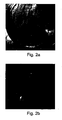
- the binary vector was introduced to Arabidopsis thaliana plants using the procedure as described in Example 6 below. Mature transformed T 2 Arabidopsis plants were assayed for bio-illumination in a darkroom using an ultra-low light detection camera (Princeton Instruments Inc., USA) using the procedure described by Meissner et al. (Plant J. 22:265, 2000). Illumination indicating positive Luciferase activity was observed in the flower and root meristem tissues of transformed plants ( Figure 2 ).
- the binary vectors were introduced to Agrobacterium tumefaciens GV301, or LB4404 competent cells (about 10 9 cells/mL) by electroporation.
- the electroporation was effected by using a MicroPulser electroporator (Biorad), 0.2 cm cuvettes (Biorad) and EC-2 electroporation program (Biorad).
- the treated cells were cultured in LB liquid medium at 28°C for 3 hr, then plated over LB agar supplemented with gentamycin (50 mg/L; for Agrobacterium strains GV301) or streptomycin (300 mg/L; for Agrobacterium strain LB4404) and kanamycin (50 mg/L) at 28°C for 48 hrs.
- Abrobacterium colonies which developed on the selective media were analyzed by PCR using the primers set forth in SEQ ID NOs: 35-36, which were designed to span the inserted sequence in the pPI plasmid.
- the resulting PCR products were isolated and sequenced as described in Example 4 above, to verify that the correct ABST sequences were properly introduced to the Agrobacterium cells.
- T 0 plants Arabidopsis thaliana Columbia plants (T 0 plants) were transformed using the Floral Dip procedure described by Clough and Bent (10) and by Desfeux et al. (11), with minor modifications. Briefly, T 0 Plants were sown in 250 ml pots filled with wet peat-based growth mix. The pots were covered with aluminum foil and a plastic dome, kept at 4°C for 3-4 days, then uncovered and incubated in a growth chamber at 18-24°C under 16/8 hr light/dark cycles. The T 0 plants were ready for transformation six days before anthesis.
- the pellets comprising Agrobacterium cells were re-suspended in a transformation medium containing half-strength (2.15 g/L) Murashig-Skoog (Duchefa); 0.044 ⁇ M benzylamino purine (Sigma); 112 ⁇ g/L B5 Gam strig vitamins (Sigma); 5% sucrose; and 0.2 ml/L Silwet L-77 (OSI Specialists, CT) in double-distilled water, at pH of 5.7.
- Transformation of T 0 plants was effected by inverting each plant into an Agrobacterium suspension, such that the above ground plant tissue was submerged for 3-5 seconds. Each inoculated T 0 plant was immediately placed in a plastic tray, then covered with clear plastic dome to maintain humidity and was kept in the dark at room temperature for 18 hrs, to facilitate infection and transformation. Transformed (transgenic) plants were then uncovered and transferred to a greenhouse for recovery and maturation. The transgenic T 0 plants were grown in the greenhouse for 3-5 weeks until siliques were brown and dry. Seeds were harvested from plants and kept at room temperature until sowing.
- T 1 and T 2 transgenic plants harboring the genes seeds collected from transgenic T 0 plants were surface-sterilized by soaking in 70% ethanol for 1 minute, followed by soaking in 5% sodium hypochloride and 0.05% triton for 5 minutes. The surface-sterilized seeds were thoroughly washed in sterile distilled water then placed on culture plates containing half-strength Murashig-Skoog (Duchefa); 2% sucrose; 0.8% plant agar; 50 mM kanamycin; and 200 mM carbenicylin (Duchefa). The culture plates were incubated at 4°C for 48 hours then transferred to a growth room at 25°C for an additional week of incubation.
- T 1 Arabidopsis plants were transferred to a fresh culture plates for another week of incubation. Following incubation the T 1 plants were removed from culture plates and planted in growth mix contained in 250 ml pots. The transgenic plants were allowed to grow in a greenhouse to maturity. Seeds harvested from T 1 plants were cultured and grown to maturity as T 2 plants under the same conditions as used for culturing and growing the T 1 plants.
- T 1 or T 2 transgenic plants generated as described above were individually transplanted into pots containing a growth mixture of peat and vermiculite (volume ratio 3:2, respectively).
- the pots were covered for 24 hr period for hardening, then placed in the greenhouse in complete random order and irrigated with tap water (provided from the pots' bottom every 3-5 days) for seven days. Thereafter, half of the plants were irrigated with a salt solution (100 mM NaCl and 5 mM CaCl 2 ) to induce salinity stress (stress conditions). The other half of the plants were continued to be irrigated with tap water (normal conditions). All plants were grown in the greenhouse at 100% RH for 28 days, then harvested (the above ground tissue) and weighted (immediately or following drying in oven at 50°C for 24 hr).
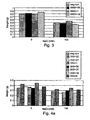
- T 1 plants transformed with 3 different ABST genes and plants transformed with the Luciferase reporter gene, grown either under normal or stress conditions were observed between T 1 plants transformed with 3 different ABST genes and plants transformed with the Luciferase reporter gene, grown either under normal or stress conditions.
- T 1 plants transformed with SEQ ID NO: 1 positioned under the regulatory control of the At6669 promoter maintained 71 % of their fresh weight when exposed to stress conditions, while the control plants (carrying Luciferase gene positioned under the regulatory control of the AT6669 promoter) maintained only 61% of their fresh weight under similar stress conditions.
- T 2 plants transformed with SEQ ID NOs: 7 or 14 positioned under the regulatory control of the 35S promoter accumulated significantly higher biomass than control plants, regardless of growth conditions.
- the mean fresh weight of plants transformed with SEQ ID NOs: 7 and 14, grown under stress conditions were 15% and 24%, respectively, higher than the mean fresh weight control plants grown under similar stress conditions.
- the mean fresh weight of plants transformed with SEQ ID NOs: 7 or 14, grown under normal conditions were 21% and 27%, respectively, higher than the mean fresh weight control plants grown under similar normal conditions.
- T 2 plants transformed with SEQ ID NO: 4 positioned under the regulatory control of the 35S promoter Similar phenomenon was observed with T 2 plants transformed with SEQ ID NO: 4 positioned under the regulatory control of the 35S promoter. Accordingly, as shown in Figure 4A and Table 4 below, the mean fresh weight of plants transformed with SEQ ID NO: 4 was 14% and 7% was higher than the mean fresh weight of control plants grown under stress and normal conditions, respectively. Similarly, T 2 plants transformed with SEQ ID NO: 4 positioned under the regulatory control of the At6669 promoter exhibited 1.3 and 5% higher biomass than control plants grown under stress and normal conditions, respectively. However, these differences were not found statistically different under the experimental conditions.
- T 2 plants transformed with SEQ ID NOs: 1 and 13 positioned under the regulatory control of the At6669 promoter and grown under stress conditions exhibited significantly higher biomass than control plants grown under similar stress conditions.
- the mean fresh weight of T 2 plants transformed with SEQ ID NOs: 1 and 13 positioned under the regulatory control of the At6669 promoter, and grown under stress conditions were 37% and 21 %, respectively, higher than the mean fresh weight control plants grown under similar stress conditions ( Figure 4B and Table 5 below). No significant increase in biomass over control was observed when these transgenic plants (carrying SEQ ID NOs: 1 and 13 regulated under At6669 promoter) where grown under normal conditions.
- the isolated putative ABST genes set forth in SEQ ID NOs: 1 and 13, are capable of increasing plant tolerance to abiotic stress, such as a salinity stress.
- the isolated putative ABST genes set forth in SEQ ID NOs: 7, 14 are capable of substantially promoting biomass in plants grown under stress, as well as under normal conditions.
Landscapes
- Health & Medical Sciences (AREA)
- Genetics & Genomics (AREA)
- Life Sciences & Earth Sciences (AREA)
- Chemical & Material Sciences (AREA)
- Organic Chemistry (AREA)
- Engineering & Computer Science (AREA)
- Molecular Biology (AREA)
- Bioinformatics & Cheminformatics (AREA)
- Biotechnology (AREA)
- General Engineering & Computer Science (AREA)
- Biomedical Technology (AREA)
- Wood Science & Technology (AREA)
- Zoology (AREA)
- Biophysics (AREA)
- General Health & Medical Sciences (AREA)
- Biochemistry (AREA)
- Physics & Mathematics (AREA)
- Microbiology (AREA)
- Plant Pathology (AREA)
- Cell Biology (AREA)
- Botany (AREA)
- Gastroenterology & Hepatology (AREA)
- Medicinal Chemistry (AREA)
- Proteomics, Peptides & Aminoacids (AREA)
- Breeding Of Plants And Reproduction By Means Of Culturing (AREA)
- Micro-Organisms Or Cultivation Processes Thereof (AREA)
- Agricultural Chemicals And Associated Chemicals (AREA)
Claims (22)
- Méthode pour accroître la tolérance d'une plante à un stress abiotique, comprenant l'expression au sein de la plante d'un polynucléotide exogène présentant une homologie d'au moins 90 % avec le polynucléotide représenté par SEQ ID No : 13, dans laquelle ledit stress abiotique est choisi dans le groupe constitué par la privation d'eau et la salinité, pour accroître ainsi la tolérance de la plante au stress abiotique comparée à une plante non transformée.
- Méthode selon la revendication 1, dans laquelle ladite expression est effectuée par :(a) la transformation d'une cellule de ladite plante avec ledit polynucléotide exogène ;(b) la génération d'une plante mature à partir de ladite cellule ; et(c) la culture de ladite plante mature dans des conditions convenables pour exprimer ledit polynucléotide exogène au sein de ladite plante mature.
- Méthode selon la revendication 2, dans laquelle ladite transformation est effectuée par introduction dans ladite cellule végétale d'une construction d'acide nucléique comprenant ledit polynucléotide exogène et au moins un promoteur capable de diriger la transcription dudit polynucléotide exogène dans ladite cellule végétale.
- Méthode selon la revendication 3, dans laquelle ledit au moins promoteur est un promoteur constitutif.
- Méthode selon la revendication 4, dans laquelle ledit promoteur constitutif est le promoteur 35S du CaMV.
- Méthode selon la revendication 4, dans laquelle ledit promoteur constitutif est le promoteur At6669.
- Méthode selon la revendication 3, dans laquelle ledit au moins promoteur est un promoteur inductible.
- Méthode selon la revendication 7, dans laquelle ledit promoteur inductible est un promoteur inductible par un stress abiotique.
- Méthode selon la revendication 1, dans laquelle ladite expression est effectuée par infection de ladite plante avec un virus comprenant ledit polynucléotide exogène.
- Méthode selon la revendication 9, dans laquelle ledit virus est un virus avirulent.
- Méthode selon la revendication 1, dans laquelle ladite plante est une plante dicotylédone.
- Méthode selon la revendication 1, dans laquelle ladite plante est une plante monocotylédone.
- Construction d'acide nucléique, comprenant un polynucléotide présentant une homologie d'au moins 90 % avec la séquence de nucléotides représentée par SEQ ID No : 13 et un promoteur capable de diriger la transcription du polynucléotide dans une cellule hôte, ledit promoteur étant le promoteur 35S du CaMV, le promoteur At6669 ou un promoteur inductible par un stress abiotique, dans laquelle ledit polynucléotide est capable d'accroître la tolérance à un stress abiotique chez une plante transformée avec la construction d'acide nucléique comparée à une plante non transformée, dans laquelle ledit stress abiotique est choisi dans le groupe constitué par la privation d'eau et la salinité.
- Construction d'acide nucléique comprenant le polynucléotide représenté par SEQ ID No : 13 et un promoteur capable de diriger la transcription du polynucléotide dans une cellule hôte.
- Construction d'acide nucléique selon la revendication 14, dans laquelle ledit promoteur est un promoteur constitutif.
- Construction d'acide nucléique selon la revendication 15, dans laquelle ledit promoteur constitutif est le promoteur 35S du CaMV.
- Construction d'acide nucléique selon la revendication 15, dans laquelle ledit promoteur constitutif est le promoteur At6669.
- Construction d'acide nucléique selon la revendication 14, dans laquelle ledit promoteur est un promoteur inductible par un stress abiotique.
- Cellule végétale comprenant la construction d'acide nucléique selon l'une quelconque des revendications 13 à 18, dans laquelle ledit polynucléotide est exogène à ladite cellule végétale.
- Cellule végétale selon la revendication 19, dans laquelle ladite cellule végétale forme une partie de plante.
- Cellule végétale selon la revendication 19, dans laquelle ladite plante est une plante dicotylédone.
- Cellule végétale selon la revendication 19, dans laquelle ladite plante est une plante monocotylédone.
Priority Applications (1)
| Application Number | Priority Date | Filing Date | Title |
|---|---|---|---|
| EP10194223A EP2365087A3 (fr) | 2003-05-22 | 2004-05-20 | Procédés d'augmentation de la tolérance du stress abiotique des plantes et plantes ainsi produites |
Applications Claiming Priority (2)
| Application Number | Priority Date | Filing Date | Title |
|---|---|---|---|
| US47243303P | 2003-05-22 | 2003-05-22 | |
| PCT/IL2004/000431 WO2004104162A2 (fr) | 2003-05-22 | 2004-05-20 | Procedes d'augmentation de la tolerance du stress abiotique des plantes et plantes ainsi produites |
Related Child Applications (1)
| Application Number | Title | Priority Date | Filing Date |
|---|---|---|---|
| EP10194223A Division-Into EP2365087A3 (fr) | 2003-05-22 | 2004-05-20 | Procédés d'augmentation de la tolérance du stress abiotique des plantes et plantes ainsi produites |
Publications (3)
| Publication Number | Publication Date |
|---|---|
| EP1625199A2 EP1625199A2 (fr) | 2006-02-15 |
| EP1625199A4 EP1625199A4 (fr) | 2007-11-28 |
| EP1625199B1 true EP1625199B1 (fr) | 2015-03-11 |
Family
ID=33476955
Family Applications (2)
| Application Number | Title | Priority Date | Filing Date |
|---|---|---|---|
| EP04734072.4A Expired - Lifetime EP1625199B1 (fr) | 2003-05-22 | 2004-05-20 | Procedes d'augmentation de la tolerance du stress abiotique des plantes et plantes ainsi produites |
| EP10194223A Withdrawn EP2365087A3 (fr) | 2003-05-22 | 2004-05-20 | Procédés d'augmentation de la tolérance du stress abiotique des plantes et plantes ainsi produites |
Family Applications After (1)
| Application Number | Title | Priority Date | Filing Date |
|---|---|---|---|
| EP10194223A Withdrawn EP2365087A3 (fr) | 2003-05-22 | 2004-05-20 | Procédés d'augmentation de la tolérance du stress abiotique des plantes et plantes ainsi produites |
Country Status (8)
| Country | Link |
|---|---|
| EP (2) | EP1625199B1 (fr) |
| CN (2) | CN101942449B (fr) |
| BR (2) | BRPI0411182B1 (fr) |
| CA (2) | CA2978152C (fr) |
| MX (1) | MXPA05012565A (fr) |
| RU (2) | RU2350653C2 (fr) |
| WO (1) | WO2004104162A2 (fr) |
| ZA (1) | ZA200509383B (fr) |
Families Citing this family (42)
| Publication number | Priority date | Publication date | Assignee | Title |
|---|---|---|---|---|
| US10329575B2 (en) * | 1999-05-14 | 2019-06-25 | Ceres, Inc. | Regulatory sequence for plants |
| US7554007B2 (en) | 2003-05-22 | 2009-06-30 | Evogene Ltd. | Methods of increasing abiotic stress tolerance and/or biomass in plants |
| AU2005234725B2 (en) | 2003-05-22 | 2012-02-23 | Evogene Ltd. | Methods of Increasing Abiotic Stress Tolerance and/or Biomass in Plants and Plants Generated Thereby |
| CA2877145C (fr) | 2004-06-14 | 2020-03-24 | Evogene Ltd. | Polynucleotides et polypeptides impliques dans le developpement de la fibre vegetale et procedes permettant de les utiliser |
| CN101505587A (zh) | 2005-10-24 | 2009-08-12 | 伊沃基因有限公司 | 分离的多肽、编码其的多核苷酸、表达其的转基因植物和使用其的方法 |
| EP2383345B1 (fr) | 2006-12-20 | 2017-11-22 | Evogene Ltd. | Polynucléotides et polypeptides impliqués dans le développement de fibres végétales et procédés d'utilisation |
| BRPI0809796B1 (pt) | 2007-04-09 | 2021-09-08 | Evogene Ltd | Métodos para aumentar o teor de óleo, taxa de crescimento, biomassa, vigor e/ou rendimento de uma planta, e para produzir óleo |
| BR122020022203B1 (pt) | 2007-07-24 | 2021-04-20 | Evogene Ltd | método de aumento da taxa de crescimento de uma planta |
| CN101977928B (zh) | 2007-12-27 | 2014-12-10 | 伊沃基因有限公司 | 用于改进植物的水分利用效率、肥料利用效率、生物/非生物胁迫耐受性、产量和生物量的分离多肽、多核苷酸 |
| MX2010012697A (es) | 2008-05-22 | 2011-03-15 | Evogene Ltd | Polinucleotidos y polipeptidos aislados y metodos para usarlos para incrementar el rendimiento de plantas, biomasa, velocidad de crecimiento, vigor, contenido de aceite, tolerancia al estres abiotico de las plantas y eficiencia de uso de nitrogeno. |
| BR122021014165B1 (pt) | 2008-08-18 | 2022-08-16 | Evogene Ltd. | Método para aumentar a eficiência de uso do nitrogênio, eficiência de uso de fertilizantes, produção, biomassa e/ou tolerância ao estresse por deficiência de nitrogênio e seca de uma planta, e, construção de ácido nucleico isolado |
| RU2402607C2 (ru) * | 2008-10-21 | 2010-10-27 | Учреждение Российской академии наук Центр "Биоинженерия" РАН | Вирусный вектор для продукции рекомбинантных белков в растениях |
| MX345298B (es) | 2008-10-30 | 2017-01-24 | Evogene Ltd | Polinucleótidos y polipéptidos aislados y métodos para utilizarlos para aumentar el rendimiento de la planta, biomasa, tasa de crecimiento, vigor, contenido de aceite, tolerancia al estrés abiótico de las plantas y eficacia en el uso de nitrógeno. |
| BRPI0921761A2 (pt) | 2008-11-11 | 2015-09-01 | Toyota Motor Co Ltd | Gene para aumentar a producao de biomassa e metodo para uso do mesmo |
| MX340023B (es) | 2008-12-29 | 2016-06-22 | Evogene Ltd | Polinucleotidos, polipeptidos codificados, y metodos para utilizarlos para aumentar la tolerancia al estres abiotico, biomasa y/o rendimiento en plantas que los expresan. |
| EP2403956B1 (fr) | 2009-03-02 | 2015-11-25 | Evogene Ltd. | Polynucléotides et polypeptides isolés, et procédés d'utilisation de ceux-ci pour augmenter un rendement végétal et/ou des caractéristiques agricoles |
| US9096865B2 (en) | 2009-06-10 | 2015-08-04 | Evogene Ltd. | Isolated polynucleotides and polypeptides, and methods of using same for increasing nitrogen use efficiency, yield, growth rate, vigor, biomass, oil content, and/or abiotic stress tolerance |
| MX352610B (es) | 2009-08-04 | 2017-11-30 | Evogene Ltd | Polinucleótidos y polipéptidos aislados, y métodos para utilizarlos para mejorar la tolerancia al estrés abiótico, rendimiento,tasa de crecimiento, vigor, biomasa, contenido de aceite y/o eficacia en el uso de nitrógeno de las plantas. |
| JP5454086B2 (ja) | 2009-10-30 | 2014-03-26 | トヨタ自動車株式会社 | 植物に環境ストレス耐性を付与する遺伝子及びその利用方法 |
| EP2519097B1 (fr) | 2009-12-28 | 2016-03-02 | Evogene Ltd. | Polynucléotides isolés et polypeptides et procédés pour les utiliser afin d'augmenter le rendement des cultures, la biomasse, la vitesse de croissance, la vigueur, la teneur en huile, la tolérance au stress abiotique des plantes et l'efficacité d'utilisation de l'azote |
| BR112012027504B1 (pt) | 2010-04-28 | 2022-05-24 | Evogene Ltd | Método de aumento de produção, biomassa, taxa de crescimento, e/ou tolerância ao estresse abiótico de uma planta, e, construção de ácidos nucleicos |
| AU2011298034B2 (en) | 2010-08-30 | 2016-05-26 | Evogene Ltd. | Isolated polynucleotides and polypeptides, and methods of using same for increasing nitrogen use efficiency, yield, growth rate, vigor, biomass, oil content, and/or abiotic stress tolerance |
| US9551006B2 (en) | 2010-12-22 | 2017-01-24 | Evogene Ltd. | Isolated polynucleotides and polypeptides, and methods of using same for improving plant properties |
| MX354195B (es) | 2011-05-03 | 2018-02-16 | Evogene Ltd | Polipeptidos y polinucleotidos aislados y metodos para su uso, para aumentar el rendimiento, la biomasa, el indice de crecimiento, el vigor, el contenido de aceite, la tolerancia al estrés abiotico de las plantas y la eficiencia en el uso de nitrogeno. |
| WO2013027223A2 (fr) | 2011-08-23 | 2013-02-28 | Evogene Ltd. | Polynucléotides et polypeptides isolés, et procédés d'utilisation de ceux-ci pour améliorer le rendement de plantes et/ou des caractéristiques agricoles |
| BR112014012147A2 (pt) | 2011-11-21 | 2017-05-30 | Evogene Ltd | composições e métodos para aumento da resistência a nematódeos em plantas |
| BR122019023058B1 (pt) | 2011-11-28 | 2021-04-06 | Evogene Ltd. | Método para aumento da eficiência no uso de nitrogênio, produção, biomassa, taxa de crescimento, vigor, teor de óleo, e/ou tolerância ao estresse abiótico de uma planta e construto de ácido nucleico isolado |
| AR091299A1 (es) | 2011-12-28 | 2015-01-28 | Evogene Ltd | Polinucleotidos y polipeptidos aislados y metodos para utilizarlos para mejorar el rendimiento de las plantas |
| BR112014021561B1 (pt) | 2012-02-29 | 2022-05-03 | Evogene Ltd | Método para aumentar a taxa de crescimento, a biomassa e/ou o rendimento das sementes e/ou reduzir o tempo de emergência da floração e/ou tempo de inflorescência de uma planta em condições sem estresse, em comparação com uma planta de controle da mesma espécie sob as mesmas condições de cultivo, e, construção de ácido nucleico |
| BR122021002085B1 (pt) | 2012-05-28 | 2022-08-09 | Evogene Ltd | Método para aumentar a produção, taxa de crescimento, biomassa, vigor, produção de sementes, e/ou eficiência no uso de nitrogênio de uma planta |
| CA3177769A1 (fr) | 2012-08-27 | 2014-03-06 | Evogene Ltd. | Polynucleotides, polypeptides isoles, et leurs procedes d'utilisation qui permettent d'augmenter la tolerance au stress abiotique, la biomasse et le rendement de plantes |
| AU2013368877B2 (en) | 2012-12-25 | 2019-07-25 | Evogene Ltd. | Isolated polynucleotides and polypeptides, and methods of using same for increasing nitrogen use efficiency of plants |
| BR122020005661B1 (pt) | 2012-12-26 | 2022-10-25 | Evogene Ltd | Método para aumentar a eficiência do uso de nitrogênio, taxa de crescimento, biomassa, vigor, conteúdo de óleo, rendimento de sementes, rendimento de fibra, qualidade de fibra, comprimento da fibra, capacidade fotossintética e/ou tolerância ao estresse abiótico de uma planta, método para selecionar uma planta transformada e construção de ácido nucleico |
| US9920329B2 (en) | 2013-05-22 | 2018-03-20 | Evogene Ltd. | Isolated polynucleotides and polypeptides, and methods of using same for increasing plant yield and/or agricultural characteristics |
| US10006042B2 (en) | 2013-08-27 | 2018-06-26 | Evogene Ltd. | Isolated polynucleotides and polypeptides, and methods of using same for increasing plant yield and/or agricultural characteristics |
| US20170088852A1 (en) | 2014-05-28 | 2017-03-30 | Evogene Ltd. | Isolated polynucleotides, polypeptides and methods of using same for increasing abiotic stress tolerance, biomass and yield of plants |
| WO2016030885A1 (fr) | 2014-08-27 | 2016-03-03 | Evogene Ltd. | Polynucléotides et polypeptides isolés, et procédés les utilisant pour augmenter un rendement végétal et/ou des caractéristiques agricoles |
| CN104328126A (zh) * | 2014-10-22 | 2015-02-04 | 李鸣 | 一种高山离子芥根特异表达水通道蛋白基因及其编码蛋白质及其基因克隆方法 |
| MX2018008037A (es) | 2015-12-28 | 2019-03-11 | Evogene Ltd | Rasgos de plantas conferidos mediante polinucleotidos y polipeptidos aislados. |
| CN110468141A (zh) * | 2019-08-31 | 2019-11-19 | 贵州大学 | 烟草基因IspH及在调控植物表皮毛发育方面的应用 |
| CN113846106B (zh) * | 2021-10-13 | 2023-08-29 | 杭州三叶青农业科技有限公司 | 基因PnDCD及其在调控皂苷合成中的应用 |
| CN115896129A (zh) * | 2022-09-29 | 2023-04-04 | 四川农业大学 | 一种鸭茅DgbHLH128基因及其应用 |
Family Cites Families (63)
| Publication number | Priority date | Publication date | Assignee | Title |
|---|---|---|---|---|
| NL154600B (nl) | 1971-02-10 | 1977-09-15 | Organon Nv | Werkwijze voor het aantonen en bepalen van specifiek bindende eiwitten en hun corresponderende bindbare stoffen. |
| NL154598B (nl) | 1970-11-10 | 1977-09-15 | Organon Nv | Werkwijze voor het aantonen en bepalen van laagmoleculire verbindingen en van eiwitten die deze verbindingen specifiek kunnen binden, alsmede testverpakking. |
| NL154599B (nl) | 1970-12-28 | 1977-09-15 | Organon Nv | Werkwijze voor het aantonen en bepalen van specifiek bindende eiwitten en hun corresponderende bindbare stoffen, alsmede testverpakking. |
| US3901654A (en) | 1971-06-21 | 1975-08-26 | Biological Developments | Receptor assays of biologically active compounds employing biologically specific receptors |
| US3853987A (en) | 1971-09-01 | 1974-12-10 | W Dreyer | Immunological reagent and radioimmuno assay |
| US3867517A (en) | 1971-12-21 | 1975-02-18 | Abbott Lab | Direct radioimmunoassay for antigens and their antibodies |
| NL171930C (nl) | 1972-05-11 | 1983-06-01 | Akzo Nv | Werkwijze voor het aantonen en bepalen van haptenen, alsmede testverpakkingen. |
| US3850578A (en) | 1973-03-12 | 1974-11-26 | H Mcconnell | Process for assaying for biologically active molecules |
| US3935074A (en) | 1973-12-17 | 1976-01-27 | Syva Company | Antibody steric hindrance immunoassay with two antibodies |
| US3996345A (en) | 1974-08-12 | 1976-12-07 | Syva Company | Fluorescence quenching with immunological pairs in immunoassays |
| US4034074A (en) | 1974-09-19 | 1977-07-05 | The Board Of Trustees Of Leland Stanford Junior University | Universal reagent 2-site immunoradiometric assay using labelled anti (IgG) |
| US3984533A (en) | 1975-11-13 | 1976-10-05 | General Electric Company | Electrophoretic method of detecting antigen-antibody reaction |
| US4098876A (en) | 1976-10-26 | 1978-07-04 | Corning Glass Works | Reverse sandwich immunoassay |
| US4879219A (en) | 1980-09-19 | 1989-11-07 | General Hospital Corporation | Immunoassay utilizing monoclonal high affinity IgM antibodies |
| CA1192510A (fr) | 1981-05-27 | 1985-08-27 | Lawrence E. Pelcher | Vecteur de arn virale de virus des plantes ou portion de ce vecteur, methode de construction, et methode de production d'un gene derive |
| JPS6054684A (ja) | 1983-09-05 | 1985-03-29 | Teijin Ltd | 新規dνa及びハイブリツドdνa |
| US5011771A (en) | 1984-04-12 | 1991-04-30 | The General Hospital Corporation | Multiepitopic immunometric assay |
| US4666828A (en) | 1984-08-15 | 1987-05-19 | The General Hospital Corporation | Test for Huntington's disease |
| US4945050A (en) | 1984-11-13 | 1990-07-31 | Cornell Research Foundation, Inc. | Method for transporting substances into living cells and tissues and apparatus therefor |
| CA1288073C (fr) | 1985-03-07 | 1991-08-27 | Paul G. Ahlquist | Vecteur de transformation de l'arn |
| US4683202A (en) | 1985-03-28 | 1987-07-28 | Cetus Corporation | Process for amplifying nucleic acid sequences |
| US4801531A (en) | 1985-04-17 | 1989-01-31 | Biotechnology Research Partners, Ltd. | Apo AI/CIII genomic polymorphisms predictive of atherosclerosis |
| US5569597A (en) | 1985-05-13 | 1996-10-29 | Ciba Geigy Corp. | Methods of inserting viral DNA into plant material |
| GB8608850D0 (en) | 1986-04-11 | 1986-05-14 | Diatech Ltd | Packaging system |
| JPS6314693A (ja) | 1986-07-04 | 1988-01-21 | Sumitomo Chem Co Ltd | 植物ウイルスrnaベクタ− |
| US5268463A (en) | 1986-11-11 | 1993-12-07 | Jefferson Richard A | Plant promoter α-glucuronidase gene construct |
| US5608142A (en) | 1986-12-03 | 1997-03-04 | Agracetus, Inc. | Insecticidal cotton plants |
| ATE108828T1 (de) | 1987-02-09 | 1994-08-15 | Lubrizol Genetics Inc | Hybrides rns-virus. |
| US5316931A (en) | 1988-02-26 | 1994-05-31 | Biosource Genetics Corp. | Plant viral vectors having heterologous subgenomic promoters for systemic expression of foreign genes |
| US5693507A (en) | 1988-09-26 | 1997-12-02 | Auburn University | Genetic engineering of plant chloroplasts |
| US5272057A (en) | 1988-10-14 | 1993-12-21 | Georgetown University | Method of detecting a predisposition to cancer by the use of restriction fragment length polymorphism of the gene for human poly (ADP-ribose) polymerase |
| US5302523A (en) | 1989-06-21 | 1994-04-12 | Zeneca Limited | Transformation of plant cells |
| US5192659A (en) | 1989-08-25 | 1993-03-09 | Genetype Ag | Intron sequence analysis method for detection of adjacent and remote locus alleles as haplotypes |
| EP0452269B1 (fr) | 1990-04-12 | 2002-10-09 | Syngenta Participations AG | Promoteurs à préférence tissulaire |
| US5498830A (en) | 1990-06-18 | 1996-03-12 | Monsanto Company | Decreased oil content in plant seeds |
| US5187267A (en) | 1990-06-19 | 1993-02-16 | Calgene, Inc. | Plant proteins, promoters, coding sequences and use |
| US5399680A (en) | 1991-05-22 | 1995-03-21 | The Salk Institute For Biological Studies | Rice chitinase promoter |
| AU668096B2 (en) | 1991-08-27 | 1996-04-26 | Syngenta Participations Ag | Proteins with insecticidal properties against homopteran insects and their use in plant protection |
| JPH06511152A (ja) * | 1991-10-04 | 1994-12-15 | ノースカロライナ ステイト ユニバーシティー | 病原体耐性トランスジェニック植物 |
| US5356816A (en) | 1991-11-19 | 1994-10-18 | Board Of Trustees Operating Michigan State University | Method and compositions using polypeptides of arabidopsis thaliana |
| US5281521A (en) | 1992-07-20 | 1994-01-25 | The Trustees Of The University Of Pennsylvania | Modified avidin-biotin technique |
| US5639950A (en) * | 1992-09-29 | 1997-06-17 | The Ohio State University Research Foundation | Nucleotide sequence encoding for bifunctional enzyme for proline production |
| US5296462A (en) | 1992-11-19 | 1994-03-22 | Board Of Trustees Operating Michigan State University | Method and compositions using polypeptides of arabidopsis thaliana |
| ZA939767B (en) * | 1993-01-21 | 1994-09-14 | Univ North Carolina State | Nematode-resistant transgenic plants |
| US5608144A (en) | 1994-08-12 | 1997-03-04 | Dna Plant Technology Corp. | Plant group 2 promoters and uses thereof |
| US5659026A (en) | 1995-03-24 | 1997-08-19 | Pioneer Hi-Bred International | ALS3 promoter |
| CN1112444C (zh) * | 1996-10-24 | 2003-06-25 | 日本烟草产业株式会社 | 控制植物中水含量的方法 |
| RU2138156C1 (ru) * | 1998-04-20 | 1999-09-27 | Институт цитологии и генетики СО РАН | Способ создания солеустойчивых форм мягкой пшеницы |
| CA2335522A1 (fr) * | 1998-06-24 | 1999-12-29 | Cornell Research Foundation, Inc. | Plantes cerealieres transgeniques tolerantes aux stress hydrique et salin |
| US6313375B1 (en) * | 1998-08-13 | 2001-11-06 | Pioneer Hi-Bred International, Inc. | Maize aquaporins and uses thereof |
| US6313376B1 (en) * | 1998-08-14 | 2001-11-06 | Pioneer Hi-Bred International, Inc. | Maize aquaporins and uses thereof |
| US6717034B2 (en) * | 2001-03-30 | 2004-04-06 | Mendel Biotechnology, Inc. | Method for modifying plant biomass |
| JP3178672B2 (ja) | 1998-10-14 | 2001-06-25 | 農林水産省国際農林水産業研究センター所長 | 環境ストレス耐性植物 |
| EP1033405A3 (fr) * | 1999-02-25 | 2001-08-01 | Ceres Incorporated | Fragments d'ADN avec des séquences déterminées et polypeptides encodées par lesdits fragments |
| US7151202B1 (en) * | 1999-07-19 | 2006-12-19 | Japan Science And Technology Agency | Environmental stress resistance gene |
| JP2001054385A (ja) * | 1999-08-17 | 2001-02-27 | Hitachi Ltd | イネ・プロリン・トランスポーター遺伝子 |
| JP2001186879A (ja) * | 2000-01-05 | 2001-07-10 | Inst Of Physical & Chemical Res | プロリン分解系の抑制により植物のストレス耐性を上昇させる方法 |
| US6677504B2 (en) | 2000-04-07 | 2004-01-13 | Basf Plant Science Gmbh | Transcription factor stress-related proteins and methods of use in plants |
| WO2002016655A2 (fr) * | 2000-08-24 | 2002-02-28 | The Scripps Research Institute | Sequences nucleotidiques de plantes a stress regule, plantes transgeniques contenant ces sequences, et methodes d'utilisation stress-regulated nucleotide sequences of plants, transgenic plants containing same, and methods of use |
| CA2446022A1 (fr) * | 2001-05-03 | 2002-11-14 | Vlaams Interuniversitair Instituut Voor Biotechnologie Vzw | Cellules eucaryotes tolerant le gel |
| AU2002332795A1 (en) * | 2001-08-31 | 2003-03-18 | The Dow Chemical Company | Nucleic acid compositions conferring insect control in plants |
| US7358419B2 (en) * | 2002-04-08 | 2008-04-15 | Pioneer Hi-Bred International, Inc. | Enhanced silk exsertion under stress |
| US20090005296A1 (en) * | 2004-05-05 | 2009-01-01 | The Royal Veterinary And Agricultural University | Ammonium/Ammonia Transporter |
-
2004
- 2004-05-20 CN CN200910217137.1A patent/CN101942449B/zh not_active Expired - Fee Related
- 2004-05-20 CA CA2978152A patent/CA2978152C/fr not_active Expired - Lifetime
- 2004-05-20 BR BRPI0411182-6A patent/BRPI0411182B1/pt not_active IP Right Cessation
- 2004-05-20 WO PCT/IL2004/000431 patent/WO2004104162A2/fr not_active Ceased
- 2004-05-20 EP EP04734072.4A patent/EP1625199B1/fr not_active Expired - Lifetime
- 2004-05-20 RU RU2005140106/13A patent/RU2350653C2/ru active
- 2004-05-20 CA CA2526440A patent/CA2526440C/fr not_active Expired - Lifetime
- 2004-05-20 CN CN200480020597A patent/CN100591770C/zh not_active Expired - Fee Related
- 2004-05-20 EP EP10194223A patent/EP2365087A3/fr not_active Withdrawn
- 2004-05-20 BR BR122016024209-9A patent/BR122016024209B1/pt active IP Right Grant
- 2004-05-20 MX MXPA05012565A patent/MXPA05012565A/es active IP Right Grant
-
2005
- 2005-11-18 ZA ZA200509383A patent/ZA200509383B/xx unknown
-
2008
- 2008-10-31 RU RU2008143335/13A patent/RU2008143335A/ru not_active Application Discontinuation
Also Published As
| Publication number | Publication date |
|---|---|
| ZA200509383B (en) | 2007-02-28 |
| RU2008143335A (ru) | 2010-05-10 |
| EP1625199A2 (fr) | 2006-02-15 |
| CA2526440A1 (fr) | 2004-12-02 |
| CA2526440C (fr) | 2017-10-24 |
| CN1823168A (zh) | 2006-08-23 |
| EP1625199A4 (fr) | 2007-11-28 |
| CA2978152C (fr) | 2021-01-26 |
| BRPI0411182B1 (pt) | 2019-08-20 |
| EP2365087A2 (fr) | 2011-09-14 |
| EP2365087A3 (fr) | 2011-11-30 |
| CA2978152A1 (fr) | 2004-12-02 |
| CN101942449A (zh) | 2011-01-12 |
| CN101942449B (zh) | 2014-07-02 |
| BRPI0411182A (pt) | 2006-07-18 |
| WO2004104162A3 (fr) | 2005-12-15 |
| RU2005140106A (ru) | 2006-07-27 |
| BR122016024209B1 (pt) | 2019-08-20 |
| CN100591770C (zh) | 2010-02-24 |
| MXPA05012565A (es) | 2006-05-25 |
| WO2004104162A2 (fr) | 2004-12-02 |
| RU2350653C2 (ru) | 2009-03-27 |
Similar Documents
| Publication | Publication Date | Title |
|---|---|---|
| EP1625199B1 (fr) | Procedes d'augmentation de la tolerance du stress abiotique des plantes et plantes ainsi produites | |
| US10829777B2 (en) | Methods of increasing abiotic stress tolerance and/or biomass in plants and plants generated thereby | |
| US10184132B2 (en) | Methods of increasing abiotic stress tolerance, yield and/or biomass in plants | |
| CN109111514B (zh) | 兼抗纹枯病和根腐病的转基因小麦的培育方法及其相关生物材料 | |
| AU2014203601B9 (en) | Methods of Increasing Abiotic Stress Tolerance and/or Biomass in Plants and Plants Generated Thereby | |
| AU2012241091B9 (en) | Methods of Increasing Abiotic Stress Tolerance and/or Biomass in Plants and Plants Generated Thereby | |
| AU2014203601B2 (en) | Methods of Increasing Abiotic Stress Tolerance and/or Biomass in Plants and Plants Generated Thereby |
Legal Events
| Date | Code | Title | Description |
|---|---|---|---|
| PUAI | Public reference made under article 153(3) epc to a published international application that has entered the european phase |
Free format text: ORIGINAL CODE: 0009012 |
|
| 17P | Request for examination filed |
Effective date: 20051117 |
|
| AK | Designated contracting states |
Kind code of ref document: A2 Designated state(s): AT BE BG CH CY CZ DE DK EE ES FI FR GB GR HU IE IT LI LU MC NL PL PT RO SE SI SK TR |
|
| AX | Request for extension of the european patent |
Extension state: AL HR LT LV MK |
|
| RIC1 | Information provided on ipc code assigned before grant |
Ipc: C12N 15/82 20060101AFI20060119BHEP Ipc: C12N 15/29 20060101ALI20060119BHEP Ipc: A01H 5/00 20060101ALI20060119BHEP |
|
| RAX | Requested extension states of the european patent have changed |
Extension state: AL Payment date: 20051117 Extension state: HR Payment date: 20060206 Extension state: LV Payment date: 20051117 Extension state: LT Payment date: 20051117 Extension state: MK Payment date: 20051117 |
|
| A4 | Supplementary search report drawn up and despatched |
Effective date: 20071031 |
|
| 17Q | First examination report despatched |
Effective date: 20081208 |
|
| GRAP | Despatch of communication of intention to grant a patent |
Free format text: ORIGINAL CODE: EPIDOSNIGR1 |
|
| INTG | Intention to grant announced |
Effective date: 20140417 |
|
| INTG | Intention to grant announced |
Effective date: 20140428 |
|
| GRAP | Despatch of communication of intention to grant a patent |
Free format text: ORIGINAL CODE: EPIDOSNIGR1 |
|
| INTG | Intention to grant announced |
Effective date: 20141001 |
|
| GRAS | Grant fee paid |
Free format text: ORIGINAL CODE: EPIDOSNIGR3 |
|
| GRAA | (expected) grant |
Free format text: ORIGINAL CODE: 0009210 |
|
| AK | Designated contracting states |
Kind code of ref document: B1 Designated state(s): AT BE BG CH CY CZ DE DK EE ES FI FR GB GR HU IE IT LI LU MC NL PL PT RO SE SI SK TR |
|
| AX | Request for extension of the european patent |
Extension state: AL HR LT LV MK |
|
| REG | Reference to a national code |
Ref country code: GB Ref legal event code: FG4D |
|
| REG | Reference to a national code |
Ref country code: CH Ref legal event code: EP |
|
| REG | Reference to a national code |
Ref country code: IE Ref legal event code: FG4D |
|
| REG | Reference to a national code |
Ref country code: AT Ref legal event code: REF Ref document number: 715368 Country of ref document: AT Kind code of ref document: T Effective date: 20150415 |
|
| REG | Reference to a national code |
Ref country code: DE Ref legal event code: R096 Ref document number: 602004046778 Country of ref document: DE Effective date: 20150423 |
|
| REG | Reference to a national code |
Ref country code: FR Ref legal event code: PLFP Year of fee payment: 12 |
|
| REG | Reference to a national code |
Ref country code: NL Ref legal event code: VDEP Effective date: 20150311 |
|
| REG | Reference to a national code |
Ref country code: NL Ref legal event code: VDEP Effective date: 20150311 |
|
| PG25 | Lapsed in a contracting state [announced via postgrant information from national office to epo] |
Ref country code: FI Free format text: LAPSE BECAUSE OF FAILURE TO SUBMIT A TRANSLATION OF THE DESCRIPTION OR TO PAY THE FEE WITHIN THE PRESCRIBED TIME-LIMIT Effective date: 20150311 Ref country code: ES Free format text: LAPSE BECAUSE OF FAILURE TO SUBMIT A TRANSLATION OF THE DESCRIPTION OR TO PAY THE FEE WITHIN THE PRESCRIBED TIME-LIMIT Effective date: 20150311 Ref country code: SE Free format text: LAPSE BECAUSE OF FAILURE TO SUBMIT A TRANSLATION OF THE DESCRIPTION OR TO PAY THE FEE WITHIN THE PRESCRIBED TIME-LIMIT Effective date: 20150311 |
|
| REG | Reference to a national code |
Ref country code: AT Ref legal event code: MK05 Ref document number: 715368 Country of ref document: AT Kind code of ref document: T Effective date: 20150311 |
|
| REG | Reference to a national code |
Ref country code: LT Ref legal event code: MG9D |
|
| PG25 | Lapsed in a contracting state [announced via postgrant information from national office to epo] |
Ref country code: GR Free format text: LAPSE BECAUSE OF FAILURE TO SUBMIT A TRANSLATION OF THE DESCRIPTION OR TO PAY THE FEE WITHIN THE PRESCRIBED TIME-LIMIT Effective date: 20150612 |
|
| PG25 | Lapsed in a contracting state [announced via postgrant information from national office to epo] |
Ref country code: NL Free format text: LAPSE BECAUSE OF FAILURE TO SUBMIT A TRANSLATION OF THE DESCRIPTION OR TO PAY THE FEE WITHIN THE PRESCRIBED TIME-LIMIT Effective date: 20150311 |
|
| PG25 | Lapsed in a contracting state [announced via postgrant information from national office to epo] |
Ref country code: RO Free format text: LAPSE BECAUSE OF FAILURE TO SUBMIT A TRANSLATION OF THE DESCRIPTION OR TO PAY THE FEE WITHIN THE PRESCRIBED TIME-LIMIT Effective date: 20150311 Ref country code: PT Free format text: LAPSE BECAUSE OF FAILURE TO SUBMIT A TRANSLATION OF THE DESCRIPTION OR TO PAY THE FEE WITHIN THE PRESCRIBED TIME-LIMIT Effective date: 20150713 Ref country code: EE Free format text: LAPSE BECAUSE OF FAILURE TO SUBMIT A TRANSLATION OF THE DESCRIPTION OR TO PAY THE FEE WITHIN THE PRESCRIBED TIME-LIMIT Effective date: 20150311 Ref country code: SK Free format text: LAPSE BECAUSE OF FAILURE TO SUBMIT A TRANSLATION OF THE DESCRIPTION OR TO PAY THE FEE WITHIN THE PRESCRIBED TIME-LIMIT Effective date: 20150311 Ref country code: CZ Free format text: LAPSE BECAUSE OF FAILURE TO SUBMIT A TRANSLATION OF THE DESCRIPTION OR TO PAY THE FEE WITHIN THE PRESCRIBED TIME-LIMIT Effective date: 20150311 |
|
| PG25 | Lapsed in a contracting state [announced via postgrant information from national office to epo] |
Ref country code: PL Free format text: LAPSE BECAUSE OF FAILURE TO SUBMIT A TRANSLATION OF THE DESCRIPTION OR TO PAY THE FEE WITHIN THE PRESCRIBED TIME-LIMIT Effective date: 20150311 Ref country code: AT Free format text: LAPSE BECAUSE OF FAILURE TO SUBMIT A TRANSLATION OF THE DESCRIPTION OR TO PAY THE FEE WITHIN THE PRESCRIBED TIME-LIMIT Effective date: 20150311 |
|
| REG | Reference to a national code |
Ref country code: DE Ref legal event code: R097 Ref document number: 602004046778 Country of ref document: DE |
|
| REG | Reference to a national code |
Ref country code: CH Ref legal event code: PL |
|
| PLBE | No opposition filed within time limit |
Free format text: ORIGINAL CODE: 0009261 |
|
| STAA | Information on the status of an ep patent application or granted ep patent |
Free format text: STATUS: NO OPPOSITION FILED WITHIN TIME LIMIT |
|
| PG25 | Lapsed in a contracting state [announced via postgrant information from national office to epo] |
Ref country code: CH Free format text: LAPSE BECAUSE OF NON-PAYMENT OF DUE FEES Effective date: 20150531 Ref country code: DK Free format text: LAPSE BECAUSE OF FAILURE TO SUBMIT A TRANSLATION OF THE DESCRIPTION OR TO PAY THE FEE WITHIN THE PRESCRIBED TIME-LIMIT Effective date: 20150311 Ref country code: LI Free format text: LAPSE BECAUSE OF NON-PAYMENT OF DUE FEES Effective date: 20150531 Ref country code: LU Free format text: LAPSE BECAUSE OF FAILURE TO SUBMIT A TRANSLATION OF THE DESCRIPTION OR TO PAY THE FEE WITHIN THE PRESCRIBED TIME-LIMIT Effective date: 20150520 Ref country code: MC Free format text: LAPSE BECAUSE OF FAILURE TO SUBMIT A TRANSLATION OF THE DESCRIPTION OR TO PAY THE FEE WITHIN THE PRESCRIBED TIME-LIMIT Effective date: 20150311 |
|
| 26N | No opposition filed |
Effective date: 20151214 |
|
| REG | Reference to a national code |
Ref country code: IE Ref legal event code: MM4A |
|
| PG25 | Lapsed in a contracting state [announced via postgrant information from national office to epo] |
Ref country code: SI Free format text: LAPSE BECAUSE OF FAILURE TO SUBMIT A TRANSLATION OF THE DESCRIPTION OR TO PAY THE FEE WITHIN THE PRESCRIBED TIME-LIMIT Effective date: 20150311 |
|
| PG25 | Lapsed in a contracting state [announced via postgrant information from national office to epo] |
Ref country code: IE Free format text: LAPSE BECAUSE OF NON-PAYMENT OF DUE FEES Effective date: 20150520 |
|
| REG | Reference to a national code |
Ref country code: FR Ref legal event code: PLFP Year of fee payment: 13 |
|
| PG25 | Lapsed in a contracting state [announced via postgrant information from national office to epo] |
Ref country code: BE Free format text: LAPSE BECAUSE OF FAILURE TO SUBMIT A TRANSLATION OF THE DESCRIPTION OR TO PAY THE FEE WITHIN THE PRESCRIBED TIME-LIMIT Effective date: 20150311 |
|
| REG | Reference to a national code |
Ref country code: FR Ref legal event code: PLFP Year of fee payment: 14 |
|
| PG25 | Lapsed in a contracting state [announced via postgrant information from national office to epo] |
Ref country code: BG Free format text: LAPSE BECAUSE OF FAILURE TO SUBMIT A TRANSLATION OF THE DESCRIPTION OR TO PAY THE FEE WITHIN THE PRESCRIBED TIME-LIMIT Effective date: 20150311 Ref country code: HU Free format text: LAPSE BECAUSE OF FAILURE TO SUBMIT A TRANSLATION OF THE DESCRIPTION OR TO PAY THE FEE WITHIN THE PRESCRIBED TIME-LIMIT; INVALID AB INITIO Effective date: 20040520 |
|
| PG25 | Lapsed in a contracting state [announced via postgrant information from national office to epo] |
Ref country code: CY Free format text: LAPSE BECAUSE OF FAILURE TO SUBMIT A TRANSLATION OF THE DESCRIPTION OR TO PAY THE FEE WITHIN THE PRESCRIBED TIME-LIMIT Effective date: 20150311 |
|
| PG25 | Lapsed in a contracting state [announced via postgrant information from national office to epo] |
Ref country code: TR Free format text: LAPSE BECAUSE OF FAILURE TO SUBMIT A TRANSLATION OF THE DESCRIPTION OR TO PAY THE FEE WITHIN THE PRESCRIBED TIME-LIMIT Effective date: 20150311 |
|
| REG | Reference to a national code |
Ref country code: FR Ref legal event code: PLFP Year of fee payment: 15 |
|
| PGFP | Annual fee paid to national office [announced via postgrant information from national office to epo] |
Ref country code: IT Payment date: 20220524 Year of fee payment: 19 Ref country code: GB Payment date: 20220519 Year of fee payment: 19 Ref country code: FR Payment date: 20220523 Year of fee payment: 19 |
|
| PGFP | Annual fee paid to national office [announced via postgrant information from national office to epo] |
Ref country code: DE Payment date: 20220620 Year of fee payment: 20 |
|
| GBPC | Gb: european patent ceased through non-payment of renewal fee |
Effective date: 20230520 |
|
| PG25 | Lapsed in a contracting state [announced via postgrant information from national office to epo] |
Ref country code: IT Free format text: LAPSE BECAUSE OF NON-PAYMENT OF DUE FEES Effective date: 20230520 Ref country code: GB Free format text: LAPSE BECAUSE OF NON-PAYMENT OF DUE FEES Effective date: 20230520 |
|
| REG | Reference to a national code |
Ref country code: DE Ref legal event code: R071 Ref document number: 602004046778 Country of ref document: DE |
|
| PG25 | Lapsed in a contracting state [announced via postgrant information from national office to epo] |
Ref country code: FR Free format text: LAPSE BECAUSE OF NON-PAYMENT OF DUE FEES Effective date: 20230531 |