EP1608137B1 - Mobile communication terminal and method for processing a received text message while outputting digital broadcasting data - Google Patents
Mobile communication terminal and method for processing a received text message while outputting digital broadcasting data Download PDFInfo
- Publication number
- EP1608137B1 EP1608137B1 EP05013274A EP05013274A EP1608137B1 EP 1608137 B1 EP1608137 B1 EP 1608137B1 EP 05013274 A EP05013274 A EP 05013274A EP 05013274 A EP05013274 A EP 05013274A EP 1608137 B1 EP1608137 B1 EP 1608137B1
- Authority
- EP
- European Patent Office
- Prior art keywords
- displaying
- message
- screen
- text message
- technique
- Prior art date
- Legal status (The legal status is an assumption and is not a legal conclusion. Google has not performed a legal analysis and makes no representation as to the accuracy of the status listed.)
- Expired - Lifetime
Links
Images



Classifications
-
- H—ELECTRICITY
- H04—ELECTRIC COMMUNICATION TECHNIQUE
- H04M—TELEPHONIC COMMUNICATION
- H04M1/00—Substation equipment, e.g. for use by subscribers
- H04M1/72—Mobile telephones; Cordless telephones, i.e. devices for establishing wireless links to base stations without route selection
- H04M1/724—User interfaces specially adapted for cordless or mobile telephones
- H04M1/72403—User interfaces specially adapted for cordless or mobile telephones with means for local support of applications that increase the functionality
- H04M1/7243—User interfaces specially adapted for cordless or mobile telephones with means for local support of applications that increase the functionality with interactive means for internal management of messages
- H04M1/72436—User interfaces specially adapted for cordless or mobile telephones with means for local support of applications that increase the functionality with interactive means for internal management of messages for text messaging, e.g. short messaging services [SMS] or e-mails
-
- H—ELECTRICITY
- H04—ELECTRIC COMMUNICATION TECHNIQUE
- H04B—TRANSMISSION
- H04B1/00—Details of transmission systems, not covered by a single one of groups H04B3/00 - H04B13/00; Details of transmission systems not characterised by the medium used for transmission
- H04B1/38—Transceivers, i.e. devices in which transmitter and receiver form a structural unit and in which at least one part is used for functions of transmitting and receiving
- H04B1/40—Circuits
-
- H—ELECTRICITY
- H04—ELECTRIC COMMUNICATION TECHNIQUE
- H04H—BROADCAST COMMUNICATION
- H04H20/00—Arrangements for broadcast or for distribution combined with broadcast
- H04H20/53—Arrangements specially adapted for specific applications, e.g. for traffic information or for mobile receivers
- H04H20/57—Arrangements specially adapted for specific applications, e.g. for traffic information or for mobile receivers for mobile receivers
-
- H—ELECTRICITY
- H04—ELECTRIC COMMUNICATION TECHNIQUE
- H04H—BROADCAST COMMUNICATION
- H04H20/00—Arrangements for broadcast or for distribution combined with broadcast
- H04H20/65—Arrangements characterised by transmission systems for broadcast
- H04H20/71—Wireless systems
- H04H20/72—Wireless systems of terrestrial networks
-
- H—ELECTRICITY
- H04—ELECTRIC COMMUNICATION TECHNIQUE
- H04H—BROADCAST COMMUNICATION
- H04H20/00—Arrangements for broadcast or for distribution combined with broadcast
- H04H20/65—Arrangements characterised by transmission systems for broadcast
- H04H20/71—Wireless systems
- H04H20/74—Wireless systems of satellite networks
-
- H—ELECTRICITY
- H04—ELECTRIC COMMUNICATION TECHNIQUE
- H04H—BROADCAST COMMUNICATION
- H04H40/00—Arrangements specially adapted for receiving broadcast information
- H04H40/18—Arrangements characterised by circuits or components specially adapted for receiving
- H04H40/27—Arrangements characterised by circuits or components specially adapted for receiving specially adapted for broadcast systems covered by groups H04H20/53 - H04H20/95
-
- H—ELECTRICITY
- H04—ELECTRIC COMMUNICATION TECHNIQUE
- H04H—BROADCAST COMMUNICATION
- H04H60/00—Arrangements for broadcast applications with a direct linking to broadcast information or broadcast space-time; Broadcast-related systems
- H04H60/76—Arrangements characterised by transmission systems other than for broadcast, e.g. the Internet
- H04H60/81—Arrangements characterised by transmission systems other than for broadcast, e.g. the Internet characterised by the transmission system itself
- H04H60/90—Wireless transmission systems
- H04H60/91—Mobile communication networks
-
- H—ELECTRICITY
- H04—ELECTRIC COMMUNICATION TECHNIQUE
- H04N—PICTORIAL COMMUNICATION, e.g. TELEVISION
- H04N5/00—Details of television systems
- H04N5/44—Receiver circuitry for the reception of television signals according to analogue transmission standards
- H04N5/445—Receiver circuitry for the reception of television signals according to analogue transmission standards for displaying additional information
-
- H—ELECTRICITY
- H04—ELECTRIC COMMUNICATION TECHNIQUE
- H04N—PICTORIAL COMMUNICATION, e.g. TELEVISION
- H04N7/00—Television systems
-
- H—ELECTRICITY
- H04—ELECTRIC COMMUNICATION TECHNIQUE
- H04W—WIRELESS COMMUNICATION NETWORKS
- H04W4/00—Services specially adapted for wireless communication networks; Facilities therefor
- H04W4/12—Messaging; Mailboxes; Announcements
Definitions
- the present invention relates to a terminal and method for receiving digital broadcasting that provides digital broadcasting program information, and more particularly, to a mobile communication terminal and method for receiving digital broadcasting for processing a text message, like a short message service (SMS) message, for example, while outputting digital broadcasting data.
- SMS short message service
- digital broadcasting refers to a high level broadcasting service that provides users with high quality image and sound in place of the conventional analog broadcasting.
- Interest in digital broadcasting services has increased recently with advances in digital broadcasting technology and mobile communication technology. More specifically, digital multimedia broadcasting (DMB) services using mobile communication terminals is gaining popularity.
- the DMB service is a broadcasting service through which users can view and listen to various digital broadcasting programs with multiple channels by means of a personal portable receiver or a vehicle receiver with a nondirectional antenna while being mobile.
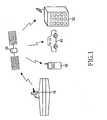
- FIG. 1 illustrates a system for implementing a DMB service.
- the system includes a data transmission center 10, a satellite 20, and receivers, for example, a mobile communication terminal 30, a receiver 40 for vehicle use, and a receiver 50 for home use.
- the data transmission center 10 compresses and modulates digital multimedia broadcasting data (e.g., image, voice, and data signals, etc.), and then transmits the compressed and modulated digital broadcasting data to the satellite 20.
- the satellite 20 receives and amplifies a signal from the data transmission center 10, and frequency-converts the signal to transmit the converted signal to the ground.
- the receivers 30, 40 and 50 receive the signal from the satellite 20, and demodulate and decompress the signal to recover and reproduce an original signal.
- the mobile communication terminal 30 operates in any one of two modes, that is, a communication mode for providing a conventional mobile communication service and a broadcasting mode for providing a digital broadcasting service. Because the conventional mobile terminal 30 cannot efficiently communicate and broadcast at the same time, the two operations cannot be performed simultaneously. If a short message service (SMS) message is received while the mobile communication terminal 30 is broadcasting, the user cannot be notified of the SMS message reception in real time. Communication via SMS messaging is conventionally impossible while the user is watching a DMB through the mobile communication terminal 30, causing an inconvenience to the user and SMS sender.
- SMS short message service
- GB 2 395 082 A refers to a mobile terminal with a TV reception and display function, and in particular to a mobile terminal comprising a tuner to enable a user to select a particular broadcast television channel.
- a decoder decodes the TV signal and separates it into a video signal, audio signal and synchronising signals.
- a video processing unit converts the video signal into digital video data and acts to process the received video data on a frame by frame basis wherein a presently received frame is stored to memory whilst a previously stored frame is output to display.
- the display unit comprises an area for video image display and a further area designated for display of user data.
- the video processor of the terminal may also include a format scaler which scales the size of the video images such that they may be appropriately displayed upon the terminal display screen.
- US 6,459,906 B1 refers to a method and system for displaying received messages of portable television phones, wherein the TV phone includes a TV unit that reproduces and outputs a video signal from a selected channel.
- a display unit interfaces with the TV unit and displays the inputted video signal from the selected channel while in a TV mode.
- An MRFU receives data of a forward channel transmitted from a base station.
- An MSP provides a channel selection signal to the TV unit and transmits and receives voice and character signals by controlling the MRFU and generates a display control signal responsive to an incoming character message.
- An OSD generates a video signal corresponding to the display control signal received at an input of the OSD and provides the generated video signal to the display unit.
- the method of controlling the operation mode of the TV phone comprises the steps of receiving a character message transmitted from the base station through the forward channel when the video signal generated by the TV unit is displayed on a screen in said display unit during the TV mode.
- a video signal of the OSD corresponding to the first line in the received character message is displayed on a portion of the screen of the display unit, while the other portions of the screen display the respective portion of the video signal generated by the TV unit.
- the present invention has been designed to solve the above and other problems occurring in the prior art. Therefore, it is the object of the present invention to provide efficient and user convenient interworking between a device for performing communication mode and a device for performing broadcasting mode in a mobile communication terminal for receiving digital broadcasting.
- SMS short message service
- a mobile communication terminal for receiving digital broadcasting when the terminal operates in phone or broadcasting mode.
- the mobile communication terminal includes a phone module for receiving a text message transferred to the mobile communication terminal, converting the received text message into a predetermined format of data packet, and outputting the predetermined format of data packet, when the mobile communication terminal operates in the broadcasting mode; and a broadcasting module for receiving the predetermined format of data packet from the phone module, and outputting the text message on a partial area of a screen outputting digital broadcasting data while a digital broadcasting service is being provided.
- a method for processing a text message in a mobile communication terminal including a phone module and a broadcasting module.
- the method includes receiving the text message transferred to the mobile communication terminal in the phone module, when the mobile communication terminal operates in broadcasting mode; converting the received text message into a predetermined format of data packet in the phone module; transferring the converted text message to the broadcasting module; and outputting the transferred converted text message on a screen on which digital broadcasting data is being output in the broadcasting module.
- FIG. 2 is a schematic block diagram illustrating a mobile communication terminal for receiving digital broadcasting in accordance with an embodiment of the present invention.
- the mobile communication terminal 100 includes a portable phone function module (or a phone module) 110 for controlling a portable phone function, and a broadcasting function module (or a digital multimedia broadcasting (DMB) module) 120 for controlling a broadcasting reception function.
- a portable phone function module or a phone module
- a broadcasting function module or a digital multimedia broadcasting (DMB) module
- the phone module 110 includes a phone controller 111 (implemented by a mobile station modem (MSM) chip in the example of FIG. 2 ), a first display unit (or a liquid crystal display (LCD)) 112 for displaying information associated with overall function of the mobile communication terminal, a microphone 113 for receiving an audio signal, a keypad 114 for inputting a control command based on a user's manipulation into the MSM 111, a first speaker 115 for outputting an audio signal associated with the portable phone function, and a first memory 116 for storing the information associated with the overall function of the mobile communication terminal.
- the first speaker 115 serves as a receiver.
- the DMB module 120 includes a DMB receiver 122 for receiving DMB data, a DMB controller 121 for processing the DMB data to output or provide the processed data to the user, a second LCD 123 for displaying image information outputted from the DMB controller 121, a second speaker 124 for outputting an audio signal outputted from the DMB controller 121, and a second memory 125 for storing information associated with the DMB service.
- the second speaker 124 is a device for outputting audio information included in multimedia information, and performs a stereo function.
- the second LCD 123 is a device for outputting image information included in the multimedia information.
- the second speaker 124 and the second LCD 123 configure an output interface for outputting digital broadcasting.
- the output interface can be composed of any one of the speaker and the LCD according to digital broadcasting type. For example, only the speaker can configure the output interface for digital audio broadcasting (DAB).
- DAB digital audio broadcasting
- the phone module 110 and the DMB module 120 are physically separated from each other.
- the phone module 110 and the DMB module 120 may be totally or partially integrated onto a single chip.
- a part for processing data received through a mobile communication network and a part for processing digital broadcasting data may be integrated onto a single chip.
- a mobile communication function based on code division multiple access (CDMA) and a DMB function based on code division multiplexing (CDM) may be implemented on a single chip.
- CDMA code division multiple access
- CDM code division multiplexing
- a part for receiving and processing data through the mobile communication network corresponds to the phone module 110
- a part for receiving and processing DMB data correspond to the DMB module 120.
- first and second speakers 115 and 124 may be separated or integrated, as well as the first and second LCDs 112 and 123.
- the DMB module 120 may receive and output a short message service (SMS) message from the phone module 110 at the same time.
- SMS short message service
- the phone controller 111 controls the first memory 116 to store the SMS message received by the phone module 110, and converts the format of the SMS message to transfer the converted SMS message to the DMB module 120.
- the phone controller 111 converts the received SMS message into a predetermined format of data with a fixed size (e.g., 164 bytes) to transfer the converted SMS message to the DMB module 120.
- a fixed size e.g., 164 bytes
- FIG. 6 An example of the format of the SMS message transferred between the phone module 110 and the DMB module 120 is illustrated in FIG. 6 . Details of the SMS message format will be described with reference to FIG. 6 .
- the DMB controller 121 controls the second LCD 123 to output the SMS message according to a preset output option.
- the DMB controller 121 can perform a control operation such that the SMS message is popped up on the second LCD 123 in the form of an on screen display (OSD), or is displayed at a lower part of the screen on the second LCD 123 through a slide or scroll technique.
- OSD on screen display
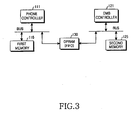
- FIG. 3 is a block diagram illustrating an example of an interworking structure between internal modules in the mobile communication terminal in accordance with an embodiment of the present invention. More specifically, FIG. 3 illustrates the interworking structure between the first memory 116 included in the phone module 110 and the second memory 125 included in the DMB module 120. Referring to FIG. 3 , the first and second memories 116 and 125 operate according to control operations of the phone controller 111 and the DMB controller 121, respectively. The first and second memories 116 and 125 are connected through buses to a dual port random access memory (DPRAM) 130 based on a first in first out (FIFO) structure to perform interworking. In this case, the interworking between respective devices within the phone module 110 and the DMB module 120 may be performed using various methods. Because FIG. 3 illustrates only one example for one of various methods, the present invention is not limited to the interworking structure illustrated in the example of FIG. 3 .
- DPRAM dual port random access memory
- FIG. 4 is a ladder diagram illustrating a method for processing a text message in accordance with an embodiment of the present invention. More specifically, FIG. 4 illustrates a method for processing a received SMS message while the mobile communication terminal 100 operates in broadcasting mode.
- the phone module 110 of the mobile communication terminal 100 receives the transferred SMS message according to a preset SMS process routine. Once received (Step S110), the SMS message is stored in the first memory 116 (Step S120). The phone controller 111 then converts the SMS message into data that a user interface (UI) can recognize (e.g., text), and stores the data in its converted format. The phone controller 111 then converts the SMS message into a predetermined fixed size (e.g., 164 bytes) (Step S130) and transfers the finally converted SMS message to the DMB module 120 (Step S140). An example of the SMS message format transferred between the phone module 110 and the DMB module 120 is illustrated in FIG. 6 . Then, the DMB module 120 stores the SMS message in the second memory 125 (Step S150).
- UI user interface
- Step S130 converts the SMS message into a predetermined fixed size (e.g., 164 bytes)
- Step S140 An example of the SMS message format transferred between the phone module 110 and the DMB module 120
- the phone module 110 transfers the converted SMS message to the DMB module 120 and then notifies the DMB module 120 that the SMS message has been received (Step S160). To that end, the phone module 110 may generate a predetermined event and transfer the generated event to the DMB module 120.
- the DMB module 120 reads the stored SMS message (Step S170), and outputs the SMS message according to a preset output option (Step S180).
- a process for outputting the SMS message is illustrated in FIG. 5 .
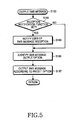
- FIG. 5 is a flow chart illustrating the process for outputting the SMS message (Step S180) in accordance with an embodiment of the present invention.
- the DMB module 120 determines if a reception notification function has been set which indicates when an SMS message is received (Step S181). If the reception notification function has been set in step S181, the DMB controller 121 notifies the user that an SMS message has been received (Step S183). As illustrated in FIG. 8A , for example, a message window 310 displays a message indicating that an SMS message has been received and a question asking the user if he/she wants to see the SMS message, while allowing the user to select an answer.
- the message window 310 is transparent so it does not obstruct the DMB image that the user is watching.
- a predetermined indicator (or icon) 320 is displayed on a partial area of the screen to notify the user of the SMS message reception as illustrated in FIG. 8B .
- the indicator 320 is connected to a key included in a keypad of the mobile communication terminal 100, so that the icon can be selected by pressing the key, invoking the function represented by the icon.
- the indicator 320 includes a symbol of a letter envelope
- the keypad of the mobile communication terminal 100 has a key with a similar symbol that can be selected to view a corresponding SMS message.
- the DMB controller 121 identifies a preset SMS message output option (Step S185) and outputs the SMS message stored in the second memory 125 according to the preset SMS message output option (Step S187).
- the SMS message may be output as a pop-up where it is displayed on the display in its entirety, it may slide across the display, or it may scroll down the display.
- the DMB controller 121 identifies which SMS message output option is selected, and outputs the SMS message according to the identified output option.
- the pop-up, slide, and scroll techniques are provided as examples and do not limit the SMS message output option.
- the SMS message may be divided into lines, each having a predetermined length according to the width of the screen and, displayed line by line according to the user's key input.
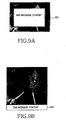
- FIG. 9A illustrates an example of an SMS message window 330 popped up on the screen when the SMS message output option is the pop-up technique.
- FIG. 9B illustrates an example of the SMS message displayed on a predetermined area 340 at the lower part of the screen by the slide technique.
- the SMS message window 330 is popped up in the center of the screen on which broadcasting data is being output.
- the SMS message output option is the slide technique, it is preferred that the SMS message window 330 is displayed at the bottom of the screen on which broadcasting data is being output.
- a window for displaying the SMS message opens at a specific area of the screen and content of the message is displayed while sequentially moving up or down in the message display window.
- the closing of the displayed SMS message window is automatically controlled by the DMB controller 121 or performed by a user request.
- the SMS message window is displayed only for a predetermined display time period such that the message window is removed after the time period, or the SMS message window continues to be displayed until the user inputs a close command to remove the SMS message window.
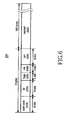
- FIG. 6 illustrates the data format of an SMS message 200 that is transmitted between internal modules of the mobile communication terminal in accordance with an embodiment of the present invention.
- the SMS message 200 120 has a fixed total length of 164 bytes including 4 bytes for a header field and 160 bytes for a payload field.
- the header field includes a start code field 210, an identification (ID) field 220, a flag field 230, a count field 240, and a length field 250.
- the start code field 210 is 8 bits long and stores a code that notifies the DMB controller 121 of the start position of a corresponding SMS message.
- the ID field 220 is 8 bits long as well, and is used to multiplex and demultiplex different types of packets. For example, the ID field 220 stores information for identifying a sender of an SMS message when a number of SMS messages are received from different senders.
- the flag field 230 is 4 bits long, and stores information indicating the connection relation between packets when the SMS message is configured by more than one packet. That is, when payload data of more than 160 bytes is to be transferred, the flag field 230 stores information for determining the order of data. For example, the third bit of 4 bits indicates that the corresponding packet is the first packet in the payload data, and the fourth bit represents that the corresponding packet is the last packet in the payload data of more than 160 bytes. The first bit (serving as the most significant bit (MSB)) and the second bit are reserved bits.
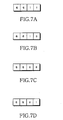
- FIGS. 7A to 7D Application examples of the flag field 230 are illustrated in FIGS. 7A to 7D .
- FIG. 7A illustrates an example when both the third and fourth bits of the flag field are 1 indicating that the payload data in its corresponding packet is less than 160 bytes. That is, the application example of the flag field in FIG. 7A illustrates a case where the SMS message is configured by one packet.
- FIG. 7B illustrates an example when the third and fourth bits of the flag field are 1 and 0, respectively. This indicates that payload data of more than 160 bytes is loaded and transferred, and the corresponding packet for the flag field is the first packet of the payload data.
- FIG. 7C illustrates an example when both the third and fourth bits are 0 indicating that the payload data includes more than 160 bytes and that the corresponding packet is not the first or last packet. That is, the corresponding packet is an intermediate packet in the payload data with more than 160 bytes.
- the count field 240 is used to determine the order of intermediate packets.
- FIG. 7D illustrates an example when the third and fourth bits of the flag field are 0 and 1, respectively, to indicate that the payload data is more than 160 bytes and that the corresponding packet is the last packet.
- the count field 240 is 4 bits long as well.
- the field 240 indicates a serial number of the payload data configured by a plurality of packets, and a different number is assigned according to each ID. This number is used, not only to determine order, but also as information of a packet that has been lost during transmission.
- the length field 250 is 8 bits long, and indicates the length of a valid part of the payload. That is, the length field 250 indicates how long a valid, error-free payload data should be, the fixed length being 160 bytes.
- an SMS message with the above-mentioned format is transferred from the phone module 110 to the DMB module 120, such that the SMS message can be provided to the user watching the DMB. More specifically, because the SMS message format has a fixed length, transmission effciency can be improved.
- the present invention can display an SMS message through a DMB module when the SMS message is received through a phone module while a mobile communication terminal operates in broadcasting mode. Accordingly, a user of the mobile communication terminal for receiving digital broadcasting can conveniently use the digital broadcasting service.
Landscapes
- Engineering & Computer Science (AREA)
- Signal Processing (AREA)
- Computer Networks & Wireless Communication (AREA)
- Human Computer Interaction (AREA)
- Business, Economics & Management (AREA)
- General Business, Economics & Management (AREA)
- Multimedia (AREA)
- Physics & Mathematics (AREA)
- Astronomy & Astrophysics (AREA)
- General Physics & Mathematics (AREA)
- Mobile Radio Communication Systems (AREA)
- Two-Way Televisions, Distribution Of Moving Picture Or The Like (AREA)
- Circuits Of Receivers In General (AREA)
- Telephonic Communication Services (AREA)
Applications Claiming Priority (2)
| Application Number | Priority Date | Filing Date | Title |
|---|---|---|---|
| KR10-2004-0045885A KR100539884B1 (ko) | 2004-06-19 | 2004-06-19 | 디지털 방송 데이터 출력 중 수신된 문자메시지를처리하는 이동통신단말 및 그 방법 |
| KR2004045885 | 2004-06-19 |
Publications (2)
| Publication Number | Publication Date |
|---|---|
| EP1608137A1 EP1608137A1 (en) | 2005-12-21 |
| EP1608137B1 true EP1608137B1 (en) | 2009-01-21 |
Family
ID=34937559
Family Applications (1)
| Application Number | Title | Priority Date | Filing Date |
|---|---|---|---|
| EP05013274A Expired - Lifetime EP1608137B1 (en) | 2004-06-19 | 2005-06-20 | Mobile communication terminal and method for processing a received text message while outputting digital broadcasting data |
Country Status (7)
| Country | Link |
|---|---|
| US (1) | US20050282564A1 (enExample) |
| EP (1) | EP1608137B1 (enExample) |
| JP (2) | JP2006005944A (enExample) |
| KR (1) | KR100539884B1 (enExample) |
| CN (2) | CN1710927B (enExample) |
| AT (1) | ATE421833T1 (enExample) |
| DE (1) | DE602005012459D1 (enExample) |
Families Citing this family (35)
| Publication number | Priority date | Publication date | Assignee | Title |
|---|---|---|---|---|
| KR100712844B1 (ko) * | 2004-11-25 | 2007-05-02 | 엘지전자 주식회사 | 실시간 메시지 확인이 가능한 이동통신 단말기 및 그동작방법 |
| KR100740880B1 (ko) * | 2004-12-03 | 2007-07-19 | 한국전자통신연구원 | 디지털멀티미디어방송과 문자 메시지 서비스 연동 장치 및그 방법 |
| KR100617790B1 (ko) * | 2004-12-27 | 2006-08-28 | 삼성전자주식회사 | 디지털 방송 채널정보 표시 단말기 및 방법 |
| KR100735255B1 (ko) | 2005-01-24 | 2007-07-03 | 삼성전자주식회사 | 디지털 오디오 방송을 제공하는 방법과 그에 따른 디지털방송 수신장치 |
| KR100643032B1 (ko) * | 2005-05-09 | 2006-11-10 | (주) 엘지텔레콤 | Dmb 프로그램과 실시간으로 연동되는 채팅 및 게시판서비스를 제공하는 이동통신 시스템 및 그 방법 |
| EP1724955A3 (en) * | 2005-05-17 | 2007-01-03 | Samsung Electronics Co.,Ltd. | Method for taking a telephone call while receiving a broadcast service, and digital multimedia broadcasting terminal using this method |
| KR100606000B1 (ko) * | 2005-05-17 | 2006-07-31 | 삼성전자주식회사 | 통화 서비스 및 방송 서비스 제공 방법 및 이를 위한디지털 멀티미디어 방송 단말기 |
| KR100557185B1 (ko) * | 2005-05-17 | 2006-03-03 | 삼성전자주식회사 | 디지털 멀티미디어 방송 시청 기능과 동시에 통화 기능을수행하는 디지털 멀티미디어 방송 수신 단말기 및 동시통화 방법 |
| KR100735700B1 (ko) * | 2005-06-03 | 2007-07-06 | 엘지전자 주식회사 | 방송용 단말기 및 이를 이용한 문자음성통화 방법 |
| KR100713385B1 (ko) * | 2005-06-07 | 2007-05-04 | 삼성전자주식회사 | 이동통신 단말기에서 디지털 방송 데이터 출력 중부가서비스를 실행하는 방법 |
| KR100730722B1 (ko) * | 2005-07-29 | 2007-06-21 | 삼성전자주식회사 | 디지털 멀티미디어 방송 데이터를 수신하기 위한 dmb패키지와 이동 단말기 및 디지털 멀티미디어 방송 데이터수신 방법 |
| KR100677480B1 (ko) * | 2005-07-29 | 2007-02-02 | 엘지전자 주식회사 | 발신 메시지를 이용하여 dmb 정보를 전송하기 위한시스템 및 그 방법 |
| US8819144B2 (en) * | 2005-10-14 | 2014-08-26 | Blackberry Limited | Method, device, software and graphical user interface for forwarding messages between message handling services |
| KR100681682B1 (ko) * | 2005-12-10 | 2007-02-09 | 엘지전자 주식회사 | 이동 통신 단말기의 문자 메시지 수신 표시 방법 및 그이동 통신 단말기 |
| KR101241612B1 (ko) * | 2006-02-03 | 2013-03-08 | 삼성전자주식회사 | 디지털 방송 화면과 어플리케이션의 사용자 인터페이스화면의 동시 출력을 위한 장치 및 방법 |
| US20070204235A1 (en) | 2006-02-06 | 2007-08-30 | Samsung Electronics Co., Ltd. | Method for any ticker while the user is in any application session in a mobile communication device |
| KR100834683B1 (ko) * | 2006-02-06 | 2008-06-02 | 삼성전자주식회사 | 사용자가 이동 통신 장치에서 임의의 애플리케이션 세션중에 있는 동안 임의의 틱커 디스플레이 방법 |
| WO2007105918A1 (en) | 2006-03-15 | 2007-09-20 | Ktf Technologies, Inc. | Apparatuses for overlaying images, portable devices having the same and methods of overlaying images |
| KR100773668B1 (ko) * | 2006-03-15 | 2007-11-05 | (주)케이티에프테크놀로지스 | 영상 오버레이 기능을 가지는 영상 처리 장치, 이를 가지는휴대용 단말기 및 영상 오버레이 방법 |
| KR100823040B1 (ko) * | 2006-03-28 | 2008-04-17 | (주)케이티에프테크놀로지스 | 멀티태스킹 기능을 가지는 휴대용 단말기 |
| KR100751859B1 (ko) * | 2006-06-08 | 2007-08-23 | 삼성전자주식회사 | 디지털 방송 휴대 단말기에서 멀티태스킹 장치 및 방법 |
| WO2007147333A1 (fr) * | 2006-06-16 | 2007-12-27 | Avantouch Software(Suzhou) Co., Ltd. | Procédé de téléphone mobile pour générer, transmettre et recevoir des média de flux |
| KR100783103B1 (ko) * | 2006-06-19 | 2007-12-07 | 삼성전자주식회사 | 디지털 방송을 이용한 단문 메시지 서비스 제공 장치 및방법 |
| US20080090610A1 (en) * | 2006-10-13 | 2008-04-17 | Alpha Imaging Technology, R.O.C. | Portable electronic device |
| KR100842570B1 (ko) | 2006-11-03 | 2008-07-01 | 삼성전자주식회사 | 이동 단말에서 복수의 영상을 디스플레이 하기 위한 방법및 장치 |
| US7986914B1 (en) * | 2007-06-01 | 2011-07-26 | At&T Mobility Ii Llc | Vehicle-based message control using cellular IP |
| US7996045B1 (en) | 2007-11-09 | 2011-08-09 | Google Inc. | Providing interactive alert information |
| US9154606B2 (en) * | 2008-01-30 | 2015-10-06 | Google Inc. | Notification of mobile device events |
| CN101365013A (zh) * | 2008-09-16 | 2009-02-11 | 中兴通讯股份有限公司 | 一种紧急广播消息的处理方法及装置 |
| CN101383864B (zh) * | 2008-10-22 | 2011-04-20 | 中兴通讯股份有限公司 | 一种转发紧急广播消息的方法及装置 |
| US9998890B2 (en) * | 2010-07-29 | 2018-06-12 | Paul Marko | Method and apparatus for content navigation in digital broadcast radio |
| CN102223443A (zh) * | 2011-06-16 | 2011-10-19 | 深圳市同洲电子股份有限公司 | 走路时查看短信的方法及装置 |
| CN104380328A (zh) * | 2012-06-11 | 2015-02-25 | 三星电子株式会社 | 用户终端装置、服务器装置和包括它们的系统及其广告服务方法 |
| US9826371B2 (en) * | 2014-12-03 | 2017-11-21 | Telefonaktiebolaget Lm Ericsson (Publ) | SMS message management |
| US11470461B2 (en) * | 2016-06-09 | 2022-10-11 | Amp Llc | Systems and methods for health monitoring and providing emergency support |
Family Cites Families (22)
| Publication number | Priority date | Publication date | Assignee | Title |
|---|---|---|---|---|
| US6141058A (en) * | 1996-12-16 | 2000-10-31 | Thomson Licensing S.A. | Television receiver having a user-editable telephone system caller-ID feature |
| US6259891B1 (en) * | 1997-09-04 | 2001-07-10 | Hughes Electronics Corporation | Adapter and method for use in a portable communication signal receiver system |
| TW447221B (en) * | 1998-08-26 | 2001-07-21 | United Video Properties Inc | Television message system |
| KR100539871B1 (ko) * | 1998-12-26 | 2006-04-21 | 삼성전자주식회사 | 텔레비전 휴대폰의 수신 메세지 표시 방법 |
| FI109319B (fi) * | 1999-12-03 | 2002-06-28 | Nokia Corp | Päätelaitteelle välitettävän elektronisen informaation suodattaminen |
| WO2001053947A1 (en) * | 2000-01-18 | 2001-07-26 | Fujitsu Limited | Message information reporting device for system under monitoring |
| JP4517430B2 (ja) * | 2000-01-24 | 2010-08-04 | ソニー株式会社 | 無線伝送方法 |
| JP4288549B2 (ja) * | 2000-04-26 | 2009-07-01 | ソニー株式会社 | 記録装置および方法、並びに再生装置および方法 |
| US7088911B2 (en) * | 2000-04-26 | 2006-08-08 | Sony Corporation | Recording apparatus and method, playback apparatus and method, and recording medium therefor |
| JP2003037514A (ja) * | 2001-07-25 | 2003-02-07 | Fujitsu Ten Ltd | デジタル放送受信装置 |
| JP2002112139A (ja) * | 2000-10-04 | 2002-04-12 | Sony Corp | テレビ受信機 |
| US7242905B2 (en) * | 2000-11-27 | 2007-07-10 | Samsung Electronics Co., Ltd. | Method of information sharing between cellular and local wireless communication systems |
| JP4410929B2 (ja) * | 2000-12-15 | 2010-02-10 | キヤノン株式会社 | 情報出力制御装置及び情報出力制御方法 |
| KR100381139B1 (ko) * | 2001-01-17 | 2003-04-18 | 삼성전자주식회사 | 폴더타입 휴대용 무선 단말기에서의 메시지 디스플레이 방법 |
| US7343317B2 (en) * | 2001-01-18 | 2008-03-11 | Nokia Corporation | Real-time wireless e-coupon (promotion) definition based on available segment |
| US6678009B2 (en) * | 2001-02-27 | 2004-01-13 | Matsushita Electric Industrial Co., Ltd. | Adjustable video display window |
| JP2002296051A (ja) * | 2001-03-29 | 2002-10-09 | Mitsubishi Electric Corp | カーナビゲーション表示システム |
| FI20011342A0 (fi) * | 2001-06-25 | 2001-06-25 | Nokia Corp | Menetelmä ja laite tiedon hankkimiseksi |
| US7698276B2 (en) * | 2002-06-26 | 2010-04-13 | Microsoft Corporation | Framework for providing a subscription based notification system |
| KR100678204B1 (ko) * | 2002-09-17 | 2007-02-01 | 삼성전자주식회사 | 휴대단말기의 모드에 따른 영상 및 데이터 표시장치 및 방법 |
| AU2003285875A1 (en) * | 2002-10-11 | 2004-05-04 | Walker Digital, Llc | Method and apparatus for outputting a message at a game machine |
| FR2853108A1 (fr) * | 2003-03-27 | 2004-10-01 | France Telecom | Dispositif de representation par code a barres d'un ticket de consommation a usage multiple |
-
2004
- 2004-06-19 KR KR10-2004-0045885A patent/KR100539884B1/ko not_active Expired - Fee Related
-
2005
- 2005-04-19 US US11/109,118 patent/US20050282564A1/en not_active Abandoned
- 2005-06-17 JP JP2005178548A patent/JP2006005944A/ja not_active Ceased
- 2005-06-20 CN CN2005100783712A patent/CN1710927B/zh not_active Expired - Fee Related
- 2005-06-20 AT AT05013274T patent/ATE421833T1/de not_active IP Right Cessation
- 2005-06-20 DE DE602005012459T patent/DE602005012459D1/de not_active Expired - Lifetime
- 2005-06-20 EP EP05013274A patent/EP1608137B1/en not_active Expired - Lifetime
- 2005-06-20 CN CNA2007101674251A patent/CN101155004A/zh active Pending
-
2009
- 2009-04-01 JP JP2009089089A patent/JP2009153206A/ja active Pending
Also Published As
| Publication number | Publication date |
|---|---|
| KR100539884B1 (ko) | 2005-12-28 |
| CN101155004A (zh) | 2008-04-02 |
| US20050282564A1 (en) | 2005-12-22 |
| CN1710927A (zh) | 2005-12-21 |
| JP2009153206A (ja) | 2009-07-09 |
| KR20050044839A (ko) | 2005-05-13 |
| CN1710927B (zh) | 2010-11-17 |
| ATE421833T1 (de) | 2009-02-15 |
| EP1608137A1 (en) | 2005-12-21 |
| DE602005012459D1 (de) | 2009-03-12 |
| JP2006005944A (ja) | 2006-01-05 |
Similar Documents
| Publication | Publication Date | Title |
|---|---|---|
| EP1608137A1 (en) | Mobile communication terminal and method for processing a received text message while outputting digital broadcasting data | |
| JP4543513B2 (ja) | 双方向通信システム、表示装置、ベース装置および双方向通信方法 | |
| KR100574733B1 (ko) | 통신 장치 및 통신 방법 | |
| US7747214B2 (en) | Mobile terminal and method for providing user interface using received terrestrial digital broadcasting data | |
| US7899442B2 (en) | Multimedia data transfer for a personal communication device | |
| JPWO2002056486A1 (ja) | 受信機、携帯端末、および受信システム | |
| JP3562942B2 (ja) | 音声及び文字メッセージを受信するテレビ受信装置並びにこれを用いた音声及び文字伝達方法 | |
| EP1811773A2 (en) | Method and device for providing brief information on data broadcasting service in digital multimedia broadcasting receiving terminal | |
| EP1675414B1 (en) | Transmitting and receiving messages using a mobile communication terminal | |
| CN101175264A (zh) | 一种可视通信的装置 | |
| JP4950670B2 (ja) | メディア装置 | |
| US20060052081A1 (en) | Apparatus and method for displaying digital multimedia broadcasting channel information in a terminal | |
| US8010884B2 (en) | Method of and apparatus for displaying messages on a mobile terminal | |
| US7603079B2 (en) | Mobile terminal for digital broadcasting reception and method for storing digital broadcasting data | |
| US7652722B2 (en) | Apparatus and method for displaying multiple channels and changing channels in a portable terminal having a television video signal receiving function | |
| CN100384231C (zh) | 广播接收装置 | |
| US20080045252A1 (en) | Method for displaying background picture of sms message in terminal including sms function and terminal thereof | |
| US20070072544A1 (en) | Accident broadcasting guidance system for providing accident broadcasting guidance service and method | |
| KR101729142B1 (ko) | 이동통신 시스템의 메시지 전송 장치 및 방법 | |
| US7401350B1 (en) | Local area information terminal device | |
| KR100713385B1 (ko) | 이동통신 단말기에서 디지털 방송 데이터 출력 중부가서비스를 실행하는 방법 | |
| KR100754694B1 (ko) | 디지털 방송 시스템 및 그 방법 | |
| US8890918B2 (en) | Mobile terminal for selectively storing video call data and video call data storing method therefor | |
| US20070141981A1 (en) | Digital multimedia broadcast receiving device executing function of sleep reservation, and sleep reservation method thereof | |
| EP1969741A1 (en) | Transmission of media content stream |
Legal Events
| Date | Code | Title | Description |
|---|---|---|---|
| PUAI | Public reference made under article 153(3) epc to a published international application that has entered the european phase |
Free format text: ORIGINAL CODE: 0009012 |
|
| 17P | Request for examination filed |
Effective date: 20050620 |
|
| AK | Designated contracting states |
Kind code of ref document: A1 Designated state(s): AT BE BG CH CY CZ DE DK EE ES FI FR GB GR HU IE IS IT LI LT LU MC NL PL PT RO SE SI SK TR |
|
| AX | Request for extension of the european patent |
Extension state: AL BA HR LV MK YU |
|
| AKX | Designation fees paid |
Designated state(s): AT BE BG CH CY CZ DE DK EE ES FI FR GB GR HU IE IS IT LI LT LU MC NL PL PT RO SE SI SK TR |
|
| 17Q | First examination report despatched |
Effective date: 20060613 |
|
| GRAP | Despatch of communication of intention to grant a patent |
Free format text: ORIGINAL CODE: EPIDOSNIGR1 |
|
| GRAS | Grant fee paid |
Free format text: ORIGINAL CODE: EPIDOSNIGR3 |
|
| GRAA | (expected) grant |
Free format text: ORIGINAL CODE: 0009210 |
|
| AK | Designated contracting states |
Kind code of ref document: B1 Designated state(s): AT BE BG CH CY CZ DE DK EE ES FI FR GB GR HU IE IS IT LI LT LU MC NL PL PT RO SE SI SK TR |
|
| REG | Reference to a national code |
Ref country code: GB Ref legal event code: FG4D |
|
| REG | Reference to a national code |
Ref country code: CH Ref legal event code: EP |
|
| REG | Reference to a national code |
Ref country code: IE Ref legal event code: FG4D |
|
| REF | Corresponds to: |
Ref document number: 602005012459 Country of ref document: DE Date of ref document: 20090312 Kind code of ref document: P |
|
| PG25 | Lapsed in a contracting state [announced via postgrant information from national office to epo] |
Ref country code: NL Free format text: LAPSE BECAUSE OF FAILURE TO SUBMIT A TRANSLATION OF THE DESCRIPTION OR TO PAY THE FEE WITHIN THE PRESCRIBED TIME-LIMIT Effective date: 20090121 |
|
| NLV1 | Nl: lapsed or annulled due to failure to fulfill the requirements of art. 29p and 29m of the patents act | ||
| PG25 | Lapsed in a contracting state [announced via postgrant information from national office to epo] |
Ref country code: SI Free format text: LAPSE BECAUSE OF FAILURE TO SUBMIT A TRANSLATION OF THE DESCRIPTION OR TO PAY THE FEE WITHIN THE PRESCRIBED TIME-LIMIT Effective date: 20090121 Ref country code: LT Free format text: LAPSE BECAUSE OF FAILURE TO SUBMIT A TRANSLATION OF THE DESCRIPTION OR TO PAY THE FEE WITHIN THE PRESCRIBED TIME-LIMIT Effective date: 20090121 Ref country code: FI Free format text: LAPSE BECAUSE OF FAILURE TO SUBMIT A TRANSLATION OF THE DESCRIPTION OR TO PAY THE FEE WITHIN THE PRESCRIBED TIME-LIMIT Effective date: 20090121 Ref country code: ES Free format text: LAPSE BECAUSE OF FAILURE TO SUBMIT A TRANSLATION OF THE DESCRIPTION OR TO PAY THE FEE WITHIN THE PRESCRIBED TIME-LIMIT Effective date: 20090502 |
|
| PG25 | Lapsed in a contracting state [announced via postgrant information from national office to epo] |
Ref country code: AT Free format text: LAPSE BECAUSE OF FAILURE TO SUBMIT A TRANSLATION OF THE DESCRIPTION OR TO PAY THE FEE WITHIN THE PRESCRIBED TIME-LIMIT Effective date: 20090121 Ref country code: PT Free format text: LAPSE BECAUSE OF FAILURE TO SUBMIT A TRANSLATION OF THE DESCRIPTION OR TO PAY THE FEE WITHIN THE PRESCRIBED TIME-LIMIT Effective date: 20090622 Ref country code: SE Free format text: LAPSE BECAUSE OF FAILURE TO SUBMIT A TRANSLATION OF THE DESCRIPTION OR TO PAY THE FEE WITHIN THE PRESCRIBED TIME-LIMIT Effective date: 20090421 Ref country code: IS Free format text: LAPSE BECAUSE OF FAILURE TO SUBMIT A TRANSLATION OF THE DESCRIPTION OR TO PAY THE FEE WITHIN THE PRESCRIBED TIME-LIMIT Effective date: 20090521 Ref country code: PL Free format text: LAPSE BECAUSE OF FAILURE TO SUBMIT A TRANSLATION OF THE DESCRIPTION OR TO PAY THE FEE WITHIN THE PRESCRIBED TIME-LIMIT Effective date: 20090121 |
|
| PG25 | Lapsed in a contracting state [announced via postgrant information from national office to epo] |
Ref country code: BE Free format text: LAPSE BECAUSE OF FAILURE TO SUBMIT A TRANSLATION OF THE DESCRIPTION OR TO PAY THE FEE WITHIN THE PRESCRIBED TIME-LIMIT Effective date: 20090121 |
|
| PG25 | Lapsed in a contracting state [announced via postgrant information from national office to epo] |
Ref country code: DK Free format text: LAPSE BECAUSE OF FAILURE TO SUBMIT A TRANSLATION OF THE DESCRIPTION OR TO PAY THE FEE WITHIN THE PRESCRIBED TIME-LIMIT Effective date: 20090121 Ref country code: CZ Free format text: LAPSE BECAUSE OF FAILURE TO SUBMIT A TRANSLATION OF THE DESCRIPTION OR TO PAY THE FEE WITHIN THE PRESCRIBED TIME-LIMIT Effective date: 20090121 Ref country code: EE Free format text: LAPSE BECAUSE OF FAILURE TO SUBMIT A TRANSLATION OF THE DESCRIPTION OR TO PAY THE FEE WITHIN THE PRESCRIBED TIME-LIMIT Effective date: 20090121 |
|
| PLBE | No opposition filed within time limit |
Free format text: ORIGINAL CODE: 0009261 |
|
| STAA | Information on the status of an ep patent application or granted ep patent |
Free format text: STATUS: NO OPPOSITION FILED WITHIN TIME LIMIT |
|
| PG25 | Lapsed in a contracting state [announced via postgrant information from national office to epo] |
Ref country code: SK Free format text: LAPSE BECAUSE OF FAILURE TO SUBMIT A TRANSLATION OF THE DESCRIPTION OR TO PAY THE FEE WITHIN THE PRESCRIBED TIME-LIMIT Effective date: 20090121 Ref country code: RO Free format text: LAPSE BECAUSE OF FAILURE TO SUBMIT A TRANSLATION OF THE DESCRIPTION OR TO PAY THE FEE WITHIN THE PRESCRIBED TIME-LIMIT Effective date: 20090121 |
|
| 26N | No opposition filed |
Effective date: 20091022 |
|
| PG25 | Lapsed in a contracting state [announced via postgrant information from national office to epo] |
Ref country code: MC Free format text: LAPSE BECAUSE OF NON-PAYMENT OF DUE FEES Effective date: 20090630 Ref country code: BG Free format text: LAPSE BECAUSE OF FAILURE TO SUBMIT A TRANSLATION OF THE DESCRIPTION OR TO PAY THE FEE WITHIN THE PRESCRIBED TIME-LIMIT Effective date: 20090421 |
|
| REG | Reference to a national code |
Ref country code: CH Ref legal event code: PL |
|
| REG | Reference to a national code |
Ref country code: IE Ref legal event code: MM4A |
|
| PG25 | Lapsed in a contracting state [announced via postgrant information from national office to epo] |
Ref country code: IE Free format text: LAPSE BECAUSE OF NON-PAYMENT OF DUE FEES Effective date: 20090620 Ref country code: CH Free format text: LAPSE BECAUSE OF NON-PAYMENT OF DUE FEES Effective date: 20090630 Ref country code: LI Free format text: LAPSE BECAUSE OF NON-PAYMENT OF DUE FEES Effective date: 20090630 |
|
| PG25 | Lapsed in a contracting state [announced via postgrant information from national office to epo] |
Ref country code: GR Free format text: LAPSE BECAUSE OF FAILURE TO SUBMIT A TRANSLATION OF THE DESCRIPTION OR TO PAY THE FEE WITHIN THE PRESCRIBED TIME-LIMIT Effective date: 20090422 |
|
| PG25 | Lapsed in a contracting state [announced via postgrant information from national office to epo] |
Ref country code: IT Free format text: LAPSE BECAUSE OF FAILURE TO SUBMIT A TRANSLATION OF THE DESCRIPTION OR TO PAY THE FEE WITHIN THE PRESCRIBED TIME-LIMIT Effective date: 20090121 |
|
| PG25 | Lapsed in a contracting state [announced via postgrant information from national office to epo] |
Ref country code: LU Free format text: LAPSE BECAUSE OF NON-PAYMENT OF DUE FEES Effective date: 20090620 |
|
| PG25 | Lapsed in a contracting state [announced via postgrant information from national office to epo] |
Ref country code: HU Free format text: LAPSE BECAUSE OF FAILURE TO SUBMIT A TRANSLATION OF THE DESCRIPTION OR TO PAY THE FEE WITHIN THE PRESCRIBED TIME-LIMIT Effective date: 20090722 |
|
| PG25 | Lapsed in a contracting state [announced via postgrant information from national office to epo] |
Ref country code: TR Free format text: LAPSE BECAUSE OF FAILURE TO SUBMIT A TRANSLATION OF THE DESCRIPTION OR TO PAY THE FEE WITHIN THE PRESCRIBED TIME-LIMIT Effective date: 20090121 |
|
| PG25 | Lapsed in a contracting state [announced via postgrant information from national office to epo] |
Ref country code: CY Free format text: LAPSE BECAUSE OF FAILURE TO SUBMIT A TRANSLATION OF THE DESCRIPTION OR TO PAY THE FEE WITHIN THE PRESCRIBED TIME-LIMIT Effective date: 20090121 |
|
| REG | Reference to a national code |
Ref country code: FR Ref legal event code: PLFP Year of fee payment: 12 |
|
| REG | Reference to a national code |
Ref country code: FR Ref legal event code: PLFP Year of fee payment: 13 |
|
| REG | Reference to a national code |
Ref country code: FR Ref legal event code: PLFP Year of fee payment: 14 |
|
| PGFP | Annual fee paid to national office [announced via postgrant information from national office to epo] |
Ref country code: FR Payment date: 20210524 Year of fee payment: 17 Ref country code: DE Payment date: 20210520 Year of fee payment: 17 |
|
| PGFP | Annual fee paid to national office [announced via postgrant information from national office to epo] |
Ref country code: GB Payment date: 20210524 Year of fee payment: 17 |
|
| REG | Reference to a national code |
Ref country code: GB Ref legal event code: 732E Free format text: REGISTERED BETWEEN 20220310 AND 20220316 |
|
| REG | Reference to a national code |
Ref country code: DE Ref legal event code: R081 Ref document number: 602005012459 Country of ref document: DE Owner name: INTERNATIONAL SEMICONDUCTOR GROUP, KR Free format text: FORMER OWNER: SAMSUNG ELECTRONICS CO., LTD., SUWON-SI, GYEONGGI-DO, KR |
|
| REG | Reference to a national code |
Ref country code: DE Ref legal event code: R119 Ref document number: 602005012459 Country of ref document: DE |
|
| GBPC | Gb: european patent ceased through non-payment of renewal fee |
Effective date: 20220620 |
|
| PG25 | Lapsed in a contracting state [announced via postgrant information from national office to epo] |
Ref country code: FR Free format text: LAPSE BECAUSE OF NON-PAYMENT OF DUE FEES Effective date: 20220630 |
|
| PG25 | Lapsed in a contracting state [announced via postgrant information from national office to epo] |
Ref country code: GB Free format text: LAPSE BECAUSE OF NON-PAYMENT OF DUE FEES Effective date: 20220620 Ref country code: DE Free format text: LAPSE BECAUSE OF NON-PAYMENT OF DUE FEES Effective date: 20230103 |