EP1602285A1 - Verfahren zur Herstellung von einem kaubaren Haustierfuttermittel - Google Patents
Verfahren zur Herstellung von einem kaubaren Haustierfuttermittel Download PDFInfo
- Publication number
- EP1602285A1 EP1602285A1 EP04394032A EP04394032A EP1602285A1 EP 1602285 A1 EP1602285 A1 EP 1602285A1 EP 04394032 A EP04394032 A EP 04394032A EP 04394032 A EP04394032 A EP 04394032A EP 1602285 A1 EP1602285 A1 EP 1602285A1
- Authority
- EP
- European Patent Office
- Prior art keywords
- mix
- wheat gluten
- extruder
- plasticiser
- temperature
- Prior art date
- Legal status (The legal status is an assumption and is not a legal conclusion. Google has not performed a legal analysis and makes no representation as to the accuracy of the status listed.)
- Withdrawn
Links
- 235000013305 food Nutrition 0.000 title claims abstract description 41
- 238000004519 manufacturing process Methods 0.000 title claims abstract description 8
- 239000000203 mixture Substances 0.000 claims abstract description 178
- 108010068370 Glutens Proteins 0.000 claims abstract description 113
- 235000021312 gluten Nutrition 0.000 claims abstract description 113
- 241000209140 Triticum Species 0.000 claims abstract description 97
- 235000021307 Triticum Nutrition 0.000 claims abstract description 97
- 239000004014 plasticizer Substances 0.000 claims abstract description 63
- 239000007788 liquid Substances 0.000 claims abstract description 39
- 238000000034 method Methods 0.000 claims abstract description 39
- 238000002156 mixing Methods 0.000 claims abstract description 36
- XLYOFNOQVPJJNP-UHFFFAOYSA-N water Substances O XLYOFNOQVPJJNP-UHFFFAOYSA-N 0.000 claims abstract description 34
- 239000008188 pellet Substances 0.000 claims description 46
- PEDCQBHIVMGVHV-UHFFFAOYSA-N Glycerine Chemical compound OCC(O)CO PEDCQBHIVMGVHV-UHFFFAOYSA-N 0.000 claims description 28
- WCUXLLCKKVVCTQ-UHFFFAOYSA-M Potassium chloride Chemical compound [Cl-].[K+] WCUXLLCKKVVCTQ-UHFFFAOYSA-M 0.000 claims description 18
- 235000011187 glycerol Nutrition 0.000 claims description 14
- 241000287828 Gallus gallus Species 0.000 claims description 11
- 238000004040 coloring Methods 0.000 claims description 11
- 235000014113 dietary fatty acids Nutrition 0.000 claims description 11
- 239000000194 fatty acid Substances 0.000 claims description 11
- 229930195729 fatty acid Natural products 0.000 claims description 11
- 235000019832 sodium triphosphate Nutrition 0.000 claims description 10
- CJZGTCYPCWQAJB-UHFFFAOYSA-L calcium stearate Chemical compound [Ca+2].CCCCCCCCCCCCCCCCCC([O-])=O.CCCCCCCCCCCCCCCCCC([O-])=O CJZGTCYPCWQAJB-UHFFFAOYSA-L 0.000 claims description 9
- 150000004665 fatty acids Chemical class 0.000 claims description 9
- 239000000835 fiber Substances 0.000 claims description 9
- 239000001525 mentha piperita l. herb oil Substances 0.000 claims description 9
- 235000019477 peppermint oil Nutrition 0.000 claims description 9
- 239000001103 potassium chloride Substances 0.000 claims description 9
- 235000011164 potassium chloride Nutrition 0.000 claims description 9
- 229920003043 Cellulose fiber Polymers 0.000 claims description 8
- 239000008116 calcium stearate Substances 0.000 claims description 8
- 235000013539 calcium stearate Nutrition 0.000 claims description 8
- OGBUMNBNEWYMNJ-UHFFFAOYSA-N batilol Chemical class CCCCCCCCCCCCCCCCCCOCC(O)CO OGBUMNBNEWYMNJ-UHFFFAOYSA-N 0.000 claims description 7
- 239000010663 parsley oil Substances 0.000 claims description 7
- DNIAPMSPPWPWGF-UHFFFAOYSA-N Propylene glycol Chemical compound CC(O)CO DNIAPMSPPWPWGF-UHFFFAOYSA-N 0.000 claims description 6
- 238000010438 heat treatment Methods 0.000 claims description 5
- 229910019142 PO4 Inorganic materials 0.000 claims description 4
- XSQUKJJJFZCRTK-UHFFFAOYSA-N Urea Chemical compound NC(N)=O XSQUKJJJFZCRTK-UHFFFAOYSA-N 0.000 claims description 4
- 238000002347 injection Methods 0.000 claims description 4
- 239000007924 injection Substances 0.000 claims description 4
- HQKMJHAJHXVSDF-UHFFFAOYSA-L magnesium stearate Chemical compound [Mg+2].CCCCCCCCCCCCCCCCCC([O-])=O.CCCCCCCCCCCCCCCCCC([O-])=O HQKMJHAJHXVSDF-UHFFFAOYSA-L 0.000 claims description 4
- 238000000465 moulding Methods 0.000 claims description 4
- NBIIXXVUZAFLBC-UHFFFAOYSA-K phosphate Chemical compound [O-]P([O-])([O-])=O NBIIXXVUZAFLBC-UHFFFAOYSA-K 0.000 claims description 4
- 239000010452 phosphate Substances 0.000 claims description 4
- 239000000654 additive Substances 0.000 claims description 3
- QIQXTHQIDYTFRH-UHFFFAOYSA-N octadecanoic acid Chemical compound CCCCCCCCCCCCCCCCCC(O)=O QIQXTHQIDYTFRH-UHFFFAOYSA-N 0.000 claims description 3
- OYPRJOBELJOOCE-UHFFFAOYSA-N Calcium Chemical compound [Ca] OYPRJOBELJOOCE-UHFFFAOYSA-N 0.000 claims description 2
- FBPFZTCFMRRESA-FSIIMWSLSA-N D-Glucitol Natural products OC[C@H](O)[C@H](O)[C@@H](O)[C@H](O)CO FBPFZTCFMRRESA-FSIIMWSLSA-N 0.000 claims description 2
- FBPFZTCFMRRESA-KVTDHHQDSA-N D-Mannitol Chemical compound OC[C@@H](O)[C@@H](O)[C@H](O)[C@H](O)CO FBPFZTCFMRRESA-KVTDHHQDSA-N 0.000 claims description 2
- FBPFZTCFMRRESA-JGWLITMVSA-N D-glucitol Chemical compound OC[C@H](O)[C@@H](O)[C@H](O)[C@H](O)CO FBPFZTCFMRRESA-JGWLITMVSA-N 0.000 claims description 2
- 229930195725 Mannitol Natural products 0.000 claims description 2
- 239000002202 Polyethylene glycol Substances 0.000 claims description 2
- 239000004372 Polyvinyl alcohol Substances 0.000 claims description 2
- 240000008042 Zea mays Species 0.000 claims description 2
- 235000005824 Zea mays ssp. parviglumis Nutrition 0.000 claims description 2
- 235000002017 Zea mays subsp mays Nutrition 0.000 claims description 2
- 230000000996 additive effect Effects 0.000 claims description 2
- 239000011575 calcium Substances 0.000 claims description 2
- 229910052791 calcium Inorganic materials 0.000 claims description 2
- FUFJGUQYACFECW-UHFFFAOYSA-L calcium hydrogenphosphate Chemical compound [Ca+2].OP([O-])([O-])=O FUFJGUQYACFECW-UHFFFAOYSA-L 0.000 claims description 2
- 239000004202 carbamide Substances 0.000 claims description 2
- 235000013877 carbamide Nutrition 0.000 claims description 2
- 235000005822 corn Nutrition 0.000 claims description 2
- 235000019700 dicalcium phosphate Nutrition 0.000 claims description 2
- GPLRAVKSCUXZTP-UHFFFAOYSA-N diglycerol Chemical compound OCC(O)COCC(O)CO GPLRAVKSCUXZTP-UHFFFAOYSA-N 0.000 claims description 2
- 235000019359 magnesium stearate Nutrition 0.000 claims description 2
- 239000000845 maltitol Substances 0.000 claims description 2
- 235000010449 maltitol Nutrition 0.000 claims description 2
- VQHSOMBJVWLPSR-WUJBLJFYSA-N maltitol Chemical compound OC[C@H](O)[C@@H](O)[C@@H]([C@H](O)CO)O[C@H]1O[C@H](CO)[C@@H](O)[C@H](O)[C@H]1O VQHSOMBJVWLPSR-WUJBLJFYSA-N 0.000 claims description 2
- 229940035436 maltitol Drugs 0.000 claims description 2
- 239000000594 mannitol Substances 0.000 claims description 2
- 235000010355 mannitol Nutrition 0.000 claims description 2
- 229910052751 metal Inorganic materials 0.000 claims description 2
- 239000002184 metal Substances 0.000 claims description 2
- 229920001223 polyethylene glycol Polymers 0.000 claims description 2
- 229920002451 polyvinyl alcohol Polymers 0.000 claims description 2
- 150000003839 salts Chemical class 0.000 claims description 2
- FQENQNTWSFEDLI-UHFFFAOYSA-J sodium diphosphate Chemical compound [Na+].[Na+].[Na+].[Na+].[O-]P([O-])(=O)OP([O-])([O-])=O FQENQNTWSFEDLI-UHFFFAOYSA-J 0.000 claims description 2
- 239000000600 sorbitol Substances 0.000 claims description 2
- 235000010356 sorbitol Nutrition 0.000 claims description 2
- 239000006188 syrup Substances 0.000 claims description 2
- 235000020357 syrup Nutrition 0.000 claims description 2
- 235000019818 tetrasodium diphosphate Nutrition 0.000 claims description 2
- ZIBGPFATKBEMQZ-UHFFFAOYSA-N triethylene glycol Chemical compound OCCOCCOCCO ZIBGPFATKBEMQZ-UHFFFAOYSA-N 0.000 claims description 2
- UNXRWKVEANCORM-UHFFFAOYSA-I triphosphate(5-) Chemical compound [O-]P([O-])(=O)OP([O-])(=O)OP([O-])([O-])=O UNXRWKVEANCORM-UHFFFAOYSA-I 0.000 claims description 2
- 235000015099 wheat brans Nutrition 0.000 claims description 2
- 238000001746 injection moulding Methods 0.000 abstract description 17
- 238000001125 extrusion Methods 0.000 abstract description 8
- 239000000047 product Substances 0.000 description 30
- 230000008901 benefit Effects 0.000 description 21
- 238000010411 cooking Methods 0.000 description 21
- 235000018102 proteins Nutrition 0.000 description 18
- 108090000623 proteins and genes Proteins 0.000 description 18
- 102000004169 proteins and genes Human genes 0.000 description 18
- 230000000717 retained effect Effects 0.000 description 10
- 241001465754 Metazoa Species 0.000 description 8
- 239000004615 ingredient Substances 0.000 description 7
- 238000004925 denaturation Methods 0.000 description 5
- 230000036425 denaturation Effects 0.000 description 5
- 229920002472 Starch Polymers 0.000 description 4
- 239000003638 chemical reducing agent Substances 0.000 description 4
- 239000008107 starch Substances 0.000 description 4
- 235000019698 starch Nutrition 0.000 description 4
- 238000004458 analytical method Methods 0.000 description 2
- 238000006243 chemical reaction Methods 0.000 description 2
- 229930002875 chlorophyll Natural products 0.000 description 2
- 235000019804 chlorophyll Nutrition 0.000 description 2
- ATNHDLDRLWWWCB-AENOIHSZSA-M chlorophyll a Chemical compound C1([C@@H](C(=O)OC)C(=O)C2=C3C)=C2N2C3=CC(C(CC)=C3C)=[N+]4C3=CC3=C(C=C)C(C)=C5N3[Mg-2]42[N+]2=C1[C@@H](CCC(=O)OC\C=C(/C)CCC[C@H](C)CCC[C@H](C)CCCC(C)C)[C@H](C)C2=C5 ATNHDLDRLWWWCB-AENOIHSZSA-M 0.000 description 2
- 238000010586 diagram Methods 0.000 description 2
- 238000001035 drying Methods 0.000 description 2
- 230000000694 effects Effects 0.000 description 2
- 238000009472 formulation Methods 0.000 description 2
- 230000003993 interaction Effects 0.000 description 2
- 235000008935 nutritious Nutrition 0.000 description 2
- 230000001737 promoting effect Effects 0.000 description 2
- 241000196324 Embryophyta Species 0.000 description 1
- 108010073032 Grain Proteins Proteins 0.000 description 1
- DGAQECJNVWCQMB-PUAWFVPOSA-M Ilexoside XXIX Chemical compound C[C@@H]1CC[C@@]2(CC[C@@]3(C(=CC[C@H]4[C@]3(CC[C@@H]5[C@@]4(CC[C@@H](C5(C)C)OS(=O)(=O)[O-])C)C)[C@@H]2[C@]1(C)O)C)C(=O)O[C@H]6[C@@H]([C@H]([C@@H]([C@H](O6)CO)O)O)O.[Na+] DGAQECJNVWCQMB-PUAWFVPOSA-M 0.000 description 1
- 108010073771 Soybean Proteins Proteins 0.000 description 1
- 230000009286 beneficial effect Effects 0.000 description 1
- 210000000988 bone and bone Anatomy 0.000 description 1
- 239000006227 byproduct Substances 0.000 description 1
- 239000003054 catalyst Substances 0.000 description 1
- 239000013522 chelant Substances 0.000 description 1
- 230000001055 chewing effect Effects 0.000 description 1
- 229940112822 chewing gum Drugs 0.000 description 1
- 235000015218 chewing gum Nutrition 0.000 description 1
- 239000011248 coating agent Substances 0.000 description 1
- 238000000576 coating method Methods 0.000 description 1
- 230000001419 dependent effect Effects 0.000 description 1
- 210000002249 digestive system Anatomy 0.000 description 1
- 238000010410 dusting Methods 0.000 description 1
- 239000003995 emulsifying agent Substances 0.000 description 1
- 238000003505 heat denaturation Methods 0.000 description 1
- 239000003906 humectant Substances 0.000 description 1
- 238000003801 milling Methods 0.000 description 1
- 235000016709 nutrition Nutrition 0.000 description 1
- 235000019629 palatability Nutrition 0.000 description 1
- 238000007493 shaping process Methods 0.000 description 1
- 239000011734 sodium Substances 0.000 description 1
- 229910052708 sodium Inorganic materials 0.000 description 1
- 229940001941 soy protein Drugs 0.000 description 1
- 238000003860 storage Methods 0.000 description 1
- 239000000126 substance Substances 0.000 description 1
- 229920001169 thermoplastic Polymers 0.000 description 1
- 239000004416 thermosoftening plastic Substances 0.000 description 1
- 238000001721 transfer moulding Methods 0.000 description 1
Images

Classifications
-
- A—HUMAN NECESSITIES
- A23—FOODS OR FOODSTUFFS; TREATMENT THEREOF, NOT COVERED BY OTHER CLASSES
- A23K—FODDER
- A23K50/00—Feeding-stuffs specially adapted for particular animals
- A23K50/40—Feeding-stuffs specially adapted for particular animals for carnivorous animals, e.g. cats or dogs
- A23K50/42—Dry feed
-
- A—HUMAN NECESSITIES
- A23—FOODS OR FOODSTUFFS; TREATMENT THEREOF, NOT COVERED BY OTHER CLASSES
- A23K—FODDER
- A23K20/00—Accessory food factors for animal feeding-stuffs
- A23K20/10—Organic substances
- A23K20/142—Amino acids; Derivatives thereof
- A23K20/147—Polymeric derivatives, e.g. peptides or proteins
-
- A—HUMAN NECESSITIES
- A23—FOODS OR FOODSTUFFS; TREATMENT THEREOF, NOT COVERED BY OTHER CLASSES
- A23K—FODDER
- A23K40/00—Shaping or working-up of animal feeding-stuffs
- A23K40/20—Shaping or working-up of animal feeding-stuffs by moulding, e.g. making cakes or briquettes
-
- A—HUMAN NECESSITIES
- A23—FOODS OR FOODSTUFFS; TREATMENT THEREOF, NOT COVERED BY OTHER CLASSES
- A23K—FODDER
- A23K40/00—Shaping or working-up of animal feeding-stuffs
- A23K40/25—Shaping or working-up of animal feeding-stuffs by extrusion
-
- Y—GENERAL TAGGING OF NEW TECHNOLOGICAL DEVELOPMENTS; GENERAL TAGGING OF CROSS-SECTIONAL TECHNOLOGIES SPANNING OVER SEVERAL SECTIONS OF THE IPC; TECHNICAL SUBJECTS COVERED BY FORMER USPC CROSS-REFERENCE ART COLLECTIONS [XRACs] AND DIGESTS
- Y10—TECHNICAL SUBJECTS COVERED BY FORMER USPC
- Y10S—TECHNICAL SUBJECTS COVERED BY FORMER USPC CROSS-REFERENCE ART COLLECTIONS [XRACs] AND DIGESTS
- Y10S426/00—Food or edible material: processes, compositions, and products
- Y10S426/805—Pet food for dog, cat, bird, or fish
Definitions
- the present invention relates to a process for preparing an extrudable product, suitable for forming into a chewable pet food and comprising between 56% to 80% dry wheat gluten mix, between 9% to 28% liquid plasticiser mix and between 8% to 18% moisture by weight of the product.
- the invention further relates to the extrudable product prepared by that process.
- the invention also relates to a process for preparing a chewable pet food from the extrudable product and additionally relates to the chewable pet food.
- US Patent No. 5,665,152 discloses a method of forming a biodegradable article from a formulation comprising, among other components, a grain protein such as wheat gluten, starch, a plasticiser and a reducing agent.
- the formulation is pelleted by extrusion processing at temperatures of less than 80°C to avoid protein denaturation.
- a reducing agent is added to improve the flowability during processing.
- a disadvantage of adding a reducing agent is that most reducing agents are not compatible with animal feed regulations, and therefore the resultant products would be unsuitable for use as an animal chew.
- PCT Publication No. WO 00/13521 discloses a protein-based thermoplastic composition
- a protein such as soy protein or wheat gluten and an edible plasticiser.
- the composition can be formed into a chewable pet toy or artificial dog bone by injection moulding, pressure moulding, transfer moulding or extrusion moulding.
- water is added to improve the processing flowability.
- the water content of the composition is increased to 35% by weight of the composition.
- Some of this water is removed downstream of the process by drying the pellets.
- the disadvantage however of adding water to improve the processing flowability is that this water must be removed downstream, necessitating the requirement of a drying step to remove the excess water which is both expensive and time consuming.
- the wheat gluten adopts a chewing gum like consistency, becomes sticky and is extremely difficult to handle during processing. Additionally, the high percentage of water added has a disadvantageous effect on the resultant product in that as water evaporates from the product during storage the surfaces of the product crack.
- a process for preparing an extrudable product suitable for forming into a chewable pet food comprising between 56% to 80% dry wheat gluten mix, between 9% to 28% liquid plasticiser mix and between 8% to 18% moisture by weight of the product, characterised in that; the process comprises;
- the advantage of mixing the dry wheat gluten mix with water prior to addition of the liquid plasticiser mix is that this allows for better control of the moisture content of the extrudable product and resultant pet food.
- the desired amount of water can be absorbed by the wheat gluten before addition of the liquid plasticiser mix and none of this water is lost by interacting with the plasticiser.
- the wheat gluten mix is moist before it is mixed with the liquid plasticiser mix, a better interaction between the wheat gluten mix and the liquid plasticiser mix occurs.
- the resultant wheat gluten plasticiser composition is more uniform in consistency, free from lumps and has improved flowability.
- the extruder has an inlet temperature of the order of 35°C and an exit temperature of the order of 60°C.
- the advantage of maintaining the extruder temperature below 70°C is to avoid heat denaturation of the protein and in particular the protein content of the wheat gluten, thus avoiding the wheat gluten denaturing and thus allowing the extrudable product containing the wheat gluten to be shaped downstream.
- the resultant pet food has a flexible elastic chewy consistency.
- the extruder is run at between 60% and 70% of the operating speed of the extruder.
- the advantage of running the extruder at this speed is that due to the low shear rates which result, the temperature does not increase above the desired level in the extruder. Furthermore as less water is required it is possible to run the extruder at this speed. Generally, this will result in an extruder speed of around 370 rpm but will vary depending upon the size of the extruder.
- the dry wheat gluten mix comprises at least 70% wheat gluten by weight of the mix.
- wheat gluten as a protein source is that as well as being a nutritious ingredient it also has elastic properties and therefore the resultant pet food is chewy.
- it is a by-product of many industries such as the milling, brewing and distilling industries, it is a plentiful commodity.
- the dry wheat gluten mix further comprises a fibre selected from the group consisting of one or more of cellulose fibre, wheat fibre and wheat bran in the range of between 0.1 and 18.0% by weight of the mix.
- a fibre selected from the group consisting of one or more of cellulose fibre, wheat fibre and wheat bran in the range of between 0.1 and 18.0% by weight of the mix.
- the dry wheat gluten mix further comprises chicken digest in the range of between 0.1 and 10.8% by weight of the mix.
- chicken digest is to improve the organoleptic properties of the pellet and thus improve the palatability of the resultant pet food.
- the dry wheat gluten mix further comprises monoglycerides of edible fatty acids in the range of between 0.1 and 1.8% by weight of the mix.
- monoglycerides of edible fatty acids in the range of between 0.1 and 1.8% by weight of the mix.
- the advantage of adding monoglycerides of edible fatty acids is that they act as emulsifiers and improve the interaction between the liquid plasticiser mix and water, and between the dry wheat gluten mix and water.
- the dry wheat gluten mix comprises a phosphate selected from the group consisting of one or more of sodium tripolyphosphate, calcium tripolyphosphate, calcium hydrogen phosphate and tetrasodium pyrophosphate in the range of between 0.1 and 1.8% by weight of the mix.
- a phosphate selected from the group consisting of one or more of sodium tripolyphosphate, calcium tripolyphosphate, calcium hydrogen phosphate and tetrasodium pyrophosphate in the range of between 0.1 and 1.8% by weight of the mix.
- the dry wheat gluten mix further comprises a stearate selected from the group consisting of one or more of calcium stearate and magnesium stearate in the range of between 0.1 and 1.8% by weight of the mix.
- a stearate selected from the group consisting of one or more of calcium stearate and magnesium stearate in the range of between 0.1 and 1.8% by weight of the mix.
- the dry wheat gluten mix further comprises potassium chloride in the range of between 0.1 and 0.18% by weight of the mix.
- potassium chloride acts as a catalyst, in the conversion of the starch fraction of the wheat gluten by a phosphate such as sodium tripolyphosphate.
- the liquid plasticiser mix comprises at least 95% plasticiser by weight of the liquid plasticiser mix and the plasticiser is selected from the group consisting of one or more of glycerine, propylene glycol, diglycerol, triethylene glycol, urea, sorbitol, mannitol, maltitol, hydrogenated corn syrup, polyvinyl alcohol, polyethylene glycol, C 12 - C 22 fatty acids and metal salts of such fatty acids.
- glycerine propylene glycol, diglycerol, triethylene glycol, urea, sorbitol, mannitol, maltitol, hydrogenated corn syrup, polyvinyl alcohol, polyethylene glycol, C 12 - C 22 fatty acids and metal salts of such fatty acids.
- the liquid plasticiser mix further comprises a hygiene additive selected from the group consisting of one or more of peppermint oil and parsley oil in the range of between 0.01% and 0.5% by weight of the mix.
- a hygiene additive selected from the group consisting of one or more of peppermint oil and parsley oil in the range of between 0.01% and 0.5% by weight of the mix.
- the liquid plasticiser mix further comprises colourings in the range of between 0.01% and 0.5% by weight of the mix.
- colourings in the range of between 0.01% and 0.5% by weight of the mix.
- the advantage of adding colourings is largely for aesthetic purposes.
- chlorophyll is used which has an added benefit in that it occurs naturally in the cells of plant leaves and is not harmful to the animal. Additionally chlorophyll also plays a role in promoting fresh breath of the animal.
- the gluten plasticiser composition is extruded to form pellets.
- each pellet has a substantially circular cross-section and a diameter in the region of between 4mm and 8mm.
- the advantage of the pellets having a diameter in this range is that the pellets are easier to cool and handle.
- the processes further comprises; preheating the pellets in a barrel of an injection moulder to a temperature in the range of between 60°C and 100°C; and moulding the pellets in a mould of the injection moulder having a temperature in the range of between 115°C and 160°C for between 30 to 80 seconds to form the pet food.
- the advantage of injection moulding is that a 3-dimensional shape can be achieved.
- a further advantage is that the density of the pet food can be increased.
- the advantage of carrying out injection moulding at an initial temperature in the range of between 60°C to 100°C followed by a temperature in the range of between 115°C to 160°C is that the protein in the wheat gluten only denatures in the last stage of injection moulding. Although protein denaturation can occur at temperatures of the order of 100°C, the pellets are not kept in the barrel for long enough for denaturation to occur. As the liquefied pellets are in the mould at this stage, the protein in the outer skin of the pet food denatures to form a smooth outer skin.
- the pet food retains its shape, has an attractive appearance and is more effective for the animal to chew. Additionally, if the protein only denatures in the outer skin of the pet food, the interior of the pet food has a higher feed value than other products and is therefore more nutritious for the animal.
- the step of extruding the wheat gluten plasticiser composition comprises; transferring the composition to an elongated die plate in the extruder having a temperature in the region of between 115°C and 160°C; and retaining the composition in the elongated die plate for at least 5 seconds to form an elongated article.
- the process further comprises; transferring the pellets to an elongated die plate in an extruder having a temperature in the region of between 115°C and 160°C; and retaining the pellets in the elongated die plate for at least 5 seconds to form an elongated article.
- extrusion is the preferable option for less complex shapes.
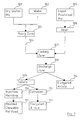
- an extruder indicated generally by reference numeral 1 having twin screws 2 and driven by a motor 3.
- the extruder 1 further comprises an inlet hopper 4 at the extruder inlet 5 and a pair of liquid inlet pipes 6, 7, further downstream.
- the extruder 1 additionally comprises a conventional pelleting die plate 8, with bores 9 and an associated knife 10.
- the extruder 1 is divided into a mixing zone 11, a cooking zone 12 and a discharge zone 13, interconnected between transfer zones 14, 15, 16 respectively.
- the mixing and cooking zones 11, 12 comprise paddles for mixing.
- the paddles in the mixing zone 11 are 30° offset which allows for gentle mixing, and can be either 30°, 60° or 90° offset in the cooking zone 12.
- a paddle position of 60° or 90° offset would allow more vigorous mixing.
- Conventional heating means are incorporated within the body of the extruder.
- the temperature in the extruder 1 increases gradually along the extruder length.
- the temperature in the first transfer zone 14, and in the mixing zone 11 is between 25°C and 45°C.
- the temperature in the second transfer zone 15 is generally between 40°C and 60°C.
- the temperature in the cooking zone 12 and the third transfer zone 16 is generally between 45°C and 65°C and the temperature is between 50°C and 70°C in the discharge zone 13.
- step 101 a dry wheat gluten mix is prepared and is fed into the extruder 1 through the hopper 4 at the extruder inlet 5, and is transferred along the first transfer zone 14.
- step 102 water is fed through the liquid inlet pipe 6.
- the water is mixed with the dry wheat gluten mix in the mixing zone 11 in step 103 to form a moist wheat gluten mix.
- step 104 the moist wheat gluten mix is transferred along the second transfer zone 15 to the cooking zone 12.
- Liquid platiciser mix is obtained in step 105 and is heated to a temperature in the range of between 40°C to 70°C.
- step 106 the heated liquid plasticiser mix is fed through the liquid inlet pipe 7.
- the liquid plasticiser mix is mixed with the moist wheat gluten mix in the cooking zone 12 in step 107, to form a gluten plasticiser composition.
- the liquid plasticiser mix feed rate can be varied to control the extruder torque.
- the gluten plasticiser composition is transferred along the third transfer zone 16 to the discharge zone 13.
- the composition can be extruded through a die plate 8 comprising bores 9 and cut by an associated knife 10 into pellets in step 109.
- the pellets are transferred to an injection moulder in step 110 to form a moulded chewable pet food in step 111.
- the injection moulding process is generally a two stage process.
- the pellets are fed into the barrel of the injection moulding machine via an agitated hopper or other suitable method.
- the temperature of the barrel is kept in the range of between 60°C to 100°C.
- the residence time of the pellets in the barrel should be kept to less than five minutes and preferably in the region of one minute.
- the pellets are then fed into the mould where they are heated to between 115°C to 160°C and is retained at these temperatures for between 30 to 80 seconds. At this temperature, the protein in the outer section of the pet food denatures to impart a smooth outer layer to the pet food.
- the mould cavity of the injection moulding machine is coated with a suitable food grade release coating. The resultant pet food when removed from the mould will retain its shape and harden over time to give an elastic flexible feel which is difficult to break during chewing.
- injection moulding process is a time-temperature dependent process, therefore the higher the temperature used the less time is required and vice-versa.
- step 112 the pellets are transferred to a second extruder with an elongated die plate comprising heating means providing a temperature of between 115°C and 160°C.
- An elongated article is formed in the extruder in step 113.
- pellets can be optionally cooled and stored to await further processing. If the pellets are stored, they should be bagged to prevent moisture loss.
- the die plate 8 comprising bores 9 used in step 109 is replaced with an elongated die plate comprising heating means providing a temperature of between 115°C and 160°C for forming an elongated article in step 114.
- the composition should be retained in the elongated die plate for at least 5 seconds. It will be appreciated that the shape of the elongated die plate will be chosen to have a specific cross-sectional shape which will impart the same cross-sectional shape to the elongated article.
- composition and chewable pet food were prepared as follows and according to the quantities as outlined in Table 1.
- a dry mix was prepared by mixing the wheat gluten, cellulose fibre, chicken digest, and calcium stearate together.
- the dry mix was fed into an extruder having an inlet temperature of 40°C and fed along a transfer zone. Water was then mixed with the dry wheat gluten mix in the mixing zone to provide the moist wheat gluten mix.
- the paddles in the mixing zone were set at 30° offset.
- the moist wheat gluten mix was transferred along the second transfer zone of the extruder which had a temperature of 50°C.
- a liquid platiciser mix was prepared by mixing together the glycerine, peppermint oil and colourings.
- the liquid plasticiser mix was then heated to a temperature of 55°C before feeding it into the extruder where it was mixed with the moist wheat gluten mix in the cooking zone to form the gluten platiciser composition.
- the paddles in the cooking zone were set at 60° offset.
- the temperature in the cooking zone was 55°C.
- the gluten plasticiser composition was transferred along the third transfer zone having a temperature of 60°C to a discharge zone where the composition was extruded through a die plate and cut into pellets.
- the pellets were cooled and transferred to a barrel of an injection moulding machine having a temperature of 90°C where the pellets were retained for one minute.
- the pellets were then transferred to the mould of the injection moulding machine which was at a temperature of 125°C and were retained in the mould for 70 seconds.
- composition of Extrudable Product Ingredient Amount % Wheat gluten 60 Glycerine 20 Cellulose fibre 5 Chicken digest 2.5 Calcium stearate 0.5 Peppermint oil 0.04 Colourings 0.05 Water 11.91 Total 100% A high percentage of glycerine was included in this composition and the resultant pet food was found to be very pliable and flexible.
- composition and chewable pet food were prepared as follows and according to the quantities as outlined in Table 2.
- a dry mix was prepared by mixing the wheat gluten, cellulose fibre, chicken digest, monoglycerides of edible fatty acids, sodium tripolyphosphate, calcium stearate and potassium chloride together.
- the dry mix was fed into an extruder having an inlet temperature of 45°C and fed along a transfer zone. Water was then mixed with the dry wheat gluten mix in the mixing zone to provide the moist wheat gluten mix.
- the paddles in the mixing zone were set at 30° offset.
- the moist wheat gluten mix was transferred along the second transfer zone of the extruder which had a temperature of 55°C.
- a liquid plasticiser mix was prepared by mixing together the glycerine, parsley oil and colourings. The liquid plasticiser mix was then heated to a temperature of 55°C before feeding it into the extruder where it was mixed with the moist wheat gluten mix in the cooking zone to form the gluten plasticiser composition.
- the paddles in the cooking zone were set at 60° offset.
- the temperature in the cooking zone was 60°C.
- the gluten plasticiser composition was transferred along the third transfer zone having a temperature of 65°C to the discharge zone with an elongated die plate, having a temperature of 140°C.
- the composition was retained in the elongated die plate for 5 seconds until an elongated article having the cross-sectional shape of the die plate was formed.
- the article was cut to the desired size using the automatic knife and allowed to harden.
- composition of Extrudable Product Ingredient Amount % Wheat gluten 60 Glycerine 15 Cellulose fibre 5 Chicken digest 3 Monoglycerides of edible fatty acids 0.5 Sodium tripolyphosphate 0.5 Calcium stearate 0.5 Potassium chloride 0.02 Parsley oil 0.02 Colourings 0.02 Water 15.44 Total 100%
- composition and chewable pet food were prepared as follows and according to the quantities as outlined in Table 3.
- a dry mix was prepared by mixing the wheat gluten, sodium tripolyphosphate and potassium chloride. The dry mix was fed into an extruder having an inlet temperature of 35°C and fed along the transfer zone. Water was then mixed with the dry wheat gluten mix in the mixing zone to provide the moist wheat gluten mix. The paddles in the mixing zone were set at 30° offset. The moist wheat gluten mix was transferred along the second transfer zone of the extruder which had a temperature of 45°C.
- a liquid plasticiser mix was prepared by mixing together the glycerine, parsley oil and colourings. The liquid plasticiser mix was then heated to a temperature of 50°C before feeding it into the extruder where it was mixed with the moist wheat gluten mix in the cooking zone to form the gluten plasticiser composition.
- the paddles in the cooking zone were set at 60° offset.
- the temperature in the cooking zone was 50°C.
- the gluten plasticiser composition was transferred along the third transfer zone having a temperature of 55°C to a discharge zone where the composition was extruded through a die plate and cut into pellets.
- the pellets were cooled and transferred to a second extruder with an elongated die plate having a temperature of 130°C.
- the pellets were retained in the elongated die plate for 5 seconds until an elongated article having the cross-sectional shape of the die plate was formed.
- composition and chewable pet food were prepared as follows and according to the quantities as outlined in Table 4.
- a dry mix was prepared by mixing the wheat gluten, chicken digest and monoglycerides of edible fatty acids together.
- the dry mix was fed into an extruder having an inlet temperature of 30°C and fed along a transfer zone. Water was then mixed with the dry wheat gluten mix in the mixing zone to provide a moist wheat gluten mix. The paddles in the mixing zone were set at 30° offset. The moist wheat gluten mix was then transferred along the second transfer zone of the extruder which had a temperature of 50°C.
- a liquid plasticiser mix was prepared by mixing together the glycerine, peppermint oil and colourings.
- the liquid plasticiser mix was then heated to a temperature of 55°C before feeding it into the extruder where it was mixed with the moist wheat gluten mix in the cooking zone to form a gluten plasticiser composition.
- the paddles in the cooking zone were set at 60° offset.
- the temperature in the cooking zone was 55°C.
- the gluten plasticiser composition was transferred along the third transfer zone having a temperature of 60°C to the discharge zone where the composition was extruded through a die plate and cut into pellets.
- the pellets were cooled and transferred to a barrel of an injection moulding machine having a temperature of 95°C where the pellets were retained for one minute.
- the pellets were then transferred to the mould of an injection moulding machine which was at a temperature of 155°C and retained in the mould for 30 seconds.
- composition and chewable pet food were prepared as follows and according to the quantities as outlined in Table 5.
- a dry mix was prepared by mixing the wheat gluten, cellulose fibre, sodium tripolyphospate, calcium stearate and potassium chloride together.
- the dry mix was fed into an extruder having an inlet temperature of 30°C and fed through a transfer zone. Water was then mixed with the dry wheat gluten mix in the mixing zone to provide the moist wheat gluten mix.
- the paddles in the mixing zone were set at 30° offset.
- the moist wheat gluten mix was transferred along the second transfer zone of the extruder which had a temperature of 55°C.
- a liquid plasticiser mix was prepared by mixing together the glycerine and peppermint oil.
- the liquid plasticiser mix was then heated to a temperature of 60°C before feeding it into the extruder where it was mixed with the moist wheat gluten mix in the cooking zone to form the gluten plasticiser composition.
- the paddles in the cooking zone were set at 90° offset.
- the temperature in the cooking zone was 60°C.
- the wheat gluten plasticiser composition was transferred along the third transfer zone having a temperature of 65°C to a discharge zone where the composition was extruded through a die plate and cut into pellets.
- the pellets were cooled and transferred to the barrel of an injection moulding machine having a temperature of 90°C where the pellets were retained for one minute.
- the pellets were then transferred to the mould of the injection moulding machine which was at a temperature of 150°C and were retained in the mould for 45 seconds.
- Table 6 gives the chemical analysis of a typical extrudable product, prepared by the process of the invention. It will be appreciated that a high source of protein in the product would be the wheat gluten or chicken digest and variations in these components will have an effect on the protein content. Similarly, the fat content is related to the amount of chicken digest added. The wheat gluten and additional fibre are the main sources of fibre in the product. Analysis of Extrudable Product Component Value (%) Target Range (%) Protein 52 45-70 Fat 4 0-8 Fibre 6 2-10 Moisture 15 8- 18
Landscapes
- Life Sciences & Earth Sciences (AREA)
- Chemical & Material Sciences (AREA)
- Polymers & Plastics (AREA)
- Zoology (AREA)
- Engineering & Computer Science (AREA)
- Food Science & Technology (AREA)
- Animal Husbandry (AREA)
- Proteomics, Peptides & Aminoacids (AREA)
- Birds (AREA)
- Fodder In General (AREA)
Priority Applications (2)
| Application Number | Priority Date | Filing Date | Title |
|---|---|---|---|
| EP04394032A EP1602285A1 (de) | 2004-06-04 | 2004-06-04 | Verfahren zur Herstellung von einem kaubaren Haustierfuttermittel |
| US10/999,524 US7390520B2 (en) | 2004-06-04 | 2004-11-30 | Process for preparing a chewable pet food |
Applications Claiming Priority (1)
| Application Number | Priority Date | Filing Date | Title |
|---|---|---|---|
| EP04394032A EP1602285A1 (de) | 2004-06-04 | 2004-06-04 | Verfahren zur Herstellung von einem kaubaren Haustierfuttermittel |
Publications (1)
| Publication Number | Publication Date |
|---|---|
| EP1602285A1 true EP1602285A1 (de) | 2005-12-07 |
Family
ID=34932005
Family Applications (1)
| Application Number | Title | Priority Date | Filing Date |
|---|---|---|---|
| EP04394032A Withdrawn EP1602285A1 (de) | 2004-06-04 | 2004-06-04 | Verfahren zur Herstellung von einem kaubaren Haustierfuttermittel |
Country Status (2)
| Country | Link |
|---|---|
| US (1) | US7390520B2 (de) |
| EP (1) | EP1602285A1 (de) |
Cited By (10)
| Publication number | Priority date | Publication date | Assignee | Title |
|---|---|---|---|---|
| WO2007059588A1 (en) * | 2005-11-28 | 2007-05-31 | Jorrocks Pty Ltd | Low temperature forming of feeds |
| WO2007101115A3 (en) * | 2006-02-23 | 2007-11-15 | Mgp Ingredients Inc | Low calorie injection molded starch-based pet chew bodies |
| WO2008011543A1 (en) * | 2006-07-19 | 2008-01-24 | Mgp Ingredients, Inc. | Grain protein formulations that provide clean release from molding surfaces, and associated methods |
| WO2008095119A2 (en) | 2007-02-01 | 2008-08-07 | T.F.H. Publications, Inc. | Molded meat jerky |
| EP2023739A4 (de) * | 2006-04-05 | 2010-06-09 | Tfh Publications Inc | Direkte schmelzverarbeitung von harzen |
| KR100970505B1 (ko) | 2008-03-21 | 2010-07-16 | 조동진 | 개껌류 제조방법 |
| US8227007B2 (en) | 2005-08-05 | 2012-07-24 | T.F.H. Publications, Inc. | Direct melt processing of resins |
| WO2013152009A1 (en) | 2012-04-02 | 2013-10-10 | Green Materials, Llc | Injection molded articles from natural materials and methods for making them |
| EP2296481A4 (de) * | 2008-06-03 | 2014-06-18 | Nestec Sa | Schmackhaftigkeitsverstärker und verfahren zur verstärkung der schmackhaftigkeit |
| EP2266420B1 (de) | 2005-11-10 | 2016-10-19 | Cargill, Incorporated | Pflanzenproteinpellets |
Families Citing this family (32)
| Publication number | Priority date | Publication date | Assignee | Title |
|---|---|---|---|---|
| US9827314B2 (en) | 2003-12-08 | 2017-11-28 | Mars, Incorporated | Edible compositions which are adapted for use by a companion animal |
| US20070009647A1 (en) * | 2005-07-06 | 2007-01-11 | The Iams Company | Pet food compositions having a defined relaxation property |
| US20060134183A1 (en) * | 2004-08-12 | 2006-06-22 | Huetter Thomas E | Pet food compositions having a defined relaxation property |
| US20060165854A1 (en) * | 2005-01-27 | 2006-07-27 | Sergeant's Pet Care Products, Inc. | Aerated polymeric composition |
| US20060204623A1 (en) * | 2005-03-11 | 2006-09-14 | Sergeant's Pet Care Products | Nutritional small animal treat |
| ES3014844T3 (en) * | 2007-08-29 | 2025-04-25 | Mars Inc | Single-serve cat food product |
| US7588789B1 (en) * | 2009-04-08 | 2009-09-15 | Wenger Manufacturing, Inc. | High capacity extrusion die assembly |
| US7611347B1 (en) * | 2009-04-08 | 2009-11-03 | Wenger Manufacturing Inc. | Extrusion die assembly for high density products |
| US10104903B2 (en) | 2009-07-31 | 2018-10-23 | Mars, Incorporated | Animal food and its appearance |
| CN101962414B (zh) * | 2010-10-13 | 2012-07-04 | 广西明阳生化科技股份有限公司 | 一种水产颗粒饲料粘合剂变性淀粉的生产方法 |
| EP2757901A4 (de) * | 2011-09-20 | 2014-08-27 | Nestec Sa | Essbares kauspielzeug für tiere and spielzeug |
| GB201120989D0 (en) | 2011-12-06 | 2012-01-18 | Mars Inc | Genetic test |
| CN104244728A (zh) * | 2012-01-25 | 2014-12-24 | 卡吉尔公司 | 包含淀粉和蛋白质的粒料、其制备方法和用途 |
| EP3081265A1 (de) | 2012-04-17 | 2016-10-19 | Big Heart Pet Brands | Appetitanregende und zahnmedizinisch wirksame tierkauprodukte |
| US9737053B2 (en) | 2012-04-17 | 2017-08-22 | Big Heart Pet, Inc. | Methods for making appetizing and dentally efficacious animal chews |
| USD715516S1 (en) | 2012-04-17 | 2014-10-21 | Big Heart Pet Brands | Pet treat |
| USD699416S1 (en) | 2012-04-17 | 2014-02-18 | Del Monte Corporation | Pet treat |
| JP6004167B2 (ja) * | 2012-07-02 | 2016-10-05 | ユニ・チャーム株式会社 | ペットフード及びペットフードの製造方法 |
| EA028474B1 (ru) | 2013-02-15 | 2017-11-30 | Бюлер Аг | Устройство для гранулирования глютеносодержащих сыпучих материалов |
| US20140261231A1 (en) * | 2013-03-13 | 2014-09-18 | Ronald K. Dunton | Pet products having oral care properties |
| CA2906295C (en) | 2013-03-15 | 2019-01-22 | Argenta Manufacturing Limited | Chewable formulation |
| US9968114B1 (en) * | 2013-10-18 | 2018-05-15 | Purina Animal Nutrition Llc | System and method for producing pelleted animal feed blocks |
| US20160249639A1 (en) * | 2013-10-31 | 2016-09-01 | Südzucker Aktiengesellschaft Mannheim/Ochsenfurt | Improved pellets containing vital gluten and process for their production |
| USD751266S1 (en) | 2014-12-29 | 2016-03-15 | Big Heart Pet Brands | Pet chew |
| WO2016133909A1 (en) | 2015-02-16 | 2016-08-25 | Mars, Incorporated | Interlocking kibble |
| EP3288394A4 (de) | 2015-04-28 | 2019-01-23 | Mars, Incorporated | Verfahren zur herstellung eines sterilisierten haustier-nassfutterprodukts |
| US9833390B2 (en) * | 2015-08-12 | 2017-12-05 | Provseal Llc | Dental device for inhibition of plaque, calculus and gingivitis |
| SG11201805310UA (en) * | 2016-01-18 | 2018-08-30 | Kellog Co | Apparatus and method for producing flake-like cereal without the use of a flaking mill |
| BE1023931B1 (nl) * | 2016-03-09 | 2017-09-15 | Syral Belgium Nv | Zeer voedzame eiwitachtige vleesanaloog met een verbeterde textuur en een verlengde houdbaarheid |
| MX2018013816A (es) * | 2016-05-12 | 2019-03-21 | Bayer Animal Health Gmbh | Procedimiento para la preparacion de cuerpos moldeados para la administracion a animales. |
| US20220243065A1 (en) * | 2021-01-29 | 2022-08-04 | Joel Mendelsberg | Filament for 3-d printing of chewable dog toys and treats |
| KR102870945B1 (ko) * | 2022-09-19 | 2025-10-22 | 박현진 | 3차원 프린팅용 조성물 및 이를 이용하여 제조된 반려동물용 덴탈껌 |
Citations (3)
| Publication number | Priority date | Publication date | Assignee | Title |
|---|---|---|---|---|
| US5665152A (en) * | 1995-11-29 | 1997-09-09 | Midwest Grain Products | Biodegradable grain protein-based solid articles and forming methods |
| WO2000013521A1 (en) * | 1998-09-02 | 2000-03-16 | Natural Polymer International Corporation | Protein-based chewable pet toy |
| JP2004147516A (ja) * | 2002-10-29 | 2004-05-27 | Minoru Hishinuma | パン屑を利用したグルテン配合飼料及びその製造法 |
Family Cites Families (11)
| Publication number | Priority date | Publication date | Assignee | Title |
|---|---|---|---|---|
| US4681758A (en) | 1986-05-29 | 1987-07-21 | Phillips Petroleum Company | Shaped, flavored articles and method of producing same |
| US5102671A (en) | 1989-11-06 | 1992-04-07 | Sprout-Waldron Australia Pty. Limited | Feed pellet manufacturing process |
| GB2280348B (en) | 1993-07-05 | 1997-03-26 | Hilborough Mill Foods Ltd | Processing low value animal products |
| GB9313865D0 (en) | 1993-07-05 | 1993-08-18 | G D Bowes & Sons Ltd | Processing low value animal material |
| US5397834A (en) | 1993-09-03 | 1995-03-14 | Iowa State University Research Foundation, Inc. | Biodegradable thermoplastic composition of aldehyde starch and protein |
| US5523293A (en) | 1994-05-25 | 1996-06-04 | Iowa State University Research Foundation, Inc. | Soy protein-based thermoplastic composition for preparing molded articles |
| US5747648A (en) | 1996-03-12 | 1998-05-05 | Midwest Grain Products | Modified wheat glutens and use thereof in fabrication of films |
| IES970931A2 (en) | 1997-12-23 | 1998-04-08 | Gaines Treats Limited | A mouldable dog food ingredient |
| US6455083B1 (en) | 1998-05-05 | 2002-09-24 | Natural Polymer International Corporation | Edible thermoplastic and nutritious pet chew |
| US20020172752A1 (en) | 2000-12-05 | 2002-11-21 | Chizmas Jeffrey J. | Formed dog chew |
| US20060105025A1 (en) * | 2004-11-15 | 2006-05-18 | Hill Ira D | Recovery pet chews |
-
2004
- 2004-06-04 EP EP04394032A patent/EP1602285A1/de not_active Withdrawn
- 2004-11-30 US US10/999,524 patent/US7390520B2/en not_active Expired - Fee Related
Patent Citations (3)
| Publication number | Priority date | Publication date | Assignee | Title |
|---|---|---|---|---|
| US5665152A (en) * | 1995-11-29 | 1997-09-09 | Midwest Grain Products | Biodegradable grain protein-based solid articles and forming methods |
| WO2000013521A1 (en) * | 1998-09-02 | 2000-03-16 | Natural Polymer International Corporation | Protein-based chewable pet toy |
| JP2004147516A (ja) * | 2002-10-29 | 2004-05-27 | Minoru Hishinuma | パン屑を利用したグルテン配合飼料及びその製造法 |
Non-Patent Citations (1)
| Title |
|---|
| PATENT ABSTRACTS OF JAPAN vol. 2003, no. 12 5 December 2003 (2003-12-05) * |
Cited By (15)
| Publication number | Priority date | Publication date | Assignee | Title |
|---|---|---|---|---|
| US8231920B2 (en) | 2005-08-05 | 2012-07-31 | T.F.H. Publications, Inc. | Direct melt processing of resins |
| US8227007B2 (en) | 2005-08-05 | 2012-07-24 | T.F.H. Publications, Inc. | Direct melt processing of resins |
| EP2266420B1 (de) | 2005-11-10 | 2016-10-19 | Cargill, Incorporated | Pflanzenproteinpellets |
| WO2007059588A1 (en) * | 2005-11-28 | 2007-05-31 | Jorrocks Pty Ltd | Low temperature forming of feeds |
| WO2007101115A3 (en) * | 2006-02-23 | 2007-11-15 | Mgp Ingredients Inc | Low calorie injection molded starch-based pet chew bodies |
| EP2023739A4 (de) * | 2006-04-05 | 2010-06-09 | Tfh Publications Inc | Direkte schmelzverarbeitung von harzen |
| WO2008011543A1 (en) * | 2006-07-19 | 2008-01-24 | Mgp Ingredients, Inc. | Grain protein formulations that provide clean release from molding surfaces, and associated methods |
| WO2008095119A2 (en) | 2007-02-01 | 2008-08-07 | T.F.H. Publications, Inc. | Molded meat jerky |
| EP2109367A4 (de) * | 2007-02-01 | 2015-01-14 | Tfh Publications Inc | Geformtes dörrfleisch |
| KR100970505B1 (ko) | 2008-03-21 | 2010-07-16 | 조동진 | 개껌류 제조방법 |
| EP2296481A4 (de) * | 2008-06-03 | 2014-06-18 | Nestec Sa | Schmackhaftigkeitsverstärker und verfahren zur verstärkung der schmackhaftigkeit |
| WO2013152009A1 (en) | 2012-04-02 | 2013-10-10 | Green Materials, Llc | Injection molded articles from natural materials and methods for making them |
| EP2834055A4 (de) * | 2012-04-02 | 2015-10-14 | Green Materials Llc | Spritzgegossene artikel aus natürlichen materialien und verfahren zur herstellung davon |
| US9403291B2 (en) | 2012-04-02 | 2016-08-02 | Green Materials, Llc | Injection molded articles from natural materials and methods for making them |
| US10513063B2 (en) | 2012-04-02 | 2019-12-24 | Green Materials, Llc | Injection molded articles from natural materials and methods for making |
Also Published As
| Publication number | Publication date |
|---|---|
| US7390520B2 (en) | 2008-06-24 |
| US20050220970A1 (en) | 2005-10-06 |
Similar Documents
| Publication | Publication Date | Title |
|---|---|---|
| US7390520B2 (en) | Process for preparing a chewable pet food | |
| AU2002308199B2 (en) | Products and methods for improving animal dental hygiene | |
| JP3308651B2 (ja) | 口腔ケア性を有するペット食品 | |
| JP5351049B2 (ja) | 成形されたミートジャーキー | |
| US20200268021A1 (en) | Dog chew with increased occupancy | |
| US8153176B2 (en) | Biodegradable protein based thermoset compositions, preparation methods and applications thereof | |
| AU2002308199A1 (en) | Products and methods for improving animal dental hygiene | |
| AU2007260887A1 (en) | Edible pet chew and method of making the same | |
| US20110111089A1 (en) | Aerated Gluten Polymeric Composition | |
| CN103997905A (zh) | 泡叶藻动物咀嚼物 | |
| US20040234654A1 (en) | Aerated gluten polymeric composition | |
| CN108601374A (zh) | 动物咀嚼物制品及其制备方法 | |
| JP4027523B2 (ja) | 柔らかい生皮製品及び方法 | |
| IE20040390A1 (en) | A process for preparing a chewable pet food | |
| CN110604229A (zh) | 具有口腔护理涂层的面筋咀嚼物及其制备方法 | |
| US20180007934A1 (en) | Profile Extrusion Process For Producing Shaped Pet Food | |
| JPH0332343B2 (de) | ||
| JPS6152654B2 (de) | ||
| JPH08266231A (ja) | 飼育動物用の飼料及びその製造法 | |
| IES970932A2 (en) | A process and apparatus for preparing a mouldable dog food |
Legal Events
| Date | Code | Title | Description |
|---|---|---|---|
| PUAI | Public reference made under article 153(3) epc to a published international application that has entered the european phase |
Free format text: ORIGINAL CODE: 0009012 |
|
| AK | Designated contracting states |
Kind code of ref document: A1 Designated state(s): AT BE BG CH CY CZ DE DK EE ES FI FR GB GR HU IE IT LI LU MC NL PL PT RO SE SI SK TR |
|
| AX | Request for extension of the european patent |
Extension state: AL HR LT LV MK |
|
| 17P | Request for examination filed |
Effective date: 20060515 |
|
| AKX | Designation fees paid |
Designated state(s): AT BE BG CH CY CZ DE DK EE ES FI FR GB GR HU IE IT LI LU MC NL PL PT RO SE SI SK TR |
|
| 17Q | First examination report despatched |
Effective date: 20061106 |
|
| STAA | Information on the status of an ep patent application or granted ep patent |
Free format text: STATUS: THE APPLICATION IS DEEMED TO BE WITHDRAWN |
|
| 18D | Application deemed to be withdrawn |
Effective date: 20081028 |