EP1596196A2 - Proteinwechselwirkungchip - Google Patents
Proteinwechselwirkungchip Download PDFInfo
- Publication number
- EP1596196A2 EP1596196A2 EP05010266A EP05010266A EP1596196A2 EP 1596196 A2 EP1596196 A2 EP 1596196A2 EP 05010266 A EP05010266 A EP 05010266A EP 05010266 A EP05010266 A EP 05010266A EP 1596196 A2 EP1596196 A2 EP 1596196A2
- Authority
- EP
- European Patent Office
- Prior art keywords
- tag
- protein
- chip
- target protein
- proteins
- Prior art date
- Legal status (The legal status is an assumption and is not a legal conclusion. Google has not performed a legal analysis and makes no representation as to the accuracy of the status listed.)
- Withdrawn
Links
Images




Classifications
-
- G—PHYSICS
- G01—MEASURING; TESTING
- G01N—INVESTIGATING OR ANALYSING MATERIALS BY DETERMINING THEIR CHEMICAL OR PHYSICAL PROPERTIES
- G01N33/00—Investigating or analysing materials by specific methods not covered by groups G01N1/00 - G01N31/00
- G01N33/48—Biological material, e.g. blood, urine; Haemocytometers
- G01N33/50—Chemical analysis of biological material, e.g. blood, urine; Testing involving biospecific ligand binding methods; Immunological testing
- G01N33/53—Immunoassay; Biospecific binding assay; Materials therefor
- G01N33/543—Immunoassay; Biospecific binding assay; Materials therefor with an insoluble carrier for immobilising immunochemicals
- G01N33/54366—Apparatus specially adapted for solid-phase testing
- G01N33/54373—Apparatus specially adapted for solid-phase testing involving physiochemical end-point determination, e.g. wave-guides, FETS, gratings
Definitions
- the present invention relates to an anti-tag antibody chip for collectively conducting function analysis of proteins arranged with high density on a solid phase in a high-throughput manner and to a related technique thereof.
- Examples of protein function analysis conducted in a liquid phase include an enzyme and an inhibitor assay experiment.
- the former is an experiment in which an enzyme and a substrate in a test tube are caused to react in a solution in order to examine the optimum conditions upon measuring enzyme activity.
- the latter is an experiment in which a substance is added to a reaction liquid thereof so as to search for a substance that inhibits an enzyme reaction.
- tyrosinase (EC 1.14.18.1) engaged in melanin synthesis catalyzes a reaction of monohydroxyphenol (tyrosine, for example) ⁇ dihydroxyphenol (DOPA, for example) ⁇ quinone (DOPA quinone, for example).
- DOPA quinone monohydroxyphenol
- DOPA quinone dihydroxyphenol
- An assay protocol is established by optimizing reaction conditions, such as temperature, component, time, and pH.
- a substance that inhibits the reaction By adding a substance to a reaction solution, a substance that inhibits the reaction is searched for. For example, by adding kojic acid, which is an inhibitor of tyrosinase activity, results in which the synthesis of DOPA and DOPA quinone is restrained can be achieved.
- examples of the proteomics on a solid phase include a structure analysis technique for proteins via a mass spectrometry method, for example.
- a technique of immobilizing a protein onto a substrate has been proposed. However, it is characterized in that the functions of proteins need not be maintained for structure analysis to take place.
- protein-protein interaction analysis via surface plasmon resonance and quartz crystal microbalance methods has been attempted. However, none of the methods have been capable of interaction analysis concerning a certain number of samples in a collective manner.
- a device for immobilization onto a substrate while maintaining unstable protein structures and functions is necessary.
- immobilization of proteins onto a substrate include methods of physisorption, bonding via the functional groups of various compounds, embedding in a polymer layer, and the like.
- such examples include a method of capturing proteins using host/guest molecules, such as calixarene. Any of such methods are capable of immobilizing proteins onto a substrate.
- the maintenance of the protein structures and functions are not considered.
- the protein chip is expected as one means of function analysis among various proteomics analyses, the structures and the functions of proteins cannot be maintained in many cases if the proteins are immobilized on a substrate, such as a slide glass, directly or by using a protein immobilizing reagent.
- expression profiling using DNA microarrays includes a comprehensive analysis of genes expressing in the living thing, followed by characterization of the living thing in accordance with the patterns thereof.
- Expression profiling is a technique by which the expression patterns of a patient of a certain disease are compared with those of a non-patient, for example, thereby specifying a gene relating to the disease. Also, it can be applied to the development and evaluation of medicines that normalize the gene expression of a relevant gene and inhibit the functions of translation products.
- the genes in the living thing have a primary role as information molecules, and the genes per se do not bring about disease. In the living thing, it is proteins resulting from the translation of the genes that have the role of functional molecules.
- the present invention is characterized in that it immobilizes target proteins on a substrate while maintaining the structures and the functions thereof, and that it carries out interaction analysis of such proteins.
- target proteins are prepared in a state where one terminal of each protein is fused to a peptide as a tag or to a polypeptide by genetic engineering methods. Then, the target proteins are bonded to the substrate via a layer formed thereon, comprising anti-tag antibodies. The target proteins are arrayed while they are maintained in a liberated state on a solid phase, and the interaction analysis is carried out.
- the interaction analysis of target proteins can be carried out without affecting the unstable structures and the functions thereof.
- the present invention can be applied as a platform for interaction analysis, screening, quantitation, expression profiling, or the like, regarding proteins.
- Fig. 1 schematically shows the configuration of an anti-tag antibody chip of the present embodiment, including a chip 1, an enlarged view of a portion of the chip 1, and a schematic view of a state where the chip 1 and a tag-fusion target protein 5 are bonded via an anti-tag antibody 6.
- the chip 1 comprises a substrate 3 and a layer of a protein immobilizing reagent 4 processed thereon.
- a tag-fusion target protein 5 is bonded to the layer of the protein immobilizing reagent 4 via the anti-tag antibody 6.
- the tag-fusion target protein 5 comprises a target protein 8 and a tag 7 and is bonded to the anti-tag antibody 6 via the tag 7 portion.
- the target protein 8 reacts or does not react to various types of substances, and the presence of interaction is detected through the bonding to an interaction substance 9 among various types of substances.
- a protein interaction analysis apparatus of the present embodiment comprises the aforementioned anti-tag antibody chip, a dispensing mechanism for dispensing a sample including tag-fusion target proteins to the anti-tag antibody chip, and a reading mechanism for reading a labeled sample of the anti-tag antibody chip after reaction.
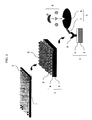
- Fig. 2 schematically shows the reading mechanism of the anti-tag antibody chip.
- a chip 15 is held in a holder 16 and is capable of moving in the X and Y directions on a stage 17.
- a detection light emitted by a light source 12 is reflected via a splitter 13, condensed via a lens 14, and then the chip 15 is irradiated with such light.
- Reflected light from the chip 15 is passed through the lens 14 and the splitter 13, reflected via a mirror 18, passed through a filter 19, condensed via a lens 20, passed through a pinhole 21, and then detected via a detector 22.
- the light source 12, the stage 17, and the detector 22, for example, are controlled by a control/analysis terminal 11 outside an entire dispersing apparatus thing 10.
- FIG. 3 schematically shows a sample dispensing mechanism of the anti-tag antibody chip.
- a nozzle 35 is immobilized on a head 34 that is moved on a rail 32 in accordance with a positioning apparatus 33.
- a sample 38 is dispensed to a chip 39 by the nozzle 35.
- the nozzle 35 is washed by a nozzle washing apparatus 36 and dried by a nozzle drying apparatus 37, as appropriate.
- a temperature/humidity sensor 42 is disposed inside an entire dispensing mechanism 31, and it is controlled by a control apparatus 30 together with the positioning apparatus 33 and pumps 40 and 41.
- the target proteins are prepared in a state where peptides or polypeptides as tags are fused by a genetic engineering method. Then, the target proteins are arrayed on a solid phase via an antigen-antibody reaction between the tags and anti-tag antibodies.
- a layer comprising anti-tag antibodies is formed on the chip in order to maintain the structures and the functions of the target proteins on the solid phase.
- tag-fusion target proteins are arrayed thereon.
- the anti-tag antibodies are bonded to tags as antigens through specific recognition, they are not directly bonded to the target proteins. Therefore, the tag-fusion target proteins can be arrayed by indirect immobilization in a state where the structures and the functions thereof are not affected.
- a binding reaction is performed by merely mixing both of them.
- a buffer such as a phosphate buffer used to dissolve protein usually is used as it is, and it is not necessary to replace it with special conditions.
- the target proteins per se are maintained in a liberated state on the anti-tag antibody chip, and they are bonded to anti-tag antibodies only via the tags added to the terminal thereof, so that the target proteins are arrayed on the chip in a state where the structures and the functions thereof are maintained.
- the interaction analysis of generally unstable proteins on the chip becomes possible while maintaining them in an intact state.
- the types of substances such as proteins, nucleic acids, sugar, compounds, viruses, cells, or mixtures thereof) that are caused to interact with the target proteins are not limited. Also, after the substances are caused to interact with the target proteins, other substances can be additionally caused to react with the target proteins.
- the types of materials of the substrate are not limited as long as they can be formed on a solid phase. Examples thereof include glass, resin, wafers, and the like, and also the types of forms are not limited; they may be a plate, a globular structure, a groove, a tubular structure, or the like. Further, the sizes thereof may be within a range that can be applied to the apparatus used.
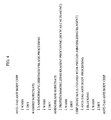
- Fig.4 shows an example of a preparation procedure of the anti-tag antibody chip.
- the substrate is coated with a reagent (calixarene, for example) for immobilizing proteins.
- a reagent a silane coupling reagent such as 3-aminopropyltriethoxysilane
- the entire chip is coated by, after the substrate is coated with 3-aminopropyltriethoxysilane, immobilizing an aldehyde group of a calixarene molecule and an amine group of a 3-aminopropyltriethoxysilane molecule via an azomethine linkage.
- a glass substrate to the surface of which a nitrocellulose membrane or polymer gel is attached can be used, or a glass substrate whose surface is modified with various types of functional groups can also be used in addition to the aforementioned substrate.
- the anti-tag antibodies are immobilized on the substrate via the protein immobilizing reagent. By densely immobilizing the anti-tag antibodies so that they are in a saturated state within a spot area, a layer comprising the anti-tag antibodies is formed on the substrate. A portion where the anti-tag antibodies cannot be bonded is covered with proteins, such as bovine serum albumin (BSA) generally used for blocking, so that the target proteins do not directly contact the substrate or the protein immobilizing reagent.
- BSA bovine serum albumin
- the tags as antigens are fused to the ends of the target proteins, so that the anti-tag antibodies recognize only the tags and are then bonded. However, the anti-tag antibodies are not bonded to the target proteins. Thus, the target proteins are arrayed on the chip by bonding to the anti-tag antibodies via the tags alone while maintaining the target proteins as they are in a liberated state.
- Fig. 5 shows an example of a usage procedure of the anti-tag antibody chip.
- the tag-fusion target proteins are prepared by a genetic engineering method.
- DNA fragments for coding the target proteins are inserted in expression vectors (such as a pET vector, a pGEX vector, or the like).
- the expression vectors are capable of being fused to a tag at the ends of the target proteins, for example, and they are caused to overexpress in the form of the tag-fusion target proteins via an expression system suitable for the vectors.
- the purification of the tag-fusion target proteins is carried out by using substances (such as anti-tag antibodies or substrates) that specifically bond to the tags, and collection is performed via an affinity purification method.
- the proteins may be designed so that the tags may be introduced thereinto.
- the present embodiment utilizes the fusion of the tags to the target proteins via genetic engineering in an arbitrary manner and provides a technique by which the target proteins are arrayed on the chip by bonding between the tags and the anti-tag antibodies in accordance with the characteristics of the target proteins.
- the types of the tags include peptides or polypeptides (proteins), since it is assumed that the tags are expressed as the tag-fusion target proteins via genetic engineering.
- proteins such as glutathione S-transferase
- the molecular size of the tags becomes larger, as compared with a case where peptides, such as hexa-histidine, are added as the tags.
- the target proteins may be subject to the influences of the tags depending on their characteristics. Therefore, the tags of the present embodiment are desirably peptides rather than polypeptides.
- tag-fusion target proteins synthesized by a genetic engineering technique are, after affinity purification using affinity for tags, cleaved to the tags and target proteins using a specific protease, such as thrombin. Thereafter, an operation is conducted to remove tag fragments and undigested tag-fusion target proteins from the target protein fraction using the affinity purification method again, and so the target proteins are recovered and are used for analysis.
- the present embodiment does not require the dissociation of the tags and the target proteins and is characterized in that the tags are utilized as media for bonding to a chip, thereby simplifying a working process as compared with the conventional method.
- the present embodiment allows the affinity purification of tag-fusion target proteins expressed by a genetic engineering method simultaneously with the immobilization of the tag-fusion target proteins on a chip.
- the affinity purification of the expressed tag-fusion proteins, the cleavage of the tags and the target proteins using a protease, the recovery of the target proteins from a solution in which the tags and the target proteins are mixed, and the concentration of the target proteins must be conducted before interaction analysis of the target proteins.
- the layer comprising the anti-tag antibodies is formed on a solid phase.
- both the affinity purification of the tag-fusion target proteins and the immobilization of the tag-fusion target proteins on the chip can be simultaneously carried out without purifying the synthesized tag-fusion target proteins. Therefore, the working process can be substantially simplified and the tag-fusion target proteins can be efficiently used for interaction analysis of the target proteins on a solid phase without causing the reduction of the recovery rate of the target proteins. This can be applied as a single step method for purifying and arraying target proteins having a low expression level.
- the synthesis is carried out in a state where tags are fused to the ends of target proteins, and affinity purification is conducted using affinity for the tags.
- affinity purification is conducted using affinity for the tags.
- the same purification method can be applied.
- anti-tag antibodies for the fused tags can be commonly used regardless of the types of target proteins. This can provide an anti-tag antibody chip prepared in accordance with the relevant types of anti-tag antibodies as a product.
- the present embodiment can be applied as a platform for interaction analysis of proteins on a solid phase, since interaction analysis of proteins can be conducted after the proteins are arrayed on a solid phase in a state where the structures and the functions thereof are maintained regardless of protein type.
- peripheral devices necessary for analysis such as a detection mechanism (Fig. 2) and a sample dispensing mechanism (Fig. 3)
- a full automatic or semiautomatic protein interaction analysis system can be provided.
- a fluorescent scanner in a case where a fluorescence-labeled sample is detected, a fluorescent scanner, a two-photon excitation scanner, or the like can be applied, for example.
- a surface plasmon resonance apparatus in a case of a non-fluorescence-labeled sample, a surface plasmon resonance apparatus, an optical waveguide apparatus, or the like can be applied, for example.
- a full automatic or semiautomatic dispensing processing system comprising a contact-type or non-contact-type sample dispensing mechanism, for example, can be constructed, in addition to manual procedures using a micro-pipetter, for example.
- a mark for positional recognition is set on the chip in advance, for example.
- the position of the spot is stored and determined through the recognition of the mark on the chip via a positioning apparatus (such as a CCD camera) above a sample dispensing apparatus.
- a full automatic or semiautomatic processing system comprising a hybridization apparatus, for example, can be constructed, in addition to manual procedures using a tray, for example.
- the present embodiment allows a complicated protein interaction to be comprehensively and universally realized on a chip, utilizing genetic engineering methods that have spread and progressed in recent years.
- the present embodiment can be applied not merely to research use relating to proteins, but also to screening in medicine, examination, diagnosis, and the field of drug development.
- proteins are functional molecules that are actually in control of various actions in a living thing, unlike information molecules such as genes.
- the capability of realizing the interaction thereof on the chip comprehensively and universally is effective.
- the number of spots for the tag-fusion target proteins can be arbitrarily changed within the field of an arrayed surface of a solid phase used, so that densification and downsizing resulting therefrom become possible.
- Target proteins may be of any type, so that any protein can be immobilized on the chip in accordance with the principle of the present embodiment and can be used for interaction analysis.
- the present embodiment can conduct function analysis, such as screening, quantitation, expression profiling, or the like, with respect to the target proteins, and can also be applied to structure analysis.
- the present embodiment is capable of arraying proteins on a solid phase with high density in a state where the structures and the functions thereof are maintained, and of allowing interaction analysis to be conducted.
- this technique may also be suitable for expression profiling of proteins.
- the state of functional molecules inside a living thing is more precisely reflected by directly examining the expression level of proteins resulting from translation than by examining the expression level of the transcription products of genes inside the living thing, as in a case involving a DNA microarray.
- interaction analysis and expression profiling via a protein chip are expected to spread in the future.
- the present embodiment can provide a platform therefor, and is suitable for contract analytical services for protein interaction analysis.
- Ec DOS protein binds to PAS domain protein constituting a portion thereof through interaction (Yoshimura, T. et al., The Journal of Biological Chemistry, 278(52), 53105-53111 (2003)). Then, as shown in Fig. 5, after both thereof are prepared by a genetic engineering method, tag-fusion Ec DOS proteins are arrayed on a chip and the interaction of PAS domain proteins depending on concentration is examined.
- An open reading frame for coding an Ec DOS protein is cloned by adjusting a frame to the multiple cloning site of a pET28a(+) expression vector (Novagen).
- a PAS domain constituting the Ec DOS protein is separately cloned.
- each protein is independently over-expressed in a BL21 competent cell (Stratagene)
- the cell is lysed to recover a supernatant thereof.
- ammonium sulfate precipitation an eluate gained via a desalting process using a Sephadex G-25 column (Amersham Biosciences) is subjected to a Ni-NTA-agarose column (Qiagen), whereby each histidine-tag fusion protein is affinity purified.
- a histidine-tag portion is separated by thrombin digestion, then a product thereof is subjected to a nickel chelating, thereby recovering a PAS domain protein as a supernatant in which a tag is removed.
- the gained PAS domain protein is fluorescence-labeled using a Cy3 labeling kit (Amersham Biosciences).
- An anti-tag antibody chip is prepared in accordance with the procedure of Fig. 4.
- a commercially available protein chip (ProteoChip A, Hitachi High-Technologies) is used as a chip for immobilizing anti-tag antibodies.
- the ProteoChip A comprises a washed slide glass treated with an aminosilane coupling, followed by the coating with calixarene molecules of a protein immobilizing reagent.
- a spot seal (design registration applied for) in which holes of ⁇ 2.0mm for spotting are provided in advance is attached to the chip, and a sample is dispensed in the spots, thereby conducting interaction analysis of target proteins.
- anti His-tag monoclonal antibody (MAB050, R&D Systems) are used as anti-tag antibody.
- the antibodies are prepared to have a concentration of 100 ⁇ g/ml using a dilution solution for antibody (PBS buffer prepared to have a pH of 7.4 including 30 % of glycerol). After dispensing 1.5 ⁇ l to each spot, the antibodies are immobilized on the chip through overnight incubation at 37 °C. The chip is steeped in a washing solution A (PBS buffer prepared to have a pH of 7.8 including 0.5 % of Tween-20) and excessive antibodies are removed while shaking it for 20 minutes. Then, the chip is rinsed with a deionized water.
- PBS buffer prepared to have a pH of 7.8 including 0.5 % of Tween-20
- the chip is steeped in a BSA solution of 3 % prepared by a PBS buffer (pH 7.4), and blocking is carried out while shaking it for 60 minutes at room temperature.
- the chip after the blocking is steeped in the washing solution A and washed while shaking it for 20 minutes.
- the chip is rinsed with a deionized water, thereby preparing the anti-tag antibody chip.
- the tag-fusion Ec DOS proteins After dispensing 1.5 ⁇ l of tag-fusion Ec DOS proteins to each spot of the anti-tag antibody chip, the tag-fusion Ec DOS proteins being prepared to have a concentration of 100 ⁇ g/ml via a dilution solution for protein (Tris buffer prepared to have a pH of 7.4 including 10 % of BSA and 30 % of glycerol), the proteins are incubated for three hours at room temperature. The chip is steeped in a washing solution B (Tris buffer prepared to have a pH of 7.4 including 0.5 % of Tween-20) and excessive tag-fusion target proteins are removed while shaking it for 20 minutes. Then, the chip is rinsed with a deionized water, thereby preparing the chip for interaction analysis in which the tag-fusion Ec DOS proteins are arrayed.
- Tris buffer prepared to have a pH of 7.4 including 10 % of BSA and 30 % of glycerol Tris buffer prepared to have a pH of 7.4 including 10 % of B
- the present invention can be applied not merely to research use relating to proteins, but also to medicine, examination, diagnosis, and the field of drug development.
Landscapes
- Health & Medical Sciences (AREA)
- Immunology (AREA)
- Life Sciences & Earth Sciences (AREA)
- Engineering & Computer Science (AREA)
- Molecular Biology (AREA)
- Biomedical Technology (AREA)
- Chemical & Material Sciences (AREA)
- Hematology (AREA)
- Urology & Nephrology (AREA)
- Food Science & Technology (AREA)
- Biochemistry (AREA)
- Cell Biology (AREA)
- Biotechnology (AREA)
- Medicinal Chemistry (AREA)
- Physics & Mathematics (AREA)
- Analytical Chemistry (AREA)
- Microbiology (AREA)
- General Health & Medical Sciences (AREA)
- General Physics & Mathematics (AREA)
- Pathology (AREA)
- Investigating Or Analysing Biological Materials (AREA)
- Peptides Or Proteins (AREA)
- Investigating Or Analysing Materials By The Use Of Chemical Reactions (AREA)
- Investigating Or Analysing Materials By Optical Means (AREA)
Applications Claiming Priority (2)
| Application Number | Priority Date | Filing Date | Title |
|---|---|---|---|
| JP2004142275 | 2004-05-12 | ||
| JP2004142275A JP2005326165A (ja) | 2004-05-12 | 2004-05-12 | タンパク質相互作用解析のための抗タグ抗体チップ |
Publications (2)
| Publication Number | Publication Date |
|---|---|
| EP1596196A2 true EP1596196A2 (de) | 2005-11-16 |
| EP1596196A3 EP1596196A3 (de) | 2006-06-21 |
Family
ID=34936411
Family Applications (1)
| Application Number | Title | Priority Date | Filing Date |
|---|---|---|---|
| EP05010266A Withdrawn EP1596196A3 (de) | 2004-05-12 | 2005-05-11 | Proteinwechselwirkungchip |
Country Status (4)
| Country | Link |
|---|---|
| US (1) | US20050255526A1 (de) |
| EP (1) | EP1596196A3 (de) |
| JP (1) | JP2005326165A (de) |
| CN (1) | CN100561228C (de) |
Families Citing this family (10)
| Publication number | Priority date | Publication date | Assignee | Title |
|---|---|---|---|---|
| JP2007309689A (ja) * | 2006-05-16 | 2007-11-29 | Hitachi High-Technologies Corp | タンパク質結合部位同定技術 |
| JP5004076B2 (ja) * | 2006-06-19 | 2012-08-22 | 独立行政法人産業技術総合研究所 | 蛍光検出型ケミカルバイオセンサー及びそれを用いた検体中の特定物質の検出方法 |
| JP2010096645A (ja) * | 2008-10-17 | 2010-04-30 | National Institute Of Advanced Industrial Science & Technology | 周期構造を有するマイクロプレート、並びに、それを用いた表面プラズモン励起増強蛍光顕微鏡、蛍光マイクロプレートリーダーおよび特異的な抗原抗体反応の検出方法 |
| WO2011100369A2 (en) * | 2010-02-09 | 2011-08-18 | The Trustees Of Columbia University In The City Of New York | Methods for altering polypeptide expression and solubility |
| JP5928734B2 (ja) * | 2011-03-14 | 2016-06-01 | 国立大学法人島根大学 | 新規モノクローナル抗体、及びそのタグ抗体としての利用 |
| CN103197081B (zh) * | 2013-04-17 | 2016-08-10 | 无锡优创生物科技有限公司 | 一种蛋白质芯片及其制备和检测方法 |
| JP6605792B2 (ja) * | 2013-08-07 | 2019-11-13 | 古河電気工業株式会社 | 複合標識粒子、これを用いた標的物質の検出方法、コロイド液および標識試薬、ならびに複合標識粒子の製造方法 |
| JP5622215B2 (ja) * | 2013-10-29 | 2014-11-12 | 独立行政法人産業技術総合研究所 | 周期構造を有するマイクロプレート、並びに、それを用いた表面プラズモン励起増強蛍光顕微鏡、蛍光マイクロプレートリーダーおよび特異的な抗原抗体反応の検出方法 |
| CN107345909A (zh) * | 2017-06-23 | 2017-11-14 | 浙江诺迦生物科技有限公司 | 一种唾液样本中痕量吗啡的检测方法及使用的spr芯片 |
| JP6741261B1 (ja) | 2019-07-31 | 2020-08-19 | 黒田総合技研株式会社 | 化粧品の紫外線透過比率評価用基板および評価方法 |
Family Cites Families (9)
| Publication number | Priority date | Publication date | Assignee | Title |
|---|---|---|---|---|
| GB9225453D0 (en) * | 1992-12-04 | 1993-01-27 | Medical Res Council | Binding proteins |
| US5707502A (en) * | 1996-07-12 | 1998-01-13 | Chiron Diagnostics Corporation | Sensors for measuring analyte concentrations and methods of making same |
| KR100352815B1 (ko) * | 1999-12-23 | 2002-09-16 | 김태선 | 신규한 캘릭스크라운 유도체, 그의 제조 방법, 그를이용하여 제조된 자기조립 단분자층 및 그의 자기조립단분자층을 이용하는 단백질 단분자층의 고정화 방법 |
| US20010041349A1 (en) * | 2000-04-17 | 2001-11-15 | Andrew Patron | Protein expression system arrays and use in biological screening |
| US20020155109A1 (en) * | 2001-04-20 | 2002-10-24 | Lynch David H. | Bispecific antibodies that bind TRAIL-R1 and TRAIL-R2 |
| WO2003005953A2 (en) * | 2001-07-12 | 2003-01-23 | Immunex Corporation | Viral proteins capable of binding lar |
| DE60237696D1 (de) * | 2001-08-01 | 2010-10-28 | Univ Utah | Am n-terminus trunkierte isoformen von zyklischen phosphodiesterasen pde3a |
| WO2003084679A1 (en) * | 2002-04-04 | 2003-10-16 | The Regents Of The University Of California | Immobilized calixarenes |
| US8765641B2 (en) * | 2004-03-19 | 2014-07-01 | Detroit R&D, Inc. | Chip production, hybridization and data interpretation for antibody and protein microarrays |
-
2004
- 2004-05-12 JP JP2004142275A patent/JP2005326165A/ja active Pending
-
2005
- 2005-04-18 CN CNB2005100647224A patent/CN100561228C/zh not_active Expired - Fee Related
- 2005-05-04 US US11/121,118 patent/US20050255526A1/en not_active Abandoned
- 2005-05-11 EP EP05010266A patent/EP1596196A3/de not_active Withdrawn
Also Published As
| Publication number | Publication date |
|---|---|
| CN100561228C (zh) | 2009-11-18 |
| US20050255526A1 (en) | 2005-11-17 |
| JP2005326165A (ja) | 2005-11-24 |
| CN1696700A (zh) | 2005-11-16 |
| EP1596196A3 (de) | 2006-06-21 |
Similar Documents
| Publication | Publication Date | Title |
|---|---|---|
| US20240192221A1 (en) | Protein sequencing method and reagents | |
| EP1320754B1 (de) | Detektion von peptiden | |
| Glökler et al. | Protein and antibody microarray technology | |
| Weinberger et al. | Recent trends in protein biochip technology | |
| US20060003372A1 (en) | Integration of direct binding label-free biosensors with mass spectrometry for functional and structural characterization of molecules | |
| JP5350215B2 (ja) | 複合タンパク質混合物中の被分析タンパク質および/または被分析ペプチドを検出および/または濃縮するための方法 | |
| Buijs et al. | SPR-MS in functional proteomics | |
| Urban et al. | Lab‐on‐a‐plate: Extending the functionality of MALDI‐MS and LDI‐MS targets | |
| US20050255526A1 (en) | Anti-tag antibody chip for protein interaction analysis | |
| Madeira et al. | Coupling surface plasmon resonance to mass spectrometry to discover novel protein–protein interactions | |
| WO2006033356A1 (ja) | 基板上に固定化した蛋白質の構造変化を検出する方法 | |
| US20040072274A1 (en) | System and method for visualization and digital analysis of protein and other macromolecule microarrays | |
| Xu et al. | On‐plate enrichment of glycopeptides by using boronic acid functionalized gold‐coated Si wafer | |
| Mapes et al. | Robust and scalable single-molecule protein sequencing with fluorosequencing | |
| JP3955952B2 (ja) | 顕微赤外分光法を利用した分子アレイによる検体の分析方法 | |
| Visser et al. | Surface plasmon resonance mass spectrometry in proteomics | |
| KR100953558B1 (ko) | 표면 플라즈몬 공명을 이용한 ps-spcl 탐색 장치 및방법 | |
| US20050124017A1 (en) | Quantitative alkaline-phosphatase precipitation reagent and methods for visualization of protein microarrays | |
| JP4543860B2 (ja) | 試料の解析方法 | |
| Gonzalez et al. | Sandwich ELISA microarrays: generating reliable and reproducible assays for high-throughput screens | |
| Zhang et al. | Affinity peptidomics: peptide selection and affinity capture on hydrogels and microarrays | |
| Tapia et al. | Exploring and profiling protein function with peptide arrays | |
| Swaminathan | Single molecule peptide sequencing | |
| Nice et al. | Affinity-based biosensors, microarrays and proteomics | |
| WO2025160469A1 (en) | Methods for profiling immunoglobulin repertoires |
Legal Events
| Date | Code | Title | Description |
|---|---|---|---|
| PUAI | Public reference made under article 153(3) epc to a published international application that has entered the european phase |
Free format text: ORIGINAL CODE: 0009012 |
|
| AK | Designated contracting states |
Kind code of ref document: A2 Designated state(s): AT BE BG CH CY CZ DE DK EE ES FI FR GB GR HU IE IS IT LI LT LU MC NL PL PT RO SE SI SK TR |
|
| AX | Request for extension of the european patent |
Extension state: AL BA HR LV MK YU |
|
| RIC1 | Information provided on ipc code assigned before grant |
Ipc: G01N 33/543 20060101AFI20051214BHEP |
|
| PUAL | Search report despatched |
Free format text: ORIGINAL CODE: 0009013 |
|
| 17P | Request for examination filed |
Effective date: 20060331 |
|
| AK | Designated contracting states |
Kind code of ref document: A3 Designated state(s): AT BE BG CH CY CZ DE DK EE ES FI FR GB GR HU IE IS IT LI LT LU MC NL PL PT RO SE SI SK TR |
|
| AX | Request for extension of the european patent |
Extension state: AL BA HR LV MK YU |
|
| AKX | Designation fees paid |
Designated state(s): DE FR |
|
| 17Q | First examination report despatched |
Effective date: 20070619 |
|
| STAA | Information on the status of an ep patent application or granted ep patent |
Free format text: STATUS: THE APPLICATION IS DEEMED TO BE WITHDRAWN |
|
| 18D | Application deemed to be withdrawn |
Effective date: 20081111 |