EP1595934A2 - Phosphor and production method of the same and light source and led using the phosphor - Google Patents
Phosphor and production method of the same and light source and led using the phosphor Download PDFInfo
- Publication number
- EP1595934A2 EP1595934A2 EP05009524A EP05009524A EP1595934A2 EP 1595934 A2 EP1595934 A2 EP 1595934A2 EP 05009524 A EP05009524 A EP 05009524A EP 05009524 A EP05009524 A EP 05009524A EP 1595934 A2 EP1595934 A2 EP 1595934A2
- Authority
- EP
- European Patent Office
- Prior art keywords
- phosphor
- light
- light emitting
- range
- led
- Prior art date
- Legal status (The legal status is an assumption and is not a legal conclusion. Google has not performed a legal analysis and makes no representation as to the accuracy of the status listed.)
- Withdrawn
Links
Images




Classifications
-
- C—CHEMISTRY; METALLURGY
- C09—DYES; PAINTS; POLISHES; NATURAL RESINS; ADHESIVES; COMPOSITIONS NOT OTHERWISE PROVIDED FOR; APPLICATIONS OF MATERIALS NOT OTHERWISE PROVIDED FOR
- C09K—MATERIALS FOR MISCELLANEOUS APPLICATIONS, NOT PROVIDED FOR ELSEWHERE
- C09K11/00—Luminescent materials, e.g. electroluminescent or chemiluminescent
- C09K11/08—Luminescent materials, e.g. electroluminescent or chemiluminescent containing inorganic luminescent materials
- C09K11/0838—Aluminates; Silicates
-
- C—CHEMISTRY; METALLURGY
- C09—DYES; PAINTS; POLISHES; NATURAL RESINS; ADHESIVES; COMPOSITIONS NOT OTHERWISE PROVIDED FOR; APPLICATIONS OF MATERIALS NOT OTHERWISE PROVIDED FOR
- C09K—MATERIALS FOR MISCELLANEOUS APPLICATIONS, NOT PROVIDED FOR ELSEWHERE
- C09K11/00—Luminescent materials, e.g. electroluminescent or chemiluminescent
- C09K11/08—Luminescent materials, e.g. electroluminescent or chemiluminescent containing inorganic luminescent materials
- C09K11/77—Luminescent materials, e.g. electroluminescent or chemiluminescent containing inorganic luminescent materials containing rare earth metals
- C09K11/7728—Luminescent materials, e.g. electroluminescent or chemiluminescent containing inorganic luminescent materials containing rare earth metals containing europium
- C09K11/77347—Silicon Nitrides or Silicon Oxynitrides
-
- H—ELECTRICITY
- H10—SEMICONDUCTOR DEVICES; ELECTRIC SOLID-STATE DEVICES NOT OTHERWISE PROVIDED FOR
- H10H—INORGANIC LIGHT-EMITTING SEMICONDUCTOR DEVICES HAVING POTENTIAL BARRIERS
- H10H20/00—Individual inorganic light-emitting semiconductor devices having potential barriers, e.g. light-emitting diodes [LED]
- H10H20/80—Constructional details
- H10H20/85—Packages
- H10H20/851—Wavelength conversion means
- H10H20/8511—Wavelength conversion means characterised by their material, e.g. binder
- H10H20/8512—Wavelength conversion materials
Definitions
- the present invention relates to a phosphor used in a display device such as an LED, CRT, PDP, FED, and EL, and a lighting unit such as a vacuum fluorescent display and fluorescent lamp. More particularly, the present invention relates to a phosphor and a production method of the same, the phosphor being suitable for an LED, a light source, a lighting unit and the like each of which has a light emitting portion and a phosphor of ultraviolet-blue light or the like and emits visible light or white light by cooperation of both the light emitting portion and the phosphor, and to a light source and an LED using the phosphor.
- An LED, a light source and a lighting unit which emit white light by a combination of a light emitting portion constituted of a light emitting element which emits blue or ultraviolet light by itself and a phosphor which has an excitation band in the ultraviolet-blue wavelength region generated from the light emitting element and, upon excitation by the light of that wavelength region, emits fluorescent light of a predetermined wavelength region.
- phosphors represented by general formulas Y 2 O 2 S: Eu, La 2 O 2 S: Eu, 3.5MgO ⁇ 0.5MgF 2 ⁇ GeO 2 : Mn, and (La, Mn, Sm) 2 O 2 S ⁇ Ga 2 O 3 are known as a phosphor which emit red fluorescent light
- BAM: Eu,Mn are known as a phosphor which emits green fluorescent light
- a phosphor represented by a general formula YAG: Ce is known as a phosphor which emits yellow fluorescent light
- phosphors represented by general formulas BAM: Eu, Sr 5 (PO 4 ) 3 Cl: Eu, ZnS: Ag, and (Sr, Ca, Ba, Mg) 10 (PO 4 ) 6 Cl: Eu are known as phosphors which emit blue fluorescent light. Then, there are suggested an LED
- an oxynitride glass phosphor for example, refer to Patent Document 1
- a phosphor having a sialon as a host material for example, refer to Patent Documents 2, 3 and 4
- a phosphor including nitrogen of a silicon nitride group or the like for example, refer to Patent Documents 5 and 6
- an LED, a light source and a lighting unit which emit white or monochromatic light using a combination of these phosphors and a light emitting element which emits blue or ultraviolet light by itself.
- LED and light source which emit visible light or white light by a combination of a light emitting portion constituted of a light emitting element which emits light of the ultraviolet-blue wavelength by itself and a phosphor which has an excitation band corresponding to light of the ultraviolet-blue wavelength region generated from the light emitting portion and emits fluorescent light of a predetermined wavelength region, it is strongly demanded to improve not only the emission efficiency of the light emitting portion but also the emission efficiency of fluorescent light of the phosphor, in order to improve luminance of the visible light or white light. This is because the luminance of the entire white light source can be improved by the emission efficiency of the phosphor.
- the emission efficiency of the phosphor will be described with an example of an LED which emits white light by a combination of a light emitting element which emits ultraviolet-blue light and a phosphor which emits yellow-red fluorescent light.
- a YAG: Ce based yellow phosphor which emits yellow fluorescent light has an efficient excitation range for emitting fluorescent light by blue light emitted by a light emitting element in an LED, so that it can produce good yellow light emission.
- the light emitting element in the LED emits ultraviolet light, it deviates from the excitation range of the phosphor, so that it cannot produce yellow light emission with high efficiency.
- red phosphor which emits red fluorescent light
- no existing phosphor has been obtained that has an excitation band corresponding to light of the ultraviolet-blue wavelength region and emits red light with high efficiency.
- the present invention is made in view of the above described situation, and an object thereof is to provide a phosphor having an excitation band corresponding to light of the ultraviolet-visible (300 to 550 nm) wavelength region emitted from a light emitting element which emits blue or ultraviolet light, the phosphor having high emission efficiency and further capable of emitting fluorescent light in a wide range of visible light.
- the inventors of the present invention devised a phosphor with higher efficiency and an excellent light emitting characteristic, which has a new host material composition that is easy to be produced.
- a phosphor represented by a general formula M a + p Si 3 O a + q N 4 + r : Z is provided, wherein M is a divalent element, Z is an element to be an activator, "a” is in a range of 0 ⁇ a ⁇ 10, "p” is in a range of - a/2 ⁇ p ⁇ a/2, “q” is in a range of - a/2 ⁇ q ⁇ 2a, and "r” is in a range of - 2 ⁇ r ⁇ 2.
- the phosphor described in the first aspect is provided, wherein M is at least one or more elements selected from the group consisting of beryllium, magnesium, calcium, strontium, barium, zinc, cadmium, and mercury, and Z is at least one or more elements selected from rare-earth elements or transition metal elements.
- the phosphor described in the first or the second aspect is provided, wherein "a" is in a range of 0 ⁇ a ⁇ 6.
- the phosphor described in any one of the first to the third aspect is provided, wherein M is at least one or more elements selected from the group consisting of magnesium, calcium, strontium, barium, and zinc.
- the phosphor described in any one of the first to the fourth aspect is provided, wherein Z is at least one or more elements selected from the group consisting of europium, manganese, and cerium.
- the phosphor described in any one of the first to the fifth aspect is provided, wherein Z is europium.
- the phosphor described in any one of the first to the fifth aspect is provided, wherein M is calcium.
- the phosphor described in any one of the first to the fifth aspect is provided, wherein M is strontium.
- the phosphor described in any one of the first to the eighth aspect is provided, wherein Z content is 0.0001 mol or more and 0.5 mol or less when the corresponding M is one mol.
- the phosphor described in any one of the first to the ninth aspect is provided wherein the phosphor is in a powder form.
- the phosphor described in the tenth aspect is provided, wherein an average particle size of the phosphor is 20 ⁇ m or less and 0.1 ⁇ m or more.
- a production method of a phosphor which is represented by a general formula M a+p Si 3 O a+ q N 4+r : Z, in which M is a divalent element, Z is an element to be an activator, "a” is in a range of 0 ⁇ a ⁇ 10, "p” is in a range of - a/2 ⁇ p ⁇ a/2, “q” is in a range of - a/2 ⁇ q ⁇ 2a, and “r” is in a range of -2 ⁇ r ⁇ 2 is provided, wherein one or more kind selected from an oxide, a carbonate, a nitride, a hydroxide, and a basic carbonate of M is used as a raw material of M, a silicon dioxide and/or a silicon nitride are/is used as a raw material of the silicon, and a silicon nitride and/or a nitride of M
- a light source comprising a phosphor described in any one of the first to the eleventh aspect and a light emitting portion is provided.
- the light source described in the thirteenth aspect is provided, wherein a wavelength of light emitted by the light emitting portion is from 300 to 550 nm.
- a light emitting diode comprising a phosphor described in any one of the first to the eleventh aspect and a light emitting portion is provided.
- the light emitting diode described in the fifteenth aspect is provided, wherein a wavelength of light emitted by the light emitting portion is from 300 to 550 nm.
- the phosphor according to any one of the first to the eleventh aspect represented by the general formula M a + p Si 3 O a + q N 4 + r : Z has an excitation band corresponding to ultraviolet-green light (wavelength region from 300 to 550 nm) and emits light with high efficiency. Further, the phosphor does not include aluminum which is liable to be oxidized in a composition part that is a skeletal structure and excellent in oxidation resistance since it includes oxygen. Furthermore, the phosphor has a longer lifetime and is easy to be produced.
- the phosphor represented by the general formula M a + p Si 3 O a + q N 4 + r : Z is produced using raw materials with high purity which are easy to be obtained, so that a high-performance phosphor can be produced at low cost.
- a highly efficient light source having a desired light emission color can be obtained, and according to the fifteenth or the sixteenth aspect, a highly efficient light emitting diode having a desired light emission color can be obtained.
- a phosphor according to the present invention is a phosphor having a host material structure represented by a general formula M a + p Si 3 O a + q N 4 + r : Z.
- M is a divalent element in the phosphor.
- Z is an element which operates as an activator in the phosphor.
- "a” is in a range of 0 ⁇ a ⁇ 10, more preferably in a range of 0 ⁇ a ⁇ 6,
- "p” is - a/2 ⁇ p ⁇ a/2,
- "q” is - a/2 ⁇ q ⁇ 2a, and
- "r” is - 2 ⁇ r ⁇ 2.
- the divalent element M is preferably at least one or more elements selected from the group consisting of Be, Mg, Ca, Sr, Ba, Zn, Cd and Hg.
- the element M may be single Ca or a mixture of Ca, Mg, ... and so on.
- the element Z as an activator is preferably at least one or more elements selected from rare-earth elements and transition metal elements.
- the element Z may be single Eu or a mixture of Eu, La, ... and the like for example.
- the emission efficiency of the phosphor increases further.
- the emission efficiency of the phosphor according to the present invention increases further, and an environmental load also decreases, so that it is a further preferable composition.
- the element Z to be an activator is at least one or more elements selected from the group consisting of Eu, Mn and Ce, the emission efficiency of the phosphor increases further, so that it is a further preferable composition.
- the light emitting wavelength of the phosphor exhibits a peak at the wavelength of orange, so that an orange based phosphor can be obtained, which is suitable for a light emitting unit such as a white LED with high emission efficiency, so that it is a preferable composition.
- the element M is Ca and/or Sr and the element Z is Eu, it is easy to obtain raw materials, environmental loads are small, and a light emitting wavelength of the phosphor exhibits a peak at the wavelength of orange, so that an orange based phosphor can be obtained, which is suitable for a light emitting unit such as a white LED with high emission efficiency, so that it is a preferable composition.
- the addition amount of the element Z is preferably in a range from 0.0001 mol to 0.5 mol for one corresponding element M.
- the addition amount of the element Z is in this range, it is possible to avoid decrease of emission efficiency due to concentration quenching caused by an excessive content of the activator, and on the other hand, it is also possible to avoid decrease of light emission efficiency due to an excessively small amount of light emission contributing atoms caused by an excessively small content of the activator.
- an optimum amount of adding the element Z differs slightly, but more preferably, high emission efficiency is obtained when the amount is in a range from 0.0005 mol to 0.1 mol.
- a light source with high efficiency which emits visible or white light can be produced by combining the phosphor according to the present invention with, for example, a light emitting element which emits ultraviolet to green light, and further with another phosphor if desired.
- the phosphor which is obtained according to the present invention emits green to red fluorescent light with high efficiency upon reception of light in a wide excitation range from 300 to 550 nm, so that a light source of visible light or white light with high efficiency can be produced by combining the phosphor with a light source which emits ultraviolet to green light, and further with another phosphor if desired.
- an LED of monochromatic visible light or white light with high efficiency can be produced by combining the phosphor obtained according to the present invention with an LED light emitting portion which emits ultraviolet to green light, and further with another phosphor if desired.
- the phosphor which is obtained according to the present invention emits green to red fluorescent light with high efficiency upon reception of light in the wide excitation range of 300 to 550 nm, so that the LED of monochromatic visible light or white light with high efficiency can be produced by combining the phosphor with the LED light emitting portion which emits ultraviolet to green light, and further with another phosphor if desired.
- a production method of the phosphor according to the present invention will be described with an example of production of a phosphor in which the element M is Ca and the element Z is Eu.
- an oxide, carbonate, hydroxide, or nitride of Ca can be used as a raw material for Ca that is the element M.
- a raw material for Si Si 3 N 4 or SiO 2 can be preferably used.
- a raw material for N Si 3 N 4 or a nitride of M (for example, a nitride of Ca) can be preferably used.
- a raw material for Eu as the element Z Eu 2 O 3 can be preferably used.
- the respective raw materials may be a commercially available raw material. Since they are preferred to have high purity, raw materials of 2N or higher, or more preferably 3N or higher are prepared.
- a compound of CaO [3N], CaCO 3 [3N], Ca(OH) 2 [3N] and the like may be prepared as a raw material for the element M.
- the element Z Eu 2 O 3 [3N] may be prepared.
- Si 3 N 4 [3N] may be prepared as a raw material for Si and N.
- Mixing of the weighed raw materials may be carried out by a general mixing method using a mortar or the like. The mixing may be carried out in the atmosphere, but when CaO or Ca(OH) 2 are used as raw materials, they may react to moisture or carbon dioxide in the atmosphere and change in formation, and further the raw material Si 3 N 4 may be oxidized by the oxygen in the atmosphere, so that it is preferred to be carried out under an inert atmosphere from which moisture is removed. For example, operation inside a glove box under an inert atmosphere is convenient.
- the raw materials after being completely mixed are heated to 1600°C by a heating rate of 15°C/min in an inert atmosphere of nitrogen or the like, and retained and fired at 1600°C for three hours. After the firing is completed, the raw materials are cooled down from 1600°C to 200°C for an hour, and further cooled down to the room temperature. After the cooling down is completed, the fired materials are pulverized using a pulverizing means such as a mortar, ball mill, or the like to have a predetermined average particle size (preferably, from 20 ⁇ m to 0.1 ⁇ m) to thereby obtain a phosphor having Ca as the element M.
- a pulverizing means such as a mortar, ball mill, or the like to have a predetermined average particle size (preferably, from 20 ⁇ m to 0.1 ⁇ m) to thereby obtain a phosphor having Ca as the element M.
- a composition analysis was performed on the produced phosphor, and a result was Ca 1.6 Si 3 O 1.63 N 4.35 : Eu 0.0
- the firing temperature and the heating rate were changed, respective samples were prepared with the element M being replaced with an element other than Ca such as Sr and with the element Z being replaced with an element other than Eu such as Mn, and, while selecting the element M and the element Z, a tolerance on displacement of composition ratio in a host material structure of the phosphor was considered.
- the phosphor exhibits excellent emission efficiency when the host material structure of the phosphor is represented by the general formula M a + p Si 3 O a+ q N 4 + r : Z and "a" is in a range of 0 ⁇ a ⁇ 10, more preferably in a range of 0 ⁇ a ⁇ 6, "p” is in a range of - a/2 ⁇ p ⁇ a/2, “q” is in a range of - a/2 ⁇ q ⁇ 2a, and "r” is in a range of - 2 ⁇ r ⁇ 2.
- the values of "a,” “p,” “q,” and “r” can be controlled by amounts of oxygen and nitrogen included in the raw material of the element M, which is an oxide, carbonate, hydroxide, or nitride of M, and by amounts of oxygen and nitrogen included in the raw materials of Si, which is Si 3 N 4 or SiO 2 , so that a phosphor having a predetermined host material structure can be produced by considering the composition of respective materials in view of the host material structure of the phosphor that is the object of the production.
- the produced phosphor is used in combination with an appropriate light emitting portion such as an LED. Accordingly, the phosphor is preferred to be in a powder form, which can be easily handled to be applied, filled, and so on.
- the phosphor according to the present invention does not included aluminum which is liable to be oxidized in a composition part that is the skeletal structure of the host material structure, and it is excellent in oxidation resistance since it includes oxygen, so that the phosphor can be easily pulverized to a predetermined particle size even in an atmosphere without controlling it to be inert atmosphere or the like.
- an average particle size of the phosphor is preferably 20 ⁇ m or smaller, and when the average particle size is 0.1 ⁇ m or larger, it can be easily pulverized by a publicly known pulverizing method.
- the phosphor according to the present invention in a pulverized form can be used as various light sources such as an LED, CRT, and PDP (for example, as a display device and an illumination unit) by combining with a light emitting portion (particularly, a light emitting portion having a light emitting wavelength region from 300 to 550 nm).
- a light emitting portion particularly, a light emitting portion having a light emitting wavelength region from 300 to 550 nm.
- These weighed raw materials were mixed using a mortar inside a glove box under a nitrogen atmosphere.
- the mixed raw materials were filled into a melting pot made of boron nitride, heated to 1600°C by a heating rate of 15°C/min under a nitrogen atmosphere, retained and fired at 1600°C for three hours, and cooled down thereafter from 1600°C to 200°C for an hour to thereby obtain a phosphor sample.
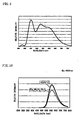
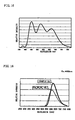
- luminescence intensity of the phosphor of the present invention is taken as relative intensity on the vertical axis, and a wavelength of light is taken on the horizontal axis.
- the emission spectrum is a spectrum emitted from an object when the object is irradiated with light or energy having a certain wavelength.
- FIG. 1 shows a wavelength spectrum emitted from the phosphor of the present invention when the phosphor is irradiated with monochromatic light of 460 nm.
- the phosphor sample exhibits light emission in a wide wavelength region from 500 nm to 800 nm, and exhibits the highest light emission at 609 nm. Incidentally, orange light emission color was recognized by visual observation.
- the excitation spectrum is a spectrum measured in such a manner that a phosphor that is a subject to be measured is excited using monochromatic light of various wavelengths, luminescence intensity with a constant wavelength of light emission from the phosphor is measured, and excitation wavelength dependency of the luminescence intensity is measured.
- the phosphor sample was irradiated with monochromatic light of from 250 to 600 nm, and excitation dependency of the luminescence intensity of light with a wavelength of 609 nm emitted from the phosphor sample was measured.
- the excitation spectrum of the phosphor sample is wide, from approximately 250 nm to approximately 600 nm, and it was found that the phosphor sample exhibits high emission of orange light by a wide range of excitation light.
- Examples 2 to 6 phosphor samples were made and luminescence intensity was measured similarly to Example 1 except that the mixing ratio of the respective raw materials of CaO [3N], Si 3 N 4 [3N], and Eu 2 O 3 [3N] explained in Example 1 was changed and set as Examples 2 to 6.
- luminescence intensity of the phosphor samples according to Examples 2 to 6 are explained with reference to FIG. 3.
- luminescence intensity of the phosphor sample is taken on the vertical axis
- a value of CaO/Si 3 N 4 which is the raw material ratio, is taken on the horizontal axis.
- Example 2 An LED of ultraviolet light having a nitride semiconductor as a light emitting portion was used, the phosphor sample obtained in Example 2, a commercially available blue phosphor (BAM: Eu), and a commercially available green phosphor (ZnS: Cu, Al) were applied on the LED, and the LED of ultraviolet light was illuminated. Then, the respective phosphors emitted light by light from the LED, and an LED which emits white light when visually observed was obtained.
- BAM blue phosphor
- ZnS green phosphor
- the phosphor sample obtained by the present invention and a commercially available yellow phosphor were applied, and the LED of blue light was illuminated. Then, the respective phosphors emitted light by light from the LED, and an LED which emits white light when visually observed was obtained.
- the mixed raw materials are filled into a melting pot made of boron nitride, and they are fired at 1500°C in nitrogen for three hours and then cooled down similarly to Example 1, while paying attention so as not to oxidize the raw materials, and so as to completely remove the oxygen in the raw materials. After the raw materials were completely cooled down, they were pulverized while paying attention so as not to oxidize them to thereby obtain the phosphor sample according to the comparison example. A chemical analysis was performed on the composition of the produced phosphor sample, and then the sample had a composition formula of Ca 1.97 Si 5 N 8 : Eu 0.03 .
- FIG. 4 is a graph similar to FIG. 1, which shows the emission spectrum of the phosphor sample according to the present invention by a thick solid line, and the emission spectrum of the phosphor sample according to Comparison Example is shown by a thin solid line.
- the phosphor sample according to Example 1 has approximately 9% higher relative intentisy as compared to the phosphor sample of the composition formula Ca 1.97 Si 5 N 8 : Eu 0.03 according to Comparison Example, and therefore it was found to be a phosphor that is easy to produce and has high efficiency.
- Excitation wavelength Firing condition Relative intentisy Emission maximum x y Example 1 460 nm 1600°C ⁇ 3h 109.2% 609.3 0.589 0.409 Ca 1.97 Si 5 N 8 : Eu 0.03 460 nm 1500°C ⁇ 3h 100% 609.2 0.593 0.405
- These weighed raw materials were mixed using a mortar inside a glove box under a nitrogen atmosphere.
- the mixed raw materials were filled into a melting pot made of boron nitride, heated to 1600°C by a heating rate of 15°C/min in the nitrogen atmosphere, retained and fired at 1600°C for 24 hours, and cooled down thereafter from 1600°C to 200°C for an hour to thereby obtain a phosphor sample.
- the phosphor sample exhibits light emission in a wide wavelength region from 500 nm to 800 nm, and exhibits the highest light emission at 608 nm. Incidentally, orange light emission color was recognized by visual observation.
- the excitation spectrum of the phosphor sample was measured, but in this measurement, the phosphor of the present invention was irradiated with monochromatic light of from 250 to 600 nm, and excitation dependency of the luminescence intensity of light with a wavelength of 608 nm emitted from the sample was measured.
- the excitation spectrum of the phosphor sample is wide, from approximately 250 nm to approximately 600 nm, and it was found that the phosphor sample exhibits high emission of orange light in a wide range.
- Examples 10 to 16 commercially available CaO [3N], Si 3 N 4 [3N], and Eu 2 O 3 [3N] were prepared similarly to Example 9, and except that a mol ratio of them is set to predetermined values to weigh raw materials of respective phosphor samples, phosphor samples were made and luminescence intensity of the phosphor samples was measured similarly to Example 9.
- Example 17 the phosphor sample according to Example 13 was used to measure luminescence intensity due to concentration of activator Eu element.
- luminescence intensity of the phosphor according to the present invention is taken on the vertical axis, and a percentage of Eu inside a Ca site, in other words, a value of Eu/(Ca + Eu) is taken on the horizontal axis.
- the luminescence intensity first rises with increase of the value of Eu/(Ca + Eu), but the luminescence intensity starts to decrease at a peak of approximately 0.03.
- a conceivable reason of this is that, at a portion where the value is less than 0.03, the luminescence intensity is low because the activator element is not sufficient, and at a portion where the value is more than 0.03, there occurs concentration quenching caused by the activator element.
- Example 17 1.25 0.001 1600°C ⁇ 24h 40.6% 604.6 0.575 0.422
- Example 18 1.25 0.005 1600°C ⁇ 24h 72.6% 605.7 0.582 0.416
- Example 19 1.25 0.015 1600°C ⁇ 24h 92.2% 608.1 0.590 0.408
- Example 20 1.25 0.03 1600°C ⁇ 24h 100% 610.2 0.597 0.401
- Example 21 1.25 0.05 1600°C ⁇ 24h 93.5% 614.4 0.603 0.395
- the phosphor sample obtained in Example 9 On an LED of ultraviolet light having a nitride semiconductor as a light emitting portion, the phosphor sample obtained in Example 9, a commercially available blue phosphor (BAM: Eu), and a commercially available green phosphor (ZnS: Cu, Al) were applied, and the LED of ultraviolet light was illuminated. Then, the respective phosphors emitted light by light from the LED, and an LED which appears to be white when visually observed was obtained. Results of measuring an emission spectrum of the obtained LED are shown in FIG. 9. Further, light emission of various colors was obtained by appropriately changing compounding amounts of the phosphors.
- BAM blue phosphor
- ZnS green phosphor
- the phosphor sample obtained in the present invention and a commercially available yellow phosphor were applied, and the LED of blue light was illuminated. Then, the respective phosphors emitted light by light from the LED, and an LED which appears to be white when visually observed was obtained. Further, in a case that a commercially available green phosphor (ZnS: Cu, Al) was used instead of the yellow phosphor, an LED which appears to be white when visually observed was obtained.
- the vertical axis and the horizontal axis in FIG. 10 are same as those of the graph in FIG. 5.
- an emission spectrum of the phosphor sample according to the present invention is shown by a thick solid line
- the emission spectrum of the phosphor sample of a composition formula Ca 1.97 Si 5 N 8 : Eu 0.03 is shown by a thin solid line.
- the phosphor sample according to Example 9 has approximately 29% higher relative intentisy as compared to the phosphor sample of the composition formula Ca 1.97 Si 5 N 8 : Eu 0.03 , and therefore it was found to be a phosphor with remarkably high efficiency.
- Excitation wavelength Firing condition Relative intentisy Emission maximum x y
- Example 9 460 nm 1600°C ⁇ 24h 128.9% 608.4 0.590 0.408 Ca 1.97 Si 5 N 8 : Eu 0.03 460 mm 1500°C ⁇ 3h 100% 609.2 0.593 0.405
- These weighed raw materials were mixed using a mortar inside a glove box under a nitrogen atmosphere.
- the mixed raw materials were filled into a melting pot made of boron nitride, heated to 1600°C by a heating rate of 15°C/min in the nitrogen atmosphere, retained and fired at 1600°C for 3 hours, and cooled down thereafter from 1600°C to 200°C for an hour to thereby obtain a' phosphor sample.
- the phosphor sample exhibits light emission in a wide wavelength region from 500 nm to 800 nm, and exhibits the highest light emission at 624 nm. Incidentally, orange light emission color was recognized by visual observation.
- the excitation spectrum of the phosphor sample was measured, but in this measurement, the phosphor of the present invention was irradiated with monochromatic light of from 250 to 600 nm, and excitation dependency of the luminescence intensity of light with a wavelength of 624 nm emitted from the sample was measured.
- the excitation spectrum of the phosphor sample is wide, from approximately 250 nm to approximately 600 nm, and it was found that the phosphor sample exhibits high emission of orange light in a wide range.
- Examples 25 to 32 commercially available SrCO 3 [3N], Si 3 N 4 [3N], and Eu 2 O 3 [3N] were prepared similarly to Example 24, and except that a mol ratio of them is set to predetermined values to weigh raw materials of respective phosphor samples, phosphor samples were made and luminescence intensity of the phosphor samples was measured similarly to Example 24.
- results of the measurement will be explained with reference to FIG. 13.
- luminescence intensity of the phosphor sample according to the present invention is taken on the vertical axis, and a value of SrCO 3 /Si 3 N 4 is taken on the horizontal axis.
- Results of adjusting the value of SrCO 3 /Si 3 N 4 from 1.25 to 3 are shown. Note that light having a wavelength of 460 nm is used for excitation.
- Example 33 the phosphor sample according to Example 31 was used to measure luminescence intensity due to concentration of activator Eu element.
- luminescence intensity of the phosphor according to the present invention is taken on the vertical axis, and a percentage of Eu inside an Sr site, in other words, a value of Eu/(Sr + Eu) is taken on the horizontal axis.
- results of adjusting a value of Eu/(Sr + Eu) from 0.001 to 0.05 are shown. Note that light having a wavelength of 460 nm was used for excitation.
- the luminescence intensity first rises with increase of the value of Eu/(Sr + Eu), but the luminescence intensity starts to decrease at a peak of approximately 0.015.
- a conceivable reason of this is that, at a portion where the value is less than 0.015, the luminescence intensity is low because the activator element is not sufficient, and at a portion where the value is more than 0.015, there occurs concentration quenching caused by the activator element.
- Example 33 2.75 0.001 1600°C ⁇ 3h 45.2% 610.4 0.603 0.395
- Example 34 2.75 0.005 1600°C ⁇ 3h 82.6% 615.4 0.618 0.381
- Example 35 2.75 0.015 1600°C ⁇ 3h 100% 622.2 0.632 0.367
- Example 36 2.75 0.03 1600°C ⁇ 3h 98.8% 631.2 0.642 0.357
- Example 37 2.75 0.05 1600°C ⁇ 3h 98.4% 638.6 0.651 0.348
- the phosphor sample obtained in Example 24 On an LED of ultraviolet light having a nitride semiconductor as a light emitting portion, the phosphor sample obtained in Example 24, a commercially available blue phosphor (BAM: Eu), and a commercially available green phosphor (ZnS: Cu, Al) were applied, and the LED of ultraviolet light was illuminated. Then, the respective phosphors emitted light by light from the LED, and an LED which appears to be white when visually observed was obtained. Results of measuring an emission spectrum of the obtained LED are shown in FIG. 15. Further, light emission of various colors was obtained by appropriately changing compounding amounts of the phosphors.
- BAM blue phosphor
- ZnS green phosphor
- the phosphor sample obtained in the present invention and a commercially available yellow phosphor were applied, and the LED of blue light was illuminated. Then, the respective phosphors emitted light by light from the LED, and an LED which appears to be white when visually observed was obtained. Further, in a case that a commercially available green phosphor (ZnS: Cu, Al) was used instead of the yellow phosphor, an LED which appears to be white when visually observed was obtained.
- the vertical axis and the horizontal axis in FIG. 16 are same as those of the graph in FIG. 11.
- an emission spectrum of the phosphor according to the present invention is shown by a thick solid line
- the emission spectrum of the phosphor of a composition formula Ca 1.97 Si 5 N 8 : Eu 0.03 is shown by a thin solid line.
- the phosphor according to the present invention has approximately 41 % higher relative intentisy as compared to the phosphor of the composition formula Ca 1.97 Si 5 N 8 : Eu 0.03 , and therefore it was found to be a phosphor with remarkably high efficiency.
- Excitation wavelength Firing condition Relative intentisy Emission maximum x y
- Example 24 460 nm 1600°C ⁇ 3h 140.9% 624.1 0.631 0.368
Landscapes
- Chemical & Material Sciences (AREA)
- Inorganic Chemistry (AREA)
- Engineering & Computer Science (AREA)
- Materials Engineering (AREA)
- Organic Chemistry (AREA)
- Luminescent Compositions (AREA)
- Led Device Packages (AREA)
- Led Devices (AREA)
Abstract
Description
wherein one or more kind selected from an oxide, a carbonate, a nitride, a hydroxide, and a basic carbonate of M is used as a raw material of M, a silicon dioxide and/or a silicon nitride are/is used as a raw material of the silicon, and a silicon nitride and/or a nitride of M are/is used as a raw material of N.
| Ca (%) | Si (%) | Eu (%) | N (%) | O (%) | Average particle size (D50) | Specific surface area (m2/g) | |
| Example 1 | 26.3 | 35.0 | 1.51 | 25.3 | 10.8 | 12.78 µm | 1.93 m2/g |
in Example 4, CaO: Si3N4: Eu2O3 = 1.23125: 1:0.009375 was set,
in Example 5, CaO: Si3N4: Eu2O3 = 1.4775:1:0.01125 was set, and
in Example 6, CaO: Si3N4: Eu2O3 =1.97:1: 0.015 was set.
| Ex: 460 nm | ||||||
| CaO/Si3N4 | Firing condition | Relative intentisy | Emission maximum | x | y | |
| Example 2 | 0.75 | 1600°C × 3h | 52.1% | 605.6 | 0.576 | 0.420 |
| Example 3 | 1 | 1600°C × 3h | 70.0% | 608.1 | 0.580 | 0.417 |
| Example 4 | 1.25 | 1604°C × 3h | 93.7% | 608.9 | 0.584 | 0.414 |
| Example 5 | 1.5 | 1600°C × 3h | 100% | 609.3 | 0.589 | 0.409 |
| Example 6 | 2 | 1600°C × 3h | 81.4% | 610.2 | 0.600 | 0.399 |
| Excitation wavelength | Firing condition | Relative intentisy | Emission maximum | x | y | |
| Example 1 | 460 nm | 1600°C × 3h | 109.2% | 609.3 | 0.589 | 0.409 |
| Ca1.97Si5N8: Eu0.03 | 460 nm | 1500°C × 3h | 100% | 609.2 | 0.593 | 0.405 |
| Ca (%) | Si (%) | Eu (%) | N (%) | O (%) | Average particle size (D50) | Specific surface area (m2/g) | |
| Example 9 | 24.5 | 36.4 | 1.37 | 25.8 | 7.77 | 9.46 µm | 1.92 m2/g |
in Example 11, CaO: Si3N4: Eu2O3 = 1.13275:1: 0.008625 is set,
in Example 12, CaO: Si3N4: Eu2O3 = 1.182:1: 0.009 is set,
in Example 13, CaO: Si3N4: Eu2O3 = 1.23125:1:0.009375 is set,
in Example 14, CaO: Si3N4: Eu2O3 =1.2805:1: 0.00975 is set,
in Example 15, CaO: Si3N4: Eu2O3 = 1.4775:1: 0.01125 is set, and
in Example 16, CaO: Si3N4: Eu2O3 = 1.72375:1:0.013125 is set.
| Ex: 4.60 nm | ||||||
| CaO/Si3N4 | Firing condition | Relative intentisy | Emission maximum | x | y | |
| Example 10 | 1.1 | 1600°C × 24h | 92.6% | 608.2 | 0.588 | 0.410 |
| Example 11 | 1.15 | 1600°C × 24h | 95.7% | 605.7 | 0.588 | 0.410 |
| Example 12 | 1.2 | 1600°C × 24h | 96.9% | 607.8 | 0.589 | 0.409 |
| Example 13 | 1.25 | 1600°C × | 100% | 608.4 | 0.590 | 0.408 |
| Example 14 | 1.3 | 1600°C × 24h | 96.2% | 608.1 | 0.590 | 0.408 |
| Example 15 | 1.5 | 1600°C × 24h | 85.5% | 609.3 | 0.595 | 0.404 |
| Example 16 | 1.75 | 1600°C × 24h | 69.2% | 609.4 | 0.598 | 0.400 |
in Example 18, CaO: Si3N4: Eu2O3 = 1.24375: 1: 0.003125 is set,
in Example 19, CaO: Si3N4: Eu2O3 = 1.23125: 1: 0.009375 is set,
in Example 20, CaO: Si3N4: Eu2O3 = 1.2125: 1: 0.01875 is set, and
in Example 21, CaO: Si3N4: Eu2O3 = 1.1875: 1: 0.03125 is set.
| CaO/Si3N4 | Eu/(Ca + Eu) | Firing condition | Relative intentisy | Emission maximum | x | y | |
| Example 17 | 1.25 | 0.001 | 1600°C × 24h | 40.6% | 604.6 | 0.575 | 0.422 |
| Example 18 | 1.25 | 0.005 | 1600°C × 24h | 72.6% | 605.7 | 0.582 | 0.416 |
| Example 19 | 1.25 | 0.015 | 1600°C × 24h | 92.2% | 608.1 | 0.590 | 0.408 |
| Example 20 | 1.25 | 0.03 | 1600°C × | 100% | 610.2 | 0.597 | 0.401 |
| Example 21 | 1.25 | 0.05 | 1600°C × 24h | 93.5% | 614.4 | 0.603 | 0.395 |
| Excitation wavelength | Firing condition | Relative intentisy | Emission maximum | x | y | |
| Example 9 | 460 nm | 1600°C × 24h | 128.9% | 608.4 | 0.590 | 0.408 |
| Ca1.97Si5N8: Eu0.03 | 460 mm | 1500°C × 3h | 100% | 609.2 | 0.593 | 0.405 |
| Sr (%) | Si (%) | Eu (%) | N (%) | O (%) | Average particle size (D50) | Specific surface area (m2/g) | |
| Example 24 | 53.3 | 17.7 | 1.41 | 9.64 | 14.0 | 3.23 µm | 1.73 m2/g |
in Example 26, SrCO3: Si3N4: Eu2O3 = 1.4775:1:0.01125 is set,
in Example 27, SrCO3: Si3N4: Eu2O3 = 1.72375: 1: 0.013125 is set,
in Example 28, SrCO3: Si3N4: Eu2O3 = 1.97: 1: 0.015 is set,
in Example 29, SrCO3: Si3N4: Eu2O3 = 2.21625: 1: 0.016875 is set,
in Example 30, SrCO3: Si3N4: Eu2O3 = 2.4625: 1: 0.01875 is set,
in Example 31, SrCO3: Si3N4: Eu2O3 = 2.70875: 1: 0.020625 is set, and
in Example 32, SrCO3: Si3N4: Eu2O3 = 2.955: 1: 0.0225 is set.
| Ex: 460 nm | ||||||
| SrCO3/Si3N4 | Firing condition | Relative intentisy | Emission maximum | x | y | |
| Example 25 | 1.25 | 1600°C × 3h | 34.1% | 625.4 | 0.571 | 0.418 |
| Example 26 | 1.5 | 1600°C × 3h | 64.2% | 621.3 | 0.603 | 0.393 |
| Example 27 | 1.75 | 1600°C × 3h | 71.8% | 622.4 | 0.612 | 0.385 |
| Example 28 | 2 | 1600°C × 3h | 79.8% | 622.1 | 0.619 | 0.379 |
| Example 29 | 2.25 | 1600°C × 3h | 80.5% | 624.1 | 0.626 | 0.373 |
| Example 30 | 2.5 | 1600°C × 3h | 92.6% | 624.5 | 0.631 | 0.368 |
| Example 31 | 2.75 | 1600°C × 3h | 100% | 624.1 | 0.631 | 0.368 |
| Example 32 | 3 | 1600°C × 3h | 93.5% | 620.7 | 0.631 | 0.369 |
in Example 34, SrCO3: Si3N4: Eu2O3 = 2.73625:1: 0.006875 is set,
in Example 35, SrCO3: Si3N4: Eu2O3 = 2.70875: 1: 0.020625 is set,
in Example 36, SrCO3: Si3N4: Eu2O3 = 2.6675: 1: 0.04125 is set, and
in Example 37, SrCO3: Si3N4: Eu2O3 = 2.6125:1: 0.06875 is set.
| SrCO3/Si3N4 | Eu/ (Ca + Eu) | Firing condition | Relative intentisy | Emission maximum | x | y | |
| Example 33 | 2.75 | 0.001 | 1600°C × 3h | 45.2% | 610.4 | 0.603 | 0.395 |
| Example 34 | 2.75 | 0.005 | 1600°C × 3h | 82.6% | 615.4 | 0.618 | 0.381 |
| Example 35 | 2.75 | 0.015 | 1600°C × 3h | 100% | 622.2 | 0.632 | 0.367 |
| Example 36 | 2.75 | 0.03 | 1600°C × 3h | 98.8% | 631.2 | 0.642 | 0.357 |
| Example 37 | 2.75 | 0.05 | 1600°C × 3h | 98.4% | 638.6 | 0.651 | 0.348 |
| Excitation wavelength | Firing condition | Relative intentisy | Emission maximum | x | y | |
| Example 24 | 460 nm | 1600°C × 3h | 140.9% | 624.1 | 0.631 | 0.368 |
| Ca1.97Si5N8: Eu0.03 | 460 nm | 1500°C × 3h | 100% | 609.2 | 0.593 | 0.405 |
Claims (16)
- A phosphor represented by a general formula Ma + pSi3Oa + qN4 + r: Z, wherein M is a divalent element, Z is an element to be an activator, "a" is in a range of 0 < a ≤ 10, "p" is in a range of - a/2 < p < a/2, "q" is in a range of - a/2 < q < 2a, and "r" is in a range of - 2 < r < 2.
- The phosphor according to claim 1, wherein M is at least one or more elements selected from the group consisting of beryllium, magnesium, calcium, strontium, barium, zinc, cadmium, and mercury, and Z is at least one or more elements selected from rare-earth elements or transition metal elements.
- The phosphor according to claim 1 or 2, wherein "a" is in a range of 0 < a ≤ 6.
- The phosphor according to any one of claims 1 to 3, wherein M is at least one or more elements selected from the group consisting of magnesium, calcium, strontium, barium, and zinc.
- The phosphor according to any one of claims 1 to 4, wherein Z is at least one or more elements selected from the group consisting of europium, manganese, and cerium.
- The phosphor according to any one of claims 1 to 5, wherein Z is europium.
- The phosphor according to any one of claims 1 to 5, wherein M is calcium.
- The phosphor according to any one of claims 1 to 5, wherein M is strontium.
- The phosphor according to any one of claims 1 to 8, wherein Z content is 0.0001 mol or more and 0.5 mol or less when the corresponding M is one mol.
- The phosphor according to any one of claims 1 to 9, wherein said phosphor is in a powder form.
- The phosphor according to claim 10, wherein an average particle size of said phosphor is 20 µm or less and 0.1 µm or more.
- A production method of a phosphor which is represented by a general formula Ma + pSi3Oa + qN4 + r: Z, in which M is a divalent element, Z is an element to be an activator, "a" is in a range of 0 < a ≤ 10, "p" is in a range of - a/2 < p < a/2, "q" is in a range of - a/2 < q < 2a, and "r" is in a range of - 2 <r<2,
wherein one or more kind selected from an oxide, a carbonate, a nitride, a hydroxide, and a basic carbonate of M is used as a raw material of M, a silicon dioxide and/or a silicon nitride are/is used as a raw material of the silicon, and a silicon nitride and/or a nitride of M are/is used as a raw material of N. - A light source, comprising:a phosphor according to any one of claims 1 to 11; anda light emitting portion.
- The light source according to claim 13, wherein a wavelength of light emitted by said light emitting portion is from 300 nanometers to 550 nanometers.
- A light emitting diode, comprising:a phosphor according to any one of claims 1 to 11; anda light emitting portion.
- The light emitting diode according to claim 15, wherein a wavelength of light emitted by said light emitting portion is from 300 nanometers to 550 nanometers.
Applications Claiming Priority (2)
| Application Number | Priority Date | Filing Date | Title |
|---|---|---|---|
| JP2004145718 | 2004-05-14 | ||
| JP2004145718A JP4524468B2 (en) | 2004-05-14 | 2004-05-14 | Phosphor, method for producing the same, light source using the phosphor, and LED |
Publications (2)
| Publication Number | Publication Date |
|---|---|
| EP1595934A2 true EP1595934A2 (en) | 2005-11-16 |
| EP1595934A3 EP1595934A3 (en) | 2010-01-06 |
Family
ID=34936000
Family Applications (1)
| Application Number | Title | Priority Date | Filing Date |
|---|---|---|---|
| EP05009524A Withdrawn EP1595934A3 (en) | 2004-05-14 | 2005-04-29 | Phosphor and production method of the same and light source and led using the phosphor |
Country Status (3)
| Country | Link |
|---|---|
| US (1) | US7291289B2 (en) |
| EP (1) | EP1595934A3 (en) |
| JP (1) | JP4524468B2 (en) |
Cited By (5)
| Publication number | Priority date | Publication date | Assignee | Title |
|---|---|---|---|---|
| WO2009016096A1 (en) * | 2007-07-30 | 2009-02-05 | Osram Gesellschaft mit beschränkter Haftung | Temperature-stable oxynitride phosphor and light source comprising a corresponding phosphor material |
| CN102816566A (en) * | 2006-05-19 | 2012-12-12 | 三菱化学株式会社 | Nitrogen-containing alloy and phosphor manufacturing method using the nitrogen-containing alloy |
| CN104178141A (en) * | 2013-05-23 | 2014-12-03 | 海洋王照明科技股份有限公司 | Cerium-doped nitrogen oxygen silicon gallium light-emitting film and preparation method thereof and electroluminescent device |
| EP2853579A3 (en) * | 2004-07-09 | 2015-04-22 | DOWA Electronics Materials Co., Ltd. | Phosphor, LED and Light Source |
| WO2019141582A1 (en) * | 2018-01-19 | 2019-07-25 | Lumileds Holding B.V. | Wavelength converting material for a light emitting device |
Families Citing this family (35)
| Publication number | Priority date | Publication date | Assignee | Title |
|---|---|---|---|---|
| US7965031B2 (en) * | 2003-09-24 | 2011-06-21 | Osram Gesellschaft mit beschränkter Haftung | White-emitting LED having a defined color temperature |
| EP2275512B1 (en) * | 2003-09-24 | 2012-07-25 | Osram AG | Green-emitting LED |
| JP4568894B2 (en) * | 2003-11-28 | 2010-10-27 | Dowaエレクトロニクス株式会社 | Composite conductor and superconducting equipment system |
| JP4511849B2 (en) * | 2004-02-27 | 2010-07-28 | Dowaエレクトロニクス株式会社 | Phosphor and its manufacturing method, light source, and LED |
| JP4524468B2 (en) | 2004-05-14 | 2010-08-18 | Dowaエレクトロニクス株式会社 | Phosphor, method for producing the same, light source using the phosphor, and LED |
| JP4491585B2 (en) * | 2004-05-28 | 2010-06-30 | Dowaエレクトロニクス株式会社 | Method for producing metal paste |
| JP4414821B2 (en) * | 2004-06-25 | 2010-02-10 | Dowaエレクトロニクス株式会社 | Phosphor, light source and LED |
| US7476337B2 (en) * | 2004-07-28 | 2009-01-13 | Dowa Electronics Materials Co., Ltd. | Phosphor and manufacturing method for the same, and light source |
| JP4933739B2 (en) * | 2004-08-02 | 2012-05-16 | Dowaホールディングス株式会社 | Phosphor and phosphor film for electron beam excitation, and color display device using them |
| US7138756B2 (en) * | 2004-08-02 | 2006-11-21 | Dowa Mining Co., Ltd. | Phosphor for electron beam excitation and color display device using the same |
| US7575697B2 (en) * | 2004-08-04 | 2009-08-18 | Intematix Corporation | Silicate-based green phosphors |
| JP4524470B2 (en) | 2004-08-20 | 2010-08-18 | Dowaエレクトロニクス株式会社 | Phosphor, method for producing the same, and light source using the phosphor |
| JP4543250B2 (en) * | 2004-08-27 | 2010-09-15 | Dowaエレクトロニクス株式会社 | Phosphor mixture and light emitting device |
| US7476338B2 (en) | 2004-08-27 | 2009-01-13 | Dowa Electronics Materials Co., Ltd. | Phosphor and manufacturing method for the same, and light source |
| CN102660260B (en) * | 2004-09-22 | 2015-09-30 | 独立行政法人物质·材料研究机构 | Fluor and manufacture method thereof and light-emitting instrument |
| JP4988181B2 (en) * | 2004-09-29 | 2012-08-01 | 昭和電工株式会社 | Oxynitride phosphor and method for producing the same |
| JP4754919B2 (en) * | 2004-09-29 | 2011-08-24 | 昭和電工株式会社 | Oxynitride phosphor and method for producing the same |
| WO2006035995A1 (en) * | 2004-09-29 | 2006-04-06 | Showa Denko K.K. | Oxynitride-based fluorescent material and method for production thereof |
| JP4543253B2 (en) * | 2004-10-28 | 2010-09-15 | Dowaエレクトロニクス株式会社 | Phosphor mixture and light emitting device |
| PL1815536T3 (en) * | 2004-11-18 | 2011-07-29 | Philips Lighting Holding Bv | Light source with improved dimming effect and light source control method |
| JP4892193B2 (en) * | 2005-03-01 | 2012-03-07 | Dowaホールディングス株式会社 | Phosphor mixture and light emitting device |
| US7524437B2 (en) * | 2005-03-04 | 2009-04-28 | Dowa Electronics Materials Co., Ltd. | Phosphor and manufacturing method of the same, and light emitting device using the phosphor |
| US7445730B2 (en) * | 2005-03-31 | 2008-11-04 | Dowa Electronics Materials Co., Ltd. | Phosphor and manufacturing method of the same, and light emitting device using the phosphor |
| US7443094B2 (en) * | 2005-03-31 | 2008-10-28 | Dowa Electronics Materials Co., Ltd. | Phosphor and manufacturing method of the same, and light emitting device using the phosphor |
| JP4975269B2 (en) * | 2005-04-28 | 2012-07-11 | Dowaホールディングス株式会社 | Phosphor and method for producing the same, and light emitting device using the phosphor |
| JP2008135725A (en) * | 2006-10-31 | 2008-06-12 | Toshiba Corp | Semiconductor light emitting device |
| JP2008266385A (en) * | 2007-04-17 | 2008-11-06 | Showa Denko Kk | Phosphor, method for manufacturing the same, and light emitting device using the same |
| JP5710089B2 (en) * | 2007-06-25 | 2015-04-30 | 三星電子株式会社Samsung Electronics Co.,Ltd. | Green light emitting oxynitride phosphor and light emitting device using the same |
| EP2262816A4 (en) * | 2008-03-21 | 2012-02-29 | Nanogram Corp | Metal silicon nitride or metal silicon oxynitride submicron phosphor particles and methods for synthesizing these phosphors |
| US9428688B2 (en) | 2008-11-17 | 2016-08-30 | Cree, Inc. | Phosphor composition |
| WO2012077042A1 (en) * | 2010-12-08 | 2012-06-14 | Koninklijke Philips Electronics N.V. | Orange to red emitting silicion- oxyntirde luminescent materials |
| US9416313B2 (en) * | 2013-08-22 | 2016-08-16 | Panasonic Intellectual Property Management Co., Ltd. | Yellow fluorescent substance, light-emitting device, illumination device, and vehicle |
| JP2013256675A (en) * | 2013-10-02 | 2013-12-26 | Nec Lighting Ltd | Green emission oxynitride phosphor |
| KR101602313B1 (en) * | 2014-07-28 | 2016-03-10 | 전남대학교산학협력단 | NASICON-structure phosphor and light emitting diodes including the NASICON-structure phosphor for solid-state lighting applications |
| WO2019203322A1 (en) * | 2018-04-20 | 2019-10-24 | Dowaエレクトロニクス株式会社 | Deep ultraviolet light-emitting element |
Family Cites Families (70)
| Publication number | Priority date | Publication date | Assignee | Title |
|---|---|---|---|---|
| US18985A (en) * | 1857-12-29 | Island | ||
| US2121275A (en) * | 1935-05-03 | 1938-06-21 | Zober Benjamin | Colloid mill |
| US3527595A (en) * | 1963-10-01 | 1970-09-08 | Arthur Adler | Homogeneous metal-containing solid mixtures |
| JPS585222U (en) * | 1981-07-02 | 1983-01-13 | 三菱電機株式会社 | Current relay device for superconducting equipment |
| US4576736A (en) * | 1984-03-19 | 1986-03-18 | International Business Machines Corporation | Method of predicting and controlling the viscosity of conductive pastes |
| DE4017553C1 (en) | 1990-05-31 | 1991-09-19 | Kernforschungszentrum Karlsruhe Gmbh, 7500 Karlsruhe, De | |
| JPH0515655A (en) | 1991-07-10 | 1993-01-26 | Ace Denken:Kk | IC card for amusement machine |
| JP3142934B2 (en) | 1992-01-20 | 2001-03-07 | 株式会社東芝 | Superconducting current lead connection structure |
| US5290638A (en) * | 1992-07-24 | 1994-03-01 | Massachusetts Institute Of Technology | Superconducting joint with niobium-tin |
| US5447291A (en) | 1993-10-08 | 1995-09-05 | The Ohio State University | Processes for fabricating structural ceramic bodies and structural ceramic-bearing composite bodies |
| JPH11144938A (en) | 1997-11-10 | 1999-05-28 | Mitsubishi Electric Corp | Current lead device and refrigerator-cooled superconducting magnet |
| JPH11277527A (en) | 1998-03-30 | 1999-10-12 | Toshiba Chem Corp | Kneading apparatus |
| JP2000073053A (en) | 1998-09-01 | 2000-03-07 | Hitachi Ltd | Phosphor and cathode ray tube using this phosphor |
| JP3998353B2 (en) | 1998-11-20 | 2007-10-24 | 大日本塗料株式会社 | Colloid mill |
| EP1104799A1 (en) | 1999-11-30 | 2001-06-06 | Patent-Treuhand-Gesellschaft für elektrische Glühlampen mbH | Red emitting luminescent material |
| JP3763719B2 (en) | 2000-02-02 | 2006-04-05 | 独立行政法人科学技術振興機構 | Phosphors based on oxynitride glass |
| EP1879140A1 (en) * | 2000-03-30 | 2008-01-16 | Sony Corporation | Contribution processing device and method, contribution accepting device and method, program storage media, and contribution processing system |
| DE10036940A1 (en) | 2000-07-28 | 2002-02-07 | Patent Treuhand Ges Fuer Elektrische Gluehlampen Mbh | Luminescence conversion LED |
| US7138581B2 (en) * | 2001-01-16 | 2006-11-21 | Nippon Steel Corporation | Low resistance conductor, processes of production thereof, and electrical members using same |
| JP3668770B2 (en) | 2001-06-07 | 2005-07-06 | 独立行政法人物質・材料研究機構 | Oxynitride phosphor activated with rare earth elements |
| JP3726131B2 (en) | 2002-05-23 | 2005-12-14 | 独立行政法人物質・材料研究機構 | Sialon phosphor |
| US6632379B2 (en) * | 2001-06-07 | 2003-10-14 | National Institute For Materials Science | Oxynitride phosphor activated by a rare earth element, and sialon type phosphor |
| JP2003013059A (en) | 2001-06-27 | 2003-01-15 | Hitachi Ltd | Color cathode ray tube and red phosphor used for it |
| DE10133352A1 (en) | 2001-07-16 | 2003-02-06 | Patent Treuhand Ges Fuer Elektrische Gluehlampen Mbh | Lighting unit with at least one LED as a light source |
| JP3643868B2 (en) | 2001-09-21 | 2005-04-27 | 独立行政法人物質・材料研究機構 | Lanthanum silicon nitride phosphor activated by cerium ion |
| DE10147040A1 (en) | 2001-09-25 | 2003-04-24 | Patent Treuhand Ges Fuer Elektrische Gluehlampen Mbh | Lighting unit with at least one LED as a light source |
| CN1585812A (en) * | 2001-11-14 | 2005-02-23 | 沙诺夫公司 | Red light photoluminescence phosphor |
| JP2003238953A (en) * | 2002-02-13 | 2003-08-27 | Tdk Corp | Phosphor and el panel |
| JP4009828B2 (en) | 2002-03-22 | 2007-11-21 | 日亜化学工業株式会社 | Nitride phosphor and method of manufacturing the same |
| JP4177172B2 (en) | 2002-05-29 | 2008-11-05 | 株式会社豊田中央研究所 | Dye-sensitized solar cell |
| JP2004018996A (en) * | 2002-06-20 | 2004-01-22 | Shin Meiwa Ind Co Ltd | Method of measuring substrate temperature in vacuum film forming apparatus and vacuum film forming apparatus |
| JP4656816B2 (en) | 2002-06-27 | 2011-03-23 | 日亜化学工業株式会社 | Light emitting device |
| JP4356915B2 (en) | 2002-07-22 | 2009-11-04 | 東京エレクトロン株式会社 | Probe information, probe card channel information creation program, and probe card channel information creation device |
| JP4207489B2 (en) | 2002-08-06 | 2009-01-14 | 株式会社豊田中央研究所 | α-sialon phosphor |
| EP1413618A1 (en) * | 2002-09-24 | 2004-04-28 | Osram Opto Semiconductors GmbH | Luminescent material, especially for LED application |
| DE60305958T2 (en) * | 2002-10-14 | 2007-01-25 | Philips Intellectual Property & Standards Gmbh | LIGHT-EMITTING COMPONENT USING A EU (II) ACTIVATED FLUORATE |
| JP4415548B2 (en) | 2002-10-16 | 2010-02-17 | 日亜化学工業株式会社 | Light emitting device using oxynitride phosphor |
| MY149573A (en) | 2002-10-16 | 2013-09-13 | Nichia Corp | Oxynitride phosphor and production process thereof, and light-emitting device using oxynitride phosphor |
| US7544309B2 (en) | 2002-12-13 | 2009-06-09 | Koninklijke Philips Electronics N.V. | Illumination system comprising a radiation source and a fluorescent material |
| US7074346B2 (en) | 2003-02-06 | 2006-07-11 | Ube Industries, Ltd. | Sialon-based oxynitride phosphor, process for its production, and use thereof |
| JP4244653B2 (en) | 2003-02-17 | 2009-03-25 | 日亜化学工業株式会社 | Silicon nitride phosphor and light emitting device using the same |
| EP1605028B1 (en) * | 2003-03-13 | 2016-12-07 | Nichia Corporation | Light emitting film, luminescent device, method for manufacturing light emitting film and method for manufacturing luminescent device |
| US7462983B2 (en) * | 2003-06-27 | 2008-12-09 | Avago Technologies Ecbu Ip (Singapore) Pte. Ltd. | White light emitting device |
| JP4691955B2 (en) * | 2003-10-28 | 2011-06-01 | 日亜化学工業株式会社 | Fluorescent substance and light emitting device |
| JP3837588B2 (en) | 2003-11-26 | 2006-10-25 | 独立行政法人物質・材料研究機構 | Phosphors and light emitting devices using phosphors |
| JP4568894B2 (en) * | 2003-11-28 | 2010-10-27 | Dowaエレクトロニクス株式会社 | Composite conductor and superconducting equipment system |
| JP4511849B2 (en) * | 2004-02-27 | 2010-07-28 | Dowaエレクトロニクス株式会社 | Phosphor and its manufacturing method, light source, and LED |
| JP5016187B2 (en) | 2004-07-14 | 2012-09-05 | Dowaエレクトロニクス株式会社 | Nitride phosphor, method for producing nitride phosphor, light source and LED using the nitride phosphor |
| JP2005298721A (en) * | 2004-04-14 | 2005-10-27 | Nichia Chem Ind Ltd | Oxynitride phosphor and light emitting device using the same |
| JP4524468B2 (en) | 2004-05-14 | 2010-08-18 | Dowaエレクトロニクス株式会社 | Phosphor, method for producing the same, light source using the phosphor, and LED |
| JP4491585B2 (en) * | 2004-05-28 | 2010-06-30 | Dowaエレクトロニクス株式会社 | Method for producing metal paste |
| JP4524469B2 (en) | 2004-06-03 | 2010-08-18 | Dowaエレクトロニクス株式会社 | Phosphor particles, method for producing the same, plasma display panel, illumination device, and LED |
| JP4414821B2 (en) * | 2004-06-25 | 2010-02-10 | Dowaエレクトロニクス株式会社 | Phosphor, light source and LED |
| JP4511885B2 (en) * | 2004-07-09 | 2010-07-28 | Dowaエレクトロニクス株式会社 | Phosphor, LED and light source |
| US7476337B2 (en) * | 2004-07-28 | 2009-01-13 | Dowa Electronics Materials Co., Ltd. | Phosphor and manufacturing method for the same, and light source |
| JP4933739B2 (en) * | 2004-08-02 | 2012-05-16 | Dowaホールディングス株式会社 | Phosphor and phosphor film for electron beam excitation, and color display device using them |
| US7138756B2 (en) * | 2004-08-02 | 2006-11-21 | Dowa Mining Co., Ltd. | Phosphor for electron beam excitation and color display device using the same |
| JP4524470B2 (en) * | 2004-08-20 | 2010-08-18 | Dowaエレクトロニクス株式会社 | Phosphor, method for producing the same, and light source using the phosphor |
| US7476338B2 (en) | 2004-08-27 | 2009-01-13 | Dowa Electronics Materials Co., Ltd. | Phosphor and manufacturing method for the same, and light source |
| JP4543250B2 (en) * | 2004-08-27 | 2010-09-15 | Dowaエレクトロニクス株式会社 | Phosphor mixture and light emitting device |
| JP2006063214A (en) | 2004-08-27 | 2006-03-09 | Dowa Mining Co Ltd | Phosphor, production method thereof, and light source |
| JP4729278B2 (en) | 2004-08-30 | 2011-07-20 | Dowaエレクトロニクス株式会社 | Phosphor and light emitting device |
| JP4543251B2 (en) | 2004-08-31 | 2010-09-15 | Dowaエレクトロニクス株式会社 | Phosphor and light source |
| JP4543253B2 (en) * | 2004-10-28 | 2010-09-15 | Dowaエレクトロニクス株式会社 | Phosphor mixture and light emitting device |
| JP4798335B2 (en) | 2004-12-20 | 2011-10-19 | Dowaエレクトロニクス株式会社 | Phosphor and light source using phosphor |
| JP4892193B2 (en) | 2005-03-01 | 2012-03-07 | Dowaホールディングス株式会社 | Phosphor mixture and light emitting device |
| US7524437B2 (en) * | 2005-03-04 | 2009-04-28 | Dowa Electronics Materials Co., Ltd. | Phosphor and manufacturing method of the same, and light emitting device using the phosphor |
| US7443094B2 (en) | 2005-03-31 | 2008-10-28 | Dowa Electronics Materials Co., Ltd. | Phosphor and manufacturing method of the same, and light emitting device using the phosphor |
| US7445730B2 (en) * | 2005-03-31 | 2008-11-04 | Dowa Electronics Materials Co., Ltd. | Phosphor and manufacturing method of the same, and light emitting device using the phosphor |
| JP4975269B2 (en) * | 2005-04-28 | 2012-07-11 | Dowaホールディングス株式会社 | Phosphor and method for producing the same, and light emitting device using the phosphor |
-
2004
- 2004-05-14 JP JP2004145718A patent/JP4524468B2/en not_active Expired - Fee Related
- 2004-08-20 US US10/922,086 patent/US7291289B2/en not_active Expired - Fee Related
-
2005
- 2005-04-29 EP EP05009524A patent/EP1595934A3/en not_active Withdrawn
Cited By (9)
| Publication number | Priority date | Publication date | Assignee | Title |
|---|---|---|---|---|
| EP2853579A3 (en) * | 2004-07-09 | 2015-04-22 | DOWA Electronics Materials Co., Ltd. | Phosphor, LED and Light Source |
| CN102816566A (en) * | 2006-05-19 | 2012-12-12 | 三菱化学株式会社 | Nitrogen-containing alloy and phosphor manufacturing method using the nitrogen-containing alloy |
| WO2009016096A1 (en) * | 2007-07-30 | 2009-02-05 | Osram Gesellschaft mit beschränkter Haftung | Temperature-stable oxynitride phosphor and light source comprising a corresponding phosphor material |
| CN101688116B (en) * | 2007-07-30 | 2013-11-06 | 奥斯兰姆有限公司 | Temperature-stable oxynitride phosphor and light source comprising a corresponding phosphor material |
| US8808577B2 (en) | 2007-07-30 | 2014-08-19 | Osram Gesellschaft Mit Beschrankter Haftung | Thermally stable oxynitride phosphor and light source comprising such a phosphor |
| CN104178141A (en) * | 2013-05-23 | 2014-12-03 | 海洋王照明科技股份有限公司 | Cerium-doped nitrogen oxygen silicon gallium light-emitting film and preparation method thereof and electroluminescent device |
| WO2019141582A1 (en) * | 2018-01-19 | 2019-07-25 | Lumileds Holding B.V. | Wavelength converting material for a light emitting device |
| KR20200079341A (en) * | 2018-01-19 | 2020-07-02 | 루미리즈 홀딩 비.브이. | Wavelength conversion materials for light emitting devices |
| US10982143B2 (en) | 2018-01-19 | 2021-04-20 | Lumileds Llc | Wavelength converting material for a light emitting device |
Also Published As
| Publication number | Publication date |
|---|---|
| JP2005325273A (en) | 2005-11-24 |
| US7291289B2 (en) | 2007-11-06 |
| US20050253500A1 (en) | 2005-11-17 |
| EP1595934A3 (en) | 2010-01-06 |
| JP4524468B2 (en) | 2010-08-18 |
Similar Documents
| Publication | Publication Date | Title |
|---|---|---|
| US7291289B2 (en) | Phosphor and production method of the same and light source and LED using the phosphor | |
| US7252788B2 (en) | Phosphor, light source and LED | |
| US8441180B2 (en) | Light source having phosphor including divalent, trivalent and tetravalent elements | |
| US7273568B2 (en) | Phosphor and production method of the same, method of shifting emission wavelength of phosphor, and light source and LED | |
| JP4524470B2 (en) | Phosphor, method for producing the same, and light source using the phosphor | |
| JP4207489B2 (en) | α-sialon phosphor | |
| US7476337B2 (en) | Phosphor and manufacturing method for the same, and light source | |
| US7345418B2 (en) | Phosphor mixture and light emitting device using the same | |
| JP2013122052A (en) | Silicate-based green phosphors | |
| US20060049414A1 (en) | Novel oxynitride phosphors | |
| JP5394903B2 (en) | Phosphor, production method thereof, and light source | |
| JP2008024852A (en) | Method for producing phosphor | |
| JP2009256681A (en) | White light emitting diode |
Legal Events
| Date | Code | Title | Description |
|---|---|---|---|
| PUAI | Public reference made under article 153(3) epc to a published international application that has entered the european phase |
Free format text: ORIGINAL CODE: 0009012 |
|
| AK | Designated contracting states |
Kind code of ref document: A2 Designated state(s): AT BE BG CH CY CZ DE DK EE ES FI FR GB GR HU IE IS IT LI LT LU MC NL PL PT RO SE SI SK TR |
|
| AX | Request for extension of the european patent |
Extension state: AL BA HR LV MK YU |
|
| RAP1 | Party data changed (applicant data changed or rights of an application transferred) |
Owner name: DOWA HOLDINGS CO., LTD. |
|
| RAP1 | Party data changed (applicant data changed or rights of an application transferred) |
Owner name: DOWA ELECTRONICS MATERIALS CO., LTD. |
|
| PUAL | Search report despatched |
Free format text: ORIGINAL CODE: 0009013 |
|
| AK | Designated contracting states |
Kind code of ref document: A3 Designated state(s): AT BE BG CH CY CZ DE DK EE ES FI FR GB GR HU IE IS IT LI LT LU MC NL PL PT RO SE SI SK TR |
|
| AX | Request for extension of the european patent |
Extension state: AL BA HR LV MK YU |
|
| 17P | Request for examination filed |
Effective date: 20100407 |
|
| 17Q | First examination report despatched |
Effective date: 20100705 |
|
| AKX | Designation fees paid |
Designated state(s): DE FR GB |
|
| STAA | Information on the status of an ep patent application or granted ep patent |
Free format text: STATUS: THE APPLICATION IS DEEMED TO BE WITHDRAWN |
|
| 18D | Application deemed to be withdrawn |
Effective date: 20151103 |