EP1591990B1 - Verfahren und Vorrichtung zur Ansteuerung einer Anzeigevorrichtung - Google Patents
Verfahren und Vorrichtung zur Ansteuerung einer Anzeigevorrichtung Download PDFInfo
- Publication number
- EP1591990B1 EP1591990B1 EP05009089A EP05009089A EP1591990B1 EP 1591990 B1 EP1591990 B1 EP 1591990B1 EP 05009089 A EP05009089 A EP 05009089A EP 05009089 A EP05009089 A EP 05009089A EP 1591990 B1 EP1591990 B1 EP 1591990B1
- Authority
- EP
- European Patent Office
- Prior art keywords
- brightness
- display
- screen
- driving
- areas
- Prior art date
- Legal status (The legal status is an assumption and is not a legal conclusion. Google has not performed a legal analysis and makes no representation as to the accuracy of the status listed.)
- Expired - Fee Related
Links
- 238000000034 method Methods 0.000 title claims description 13
- 230000003247 decreasing effect Effects 0.000 claims description 4
- 230000000452 restraining effect Effects 0.000 description 6
- 208000036762 Acute promyelocytic leukaemia Diseases 0.000 description 3
- 230000000007 visual effect Effects 0.000 description 3
- 230000004075 alteration Effects 0.000 description 2
- 238000001514 detection method Methods 0.000 description 2
- 238000012986 modification Methods 0.000 description 2
- 230000004048 modification Effects 0.000 description 2
- 230000001360 synchronised effect Effects 0.000 description 2
- CIWBSHSKHKDKBQ-JLAZNSOCSA-N Ascorbic acid Chemical compound OC[C@H](O)[C@H]1OC(=O)C(O)=C1O CIWBSHSKHKDKBQ-JLAZNSOCSA-N 0.000 description 1
- 238000010586 diagram Methods 0.000 description 1
- 230000000694 effects Effects 0.000 description 1
- 238000005401 electroluminescence Methods 0.000 description 1
- 230000012447 hatching Effects 0.000 description 1
Images


Classifications
-
- G—PHYSICS
- G09—EDUCATION; CRYPTOGRAPHY; DISPLAY; ADVERTISING; SEALS
- G09G—ARRANGEMENTS OR CIRCUITS FOR CONTROL OF INDICATING DEVICES USING STATIC MEANS TO PRESENT VARIABLE INFORMATION
- G09G3/00—Control arrangements or circuits, of interest only in connection with visual indicators other than cathode-ray tubes
- G09G3/20—Control arrangements or circuits, of interest only in connection with visual indicators other than cathode-ray tubes for presentation of an assembly of a number of characters, e.g. a page, by composing the assembly by combination of individual elements arranged in a matrix no fixed position being assigned to or needed to be assigned to the individual characters or partial characters
- G09G3/2007—Display of intermediate tones
-
- G—PHYSICS
- G09—EDUCATION; CRYPTOGRAPHY; DISPLAY; ADVERTISING; SEALS
- G09G—ARRANGEMENTS OR CIRCUITS FOR CONTROL OF INDICATING DEVICES USING STATIC MEANS TO PRESENT VARIABLE INFORMATION
- G09G3/00—Control arrangements or circuits, of interest only in connection with visual indicators other than cathode-ray tubes
- G09G3/20—Control arrangements or circuits, of interest only in connection with visual indicators other than cathode-ray tubes for presentation of an assembly of a number of characters, e.g. a page, by composing the assembly by combination of individual elements arranged in a matrix no fixed position being assigned to or needed to be assigned to the individual characters or partial characters
- G09G3/22—Control arrangements or circuits, of interest only in connection with visual indicators other than cathode-ray tubes for presentation of an assembly of a number of characters, e.g. a page, by composing the assembly by combination of individual elements arranged in a matrix no fixed position being assigned to or needed to be assigned to the individual characters or partial characters using controlled light sources
- G09G3/28—Control arrangements or circuits, of interest only in connection with visual indicators other than cathode-ray tubes for presentation of an assembly of a number of characters, e.g. a page, by composing the assembly by combination of individual elements arranged in a matrix no fixed position being assigned to or needed to be assigned to the individual characters or partial characters using controlled light sources using luminous gas-discharge panels, e.g. plasma panels
- G09G3/288—Control arrangements or circuits, of interest only in connection with visual indicators other than cathode-ray tubes for presentation of an assembly of a number of characters, e.g. a page, by composing the assembly by combination of individual elements arranged in a matrix no fixed position being assigned to or needed to be assigned to the individual characters or partial characters using controlled light sources using luminous gas-discharge panels, e.g. plasma panels using AC panels
- G09G3/296—Driving circuits for producing the waveforms applied to the driving electrodes
-
- G—PHYSICS
- G09—EDUCATION; CRYPTOGRAPHY; DISPLAY; ADVERTISING; SEALS
- G09G—ARRANGEMENTS OR CIRCUITS FOR CONTROL OF INDICATING DEVICES USING STATIC MEANS TO PRESENT VARIABLE INFORMATION
- G09G3/00—Control arrangements or circuits, of interest only in connection with visual indicators other than cathode-ray tubes
- G09G3/20—Control arrangements or circuits, of interest only in connection with visual indicators other than cathode-ray tubes for presentation of an assembly of a number of characters, e.g. a page, by composing the assembly by combination of individual elements arranged in a matrix no fixed position being assigned to or needed to be assigned to the individual characters or partial characters
- G09G3/22—Control arrangements or circuits, of interest only in connection with visual indicators other than cathode-ray tubes for presentation of an assembly of a number of characters, e.g. a page, by composing the assembly by combination of individual elements arranged in a matrix no fixed position being assigned to or needed to be assigned to the individual characters or partial characters using controlled light sources
- G09G3/30—Control arrangements or circuits, of interest only in connection with visual indicators other than cathode-ray tubes for presentation of an assembly of a number of characters, e.g. a page, by composing the assembly by combination of individual elements arranged in a matrix no fixed position being assigned to or needed to be assigned to the individual characters or partial characters using controlled light sources using electroluminescent panels
-
- G—PHYSICS
- G09—EDUCATION; CRYPTOGRAPHY; DISPLAY; ADVERTISING; SEALS
- G09G—ARRANGEMENTS OR CIRCUITS FOR CONTROL OF INDICATING DEVICES USING STATIC MEANS TO PRESENT VARIABLE INFORMATION
- G09G3/00—Control arrangements or circuits, of interest only in connection with visual indicators other than cathode-ray tubes
- G09G3/20—Control arrangements or circuits, of interest only in connection with visual indicators other than cathode-ray tubes for presentation of an assembly of a number of characters, e.g. a page, by composing the assembly by combination of individual elements arranged in a matrix no fixed position being assigned to or needed to be assigned to the individual characters or partial characters
- G09G3/34—Control arrangements or circuits, of interest only in connection with visual indicators other than cathode-ray tubes for presentation of an assembly of a number of characters, e.g. a page, by composing the assembly by combination of individual elements arranged in a matrix no fixed position being assigned to or needed to be assigned to the individual characters or partial characters by control of light from an independent source
- G09G3/36—Control arrangements or circuits, of interest only in connection with visual indicators other than cathode-ray tubes for presentation of an assembly of a number of characters, e.g. a page, by composing the assembly by combination of individual elements arranged in a matrix no fixed position being assigned to or needed to be assigned to the individual characters or partial characters by control of light from an independent source using liquid crystals
-
- H—ELECTRICITY
- H04—ELECTRIC COMMUNICATION TECHNIQUE
- H04N—PICTORIAL COMMUNICATION, e.g. TELEVISION
- H04N21/00—Selective content distribution, e.g. interactive television or video on demand [VOD]
- H04N21/40—Client devices specifically adapted for the reception of or interaction with content, e.g. set-top-box [STB]; Operations thereof
- H04N21/43—Processing of content or additional data, e.g. demultiplexing additional data from a digital video stream; Elementary client operations, e.g. monitoring of home network or synchronising decoder's clock; Client middleware
- H04N21/431—Generation of visual interfaces for content selection or interaction; Content or additional data rendering
- H04N21/4318—Generation of visual interfaces for content selection or interaction; Content or additional data rendering by altering the content in the rendering process, e.g. blanking, blurring or masking an image region
-
- H—ELECTRICITY
- H04—ELECTRIC COMMUNICATION TECHNIQUE
- H04N—PICTORIAL COMMUNICATION, e.g. TELEVISION
- H04N5/00—Details of television systems
- H04N5/44—Receiver circuitry for the reception of television signals according to analogue transmission standards
- H04N5/57—Control of contrast or brightness
-
- G—PHYSICS
- G09—EDUCATION; CRYPTOGRAPHY; DISPLAY; ADVERTISING; SEALS
- G09G—ARRANGEMENTS OR CIRCUITS FOR CONTROL OF INDICATING DEVICES USING STATIC MEANS TO PRESENT VARIABLE INFORMATION
- G09G2320/00—Control of display operating conditions
- G09G2320/02—Improving the quality of display appearance
- G09G2320/0271—Adjustment of the gradation levels within the range of the gradation scale, e.g. by redistribution or clipping
-
- G—PHYSICS
- G09—EDUCATION; CRYPTOGRAPHY; DISPLAY; ADVERTISING; SEALS
- G09G—ARRANGEMENTS OR CIRCUITS FOR CONTROL OF INDICATING DEVICES USING STATIC MEANS TO PRESENT VARIABLE INFORMATION
- G09G2320/00—Control of display operating conditions
- G09G2320/06—Adjustment of display parameters
- G09G2320/0626—Adjustment of display parameters for control of overall brightness
-
- G—PHYSICS
- G09—EDUCATION; CRYPTOGRAPHY; DISPLAY; ADVERTISING; SEALS
- G09G—ARRANGEMENTS OR CIRCUITS FOR CONTROL OF INDICATING DEVICES USING STATIC MEANS TO PRESENT VARIABLE INFORMATION
- G09G2320/00—Control of display operating conditions
- G09G2320/06—Adjustment of display parameters
- G09G2320/066—Adjustment of display parameters for control of contrast
-
- G—PHYSICS
- G09—EDUCATION; CRYPTOGRAPHY; DISPLAY; ADVERTISING; SEALS
- G09G—ARRANGEMENTS OR CIRCUITS FOR CONTROL OF INDICATING DEVICES USING STATIC MEANS TO PRESENT VARIABLE INFORMATION
- G09G2320/00—Control of display operating conditions
- G09G2320/06—Adjustment of display parameters
- G09G2320/0686—Adjustment of display parameters with two or more screen areas displaying information with different brightness or colours
-
- G—PHYSICS
- G09—EDUCATION; CRYPTOGRAPHY; DISPLAY; ADVERTISING; SEALS
- G09G—ARRANGEMENTS OR CIRCUITS FOR CONTROL OF INDICATING DEVICES USING STATIC MEANS TO PRESENT VARIABLE INFORMATION
- G09G2330/00—Aspects of power supply; Aspects of display protection and defect management
- G09G2330/02—Details of power systems and of start or stop of display operation
- G09G2330/021—Power management, e.g. power saving
-
- G—PHYSICS
- G09—EDUCATION; CRYPTOGRAPHY; DISPLAY; ADVERTISING; SEALS
- G09G—ARRANGEMENTS OR CIRCUITS FOR CONTROL OF INDICATING DEVICES USING STATIC MEANS TO PRESENT VARIABLE INFORMATION
- G09G2360/00—Aspects of the architecture of display systems
- G09G2360/16—Calculation or use of calculated indices related to luminance levels in display data
-
- G—PHYSICS
- G09—EDUCATION; CRYPTOGRAPHY; DISPLAY; ADVERTISING; SEALS
- G09G—ARRANGEMENTS OR CIRCUITS FOR CONTROL OF INDICATING DEVICES USING STATIC MEANS TO PRESENT VARIABLE INFORMATION
- G09G3/00—Control arrangements or circuits, of interest only in connection with visual indicators other than cathode-ray tubes
- G09G3/20—Control arrangements or circuits, of interest only in connection with visual indicators other than cathode-ray tubes for presentation of an assembly of a number of characters, e.g. a page, by composing the assembly by combination of individual elements arranged in a matrix no fixed position being assigned to or needed to be assigned to the individual characters or partial characters
-
- G—PHYSICS
- G09—EDUCATION; CRYPTOGRAPHY; DISPLAY; ADVERTISING; SEALS
- G09G—ARRANGEMENTS OR CIRCUITS FOR CONTROL OF INDICATING DEVICES USING STATIC MEANS TO PRESENT VARIABLE INFORMATION
- G09G3/00—Control arrangements or circuits, of interest only in connection with visual indicators other than cathode-ray tubes
- G09G3/20—Control arrangements or circuits, of interest only in connection with visual indicators other than cathode-ray tubes for presentation of an assembly of a number of characters, e.g. a page, by composing the assembly by combination of individual elements arranged in a matrix no fixed position being assigned to or needed to be assigned to the individual characters or partial characters
- G09G3/22—Control arrangements or circuits, of interest only in connection with visual indicators other than cathode-ray tubes for presentation of an assembly of a number of characters, e.g. a page, by composing the assembly by combination of individual elements arranged in a matrix no fixed position being assigned to or needed to be assigned to the individual characters or partial characters using controlled light sources
- G09G3/28—Control arrangements or circuits, of interest only in connection with visual indicators other than cathode-ray tubes for presentation of an assembly of a number of characters, e.g. a page, by composing the assembly by combination of individual elements arranged in a matrix no fixed position being assigned to or needed to be assigned to the individual characters or partial characters using controlled light sources using luminous gas-discharge panels, e.g. plasma panels
Definitions
- the present invention relates to a drive apparatus of a display device and the drive method therefor.
- the brightness is corrected simply in accordance with the position of an area on the screen. Therefore, effects provided by the correction are plain and monotonous. Therefore, in some cases, there is little improvement in display quality depending upon a brightness distribution of a screen image, or the display quality improvement by the brightness correction is limited.
- EP-A-1 265 213 shows a display-device drive apparatus for driving a display device in accordance with a video signal and displaying a screen image on the display screen of said display device, and including: a detecting section for detecting a brightness level of the screen image of said video signal as an area brightness level for each of a plurality of display areas on said display screen; and an adjustment driving section for comparing said area brightness levels with each other and driving said display device by a driving signal representing said screen image so as to form a brightness level distribution of said screen image according to adjustment characteristics determined in accordance with the difference between the area brightness levels.
- Similar display apparatuses are disclosed in JP-A-07-210109 and JP-A-11-219152 .
- EP 08 880 004 is a prior application of the applicant and refers to a display apparatus including a plasma display panel and an automatic brightness/beam limiter.
- JP 06282241 is a further former application of the applicant and refers to another plasma display panel.
- the present invention is made to solve the above-mentioned problems, and provides a drive apparatus of the display device for making the brightness correction of the screen for raising the display quality in accordance with a brightness situation of the display screen image while restraining or decreasing the electric power consumption, and the dive method.
- the invention resides in a display-device drive apparatus for driving a display device in accordance with a video signal and displaying a screen image on the display screen of said display device, which includes a detecting section for detecting a brightness level of the screen image of said video signal as an area brightness level for each of a plurality of display areas on said display screen; and an adjustment driving section for comparing said area brightness levels with each other and driving said display device by a driving signal representing said screen image so as to form a brightness level distribution of said screen image according to adjustment characteristics determined in accordance with the difference between the area brightness levels, wherein the plurality of display areas include a central area of the display screen and a circumferential area with respect to the central area; and wherein the adjustment driving section adjusts the video signal so as to increase the brightness of one area, when the area brightness level of the one area among the plurality of display areas is higher than the area brightness levels of the other areas.
- the invention also resides in a display driving method in a display-device drive apparatus for driving a display device in accordance with a video signal and displaying a screen image on the display screen of said display device, which includes a detecting step for detecting a brightness level of the screen image of said video signal as an area brightness level for each of a plurality of display areas on said display screen; and an adjustment driving step for comparing said area brightness levels with each other and driving said display device by a driving signal representing said screen image so as to form a brightness level distribution of said screen image according to adjustment characteristics determined in accordance with the difference between the area brightness levels, wherein the plurality of display areas include a central area of the display screen and a circumferential area with respect to the central area; and wherein the adjustment driving section adjusts the video signal so as to increase the brightness of one area, when the area brightness level of the one area among the plurality of display areas is higher than the area brightness levels of the other areas.
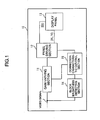
- Fig. 1 shows a drive apparatus of a display panel according to a first embodiment of the present invention.
- the display panel drive apparatus 10 may be, for example, a digital broadcast receiver of a wall hanging type, and may be also a thin-panel display device provided in an audio visual system. Otherwise, the display panel drive apparatus 10 may be also a display device provided in an in-car equipment such as a car navigation device, etc.
- a gain varying section 11 is a circuit for making a brightness correction of the video signal by multiplying a predetermined gain on the basis of commands from a correction characteristic control section 15 described later. Such correction processing can be performed by setting a different correction value of the gain for each area of a display screen.
- a panel driving section 12 includes a circuit for generating pixel data for display in a display panel 13 from the video signal corrected in brightness in the gain varying section 11, and also includes a circuit such as a frame memory, etc. for once accumulating such pixel data over one to several frames.
- the panel driving section 12 also generates a driving pulse as a driving signal synchronized with a synchronous signal included in the video signal and operating each pixel of the display panel 13 in accordance with the pixel data. Accordingly, various kinds of driver circuits for operating each electrode included in the display panel 13 by these driving pulses, and a control circuit of such drivers are also included in the panel driving section 12.
- the display panel 13 is a thin-panel display such as a PDP, and has row electrodes X1 to Xn and row electrodes Y1 to Yn constituting row electrode pairs corresponding to respective rows (first to n-th rows) on the screen in one pair of an X-electrode and a Y-electrode . Further, the display panel 13 is provided with column electrodes D1 to Dm corresponding to respective columns (first to m-th columns) on the screen and perpendicular to the above row electrode pairs, and unillustrated dielectric layers and discharge spatial layers are provided therebetween.
- One display cell C(i, j) is formed in a intersecting portion of one pair of row electrodes (Xi, Yi) and one column electrode Dj.
- Each electrode of the display panel 13 is connected to various kinds of driver circuits of the panel driving section 12, and is operated by the driving pulses supplied from the driver circuits.
- the detailed configuration of the display panel 13 is similar to that of the display panel shown, for example, in the above patent document 1.
- a block brightness detecting section 14 (hereinafter, simply referred to as a "detecting section 14") is a section for detecting brightness information in each area of the display screen.
- Various parameters can be used as such brightness information.
- APL Average Pulse Level
- APL Average Pulse Level representing an average brightness level of the video signal within a unit display period is used.
- a correction characteristic control section 15 (hereinafter, simply referred to as a "control section 15") is a section for controlling correction characteristics with respect to the brightness of the input video signal on the basis of a detection result of the detecting section 14.
- the brightness gain in the gain varying section 11 may be adjusted, or a pulse rate of the driving pulse in the panel driving section 12 may be adjusted.
- the detecting section 14 detects APL representing the brightness information with respect to each area obtained by dividing the screen into a plurality of areas.
- APL representing the brightness information with respect to each area obtained by dividing the screen into a plurality of areas.
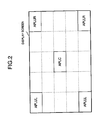
- one screen is divided into five areas, for example, with respect to each of the horizontal and vertical directions as shown in Fig. 2 , hence the screen is divided into 25 areas.
- the brightness information for five portions (hereinafter, also referred to as "blocks”) constructed by the blocks at four corners and the center of the screen.
- the detecting section 14 detects the brightnesses of the blocks at left, right, upper and lower corners of the screen as APLUL, APLUR, APLLL and APLLR.
- the calculating method of APL LOCAL is not limited to such a technique. For example, all the APLs in each block of a screen outer circumferential edge are added together and may be divided by a block number of the outer circumferential edge. Otherwise, the APLs of respective central portion blocks of the screen four corners and the screen outer circumference are added together and may be divided into eight portions and APL LOCAL may be calculated.
- the detecting section 14 detects the brightness in the block of the screen center as a central portion brightness APL CENTER .
- APL CENTER may be also calculated by including APLs of a plurality of blocks surrounding the block of the screen central portion instead of simple use of only one block of the central portion.
- the control section 15 performs the following control of the correction characteristics of a brightness gain on the basis of the detecting result of the brightness information using the detecting section 14.
- the control section 15 sends to the gain varying section 11 commands for executing the correction characteristics of the brightness gain set in advance in the gain varying section 11.
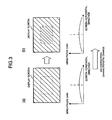
- the brightness gain correction in the gain varying section 11 in this case will be schematically described in Fig. 3 .
- the brightness correction characteristic of a so-called "circumferential portion brightness drop" as shown as shown in the lower portions of (a) and (b) of Fig. 3 is set as a reference correction characteristic in advance in the gain varying section 11.
- the correction using the "circumferential portion brightness drop" is a correction in which the brightness gain of the circumferential portion of the screen is set to be lower than that of the central portion of the screen.
- Ahighbrightness feeling can be added by making such a correction with respect to the display screen image on the screen while restraining electric power consumption by utilizing a visual tendency of a human in which the human is likely to notice the screen central portion in comparison with the screen circumferential portion.
- the brightness gain correction shown in Fig. 3 illustrates only in the horizontal direction of the screen, but a correction characteristic having a similar tendency is also set with respect to the vertical direction.
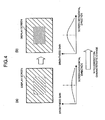
- control section 15 sends commands to the gain varying section 11 for changing the reference correction characteristics set in the gain varying section 11. A correction of the brightness gain in this case will be described based on Figs. 4 and 5 .
- the control section 15 when the brightness of the central portion of the screen is a large value exceeding the predetermined threshold value in comparison with the brightness of the circumferential portion, the control section 15 further increases the brightness gain deviation of the reference correction characteristics under the screen in (b) of Fig. 4 , and sends commands for control for providing the correction characteristics as shown in the lower part of (b) of Fig. 4 to the gain varying section 11.
- the brightness of the screen central portion is further emphasized and the brightness distribution of the screen as shown in (b) of Fig. 4 is attained.
- the correction characteristic is also similarly changed with respect to a case in which the brightness of the central portion of the screen is smaller than a predetermined threshold value in comparison with the brightness of the circumferential portion.
- the brightness of the central portion of the screen is increased in comparison with that before the correction, and a high brightness feeling as the entire screen is obtained.
- the screen brightness correction is performed by correcting the brightness gain in the gain varying section 11 as an example.
- the control section 15 may alsomake the brightness correction by controlling a mode of the driving pulse for the panel driving section 12.
- the control section 15 may also make the brightness correction on the screen by giving control commands for adjusting a parameter with respect to the driving signal such as a repeating frequency, a pulse width, etc. of a discharge maintaining pulse to the panel driving section 12.
- different correction characteristics are set with respect to each of the horizontal and vertical directions of the screen, and the correction characteristics may be also independently changed in accordance with the brightness difference between blocks in each of the horizontal and vertical directions. Further, the correction characteristics may be also set with an arbitrary area of the screen as a reference instead of the correction characteristics of the brightness with the central portion of the display screen as a reference. In the above description, the correction characteristics are shown by a waveform continuously changed in the horizontal to vertical directions. However, for example, as shown in Fig. 7 , correction characteristics having a brightness gain stepwise changed every each block in the horizontal to vertical directions may be also set.
- the correction using the normal circumferential brightness drop is made.
- the correction for emphasizing the brightness of the screen central portion is made. Therefore, a high brightness feeling can be given to a user while restraining electric power consumption.
- the correction characteristics are changed in accordance with the brightness difference between respective blocks on the screen similarly to the first embodiment.
- the correction characteristics of the circumferential brightness drop are not adjusted as in the first embodiment, but the feature of the embodiment is in that the display quality of a screen image is improved while restraining electric power consumption by emphasizing the contrast of each area.
- the detecting section 14 detects brightness information on the screen, and detects the brightness APL LOCAL of a circumferential portion and the brightness APL CENTER of a central portion.
- the calculating method of APL LOCAL and APL CENTER is set similarly to that in the first embodiment.
- the control section 15 gives commands for control for making a correction for increasing the brightness gain of the screen central portion and reducing the brightness gain of the screen circumferential portion to the gain varying section 11.
- An image of the correction characteristics at this time is shown under the screen in (a) of Fig. 8 .
- the brightness distribution of the screen after the correction attains the state shown in (b) of Fig. 8 by such a correction, and the contrast between the brightness of the screen central portion and the brightness of the circumferential portion is further clarified.
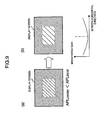
- the control section 15 sends commands for control for making a correction for reducing the brightness gain of the screen central portion and increasing the brightness gain of the screen circumferential portion to the gain varying section 11.
- the correction characteristics at this time is schematically shown in (b) of Fig. 9 .
- the brightness distribution of the screen after the correction attains the state shown in (b) of Fig. 9 by such a correction, and the contrast between the brightness of the central portion of the screen and the brightness of the circumferential portion is further clarified.
- the brightness gain correction shown in Figs. 8 and 9 is shown only in the horizontal direction of the screen, but a correction characteristic having a similar tendency is also set in the vertical direction of the screen.
- the brightness difference between the central portion and the circumferential portion of the screen is further emphasized by making such a correction, and the contrast of the display image is strengthened. Therefore, a high brightness feeling can be given to a user while restraining electric power consumption.
- the screen brightness is controlled by adjusting the brightness gain in the gain varying section 11 as an example.
- the control section 15 may also control the brightness by giving commands for controlling the driving pulse with respect to the panel driving section 12.
- the control section 15 may also make the brightness correction on the screen by giving commands for control for adjusting a parameter with respect to the driving signal such as a repeating frequency, a pulse width, etc. of a discharge maintaining pulse to the panel driving section 12.
- correction characteristics are set with respect to each of the horizontal direction and the vertical direction of the screen, and the correction characteristics may be also independently changed in accordance with the brightness difference between blocks in each of the horizontal and vertical directions.
- the correction characteristics with an arbitrary area of the screen as a reference may be also set instead of the correction characteristics of the brightness with the central portion of the display screen as a reference.
- the correction characteristics are shown by a waveform continuously changed. However, for example, correction characteristics having a brightness gain stepwise changed every each block may be also set.
Landscapes
- Engineering & Computer Science (AREA)
- Physics & Mathematics (AREA)
- Theoretical Computer Science (AREA)
- Computer Hardware Design (AREA)
- General Physics & Mathematics (AREA)
- Signal Processing (AREA)
- Multimedia (AREA)
- Power Engineering (AREA)
- Plasma & Fusion (AREA)
- Chemical & Material Sciences (AREA)
- Crystallography & Structural Chemistry (AREA)
- Control Of Indicators Other Than Cathode Ray Tubes (AREA)
- Control Of Gas Discharge Display Tubes (AREA)
- Transforming Electric Information Into Light Information (AREA)
- Controls And Circuits For Display Device (AREA)
Claims (8)
- Anzeigeeinrichtungs-Treibervorrichtung zum Betreiben einer Anzeigeeinrichtung (13) in Übereinstimmung mit einem Videosignal und zum Anzeigen eines Schirmbildes auf dem Anzeigeschirm der Anzeigeeinrichtung, und enthaltend:einen Erfassungsabschnitt (14) zum Erfassen eines Helligkeitsniveaus des Schirmbildes des Videosignals als ein Bereichs-Helligkeitsniveau für jeden von einer Mehrzahl von Anzeigebereichen auf dem Anzeigeschirm und zum Berechnen eines Helligkeitsniveaus eines zentralen Abschnitts umfassend zumindest einen der Bereiche und eines umfänglichen Abschnitts bezüglich des zentralen Abschnitts, der zumindest einen der Bereiche umfasst; undeinen Einstellbetreibeabschnitt (12, 15) zum Vergleichen der Abschnitts-Helligkeitsniveaus miteinander und zum Betreiben der Anzeigeeinrichtung durch ein Betreibesignal, welches das Schirmbild repräsentiert, wobei die Helligkeit in Übereinstimmung mit dem Unterschied zwischen den berechneten Abschnitt-Helligkeitsniveaus korrigiert wurde, wobei:wenn der Absolutwert des Unterschieds zwischen den berechneten Helligkeitsniveaus des umfänglichen Abschnitts und des zentralen Abschnitts niedriger als ein vorbestimmter Schwellenwert ist, der Einstellbetreibeabschnitt eine Helligkeitskorrektur derart anwendet, dass der Korrekturfaktor, der an dem zentralen Abschnitt angewandt wird, höher als der Korrekturfaktor ist, der an dem umfänglichen Abschnitt angewandt wird; undwenn der Absolutwert des Unterschieds zwischen den berechneten Helligkeitsniveaus des umfänglichen Abschnitts und des zentralen Abschnitts höher als ein vorbestimmter Schwellenwert ist, der Einstellbetreibeabschnitt eine Helligkeitskorrektur derart anwendet, dass der Unterschied zwischen dem Korrekturfaktor, der auf den zentralen Abschnitt angewandt wird, und dem Korrekturfaktor, der auf den umfänglichen Abschnitt angewandt wird, weiter erhöht wird.
- Anzeigeeinrichtungs-Treibervorrichtung zum Betreiben einer Anzeigeeinrichtung (13) in Übereinstimmung mit einem Videosignal und zum Anzeigen eines Schirmbildes auf dem Anzeigeschirm der Anzeigeeinrichtung, und enthaltend:einen Erfassungsabschnitt (14) zum Erfassen eines Helligkeitsniveaus des Schirmbildes des Videosignals als ein Bereichs-Helligkeitsniveau für jeden von einer Mehrzahl von Anzeigebereichen auf dem Anzeigeschirm und zum Berechnen eines Helligkeitsniveaus eines zentralen Abschnitts umfassend zumindest einen der Bereiche und eines umfänglichen Abschnitts bezüglich des zentralen Abschnitts, der zumindest einen der Bereiche umfasst; undeinen Einstellbetreibeabschnitt (12, 15) zum Vergleichen der Abschnitts-Helligkeitsniveaus miteinander und zum Betreiben der Anzeigeeinrichtung durch ein Betreibesignal, welches das Schirmbild repräsentiert, wobei die Helligkeit in Übereinstimmung mit dem Unterschied zwischen den berechneten Abschnitt-Helligkeitsniveaus korrigiert wurde, wobei:wenn das berechnete Helligkeitsniveau von einem Abschnitt höher als das berechnete Helligkeitsniveau des anderen Abschnitts ist, der Einstellbetreibeabschnitt das Videosignal dahingehend einstellt, die Helligkeit des berechneten helleren Niveau-Abschnitts zu erhöhen, während er die Helligkeit des anderen Abschnitts senkt.
- Anzeigeeinrichtungs-Treibervorrichtung nach Anspruch 1 oder 2, wobei der Einstellbetreibeabschnitt (12, 15) dahingehend einstellt, die Helligkeiten der umfänglichen Bereiche zu senken, wenn der Niveauunterschied zwischen den Helligkeitsniveaus der umfänglichen Bereiche und des zentralen Bereichs kleiner als ein vorbestimmter Schwellenwert ist.
- Anzeigeeinrichtungs-Treibervorrichtung nach Anspruch 1 oder 2, wobei der Einstellbetreibeabschnitt dahingehend einstellt, die Helligkeit des zentralen Bereichs zu erhöhen, wenn der Niveauunterschied zwischen der Helligkeit des umfänglichen Bereichs und des zentralen Bereichs gleich oder größer einem vorbestimmten Schwellenwert ist.
- Anzeigeeinrichtungs-Treibervorrichtung nach Anspruch 1 oder 2, wobei die Helligkeit des umfänglichen Bereichs der Durchschnittswert der Helligkeiten der umfänglichen Bereiche und des zentralen Bereichs ist.
- Anzeigeeinrichtungs-Treibervorrichtung nach Anspruch 1 oder 2, wobei der Erfassungsabschnitt einen APL-Wert für jeden von der Mehrzahl von Anzeigebereichen als das Bereichs-Helligkeitsniveau erfasst, wobei der APL-Wert ein Durchschnitts-Helligkeitsniveau des Videosignals innerhalb einer Einheits-Anzeigeperiode repräsentiert.
- Anzeigebetreibeverfahren in einer Anzeigeeinrichtungs-Treibervorrichtung zum Betreiben einer Anzeigeeinrichtung in Übereinstimmung mit einem Videosignal und zum Anzeigen eines Schirmbildes auf dem Anzeigeschirm der Anzeigeeinrichtung, wobei das Anzeigebetreibeverfahren enthält:einen Erfassungsschritt zum Erfassen eines Helligkeitsniveaus des Schirmbildes des Videosignals als ein Bereichs-Helligkeitsniveau für jeden der Mehrzahl von Anzeigebereichen auf dem Anzeigeschirm und zum Berechnen eines Helligkeitsniveaus eines zentralen Abschnitts umfassend zumindest einen von den Bereichen und eines umfänglichen Abschnitts bezüglich dem zentralen Abschnitt, der zumindest einen der Bereiche umfasst; undeinen Einstellbetreibeschritt zum Vergleichen der Abschnitts-Helligkeitsniveaus miteinander und zum Betreiben der Anzeigeeinrichtung durch ein Betreibesignal, welches das Schirmbild repräsentiert, wobei die Helligkeit in Übereinstimmung mit dem Unterschied zwischen den berechneten Abschnitts-Helligkeitsniveaus korrigiert wurde, wobei:wenn der Absolutwert des Unterschieds zwischen den berechneten Helligkeitsniveaus des umfänglichen Abschnitts und des zentralen Abschnitts niedriger als ein vorbestimmter Schwellenwert ist, der Einstellbetreibeabschnitt eine Helligkeitskorrektur derart anwendet, dass der Korrekturfaktor, der an dem zentralen Abschnitt angewandt wird, höher als der Korrekturfaktor ist, der an dem umfänglichen Abschnitt angewandt wird; undwenn der Absolutwert des Unterschieds zwischen den berechneten Helligkeitsniveaus des umfänglichen Abschnitts und des zentralen Abschnitts höher als ein vorbestimmter Schwellenwert ist, der Einstellbetreibeabschnitt eine Helligkeitskorrektur derart anwendet, dass der Unterschied zwischen dem Korrekturfaktor, der auf den zentralen Abschnitt angewandt wird, und dem Korrekturfaktor, der auf den umfänglichen Abschnitt angewandt wird, weiter erhöht wird.
- Anzeigebetreibeverfahren in einer Anzeigeeinrichtungs-Treibervorrichtung zum Betreiben einer Anzeigeeinrichtung in Übereinstimmung mit einem Videosignal und zum Anzeigen eines Schirmbildes auf dem Anzeigeschirm der Anzeigeeinrichtung, wobei das Anzeigebetreibeverfahren enthält:einen Erfassungsschritt zum Erfassen eines Helligkeitsniveaus des Schirmbildes des Videosignals als ein Bereichs-Helligkeitsniveau für jeden der Mehrzahl von Anzeigebereichen auf dem Anzeigeschirm und zum Berechnen eines Helligkeitsniveaus eines zentralen Abschnitts, umfassend zumindest einen von den Bereichen und eines umfänglichen Abschnitts bezüglich dem zentralen Abschnitt, der zumindest einen der Bereiche umfasst; undeinen Einstellbetreibeschritt zum Vergleichen der Abschnitts-Helligkeitsniveaus miteinander und zum Betreiben der Anzeigeeinrichtung durch ein Betreibesignal, welches das Schirmbild repräsentiert, wobei die Helligkeit in Übereinstimmung mit dem Unterschied zwischen den berechneten Abschnitts-Helligkeitsniveaus korrigiert wurde, wobei:wenn das berechnete Helligkeitsniveau von einem Abschnitt höher als das berechnete Helligkeitsniveau des anderen Abschnitts ist, der Einstellbetreibeabschnitt das Videosignal derart einstellt, dass die Helligkeit des berechneten helleren Niveau-Abschnitts erhöht wird, während er die Helligkeit des anderen Abschnitts senkt.
Applications Claiming Priority (2)
| Application Number | Priority Date | Filing Date | Title |
|---|---|---|---|
| JP2004131152A JP2005315956A (ja) | 2004-04-27 | 2004-04-27 | 表示器駆動装置及び駆動方法 |
| JP2004131152 | 2004-04-27 |
Publications (2)
| Publication Number | Publication Date |
|---|---|
| EP1591990A1 EP1591990A1 (de) | 2005-11-02 |
| EP1591990B1 true EP1591990B1 (de) | 2012-09-12 |
Family
ID=34935733
Family Applications (1)
| Application Number | Title | Priority Date | Filing Date |
|---|---|---|---|
| EP05009089A Expired - Fee Related EP1591990B1 (de) | 2004-04-27 | 2005-04-26 | Verfahren und Vorrichtung zur Ansteuerung einer Anzeigevorrichtung |
Country Status (4)
| Country | Link |
|---|---|
| US (1) | US20050248594A1 (de) |
| EP (1) | EP1591990B1 (de) |
| JP (1) | JP2005315956A (de) |
| KR (1) | KR100708250B1 (de) |
Families Citing this family (21)
| Publication number | Priority date | Publication date | Assignee | Title |
|---|---|---|---|---|
| JP4903577B2 (ja) * | 2004-11-05 | 2012-03-28 | パナソニック株式会社 | 映像信号変換装置、映像表示装置 |
| KR100745982B1 (ko) | 2006-06-19 | 2007-08-06 | 삼성전자주식회사 | 자발광형 디스플레이의 전력 저감을 위한 영상 처리 장치및 방법 |
| KR100803545B1 (ko) * | 2006-07-20 | 2008-02-15 | 엘지전자 주식회사 | 플라즈마 디스플레이 패널의 구동장치 및 그 구동방법 |
| KR101323433B1 (ko) * | 2006-12-20 | 2013-10-29 | 엘지디스플레이 주식회사 | 액정 표시 장치 및 이의 구동 방법 |
| KR101350410B1 (ko) * | 2007-02-22 | 2014-01-23 | 엘지디스플레이 주식회사 | 영상보상회로와, 이를 포함하는 액정표시장치 및 이의구동방법 |
| KR100936862B1 (ko) | 2007-12-31 | 2010-01-15 | 삼성에스디아이 주식회사 | 디스플레이 계조 표현 장치 및 계조 표현 방법 |
| JP4743234B2 (ja) | 2008-07-02 | 2011-08-10 | ソニー株式会社 | 表示装置及び表示方法 |
| KR101246434B1 (ko) * | 2008-11-12 | 2013-03-22 | 파나소닉 주식회사 | 플라즈마 디스플레이 장치 및 플라즈마 디스플레이 패널의 구동 방법 |
| WO2010055662A1 (ja) * | 2008-11-13 | 2010-05-20 | パナソニック株式会社 | プラズマディスプレイ装置およびプラズマディスプレイパネルの駆動方法 |
| WO2010055661A1 (ja) * | 2008-11-13 | 2010-05-20 | パナソニック株式会社 | プラズマディスプレイ装置およびプラズマディスプレイパネルの駆動方法 |
| WO2010067412A1 (ja) * | 2008-12-09 | 2010-06-17 | 日立プラズマディスプレイ株式会社 | プラズマディスプレイ装置及びその駆動方法 |
| JP4982510B2 (ja) * | 2009-01-23 | 2012-07-25 | 株式会社日立製作所 | 映像表示装置 |
| KR20120094073A (ko) * | 2010-03-05 | 2012-08-23 | 파나소닉 주식회사 | 플라즈마 디스플레이 장치의 구동 방법, 플라즈마 디스플레이 장치 및 플라즈마 디스플레이 시스템 |
| JP5800946B2 (ja) * | 2013-05-10 | 2015-10-28 | キヤノン株式会社 | 画像表示装置及びその制御方法 |
| JP6274771B2 (ja) * | 2013-07-26 | 2018-02-07 | 株式会社ジャパンディスプレイ | 発光素子表示装置 |
| US10225031B2 (en) * | 2016-11-02 | 2019-03-05 | The Nielsen Company (US) | Methods and apparatus for increasing the robustness of media signatures |
| KR102423637B1 (ko) | 2017-10-27 | 2022-07-22 | 삼성디스플레이 주식회사 | 표시장치 및 이의 구동방법 |
| KR102723412B1 (ko) | 2019-12-27 | 2024-10-31 | 삼성디스플레이 주식회사 | 표시 장치 및 이의 구동 방법 |
| KR102770721B1 (ko) | 2020-03-26 | 2025-02-25 | 삼성디스플레이 주식회사 | 표시 장치 및 이의 구동 방법 |
| KR102408001B1 (ko) * | 2020-07-28 | 2022-06-14 | 엘지전자 주식회사 | 유기 발광 다이오드 디스플레이 장치 및 그의 동작 방법 |
| CN113810673B (zh) * | 2021-09-24 | 2023-05-30 | 当趣网络科技(杭州)有限公司 | 投影机均匀度测试方法、装置及计算机可读存储介质 |
Family Cites Families (7)
| Publication number | Priority date | Publication date | Assignee | Title |
|---|---|---|---|---|
| JP3115727B2 (ja) | 1993-03-25 | 2000-12-11 | パイオニア株式会社 | プラズマディスプレイパネルの駆動装置 |
| JP3455265B2 (ja) | 1994-01-25 | 2003-10-14 | パイオニア株式会社 | 平面表示装置の駆動回路及び駆動方法 |
| JP3685575B2 (ja) * | 1997-01-30 | 2005-08-17 | 三菱電機株式会社 | ディスプレイ装置 |
| JP3636573B2 (ja) | 1997-06-27 | 2005-04-06 | パイオニア株式会社 | 輝度制御装置 |
| JP3642170B2 (ja) | 1998-02-02 | 2005-04-27 | 三菱電機株式会社 | プラズマディスプレイパネルの温度制御方法およびプラズマディスプレイ装置 |
| JP4610793B2 (ja) | 2001-06-08 | 2011-01-12 | パナソニック株式会社 | 表示装置及び方法 |
| EP1437705A1 (de) * | 2003-01-10 | 2004-07-14 | Deutsche Thomson-Brandt Gmbh | Verfahren zur Optimierung der Helligkeit in einer Anzeigevorrichtung und Anordnung zur Durchführung des Verfahrens |
-
2004
- 2004-04-27 JP JP2004131152A patent/JP2005315956A/ja not_active Withdrawn
-
2005
- 2005-04-25 KR KR1020050034047A patent/KR100708250B1/ko not_active Expired - Fee Related
- 2005-04-26 EP EP05009089A patent/EP1591990B1/de not_active Expired - Fee Related
- 2005-04-26 US US11/114,218 patent/US20050248594A1/en not_active Abandoned
Also Published As
| Publication number | Publication date |
|---|---|
| KR100708250B1 (ko) | 2007-04-16 |
| KR20060045841A (ko) | 2006-05-17 |
| EP1591990A1 (de) | 2005-11-02 |
| US20050248594A1 (en) | 2005-11-10 |
| JP2005315956A (ja) | 2005-11-10 |
Similar Documents
| Publication | Publication Date | Title |
|---|---|---|
| EP1591990B1 (de) | Verfahren und Vorrichtung zur Ansteuerung einer Anzeigevorrichtung | |
| EP0945845B1 (de) | Energieverbrauchssteuerung für Anzeigegeräte | |
| EP0888004B1 (de) | Helligkeitsreglungsvorrichtung | |
| US8189013B2 (en) | Video signal processing device and method of processing gradation | |
| CN100401759C (zh) | 图像显示装置 | |
| US7057584B2 (en) | Image display method and system for plasma display panel | |
| CN1532786B (zh) | 用于等离子体显示板的图像显示方法和装置 | |
| JPH08286636A (ja) | プラズマディスプレイパネルにおける輝度調整装置 | |
| JP4165710B2 (ja) | プラズマディスプレイパネルの画像表示方法およびその装置 | |
| JP2006184843A (ja) | 画像表示装置およびその駆動方法 | |
| US7142175B2 (en) | Method and apparatus for displaying grayscale of plasma display panel | |
| EP1646030A2 (de) | Plasmaanzeigetafel und Steuerungsverfahren | |
| US20090201285A1 (en) | Plasma display panel driving method and plasma display device | |
| US7423611B2 (en) | Display device capable of controlling power consumption without generating degradation in image quality, and method of driving the display device | |
| US6727913B2 (en) | Method and device for displaying images on a matrix display device | |
| JP4065269B2 (ja) | プラズマディスプレイパネルの駆動方法および駆動装置 | |
| JP2003345297A (ja) | プラズマディスプレイ装置 | |
| KR100570681B1 (ko) | 플라즈마 디스플레이 패널의 화상 표시 방법 및 그 장치 | |
| KR100480148B1 (ko) | 플라즈마 디스플레이 패널의 구동방법 및 장치 | |
| US8004476B2 (en) | Plasma display device and method of driving the same | |
| JP4380288B2 (ja) | 映像信号処理装置、映像信号処理方法 | |
| JP2005025058A (ja) | ディスプレイ装置 | |
| EP1923854A2 (de) | Plasmaanzeige und Verfahren zu ihrer Ansteuerung | |
| JP2005167659A (ja) | 信号処理装置、プラズマディスプレイ装置、信号処理方法 | |
| KR100425316B1 (ko) | 피디피에서 부분 화면 밝기 유지 장치 및 그 방법 |
Legal Events
| Date | Code | Title | Description |
|---|---|---|---|
| PUAI | Public reference made under article 153(3) epc to a published international application that has entered the european phase |
Free format text: ORIGINAL CODE: 0009012 |
|
| 17P | Request for examination filed |
Effective date: 20050801 |
|
| AK | Designated contracting states |
Kind code of ref document: A1 Designated state(s): AT BE BG CH CY CZ DE DK EE ES FI FR GB GR HU IE IS IT LI LT LU MC NL PL PT RO SE SI SK TR |
|
| AX | Request for extension of the european patent |
Extension state: AL BA HR LV MK YU |
|
| AKX | Designation fees paid |
Designated state(s): DE FR GB |
|
| RAP1 | Party data changed (applicant data changed or rights of an application transferred) |
Owner name: PANASONIC CORPORATION |
|
| GRAP | Despatch of communication of intention to grant a patent |
Free format text: ORIGINAL CODE: EPIDOSNIGR1 |
|
| GRAS | Grant fee paid |
Free format text: ORIGINAL CODE: EPIDOSNIGR3 |
|
| GRAA | (expected) grant |
Free format text: ORIGINAL CODE: 0009210 |
|
| AK | Designated contracting states |
Kind code of ref document: B1 Designated state(s): DE FR GB |
|
| REG | Reference to a national code |
Ref country code: GB Ref legal event code: FG4D |
|
| REG | Reference to a national code |
Ref country code: DE Ref legal event code: R096 Ref document number: 602005036052 Country of ref document: DE Effective date: 20121108 |
|
| PLBE | No opposition filed within time limit |
Free format text: ORIGINAL CODE: 0009261 |
|
| STAA | Information on the status of an ep patent application or granted ep patent |
Free format text: STATUS: NO OPPOSITION FILED WITHIN TIME LIMIT |
|
| 26N | No opposition filed |
Effective date: 20130613 |
|
| REG | Reference to a national code |
Ref country code: DE Ref legal event code: R097 Ref document number: 602005036052 Country of ref document: DE Effective date: 20130613 |
|
| GBPC | Gb: european patent ceased through non-payment of renewal fee |
Effective date: 20130426 |
|
| PG25 | Lapsed in a contracting state [announced via postgrant information from national office to epo] |
Ref country code: DE Free format text: LAPSE BECAUSE OF NON-PAYMENT OF DUE FEES Effective date: 20131101 Ref country code: GB Free format text: LAPSE BECAUSE OF NON-PAYMENT OF DUE FEES Effective date: 20130426 |
|
| REG | Reference to a national code |
Ref country code: FR Ref legal event code: ST Effective date: 20131231 |
|
| REG | Reference to a national code |
Ref country code: DE Ref legal event code: R119 Ref document number: 602005036052 Country of ref document: DE Effective date: 20131101 |
|
| PG25 | Lapsed in a contracting state [announced via postgrant information from national office to epo] |
Ref country code: FR Free format text: LAPSE BECAUSE OF NON-PAYMENT OF DUE FEES Effective date: 20130430 |