EP1589703B1 - System und Verfahren zur Zugang zu einem Funknetzwerk - Google Patents
System und Verfahren zur Zugang zu einem Funknetzwerk Download PDFInfo
- Publication number
- EP1589703B1 EP1589703B1 EP05252502A EP05252502A EP1589703B1 EP 1589703 B1 EP1589703 B1 EP 1589703B1 EP 05252502 A EP05252502 A EP 05252502A EP 05252502 A EP05252502 A EP 05252502A EP 1589703 B1 EP1589703 B1 EP 1589703B1
- Authority
- EP
- European Patent Office
- Prior art keywords
- wireless
- list
- networks
- wireless network
- network
- Prior art date
- Legal status (The legal status is an assumption and is not a legal conclusion. Google has not performed a legal analysis and makes no representation as to the accuracy of the status listed.)
- Expired - Lifetime
Links
- 238000000034 method Methods 0.000 title claims description 34
- 230000004044 response Effects 0.000 claims description 18
- 230000008569 process Effects 0.000 description 18
- 230000008901 benefit Effects 0.000 description 9
- 239000000523 sample Substances 0.000 description 9
- 238000010586 diagram Methods 0.000 description 4
- 230000009471 action Effects 0.000 description 2
- 230000004913 activation Effects 0.000 description 1
- 230000005540 biological transmission Effects 0.000 description 1
- 230000001413 cellular effect Effects 0.000 description 1
- 230000008859 change Effects 0.000 description 1
- 230000002093 peripheral effect Effects 0.000 description 1
Images

Classifications
-
- H—ELECTRICITY
- H04—ELECTRIC COMMUNICATION TECHNIQUE
- H04W—WIRELESS COMMUNICATION NETWORKS
- H04W48/00—Access restriction; Network selection; Access point selection
- H04W48/18—Selecting a network or a communication service
-
- H—ELECTRICITY
- H04—ELECTRIC COMMUNICATION TECHNIQUE
- H04W—WIRELESS COMMUNICATION NETWORKS
- H04W12/00—Security arrangements; Authentication; Protecting privacy or anonymity
- H04W12/08—Access security
-
- H—ELECTRICITY
- H04—ELECTRIC COMMUNICATION TECHNIQUE
- H04W—WIRELESS COMMUNICATION NETWORKS
- H04W12/00—Security arrangements; Authentication; Protecting privacy or anonymity
- H04W12/60—Context-dependent security
- H04W12/69—Identity-dependent
- H04W12/73—Access point logical identity
-
- H—ELECTRICITY
- H04—ELECTRIC COMMUNICATION TECHNIQUE
- H04W—WIRELESS COMMUNICATION NETWORKS
- H04W84/00—Network topologies
- H04W84/18—Self-organising networks, e.g. ad-hoc networks or sensor networks
Definitions
- Wireless networks such as wireless local area networks (LANs) have been developed to work in conjunction with or in place of wired networks, such as wired local area networks.
- LANs wireless local area networks
- an infrastructure network one or more wireless devices communicate directly with a base station or access point.
- the access point bridges the wireless LAN and a wired communication network and acts as a central controller for the wireless LAN.
- a LAN is created by the wireless devices themselves with no central controller.
- each device communicates directly with other devices in the network rather than through a central controller.
- a wireless network acts as the medium for data transmission.
- the medium over which data is transmitted is open and does not have the same constraints as a wired network. Malicious users can more easily access information traveling through the air. Furthermore, it is easier for malicious users to gain access to the wireless network.
- Existing wireless devices continually transmit probe requests to determine whether there are any wireless networks with which the wireless device can communicate. The probe request contains information about the type of network the wireless device desires to communicate with as well as information about the wireless device itself. Thus, the wireless device is "visible" to other wireless devices.
- a malicious user of a wireless device can intercept these probe requests from other users (or wireless devices) and impersonate a wireless network with which the wireless device desires to communicate.
- An unsuspecting user or wireless device can unknowingly communicate with the impersonating wireless network, thereby enabling a malicious user to access information contained in the wireless device.
- MEI YEN CHEONG "Management Operations of the IEEE 802.11" POSTGRADUATE SEMINAR ON RADIO COMMUNICATIONS, [Online] 13 April 2004 (2004-04-13), pages 1-33 , XP002379389 describes an approach for providing a wireless connection of a mobile station to an access point using passive scanning of available channels.
- WO 2004/014024 A2 describes an approach that allows any number of mobile units to roam between a large numbers of sub-networks, each with a large number of access points (tens of thousands or more total access points), with minimal direct administration effort.
- a hierarchy of management servers may be used across the multiple sub-networks, which can be under the control of multiple entities.
- the mobile units may authenticate the access points associated with, to ensure they are both authorized and managed. Peer-to-peer and ad hoc associations between mobile units are managed as welt.
- association policies may be enforced such as, for example, forcing the mobile unit to only associate with access points or mobile units on a previously set mandatory association list, providing the mobile unit with a list of preferred access points to associate with, but allowing association with other access points, or providing the mobile unit with a excluded association list of access points or mobile units it is not to associate with.
- FIGURE 1A is a schematic diagram of an exemplary wireless local area network in which embodiments of the present invention may be used to advantage;
- FIGURE 1B is a schematic diagram of another exemplary wireless local area network in which embodiments of the present invention may be used to advantage.
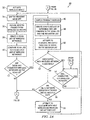
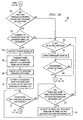
- FIGURE 2 is a flowchart of an exemplary Method for accessing a wireless network in accordance with an embodiment of the present invention.
- FIGURES 1 and 2 of the drawings The preferred embodiment of the present invention and its advantages are best understood by referring to FIGURES 1 and 2 of the drawings.
- FIGURE 1A is a schematic diagram of an exemplary wireless local area network (WLAN) 10 in which embodiments of the present invention may be used to advantage
- FIGURE 1B is a schematic diagram of another exemplary wireless local area network 20 in which embodiments of the present invention may be used to advantage
- wireless network is used herein to refer to any type of wireless network such as, but no limited to, a WLAN, a wireless wide area network (WWAN), or any other type of wireless network now known or later developed.
- WLAN wireless local area network
- WWAN wireless wide area network
- Embodiments of the present invention are described below in connection with LANs (as illustrated in FIGURES 1 and 2 ); however, it should be understood that embodiments of the present invention may be used to advantage in any type of wireless network.
- Wireless network 10 is an example of an infrastructure type wireless local area network
- wireless network 20 is an example of an ad-hoc type wireless local area network.
- Both networks 10 and 20 comprise a plurality of wireless devices 12, for example, a portable computer, a desktop computer, a cellular phone, a personal digital assistant (PDA), a camera, and/or the like.
- PDA personal digital assistant
- Wireless device 12 comprises a wireless network connectivity component, for example, a PCI (Peripheral Component Interconnect) card, USB (Universal Serial Bus), PCMCIA (Personal Computer Memory Card International Association) card, SDIO (Secure Digital Input-Output) card, NewCard, Cardbus, and/or the like, and is operable to communicate wirelessly with the aid of the wireless network connectivity component with a central controller or access point (AP) 14 or with other wireless devices 12.
- AP 14 is communicatively coupled with a communication network 16, such as the Internet, an Intranet, an extranet, and/or the like.
- AP 14 may be coupled with communication network 16 either wirelessly or with the aid of wires.
- AP 14 coordinates communication between multiple wireless devices 12 within a predetermined range.
- the range depends on the wireless network standard being used for communication.
- the wireless network standard may be any standard now known or later developed, for example IEEE 802.11 standard.
- an ad-hoc network such as wireless network 20
- FIGURE 2 is a flowchart of an exemplary method 30 for accessing a wireless network in accordance with an embodiment of the present invention.
- a wireless device such as wireless device 12
- a transmit mode of the wireless device 12 is switched off so that the device 12 does not transmit signals.
- Wireless device 12 may be switched to a transmit off mode in response to a user request or action or may be automatically switched to a transmit off mode in response to or upon activation or another predetermined action or event. If desired, in an alternative embodiment, the transmit mode of the wireless device 12 may be set to an off state by default. In the transmit off mode, the device 12 is operable to receive signals from other devices or wireless networks but does not transmit any signals.
- a wireless network periodically transmits a beacon frame that comprises a timestamp and attributes of the wireless network.
- the beacon frames are transmitted by the access point, and in an ad-hoc network, the beacon frames are transmitted by other wireless devices operating within the ad-hoc network.
- the wireless device 12 receives beacon frames from wireless networks within which the wireless device 12 is positioned. The receipt of the beacon frame aids the wireless device 12 in detecting wireless networks within which the wireless device 12 is located.
- a scan list of wireless networks is created based at least in part on the received beacon frames.
- the beacon frames include attributes, for example, an identifier, a media access control ID (MAC ID), a security level, network type, data rate, modulation scheme, and/or the like, of the wireless network.
- the identifier comprises a service set identifier (SSID) associated with the corresponding wireless network.
- the scan list of wireless networks comprises attributes of the wireless networks from whom the beacon frames have been received.
- the scan list comprises at least one of the following - an identifier, a MAC ID, a security level, network type, data rate, modulation scheme, and/or the like.
- the scan list is compared to a requested list of wireless networks.
- the requested list is user-configurable and stored in the wireless device 12.
- the requested list of wireless networks is a list of networks with which the user of the wireless device 12 is willing to associate.
- the requested list of wireless networks preferably comprises at least one of the following attributes of the wireless networks - an identifier, a MAC ID, a security level, network type, data rate, modulation scheme, and/or the like.
- the requested list of wireless networks comprises both infrastructure networks and ad-hoc networks. If desired, the requested list of wireless networks may comprise only infrastructure networks or only ad-hoc networks.
- a transmit mode of the wireless device 12 is switched on so that the wireless device 12 can transmit signals.
- the wireless device 12 only transmits signals selectively, for example, when it has determined that it is within the range of a wireless network on its requested wireless networks list. Because the wireless device 12 transmits signals selectively, the probability of a malicious user impersonating a wireless network based on the information transmitted by the wireless device 12 and thereby creating a connection with the wireless device 12 through a rogue network is substantially reduced or eliminated.
- a matched list of wireless networks that are on the scan list as well as the requested list is created. The list may be arranged in any desirable order. In an exemplary embodiment, the list is arranged based on a user defined priority as specified in the requested list.
- the wireless device 12 attempts to associate with the first wireless network on the matched list.
- the wireless device 12 transmits an access request, for example, an association request frame, to the first wireless network on the matched list to request permission to associate with the wireless network.
- the wireless network After receiving an association request frame, the wireless network transmits an association response frame indicating the result of the association request.
- the association response frame is received by the wireless device 12.
- the wireless device 12 after receiving the association response frame, the wireless device 12 initiates an authentication process with the access point. Any method for authentication now known or later developed may be used.
- the scan list contains at least one wireless network with a NULL string as the identifier of the wireless network, then it is desirable that the user be informed about the existence of a wireless network whose identity is not known. Therefore, at block 62, the user is notified of the existence of the unidentified wireless network and prompted to select whether the user wants to attempt to associate with the unidentified wireless network. If the user chooses not to attempt to associate with the unidentified wireless network, then the process stating at block 60 is executed.
- a transmit mode of the wireless device 12 is switched on so that the wireless device 12 can transmit signals.
- the wireless device 12 only transmits signals selectively, for example, when the user desires to attempt to associate with an unidentified wireless network. Because the wireless device transmits signals selectively, the probability of a malicious user impersonating a wireless network based on the information transmitted by the wireless device 12 and thereby creating a connection with the wireless device 12 through a rogue network is substantially reduced or eliminated.
- the wireless device transmits probe request frames to identify the unknown wireless networks.
- the wireless network will transmit probe response frames.
- the probe response frame comprises information identifying the wireless networks transmitting the probe response frame, for example, an identifier, a MAC ID, a security level, network type, data rate, modulation scheme, and/or the like.
- the probe response frame is received by the wireless device 12.
- a list of matched unknown networks is created.
- the list of matched unknown networks comprises a list of previously unknown networks that are also on the requested list of networks.
- the list of matched unknown networks is created by comparing the identifiers received from the wireless networks with identifiers in the requested list of networks.
- the list may be arranged in any desirable order. In an exemplary embodiment, the list is arranged based on a user defined priority.
- the wireless device 12 attempts to associate with the first wireless network on the matched unknown networks list.
- the wireless device 12 transmits an access request, for example, an association request frame, to the first wireless network on the matched unknown networks list to request permission to associate with the wireless network.
- the wireless network After receiving an association request frame, the wireless network transmits an association response frame indicating the result of the association request.
- the association response frame is received by the wireless device 12.
- the wireless device 12 after receiving the association response frame, the wireless device 12 initiates an authentication process with the access point. Any method for authentication now known or later developed may be used.
- the process starting at block 54 is executed.
- the wireless device 12 may become disconnected from the wireless network due to a number of reasons, for example, de-authentication of the wireless network or wireless device 12, change of wireless device 12 configuration by the user, and/or the like.
- a determination is made as to whether the wireless device 12 is still connected to the wireless network. If the wireless device 12 is not connected to the wireless network, then it is desirable to switch off the transmit mode of the wireless device 12. Therefore, the process starting at block 34 is executed.
- the user is prompted to select whether the user would like to start an ad-hoc network. If the user selects not to start an ad-hoc network, then the process starting at block 34 is executed. If the user selects to start an ad-hoc network, then at block 78, a transmit mode of the wireless device 12 is switched on so that the wireless device can transmit signals. In an exemplary embodiment, the wireless device 12 only transmits signals selectively, for example, when the user selects to start an ad-hoc network. Because the wireless device 12 transmits signals selectively, the probability of a malicious user impersonating a wireless network based on the information transmitted by the wireless device 12 and thereby creating a connection with the wireless device 12 through a rogue network is substantially reduced or eliminated.
- Embodiments of the present invention may be implemented in software, hardware, application logic or a combination of software, hardware and application logic.
- the software, application logic and/or hardware may reside on wireless device 12.
- the application logic, software or an instruction set is preferably maintained on any one of various conventional computer-readable mediums.
- a "computer-readable medium" can be any means that can contain, store, communicate, propagate or transport the program for use by or in connection with an instruction execution system, apparatus, or device.
- a technical advantage of an exemplary embodiment of the present invention is that additional security is provided to the wireless device because the wireless device selectively transmits signals only upon the occurrence of certain events.
- Another technical advantage of an exemplary embodiment of the present invention is that a transmit mode of the wireless device may be switched off to prevent unauthorized access of the wireless device while the wireless device remains "on" or in an activated state.
Landscapes
- Engineering & Computer Science (AREA)
- Computer Security & Cryptography (AREA)
- Computer Networks & Wireless Communication (AREA)
- Signal Processing (AREA)
- Mobile Radio Communication Systems (AREA)
- Small-Scale Networks (AREA)
Claims (9)
- Ein Verfahren (30) zum Zugreifen auf ein drahtloses Netzwerk, das folgende Schritte aufweist:Erfassen zumindest eines drahtlosen Netzwerks, in dem eine drahtlose Vorrichtung (12) angeordnet ist, während die drahtlose Vorrichtung (12) in einem Senden-Aus-Modus (34) ist, wobei die drahtlose Vorrichtung (12) in dem Senden-Aus-Modus wirksam ist, um Signale von anderen Vorrichtungen oder drahtlosen Netzwerken zu empfangen, aber keine Signale sendet;Bestimmen, ob das zumindest eine drahtlose Netzwerk auf einer Liste von angeforderten drahtlosen Netzwerken (42) ist;ansprechend auf das Bestimmen, dass das zumindest eine drahtlose Netzwerk auf der Liste von angeforderten drahtlosen Netzwerken (42) ist, Schalten der drahtlosen Vorrichtung (12) in einen Senden-Ein-Modus (46), und Senden einer Zugriffsanforderung (50) an das zumindest eine drahtlose Netzwerk,ansprechend auf das Bestimmen, dass das zumindest eine drahtlose Netzwerk nicht auf der Liste von angeforderten drahtlosen Netzwerken (42) ist, oder ansprechend auf das Bestimmen, dass ein Zugriff auf das zumindest eine drahtlose Netzwerk auf der Liste von angeforderten drahtlosen Netzwerken (42) nicht möglich ist (56), Bestimmen, ob es zumindest ein drahtloses Netzwerk gibt, das keinen Identifizierer (44) sendet;ansprechend auf das Bestimmen, dass es zumindest ein drahtloses Netzwerk gibt, das keinen Identifizierer (44) sendet, Schalten der drahtlosen Vorrichtung (12) in einen Senden-Ein-Modus (64) und Anfordern von Informationen, die das zumindest eine drahtlose Netzwerk (66) identifizieren;Erzeugen einer Liste von passenden unbekannten Netzwerken (68), die eine Liste von vorher unbekannten Netzwerken aufweist, die ebenfalls auf der angeforderten Liste von Netzwerken sind, wobei die Liste von passenden unbekannten Netzwerken erzeugt wird durch Vergleichen der Identifizierer, die von den drahtlosen Netzwerken empfangen werden, mit Identifizierern mit der angeforderten Liste von Netzwerken; undSenden einer Zugriffsanforderung (70) an ein drahtloses Netzwerk auf der Liste von passenden unbekannten Netzwerken.
- Das Verfahren (30) gemäß Anspruch 1, bei dem das Erfassen das Empfangen von zumindest einem Leitstrahlrahmen (36) von dem zumindest einen drahtlosen Netzwerk aufweist.
- Das Verfahren (30) gemäß Anspruch 1, das ferner das automatische Schalten der drahtlosen Vorrichtung in einen Senden-Ein-Modus (46) aufweist, ansprechend auf das Bestimmen, dass das zumindest eine drahtlose Netzwerk auf der Liste von angeforderten drahtlosen Netzwerken (42) ist.
- Das Verfahren (30) gemäß Anspruch 1, das ferner das Erzeugen einer Abfrageliste (38) von drahtlosen Netzwerken aufweist, in denen die drahtlose Vorrichtung (12) angeordnet ist.
- Das Verfahren (30) gemäß Anspruch 4, bei dem die Abfrageliste (38) einen Identifizierer des zumindest einen drahtlosen Netzwerks aufweist.
- Das Verfahren (30) gemäß Anspruch 4, bei dem die Abfrageliste (38) einen Identifizierer mit einem Dienstsatzidentifizierer (SSID) aufweist.
- Das Verfahren (30) gemäß Anspruch 4, bei dem die Abfrageliste (38) einen Satz von Attributen des zumindest einen drahtlosen Netzwerks aufweist.
- Das Verfahren (30) gemäß Anspruch 1, bei dem das Bestimmen das Vergleichen eines Satzes von Attributen einer Abfrageliste (38), die dem zumindest einen drahtlosen Netzwerk zugeordnet sind, mit einem Satz von Attributen in der Liste von angeforderten drahtlosen Netzwerken (42) aufweist.
- Das Verfahren (30) gemäß Anspruch 1, bei dem das Bestimmen das Vergleichen einer Abfrageliste (38) aufweist, die der Liste von angeforderten drahtlosen Netzwerken (42) zugeordnet ist, um zu Bestimmen, ob das zumindest eine drahtlose Netzwerk auf der Liste von angeforderten drahtlosen Netzwerken (42) ist.
Applications Claiming Priority (2)
| Application Number | Priority Date | Filing Date | Title |
|---|---|---|---|
| US10/829,067 US7822412B2 (en) | 2004-04-21 | 2004-04-21 | System and method for accessing a wireless network |
| US829067 | 2004-04-21 |
Publications (3)
| Publication Number | Publication Date |
|---|---|
| EP1589703A2 EP1589703A2 (de) | 2005-10-26 |
| EP1589703A3 EP1589703A3 (de) | 2006-06-21 |
| EP1589703B1 true EP1589703B1 (de) | 2011-08-24 |
Family
ID=34940961
Family Applications (1)
| Application Number | Title | Priority Date | Filing Date |
|---|---|---|---|
| EP05252502A Expired - Lifetime EP1589703B1 (de) | 2004-04-21 | 2005-04-21 | System und Verfahren zur Zugang zu einem Funknetzwerk |
Country Status (4)
| Country | Link |
|---|---|
| US (1) | US7822412B2 (de) |
| EP (1) | EP1589703B1 (de) |
| JP (1) | JP2005312039A (de) |
| TW (1) | TWI373938B (de) |
Families Citing this family (21)
| Publication number | Priority date | Publication date | Assignee | Title |
|---|---|---|---|---|
| US7275165B2 (en) * | 2004-03-22 | 2007-09-25 | Dell Products L.P. | Information handling system including wireless scanning feature |
| US7283507B2 (en) * | 2004-05-06 | 2007-10-16 | Research In Motion Limited | Apparatus, and associated method, for facilitating WLAN selection by a mobile node |
| US8891349B2 (en) | 2004-07-23 | 2014-11-18 | Qualcomm Incorporated | Method of optimizing portions of a frame |
| US8229431B2 (en) * | 2005-01-28 | 2012-07-24 | Research In Motion Limited | Apparatus, and associated method, for facilitating selection by a mobile node of a network portion to communicate to effectuate a selected communication service |
| KR100703794B1 (ko) * | 2005-09-02 | 2007-04-06 | 삼성전자주식회사 | 무선랜 기기의 전력 소모를 줄이는 방법 및 장치 |
| US8576846B2 (en) | 2005-10-05 | 2013-11-05 | Qualcomm Incorporated | Peer-to-peer communication in ad hoc wireless network |
| US8223729B2 (en) * | 2006-07-19 | 2012-07-17 | Qualcomm Incorporated | Radio interface selection for a terminal |
| EP2086246B1 (de) * | 2006-11-16 | 2014-11-05 | NTT DoCoMo, Inc. | Kommunikationssteuereinrichtung und kommunikationssteuerverfahren |
| JP4861842B2 (ja) * | 2007-02-02 | 2012-01-25 | 日立オートモティブシステムズ株式会社 | 無線通信装置 |
| WO2008116999A1 (fr) | 2007-03-16 | 2008-10-02 | Thomson Licensing | Interception d'appels au niveau d'une base |
| ES2712700T3 (es) * | 2007-06-13 | 2019-05-14 | Exfo Oy | Un detector de hombre-en-el-medio y un método que lo usa |
| SE532731C2 (sv) * | 2008-06-16 | 2010-03-23 | Free2Move Ab | Förfarande och anordning för kommunikation mellan flera trådlösa enheter |
| KR100969158B1 (ko) * | 2008-06-30 | 2010-07-08 | 경희대학교 산학협력단 | 무선 센서 네트워크에서의 신뢰성 관리 방법 |
| US8074065B2 (en) * | 2009-03-13 | 2011-12-06 | Hewlett-Packard Development Company, L.P. | Method and system for displaying information on installed units |
| TWI395497B (zh) * | 2009-04-20 | 2013-05-01 | Ralink Technology Corp | 一種無線頻道掃描之方法、裝置及其系統 |
| US9191699B2 (en) | 2011-12-29 | 2015-11-17 | Sonos, Inc. | Systems and methods for connecting an audio controller to a hidden audio network |
| EP2640131A1 (de) * | 2012-03-14 | 2013-09-18 | British Telecommunications Public Limited Company | Verfahren und System zur Unterbindung der Ausbreitung von Adhoc Netzwerken |
| JP6039414B2 (ja) * | 2012-12-28 | 2016-12-07 | キヤノン株式会社 | 通信装置、その制御方法、プログラム |
| JP6547521B2 (ja) * | 2015-08-31 | 2019-07-24 | ブラザー工業株式会社 | 通信機器及び親局機器 |
| US11375437B2 (en) * | 2015-10-07 | 2022-06-28 | Time Warner Cable Enterprises Llc | Management frames and usage in a wireless network environment |
| WO2017116401A1 (en) * | 2015-12-28 | 2017-07-06 | Hewlett-Packard Development Company, L.P. | Booting a computer using a wireless network connection |
Family Cites Families (34)
| Publication number | Priority date | Publication date | Assignee | Title |
|---|---|---|---|---|
| US20020101218A1 (en) | 1984-05-21 | 2002-08-01 | Intermec Ip Corp | Battery pack having memory |
| US6377814B1 (en) * | 2000-02-07 | 2002-04-23 | Qualcomm Incorporated | Method and apparatus for supervising transmit power in a high data rate system |
| EP1670234A3 (de) | 2000-05-19 | 2006-08-30 | Lucent Technologies Inc. | Drahtloses, lokales Netzwerk mit Lastverteilung |
| JP2002198971A (ja) * | 2000-12-22 | 2002-07-12 | Ricoh Co Ltd | 無線lanシステム |
| JP3833470B2 (ja) * | 2000-12-27 | 2006-10-11 | 三菱電機株式会社 | 多地点間通信システムおよび多地点間通信方法 |
| JP2002232573A (ja) * | 2001-01-31 | 2002-08-16 | Nec Corp | 移動通信端末、移動通信システム及びサービス提供装置 |
| US7076256B1 (en) * | 2001-04-16 | 2006-07-11 | Sirf Technology, Inc. | Method and apparatus for transmitting position data using control channels in wireless networks |
| DE60108225T2 (de) | 2001-05-08 | 2005-12-08 | Agere Systems Guardian Corp., Orlando | Dynamische Frequenzwahl in einem drahtlosen lokalen Netz mit Kanaltausch zwischen Zugriffspunkten |
| US6693888B2 (en) | 2001-06-06 | 2004-02-17 | Networks Associates Technology, Inc. | Method and apparatus for filtering that specifies the types of frames to be captured and to be displayed for an IEEE802.11 wireless LAN |
| JP3702812B2 (ja) * | 2001-06-25 | 2005-10-05 | 日本電気株式会社 | 無線lanシステムにおける認証方法と認証装置 |
| US6842460B1 (en) | 2001-06-27 | 2005-01-11 | Nokia Corporation | Ad hoc network discovery menu |
| US7089298B2 (en) | 2001-08-20 | 2006-08-08 | Nokia Corporation | Naming distribution method for ad hoc networks |
| FI114276B (fi) * | 2002-01-11 | 2004-09-15 | Nokia Corp | Verkkovierailun järjestäminen |
| US20030134650A1 (en) * | 2002-01-17 | 2003-07-17 | Rangamani Sundar | Method, system and apparatus for internetworking a mobile station to operate in a WWAN environment and in a WLAN environment with PBX services |
| KR100419617B1 (ko) | 2002-02-19 | 2004-02-25 | 삼성전기주식회사 | 무선랜시스템에 있어서 무선랜카드의 운영 방법 |
| JP3875578B2 (ja) | 2002-03-13 | 2007-01-31 | 株式会社エヌ・ティ・ティ・ドコモ | 通信端末、プログラム、記録媒体、無線通信網および通信制御方法 |
| US7711809B2 (en) | 2002-04-04 | 2010-05-04 | Airmagnet, Inc. | Detecting an unauthorized station in a wireless local area network |
| US7702775B2 (en) | 2002-04-08 | 2010-04-20 | Airmagnet Inc. | Monitoring a local area network |
| JP3814563B2 (ja) * | 2002-05-24 | 2006-08-30 | キヤノン株式会社 | 無線通信装置及びその制御方法 |
| US20030235164A1 (en) * | 2002-06-24 | 2003-12-25 | Intel Corporation | Management of location-aware networks |
| US7965842B2 (en) * | 2002-06-28 | 2011-06-21 | Wavelink Corporation | System and method for detecting unauthorized wireless access points |
| US7606242B2 (en) | 2002-08-02 | 2009-10-20 | Wavelink Corporation | Managed roaming for WLANS |
| US7068999B2 (en) | 2002-08-02 | 2006-06-27 | Symbol Technologies, Inc. | System and method for detection of a rogue wireless access point in a wireless communication network |
| JP4397168B2 (ja) * | 2002-08-21 | 2010-01-13 | レノボ シンガポール プライヴェート リミテッド | コンピュータ装置、無線ネットワークの接続方法 |
| US20040039817A1 (en) | 2002-08-26 | 2004-02-26 | Lee Mai Tranh | Enhanced algorithm for initial AP selection and roaming |
| JP3845347B2 (ja) * | 2002-08-28 | 2006-11-15 | Necインフロンティア株式会社 | 高速ローミング方式 |
| KR100459765B1 (ko) * | 2002-08-30 | 2004-12-03 | 에스케이 텔레콤주식회사 | 무선 근거리통신망/이동전화 연동서비스를 위한 시스템선택 및 데이터 전송방법 |
| US7400912B2 (en) * | 2002-10-10 | 2008-07-15 | Symbol Technologies, Inc. | Wlan communications system |
| US7340615B2 (en) * | 2003-01-31 | 2008-03-04 | Microsoft Corporation | Method and apparatus for managing power in network interface modules |
| JP4039277B2 (ja) * | 2003-03-06 | 2008-01-30 | ソニー株式会社 | 無線通信システム、端末、その端末における処理方法並びにその方法を端末に実行させるためのプログラム |
| US7346338B1 (en) * | 2003-04-04 | 2008-03-18 | Airespace, Inc. | Wireless network system including integrated rogue access point detection |
| US7561871B2 (en) * | 2003-08-25 | 2009-07-14 | At&T Intellectual Property I, L.P. | Methods, systems and computer program products for directing a user to a wireless network access point |
| US20050136837A1 (en) * | 2003-12-22 | 2005-06-23 | Nurminen Jukka K. | Method and system for detecting and using context in wireless networks |
| US7610014B2 (en) * | 2004-01-07 | 2009-10-27 | Research In Motion Limited | System and method for selecting a cellular network on a wireless local area network |
-
2004
- 2004-04-21 US US10/829,067 patent/US7822412B2/en not_active Expired - Fee Related
-
2005
- 2005-03-21 TW TW094108570A patent/TWI373938B/zh not_active IP Right Cessation
- 2005-04-15 JP JP2005117950A patent/JP2005312039A/ja active Pending
- 2005-04-21 EP EP05252502A patent/EP1589703B1/de not_active Expired - Lifetime
Also Published As
| Publication number | Publication date |
|---|---|
| JP2005312039A (ja) | 2005-11-04 |
| TWI373938B (en) | 2012-10-01 |
| US7822412B2 (en) | 2010-10-26 |
| US20050239463A1 (en) | 2005-10-27 |
| EP1589703A3 (de) | 2006-06-21 |
| TW200541270A (en) | 2005-12-16 |
| EP1589703A2 (de) | 2005-10-26 |
Similar Documents
| Publication | Publication Date | Title |
|---|---|---|
| US7412237B2 (en) | Information processing apparatus and information processing method | |
| US8321913B2 (en) | Location based authentication | |
| US7822412B2 (en) | System and method for accessing a wireless network | |
| US7200362B2 (en) | Method, system, and program for connecting network service, storage medium storing same program, access point structure and wireless user terminal | |
| KR101663011B1 (ko) | 단말기 및 그 단말기에서 테더링 서비스 수행 방법 | |
| CN100418066C (zh) | 无需用户干预而将计算设备连接到网络的方法和系统 | |
| US8150372B2 (en) | Method and system for distributing data within a group of mobile units | |
| KR101481265B1 (ko) | 호스팅 장치의 존재에 기초하여 게스트 장치에 대한 네트워크 액세스를 제어하는 방법, 장치 및 컴퓨터 프로그램 제품 | |
| EP2846586B1 (de) | Verfahren zum sicheren zugriff auf ein netzwerk von einer persönlichen vorrichtung, ein unternehmensserver und ein zugangspunkt | |
| US20160242033A1 (en) | Communication service using method and electronic device supporting the same | |
| JP5781232B2 (ja) | 通信装置およびネットワーク接続方法 | |
| CN113543282B (zh) | 一种无线漫游方法及系统 | |
| EP2713672B1 (de) | Drahtlose Slavegeräte-Konfiguration und Kommunikation damit | |
| KR101460766B1 (ko) | 무선 네트워크 시스템에서 클러스터 기능을 이용한 보안설정 시스템 및 그 제어방법 | |
| EP1564932B1 (de) | Erweiterbare Struktur zum Verbinden an ein drahtloses Netz | |
| US8533781B2 (en) | Access method suitable for wireless personal area network | |
| KR20140010206A (ko) | 라디오 주파수 대역을 고려한 무선네트워크 접속 장치 및 방법 | |
| CN111182546A (zh) | 接入无线网络的方法、设备及系统 | |
| KR100749720B1 (ko) | 다중 인증 정책을 지원하는 접속노드 장치 및 방법 | |
| JP4445974B2 (ja) | 多種類の運営ネットワークを含む環境内で運営ネットワークを無線lanの利用者端末が再度選択する方法 | |
| JP6366113B2 (ja) | 通信システム、通信装置及び通信方法 | |
| CN111031545A (zh) | 无线网络接入控制方法及装置、中继设备和电子设备 | |
| JP2007135146A (ja) | 無線lan通信システム及び無線lan通信方法 | |
| CN100463561C (zh) | 无线局域网中客户端的自发重新关联 | |
| US20090037979A1 (en) | Method and System for Recovering Authentication in a Network |
Legal Events
| Date | Code | Title | Description |
|---|---|---|---|
| PUAI | Public reference made under article 153(3) epc to a published international application that has entered the european phase |
Free format text: ORIGINAL CODE: 0009012 |
|
| AK | Designated contracting states |
Kind code of ref document: A2 Designated state(s): AT BE BG CH CY CZ DE DK EE ES FI FR GB GR HU IE IS IT LI LT LU MC NL PL PT RO SE SI SK TR |
|
| AX | Request for extension of the european patent |
Extension state: AL BA HR LV MK YU |
|
| PUAL | Search report despatched |
Free format text: ORIGINAL CODE: 0009013 |
|
| AK | Designated contracting states |
Kind code of ref document: A3 Designated state(s): AT BE BG CH CY CZ DE DK EE ES FI FR GB GR HU IE IS IT LI LT LU MC NL PL PT RO SE SI SK TR |
|
| AX | Request for extension of the european patent |
Extension state: AL BA HR LV MK YU |
|
| 17P | Request for examination filed |
Effective date: 20061130 |
|
| AKX | Designation fees paid |
Designated state(s): DE FR GB |
|
| 17Q | First examination report despatched |
Effective date: 20100303 |
|
| GRAP | Despatch of communication of intention to grant a patent |
Free format text: ORIGINAL CODE: EPIDOSNIGR1 |
|
| RIC1 | Information provided on ipc code assigned before grant |
Ipc: H04W 48/18 20090101AFI20110117BHEP |
|
| GRAS | Grant fee paid |
Free format text: ORIGINAL CODE: EPIDOSNIGR3 |
|
| GRAA | (expected) grant |
Free format text: ORIGINAL CODE: 0009210 |
|
| AK | Designated contracting states |
Kind code of ref document: B1 Designated state(s): DE FR GB |
|
| REG | Reference to a national code |
Ref country code: GB Ref legal event code: FG4D |
|
| REG | Reference to a national code |
Ref country code: DE Ref legal event code: R096 Ref document number: 602005029685 Country of ref document: DE Effective date: 20111027 |
|
| REG | Reference to a national code |
Ref country code: DE Ref legal event code: R082 Ref document number: 602005029685 Country of ref document: DE Representative=s name: BOEHMERT & BOEHMERT, DE Ref country code: DE Ref legal event code: R082 Ref document number: 602005029685 Country of ref document: DE Representative=s name: BOEHMERT & BOEHMERT ANWALTSPARTNERSCHAFT MBB -, DE |
|
| PLBE | No opposition filed within time limit |
Free format text: ORIGINAL CODE: 0009261 |
|
| STAA | Information on the status of an ep patent application or granted ep patent |
Free format text: STATUS: NO OPPOSITION FILED WITHIN TIME LIMIT |
|
| 26N | No opposition filed |
Effective date: 20120525 |
|
| REG | Reference to a national code |
Ref country code: DE Ref legal event code: R097 Ref document number: 602005029685 Country of ref document: DE Effective date: 20120525 |
|
| REG | Reference to a national code |
Ref country code: FR Ref legal event code: ST Effective date: 20121228 |
|
| PG25 | Lapsed in a contracting state [announced via postgrant information from national office to epo] |
Ref country code: FR Free format text: LAPSE BECAUSE OF NON-PAYMENT OF DUE FEES Effective date: 20120430 |
|
| PGFP | Annual fee paid to national office [announced via postgrant information from national office to epo] |
Ref country code: GB Payment date: 20210324 Year of fee payment: 17 |
|
| PGFP | Annual fee paid to national office [announced via postgrant information from national office to epo] |
Ref country code: DE Payment date: 20201214 Year of fee payment: 17 |
|
| REG | Reference to a national code |
Ref country code: DE Ref legal event code: R119 Ref document number: 602005029685 Country of ref document: DE |
|
| GBPC | Gb: european patent ceased through non-payment of renewal fee |
Effective date: 20220421 |
|
| PG25 | Lapsed in a contracting state [announced via postgrant information from national office to epo] |
Ref country code: GB Free format text: LAPSE BECAUSE OF NON-PAYMENT OF DUE FEES Effective date: 20220421 Ref country code: DE Free format text: LAPSE BECAUSE OF NON-PAYMENT OF DUE FEES Effective date: 20221103 |