EP1588715A1 - Mittel zur verbesserung der protonen-getriebenen transporter-vermittelten resorption im verdauungstrakt und verfahren zu seiner herstellung - Google Patents
Mittel zur verbesserung der protonen-getriebenen transporter-vermittelten resorption im verdauungstrakt und verfahren zu seiner herstellung Download PDFInfo
- Publication number
- EP1588715A1 EP1588715A1 EP04700783A EP04700783A EP1588715A1 EP 1588715 A1 EP1588715 A1 EP 1588715A1 EP 04700783 A EP04700783 A EP 04700783A EP 04700783 A EP04700783 A EP 04700783A EP 1588715 A1 EP1588715 A1 EP 1588715A1
- Authority
- EP
- European Patent Office
- Prior art keywords
- proton
- transporter
- compound
- pharmaceutical preparation
- acid
- Prior art date
- Legal status (The legal status is an assumption and is not a legal conclusion. Google has not performed a legal analysis and makes no representation as to the accuracy of the status listed.)
- Withdrawn
Links
Images



Classifications
-
- A—HUMAN NECESSITIES
- A61—MEDICAL OR VETERINARY SCIENCE; HYGIENE
- A61K—PREPARATIONS FOR MEDICAL, DENTAL OR TOILETRY PURPOSES
- A61K47/00—Medicinal preparations characterised by the non-active ingredients used, e.g. carriers or inert additives; Targeting or modifying agents chemically bound to the active ingredient
- A61K47/30—Macromolecular organic or inorganic compounds, e.g. inorganic polyphosphates
- A61K47/32—Macromolecular compounds obtained by reactions only involving carbon-to-carbon unsaturated bonds, e.g. carbomers, poly(meth)acrylates, or polyvinyl pyrrolidone
-
- A—HUMAN NECESSITIES
- A61—MEDICAL OR VETERINARY SCIENCE; HYGIENE
- A61K—PREPARATIONS FOR MEDICAL, DENTAL OR TOILETRY PURPOSES
- A61K38/00—Medicinal preparations containing peptides
- A61K38/02—Peptides of undefined number of amino acids; Derivatives thereof
-
- A—HUMAN NECESSITIES
- A61—MEDICAL OR VETERINARY SCIENCE; HYGIENE
- A61K—PREPARATIONS FOR MEDICAL, DENTAL OR TOILETRY PURPOSES
- A61K31/00—Medicinal preparations containing organic active ingredients
- A61K31/33—Heterocyclic compounds
- A61K31/395—Heterocyclic compounds having nitrogen as a ring hetero atom, e.g. guanethidine or rifamycins
- A61K31/54—Heterocyclic compounds having nitrogen as a ring hetero atom, e.g. guanethidine or rifamycins having six-membered rings with at least one nitrogen and one sulfur as the ring hetero atoms, e.g. sulthiame
- A61K31/542—Heterocyclic compounds having nitrogen as a ring hetero atom, e.g. guanethidine or rifamycins having six-membered rings with at least one nitrogen and one sulfur as the ring hetero atoms, e.g. sulthiame ortho- or peri-condensed with heterocyclic ring systems
- A61K31/545—Compounds containing 5-thia-1-azabicyclo [4.2.0] octane ring systems, i.e. compounds containing a ring system of the formula:, e.g. cephalosporins, cefaclor, or cephalexine
-
- A—HUMAN NECESSITIES
- A61—MEDICAL OR VETERINARY SCIENCE; HYGIENE
- A61K—PREPARATIONS FOR MEDICAL, DENTAL OR TOILETRY PURPOSES
- A61K31/00—Medicinal preparations containing organic active ingredients
- A61K31/33—Heterocyclic compounds
- A61K31/395—Heterocyclic compounds having nitrogen as a ring hetero atom, e.g. guanethidine or rifamycins
- A61K31/54—Heterocyclic compounds having nitrogen as a ring hetero atom, e.g. guanethidine or rifamycins having six-membered rings with at least one nitrogen and one sulfur as the ring hetero atoms, e.g. sulthiame
- A61K31/542—Heterocyclic compounds having nitrogen as a ring hetero atom, e.g. guanethidine or rifamycins having six-membered rings with at least one nitrogen and one sulfur as the ring hetero atoms, e.g. sulthiame ortho- or peri-condensed with heterocyclic ring systems
- A61K31/545—Compounds containing 5-thia-1-azabicyclo [4.2.0] octane ring systems, i.e. compounds containing a ring system of the formula:, e.g. cephalosporins, cefaclor, or cephalexine
- A61K31/546—Compounds containing 5-thia-1-azabicyclo [4.2.0] octane ring systems, i.e. compounds containing a ring system of the formula:, e.g. cephalosporins, cefaclor, or cephalexine containing further heterocyclic rings, e.g. cephalothin
-
- A—HUMAN NECESSITIES
- A61—MEDICAL OR VETERINARY SCIENCE; HYGIENE
- A61K—PREPARATIONS FOR MEDICAL, DENTAL OR TOILETRY PURPOSES
- A61K45/00—Medicinal preparations containing active ingredients not provided for in groups A61K31/00 - A61K41/00
-
- A—HUMAN NECESSITIES
- A61—MEDICAL OR VETERINARY SCIENCE; HYGIENE
- A61K—PREPARATIONS FOR MEDICAL, DENTAL OR TOILETRY PURPOSES
- A61K9/00—Medicinal preparations characterised by special physical form
- A61K9/0012—Galenical forms characterised by the site of application
- A61K9/0053—Mouth and digestive tract, i.e. intraoral and peroral administration
-
- A—HUMAN NECESSITIES
- A61—MEDICAL OR VETERINARY SCIENCE; HYGIENE
- A61K—PREPARATIONS FOR MEDICAL, DENTAL OR TOILETRY PURPOSES
- A61K9/00—Medicinal preparations characterised by special physical form
- A61K9/08—Solutions
-
- A—HUMAN NECESSITIES
- A61—MEDICAL OR VETERINARY SCIENCE; HYGIENE
- A61P—SPECIFIC THERAPEUTIC ACTIVITY OF CHEMICAL COMPOUNDS OR MEDICINAL PREPARATIONS
- A61P1/00—Drugs for disorders of the alimentary tract or the digestive system
-
- A—HUMAN NECESSITIES
- A61—MEDICAL OR VETERINARY SCIENCE; HYGIENE
- A61P—SPECIFIC THERAPEUTIC ACTIVITY OF CHEMICAL COMPOUNDS OR MEDICINAL PREPARATIONS
- A61P1/00—Drugs for disorders of the alimentary tract or the digestive system
- A61P1/14—Prodigestives, e.g. acids, enzymes, appetite stimulants, antidyspeptics, tonics, antiflatulents
-
- A—HUMAN NECESSITIES
- A61—MEDICAL OR VETERINARY SCIENCE; HYGIENE
- A61P—SPECIFIC THERAPEUTIC ACTIVITY OF CHEMICAL COMPOUNDS OR MEDICINAL PREPARATIONS
- A61P31/00—Antiinfectives, i.e. antibiotics, antiseptics, chemotherapeutics
- A61P31/04—Antibacterial agents
-
- A—HUMAN NECESSITIES
- A61—MEDICAL OR VETERINARY SCIENCE; HYGIENE
- A61P—SPECIFIC THERAPEUTIC ACTIVITY OF CHEMICAL COMPOUNDS OR MEDICINAL PREPARATIONS
- A61P31/00—Antiinfectives, i.e. antibiotics, antiseptics, chemotherapeutics
- A61P31/12—Antivirals
-
- A—HUMAN NECESSITIES
- A61—MEDICAL OR VETERINARY SCIENCE; HYGIENE
- A61P—SPECIFIC THERAPEUTIC ACTIVITY OF CHEMICAL COMPOUNDS OR MEDICINAL PREPARATIONS
- A61P35/00—Antineoplastic agents
-
- A—HUMAN NECESSITIES
- A61—MEDICAL OR VETERINARY SCIENCE; HYGIENE
- A61P—SPECIFIC THERAPEUTIC ACTIVITY OF CHEMICAL COMPOUNDS OR MEDICINAL PREPARATIONS
- A61P43/00—Drugs for specific purposes, not provided for in groups A61P1/00-A61P41/00
Definitions
- the present invention relates to a gastrointestinal absorption enhancer mediated by a proton-coupled transporter and a method for preparing it.
- oral administration is generally considered as a desirable route of pharmaceutical administration in view of convenience and cost.
- candidate compounds for medicinal products exhibit low absorbability when administered orally since they have a low membrane permeability in the gastrointestinal tract or they are unstable therein, thereby facing a condition of being unable to maintain the blood concentration for sufficient pharmacological effects.
- Hayakawa et al. ( Pharm. Res. 9 (1992): 535-540) and Zhou et al., ( J. Control Rel. 29 (1994): 239-252) teach methods for adding enzyme inhibitors to inhibit decomposition and promote absorption in the gastrointestinal tract. However, these methods cause problems such that no substrate specificity is obtained in absorption.
- An object of the invention is to provide a pharmaceutical preparation that can improve cellular absorption of a pharmaceutical composition and that can provide, through oral administration or like method, a blood concentration from which sufficient remedial effects can be expected, and to provide a method for producing such a preparation.
- an object of the invention is to provide a pharmaceutical preparation having an excellent gastrointestinal absorbability comprising a compound recognized by a proton-coupled transporter and a pH-sensitive polymer in an amount sufficient to give a desirable pH at which the proton-coupled transporter optimally transports the compound into a cell in the gastrointestinal tract, and a production method thereof.
- the inventors carried out further development based on these findings and found that cellular uptake of a substrate is most enhanced at the pH optimum for the proton-coupled transporter.
- the present invention was accomplished based on these findings.
- the present invention provides the following:
- the present invention is directed to a pharmaceutical preparation exhibiting excellent gastrointestinal absorbability comprising a compound recognized by a proton-coupled transporter (substrate) and a pH-sensitive polymer.
- the pharmaceutical preparation comprises the pH-sensitive polymer in an amount sufficient for the gastrointestinal tract to acquire a pH at which the proton-coupled transporter optimally transports the substrate into a cell.
- the proton-coupled transporters of the invention refer to active transporters that transport substrates from the mammalian (especially, of humans) gastrointestinal tract into cells by taking advantage of the proton (H + ) gradient.
- Proton-coupled transporters are expressed within the gastrointestinal tract and the like, and, specifically, adjacent to the surface of the brush border membranes of the gastrointestinal tract (especially, the surface of the brush border membranes of small-intestinal epithelial cells). They are influx transporters actively transporting nutrients and medicaments into cells.
- the aforementioned small intestine includes the duodenum, jejunum and ileum.
- proton-coupled transporters include peptide transporters (PEPT), monocarboxylic acid transporters, amino acid transporters transporting D-cycloserine, and the like.
- the aforementioned peptide transporters serve to transport dipeptides, tripeptides, and similar compounds and contribute in a living body to absorbing proteins and maintaining peptidergic nitrogen sources.
- PPT peptide transporter 1
- PEPT2 peptide transporter 2
- Monocarboxylic acid transporters transport lactic acid and contribute to maintenance of lactic acid, which is the final product of anaerobic glycolysis, in a living body.
- Amino acid transporters transporting D-cycloserine transport amino acids and contribute to maintenance of amino acid in a living body.
- proton-coupled transporters refer to compounds that can be recognized by the aforementioned proton-coupled transporters and taken up into cells (eg. small-intestinal epithelial cells) from the gastrointestinal tract. Whether compounds can be recognized by the proton-coupled transporters or not is, for example, evaluated as follows:
- the extent of cellular uptake of the compound is measured using cells in which a target proton-coupled transporter is expressed and cells in which no target transporter is expressed. When uptake into cells in which the target proton-coupled transporter is expressed is greater than in cells in which the transporter is not expressed, it is considered that the proton-coupled transporter is involved in the migration of the compound into the cells.
- Cells in which a proton-coupled transporter is expressed herein denote those in which a proton-coupled transporter is endogenously expressed.
- Examples of cells endogenously expressing a proton-coupled transporter include Caco-2 cells, HT-29 cells, COLO-320 cells, HT-1080 cells, AsPc-1 cells, Capan-2 cells, SK-ChA-1 cells, etc.
- the aforementioned compound and another compound which is known to be recognized by a proton-coupled transporter are simultaneously introduced to the test solutions, and cellular uptake of the former compound is then evaluated. If an inhibitory effect on the cellular uptake of the former compound is observed, this compound is considered to be recognized by the proton-coupled transporter.
- a proton-coupled transporter e.g., cefadroxil (CDX)
- the extent of cellular uptake of the compound can also be measured once cells in which a proton-coupled transporter is expressed are prepared. Such cells can be prepared according to known methods. For example, PEPT1 cDNA is incorporated into a mammalian cultured cell expression vector and an excessive amount of transporter is expressed in model cells (e.g., Hela cells) after transfection of the vector containing PEPT1 cDNA.
- model cells e.g., Hela cells
- the extent of cellular uptake of a compound is evaluated, using cells in which a proton-coupled transporter is expressed and cells in which no proton-coupled transporter is expressed, by measuring the amount of the compound absorbed into cells per unit weight of cellular protein (the weight of the compound absorbed into cells relative to the total weight of protein contained in cells).
- peptide transporters it is evaluated using cells in which a proton-coupled transporter is expressed and cells in which no proton-coupled transporter is expressed, by measuring the amounts of the compound absorbed into cells per unit weight of cellular protein ( ⁇ L/mg protein), comparing the amounts of the compound absorbed into transporter-expressed cells with those of transporter-unexpressed cells, and determining the extent of transporter absorption.
- PEPT peptide transporters
- examples of compounds that are recognized by PEPT (especially by PEPT1) and absorbed into small-intestinal epithelial cells therefore include, in addition to peptides, ⁇ -lactam antibiotics, angiotensin-converting enzyme inhibitors, antiviral agents, antitumor agents, and ⁇ -amino carboxylic acids, and a wide variety of other pharmaceutical compounds.
- peptides are dipeptides and tripeptides.
- Dipeptides are not limited insofar as they are obtained by amide-coupling a pair of amino acids randomly selected from naturally- or synthetically-occurring amino acids. Preferable among these are glycylsarcosine, carnosine, lisinopril, etc.
- Tripeptides are not limited insofar as they are obtained by amide-coupling three amino acids randomly selected from naturally- or synthetically-occurring amino acids. Preferable examples among these are Phe-Cys-Val, Glu-His-Pro, Phe-Ala-Pro, etc.
- ⁇ -lactam antibiotics examples include penicillin antibiotics, cephem antibiotics, and the like. Specific examples are amoxicillin, ampicillin, ciclacillin, phenoxymethylpenicillin, propicillin, carfecillin, carbenicillin, bacampicillin, pivampicillin, cefadroxil, cefixime, ceftibuten, cephaclor, cephalexin, cephradine, SCE-100, cefatrizine, cephalothin, cefdinir, loracarobef, FK089, latamoxef, pivcefalexine, cefazolin, cefoperazone, cefoxitin, cefotiam, cefmetazole, etc.
- angiotensin-converting enzyme inhibitors examples include captopril, enalapril, quinapril, benazepril, fosinopril, lisinopril, SQ 29852, enalaprilat, quinaprilat, benazeprilat, fosinoprilat, and the like.
- antiviral agents examples include valacyclovir and the like.
- antitumor agents examples include bestatin and the like.
- ⁇ -amino carboxylic acids examples include compounds represented by General Formula (1): H 2 N-(CH 2 ) n -COOH wherein n is an integer from 4 to 11.
- L-dopa-L-phenylalanine 4-aminophenyl acetic acid (4-APAA), ⁇ -aminolevulinic acid (ALA), etc.
- 4-APAA 4-aminophenyl acetic acid
- ALA ⁇ -aminolevulinic acid
- Examples of compounds recognized by the aforementioned monocarboxylic acid transporters of proton-coupled transporters and absorbed into cells include lactic acid, pyruvic acid, acetic acid, propionic acid, butyric acid, glycolic acid, nicotinic acid, salicylic acid, benzoic acid, p-aminobenzoic acid, foscarnet, etc.
- Examples of compounds recognized by the aforementioned D-cycloserine-transporting amino-acid transporters of proton-coupled transporters and absorbed into cells include L-alanine, ⁇ -alanine, L-proline, glycine, etc.
- the pH profile of a compound recognized by a proton-coupled transporter herein refers to the characteristics of cellular uptake of the substrate effected by a proton-coupled transporter under varying pH conditions (characteristics of cellular absorption depending on pH conditions). Based on the pH profile, the optimum pH can be obtained for a specific proton-coupled transporter to transport a specific substrate into cells.
- the extent of cellular uptake of a substrate under various pH conditions can be measured as follows: Using cells in which a proton-coupled transporter is expressed, the extent of cellular uptake of a substrate is measured in vitro under various pH conditions.
- the pH profile of substrates recognized by PEPT1 can be obtained by measuring in vitro under various pH conditions (e.g., pHs from about 5.4 to about 7.5) the extent of cellular uptake of the substrates, using cells expressing PEPT1 such as human colon cancer-derived Caco-2 cells, which are gastrointestinal tract model cells.
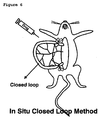
- the extent of cellular uptake of a substrate under various pH conditions can also be estimated by measuring the amount of the substrate absorbed into the gastrointestinal tract under various pH conditions using a rat gastrointestinal tract loop, e.g., intestinal loop ( in situ closed loop method).
- a rat gastrointestinal tract loop e.g., intestinal loop ( in situ closed loop method).
- the measurement can be conducted in reference to the following reports: Barr, W.H., and Riegelman, S. "Intestinal Drug Absorption and Metabolism I. Comparison of Methods and Models to Study Physiological Factors of In Vitro and In Vivo Intestinal Absorption". J. Pharm. Sci. 59 (1970): 154-163; and Hironori Yoshitomi. "Fundamental Experiment on Gastrointestinal Absorption". Biopharmaceutics Experimental Manual. Shigeru Goto (editor). Tokyo: Seishi Syoin, 1985: 2-22.
- rats are anesthetized by intraperitoneally administering pentobarbital sodium (50 mg/kg). Then, laparotomy is performed along the median line to expose the intestinal tract, and a loop is formed at the ileum (e.g., Figure 6).
- MES buffer containing medical fluid and a polymer (5 mM KCl, 100 mM NaCl, 10 mM 2-(N-morpholino)ethanesulfonic acid (MES), 85 mM mannitol, 0.01% polyethylene glycol; pH 6.0; osmotic pressure 290 mOs/kg) is introduced into the intestinal loop and both ends of the loop are ligated. Subsequently, the intestinal loop is immediately returned to the abdominal cavity. An incandescent lamp is used to maintain the body temperature. The solution inside the intestinal loop is retrieved 20 minutes after its administration. The pH was measured by pH-meter. The amount of medicaments are measured by HPLC.
- the pH profile of substrates recognized by PEPT1 can be obtained by measuring the uptake into oocytes under various pH conditions once cRNA hPEPT1 is injected into X . laevis oocytes.
- the pH profile can be measured using an electrophysiological method by detecting the electric potential difference generated upon adding substrates for peptide transporters.
- the measurement can be conducted in reference to the method described in "Expression Cloning of a Mammalian Proton-Coupled Oligopeptide Transporter" by Fei, Y.J., Kanai, Y., Nussberger, S., Ganapathy, V., Leibach, F.H., Romero, M.F., Singh, S.K., Boron, W.F., and Hediger, M.A., Nature 368 (1994): 563-566.
- a pH profile obtained according to the aforementioned methods shows the extent of cellular uptake of substrates recognized by the proton-coupled transporters under various pH conditions, thereby enabling the "pH of the proton-coupled transporters optimum for cellular uptake of substrates" to be determined.
- pH-sensitive polymers herein refer to those that release protons depending upon the pH of the specific site of a living body (e.g., gastrointestinal tract), for example, polymers that dissolve or swell by releasing protons under high pH conditions.
- a living body e.g., gastrointestinal tract
- this pH-sensitive polymer in combination with a substrate, the pH of the gastrointestinal tract (in particular, sites adjacent to the surface of the brush border membranes of the gastrointestinal tract) can be controlled to be optimum for cellular uptake of a substrate recognized by the proton-coupled transporter.
- examples include dried methacrylic acid copolymers, methacrylic acid copolymers LD, methacrylic acid copolymers L, methacrylic acid copolymers S, polyacrylic acids, maleic acid/n-alkyl vinyl ether copolymers, hydroxypropylmethylcellulose acetate succinates, hydroxypropylmethylcellulose phthalates, etc. More specifically, examples are Eudragit L100-55 (Eudragit is a registered trademark, same applies hereinbelow), Eudragit 30D-55, Eudragit L100, Eudragit S100, Eudragit P-4135F, and the like. Those commercially available and those prepared according to known methods can be used as these pH-sensitive polymers.
- pH-sensitive polymers preferably used in the pharmaceutical preparation of the present invention are, for example, Eudragit L100-55, Eudragit L100, Eudragit S100, Eudragit P-4135F, and the like, and particularly preferable are Eudragit L100-55 and Eudragit L100.
- the pharmaceutical preparation of the invention is formulated by mixing, with a compound recognized by a proton-coupled transporter, a pH-sensitive polymer in an amount sufficient for imparting the pH optimum for cellular uptake of the compound in the gastrointestinal tract based on the pH profile of the compound.
- a compound recognized by a proton-coupled transporter a pH-sensitive polymer in an amount sufficient for imparting the pH optimum for cellular uptake of the compound in the gastrointestinal tract based on the pH profile of the compound.
- the phrase "in the gastrointestinal tract” as used above refers, for example, to "in the small intestine”. It refers particularly to "in sites adjacent to the surface of the brush border membranes of the gastrointestinal tract", and more particularly to "at the surface of the brush border membranes of small-intestinal epithelial cells where proton-coupled transporters are expressed, and in locations adjacent thereto".
- the amount of pH-sensitive polymer to be used can be determined, for example, through experiments so as to obtain the desired extent of substrate absorption. Specifically, the amount of pH-sensitive polymer to obtain the desired extent of substrate absorption can be determined by altering the amounts of pH-sensitive polymer added to the substrate using the in situ closed loop method or oral-administration in rats (see, for example, Example 3).
- the amount of pH-sensitive polymer used in the pharmaceutical preparation of the invention may be, for example, about 1 to about 1000 parts by weight, preferably about 50 to about 500 parts by weight, and more preferably about 100 to about 300 parts by weight, per part by weight of substrate.
- the amount of pH-sensitive polymer may be about 5 to about 40 wt.%, and preferably about 10 to about 20 wt.%, based on the weight of the entire pharmaceutical preparation.
- Preferable embodiments of the pharmaceutical preparation of the present invention containing a compound recognized by a proton-coupled transporter and a pH-sensitive polymer include preparations containing a dipeptide and methacrylic acid copolymer, preparations containing a ⁇ -lactam antibiotic and methacrylic acid copolymer, etc.
- preparations containing a dipeptide and a methacrylic acid copolymer specific examples of the dipeptide are glycylsarcosine, carnosine, lisinopril, etc.
- specific examples of the methacrylic acid copolymer are dried methacrylic acid copolymers (e.g., Eudragit L100-55), methacrylic acid copolymers LD (e.g., Eudragit 30D-55), methacrylic acid copolymers L (e.g., Eudragit L100), methacrylic acid copolymers S (e.g., Eudragit S100), etc.
- An especially preferable embodiment include those containing glycylsarcosine or carnosine, and Eudragit L100-55.
- examples of the ⁇ -lactam antibiotic include penicillin antibiotics, cephem antibiotics, and the like. Specific examples are amoxicillin, ampicillin, ciclacillin, phenoxy-methylpenicillin, propicillin, carfecillin, carbenicillin, bacampicillin, pivampicillin, cefadroxil, cefixime, ceftibuten, cephaclor, cephalexin, cephradine, SCE-100, cefatrizine, cephalothin, cefdinir, loracarobef, FK089, latamoxef, pivcefalexine, cefazolin, cefoperazone, cefoxitin, cefotiam, cefmetazole, etc. Specific examples of the methacrylic acid copolymer are as described above. An especially preferable embodiment includes those containing cefadroxil, cefixime, or F
- the pharmaceutical preparation of the invention comprises a compound recognized by the aforementioned proton-coupled transporter(substrate) and a specific amount of a pH-sensitive polymer, and can be orally administered to mammals (especially humans) as it is as a powdered medicine.
- the pharmaceutical preparation can also be administered having been formulated according to various methods. For example, it can be administered as tablets, granules, capsules, suppositories, and enemas.
- the pharmaceutical preparation in these forms can contain, as necessary, excipients, disintegrants, lubricants, and various other additives known in pharmaceutical production.
- an enteric, sustained-release pharmaceutical preparation or the like that can deliver the medicament and pH-sensitive polymer throughout the gastrointestinal tract.
- the pharmaceutical preparation can be formulated into a liquid form (such as solution, suspension, syrup, and the like) containing the medicament and pH-sensitive polymer, thereby, compared with conventional tablets, enabling more thorough delivery of the medicament and pH-sensitive polymer, due to its water content, throughout the gastrointestinal tract.
- the pharmaceutical preparation can be formulated into these forms according to known methods.
- the pharmaceutical preparation of the invention enhances the absorbability of a compound recognized by a proton-coupled transporter in the gastrointestinal tract because the gastrointestinal tract is conditioned by the pH-sensitive polymer contained therein to the pH optimum for cellular uptake of the compound.
- the pharmaceutical preparation of the invention contains a pH-sensitive polymer in an amount sufficient to maintain the pH optimum for cellular uptake, medicament (substrate)_can be readily absorbed even in the lower gastrointestinal tract (ileum and so on) where the amount of protons is decreased, and thereby a decrease in transporting ability of proton-coupled transporters is inhibited.
- the pharmaceutical preparation of the invention even when administered orally, can provide a sufficient blood concentration of a medicament and achieve high bioavailability.
- the pH-sensitive polymer temporarily controls the pH of the gastrointestinal tract and does not adversely affect the gastrointestinal tract.
- the phrase "the pH-sensitive polymer temporarily controls the pH” means that the pH of a site where a substrate is absorbed into cells is impermanently controlled for an amount of time necessary for the cellular absorption of the substrate to complete.
- HBSS Hanks' balanced salt solution
- HBSS Hanks' balanced salt solution
- Figures 1A and 1B show the effect of pH upon the uptake of the aforementioned dipeptides and ⁇ -lactam antibiotics into Caco-2 cells.
- Figure 1A shows the extent of uptake over 5 minutes, under different pH conditions, of 10 ⁇ M [ 14 C] GlySar ( ⁇ ) and 0.15 ⁇ M [ 3 H] carnosine ( ⁇ ) into Caco-2 cells at a temperature of 37°C. Each plot represents the mean ⁇ standard error of 3 to 4 experiments.
- Figure 1B shows the results of measuring the uptake of 2 mM CFIX ( ⁇ ), 2 mM FK089 ( ⁇ ), and 2 mM CDX ( ⁇ ) over 15 minutes. Each plot represents the mean ⁇ standard error of 3 to 4 experiments.
- Figure 1B shows that the uptake of ⁇ -lactam antibiotics into Caco-2 cells is significantly pH-dependent, and that when the pH of the extracellular fluid is decreased from 6.0 to 5.0 the cellular uptake of anionic ⁇ -lactam antibiotics CFIX and FK-089 was greatly enhanced.
- CDX which is a zwitterionic ⁇ -lactam antibiotic at physiological pH, was observed at pH 6.0.
- a methacrylic acid copolymer (Eudragit L100-55) was used as a pH-sensitive polymer, and an aminoalkyl/methacrylate copolymer (Eudragit RS PO) was used as a pH-insensitive polymer.
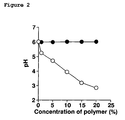
- a polymer (methacrylic acid copolymer Eudragit L100-55 or, of a pH-insensitive polymer, aminoalkyl/methacrylate copolymer Eudragit RS PO) was added to MES buffer (pH 6.0). Subsequently, the pH of the buffer was measured by a pH meter.
- the pH of the buffer decreased as Eudragit L100-55 was added ( Figure 2).
- plots ( ⁇ ) represent the pH of the MES buffer containing Eudragit RS PO
- plots ( ⁇ ) represent the pH of the MES buffer containing Eudragit L100-55.
- pH was decreased to about 3.0 when Eudragit L100-55 was added to a proportion of 20%.
- the use of Eudragit RS PO which has no proton-dissociating groups in its structure, did not result in a significant decrease in pH.
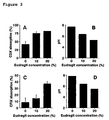
- the oral composition of the invention was prepared by adding a ⁇ -lactam antibiotic (CDX or CFIX) to 10 mM MES buffer (pH 6.0) such that the buffer contained CDX in an amount of 1 mM or CFIX in an amount of 0.5 mM, and further adding Eudragit L100-55 to the buffer so that it contained in a proportion of 10 or 20 wt.% based on the amount of the entire oral composition.
- a ⁇ -lactam antibiotic solution containing no Eudragit L100-55 was prepared as a control.
- compositions were administered into the intestinal loops prepared at the caecum junction of SD male rats (junction between the terminal of the ileum and where the caecum starts) to a distance of 14 cm toward the stomach.
- the solution remaining in the intestinal loops was retrieved 20 minutes after administration.
- the concentration of ⁇ -lactam antibiotic in the retrieved solution was measured by HPLC, and pH of the retrieved solution was measured using a pH meter. Absorbability was evaluated according to the decrease in the concentration of ⁇ -lactam antibiotic in the retrieved solution in comparison with the concentration thereof in the solution administered.
- the oral composition of the invention was prepared by adding Eudragit L100-55 to an aqueous solution of CFIX (0.23 mg/mL) such that the solution contained Eudragit L100-55 in a proportion of 5 wt.% based on the amount of the entire oral composition.
- a CFIX solution containing no Eudragit L100-55 was prepared as a control.
- These compositions were orally administered to SD male rats (body weight: 190 to 220 g) fasted for an entire day and night such that CFIX was given in a dose of 2.3 mg/kg.
- Blood was collected 15 to 480 minutes after administration, and the plasma concentration of CFIX was measured by HPLC. Based on the plasma concentration profile of CFIX thus obtained, the area under the plasma drug concentration-time curve (AUC) and highest drug concentration observed in plasma following administration of an extravascular dose (Cmax) were obtained.
- AUC area under the plasma drug concentration-time curve
- Cmax highest drug concentration observed in plasma following administration of an extravascular dose
- Figure 4 shows the absorption profile of CFIX after orally administering the composition into rats (CFIX: 2.3 mg/kg).
- Plots ( ⁇ ) represent absorption of CFIX in the absence of a polymer
- plots ( ⁇ ) represent absorption of CFIX in the presence of Eudragit L100-55 (500 mg/kg)
- plots ( ⁇ ) represent absorption of CFIX in the presence of Eudragit RS PO (500 mg/kg).
- Each plot represents the mean ⁇ standard error of 5 experiments.
- Example 4 To investigate whether the effect of the pH-sensitive acidic polymer enhancing CFIX absorption as shown in Example 4 was mediated by a peptide transporter (PEPT1) expressed in small-intestinal epithelial cells, the effect of CDX, which is a substrate for PEPT1, upon CFIX absorption was examined after orally administering CFIX and CDX simultaneously ( Figure 5 and Table 1).
- PEPT1 peptide transporter
- Figure 5 depicts the influence of CDX on the oral administration profile of CFIX after administering the composition (CFIX: 2.3 mg/kg) to rats.
- Plots ( ⁇ ) represent absorption of CFIX when Eudragit L100-55 (500mg/kg) and 0 mM CDX were used
- plots ( ⁇ ) represent absoption of CFIX when Eudragit L100-55 (500mg/kg) and 2 mM CDX were used
- plots ( ⁇ ) represent absorption of CFIX when Eudragit L100-55 (500mg/kg) and 10 mM CDX were used.
- Each plot represents the mean ⁇ standard error of 5 experiments.
- Table 1 shows the pharmacokinetic parameters calculated based on the data points shown in Figures 4 and 5 representing the time course of blood concentrations.
- Sample AUC 0-8h ( ⁇ g•hr/mL) Cmax ( ⁇ g/mL) Tmax (hr) Control 10.81 ⁇ 1.48 4.13 ⁇ 0.50 0.72 ⁇ 0.20 Eudragit L100-55 27.60 ⁇ 2.39 11.52 ⁇ 1.86 1.20 ⁇ 0.20 Eudragit L100-55 + CDX 2 mM 24.24 ⁇ 4.20 6.39 ⁇ 0.88 1.00 ⁇ 0.00 Eudragit L100-55 + CDX 10 mM 11.52 ⁇ 0.99 3.40 ⁇ 0.60 1.43 ⁇ 0.20 Eudragit RS PO 8.83 ⁇ 0.28 3.39 ⁇ 0.16 1.00 ⁇ 0.00
- Each data represents the mean ⁇ S.E.M. of three experiments at least.
- the pharmaceutical preparation of the present invention has been completed based on the finding that cellular uptake of a substrate is enhanced most at the optimum pH for a proton-coupled transporter.
- the pharmaceutical preparation of the invention therefore, is prepared, in view of the optimum pH of a proton-coupled transporter for cellular uptake of a substrate, by adding a pH-sensitive polymer in an amount sufficient for attaining such pH.
- the pharmaceutical preparation of the invention dramatically improves absorption of pharmaceutical compounds in the gastrointestinal tract and achieves, through oral administration or like method, high blood concentration from which sufficient remedial effects are expected.
- the pharmaceutical preparation imparts high absorbability throughout the entire gastrointestinal tract even to compounds recognized by proton-coupled transporters that have been known to be of poor absorbability.
- the pharmaceutical preparation of the invention has a pharmaceutically remarkable property that it can effectively improve the remedial effects of oral administrations or like methods with low doses.
Landscapes
- Health & Medical Sciences (AREA)
- Chemical & Material Sciences (AREA)
- Life Sciences & Earth Sciences (AREA)
- Pharmacology & Pharmacy (AREA)
- Veterinary Medicine (AREA)
- Public Health (AREA)
- General Health & Medical Sciences (AREA)
- Medicinal Chemistry (AREA)
- Animal Behavior & Ethology (AREA)
- Epidemiology (AREA)
- General Chemical & Material Sciences (AREA)
- Nuclear Medicine, Radiotherapy & Molecular Imaging (AREA)
- Chemical Kinetics & Catalysis (AREA)
- Organic Chemistry (AREA)
- Engineering & Computer Science (AREA)
- Bioinformatics & Cheminformatics (AREA)
- Inorganic Chemistry (AREA)
- Nutrition Science (AREA)
- Communicable Diseases (AREA)
- Physiology (AREA)
- Oncology (AREA)
- Virology (AREA)
- Immunology (AREA)
- Proteomics, Peptides & Aminoacids (AREA)
- Medicinal Preparation (AREA)
- Medicines That Contain Protein Lipid Enzymes And Other Medicines (AREA)
- Pharmaceuticals Containing Other Organic And Inorganic Compounds (AREA)
- Acyclic And Carbocyclic Compounds In Medicinal Compositions (AREA)
Applications Claiming Priority (3)
| Application Number | Priority Date | Filing Date | Title |
|---|---|---|---|
| JP2003006005 | 2003-01-14 | ||
| JP2003006005 | 2003-01-14 | ||
| PCT/JP2004/000070 WO2004062691A1 (ja) | 2003-01-14 | 2004-01-08 | プロトン駆動型トランスポーター介在型消化管吸収改善剤及びその製法 |
Publications (2)
| Publication Number | Publication Date |
|---|---|
| EP1588715A1 true EP1588715A1 (de) | 2005-10-26 |
| EP1588715A4 EP1588715A4 (de) | 2011-05-25 |
Family
ID=32709038
Family Applications (1)
| Application Number | Title | Priority Date | Filing Date |
|---|---|---|---|
| EP04700783A Withdrawn EP1588715A4 (de) | 2003-01-14 | 2004-01-08 | Mittel zur verbesserung der protonen-getriebenen transporter-vermittelten resorption im verdauungstrakt und verfahren zu seiner herstellung |
Country Status (10)
| Country | Link |
|---|---|
| US (3) | US20060121107A1 (de) |
| EP (1) | EP1588715A4 (de) |
| JP (2) | JP5175032B2 (de) |
| KR (1) | KR100691568B1 (de) |
| CN (1) | CN1735435B (de) |
| AR (1) | AR042846A1 (de) |
| AU (1) | AU2004204541B2 (de) |
| CA (1) | CA2508932C (de) |
| TW (1) | TWI355276B (de) |
| WO (1) | WO2004062691A1 (de) |
Families Citing this family (1)
| Publication number | Priority date | Publication date | Assignee | Title |
|---|---|---|---|---|
| CN102908332B (zh) * | 2011-08-04 | 2014-04-16 | 纳米及先进材料研发院有限公司 | 用于口服胰岛素递送的包含阳离子纳米粒子的肠溶包衣胶囊 |
Family Cites Families (27)
| Publication number | Priority date | Publication date | Assignee | Title |
|---|---|---|---|---|
| US3148124A (en) * | 1962-06-12 | 1964-09-08 | William E Gaunt | Method of preparing sustained release pharmaceutical tablets |
| US4224929A (en) * | 1977-11-08 | 1980-09-30 | Olympus Optical Co., Ltd. | Endoscope with expansible cuff member and operation section |
| US4525339A (en) * | 1982-10-15 | 1985-06-25 | Hoffmann-La Roche Inc. | Enteric coated oral dosage form |
| US4968508A (en) * | 1987-02-27 | 1990-11-06 | Eli Lilly And Company | Sustained release matrix |
| US5158777A (en) * | 1990-02-16 | 1992-10-27 | E. R. Squibb & Sons, Inc. | Captopril formulation providing increased duration of activity |
| IT1246382B (it) * | 1990-04-17 | 1994-11-18 | Eurand Int | Metodo per la cessione mirata e controllata di farmaci nell'intestino e particolarmente nel colon |
| US5322697A (en) * | 1992-05-28 | 1994-06-21 | Meyer James H | Composition and method for inducing satiety |
| DE69332082T2 (de) * | 1992-11-06 | 2003-02-06 | Hisamitsu Pharmaceutical Co., Inc. | Perorale pharmazeutische zubereitung mit freisetzung im unteren verfdauungstrakt |
| US5358502A (en) * | 1993-02-25 | 1994-10-25 | Pfizer Inc | PH-triggered osmotic bursting delivery devices |
| DE4406424A1 (de) * | 1994-02-28 | 1995-08-31 | Bayer Ag | Expandierbare Arzneiformen |
| GB9412394D0 (en) * | 1994-06-21 | 1994-08-10 | Danbiosyst Uk | Colonic drug delivery composition |
| US5728402A (en) * | 1994-11-16 | 1998-03-17 | Andrx Pharmaceuticals Inc. | Controlled release formulation of captopril or a prodrug of captopril |
| KR980700872A (ko) * | 1994-12-28 | 1998-04-30 | 야마구찌 다까시 | 경점막 투여용 제제(transmucosal preparation) |
| JPH09188617A (ja) * | 1996-01-08 | 1997-07-22 | Pola Chem Ind Inc | 徐放性医薬組成物 |
| DE19631084A1 (de) * | 1996-08-01 | 1998-02-05 | Basf Ag | Verwendung von (Meth)acrylsäure-Copolymeren zur Erhöhung der Permeabilität der Schleimhaut |
| US5851985A (en) * | 1996-08-16 | 1998-12-22 | Tepic; Slobodan | Treatment of tumors by arginine deprivation |
| FR2772615B1 (fr) * | 1997-12-23 | 2002-06-14 | Lipha | Comprime multicouche pour la liberation instantanee puis prolongee de substances actives |
| AP1224A (en) * | 1998-03-19 | 2003-11-14 | Bristol Myers Squibb Co | Biphasic controlled release delivery system for high solubility pharmaceuticals and method. |
| JP2000086535A (ja) * | 1998-09-14 | 2000-03-28 | Eisai Co Ltd | 遅延型速放固形製剤及びその製法 |
| MXPA01005346A (es) * | 1998-11-27 | 2003-03-27 | Kanji Takada | Una formulacion oral para suministro de farmaco gastrointestinal. |
| ATE248588T1 (de) | 1999-06-11 | 2003-09-15 | Ranbaxy Lab Ltd | Geschmacksmaskierte zubereitungen |
| DE60015062T2 (de) * | 1999-06-14 | 2006-03-09 | Teijin Ltd. | Biaxial orientierte polyesterfolie und magnetisches aufzeichnungsmedium |
| CA2415643C (en) * | 2000-07-17 | 2010-11-16 | Yamanouchi Pharmaceutical Co., Ltd. | Pharmaceutical composition for oral use with improved absorption |
| US7803392B2 (en) * | 2000-12-27 | 2010-09-28 | University Of Kentucky Research Foundation | pH-Sensitive mucoadhesive film-forming gels and wax-film composites suitable for topical and mucosal delivery of molecules |
| CZ20032225A3 (cs) * | 2001-02-27 | 2003-11-12 | Astrazeneca Ab | Farmaceutická formulace |
| JP3942846B2 (ja) * | 2001-06-21 | 2007-07-11 | 独立行政法人科学技術振興機構 | 組織特異的トランスポーター阻害剤 |
| CN1211422C (zh) * | 2001-08-01 | 2005-07-20 | 华中科技大学 | 用于口服结肠定位释药的聚合物凝胶及其制备方法 |
-
2004
- 2004-01-05 TW TW093100126A patent/TWI355276B/zh not_active IP Right Cessation
- 2004-01-08 JP JP2005507975A patent/JP5175032B2/ja not_active Expired - Fee Related
- 2004-01-08 WO PCT/JP2004/000070 patent/WO2004062691A1/ja not_active Ceased
- 2004-01-08 CA CA2508932A patent/CA2508932C/en not_active Expired - Fee Related
- 2004-01-08 CN CN2004800021318A patent/CN1735435B/zh not_active Expired - Fee Related
- 2004-01-08 KR KR1020057012945A patent/KR100691568B1/ko not_active Expired - Fee Related
- 2004-01-08 EP EP04700783A patent/EP1588715A4/de not_active Withdrawn
- 2004-01-08 AU AU2004204541A patent/AU2004204541B2/en not_active Ceased
- 2004-01-08 US US10/541,019 patent/US20060121107A1/en not_active Abandoned
- 2004-01-13 AR ARP040100078A patent/AR042846A1/es not_active Application Discontinuation
-
2008
- 2008-01-09 US US11/971,243 patent/US20080119568A1/en not_active Abandoned
- 2008-10-21 US US12/254,905 patent/US8871818B2/en not_active Expired - Fee Related
-
2010
- 2010-08-12 JP JP2010181074A patent/JP2010280705A/ja active Pending
Also Published As
| Publication number | Publication date |
|---|---|
| CA2508932C (en) | 2012-01-03 |
| US20080119568A1 (en) | 2008-05-22 |
| KR20050100369A (ko) | 2005-10-18 |
| CN1735435B (zh) | 2012-08-29 |
| US8871818B2 (en) | 2014-10-28 |
| TWI355276B (en) | 2012-01-01 |
| AU2004204541B2 (en) | 2008-10-16 |
| JP2010280705A (ja) | 2010-12-16 |
| JPWO2004062691A1 (ja) | 2006-05-18 |
| HK1083769A1 (en) | 2006-07-14 |
| JP5175032B2 (ja) | 2013-04-03 |
| AR042846A1 (es) | 2005-07-06 |
| US20060121107A1 (en) | 2006-06-08 |
| CN1735435A (zh) | 2006-02-15 |
| CA2508932A1 (en) | 2004-07-29 |
| EP1588715A4 (de) | 2011-05-25 |
| WO2004062691A1 (ja) | 2004-07-29 |
| KR100691568B1 (ko) | 2007-03-09 |
| TW200413007A (en) | 2004-08-01 |
| AU2004204541A1 (en) | 2004-07-29 |
| US20090048350A1 (en) | 2009-02-19 |
Similar Documents
| Publication | Publication Date | Title |
|---|---|---|
| Dorkoosh et al. | Peroral delivery systems based on superporous hydrogel polymers: release characteristics for the peptide drugs buserelin, octreotide and insulin | |
| Guggi et al. | Systemic peptide delivery via the stomach: in vivo evaluation of an oral dosage form for salmon calcitonin | |
| Foss et al. | Development of acrylic-based copolymers for oral insulin delivery | |
| Nielsen et al. | In vivo proof of concept of oral insulin delivery based on a co-administration strategy with the cell-penetrating peptide penetratin | |
| US20090202620A1 (en) | Polymer-stabilized liposomal compositions and methods of use | |
| Zhang et al. | Prodrug design targeting intestinal PepT1 for improved oral absorption: design and performance | |
| JP6375314B2 (ja) | 固体経口投与剤 | |
| Nozawa et al. | Enhanced intestinal absorption of drugs by activation of peptide transporter PEPT1 using proton‐releasing polymer | |
| US20250186542A1 (en) | Composition containing peptide compound for use with surfactant | |
| US8871818B2 (en) | Gastrointestinal absorption enhancer mediated by proton-coupled transporter and its preparing method | |
| EP4609875A2 (de) | Zusammensetzung mit einer peptidverbindung und einem tensid | |
| HK1083769B (en) | Agent improving proton-driven transporter-mediated absorption in digestive tract and process for producing the same | |
| CN102558308B (zh) | 一种用于形成药物复合物的载体多肽、制备方法及其用途 | |
| CN100508957C (zh) | 肽经口输递的改进 | |
| Shivalingam et al. | Alteration of pharmacokinetic parameters of proton pump inhibitors using transdermal drug delivery system | |
| Alex et al. | Cathepsin B cleavable voriconazole macromolecular prodrugs for intracellular release | |
| WO2021129779A1 (zh) | 一种新型两亲性蛋白、其制备方法及用途 | |
| Smith et al. | Implications of transport via the paracellular pathway on drug development | |
| Kros | Drug delivery via cell membrane fusion using lipopeptide modified liposomes | |
| JP4476544B2 (ja) | 酵素で切断可能な膜トランスロケーターを用いて改善されたペプチドの経口送達 | |
| JP4476544B6 (ja) | 酵素で切断可能な膜トランスロケーターを用いて改善されたペプチドの経口送達 | |
| Afrose et al. | Solid-State NMR Investigations of a Transmembrane Peptide having Interfacial Histidine Residues | |
| Design | ful marketed drugs are based on prodrug formulations, and the approach may indeed be considered as a well-established strategy to improve the bioavailability and targeting of pharmacophores with poor drug-delivery properties. Examples of prodrugs that are currently available on the European market are shown in Table 22.1. | |
| Thibado et al. | Cholesterol Influence on Arginine-Containing Transmembrane Peptides |
Legal Events
| Date | Code | Title | Description |
|---|---|---|---|
| PUAI | Public reference made under article 153(3) epc to a published international application that has entered the european phase |
Free format text: ORIGINAL CODE: 0009012 |
|
| 17P | Request for examination filed |
Effective date: 20050714 |
|
| AK | Designated contracting states |
Kind code of ref document: A1 Designated state(s): AT BE BG CH CY CZ DE DK EE ES FI FR GB GR HU IE IT LI LU MC NL PT RO SE SI SK TR |
|
| AX | Request for extension of the european patent |
Extension state: AL LT LV MK |
|
| DAX | Request for extension of the european patent (deleted) | ||
| A4 | Supplementary search report drawn up and despatched |
Effective date: 20110428 |
|
| 17Q | First examination report despatched |
Effective date: 20120509 |
|
| GRAP | Despatch of communication of intention to grant a patent |
Free format text: ORIGINAL CODE: EPIDOSNIGR1 |
|
| RIC1 | Information provided on ipc code assigned before grant |
Ipc: A61K 9/08 20060101ALI20170404BHEP Ipc: A61K 31/546 20060101ALI20170404BHEP Ipc: A61K 9/00 20060101AFI20170404BHEP Ipc: A61K 31/545 20060101ALI20170404BHEP Ipc: A61K 47/32 20060101ALI20170404BHEP |
|
| INTG | Intention to grant announced |
Effective date: 20170508 |
|
| STAA | Information on the status of an ep patent application or granted ep patent |
Free format text: STATUS: THE APPLICATION IS DEEMED TO BE WITHDRAWN |
|
| 18D | Application deemed to be withdrawn |
Effective date: 20170919 |
|
| RIC1 | Information provided on ipc code assigned before grant |
Ipc: A61K 9/00 20060101AFI20170404BHEP Ipc: A61K 9/08 20060101ALI20170404BHEP Ipc: A61K 31/545 20060101ALI20170404BHEP Ipc: A61K 47/32 20060101ALI20170404BHEP Ipc: A61K 31/546 20060101ALI20170404BHEP |