EP1587963B1 - Acier laminé à chaud à très haute résistance et procédé de fabrication de bandes - Google Patents
Acier laminé à chaud à très haute résistance et procédé de fabrication de bandes Download PDFInfo
- Publication number
- EP1587963B1 EP1587963B1 EP04701978A EP04701978A EP1587963B1 EP 1587963 B1 EP1587963 B1 EP 1587963B1 EP 04701978 A EP04701978 A EP 04701978A EP 04701978 A EP04701978 A EP 04701978A EP 1587963 B1 EP1587963 B1 EP 1587963B1
- Authority
- EP
- European Patent Office
- Prior art keywords
- steel
- hot
- iron
- strength
- ferrite
- Prior art date
- Legal status (The legal status is an assumption and is not a legal conclusion. Google has not performed a legal analysis and makes no representation as to the accuracy of the status listed.)
- Expired - Lifetime
Links
Classifications
-
- C—CHEMISTRY; METALLURGY
- C21—METALLURGY OF IRON
- C21D—MODIFYING THE PHYSICAL STRUCTURE OF FERROUS METALS; GENERAL DEVICES FOR HEAT TREATMENT OF FERROUS OR NON-FERROUS METALS OR ALLOYS; MAKING METAL MALLEABLE, e.g. BY DECARBURISATION OR TEMPERING
- C21D8/00—Modifying the physical properties of ferrous metals or ferrous alloys by deformation combined with, or followed by, heat treatment
- C21D8/02—Modifying the physical properties of ferrous metals or ferrous alloys by deformation combined with, or followed by, heat treatment during manufacturing of plates or strips
-
- C—CHEMISTRY; METALLURGY
- C21—METALLURGY OF IRON
- C21D—MODIFYING THE PHYSICAL STRUCTURE OF FERROUS METALS; GENERAL DEVICES FOR HEAT TREATMENT OF FERROUS OR NON-FERROUS METALS OR ALLOYS; MAKING METAL MALLEABLE, e.g. BY DECARBURISATION OR TEMPERING
- C21D8/00—Modifying the physical properties of ferrous metals or ferrous alloys by deformation combined with, or followed by, heat treatment
- C21D8/02—Modifying the physical properties of ferrous metals or ferrous alloys by deformation combined with, or followed by, heat treatment during manufacturing of plates or strips
- C21D8/0221—Modifying the physical properties of ferrous metals or ferrous alloys by deformation combined with, or followed by, heat treatment during manufacturing of plates or strips characterised by the working steps
- C21D8/0226—Hot rolling
-
- C—CHEMISTRY; METALLURGY
- C22—METALLURGY; FERROUS OR NON-FERROUS ALLOYS; TREATMENT OF ALLOYS OR NON-FERROUS METALS
- C22C—ALLOYS
- C22C38/00—Ferrous alloys, e.g. steel alloys
- C22C38/04—Ferrous alloys, e.g. steel alloys containing manganese
-
- C—CHEMISTRY; METALLURGY
- C22—METALLURGY; FERROUS OR NON-FERROUS ALLOYS; TREATMENT OF ALLOYS OR NON-FERROUS METALS
- C22C—ALLOYS
- C22C38/00—Ferrous alloys, e.g. steel alloys
- C22C38/18—Ferrous alloys, e.g. steel alloys containing chromium
- C22C38/28—Ferrous alloys, e.g. steel alloys containing chromium with titanium or zirconium
-
- C—CHEMISTRY; METALLURGY
- C21—METALLURGY OF IRON
- C21D—MODIFYING THE PHYSICAL STRUCTURE OF FERROUS METALS; GENERAL DEVICES FOR HEAT TREATMENT OF FERROUS OR NON-FERROUS METALS OR ALLOYS; MAKING METAL MALLEABLE, e.g. BY DECARBURISATION OR TEMPERING
- C21D2211/00—Microstructure comprising significant phases
- C21D2211/002—Bainite
-
- C—CHEMISTRY; METALLURGY
- C21—METALLURGY OF IRON
- C21D—MODIFYING THE PHYSICAL STRUCTURE OF FERROUS METALS; GENERAL DEVICES FOR HEAT TREATMENT OF FERROUS OR NON-FERROUS METALS OR ALLOYS; MAKING METAL MALLEABLE, e.g. BY DECARBURISATION OR TEMPERING
- C21D2211/00—Microstructure comprising significant phases
- C21D2211/008—Martensite
-
- C—CHEMISTRY; METALLURGY
- C21—METALLURGY OF IRON
- C21D—MODIFYING THE PHYSICAL STRUCTURE OF FERROUS METALS; GENERAL DEVICES FOR HEAT TREATMENT OF FERROUS OR NON-FERROUS METALS OR ALLOYS; MAKING METAL MALLEABLE, e.g. BY DECARBURISATION OR TEMPERING
- C21D8/00—Modifying the physical properties of ferrous metals or ferrous alloys by deformation combined with, or followed by, heat treatment
- C21D8/02—Modifying the physical properties of ferrous metals or ferrous alloys by deformation combined with, or followed by, heat treatment during manufacturing of plates or strips
- C21D8/0247—Modifying the physical properties of ferrous metals or ferrous alloys by deformation combined with, or followed by, heat treatment during manufacturing of plates or strips characterised by the heat treatment
- C21D8/0263—Modifying the physical properties of ferrous metals or ferrous alloys by deformation combined with, or followed by, heat treatment during manufacturing of plates or strips characterised by the heat treatment following hot rolling
-
- C—CHEMISTRY; METALLURGY
- C21—METALLURGY OF IRON
- C21D—MODIFYING THE PHYSICAL STRUCTURE OF FERROUS METALS; GENERAL DEVICES FOR HEAT TREATMENT OF FERROUS OR NON-FERROUS METALS OR ALLOYS; MAKING METAL MALLEABLE, e.g. BY DECARBURISATION OR TEMPERING
- C21D8/00—Modifying the physical properties of ferrous metals or ferrous alloys by deformation combined with, or followed by, heat treatment
- C21D8/02—Modifying the physical properties of ferrous metals or ferrous alloys by deformation combined with, or followed by, heat treatment during manufacturing of plates or strips
- C21D8/0278—Modifying the physical properties of ferrous metals or ferrous alloys by deformation combined with, or followed by, heat treatment during manufacturing of plates or strips involving a particular surface treatment
Definitions
- the present invention relates to a hot-rolled steel with a very high strength, and a method of manufacturing strips of this steel, whose structure is bainito-martensitic and can contain up to 5% of ferrite.
- Very high strength steels have been developed in recent years, in particular to meet the specific needs of the automotive industry, which are in particular the reduction of weight and thus the thickness of parts, and the improvement of safety. which goes through the increase of the resistance to fatigue and the shock resistance of the parts. These improvements should not further deteriorate the fitness of the sheets used in the manufacture of parts.
- Improved impact resistance of shaped parts can be achieved in different ways and, in particular, by using steels having on the one hand a significant elongation A and on the other hand an E / Rm ratio having a low value, which allows after shaping and thanks to the consolidation capacity of the steel to increase its elastic limit.
- the fatigue life of the parts defines their service life according to the stresses undergone, and can be improved by increasing the tensile strength Rm of the steel. But, the increase in strength deteriorates the ability to shape the steel, thus limiting the workable parts, particularly with regard to their thickness.
- high-strength steel denotes a steel whose tensile strength Rm is greater than 800 MPa.
- a second family of very high strength steels consists of so-called dual phase steels with a structure comprising approximately 10% ferrite and 90% martensite. These steels have a very good formability, but resistance levels not exceeding 800 MPa.
- US6364968 discloses a method for producing a very high strength hot rolled steel sheet which comprises preparing and heating a slab of composition 0.05% ⁇ C ⁇ 0.3%, 1.5% ⁇ Mn ⁇ 3, 5%, 0.03% ⁇ S ⁇ 1%, Al ⁇ 0.07%, S ⁇ 0.05%, P ⁇ 0.02%, N ⁇ 0.0200%, 0.003% ⁇ Nb ⁇ 0.20% or / and 0.005% ⁇ Si ⁇ 0.20% remains iron and impurities resulting from processing at a temperature ⁇ 1200 ° C, hot rolling at a temperature> 800 ° C, cooling this sheet with a cooling rate of 20-150 ° C and winding said sheet at a winding temperature of 300-350 ° C and a steel having this composition.
- the object of the present invention is to overcome the drawbacks of the steels of the prior art by providing a hot rolled steel with very high strength, suitable for shaping, and having improved fatigue strength and impact resistance.
- the invention firstly relates to a hot rolled steel with very high strength, characterized in that its chemical composition comprises, by weight: 0 , 05 % ⁇ VS ⁇ 0 , 1 % 0 , 7 % ⁇ mn ⁇ 1 , 1 % 0 , 5 % ⁇ Cr ⁇ 1 , 0 % 0 , 05 % ⁇ Yes ⁇ 0 , 3 % 0 , 05 % ⁇ Ti ⁇ 0 , 1 % al ⁇ 0 , 07 % S ⁇ 0 , 03 % P ⁇ 0 , 05 % the rest being iron and impurities resulting from the elaboration, said steel having a bainito-martensitic structure which can contain up to 5% of ferrite.
- the chemical composition further comprises, by weight: 0 , 08 % ⁇ VS ⁇ 0 , 09 % 0 , 8 % ⁇ mn ⁇ 1 , 0 % 0 , 6 % ⁇ Cr ⁇ 0 , 9 % 0 , 2 % ⁇ Yes ⁇ 0 , 3 % 0 , 05 % ⁇ Ti ⁇ 0 , 09 % al ⁇ 0 , 07 % S ⁇ 0 , 03 % P ⁇ 0 , 05 % . the rest being iron and impurities resulting from the elaboration.
- the structure of the steel according to the invention consists of 70 to 90% of bainite, 10 to 30% of martensite and 0 to 5% of ferrite, and more particularly preferably from 70 to 85% of bainite, from 15 to 30% of martensite and from 0 to 5% of ferrite.
- the subject of the invention is also a method for producing a very high-strength hot-rolled steel strip according to the invention, in which a slab is hot-rolled, the composition of which comprises: 0 , 05 % ⁇ VS ⁇ 0 , 1 % 0 , 7 % ⁇ mn ⁇ 1 , 1 % 0 , 5 % ⁇ Cr ⁇ 1 , 0 % 0 , 05 % ⁇ Yes ⁇ 0 , 3 % 0 , 05 % ⁇ Ti ⁇ 0 , 1 % al ⁇ 0 , 07 % S ⁇ 0 , 03 % P ⁇ 0 , 05 % the rest being iron and impurities resulting from the elaboration, the rolling temperature being below 950 ° C., and the strip thus obtained is cooled to a temperature of less than or equal to 400 ° C., while maintaining a cooling rate greater than 50 ° C./s between 800 and 700 ° C.
- the composition of the slab is as follows: 0 , 08 % ⁇ VS ⁇ 0 , 09 % 0 , 8 % ⁇ mn ⁇ 1 , 0 % 0 , 6 % ⁇ Cr ⁇ 0 , 9 % 0 , 2 % ⁇ Yes ⁇ 0 , 3 % 0 , 05 % ⁇ Ti ⁇ 0 , 09 % al ⁇ 0 , 07 % S ⁇ 0 , 03 % P ⁇ 0 , 05 % the rest being iron and impurities resulting from the elaboration.
- the hot-rolled steel strip is coated with zinc or a zinc alloy, by immersion in a bath of zinc or molten zinc alloy, after winding and after being unreeled, then annealed.
- the method according to the invention consists first of all in hot rolling a slab of specific composition, in order to obtain a homogeneous structure.
- the rolling temperature is less than 950 ° C, and preferably less than 900 ° C.
- the strip thus obtained is cooled to a temperature of less than or equal to 400 ° C., while maintaining a cooling rate greater than 50 ° C./s between 800 and 700 ° C.
- This rapid cooling is carried out in such a way that less than 5% of ferrite, which is not desired, is formed because the titanium would precipitate preferentially in this phase.
- This cooling rate is preferably between 50 ° C / s and 200 ° C / s.
- the method then consists in winding the strip at a winding temperature of less than or equal to 250 ° C.
- We limit the temperature of this stage in order to avoid generating an income from martensite, which would reduce the mechanical strength and raise the elastic limit, resulting in a bad E / Rm ratio.
- composition according to the invention comprises carbon with a content of between 0.05% and 0.100%.
- This element is essential for obtaining good mechanical characteristics, but must not be present in too large quantities, because it could generate segregations.
- a carbon content of less than 0.100 makes it possible in particular to have good weldability, and to improve the shaping properties and the endurance limit.
- Manganese at a level of between 0.7% and 1.1%. Manganese improves the yield strength of steel while greatly reducing its ductility, for which it limits its content. A content of less than 1.1% also prevents segregation during continuous casting.
- the composition also comprises chromium at a level of between 0.50% and 1.0%.
- a minimum content of 0.50% makes it possible to promote the appearance of bainite in the microstructure. However, its content is limited to 1.0% because a high chromium content would favor the increase of the amount of ferrite formed above 5%, because of its alphagenic character.
- the composition also comprises silicon at a content of between 0.05% and 0.3%. It greatly improves the yield strength of steel while reducing its ductility slightly and deteriorating its coating, which is why its content is limited.
- the composition also comprises titanium at a content of between 0.05 and 0.1%.
- This element makes it possible to significantly increase the mechanical characteristics by a phenomenon of precipitation during rolling and cooling. It does not increase the hot hardness because of its moderate content. Its content is limited to 0.1% in order to avoid degrading the impact resistance properties, the hot hardness and the folding ability.
- composition may also comprise phosphorus at a content of less than 0.05%, since, beyond that, it could pose problems of segregation during continuous casting.
- the composition also comprises aluminum with a content of less than 0.07%, which occurs during the calming of the steel during its manufacture at the steel mill.
- a steel grade has been developed. Its composition is given in the following table: VS mn Cr Yes Ti S P al AT 0.78 0.95 0.79 0.233 0.094 0,001 0,038 0.048 The rest of the composition consists of iron and unavoidable impurities resulting from the elaboration.
- microstructure of test 1 is bainito-martensitic, whereas the microstructure of tests 2 and 3 is ferritic-bainitic.
- a winding temperature greater than 250 ° C. associated with a cooling rate between 800 and 700 ° C. of less than 50 ° C./s, increases the yield strength without increasing the mechanical strength.
- the ratio E / Rm is therefore too high.
- the steel according to the invention has a good ability to dip coating in a bath of molten metal, such as zinc or a zinc alloy, or aluminum or an alloy thereof.
Landscapes
- Chemical & Material Sciences (AREA)
- Engineering & Computer Science (AREA)
- Materials Engineering (AREA)
- Mechanical Engineering (AREA)
- Metallurgy (AREA)
- Organic Chemistry (AREA)
- Physics & Mathematics (AREA)
- Thermal Sciences (AREA)
- Crystallography & Structural Chemistry (AREA)
- Heat Treatment Of Sheet Steel (AREA)
- Heat Treatment Of Steel (AREA)
Description
- La présente invention concerne un acier laminé à chaud à très haute résistance, et un procédé de fabrication de bandes de cet acier, dont la structure est bainito-martensitique et peut contenir jusqu'à 5% de ferrite.
- Les aciers à très haute résistance ont été développés ces dernières années, notamment afin de répondre aux besoins spécifiques de l'industrie automobile, qui sont en particulier la réduction du poids et donc de l'épaisseur des pièces, et l'amélioration de la sécurité qui passe par l'augmentation de la résistance à la fatigue et de la tenue aux chocs des pièces. Ces améliorations ne doivent en outre pas détériorer l'aptitude à la mise en forme des tôles utilisées pour la fabrication des pièces.
- Cette aptitude à la mise en forme suppose que l'acier présente un allongement A important (> 10%) ainsi qu'un rapport de la limite d'élasticité E sur la résistance à la traction Rm ayant une valeur basse.
- L'amélioration de la tenue aux chocs des pièces mises en forme peut être réalisée de différentes façons et, en particulier, en utilisant des aciers possédant d'une part un allongement A important et, d'autre part, un rapport E/Rm ayant une valeur basse, ce qui permet après mise en forme et grâce à la capacité de consolidation de l'acier d'augmenter sa limite d'élasticité.
- La tenue en fatigue des pièces définit leur durée de vie en fonction des contraintes subies, et peut être améliorée en augmentant la résistance à la traction Rm de l'acier. Mais, l'augmentation de la résistance détériore l'aptitude à la mise en forme de l'acier, limitant ainsi les pièces réalisables, en particulier en ce qui concerne leur épaisseur.
- Par acier à très haute résistance, on désigne dans le cadre de la présente invention, un acier dont la résistance à la traction Rm est supérieure à 800 MPa.
- On connaît une première famille d'aciers à très haute résistance, qui sont des aciers contenant des proportions élevées de carbone (plus de 0,1%) et de manganèse (plus de 1,2%) et dont la structure est entièrement martensitique. Ils présentent une résistance de plus de 1000 MPa, obtenue par un traitement thermique de trempe, mais ont un allongement A de moins de 8% ce qui interdit toute mise en forme.
- Une deuxième famille d'aciers à très haute résistance est constituée d'aciers dits dual phase, à structure comprenant environ 10% de ferrite et 90% de martensite. Ces aciers présentent une très bonne formabilité, mais des niveaux de résistance ne dépassant pas 800 MPa.
-
US6364968 décrit un procédé de fabrication d'une feuille d'acier laminé à chaud à très haute résistance qui consiste au préparer et chauffer une brame de composition 0,05%≤C≤0,3%, 1,5%≤Mn≤3,5%, 0,03%≤S≤1%, Al≤0,07%, S≤0,05%, P≤0,02%, N≤0,0200%, 0,003%≤Nb≤0,20% ou/et 0,005%≤Si≤0,20% reste fer et des impuretés résultant de l'élaboration à une température <1200°C, laminer à chaud à une température >800°C, refroidir cette feuille avec une vitesse de refroidissement de 20-150°C et bobiner ladite feuille à une température de bobinage de 300-350° C et un acier ayant cette composition. - Le but de la présente invention est de remédier aux inconvénients des aciers de l'art antérieur en proposant un acier laminé à chaud à très haute résistance, apte à la mise en forme, et présentant une tenue en fatigue et une tenue aux chocs améliorées.
- A cet effet, l'invention a pour premier objet un acier laminé à chaud à très haute résistance, caractérisé en ce que sa composition chimique comprend, en poids :


le reste étant du fer et des impuretés résultant de l'élaboration,
ledit acier ayant une structure bainito-martensitique pouvant contenir jusqu'à 5% de ferrite. - Dans un mode de réalisation préféré, la composition chimique comprend en outre, en poids :


le reste étant du fer et des impuretés résultant de l'élaboration. - Dans un autre mode de réalisation préféré, la structure de l'acier selon l'invention est constituée de 70 à 90% de bainite, de 10 à 30% de martensite et de 0 à 5% de ferrite, et de façon plus particulièrement préférée, de 70 à 85% de bainite, de 15 à 30% de martensite et de 0 à 5% de ferrite.
- L'acier selon l'invention peut également comprendre les caractéristiques suivantes, seules ou en combinaison :
- une résistance à la traction Rm supérieure ou égale à 950 MPa,
- un allongement à la rupture A supérieur ou égal à 10%,
- une limite d'élasticité E supérieure ou égale à 680 MPa,
- un rapport E/Rm inférieur à 0,8.
- L'invention a également pour deuxième objet un procédé de fabrication d'une bande d'acier laminé à chaud à très haute résistance selon l'invention, dans lequel on lamine à chaud une brame dont la composition comprend :


le reste étant du fer et des impuretés résultant de l'élaboration,
la température de laminage étant inférieure à 950°C, puis on fait refroidir la bande ainsi obtenue jusqu'à une température inférieure ou égale à 400°C, en maintenant une vitesse de refroidissement supérieure à 50°C/s entre 800 et 700°C, puis on bobine ladite bande à une température de bobinage inférieure ou égale à 250°C. - Dans un mode de réalisation préféré, la composition de la brame est la suivante :


le reste étant du fer et des impuretés résultant de l'élaboration. - Dans un autre mode de réalisation préféré, la bande d'acier laminé à chaud est revêtue de zinc ou d'un alliage de zinc, par immersion dans un bain de zinc ou d'alliage de zinc fondu, à l'issue du bobinage et après avoir été débobinée, puis recuite.
- Le procédé selon l'invention consiste tout d'abord à laminer à chaud une brame de composition spécifique, afin d'obtenir une structure homogène. La température de laminage est inférieure à 950°C, et de préférence inférieure à 900°C.
- A l'issue du laminage, on fait refroidir la bande ainsi obtenue jusqu'à une température inférieure ou égale à 400°C, en maintenant une vitesse de refroidissement supérieure à 50°C/s entre 800 et 700°C. Ce refroidissement rapide est effectué de telle sorte que l'on forme moins de 5% de ferrite, dont on ne souhaite pas la présence, car le titane précipiterait préférentiellement dans cette phase. Cette vitesse de refroidissement est de préférence comprise entre 50°C/s et 200°C/s.
- Le procédé consiste ensuite à bobiner la bande à une température de bobinage inférieure ou égale à 250°C. On limite la température de cette étape afin d'éviter de provoquer un revenu de la martensite, qui diminuerait la résistance mécanique et ferait remonter la limite élastique, d'ou un mauvais ratio E/Rm.
- La composition selon l'invention comprend du carbone à une teneur comprise entre 0,05% et 0,100%. Cet élément est essentiel à l'obtention de bonnes caractéristiques mécaniques, mais ne doit pas être présent en trop grande quantité, car il pourrait générer des ségrégations. Une teneur en carbone inférieure à 0,100 permet notamment d'avoir une bonne soudabilité, et une amélioration des propriétés de mise en forme et de limite d'endurance.
- Elle comprend également du manganèse à une teneur comprise entre 0,7% et 1,1%. Le manganèse améliore la limite d'élasticité de l'acier tout en réduisant fortement sa ductilité, ce pour quoi on limite sa teneur. Une teneur inférieure à 1,1% permet également d'éviter toute ségrégation lors de la coulée continue.
- La composition comprend également du chrome à une teneur comprise entre 0,50% et 1,0%. Une teneur minimale de 0,50% permet de favoriser l'apparition de la bainite dans la microstructure. On limite cependant sa teneur à 1,0% car une teneur élevée en chrome favoriserait l'augmentation de la quantité de ferrite formée au-delà de 5%, en raison de son caractère alphagène.
- La composition comprend également du silicium à une teneur comprise entre 0,05% et 0,3%. Il améliore fortement la limite d'élasticité de l'acier tout en réduisant faiblement sa ductilité et en détériorant sa revêtabilité, ce qui explique pourquoi on limite sa teneur.
- La composition comprend également du titane à une teneur comprise entre 0,05 et 0,1%. Cet élément permet d'accroître notablement les caractéristiques mécaniques par un phénomène de précipitation au cours du laminage et du refroidissement. Il n'augmente pas la dureté à chaud du fait de sa teneur modérée. On limite sa teneur à 0,1% pour éviter de dégrader les propriétés de résistance au choc, la dureté à chaud, ainsi que l'aptitude au pliage.
- La composition peut également comprendre du phosphore à une teneur inférieure à 0,05%, car au-delà il pourrait poser des problèmes de ségrégation lors de la coulée continue.
- La composition comprend également de l'aluminium à une teneur comprise inférieure à 0,07%, qui intervient lors du calmage de l'acier lors de son élaboration à l'aciérie.
- A titre d'exemple non limitatif, et afin de mieux illustrer l'invention, une nuance d'acier a été élaborée. Sa composition est donnée dans le tableau suivant :
C Mn Cr Si Ti S P Al A 0,78 0,95 0,79 0,233 0,094 0,001 0,038 0,048 -
- Rm :
- résistance à la traction en MPa,
- Rp0,2 :
- limite d'élasticité en MPa,
- A :
- allongement, mesuré en %
- A partir de la nuance A, on a préparé trois échantillons, en les laminant à 860°C, puis en les soumettant à des chemins thermo-mécaniques différents. On a fait varier les vitesses de refroidissement entre 800 et 700°C, ainsi que la température de bobinage, afin de mettre en évidence les différences de structure obtenues.
- On mesure ensuite les caractéristiques mécaniques des aciers obtenus. Les résultats sont rassemblés dans le tableau suivant :
Essai V800-700 T bob Rm Rp0,2 E/Rm A% (°C) (°C) (MPa) (MPa) 1* 57 200 995 690 0,7 14 2 42 200 780 635 0,8 14 3 20 400 800 705 0,9 - * selon l'invention. - La microstructure de l'essai 1, conforme à l'invention, est bainito-martensitique, tandis que la microstructure des essais 2 et 3 est ferrito-bainitique.
- On constate qu'une vitesse de refroidissement entre 800 et 700C inférieure à 50°C/s, induit une présence de ferrite dans une proportion supérieure à 5%. Le titane va alors précipiter dans cette ferrite, ce qui ne permet plus d'obtenir le niveau de caractéristiques mécaniques recherché, en particulier un Rm élevé.
- Par ailleurs, une température de bobinage supérieure à 250°C, associée à une vitesse de refroidissement entre 800 et 700°C inférieure à 50°C/s, augmente la limite d'élasticité sans augmenter la résistance mécanique. Le rapport E/Rm est donc trop élevé.
- Enfin, on constate qu'une vitesse de refroidissement entre 800 et 700°C supérieure à 50°C/s, associée à une température de bobinage inférieure à 250°C, donne d'excellentes valeurs de résistance mécanique et de limite d'élasticité. La structure essentiellement bainito-martensitique confère au produit un bon ratio E/Rm et un allongement supérieur à 10%.
- En outre, l'acier selon l'invention présente une bonne aptitude au revêtement par immersion dans un bain de métal fondu, tel que du zinc ou un alliage de zinc, ou que de l'aluminium ou un de ses alliages.
Claims (10)
- Acier laminé à chaud à très haute résistance, caractérisé en ce que sa composition chimique comprend, en poids :


le reste étant du fer et des impuretés résultant de l'élaboration,
ledit acier ayant une structure bainito-martensitique pouvant contenir jusqu'à 5% de ferrite. - Acier selon la revendication 1, caractérisé en ce que sa composition comprend en outre :





le reste étant du fer et des impuretés résultant de l'élaboration,
ledit acier ayant une structure bainito-martensitique pouvant contenir jusqu'à 5% de ferrite. - Acier selon l'une ou l'autre des revendications 1 ou 2, caractérisé en outre en ce que sa structure est constituée de 70 à 90% de bainite, de 10 à 30% de martensite et de 0 à 5% de ferrite.
- Acier selon l'une quelconque des revendications 1 à 3, caractérisé en ce qu'il présente une résistance à la traction Rm supérieure ou égale à 950MPa.
- Acier selon l'une quelconque des revendications 1 à 4, caractérisé en ce qu'il présente un allongement à la rupture A supérieur ou égal à 10%.
- Acier selon l'une quelconque des revendications 1 à 5, caractérisé en ce qu'il présente une limite d'élasticité E supérieure ou égale à 680 MPa.
- Acier selon l'une quelconque des revendications 1 à 6, caractérisé en ce qu'il présente un rapport E/Rm inférieur à 0,8.
- Procédé de fabrication d'une bande d'acier laminé à chaud à très haute résistance selon l'une quelconque des revendications 1 à 7, caractérisé en ce que l'on lamine à chaud une brame dont la composition comprend :








le reste étant du fer et des impuretés résultant de l'élaboration,
la température de laminage étant inférieure à 950°C, puis on fait refroidir la bande ainsi obtenue jusqu'à une température inférieure ou égale à 400°C, en maintenant une vitesse de refroidissement supérieure à 50°C/s entre 800 et 700°C, puis on bobine ladite bande à une température de bobinage inférieure ou égale à 250°C. - Procédé de fabrication selon la revendication 8, caractérisé en outre en ce que l'on lamine à chaud une brame dont la composition comprend :


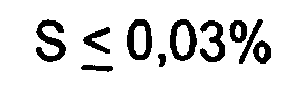

le reste étant du fer et des impuretés résultant de l'élaboration. - Procédé de fabrication selon l'une ou l'autre des revendications 8 ou 9, caractérisé en ce que la bande d'acier laminé à chaud est revêtue de zinc ou d'un alliage de zinc, par immersion dans un bain de zinc ou d'alliage de zinc fondu, à l'issue dudit bobinage et après avoir été débobinée, puis recuite.
Applications Claiming Priority (3)
| Application Number | Priority Date | Filing Date | Title |
|---|---|---|---|
| FR0300371A FR2849864B1 (fr) | 2003-01-15 | 2003-01-15 | Acier lamine a chaud a tres haute resistance et procede de fabrication de bandes |
| FR0300371 | 2003-01-15 | ||
| PCT/FR2004/000058 WO2004070064A2 (fr) | 2003-01-15 | 2004-01-14 | Acier lamine a chaud a tres haute resistance et procede de fabrication de bandes |
Publications (2)
| Publication Number | Publication Date |
|---|---|
| EP1587963A2 EP1587963A2 (fr) | 2005-10-26 |
| EP1587963B1 true EP1587963B1 (fr) | 2011-10-12 |
Family
ID=32524914
Family Applications (1)
| Application Number | Title | Priority Date | Filing Date |
|---|---|---|---|
| EP04701978A Expired - Lifetime EP1587963B1 (fr) | 2003-01-15 | 2004-01-14 | Acier laminé à chaud à très haute résistance et procédé de fabrication de bandes |
Country Status (16)
| Country | Link |
|---|---|
| US (1) | US7699947B2 (fr) |
| EP (1) | EP1587963B1 (fr) |
| JP (1) | JP4505055B2 (fr) |
| KR (1) | KR101065781B1 (fr) |
| CN (1) | CN100366759C (fr) |
| AT (1) | ATE528414T1 (fr) |
| BR (1) | BRPI0406731B1 (fr) |
| CA (1) | CA2513096C (fr) |
| ES (1) | ES2374188T3 (fr) |
| FR (1) | FR2849864B1 (fr) |
| MX (1) | MXPA05007580A (fr) |
| PL (1) | PL209154B1 (fr) |
| RU (1) | RU2333284C2 (fr) |
| UA (1) | UA79531C2 (fr) |
| WO (1) | WO2004070064A2 (fr) |
| ZA (1) | ZA200505161B (fr) |
Families Citing this family (14)
| Publication number | Priority date | Publication date | Assignee | Title |
|---|---|---|---|---|
| RU2355814C1 (ru) * | 2008-03-27 | 2009-05-20 | Юлия Алексеевна Щепочкина | Горячекатаная сталь |
| RU2355813C1 (ru) * | 2008-03-27 | 2009-05-20 | Юлия Алексеевна Щепочкина | Горячекатаная сталь |
| KR101531453B1 (ko) * | 2010-10-18 | 2015-06-24 | 신닛테츠스미킨 카부시키카이샤 | 고속 변형 하에서의 균일 연성 및 국부 연성이 우수한 열연 강판, 냉연 강판 및 도금 강판 |
| WO2012153009A1 (fr) * | 2011-05-12 | 2012-11-15 | Arcelormittal Investigación Y Desarrollo Sl | Procede de fabrication d'acier martensitique a tres haute resistance et tole ainsi obtenue |
| WO2012153008A1 (fr) | 2011-05-12 | 2012-11-15 | Arcelormittal Investigación Y Desarrollo Sl | Procede de fabrication d'acier martensitique a tres haute resistance et tole ou piece ainsi obtenue |
| CN102560272B (zh) * | 2011-11-25 | 2014-01-22 | 宝山钢铁股份有限公司 | 一种超高强度耐磨钢板及其制造方法 |
| WO2014019844A1 (fr) * | 2012-08-03 | 2014-02-06 | Tata Steel Ijmuiden Bv | Procédé permettant de produire une bande d'acier laminée à chaud, et bande d'acier ainsi produite |
| CN103695762B (zh) * | 2013-12-13 | 2016-06-08 | 安徽工业大学 | 一种抗拉强度560~590MPa热轧轮辋用钢及其制造方法 |
| HUE054213T2 (hu) * | 2014-01-24 | 2021-08-30 | Rautaruukki Oyj | Meleghengerelt ultranagy szilárdságú acélszalag termék |
| DE102017130237A1 (de) * | 2017-12-15 | 2019-06-19 | Salzgitter Flachstahl Gmbh | Hochfestes, warmgewalztes Stahlflachprodukt mit hohem Kantenrisswiderstand und gleichzeitig hohem Bake-Hardening Potential, ein Verfahren zur Herstellung eines solchen Stahlflachprodukts |
| KR102020435B1 (ko) | 2017-12-22 | 2019-09-10 | 주식회사 포스코 | 굽힘성 및 저온인성이 우수한 고강도 열연강판 및 이의 제조방법 |
| CN115354237B (zh) * | 2022-08-29 | 2023-11-14 | 东北大学 | 抗拉强度1000MPa级热轧超高强钢板及其制备方法 |
| CN115386783B (zh) * | 2022-08-29 | 2023-10-03 | 东北大学 | 一种屈服强度1000MPa级超高强钢板及其制备方法 |
| CN120700411A (zh) * | 2024-03-25 | 2025-09-26 | 宝山钢铁股份有限公司 | 一种汽车大梁用钢及其制造方法 |
Family Cites Families (17)
| Publication number | Priority date | Publication date | Assignee | Title |
|---|---|---|---|---|
| DE2133744B2 (de) * | 1971-07-07 | 1973-07-12 | August Thyssen-Hütte AG, 4100 Duisburg | Die verwendung eines vollberuhigten stahles fuer gegenstaende aus warmgewalztem band |
| EP0033600A3 (fr) * | 1980-01-18 | 1981-11-25 | British Steel Corporation | Procédé de fabrication d'acier ayant une structure à deux phases |
| US4388122A (en) * | 1980-08-11 | 1983-06-14 | Kabushiki Kaisha Kobe Seiko Sho | Method of making high strength hot rolled steel sheet having excellent flash butt weldability, fatigue characteristic and formability |
| US4501626A (en) * | 1980-10-17 | 1985-02-26 | Kabushiki Kaisha Kobe Seiko Sho | High strength steel plate and method for manufacturing same |
| US4472208A (en) * | 1982-06-28 | 1984-09-18 | Sumitomo Metal Industries, Ltd. | Hot-rolled high tensile titanium steel plates and production thereof |
| JP2819344B2 (ja) * | 1990-05-11 | 1998-10-30 | トーア・スチール株式会社 | ばね用鋼線 |
| JPH06240356A (ja) * | 1993-02-10 | 1994-08-30 | Sumitomo Metal Ind Ltd | 加工性に優れた高強度熱延鋼板の製造方法 |
| US5545269A (en) * | 1994-12-06 | 1996-08-13 | Exxon Research And Engineering Company | Method for producing ultra high strength, secondary hardening steels with superior toughness and weldability |
| US5545270A (en) * | 1994-12-06 | 1996-08-13 | Exxon Research And Engineering Company | Method of producing high strength dual phase steel plate with superior toughness and weldability |
| JP3425837B2 (ja) * | 1996-03-28 | 2003-07-14 | 株式会社神戸製鋼所 | 耐孔明き腐食性および圧壊特性に優れた高強度熱延鋼板、および高強度亜鉛系めっき鋼板並びにそれらの製造方法 |
| BR9811051A (pt) * | 1997-07-28 | 2000-08-15 | Exxonmobil Upstream Res Co | Placa de aço, e, processo para preparar a mesma |
| JPH11199984A (ja) * | 1998-01-09 | 1999-07-27 | Kobe Steel Ltd | 溶断性に優れた高強度鋼板 |
| FR2796966B1 (fr) * | 1999-07-30 | 2001-09-21 | Ugine Sa | Procede de fabrication de bandes minces en acier de type "trip" et bandes minces ainsi obtenues |
| CN1107122C (zh) * | 2000-02-29 | 2003-04-30 | 济南济钢设计院 | 奥贝马钢及其制备方法 |
| US6364968B1 (en) * | 2000-06-02 | 2002-04-02 | Kawasaki Steel Corporation | High-strength hot-rolled steel sheet having excellent stretch flangeability, and method of producing the same |
| JP4608739B2 (ja) * | 2000-06-14 | 2011-01-12 | Jfeスチール株式会社 | 自動車ドア補強用鋼管の製造方法 |
| FR2820150B1 (fr) * | 2001-01-26 | 2003-03-28 | Usinor | Acier isotrope a haute resistance, procede de fabrication de toles et toles obtenues |
-
2003
- 2003-01-15 FR FR0300371A patent/FR2849864B1/fr not_active Expired - Lifetime
-
2004
- 2004-01-14 US US10/542,107 patent/US7699947B2/en active Active
- 2004-01-14 WO PCT/FR2004/000058 patent/WO2004070064A2/fr not_active Ceased
- 2004-01-14 UA UAA200508007A patent/UA79531C2/uk unknown
- 2004-01-14 JP JP2006502099A patent/JP4505055B2/ja not_active Expired - Lifetime
- 2004-01-14 MX MXPA05007580A patent/MXPA05007580A/es active IP Right Grant
- 2004-01-14 CN CNB2004800021197A patent/CN100366759C/zh not_active Expired - Lifetime
- 2004-01-14 BR BRPI0406731-2A patent/BRPI0406731B1/pt not_active IP Right Cessation
- 2004-01-14 PL PL378236A patent/PL209154B1/pl unknown
- 2004-01-14 CA CA2513096A patent/CA2513096C/fr not_active Expired - Lifetime
- 2004-01-14 KR KR1020057013089A patent/KR101065781B1/ko not_active Expired - Lifetime
- 2004-01-14 EP EP04701978A patent/EP1587963B1/fr not_active Expired - Lifetime
- 2004-01-14 ES ES04701978T patent/ES2374188T3/es not_active Expired - Lifetime
- 2004-01-14 AT AT04701978T patent/ATE528414T1/de active
- 2004-01-14 RU RU2005125717/02A patent/RU2333284C2/ru active
-
2005
- 2005-06-24 ZA ZA2005/05161A patent/ZA200505161B/en unknown
Also Published As
| Publication number | Publication date |
|---|---|
| US7699947B2 (en) | 2010-04-20 |
| PL209154B1 (pl) | 2011-07-29 |
| KR101065781B1 (ko) | 2011-09-19 |
| UA79531C2 (en) | 2007-06-25 |
| WO2004070064A2 (fr) | 2004-08-19 |
| RU2005125717A (ru) | 2006-02-10 |
| BRPI0406731B1 (pt) | 2012-11-27 |
| US20060207692A1 (en) | 2006-09-21 |
| EP1587963A2 (fr) | 2005-10-26 |
| ATE528414T1 (de) | 2011-10-15 |
| CN100366759C (zh) | 2008-02-06 |
| PL378236A1 (pl) | 2006-03-20 |
| MXPA05007580A (es) | 2005-09-21 |
| JP4505055B2 (ja) | 2010-07-14 |
| FR2849864B1 (fr) | 2005-02-18 |
| ZA200505161B (en) | 2006-12-27 |
| CA2513096C (fr) | 2011-03-29 |
| CN1735700A (zh) | 2006-02-15 |
| WO2004070064A3 (fr) | 2004-09-16 |
| CA2513096A1 (fr) | 2004-08-19 |
| JP2006518009A (ja) | 2006-08-03 |
| KR20050090458A (ko) | 2005-09-13 |
| FR2849864A1 (fr) | 2004-07-16 |
| ES2374188T3 (es) | 2012-02-14 |
| RU2333284C2 (ru) | 2008-09-10 |
| BRPI0406731A (pt) | 2005-12-20 |
Similar Documents
| Publication | Publication Date | Title |
|---|---|---|
| EP1819461B1 (fr) | Procede de fabrication de toles d' acier austenitique , fer-carbone-manganese a tres hautes caracteristiques de resistance et excellente homogénéité. | |
| CN114127324B (zh) | 热压用钢板及其制造方法 | |
| EP1649069B1 (fr) | Procede de fabrication de toles d'acier austenitique fer-carbone-manganese, a haute resistance, excellente tenacite et aptitude a la mise en forme a froid, et toles ainsi produites | |
| EP1913169B1 (fr) | Procede de fabrication de tôles d'acier presentant une haute resistance et une excellente ductilite, et tôles ainsi produites | |
| EP3307921B1 (fr) | Acier à haute résistance et procédé de fabrication | |
| EP2855725B1 (fr) | Acier lamine a chaud ou a froid a faible densite, son procede de mise en oeuvre et son utilisation | |
| WO2001092593A1 (fr) | Tole d'acier laminee a froid presentant d'excellentes proprietes de rheodurcissement par vieillissement, et procede de production | |
| WO2018220540A1 (fr) | Procede de fabrication de pieces d'acier a haute resistance mecanique et ductilite amelioree, et pieces obtenues par ce procede | |
| KR102280093B1 (ko) | 내식성 및 용접성이 우수한 열간 프레스용 알루미늄-철계 도금 강판 및 그 제조방법 | |
| CA2513096C (fr) | Acier lamine a chaud a tres haute resistance et procede de fabrication de bandes | |
| CN107849662B (zh) | 冷轧钢板、镀覆钢板和它们的制造方法 | |
| EP1627092A1 (fr) | Tole laminee a froid et aluminiee en acier dual phase a tres haute resistance pour ceinture anti-implosion de televiseur, et procede de fabrication de cette tole | |
| EP1099769B1 (fr) | Procédé de réalisation d'une bande de tôle laminée à chaud à très haute résistance, utilisable pour la mise en forme et notamment pour l'emboutissage | |
| JP4513552B2 (ja) | 焼付硬化性と耐常温時効性に優れた高張力熱延鋼板およびその製造方法 | |
| EP1138796B1 (fr) | Acier laminé à chaud à très haute limite d'élasticité et résistance mécanique utilisable notamment pour la réalisation de pièce de véhicules automobiles | |
| EP2257652B1 (fr) | Procede de fabrication de tôles d'acier inoxydable austenitique a hautes caracteristiques mecaniques, et tôles ainsi obtenues | |
| JP4622187B2 (ja) | 歪時効硬化特性に優れるとともに室温時効劣化のない冷延鋼板および冷延めっき鋼板ならびにそれらの製造方法 | |
| KR20230096381A (ko) | 열간 프레스 성형 후 우수한 도장 밀착성과 내식성을 나타내는 도금강판, 도금강판의 제조방법 및 열간 프레스 성형 부재 | |
| JP3896892B2 (ja) | 歪み時効硬化特性に優れる溶融亜鉛めっき熱延鋼板の製造方法 | |
| JP2005023348A (ja) | 溶融亜鉛めっき鋼板の製造方法 | |
| CA3184606C (fr) | Tole d'acier pour compression a chaud et son procede de fabrication | |
| JP3873703B2 (ja) | 延性および歪時効硬化特性に優れる高強度冷延鋼板の製造方法 |
Legal Events
| Date | Code | Title | Description |
|---|---|---|---|
| PUAI | Public reference made under article 153(3) epc to a published international application that has entered the european phase |
Free format text: ORIGINAL CODE: 0009012 |
|
| 17P | Request for examination filed |
Effective date: 20050816 |
|
| AK | Designated contracting states |
Kind code of ref document: A2 Designated state(s): AT BE BG CH CY CZ DE DK EE ES FI FR GB GR HU IE IT LI LU MC NL PT RO SE SI SK TR |
|
| AX | Request for extension of the european patent |
Extension state: AL LT LV MK |
|
| DAX | Request for extension of the european patent (deleted) | ||
| RAP1 | Party data changed (applicant data changed or rights of an application transferred) |
Owner name: ARCELOR FRANCE |
|
| RIN1 | Information on inventor provided before grant (corrected) |
Inventor name: ISSARTEL, CHRISTOPHE Inventor name: SEUX, MIREILLE Inventor name: ROUMEGOUX, FABIENNE |
|
| 17Q | First examination report despatched |
Effective date: 20101130 |
|
| GRAP | Despatch of communication of intention to grant a patent |
Free format text: ORIGINAL CODE: EPIDOSNIGR1 |
|
| GRAS | Grant fee paid |
Free format text: ORIGINAL CODE: EPIDOSNIGR3 |
|
| GRAA | (expected) grant |
Free format text: ORIGINAL CODE: 0009210 |
|
| RAP1 | Party data changed (applicant data changed or rights of an application transferred) |
Owner name: ARCELORMITTAL FRANCE |
|
| AK | Designated contracting states |
Kind code of ref document: B1 Designated state(s): AT BE BG CH CY CZ DE DK EE ES FI FR GB GR HU IE IT LI LU MC NL PT RO SE SI SK TR |
|
| REG | Reference to a national code |
Ref country code: GB Ref legal event code: FG4D Free format text: NOT ENGLISH |
|
| REG | Reference to a national code |
Ref country code: CH Ref legal event code: EP |
|
| REG | Reference to a national code |
Ref country code: IE Ref legal event code: FG4D |
|
| REG | Reference to a national code |
Ref country code: DE Ref legal event code: R096 Ref document number: 602004034801 Country of ref document: DE Effective date: 20111208 |
|
| REG | Reference to a national code |
Ref country code: RO Ref legal event code: EPE |
|
| REG | Reference to a national code |
Ref country code: SE Ref legal event code: TRGR |
|
| REG | Reference to a national code |
Ref country code: NL Ref legal event code: T3 |
|
| REG | Reference to a national code |
Ref country code: ES Ref legal event code: FG2A Ref document number: 2374188 Country of ref document: ES Kind code of ref document: T3 Effective date: 20120214 |
|
| REG | Reference to a national code |
Ref country code: SK Ref legal event code: T3 Ref document number: E 10656 Country of ref document: SK |
|
| REG | Reference to a national code |
Ref country code: IE Ref legal event code: FD4D |
|
| PG25 | Lapsed in a contracting state [announced via postgrant information from national office to epo] |
Ref country code: PT Free format text: LAPSE BECAUSE OF FAILURE TO SUBMIT A TRANSLATION OF THE DESCRIPTION OR TO PAY THE FEE WITHIN THE PRESCRIBED TIME-LIMIT Effective date: 20120213 Ref country code: SI Free format text: LAPSE BECAUSE OF FAILURE TO SUBMIT A TRANSLATION OF THE DESCRIPTION OR TO PAY THE FEE WITHIN THE PRESCRIBED TIME-LIMIT Effective date: 20111012 Ref country code: GR Free format text: LAPSE BECAUSE OF FAILURE TO SUBMIT A TRANSLATION OF THE DESCRIPTION OR TO PAY THE FEE WITHIN THE PRESCRIBED TIME-LIMIT Effective date: 20120113 |
|
| REG | Reference to a national code |
Ref country code: HU Ref legal event code: AG4A Ref document number: E012934 Country of ref document: HU |
|
| PG25 | Lapsed in a contracting state [announced via postgrant information from national office to epo] |
Ref country code: CY Free format text: LAPSE BECAUSE OF FAILURE TO SUBMIT A TRANSLATION OF THE DESCRIPTION OR TO PAY THE FEE WITHIN THE PRESCRIBED TIME-LIMIT Effective date: 20111012 |
|
| PG25 | Lapsed in a contracting state [announced via postgrant information from national office to epo] |
Ref country code: BG Free format text: LAPSE BECAUSE OF FAILURE TO SUBMIT A TRANSLATION OF THE DESCRIPTION OR TO PAY THE FEE WITHIN THE PRESCRIBED TIME-LIMIT Effective date: 20120112 Ref country code: IE Free format text: LAPSE BECAUSE OF FAILURE TO SUBMIT A TRANSLATION OF THE DESCRIPTION OR TO PAY THE FEE WITHIN THE PRESCRIBED TIME-LIMIT Effective date: 20111012 Ref country code: DK Free format text: LAPSE BECAUSE OF FAILURE TO SUBMIT A TRANSLATION OF THE DESCRIPTION OR TO PAY THE FEE WITHIN THE PRESCRIBED TIME-LIMIT Effective date: 20111012 Ref country code: EE Free format text: LAPSE BECAUSE OF FAILURE TO SUBMIT A TRANSLATION OF THE DESCRIPTION OR TO PAY THE FEE WITHIN THE PRESCRIBED TIME-LIMIT Effective date: 20111012 |
|
| PLBE | No opposition filed within time limit |
Free format text: ORIGINAL CODE: 0009261 |
|
| STAA | Information on the status of an ep patent application or granted ep patent |
Free format text: STATUS: NO OPPOSITION FILED WITHIN TIME LIMIT |
|
| PG25 | Lapsed in a contracting state [announced via postgrant information from national office to epo] |
Ref country code: MC Free format text: LAPSE BECAUSE OF NON-PAYMENT OF DUE FEES Effective date: 20120131 |
|
| REG | Reference to a national code |
Ref country code: CH Ref legal event code: PL |
|
| 26N | No opposition filed |
Effective date: 20120713 |
|
| PG25 | Lapsed in a contracting state [announced via postgrant information from national office to epo] |
Ref country code: LI Free format text: LAPSE BECAUSE OF NON-PAYMENT OF DUE FEES Effective date: 20120131 Ref country code: CH Free format text: LAPSE BECAUSE OF NON-PAYMENT OF DUE FEES Effective date: 20120131 |
|
| REG | Reference to a national code |
Ref country code: DE Ref legal event code: R097 Ref document number: 602004034801 Country of ref document: DE Effective date: 20120713 |
|
| PG25 | Lapsed in a contracting state [announced via postgrant information from national office to epo] |
Ref country code: LU Free format text: LAPSE BECAUSE OF NON-PAYMENT OF DUE FEES Effective date: 20120114 |
|
| REG | Reference to a national code |
Ref country code: FR Ref legal event code: PLFP Year of fee payment: 13 |
|
| REG | Reference to a national code |
Ref country code: FR Ref legal event code: PLFP Year of fee payment: 14 |
|
| REG | Reference to a national code |
Ref country code: FR Ref legal event code: PLFP Year of fee payment: 15 |
|
| PGFP | Annual fee paid to national office [announced via postgrant information from national office to epo] |
Ref country code: SK Payment date: 20221223 Year of fee payment: 20 Ref country code: SE Payment date: 20221222 Year of fee payment: 20 Ref country code: NL Payment date: 20221220 Year of fee payment: 20 Ref country code: GB Payment date: 20221221 Year of fee payment: 20 Ref country code: FR Payment date: 20221220 Year of fee payment: 20 Ref country code: FI Payment date: 20221216 Year of fee payment: 20 Ref country code: CZ Payment date: 20221222 Year of fee payment: 20 |
|
| PGFP | Annual fee paid to national office [announced via postgrant information from national office to epo] |
Ref country code: BE Payment date: 20221220 Year of fee payment: 20 |
|
| PGFP | Annual fee paid to national office [announced via postgrant information from national office to epo] |
Ref country code: RO Payment date: 20230109 Year of fee payment: 20 Ref country code: ES Payment date: 20230201 Year of fee payment: 20 Ref country code: AT Payment date: 20221222 Year of fee payment: 20 |
|
| PGFP | Annual fee paid to national office [announced via postgrant information from national office to epo] |
Ref country code: TR Payment date: 20230103 Year of fee payment: 20 Ref country code: IT Payment date: 20230103 Year of fee payment: 20 Ref country code: HU Payment date: 20221227 Year of fee payment: 20 Ref country code: DE Payment date: 20221220 Year of fee payment: 20 |
|
| P01 | Opt-out of the competence of the unified patent court (upc) registered |
Effective date: 20230523 |
|
| REG | Reference to a national code |
Ref country code: DE Ref legal event code: R071 Ref document number: 602004034801 Country of ref document: DE |
|
| REG | Reference to a national code |
Ref country code: NL Ref legal event code: MK Effective date: 20240113 |
|
| REG | Reference to a national code |
Ref country code: ES Ref legal event code: FD2A Effective date: 20240126 |
|
| REG | Reference to a national code |
Ref country code: BE Ref legal event code: MK Effective date: 20240114 |
|
| PG25 | Lapsed in a contracting state [announced via postgrant information from national office to epo] |
Ref country code: CZ Free format text: LAPSE BECAUSE OF EXPIRATION OF PROTECTION Effective date: 20240114 |
|
| REG | Reference to a national code |
Ref country code: GB Ref legal event code: PE20 Expiry date: 20240113 |
|
| REG | Reference to a national code |
Ref country code: SK Ref legal event code: MK4A Ref document number: E 10656 Country of ref document: SK Expiry date: 20240114 |
|
| REG | Reference to a national code |
Ref country code: SE Ref legal event code: EUG |
|
| REG | Reference to a national code |
Ref country code: AT Ref legal event code: MK07 Ref document number: 528414 Country of ref document: AT Kind code of ref document: T Effective date: 20240114 |
|
| PG25 | Lapsed in a contracting state [announced via postgrant information from national office to epo] |
Ref country code: ES Free format text: LAPSE BECAUSE OF EXPIRATION OF PROTECTION Effective date: 20240115 |
|
| PG25 | Lapsed in a contracting state [announced via postgrant information from national office to epo] |
Ref country code: ES Free format text: LAPSE BECAUSE OF EXPIRATION OF PROTECTION Effective date: 20240115 Ref country code: GB Free format text: LAPSE BECAUSE OF EXPIRATION OF PROTECTION Effective date: 20240113 Ref country code: SK Free format text: LAPSE BECAUSE OF EXPIRATION OF PROTECTION Effective date: 20240114 |