EP1584665B1 - Additifs pour la reduction de kogation compatible avec les polymères cationiques pour les systèmes enregistrement à base de l' agent de fixation - Google Patents
Additifs pour la reduction de kogation compatible avec les polymères cationiques pour les systèmes enregistrement à base de l' agent de fixation Download PDFInfo
- Publication number
- EP1584665B1 EP1584665B1 EP05005179A EP05005179A EP1584665B1 EP 1584665 B1 EP1584665 B1 EP 1584665B1 EP 05005179 A EP05005179 A EP 05005179A EP 05005179 A EP05005179 A EP 05005179A EP 1584665 B1 EP1584665 B1 EP 1584665B1
- Authority
- EP
- European Patent Office
- Prior art keywords
- phosphate ester
- surfactant
- salt
- ester surfactant
- nonylphenol ethoxylate
- Prior art date
- Legal status (The legal status is an assumption and is not a legal conclusion. Google has not performed a legal analysis and makes no representation as to the accuracy of the status listed.)
- Ceased
Links
Images


Classifications
-
- C—CHEMISTRY; METALLURGY
- C09—DYES; PAINTS; POLISHES; NATURAL RESINS; ADHESIVES; COMPOSITIONS NOT OTHERWISE PROVIDED FOR; APPLICATIONS OF MATERIALS NOT OTHERWISE PROVIDED FOR
- C09D—COATING COMPOSITIONS, e.g. PAINTS, VARNISHES OR LACQUERS; FILLING PASTES; CHEMICAL PAINT OR INK REMOVERS; INKS; CORRECTING FLUIDS; WOODSTAINS; PASTES OR SOLIDS FOR COLOURING OR PRINTING; USE OF MATERIALS THEREFOR
- C09D11/00—Inks
- C09D11/54—Inks based on two liquids, one liquid being the ink, the other liquid being a reaction solution, a fixer or a treatment solution for the ink
-
- C—CHEMISTRY; METALLURGY
- C09—DYES; PAINTS; POLISHES; NATURAL RESINS; ADHESIVES; COMPOSITIONS NOT OTHERWISE PROVIDED FOR; APPLICATIONS OF MATERIALS NOT OTHERWISE PROVIDED FOR
- C09D—COATING COMPOSITIONS, e.g. PAINTS, VARNISHES OR LACQUERS; FILLING PASTES; CHEMICAL PAINT OR INK REMOVERS; INKS; CORRECTING FLUIDS; WOODSTAINS; PASTES OR SOLIDS FOR COLOURING OR PRINTING; USE OF MATERIALS THEREFOR
- C09D11/00—Inks
- C09D11/30—Inkjet printing inks
Definitions
- inkjet printing systems has grown dramatically in recent years, which is attributed to substantial improvements in print resolution and overall print quality coupled with appreciable reduction in cost. Notwithstanding their recent success, intensive research and development efforts continue toward improving inkjet print quality, while further lowering cost to the consumer.
- a desired printed image is formed when a precise pattern of dots is ejected from a drop-generating device, known as a printhead, onto a print medium.
- the printhead has an array of precisely formed nozzles located on a nozzle plate and attached to an inkjet printhead substrate.
- the inkjet printhead substrate incorporates an array of firing chambers that receive inkjet ink through fluid communication with one or more ink reservoirs.
- the inkjet ink typically includes one or more colorants dissolved or dispersed in an aqueous-based ink vehicle.
- Each firing chamber has a resistor element, known as a firing resistor, located opposite the nozzle so that the inkjet ink collects between the firing resistor and the nozzle.
- Each resistor element is typically a pad of a resistive material and measures about 35 ⁇ m x 35 ⁇ m.
- the printhead is held and protected by an outer packaging referred to as a print cartridge or an inkjet pen.
- a droplet of inkjet ink is expelled through the nozzle toward the print medium.
- the firing of the inkjet ink droplets is typically under the control of a microprocessor, the signals of which are conveyed by electrical traces to the resistor elements, forming alphanumeric and other characters on the print medium.
- the small scale of the nozzles which are typically 10 ⁇ m to 40 ⁇ m in diameter, require that the inkjet ink not clog the nozzles.
- kogation is used herein to refer to the build up of the residue, or koga, on a surface of the resistor element in the inkjet pen.
- Kogation reduces drop velocity and drop weight and reduces the efficiency of drop ejection.
- a loss of drop weight over the life of the inkjet pen reduces the chroma or optical density of the inkjet ink on the print medium and, therefore, degrades print quality.
- a loss of drop weight over the life of the inkjet pen reduces the accuracy of drop placement on the print medium and, therefore, degrades print quality.
- Oxyanion additives such as phosphates, in the inkjet ink have been disclosed to reduce kogation.
- the oxyanion additive eliminates or reduces adsorption of dye and/or decomposition products onto the resistor element.
- Short-chain phosphate esters, anionic phosphate ester surfactants, organic acid sulfonate additives (such as sodium methane sulfonate), and bile salt additives (e.g., sodium cholate) have also been disclosed for kogation control.
- bile salt additives e.g., sodium cholate
- fixer fluid refers to a fluid that is substantially devoid of color and includes a reactive component (e.g., a molecule, complex, or a functional group in a molecule, polymer, or complex) that reacts with a component of the inkjet ink.
- the fixer fluid includes no colorant, such as a dye or a pigment, or includes a colorant that does not absorb visible light but absorbs in either or both of the infrared (“IR”) or (“ultraviolet”) UV spectrums.
- the reactive component of the fixer fluid typically includes a cationic polymer, which is dissolved in an ink vehicle.
- a fixer fluid is printed with an inkjet ink that includes an anionic dye, a printed image having increased waterfastness, smearfastness, smudgefastness or bleed alleviation, improved color vibrancy, improved edge acuity, or reduced dry time is produced.
- the fixer fluid and the inkjet ink combine on the print medium, a precipitation reaction occurs which makes the dye durable and waterfast.
- the precipitation reaction also enhances optical density on certain types of print media, such as coated offset print media.
- the present invention relates to a fixer fluid having reduced kogation that includes at least one phosphate ester surfactant and at least one cationic polymer.
- the fixer fluid is formulated such that the at least are phosphate ester surfactant does not precipitate with the at least one cationic polymer.
- the at least one phosphate ester surfactant is selected from the group consisting of a nonylphenol ethoxylate phosphate ester, a salt of a nonylphenol ethoxylate phosphate ester, a phosphated nonylphenoxy polyethoxy ethanol, and a salt of ethyl-hexanol ethoxylated phosphate ester, a phosphated glycol ester and mixtures thereof.
- the at least one phosphate ester surfactant is selected from the group consisting of a nonylphenol ethoxylate phosphate ester, a salt of a nonylphenol ethoxylate phosphate ester, a phosphated nonylphenoxy polyethoxy ethanol, a salt of ethyl-hexanol ethoxylated phosphate ester and mixtures thereof
- the at least one phosphate ester surfactant has greater than 4 moles of ethylene oxide per mole of the at least one phosphate ester surfactant.
- the at least one phosphate ester surfactant does not precipitate with the at least one cationic polymer.
- the at least one phosphate ester surfactant may include at least one anionic phosphate ester surfactant.
- the at least one anionic phosphate ester surfactant may be selected from the group consisting of a nonylphenol ethoxylate phosphate ester, a salt of a nonylphenol ethoxylate phosphate ester, a phosphated nonylphenoxy polyethoxy ethanol, and a salt of ethyl-hexanol ethoxylated phosphate ester.
- the at least one phosphate ester surfactant may be present from 0.01 % by weight ("wt%”) to 10 wt% of a total weight of the fixer fluid.
- the at least one cationic polymer may be present from 0.2 wt% to 10 wt% of a total weight of the fixer fluid.
- the at least one cationic polymer may be at least one of a polyethylene imine compound, polyallylamine, a quaternized polyamine, a polymer of hexamethylene guanide, a polymer of hexamethylene biguanide, or mixtures thereof.
- the present invention also relates to a fixer fluid that includes at least one amphoteric phosphate ester surfactant and at least one cationic polymer.
- the at least one amphoteric phosphate ester surfactant is an organo phosphate.
- the at least one amphoteric phosphate ester surfactant does not precipitate with the at least one cationic polymer.
- the at least one amphoteric phosphate ester surfactant may be present from 0.01% by weight ("wt%") to 10 wt% of a total weight of the fixer fluid.
- the at least one cationic polymer may be present from 0.2 wt% to 10 wt% of a total weight of the fixer fluid.
- the at least one cationic polymer may be at least one of a polyethylene imine compound, polyallylamine, a quaternized polyamine, a polymer of hexamethylene guanide, a polymer of hexamethylene biguanide, or mixtures thereof.
- the present invention also relates to an inkjet ink having reduced kogation.
- the inkjet ink includes a colorant, at least one phosphate ester surfactant and a cationic polymer.
- the at least one phosphate ester surfactant is selected from the group consisting of a nonylphenol ethoxylate phosphate ester, a salt of a nonylphenol ethoxylate phosphate ester, a phosphated nonylphenoxy polyethoxy ethanol, and a salt of ethyl-hexanol ethoxylated phosphate ester, a phosphated glycol ester and mixtures thereof.
- the at least one phosphate ester surfactant is selected from the group consisting of a nonylphenol ethoxylate phosphate ester, a salt of a nonylphenol ethoxylate phosphate ester, a phosphated nonylphenoxy polyethoxy ethanol, a salt of ethyl-hexanol ethoxylated phosphate ester and mixtures thereof
- the at least one phosphate ester surfactant has greater than 4 moles of ethylene oxide per mole of the at least one phosphate ester surfactant.
- the present invention also relates to a method of producing a fixer fluid having reduced kogation.
- the method includes combining at least one phosphate ester surfactant and at least one cationic polymer in an ink vehicle.
- the at least are phosphate ester surfactant does not precipitate with the at least one cationic polymer
- the at least one phosphate ester surfactant is selected from the group consisting of a nonylphenol ethoxylate phosphate ester, a salt of a nonylphenol ethoxylate phosphate ester, a phosphated nonylphenoxy polyethoxy ethanol, and a salt of ethyl-hexanol ethoxylated phosphate ester, a phosphated glycol ester and mixtures thereof.
- the at least one phosphate ester surfactant is selected from the group consisting of a nonylphenol ethoxylate phosphate ester, a salt of a nonylphenol ethoxylate phosphate ester, a phosphated nonylphenoxy polyethoxy ethanol, a salt of ethyl-hexanol ethoxylated phosphate ester and mixtures thereof
- the at least one phosphate ester surfactant has greater than 4 moles of ethylene oxide per mole of the at least one phosphate ester surfactant.
- the at least one phosphate ester surfactant does not precipitate with the at least one cationic polymer.
- the at least one phosphate ester surfactant may be at least one anionic phosphate ester surfactant.
- the at least one anionic phosphate ester surfactant may be selected from the group consisting of a nonylphenol ethoxylate phosphate ester, a salt of a nonylphenol ethoxylate phosphate ester, an organo phosphate, an aliphatic phosphate ester, a phosphated nonylphenoxy polyethoxy ethanol, and a salt of ethyl-hexanol ethoxylated phosphate ester.
- the at least one phosphate ester may be an amphoteric surfactantselected from the group consisting of an organo phosphate surfactant.
- a fixer fluid including at least one additive that minimizes kogation is disclosed.
- the anti-kogation additive is compatible with a cationic polymer in the fixer fluid and does not precipitate with the cationic polymer.
- the fixer fluid may be applied to a print medium, in combination with an inkjet ink, to produce a printed image having increased waterfastness, smearfastness, or smudgefastness, improved color vibrancy, improved edge acuity, or reduced dry time.
- the anti-kogation additive used in the fixer fluid is an anionic surfactant, or an amphoteric surfactant, or mixtures thereof.
- amphoteric surfactant refers to a surfactant that includes both cationic groups and anionic groups. If the amphoteric surfactant is present in an acidic environment, the amphoteric surfactant has cationic groups, while the amphoteric surfactant has anionic groups in a basic environment. At neutral pH, the amphoteric surfactant has an overall neutral charge because both cationic groups and anionic groups are present.
- the anti-kogation additive is an anionic surfactant. In another embodiment, the anti-kogation additive has a neutral charge.
- the fixer fluid may have a pH ranging from 2 to 10. In one embodiment, the fixer fluid has a neutral pH so that the anti-kogation additive has an overall neutral charge.
- the anti-kogation additive is a phosphate ester surfactant.
- phosphate ester surfactants include, but are not limited to, surfactants that are commercially available under the Emphos®, DeSophosTM, Hostaphat®, ESI-Terge®, Emulgen®, CrodafosTM, DephotropeTM, and DePHOSTM tradenames, which are available from Witco Corp. (Middlebury, CT), Witco Corp. (Middlebury, CT), Clariant GmbH (Frankfurt, Germany), Cook Composites and Polymers Co., (Kansas City, MO), Kao Specialties Americas LLC (High Point, Nalco), Croda Inc. (Parsippay, NJ), DeForest Enterprises, Inc. (Boca Raton, FL), and DeForest Enterprises, Inc. (Boca Raton, FL), respectively.
- anionic and amphoteric phosphate ester surfactants that may be used include, but are not limited to, Emphos® 9NP, Emphos® CS121, Emphos® CS131, Emphos® CS141, Emphos® CS1361, Hostaphat® LPKN,ESI-Terge® 320, ESI-Terge® 330, DePhosTM 8028, Emulgen® BL-2PK, DeSophoSTM 4P, DeSophosTM 6DNP, DeSophoSTM 6MPNa, DeSophoSTM 6NPNa, DeSophosTM 8DNP, DeSophosTM 9NP, DeSophosTM 10TP, DeSophosTM 14DNP, DeSophosTM 30NP, or In addition, mixtures of these phosphate ester surfactants may be used.
- the phosphate ester surfactant is a nonylphenol ethoxylate phosphate ester, a salt of a nonylphenol ethoxylate phosphate ester, an organo phosphate, a phosphated nonylphenoxy polyethoxy ethanol, or a salt of ethyl-hexanol ethoxylated phosphate ester or a phosphated glycol ester.
- the phosphate ester surfactant is Emphos® 9NP, Emphos® CS121, Emphos® CS131, Emphos®CS141, Emphos® CS1361, ESI-Terge® 320, or ESI-Terge® 330.
- the anti-kogation additive is an anionic phosphate ester surfactant
- the phosphate ester surfactant has greater than 4 moles of EO per mole of the anti-kogation additive.
- solubilizing groups in the anti-kogation additive such as the EO groups, prevent the precipitation reaction of the reactive component with the fixer fluid.
- the fixer fluid may be stable against precipitation and may have minimum kogation.
- the anti-kogation additive may be present from 0.01% by weight ("wt%") to 10 wt% of a total weight of the fixer fluid.
- wt% 0.01% by weight
- the phosphate ester surfactant is present from 0.2% wt%" to 1 wt%. In another embodiment, the phosphate ester surfactant is present from 0.4 wt% to 1 wt%.
- the fixer fluid also includes a cationic polymer or a mixture of cationic polymers which may be present in an ink vehicle.
- the fixer fluid may also include at least one cationic surfactant or a mixture of at least one cationic polymer and at least one cationic surfactant instead of the cationic polymer.
- the cationic polymer may be present in the fixer fluid from 0.2 wt% to 10 wt%.
- the cationic polymer may be a polyamine compound including, but not limited to, a polyethylene imine (“PEI”) compound, polyallylamine, or other quatemized polyamines.
- the cationic polymer is LuposolTM FG, which is available from BASF Corp. (Mount Olive, NJ).
- the cationic polymer may also be a polyguanidine compound, such as a polymer of hexamethylene guanide ("HMG”) or a polymer of hexamethylene biguanide (“HMB”).
- HMG hexamethylene guanide
- HMB hexamethylene biguanide
- the cationic polymer is a polyguanidine compound, such as Vantocil® IB, which is available from Avecia Inc. (Wilmington, DE).
- the ink vehicle may include water, at least one organic solvent, or mixtures thereof.
- the organic solvent may include, but is not limited to, alkyl alcohols having 1 to 8 carbons (e.g., methyl alcohol, ethyl alcohol, n-propyl alcohol, isopropyl alcohol, n-butyl alcohol, sec-butyl alcohol, tert-butyl alcohol, isobutyl alcohol, and n-pentanol), amides (e.g., dimethylformamide and dimethylacetamide), ketones or keto-alcohols (e.g., acetone and diacetone alcohol), ethers (e.g., tetrahydrofuran and dioxane), oxyethylene or oxypropylene copolymers (e.g., diethylene glycol, triethylene glycol, tetraethylene glycol, dipropylene glycol, tripropylene glycol, polyethylene glycol, and polypropylene glycol), alkylene glycol
- the fixer fluid may optionally include at least one of a viscosity modifier, a pH adjusting agent, a metal chelator, a fungicide, a preservative, an antioxidant, or a binder depending on the desired properties of the fixer fluid.
- a viscosity modifier e.g., a sodium EDTA, sodium EDTA, sodium EDTA, sodium EDTA, sodium EDTA, sodium EDTA, sodium sulfate, sodium bicarbonate, sodium bicarbonate, sodium sulfate, sodium bicarbonate, sodium bicarbonate, sodium bicarbonate, sodium bicarbonate, sodium bicarbonate, sodium bicarbonate, sodium bicarbonate, sodium bicarbonate, sodium bicarbonate, sodium bicarbonate, sodium bicarbonate, sodium bicarbonate, sodium sulfate, sodium sulfate, sodium EDTA, sodium EDTA, sodium EDTA, sodium EDTA, sodium EDTA, sodium EDTA, sodium EDTA, sodium EDTA, sodium ED
- the fixer fluid is produced by combining or mixing the anti-kogation additive, the cationic polymer, and, if present, any optional ingredients with the ink vehicle.
- the pH of the fixer fluid may be adjusted to a desired level by adding a mineral acid, an organic acid, a mineral base, or an organic base. Techniques for producing the fixer fluid are known in the art and, therefore, are not discussed in detail herein.
- the fixer fluid of the present invention may be applied to the print medium along with an inkjet ink that includes a dye, a pigment, or mixtures thereof as the colorant.
- the inkjet ink includes an anionic dye.
- Anionic dye-based inkjet inks and techniques for producing these inkjet inks are known in the art and are not described in detail herein. Techniques for applying the inkjet ink and the fixer fluid to the print medium are also known in the art and are not described in detail herein.
- the inkjet ink and the fixer fluid may be applied to the print medium using a conventional inkjet printer, such as a DeskJet® printer available from Hewlett-Packard Co. (Palo Alto, CA).
- the fixer fluid may be overprinted or underprinted onto the print medium relative to the inkjet ink. In one embodiment, the fixer fluid is overprinted relative to the inkjet ink.
- the resistor surfaces may be visually inspected with an optical microscope to determine whether koga is present.
- drop velocities may be determined by methods known in the art.
- the fixer fluid may optionally include an acidic buffer to increase precipitation of the anionic dye.
- the acidic buffer may increase precipitation of the anionic dye, especially when printed with an inkjet ink that includes an acid-sensitive anionic dye or a combination of an anionic dye and a pigment stabilized with anionic groups that are acid sensitive.
- the acidic buffer may help to quickly precipitate the acid-sensitive dye or pigment, stratifying the colorant on top of the media and enhancing optical density.
- the reactive component in the fixer fluid may make the dye durable and waterfast.
- the acidic buffer may be a mineral acid or an organic acid, such as succinic acid, glutaric acid, tris(hydroxymethyl)aminomethane, 4-morpholineethanesulfonic acid, 4-morpholinepropanesulfonic acid, methylsuccinic acid, malonic acid, glycolic acid, diglycolic, 2-ethyl-2-methylsuccinic acid, 2,2-bis(hydroxymethyl)propionic acid, tartaric acid, citric acid, itaconic acid, maleic acid, beta-alanine, or 4-aminobutyric acid.
- the acidic buffer may be present in the fixer fluid from approximately 0 wt% to approximately 10% wt%. In one embodiment, the acidic buffer is present from approximately 0.1 wt% to approximately 7 wt%.
- the acidic buffer is succinic acid and may be at least partially neutralized to a pH of 4 with sodium hydroxide.
- the print medium upon which the fixer fluid and the inkjet ink are applied may be a conventional print medium for use in inkjet printing, such as a plain paper or a specialty paper.
- the print medium may be a coated paper, a coated offset print medium, or a transparency coated with an ink-receiving layer, as known in the art.
- Examples of print media that may be used include, but are not limited to Hammermill® Bond paper, produced by International Paper Co. (Stamford, CT), LustroTM Laser gloss (available from S.D. Warren), and HP Premium Inkjet Transparency Film (available from Hewlett-Packard Co.).
- the anti-kogation additive chemically binds with a metal or metal oxide surface of the resistor element.
- the phosphate ester surfactant may chemically bind to a tantalum surface of the resistor element.
- the bound phosphate ester surfactant may form a layer on the resistor element, minimizing buildup of residue, such as other organic materials, on the surface of the resistor element.
- the phosphate ester surfactant may also minimize precipitation reactions on the print medium that may affect print quality and durability of the printed image.
- the phosphate ester surfactant may also be used in the inkjet ink to reduce kogation of the inkjet ink.
- the inkjet ink having the phosphate ester surfactant is used with a fixer fluid that includes the cationic polymer and the phosphate ester surfactant.
- the phosphate ester surfactant in the inkjet ink may be an anionic surfactant, a nonionic surfactant, a zwitterionic surfactant, or an amphoteric surfactant, as previously described.
- DephotropeTM CAS-MF may be used in the inkjet ink.
- the phosphate ester surfactant may be present in the inkjet ink from 0.1 wt% to 3 wt% of a total weight of the inkjet ink composition. In one embodiment, the phosphate ester surfactant is present from 0.2 wt% to 0.5 wt% of the inkjet ink composition. In another embodiment, the phosphate ester surfactant is present from 0.5 wt% to 3 wt% of the inkjet ink composition.
- the phosphate ester surfactant may be used in a dye-based or pigment-based inkjet ink. Dye-based and pigment-based inkjet inks are known in the art and, therefore, are not discussed in detail herein. In one embodiment, the inkjet ink is a dye-based inkjet ink.
- the inkjet ink includes a dye, a pigment, or mixtures thereof as the colorant, which is dissolved or dispersed in an aqueous ink vehicle.
- the ink vehicle may include water or a mixture of water and water-soluble or water-miscible organic solvents.
- the inkjet ink may optionally include at least one of a viscosity modifier, a pH adjusting agent, a metal chelator, a fungicide, a preservative, an antioxidant, or a binder, depending on the desired properties of the inkjet ink. These optional ingredients may be selected by one of ordinary skill in the art and are not described herein.
- the phosphate ester surfactant in the inkjet ink may help to mediate precipitation reactions on the print medium that affect print quality and durability of the printed image.
- the phosphate ester surfactant in the inkjet ink may also improve print quality and dot gain of the printed image.
- a reduced amount of the fixer fluid may be used to print the desired image or a lower concentration of the cationic polymer in the fixer fluid may be used.
- Fixer fluids having 4% or 2.5% of Vantocil® IB and 0.5% DephotropeTM CAS-MF were prepared.
- Control fixer fluids having 4% or 2.5% of Vantocil® IB were also prepared.
- the kogation performance of each of these fixer fluids was determined by measuring the percentage of velocity drop from 50 million drops/nozzle to 200 million drops/nozzle. The percentage of velocity drop was measured by conventional techniques, as known in the art. The percentage of velocity drop for each of the fixer fluids is shown in Table 1.
- the control fixer fluid had a 50-52% velocity drop from 50 million drops/nozzle to 200 million drops/nozzle, depending on the concentration of Vantocil® IB used in the fixer fluid.
- the fixer fluid formulations having 0.5% DephotropeTM CAS-MF had a 3-4% velocity drop from 50 million drops/nozzle to 200 million drops/nozzle, depending on the concentration of Vantocil® IB used.
- the fixer fluids including 0.5% DephotropeTM CAS-MF showed a large decrease in the percentage of velocity drop; signifying a significant improvement in kogation performance.
- Fixer Fluids including ESI-Terge® 320, ESI-Terge® 330, and reference example DephotropeTM CAS-MF
- fixer fluids each including a phosphate ester surfactant, were evaluated for their efficacy in reducing kogation.
- the fixer fluids also included 4% of a cationic polymer, 8% of a polyhydric alcohol, 8% sulfolane, less than 1 % of a nonionic surfactant, and less than 1% of a fluorosurfactant.
- the phosphate ester surfactants included ESI-Terge® 320, ESI-Terge® 330, and DephotropeTM CAS-MF.
- Formulation 1750 included 0.5% ESI-Terge® 320
- Formulation 1751 included 0.5% ESI-Terge® 330
- Formulation 1752 included 0.5% DephotropeTM CAS-MF.
- the fixer fluids all included a polyguanidine compound as the cationic polymer.
- Drop velocities and 100x optical images of resistor surfaces were determined for each of the fixer fluids at 0, 1 million drops/nozzle, 100 million drops/nozzle, 200 million drops/nozzle, and 400 million drops/nozzle.
- the drop velocities for each of the fixer fluids were determined by techniques known in the art.
- the drop velocity was measured for an average of three pens per ink for each of the fixer fluids.
- FIG. 1 shows the drop velocity for the fixer fluid formulations.
- the drop velocities were measured in pens that correspond to the No. 11 printhead, available from Hewlett-Packard Co.
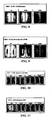
- FIGs. 2-5 show 100x optical images of resistor surfaces for the four fixer fluid formulations after kogation testing on the resistor life tester ("RLT").
- control fixer fluid showed marginal kogation performance. A significant decrease in the drop velocity was observed over the course of firing 400 million drops/nozzle. The control fixer fluid showed a decreased drop velocity that occurred before approximately 100 million drops/nozzle. The drop velocity remained low and noisy, as evidenced by the large variation (large standard deviation) in drop velocity among the three pens tested.
- Fixer Fluids including DephotropeTM CAS-MF, Hostaphat® LPKN, Emphos® CS1361, and Emphos® 9NP
- phosphate ester surfactants DephotropeTM CAS-MF (reference example), Hostaphat® LPKN, Emphos® CS1361, and Emphos® 9NP, were each formulated into a fixer fluid at 0.2% and 0.5%.
- Formulation 1563 included 0.2% DephotropeTM CAS-MF
- Formulation 1564 included 0.5% DephotropeTM CAS-MF
- Formulation 1565 included 0.2% Hostaphat® LPKN
- Formulation 1566 included 0.5% Hostaphat® LPKN
- Formulation 1577 included 0.2% Emphos® CS1361
- Formulation 1578 included 0.5% Emphos® CS1361
- Formulation 1579 included 0.2% Emphos® 9NP
- Formulation 1580 included 0.5% Emphos® 9NP.
- the fixer fluids including Hostaphat® LPKN were filtered through a 0.22 micron nylon filter before being fired on the RLT because Hostaphat® LPKN is a solid at room temperature and did not go into solution well at either 0.2% or 0.5%.
- a control fixer fluid, Formulation 1562, having no phosphate ester surfactant was also prepared.
- the fixer fluids all included a polyguanidine compound as the cationic polymer.
- FIG. 6 shows 100x optical images of resistor surfaces for Formulation 1562 after kogation testing on the RLT. As shown in FIG. 6 , the resistors were very dirty.
- FIG. 7 shows the average drop velocity for the fixer fluids that included the phosphate ester surfactants compared to that of the control fixer fluid. The control fixer fluid showed a dramatic decrease in the drop velocity over a small number of drops fired while the fixer fluids having the phosphate ester surfactants showed improved velocity stability.
- FIGs. 6 and 8-11 show 100x optical images of the resistor surfaces after kogation testing on the RLT for the fixer fluids formulated at 0.2% surfactant concentration (Formulations 1563, 1565, 1577, and 1579).
- the fixer fluids having the phosphate ester surfactants showed a significant improvement in the kogation performance.
- the drop velocity of these fixer fluids was much more stable and the resistor surfaces were cleaner compared to that observed with the control fixer fluid.
- the fixer fluids having 0.5% of each of the phosphate ester surfactants showed similar improvements.
- fixer fluids including 5% of Vantocil® IB or LuposolTM FG were prepared.
- the fixer fluids had a pH of 4 or a pH of 7.
- 2% of the phosphate ester surfactants listed in Table 2 was added.
- Chemical structures for each of the phosphate ester surfactants and the number of moles of EO in each of the phosphate ester surfactants are also listed in Table 2.
- Table 2 Phosphate Ester Surfactants.
Landscapes
- Chemical & Material Sciences (AREA)
- Life Sciences & Earth Sciences (AREA)
- Engineering & Computer Science (AREA)
- Materials Engineering (AREA)
- Wood Science & Technology (AREA)
- Organic Chemistry (AREA)
- Chemical Kinetics & Catalysis (AREA)
- Ink Jet Recording Methods And Recording Media Thereof (AREA)
- Inks, Pencil-Leads, Or Crayons (AREA)
- Ink Jet (AREA)
Claims (8)
- Fluide fixateur ayant une kogation réduite, comprenant :au moins un tensio-actif ester phosphate et au moins un polymère cationique ;caractérisé par le fait que le fluide fixateur est formulé de telle sorte que le au moins un tensio-actif ester phosphate ne précipite pas avec le au moins un polymère cationique, le au moins un tensio-actif ester phosphate étant choisi dans le groupe consistant en un nonylphénol éthoxylate ester phosphate, un sel d'un nonylphénol éthoxylate ester phosphate, un nonylphénoxy polyéthoxy éthanol phosphaté, un sel d'éthyl-hexanol ester phosphate éthoxylé, un ester de glycol phosphaté et leurs mélanges ; etdans lequel, lorsque le au moins un tensio-actif ester phosphate est choisi dans le groupe consistant en un nonylphénol éthoxylate ester phosphate, un sel d'un nonylphénol éthoxylate ester phosphate, un nonylphénoxy polyéthoxy éthanol phosphaté, un sel d'éthyl-hexanol ester phosphate ethoxylé et leurs mélanges, le au moins un tensio-actif ester phosphate a plus de 4 moles d'oxyde d'éthylène par mole du au moins un tensio-actif ester phosphate.
- Procédé de production d'un fluide fixateur ayant une kogation réduite, comprenant :la combinaison d'au moins un tensio-actif ester phosphate et d'au moins un polymère cationique à un véhicule d'encre,caractérisé en par le fait que le fluide fixateur est formulé de telle sorte que le au moins un tensio-actif ester phosphate ne précipite pas avec le au moins un polymère cationique, le au moins un tensio-actif ester phosphate étant choisi dans le groupe consistant en un nonylphénol éthoxylate ester phosphate, un sel d'un nonylphénol éthoxylate ester phosphate, un nonylphénoxy polyéthoxy éthanol phosphaté, un sel d'éthyl-hexanol ester phosphate ethoxylé, un ester de glycol phosphaté et leurs mélanges ; etdans lequel, lorsque le au moins un tensio-actif ester phosphate est choisi dans le groupe consistant en un nonylphénol éthoxylate ester phosphate, un sel d'un nonylphénol éthoxylate ester phosphate, un nonylphénoxy polyéthoxy éthanol phosphaté, un sel d'éthyl-hexanol ester phosphate éthoxylé et leurs mélanges, le au moins un tensio-actif ester phosphate comprend plus de 4 moles d'oxyde d'éthylène par mole du au moins un tensio-actif ester phosphate.
- Fluide fixateur ou procédé des revendications 1 ou 2, dans lequel le au moins un tensio-actif ester phosphate est au moins un tensio-actif ester phosphate anionique choisi dans le groupe consistant en un nonylphénol éthoxylate ester phosphate, un sel d'un nonylphénol éthoxylate ester phosphate, un nonylphénoxy polyéthoxy éthanol phosphaté, un sel d'éthyl-hexanol ester phosphate éthoxylé, un ester de glycol phosphaté et leurs mélanges.
- Encre pour jet d'encre ayant une kogation réduite, comprenant un colorant, au moins un tensio-actif ester phosphate et un polymère cationique ;
caractérisée par le fait que le au moins un tensio-actif ester phosphate est choisi dans le groupe consistant en un nonylphénol éthoxylate ester phosphate, un sel d'un nonylphénol éthoxylate ester phosphate, un nonylphénoxy polyéthoxy éthanol phosphaté, un sel d'éthyl-hexanol ester phosphate éthoxylé, un ester de glycol phosphaté et leurs mélanges ; et
dans laquelle, lorsque le au moins un tensio-actif ester phosphate est choisi dans le groupe consistant en un nonylphénol éthoxylate ester phosphate, un sel d'un nonylphénol éthoxylate ester phosphate, un nonylphénoxy polyéthoxy éthanol phosphaté, un sel d'éthyl-hexanol ester phosphate éthoxylé et leur mélanges, le au moins un tensio-actif ester phosphate comprend plus de 4 moles d'oxyde d'éthylène par mole du au moins un tensio-actif ester phosphate. - Fluide fixateur, procédé ou encre pour jet d'encre selon l'une quelconque des revendications 1 à 4, dans lequel ou laquelle le au moins un tensio-actif ester phosphate comprend une quantité supérieure ou égale à approximativement 6 moles d'oxyde d'éthylène par mole du au moins un tensio-actif ester phosphate.
- Fluide fixateur ou procédé selon l'une quelconque des revendications 1 à 3 ou 5, dans lequel le au moins un tensio-actif ester phosphate est présent d'approximativement 0,01 % en poids (« % en poids») à approximativement 10 % en poids d'un poids total du fluide fixateur.
- Fluide fixateur ou procédé selon l'une quelconque des revendications 1 à 3, 5 ou 6, dans lequel le au moins un polymère cationique comprend au moins l'un parmi un composé polyéthylène imine, une polyallylamine, une polyamine quaternisée, un polymère d'hexaméthylène guanide, un polymère d'hexaméthylène biguanide ou leurs mélanges.
- Fluide fixateur ou procédé selon l'une quelconque des revendications 1 à 3 ou 5 à 7, dans lequel le au moins un polymère cationique comprend au moins un composé polyguanidine.
Applications Claiming Priority (2)
| Application Number | Priority Date | Filing Date | Title |
|---|---|---|---|
| US10/820,612 US7388040B2 (en) | 2004-04-08 | 2004-04-08 | Anti-kogation additives compatible with cationic polymers for fixer-based printing systems |
| US820612 | 2004-04-08 |
Publications (2)
| Publication Number | Publication Date |
|---|---|
| EP1584665A1 EP1584665A1 (fr) | 2005-10-12 |
| EP1584665B1 true EP1584665B1 (fr) | 2012-05-09 |
Family
ID=34912718
Family Applications (1)
| Application Number | Title | Priority Date | Filing Date |
|---|---|---|---|
| EP05005179A Ceased EP1584665B1 (fr) | 2004-04-08 | 2005-03-09 | Additifs pour la reduction de kogation compatible avec les polymères cationiques pour les systèmes enregistrement à base de l' agent de fixation |
Country Status (3)
| Country | Link |
|---|---|
| US (1) | US7388040B2 (fr) |
| EP (1) | EP1584665B1 (fr) |
| JP (1) | JP4145891B2 (fr) |
Families Citing this family (19)
| Publication number | Priority date | Publication date | Assignee | Title |
|---|---|---|---|---|
| EP2220182B1 (fr) * | 2007-12-14 | 2013-02-27 | Hewlett-Packard Development Company, L.P. | Tensioactifs phosphatés pour encres pour jet d'encre contenant des pigments et du latex |
| US8770736B2 (en) | 2009-12-21 | 2014-07-08 | Hewlett-Packard Development Company, L.P. | Inkjet ink composition containing anti-kogation agents |
| BR112012012317A2 (pt) * | 2009-12-21 | 2020-08-11 | Hewlett - Packard Development Company, L, P. | composição de tinta para jato de tinta e método para impressão a jato de tinta durante um período de tempo prolongado |
| JP5566745B2 (ja) * | 2010-03-26 | 2014-08-06 | 富士フイルム株式会社 | インク組成物、インクセット、および画像形成方法 |
| JP5489817B2 (ja) * | 2010-03-29 | 2014-05-14 | 富士フイルム株式会社 | インクセット及び画像形成方法 |
| JP2011235632A (ja) * | 2010-04-12 | 2011-11-24 | Fujifilm Corp | インクセット及び画像形成方法 |
| CN103097469B (zh) * | 2010-09-24 | 2016-05-18 | 惠普发展公司,有限责任合伙企业 | 抗结垢剂 |
| IN2014DN03097A (fr) * | 2011-10-28 | 2015-05-15 | Hewlett Packard Development Co | |
| US8808441B2 (en) | 2012-12-19 | 2014-08-19 | Hewlett-Packard Development Company, L.P. | Inkjet inks |
| CN107922771B (zh) * | 2015-10-19 | 2022-02-11 | 惠普发展公司,有限责任合伙企业 | 可紫外(uv)固化的喷墨墨水组合物 |
| US10738208B2 (en) | 2017-01-31 | 2020-08-11 | Hewlett-Packard Development Company, L.P. | Inkjet ink composition |
| EP3494182B1 (fr) | 2017-01-31 | 2020-04-22 | Hewlett-Packard Development Company, L.P. | Système d'impression par jet d'encre |
| WO2019022746A1 (fr) | 2017-07-27 | 2019-01-31 | Hewlett-Packard Development Company, L.P. | Particules de polymère |
| EP3494183B1 (fr) | 2017-01-31 | 2022-01-26 | Hewlett-Packard Development Company, L.P. | Composition d'encre pour l'impression par jet d'encre et cartouche associée |
| WO2018143962A1 (fr) | 2017-01-31 | 2018-08-09 | Hewlett-Packard Development Company, L.P. | Procédé d'impression à jet d'encre et composition de fixation |
| US11208570B2 (en) | 2017-04-13 | 2021-12-28 | Hewlett-Packard Development Company, L.P. | White inks |
| US20210163774A1 (en) * | 2019-01-09 | 2021-06-03 | Hewlett-Packard Development Company, L.P. | Fluid sets |
| EP3924548B1 (fr) * | 2019-10-11 | 2023-04-19 | Hewlett-Packard Development Company, L.P. | Fluides fixateurs |
| JP7528575B2 (ja) | 2020-07-06 | 2024-08-06 | コニカミノルタ株式会社 | 前処理液、当該前処理液を含むインクジェット記録液セットおよび画像形成方法 |
Family Cites Families (33)
| Publication number | Priority date | Publication date | Assignee | Title |
|---|---|---|---|---|
| US66604A (en) * | 1867-07-09 | Andrew s | ||
| US4176107A (en) * | 1978-01-20 | 1979-11-27 | Buckman Laboratories, Inc. | Water-soluble dispersions of high molecular water-soluble polymers containing a surfactant and a water-soluble organic carrier which is a hydroxy compound containing repeating alkylene oxide units |
| JPS5736170A (ja) | 1980-08-14 | 1982-02-26 | Fuji Photo Film Co Ltd | Inkujetsutoinsatsuyosuiseiinki |
| JPS6023099A (ja) | 1983-07-19 | 1985-02-05 | Tomoegawa Paper Co Ltd | オフセツト印刷用不感脂化処理液 |
| JP2683340B2 (ja) | 1986-12-26 | 1997-11-26 | ライオン株式会社 | 泡沫生成エアゾール組成物 |
| US5062892A (en) | 1989-10-27 | 1991-11-05 | Hewlett-Packard Company | Ink additives for improved ink-jet performance |
| US5062893A (en) | 1990-06-22 | 1991-11-05 | Hewlett-Packard Company | Ink formulations by mixing anionic waterfast dyes containing two or more carboxyl groups |
| US5164232A (en) | 1991-02-11 | 1992-11-17 | Xerox Corporation | Ink compositions |
| US5116409A (en) | 1991-04-17 | 1992-05-26 | Hewlett-Packard Company | Bleed alleviation in ink-jet inks |
| US5614007A (en) | 1994-03-29 | 1997-03-25 | Canon Kabushiki Kaisha | Ink set, and method and apparatus for image formation employing the same |
| US5993527A (en) | 1994-11-17 | 1999-11-30 | Canon Kabushiki Kaisha | Ink-jet color recording process and ink set therefor |
| US6013123A (en) | 1995-01-31 | 2000-01-11 | The Rowland Institute For Science | Inking methods and compositions for production of digitized stereoscopic polarizing images |
| JP3466800B2 (ja) | 1995-11-30 | 2003-11-17 | キヤノン株式会社 | インクジェット用インク、インクジェット記録方法及びインクジェット機器 |
| GB9702354D0 (en) | 1997-02-05 | 1997-03-26 | Zeneca Ltd | Compounds and their use |
| JPH10279445A (ja) | 1997-03-31 | 1998-10-20 | Shiseido Co Ltd | 化粧料 |
| JP2001081374A (ja) | 1999-09-17 | 2001-03-27 | Sony Corp | 水性インク |
| JP4827295B2 (ja) | 1999-12-14 | 2011-11-30 | キヤノン株式会社 | 液体組成物、インクジェット記録ヘッドの洗浄方法、インクジェット記録装置、カートリッジ及びインクジェット記録ヘッドの再生方法 |
| US6610129B1 (en) * | 2000-04-05 | 2003-08-26 | Hewlett-Packard Development Company | Ink-jet inks which prevent kogation and prolong resistor life in ink-jet pens |
| US6607266B2 (en) * | 2000-09-25 | 2003-08-19 | Canon Kabushiki Kaisha | Liquid composition, ink for ink-jet, ink set for ink-jet recording, ink-jet recording method, recording unit, ink cartridge, and ink jet recording apparatus |
| DE60104718T2 (de) * | 2000-12-07 | 2006-04-27 | Avecia Ltd., Blackley | Beschichtungszusammensetzungen auf guanidinbasis und aufzeichnungsmaterialien, die diese zusammensetzungen enthalten |
| US6533851B2 (en) | 2001-02-12 | 2003-03-18 | Hewlett-Packard Company | Kogation reducing ink |
| US6780912B2 (en) | 2001-02-26 | 2004-08-24 | Hewlett-Packard Development Company L.P. | Addition of metal ions to improve lightfastness of inkjet inks |
| US6749675B2 (en) * | 2001-04-06 | 2004-06-15 | Seiko Epson Corporation | Aqueous ink composition |
| US6540821B2 (en) | 2001-05-04 | 2003-04-01 | Hewlett-Packard Company | Inkjet color ink set |
| JP3799292B2 (ja) * | 2001-05-10 | 2006-07-19 | キヤノン株式会社 | 液体組成物、インクセット及び被記録媒体に着色部を形成する方法 |
| US6719420B2 (en) | 2001-05-10 | 2004-04-13 | Canon Kabushiki Kaisha | Liquid composition, ink set, method for forming colored portion on recording medium, and ink-jet recording apparatus |
| US6821328B2 (en) | 2001-05-10 | 2004-11-23 | Canon Kabushiki Kaisha | Liquid composition, ink set, method of forming colored portion in recording medium and ink-jet recording apparatus |
| US6648950B2 (en) | 2001-10-15 | 2003-11-18 | Hewlett-Packard Development Company, L.P. | Electro-thermal odor-releasing inks and methods for releasing odors from the same |
| US6726757B2 (en) | 2001-10-19 | 2004-04-27 | Hewlett-Packard Development Company, L.P. | Ink additives to improve decel |
| US7157504B2 (en) * | 2002-09-30 | 2007-01-02 | Hewlett-Packard Development Company, L.P. | Ink-jet printing methods and systems providing improved image durability |
| JP2004189870A (ja) * | 2002-12-11 | 2004-07-08 | Fuji Xerox Co Ltd | インクジェットインク、並びに、インクジェット記録方法 |
| US8163133B2 (en) * | 2003-04-01 | 2012-04-24 | Akzo Nobel N.V. | Dispersion |
| US7192472B2 (en) * | 2003-09-18 | 2007-03-20 | E. I. Du Pont De Nemours And Company | Inkjet ink composition |
-
2004
- 2004-04-08 US US10/820,612 patent/US7388040B2/en not_active Expired - Fee Related
-
2005
- 2005-03-09 EP EP05005179A patent/EP1584665B1/fr not_active Ceased
- 2005-04-06 JP JP2005110023A patent/JP4145891B2/ja not_active Expired - Fee Related
Also Published As
| Publication number | Publication date |
|---|---|
| JP2005297564A (ja) | 2005-10-27 |
| US20050225615A1 (en) | 2005-10-13 |
| JP4145891B2 (ja) | 2008-09-03 |
| US7388040B2 (en) | 2008-06-17 |
| EP1584665A1 (fr) | 2005-10-12 |
Similar Documents
| Publication | Publication Date | Title |
|---|---|---|
| EP1584665B1 (fr) | Additifs pour la reduction de kogation compatible avec les polymères cationiques pour les systèmes enregistrement à base de l' agent de fixation | |
| US7201795B2 (en) | Ink composition containing polyether-modified polysiloxane | |
| CN102741368B (zh) | 定影液组合物及包含其的喷墨油墨组 | |
| EP0767225B1 (fr) | Composition d'encre pour l'enregistrement par jet d'encre et procédé d'enregistrement par jet d'encre | |
| CA2266210C (fr) | Encre, jeu d'encres, cartouche d'encre, detecteur de signaux, et appareil et methode d'enregistrement de l'image | |
| EP1780013B1 (fr) | Encre aqueuse, méthode d'enregistrement par jet d'encre, réservoir d'encre, unité d'enregistrement et appareil d'enregistrement par jet d'encre | |
| EP1764397B1 (fr) | Encre cyan et système d'encre | |
| JP5566745B2 (ja) | インク組成物、インクセット、および画像形成方法 | |
| EP0838507B1 (fr) | Composition d'encre pour l'enregistrement par jet d'encre et assortiment d'encres | |
| US20120236068A1 (en) | Ink composition | |
| JP3991289B2 (ja) | にじみの少ない画像を形成可能な顔料系インク組成物 | |
| JP2010023265A (ja) | インクジェット記録方法及び記録物 | |
| JP4465722B2 (ja) | インク組成物、インクカートリッジ、およびインクジェット記録方法 | |
| JP2006282810A (ja) | インク組成物、これを用いた記録方法、および記録物 | |
| EP3820950B1 (fr) | Additifs d'encre permettant d'améliorer le temps de séchage et la performance de déshydratation de tête d'impression | |
| JPH08283631A (ja) | インクジェット記録用インク | |
| EP0913437A1 (fr) | Compositions d'encres améliorées pour l'impression thermique par jet d'encre | |
| JP2005120181A (ja) | インク組成物 | |
| JP2006282802A (ja) | インク組成物、これを用いた記録方法、および記録物 | |
| EP4267685B1 (fr) | Encres pour jet d'encre pour réduire au minimum les artefacts fantômes | |
| JPH10251583A (ja) | インクジェットインキ組成物 | |
| JP4957328B2 (ja) | インクジェット式記録装置およびインクジェット式記録方法 | |
| JP2006282787A (ja) | インク組成物、これを用いた記録方法、および記録物 | |
| JP2024065510A (ja) | 水系のインクジェットインク組成物及びインクジェット記録方法 | |
| JP2005263972A (ja) | インク組成物及びこれを用いた記録方法、記録物 |
Legal Events
| Date | Code | Title | Description |
|---|---|---|---|
| PUAI | Public reference made under article 153(3) epc to a published international application that has entered the european phase |
Free format text: ORIGINAL CODE: 0009012 |
|
| AK | Designated contracting states |
Kind code of ref document: A1 Designated state(s): AT BE BG CH CY CZ DE DK EE ES FI FR GB GR HU IE IS IT LI LT LU MC NL PL PT RO SE SI SK TR |
|
| AX | Request for extension of the european patent |
Extension state: AL BA HR LV MK YU |
|
| 17P | Request for examination filed |
Effective date: 20060208 |
|
| AKX | Designation fees paid |
Designated state(s): DE FR GB NL |
|
| 17Q | First examination report despatched |
Effective date: 20070110 |
|
| GRAP | Despatch of communication of intention to grant a patent |
Free format text: ORIGINAL CODE: EPIDOSNIGR1 |
|
| GRAS | Grant fee paid |
Free format text: ORIGINAL CODE: EPIDOSNIGR3 |
|
| GRAA | (expected) grant |
Free format text: ORIGINAL CODE: 0009210 |
|
| AK | Designated contracting states |
Kind code of ref document: B1 Designated state(s): DE FR GB NL |
|
| REG | Reference to a national code |
Ref country code: GB Ref legal event code: FG4D |
|
| REG | Reference to a national code |
Ref country code: NL Ref legal event code: T3 |
|
| REG | Reference to a national code |
Ref country code: DE Ref legal event code: R096 Ref document number: 602005034059 Country of ref document: DE Effective date: 20120705 |
|
| PLBE | No opposition filed within time limit |
Free format text: ORIGINAL CODE: 0009261 |
|
| STAA | Information on the status of an ep patent application or granted ep patent |
Free format text: STATUS: NO OPPOSITION FILED WITHIN TIME LIMIT |
|
| 26N | No opposition filed |
Effective date: 20130212 |
|
| REG | Reference to a national code |
Ref country code: DE Ref legal event code: R097 Ref document number: 602005034059 Country of ref document: DE Effective date: 20130212 |
|
| REG | Reference to a national code |
Ref country code: FR Ref legal event code: PLFP Year of fee payment: 12 |
|
| REG | Reference to a national code |
Ref country code: FR Ref legal event code: PLFP Year of fee payment: 13 |
|
| REG | Reference to a national code |
Ref country code: FR Ref legal event code: PLFP Year of fee payment: 14 |
|
| PGFP | Annual fee paid to national office [announced via postgrant information from national office to epo] |
Ref country code: DE Payment date: 20200218 Year of fee payment: 16 Ref country code: NL Payment date: 20200302 Year of fee payment: 16 Ref country code: GB Payment date: 20200221 Year of fee payment: 16 |
|
| PGFP | Annual fee paid to national office [announced via postgrant information from national office to epo] |
Ref country code: FR Payment date: 20200220 Year of fee payment: 16 |
|
| REG | Reference to a national code |
Ref country code: DE Ref legal event code: R119 Ref document number: 602005034059 Country of ref document: DE |
|
| REG | Reference to a national code |
Ref country code: NL Ref legal event code: MM Effective date: 20210401 |
|
| GBPC | Gb: european patent ceased through non-payment of renewal fee |
Effective date: 20210309 |
|
| PG25 | Lapsed in a contracting state [announced via postgrant information from national office to epo] |
Ref country code: NL Free format text: LAPSE BECAUSE OF NON-PAYMENT OF DUE FEES Effective date: 20210401 Ref country code: GB Free format text: LAPSE BECAUSE OF NON-PAYMENT OF DUE FEES Effective date: 20210309 Ref country code: FR Free format text: LAPSE BECAUSE OF NON-PAYMENT OF DUE FEES Effective date: 20210331 Ref country code: DE Free format text: LAPSE BECAUSE OF NON-PAYMENT OF DUE FEES Effective date: 20211001 |