EP1579506B1 - Wasserlösliche Metall- und Halbleiternanopartikelkomplexe und Verfahren zur Untersuchung der Vermehrung von Zielzellen - Google Patents
Wasserlösliche Metall- und Halbleiternanopartikelkomplexe und Verfahren zur Untersuchung der Vermehrung von Zielzellen Download PDFInfo
- Publication number
- EP1579506B1 EP1579506B1 EP03815180.9A EP03815180A EP1579506B1 EP 1579506 B1 EP1579506 B1 EP 1579506B1 EP 03815180 A EP03815180 A EP 03815180A EP 1579506 B1 EP1579506 B1 EP 1579506B1
- Authority
- EP
- European Patent Office
- Prior art keywords
- complex according
- complex
- nanoparticle
- nanoparticles
- semiconductor
- Prior art date
- Legal status (The legal status is an assumption and is not a legal conclusion. Google has not performed a legal analysis and makes no representation as to the accuracy of the status listed.)
- Expired - Lifetime
Links
Images






Classifications
-
- A—HUMAN NECESSITIES
- A61—MEDICAL OR VETERINARY SCIENCE; HYGIENE
- A61K—PREPARATIONS FOR MEDICAL, DENTAL OR TOILETRY PURPOSES
- A61K49/00—Preparations for testing in vivo
- A61K49/001—Preparation for luminescence or biological staining
- A61K49/0063—Preparation for luminescence or biological staining characterised by a special physical or galenical form, e.g. emulsions, microspheres
- A61K49/0065—Preparation for luminescence or biological staining characterised by a special physical or galenical form, e.g. emulsions, microspheres the luminescent/fluorescent agent having itself a special physical form, e.g. gold nanoparticle
- A61K49/0067—Preparation for luminescence or biological staining characterised by a special physical or galenical form, e.g. emulsions, microspheres the luminescent/fluorescent agent having itself a special physical form, e.g. gold nanoparticle quantum dots, fluorescent nanocrystals
-
- B—PERFORMING OPERATIONS; TRANSPORTING
- B82—NANOTECHNOLOGY
- B82Y—SPECIFIC USES OR APPLICATIONS OF NANOSTRUCTURES; MEASUREMENT OR ANALYSIS OF NANOSTRUCTURES; MANUFACTURE OR TREATMENT OF NANOSTRUCTURES
- B82Y25/00—Nanomagnetism, e.g. magnetoimpedance, anisotropic magnetoresistance, giant magnetoresistance or tunneling magnetoresistance
-
- B—PERFORMING OPERATIONS; TRANSPORTING
- B82—NANOTECHNOLOGY
- B82Y—SPECIFIC USES OR APPLICATIONS OF NANOSTRUCTURES; MEASUREMENT OR ANALYSIS OF NANOSTRUCTURES; MANUFACTURE OR TREATMENT OF NANOSTRUCTURES
- B82Y30/00—Nanotechnology for materials or surface science, e.g. nanocomposites
-
- B—PERFORMING OPERATIONS; TRANSPORTING
- B82—NANOTECHNOLOGY
- B82Y—SPECIFIC USES OR APPLICATIONS OF NANOSTRUCTURES; MEASUREMENT OR ANALYSIS OF NANOSTRUCTURES; MANUFACTURE OR TREATMENT OF NANOSTRUCTURES
- B82Y5/00—Nanobiotechnology or nanomedicine, e.g. protein engineering or drug delivery
-
- H—ELECTRICITY
- H01—ELECTRIC ELEMENTS
- H01F—MAGNETS; INDUCTANCES; TRANSFORMERS; SELECTION OF MATERIALS FOR THEIR MAGNETIC PROPERTIES
- H01F1/00—Magnets or magnetic bodies characterised by the magnetic materials therefor; Selection of materials for their magnetic properties
- H01F1/0036—Magnets or magnetic bodies characterised by the magnetic materials therefor; Selection of materials for their magnetic properties showing low dimensional magnetism, i.e. spin rearrangements due to a restriction of dimensions, e.g. showing giant magnetoresistivity
- H01F1/0045—Zero dimensional, e.g. nanoparticles, soft nanoparticles for medical/biological use
- H01F1/0054—Coated nanoparticles, e.g. nanoparticles coated with organic surfactant
-
- H—ELECTRICITY
- H01—ELECTRIC ELEMENTS
- H01F—MAGNETS; INDUCTANCES; TRANSFORMERS; SELECTION OF MATERIALS FOR THEIR MAGNETIC PROPERTIES
- H01F1/00—Magnets or magnetic bodies characterised by the magnetic materials therefor; Selection of materials for their magnetic properties
- H01F1/0036—Magnets or magnetic bodies characterised by the magnetic materials therefor; Selection of materials for their magnetic properties showing low dimensional magnetism, i.e. spin rearrangements due to a restriction of dimensions, e.g. showing giant magnetoresistivity
- H01F1/0045—Zero dimensional, e.g. nanoparticles, soft nanoparticles for medical/biological use
- H01F1/0063—Zero dimensional, e.g. nanoparticles, soft nanoparticles for medical/biological use in a non-magnetic matrix, e.g. granular solids
-
- H—ELECTRICITY
- H01—ELECTRIC ELEMENTS
- H01F—MAGNETS; INDUCTANCES; TRANSFORMERS; SELECTION OF MATERIALS FOR THEIR MAGNETIC PROPERTIES
- H01F1/00—Magnets or magnetic bodies characterised by the magnetic materials therefor; Selection of materials for their magnetic properties
- H01F1/01—Magnets or magnetic bodies characterised by the magnetic materials therefor; Selection of materials for their magnetic properties of inorganic materials
- H01F1/03—Magnets or magnetic bodies characterised by the magnetic materials therefor; Selection of materials for their magnetic properties of inorganic materials characterised by their coercivity
- H01F1/12—Magnets or magnetic bodies characterised by the magnetic materials therefor; Selection of materials for their magnetic properties of inorganic materials characterised by their coercivity of soft-magnetic materials
- H01F1/34—Magnets or magnetic bodies characterised by the magnetic materials therefor; Selection of materials for their magnetic properties of inorganic materials characterised by their coercivity of soft-magnetic materials non-metallic substances, e.g. ferrites
- H01F1/36—Magnets or magnetic bodies characterised by the magnetic materials therefor; Selection of materials for their magnetic properties of inorganic materials characterised by their coercivity of soft-magnetic materials non-metallic substances, e.g. ferrites in the form of particles
-
- H—ELECTRICITY
- H01—ELECTRIC ELEMENTS
- H01F—MAGNETS; INDUCTANCES; TRANSFORMERS; SELECTION OF MATERIALS FOR THEIR MAGNETIC PROPERTIES
- H01F1/00—Magnets or magnetic bodies characterised by the magnetic materials therefor; Selection of materials for their magnetic properties
- H01F1/01—Magnets or magnetic bodies characterised by the magnetic materials therefor; Selection of materials for their magnetic properties of inorganic materials
- H01F1/03—Magnets or magnetic bodies characterised by the magnetic materials therefor; Selection of materials for their magnetic properties of inorganic materials characterised by their coercivity
- H01F1/12—Magnets or magnetic bodies characterised by the magnetic materials therefor; Selection of materials for their magnetic properties of inorganic materials characterised by their coercivity of soft-magnetic materials
- H01F1/34—Magnets or magnetic bodies characterised by the magnetic materials therefor; Selection of materials for their magnetic properties of inorganic materials characterised by their coercivity of soft-magnetic materials non-metallic substances, e.g. ferrites
- H01F1/36—Magnets or magnetic bodies characterised by the magnetic materials therefor; Selection of materials for their magnetic properties of inorganic materials characterised by their coercivity of soft-magnetic materials non-metallic substances, e.g. ferrites in the form of particles
- H01F1/37—Magnets or magnetic bodies characterised by the magnetic materials therefor; Selection of materials for their magnetic properties of inorganic materials characterised by their coercivity of soft-magnetic materials non-metallic substances, e.g. ferrites in the form of particles in a bonding agent
-
- Y—GENERAL TAGGING OF NEW TECHNOLOGICAL DEVELOPMENTS; GENERAL TAGGING OF CROSS-SECTIONAL TECHNOLOGIES SPANNING OVER SEVERAL SECTIONS OF THE IPC; TECHNICAL SUBJECTS COVERED BY FORMER USPC CROSS-REFERENCE ART COLLECTIONS [XRACs] AND DIGESTS
- Y10—TECHNICAL SUBJECTS COVERED BY FORMER USPC
- Y10S—TECHNICAL SUBJECTS COVERED BY FORMER USPC CROSS-REFERENCE ART COLLECTIONS [XRACs] AND DIGESTS
- Y10S436/00—Chemistry: analytical and immunological testing
- Y10S436/829—Liposomes, e.g. encapsulation
-
- Y—GENERAL TAGGING OF NEW TECHNOLOGICAL DEVELOPMENTS; GENERAL TAGGING OF CROSS-SECTIONAL TECHNOLOGIES SPANNING OVER SEVERAL SECTIONS OF THE IPC; TECHNICAL SUBJECTS COVERED BY FORMER USPC CROSS-REFERENCE ART COLLECTIONS [XRACs] AND DIGESTS
- Y10—TECHNICAL SUBJECTS COVERED BY FORMER USPC
- Y10T—TECHNICAL SUBJECTS COVERED BY FORMER US CLASSIFICATION
- Y10T428/00—Stock material or miscellaneous articles
- Y10T428/29—Coated or structually defined flake, particle, cell, strand, strand portion, rod, filament, macroscopic fiber or mass thereof
- Y10T428/2982—Particulate matter [e.g., sphere, flake, etc.]
- Y10T428/2989—Microcapsule with solid core [includes liposome]
-
- Y—GENERAL TAGGING OF NEW TECHNOLOGICAL DEVELOPMENTS; GENERAL TAGGING OF CROSS-SECTIONAL TECHNOLOGIES SPANNING OVER SEVERAL SECTIONS OF THE IPC; TECHNICAL SUBJECTS COVERED BY FORMER USPC CROSS-REFERENCE ART COLLECTIONS [XRACs] AND DIGESTS
- Y10—TECHNICAL SUBJECTS COVERED BY FORMER USPC
- Y10T—TECHNICAL SUBJECTS COVERED BY FORMER US CLASSIFICATION
- Y10T428/00—Stock material or miscellaneous articles
- Y10T428/29—Coated or structually defined flake, particle, cell, strand, strand portion, rod, filament, macroscopic fiber or mass thereof
- Y10T428/2982—Particulate matter [e.g., sphere, flake, etc.]
- Y10T428/2991—Coated
Definitions
- Fluorescence is extremely susceptible to photobleaching.
- Nanometer-size semiconductor particles are particles which demonstrate quantum confinement effects in their luminescent properties. These semiconductor nanoparticles are also known as "quantum dots.” Colloidal particles containing quantum dots can be excited by a single excitation source to provide extremely robust, broadly tunable nanoemitters. In addition, the nanoparticles exhibit optical properties which are superior to that of organic dyes. Therefore, due to their distinctive luminescent properties, quantum dots have the potential to dramatically improve the use of fluorescent markers in biological studies.
- nanoparticles can be widely used as biological labels, they must maintain several key properties under aqueous biological conditions: solubility, low toxicity, efficient fluorescence, colloidal stability, and low non-specific adsorption. Unfortunately, despite recent advances, these conditions have not been simultaneously satisfied by the prior art. Not surprisingly, no reports have demonstrated in vivo applications of semiconductor nanoparticles.
- the hydrophobic ligands surrounding the nanoparticle are exchanged by a monolayer of ligands which is constituted of a thiol group at one end that binds to the nanoparticle surface and a hydrophilic group at the other end ( Chan et al. Science (1998) 281:2016 ; Mikulec, F. PhD. thesis at the Massachusetts Institute of Technology, 1999 ; Bawendi et al. U.S. Patent 6,319,426 B1 ).
- this process yielded semiconductor nanoparticles with poor stability.
- the hydrophobic ligands are exchanged by a multilayered shell of crosslinked silanes ( Bruchez et al. Science (1998) 281:2013 ).
- One disadvantage to this approach is the long amount of time it takes to exchange the hydrophobic ligands with crosslinked silanes.
- the soluble semiconductor nanoparticles exhibit high non-specific adsorption (e.g., the soluble semiconductor nanoparticles aggregate in biological systems).
- a micelle is typically a colloidal aggregate of amphiphilic substances.
- the nonpolar (e.g., hydrophobic) ends of the amphiphilic substance face inward and the polar (e.g., hydrophilic) tails face outward.
- This orientation of the amphiphilic substance results in a micelle having a hydrophobic core and a hydrophilic shell.
- the micelles disclosed in the Bawendi et al. patent are formed using sodium dioctyl sulfosuccinate (AOT) or Brij surfactants.
- AOT sodium dioctyl sulfosuccinate
- Brij surfactants contain block copolymers that have a long hydrophilic polyethylene glycol chain and one long hydrophobic hydrocarbon chain (containing twelve or eighteen carbon atoms).
- the micelles that are formed using the reagents disclosed in the Bawendi et al. patent are not stable in aqueous solutions.
- the invention provides a method for determining the progeny of a target cell in a mixture of cells.
- the method comprises introducing at least two complexes as defined claim 1 into the target cell; allowing the target cell to replicate; and observing the cells that comprise the complex in the mixture of cells, wherein the cells that comprise the complex constitute the progeny of the target cell.
- the invention provides a conjugate comprising a complex as defined claim 1 and a biological molecule.
- Figure 1 Characterization of water soluble complexes.
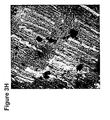
- A Transmission electron microscopy (JEOL 100 cx electron microscope at 80 kV) of water soluble complexes dried on a carbon-formvar coated 200 mesh nickel grid. Only the semiconductor nanoparticles inside the micelle core are visible. The particles are evenly spread on the surface of the grid. Most of the nanoparticles are isolated, some packs of two to four nanopaticles are visible. Thus, the majority of micelles contain a single nanoparticle.
- B The phospholipid layer that surrounds the dots can be visualized by negative staining with 1% phosphotungstic acid at pH 7.0. This allows visualization of both the nanoparticle and the micelle. The nanoparticle (dark point) are surrounded by a white halo of unstained phospholipids. The majority of the micelles contain a single nanoparticle.
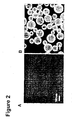
- FIG. 2 Hybridization of water soluble complexes conjugated with DNA to surface bound single-stranded DNA (ss-DNA).
- Biotin-modified DNA (20 bases, ss-DNA) was attached to streptavidin modified 4% agarose beads.
- a PBS solution containing water soluble complexes conjugated with 20 base long ss-DNA was added to the agarose bead solution and incubated at room temperature for more than 10 min. After rinsing once with PBS, the beads fluorescence was measured with an optical microscope.
- A The oligonucleotides bound to the agarose beads are not complementary to the oligonucleotides conjugated to the water soluble complexes.
- B The oligonucleotides bound to the agarose beads are complementary to the oligonucleotides conjugated to the water soluble complexes.
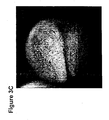
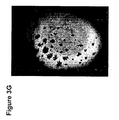
- FIG. 3 Water soluble complexes labeling of Xenopus embryos at several different stages and specific intracellular localization of complexes. Embryos were microinjected and cultured until various stages of development were reached. The embryos were imaged using an axioplan Zeiss microscope under direct UV excitation. For embryos (A) to (D), transmitted and fluorescent images have been superimposed. (A) Injection of one cell out of an eight cell stage embryo results in labeling of the single blastomeres. (B) Same embryo as in (A) shown one hour later. The daughter cells of the injected blastomere are labeled. (C) and (D) show two neurula embryos, which were injected in a single cell at the eight cell stage in the animal pole.
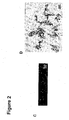
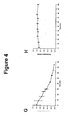
- FIG. 4 Resistance to photobleaching of water soluble complexes compared to green fluorescent protein (GFP).
- A) through (C) are consecutive images of membrane-GFP expressed in Xenopus ectoderm (animal pole).
- D) through (F) are consecutive images of nanoparticle-micelle complexes (quantum dots, QD) injected in Xenopus animal pole blastomers.
- G) and (H) are graphs representing the fluorescence of GFP and complexes, respectively, through an 80 minute period during which both fluorophores were exposed to continuous excitation UV light.
- the present invention relates to a water soluble complex *as defined claim 1
- a “nanometer particle” or “nanoparticle” refers to a metal or semiconductor particle with a diameter in the nanometer (nm) range.
- the nanoparticles may be any size that can be encapsulated in a micelle having a minimum diameter of approximately 5 nm and a maximum diameter of approximately 45 nm.
- the nanoparticle has a minimum diameter of about 1 nm and a maximum diameter of about 20 nm.
- the metal can be any metal, metal oxide, or mixtures thereof.
- the metal may be any size that can be encapsulated in a micelle having a diameter of approximately 5 nm to approximately 45 nm.
- Some examples of metals useful in the present invention include gold, silver, platinum, and copper.
- Examples of metal oxides include iron oxide, titanium oxide, chromium oxide, cobalt oxide, zinc oxide, copper oxide, manganese oxide, and nickel oxide.
- the metal or metal oxide can be magnetic.
- magnetic metals include, but are not limited to, iron, cobalt, nickel, manganese, and mixtures thereof.
- An example of a magnetic mixture of metals is a mixture of iron and platinum.
- magnetic metal oxides include, for example, iron oxide (e.g., magnetite, hematite) and ferrites (e.g., manganese ferrite, nickel ferrite, or manganese-zinc ferrite).
- the nanoparticle comprises a semiconductor.
- the semiconductor is capable of emitting electromagnetic radiation upon excitation.
- semiconductors include Group II-VI, Group III-V, and Group IV semiconductors.
- the Group II-VI semiconductors include, for example, MgS, MgSe, MgTe, CaS, CaSe, CaTe, SrS, SrSe, SrTe, BaS, BaSe, BaTe, ZnS, ZnSe, ZnTe, CdS, CdSe, CdTe, HgS, HgSe, HgTe, and mixtures thereof.
- Group III-V semiconductors include, for example, GaAs, GaN, GaP, GaSb, InGaAs, InP, InN, InSb, InAs, AlAs, AlP, AlSb, AlS, and mixtures therefore.
- Group IV semiconductors include, for example, germanium, lead, and silicon.
- the semiconductor may also include mixtures of semiconductors from more than one group , including any of the groups mentioned above.
- the nanoparticles are used in a core/shell configuration.
- a first semiconductor nanoparticle forms a core ranging in diameter, for example, from about 2 nm to about 10 nm.
- a shell, of another semiconductor nanoparticle material grows over the core nanoparticle to a thickness of, for example, 1-10 monolayers.
- a 1-10 monolayer thick shell of CdS is epitaxially grown over a core of CdSe, there is a dramatic increase in the room temperature photoluminescence quantum yield.
- the core of a nanoparticle in a core/shell configuration can comprise, for example, MgS, MgSe, MgTe, CaS, CaSe, CaTe, SrS, SrSe, SrTe, BaS, BaTe, BaTe, ZnS, ZnSe, ZnTe, CdS, CdSe, CdTe, HgS, HgSe, HgTe, GaAs, GaN, GaP, GaSb, InGaAs, InP, InN, InSb, InAs, AlAs, AlP, AlSb, AlS, PbS, PbSe, Ge, Si, or mixtures thereof.
- Examples of semiconductors useful for the shell of the nanoparticle include, ZnO, ZnS, ZnSe, ZnTe, CdO, CdS, CdSe, CdTe, MgS, MgSe, GaAs, GaN, GaP, GaAs, GaSb, HgO, HgS, HgSe, HgTe, InAs, InN, InP, InSb, AlAs, AlN, AlP, AlSb, or mixtures thereof.
- the core/shell comprises CdSe/CdS, CdSe/ZnS, or CdTe/ZnS.
- the semiconductor nanoparticles used in the invention preferably have the capability of absorbing radiation over a broad wavelength band.
- the wavelength band includes gamma radiation to microwave radiation.
- the semiconductor nanoparticles preferably have the capability of emitting radiation within a narrow wavelength band of about 40 nm or less, preferably about 20 nm or less.
- a narrow emission band permits the simultaneous use of a plurality of differently colored semiconductor nanoparticle complexes with different semiconductor nanoparticles without overlap (or with a small amount of overlap) in wavelengths of emitted light when exposed to the same energy source.
- the frequency or wavelength of the narrow wavelength band of light emitted from the semiconductor nanoparticle may be further selected according to the physical properties, such as size, of the semiconductor nanoparticle.
- the wavelength band of light emitted by the semiconductor nanoparticle, formed using the above embodiment may be determined by either (1) the size of the core, or (2) the size of the core and the size of the shell, depending on the composition of the core and shell of the semiconductor nanoparticle. For example, a nanoparticle composed of a 2.3 nm diameter core of CdSe and a 1-2 nm thick shell of ZnS will emit a narrow wavelength band of light with a peak intensity wavelength of 490 nm.
- the nanoparticle when the CdSe core is 4.2 nm in diameter, the nanoparticle will emit a narrow wavelength band of light with a peak intensity of 570 nm. Furthermore, if the core is composed of a 6 nm diameter core of CdTe, the nanoparticle will emit at 660 nm.
- a plurality of alternatives to changing the size of the semiconductor nanoparticles in order to selectably manipulate the emission wavelength of semiconductor nanoparticles exist. These alternatives include: (1) varying the composition of the nanoparticle, and (2) adding a plurality of shells around the core of the nanoparticle in the form of concentric shells. It should be noted that different wavelengths can also be obtained in multiple shell type semiconductor nanoparticles by respectively using different semiconductor nanoparticles in different shells, i.e., by not using the same semiconductor nanoparticle in each of the plurality of concentric shells.
- a CdS semiconductor nanoparticle having a emission wavelength of 400 nm may be alloyed with a CdSe semiconductor nanoparticle having an emission wavelength of 530 nm.
- the wavelength of the emission from a plurality of identically sized nanoparticles may be tuned continuously from 400 nm to 530 nm depending on the ratio of S to Se present in the nanoparticle.
- the ability to select from different emission wavelengths while maintaining the same size of the semiconductor nanoparticle may be important in applications which require the semiconductor nanoparticles to be uniform in size, or for example, an application which requires all semiconductor nanoparticles to have very small dimensions when used in applications with steric restrictions.
- the semiconductor nanoparticle is fluorescent
- the fluorescence of the semiconductor nanoparticle is preferably preserved (e.g., is not quenched).
- the nanoparticle is coated with a hydrophobic ligand.
- the hydrophobic ligand coats the nanoparticle through non-covalent or covalent interactions.
- An example of a hydrophobic ligand which coats the nanoparticle non-covalently is trioctylphosphine oxide (TOPO).
- hydrophobic ligands which can coat the nanoparticle covalently include fatty thiols, fatty amines, fatty alcohols, fatty acids, fatty ester groups and mixtures thereof. Such mixtures include, for example, a mixture of oleic acid and oleylamine. If the hydrophobic ligand is a fatty thiol, the alkyl group present in the fatty thiol preferably comprises a minimum of eight and a maximum of twenty carbon atoms.
- the hydrophobic ligand coated nanoparticle(s) is encapsulated in a micelle as defined claim 1.
- the micelles of the present invention have a minimum average diameter of about 5 nm and preferably about 9 nm.
- the maximum average diameter of the micelle is about 45 nm, preferably about 40 nm, more preferably about 35 nm, and most preferably about 15 nm.
- the size of a micelle depends on several factors including, for example, molecular weight, relative proportion of hydrophilic and hydrophobic moieties, and aggregation number.
- the micellar size can be determined by any method known to those in the art, such as atomic force microscopy, transmission electron microscopy, and scanning electron microscopy.
- the micelles useful in the present invention contain a hydrophobic core and a hydrophilic shell. It is possible to form reverse micelles having a hydrophilic core and a hydrophobic shell. However, these reverse micelles are not included in the present invention.
- amphiphilic substances comprising hydrophobic and hydrophilic moieties
- the cmc of the amphiliphilic substance can be determined by any known method in the art. For example, fluorescent probes, such as pyrene, may be used. The cmc can be obtained from a plot of the fluorescence intensity ratio from excitation spectra I 333 /I 338 against concentration.
- the hydrophobic moiety of the micelle comprises a phospholipid referred to as 1,2-di(fatty acyl)- sn -glycero-3-phosphoethanolamine, also known as phosphatidylethanolamine (PE).
- PE phosphatidylethanolamine
- the fatty acyl moieties can be any of the hydrocarbon chains as described above, and may be homogeneous or heterogeneous.
- the hydrophilic moiety comprises polyethylene glycol (PEG).
- the polyethylene glycol or polyethylene imine chain can be any molecular mass which can form a micelle having a diameter of approximately 5 to approximately 45 nm.
- the minimum average molecular mass for polyethylene glycol or polyethylene imine is about 350 Da, more preferably about 550 Da, even more preferably about 750 Da, and most preferably about 1000 Da.
- the maximum average molecular mass for polyethylene glycol or polyethylene imine is about 5000 Da, and more preferably about 2000 Da.
- the hydrophilic moiety can be attached to a hydrophobic moiety at any point on a chain of the hydrophobic moiety.
- the hydrophilic moiety is attached at the end of the chain.
- the PEG polymers described above are attached to a lipid.
- a PEG polymer attached to the phospholipid 1,2-di(fatty acyl)- sn- glycero-3-phosphoethanolamine (PE) forms PEG-PE conjugates.
- the PEG-PE conjugates can be used to form micelles.
- the PE moiety can be any of the PE moieties discussed above. In a preferred embodiment, the PE moiety is 1,2-dipalmitoyl-sn-glycero-3-phosphoethanolamine (DPPE).
- DPPE 1,2-dipalmitoyl-sn-glycero-3-phosphoethanolamine
- the hydrophobic core of the PEG-PE micelle described above can further comprise a second lipid.
- the second lipid is a phospholipid.
- phospholipids include 1,2-di(fatty acyl)- sn -glycero-3-phosphocholine, also known as phosphatidylcholine (PC).
- PC phosphatidylcholine
- the fatty acyl moieties in the phospholipid may comprise any of the hydrocarbon chains as described above.
- the micelle can be functionalized by attaching a chemical linker.
- the chemical linker can be attached anywhere on the micelle, such as, for example, on the hydrophobic moiety (e.g., phospholipids), hydrophilic moiety (e.g., polyethylene glycol), or combinations thereof.
- the chemical linker can be attached by any known method in the art.
- the linker is attached to the hydrophilic moiety.
- the chemical linker comprises a moiety capable of combining with biological molecules.
- moieties include, but are not limited to, amino, thiol, carboxyl, hydroxyl, succinimidyl, maleimidyl, biotin, aldehyde, and nitrilotriacetic moieties.
- the biological molecule can be any biological molecule.
- biological molecules include DNA, RNA, and molecules which comprise amino acid sequences such as peptides, polypeptides, and proteins.
- the biological molecule can be linked to the chemical moiety by any known method in the art.
- the biological molecule can be linked to the hydrophilic shell of the micelle through a thiol or amine group present on the biological molecule.
- the coupling reaction can involve an heterobifunctional coupler, such as SMCC (succinimidyl 4-N-maleimidomethyl)cyclohexane-1-carboxylate) or EDC (1-ethyl-3-[dimethylaminopropyl]carbodiimide hydrochloride) available from Pierce Biotechnology Inc.
- SMCC succinimidyl 4-N-maleimidomethyl
- EDC 1-ethyl-3-[dimethylaminopropyl]carbodiimide hydrochloride
- PEG-dipalmitoylphosphoethanolamine comprising chemical moieties, such as carboxy NHS ester, maleimide, PDP, amine, and biotin attached to PEG, are commercially available from Avanti Polar Lipids Inc.
- the micelle encapsulates nanoparticles coated with a hydrophobic ligand to form a water soluble complex.
- the inner core of the complex comprises at least one nanoparticle.
- the maximum number of nanoparticles can be any number that fits into the inner core of the complex.
- the inner core contains a maximum of about 20 nanoparticles, preferably about 50, more preferably about 100, even more preferably about 500, and most preferably about 1000 nanoparticles.
- the nanoparticles in the inner core of the complex can have at least two different diameters.
- the number of different diameters may be any number, such that the nanoparticles fit into the inner core of the complex.
- the ability to use different diameters of nanoparticles allows for emission of different wavelengths.
- the complex can comprise at least two different nanoparticles.
- the number of different nanoparticles used can by any number, such that the nanoparticles fit into the inner core of the complex.
- the ability to use combinations of different nanoparticles in the inner core allows for a greater array of emission wavelengths.
- the complexes are biocompatible.
- a complex is typically considered biocompatible if it is non-toxic in vivo and has low non-specific adsorption.
- Non-toxic in vivo is defined as having no adverse effects on the cells of an organism. For example, the phenotype and/or biological functions of the organism is not adversely affected.
- Low non-specific adsorption is defined as little or no aggregation (e.g., non-specific interaction) of the complexes with each other or other molecules (e.g., proteins).
- the aggregation can occur as a result of, for example, electrostatic interactions, ionic interaction, van der Waal forces, and hydrogen bonding forces.
- the complexes fulfill two criteria which render them useful in the biology of a living system.
- the first criteria is that the nanoparticle-micelles complexes are neutral (e.g., no biological activity of their own or toxicity for their host organism).
- the nanoparticle-micelle complexes are stable for a long period of time.
- the complexes can be introduced into a target cell in a mixture of cells to determine the progeny (lineage) of the target cell. Therefore, the cell type that the target cell differentiates into can be determined.
- the target cell can be any progenitor cell.
- the progenitor cell can be any cell which gives rise to differentiated cells. Examples of progenitor cells include stem cells, hemopoietic cells, and embryonic cells, such as blastomers.
- the target cell can be present in a mixture of cells.
- the mixture of cells can constitute cells in culture or a non-human organism, such as, for example, a tadpole, mouse, etc. When the mixture of cells constitutes an organism, the mixture of cells is typically an embryo.
- the complexes can be introduced into a target cell by any method known to those skilled in the art.
- the complexes can be microinjected into the target cell. It is preferable to introduce at least two complexes into the target cell. Therefore, when the target cell is allowed to replicate, the complexes are approximately equally distributed among the daughter cells.
- the conditions used to allow the target cell to replicate are known to those skilled in the art.
- the cells that comprise the complexes in the mixture of cells constitute the progeny of the target cell.
- Example 6 illustrates the method of determining cell lineage. Briefly, water-soluble complexes were injected into one cell of a two cell Xenopus embryo. During embryonic development, the fluorescence of the nanoparticle was confined only to the progeny of the injected cell (e.g., only half of the cells of the embryo was labeled).
- Example 6 also assessed the toxicity of the complexes by evaluating changes in the phenotype of the host organism as a whole. This is a very stringent criterium that cannot be necessarily measured in cell cultures because small changes that occur in cell culture may be inconsequential. In contrast, the embryo is less forgiving. Cellular perturbances in an embryo have a more global impact and translate into measurable biological phenotypes.
- the complexes demonstrated very little toxicity or activity. For example, when a low concentration (e.g., below an OD at 300 nm of 4.0 for 1.5 nl) of the complexes (from Example 1) was injected into Xenopus embryos, the toxicity of the complexes was sufficiently low to enable tracing of cell lineage using fluorescence visualization (see Example 6). At high concentration of the complexes (e.g., above an OD at 300 nm of 20.0 for 1.5 nl of complexes), the rate of defective or dead embryos increased. However, at low concentrations, the health of the embryo is statistically similar to uninjected embryos (Table 1).
- Example 6 The second criteria, stability of the complexes, is demonstrated in Example 6 and 7.
- the stability of the nanoparticle-micelle is measured by its degree of aggregation and the evolution of the fluorescence of the nanoparticle.
- the complexes did not exhibit any visible aggregation after four days of embryonic development.
- fluorescence was still detectable at the tadpole stage (see Example 6).
- the complexes are extremely resistance to photobleaching (see Example 7).
- Examples 6 and 7 show that the nanoparticle-complexes are biologically compatible for in vivo applications.
- the cells of interest in a mixture of cells, can be labeled with the complexes of the present invention.
- the cells can then be sorted by, for, example, a magnetic field or flow cytometry (e.g., fluorescence activated cell sorting (FACS)).
- FACS fluorescence activated cell sorting
- the nanoparticles in the complexes comprise magnetic metal nanoparticles.
- the nanoparticles in the complexes comprise semiconductor nanoparticles capable of emitting a wavelength when excited with an energy source.
- complexes of the present invention can be coupled to a biological molecule in order to induce a local increase in temperature.
- complexes comprising gold nanoparticles can be attached to DNA by, for example, the use of functionalized micelles.
- the complexes comprising metal nanoparticles can be heated, for example, by placing the complexes in an alternating magnetic field which increase the temperature of the metal nanoparticle.
- the increase in temperature induces, for example, denaturation of the biological molecule while leaving the surrounding biological molecules relatively unaffected.
- local heating can be applied to, for example, hybridization reactions of biological molecules.
- water soluble complexes can comprise a hydrophobic drug encapsulated in a micelle comprising a metal particle (e.g., gold) in the inner core.
- the metal particle can be heated to allow for release of the drug from the complex. Therefore, the release of the drug from the complexes can be controlled in vivo.
- complexes include, for example, nuclear magnetic resonance imaging, bar codes, and labeling biological molecules in microarrays, Northern Blots, Southern Blots, and Western Blots, etc.
- the coated-nanoparticle can be encapsulated in a micelle by any method known to those skilled in the art.
- the coated-nanoparticles can be incorporated in a micelle by chemical conjugation or by physical entrapment through dialysis or emulsification techniques. In both methods, the formation of the micelle and the encapsulation of the coated-nanoparticle typically result from the gain in the standard entropy of micellization.
- Emulsification techniques comprise, for example, placing coated-nanoparticles in a non-polar solvent comprising hydrophobic and hydrophilic moieties.
- non-polar solvents include chloroform and hexane. Water is added and the solution mixed. The non-polar solvent is then evaporated, for example, by heat, to yield water soluble complexes of micelle encapsulated coated-nanoparticles.
- the non-polar solvent may be evaporated first, followed by addition of water.
- the inventors have found that addition of water, followed by evaporation of the non-polar solvent, yields smaller complexes, and is therefore the preferred encapsulation process.
- Dialysis can also be utilized to encapsulate coated-nanoparticles.
- the coated-nanoparticles and non-polar solvent comprising hybrophobic and hydrophilic moieties are placed in a dialysis bag and dialyzed against water to yield water soluble complexes.
- Example 1 Synthesis of Water Soluble Complexes with PEG, molecular weight of 2000.
- CdSe/ZnS core/shell nanoparticles were coated with the hydrophobic ligand TOPO following standard procedure described in the literature ( Murray et al. J. Am. Chem. Soc. (1993) 115:8706 ; Hines et al. J. Phys. Chem. (1996) 100:468 ).
- the coated nanoparticles were stored at room temperature in hexane at 170 mg/ml.
- the residue was heated at 80°C. Next, 1 ml of water was added to obtain an optically clear solution containing PEG-PE/PC micelles.
- the solution contains both empty micelles and micelles containing the nanoparticles.
- the empty micelles were separated from the micelles containing the nanoparticle (i.e., water soluble complexes) with ultracentrifuation at 500,000 g for two hours.
- the micelles containing the nanoparticles formed a pellet while the empty micelles stayed in suspension. The supernatant was discarded and the water soluble complexes were suspended in water.
- the water soluble complexes are spherical and fairly monodisperse (Figs. 1A and B ).
- the inner core of the complex was approximately 6.4 nm in diameter.
- the size of the water soluble complex ranged from 10 to 15 nm. This size was similar to the diameter of empty micelles formed with 100% by weight of PEG(2000)-PE. Thus, the encapsulation of the semiconductor nanoparticle inside the micelle does not significantly perturb the geometry or size of the micelle.
- the complex is stable for months.
- the water soluble complexes were stable over a broad range of salt concentrations.
- the optical properties of the nanoparticles encapsulated in micelles was extremely well preserved.
- Example 2 Synthesis of Water Soluble Complexes with PEG, molecular weight of 2000.
- CdSe/ZnS core/shell nanoparticles were coated with the hydrophobic ligand TOPO following standard procedure described in the literature ( Murray et al. J. Am. Chem. Soc. (1993) 115:8706 ; Hines et al. J. Phys. Chem. (1996) 100:468 ).
- the coated nanoparticles were stored at room temperature in hexane at 170 mg/ml.
- the solution contains both empty micelles and micelles containing the nanoparticles.
- the empty micelles were separated from the micelles containing the nanoparticle (i.e., water soluble complexes) with ultracentrifuation at 500,000 g for two hours.
- the micelles containing the nanoparticles formed a pellet while the empty micelles stayed in suspension. The supernatant was discarded and the water soluble complexes were suspended in water.
- the water soluble complexes are spherical and fairly monodisperse.
- the inner core of the complex was approximately 6.4 nm in diameter.
- the size of the water soluble complex ranged from 10 to 15 nm. This size was similar to the diameter of empty micelles formed with 100% by weight of PEG(2000)-PE.
- the encapsulation of the semiconductor nanoparticle inside the micelle does not significantly perturb the geometry or size of the micelle.
- the complex is stable for months.
- the water soluble complexes were stable over a broad range of salt concentrations.
- the optical properties of the nanoparticles encapsulated in micelles was extremely well preserved.
- Example 3 Synthesis of Water Soluble Complexes with Various Molecular Weight of PEG.
- Water soluble complexes were formed with PEG having a molecular weight of 550 or 5000 according to the procedure described in Example 1 above.
- the use of mPEG550-PE or mPEG-5000-PE yielded complexes similar in shape to those obtained from mPEG-2000-PE.
- the water soluble complexes were attached to DNA.
- the micelle In particular, during formation of the micelle, up to 50% by weight of the PEG-PE phospholipids in Example 1 above, were replaced with amino PEG-PE (1,2,-distearoyl- sn -glycero-3-phosphoethanolamine-N-[amino(polyethylene glycol)2000] (Avanti Polar Lipids, Inc.).
- the resulting micelles have primary amino groups on their outer surfaces.
- Thiol modified DNA was then covalently coupled to the primary amines using SMCC as an heterobifunctional coupler. Non-coupled DNA was removed by ultracentrifugation.
- Oligonucleotide nanoparticle-micelle complexes bound specifically to complementary DNA, immobilized on 4% agarose beads, but not to non-complementary oligonucleotides ( Figs. 2A and B ). Hybridization occurred very rapidly; incubation times as low as 10 minutes yielded highly fluorescent agarose beads ( Fig. 2B ). Thus, the nanoparticle-micelle complexes do not prevent specific hybridization of the oligonucleotides to DNA targets.
- the water soluble complexes also exhibit excellent fluorescence.
- the fluorescence signal to background ratio was above 150, compared to about four for silica-coated semiconductor nanoparticles.
- nanoparticle-micelles To test the in vivo usefulness of the nanoparticle-micelles, one cell from a two-cell Xenopus embryo was microinjected with the nanoparticle-micelles. Fluorescence of the nanoparticle was confined only to the progeny of the injected cell (e.g., only half of the cells of the embryo was labeled). Further, when the nanoparticle-micelles were injected later in embryogenesis into individual blastomers, the nanoparticle-micelles were confined to the progeny of the injected cells ( Fig. 3A and B ). Thus, the nanopaticle-micelle tracer is autonomous.
- the fluorescence is visible very early during development ( Fig. 3A ) despite pigmentation and strong background fluorescence. This is a significant advantage over other tracers, such as green fluorescent protein (GFP), which requires time for GFP (injected as RNA) to be expressed at levels detectable in vivo.
- GFP green fluorescent protein
- the nanoparticle-micelle exhibit very low activity or toxicity in vivo.
- the phenotype of the injected embryos were similar to that of the uninjected embryos.
- the nanoparticle-micelles did not exhibit any visible aggregation.
- the fluorescence of the nanoparticle-micelles was still detectable at the tadpole stage of the Xenopus organism, even in high background regions such as the embryo guts ( Figs. 3F and G ).
- all embryonic cell types, including neurons and axonal tracks can be labeled with the nanoparticle-micelle complexes, without visible segregation.
- Example 7 Stability of Fluorescence of Nanoparticle-Micelles.
- the quenching of the fluorescence between a membrane-bound form of GFP and the nanoparticle-micelles were compared.
- Nanoparticle-micelles were injected into a blastomer of an Xenopus embryo.
- RNA encoding the membrane GFP was microinjected into the blastomer of a sibling embryo in a similar stage of development.
- the fluorescence was examined in the embryos ( Figs 4A-F ).
- the nanoparticle-micelle fluorescence intensity remained stable ( Fig. 4F ), whereas the GFP was completely photo-bleached ( Fig 4C ).
- Figures 4G and 4H is a graph of the fluorescence intensity of GFP ( Fig. 4G ) and the nanoparticle-micelle complexes ( Fig. 4H ) over time.
- nanoparticle-micelles are more resistant to photobleaching than conventional biolabels.
Landscapes
- Engineering & Computer Science (AREA)
- Chemical & Material Sciences (AREA)
- Nanotechnology (AREA)
- Health & Medical Sciences (AREA)
- Power Engineering (AREA)
- General Health & Medical Sciences (AREA)
- Life Sciences & Earth Sciences (AREA)
- Biomedical Technology (AREA)
- Molecular Biology (AREA)
- Crystallography & Structural Chemistry (AREA)
- Inorganic Chemistry (AREA)
- Dispersion Chemistry (AREA)
- Materials Engineering (AREA)
- Epidemiology (AREA)
- Pharmacology & Pharmacy (AREA)
- Public Health (AREA)
- Bioinformatics & Cheminformatics (AREA)
- Biophysics (AREA)
- Biotechnology (AREA)
- General Engineering & Computer Science (AREA)
- Medical Informatics (AREA)
- Medicinal Chemistry (AREA)
- Veterinary Medicine (AREA)
- Animal Behavior & Ethology (AREA)
- Physics & Mathematics (AREA)
- Composite Materials (AREA)
- Condensed Matter Physics & Semiconductors (AREA)
- General Physics & Mathematics (AREA)
- Medicines Containing Antibodies Or Antigens For Use As Internal Diagnostic Agents (AREA)
- Luminescent Compositions (AREA)
- Organic Low-Molecular-Weight Compounds And Preparation Thereof (AREA)
Claims (56)
- Wasserlöslicher Komplex, umfassend ein internes aus Metall oder Halbleitermaterial bestehendes Nanopartikel, wobei das Nanopartikel mit einem hydrophoben Ligand beschichtet wird, und das beschichtete Nanopartikel durch eine Mizelle umhüllt ist, die :(a) 1,2-di(Fettacyl)-sn-glyzero-3-phosphoethanolamin-N-poly(ethylenglykol) (PEG-PE) umfasst ;(b) einen minimalen durchschnittlichen Durchmesser von etwa 5 nm und einen maximalen durchschnittlichen Durchmesser von etwa 45 nm hat.
- Wasserlöslicher Komplex gemäss Anspruch 1, worin die Mizelle eine an biologischen Molekulen bindungsfähige chemische Gruppe umfasst.
- Wasserlöslicher Komplex gemäss Anspruch 2, worin die chemische Gruppe ist eine Aminogruppe, eine Thiolgruppe, eine Carboxylgruppe, eine Hydroxylgruppe, eine Succinimidylgruppe, eine Maleimidgruppe-, eine Biotingruppe, eine Aldehydegruppe, oder eine Nitrilotriacetylgruppe.
- Wasserlöslicher Komplex gemäss Anspruch 2, worin das biologische Molekül DNA oder RNA ist.
- Wasserlöslicher Komplex gemäss Anspruch 2, worin das biologische Molekül eine Aminsäuresequenz umfasst.
- Wasserlöslicher Komplex gemäss Anspruch 1, worin die Fettacylgruppe eine Kette umfasst, die mindestens 12 Kohlenstoffatome enthält.
- Wasserlöslicher Komplex gemäss Anspruch 1, worin die Fettacylgruppe eine Kette umfasst, die mindestens 16 Kohlenstoffatome enthält.
- Wasserlöslicher Komplex gemäss Anspruch 1, worin die Fettacylgruppe eine Kette umfasst, die mindestens 18 Kohlenstoffatome enthält.
- Wasserlöslicher Komplex gemäss Anspruch 1, worin die Fettacylgruppen Dipalmitoylgruppen sind.
- Wasserlöslicher Komplex gemäss Anspruch 1, worin der Komplex biokompatibel ist.
- Wasserlöslicher Komplex gemäss Anspruch 1, worin das Nanopartikel aus Metall oder Metalloxid besteht.
- Wasserlöslicher Komplex gemäss Anspruch 11, worin das Metall aus einem Gemisch von Metallen besteht.
- Wasserlöslicher Komplex gemäss Anspruch 1, worin das Nanopartikel aus Halbleitermaterial besteht.
- Wasserlöslicher Komplex gemäss Anspruch 13, worin das halbleitende Nanopartikel aus einem Halbleitermaterial der Gruppe II-VI besteht.
- Wasserlöslicher Komplex gemäss Anspruch 14, worin das Halbleitermaterial aus der Gruppe II-VI aus MgS, MgSe, MgTe, CaS, CaSe, CaTe, SrS, SrSe, SrTe, BaS, BaTe, BaTe, ZnS, ZnSe, ZnTe, CdS, CdSe, CdTe, HgS, HgSe, oder HgTe und deren Gemischen besteht.
- Wasserlöslicher Komplex gemäss Anspruch 13, worin das halbleitende Nanopartikel aus einem Halbleitermaterial der Gruppe III-V besteht.
- Wasserlöslicher Komplex gemäss Anspruch 16, worin das Halbleitermaterial aus der Gruppe III-V aus GaAs, GaN, GaP, GaSb, InGaAs, InP, InN, InSb, InAs, AlAs, AIP, AlSb, oder AIS und deren Gemischen besteht.
- Wasserlöslicher Komplex gemäss Anspruch 13, worin das halbleitende Nanopartikel aus einem Halbleitermaterial der Gruppe IV besteht.
- Wasserlöslicher Komplex gemäss Anspruch 18, worin das Halbleitermaterial aus der Gruppe IV aus Ge, Pb, oder Si besteht.
- Wasserlöslicher Komplex gemäss Anspruch 13, worin das Halbleitermaterial aus einem Gemisch von Halbleitermaterialien besteht.
- Wasserlöslicher Komplex gemäss Anspruch 20, worin das Gemisch von Halbleitermaterialien aus CdSe/CdS, CdTe/ZnS, CdTe/ZnSe, oder InAs/ZnSe besteht.
- Wasserlöslicher Komplex gemäss Anspruch 13, worin das Nanopartikel sich in einer Kern-Schale-Konfiguration befindet.
- Wasserlöslicher Komplex gemäss Anspruch 22, worin der Kern aus MgS, MgSe, MgTe, CaS, CaSe, CaTe, SrS, SrSe, SrTe, BaS, BaTe, BaTe, ZnS, ZnSe, ZnTe, CdS, CdSe, CdTe, HgS, HgSe, HgTe, GaAs, GaN, GaP, GaSb, InGaAs, InP, InN, InSb, InAs, AlAs, AIP, AlSb, AIS, PbS, PbSe, Ge, Si, oder deren Gemsichen, und die Schale aus ZnO, ZnS, ZnSe, ZnTe, CdO, CdS, CdSe, CdTe, MgS, MgSe, GaAs, GaN, GaP, GaAs, GaSb, HgO, HgS, HgSe, HgTe, InAs, InN, InP, InSb, AlAs, AlN, AIP, AlSb, oder deren Gemischen, bestehen.
- Wasserlöslicher Komplex gemäss Anspruch 22, worin das Nanopartikel in der Kern-Schale-Konfiguration aus CdSe/CdS, CdSe/ZnS, oder CdTe/ZnS besteht.
- Wasserlöslicher Komplex gemäss Anspruch 13, worin das Nanopartikel Fluoreszenz aufweist.
- Wasserlöslicher Komplex gemäss Anspruch 25, worin das Fluoreszenz innerhalb des Komplexes beibehalten wird.
- Wasserlöslicher Komplex gemäss Anspruch 11, worin das Metall aus Gold, Silber, Platin, oder Kupfer besteht.
- Wasserlöslicher Komplex gemäss Anspruch 11, worin das Metalloxid aus Eisenoxid, Titanoxid, Chromoxid, Kobaltoxid, Zinkoxid, Kupferoxid, Manganoxid, oder Nickeloxid besteht.
- Wasserlöslicher Komplex gemäss Anspruch 11, worin das Metall oder das Metalloxid magnetisch ist.
- Wasserlöslicher Komplex gemäss Anspruch 29, worin das Metall aus Eisen, Kobalt, Nickel, Mangan, oder deren Gemischen besteht.
- Wasserlöslicher Komplex gemäss Anspruch 29, worin das Metall aus einem Gemisch von Eisen und Platin besteht.
- Wasserlöslicher Komplex gemäss Anspruch 29, worin das Metalloxid aus Eisenoxid oder Ferrit besteht.
- Wasserlöslicher Komplex gemäss Anspruch 32, worin das Eisenoxid aus Magnetit oder Hämatit besteht.
- Wasserlöslicher Komplex gemäss Anspruch 32, worin der Ferrit aus Manganferrit, Nickelferrit, oder Mangan-Zink-Ferrit besteht.
- Wasserlöslicher Komplex gemäss Anspruch 1, worin der maximale durchschnittliche Durchmesser der Mizelle beträgt 40 nm.
- Wasserlöslicher Komplex gemäss Anspruch 1, worin der maximale durchschnittliche Durchmesser der Mizelle beträgt 35 nm.
- Wasserlöslicher Komplex gemäss Anspruch 1, worin die Mizelle einen minimalen durchschnittlichen Durchmesser von etwa 9 nm und einen maximalen durchschnittlichen Durchmesser von etwa 15 nm.
- Wasserlöslicher Komplex gemäss Anspruch 1, worin das Nanopartikel durch den hydrophoben Ligand auf nicht-kovalente Weise beschichtet wird.
- Wasserlöslicher Komplex gemäss Anspruch 38, worin der hydrophobe Ligand aus trioctylphosphinoxid (TOPO) besteht.
- Wasserlöslicher Komplex gemäss Anspruch 1, worin das Nanopartikel durch den hydrophoben Ligand auf kovalente Weise beschichtet wird.
- Wasserlöslicher Komplex gemäss Anspruch 40, worin der hydrophobe Ligand aus Fettthiolgruppen, Fettamingruppen, Fettalkoholgruppen, Fettsäuregruppen, oder Fettestergruppen or deren Gemischen besteht.
- Wasserlöslicher Komplex gemäss Anspruch 41, worin der hydrophobe Ligand aus einem Gemisch von oleinsäure und oleylamin besteht.
- Wasserlöslicher Komplex gemäss Anspruch 41, worin der hydrophobe Ligand aus einem Fettthiol besteht, das eine Alkylgruppe umfasst, die mindestens 8, und höchstens 20 Kohlenstoffatome, enthält.
- Wasserlöslicher Komplex gemäss Anspruch 1, worin der innere Kern des Komplexes aus mindestens einem, und höchstens 1000, Nanopartikel besteht.
- Wasserlöslicher Komplex gemäss Anspruch 1, worin der innere Kern des Komplexes aus mindestens einem, und höchstens 500, Nanopartikel besteht.
- Wasserlöslicher Komplex gemäss Anspruch 1, worin der innere Kern des Komplexes aus mindestens einem, und höchstens 100, Nanopartikel besteht.
- Wasserlöslicher Komplex gemäss Anspruch 1, worin der innere Kern des Komplexes aus mindestens einem, und höchstens 50, Nanopartikel besteht.
- Wasserlöslicher Komplex gemäss Anspruch 1, worin der innere Kern des Komplexes aus mindestens einem, und höchstens 20, Nanopartikel besteht.
- Wasserlöslicher Komplex gemäss Anspruch 1, worin der innere Kern des Komplexes aus einem einzigen Nanopartikel besteht.
- Wasserlöslicher Komplex gemäss Anspruch 1, worin der innere Kern des Komplexes aus mindestens zwei unterschiedlichen Nanopartikeln besteht.
- Wasserlöslicher Komplex gemäss Anspruch 1, worin der innere Kern des Komplexes aus Nanopartikeln besteht, die mindestens zwei unterschiedliche durchschnittliche Durchmesser aufweisen.
- Verfahren zurAufwertung der Progenitur einer Zielzelle in einem Zellengemisch, umfassend :(a) das Einbringen in die Zielzelle mindestens zwei Komplexe gemäss Anspruch 1 ;(b) die Replikation der Zielzellen; und(c) die Beobachtung der im Zellengemisch komplexenthaltenden Zellen, wobei die komplexenthaltenden Zellen als Progenitur der Zielzelle bezeichnet wird.
- Verfahren gemäss Anspruch 52, worin das Zellengemisch sich als nichtmenschlicher Organismus darstellt.
- Konjugate, die aus einem Komplex gemäss Anspruch 1 und ein biologisches Molekül besteht.
- Konjugate gemäss Anspruch 54, worin das biologische Molekül aus DNA oder RNA besteht.
- Konjugate gemäss Anspruch 54, worin das biologische Molekül aus einer Aminsäuresequenz besteht.
Priority Applications (1)
| Application Number | Priority Date | Filing Date | Title |
|---|---|---|---|
| EP11008803A EP2469285A1 (de) | 2002-08-15 | 2003-08-07 | Wasserlösliche Metall- und Halbleiternanopartikelkomplexe |
Applications Claiming Priority (3)
| Application Number | Priority Date | Filing Date | Title |
|---|---|---|---|
| US10/219,440 US7939170B2 (en) | 2002-08-15 | 2002-08-15 | Water soluble metal and semiconductor nanoparticle complexes |
| US219440 | 2002-08-15 | ||
| PCT/US2003/024896 WO2004064109A2 (en) | 2002-08-15 | 2003-08-07 | Water soluble metal and semiconductor nanoparticle complexes |
Related Child Applications (1)
| Application Number | Title | Priority Date | Filing Date |
|---|---|---|---|
| EP11008803.6 Division-Into | 2011-11-04 |
Publications (3)
| Publication Number | Publication Date |
|---|---|
| EP1579506A2 EP1579506A2 (de) | 2005-09-28 |
| EP1579506A4 EP1579506A4 (de) | 2009-06-17 |
| EP1579506B1 true EP1579506B1 (de) | 2013-05-15 |
Family
ID=31714743
Family Applications (2)
| Application Number | Title | Priority Date | Filing Date |
|---|---|---|---|
| EP11008803A Withdrawn EP2469285A1 (de) | 2002-08-15 | 2003-08-07 | Wasserlösliche Metall- und Halbleiternanopartikelkomplexe |
| EP03815180.9A Expired - Lifetime EP1579506B1 (de) | 2002-08-15 | 2003-08-07 | Wasserlösliche Metall- und Halbleiternanopartikelkomplexe und Verfahren zur Untersuchung der Vermehrung von Zielzellen |
Family Applications Before (1)
| Application Number | Title | Priority Date | Filing Date |
|---|---|---|---|
| EP11008803A Withdrawn EP2469285A1 (de) | 2002-08-15 | 2003-08-07 | Wasserlösliche Metall- und Halbleiternanopartikelkomplexe |
Country Status (5)
| Country | Link |
|---|---|
| US (2) | US7939170B2 (de) |
| EP (2) | EP2469285A1 (de) |
| AU (1) | AU2003303717A1 (de) |
| CA (1) | CA2495306C (de) |
| WO (1) | WO2004064109A2 (de) |
Families Citing this family (119)
| Publication number | Priority date | Publication date | Assignee | Title |
|---|---|---|---|---|
| US6607829B1 (en) | 1997-11-13 | 2003-08-19 | Massachusetts Institute Of Technology | Tellurium-containing nanocrystalline materials |
| US6207392B1 (en) * | 1997-11-25 | 2001-03-27 | The Regents Of The University Of California | Semiconductor nanocrystal probes for biological applications and process for making and using such probes |
| US8512718B2 (en) | 2000-07-03 | 2013-08-20 | Foamix Ltd. | Pharmaceutical composition for topical application |
| US6956084B2 (en) * | 2001-10-04 | 2005-10-18 | Bridgestone Corporation | Nano-particle preparation and applications |
| US7563507B2 (en) * | 2002-08-16 | 2009-07-21 | University Of Massachusetts | Pyridine and related ligand compounds, functionalized nanoparticulate composites and methods of preparation |
| IL152486A0 (en) | 2002-10-25 | 2003-05-29 | Meir Eini | Alcohol-free cosmetic and pharmaceutical foam carrier |
| US8119109B2 (en) | 2002-10-25 | 2012-02-21 | Foamix Ltd. | Foamable compositions, kits and methods for hyperhidrosis |
| US10117812B2 (en) | 2002-10-25 | 2018-11-06 | Foamix Pharmaceuticals Ltd. | Foamable composition combining a polar solvent and a hydrophobic carrier |
| US8900554B2 (en) | 2002-10-25 | 2014-12-02 | Foamix Pharmaceuticals Ltd. | Foamable composition and uses thereof |
| US8119150B2 (en) | 2002-10-25 | 2012-02-21 | Foamix Ltd. | Non-flammable insecticide composition and uses thereof |
| US7704518B2 (en) | 2003-08-04 | 2010-04-27 | Foamix, Ltd. | Foamable vehicle and pharmaceutical compositions thereof |
| ES2532906T5 (es) | 2002-10-25 | 2022-03-23 | Foamix Pharmaceuticals Ltd | Espuma cosmética y farmacéutica |
| US9668972B2 (en) | 2002-10-25 | 2017-06-06 | Foamix Pharmaceuticals Ltd. | Nonsteroidal immunomodulating kit and composition and uses thereof |
| US9265725B2 (en) | 2002-10-25 | 2016-02-23 | Foamix Pharmaceuticals Ltd. | Dicarboxylic acid foamable vehicle and pharmaceutical compositions thereof |
| US8486376B2 (en) | 2002-10-25 | 2013-07-16 | Foamix Ltd. | Moisturizing foam containing lanolin |
| US20080138296A1 (en) | 2002-10-25 | 2008-06-12 | Foamix Ltd. | Foam prepared from nanoemulsions and uses |
| US9211259B2 (en) | 2002-11-29 | 2015-12-15 | Foamix Pharmaceuticals Ltd. | Antibiotic kit and composition and uses thereof |
| US7820145B2 (en) | 2003-08-04 | 2010-10-26 | Foamix Ltd. | Oleaginous pharmaceutical and cosmetic foam |
| US7700076B2 (en) | 2002-10-25 | 2010-04-20 | Foamix, Ltd. | Penetrating pharmaceutical foam |
| US7576155B2 (en) * | 2002-12-18 | 2009-08-18 | Bridgestone Corporation | Method for clay exfoliation, compositions therefore, and modified rubber containing same |
| US7279832B2 (en) * | 2003-04-01 | 2007-10-09 | Innovalight, Inc. | Phosphor materials and illumination devices made therefrom |
| US20040252488A1 (en) * | 2003-04-01 | 2004-12-16 | Innovalight | Light-emitting ceiling tile |
| US7575739B2 (en) | 2003-04-28 | 2009-08-18 | Foamix Ltd. | Foamable iodine composition |
| US8795693B2 (en) | 2003-08-04 | 2014-08-05 | Foamix Ltd. | Compositions with modulating agents |
| MXPA06001381A (es) * | 2003-08-04 | 2006-05-19 | Foamix Ltd | Vehiculo de espuma que contiene un gelificante copolimerico anfifilico. |
| US8486374B2 (en) | 2003-08-04 | 2013-07-16 | Foamix Ltd. | Hydrophilic, non-aqueous pharmaceutical carriers and compositions and uses |
| US7846412B2 (en) * | 2003-12-22 | 2010-12-07 | Emory University | Bioconjugated nanostructures, methods of fabrication thereof, and methods of use thereof |
| US7205370B2 (en) * | 2004-01-12 | 2007-04-17 | Bridgestone Corporation | Polymeric nano-particles of flower-like structure and applications |
| US8623448B2 (en) * | 2004-02-19 | 2014-01-07 | Nanosolar, Inc. | High-throughput printing of semiconductor precursor layer from chalcogenide microflake particles |
| US8846141B1 (en) | 2004-02-19 | 2014-09-30 | Aeris Capital Sustainable Ip Ltd. | High-throughput printing of semiconductor precursor layer from microflake particles |
| US8329501B1 (en) | 2004-02-19 | 2012-12-11 | Nanosolar, Inc. | High-throughput printing of semiconductor precursor layer from inter-metallic microflake particles |
| US8642455B2 (en) * | 2004-02-19 | 2014-02-04 | Matthew R. Robinson | High-throughput printing of semiconductor precursor layer from nanoflake particles |
| US8372734B2 (en) * | 2004-02-19 | 2013-02-12 | Nanosolar, Inc | High-throughput printing of semiconductor precursor layer from chalcogenide nanoflake particles |
| US7306823B2 (en) * | 2004-09-18 | 2007-12-11 | Nanosolar, Inc. | Coated nanoparticles and quantum dots for solution-based fabrication of photovoltaic cells |
| US8309163B2 (en) * | 2004-02-19 | 2012-11-13 | Nanosolar, Inc. | High-throughput printing of semiconductor precursor layer by use of chalcogen-containing vapor and inter-metallic material |
| US20070053845A1 (en) * | 2004-03-02 | 2007-03-08 | Shiladitya Sengupta | Nanocell drug delivery system |
| US7718737B2 (en) | 2004-03-02 | 2010-05-18 | Bridgestone Corporation | Rubber composition containing functionalized polymer nanoparticles |
| US8063142B2 (en) | 2004-03-02 | 2011-11-22 | Bridgestone Corporation | Method of making nano-particles of selected size distribution |
| US20050266067A1 (en) * | 2004-03-02 | 2005-12-01 | Shiladitya Sengupta | Nanocell drug delivery system |
| US20050220714A1 (en) * | 2004-04-01 | 2005-10-06 | Susan Kauzlarich | Agents for use in magnetic resonance and optical imaging |
| US20050228074A1 (en) * | 2004-04-05 | 2005-10-13 | Bridgestone Corporation | Amphiphilic polymer micelles and use thereof |
| CN1969190A (zh) * | 2004-04-20 | 2007-05-23 | 爱默蕾大学 | 多峰性纳米结构,其制造方法以及其使用方法 |
| US20050282956A1 (en) * | 2004-06-21 | 2005-12-22 | Xiaorong Wang | Reversible polymer/metal nano-composites and method for manufacturing same |
| US7998554B2 (en) * | 2004-07-06 | 2011-08-16 | Bridgestone Corporation | Hydrophobic surfaces with nanoparticles |
| US7750352B2 (en) * | 2004-08-10 | 2010-07-06 | Pinion Technologies, Inc. | Light strips for lighting and backlighting applications |
| KR100604976B1 (ko) * | 2004-09-03 | 2006-07-28 | 학교법인연세대학교 | 다작용기 리간드로 안정화된 수용성 나노입자 |
| US7288134B2 (en) * | 2004-09-10 | 2007-10-30 | International Business Machines Corporation | Dumbbell-like nanoparticles and a process of forming the same |
| JP2006124262A (ja) * | 2004-11-01 | 2006-05-18 | Dainippon Printing Co Ltd | InSbナノ粒子 |
| WO2006080895A1 (en) * | 2005-01-20 | 2006-08-03 | Agency For Science, Technology And Research | Water-soluble, surface-functionalized nanoparticle for bioconjugation via universal silane coupling |
| US7572855B2 (en) * | 2005-01-28 | 2009-08-11 | Bridgestone Corporation | Nano-composite and compositions manufactured thereof |
| US7579398B2 (en) * | 2005-02-02 | 2009-08-25 | Bridgestone Corporation | Nano-composite and compositions therefrom |
| US7659342B2 (en) * | 2005-02-03 | 2010-02-09 | Bridgestone Corporation | Polymer nano-particle with polar core and method for manufacturing same |
| WO2006099445A2 (en) * | 2005-03-14 | 2006-09-21 | Massachusetts Institute Of Technology | Nanocells for diagnosis and treatment of diseases and disorders |
| KR100626767B1 (ko) * | 2005-07-07 | 2006-09-25 | 한국과학기술연구원 | 사슬 말단 기능성화된 폴리에틸렌옥사이드 및 이를 사용한나노 크기 전이금속 및 금속염의 제조 방법 |
| JP2007079857A (ja) * | 2005-09-13 | 2007-03-29 | Canon Inc | サーバー装置、クライアント装置及びそれらの制御方法、コンピュータプログラム、記憶媒体 |
| EP2308513A3 (de) * | 2005-11-16 | 2011-11-23 | Signalomics GmbH | Fluoreszenz-Nanopartikel |
| ES2627998T3 (es) * | 2005-11-16 | 2017-08-01 | Exchange Imaging Technologies Gmbh | Nanopartículas fluorescentes |
| CN101313222A (zh) | 2005-11-22 | 2008-11-26 | 皇家飞利浦电子股份有限公司 | 发光粒子和使用发光粒子探测生物实体的方法 |
| US9061900B2 (en) * | 2005-12-16 | 2015-06-23 | Bridgestone Corporation | Combined use of liquid polymer and polymeric nanoparticles for rubber applications |
| US7538159B2 (en) * | 2005-12-16 | 2009-05-26 | Bridgestone Corporation | Nanoparticles with controlled architecture and method thereof |
| US7884160B2 (en) | 2005-12-19 | 2011-02-08 | Bridgestone Corporation | Non-spherical nanoparticles made from living triblock polymer chains |
| US8288473B2 (en) | 2005-12-19 | 2012-10-16 | Bridgestone Corporation | Disk-like nanoparticles |
| US8697775B2 (en) * | 2005-12-20 | 2014-04-15 | Bridgestone Corporation | Vulcanizable nanoparticles having a core with a high glass transition temperature |
| US8877250B2 (en) | 2005-12-20 | 2014-11-04 | Bridgestone Corporation | Hollow nano-particles and method thereof |
| US7560510B2 (en) | 2005-12-20 | 2009-07-14 | Bridgestone Corporation | Nano-sized inorganic metal particles, preparation thereof, and application thereof in improving rubber properties |
| US8303931B2 (en) | 2006-02-17 | 2012-11-06 | Topass Gmbh | Multimodal imaging using a three compartment polymer nanoparticle with cell specificity |
| WO2007143076A2 (en) * | 2006-05-31 | 2007-12-13 | Agency For Science, Technology And Research | Nanoparticles and coated nanoparticles |
| US20080008654A1 (en) * | 2006-07-07 | 2008-01-10 | Boston Scientific Scimed, Inc. | Medical devices having a temporary radiopaque coating |
| US20090191128A1 (en) * | 2006-07-10 | 2009-07-30 | Koninklijke Philips Electronics N.V. | Core-shell nanoparticles for thearapy and imaging purposes |
| JP6096398B2 (ja) | 2006-07-28 | 2017-03-15 | 株式会社ブリヂストン | 重合体ナノ粒子、ゴム組成物及び使用 |
| US20080260655A1 (en) | 2006-11-14 | 2008-10-23 | Dov Tamarkin | Substantially non-aqueous foamable petrolatum based pharmaceutical and cosmetic compositions and their uses |
| US7597959B2 (en) | 2006-12-19 | 2009-10-06 | Bridgestone Corporation | Core-shell fluorescent nanoparticles |
| US7649049B2 (en) * | 2006-12-20 | 2010-01-19 | Bridgestone Corporation | Rubber composition containing a polymer nanoparticle |
| US8343627B2 (en) * | 2007-02-20 | 2013-01-01 | Research Foundation Of State University Of New York | Core-shell nanoparticles with multiple cores and a method for fabricating them |
| WO2008131528A1 (en) * | 2007-04-25 | 2008-11-06 | Universite Laval | Magnetically deformable ferrofluids and mirrors |
| US7829624B2 (en) * | 2007-06-29 | 2010-11-09 | Bridgestone Corporation | One-pot synthesis of nanoparticles and liquid polymer for rubber applications |
| US8784846B2 (en) * | 2007-07-30 | 2014-07-22 | Loma Linda University Medical Center | Systems and methods for particle radiation enhanced delivery of therapy |
| US8636982B2 (en) | 2007-08-07 | 2014-01-28 | Foamix Ltd. | Wax foamable vehicle and pharmaceutical compositions thereof |
| US9206233B2 (en) | 2007-10-19 | 2015-12-08 | University of Pittsburgh—of the Commonwealth System of Higher Education | Templates for controlling synthesis of nanoparticles into discrete assemblies |
| US9943490B2 (en) * | 2007-11-05 | 2018-04-17 | The Trustees Of Princeton University | Composite flash-precipitated nanoparticles |
| US9439857B2 (en) | 2007-11-30 | 2016-09-13 | Foamix Pharmaceuticals Ltd. | Foam containing benzoyl peroxide |
| WO2009072007A2 (en) | 2007-12-07 | 2009-06-11 | Foamix Ltd. | Carriers, formulations, methods for formulating unstable active agents for external application and uses thereof |
| US8518376B2 (en) | 2007-12-07 | 2013-08-27 | Foamix Ltd. | Oil-based foamable carriers and formulations |
| EP2242476A2 (de) | 2008-01-14 | 2010-10-27 | Foamix Ltd. | Aufschäumbare pharmazeutische poloxamer-zusammensetzungen mit wirkstoffen und/oder therapeutischen zellen und verwendungen |
| US7785998B2 (en) * | 2008-02-21 | 2010-08-31 | Micron Technology, Inc. | Methods of forming dispersions of nanoparticles, and methods of forming flash memory cells |
| EP2093192A1 (de) | 2008-02-25 | 2009-08-26 | Koninklijke Philips Electronics N.V. | Herstellung von Nanoteilchen aus Metallsalzen |
| EP2288336B8 (de) * | 2008-04-25 | 2017-03-22 | Northwestern University | Für die veresterung mit cholesterol geeignete nanostrukturen |
| WO2010008876A2 (en) * | 2008-06-24 | 2010-01-21 | The Regents Of The University Of California | Method for preparation of micellar hybrid nanoparticles for therapeutic and diagnostic applications and compositions thereof |
| WO2010078320A2 (en) | 2008-12-31 | 2010-07-08 | Bridgestone Corporation | Core-first nanoparticle formation process, nanoparticle, and composition |
| GB0903448D0 (en) | 2009-03-02 | 2009-04-08 | Ct Angewandte Nanotech Can | A method for the manufacture of nanoparticle complexes and triblock polymer ligands and products thereof |
| US9062144B2 (en) | 2009-04-03 | 2015-06-23 | Bridgestone Corporation | Hairy polymeric nanoparticles with first and second shell block polymer arms |
| WO2010125470A2 (en) | 2009-04-28 | 2010-11-04 | Foamix Ltd. | Foamable vehicle and pharmaceutical compositions comprising aprotic polar solvents and uses thereof |
| US20110207232A1 (en) * | 2009-05-13 | 2011-08-25 | University Of Utah Research Foundation | Water soluble ph responsive fluorescent nanoparticles |
| JP5158375B2 (ja) * | 2009-07-27 | 2013-03-06 | シャープ株式会社 | 半導体ナノ粒子蛍光体 |
| CA2769677A1 (en) | 2009-07-29 | 2011-02-03 | Foamix Ltd. | Non surface active agent non polymeric agent hydro-alcoholic foamable compositions, breakable foams and their uses |
| WO2011013009A2 (en) | 2009-07-29 | 2011-02-03 | Foamix Ltd. | Non surfactant hydro-alcoholic foamable compositions, breakable foams and their uses |
| GB0916699D0 (en) * | 2009-09-23 | 2009-11-04 | Nanoco Technologies Ltd | Semiconductor nanoparticle-based materials |
| US9849142B2 (en) | 2009-10-02 | 2017-12-26 | Foamix Pharmaceuticals Ltd. | Methods for accelerated return of skin integrity and for the treatment of impetigo |
| WO2011064631A1 (en) | 2009-10-02 | 2011-06-03 | Foamix Ltd. | Surfactant-free, water-free, foamable compositions and breakable foams and their uses |
| CN102870235B (zh) * | 2009-11-10 | 2016-11-23 | 免疫之光有限责任公司 | 用于从包括用于上变频的射频、微波能量和磁感应源的各种能量源产生发射光的上下变频系统 |
| US8174881B2 (en) | 2009-11-24 | 2012-05-08 | Micron Technology, Inc. | Techniques for reducing disturbance in a semiconductor device |
| US20110172364A1 (en) * | 2009-12-29 | 2011-07-14 | Chen Yaohong | Charged Nanoparticles And Method Of Controlling Charge |
| US9115222B2 (en) | 2009-12-29 | 2015-08-25 | Bridgestone Corporation | Well defined, highly crosslinked nanoparticles and method for making same |
| AU2011207563B2 (en) | 2010-01-19 | 2016-03-10 | Northwestern University | Synthetic nanostructures including nucleic acids and/or other entities |
| GB201005601D0 (en) | 2010-04-01 | 2010-05-19 | Nanoco Technologies Ltd | Ecapsulated nanoparticles |
| GB201010831D0 (en) | 2010-06-28 | 2010-08-11 | Ct Angewandte Nanotech Can | A micellular combination comprising a nanoparticle and a plurality of surfmer ligands |
| WO2012021516A2 (en) * | 2010-08-09 | 2012-02-16 | The Trustees Of The University Of Pennsylvania | Nanoparticle-oligonucletide hybrid structures and methods of use thereof |
| US8771555B2 (en) | 2011-05-06 | 2014-07-08 | Neo Solar Power Corp. | Ink composition |
| ES2731949T3 (es) * | 2011-09-27 | 2019-11-19 | Univ Ohio State Res Found | Métodos para producir nanopartículas |
| US9428604B1 (en) | 2011-12-30 | 2016-08-30 | Bridgestone Corporation | Nanoparticle fillers and methods of mixing into elastomers |
| US9474810B2 (en) | 2012-03-02 | 2016-10-25 | General Electric Company | Superparamagnetic nanoparticles with PEG substituted α-hydroxy phosphonate shells |
| WO2014047649A1 (en) * | 2012-09-24 | 2014-03-27 | The Regents Of The University Of California | Methods for arranging and packing nucleic acids for unusual resistance to nucleases and targeted delivery for gene therapy |
| US20160145679A1 (en) * | 2013-03-01 | 2016-05-26 | Arizona Board Of Regents On Behalf Of Arizona State University | Oligonucleotide functionalized quantum dots |
| US20160058702A1 (en) * | 2014-08-29 | 2016-03-03 | The Regents Of The University Of Michigan | Cleavable polymeric micelles |
| US10209258B2 (en) * | 2015-08-24 | 2019-02-19 | The Board Of Trustees Of The University Of Illinois | Lipoprotein nanoplatelets: fluorescent, zwitterionic probes for molecular and cellular imaging |
| US10398641B2 (en) | 2016-09-08 | 2019-09-03 | Foamix Pharmaceuticals Ltd. | Compositions and methods for treating rosacea and acne |
| WO2020250833A1 (ja) * | 2019-06-13 | 2020-12-17 | 昭栄化学工業株式会社 | 半導体ナノ粒子複合体、半導体ナノ粒子複合体分散液、半導体ナノ粒子複合体組成物、半導体ナノ粒子複合体硬化膜および半導体ナノ粒子複合体の精製方法 |
| CN114072446B (zh) | 2019-08-09 | 2025-05-13 | 生物辐射实验室股份有限公司 | 聚合物点 |
| CN112133553B (zh) * | 2020-10-30 | 2021-12-21 | 福州大学 | 一种水基磁流体的连续制备方法 |
Family Cites Families (20)
| Publication number | Priority date | Publication date | Assignee | Title |
|---|---|---|---|---|
| KR940004269B1 (ko) | 1991-03-13 | 1994-05-19 | 금성일렉트론 주식회사 | 모오스 fet 제조방법 및 구조 |
| US5277913A (en) * | 1991-09-09 | 1994-01-11 | Thompson David H | Liposomal delivery system with photoactivatable triggered release |
| WO1993010564A1 (en) | 1991-11-22 | 1993-05-27 | The Regents Of The University Of California | Semiconductor nanocrystals covalently bound to solid inorganic surfaces using self-assembled monolayers |
| US5262357A (en) | 1991-11-22 | 1993-11-16 | The Regents Of The University Of California | Low temperature thin films formed from nanocrystal precursors |
| US5505928A (en) | 1991-11-22 | 1996-04-09 | The Regents Of University Of California | Preparation of III-V semiconductor nanocrystals |
| US5336507A (en) * | 1992-12-11 | 1994-08-09 | Sterling Winthrop Inc. | Use of charged phospholipids to reduce nanoparticle aggregation |
| US5817856A (en) * | 1995-12-11 | 1998-10-06 | Yissum Research Development Company Of The Hebrew University Of Jerusalem | Radiation-protective phospholipid and method |
| EP0914244A1 (de) | 1995-12-28 | 1999-05-12 | James R. Heath | Organisch funktionalisierte monodisperse metallnanokristalle |
| US5846517A (en) * | 1996-09-11 | 1998-12-08 | Imarx Pharmaceutical Corp. | Methods for diagnostic imaging using a renal contrast agent and a vasodilator |
| US6322901B1 (en) * | 1997-11-13 | 2001-11-27 | Massachusetts Institute Of Technology | Highly luminescent color-selective nano-crystalline materials |
| US6207392B1 (en) * | 1997-11-25 | 2001-03-27 | The Regents Of The University Of California | Semiconductor nanocrystal probes for biological applications and process for making and using such probes |
| US5990479A (en) * | 1997-11-25 | 1999-11-23 | Regents Of The University Of California | Organo Luminescent semiconductor nanocrystal probes for biological applications and process for making and using such probes |
| US6036886A (en) * | 1998-07-29 | 2000-03-14 | Nanocrystals Technology L.P. | Microemulsion method for producing activated metal oxide nanocrystals |
| US6306610B1 (en) * | 1998-09-18 | 2001-10-23 | Massachusetts Institute Of Technology | Biological applications of quantum dots |
| US6251303B1 (en) * | 1998-09-18 | 2001-06-26 | Massachusetts Institute Of Technology | Water-soluble fluorescent nanocrystals |
| US6326144B1 (en) * | 1998-09-18 | 2001-12-04 | Massachusetts Institute Of Technology | Biological applications of quantum dots |
| AU4701200A (en) * | 1999-05-07 | 2000-11-21 | Quantum Dot Corporation | A method of detecting an analyte using semiconductor nanocrystals |
| US6242188B1 (en) * | 1999-07-30 | 2001-06-05 | Applied Gene Technologies, Inc. | Sample processing to release nucleic acids for direct detection |
| FR2800635B1 (fr) | 1999-11-05 | 2002-07-26 | Bio Merieux | Nanospheres composites, conjugues derives, procede de preparation et leurs utilisations |
| FR2800636A1 (fr) | 1999-11-05 | 2001-05-11 | Bio Merieux | Particules composites, conjugues derives, leur procede de preparation et utilisations |
-
2002
- 2002-08-15 US US10/219,440 patent/US7939170B2/en not_active Expired - Fee Related
-
2003
- 2003-08-07 AU AU2003303717A patent/AU2003303717A1/en not_active Abandoned
- 2003-08-07 WO PCT/US2003/024896 patent/WO2004064109A2/en not_active Ceased
- 2003-08-07 EP EP11008803A patent/EP2469285A1/de not_active Withdrawn
- 2003-08-07 CA CA2495306A patent/CA2495306C/en not_active Expired - Fee Related
- 2003-08-07 EP EP03815180.9A patent/EP1579506B1/de not_active Expired - Lifetime
-
2007
- 2007-10-31 US US11/981,439 patent/US7951453B2/en not_active Expired - Fee Related
Also Published As
| Publication number | Publication date |
|---|---|
| AU2003303717A1 (en) | 2004-08-10 |
| US20040033345A1 (en) | 2004-02-19 |
| EP2469285A1 (de) | 2012-06-27 |
| CA2495306A1 (en) | 2004-07-29 |
| AU2003303717A8 (en) | 2008-02-28 |
| WO2004064109A2 (en) | 2004-07-29 |
| EP1579506A4 (de) | 2009-06-17 |
| EP1579506A2 (de) | 2005-09-28 |
| WO2004064109A3 (en) | 2007-12-06 |
| US7951453B2 (en) | 2011-05-31 |
| US7939170B2 (en) | 2011-05-10 |
| CA2495306C (en) | 2012-12-11 |
| US20080193762A1 (en) | 2008-08-14 |
Similar Documents
| Publication | Publication Date | Title |
|---|---|---|
| EP1579506B1 (de) | Wasserlösliche Metall- und Halbleiternanopartikelkomplexe und Verfahren zur Untersuchung der Vermehrung von Zielzellen | |
| Jin et al. | Application of quantum dots in biological imaging | |
| Selvan et al. | Functional and multifunctional nanoparticles for bioimaging and biosensing | |
| Schroeder et al. | Folate-mediated tumor cell uptake of quantum dots entrapped in lipid nanoparticles | |
| Maysinger et al. | Fate of micelles and quantum dots in cells | |
| Bonilla et al. | Applications of quantum dots in food science and biology | |
| Wang et al. | Bioconjugated silica nanoparticles: development and applications | |
| Palui et al. | Strategies for interfacing inorganic nanocrystals with biological systems based on polymer-coating | |
| US20110045094A1 (en) | Encapsulated quantum dot | |
| Lin et al. | Water-soluble chitosan-quantum dot hybrid nanospheres toward bioimaging and biolabeling | |
| CN102129901A (zh) | 磁性材料和量子点的包覆复合物 | |
| Chu et al. | Preparation of quantum dot-coated magnetic polystyrene nanospheres for cancer cell labelling and separation | |
| US20090016962A1 (en) | Compositions and methods for the treatment of cancer | |
| De Leo et al. | Hybrid assemblies of fluorescent nanocrystals and membrane proteins in liposomes | |
| Cinteza | Quantum dots in biomedical applications: advances and challenges | |
| Mi et al. | Herceptin functionalized polyhedral oligomeric silsesquioxane–conjugated oligomers–silica/iron oxide nanoparticles for tumor cell sorting and detection | |
| Han et al. | Specific Intracellular Uptake of Herceptin‐Conjugated CdSe/ZnS Quantum Dots into Breast Cancer Cells | |
| Wilson et al. | Highly stable dextran-coated quantum dots for biomolecular detection and cellular imaging | |
| Jana et al. | Cysteine-functionalized polyaspartic acid: a polymer for coating and bioconjugation of nanoparticles and quantum dots | |
| Vyshnava et al. | Gram scale synthesis of QD450 core–shell quantum dots for cellular imaging and sorting | |
| Thakur et al. | pH sensitive CdS–iron oxide fluorescent–magnetic nanocomposites | |
| Yang et al. | Stable and functionalizable quantum dots with a thin zwitterionic carboxybetaine layer | |
| Li et al. | Progress in the toxicological researches for quantum dots | |
| Chen et al. | Development of biocompatible and proton-resistant quantum dots assembled on gelatin nanospheres | |
| Mishra et al. | Quantum dots in targeted delivery of bioactives and imaging |
Legal Events
| Date | Code | Title | Description |
|---|---|---|---|
| PUAI | Public reference made under article 153(3) epc to a published international application that has entered the european phase |
Free format text: ORIGINAL CODE: 0009012 |
|
| AK | Designated contracting states |
Kind code of ref document: A2 Designated state(s): AT BE BG CH CY CZ DE DK EE ES FI FR GB GR HU IE IT LI LU MC NL PT RO SE SI SK TR |
|
| AX | Request for extension of the european patent |
Extension state: AL LT LV MK |
|
| DAX | Request for extension of the european patent (deleted) | ||
| RIN1 | Information on inventor provided before grant (corrected) |
Inventor name: LIBCHABER, ALBERT Inventor name: DUBERTRET, BENOIT Inventor name: NOIREAUX, VINCENT,C/O UNIVERSITY OF MINNESOTA |
|
| PUAK | Availability of information related to the publication of the international search report |
Free format text: ORIGINAL CODE: 0009015 |
|
| RIC1 | Information provided on ipc code assigned before grant |
Ipc: G01N 33/92 20060101AFI20080115BHEP Ipc: A61K 9/127 20060101ALI20080115BHEP |
|
| 17P | Request for examination filed |
Effective date: 20080606 |
|
| RBV | Designated contracting states (corrected) |
Designated state(s): AT BE BG CH CY CZ DE DK EE ES FI FR GB GR HU IE IT LI LU MC NL PT RO SE SI SK TR |
|
| A4 | Supplementary search report drawn up and despatched |
Effective date: 20090518 |
|
| 17Q | First examination report despatched |
Effective date: 20091105 |
|
| RIN1 | Information on inventor provided before grant (corrected) |
Inventor name: DUBERTRET, BENOIT Inventor name: LIBCHABER, ALBERT Inventor name: NOIREAUX, VINCENT |
|
| GRAP | Despatch of communication of intention to grant a patent |
Free format text: ORIGINAL CODE: EPIDOSNIGR1 |
|
| GRAS | Grant fee paid |
Free format text: ORIGINAL CODE: EPIDOSNIGR3 |
|
| GRAA | (expected) grant |
Free format text: ORIGINAL CODE: 0009210 |
|
| AK | Designated contracting states |
Kind code of ref document: B1 Designated state(s): AT BE BG CH CY CZ DE DK EE ES FI FR GB GR HU IE IT LI LU MC NL PT RO SE SI SK TR |
|
| REG | Reference to a national code |
Ref country code: GB Ref legal event code: FG4D Ref country code: CH Ref legal event code: EP |
|
| REG | Reference to a national code |
Ref country code: AT Ref legal event code: REF Ref document number: 612408 Country of ref document: AT Kind code of ref document: T Effective date: 20130615 |
|
| REG | Reference to a national code |
Ref country code: IE Ref legal event code: FG4D |
|
| REG | Reference to a national code |
Ref country code: DE Ref legal event code: R096 Ref document number: 60344084 Country of ref document: DE Effective date: 20130711 |
|
| REG | Reference to a national code |
Ref country code: AT Ref legal event code: MK05 Ref document number: 612408 Country of ref document: AT Kind code of ref document: T Effective date: 20130515 |
|
| REG | Reference to a national code |
Ref country code: NL Ref legal event code: VDEP Effective date: 20130515 |
|
| PG25 | Lapsed in a contracting state [announced via postgrant information from national office to epo] |
Ref country code: GR Free format text: LAPSE BECAUSE OF FAILURE TO SUBMIT A TRANSLATION OF THE DESCRIPTION OR TO PAY THE FEE WITHIN THE PRESCRIBED TIME-LIMIT Effective date: 20130816 Ref country code: AT Free format text: LAPSE BECAUSE OF FAILURE TO SUBMIT A TRANSLATION OF THE DESCRIPTION OR TO PAY THE FEE WITHIN THE PRESCRIBED TIME-LIMIT Effective date: 20130515 Ref country code: FI Free format text: LAPSE BECAUSE OF FAILURE TO SUBMIT A TRANSLATION OF THE DESCRIPTION OR TO PAY THE FEE WITHIN THE PRESCRIBED TIME-LIMIT Effective date: 20130515 Ref country code: SE Free format text: LAPSE BECAUSE OF FAILURE TO SUBMIT A TRANSLATION OF THE DESCRIPTION OR TO PAY THE FEE WITHIN THE PRESCRIBED TIME-LIMIT Effective date: 20130515 Ref country code: SI Free format text: LAPSE BECAUSE OF FAILURE TO SUBMIT A TRANSLATION OF THE DESCRIPTION OR TO PAY THE FEE WITHIN THE PRESCRIBED TIME-LIMIT Effective date: 20130515 Ref country code: ES Free format text: LAPSE BECAUSE OF FAILURE TO SUBMIT A TRANSLATION OF THE DESCRIPTION OR TO PAY THE FEE WITHIN THE PRESCRIBED TIME-LIMIT Effective date: 20130826 Ref country code: PT Free format text: LAPSE BECAUSE OF FAILURE TO SUBMIT A TRANSLATION OF THE DESCRIPTION OR TO PAY THE FEE WITHIN THE PRESCRIBED TIME-LIMIT Effective date: 20130916 |
|
| PG25 | Lapsed in a contracting state [announced via postgrant information from national office to epo] |
Ref country code: BG Free format text: LAPSE BECAUSE OF FAILURE TO SUBMIT A TRANSLATION OF THE DESCRIPTION OR TO PAY THE FEE WITHIN THE PRESCRIBED TIME-LIMIT Effective date: 20130815 |
|
| PG25 | Lapsed in a contracting state [announced via postgrant information from national office to epo] |
Ref country code: CZ Free format text: LAPSE BECAUSE OF FAILURE TO SUBMIT A TRANSLATION OF THE DESCRIPTION OR TO PAY THE FEE WITHIN THE PRESCRIBED TIME-LIMIT Effective date: 20130515 Ref country code: DK Free format text: LAPSE BECAUSE OF FAILURE TO SUBMIT A TRANSLATION OF THE DESCRIPTION OR TO PAY THE FEE WITHIN THE PRESCRIBED TIME-LIMIT Effective date: 20130515 Ref country code: BE Free format text: LAPSE BECAUSE OF FAILURE TO SUBMIT A TRANSLATION OF THE DESCRIPTION OR TO PAY THE FEE WITHIN THE PRESCRIBED TIME-LIMIT Effective date: 20130515 Ref country code: SK Free format text: LAPSE BECAUSE OF FAILURE TO SUBMIT A TRANSLATION OF THE DESCRIPTION OR TO PAY THE FEE WITHIN THE PRESCRIBED TIME-LIMIT Effective date: 20130515 Ref country code: EE Free format text: LAPSE BECAUSE OF FAILURE TO SUBMIT A TRANSLATION OF THE DESCRIPTION OR TO PAY THE FEE WITHIN THE PRESCRIBED TIME-LIMIT Effective date: 20130515 |
|
| PG25 | Lapsed in a contracting state [announced via postgrant information from national office to epo] |
Ref country code: NL Free format text: LAPSE BECAUSE OF FAILURE TO SUBMIT A TRANSLATION OF THE DESCRIPTION OR TO PAY THE FEE WITHIN THE PRESCRIBED TIME-LIMIT Effective date: 20130515 Ref country code: IT Free format text: LAPSE BECAUSE OF FAILURE TO SUBMIT A TRANSLATION OF THE DESCRIPTION OR TO PAY THE FEE WITHIN THE PRESCRIBED TIME-LIMIT Effective date: 20130515 Ref country code: RO Free format text: LAPSE BECAUSE OF FAILURE TO SUBMIT A TRANSLATION OF THE DESCRIPTION OR TO PAY THE FEE WITHIN THE PRESCRIBED TIME-LIMIT Effective date: 20130515 |
|
| PLBE | No opposition filed within time limit |
Free format text: ORIGINAL CODE: 0009261 |
|
| STAA | Information on the status of an ep patent application or granted ep patent |
Free format text: STATUS: NO OPPOSITION FILED WITHIN TIME LIMIT |
|
| REG | Reference to a national code |
Ref country code: CH Ref legal event code: PL |
|
| 26N | No opposition filed |
Effective date: 20140218 |
|
| GBPC | Gb: european patent ceased through non-payment of renewal fee |
Effective date: 20130815 |
|
| PG25 | Lapsed in a contracting state [announced via postgrant information from national office to epo] |
Ref country code: CH Free format text: LAPSE BECAUSE OF NON-PAYMENT OF DUE FEES Effective date: 20130831 Ref country code: DE Free format text: LAPSE BECAUSE OF NON-PAYMENT OF DUE FEES Effective date: 20140301 Ref country code: MC Free format text: LAPSE BECAUSE OF FAILURE TO SUBMIT A TRANSLATION OF THE DESCRIPTION OR TO PAY THE FEE WITHIN THE PRESCRIBED TIME-LIMIT Effective date: 20130515 Ref country code: LI Free format text: LAPSE BECAUSE OF NON-PAYMENT OF DUE FEES Effective date: 20130831 |
|
| REG | Reference to a national code |
Ref country code: IE Ref legal event code: MM4A |
|
| REG | Reference to a national code |
Ref country code: FR Ref legal event code: ST Effective date: 20140430 |
|
| REG | Reference to a national code |
Ref country code: DE Ref legal event code: R097 Ref document number: 60344084 Country of ref document: DE Effective date: 20140218 |
|
| REG | Reference to a national code |
Ref country code: DE Ref legal event code: R119 Ref document number: 60344084 Country of ref document: DE Effective date: 20140301 |
|
| PG25 | Lapsed in a contracting state [announced via postgrant information from national office to epo] |
Ref country code: GB Free format text: LAPSE BECAUSE OF NON-PAYMENT OF DUE FEES Effective date: 20130815 Ref country code: IE Free format text: LAPSE BECAUSE OF NON-PAYMENT OF DUE FEES Effective date: 20130807 |
|
| PG25 | Lapsed in a contracting state [announced via postgrant information from national office to epo] |
Ref country code: FR Free format text: LAPSE BECAUSE OF NON-PAYMENT OF DUE FEES Effective date: 20130902 |
|
| PG25 | Lapsed in a contracting state [announced via postgrant information from national office to epo] |
Ref country code: CY Free format text: LAPSE BECAUSE OF FAILURE TO SUBMIT A TRANSLATION OF THE DESCRIPTION OR TO PAY THE FEE WITHIN THE PRESCRIBED TIME-LIMIT Effective date: 20130515 Ref country code: TR Free format text: LAPSE BECAUSE OF FAILURE TO SUBMIT A TRANSLATION OF THE DESCRIPTION OR TO PAY THE FEE WITHIN THE PRESCRIBED TIME-LIMIT Effective date: 20130515 |
|
| PG25 | Lapsed in a contracting state [announced via postgrant information from national office to epo] |
Ref country code: LU Free format text: LAPSE BECAUSE OF NON-PAYMENT OF DUE FEES Effective date: 20130807 Ref country code: HU Free format text: LAPSE BECAUSE OF FAILURE TO SUBMIT A TRANSLATION OF THE DESCRIPTION OR TO PAY THE FEE WITHIN THE PRESCRIBED TIME-LIMIT; INVALID AB INITIO Effective date: 20030807 |