EP1570413B1 - Region-of-interest-trackingverfahren und -vorrichtung zur wavelet-basierenden video-kodierung - Google Patents
Region-of-interest-trackingverfahren und -vorrichtung zur wavelet-basierenden video-kodierung Download PDFInfo
- Publication number
- EP1570413B1 EP1570413B1 EP03772435A EP03772435A EP1570413B1 EP 1570413 B1 EP1570413 B1 EP 1570413B1 EP 03772435 A EP03772435 A EP 03772435A EP 03772435 A EP03772435 A EP 03772435A EP 1570413 B1 EP1570413 B1 EP 1570413B1
- Authority
- EP
- European Patent Office
- Prior art keywords
- pixel
- pixels
- image
- image frame
- region
- Prior art date
- Legal status (The legal status is an assumption and is not a legal conclusion. Google has not performed a legal analysis and makes no representation as to the accuracy of the status listed.)
- Expired - Lifetime
Links
Images

Classifications
-
- G—PHYSICS
- G06—COMPUTING OR CALCULATING; COUNTING
- G06T—IMAGE DATA PROCESSING OR GENERATION, IN GENERAL
- G06T7/00—Image analysis
- G06T7/20—Analysis of motion
-
- H—ELECTRICITY
- H04—ELECTRIC COMMUNICATION TECHNIQUE
- H04N—PICTORIAL COMMUNICATION, e.g. TELEVISION
- H04N19/00—Methods or arrangements for coding, decoding, compressing or decompressing digital video signals
- H04N19/50—Methods or arrangements for coding, decoding, compressing or decompressing digital video signals using predictive coding
- H04N19/503—Methods or arrangements for coding, decoding, compressing or decompressing digital video signals using predictive coding involving temporal prediction
- H04N19/51—Motion estimation or motion compensation
- H04N19/537—Motion estimation other than block-based
- H04N19/543—Motion estimation other than block-based using regions
-
- G—PHYSICS
- G06—COMPUTING OR CALCULATING; COUNTING
- G06T—IMAGE DATA PROCESSING OR GENERATION, IN GENERAL
- G06T7/00—Image analysis
- G06T7/20—Analysis of motion
- G06T7/262—Analysis of motion using transform domain methods, e.g. Fourier domain methods
-
- H—ELECTRICITY
- H04—ELECTRIC COMMUNICATION TECHNIQUE
- H04N—PICTORIAL COMMUNICATION, e.g. TELEVISION
- H04N19/00—Methods or arrangements for coding, decoding, compressing or decompressing digital video signals
- H04N19/10—Methods or arrangements for coding, decoding, compressing or decompressing digital video signals using adaptive coding
- H04N19/134—Methods or arrangements for coding, decoding, compressing or decompressing digital video signals using adaptive coding characterised by the element, parameter or criterion affecting or controlling the adaptive coding
- H04N19/167—Position within a video image, e.g. region of interest [ROI]
-
- H—ELECTRICITY
- H04—ELECTRIC COMMUNICATION TECHNIQUE
- H04N—PICTORIAL COMMUNICATION, e.g. TELEVISION
- H04N19/00—Methods or arrangements for coding, decoding, compressing or decompressing digital video signals
- H04N19/10—Methods or arrangements for coding, decoding, compressing or decompressing digital video signals using adaptive coding
- H04N19/169—Methods or arrangements for coding, decoding, compressing or decompressing digital video signals using adaptive coding characterised by the coding unit, i.e. the structural portion or semantic portion of the video signal being the object or the subject of the adaptive coding
- H04N19/17—Methods or arrangements for coding, decoding, compressing or decompressing digital video signals using adaptive coding characterised by the coding unit, i.e. the structural portion or semantic portion of the video signal being the object or the subject of the adaptive coding the unit being an image region, e.g. an object
-
- H—ELECTRICITY
- H04—ELECTRIC COMMUNICATION TECHNIQUE
- H04N—PICTORIAL COMMUNICATION, e.g. TELEVISION
- H04N19/00—Methods or arrangements for coding, decoding, compressing or decompressing digital video signals
- H04N19/60—Methods or arrangements for coding, decoding, compressing or decompressing digital video signals using transform coding
- H04N19/63—Methods or arrangements for coding, decoding, compressing or decompressing digital video signals using transform coding using sub-band based transform, e.g. wavelets
Definitions
- the present invention relates generally to subband decomposition-based image codecs and, more particularly, to the coding of a moving object over a series of images.
- JPEG Joint Photographic Experts Group for image compression.
- this committee adopted its first standard, known as the JPEG baseline, which is based on discrete cosine transform (DCT) and on Huffman coding.
- DCT discrete cosine transform
- JPEG 2000 developed a new compression standard, named JPEG 2000.
- This new standard provides low bit-rate operation, with rate-distortion and subjective image quality performance superior to existing standards, without sacrificing performance at other points in the rate-distortion spectrum.
- JPEG 2000 allows extraction of different resolutions and pixel fidelities of a compressed image from the same codestream representation. It also offers features such as region-of-interest (ROI) coding and random access to image areas. This allows a user to manipulate, store or transmit only the essential information of an image for any target device from its JPEG2000 bitstream representation.
- ROI region-of-interest
- JPEG2000 is a subband decomposition-based bit-plane coders. It uses wavelets at the transform stage. The image is decomposed to multiple resolutions. Each resolution is composed of subbands representing low or/and high frequency components. The samples in the subbands are then coded in bit-planes starting from the most significant bit-plane. The usage of the wavelet transform and the bit-plane coding scheme provide the scalability feature of JPEG 2000.
- Motion JPEG 2000 is a method ofvideo compression, based on intra-frame coding using JPEG 2000.
- frames in video sequences are coded as independent images, i.e., there is no motion prediction between the images.
- This coding scheme offers important functionalities such as scalability in quality and in resolution, robustness to bit errors, and frame editing.
- it is inefficient in compression performance as compared to other standards, such as MPEG-4, where estimates of motion vectors are used to code inter-frames.
- the compression performance of Motion JPEG 2000 can be improved using the features of JPEG 2000 such as ROI coding.
- ROI coding is a useful functionality in JPEG 2000. It allows the allocation of more bits in an ROI than in other regions in the same image while coding it. By unequally coding the parts of the images so that important objects can be assigned more bits per pixel than the less important objects, a better visual perception of the sequence is obtained, making this feature very useful especially in low data-rate applications. To code important objects in a video sequence as ROIs, tracking of these objects becomes essential for producing a high-quality video stream.
- ROI tracking in video sequences is an important feature in many visual-related applications, such as vision-based control, human-computer interfaces, surveillance, agricultural automation, medical imaging and visual reconstruction.
- the main difficulty in ROI tracking in video sequences is due to the potential variations in the target region within the frame sequence. These variations are usually due to changes in pose, shape deformations, illumination and partial or full occlusion of the target.
- the sources of these variations should be taken into account when designing a tracking algorithm in order to guarantee robustness and stability.
- the ROI tracking methods rely on a multi-stage processing strategy, which consists of three consecutive steps.
- the first step color-based foreground segmentation is performed and areas of similar color as the target region are masked.
- the second step involves localizing the ROI through minimization of estimated vectors, using horizontal and vertical summing projections of the segmented image, or with heuristics based on size, shape, position, aspect ratio and color consistency of the target region.
- the final stage is refining and smoothing the region boundaries.
- Hager et al. (“Efficient Region Tracking with Parametric Models of Geometry and Illumination", IEEE Transactions on Pattern Analysis and Machine Intelligence, Vol. 20, No. 10, October 1998 ) makes use of linear models to simplify the optical flow equation, and a set of basis vectors to model the variation in illumination by performing singular value decomposition on a training sequence of the target.
- Kruger et al (“Wavelet Subspace Method for Real-time Face Tracking", Proc. Pattern Recognition, 23th DAGM Symposium, Kunststoff, Germany 2002 ) uses a larger number of wavelet functions to construct a wavelet network representing the features of the target, and then tracks the ROI based on the Euclidean distance between the wavelet coefficients.
- Kundu U.S. Patent No. 5,974,192 discloses a method for matching blocks in a sequence of images based on textures, dominant edge pixels as well as intensity and color.
- Ponticos U.S. Patent No. 6,035,067 discloses a method where a "potential well" is used for preventing large movements of the foreground object using predefined criteria for classifying image regions.
- Poggio et al. U.S. Patent No. 6,421,463 ) discloses a method for searching objects in images where the search system must be trained using a wavelet coefficient template.
- EP 1 061 748 A2 discloses a template based system for image object tracking and segmentation.
- the system inter alia includes a two-dimensional correlative autopredicitve search method for object tracking.
- the object of a prior frame serves as a template for locating the object in a current image frame.
- the current image frame serves as a search area.
- the template is overlaid onto a window within the search area.
- the template data points are compared to the window's data points to determine if the data points correlate to a desired degree. If they do, then a match for the template has been found.
- the template may be placed over a certain number of windows within the search area.
- a step size along a first axis and a step size along a second axis are derived.
- the template is moved along either or both of the first axis and second axis by the corresponding first axis step size or second axis step size.
- the template is compared to the various windows of the search area.
- the comparison may be a correlation function of the template and the respective window and results in a correlation coefficient. Any window in which the correlation coefficient with the template is found to exceed a specific value is a local match for the template.
- a full search is performed in the vicinity of any location which is a local match.
- a full search of such vicinity encompasses performing a correlation between the template and every potential search area window between the local match location window and the windows at the prior and next step in each of the horizontal and vertical axes. Any locations among the local match locations and the locations tested during the full search of the vicinity which exceed the threshold value are considered template matches. In some embodiments, only the location having the highest correlation is considered a match. In other embodiments there may be multiple matches. Thus, the top matches or all matches above the threshold are selected as resultant matches.
- the objective can be achieved by combining boundary detection in the low-frequency band by pixel matching in the chrominance space and refinement of the detected boundary in the high-frequency band by edge analysis using the luminance component.
- the target region in the previous frame has a contour for defining a corresponding contour in said image frame, and the first pixels include pixels adjacent to the corresponding contour in said image frame.
- the first and second pixel values are indicative of at least one of the chrominance components of the wavelet coefficients in a low subband.
- the target region of said image frame includes a boundary and said plurality of pixels in said image frame include a plurality of third pixels adjacent to the boundary, each third pixel having at least one corresponding third pixel value.
- the method is further characterized by determining the edge-type of the third pixels so as to modify the target region in said image frame based on the edge-type of the third pixels.
- the third pixel values are indicative of the luminance component of wavelet coefficients in a high subband.
- the first and second pixel values are indicative of at least one of the chrominance components of wavelet coefficients in a low subband.
- the target region of the first image frame includes a boundary and said plurality of pixels in the first image frame include a plurality of third pixels adjacent to the boundary, each third pixel having at least one corresponding third pixel value.
- the computer program is further characterized by a code for determining the edge-type of the third pixels so as to modify the target region in the first image frame based on the edge-type of the third pixels.
- the third pixel values are indicative of the luminance component of wavelet coefficients in a high subband.
- an image encoder for coding a sequence of image frames according to claim 16.
- the image encoder is adapted to code said target region in the first image frame with higher visual quality than another region in said first image frame.
- an image coding system according to claim 21.
- the ROI tracking method is designed for sequences to compress by Motion JPEG 2000.
- the method consists of two steps, carried out in low-resolution subbands in the wavelet domain.
- an estimate of the target region in a current frame is performed by backward pixel matching based on the corresponding target region in the previous frame.
- Using the low frequency subband reduces the computational complexity and also introduces stability to the tracking.
- Backward pixel matching eliminates the need of assuming a model for motion.
- the first step is carried out using the chrominance or chroma (U, V) components for tracking. Unlike luminance, the chrominance components are usually stable over the video sequence and have small variations.
- the high-frequency subbands (i.e., HL and LH) of the luminance component Y are used to perform edge detection in order to refine the estimated target region in the current frame.
- the use of the Y component enables robust detection of edges even when the target region comes into contact with another region of the same color type.
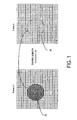
- Figure 1 illustrates the first step in the ROI search, according to the present invention, in order to obtain an estimated ROI boundary in a current image frame k .
- the contour of a ROI 20 in an image frame ( k -1) is projected onto the image frame k .
- Frame ( k -1) is the previous frame.
- the projected contour 30 in frame k is shown as a dashed circle.
- a band of pixels bounded by an outer boundary 32 and an inner boundary 34 is used as a search area 130 in the current frame k .
- the width of the pixel band 130 is 2 d .
- the search area 130 represents the motion space of the contour of the ROI and d is an upper boundary on any displacement vector.
- the boundary of the ROI 20 is for illustration purposes only. In general, the boundary or contour of a ROI is irregular in shape, and the search area 130 is occupied by a group of "relevant" pixels enclosing the projected ROI contour.
- the backward pixel matching consists of mapping every "relevant" pixel to another pixel in the previous frame ( k -1) .
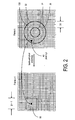
- the mapping criterion is the Euclidean distance between the low-pass wavelet coefficients of the chrominance components (U,V). This metric is minimized through a local search within a small window. As shown in Figure 2 , a pixel 40 in frame k is used to find a match within a search window 50 surrounding a corresponding pixel in frame ( k -1) .
- the area of the search window is given by ( 2r +1) 2 , where r is an integer larger than or equal to d .
- the search window 50 includes a set of pixels x k -1 ( p,q ) where ( i - r ) ⁇ p ⁇ ( i + r ), ( j - r ) ⁇ q ⁇ ( j + r ). For every pixel in the search area 130 in frame k , a backward search is carried out in order to find a corresponding optimal pixel x opt in frame ( k -1) within the search window 50.
- the search window 50 is a set of possible matches, and matching is achieved through the minimization of the Euclidean distances between w k (i,j) and w k-1 (p, q) , in terms of the chrominance components. Ignoring the luminance component Y makes the algorithm more robust to changes in illumination.
- w k (i,j) and w k-1 (p, q) are related to the wavelet coefficients in chrominance space. If we denote the wavelet coefficients in the U space and V space as u and v , then w can be either u or v , or preferably, a 2D vector having values ( u,v ).
- the following step in the ROI search is to find out the region status of each pixel x k ( i,j ) - whether it belongs to background (non-ROI) of the image or to the ROI.
- the region status of pixel x k ( i,j ) depends on the region status of the corresponding pixel x opt , which is known. Thus, if the optimal pixel in frame ( k -1 ) is in the ROI, the corresponding pixel x k ( i,j ) is also set as being in the ROI. Similarly, if the optimal pixel in frame ( k -1) is in the background, the corresponding pixel x k ( i,j ) is also set as being a background pixel. It should be noted that the ROI of the first frame in a sequence must be fed to the search algorithm, and the region status of each pixel inside and outside the first frame ROI can be marked accordingly.
- Figure 3 a is a schematic representation of an estimated ROI in frame k after masking.
- a specified upper bound for the minimum Euclidean distance is used to determine whether the matching is successful.
- the specified upper bound can be set based on the average of the area intensity, for example. If x opt in Eq.1 is greater than the specified upper bound, then the region status of the pixel x k ( i,j ) corresponding the that x opt will be set as background.
- the next step is a tuning process, which is used to refine the ROI in frame k based on the boundary pixels of the estimated ROI.
- the purpose of the tuning process is to detect any edges through a local search around these boundary pixels in order to determine the final ROI in frame k .
- the search domain for the tuning process consists of the coefficients of HL and LH subbands in the luminance space, which allow the extraction of vertical and horizontal edges, respectively ( Figure 3b ).
- the use of the luminance component Y enables robust detection of edges even when the target region comes in contact with another region of the same color type.
- the pixel with a larger magnitude is likely to be an edge pixel. If the edge pixel happens to be in the background, then its color coefficients should be checked before including it in the ROI. Care must be taken not to include pixels of a different color in the contour region of the ROI. Such a pixel might lead to a propagation of errors when tacking is carried out for the entire image sequence.
- the search for the ROI in frame k is carried out in accordance with the following algorithm:
- the arithmetic operations used in the above-described algorithm are additions and comparisons. No multiplication is required. Given the fact that the encoder already computes wavelet coefficients, the highest complexity in the algorithm is the search loops. Because the tracking is performed at a low resolution, and the target object generally occupies only a small portion of the image (required for compression efficiency), the average total number of loops is also small.
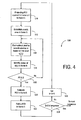
- the method of tracking a target region within an image frame in a sequence of image frames, according to the present invention, is summarized in the flowchart 500 , as shown in Figure 4 .
- the ROI contour in frame ( k -1) is projected onto frame k at step 510.
- a search area including a plurality of pixels in frame k enclosing the projected ROI contour is established at step 512 .
- an optimal pixel x k -1 (p, q) within a search window in frame ( k -1) is determined based on the Euclidean distance at step 514.
- the region status of x k (i,j) is determined based on the corresponding optimal pixel at step 516.
- step 518 If the region status of every x k (i,j) within the search area is determined as decided at step 518, then an estimated ROI in frame k based on the region status of x k (i,j)'s is established at step 520. Using the high-frequency subbands in the luminance space to detect the edge pixels around the estimated ROI boundary in order to refine the ROI in frame k is carried out at step 522. If it is decided at step 524 that the current frame k is the last frame of the sequence, then the process continues to the next sequence. Otherwise, the process loops back to step 510 for determining the ROI in the next frame.
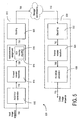
- the image coding system 600 comprises an encoder 610 and a decoder 630.
- an image sequence 700 consisting of a plurality of digital image frames, each separable into three color planes (R, G, B), is provided to a converter module 612.
- the converter 612 converts the digital image frames into a series of digital image frames 710 in YUV format.
- a forward wavelet transform module 614 is used to transform the pixels in each of the image frames 710 into wavelet coefficients in various subbands.
- the transformed image data 720 is provided to a multi-resolution assignment module 616 where more bits per pixel are assigned to important image regions within a frame.
- the boundary of each important image region in the first frame is provided to a ROI tracking module 618 so that the important image region in subsequent frames can be automatically tracked.
- the ROI tracking module 618 uses the ROI tracking algorithm, according to the present invention, to determine the important image regions in subsequent frames.
- the multi-resolution image data 730 is conveyed to an encoding module 620 for encoding and compression.
- the codestream 740 can be transmitted in real-time or stored from future use.
- the decoder 630 reconstructs the input image sequence 700 based on the codestream 740.
- a decoding module 632 is used to reconstruct the transformed data based on the codestream 740.
- the reconstructed transformed data 750 is transformed by an inverse wavelet transform module 634 into a series of digital image frames 760 in YUV space.
- the image data After being converted by a conversion module 636, the image data becomes a series of digital images 770 in three color planes (R, G, B).
- the ROI tracking method has been used on three different image sequences: "MOBILE”, “FOREMAN” and “IRENE”. All sequences have a CIF-size (Common Intermediate Format) and a rate of 30 frames per second. In order to operate at lower rates, 3 frames are skipped at each tracking iteration in the "MOBILE” and “FOREMAN” sequences, and the tracking is performed at a rate of 7.5 frames per second. In the "IRENE" sequence, the original frame rate is kept.
- CIF-size Common Intermediate Format
- the ROI is a red ball with small surrounding white regions.
- the ball undergoes rotational and translational motions, back and forth, and comes in contact with other regions of similar colors.
- the "IRENE" sequence two ROIs are chosen, each on a different hand of the speaker.
- the hands show a relatively fast variation of positions, poses and colors.
- the hands also overlap with other skin regions, such as the neck region, which makes the tracking even more difficult.
- the ROI in is fed to the algorithm, in the first frame.
- the wavelet transform of the previous frame is used.
- the upper boundary on the minimum Euclidean distance is 3 in the "MOBILE” and “FOREMAN” sequences. In the "IRENE" sequence, the upper boundary is not set in order to compensate for the changes in color in the ROI.
- the main difficulty is the presence of many background regions with similar colors as the target. Some of these regions do not initially appear in the scene (full or partial inclusion). In the first frame, the target region doesn't include the whole ball, because only part of the ball appears. The simulation results show that the tracking algorithm is able to keep track of the ball throughout the video sequence. However, as iteration progresses, some of the background regions are included in the ROI. The included regions are very close to the target region in colors and positions and they are not initially in the scene.
- the algorithm shows its ability to track the face despite the changes in facial poses in relatively fast motion during some periods of the sequence.
- the algorithm includes part of the neck in the ROI.
- the included region is connected to the face without a separating edge.
- a part of the wall is also included in the ROI due to similarity in color components.
- the simulation results also show the ability of the algorithm to detect full occlusion of the target region from the scene.
- both hands of the speaker are tracked at a rate of 30 frames per second.
- Such a target region is very difficult to track due to significant variations in positions, poses (flipping sides and different fingers positions) and colors.
- the upper boundary on the minimum Euclidean distance is relaxed.
- both hands flipped sides.
- the algorithm is still able to track the ROI, missing only a part of the right hand.
- a good tracking performance is achieved despite the overlap with the neck and face.
- the hands move away from other skin regions, a significant part of the right hand associated with the background is missing.
- the entire ROI on the right hand completely disappears. This is mainly because the right hand moves relatively fast and thus is more difficult to track.
- the search area and the search window can be increased if the ROI becomes progressively small over a certain number of frames.
- the major advantage of the target region tracking method is that it does not rely on prior information regarding the region of interest. For example, in tracking a human face, the algorithm does not rely on specific characteristics such as color values, and eyes and mouth singularities. Usually, specific information is required offline through a training of the target.
- the tracking algorithm according to the present invention, is suitable for a non-specific region-of-interest to be specified by a user.
- ROI tracking is a useful functionality in an image codec, such as JPEG 2000. It allows the allocation of more bits in a target region than other regions in the image frame while coding the image frame. As such, a high visual quality around the target region can be achieved.
Landscapes
- Engineering & Computer Science (AREA)
- Multimedia (AREA)
- Signal Processing (AREA)
- Physics & Mathematics (AREA)
- Computer Vision & Pattern Recognition (AREA)
- General Physics & Mathematics (AREA)
- Theoretical Computer Science (AREA)
- Mathematical Physics (AREA)
- Compression Or Coding Systems Of Tv Signals (AREA)
- Image Analysis (AREA)
- Compression, Expansion, Code Conversion, And Decoders (AREA)
- Studio Devices (AREA)
Claims (21)
- Verfahren zum Verfolgen einer Zielregion in einem Bildrahmen (k) auf der Grundlage einer Zielregion (20) eines vorhergehenden Bildrahmens (k-1) in einer Folge von Bildrahmen, wobei jede Folge von Bildrahmen mehrere Bildpunkte umfasst, wobei das Verfahren Folgendes umfasst:Bestimmen eines Suchbereichs (130) in dem Bildrahmen (k) auf der Grundlage von zumindest einem Abschnitt der Zielregion (20) in dem vorhergehenden Rahmen (k-1), wobei die Bildpunkte des Suchbereichs (130) mehrere von ersten Bildpunkten (40) sind, wobei jeder erste Bildpunkt (40) mindestens einen entsprechenden ersten Bildpunktwert aufweist; wobei das Verfahren durch Folgendes gekennzeichnet ist:für jeden der ersten Bildpunkte (40) im Suchbereich (130):Bestimmen eines weiteren Suchbereichs (50) in dem vorhergehenden Rahmen (k-1), wobei der weitere Suchbereich (50) mehrere von zweiten Bildpunkten unter den mehreren Bildpunkten im vorhergehenden Rahmen (k-1) umfasst, wobei jeder zweite Bildpunkt mindestens einen entsprechenden zweiten Bildpunktwert und einen Regionszustand aufweist, wobei der Regionszustand des zweiten Bildpunkts angibt, ob der zweite Bildpunkt sich innerhalb der Zielregion (20) in dem vorhergehenden Rahmen (k-1) befindet;Finden einer Übereinstimmung zwischen dem ersten Bildpunktwert des ersten Bildpunkts (40) unter den zweiten Bildpunktwerten zum Auffinden eines zweiten Bezugsbildpunkts; undBestimmen des Regionszustands von mindestens einem der ersten Bildpunkte (40) auf der Grundlage des Regionszustands des zweiten Bezugsbildpunkts zum Bestimmen der Zielregion in dem Bildrahmen (k) auf der Grundlage des Regionszustands des mindestens einen ersten Bildpunkts (40).
- Verfahren nach Anspruch 1, dadurch gekennzeichnet, dass der mindestens eine Abschnitt der Zielregion (20) in dem vorhergehenden Rahmen (k-1) einen Umriss zum Abgrenzen eines entsprechenden Umrisses (30) in dem Bildrahmen (k) aufweist und wobei die ersten Bildpunkte (40) Bildpunkte umfassen, die dem entsprechenden Umriss (30) in dem Bildrahmen (k) benachbart sind.
- Verfahren nach einem der Ansprüche 1 bis 2, wobei die Zielregion des Bildrahmens (k) eine Umgrenzung umfasst und die mehreren Bildpunkte in dem Bildrahmen (k) mehrere dritte Bildpunkte umfassen, die der Umgrenzung benachbart sind, wobei jeder dritte Bildpunkt mindestens einen entsprechenden dritten Bildpunktwert aufweist,
wobei das Verfahren ferner durch Folgendes gekennzeichnet ist:Bestimmen der Randart der dritten Bildpunkte, um die Zielregion in dem Bildrahmen (k) auf der Grundlage der Randart der dritten Bildpunkte zu verändern. - Verfahren nach Anspruch 3, dadurch gekennzeichnet, dass die Randart auf der Grundlage der Luminanzkomponente der Wavelet-Koeffizienten bestimmt wird.
- Verfahren nach einem der Ansprüche 1 bis 4, dadurch gekennzeichnet, dass der erste und der zweite Bildpunktwert Wavelet-Koeffizienten anzeigen.
- Verfahren nach einem der Ansprüche 1 bis 5, dadurch gekennzeichnet, dass der erste und der zweite Bildpunktwert Wavelet-Koeffizienten in einem unteren Teilband anzeigen.
- Verfahren nach einem der Ansprüche 1 bis 5, dadurch gekennzeichnet, dass der erste und der zweite Bildpunktwert mindestens eine der Chrominanzkomponenten der Wavelet-Koeffizienten in einem unteren Teilband anzeigen.
- Verfahren nach Anspruch 3 oder Anspruch 4, dadurch gekennzeichnet, dass die dritten Bildpunktwerte Wavelet-Koeffizienten anzeigen.
- Verfahren nach Anspruch 3 oder Anspruch 4, dadurch gekennzeichnet, dass die dritten Bildpunktwerte Wavelet-Koeffizienten in einem oberen Teilband anzeigen.
- Verfahren nach einem der Ansprüche 3, 4, 8 und 9, dadurch gekennzeichnet, dass die dritten Bildpunktwerte die Luminanzkomponente von Wavelet-Koeffizienten in einem oberen Teilband anzeigen.
- Computerprogramm zur Verwendung in einem Bildcodierer (610), der Mittel (620) zum Codieren einer Folge (700) von Bildrahmen in einen Codestrom (740) aufweist, wobei die Folge (700) von Bildrahmen mindestens einen ersten Bildrahmen (k) und einen vorhergehenden zweiten Bildrahmen (k-1) aufweist, wobei der erste (k) und der zweite (k-1) Bildrahmen jeweils mehrere Bildpunkte aufweisen, wobei der zweite Bildrahmen (k-1) eine Zielregion (20) aufweist, wobei das Computerprogramm Folgendes umfasst:einen Code zum Bestimmen eines Suchbereichs (130) in dem ersten Bildrahmen (k) auf der Grundlage von mindestens einem Abschnitt der Zielregion (20) im zweiten Bildrahmen (k-1), wobei die Bildpunkte des Suchbereichs (130) mehrere erste Bildpunkte (40) sind, wobei jeder erste Bildpunkt mindestens einen entsprechenden ersten Bildpunktwert aufweist; wobei das Computerprogramm durch Folgendes gekennzeichnet ist:einen Code zum Bestimmen von Folgendem für jeden der ersten Bildpunkte (40) in dem Suchbereich (130):eines weiteren Suchbereichs (50) in dem zweiten Bildrahmen (k-1), wobei der weitere Suchbereich (50) mehrere zweite Bildpunkte unter den mehreren Bildpunkten des zweiten Bildrahmens (k-1) umfasst, wobei jeder der zweiten Bildpunkte mindestens einen entsprechenden zweiten Bildpunktwert und einen Regionszustand aufweist, wobei der Regionszustand des zweiten Bildpunkts angibt, ob der zweite Bildpunkt sich innerhalb der Zielregion (20) in dem vorhergehenden Rahmen (k-1) befindet;eines zweiten Bezugsbildpunkts in dem weiteren Suchbereich (50) auf der Grundlage einer Übereinstimmung zwischen dem ersten Bildpunktwert des ersten Bildpunkts (40) unter den zweiten Bildpunktwerten; unddes Regionszustands des mindestens einen der ersten Bildpunkte (40) auf der Grundlage des Regionszustands des zweiten Bezugsbildpunkts zum Bestimmen einer Zielregion im ersten Bildrahmen (k) auf der Grundlage des Regionszustands des mindestens einen ersten Bildpunkts (40).
- Computerprogramm nach Anspruch 11, dadurch gekennzeichnet, dass der erste und der zweite Bildpunktwert mindestens eine der Chrominanzkomponenten von Wavelet-Koeffizienten in einem unteren Teilband anzeigen.
- Computerprogramm nach Anspruch 11 oder Anspruch 12, wobei die Zielregion des ersten Bildrahmens (k) eine Umgrenzung umfasst und die mehreren Bildpunkte im ersten Bildrahmen mehrere dritte Bildpunkte umfassen, die der Umgrenzung benachbart sind, wobei jeder dritte Bildpunkt mindestens einen entsprechenden dritten Bildpunktwert aufweist, wobei das Computerprogramm ferner durch Folgendes gekennzeichnet ist:einen Code zum Bestimmen der Randart der dritten Bildpunkte, um die Zielregion im ersten Bildrahmen (k) auf der Grundlage der Randart der dritten Bildpunkte zu verändern.
- Computerprogramm nach Anspruch 13, dadurch gekennzeichnet, dass die dritten Bildpunktwerte die Luminanzkomponente von Wavelet-Koeffizienten in einem oberen Teilband anzeigen.
- Computerprogramm nach einem der Ansprüche 11 bis 14, dadurch gekennzeichnet, dass der Regionszustand des zweiten Bildpunkts anzeigt, ob sich der zweite Bildpunkt innerhalb der Zielregion (20) im zweiten Bildrahmen (k-1) befindet.
- Bildcodierer (610) zum Codieren einer Folge (700) von Bildrahmen, die mindestens einen ersten Bildrahmen (k) und einen vorhergehenden zweiten Bildrahmen (k-1) umfasst, wobei jeder der ersten (k) und zweiten (k-1) Bildrahmen mehrere Bildpunkte umfasst, wobei der zweite Bildrahmen (k-1) eine Zielregion (20) aufweist, wobei der Bildcodierer (610) Folgendes aufweist:Mittel (614) zum Zerlegen jedes der Bildrahmen in mehrere Teilbandkomponenten; undMittel (620) zum Codieren der Teilbandkomponenten in einen Codestrom (740), wobei der Bildcodierer (610) Folgendes umfasst:einen ersten Algorithmus, der auf die Teilbandkomponenten reagiert, um auf der Grundlage von zumindest einem Abschnitt der Zielregion (20) im zweiten Bildrahmen (k-1) einen Suchbereich (130) im ersten Bildrahmen (k) abzugrenzen, wobei die Bildpunkte des Suchbereichs (130) mehrere erste Bildpunkte (40) sind, die jeweils mindestens einen entsprechenden ersten Bildpunktwert aufweisen; wobei der Bildcodierer (610) durch Folgendes gekennzeichnet ist:einen zweiten Algorithmus, der auf jeden der ersten Bildpunkte (40) reagiert, um Folgendes zu bestimmen:einen weiteren Suchbereich (50) im zweiten Bildrahmen (k-1), der mehrere von zweiten Bildpunkten unter den mehreren Bildpunkten im zweiten Bildrahmen (k-1) umfasst, wobei jeder zweite Bildpunkt mindestens einen entsprechenden zweiten Bildpunktwert und einen Regionszustand aufweist, wobei der Regionszustand des zweiten Bildpunkts anzeigt, ob der zweite Bildpunkt sich innerhalb der Zielregion (20) in dem vorhergehenden Rahmen (k-1) befindet;einen zweiten Bezugsbildpunkt in dem weiteren Suchbereich (50) auf der Grundlage einer Übereinstimmung zwischen dem ersten Bildpunktwert des ersten Bildpunkts (40) unter den zweiten Bildpunktwerten; undeinen Regionszustand von mindestens einem der ersten Bildpunkte (40) auf der Grundlage des Regionszustands des zweiten Bezugsbildpunkts zum Bestimmen einer Zielregion im ersten Bildrahmen (k) auf der Grundlage des Regionszustands des mindestens einen ersten Bildpunkts (40).
- Bildcodierer (610) nach Anspruch 16, dadurch gekennzeichnet, dass der erste und der zweite Bildpunktwert mindestens eine der Chrominanzkomponenten der Wavelet-Koeffizienten in einem unteren Teilband anzeigen.
- Bildcodierer (610) nach Anspruch 16 oder Anspruch 17, wobei die Zielregion des ersten Bildrahmens (k) eine Umgrenzung umfasst und die mehreren Bildpunkte im ersten Bildrahmen (k) mehrere dritte Bildpunkte umfassen, die der Umgrenzung benachbart sind, wobei jeder dritte Bildpunkt mindestens einen entsprechenden dritten Bildpunktwert aufweist, wobei das Computerprogramm ferner durch Folgendes gekennzeichnet ist:einen Code zum Bestimmen der Randart der dritten Bildpunkte zum Ändern der Zielregion in dem Bildrahmen (k) auf der Grundlage der Randart der dritten Bildpunkte.
- Bildcodierer (610) nach Anspruch 18, dadurch gekennzeichnet, dass die dritten Bildpunktwerte die Luminanzkomponente von Wavelet-Koeffizienten in einem oberen Teilband anzeigen.
- Bildcodierer (610) nach einem der Ansprüche 16 bis 19, dadurch gekennzeichnet, dass der Bildcodierer (610) angepasst ist, um die Zielregion im ersten Bildrahmen (k) mit höherer visueller Qualität zu codieren als eine andere Region in dem ersten Bildrahmen (k).
- Bildcodierungssystem (600), das einen Codierer (610) nach einem der Ansprüche 16 bis 20 zum Codieren einer Folge (700) von Bildrahmen in einen Codestrom (740) und einen Decodierer (630) zum Wiederherstellen der Folge (700) von Bildrahmen auf der Grundlage des Codestroms (740) umfasst.
Priority Applications (1)
| Application Number | Priority Date | Filing Date | Title |
|---|---|---|---|
| EP11183179.8A EP2405382B9 (de) | 2002-11-12 | 2003-11-07 | Region-of-interest-trackingverfahren und -vorrichtung zur wavelet-basierenden Video-kodierung |
Applications Claiming Priority (3)
| Application Number | Priority Date | Filing Date | Title |
|---|---|---|---|
| US293976 | 2002-11-12 | ||
| US10/293,976 US6757434B2 (en) | 2002-11-12 | 2002-11-12 | Region-of-interest tracking method and device for wavelet-based video coding |
| PCT/IB2003/005009 WO2004044830A1 (en) | 2002-11-12 | 2003-11-07 | Region-of-interest tracking method and device for wavelet-based video coding |
Related Child Applications (1)
| Application Number | Title | Priority Date | Filing Date |
|---|---|---|---|
| EP11183179.8 Division-Into | 2011-09-28 |
Publications (4)
| Publication Number | Publication Date |
|---|---|
| EP1570413A1 EP1570413A1 (de) | 2005-09-07 |
| EP1570413A4 EP1570413A4 (de) | 2010-03-24 |
| EP1570413B1 true EP1570413B1 (de) | 2011-12-21 |
| EP1570413B8 EP1570413B8 (de) | 2012-03-21 |
Family
ID=32229759
Family Applications (2)
| Application Number | Title | Priority Date | Filing Date |
|---|---|---|---|
| EP03772435A Expired - Lifetime EP1570413B8 (de) | 2002-11-12 | 2003-11-07 | Region-of-interest-trackingverfahren und -vorrichtung zur wavelet-basierenden video-kodierung |
| EP11183179.8A Expired - Lifetime EP2405382B9 (de) | 2002-11-12 | 2003-11-07 | Region-of-interest-trackingverfahren und -vorrichtung zur wavelet-basierenden Video-kodierung |
Family Applications After (1)
| Application Number | Title | Priority Date | Filing Date |
|---|---|---|---|
| EP11183179.8A Expired - Lifetime EP2405382B9 (de) | 2002-11-12 | 2003-11-07 | Region-of-interest-trackingverfahren und -vorrichtung zur wavelet-basierenden Video-kodierung |
Country Status (9)
| Country | Link |
|---|---|
| US (1) | US6757434B2 (de) |
| EP (2) | EP1570413B8 (de) |
| JP (1) | JP4308142B2 (de) |
| KR (1) | KR100765411B1 (de) |
| CN (1) | CN1711551B (de) |
| AT (1) | ATE538447T1 (de) |
| AU (1) | AU2003280037A1 (de) |
| ES (2) | ES2424248T3 (de) |
| WO (1) | WO2004044830A1 (de) |
Families Citing this family (79)
| Publication number | Priority date | Publication date | Assignee | Title |
|---|---|---|---|---|
| US7542035B2 (en) * | 1995-11-15 | 2009-06-02 | Ford Oxaal | Method for interactively viewing full-surround image data and apparatus therefor |
| JP2004186871A (ja) * | 2002-12-02 | 2004-07-02 | Ricoh Co Ltd | 画像処理装置、撮像装置、プログラム及び記憶媒体 |
| JP4148462B2 (ja) * | 2003-01-20 | 2008-09-10 | 株式会社リコー | 画像処理装置、電子カメラ装置及び画像処理方法 |
| US20040190021A1 (en) * | 2003-03-31 | 2004-09-30 | Foster Thomas J. | Post rip image rendering in an electrographic printer to prevent character shift |
| US7450165B2 (en) * | 2003-05-02 | 2008-11-11 | Grandeye, Ltd. | Multiple-view processing in wide-angle video camera |
| US20100002070A1 (en) | 2004-04-30 | 2010-01-07 | Grandeye Ltd. | Method and System of Simultaneously Displaying Multiple Views for Video Surveillance |
| US7529424B2 (en) * | 2003-05-02 | 2009-05-05 | Grandeye, Ltd. | Correction of optical distortion by image processing |
| US7528881B2 (en) * | 2003-05-02 | 2009-05-05 | Grandeye, Ltd. | Multiple object processing in wide-angle video camera |
| US20050007453A1 (en) * | 2003-05-02 | 2005-01-13 | Yavuz Ahiska | Method and system of simultaneously displaying multiple views for video surveillance |
| US20050028215A1 (en) * | 2003-06-03 | 2005-02-03 | Yavuz Ahiska | Network camera supporting multiple IP addresses |
| US7162095B2 (en) * | 2003-06-13 | 2007-01-09 | National Chung Cheng University | Method of automatically determining the region of interest from an image |
| US8638846B1 (en) * | 2003-06-23 | 2014-01-28 | At&T Intellectual Property Ii, L.P. | Systems and methods for encoding and decoding video streams |
| JP4151963B2 (ja) * | 2003-09-19 | 2008-09-17 | 株式会社リコー | 画像サーバ装置、クライアント装置、動画像配信方法、プログラム、及び、情報記録媒体 |
| US7893985B1 (en) | 2004-03-15 | 2011-02-22 | Grandeye Ltd. | Wide angle electronic camera with improved peripheral vision |
| US9826159B2 (en) | 2004-03-25 | 2017-11-21 | Clear Imaging Research, Llc | Method and apparatus for implementing a digital graduated filter for an imaging apparatus |
| US10721405B2 (en) | 2004-03-25 | 2020-07-21 | Clear Imaging Research, Llc | Method and apparatus for implementing a digital graduated filter for an imaging apparatus |
| WO2005093654A2 (en) | 2004-03-25 | 2005-10-06 | Fatih Ozluturk | Method and apparatus to correct digital image blur due to motion of subject or imaging device |
| US8427538B2 (en) * | 2004-04-30 | 2013-04-23 | Oncam Grandeye | Multiple view and multiple object processing in wide-angle video camera |
| US7366359B1 (en) * | 2004-07-08 | 2008-04-29 | Grandeye, Ltd. | Image processing of regions in a wide angle video camera |
| US7990422B2 (en) * | 2004-07-19 | 2011-08-02 | Grandeye, Ltd. | Automatically expanding the zoom capability of a wide-angle video camera |
| US20060062478A1 (en) * | 2004-08-16 | 2006-03-23 | Grandeye, Ltd., | Region-sensitive compression of digital video |
| NO321642B1 (no) * | 2004-09-27 | 2006-06-12 | Tandberg Telecom As | Fremgangsmate for koding av bildeutsnitt |
| US8860780B1 (en) | 2004-09-27 | 2014-10-14 | Grandeye, Ltd. | Automatic pivoting in a wide-angle video camera |
| US9141615B1 (en) | 2004-11-12 | 2015-09-22 | Grandeye, Ltd. | Interactive media server |
| US7505607B2 (en) * | 2004-12-17 | 2009-03-17 | Xerox Corporation | Identifying objects tracked in images using active device |
| US7894531B1 (en) | 2005-02-15 | 2011-02-22 | Grandeye Ltd. | Method of compression for wide angle digital video |
| US8977063B2 (en) * | 2005-03-09 | 2015-03-10 | Qualcomm Incorporated | Region-of-interest extraction for video telephony |
| US8019175B2 (en) * | 2005-03-09 | 2011-09-13 | Qualcomm Incorporated | Region-of-interest processing for video telephony |
| KR100728222B1 (ko) | 2005-03-25 | 2007-06-13 | 한국전자통신연구원 | 공간영역에서의 완전한 스케일러빌리티를 위한 계층적 부호화/복호화 방법 및 장치 |
| JP4618676B2 (ja) | 2005-04-28 | 2011-01-26 | 株式会社リコー | 構造化文書符号の転送方法、画像処理システム、サーバ装置、プログラム及び情報記録媒体 |
| WO2006118563A1 (en) * | 2005-04-29 | 2006-11-09 | Chubb International Holdings Limited | Method and device for consistent region of interest |
| US20060256397A1 (en) * | 2005-05-12 | 2006-11-16 | Lexmark International, Inc. | Method and system for combining images |
| US7903306B2 (en) * | 2005-07-22 | 2011-03-08 | Samsung Electronics Co., Ltd. | Sensor image encoding and/or decoding system, medium, and method |
| US20070031038A1 (en) * | 2005-08-03 | 2007-02-08 | Honeywell International Inc. | Boolean complement methods and systems for video image processing a region of interest |
| EP1929768A4 (de) * | 2005-08-26 | 2010-05-05 | Idt Corp | Verfolgung einer interessierenden region und integration in einen video-codec |
| US8208758B2 (en) | 2005-10-05 | 2012-06-26 | Qualcomm Incorporated | Video sensor-based automatic region-of-interest detection |
| US8019170B2 (en) * | 2005-10-05 | 2011-09-13 | Qualcomm, Incorporated | Video frame motion-based automatic region-of-interest detection |
| US8723951B2 (en) * | 2005-11-23 | 2014-05-13 | Grandeye, Ltd. | Interactive wide-angle video server |
| WO2007077283A1 (en) * | 2005-12-30 | 2007-07-12 | Nokia Corporation | Method and device for controlling auto focusing of a video camera by tracking a region-of-interest |
| US7778445B2 (en) * | 2006-06-07 | 2010-08-17 | Honeywell International Inc. | Method and system for the detection of removed objects in video images |
| JP4210954B2 (ja) * | 2006-08-22 | 2009-01-21 | ソニー株式会社 | 画像処理方法、画像処理方法のプログラム、画像処理方法のプログラムを記録した記録媒体及び画像処理装置 |
| KR101394766B1 (ko) | 2007-01-16 | 2014-05-16 | 톰슨 라이센싱 | 이미지에서 아티팩트를 감소시키는 시스템 및 방법 |
| US20090046202A1 (en) * | 2007-08-17 | 2009-02-19 | Himax Technologies Limited | De-interlace method and apparatus |
| ES2558022T3 (es) * | 2007-09-12 | 2016-02-01 | Pepperl + Fuchs Gmbh | Procedimiento y dispositivo para la determinación de la posición de un vehículo, programa de ordenador y producto de programa de ordenador |
| JP2011517226A (ja) * | 2008-04-11 | 2011-05-26 | トムソン ライセンシング | デジタルピクチャにおいて対象の鮮明度を高めるシステム及び方法 |
| JP4561919B2 (ja) * | 2008-04-21 | 2010-10-13 | ソニー株式会社 | 撮像装置、画像処理装置及び画像処理方法 |
| JP4507129B2 (ja) * | 2008-06-06 | 2010-07-21 | ソニー株式会社 | 追尾点検出装置および方法、プログラム、並びに記録媒体 |
| CN101344920B (zh) * | 2008-07-21 | 2011-09-14 | 北大方正集团有限公司 | 对视频数据帧中特定区域进行检测的方法和设备 |
| US8325796B2 (en) | 2008-09-11 | 2012-12-04 | Google Inc. | System and method for video coding using adaptive segmentation |
| US8538200B2 (en) * | 2008-11-19 | 2013-09-17 | Nec Laboratories America, Inc. | Systems and methods for resolution-invariant image representation |
| US9516346B2 (en) * | 2009-09-01 | 2016-12-06 | Manipal Institute Of Technology | Image processing system and method |
| RU2431196C1 (ru) * | 2010-03-31 | 2011-10-10 | Закрытое Акционерное Общество "Импульс" | Способ определения уровня яркости в зоне интереса цифрового медицинского рентгеновского изображения |
| US9135514B2 (en) * | 2010-05-21 | 2015-09-15 | Qualcomm Incorporated | Real time tracking/detection of multiple targets |
| TWI420906B (zh) | 2010-10-13 | 2013-12-21 | Ind Tech Res Inst | 興趣區域之追蹤系統與方法及電腦程式產品 |
| EP2846550B1 (de) * | 2011-01-05 | 2018-10-03 | Koninklijke Philips N.V. | Videocodierung und -Decodierungsvorrichtungen sowie Verfahren zur Bewahrung von PPG-relevanten Informationen |
| CN102045570B (zh) * | 2011-01-13 | 2016-12-07 | 北京中星微电子有限公司 | 一种图像编码方法及装置 |
| CN102129698A (zh) * | 2011-03-08 | 2011-07-20 | 华中科技大学 | 一种基于感兴趣区域的图像编码方法 |
| US9154799B2 (en) | 2011-04-07 | 2015-10-06 | Google Inc. | Encoding and decoding motion via image segmentation |
| US8891627B1 (en) | 2011-04-18 | 2014-11-18 | Google Inc. | System and method for coding video using color segmentation |
| US9262670B2 (en) * | 2012-02-10 | 2016-02-16 | Google Inc. | Adaptive region of interest |
| US20150312575A1 (en) * | 2012-04-16 | 2015-10-29 | New Cinema, LLC | Advanced video coding method, system, apparatus, and storage medium |
| US10469851B2 (en) | 2012-04-16 | 2019-11-05 | New Cinema, LLC | Advanced video coding method, system, apparatus, and storage medium |
| CN103002280B (zh) * | 2012-10-08 | 2016-09-28 | 中国矿业大学 | 基于hvs&roi的分布式编解码方法及系统 |
| JP2016502429A (ja) * | 2012-11-07 | 2016-01-28 | アイ ドロップ イメージング テクノロジー リミテッド ライアビリティ カンパニー | 薬物送達の実施およびモニタリング |
| US10045032B2 (en) * | 2013-01-24 | 2018-08-07 | Intel Corporation | Efficient region of interest detection |
| US10121254B2 (en) | 2013-08-29 | 2018-11-06 | Disney Enterprises, Inc. | Methods and systems of detecting object boundaries |
| CN103839255B (zh) * | 2013-12-05 | 2017-03-01 | 福建师范大学 | 视频抠像篡改检测方法及装置 |
| US9392272B1 (en) | 2014-06-02 | 2016-07-12 | Google Inc. | Video coding using adaptive source variance based partitioning |
| US9578324B1 (en) | 2014-06-27 | 2017-02-21 | Google Inc. | Video coding using statistical-based spatially differentiated partitioning |
| GB2539027B (en) | 2015-06-04 | 2019-04-17 | Thales Holdings Uk Plc | Video compression with increased fidelity near horizon |
| US10037610B1 (en) * | 2017-10-03 | 2018-07-31 | StradVision, Inc. | Method for tracking and segmenting a target object in an image using Markov Chain, and device using the same |
| CN112313951B (zh) * | 2018-06-28 | 2025-01-28 | 苹果公司 | 低延迟视频编码和传输的速率控制 |
| US11496758B2 (en) | 2018-06-28 | 2022-11-08 | Apple Inc. | Priority-based video encoding and transmission |
| KR102645652B1 (ko) | 2018-06-28 | 2024-03-11 | 애플 인크. | 비디오 인코딩 시스템 |
| CN113542745B (zh) * | 2021-05-27 | 2024-06-25 | 绍兴市北大信息技术科创中心 | 一种率失真编码优化方法 |
| US11704891B1 (en) | 2021-12-29 | 2023-07-18 | Insight Direct Usa, Inc. | Dynamically configured extraction, preprocessing, and publishing of a region of interest that is a subset of streaming video data |
| US11509836B1 (en) | 2021-12-29 | 2022-11-22 | Insight Direct Usa, Inc. | Dynamically configured processing of a region of interest dependent upon published video data selected by a runtime configuration file |
| US12412107B2 (en) | 2021-12-29 | 2025-09-09 | Insight Direct Usa, Inc. | Blockchain recordation and validation of video data |
| US11778167B1 (en) | 2022-07-26 | 2023-10-03 | Insight Direct Usa, Inc. | Method and system for preprocessing optimization of streaming video data |
Family Cites Families (15)
| Publication number | Priority date | Publication date | Assignee | Title |
|---|---|---|---|---|
| US5079630A (en) * | 1987-10-05 | 1992-01-07 | Intel Corporation | Adaptive video compression system |
| KR950009699B1 (ko) * | 1992-06-09 | 1995-08-26 | 대우전자주식회사 | 움직임벡터 검출방법 및 장치 |
| GB2276999B (en) * | 1993-04-08 | 1997-10-08 | Sony Uk Ltd | Motion compensated video signal processing |
| GB9308952D0 (en) | 1993-04-30 | 1993-06-16 | Philips Electronics Uk Ltd | Tracking objects in video sequences |
| DE69525127T2 (de) * | 1994-10-28 | 2002-10-02 | Oki Electric Industry Co., Ltd. | Gerät und Verfahren zur Kodierung und Dekodierung von Bildern unter Verwendung einer Kantensynthese und einer Wavelet-Rücktransformation |
| KR0170932B1 (ko) * | 1994-12-29 | 1999-03-20 | 배순훈 | 영상의 시각적, 기하학적 특성에 따른 고속 움직임 추정장치 |
| US6483946B1 (en) * | 1995-10-25 | 2002-11-19 | Sarnoff Corporation | Apparatus and method for encoding zerotrees generated by a wavelet-based coding technique |
| US5974192A (en) | 1995-11-22 | 1999-10-26 | U S West, Inc. | System and method for matching blocks in a sequence of images |
| US6041078A (en) * | 1997-03-25 | 2000-03-21 | Level One Communications, Inc. | Method for simplifying bit matched motion estimation |
| BR9812518A (pt) * | 1997-07-11 | 2000-08-01 | Sarnoff Corp | Aparelho e método para codificação de entropia de árvore zero de multiescala |
| US6014181A (en) * | 1997-10-13 | 2000-01-11 | Sharp Laboratories Of America, Inc. | Adaptive step-size motion estimation based on statistical sum of absolute differences |
| US6421463B1 (en) | 1998-04-01 | 2002-07-16 | Massachusetts Institute Of Technology | Trainable system to search for objects in images |
| US6418166B1 (en) * | 1998-11-30 | 2002-07-09 | Microsoft Corporation | Motion estimation and block matching pattern |
| US6546117B1 (en) * | 1999-06-10 | 2003-04-08 | University Of Washington | Video object segmentation using active contour modelling with global relaxation |
| US6654502B1 (en) * | 2000-06-07 | 2003-11-25 | Intel Corporation | Adaptive early exit techniques in image correlation |
-
2002
- 2002-11-12 US US10/293,976 patent/US6757434B2/en not_active Expired - Lifetime
-
2003
- 2003-11-07 AT AT03772435T patent/ATE538447T1/de active
- 2003-11-07 WO PCT/IB2003/005009 patent/WO2004044830A1/en not_active Ceased
- 2003-11-07 AU AU2003280037A patent/AU2003280037A1/en not_active Abandoned
- 2003-11-07 EP EP03772435A patent/EP1570413B8/de not_active Expired - Lifetime
- 2003-11-07 ES ES11183179T patent/ES2424248T3/es not_active Expired - Lifetime
- 2003-11-07 EP EP11183179.8A patent/EP2405382B9/de not_active Expired - Lifetime
- 2003-11-07 CN CN2003801031365A patent/CN1711551B/zh not_active Expired - Fee Related
- 2003-11-07 KR KR1020057008397A patent/KR100765411B1/ko not_active Expired - Fee Related
- 2003-11-07 ES ES03772435T patent/ES2379072T3/es not_active Expired - Lifetime
- 2003-11-07 JP JP2004551091A patent/JP4308142B2/ja not_active Expired - Fee Related
Also Published As
| Publication number | Publication date |
|---|---|
| EP2405382B1 (de) | 2013-05-08 |
| CN1711551A (zh) | 2005-12-21 |
| HK1165592A1 (en) | 2012-10-05 |
| JP2006505861A (ja) | 2006-02-16 |
| ES2379072T3 (es) | 2012-04-20 |
| AU2003280037A1 (en) | 2004-06-03 |
| KR100765411B1 (ko) | 2007-10-11 |
| ES2424248T3 (es) | 2013-09-30 |
| EP2405382B9 (de) | 2013-08-21 |
| EP1570413A1 (de) | 2005-09-07 |
| ATE538447T1 (de) | 2012-01-15 |
| US20040091158A1 (en) | 2004-05-13 |
| EP1570413A4 (de) | 2010-03-24 |
| JP4308142B2 (ja) | 2009-08-05 |
| WO2004044830A1 (en) | 2004-05-27 |
| EP2405382A1 (de) | 2012-01-11 |
| CN1711551B (zh) | 2010-04-28 |
| EP1570413B8 (de) | 2012-03-21 |
| KR20050086520A (ko) | 2005-08-30 |
| US6757434B2 (en) | 2004-06-29 |
Similar Documents
| Publication | Publication Date | Title |
|---|---|---|
| EP1570413B1 (de) | Region-of-interest-trackingverfahren und -vorrichtung zur wavelet-basierenden video-kodierung | |
| Eleftheriadis et al. | Automatic face location detection and tracking for model-assisted coding of video teleconferencing sequences at low bit-rates | |
| CN109309834B (zh) | 基于卷积神经网络和hevc压缩域显著信息的视频压缩方法 | |
| US7167519B2 (en) | Real-time video object generation for smart cameras | |
| US5832115A (en) | Ternary image templates for improved semantic compression | |
| US7564465B2 (en) | Texture replacement in video sequences and images | |
| US6600786B1 (en) | Method and apparatus for efficient video processing | |
| US20100303150A1 (en) | System and method for cartoon compression | |
| EP1629436B1 (de) | Transformations basiertes restbewegungsrahmen kodierungsverfahren mit übervollständiger basis und zugehörige vorrichtung zur videokompression | |
| EP0684736A2 (de) | Modellunterstützte Bildfolgekodierung mit geringer Bitrate | |
| EP1180308A1 (de) | Verfahren und vorrichtung zur effizienten videobearbeitung | |
| Tao et al. | Visual estimation and compression of facial motion parameters—Elements of a 3D model-based video coding system | |
| HK1165592B (en) | Region-of-interest tracking method and device for wavelet-based video coding | |
| Cho et al. | An object-oriented coder using block-based motion vectors and residual image compensation | |
| Cho et al. | Object-based very low bit-rate coding using motion parameter estimation based on multiple frame prediction | |
| Li et al. | A hybrid model-based image coding system for very low bit-rate coding | |
| Herodotou et al. | Temporal prediction of video sequences using an image warping technique based on color segmentation | |
| Granai et al. | Model-based coding of 3D head sequences | |
| Desmet et al. | Automatic segmentation for very low bit-rate video coding | |
| Özcelik et al. | A hybrid object-oriented very low bit rate video codec | |
| Eleftheriadis et al. | in H. 261-compatible coding of video | |
| Tripathi | ROI based Parametric Video Coding Scheme | |
| Katsaggelos et al. | Exploitation of Spatio-Temporal Inter-Correlation Among Motion, Segmentation and Intensity Fields for Very Low Bit Rate Coding of Video | |
| Sankur | A QUADRATIC MOTION-BASED OBJECT-ORIENTED VIDEO CODEC£ | |
| Lin | Motion compensation and very low bit rate video coding |
Legal Events
| Date | Code | Title | Description |
|---|---|---|---|
| PUAI | Public reference made under article 153(3) epc to a published international application that has entered the european phase |
Free format text: ORIGINAL CODE: 0009012 |
|
| 17P | Request for examination filed |
Effective date: 20050423 |
|
| AK | Designated contracting states |
Kind code of ref document: A1 Designated state(s): AT BE BG CH CY CZ DE DK EE ES FI FR GB GR HU IE IT LI LU MC NL PT RO SE SI SK TR |
|
| AX | Request for extension of the european patent |
Extension state: AL LT LV MK |
|
| DAX | Request for extension of the european patent (deleted) | ||
| A4 | Supplementary search report drawn up and despatched |
Effective date: 20100219 |
|
| 17Q | First examination report despatched |
Effective date: 20100504 |
|
| GRAP | Despatch of communication of intention to grant a patent |
Free format text: ORIGINAL CODE: EPIDOSNIGR1 |
|
| RIC1 | Information provided on ipc code assigned before grant |
Ipc: H04N 5/225 20060101ALI20110413BHEP Ipc: G06K 9/36 20060101AFI20110413BHEP Ipc: G06K 9/00 20060101ALI20110413BHEP Ipc: H04B 1/66 20060101ALI20110413BHEP |
|
| GRAS | Grant fee paid |
Free format text: ORIGINAL CODE: EPIDOSNIGR3 |
|
| GRAA | (expected) grant |
Free format text: ORIGINAL CODE: 0009210 |
|
| AK | Designated contracting states |
Kind code of ref document: B1 Designated state(s): AT BE BG CH CY CZ DE DK EE ES FI FR GB GR HU IE IT LI LU MC NL PT RO SE SI SK TR |
|
| REG | Reference to a national code |
Ref country code: GB Ref legal event code: FG4D |
|
| REG | Reference to a national code |
Ref country code: CH Ref legal event code: EP |
|
| RAP2 | Party data changed (patent owner data changed or rights of a patent transferred) |
Owner name: 2011 INTELLECTUAL PROPERTY ASSET TRUST |
|
| REG | Reference to a national code |
Ref country code: AT Ref legal event code: REF Ref document number: 538447 Country of ref document: AT Kind code of ref document: T Effective date: 20120115 |
|
| REG | Reference to a national code |
Ref country code: IE Ref legal event code: FG4D |
|
| REG | Reference to a national code |
Ref country code: DE Ref legal event code: R096 Ref document number: 60339495 Country of ref document: DE Effective date: 20120223 |
|
| REG | Reference to a national code |
Ref country code: NL Ref legal event code: T3 |
|
| REG | Reference to a national code |
Ref country code: GB Ref legal event code: 732E Free format text: REGISTERED BETWEEN 20120322 AND 20120328 |
|
| REG | Reference to a national code |
Ref country code: ES Ref legal event code: FG2A Ref document number: 2379072 Country of ref document: ES Kind code of ref document: T3 Effective date: 20120420 |
|
| PG25 | Lapsed in a contracting state [announced via postgrant information from national office to epo] |
Ref country code: SI Free format text: LAPSE BECAUSE OF FAILURE TO SUBMIT A TRANSLATION OF THE DESCRIPTION OR TO PAY THE FEE WITHIN THE PRESCRIBED TIME-LIMIT Effective date: 20111221 Ref country code: SE Free format text: LAPSE BECAUSE OF FAILURE TO SUBMIT A TRANSLATION OF THE DESCRIPTION OR TO PAY THE FEE WITHIN THE PRESCRIBED TIME-LIMIT Effective date: 20111221 Ref country code: GR Free format text: LAPSE BECAUSE OF FAILURE TO SUBMIT A TRANSLATION OF THE DESCRIPTION OR TO PAY THE FEE WITHIN THE PRESCRIBED TIME-LIMIT Effective date: 20120322 |
|
| REG | Reference to a national code |
Ref country code: DE Ref legal event code: R081 Ref document number: 60339495 Country of ref document: DE Owner name: CORE WIRELESS LICENSING S.A.R.L., LU Free format text: FORMER OWNER: NOKIA CORPORATION, ESPOO, FI Effective date: 20120420 Ref country code: DE Ref legal event code: R081 Ref document number: 60339495 Country of ref document: DE Owner name: CORE WIRELESS LICENSING S.A.R.L., LU Free format text: FORMER OWNER: NOKIA CORP., ESPOO, FI Effective date: 20111229 Ref country code: DE Ref legal event code: R081 Ref document number: 60339495 Country of ref document: DE Owner name: CORE WIRELESS LICENSING S.A.R.L., LU Free format text: FORMER OWNER: NOKIA CORP., 02610 ESPOO, FI Effective date: 20111229 Ref country code: DE Ref legal event code: R081 Ref document number: 60339495 Country of ref document: DE Owner name: CORE WIRELESS LICENSING S.A.R.L., LU Free format text: FORMER OWNER: NOKIA CORPORATION, 02610 ESPOO, FI Effective date: 20120420 |
|
| REG | Reference to a national code |
Ref country code: ES Ref legal event code: PC2A Owner name: CORE WIRELESS LICENSING S.A.R.L. Effective date: 20120606 |
|
| PG25 | Lapsed in a contracting state [announced via postgrant information from national office to epo] |
Ref country code: CY Free format text: LAPSE BECAUSE OF FAILURE TO SUBMIT A TRANSLATION OF THE DESCRIPTION OR TO PAY THE FEE WITHIN THE PRESCRIBED TIME-LIMIT Effective date: 20111221 |
|
| REG | Reference to a national code |
Ref country code: GB Ref legal event code: 732E Free format text: REGISTERED BETWEEN 20120614 AND 20120620 |
|
| PG25 | Lapsed in a contracting state [announced via postgrant information from national office to epo] |
Ref country code: BG Free format text: LAPSE BECAUSE OF FAILURE TO SUBMIT A TRANSLATION OF THE DESCRIPTION OR TO PAY THE FEE WITHIN THE PRESCRIBED TIME-LIMIT Effective date: 20120321 Ref country code: CZ Free format text: LAPSE BECAUSE OF FAILURE TO SUBMIT A TRANSLATION OF THE DESCRIPTION OR TO PAY THE FEE WITHIN THE PRESCRIBED TIME-LIMIT Effective date: 20111221 Ref country code: EE Free format text: LAPSE BECAUSE OF FAILURE TO SUBMIT A TRANSLATION OF THE DESCRIPTION OR TO PAY THE FEE WITHIN THE PRESCRIBED TIME-LIMIT Effective date: 20111221 Ref country code: SK Free format text: LAPSE BECAUSE OF FAILURE TO SUBMIT A TRANSLATION OF THE DESCRIPTION OR TO PAY THE FEE WITHIN THE PRESCRIBED TIME-LIMIT Effective date: 20111221 |
|
| PG25 | Lapsed in a contracting state [announced via postgrant information from national office to epo] |
Ref country code: PT Free format text: LAPSE BECAUSE OF FAILURE TO SUBMIT A TRANSLATION OF THE DESCRIPTION OR TO PAY THE FEE WITHIN THE PRESCRIBED TIME-LIMIT Effective date: 20120423 Ref country code: RO Free format text: LAPSE BECAUSE OF FAILURE TO SUBMIT A TRANSLATION OF THE DESCRIPTION OR TO PAY THE FEE WITHIN THE PRESCRIBED TIME-LIMIT Effective date: 20111221 |
|
| REG | Reference to a national code |
Ref country code: NL Ref legal event code: SD Effective date: 20120609 Ref country code: NL Ref legal event code: TD Effective date: 20120906 |
|
| PLBE | No opposition filed within time limit |
Free format text: ORIGINAL CODE: 0009261 |
|
| STAA | Information on the status of an ep patent application or granted ep patent |
Free format text: STATUS: NO OPPOSITION FILED WITHIN TIME LIMIT |
|
| PG25 | Lapsed in a contracting state [announced via postgrant information from national office to epo] |
Ref country code: DK Free format text: LAPSE BECAUSE OF FAILURE TO SUBMIT A TRANSLATION OF THE DESCRIPTION OR TO PAY THE FEE WITHIN THE PRESCRIBED TIME-LIMIT Effective date: 20111221 |
|
| REG | Reference to a national code |
Ref country code: AT Ref legal event code: MK05 Ref document number: 538447 Country of ref document: AT Kind code of ref document: T Effective date: 20111221 |
|
| 26N | No opposition filed |
Effective date: 20120924 |
|
| REG | Reference to a national code |
Ref country code: DE Ref legal event code: R097 Ref document number: 60339495 Country of ref document: DE Effective date: 20120924 |
|
| PG25 | Lapsed in a contracting state [announced via postgrant information from national office to epo] |
Ref country code: AT Free format text: LAPSE BECAUSE OF FAILURE TO SUBMIT A TRANSLATION OF THE DESCRIPTION OR TO PAY THE FEE WITHIN THE PRESCRIBED TIME-LIMIT Effective date: 20111221 |
|
| PG25 | Lapsed in a contracting state [announced via postgrant information from national office to epo] |
Ref country code: FI Free format text: LAPSE BECAUSE OF FAILURE TO SUBMIT A TRANSLATION OF THE DESCRIPTION OR TO PAY THE FEE WITHIN THE PRESCRIBED TIME-LIMIT Effective date: 20111221 |
|
| REG | Reference to a national code |
Ref country code: CH Ref legal event code: PL |
|
| PG25 | Lapsed in a contracting state [announced via postgrant information from national office to epo] |
Ref country code: CH Free format text: LAPSE BECAUSE OF NON-PAYMENT OF DUE FEES Effective date: 20121130 Ref country code: LI Free format text: LAPSE BECAUSE OF NON-PAYMENT OF DUE FEES Effective date: 20121130 |
|
| REG | Reference to a national code |
Ref country code: IE Ref legal event code: MM4A |
|
| PG25 | Lapsed in a contracting state [announced via postgrant information from national office to epo] |
Ref country code: IE Free format text: LAPSE BECAUSE OF NON-PAYMENT OF DUE FEES Effective date: 20121107 |
|
| PG25 | Lapsed in a contracting state [announced via postgrant information from national office to epo] |
Ref country code: TR Free format text: LAPSE BECAUSE OF FAILURE TO SUBMIT A TRANSLATION OF THE DESCRIPTION OR TO PAY THE FEE WITHIN THE PRESCRIBED TIME-LIMIT Effective date: 20111221 Ref country code: MC Free format text: LAPSE BECAUSE OF NON-PAYMENT OF DUE FEES Effective date: 20121130 |
|
| PG25 | Lapsed in a contracting state [announced via postgrant information from national office to epo] |
Ref country code: LU Free format text: LAPSE BECAUSE OF NON-PAYMENT OF DUE FEES Effective date: 20121107 |
|
| PG25 | Lapsed in a contracting state [announced via postgrant information from national office to epo] |
Ref country code: HU Free format text: LAPSE BECAUSE OF FAILURE TO SUBMIT A TRANSLATION OF THE DESCRIPTION OR TO PAY THE FEE WITHIN THE PRESCRIBED TIME-LIMIT Effective date: 20031107 |
|
| PGFP | Annual fee paid to national office [announced via postgrant information from national office to epo] |
Ref country code: ES Payment date: 20141013 Year of fee payment: 12 |
|
| PGFP | Annual fee paid to national office [announced via postgrant information from national office to epo] |
Ref country code: NL Payment date: 20141108 Year of fee payment: 12 |
|
| PGFP | Annual fee paid to national office [announced via postgrant information from national office to epo] |
Ref country code: IT Payment date: 20141114 Year of fee payment: 12 |
|
| PGFP | Annual fee paid to national office [announced via postgrant information from national office to epo] |
Ref country code: BE Payment date: 20141111 Year of fee payment: 12 |
|
| REG | Reference to a national code |
Ref country code: FR Ref legal event code: PLFP Year of fee payment: 13 |
|
| PGFP | Annual fee paid to national office [announced via postgrant information from national office to epo] |
Ref country code: GB Payment date: 20151104 Year of fee payment: 13 |
|
| PGFP | Annual fee paid to national office [announced via postgrant information from national office to epo] |
Ref country code: FR Payment date: 20151008 Year of fee payment: 13 |
|
| PG25 | Lapsed in a contracting state [announced via postgrant information from national office to epo] |
Ref country code: IT Free format text: LAPSE BECAUSE OF NON-PAYMENT OF DUE FEES Effective date: 20151107 |
|
| REG | Reference to a national code |
Ref country code: NL Ref legal event code: MM Effective date: 20151201 |
|
| PG25 | Lapsed in a contracting state [announced via postgrant information from national office to epo] |
Ref country code: NL Free format text: LAPSE BECAUSE OF NON-PAYMENT OF DUE FEES Effective date: 20151201 |
|
| REG | Reference to a national code |
Ref country code: ES Ref legal event code: FD2A Effective date: 20161228 |
|
| PG25 | Lapsed in a contracting state [announced via postgrant information from national office to epo] |
Ref country code: ES Free format text: LAPSE BECAUSE OF NON-PAYMENT OF DUE FEES Effective date: 20151108 |
|
| GBPC | Gb: european patent ceased through non-payment of renewal fee |
Effective date: 20161107 |
|
| PG25 | Lapsed in a contracting state [announced via postgrant information from national office to epo] |
Ref country code: BE Free format text: LAPSE BECAUSE OF NON-PAYMENT OF DUE FEES Effective date: 20151130 |
|
| REG | Reference to a national code |
Ref country code: FR Ref legal event code: ST Effective date: 20170731 |
|
| PG25 | Lapsed in a contracting state [announced via postgrant information from national office to epo] |
Ref country code: FR Free format text: LAPSE BECAUSE OF NON-PAYMENT OF DUE FEES Effective date: 20161130 |
|
| PG25 | Lapsed in a contracting state [announced via postgrant information from national office to epo] |
Ref country code: GB Free format text: LAPSE BECAUSE OF NON-PAYMENT OF DUE FEES Effective date: 20161107 |
|
| PGFP | Annual fee paid to national office [announced via postgrant information from national office to epo] |
Ref country code: DE Payment date: 20201028 Year of fee payment: 18 |
|
| REG | Reference to a national code |
Ref country code: DE Ref legal event code: R079 Ref document number: 60339495 Country of ref document: DE Free format text: PREVIOUS MAIN CLASS: G06K0009360000 Ipc: G06V0030160000 |
|
| REG | Reference to a national code |
Ref country code: DE Ref legal event code: R119 Ref document number: 60339495 Country of ref document: DE |
|
| PG25 | Lapsed in a contracting state [announced via postgrant information from national office to epo] |
Ref country code: DE Free format text: LAPSE BECAUSE OF NON-PAYMENT OF DUE FEES Effective date: 20220601 |