EP1569391A2 - Elektronisches Gerät und Gerätentdeckungsverfahren mit Verwendung desselben - Google Patents
Elektronisches Gerät und Gerätentdeckungsverfahren mit Verwendung desselben Download PDFInfo
- Publication number
- EP1569391A2 EP1569391A2 EP04026564A EP04026564A EP1569391A2 EP 1569391 A2 EP1569391 A2 EP 1569391A2 EP 04026564 A EP04026564 A EP 04026564A EP 04026564 A EP04026564 A EP 04026564A EP 1569391 A2 EP1569391 A2 EP 1569391A2
- Authority
- EP
- European Patent Office
- Prior art keywords
- discovery
- partner device
- discovered
- wireless communication
- partner
- Prior art date
- Legal status (The legal status is an assumption and is not a legal conclusion. Google has not performed a legal analysis and makes no representation as to the accuracy of the status listed.)
- Granted
Links
Images

Classifications
-
- H—ELECTRICITY
- H04—ELECTRIC COMMUNICATION TECHNIQUE
- H04W—WIRELESS COMMUNICATION NETWORKS
- H04W8/00—Network data management
- H04W8/005—Discovery of network devices, e.g. terminals
-
- H—ELECTRICITY
- H04—ELECTRIC COMMUNICATION TECHNIQUE
- H04L—TRANSMISSION OF DIGITAL INFORMATION, e.g. TELEGRAPHIC COMMUNICATION
- H04L67/00—Network arrangements or protocols for supporting network services or applications
- H04L67/50—Network services
- H04L67/75—Indicating network or usage conditions on the user display
-
- H—ELECTRICITY
- H04—ELECTRIC COMMUNICATION TECHNIQUE
- H04M—TELEPHONIC COMMUNICATION
- H04M1/00—Substation equipment, e.g. for use by subscribers
- H04M1/72—Mobile telephones; Cordless telephones, i.e. devices for establishing wireless links to base stations without route selection
- H04M1/724—User interfaces specially adapted for cordless or mobile telephones
- H04M1/72403—User interfaces specially adapted for cordless or mobile telephones with means for local support of applications that increase the functionality
- H04M1/72409—User interfaces specially adapted for cordless or mobile telephones with means for local support of applications that increase the functionality by interfacing with external accessories
- H04M1/72412—User interfaces specially adapted for cordless or mobile telephones with means for local support of applications that increase the functionality by interfacing with external accessories using two-way short-range wireless interfaces
Definitions
- the present invention relates to an electronic device having a wireless communication function and a device discovery method using the electronic device.
- BluetoothTM An example of a short-distance wireless communication interface standard applied to portable electronic devices is BluetoothTM.
- This communication interface requires an operation of selecting a target device as a communication partner from a plurality of devices present within a predetermined wireless communication area.
- a device address (MAC address) that uniquely identifies a device can be input directly to select a target device, but input of such a six-byte address is troublesome.
- devices present within a communicable area are discovered by an inquiry, a list of addresses or device names is displayed as the discovery results, and a target device is selected from the list.
- a target device In device discovery, a target device must be turned on. Continuous discovery may be possible depending on the type or settings of the device, or may not be possible in a case in which, for example, discoverability has been disabled. In the latter case, the device must be set in the general discoverable mode in advance by, for example, the user enabling discoverability in accordance with predetermined procedures for each device.
- Whether the device can be discovered or not is determined by, in addition to the power-on/off state and the setting of the general discoverable mode described above, the presence of a radio obstacle, changes in transmitted/received signal intensity, and the like.
- the device setting or communication conditions may inhibit discovery of a target device even if discovery is repeated a number of times in device discovery.
- an electronic device which discovers, from devices present within a predetermined communication area, a partner device to which data is transmitted by wireless communication, the electronic device characterized by comprising discovery means for discovering a partner device by wireless communication, and an output means for, when a partner device cannot be discovered by the discovery means, outputting a message which prompts setting of a partner device in a state in which the partner device can be discovered by the discovery means.
- an electronic device which discovers, from devices present within a predetermined communication area, a partner device to which data is transmitted by wireless communication
- the electric device characterized by comprising a display means, a discovery means for discovering a partner device by wireless communication, a display control means for displaying, on the display means, information about a discovery result by the discovery means, a rediscovery command means for commanding the discovery means to perform discovery again, and an output means for, when the rediscovery command means designates performance of discovery again, outputting a message which prompts setting of a partner device in a state in which the partner device can be discovered by the discovery means.
- a method of discovering, from devices present within a predetermined communication area, a partner device to which data is transmitted by wireless communication the method characterized by comprising discovering a partner device by wireless communication, and when a partner device cannot be discovered by discovery, outputting a message which prompts setting of a partner device in a state in which the partner device can be discovered.
- a method of discovering, from devices present within a predetermined communication area, a partner device to which data is transmitted by wireless communication the method characterized by comprising discovering a partner device by wireless communication, displaying a discovery result on a display unit, receiving a command to perform the discovery again after displaying the discovery result on the display unit, and when designating performance of the discovery again, outputting a message which prompts setting of a partner device in a state in which the partner device can be discovered.
- a notification function which prompts the user to set a partner device in the general discoverable state when no partner device can be discovered is provided in an electronic device having a function of discovering, from devices present within a predetermined wireless communication area, a partner device to which data is transmitted by wireless communication.
- the present invention can quickly avoid a state in which a partner device cannot be discovered. Since the notification is issued as needed, the user interface can be simplified with high operability and high convenience.
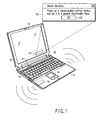
- FIG. 1 is a perspective view showing the outer appearance of an example of an electronic device according to a first embodiment of the present invention.
- the figures illustrates, as an example of the electronic device, an information processing apparatus consisting of, a notebook personal computer 10 having a wireless communication function.
- the computer 10 comprises a computer main body 11 and display unit 12.
- the display unit 12 is pivotally attached to the computer main body 11 to be movable between an open position and a closed position.
- the display unit 12 incorporates a liquid-crystal display (LCD) 13 which forms a display panel.
- LCD liquid-crystal display
- the display screen of the LCD 13 displays a remote device list, which is a list of devices discovered by device discovery by means of a wireless inquiry upon activating the wireless communication function.
- the remote device list is a graphical user interface (GUI) which presents, to the user, devices wirelessly communicable with at the current place of use of the computer 10 so as to enable selection of any of the devices.
- GUI graphical user interface
- the remote device list is used to prompt the user to select a communication partner. If no device that may serve as a communication partner is discovered in device discovery, a message 101 which prompts the user to perform an operation of setting a partner device in the general discoverable state is displayed. The process of outputting the message 101 will be described in detail later.
- the computer main body 11 comprises a low-profile box-like housing, the upper surface of which is equipped with a pointing device 14, keyboard 15, and the like as input means operable by the user.
- the computer main body 11 incorporates a wireless communication device 16 for realizing a short-range wireless communication function, and a sound output unit 17 which outputs sound, an alarm, and the like.
- the wireless communication device 16 executes short-range wireless communication including a function of discovering devices present within a predetermined wireless communication area.
- the wireless communication device 16 is so designed as to execute wireless communication defined by a short-range wireless communication standard such as BluetoothTM.
- Wireless communication operation of the wireless communication device 16 is controlled by a wireless communication control program (see reference numeral 201 in FIG. 3) running on the computer 10.
- the processing function of the wireless communication control program will be described with reference to the flowcharts shown in FIGS. 4 and 6.
- the sound output unit 17 outputs sound such as a voice message, an alarm, or music to a loudspeaker, headphones, or the like.
- the sound output unit 17 can output a voice message which prompts an operation of setting a partner device in the general discoverable state, instead of or at the same time as the message 101 which is displayed on the display screen of the LCD 13.
- the sound output unit 17 can output an alarm sound which prompts an operation of setting a partner device in the general discoverable state.
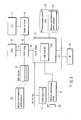
- FIG. 3 shows the system configuration of the computer 10.
- the computer 10 incorporates a CPU 21, north bridge 22, main memory 23, display controller 24, south bridge 25, and hard disk drive (HDD) 26, in addition to the LCD 13, keyboard 15, wireless communication device 16, and sound output unit 17 shown in FIG. 1.
- a CPU 21 north bridge 22, main memory 23, display controller 24, south bridge 25, and hard disk drive (HDD) 26, in addition to the LCD 13, keyboard 15, wireless communication device 16, and sound output unit 17 shown in FIG. 1.
- HDD hard disk drive
- the CPU 21 is a processor adopted to control the operation of the computer 10.
- the CPU 21 executes an operating system (OS) and various application programs which are loaded from the HDD 26 into the main memory 23.
- the wireless communication control program 201 is also loaded from the HDD 26 into the main memory 23, and executed by the CPU 21. The processing sequence of the wireless communication control program 201 at this time will be described below with reference to FIGS. 4 and 6.
- the north bridge 22 is a bridge device which bidirectionally connects a local bus 27 and PCI bus 28 of the CPU 21.
- the display controller 24 controls the LCD 13 used as the display monitor of the computer 10.
- the south bridge 25 is a bridge device which bidirectionally connects the PCI bus and an ISA bus 29.
- the PCI bus 28 is connected to the sound output unit 17 and the like, whereas the ISA bus 29 is connected to the keyboard (KB) and the like.
- the south bridge 25 incorporates a Universal Serial Bus (USB) controller 25a, which is connected to the wireless communication device 16.
- the wireless communication device 16 transmits/receives a radio signal via an antenna (ANT) 16a in accordance with a command input from the CPU 21 via the USB controller 25a.
- USB Universal Serial Bus
- the HDD 26 stores, as information associated with processes of the first embodiment, the wireless communication control program 201, data of the message 101 shown in FIG. 1, which is managed by the wireless communication control program 201 and which prompts the user to perform an operation of setting a partner device in the general discoverable state, template information of a discovered-device list 103 as shown in FIG. 2, voice message information, and the like.
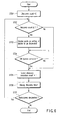
- FIG. 4 shows the processing sequence of the wireless communication control program 201 executed by the CPU 21 according to the first embodiment of the present invention.
- FIG. 6 shows the processing sequence according to the second embodiment of the present invention.
- the screen of the LCD 13 displays the message 101 which prompts setting of a device serving as a partner device in the general discoverable state.
- step ST11 device discovery is executed (step ST11), and if a device serving as a partner device is discovered as a result of discovery (NO in step ST12), a list of discovered devices is displayed on the LCD 13 as the discovered-device list 103 which allows selection of any of the each devices. After that, the discovery process ends (step ST13).
- the message 101 prompting the user to set a device serving as a partner device in the general discoverable state is displayed on the display screen of the LCD 13, as shown in FIG. 1 (step ST14).
- the message 101 includes an OK button 102 which is clicked by the user upon responding to the message.
- the OK button 102 After the user responds to the message 101 by setting a device capable of serving as a partner device in the general discoverable state, he/she clicks the OK button 102 (YES in step ST15) to execute device discovery again (step ST11).
- the LCD 13 displays the message 101 which prompts the user to set a device serving as a partner device in the general discoverable state (step ST14) .
- a voice message prompting the user to perform this setting can also be output from the sound output unit 17.
- a voice message giving the same information or a predetermined chime sound can be output from the sound output unit 17 to prompt the user to perform this setting.
- the discovery process can implement a user-friendly electronic device capable of simplifying the operation of the user interface to quickly and reliably discover a device capable of serving as a communication partner device. That is, when discovery of a device capable of serving as a communication partner device is carried out but no device can be found, the message 101 prompting the user to set a device capable of serving as a partner device in the general discoverable state is displayed. Device discovery is executed again after the user powers on the device capable of serving as a partner device or sets it in the general discoverable mode in accordance with the message. A target device capable of serving as a partner device can be quickly and reliably discovered.
- a target device can be found by the first discovery process with a very high degree of likelihood when a target device capable of serving as a partner device is not set in the continuous discoverable mode but the user recognizes this and sets the device in the general discoverable mode in advance, or when a target device capable of serving as a partner device is set in the continuous discoverable mode.
- the user need not respond to an unnecessary guidance message every time the message is displayed, thus simplifying user operation.
- a target device may not be set in, for example, the general discoverable state. In this situation, no device can be discovered and the non-discoverable state continues even if the user repeats the discovery process a plurality of times.
- the target device is determined to be not set in the general discoverable mode with a high degree of likelihood, and the message 101 is displayed. This can prevent a situation in which no target device can be discovered by several discovery processes.
- a target device capable of serving as a partner device can be discovered by a quick and reliable measure, and the communication environment can be quickly set along with discovery.
- FIG. 5 is a schematic view showing an example of a discoverability mode setting window displayed on a device discovered by the electronic device according to the first embodiment of the present invention.
- a radio button 61 for the non-discoverable mode is set and an OK button 63 is clicked on a setting window 60 shown in FIG. 5.
- the device is set in a processing state in which the device does not respond to external discovery. For example, when the user sets, in accordance with the message 101 shown in FIG.
- a device capable of serving as a communication partner device in a mode in which the device can be externally discovered a radio button 62 for the general discoverable mode is set and the OK button 63 is clicked in the setting window 60 shown in FIG. 5.
- the device is set in a processing state in which it responds to external discovery. If a cancel button 64 is clicked, the device is not set in any processing state.
- Discovery process operation of an electronic device will be explained with reference to the flowchart shown in FIG. 6 and the remote device list window shown in FIG. 2.
- the user cannot discover a target device when attempting to discover a device capable of serving as a communication partner device, i.e., if no target device is displayed in a discovered-device list 103, a message 101 which prompts setting of a target device in the general discoverable state is output.
- a CPU 21 maintains in a main memory 23 a counter which counts the number of device discovery operations.
- the counter is set to zero (step ST21), and device discovery is executed (NO in steps ST22 and ST25).
- An LCD 13 displays the discovered-device list 103 which allows one of the devices to be selected from a list of discovered devices (step ST26). At this time, the counter is incremented from zero to 1 along with device discovery.
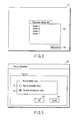
- FIG. 2 shows an example of the discovered-device list 103 displayed on the display screen of the LCD 13 in step ST26.
- the discovered-device list 103 displays the device names (or addresses) of devices discovered by the discovery process. Below the discovered-device list 103, the LCD 13 displays a rediscovery command button 104 which initiates rediscovery.
- the user referring to the discovered-device list 103, recognizes discovered devices and a target device capable of serving as a partner device exists in the discovered-device list 103, he/she selects the target device from the discovered-device list 103, ending the discovery process (NO in step ST27).
- the user initiates rediscovery by clicking the rediscovery command button 104 (YES in step ST27), it is confirmed from the counter value that discovery has already been executed (YES in step ST22).
- the message 101 prompting the user to set a device capable of serving as a partner device in the general discoverable state is displayed on the display screen of the LCD 13 (step ST23).
- step ST24 After the user responds to the message 101 and sets a device capable of serving as a communication partner device in the general discoverable state, he/she clicks an OK button 102 (YES in step ST24) to execute device discovery again (step ST25).
- the discovered-device list 103 as a result of rediscovery is displayed on the display screen of the LCD 13 (step ST26).
- a target device is selected from the discovered-device list 103, ending the discovery process (NO in step ST27).
- the message 101 prompting the user to set a partner device in the general discoverable state is displayed on the display screen of the LCD 13 (step ST23) .
- a voice message can also be output from a sound output unit 17 together with display of the message 101.
- a voice message giving the same information or a predetermined chime sound can also be output from the sound unit 17.
- the second embodiment of the present invention can obtain the same effects as those of the first embodiment when devices other than a target device are discovered but no target device is discovered. More specifically, when device discovery is performed to display the results in order to select a device, no device may be found or a plurality of devices may be found as discovery results. If no target device is discovered and displayed as a selection candidate, the operator can initiate rediscovery of a device. In the second embodiment of the present invention, when the user initiates rediscovery, the rediscovery command is determined to have been issued because no target device is discovered. As the cause, it is determined that the target device is not set in the general discoverable mode or, for example, is powered off. The message 101 which prompts setting of a target device in the general discoverable mode is displayed.
- the user responds to the message 101, and when setting the target device in a mode in which the device can be externally discovered, sets a general discoverable mode radio button 62 and clicks an OK button 63 in a setting window 60 shown in FIG. 5. Accordingly, the device is set in a state in which it can respond to external discovery. This can avoid a situation in which, when device discovery results can be obtained but no target device exists, no target device can be discovered even by repeating device discovery a plurality of times. A target device can be quickly and reliably discovered, and the communication environment can be quickly set along with discovery.
- the first and second embodiments can be combined.
- the message 101 which prompts setting of a device capable of serving as a partner device in the general discoverable state can also be output.
- the screen arrangement of the user interface, the constituent components of the device, and the like in the first and second embodiments can also be appropriately changed in accordance with the device, function, and the like by which the present invention is practiced.
Landscapes
- Engineering & Computer Science (AREA)
- Computer Networks & Wireless Communication (AREA)
- Signal Processing (AREA)
- Databases & Information Systems (AREA)
- Mobile Radio Communication Systems (AREA)
- Computer And Data Communications (AREA)
- Small-Scale Networks (AREA)
Applications Claiming Priority (2)
| Application Number | Priority Date | Filing Date | Title |
|---|---|---|---|
| JP2004051783 | 2004-02-26 | ||
| JP2004051783A JP2005244606A (ja) | 2004-02-26 | 2004-02-26 | 電子機器および通信機器の探索処理方法 |
Publications (3)
| Publication Number | Publication Date |
|---|---|
| EP1569391A2 true EP1569391A2 (de) | 2005-08-31 |
| EP1569391A3 EP1569391A3 (de) | 2005-11-02 |
| EP1569391B1 EP1569391B1 (de) | 2007-08-01 |
Family
ID=34747512
Family Applications (1)
| Application Number | Title | Priority Date | Filing Date |
|---|---|---|---|
| EP20040026564 Expired - Lifetime EP1569391B1 (de) | 2004-02-26 | 2004-11-09 | Elektronisches Gerät und Gerätentdeckungsverfahren mit Verwendung desselben |
Country Status (3)
| Country | Link |
|---|---|
| EP (1) | EP1569391B1 (de) |
| JP (1) | JP2005244606A (de) |
| DE (1) | DE602004007875T2 (de) |
Cited By (1)
| Publication number | Priority date | Publication date | Assignee | Title |
|---|---|---|---|---|
| US10412262B2 (en) | 2016-02-10 | 2019-09-10 | Canon Kabushik Kaisha | Information processing apparatus and method of controlling the same |
Families Citing this family (2)
| Publication number | Priority date | Publication date | Assignee | Title |
|---|---|---|---|---|
| WO2009096032A1 (ja) * | 2008-01-31 | 2009-08-06 | Pioneer Corporation | 情報通知装置、情報通知方法、情報通知プログラム、および記録媒体 |
| JP5185081B2 (ja) * | 2008-11-17 | 2013-04-17 | 株式会社東芝 | 無線端末装置、通信方法、及び通信プログラム |
Family Cites Families (3)
| Publication number | Priority date | Publication date | Assignee | Title |
|---|---|---|---|---|
| US6631271B1 (en) * | 2000-08-29 | 2003-10-07 | James D. Logan | Rules based methods and apparatus |
| US7512685B2 (en) * | 2000-11-30 | 2009-03-31 | 3Com Corporation | Method and system for implementing wireless data transfers between a selected group of mobile computing devices |
| US7890661B2 (en) * | 2001-05-16 | 2011-02-15 | Aol Inc. | Proximity synchronizing audio gateway device |
-
2004
- 2004-02-26 JP JP2004051783A patent/JP2005244606A/ja active Pending
- 2004-11-09 EP EP20040026564 patent/EP1569391B1/de not_active Expired - Lifetime
- 2004-11-09 DE DE200460007875 patent/DE602004007875T2/de not_active Expired - Lifetime
Cited By (1)
| Publication number | Priority date | Publication date | Assignee | Title |
|---|---|---|---|---|
| US10412262B2 (en) | 2016-02-10 | 2019-09-10 | Canon Kabushik Kaisha | Information processing apparatus and method of controlling the same |
Also Published As
| Publication number | Publication date |
|---|---|
| DE602004007875D1 (de) | 2007-09-13 |
| EP1569391B1 (de) | 2007-08-01 |
| DE602004007875T2 (de) | 2008-04-17 |
| JP2005244606A (ja) | 2005-09-08 |
| EP1569391A3 (de) | 2005-11-02 |
Similar Documents
| Publication | Publication Date | Title |
|---|---|---|
| JP4282426B2 (ja) | 電子機器および同機器に適用されるプログラム | |
| JP3737791B2 (ja) | 無線通信を実行可能な装置および同装置に適用される無線通信制御方法 | |
| CN107430394B (zh) | 一种与车机交互数据的方法、服务器、移动终端和装置 | |
| JP2023505129A (ja) | アプリケーション共有方法、電子機器及びコンピュータ可読記憶媒体 | |
| JP2007067724A (ja) | 携帯端末装置及び表示方法 | |
| US10764898B2 (en) | Media access control (MAC) address identification | |
| US20040114601A1 (en) | Electronic device, communication environment setting method, and program | |
| JP4866262B2 (ja) | 操作入力処理方法及び携帯型情報処理装置 | |
| JP5016713B2 (ja) | 無線通信装置及び無線通信方法 | |
| JP2005064855A (ja) | 情報処理装置およびプログラム | |
| WO2020253340A1 (zh) | 导航方法及移动终端 | |
| US7162232B2 (en) | Selecting wireless devices | |
| CN111127863B (zh) | 设备的控制方法、遥控器及存储介质 | |
| US20030065753A1 (en) | Information processing apparatus and network configuration method | |
| EP1569391B1 (de) | Elektronisches Gerät und Gerätentdeckungsverfahren mit Verwendung desselben | |
| JP2006318329A (ja) | 通信システム、通信方法、通信プログラムおよび記録媒体、遠隔制御装置、コマンドセット格納装置、ならびに、電子または電気機器 | |
| JP2002291039A (ja) | 無線通信端末及び無線ネットワークシステムにおける接続機器の選択方法 | |
| CN109284146B (zh) | 一种轻应用开启方法及移动终端 | |
| EP2890212B1 (de) | Elektronische Vorrichtung in einem Fahrzeug und drahtloses Vorrichtungsprüfverfahren | |
| US9374844B2 (en) | Electronic device, connection destination switching method and storage medium | |
| JP5032046B2 (ja) | 管理装置、出力装置、方法およびプログラム | |
| JP6540637B2 (ja) | 通信システム、通信装置、通信方法 | |
| US20180083796A1 (en) | Connection Method for Communication Device, Communication Device, and Control Terminal Device | |
| JP2003050661A (ja) | 通信機能付き電子機器、及び通信プログラム | |
| WO2017166149A1 (zh) | 一种终端设备及其控制方法 |
Legal Events
| Date | Code | Title | Description |
|---|---|---|---|
| PUAI | Public reference made under article 153(3) epc to a published international application that has entered the european phase |
Free format text: ORIGINAL CODE: 0009012 |
|
| 17P | Request for examination filed |
Effective date: 20041109 |
|
| AK | Designated contracting states |
Kind code of ref document: A2 Designated state(s): AT BE BG CH CY CZ DE DK EE ES FI FR GB GR HU IE IS IT LI LU MC NL PL PT RO SE SI SK TR |
|
| AX | Request for extension of the european patent |
Extension state: AL HR LT LV MK YU |
|
| PUAL | Search report despatched |
Free format text: ORIGINAL CODE: 0009013 |
|
| AK | Designated contracting states |
Kind code of ref document: A3 Designated state(s): AT BE BG CH CY CZ DE DK EE ES FI FR GB GR HU IE IS IT LI LU MC NL PL PT RO SE SI SK TR |
|
| AX | Request for extension of the european patent |
Extension state: AL HR LT LV MK YU |
|
| AKX | Designation fees paid |
Designated state(s): DE FR GB |
|
| GRAP | Despatch of communication of intention to grant a patent |
Free format text: ORIGINAL CODE: EPIDOSNIGR1 |
|
| GRAJ | Information related to disapproval of communication of intention to grant by the applicant or resumption of examination proceedings by the epo deleted |
Free format text: ORIGINAL CODE: EPIDOSDIGR1 |
|
| GRAP | Despatch of communication of intention to grant a patent |
Free format text: ORIGINAL CODE: EPIDOSNIGR1 |
|
| GRAS | Grant fee paid |
Free format text: ORIGINAL CODE: EPIDOSNIGR3 |
|
| GRAA | (expected) grant |
Free format text: ORIGINAL CODE: 0009210 |
|
| AK | Designated contracting states |
Kind code of ref document: B1 Designated state(s): DE FR GB |
|
| REG | Reference to a national code |
Ref country code: GB Ref legal event code: FG4D |
|
| REF | Corresponds to: |
Ref document number: 602004007875 Country of ref document: DE Date of ref document: 20070913 Kind code of ref document: P |
|
| ET | Fr: translation filed | ||
| PLBE | No opposition filed within time limit |
Free format text: ORIGINAL CODE: 0009261 |
|
| STAA | Information on the status of an ep patent application or granted ep patent |
Free format text: STATUS: NO OPPOSITION FILED WITHIN TIME LIMIT |
|
| 26N | No opposition filed |
Effective date: 20080506 |
|
| REG | Reference to a national code |
Ref country code: FR Ref legal event code: PLFP Year of fee payment: 12 |
|
| REG | Reference to a national code |
Ref country code: FR Ref legal event code: PLFP Year of fee payment: 13 |
|
| REG | Reference to a national code |
Ref country code: FR Ref legal event code: PLFP Year of fee payment: 14 |
|
| REG | Reference to a national code |
Ref country code: FR Ref legal event code: PLFP Year of fee payment: 15 |
|
| PGFP | Annual fee paid to national office [announced via postgrant information from national office to epo] |
Ref country code: GB Payment date: 20230921 Year of fee payment: 20 |
|
| PGFP | Annual fee paid to national office [announced via postgrant information from national office to epo] |
Ref country code: FR Payment date: 20230911 Year of fee payment: 20 |
|
| PGFP | Annual fee paid to national office [announced via postgrant information from national office to epo] |
Ref country code: DE Payment date: 20230912 Year of fee payment: 20 |
|
| REG | Reference to a national code |
Ref country code: DE Ref legal event code: R071 Ref document number: 602004007875 Country of ref document: DE |
|
| REG | Reference to a national code |
Ref country code: GB Ref legal event code: PE20 Expiry date: 20241108 |
|
| PG25 | Lapsed in a contracting state [announced via postgrant information from national office to epo] |
Ref country code: GB Free format text: LAPSE BECAUSE OF EXPIRATION OF PROTECTION Effective date: 20241108 |
|
| PG25 | Lapsed in a contracting state [announced via postgrant information from national office to epo] |
Ref country code: GB Free format text: LAPSE BECAUSE OF EXPIRATION OF PROTECTION Effective date: 20241108 |