EP1564990A2 - Gerätevewaltungssystem und -verfahren - Google Patents
Gerätevewaltungssystem und -verfahren Download PDFInfo
- Publication number
- EP1564990A2 EP1564990A2 EP05003187A EP05003187A EP1564990A2 EP 1564990 A2 EP1564990 A2 EP 1564990A2 EP 05003187 A EP05003187 A EP 05003187A EP 05003187 A EP05003187 A EP 05003187A EP 1564990 A2 EP1564990 A2 EP 1564990A2
- Authority
- EP
- European Patent Office
- Prior art keywords
- equipment
- contents
- recording
- resource
- information
- Prior art date
- Legal status (The legal status is an assumption and is not a legal conclusion. Google has not performed a legal analysis and makes no representation as to the accuracy of the status listed.)
- Withdrawn
Links
Images









Classifications
-
- G—PHYSICS
- G09—EDUCATION; CRYPTOGRAPHY; DISPLAY; ADVERTISING; SEALS
- G09B—EDUCATIONAL OR DEMONSTRATION APPLIANCES; APPLIANCES FOR TEACHING, OR COMMUNICATING WITH, THE BLIND, DEAF OR MUTE; MODELS; PLANETARIA; GLOBES; MAPS; DIAGRAMS
- G09B3/00—Manually or mechanically operated teaching appliances working with questions and answers
- G09B3/06—Manually or mechanically operated teaching appliances working with questions and answers of the multiple-choice answer type, i.e. where a given question is provided with a series of answers and a choice has to be made
-
- H—ELECTRICITY
- H04—ELECTRIC COMMUNICATION TECHNIQUE
- H04N—PICTORIAL COMMUNICATION, e.g. TELEVISION
- H04N7/00—Television systems
- H04N7/10—Adaptations for transmission by electrical cable
- H04N7/106—Adaptations for transmission by electrical cable for domestic distribution
-
- B—PERFORMING OPERATIONS; TRANSPORTING
- B42—BOOKBINDING; ALBUMS; FILES; SPECIAL PRINTED MATTER
- B42D—BOOKS; BOOK COVERS; LOOSE LEAVES; PRINTED MATTER CHARACTERISED BY IDENTIFICATION OR SECURITY FEATURES; PRINTED MATTER OF SPECIAL FORMAT OR STYLE NOT OTHERWISE PROVIDED FOR; DEVICES FOR USE THEREWITH AND NOT OTHERWISE PROVIDED FOR; MOVABLE-STRIP WRITING OR READING APPARATUS
- B42D1/00—Books or other bound products
- B42D1/003—Books or other bound products characterised by shape or material of the sheets
- B42D1/004—Perforated or punched sheets
-
- H—ELECTRICITY
- H04—ELECTRIC COMMUNICATION TECHNIQUE
- H04L—TRANSMISSION OF DIGITAL INFORMATION, e.g. TELEGRAPHIC COMMUNICATION
- H04L41/00—Arrangements for maintenance, administration or management of data switching networks, e.g. of packet switching networks
- H04L41/08—Configuration management of networks or network elements
-
- H—ELECTRICITY
- H04—ELECTRIC COMMUNICATION TECHNIQUE
- H04N—PICTORIAL COMMUNICATION, e.g. TELEVISION
- H04N21/00—Selective content distribution, e.g. interactive television or video on demand [VOD]
- H04N21/40—Client devices specifically adapted for the reception of or interaction with content, e.g. set-top-box [STB]; Operations thereof
- H04N21/41—Structure of client; Structure of client peripherals
- H04N21/4104—Peripherals receiving signals from specially adapted client devices
- H04N21/4135—Peripherals receiving signals from specially adapted client devices external recorder
-
- H—ELECTRICITY
- H04—ELECTRIC COMMUNICATION TECHNIQUE
- H04N—PICTORIAL COMMUNICATION, e.g. TELEVISION
- H04N21/00—Selective content distribution, e.g. interactive television or video on demand [VOD]
- H04N21/40—Client devices specifically adapted for the reception of or interaction with content, e.g. set-top-box [STB]; Operations thereof
- H04N21/43—Processing of content or additional data, e.g. demultiplexing additional data from a digital video stream; Elementary client operations, e.g. monitoring of home network or synchronising decoder's clock; Client middleware
- H04N21/436—Interfacing a local distribution network, e.g. communicating with another STB or one or more peripheral devices inside the home
- H04N21/43615—Interfacing a Home Network, e.g. for connecting the client to a plurality of peripherals
-
- H—ELECTRICITY
- H04—ELECTRIC COMMUNICATION TECHNIQUE
- H04N—PICTORIAL COMMUNICATION, e.g. TELEVISION
- H04N21/00—Selective content distribution, e.g. interactive television or video on demand [VOD]
- H04N21/40—Client devices specifically adapted for the reception of or interaction with content, e.g. set-top-box [STB]; Operations thereof
- H04N21/45—Management operations performed by the client for facilitating the reception of or the interaction with the content or administrating data related to the end-user or to the client device itself, e.g. learning user preferences for recommending movies, resolving scheduling conflicts
- H04N21/462—Content or additional data management e.g. creating a master electronic programme guide from data received from the Internet and a Head-end or controlling the complexity of a video stream by scaling the resolution or bit-rate based on the client capabilities
-
- H—ELECTRICITY
- H04—ELECTRIC COMMUNICATION TECHNIQUE
- H04N—PICTORIAL COMMUNICATION, e.g. TELEVISION
- H04N5/00—Details of television systems
- H04N5/76—Television signal recording
- H04N5/765—Interface circuits between an apparatus for recording and another apparatus
-
- H—ELECTRICITY
- H04—ELECTRIC COMMUNICATION TECHNIQUE
- H04N—PICTORIAL COMMUNICATION, e.g. TELEVISION
- H04N7/00—Television systems
- H04N7/16—Analogue secrecy systems; Analogue subscription systems
- H04N7/162—Authorising the user terminal, e.g. by paying; Registering the use of a subscription channel, e.g. billing
- H04N7/163—Authorising the user terminal, e.g. by paying; Registering the use of a subscription channel, e.g. billing by receiver means only
-
- H—ELECTRICITY
- H04—ELECTRIC COMMUNICATION TECHNIQUE
- H04N—PICTORIAL COMMUNICATION, e.g. TELEVISION
- H04N5/00—Details of television systems
- H04N5/76—Television signal recording
- H04N5/765—Interface circuits between an apparatus for recording and another apparatus
- H04N5/775—Interface circuits between an apparatus for recording and another apparatus between a recording apparatus and a television receiver
-
- H—ELECTRICITY
- H04—ELECTRIC COMMUNICATION TECHNIQUE
- H04N—PICTORIAL COMMUNICATION, e.g. TELEVISION
- H04N5/00—Details of television systems
- H04N5/76—Television signal recording
- H04N5/78—Television signal recording using magnetic recording
- H04N5/781—Television signal recording using magnetic recording on disks or drums
-
- H—ELECTRICITY
- H04—ELECTRIC COMMUNICATION TECHNIQUE
- H04N—PICTORIAL COMMUNICATION, e.g. TELEVISION
- H04N5/00—Details of television systems
- H04N5/76—Television signal recording
- H04N5/84—Television signal recording using optical recording
- H04N5/85—Television signal recording using optical recording on discs or drums
-
- H—ELECTRICITY
- H04—ELECTRIC COMMUNICATION TECHNIQUE
- H04N—PICTORIAL COMMUNICATION, e.g. TELEVISION
- H04N5/00—Details of television systems
- H04N5/76—Television signal recording
- H04N5/907—Television signal recording using static stores, e.g. storage tubes or semiconductor memories
Definitions
- the present invention relates to an equipment management system and an equipment management method which manage resource information on equipment that relates to at least either of the regeneration and recording of contents which include at least either of video data and audio data. It also relates to an equipment management unit which is used in the equipment management system.
- a program picture-recording system which is designed so that the picture recording of a broadcast program can be easily reserved.
- Such a picture-recording reservation is made, using electronic program information, such as the broadcasting channel of a program and the time of a program (i.e., its date on the air, the time when its broadcast starts and the time when it ends).
- electronic program information such as the broadcasting channel of a program and the time of a program (i.e., its date on the air, the time when its broadcast starts and the time when it ends).
- Japanese Patent Laid-Open No. 10-155131 specification discloses the art of not only offering program information to a program picture-recording unit in a house, using a server which is connected via a network to the program picture-recording unit, but also changing the contents reserved by each program picture-recording unit if the time of a program is changed.
- a regeneration unit which regenerates contents that are made up of video data, audio data and the like
- a display unit which displays the contents.
- Each piece of equipment individually manages resource information on equipment that relates to the regeneration and recording of contents.
- the resource information is, for example, equipment resource information for specifying a function available to a user, contents identification information for specifying the recorded contents, or the like.
- the equipment management system which manages resource information on equipment that relates to at least either of the regeneration and recording of contents which include at least either of video data and audio data, comprising, a plurality of pieces of equipment which are connected via a predetermined network so as to communicate with each other, one of the plurality of pieces of equipment being master equipment which manages resource information on the plurality of pieces of equipment, and the rest of the plurality of pieces of equipment being slave equipment which is controlled by the master equipment, the slave equipment including: a resource recording means for recording resource information on the slave equipment itself; and a communicating means for transmitting, to the master equipment, the resource information on the slave equipment itself which is recorded in the resource recording means, the master equipment including: a communicating means for receiving the resource information which is transmitted by the communicating means of the slave equipment; a resource recording means for recording, in each piece of equipment, resource information on the master equipment itself and the resource information on the slave equipment which is received by the communicating means; and a managing means for managing the resource information on each piece of equipment which is recorded in the
- the resource information on the slave equipment itself which is recorded in the slave equipment is transmitted to the master equipment. Then, the transmitted resource information is received in the master equipment. Next, the received resource information on the slave equipment is recorded in each piece of equipment. Sequentially, the recorded resource information on each piece of equipment is intensively managed. Therefore, using the resource information on each piece of equipment, the master equipment can control the operation of the slave equipment. Thus, resource information on equipment that relates to at least either of the regeneration and recording of contents can be intensively managed, and thereby, a plurality of pieces of equipment can operate cooperatively and efficiently.
- Fig. 1 is a block diagram, showing the configuration of an equipment management system according to an embodiment of the present invention.
- the equipment management system shown in Fig. 1 includes: a communication unit 1; an antenna 2; an exchangeable record-medium recording units 3, 5 which are master equipment or slave equipment; an exchangeable record-medium regeneration unit 7; and monitors 4, 6, 8 which are connected to them. It manages resource information on equipment that relates to the regeneration and recording of contents data which include at least either of video data and audio data.
- contents data is suitably expressed simply as the "contents”.
- the communication unit 1, the exchangeable record-medium recording units 3, 5 and the exchangeable record-medium regeneration unit 7 are connected via an in-house network 9, so that they can communicate with each other.
- the communication unit 1 is connected via a network 53 to an information provision server 51, so that they can communicate with each other.
- the information provision server 51 and a broadcasting station 52 are connected via a dedicated line, a general-purpose network, or the like, so that they can communicate with each other.
- a wired or radio LAN or local area network
- IEEE1394, Ethernet which is a trademark
- HBS home-bus standard
- ECHONET energy conservation and homecare network
- the network 53 there is used, for example, the Internet, a public telephone line, or the like.
- One of the exchangeable record-medium recording units 3, 5 and the exchangeable record-medium regeneration unit 7 is the master equipment which manages the resource information on these pieces of equipment.
- the rest is the slave equipment which is controlled by the master equipment.
- the pieces of equipment which are the master equipment and the slave equipment and the number of those pieces of equipment are not limited especially to the above described example. They can be variously changed, using a display unit such as a television, using four or more pieces of equipment, or the like. Besides, if the master equipment can work as the slave equipment, the master equipment may also be operated as the slave equipment.
- the master equipment can also be selected in various methods. A user can choose which equipment should be the master equipment, the equipment which has the highest-level function may also be automatically selected, or the like.
- a network adapter 25 (described later) is mounted on the main body of equipment, a control section 20 may also execute the following processing. Using the network adapter 25, it searches for the master equipment among the other pieces of equipment which are connected to the in-house network 9. Then, it transmits resource information which is stored in a self-resource information recording section 42 to the master equipment which has been obtained by the search.
- the communication unit 1 is configured by a modem and the like. Via the network 53, it acquires electronic program information which includes a receiving channel, program contents and program time for each program which is provided by the information provision server 5. Then, it transmits the electronic program information via the in-house network 9 to the exchangeable record-medium recording units 3, 5.
- the antenna 2 receives an electronic radio wave which is transmitted from the broadcasting station 52, and then, outputs contents such as a program to the exchangeable record-medium recording units 3, 5.
- the exchangeable record-medium recording units 3, 5 acquire the electronic program information, and based on the electronic program information, they record the picture of the program which is reserved by a user in an exchangeable record medium or a fixed record medium.
- the monitors 4, 6, 8 display and offer to the user, contents which are regenerated by the exchangeable record-medium recording units 3, 5 and the exchangeable record-medium regeneration unit 7.
- Fig. 2 is a block diagram, showing the configuration of the exchangeable record-medium recording unit 3 shown in Fig. 1.
- the exchangeable record-medium recording unit 5 shown in Fig. 1 is also configured in the same way as the exchangeable record-medium recording unit 3. Thus, its detailed description is omitted.
- the exchangeable record-medium recording unit 3 shown in Fig. 2 includes: a tuner 11; a decoder 12; a recording section 13; a recording-and-regeneration interface section 14; an exchangeable record-medium recording section 15; a fixed record-medium recording section 16; a memory-card recording section 17; a regeneration section 18; an output section 19; a control section 20; an operation section 21; a resource-information recording section 22; a power-source switch section 23; a power source 24; a network adapter 25; and an authentication section 26.
- the tuner 11 is connected to the antenna 2. Using the operation section 21, it extracts the channel program data selected by a user from a broadcast radio wave which is received by the antenna 2. Then, it outputs it to the decoder 12. In this specification, the program data is suitably expressed simply as the "program".
- the decoder 12 is used in the case where a program by digital TV broadcasting is received. It decodes a program which is received in a compressed-and-coded format, and outputs it to the recording section 13 and the output section 19. The output section 19 outputs the program to the monitor 4 and displays it in the monitor 4.
- the authentication section 26 executes a contents watching-and-listening authentication processing for obtaining permission to watch and listen to contents. For example, if a B-CAS card is inserted, it executes a watching-and-listening authentication processing for BS digital TV broadcasting. Thereafter, the decoder 12 decodes the programwhich is received in a compressed-and-coded format, and outputs it to the recording section 13 and the output section 19.
- the in-house network 9 is configured simply by two kinds of buses, a control bus CB and a stream bus SB.
- the control bus CB which configures the in-house network 9 is used to transmit various control signals between the master equipment and the slave equipment.
- the stream bus SB is used to transmit various contents between the master equipment and the slave equipment.
- the network adapter 25 is configured so as to be attached to and detached from the main body of equipment. It is connected to the control bus CB and the stream bus SB of the in-house network 9.
- the network adapter 25 transmits and receives a control signal to and from the control section 20 of another piece of equipment, via the control section 20 and the control bus CB. Besides, it receives contents which are transmitted via the stream bus SB from another piece of equipment, and transmits them to the recording section 13. Then, it transmits contents which are outputted from the regeneration section 18 to another piece of equipment, via the stream bus SB.
- the recording section 13 outputs contents to the exchangeable record-medium recording section 15, the fixed record-medium recording section 16 and the memory-card recording section 17. Thereby, it controls a recording operation.
- a DVD drive is used as the exchangeable record-medium recording section 15
- a hard-disk drive is used as the fixed record-medium recording section 16
- a memory-card reader/writer is used as the memory-card recording section 17.
- an exchangeable record medium for recording there is used, for example, an optical disk such as a DVD-RAM, a DVD-R, a CD-RW, a CD-R, a PD (or phase change rewritable disk) and a blu-ray disk, a videotape such as a VHS, or the like.
- a hard disk or the like is used as a fixed record medium.
- a memory card there is used an SD (or secure digital) memory card which is formed by a semiconductor memory and the like, or the like.
- an exchangeable record medium for regeneration in addition to the above described optical disk, there is used, for example, a DVD-ROM, a CD-ROM, or the like.
- the recording section which is provided in the exchangeable record-medium recording unit 3 is not limited especially to the above described example, and thus, it can be variously changed.
- the recording section 13 refers to electronic program information which is acquired by the communication unit 1. Then, it generates contents identification information on the contents which are recorded in the exchangeable record-medium recording section 15, the fixed record-medium recording section 16 and the memory-card recording section 17. Thereby, it outputs the contents identification information to the control section 20.
- the operation section 21 accepts an operation instruction by a user and outputs it to the control section 20.
- the operation section 21 accepts reservation setting information for setting a reserved picture-recording of a program which is recorded as the contents. Then, it outputs the reservation setting information to the control section 20.
- the operation section 21 detects that the picture of the program specified by the reservation setting information cannot be recorded. Then, it notifies the control section 20 of the master equipment.
- the recording section 13 detects a change in the broadcasting time of the program which has been accepted by the operation section 21, and then, notifies the control section 20. Besides, the recording section 13 detects a commercial message during the program whose picture is recorded. Then, the control section 20 stops or starts recording the program during the commercial message.
- the regeneration section 18 receives, via the recording-and-regeneration interface section 14, the contents which have been regenerated by the exchangeable record-medium recording section 15, the fixed record-medium recording section 16 and the memory-card recording section 17. Then, it outputs them to the output section 19 and the network adapter 25, and controls a regeneration operation.
- the recording-and-regeneration interface section 14 executed an interface between the recording section 13 and the regeneration section 18, and the exchangeable record-medium recording section 15, the fixed record-medium recording section 16 and the memory-card recording section 17.
- Fig. 3 is a block diagram, showing the configuration of the network adapter 25 shown in Fig. 2.
- the network adapter 25 can be attached and detached, and providing the network adapter 25 offers a network communication function to the master equipment and the slave equipment.
- the network adapter 25 includes: a communication connector 31; a multiplex section 32; a decrypting section 33; and an encrypting section 34.
- the communication connector 31 is connected to the control bus CB and the stream bus SB. It outputs, to the control section 20, a control signal which is inputted from the control bus CB, and outputs, to the control bus CB, a control signal which is outputted from the control section 20.
- the communication connector 31 outputs, to the multiplex section 32, contents which are inputted from the stream bus SB, and outputs, to the stream bus SB, contents which are outputted from the multiplex section 32.
- the decrypting section 33 decrypts the encrypted contents which are outputted from the multiplex section 32. Then, it outputs them to the recording section 13 and the regeneration section 18.
- the encrypting section 34 encrypts contents which are outputted from the recording section 13 and the regeneration section 18. Then, it outputs them to the multiplex section 32.
- the control section 20 is configured by a microprocessor which includes a ROM (or read only memory), a RAM (or random access memory) or the like, and the like. It executes an equipment management program which is recorded in the ROM, so that it can manage, for each piece of equipment, the resource information which is recorded in the resource-information recording section 22. In addition, it controls the operation of the recording section 13, the recording-and-regeneration interface section 14, the regeneration section 18, the operation section 21 and the power-source switch section 23. Using the network adapter 25, the control section 20 transmits and receives a control signal to and from another piece of equipment.
- the power-source switch section 23 switches the state of the power source 24. Specifically, it switches from an ordinary power-source state in which equipment ordinarily operates to a sleep state where power consumption is less than that in the ordinary power-source state, and vice versa.
- Fig. 4 is a block diagram, showing the configuration of the resource-information recording section 22 shown in Fig. 2.
- the resource-information recording section 22 includes: an information management section 41; a self-resource information recording section 42; a slave-equipment resource-information recording section 43; and an exchangeable record-medium information recording section 44.
- the information management section 41 reads resource information from the self-resource information recording section 42, the slave-equipment resource-information recording section 43 and the exchangeable record-medium information recording section 44.
- it records resource information which is outputted from the control section 20 in the self-resource information recording section 42, the slave-equipment resource-information recording section 43 and the exchangeable record-medium information recording section 44.
- the self-resource information recording section 42 records resource information on the exchangeable record-medium recording unit 3.
- the slave-equipment resource-information recording section 43 records resource information on the slave equipment when the exchangeable record-medium recording unit 3 operates as the master equipment.
- the exchangeable record-medium information recording section 44 records exchangeable record-medium identification information for identifying the exchangeable record medium used by the exchangeable record-medium recording unit 3, and usage condition information which includes at least either of the regeneration condition and the recording condition of the exchangeable record medium.
- the exchangeable record-medium recording unit 3 when the exchangeable record-medium recording unit 3 operates as the master equipment, it records exchangeable record-medium identification information for identifying the exchangeable record medium used by the exchangeable record-medium recording unit 3 and the slave equipment, and usage condition information on the exchangeable record medium.
- the resource information on equipment includes: equipment identification information for identifying each piece of equipment; equipment resource information for specifying a function available to a user in each piece of equipment; operation setting information for specifying an operation setting which is set by a user for the operation section 21; contents identification information for specifying the contents which are recorded in an exchangeable record medium which is mounted in the exchangeable record-medium recording section 15, a fixed record medium in the fixed record-medium recording section 16 and a memory card in the memory-card recording section 17; exchangeable record-medium identification information for identifying the used exchangeable record medium; usage condition information which includes at least either of the regeneration condition and the recording condition of the used exchangeable record medium; and the like.
- the equipment identification information is equivalent to a MAC (or media access control) address for identifying an identification code peculiar to each piece of equipment and each piece of equipment in the in-house network 9, or the like.
- the equipment resource information is equivalent to an identification code for specifying each function, such as the function of recording contents in an exchangeable record medium, the function of regenerating contents from an exchangeable record medium, the function of recording contents in a fixed record medium, the function of regenerating contents from a fixed record medium, the function of recording contents in a memory card, the function of regenerating contents from a memory card, the function of making a reserved picture-recording, the function of displaying contents on an video, the function of outputting contents on a audio and the function of authenticating watching-and-listening.
- the operation setting information is equivalent to channel setting information for specifying the setting of a receiving channel which is set by a user, or the like.
- the contents identification information is equivalent to: program contents information such as the time when a broadcast starts and the time when it ends, the title of a program and the name of a person who appears which are obtained from electronic program information or the like; copyright management information on the copyright of contents; main-contents identification information which includes information for identifying main contents and identifying a record medium in which data is actually recorded; dependent-contents identification information which includes information for identifying dependent contents and identifying a record medium in which data is actually recorded; or the like.
- the copyright management information is equivalent to: movement restriction information which includes at least one of the pieces of information on the number of times up to which contents are permitted to move, the period during which the contents are permitted to move and the time when the contents are permitted to move, for an exchangeable record medium; copy restriction information which includes at least one of the pieces of information on the number of times up to which contents are permitted to be copied, the number of generations for which the contents are permitted to be copied, the period during which the contents are permitted to be copied and the time when the contents are permitted to be copied; regeneration restriction information which includes at least one of the pieces of information on the number of times up to which contents are permitted to be regenerated, the period during which the contents are permitted to be regenerated and the time when the contents are permitted to be regenerated; or the like.
- the copy restriction information is equivalent to: copy impermissible information which does not permit contents to be copied; copy free information which permits the contents to be freely copied; one-generation copy permissible information which permits the contents to be copied only for one generation; once-copy permissible information which permits the contents to be copied only once; or the like.
- the usage condition information is equivalent to: regeneration condition information and recording condition information which are obtained by the learning of optimizing laser power of an optical pickup, the learning of optimizing its recording pulse, the learning of optimizing its tilt, or the like.
- Fig. 5 is a block diagram, showing the configuration of the exchangeable record-medium regeneration unit 7 shown in Fig. 1.
- the exchangeable record-medium regeneration unit 7 shown in Fig. 5 includes: a regeneration interface section 14a; a regeneration section 18; an output section 19; a control section 20a; an operation section 21; a resource-information recording section 22; a power-source switch section 23; a power source 24; and an exchangeable record-medium regeneration section 27.
- each block of the exchangeable record-medium regeneration unit 7 is given the identical reference numeral and character to that of the same block in the exchangeable record-medium regeneration unit 3 shown in Fig. 2. Thus, their detailed description is omitted below.
- the regeneration interface section 14a executed an interface between the regeneration section 18 and the exchangeable record-medium regeneration section 27.
- the regeneration section 18 receives, via the regeneration interface section 14a, the contents which are regenerated by the exchangeable record-medium regeneration section 27. Then, it outputs them to the output section 19 and the network adapter 25, and thereby, it controls a regeneration operation.
- a DVD player is used as the exchangeable record-medium regeneration section 27.
- a DVD-ROM, a CD-ROM or the like is used as the exchangeable record medium for regeneration.
- the output section 19 outputs, to the monitor 8, contents which are outputted from the regeneration section 18 and the network adapter 25, and displays them in it.
- the control section 20a manages, for each piece of equipment, the resource information which is stored in the resource-information recording section 22. In addition, it controls the operation of the regeneration interface section 14a, the regeneration section 18, the operation section 21 and the power-source switch section 23. Using the network adapter 25, the control section 20a transmits and receives a control signal to and from another piece of equipment.
- the exchangeable record-medium recording unit 3 and the monitor 4, the exchangeable record-medium recording unit 5 and the monitor 6, and the exchangeable record-medium regeneration unit 7 and the monitor 8, correspond to an example of the master equipment, the slave equipment, the exchangeable record-medium drive unit, or the contents regeneration unit.
- the resource-information recording section 22 corresponds to an example of the resource recording means; the network adapter 25, to an example of the communicating means, the connecting means, or the adapter means; and the control section 20, to an example of the managing means.
- the power-source switch section 23 corresponds to an example of the power-source switching means; the operation section 21, to an example of the equipment-resource deletion accepting means, the operating means, the deletion accepting means, the reservation accepting means, or the picture-recording disability detecting means; the exchangeable record-medium recording section 15, the fixed record-medium recording section 16 and the memory-card recording section 17, to an example of the contents recording means; and the exchangeable record-medium recording unit 3 and the monitor 4, as well as the exchangeable record-medium recording unit 5 and the monitor 6, to an example of the contents recording unit, the first and second contents recording units, or the exchangeable record-medium recording unit.
- the recording section 13 corresponds to an example of the generating means, the change detecting means, or the commercial-message detecting means; the exchangeable record-medium recording section 15 and the memory-card recording section 17, to an example of the exchangeable record-medium recording means;the exchangeable record-medium recording section 15, the fixed record-medium recording section 16, the memory-card recording section 17 and exchangeable record-medium regeneration section 27, to an example of the contents regenerating means; the encrypting section 34, to an example of the encrypting means; the decrypting section 33, to an example of the decrypting means; the authentication section 26, to an example of the authenticating means; and the decoder 12, to an example of the decode means.
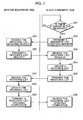
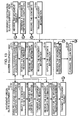
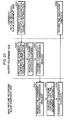
- Fig. 6 is a flow chart, showing a resource-information addition processing in the equipment management system shown in Fig. 1.
- a user turns on the power source of the slave equipment (e.g., the exchangeable record-medium recording unit 5 and the monitor 6).
- the power-source switch section 23 switches the power source 24 to the ordinary power-source state. Then, the slave equipment starts.
- the control section 20 of the slave equipment reads, from the self-resource information recording section 42, equipment identification information on the slave equipment itself. Using the network adapter 25, it transmits an equipment addition request to add resource information on the slave equipment, together with the equipment identification information, to the master equipment (e.g., the exchangeable record-medium recording unit 3 and the monitor 4).
- the master equipment e.g., the exchangeable record-medium recording unit 3 and the monitor 4
- a step S1 the network adapter 25 of the master equipment receives the equipment identification information and the equipment addition request, and then, outputs them to the control section 20.
- the control section 20 decides whether or not the received equipment identification information is recorded in the slave-equipment resource-information recording section 43. If the equipment identification information is recorded, the processing shifts to a step S6. On the other hand, unless the equipment identification information is recorded, the processing shifts to a step S3.
- the control section 20 transmits a resource-list request to the slave equipment.
- the network adapter 25 of the slave equipment receives the resource-list request, and then, outputs it to the control section 20.
- the control section 20 reads, from the self-resource information recording section 42, equipment identification information and the resource information on the slave equipment itself. Then, it creates a resource list which includes them.
- the control section 20 transmits the resource list to the master equipment.
- the network adapter 25 of the master equipment receives the resource list, and then, outputs it to the control section 20.
- the control section 20 records the resource information on the slave equipment in the slave-equipment resource-information recording section 43, so that it corresponds to the equipment identification information on the slave equipment. Thereby, it updates the resource list.
- a step S6 using the network adapter 25, the control section 20 transmits a resource-list updating completion to the slave equipment. This is also the same, even if the decision is made at the step S2 that the equipment identification information is recorded.
- the network adapter 25 of the slave equipment receives the resource-list updating completion, and then, outputs it to the control section 20. Then, the network adapter 25 cuts off the connection to the in-house network 9. In this way, the resource information on each piece of slave equipment is added, and thus, the master equipment can acquire the resource information on all the pieces of slave equipment.
- the following processing may also be executed.
- the control section 20 accepts a sleep-state switching instruction from the operation section 21.
- the control section 20 accepts a sleep-state switching instruction via the network adapter 25.
- the network adapter 25 of the slave equipment receives the resource-list updating completion, and then, outputs it to the control section 20.
- the power-source switch section 23 switches the power source 24 from the ordinary power-source state to the sleep state. In this case, even if the slave equipment is switched from the ordinary power-source state to the sleep state, the resource information on the slave equipment can be certainly transmitted to the master equipment. This makes it possible to surely manage the resource information on the slave equipment.
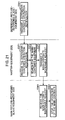
- Fig. 7 is a flow chart, showing a resource updating processing in the equipment management system shown in Fig. 1.
- the control section 20 of the slave equipment e.g., the exchangeable record-medium recording unit 5 and the monitor 6) decides whether or not a change is made in the resource information which is stored in the self-resource information recording section 42 by the processing, such as the recording, movement and copying of contents (described later). If no change is made in the resource information, the processing of the step S31 is repeated. On the other hand, if a change is made in the resource information, the processing shifts to a step S32.
- the control section 20 transmits a resource-list updating request for updating the resource information on the slave equipment and the equipment identification information, to the master equipment (e.g., the exchangeable record-medium recording unit 3 and the monitor 4).
- the master equipment e.g., the exchangeable record-medium recording unit 3 and the monitor 4
- the network adapter 25 of the master equipment receives the equipment identification information and the resource-list updating request, and then, outputs them to the control section 20.
- the control section 20 transmits a resource-list request to the slave equipment, using the network adapter 25.
- the processing of steps S33 to S36 by the slave equipment, and the processing of steps S23 to S25 by the master equipment are executed in the same way as the processing of the steps S13 to S16 by the slave equipment, and the processing of the steps S4 to S6 by the master equipment, which are shown in Fig. 6.
- the resource information on the slave equipment is updated in the master equipment. This allows the master equipment to update and manage the resource information on all the slave equipment.
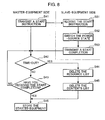
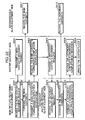
- Fig. 8 is a flow chart, showing a diagnosis processing in the equipment management system shown in Fig. 1.
- the control section 20 of the master equipment e.g., the exchangeable record-medium recording unit 3 and the monitor 4) transmits a start request to the slave equipment (e.g., the exchangeable record-medium recording unit 5 and the monitor 6).
- the network adapter 25 of the slave equipment receives the start request, and then, outputs it to the control section 20.
- step S52 using the power-source switch section 23, the control section 20 of the slave equipment switches the power source 24 to the ordinary power-source state. Thereafter, in a step S53, using the network adapter 25, it transmits the equipment identification information as well as a start completion to the master equipment.
- step S42 the control section 20 of the master equipment decides whether or not a predetermined time has elapsed since it transmitted the start request. If the predetermined time has elapsed, the processing shifts to a step S44. On the other hand, unless the predetermined time has elapsed, the processing shifts to a step S43.
- the control section 20 decides whether or not the start completion has been received from the slave equipment. If the start completion has been received, the processing shifts to a step S46. On the other hand, unless the start completion has been received, the processing of the step S42 is repeated.
- the control section 20 deletes, from the slave-equipment resource-information recording section 43, the resource list or resource information of the slave equipment which has not transmitted the start completion.
- the control section 20 deletes, from the slave-equipment resource-information recording section 43, the contents list or contents identification-information list of the slave equipment which has not transmitted the start completion.
- step S46 the control section 20 stores the slave equipment which is started by the above described processing. Then, the processing is completed. Hence, In this way, a diagnosis processing is executed, whether or not each piece of slave equipment can start. This allows the master equipment to manage the slave equipment which is now in operation.
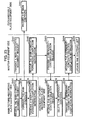
- Fig. 9 is a flow chart, showing a resource deletion processing in the equipment management system shown in Fig. 1.
- a user operates the operation section 21 and gives an instruction to delete the resource information.
- the operation section 21 of the slave equipment e.g., the exchangeable record-medium recording unit 5 and the monitor 6) accepts the resource deletion instruction and notifies the control section 20.
- the control section 20 transmits a resource-list deletion request to delete the resource information of the slave equipment and the equipment identification information, to the master equipment (e.g., the exchangeable record-medium recording unit 3 and the monitor 4).
- the master equipment e.g., the exchangeable record-medium recording unit 3 and the monitor 4
- the network adapter 25 of the master equipment receives the equipment identification information and the resource-list deletion request. Then, it outputs them to the control section 20.
- the control section 20 deletes, from the slave-equipment resource-information recording section 43, the resource list or resource information of the slave equipment which has transmitted the resource-list deletion request.
- a step S63 it deletes, from the slave-equipment resource-information recording section 43, the contents list or contents identification-information list of the slave equipment which has transmitted the resource-list deletion request.
- the control section 20 deletes the resource list or resource information of the slave equipment itself from the self-resource information recording section 42.
- a step S74 it deletes the contents list or contents identification information of the slave equipment itself from the self-resource information recording section 42.
- a step S64 using the network adapter 25, the control section 20 of the master equipment transmits a resource-list deletion completion to the slave equipment.
- the network adapter 25 of the slave equipment receives the resource-list deletion completion, and then, outputs it to the control section 20. Then, the network adapter 25 cuts off the connection to the in-house network 9. In this way, in response to the resource-list deletion request from each piece of slave equipment, the resource information on the slave equipment and the master equipment is deleted.
- the control section 20 of the slave equipment transmits, to the master equipment, a resource-list deletion request for deleting the resource information on the slave equipment (which includes contents identification information on the contents to be deleted), as well as the equipment identification information. Thereafter, the processing of the steps S61 to S64 by the master equipment, and the processing of the steps S73 to S75 by the slave equipment, are executed. In this case, even if the contents of the slave equipment are automatically deleted, the contents identification information on all the pieces of equipment can be managed intensively and efficiently.
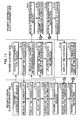
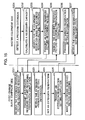
- Fig. 10 is a flow chart, showing an exchangeable record-medium usage-condition sharing processing in the equipment management system shown in Fig. 1.
- a user mounts an exchangeable record medium in the slave equipment (e.g., the exchangeable record-medium recording unit 5 and the monitor 6).
- the regeneration section 18 regenerates the exchangeable record medium.
- it acquires exchangeable record-medium identification information on the exchangeable record medium, and outputs it to the control section 20.
- the control section 20 transmits the equipment identification information as well as the exchangeable record-medium identification information, to the master equipment (e.g., the exchangeable record-medium recording unit 3 and the monitor 4).
- the network adapter 25 of the master equipment receives the equipment identification information and the exchangeable record-medium identification information. Then, it outputs them to the control section 20.
- the control section 20 decides whether or not the received exchangeable record-medium identification information is recorded in the exchangeable record-medium information recording section 44. If the exchangeable record-medium identification information is recorded, the processing shifts to a step S86. On the other hand, unless the exchangeable record-medium identification information is recorded, the processing shifts to a step S83.
- the control section 20 transmits, to the slave equipment, a usage-condition information request for usage condition information of the exchangeable record medium.
- the network adapter 25 of the slave equipment receives the usage-condition information request, and then, outputs it to the control section 20.
- the control section 20 instructs the regeneration section 18 to learn the usage condition information on the mounted exchangeable record medium.
- the regeneration section 18 learns and acquires the usage condition information on the exchangeable record medium, and then, outputs it to the control section 20.
- the control section 20 transmits the exchangeable record-medium identification information and the usage condition information to the master equipment.
- the usage condition information is equivalent to, for example: recording-and-regeneration environmental information which includes information on the difference between the learning value of basic drive and the learning value of execution drive which is used to deal with the case where a learning value is different for each drive, or the like; condition information which shows how easily a regeneration can be made and how easily a recording can be made for each exchangeable record medium, or the like; an overwriting count value which shows how many times an overwriting has been executed in an exchangeable record medium; or the like.
- the network adapter 25 of the master equipment receives the exchangeable record-medium identification information and the usage condition information. Then, it outputs them to the control section 20.
- the control section 20 records the received usage condition information in the exchangeable record-medium information recording section 44, so that it corresponds to the exchangeable record-medium identification information. Thereby, it updates the resource list.
- step S97 using the usage condition which has been learned in the step S94, the recording section 13 of the slave equipment records the picture of predetermined contents in the exchangeable record medium.
- steps S98 and S99 in the slave equipment, as well as the processing of steps S87 to S89 in the master equipment, are executed. Such processing will be described later.
- the control section 20 reads the usage condition information on the exchangeable record medium from the exchangeable record-medium information recording section 44. Then, using the network adapter 25, it transmits the usage condition information on the exchangeable record medium to the slave equipment. At this time, in a step S93, the network adapter 25 of the slave equipment receives the usage-condition information request receives the usage condition information, and then, outputs it to the control section 20. Next, in a step S97, the control section 20 outputs the usage condition information to the recording section 13. Then, using the usage condition, the recording section 13 records the picture of the predetermined contents in the exchangeable record medium.
- the control section 20 transmits, to the master equipment, the contents identification information on the recorded contents, the equipment identification information and the exchangeable record-medium identification information, as well as a picture-recording completion for notifying it that the picture recording is completed.
- a picture-recording operation is illustrated, but a regeneration operation using the regeneration section 18 or the like is also executed in the same way.
- the network adapter 25 of the master equipment receives the contents identification information, the equipment identification information and the exchangeable record-medium identification information, as well as the picture-recording completion. Then, it outputs them to the control section 20.
- the control section 20 records the received contents identification information in the slave-equipment resource-information recording section 43, so that it corresponds to the equipment identification information and the exchangeable record-medium identification information. Thereby, it adds the contents identification information.
- the control section 20 transmits a contents identification-information addition completion to the slave equipment.
- the network adapter 25 of the slave equipment receives the contents identification-information addition completion, and then, outputs it to the control section 20. Then, a shift is made to the sleep mode.
- the contents identification information which corresponds to the usage condition of an exchangeable record medium and the exchangeable record-medium identification information which is acquired by each piece of slave equipment is intensively managed in the master equipment.
- the slave equipment can use the usage condition which is transmitted from the master equipment, without learning it again. This makes it possible to share the usage condition of an exchangeable record medium among a plurality of pieces of equipment.
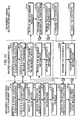
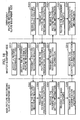
- Fig. 11 is a flow chart, showing a contents forwarding regeneration processing for, in response to a request from a piece of slave equipment, forwarding and regenerating contents from another piece of slave equipment in the equipment management system shown in Fig. 1.
- a user operates request-origin slave equipment (e.g., the exchangeable record-medium recording unit 5 and the monitor 6), and requests a contents list.
- the operation section 21 of the request-origin slave equipment accepts the contents list request, and then, outputs it to the control section 20.
- the control section 20 transmits the contents list request, together with the equipment identification information, to the master equipment (e.g., the exchangeable record-medium recording unit 3 and the monitor 4).
- the network adapter 25 of the master equipment receives the equipment identification information and the contents list request, and then, outputs them to the control section 20.
- the control section 20 in response to the received contents list request, the control section 20 reads the contents identification information as well as the equipment identification information which are recorded in the slave-equipmentresource-information recording section 43. Using the network adapter 25, it transmits, to the request-origin slave equipment, the contents list which includes the contents identification information and the equipment identification information.
- the network adapter 25 of the request-origin slave equipment receives the contents list, and then, outputs it to the control section 20.
- the control section 20 allows the monitor 6 to display the received contents list.
- the operation section 21 outputs, to the control section 20, contents identification information for specifying the program which has been chosen by the user. Thereby, the contents are selected.
- the control section 20 searches the contents list for the contents which have been chosen by the user, and specifies the contents identification information. In addition, it specifies equipment identification information on the slave equipment in which the contents are stored, or the request-origin slave equipment (e.g., the exchangeable record-medium regeneration unit 7 and the monitor 8).
- the control section 20 transmits, to the master equipment, the equipment identification information and the contents identification information, as well as a regeneration request for the regeneration of the contents.
- the processing of the above described steps S103 to S106 may also be executed in the master equipment.
- the regeneration request may also be directly transmitted from the request-origin slave equipment to the request-destination slave equipment.
- the network adapter 25 of the master equipment receives the equipment identification information and the contents identification information, as well as the regeneration request. Then, it outputs them to the control section 20.
- the control section 20 refers to copyright management information which is recorded in the slave-equipment resource-information recording section 43. Thereby, it decides whether or not the contents whose regeneration request has been made can be regenerated, for example, whether or not the contents can be regenerated once or more times. If the number of times up to which they can be regenerated is 0, the control section 20 deletes, from the contents list, the contents identification information on the contents.
- the network adapter 25 transmits the contents identification information and the regeneration request, to the slave equipment which is specified by the equipment identification information or the request-destination slave equipment.
- the network adapter 25 of the request-destination slave equipment receives the contents identification information and the regeneration request, and then, outputs them to the control section 20a.
- the control section 20a transmits, to the request-origin slave equipment, a regeneration preparation completion for notifying it of the fact.
- a decision on whether or not the contents can be regenerated may also be made in the request-origin slave equipment.
- a step S107 the network adapter 25 of the request-origin slave equipment receives the regeneration preparation completion, and then, it outputs it to the control section 20.
- the control section 20 transmits a regeneration instruction to the request-destination slave equipment.
- the network adapter 25 of the request-destination slave equipment receives the regeneration instruction, and then, outputs it to the control section 20a.
- the control section 20a regenerates the contents which are specified by the contents identification information which has been acquired at the step S121. Then, using the network adapter 25, it forwards a regeneration stream to the request-origin slave equipment.
- the network adapter 25 of the request-origin slave equipment receives the regeneration stream, and then, it outputs it to the regeneration section 18. Using the output section 19, the regeneration section 18 allows the monitor 6 to display the regenerated picture.
- the control section 20 transmits, to the master equipment, once as the number of times of regeneration.
- the network adapter 25 of the master equipment receives the number of times of regeneration (i.e., once), and then, outputs it to the control section 20.
- control section 20 subtracts one from the number of times up to which contents are permitted to be regenerated in the copyright management information which is recorded in the slave-equipment resource-information recording section 43. Thereby, it updates the contents-regeneration permission number-of-times.
- contents are forwarded from another piece of slave equipment. Then, they are regenerated and displayed in the one piece of slave equipment. This makes it possible to efficiently use a plurality of pieces of equipment.
- the master equipment also intensively manages copyright management information, thereby making the management accurate.
- Fig. 12 is a flow chart, showing a contents movement processing for, in response to a request from a piece of slave equipment which is the exchangeable record-medium recording unit, moving contents from another piece of slave equipment in the equipment management system shown in Fig. 1.
- a copy is made, almost the same is applied as the following.
- a user operates movement-destination slave equipment (e.g., the exchangeable record-medium recording unit 3 and the monitor 4), and requests the movement of contents to an exchangeable record medium.
- the movement-destination slave equipment and the master equipment e.g., the exchangeable record-medium regeneration unit 7 and the monitor 8) execute a usage-condition acquisition processing in the steps S81 to S86 and the steps S91 to S96 shown in Fig. 10.
- steps S132 and S142 they execute a contents-list require processing of the steps S101 to S103 and the steps S111 and S112 shown in Fig. 11.
- the user chooses one from among several kinds of contents using the operation section 21, in a step S133, the operation section 21 of the movement-destination slave equipment outputs, to the control section 20, contents identification information for specifying the contents which have been chosen by the user. Thereby, the contents to be moved are selected.
- the control section 20 reads copyright management information from the exchangeable record medium. Then, it decides whether the contents which have been chosen by the user can move or not. If they can move, in a step S135, it searches the contents identification information for the contents which have been chosen by the user, and specifies the contents identification information. In addition, it specifies equipment identification information on the slave equipment in which the contents are stored, or the movement-origin slave equipment (e.g., the exchangeable record-medium recording unit 5 and the monitor 6).
- the control section 20 transmits, to the master equipment, the equipment identification information and the contents identification information, as well as a movement request for the movement of the contents.
- the processing of the above described steps S133 to S136 may also be executed in the master equipment.
- the network adapter 25 of the master equipment receives the equipment identification information and the contents identification information, as well as the movement request. Then, it outputs them to the control section 20.
- the control section 20 uses the network adapter 25, the control section 20 transmits the contents identification information and the movement request to the slave equipment which is specified by the equipment identification information or the movement-origin slave equipment.
- the network adapter 25 of the movement-origin slave equipment receives the contents identification information and the movement request. Then, it outputs them to the control section 20.
- a step S152 after a movement preparation is completed, using the network adapter 25, the control section 20 transmits, to the movement-destination slave equipment, a movement preparation completion for notifying it of the fact.
- a step S137 the network adapter 25 of the movement-destination slave equipment receives the movement preparation completion, and then, it outputs it to the control section 20.
- the control section 20 transmits a movement start instruction to the movement-origin slave equipment.
- the network adapter 25 of the movement-origin slave equipment receives the movement start instruction, and then, outputs it to the control section 20.
- the control section 20 regenerates the contents which are specified by the contents identification information which has been acquired at the step S151. Then, using the network adapter 25, it forwards a regeneration stream to the movement-destination slave equipment.
- the network adapter 25 of the movement-destination slave equipment receives the regeneration stream, and then, it outputs it to the recording section 13. Then, the recording section 13 allows the exchangeable record-medium recording section 15 to record the contents.
- the control section 20 transmits, to the movement-origin slave equipment, a contents-movement completion notification for notifying it that the movement of the contents is completed. In addition, because the contents were moved once, it transmits once as the number of times of movement to the master equipment.
- the network adapter 25 of the movement-origin slave equipment receives the contents-movement completion notification, and then, outputs it to the control section 20.
- the control section 20 erases the forwarded contents.
- the erasure of contents are not executed in the movement-origin slave equipment.
- the network adapter 25 of the master equipment receives the number of times of movement (i.e., once), and then, outputs it to the control section 20. Then, in a step S145, the control section 20 subtracts one from the number of times up to which contents are permitted to be moved in the copyright management information which is recorded in the slave-equipment resource-information recording section 43. Thereby, it updates the contents-movement permission number-of-times.
- the master equipment also intensively manages copyright management information, thereby making the management accurate.
- Fig. 13 is a flow chart, showing a contents movement processing for moving contents from a piece of slave equipment which is the exchangeable record-medium recording unit to another piece of slave equipment in the equipment management system shown in Fig. 1.
- a copy is made, almost the same is applied as the following.
- a user requests the movement, to movement-destination slave equipment, of the contents of an exchangeable record medium which is mounted in movement-origin slave equipment (e.g., the exchangeable record-medium recording unit 5 and the monitor 6). Then, in steps S161 and S171, the movement-origin slave equipment and the master equipment (e.g., the exchangeable record-medium regeneration unit 7 and the monitor 8) execute the usage-condition acquisition processing in the steps S81 to S86 and the steps S91 to S96 shown in Fig. 10.
- movement-origin slave equipment and the master equipment e.g., the exchangeable record-medium regeneration unit 7 and the monitor 8
- the user chooses one from among several kinds of contents using the operation section 21, in a step S162, the operation section 21 of the movement-origin slave equipment outputs, to the control section 20, contents identification information for specifying the contents which have been chosen by the user. Thereby, the contents to be moved are selected.
- the control section 20 reads copyright management information from the exchangeable record medium. Then, it decides whether the contents which have been chosen by the user can move or not. If they can move, in a step S164, using the network adapter 25, the control section 20 transmits, to the master equipment (e.g., the exchangeable record-medium regeneration unit 7 and the monitor 8), an equipment resource request for equipment resource information, together with the equipment identification information.
- the master equipment e.g., the exchangeable record-medium regeneration unit 7 and the monitor 8
- the network adapter 25 of the master equipment receives the equipment identification information and the equipment resource request, and then, outputs them to the control section 20.
- the control section 20 reads the equipment resource information as well as the equipment identification information which are recorded in the slave-equipment resource-information recording section 43. Using the network adapter 25, it transmits them to the movement-origin slave equipment.
- the network adapter 25 of the movement-origin slave equipment receives the equipment resource information and the equipment identification information. Then, it outputs them to the control section 20.
- the control section 20 searches the received equipment resource information for the movement-destination slave equipment which can move the contents, and specifies equipment identification information on that equipment.
- the control section 20 transmits, to the movement-destination slave equipment, the equipment identification information and the contents identification information, as well as a movement request for the movement of the contents.
- the network adapter 25 of the movement-destination slave equipment receives the contents identification information and the movement request. Then, it outputs them to the control section 20.
- the control section 20 transmits, to the movement-origin slave equipment, a movement preparation completion for notifying it of that fact.
- the network adapter 25 of the movement-origin slave equipment receives the movement preparation completion, and then, outputs it to the control section 20. Then, in a step S169, using the regeneration section 18, the control section 20 regenerates the contents which have been chosen at the step S162, and erases them using the recording section 13. Then, using the network adapter 25, it forwards a regeneration stream to the movement-destination slave equipment.
- the network adapter 25 of the movement-destination slave equipment receives the regeneration stream, and then, it outputs it to the recording section 13.
- the recording section 13 allows the exchangeable record-medium recording section 15 to record the contents.
- the control section 20 transmits once as the number of times of movement to the master equipment.
- the network adapter 25 of the master equipment receives the number of times of movement (i.e., once), and then, outputs it to the control section 20.
- the control section 20 subtracts one from the number of times up to which contents are permitted to be moved in the copyright management information which is recorded in the slave-equipment resource-information recording section 43. Thereby, it updates the contents-movement permission number-of-times.
- the master equipment even in the case where the contents are forwarded and moved from the exchangeable record medium of one piece of slave equipment which is the exchangeable record-medium recording unit to another piece of slave equipment, the master equipment also intensively manages copyright management information, thereby making the management accurate.
- Fig. 14 is a flow chart, showing a reserved picture-recording processing for, in response to a reserved picture-recording setting by a piece of slave equipment, making a picture recording using another piece of slave equipment in the equipment management system shown in Fig. 1.
- a user sets a reserved picture-recording, using the operation section 21 of slave equipment for setting (e.g., the exchangeable record-medium regeneration unit 7 and the monitor 8).
- the operation section 21 of the setting slave equipment accepts a reserved picture-recording setting information, and outputs it to the control section 20a.
- the control section 20a transmits, to the master equipment (e.g., the exchangeable record-medium recording unit 3 and the monitor 4), the reserved picture-recording setting information as well as a reserved picture-recording request for reserved picture-recording.
- the master equipment e.g., the exchangeable record-medium recording unit 3 and the monitor 4
- the network adapter 25 of the master equipment receives the reserved picture-recording setting information and the reserved picture-recording request. Then, it outputs them to the control section 20. Then, in a step S202, using the time when a program starts and the time when it ends which are included in the reserved picture-recording setting information, the control section 20 calculates the capacity of data required to record the program.
- the control section 20 refers resource information which is recorded in the slave-equipment resource-information recording section 43, for example, the empty capacity of a fixed record medium, whether or not an exchangeable record medium is mounted, and the empty capacity of an exchangeable record medium.
- a step S204 using the network adapter 25, it transmits the reserved picture-recording request to the slave equipment which has been obtained by the search, or the slave equipment for picture-recording.
- the network adapter 25 of the picture-recording slave equipment receives the reserved picture-recording request, and then, outputs it to the control section 20.
- the control section 20 transmits, to the master equipment, a reserved picture-recording preparation completion for notifying it of that fact.
- a step S205 the network adapter 25 of the master equipment receives the reserved picture-recording preparation completion, and then, outputs it to the control section 20.
- the control section 20 transmits the reserved picture-recording setting information to the picture-recording slave equipment.
- the network adapter 25 of the picture-recording slave equipment receives the reserved picture-recording setting information, and then, outputs it to the control section 20.
- the control section 20 executes a reservation setting in the recording section 13.
- a step S215 using the network adapter 25, it transmits, to the master equipment and the setting slave equipment, a reservation setting completion for notifying it that the reservation setting is completed.
- the network adapter 25 of the master equipment receives the reservation setting completion, and then, outputs it to the control section 20.
- the setting slave equipment receives the reservation setting completion.
- the recording section 13 of the picture-recording slave equipment records the picture of the program according to the reserved picture-recording setting information. If necessary, the resource updating processing shown in Fig. 7 is executed (not shown), and the processing is completed. In this way, in response to a reserved picture-recording setting by a piece of slave equipment, a reserved picture-recording can be made using another piece of slave equipment.
- FIG. 15 is a flow chart, showing an extended reserved picture-recording processing in the case where the broadcasting time of a program is changed in the equipment management system shown in Fig. 1.
- the recording section 13 of the master equipment receives electronic program information from the information provision server 51. Then, it detects a change in the broadcasting time of the program, and notifies the control section 20.
- a step S232 based on the picture quality (i.e., forwarding rate) of an extended part of the program, its starting time and ending time, the control section 20 calculates the capacity of data required to record the extended part of the program.
- the control section 20 refers resource information which is recorded in the slave-equipment resource-information recording section 43 and searches for equipment which can record the picture at the data capacity it has calculated.
- a step S234 using the network adapter 25, it transmits an extended reserved picture-recording request to the slave equipment which has been obtained by the search, or a post-change slave equipment.
- the control section 20 uses the network adapter 25, it transmits an extended reserved picture-recording request to the slave equipment which has been obtained by the search, or a post-change slave equipment.
- equipment which is equal to the exchangeable record-medium recording unit 3 and the monitor 4 is further connected to the equipment management system shown in Fig. 1, such equipment is equivalent to the post-change slave equipment.
- the network adapter 25 of the post-change slave equipment receives the extended reserved picture-recording request, and then, outputs it to the control section 20.
- the control section 20 transmits, to the master equipment, an extended reserved picture-recording preparation completion for notifying it of that fact.
- a step S235 the network adapter 25 of the master equipment receives the extended reserved picture-recording preparation completion, and then, outputs it to the control section 20. Then, in a step S236, using the network adapter 25, the control section 20 transmits, to the post-change slave equipment, extended reserved picture-recording setting information for recording the picture of the extended part of the program. At this time, in a step S223, the network adapter 25 of the post-change slave equipment receives the extended reserved picture-recording setting information, and then, outputs it to the control section 20. Next, in a step S224, based on the extended reserved picture-recording setting information, the control section 20 executes an extension reservation setting in the recording section 13.
- a step S225 using the network adapter 25, it transmits, to the master equipment, an extension-reservation setting completion for notifying it that the extension reservation setting is completed.
- the network adapter 25 of the master equipment receives the extension-reservation setting completion, and then, outputs it to the control section 20.
- the recording section 13 of the post-change slave equipment records the picture of the extended part of the program according to the extended reserved picture-recording setting information. If necessary, the resource updating processing shown in Fig. 7 is executed (not shown), and the processing is completed. In this way, even if the broadcasting time of the program is changed after the reserved picture-recording processing is executed, the picture of the extended part of the program is recorded using another piece of equipment.
- the program whose reserved picture-recording is ordinarily made and the program whose picture recording is extensively made can be managed as a set of contents. Then, they can be offered to a user in such a way. This allows the user to watch and listen to the program, without noticing that it is recorded by several pieces of equipment, not by a single piece.
- a provisional picture-recording processing will be described in which if slave equipment for picture recording cannot make a picture recording after the above described reserved picture-recording processing is executed, for example, if a high-priority operation instruction (i.e., an instruction to regenerate the contents which are recorded only in that equipment) or the like is given to the picture-recording slave equipment, the whole or a part of a program which cannot be recorded is recorded using another piece of equipment.
- Fig. 16 and Fig. 17 are first and second flow charts, showing a provisional picture-recording processing in the case where slave equipment for picture recording cannot make a picture recording in the equipment management system shown in Fig. 1.
- a user gives a high-priority operation instruction using the operation section 21.
- the operation section 21 of the picture-recording slave equipment detects a state in which a picture recording cannot be made, and notifies the control section 20.
- the control section 20 transmits a picture-recording disability notification to the master equipment.
- the master equipment may also inquire of the picture-recording slave equipment whether a picture recording cannot be made. In that case, the picture-recording disability notification is transmitted from the picture-recording slave equipment.
- the network adapter 25 of the master equipment receives the picture-recording disability notification, and then, outputs it to the control section 20.
- the control section 20 calculates the capacity of data required to record the rest of the program.
- the control section 20 refers resource information which is recorded in the slave-equipment resource-information recording section 43 and searches for equipment which can record the picture at the data capacity it has calculated.
- a step S254 using the network adapter 25, it transmits a provisional picture-recording request to the slave equipment which has been obtained by the search, or a provisional slave equipment.
- the slave equipment which has been obtained by the search, or a provisional slave equipment.
- the network adapter 25 of the provisional slave equipment receives the provisional picture-recording request, and then, outputs it to the control section 20.
- the control section 20 transmits, to the master equipment, a provisional picture-recording preparation completion for notifying it of that fact.
- a step S255 the network adapter 25 of the master equipment receives the provisional picture-recording preparation completion, and then, outputs it to the control section 20.
- the control section 20 transmits, to the provisional slave equipment, provisional picture-recording setting information for recording the picture of the remaining part of the program.
- the network adapter 25 of the provisional slave equipment receives the provisional picture-recording setting information, and then, outputs it to the control section 20.
- the control section 20 executes a provisional picture-recording setting in the recording section 13.
- a step S245 using the network adapter 25, it transmits, to the master equipment, a provisional picture-recording setting completion for notifying it that the provisional picture-recording setting is completed.
- the control section 20 controls the recording section 13 and makes a provisional picture recording.
- the control section 20 transmits a provisional picture-recording termination notification to the master equipment.
- the network adapter 25 receives the provisional picture-recording setting completion, and then, outputs it to the control section 20.
- the control section 20 transmits, to the picture-recording slave equipment, a picture-recording stoppable notification for notifying it that the picture recording can be stopped.
- the network adapter 25 of the picture-recording slave equipment receives the picture-recording stoppable notification, and then, outputs it to the control section 20.
- the control section 20 controls the recording section 13 and terminates the picture recording.
- the network adapter 25 uses the network adapter 25, it transmits a picture-recording termination notification to the master equipment.
- the network adapter 25 of the master equipment receives the picture-recording termination notification, and then, outputs it to the control section 20. Thereafter, in a step S282, the network adapter 25 receives the provisional picture-recording termination notification,and then,outputs it to the control section 20.
- the control section 20 transmits, to the provisional slave equipment, a provisional picture-recording movement request for the movement of the rest of the program to the picture-recording slave equipment.
- the network adapter 25 of the provisional slave equipment receives the provisional picture-recording movement request, and then, outputs it to the control section 20.
- steps S272, S284 and S291 the contents movement processing shown in Fig. 12 or the like are executed.
- the remaining part of the program moves from the provisional slave equipment to the picture-recording slave equipment, so that each parts of the program merge into one.
- the remaining part can be automatically moved so that the program can be recorded in a single piece of equipment.
- Fig. 18 is a flow chart, showing a backup picture-recording processing for recording the picture of a set of contents as main contents and dependent contents in the equipment management system shown in Fig. 1.
- a user sets a picture recording of a set of contents, using the operation section 21 of the master equipment (e.g., the exchangeable record-medium regeneration unit 7 and the monitor 8).
- the operation section 21 of the master equipment accepts a picture-recording setting information, and outputs it to the control section 20a.
- the control section 20a refers resource information which is recorded in the slave-equipment resource-information recording section 43, and searches for equipment which can make a picture recording of, as main contents and dependent contents, the contents which are specified by the picture-recording setting information, in other words, main picture-recording slave equipment which makes a picture recording of the main contents and dependent picture-recording slave equipment which makes a picture recording of the dependent contents.
- the control section 20a transmits, to the main picture-recording slave equipment (e.g., the exchangeable record-medium recording unit 3 and the monitor 4), a picture-recording request to make a picture recording of the main contents in a first recording format, for example, in an MPEG 2.
- the main picture-recording slave equipment e.g., the exchangeable record-medium recording unit 3 and the monitor 4
- a picture-recording request to make a picture recording of the dependent contents in a second recording format, for example, in an MPEG 4.
- the network adapter 25 receives the picture-recording request, and then, outputs it to the control section 20.
- the control section 20 transmits, to the master equipment, a picture-recording preparation completion for notifying it of that fact.
- the network adapter 25 receives the picture-recording request, and then, outputs it to the control section 20.
- the control section 20 transmits, to the master equipment, a picture-recording preparation completion for notifying it of that fact.
- the network adapter 25 of the master equipment receives the picture-recording preparation completion, and then, outputs it to the control section 20. Then, in a step S315, using the network adapter 25, the control section 20 transmits picture-recording setting information to the main picture-recording slave equipment and the dependent picture-recording slave equipment, respectively.
- the network adapter 25 receives the picture-recording setting information, and then, outputs it to the control section 20.
- the control section 20 controls the recording section 13 so that the exchangeable record-medium recording section 15 records the contents in the MPEG 2. Thereby, the picture of the main contents is recorded.
- the control section 20 transmits, to the master equipment, contents identification information which shows that the main contents have been recorded in the MPEG 2 in an exchangeable record medium.
- the network adapter 25 receives the picture-recording setting information, and then, outputs it to the control section 20.
- the control section 20 controls the recording section 13 so that the memory-card recording section 17 records the contents in the MPEG 4. Thereby, the picture of the dependent contents is recorded.
- the control section 20 transmits, to the master equipment, contents identification information which shows that the dependent contents have been recorded in the MPEG 4 in a memory card.
- the network adapter 25 of the master equipment receives each piece of contents identification information, and then, outputs it to the control section 20a. Then, the control section 20a records each piece of contents identification information in the slave-equipment resource-information recording section 43. Thereby, it updates the contents identification information. As described above, the contents which have the same contents are recorded as the main contents and the dependent contents and are managed by the single piece of contents identification information. According to this configuration, either of the main contents and the dependent contents can be used as a backup for the other.
- Fig. 19 is a schematic representation, showing the relation between main contents and dependent contents.
- the main contents of the MPEG 2 and the dependent contents of the MPEG 4 are entered in a contents list of the master equipment.
- the main contents are managed as an ordinary file so that they can be used by a user.
- the dependent contents are managed as a concealed file so that they do not accept an operation instruction by a user.
- the dependent contents of the MPEG 4 are moved to an SD card, the dependent contents of the MPEG 4 are deleted from the contents list of the master equipment. Then, the contents of the MPEG 2 are changed to the dependent contents and are managed as the concealed file by the contents list. Thereby, they do not accept an operation instruction by the user.
- the main contents of the MPEG 2 are moved to a DVD, the main contents of the MPEG 2 are deleted from the contents list of the master equipment. Then, the remaining dependent contents of the MPEG 4 are managed as the concealed file by the contents list. Thereby, they do not accept an operation instruction by the user.
- the number of the sets of dependent contents is not limited especially to the above described example. A plurality of sets of dependent contents may also be created for a single set of main contents.
- Fig. 20 is a flow chart, showing a contents restoration processing for, if dependent contents cannot be regenerated, restoring the dependent contents using main contents in the equipment management system shown in Fig. 1.
- the processing of restoring main contents using dependent contents is almost the same as the following.
- a step S351 if dependent contents cannot be regenerated, using the network adapter 25, the control section 20 of the dependent picture-recording slave equipment transmits, to the master equipment, a dependent-contents regeneration disability notification for notifying it that the dependent contents cannot be regenerated.
- the network adapter 25 of the master equipment receives the dependent-contents regeneration disability notification, and then, outputs it to the control section 20a.
- the control section 20a refers resource information which is recorded in the slave-equipment resource-information recording section 43 and searches for equipment in which the main contents which correspond to the dependent contents are recorded, or the main picture-recording slave equipment.
- control section 20a transmits, to the main picture-recording slave equipment, a dependent-contents transmission request to convert the main contents into the dependent contents and forward them to the dependent picture-recording slave equipment.
- a step S331 the network adapter 25 of the main picture-recording slave equipment receives the dependent-contents transmission request, and then, outputs it to the control section 20.
- the control section 20 controls the regeneration section 18, and using the exchangeable record-medium recording section 15, regenerates the main contents and converts them into the dependent contents.
- the control section 20 forwards the dependent contents to the dependent picture-recording slave equipment.
- the network adapter 25 of the dependent picture-recording slave equipment receives the dependent contents, and then, outputs them to the recording section 13. Then, using the memory-card recording section 17, the recording section 13 records the dependent contents in a memory card.
- Fig. 21 is a flow chart, showing a contents-operation restriction processing for, if dependent contents accept an operation instruction by a user, refusing the operation instruction to main contents by the user in the equipment management system shown in Fig. 1.
- the processing of, if main contents accept an operation instruction by a user, refusing the operation instruction to dependent contents by the user is almost the same as the following.
- a step S381 using the network adapter 25, the control section 20 of the dependent picture-recording slave equipment transmits, to the master equipment, a dependent-contents operation notification for notifying it that the dependent contents accept an operation instruction by the user.
- the network adapter 25 of the master equipment receives the dependent-contents operation notification, and then, outputs it to the control section 20a.
- the control section 20a refers resource information which is recorded in the slave-equipment resource-information recording section 43 and searches for equipment in which the main contents which correspond to the dependent contents are recorded, or the main picture-recording slave equipment.
- the control section 20a transmits, to the main picture-recording slave equipment, a main-contents inoperable request to refuse the operation instruction to the main contents by the user.
- a step S361 the network adapter 25 of the main picture-recording slave equipment receives the main-contents inoperable request, and then, outputs it to the control section 20.
- the control section 20 controls the operation section 21 or the like so that the operation instruction to the main contents by the user is refused. In this way, the main contents cannot be operated when the dependent contents are operated by the user. This allows the user to see contents as if only a single set of contents is recorded.
- Fig. 22 is a flow chart, showing a contents united-movement processing for moving dependent contents together with main contents when the main contents are moved to an exchangeable record medium in the equipment management system shown in Fig. 1.
- the processing of moving main contents together with dependent contents when the dependent contents are moved to an exchangeable record medium is almost the same as the following.
- a user gives an instruction to move main contents, using the operation section 21 of the master equipment (e.g., the exchangeable record-medium regeneration unit 7 and the monitor 8).
- the operation section 21 of the master equipment accepts the contents movement instruction, and outputs it to the control section 20a.
- the control section 20a transmits, to the main picture-recording slave equipment (e.g., the exchangeable record-medium recording unit 3 and the monitor 4), a main-contents movement request to move the main contents to slave equipment in which an exchangeable record medium is mounted, or exchangeable slave equipment.
- the main picture-recording slave equipment e.g., the exchangeable record-medium recording unit 3 and the monitor 4
- a main-contents movement request to move the main contents to slave equipment in which an exchangeable record medium is mounted, or exchangeable slave equipment.
- the network adapter 25 of the main picture-recording slave equipment receives the main-contents movement request, and then, outputs it to the control section 20.
- the control section 20 controls the regeneration section 18, and using the exchangeable record-medium recording section 15, regenerates the main contents. Then, using the network adapter 25, it forwards the main contents to the exchangeable slave equipment.
- the network adapter 25 of the exchangeable slave equipment receives the main contents, and then, outputs them to the recording section 13. Then, using the exchangeable record-medium recording section 15, the recording section 13 records the main contents in an exchangeable record medium.
- the control section 20 transmits, to the master equipment,a main-contentsforwarding completion notification for notifying it that the forwarding of the main contents is completed.
- the network adapter 25 of the master equipment receives the main-contents forwarding completion notification, and then, outputs it to the control section 20a.
- the control section 20a transmits, to the dependent picture-recording slave equipment (e.g., the exchangeable record-medium recording unit 5 and the monitor 6), a dependent-contents movement request to move the dependent contents to the exchangeable slave equipment.
- the dependent picture-recording slave equipment e.g., the exchangeable record-medium recording unit 5 and the monitor 6
- the network adapter 25 of the dependent picture-recording slave equipment receives the dependent-contents movement request, and then, outputs it to the control section 20.
- the control section 20 controls the regeneration section 18, and using the memory-card recording section 17, regenerates the dependent contents. Then, using the network adapter 25, it forwards the dependent contents to the exchangeable slave equipment.
- the network adapter 25 of the exchangeable slave equipment receives the dependent contents, and then, outputs them to the recording section 13. Then, using the exchangeable record-medium recording section 15, the recording section 13 records the dependent contents in the exchangeable record medium.
- the control section 20 transmits, to the master equipment, a dependent-contents forwarding completion notification for notifying it that the forwarding of the dependent contents is completed.
- a step S404 the network adapter 25 of the master equipment receives the dependent-contents forwarding completion notification, and then, outputs it to the control section 20a.
- the control section 20a record, in the slave-equipment resource-information recording section 43, the fact that the main contents and the dependent contents have been moved to the exchangeable record medium of the exchangeable slave equipment. Thereby, the contents list is updated. In this way, even if the main contents are moved to the exchangeable record medium, the main contents and the dependent contents are moved. This allows the user to see the contents as if only a single set of contents is recorded.
- Fig. 23 is a flow chart, showing a contents deletion processing for deleting dependent contents if main contents are moved to an exchangeable record medium in the equipment management system shown in Fig. 1.
- the processing of deleting main contents if dependent contents are moved to an exchangeable record medium is almost the same as the following.
- steps S431 to S433, S441 and S442, and S451 shown in Fig. 23, is executed in the same way as the processing of the steps S391 to S393, S401 and S402, and S411 shown in Fig. 22.
- the control section 20a transmits a dependent-contents deletion request to delete dependent contents to the dependent picture-recording slave equipment (e.g., the exchangeable record-medium recording unit 5 and the monitor 6).
- the network adapter 25 of the dependent picture-recording slave equipment receives the dependent-contents deletion request, and then, outputs it to the control section 20.
- the control section 20 controls the recording section 13, and using the memory-card recording section 17, deletes the dependent contents.
- the control section 20 transmits, to the master equipment, a dependent-contents deletion completion notification for notifying it that the deletion of the dependent contents is completed.
- the network adapter 25 of the master equipment receives the dependent-contents deletion completion notification, and then, outputs it to the control section 20a.
- the control section 20a updates the contents list which manages the main contents and the dependent contents. Thereby, it reflects the result which has been produced in the processing of deleting the dependent contents. In this way, even if the main contents are moved to the exchangeable record medium, the dependent contents are deleted. This prevents the main contents and the dependent contents from being separately used.
- Fig. 24 is a flow chart, showing a contents-operation restriction processing for refusing an operation to dependent contents by a user when main contents are moved to an exchangeable record medium in the equipment management system shown in Fig. 1.
- the processing of refusing an operation to main contents by a user when dependent contents are moved to an exchangeable record medium is almost the same as the following.
- steps S471 to S473, S481 and S482, and S491 shown in Fig. 24, is executed in the same way as the processing of the steps S391 to S393, S401 and S402, and S411 shown in Fig. 22.
- the control section 20a updates the contents list so that an operation to dependent contents by a user is refused.
- the network adapter 25 uses the network adapter 25, it transmits a dependent-contents inoperable request to refuse the operation to the dependent contents by the user to the dependent picture-recording slave equipment (e.g., the exchangeable record-medium recording unit 5 and the monitor 6).
- the dependent contents may also be changed into a concealed file so that the dependent contents cannot be seen on the contents list which is clearly shown to a user.
- the network adapter 25 of the dependent picture-recording slave equipment receives the dependent-contents inoperable request, and then, outputs it to the control section 20.
- the control section 20 controls the operation section 21 or the like so that the operation instruction to the dependent contents by the user is refused. In this way, if the main contents are moved to an exchangeable record medium, the contents list is updated in the master equipment so that the corresponding dependent contents cannot be operated. Thereby, an operation to the dependent contents by the user cannot be accepted. This allows the user to see the contents as if only a single set of contents is recorded.
- Fig. 25 is a flow chart, showing a contents-transmission restriction processing for transmitting a regeneration stream which is transmitted for recording or regeneration prior to another stream in the equipment management system shown in Fig. 1.
- the regeneration is equivalent to the display of video data, the output of audio data, or the like. It means a state in which contents should be offered to a user in real time.
- a user gives an instruction to move contents, using the operation section 21 of forwarding-origin slave equipment (e.g., the exchangeable record-medium recording unit 3 and the monitor 4). Then, in a step S511, using the network adapter 25, the control section 20 of the forwarding-origin slave equipment transmits, to the master equipment (e.g., the exchangeable record-medium regeneration unit 7 and the monitor 8), a forwarding permission request to ask for permission to forward the contents, as well as the purpose of forwarding such as recording, regeneration and copying.
- the master equipment e.g., the exchangeable record-medium regeneration unit 7 and the monitor 8
- a step S521 the network adapter 25 of the master equipment receives the forwarding purpose and the forwarding permission request, and then, outputs them to the control section 20.
- the control section 20 decides whether or not the forwarding purpose is recording or regeneration. If it is recording or regeneration, the processing shifts to a step S523, otherwise, the processing shifts to a step S524.
- the control section 20a transmits a forwarding permission to the forwarding-origin slave equipment.
- the network adapter 25 of the forwarding-origin slave equipment receives the forwarding permission, and then, outputs it to the control section 20.
- the control section 20 controls the regeneration section 18, and using the exchangeable record-medium recording section 15, regenerates the contents in real time. Then, using the network adapter 25, it forwards the contents at an ordinary transfer speed to forwarding-destination slave equipment.
- the network adapter 25 of the forwarding-destination slave equipment receives the contents, and then, outputs them to the recording section 13. Then, using the exchangeable record-medium recording section 15, the recording section 13 certainly records the contents in an exchangeable record medium.
- the control section 20a calculates a transfer speed which is lower than the ordinary transfer speed. Then, using the network adapter 25, in a step S525, it transmits the transfer speed to the forwarding-origin slave equipment.
- the control section 20a notifies it of a usable transfer speed so that the copying operation can be earlier completed.
- a step S514 the network adapter 25 of the forwarding-origin slave equipment receives the transfer speed, and then, outputs it to the control section 20.
- the control section 20 sets the transfer speed of the contents to the transfer speed it has received. Then, it controls the regeneration section 18, and using the exchangeable record-medium recording section 15, regenerates the contents in real time.
- the network adapter 25 of the forwarding-destination slave equipment receives the contents, and then, outputs them to the recording section 13. Then, using the exchangeable record-medium recording section 15, the recording section 13 copies the contents in the exchangeable record medium.
- the contents should be recorded or regenerated in real time, and a regeneration stream which is transmitted for it can be transmitted prior to another stream. Therefore, the traffic on the in-house network 9 can be effectively used, thereby recording or regenerating the contents stably.
- Fig. 26 is a flow chart, showing a master-equipment authentication processing for distributing contents to the slave equipment after the master equipment executes an authentication processing when a BS digital broadcast is received in the equipment management system shown in Fig. 1.
- a B-CAS card is inserted in an authentication section 26 of the master equipment (e.g., the exchangeable record-medium recording unit 3 and the monitor 4).
- the authentication section 26 of the master equipment executes an authentication processing for obtaining permission to watch and listen to the contents.
- the decoder 12 decodes a program which is received from the tuner 11, and then, outputs it to the recording section 13.
- control section 20 allows the recording section 13 to output the decoded program to the encrypting section 34. Then, it allows the encrypting section 34 to encrypt the program.
- control section 20 of the master equipment uses the network adapter 25, the control section 20 of the master equipment transmits the encrypted program to the slave equipment (e.g., the exchangeable record-medium recording unit 5 and the monitor 6).
- the network adapter 25 of the slave equipment receives the encrypted program.
- the control section 20 controls the decrypting section 33 so that it decrypts the encrypted program, and then, outputs it to the regeneration section 18.
- the control section 20 controls the regeneration section 18 so that it regenerates the program.
- the output section 19 displays the program in the monitor 6.
- Fig. 27 is a flow chart, showing an operation-setting sharing processing for sharing the setting of an operation among pieces of equipment in the equipment management system shown in Fig. 1.
- a user sets an operation of slave equipment (e.g., the exchangeable record-medium recording unit 5 and the monitor 6), for example, its receiving channel.
- the operation section 21 acquires the operation setting, and outputs it to the control section 20.
- the control section 20 records the acquired operation setting as operation setting information in the self-resource information recording section 42.
- a step S573 it sets the operation setting information in the operation section 21 or the like.
- the control section 20 transmits the operation setting information, together with the equipment identification information, to the master equipment (e.g., the exchangeable record-medium recording unit 3 and the monitor 4).
- the network adapter 25 of the master equipment receives the equipment identification information and the operation setting information, and outputs them to the control section 20.
- the control section 20a records the received operation setting information in the self-resource information recording section 42 and the slave-equipment resource-information recording section 43.
- it sets the operation setting information in its own operation section 21 or the like.
- the control section 20 transmits the operation setting information to another piece of slave equipment.
- equipment which is equal to the exchangeable record-medium recording unit 3 and the monitor 4 is further connected to the equipment management system shown in Fig. 1, such equipment is equivalent to another such piece of slave equipment.
- the network adapter 25 of another such piece of slave equipment receives the operation setting information, and outputs it to the control section 20.
- the control section 20 records the acquired operation setting as the operation setting information in the self-resource information recording section 42.
- it sets the operation setting information, for example, in the operation section 21.
- the equipment management system which manages resource information on equipment that relates to at least either of the regeneration and recording of contents which include at least either of video data and audio data, comprising, a plurality of pieces of equipment which are connected via a predetermined network so as to communicate with each other, one of the plurality of pieces of equipment being master equipment which manages resource information on the plurality of pieces of equipment, and the rest of the plurality of pieces of equipment being slave equipment which is controlled by the master equipment, the slave equipment including: a resource recording means for recording resource information on the slave equipment itself; and a communicating means for transmitting, to the master equipment, the resource information on the slave equipment itself which is recorded in the resource recording means, the master equipment including: a communicating means for receiving the resource information which is transmitted by the communicating means of the slave equipment; a resource recording means for recording, in each piece of equipment, resource information on the master equipment itself and the resource information on the slave equipment which is received by the communicating means; and a managing means for managing the resource information on each piece of equipment which is recorded in
- the resource information on the slave equipment itself which is recorded in the slave equipment is transmitted to the master equipment. Then, the transmitted resource information is received in the master equipment. Next, the received resource information on the slave equipment is recorded in each piece of equipment. Sequentially, the recorded resource information on each piece of equipment is intensively managed. Therefore, using the resource information on each piece of equipment, the master equipment can control the operation of the slave equipment.
- resource information on equipment that relates to at least either of the regeneration and recording of contents can be intensively managed, and thereby, a plurality of pieces of equipment can operate cooperatively and efficiently.
- the communicating means of the slave equipment receive resource information which is transmitted by the communicating means of another piece of equipment which becomes the slave equipment; if the slave equipment operates as the master equipment, the resource recording means of the slave equipment record, in each piece of equipment, resource information on the slave equipment itself and the resource information on the slave equipment which is received by the communicating means; the slave equipment further include a managing means for managing the resource information on each piece of equipment which is recorded in the resource recording means if the slave equipment operates as the master equipment; if the master equipment operates as the slave equipment, the communicating means of the master equipment transmit the resource information on each piece of equipment which is recorded in the resource recording means to another piece of equipment which becomes the master equipment; the master equipment operate as the slave equipment after the communicating means transmits the resource information on each piece of equipment which is recorded in the resource recording means to one of the pieces of slave equipment; and the one of the pieces of slave equipment operate as the master equipment after the communicating means receives the resource information on each piece of equipment which is transmitted by the communicating means of the
- the master equipment and the slave equipment have a common configuration, and thus, the master equipment can be used as the slave equipment, and vice versa.
- each of the plurality of pieces of equipment should further include a power-source switching means for switching from a first power-source state to a second power-source state in which electric power is consumed less than that in the first power-source state; and the managing means of the master equipment should control the power-source switching means of the slave equipment which is used among the pieces of slave equipment, so that the slave equipment is set to the first power-source state.
- the master equipment can control the power-source state of the slave equipment, thereby reducing the power consumption unnecessary to the slave equipment.
- the communicating means of the master equipment transmit a starting confirmation notification for inquiring of the slave equipment which stays in the second power-source state whether it can start; the communicating means of the slave equipment receive the starting confirmation notification, and if the slave equipment can start, transmits a starting enable notification for notifying the master equipment that it can start; and if the communicating means receives the starting enable notification, the managing means of the master equipment decide that the slave equipment can start, and set the slave equipment to the first power-source state.
- the master equipment can certainly control the power-source state of the slave equipment, thereby reducing the power consumption unnecessary to the slave equipment.
- the managing means of the master equipment should decide that the slave equipment which does not transmit the starting enable notification cannot start; and the resource recording means of the master equipment should delete the resource information on the slave equipment which is decided not to be able to start by the managing means.
- the managing means of the master equipment control the power-source switching means of the slave equipment which is not used among the pieces of slave equipment, so that the slave equipment is set to the second power-source state.
- the master equipment can set, to a low power-consumption state, the power-source state of the slave equipment which is not used at a certain time. This reduces the power consumption unnecessary to the slave equipment.
- the resource recording means of each of the plurality of pieces of equipment should record, as the resource information, equipment identification information for identifying the equipment itself and equipment resource information for specifying a function which can be used by a user;
- the communicating means of the slave equipment should transmit, to the master equipment, the equipment identification information on the slave equipment itself and the equipment resource information which are recorded in the resource recording means;
- the communicating means of the master equipment should receive the equipment identification information and the equipment resource information which are transmitted by the communicating means of the slave equipment;
- the resource recording means of the master equipment should record the equipment resource information which is received by the communicating means, so that it corresponds to the equipment identification information.
- the equipment resource information for specifying a function which can be used by a user can be intensively and efficiently managed.
- the resource recording means of the master equipment additionally record the equipment identification information and the equipment resource information which are received by the communicating means.
- At least one of the pieces of slave equipment should further include an equipment-resource deletion accepting means for accepting, from a user, an equipment-resource deletion instruction which has the equipment identification information on the slave equipment itself;
- the communicating means of the slave equipment which is provided with the equipment-resource deletion accepting means should transmit, to the master equipment, the equipment-resource deletion instruction which is accepted by the equipment-resource deletion accepting means;
- the communicating means of the master equipment should receive the equipment-resource deletion instruction which is transmitted by the communicating means of the slave equipment; and if the communicating means accepts the equipment-resource deletion instruction, the managing means of the master equipment should refer to the equipment identification information which is recorded in the resource recording means, and should delete the equipment resource information which corresponds to the equipment identification information that is included in the equipment-resource deletion instruction.
- the unnecessary equipment resource information can be deleted according to instructions which are given by the slave equipment.
- the slave equipment which is provided with the equipment-resource deletion accepting means include a contents recording unit which has a contents recording means for recording contents; the resource recording means of the contents recording unit further record, as the resource information, contents identification information for specifying the contents which are recorded in the contents recording means; the communicating means of the contents recording unit also transmit, to the master equipment, the contents identification information which is recorded in the resource recording means; the communicating means of the master equipment also receive the contents identification information which is transmitted by the communicating means of the slave equipment; the resource recording means of the master equipment also record the contents identification information which is received by the communicating means, so that it corresponds to the equipment identification information; and if the communicating means accepts the equipment-resource deletion instruction, the managing means of the master equipment refer to the equipment identification information which is recorded in the resource recording means, and delete all the contents identification information which corresponds to the equipment identification information that is included in the equipment-resource deletion instruction.
- the contents identification information can also be automatically deleted which is accompanied to the equipment resource information that is deleted in response to instructions which are given by the slave equipment.
- the slave equipment should further include a connecting means for making its connection state to the network intermittent; and the communicating means of the slave equipment should transmit the resource information which is recorded in the resource recording means before the connecting means cuts off the connection to the network.
- the resource information on the slave equipment can certainly be transmitted to the master equipment, thereby surely managing the resource information on the slave equipment.
- the slave equipment further include a power-source switching means for switching from a first power-source state to a second power-source state in which electric power is consumed less than that in the first power-source state; and the communicating means of the slave equipment transmit, to the master equipment, the resource information which is recorded in the resource recording means, before the power-source switching means switches from the first power-source state to the second power-source state.
- the resource information on the slave equipment can certainly be transmitted to the master equipment. This surely manages the resource information on the slave equipment.
- At least two of the plurality of pieces of equipment should each include an exchangeable record-medium drive unit which executes at least either of the regeneration and the recording of an exchangeable record medium; among the exchangeable record-medium drive units, the resource recording means of at least one piece of equipment should record, as the resource information, exchangeable record-medium identification information for identifying the exchangeable record medium which is used, and usage condition information which includes at least either of the regeneration condition and the recording condition of the exchangeable record medium; the communicating means of the slave equipment where the exchangeable record-medium identification information and the usage condition information are recorded in the resource recording means should transmit, to the master equipment, the exchangeable record-medium identification information and the usage condition information which are recorded in the resource recording means; the communicating means of the master equipment should receive the exchangeable record-medium identification information and the usage condition information which are transmitted by the communicating means of the exchangeable record-medium drive unit; the resource recording means of the master equipment should record the usage condition information which is received by the communicating means, so that it corresponds to the exchangeable record-medium
- the usage condition of an exchangeable record medium which has been learned in a piece of exchangeable record-medium drive unit can be used in another piece of exchangeable record-medium drive unit. This helps shorten the time during which the usage condition is learned, or the like.
- At least two of the plurality of pieces of equipment each further include an operating means for accepting an operation command in response to an operation by a user; the resource recording means of one of the pieces of equipment which are provided with the operating means record, as the resource information, the equipment identification information for identifying the equipment itself, and operation setting information for specifying an operation setting which is set by the user for the operating means; the communicating means of the slave equipment where the equipment identification information and the operation setting information are recorded in the resource recording means transmit, to the master equipment, the equipment identification information and the operation setting information which are recorded in the resource recording means; the communicating means of the master equipment receive the equipment identification information and the operation setting information which are transmitted by the communicating means of the slave equipment; the resource recording means of the master equipment record the operation setting information which is received by the communicating means, so that it corresponds to the equipment identification information; and using the operation setting information on the single slave equipment which is recorded in the resource recording means, the managing means of the master equipment execute an operation setting of the operating means of another piece of equipment.
- the operation setting which is set in a piece of equipment that includes the operating means can be used by another piece of equipment that includes the operating means. This makes it possible to unify a user interface.
- the operating means should accept the setting of a receiving channel in response to an operation by a user; the resource recording means of one of the pieces of equipment which are provided with the operating means should record, as the operation setting information, channel setting information for specifying the setting of the receiving channel which is set by the user; the communicating means of the slave equipment where the channel setting information is recorded in the resource recording means should transmit the equipment identification information and the channel setting information which are recorded in the resource recording means; the communicating means of the master equipment should receive the equipment identification information and the channel setting information which are transmitted by the communicating means of the slave equipment; the resource recording means of the master equipment should record the channel setting information which is received by the communicating means, so that it corresponds to the equipment identification information; and using the channel setting information on the single slave equipment which is recorded in the resource recording means, the managing means of the master equipment should execute a channel setting of the operating means of another piece of equipment.
- the channel setting which is set in a piece of equipment that includes the operating means can be used by another piece of equipment that includes the operating means. This makes it possible to unify a channel operation which is executed by a user.
- At least one of the pieces of slave equipment include a contents recording unit which has a contents recording means for recording contents; the resource recording means of the contents recording unit record, as the resource information, the equipment identification information for identifying the equipment itself and contents identification information for specifying the contents which are recorded in the contents recording means; the communicating means of the slave equipment where the equipment identification information and the contents identification information are recorded in the resource recording means transmit, to the master equipment, the equipment identification information and the contents identification information which are recorded in the resource recording means; the communicating means of the master equipment receive the equipment identification information and the contents identification information which are transmitted by the communicating means of the slave equipment; and the resource recording means of the master equipment record the contents identification information which is received by the communicating means, so that it corresponds to the equipment identification information.
- the contents identification information for specifying recorded contents can be intensively and efficiently managed.
- the resource recording means of the master equipment should record the contents identification information which is received by the communicating mean, so that it corresponds to the equipment resource information which is received by the communicating means.
- the contents recording unit further have a generating means for referring to electronic program information which includes a receiving channel, program contents and program time for each program, and generating contents identification information on the contents which are recorded in the contents recording means; and the resource recording means of the contents recording unit record, as the resource information, the equipment identification information for identifying the equipment itself and the contents identification information which is generated by the generating means.
- contents identification information can be automatically generated, using the electronic program information.
- one of the pieces of slave equipment should further include a deletion accepting means for accepting, from a user, a contents deletion instruction which has the equipment identification information on the slave equipment itself and the contents identification information which should be deleted;
- the communicating means of the slave equipment which is provided with the deletion accepting means should transmit, to the master equipment, the contents deletion instruction which is accepted by the deletion accepting means;
- the communicating means of the master equipment should receive the contents deletion instruction which is transmitted by the communicating means of the slave equipment; and if the communicating means accepts the contents deletion instruction, the managing means of the master equipment should refer to the equipment identification information and the contents identification information which are recorded in the resource recording means, and should delete the contents identification information which is included in the contents deletion instruction among the pieces of contents identification information which corresponds to the equipment identification information that is included in the contents deletion instruction.
- the communicating means of the contents recording unit transmit, to the master equipment, a contents deletion instruction which includes the contents identification information on the deleted contents and the equipment identification information on the slave equipment itself; the communicating means of the master equipment receive the contents deletion instruction which is transmitted by the communicating means of the contents recording unit; and if the communicating means accepts the contents deletion instruction, the managing means of the master equipment refer to the equipment identification information and the contents identification information which are recorded in the resource recording means, and delete the contents identification information which is included in the contents deletion instruction among the pieces of contents identification information which corresponds to the equipment identification information that is included in the contents deletion instruction.
- the contents recording means should include an exchangeable record-medium recording means which records contents in an exchangeable record medium and obtains exchangeable record-medium identification information for identifying the exchangeable record medium;
- the resource recording means of the contents recording unit should also record, as the contents identification information, the exchangeable record-medium identification information which is obtained by the exchangeable record-medium recording means;
- the communicating means of the slave equipment where the exchangeable record-medium identification information is recorded in the resource recording means should transmit, to the master equipment, the equipment identification information and the contents identification information including the exchangeable record-medium identification information which are recorded in the resource recording means;
- the communicating means of the master equipment should receive the equipment identification information and the contents identification information including the exchangeable record-medium identification information which are transmitted by the communicating means of the slave equipment;
- the resource recording means of the master equipment should record the contents identification information including the exchangeable record-medium identification information which is received by the communicating means, so that it corresponds to the equipment identification information.
- the exchangeable record-medium identification information for identifying an exchangeable record medium is arranged for each equipment. This makes it possible to manage such information intensively and efficiently.
- the resource recording means of the contents recording unit further record, as the contents identification information, copyright management information on the copyright of contents;
- the resource recording means of the master equipment record the contents identification information including the copyright management information, so that it corresponds to the equipment identification information; and the managing means of the master equipment manage the copyright management information which is recorded in the resource recording means.
- the copyright management information on the copyright of contents can be intensively and efficiently managed.
- the copyright management information should include movement restriction information which has at least one of the pieces of information on the number of times up to which contents are permitted to move, the period during which the contents are permitted to move and the time when the contents are permitted to move, for an exchangeable record medium; and the managing means of the master equipment should manage the movement restriction information which is recorded in the resource recording means.
- the movement restriction information can be intensively and efficiently managed which has at least one of the pieces of information on the number of times up to which contents are permitted to move, the period during which the contents are permitted to move and the time when the contents are permitted to move.
- the copyright management information include copy restriction information which has at least one of the pieces of information on the number of times up to which contents are permitted to be copied, the number of generations for which the contents are permitted to be copied, the period during which the contents are permitted to be copied and the time when the contents are permitted to be copied; and the managing means of the master equipment manage the copy restriction information which is recorded in the resource recording means.
- the copy restriction information can be intensively and efficiently managed which has at least one of the pieces of information on the number of times up to which contents are permitted to be copied, the number of generations for which the contents are permitted to be copied, the period during which the contents are permitted to be copied and the time when the contents are permitted to be copied.
- the copy restriction information includes at least one of copy impermissible information which does not permit contents to be copied, copy free information which permits the contents to be freely copied, one-generation copy permissible information which permits the contents to be copied only for one generation, and once-copy permissible information which permits the contents to be copied only once.
- the copy restriction information is closely sorted out, and thus, it can be intensively and efficiently managed.
- the copyright management information include regeneration restriction information which has at least one of the pieces of information on the number of times up to which contents are permitted to be regenerated, the period during which the contents are permitted to be regenerated and the time when the contents are permitted to be regenerated; and the managing means of the master equipment manage the regeneration restriction information which is recorded in the resource recording means.
- the regeneration restriction information can be intensively and efficiently managed which has at least one of the pieces of information on the number of times up to which contents are permitted to be regenerated, the period during which the contents are permitted to be regenerated and the time when the contents are permitted to be regenerated.
- one of the pieces of slave equipment should further include a reservation accepting means for accepting reservation setting information which is used to set a reserved picture-recording of a program which is recorded as contents;
- the communicating means of the slave equipment which is provided with the reservation accepting means should transmit, to the master equipment, the reservation setting information which is accepted by the reservation accepting means;
- the communicating means of the master equipment should receive the reservation setting information which is transmitted by the communicating means of the slave equipment;
- the managing means of the master equipment should refer to the reservation setting information which is transmitted by the communicating means and the resource information on each piece of equipment which is recorded in the resource recording means, and should search for the slave equipment which can record the picture of the reserved program;
- the communicating means of the master equipment should transmit the reservation setting information to the slave equipment which is obtained by the search of the managing means.
- a search is made of the plurality of pieces of equipment for the equipment which can make a picture recording of the reserved program. Then, the reservation setting information is transmitted. Therefore, from among the plurality of pieces of equipment, a reservation can be set automatically in the equipment suitable for the reserved picture recording.
- the master equipment further include a change detecting means for detecting a change in the broadcasting time of the program which is accepted by the reservation accepting means; if a change in the broadcasting time of the program is detected by the change detecting means, the managing means of the master equipment refer to the resource information on each piece of equipment which is recorded in the resource recording means, and search for another piece of slave equipment which can record a part of the program that cannot be recorded by the slave equipment which is to record the program before the change; and the communicating means of the master equipment transmit, to the another piece of slave equipment which is obtained by the search of the managing means, post-change reservation setting information for recording a part of the program that cannot be recorded by the slave equipment which is to record the program before the change.
- the slave equipment which is obtained by the search of the managing means of the master equipment should further include a picture-recording disability detecting means for, after the communicating means receives the reservation setting information from the communicating means of the master equipment, detecting that the picture of the program which is specified by the reservation setting information cannot be recorded; if the picture-recording disability detecting means detects that the picture of the program cannot be recorded, the communicating means of the slave equipment which is provided with the picture-recording disability detecting means should transmit, to the master equipment, a picture-recording disability notification for notifying it that the picture of the program cannot be recorded; the communicating means of the master equipment should receive the picture-recording disability notification which is transmitted by the communicating means of the slave equipment; if the communicating means receives the picture-recording disability notification, the managing means of the master equipment should refer to the resource information on each piece of equipment which is recorded in the resource recording means, and should search for another piece of slave equipment which can record the whole or a part of the program that cannot be recorded by the slave equipment which transmit
- the slave equipment which transmits the picture-recording disability notification and the another piece of slave equipment further include a commercial-message detecting means for detecting a commercial message during a program whose picture is recorded; the slave equipment which transmits the picture-recording disability notification stop recording the program during the commercial message which is detected by the commercial-message detecting means; and the another piece of slave equipment start to record the program during the commercial message which is detected by the commercial-message detecting means.
- the seam in a recorded program is set during its commercial message, thereby regenerating the recorded program in a seamless state.
- the managing means of the master equipment should move, to either of the one piece of equipment and the another piece of equipment, the part of the program which is recorded in the other.
- the plurality of pieces of equipment include first and second contents recording units which each have a contents recording means for recording contents; when contents are recorded, the managing means of the master equipment allow the first contents recording unit to record the contents as main contents and allow the second contents recording unit to record the contents as dependent contents; the contents identification information include main-contents identification information for specifying the main contents and dependent-contents identification information for specifying the dependent contents; and using the main-contents identification information and the dependent-contents identification information, the resource recording means of the master equipment record the contents identification information so that it corresponds to equipment identification information, in a state where the contents can be identified as the main contents or the dependent contents.
- the sets of contents which have one and the same set of contents can be recorded as the main contents and the dependent contents, thus making it possible to use either of them as a backup for the other.
- the managing means of the master equipment should record the main contents in a first recording format and should record the dependent contents in a second recording format which is different from the first recording format.
- the sets of contents which have one and the same set of contents can be recorded in a recording format different from each other. This makes it possible to use various record mediums suitable for each recording format.
- the managing means of the master equipment record again main contents which are created out of the dependent contents, and if the dependent contents cannot be regenerated, the managing means of the master equipment record again dependent contents which are created out of the main contents.
- the managing means of the master equipment should control the plurality of pieces of equipment, so that they do not accept an operation instruction to the other by a user.
- At least one of the plurality of pieces of equipment include an exchangeable record-medium recording unit which records contents in an exchangeable record medium; and when either of the main contents and the dependent contents is moved to the exchangeable record medium of the exchangeable record-medium recording unit, the managing means of the master equipment move the main contents and the dependent contents together.
- At least one of the plurality of pieces of equipment should include an exchangeable record-medium recording unit which records contents in an exchangeable record medium; and when either of the main contents and the dependent contents is moved to the exchangeable record medium of the exchangeable record-medium recording unit, the managing means of the master equipment should delete the other.
- At least one of the plurality of pieces of equipment include an exchangeable record-medium recording unit which records contents in an exchangeable record medium; and when either of the main contents and the dependent contents is moved to the exchangeable record medium of the exchangeable record-medium recording unit, the managing means of the master equipment control the plurality of pieces of equipment, so that they do not accept an operation instruction to the other by a user.
- At least one of the plurality of pieces of equipment should include a contents regeneration unit which has a contents regenerating means for regenerating contents and outputting a regeneration stream; and if equipment which receives a regeneration stream that is outputted via the network from the contents regeneration unit records or presents the contents in which the regeneration stream is used, the managing means of the master equipment should control another piece of equipment, so that the network is used within a range where the transmission speed of the regeneration stream which is outputted from the contents regeneration unit remains unchanged.
- the contents need to be recorded or presented in real time, and the regeneration stream which is transmitted for such recording or presentation can be transmitted prior to another stream. Therefore, the traffic on the network can be effectively used, thereby recording or presenting the contents stably.
- the communicating means be built in an adapter means which can be attached to and detached from the main body of equipment.
- the adapter means is attached to the main body of equipment, and thus, each of the above described functions can be realized.
- the adapter means there is no need for the adapter means in a stand-alone usage, thereby reducing the cost of the main body of equipment.
- the communicating means should further include: an encrypting means for encrypting contents when the contents are transmitted; and a decrypting means for decrypting encrypted contents.
- the master equipment further include an authenticating means for executing a contents watching-and-listening authentication processing for obtaining permission to watch and listen to contents, and a decode means for decoding the contents after the contents watching-and-listening authentication is completed by the authenticating means; the encrypting means of the master equipment encrypts the contents which are decoded by the decode means; the communicating means of the master equipment transmit the encrypted contents to the slave equipment; the communicating means of the slave equipment receive the encrypted contents which are transmitted from the communicating means of the master equipment; and the decrypting means of the slave equipment encrypts the encrypted contents which are received by the communicating means.
- the contents can be distributed to the slave equipment. This makes the authentication processing simpler and easier when several pieces of equipment are used in a house.
- the equipment management method in which resource information on equipment that relates to at least either of the regeneration and recording of contents which include at least either of video data and audio data is managed using one piece of master equipment and at least one piece of slave equipment which are connected via a predetermined network so as to communicate with each other, comprising the steps of: the slave equipment, transmitting, to the master equipment, resource information on the slave equipment itself which is recorded in a resource recording means of the slave equipment itself; the master equipment, receiving the resource information which is transmitted from the slave equipment; the master equipment, recording, in each piece of equipment, the resource information on the slave equipment which is received, in the resource recording means where resource information on the master equipment itself is recorded; and the master equipment, managing the resource information on each piece of equipment which is recorded in the resource recording means.
- the resource information on the slave equipment itself which is recorded in the slave equipment is transmitted to the master equipment. Then, the transmitted resource information is received in the master equipment. Next, the received resource information on the slave equipment is recorded in each piece of equipment. Sequentially, the recorded resource information on each piece of equipment is intensively managed. Therefore, using the resource information on each piece of equipment, the master equipment can control the operation of the slave equipment.
- resource information on equipment that relates to at least either of the regeneration and recording of contents can be intensively managed, and thereby, a plurality of pieces of equipment can operate cooperatively and efficiently.
- the equipment management unit which operates as master equipment or slave equipment that is controlled by the master equipment which is connected via a predetermined network so as to communicate mutually with a plurality of pieces of equipment and manages resource information on equipment that relates to at least either of the regeneration and recording of contents which include at least either of video data and audio data, comprising: a resource recording means for, if the equipment management unit operates as the slave equipment, recording resource information on the slave equipment itself; and a communicating means for, if the equipment management unit operates as the slave equipment, transmitting, to the master equipment, the resource information on the slave equipment itself which is recorded in the resource recording means, wherein: if the equipment management unit operates as the master equipment, the communicating means receives the resource information which is transmitted by the communicating means of the slave equipment; if the equipment management unit operates as the master equipment, the resource recording means records, in each piece of equipment, the resource information on the slave equipment which is received by the communicating means; and if the equipment management unit operates as the master equipment, the equipment management unit further comprises a managing means for
- the resource information on the slave equipment itself which is recorded in the slave equipment is transmitted to the master equipment. Then, the transmitted resource information is received in the master equipment. Next, the received resource information on the slave equipment is recorded in each piece of equipment. Sequentially, the recorded resource information on each piece of equipment is intensively managed. Therefore, using the resource information on each piece of equipment, the master equipment can control the operation of the slave equipment.
- resource information on equipment that relates to at least either of the regeneration and recording of contents can be intensively managed, and thereby, a plurality of pieces of equipment can operate cooperatively and efficiently.
- An equipment management system in which: two exchangeable record-medium recording units and an exchangeable record-medium regeneration unit are connected via an in-house network, so that they can communicate with each other; and one of these pieces of equipment is master equipment which manages resource information on the pieces of equipment, and the other pieces of equipment are slave equipment which is controlled by the master equipment.
Landscapes
- Engineering & Computer Science (AREA)
- Signal Processing (AREA)
- Multimedia (AREA)
- Databases & Information Systems (AREA)
- Educational Technology (AREA)
- Business, Economics & Management (AREA)
- Educational Administration (AREA)
- Computer Security & Cryptography (AREA)
- Physics & Mathematics (AREA)
- General Physics & Mathematics (AREA)
- Theoretical Computer Science (AREA)
- Computer Networks & Wireless Communication (AREA)
- Television Signal Processing For Recording (AREA)
- Selective Calling Equipment (AREA)
- Signal Processing For Digital Recording And Reproducing (AREA)
Applications Claiming Priority (2)
| Application Number | Priority Date | Filing Date | Title |
|---|---|---|---|
| JP2004038118 | 2004-02-16 | ||
| JP2004038118 | 2004-02-16 |
Publications (2)
| Publication Number | Publication Date |
|---|---|
| EP1564990A2 true EP1564990A2 (de) | 2005-08-17 |
| EP1564990A3 EP1564990A3 (de) | 2008-04-16 |
Family
ID=34697948
Family Applications (1)
| Application Number | Title | Priority Date | Filing Date |
|---|---|---|---|
| EP05003187A Withdrawn EP1564990A3 (de) | 2004-02-16 | 2005-02-15 | Gerätevewaltungssystem und -verfahren |
Country Status (4)
| Country | Link |
|---|---|
| US (1) | US20050198185A1 (de) |
| EP (1) | EP1564990A3 (de) |
| KR (1) | KR20060041999A (de) |
| CN (1) | CN1658311A (de) |
Cited By (1)
| Publication number | Priority date | Publication date | Assignee | Title |
|---|---|---|---|---|
| EP1804244A3 (de) * | 2005-12-28 | 2009-04-22 | Kabushiki Kaisha Toshiba | Wiedergabevorrichtung und Inhaltswiedergabeverfahren |
Families Citing this family (8)
| Publication number | Priority date | Publication date | Assignee | Title |
|---|---|---|---|---|
| JP2004021325A (ja) * | 2002-06-12 | 2004-01-22 | Toshiba Corp | 通信制御装置及び通信制御方法 |
| CN101032163B (zh) * | 2004-09-29 | 2012-04-18 | 夏普株式会社 | 记录装置和方法 |
| JP2008015954A (ja) * | 2006-07-10 | 2008-01-24 | Hitachi Ltd | ゲートウェイ装置およびシステム |
| DE102006042432A1 (de) * | 2006-09-09 | 2008-03-27 | Rheinmetall Defence Electronics Gmbh | Kommunikationsverfahren zwischen Komponenten eines drahtlosen Kurzstreckennetzwerkes und Netzwerkkomponente |
| JP4993703B2 (ja) * | 2007-03-14 | 2012-08-08 | キヤノン株式会社 | 録画制御装置及びその制御方法 |
| JP5012111B2 (ja) * | 2007-03-15 | 2012-08-29 | 富士通株式会社 | 電子機器、不正アクセス防止方法、不正アクセス防止プログラム |
| JP4670968B2 (ja) * | 2009-01-22 | 2011-04-13 | 富士ゼロックス株式会社 | 情報管理プログラム及び情報管理システム |
| US20140358686A1 (en) * | 2013-05-31 | 2014-12-04 | Google Inc. | Selecting a display of an advertisement based on availability |
Family Cites Families (18)
| Publication number | Priority date | Publication date | Assignee | Title |
|---|---|---|---|---|
| US6282205B1 (en) * | 1997-09-02 | 2001-08-28 | Simon Lu | Digital audio-video network system |
| US6052750A (en) * | 1998-01-06 | 2000-04-18 | Sony Corporation Of Japan | Home audio/video network for generating default control parameters for devices coupled to the network, and replacing updated control parameters therewith |
| JP3501645B2 (ja) * | 1998-02-13 | 2004-03-02 | 富士通株式会社 | 放送映像録画装置 |
| US6233611B1 (en) * | 1998-05-08 | 2001-05-15 | Sony Corporation | Media manager for controlling autonomous media devices within a network environment and managing the flow and format of data between the devices |
| US6260124B1 (en) * | 1998-08-13 | 2001-07-10 | International Business Machines Corporation | System and method for dynamically resynchronizing backup data |
| US6463307B1 (en) * | 1998-08-14 | 2002-10-08 | Telefonaktiebolaget Lm Ericsson | Method and apparatus for power saving in a mobile terminal with established connections |
| WO2001008366A1 (en) * | 1999-07-23 | 2001-02-01 | Centillium Communications, Inc. | Apparatus and method for media access control |
| US20020073172A1 (en) * | 1999-12-10 | 2002-06-13 | Diva Systems Corp. | Method and apparatus for storing content within a video on demand environment |
| JP2001186450A (ja) * | 1999-12-24 | 2001-07-06 | Sony Corp | 情報処理装置および情報処理方法、並びに記録媒体 |
| JP2001318881A (ja) * | 2000-05-11 | 2001-11-16 | Sony Corp | ネットワーク上の情報伝送方法および電子情報機器 |
| JP2002094543A (ja) * | 2000-09-18 | 2002-03-29 | Sony Corp | 携帯情報機器、携帯情報機器アクセス装置、ホームネットワークシステム、およびホームネットワークに対するアクセス方法 |
| JP2002152642A (ja) * | 2000-11-13 | 2002-05-24 | Sharp Corp | 映像記録システムおよびその制御方法 |
| US20020071663A1 (en) * | 2000-12-07 | 2002-06-13 | O'donnel John Setel | Digital video recording system having multi-pass video processing |
| KR100433516B1 (ko) * | 2000-12-08 | 2004-05-31 | 삼성전자주식회사 | 트랜스코딩 방법 |
| KR100434270B1 (ko) * | 2001-05-30 | 2004-06-04 | 엘지전자 주식회사 | 가전기기 네트워크 제어시스템 |
| US6948089B2 (en) * | 2002-01-10 | 2005-09-20 | Hitachi, Ltd. | Apparatus and method for multiple generation remote backup and fast restore |
| JP3766056B2 (ja) * | 2002-09-30 | 2006-04-12 | 株式会社東芝 | 主通信装置、従属通信装置、通信制御装置、通信システム及び通信制御プログラム |
| US8588291B2 (en) * | 2003-09-22 | 2013-11-19 | Broadcom Corporation | Multiple decode user interface |
-
2005
- 2005-02-15 EP EP05003187A patent/EP1564990A3/de not_active Withdrawn
- 2005-02-16 US US11/058,617 patent/US20050198185A1/en not_active Abandoned
- 2005-02-16 KR KR1020050012788A patent/KR20060041999A/ko not_active Withdrawn
- 2005-02-16 CN CN2005100079940A patent/CN1658311A/zh active Pending
Cited By (1)
| Publication number | Priority date | Publication date | Assignee | Title |
|---|---|---|---|---|
| EP1804244A3 (de) * | 2005-12-28 | 2009-04-22 | Kabushiki Kaisha Toshiba | Wiedergabevorrichtung und Inhaltswiedergabeverfahren |
Also Published As
| Publication number | Publication date |
|---|---|
| KR20060041999A (ko) | 2006-05-12 |
| EP1564990A3 (de) | 2008-04-16 |
| CN1658311A (zh) | 2005-08-24 |
| US20050198185A1 (en) | 2005-09-08 |
Similar Documents
| Publication | Publication Date | Title |
|---|---|---|
| EP0938091B1 (de) | Informationsaufzeichnungssystem | |
| JP5753168B2 (ja) | コンテンツ送受信システム | |
| WO2005013612A1 (ja) | 番組予約記録装置、情報提供サーバ、番組予約情報管理サーバ、番組受信装置及び番組予約記録システム | |
| CN101111846A (zh) | 备份管理装置、备份管理方法、计算机程序、记录介质、集成电路及备份系统 | |
| JP3537684B2 (ja) | 記録再生装置、プログラム記録媒体 | |
| US20100199359A1 (en) | Operation apparatus, content parental lock setting method, and electronic apparatus | |
| WO2014038170A1 (ja) | 端末装置及び制御方法 | |
| JP4288450B2 (ja) | 情報記録装置、情報再生装置、情報記録再生装置および情報記録管理装置 | |
| KR20060041999A (ko) | 기기 관리 시스템, 기기 관리 방법 및 기기 관리 장치 | |
| JP4647329B2 (ja) | 機器管理装置 | |
| CN100377580C (zh) | 广播接收装置和流输出装置 | |
| JP4433828B2 (ja) | 放送番組コンテンツ管理配信システムおよび方法 | |
| US20080052744A1 (en) | Scheduling Device, Instruction Method for Recording of Scheduled Content, and Recording Device | |
| JP4716068B2 (ja) | 情報配信方法、情報配信システム、およびクライアント機器 | |
| JP4154597B2 (ja) | 放送番組コンテンツ管理配信システムおよび方法 | |
| JP2008310869A (ja) | 記録装置、記録方法、およびプログラム | |
| WO2006001261A1 (ja) | データ処理装置 | |
| JP2008072484A (ja) | 負荷調整装置、負荷調整方法、再生装置、再生システム、プログラム | |
| JP2009239354A (ja) | 記録制御装置および方法 | |
| JP4525361B2 (ja) | 個人用コンテンツの配信装置 | |
| JP2001313891A (ja) | コンテンツ管理装置 | |
| JP4306538B2 (ja) | 情報処理装置、情報処理方法、およびプログラム | |
| JP2009278286A (ja) | 情報通信装置、情報通信方法及びプログラム | |
| JP4233080B2 (ja) | プログラム及び記録媒体、情報管理方法、受信装置並びに情報処理装置 | |
| JP3928404B2 (ja) | ストリーム記録再生装置 |
Legal Events
| Date | Code | Title | Description |
|---|---|---|---|
| PUAI | Public reference made under article 153(3) epc to a published international application that has entered the european phase |
Free format text: ORIGINAL CODE: 0009012 |
|
| AK | Designated contracting states |
Kind code of ref document: A2 Designated state(s): AT BE BG CH CY CZ DE DK EE ES FI FR GB GR HU IE IS IT LI LT LU MC NL PL PT RO SE SI SK TR |
|
| AX | Request for extension of the european patent |
Extension state: AL BA HR LV MK YU |
|
| PUAL | Search report despatched |
Free format text: ORIGINAL CODE: 0009013 |
|
| AK | Designated contracting states |
Kind code of ref document: A3 Designated state(s): AT BE BG CH CY CZ DE DK EE ES FI FR GB GR HU IE IS IT LI LT LU MC NL PL PT RO SE SI SK TR |
|
| AX | Request for extension of the european patent |
Extension state: AL BA HR LV MK YU |
|
| RIC1 | Information provided on ipc code assigned before grant |
Ipc: H04N 5/765 20060101ALI20080310BHEP Ipc: H04N 7/10 20060101AFI20080310BHEP |
|
| 17P | Request for examination filed |
Effective date: 20080912 |
|
| RAP1 | Party data changed (applicant data changed or rights of an application transferred) |
Owner name: PANASONIC CORPORATION |
|
| AKX | Designation fees paid |
Designated state(s): DE FR GB |
|
| STAA | Information on the status of an ep patent application or granted ep patent |
Free format text: STATUS: THE APPLICATION HAS BEEN WITHDRAWN |
|
| 18W | Application withdrawn |
Effective date: 20090722 |