EP1556404B1 - Gentechnisch hergestelltes p30-antigen, verbesserter antigen-cocktail und verwendungen davon - Google Patents
Gentechnisch hergestelltes p30-antigen, verbesserter antigen-cocktail und verwendungen davon Download PDFInfo
- Publication number
- EP1556404B1 EP1556404B1 EP03781303A EP03781303A EP1556404B1 EP 1556404 B1 EP1556404 B1 EP 1556404B1 EP 03781303 A EP03781303 A EP 03781303A EP 03781303 A EP03781303 A EP 03781303A EP 1556404 B1 EP1556404 B1 EP 1556404B1
- Authority
- EP
- European Patent Office
- Prior art keywords
- seq
- toxo
- igm
- antigen
- amino acid
- Prior art date
- Legal status (The legal status is an assumption and is not a legal conclusion. Google has not performed a legal analysis and makes no representation as to the accuracy of the status listed.)
- Expired - Lifetime
Links
Images

































Classifications
-
- C—CHEMISTRY; METALLURGY
- C07—ORGANIC CHEMISTRY
- C07K—PEPTIDES
- C07K14/00—Peptides having more than 20 amino acids; Gastrins; Somatostatins; Melanotropins; Derivatives thereof
- C07K14/435—Peptides having more than 20 amino acids; Gastrins; Somatostatins; Melanotropins; Derivatives thereof from animals; from humans
- C07K14/44—Peptides having more than 20 amino acids; Gastrins; Somatostatins; Melanotropins; Derivatives thereof from animals; from humans from protozoa
- C07K14/45—Toxoplasma
-
- A—HUMAN NECESSITIES
- A61—MEDICAL OR VETERINARY SCIENCE; HYGIENE
- A61P—SPECIFIC THERAPEUTIC ACTIVITY OF CHEMICAL COMPOUNDS OR MEDICINAL PREPARATIONS
- A61P33/00—Antiparasitic agents
- A61P33/02—Antiprotozoals, e.g. for leishmaniasis, trichomoniasis, toxoplasmosis
-
- G—PHYSICS
- G01—MEASURING; TESTING
- G01N—INVESTIGATING OR ANALYSING MATERIALS BY DETERMINING THEIR CHEMICAL OR PHYSICAL PROPERTIES
- G01N33/00—Investigating or analysing materials by specific methods not covered by groups G01N1/00 - G01N31/00
- G01N33/48—Biological material, e.g. blood, urine; Haemocytometers
- G01N33/50—Chemical analysis of biological material, e.g. blood, urine; Testing involving biospecific ligand binding methods; Immunological testing
- G01N33/53—Immunoassay; Biospecific binding assay; Materials therefor
- G01N33/569—Immunoassay; Biospecific binding assay; Materials therefor for microorganisms, e.g. protozoa, bacteria, viruses
- G01N33/56905—Protozoa
-
- A—HUMAN NECESSITIES
- A61—MEDICAL OR VETERINARY SCIENCE; HYGIENE
- A61K—PREPARATIONS FOR MEDICAL, DENTAL OR TOILETRY PURPOSES
- A61K39/00—Medicinal preparations containing antigens or antibodies
-
- G—PHYSICS
- G01—MEASURING; TESTING
- G01N—INVESTIGATING OR ANALYSING MATERIALS BY DETERMINING THEIR CHEMICAL OR PHYSICAL PROPERTIES
- G01N2333/00—Assays involving biological materials from specific organisms or of a specific nature
- G01N2333/435—Assays involving biological materials from specific organisms or of a specific nature from animals; from humans
- G01N2333/44—Assays involving biological materials from specific organisms or of a specific nature from animals; from humans from protozoa
- G01N2333/45—Toxoplasma
-
- G—PHYSICS
- G01—MEASURING; TESTING
- G01N—INVESTIGATING OR ANALYSING MATERIALS BY DETERMINING THEIR CHEMICAL OR PHYSICAL PROPERTIES
- G01N2469/00—Immunoassays for the detection of microorganisms
- G01N2469/20—Detection of antibodies in sample from host which are directed against antigens from microorganisms
-
- Y—GENERAL TAGGING OF NEW TECHNOLOGICAL DEVELOPMENTS; GENERAL TAGGING OF CROSS-SECTIONAL TECHNOLOGIES SPANNING OVER SEVERAL SECTIONS OF THE IPC; TECHNICAL SUBJECTS COVERED BY FORMER USPC CROSS-REFERENCE ART COLLECTIONS [XRACs] AND DIGESTS
- Y10—TECHNICAL SUBJECTS COVERED BY FORMER USPC
- Y10S—TECHNICAL SUBJECTS COVERED BY FORMER USPC CROSS-REFERENCE ART COLLECTIONS [XRACs] AND DIGESTS
- Y10S435/00—Chemistry: molecular biology and microbiology
- Y10S435/975—Kit
Definitions
- the present invention relates to a genetically engineered P30 antigen which may be used in the detection of IgM and/or IgG antibodies to Toxoplasma gondii . Furthermore, the present invention also relates to methods of using this genetically engineered P30 antigen, a method of producing monoclonal antibodies raised against this genetically engineered P30 antigen, as well as kits containing the genetically engineered P30 antigen.
- Toxoplasma gondii is an obligate intracellular parasite which is classified among the Coccidia. This parasite has relatively broad host range infecting both mammals and birds. The organism is ubiquitous in nature and exists in three forms: tachyzoite, cyst, and oocyst ( Remington, J.S., McLeod, R., Desmonds, G., Infectious Diseases of the Fetus and Newborn Infant (J.S. Remington and J.O. Klein, Eds.), pp. 140-267, Saunders, Philadelphia (1995 )). Tachyzoites, found during acute infection, are the invasive form capable of invading all nucleated mammalian cells.
- tissue cysts called bradyzoites are formed within host cells and persist within the host organism for the life of the host. Cysts are important in transmission of infection, especially in humans, as the ingestion of raw or undercooked meat can result in the ingestion of bradyzoites which can infect the individual resulting in an acute infection. Oocysts represent a stage of sexual reproduction which occurs only in the intestinal lining of the cat family from which they are excreted in the feces.
- T . gondii infection acquired through contaminated meat or cat feces in a healthy adult is often asymptomatic. In pregnant women and immunosuppressed patients, the clinical outcome can be very serious.
- An acute infection with T . gondii acquired during pregnancy, especially during the first trimester can result in intrauterine transmission to the unborn fetus resulting in severe fetal and neonatal complications, including mental retardation and fetal death. Recrudescence of a previous T . gondii infection or an acute infection in an immunosuppressed individual can be pathogenic.
- Toxoplasmic encephalitis is a major cause of morbidity and mortality in AIDS patients. Toxoplasma infection has also been shown to be a significant cause of chorioretinitis in children and adults.
- Diagnosis of infection with T . gondii may be established by the isolation of T . gondii from blood or body fluids, demonstration of the presence of the organism in the placenta or tissues of the fetus, demonstration of the presence of antigen by detection of specific nucleic acid sequences (e.g., DNA probes), or detection of T . gondii specific immunoglobulins synthesized by the host in response to infection using serologic tests.
- nucleic acid sequences e.g., DNA probes
- T . gondii specific antibodies and determination of antibody titer are important tools used in the diagnosis of toxoplasmosis.
- the most widely used serologic tests for the diagnosis of toxoplasmosis are the Sabin-Feldman dye test ( Sabin, A.B. and Feldman, H.A. (1948) Science 108, 660-663 ), the indirect hemagglutination (IHA) test ( Jacobs, L. and Lunde, M. (1957) J. Parasitol. 43, 308-314 ), the IFA test ( Walton, B.C. et al. (1966) Am. J. Trop. Med. Hyg.
- the ELISA test is one the easiest tests to perform, and many automated serologic tests for the detection of Toxoplasma specific IgM and IgG are commercially available.
- kits for the detection of IgM and IgG antibodies in infected individuals can vary widely in their ability to detect serum antibody. Hence, there is significant inter-assay variation seen among the commercially available kits. The differences observed between the different commercial kits are caused primarily by the preparation of the antigen used for the serologic test. Most kits use either whole or sonicated tachyzoites grown in tissue culture or in mice which contain a high proportion of extra-parasitic material, for example, mammalian cells, tissue culture components, etc.
- Toxo P22 SAG2
- P24 GAA1
- P25 P28
- P29 GAA7
- P30 SAG1
- P35 P41
- GCA4 P54
- ROP2 P66
- Toxo P68 antigens have been described ( Prince et al. (1990) Mol. Biochem. Parasitol 43, 97-106 ; Cesbron-Delauw et al. (1989) Proc. Nat. Acad. Sci. 86, 7537-7541 ; Johnson et al. (1991) Gene 99, 127-132 ; Prince et al. (1989) Mol. Biochem. Parasitol.
- Toxo antigen can replace the tachyzoite in an initial screening immunoassay for the detection of Toxo-specific immunoglobulins. This may be due to several reasons.
- the antibodies produced during infection vary with the stage of infection, i.e., the antibodies produced by an infected individual vary over time reacting with different epitopes.
- the epitopes present in a recombinant antigen may be different or less reactive than native antigen prepared from the tachyzoite depending on the host used for expression and the purification scheme employed.
- different recombinant antigens may be needed to detect the different classes of immunoglobulins produced in response to an infection, e.g., IgM, IgG, IgA and IgE.
- the present invention includes a genetically engineered Toxoplasma gondii P30 antigen.
- This genetically engineered antigen may be used as a diagnostic reagent and the genetically engineered antigen may be produced either recombinantly or synthetically.
- the present invention includes an isolated nucleotide sequence encoding a polypeptide, wherein the polypeptide has the amino acid sequence of SEQ ID NO:64.
- the present invention also includes a purified polypeptide encoded by the nucleotide sequence of SEQ ID NO:63.
- the present invention includes a purified polypeptide having the amino acid sequence of SEQ ID NO:64.
- the present invention includes a method for detecting the presence of IgM antibodies to Toxoplasma gondii in a test sample comprising the steps of: a) contacting the test sample suspected of containing the IgM antibodies with a composition comprising a polypeptide, wherein the polypeptide comprises the amino acid sequence of SEQ ID NO:64; and b) detecting the presence of polypeptide/IgM antibody complexes, wherein presence of the complexes indicates presence of the IgM antibodies in the test sample.
- the present invention encompasses a method for detecting the presence of IgG antibodies to Toxoplasma gondii in a test sample comprising the steps of: a) contacting the test sample suspected of containing the IgG antibodies with a composition comprising: 1) a polypeptide, wherein the polypeptide comprises the amino acid sequence of SEQ ID NO:64 and 2) P35; and b) detecting presence of antigen/IgG antibody complexes, presence of the complexes indicating presence of said IgG antibodies in the test sample.
- the invention includes a kit for determining the presence of IgM antibodies to Toxoplasma gondii in a test sample comprising a composition comprising a polypeptide, wherein the polypeptide comprises the amino acid sequence of SEQ ID NO:64; and a conjugate comprising an antibody attached to a signal-generating compound capable of generating a detectable signal.
- the present invention includes a kit for determining the presence of IgG antibodies to Toxoplasma gondii in a test sample comprising: a composition comprising 1) a polypeptide, wherein the polypeptide comprises the amino acid sequence of SEQ ID NO:64 and 2) P35; and a conjugate comprising an antibody attached to a signal-generating compound capable of generating a detectable signal.
- the present invention also includes a method for detecting the presence of IgM and IgG antibodies to Toxoplasma gondii in a test sample comprising the steps of: a) contacting the test sample suspected of containing said IgM and IgG antibodies with a composition comprising 1) a polypeptide, wherein said polypeptide comprises the amino acid sequence of SEQ ID NO:64, and 2) P35, for a time and under conditions sufficient for the formation of IgM and IgG antibody/antigen complexes; b) adding a conjugate to the resulting IgM antibody/antigen complexes and IgG antibody/antigen complexes for a time and under conditions sufficient to allow the conjugate to bind to the bound IgM and IgG antibody, wherein the conjugate comprises an antibody attached to a signal-generating compound capable of generating a detectable signal; and c) detecting the presence of IgM and IgG antibodies which may be present in said test sample by detecting a signal generated by the signal-generating compound.
- the present invention also includes a method of producing monoclonal antibodies to the polypeptide of SEQ ID NO:64 comprising the steps of injecting a non-human mammal with a polypeptide, wherein the polypeptide comprises the amino acid sequence of SEQ ID NO:64; fusing spleen cells of the non-human mammal with myeloma cells in order to generate hybridomas; and culturing the hybridomas for a time and under conditions sufficient for the hybridomas to produce the monoclonal antibodies.
- the difficulties of known assays for the detection of IgG and IgM antibodies to T. gondii have been described, in detail, above. Thus, there was a need to discover immunoassays that could accurately detect the presence of such antibodies in positive serum or plasma, thereby eliminating the problem of false negative or false positive tests.
- the present invention provides such needed immunoassays and, in particular, an antigen which accurately detects the presence of IgG and/or IgM antibodies in human sera.
- the present invention includes a genetically engineered version of the P30 antigen referred to herein as "ToxoP30MIX1", which contains small and precise deletions at the C-terminus that maximize the anti-Toxo IgG and IgM immunoreactivity of the P30 antigen in an immunoassay, as well as five C-terminal cysteine residues changed to alanine.
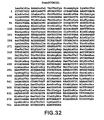
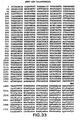
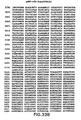
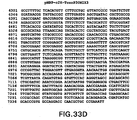
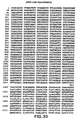
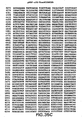
- the nucleotide sequence of the gene encoding the ToxoP30MIX1 antigen is shown in Figure 32 and is represented by SEQ ID NO:63.
- the amino acid sequence of this antigen is also shown in Figure 32 and is represented by SEQ ID NO:64.
- the present invention encompasses a polypeptide sequence having the amino acid sequence of SEQ ID NO:64.
- complementarity is defined as the degree of relatedness between two DNA segments. It is determined by measuring the ability of the sense strand of one DNA segment to hybridize with the antisense strand of the other DNA segment, under appropriate conditions, to form a double helix. In the double helix, wherever adenine appears in one strand, thymine appears in the other strand. Similarly, wherever guanine is found in one strand, cytosine is found in the other. The greater the relatedness between the nucleotide sequences of two DNA segments, the greater the ability to form hybrid duplexes between the strands of two DNA segments.
- identity refers to the relatedness of two sequences on a nucleotide-by-nucleotide basis over a particular comparison window or segment. Thus, identity is defined as the degree of sameness, correspondence or equivalence between the same strands (either sense or antisense) of two DNA segments (or two amino acid sequences). "Percentage of sequence identity” is calculated by comparing two optimally aligned sequences over a particular region, determining the number of positions at which the identical base or amino acid occurs in both sequences in order to yield the number of matched positions, dividing the number of such positions by the total number of positions in the segment being compared and multiplying the result by 100.
- Optimal alignment of sequences may be conducted by the algorithm of Smith & Waterman, Appl. Math. 2:482 (1981 ), by the algorithm of Needleman & Wunsch, J. Mol. Biol. 48:443 (1970 ), by the method of Pearson & Lipman, Proc. Natl. Acad. Sci. (USA) 85:2444 (1988 ) and by computer programs which implement the relevant algorithms (e.g., Clustal Macaw Pileup ( http://cmgm.stanford.edu/ biochem218/11Multiple.pdf; Higgins et al., CABIOS.
- Similarity between two amino acid sequences is defined as the presence of a series of identical as well as conserved amino acid residues in both sequences. The higher the degree of similarity between two amino acid sequences, the higher the correspondence, sameness or equivalence of the two sequences. ("Identity between two amino acid sequences is defined as the presence of a series of exactly alike or invariant amino acid residues in both sequences.) The definitions of "complementarity”, “identity” and “similarity” are well known to those of ordinary skill in the art.
- Encoded by refers to a nucleic acid sequence which codes for a polypeptide sequence, wherein the polypeptide sequence or a portion thereof contains an amino acid sequence of at least 3 amino acids, more preferably at least 8 amino acids, and even more preferably at least 15 amino acids from a polypeptide encoded by the nucleic acid sequence.
- a nucleic acid molecule is "hybridizable" to another nucleic acid molecule when a single-stranded form of the nucleic acid molecule can anneal to the other nucleic acid molecule under the appropriate conditions of temperature and ionic strength (see Sambrook et al., "Molecular Cloning: A Laboratory Manual, Second Edition (1989), Cold Spring Harbor Laboratory Press, Cold Spring Harbor, New York )). The conditions of temperature and ionic strength determine the “stringency” of the hybridization. "Hybridization” requires that two nucleic acids contain complementary sequences. However, depending on the stringency of the hybridization, mismatches between bases may occur.
- the appropriate stringency for hybridizing nucleic acids depends on the length of the nucleic acids and the degree of complementation. Such variables are well known in the art. More specifically, the greater the degree of similarity or homology between two nucleotide sequences, the greater the value of Tm for hybrids of nucleic acids having those sequences. For hybrids of greater than 100 nucleotides in length, equations for calculating Tm have been derived (see Sambrook et al., supra). For hybridization with shorter nucleic acids, the position of mismatches becomes more important, and the length of the oligonucleotide determines its specificity (see Sambrook et al., supra).
- an "isolated nucleic acid sequence” is a polymer of RNA or DNA that is single- or doublestranded, optionally containing synthetic, non-natural or altered nucleotide bases.
- Nucleotides are referred to by their single letter designation as follows: “A” for adenylate or deoxyadenylate (for RNA or DNA, respectively), “C” for cytidylate or deoxycytidylate, “G” for guanylate or deoxyguanylate, “U” for uridylate, “T” for deoxythymidylate, “R” for purines (A or G), “Y” for pyrimidines (C or T), "K” for G or T, “H” for A or C or T, “I” for inosine, and “N” for any nucleotide.
- nucleic acid fragments wherein changes in one or more nucleotide bases does not affect the ability of the nucleic acid fragment to mediate gene expression or produce a certain phenotype. These terms also refer to modifications of the nucleic acid fragments of the instant invention such as deletion or insertion of one or more nucleotides that do not substantially alter the functional properties of the resulting nucleic acid fragment relative to the initial, unmodified fragment.
- Gene refers to a nucleic acid fragment that expresses a specific protein, including regulatory sequences preceding (5' non-coding sequences) and following (3' non-coding sequences) the coding sequence.
- “Native gene” refers to a gene as found in nature with its own regulatory sequences.
- “chimeric construct” refers to a combination of nucleic acid fragments that are not normally found together in nature. Accordingly, a chimeric construct may comprise regulatory sequences and coding sequences that are derived from different sources, or regulatory sequences and coding sequences derived from the same source, but arranged in a manner different than that normally found in nature. (The term “isolated” means that the sequence is removed from its natural environment.)
- operably linked refers to the association of nucleic acid sequences on a single nucleic acid fragment so that the function of one is regulated by the other.
- a promoter is operably linked with a coding sequence when it is capable of regulating the expression of that coding sequence (i.e., that the coding sequence is under the transcriptional control of the promoter).
- Coding sequences can be operably linked to regulatory sequences in a sense or antisense orientation.
- expression refers to the production of a functional end-product. Expression of a gene involves transcription of the gene and translation of the mRNA into a precursor or mature protein. “Antisense inhibition” refers to the production of antisense RNA transcripts capable of suppressing the expression of the target protein. “Co-suppression” refers to the production of sense RNA transcripts capable of suppressing the expression of identical or substantially similar foreign or endogenous genes ( U.S. Patent No. 5,231,020 ).
- “Mature” protein refers to a post-translationally processed polypeptide; i.e., one from which any pre- or pro-peptides present in the primary translation product have been removed.
- Precursor protein refers to the primary product of translation of mRNA; i.e., with pre- and pro-peptides still present. Pre- and pro-peptides may be but are not limited to intracellular localization signals.
- Standard recombinant DNA and molecular cloning techniques used herein are well known in the art and are described more fully in Sambrook, J., Fritsch, E.F. and Maniatis, T. Molecular Cloning: A Laboratory Manual; Cold Spring Harbor Laboratory Press: Cold Spring Harbor, 1989 (hereinafter "Sambrook”).
- recombinant refers to an artificial combination of two otherwise separated segments of sequence, e.g., by chemical synthesis or by the manipulation of isolated segments of nucleic acids by genetic engineering techniques.
- PCR or “Polymerase Chain Reaction” is a technique for the synthesis of large quantities of specific DNA segments, consists of a series of repetitive cycles (Perkin Elmer Cetus Instruments, Norwalk, CT). Typically, the double stranded DNA is heat denatured, the two primers complementary to the 3' boundaries of the target segment are annealed at low temperature and then extended at an intermediate temperature. One set of these three consecutive steps is referred to as a cycle.
- PCR Polymerase chain reaction
- the process utilizes sets of specific in vitro synthesized oligonucleotides to prime DNA synthesis.
- the design of the primers is dependent upon the sequences of DNA that are desired to be analyzed.
- the technique is carried out through many cycles (usually 20-50) of melting the template at high temperature, allowing the primers to anneal to complementary sequences within the template and then replicating the template with DNA polymerase.
- present invention also includes the genetically engineered P30 antigen having SEQ ID NO:64.
- This antigen may be produced either recombinantly or synthetically.
- the present invention also includes methods of detecting IgM and/or IgG using the antigen described above. More specifically, there are two basic types of assays, competitive and non-competitive (e.g., immunometric and sandwich). In both assays, antibody or antigen reagents are covalently or non-covalently attached to the solid phase. Linking agents for covalent attachment are known and may be part of the solid phase or derivatized to it prior to coating. Examples of solid phases used in immunoassays are porous and non-porous materials, latex particles, magnetic particles, microparticles, beads, membranes, microtiter wells and plastic tubes.
- the choice of solid phase material and method of labeling the antigen or antibody reagent are determined based upon desired assay format performance characteristics. For some immunoassays, no label is required. For example, if the antigen is on a detectable particle such as a red blood cell, reactivity can be established based upon agglutination. Alternatively, an antigen-antibody reaction may result in a visible change (e.g., radial immunodiffusion). In most cases, one of the antibody or antigen reagents used in an immunoassay is attached to a signal generating compound or "label". This signal generating compound or "label" is in itself detectable or may be reacted with one or more additional compounds to generate a detectable product (see also U.S.
- Patent No. 6,395,472 B1 examples include chromogens, radioisotopes (e.g., 125I, 131I, 32P, 3H, 35S, and 14C), fluorescent compounds (e.g., fluorescein, rhodamine), chemiluminescent compounds, particles (visible or fluorescent), nucleic acids, complexing agents, or catalysts such as enzymes (e.g., alkaline phosphatase, acid phosphatase, horseradish peroxidase, beta-galactosidase, and ribonuclease).
- enzymes e.g., alkaline phosphatase, acid phosphatase, horseradish peroxidase, beta-galactosidase, and ribonuclease.
- chromo-, fluoro-, or lumo-genic substrate results in generation of a detectable signal.
- Other detection systems such as time-resolved fluorescence, internal-reflection fluorescence, amplification (e.g., polymerase chain reaction) and Raman spectroscopy are also useful.
- a general format commonly used to monitor specific antibody titer and type in humans is as follows: antigen is presented on a solid phase, as described above, the human biological fluid containing the specific antibodies is allowed to react with the antigen, and then antibody bound to antigen is detected with an anti-human antibody coupled to a signal generating compound.
- the anti-human antibody reagent may recognize all antibody classes, or alternatively, be specific for a particular class or subclass of antibody, depending upon the intended purpose of the assay.
- This assay format as well as other known formats are intended to be within the scope of the present invention and are well known to those of ordinary skill in the art.
- an immunometric antibody-capture based immunoassay is the IMx Toxo IgM and Toxo IgG antibody assays manufactured by Abbott Laboratories (Abbott Park, IL). Both assays are automated Microparticle Enzyme Immunoassays (MEIA) which measure antibodies to Toxoplasma gondii ( T. gondii ) in human serum or plasma ( Safford et al. (1991) J. Clin. Pathol. 44:238-242 ). One assay qualitatively measures IgM antibodies, indicative of recent exposure or acute infection, and the other assay quantitatively measures IgG, indicative of chronic or past infection. These assays use microparticles coated with T.
- MMIA Microparticle Enzyme Immunoassays
- gondii antigens as the solid phase.
- specimen is added to the coated microparticles to allow antibodies specific for T. gondii to bind.
- an alkaline phosphatase conjugated anti-human IgM or anti-human IgG
- an alkaline phosphatase conjugated anti-human IgM or anti-human IgG
- a suitable substrate e.g., 4-methyumbelliferyl phosphate
- a mixture of genetically engineered P30 having SEQ ID NO:64 and P35 may be used in the IgG Abbott immunoassay, and the genetically engineered P30 having SEQ ID NO:64 antigen alone may be utilized in the IgM Abbott immunoassay. Additionally, a mixture of genetically engineered P30 having SEQ ID NO:64 and P35 may be utilized in either assay, if desired. Furthermore, it must be noted that other non-Abbott assays or platforms may also be utilized, with each antigen or combination of antigens for purposes of the present invention.
- the present invention includes a method of detecting IgM antibodies in a test sample comprising the steps of: (a) contacting the test sample suspected of containing the IgM antibodies with genetically engineered P30 having SEQ ID NO:64; (b) detecting the presence of IgM antibodies present in the test sample.
- IgG may be detected by substituting the genetically engineered P30 antigen having SEQ ID NO:64 with a genetically engineered P30 antigen having SEQ ID NO:64 and P35 mixture. Also anti-antibody specific for IgG will be used. Additionally, if one wishes to detect both IgM and IgG antibodies, genetically engineered P30 having SEQ ID NO:64 and P35 may be utilized in the immunoassay.
- the present invention includes a method of detecting IgM and IgG antibodies in a test sample comprising the steps of (a) contacting the test sample suspected of containing the IgM and IgG antibodies with a genetically engineered P30 having SEQ ID NO:64 and P35 mixture for a time and under conditions sufficient to allow the formation of IgM and IgG antibody/antigen complexes; (b) adding a conjugate to the resulting IgM and IgG antibody/antigen complexes for a time and under conditions sufficient to allow the conjugate to bind to the bound antibody, the conjugate comprising an antibody attached to a signal generating compound capable of generating a detectable signal; (c) detecting the presence of the IgM and IgG antibody which may be present in the test sample by detecting the signal generated by the signal generating compound.
- a control or calibrator may also be used which binds to this antigen.
- IgA antibodies with an alpha-specific conjugate
- IgE antibodies with an epsilon-specific conjugate
- kits are also included within the scope of the present invention. More specifically, the present invention include kits for determining the presence of IgG and/or IgM.
- a kit for determining the presence of IgM in a test sample comprises a) genetically engineered P30 having SEQ ID NO:64; and b) a conjugate comprising an antibody (directed against IgM) attached to a signal-generating compound capable of generating a detectable signal.
- the kit may also contain a control or calibrator which comprises a reagent which binds to genetically engineered P30 having SEQ ID NO:64.
- the kit will comprise a mixture of genetically engineered P30 having SEQ ID NO:64 and P35, rather than genetically engineered P30 having SEQ ID NO:64, as well as an antibody directed against IgG. If one wishes to detect both IgM and IgG, the kit will comprise genetically engineered P30 having SEQ ID NO:64 and P35.
- DNA and protein molecular weight standards were purchased from BioRad Laboratories (Richmond, CA).
- QIAquick PCR Purification Kit and QIAquick Gel Extraction Kit were purchased from Qiagen, Inc. (Valencia, CA).
- Synthetic oligonucleotides were purchased from Sigma Genosys (The Woodlands, TX).
- EPICURIAN Coli TM XL-1 BLUE rec A1 end A1 gyr A96 thi -1 hsd R17 sup E44 rel A1 lac [F' pro AB lac I q ZDM15 Tn10 (Tet r )]) supercompetent E . coli cells were obtained from Stratagene Cloning Systems, Inc. (La Jolla, CA).
- a GeneAmp TM reagent kit and AmpliTaq TM DNA Polymerase were purchased from Perkin-Elmer Cetus (Norwalk, CT).
- SeaKem GTG agarose was purchased from BioWhittaker Molecular Applications (Rockland, ME).
- Superbroth II contained 11.25 g/L tryptone, 22.5 g/L yeast extract, 11.4 g/L potassium phosphate dibasic, 1.7 g/L potassium phosphate monobasic, 10 ml/L glycerol, adjusted pH to 7.2 with sodium hydroxide.
- the vectors described therein have sequences coding for the recognition site of a specific protease (e.g., Factor Xa, enterokinase or Genenase TM ) such that the protein of interest may be cleaved from MBP.) Fusion of proteins to MBP enhances their solubility in E. coli ( Kapust and Waugh (1999) Protein Science 8, 1668-1674 ).
- a specific protease e.g., Factor Xa, enterokinase or Genenase TM
- Fusion of proteins to MBP enhances their solubility in E. coli ( Kapust and Waugh (1999) Protein Science 8, 1668-1674 ).
- Several different constructs were made taking into consideration the observation that native Toxo P30 is post-translationally cleaved prior to insertion into the tachyzoite membrane ( Burg et al. (1988) J. Immunol. 141:3584-3591 ). The exact
- Plasmid pToxo-P30 described in U.S. Patent No. 6,329,157 B1 was used as template DNA for a series of PCR reactions to generate DNA fragments containing different portions of the Toxo P30 gene.
- the pToxo-P30 plasmid DNA was prepared using standard methods.
- the pMAL-c2X (cytoplasmic expression vector) and pMAL-p2X (periplasmic expression vector) plasmids were purchased from New England Biolabs, Beverly MA and were digested with the restriction enzymes EcoRI and HindIII in preparation for subcloning the Toxo P30 gene fragments.
- Step A Construction of pMBP-c2X-ToxoP30(52-336aa)
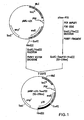
- the plasmid pMBP-c2X-ToxoP30(52-336aa) was constructed by cloning a DNA fragment containing Toxo P30, obtained by PCR amplification of Toxo P30 DNA contained in plasmid pToxo-P30, into the EcoRI/HindIII sites of pMAL-c2X ( Fig. 1 ). Plasmid pMAL-c2X was digested with EcoRI/HindIII and the vector backbone was purified with a Qiaquick PCR purification kit.
- a sense primer starting at nucleotide 464 of the P30 gene containing an EcoRI site and an antisense primer containing a HindIII site, starting at nucleotide 1318 of the P30 gene ( Burg et al. (1988) J. Immunol. 141:3584-3591 ) were synthesized as shown below:
- Step B Construction of pMBP-p2X-ToxoP30(52-336aa)
- the plasmid pMBP-p2X-ToxoP30(52-336aa) was constructed by cloning a DNA fragment containing Toxo P30, obtained by PCR amplification of Toxo P30 DNA contained in plasmid pToxo-P30, into the EcoRI/HindIII sites of pMAL-p2X ( Fig. 4 ). Plasmid pMAL-p2X was digested with EcoRI/HindIII, and the vector backbone was purified with a Qiaquick PCR purification kit.
- a sense primer starting at nucleotide 464 of the P30 gene containing an EcoRI site, and an antisense primer containing a HindIII site, starting at nucleotide 1318 of the P30 gene ( Burg et al. (1988) J. Immunol. 141:3584-3591 ) were synthesized as shown below:
- Step C Construction of pMBP-c2X-ToxoP30del1C(52-324aa)
- a sense primer starting at nucleotide 464 of the P30 gene containing an EcoRI site and an antisense primer containing a HindIII site, starting at nucleotide 1282 of the P30 gene ( Burg et al. (1988) J. Immunol. 141:3584-3591 ) were synthesized as shown below:
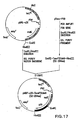
- Plasmid pMBP-c2X-ToxoP30del1C(52-324aa) was constructed by cloning an EcoRI/BanI fragment from plasmid pMBP-p2X-ToxoP30(52-336aa), containing the 5' corrected portion of the Toxo P30 gene, and a BanI/HindIII fragment from plasmid pMBP-c2X-ToxoP30del1(52-324aa), containing the 3' portion of the Toxo P30del1 gene, into the EcoRI/HindIII sites of pMAL-c2X ( Fig.
- Plasmid pMAL-c2X was digested with EcoRI/HindIII, and the vector backbone was purified on an agarose gel. Plasmid DNAs pMBP-p2X-ToxoP30(52-336aa) and pMBP-c2X-ToxoP30del1(52-324aa) were prepared by general methods. Plasmids pMBP-p2X-ToxoP30(52-336aa) and pMBP-c2X-ToxoP30del1(52-324aa) were digested with EcoRI/HindIII and the 855 and 819 base pair fragments, containing the Toxo P30 gene, were purified on an agarose gel.
- the 855 base pair EcoRI/HindIII fragment was digested with BanI and the 637 base pair EcoRI/BanI fragment, containing the 5' corrected portion of the Toxo P30 gene, was purified on an agarose gel.
- the 819 base pair EcoRI/HindIII fragment was digested with BanI and the 182 base pair BanI/HindIII fragment, containing the 3' portion of the Toxo P30del1 gene, was purified on an agarose gel.
- the purified 637 and 182 base pair fragments were ligated to pMAL-c2X/EcoRI/HindIII overnight at 16°C. The ligation mixture was transformed into competent XL-1 Blue cells.
- Plasmid pMBP-c2X-ToxoP30del1C (52-324aa) contained the Toxo P30del1C gene cloned at the EcoRI/HindIII sites of pMAL-c2X.
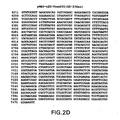
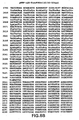
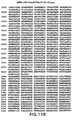
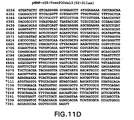
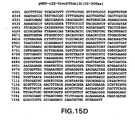
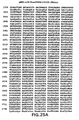
- the complete DNA sequence [SEQ ID NO:10] of plasmid pMBP-c2X-ToxoP30del1C(52-324aa) is shown in Fig. 8 and the corresponding amino acid sequence [SEQ ID NO:11] of the MBP-ToxoP30del1C(52-324aa) fusion protein is also shown in Fig.
- amino acid residues 392-664 of SEQ ID NO:11 correspond to amino acids 52-324 of the P30 antigen of Toxoplasma gondii .
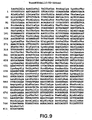
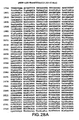
- the DNA sequence [SEQ ID NO:12] of ToxoP30del1C(52-324aa) is shown in Fig. 9 and the corresponding amino acid sequence [SEQ ID NO:13] of the ToxoP30del1C(52-324aa) protein is also shown in Fig. 9 , wherein amino acid residues 1-273 of SEQ ID NO:13 correspond to amino acids 52-324 of the P30 antigen of Toxoplasma gondii .
- Step D Construction of pMBP-c2X-ToxoP30del2(52-311aa)
- the plasmid pMBP-c2X-ToxoP30del2(52-311aa) was constructed by cloning a DNA fragment containing Toxo P30, obtained by PCR amplification of Toxo P30 DNA contained in plasmid pToxo-P30, into the EcoRI/HindIII sites of pMAL-c2X ( Fig. 10 ). Plasmid pMAL-c2X was digested with EcoRI/HindIII and the vector backbone was purified on.an agarose gel.
- a sense primer starting at nucleotide 464 of the P30 gene containing an EcoRI site, and an antisense primer containing a HindIII site, starting at nucleotide 1243 of the P30 gene ( Burg et al. (1988) J. Immunol. 141:3584-3591 ) were synthesized as shown below:
- Step E Construction of pMBP-c2X-ToxoP30del3C(52-300aa)
- a sense primer starting at nucleotide 464 of the P30 gene containing an EcoRI site, and an antisense primer containing a HindIII site, starting at nucleotide 1210 of the P30 gene ( Burg et al. (1988) J. Immunol. 141:3584-3591 ) were synthesized as shown below:
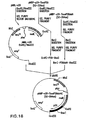
- Plasmid pMBP-c2X-ToxoP30del3C(52-300aa) was constructed by cloning an EcoRI/BanI fragment from plasmid pMBP-p2X-ToxoP30(52-336aa), containing the 5' corrected portion of the Toxo P30 gene, and a BanI/HindIII fragment from plasmid pMBP-c2X-ToxoP30del3(52-300aa), containing the 3' portion of the Toxo P30del3 gene, into the EcoRI/HindIII sites of pMAL-c2X ( Fig. 14 ).
- Plasmid pMBP-c2X-ToxoP30del3C(52-300aa) was deposited with the ATCC 10801 University Boulevard, Manassas, VA 20110-2209, under terms of the Budapest Treaty on Sept. 26, 2002, and was accorded Accession No. ATCC 4722.
- Plasmid pMAL-c2X was digested with EcoRI/HindIII and the vector backbone was purified on an agarose gel. Plasmid DNAs pMBP-p2X-ToxoP30(52-336aa) and pMBP-c2X-ToxoP30del3(52-300aa) were prepared by general methods. Plasmids pMBP-p2X-ToxoP30(52-336aa) and pMBP-c2X-ToxoP30del3(52-300aa) were digested with EcoRI/HindIII and the 855 and 747 base pair fragments, containing the Toxo P30 gene, were purified on an agarose gel.
- the 855 base pair EcoRI/HindIII fragment was digested with BanI and the 637 base pair EcoRI/BanI fragment, containing the 5' corrected portion of the Toxo P30 gene, was purified on an agarose gel.
- the 747 base pair EcoRI/HindIII fragment was digested with BanI and the 110 base pair BanI/HindIII fragment, containing the 3' portion of the Toxo P30del3 gene, was purified on an agarose gel.
- the purified 637 and 110 base pair fragments were ligated to pMAL-c2X/EcoRI/HindIII overnight at 16°C. The ligation mixture was transformed into competent XL-1 Blue cells.
- Plasmid pMBP-c2X-ToxoP30del3C (52-300aa) contained the ToxoP30del3C gene cloned at the EcoRI/HindIII sites of pMAL-c2X.
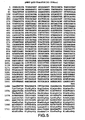
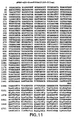
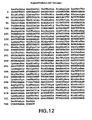
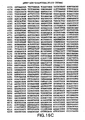
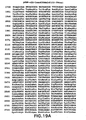
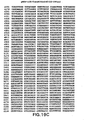
- the complete DNA sequence [SEQ ID NO:20] of plasmid pMBP-c2X-ToxoP30del3C(52-300aa) is shown in Fig. 15 and the corresponding amino acid sequence [SEQ ID NO:21] of the MBP-ToxoP30del3C(52-300aa) fusion protein is also shown in Fig.
- amino acid residues 392-640 of SEQ ID NO:21 correspond to amino acids 52-300 of the P30 antigen of Toxoplasma gondii .
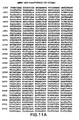
- the DNA sequence [SEQ ID NO:22] of ToxoP30del3C(52-300aa) is shown in Fig. 16 and the corresponding amino acid sequence [SEQ ID NO:23] of the ToxoP30del3C(52-300aa) protein is also shown in Fig. 16 , wherein amino acid residues 1-249 of SEQ ID NO:23 correspond to amino acids 52-300 of the P30 antigen of Toxoplasma gondii .
- Step F Construction of pMBP-c2X-ToxoP30del4C(52-294aa)
- a sense primer starting at nucleotide 464 of the P30 gene containing an EcoRI site, and an antisense primer containing a HindIII site, starting at nucleotide 1192 of the P30 gene ( Burg et al. (1988) J. Immunol. 141:3584-3591 ) were synthesized as shown below:
- Plasmid pMBP-c2X-ToxoP30del4C(52-294aa) was constructed by cloning an EcoRI/BanI fragment from plasmid pMBP-p2X-ToxoP30(52-336aa), containing the 5' corrected portion of the Toxo P30 gene, and a BanI/HindIII fragment from plasmid pMBP-c2X-ToxoP30del4(52-294aa), containing the 3' portion of the ToxoP30del4 gene, into the EcoRI/HindIII sites of pMAL-c2X ( Fig. 18 ).
- Plasmid pMBP-c2X-ToxoP30del4C(52-294aa) was deposited with the ATCC 10801 University Boulevard, Manassas, VA 20110-2209, under terms of the Budapest Treaty on Sept. 26, 2002, and was accorded Accession No. ATCC 4723.
- Plasmid pMAL-c2X was digested with EcoRI/HindIII and the vector backbone was purified on an agarose gel. Plasmid DNAs pMBP-p2X-ToxoP30(52-336aa) and pMBP-c2X-ToxoP30del4(52-294aa) were prepared by general methods. Plasmids pMBP-p2X-ToxoP30(52-336aa) and pMBP-c2X-ToxoP30del4(52-294aa) were digested with EcoRI/HindIII and the 855 and 729 base pair fragments, containing the Toxo P30 gene, were purified on an agarose gel.
- the 855 base pair ⁇ EcoRI/HindIII fragment was digested with BanI and the 637 base pair EcoRI/BanI fragment, containing the 5' corrected portion of the Toxo P30 gene, was purified on an agarose gel.
- the 729 base pair EcoRI/HindIII fragment was digested with BanI and the 92 base pair BanI/HindIII fragment, containing the 3' portion of the Toxo P30del4 gene and purified on an agarose gel.
- the purified 637 and 92 base pair fragments were ligated to pMAL-c2X/EcoRI/HindIII overnight at 16°C. The ligation mixture was transformed into competent XL-1 Blue cells.
- Plasmid pMBP-c2X-ToxoP30del4C (52-294aa) contained the Toxo P30del4C gene cloned at the EcoRI/HindIII sites of pMAL-c2X.
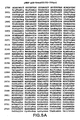
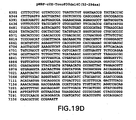
- the complete DNA sequence [SEQ ID NO:25] of plasmid pMBP-c2X-ToxoP30del4C(52-294aa) is shown in Fig. 19 and the corresponding amino acid sequence [SEQ ID NO:26] of the MBP-ToxoP30del4C(52-294aa) fusion protein is also shown in Fig.
- amino acid residues 392-634 of SEQ ID NO:26 correspond to amino acids 52-294 of the P30 antigen of Toxoplasma gondii .
- the DNA sequence [SEQ ID NO:27] of ToxoP30del4C(52-294aa) is shown in Fig. 20 and the corresponding amino acid sequence [SEQ ID NO:28] of the ToxoP30del4C(52-294aa) protein is also shown in Fig. 20 , wherein amino acid residues 1-243 of SEQ ID NO:28 correspond to amino acids 52-294 of the P30 antigen of Toxoplasma gondii .
- Step G Construction of pMBP-c2X-ToxoP30del4del8(83-294aa)
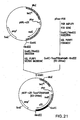
- the plasmid pMBP-c2X-ToxoP30del4del8(83-294aa) was constructed by cloning a DNA fragment containing Toxo P30, obtained by PCR amplification of Toxo P30 DNA contained in plasmid pToxo-P30, into the EcoRI/HindIII sites of pMAL-c2X ( Fig. 21 ). Plasmid pMAL-c2X was digested with EcoRI/HindIII and the vector backbone was purified on an agarose gel..
- a sense primer starting at nucleotide 557 of the P30 gene containing an EcoRI site, and an antisense primer containing a HindIII site, starting at nucleotide 1192 of the P30 gene ( Burg et al. (1988) J. Immunol. 141:3584-3591 ) were synthesized as shown below:
- Step H Construction of pMBP-c2X-ToxoP30del10(52-284aa)
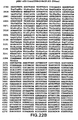
- the plasmid pMBP-c2X-ToxoP30del10(52-284aa) was constructed by cloning a DNA fragment containing Toxo P30, obtained by PCR amplification of Toxo P30 DNA contained in plasmid pToxo-P30, into the EcoRI/HindIII sites of pMAL-c2X ( Fig. 24 ). Plasmid pMAL-c2X was digested with EcoRI/HindIII and the vector backbone was purified on an agarose gel.
- a sense primer starting at nucleotide 464 of the P30 gene containing an EcoRI site, and an antisense primer containing a HindIII site, starting at nucleotide 1162 of the P30 gene ( Burg et al. (1988) J. Immunol. 141:3584-3591 ) were synthesized as shown below:
- Step I Construction of pMBP-c2X-ToxoP30del11(52-214aa)
- the plasmid pMBP-c2X-ToxoP30del11(52-214aa) was constructed by cloning a DNA fragment containing Toxo P30, obtained by PCR amplification of Toxo P30 DNA contained in plasmid pToxo-P30, into the EcoRI/HindIII sites of pMAL-c2X ( Fig. 27 ). Plasmid pMAL-c2X was digested with EcoRI/HindIII and the vector backbone was purified on an agarose gel.
- a sense primer starting at nucleotide 464 of the P30 gene containing an EcoRI site, and an antisense primer containing a HindIII site, starting at nucleotide 952 of the P30 gene ( Burg et al. (1988) J. Immunol. 141:3584-3591 ) were synthesized as shown below:
- Step A Expression of Cloned Genes in E. coli
- Step B Purification of MBP-ToxoP30 Fusion Proteins
- Soluble fusion proteins rpMBP-c2X-ToxoP30(52-336aa), rpMBP-c2X-ToxoP30del1C(52-324aa), rpMBP-c2X-ToxoP30del2(52-311aa), rpMBP-c2X-ToxoP30del3C(52-300aa), rpMBP-c2X-ToxoP30del4C(52-294aa), rpMBP-c2X-ToxoP30del4del8(83-294aa), rpMBP-c2X-ToxoP30del10(52-284aa) and rpMBP-c2X-ToxoP30del11(52-214aa) were purified after lysis from cell paste following the New England Biolabs pMAL Protein Fusion and Purification instruction manual.
- the crude supernatants containing the fusion proteins were loaded onto an amylose affinity column. Following washing of the column, the fusion proteins were eluted from the column with maltose, appropriate column fractions were pooled and filtered through a 0.2 ⁇ filter, and then stored at 2-8°C until coating onto microparticles.
- Step A Coating of rpMBP-c2X-ToxoP30 Antigens onto Microparticles
- the rpMBP-c2X-ToxoP30(52-336aa), rpMBP-c2X-ToxoP30del1C(52-324aa), rpMBP-c2X-ToxoP30del2(52-311aa), rpMBP-c2X-ToxoP30del3C(52-300aa), rpMBP-c2X-ToxoP30del4C(52-294aa), rpMBP-c2X-ToxoP30del4del8(83-294aa), rpMBP-c2X-ToxoP30del10(52-284aa) and rpMBP-c2X-ToxoP30del11(52-214aa) antigens were diluted to a concentration of 1 mg/ml and incubated at 37°C for 24 hours.
- the rpMBP-c2X-ToxoP30 antigens were coated separately onto sulfate-derivatized polystyrene microparticles (1-5% solids) in a vessel containing MES pH 6.2 buffer with EDAC for 30 minutes at room temperature, on an end over end rotator.
- the coated microparticles were then collected by centrifugation at 14,000 x g for 10 minutes, and the supernatant was discarded.
- microparticles were resuspended in a microparticle storage buffer containing Tris buffer, pH 7.5, EDTA, sodium chloride, Tween 20, fetal calf serum (Toxo antibody free), sodium azide, and sucrose using a syringe and needle.
- the microparticles were then diluted with microparticle storage buffer to a final concentration of 0.1-0.3% solids and filled into plastic bottles.
- Step B Description of the AxSYM® Toxo IgG v2 Reagent Pack, Calibrators, Controls, Panel 6, and Assay Diskette
- the reagent pack for the automated AxSYM Toxo IgG v2 assay is designed for the detection of human anti-Toxo IgG and consists of the following components.
- Bottle number one contains microparticles coated with purified recombinant Toxo antigens (Example 4A) in a microparticle storage buffer.
- purified MBP or CKS can be added to the microparticle storage buffer.
- Bottle number two contains the preferred conjugate, a goat anti-human IgG alkaline phosphatase conjugate. This conjugate is titered to determine a working concentration of 0.1-5 ⁇ g/ml.
- the conjugate is diluted into a conjugate diluent containing Tris buffer, pH 7.4, sodium, calcium, magnesium, and zinc chloride, Nipasept, A56620, non-fat dry milk, Brij-35, mouse serum, and mannitol.
- Bottle number three contains the preferred assay diluent to minimize non-specific binding to the microparticles and assay matrix.
- This assay diluent consists of a Tris buffer, pH 7.5 containing sodium chloride, sodium EDTA, non-fat dry milk, Nipasept, A56620, and Tween 20.
- Bottle number four contains a phosphate buffer line diluent.
- A-F Six Assay Calibrators labeled A-F are derived from Toxo IgG positive plasma pools or human anti-Toxo IgG monoclonal antibodies and are required to calibrate the AxSYM® Toxo IgG v2 assay. These calibrators are matched to calibrators previously matched to the TOX-S WHO International Standard. The concentration range of these calibrators is 0-300 IU/ml. Positive and Negative controls are required to evaluate the assay calibration and establish assay validity.
- the Positive Control is prepared from Toxo IgG positive plasma pools or human anti-Toxo IgG monoclonal antibodies.
- the Negative Control is prepared from Toxo IgG negative plasma pools.
- Panel 6 is a pool of Toxo IgG and IgM positive plasma units derived from blood donors with an acute toxoplasmosis.
- the assay diskette for the AxSYM® Toxo IgG v2 assay contains the assay protocol software necessary to run the automated immunoassay on the Abbott "AxSYM®” instrument (Abbott Laboratories, Abbott Park, IL).
- Abbott "AxSYM®” instrument Abbott Laboratories, Abbott Park, IL.
- the following assay components located on the instrument are required to run the assay: Sample Cups, AxSYM® Line Diluent, MEIA buffer, Reaction Vessels, MUP, and Matrix Cells.
- the sequence of events for the automated assay are as follows:
- the pipetting probe in the kitting center delivers the patient sample and line diluent to the reaction vessel sample well; the pipetting probe then kits the appropriate volumes of assay diluent, line diluent, and conjugate required for the assay from the reagent pack into the designated reaction vessel wells; this probe then delivers the recombinant Toxo antigen coated microparticles from the reagent pack and an aliquot of the diluted sample to the designated reaction vessel well; the reaction vessel is then transferred to the process carousel; Toxo-specific antibodies bind to the Toxo recombinant antigen coated microparticles forming an antigen-antibody complex; assay diluent is added to the reaction mixture and matrix cell and then an aliquot of the reaction mixture is transferred to the glass fiber matrix in the auxiliary carousel; the microparticles bind irreversibly to the matrix; the matrix is washed with MEIA buffer and line dilu
- Step C Description of the AxSYM Toxo® IgM v2 Reagent Pack, Index Calibrator, Controls, and Assay Diskette
- the reagent pack for the automated AxSYM Toxo IgM v2 assay is designed for the detection of human anti-Toxo IgM and consists of the following components.
- Bottle number one contains microparticles coated with purified recombinant Toxo antigens (Example 4A) in a microparticle storage buffer.
- purified MBP or CKS can be added to the microparticle storage buffer.
- Bottle number two contains the preferred conjugate, a goat anti-human IgM alkaline phosphatase conjugate. This conjugate is titered to determine a working concentration of 0.1-5 ⁇ g/ml.
- the conjugate is diluted into a conjugate diluent containing Tris buffer, pH 7.4, sodium, calcium, magnesium, and zinc chloride, Nipasept, A56620, non-fat dry milk, Brij-35, mouse serum, and mannitol.
- Bottle number three contains the preferred assay diluent to minimize non-specific binding to the microparticles and assay matrix.
- This assay diluent consists of a Tris buffer, pH 7.5 containing sodium chloride, sodium EDTA, non-fat dry milk, Nipasept, A56620, and Tween 20.
- Bottle number four contains either phosphate buffer line diluent or RF Neutralization Buffer.
- the Index Calibrator is derived from Toxo IgM positive plasma pools or human anti-Toxo IgM monoclonal antibodies and is required to calibrate the AxSYM® Toxo IgM v2 assay. Positive and Negative controls are required to evaluate the assay calibration and establish assay validity.
- the Positive Control is prepared from Toxo IgM positive plasma pools or human anti-Toxo IgM monoclonal antibodies.
- the Negative Control is prepared from Toxo IgM negative plasma pools.
- the assay diskette for the AxSYM® Toxo IgM v2 assay contains the assay protocol software necessary to run the automated immunoassay on the Abbott "AxSYM” instrument (Abbott Laboratories, Abbott Park, IL).
- Abbott "AxSYM” instrument Abbott Laboratories, Abbott Park, IL.
- the following assay components located on the instrument are required to run the assay: Sample Cups, AxSYM® Line Diluent, MEIA buffer, Reaction Vessels, MUP, and Matrix Cells.
- the sequence of events for the automated assay are as follows: The pipetting probe in the kitting center delivers the patient sample and line diluent to the reaction vessel sample well; the pipetting probe then kits the appropriate volumes of assay diluent, line diluent or RF Neutralization Buffer, and conjugate required for the assay from the reagent pack into the designated reaction vessel wells; this probe then delivers the recombinant Toxo antigen coated microparticles from the reagent pack and an aliquot of the diluted sample to the designated reaction vessel well; the reaction vessel is then transferred to the process carousel; Toxo-specific antibodies bind to the Toxo recombinant antigen coated microparticles forming an antigen-antibody complex; assay diluent is added to the reaction mixture and matrix cell and then an aliquot of the reaction mixture is transferred to the glass fiber matrix in the auxiliary carousel; the microparticles bind irreversibly to the matrix; the matrix is washed with MEIA buffer
- Step D Evaluation of MBP fusion proteins rpMBP-c2X-ToxoP30(52-336aa), rpMBP-c2X-ToxoP30del1C(52-324aa), rpMBP-c2X-ToxoP30del2(52-311aa), rpMBP-c2X-ToxoP30del3C(52-300aa), rpMBP-c2X-ToxoP30del4C(52-294aa), rpMBP-c2X-ToxoP30del4del8(83-294aa), rpMBP-c2X-ToxoP30del10(52-284aa) and rpMBP-c2X-ToxoP30del11(52-214aa) in the AxSYM® Toxo IgG v2 and Toxo IgM v2 Immunoassays
- the AxSYM® Toxo IgG and IgM reagent packs were assembled as described in Examples 4B and 4C using the microparticles coated with the Toxo antigens described in Example 4A.
- the Toxo IgG A and F calibrators (Acal and Fcal) and Panel 6 (PNL6) were tested with the AxSYM Toxo IgG v2 reagent packs and the Toxo IgM Negative Control (NC), Index Calibrator (IC), and Panel 6 (PNL6) were tested with the AxSYM® Toxo IgM v2 reagent packs. The results are shown below in Tables 1 and 2.
- deletion of amino acids from the C-terminus of the ToxoP30 antigen resulted in improved Toxo-specific IgG and IgM immunoreactivity, as measured by increased rate counts for Panel 6 and improved rate count ratios for Fcal/Acal, Panel 6/Acal, and Panel 6/NC, up to a deletion of 42 amino acids (compare protein rpMBP-c2X-ToxoP30del4C(52-294aa) with protein rpMBP-c2X-ToxoP30(52-336aa) in Tables 1 and 2).
- the genetically engineered rpMBP-c2X-ToxoP30del4C(52-294aa) protein yielded maximal rate counts for Panel 6 and maximal rate count ratios in both assays.
- the optimal protein rpMBP-c2X-ToxoP30del4C(52-294aa) contains 11 cysteine residues and the protein rpMBP-c2X-ToxoP30del11(52-214aa), which demonstrated good but not optimal immunoreactivity, contains 7 cysteine residues.
- Example 4D Based on the results obtained from deletion analysis of the Toxo P30 gene in Example 4D, a new series of MBP-ToxoP30 fusion proteins was constructed. Since there are 12 cysteine residues present in the mature Toxo P30 protein ( Burg et al. (1988) J. Immunol. 141:3584-3591 ; Velge-Roussel et al. (1994) Molec. Biochem. Parasitol. 66:31-38 ), there are mathematically 2 12 or 4,096 different Toxo P30 proteins that can be constructed which contain various combinations of changing one or more of the twelve cysteine residues to alanine.
- Example 4D were used to narrow the number of different mutant Toxo P30 genes to build that have the potential for improved Toxo IgG and IgM immunoreactivity in an automated immunoassay.
- Mutant oligonucleotides were designed for the in vitro synthesis of three Toxo P30 genes that contain mutations which change various cysteine residues to alanine, and also introduce the same 3' deletion in the Toxo P30 gene present in ToxoP30del3C(52-300aa) (SEQ ID NO:22 and Fig. 16 ).
- each Toxo P30 gene required the synthesis and assembly of 16 overlapping oligonucleotides. These oligonucleotides ranged from 67-72 bases in length with neighboring oligonucleotides overlapping by 20-23 residues.
- the P30 genes were assembled by recursive PCR followed by PCR amplification of the assembled genes ( Withers-Martinez et al. (1999) Protein Engr. 12:1113-1120 ; Prytulla et al. (1996) FEBS Lett. 399:283-289 ; Kataoka et al. (1998) Biochem. Biophys. Res. Comm.
- Step A Construction of pMBP-c2X-ToxoP30MIX1
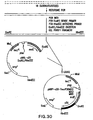
- the plasmid pMBP-c2X-ToxoP30MIX1 was constructed by cloning a synthetic DNA fragment containing Toxo P30, obtained by the synthesis and assembly of 16 oligonucleotides, into the EcoRI/HindIII sites of pMAL-c2X ( Figure 30 ).
- This plasmid differs from plasmid pMBP-c2X-Tox6P30del3C(52-300aa) of EXAMPLE 2E in that the Toxo P30 DNA sequence in plasmid pMBP-c2X-ToxoP30MIX1 has been changed so that five of the twelve cysteine residues of Toxo P30 (cysteine nos.
- Plasmid pMAL-c2X was digested with EcoRI/HindIII and the vector backbone was purified on an agarose gel. The following oligonucleotides were synthesized for construction of the ToxoP30MIX1 gene:
- a sense primer starting at nucleotide 464 of the P30 gene containing an EcoRI site, and an antisense primer containing a HindIII site, starting at nucleotide 1210 of the P30 gene ( Burg et al. (1988) J. Immunol. 141:3584-3591 ) were synthesized as shown below:
- Step B construction of pMBP-c2X-ToxoP30MIX3 (comparative)
- the plasmid pMBP-c2X-ToxoP30MIX3 was constructed by cloning a synthetic DNA fragment containing Toxo P30, obtained by the synthesis and assembly of 16 oligonucleotides, into the EcoRI/HindIII sites of pMAL-c2X ( Figure 30 ).
- This plasmid differs from plasmid pMBP-c2X-ToxoP30del3C(52-300aa) of EXAMPLE 2E in that the Toxo P30 DNA sequence in plasmid pMBP-c2X-ToxoP30MIX3 has been changed so that six of the twelve cysteine residues of Toxo P30 (cysteine nos.
- Plasmid pMAL-c2X was digested with EcoRI/HindIII, and the vector backbone was purified on an agarose gel. The following oligonucleotides were synthesized for construction of the ToxoP30MIX3 gene:
- a sense primer starting at nucleotide 464 of the P30 gene containing an EcoRI site, and an antisense primer containing a HindIII site, starting at nucleotide 1210 of the P30 gene ( Burg et al. (1988) J. Immunol. 141:3584-3591 ) were synthesized as shown below:
- Step C Construction of pMBP-c2X-ToxoP30MIX5 (comparative)
- the plasmid pMBP-c2X-ToxoP30MIX5 was constructed by cloning a synthetic DNA fragment containing Toxo P30, obtained by the synthesis and assembly of 16 oligonucleotides, into the EcoRI/HindIII sites of pMAL-c2X ( Figure 30 ).
- This plasmid differs from plasmid pMBP-c2X-ToxoP30del3C(52-300aa) of EXAMPLE 2E in that the Toxo P30 DNA sequence in plasmid pMBP-c2X-ToxoP30MIX5 has been changed so that six of the twelve cysteine residues of Toxo P30 (cysteine nos.
- Plasmid pMAL-c2X was digested with EcoRI/HindIII and the vector backbone was purified on an agarose gel.
- the following oligonucleotides were synthesized for construction of the ToxoP30MIX5 gene:
- a sense primer starting at nucleotide 464 of the P30 gene containing an EcoRI site, and an antisense primer containing a HindIII site, starting at nucleotide 1210 of the P30 gene ( Burg et al. (1988) J. Immunol. 141:3584-3591 ) were synthesized as shown below:
- Step A Expression of Cloned Genes in E. coli
- Step B Purification of MBP-ToxoP30MIX Fusion Proteins
- Soluble fusion proteins rpMBP-c2X-ToxoP30MIX1, rpMBP-c2X-ToxoP30MIX3, and rpMBP-c2X-ToxoP30MIX5 were purified after lysis from cell paste following the New England Biolabs pMAL Protein Fusion and Purification instruction manual. Following lysis and centrifugation, the crude supernatants containing the fusion proteins were loaded onto an amylose affinity column. Following washing of the column, the fusion proteins were eluted from the column with maltose, appropriate column fractions were pooled and filtered through a 0.2 ⁇ filter, and then stored at 2-8°C until coating onto microparticles.
- Step A Coating of rpMBP-c2X-ToxoP30MIX Antigens onto Microparticles
- the rpMBP-c2X-ToxoP30MIX1, rpMBP-c2X-ToxoP30MIX3 (comparative), and rpMBP-c2X-ToxoP30MIX5 (comparative) antigens were diluted to a concentration of 1 mg/ml and incubated at 37°C for 24 hours.
- the rpMBP-c2X-ToxoP30MIX antigens were coated separately onto sulfate-derivatized polystyrene microparticles (1-5% solids) in a vessel containing MES pH 6.2 buffer with EDAC for 30 minutes at room temperature, on an end over end rotator.
- microparticles were then collected by centrifugation at 14,000 x g for 10 minutes and the supernatant was discarded.
- the microparticles were resuspended in a microparticle storage buffer containing Tris buffer, pH 7.5, EDTA, sodium chloride, Tween 20, fetal calf serum (Toxo antibody free), sodium azide, and sucrose using a syringe and needle.
- the microparticles were then diluted with microparticle storage buffer to a final concentration of 0.1-0.3% solids and filled into plastic bottles.
- Step B Evaluation of MBP fusion proteins rpMBP-c2X-ToxoP30MIX1, rpMBP-c2X-ToxoP30MIX3 and rpMBP-c2X-ToxoP30MIX5 in the AxSYM Toxo IgG v2 and Toxo IgM v2 Immunoassays
- the AxSYM® Toxo IgG and IgM reagent packs were assembled as described in Examples 4B and 4C using the microparticles coated with the Toxo antigens described in Example 7A.
- the Toxo IgG A and F calibrators (Acal and Fcal) and Panel 6 (PNL6) were tested with the AxSYM Toxo IgG v2 reagent packs and the Toxo IgM Negative Control (NC), Index Calibrator (IC), and Panel 6 (PNL6) were tested with the AxSYM Toxo IgM v2 reagent packs. The results are shown below in Tables 3 and 4.
- the genetically engineered rpMBP-c2X-ToxoP30MIX1 antigen which contained five C-terminal cysteine residues substituted with alanine, yielded the best Toxo IgG and IgM immunoreactivity as measured by the highest rate counts for Panel 6 and highest rate count ratios for Fcal/Acal, Panel 6/Acal, and Panel 6/NC.
- the rpMBP-c2X-ToxoP30MIX1 antigen yielded the highest rate counts for Panel6 and the highest Panel6/NC rate count ratio in the Toxo IgM v2 assay for any rpMBP-c2X-ToxoP30 antigen tested (see Tables 1 and 2).
- the rpMBP-c2X-ToxoP30MIX5 antigen which contained five C-terminal cysteine residues substituted with alanine residues plus the substitution of cysteine no. 2 with alanine, was not immunoreactive in either assay.
- the rpToxoP35S antigen described in U.S. Patent No. 6,329,157 B1 was expressed in E. coli, and cell paste was harvested as described in Example 6A. This antigen was then purified from cell paste and coated onto microparticles as described below.
- Step A Purification of the rpToxoP35S Antigen
- the rpToxoP35S antigen was expressed in E. coli as an insoluble fusion protein. Following lysis of the cell paste, the inclusion bodies containing the rpToxoP35S antigen were washed with water, phosphate buffer, Triton X-100, and urea. The rpToxoP35S antigen was then solubilized in a SDS/DTT buffer and applied to a Sephacryl S-300 column. The appropriate column fractions were pooled, diluted to a concentration of 1 mg/ml and filtered through a 0.2 ⁇ filter, and then stored at - 80°C until coating.
- Step B Coating of the rpToxoP35S antigen onto microparticles
- the rpToxoP35S antigen was thawed and brought into solution by mild warming followed by centrifugation to remove particulate matter. This antigen was then dialyzed against three changes of MES buffer, pH 6.2 at room temperature overnight and then coated onto sulfate-derivatized polystyrene microparticles (1-5% solids) in a vessel containing MES pH 6.2 buffer with EDAC for 30 minutes at room temperature, on an end over end rotator. The coated microparticles were then collected by centrifugation at 14,000 x g for 10 minutes and the supernatant was discarded.
- microparticles were resuspended in a microparticle storage buffer containing Tris buffer, pH 7.5, EDTA, sodium chloride, Tween 20, fetal calf serum (Toxo antibody free), sodium azide, and sucrose using a syringe and needle.
- the microparticles were then diluted with microparticle storage buffer to a final concentration of 0.1-0.3% solids and filled into plastic bottles.
- rpMBP-c2X-ToxoP30del3C(52-300aa), rpMBP-c2X-ToxoP30del4C(52-294aa), or rpMBP-c2X-ToxoP30MIX1 antigens alone could improve the performance of the AxSYM® Toxo IgM v2 assay.
- Step A Assembly of AxSYM ® Toxo IgG v2 reagent packs
- rpMBP-c2X-ToxoP30del3C(52-300aa), rpMBP-c2X-ToxoP30del4C(52-294aa), rpMHP-c2X-ToxoP30MIX1, and rpToxoP35S were coated unto microparticles as previously described in Examples 4A and 7A.
- microparticles were then diluted to a final concentration 0.2% solids and the following three microparticle blends were made: 2:1 v/v blend of rpMBP-c2X-ToxoP30del3C(52-300aa):rpToxoP35S coated microparticles (labeled as P30del3/P35); 2:1 v/v blend of rpMBP-c2X-ToxoP30del4C(52-294aa):rpToxoP35S coated microparticles (labeled as P30del4/P35); and a 2:1 v/v blend of rpMBP-c2X-ToxoP30MIX1:rpToxoP35S coated microparticles (labeled as P30MIX1/P35).
- microparticle blends were filled into plastic bottles, assembled into individual AxSYM® Toxo IgG v2 reagent kits as described in Example 4B, and labeled as P30del3C/35, P30del4C/P35, and P30MIX1/P35.
- Step B Assembly of AxSYM ® Toxo IgM v2 reagent packs
- rpMBP-c2X-ToxoP30del3C 52-300aa (comparative)
- rpMBP-c2X-ToxoP30del4C (52-294aa)
- rpMBP-c2X-ToxoP30MIX1 and rpToxoP35S were coated onto microparticles as previously described in Examples 4A and 7A.
- the microparticles were then diluted to a final concentration of 0.2% solids and filled into plastic bottles.
- AxSYM® Toxo IgM v2 kits were assembled with each coated microparticle as described in Example 4C and labeled as P30del3C, P30del4C, and P30MIX1.
- Step C Human sera for testing
- Group 1 human sera negative for Toxo IgG and IgM antibodies by the Abbott IMx® Toxo IgG and IgM assays, respectively (Abbott Laboratories, Abbott Park, IL);
- HSDA high sensitivity direct agglutination assay
- Step D Evaluation of the AxSYM ® Toxo IgG v2 assays
- All specimens in Groups 1-3 were tested by the AxSYM® Toxo IgG v2 assays (P30del3C/35, P30del4C/P35, and P30MIX1/P35) and by the AxSYM® Toxo IgG assay.
- the same assay cutoff of 3 IU/ml for the AxSYM Toxo IgG assay was employed for AxSYM® Toxo IgG v2 assays, with an equivocal zone from 2-3 IU/ml.
- the AxSYM® Toxo IgG v2 assay using the combination of a genetically engineered antigen P30 antigen (P30del3C, P30del4C, or P30MIX1) with the P35 antigen is both a sensitive and specific assay for the detection of Toxoplasma-specific IgG as demonstrated by the overall high relative diagnostic sensitivity (100%), specificity (100%), and agreement (100%). All three AxSYM® Toxo IgG v2 assays were in excellent agreement quantitatively with the AxSYM® Toxo IgG assay, as measured by the correlation coefficients, all of which were 0.95 or greater.
- the Toxo recombinant antigen cocktail comprised of the genetically engineered Toxo P30 antigen (P30del3C, P30del4C, or P30MIX1) and the P35 antigen, in combination with the AxSYM® Toxo IgG v2 assay, is both necessary and sufficient to replace the tachyzoite for the detection of Toxoplasma-specific IgG antibody.
- the recombinant antigen cocktail over the tachyzoite antigen for use in detection of IgG antibodies.
- the antigens are purified, and the amount of each antigen loaded into the immunoassay can be accurately determined and standardized, e.g., protein concentration. This minimizes between lot differences commonly observed in kits manufactured with different tachyzoite antigen lots. Hence, different lots of kits manufactured with different antigen cocktail lots will be very consistent from lot to lot.
- mouse or human monoclonal antibodies to the individual recombinant Toxo antigens are used to monitor coating of the proteins to the solid phase. This further ensures that each lot produced is consistent.
- kits manufactured with the antigen cocktail are more stable during storage over time, and the performance of the assay using these antigens remains consistent over the shelf life of the assay. Kits manufactured with the tachyzoite antigen are not as stable and their performance may vary over time.
- an immune response to infection varies by individual. Some individuals produce antibodies to P35 and not to P30 early in infection (acute toxoplasmosis), whereas some individuals produce antibodies to P30 and not to P35 later in infection (chronic toxoplasmosis).
- the antigen cocktail of the present invention will detect both groups of individuals.
- immune responses vary with time. For example, one individual may produce antibodies against P35 first and then later produce antibodies to only P30. Thus, the present cocktail will detect both types of "positive" individuals.
- the immune response may be such that multiple antigens are needed to detect the presence of all antibodies being produced.
- the present cocktail allows for such detection.
- Step E Evaluation of the AxSYM ® Toxo IgM v2 assays
- the genetically engineered Toxo recombinant P30 antigen (P30del3C, P30del4C, or P30MIX1), in combination with the AxSYM® Toxo IgM v2 assay, is both necessary and sufficient to replace the tachyzoite for the detection of Toxoplasma-specific IgM antibody.
- the antigen is purified, and the amount of antigen loaded into the immunoassay can be accurately determined and standardized, e.g., protein concentration. This minimizes lotto-to differences commonly observed in kits manufactured with different tachyzoite antigen lots. Hence, different lots of kits manufactured with different recombinant antigen lots will be very consistent from lot to lot.
- mouse or human monoclonal antibodies to the recombinant Toxo antigen are used to monitor coating of the proteins to the solid phase. This further ensures that each lot produced is consistent.
- kits manufactured with the recombinant antigen are more stable during storage over time, and the performance of the assay using this antigen remains consistent over the shelf life of the assay.
- Kits manufactured with the tachyzoite antigen are not as stable and their performance may vary over time.
Landscapes
- Health & Medical Sciences (AREA)
- Life Sciences & Earth Sciences (AREA)
- Chemical & Material Sciences (AREA)
- Engineering & Computer Science (AREA)
- Immunology (AREA)
- Molecular Biology (AREA)
- Medicinal Chemistry (AREA)
- Organic Chemistry (AREA)
- General Health & Medical Sciences (AREA)
- Urology & Nephrology (AREA)
- Hematology (AREA)
- Biomedical Technology (AREA)
- Biochemistry (AREA)
- Tropical Medicine & Parasitology (AREA)
- Food Science & Technology (AREA)
- Analytical Chemistry (AREA)
- Pathology (AREA)
- General Physics & Mathematics (AREA)
- Veterinary Medicine (AREA)
- Physics & Mathematics (AREA)
- Genetics & Genomics (AREA)
- Toxicology (AREA)
- Virology (AREA)
- Gastroenterology & Hepatology (AREA)
- Zoology (AREA)
- Proteomics, Peptides & Aminoacids (AREA)
- Biotechnology (AREA)
- Cell Biology (AREA)
- Biophysics (AREA)
- Microbiology (AREA)
- Public Health (AREA)
- Animal Behavior & Ethology (AREA)
- Pharmacology & Pharmacy (AREA)
- Nuclear Medicine, Radiotherapy & Molecular Imaging (AREA)
- General Chemical & Material Sciences (AREA)
- Chemical Kinetics & Catalysis (AREA)
- Peptides Or Proteins (AREA)
- Preparation Of Compounds By Using Micro-Organisms (AREA)
- Medicines Containing Antibodies Or Antigens For Use As Internal Diagnostic Agents (AREA)
- Micro-Organisms Or Cultivation Processes Thereof (AREA)
Claims (9)
- Eine isolierte Nukleotidsequenz, die ein Polypeptid kodiert,
worin das Polypeptid die Aminosäuresequenz von Sequenzidentifikationsnummer 64 hat. - Ein gereinigtes Polypeptid, kodiert durch die Nukleotidsequenz von Sequenzidentifikationsnummer 63.
- Ein gereinigtes Polypeptid, das die Aminosäuresequenz von Sequenzidentifikationsnummer 64 hat.
- Ein Verfahren zur Detektion der Anwesenheit von IgM Antikörpern gegen Toxoplasma gondii in einer Testprobe, das die folgenden Schritte umfaßt: a) In-Kontakt-Bringen der Testprobe, von der vermutet wird, daß sie die IgM Antikörper enthält, mit einer Zusammensetzung, die ein Polypeptid umfaßt, worin das Polypeptid die Aminosäuresequenz von Sequenzidentifikationsnummer 64 umfaßt; und b) Detektieren der Anwesenheit von Polypeptid/IgM Antikörper-Komplexen, worin die Anwesenheit der Komplexe die Anwesenheit der IgM Antikörper in der Testprobe anzeigt.
- Ein Verfahren zur Detektion der Anwesenheit von IgG Antikörpern gegen Toxoplasma gondii in einer Testprobe, das die folgenden Schritte umfaßt: a) In-Kontakt-Bringen der Testprobe, von der vermutet wird, daß sie die IgG Antikörper enthält, mit einer Zusammensetzung, die folgendes umfaßt: 1) ein Polypeptid, worin das Polypeptid die Aminosäuresequenz von Sequenzidentifikationsnummer 64 umfaßt, und 2) P35; und b) Detektieren der Anwesenheit von Antigen/IgG Antikörper-Komplexen, wobei die Anwesenheit der Komplexe die Anwesenheit der IgG Antikörper in der Testprobe anzeigt.
- Ein Kit zur Bestimmung der Anwesenheit von IgM Antikörpern gegen Toxoplasma gondii in einer Testprobe, das folgendes umfaßt:a) eine Zusammensetzung umfassend ein Polypeptid, worin das Polypeptid die Aminosäuresequenz von Sequenzidentifikationsnummer 64 umfaßt; undb) ein Konjugat umfassend einen Antikörper, angeheftet an eine Signal-erzeugende Verbindung, die in der Lage ist ein detektierbares Signal zu erzeugen.
- Ein Kit zur Bestimmung der Anwesenheit von IgG-Antikörpern gegen Toxoplasma gondii in einer Testprobe, das folgendes umfaßt:a) eine Zusammensetzung, die folgendes umfaßt: 1) ein Polypeptid, worin das Polypeptid die Aminosäuresequenz von Sequenzidentifikationsnummer 64 umfaßt, und 2) P35; undb) ein Konjugat, das einen Antikörper umfaßt, angeheftet an eine Signal-erzeugende Verbindung, die in der Lage ist ein detektierbares Signal zu erzeugen.
- Ein Verfahren zur Detektion der Anwesenheit von IgM und IgG Antikörpern gegen Toxoplasma gondii in einer Testprobe, das die folgenden Schritte umfaßt: a) In-Kontakt-Bringen der Testprobe, von der vermutet wird, daß sie die IgM und IgG Antikörper enthält, mit einer Zusammensetzung, die folgendes umfaßt: 1) ein Polypeptid, worin das Polypeptid die Aminosäuresequenz von Sequenzidentifikationsnummer 64 umfaßt, und 2) P35, für eine Zeit und unter Bedingungen, die ausreichend sind für die Bildung von IgM Antikörper/Antigen-Komplexen und IgG Antikörper/Antigen-Komplexen; b) Hinzufügen eines Konjugats zu den resultierenden IgM Antikörper/Antigen-Komplexen und IgG Antikörper/Antigen-Komplexen für eine Zeit und unter Bedingungen, die ausreichend sind, um zu erlauben, daß das Konjugat an den gebundenen IgM und IgG Antikörper bindet, worin das Konjugat einen Antikörper umfaßt, der an eine Signal-erzeugende Verbindung angeheftet ist, die in der Lage ist ein detektierbares Signal zu erzeugen; und c) Detektieren der Anwesenheit von IgM und IgG Antikörpern, welche in der Testprobe vorhanden sein können, durch Detektieren eines Signals, das durch die Signal-erzeugende Verbindung erzeugt wurde.
- Ein Verfahren zur Herstellung von monoklonalen Antikörpern gegen das Polypeptid von Sequenzidentifikationsnummer 64, das die folgenden Schritte umfaßt:a) Injizieren eines Polypeptids in ein nicht-menschliches Säugetier, worin das Polypeptid die Aminosäuresequenz von Sequenzidentifikationsnummer 64 umfaßt;b) Verschmelzen von Milzzellen des nicht-menschlichen Säugetiers mit Myelomzellen, um Hybridome zu erzeugen; undc) Kultivieren der Hybridome für eine Zeit und unter Bedingungen, die für die Hybridome ausreichend sind, um die monoklonalen Antikörper zu produzieren.
Priority Applications (1)
| Application Number | Priority Date | Filing Date | Title |
|---|---|---|---|
| EP08171374A EP2067783B1 (de) | 2002-10-02 | 2003-10-02 | Genetisch manipuliertes P30 Antigen, verbesserter Antigen-Cocktail und ihre Verwendung |
Applications Claiming Priority (3)
| Application Number | Priority Date | Filing Date | Title |
|---|---|---|---|
| US10/263,153 US7094879B2 (en) | 2002-10-02 | 2002-10-02 | Genetically engineered P30 antigen, improved antigen cocktail, and uses thereof |
| US263153 | 2002-10-02 | ||
| PCT/US2003/031171 WO2004031358A2 (en) | 2002-10-02 | 2003-10-02 | Genetically engineered p30 antigen, improved antigen cocktail, and uses thereof |
Related Child Applications (1)
| Application Number | Title | Priority Date | Filing Date |
|---|---|---|---|
| EP08171374A Division EP2067783B1 (de) | 2002-10-02 | 2003-10-02 | Genetisch manipuliertes P30 Antigen, verbesserter Antigen-Cocktail und ihre Verwendung |
Publications (3)
| Publication Number | Publication Date |
|---|---|
| EP1556404A2 EP1556404A2 (de) | 2005-07-27 |
| EP1556404A4 EP1556404A4 (de) | 2006-07-26 |
| EP1556404B1 true EP1556404B1 (de) | 2009-05-06 |
Family
ID=32041949
Family Applications (2)
| Application Number | Title | Priority Date | Filing Date |
|---|---|---|---|
| EP08171374A Expired - Lifetime EP2067783B1 (de) | 2002-10-02 | 2003-10-02 | Genetisch manipuliertes P30 Antigen, verbesserter Antigen-Cocktail und ihre Verwendung |
| EP03781303A Expired - Lifetime EP1556404B1 (de) | 2002-10-02 | 2003-10-02 | Gentechnisch hergestelltes p30-antigen, verbesserter antigen-cocktail und verwendungen davon |
Family Applications Before (1)
| Application Number | Title | Priority Date | Filing Date |
|---|---|---|---|
| EP08171374A Expired - Lifetime EP2067783B1 (de) | 2002-10-02 | 2003-10-02 | Genetisch manipuliertes P30 Antigen, verbesserter Antigen-Cocktail und ihre Verwendung |
Country Status (8)
| Country | Link |
|---|---|
| US (3) | US7094879B2 (de) |
| EP (2) | EP2067783B1 (de) |
| JP (1) | JP4602084B2 (de) |
| AT (2) | ATE512974T1 (de) |
| CA (1) | CA2501040C (de) |
| DE (1) | DE60327544D1 (de) |
| ES (2) | ES2325578T3 (de) |
| WO (1) | WO2004031358A2 (de) |
Families Citing this family (10)
| Publication number | Priority date | Publication date | Assignee | Title |
|---|---|---|---|---|
| US7094879B2 (en) | 2002-10-02 | 2006-08-22 | Abbott Laboratories | Genetically engineered P30 antigen, improved antigen cocktail, and uses thereof |
| WO2006094665A1 (en) * | 2005-03-08 | 2006-09-14 | Kenton Srl | Chimeric recombinant antigens of toxoplasma gondii |
| US7432046B2 (en) * | 2005-11-02 | 2008-10-07 | Abbott Laboratories | Methods for the determination of antibody IgG avidity |
| KR100803055B1 (ko) * | 2006-11-03 | 2008-02-18 | 한국과학기술원 | 구면베어링 조립체의 제조장치 및 그 제조방법 |
| CN102288768A (zh) * | 2011-09-19 | 2011-12-21 | 厦门市湖里区妇幼保健院 | 弓形虫IgG抗体免疫印迹试剂盒及其制备方法 |
| CN102360012A (zh) * | 2011-09-19 | 2012-02-22 | 厦门大学附属中山医院 | 弓形虫IgG抗体与总抗体联合检测试剂条及其制备方法 |
| CN108165569A (zh) * | 2017-11-10 | 2018-06-15 | 江苏省血吸虫病防治研究所 | 一种快速检测弓形虫的重组蛋白及其制备方法和应用 |
| CN120795059A (zh) | 2018-08-27 | 2025-10-17 | 瑞泽恩制药公司 | 拉曼光谱在下游纯化中的应用 |
| US12012433B1 (en) * | 2020-02-27 | 2024-06-18 | Integrated Dna Technologies Inc. | Expression and purification of Cas enzymes |
| CA3176675A1 (en) | 2020-05-01 | 2021-11-04 | Integrated Dna Technologies, Inc. | Lachnospiraceae sp. cas12a mutants with enhanced cleavage activity at non-canonical tttt protospacer adjacent motifs |
Family Cites Families (18)
| Publication number | Priority date | Publication date | Assignee | Title |
|---|---|---|---|---|
| JPS57501692A (de) | 1980-09-24 | 1982-09-16 | ||
| DE3940598A1 (de) | 1989-12-08 | 1991-06-13 | Behringwerke Ag | Toxoplasma gondii-antigene, ihre herstellung und ihre verwendung |
| US4582788A (en) | 1982-01-22 | 1986-04-15 | Cetus Corporation | HLA typing method and cDNA probes used therein |
| ATE53862T1 (de) | 1982-01-22 | 1990-06-15 | Cetus Corp | Verfahren zur charakterisierung von hla und die darin benutzten cdns-testmittel. |
| US4683194A (en) | 1984-05-29 | 1987-07-28 | Cetus Corporation | Method for detection of polymorphic restriction sites and nucleic acid sequences |
| US4683202A (en) | 1985-03-28 | 1987-07-28 | Cetus Corporation | Process for amplifying nucleic acid sequences |
| CA1284931C (en) | 1986-03-13 | 1991-06-18 | Henry A. Erlich | Process for detecting specific nucleotide variations and genetic polymorphisms present in nucleic acids |
| CA1338457C (en) | 1986-08-22 | 1996-07-16 | Henry A. Erlich | Purified thermostable enzyme |
| US5643758A (en) | 1987-03-10 | 1997-07-01 | New England Biolabs, Inc. | Production and purification of a protein fused to a binding protein |
| US5231020A (en) | 1989-03-30 | 1993-07-27 | Dna Plant Technology Corporation | Genetic engineering of novel plant phenotypes |
| US5912120A (en) | 1992-04-09 | 1999-06-15 | The United States Of America As Represented By The Department Of Health And Human Services, | Cloning, expression and diagnosis of human cytochrome P450 2C19: the principal determinant of s-mephenytoin metabolism |
| FR2722508B1 (fr) * | 1994-07-13 | 1996-10-04 | Transgene Sa | Cassette d'expression d'une proteine p30 de toxoplasma gondii |
| US6183952B1 (en) | 1996-08-19 | 2001-02-06 | Abbott Laboratories | Reagents and methods useful for detecting diseases of the breast |
| CA2333598C (en) * | 1998-05-28 | 2009-10-13 | Abbott Laboratories | Toxoplasma gondii antigens, p35, and uses thereof |
| US6329157B1 (en) * | 1998-05-28 | 2001-12-11 | Abbott Laboratories | Antigen cocktails and uses thereof |
| AU4510299A (en) * | 1998-06-12 | 2000-01-05 | Smithkline Beecham Biologicals (Sa) | Recombinant production of toxoplasma sag1 antigen |
| US6395472B1 (en) | 1999-02-05 | 2002-05-28 | Abbott Laboratories | Methods of utilizing the TT virus |
| US7094879B2 (en) | 2002-10-02 | 2006-08-22 | Abbott Laboratories | Genetically engineered P30 antigen, improved antigen cocktail, and uses thereof |
-
2002
- 2002-10-02 US US10/263,153 patent/US7094879B2/en not_active Expired - Lifetime
-
2003
- 2003-10-02 EP EP08171374A patent/EP2067783B1/de not_active Expired - Lifetime
- 2003-10-02 DE DE60327544T patent/DE60327544D1/de not_active Expired - Lifetime
- 2003-10-02 ES ES03781303T patent/ES2325578T3/es not_active Expired - Lifetime
- 2003-10-02 ES ES08171374T patent/ES2366306T3/es not_active Expired - Lifetime
- 2003-10-02 WO PCT/US2003/031171 patent/WO2004031358A2/en not_active Ceased
- 2003-10-02 JP JP2004542028A patent/JP4602084B2/ja not_active Expired - Fee Related
- 2003-10-02 EP EP03781303A patent/EP1556404B1/de not_active Expired - Lifetime
- 2003-10-02 AT AT08171374T patent/ATE512974T1/de not_active IP Right Cessation
- 2003-10-02 AT AT03781303T patent/ATE430757T1/de not_active IP Right Cessation
- 2003-10-02 CA CA2501040A patent/CA2501040C/en not_active Expired - Fee Related
-
2005
- 2005-12-21 US US11/316,532 patent/US7314924B2/en not_active Expired - Lifetime
-
2007
- 2007-09-24 US US11/860,383 patent/US7824908B2/en not_active Expired - Lifetime
Also Published As
| Publication number | Publication date |
|---|---|
| ES2366306T3 (es) | 2011-10-19 |
| US20040067239A1 (en) | 2004-04-08 |
| ATE512974T1 (de) | 2011-07-15 |
| JP2006501826A (ja) | 2006-01-19 |
| EP1556404A4 (de) | 2006-07-26 |
| US7824908B2 (en) | 2010-11-02 |
| US7314924B2 (en) | 2008-01-01 |
| ATE430757T1 (de) | 2009-05-15 |
| JP4602084B2 (ja) | 2010-12-22 |
| EP2067783B1 (de) | 2011-06-15 |
| CA2501040C (en) | 2015-04-21 |
| US7094879B2 (en) | 2006-08-22 |
| EP1556404A2 (de) | 2005-07-27 |
| CA2501040A1 (en) | 2004-04-15 |
| WO2004031358A2 (en) | 2004-04-15 |
| ES2325578T3 (es) | 2009-09-09 |
| EP2067783A1 (de) | 2009-06-10 |
| US20060105451A1 (en) | 2006-05-18 |
| US20080160606A1 (en) | 2008-07-03 |
| WO2004031358A3 (en) | 2005-06-02 |
| DE60327544D1 (de) | 2009-06-18 |
Similar Documents
| Publication | Publication Date | Title |
|---|---|---|
| US7824908B2 (en) | Genetically engineered P30 antigen, improved antigen cocktail, and uses thereof | |
| CN113557431A (zh) | 诊断SARS-CoV-2感染的方法和试剂 | |
| US10041943B2 (en) | Methods of using chimeric receptors to identify autoimmune disease | |
| EP2062913B1 (de) | Antigen-Cocktails, P35 und Verwendungen dafür | |
| AU2006222315A1 (en) | Chimeric recombinant antigens of Toxoplasma gondii | |
| WO2008095222A1 (en) | Homogeneous in vitro fec assays and components | |
| US20030119053A1 (en) | Antigen cocktails, P35, and uses thereof | |
| US20250298018A1 (en) | Test for the detection of antibodies against leishmania | |
| KR101256181B1 (ko) | 톡소포자충 항원을 포함하는 융합 단백질 및 이를 포함하는 진단 키트 | |
| Hannachi et al. | Enhancing the detection of Toxoplasma gondii via an anti-SAG1 scFv-alkaline phosphatase immunoconjugate | |
| JPH0956380A (ja) | アシアロ糖蛋白質受容体誘導体及びその使用 | |
| CA2701198C (en) | Sensitive and rapid methods of using chimeric receptors to identify autoimmune disease | |
| JP3336275B2 (ja) | トキソプラズマ・ゴンディ抗原、該抗原に対する抗体及び該抗原又は抗体を用いた免疫測定方法 | |
| EP1943519A1 (de) | Verfahren zur bestimmung der antikörper-igg-avidität | |
| KR101974205B1 (ko) | 자가항체를 이용한 유방암 진단키트 | |
| JP2001289856A (ja) | クラミジアニューモニエの測定方法及び測定試薬 | |
| Shimoyama et al. | Catalase, a Specific Antigen in the Feces of | |
| WO2004074516A2 (ja) | モノクローナル抗体製剤の奏効性を向上させる方法 |
Legal Events
| Date | Code | Title | Description |
|---|---|---|---|
| PUAI | Public reference made under article 153(3) epc to a published international application that has entered the european phase |
Free format text: ORIGINAL CODE: 0009012 |
|
| 17P | Request for examination filed |
Effective date: 20050429 |
|
| AK | Designated contracting states |
Kind code of ref document: A2 Designated state(s): AT BE BG CH CY CZ DE DK EE ES FI FR GB GR HU IE IT LI LU MC NL PT RO SE SI SK TR |
|
| RIN1 | Information on inventor provided before grant (corrected) |
Inventor name: MAINE, GREGORY, T. Inventor name: BLIESE, TIMOTHY, R. Inventor name: GINSBURG, SANFORD, R. Inventor name: PATEL, CHANDU, B. |
|
| A4 | Supplementary search report drawn up and despatched |
Effective date: 20060628 |
|
| 17Q | First examination report despatched |
Effective date: 20061214 |
|
| GRAP | Despatch of communication of intention to grant a patent |
Free format text: ORIGINAL CODE: EPIDOSNIGR1 |
|
| GRAS | Grant fee paid |
Free format text: ORIGINAL CODE: EPIDOSNIGR3 |
|
| GRAA | (expected) grant |
Free format text: ORIGINAL CODE: 0009210 |
|
| AK | Designated contracting states |
Kind code of ref document: B1 Designated state(s): AT BE BG CH CY CZ DE DK EE ES FI FR GB GR HU IE IT LI LU MC NL PT RO SE SI SK TR |
|
| REG | Reference to a national code |
Ref country code: GB Ref legal event code: FG4D |
|
| REG | Reference to a national code |
Ref country code: CH Ref legal event code: EP |
|
| REG | Reference to a national code |
Ref country code: IE Ref legal event code: FG4D |
|
| REF | Corresponds to: |
Ref document number: 60327544 Country of ref document: DE Date of ref document: 20090618 Kind code of ref document: P |
|
| REG | Reference to a national code |
Ref country code: ES Ref legal event code: FG2A Ref document number: 2325578 Country of ref document: ES Kind code of ref document: T3 |
|
| PG25 | Lapsed in a contracting state [announced via postgrant information from national office to epo] |
Ref country code: AT Free format text: LAPSE BECAUSE OF FAILURE TO SUBMIT A TRANSLATION OF THE DESCRIPTION OR TO PAY THE FEE WITHIN THE PRESCRIBED TIME-LIMIT Effective date: 20090506 Ref country code: PT Free format text: LAPSE BECAUSE OF FAILURE TO SUBMIT A TRANSLATION OF THE DESCRIPTION OR TO PAY THE FEE WITHIN THE PRESCRIBED TIME-LIMIT Effective date: 20090906 Ref country code: FI Free format text: LAPSE BECAUSE OF FAILURE TO SUBMIT A TRANSLATION OF THE DESCRIPTION OR TO PAY THE FEE WITHIN THE PRESCRIBED TIME-LIMIT Effective date: 20090506 |
|
| NLV1 | Nl: lapsed or annulled due to failure to fulfill the requirements of art. 29p and 29m of the patents act | ||
| PG25 | Lapsed in a contracting state [announced via postgrant information from national office to epo] |
Ref country code: NL Free format text: LAPSE BECAUSE OF FAILURE TO SUBMIT A TRANSLATION OF THE DESCRIPTION OR TO PAY THE FEE WITHIN THE PRESCRIBED TIME-LIMIT Effective date: 20090506 Ref country code: SE Free format text: LAPSE BECAUSE OF FAILURE TO SUBMIT A TRANSLATION OF THE DESCRIPTION OR TO PAY THE FEE WITHIN THE PRESCRIBED TIME-LIMIT Effective date: 20090806 Ref country code: SI Free format text: LAPSE BECAUSE OF FAILURE TO SUBMIT A TRANSLATION OF THE DESCRIPTION OR TO PAY THE FEE WITHIN THE PRESCRIBED TIME-LIMIT Effective date: 20090506 |
|
| PG25 | Lapsed in a contracting state [announced via postgrant information from national office to epo] |
Ref country code: CZ Free format text: LAPSE BECAUSE OF FAILURE TO SUBMIT A TRANSLATION OF THE DESCRIPTION OR TO PAY THE FEE WITHIN THE PRESCRIBED TIME-LIMIT Effective date: 20090506 Ref country code: DK Free format text: LAPSE BECAUSE OF FAILURE TO SUBMIT A TRANSLATION OF THE DESCRIPTION OR TO PAY THE FEE WITHIN THE PRESCRIBED TIME-LIMIT Effective date: 20090506 Ref country code: EE Free format text: LAPSE BECAUSE OF FAILURE TO SUBMIT A TRANSLATION OF THE DESCRIPTION OR TO PAY THE FEE WITHIN THE PRESCRIBED TIME-LIMIT Effective date: 20090506 Ref country code: RO Free format text: LAPSE BECAUSE OF FAILURE TO SUBMIT A TRANSLATION OF THE DESCRIPTION OR TO PAY THE FEE WITHIN THE PRESCRIBED TIME-LIMIT Effective date: 20090506 |
|
| PG25 | Lapsed in a contracting state [announced via postgrant information from national office to epo] |
Ref country code: SK Free format text: LAPSE BECAUSE OF FAILURE TO SUBMIT A TRANSLATION OF THE DESCRIPTION OR TO PAY THE FEE WITHIN THE PRESCRIBED TIME-LIMIT Effective date: 20090506 Ref country code: BE Free format text: LAPSE BECAUSE OF FAILURE TO SUBMIT A TRANSLATION OF THE DESCRIPTION OR TO PAY THE FEE WITHIN THE PRESCRIBED TIME-LIMIT Effective date: 20090506 |
|
| PLBE | No opposition filed within time limit |
Free format text: ORIGINAL CODE: 0009261 |
|
| STAA | Information on the status of an ep patent application or granted ep patent |
Free format text: STATUS: NO OPPOSITION FILED WITHIN TIME LIMIT |
|
| PG25 | Lapsed in a contracting state [announced via postgrant information from national office to epo] |
Ref country code: BG Free format text: LAPSE BECAUSE OF FAILURE TO SUBMIT A TRANSLATION OF THE DESCRIPTION OR TO PAY THE FEE WITHIN THE PRESCRIBED TIME-LIMIT Effective date: 20090806 |
|
| 26N | No opposition filed |
Effective date: 20100209 |
|
| PG25 | Lapsed in a contracting state [announced via postgrant information from national office to epo] |
Ref country code: MC Free format text: LAPSE BECAUSE OF NON-PAYMENT OF DUE FEES Effective date: 20091031 |
|
| REG | Reference to a national code |
Ref country code: CH Ref legal event code: PL |
|
| REG | Reference to a national code |
Ref country code: IE Ref legal event code: MM4A |
|
| PG25 | Lapsed in a contracting state [announced via postgrant information from national office to epo] |
Ref country code: CH Free format text: LAPSE BECAUSE OF NON-PAYMENT OF DUE FEES Effective date: 20091031 Ref country code: IE Free format text: LAPSE BECAUSE OF NON-PAYMENT OF DUE FEES Effective date: 20091002 Ref country code: LI Free format text: LAPSE BECAUSE OF NON-PAYMENT OF DUE FEES Effective date: 20091031 Ref country code: GR Free format text: LAPSE BECAUSE OF FAILURE TO SUBMIT A TRANSLATION OF THE DESCRIPTION OR TO PAY THE FEE WITHIN THE PRESCRIBED TIME-LIMIT Effective date: 20090807 |
|
| PG25 | Lapsed in a contracting state [announced via postgrant information from national office to epo] |
Ref country code: LU Free format text: LAPSE BECAUSE OF NON-PAYMENT OF DUE FEES Effective date: 20091002 |
|
| PG25 | Lapsed in a contracting state [announced via postgrant information from national office to epo] |
Ref country code: HU Free format text: LAPSE BECAUSE OF FAILURE TO SUBMIT A TRANSLATION OF THE DESCRIPTION OR TO PAY THE FEE WITHIN THE PRESCRIBED TIME-LIMIT Effective date: 20091107 |
|
| PG25 | Lapsed in a contracting state [announced via postgrant information from national office to epo] |
Ref country code: TR Free format text: LAPSE BECAUSE OF FAILURE TO SUBMIT A TRANSLATION OF THE DESCRIPTION OR TO PAY THE FEE WITHIN THE PRESCRIBED TIME-LIMIT Effective date: 20090506 |
|
| PG25 | Lapsed in a contracting state [announced via postgrant information from national office to epo] |
Ref country code: CY Free format text: LAPSE BECAUSE OF FAILURE TO SUBMIT A TRANSLATION OF THE DESCRIPTION OR TO PAY THE FEE WITHIN THE PRESCRIBED TIME-LIMIT Effective date: 20090506 |
|
| REG | Reference to a national code |
Ref country code: FR Ref legal event code: PLFP Year of fee payment: 14 |
|
| REG | Reference to a national code |
Ref country code: FR Ref legal event code: PLFP Year of fee payment: 15 |
|
| REG | Reference to a national code |
Ref country code: FR Ref legal event code: PLFP Year of fee payment: 16 |
|
| PGFP | Annual fee paid to national office [announced via postgrant information from national office to epo] |
Ref country code: FR Payment date: 20190924 Year of fee payment: 17 |
|
| PGFP | Annual fee paid to national office [announced via postgrant information from national office to epo] |
Ref country code: GB Payment date: 20190925 Year of fee payment: 17 |
|
| PGFP | Annual fee paid to national office [announced via postgrant information from national office to epo] |
Ref country code: DE Payment date: 20190917 Year of fee payment: 17 |
|
| PGFP | Annual fee paid to national office [announced via postgrant information from national office to epo] |
Ref country code: ES Payment date: 20191104 Year of fee payment: 17 Ref country code: IT Payment date: 20191021 Year of fee payment: 17 |
|
| REG | Reference to a national code |
Ref country code: DE Ref legal event code: R119 Ref document number: 60327544 Country of ref document: DE |
|
| GBPC | Gb: european patent ceased through non-payment of renewal fee |
Effective date: 20201002 |
|
| PG25 | Lapsed in a contracting state [announced via postgrant information from national office to epo] |
Ref country code: DE Free format text: LAPSE BECAUSE OF NON-PAYMENT OF DUE FEES Effective date: 20210501 Ref country code: FR Free format text: LAPSE BECAUSE OF NON-PAYMENT OF DUE FEES Effective date: 20201031 |
|
| PG25 | Lapsed in a contracting state [announced via postgrant information from national office to epo] |
Ref country code: GB Free format text: LAPSE BECAUSE OF NON-PAYMENT OF DUE FEES Effective date: 20201002 |
|
| PG25 | Lapsed in a contracting state [announced via postgrant information from national office to epo] |
Ref country code: IT Free format text: LAPSE BECAUSE OF NON-PAYMENT OF DUE FEES Effective date: 20201002 |
|
| REG | Reference to a national code |
Ref country code: ES Ref legal event code: FD2A Effective date: 20220119 |
|
| PG25 | Lapsed in a contracting state [announced via postgrant information from national office to epo] |
Ref country code: ES Free format text: LAPSE BECAUSE OF NON-PAYMENT OF DUE FEES Effective date: 20201003 |