EP1552816A1 - Composition cosmétique comprenant un organopolysiloxane élastomère et un composé amino-sulfonique - Google Patents
Composition cosmétique comprenant un organopolysiloxane élastomère et un composé amino-sulfonique Download PDFInfo
- Publication number
- EP1552816A1 EP1552816A1 EP04292777A EP04292777A EP1552816A1 EP 1552816 A1 EP1552816 A1 EP 1552816A1 EP 04292777 A EP04292777 A EP 04292777A EP 04292777 A EP04292777 A EP 04292777A EP 1552816 A1 EP1552816 A1 EP 1552816A1
- Authority
- EP
- European Patent Office
- Prior art keywords
- composition according
- skin
- dimethylsiloxane
- acid
- terminated
- Prior art date
- Legal status (The legal status is an assumption and is not a legal conclusion. Google has not performed a legal analysis and makes no representation as to the accuracy of the status listed.)
- Granted
Links
- GIZQLVPDAOBAFN-UHFFFAOYSA-N OCCN1CCN(CC(CS(O)(=O)=O)O)CC1 Chemical compound OCCN1CCN(CC(CS(O)(=O)=O)O)CC1 GIZQLVPDAOBAFN-UHFFFAOYSA-N 0.000 description 1
Classifications
-
- A—HUMAN NECESSITIES
- A61—MEDICAL OR VETERINARY SCIENCE; HYGIENE
- A61K—PREPARATIONS FOR MEDICAL, DENTAL OR TOILETRY PURPOSES
- A61K8/00—Cosmetics or similar toiletry preparations
- A61K8/18—Cosmetics or similar toiletry preparations characterised by the composition
- A61K8/72—Cosmetics or similar toiletry preparations characterised by the composition containing organic macromolecular compounds
- A61K8/84—Cosmetics or similar toiletry preparations characterised by the composition containing organic macromolecular compounds obtained by reactions otherwise than those involving only carbon-carbon unsaturated bonds
- A61K8/89—Polysiloxanes
- A61K8/895—Polysiloxanes containing silicon bound to unsaturated aliphatic groups, e.g. vinyl dimethicone
-
- A—HUMAN NECESSITIES
- A61—MEDICAL OR VETERINARY SCIENCE; HYGIENE
- A61K—PREPARATIONS FOR MEDICAL, DENTAL OR TOILETRY PURPOSES
- A61K8/00—Cosmetics or similar toiletry preparations
- A61K8/18—Cosmetics or similar toiletry preparations characterised by the composition
- A61K8/30—Cosmetics or similar toiletry preparations characterised by the composition containing organic compounds
- A61K8/49—Cosmetics or similar toiletry preparations characterised by the composition containing organic compounds containing heterocyclic compounds
-
- A—HUMAN NECESSITIES
- A61—MEDICAL OR VETERINARY SCIENCE; HYGIENE
- A61K—PREPARATIONS FOR MEDICAL, DENTAL OR TOILETRY PURPOSES
- A61K8/00—Cosmetics or similar toiletry preparations
- A61K8/18—Cosmetics or similar toiletry preparations characterised by the composition
- A61K8/30—Cosmetics or similar toiletry preparations characterised by the composition containing organic compounds
- A61K8/49—Cosmetics or similar toiletry preparations characterised by the composition containing organic compounds containing heterocyclic compounds
- A61K8/494—Cosmetics or similar toiletry preparations characterised by the composition containing organic compounds containing heterocyclic compounds with more than one nitrogen as the only hetero atom
-
- A—HUMAN NECESSITIES
- A61—MEDICAL OR VETERINARY SCIENCE; HYGIENE
- A61Q—SPECIFIC USE OF COSMETICS OR SIMILAR TOILETRY PREPARATIONS
- A61Q19/00—Preparations for care of the skin
- A61Q19/007—Preparations for dry skin
-
- A—HUMAN NECESSITIES
- A61—MEDICAL OR VETERINARY SCIENCE; HYGIENE
- A61Q—SPECIFIC USE OF COSMETICS OR SIMILAR TOILETRY PREPARATIONS
- A61Q19/00—Preparations for care of the skin
- A61Q19/02—Preparations for care of the skin for chemically bleaching or whitening the skin
-
- A—HUMAN NECESSITIES
- A61—MEDICAL OR VETERINARY SCIENCE; HYGIENE
- A61Q—SPECIFIC USE OF COSMETICS OR SIMILAR TOILETRY PREPARATIONS
- A61Q19/00—Preparations for care of the skin
- A61Q19/08—Anti-ageing preparations
Definitions
- the present invention relates to a composition containing, in a medium physiologically acceptable, at least one elastomeric organopolysiloxane and at least one minus a given amino-sulfonic compound.
- It also relates to a cosmetic skin care process, intended for in particular to attenuate the visible or tactile irregularities of the surface of the skin, in particular particularly to reduce wrinkles and / or skin spots and / or smooth the skin and / or unifying the complexion, comprising the topical application to the skin of the composition supra.
- Human skin consists of two compartments namely a compartment superficial, the epidermis, and a deep compartment, the dermis.
- the natural human epidermis is composed mainly of three types of cells that are the keratinocytes, very predominant, melanocytes and Langerhans cells. Each of these cell types contributes by its own functions to the essential role played in the body by the skin.
- the keratinocytes located in the layer Basal epidermis multiply and grow, thus pushing the cells epidermal older up and towards the surface of the epidermis. During this displacement, these cells flatten and differentiate to form keratin.
- the superficial dead cells resulting from this keratinization process (corneocytes) constitute the horny layer of the epidermis where they are separated by lipid layers and linked together by protein bonds (Corneosomes). These dead cells are gradually removed from the surface of skin and replaced by new keratinized cells.
- the peeling of the skin that occurs so is characterized by the removal of single cells or small cell clusters.
- desquamation may be altered, in that an excess of keratin material is formed on the surface of the skin, resulting in elimination of the stratum corneum in the form of dander (skin aging, dry skin), or in an obstruction of the sebaceous follicles (acne).
- US Patent 4,603,146 describes the use of retinoic acid and its derivatives in cosmetic compositions, with a view to combating skin aging.
- ⁇ -hydroxyacids and especially salicylic acid are known, as well as derivatives for their desquamating properties (see WO-A-93/10756 and US 4,767,750).
- the invention extends its scope to the optical and / or geometric isomers of the compounds of formula (I), alone or mixed in all proportions.
- the amount of amino-sulfonic compound of formula (I) that can be used according to the invention can 0.001 to 20%, preferably 0.01 to 10%, and most preferably 0.1 to 5% of the total weight of the composition.
- the composition of the invention contains at least one elastomeric organopolysiloxane, preferably at least partially crosslinked.
- "Elastomer” means a material soft, deformable solid having viscoelastic properties and in particular the consistency of a sponge or soft sphere. Its modulus of elasticity is such that this material is resistant to deformation and has a limited capacity for extension and contraction. This material is able to recover its original shape following a stretching.
- This elastomer is formed of polymer chains of high weight whose mobility is limited by a uniform network of crosslinking.
- the elastomeric organopolysiloxanes used in the composition according to the invention are preferably partially or completely crosslinked. They come in form of particles.
- the organopolysiloxane elastomer particles have a size ranging from 0.1 to 500 ⁇ m, preferably from 3 to 200 ⁇ m and better still from 3 to 50 ⁇ m. These particles may have any shape and for example be spherical, flat or amorphous.
- the organopolysiloxane crosslinked elastomer can be obtained by addition reaction crosslinking of a diorganopolysiloxane containing at least one hydrogen atom bound to a silicon atom and a diorganopolysiloxane having at least two groups to ethylenic unsaturation linked to distinct silicon atoms, especially in presence of platinum catalyst; or by condensation reaction crosslinking dehydrogenation between a hydroxyl-terminated diorganopolysiloxane and a diorganopolysiloxane containing at least one hydrogen atom bonded to an atom of silicon, especially in the presence of an organotin; or by condensation reaction cross-linking of a hydroxyl terminated diorganopolysiloxane and a hydrolyzable organopolysilane; or by thermal crosslinking of organopolysiloxane, especially in the presence of organoperoxide catalyst; or by crosslinking of organopolysiloxane by
- the organopolysiloxane crosslinked elastomer is obtained by reaction of crosslinking (A) of a diorganopolysiloxane containing at least one atom hydrogen bonded to a silicon atom, and (B) a diorganopolysiloxane having at least two ethylenically unsaturated groups each bonded to a silicon atom distinct, especially in the presence (C) of platinum catalyst, as for example described in the application EP-A-295886.
- the compound (A) is in particular an organopolysiloxane having at least 2 atoms of hydrogen bonded to separate silicon atoms in each molecule.
- the compound (A) may have any molecular structure, in particular a structure linear chain or branched chain or a cyclic structure.
- Compound (A) can have a viscosity at 25 ° C ranging from 1 to 50 000 centistokes, especially to be well miscible with the compound (B).
- the organic groups bonded to the silicon atoms of the compound (A) may be alkyl groups such as methyl, ethyl, propyl, butyl, octyl; alkyl groups substituted such as 2-phenylethyl, 2-phenylpropyl, 3,3,3-trifluoropropyl; groups aryls such as phenyl, tolyl, xylyl; substituted aryl groups such as phenylethyl; and substituted monovalent hydrocarbon groups such as an epoxy group, a carboxylate ester group, or a mercapto group.
- alkyl groups such as methyl, ethyl, propyl, butyl, octyl
- alkyl groups substituted such as 2-phenylethyl, 2-phenylpropyl, 3,3,3-trifluoropropyl
- groups aryls such as phenyl, tolyl, xylyl
- substituted aryl groups
- the compound (A) can thus be chosen from methylhydrogenpolysiloxanes with trimethylsiloxy endings, dimethylsiloxane-methylhydrogensiloxane copolymers with trimethylsiloxy endings, cyclic copolymers dimethylsiloxane-methylhydrogensiloxane.
- the compound (B) is advantageously a diorganopolysiloxane having at least two lower alkenyl groups (for example C 2 -C 4 ); the lower alkenyl group can be chosen from vinyl, allyl and propenyl groups. These lower alkenyl groups may be located at any position of the organopolysiloxane molecule but are preferably located at the ends of the organopolysiloxane molecule.
- the organopolysiloxane (B) may have a branched chain, linear chain, cyclic or network structure but the linear chain structure is preferred.
- the compound (B) may have a viscosity ranging from the liquid state to the gum state. Preferably, the compound (B) has a viscosity of at least 100 centistokes at 25 ° C.
- the other organic groups bonded to the silicon in the compound (B) may be alkyl groups such as methyl, ethyl, propyl, butyl or octyl; substituted alkyl groups such as 2-phenylethyl, 2-phenylpropyl or 3,3,3-trifluoropropyl; aryl groups such as phenyl, tolyl or xylyl; substituted aryl groups such as phenylethyl; and groups substituted monovalent hydrocarbons such as an epoxy group, an ester group carboxylate, or a mercapto group.
- alkyl groups such as methyl, ethyl, propyl, butyl or octyl
- substituted alkyl groups such as 2-phenylethyl, 2-phenylpropyl or 3,3,3-trifluoropropyl
- aryl groups such as phenyl, tolyl or xylyl
- substituted aryl groups such as phen
- the organopolysiloxanes (B) may be chosen from methylvinylpolysiloxanes, methylvinylsiloxane-dimethylsiloxane copolymers, dimethylpolysiloxanes with dimethylvinylsiloxy terminations, dimethylsiloxane-methylphenylsiloxane copolymers with dimethylvinylsiloxy terminations, copolymers end-use dimethylsiloxane-diphenylsiloxane-methylvinylsiloxane dimethylvinylsiloxy, dimethylsiloxane-methylvinylsiloxane copolymers with trimethylsiloxy endings, dimethylsiloxane-methylphenylsiloxane-methylvinylsiloxane copolymers with trimethylsiloxy end-groups, methyl (3,3,3-trifluoropropyl) polysiloxane with dimethylvinylsiloxy termination
- the organopolysiloxane elastomer can be obtained by reaction of dimethylvinylsiloxy-terminated dimethylpolysiloxane and trimethylsiloxy-terminated methylhydrogenpolysiloxane in the presence of platinum catalyst.
- the sum of the number of ethylenic groups per molecule of the compound (B) and the number of hydrogen atoms bonded to silicon atoms by molecule of the compound (A) is at least 5.
- the compound (A) is added in such a quantity that the ratio molecular between the total amount of hydrogen atoms bonded to silicon atoms in the compound (A) and the total amount of all unsaturation groups ethylene in the compound (B) is in the range of 1.5: 1 to 20: 1.
- the compound (C) is the catalyst of the crosslinking reaction and is in particular the acid chloroplatinic acid, chloroplatinic acid-olefin complexes, acid complexes chloroplatinic-alkenylsiloxane, chloroplatinic acid-diketone complexes, platinum black, and platinum on support.
- the catalyst (C) is preferably added in a proportion of 0.1 to 1000 parts by weight, better from 1 to 100 parts by weight, as clean platinum metal per 1000 parts by weight of the total amount of the compounds (A) and (B).
- the elastomer obtained may be a non-emulsifying elastomer or an elastomer emulsifier.
- non-emulsifying defined organopolysiloxane elastomers containing no no polyoxyalkylene units.
- emulsifier means elastomers crosslinked organopoysiloxanes having at least one polyoxyalkylene unit, in particular polyoxyethylene or polyoxypropylene.
- the particles of organopolysiloxane crosslinked elastomer can be conveyed under gel form consisting of an elastomeric organopolysiloxane included in at least a hydrocarbon oil and / or a silicone oil. In these gels, the particles organopolysiloxane are often non-spherical particles.
- the particles of organopolysiloxane crosslinked elastomer can also be present in powder form, especially in the form of spherical powder.
- Non-emulsifying elastomers are especially described in the patents US4970252, US4987169, US 5412004, US5654362, US5760116, in the application JP-A-61-194009.
- the emulsifying elastomers include elastomers modified polyoxyalkylene formed from divinyl compounds, in particular polysiloxanes having at least two vinyl groups, reacting with Si-H bonds of a polysiloxane.
- Emulsifying elastomers are described in particular in patents US5236986, US5412004, US5837793, US5811487.
- the particles of organopolysiloxane crosslinked elastomer may occur also in the form of elastomeric crosslinked organopolysiloxane powder coated with silicone resin, especially silsesquioxane resin, as described for example in the patent US5538793.
- silicone resin especially silsesquioxane resin, as described for example in the patent US5538793.
- Such elastomer is sold under the name "KSP-100", “KSP-101", “KSP-102”, “KSP-103", KSP-104 ",” KSP-105 "by the company Shin Etsu.
- elastomeric crosslinked organopolysiloxanes in the form of powders may be hybrid silicone powders functionalized with fluoroalkyl groups, especially sold under the name "KSP-200" by Shin Etsu; or some Hybrid silicone powders functionalized with phenyl groups, in particular sold under the name "KSP-300" by Shin Etsu.
- the organopolysiloxane elastomer used in the composition of the invention is capable of being obtained by hydrosilylation of polydimethylsiloxanes with end vinyl groups, comprising from 35 to 45 dimethylsiloxane units, polyhydrogensiloxane dimethylsiloxane, comprising two units methylhydrogensiloxanes and from 25 to 35, and more preferably 30 units dimethylsiloxanes (KSG-6 from SHIN-ETSU).
- composition according to the invention contains, for example, from 0.1 to 30% by weight, more preferably from 0.5 to 10% by weight and more preferably from 1 to 5% by weight of organopolysiloxane elastomer.
- composition according to the invention is generally suitable for topical application on the skin and therefore generally comprises a physiologically acceptable medium, that is to say, compatible with the skin and / or its integuments.
- the composition according to the invention preferably has a pH of less than 8, more preferably, less than or equal to 7, and better, between 6 and 7.
- composition according to the invention may be in any galenic form classically used for topical application and especially in the form of dispersions of the lotion or gel type, emulsions of liquid or semi-liquid consistency of the milk type, obtained by dispersion of a fatty phase in an aqueous phase (W / O) or conversely (W / O), or suspensions or emulsions of soft consistency, semi-solid or solid type cream or gel, or multiple emulsions (E / H / E or H / E / H), microemulsions, vesicular dispersions of ionic type and / or not ionic, or wax dispersions / aqueous phase.
- W / O a fatty phase
- W / O aqueous phase
- suspensions or emulsions of soft consistency, semi-solid or solid type cream or gel or multiple emulsions
- E / H / E or H / E / H microemulsions
- the composition is presented under form of an O / W emulsion.
- the fatty phase of the composition according to the invention can include, in addition to oils, other fatty substances such as: fatty acids comprising from 8 to 30 carbon atoms; waxes; and gums such as gums silicone (dimethiconol).
- These fats can be chosen in a varied manner by those skilled in the art in order to prepare a composition having the properties, for example of consistency or texture, desired.
- This composition may further contain various adjuvants commonly used in the cosmetic field, such as emulsifiers, including glyceryl stearate and poly (ethylene glycol) stearates; expenses, in particular with soft-focus effect such than the colloidal dispersions of silica, or else block copolymers such as described in US-6,013,682; conservatives; sequestering agents; dyes; of the perfumes; and thickeners and gelling agents, in particular polyacrylamides and acrylic copolymers.
- emulsifiers including glyceryl stearate and poly (ethylene glycol) stearates
- expenses in particular with soft-focus effect such than the colloidal dispersions of silica, or else block copolymers such as described in US-6,013,682; conservatives; sequestering agents; dyes; of the perfumes; and thickeners and gelling agents, in particular polyacrylamides and acrylic copolymers.
- the quantities of these various adjuvants and their nature
- the composition according to the invention comprises in in addition to at least one hydroxy acid and / or at least one heterogeneous polyholoside
- Hydroxyacids that may be mentioned include ⁇ -hydroxy acids, such as citric acids, lactic, glycolic, tartaric, mandelic and / or malic, and ⁇ -hydroxyacids, such as than salicylic acid and its derivatives, in particular n-octanoyl-5-salicylic acid.
- ⁇ -hydroxy acids such as citric acids, lactic, glycolic, tartaric, mandelic and / or malic
- ⁇ -hydroxyacids such as than salicylic acid and its derivatives, in particular n-octanoyl-5-salicylic acid.
- a combination of n-octanoyl-5-salicylic acid is preferably used according to the invention. and glycolic acid.
- the hydroxy acids may represent from 0.001 to 20%, preferably from 0.01 to 10% and, more preferably, 0.1 to 1% of the total weight of the composition.
- heterogeneous polyholoside polymers consisting of the combination of different oses or oses having the same chemical formula raw but of different geometrical configuration (isomers D and L for example). These Polymers are distinguished from both polyheterosides, which consist of one or more several oses and a non-carbohydrate part, and homogeneous polyholosides, which result from the association of the same dare. So when he is present in the composition according to the invention, the heterogeneous polyholoside consists solely of sugars and results from the combination of at least two different oses.
- the polyholosides used in the composition according to the invention may consist of 2 to 10 monosaccharides, commonly known as oligoholosides, or more than 10 monosaccharides, compounds commonly known as polyholosides.
- heterogeneous polyholoside alone, or a mixture of heterogeneous polyholosides.
- the heterogeneous polyholoside comprises at least one fucose unit, which may be present in an amount of 10-90% by weight, preferably 15-35% by weight weight, based on the weight of polyholoside solids.
- the polyholoside according to the invention may comprise fucose units, galactose and galacturonic acid, and, for example, may comprise a chain of Linear ⁇ -L-Fucose, ⁇ -D-galactose and galacturonic acid.
- Such polyholoside is available in particular from the company SOLABIA under the trade name Fucogel 1000 PP®.
- the polyholosides according to the invention are preferably introduced into the composition in the form of an aqueous solution which may comprise 0.1 to 5% by weight of polysaccharide.
- the polyholoside may be present in the final composition in an amount of 0.001 at 50% by weight, preferably from 0.01 to 10% by weight and more preferably from 0.01 to 0.1% by weight. weight.
- composition according to the invention may contain by elsewhere at least one compound selected from: moisturizing agents such as ceramides, hyaluronic acid and in particular glycerine; the agents depigmenting agents such as vitamin C and its derivatives; agents stimulating the differentiation of keratinocytes; and the anti-pollution and / or anti-radical agents, in particular tocopherol and its esters.
- moisturizing agents such as ceramides, hyaluronic acid and in particular glycerine
- the agents depigmenting agents such as vitamin C and its derivatives
- agents stimulating the differentiation of keratinocytes and the anti-pollution and / or anti-radical agents, in particular tocopherol and its esters.
- composition according to the invention may further contain at least one UVA filter and / or UVB.
- the sunscreens can be chosen from organic filters, filters inorganic compounds and mixtures thereof.
- the most preferred organic filters are chosen from the compounds ethylhexyl salicylate, ethylhexyl methoxycinnamate, octocrylene, phenylbenzimidazole sulfonic acid, benzophenone-3, benzophenone-4, benzophenone-5, 4-methylbenzylidene camphor, terephthalylidene acid dicamphre sulfonic acid 2,4,6-tris- (4'-amino benzalmalonate diisobutyl) -s-triazine, anisotriazine, ethylhexyl triazone, diethylhexyl butamido triazone, methylene bis-benzotriazolyl tetramethylbutylphenol, drometrizole trisiloxane, 4,4-diarylbutadiene derivatives, and their mixtures.
- Inorganic filters are chosen from pigments or else nanopigments (average size of primary particles: usually between 5 nm and 100 nm, preferably between 10 nm and 50 nm) coated or uncoated metal oxides as for example nanopigments of titanium oxide (amorphous or crystallized under rutile form and / or anatase), iron, zinc, zirconium or cerium.
- nanopigments average size of primary particles: usually between 5 nm and 100 nm, preferably between 10 nm and 50 nm
- coated or uncoated metal oxides as for example nanopigments of titanium oxide (amorphous or crystallized under rutile form and / or anatase), iron, zinc, zirconium or cerium.
- composition according to the invention makes it possible to smooth out irregularities without discomfort visible and tactile surface of the skin.
- the invention therefore also relates to a cosmetic process for the care of the skin, in particular to attenuate the visible or tactile irregularities of the surface of the skin, especially to reduce wrinkles and / or skin spots and / or smooth the skin and / or even skin tone, including topical application to the skin of the skin. aforementioned composition.
- O / W emulsion having the composition below is prepared, in a conventional manner for a person skilled in the art.
- This composition can be applied morning and / or evening on the face to moisturize and smooth the skin.
- O / W emulsion having the composition below is prepared, in a conventional manner for a person skilled in the art.
- Lactic acid 0.05% Salicylic acid 0.30% Heterogeneous 1% polyholoside in water (SOLABIA Fucogel 1000 PP) 5.00% Hydroxyethyl piperazine ethane sulfonic acid 1.00% Alcohol 4.00% Glycerin 3.00% Tocopherol 50% in soybean oil 0.10% Glyceryl stearate 0.50% Silicone elastomer in oil (KSG-6 from SHIN-ETSU) 2.60% Disodium EDTA 0.05% Oils 20.00% loads 2.50% Thickening polymers 2.00% conservatives qs neutralizer qs pH 6.5 Perfume qs Water qs 100.00%
- This composition can be applied morning and / or evening on the face to smooth and to refine the skin texture and to unify the complexion.
Landscapes
- Health & Medical Sciences (AREA)
- Life Sciences & Earth Sciences (AREA)
- Animal Behavior & Ethology (AREA)
- General Health & Medical Sciences (AREA)
- Public Health (AREA)
- Veterinary Medicine (AREA)
- Birds (AREA)
- Epidemiology (AREA)
- Dermatology (AREA)
- Gerontology & Geriatric Medicine (AREA)
- Cosmetics (AREA)
- Compositions Of Macromolecular Compounds (AREA)
Abstract
Description

- R désigne un atome d'hydrogène ou un groupement choisi parmi -OH et -NH2,
- X désigne:
- un atome d'oxygène,
- un groupement
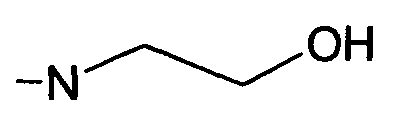
- un groupement
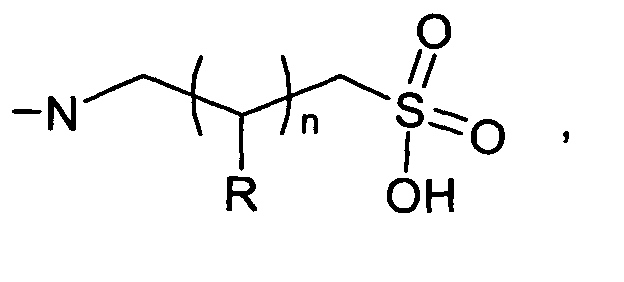
- n est égal à 0, 1, 2 ou 3,
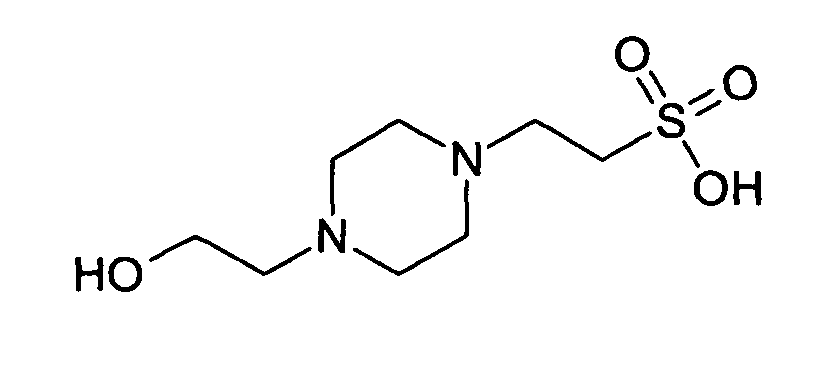
- l'acide 4-(2-hydroxyethyl)piperazine-1-ethanesulfonique qui répond à la formule
suivante:
- l'acide 4-(2-hydroxyethyl)piperazine-1-(2-hydroxypropanesulfonique) qui répond à
la formule suivante:

- l'acide 4-(2-hydroxyethyl)piperazine-1-propanesulfonique qui répond à la formule
suivante:

- l'acide 3-morpholinopropanesulfonique qui répond à la formule suivante:

- l'acide 2-morpholinoethanesulfonique qui répond à la formule suivante:

- l'acide piperazine-1,4-bis-(2-ethanesulfonique) qui répond à la formule suivante:

- l'acide piperazine-1,4-bis(2-hydroxypropane sulfonique) qui répond à la formule
suivante:

- les huiles hydrocarbonées d'origine animale, telles que le perhydrosqualène ;
- les huiles hydrocarbonées d'origine végétale, telles que les huiles végétales, en particulier la fraction liquide du beurre de karité;
- les esters et les éthers de synthèse, notamment d'acides gras, comme par exemple les esters du pentaérythritol tels que le tétraéthylhexanoate de pentaérythrityle ;
- les hydrocarbures linéaires ou ramifiés, d'origine minérale ou synthétique, tels que le polyisobutène hydrogéné ;
- les alcools gras ayant de 8 à 26 atomes de carbone, comme l'alcool cétylique, l'alcool stéarylique et leur mélange, ou l'octyldodécanol ;
- les huiles de silicone comme les polyméthylsiloxanes (PDMS) volatiles ou non à chaíne siliconée linéaire ou cyclique ; et
- leurs mélanges.
- les aldoses comme
- les pentoses : ribose, arabinose, xylose ou apiose, par exemple,
- les hexoses : glucose, fucose, mannose ou galactose, par exemple,
- les cétoses tels que le fructose,
- les désoxyoses, tels que le rhamnose, le digitoxose, le cymarose ou l'oléandrose,
- les dérivés d'ose tels que les acides uroniques comme les acides mannuronique, guluronique, galacturonique ou glycuronique, ou encore les itols comme le mannitol ou le sorbitol.
| Acide glycolique | 0,05 % |
| Acide n-octanoyl-5-salicylique | 0,20 % |
| Polyholoside hétérogène à 1% dans l'eau (Fucogel 1000 PP de SOLABIA) | 5,00 % |
| Acide hydroxyéthyl pipérazine éthane sulfonique | 1,00 % |
| Alcool | 2,00% |
| Glycérine | 3,00 % |
| Tocophérol à 50% dans l'huile de soja | 0,10% |
| Stéarate de glycéryle | 0,50 % |
| Elastomère de silicone dans l'huile (KSG-6 de SHIN-ETSU) | 2,60 % |
| EDTA disodique | 0,05 % |
| Huiles | 25,00 % |
| Charges | 2,50 % |
| Polymères épaississants | 2,00 % |
| Conservateurs | qs |
| Neutralisant qs | pH = 6,5 |
| Parfum | qs |
| Eau qsp | 100,00 % |
| Acide lactique | 0,05 % |
| Acide salicylique | 0,30 % |
| Polyholoside hétérogène à 1 % dans l'eau (Fucogel 1000 PP de SOLABIA) | 5,00 % |
| Acide hydroxyéthyl pipérazine éthane sulfonique | 1,00% |
| Alcool | 4,00 % |
| Glycérine | 3,00 % |
| Tocophérol à 50% dans l'huile de soja | 0,10% |
| Stéarate de glycéryle | 0,50 % |
| Elastomère de silicone dans l'huile (KSG-6 de SHIN-ETSU) | 2,60 % |
| EDTA disodique | 0,05 % |
| Huiles | 20,00 % |
| Charges | 2,50 % |
| Polymères épaississants | 2,00 % |
| Conservateurs | qs |
| Neutralisant | qs pH = 6,5 |
| Parfum | qs |
| Eau qsp | 100,00% |
Claims (21)
- Composition renfermant, dans un milieu physiologiquement acceptable, au moins un organopolysiloxane élastomère et au moins un composé amino-sulfonique choisi parmi les composés répondant à la formule (I) suivante:dans laquelle :
 et leurs sels physiologiquement acceptables.R désigne un atome d'hydrogène ou un groupement choisi parmi -OH et -NH2,X désigne:un atome d'oxygène,un groupement
 un groupement
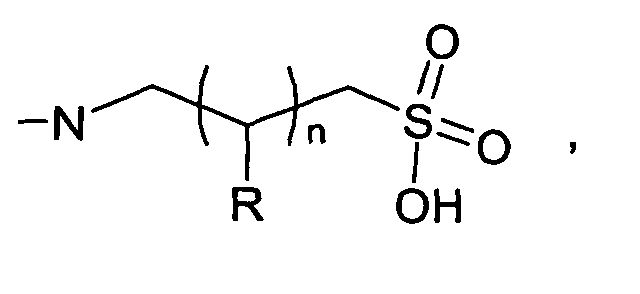 n est égal à 0, 1, 2 ou 3,
 - Composition selon la revendication 1, caractérisée en ce que l'organopolysiloxane est partiellement ou totalement réticulé.
- Composition selon la revendication 2, caractérisée en ce que l'organopolysiloxane réticulé élastomère est obtenu par réaction d'addition réticulation (A) d'un diorganopolysiloxane contenant au moins un atome d'hydrogène lié à un atome de silicium, et (B) d'un diorganopolysiloxane ayant au moins deux groupements à insaturation éthylénique liés chacun à un atome de silicium distinct.
- Composition selon la revendication 3, caractérisée en ce que le composé (A) est choisi parmi les méthylhydrogénopolysiloxanes à terminaisons triméthylsiloxy, les copolymères diméthylsiloxane-méthylhydrogénosiloxane à terminaisons triméthylsiloxy, et les copolymères cycliques diméthylsiloxane-méthylhydrogénosiloxane.
- Composition selon la revendication 3 ou 4, caractérisée en ce que le organopolysiloxanes (B) est choisi parmi les méthylvinylpolysiloxanes, les copolymères méthylvinylsiloxane-diméthylsiloxane, les diméthylpolysiloxanes à terminaisons diméthylvinylsiloxy, les copolymères diméthylsiloxane-méthylphénylsiloxane à terminaisons diméthylvinylsiloxy, les copolymères diméthylsiloxane-diphénylsiloxane-méthylvinylsiloxane à terminaisons diméthylvinylsiloxy, les copolymères diméthylsiloxane-méthylvinylsiloxane à terminaisons triméthylsiloxy, les copolymères diméthylsiloxane-méthylphénylsiloxane-méthylvinylsiloxane à terminaisons triméthylsiloxy, les méthyl(3,3,3-trifluoropropyl)polysiloxane à terminaisons diméthylvinylsiloxy, et les copolymères diméthylsiloxane-méthyl(3,3,3-trifluoropropyl)siloxane à terminaisons diméthylvinylsiloxy.
- Composition selon l'une quelconque des revendications 2 à 5, caractérisée en ce quel'organopolysiloxane élastomère peut être obtenu par réaction de diméthylpolysiloxane à terminaisons diméthylvinylsiloxy et de méthylhydrogénopolysiloxane à terminaisons triméthylsiloxy, en présence de catalyseur platine.
- Composition selon la revendication 6, caractérisée en ce que l'organopolysiloxane élastomère est susceptible d'être obtenu par hydrosilylation de polydiméthylsiloxanes à groupements vinyles terminaux, comprenant de 35 à 45 unités diméthylsiloxane, par des poly méthylhydrogénosiloxanes diméthylsiloxanes, comprenant deux unités méthylhydrogénosiloxanes et de 25 à 35 unités diméthylsiloxanes.
- Composition selon la revendication 7, caractérisée en ce que le poly méthylhydrogénosiloxane diméthylsiloxane comprend 30 unités diméthylsiloxanes.
- Composition selon l'une quelconque des revendications 1 à 8, caractérisée en ce que le composé amino-sulfonique est l'acide 4-(2-hydroxyethyl)piperazine-1-ethanesulfonique.
- Composition selon l'une quelconque des revendications 1 à 9, caractérisée en ce qu'elle renferme de 1 à 5% en poids d'organopolysiloxane.
- Composition selon l'une quelconque des revendications 1 à 10, caractérisée en ce qu'elle renferme de 0,1 à 5% en poids de composé de formule (I).
- Composition selon l'une quelconque des revendications 1 à 11, caractérisée en ce qu'elle renferme en outre au moins un hydroxyacide et/ou un polyholoside hétérogène.
- Composition selon la revendication 12, caractérisée en ce que l'hydroxyacide est un α-hydroxyacide.
- Composition selon la revendication 13, caractérisée en ce que l'α-hydroxyacide est choisi parmi les acides citrique, lactique, glycolique, tartrique, mandélique et/ou malique.
- Composition selon la revendication12, caractérisée en ce que l'hydroxyacide est un β-hydroxyacide.
- Composition selon la revendication 15, caractérisée en ce que le β-hydroxyacide est choisi parmi l'acide salicylique et l'acide n-octanoyl-5-salicylique.
- Composition selon la revendication 12, caractérisée en ce qu'elle renferme une combinaison d'acide n-octanoyl-5-salicylique et d'acide glycolique.
- Composition selon l'une quelconque des revendications 12 à 17, caractérisée en ce que le polyholoside comprend un enchaínement linéaire de α-L-Fucose, de α-D-Galactose et d'acide galacturonique.
- Composition selon l'une quelconque des revendications 1 à 18, caractérisée en ce qu'elle se présente sous forme d'une émulsion H/E.
- Procédé cosmétique de soin de la peau comprenant l'application topique sur la peau de la composition selon l'une quelconque des revendications 1 à 19.
- Procédé cosmétique pour atténuer les irrégularités visibles ou tactiles de la surface de la peau, en particulier pour atténuer les rides et ridules et/ou les taches cutanées et/ou lisser la peau et/ou unifier le teint, comprenant l'application topique sur la peau de la composition selon l'une quelconque des revendications 1 à 19.
Applications Claiming Priority (2)
| Application Number | Priority Date | Filing Date | Title |
|---|---|---|---|
| FR0450017A FR2864784B1 (fr) | 2004-01-06 | 2004-01-06 | Composition cosmetique comprenant un organopolysiloxane elastomere et un compose amino-sulfonique |
| FR0450017 | 2004-01-06 |
Publications (2)
| Publication Number | Publication Date |
|---|---|
| EP1552816A1 true EP1552816A1 (fr) | 2005-07-13 |
| EP1552816B1 EP1552816B1 (fr) | 2006-11-08 |
Family
ID=34586498
Family Applications (1)
| Application Number | Title | Priority Date | Filing Date |
|---|---|---|---|
| EP04292777A Expired - Lifetime EP1552816B1 (fr) | 2004-01-06 | 2004-11-25 | Composition cosmétique comprenant un organopolysiloxane élastomère et un composé amino-sulfonique |
Country Status (7)
| Country | Link |
|---|---|
| US (1) | US20050147576A1 (fr) |
| EP (1) | EP1552816B1 (fr) |
| JP (1) | JP2005194278A (fr) |
| AT (1) | ATE344658T1 (fr) |
| DE (1) | DE602004003121T2 (fr) |
| ES (1) | ES2275195T3 (fr) |
| FR (1) | FR2864784B1 (fr) |
Cited By (1)
| Publication number | Priority date | Publication date | Assignee | Title |
|---|---|---|---|---|
| WO2007071875A3 (fr) * | 2005-12-16 | 2007-10-11 | Oreal | Utilisation de céramides pour dépigmenter la peau |
Families Citing this family (13)
| Publication number | Priority date | Publication date | Assignee | Title |
|---|---|---|---|---|
| JP4165589B2 (ja) * | 2006-08-09 | 2008-10-15 | ソニー株式会社 | 検出装置およびその検出方法 |
| FR2907678B1 (fr) | 2006-10-25 | 2012-10-26 | Oreal | Composition de coloration des fibres keratiniques comprenant un copolymere bloc polysiloxane/polyuree |
| FR2918562B1 (fr) | 2007-07-13 | 2009-10-16 | Oreal | Composition cosmetique anhydre comprenant un copolymere silicone adhesif sensible a la pression, une silicone volatile et une silicone fluide particuliere |
| FR2924939B1 (fr) | 2007-12-13 | 2010-02-26 | Oreal | Procede de coloration des cheveux a partir d'une composition comprenant un polymere filmogene hydrophobe, un pigment et un solvant volatil |
| JP5207901B2 (ja) * | 2008-09-26 | 2013-06-12 | 株式会社 資生堂 | 皮膚化粧料 |
| FR2938759B1 (fr) | 2008-11-24 | 2012-10-12 | Oreal | Composition de coloration des fibres keratiniques comprenant un polymere supramoleculaire a base de polyalcene un pigment et un solvant volatil |
| FR2946873A1 (fr) | 2009-06-18 | 2010-12-24 | Oreal | Composition de traitement des fibres keratiniques comprenant un polymere supramoleculaire a base de polyalcene et un polymere sequence et un solvant volatil. |
| WO2010146147A2 (fr) | 2009-06-18 | 2010-12-23 | L'oreal | Composition pour traiter des fibres de kératine comprenant un copolymère à blocs, résine siloxane et solvant volatile associés |
| FR2948875B1 (fr) | 2009-08-10 | 2011-09-02 | Oreal | Composition cosmetique comprenant un copolymere silicone particulier, un solvant volatil et des particules metalliques |
| FR2949053B1 (fr) | 2009-08-13 | 2011-11-04 | Oreal | Composition cosmetique comprenant un copolymere silicone particulier et un ou plusieurs alcanes lineaires volatils liquides |
| FR2958540B1 (fr) | 2010-04-12 | 2012-05-04 | Oreal | Procede de coloration mettant en oeuvre des silicones adhesives sensibles a la pression avec une etape de pre-traitement |
| PL3265053T3 (pl) * | 2015-03-05 | 2020-03-31 | Avon Products, Inc. | Sposoby leczenia skóry |
| EP4456866A4 (fr) * | 2021-12-29 | 2025-08-27 | Oreal | Composition cosmétique pour le soin de la peau |
Citations (3)
| Publication number | Priority date | Publication date | Assignee | Title |
|---|---|---|---|---|
| WO1999027791A1 (fr) * | 1997-11-28 | 1999-06-10 | Pugliese Peter T | Composes a base d'acide zwitterionique a proprietes anti-inflammatoires |
| WO2002039975A1 (fr) * | 2000-11-17 | 2002-05-23 | L'oreal | Utilisation d'au moins un derive amino sulfonique dans une composition destinee a favoriser la desquamation de la peau |
| US20030157088A1 (en) * | 2001-11-13 | 2003-08-21 | The Proctor & Gamble Company | Compositions containing enzymes stabilized with inhibitors having certain binding properties and methods for using such compositions in personal care |
Family Cites Families (8)
| Publication number | Priority date | Publication date | Assignee | Title |
|---|---|---|---|---|
| EP0100827B1 (fr) * | 1982-08-17 | 1986-09-03 | Rosical Limited | Composition pharmaceutique contenant un acide aminosulfonique aliphatique |
| FR2741801B1 (fr) * | 1995-12-01 | 1998-01-02 | Oreal | Utilisation d'un polyholoside dans une composition nettoyante ou demaquillante, et composition le comprenant |
| FR2782269B1 (fr) * | 1998-08-17 | 2001-08-31 | Oreal | Composition cosmetique et/ou dermatologique contenant de l'acide salicylique ou un derive d'acide salicylique et son utilisation |
| FR2782922B1 (fr) * | 1998-09-09 | 2002-07-19 | Oreal | Composition contenant de l'uree et ses utilisations dans le domaine cosmetique et/ou dermatologique |
| DE19842767A1 (de) * | 1998-09-18 | 2000-03-23 | Beiersdorf Ag | Emulgatorfreie feindisperse Systeme von Typ Öl-in-Wasser und Wasser-in-Öl |
| US6630163B1 (en) * | 1999-04-22 | 2003-10-07 | Howard Murad | Method of treating dermatological disorders with fruit extracts |
| DE10036051A1 (de) * | 2000-07-25 | 2002-02-07 | Beiersdorf Ag | Kosmetische oder dermatologische Formulierungen zur Pflege und Kühlung der Haut nach einem Sonnenbad |
| US20030224028A1 (en) * | 2002-05-13 | 2003-12-04 | Societe L'oreal S.A. | Metal complexes for promoting skin desquamation and/or stimulating epidermal renewal |
-
2004
- 2004-01-06 FR FR0450017A patent/FR2864784B1/fr not_active Expired - Fee Related
- 2004-11-25 ES ES04292777T patent/ES2275195T3/es not_active Expired - Lifetime
- 2004-11-25 AT AT04292777T patent/ATE344658T1/de not_active IP Right Cessation
- 2004-11-25 DE DE602004003121T patent/DE602004003121T2/de not_active Expired - Lifetime
- 2004-11-25 EP EP04292777A patent/EP1552816B1/fr not_active Expired - Lifetime
-
2005
- 2005-01-04 US US11/028,229 patent/US20050147576A1/en not_active Abandoned
- 2005-01-05 JP JP2005000955A patent/JP2005194278A/ja not_active Withdrawn
Patent Citations (3)
| Publication number | Priority date | Publication date | Assignee | Title |
|---|---|---|---|---|
| WO1999027791A1 (fr) * | 1997-11-28 | 1999-06-10 | Pugliese Peter T | Composes a base d'acide zwitterionique a proprietes anti-inflammatoires |
| WO2002039975A1 (fr) * | 2000-11-17 | 2002-05-23 | L'oreal | Utilisation d'au moins un derive amino sulfonique dans une composition destinee a favoriser la desquamation de la peau |
| US20030157088A1 (en) * | 2001-11-13 | 2003-08-21 | The Proctor & Gamble Company | Compositions containing enzymes stabilized with inhibitors having certain binding properties and methods for using such compositions in personal care |
Cited By (2)
| Publication number | Priority date | Publication date | Assignee | Title |
|---|---|---|---|---|
| WO2007071875A3 (fr) * | 2005-12-16 | 2007-10-11 | Oreal | Utilisation de céramides pour dépigmenter la peau |
| US8268805B2 (en) | 2005-12-16 | 2012-09-18 | L'oreal | Use of ceramides for depigmenting the skin |
Also Published As
| Publication number | Publication date |
|---|---|
| DE602004003121T2 (de) | 2007-10-18 |
| FR2864784B1 (fr) | 2006-02-10 |
| FR2864784A1 (fr) | 2005-07-08 |
| ATE344658T1 (de) | 2006-11-15 |
| JP2005194278A (ja) | 2005-07-21 |
| ES2275195T3 (es) | 2007-06-01 |
| DE602004003121D1 (de) | 2006-12-21 |
| EP1552816B1 (fr) | 2006-11-08 |
| US20050147576A1 (en) | 2005-07-07 |
Similar Documents
| Publication | Publication Date | Title |
|---|---|---|
| EP1932505B1 (fr) | Emulsion e/h à effet correcteur pour la peau | |
| EP1552816B1 (fr) | Composition cosmétique comprenant un organopolysiloxane élastomère et un composé amino-sulfonique | |
| EP1068852B1 (fr) | Composition solide et ses utilisations notamment cosmétiques | |
| FR3060977A1 (fr) | Emulsion huile-dans-eau et son utilisation en cosmetique | |
| EP2184048B1 (fr) | Emulsion huile-dans-eau contenant un polymère amphiphile et un elastomère siliconé | |
| EP1136058B1 (fr) | Composition sous forme d'emulsion eau-dans-huile et ses utilisations cosmétiques | |
| FR2799963A1 (fr) | Emulsions contenant au moins un filtre uv organique insoluble et une silicone organomodifiee non-filtrante | |
| FR2681245A1 (fr) | Utilisation en cosmetique ou en application topique d'une dispersion aqueuse a base d'organopolysiloxanes et d'un copolymere reticule d'acrylamide/acide 2-acrylamido 2-methylpropane sulfonique neutralise. | |
| EP0953344A1 (fr) | Utilisation d'au moins un hydroxystilbène dans une composition destinée à favoriser la desquamation de la peau, et composition le comprenant | |
| WO2015028745A2 (fr) | Composition cosmétique comprenant un polymère sulfonique, un polysaccharide hydrophobe et un tensioactif siliconé | |
| EP0818200A1 (fr) | Utilisation d'un polyholoside dans une composition destinée à favoriser la desquamation de la peau, et composition le comprenant | |
| FR3089122A1 (fr) | Composition comprenant de l’hectorite et de la pectine | |
| FR3053247A1 (fr) | Procede cosmetique de traitement des matieres keratiniques mettant en œuvre une composition comprenant de l’acide ascorbique | |
| EP1731136B1 (fr) | Composition cosmétique contenant des portions de sphères creuses organosiliconées | |
| EP1002523A1 (fr) | Compositions cosmétiques photoprotectrices | |
| FR3108844A1 (fr) | Composition cosmétique SOUS LA FORME D’UN GEL | |
| EP1068851A1 (fr) | Composition sous forme d'émulsion eau-dans-huile et ses utilisations cosmétiques | |
| FR3024032A1 (fr) | Emulsions comprenant au moins une charge et stabilisees par un polymere silicone reticule | |
| FR2964562A1 (fr) | Produit cosmetique comprenant un elastomere de silicone | |
| FR2778560A1 (fr) | Utilisation de l'acide cinnamique ou d'au moins l'un de ses derives dans une composition destinee a favoriser la desquamation de la peau, et composition le comprenant | |
| FR2924941A1 (fr) | Procede cosmetique de soin d'une peau ridee | |
| FR2903306A1 (fr) | Composition cosmetique comprenant un elastomere | |
| FR2931669A1 (fr) | Utilisation de derives d'hydroxyalkylsufone a titre d'agent hydratant de la peau. | |
| FR3029404A1 (fr) | Compositions comprenant un alkylpolyglucoside et un pigment enrobe hydrophobe | |
| FR2862534A1 (fr) | Composition cosmetique comprenant des particules de durete differente |
Legal Events
| Date | Code | Title | Description |
|---|---|---|---|
| PUAI | Public reference made under article 153(3) epc to a published international application that has entered the european phase |
Free format text: ORIGINAL CODE: 0009012 |
|
| AK | Designated contracting states |
Kind code of ref document: A1 Designated state(s): AT BE BG CH CY CZ DE DK EE ES FI FR GB GR HU IE IS IT LI LU MC NL PL PT RO SE SI SK TR |
|
| AX | Request for extension of the european patent |
Extension state: AL HR LT LV MK YU |
|
| 17P | Request for examination filed |
Effective date: 20060113 |
|
| AKX | Designation fees paid |
Designated state(s): AT BE BG CH CY CZ DE DK EE ES FI FR GB GR HU IE IS IT LI LU MC NL PL PT RO SE SI SK TR |
|
| GRAP | Despatch of communication of intention to grant a patent |
Free format text: ORIGINAL CODE: EPIDOSNIGR1 |
|
| RIC1 | Information provided on ipc code assigned before grant |
Ipc: A61Q 19/08 20060101ALI20060510BHEP Ipc: A61K 8/89 20060101ALI20060510BHEP Ipc: A61K 8/49 20060101AFI20060510BHEP |
|
| GRAS | Grant fee paid |
Free format text: ORIGINAL CODE: EPIDOSNIGR3 |
|
| GRAA | (expected) grant |
Free format text: ORIGINAL CODE: 0009210 |
|
| AK | Designated contracting states |
Kind code of ref document: B1 Designated state(s): AT BE BG CH CY CZ DE DK EE ES FI FR GB GR HU IE IS IT LI LU MC NL PL PT RO SE SI SK TR |
|
| PG25 | Lapsed in a contracting state [announced via postgrant information from national office to epo] |
Ref country code: SK Free format text: LAPSE BECAUSE OF FAILURE TO SUBMIT A TRANSLATION OF THE DESCRIPTION OR TO PAY THE FEE WITHIN THE PRESCRIBED TIME-LIMIT Effective date: 20061108 Ref country code: CZ Free format text: LAPSE BECAUSE OF FAILURE TO SUBMIT A TRANSLATION OF THE DESCRIPTION OR TO PAY THE FEE WITHIN THE PRESCRIBED TIME-LIMIT Effective date: 20061108 Ref country code: IE Free format text: LAPSE BECAUSE OF FAILURE TO SUBMIT A TRANSLATION OF THE DESCRIPTION OR TO PAY THE FEE WITHIN THE PRESCRIBED TIME-LIMIT Effective date: 20061108 Ref country code: SI Free format text: LAPSE BECAUSE OF FAILURE TO SUBMIT A TRANSLATION OF THE DESCRIPTION OR TO PAY THE FEE WITHIN THE PRESCRIBED TIME-LIMIT Effective date: 20061108 Ref country code: RO Free format text: LAPSE BECAUSE OF FAILURE TO SUBMIT A TRANSLATION OF THE DESCRIPTION OR TO PAY THE FEE WITHIN THE PRESCRIBED TIME-LIMIT Effective date: 20061108 Ref country code: PL Free format text: LAPSE BECAUSE OF FAILURE TO SUBMIT A TRANSLATION OF THE DESCRIPTION OR TO PAY THE FEE WITHIN THE PRESCRIBED TIME-LIMIT Effective date: 20061108 Ref country code: AT Free format text: LAPSE BECAUSE OF FAILURE TO SUBMIT A TRANSLATION OF THE DESCRIPTION OR TO PAY THE FEE WITHIN THE PRESCRIBED TIME-LIMIT Effective date: 20061108 Ref country code: IT Free format text: LAPSE BECAUSE OF FAILURE TO SUBMIT A TRANSLATION OF THE DESCRIPTION OR TO PAY THE FEE WITHIN THE PRESCRIBED TIME-LIMIT;WARNING: LAPSES OF ITALIAN PATENTS WITH EFFECTIVE DATE BEFORE 2007 MAY HAVE OCCURRED AT ANY TIME BEFORE 2007. THE CORRECT EFFECTIVE DATE MAY BE DIFFERENT FROM THE ONE RECORDED. Effective date: 20061108 Ref country code: NL Free format text: LAPSE BECAUSE OF FAILURE TO SUBMIT A TRANSLATION OF THE DESCRIPTION OR TO PAY THE FEE WITHIN THE PRESCRIBED TIME-LIMIT Effective date: 20061108 Ref country code: FI Free format text: LAPSE BECAUSE OF FAILURE TO SUBMIT A TRANSLATION OF THE DESCRIPTION OR TO PAY THE FEE WITHIN THE PRESCRIBED TIME-LIMIT Effective date: 20061108 |
|
| REG | Reference to a national code |
Ref country code: GB Ref legal event code: FG4D Free format text: NOT ENGLISH |
|
| PG25 | Lapsed in a contracting state [announced via postgrant information from national office to epo] |
Ref country code: MC Free format text: LAPSE BECAUSE OF NON-PAYMENT OF DUE FEES Effective date: 20061130 Ref country code: BE Free format text: LAPSE BECAUSE OF NON-PAYMENT OF DUE FEES Effective date: 20061130 |
|
| REG | Reference to a national code |
Ref country code: CH Ref legal event code: EP |
|
| REG | Reference to a national code |
Ref country code: IE Ref legal event code: FG4D Free format text: LANGUAGE OF EP DOCUMENT: FRENCH |
|
| REF | Corresponds to: |
Ref document number: 602004003121 Country of ref document: DE Date of ref document: 20061221 Kind code of ref document: P |
|
| PG25 | Lapsed in a contracting state [announced via postgrant information from national office to epo] |
Ref country code: SE Free format text: LAPSE BECAUSE OF FAILURE TO SUBMIT A TRANSLATION OF THE DESCRIPTION OR TO PAY THE FEE WITHIN THE PRESCRIBED TIME-LIMIT Effective date: 20070208 Ref country code: BG Free format text: LAPSE BECAUSE OF FAILURE TO SUBMIT A TRANSLATION OF THE DESCRIPTION OR TO PAY THE FEE WITHIN THE PRESCRIBED TIME-LIMIT Effective date: 20070208 Ref country code: DK Free format text: LAPSE BECAUSE OF FAILURE TO SUBMIT A TRANSLATION OF THE DESCRIPTION OR TO PAY THE FEE WITHIN THE PRESCRIBED TIME-LIMIT Effective date: 20070208 |
|
| GBT | Gb: translation of ep patent filed (gb section 77(6)(a)/1977) |
Effective date: 20070131 |
|
| PG25 | Lapsed in a contracting state [announced via postgrant information from national office to epo] |
Ref country code: IS Free format text: LAPSE BECAUSE OF FAILURE TO SUBMIT A TRANSLATION OF THE DESCRIPTION OR TO PAY THE FEE WITHIN THE PRESCRIBED TIME-LIMIT Effective date: 20070308 |
|
| PG25 | Lapsed in a contracting state [announced via postgrant information from national office to epo] |
Ref country code: PT Free format text: LAPSE BECAUSE OF FAILURE TO SUBMIT A TRANSLATION OF THE DESCRIPTION OR TO PAY THE FEE WITHIN THE PRESCRIBED TIME-LIMIT Effective date: 20070409 |
|
| NLV1 | Nl: lapsed or annulled due to failure to fulfill the requirements of art. 29p and 29m of the patents act | ||
| REG | Reference to a national code |
Ref country code: ES Ref legal event code: FG2A Ref document number: 2275195 Country of ref document: ES Kind code of ref document: T3 |
|
| REG | Reference to a national code |
Ref country code: IE Ref legal event code: FD4D |
|
| PLBE | No opposition filed within time limit |
Free format text: ORIGINAL CODE: 0009261 |
|
| STAA | Information on the status of an ep patent application or granted ep patent |
Free format text: STATUS: NO OPPOSITION FILED WITHIN TIME LIMIT |
|
| 26N | No opposition filed |
Effective date: 20070809 |
|
| BERE | Be: lapsed |
Owner name: L'OREAL Effective date: 20061130 |
|
| PG25 | Lapsed in a contracting state [announced via postgrant information from national office to epo] |
Ref country code: GR Free format text: LAPSE BECAUSE OF FAILURE TO SUBMIT A TRANSLATION OF THE DESCRIPTION OR TO PAY THE FEE WITHIN THE PRESCRIBED TIME-LIMIT Effective date: 20070209 |
|
| PG25 | Lapsed in a contracting state [announced via postgrant information from national office to epo] |
Ref country code: EE Free format text: LAPSE BECAUSE OF FAILURE TO SUBMIT A TRANSLATION OF THE DESCRIPTION OR TO PAY THE FEE WITHIN THE PRESCRIBED TIME-LIMIT Effective date: 20061108 |
|
| PG25 | Lapsed in a contracting state [announced via postgrant information from national office to epo] |
Ref country code: HU Free format text: LAPSE BECAUSE OF FAILURE TO SUBMIT A TRANSLATION OF THE DESCRIPTION OR TO PAY THE FEE WITHIN THE PRESCRIBED TIME-LIMIT Effective date: 20070509 Ref country code: TR Free format text: LAPSE BECAUSE OF FAILURE TO SUBMIT A TRANSLATION OF THE DESCRIPTION OR TO PAY THE FEE WITHIN THE PRESCRIBED TIME-LIMIT Effective date: 20061108 Ref country code: LU Free format text: LAPSE BECAUSE OF NON-PAYMENT OF DUE FEES Effective date: 20061125 |
|
| PG25 | Lapsed in a contracting state [announced via postgrant information from national office to epo] |
Ref country code: CY Free format text: LAPSE BECAUSE OF FAILURE TO SUBMIT A TRANSLATION OF THE DESCRIPTION OR TO PAY THE FEE WITHIN THE PRESCRIBED TIME-LIMIT Effective date: 20061108 |
|
| REG | Reference to a national code |
Ref country code: CH Ref legal event code: PL |
|
| PG25 | Lapsed in a contracting state [announced via postgrant information from national office to epo] |
Ref country code: CH Free format text: LAPSE BECAUSE OF NON-PAYMENT OF DUE FEES Effective date: 20081130 Ref country code: LI Free format text: LAPSE BECAUSE OF NON-PAYMENT OF DUE FEES Effective date: 20081130 |
|
| REG | Reference to a national code |
Ref country code: FR Ref legal event code: PLFP Year of fee payment: 12 |
|
| REG | Reference to a national code |
Ref country code: FR Ref legal event code: PLFP Year of fee payment: 13 |
|
| REG | Reference to a national code |
Ref country code: FR Ref legal event code: PLFP Year of fee payment: 14 |
|
| REG | Reference to a national code |
Ref country code: FR Ref legal event code: PLFP Year of fee payment: 15 |
|
| PGFP | Annual fee paid to national office [announced via postgrant information from national office to epo] |
Ref country code: FR Payment date: 20230929 Year of fee payment: 20 |
|
| PGFP | Annual fee paid to national office [announced via postgrant information from national office to epo] |
Ref country code: GB Payment date: 20231006 Year of fee payment: 20 |
|
| PGFP | Annual fee paid to national office [announced via postgrant information from national office to epo] |
Ref country code: ES Payment date: 20231211 Year of fee payment: 20 |
|
| PGFP | Annual fee paid to national office [announced via postgrant information from national office to epo] |
Ref country code: IT Payment date: 20231010 Year of fee payment: 20 Ref country code: DE Payment date: 20230929 Year of fee payment: 20 |
|
| REG | Reference to a national code |
Ref country code: DE Ref legal event code: R071 Ref document number: 602004003121 Country of ref document: DE |
|
| REG | Reference to a national code |
Ref country code: ES Ref legal event code: FD2A Effective date: 20241202 |
|
| REG | Reference to a national code |
Ref country code: GB Ref legal event code: PE20 Expiry date: 20241124 |
|
| PG25 | Lapsed in a contracting state [announced via postgrant information from national office to epo] |
Ref country code: GB Free format text: LAPSE BECAUSE OF EXPIRATION OF PROTECTION Effective date: 20241124 |
|
| PG25 | Lapsed in a contracting state [announced via postgrant information from national office to epo] |
Ref country code: ES Free format text: LAPSE BECAUSE OF EXPIRATION OF PROTECTION Effective date: 20241126 |
|
| PG25 | Lapsed in a contracting state [announced via postgrant information from national office to epo] |
Ref country code: GB Free format text: LAPSE BECAUSE OF EXPIRATION OF PROTECTION Effective date: 20241124 Ref country code: ES Free format text: LAPSE BECAUSE OF EXPIRATION OF PROTECTION Effective date: 20241126 |