EP1552017B1 - Appareil et procedes de detection d'adn dans des echantillons biologiques - Google Patents
Appareil et procedes de detection d'adn dans des echantillons biologiques Download PDFInfo
- Publication number
- EP1552017B1 EP1552017B1 EP03783907A EP03783907A EP1552017B1 EP 1552017 B1 EP1552017 B1 EP 1552017B1 EP 03783907 A EP03783907 A EP 03783907A EP 03783907 A EP03783907 A EP 03783907A EP 1552017 B1 EP1552017 B1 EP 1552017B1
- Authority
- EP
- European Patent Office
- Prior art keywords
- dna
- capture probes
- aluminum oxide
- target dna
- compound
- Prior art date
- Legal status (The legal status is an assumption and is not a legal conclusion. Google has not performed a legal analysis and makes no representation as to the accuracy of the status listed.)
- Expired - Lifetime
Links
- 238000000034 method Methods 0.000 title claims abstract description 38
- 239000012472 biological sample Substances 0.000 title claims abstract description 11
- 239000000523 sample Substances 0.000 claims abstract description 90
- 238000009396 hybridization Methods 0.000 claims abstract description 38
- TWNQGVIAIRXVLR-UHFFFAOYSA-N oxo(oxoalumanyloxy)alumane Chemical compound O=[Al]O[Al]=O TWNQGVIAIRXVLR-UHFFFAOYSA-N 0.000 claims abstract description 36
- 238000006243 chemical reaction Methods 0.000 claims abstract description 24
- 108020004414 DNA Proteins 0.000 claims description 73
- 238000001514 detection method Methods 0.000 claims description 25
- 229910052709 silver Inorganic materials 0.000 claims description 22
- 239000004332 silver Substances 0.000 claims description 22
- PNEYBMLMFCGWSK-UHFFFAOYSA-N Alumina Chemical compound [O-2].[O-2].[O-2].[Al+3].[Al+3] PNEYBMLMFCGWSK-UHFFFAOYSA-N 0.000 claims description 21
- BQCADISMDOOEFD-UHFFFAOYSA-N Silver Chemical compound [Ag] BQCADISMDOOEFD-UHFFFAOYSA-N 0.000 claims description 18
- 150000001875 compounds Chemical class 0.000 claims description 18
- 102000004169 proteins and genes Human genes 0.000 claims description 18
- 108090000623 proteins and genes Proteins 0.000 claims description 18
- PCHJSUWPFVWCPO-UHFFFAOYSA-N gold Chemical compound [Au] PCHJSUWPFVWCPO-UHFFFAOYSA-N 0.000 claims description 16
- 239000010931 gold Substances 0.000 claims description 16
- 229910052737 gold Inorganic materials 0.000 claims description 16
- YBJHBAHKTGYVGT-ZKWXMUAHSA-N (+)-Biotin Chemical compound N1C(=O)N[C@@H]2[C@H](CCCCC(=O)O)SC[C@@H]21 YBJHBAHKTGYVGT-ZKWXMUAHSA-N 0.000 claims description 14
- 239000002105 nanoparticle Substances 0.000 claims description 14
- SHIBSTMRCDJXLN-UHFFFAOYSA-N Digoxigenin Natural products C1CC(C2C(C3(C)CCC(O)CC3CC2)CC2O)(O)C2(C)C1C1=CC(=O)OC1 SHIBSTMRCDJXLN-UHFFFAOYSA-N 0.000 claims description 13
- 108010090804 Streptavidin Proteins 0.000 claims description 13
- 229910052782 aluminium Inorganic materials 0.000 claims description 13
- XAGFODPZIPBFFR-UHFFFAOYSA-N aluminium Chemical compound [Al] XAGFODPZIPBFFR-UHFFFAOYSA-N 0.000 claims description 13
- QONQRTHLHBTMGP-UHFFFAOYSA-N digitoxigenin Natural products CC12CCC(C3(CCC(O)CC3CC3)C)C3C11OC1CC2C1=CC(=O)OC1 QONQRTHLHBTMGP-UHFFFAOYSA-N 0.000 claims description 13
- SHIBSTMRCDJXLN-KCZCNTNESA-N digoxigenin Chemical compound C1([C@@H]2[C@@]3([C@@](CC2)(O)[C@H]2[C@@H]([C@@]4(C)CC[C@H](O)C[C@H]4CC2)C[C@H]3O)C)=CC(=O)OC1 SHIBSTMRCDJXLN-KCZCNTNESA-N 0.000 claims description 13
- 229920000936 Agarose Polymers 0.000 claims description 10
- 108091028043 Nucleic acid sequence Proteins 0.000 claims description 9
- 241000972773 Aulopiformes Species 0.000 claims description 8
- 230000000295 complement effect Effects 0.000 claims description 8
- 235000019515 salmon Nutrition 0.000 claims description 8
- 229960002685 biotin Drugs 0.000 claims description 7
- 235000020958 biotin Nutrition 0.000 claims description 7
- 239000011616 biotin Substances 0.000 claims description 7
- 230000008569 process Effects 0.000 claims description 7
- 239000003153 chemical reaction reagent Substances 0.000 claims description 6
- 238000004544 sputter deposition Methods 0.000 claims description 6
- 108010088751 Albumins Proteins 0.000 claims description 5
- 102000009027 Albumins Human genes 0.000 claims description 5
- 238000007254 oxidation reaction Methods 0.000 claims description 4
- -1 silver ions Chemical class 0.000 claims description 4
- 239000000758 substrate Substances 0.000 claims description 4
- 229920001917 Ficoll Polymers 0.000 claims description 3
- 230000003647 oxidation Effects 0.000 claims description 3
- 238000000018 DNA microarray Methods 0.000 claims description 2
- 230000000704 physical effect Effects 0.000 abstract 1
- 239000000243 solution Substances 0.000 description 17
- LOKCTEFSRHRXRJ-UHFFFAOYSA-I dipotassium trisodium dihydrogen phosphate hydrogen phosphate dichloride Chemical compound P(=O)(O)(O)[O-].[K+].P(=O)(O)([O-])[O-].[Na+].[Na+].[Cl-].[K+].[Cl-].[Na+] LOKCTEFSRHRXRJ-UHFFFAOYSA-I 0.000 description 10
- 239000002953 phosphate buffered saline Substances 0.000 description 10
- 239000011248 coating agent Substances 0.000 description 6
- 238000000576 coating method Methods 0.000 description 6
- VYPSYNLAJGMNEJ-UHFFFAOYSA-N Silicium dioxide Chemical compound O=[Si]=O VYPSYNLAJGMNEJ-UHFFFAOYSA-N 0.000 description 5
- XLYOFNOQVPJJNP-UHFFFAOYSA-N water Substances O XLYOFNOQVPJJNP-UHFFFAOYSA-N 0.000 description 5
- 239000012901 Milli-Q water Substances 0.000 description 4
- 208000037065 Subacute sclerosing leukoencephalitis Diseases 0.000 description 4
- 206010042297 Subacute sclerosing panencephalitis Diseases 0.000 description 4
- 239000011543 agarose gel Substances 0.000 description 4
- 238000005868 electrolysis reaction Methods 0.000 description 4
- 238000003384 imaging method Methods 0.000 description 4
- 108020004635 Complementary DNA Proteins 0.000 description 3
- 108091034117 Oligonucleotide Proteins 0.000 description 3
- XUIMIQQOPSSXEZ-UHFFFAOYSA-N Silicon Chemical compound [Si] XUIMIQQOPSSXEZ-UHFFFAOYSA-N 0.000 description 3
- HEMHJVSKTPXQMS-UHFFFAOYSA-M Sodium hydroxide Chemical compound [OH-].[Na+] HEMHJVSKTPXQMS-UHFFFAOYSA-M 0.000 description 3
- 230000027455 binding Effects 0.000 description 3
- 238000010804 cDNA synthesis Methods 0.000 description 3
- 239000002299 complementary DNA Substances 0.000 description 3
- 239000012153 distilled water Substances 0.000 description 3
- 239000003623 enhancer Substances 0.000 description 3
- 239000012634 fragment Substances 0.000 description 3
- 230000003287 optical effect Effects 0.000 description 3
- 229910052710 silicon Inorganic materials 0.000 description 3
- 239000010703 silicon Substances 0.000 description 3
- AKHNMLFCWUSKQB-UHFFFAOYSA-L sodium thiosulfate Chemical compound [Na+].[Na+].[O-]S([O-])(=O)=S AKHNMLFCWUSKQB-UHFFFAOYSA-L 0.000 description 3
- 235000019345 sodium thiosulphate Nutrition 0.000 description 3
- 102000007469 Actins Human genes 0.000 description 2
- 108010085238 Actins Proteins 0.000 description 2
- JLCPHMBAVCMARE-UHFFFAOYSA-N [3-[[3-[[3-[[3-[[3-[[3-[[3-[[3-[[3-[[3-[[3-[[5-(2-amino-6-oxo-1H-purin-9-yl)-3-[[3-[[3-[[3-[[3-[[3-[[5-(2-amino-6-oxo-1H-purin-9-yl)-3-[[5-(2-amino-6-oxo-1H-purin-9-yl)-3-hydroxyoxolan-2-yl]methoxy-hydroxyphosphoryl]oxyoxolan-2-yl]methoxy-hydroxyphosphoryl]oxy-5-(5-methyl-2,4-dioxopyrimidin-1-yl)oxolan-2-yl]methoxy-hydroxyphosphoryl]oxy-5-(6-aminopurin-9-yl)oxolan-2-yl]methoxy-hydroxyphosphoryl]oxy-5-(6-aminopurin-9-yl)oxolan-2-yl]methoxy-hydroxyphosphoryl]oxy-5-(6-aminopurin-9-yl)oxolan-2-yl]methoxy-hydroxyphosphoryl]oxy-5-(6-aminopurin-9-yl)oxolan-2-yl]methoxy-hydroxyphosphoryl]oxyoxolan-2-yl]methoxy-hydroxyphosphoryl]oxy-5-(5-methyl-2,4-dioxopyrimidin-1-yl)oxolan-2-yl]methoxy-hydroxyphosphoryl]oxy-5-(4-amino-2-oxopyrimidin-1-yl)oxolan-2-yl]methoxy-hydroxyphosphoryl]oxy-5-(5-methyl-2,4-dioxopyrimidin-1-yl)oxolan-2-yl]methoxy-hydroxyphosphoryl]oxy-5-(5-methyl-2,4-dioxopyrimidin-1-yl)oxolan-2-yl]methoxy-hydroxyphosphoryl]oxy-5-(6-aminopurin-9-yl)oxolan-2-yl]methoxy-hydroxyphosphoryl]oxy-5-(6-aminopurin-9-yl)oxolan-2-yl]methoxy-hydroxyphosphoryl]oxy-5-(4-amino-2-oxopyrimidin-1-yl)oxolan-2-yl]methoxy-hydroxyphosphoryl]oxy-5-(4-amino-2-oxopyrimidin-1-yl)oxolan-2-yl]methoxy-hydroxyphosphoryl]oxy-5-(4-amino-2-oxopyrimidin-1-yl)oxolan-2-yl]methoxy-hydroxyphosphoryl]oxy-5-(6-aminopurin-9-yl)oxolan-2-yl]methoxy-hydroxyphosphoryl]oxy-5-(4-amino-2-oxopyrimidin-1-yl)oxolan-2-yl]methyl [5-(6-aminopurin-9-yl)-2-(hydroxymethyl)oxolan-3-yl] hydrogen phosphate Polymers Cc1cn(C2CC(OP(O)(=O)OCC3OC(CC3OP(O)(=O)OCC3OC(CC3O)n3cnc4c3nc(N)[nH]c4=O)n3cnc4c3nc(N)[nH]c4=O)C(COP(O)(=O)OC3CC(OC3COP(O)(=O)OC3CC(OC3COP(O)(=O)OC3CC(OC3COP(O)(=O)OC3CC(OC3COP(O)(=O)OC3CC(OC3COP(O)(=O)OC3CC(OC3COP(O)(=O)OC3CC(OC3COP(O)(=O)OC3CC(OC3COP(O)(=O)OC3CC(OC3COP(O)(=O)OC3CC(OC3COP(O)(=O)OC3CC(OC3COP(O)(=O)OC3CC(OC3COP(O)(=O)OC3CC(OC3COP(O)(=O)OC3CC(OC3COP(O)(=O)OC3CC(OC3COP(O)(=O)OC3CC(OC3COP(O)(=O)OC3CC(OC3CO)n3cnc4c(N)ncnc34)n3ccc(N)nc3=O)n3cnc4c(N)ncnc34)n3ccc(N)nc3=O)n3ccc(N)nc3=O)n3ccc(N)nc3=O)n3cnc4c(N)ncnc34)n3cnc4c(N)ncnc34)n3cc(C)c(=O)[nH]c3=O)n3cc(C)c(=O)[nH]c3=O)n3ccc(N)nc3=O)n3cc(C)c(=O)[nH]c3=O)n3cnc4c3nc(N)[nH]c4=O)n3cnc4c(N)ncnc34)n3cnc4c(N)ncnc34)n3cnc4c(N)ncnc34)n3cnc4c(N)ncnc34)O2)c(=O)[nH]c1=O JLCPHMBAVCMARE-UHFFFAOYSA-N 0.000 description 2
- 238000000151 deposition Methods 0.000 description 2
- 238000004519 manufacturing process Methods 0.000 description 2
- 238000007899 nucleic acid hybridization Methods 0.000 description 2
- 239000002245 particle Substances 0.000 description 2
- 239000000377 silicon dioxide Substances 0.000 description 2
- 238000003860 storage Methods 0.000 description 2
- 239000003298 DNA probe Substances 0.000 description 1
- 230000002411 adverse Effects 0.000 description 1
- 125000003172 aldehyde group Chemical group 0.000 description 1
- 150000001412 amines Chemical group 0.000 description 1
- 238000004458 analytical method Methods 0.000 description 1
- QVGXLLKOCUKJST-UHFFFAOYSA-N atomic oxygen Chemical compound [O] QVGXLLKOCUKJST-UHFFFAOYSA-N 0.000 description 1
- 239000012620 biological material Substances 0.000 description 1
- 239000008280 blood Substances 0.000 description 1
- 210000004369 blood Anatomy 0.000 description 1
- 238000005336 cracking Methods 0.000 description 1
- 230000007423 decrease Effects 0.000 description 1
- 230000008021 deposition Effects 0.000 description 1
- 238000007598 dipping method Methods 0.000 description 1
- 238000001035 drying Methods 0.000 description 1
- 230000000694 effects Effects 0.000 description 1
- 239000000834 fixative Substances 0.000 description 1
- 239000007789 gas Substances 0.000 description 1
- 239000000499 gel Substances 0.000 description 1
- 239000011521 glass Substances 0.000 description 1
- 238000010438 heat treatment Methods 0.000 description 1
- 238000011534 incubation Methods 0.000 description 1
- 230000003993 interaction Effects 0.000 description 1
- 239000000463 material Substances 0.000 description 1
- 229910052751 metal Inorganic materials 0.000 description 1
- 239000002184 metal Substances 0.000 description 1
- 239000000203 mixture Substances 0.000 description 1
- 230000004048 modification Effects 0.000 description 1
- 238000012986 modification Methods 0.000 description 1
- 230000009871 nonspecific binding Effects 0.000 description 1
- 108020004707 nucleic acids Proteins 0.000 description 1
- 102000039446 nucleic acids Human genes 0.000 description 1
- 150000007523 nucleic acids Chemical class 0.000 description 1
- 239000002773 nucleotide Substances 0.000 description 1
- 125000003729 nucleotide group Chemical group 0.000 description 1
- 239000001301 oxygen Substances 0.000 description 1
- 229910052760 oxygen Inorganic materials 0.000 description 1
- 210000002381 plasma Anatomy 0.000 description 1
- 229920002635 polyurethane Polymers 0.000 description 1
- 239000004814 polyurethane Substances 0.000 description 1
- 239000011148 porous material Substances 0.000 description 1
- 230000009257 reactivity Effects 0.000 description 1
- 229910052814 silicon oxide Inorganic materials 0.000 description 1
- 150000003384 small molecules Chemical class 0.000 description 1
- 238000001179 sorption measurement Methods 0.000 description 1
- 210000002700 urine Anatomy 0.000 description 1
- 238000012800 visualization Methods 0.000 description 1
Images



Classifications
-
- C—CHEMISTRY; METALLURGY
- C12—BIOCHEMISTRY; BEER; SPIRITS; WINE; VINEGAR; MICROBIOLOGY; ENZYMOLOGY; MUTATION OR GENETIC ENGINEERING
- C12Q—MEASURING OR TESTING PROCESSES INVOLVING ENZYMES, NUCLEIC ACIDS OR MICROORGANISMS; COMPOSITIONS OR TEST PAPERS THEREFOR; PROCESSES OF PREPARING SUCH COMPOSITIONS; CONDITION-RESPONSIVE CONTROL IN MICROBIOLOGICAL OR ENZYMOLOGICAL PROCESSES
- C12Q1/00—Measuring or testing processes involving enzymes, nucleic acids or microorganisms; Compositions therefor; Processes of preparing such compositions
- C12Q1/68—Measuring or testing processes involving enzymes, nucleic acids or microorganisms; Compositions therefor; Processes of preparing such compositions involving nucleic acids
- C12Q1/6813—Hybridisation assays
- C12Q1/6816—Hybridisation assays characterised by the detection means
- C12Q1/6825—Nucleic acid detection involving sensors
-
- C—CHEMISTRY; METALLURGY
- C12—BIOCHEMISTRY; BEER; SPIRITS; WINE; VINEGAR; MICROBIOLOGY; ENZYMOLOGY; MUTATION OR GENETIC ENGINEERING
- C12Q—MEASURING OR TESTING PROCESSES INVOLVING ENZYMES, NUCLEIC ACIDS OR MICROORGANISMS; COMPOSITIONS OR TEST PAPERS THEREFOR; PROCESSES OF PREPARING SUCH COMPOSITIONS; CONDITION-RESPONSIVE CONTROL IN MICROBIOLOGICAL OR ENZYMOLOGICAL PROCESSES
- C12Q1/00—Measuring or testing processes involving enzymes, nucleic acids or microorganisms; Compositions therefor; Processes of preparing such compositions
- C12Q1/68—Measuring or testing processes involving enzymes, nucleic acids or microorganisms; Compositions therefor; Processes of preparing such compositions involving nucleic acids
- C12Q1/6813—Hybridisation assays
- C12Q1/6834—Enzymatic or biochemical coupling of nucleic acids to a solid phase
- C12Q1/6837—Enzymatic or biochemical coupling of nucleic acids to a solid phase using probe arrays or probe chips
-
- Y—GENERAL TAGGING OF NEW TECHNOLOGICAL DEVELOPMENTS; GENERAL TAGGING OF CROSS-SECTIONAL TECHNOLOGIES SPANNING OVER SEVERAL SECTIONS OF THE IPC; TECHNICAL SUBJECTS COVERED BY FORMER USPC CROSS-REFERENCE ART COLLECTIONS [XRACs] AND DIGESTS
- Y10—TECHNICAL SUBJECTS COVERED BY FORMER USPC
- Y10S—TECHNICAL SUBJECTS COVERED BY FORMER USPC CROSS-REFERENCE ART COLLECTIONS [XRACs] AND DIGESTS
- Y10S435/00—Chemistry: molecular biology and microbiology
- Y10S435/975—Kit
-
- Y—GENERAL TAGGING OF NEW TECHNOLOGICAL DEVELOPMENTS; GENERAL TAGGING OF CROSS-SECTIONAL TECHNOLOGIES SPANNING OVER SEVERAL SECTIONS OF THE IPC; TECHNICAL SUBJECTS COVERED BY FORMER USPC CROSS-REFERENCE ART COLLECTIONS [XRACs] AND DIGESTS
- Y10—TECHNICAL SUBJECTS COVERED BY FORMER USPC
- Y10S—TECHNICAL SUBJECTS COVERED BY FORMER USPC CROSS-REFERENCE ART COLLECTIONS [XRACs] AND DIGESTS
- Y10S977/00—Nanotechnology
- Y10S977/902—Specified use of nanostructure
- Y10S977/904—Specified use of nanostructure for medical, immunological, body treatment, or diagnosis
- Y10S977/924—Specified use of nanostructure for medical, immunological, body treatment, or diagnosis using nanostructure as support of dna analysis
Definitions
- This invention relates to apparatus and methods for detecting DNA in biological samples.
- the present invention relates to novel apparatus for detecting DNA sequences using electrically-assisted nucleic acid hybridization and to methods for optimizing the performance of such apparatus.
- a chip for DNA detection is formed from one of a variety of materials including glass, silica and metal. On the surface of the chip a number of electrical contacts are formed using known techniques.
- capture probes consisting of complementary DNA fragments are attached to the chip surface. If a biological sample contains the target DNA, the target DNA will bind to the complementary DNA fragments by hybridization, and various imaging techniques may be used to detect such hybridization and thus the presence in the sample of the target DNA.
- an electric current to the capture probes the hybridization process may be accelerated and thus the detection process is also accelerated. This basic hybridization technique is described, for example, in US 5849486 .
- the gold particles themselves are too small to be detected, but the chip surface may then be incubated with a solution containing silver ions.
- the silver ions are deposited onto the surface of the gold nanoparticles to form a visible silver layer, which may be detected by conventional imaging apparatus.
- the attachment of the DNA oligonucleotides onto a chip surface is a critical step that is highly sensitive to disturbances in experimental conditions.
- electrolysis may occur that can adversely affect subsequent reactions and detection.
- the chip surface e.g. a silicon wafer
- the DNA oligonucleotides used as capture probes are labeled at one end with biotin and embedded in the agarose layer by virtue of the high affinity interaction between biotin and streptavidin that is dissolved in the agarose prior to the coating of the chip surface.
- apparatus for detecting target DNA in a biological sample using electrical hybridization comprising a substrate formed with at least one reaction cell having an aluminium oxide layer providing a surface on which DNA capture probes are attached; and means for in-use electrically assisted hybridization between said target DNA and said capture probes.
- the aluminum oxide attachment surface may be formed by oxidation of a previously formed aluminum layer, or correctly, for example by sputtering.
- a method of attaching the capture probes to the aluminum oxide layer would increase the convenience of manufacture.
- An attachment layer adsorbed to the aluminum oxide would perform this function. It is also important to be able to correctly orient the capture probes with respect to the attachment layer.
- a protein may perform both of these activities.
- this protein may be an antibody to a protein used to label the DNA capture probes, so that the capture probes may be linked to the attachment surface through an antibody- protein pair linkage in a defined orientation.
- the surface could be coated with any protein and the capture probes may be labeled with a protein having a high affinity with the first protein, for example streptavidin and/or biotin.
- the attachment surface may be coated with a reagent such as albumin, salmon sperm DNA, Ficoll, or other protein.
- a reagent such as albumin, salmon sperm DNA, Ficoll, or other protein.
- the present invention provides a DNA chip for detecting target DNA in a sample using electrical hybridization, comprising a substrate including at least one reaction cell, said at least one reaction cell having an aluminium oxide layer with a surface on which DNA capture probes are attachable, and means for in-use electrically assisted hybridization between said target and said capture probes whereby said hybridization is accelerated and performance of the apparatus to detect the target DNA is optimized.
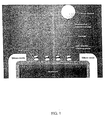
- Fig.1 there is shown schematically a novel apparatus for the detection of DNA in biological samples in accordance with an embodiment of the present invention.
- the chip comprises a silicon wafer 1 on which a layer 2 of aluminum is fabricated, and a layer of aluminum oxide 3 is formed on the aluminum layer 2.
- the aluminum oxide layer 3 is the attachment surface for the DNA probes as will be described below.
- the aluminum oxide layer 3 may be formed either by oxidization of the aluminum layer, or by direct deposition of alumina on the surface of the chip without the need for an aluminum layer at all. These possibilities will be now be described in more detail.
- a first method of forming the aluminum oxide layer aluminum is allowed to grow on a clean aluminum surface that is exposed to oxygen and water.
- Silica chips that are fabricated with a layer of aluminum on the surface are first rinsed with distilled water, cleaned by dipping into 5% (w/v) NaOH solution for about 30s, and then washed several times with distilled water according to the technique described in Sharma CP & Sunny MC "Albumin adsorption on to aluminum oxide and polyurethane surfaces" Biomaterials, 1990; 11: 255-257 .
- the chips are then heated overnight at 37°C in an oven with some water in a container to maintain moisture. Under these conditions the surface of the aluminum oxidizes to alumina with a thickness of about 50 ⁇ .
- the chips may be simply cleaned with distilled water and then heated at 60°C for 48 hours.
- the alumina-coated chip may be patterned by conventional photolithographic techniques. In addition, whichever method is used to form the alumina layer, prior to hybridization the coated chip is washed once with 1x PBS (phosphate-buffered saline, pH 7.4) at room temperature by pipeting the solution repeatedly over the chip surface. Of the alternative methods of forming the alumina layer, sputtering may be preferred as studies show that is produces the lowest background signal. Whichever technique is used for forming the aluminum layer, the thickness may be at least 50 ⁇ .
- Aluminum oxide is preferred for the probe attachment surface because compared with, for example, agarose it is cheaper, more stable and more durable. In addition aluminum oxide can be stored dry and at room temperature. Importantly, aluminum oxide also eliminates the problems associated with electrolysis. In addition, while agarose is difficult to handle to form controlled layers, the pore size and thickness of the alumina layer can easily be controlled (for example by altering the sputtering conditions or the air moisture content). The aluminum oxide can also easily be patterned using conventional photolithographic techniques. The use of a patterned aluminum oxide layer is advantageous because it can reduce the background signal due to reduced non-specific binding, and by increasing the contrast between the area being imaged by the detector and the background.
- the attachment surface is a layer of aluminum oxide formed on aluminum.
- a circular reaction well may be defined by depositing silicon oxide on the aluminum oxide attachment surface.
- capture probes are attached to the aluminum oxide layer.
- the capture probes are not attached directly, however, but through a linkage formed of digoxigenin (DIG) and anti-digoxigenin (anti-DIG) antibodies.
- DIG digoxigenin
- anti-DIG antibodies are adsorbed by the aluminum oxide surface, and the capture probes are formed with a DIG-label whereby the capture probes may be linked via the anti-DIG antibodies to the aluminum oxide attachment surface.
- the aluminum oxide surface is very porous and has the ability to bind many different molecules.
- the anti-DIG coating functions as an attachment layer to ensure that the immobilized DNA capture probes are correctly oriented. If no coating were applied, there is a danger that the detection probe (to be described below) could bind to the aluminum oxide surface and cause interference in the detection of target DNA. In addition, if no coating were applied, the capture probe might bind to the aluminum oxide in the incorrect orientation.
- the anti-DIG/DIG linkage could be replaced by any similar pair of compounds, e.g. an antibody and a target protein, or a pair of proteins with very high affinity for each other, or any pair of non-protein molecules that are able to interact with each other.
- the order of the antibody/protein or protein/protein linkage could be reversed.
- anti-DIG is used as the reactivity limiting coating and the capture probes are DIG-labeled this could be reversed.
- the capture probe could be directly attached to the aluminum oxide layer by the addition of a terminal amine or aldehyde group.
- the capture probes are formed with a DNA sequence complementary to the DNA target that is to be detected in a sample. Therefore, when the sample is supplied to the surface of the chip to which the capture probes are attached, if the target DNA is present it will bind to the complementary DNA sequence of the capture probe by the known process of DNA hybridization.
- the hybridization may preferably be accelerated by the application of an electric current as is known in the art.
- the detection probes include DNA sequences that are complementary to the target DNA and thus will bind to any target DNA that has previously been caught by the capture probes.
- gold nanoparticles coated with streptavidin are added and because of the affinity of streptavidin with biotin the gold nanoparticles will become attached to the detection probes.
- the gold nanoparticles themselves are too small to be seen clearly, but a solution containing silver ions may then be added which will be reduced on the surface of the streptavidin-coated gold nanoparticles to form a silver layer, which is visible as a dark deposit.
- the chip may preferably be treated with salmon sperm DNA.
- salmon sperm DNA As an alternative to salmon sperm DNA, albumin, or other proteins, or Ficoll, may be used.
- the visibility of the silver deposits may be further enhanced by the use of a fixative solution, such as sodium thiosulfate.
- a fixative solution such as sodium thiosulfate.
- Conventional imaging equipment and techniques may then be used to detect dark deposits in the reaction cell, which would result from the presence of the target DNA in the sample.
- the following example is of a protocol for detecting ⁇ -actin DNA in a sample.
- the hybridization steps are electronically assisted, preferably by pulse hybridization using applied pulses, though continuously applied current is also possible. Pulse hybridization, however, limits damage to the chip and results in a higher signal.
- Typical hybridization conditions include for the hybridization of the sample DNA to the capture probes the application of 10 second pulses (13 microamps) followed by a 3 second pause repeated for 8 minutes (i.e. a total of 48 pulses.
- the same conditions may be used, but for only 3 minutes (i.e. 18 pulses).
- the basic DNA detection scheme is the following: an aluminum oxide attachment layer provided with anti-DIG, DIG-labeled capture probes having a DNA fragment complementary to a single-stranded nucleic acid target, biotin-labeled detection probes for binding to captured targets, and streptavidin-coated gold nanoparticles with silver enhancement for visualizing detected target DNA.
- Figs.2(a)-(d) illustrate the effectiveness of the DIG-labeled capture probe in the detection of the DNA target.
- Figs.2(a) and (c) both show the chip before hybridization. The reaction cells are white because no silver deposits have been formed.
- Figs.2(b) and (d) show the chip after hybridization with the DIG-labeled capture probe being present in Fig.2(b) but absent in Fig.2(d) .
- the reaction cells are seen to be darker in Fig.2(b) than in Fig.2(d) showing the deposit of silver.
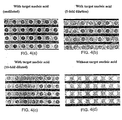
- Figs.3(a)-(d) show that darkened silver deposits are only formed in the reaction cells in the presence of the target DNA. Similar to Fig.2 , Figs.3(a) and (c) show the chip before hybridization, while Figs.3(b) and (d) show the chip after hybridization with the target DNA being present in Fig.3(b) only and not Fig.3(d) . Again it can be seen that dark deposits of silver are formed in the reaction cells only in the case of Fig.3(b) where the target DNA is present.
- Figs.4(a)-(d) further demonstrate the effectiveness of the present invention by demonstrating that the silver deposits become darker with increasing target DNA concentration and thus that the optical signal increases in proportion to the target DNA concentration.
- Figs.4(a)-(c) show the chip after hybridization and detection with (a) undiluted target DNA, (b) target DNA diluted 5-fold, and (c) target DNA diluted 10-fold. It will be observed that the reaction cells in Fig.4(a) are darker than those in Fig.4(b) which in turn are darker than those in Fig.4(c).
- Fig.4(d) for comparison shows the chip with no target DNA present and thus white reaction cells with no silver deposited.
- Fig.5 shows that the intensity of the optical signal varies with the concentration of the DIG-capture probe.
- the DIG-capture probe concentration varies decreases from left to right and the reaction cells become correspondingly lighter as less silver is deposited.
Landscapes
- Chemical & Material Sciences (AREA)
- Organic Chemistry (AREA)
- Life Sciences & Earth Sciences (AREA)
- Zoology (AREA)
- Proteomics, Peptides & Aminoacids (AREA)
- Health & Medical Sciences (AREA)
- Engineering & Computer Science (AREA)
- Wood Science & Technology (AREA)
- Analytical Chemistry (AREA)
- Microbiology (AREA)
- Physics & Mathematics (AREA)
- Molecular Biology (AREA)
- Immunology (AREA)
- Biotechnology (AREA)
- Biophysics (AREA)
- Biochemistry (AREA)
- Bioinformatics & Cheminformatics (AREA)
- General Engineering & Computer Science (AREA)
- General Health & Medical Sciences (AREA)
- Genetics & Genomics (AREA)
- Measuring Or Testing Involving Enzymes Or Micro-Organisms (AREA)
- Apparatus Associated With Microorganisms And Enzymes (AREA)
Claims (24)
- Appareil pour la détection d'un ADN cible dans un échantillon biologique en utilisant une hybridation électrique, comprenant un substrat formé avec au moins une cellule de réaction possédant une couche d'oxyde d'aluminium offrant une surface sur laquelle des sondes de capture d'ADN sont attachées; et un moyen pour une hybridation électriquement assistée à l'usage entre ledit ADN cible et lesdites sondes de capture.
- Appareil selon la revendication 1, dans lequel ladite surface d'oxyde d'aluminium est formée par une oxydation d'une couche d'aluminium.
- Appareil selon la revendication 1, dans lequel ladite surface d'oxyde d'aluminium est formée par une technique de pulvérisation cathodique.
- Appareil selon l'une quelconque des revendications 1-3, dans lequel ladite surface d'oxyde d'aluminium est revêtue avec un premier composé pour agir comme une couche d'attache pour la sonde de capture.
- Appareil selon la revendication 4, où ledit appareil comprend en outre des sondes de capture attachées à ladite surface d'oxyde d'aluminium et où lesdites sondes de capture sont marquées avec un deuxième composé qui peut s'attacher au dit premier composé.
- Appareil selon la revendication 5, dans lequel lesdits premier et deuxième composés comprennent une paire anticorps-protéine.
- Appareil selon la revendication 6, dans lequel ledit premier composé comprend des anticorps anti-digoxygénine et dans lequel ledit deuxième composé comprend de la digoxygénine.
- Appareil selon la revendication 5, dans lequel lesdits premier et deuxième composés comprennent de la streptavidine et de la biotine, ou vice versa.
- Appareil selon l'une quelconque des revendications 1-3, dans lequel ladite surface d'oxyde d'aluminium est revêtue avec une première molécule pour agir comme une couche d'attache pour la sonde de capture.
- Appareil selon la revendication 9, où ledit appareil comprend en outre des sondes de capture attachées à ladite surface d'oxyde d'aluminium et où lesdites sondes de capture sont marquées avec une deuxième molécule présentant une affinité avec ladite première molécule.
- Appareil selon l'une quelconque des revendications 1-10, dans lequel ladite couche d'oxyde d'aluminium possède une épaisseur d'au moins 50 Å.
- Appareil selon l'une quelconque des revendications 1-11, dans lequel ladite surface d'oxyde d'aluminium est revêtue avec un réactif pour réduire le signal de fond dans un procédé de détection.
- Appareil selon la revendication 12, dans lequel ledit réactif comprend un ADN de sperme de saumon.
- Appareil selon la revendication 12, dans lequel ledit réactif comprend de l'albumine, ou une autre protéine, ou du Ficoll.
- Procédé pour la détection d'un ADN cible dans un échantillon biologique, comprenant les étapes suivantes:(a) fourniture d'une cellule de réaction qui est exempte de tout agarose ou couche de gel et formée avec une surface d'oxyde d'aluminium qui est revêtue avec un premier composé pour assurer l'orientation correcte de la sonde de capture,(b) ajout à ladite cellule d'une solution contenant des sondes de capture formées avec une séquence d'ADN complémentaire au dit ADN cible et marquées avec un deuxième composé présentant une haute affinité avec ledit premier composé,(c) approvisionnement dudit échantillon vers ladite cellule,(d) ajout à ladite cellule d'une solution contenant des sondes de détection de l'ADN cible formées avec une séquence d'ADN complémentaire au dit ADN cible pour une hybridation électrique avec l'ADN cible,(e) fourniture d'un courant électrique pour une hybridation électriquement assistée à l'usage entre ledit ADN cible et lesdites sondes de capture,(f) ajout à ladite cellule d'un moyen pour générer un signal détectable dans une cellule où l'ADN cible a été capturé par lesdites sondes de capture et détecté par lesdites sondes de détection, et(g) détection dudit signal.
- Procédé selon la revendication 15, dans lequel lesdits premier et deuxième composés comprennent une paire anticorps-protéine.
- Procédé selon la revendication 16, dans lequel lesdits premier et deuxième composés comprennent de l'anti-digoxygénine et de la digoxygénine.
- Procédé selon la revendication 16, dans lequel lesdits premier et deuxième composés comprennent une paire d'interaction de protéines ou de molécules non protéiques avec une affinité l'une pour l'autre.
- Procédé selon la revendication 16, dans lequel lesdits premier et deuxième composés comprennent de la streptavidine et de la biotine, ou vice versa.
- Procédé selon l'une quelconque des revendications 15-19, comprenant en outre l'ajout d'un réactif pour réduire le signal de fond.
- Procédé selon la revendication 20, dans lequel ledit réactif réduisant le signal de fond est de l'albumine ou est dérivé d'un ADN de sperme de saumon.
- Procédé selon l'une quelconque des revendications 15-21, dans lequel, dans l'étape (f), ledit moyen pour générer ledit signal inclut une solution de nanoparticules d'or revêtues de streptavidine qui se lient avec ladite sonde de détection, et une solution d'ions argent qui sont réduits sur la surface desdites nanoparticules d'or pour former des dépôts d'argent.
- Puce à ADN pour la détection d'un ADN cible dans un échantillon en utilisant une hybridation électrique, comprenant un substrat incluant au moins une cellule de réaction, ladite au moins une cellule de réaction possédant une couche d'oxyde d'aluminium avec une surface sur laquelle des sondes de capture d'ADN peuvent être attachées, et un moyen pour une hybridation électriquement assistée à l'usage entre ladite cible et lesdites sondes de capture.
- Procédé selon la revendication 23, dans lequel ledit courant électrique est un courant électrique à impulsion.
Applications Claiming Priority (3)
| Application Number | Priority Date | Filing Date | Title |
|---|---|---|---|
| US10/216,928 US7153687B2 (en) | 2002-08-13 | 2002-08-13 | Apparatus and methods for detecting DNA in biological samples |
| US216928 | 2002-08-13 | ||
| PCT/CN2003/000661 WO2004015138A1 (fr) | 2002-08-13 | 2003-08-12 | Appareil et procedes de detection d'adn dans des echantillons biologiques |
Publications (3)
| Publication Number | Publication Date |
|---|---|
| EP1552017A1 EP1552017A1 (fr) | 2005-07-13 |
| EP1552017A4 EP1552017A4 (fr) | 2007-08-29 |
| EP1552017B1 true EP1552017B1 (fr) | 2010-02-17 |
Family
ID=31714337
Family Applications (1)
| Application Number | Title | Priority Date | Filing Date |
|---|---|---|---|
| EP03783907A Expired - Lifetime EP1552017B1 (fr) | 2002-08-13 | 2003-08-12 | Appareil et procedes de detection d'adn dans des echantillons biologiques |
Country Status (15)
| Country | Link |
|---|---|
| US (4) | US7153687B2 (fr) |
| EP (1) | EP1552017B1 (fr) |
| JP (2) | JP4914006B2 (fr) |
| KR (1) | KR101075760B1 (fr) |
| CN (2) | CN2611383Y (fr) |
| AT (1) | ATE458069T1 (fr) |
| AU (1) | AU2003257367B2 (fr) |
| BR (1) | BR0313409A (fr) |
| CA (1) | CA2495520C (fr) |
| DE (1) | DE60331335D1 (fr) |
| DK (1) | DK1552017T3 (fr) |
| ES (1) | ES2339008T3 (fr) |
| PT (1) | PT1552017E (fr) |
| SG (1) | SG153659A1 (fr) |
| WO (1) | WO2004015138A1 (fr) |
Families Citing this family (13)
| Publication number | Priority date | Publication date | Assignee | Title |
|---|---|---|---|---|
| JP2003322654A (ja) * | 2002-02-27 | 2003-11-14 | Hitachi Software Eng Co Ltd | 生体高分子の検出方法 |
| US9388459B2 (en) * | 2002-06-17 | 2016-07-12 | Affymetrix, Inc. | Methods for genotyping |
| US7153687B2 (en) * | 2002-08-13 | 2006-12-26 | Hong Kong Dna Chips Limited | Apparatus and methods for detecting DNA in biological samples |
| US7390622B2 (en) * | 2003-10-16 | 2008-06-24 | Hai Kang Life Corporation Limited | Apparatus and methods for detecting nucleic acid in biological samples |
| US8906609B1 (en) | 2005-09-26 | 2014-12-09 | Arrowhead Center, Inc. | Label-free biomolecule sensor based on surface charge modulated ionic conductance |
| KR100724093B1 (ko) * | 2005-11-14 | 2007-06-04 | 한국표준과학연구원 | Au-DNA 집합체를 이용한 DNA 검출방법 |
| US11306351B2 (en) | 2005-12-21 | 2022-04-19 | Affymetrix, Inc. | Methods for genotyping |
| US20120322064A1 (en) * | 2011-05-23 | 2012-12-20 | Board Of Trustees Of Michigan State University | Hybridization probes and methods of their use |
| US10030241B2 (en) | 2015-03-30 | 2018-07-24 | General Electric Company | Methods and kits for capturing sperm nucleic acids |
| US9957548B2 (en) | 2015-03-30 | 2018-05-01 | General Electric Company | Methods of capturing sperm nucleic acids |
| US10379101B2 (en) * | 2015-11-23 | 2019-08-13 | Hai Kang Life Corporation Limited | Apparatus for detection of biomolecules and its fabrication |
| CN106198952A (zh) * | 2016-07-01 | 2016-12-07 | 清华大学 | 一种抑制核酸分子对传感界面非特异性吸附的封闭方法 |
| GB2552461B (en) * | 2016-07-14 | 2022-06-15 | Rightangled Ltd | Method and assay kit to detect an analyte |
Family Cites Families (23)
| Publication number | Priority date | Publication date | Assignee | Title |
|---|---|---|---|---|
| US5162229A (en) * | 1988-03-15 | 1992-11-10 | Akzo N.V. | Device and method for enhanced recovery and detection of microbial growth in the presence of antimicrobial substances |
| CA2011929A1 (fr) * | 1989-04-03 | 1990-10-03 | Rex M. Bitner | Supports d'oxyde de metal pour acides nucleiques |
| US5128247A (en) * | 1989-08-14 | 1992-07-07 | Board Of Regents, The University Of Texas System | Methods for isolation of nucleic acids from eukaryotic and prokaryotic sources |
| US5605662A (en) | 1993-11-01 | 1997-02-25 | Nanogen, Inc. | Active programmable electronic devices for molecular biological analysis and diagnostics |
| US5849486A (en) * | 1993-11-01 | 1998-12-15 | Nanogen, Inc. | Methods for hybridization analysis utilizing electrically controlled hybridization |
| US5632957A (en) * | 1993-11-01 | 1997-05-27 | Nanogen | Molecular biological diagnostic systems including electrodes |
| US6051380A (en) * | 1993-11-01 | 2000-04-18 | Nanogen, Inc. | Methods and procedures for molecular biological analysis and diagnostics |
| US6017696A (en) | 1993-11-01 | 2000-01-25 | Nanogen, Inc. | Methods for electronic stringency control for molecular biological analysis and diagnostics |
| US6287517B1 (en) * | 1993-11-01 | 2001-09-11 | Nanogen, Inc. | Laminated assembly for active bioelectronic devices |
| US6303338B1 (en) * | 1996-08-16 | 2001-10-16 | Human Genome Sciences, Inc. | Pancreas-derived plasminogen activator inhibitor |
| CN1180248C (zh) | 1996-09-06 | 2004-12-15 | 内诺金有限公司 | 优化电子杂交反应的方法 |
| DK1050588T3 (da) * | 1997-07-11 | 2005-04-25 | Pamgene Bv | Fremgangsmåde til fremstilling af en indretning til udförelse af et assay, anvendelse af en membran til fremstilling af indretningen, kit, der omfatter indretningen, og fremgangsmåde til påvisning af en analyt under anvendelse af en sådan indretning |
| US6123819A (en) * | 1997-11-12 | 2000-09-26 | Protiveris, Inc. | Nanoelectrode arrays |
| US6093370A (en) * | 1998-06-11 | 2000-07-25 | Hitachi, Ltd. | Polynucleotide separation method and apparatus therefor |
| JP2001178470A (ja) * | 1999-12-27 | 2001-07-03 | Fuji Photo Film Co Ltd | 固相担体表面へのdna断片の固定方法及びdnaチップ |
| WO2001051665A2 (fr) | 2000-01-13 | 2001-07-19 | Nanosphere Inc. | Nanoparticules auxquelles sont attaches des oligonucleotides et utilisations de ces dernieres |
| DE60136335D1 (de) * | 2000-02-16 | 2008-12-11 | Illumina Inc | Parallele genotypisierung mehrerer patientenproben |
| AU2001255203A1 (en) | 2000-03-28 | 2001-10-08 | Nanosphere Inc. | Nanoparticles having oligonucleotides attached thereto and uses therefor |
| CN100457887C (zh) | 2000-05-03 | 2009-02-04 | 高振智 | 具有集成生物传感器芯片的生物识别系统 |
| CA2418502A1 (fr) | 2000-08-11 | 2002-03-07 | Nanosphere Inc. | Nanoparticules comportant des oligonucleotides fixes dessus et utilisations associees |
| US6942970B2 (en) * | 2000-09-14 | 2005-09-13 | Zymed Laboratories, Inc. | Identifying subjects suitable for topoisomerase II inhibitor treatment |
| EP1356109A2 (fr) | 2000-12-08 | 2003-10-29 | Nanosphere, Inc. | Nanoparticules auxquelles sont attaches des oligonucleotides et utilisations de ces dernieres |
| US7153687B2 (en) * | 2002-08-13 | 2006-12-26 | Hong Kong Dna Chips Limited | Apparatus and methods for detecting DNA in biological samples |
-
2002
- 2002-08-13 US US10/216,928 patent/US7153687B2/en not_active Expired - Fee Related
- 2002-10-24 CN CNU022820833U patent/CN2611383Y/zh not_active Expired - Lifetime
-
2003
- 2003-08-12 CN CN038194783A patent/CN1675375B/zh not_active Expired - Fee Related
- 2003-08-12 AT AT03783907T patent/ATE458069T1/de not_active IP Right Cessation
- 2003-08-12 DE DE60331335T patent/DE60331335D1/de not_active Expired - Lifetime
- 2003-08-12 WO PCT/CN2003/000661 patent/WO2004015138A1/fr not_active Ceased
- 2003-08-12 EP EP03783907A patent/EP1552017B1/fr not_active Expired - Lifetime
- 2003-08-12 KR KR1020057002443A patent/KR101075760B1/ko not_active Expired - Fee Related
- 2003-08-12 AU AU2003257367A patent/AU2003257367B2/en not_active Ceased
- 2003-08-12 DK DK03783907.3T patent/DK1552017T3/da active
- 2003-08-12 PT PT03783907T patent/PT1552017E/pt unknown
- 2003-08-12 CA CA2495520A patent/CA2495520C/fr not_active Expired - Fee Related
- 2003-08-12 BR BR0313409-1A patent/BR0313409A/pt not_active IP Right Cessation
- 2003-08-12 SG SG200700913-7A patent/SG153659A1/en unknown
- 2003-08-12 ES ES03783907T patent/ES2339008T3/es not_active Expired - Lifetime
- 2003-08-12 JP JP2004526591A patent/JP4914006B2/ja not_active Expired - Fee Related
-
2006
- 2006-11-15 US US11/599,479 patent/US7749705B2/en not_active Expired - Fee Related
-
2010
- 2010-05-24 US US12/786,178 patent/US8198070B2/en not_active Expired - Lifetime
-
2011
- 2011-03-16 US US13/049,858 patent/US8110669B2/en not_active Expired - Lifetime
- 2011-09-07 JP JP2011194496A patent/JP2012040009A/ja active Pending
Also Published As
| Publication number | Publication date |
|---|---|
| CN2611383Y (zh) | 2004-04-14 |
| AU2003257367B2 (en) | 2010-11-25 |
| ES2339008T3 (es) | 2010-05-14 |
| US20100233721A1 (en) | 2010-09-16 |
| HK1082771A1 (en) | 2006-06-16 |
| EP1552017A4 (fr) | 2007-08-29 |
| WO2004015138A1 (fr) | 2004-02-19 |
| US8198070B2 (en) | 2012-06-12 |
| DK1552017T3 (da) | 2010-05-31 |
| CN1675375B (zh) | 2013-07-03 |
| CA2495520C (fr) | 2013-06-25 |
| KR101075760B1 (ko) | 2011-10-24 |
| SG153659A1 (en) | 2009-07-29 |
| CA2495520A1 (fr) | 2004-02-19 |
| US7153687B2 (en) | 2006-12-26 |
| US7749705B2 (en) | 2010-07-06 |
| US20070065872A1 (en) | 2007-03-22 |
| JP2005535319A (ja) | 2005-11-24 |
| EP1552017A1 (fr) | 2005-07-13 |
| US20110165665A1 (en) | 2011-07-07 |
| US8110669B2 (en) | 2012-02-07 |
| JP2012040009A (ja) | 2012-03-01 |
| US20040033496A1 (en) | 2004-02-19 |
| JP4914006B2 (ja) | 2012-04-11 |
| AU2003257367A1 (en) | 2004-02-25 |
| DE60331335D1 (de) | 2010-04-01 |
| ATE458069T1 (de) | 2010-03-15 |
| PT1552017E (pt) | 2010-03-31 |
| CN1675375A (zh) | 2005-09-28 |
| KR20050053614A (ko) | 2005-06-08 |
| BR0313409A (pt) | 2005-07-12 |
Similar Documents
| Publication | Publication Date | Title |
|---|---|---|
| US8110669B2 (en) | Apparatus and methods for detecting DNA in biological samples | |
| EP1075656B1 (fr) | Detection d'une cible dans un echantillon | |
| JP2005516610A (ja) | ニック形成剤を用いる遺伝子発現分析 | |
| JP2004502950A (ja) | 銀染色の増強による検出方法 | |
| CN101889074A (zh) | 采用电子显微镜对核酸聚合物测序 | |
| WO2017205827A1 (fr) | Réseaux pour la détection de molécule unique et leur utilisation | |
| US7645574B2 (en) | Methods of metallizing nucleic acid molecules and methods of attaching nucleic acid molecules to conductive surfaces | |
| AU2016219943A1 (en) | Assays for single molecule detection and use thereof | |
| AU2001276870A1 (en) | Method of detection by enhancement of silver staining | |
| WO2004096986A2 (fr) | Procede pour detecter de maniere quantitative des molecules d'acide nucleique | |
| US20030119028A1 (en) | Device and methods for enhanced microarray hybridization reactions | |
| HK1082771B (en) | Apparatus and methods for detecting dna in biological samples | |
| AU2007224397B2 (en) | Apparatus and Methods for Detecting DNA in Biological Samples | |
| US9040251B2 (en) | Biomolecule fixing board and method of manufacturing the same | |
| JPWO2004048973A1 (ja) | 生体分子の金属担体への固定法 | |
| KR20070091608A (ko) | 결정체 결함의 생체분자 인식 | |
| HK1098177B (en) | Apparatus and methods for detecting nucleic acid in biological samples |
Legal Events
| Date | Code | Title | Description |
|---|---|---|---|
| PUAI | Public reference made under article 153(3) epc to a published international application that has entered the european phase |
Free format text: ORIGINAL CODE: 0009012 |
|
| 17P | Request for examination filed |
Effective date: 20050207 |
|
| AK | Designated contracting states |
Kind code of ref document: A1 Designated state(s): AT BE BG CH CY CZ DE DK EE ES FI FR GB GR HU IE IT LI LU MC NL PT RO SE SI SK TR |
|
| AX | Request for extension of the european patent |
Extension state: AL LT LV MK |
|
| DAX | Request for extension of the european patent (deleted) | ||
| REG | Reference to a national code |
Ref country code: HK Ref legal event code: DE Ref document number: 1082771 Country of ref document: HK |
|
| RIN1 | Information on inventor provided before grant (corrected) |
Inventor name: CHAN, DUNCAN KA-YUN,ROOM 1816, CHOI PING HOUSE Inventor name: LIN, SELMA, SAU, WAH,UNIT G, 38/F, TOWER 1 Inventor name: LAU, LOK-TING,ROOM 1906, HEUNG TUNG HOUSE Inventor name: YU, CHEUNG HOI,20/F,SUITE E,TOWER 1,THE BELCHER'S |
|
| A4 | Supplementary search report drawn up and despatched |
Effective date: 20070801 |
|
| RAP1 | Party data changed (applicant data changed or rights of an application transferred) |
Owner name: HAI KANG LIFE CORPORATION LIMITED |
|
| 17Q | First examination report despatched |
Effective date: 20080526 |
|
| GRAP | Despatch of communication of intention to grant a patent |
Free format text: ORIGINAL CODE: EPIDOSNIGR1 |
|
| GRAC | Information related to communication of intention to grant a patent modified |
Free format text: ORIGINAL CODE: EPIDOSCIGR1 |
|
| GRAS | Grant fee paid |
Free format text: ORIGINAL CODE: EPIDOSNIGR3 |
|
| GRAA | (expected) grant |
Free format text: ORIGINAL CODE: 0009210 |
|
| AK | Designated contracting states |
Kind code of ref document: B1 Designated state(s): AT BE BG CH CY CZ DE DK EE ES FI FR GB GR HU IE IT LI LU MC NL PT RO SE SI SK TR |
|
| REG | Reference to a national code |
Ref country code: GB Ref legal event code: FG4D |
|
| REG | Reference to a national code |
Ref country code: CH Ref legal event code: EP |
|
| REG | Reference to a national code |
Ref country code: IE Ref legal event code: FG4D |
|
| REG | Reference to a national code |
Ref country code: CH Ref legal event code: NV Representative=s name: SERVOPATENT GMBH Ref country code: PT Ref legal event code: SC4A Free format text: AVAILABILITY OF NATIONAL TRANSLATION Effective date: 20100325 |
|
| REF | Corresponds to: |
Ref document number: 60331335 Country of ref document: DE Date of ref document: 20100401 Kind code of ref document: P |
|
| REG | Reference to a national code |
Ref country code: SE Ref legal event code: TRGR |
|
| REG | Reference to a national code |
Ref country code: NL Ref legal event code: T3 |
|
| REG | Reference to a national code |
Ref country code: ES Ref legal event code: FG2A Ref document number: 2339008 Country of ref document: ES Kind code of ref document: T3 |
|
| REG | Reference to a national code |
Ref country code: DK Ref legal event code: T3 |
|
| REG | Reference to a national code |
Ref country code: GR Ref legal event code: EP Ref document number: 20100401044 Country of ref document: GR |
|
| REG | Reference to a national code |
Ref country code: HK Ref legal event code: GR Ref document number: 1082771 Country of ref document: HK |
|
| PG25 | Lapsed in a contracting state [announced via postgrant information from national office to epo] |
Ref country code: SI Free format text: LAPSE BECAUSE OF FAILURE TO SUBMIT A TRANSLATION OF THE DESCRIPTION OR TO PAY THE FEE WITHIN THE PRESCRIBED TIME-LIMIT Effective date: 20100217 Ref country code: AT Free format text: LAPSE BECAUSE OF FAILURE TO SUBMIT A TRANSLATION OF THE DESCRIPTION OR TO PAY THE FEE WITHIN THE PRESCRIBED TIME-LIMIT Effective date: 20100217 |
|
| PG25 | Lapsed in a contracting state [announced via postgrant information from national office to epo] |
Ref country code: CY Free format text: LAPSE BECAUSE OF FAILURE TO SUBMIT A TRANSLATION OF THE DESCRIPTION OR TO PAY THE FEE WITHIN THE PRESCRIBED TIME-LIMIT Effective date: 20100217 Ref country code: EE Free format text: LAPSE BECAUSE OF FAILURE TO SUBMIT A TRANSLATION OF THE DESCRIPTION OR TO PAY THE FEE WITHIN THE PRESCRIBED TIME-LIMIT Effective date: 20100217 Ref country code: RO Free format text: LAPSE BECAUSE OF FAILURE TO SUBMIT A TRANSLATION OF THE DESCRIPTION OR TO PAY THE FEE WITHIN THE PRESCRIBED TIME-LIMIT Effective date: 20100217 |
|
| PG25 | Lapsed in a contracting state [announced via postgrant information from national office to epo] |
Ref country code: BG Free format text: LAPSE BECAUSE OF FAILURE TO SUBMIT A TRANSLATION OF THE DESCRIPTION OR TO PAY THE FEE WITHIN THE PRESCRIBED TIME-LIMIT Effective date: 20100517 Ref country code: CZ Free format text: LAPSE BECAUSE OF FAILURE TO SUBMIT A TRANSLATION OF THE DESCRIPTION OR TO PAY THE FEE WITHIN THE PRESCRIBED TIME-LIMIT Effective date: 20100217 Ref country code: SK Free format text: LAPSE BECAUSE OF FAILURE TO SUBMIT A TRANSLATION OF THE DESCRIPTION OR TO PAY THE FEE WITHIN THE PRESCRIBED TIME-LIMIT Effective date: 20100217 |
|
| PLBE | No opposition filed within time limit |
Free format text: ORIGINAL CODE: 0009261 |
|
| STAA | Information on the status of an ep patent application or granted ep patent |
Free format text: STATUS: NO OPPOSITION FILED WITHIN TIME LIMIT |
|
| 26N | No opposition filed |
Effective date: 20101118 |
|
| PGFP | Annual fee paid to national office [announced via postgrant information from national office to epo] |
Ref country code: CH Payment date: 20110812 Year of fee payment: 9 Ref country code: DK Payment date: 20110810 Year of fee payment: 9 |
|
| PG25 | Lapsed in a contracting state [announced via postgrant information from national office to epo] |
Ref country code: HU Free format text: LAPSE BECAUSE OF FAILURE TO SUBMIT A TRANSLATION OF THE DESCRIPTION OR TO PAY THE FEE WITHIN THE PRESCRIBED TIME-LIMIT Effective date: 20100818 |
|
| PGFP | Annual fee paid to national office [announced via postgrant information from national office to epo] |
Ref country code: LU Payment date: 20120814 Year of fee payment: 10 |
|
| PGFP | Annual fee paid to national office [announced via postgrant information from national office to epo] |
Ref country code: FI Payment date: 20120810 Year of fee payment: 10 Ref country code: MC Payment date: 20120809 Year of fee payment: 10 Ref country code: SE Payment date: 20120813 Year of fee payment: 10 Ref country code: GB Payment date: 20120808 Year of fee payment: 10 Ref country code: IE Payment date: 20120810 Year of fee payment: 10 |
|
| PGFP | Annual fee paid to national office [announced via postgrant information from national office to epo] |
Ref country code: TR Payment date: 20120801 Year of fee payment: 10 Ref country code: GR Payment date: 20120817 Year of fee payment: 10 |
|
| PGFP | Annual fee paid to national office [announced via postgrant information from national office to epo] |
Ref country code: IT Payment date: 20120814 Year of fee payment: 10 Ref country code: BE Payment date: 20120820 Year of fee payment: 10 Ref country code: ES Payment date: 20120907 Year of fee payment: 10 Ref country code: DE Payment date: 20120808 Year of fee payment: 10 Ref country code: FR Payment date: 20120823 Year of fee payment: 10 |
|
| PGFP | Annual fee paid to national office [announced via postgrant information from national office to epo] |
Ref country code: NL Payment date: 20120809 Year of fee payment: 10 Ref country code: PT Payment date: 20120213 Year of fee payment: 10 |
|
| REG | Reference to a national code |
Ref country code: PT Ref legal event code: MM4A Free format text: LAPSE DUE TO NON-PAYMENT OF FEES Effective date: 20140212 |
|
| BERE | Be: lapsed |
Owner name: HAI KANG LIFE CORPORATION LIMITED Effective date: 20130831 |
|
| REG | Reference to a national code |
Ref country code: NL Ref legal event code: V1 Effective date: 20140301 |
|
| REG | Reference to a national code |
Ref country code: CH Ref legal event code: PL Ref country code: DK Ref legal event code: EBP Effective date: 20130831 |
|
| REG | Reference to a national code |
Ref country code: SE Ref legal event code: EUG |
|
| GBPC | Gb: european patent ceased through non-payment of renewal fee |
Effective date: 20130812 |
|
| REG | Reference to a national code |
Ref country code: GR Ref legal event code: ML Ref document number: 20100401044 Country of ref document: GR Effective date: 20140305 |
|
| PG25 | Lapsed in a contracting state [announced via postgrant information from national office to epo] |
Ref country code: MC Free format text: LAPSE BECAUSE OF NON-PAYMENT OF DUE FEES Effective date: 20130902 Ref country code: FI Free format text: LAPSE BECAUSE OF NON-PAYMENT OF DUE FEES Effective date: 20130812 Ref country code: DE Free format text: LAPSE BECAUSE OF NON-PAYMENT OF DUE FEES Effective date: 20140301 Ref country code: CH Free format text: LAPSE BECAUSE OF NON-PAYMENT OF DUE FEES Effective date: 20130831 Ref country code: NL Free format text: LAPSE BECAUSE OF NON-PAYMENT OF DUE FEES Effective date: 20140301 Ref country code: LI Free format text: LAPSE BECAUSE OF NON-PAYMENT OF DUE FEES Effective date: 20130831 Ref country code: SE Free format text: LAPSE BECAUSE OF NON-PAYMENT OF DUE FEES Effective date: 20130813 |
|
| REG | Reference to a national code |
Ref country code: IE Ref legal event code: MM4A |
|
| REG | Reference to a national code |
Ref country code: DE Ref legal event code: R119 Ref document number: 60331335 Country of ref document: DE Effective date: 20140301 |
|
| REG | Reference to a national code |
Ref country code: FR Ref legal event code: ST Effective date: 20140430 |
|
| PG25 | Lapsed in a contracting state [announced via postgrant information from national office to epo] |
Ref country code: IT Free format text: LAPSE BECAUSE OF NON-PAYMENT OF DUE FEES Effective date: 20130812 Ref country code: GR Free format text: LAPSE BECAUSE OF NON-PAYMENT OF DUE FEES Effective date: 20140305 Ref country code: BE Free format text: LAPSE BECAUSE OF NON-PAYMENT OF DUE FEES Effective date: 20130831 |
|
| PG25 | Lapsed in a contracting state [announced via postgrant information from national office to epo] |
Ref country code: PT Free format text: LAPSE BECAUSE OF NON-PAYMENT OF DUE FEES Effective date: 20140212 |
|
| PG25 | Lapsed in a contracting state [announced via postgrant information from national office to epo] |
Ref country code: GB Free format text: LAPSE BECAUSE OF NON-PAYMENT OF DUE FEES Effective date: 20130812 Ref country code: IE Free format text: LAPSE BECAUSE OF NON-PAYMENT OF DUE FEES Effective date: 20130812 |
|
| PG25 | Lapsed in a contracting state [announced via postgrant information from national office to epo] |
Ref country code: FR Free format text: LAPSE BECAUSE OF NON-PAYMENT OF DUE FEES Effective date: 20130902 |
|
| REG | Reference to a national code |
Ref country code: ES Ref legal event code: FD2A Effective date: 20140905 |
|
| PG25 | Lapsed in a contracting state [announced via postgrant information from national office to epo] |
Ref country code: DK Free format text: LAPSE BECAUSE OF NON-PAYMENT OF DUE FEES Effective date: 20130831 |
|
| PG25 | Lapsed in a contracting state [announced via postgrant information from national office to epo] |
Ref country code: ES Free format text: LAPSE BECAUSE OF NON-PAYMENT OF DUE FEES Effective date: 20130813 |
|
| PG25 | Lapsed in a contracting state [announced via postgrant information from national office to epo] |
Ref country code: LU Free format text: LAPSE BECAUSE OF NON-PAYMENT OF DUE FEES Effective date: 20130812 |
|
| PG25 | Lapsed in a contracting state [announced via postgrant information from national office to epo] |
Ref country code: TR Free format text: LAPSE BECAUSE OF NON-PAYMENT OF DUE FEES Effective date: 20130812 |