EP1550862B1 - Verfahren zur identifizierung eines analyts durch gelelektrophorese - massenspektrometrie - Google Patents
Verfahren zur identifizierung eines analyts durch gelelektrophorese - massenspektrometrie Download PDFInfo
- Publication number
- EP1550862B1 EP1550862B1 EP03754000A EP03754000A EP1550862B1 EP 1550862 B1 EP1550862 B1 EP 1550862B1 EP 03754000 A EP03754000 A EP 03754000A EP 03754000 A EP03754000 A EP 03754000A EP 1550862 B1 EP1550862 B1 EP 1550862B1
- Authority
- EP
- European Patent Office
- Prior art keywords
- mass spectrometry
- plate
- analyte
- blotting
- protein
- Prior art date
- Legal status (The legal status is an assumption and is not a legal conclusion. Google has not performed a legal analysis and makes no representation as to the accuracy of the status listed.)
- Expired - Lifetime
Links
- 238000000034 method Methods 0.000 title claims abstract description 51
- 239000012491 analyte Substances 0.000 title claims abstract description 48
- 238000001731 electrophoresis-mass spectrometry Methods 0.000 title 1
- 238000004949 mass spectrometry Methods 0.000 claims abstract description 136
- 229920002981 polyvinylidene fluoride Polymers 0.000 claims abstract description 48
- 239000011248 coating agent Substances 0.000 claims abstract description 13
- 238000000576 coating method Methods 0.000 claims abstract description 13
- 238000001502 gel electrophoresis Methods 0.000 claims abstract description 4
- 108090000623 proteins and genes Proteins 0.000 claims description 73
- 102000004169 proteins and genes Human genes 0.000 claims description 70
- 239000011159 matrix material Substances 0.000 claims description 22
- 238000013508 migration Methods 0.000 claims description 18
- 230000005012 migration Effects 0.000 claims description 18
- 239000000126 substance Substances 0.000 claims description 8
- -1 cofactor Substances 0.000 claims description 7
- 239000000758 substrate Substances 0.000 claims description 7
- WXTMDXOMEHJXQO-UHFFFAOYSA-N 2,5-dihydroxybenzoic acid Chemical group OC(=O)C1=CC(O)=CC=C1O WXTMDXOMEHJXQO-UHFFFAOYSA-N 0.000 claims description 6
- 239000003814 drug Substances 0.000 claims description 6
- 229940079593 drug Drugs 0.000 claims description 6
- 238000007654 immersion Methods 0.000 claims description 5
- 102000004190 Enzymes Human genes 0.000 claims description 4
- 108090000790 Enzymes Proteins 0.000 claims description 4
- 210000000170 cell membrane Anatomy 0.000 claims description 4
- 238000007639 printing Methods 0.000 claims description 4
- 238000005507 spraying Methods 0.000 claims description 4
- 238000012546 transfer Methods 0.000 claims description 4
- 238000007740 vapor deposition Methods 0.000 claims description 4
- 108020004707 nucleic acids Proteins 0.000 claims description 3
- 102000039446 nucleic acids Human genes 0.000 claims description 3
- 150000007523 nucleic acids Chemical class 0.000 claims description 3
- 238000010422 painting Methods 0.000 claims description 3
- 102000004856 Lectins Human genes 0.000 claims description 2
- 108090001090 Lectins Proteins 0.000 claims description 2
- 108091034117 Oligonucleotide Proteins 0.000 claims description 2
- 108010038988 Peptide Hormones Proteins 0.000 claims description 2
- 102000015731 Peptide Hormones Human genes 0.000 claims description 2
- 241000700605 Viruses Species 0.000 claims description 2
- 150000001720 carbohydrates Chemical class 0.000 claims description 2
- 239000003112 inhibitor Substances 0.000 claims description 2
- 239000002523 lectin Substances 0.000 claims description 2
- 102000006240 membrane receptors Human genes 0.000 claims description 2
- 108020004084 membrane receptors Proteins 0.000 claims description 2
- 229920001542 oligosaccharide Polymers 0.000 claims description 2
- 150000002482 oligosaccharides Chemical class 0.000 claims description 2
- 239000000813 peptide hormone Substances 0.000 claims description 2
- 239000000018 receptor agonist Substances 0.000 claims description 2
- 229940044601 receptor agonist Drugs 0.000 claims description 2
- 239000002464 receptor antagonist Substances 0.000 claims description 2
- 229940044551 receptor antagonist Drugs 0.000 claims description 2
- 239000003053 toxin Substances 0.000 claims description 2
- 231100000765 toxin Toxicity 0.000 claims description 2
- 238000001906 matrix-assisted laser desorption--ionisation mass spectrometry Methods 0.000 claims 2
- 238000004458 analytical method Methods 0.000 abstract description 19
- 230000000694 effects Effects 0.000 abstract description 4
- 239000002033 PVDF binder Substances 0.000 abstract 3
- 238000004519 manufacturing process Methods 0.000 abstract 1
- 239000000499 gel Substances 0.000 description 36
- 238000001962 electrophoresis Methods 0.000 description 27
- 239000000872 buffer Substances 0.000 description 25
- OKKJLVBELUTLKV-UHFFFAOYSA-N Methanol Chemical compound OC OKKJLVBELUTLKV-UHFFFAOYSA-N 0.000 description 24
- 239000000523 sample Substances 0.000 description 22
- 108010026552 Proteome Proteins 0.000 description 18
- 210000004027 cell Anatomy 0.000 description 16
- 239000012528 membrane Substances 0.000 description 16
- 102000008100 Human Serum Albumin Human genes 0.000 description 14
- 108091006905 Human Serum Albumin Proteins 0.000 description 14
- 229910052782 aluminium Inorganic materials 0.000 description 14
- XAGFODPZIPBFFR-UHFFFAOYSA-N aluminium Chemical compound [Al] XAGFODPZIPBFFR-UHFFFAOYSA-N 0.000 description 14
- WEVYAHXRMPXWCK-UHFFFAOYSA-N Acetonitrile Chemical compound CC#N WEVYAHXRMPXWCK-UHFFFAOYSA-N 0.000 description 12
- DHMQDGOQFOQNFH-UHFFFAOYSA-N Glycine Chemical compound NCC(O)=O DHMQDGOQFOQNFH-UHFFFAOYSA-N 0.000 description 12
- ZMXDDKWLCZADIW-UHFFFAOYSA-N N,N-Dimethylformamide Chemical compound CN(C)C=O ZMXDDKWLCZADIW-UHFFFAOYSA-N 0.000 description 12
- 230000035945 sensitivity Effects 0.000 description 11
- 239000000243 solution Substances 0.000 description 10
- 239000007983 Tris buffer Substances 0.000 description 9
- 229920006395 saturated elastomer Polymers 0.000 description 9
- LENZDBCJOHFCAS-UHFFFAOYSA-N tris Chemical compound OCC(N)(CO)CO LENZDBCJOHFCAS-UHFFFAOYSA-N 0.000 description 9
- 150000001875 compounds Chemical class 0.000 description 8
- 238000000926 separation method Methods 0.000 description 8
- 210000001519 tissue Anatomy 0.000 description 8
- 239000000203 mixture Substances 0.000 description 7
- QTBSBXVTEAMEQO-UHFFFAOYSA-N Acetic acid Chemical compound CC(O)=O QTBSBXVTEAMEQO-UHFFFAOYSA-N 0.000 description 6
- 239000004471 Glycine Substances 0.000 description 6
- DTQVDTLACAAQTR-UHFFFAOYSA-N Trifluoroacetic acid Chemical compound OC(=O)C(F)(F)F DTQVDTLACAAQTR-UHFFFAOYSA-N 0.000 description 6
- LOKCTEFSRHRXRJ-UHFFFAOYSA-I dipotassium trisodium dihydrogen phosphate hydrogen phosphate dichloride Chemical compound P(=O)(O)(O)[O-].[K+].P(=O)(O)([O-])[O-].[Na+].[Na+].[Cl-].[K+].[Cl-].[Na+] LOKCTEFSRHRXRJ-UHFFFAOYSA-I 0.000 description 6
- 238000002474 experimental method Methods 0.000 description 6
- 239000000463 material Substances 0.000 description 6
- 239000002953 phosphate buffered saline Substances 0.000 description 6
- 229920002401 polyacrylamide Polymers 0.000 description 6
- 239000006228 supernatant Substances 0.000 description 6
- BTBUEUYNUDRHOZ-UHFFFAOYSA-N Borate Chemical compound [O-]B([O-])[O-] BTBUEUYNUDRHOZ-UHFFFAOYSA-N 0.000 description 5
- 238000001514 detection method Methods 0.000 description 5
- 238000005516 engineering process Methods 0.000 description 5
- 239000000284 extract Substances 0.000 description 5
- 238000005259 measurement Methods 0.000 description 5
- 239000008363 phosphate buffer Substances 0.000 description 5
- 238000002415 sodium dodecyl sulfate polyacrylamide gel electrophoresis Methods 0.000 description 5
- LFQSCWFLJHTTHZ-UHFFFAOYSA-N Ethanol Chemical compound CCO LFQSCWFLJHTTHZ-UHFFFAOYSA-N 0.000 description 4
- FAPWRFPIFSIZLT-UHFFFAOYSA-M Sodium chloride Chemical compound [Na+].[Cl-] FAPWRFPIFSIZLT-UHFFFAOYSA-M 0.000 description 4
- 229910021538 borax Inorganic materials 0.000 description 4
- 238000009792 diffusion process Methods 0.000 description 4
- 238000001035 drying Methods 0.000 description 4
- 239000012530 fluid Substances 0.000 description 4
- 230000006872 improvement Effects 0.000 description 4
- 235000010339 sodium tetraborate Nutrition 0.000 description 4
- 238000001228 spectrum Methods 0.000 description 4
- BSVBQGMMJUBVOD-UHFFFAOYSA-N trisodium borate Chemical compound [Na+].[Na+].[Na+].[O-]B([O-])[O-] BSVBQGMMJUBVOD-UHFFFAOYSA-N 0.000 description 4
- PGUDRSADMCSYHV-UHFFFAOYSA-N trisodium borate hydrochloride Chemical compound [Na+].[Na+].[Na+].Cl.[O-]B([O-])[O-] PGUDRSADMCSYHV-UHFFFAOYSA-N 0.000 description 4
- 238000000539 two dimensional gel electrophoresis Methods 0.000 description 4
- KCXVZYZYPLLWCC-UHFFFAOYSA-N EDTA Chemical compound OC(=O)CN(CC(O)=O)CCN(CC(O)=O)CC(O)=O KCXVZYZYPLLWCC-UHFFFAOYSA-N 0.000 description 3
- 240000004808 Saccharomyces cerevisiae Species 0.000 description 3
- 241000282898 Sus scrofa Species 0.000 description 3
- 239000008351 acetate buffer Substances 0.000 description 3
- 238000007796 conventional method Methods 0.000 description 3
- 238000011835 investigation Methods 0.000 description 3
- 150000002500 ions Chemical class 0.000 description 3
- 230000000670 limiting effect Effects 0.000 description 3
- 108090000765 processed proteins & peptides Proteins 0.000 description 3
- 239000000047 product Substances 0.000 description 3
- 238000003498 protein array Methods 0.000 description 3
- 239000002904 solvent Substances 0.000 description 3
- 229910001220 stainless steel Inorganic materials 0.000 description 3
- 239000010935 stainless steel Substances 0.000 description 3
- 238000001269 time-of-flight mass spectrometry Methods 0.000 description 3
- SXOUIMVOMIGLHO-AATRIKPKSA-N (E)-3-(indol-2-yl)acrylic acid Chemical compound C1=CC=C2NC(/C=C/C(=O)O)=CC2=C1 SXOUIMVOMIGLHO-AATRIKPKSA-N 0.000 description 2
- VEXZGXHMUGYJMC-UHFFFAOYSA-N Hydrochloric acid Chemical compound Cl VEXZGXHMUGYJMC-UHFFFAOYSA-N 0.000 description 2
- 241001465754 Metazoa Species 0.000 description 2
- 108091028043 Nucleic acid sequence Proteins 0.000 description 2
- VYPSYNLAJGMNEJ-UHFFFAOYSA-N Silicium dioxide Chemical compound O=[Si]=O VYPSYNLAJGMNEJ-UHFFFAOYSA-N 0.000 description 2
- 239000007997 Tricine buffer Substances 0.000 description 2
- 239000002253 acid Substances 0.000 description 2
- 239000011324 bead Substances 0.000 description 2
- 235000010633 broth Nutrition 0.000 description 2
- 210000001638 cerebellum Anatomy 0.000 description 2
- 238000006243 chemical reaction Methods 0.000 description 2
- 239000003153 chemical reaction reagent Substances 0.000 description 2
- 239000013065 commercial product Substances 0.000 description 2
- 238000000151 deposition Methods 0.000 description 2
- 230000005611 electricity Effects 0.000 description 2
- 239000007789 gas Substances 0.000 description 2
- 239000011521 glass Substances 0.000 description 2
- 238000010438 heat treatment Methods 0.000 description 2
- PLVPPLCLBIEYEA-UHFFFAOYSA-N indoleacrylic acid Natural products C1=CC=C2C(C=CC(=O)O)=CNC2=C1 PLVPPLCLBIEYEA-UHFFFAOYSA-N 0.000 description 2
- 230000003993 interaction Effects 0.000 description 2
- 210000003205 muscle Anatomy 0.000 description 2
- 238000001186 nanoelectrospray ionisation mass spectrometry Methods 0.000 description 2
- 239000002105 nanoparticle Substances 0.000 description 2
- 239000002547 new drug Substances 0.000 description 2
- 239000003960 organic solvent Substances 0.000 description 2
- 239000008188 pellet Substances 0.000 description 2
- 239000000137 peptide hydrolase inhibitor Substances 0.000 description 2
- 238000002360 preparation method Methods 0.000 description 2
- 230000004850 protein–protein interaction Effects 0.000 description 2
- 238000012216 screening Methods 0.000 description 2
- 238000004904 shortening Methods 0.000 description 2
- 238000005549 size reduction Methods 0.000 description 2
- 239000011780 sodium chloride Substances 0.000 description 2
- 239000007787 solid Substances 0.000 description 2
- 238000004544 sputter deposition Methods 0.000 description 2
- LFQCEHFDDXELDD-UHFFFAOYSA-N tetramethyl orthosilicate Chemical compound CO[Si](OC)(OC)OC LFQCEHFDDXELDD-UHFFFAOYSA-N 0.000 description 2
- PIEPQKCYPFFYMG-UHFFFAOYSA-N tris acetate Chemical compound CC(O)=O.OCC(N)(CO)CO PIEPQKCYPFFYMG-UHFFFAOYSA-N 0.000 description 2
- QGVLYPPODPLXMB-UBTYZVCOSA-N (1aR,1bS,4aR,7aS,7bS,8R,9R,9aS)-4a,7b,9,9a-tetrahydroxy-3-(hydroxymethyl)-1,1,6,8-tetramethyl-1,1a,1b,4,4a,7a,7b,8,9,9a-decahydro-5H-cyclopropa[3,4]benzo[1,2-e]azulen-5-one Chemical compound C1=C(CO)C[C@]2(O)C(=O)C(C)=C[C@H]2[C@@]2(O)[C@H](C)[C@@H](O)[C@@]3(O)C(C)(C)[C@H]3[C@@H]21 QGVLYPPODPLXMB-UBTYZVCOSA-N 0.000 description 1
- CFBILACNYSPRPM-UHFFFAOYSA-N 2-amino-2-(hydroxymethyl)propane-1,3-diol;2-[[1,3-dihydroxy-2-(hydroxymethyl)propan-2-yl]amino]acetic acid Chemical compound OCC(N)(CO)CO.OCC(CO)(CO)NCC(O)=O CFBILACNYSPRPM-UHFFFAOYSA-N 0.000 description 1
- 102000009027 Albumins Human genes 0.000 description 1
- 108010088751 Albumins Proteins 0.000 description 1
- 206010003445 Ascites Diseases 0.000 description 1
- 102100031680 Beta-catenin-interacting protein 1 Human genes 0.000 description 1
- 241000196324 Embryophyta Species 0.000 description 1
- 241000283073 Equus caballus Species 0.000 description 1
- 102100031181 Glyceraldehyde-3-phosphate dehydrogenase Human genes 0.000 description 1
- 101000993469 Homo sapiens Beta-catenin-interacting protein 1 Proteins 0.000 description 1
- 108010052285 Membrane Proteins Proteins 0.000 description 1
- 102000036675 Myoglobin Human genes 0.000 description 1
- 108010062374 Myoglobin Proteins 0.000 description 1
- 239000000020 Nitrocellulose Substances 0.000 description 1
- 241000283973 Oryctolagus cuniculus Species 0.000 description 1
- 229940124158 Protease/peptidase inhibitor Drugs 0.000 description 1
- 239000012980 RPMI-1640 medium Substances 0.000 description 1
- 102000003990 Urokinase-type plasminogen activator Human genes 0.000 description 1
- 108090000435 Urokinase-type plasminogen activator Proteins 0.000 description 1
- 238000005299 abrasion Methods 0.000 description 1
- 230000001133 acceleration Effects 0.000 description 1
- 238000010306 acid treatment Methods 0.000 description 1
- 239000000853 adhesive Substances 0.000 description 1
- 230000001070 adhesive effect Effects 0.000 description 1
- 239000003463 adsorbent Substances 0.000 description 1
- 230000002411 adverse Effects 0.000 description 1
- 239000011543 agarose gel Substances 0.000 description 1
- 239000003513 alkali Substances 0.000 description 1
- BFNBIHQBYMNNAN-UHFFFAOYSA-N ammonium sulfate Chemical compound N.N.OS(O)(=O)=O BFNBIHQBYMNNAN-UHFFFAOYSA-N 0.000 description 1
- 229910052921 ammonium sulfate Inorganic materials 0.000 description 1
- 235000011130 ammonium sulphate Nutrition 0.000 description 1
- 238000013459 approach Methods 0.000 description 1
- 239000007864 aqueous solution Substances 0.000 description 1
- 239000012298 atmosphere Substances 0.000 description 1
- 102000023732 binding proteins Human genes 0.000 description 1
- 108091008324 binding proteins Proteins 0.000 description 1
- 239000012620 biological material Substances 0.000 description 1
- 239000000090 biomarker Substances 0.000 description 1
- 230000000903 blocking effect Effects 0.000 description 1
- 210000004369 blood Anatomy 0.000 description 1
- 239000008280 blood Substances 0.000 description 1
- 210000001185 bone marrow Anatomy 0.000 description 1
- 239000012888 bovine serum Substances 0.000 description 1
- 210000004556 brain Anatomy 0.000 description 1
- 238000004113 cell culture Methods 0.000 description 1
- 239000013592 cell lysate Substances 0.000 description 1
- 229920002301 cellulose acetate Polymers 0.000 description 1
- 238000005119 centrifugation Methods 0.000 description 1
- 239000000919 ceramic Substances 0.000 description 1
- 230000002490 cerebral effect Effects 0.000 description 1
- 238000001311 chemical methods and process Methods 0.000 description 1
- 230000000052 comparative effect Effects 0.000 description 1
- 238000005336 cracking Methods 0.000 description 1
- 239000013078 crystal Substances 0.000 description 1
- 238000002425 crystallisation Methods 0.000 description 1
- 230000008025 crystallization Effects 0.000 description 1
- 230000003247 decreasing effect Effects 0.000 description 1
- 238000002242 deionisation method Methods 0.000 description 1
- 239000003398 denaturant Substances 0.000 description 1
- 230000008021 deposition Effects 0.000 description 1
- 229940042399 direct acting antivirals protease inhibitors Drugs 0.000 description 1
- 238000002845 discoloration Methods 0.000 description 1
- 239000006185 dispersion Substances 0.000 description 1
- 239000012153 distilled water Substances 0.000 description 1
- 238000009509 drug development Methods 0.000 description 1
- 230000005672 electromagnetic field Effects 0.000 description 1
- 210000003722 extracellular fluid Anatomy 0.000 description 1
- 238000000605 extraction Methods 0.000 description 1
- 238000000855 fermentation Methods 0.000 description 1
- 230000004151 fermentation Effects 0.000 description 1
- 239000012634 fragment Substances 0.000 description 1
- 102000034356 gene-regulatory proteins Human genes 0.000 description 1
- 108091006104 gene-regulatory proteins Proteins 0.000 description 1
- 230000002068 genetic effect Effects 0.000 description 1
- 108020004445 glyceraldehyde-3-phosphate dehydrogenase Proteins 0.000 description 1
- 239000008187 granular material Substances 0.000 description 1
- 239000004519 grease Substances 0.000 description 1
- 125000001165 hydrophobic group Chemical group 0.000 description 1
- 239000011261 inert gas Substances 0.000 description 1
- 239000012212 insulator Substances 0.000 description 1
- 210000002977 intracellular fluid Anatomy 0.000 description 1
- 239000003446 ligand Substances 0.000 description 1
- 239000007788 liquid Substances 0.000 description 1
- 238000001294 liquid chromatography-tandem mass spectrometry Methods 0.000 description 1
- 239000007791 liquid phase Substances 0.000 description 1
- 210000004185 liver Anatomy 0.000 description 1
- 238000011068 loading method Methods 0.000 description 1
- 210000004072 lung Anatomy 0.000 description 1
- 230000014759 maintenance of location Effects 0.000 description 1
- 239000003550 marker Substances 0.000 description 1
- 229910052751 metal Inorganic materials 0.000 description 1
- 239000002184 metal Substances 0.000 description 1
- 150000002739 metals Chemical class 0.000 description 1
- 244000005700 microbiome Species 0.000 description 1
- 239000012046 mixed solvent Substances 0.000 description 1
- 238000002156 mixing Methods 0.000 description 1
- 238000012986 modification Methods 0.000 description 1
- 230000004048 modification Effects 0.000 description 1
- 229920001220 nitrocellulos Polymers 0.000 description 1
- 210000003463 organelle Anatomy 0.000 description 1
- 125000000913 palmityl group Chemical group [H]C([*])([H])C([H])([H])C([H])([H])C([H])([H])C([H])([H])C([H])([H])C([H])([H])C([H])([H])C([H])([H])C([H])([H])C([H])([H])C([H])([H])C([H])([H])C([H])([H])C([H])([H])C([H])([H])[H] 0.000 description 1
- 230000036961 partial effect Effects 0.000 description 1
- QGVLYPPODPLXMB-QXYKVGAMSA-N phorbol Natural products C[C@@H]1[C@@H](O)[C@]2(O)[C@H]([C@H]3C=C(CO)C[C@@]4(O)[C@H](C=C(C)C4=O)[C@@]13O)C2(C)C QGVLYPPODPLXMB-QXYKVGAMSA-N 0.000 description 1
- 238000000053 physical method Methods 0.000 description 1
- 239000000419 plant extract Substances 0.000 description 1
- 210000002381 plasma Anatomy 0.000 description 1
- 229920003023 plastic Polymers 0.000 description 1
- 239000004033 plastic Substances 0.000 description 1
- 238000005498 polishing Methods 0.000 description 1
- 238000002264 polyacrylamide gel electrophoresis Methods 0.000 description 1
- 229920000642 polymer Polymers 0.000 description 1
- 239000002244 precipitate Substances 0.000 description 1
- 238000000751 protein extraction Methods 0.000 description 1
- 230000004853 protein function Effects 0.000 description 1
- 108020003175 receptors Proteins 0.000 description 1
- 102000005962 receptors Human genes 0.000 description 1
- 230000006798 recombination Effects 0.000 description 1
- 238000005215 recombination Methods 0.000 description 1
- 230000009467 reduction Effects 0.000 description 1
- 239000013643 reference control Substances 0.000 description 1
- 238000011160 research Methods 0.000 description 1
- 238000012827 research and development Methods 0.000 description 1
- 229920005989 resin Polymers 0.000 description 1
- 239000011347 resin Substances 0.000 description 1
- 230000000717 retained effect Effects 0.000 description 1
- 238000004366 reverse phase liquid chromatography Methods 0.000 description 1
- 150000003839 salts Chemical class 0.000 description 1
- 239000012723 sample buffer Substances 0.000 description 1
- 239000012488 sample solution Substances 0.000 description 1
- 238000007650 screen-printing Methods 0.000 description 1
- 210000002966 serum Anatomy 0.000 description 1
- 230000035939 shock Effects 0.000 description 1
- 230000008054 signal transmission Effects 0.000 description 1
- 239000000377 silicon dioxide Substances 0.000 description 1
- PCMORTLOPMLEFB-ONEGZZNKSA-N sinapic acid Chemical compound COC1=CC(\C=C\C(O)=O)=CC(OC)=C1O PCMORTLOPMLEFB-ONEGZZNKSA-N 0.000 description 1
- PCMORTLOPMLEFB-UHFFFAOYSA-N sinapinic acid Natural products COC1=CC(C=CC(O)=O)=CC(OC)=C1O PCMORTLOPMLEFB-UHFFFAOYSA-N 0.000 description 1
- 239000001488 sodium phosphate Substances 0.000 description 1
- 229910000162 sodium phosphate Inorganic materials 0.000 description 1
- 239000007790 solid phase Substances 0.000 description 1
- 238000000527 sonication Methods 0.000 description 1
- 238000001179 sorption measurement Methods 0.000 description 1
- 241000894007 species Species 0.000 description 1
- 230000002269 spontaneous effect Effects 0.000 description 1
- 239000004094 surface-active agent Substances 0.000 description 1
- 238000004885 tandem mass spectrometry Methods 0.000 description 1
- WROMPOXWARCANT-UHFFFAOYSA-N tfa trifluoroacetic acid Chemical compound OC(=O)C(F)(F)F.OC(=O)C(F)(F)F WROMPOXWARCANT-UHFFFAOYSA-N 0.000 description 1
- RYFMWSXOAZQYPI-UHFFFAOYSA-K trisodium phosphate Chemical compound [Na+].[Na+].[Na+].[O-]P([O-])([O-])=O RYFMWSXOAZQYPI-UHFFFAOYSA-K 0.000 description 1
- 238000010396 two-hybrid screening Methods 0.000 description 1
- 210000002700 urine Anatomy 0.000 description 1
- 238000001291 vacuum drying Methods 0.000 description 1
- 230000008016 vaporization Effects 0.000 description 1
- 238000005406 washing Methods 0.000 description 1
- XLYOFNOQVPJJNP-UHFFFAOYSA-N water Chemical compound O XLYOFNOQVPJJNP-UHFFFAOYSA-N 0.000 description 1
- 238000009736 wetting Methods 0.000 description 1
- AFVLVVWMAFSXCK-UHFFFAOYSA-N α-cyano-4-hydroxycinnamic acid Chemical class OC(=O)C(C#N)=CC1=CC=C(O)C=C1 AFVLVVWMAFSXCK-UHFFFAOYSA-N 0.000 description 1
Images



Classifications
-
- G—PHYSICS
- G01—MEASURING; TESTING
- G01N—INVESTIGATING OR ANALYSING MATERIALS BY DETERMINING THEIR CHEMICAL OR PHYSICAL PROPERTIES
- G01N27/00—Investigating or analysing materials by the use of electric, electrochemical, or magnetic means
- G01N27/62—Investigating or analysing materials by the use of electric, electrochemical, or magnetic means by investigating the ionisation of gases, e.g. aerosols; by investigating electric discharges, e.g. emission of cathode
- G01N27/622—Ion mobility spectrometry
- G01N27/623—Ion mobility spectrometry combined with mass spectrometry
-
- G—PHYSICS
- G01—MEASURING; TESTING
- G01N—INVESTIGATING OR ANALYSING MATERIALS BY DETERMINING THEIR CHEMICAL OR PHYSICAL PROPERTIES
- G01N27/00—Investigating or analysing materials by the use of electric, electrochemical, or magnetic means
- G01N27/26—Investigating or analysing materials by the use of electric, electrochemical, or magnetic means by investigating electrochemical variables; by using electrolysis or electrophoresis
- G01N27/416—Systems
- G01N27/447—Systems using electrophoresis
-
- G—PHYSICS
- G01—MEASURING; TESTING
- G01N—INVESTIGATING OR ANALYSING MATERIALS BY DETERMINING THEIR CHEMICAL OR PHYSICAL PROPERTIES
- G01N33/00—Investigating or analysing materials by specific methods not covered by groups G01N1/00 - G01N31/00
- G01N33/48—Biological material, e.g. blood, urine; Haemocytometers
- G01N33/50—Chemical analysis of biological material, e.g. blood, urine; Testing involving biospecific ligand binding methods; Immunological testing
- G01N33/68—Chemical analysis of biological material, e.g. blood, urine; Testing involving biospecific ligand binding methods; Immunological testing involving proteins, peptides or amino acids
- G01N33/6803—General methods of protein analysis not limited to specific proteins or families of proteins
- G01N33/6848—Methods of protein analysis involving mass spectrometry
-
- H—ELECTRICITY
- H01—ELECTRIC ELEMENTS
- H01J—ELECTRIC DISCHARGE TUBES OR DISCHARGE LAMPS
- H01J49/00—Particle spectrometers or separator tubes
- H01J49/02—Details
- H01J49/04—Arrangements for introducing or extracting samples to be analysed, e.g. vacuum locks; Arrangements for external adjustment of electron- or ion-optical components
- H01J49/0409—Sample holders or containers
- H01J49/0418—Sample holders or containers for laser desorption, e.g. matrix-assisted laser desorption/ionisation [MALDI] plates or surface enhanced laser desorption/ionisation [SELDI] plates
-
- H—ELECTRICITY
- H01—ELECTRIC ELEMENTS
- H01J—ELECTRIC DISCHARGE TUBES OR DISCHARGE LAMPS
- H01J49/00—Particle spectrometers or separator tubes
- H01J49/26—Mass spectrometers or separator tubes
-
- Y—GENERAL TAGGING OF NEW TECHNOLOGICAL DEVELOPMENTS; GENERAL TAGGING OF CROSS-SECTIONAL TECHNOLOGIES SPANNING OVER SEVERAL SECTIONS OF THE IPC; TECHNICAL SUBJECTS COVERED BY FORMER USPC CROSS-REFERENCE ART COLLECTIONS [XRACs] AND DIGESTS
- Y10—TECHNICAL SUBJECTS COVERED BY FORMER USPC
- Y10T—TECHNICAL SUBJECTS COVERED BY FORMER US CLASSIFICATION
- Y10T436/00—Chemistry: analytical and immunological testing
- Y10T436/24—Nuclear magnetic resonance, electron spin resonance or other spin effects or mass spectrometry
-
- Y—GENERAL TAGGING OF NEW TECHNOLOGICAL DEVELOPMENTS; GENERAL TAGGING OF CROSS-SECTIONAL TECHNOLOGIES SPANNING OVER SEVERAL SECTIONS OF THE IPC; TECHNICAL SUBJECTS COVERED BY FORMER USPC CROSS-REFERENCE ART COLLECTIONS [XRACs] AND DIGESTS
- Y10—TECHNICAL SUBJECTS COVERED BY FORMER USPC
- Y10T—TECHNICAL SUBJECTS COVERED BY FORMER US CLASSIFICATION
- Y10T436/00—Chemistry: analytical and immunological testing
- Y10T436/25—Chemistry: analytical and immunological testing including sample preparation
Definitions
- the present invention relates to a new plate for mass spectrometry that enables proteome analysis in large amounts, with quickness, and at high sensitivity, a method of preparing the same, and use thereof.
- proteomics protein analysis science
- proteome means all proteins that constitute a single organism in a narrow sense, it sometimes means, in a broad sense, all proteins contained in a histologically or anatomically specified portion of an organism, like all proteins in the cell fluid of a particular cell, all proteins contained in serum, all proteins contained in a particular tissue, and the like. In the present specification, this term is used in the broad sense, but it is evident that the complete assembly of proteomes in the broad sense is the proteome in the narrow sense.
- low-abundance proteins In yeast, for example, only 100 genes produce 50% of the total protein weight of the yeast. This means that the remaining 50% proteins are products of thousands of genes. A large amount of low-abundance proteins contains a large amount of proteins that are most important to the body, such as regulatory proteins and signal transmission proteins, including receptors. However, the situation with the conventional method is such that the large number and trace amount of protein samples separated by electrophoresis cannot be recovered.
- ICAT isotope-coded affinity tag
- Nat. Biotech., 17: 994-999 (1999 ) the two-hybrid system in yeast
- BIA-MS-MS the protein array method
- protein array method solution, chip; Trends Biotechnol., 19: S34-39 (2001 )
- peptidomics by LC-MS-MS and the like are available.
- the protein array method- the solid phase protein array method (chip method; Curr. Opin.
- the present inventors have proposed a method of proteome analysis that enables simultaneous analysis of membrane proteins and compounds capable of interacting therewith by grouping them ( WO 02/56026 ).
- An object of the present invention is to introduce a new technology to the conventional method of proteome analysis based on a combination of electrophoresis and mass spectrometry. Specifically, the object of the present invention is to provide a technology that enables the conduct of proteome analysis in large amounts, with quickness, and at high sensitivity.
- the present invention is based on the discovery that a plate for mass spectrometry prepared by coating a substrate with PVDF to form a thin layer of PVDF on the substrate offers dramatically improved mass spectrometry detection sensitivity and accuracy compared to those of one wherein PVDF is immobilized on a substrate in the form of a membrane. Also, because such a plate for mass spectrometry does not contain a matrix at the time of blotting, it is additionally advantageous in that the matrix does not dissolve even in electrical blotting.
- the present invention relates to a method of identifying an analyte according to claim 1.
- the plate for mass spectrometry of the present invention has a coating (thin layer) containing polyvinylidene difluoride (PVDF) on a support (basic structure).
- the material for the support is not subject to limitation, as long as it is one in common use in plates for mass spectrometry.
- insulators glass, ceramics, plastics/resins and the like
- metals aluminum, stainless steel and the like
- electroconductive polymers complexes thereof and the like
- an aluminum plate is used.
- the shape of the plate for mass spectrometry of the present invention is designed to fit particularly to the sample inlet of the mass spectrometer used.
- a cluster type plate for mass spectrometry previously notched to enable easy separation of individual segments so that each fits to the sample inlet of the mass analyze after a protein is blotted to an assembly type plate for mass spectrometry adapted to the size of the gel after electrophoresis, and the like can be mentioned, which, however, are not to be construed as limiting the invention.
- PVDF-containing coating refers to a thin layer formed by depositing PVDF molecules in dispersion on the support, rather than to a layer prepared by overlaying a previously molded structure on the support as with a conventionally known PVDF membrane.
- mode of PVDF deposition is not subject to limitation, the means mentioned as examples in the method for preparing a plate for mass spectrometry which is described below are preferably used.
- the thickness of the thin layer can be appropriately chosen, as long as it does not adversely affect protein blotting efficiency and mass spectrometry measuring sensitivity and the like, and is, for example, about 0.1 to about 1000 ⁇ m, preferably about 1 to about 300 ⁇ m.
- the plate for mass spectrometry of the present invention is prepared by coating the support surface with PVDF.
- PVDF photosensitive resin
- PVDF dissolved in an appropriate solvent for example, an organic solvent such as dimethyl formamide (DMF), at an appropriate concentration (for example, about 1 to about 100 mg/mL) (hereinafter referred to as "PVDF-containing solution")
- an appropriate concentration for example, about 1 to about 100 mg/mL
- PVDF-containing solution can be painted to the support (basic structure, substrate) using an appropriate tool such as a brush.
- PVDF-containing solution prepared in the same manner as above may be sprayed from a sprayer so that PVDF is uniformly deposited on the support.
- a thin layer of PVDF can be formed on the support surface by heating and vaporizing PVDF (may be solid or solution) in a vacuum chamber containing the support using an ordinary vacuum vapor deposition apparatus for preparation of organic thin membranes.
- the support may be immersed in a PVDF-containing solution prepared in the same manner as above.
- a thin layer can be formed, for example, by applying a direct current high voltage between the support and PVDF while an inert gas (e.g., Ar gas and the like) is introduced into a vacuum, and colliding the ionized gas to the PVDF to allow the sputtered PVDF molecules to deposit on the support.
- an inert gas e.g., Ar gas and the like
- a coating may be applied to all faces of the support, and may be applied only to one face subjected to mass spectrometry.
- PVDF can be used appropriately in a preferred form according to the coating means; for example, PVDF can be applied to the support in the form of a PVDF-containing solution, PVDF-containing vapor, PVDF solid molecules and the like, and it is preferably applied in the form of a PVDF-containing solution.
- “Apply” means that PVDF is brought into contact with the support so that it remains and accumulates on the support after contact.
- the amount applied is not subject to limitation; as an example of the amount of PVDF, about 1 to about 100 ⁇ g/cm 2 can be mentioned. After application, the solvent is removed by spontaneous drying, vacuum drying and the like.
- the support (basic structure, substrate) in the plate for mass spectrometry of the present invention may have the surface thereof previously modified (processed) by an appropriate physical or chemical technique before being coated with PVDF.
- techniques such as plate surface polishing, abrasion, acid treatment, alkali treatment, and glass treatment (tetramethoxysilane and the like) can be mentioned as examples.
- the plate for mass spectrometry of the present invention is excellent in stability. That is, the plate for mass spectrometry of the present invention is characterized in that the adhesive surface does not peel even under such conditions as immersion in an aqueous solution having a pH of 2 to 10, or containing various salts, a solvent such as methanol or acetonitrile, or a mixed solvent thereof, electrical loading, repeated cycles of wetting and drying, and a highly vacuum state.
- analyte e.g.: protein, nucleic acid, oligonucleotide, saccharide, oligosaccharide, cell membrane receptor agonist or antagonist, toxin, virus epitope, hormone, peptide, enzyme, enzyme substrate or inhibitor, cofactor, drug, lectin, antibody and the like
- an electrophoresis e.g.: polyacrylamide gel electrophoresis
- the analyte-containing sample may be prepared from a (biological) material using any known technique.
- a (biological) material examples include cells or tissues of optionally chosen organisms such as animals, plants and microorganisms, or extracellular fluids (for example, blood, plasma, urine, bone marrow fluid, ascites fluid and the like), intracellular fluids, fluids in cell small granules, and the like can be mentioned.
- cell culture broths, culture broths obtained by gene recombination, and the like are also included.
- a soluble fraction can be obtained by collecting a centrifugal supernatant after target cells are homogenized in an appropriate buffer in the presence of various protease inhibitors, or after the cells are suspended using a cell disruption apparatus such as Polytron, or after the cells are disrupted by hypo-osmotic shock, or after the cell membranes are disrupted by sonication. Also, the obtained precipitate (insoluble) fraction can be used as after being solubilized using a surfactant or a protein denaturant.
- the electrophoresis apparatus used can be a known one. A commercial product may be used. According to the purpose, any of one-dimensional gel electrophoresis and two-dimensional gel electrophoresis can be used. In two-dimensional gel electrophoresis, one-dimensional migration is based on separation according to analyte isoelectric point, and two-dimensional migration on separation according to analyte molecular weight.
- the size of the gel used for electrophoresis is not subject to limitation. Although 10 cm ⁇ 10 cm is a commonly used size, 20 cm ⁇ 20 cm or other-sizes can be used if necessary. Also, although the material of the gel is basically polyacrylamide, utilization of other media such as agarose gel and cellulose acetate membrane is also possible depending on the purpose. For the concentration of the gel, both a uniform concentration and a gradient concentration can be used.
- the blotting apparatus a known one can be used. A commercial product may be used. The method of blotting is known per se. The analyte developed on the gel after migration is transferred to the plate for mass spectrometry by various methods (diffusion, electrical force and others). This step is generally called blotting. Diffusion blotting, electrical blotting and the like can be mentioned. Electrical blotting is particularly preferable.
- the buffer used at the time of electrical blotting it is preferable to use one of a pH of 7 to 9 and of a low-salt concentration.
- a Tris buffer, a phosphate buffer, a borate buffer, an acetate buffer and the like can be mentioned as examples.
- Tris buffer Tris/glycine/methanol buffer, SDS-Tris-Tricine buffer and the like can be mentioned; as the phosphate buffer, ACN/NaCl/isotonic phosphate buffer, sodium phosphate/ACN and the like can be mentioned; as the borate buffer, sodium borate-hydrochloride buffer, Tris-borate salt/EDTA, borate salt/ACN and the like can be mentioned; as the acetate buffer, Tris-acetate salt/EDTA and the like can be mentioned.
- the buffer is Tris/glycine/methanol buffer or sodium borate-hydrochloride buffer.
- Tris/glycine/methanol buffer 10-15 mM Tris, 70-120 mM glycine, 7-13% methanol or so can be mentioned.
- sodium borate-hydrochloride buffer 5-20 mM sodium borate or so can be mentioned.
- a reagent called matrix can be added to absorb laser, and to promote the ionization of analyte molecules through energy transfer, so that the subsequent mass spectrometry (by the MALDI method) is effected.
- the matrix one known in the field of mass spectrometry can be used.
- IAA indoleacrylic acid
- DHB 2,5-dihydroxybenzoic acid
- CHCA ⁇ -cyano-4-hydroxycinammic acid
- the matrix is DHB or CHCA.
- the mass spectrometer is an apparatus that measures and detects the molecular weight of a substance by ionizing a gaseous sample, thereafter bringing molecules or molecule fragments thereof into an electromagnetic field, separating the substance by mass number/charge number based on the transfer status thereof, and determining the spectrum of the substance.
- MALDI-TOFMS mass spectrometers based on the principles of the MALDI-TOFMS method, which is a combination of matrix-aided laser deionization (MALDI), comprising mixing and drying a sample and a laser-absorbing matrix to cause crystallization, subjecting the crystal to ionization by energy transfer from the matrix and instantaneous heating by laser irradiation, and introducing the ionized analyte into a vacuum, and time-of-flight mass spectrometry (TOFMS), comprising analyzing mass number by sample molecule ion time-of-flight differences due to initial acceleration; the method comprising placing a single analyte on one droplet and electrically ionizing the analyte directly from the liquid; the nano-electrospray mass spectrometry (nano-ESMS) method, comprising electrically spraying a sample solution into the atmosphere to vaporize individual analyte polyvalent ions in an unfolded state, and the like
- proteome analysis it is possible to analyze all analytes developed one-dimensionally or two-dimensionally by electrophoresis by moving the laser exit or, conversely, the stand with the plate for mass spectrometry on, toward one-dimensional or two-dimensional directions, and performing continuous full-surface scans (in the intermittent scan method, there remain analytes not irradiated with laser, that is, not analyzed).
- the intermittent scan method there remain analytes not irradiated with laser, that is, not analyzed.
- Combining this method with the intermittent scan method makes it possible to mount 96 kinds of samples dispensed to a 96-well plate as a whole to a plate for mass spectrometry (96 kinds of samples arranged at constant intervals in a rectangular chip), and subject the samples as is to mass spectrometry.
- the present invention it is possible to analyze an assembly of a plurality of kinds of analytes (a group of analytes) at one time. That is, the analyte-containing sample prepared from the above-described various biological materials usually contains many kinds and a wide variety of analytes.
- a plate for mass spectrometry of the present invention of a size that fits to the migration gel (preferably a cluster type plate for mass spectrometry having perforated lines made previously to enable easy separation of each piece so that it fits to the sample inlet of the mass spectrometer after blotting), it is possible to fractionate all, as a rule, analytes contained in the analyte-containing sample (proteomes if the analytes are proteins) to respective positions and blotting them to the plate for mass spectrometry.
- the blotted a group of analytes can be identified at one time.
- the linkage of an analyte and one that has affinity for (interacts with) the analyte can be analyzed at one time. That is, by separating the analyte by electrophoresis, blotting the separated analyte to the plate for mass spectrometry of the present invention, thereafter adding a sample containing a compound that has affinity for (interacts with) the analyte (for example, peptide, protein, nucleic acid, non-peptide compound, synthetic compound, fermentation product, cell extract, plant extract, animal tissue extract,cell membrane fraction, organelle membrane fraction and the like) to form a complex on the plate, and subjecting the formed complex to mass spectrometry, the blotted analyte, a compound that has affinity (interacts with) the analyte, and/or a complex thereof is identified (from information on molecular weight).
- a compound that has affinity for (interacts with) the analyte for example, peptide, protein,
- An aluminum basic structure (aluminum plate) prepared to fit to the inlet of the plate for mass spectrometry of the ProteinChip System (manufactured by Ciphergen) was immersed in 1% tetramethoxysilane/1% acetic acid solution and air-dried, after which it was burned (130°C, 3 hours).
- PVDF polyvinylidene difluoride
- DMF dimethylformamide
- Example 2 Electrical blotting of protein to plate for mass spectrometry
- Example 3 Mass spectrometry for protein blotted to plate for mass spectrometry
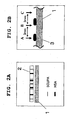
- the gel was cut for each migration lane, and further cut at a position 39 mm from the addition site on the upper face of the gel, after which the two pieces of the gel were placed with their upper faces in contact with each other, and thereafter brought into contact with the plate for mass spectrometry ( Fig. 2A ).
- the migration samples were arranged in the order of SCUPA, HSA, SCUPA, HSA, HSA, SCUPA, HSA and SCUPA, and four bands of each protein, eight bands in total, were blotted to the plate for mass spectrometry.
- the mass spectrometer used irradiates laser to a single plate for mass spectrometry not continuously but at 24 equally spaced points, there occurs a case of no-exposure to laser, a case of partial exposure, and a case of full exposure, depending on the position of the blotted protein on the plate for mass spectrometry ( Fig. 2B ).
- a mode was designed to blot each model protein to four different positions on the plate for mass spectrometry by the technique described above.
- the heights of the peaks obtained from mass spectrometry were variable ( Fig. 3 ).
- a discussion was made assuming the peak of the largest relative intensity out of the plurality of peaks obtained to be the value closest to the true value of complete exposure to the laser.
- the plate for mass spectrometry was previously immersed in methanol and equilibrated with a blotting buffer (10mM sodium borate buffer, pH 8.0), after which it was subjected to electric blotting at 90 mA for 2 hours. Subsequently, mass spectrometry was conducted and relative peak intensity was measured.
- a blotting buffer (10mM sodium borate buffer, pH 8.0)
- mass spectrometry was conducted and relative peak intensity was measured.
- other experiments were conducted in the same manner but using an ordinary non-PVDF-coated aluminum plate and an aluminum plate having a hexadecyl group introduced thereto (ProteinChip array, manufactured by Ciphergen, H4). The results are shown in Fig. 3 and Fig. 4 .
- the relative peak intensity for the plate for mass spectrometry of the present invention ( Fig. 3A ) was 12.31, a level 14 times as high as the value of the ordinary aluminum plate ( Fig. 3B ) (0.87).
- the relative peak intensity for this plate for mass spectrometry was 49 times (6.26:0.129) as high as the value of the aluminum plate.
- the plate for mass spectrometry produced 2 times to 4 times as high relative peak intensity as those from H4 ( Fig. 3C ).
- the plate for mass spectrometry of the present invention ( Figs. 4A and C ) produced more distinct spectra than those from the aluminum plate ( Figs. 4B and D ). From these results, it was found that by using the plate for mass spectrometry of the present invention, a plurality of kinds of proteins, after separation by electrophoresis, could be analyzed by mass spectrometry with quickness and at high sensitivity at one time.
- Example 4 Analysis of interaction between electrically blotted protein and binding protein after electrophoresis separation
- the plate for mass spectrometry of the present invention an investigation was conducted on the binding of a protein blotted to a plate for mass spectrometry and a protein capable of interacting therewith, and on the identification of the protein complex thereof by subsequent mass spectrometry.
- SCUPA and an antibody thereof anti-SCUPA antibody
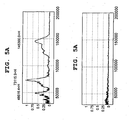
- Example 3 After SCUPA (4 g) was added to 12% SDS-polyacrylamide gel, electrophoresis was performed for 1 hour. After migration, the gel was cut, and the SCUPA on the gel was electrically blotted to the plate for mass spectrometry prepared in Example 1, in the same manner as Example 3. After the SCUPA-blotted plate for mass spectrometry was blocked, an antiserum (crudely purified using ammonium sulfate, and containing anti-SCUPA antibody) was added, and an overnight reaction was carried out. After completion of the reaction, the plate was washed with PBS buffer, a matrix was added, and mass spectrometry was conducted. The results are shown in Fig. 5 .
- the SCUPA blotted to the plate for mass spectrometry after electrophoresis produced a peak at 48,616, and the peak of the anti-SCUPA antibody that interacted with the SCUPA immobilized on the same plate was observed at 145,300 (73,115 assigned to the divalent ion of the same antibody) ( Fig. 5A ). Also, in the SCUPA-free gel as the control, no peaks were observed in this plate for mass spectrometry, despite that similar procedures such as electrical blotting, blocking, addition of anti-SCUPA antibody, and washing with PBS were followed ( Fig. 5B ).
- the two pieces of the gel were placed with their upper faces in contact with each other, and a 78 mm ⁇ 8 mm cut PVDF membrane was placed on the gels, and electrical blotting was conducted in 10 mM sodium borate buffer (pH 8.0) at 90 mA for 2 hours.
- the PVDF membrane was washed with PBS, rinsed with distilled water, dried, and applied to an aluminum plate using a transparent a double-coated tape (manufactured by Sumitomo 3M Ltd.).
- a matrix (DHB) was added thereto, and mass spectrometry was conducted using the ProteinChip System (described above).
- the SCUPA blotted to the PVDF membrane produced a peak at 50,096.9, and the HSA at 67,394.5; however, the peaks were difficult to identify because the relative peak intensities were extremely low, and also because the S/N ratios were low ( Fig. 6 ). Also, it was found that in the case of a plate for mass spectrometry (the same applies to the plate for mass spectrometry of the present invention), 2 to 3 minutes were taken to reach a high vacuum state, immediately after which measurements were possible, whereas in the case of a PVDF membrane, as long as 45 minutes were taken to reach a vacuum state, resulting in an excess load on the mass spectrometer used, and the mass spectrometer did not endure frequent use.
- Example 5 Various proteome analyses using the plate for mass spectrometry of the present invention
- the performance of the plate for mass spectrometry of the present invention was confirmed in a range of relatively low molecular weights (molecular weight 1,000 to 20,000).
- the sample was applied to 16% SDS-polyacrylamide gel (in Tris-Tricine buffer) and electrophoresed for 90 minutes, after which the analyte was electrically blotted from the gel to the plate for mass spectrometry of the present invention in 10 mM sodium borate buffer (adjusted to pH 8.0 with hydrochloric acid) for 1 to 2 hours. After completion of blotting, the plate was rinsed, the matrix was spotted, and mass spectrometry was conducted.
- a swine cerebellum was homogenized with IN acetic acid at 4°C and centrifuged at 4°C and 3,000 rpm for 30 minutes, and the supernatant was recovered. Acetonitrile was added to obtain a final concentration of 10%, and the supernatant was applied to a column for reversed-phase chromatography. The column was washed with 0.1% trifluoroacetic acid (TFA) containing 10% acetonitrile, and eluted with 0. 1% TFA containing 60% acetonitrile. The eluate was freeze-dried and used as the swine cerebellum extract.
- TFA trifluoroacetic acid
- a Tris buffer 25 mM Tris/192 mM glycine/20% methanol, pH 8.3
- a phosphate buffer 5% ACN/125 mM NaCl/PBS, pH 7.2
- an acetate buffer 40 mM Tris-acetate salt/1 mM EDTA, pH 8.0
- a borate buffer 10 mM sodium borate-hydrochloric acid, pH 8.0
- HSA and SCUPA were used. Except for these conditions, an experiment was conducted in accordance with the method of Example 5.
- the borate buffer gave the maximum mass spectrometry peak intensity.
- the ratio of maximum value of peak intensity for the borate buffer versus the phosphate buffer was about 21 times for SCUPA and about 4 times for HSA.
- the plate for mass spectrometry of the present invention is capable of uniformly adsorb various proteins, is excellent in blotting efficiency, and enables the normal retention of the three-dimensional structures and functions of the proteins.
- the plate for mass spectrometry of the present invention is also characterized by the absence of non-specific adsorption, the capability of performing mass spectrometry immediately after blotting, and the like.
- a protein can be analyzed and identified in large amounts, with quickness, and at high sensitivity.
- the protein may be of one kind, or an assembly of a plurality of kinds (a group of proteins), and even a complex with a compound that has affinity for (interacts with) the protein can be analyzed and identified likewise (that is, in large amounts, with quickness, and at high sensitivity).
- the present invention makes it possible to introduce a new technique to the conventional proteome analysis, which is a combination of electrophoresis and mass spectrometry.
Landscapes
- Life Sciences & Earth Sciences (AREA)
- Health & Medical Sciences (AREA)
- Physics & Mathematics (AREA)
- Molecular Biology (AREA)
- Engineering & Computer Science (AREA)
- Chemical & Material Sciences (AREA)
- Analytical Chemistry (AREA)
- Immunology (AREA)
- Bioinformatics & Computational Biology (AREA)
- Urology & Nephrology (AREA)
- Biomedical Technology (AREA)
- Bioinformatics & Cheminformatics (AREA)
- Hematology (AREA)
- Spectroscopy & Molecular Physics (AREA)
- General Physics & Mathematics (AREA)
- General Health & Medical Sciences (AREA)
- Biochemistry (AREA)
- Pathology (AREA)
- Biotechnology (AREA)
- Microbiology (AREA)
- Food Science & Technology (AREA)
- Medicinal Chemistry (AREA)
- Cell Biology (AREA)
- Proteomics, Peptides & Aminoacids (AREA)
- Biophysics (AREA)
- Optics & Photonics (AREA)
- Chemical Kinetics & Catalysis (AREA)
- Electrochemistry (AREA)
- Other Investigation Or Analysis Of Materials By Electrical Means (AREA)
Claims (9)
- Ein Verfahren zur Identifizierung eines Analyten (3), umfassend die nachstehend aufgeführten Schritte (a)-(d):(a) das Bereitstellen einer Platte für Massenspektrometrie (1), wobei die Platte für Massenspektrometrie (1) einen Träger und eine darauf haftende Beschichtung umfasst, wobei die Beschichtung Polyvinylidendifluorid enthält und wobei die Beschichtung durch Streichen, Sprühen, Aufdampfen, Eintauchen oder Drucken erhalten wird,(b) das Unterziehen einer einen Analyten enthaltenden Probe einer Gelelektrophorese,(c) das Blotten des Gels (2) nach der Wanderung auf die Platte (1), um den Analyten (3) auf die Platte (1) zu transferieren, und(d) das Unterziehen der Platte (1) einer Massenspektrometrie, um den transferierten Analyten (3) zu analysieren.
- Das Verfahren gemäß Anspruch 1, wobei die Beschichtung durch Aufbringen einer Lösung, die Polyvinylidendifluorid enthält, auf den Träger erhalten wird.
- Das Verfahren gemäß Anspruch 1 oder 2, wobei das Blotten elektrisches Blotten ist.
- Das Verfahren gemäß einem der Ansprüche 1 bis 3, wobei die Massenspektrometrie Matrix-unterstützte Laser-Desorption/Ionisation Massenspektrometrie (MALDI-MS) ist.
- Das Verfahren gemäß einem der Ansprüche 1 bis 4, wobei die einen Analyten enthaltende Probe mehrere Arten von Analyten (3) enthält.
- Das Verfahren gemäß einem der Ansprüche 1 bis 5, wobei der Analyt (3) aus der Gruppe, bestehend aus Protein, Nukleinsäure, Oligonukleotid, Saccharid, Oligosaccharid, Zellmembranrezeptor-Agonist oder -Antagonist, Toxin, Virusepitop, Hormon, Peptid, Enzym, Enzymsubstrat oder -inhibitor, Cofaktor, Arzneimittel, Lektin und Antikörper, ausgewählt ist.
- Das Verfahren gemäß einem der Ansprüche 1 bis 6, ferner umfassend einen Schritt (c2), wobei eine Probe, welche eine Substanz, die eine Affinität für den transferierten Analyten (3) aufweist, enthält, in Kontakt mit der Platte (1) gebracht wird, um einen Komplex des Analyten (3) und der Substanz auf der Platte (1) zwischen den Schritten (c) und (d) zu bilden, wobei der Analyt (3) und die Substanz gleichzeitig im Schritt (d) analysiert werden.
- Das Verfahren gemäß einem der Ansprüche 1 bis 7, ferner umfassend das Zugeben einer Matrix für Massenspektrometrie zu der Platte (1) zwischen dem Schritt (c) oder (c2) und dem Schritt (d).
- Das Verfahren gemäß Anspruch 8, wobei die Matrix 2,5-Dihydroxybenzoesäure ist.
Applications Claiming Priority (5)
| Application Number | Priority Date | Filing Date | Title |
|---|---|---|---|
| US264505 | 2002-10-04 | ||
| US10/264,505 US20030129666A1 (en) | 2001-01-09 | 2002-10-04 | Novel proteome analysis method and devices therefor |
| JP2002344710 | 2002-11-27 | ||
| JP2002344710 | 2002-11-27 | ||
| PCT/JP2003/012711 WO2004031759A1 (ja) | 2002-10-04 | 2003-10-03 | 質量分析用プレート、その調製方法およびその用途 |
Publications (3)
| Publication Number | Publication Date |
|---|---|
| EP1550862A1 EP1550862A1 (de) | 2005-07-06 |
| EP1550862A4 EP1550862A4 (de) | 2010-08-25 |
| EP1550862B1 true EP1550862B1 (de) | 2012-01-25 |
Family
ID=32072548
Family Applications (1)
| Application Number | Title | Priority Date | Filing Date |
|---|---|---|---|
| EP03754000A Expired - Lifetime EP1550862B1 (de) | 2002-10-04 | 2003-10-03 | Verfahren zur identifizierung eines analyts durch gelelektrophorese - massenspektrometrie |
Country Status (6)
| Country | Link |
|---|---|
| US (2) | US20060051741A1 (de) |
| EP (1) | EP1550862B1 (de) |
| KR (1) | KR20050070034A (de) |
| AU (1) | AU2003272924B2 (de) |
| CA (1) | CA2501993C (de) |
| WO (1) | WO2004031759A1 (de) |
Families Citing this family (13)
| Publication number | Priority date | Publication date | Assignee | Title |
|---|---|---|---|---|
| EP1591783B1 (de) * | 2004-04-28 | 2008-02-20 | Max-Planck-Gesellschaft Zur Förderung Der Wissenschaften E.V. | Verfahren zum Nachweis und zur Analyse von makromolekularen Komplexen |
| JP2006170857A (ja) * | 2004-12-16 | 2006-06-29 | Toyo Kohan Co Ltd | 固体支持体上の生体分子を質量分析する方法およびそのための固体支持体 |
| CA2603576A1 (en) * | 2005-04-05 | 2006-10-19 | Protein Discovery, Inc. | Improved methods and devices for concentration and fractionation of analytes for chemical analysis including matrix-assisted laser desorption/ionization (maldi) mass spectrometry (ms) |
| KR100883908B1 (ko) * | 2006-02-09 | 2009-02-20 | 주식회사 아스타 | 분석용 샘플 플레이트 및 그의 제조방법 |
| US8283625B2 (en) | 2006-09-28 | 2012-10-09 | Shimadzu Corporation | Method of preparing sample for matrix-assisted laser desorption ionization mass spectrometry and matrix-assisted laser desorption ionization mass spectrometry |
| US20100075372A1 (en) * | 2006-09-28 | 2010-03-25 | Taka-Aki Sato | Method for deparaffinization of paraffin-embedded specimen and method for analysis of paraffin-embedded specimen |
| US7888127B2 (en) | 2008-01-15 | 2011-02-15 | Sequenom, Inc. | Methods for reducing adduct formation for mass spectrometry analysis |
| WO2009149124A1 (en) * | 2008-06-02 | 2009-12-10 | Bio-Rad Laboratories, Inc. | Mass spectrometric detection of material transferred to a surface |
| JP5529051B2 (ja) | 2009-02-10 | 2014-06-25 | 株式会社日立ハイテクノロジーズ | 質量分析技術を用いた免疫分析方法および免疫分析システム |
| EP2548888B1 (de) | 2010-03-17 | 2017-11-01 | Kagoshima University | Für zahnfleischerkrankungen spezifisches peptid sowie behandlung und diagnose von zahnfleischerkrankungen damit |
| FR2976076B1 (fr) * | 2011-05-31 | 2015-02-27 | Imabiotech | Procede de detection et de quantification d'une molecule cible dans un tissu |
| US9305756B2 (en) | 2013-03-13 | 2016-04-05 | Agena Bioscience, Inc. | Preparation enhancements and methods of use for MALDI mass spectrometry |
| WO2019103996A1 (en) * | 2017-11-21 | 2019-05-31 | Expansion Technologies | Expansion microscopy compatible and multiplexed in situ hybridization of formalin fixed paraffin embedded tissue sections for spatially resolved transcriptomics |
Citations (1)
| Publication number | Priority date | Publication date | Assignee | Title |
|---|---|---|---|---|
| US20030129666A1 (en) * | 2001-01-09 | 2003-07-10 | Mitsubishi Pharma Corporation | Novel proteome analysis method and devices therefor |
Family Cites Families (31)
| Publication number | Priority date | Publication date | Assignee | Title |
|---|---|---|---|---|
| US3324069A (en) * | 1964-10-23 | 1967-06-06 | Pennsalt Chemicals Corp | Vinylidene fluoride polymer dispersions |
| FR2478649B1 (fr) | 1980-03-21 | 1985-06-21 | Ugine Kuhlmann | Polyfluorure de vinylidene traite en vue de son adherence sur metaux, procede de traitement |
| US4789734A (en) * | 1985-08-06 | 1988-12-06 | La Jolla Cancer Research Foundation | Vitronectin specific cell receptor derived from mammalian mesenchymal tissue |
| JP2581077B2 (ja) * | 1987-06-09 | 1997-02-12 | ダイキン工業株式会社 | フッ化ビニリデン系樹脂組成物 |
| US4913902A (en) | 1987-11-10 | 1990-04-03 | North Carolina State University | Purification by affinity binding to liposomes |
| GB2236185B (en) | 1989-08-22 | 1994-03-23 | Finnigan Mat Gmbh | Process,specimen and device for making an analyte available for an investigation |
| DE4017805C2 (de) | 1989-08-22 | 1998-03-26 | Finnigan Mat Gmbh | Verfahren, Präparat und Vorrichtung zur Bereitstellung eines Analytes für eine Untersuchung |
| GB2235528B (en) * | 1989-08-23 | 1993-07-28 | Finnigan Mat Ltd | Method of preparing samples for laser spectrometry analysis |
| US5585275A (en) * | 1992-09-02 | 1996-12-17 | Arris Pharmaceutical Corporation | Pilot apparatus for peptide synthesis and screening |
| EP0700521B1 (de) * | 1993-05-28 | 2003-06-04 | Baylor College Of Medicine | Verfahren und massenspektrometer zur desorption und ionisierung von analyten |
| US20020037517A1 (en) * | 1993-05-28 | 2002-03-28 | Hutchens T. William | Methods for sequencing biopolymers |
| US6020208A (en) * | 1994-05-27 | 2000-02-01 | Baylor College Of Medicine | Systems for surface-enhanced affinity capture for desorption and detection of analytes |
| JPH07118142A (ja) | 1993-10-18 | 1995-05-09 | Kao Corp | 味覚関与蛋白質抽出剤 |
| US6071610A (en) * | 1993-11-12 | 2000-06-06 | Waters Investments Limited | Enhanced resolution matrix-laser desorption and ionization TOF-MS sample surface |
| JP3092434B2 (ja) | 1994-02-24 | 2000-09-25 | トヨタ自動車株式会社 | フッ素樹脂被膜の形成方法 |
| DE4408034C1 (de) * | 1994-03-10 | 1995-07-13 | Bruker Franzen Analytik Gmbh | Verfahren zur massenspektrometrischen Analyse von Proben aus 2D-Gel-Elektrophoreseplatten mit matrixunterstützter ionisierender Laser-Desorption |
| JP3797676B2 (ja) | 1994-03-29 | 2006-07-19 | 独立行政法人科学技術振興機構 | リポソーム再構成型インスリンレセプター |
| JP3515183B2 (ja) | 1994-08-30 | 2004-04-05 | 臼井国際産業株式会社 | 金属管における耐食性樹脂被覆構造 |
| DE19618032C2 (de) | 1996-05-04 | 2000-04-13 | Bruker Daltonik Gmbh | Lagerfähig vorpräparierte Maldi-Probenträger |
| NZ516848A (en) * | 1997-06-20 | 2004-03-26 | Ciphergen Biosystems Inc | Retentate chromatography apparatus with applications in biology and medicine |
| DE19754978C2 (de) * | 1997-12-11 | 2000-07-13 | Bruker Daltonik Gmbh | Probenträger für die MALDI-Massenspektrometrie nebst Verfahren zur Herstellung der Platten und zum Aufbringen der Proben |
| AU3474100A (en) | 1999-01-25 | 2000-08-07 | Minerva Biotechnologies Corporation | Rapid and sensitive detection of aberrant protein aggregation in neurodegenerative diseases |
| JP2002535676A (ja) * | 1999-01-28 | 2002-10-22 | ユニヴェルシテ ドゥ ジュネーブ | ポリペプチドを同定または特徴付けるための方法およびキット |
| WO2000066265A2 (en) * | 1999-04-27 | 2000-11-09 | Ciphergen Biosystems, Inc. | Probes for a gas phase ion spectrometer |
| EP1181705A2 (de) | 1999-04-29 | 2002-02-27 | Ciphergen Biosystems, Inc. | Probenhalter mit hydrophobem überzug für ein gasphasen-massenspektrometer |
| US6319674B1 (en) * | 1999-09-16 | 2001-11-20 | Agilent Technologies, Inc. | Methods for attaching substances to surfaces |
| SE9904803D0 (sv) | 1999-12-27 | 1999-12-27 | Amersham Pharm Biotech Ab | Method for the isolation of hydrophobic proteins |
| EP1246607B1 (de) | 1999-12-30 | 2007-06-27 | Dana-Farber Cancer Institute, Inc. | Proteoliposomen, die ein integral membranprotein mit einer oder memhreren transmembrandomänen enthalten |
| CA2301451A1 (en) | 2000-03-20 | 2001-09-21 | Thang T. Pham | Method for analysis of analytes by mass spectrometry |
| JP2004507230A (ja) * | 2000-07-03 | 2004-03-11 | アプレラ コーポレイション | ポリヌクレオチド配列アッセイ |
| US20030044843A1 (en) * | 2001-01-09 | 2003-03-06 | Mitsubishi Pharma Corporation | Novel proteome analysis method and devices therefor |
-
2003
- 2003-10-03 AU AU2003272924A patent/AU2003272924B2/en not_active Expired
- 2003-10-03 CA CA2501993A patent/CA2501993C/en not_active Expired - Lifetime
- 2003-10-03 KR KR1020057005872A patent/KR20050070034A/ko not_active Ceased
- 2003-10-03 WO PCT/JP2003/012711 patent/WO2004031759A1/ja not_active Ceased
- 2003-10-03 US US10/530,169 patent/US20060051741A1/en not_active Abandoned
- 2003-10-03 EP EP03754000A patent/EP1550862B1/de not_active Expired - Lifetime
-
2010
- 2010-07-01 US US12/829,051 patent/US8372655B2/en not_active Expired - Fee Related
Patent Citations (1)
| Publication number | Priority date | Publication date | Assignee | Title |
|---|---|---|---|---|
| US20030129666A1 (en) * | 2001-01-09 | 2003-07-10 | Mitsubishi Pharma Corporation | Novel proteome analysis method and devices therefor |
Also Published As
| Publication number | Publication date |
|---|---|
| US20100264029A1 (en) | 2010-10-21 |
| CA2501993A1 (en) | 2004-04-15 |
| US8372655B2 (en) | 2013-02-12 |
| CA2501993C (en) | 2013-09-10 |
| AU2003272924B2 (en) | 2008-05-15 |
| US20060051741A1 (en) | 2006-03-09 |
| EP1550862A1 (de) | 2005-07-06 |
| AU2003272924A1 (en) | 2004-04-23 |
| EP1550862A4 (de) | 2010-08-25 |
| KR20050070034A (ko) | 2005-07-05 |
| WO2004031759A1 (ja) | 2004-04-15 |
Similar Documents
| Publication | Publication Date | Title |
|---|---|---|
| US8372655B2 (en) | Plate for mass spectrometry, process for preparing the same and use thereof | |
| Kinter et al. | Protein sequencing and identification using tandem mass spectrometry | |
| Yates III | Mass spectral analysis in proteomics | |
| Mann et al. | Analysis of proteins and proteomes by mass spectrometry | |
| Steen et al. | The ABC's (and XYZ's) of peptide sequencing | |
| Kolch et al. | Capillary electrophoresis–mass spectrometry as a powerful tool in clinical diagnosis and biomarker discovery | |
| Garcia | What does the future hold for top down mass spectrometry? | |
| Lim et al. | Proteomics in pathology research | |
| US20060266941A1 (en) | Method and apparatus for interfacing separations techniques to MALDI-TOF mass spectrometry | |
| Mano et al. | Biomedical and biological mass spectrometry | |
| JP2007502980A (ja) | Maldi質量分析法のためのマトリックス干渉の軽減 | |
| JP2007170870A (ja) | 質量分析を用いたinsitu検出方法 | |
| GB2387653A (en) | Mass spectroscopy analysis of protein mixtures | |
| Hale et al. | In situ mass spectrometry analysis of intact proteins and protein complexes from biological substrates | |
| Zubair et al. | Trypsin and MALDI matrix pre‐coated targets simplify sample preparation for mapping proteomic distributions within biological tissues by imaging mass spectrometry | |
| Dave et al. | Preparation and analysis of proteins and peptides using MALDI TOF/TOF mass spectrometry | |
| Kovarik et al. | Method development aspects for the quantitation of pharmaceutical compounds in human plasma with a matrix‐assisted laser desorption/ionization source in the multiple reaction monitoring mode | |
| JP4447458B2 (ja) | 質量分析用プレート、その調製方法およびその用途 | |
| Peters et al. | An Automated LC-MALDI FT-ICR MS Platform | |
| Feng | Mass spectrometry in drug discovery: a current review | |
| CN100483124C (zh) | 质谱分析用板及其制备方法和用途 | |
| US7943387B2 (en) | Direct mass spectrometric analysis of aggregates of therapeutic proteins | |
| Pierce et al. | Applications of mass spectrometry in proteomics | |
| Guarnaccia et al. | Mass Spectrometric Characterization of Therapeutic Recombinant Proteins | |
| Ahn et al. | Phosphospecific In-gel Tagging and Site Identification of Phosphoproteins by MALDI-TOF Mass Spectrometry |
Legal Events
| Date | Code | Title | Description |
|---|---|---|---|
| PUAI | Public reference made under article 153(3) epc to a published international application that has entered the european phase |
Free format text: ORIGINAL CODE: 0009012 |
|
| 17P | Request for examination filed |
Effective date: 20050422 |
|
| AK | Designated contracting states |
Kind code of ref document: A1 Designated state(s): AT BE BG CH CY CZ DE DK EE ES FI FR GB GR HU IE IT LI LU MC NL PT RO SE SI SK TR |
|
| AX | Request for extension of the european patent |
Extension state: AL LT LV MK |
|
| RAP1 | Party data changed (applicant data changed or rights of an application transferred) |
Owner name: PROTOSERA, INC. |
|
| RIN1 | Information on inventor provided before grant (corrected) |
Inventor name: LEE, LYANG-JA,MITSUBISHI PHARMA CORPORATION Inventor name: OCHIAI, BUNGO Inventor name: MUNECHIKA, KOJI,MITSUBISHI PHARMA CORPORATION Inventor name: TANAKA, KENJI,C/O PROTOSERA INC. Inventor name: ARIKUNI, HISASHI |
|
| DAX | Request for extension of the european patent (deleted) | ||
| A4 | Supplementary search report drawn up and despatched |
Effective date: 20100723 |
|
| RIC1 | Information provided on ipc code assigned before grant |
Ipc: G01N 27/62 20060101ALI20100719BHEP Ipc: H01J 49/04 20060101AFI20100719BHEP |
|
| 17Q | First examination report despatched |
Effective date: 20101214 |
|
| REG | Reference to a national code |
Ref country code: DE Ref legal event code: R079 Ref document number: 60339834 Country of ref document: DE Free format text: PREVIOUS MAIN CLASS: G01N0027620000 Ipc: H01J0049040000 |
|
| GRAP | Despatch of communication of intention to grant a patent |
Free format text: ORIGINAL CODE: EPIDOSNIGR1 |
|
| RIC1 | Information provided on ipc code assigned before grant |
Ipc: G01N 27/447 20060101ALI20110516BHEP Ipc: H01J 49/04 20060101AFI20110516BHEP |
|
| RTI1 | Title (correction) |
Free format text: METHOD OF IDENTIFYING AN ANALYTE BY GEL ELECTROPHORESIS-MASS SPECTROMETRY |
|
| GRAS | Grant fee paid |
Free format text: ORIGINAL CODE: EPIDOSNIGR3 |
|
| RIN1 | Information on inventor provided before grant (corrected) |
Inventor name: MUNECHIKA, KOJI,MITSUBISHI PHARMA CORPORATION Inventor name: LEE, LYANG-JA,MITSUBISHI PHARMA CORPORATION Inventor name: TANAKA, KENJI,C/O PROTOSERA INC. Inventor name: ARIKUNI, HISASHI Inventor name: OCHIAI, BUNGO |
|
| GRAA | (expected) grant |
Free format text: ORIGINAL CODE: 0009210 |
|
| RAP1 | Party data changed (applicant data changed or rights of an application transferred) |
Owner name: PROTOSERA INC. |
|
| AK | Designated contracting states |
Kind code of ref document: B1 Designated state(s): AT BE BG CH CY CZ DE DK EE ES FI FR GB GR HU IE IT LI LU MC NL PT RO SE SI SK TR |
|
| REG | Reference to a national code |
Ref country code: GB Ref legal event code: FG4D |
|
| REG | Reference to a national code |
Ref country code: CH Ref legal event code: EP |
|
| REG | Reference to a national code |
Ref country code: AT Ref legal event code: REF Ref document number: 543202 Country of ref document: AT Kind code of ref document: T Effective date: 20120215 |
|
| REG | Reference to a national code |
Ref country code: IE Ref legal event code: FG4D |
|
| REG | Reference to a national code |
Ref country code: DE Ref legal event code: R096 Ref document number: 60339834 Country of ref document: DE Effective date: 20120315 |
|
| REG | Reference to a national code |
Ref country code: CH Ref legal event code: NV Representative=s name: BOHEST AG |
|
| REG | Reference to a national code |
Ref country code: NL Ref legal event code: VDEP Effective date: 20120125 |
|
| RIN2 | Information on inventor provided after grant (corrected) |
Inventor name: MUNECHIKA, KOJI, MITSUBISHI PHARMA CORPORATION Inventor name: LEE, LYANG-JA, MITSUBISHI PHARMA CORPORATION Inventor name: TANAKA, KENJI, C/O PROTOSERA INC. Inventor name: ARIKUNI, HISASHI Inventor name: OCHIAI, BUNGO |
|
| PG25 | Lapsed in a contracting state [announced via postgrant information from national office to epo] |
Ref country code: BE Free format text: LAPSE BECAUSE OF FAILURE TO SUBMIT A TRANSLATION OF THE DESCRIPTION OR TO PAY THE FEE WITHIN THE PRESCRIBED TIME-LIMIT Effective date: 20120125 Ref country code: NL Free format text: LAPSE BECAUSE OF FAILURE TO SUBMIT A TRANSLATION OF THE DESCRIPTION OR TO PAY THE FEE WITHIN THE PRESCRIBED TIME-LIMIT Effective date: 20120125 Ref country code: BG Free format text: LAPSE BECAUSE OF FAILURE TO SUBMIT A TRANSLATION OF THE DESCRIPTION OR TO PAY THE FEE WITHIN THE PRESCRIBED TIME-LIMIT Effective date: 20120425 |
|
| PG25 | Lapsed in a contracting state [announced via postgrant information from national office to epo] |
Ref country code: PT Free format text: LAPSE BECAUSE OF FAILURE TO SUBMIT A TRANSLATION OF THE DESCRIPTION OR TO PAY THE FEE WITHIN THE PRESCRIBED TIME-LIMIT Effective date: 20120525 Ref country code: GR Free format text: LAPSE BECAUSE OF FAILURE TO SUBMIT A TRANSLATION OF THE DESCRIPTION OR TO PAY THE FEE WITHIN THE PRESCRIBED TIME-LIMIT Effective date: 20120426 Ref country code: FI Free format text: LAPSE BECAUSE OF FAILURE TO SUBMIT A TRANSLATION OF THE DESCRIPTION OR TO PAY THE FEE WITHIN THE PRESCRIBED TIME-LIMIT Effective date: 20120125 |
|
| REG | Reference to a national code |
Ref country code: AT Ref legal event code: MK05 Ref document number: 543202 Country of ref document: AT Kind code of ref document: T Effective date: 20120125 |
|
| PG25 | Lapsed in a contracting state [announced via postgrant information from national office to epo] |
Ref country code: CY Free format text: LAPSE BECAUSE OF FAILURE TO SUBMIT A TRANSLATION OF THE DESCRIPTION OR TO PAY THE FEE WITHIN THE PRESCRIBED TIME-LIMIT Effective date: 20120125 |
|
| PG25 | Lapsed in a contracting state [announced via postgrant information from national office to epo] |
Ref country code: SE Free format text: LAPSE BECAUSE OF FAILURE TO SUBMIT A TRANSLATION OF THE DESCRIPTION OR TO PAY THE FEE WITHIN THE PRESCRIBED TIME-LIMIT Effective date: 20120125 Ref country code: SI Free format text: LAPSE BECAUSE OF FAILURE TO SUBMIT A TRANSLATION OF THE DESCRIPTION OR TO PAY THE FEE WITHIN THE PRESCRIBED TIME-LIMIT Effective date: 20120125 Ref country code: CZ Free format text: LAPSE BECAUSE OF FAILURE TO SUBMIT A TRANSLATION OF THE DESCRIPTION OR TO PAY THE FEE WITHIN THE PRESCRIBED TIME-LIMIT Effective date: 20120125 Ref country code: RO Free format text: LAPSE BECAUSE OF FAILURE TO SUBMIT A TRANSLATION OF THE DESCRIPTION OR TO PAY THE FEE WITHIN THE PRESCRIBED TIME-LIMIT Effective date: 20120125 Ref country code: EE Free format text: LAPSE BECAUSE OF FAILURE TO SUBMIT A TRANSLATION OF THE DESCRIPTION OR TO PAY THE FEE WITHIN THE PRESCRIBED TIME-LIMIT Effective date: 20120125 Ref country code: DK Free format text: LAPSE BECAUSE OF FAILURE TO SUBMIT A TRANSLATION OF THE DESCRIPTION OR TO PAY THE FEE WITHIN THE PRESCRIBED TIME-LIMIT Effective date: 20120125 |
|
| RIN2 | Information on inventor provided after grant (corrected) |
Inventor name: OCHIAI, BUNGO Inventor name: MUNECHIKA, KOJI, MITSUBISHI PHARMA CORPORATION Inventor name: TANAKA, KENJI, C/O PROTOSERA INC. Inventor name: ARIKUNI, HISASHI Inventor name: LEE, LYANG-JA, MITSUBISHI PHARMA CORPORATION |
|
| PG25 | Lapsed in a contracting state [announced via postgrant information from national office to epo] |
Ref country code: SK Free format text: LAPSE BECAUSE OF FAILURE TO SUBMIT A TRANSLATION OF THE DESCRIPTION OR TO PAY THE FEE WITHIN THE PRESCRIBED TIME-LIMIT Effective date: 20120125 Ref country code: IT Free format text: LAPSE BECAUSE OF FAILURE TO SUBMIT A TRANSLATION OF THE DESCRIPTION OR TO PAY THE FEE WITHIN THE PRESCRIBED TIME-LIMIT Effective date: 20120125 |
|
| PLBE | No opposition filed within time limit |
Free format text: ORIGINAL CODE: 0009261 |
|
| STAA | Information on the status of an ep patent application or granted ep patent |
Free format text: STATUS: NO OPPOSITION FILED WITHIN TIME LIMIT |
|
| 26N | No opposition filed |
Effective date: 20121026 |
|
| PG25 | Lapsed in a contracting state [announced via postgrant information from national office to epo] |
Ref country code: AT Free format text: LAPSE BECAUSE OF FAILURE TO SUBMIT A TRANSLATION OF THE DESCRIPTION OR TO PAY THE FEE WITHIN THE PRESCRIBED TIME-LIMIT Effective date: 20120125 |
|
| REG | Reference to a national code |
Ref country code: DE Ref legal event code: R097 Ref document number: 60339834 Country of ref document: DE Effective date: 20121026 |
|
| PG25 | Lapsed in a contracting state [announced via postgrant information from national office to epo] |
Ref country code: ES Free format text: LAPSE BECAUSE OF FAILURE TO SUBMIT A TRANSLATION OF THE DESCRIPTION OR TO PAY THE FEE WITHIN THE PRESCRIBED TIME-LIMIT Effective date: 20120506 |
|
| PG25 | Lapsed in a contracting state [announced via postgrant information from national office to epo] |
Ref country code: MC Free format text: LAPSE BECAUSE OF NON-PAYMENT OF DUE FEES Effective date: 20121031 |
|
| REG | Reference to a national code |
Ref country code: IE Ref legal event code: MM4A |
|
| PG25 | Lapsed in a contracting state [announced via postgrant information from national office to epo] |
Ref country code: IE Free format text: LAPSE BECAUSE OF NON-PAYMENT OF DUE FEES Effective date: 20121003 |
|
| PG25 | Lapsed in a contracting state [announced via postgrant information from national office to epo] |
Ref country code: TR Free format text: LAPSE BECAUSE OF FAILURE TO SUBMIT A TRANSLATION OF THE DESCRIPTION OR TO PAY THE FEE WITHIN THE PRESCRIBED TIME-LIMIT Effective date: 20120125 |
|
| PG25 | Lapsed in a contracting state [announced via postgrant information from national office to epo] |
Ref country code: LU Free format text: LAPSE BECAUSE OF NON-PAYMENT OF DUE FEES Effective date: 20121003 |
|
| REG | Reference to a national code |
Ref country code: CH Ref legal event code: PCAR Free format text: NEW ADDRESS: HOLBEINSTRASSE 36-38, 4051 BASEL (CH) |
|
| PG25 | Lapsed in a contracting state [announced via postgrant information from national office to epo] |
Ref country code: HU Free format text: LAPSE BECAUSE OF FAILURE TO SUBMIT A TRANSLATION OF THE DESCRIPTION OR TO PAY THE FEE WITHIN THE PRESCRIBED TIME-LIMIT Effective date: 20031003 |
|
| REG | Reference to a national code |
Ref country code: FR Ref legal event code: PLFP Year of fee payment: 14 |
|
| REG | Reference to a national code |
Ref country code: FR Ref legal event code: PLFP Year of fee payment: 15 |
|
| REG | Reference to a national code |
Ref country code: FR Ref legal event code: PLFP Year of fee payment: 16 |
|
| PGFP | Annual fee paid to national office [announced via postgrant information from national office to epo] |
Ref country code: GB Payment date: 20220901 Year of fee payment: 20 |
|
| PGFP | Annual fee paid to national office [announced via postgrant information from national office to epo] |
Ref country code: FR Payment date: 20220908 Year of fee payment: 20 |
|
| PGFP | Annual fee paid to national office [announced via postgrant information from national office to epo] |
Ref country code: DE Payment date: 20220831 Year of fee payment: 20 |
|
| PGFP | Annual fee paid to national office [announced via postgrant information from national office to epo] |
Ref country code: CH Payment date: 20221010 Year of fee payment: 20 |
|
| REG | Reference to a national code |
Ref country code: DE Ref legal event code: R071 Ref document number: 60339834 Country of ref document: DE |
|
| REG | Reference to a national code |
Ref country code: CH Ref legal event code: PL |
|
| REG | Reference to a national code |
Ref country code: GB Ref legal event code: PE20 Expiry date: 20231002 |
|
| PG25 | Lapsed in a contracting state [announced via postgrant information from national office to epo] |
Ref country code: GB Free format text: LAPSE BECAUSE OF EXPIRATION OF PROTECTION Effective date: 20231002 |