EP1547605A1 - Adsorbentien zur oralen verabreichung - Google Patents
Adsorbentien zur oralen verabreichung Download PDFInfo
- Publication number
- EP1547605A1 EP1547605A1 EP03770094A EP03770094A EP1547605A1 EP 1547605 A1 EP1547605 A1 EP 1547605A1 EP 03770094 A EP03770094 A EP 03770094A EP 03770094 A EP03770094 A EP 03770094A EP 1547605 A1 EP1547605 A1 EP 1547605A1
- Authority
- EP
- European Patent Office
- Prior art keywords
- activated carbon
- spherical activated
- adsorbent
- oral administration
- diffraction
- Prior art date
- Legal status (The legal status is an assumption and is not a legal conclusion. Google has not performed a legal analysis and makes no representation as to the accuracy of the status listed.)
- Granted
Links
Images



Classifications
-
- A—HUMAN NECESSITIES
- A61—MEDICAL OR VETERINARY SCIENCE; HYGIENE
- A61K—PREPARATIONS FOR MEDICAL, DENTAL OR TOILETRY PURPOSES
- A61K33/00—Medicinal preparations containing inorganic active ingredients
- A61K33/44—Elemental carbon, e.g. charcoal, carbon black
-
- A—HUMAN NECESSITIES
- A61—MEDICAL OR VETERINARY SCIENCE; HYGIENE
- A61P—SPECIFIC THERAPEUTIC ACTIVITY OF CHEMICAL COMPOUNDS OR MEDICINAL PREPARATIONS
- A61P1/00—Drugs for disorders of the alimentary tract or the digestive system
- A61P1/16—Drugs for disorders of the alimentary tract or the digestive system for liver or gallbladder disorders, e.g. hepatoprotective agents, cholagogues, litholytics
-
- A—HUMAN NECESSITIES
- A61—MEDICAL OR VETERINARY SCIENCE; HYGIENE
- A61P—SPECIFIC THERAPEUTIC ACTIVITY OF CHEMICAL COMPOUNDS OR MEDICINAL PREPARATIONS
- A61P13/00—Drugs for disorders of the urinary system
- A61P13/12—Drugs for disorders of the urinary system of the kidneys
-
- A—HUMAN NECESSITIES
- A61—MEDICAL OR VETERINARY SCIENCE; HYGIENE
- A61P—SPECIFIC THERAPEUTIC ACTIVITY OF CHEMICAL COMPOUNDS OR MEDICINAL PREPARATIONS
- A61P39/00—General protective or antinoxious agents
- A61P39/02—Antidotes
Definitions
- the present invention relates to an adsorbent for oral administration comprising a spherical activated carbon having a specific pore structure, and an adsorbent for oral administration comprising a surface-modified spherical activated carbon prepared by oxidizing and reducing the spherical activated carbon and having a similar specific pore structure.
- the adsorbent for oral administration exhibits a selective adsorbability, that is, a high adsorbability of harmful toxins, despite a low adsorbability of useful components such as digestive enzymes in a body. Further, the adsorbent has a specific pore structure, and thus, has a greatly improved selective adsorbability in comparison with that of a conventional adsorbent for oral administration. Therefore, the adsorbent for oral administration, according to the present invention, is effective for the treatment of a patient suffering from a liver or renal disease.
- an oral adsorbent which can be orally administered and cure a disorder of renal and liver functions has received considerable attention.
- an adsorbent disclosed in Japanese Examined Patent Publication (Kokoku) No. 62-11611 comprises a porous spherical carbonaceous substance having particular functional groups (hereinafter referred to as a surface-modified spherical activated carbon); having a high safety factor and stable to a body; and having a useful selective adsorbability, that is, an excellent adsorbability of harmful substances in the presence of a bile acid in an intestine, and a low adsorbability of useful substances such as digestive enzymes in the intestine.
- the oral adsorbent is widely and clinically used for a patient suffering from a disorder of a liver or renal function, as an adsorbent having few side effects such as constipation.
- the above adsorbent disclosed in Japanese Examined Patent Publication (Kokoku) No. 62-11611 was prepared by forming a spherical activated carbon from a pitch such as a petroleum pitch as a carbon source, and then carrying out an oxidizing treatment and a reducing treatment.
- the inventors of the present invention engaged in intensive research to develop an adsorbent for oral administration exhibiting a greater selective adsorbability than that of the above-mentioned oral adsorbent comprising the conventional porous spherical carbonaceous substance prepared by forming a spherical activated carbon from a pitch and oxidizing and reducing the activated carbon, and surprisingly, found that a spherical activated carbon prepared from a thermosetting resin as a carbon source, even without the oxidizing and reducing treatments, exhibits an excellent selective adsorbability; that is, on one hand, an excellent adsorbability of ⁇ -aminoisobutyric acid which is one of the uremic substances in a body, and on the other hand, a low adsorbability of useful substances, for example, digestive enzymes, such as ⁇ -amylase, and that a level of the selective adsorbability thereof is superior to that of the adsorbent disclosed in Japanese Examined Patent Publication (
- the above-mentioned spherical activated carbon prepared from the thermosetting resin as a carbon source exhibits an excellent adsorbability of ⁇ -aminoisobutyric acid
- the above-mentioned spherical activated carbon has an excellent adsorbability of other toxic substances having a molecular weight similar to that of ⁇ -aminoisobutyric acid, for example, octopamine or ⁇ -aminobutyric acid, or dimethylamine, aspartic acid, or arginine which is a toxic substance or a precursor thereof in a renal disease, or other water-soluble basic or ampholytic substances.
- the present inventors found that the useful selective adsorbability; that is, on one hand, an excellent adsorbability of ⁇ -aminoisobutyric acid which is one of the uremic substances in a body, and on the other hand, a low adsorbability of useful substances, for example, digestive enzymes, such as ⁇ -amylase, is improved in a surface-modified spherical activated carbon prepared by oxidizing and reducing the above spherical activated carbon, in comparison with the adsorbent disclosed in Japanese Examined Patent Publication (Kokoku) No. 62-11611.
- the surface-modified spherical activated carbon has a greater adsorbability of other toxic substances having a molecular weight similar to that of ⁇ -aminoisobutyric acid, for example, octopamine or ⁇ -aminobutyric acid, or dimethylamine, aspartic acid, or arginine which is a toxic substance or a precursor thereof in a renal disease, or other water-soluble basic or ampholytic substances.
- ⁇ -aminoisobutyric acid for example, octopamine or ⁇ -aminobutyric acid, or dimethylamine, aspartic acid, or arginine which is a toxic substance or a precursor thereof in a renal disease, or other water-soluble basic or ampholytic substances.
- the present invention is based on the above findings.
- the spherical activated carbon or the surface-modified spherical activated carbon used as the adsorbent for oral administration of the present invention has a diffraction intensity ratio (an R value) calculated from an equation (1) of 1.4 or more, as above-mentioned.
- the intensity is lowered by a decrease of the diffraction X-ray in the range where the diffraction angle (2 ⁇ ) is higher than 30°.
- the range where the diffraction angle (2 ⁇ ) is lower than 20° a strong X-ray is observed even in the range where the diffraction angle (2 ⁇ ) is lower than 15°, that is, in the range where a diffraction X-ray from 002 plane is rarely observed.
- the surface-modified spherical activated carbon prepared by a conventional method disclosed in Examples 1 to 3 in Japanese Examined Patent Publication (Kokoku) No.
- the curve B per se is an X-ray diffraction pattern of the surface-modified spherical activated carbon prepared in Comparative Example 1, as mentioned below, after water was adsorbed.
- the X-ray intensity of the curve B is considerably lowered in the low angular range in comparison with the curve A. This phenomenon can be interpreted such that the X-ray intensity in the low angular range is influenced by fine pores, and an X-ray scattering intensity is lowered by an adsorption of water into pores.
- an X-ray diffraction pattern having the same tendency as that of the curve C shown in Figure 1 is generally obtained, in the condition that water is not adsorbed.
- the curve C per se is an X-ray diffraction pattern of the surface-modified spherical activated carbon prepared in Example 1, as mentioned below. That is, a scattering intensity of the curve C in the low angular range where the diffraction angle (2 ⁇ ) is 15° or less is apparently strong in comparison with that of the curve A.
- Each of the curves A, B, and C in Figure 1 is standardized so that the diffraction intensity at the diffraction angle (2 ⁇ ) of 24° becomes 100.
- a porous product with an X-ray diffraction pattern having the same tendency as that of the curve A shown in Figure 1 has a pore structure different from that of a porous product with an X-ray diffraction pattern having the same tendency as that of the curve C shown in Figure 1.
- a scattering intensity observed in a low angular range in the X-ray diffractometry of the surface-modified spherical activated carbon is reflected from the pore structure, and the product having a stronger scattering intensity has more pores.
- the scattering angle and the pore diameter it is assumed that the higher the scattering angle, the finer the pore diameter.
- a method for determining a pore distribution by an adsorption is generally known. In many cases, however, it is difficult to accurately analyze the pore structure in view of differences in a size or shape of the pores, a size of the substances to be adsorbed, adsorbing conditions, and so on.
- the scattering intensity around 15° is only slightly influenced by a diffraction X-ray from a 002 plane, influenced by a scattering from the fine pores, and becomes an index indicating the presence of ultra-fine pores which are difficult to find by the adsorption method, and that the presence of such fine pores is advantageous for adsorbing the harmful substance, ⁇ -aminoisobutyric acid. That is, the present inventors assume that the higher the scattering intensity at the diffraction angle (2 ⁇ ) around 15°, the more effective the adsorption of the harmful substance, ⁇ -aminoisobutyric acid, for the spherical activated carbon or the surface-modified spherical activated carbon.
- the present inventors experimentally confirmed that the spherical activated carbon or the surface-modified spherical activated carbon having an X-ray diffraction pattern with the same tendency as that of the curve C shown in Figure 1 exhibits a greater selective adsorbability in comparison with the conventional spherical activated carbon or the conventional surface-modified spherical activated carbon having an X-ray diffraction pattern with the same tendency as that of the curve A shown in Figure 1.
- the spherical activated carbon or the surface-modified spherical activated carbon is defined by the diffraction intensity ratio, the R value, calculated by the equation (1), to clarify the above relationship.
- I 15 is the diffraction intensity when a diffraction angle (2 ⁇ ) of an X-ray diffractometry is 15°; that is, in a range where a difference between the diffraction intensity of curve A and that of curve C is increased
- I 24 is a diffraction intensity when a diffraction angle (2 ⁇ ) of an X-ray diffractometry is 24°, that is, in a range where a difference between the diffraction intensity of curve A and that of curve C is decreased
- I 35 is a diffraction intensity when a diffraction angle (2 ⁇ ) of an X-ray diffractometry is 35°, and is used to correct a measurement error between the test samples due to background disturbances.
- the present inventors confirmed that a diffraction intensity ratio, an R value, of each of the conventionally known typical surface-modified spherical activated carbons for oral administration is less than 1.4, and did not find any known orally-administrating surface-modified spherical activated carbon having a diffraction intensity ratio, an R value, of 1.4 or more, to the knowledge of the present inventors.
- the surface-modified spherical activated carbon having a diffraction intensity ratio, an R value, of 1.4 or more has an improved adsorbability of ⁇ -aminoisobutyric acid in comparison with the surface-modified spherical activated carbon having a diffraction intensity ratio, an R value, of less than 1.4, and thus it is apparent that the surface-modified spherical activated carbon having a diffraction intensity ratio, an R value, of 1.4 or more, is useful for the adsorbent for oral administration having an improved selective adsorbability of toxic substances.
- the diffraction intensity ratio, the R value, determined by an equation (1) for the spherical activated carbon or the surface-modified spherical activated carbon used for the adsorbent for oral administration according to the present invention is preferably 1.4 or more, more preferably 1.5 or more, most preferably 1.6 or more.
- the spherical activated carbon or the surface-modified spherical activated carbon having a diffraction intensity ratio, an R value, of 1.4 or more can be prepared, using a thermosetting resin as a carbon source, instead of a pitch used as a carbon source for the conventional adsorbent for oral administration.
- a thermosetting resin as a carbon source
- it can be prepared from a pitch as a carbon source as the conventional adsorbent for oral administration, by developing a cross-linked structure during the treatment imparting infusibility, and disrupting the arrangement of the carbon hexagon network surface.
- thermosetting resin as a carbon source
- a spherical material of a thermosetting resin is initially activated at 700 to 1000°C in reactive gas stream with carbon (for example, steam or carbon dioxide gas) to obtain the spherical activated carbon used as the adsorbent for oral administration of the present invention.
- carbon for example, steam or carbon dioxide gas
- spherical "activated carbon” as used herein means a porous product prepared by a heat-treatment of a carbon precursor such as a spherical thermosetting resin, and subsequent activation, and having a spherical shape and a specific surface area of 100 m 2 /g or more, preferably 1000 m 2 /g or more in the present invention.
- the softening can be inhibited by an oxidation at 150°C to 400°C in an atmosphere containing oxygen as a treatment imparting infusibility, before the activation as above.
- pyrolysis products may be removed in advance by accordingly carrying out a pre-calcination, prior to the treatment imparting infusibility.
- the resulting spherical activated carbon is subsequently oxidized at 300 to 800°C, preferably 320 to 600°C, in an atmosphere containing 0.1 to 50 vol%, preferably 1 to 30 vol%, particularly preferably 3 to 20 vol% of oxygen, and then reduced by a heat-reaction at 800 to 1200°C, preferably 800 to 1000°C, in an atmosphere of non-oxidative gas, to thereby obtain the surface-modified spherical activated carbon used as the adsorbent for oral administration according to the present invention.
- surface-modified spherical activated carbon as used herein means a porous product prepared by the oxidizing and reducing treatments of the spherical activated carbon as above, wherein acidic and basic sites are added in a well-balanced manner on the surface of the spherical activated carbon to thereby improve an adsorbability of harmful substances in an intestine.
- a particle diameter of the spherical product of a thermosetting resin used as a starting material is preferably about 0.02 to 1.5 mm.
- thermosetting resin used as the starting material It is important for the thermosetting resin used as the starting material that a spherical product can be formed, and it is not fused or softened, or the shape is not changed, by a heat-treatment at a temperature of 500°C or less.
- a thermosetting resin which can avoid a fusion oxidation by the treatment imparting infusibility, such as an oxidation treatment, can be used.
- thermosetting resin which can obtain a high carbonization yield by a heat-treatment is preferable as a starting material. If the carbonization yield is low, a strength of the spherical activated carbon becomes low. Further, undesirable pores are formed and a bulk density of the spherical activated carbon is lowered, and thus, a specific surface area per volume is lowered. Therefore, a volume to be orally administered is increased, and thus, a problem arises in that an oral administration becomes difficult. Accordingly, a thermosetting resin having a higher carbonization yield is preferable.
- a yield by a heat-treatment at 800°C in an atmosphere of non-oxidative gas is preferably 40 % by weight or more, more preferably 45 % by weight or more.
- the thermosetting resin used as a starting material may be, for example, a phenolic resin, such as a novolak phenolic resin, a resol phenolic resin, a novolak alkylphenolic resin, or a resol alkylphenolic resin, or a furan resin, a urea resin, a melamine resin, or an epoxy resin.
- a copolymer of divinylbenzene and styrene, acrylonitrile, acrylic acid, or methacrylic acid may be used as the thermosetting rein.
- an ion-exchange resin may be used as the thermosetting resin.
- an ion-exchange resin comprises a copolymer of divinylbenzene and styrene, acrylonitrile, acrylic acid, or methacrylic acid, that is, a thermosetting resin, and essentially has a structure wherein ion-exchange groups are bonded to a copolymer matrix having a three-dimensional network skeleton.
- the ion-exchange resin is generally classified, with respect to the kinds of ion-exchange groups, into a strongly acidic ion-exchange resin having sulfonic acid groups, a weakly acidic ion-exchange resin having carboxylic or sulfonic acid groups, a strongly basic ion-exchange resin having quaternary ammonium salts, and a weakly basic ion-exchange resin having primary or tertiary amines.
- so-called hybrid ion-exchange resin having both acidic and basic ion-exchange groups is included as a special ion-exchange resin.
- all of the above ion-exchange resins may be used as a starting material, but a phenolic resin is preferably used.
- a dicyclic or tricyclic aromatic compound or a mixture thereof having a boiling point of 200 °C or more is added as an additive to a pitch such as a petroleum pitch or a coal pitch.
- a pitch such as a petroleum pitch or a coal pitch.
- the whole is heated and mixed, and then shaped to obtain a shaped pitch.
- the spherical activated carbon or the surface-modified spherical activated carbon is for oral administration, and the raw material must have a sufficient purity from a safety standpoint, and have stable properties.
- the shaped pitch is dispersed and granulated in hot water, with stirring, to obtain a microspherical shaped pitch.
- the additive is extracted and removed from the shaped pitch by a solvent having a low solubility to the pitch but a high solubility to the additive.
- the resulting porous pitch is oxidized by an oxidizing agent to obtain a porous pitch having an infusibility to a heat.
- the resulting infusible porous pitch is treated in a gas flow such as steam or carbon dioxide gas reactive with carbon to obtain the spherical activated carbon.
- the resulting spherical activated carbon is oxidized by heating in an atmosphere containing oxygen, and thereafter, reduced in an atmosphere of a non-oxidizable gas to obtain the surface-modified spherical activated carbon used as the adsorbent for oral administration according to the present invention.
- the atmosphere containing oxygen in the particular amount may be pure oxygen, or nitrogen oxides or air as the oxygen source.
- the atmosphere inert against carbon for example, nitrogen, argon or helium may be used alone or in the form of a mixture thereof.
- the purposes of the addition of the aromatic compound to the raw pitch are that a flowability of the raw pitch is enhanced, whereby the granulation thereof is made easier, and the porous pitch is produced by extracting and removing the additive from the shaped pitch, whereby a structure control and a calcination of the carbonaceous material by oxidization in the subsequent steps is made easier.
- the additive for example, naphthalene, methylnaphthalene, phenyl-naphthalene, benzyl-naphthalene, methylanthracene, phenanthrene, or biphenyl may be used alone or in a mixture thereof.
- An amount of the additive added to the pitch is preferably 10 to 50 parts by weight of the aromatic compound with respect to 100 parts by weight of the pitch.
- the pitch and the additive are mixed under a melted condition with heating, to achieve a homogeneous mixing. Further, it is preferable that the mixture of the pitch and the additive is shaped to form particles having a particle size of about 0.01 to 1 mm, to control the particle size (diameter) of the resulting spherical activated carbon or the surface-modified spherical activated carbon. The shaping may be conducted during the melted condition, or by grinding the mixture after it has cooled.
- a preferable solvent used to extract and remove the additive from the mixture of the pitch and the additive may be, for example, an aliphatic hydrocarbon, such as butane, pentane, hexane, or heptane, a mixture comprising an aliphatic hydrocarbon as a main component, such as naphtha or kerosene, or an aliphatic alcohol, such as methanol, ethanol, propanol, or butanol.
- an aliphatic hydrocarbon such as butane, pentane, hexane, or heptane
- a mixture comprising an aliphatic hydrocarbon as a main component such as naphtha or kerosene
- an aliphatic alcohol such as methanol, ethanol, propanol, or butanol.
- the additive may be removed from the shaped mixture by extracting the additive with the solvent from the shaped mixture of the pitch and the additive, while maintaining the shape. It is assumed that, upon the extraction, through-holes of the additive are formed in the shaped product, and a shaped pitch having a uniform porosity can be obtained.
- the resulting porous shaped pitch is subjected to a treatment imparting non-fusibility, that is, the resulting porous shaped pitch is oxidized by an oxidizing agent, preferably at room temperature to 300 °C to obtain the porous infusible shaped pitch having a non-fusibility to heat.
- an oxidizing agent for example, oxygen gas (O 2 ), or a gas mixture prepared by diluting oxygen gas (O 2 ) with air or nitrogen may be used.
- the spherical activated carbon or the surface-modified spherical activated carbon used as the adsorbent for oral administration of the present invention is produced by, for example, the above methods using the thermosetting resin or a pitch as a starting material, and has a diameter of 0.01 to 1 mm. If the diameter of the spherical activated carbon or the surface-modified spherical activated carbon is less than 0.01 mm, an exterior surface area of the spherical activated carbon or the surface-modified spherical activated carbon is increased, and useful substances such as digestive enzymes are easily adsorbed. That is unfavorable.
- a diameter is Dl to Du means that a screen passing percentage (%) in a range of a screen opening Dl to Du is 90% or more in a particle-sizes accumulating standard curve prepared in accordance with JIS K 1474, as mentioned below in relation with a method for determining an average particle diameter.
- a specific surface area (referred to as "SSA" hereinafter) determined by Langmuir's adsorption equation is 1000 m 2 /g or more.
- SSA specific surface area
- the SSA is preferably 1000 m 2 /g or more.
- the upper limit of the SSA is not particularly limited, but the SSA is preferably 3000 m 2 /g or less in view of a bulk density and strength.
- a pore volume within a scope of specific pore diameters is not particularly limited.
- the above-mentioned Japanese Examined Patent Publication (Kokoku) No. 62-11611 discloses an adsorbent comprising a surface-modified spherical activated carbon wherein a volume of voids having a pore radius of 100 to 75000 angstrom, that is, a volume of pores having a diameter of 20 to 15000 nm, is 0.1 to 1 mL/g.
- a volume of pores having a diameter of 20 to 15000 nm may be 0.1 to 1 mL/g, or 0.1 mL/g or less.
- a volume of pores having a diameter of 20 to 1000 nm is more than 1 mL/g, an adsorbed amount of useful substances, such as digestive enzymes, may be increased. Therefore, a volume of pores having a diameter of 20 to 1000 nm is preferably 1 mL/g or less.
- a volume of pores having a diameter of 7.5 to 15000 nm is preferably less than 0.25 mL/g, more preferably 0.2 mL/g or less, as a more excellent selective adsorbability is thus obtained.
- a total amount of acidic groups is 0.40 to 1.00 meq/g
- a total amount of basic groups is 0.40 to 1.10 meq/g.
- the constitution of functional groups satisfies the condition that a total amount of acidic groups is 0.40 to 1.00 meq/g, and a total amount of basic groups is 0.40 to 1.00 meq/g, the selective adsorbability is improved, and particularly, the adsorbability of harmful substances is favorably enhanced.
- a total amount of acidic groups is preferably 0.40 to 0.90 meq/g
- a total amount of basic groups is preferably 0.40 to 1.00 meq/g.
- a preferable functional-groups constitution is that the total amount of acidic groups is 0.40 to 1.00 meq/g, the total amount of basic groups is 0.40 to 1.10 meq/g, a phenolic hydroxyl group is 0.20 to 0.70 meq/g, and a carboxyl group is 0.15 meq/g or less, and a ratio (a/b) of the total amount of acidic groups (a) to the total amount of basic groups (b) is 0.40 to 2.5, and a relation [(b+c)-d] between the total amount of basic groups (b), the phenolic hydroxyl group (c), and the carboxyl group (d) is 0.60 or more.
- Properties of the spherical activated carbon or the surface-modified spherical activated carbon used as the adsorbent for oral administration of the present invention namely, the average particle diameter, the specific surface area, the pore volume, the total amount of acidic groups, and the total amount of basic groups are measured by the following methods.
- the spherical activated carbon or the surface-modified spherical activated carbon used as the adsorbent for oral administration of the present invention exhibits an excellent selective adsorbability, that is, an excellent adsorbability of exacerbation factors of liver diseases or harmful substances of renal diseases, but a lower adsorbability of useful substances such as digestive enzymes, and therefore, may be used as an adsorbent for oral administration for treating or preventing a renal disease or a liver disease.
- renal disease there may be mentioned, for example, chronic renal failure, acute renal failure, chronic pyelonephritis, acute pyelonephritis, chronic nephritis, acute nephritic syndrome, acute progressive nephritic syndrome, chronic nephritic syndrome, nephrotic syndrome, nephrosclerosis, interstitial nephritis, tubulopathy, lipoid nephrosis, diabetic nephropathy, renovascular hypertension, or hypertension syndrome, or secondary renal diseases caused by these primary diseases, or a light renal failure before a dialysis therapy, and may be used in an improvement of a light renal failure before a dialysis therapy or a disease condition for a patient during a dialysis therapy (see “Clinical Nephrology", Asakura-shoten, Nishio Honda, Kenkichi Koiso, and Kiyoshi Kurokawa, 1990; and "Nephrology" Ig
- liver disease there may be mentioned, for example, fulminant hepatitis, chronic hepatitis, viral hepatitis, alcoholic hepatitis, hepatic fibrosis, liver cirrhosis, hepatic cancer, autoimmune hepatitis, drug allergic hepatopathy, primary biliary cirrhosis, tremor, encephalopathia, dysbolism, or dysfunction.
- the porous spherical carbonaceous substance can be used in a treatment of a disease caused by toxic substances in a body, such as psychosis.
- the adsorbent for oral administration when used as an agent for treating or preventing a renal disease, it contains the spherical activated carbon or the surface-modified spherical activated carbon as an effective component.
- a dosage thereof depends on the subject (human or other animal), age, individual differences, disease conditions, and so on. Therefore, in some cases, a dosage outside of the following dosage may be appropriate, but in general, the oral dosage in the case of a human is usually 1 to 20 g of the adsorbent per day, wherein the daily dosage may be divided into three to four portions. The dosage may appropriately vary with the disease conditions.
- the formulation may be administered in any form, such as powders, granules, tablets, sugar-coated tablets, capsules, suspensions, sticks, divided packages, or emulsions.
- capsules the usual gelatin capsules, or if necessary, enteric capsules may be used.
- enteric capsules In the case of tablets, the formulations must be broken into the original fine particles inside the body.
- the adsorbent may be used as a mixture with an electrolyte-controlling agent, such as an aluminum gel or Kayexalate.
- the product was activated at 900°C at an atmosphere of a gas mixture of nitrogen gas (3 NL/min) and steam (2.5 NL/min).
- Diffraction intensities of the resulting spherical activated carbon were 743 cps at a diffraction angle (2 ⁇ ) of 15°, 90 cps at a diffraction angle (2 ⁇ ) of 35°, and 473 cps at a diffraction angle (2 ⁇ ) of 24°. Therefore, a diffraction intensity ratio, an R value, was 1.71.
- the curve C in Figure 1 is a diffraction curve obtained by measuring an intensity of the product prepared by vacuum drying the spherical activated carbon obtained in Example 1 at 120°C for 2 hours, by the same procedures as those mentioned in the method for measuring a diffraction intensity ratio, an R value.
- Diffraction intensities of the resulting spherical activated carbon were 788 cps at a diffraction angle (2 ⁇ ) of 15°, 72 cps at a diffraction angle (2 ⁇ ) of 35°, and 492 cps at a diffraction angle (2 ⁇ ) of 24°. Therefore, a diffraction intensity ratio, an R value, was 1.71.
- Diffraction intensities of the resulting surface-modified spherical activated carbon were 627 cps at a diffraction angle (2 ⁇ ) of 15°, 66 cps at a diffraction angle (2 ⁇ ) of 35°, and 400 cps at a diffraction angle (2 ⁇ ) of 24°. Therefore, a diffraction intensity ratio, an R value, was 1.68.
- Example 3 The procedure described in Example 3 was repeated, except that the spherical activated carbon used in Example 2 was used as the starting material, to obtain the surface-modified spherical activated carbon.
- Diffraction intensities of the resulting surface-modified spherical activated carbon were 702 cps at a diffraction angle (2 ⁇ ) of 15°, 74 cps at a diffraction angle (2 ⁇ ) of 35°, and 428 cps at a diffraction angle (2 ⁇ ) of 24°. Therefore, a diffraction intensity ratio, an R value, was 1.77.
- Diffraction intensities of the resulting surface-modified spherical activated carbon were 765 cps at a diffraction angle (2 ⁇ ) of 15°, 82 cps at a diffraction angle (2 ⁇ ) of 35°, and 485 cps at a diffraction angle (2 ⁇ ) of 24°. Therefore, a diffraction intensity ratio, an R value, was 1.69.
- the naphthalene in the pitch was extracted and removed with n-hexane at an amount of about 6 times that of the spherical shaped products of pitch.
- the resulting porous spherical pitch was heated to 235°C by passing a heated air in a fluidized bed, and allowed to stand at 235°C for 1 hour, to thereby be oxidized, and a porous spherical oxidized pitch was obtained, which is non-fusible to heat.
- the resulting porous spherical oxidized pitch had an oxygen content of 14% by weight.
- the resulting porous spherical oxidized pitch was activated in a fluidized bed at 900°C for 170 minutes by a nitrogen gas atmosphere containing 50% by volume of steam to obtain a spherical activated carbon. Further, the resulting spherical activated carbon was oxidized in the fluidized bed at 470°C for 195 minutes by a nitrogen-oxygen atmosphere containing 18.5% by volume of oxygen, and reduced in the fluidized bed at 900°C for 17 minutes by a nitrogen gas atmosphere, to obtain a surface-modified spherical activated carbon.
- Diffraction intensities of the resulting surface-modified spherical activated carbon were 647 cps at a diffraction angle (2 ⁇ ) of 15°, 84 cps at a diffraction angle (2 ⁇ ) of 35°, and 546 cps at a diffraction angle (2 ⁇ ) of 24°. Therefore, a diffraction intensity ratio, an R value, was 1.22.
- the curve A in Figure 1 is a diffraction curve obtained by measuring an intensity of the product prepared by vacuum drying the surface-modified spherical activated carbon obtained in Comparative Example 1 at 120°C for 2 hours, by the same procedures as those mentioned in the method for measuring a diffraction intensity ratio, an R value; and the curve B in Figure 1 is a diffraction curve obtained by measuring an intensity of the paste product prepared by adding 2 or 3 drops of ion-exchange water dropwise to 200 mg of the surface-modified spherical activated carbon obtained in Comparative Example 1, by the procedures mentioned as above.
- a micrograph (magnification: x50) illustrating a surface structure of the resulting surface-modified spherical activated carbon obtained by a scanning electron microscope is shown in Figure 4
- a micrograph (magnification: x200) illustrating a cross sectional structure of the resulting surface-modified spherical activated carbon obtained by a scanning electron microscope is shown in Figure 5.
- Diffraction intensities of the resulting surface-modified spherical activated carbon were 651 cps at a diffraction angle (2 ⁇ ) of 15°, 81 cps at a diffraction angle (2 ⁇ ) of 35°, and 548 cps at a diffraction angle (2 ⁇ ) of 24°. Therefore, a diffraction intensity ratio, an R value, was 1.22.
- the Hg pore volume in Table 1 was determined by a mercury press-injection method and corresponds to a volume of pores having a diameter of 20 to 1000 nm.
- the SSA (BET) in Table 1 is a found value of a specific surface area listed as a reference, and determined by the following method.
- nitrogen is adsorbed to the spherical activated carbon sample or the surface-modified spherical activated carbon sample at -196°C, and a relation of a nitrogen partial pressure and an adsorbed amount (absorption isotherm) is measured.
- BET plotting is carried out, given that a relative pressure of nitrogen is p, and an adsorbed amount at that time is v (cm 3 /g STP). That is, the plotting in a range wherein p is 0.05 to 0.3 is carried out, in the field wherein a longitudinal axis is p/(v(1-p)), and an abscissa axis is p.
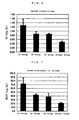
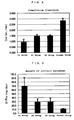
- Renal failure model rats induced by subtotal nephrectomy of 3/4 kidney were used to carry out a test for confirming pharmacological effects on a renal failure by an administration of the adsorbent for oral administration of the present invention.
- the adsorbents prepared in Examples 1 and 3 according to the present invention were used as a sample.
- the rats were divided into a control group (6 rats; hereinafter referred to as a C1 group), a group to which the adsorbent prepared in Example 1 was administered (6 rats; hereinafter referred to as a P1 group), and a group to which the adsorbent prepared in Example 3 was administered (6 rats; hereinafter referred to as a P2 group), so that there was no major imbalance therebetween.
- a powdery feed was administered to the rats of the groups.
- An amount of the feed given to the rats of the groups was determined on the basis of an average amount of feed taken by the rats of the C1 group for 2 or 3 days.
- a mixed feed containing 5% by weight of the adsorbent for oral administration in the same powdery feed as that administered to the C1 group was administered to the rats of the P1 and P2 groups.
- serum creatinine, urea-nitrogen, urinary creatinine, creatinine clearance, and an amount of protein excreted were measured. Further, a same test was carried out for six normal rats in which subtotal nephrectomy was not conducted (normal group).
- the adsorbent for oral administration of the present invention can inhibit a progress of a chronic renal failure, improve a chronic renal failure, prevent a renal hypofunction, or maintain a renal function.
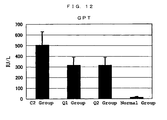
- Hepatitis model rats induced by carbon tetrachloride were used to carry out a test for confirming pharmacological effects on a liver disease by an administration of the adsorbent for oral administration of the present invention.
- the adsorbents prepared in Examples 1 and 3 according to the present invention were used as a sample.
- carbon tetrachloride was subcutaneously administered at an amount of 12 mg/kg twice a week to Sprague-Dauley rats (produced by Clea Japan, Inc.; male; 7 weeks old), continuously for about 4 months until the end of the test for confirming pharmacological effects.
- the rats were divided into a control group (6 rats; hereinafter referred to as a C2 group), a group to which the adsorbent prepared in Example 1 was administered (6 rats; hereinafter referred to as a Q1 group), and a group to which the adsorbent prepared in Example 3 was administered (6 rats; hereinafter referred to as a Q2 group), so that there was no major imbalance therebetween with respect to pathosis.
- a powdery feed was administered to the rats of the groups.
- An amount of the feed given to the rats of the groups was determined on the basis of an average amount of feed taken by the rats of the C2 group for 2 or 3 days.
- a mixed feed containing 5 % by weight of the adsorbent for oral administration in the same powdery feed as that administered to the C2 group was administered to the rats of the Q1 and Q2 groups for 2 months after the division to the groups. Further, a same test was carried out for six normal rats to which carbon tetrachloride was not administered (normal group).
- ICG Indocyanine green
- GOT glutamic-oxaloacetic transaminase
- GPT glutamic-pyruvic transaminase
- the adsorbent for oral administration of the present invention can improve a deterioration of liver functions.
- the adsorbent for oral administration according to the present invention has a specific pore structure, and thus, has an excellent selective adsorbability, that is, an excellent adsorbability of harmful toxins in an intestine, together with a low adsorbability of useful substances such as digestive enzymes or the like in a body, when orally administered, and the selective adsorbability is remarkably improved in comparison with that of the conventional adsorbent for oral administration.
- the adsorbent for oral administration according to the present invention can be used as an adsorbent for oral administration for treating or preventing a renal disease, or an adsorbent for treating or preventing a liver disease.
- renal disease there may be mentioned, for example, chronic renal failure, acute renal failure, chronic pyelonephritis, acute pyelonephritis, chronic nephritis, acute nephritic syndrome, acute progressive nephritic syndrome, chronic nephritic syndrome, nephrotic syndrome, nephrosclerosis, interstitial nephritis, tubulopathy, lipoid nephrosis, diabetic nephropathy, renovascular hypertension, or hypertension syndrome, or secondary renal diseases caused by these primary diseases, or a light renal failure before a dialysis therapy, and may be used in an improvement of a light renal failure before a dialysis therapy or a disease condition for a patient during a dialysis therapy (see “Clinical Nephrology", Asakura-shoten, Nishio Honda, Kenkichi Koiso, and Kiyoshi Kurokawa, 1990; and "Nephrology" Ig
- liver disease there may be mentioned, for example, fulminant hepatitis, chronic hepatitis, viral hepatitis, alcoholic hepatitis, hepatic fibrosis, liver cirrhosis, hepatic cancer, autoimmune hepatitis, drug allergic hepatopathy, primary biliary cirrhosis, tremor, encephalopathia, dysbolism, or dysfunction.
- the porous spherical carbonaceous substance can be used in a treatment of a disease caused by toxic substances in a body, such as psychosis.
Landscapes
- Health & Medical Sciences (AREA)
- Life Sciences & Earth Sciences (AREA)
- Veterinary Medicine (AREA)
- Chemical & Material Sciences (AREA)
- Public Health (AREA)
- General Health & Medical Sciences (AREA)
- Medicinal Chemistry (AREA)
- Animal Behavior & Ethology (AREA)
- Pharmacology & Pharmacy (AREA)
- Nuclear Medicine, Radiotherapy & Molecular Imaging (AREA)
- General Chemical & Material Sciences (AREA)
- Chemical Kinetics & Catalysis (AREA)
- Organic Chemistry (AREA)
- Inorganic Chemistry (AREA)
- Epidemiology (AREA)
- Engineering & Computer Science (AREA)
- Bioinformatics & Cheminformatics (AREA)
- Urology & Nephrology (AREA)
- Toxicology (AREA)
- Gastroenterology & Hepatology (AREA)
- Pharmaceuticals Containing Other Organic And Inorganic Compounds (AREA)
- Medicines Containing Material From Animals Or Micro-Organisms (AREA)
- Solid-Sorbent Or Filter-Aiding Compositions (AREA)
- Carbon And Carbon Compounds (AREA)
- Medicines That Contain Protein Lipid Enzymes And Other Medicines (AREA)
Applications Claiming Priority (3)
| Application Number | Priority Date | Filing Date | Title |
|---|---|---|---|
| JP2002320254 | 2002-11-01 | ||
| JP2002320254 | 2002-11-01 | ||
| PCT/JP2003/014011 WO2004039380A1 (ja) | 2002-11-01 | 2003-10-31 | 経口投与用吸着剤 |
Publications (3)
| Publication Number | Publication Date |
|---|---|
| EP1547605A1 true EP1547605A1 (de) | 2005-06-29 |
| EP1547605A4 EP1547605A4 (de) | 2005-11-02 |
| EP1547605B1 EP1547605B1 (de) | 2008-08-20 |
Family
ID=32211847
Family Applications (1)
| Application Number | Title | Priority Date | Filing Date |
|---|---|---|---|
| EP03770094A Expired - Lifetime EP1547605B1 (de) | 2002-11-01 | 2003-10-31 | Adsorbentien zur oralen verabreichung |
Country Status (12)
| Country | Link |
|---|---|
| EP (1) | EP1547605B1 (de) |
| JP (1) | JP3672200B2 (de) |
| KR (1) | KR100680449B1 (de) |
| CN (1) | CN100558370C (de) |
| AT (1) | ATE405278T1 (de) |
| AU (1) | AU2003280689A1 (de) |
| CA (1) | CA2504514C (de) |
| DE (1) | DE60323112D1 (de) |
| ES (1) | ES2312825T3 (de) |
| RU (1) | RU2306941C2 (de) |
| TW (1) | TWI341732B (de) |
| WO (1) | WO2004039380A1 (de) |
Cited By (6)
| Publication number | Priority date | Publication date | Assignee | Title |
|---|---|---|---|---|
| US8491892B2 (en) | 2005-12-19 | 2013-07-23 | Blucher Gmbh | Activated carbon for medical use |
| US8865617B2 (en) | 2010-08-02 | 2014-10-21 | Asahi Organic Chemicals Industry Co., Ltd. | Orally administered adsorbent, method of producing the same, and drug produced by using the same |
| EP2959908A4 (de) * | 2013-02-22 | 2016-08-03 | Kureha Corp | Oral verabreichtes adsorbens, therapeutisches mittel gegen nierenerkrankungen und therapeutisches mittel gegen lebererkrankungen |
| US9682046B2 (en) | 2011-10-07 | 2017-06-20 | Teijin Pharma Limited | Adsorbents for oral administration |
| US9717755B2 (en) | 2010-04-01 | 2017-08-01 | Cytosorbents Corporation | Method of treating inflammation |
| US9877987B2 (en) | 2013-02-22 | 2018-01-30 | Kureha Corporation | Orally administered adsorbent, therapeutic agent for renal disease, and therapeutic agent for liver disease |
Families Citing this family (8)
| Publication number | Priority date | Publication date | Assignee | Title |
|---|---|---|---|---|
| US7651974B2 (en) | 2002-11-01 | 2010-01-26 | Kureha Chemical Industry Co., Ltd. | Adsorbent for oral administration |
| KR101135260B1 (ko) | 2003-10-22 | 2012-04-12 | 가부시키가이샤 쿠레하 | 경구투여용 흡착제, 신질환 치료 또는 예방제 및 간질환치료 또는 예방제 |
| TW200626163A (en) * | 2004-09-22 | 2006-08-01 | Kureha Corp | Agent for treating or preventing diabetic neuropathy |
| DE202006016898U1 (de) * | 2006-10-12 | 2007-11-22 | BLüCHER GMBH | Hochleistungsadsorbentien auf der Basis von Aktivkohle mit hoher Mikroporosität |
| JP5376592B2 (ja) * | 2009-10-15 | 2013-12-25 | 産協企業有限股▲ふん▼公司 | 球形活性炭及びその製造方法 |
| CN103491949B (zh) | 2011-03-04 | 2017-02-08 | 株式会社吴羽 | 片剂型的口服给药用组合物及其制造方法 |
| KR101924201B1 (ko) * | 2014-02-07 | 2018-12-03 | 대원제약주식회사 | 강도가 증가된 경구 투여형 의약용 흡착제 |
| JP2015151324A (ja) * | 2014-02-18 | 2015-08-24 | 住友電気工業株式会社 | 活性炭及び活性炭の製造方法 |
Family Cites Families (10)
| Publication number | Priority date | Publication date | Assignee | Title |
|---|---|---|---|---|
| JPS565313A (en) * | 1979-06-26 | 1981-01-20 | Kureha Chem Ind Co Ltd | Detoxificating spherical active carbon and preparing the same |
| JPS5489010A (en) * | 1977-12-27 | 1979-07-14 | Kureha Chem Ind Co Ltd | Spherical activated charcoal antidote |
| JPS5673542A (en) * | 1979-11-22 | 1981-06-18 | Kureha Chem Ind Co Ltd | Adsorbent |
| JPS58213613A (ja) * | 1982-06-03 | 1983-12-12 | Sumitomo Bakelite Co Ltd | 球型活性炭の製造方法 |
| JP3518878B2 (ja) * | 1992-10-29 | 2004-04-12 | 呉羽化学工業株式会社 | 抗ネフローゼ症候群剤 |
| CA2162086A1 (en) * | 1994-11-15 | 1996-05-16 | Michihito Ise | Agent for reducing nephrotoxicity due to medicine |
| JPH11292770A (ja) * | 1998-04-10 | 1999-10-26 | Kureha Chem Ind Co Ltd | マトリックス形成亢進抑制剤 |
| JP4230005B2 (ja) * | 1998-04-10 | 2009-02-25 | 株式会社クレハ | 活性型ビタミンd代謝の改善剤 |
| JP3522708B2 (ja) * | 2001-04-11 | 2004-04-26 | 呉羽化学工業株式会社 | 経口投与用吸着剤 |
| JP3585043B2 (ja) * | 2003-01-22 | 2004-11-04 | メルク・ホエイ株式会社 | 医薬用吸着剤及びその製法 |
-
2003
- 2003-10-31 KR KR1020047018248A patent/KR100680449B1/ko not_active Expired - Fee Related
- 2003-10-31 AT AT03770094T patent/ATE405278T1/de not_active IP Right Cessation
- 2003-10-31 ES ES03770094T patent/ES2312825T3/es not_active Expired - Lifetime
- 2003-10-31 AU AU2003280689A patent/AU2003280689A1/en not_active Abandoned
- 2003-10-31 RU RU2005116683/15A patent/RU2306941C2/ru not_active IP Right Cessation
- 2003-10-31 TW TW092130448A patent/TWI341732B/zh not_active IP Right Cessation
- 2003-10-31 DE DE60323112T patent/DE60323112D1/de not_active Expired - Lifetime
- 2003-10-31 WO PCT/JP2003/014011 patent/WO2004039380A1/ja not_active Ceased
- 2003-10-31 CA CA002504514A patent/CA2504514C/en not_active Expired - Fee Related
- 2003-10-31 JP JP2004548106A patent/JP3672200B2/ja not_active Expired - Fee Related
- 2003-10-31 EP EP03770094A patent/EP1547605B1/de not_active Expired - Lifetime
- 2003-10-31 CN CNB2003801004391A patent/CN100558370C/zh not_active Expired - Fee Related
Cited By (10)
| Publication number | Priority date | Publication date | Assignee | Title |
|---|---|---|---|---|
| US8491892B2 (en) | 2005-12-19 | 2013-07-23 | Blucher Gmbh | Activated carbon for medical use |
| US9717755B2 (en) | 2010-04-01 | 2017-08-01 | Cytosorbents Corporation | Method of treating inflammation |
| US10034894B2 (en) | 2010-04-01 | 2018-07-31 | Cytosorbents Corporation | Method of treating inflammation |
| US10946040B2 (en) | 2010-04-01 | 2021-03-16 | Cytosorbents Corporation | Method of treating inflammation |
| US10967001B2 (en) | 2010-04-01 | 2021-04-06 | Cytosorbents Corporation | Method of treating inflammation |
| US11058715B2 (en) | 2010-04-01 | 2021-07-13 | Cytosorbents Corporation | Method of treating inflammation |
| US8865617B2 (en) | 2010-08-02 | 2014-10-21 | Asahi Organic Chemicals Industry Co., Ltd. | Orally administered adsorbent, method of producing the same, and drug produced by using the same |
| US9682046B2 (en) | 2011-10-07 | 2017-06-20 | Teijin Pharma Limited | Adsorbents for oral administration |
| EP2959908A4 (de) * | 2013-02-22 | 2016-08-03 | Kureha Corp | Oral verabreichtes adsorbens, therapeutisches mittel gegen nierenerkrankungen und therapeutisches mittel gegen lebererkrankungen |
| US9877987B2 (en) | 2013-02-22 | 2018-01-30 | Kureha Corporation | Orally administered adsorbent, therapeutic agent for renal disease, and therapeutic agent for liver disease |
Also Published As
| Publication number | Publication date |
|---|---|
| ES2312825T3 (es) | 2009-03-01 |
| CA2504514A1 (en) | 2004-05-13 |
| TW200413005A (en) | 2004-08-01 |
| RU2005116683A (ru) | 2006-01-20 |
| ATE405278T1 (de) | 2008-09-15 |
| CN100558370C (zh) | 2009-11-11 |
| EP1547605A4 (de) | 2005-11-02 |
| EP1547605B1 (de) | 2008-08-20 |
| RU2306941C2 (ru) | 2007-09-27 |
| CN1691948A (zh) | 2005-11-02 |
| DE60323112D1 (de) | 2008-10-02 |
| TWI341732B (en) | 2011-05-11 |
| AU2003280689A1 (en) | 2004-05-25 |
| CA2504514C (en) | 2008-08-12 |
| KR20050042263A (ko) | 2005-05-06 |
| JPWO2004039380A1 (ja) | 2006-02-23 |
| WO2004039380A1 (ja) | 2004-05-13 |
| HK1082924A1 (zh) | 2006-06-23 |
| KR100680449B1 (ko) | 2007-02-08 |
| JP3672200B2 (ja) | 2005-07-13 |
Similar Documents
| Publication | Publication Date | Title |
|---|---|---|
| US8309130B2 (en) | Adsorbent for oral administration | |
| EP1500397B1 (de) | Adsorptionsmittel für die orale verabreichung, mittel zur behandlung oder prävention von nierenerkrankungen und mittel zur behandlung oder prävention von lebererkrankungen | |
| EP1249241B9 (de) | Adsorptionsmittel in oraler Darreichungsform | |
| US6830753B2 (en) | Adsorbent for oral administration | |
| CA2504514C (en) | Adsorbent for oral administration | |
| US20050112114A1 (en) | Adsorbent for oral administration, and agent for treating or preventing renal or liver disease | |
| US8357366B2 (en) | Adsorbent for an oral administration, and agent for treating or preventing renal or liver disease | |
| EP1407772B9 (de) | Pharmazeutische Zubereitung enthaltend poröse sphärische kohlenstoffhaltige Teilchen und deren Verwendung zur Behandlung von Leber- und Nierenerkrankungen | |
| JP4311923B2 (ja) | 経口投与用肝疾患治療又は予防剤 | |
| JP2006070047A (ja) | 経口投与用吸着剤、並びに腎疾患治療又は予防剤、及び肝疾患治療又は予防剤 | |
| JP2006143736A (ja) | 経口投与用吸着剤、並びに腎疾患治療又は予防剤、及び肝疾患治療又は予防剤 | |
| JP2006096769A (ja) | 経口投与用吸着剤、並びに腎疾患治療又は予防剤、及び肝疾患治療又は予防剤 | |
| HK1082924B (en) | Adsorbents for oral administration | |
| JP2006077028A (ja) | 経口投与用吸着剤、並びに腎疾患治療又は予防剤、及び肝疾患治療又は予防剤 | |
| JP2006328085A (ja) | 経口投与用吸着剤、並びに腎疾患治療又は予防剤、及び肝疾患治療又は予防剤 | |
| AU2003204621A1 (en) | Adsorbent for oral administration | |
| HK1100510A (en) | Adsorbent for oral administration, therapeutic or preventive agent for kidney disease, and therapeutic or preventive agent for liver disease | |
| JP2006328085A5 (de) |
Legal Events
| Date | Code | Title | Description |
|---|---|---|---|
| PUAI | Public reference made under article 153(3) epc to a published international application that has entered the european phase |
Free format text: ORIGINAL CODE: 0009012 |
|
| 17P | Request for examination filed |
Effective date: 20040924 |
|
| AK | Designated contracting states |
Kind code of ref document: A1 Designated state(s): AT BE BG CH CY CZ DE DK EE ES FI FR GB GR HU IE IT LI LU MC NL PT RO SE SI SK TR |
|
| AX | Request for extension of the european patent |
Extension state: AL LT LV MK |
|
| A4 | Supplementary search report drawn up and despatched |
Effective date: 20050920 |
|
| DAX | Request for extension of the european patent (deleted) | ||
| RAP1 | Party data changed (applicant data changed or rights of an application transferred) |
Owner name: KUREHA CORPORATION |
|
| 17Q | First examination report despatched |
Effective date: 20051228 |
|
| GRAP | Despatch of communication of intention to grant a patent |
Free format text: ORIGINAL CODE: EPIDOSNIGR1 |
|
| GRAS | Grant fee paid |
Free format text: ORIGINAL CODE: EPIDOSNIGR3 |
|
| GRAA | (expected) grant |
Free format text: ORIGINAL CODE: 0009210 |
|
| AK | Designated contracting states |
Kind code of ref document: B1 Designated state(s): AT BE BG CH CY CZ DE DK EE ES FI FR GB GR HU IE IT LI LU MC NL PT RO SE SI SK TR |
|
| REG | Reference to a national code |
Ref country code: GB Ref legal event code: FG4D |
|
| REG | Reference to a national code |
Ref country code: CH Ref legal event code: EP |
|
| REG | Reference to a national code |
Ref country code: IE Ref legal event code: FG4D |
|
| REF | Corresponds to: |
Ref document number: 60323112 Country of ref document: DE Date of ref document: 20081002 Kind code of ref document: P |
|
| PG25 | Lapsed in a contracting state [announced via postgrant information from national office to epo] |
Ref country code: NL Free format text: LAPSE BECAUSE OF FAILURE TO SUBMIT A TRANSLATION OF THE DESCRIPTION OR TO PAY THE FEE WITHIN THE PRESCRIBED TIME-LIMIT Effective date: 20080820 |
|
| PG25 | Lapsed in a contracting state [announced via postgrant information from national office to epo] |
Ref country code: AT Free format text: LAPSE BECAUSE OF FAILURE TO SUBMIT A TRANSLATION OF THE DESCRIPTION OR TO PAY THE FEE WITHIN THE PRESCRIBED TIME-LIMIT Effective date: 20080820 Ref country code: FI Free format text: LAPSE BECAUSE OF FAILURE TO SUBMIT A TRANSLATION OF THE DESCRIPTION OR TO PAY THE FEE WITHIN THE PRESCRIBED TIME-LIMIT Effective date: 20080820 Ref country code: SI Free format text: LAPSE BECAUSE OF FAILURE TO SUBMIT A TRANSLATION OF THE DESCRIPTION OR TO PAY THE FEE WITHIN THE PRESCRIBED TIME-LIMIT Effective date: 20080820 |
|
| REG | Reference to a national code |
Ref country code: ES Ref legal event code: FG2A Ref document number: 2312825 Country of ref document: ES Kind code of ref document: T3 |
|
| PG25 | Lapsed in a contracting state [announced via postgrant information from national office to epo] |
Ref country code: BE Free format text: LAPSE BECAUSE OF FAILURE TO SUBMIT A TRANSLATION OF THE DESCRIPTION OR TO PAY THE FEE WITHIN THE PRESCRIBED TIME-LIMIT Effective date: 20080820 |
|
| PG25 | Lapsed in a contracting state [announced via postgrant information from national office to epo] |
Ref country code: BG Free format text: LAPSE BECAUSE OF FAILURE TO SUBMIT A TRANSLATION OF THE DESCRIPTION OR TO PAY THE FEE WITHIN THE PRESCRIBED TIME-LIMIT Effective date: 20081120 Ref country code: DK Free format text: LAPSE BECAUSE OF FAILURE TO SUBMIT A TRANSLATION OF THE DESCRIPTION OR TO PAY THE FEE WITHIN THE PRESCRIBED TIME-LIMIT Effective date: 20080820 |
|
| PG25 | Lapsed in a contracting state [announced via postgrant information from national office to epo] |
Ref country code: RO Free format text: LAPSE BECAUSE OF FAILURE TO SUBMIT A TRANSLATION OF THE DESCRIPTION OR TO PAY THE FEE WITHIN THE PRESCRIBED TIME-LIMIT Effective date: 20080820 Ref country code: PT Free format text: LAPSE BECAUSE OF FAILURE TO SUBMIT A TRANSLATION OF THE DESCRIPTION OR TO PAY THE FEE WITHIN THE PRESCRIBED TIME-LIMIT Effective date: 20090120 Ref country code: MC Free format text: LAPSE BECAUSE OF NON-PAYMENT OF DUE FEES Effective date: 20081031 Ref country code: CZ Free format text: LAPSE BECAUSE OF FAILURE TO SUBMIT A TRANSLATION OF THE DESCRIPTION OR TO PAY THE FEE WITHIN THE PRESCRIBED TIME-LIMIT Effective date: 20080820 Ref country code: SK Free format text: LAPSE BECAUSE OF FAILURE TO SUBMIT A TRANSLATION OF THE DESCRIPTION OR TO PAY THE FEE WITHIN THE PRESCRIBED TIME-LIMIT Effective date: 20080820 |
|
| REG | Reference to a national code |
Ref country code: CH Ref legal event code: PL |
|
| PLBE | No opposition filed within time limit |
Free format text: ORIGINAL CODE: 0009261 |
|
| STAA | Information on the status of an ep patent application or granted ep patent |
Free format text: STATUS: NO OPPOSITION FILED WITHIN TIME LIMIT |
|
| REG | Reference to a national code |
Ref country code: IE Ref legal event code: MM4A |
|
| 26N | No opposition filed |
Effective date: 20090525 |
|
| PG25 | Lapsed in a contracting state [announced via postgrant information from national office to epo] |
Ref country code: EE Free format text: LAPSE BECAUSE OF FAILURE TO SUBMIT A TRANSLATION OF THE DESCRIPTION OR TO PAY THE FEE WITHIN THE PRESCRIBED TIME-LIMIT Effective date: 20080820 |
|
| PG25 | Lapsed in a contracting state [announced via postgrant information from national office to epo] |
Ref country code: IE Free format text: LAPSE BECAUSE OF NON-PAYMENT OF DUE FEES Effective date: 20081031 Ref country code: CH Free format text: LAPSE BECAUSE OF NON-PAYMENT OF DUE FEES Effective date: 20081031 Ref country code: LI Free format text: LAPSE BECAUSE OF NON-PAYMENT OF DUE FEES Effective date: 20081031 |
|
| PG25 | Lapsed in a contracting state [announced via postgrant information from national office to epo] |
Ref country code: SE Free format text: LAPSE BECAUSE OF FAILURE TO SUBMIT A TRANSLATION OF THE DESCRIPTION OR TO PAY THE FEE WITHIN THE PRESCRIBED TIME-LIMIT Effective date: 20081120 |
|
| PG25 | Lapsed in a contracting state [announced via postgrant information from national office to epo] |
Ref country code: LU Free format text: LAPSE BECAUSE OF NON-PAYMENT OF DUE FEES Effective date: 20081031 Ref country code: HU Free format text: LAPSE BECAUSE OF FAILURE TO SUBMIT A TRANSLATION OF THE DESCRIPTION OR TO PAY THE FEE WITHIN THE PRESCRIBED TIME-LIMIT Effective date: 20090221 Ref country code: CY Free format text: LAPSE BECAUSE OF FAILURE TO SUBMIT A TRANSLATION OF THE DESCRIPTION OR TO PAY THE FEE WITHIN THE PRESCRIBED TIME-LIMIT Effective date: 20080820 |
|
| PG25 | Lapsed in a contracting state [announced via postgrant information from national office to epo] |
Ref country code: TR Free format text: LAPSE BECAUSE OF FAILURE TO SUBMIT A TRANSLATION OF THE DESCRIPTION OR TO PAY THE FEE WITHIN THE PRESCRIBED TIME-LIMIT Effective date: 20080820 |
|
| PG25 | Lapsed in a contracting state [announced via postgrant information from national office to epo] |
Ref country code: GR Free format text: LAPSE BECAUSE OF FAILURE TO SUBMIT A TRANSLATION OF THE DESCRIPTION OR TO PAY THE FEE WITHIN THE PRESCRIBED TIME-LIMIT Effective date: 20081121 |
|
| REG | Reference to a national code |
Ref country code: FR Ref legal event code: PLFP Year of fee payment: 13 |
|
| REG | Reference to a national code |
Ref country code: FR Ref legal event code: PLFP Year of fee payment: 14 |
|
| REG | Reference to a national code |
Ref country code: FR Ref legal event code: PLFP Year of fee payment: 15 |
|
| PGFP | Annual fee paid to national office [announced via postgrant information from national office to epo] |
Ref country code: DE Payment date: 20171019 Year of fee payment: 15 Ref country code: FR Payment date: 20171024 Year of fee payment: 15 |
|
| PGFP | Annual fee paid to national office [announced via postgrant information from national office to epo] |
Ref country code: GB Payment date: 20171019 Year of fee payment: 15 Ref country code: IT Payment date: 20171023 Year of fee payment: 15 Ref country code: ES Payment date: 20171121 Year of fee payment: 15 |
|
| REG | Reference to a national code |
Ref country code: DE Ref legal event code: R119 Ref document number: 60323112 Country of ref document: DE |
|
| GBPC | Gb: european patent ceased through non-payment of renewal fee |
Effective date: 20181031 |
|
| PG25 | Lapsed in a contracting state [announced via postgrant information from national office to epo] |
Ref country code: DE Free format text: LAPSE BECAUSE OF NON-PAYMENT OF DUE FEES Effective date: 20190501 |
|
| PG25 | Lapsed in a contracting state [announced via postgrant information from national office to epo] |
Ref country code: FR Free format text: LAPSE BECAUSE OF NON-PAYMENT OF DUE FEES Effective date: 20181031 |
|
| PG25 | Lapsed in a contracting state [announced via postgrant information from national office to epo] |
Ref country code: GB Free format text: LAPSE BECAUSE OF NON-PAYMENT OF DUE FEES Effective date: 20181031 Ref country code: IT Free format text: LAPSE BECAUSE OF NON-PAYMENT OF DUE FEES Effective date: 20181031 |
|
| REG | Reference to a national code |
Ref country code: ES Ref legal event code: FD2A Effective date: 20191204 |
|
| PG25 | Lapsed in a contracting state [announced via postgrant information from national office to epo] |
Ref country code: ES Free format text: LAPSE BECAUSE OF NON-PAYMENT OF DUE FEES Effective date: 20181101 |