EP1540451B1 - Procédé et dispositif de gestion de la consommtion d'un lecteur de disque - Google Patents
Procédé et dispositif de gestion de la consommtion d'un lecteur de disque Download PDFInfo
- Publication number
- EP1540451B1 EP1540451B1 EP03793949A EP03793949A EP1540451B1 EP 1540451 B1 EP1540451 B1 EP 1540451B1 EP 03793949 A EP03793949 A EP 03793949A EP 03793949 A EP03793949 A EP 03793949A EP 1540451 B1 EP1540451 B1 EP 1540451B1
- Authority
- EP
- European Patent Office
- Prior art keywords
- disk drive
- operating mode
- data
- power
- host
- Prior art date
- Legal status (The legal status is an assumption and is not a legal conclusion. Google has not performed a legal analysis and makes no representation as to the accuracy of the status listed.)
- Expired - Lifetime
Links
Images

Classifications
-
- G—PHYSICS
- G06—COMPUTING OR CALCULATING; COUNTING
- G06F—ELECTRIC DIGITAL DATA PROCESSING
- G06F1/00—Details not covered by groups G06F3/00 - G06F13/00 and G06F21/00
- G06F1/26—Power supply means, e.g. regulation thereof
- G06F1/32—Means for saving power
- G06F1/3203—Power management, i.e. event-based initiation of a power-saving mode
- G06F1/3234—Power saving characterised by the action undertaken
- G06F1/325—Power saving in peripheral device
- G06F1/3268—Power saving in hard disk drive
-
- G—PHYSICS
- G06—COMPUTING OR CALCULATING; COUNTING
- G06F—ELECTRIC DIGITAL DATA PROCESSING
- G06F1/00—Details not covered by groups G06F3/00 - G06F13/00 and G06F21/00
- G06F1/26—Power supply means, e.g. regulation thereof
- G06F1/32—Means for saving power
-
- G—PHYSICS
- G06—COMPUTING OR CALCULATING; COUNTING
- G06F—ELECTRIC DIGITAL DATA PROCESSING
- G06F1/00—Details not covered by groups G06F3/00 - G06F13/00 and G06F21/00
- G06F1/26—Power supply means, e.g. regulation thereof
-
- G—PHYSICS
- G06—COMPUTING OR CALCULATING; COUNTING
- G06F—ELECTRIC DIGITAL DATA PROCESSING
- G06F1/00—Details not covered by groups G06F3/00 - G06F13/00 and G06F21/00
- G06F1/26—Power supply means, e.g. regulation thereof
- G06F1/32—Means for saving power
- G06F1/3203—Power management, i.e. event-based initiation of a power-saving mode
-
- Y—GENERAL TAGGING OF NEW TECHNOLOGICAL DEVELOPMENTS; GENERAL TAGGING OF CROSS-SECTIONAL TECHNOLOGIES SPANNING OVER SEVERAL SECTIONS OF THE IPC; TECHNICAL SUBJECTS COVERED BY FORMER USPC CROSS-REFERENCE ART COLLECTIONS [XRACs] AND DIGESTS
- Y02—TECHNOLOGIES OR APPLICATIONS FOR MITIGATION OR ADAPTATION AGAINST CLIMATE CHANGE
- Y02D—CLIMATE CHANGE MITIGATION TECHNOLOGIES IN INFORMATION AND COMMUNICATION TECHNOLOGIES [ICT], I.E. INFORMATION AND COMMUNICATION TECHNOLOGIES AIMING AT THE REDUCTION OF THEIR OWN ENERGY USE
- Y02D10/00—Energy efficient computing, e.g. low power processors, power management or thermal management
Definitions
- the invention relates to a method of managing power consumption of a disk drive comprised by a device, the device further comprising a host, the host comprising a buffer memory and a host processor, the disk drive comprising a disk comprising data, and the disk drive being capable of operating in at least two operating modes, the two modes having different power consumption levels, the method comprising the step of loading data requested by the host processor from the disk drive into the buffer in a first operating mode of the disk drive having a first power consumption level.
- the invention further relates to a device comprising a disk drive and a host, the host comprising a buffer memory and a host processor, the disk drive comprising a disk comprising data; and the disk drive being capable of operating in at least two operating modes, the two modes having different power consumption levels, the host processor being conceived to load data from the disk drive into the buffer in a first operating mode of the disk drive having a first power consumption level.
- U.S. Patent 5,682,273 refers to disk drives used in portable computers that are battery-powered. In particular, it relates to such disk drives that include techniques for minimizing energy consumption.
- U.S. Patent 5,682,273 discloses a disk drive that performs power management from past disk drive access history as well as a prediction of future user demands to determine the entry and exit times of the power saving modes. This has an advantage over the current user-selectable predetermined or fixed mode entry times because the user does not know what performance and energy-consumption costs are associated with entry and exit from power saving modes.
- the time intervals for entering a power saving mode are computed on the basis of the energy break-even times and recovery times associated with the different power saving modes as explained above.
- Modem hard disk systems have an option to actively put the hard disk system in one or more power save modes. This is especially advantageous for portable devices like laptop computers.
- additional power is consumed when putting the hard disk system in a power save mode and getting the hard disk system out of the power save mode when data is requested or needs to be written. This has to be taken into account when putting the drive in a power save mode.
- the GB Patent Application 2,347,531 published September 6, 2000 for "Reducing dissipated energy in a device such as a hard-disk drive,” discloses a method of calculating the energy expected to be saved by the device when it makes a transition from a first operating mode to a second operating mode, determining the time the device should make the transition to the second operating mode using the above calculation, and causing the device to transition to its second operating mode. Both operating modes may be power saving modes.
- the energy dissipated when the device makes a transition to the second operating mode and then back to the first operating mode may be compared with the energy dissipated when the device remains in the first operating mode.
- a distribution of past command intervals may be calculated to calculate the energy expected to be saved. This may be used to calculate a response delay time with respect to the next command.
- the distribution of command intervals may be updated regularly.
- the host processor controls the processes of the electronic apparatus and therefore knows the data needs of the host. In this way, the host processor knows when all data in the buffer memory has been processed and when new data is needed. With this information and the information on what amount of power is consumed when switching from the first operating mode to the second operating mode and vice versa, calculations can be made whether it is advantageous to switch to the second operating mode or not. Letting this process be controlled by the host processor instead of by the disk drive is advantageous because the host does know the data requirements of the electronic apparatus and therefore knows when data will be requested. This makes prediction obsolete and is more reliable.
- An embodiment of the invention is characterized in that the data request comprises a request for multiple files.
- buffer memory is filled up to a higher level than when only one file is read. In this way, more time will elapse before new data is needed from the disk and more power can be saved.
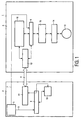
- Figure 1 shows a block diagram with the various elements for the power reduction of a consumer electronics system 1.
- the consumer electronics system 1 comprises a host 2 and a disk drive system 3 that are connected by an interface 4.
- the power source 5 belongs to the host 2 and supplies the microcontroller 6 in the storage system 3 via a bus 7.
- the power source 5 also supplies the microprocessor 8 via another bus 9.
- Any operation begins in the host 2.
- the host 2 becomes aware that a data transfer is required to or from the storage system 3, a region of host RAM 10 is reserved for the data transfer.
- the host 2 sets up a table in the DMA (Direct Memory Access) controller 11 describing the host memory region that was reserved.
- the final host operation is to inform the storage system 3 of the requested data operation using a standard protocol over the interface 4.
- DMA Direct Memory Access
- DMA controller 12 of the storage system 3 handles the communication with the host 2.
- the storage system 3 attempts to perform the required data transfer in the shortest possible time and ensures that the data is read from or written to the reserved memory region of host RAM 10.
- the information is stored on a magnetic disk 13.
- the signal is read by using a corresponding head and amplified by the pre-amplifier 14.
- the read/write channel 15 processes the signals so that the risk of an error is minimized.
- the microcontroller 6 in the storage system 3 controls a servo-system (not shown) controlling the head and ensures that data is correctly transmitted and received over the common interface 4.
- the microcontroller 6 also uses buffering to improve average performance using a RAM 16. Finally, the microcontroller is also responsible for correcting any data errors as much as possible.
- the host 2 may be a general purpose computer or an embedded system, such as a consumer electronics device. The host 2 uses the storage system 3 to preserve information across power removal.
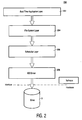
- Figure 2 is an overview of the system showing the disk drive system 3 and a software stack 200 running on the host system 2.
- the software comprises a real-time application layer 202, a file system layer 204, a scheduler layer 206 and an IDE (integrated drive electronics interface) driver 208.
- the decision to change power modes is made in the software-based request scheduler layer running in the memory on the processor of the host 2.
- the scheduler layer 206 has the property of being aware of both real-time data requirements and power usage.
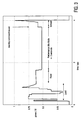
- Figure 3 shows the power trace measured on a microdrive that uses a prior art method for managing the power consumption.
- the trace begins and ends with the power consumption in the standby mode. After a few milliseconds, the microdrive exits the standby mode and the power trace for loading and reading is drawn. According to the prior art, the microdrive then remains fully active in a so-called performance idle mode, which means that the drive can respond immediately to the next incoming request.
- the trace shows that spinning the disk still draws quite a lot of energy from the power supply.
- the standby command is issued internally in the disk drive after 2 seconds. When the internal standby command is issued, the unloading process begins and afterwards the standby mode is reached. In this example, the standby mode corresponds to approximately 0.06 W.
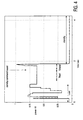
- the power trace of Figure 4 shows much less power consumption for the same processes.
- the power trace begins in the standby mode that is exited for the loading and reading process.
- a reading request-the standby command is issued and the unloading process is executed immediately after the reading process.
- the loading, the reading and the unloading processes themselves consume the same power, either with the prior art method or the inventive method. Therefore, putting the drive in the standby mode for a too short period may take more energy than keeping it in the idle mode when a data request is received too soon by the drive.
- the storage system in this example the microdrive, does not wait in an active performance idle mode before entering the standby mode.
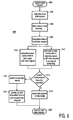
- a procedure to calculate whether to enter the disk drive system 3 in a standby mode after a data request or not is depicted in Figure 5, showing a flowchart 500 to visualize an embodiment of the method according to the invention.
- the procedure starts at a starting point 502 by the reception of a data request.
- the host 2 reads data from the disk drive system 3.
- the data read from the disk drive system 3 is stored in the host 2 in the host RAM 10 in a subsequent step 506.
- the microprocessor 8 determines the period of time to lapse until the microcontroller needs more data and a subsequent request for data is issued.
- the need for data is known over time. This may be used advantageously by calculating whether the drive system 3 should be put in the power down mode or should be left in the idle mode to save most energy.
- this is done by determining the data rate of processing the requested data.
- the requested data is an MP3 file
- the data is streamed from the host RAM 10 at a continuous bit rate.
- the amount of data in the host RAM 10 is known, as well as the bit rate of processing, it is known how much time it will take until the data in the host RAM is processed and a subsequent request for data is issued.
- the micro-controller 8 calculates the amount of power that will be consumed in the period of time determined in the previous step 508 by the disk drive system 3 when the disk drive system 3 is put in the standby mode during the period of time determined in the previous step 508.
- the power consumed during unloading and loading the head and spinning the disk down and up are added to this value, because these actions have to be performed as well when switching the disk drive system 3 in the standby mode. Consequently, the amount of power calculated in the step 510 equals the power consumed in the periods "load", "unload” and "standby” in Figure 4.
- the micro-controller calculates the amount of power that will be consumed by the disk drive system 3 in the period of time determined in the step 508 when the disk drive system 3 is left idle in the period of time determined in the step 508.
- the values determined in the step 510 and the step 512 are compared.
- the disk drive system 3 is set to the standby mode when the amount of power determined in the step 510 is larger than the amount of power determined in the step 512.
- the disk drive system 3 is left in the idle mode. In other words, the disk drive system 3 is set to or left in the most efficient mode.
- the procedure proceeds to a step 520 to power up the disk drive system 3 right before the next data request is expected. In this way, no valuable time is consumed by starting up the disk drive system 3 when the actual request arrives: in this way, the request can be served directly when it arrives at the expected time.
- the disk When the step 520 is omitted in the procedure, the disk has to be spun up at the moment of the request, which will be done automatically. As mentioned, this will provide a delay in the data transfer.
- the procedure ends in a terminator 522, waiting for the next data request.
- the procedure is most effective when as much data as possible is read in the step 504, because this will mean that more time will lapse until the next data request occurs. In this way, the drive system 3 can be put to standby for a longer time. Therefore, it is most efficient to read multiple files in one read step.
- the procedure may be executed by the circuit according to the invention, of which the host 2 is an embodiment.
- the host 2 may be comprised in a consumer electronics apparatus 600 as shown in Figure 6.
- a preferred embodiment of the apparatus according to the invention is a portable MP3 player.
- the consumer apparatus 600 comprises the host 2 ( Figure 1) and means for receiving a computer-readable disk memory 610.
- the computer-readable disk memory 610 is a hard disk drive in the Compact Flash format, known as a microdrive, which can be inserted in a slot 630.
- the computer-readable disk memory 610 is a small form factor optical disc.
- the invention may be summarized as follows:
- Consumer electronic devices that run on a battery or an accumulator- i.e particularly portable applications such as mobile phones, laptops or MPEG players or recorders-require the management of power consumption. They consist essentially of a host and a storage medium like a disk or means for receiving a storage medium like a disk drive that are coupled with an interface. Power management is very important because long battery life enhances user convenience. According to the invention, it is determined whether it is more efficient either to leave the disk drive in the idle mode or to switch the drive to standby until the next data request appears. The disk-drive is entered into the most efficient power mode. The time until the next request is determined by the host.
Landscapes
- Engineering & Computer Science (AREA)
- Theoretical Computer Science (AREA)
- Physics & Mathematics (AREA)
- General Engineering & Computer Science (AREA)
- General Physics & Mathematics (AREA)
- Power Sources (AREA)
- Signal Processing For Digital Recording And Reproducing (AREA)
- Recording Measured Values (AREA)
Claims (8)
- Procédé de gestion de la consommation d'énergie d'un lecteur de disque (3) contenu par un dispositif (600), le dispositif comprenant de plus un hébergeur (2), l'hébergeur comprenant une mémoire tampon (10) et un processeur d'hébergement (8) ; le lecteur de disque comprenant un disque mémoire (13) contenant des données ; et le lecteur de disque étant capable de fonctionner dans au moins deux modes de fonctionnement, les deux modes ayant différents niveaux de consommation d'énergie, le procédé comprenant l'étape visant à charger les données requises par le processeur d'hébergement, depuis le lecteur de disque vers la mémoire tampon dans un premier mode de fonctionnement du lecteur de disque ayant un premier niveau de consommation d'énergie ; le procédé comprend en plus les étapes suivantes :a) déterminer une période de temps devant s'écouler à partir du moment où les données requises sont chargées dans la mémoire tampon, jusqu'à ce que les données lues dans la mémoire tampon de l'étape précédente soient traitées ;b) déterminer une première quantité d'énergie qui sera consommée par le lecteur de disque pendant la période de temps où le lecteur de disque est laissé dans un premier mode de fonctionnement pendant ladite période de temps ;c) déterminer une seconde quantité d'énergie qui sera consommée par le lecteur de disque : i) pendant la période de temps où le lecteur de disque est mis dans le second mode de fonctionnement, ayant un second niveau de consommation d'énergie, le second niveau d'énergie étant plus petit que le premier niveau de consommation d'énergie, etii) pour commuter du premier mode de fonctionnement vers le second mode de fonctionnement, etiii) pour commuter du second mode de fonctionnement vers le premier mode de fonctionnement ; etd) mettre le lecteur de disque dans le second mode de fonctionnement lorsque la seconde quantité d'énergie est moindre que la première quantité d'énergie.
- Procédé selon la revendication 1, dans lequel la détermination de ladite période de temps comprend les étapes suivantes :a) déterminer une cadence de traitement à laquelle l'hébergeur traite les données stockées dans la mémoire tamponb) déterminer une quantité de données stockées dans la mémoire tamponc) multiplier la cadence de traitement par la quantité de données stockées dans la mémoire tampon.
- Procédé selon la revendication 1, dans lequel la demande de données comprend une requête pour des fichiers multiples.
- Procédé selon la revendication 2, dans lequel les données demandées comprennent au moins une partie du flux de données audiovisuelles et la cadence de traitement est la cadence de transmission du flux de données audiovisuelles.
- Procédé selon la revendication 1, dans lequel le disque mémoire est un disque optique.
- Procédé selon la revendication 1, dans lequel le disque mémoire est un disque dur.
- Procédé selon la revendication 1, comprenant en outre l'étape de commuter du second mode de fonctionnement vers le premier mode de fonctionnement lorsque la période de temps s'est écoulée.
- Dispositif (600) comprenant un lecteur de disque (3) et un hébergeur (2), l'hébergeur comprenant une mémoire tampon (10) et un processeur d'hébergement (8) ; le lecteur de disque comprenant un disque (13) contenant des données ; et le lecteur de disque étant capable de fonctionner dans au moins deux modes de fonctionnement, les deux modes ayant différents niveaux de consommation d'énergie, le processeur d'hébergement étant conçu pour charger des données depuis le lecteur de disque vers la mémoire tampon, dans un premier mode de fonctionnement du lecteur de disque ayant un premier niveau de consommation d'énergie; le processeur d'hébergement est de plus conçu pour :a) déterminer une période de temps jusqu'à ce que les données dans la mémoire tampon soient traitées ;b) déterminer une première quantité d'énergie qui sera consommée par le lecteur de disque pendant la période de temps où le lecteur de disque est laissé dans un premier mode de fonctionnement pendant ladite période de temps ;c) déterminer une seconde quantité d'énergie qui sera consommée par le lecteur de disque :i) pendant la période de temps où le lecteur de disque est mis dans le second mode de fonctionnement, ayant un second niveau de consommation d'énergie, le second niveau d'énergie étant plus petit que le premier niveau de consommation d'énergie, etii) pendant la commutation depuis le premier mode de fonctionnement vers le second mode de fonctionnement, etiii) pendant la commutation depuis le second mode de fonctionnement vers le premier mode de fonctionnement ; etd) mettre le lecteur de disque dans le second mode de fonctionnement lorsque la seconde quantité d'énergie est moindre que la première quantité d'énergie.
Priority Applications (1)
| Application Number | Priority Date | Filing Date | Title |
|---|---|---|---|
| EP03793949A EP1540451B1 (fr) | 2002-09-09 | 2003-08-08 | Procédé et dispositif de gestion de la consommtion d'un lecteur de disque |
Applications Claiming Priority (4)
| Application Number | Priority Date | Filing Date | Title |
|---|---|---|---|
| EP02078655 | 2002-09-09 | ||
| EP02078655 | 2002-09-09 | ||
| PCT/IB2003/003632 WO2004023279A2 (fr) | 2002-09-09 | 2003-08-08 | Procede et dispositif de gestion de la consommation d'un lecteur de disque |
| EP03793949A EP1540451B1 (fr) | 2002-09-09 | 2003-08-08 | Procédé et dispositif de gestion de la consommtion d'un lecteur de disque |
Publications (2)
| Publication Number | Publication Date |
|---|---|
| EP1540451A2 EP1540451A2 (fr) | 2005-06-15 |
| EP1540451B1 true EP1540451B1 (fr) | 2007-03-21 |
Family
ID=31970394
Family Applications (1)
| Application Number | Title | Priority Date | Filing Date |
|---|---|---|---|
| EP03793949A Expired - Lifetime EP1540451B1 (fr) | 2002-09-09 | 2003-08-08 | Procédé et dispositif de gestion de la consommtion d'un lecteur de disque |
Country Status (10)
| Country | Link |
|---|---|
| US (1) | US7075744B2 (fr) |
| EP (1) | EP1540451B1 (fr) |
| JP (1) | JP2005538444A (fr) |
| KR (1) | KR20050038650A (fr) |
| CN (1) | CN100351744C (fr) |
| AT (1) | ATE357689T1 (fr) |
| AU (1) | AU2003259399A1 (fr) |
| DE (1) | DE60312703T2 (fr) |
| TW (1) | TW200421288A (fr) |
| WO (1) | WO2004023279A2 (fr) |
Families Citing this family (26)
| Publication number | Priority date | Publication date | Assignee | Title |
|---|---|---|---|---|
| WO2004049147A1 (fr) * | 2002-11-25 | 2004-06-10 | Fujitsu Limited | Systeme de commande d'economie d'energie |
| EP1584090B1 (fr) * | 2003-01-06 | 2007-05-23 | Koninklijke Philips Electronics N.V. | Repartition de disque efficace au niveau de l'energie pour des applications mobiles: extension adaptative du temps d'attente du disque |
| US7634615B2 (en) * | 2004-06-10 | 2009-12-15 | Marvell World Trade Ltd. | Adaptive storage system |
| JP2006164012A (ja) * | 2004-12-09 | 2006-06-22 | Hitachi Global Storage Technologies Netherlands Bv | データ記憶装置及びそのパワー・セーブ・モードの制御方法 |
| US20060265617A1 (en) * | 2005-05-18 | 2006-11-23 | Priborsky Anthony L | Power management in a system having multiple power modes |
| KR100780939B1 (ko) * | 2005-06-29 | 2007-12-03 | 삼성전자주식회사 | 하드디스크 드라이브의 언로드 대기 시간 제어 방법 및이에 적합한 장치 |
| GB2446754B (en) * | 2005-12-06 | 2011-02-09 | Advanced Risc Mach Ltd | Energy management |
| US7443627B1 (en) | 2006-03-07 | 2008-10-28 | Marvell International Ltd. | Lowest power mode for a mobile drive |
| US8099548B2 (en) * | 2006-03-23 | 2012-01-17 | Microsoft Corporation | Power efficient media playback on general purpose portable devices |
| US8171312B2 (en) * | 2006-07-05 | 2012-05-01 | Canon Kabushiki Kaisha | Recording apparatus and method for controlling the recording apparatus |
| DE602006020640D1 (de) * | 2006-07-28 | 2011-04-21 | Advanced Risc Mach Ltd | Power-management in einer datenverarbeitungseinrichtung mit mastern und slaves |
| JP2008058404A (ja) * | 2006-08-29 | 2008-03-13 | Matsushita Electric Ind Co Ltd | 音楽再生装置および音楽再生端末 |
| US7640412B2 (en) * | 2007-01-04 | 2009-12-29 | Hitachi Global Storage Technologies Netherlands, B.V. | Techniques for improving the reliability of file systems |
| GB0707147D0 (en) * | 2007-04-13 | 2007-05-23 | Basic Device Ltd | Radiators |
| US8635491B2 (en) * | 2007-09-28 | 2014-01-21 | Seagate Technology Llc | Storage device maintenance in a portable device based on a power event |
| JP2010134858A (ja) * | 2008-12-08 | 2010-06-17 | Renesas Electronics Corp | データ処理回路 |
| US8090415B2 (en) * | 2008-12-12 | 2012-01-03 | Sony Ericsson Mobile Communications Ab | Intelligent battery warning system |
| US8245064B2 (en) * | 2009-06-16 | 2012-08-14 | Seagate Technology Llc | Power conservation during a power mode transition |
| US8595522B2 (en) | 2010-09-30 | 2013-11-26 | Intel Corporation | Monitoring transaction requests using a policy engine within a storage drive driver to change power capability and latency settings for a storage drive |
| US8743502B1 (en) | 2010-12-17 | 2014-06-03 | Western Digital Technologies, Inc. | Disk drive spinning down disk to a spin rate based on spin-up parameter |
| US8781294B2 (en) * | 2012-11-30 | 2014-07-15 | Seagate Technology Llc | Media content caching |
| US9195293B1 (en) | 2013-05-03 | 2015-11-24 | Western Digital Technologies, Inc. | User controlled data storage device power and performance settings |
| US9372529B1 (en) * | 2013-05-30 | 2016-06-21 | Western Digital Technologies, Inc. | Storage device selectively utilizing power from a host and power from an AC adapter |
| US9524015B2 (en) * | 2014-02-19 | 2016-12-20 | Western Digital Technologies, Inc. | Device optimized power management |
| CN105988726B (zh) * | 2014-10-31 | 2019-06-11 | 株式会社东芝 | 存储装置及用于利用电源无效信号的方法 |
| US12050497B2 (en) | 2022-01-14 | 2024-07-30 | Samsung Electronics Co., Ltd. | Systems and methods for power relaxation on startup |
Family Cites Families (23)
| Publication number | Priority date | Publication date | Assignee | Title |
|---|---|---|---|---|
| US4933795A (en) * | 1987-12-07 | 1990-06-12 | Fujitsu America, Inc. | Floppy disc read and write head having two separate read and write cores for multiple track density and recording frequencies |
| US4984103A (en) * | 1987-12-07 | 1991-01-08 | Fujitsu America, Inc. | Method for reading/writing for a floppy disc drive with buffer memory |
| JP2858542B2 (ja) * | 1994-06-03 | 1999-02-17 | インターナショナル・ビジネス・マシーンズ・コーポレイション | コンピュータ用ディスク・ドライブの電力消費を節減する方法及び装置 |
| US5481733A (en) * | 1994-06-15 | 1996-01-02 | Panasonic Technologies, Inc. | Method for managing the power distributed to a disk drive in a laptop computer |
| WO1996010249A1 (fr) | 1994-09-27 | 1996-04-04 | Maxtor Corporation | Nouveau mode de mise hors tension |
| US6092209A (en) | 1994-10-04 | 2000-07-18 | Intel Corporation | Method and apparatus for managing power consumption of peripheral devices of personal computers |
| US5574920A (en) | 1994-10-25 | 1996-11-12 | Microsoft Corporation | Method for controlling power down of a hard disk drive in a computer |
| CN1114914C (zh) * | 1994-12-16 | 2003-07-16 | 德国汤姆逊-布朗特公司 | 抗振重放设备 |
| US5682273A (en) | 1995-06-30 | 1997-10-28 | International Business Machines Corporation | Disk drive for portable computer with adaptive demand-driven power management |
| GB2310513B (en) * | 1996-02-20 | 2000-02-16 | Ibm | Computer with reduced power consumption |
| US5926640A (en) | 1996-11-01 | 1999-07-20 | Digital Equipment Corporation | Skipping clock interrupts during system inactivity to reduce power consumption |
| JPH11144373A (ja) * | 1997-11-13 | 1999-05-28 | Matsushita Electric Ind Co Ltd | 光ディスク再生装置 |
| JP3819166B2 (ja) * | 1998-11-27 | 2006-09-06 | ヒタチグローバルストレージテクノロジーズネザーランドビーブイ | 消費エネルギー低減方法 |
| JP3860394B2 (ja) * | 2000-06-20 | 2006-12-20 | 株式会社リコー | 情報再生方法及び情報再生装置 |
| JP2002109820A (ja) * | 2000-09-29 | 2002-04-12 | Fujitsu Ltd | 情報記憶装置 |
| US6590730B2 (en) * | 2001-01-05 | 2003-07-08 | Creative Technology Ltd. | System for managing power in a portable music player |
| US6892313B1 (en) * | 2001-06-21 | 2005-05-10 | Western Digital Technologies, Inc. | Method for predictive power management for operating a disk drive in a mobile device to optimize power usage |
| US6928039B2 (en) * | 2001-06-29 | 2005-08-09 | Texas Instruments Incorporated | Method and apparatus for the reduction of power consumption in a compact disc player |
| US20030067847A1 (en) * | 2001-10-05 | 2003-04-10 | Silvester Kelan C. | Reducing power consumption of rotating disk storage devices |
| US6934812B1 (en) * | 2001-10-22 | 2005-08-23 | Apple Computer, Inc. | Media player with instant play capability |
| US20040015731A1 (en) * | 2002-07-16 | 2004-01-22 | International Business Machines Corporation | Intelligent data management fo hard disk drive |
| JP2004062928A (ja) * | 2002-07-25 | 2004-02-26 | Hitachi Ltd | 磁気ディスク装置及び記憶システム |
| KR100519611B1 (ko) * | 2002-10-25 | 2005-10-10 | 학교법인 한양학원 | 저전력 데이터 재생 방법 및 장치 |
-
2003
- 2003-08-08 CN CNB038213230A patent/CN100351744C/zh not_active Expired - Fee Related
- 2003-08-08 US US10/526,872 patent/US7075744B2/en not_active Expired - Fee Related
- 2003-08-08 KR KR1020057004064A patent/KR20050038650A/ko not_active Ceased
- 2003-08-08 DE DE60312703T patent/DE60312703T2/de not_active Expired - Lifetime
- 2003-08-08 WO PCT/IB2003/003632 patent/WO2004023279A2/fr not_active Ceased
- 2003-08-08 EP EP03793949A patent/EP1540451B1/fr not_active Expired - Lifetime
- 2003-08-08 JP JP2004533716A patent/JP2005538444A/ja not_active Withdrawn
- 2003-08-08 AU AU2003259399A patent/AU2003259399A1/en not_active Abandoned
- 2003-08-08 AT AT03793949T patent/ATE357689T1/de not_active IP Right Cessation
- 2003-09-05 TW TW092124626A patent/TW200421288A/zh unknown
Also Published As
| Publication number | Publication date |
|---|---|
| EP1540451A2 (fr) | 2005-06-15 |
| AU2003259399A1 (en) | 2004-03-29 |
| JP2005538444A (ja) | 2005-12-15 |
| US20050251696A1 (en) | 2005-11-10 |
| WO2004023279A3 (fr) | 2004-09-02 |
| KR20050038650A (ko) | 2005-04-27 |
| CN1682177A (zh) | 2005-10-12 |
| DE60312703T2 (de) | 2007-12-06 |
| TW200421288A (en) | 2004-10-16 |
| ATE357689T1 (de) | 2007-04-15 |
| CN100351744C (zh) | 2007-11-28 |
| DE60312703D1 (de) | 2007-05-03 |
| US7075744B2 (en) | 2006-07-11 |
| WO2004023279A2 (fr) | 2004-03-18 |
Similar Documents
| Publication | Publication Date | Title |
|---|---|---|
| US7075744B2 (en) | Method and apparatus for managing power consumption of a disk drive | |
| EP1605455B1 (fr) | RAID avec des tourne-disques de haute et de basse puissance | |
| US8327177B2 (en) | System and method for information handling system storage device power consumption management | |
| US5544138A (en) | Adaptive system for optimizing disk drive power consumption | |
| EP2049968B1 (fr) | Système de stockage adaptatif comprenant un disque dur doté d'une interface flash | |
| EP2016476B1 (fr) | Système de stockage adaptatif comprenant un lecteur de disque dur à interface flash | |
| US6892313B1 (en) | Method for predictive power management for operating a disk drive in a mobile device to optimize power usage | |
| JP4061492B2 (ja) | 情報処理装置および消費電力制御方法 | |
| US20040015731A1 (en) | Intelligent data management fo hard disk drive | |
| US8286018B2 (en) | Power management in data storage device determining utilization of a control circuit by its rate of command processing | |
| US20110047316A1 (en) | Solid state memory device power optimization | |
| WO2008103359A1 (fr) | Module de mémoire à semi-conducteurs non volatile et extérieurement amovible pour lecteurs de disque dur | |
| EP2038729A2 (fr) | Dispositif et procédé pour gérer la consommation d'énergie de plusieurs unités de traitement de données | |
| US8495400B2 (en) | Energy-efficient transitioning among device operating modes | |
| US6590730B2 (en) | System for managing power in a portable music player | |
| EP1855181A2 (fr) | Système doté de processeurs haute puissance et basse puissance et transfert de fil d'exécution | |
| US7093149B2 (en) | Tiered secondary memory architecture to reduce power consumption in a portable computer system | |
| US7949795B2 (en) | Power conservation in data storage device by only starting the active state when the measured time indicates data is present on the interface | |
| KR20130049201A (ko) | 저장 드라이브 관리 | |
| US20060274622A1 (en) | Motor power controller for a disk drive, disk drive comprising a motor power controller and method for controlling the motor power of a disk drive | |
| KR20040036841A (ko) | 저전력 데이터 재생 방법 및 장치 | |
| JP2009500771A (ja) | 記録媒体動作時のパワーマネジメント | |
| KR20080060649A (ko) | 데이터 처리 장치 및 방법 | |
| JPH11306664A (ja) | 外部記憶装置 | |
| US20040193297A1 (en) | Using a digital computer as a low power flashmedia player |
Legal Events
| Date | Code | Title | Description |
|---|---|---|---|
| PUAI | Public reference made under article 153(3) epc to a published international application that has entered the european phase |
Free format text: ORIGINAL CODE: 0009012 |
|
| 17P | Request for examination filed |
Effective date: 20050411 |
|
| AK | Designated contracting states |
Kind code of ref document: A2 Designated state(s): AT BE BG CH CY CZ DE DK EE ES FI FR GB GR HU IE IT LI LU MC NL PT RO SE SI SK TR |
|
| AX | Request for extension of the european patent |
Extension state: AL LT LV MK |
|
| DAX | Request for extension of the european patent (deleted) | ||
| GRAP | Despatch of communication of intention to grant a patent |
Free format text: ORIGINAL CODE: EPIDOSNIGR1 |
|
| RTI1 | Title (correction) |
Free format text: METHOD AND APPARATUS FOR MANAGING POWER CONSUMPTION OF A DISK DRIVE |
|
| GRAS | Grant fee paid |
Free format text: ORIGINAL CODE: EPIDOSNIGR3 |
|
| GRAA | (expected) grant |
Free format text: ORIGINAL CODE: 0009210 |
|
| AK | Designated contracting states |
Kind code of ref document: B1 Designated state(s): AT BE BG CH CY CZ DE DK EE ES FI FR GB GR HU IE IT LI LU MC NL PT RO SE SI SK TR |
|
| PG25 | Lapsed in a contracting state [announced via postgrant information from national office to epo] |
Ref country code: NL Free format text: LAPSE BECAUSE OF FAILURE TO SUBMIT A TRANSLATION OF THE DESCRIPTION OR TO PAY THE FEE WITHIN THE PRESCRIBED TIME-LIMIT Effective date: 20070321 Ref country code: FI Free format text: LAPSE BECAUSE OF FAILURE TO SUBMIT A TRANSLATION OF THE DESCRIPTION OR TO PAY THE FEE WITHIN THE PRESCRIBED TIME-LIMIT Effective date: 20070321 Ref country code: BE Free format text: LAPSE BECAUSE OF FAILURE TO SUBMIT A TRANSLATION OF THE DESCRIPTION OR TO PAY THE FEE WITHIN THE PRESCRIBED TIME-LIMIT Effective date: 20070321 Ref country code: AT Free format text: LAPSE BECAUSE OF FAILURE TO SUBMIT A TRANSLATION OF THE DESCRIPTION OR TO PAY THE FEE WITHIN THE PRESCRIBED TIME-LIMIT Effective date: 20070321 Ref country code: CH Free format text: LAPSE BECAUSE OF FAILURE TO SUBMIT A TRANSLATION OF THE DESCRIPTION OR TO PAY THE FEE WITHIN THE PRESCRIBED TIME-LIMIT Effective date: 20070321 Ref country code: SI Free format text: LAPSE BECAUSE OF FAILURE TO SUBMIT A TRANSLATION OF THE DESCRIPTION OR TO PAY THE FEE WITHIN THE PRESCRIBED TIME-LIMIT Effective date: 20070321 Ref country code: LI Free format text: LAPSE BECAUSE OF FAILURE TO SUBMIT A TRANSLATION OF THE DESCRIPTION OR TO PAY THE FEE WITHIN THE PRESCRIBED TIME-LIMIT Effective date: 20070321 |
|
| REG | Reference to a national code |
Ref country code: GB Ref legal event code: FG4D |
|
| REG | Reference to a national code |
Ref country code: CH Ref legal event code: EP |
|
| REF | Corresponds to: |
Ref document number: 60312703 Country of ref document: DE Date of ref document: 20070503 Kind code of ref document: P |
|
| REG | Reference to a national code |
Ref country code: IE Ref legal event code: FG4D |
|
| PG25 | Lapsed in a contracting state [announced via postgrant information from national office to epo] |
Ref country code: SE Free format text: LAPSE BECAUSE OF FAILURE TO SUBMIT A TRANSLATION OF THE DESCRIPTION OR TO PAY THE FEE WITHIN THE PRESCRIBED TIME-LIMIT Effective date: 20070621 |
|
| PG25 | Lapsed in a contracting state [announced via postgrant information from national office to epo] |
Ref country code: ES Free format text: LAPSE BECAUSE OF FAILURE TO SUBMIT A TRANSLATION OF THE DESCRIPTION OR TO PAY THE FEE WITHIN THE PRESCRIBED TIME-LIMIT Effective date: 20070702 |
|
| PG25 | Lapsed in a contracting state [announced via postgrant information from national office to epo] |
Ref country code: PT Free format text: LAPSE BECAUSE OF FAILURE TO SUBMIT A TRANSLATION OF THE DESCRIPTION OR TO PAY THE FEE WITHIN THE PRESCRIBED TIME-LIMIT Effective date: 20070821 |
|
| ET | Fr: translation filed | ||
| REG | Reference to a national code |
Ref country code: CH Ref legal event code: PL |
|
| NLV1 | Nl: lapsed or annulled due to failure to fulfill the requirements of art. 29p and 29m of the patents act | ||
| PG25 | Lapsed in a contracting state [announced via postgrant information from national office to epo] |
Ref country code: SK Free format text: LAPSE BECAUSE OF FAILURE TO SUBMIT A TRANSLATION OF THE DESCRIPTION OR TO PAY THE FEE WITHIN THE PRESCRIBED TIME-LIMIT Effective date: 20070321 |
|
| PG25 | Lapsed in a contracting state [announced via postgrant information from national office to epo] |
Ref country code: CZ Free format text: LAPSE BECAUSE OF FAILURE TO SUBMIT A TRANSLATION OF THE DESCRIPTION OR TO PAY THE FEE WITHIN THE PRESCRIBED TIME-LIMIT Effective date: 20070321 Ref country code: RO Free format text: LAPSE BECAUSE OF FAILURE TO SUBMIT A TRANSLATION OF THE DESCRIPTION OR TO PAY THE FEE WITHIN THE PRESCRIBED TIME-LIMIT Effective date: 20070321 |
|
| PLBE | No opposition filed within time limit |
Free format text: ORIGINAL CODE: 0009261 |
|
| STAA | Information on the status of an ep patent application or granted ep patent |
Free format text: STATUS: NO OPPOSITION FILED WITHIN TIME LIMIT |
|
| PG25 | Lapsed in a contracting state [announced via postgrant information from national office to epo] |
Ref country code: DK Free format text: LAPSE BECAUSE OF FAILURE TO SUBMIT A TRANSLATION OF THE DESCRIPTION OR TO PAY THE FEE WITHIN THE PRESCRIBED TIME-LIMIT Effective date: 20070321 |
|
| 26N | No opposition filed |
Effective date: 20071227 |
|
| PG25 | Lapsed in a contracting state [announced via postgrant information from national office to epo] |
Ref country code: GR Free format text: LAPSE BECAUSE OF FAILURE TO SUBMIT A TRANSLATION OF THE DESCRIPTION OR TO PAY THE FEE WITHIN THE PRESCRIBED TIME-LIMIT Effective date: 20070622 Ref country code: IT Free format text: LAPSE BECAUSE OF FAILURE TO SUBMIT A TRANSLATION OF THE DESCRIPTION OR TO PAY THE FEE WITHIN THE PRESCRIBED TIME-LIMIT Effective date: 20070321 Ref country code: MC Free format text: LAPSE BECAUSE OF NON-PAYMENT OF DUE FEES Effective date: 20070831 |
|
| PG25 | Lapsed in a contracting state [announced via postgrant information from national office to epo] |
Ref country code: IE Free format text: LAPSE BECAUSE OF NON-PAYMENT OF DUE FEES Effective date: 20070808 |
|
| PG25 | Lapsed in a contracting state [announced via postgrant information from national office to epo] |
Ref country code: EE Free format text: LAPSE BECAUSE OF FAILURE TO SUBMIT A TRANSLATION OF THE DESCRIPTION OR TO PAY THE FEE WITHIN THE PRESCRIBED TIME-LIMIT Effective date: 20070321 |
|
| PG25 | Lapsed in a contracting state [announced via postgrant information from national office to epo] |
Ref country code: CY Free format text: LAPSE BECAUSE OF FAILURE TO SUBMIT A TRANSLATION OF THE DESCRIPTION OR TO PAY THE FEE WITHIN THE PRESCRIBED TIME-LIMIT Effective date: 20070321 |
|
| PG25 | Lapsed in a contracting state [announced via postgrant information from national office to epo] |
Ref country code: BG Free format text: LAPSE BECAUSE OF FAILURE TO SUBMIT A TRANSLATION OF THE DESCRIPTION OR TO PAY THE FEE WITHIN THE PRESCRIBED TIME-LIMIT Effective date: 20070621 Ref country code: LU Free format text: LAPSE BECAUSE OF NON-PAYMENT OF DUE FEES Effective date: 20070808 |
|
| PG25 | Lapsed in a contracting state [announced via postgrant information from national office to epo] |
Ref country code: HU Free format text: LAPSE BECAUSE OF FAILURE TO SUBMIT A TRANSLATION OF THE DESCRIPTION OR TO PAY THE FEE WITHIN THE PRESCRIBED TIME-LIMIT Effective date: 20070922 Ref country code: TR Free format text: LAPSE BECAUSE OF FAILURE TO SUBMIT A TRANSLATION OF THE DESCRIPTION OR TO PAY THE FEE WITHIN THE PRESCRIBED TIME-LIMIT Effective date: 20070321 |
|
| PGFP | Annual fee paid to national office [announced via postgrant information from national office to epo] |
Ref country code: GB Payment date: 20090901 Year of fee payment: 7 |
|
| PGFP | Annual fee paid to national office [announced via postgrant information from national office to epo] |
Ref country code: DE Payment date: 20091027 Year of fee payment: 7 |
|
| GBPC | Gb: european patent ceased through non-payment of renewal fee |
Effective date: 20100808 |
|
| REG | Reference to a national code |
Ref country code: FR Ref legal event code: ST Effective date: 20110502 |
|
| REG | Reference to a national code |
Ref country code: DE Ref legal event code: R119 Ref document number: 60312703 Country of ref document: DE Effective date: 20110301 |
|
| PG25 | Lapsed in a contracting state [announced via postgrant information from national office to epo] |
Ref country code: DE Free format text: LAPSE BECAUSE OF NON-PAYMENT OF DUE FEES Effective date: 20110301 Ref country code: FR Free format text: LAPSE BECAUSE OF NON-PAYMENT OF DUE FEES Effective date: 20100831 |
|
| PG25 | Lapsed in a contracting state [announced via postgrant information from national office to epo] |
Ref country code: GB Free format text: LAPSE BECAUSE OF NON-PAYMENT OF DUE FEES Effective date: 20100808 |
|
| PGFP | Annual fee paid to national office [announced via postgrant information from national office to epo] |
Ref country code: FR Payment date: 20090915 Year of fee payment: 7 |