EP1534639B1 - Producing glass using outgassed frit - Google Patents
Producing glass using outgassed frit Download PDFInfo
- Publication number
- EP1534639B1 EP1534639B1 EP03791645A EP03791645A EP1534639B1 EP 1534639 B1 EP1534639 B1 EP 1534639B1 EP 03791645 A EP03791645 A EP 03791645A EP 03791645 A EP03791645 A EP 03791645A EP 1534639 B1 EP1534639 B1 EP 1534639B1
- Authority
- EP
- European Patent Office
- Prior art keywords
- materials
- glass
- group
- melting
- sio
- Prior art date
- Legal status (The legal status is an assumption and is not a legal conclusion. Google has not performed a legal analysis and makes no representation as to the accuracy of the status listed.)
- Expired - Lifetime
Links
- 239000011521 glass Substances 0.000 title claims description 191
- 239000000463 material Substances 0.000 claims description 159
- VYPSYNLAJGMNEJ-UHFFFAOYSA-N Silicium dioxide Chemical compound O=[Si]=O VYPSYNLAJGMNEJ-UHFFFAOYSA-N 0.000 claims description 134
- 238000002844 melting Methods 0.000 claims description 104
- 230000008018 melting Effects 0.000 claims description 99
- PNEYBMLMFCGWSK-UHFFFAOYSA-N aluminium oxide Inorganic materials [O-2].[O-2].[O-2].[Al+3].[Al+3] PNEYBMLMFCGWSK-UHFFFAOYSA-N 0.000 claims description 65
- 239000000377 silicon dioxide Substances 0.000 claims description 65
- 239000000203 mixture Substances 0.000 claims description 58
- 229910052593 corundum Inorganic materials 0.000 claims description 57
- 229910001845 yogo sapphire Inorganic materials 0.000 claims description 57
- 238000000034 method Methods 0.000 claims description 54
- 230000008569 process Effects 0.000 claims description 49
- 229910052681 coesite Inorganic materials 0.000 claims description 45
- 229910052906 cristobalite Inorganic materials 0.000 claims description 45
- 229910052682 stishovite Inorganic materials 0.000 claims description 45
- 229910052905 tridymite Inorganic materials 0.000 claims description 45
- XLYOFNOQVPJJNP-UHFFFAOYSA-N water Substances O XLYOFNOQVPJJNP-UHFFFAOYSA-N 0.000 claims description 29
- CPLXHLVBOLITMK-UHFFFAOYSA-N Magnesium oxide Chemical compound [Mg]=O CPLXHLVBOLITMK-UHFFFAOYSA-N 0.000 claims description 28
- VTYYLEPIZMXCLO-UHFFFAOYSA-L Calcium carbonate Chemical compound [Ca+2].[O-]C([O-])=O VTYYLEPIZMXCLO-UHFFFAOYSA-L 0.000 claims description 24
- JKWMSGQKBLHBQQ-UHFFFAOYSA-N diboron trioxide Chemical compound O=BOB=O JKWMSGQKBLHBQQ-UHFFFAOYSA-N 0.000 claims description 21
- 229910011255 B2O3 Inorganic materials 0.000 claims description 20
- KGBXLFKZBHKPEV-UHFFFAOYSA-N boric acid Chemical compound OB(O)O KGBXLFKZBHKPEV-UHFFFAOYSA-N 0.000 claims description 18
- 238000010943 off-gassing Methods 0.000 claims description 18
- 239000000395 magnesium oxide Substances 0.000 claims description 17
- 239000001095 magnesium carbonate Substances 0.000 claims description 16
- ZLNQQNXFFQJAID-UHFFFAOYSA-L magnesium carbonate Chemical compound [Mg+2].[O-]C([O-])=O ZLNQQNXFFQJAID-UHFFFAOYSA-L 0.000 claims description 16
- 229910000021 magnesium carbonate Inorganic materials 0.000 claims description 16
- 239000007858 starting material Substances 0.000 claims description 15
- 238000010438 heat treatment Methods 0.000 claims description 14
- AYJRCSIUFZENHW-UHFFFAOYSA-L barium carbonate Chemical compound [Ba+2].[O-]C([O-])=O AYJRCSIUFZENHW-UHFFFAOYSA-L 0.000 claims description 12
- 229910000019 calcium carbonate Inorganic materials 0.000 claims description 12
- 238000002156 mixing Methods 0.000 claims description 11
- IATRAKWUXMZMIY-UHFFFAOYSA-N strontium oxide Inorganic materials [O-2].[Sr+2] IATRAKWUXMZMIY-UHFFFAOYSA-N 0.000 claims description 11
- CDBYLPFSWZWCQE-UHFFFAOYSA-L Sodium Carbonate Chemical compound [Na+].[Na+].[O-]C([O-])=O CDBYLPFSWZWCQE-UHFFFAOYSA-L 0.000 claims description 10
- 150000004649 carbonic acid derivatives Chemical class 0.000 claims description 10
- FGIUAXJPYTZDNR-UHFFFAOYSA-N potassium nitrate Chemical compound [K+].[O-][N+]([O-])=O FGIUAXJPYTZDNR-UHFFFAOYSA-N 0.000 claims description 10
- 229910015444 B(OH)3 Inorganic materials 0.000 claims description 9
- GWEVSGVZZGPLCZ-UHFFFAOYSA-N Titan oxide Chemical compound O=[Ti]=O GWEVSGVZZGPLCZ-UHFFFAOYSA-N 0.000 claims description 8
- 239000004327 boric acid Substances 0.000 claims description 8
- 229910021540 colemanite Inorganic materials 0.000 claims description 8
- 239000006025 fining agent Substances 0.000 claims description 8
- 150000002823 nitrates Chemical class 0.000 claims description 8
- 239000005995 Aluminium silicate Substances 0.000 claims description 7
- KWYUFKZDYYNOTN-UHFFFAOYSA-M Potassium hydroxide Chemical compound [OH-].[K+] KWYUFKZDYYNOTN-UHFFFAOYSA-M 0.000 claims description 7
- 235000012211 aluminium silicate Nutrition 0.000 claims description 7
- IWOUKMZUPDVPGQ-UHFFFAOYSA-N barium nitrate Inorganic materials [Ba+2].[O-][N+]([O-])=O.[O-][N+]([O-])=O IWOUKMZUPDVPGQ-UHFFFAOYSA-N 0.000 claims description 7
- 239000010433 feldspar Substances 0.000 claims description 7
- 238000007496 glass forming Methods 0.000 claims description 7
- XLYOFNOQVPJJNP-ZSJDYOACSA-N heavy water Substances [2H]O[2H] XLYOFNOQVPJJNP-ZSJDYOACSA-N 0.000 claims description 7
- NLYAJNPCOHFWQQ-UHFFFAOYSA-N kaolin Chemical compound O.O.O=[Al]O[Si](=O)O[Si](=O)O[Al]=O NLYAJNPCOHFWQQ-UHFFFAOYSA-N 0.000 claims description 7
- HEMHJVSKTPXQMS-UHFFFAOYSA-M Sodium hydroxide Chemical compound [OH-].[Na+] HEMHJVSKTPXQMS-UHFFFAOYSA-M 0.000 claims description 6
- 150000001642 boronic acid derivatives Chemical class 0.000 claims description 6
- 150000001875 compounds Chemical class 0.000 claims description 6
- 150000004679 hydroxides Chemical class 0.000 claims description 6
- 229910001388 sodium aluminate Inorganic materials 0.000 claims description 6
- 229910000018 strontium carbonate Inorganic materials 0.000 claims description 6
- LEDMRZGFZIAGGB-UHFFFAOYSA-L strontium carbonate Chemical compound [Sr+2].[O-]C([O-])=O LEDMRZGFZIAGGB-UHFFFAOYSA-L 0.000 claims description 6
- DHEQXMRUPNDRPG-UHFFFAOYSA-N strontium nitrate Inorganic materials [Sr+2].[O-][N+]([O-])=O.[O-][N+]([O-])=O DHEQXMRUPNDRPG-UHFFFAOYSA-N 0.000 claims description 6
- 229910000272 alkali metal oxide Inorganic materials 0.000 claims description 5
- 150000001720 carbohydrates Chemical class 0.000 claims description 5
- 235000014633 carbohydrates Nutrition 0.000 claims description 5
- 239000011133 lead Substances 0.000 claims description 5
- VTHJTEIRLNZDEV-UHFFFAOYSA-L magnesium dihydroxide Chemical compound [OH-].[OH-].[Mg+2] VTHJTEIRLNZDEV-UHFFFAOYSA-L 0.000 claims description 5
- 239000000347 magnesium hydroxide Substances 0.000 claims description 5
- 229910001862 magnesium hydroxide Inorganic materials 0.000 claims description 5
- 239000011369 resultant mixture Substances 0.000 claims description 5
- 150000003839 salts Chemical class 0.000 claims description 5
- 239000004576 sand Substances 0.000 claims description 5
- 229910000029 sodium carbonate Inorganic materials 0.000 claims description 5
- 150000003467 sulfuric acid derivatives Chemical class 0.000 claims description 5
- FUJCRWPEOMXPAD-UHFFFAOYSA-N Li2O Inorganic materials [Li+].[Li+].[O-2] FUJCRWPEOMXPAD-UHFFFAOYSA-N 0.000 claims description 4
- WMFOQBRAJBCJND-UHFFFAOYSA-M Lithium hydroxide Chemical compound [Li+].[OH-] WMFOQBRAJBCJND-UHFFFAOYSA-M 0.000 claims description 4
- UIIMBOGNXHQVGW-UHFFFAOYSA-M Sodium bicarbonate Chemical compound [Na+].OC([O-])=O UIIMBOGNXHQVGW-UHFFFAOYSA-M 0.000 claims description 4
- 239000003513 alkali Substances 0.000 claims description 4
- 239000003086 colorant Substances 0.000 claims description 4
- 238000001816 cooling Methods 0.000 claims description 4
- XUCJHNOBJLKZNU-UHFFFAOYSA-M dilithium;hydroxide Chemical compound [Li+].[Li+].[OH-] XUCJHNOBJLKZNU-UHFFFAOYSA-M 0.000 claims description 4
- 239000010459 dolomite Substances 0.000 claims description 4
- 229910000514 dolomite Inorganic materials 0.000 claims description 4
- JEIPFZHSYJVQDO-UHFFFAOYSA-N iron(III) oxide Inorganic materials O=[Fe]O[Fe]=O JEIPFZHSYJVQDO-UHFFFAOYSA-N 0.000 claims description 4
- VWDWKYIASSYTQR-UHFFFAOYSA-N sodium nitrate Chemical compound [Na+].[O-][N+]([O-])=O VWDWKYIASSYTQR-UHFFFAOYSA-N 0.000 claims description 4
- 239000010435 syenite Substances 0.000 claims description 4
- DGAQECJNVWCQMB-PUAWFVPOSA-M Ilexoside XXIX Chemical compound C[C@@H]1CC[C@@]2(CC[C@@]3(C(=CC[C@H]4[C@]3(CC[C@@H]5[C@@]4(CC[C@@H](C5(C)C)OS(=O)(=O)[O-])C)C)[C@@H]2[C@]1(C)O)C)C(=O)O[C@H]6[C@@H]([C@H]([C@@H]([C@H](O6)CO)O)O)O.[Na+] DGAQECJNVWCQMB-PUAWFVPOSA-M 0.000 claims description 3
- 229910004835 Na2B4O7 Inorganic materials 0.000 claims description 3
- BPQQTUXANYXVAA-UHFFFAOYSA-N Orthosilicate Chemical compound [O-][Si]([O-])([O-])[O-] BPQQTUXANYXVAA-UHFFFAOYSA-N 0.000 claims description 3
- 229910052783 alkali metal Inorganic materials 0.000 claims description 3
- 229910052784 alkaline earth metal Inorganic materials 0.000 claims description 3
- CNLWCVNCHLKFHK-UHFFFAOYSA-N aluminum;lithium;dioxido(oxo)silane Chemical compound [Li+].[Al+3].[O-][Si]([O-])=O.[O-][Si]([O-])=O CNLWCVNCHLKFHK-UHFFFAOYSA-N 0.000 claims description 3
- DLHONNLASJQAHX-UHFFFAOYSA-N aluminum;potassium;oxygen(2-);silicon(4+) Chemical compound [O-2].[O-2].[O-2].[O-2].[O-2].[O-2].[O-2].[O-2].[Al+3].[Si+4].[Si+4].[Si+4].[K+] DLHONNLASJQAHX-UHFFFAOYSA-N 0.000 claims description 3
- 229910021538 borax Inorganic materials 0.000 claims description 3
- UQGFMSUEHSUPRD-UHFFFAOYSA-N disodium;3,7-dioxido-2,4,6,8,9-pentaoxa-1,3,5,7-tetraborabicyclo[3.3.1]nonane Chemical compound [Na+].[Na+].O1B([O-])OB2OB([O-])OB1O2 UQGFMSUEHSUPRD-UHFFFAOYSA-N 0.000 claims description 3
- XGZVUEUWXADBQD-UHFFFAOYSA-L lithium carbonate Chemical compound [Li+].[Li+].[O-]C([O-])=O XGZVUEUWXADBQD-UHFFFAOYSA-L 0.000 claims description 3
- 239000003607 modifier Substances 0.000 claims description 3
- 229910052664 nepheline Inorganic materials 0.000 claims description 3
- 239000010434 nepheline Substances 0.000 claims description 3
- BWHMMNNQKKPAPP-UHFFFAOYSA-L potassium carbonate Chemical compound [K+].[K+].[O-]C([O-])=O BWHMMNNQKKPAPP-UHFFFAOYSA-L 0.000 claims description 3
- 239000002893 slag Substances 0.000 claims description 3
- 239000011734 sodium Substances 0.000 claims description 3
- 229910052708 sodium Inorganic materials 0.000 claims description 3
- 239000004328 sodium tetraborate Substances 0.000 claims description 3
- 235000010339 sodium tetraborate Nutrition 0.000 claims description 3
- 229910052642 spodumene Inorganic materials 0.000 claims description 3
- PBCFLUZVCVVTBY-UHFFFAOYSA-N tantalum pentoxide Inorganic materials O=[Ta](=O)O[Ta](=O)=O PBCFLUZVCVVTBY-UHFFFAOYSA-N 0.000 claims description 3
- 229910021539 ulexite Inorganic materials 0.000 claims description 3
- 229910009112 xH2O Inorganic materials 0.000 claims description 3
- 229910000003 Lead carbonate Inorganic materials 0.000 claims description 2
- 239000007832 Na2SO4 Substances 0.000 claims description 2
- PMZURENOXWZQFD-UHFFFAOYSA-L Sodium Sulfate Chemical compound [Na+].[Na+].[O-]S([O-])(=O)=O PMZURENOXWZQFD-UHFFFAOYSA-L 0.000 claims description 2
- RQPZNWPYLFFXCP-UHFFFAOYSA-L barium dihydroxide Chemical compound [OH-].[OH-].[Ba+2] RQPZNWPYLFFXCP-UHFFFAOYSA-L 0.000 claims description 2
- 229910000023 beryllium carbonate Inorganic materials 0.000 claims description 2
- WPJWIROQQFWMMK-UHFFFAOYSA-L beryllium dihydroxide Chemical compound [Be+2].[OH-].[OH-] WPJWIROQQFWMMK-UHFFFAOYSA-L 0.000 claims description 2
- 229910001865 beryllium hydroxide Inorganic materials 0.000 claims description 2
- AXCZMVOFGPJBDE-UHFFFAOYSA-L calcium dihydroxide Chemical compound [OH-].[OH-].[Ca+2] AXCZMVOFGPJBDE-UHFFFAOYSA-L 0.000 claims description 2
- 239000000920 calcium hydroxide Substances 0.000 claims description 2
- 229910001861 calcium hydroxide Inorganic materials 0.000 claims description 2
- ONIOAEVPMYCHKX-UHFFFAOYSA-N carbonic acid;zinc Chemical compound [Zn].OC(O)=O ONIOAEVPMYCHKX-UHFFFAOYSA-N 0.000 claims description 2
- 229910021514 lead(II) hydroxide Inorganic materials 0.000 claims description 2
- 229910052808 lithium carbonate Inorganic materials 0.000 claims description 2
- 229910000032 lithium hydrogen carbonate Inorganic materials 0.000 claims description 2
- 239000011736 potassium bicarbonate Substances 0.000 claims description 2
- 229910000028 potassium bicarbonate Inorganic materials 0.000 claims description 2
- TYJJADVDDVDEDZ-UHFFFAOYSA-M potassium hydrogencarbonate Chemical compound [K+].OC([O-])=O TYJJADVDDVDEDZ-UHFFFAOYSA-M 0.000 claims description 2
- 229910000030 sodium bicarbonate Inorganic materials 0.000 claims description 2
- 229910052938 sodium sulfate Inorganic materials 0.000 claims description 2
- UUCCCPNEFXQJEL-UHFFFAOYSA-L strontium dihydroxide Chemical compound [OH-].[OH-].[Sr+2] UUCCCPNEFXQJEL-UHFFFAOYSA-L 0.000 claims description 2
- 229910001866 strontium hydroxide Inorganic materials 0.000 claims description 2
- RUDFQVOCFDJEEF-UHFFFAOYSA-N yttrium(III) oxide Inorganic materials [O-2].[O-2].[O-2].[Y+3].[Y+3] RUDFQVOCFDJEEF-UHFFFAOYSA-N 0.000 claims description 2
- 239000011667 zinc carbonate Substances 0.000 claims description 2
- 229910000010 zinc carbonate Inorganic materials 0.000 claims description 2
- 229910021511 zinc hydroxide Inorganic materials 0.000 claims description 2
- IIPYXGDZVMZOAP-UHFFFAOYSA-N lithium nitrate Chemical compound [Li+].[O-][N+]([O-])=O IIPYXGDZVMZOAP-UHFFFAOYSA-N 0.000 claims 2
- XMFOQHDPRMAJNU-UHFFFAOYSA-N lead(II,IV) oxide Inorganic materials O1[Pb]O[Pb]11O[Pb]O1 XMFOQHDPRMAJNU-UHFFFAOYSA-N 0.000 claims 1
- 229910000027 potassium carbonate Inorganic materials 0.000 claims 1
- OTYBMLCTZGSZBG-UHFFFAOYSA-L potassium sulfate Chemical compound [K+].[K+].[O-]S([O-])(=O)=O OTYBMLCTZGSZBG-UHFFFAOYSA-L 0.000 claims 1
- 229910052939 potassium sulfate Inorganic materials 0.000 claims 1
- 239000007789 gas Substances 0.000 description 40
- 238000010309 melting process Methods 0.000 description 28
- 239000007788 liquid Substances 0.000 description 20
- 238000006243 chemical reaction Methods 0.000 description 19
- ODINCKMPIJJUCX-UHFFFAOYSA-N Calcium oxide Chemical compound [Ca]=O ODINCKMPIJJUCX-UHFFFAOYSA-N 0.000 description 18
- 238000005816 glass manufacturing process Methods 0.000 description 17
- 239000006060 molten glass Substances 0.000 description 15
- 239000002245 particle Substances 0.000 description 14
- 239000006260 foam Substances 0.000 description 11
- 239000007787 solid Substances 0.000 description 11
- 238000013459 approach Methods 0.000 description 9
- 238000005187 foaming Methods 0.000 description 9
- 238000012546 transfer Methods 0.000 description 8
- KKCBUQHMOMHUOY-UHFFFAOYSA-N Na2O Inorganic materials [O-2].[Na+].[Na+] KKCBUQHMOMHUOY-UHFFFAOYSA-N 0.000 description 7
- QVQLCTNNEUAWMS-UHFFFAOYSA-N barium oxide Inorganic materials [Ba]=O QVQLCTNNEUAWMS-UHFFFAOYSA-N 0.000 description 6
- 238000013461 design Methods 0.000 description 6
- 238000004090 dissolution Methods 0.000 description 6
- YEXPOXQUZXUXJW-UHFFFAOYSA-N lead(II) oxide Inorganic materials [Pb]=O YEXPOXQUZXUXJW-UHFFFAOYSA-N 0.000 description 6
- 239000000126 substance Substances 0.000 description 6
- -1 but not limited to Substances 0.000 description 5
- 239000011819 refractory material Substances 0.000 description 5
- 239000005361 soda-lime glass Substances 0.000 description 5
- XLOMVQKBTHCTTD-UHFFFAOYSA-N Zinc monoxide Chemical compound [Zn]=O XLOMVQKBTHCTTD-UHFFFAOYSA-N 0.000 description 4
- COHDHYZHOPQOFD-UHFFFAOYSA-N arsenic pentoxide Chemical compound O=[As](=O)O[As](=O)=O COHDHYZHOPQOFD-UHFFFAOYSA-N 0.000 description 4
- 239000005388 borosilicate glass Substances 0.000 description 4
- 238000004519 manufacturing process Methods 0.000 description 4
- VEMKTZHHVJILDY-UHFFFAOYSA-N resmethrin Chemical compound CC1(C)C(C=C(C)C)C1C(=O)OCC1=COC(CC=2C=CC=CC=2)=C1 VEMKTZHHVJILDY-UHFFFAOYSA-N 0.000 description 4
- 239000003381 stabilizer Substances 0.000 description 4
- 239000000758 substrate Substances 0.000 description 4
- 229910000287 alkaline earth metal oxide Inorganic materials 0.000 description 3
- 239000003795 chemical substances by application Substances 0.000 description 3
- 238000000354 decomposition reaction Methods 0.000 description 3
- 238000010494 dissociation reaction Methods 0.000 description 3
- 230000005593 dissociations Effects 0.000 description 3
- 238000009826 distribution Methods 0.000 description 3
- 230000004907 flux Effects 0.000 description 3
- 239000002529 flux (metallurgy) Substances 0.000 description 3
- 230000004048 modification Effects 0.000 description 3
- 238000012986 modification Methods 0.000 description 3
- 238000002360 preparation method Methods 0.000 description 3
- 238000012216 screening Methods 0.000 description 3
- 235000017550 sodium carbonate Nutrition 0.000 description 3
- 238000009827 uniform distribution Methods 0.000 description 3
- RZVAJINKPMORJF-UHFFFAOYSA-N Acetaminophen Chemical compound CC(=O)NC1=CC=C(O)C=C1 RZVAJINKPMORJF-UHFFFAOYSA-N 0.000 description 2
- GOLCXWYRSKYTSP-UHFFFAOYSA-N Arsenious Acid Chemical compound O1[As]2O[As]1O2 GOLCXWYRSKYTSP-UHFFFAOYSA-N 0.000 description 2
- LTPBRCUWZOMYOC-UHFFFAOYSA-N Beryllium oxide Chemical compound O=[Be] LTPBRCUWZOMYOC-UHFFFAOYSA-N 0.000 description 2
- UQSXHKLRYXJYBZ-UHFFFAOYSA-N Iron oxide Chemical compound [Fe]=O UQSXHKLRYXJYBZ-UHFFFAOYSA-N 0.000 description 2
- 235000019738 Limestone Nutrition 0.000 description 2
- MCMNRKCIXSYSNV-UHFFFAOYSA-N Zirconium dioxide Chemical compound O=[Zr]=O MCMNRKCIXSYSNV-UHFFFAOYSA-N 0.000 description 2
- LJCFOYOSGPHIOO-UHFFFAOYSA-N antimony pentoxide Inorganic materials O=[Sb](=O)O[Sb](=O)=O LJCFOYOSGPHIOO-UHFFFAOYSA-N 0.000 description 2
- 239000011449 brick Substances 0.000 description 2
- 230000005587 bubbling Effects 0.000 description 2
- 230000007797 corrosion Effects 0.000 description 2
- 238000005260 corrosion Methods 0.000 description 2
- 239000003712 decolorant Substances 0.000 description 2
- 230000001419 dependent effect Effects 0.000 description 2
- GNTDGMZSJNCJKK-UHFFFAOYSA-N divanadium pentaoxide Chemical compound O=[V](=O)O[V](=O)=O GNTDGMZSJNCJKK-UHFFFAOYSA-N 0.000 description 2
- 230000000694 effects Effects 0.000 description 2
- 238000007667 floating Methods 0.000 description 2
- 239000012530 fluid Substances 0.000 description 2
- YBMRDBCBODYGJE-UHFFFAOYSA-N germanium dioxide Chemical compound O=[Ge]=O YBMRDBCBODYGJE-UHFFFAOYSA-N 0.000 description 2
- 239000008240 homogeneous mixture Substances 0.000 description 2
- 230000003993 interaction Effects 0.000 description 2
- 239000005355 lead glass Substances 0.000 description 2
- 239000006028 limestone Substances 0.000 description 2
- 239000007791 liquid phase Substances 0.000 description 2
- 229910044991 metal oxide Inorganic materials 0.000 description 2
- 239000012768 molten material Substances 0.000 description 2
- 239000005304 optical glass Substances 0.000 description 2
- BASFCYQUMIYNBI-UHFFFAOYSA-N platinum Chemical compound [Pt] BASFCYQUMIYNBI-UHFFFAOYSA-N 0.000 description 2
- 235000010333 potassium nitrate Nutrition 0.000 description 2
- 239000005297 pyrex Substances 0.000 description 2
- 230000035945 sensitivity Effects 0.000 description 2
- DLYUQMMRRRQYAE-UHFFFAOYSA-N tetraphosphorus decaoxide Chemical compound O1P(O2)(=O)OP3(=O)OP1(=O)OP2(=O)O3 DLYUQMMRRRQYAE-UHFFFAOYSA-N 0.000 description 2
- 238000005979 thermal decomposition reaction Methods 0.000 description 2
- XOLBLPGZBRYERU-UHFFFAOYSA-N tin dioxide Chemical compound O=[Sn]=O XOLBLPGZBRYERU-UHFFFAOYSA-N 0.000 description 2
- 229910004291 O3.2SiO2 Inorganic materials 0.000 description 1
- 229910020615 PbO—SiO2 Inorganic materials 0.000 description 1
- BUGBHKTXTAQXES-UHFFFAOYSA-N Selenium Chemical compound [Se] BUGBHKTXTAQXES-UHFFFAOYSA-N 0.000 description 1
- 238000009621 Solvay process Methods 0.000 description 1
- 238000010306 acid treatment Methods 0.000 description 1
- 230000002411 adverse Effects 0.000 description 1
- 238000013019 agitation Methods 0.000 description 1
- 230000004075 alteration Effects 0.000 description 1
- 239000005407 aluminoborosilicate glass Substances 0.000 description 1
- 238000004458 analytical method Methods 0.000 description 1
- 229910052785 arsenic Inorganic materials 0.000 description 1
- RQNWIZPPADIBDY-UHFFFAOYSA-N arsenic atom Chemical compound [As] RQNWIZPPADIBDY-UHFFFAOYSA-N 0.000 description 1
- 238000011888 autopsy Methods 0.000 description 1
- 230000015572 biosynthetic process Effects 0.000 description 1
- 229910052796 boron Inorganic materials 0.000 description 1
- 229910052810 boron oxide Inorganic materials 0.000 description 1
- CETPSERCERDGAM-UHFFFAOYSA-N ceric oxide Chemical compound O=[Ce]=O CETPSERCERDGAM-UHFFFAOYSA-N 0.000 description 1
- 229910000422 cerium(IV) oxide Inorganic materials 0.000 description 1
- 230000008859 change Effects 0.000 description 1
- 239000010941 cobalt Substances 0.000 description 1
- 229910017052 cobalt Inorganic materials 0.000 description 1
- GUTLYIVDDKVIGB-UHFFFAOYSA-N cobalt atom Chemical compound [Co] GUTLYIVDDKVIGB-UHFFFAOYSA-N 0.000 description 1
- 230000000052 comparative effect Effects 0.000 description 1
- 230000003750 conditioning effect Effects 0.000 description 1
- 238000010276 construction Methods 0.000 description 1
- 238000010411 cooking Methods 0.000 description 1
- 239000002178 crystalline material Substances 0.000 description 1
- 230000007547 defect Effects 0.000 description 1
- 230000002950 deficient Effects 0.000 description 1
- 238000009792 diffusion process Methods 0.000 description 1
- 230000035622 drinking Effects 0.000 description 1
- 238000001035 drying Methods 0.000 description 1
- 230000003028 elevating effect Effects 0.000 description 1
- 238000005265 energy consumption Methods 0.000 description 1
- VQCBHWLJZDBHOS-UHFFFAOYSA-N erbium(III) oxide Inorganic materials O=[Er]O[Er]=O VQCBHWLJZDBHOS-UHFFFAOYSA-N 0.000 description 1
- 238000005530 etching Methods 0.000 description 1
- 239000000835 fiber Substances 0.000 description 1
- 239000011152 fibreglass Substances 0.000 description 1
- 238000010304 firing Methods 0.000 description 1
- 239000000446 fuel Substances 0.000 description 1
- 238000003286 fusion draw glass process Methods 0.000 description 1
- 238000000227 grinding Methods 0.000 description 1
- 150000004820 halides Chemical class 0.000 description 1
- 238000000265 homogenisation Methods 0.000 description 1
- 150000004677 hydrates Chemical class 0.000 description 1
- 239000012535 impurity Substances 0.000 description 1
- 239000012212 insulator Substances 0.000 description 1
- 229910052745 lead Inorganic materials 0.000 description 1
- HTUMBQDCCIXGCV-UHFFFAOYSA-N lead oxide Chemical compound [O-2].[Pb+2] HTUMBQDCCIXGCV-UHFFFAOYSA-N 0.000 description 1
- 239000004973 liquid crystal related substance Substances 0.000 description 1
- 235000014380 magnesium carbonate Nutrition 0.000 description 1
- 239000002184 metal Substances 0.000 description 1
- 150000004706 metal oxides Chemical class 0.000 description 1
- 230000003287 optical effect Effects 0.000 description 1
- 230000000704 physical effect Effects 0.000 description 1
- 229910052697 platinum Inorganic materials 0.000 description 1
- 229940072033 potash Drugs 0.000 description 1
- 235000015320 potassium carbonate Nutrition 0.000 description 1
- 239000004323 potassium nitrate Substances 0.000 description 1
- 230000001737 promoting effect Effects 0.000 description 1
- 238000010791 quenching Methods 0.000 description 1
- 230000000171 quenching effect Effects 0.000 description 1
- 229910001404 rare earth metal oxide Inorganic materials 0.000 description 1
- 239000002994 raw material Substances 0.000 description 1
- 238000006479 redox reaction Methods 0.000 description 1
- 238000009877 rendering Methods 0.000 description 1
- 238000011160 research Methods 0.000 description 1
- 239000011034 rock crystal Substances 0.000 description 1
- 238000005204 segregation Methods 0.000 description 1
- 239000011669 selenium Substances 0.000 description 1
- 229910052711 selenium Inorganic materials 0.000 description 1
- 238000004904 shortening Methods 0.000 description 1
- 239000005368 silicate glass Substances 0.000 description 1
- 235000012239 silicon dioxide Nutrition 0.000 description 1
- 230000008646 thermal stress Effects 0.000 description 1
- 239000011800 void material Substances 0.000 description 1
- 230000003245 working effect Effects 0.000 description 1
- 229910052725 zinc Inorganic materials 0.000 description 1
- 239000011701 zinc Substances 0.000 description 1
Images
Classifications
-
- C—CHEMISTRY; METALLURGY
- C03—GLASS; MINERAL OR SLAG WOOL
- C03B—MANUFACTURE, SHAPING, OR SUPPLEMENTARY PROCESSES
- C03B3/00—Charging the melting furnaces
- C03B3/02—Charging the melting furnaces combined with preheating, premelting or pretreating the glass-making ingredients, pellets or cullet
-
- C—CHEMISTRY; METALLURGY
- C03—GLASS; MINERAL OR SLAG WOOL
- C03C—CHEMICAL COMPOSITION OF GLASSES, GLAZES OR VITREOUS ENAMELS; SURFACE TREATMENT OF GLASS; SURFACE TREATMENT OF FIBRES OR FILAMENTS MADE FROM GLASS, MINERALS OR SLAGS; JOINING GLASS TO GLASS OR OTHER MATERIALS
- C03C1/00—Ingredients generally applicable to manufacture of glasses, glazes, or vitreous enamels
- C03C1/02—Pretreated ingredients
- C03C1/026—Pelletisation or prereacting of powdered raw materials
-
- C—CHEMISTRY; METALLURGY
- C03—GLASS; MINERAL OR SLAG WOOL
- C03C—CHEMICAL COMPOSITION OF GLASSES, GLAZES OR VITREOUS ENAMELS; SURFACE TREATMENT OF GLASS; SURFACE TREATMENT OF FIBRES OR FILAMENTS MADE FROM GLASS, MINERALS OR SLAGS; JOINING GLASS TO GLASS OR OTHER MATERIALS
- C03C1/00—Ingredients generally applicable to manufacture of glasses, glazes, or vitreous enamels
-
- C—CHEMISTRY; METALLURGY
- C03—GLASS; MINERAL OR SLAG WOOL
- C03C—CHEMICAL COMPOSITION OF GLASSES, GLAZES OR VITREOUS ENAMELS; SURFACE TREATMENT OF GLASS; SURFACE TREATMENT OF FIBRES OR FILAMENTS MADE FROM GLASS, MINERALS OR SLAGS; JOINING GLASS TO GLASS OR OTHER MATERIALS
- C03C3/00—Glass compositions
- C03C3/04—Glass compositions containing silica
- C03C3/076—Glass compositions containing silica with 40% to 90% silica, by weight
- C03C3/083—Glass compositions containing silica with 40% to 90% silica, by weight containing aluminium oxide or an iron compound
- C03C3/085—Glass compositions containing silica with 40% to 90% silica, by weight containing aluminium oxide or an iron compound containing an oxide of a divalent metal
-
- C—CHEMISTRY; METALLURGY
- C03—GLASS; MINERAL OR SLAG WOOL
- C03C—CHEMICAL COMPOSITION OF GLASSES, GLAZES OR VITREOUS ENAMELS; SURFACE TREATMENT OF GLASS; SURFACE TREATMENT OF FIBRES OR FILAMENTS MADE FROM GLASS, MINERALS OR SLAGS; JOINING GLASS TO GLASS OR OTHER MATERIALS
- C03C3/00—Glass compositions
- C03C3/04—Glass compositions containing silica
- C03C3/076—Glass compositions containing silica with 40% to 90% silica, by weight
- C03C3/083—Glass compositions containing silica with 40% to 90% silica, by weight containing aluminium oxide or an iron compound
- C03C3/085—Glass compositions containing silica with 40% to 90% silica, by weight containing aluminium oxide or an iron compound containing an oxide of a divalent metal
- C03C3/087—Glass compositions containing silica with 40% to 90% silica, by weight containing aluminium oxide or an iron compound containing an oxide of a divalent metal containing calcium oxide, e.g. common sheet or container glass
Definitions
- the present invention relates to a process for producing glass materials.
- the present invention relates to a process for producing glass materials by using outgassing materials and non-outgassing materials under normal glass melting conditions.
- the process is useful, for example, in producing glass materials containing, inter alia , silica, alumina, alkaline and alkaline earth metal oxides and/or boron oxide in conventional glass furnaces.
- a common glass composition especially a silicate glass composition, contains glass formers, stabilizers, fluxes, colorants, decolorants, fining agents, and the like.
- Glass formers are the indispensable oxides that form the structural network of glass, including SiO 2 , B 2 O 3 , P 2 O 5 , GeO 2 , V 2 O 5 and As 2 O 3 , with SiO 2 being the most typical and most important.
- Fluxes are typically Group I alkaline oxides, the source materials of which in the batch tend to react at a relatively lower temperature in the furnace.
- Stabilizers are oxides that bring about high chemical resistance to the glass and control the working characteristics of the glass together with the fluxes in forming operations.
- Common stabilizers include alkaline earth metal oxides, PbO, ZnO and Al 2 O 3 .
- Various transitional metal oxides may be introduced into the glass composition as colorants.
- decolorants selenium, cobalt and arsenic may be used to impart colorless transparency to the glass. Fining agents are added to remove seeds in the glass.
- An exemplary soda-lime-silica glass composition contains approximately, in terms of weight percent, 70% SiO 2 , 15% Na 2 O and K 2 O, 10% CaO and MgO, and small amounts of other oxides, especially Al 2 O 3 . Glass materials in this type are widely used in containers, windows, drinking glasses, light bulbs and glass construction blocks.
- Borosilicate glasses have good chemical resistance and low thermal expansion and thus are widely used for cooking wares, fiberglass and laboratory wares.
- a typical composition of borosilicate glass has approximately, in terms of weight percent, 80% SiO 2 , 12.9% B 2 O 3 , 3.8% Na 2 O, 2.2% Al 2 O 3 and 0.4% K 2 O, commonly known as Pyrex.
- Aluminosilcate glass has relatively high percentage of Al 2 O 3 , and usually enjoys fairly low thermal expansion, high chemical resistance, high resistance to higher temperatures and good strength.
- SiO 2 is usually in the form of rock crystal, silica sand, pure SiO 2 , kaolin (Al 2 O 3 ⁇ 2SiO 2 ⁇ 2H 2 O) or feldspar (R 2 O ⁇ Al 2 O 3 ⁇ 6SiO 2 ).
- B 2 O 3 is typically introduced in the form of boric acid (H 3 BO 3 ), colemanite (Ca 2 B 6 O 11 ⁇ 5H 2 O), borax (Na 2 B 4 O 7 ⁇ 10H 2 O), ulexite (NaCaB 5 O 9 ⁇ 8H 2 O) or pure B 2 O 3 .
- Na 2 O usually takes the form of natural soda ash (Na 2 CO 3 ); light soda ash (Na 2 CO 3 ) and heavy soda ash (Na 2 CO 3 ⁇ xH 2 O) synthesized, for example, by the Solvay process; sodium feldspar (Na 2 O ⁇ Al 2 O 3 ⁇ 6SiO 2 ) and nelpheline syenite (Na 2 O ⁇ Al 2 O 3 .2SiO 2 ).
- K 2 O is typically introduced in the form of potash (K 2 CO 3 ), saltpeter (potassium nitrate, KNO 3 ) and potassium feldspar (K 2 O ⁇ Al 2 O 3 ⁇ 6SiO 2 ).
- Li 2 O ⁇ Al 2 O 3 ⁇ 2SiO 2 and lithium carbonate (Li 2 CO 3 ) are commonly used as the source of Li 2 O.
- CaO is usually provided by limestone (CaCO 3 ), dolomite (MgCO 3 ⁇ CaCO 3 ) or colemanite (Ca 2 B 6 O 11 ⁇ 5H 2 O).
- MgO usually takes the form of magnesite (MgCO 3 ), dolomite (MgCO 3 ⁇ CaCO 3 ) or basic MgCO 3 (4MgCO 3 ⁇ Mg(OH) 2 ⁇ 4H 2 O).
- BaO is typically introduced in the form of BaCO 3 and Ba(NO 3 ) 2 .
- Al 2 O 3 usually takes the form of pure Al 2 O 3 , kaolin (Al 2 O 3 ⁇ 2SiO 2 ⁇ 2H 2 O), nepheline syenite (Na 2 O ⁇ Al 2 O 3 ⁇ 2SiO 2 ), feldspar (R 2 O ⁇ Al 2 O 3 ⁇ 6SiO 2 ), phonolite (xR 2 O ⁇ yAl 2 O 3 ⁇ Fe 2 O 3 ⁇ zSiO 2 ) or blast furnace slag (SiO 2 ⁇ Al 2 O 3 ⁇ CaO ⁇ S 2- ).
- PbO may take the form of red lead (Pb 3 O 4 ) or lead silicate (PbO ⁇ SiO 2 ).
- the glass production rate is largely dependent on the glass-melting rate in the furnace.
- Factors that determine glass melting rate include, inter alia , (i) heating capacity of the furnace; (ii) heat transfer efficiency of the batch and molten glass in the furnace; (iii) dissolution of refractory materials, such as sand, in the batch; (iv) removal of bubbles formed in the melting process; (v) homogenization of molten glass liquid; and (vi) thermal conditioning of glass to meet the requirements of the forming process.
- Forming a liquid phase during the glass melting process is of particular importance because the liquid mass transfer is much faster than solid state diffusion, promotes heat transfer and reaction with the solid particles in the batch.
- the batch floats on top of the molten glass and heating is provided above the batch pile from the gas flame.
- the batch pile colder than the molten glass and the flame, serves as a heat insulator, slowing melting of solid particles inside.
- the gas released from the batch materials can form foam with the liquid, hindering heat transfer and reaction between the liquid and the solid particles.
- Components with higher melting temperature such as silica and alumina, may combine with the foam to form a scum layer on top of the molten glass.
- the scum layer is particularly undesirable in glass making. In addition to lower heat transfer and slow melting of refractory batch materials such as Al 2 O 3 and SiO 2 , it can adversely affect the glass quality.
- One of the objects of glass melting, whether in pots or in tanks, is to produce glass which is free from bubbles and crystalline particles and also homogeneous. Variations in composition produce differences in physical properties from point to point in the product of the melting operation and, because of the nature of viscous flow, these regions of non-uniform refractive index, viscosity, or thermal expansion are elongated into streaks which are called cords. Sometimes the streaks of off-composition glass are sharply distinguished from the normal glass and are termed sharp or wire cord.
- thermal approaches viz., they function by varying the thermal profile in the glass melter.
- These approaches invariably suffer from the downside of elevated melting temperature or complex and costly melter design.
- the present inventor observed the reactions taking place in a glass melter in a conventional glass melting process using a video camera. The observation revealed bubbling and foaming in wide temperature ranges, for example, 300-1500°C for bubbling, and 500-1400°C for foaming for some glass compositions.
- the present inventor contemplated the present inventive process of using outgassed frit in glass melting. Surprisingly, this modification of the conventional glass melting technique turns out to be an effective chemical approach to tackle with the above-mentioned inherent problems with the conventional thermal approaches.
- the present invention provides a process for producing glass materials using glass forming materials divided into two groups A and B, wherein Group A materials consist essentially of materials that outgas under glass-melting conditions and Group B materials consist essentially of materials that do not outgas under normal glass melting conditions, wherein the process comprises the following steps:
- the Group A materials in their present inventive process consist essentially of materials selected from naturally occurring, synthetic and beneficiated naturally occurring nitrates, carbonates, carbohydrates, sulfates, boric acid, hydroxides, mixtures and compounds thereof, with or without containing additional chemically bound water, oxides and other materials that decompose to outgas under normal glass melting temperatures and other materials that contain chemically bound water. More preferably, the Group A materials in the present inventive process consist essentially of materials selected from naturally occurring, synthetic and purified nitrates, carbonates, carbohydrates, sulfates and hydroxides of alkali and alkali earth metals, boric acid, mixtures and compounds thereof, with or without containing additional chemically bound water.
- oxides with melting temperatures lower than the glass melting temperature and their source materials are included in Group A, such as B 2 O 3 and borates.
- fining agents and other starting materials when used in small amounts in the glass composition, are included in Group A for a more uniform distribution thereof in the final glass product.
- the Group A materials in step (I)(ii) are melted and allowed to outgas substantially completely.
- the Group A materials in step (I)(ii) are melted and allowed to outgas at a temperature 400-500°C lower than the glass melting temperature in step (III).
- the Group B materials in the present inventive process consist essentially of materials selected from naturally occurring, synthetic and purified Al 2 O 3 , SiO 2 , mixtures and salts containing them, and cullets.
- the present inventive process can be used in any type of glass melter, including, but not limited to, pot furnaces, fuel-fired tank furnaces, electric boosted fuel-fired tank furnaces, and all-electric furnaces, on large industrial scale and small scale (hand-shop) alike.
- the present inventive process is used in furnaces where foaming and scum forming are of particular concern, for example, conventional and modified fuel-fired tank furnaces and electric boosted fuel-fired tank furnaces.
- the present inventive process can be used for producing various types of glasses, including, but not limited to, soda-lime glasses, boro-silicate glasses, alumino-boro-silicate glasses, lead glasses, and high silica glasses.
- the present inventive process can be used for producing glasses traditionally require a high melting temperature and/or glasses where outgassing is significant, for example, but not limited to, high silica glasses, and alumino-boro-silica glasses.
- the present inventive process can be advantageously used for producing high quality glasses that require a high degree of compositional and property homogeneity, for example, optical glasses and glasses for producing LCDs.
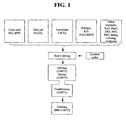
- FIG. 1 is a schematic flow chart showing the conventional process of melting common soda-lime glasses in a cross-fire fuel-fired glass furnace
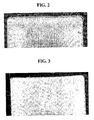
- FIG. 2 is a picture showing the cross-section of a glass sample melted by using the conventional batch melting process
- FIG. 3 is a picture showing the cross-section of a glass sample having the same projected composition as the sample in FIG. 2 but melted by using degassed frit in accordance with the process of the present invention.
- Group A materials denote the group of batch materials that consist essentially of those that generate gases (outgas) under normal glass forming conditions by decomposition or other chemical reactions. Gases released include, but are not limited to, H 2 O, CO 2 , O 2 , SO 3 and N 2 .
- the dissociation of chemically bound water in the batch materials is regarded as a chemical reaction.
- batch materials containing chemically bound water are in this category. A great majority of gases are released by materials in this group in conventional glass making. Batch materials containing largely SiO 2 and/or Al 2 O 3 are excluded from Group A.
- Group B materials denote the group of batch materials that consist essentially of those that typically do not release gases by decomposition or other chemical reactions under normal glass forming conditions. Materials in this group may release physically bound gases, such as moisture and air in the batch. Generally, starting materials containing largely SiO 2 and/or Al 2 O 3 are included in Group B, even if they contain chemically bound water.
- Foam denotes the mixture generated during the course of glass melting in the glass melter that comprises largely liquid and gas.
- Scum denotes the mixture generated during the course of glass melting in the glass melter that comprises liquid, gas and solid particles.
- the solid particles are high melting temperature materials, such as silica and alumina.
- Normal glass melting temperature is the temperature at which the batch materials melt to form the molten glass in a glass melter in a glass melting process.
- FIG. 1 illustrates the conventional melting process for a typical soda-lime glass in a cross-fire fuel-fired glass furnace.
- many of the batch materials release gases as a result of decomposition or other chemical reactions in the furnace during the glass melting process.
- the volume of gases generated during glass melting may be quite substantial compared to the glass volume in the making of glasses. Whilst the gases may be conducive to the mixing of the particles of the batch materials in the furnace during the course of glass melting, it causes a number of concerns, as discussed supra .
- the generated gases cause foaming together with the already liquefied batch materials.
- the gases, together with the liquid and solid particles may form a scum layer on top of the molten glass.
- the generation of large volume of gases may go out of control in the furnace.
- the foam and scum layer have very low thermal conductivity and act as insulating media that prevent the heat of the flame from reaching the unmelted batch material trapped inside or located underneath.
- a bottleneck in conventional glass melting process is the dissolution of sand and/or other refractory materials such as Al 2 O 3 .
- the foam and scum layer increase the difficulty of the melting of these materials, thus decrease and hinder the overall glass production rate.
- the unmelted refractory particles in the scum layer can cause cord or become enclosed in the final glass product, leading to defective glass quality. This is particularly undesirable for glasses that require a high degree of homogeneity, such as the glass substrates for liquid crystal displays.
- glasses that traditionally require a high melting temperature such as high-silica glasses (for example, glasses containing 80% by mole and higher silica)
- the complete melting of silica may be an even more pronounced problem because of the low melting efficiency caused by the foam and scum layer.
- the present inventor has discovered that gas generation and foaming take place in wide temperature ranges in the glass furnace for some glass compositions. This indicates that the gas generation and foaming as a factor negatively affecting the glass melting rate exists during a large part of the glass melting process.
- the process of the present invention is a chemical approach in addressing the technical problem in conventional glass melting process.
- the underlying concept of the present inventive process is to reduce or eliminate gas generation during the glass melting process, thus reduce or eliminate the problem associated with gas generation, foaming and/or scum forming, which is prevalent in many conventional glass making processes and their thermally modified alternatives, such that a higher thermal efficiency and hence a lower melting temperature are achieved in the glass melting furnace.
- the same starting materials are used as in the conventional glass making, but the outgassing materials among them are pre-melted and allowed to outgas and formed into frits before they are mixed and melted with the remaining batch materials in the glass furnace.
- the batch materials are divided into two groups, Group A materials consisting essentially of those that generate gases (outgas) under normal glass melting conditions, and Group B materials consisting essentially of those that normally do not outgas under normal glass melting conditions.
- Group A materials consisting essentially of those that generate gases (outgas) under normal glass melting conditions
- Group B materials consisting essentially of those that normally do not outgas under normal glass melting conditions.
- the term "consisting essentially of” means that the materials in question may contain additional components other than those enumerated, for example, but not limited to, impurities, as long as the additional components do not materially alter the basic and novel feature of the present invention. All these materials may be pretreated before they are used for the present inventive process for producing glass materials.
- pretreatment processes are those normally used in conventional glass melting processes, including, but not limited to, crushing, grinding, wet screening, drying, screening, magnetic screening, and further beneficiation such as acid treatment and floatation.
- the batch materials may be naturally occurring, synthesized or purified naturally occurring, and/or recycled.
- One of the advantages of the process of the present invention is that there are no special requirements as to the starting materials compared to the conventional glass making. Therefore, no additional cost in respect of starting materials is introduced in the present invention.
- the first step of the present inventive process involves the preparation of frits from Group A batch materials.
- Group A materials consist essentially of those that outgas under the normal glass melting conditions.
- the gases generated by Group A materials constitute the majority of the gas released during a conventional glass making process.
- batch materials falling into this group include, but are not limited to, naturally occurring, synthetic and purified nitrates, carbonates, carbohydrates, borates, sulfates, boric acid, hydroxides, and mixtures and compounds thereof. These materials may further contain chemically bound water.
- Batch materials containing largely SiO 2 and/or Al 2 O 3 such as kaolin (Al 2 O 3 ⁇ 2SiO 2 ⁇ 2H 2 O), even if they contain chemically bound water, are excluded from Group A.
- these materials may include, but are not limited to, naturally occurring, synthetic and purified Pb 3 O 4 , nitrates, carbonates, carbohydrates and hydroxides of alkali and alkali earth metals, Zn and Pb, boric acid, mixtures and compounds thereof, with or without containing additional chemically bound water.
- Pb 3 O 4 nitrates, carbonates, carbohydrates and hydroxides of alkali and alkali earth metals, Zn and Pb, boric acid, mixtures and compounds thereof, with or without containing additional chemically bound water.
- borates having chemically bound water are included in Group A as well, such as borates having chemically bound water.
- water contained in Na 2 SO 4 ⁇ 10H 2 O is regarded as chemically bound water.
- Nitrates and Pb 3 O 4 release gas in the glass melting process by redox reactions.
- O 2 may be generated from these two types of materials, and N 2 may be released from nitrates.
- the thermal decomposition of alkali carbonates results in CO 2 and alkali metal oxides, which, together with fluxing agents from other sources, attack and dissolve the high melting materials, such as SiO 2 and/or Al 2 O 3 during the course of glass melting.
- CO 2 is generated via the reactions of carbonates and hydrocarbonates.
- H 2 O is released via the reactions of the hydroxides and boric acid and dissociation of chemically bound water in some crystalline salts and of course, from the moisture (physically bound water) in the starting materials.
- a non-limiting and non-exhausted list of materials that may be included in Group A contains the following or mixtures and/or complex salts thereof, in their naturally occurring, beneficiated naturally occurring and/or synthesized state, with or without additional chemically bound water: Na 2 CO 3 , NaHCO 3 , Na 2 CO 3 ⁇ xH 2 O, NaOH, NaNO 3 , K 2 CO 3 , KHCO 3 , KOH, KNO 3 , Li 2 CO 3 , LiHCO 3 , LiOH, BeCO 3 , Be(OH) 2 , MgCO 3 , Mg(OH) 2 , CaCO 3 , Ca(OH) 2 , SrCO 3 , Sr(NO 3 ) 2 , Sr(OH) 2 , BaCO 3 , Ba(OH) 2 , Ba(
- those that outgas under normal glass melting conditions constitute a majority of the Group A materials.
- other starting materials in typical conventional glass making such as fining agents, colorants and other glass modifiers, can be added into Group A as well, as long as the outgassing materials are included in Group A.
- These materials are usually added into the glass composition in small amounts. They usually each constitute, expressed in terms of mole percentage on an oxide basis, less than about 5%, preferably less than about 3%, more preferably less than about 1%, of the final glass composition. Some of these materials are preferred to be included in Group A in order to form frits.
- Group A For the purpose of uniform distribution thereof in the final glass product, it is preferred to include all these and other low percentage components into Group A, especially where their homogeneous distribution in the final glass product is desired.
- oxides having a melting temperature lower than the glass melting temperature and their source materials are included in Group A.
- high melting temperature alkaline earth oxides such as BeO, MgO, SrO and BaO, are preferred to be included in Group A in order to form frits in step (I).
- such fining agents and modifiers that can be added into Group A include: oxides and other materials containing B 2 O 3 , borates, PbO, Pb 3 O 4 , halides, MgO, SrO, ZnO, FeO, Fe 2 O 3 , As 2 O 5 , Sb 2 O 5 , SnO 2 , TiO 2 , ZrO 2 , Y 2 O 3 , Er 2 O 3 , Ta 2 O 5 , CeO 2 , and other transitional metal and rare earth oxides and compounds.
- These materials may be added, totally or partially, into Group B, as long as a homogeneous distribution thereof, if desired, can be achieved in the final glass composition.
- One of ordinary skills in the art can determine the amount of the individual Group A material that should be used according to the projected composition of the final glass composition, and can make adjustments in accordance with the different starting materials and melting furnace requirements.
- These Group A materials upon pretreatment mentioned above, are carefully weighed and mixed. The grain size and size distribution of these starting materials are not crucial to the present invention.
- Mixing can be carried out in any traditional mixer used in the glass making industry, including ribbon, pan, drum and cone type mixers. The commonly used Eirich mixer may be conveniently employed.
- the mixture of Group A materials is then subjected to heating and melting. This heating and melting step can be carried out in a conventional glass furnace, for example, but not limited to, a pot furnace or a cross-fire fuel-fired furnace.
- the mixture undergoes a series of chemical reactions and release gases.
- the main melt reactions do not take place in parallel, but rather in series. Gas may evolve starting from a relatively low temperature, for example, 200°C even before liquid is formed from the mixture.
- the outgassing continues as the mixture gradually liquefies.
- the whole mixture is melt at a certain temperature that depends on its composition. The molten mixture is allowed to stay around that temperature for a period of time, so that preferably the outgassing reactions undergo substantially completely and a fluid and quiescent liquid free of bubbles is obtained.
- the fluxing liquid produced from this reaction is very corrosive to conventional glass refractories.
- the melting temperature is typically 400-500°C below the glass melting temperature.
- the melting temperature of the Group A materials is around 1000°C.
- the agitation caused by the considerable amount of gas released contributes to a homogeneous mixture of the Group A materials.
- One of skills in the art can control the heating and melting process by adjusting the fire and/or electric power used.
- the melting of the Group A materials may be conducted in batches or continuously. Once the melting and outgassing is finished, the molten mixture exits the melting furnace and is allowed to cool.
- the cooled mixture is a glass-like or crystalline material containing largely oxides derived from the Group A batch materials charged into the melting furnace. Cooling this mixture quickly, directly from the melting furnace creates a high thermal stress in the material, which often breaks the material into small pieces. The small pieces can then be fed into a ball mill or other equipment to make frits of the desired grain size.
- it may be subjected to dry gauging (water quenching) or cooling between water-cooled rollers.
- the next step of the process of the present invention is mixing the frits of Group A materials prepared as described above with the rest of the batch materials, namely, the Group B materials, for the glass composition.
- the Group B batch materials do not outgas under normal glass melting conditions, viz., they do not contain chemical moieties that tend to release gas by thermal decomposition or other chemical reactions under normal glass melting conditions, with certain exceptions, such as kaolin (Al 2 O 3 ⁇ 2SiO 2 ⁇ 2H 2 O).
- kaolin Al 2 O 3 ⁇ 2SiO 2 ⁇ 2H 2 O.
- the Group B batch materials typically include, in addition to cullets, but are not limited to, sand (containing mostly SiO 2 ), pure silica, pure alumina, feldspar (R 2 O ⁇ AlO 2 O 3 ⁇ 6SiO 2 , including sodium feldspar Na 2 O ⁇ Al 2 O 3 ⁇ 6SiO 2 and potassium feldspar K 2 O ⁇ Al 2 O 3 ⁇ 6SiO 2 ), nepheline syenite (Na 2 O ⁇ Al 2 O 3 ⁇ 2SiO 2 ), spodumene (Li 2 O ⁇ Al 2 O 3 ⁇ 2SiO 2 ), phonolite (xR 2 O ⁇ yAl 2 O 3 ⁇ Fe 2 O 3 ⁇ zSiO 2 ), blast furnace
- Cullets have the advantages of having no reaction and dissociation heat during glass melting, promoting better heat transfer in batch blanket and liquid phase formation at low temperature, reducing stack emissions and being capable of being preheated before being charged into the furnace.
- the mixing of the frits of Group A materials prepared.as mentioned above and the Group B batch materials can be conducted in any type of mixer that is conventionally used in glass making industry, including, but not limited to, ribbon, pan, drum and cone type mixers.
- the commonly used Eirich mixer may be conveniently employed.
- the mixture is then charged into a glass furnace where it is melted, fined and formed into the glass material in a manner similar to the conventional glass making process.
- any type of furnace can be employed in melting the mixture of the frits and the Group B batch materials in the present inventive process.
- Pot furnace, fuel-fired tank furnace, electric boosted fuel-fired tank furnace and all-electric tank furnaces of various sizes can be chosen by one of skills according to the production rate, glass quality and other considerations.
- the mixture generates much less gas than in the conventional glass making method because the frits are already outgased, and foaming and scum forming is reduced or eliminated.
- This feature renders the present inventive process particularly suitable and advantageous for the fuel-fired and electric boosted fuel-fired furnaces, where overhead flame is used to melt the batch materials.
- efficiency of heat transfer, especially from the top is improved, and a more intimate interaction between the early formed liquid and refractory particles, such as silica and alumina, is achieved, leading to more expeditious dissolution of them.
- the overall effect is a lower furnace temperature for melting the glass.
- Lower temperature slows the dissolution and etching of the refractory bricks of the furnace.
- Lower temperature also means less electric consumption for electric boosted fuel-fired furnaces and all-electric furnaces, which, in turn, extends the lives of the electrodes and the furnace.
- a soda-lime-silica glass containing, by weight, about 70% SiO 2 , 15% Na 2 O and K 2 O, 10% of CaO and MgO, and small amounts of other oxides can be prepared using Na 2 CO 3 , K 2 CO 3 , CaCO 3 , MgCO 3 , and the like, SiO 2 , Al 2 O 3 and cullets as the batch materials according to the process of the present invention.
- the carbonates are first melted, optionally with a certain amount of cullets and other materials in a glass furnace and formed into frits.
- the thus prepared frits are mixed with SiO 2 and Al 2 O 3 and optionally cullets, then charged into a cross-fired glass furnace and melted to produce the glass.
- a borosilicate glass (pyrex) containing by weight approximately 80% SiO 2 , 12.9% B 2 O 3 , 3.8% Na 2 O, 2.2% Al 2 O 3 and 0.4% K 2 O may be produced in a similar fashion starting from B(OH) 3 , Na 2 CO 3 , Al 2 O 3 and K 2 CO 3 , where calculated amounts of B(OH) 3 , Na 2 CO 3 and K 2 CO 3 as the Group A materials are first melted and formed into frits, and then mixed with SiO 2 , Al 2 O 3 and melted in a glass furnace to produce the glass.
- a lead glass containing by weight of about 60.8% SiO 2 , 22.8% PbO, 10.2 Na 2 O, 1.1% K 2 O, 3.0% Al 2 O 3 and 2.1% miscellaneous materials, it may be produced by mixing calculated amount of Na 2 CO 3 , K 2 CO 3 and Pb 3 O 4 , melting them and forming them into frits, followed by combining them with SiO 2 , PbO ⁇ SiO 2 , Al 2 O 3 and miscellaneous materials and melting in a conventional fuel-fired glass furnace to produce the glass.
- high silica glasses containing 80% by mole or higher of silica they can be produced by mixing and melting the fluxing agents and preparing them into frits, mixing the fluxing frits with the silica batch material, followed by melting in a conventional electric-boosted cross-fire glass furnace.
- Glasses for LCD substrates are typically hard to melt by using the conventional glass making process.
- An exemplary LCD glass substrate contains, in weigh percent on an oxide basis, of 40-57% SiO 2 , 2.0-11% Al 2 O 3 , 1-16% CaO, 8-21.5% SrO, 14-31.5% BaO, 0-3% MgO, 0-4% B 2 O 3 and miscellaneous small amounts of other oxides.
- the furnace temperature for producing a glass composition in this category can reach as high as 1650°C using the conventional all-batch-materials-together method. Because of the relatively high percentages of SiO 2 and Al 2 O 3 , which are refractory materials, foam and particularly scum forming are quite pronounced.
- Group A materials including B(OH) 3 , CaCO 3 , MgCO 3 , SrCO 3 , B 2 O 3 , CaO, MgO, SrO, Sr(NO 3 ) 2 , BaCO 3 and Ba(NO 3 ) 2 are mixed and melted to form frits, which is subsequently mixed with the Group B materials, namely, SiO 2 and Al 2 O 3 , melted and formed into the glass by, for example, fusion draw process.
- the present invention has been proved successful in reducing scum for this type of glass composition.
- a series of glass compositions were melted using (i) the conventional melting process where all batch materials are melted together and (ii) the melting process of the present invention.
- the glasses involved in the following examples have either (a) compositions consisting essentially, expressed in mole percent on an oxide basis, of: SiO 2 64-70 MgO 0-5 Al 2 O 3 9.5-14 CaO 3-13 B 2 O 3 5-10 SrO 0-5.5 TiO 2 0-5 BaO 2-7 Ta 2 O 5 0-5 MgO+CaG+SrO+BaO 10-20
- compositions consisting essentially, expressed in mole percent on an oxide basis, of: SiO 2 65-75 MgO 0-3 Al 2 O 3 7-13 CaO 0-5 B 2 O 3 5-15 SrO 0-5
- all starting materials were SiO 2 , Al 2 O 3 , MgCO 3 , CaCO 3 , BaCO 3 , Ba(NO 3 ) 2 , SrCO 3 , Sr(NO 3 ) 2 , MgO, SrO, B 2 O 3 and/or B(OH) 3 .
- Fining agents such as As 2 O 5 and Sb 2 O 5 were used in very small amounts. Amounts of the starting materials used were calculated according to the respective projected final glass composition.
- Group A materials for these glasses included Ba(NO 3 ) 2 , MgO, SrO, B(OH) 3 , B 2 O 3 , if any, and the carbonates. Fining agents were added to the Group A materials for a more uniform distribution thereof in the final glass.
- Group B materials include SiO 2 and Al 2 O 3 .
- the melting including the pre-melting of Group A materials to prepare the frits and the preparation of glass, either by the conventional process or by the present inventive process of melting Group A material frits and Group B materials, were conducted both in platinum crucibles in a laboratory. It is to be understood that the present inventive process for producing glass compositions can be used on large industrial scale as well.
- FIG. 2 is a picture of the cross-section of a sample A that was immediately cooled after 40 minutes at 1600°C during the course of melting. It is clear from this picture that there was a large number of gas voids and a thick layer of scum including gas pockets, solid particles and liquid on top of the molten glass. The white material on the top as shown in this figure was unmelted silica and alumina along with molten glass.
- the present invention method was used.
- the Group A materials mentioned above in calculated amounts were tumble mixed and charged into the melter.
- the mixture was heated to about 1100°C where it melted to form a very fluid liquid. Then it was maintained at that temperature for about 1-2 hours until its outgassing was substantially complete and a quiescent, bubble-free liquid was obtained. Then the molten material was allowed to cool, and frits of the size around 80-mesh were prepared therefrom. The frits appeared to be crystalline and multiphase. Afterwards, the frits were mixed intimately with the Group B materials. The resultant mixture was charged into the melter, heated and melted. Compared to the conventional process, outgassing during melting was dramatically reduced.
- Example 1 The glass composition corresponding to sample A in Example 1 was melted using the process of the present invention as well, and the molten glass sample was nominated as sample B .
- Sample B was immediately cooled after 40 minutes at 1600°C during the melting process, which was substantially the same stopping point for sample A in Example 1.
- the cross-section of sample B was shown in FIG. 3.
- a comparison of FIG. 3 to FIG. 2 shows that sample B had much less, if any, scum on top of the molten glass. Gas void fraction was clearly reduced. Microscopic analyses showed the silica grains to be in a later stage of dissolution than those in the conventional batch pile as shown in FIG. 2.
- the process of the present invention worked to reduce scum forming during the glass melting process.
Landscapes
- Chemical & Material Sciences (AREA)
- Engineering & Computer Science (AREA)
- Materials Engineering (AREA)
- Organic Chemistry (AREA)
- Life Sciences & Earth Sciences (AREA)
- Chemical Kinetics & Catalysis (AREA)
- General Chemical & Material Sciences (AREA)
- Geochemistry & Mineralogy (AREA)
- Glass Compositions (AREA)
- Glass Melting And Manufacturing (AREA)
Description
- The present invention relates to a process for producing glass materials. In particular, the present invention relates to a process for producing glass materials by using outgassing materials and non-outgassing materials under normal glass melting conditions. The process is useful, for example, in producing glass materials containing, inter alia, silica, alumina, alkaline and alkaline earth metal oxides and/or boron oxide in conventional glass furnaces.
- In typical conventional glass making processes, all raw materials are pretreated, mixed, optionally with water, to form a single melting batch, and then charged in installment or continuously into a premelter or a glass melting furnace, where the batch materials are subjected to heating and melting using fuel firing and/or electrical energy. A series of chemical reactions take place inside the premelter and/or furnace, whereby molten glass is formed. The molten glass is then allowed to exit the furnace and formed into glass sheets, tubes, fibers, containers, optical products, and the like, using various technique and equipment.
- A common glass composition, especially a silicate glass composition, contains glass formers, stabilizers, fluxes, colorants, decolorants, fining agents, and the like. Glass formers are the indispensable oxides that form the structural network of glass, including SiO2, B2O3, P2O5, GeO2, V2O5 and As2O3, with SiO2 being the most typical and most important. Fluxes are typically Group I alkaline oxides, the source materials of which in the batch tend to react at a relatively lower temperature in the furnace. Stabilizers are oxides that bring about high chemical resistance to the glass and control the working characteristics of the glass together with the fluxes in forming operations. Common stabilizers include alkaline earth metal oxides, PbO, ZnO and Al2O3. Various transitional metal oxides may be introduced into the glass composition as colorants. As decolorants, selenium, cobalt and arsenic may be used to impart colorless transparency to the glass. Fining agents are added to remove seeds in the glass. An exemplary soda-lime-silica glass composition contains approximately, in terms of weight percent, 70% SiO2, 15% Na2O and K2O, 10% CaO and MgO, and small amounts of other oxides, especially Al2O3. Glass materials in this type are widely used in containers, windows, drinking glasses, light bulbs and glass construction blocks. Borosilicate glasses have good chemical resistance and low thermal expansion and thus are widely used for cooking wares, fiberglass and laboratory wares. A typical composition of borosilicate glass has approximately, in terms of weight percent, 80% SiO2, 12.9% B2O3, 3.8% Na2O, 2.2% Al2O3 and 0.4% K2O, commonly known as Pyrex. Aluminosilcate glass has relatively high percentage of Al2O3, and usually enjoys fairly low thermal expansion, high chemical resistance, high resistance to higher temperatures and good strength.
- In the batch mixture, SiO2 is usually in the form of rock crystal, silica sand, pure SiO2, kaolin (Al2O3·2SiO2·2H2O) or feldspar (R2O·Al2O3·6SiO2). B2O3 is typically introduced in the form of boric acid (H3BO3), colemanite (Ca2B6O11·5H2O), borax (Na2B4O7·10H2O), ulexite (NaCaB5O9·8H2O) or pure B2O3. Na2O usually takes the form of natural soda ash (Na2CO3); light soda ash (Na2CO3) and heavy soda ash (Na2CO3·xH2O) synthesized, for example, by the Solvay process; sodium feldspar (Na2O·Al2O3·6SiO2) and nelpheline syenite (Na2O·Al2O3.2SiO2). K2O is typically introduced in the form of potash (K2CO3), saltpeter (potassium nitrate, KNO3) and potassium feldspar (K2O·Al2O3·6SiO2). Spodumene (Li2O·Al2O3·2SiO2) and lithium carbonate (Li2CO3) are commonly used as the source of Li2O. CaO is usually provided by limestone (CaCO3), dolomite (MgCO3·CaCO3) or colemanite (Ca2B6O11·5H2O). MgO usually takes the form of magnesite (MgCO3), dolomite (MgCO3·CaCO3) or basic MgCO3(4MgCO3·Mg(OH)2·4H2O). BaO is typically introduced in the form of BaCO3 and Ba(NO3)2. Al2O3 usually takes the form of pure Al2O3, kaolin (Al2O3·2SiO2·2H2O), nepheline syenite (Na2O·Al2O3·2SiO2), feldspar (R2O·Al2O3·6SiO2), phonolite (xR2O·yAl2O3·Fe2O3·zSiO2) or blast furnace slag (SiO2·Al2O3·CaO·S2-). PbO may take the form of red lead (Pb3O4) or lead silicate (PbO·SiO2). Many of these batch materials are hydrates containing large quantities of chemically bound water, or are carbonates. These materials tend to dissociate and decompose at a relatively low temperature in the furnace and release large quantity of gas (H2O and CO2). Nitrates and sulfates, if used in the batch, release gases during the glass melting process, too. In the conventional glass making process for typical TV panel glass, the volume of gas released in the furnace is approximately 1000 times the volume of the glass.
- To reduce energy consumption of a glass making process, it is important to raise the glass production rate. The glass production rate, in turn, is largely dependent on the glass-melting rate in the furnace. Factors that determine glass melting rate include, inter alia, (i) heating capacity of the furnace; (ii) heat transfer efficiency of the batch and molten glass in the furnace; (iii) dissolution of refractory materials, such as sand, in the batch; (iv) removal of bubbles formed in the melting process; (v) homogenization of molten glass liquid; and (vi) thermal conditioning of glass to meet the requirements of the forming process. Forming a liquid phase during the glass melting process is of particular importance because the liquid mass transfer is much faster than solid state diffusion, promotes heat transfer and reaction with the solid particles in the batch. In a conventional fuel-fired glass-melting tank, the batch floats on top of the molten glass and heating is provided above the batch pile from the gas flame. The batch pile, colder than the molten glass and the flame, serves as a heat insulator, slowing melting of solid particles inside. When liquid is present, the gas released from the batch materials can form foam with the liquid, hindering heat transfer and reaction between the liquid and the solid particles. Components with higher melting temperature, such as silica and alumina, may combine with the foam to form a scum layer on top of the molten glass.
- The scum layer is particularly undesirable in glass making. In addition to lower heat transfer and slow melting of refractory batch materials such as Al2O3 and SiO2, it can adversely affect the glass quality. One of the objects of glass melting, whether in pots or in tanks, is to produce glass which is free from bubbles and crystalline particles and also homogeneous. Variations in composition produce differences in physical properties from point to point in the product of the melting operation and, because of the nature of viscous flow, these regions of non-uniform refractive index, viscosity, or thermal expansion are elongated into streaks which are called cords. Sometimes the streaks of off-composition glass are sharply distinguished from the normal glass and are termed sharp or wire cord. In other cases the change in properties from cord to normal glass is more gradual and we have smooth or wave cords. It is known that the main melt reactions in the glass furnace do not take place in parallel, but rather in series. This has actually been observed using cameras by the present inventor. Some batch components, such as limestone, tend to melt earlier than silica and alumina and sink into the tank to form globules, thus segregate from the unmelted floating SiO2 and Al2O3 in the scum layer. This segregation leads to undesirable inhomogeneity of glass (cord). The unmelted SiO2 and Al2O3 particles may even become enclosed in the final glass product. These compositional inhomogeneities are especially harmful for optical glasses and glasses used for applications that require high compositional uniformity, such as the liquid display device (LCD) substrates.
- One solution traditionally used to increase the melting rate of glass, thus to reduce or eliminate the scum problem, is elevating the melting temperature by employing higher heating power. According to the following equation:

- where (A) and (Q) are constants dependent on the furnace design, and R is a universal constant, the higher the melting temperature (T), the higher the glass melting rate (r). However, raising heating power typically translates into higher energy cost, and higher temperature facilitates refractory corrosion, shortens furnace operating life, promotes pollution and some defects in the glass product. Oftentimes, furnaces and tanks are built with a limited heating power and a maximum allowable operating temperature, rendering them incapable of melting glasses that require an even higher temperature to melt using the conventional melting process, such as glasses containing high percentage of Al2O3 and/or SiO2. The cost of building a new furnace suitable for melting glass at such high temperature is usually very high. Alternative melter designs have been proposed in place of the conventional practice of floating a batch pile on a pool of molten glass. Literature disclosing special melter designs includes U.S. Pat. Nos. 296,227; 708,309; 2,593,197; 4,062;667; 4,110,097 (using a ramp-like structure down which the liquid would flow into a melting tank); 1,889,509; 1,889,511; 2,006,947; 2,007,755; 4,061,487; 4,185,984 (using rotating vessels as the glass melting structure); and 1,082,195; 1,621,446; 3,109,045; 3,151,964; 3,328,149 and 3,689,679 (using a premelter where the glass is liquefied first before the melting tank. Unites States reissue patent No. 32,317 discloses a series of melter designs with special liquefaction chambers.
- All these approaches hitherto used or proposed are thermal approaches, viz., they function by varying the thermal profile in the glass melter. These approaches invariably suffer from the downside of elevated melting temperature or complex and costly melter design. This has prompted the present inventor to look for an alternative process that can operate at the relatively low melting temperature of a conventional glass melter.
As part of the research effort, the present inventor observed the reactions taking place in a glass melter in a conventional glass melting process using a video camera. The observation revealed bubbling and foaming in wide temperature ranges, for example, 300-1500°C for bubbling, and 500-1400°C for foaming for some glass compositions. In light of this discovery, the present inventor contemplated the present inventive process of using outgassed frit in glass melting. Surprisingly, this modification of the conventional glass melting technique turns out to be an effective chemical approach to tackle with the above-mentioned inherent problems with the conventional thermal approaches. - Accordingly, the present invention provides a process for producing glass materials using glass forming materials divided into two groups A and B, wherein Group A materials consist essentially of materials that outgas under glass-melting conditions and Group B materials consist essentially of materials that do not outgas under normal glass melting conditions, wherein the process comprises the following steps:
- (I) producing a frit by (i) mixing the Group A materials; (ii) heating the resultant mixture of Group A materials to an outgassing temperature and allowing the materials to melt and outgas; and (iii) cooling the molten outgassed material and forming frits therefrom;
- (II) mixing the frit produced in step (I) with other glass forming materials, collectively referred to as Group B materials; and
- (III) melting the resultant mixture of step (II) under glass melting conditions to form the glass material.
- Preferably, the Group A materials in their present inventive process consist essentially of materials selected from naturally occurring, synthetic and beneficiated naturally occurring nitrates, carbonates, carbohydrates, sulfates, boric acid, hydroxides, mixtures and compounds thereof, with or without containing additional chemically bound water, oxides and other materials that decompose to outgas under normal glass melting temperatures and other materials that contain chemically bound water. More preferably, the Group A materials in the present inventive process consist essentially of materials selected from naturally occurring, synthetic and purified nitrates, carbonates, carbohydrates, sulfates and hydroxides of alkali and alkali earth metals, boric acid, mixtures and compounds thereof, with or without containing additional chemically bound water. Preferably, oxides with melting temperatures lower than the glass melting temperature and their source materials are included in Group A, such as B2O3 and borates. Preferably, fining agents and other starting materials, when used in small amounts in the glass composition, are included in Group A for a more uniform distribution thereof in the final glass product.
- Preferably, the Group A materials in step (I)(ii) are melted and allowed to outgas substantially completely. Preferably, the Group A materials in step (I)(ii) are melted and allowed to outgas at a temperature 400-500°C lower than the glass melting temperature in step (III).
- Preferably, the Group B materials in the present inventive process consist essentially of materials selected from naturally occurring, synthetic and purified Al2O3, SiO2, mixtures and salts containing them, and cullets.
- The present inventive process can be used in any type of glass melter, including, but not limited to, pot furnaces, fuel-fired tank furnaces, electric boosted fuel-fired tank furnaces, and all-electric furnaces, on large industrial scale and small scale (hand-shop) alike. Preferably, the present inventive process is used in furnaces where foaming and scum forming are of particular concern, for example, conventional and modified fuel-fired tank furnaces and electric boosted fuel-fired tank furnaces.
- The present inventive process can be used for producing various types of glasses, including, but not limited to, soda-lime glasses, boro-silicate glasses, alumino-boro-silicate glasses, lead glasses, and high silica glasses. Advantageously, the present inventive process can be used for producing glasses traditionally require a high melting temperature and/or glasses where outgassing is significant, for example, but not limited to, high silica glasses, and alumino-boro-silica glasses. The present inventive process can be advantageously used for producing high quality glasses that require a high degree of compositional and property homogeneity, for example, optical glasses and glasses for producing LCDs.
- By preparing frits from the Group A materials and melting the frits together with the Group B materials, gas release is substantially reduced in the glass melter, hence foaming and scum forming. As a result, heat transfer in the glass melter is improved; the early-formed liquid has a more intimate interaction with the solid particles; and high melting temperature batch materials such as silica and alumina can melt more readily. All these technical advantages contribute to a lower melting temperature in the glass melter at a given glass-melting rate, and/or a higher melting rate for the same glass melter temperature. By reducing or eliminating the scum layer, higher quality glass can be produced in a conventional glass furnace. Moreover, melting high silica glasses and other glasses that traditionally require a high melting temperature can be thus realized in a typical conventional glass furnace at a relatively lower melting temperature.
- Additional features and advantages of the invention will be set forth in the detailed description which follows, and in part will be readily apparent to those skilled in the art from the description or recognized by practicing the invention as described in the written description and claims hereof, as well as the appended drawings.
- It is to be understood that the foregoing general description and the following detailed description are merely exemplary of the invention, and are intended to provide an overview or framework to understanding the nature and character of the invention as it is claimed.
- The accompanying drawings are included to provide a further understanding of the invention, and are incorporated in and constitutes a part of this specification.
- In the accompanying drawings,
- FIG. 1 is a schematic flow chart showing the conventional process of melting common soda-lime glasses in a cross-fire fuel-fired glass furnace;
- FIG. 2 is a picture showing the cross-section of a glass sample melted by using the conventional batch melting process;
- FIG. 3 is a picture showing the cross-section of a glass sample having the same projected composition as the sample in FIG. 2 but melted by using degassed frit in accordance with the process of the present invention.
- As used herein in the present application, the following terms have the following meaning:
- Group A materials denote the group of batch materials that consist essentially of those that generate gases (outgas) under normal glass forming conditions by decomposition or other chemical reactions. Gases released include, but are not limited to, H2O, CO2, O2, SO3 and N2. For the purpose of the present application, the dissociation of chemically bound water in the batch materials is regarded as a chemical reaction. Thus, with certain exceptions described infra, batch materials containing chemically bound water are in this category. A great majority of gases are released by materials in this group in conventional glass making. Batch materials containing largely SiO2 and/or Al2O3 are excluded from Group A.
- Group B materials denote the group of batch materials that consist essentially of those that typically do not release gases by decomposition or other chemical reactions under normal glass forming conditions. Materials in this group may release physically bound gases, such as moisture and air in the batch. Generally, starting materials containing largely SiO2 and/or Al2O3 are included in Group B, even if they contain chemically bound water.
- Foam denotes the mixture generated during the course of glass melting in the glass melter that comprises largely liquid and gas.
- Scum denotes the mixture generated during the course of glass melting in the glass melter that comprises liquid, gas and solid particles. Typically, the solid particles are high melting temperature materials, such as silica and alumina.
- Normal glass melting temperature is the temperature at which the batch materials melt to form the molten glass in a glass melter in a glass melting process.
- In typical conventional glass making, pretreated batch materials are mixed altogether and charged into the glass furnace where the batch materials are subjected to heating, melting and a series of complex chemical reactions to form the molten glass. FIG. 1 illustrates the conventional melting process for a typical soda-lime glass in a cross-fire fuel-fired glass furnace. As discussed supra, many of the batch materials release gases as a result of decomposition or other chemical reactions in the furnace during the glass melting process. The volume of gases generated during glass melting may be quite substantial compared to the glass volume in the making of glasses. Whilst the gases may be conducive to the mixing of the particles of the batch materials in the furnace during the course of glass melting, it causes a number of concerns, as discussed supra. First, the generated gases cause foaming together with the already liquefied batch materials. Second, the gases, together with the liquid and solid particles, may form a scum layer on top of the molten glass. Third, the generation of large volume of gases may go out of control in the furnace. The foam and scum layer have very low thermal conductivity and act as insulating media that prevent the heat of the flame from reaching the unmelted batch material trapped inside or located underneath. A bottleneck in conventional glass melting process is the dissolution of sand and/or other refractory materials such as Al2O3. The foam and scum layer increase the difficulty of the melting of these materials, thus decrease and hinder the overall glass production rate. The unmelted refractory particles in the scum layer can cause cord or become enclosed in the final glass product, leading to defective glass quality. This is particularly undesirable for glasses that require a high degree of homogeneity, such as the glass substrates for liquid crystal displays. For glasses that traditionally require a high melting temperature, such as high-silica glasses (for example, glasses containing 80% by mole and higher silica), the complete melting of silica may be an even more pronounced problem because of the low melting efficiency caused by the foam and scum layer. The present inventor has discovered that gas generation and foaming take place in wide temperature ranges in the glass furnace for some glass compositions. This indicates that the gas generation and foaming as a factor negatively affecting the glass melting rate exists during a large part of the glass melting process.
- As discussed supra, it is known that raising melting temperature is often an approach adopted to counter the effect of the foam and scum layer so that the batch materials can melt completely in the furnace. Other thermal approaches in solving this problem include special furnace designs. Whereas these thermal approaches may work for the intended purposes, they are not without sacrifices and drawbacks. Elevated melting temperature expedites the dissolution of refractory bricks in the furnace, thus contaminating the glass and shortening the furnace life. High melting temperatures invariably render conventional furnaces not useable for many glasses. Building non-conventional glass furnaces is usually associated with high cost.
- As discussed supra, the process of the present invention is a chemical approach in addressing the technical problem in conventional glass melting process. The underlying concept of the present inventive process is to reduce or eliminate gas generation during the glass melting process, thus reduce or eliminate the problem associated with gas generation, foaming and/or scum forming, which is prevalent in many conventional glass making processes and their thermally modified alternatives, such that a higher thermal efficiency and hence a lower melting temperature are achieved in the glass melting furnace. To that end, the same starting materials are used as in the conventional glass making, but the outgassing materials among them are pre-melted and allowed to outgas and formed into frits before they are mixed and melted with the remaining batch materials in the glass furnace.
- For the convenience of the description of the process of the present invention, the batch materials are divided into two groups, Group A materials consisting essentially of those that generate gases (outgas) under normal glass melting conditions, and Group B materials consisting essentially of those that normally do not outgas under normal glass melting conditions. As used herein, the term "consisting essentially of" means that the materials in question may contain additional components other than those enumerated, for example, but not limited to, impurities, as long as the additional components do not materially alter the basic and novel feature of the present invention. All these materials may be pretreated before they are used for the present inventive process for producing glass materials. These pretreatment processes are those normally used in conventional glass melting processes, including, but not limited to, crushing, grinding, wet screening, drying, screening, magnetic screening, and further beneficiation such as acid treatment and floatation. The batch materials may be naturally occurring, synthesized or purified naturally occurring, and/or recycled. One of the advantages of the process of the present invention is that there are no special requirements as to the starting materials compared to the conventional glass making. Therefore, no additional cost in respect of starting materials is introduced in the present invention.
- The first step of the present inventive process involves the preparation of frits from Group A batch materials. By definition, Group A materials consist essentially of those that outgas under the normal glass melting conditions. For most glasses, the gases generated by Group A materials constitute the majority of the gas released during a conventional glass making process. Typically, batch materials falling into this group include, but are not limited to, naturally occurring, synthetic and purified nitrates, carbonates, carbohydrates, borates, sulfates, boric acid, hydroxides, and mixtures and compounds thereof. These materials may further contain chemically bound water. Batch materials containing largely SiO2 and/or Al2O3, such as kaolin (Al2O3·2SiO2·2H2O), even if they contain chemically bound water, are excluded from Group A. For example and for the purpose of illustration only, these materials may include, but are not limited to, naturally occurring, synthetic and purified Pb3O4, nitrates, carbonates, carbohydrates and hydroxides of alkali and alkali earth metals, Zn and Pb, boric acid, mixtures and compounds thereof, with or without containing additional chemically bound water. These are usually source materials of the fluxing agents and stabilizers in the final glass composition. Other materials containing chemically bound water are included in Group A as well, such as borates having chemically bound water. For example and for the purpose of illustration only, in the present application, water contained in Na2SO4·10H2O is regarded as chemically bound water. Nitrates and Pb3O4 release gas in the glass melting process by redox reactions. O2 may be generated from these two types of materials, and N2 may be released from nitrates. The thermal decomposition of alkali carbonates results in CO2 and alkali metal oxides, which, together with fluxing agents from other sources, attack and dissolve the high melting materials, such as SiO2 and/or Al2O3 during the course of glass melting. CO2 is generated via the reactions of carbonates and hydrocarbonates. H2O is released via the reactions of the hydroxides and boric acid and dissociation of chemically bound water in some crystalline salts and of course, from the moisture (physically bound water) in the starting materials. A non-limiting and non-exhausted list of materials that may be included in Group A contains the following or mixtures and/or complex salts thereof, in their naturally occurring, beneficiated naturally occurring and/or synthesized state, with or without additional chemically bound water: Na2CO3, NaHCO3, Na2CO3·xH2O, NaOH, NaNO3, K2CO3, KHCO3, KOH, KNO3, Li2CO3, LiHCO3, LiOH, BeCO3, Be(OH)2, MgCO3, Mg(OH)2, CaCO3, Ca(OH)2, SrCO3, Sr(NO3)2, Sr(OH)2, BaCO3, Ba(OH)2, Ba(NO3)2, boric acid (B(OH)3), colemanite (Ca2B6O11·5H2O), borax (Na2B4O7·10H2O), ulexite (NaCaB5O9·8H2O), dolomite (MgCO3·CaCO3), basic MgCO3 (4MgCO3·Mg(OH)2·4H2O), PbCO3, Pb(OH)2, Pb3O4, ZnCO3 and Zn(OH)2.
- Generally, those that outgas under normal glass melting conditions constitute a majority of the Group A materials. However, other starting materials in typical conventional glass making, such as fining agents, colorants and other glass modifiers, can be added into Group A as well, as long as the outgassing materials are included in Group A. These materials are usually added into the glass composition in small amounts. They usually each constitute, expressed in terms of mole percentage on an oxide basis, less than about 5%, preferably less than about 3%, more preferably less than about 1%, of the final glass composition. Some of these materials are preferred to be included in Group A in order to form frits. For the purpose of uniform distribution thereof in the final glass product, it is preferred to include all these and other low percentage components into Group A, especially where their homogeneous distribution in the final glass product is desired. As a general guideline, oxides having a melting temperature lower than the glass melting temperature and their source materials are included in Group A. For example, B2O3 and borates without chemically bound water, even though not outgassing under normal glass forming conditions, are included in Group A because of their relatively low melting temperatures. In melting certain glasses, high melting temperature alkaline earth oxides, such as BeO, MgO, SrO and BaO, are preferred to be included in Group A in order to form frits in step (I). Thus by way of example and for the purpose of illustration only, such fining agents and modifiers that can be added into Group A include: oxides and other materials containing B2O3, borates, PbO, Pb3O4, halides, MgO, SrO, ZnO, FeO, Fe2O3, As2O5, Sb2O5, SnO2, TiO2, ZrO2, Y2O3, Er2O3, Ta2O5, CeO2, and other transitional metal and rare earth oxides and compounds. These materials may be added, totally or partially, into Group B, as long as a homogeneous distribution thereof, if desired, can be achieved in the final glass composition. In addition, in order to adjust the viscosity, water sensitivity and working properties of the frits prepared from Group A materials, it may be desirable to add some cullets into Group A as well.
- One of ordinary skills in the art can determine the amount of the individual Group A material that should be used according to the projected composition of the final glass composition, and can make adjustments in accordance with the different starting materials and melting furnace requirements. These Group A materials, upon pretreatment mentioned above, are carefully weighed and mixed. The grain size and size distribution of these starting materials are not crucial to the present invention. Mixing can be carried out in any traditional mixer used in the glass making industry, including ribbon, pan, drum and cone type mixers. The commonly used Eirich mixer may be conveniently employed. The mixture of Group A materials is then subjected to heating and melting. This heating and melting step can be carried out in a conventional glass furnace, for example, but not limited to, a pot furnace or a cross-fire fuel-fired furnace. With the heating energy imposed, the mixture undergoes a series of chemical reactions and release gases. As can be expected, the main melt reactions do not take place in parallel, but rather in series. Gas may evolve starting from a relatively low temperature, for example, 200°C even before liquid is formed from the mixture. As the temperature rises, the outgassing continues as the mixture gradually liquefies. Finally, the whole mixture is melt at a certain temperature that depends on its composition. The molten mixture is allowed to stay around that temperature for a period of time, so that preferably the outgassing reactions undergo substantially completely and a fluid and quiescent liquid free of bubbles is obtained. The fluxing liquid produced from this reaction is very corrosive to conventional glass refractories. Special care needs to be taken not to contaminate the frit liquid from corrosion of these refractories. The melting temperature is typically 400-500°C below the glass melting temperature. For example, for a glass that is usually produced at a melting temperature of about 1400-1500°C, the melting temperature of the Group A materials is around 1000°C. The agitation caused by the considerable amount of gas released contributes to a homogeneous mixture of the Group A materials. Care should be exercised in this stage so that the outgassing will not be too violent and out of control. One of skills in the art can control the heating and melting process by adjusting the fire and/or electric power used.
- As in typical glass melting processes, the melting of the Group A materials may be conducted in batches or continuously. Once the melting and outgassing is finished, the molten mixture exits the melting furnace and is allowed to cool. The cooled mixture is a glass-like or crystalline material containing largely oxides derived from the Group A batch materials charged into the melting furnace. Cooling this mixture quickly, directly from the melting furnace creates a high thermal stress in the material, which often breaks the material into small pieces. The small pieces can then be fed into a ball mill or other equipment to make frits of the desired grain size. Depending on the viscosity of the material and its sensitivity to water, it may be subjected to dry gauging (water quenching) or cooling between water-cooled rollers. In the preparation of some glasses, it is desirable to finely pulverize the molten material, so that a homogeneous mixture of the frit and the non-outgassing Group B materials can be achieved.
- The next step of the process of the present invention is mixing the frits of Group A materials prepared as described above with the rest of the batch materials, namely, the Group B materials, for the glass composition. Generally, the Group B batch materials do not outgas under normal glass melting conditions, viz., they do not contain chemical moieties that tend to release gas by thermal decomposition or other chemical reactions under normal glass melting conditions, with certain exceptions, such as kaolin (Al2O3·2SiO2·2H2O). As a rule of thumb, materials containing large amounts of SiO2 and/or Al2O3 are included in Group B. Falling into this group are usually naturally occurring, synthetic and purified Al2O3, SiO2, mixtures and salts containing them, and cullets. Thus, by way of example and for the illustration purpose only, the Group B batch materials typically include, in addition to cullets, but are not limited to, sand (containing mostly SiO2), pure silica, pure alumina, feldspar (R2O·AlO2O3·6SiO2, including sodium feldspar Na2O·Al2O3·6SiO2 and potassium feldspar K2O·Al2O3·6SiO2), nepheline syenite (Na2O·Al2O3·2SiO2), spodumene (Li2O·Al2O3·2SiO2), phonolite (xR2O·yAl2O3·Fe2O3·zSiO2), blast furnace slag (SiO2·Al2O3·CaO·S2), lead silicate (PbO-SiO2), kaolin (Al2O3·2SiO2·2H2O), and the like. Using cullets in the batch materials have been widespread in glass making. Depending on the glass composition and the end use of the glass, foreign and/or domestic cullets may be employed. Cullets have the advantages of having no reaction and dissociation heat during glass melting, promoting better heat transfer in batch blanket and liquid phase formation at low temperature, reducing stack emissions and being capable of being preheated before being charged into the furnace.
- Likewise, the mixing of the frits of Group A materials prepared.as mentioned above and the Group B batch materials can be conducted in any type of mixer that is conventionally used in glass making industry, including, but not limited to, ribbon, pan, drum and cone type mixers. The commonly used Eirich mixer may be conveniently employed. The mixture is then charged into a glass furnace where it is melted, fined and formed into the glass material in a manner similar to the conventional glass making process.
- Any type of furnace can be employed in melting the mixture of the frits and the Group B batch materials in the present inventive process. Pot furnace, fuel-fired tank furnace, electric boosted fuel-fired tank furnace and all-electric tank furnaces of various sizes can be chosen by one of skills according to the production rate, glass quality and other considerations. As can be expected, there is still gas generation during the course of this glass melting process, because (i) there is always physically bound and/or entrapped gas in the frits and the Group B materials; (ii) there may be gas released from the chemical reactions between the frits of Group A materials and the Group B materials; and (iii) some Group B materials may contain small amounts of chemically bound water, such as kaolin (Al2O3·2·SiO2·2H2O). For various purposes, small amount of water may be added to the batch to facilitate the melting process as in the conventional glass melting process. Moreover, during the glass fining stage, gas generation is necessary in order to remove the seeds in the final glass products. However, in any furnace, the mixture generates much less gas than in the conventional glass making method because the frits are already outgased, and foaming and scum forming is reduced or eliminated. This feature renders the present inventive process particularly suitable and advantageous for the fuel-fired and electric boosted fuel-fired furnaces, where overhead flame is used to melt the batch materials. As a result of the reduced foam and scum, efficiency of heat transfer, especially from the top, is improved, and a more intimate interaction between the early formed liquid and refractory particles, such as silica and alumina, is achieved, leading to more expeditious dissolution of them. The overall effect is a lower furnace temperature for melting the glass.
- Lower temperature slows the dissolution and etching of the refractory bricks of the furnace. Lower temperature also means less electric consumption for electric boosted fuel-fired furnaces and all-electric furnaces, which, in turn, extends the lives of the electrodes and the furnace.
- By way of example and for the purpose of illustration only, a soda-lime-silica glass containing, by weight, about 70% SiO2, 15% Na2O and K2O, 10% of CaO and MgO, and small amounts of other oxides, can be prepared using Na2CO3, K2CO3, CaCO3, MgCO3, and the like, SiO2, Al2O3 and cullets as the batch materials according to the process of the present invention. As such, the carbonates are first melted, optionally with a certain amount of cullets and other materials in a glass furnace and formed into frits. The thus prepared frits are mixed with SiO2 and Al2O3 and optionally cullets, then charged into a cross-fired glass furnace and melted to produce the glass. A borosilicate glass (pyrex) containing by weight approximately 80% SiO2, 12.9% B2O3, 3.8% Na2O, 2.2% Al2O3 and 0.4% K2O may be produced in a similar fashion starting from B(OH)3, Na2CO3, Al2O3 and K2CO3, where calculated amounts of B(OH)3, Na2CO3 and K2CO3 as the Group A materials are first melted and formed into frits, and then mixed with SiO2, Al2O3 and melted in a glass furnace to produce the glass. For a lead glass containing by weight of about 60.8% SiO2, 22.8% PbO, 10.2 Na2O, 1.1% K2O, 3.0% Al2O3 and 2.1% miscellaneous materials, it may be produced by mixing calculated amount of Na2CO3, K2CO3 and Pb3O4, melting them and forming them into frits, followed by combining them with SiO2, PbO·SiO2, Al2O3 and miscellaneous materials and melting in a conventional fuel-fired glass furnace to produce the glass. For high silica glasses containing 80% by mole or higher of silica, they can be produced by mixing and melting the fluxing agents and preparing them into frits, mixing the fluxing frits with the silica batch material, followed by melting in a conventional electric-boosted cross-fire glass furnace.
- Glasses for LCD substrates are typically hard to melt by using the conventional glass making process. An exemplary LCD glass substrate contains, in weigh percent on an oxide basis, of 40-57% SiO2, 2.0-11% Al2O3, 1-16% CaO, 8-21.5% SrO, 14-31.5% BaO, 0-3% MgO, 0-4% B2O3 and miscellaneous small amounts of other oxides. The furnace temperature for producing a glass composition in this category can reach as high as 1650°C using the conventional all-batch-materials-together method. Because of the relatively high percentages of SiO2 and Al2O3, which are refractory materials, foam and particularly scum forming are quite pronounced. Using the process of the present invention, calculated amounts of Group A materials including B(OH)3, CaCO3, MgCO3, SrCO3, B2O3, CaO, MgO, SrO, Sr(NO3)2, BaCO3 and Ba(NO3)2 are mixed and melted to form frits, which is subsequently mixed with the Group B materials, namely, SiO2 and Al2O3, melted and formed into the glass by, for example, fusion draw process. The present invention has been proved successful in reducing scum for this type of glass composition.
- The present invention is further illustrated by the following examples, which are meant to be illustrative, and not in any way limiting, to the claimed invention.
- A series of glass compositions were melted using (i) the conventional melting process where all batch materials are melted together and (ii) the melting process of the present invention. The glasses involved in the following examples have either (a) compositions consisting essentially, expressed in mole percent on an oxide basis, of:
SiO2 64-70 MgO 0-5 Al2O3 9.5-14 CaO 3-13 B2O3 5-10 SrO 0-5.5 TiO2 0-5 BaO 2-7 Ta2O5 0-5 MgO+CaG+SrO+BaO 10-20 - or (b) compositions consisting essentially, expressed in mole percent on an oxide basis, of:
SiO2 65-75 MgO 0-3 Al2O3 7-13 CaO 0-5 B2O3 5-15 SrO 0-5 - and essentially free of BaO.
- In the examples, all starting materials, if used, were SiO2, Al2O3, MgCO3, CaCO3, BaCO3, Ba(NO3)2, SrCO3, Sr(NO3)2, MgO, SrO, B2O3 and/or B(OH)3. Fining agents, such as As2O5 and Sb2O5 were used in very small amounts. Amounts of the starting materials used were calculated according to the respective projected final glass composition. Thus, for the purpose of the present application, Group A materials for these glasses included Ba(NO3)2, MgO, SrO, B(OH)3, B2O3, if any, and the carbonates. Fining agents were added to the Group A materials for a more uniform distribution thereof in the final glass. Group B materials include SiO2 and Al2O3.
- The melting, including the pre-melting of Group A materials to prepare the frits and the preparation of glass, either by the conventional process or by the present inventive process of melting Group A material frits and Group B materials, were conducted both in platinum crucibles in a laboratory. It is to be understood that the present inventive process for producing glass compositions can be used on large industrial scale as well.
- Various examination and observation means were used to study the melting process. Video camera was used to observe the melting processes. At certain desired point of the melting process, heating is stopped, the batch is cooled down immediately and cold autopsy of the solidified sample is performed. Microscopes were used to study the gaseous, solid and liquid inclusions in the sample.
- In this example, the conventional melting process was used. Thus starting materials of calculated amount were tumble mixed, charged into the furnace, heated to about 1600°C and melted. Substantial outgassing was observed during a wide temperature range from 200-1500°C. At a temperature between 500-600°C foam began to form. Scum of solid particles, foam and gas bubbles were observed in the temperature range of about 1100-1400°C. FIG. 2 is a picture of the cross-section of a sample A that was immediately cooled after 40 minutes at 1600°C during the course of melting. It is clear from this picture that there was a large number of gas voids and a thick layer of scum including gas pockets, solid particles and liquid on top of the molten glass. The white material on the top as shown in this figure was unmelted silica and alumina along with molten glass.
- In this example, the present invention method was used. The Group A materials mentioned above in calculated amounts were tumble mixed and charged into the melter. The mixture was heated to about 1100°C where it melted to form a very fluid liquid. Then it was maintained at that temperature for about 1-2 hours until its outgassing was substantially complete and a quiescent, bubble-free liquid was obtained. Then the molten material was allowed to cool, and frits of the size around 80-mesh were prepared therefrom. The frits appeared to be crystalline and multiphase. Afterwards, the frits were mixed intimately with the Group B materials. The resultant mixture was charged into the melter, heated and melted. Compared to the conventional process, outgassing during melting was dramatically reduced. The glass composition corresponding to sample A in Example 1 was melted using the process of the present invention as well, and the molten glass sample was nominated as sample B. Sample B was immediately cooled after 40 minutes at 1600°C during the melting process, which was substantially the same stopping point for sample A in Example 1. The cross-section of sample B was shown in FIG. 3. A comparison of FIG. 3 to FIG. 2 shows that sample B had much less, if any, scum on top of the molten glass. Gas void fraction was clearly reduced. Microscopic analyses showed the silica grains to be in a later stage of dissolution than those in the conventional batch pile as shown in FIG. 2. Clearly the process of the present invention worked to reduce scum forming during the glass melting process.
- It will be apparent to those skilled in the art that various modifications and alterations can be made to the present invention without departing from the scope and spirit of the invention. Thus, it is intended that the present invention cover the modifications and variations of this invention provided they come within the scope of the appended claims and their equivalents.
Claims (12)
- A process for producing glass material using glass forming materials divided into two groups A and B, wherein Group A materials consist essentially of materials that outgas under glass-melting conditions and Group B materials consist essentially of materials that do not outgas under normal glass melting conditions, wherein the process comprises the following steps:(I) producing a frit by (i) mixing the Group A materials; (ii) heating the resultant mixture of Group A materials to an outgassing temperature and allowing the materials to melt and outgas; and (iii) cooling the molten outgassed material and forming frits therefrom;(II) mixing the frit produced in step (I) with other glass forming materials, collectively referred to as Group B materials; and(III) melting the resultant mixture of step (II) under glass melting conditions to form the glass material.
- A process in accordance with claim 1, wherein the melting temperature of Group A materials in step (I) is about 400-500°C lower than the glass melting temperature in step (III).
- A process in accordance with claim 1 or claim 2, wherein the Group A materials consist essentially of those selected from naturally occurring, synthetic and beneficiated naturally occurring borates, nitrates, carbonates, carbohydrates, sulfates and hydroxides of alkali and alkali earth metals, B2O3, boric acid, mixtures and compounds thereof, with or without containing additional chemically bound water.
- A process in accordance with any one of the preceding claims, wherein the Group A materials consist essentially of those selected from the group consisting of Na2CO3, NaHCO3, Na2CO3·xH2O, NaOH, NaNO3, Na2SO4, K2CO3, KHCO3, KOH, KNO3, K2SO4, Li2CO3, LiHCO3, LiOH, LiNO3, BeCO3, Be(OH)2, MgCO3, Mg(OH)2, CaCO3, Ca(OH)2, SrCO3, Sr(NO3)2, Sr(OH)2, BaCO3, Ba(NO3)2, Ba(OH)2, boric acid (B(OH)3), B2O3, colemanite (Ca2B6O11·5H2O), borax (Na2B4O7·10H2O), ulexite (NaCaB5O9·8H2O), dolomite (MgCO3·CaCO3), basic MgCO3 (4MgCO3·Mg(OH)2·4H2O), PbCO3, Pb(OH)2, Pb3O4, ZnCO3 and Zn(OH)2, with or without additional chemically bound water.
- A process in accordance with claim 3, wherein the Group A materials further comprise fining agents and non-outgassing materials under normal glass melting temperatures, in amounts that each constitutes less than about 5%, preferably less than 3%, more preferably less than 1%, by mole on an oxide basis of the final glass composition.
- A process in accordance with claim 5, wherein the non-outgassing materials comprise colorants, glass modifiers, and cullets.
- A process in accordance with claim 1, wherein the. Group B materials consist essentially of materials selected from naturally occurring, synthetic and purified Al2O3, SiO2, mixtures and salts containing them, and cullets.
- A process in accordance with claim 1, wherein the Group B materials consist essentially of those selected from sand (containing mostly SiO2), feldspars (R2O·Al2O3·6SiO2, including sodium feldspar Na2O·Al2O3·6SiO2 and potassium feldspar K2O·Al2O3·6SiO2), nepheline syenite (Na2O·Al2O3·2SiO2), spodumene (Li2O·Al2O3·2SiO2), phonolite (xR2O·yAl2O3·Fe2O3·zSiO2), blast furnace slag (SiO2·Al2O3·CaO·S2-), lead silicate (PbO·SiO2), Al2O3 and kaolin (Al2O3·2SiO2·2H2O).
- A process in accordance with claim 1, wherein the Group A materials consist essentially of B(OH)3, B2O3, MgCO3, MgO, CaCO3, SrCO3, SrO, Sr(NO3)2, BaCO3, Ba(NO3)2, TiO2, Ta2O5 and Y2O3, Group B materials consist essentially of SiO2, Al2O3, and the amount of the starting materials used are such that the glass formed therefrom has a composition consisting essentially, expressed in terms of mole percent on an oxide basis, of
SiO2 64-70 MgO 0-5 Al2O3 9.5-14 CaO 3-13 B2O3 5-10 SrO 0-5.5 TiO2 0-5 BaO 2-7 Ta3O5 0-5 MgO+CaO+SrO+BaO 10-20 - A process in accordance with claim 1, wherein the Group A materials consist essentially of B(OH)3, B2O3, MgCO3, MgO, CaCO3, SrO, SrCO3 and/or Sr(NO3)2, Group B materials consist essentially of SiO2 and Al2O3, and the amount of the starting materials used are such that the glass formed therefrom has a composition consisting essentially, expressed in terms of mole percent on an oxide basis, of
SiO2 65-75 MgO 0-3 Al2O3 7-13 CaO 0-5 B2O3 5-15 SrO 0-5 - A process in accordance with claim 9 or claim 10, wherein in step (I), the mixture of Group A materials are heated to and kept at about 1100-1200°C for about 1-2 hours in step (ii) and allowed to outgas substantially completely.
- A process in accordance with claim 1, wherein silica is used as a starting material in Group B, and it constitutes equal to or greater than 75%, preferably equal to or greater than 80%, by mole of the glass composition obtained.
Applications Claiming Priority (3)
| Application Number | Priority Date | Filing Date | Title |
|---|---|---|---|
| US232257 | 2002-08-29 | ||
| US10/232,257 US20040050106A1 (en) | 2002-08-29 | 2002-08-29 | Producing glass using outgassed frit |
| PCT/US2003/024478 WO2004020351A1 (en) | 2002-08-29 | 2003-08-05 | Producing glass using outgassed frit |
Publications (2)
| Publication Number | Publication Date |
|---|---|
| EP1534639A1 EP1534639A1 (en) | 2005-06-01 |
| EP1534639B1 true EP1534639B1 (en) | 2006-08-02 |
Family
ID=31976963
Family Applications (1)
| Application Number | Title | Priority Date | Filing Date |
|---|---|---|---|
| EP03791645A Expired - Lifetime EP1534639B1 (en) | 2002-08-29 | 2003-08-05 | Producing glass using outgassed frit |
Country Status (8)
| Country | Link |
|---|---|
| US (1) | US20040050106A1 (en) |
| EP (1) | EP1534639B1 (en) |
| JP (1) | JP4377330B2 (en) |
| KR (1) | KR100929099B1 (en) |
| CN (1) | CN1319882C (en) |
| DE (1) | DE60307290T2 (en) |
| TW (1) | TWI303240B (en) |
| WO (1) | WO2004020351A1 (en) |
Cited By (1)
| Publication number | Priority date | Publication date | Assignee | Title |
|---|---|---|---|---|
| RU2514868C1 (en) * | 2012-12-06 | 2014-05-10 | Открытое акционерное общество "Саратовский институт стекла" | Method of producing green heat-absorbing glass for vehicles and construction |
Families Citing this family (26)
| Publication number | Priority date | Publication date | Assignee | Title |
|---|---|---|---|---|
| US7937969B2 (en) * | 2004-08-26 | 2011-05-10 | Carty William M | Selective batching for boron-containing glasses |
| US20060063607A1 (en) * | 2004-09-21 | 2006-03-23 | Crossley John W | Golf putter with lead glass head |
| US20070199350A1 (en) * | 2006-02-24 | 2007-08-30 | Butts Dennis I | Methods for producing glass compositions |
| JP2007312679A (en) * | 2006-05-25 | 2007-12-06 | Sekisui Film Kk | Polyolefin agricultural film |
| KR100817776B1 (en) * | 2006-09-18 | 2008-03-31 | 조이현 | Method of Forming Crystal Patterns Expanded on Ceramic Surfaces |
| DE202009018722U1 (en) | 2008-02-26 | 2012-11-21 | Corning Inc. | Refining agent for silicate glasses |
| US20100095705A1 (en) * | 2008-10-20 | 2010-04-22 | Burkhalter Robert S | Method for forming a dry glass-based frit |
| US20130072371A1 (en) * | 2011-03-17 | 2013-03-21 | Ppg Industries Ohio, Inc. | Method of, and apparatus for, using a glass fluxing agent to reduce foam during melting of glass batch |
| CN102795769A (en) * | 2011-05-28 | 2012-11-28 | 左彦毅 | Formula of light lead glass tube |
| CN102320747B (en) * | 2011-06-27 | 2013-07-17 | 浙江伟兴水晶有限公司 | Preparation method of shallow crystal and yellow crystal bead blank |
| US8910497B2 (en) | 2011-11-03 | 2014-12-16 | Owens Brocking Glass Container Inc. | Process for melting and refining silica-based glass |
| WO2013067129A1 (en) * | 2011-11-03 | 2013-05-10 | Owens- Brockway Glass Container Inc. | Process for melting and refining silica-based glass |
| US8806896B2 (en) * | 2012-10-17 | 2014-08-19 | Owens-Brockway Glass Container Inc. | Process for melting and refining silica-based glass |
| CN102775064A (en) * | 2012-02-16 | 2012-11-14 | 湖北晶彩玻璃有限公司 | Production recipe of purple true color glass bottle |
| KR101408289B1 (en) * | 2012-10-23 | 2014-06-17 | 코닝정밀소재 주식회사 | Low expznsion glass filler, method of preparing the same, and glass frit comprising the same |
| CN103332861B (en) * | 2013-07-02 | 2015-07-08 | 泉州欧米克生态建材科技有限公司 | Preparation method of metallic luster glaze |
| WO2017115728A1 (en) * | 2015-12-28 | 2017-07-06 | 日本電気硝子株式会社 | Method for manufacturing aluminoborosilicate glass for drug containers |
| RU2651726C1 (en) * | 2016-10-19 | 2018-04-23 | Акционерное Общество "Саратовский институт стекла" | Method for obtaining a homogeneous glass |
| CN108359073A (en) * | 2018-04-08 | 2018-08-03 | 赵建平 | A kind of preparation method of fire-retardant stable type polyurethane reinforcement material |
| CN109320065B (en) * | 2018-11-20 | 2021-08-13 | 广东工业大学 | A new type of transition metal ion-doped energy-saving glass and preparation method thereof |
| KR102292900B1 (en) * | 2019-02-13 | 2021-08-23 | 유일수 | Manufacturing method for salt free of impurities and salt manufactured by the same |
| CN110526264A (en) * | 2019-09-27 | 2019-12-03 | 福州大学 | A kind of method that natural α spodumene directly mentions lithium by-product zeolite |
| WO2021079875A1 (en) * | 2019-10-23 | 2021-04-29 | Agc株式会社 | Method for producing mixed feedstock, method for producing molten glass, method for producing glass article, apparatus for producing molten glass, and apparatus for producing glass article |
| JP2021091571A (en) * | 2019-12-10 | 2021-06-17 | 日本電気硝子株式会社 | Manufacturing method of alkaline earth aluminoborosilicate glass |
| CN111453992A (en) * | 2020-03-18 | 2020-07-28 | 湖南陶润会文化传播有限公司 | Refractory mortar titanium dioxide reaction glaze and preparation method thereof |
| IT202000009766A1 (en) * | 2020-05-04 | 2021-11-04 | Bormioli Luigi Spa | METHOD FOR PRODUCING A GLASS CONTAINER |
Family Cites Families (25)
| Publication number | Priority date | Publication date | Assignee | Title |
|---|---|---|---|---|
| US296227A (en) * | 1884-04-01 | Glass-melting furnace | ||
| US708309A (en) * | 1901-09-21 | 1902-09-02 | Verwertung Der Patente Fuer Glaserzeugung Auf Electrischem Wege Becker & Co M B H Ges | Manufacture of glass by means of electricity. |
| US1082195A (en) * | 1913-01-29 | 1913-12-23 | Alois Helfenstein | Electric furnace. |
| FR595044A (en) * | 1926-04-01 | 1925-09-25 | Thomson Houston Comp Francaise | Improvements to manufacturing processes for silica glass objects |
| US1889509A (en) * | 1927-09-23 | 1932-11-29 | Hartford Empire Co | Rotary tank |
| US1889511A (en) * | 1928-07-26 | 1932-11-29 | Hartford Empire Co | Rotary glass melting furnace |
| US2006947A (en) * | 1930-06-14 | 1935-07-02 | Ferguson John | Centrifugal glass-melting furnace |
| US2007755A (en) * | 1933-07-01 | 1935-07-09 | Fairmount Glass Works | Process of electrically melting and refining glass and apparatus therefor |
| US2593197A (en) * | 1949-09-29 | 1952-04-15 | Owens Illinois Glass Co | Inclined melter furnace and method of melting glass |
| US3109045A (en) * | 1958-03-03 | 1963-10-29 | Owens Illinois Glass Co | Electrically heated glass melting unit |
| US3151964A (en) * | 1958-06-10 | 1964-10-06 | Glasrock Products | Process of manufacturing fused silica |
| US3328149A (en) * | 1963-07-26 | 1967-06-27 | Owens Illinois Inc | Glass melting furnace |
| DE2110669C3 (en) * | 1970-03-12 | 1975-09-11 | Toshiba Ceramics Co., Ltd., Tokio | Apparatus and method for the continuous liquefaction of a finely comminuted silica-containing material |
| US3929440A (en) * | 1973-11-30 | 1975-12-30 | Gen Electric Co Ltd | Manufacture of laser glass |
| US4110097A (en) * | 1974-08-14 | 1978-08-29 | Saint-Gobain Industries | Method for the manufacture of glass |
| US4062667A (en) * | 1975-09-27 | 1977-12-13 | Central Glass Co., Ltd. | Method of melting raw materials for glass |
| US4061487A (en) * | 1976-07-01 | 1977-12-06 | Union Carbide Corporation | Process for producing glass in a rotary furnace |
| US4185984A (en) * | 1978-02-06 | 1980-01-29 | Union Carbide Corporation | Process for producing glass in a rotary furnace |
| USRE32317E (en) * | 1981-07-30 | 1986-12-30 | Ppg Industries, Inc. | Glass batch liquefaction |
| NZ220810A (en) * | 1986-07-07 | 1989-08-29 | Ppg Industries Inc | Refining glass; collapsing foam above melt by adding substances |
| JP2528579B2 (en) * | 1991-12-27 | 1996-08-28 | セントラル硝子株式会社 | Frit glass with high iron content and high reduction rate, and ultraviolet / infrared absorbing green glass using it |
| US5374595A (en) * | 1993-01-22 | 1994-12-20 | Corning Incorporated | High liquidus viscosity glasses for flat panel displays |
| US6319867B1 (en) * | 1998-11-30 | 2001-11-20 | Corning Incorporated | Glasses for flat panel displays |
| DE19934072C2 (en) * | 1999-07-23 | 2001-06-13 | Schott Glas | Alkali-free aluminoborosilicate glass, its uses and processes for its manufacture |
| KR20020006822A (en) * | 2000-07-13 | 2002-01-26 | 서두칠 | Alkali Free Glass |
-
2002
- 2002-08-29 US US10/232,257 patent/US20040050106A1/en not_active Abandoned
-
2003
- 2003-08-05 KR KR1020057003340A patent/KR100929099B1/en not_active Expired - Fee Related
- 2003-08-05 DE DE60307290T patent/DE60307290T2/en not_active Expired - Fee Related
- 2003-08-05 EP EP03791645A patent/EP1534639B1/en not_active Expired - Lifetime
- 2003-08-05 JP JP2004532864A patent/JP4377330B2/en not_active Expired - Fee Related
- 2003-08-05 WO PCT/US2003/024478 patent/WO2004020351A1/en not_active Ceased
- 2003-08-05 CN CNB038247887A patent/CN1319882C/en not_active Expired - Fee Related
- 2003-08-08 TW TW092122042A patent/TWI303240B/en not_active IP Right Cessation
Cited By (1)
| Publication number | Priority date | Publication date | Assignee | Title |
|---|---|---|---|---|
| RU2514868C1 (en) * | 2012-12-06 | 2014-05-10 | Открытое акционерное общество "Саратовский институт стекла" | Method of producing green heat-absorbing glass for vehicles and construction |
Also Published As
| Publication number | Publication date |
|---|---|
| CN1694848A (en) | 2005-11-09 |
| TW200415132A (en) | 2004-08-16 |
| DE60307290T2 (en) | 2007-10-18 |
| US20040050106A1 (en) | 2004-03-18 |
| EP1534639A1 (en) | 2005-06-01 |
| WO2004020351A1 (en) | 2004-03-11 |
| DE60307290D1 (en) | 2006-09-14 |
| KR100929099B1 (en) | 2009-11-30 |
| TWI303240B (en) | 2008-11-21 |
| JP4377330B2 (en) | 2009-12-02 |
| JP2005537211A (en) | 2005-12-08 |
| CN1319882C (en) | 2007-06-06 |
| KR20050059153A (en) | 2005-06-17 |
Similar Documents
| Publication | Publication Date | Title |
|---|---|---|
| EP1534639B1 (en) | Producing glass using outgassed frit | |
| JP6289578B2 (en) | Alkali-free glass composition having high heat and chemical stability | |
| KR102532702B1 (en) | Alkali-free glass substrate manufacturing method and alkali-free glass substrate | |
| CN1777563B (en) | Method for producing glass using molten glass mixture | |
| JP5941067B2 (en) | Glass composition with high thermal stability and chemical stability | |
| CN112830675B (en) | High strain point aluminosilicate glass | |
| US7851394B2 (en) | Fining of boroalumino silicate glasses | |
| CN101333074B (en) | Sodium-calcium-silicate glass composition, its manufacturing method and use | |
| KR102483260B1 (en) | Manufacturing method of alkali-free glass substrate | |
| Kim et al. | Valuable Recycling of waste glass generated from the liquid crystal display panel industry | |
| JP7421161B2 (en) | Method for manufacturing alkali-free glass substrate and alkali-free glass substrate | |
| TWI417265B (en) | Photovoltaic low iron flat glass batches containing alkali-free alumino-borosilicate display glass cullet | |
| TWI910020B (en) | Dimensionally stable glasses | |
| CN109336380A (en) | A kind of ultra-clear glasses and its production method and special equipment | |
| US20080187686A1 (en) | Method and Device For Fining and Homogenizing Glass and Products Obtained With the Aid of Said Method | |
| JP2001180967A (en) | Manufacturing method of glass composition | |
| KR20230029583A (en) | Low-alkali glass plate manufacturing method and low-alkali glass plate | |
| US20070199350A1 (en) | Methods for producing glass compositions | |
| Meechoowas et al. | Alternative soda-lime glass batch to reduce energy consumption | |
| CN106865983A (en) | The batch composition of the borosilicic acid salt long glass glass with the mixture of the cullet of display and cullet as raw material | |
| KR101781101B1 (en) | Glass composition from cullet of glass containing Na2O for chemical strengthening and manufacturing method thereof | |
| Swarts | The melting of glass | |
| JP2001151533A (en) | Glass composition | |
| KR20230122005A (en) | Method for producing an alkali-free glass substrate | |
| Nandkishor et al. | A Paper Review on “Glass Processing” |
Legal Events
| Date | Code | Title | Description |
|---|---|---|---|
| PUAI | Public reference made under article 153(3) epc to a published international application that has entered the european phase |
Free format text: ORIGINAL CODE: 0009012 |
|
| 17P | Request for examination filed |
Effective date: 20050317 |
|
| AK | Designated contracting states |
Kind code of ref document: A1 Designated state(s): AT BE BG CH CY CZ DE DK EE ES FI FR GB GR HU IE IT LI LU MC NL PT SE SI SK TR |
|
| 17Q | First examination report despatched |
Effective date: 20050602 |
|
| RBV | Designated contracting states (corrected) |
Designated state(s): DE FR GB NL |
|
| GRAP | Despatch of communication of intention to grant a patent |
Free format text: ORIGINAL CODE: EPIDOSNIGR1 |
|
| GRAS | Grant fee paid |
Free format text: ORIGINAL CODE: EPIDOSNIGR3 |
|
| GRAA | (expected) grant |
Free format text: ORIGINAL CODE: 0009210 |
|
| AK | Designated contracting states |
Kind code of ref document: B1 Designated state(s): DE FR GB NL |
|
| PG25 | Lapsed in a contracting state [announced via postgrant information from national office to epo] |
Ref country code: NL Free format text: LAPSE BECAUSE OF FAILURE TO SUBMIT A TRANSLATION OF THE DESCRIPTION OR TO PAY THE FEE WITHIN THE PRESCRIBED TIME-LIMIT Effective date: 20060802 |
|
| REG | Reference to a national code |
Ref country code: GB Ref legal event code: FG4D |
|
| REF | Corresponds to: |
Ref document number: 60307290 Country of ref document: DE Date of ref document: 20060914 Kind code of ref document: P |
|
| NLV1 | Nl: lapsed or annulled due to failure to fulfill the requirements of art. 29p and 29m of the patents act | ||
| ET | Fr: translation filed | ||
| PLBE | No opposition filed within time limit |
Free format text: ORIGINAL CODE: 0009261 |
|
| STAA | Information on the status of an ep patent application or granted ep patent |
Free format text: STATUS: NO OPPOSITION FILED WITHIN TIME LIMIT |
|
| 26N | No opposition filed |
Effective date: 20070503 |
|
| GBPC | Gb: european patent ceased through non-payment of renewal fee |
Effective date: 20070805 |
|
| PG25 | Lapsed in a contracting state [announced via postgrant information from national office to epo] |
Ref country code: GB Free format text: LAPSE BECAUSE OF NON-PAYMENT OF DUE FEES Effective date: 20070805 |
|
| PGFP | Annual fee paid to national office [announced via postgrant information from national office to epo] |
Ref country code: FR Payment date: 20080818 Year of fee payment: 6 |
|
| PGFP | Annual fee paid to national office [announced via postgrant information from national office to epo] |
Ref country code: DE Payment date: 20080930 Year of fee payment: 6 |
|
| REG | Reference to a national code |
Ref country code: FR Ref legal event code: ST Effective date: 20100430 |
|
| PG25 | Lapsed in a contracting state [announced via postgrant information from national office to epo] |
Ref country code: FR Free format text: LAPSE BECAUSE OF NON-PAYMENT OF DUE FEES Effective date: 20090831 Ref country code: DE Free format text: LAPSE BECAUSE OF NON-PAYMENT OF DUE FEES Effective date: 20100302 |