EP1532142B1 - Verfahren zur spaltung von polypeptiden - Google Patents
Verfahren zur spaltung von polypeptiden Download PDFInfo
- Publication number
- EP1532142B1 EP1532142B1 EP03736710A EP03736710A EP1532142B1 EP 1532142 B1 EP1532142 B1 EP 1532142B1 EP 03736710 A EP03736710 A EP 03736710A EP 03736710 A EP03736710 A EP 03736710A EP 1532142 B1 EP1532142 B1 EP 1532142B1
- Authority
- EP
- European Patent Office
- Prior art keywords
- acid
- cis
- peptide
- seq
- chimeric protein
- Prior art date
- Legal status (The legal status is an assumption and is not a legal conclusion. Google has not performed a legal analysis and makes no representation as to the accuracy of the status listed.)
- Expired - Lifetime
Links
Images


Classifications
-
- C—CHEMISTRY; METALLURGY
- C07—ORGANIC CHEMISTRY
- C07K—PEPTIDES
- C07K1/00—General methods for the preparation of peptides, i.e. processes for the organic chemical preparation of peptides or proteins of any length
- C07K1/12—General methods for the preparation of peptides, i.e. processes for the organic chemical preparation of peptides or proteins of any length by hydrolysis, i.e. solvolysis in general
-
- C—CHEMISTRY; METALLURGY
- C07—ORGANIC CHEMISTRY
- C07K—PEPTIDES
- C07K14/00—Peptides having more than 20 amino acids; Gastrins; Somatostatins; Melanotropins; Derivatives thereof
- C07K14/435—Peptides having more than 20 amino acids; Gastrins; Somatostatins; Melanotropins; Derivatives thereof from animals; from humans
- C07K14/575—Hormones
- C07K14/60—Growth hormone-releasing factor [GH-RF], i.e. somatoliberin
-
- C—CHEMISTRY; METALLURGY
- C07—ORGANIC CHEMISTRY
- C07K—PEPTIDES
- C07K14/00—Peptides having more than 20 amino acids; Gastrins; Somatostatins; Melanotropins; Derivatives thereof
- C07K14/435—Peptides having more than 20 amino acids; Gastrins; Somatostatins; Melanotropins; Derivatives thereof from animals; from humans
- C07K14/575—Hormones
- C07K14/635—Parathyroid hormone, i.e. parathormone; Parathyroid hormone-related peptides
-
- C—CHEMISTRY; METALLURGY
- C12—BIOCHEMISTRY; BEER; SPIRITS; WINE; VINEGAR; MICROBIOLOGY; ENZYMOLOGY; MUTATION OR GENETIC ENGINEERING
- C12P—FERMENTATION OR ENZYME-USING PROCESSES TO SYNTHESISE A DESIRED CHEMICAL COMPOUND OR COMPOSITION OR TO SEPARATE OPTICAL ISOMERS FROM A RACEMIC MIXTURE
- C12P21/00—Preparation of peptides or proteins
- C12P21/06—Preparation of peptides or proteins produced by the hydrolysis of a peptide bond, e.g. hydrolysate products
Definitions
- the invention provides highly specific, conformationally independent, palladium (II) promoted hydrolytic cleavage of polypeptides, including cleavage of relatively insoluble chimeric proteins in the from of inclusion bodies.
- the peptide must be separated from the leader sequences, purified and recovered in an active form. Cleavage from the leader sequence may be accomplished by placing a sequence of amino acids at the junction of the leader and the peptide which are specifically recognized and cleaved under appropriate conditions, e.g. acid cleavage or enzymatic cleavage.
- Chimeric proteins containing a chicken pro alpha. -2 collagen linker could be specifically degraded by purified microbial collagenase to release the components of the chimeric protein.
- Use of proteolytic enzymes is expensive, product peptide cleavage yield is frequently low, and it can prove difficult to separate the enzyme from a desired peptide product.
- Other methods for purification and recovery of a desired recombinant protein include construction of a poly-arginine tail at the C-terminus of the polypeptide. The arginine residues increase the overall basicity of the protein, which facilitates purification by ion exchange chromatography. Subsequent removal of the poly-arginine tail by carboxypeptidase B regenerates the desired protein and allows purification from basic contaminants due to the reduction in pI of the desired protein.
- Acid cleavage can be accomplished by placing a specific dipeptide at the junction of the leader sequence and the peptide. Selection of the second amino acid will determine the rate at which the dipeptide bond is cleaved under acidic conditions. Of course, if the desired peptide contains any internal dipeptide sequences that are acid cleavable, then the cleavage site at the junction of the leader and the peptide must undergo acid cleavage at a substantially greater rate than the internal cleavage in order to avoid unacceptable loss of yield.
- Zhu et al. state at p. 5220 that 100 mM HBF 4 , HClO 4 , and CF 3 COOH, or 70 % formic acid, cleaved cytochrome-c.
- the reference thereafter concludes that cleavage was inhibited by the presence of chloride ions, a notable drawback as proteins purified from biological systems will almost invariably contain chloride ions.
- Zhu et al. at p. 5219 conclude that the rate of hydrolysis depended on conformational aspects of cytochrome c (i.e., cleavage was thought to be affected by the size of the cleaved peptide fragment and hence, the sequence of the polypeptide to be cleaved).
- HBF 4 only the HBF 4 reaction media cleaved the chimeric protein at the experimental conditions of 40 °C and reaction time of 48 hours.
- the cleavage in HBF 4 was said to be pH-dependent or independent depending on the amino acid adjacent to Cys-His: cleavage at Cys-His-Lys was pH-independent while cleavage at Cys-His-Arg was pH-dependent. Id . Further, cleavage at either site in HBF 4 was temperature dependent; when the temperature was increased to 60 °C the chimeric protein solubilized and it was no longer possible to cleave selectively. Id . Dou, et al. understood that their reaction would be strongly inhibited by the presence of chloride ions and employed an extra ion-exchange chromatography purification step before the cleavage reaction.
- the process of the instant invention provides a highly site-specific process for palladium (II) promoted hydrolytic cleavage of polypeptides under reaction conditions that are relatively insensitive to variations in reactant concentration, temperature or pH.
- the process is conformationally and sequence- independent, i.e., it achieves high cleavage yield irrespective of the type of amino acid groups adjacent to the specified cleavage site.
- the process of the instant invention cleaves polypeptides under conditions which limit the formation of unwanted side-products and which enable the use of chloride-containing catalysts and reaction-media.
- the process may be employed to cleave, with a high degree of specificity, a single-copy recombinant polypeptide, a multi-copy recombinant polypeptide or a single or multi-copy recombinant chimeric protein construct. Consequently, the process can produce numerous cleaved peptide fragments suitable for further processing.
- the invention provides a process for cleaving a polypeptide at a Cys-His cleavage site in a reaction medium comprising a concentrated organic acid and a palladium (II) promotor.
- a chimeric protein comprised of a leader sequence joined by a Cys-His cleavage site to the N-terminus of the peptide is cleaved by solubilizing the chimeric proteins in a reaction mixture comprised of a palladium (II) promotor dissolved in a high- concentration organic acid solvent selected from the group consisting of monocarboxylic acids such as acetic acid, propionic acid, butyric acid and pyruvic acid; hydroxysubstituted acids such as lactic acid, tartaric acid and citric acid; dicarboxylic acids such as oxalic acid, malic acid, maleic acid, malonic acid, fumaric acid, glutaric acid, adipic acid, succinic acid and pimelic
- the concentration of the organic acid solvent in the reaction mixture is between about 1 to about 22 molar.
- Acetic acid, citric acid, lactic acid, maleic acid, malonic acid, propionic acid, Pyruvic acid, tartaric acid, and tricarballic acid are preferred acids.
- These reaction media solubilize chimeric proteins or inclusion bodies previously considered to be relatively insoluble and such solubilization, rather than decreasing the specificity of cleavage, actually leads to improved yields of cleaved peptide.
- the process cleaves such chimeric proteins in a manner that facilitates additional processing necessary to post-traslationally modify the cleaved peptide, e.g., amidation.
- the molar ratio of palladium (II) promotor to inclusion body in the reaction media is from about 2:1 to about 20:1, (ii) the reaction mixture temperature is maintained at about 50° C to about 70° C; and (iii) the solvent is an organic acid present in the reaction medium in a concentration of from 1 to 22 M.
- Palladium (II) promoted acid cleavage in accordance with the process of the instant invention is facilitated by the use of these high concentration acidic organic acid solvents which solubilize inclusion bodies such as T7tag-Vg-D 4 K-CH-GRF(1-44)-CH (SBQ ID NO:1), T7tag-Vg-D 4 K-CH-GRF(1-44)-A (SEQ ID NO:2), T7tag Vg-G 5 PR-CH-PTH(1-34) (SEQ ID NO:3) or T7tag-Vg-D 4 K-CH-PTH(1-84) (SEQ ID NO:4).
- these high concentration acidic organic acid solvents which solubilize inclusion bodies such as T7tag-Vg-D 4 K-CH-GRF(1-44)-CH (SBQ ID NO:1), T7tag-Vg-D 4 K-CH-GRF(1-44)-A (SEQ ID NO:2), T7tag Vg-G 5 PR-CH-PTH(1-34) (SEQ
- process of the instant invention may be employed to cleave naturally occurring peptides, synthetically derived peptides, and recombinantly derived peptides.
- the embodiments described in detail hereinafter relate to cleavage of recombinantly expressed chimeric proteins in the form of inclusion bodies.
- the process of the instant invention can be applied to cleave chimeric proteins which have been recombinantly expressed in a microbial host cell using known techniques of recombinant DNA production and which have been recovered from the host cell in the form of an inclusion body.
- Any suitable host cell known to be useful for the expression of proteins by recombinant DNA methods may be employed to express such chimeric proteins, including prokaryotic and eukaryotic host cells and cell lines.
- E. coli is a preferred host cell.
- the host cell contains an expression vector which encodes the chimeric protein under the control of a regulatory sequence which is capable of directing its expression in the host, as well as an origin of replication that is functional in the host cell.
- the vector may contain other DNA sequences conventionally employed in recombinant DNA technology such as sequences encoding selectable markers.
- Methods for expressing a foreign gene in a host organism also are well known in the art (see, e.g., Maniatis et al. Molecular Cloning: A Laboratory Manual, Cold Spring Harbor Laboratory Press, 2nd ed., 1989 ).
- the gene encoding a particular polypeptide can be constructed by chemically synthesizing the entire nucleotide sequence, by amplification, such as by the polymerase chain reaction (PCR), or by cloning the gene of interest. The gene is then subcloned into an appropriate expression vector.
- Cloning vectors, expression vectors, plasmids, and viral vectors are well known in the art (see, e.g., Maniatis et al., supra, and Goedell, Methods in Enzymology, Vol. 185 (Academic Press 1990 )).
- Example 1 provides a description of the preparation of a T 7 -based expression system useful for high-level expression of mammalian proteins in E . coli.
- the host cell containing the expression vector is grown and the chimeric protein expressed under appropriate conditions.
- the conditions for growth of the host cell and expression of the chimeric protein will vary depending on various factors such as the host cell employed, the promoter and the particular chimeric protein being expressed. Those skilled in the art are capable of determining the appropriate conditions for the particular host/vector system employed. Methods for expressing a foreign gene in a host organism also are well known in the art (see, e.g., Maniatis et al. Molecular Cloning: A Laboratory Manual, Cold Spring Harbor Laboratory Press, 2nd ed., 1989 ).
- the gene encoding a particular polypeptide can be constructed by chemically synthesizing the entire nucleotide sequence, by amplification, such as by the polymerase chain reaction (PCR), or by cloning the gene of interest. The gene is then subcloned into an appropriate expression vector.
- Cloning vectors, expression vectors, plasmids, and viral vectors are well known in the art (see, e.g., Maniatis et al., supra, and Goedell, Methods in Enzymology, Vol. 185 (Academic Press 1990 )).
- Example 1 provides a detailed description of the preparation of a T7-based expression system useful for high lewel expression of mammalian proteins in E. coli .
- a Cys-His cleavage site within the sequence of the polypeptide by incorporating or mutating the appropriate nucleotides into the encoding nucleic acid by any of various methods including, for Example, site-directed
- a Cys-His sequence can provide a site for cleavage by palladium (II) complexes as described herein.
- Recombinant methods can also be used to generate a nucleic acid encoding a protein with a repeating polypeptide sequence, each sequence separated by a Cysts cleavage site. In ibis case, palladium (II) complex-promoted cleavage can occur multiple Cys-His sites in the polypeptide, releasing multiple copies of the desired peptide.
- a Cys or a His residue may be incorporated into a site adjacent to the residue present in a peptide to create a Cys-His cleavage site, e.g., by site-specific mutagenesis.
- selective cleavage can then be achieved at the incorporated Cys-His site to produce peptide fragments.
- site-specific mutagenesis could be used to alter either the Cys or the His residue to another amino acid to prevent cleavage at such site.
- the process of the instant invention provides for the cleavage of chimeric proteins comprising peptides which include, but are not limited to, the glucagon-like peptide-1, (GLP-1), glucagon-like peptide-2 (GLP-2), parathyroid hormone (PTH), parathyroid hormone related protein, growth honnone releasing hormone (GRF), adrenocorticotropic hormone (ACTH), enkephalins, endoiphins, exendens, amylins, various opioid peptides, frog skin antibiotic peptides, such as gaegurin 5 and 6, brevinin 1, the ranatuerins 1 through 9, and the esculetins, glucose-dependent insulinotropic polypeptide (GIP), glucagon, motilin, thymopoietins, thymosins, ubiquitin, serum thymic factor, thymic humoral factor, neurotensin, tuftsin, and fragments and
- polypeptides have an amide at their C-terminal and/or an -S-S-linkage in the molecule.
- the precursor non-amidated or reduced forms of these peptides, respectively, can be expressed as a fusion construct with a Cys-His cleavage site incorporated and subjected to cleavage by palladium (II) complexes in accordance with the process of the instant invention.
- the product can then be amidated or oxidized to produce the final desired molecule.
- peptides examples include gastrin, calcitonin, luteinizing-hormone-releasing hormone, pancreatic polypeptide, endothelin, corticotropin releasing factor neuropeptide Y, atrial naturetic peptide, amylin, galanin, somatostatins, vasoactive intestinal peptide, insulin, and fragments and derivatives of these peptides.
- leader sequences which can be employed with chimeric proteins include a signal sequence such as that used to direct secretion of a protein from a cell, the N-terminal portion of a mature protein sequence, such as from a structural gene, a linker sequence, or combinations thereof.
- the chimeric protein has a molecular weight of between about 400 to about 100,000 daltons or more(preferably between 1,000 and 50,000 daltons and can comprise any of the natural amino acids, such as Ala (A), Arg (R), Asp (D), Asn (N), Glu (E), Gln (Q), Gly (G), His (H), Leu (L), Ile (I), Lys (K), met (M), Cys. (C), Phe (F), Pro (P), Ser (S), Thr (T), Trp (W), Tyr (Y), Val (V) (single letter amino acid code in parentheses), or may comprise any side chain-modified amino acid derivative commonly used in peptide chemistry.
- the latter amino acid derivatives include, for example, nipecotic acid, 1- or 2-napthylalanines and p-benzoylamino-L-phenylalanine, among others.
- Inclusion bodies can be recovered from the host cells by known methods such as, for example, lysing the cells chemically or mechanically and separating the inclusion bodies (chimeric protein) by centrifugation.
- palladium (II) promoted cleavage in accordance with the process of the instant invention, palladium (II) ligands such as ehylenedmine, picolyl amine (2-aminomethyl pyridine or "pic"), methionine, or histidine may be added to the reaction mixture to increase yield.
- Urea preferably at a concentration of at least 4 M, may be added to the reaction mixture to increase the solubility of the chimeric protein.
- Cleavage is usually carried out at a temperatures of between about 50 °C to about 70 °C.
- reaction conditions of the cleavage step of the process of the instant invention are adjusted depending on the Palladium (II) complex used and the characteristics of the polypeptide to be cleaved.
- the palladium complex should be solubilized, which will affect the reaction conditions, Moreover, in a preferred embodiment, the reaction conditions used will at least partially denature the polypeptide to be cleaved.
- Palladium (Pd (II)) complexes that can promote the cleavage of polypeptides in accordance with the instant invention include [Pd(OH 2 ) 3 (OH] + , [PdO 4 ] 2 , ci6-[Pd(en)(OH 2 ) 2 ] 2+ , cis-[Pd(pn)(OH 2 ) 2 ] 2+ , cis-[Pd(pic)(OH 2 ) 2 ] 2+ , cis-[Pd(bpy)(OH 2 ) 2 ] 2+ , cis-[Pd(phen)(OH 2 ) 2 ] 2+ , and cis-[Pd(dtco-OH)(OH 2 ) 2 ] 2+ .
- Pd complexes can be prepared by methods well known in the art (see e.g., ( H. Hohmann et al., Onorg. Chim. Acta, 174: 87 (1990 ); T. Ran et al., Inorg. Chem., 36: 1454 (1997 ); C. Drexler et al., Inorg. Chem., 30: 1297 (1991 ), or U.S. patent no. 5,352,771 ) or can be purchased commercially.
- Preferred palladium complexes include salts of the following: [PdCl 4 ] 2- , (Pd(NCCH 3 ) 2 (OH 2 ] 2- , , [Pd(dppe)(OH 2 ) 2 ] 2+ , [Pd(tpp)(OH 2 ) 2 ] 2+ , and [Pd(dppf)(OH 2 ) 2 ] 2+ .
- Palladium complexes most preferred include [PdCl 4 ] 2- .
- Complexes are used as the salt of an inorganic base, such as sodium or potassium. The sodium salt of [PdCl 4 ] 2- is preferred.
- cleavage of the chimeric protein at the Cys-His site occurs at the carboxamide bond between the histidine residue and the residue immediately adjacent to the histidine on the C-terminal side.
- the protein NH 2 -Ala-Ala-Cys-His-Gly-Gly-COOH SEQ ID NO:6
- the cleaved peptide produced in accordance with the process of the instant invention can be recovered from its fusion partner by ultrafiltration, precipitation, or more preferably, by ion-exchange chromatography. Any commercially available ion-exchange column suitable for the peptide being isolated may be employed. In many cases, the peptide recovered from the ion exchange column will refold into its native conformation, however, additional steps (e.g., oxidation) may be required to restore the peptide to a biologically active form, particularly when the peptide requires the formation of internal disulfide bonds for activity.
- additional steps e.g., oxidation
- step can be employed using techniques known to those skilled in the art. Such steps may include, for example, HPLC, such as RP-HPLC or additional ion exchange chromatography steps.
- the chimeric protein T7tag-Vg-D 4 K-CH-GRF(1-44)-CH (SEQ ID NO:1) was recombinantly expressed in E. Coli and was thereafter recovered from the host cells in the form of an inclusion body.
- This chimeric protein has a leader sequence connected by a cystine (cys)-histidine (his) sequence to the growth hormone releasing factor peptide derivative GRF(1-44)-CH.
- T7tag-Vg-D 4 K-CH-GRF(1-44)-CH (SEQ ID NO:1), comprised a 14- residue signal sequence followed by both a 27 residue vestigial (Vg) sequence (which induced inclusion body formation and high expression) and a 13-residue linker which contained the Cys-His cleavage site.
- the isolated inclusion bodies were subjected to palladium-(II)-promoted acidic cleavage by solubilization in a reaction mixture comprised of (i) either 3 M citric acid, 3 M tartaric acid, 3 M maleic acid, 3 M to 6 M malonic acid, 3 M malic acid, and 80 % pyruvic acid, and (ii) tetrachloropalladate in a 10:1 molar ratio over chimeric protein (inclusion body).
- the cleavage reaction proceeded for between 1 to 24 hours, typically for about 1 to 6 hours, at a temperature ranging from about 50°C to about 70 °C.
- ethylenediamine, picolyl amine (2-aminomethyl pyridine or "pic"); methiomne, or histidine were added to the reaction mixture to increase yield
- rGRF(1-44)CH was produced by a preferred embodiment of the instant invention which reacted the inclusion body (chimeric protein) with 5 M masonic acid and tetrachlorapalladate in the cleavage step (with a 10:1 molar ratio of tetrachlotopalladate to inclusion body(chimeric protein)) for around 90 minutes to yield around 45 % cleaved protein, which was thereafter purified by HPLC.
- DNA encoding PTH(1-34) was cloned downstream of a leader sequence in a bacterial expression vector and was expressed in E . Coli to generate the chimeric protein T7tag-Vg-G 5 PR-CH-PTH(1-34) (SEQ ID NO:3).
- This chimeric protein was recovered from the host cells as an inclusion body and was subjected to palladium-(II)-promoted acidic cleavage in a reaction mixture comprising 3 M citric acid, sodium tetrachloropalladate and either pic, methionine or histidine. This reactions yielded yielded almost 100 % cleaved rPTH(1-34) in 2 hours or less.
- DNA, encoding PTH(1-84) was cloned downstream of a leadar sequence in a bacterial expression vector and was expressed in E. Coli to generate the chimeric protein T7tag-Vg-D4K-CH-PTH(1-84) (SEQ ID NO:4).
- This chimeric protein was recovered from the host cells in the form of an inclusion body and was subjected to palladium-(II)-promoted acidic cleavage in reaction mixtures comprising either 3 M citric acid or 5 M malonic acid.
- T7tag-Vg-D 4 K-CH-GRF(1-44)-CH (SEQ ID NO:1) was recombinantly expressed in E. Coli as follows.
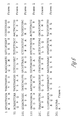
- E. Coli bacteria containing the expression plasmid encoding the leader-CH-GRF(1-44)CH (SEQ ID NO:23) polypeptide ( Figure 7 ) were grown in 500 mL shake flasks containing tryptone, Yeast, glucose, batch salts (sodium and potassium mono- and diphosphate salts and ammonium sulfate), and antibiotic.
- Inoculated shake flasks were subject to orbital shaking (200 rpm, 37 °C). Incubation was completed when the culture reached an optical density (OD) of 0.8-1.8 at 540 nm.
- OD optical density
- Fermenters ranging from 5 L to 100 L production capacities were seeded using shake flask cultures.
- the media included batch salts, glucose, and chelated metals solution (potassium citrate, sodium citrate, magnesium sulfate, phosphoric acid ferric chloride, zinc chloride, cobalt chloride, sodium molybdate, manganese chloride, calcium chloride, and copper sulfate).
- the pH of the medium was adjusted to 6.9 prior to inoculation and the pH was maintained at 6.9 during culture.
- Dissolved oxygen was maintained at approximately 40 %, via agitation and supplemental oxygen.
- Either silicone-based or polypropylene glycol-based "antifoam” was added aseptically on an "as needed" basis to reduce foaming in the fermentation culture.
- Production fermenter cells were harvested from the fermentation broth by centrifugation. Cell pellets were pooled, resuspended in an appropriate volume (for example, 2 L lysis buffer for material from a 5 L fermentor) of lysis buffer (6 g Tris free base and 0.93 g EDTA in 993 g water), and lysed in a highpressure homogenizer.
- an appropriate volume for example, 2 L lysis buffer for material from a 5 L fermentor
- lysis buffer 6 g Tris free base and 0.93 g EDTA in 993 g water
- Cell solids and peptide precursor-containing inclusion bodies were pelleted by centrifugation, collected, and dissolved via homogenization in 1.5 M citric acid / 1.0 mM EDTA solution, at a pH of approximately1.0 (for example, 1.5 L solution for material from a 5 L fermentor).
- the pH of this suspension was adjusted to 4.9 by slow addition of 10 M sodium hydroxide with continuous mixing, while maintaining the temperature at less than 15 °C.
- the precipitate containing the GRF precursor peptide was collected by centrifugation and washed twice by resuspending in water and centrifuging to a pellet
- en ethylenediamine
- pic picolyl amine (or 2-ammomethyl pyridine)
- aep 2(2-aminoethyl) pyridine
- dien diethylenetriamine.
- Na 2 PdCl 4 and K 2 PdCl 4 were purchased from Aldrich Chemical Co. and Strem Chemical Co.
- the solvents were chosen to be the same as the acid solution of the reaction under investigation.
- the gradient for analysis of the quenched reactions was as follows: 20-30%B (3 min.), 30-40 %B (6 min.), 40 -100 % B (1.5 min) . 100 - 20 % B (0.6 min.), 20 % B (3 min.) at 1 mL/min at 30°C. Absorbance was monitored from 210 - 320 nm.
- Reversed phase HPLC used a Waters Symmetry C 18 , 100 ⁇ 3.5 ⁇ m, 4.6 x 150 mm column.
- the gradient was 25 - 33 % B (24 min.), 33 - 60 % B (6 min.), 60 - 90 % B (1 min.), 90 - 25 % B (0.5 min.), 25 % B (4 min-) at 1 mL/min and 40 °C.
- the absorbance was monitored from 210 - 320 mm
- the LC/MS method utilized a Waters Symmetry C 18 column, 100 ⁇ , 3.55 ⁇ m, 2.1 x 150 mm column.
- the gradient was 20 - 30 % B (1 min.), 30 - 50 % B (25 min.), 50 -100 % B (4 min.), 100 - 20 % B (1 min.), 20 % B (7 min.) at 0.25 mL/min at 40 °C-
- the absorbance was monitored from 210 - 320 nm.
- the LCQ Duo MS detector was set to source from 7 - 19 min. and 24 - 30 min.
- the scan event was set from 700 - 2000 m/z units.
- Palladium (II) complex cleavage reaction conditions cause the binding of palladium (II) to GRF and PTH derivatives, in complexes tight enough to survive analytical HPLC conditions. Therefore the GRF-A-derived samples were diluted 10 fold into urea/Tricarboxyethylphosphine (TCEP) for a final concentration of 6.8 M urea and 5 mM TCEP prior to injection, which resulted the removal of the tightly bound palladium (II).
- TCEP Tricarboxyethylphosphine
- the same effect could be achieved by diluting 6-fold into a solution, with final concentrations of 20 mM thiourea and 200 mM HCl.
- the same effect was achieved by diluting 4-fold into 0.4 M NaCl, and centrifuging the precipitate before injecting the sample into the HPLC.
- the GRF(1-44)-CH analytical samples were treated as described below.
- the PTH(1-34) samples were treated by dilution by six-fold dilution into 0.25 M HCl and 25 mM thiourea.
- the (PTH(1-84) samples were diluted 10 fold into a final concentration of 20 mM thiourea, and 7 M urea.
- dtc treatment A treatment method for preparing the samples, referred to as the dtc treatment, was developed. The treatment was as follows: 50 ⁇ L of sample was added to 425 ⁇ L of 20 mM sodium diethylditbiocarbamate (ddtc) in 8 M urea and allowed to stand at room temperature for five minutes. After the incubation, 25 ⁇ L of 100 mM TCEP was added and the sample was centrifuged to remove the yellow palladate precipitate.
- ddtc sodium diethylditbiocarbamate
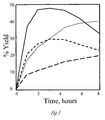
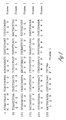
- T7tag-Vg-D 4 K-CH-(MF(I-44)-Ala (SEQ ID NO:2) precursor peptide ( Figure 6 ) was prepared by the methodology described in Example 1, inclusion bodies were isolated as in Example 2, and 1 g (wet weight) of the inclusion bodies solubilized in 50 mL of 3 M citric acid (peptide concentration 3 mg/mL). The solution was divided in two equal parts, and to each tetrachloropalladate was added to a concentration of 5.56 mM. One solution received an additional 11 mM ethylemediamine. The solutions were incubated at 60°C for 5 hours, and aliquots removed every hour, for quenching and analysis by HPLC, using method 1 of Example 4.
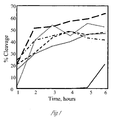
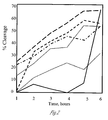
- Tetrachloropalladate promoted hydrolytic cleavage of T7tag-Vg-D 4 K-CH-GRRF(1-44)-CH (SEQ ID NO:1) in 3 M citric, 3 M tartaric, 3 M maleic, 3 M malonic, 3 M maleic, and 80 % pyruvic acids
- T7tag-Vg-D 4 K-CH-ORF(1-44)-CH SEQ ID NO:1
- 3 M citric, 3 M tartaric, 3 M maleic 3 M malonic, 3 M malic, and 80 % pyruvic acids were studied.
- Each acid was investigated with and without ethylenediamine.
- the precursor peptide was homogenized using the plastic probe and the OMNI 5000 high aheer homo gennzer, akning for ⁇ 5 mg/mL or 0.45 mM precursor peptide.
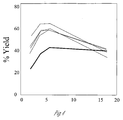
- a matrix was designed to determine the effects of the concentrations of both malonic acid and tetrachloropalladate. Each reaction was done at approximately 5 mg/mL construct.
- the malonic series contained 2, 3, 4, 5, and 6 M malonic acid with 5 mM tetrachloropalladate and 10 mM ethylenediamine.
- the second series was done in 6 M malonic acid with 2, 3, 5, and 10 mM tetrachloropalladate with 4, 6, 10, and 20 mM ethylenediamine respectively.
- the reactions were conducted at 60 °C with time points taken at 2, 4, 6, and 18 hours. Each time point was diluted ten-fold with 8 M urea, 20 mM ddtc, and TCEP
- the analysis used method 1 Example 4.
- Figure 4 shows that the optimal malonic acid concentration is 5 M
- Figure 5 shows that 3 to 5 mM tetrachloropalladate are equivalent and provide high yields.
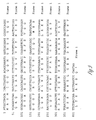
- T7tag-Vg-G 5 PR in a bacterial expression vector to generate T7tag-Vg- G 5 PR-CH-PTH(1-34) (SEQ ID NO:3) ( Figure 8 ), using the techniques described in Example 1.
- Inclusion body preparations were obtained from E. coli transformed with the expression construct essentially as described above for the production of GRF(1-44)-CH in Example 2. Precipitated inclusion bodies were washed by resuspension in water with sonication, and centrifuged to obtain a pellet.
- the pellet from Example 9 was dissolved at a concentration of 6 mg/mL in the citric acid, and palladate (II) complex mixtures, as indicted in Table 1.
- the solution was incubated at a temperature between 60 °C and 70°C for the time indicated in Table 2. As indicated below, the reactions also included addition of agents at about a 2-fold molar excess over tetrachloropalladate, to determine whether they might influence the yield of the product PTH(1-34). After the specified incubation period, the reaction was diluted 1: 10 in 0.2 mM HCl and stored at room temperature for 16 hr. The mixture was then treated with 2 mM potassium thiocyanate to precipitate unreacted Pd complexes and inclusion bodies.
- HPLC HPLC was used to measure the amount of PTH(1-34) cleaved from the chimeric protein during the reaction.
- the post-teated material was loaded on a Phenomenex 5 micron C18 reversed-phase analytical column in Buffer A (5% acetomtnie in water, containing 0.1 % TFA).
- Buffer A 5% acetomtnie in water, containing 0.1 % TFA
- Column elution was effected with linear gradients of Buffer B (95 % acetonitrile in 0.1 % TFA) in Buffer A (rising to 30 % B in 4 min, hold at 30 % B for 4 min, to 50 % B at 33 min, then to 100 % B at 35 min.).
- Buffer B 95 % acetonitrile in 0.1 % TFA
- DNA encoding PTH(1-84) was cloned downstream of a leader sequence T7tag-Vg-D 4 K (SEQ ID NO:9) in a bacterial expression vector to generate of T7tag Vg-D 4 K-CH-PTH(1-84) (SEQ ID NO:4) ( Figure 9 ), using the techniques disclosed in Example 1.
- Whole cell preparations were obtained from E . coli transformed with the expression construct essentially as described above for the production of GRF(1-44)-CH in Example 1.
- Whole cells were collected by centrifugation and stored frozen. The precursor peptide was distributed between inclusion bodies and the supernatant fluid when small aliquots were examined by breaking the cells by sonication.
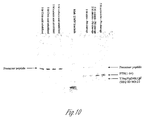
- Tetrachloropalladate (2.6 mM) was added to each of the four cleavage samples, and the cleavage samples were kept at 60 °C for four hours. Samples were withdrawn from each of the two cleavage samples and assayed qualitatively by LC-MS and by PAGE. The two cleavage samples were treated with tricarboxyethyl phosphine in urea to remove palladate and the samples were then analyzed by method 3, Example 4.
- Figure 10 illustrates the extent of cleavage achieved, as determined by gel electrophoresis analysis.
Landscapes
- Chemical & Material Sciences (AREA)
- Health & Medical Sciences (AREA)
- Organic Chemistry (AREA)
- Life Sciences & Earth Sciences (AREA)
- Molecular Biology (AREA)
- Endocrinology (AREA)
- General Health & Medical Sciences (AREA)
- Genetics & Genomics (AREA)
- Zoology (AREA)
- Biochemistry (AREA)
- Proteomics, Peptides & Aminoacids (AREA)
- Medicinal Chemistry (AREA)
- Biophysics (AREA)
- Toxicology (AREA)
- Wood Science & Technology (AREA)
- Gastroenterology & Hepatology (AREA)
- Engineering & Computer Science (AREA)
- General Engineering & Computer Science (AREA)
- Bioinformatics & Cheminformatics (AREA)
- Microbiology (AREA)
- General Chemical & Material Sciences (AREA)
- Chemical Kinetics & Catalysis (AREA)
- Biotechnology (AREA)
- Analytical Chemistry (AREA)
- Peptides Or Proteins (AREA)
- Preparation Of Compounds By Using Micro-Organisms (AREA)
Claims (56)
- Hydrolytisches Polypeptid-Spaltungs-Verfahren mit einem Palladium-(II)-Komplex als Promotor, welches das Polypeptid selektiv an einer Cys-His-Spaltungsstelle spaltet, wobei das Verfahren umfasst, dass das Polypeptid in einem Reaktionsgemisch löslich gemacht wird, das einen in einem hochkonzentrierten organischen Säure-Lösemittel gelösten Palladium-(II)-Promotor umfasst, wobei die organische Säure ausgewählt ist aus der Gruppe bestehend aus Essigsäure, Propionsäure, Buttersäure, Brenztraubensäure, Milchsäure, Weinsäure, Zitronensäure, Oxalsäure, Äpfelsäure, Maleinsäure, Malonsäure, Fumarsäure, Glutarsäure, Adipinsäure, Bernsteinsäure, Pimelinsäure, Tricarballylsäure, Glucuronsäure, Gluconsäure und Glucarsäure, wobei die molare Konzentration des organischen Säure-Lösemittels in dem Reaktionsgemisch zwischen 1 bis 22 beträgt, wobei die Spaltung an der Carbonsäureamid-Bindung zwischen dem Histidinrest und dem dem Histidin auf der C-terminalen Seite unmittelbar benachbarten Rest erfolgt.
- Verfahren nach Anspruch 1, wobei das Polypeptid ein rekombinant exprimiertes chimäres Protein in Form eines Einschlusskörperchens ist und das molare Verhältnis von Palladium-(II)-Promotor zu Einschlusskörperchen in dem Reaktionsgemisch von 2 : 1 bis 20 : 1 beträgt.
- Verfahren nach Anspruch 1 oder 2, wobei die Temperatur des Reaktionsgemischs bei 50°C bis 70 °C gehalten wird.
- Verfahren nach den Ansprüchen 1, 2, oder 3, wobei die Spaltungsreaktion für 1 bis 6 Stunden abläuft.
- Verfahren nach Anspruch 2, wobei die Spaltungsstelle des chimären Proteins einen Linker umfasst, der zu Cys benachbart ist.
- Verfahren nach Anspruch 5, wobei der Linker aus der Gruppe bestehend aus DDDD (SEQ-ID-NR: 10), DDDK (SEQ-ID-NR: 11), DTRL (SEQ-ID-NR: 12), und GGPR (SEQ-ID-NR: 13) ausgewählt ist.
- Verfahren nach Anspruch 1 oder 2, wobei das organische Säure-Lösemittel mit einem oder mehreren Palladium-(II)-Komplexen mit Liganden kombiniert wird, die ausgewählt sind aus der Gruppe bestehend aus Ethylendiamin; Propylendiamin; 2-Aminomethylpyridin; 2(2-Aminoethyl)pyridin; 2(2-Methylaminoethyl)pyridin; 2,2'-Bypyridyl; 1,10-Phenanthrolin; 3-Hydroxy-2(dimethylaminomethyl)pyridin; 3-Hydroxy-1,5-dithiacyclooctan; 3,6-Dithiaoctan-1,8-diol; 1,2-Diphenylphosphinethan; Triphenylphosphin; Diphenylphosphinferrocen; und Diethylentriamin.
- Verfahren nach Anspruch 1 oder 2, wobei der Palladium-(II)-Promotor ein Palladium-(II)-Komplex ist, der aus der Gruppe bestehend aus Na2PdCl4; cis-[Pd(en)Cl2]; cis-[Pd(bp)Cl2]; cis-[Pd(phen)Cl2]; cis-[Pd(pn)Cl2]; cis-[Pd(pic)Cl2]; cis-[Pd(dtco-OH)Cl2 cis-[Pd(en)(OH2)2]2+, cis-[Pd(pn)(OH2)2] 2+, cis-[Pd(pic)(OH2)2] 2+, cis-[Pd(bp)(OH2)2] 2+; cis-[Pd(phen)(OH2)2] 2+; cis-[Pd(dtco-OH)(OH2)2] 2+; und [Pd(OH2)3(OH)](NO3) ausgewählt ist.
- Verfahren nach Anspruch 2, wobei das chimäre Protein rekombinant in Wirtszellen exprimiert und aus den Wirtszellen in Form eines Einschlusskörperchens gewonnen wurde.
- Verfahren nach Anspruch 9, wobei das Peptid rGRF ist, die Wirtszellen E. Coli sind und das chimäre Protein T7tag-Vg-D4K-CH-GRF (1-44)-CH (SEQ-ID-NR: 1) ist, oder wobei das Peptid rPTH ist, die Wirtszellen E. Coli sind und das chimäre Protein T7tag-Vg-G5PR-CH-PTH(1-34) (SEQ-ID-NR: 3) oder T7tag-Vg-D4K-CH-PTH(1-84) (SEQ-ID-NR: 4) ist.
- Verfahren nach den Ansprüchen 1, 2 oder 9, wobei das organische Säure-Lösemittel Malonsäure ist.
- Verfahren nach Anspruch 9, wobei das organische Säure-Lösemittel 5 M Malonsäure oder 6 M Malonsäure ist und der Palladium-(II)-Promotor Tetrachlorpalladat ist
- Verfahren nach den Ansprüchen 2, 9, oder 12, wobei der Palladium-(II)-Promotor Tetrachlorpalladat ist und das molare Verhältnis von Tetrachlorpalladat zu chimärem Protein etwa 10 : 1 beträgt.
- Verfahren nach Anspruch 12, wobei das chimäre Protein T7tag-Vg-D4K-CH-GRF(1-44)-CH (SEQ-ID-NR: 1) ist.
- Verfahren nach Anspruch 10, wobei das organische Säure-Lösemittel Zitronensäure ist, und wobei das Peptid rPTH ist, die Wirtszellen E. Coli sind und das chimäre Protein T7tag-Vg-G5PR-CH-PTH(1-34) (SEQ-ID-NR: 3) oder T7tag-Vg-D4K-CH-PTH(1-84) (SEQ-ID-NR: 4) ist.
- Verfahren nach Anspruch 2, wobei das Polypeptid GLP-1, GLP-2, PTH, GRF, Parathyroidhormon-verwandtes Protein, ACTH, Enkephaline, Endorphine, Exendine, Amyline, verschiedene Opioidpeptide, Gaegurin 5, Gaegurin 6, Brevinin 1, ein Ranatuerin ausgewählt aus der Gruppe bestehend aus Ranatuerin 1 bis 9, ein Esculetin, GIP, Glucagon, Motilin, ein Thymopoietin, ein Thymosin, Ubiquitin, thymischer Serum-Faktor, thymischer Humoral-Faktor, Neurotensin und Tuftsin ist; oder wobei das Polypeptid Gastrin, Calcitonin, luteinisierendes Hormon-Releasing-Hormon, pankreatisches Polypeptid, Endothelin, Corticotropin-Releasing-Faktor, Neuropeptid Y, atriales natriuretisches Peptid, Amylin, Galanin, Somatostatine, vasoaktives intestinales Peptid und Insulin ist.
- Verfahren nach Anspruch 16, wobei das chimäre Protein synthetisch hergestellt ist.
- Verfahren nach Anspruch 16, wobei das chimäre Protein rekombinant in Wirtszellen exprimiert und aus den Wirtszellen, zum Beispiel E. Coli, in Form eines Einschlusskörperchens gewonnen wurde.
- Verfahren nach den Ansprüchen 1 oder 9, wobei die Reaktionstemperatur der Spaltung 60 °C beträgt.
- Verfahren nach Anspruch 15, wobei die Zitronensäure 3 M Zitronensäure ist, der Palladium-(II)-Promotor Natrium-Tetrachlorpalladat ist, und das Reaktionsgemisch einen Palladatliganden ausgewählt aus der Gruppe bestehend aus Pic, Methionin oder Histidin umfasst.
- Peptid-Reinigungsverfahren, umfassend die Schritte:(a) Abspalten eines Peptids von einem chimären Protein umfassend eine Leadersequenz, die über eine Cys-His-Spaltungsstelle mit dem N-terminalen Ende des Peptids verbunden ist, durch Solubilisierung des chimären Proteins in einem Reaktionsgemisch, das einen in einem hochkonzentrierten organischen Säure-Lösemittel gelösten Palladium-(II)-Promotor umfasst, wobei das hochkonzentrierte Säure-Lösemittel ausgewählt ist aus der Gruppe bestehend aus Essigsäure, Zitronensäure, Dicarbonsäuren, Milchsäure, Maleinsäure, Malonsäure, Propionsäure, Brenztraubensäure, Weinsäure, Tricarballylsäure; und(b) Gewinnen des abgespalteten Peptids aus dem Reaktionsgemisch von Schritt (a) durch Ultrafiltration, Filtration oder lonenaustausch-Chromatographie, wobei die molare Konzentration des organischen Säure-Lösemittels in dem Reaktionsgemisch zwischen 1 und 22 beträgt, und wobei die Spaltung an der Carbonsäureamid-Bindung zwischen dem Histidinrest und dem dem Histidin auf der C-terminalen Seite unmittelbar benachbarten Rest erfolgt.
- Verfahren nach Anspruch 21, wobei das molare Verhältnis von Palladium-(II)-Promotor zu chimärem Protein in dem Reaktionsgemisch etwa 2 : 1 bis 20 : 1 beträgt.
- Verfahren nach Anspruch 21 oder 22, wobei die Temperatur des Reaktionsgemischs bei 50 °C bis 70 °C gehalten wird.
- Verfahren nach den Ansprüchen 21, 22 oder 23, wobei die Spaltungsreaktion für 1 bis 6 Stunden abläuft.
- Verfahren nach Anspruch 21, wobei die Spaltungsstelle einen Linker umfasst, der zu Cys benachbart ist.
- Verfahren nach Anspruch 25, wobei der Linker aus der Gruppe bestehend aus DDDD (SEQ-ID-NR: 10), DDDK (SEQ-ID-NR: 11), DTRL (SEQ-ID-NR: 12), und GGPR (SEQ-ID-NR: 13) ausgewählt ist.
- Verfahren nach Anspruch 20 oder 21, wobei das organische Säure-Lösemittel mit einem oder mehreren Palladium-(II)-Komplexen mit Liganden kombiniert wird, die ausgewählt sind aus der Gruppe bestehend aus Ethylendiamin; Propylendiamin; 2-Aminomethylpyridin; 2(2-Aminoethyl)pyridin; 2(2-Methylaminoethyl)pyridin; 2,2'-Bypyridyl; 1,10-Phenanthrolin; 3-Hydroxy-2(dimethylaminomethyl)pyridin; 3-Hydroxy-1,5-dithiacyclooctan; 3,6-Dithiaoctan-1,8-diol; 1,2-Diphenylphosphinethan; Triphenylphosphin; Diphenylphosphinferrocen; und Diethylentriamin.
- Verfahren nach Anspruch 22, wobei der Palladium-(II)-Promotor ein Palladium-(II)-Komplex ist, der aus der Gruppe bestehend aus Na2PdCl4; cis-[Pd(en)Cl2]; cis-[Pd(bp)Cl2]; cis-[Pd(phen)Cl2]; cis-[Pd(pn)Cl2]; cis-[Pd(pic)Cl2]; cis-[Pd(dtco-OH)Cl2 cis-[Pd(en)(OH2)2]2+, cis-[Pd(pn)(OH2)2]2+, cis-[Pd(pic)(OH2)2]2+, cis-[Pd(bp)(OH2)2] 2+; cis-[Pd(phen)(OH2)2] 2+; cis-[Pd(dtco-OH)(OH2)2] 2+; und [Pd(OH2)3(OH)](NO3) ausgewählt ist.
- Verfahren nach Anspruch 22, wobei das chimäre Protein rekombinant in Wirtszellen exprimiert und aus den Wirtszellen in Form eines Einschlusskörperchens gewonnen wurde.
- Verfahren nach Anspruch 22, wobei das Peptid rGRF ist, die Wirtszellen E. Coli sind und das chimäre Protein T7tag-Vg-D4K-CH-GRF (1-44)-CH (SEQ-ID-NR: 1) ist; oder wobei das Peptid rPTH ist, die Wirtszellen E. Coli sind und das chimäre Protein T7tag-Vg-G5PR-CH-PTH(1-34) (SEQ-ID-NR: 3) ist; oder wobei das Peptid rPTH ist, die Wirtszellen E. Coli sind und das chimäre Protein T7tag-Vg-D4K-CH-PTH(1-84) (SEQ-ID-NR: 4) ist.
- Verfahren nach Anspruch 22, wobei das organische Säure-Lösemittel mit einer anorganischen Säure kombiniert wird, die ausgewählt ist aus der Gruppe bestehend aus HCI, H3PO4, H2SO4 oder HCIO4.
- Verfahren nach Anspruch 22, wobei das organische Säure-Lösemittel Malonsäure ist.
- Verfahren nach Anspruch 22, wobei das organische Säure-Lösemittel 5 M Malonsäure oder 6 M Malonsäure ist und der Palladium-(II)-Promotor Tetrachlorpalladat ist.
- Verfahren nach Anspruch 22, wobei der Palladium-(II)-Promotor Tetrachlorpalladat ist und das molare Verhältnis von Tetrachlorpalladat zu chimärem Protein 10 : 1 beträgt.
- Verfahren nach Anspruch 22, wobei das chimäre Protein T7tag-Vg-D4K-CH-GRF(1-44)-CH (SEQ-ID-NR: 1) ist.
- Verfahren nach Anspruch 22, wobei das organische Säure-Lösemittel Zitronensäure ist.
- Verfahren nach Anspruch 22, wobei das Peptid GLP-1, GLP-2, GRF, PTH, Parathyroidhormon-verwandtes Protein, ACTH, Enkephaline, Endorphine, Exendine, Amyline, verschiedene Opioidpeptide, Gaegurin 5, Gaegurin 6, Brevinin 1, ein Ranatuerin ausgewählt aus der Gruppe bestehend aus Ranatuerin 1 bis 9, ein Esculetin, GIP, Glucagon, Motilin, ein Thymopoietin, ein Thymosin, Ubiquitin, thymischer Serum-Faktor, thymischer Humoral-Faktor, Neurotensin oder Tuftsin ist; oder wobei das Peptid Gastrin, Calcitonin, luteinisierendes Hormon-Releasing-Hormon, pankreatisches Polypeptid, Endothelin, Corticotropin-Releasing-Faktor, Neuropeptid Y, atriales natriuretisches Peptid, Amylin, Galanin, Somatostatine, vasoaktives intestinales Peptid oder Insulin ist.
- Verfahren nach Anspruch 22, wobei das chimäre Protein synthetisch hergestellt ist.
- Verfahren nach Anspruch 22, wobei das chimäre Protein rekombinant in Wirtszellen exprimiert und aus den Wirtszellen, zum Beispiel E. Coli, in Form eines Einschlusskörperchens gewonnen wurde.
- Verfahren nach Anspruch 22, wobei die Reaktionstemperatur der Spaltung 60 °C beträgt.
- Verfahren nach Anspruch 22, wobei die Zitronensäure 3 M Zitronensäure ist, der Palladium-(II)-Promotor Natrium-Tetrachlorpalladat ist, und das Reaktionsgemisch einen Palladatliganden ausgewählt aus der Gruppe bestehend aus Pic, Methionin oder Histidin umfasst.
- Verfahren zur Herstellung eines Peptids, umfassend die Schritte:(a) rekombinantes Exprimieren eines chimären Proteins umfassend eine Leadersequenz, die über eine Cys-His-Spaltungsstelle mit dem N-terminalen Ende des Peptids verbunden ist, in einer Wirtszelle, und Gewinnen des chimären Proteins aus der Wirtszelle in Form eines Einschlusskörperchens;(b) Abspalten des Peptids von dem chimären Protein durch Solubilisierung des in Schritt (a) gewonnenen Einschlusskörperchens in einem Reaktionsgemisch, das einen in einem hochkonzentrierten organischen Säure-Lösemittel gelösten Palladium-(II)-Promotor umfasst, wobei das Säure-Lösemittel ausgewählt ist aus der Gruppe bestehend aus Essigsäure, Zitronensäure, Dicarbonsäuren, Milchsäure, Maleinsäure, Malonsäure, Propionsäure, Brenztraubensäure, Weinsäure und Tricarballylsäure, wobei die molare Konzentration des organischen Säure-Lösemittels in dem Reaktionsgemisch zwischen 1 und 22 beträgt, und wobei die Spaltung an der Carbonsäureamid-Bindung zwischen dem Histidinrest und dem dem Histidin auf der C-terminalen Seite unmittelbar benachbarten Rest erfolgt; und(c) Gewinnen des abgespalteten Peptids aus dem Reaktionsgemisch von Schritt (b) durch Ultrafiltration, Filtration oder lonenaustausch-Chromatographie.
- Verfahren nach Anspruch 42, wobei das molare Verhältnis von Palladium-(II)-Promotor zu Einschlusskörperchen in dem Reaktionsgemisch 2 : 1 bis 20 : 1 beträgt.
- Verfahren nach Anspruch 42, wobei die Temperatur des Reaktionsgemischs bei 50 °C bis 70 °C gehalten wird.
- Verfahren nach Anspruch 42, wobei die Spaltungsreaktion für 1 bis 6 Stunden abläuft.
- Verfahren nach Anspruch 42, wobei die Spaltungsstelle einen Linker umfasst, der zu Cys benachbart ist.
- Verfahren nach Anspruch 46, wobei der Linker aus der Gruppe bestehend aus DDDD (SEQ-ID-NR: 10), DDDK (SEQ-ID-NR: 11), DTRL (SEQ-ID-NR: 12), und GGPR (SEQ-ID-NR: 13) ausgewählt ist.
- Verfahren nach Anspruch 43, wobei das organische Säure-Lösemittel mit einem oder mehreren Palladium-(II)-Komplexen mit Liganden kombiniert wird, die ausgewählt sind aus der Gruppe bestehend aus Ethylendiamin; Propylendiamin; 2-Aminomethylpyridin; 2(2-Aminoethyl)pyridin; 2(2-Methylaminoethyl)pyridin; 2,2'-Bypyridyl; 1,10-Phenanthrolin; 3-Hydroxy-2(dimethylaminomethyl)pyridin; 3-Hydroxy-1,5-dithiacyclooctan; 3,6-Dithiaoctan-1,8-diol; 1,2-Diphenylphosphinethan; Triphenylphosphin; Diphenylphosphinferrocen; und Diethylentriamin.
- Verfahren nach Anspruch 43, wobei der Palladium-(II)-Promotor ein Palladium-(II)-Komplex ist, der aus der Gruppe bestehend aus Na2PdCl4; cis-[Pd (en)C2]; cis-[Pd (bp)Cl2]; cis-[Pd (phen)Cl2]; cis-[Pd (pn)Cl2]; cis-[Pd(pic)Cl2]; cis-[Pd (dtco-OH)Cl2 cis-[Pd(en)(OH2)2]2+, cis-[Pd(pn)(OH2)2] 2+, cis-[Pd(pic)(OH2)2]2+, cis-[Pd (bp) (OH2) 2] 2+; cis-[Pd(phen)(OH2)2] 2+; cis-[Pd(dtco-OH)(OH2)2] 2+; und [Pd(OH2)3(OH)](NO3) ausgewählt ist.
- Verfahren nach Anspruch 43, wobei das Peptid rGRF ist, die Wirtszellen E. Coli sind und das chimäre Protein T7tag-Vg-D4K-CH-GRF (1-44)-CH (SEQ-ID-NR: 1) ist; oder wobei das Peptid rPTH ist, die Wirtszellen E. Coli sind und das chimäre Protein T7tag-Vg-G5PR-CH-PTH(1-34) (SEQ-ID-NR: 3) ist; oder wobei das Peptid rPTH ist, die Wirtszellen E. Coli sind und das chimäre Protein T7tag-Vg-D4K-CH-PTH(1-84) (SEQ-ID-NR: 4) ist.
- Verfahren nach Anspruch 43, wobei das organische Säure-Lösemittel mit einer anorganischen Säure kombiniert wird, die ausgewählt ist aus der Gruppe bestehend aus HCl, H3PO4, H2SO4 oder HClO4.
- Verfahren nach Anspruch 43, wobei das organische Säure-Lösemittel Malonsäure ist.
- Verfahren nach Anspruch 52, wobei das organische Säure-Lösemittel 5 M Malonsäure oder 6 M Malonsäure ist und der Palladium-(II)-Promotor Tetrachlorpalladat.
- Verfahren nach Anspruch 53, wobei der Palladium-(II)-Promotor Tetrachlorpalladat ist und das molare Verhältnis von Tetrachlorpalladat zu chimärem Protein etwa 10 : 1 beträgt.
- Verfahren nach Anspruch 43, wobei das Peptid GRF-1, GLP-2, GRF, PTH, Parathyroidhormon-verwandtes Protein, ACTH, Enkephaline, Endorphine, Exendine, Amyline, verschiedene Opioidpeptide, Gaegurin 5, Gaegurin 6, Brevinin 1, ein Ranatuerin ausgewählt aus der Gruppe bestehend aus Ranatuerin 1 bis 9, ein Esculetin, GIP, Glucagon, Motilin, ein Thymopoietin, ein Thymosin, Ubiquitin, thymischer Serum-Faktor, thymischer Humoral-Faktor, Neurotensin oder Tuftsin ist; oder wobei das Peptid Gastrin, Calcitonin, luteinisierendes Hormon-Releasing-Hormon, pankreatisches Polypeptid, Endothelin, Corticotropin-Releasing-Faktor, Neuropeptid Y, atriales natriuretisches Peptid, Amylin, Galanin, Somatostatine, vasoaktives intestinales Peptid oder Insulin ist.
- Verfahren nach Anspruch 1, wobei das hochkonzentrierte organische Säure-Lösemittel ausgewählt ist aus der Gruppe bestehend aus Essigsäure, Zitronensäure, Milchsäure, Maleinsäure, Malonsäure, Propionsäure, Brenztraubensäure, Weinsäure und Tricarballylsäure.
Applications Claiming Priority (3)
| Application Number | Priority Date | Filing Date | Title |
|---|---|---|---|
| US38348802P | 2002-05-24 | 2002-05-24 | |
| US383488P | 2002-05-24 | ||
| PCT/US2003/016468 WO2003100015A2 (en) | 2002-05-24 | 2003-05-23 | Polypeptide cleavage process |
Publications (3)
| Publication Number | Publication Date |
|---|---|
| EP1532142A2 EP1532142A2 (de) | 2005-05-25 |
| EP1532142A4 EP1532142A4 (de) | 2007-08-08 |
| EP1532142B1 true EP1532142B1 (de) | 2012-03-21 |
Family
ID=29584571
Family Applications (1)
| Application Number | Title | Priority Date | Filing Date |
|---|---|---|---|
| EP03736710A Expired - Lifetime EP1532142B1 (de) | 2002-05-24 | 2003-05-23 | Verfahren zur spaltung von polypeptiden |
Country Status (7)
| Country | Link |
|---|---|
| US (2) | US7771966B2 (de) |
| EP (1) | EP1532142B1 (de) |
| JP (1) | JP4638223B2 (de) |
| AT (1) | ATE550344T1 (de) |
| AU (1) | AU2003237244B2 (de) |
| CA (1) | CA2485737A1 (de) |
| WO (1) | WO2003100015A2 (de) |
Families Citing this family (9)
| Publication number | Priority date | Publication date | Assignee | Title |
|---|---|---|---|---|
| ATE487486T1 (de) * | 2002-05-24 | 2010-11-15 | Medtronic Inc | Polypeptid-spaltungsprozess |
| WO2003099854A2 (en) * | 2002-05-24 | 2003-12-04 | Nps Allelix Corp. | Method for enzymatic production of glp-2(1-33) and glp-2-(1-34) peptides |
| AU2003243315B8 (en) * | 2002-05-24 | 2009-05-21 | Medtronic, Inc. | Peptide amidation process |
| US7318925B2 (en) | 2003-08-08 | 2008-01-15 | Amgen Fremont, Inc. | Methods of use for antibodies against parathyroid hormone |
| US7288253B2 (en) | 2003-08-08 | 2007-10-30 | Amgen Fremont, Inc. | Antibodies directed to parathyroid hormone (PTH) and uses thereof |
| HRP20120315T1 (hr) * | 2003-11-21 | 2012-05-31 | Nps Pharmaceuticals | Proizvodnja peptida 2 nalik glukagonu i analoga |
| US8263545B2 (en) | 2005-02-11 | 2012-09-11 | Amylin Pharmaceuticals, Inc. | GIP analog and hybrid polypeptides with selectable properties |
| BRPI0606992A2 (pt) | 2005-02-11 | 2009-07-28 | Amylin Pharmaceuticals Inc | análogo e polipeptìdeos hìbridos de gip com propriedades selecionáveis |
| CN111349153A (zh) * | 2020-04-10 | 2020-06-30 | 四川吉晟生物医药有限公司 | 一种心钠肽的制备方法 |
Family Cites Families (5)
| Publication number | Priority date | Publication date | Assignee | Title |
|---|---|---|---|---|
| US5352771A (en) * | 1992-08-31 | 1994-10-04 | Iowa State University Research Foundation Inc. | Hydrolysis of peptide bonds using Pt (II) and Pd (II) complexes |
| US6376529B1 (en) * | 1995-06-07 | 2002-04-23 | Peng Cho Tang | Mono- and bis-indolylquinones and prophylactic and therapeutic uses thereof |
| US6660758B1 (en) * | 1996-12-13 | 2003-12-09 | The Scripps Research Institute | Epothilone analogs |
| ATE487486T1 (de) | 2002-05-24 | 2010-11-15 | Medtronic Inc | Polypeptid-spaltungsprozess |
| AU2003243315B8 (en) | 2002-05-24 | 2009-05-21 | Medtronic, Inc. | Peptide amidation process |
-
2003
- 2003-05-23 JP JP2004508257A patent/JP4638223B2/ja not_active Expired - Fee Related
- 2003-05-23 EP EP03736710A patent/EP1532142B1/de not_active Expired - Lifetime
- 2003-05-23 AU AU2003237244A patent/AU2003237244B2/en not_active Ceased
- 2003-05-23 AT AT03736710T patent/ATE550344T1/de active
- 2003-05-23 WO PCT/US2003/016468 patent/WO2003100015A2/en not_active Ceased
- 2003-05-23 CA CA002485737A patent/CA2485737A1/en not_active Abandoned
-
2004
- 2004-11-24 US US10/997,762 patent/US7771966B2/en not_active Expired - Lifetime
-
2010
- 2010-06-07 US US12/795,073 patent/US8288130B2/en not_active Expired - Fee Related
Also Published As
| Publication number | Publication date |
|---|---|
| US20100311947A1 (en) | 2010-12-09 |
| US20050227313A1 (en) | 2005-10-13 |
| WO2003100015A2 (en) | 2003-12-04 |
| AU2003237244A1 (en) | 2003-12-12 |
| EP1532142A2 (de) | 2005-05-25 |
| EP1532142A4 (de) | 2007-08-08 |
| ATE550344T1 (de) | 2012-04-15 |
| JP4638223B2 (ja) | 2011-02-23 |
| US7771966B2 (en) | 2010-08-10 |
| US8288130B2 (en) | 2012-10-16 |
| AU2003237244B2 (en) | 2009-11-12 |
| CA2485737A1 (en) | 2003-12-04 |
| JP2005527632A (ja) | 2005-09-15 |
| WO2003100015A3 (en) | 2004-04-08 |
Similar Documents
| Publication | Publication Date | Title |
|---|---|---|
| US8288130B2 (en) | Polypeptide cleavage process | |
| US5707826A (en) | Enzymatic method for modification of recombinant polypeptides | |
| EP0978565B1 (de) | Verfahren zur herstellung eines peptids mittels eines hilfspeptids | |
| US8153762B2 (en) | Composition for palladium-mediated cleavage of peptides containing CXC, CXH or CHM sequences | |
| JPWO1999038984A1 (ja) | 補助ペプチドを用いたペプチドの製造方法 | |
| JPH0822240B2 (ja) | 真核生物ポリペプチドアナログからn−末端アミノ酸残基を除去する方法とそれによつて生成されるポリペプチド | |
| EP1531836B1 (de) | Polypeptid-spaltungsprozess | |
| CA2379571A1 (en) | Process for the production of a heterologous peptide by autoproteolytic cleavage in vitro | |
| WO2003099852A2 (en) | Peptide derivatization process | |
| JP3187201B2 (ja) | C末端にプロリンアミドを有するペプチドの製法 | |
| EP0635573A2 (de) | Prozess zur Herstellung von nativem, humanem Glicentin |
Legal Events
| Date | Code | Title | Description |
|---|---|---|---|
| PUAI | Public reference made under article 153(3) epc to a published international application that has entered the european phase |
Free format text: ORIGINAL CODE: 0009012 |
|
| 17P | Request for examination filed |
Effective date: 20041223 |
|
| AK | Designated contracting states |
Kind code of ref document: A2 Designated state(s): AT BE BG CH CY CZ DE DK EE ES FI FR GB GR HU IE IT LI LU MC NL PT RO SE SI SK TR |
|
| AX | Request for extension of the european patent |
Extension state: AL LT LV MK |
|
| DAX | Request for extension of the european patent (deleted) | ||
| RIN1 | Information on inventor provided before grant (corrected) |
Inventor name: SEO, JIN SEOG, Inventor name: STRYDOM, DANIEL Inventor name: HOLMQUIST, BARTON |
|
| A4 | Supplementary search report drawn up and despatched |
Effective date: 20070711 |
|
| RIC1 | Information provided on ipc code assigned before grant |
Ipc: C07K 1/12 20060101AFI20070629BHEP Ipc: A61K 31/04 20060101ALI20070629BHEP Ipc: C07D 413/06 20060101ALI20070629BHEP |
|
| 17Q | First examination report despatched |
Effective date: 20071001 |
|
| RAP1 | Party data changed (applicant data changed or rights of an application transferred) |
Owner name: MEDTRONIC, INC. |
|
| GRAP | Despatch of communication of intention to grant a patent |
Free format text: ORIGINAL CODE: EPIDOSNIGR1 |
|
| GRAS | Grant fee paid |
Free format text: ORIGINAL CODE: EPIDOSNIGR3 |
|
| GRAA | (expected) grant |
Free format text: ORIGINAL CODE: 0009210 |
|
| AK | Designated contracting states |
Kind code of ref document: B1 Designated state(s): AT BE BG CH CY CZ DE DK EE ES FI FR GB GR HU IE IT LI LU MC NL PT RO SE SI SK TR |
|
| REG | Reference to a national code |
Ref country code: GB Ref legal event code: FG4D |
|
| REG | Reference to a national code |
Ref country code: CH Ref legal event code: EP |
|
| REG | Reference to a national code |
Ref country code: IE Ref legal event code: FG4D |
|
| REG | Reference to a national code |
Ref country code: AT Ref legal event code: REF Ref document number: 550344 Country of ref document: AT Kind code of ref document: T Effective date: 20120415 |
|
| REG | Reference to a national code |
Ref country code: DE Ref legal event code: R096 Ref document number: 60340342 Country of ref document: DE Effective date: 20120516 |
|
| REG | Reference to a national code |
Ref country code: NL Ref legal event code: VDEP Effective date: 20120321 |
|
| PGFP | Annual fee paid to national office [announced via postgrant information from national office to epo] |
Ref country code: DE Payment date: 20120529 Year of fee payment: 10 |
|
| PG25 | Lapsed in a contracting state [announced via postgrant information from national office to epo] |
Ref country code: GR Free format text: LAPSE BECAUSE OF FAILURE TO SUBMIT A TRANSLATION OF THE DESCRIPTION OR TO PAY THE FEE WITHIN THE PRESCRIBED TIME-LIMIT Effective date: 20120622 Ref country code: FI Free format text: LAPSE BECAUSE OF FAILURE TO SUBMIT A TRANSLATION OF THE DESCRIPTION OR TO PAY THE FEE WITHIN THE PRESCRIBED TIME-LIMIT Effective date: 20120321 |
|
| PGFP | Annual fee paid to national office [announced via postgrant information from national office to epo] |
Ref country code: FR Payment date: 20120607 Year of fee payment: 10 |
|
| REG | Reference to a national code |
Ref country code: AT Ref legal event code: MK05 Ref document number: 550344 Country of ref document: AT Kind code of ref document: T Effective date: 20120321 |
|
| PG25 | Lapsed in a contracting state [announced via postgrant information from national office to epo] |
Ref country code: CY Free format text: LAPSE BECAUSE OF FAILURE TO SUBMIT A TRANSLATION OF THE DESCRIPTION OR TO PAY THE FEE WITHIN THE PRESCRIBED TIME-LIMIT Effective date: 20120321 |
|
| PG25 | Lapsed in a contracting state [announced via postgrant information from national office to epo] |
Ref country code: SE Free format text: LAPSE BECAUSE OF FAILURE TO SUBMIT A TRANSLATION OF THE DESCRIPTION OR TO PAY THE FEE WITHIN THE PRESCRIBED TIME-LIMIT Effective date: 20120321 Ref country code: CZ Free format text: LAPSE BECAUSE OF FAILURE TO SUBMIT A TRANSLATION OF THE DESCRIPTION OR TO PAY THE FEE WITHIN THE PRESCRIBED TIME-LIMIT Effective date: 20120321 Ref country code: RO Free format text: LAPSE BECAUSE OF FAILURE TO SUBMIT A TRANSLATION OF THE DESCRIPTION OR TO PAY THE FEE WITHIN THE PRESCRIBED TIME-LIMIT Effective date: 20120321 Ref country code: EE Free format text: LAPSE BECAUSE OF FAILURE TO SUBMIT A TRANSLATION OF THE DESCRIPTION OR TO PAY THE FEE WITHIN THE PRESCRIBED TIME-LIMIT Effective date: 20120321 Ref country code: BE Free format text: LAPSE BECAUSE OF FAILURE TO SUBMIT A TRANSLATION OF THE DESCRIPTION OR TO PAY THE FEE WITHIN THE PRESCRIBED TIME-LIMIT Effective date: 20120321 Ref country code: SI Free format text: LAPSE BECAUSE OF FAILURE TO SUBMIT A TRANSLATION OF THE DESCRIPTION OR TO PAY THE FEE WITHIN THE PRESCRIBED TIME-LIMIT Effective date: 20120321 |
|
| PG25 | Lapsed in a contracting state [announced via postgrant information from national office to epo] |
Ref country code: PT Free format text: LAPSE BECAUSE OF FAILURE TO SUBMIT A TRANSLATION OF THE DESCRIPTION OR TO PAY THE FEE WITHIN THE PRESCRIBED TIME-LIMIT Effective date: 20120723 Ref country code: SK Free format text: LAPSE BECAUSE OF FAILURE TO SUBMIT A TRANSLATION OF THE DESCRIPTION OR TO PAY THE FEE WITHIN THE PRESCRIBED TIME-LIMIT Effective date: 20120321 |
|
| PG25 | Lapsed in a contracting state [announced via postgrant information from national office to epo] |
Ref country code: MC Free format text: LAPSE BECAUSE OF NON-PAYMENT OF DUE FEES Effective date: 20120531 |
|
| REG | Reference to a national code |
Ref country code: CH Ref legal event code: PL |
|
| PLBE | No opposition filed within time limit |
Free format text: ORIGINAL CODE: 0009261 |
|
| STAA | Information on the status of an ep patent application or granted ep patent |
Free format text: STATUS: NO OPPOSITION FILED WITHIN TIME LIMIT |
|
| PG25 | Lapsed in a contracting state [announced via postgrant information from national office to epo] |
Ref country code: CH Free format text: LAPSE BECAUSE OF NON-PAYMENT OF DUE FEES Effective date: 20120531 Ref country code: LI Free format text: LAPSE BECAUSE OF NON-PAYMENT OF DUE FEES Effective date: 20120531 Ref country code: DK Free format text: LAPSE BECAUSE OF FAILURE TO SUBMIT A TRANSLATION OF THE DESCRIPTION OR TO PAY THE FEE WITHIN THE PRESCRIBED TIME-LIMIT Effective date: 20120321 Ref country code: AT Free format text: LAPSE BECAUSE OF FAILURE TO SUBMIT A TRANSLATION OF THE DESCRIPTION OR TO PAY THE FEE WITHIN THE PRESCRIBED TIME-LIMIT Effective date: 20120321 Ref country code: NL Free format text: LAPSE BECAUSE OF FAILURE TO SUBMIT A TRANSLATION OF THE DESCRIPTION OR TO PAY THE FEE WITHIN THE PRESCRIBED TIME-LIMIT Effective date: 20120321 |
|
| 26N | No opposition filed |
Effective date: 20130102 |
|
| GBPC | Gb: european patent ceased through non-payment of renewal fee |
Effective date: 20120621 |
|
| REG | Reference to a national code |
Ref country code: IE Ref legal event code: MM4A |
|
| PG25 | Lapsed in a contracting state [announced via postgrant information from national office to epo] |
Ref country code: IT Free format text: LAPSE BECAUSE OF FAILURE TO SUBMIT A TRANSLATION OF THE DESCRIPTION OR TO PAY THE FEE WITHIN THE PRESCRIBED TIME-LIMIT Effective date: 20120321 |
|
| REG | Reference to a national code |
Ref country code: DE Ref legal event code: R097 Ref document number: 60340342 Country of ref document: DE Effective date: 20130102 |
|
| PG25 | Lapsed in a contracting state [announced via postgrant information from national office to epo] |
Ref country code: ES Free format text: LAPSE BECAUSE OF FAILURE TO SUBMIT A TRANSLATION OF THE DESCRIPTION OR TO PAY THE FEE WITHIN THE PRESCRIBED TIME-LIMIT Effective date: 20120702 Ref country code: GB Free format text: LAPSE BECAUSE OF NON-PAYMENT OF DUE FEES Effective date: 20120621 Ref country code: IE Free format text: LAPSE BECAUSE OF NON-PAYMENT OF DUE FEES Effective date: 20120523 |
|
| PG25 | Lapsed in a contracting state [announced via postgrant information from national office to epo] |
Ref country code: BG Free format text: LAPSE BECAUSE OF FAILURE TO SUBMIT A TRANSLATION OF THE DESCRIPTION OR TO PAY THE FEE WITHIN THE PRESCRIBED TIME-LIMIT Effective date: 20120621 |
|
| PG25 | Lapsed in a contracting state [announced via postgrant information from national office to epo] |
Ref country code: DE Free format text: LAPSE BECAUSE OF NON-PAYMENT OF DUE FEES Effective date: 20131203 |
|
| REG | Reference to a national code |
Ref country code: DE Ref legal event code: R119 Ref document number: 60340342 Country of ref document: DE Effective date: 20131203 |
|
| REG | Reference to a national code |
Ref country code: FR Ref legal event code: ST Effective date: 20140131 |
|
| PG25 | Lapsed in a contracting state [announced via postgrant information from national office to epo] |
Ref country code: TR Free format text: LAPSE BECAUSE OF FAILURE TO SUBMIT A TRANSLATION OF THE DESCRIPTION OR TO PAY THE FEE WITHIN THE PRESCRIBED TIME-LIMIT Effective date: 20120321 |
|
| PG25 | Lapsed in a contracting state [announced via postgrant information from national office to epo] |
Ref country code: FR Free format text: LAPSE BECAUSE OF NON-PAYMENT OF DUE FEES Effective date: 20130531 Ref country code: LU Free format text: LAPSE BECAUSE OF NON-PAYMENT OF DUE FEES Effective date: 20120523 |
|
| PG25 | Lapsed in a contracting state [announced via postgrant information from national office to epo] |
Ref country code: HU Free format text: LAPSE BECAUSE OF FAILURE TO SUBMIT A TRANSLATION OF THE DESCRIPTION OR TO PAY THE FEE WITHIN THE PRESCRIBED TIME-LIMIT Effective date: 20030523 |