EP1530148A2 - Vorrichtung und Methode zur Bildverarbeitung - Google Patents
Vorrichtung und Methode zur Bildverarbeitung Download PDFInfo
- Publication number
- EP1530148A2 EP1530148A2 EP04256926A EP04256926A EP1530148A2 EP 1530148 A2 EP1530148 A2 EP 1530148A2 EP 04256926 A EP04256926 A EP 04256926A EP 04256926 A EP04256926 A EP 04256926A EP 1530148 A2 EP1530148 A2 EP 1530148A2
- Authority
- EP
- European Patent Office
- Prior art keywords
- data
- verification
- image data
- pixel
- image
- Prior art date
- Legal status (The legal status is an assumption and is not a legal conclusion. Google has not performed a legal analysis and makes no representation as to the accuracy of the status listed.)
- Ceased
Links
Images






Classifications
-
- G—PHYSICS
- G06—COMPUTING OR CALCULATING; COUNTING
- G06V—IMAGE OR VIDEO RECOGNITION OR UNDERSTANDING
- G06V10/00—Arrangements for image or video recognition or understanding
- G06V10/40—Extraction of image or video features
- G06V10/44—Local feature extraction by analysis of parts of the pattern, e.g. by detecting edges, contours, loops, corners, strokes or intersections; Connectivity analysis, e.g. of connected components
-
- G—PHYSICS
- G06—COMPUTING OR CALCULATING; COUNTING
- G06T—IMAGE DATA PROCESSING OR GENERATION, IN GENERAL
- G06T7/00—Image analysis
-
- G—PHYSICS
- G06—COMPUTING OR CALCULATING; COUNTING
- G06V—IMAGE OR VIDEO RECOGNITION OR UNDERSTANDING
- G06V30/00—Character recognition; Recognising digital ink; Document-oriented image-based pattern recognition
- G06V30/10—Character recognition
- G06V30/24—Character recognition characterised by the processing or recognition method
- G06V30/248—Character recognition characterised by the processing or recognition method involving plural approaches, e.g. verification by template match; Resolving confusion among similar patterns, e.g. "O" versus "Q"
- G06V30/2504—Coarse or fine approaches, e.g. resolution of ambiguities or multiscale approaches
-
- G—PHYSICS
- G06—COMPUTING OR CALCULATING; COUNTING
- G06T—IMAGE DATA PROCESSING OR GENERATION, IN GENERAL
- G06T9/00—Image coding
- G06T9/20—Contour coding, e.g. using detection of edges
-
- G—PHYSICS
- G06—COMPUTING OR CALCULATING; COUNTING
- G06V—IMAGE OR VIDEO RECOGNITION OR UNDERSTANDING
- G06V40/00—Recognition of biometric, human-related or animal-related patterns in image or video data
- G06V40/10—Human or animal bodies, e.g. vehicle occupants or pedestrians; Body parts, e.g. hands
-
- G—PHYSICS
- G06—COMPUTING OR CALCULATING; COUNTING
- G06V—IMAGE OR VIDEO RECOGNITION OR UNDERSTANDING
- G06V40/00—Recognition of biometric, human-related or animal-related patterns in image or video data
- G06V40/10—Human or animal bodies, e.g. vehicle occupants or pedestrians; Body parts, e.g. hands
- G06V40/14—Vascular patterns
Definitions
- the present invention relates to an image processing apparatus for processing image data, for example image data obtained by capturing an image of a checked object and to a method of the same.
- a verification apparatus using image data obtained by biometric scanning so as to verify (authenticate) an individual.
- each of a number of persons to be registered has his or her finger scanned for his or her fingerprint to generate image captured data.
- This image captured data is skeletonized to generate verification use image data.
- the verification apparatus stores the plurality of verification use image data for the plurality of persons to be registered in its memory. At the time of verification, it reads out the plurality of verification use image data from the memory for example in the order of registration and compares the same with the image data under examination for verification.
- the verification apparatus of the above related art reads out the plurality of verification use image data stored in the memory for verification in the order of registration, so if the verification use image data of the person being checked was registered relatively late, there is the problem that a very long time is required for the verification.
- An embodiment of the present invention provides an image processing apparatus able to shorten the verification time when using a plurality of verification use image data stored in a storing means for verification and to a method of the same.
- an image processing apparatus comprising a histogram data generating means for generating histogram data indicating the number of pixel data indicating a particular pixel value for each pixel value based on image captured data comprised of a plurality of pixel data obtained by capturing an image of an object to be registered and each indicating a pixel value; a peak specifying means for specifying a peak value of the number of the pixel data indicating a particular pixel value for pixel values in a predetermined range in the histogram data generated by the histogram data generating means; a storing means for storing the verification use image data obtained based on the image captured data; and a processing means for writing the verification use image data into the storing means linked with the peak value specified by the peak specifying means corresponding to that verification use image data and sorting the peak values linked with the verification use image data stored in the storing means.
- the mode of operation of the image processing apparatus of one embodiment of the invention is as follows.
- the histogram data generating means generates histogram data indicating the number of pixel data indicating a particular pixel value for each pixel value based on image captured data comprised of a plurality of pixel data obtained by capturing an image of an object to be registered and each indicating a pixel value.
- the peak specifying means specifies a peak value of the number of pixel data indicating a particular pixel value for pixel values within a predetermined range in the histogram data generated by the histogram data generating means.
- the processing means writes the verification use image data into a storing means linked with the peak value specified by the peak specifying means corresponding to the verification use image data and sorts the peak values linked with the verification use image data stored in the storing means.
- an image processing method comprising a first step of generating histogram data indicating the number of pixel data indicating a particular pixel value for each pixel value based on image captured data comprised of a plurality of pixel data obtained by capturing an image of an object to be registered and each indicating a pixel value; a second step of specifying a peak value of the number of the pixel data indicating a particular pixel value for pixel values in a predetermined range in the histogram data generated at the first step; a third step of generating verification use image data based on the image captured data; and a fourth step of writing the verification use image data generated at the third step into the storing means linked with the peak value specified at the second step corresponding to the verification use image data and sorting the peak values linked with the verification use image data stored in the storing means.
- the mode of operation of the image processing method of one embodiment of the invention is as follows.
- the first step generates histogram data indicating the number of pixel data indicating a particular pixel value for each pixel value based on image captured data comprised of a plurality of pixel data obtained by capturing an image of an object to be registered and each indicating a pixel value.
- the second step specifies a peak value of the number of pixel within a predetermined range in the histogram data generated at the first step.
- the third step generates verification use image data based on the image captured data.
- the fourth step writes the verification use image data generated at the third step into a storing means linked with the peak value specified at the second step corresponding to that verification use image data and sorts the peak values linked with the verification use image data stored in the storing means.
- the histogram data generation units 15 shown in FIG. 1 and FIG. 9 correspond to the histogram data generating means of an embodiment of the present invention, and the memory 16 corresponds to the storing means.
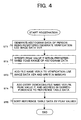
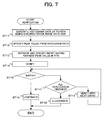
- the peak specifying means of one embodiment of the present invention is realized by a verification unit 17 executing the processing of step ST2 shown in FIG. 4 and step ST12 shown in FIG. 7.
- the processing means of one embodiment of the present invention is realized by the verification unit 17 executing the processing of step ST5 shown in FIG. 4 or steps ST13 to ST19 shown in FIG. 7.
- FIG. 1 is a view of the configuration of a verification system 1 according to a first embodiment.
- the verification system 1 has for example a image capture apparatus 2 and a verification apparatus 3.
- the image capture apparatus 2 has for example an illumination unit 10, an optical lens 12, and an imaging unit 13.
- the illumination unit 10 is configured by for example a halogen lamp and illuminates parts of persons being registered 11 and persons being checked 21, for example, their hands, by electromagnetic waves, for example, near infrared rays.
- the illumination unit 10 illuminates persons being registered 11 by for example near infrared rays at the time of registration, explained later. Further, the illumination unit 10 illuminates persons being checked 21 by for example near infrared rays at the time of verification, explained later.
- the persons being registered 11 and the persons being checked 21 are biological organisms. When illuminating them by electromagnetic waves, near infrared rays from red to the infrared region of the wavelength range of 600 nm to 1300 nm have a higher transmission property in comparison with electromagnetic waves of other wavelength ranges.
- the light absorption by the hemoglobin in the blood becomes dominant.
- regions corresponding to thick blood vessels in the vicinity of the surface of the palm side appear darker than in regions other than the regions corresponding to the thick blood vessels in the image captured data obtained.
- the veins of the blood vessels are formed in the process of growth and are acquired, so the shapes of the blood vessels vary greatly with the individual.
- the image data obtained by capturing images of the blood vessels is used for the verification (authentication) as identification information peculiar to each individual.
- the optical lens 12 focuses the transmitted light from a person being registered 11 or a person being checked 21 to the imaging unit 13.
- the imaging unit 13 generates image captured data IMG based on the transmitted light focused via the optical lens 12.
- the imaging unit 13 is for example a charge-coupled device (CCD) type image sensor or a complementary metal-oxide semiconductor (C-MOS) type image sensor.
- the image captured data IMG is comprised of pixel data of pixels configuring these sensors. Each pixel data indicates a pixel value in accordance with the focusing result of the pixel corresponding to that.
- the verification apparatus 3 has for example a verification and check use data generation unit 14, a histogram data generation unit 15, a memory 16, and a verification unit 17.
- the verification and check use data generation unit 14 gray scales and skeletonizes the image captured data IMG input from the image capture apparatus 2 at the time of registration to generate verification use image data VER and outputs this to the verification unit 17. Further, the verification and check use data generation unit 14 gray scales and skeletonizes the image captured data IMG input from the image capture apparatus 2 at the time of verification to generate check image data CHK and outputs this to the verification unit 17.
- the verification and check use data generation unit 14 applies for example a gray scale conversion of 256 tones to the image captured data IMG to generate the image data.
- the verification and check use data generation unit 14 applies atrophication using a modulo function to the image data after the gray scale conversion to thin patterns useful for the verification, for example, patterns showing the blood vessels, and extract only the center portions of the patterns to thereby generate the verification use image data VER and the check image data CHK.
- the histogram data generation unit 15 applies gray scale conversion of 256 tones to for example the image captured data IMG to generate image data comprised of a plurality of pixel data each indicating a pixel value in accordance with the gray scale conversion. Then, the histogram data generation unit 15 generates histogram data HST indicating the number of the pixel data for each pixel value based on the pixel data configuring the image data and outputs this to the verification unit 17.
- the histogram data generation unit 15 applies for example the above processing to each of image captured data IMG1 and IMG2 shown in FIG. 2 to generate histogram data HST1 and HST2.
- gray scale conversion circuits for performing the gray scale conversion in front of the verification and check use data generation unit 14 and the histogram data generation unit 15 and use the outputs of the gray scale conversion circuits in the verification and check use data generation unit 14 and the histogram data generation unit 15.
- the memory 16 stores for example the verification use image data VER generated by the verification and check use data generation unit 14 in a file format.
- the verification unit 17 registers the verification use image data VER in the memory 16 and uses the verification use image data VER to verify the check image data CHK.
- the verification unit 17 holds for example the reference table data RTB shown in FIG. 3.
- the reference table data RTB has entries indicating the file name VER_FN of the verification use image data VER acquired by capturing the image of a person being registered, its peak value P, and the address ADR of the memory 16 where the verification use image data VER was written in correspondence for each person being registered.
- the peak value P indicates the peak (maximum value) of the number of the pixel data within a predetermined pixel value range RANGE of pixel values of the histogram data HST as will be explained later. These entries are sorted based on the peak values P.
- the reference table data RTB has six entries corresponding to six persons being registered PSN1 to PSN6.
- FIG. 4 is a flow chart for explaining the operation of the verification apparatus 3 at the time of registration.
- the verification unit 17 performs for example the following registration for each of a plurality of persons being registered as a person being registered 11.
- the verification and check use data generation unit 14 and the histogram data generation unit 15 of the verification apparatus 3 receive as input the image captured data IMG of a person being registered 11 obtained at the image capture apparatus 2. Then, the histogram data generation unit 15 applies gray scale conversion of 256 tones to the image captured data IMG input from the image capture apparatus 2, then generates the histogram data HST and outputs this to the verification unit 17.
- the verification unit 17 specifies the peak value P of the number of the pixel data within the pixel value range RANGE shown in FIG. 2 of the histogram data HST input from the histogram data generation unit 15.
- the verification unit 17 writes the verification use image data VER input from the verification and check use data generation unit 14 into the memory 16 in a file format. At this time, the verification unit 17 allocates the file name VER_FN to the file.
- the verification unit 17 sorts the reference table data RTB generated at step ST4 based on the peak values P to update the same as shown in FIG. 6.
- FIG. 7 is a flow chart for explaining the operation of the verification apparatus 3 at the time of verification.
- the verification and check use data generation unit 14 and the histogram data generation unit 15 of the verification apparatus 3 receive as input the image captured data IMG of the person being checked 21 obtained in the image capture apparatus 2. Then, the histogram data generation unit 15 applies gray scale conversion processing of 256 tones to the image captured data IMG input from the image capture apparatus 2, then generates the histogram data HST and outputs this to the verification unit 17. Further, the verification and check use data generation unit 14 gray scales and skeletonizes the image captured data IMG input from the image capture apparatus 2 to generate the check image data CHK and outputs this to the verification unit 17.
- the verification unit 17 specifies the peak value P of the number of the pixel data within the pixel value range RANGE shown in FIG. 2 of the histogram data HST input from the histogram data generation unit 15 in step ST11.
- the verification unit 17 retrieves and specifies the entry having the peak value nearest the peak value P specified at step ST12 among the entries in the reference table data RTB shown in FIG. 7. For example, when the peak value P specified in step ST12 equals 1510, the verification unit 17 specifies the entry of the registered person PSN7 in the reference table data RTB as shown in FIG. 8.
- the verification unit 17 reads out the verification use image data VER from the memory 16 based on the address ADR of the entry specified at step ST13. Then, the verification unit 17 matches and compares the check image data CHK generated at step ST11 and the read out verification use image data VER.
- step ST16 When the verification unit 17 indicates a match by the comparison of step ST14 or step ST19 explained later, the routine proceeds to step ST16. When it does not, the routine proceeds to step ST17.
- the verification unit 17 decides that the verification use image data VER corresponding to the check image data CHK is stored in the memory 16 and the person being checked 21 is legitimate.
- the verification unit 17 decides whether or not the verification use image data VER of all entries in the reference table data RTB shown in FIG. 7 was used for the verification. When deciding yes, the routine proceeds to step ST18, while when deciding no, the routine proceeds to step ST19.
- the verification unit 17 decides that verification use image data VER corresponding to the check image data CHK is not stored in the memory 16 and that the person being checked 21 is illegitimate.
- the verification unit 17 alternately selects, from among peak values sorted at the time of registration in the reference table data RTB, from the sort position closest in distance to the sort position of the entry specified at step ST13 (peak value) (hereinafter also referred to as the "first sort position") toward the furthest sort position, entries, that is, sort positions, located around the first sort position (hereinafter also referred to as the "second sort positions"), whenever the processing of step ST19 is carried out.
- the verification unit 17 specifies the entry of the registered person PSN7 at step ST13 when the peak value P specified at step ST13 equals 1510, then sequentially selects entries of the registered person PSN3, PSN2, PSN1, PSN5, PSN4, and PSN6 whenever step ST19 is carried out.
- the verification unit 17 reads out the verification use image data VER from the memory 16 based on the address ADR of the selected item. Then, the verification unit 17 matches and compares the check image data CHK generated at step ST11 and the read out verification use image data VER. Note that, the verification unit 17 may also retrieve and identify the entry having the peak value nearest the peak value P specified at step ST13 among not yet matched up entries in the reference table data RTB shown in FIG. 7.
- the verification apparatus 3 when writing files of verification use image data VER into the memory 16 as explained by using FIG. 4, the verification apparatus 3 prepares the reference table data RTB sorted based on the peak values P as explained by using FIG. 6. Further, the verification apparatus 3, as explained by using FIG. 7, specifies the peak value nearest the peak value P specified corresponding to the check image data CHK from the reference table data RTB and uses the verification use image data VER corresponding to the specified peak value for the initial verification. Further, it then uses the verification use image data VER corresponding to the peak values located at sort positions around the specified peak value for the verification. For this reason, according to the verification apparatus 3, verification use image data VER corresponding to a peak value near the check image data CHK can be used for verification on a priority basis.
- the verification time can be shortened in comparison with the case where the verification use image data VER is used in the order of registration as in the case of the related art
- the verification and check use data generation unit 14 generated the verification use image data VER and the check image data CHK based on the image captured data IMG from the imaging unit 13 was exemplified.
- a verification and check use data generation unit 114 generates the verification use image data VER and the check image data CHK based on the histogram data HST from the histogram data generation unit 15.
- the rest of the configuration other than the verification and check use data generation unit 114 is the same as that of the first embodiment.
- the verification and check use data generation unit 114 specifies for example pixel values indicating a number of the pixel data determined in advance within the first pixel value range in the histogram data HST and specifies a second pixel value range not more than the maximum pixel value among the specified pixel values.
- the verification and check use data generation unit 114 maps the histogram data HST within the specified second pixel value range in the first pixel value range to generate new histogram data HSTa.
- the verification and check use data generation unit 114 applies predetermined filtering to the histogram data HSTa to generate the image data.
- the verification and check use data generation unit 114 skeletonizes the image data to generate the verification use image data VER and the check image data CHK. According to the second embodiment as well, the same effect as that of the first embodiment is obtained.
- the present invention is not limited to the above embodiments.
- the finger of a person being checked was illustrated as the registered object and checked object of an embodiment of the present invention, but the objects may be parts of the body other than the finger too. Further, the registered object and checked object of embodiments of the present invention need not be living tissue.
- an image processing apparatus able to shorten the verification time when using a plurality of verification use image data stored in a storing means for a verification and a method of the same can be provided.
- embodiments of the present invention can be applied to, for example, an image processing apparatus for processing image data obtained by capturing the image of a checked object.
- An image processing apparatus of an embodiment of the invention is able to shorten the verification time when using a plurality of verification use image data stored in a memory for verification.
- the apparatus may take the form of a verification apparatus which generates histogram data by a histogram data generation unit based on image captured data of a person being checked, specifies a peak value of the number of the pixel data in the histogram data by a verification unit, and reads out verification use image data stored in the memory linked with the peak value closest to the specified peak value for the verification, and a method of the same. Verification use image data stored in the memory is stored based on the peak values.
Landscapes
- Engineering & Computer Science (AREA)
- Theoretical Computer Science (AREA)
- Physics & Mathematics (AREA)
- General Physics & Mathematics (AREA)
- Multimedia (AREA)
- Computer Vision & Pattern Recognition (AREA)
- Human Computer Interaction (AREA)
- Image Analysis (AREA)
- Image Processing (AREA)
- Measurement Of The Respiration, Hearing Ability, Form, And Blood Characteristics Of Living Organisms (AREA)
- Collating Specific Patterns (AREA)
- Facsimile Image Signal Circuits (AREA)
- Image Input (AREA)
Applications Claiming Priority (2)
| Application Number | Priority Date | Filing Date | Title |
|---|---|---|---|
| JP2003380165A JP4407243B2 (ja) | 2003-11-10 | 2003-11-10 | 照合処理装置とその方法 |
| JP2003380165 | 2003-11-10 |
Publications (2)
| Publication Number | Publication Date |
|---|---|
| EP1530148A2 true EP1530148A2 (de) | 2005-05-11 |
| EP1530148A3 EP1530148A3 (de) | 2016-01-13 |
Family
ID=34431399
Family Applications (1)
| Application Number | Title | Priority Date | Filing Date |
|---|---|---|---|
| EP04256926.9A Ceased EP1530148A3 (de) | 2003-11-10 | 2004-11-09 | Vorrichtung und Methode zur Bildverarbeitung |
Country Status (5)
| Country | Link |
|---|---|
| US (1) | US7336824B2 (de) |
| EP (1) | EP1530148A3 (de) |
| JP (1) | JP4407243B2 (de) |
| KR (1) | KR101040503B1 (de) |
| CN (2) | CN101154268B (de) |
Families Citing this family (7)
| Publication number | Priority date | Publication date | Assignee | Title |
|---|---|---|---|---|
| US7837929B2 (en) * | 2005-10-20 | 2010-11-23 | H.C. Starck Inc. | Methods of making molybdenum titanium sputtering plates and targets |
| US7680328B2 (en) * | 2006-11-01 | 2010-03-16 | Mtekvision Co., Ltd. | Histogram generating device |
| US8449818B2 (en) | 2010-06-30 | 2013-05-28 | H. C. Starck, Inc. | Molybdenum containing targets |
| US8449817B2 (en) | 2010-06-30 | 2013-05-28 | H.C. Stark, Inc. | Molybdenum-containing targets comprising three metal elements |
| US8503777B2 (en) * | 2010-12-16 | 2013-08-06 | Sony Corporation | Geometric feature based image description and fast image retrieval |
| CN103562432B (zh) | 2011-05-10 | 2015-08-26 | H·C·施塔克公司 | 多段溅射靶及其相关的方法和物品 |
| US9334565B2 (en) | 2012-05-09 | 2016-05-10 | H.C. Starck Inc. | Multi-block sputtering target with interface portions and associated methods and articles |
Family Cites Families (9)
| Publication number | Priority date | Publication date | Assignee | Title |
|---|---|---|---|---|
| US5625704A (en) * | 1994-11-10 | 1997-04-29 | Ricoh Corporation | Speaker recognition using spatiotemporal cues |
| JP2730665B2 (ja) * | 1994-12-15 | 1998-03-25 | 北陸先端科学技術大学院大学長 | 文字認識装置および方法 |
| KR19990016896A (ko) * | 1997-08-20 | 1999-03-15 | 전주범 | 얼굴영상에서 눈영역 검출방법 |
| JP2000207405A (ja) | 1999-01-12 | 2000-07-28 | Dainippon Screen Mfg Co Ltd | 複数画像の分類方法、分類装置および記録媒体 |
| US6611622B1 (en) * | 1999-11-23 | 2003-08-26 | Microsoft Corporation | Object recognition system and process for identifying people and objects in an image of a scene |
| FR2807852B1 (fr) * | 2000-04-17 | 2004-10-22 | Canon Kk | Procedes et dispositifs d'indexation et de recherche d'images numeriques prenant en compte la distribution spatiale du contenu des images |
| JP4090671B2 (ja) * | 2000-06-19 | 2008-05-28 | ジーイー・メディカル・システムズ・グローバル・テクノロジー・カンパニー・エルエルシー | 画像処理方法、画像処理装置および画像撮影装置 |
| JP2002163655A (ja) | 2000-11-24 | 2002-06-07 | Omron Corp | 個人認証装置 |
| US6975348B2 (en) * | 2002-02-15 | 2005-12-13 | Inventec Corporation | Focusing method for a moving object |
-
2003
- 2003-11-10 JP JP2003380165A patent/JP4407243B2/ja not_active Expired - Fee Related
-
2004
- 2004-11-08 US US10/984,671 patent/US7336824B2/en active Active
- 2004-11-09 KR KR1020040090722A patent/KR101040503B1/ko not_active Expired - Fee Related
- 2004-11-09 EP EP04256926.9A patent/EP1530148A3/de not_active Ceased
- 2004-11-10 CN CN2007101634894A patent/CN101154268B/zh not_active Expired - Fee Related
- 2004-11-10 CN CNA2004100909010A patent/CN1617164A/zh active Pending
Non-Patent Citations (1)
| Title |
|---|
| CROSS J M ET AL: "Thermographic imaging of the subcutaneous vascular network of the back of the hand for biometric identification", SECURITY TECHNOLOGY, 1995. PROCEEDINGS. INSTITUTE OF ELECTRICAL AND EL ECTRONICS ENGINEERS 29TH ANNUAL 1995 INTERNATIONAL CARNAHAN CONFERENCE ON SANDERSTEAD, UK 18-20 OCT. 1995, NEW YORK, NY, USA,IEEE, US, 18 October 1995 (1995-10-18), pages 20 - 35, XP010196386, ISBN: 978-0-7803-2627-9, DOI: 10.1109/CCST.1995.524729 * |
Also Published As
| Publication number | Publication date |
|---|---|
| KR20050045853A (ko) | 2005-05-17 |
| JP4407243B2 (ja) | 2010-02-03 |
| US20050157924A1 (en) | 2005-07-21 |
| CN101154268A (zh) | 2008-04-02 |
| KR101040503B1 (ko) | 2011-06-09 |
| US7336824B2 (en) | 2008-02-26 |
| EP1530148A3 (de) | 2016-01-13 |
| CN101154268B (zh) | 2012-05-30 |
| CN1617164A (zh) | 2005-05-18 |
| JP2005141680A (ja) | 2005-06-02 |
Similar Documents
| Publication | Publication Date | Title |
|---|---|---|
| JP2001184507A (ja) | 個人認証装置 | |
| JP4748199B2 (ja) | 静脈撮像装置および静脈撮像方法 | |
| KR101120932B1 (ko) | 촬상 장치, 촬상 프로그램을 기록한 컴퓨터 판독 가능한 기록 매체, 촬상 방법, 인증 장치, 인증 프로그램을 기록한 컴퓨터 판독 가능한 기록 매체 및 인증 방법 | |
| EP2500862B1 (de) | Vorrichtung zur bestimmung falscher finger, verfahren zur bestimmung falscher finger und programm zur bestimmung falscher finger | |
| JP2002092616A (ja) | 個人認証装置 | |
| EP1093633A1 (de) | Irisindentifikationssystem und verfahren zum identifiziereneiner person durch iris-erkennung | |
| EP1876554A3 (de) | Bildanpassungsverfahren, Programm und Bildanpassungssystem | |
| JP5556663B2 (ja) | 照合装置、照合方法、及びプログラム | |
| CN1667640A (zh) | 多识别方法和多识别装置 | |
| EP0468522A2 (de) | System zum Photographieren von Fingerabdrücken | |
| EP1530148A2 (de) | Vorrichtung und Methode zur Bildverarbeitung | |
| CN112932522A (zh) | 医学图像获取方法、装置和计算机设备 | |
| JP4465619B2 (ja) | 登録装置、照合装置、画像補正方法及びプログラム | |
| JP2005259049A (ja) | 顔面照合装置 | |
| JP2005141680A5 (de) | ||
| CN101189636B (zh) | 认证设备、注册方法、核对方法 | |
| CN114983334B (zh) | 一种基于机器视觉的裂隙灯自调节控制方法和裂隙灯 | |
| JP2001167252A (ja) | 眼画像作成方法、アイリス認証方法及びアイリス認証装置 | |
| JP2009080706A (ja) | 個人認証装置 | |
| JP2005032067A (ja) | 生体画像取得装置、生体認証システム及び生体画像取得方法 | |
| JP2000194854A (ja) | 個体識別装置 | |
| CN112906613A (zh) | 一种身份信息采集方法及装置 | |
| Ogundepo et al. | Development of a real time fingerprint authentication/identification system for students’ record | |
| JP2006231048A (ja) | 画像処理装置 | |
| JP2004192544A (ja) | 画像照合装置、画像照合方法、画像照合プログラム |
Legal Events
| Date | Code | Title | Description |
|---|---|---|---|
| PUAI | Public reference made under article 153(3) epc to a published international application that has entered the european phase |
Free format text: ORIGINAL CODE: 0009012 |
|
| AK | Designated contracting states |
Kind code of ref document: A2 Designated state(s): AT BE BG CH CY CZ DE DK EE ES FI FR GB GR HU IE IS IT LI LU MC NL PL PT RO SE SI SK TR |
|
| AX | Request for extension of the european patent |
Extension state: AL HR LT LV MK YU |
|
| PUAL | Search report despatched |
Free format text: ORIGINAL CODE: 0009013 |
|
| AK | Designated contracting states |
Kind code of ref document: A3 Designated state(s): AT BE BG CH CY CZ DE DK EE ES FI FR GB GR HU IE IS IT LI LU MC NL PL PT RO SE SI SK TR |
|
| AX | Request for extension of the european patent |
Extension state: AL HR LT LV MK YU |
|
| RIC1 | Information provided on ipc code assigned before grant |
Ipc: G06K 9/00 20060101AFI20151207BHEP Ipc: G06K 9/68 20060101ALI20151207BHEP |
|
| 17P | Request for examination filed |
Effective date: 20160118 |
|
| RBV | Designated contracting states (corrected) |
Designated state(s): AT BE BG CH CY CZ DE DK EE ES FI FR GB GR HU IE IS IT LI LU MC NL PL PT RO SE SI SK TR |
|
| AKX | Designation fees paid |
Designated state(s): DE FR GB |
|
| AXX | Extension fees paid |
Extension state: LT Extension state: YU Extension state: MK Extension state: HR Extension state: LV Extension state: AL |
|
| STAA | Information on the status of an ep patent application or granted ep patent |
Free format text: STATUS: EXAMINATION IS IN PROGRESS |
|
| 17Q | First examination report despatched |
Effective date: 20170713 |
|
| STAA | Information on the status of an ep patent application or granted ep patent |
Free format text: STATUS: THE APPLICATION HAS BEEN REFUSED |
|
| 18R | Application refused |
Effective date: 20210128 |