EP1529080B1 - Verfahren und vorrichtung für die herstellung einer ein bituminöses bindemittel enthaltenden baumischung - Google Patents
Verfahren und vorrichtung für die herstellung einer ein bituminöses bindemittel enthaltenden baumischung Download PDFInfo
- Publication number
- EP1529080B1 EP1529080B1 EP03758227A EP03758227A EP1529080B1 EP 1529080 B1 EP1529080 B1 EP 1529080B1 EP 03758227 A EP03758227 A EP 03758227A EP 03758227 A EP03758227 A EP 03758227A EP 1529080 B1 EP1529080 B1 EP 1529080B1
- Authority
- EP
- European Patent Office
- Prior art keywords
- additive
- temperature
- bituminous
- zeolite
- mix
- Prior art date
- Legal status (The legal status is an assumption and is not a legal conclusion. Google has not performed a legal analysis and makes no representation as to the accuracy of the status listed.)
- Expired - Lifetime
Links
- 239000011230 binding agent Substances 0.000 title claims abstract description 75
- 238000000034 method Methods 0.000 title claims abstract description 39
- 239000004570 mortar (masonry) Substances 0.000 title 1
- 239000000203 mixture Substances 0.000 claims abstract description 92
- 238000002156 mixing Methods 0.000 claims abstract description 26
- 239000000654 additive Substances 0.000 claims description 87
- 230000000996 additive effect Effects 0.000 claims description 85
- 239000010457 zeolite Substances 0.000 claims description 79
- 229910021536 Zeolite Inorganic materials 0.000 claims description 68
- HNPSIPDUKPIQMN-UHFFFAOYSA-N dioxosilane;oxo(oxoalumanyloxy)alumane Chemical compound O=[Si]=O.O=[Al]O[Al]=O HNPSIPDUKPIQMN-UHFFFAOYSA-N 0.000 claims description 68
- 239000010426 asphalt Substances 0.000 claims description 61
- 238000000576 coating method Methods 0.000 claims description 48
- 239000011248 coating agent Substances 0.000 claims description 47
- 239000008187 granular material Substances 0.000 claims description 44
- 238000010276 construction Methods 0.000 claims description 30
- XLYOFNOQVPJJNP-UHFFFAOYSA-N water Substances O XLYOFNOQVPJJNP-UHFFFAOYSA-N 0.000 claims description 23
- 238000003795 desorption Methods 0.000 claims description 18
- 238000002347 injection Methods 0.000 claims description 17
- 239000007924 injection Substances 0.000 claims description 17
- 239000004567 concrete Substances 0.000 claims description 14
- 239000000945 filler Substances 0.000 claims description 14
- 239000000443 aerosol Substances 0.000 claims description 12
- 238000005303 weighing Methods 0.000 claims description 10
- 238000009434 installation Methods 0.000 claims description 8
- 239000002245 particle Substances 0.000 claims description 8
- 238000005096 rolling process Methods 0.000 claims description 6
- 230000015572 biosynthetic process Effects 0.000 claims description 5
- 239000000428 dust Substances 0.000 claims description 4
- 239000004575 stone Substances 0.000 claims description 4
- 238000003786 synthesis reaction Methods 0.000 claims description 3
- 230000001413 cellular effect Effects 0.000 claims description 2
- 238000011144 upstream manufacturing Methods 0.000 claims 1
- 238000004519 manufacturing process Methods 0.000 abstract description 31
- 230000008569 process Effects 0.000 abstract description 10
- 239000004035 construction material Substances 0.000 abstract description 6
- 238000001035 drying Methods 0.000 description 18
- 239000000843 powder Substances 0.000 description 15
- 238000012360 testing method Methods 0.000 description 12
- 239000010419 fine particle Substances 0.000 description 10
- 239000003292 glue Substances 0.000 description 9
- 230000009467 reduction Effects 0.000 description 7
- 229910004298 SiO 2 Inorganic materials 0.000 description 6
- 238000005056 compaction Methods 0.000 description 6
- 230000007423 decrease Effects 0.000 description 6
- 238000010586 diagram Methods 0.000 description 6
- 230000008034 disappearance Effects 0.000 description 6
- 229910052500 inorganic mineral Inorganic materials 0.000 description 6
- 239000011707 mineral Substances 0.000 description 6
- 238000005507 spraying Methods 0.000 description 6
- 238000010438 heat treatment Methods 0.000 description 5
- 238000004898 kneading Methods 0.000 description 5
- 238000005259 measurement Methods 0.000 description 5
- CURLTUGMZLYLDI-UHFFFAOYSA-N Carbon dioxide Chemical compound O=C=O CURLTUGMZLYLDI-UHFFFAOYSA-N 0.000 description 4
- 241000196324 Embryophyta Species 0.000 description 4
- 239000003570 air Substances 0.000 description 4
- 230000008901 benefit Effects 0.000 description 4
- 235000013312 flour Nutrition 0.000 description 4
- 239000007789 gas Substances 0.000 description 4
- 238000009533 lab test Methods 0.000 description 4
- 239000000047 product Substances 0.000 description 4
- 229910018072 Al 2 O 3 Inorganic materials 0.000 description 3
- 229910017090 AlO 2 Inorganic materials 0.000 description 3
- 239000012080 ambient air Substances 0.000 description 3
- 239000011384 asphalt concrete Substances 0.000 description 3
- 230000008859 change Effects 0.000 description 3
- 239000004020 conductor Substances 0.000 description 3
- JYIMWRSJCRRYNK-UHFFFAOYSA-N dialuminum;disodium;oxygen(2-);silicon(4+);hydrate Chemical compound O.[O-2].[O-2].[O-2].[O-2].[O-2].[O-2].[Na+].[Na+].[Al+3].[Al+3].[Si+4] JYIMWRSJCRRYNK-UHFFFAOYSA-N 0.000 description 3
- 230000000694 effects Effects 0.000 description 3
- 238000005265 energy consumption Methods 0.000 description 3
- 239000003517 fume Substances 0.000 description 3
- 238000012544 monitoring process Methods 0.000 description 3
- 229920002134 Carboxymethyl cellulose Polymers 0.000 description 2
- 239000000853 adhesive Substances 0.000 description 2
- 230000001070 adhesive effect Effects 0.000 description 2
- 238000010923 batch production Methods 0.000 description 2
- 229910002092 carbon dioxide Inorganic materials 0.000 description 2
- 239000001569 carbon dioxide Substances 0.000 description 2
- 229920002678 cellulose Polymers 0.000 description 2
- 239000001913 cellulose Substances 0.000 description 2
- 230000000052 comparative effect Effects 0.000 description 2
- 238000010924 continuous production Methods 0.000 description 2
- 238000009826 distribution Methods 0.000 description 2
- 239000003344 environmental pollutant Substances 0.000 description 2
- 238000011156 evaluation Methods 0.000 description 2
- 238000011049 filling Methods 0.000 description 2
- 239000012467 final product Substances 0.000 description 2
- 239000012530 fluid Substances 0.000 description 2
- 238000005187 foaming Methods 0.000 description 2
- 229930195733 hydrocarbon Natural products 0.000 description 2
- 150000002430 hydrocarbons Chemical class 0.000 description 2
- 238000011068 loading method Methods 0.000 description 2
- 231100000719 pollutant Toxicity 0.000 description 2
- 229920000642 polymer Polymers 0.000 description 2
- 239000007787 solid Substances 0.000 description 2
- 238000003860 storage Methods 0.000 description 2
- 239000011800 void material Substances 0.000 description 2
- 239000004215 Carbon black (E152) Substances 0.000 description 1
- 235000002767 Daucus carota Nutrition 0.000 description 1
- 244000000626 Daucus carota Species 0.000 description 1
- 235000019738 Limestone Nutrition 0.000 description 1
- 241001417494 Sciaenidae Species 0.000 description 1
- 230000009471 action Effects 0.000 description 1
- 230000004520 agglutination Effects 0.000 description 1
- 230000004931 aggregating effect Effects 0.000 description 1
- 238000004220 aggregation Methods 0.000 description 1
- 230000002776 aggregation Effects 0.000 description 1
- 230000032683 aging Effects 0.000 description 1
- 238000013459 approach Methods 0.000 description 1
- 238000009835 boiling Methods 0.000 description 1
- 239000004566 building material Substances 0.000 description 1
- 238000001354 calcination Methods 0.000 description 1
- 239000001768 carboxy methyl cellulose Substances 0.000 description 1
- 235000010948 carboxy methyl cellulose Nutrition 0.000 description 1
- 239000008112 carboxymethyl-cellulose Substances 0.000 description 1
- 235000013339 cereals Nutrition 0.000 description 1
- 238000009264 composting Methods 0.000 description 1
- 230000003750 conditioning effect Effects 0.000 description 1
- 238000010411 cooking Methods 0.000 description 1
- 238000001816 cooling Methods 0.000 description 1
- 239000013078 crystal Substances 0.000 description 1
- 238000000354 decomposition reaction Methods 0.000 description 1
- 230000001419 dependent effect Effects 0.000 description 1
- 238000007580 dry-mixing Methods 0.000 description 1
- 238000003912 environmental pollution Methods 0.000 description 1
- 238000009472 formulation Methods 0.000 description 1
- 239000003205 fragrance Substances 0.000 description 1
- 239000000446 fuel Substances 0.000 description 1
- 239000005431 greenhouse gas Substances 0.000 description 1
- 239000012943 hotmelt Substances 0.000 description 1
- 230000002209 hydrophobic effect Effects 0.000 description 1
- 238000011065 in-situ storage Methods 0.000 description 1
- 238000009413 insulation Methods 0.000 description 1
- 239000006028 limestone Substances 0.000 description 1
- 230000007774 longterm Effects 0.000 description 1
- 239000000463 material Substances 0.000 description 1
- 230000003647 oxidation Effects 0.000 description 1
- 238000007254 oxidation reaction Methods 0.000 description 1
- 238000005504 petroleum refining Methods 0.000 description 1
- 239000004033 plastic Substances 0.000 description 1
- 238000005086 pumping Methods 0.000 description 1
- 238000010926 purge Methods 0.000 description 1
- 230000002441 reversible effect Effects 0.000 description 1
- 239000002689 soil Substances 0.000 description 1
- 230000003068 static effect Effects 0.000 description 1
- 239000000126 substance Substances 0.000 description 1
- 239000011882 ultra-fine particle Substances 0.000 description 1
- 238000009827 uniform distribution Methods 0.000 description 1
- 238000005550 wet granulation Methods 0.000 description 1
Images


Classifications
-
- E—FIXED CONSTRUCTIONS
- E01—CONSTRUCTION OF ROADS, RAILWAYS, OR BRIDGES
- E01C—CONSTRUCTION OF, OR SURFACES FOR, ROADS, SPORTS GROUNDS, OR THE LIKE; MACHINES OR AUXILIARY TOOLS FOR CONSTRUCTION OR REPAIR
- E01C19/00—Machines, tools or auxiliary devices for preparing or distributing paving materials, for working the placed materials, or for forming, consolidating, or finishing the paving
- E01C19/02—Machines, tools or auxiliary devices for preparing or distributing paving materials, for working the placed materials, or for forming, consolidating, or finishing the paving for preparing the materials
- E01C19/10—Apparatus or plants for premixing or precoating aggregate or fillers with non-hydraulic binders, e.g. with bitumen, with resins, i.e. producing mixtures or coating aggregates otherwise than by penetrating or surface dressing; Apparatus for premixing non-hydraulic mixtures prior to placing or for reconditioning salvaged non-hydraulic compositions
- E01C19/1059—Controlling the operations; Devices solely for supplying or proportioning the ingredients
- E01C19/1068—Supplying or proportioning the ingredients
-
- C—CHEMISTRY; METALLURGY
- C04—CEMENTS; CONCRETE; ARTIFICIAL STONE; CERAMICS; REFRACTORIES
- C04B—LIME, MAGNESIA; SLAG; CEMENTS; COMPOSITIONS THEREOF, e.g. MORTARS, CONCRETE OR LIKE BUILDING MATERIALS; ARTIFICIAL STONE; CERAMICS; REFRACTORIES; TREATMENT OF NATURAL STONE
- C04B26/00—Compositions of mortars, concrete or artificial stone, containing only organic binders, e.g. polymer or resin concrete
- C04B26/02—Macromolecular compounds
- C04B26/26—Bituminous materials, e.g. tar, pitch
-
- C—CHEMISTRY; METALLURGY
- C08—ORGANIC MACROMOLECULAR COMPOUNDS; THEIR PREPARATION OR CHEMICAL WORKING-UP; COMPOSITIONS BASED THEREON
- C08K—Use of inorganic or non-macromolecular organic substances as compounding ingredients
- C08K3/00—Use of inorganic substances as compounding ingredients
- C08K3/34—Silicon-containing compounds
-
- C—CHEMISTRY; METALLURGY
- C08—ORGANIC MACROMOLECULAR COMPOUNDS; THEIR PREPARATION OR CHEMICAL WORKING-UP; COMPOSITIONS BASED THEREON
- C08L—COMPOSITIONS OF MACROMOLECULAR COMPOUNDS
- C08L95/00—Compositions of bituminous materials, e.g. asphalt, tar, pitch
-
- E—FIXED CONSTRUCTIONS
- E01—CONSTRUCTION OF ROADS, RAILWAYS, OR BRIDGES
- E01C—CONSTRUCTION OF, OR SURFACES FOR, ROADS, SPORTS GROUNDS, OR THE LIKE; MACHINES OR AUXILIARY TOOLS FOR CONSTRUCTION OR REPAIR
- E01C19/00—Machines, tools or auxiliary devices for preparing or distributing paving materials, for working the placed materials, or for forming, consolidating, or finishing the paving
- E01C19/02—Machines, tools or auxiliary devices for preparing or distributing paving materials, for working the placed materials, or for forming, consolidating, or finishing the paving for preparing the materials
- E01C19/10—Apparatus or plants for premixing or precoating aggregate or fillers with non-hydraulic binders, e.g. with bitumen, with resins, i.e. producing mixtures or coating aggregates otherwise than by penetrating or surface dressing; Apparatus for premixing non-hydraulic mixtures prior to placing or for reconditioning salvaged non-hydraulic compositions
- E01C19/1013—Plant characterised by the mode of operation or the construction of the mixing apparatus; Mixing apparatus
- E01C19/105—Mixing or coating by a combination of methods covered by E01C19/1018 - E01C19/104, excluding E01C19/1036
Definitions
- the present invention relates to a method for preparing a construction mixture comprising a bituminous binder, the mixing temperature of the aggregates and the bituminous binder being lowered.
- the invention also relates to a construction mixture comprising a bituminous binder obtainable by the process according to the present invention as well as a device for the manufacture of a construction mixture comprising a bituminous binder.
- Bitumen is a mixture of high molecular weight hydrocarbons obtained from petroleum refining. Bitumen is a dark colored, semi-solid to viscous, sticky mass with hydrophobic properties.
- bitumen Due to its viscoelastic behavior, the bitumen can be used at high temperature. In most applications, for example asphalt paving for road construction, asphalt for roofs and insulation, asphalt must be delivered by the refinery in the molten state and kept in tanks isolated.
- bituminous binder means bitumens and / or all compositions based on bitumens.
- bituminous binder is used to mean both a binder based on pure bitumen and binders containing all types of usual additives, in particular polymers.
- bituminous binder such as bituminous mixes or bituminous concretes.
- bituminous mixes were manufactured in continuous stations, coating drums, and bituminous concretes in discontinuous stations.
- bituminous concrete is often associated with bituminous mixes for wearing courses and the term “bituminous mix” with bituminous mixes for other pavement layers.
- bituminous mixes sometimes sometimes referred to as hydrocarbon mixes, as well as bituminous concretes.
- bituminous binder 4 to 7% by weight of bituminous binder is added to one ton of dry aggregate.
- mineral aggregates are first dried in a drum and then, if necessary, screened in order to be stored in storage compartments, the aggregates are mixed in a kneader according to the formula realize, the temperature of the aggregates being between 150 ° C and 200 ° C. Then, the bitumen is added by injection or spraying to ensure the coating of the aggregates.
- the temperature of the bitumen normally varies between 140 ° C and 190 ° C depending on the desired viscosity.
- the mixture is supplemented with fillers, the introduction of which may take place before, during and / or after the injection of the bitumen.
- the overall residence time of the basic products in the mixer is 40 to 60 seconds, or even 120 seconds.
- discontinuous production that is to say a batch production, bituminous mixes
- bituminous mixes there is also known a continuous manufacturing process whose operations are substantially the same, except that the operation of The coating is no longer carried out using a kneader.
- the temperatures of the kneading step vary, depending on the type of bituminous binder, between 140 and 190 ° C, the coating temperatures may be higher in the case of particular techniques such as hot melt asphalt in which the coating temperature is between 200 and 250 ° C.
- High mixing temperatures represent a high energy expenditure and simultaneously environmental pollution due to undesirable gaseous effluents.
- bitumen In the cold, the bitumen is hard and, when the temperature increases, it passes continuously through all the states of aggregation, through the viscous state, to arrive at the fluid state. This change of state is reversible and forms the basis of its possibilities of implementation, such as pumping, mixing and projection.
- the construction materials put in place and bound by bitumen can be immediately loaded.
- the viscoelastic behavior of the bitumen forms the basis of the properties of the construction material which is bound by this bitumen.
- the resistance to deformation is also favored, and the same is true of long-term resistance.
- the elastic and plastic behavior of the bitumen must therefore be able to be transposed to the final product, for example the road surface.
- the workability of the asphalt mix and the composting rate required for the traffic surfaces are dependent on the bituminous mix to the extent that higher coating temperatures are chosen to ensure the production of an optimized final product.
- bitumen require high mixing temperatures, to ensure, in the fluid state, the coating and therefore the agglutination of the mineral and / or synthetic particles of the aggregate.
- the introduction of fine aggregates, for example flour, into the bitumen leads to a stiffening effect, and thus to an increase in viscosity.
- the patent European EP 0 048 792 B1 discloses a process for producing a hot-poured bituminous mix which contains 0.2 to 5% by weight of a zeolite or a mixture of synthetic zeolite in powder form for better resistance to rutting.
- the particles of the zeolite powder have an average diameter of about 10 ⁇ m.
- zeolite in the form of powders, for lowering the mixing temperature and bitumen viscosity.
- the zeolite which is preferably a type A zeolite, has a water content of 5 to 30% by weight.
- the particles of the zeolite powder have an average diameter of about 10 ⁇ m.
- the Applicant has discovered that the introduction of an additive, having a high desorption power with temperature, in the form of granules, before and / or during the injection of the bituminous binder makes it possible to meet the double technical problem. complex for improving the workability and fluidity of the additive before and during the addition to the mixer (coater) while allowing this additive, once it has been added, to develop in situ more rapidly improved technical features.
- the addition of the additive in the form of granules makes it possible to reduce the coating temperature. This reduction in coating temperature can reduce energy consumption, the emission of fumes and dust into the atmosphere and the production of greenhouse gases, such as carbon dioxide.
- the term "granulate (s)” will denote the mineral and / or synthetic aggregates which are conventionally introduced into the bituminous binders to manufacture mixtures of construction materials.
- granule (s) will mean the additive granules having a high desorption power with the temperature which are introduced into the kneader (coater) before and / or during the injection of the binder bituminous.
- mean diameter is used to mean the arithmetic mean of the individual diameters of the particles measured with the laser granulometer.
- the heating temperature T 2 of the bituminous binder is greater, preferably approximately 30 ° C., at the drying temperature T 1 of the aggregates.
- the binder is heated to its conventional coating temperature and the aggregates are dried at a temperature of about 30 ° C. below said conventional coating temperature.
- the drying temperature of the aggregates is 130 ° C.
- the heating temperature of the bituminous binder is 160 ° C.
- a construction mixture comprising a bituminous binder for example consists of about 94% of aggregates and 6% of the bitumen. If it is assumed that the aggregates are heated to a temperature of 130 ° C, the bituminous binder is heated to 160 ° C, the mass heat of the aggregates is 0.2 t / t and that of the bituminous binder is 0, 5 th / t, that the proportions of the aggregate with respect to the bitumen are respectively 94% and 6%, the temperature of the mixture is then 134 ° C.
- the drying temperature of the aggregates is reduced, the coating temperature is lower, the temperature of the bituminous binder decreases and its viscosity increases.
- the coating becomes more difficult.
- the introduction of the additive aims to compensate for this disadvantage.
- the additive in the form of granules, releases, under the effect of the temperature of the aggregates, the water it contains in solid form and thus artificially reduces the viscosity of the bituminous binder and thus improves the quality of the coating.
- additive having a high power of desorption with temperature is understood to mean any additive capable of releasing under the action of heat, that is to say at a temperature greater than 110 ° C, water molecules that are between the layers or interstices of its crystal lattice.
- this physically imprisoned water is called “zeolite water”.
- an additive whose water content varies from 5 to 30% by weight, especially from 15 to 25% by weight relative to the total weight of the additive, is used.
- the granules comprise fine particles of said additive aggregated by means of a binder.
- These fine particles of said additive may in particular be obtained by wet granulation. Then, they are aggregated by means of a binder or an adhesive so as to create granules with a mean diameter of between 0.2 mm and 1 mm.
- Said adhesive may in particular be a cellulose derivative.
- a glue particularly suitable for aggregating the fine particles of said additive is carboxymethylcellulose (CMC).
- the Applicant has also discovered that the introduction of the additive in the form of granules allows an improved and faster distribution of the additive in the mixer (coater) before and / or during the injection of the binder.
- the coating step only lasts about 40 seconds, up to 120 seconds maximum, it is important that the additive can release a maximum amount of its zeolite water during this short period.
- the fine particles of said additive have a specific surface area of between 8,000 and 26,000 cm 2 / g, advantageously at least 15,000 cm 2 / g, measured using a laser granulometer.
- the Applicant has found that the additive, in the form of granules after disappearance of the glue, releases more than 70% of its water in less than 6 hours at a temperature of between 140 and 180 ° C. .
- the additive used is a natural and / or synthetic zeolite, or its initial amorphous synthesis phase.
- the zeolite is a fibrous zeolite, a lamellar zeolite and / or a cubic zeolite.
- the zeolite used may belong to the group of saujasites, chabasites, phillipstes, clilioptilolites, and / or paulingites.
- the zeolite used is a synthetic zeolite of the type A, P, X and / or Y.
- a zeolite granulate of type A in particular of the crude formula Na 12 (AlO 2 ) 12 (SiO 2 ) 12 , 27 H 2 O where Na 2 O is 18%, Al 2 O 3 of 28 %, SiO 2 of 33% and H 2 O of 21%.
- the additive is introduced into the kneader (coating machine) at a level of from 0.1 to 5% by weight, in particular from 0.2 to 0.8% by weight relative to the total weight. of the mixture.
- the teaching according to the invention makes it possible to reduce the coating temperature for the manufacture of mixtures comprising bituminous binders without producing an undesired increase in viscosity. It is conferred on bituminous mixes or asphalt concrete manufactured higher flexibility that allows improved implementation.
- the additive having a high desorption power with temperature, releases the zeolite water gradually at the time of coating and also during transportation or even the implementation phase.
- use of the mixture comprising a bituminous binder This gradual release of the water would allow the mixture to remain flexible for an extended period of time without the need to increase the temperature, which would change the viscosity.
- This release of water would give the mixture comprising a bituminous binder a compressibility equal to that which could be achieved under higher temperatures.
- the released water causes foaming of the binder without any negative impact. Said foaming effect is expressed by an increase in the volume which positively influences the bituminous mixture.
- the fine bubbles of water vapor would form micropores which give the construction mixture a reduced density.
- a particular advantage is that the enlargement of the volume, which alone is quite low, gives the bituminous mix significantly improved compressibility for compaction work.
- the additive makes it possible to ensure uniform distribution of the water vapor in the hot mixture comprising a bituminous binder. What is decisive in this context is that the release of water does not occur spontaneously from the boiling limit but continuously in a temperature range of 110 to 160 ° C.
- charges are further introduced before and / or during the injection of the bituminous binder. These fillers make it possible to ensure a homogeneous distribution of the additive having a high desorption power with the temperature in the hot mix.
- the charges are introduced simultaneously with the additive.
- the fillers are stone flours.
- bituminous binders envisaged are especially bitumen, special bitumens, modified bitumens, bitumens modified with polymers or their mixtures.
- the method according to the invention allows a lowering of the coating temperature of the order of 30 ° C to 40 ° C, which corresponds to a reduction in energy requirements of about 30%.
- the measured values showed that the specific energy consumption can be reduced by 14kWh per tonne of bituminous mix.
- this corresponds to 2.4 liters saved.
- the annual production of asphalt mixes in Germany is about 65 million tonnes (approximately 40 million tonnes)
- a mixture at a lower temperature generates fewer aerosols and less vapors.
- the measurements carried out also prove a reduction of pollutant emissions. There may also be a lower percentage of harmful and odorous substances.
- Analyzes carried out as part of coating tests yielded 350.7 mg aerosol vapor per cubic meter of air for the use of a standard B 65 bitumen at a coating temperature of 168 ° C and a value of 90.4 mg per cubic meter of air for a coating temperature of 142 ° C reduced by the introduction of an additive, in the form of granules, having a high power of desorption with temperature, especially a zeolite. A reduction of 26 ° C in the coating temperature thus resulted in a 74% decrease in ultrafine particles.
- Bituminous mixes produced according to the method described by the invention therefore have the same properties and features that conventional bituminous mixes, manufactured at higher temperatures.
- the subject of the present invention is also a construction mixture comprising a bituminous binder, in particular a bituminous concrete or bituminous mixes, that can be obtained by the process according to the present invention, characterized in that, during its implementation, the emissions aerosols are less than 0.5 mg / m 3 , advantageously less than 0.36 mg / m 3 .
- the aerosol emissions were measured in the vicinity of the paver driver, the compactor conductor and the finisher table.
- a paver is a self-propelled road craft which, receiving the ready-made materials, spreads them, leveles them, and smoothes them, delivering a finished coating after its passage.
- a compactor is a machine that reduces by vibration, rolling or shelling the apparent volume of bituminous mixes.
- the present invention also relates to the use of an additive having a high desorption power with temperature, in the form of granules, for controlling the temperature of the mixture comprising the granulate and the bituminous binder, as long as the mixture remains in mass .
- the additive granules comprise fine particles of said additive having an average diameter of between 0.2 and 0.4 ⁇ m.
- the fine particles are bonded together by means of a binder or glue.
- the glue may especially be a derivative of cellulose, such as carboxymethylcellulose.
- the additive granules have a mean diameter of between 0.1 and 2 mm.
- the additive used is a natural and / or synthetic zeolite, or its initial amorphous synthesis phase.
- the zeolite is a fibrous zeolite, a lamellar zeolite and / or a cubic zeolite.
- the zeolite used may belong to the group of saujasites, chabasites, phillipstes, clilioptilolites, and / or paulingites.
- the zeolite used is a synthetic zeolite of the type A, P, X and / or Y.
- a zeolite granulate of type A in particular of the crude formula Na 12 (AlO 2 ) 12 (SiO 2 ) 12 , 27 H 2 O where Na 2 O is 18%, Al 2 O 3 is 28%, SiO 2 is 33% and H 2 O is 21%.
- the additive is introduced into the kneader (coating machine) at a level of from 0.1 to 5% by weight, in particular from 0.2 to 0.8% by weight relative to the total weight. of the mixture.
- said additive makes it possible to maintain the temperature of the mixture at approximately the coating temperature reached at the end of step b), as long as the mixture remains in bulk.
- the asphalt is distributed and heat exchanges with the outside are more important. Before this step, it can be considered that the asphalt "remains in mass", both in the truck and in the hopper of the paver.
- the present invention also relates to the use of said additive to increase the workability of a construction mixture comprising a bituminous binder, including bituminous concrete or asphalt.
- said additive having a high desorption power with temperature makes it possible to increase the workability of a construction mixture comprising a bituminous binder, in particular of asphaltic concrete or bituminous mixes, under atmospheric conditions of implementation.
- the construction mixture difficult, especially at ambient temperatures between 5 and 10 ° C. It may also be possible to work at cooler ambient temperatures. However, it seems difficult to work at ambient temperatures below 2 ° C.
- the addition of the additive improves the workability of the bituminous mixture. This property is particularly advantageous when working outdoors, at ambient temperatures to the limit of usual tolerances. If it is desired to apply asphalt or bituminous concrete that does not include this additive with a thickness greater than 5 cm, for example a wearing course or road surface, the ambient temperature must be greater than 5 ° C. For a thickness less than 4 cm, the ambient temperature must be higher than 10 ° C.
- bituminous mixes can not be spread due to the excessive temperature difference between the ambient air and the temperature of the bituminous mixes.
- the mix cools, the temperature of the binder decreases causing an increase in its modulus and thereby a stiffening of the mix.
- the workability of the bituminous mix decreases leading to a difficulty of compaction.
- Adding said additive improves the workability of bituminous mixes, despite the significant temperature difference, and thus allows to continue to work with bituminous mixes under extreme atmospheric conditions. It should be noted that when the ambient air is at a temperature between 5 and 10 ° C, or even between 2 and 10 ° C, the soil can be at an even lower temperature.
- the present invention also relates to a device for the manufacture of a construction mixture
- bituminous binders including asphalt concrete or bituminous mix consisting of a mixer (coater) mixing the inorganic and / or synthetic aggregates, the binder the additive having a high desorption power with temperature and, where appropriate, fillers.
- a device for the manufacture of a construction mixture comprising a bituminous binder, in particular a bituminous concrete or bituminous mix, consisting of a mixer (coater) mixing a mineral aggregate and / or synthetic, a binder and, the if necessary, charges are indicated by a silo assigned to this device, where an additive having a high desorption power with temperature is stored by a weighing device downstream of the silo for the determination of the additive in the mixer ( enrobeur) and in that the weighing device is connected to the mixer (coater) via a conveyor means.
- This conveying means may be a conveyor such as a conveyor screw for feeding the charges to the mixer (coater). It may also be a pneumatic conveyor feeding the introduction device, for example a nozzle, existing in the mixer (enrober).
- a mobile silo In the case of a mobile silo, it should have standard dimensions to allow transport by truck, including a truck.
- Feeding the additive from the silo to the weighing device is done through a rotary airlock serving as alveolar distributor.
- a rotary airlock serving as alveolar distributor.
- a construction mixture manufactured according to the method described by the invention corresponds to the mixes manufactured according to the art existing at higher temperatures at the composition level.
- mineral content, the nature and quantity of the binder, the progress of coating operations over time, and the efficiency of the plants corresponds to the mixes manufactured according to the art existing at higher temperatures at the composition level.
- Figures 1 and 2 are two diagrams that illustrate the principle of the method of manufacturing a construction mixture comprising a bituminous binder, including a bituminous concrete.
- Figure 1 shows a batch manufacturing process and Figure 2 a continuous manufacturing process.
- the aggregates are first dried in a drum 10 to be optionally optionally screened (operation 12) and then separated and stored according to their grain size (operation 14). Then, these aggregates are introduced into a kneader 16 according to the formula of the mixture comprising a bituminous binder to be manufactured. Alternatively, it is possible to bring aggregates directly from the drum 10 to the mixer 16 (arrow 18).
- bitumen is introduced by injection or spraying (arrow 20) into the mixer 16 where the aggregates have a temperature of the order of 110 ° C to 160 ° C.
- an additive having a high desorption power with temperature such as in particular a zeolite, is taken to a silo 22 by means of a weighing device 24 and introduced by injection or spraying (26) into the kneader 16 or the additive is dosed in combination with fillers such as stone flours (arrows 28, 30).
- the additive having a high desorption power with temperature can be stored or transported in disposable bags called non-return bags.
- the additive in these bags can be poured into dosing hoppers or poured directly into the mixer (22 ').
- bituminous mixture is removed from the mixer (arrow 32) for immediate reloading. kneader 16 as aforesaid.
- FIG. 2 shows the principle of a continuous process.
- the dryer 10 according to FIG. 1 and the kneader 16 constitute a unit in the form of, for example, a drying drum (enrober) 34 into which granules are introduced at one end (arrow 36) to be dried in the dryer 34.
- the bitumen is then introduced after the necessary drying of aggregates, for example by spraying or injection (arrow 38). It is added, preferably before the bitumen, charges (arrow 40) and an additive having a high desorption power with the temperature and just taken back to the silo and weighed (arrow 44), the additive can, alternatively, be introduced into the drying drum 34 together with the loads through, for example, a feed screw so that the fillers and the additive are mixed during the introduction.
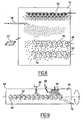
- FIGS. 8 and 9 make it possible to explain in greater detail the two processes previously described using either the mixer 16 or the drying drum 34.
- FIG. 8 is a block diagram of a mixer 16 whose lower part is provided with kneading members 48, 50 with rotating arms 52, 54 for imparting a turbulent movement to the introduced aggregates.
- the kneader is provided with an arrangement of nozzles 56 for injecting or spraying the bitumen for the purpose of bitumen coating the aggregates placed in turbulence by the
- an additive having a high desorption power with the temperature is introduced by means of a feed device.
- 58 which may also be an arrangement of injection nozzles or by means of a hatch or access system (22 ') to the mixer. It is possible to add also fillers such as stone flour, either with the additive, or separately.
- the kneader 16 performs a batch production of a construction mixture comprising a bituminous binder.
- FIG. 9 The purpose of FIG. 9 is to illustrate the continuous process according to FIG. 2.
- a mixing element 60 Inside the drying drum 34, there is a mixing element 60 extended over almost the entire length, also in the form of a mixing device. rotating arms spaced 62, and which makes it possible to print a turbulence movement to the aggregates introduced and to dry them.
- the aggregates are for this purpose heated to a temperature of about 110 ° C to 160 ° C.
- charges are introduced through a feeder 66 at a distance from the loading opening 64.
- the introduction of the additive having a high desorption power with the temperature is carried out to allow the manufacture of the desired bituminous mixture at relatively low temperatures.
- a nozzle device 70 for injecting or spraying the bitumen in order to coat the aggregates with enough bitumen.
- the finished bituminous product is extracted through the outlet opening 72.
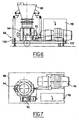
- a silo 74 is provided whose dimensions are such as to allow its transport on a truck 76.
- the silo 74 is supported on a support frame 76. Outside the filling openings 78, 80 provided on the sides of the silo 74 as well as purge filling lines not identified in detail and necessary to ventilate the silo 74, it has a console with a vibrating device 82 to ensure the desired rheological behavior of the additive stored in the silo 74.
- a chassis 88 which carries a metering valve dispenser 90 and can be aligned with the opening 84 of the Silo 74.
- the cellular dispenser 90 can be actuated by means of an electric motor 92.
- the additive is weighed into a weight device and then fed to a shipping tank 94.
- a rotary compressor 96 then generates the compressed air used for conveying the additive to the mixer 16 or the drying drum 34.
- the additive may be introduced by a screw conveyor introducing the introduction of the charges into the mixer 16 or the drying drum 34.
- the chassis 88 is also equipped with a control station 98. Threaded pins 100, 102 allow the horizontal alignment of the rolling frame.
- the zeolite type A has the following empirical formula: Na 12 (AlO 2 ) 12 (SiO 2 ) 12 , 27 H 2 O where the amount of Na 2 O is 18%, Al 2 O 3 of 28%, SiO 2 by 33% and H 2 O by 21%.
- the physicochemical properties of a type A zeolite in the form of granules are as follows: Average particle size 380 ⁇ m Density 2.0 g / cm 3 Apparent density 550 ⁇ 50 g / L Loss by calcination 20% pH (1% in water) 11
- Table 1 shows the particle size characteristics of a powder type A zeolite and in the form of granules.
- Table 1 zeolites Powder granules Granules after the disappearance of the glue Average diameter ( ⁇ m) 10 500 3 Dry apparent density (t / m 3 ) 0,475 0.624 - Actual wet density (t / m 3 ) 1,974 - 2,141
- Tables 2 and 3 below indicate the water loss measurements of zeolites in powder form and in granular form, before and / or after disappearance of the glue, as a function of time and temperature, during laboratory tests.
- Table 2 shows the results obtained in laboratory tests in static mode. Thus, for an imposed temperature, the loss in mass of each sample was followed in time. Table 2 zeolites Powder Granules after the disappearance of the glue Temperature (° C) 140 160 180 140 160 180 Water loss (%) 13.6 17.2 21.2 14.7 17.1 18.8 Hit time About 15 hours About 6 hours
- Table 3 shows the results obtained during laboratory tests in dynamic mode using DSC, with temperature variation over time (5 ° C / min).
- Table 3 zeolites Powder Granules before disappearance of the glue Granules after the disappearance of the glue Temperature (° C) 140 140 140 Water loss (%) 11.6 12.3 15.5
- Measurements on the vapors and aerosols emitted during the implementation were carried out by equipping the 2 application workers, the paver table, the paver operator and the driver of the compactor with sensors.
- compositions tested are given in Table 4 below: Table 4 compositions BBSG with Zeolites BBSG without Zeolite 6/10 crushed Noubleau 33.5% 33.5% 2/6 crushed Noubleau 21% 21% 0/4 SEINE 34% 34% 0/2 CCB 10% 10% Filler limestone 1,5% 1,5% Zeolite granules 0.3 pph - Bitumen 35/50 5,6ppc 5,6ppc Wealth module 3.59 3.59
- the zeolite was bagged at the rate of 8 kg / bag in order to respect the dosage of 0.3% for 2.5 tons of mix per batch.
- the plant used is a batch loading coating station.
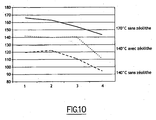
- the BBSG 0/10 with zeolite, coated at 140 ° C has an average voids percentage of 5.3%, lower than that of the BBSG 0/10 reference, which is 6.7%, coated at 170 ° C without zeolite.
- the zeolite allows the temperature to be maintained as long as the mix remains in the truck.
- Example 4 Measurement of air emissions released by bitumens at road construction sites.
- Table 7 170 ° C without zeolite 140 ° C with zeolite Aerosols (mg / m3) Aerosol + vapor (mg / m3) Aerosols (mg / m3) Aerosol + vapor (mg / m3) Finisher ⁇ 0.8 0.8 to 1.2 ⁇ 0.36 0.50 to 1.0 Left table ⁇ 0.8 0.9 to 2.7 ⁇ 0.36 0.36 to 0.6 Right table ⁇ 0.8 ⁇ 0.8 ⁇ 0.36 0.36 to 0.5 compactor ⁇ 0.8 1.7 ⁇ 0.36 1.0
Landscapes
- Chemical & Material Sciences (AREA)
- Engineering & Computer Science (AREA)
- Structural Engineering (AREA)
- Civil Engineering (AREA)
- Organic Chemistry (AREA)
- Medicinal Chemistry (AREA)
- Health & Medical Sciences (AREA)
- Chemical Kinetics & Catalysis (AREA)
- Materials Engineering (AREA)
- Polymers & Plastics (AREA)
- Architecture (AREA)
- Ceramic Engineering (AREA)
- Compositions Of Macromolecular Compounds (AREA)
- Road Paving Structures (AREA)
- Curing Cements, Concrete, And Artificial Stone (AREA)
- Processes Of Treating Macromolecular Substances (AREA)
- Coloring Foods And Improving Nutritive Qualities (AREA)
- Working-Up Tar And Pitch (AREA)
- Preparation Of Clay, And Manufacture Of Mixtures Containing Clay Or Cement (AREA)
Claims (25)
- Verfahren zur Herstellung einer Mischung für den Bau, die ein Bitumen-Bindemittel insbesondere eines Bitumenbetons oder von Bitumengemischen umfasst, dadurch gekennzeichnet, dass es die folgenden Schritte umfasst:a) Trocknen von Zuschlagstoffen in einer Mischvorrichtung (einer Umhüllungsvorrichtung) bei einer Temperatur T1 zwischen 110 und 160 °C einschließlich; dannb) Umhüllen der Zuschlagstoffe, die sich bei einer Temperatur T1 befinden, durch Einspritzen eines Bitumen-Bindemittels, das bei einer Temperatur T2 zwischen 140 und 190 °C einschließlich erwärmt ist, in die Mischvorrichtung (die Umhüllungsvorrichtung)und dadurch, dass man vor und/oder während des Einspritzens des Bitumen-Bindemittels ein Additiv mit einem hohen Desorptionsvermögen mit der Temperatur in Granulatform einführt, wobei das Granulat mittels eines Bindemittels aggregierte Feinteilchen des Additivs umfasst, wobei die Feinteilchen einen mittleren Durchmesser zwischen 2 µm und 4 µm einschließlich aufweisen.
- Verfahren nach Anspruch 1, dadurch gekennzeichnet, dass die Temperatur T2 der Erwärmung des Bitumen-Bindemittels vorteilhaft über etwa 30 °C bis zur Temperatur T1 der Trocknung der Zuschlagstoffe liegt.
- Verfahren nach irgendeinem der Ansprüche 1 oder 2, dadurch gekennzeichnet, dass das eingeführte Granulat des Additivs einen mittleren Durchmesser zwischen 0,2 mm und 1 mm einschließlich aufweist.
- Verfahren nach irgendeinem der vorangehenden Ansprüche, dadurch gekennzeichnet, dass die Feinteilchen eine spezifische Oberfläche zwischen 8000 und 25000 cm2/g einschließlich, vorteilhaft eine spezifische Oberfläche von mindestens 15000 cm2/g aufweisen.
- Verfahren nach irgendeinem der vorangehenden Ansprüche, dadurch gekennzeichnet, dass der Wassergehalt des verwendeten Additivs 5 bis 30 Gew.-%, insbesondere 15 bis 25 Gew.-%, bezogen auf das Gesamtgewicht des Additivs, beträgt.
- Verfahren nach irgendeinem der vorangehenden Ansprüche, dadurch gekennzeichnet, dass das verwendete Additiv ein natürlicher und/oder synthetischer Zeolith oder dessen anfängliche amorphe Synthesephase ist.
- Verfahren nach Anspruch 6, dadurch gekennzeichnet, dass der verwendete Zeolith ein faseriger Zeolith, ein lamellarer Zeolith und/oder ein kubischer Zeolith ist.
- Verfahren nach irgendeinem der Ansprüche 6 oder 7, dadurch gekennzeichnet, dass der verwendete Zeolith der Gruppe der Faujasite, Chabasite, Phillipsite, Clinoptilolite und/oder Paulingite angehört.
- Verfahren nach irgendeinem der Ansprüche 7 bis 8, dadurch gekennzeichnet, dass der verwendete Zeolith ein synthetischer Zeolith des Typs A, P, X und/oder Y ist.
- Verfahren nach irgendeinem der vorangehenden Ansprüche, dadurch gekennzeichnet, dass bei im Labor durchgeführten Versuchen die Feinteilchen innerhalb von weniger als 6 Stunden bei einer Temperatur zwischen 140 und 180 °C einschließlich mehr als 70 % ihres Wassers ausschwitzen.
- Verfahren nach irgendeinem der vorangehenden Ansprüche, dadurch gekennzeichnet, dass das Additiv mit einem Gehalt von 0,1 bis 5 Gew.-%, insbesondere 0,2 bis 0,8 Gew.-%, bezogen auf das Gesamtgewicht der Mischung, in den Mischer eingeführt wird.
- Verfahren nach irgendeinem der vorangehenden Ansprüche, dadurch gekennzeichnet, dass darüber hinaus Füllstoffe vor und/oder während des Einspritzens des Bitumen-Bindemittels eingeführt werden.
- Verfahren nach Anspruch 12, dadurch gekennzeichnet, dass die Füllstoffe gleichzeitig mit dem Additiv eingeführt werden.
- Verfahren nach Anspruch 12 oder 13, dadurch gekennzeichnet, dass die Füllstoffe Mehle von Steinen sind.
- Verfahren nach irgendeinem der vorangehenden Ansprüche, dadurch gekennzeichnet, dass das verwendete Bitumen-Bindemittel ein Bitumen, ein Spezialbitumen, ein modifiziertes Bitumen, ein durch Polymere modifiziertes Bitumen oder deren Mischungen ist.
- Mischung für den Bau, umfassend ein Bitumen-Bindemittel insbesondere eines Bitumen-Betons oder von Bitumengemischen, welches durch das Verfahren nach irgendeinem der vorangehenden Ansprüche erhältlich ist, dadurch gekennzeichnet, dass bei seinem Einsatz die Aerosol-Emissionen unterhalb von 0,5 mg/m3, vorteilhaft unterhalb von 0,36 mg/m3 liegen.
- Verwendung eines Additivs in Granulatform, wie in irgendeinem der Ansprüche 1 bis 11 definiert, um die Temperatur der Mischung zu steuern, welche die Zuschlagsstoffe und das Bitumen-Bindemittel umfasst, damit die Mischung eine Masse bleibt, insbesondere um die Temperatur der Mischung ungefähr bei der am Ende des Schritts b) erzielten Umhüllungstemperatur aufrechtzuerhalten.
- Verwendung eines Additivs in Granulatform, wie in irgendeinem der Ansprüche 1 bis 11 definiert, um die Handhabbarkeit einer Mischung für den Bau, welche ein Bitumen-Bindemittel insbesondere eines Bitumenbetons oder von Bitumengemischen umfasst, insbesondere unter schwierigen atmosphärischen Bedingungen des Einsatzes der Mischung für den Bau, insbesondere bei Umgebungstemperaturen zwischen 5 und 10 °C einschließlich, zu erhöhen.
- Vorrichtung zur Durchführung des Verfahrens nach einem der Ansprüche 1 bis 15, umfassend einen Silo (74, 22), dessen Auslass (84) mit einer Wägevorrichtung (24) verbunden ist, die ihrerseits durch die schräge Fläche eines Fördermittels mit einer Mischvorrichtung (16, 34) verbunden ist, dadurch gekennzeichnet, dass ein Additiv in Granulatform, das ein hohes Desorptionsvermögen mit der Temperatur besitzt, wobei das Granulat mit Hilfe eines Bindemittels agglomerierte Feinteilchen des Additivs umfasst, wobei die feinen Partikel einen mittleren Durchmesser zwischen 2 µm und 4 µm einschließlich besitzen, in dem besagten Silo (74, 22) gelagert ist, der einen Träger mit einem Schwingungsmotor (82) besitzt, welcher es erlaubt, das gewünschte Fließverhalten des Additivs sicherzustellen, und die Mischvorrichtung (16, 34) zum Vermischen der Zuschlagstoffe, des Bitumen-Bindemittels, des Additivs und gegebenenfalls von Füllstoffen dient.
- Vorrichtung nach Anspruch 19, dadurch gekennzeichnet, dass das Fördermittel mit der Vorrichtung zur Zufuhr von Füllstoffen zur Mischvorrichtung (16, 34) identisch ist.
- Vorrichtung nach irgendeinem der Ansprüche 19 und 20, dadurch gekennzeichnet, dass das Fördermittel ein Druckluftförderer ist, der die in der Mischvorrichtung (16, 34) vorhandene Einspritzvorrichtung (58, 68) speist.
- Vorrichtung nach irgendeinem der Ansprüche 19 bis 21, dadurch gekennzeichnet, dass der Silo als mobile oder ortsfeste Einheit konzipiert ist, wobei insbesondere der Silo derart bemessen ist, dass er auf einem Lastkraftwagen (76) mitgeführt werden kann.
- Vorrichtung nach irgendeinem der Ansprüche 19 bis 22, dadurch gekennzeichnet, dass das Additiv mittels eines Zellenradverteilers (90) und einer stromabwärts vom Verteiler angeordneten Wägevorrichtung gefördert werden kann.
- Vorrichtung nach irgendeinem der Ansprüche 19 bis 23, dadurch gekennzeichnet, dass eine Steuerwarte (98), eine Wägevorrichtung und ein Fördermittel (96) auf einem rollenden Fahrgestell (88) angeordnet sind, das auf den Silo (74) hin ausgerichtet werden kann.
- Vorrichtung nach irgendeinem der Ansprüche 19 bis 24, dadurch gekennzeichnet, dass das Fördermittel (96) einen Umlaufverdichter (96) mit einem stromaufwärtigen Aufgabebehälter (94) umfasst.
Applications Claiming Priority (3)
| Application Number | Priority Date | Filing Date | Title |
|---|---|---|---|
| US10/217,147 US20040033308A1 (en) | 2002-08-13 | 2002-08-13 | Method and device for producing a bitumen-bonded construction material mixture |
| US217147 | 2002-08-13 | ||
| PCT/FR2003/002506 WO2004016565A2 (fr) | 2002-08-13 | 2003-08-11 | Procede et dispositif pour la fabrication d'un melange de construction comprenant un liant bitumineux |
Publications (2)
| Publication Number | Publication Date |
|---|---|
| EP1529080A2 EP1529080A2 (de) | 2005-05-11 |
| EP1529080B1 true EP1529080B1 (de) | 2007-09-26 |
Family
ID=31714360
Family Applications (1)
| Application Number | Title | Priority Date | Filing Date |
|---|---|---|---|
| EP03758227A Expired - Lifetime EP1529080B1 (de) | 2002-08-13 | 2003-08-11 | Verfahren und vorrichtung für die herstellung einer ein bituminöses bindemittel enthaltenden baumischung |
Country Status (10)
| Country | Link |
|---|---|
| US (2) | US20040033308A1 (de) |
| EP (1) | EP1529080B1 (de) |
| JP (1) | JP3992238B2 (de) |
| KR (1) | KR100852743B1 (de) |
| AT (1) | ATE374228T1 (de) |
| AU (1) | AU2003274244B2 (de) |
| CA (1) | CA2495279C (de) |
| DE (1) | DE60316573T2 (de) |
| ES (1) | ES2293021T3 (de) |
| WO (1) | WO2004016565A2 (de) |
Families Citing this family (20)
| Publication number | Priority date | Publication date | Assignee | Title |
|---|---|---|---|---|
| EP1756227B1 (de) * | 2004-03-18 | 2007-12-12 | Latexfalt B.V. | Verbessertes polymermodifiziertes bituminöses bindemittel mit geringen emissionen |
| FR2883882B1 (fr) * | 2005-04-05 | 2007-05-25 | Ceca S A Sa | Additifs pour produits bitumineux, produits bitumineux les contenant et leurs utilisations |
| FR2901801B1 (fr) * | 2006-06-06 | 2009-06-12 | Ceca Sa Sa | Produits bitumineux et emulsions aqueuses a base de produits bitumineux et leurs utilisations |
| FR2915485B1 (fr) * | 2007-04-26 | 2009-06-12 | Ceca Sa Sa | Procede de preparation d'enrobes a base de produits bitumineux et leurs utilisations |
| MX2010006242A (es) * | 2008-02-06 | 2010-07-05 | Icl Performance Products Lp | Modificador de polifosfato para aplicaciones de asfalto tibio. |
| EP2093274B1 (de) | 2008-02-20 | 2011-07-27 | Ceca S.A. | Bitumenhaltige Zusammensetzungen |
| EP2166039A1 (de) | 2008-09-19 | 2010-03-24 | Ceca S.A. | Verfahren zur Herstellung von Asphaltmischungen |
| FR2947826B1 (fr) | 2009-07-08 | 2012-04-20 | Ceca Sa | Melange d'additifs pour la preparation d'enrobes |
| FR2948944B1 (fr) * | 2009-08-04 | 2012-10-05 | Ceca Sa | Supramolecular polymer-containing bituminous composition |
| FR2949232B1 (fr) | 2009-08-18 | 2011-10-28 | Ceca Sa | Composition bitumineuse contenant un polymer supramoleculaire |
| FR2950893B1 (fr) | 2009-10-05 | 2012-11-09 | Lafarge Sa | Composition hydrocarbonee et son procede de fabrication |
| WO2012009339A1 (en) * | 2010-07-15 | 2012-01-19 | Western Emulsions, Inc. | Warm mix asphalt |
| US8298331B2 (en) | 2011-01-14 | 2012-10-30 | Pq Corporation | Zeolite and water slurries for asphalt concrete pavement |
| US20130307172A1 (en) * | 2012-05-16 | 2013-11-21 | Steven B. Seder | Method Of Converting Tear-Off Asphaltic Shingles To A Formed Product |
| CN103020460B (zh) * | 2012-12-20 | 2015-08-05 | 重庆大学 | 一种降低钢筋连接能耗的方法 |
| FR3056609B1 (fr) | 2016-09-26 | 2018-09-14 | Eurovia | Procede d'indentation d'un echangeur thermique recyclable a haute cadence dans une infrastructure terrestre |
| FR3067370B1 (fr) | 2017-06-07 | 2019-07-26 | Eurovia | Procede de fabrication d'un revetement de voiries comprenant un dispositif pour echangeur de chaleur |
| CN112359680B (zh) * | 2020-10-25 | 2022-06-07 | 山西博润交通科学工程有限公司 | 一种沥青制作用的发泡机 |
| CN113152211A (zh) * | 2021-05-10 | 2021-07-23 | 青海省水利水电工程局有限责任公司 | 一种不均匀坝料填筑用搅拌摊铺设备 |
| CN114016353B (zh) * | 2021-11-21 | 2023-03-17 | 李光富 | 一种公路养护用沥青储存装置 |
Family Cites Families (13)
| Publication number | Priority date | Publication date | Assignee | Title |
|---|---|---|---|---|
| DE2133351A1 (de) * | 1971-07-05 | 1973-01-18 | Basf Ag | Emulgatorzubereitungen fuer die knitterfestausruestung von cellulose- und/oder regeneratcellulosehaltigem textilgut |
| US4094686A (en) * | 1974-06-07 | 1978-06-13 | Plastiroute S.A. | Road-surface additive for preventing ice and melting snow |
| DE2963801D1 (en) * | 1978-04-08 | 1982-11-11 | Rheinische Kalksteinwerke | A filler suitable for use in road-surfacing bituminous compositions |
| DE2848583C2 (de) * | 1978-11-09 | 1982-09-16 | Degussa Ag, 6000 Frankfurt | Gußasphaltmischung |
| DE3036537C2 (de) * | 1980-09-27 | 1983-07-21 | Degussa Ag, 6000 Frankfurt | Gußasphaltmischung |
| JPS6025369B2 (ja) | 1981-03-10 | 1985-06-18 | 水澤化学工業株式会社 | 耐摩耗性粒状ゼオライト及びその製法 |
| SU1156726A1 (ru) * | 1983-04-26 | 1985-05-23 | Предприятие П/Я А-3732 | Способ получени гранулированного синтетического цеолита |
| DE3505051A1 (de) * | 1985-02-14 | 1986-08-21 | Degussa Ag, 6000 Frankfurt | Pulverfoermiges bitumenkonzentrat und seine verwendung |
| DE4323256A1 (de) * | 1993-02-17 | 1994-08-18 | Degussa | Verfahren zum Absenken der Mischtemperatur und der Viskosität von Bitumen und/oder bitumengebundenen Baustoffmischungen |
| JP3256845B2 (ja) * | 1997-05-20 | 2002-02-18 | 日本鋪道株式会社 | 混合性および締固め性に優れた舗装用混合物および舗装構築方法 |
| US6680271B1 (en) * | 1997-12-17 | 2004-01-20 | Grace Gmbh & Co. Kg | Solid zeolite granulates having improved abrasion resistance, and methods of making them |
| JP3839203B2 (ja) * | 1999-11-08 | 2006-11-01 | 森下産業株式会社 | 舗装用アスファルト混合物、その添加剤及びその施工方法 |
| GB2356824A (en) * | 2000-07-04 | 2001-06-06 | Allchem Internat Ltd | Apparatus for blending and delivering pelletised additives for incorporation in asphalt |
-
2002
- 2002-08-13 US US10/217,147 patent/US20040033308A1/en not_active Abandoned
-
2003
- 2003-08-11 DE DE60316573T patent/DE60316573T2/de not_active Expired - Lifetime
- 2003-08-11 JP JP2004528599A patent/JP3992238B2/ja not_active Expired - Fee Related
- 2003-08-11 WO PCT/FR2003/002506 patent/WO2004016565A2/fr not_active Ceased
- 2003-08-11 KR KR1020057002533A patent/KR100852743B1/ko not_active Expired - Fee Related
- 2003-08-11 AU AU2003274244A patent/AU2003274244B2/en not_active Ceased
- 2003-08-11 EP EP03758227A patent/EP1529080B1/de not_active Expired - Lifetime
- 2003-08-11 CA CA2495279A patent/CA2495279C/fr not_active Expired - Fee Related
- 2003-08-11 AT AT03758227T patent/ATE374228T1/de not_active IP Right Cessation
- 2003-08-11 ES ES03758227T patent/ES2293021T3/es not_active Expired - Lifetime
- 2003-08-12 US US10/638,467 patent/US20050076810A1/en not_active Abandoned
Non-Patent Citations (1)
| Title |
|---|
| None * |
Also Published As
| Publication number | Publication date |
|---|---|
| JP2005535551A (ja) | 2005-11-24 |
| ATE374228T1 (de) | 2007-10-15 |
| KR100852743B1 (ko) | 2008-08-18 |
| WO2004016565A3 (fr) | 2004-04-08 |
| DE60316573D1 (de) | 2007-11-08 |
| CA2495279A1 (fr) | 2004-02-26 |
| KR20050067139A (ko) | 2005-06-30 |
| CA2495279C (fr) | 2011-07-05 |
| AU2003274244A1 (en) | 2004-03-03 |
| US20050076810A1 (en) | 2005-04-14 |
| DE60316573T2 (de) | 2008-06-26 |
| JP3992238B2 (ja) | 2007-10-17 |
| WO2004016565A8 (fr) | 2004-08-26 |
| US20040033308A1 (en) | 2004-02-19 |
| AU2003274244B2 (en) | 2007-08-02 |
| WO2004016565A2 (fr) | 2004-02-26 |
| EP1529080A2 (de) | 2005-05-11 |
| ES2293021T3 (es) | 2008-03-16 |
Similar Documents
| Publication | Publication Date | Title |
|---|---|---|
| CA2495279C (fr) | Procede et dispositif pour la fabrication d'un melange de construction comprenant un liant bitumineux | |
| US7517401B2 (en) | Methods of manufacturing asphalt with lime pellets | |
| US8894321B2 (en) | Warm mix asphalt | |
| US20100000442A1 (en) | Apparatus for producing cold asphalt, method of manufacturing cold asphalt, and product-by-process for same | |
| EP2072562B1 (de) | Verfahren zur Herstellung von Doppelphasen-Mischgut | |
| US7691195B2 (en) | Compositions of pellets of tacky, deformable material dispersed within a fine flowable material and methods of making the compositions | |
| CA2896112A1 (fr) | Composition de grave agglomeree scellee pour couche d`assise comprenant une forte proportion en gros granulats | |
| EP3167009B1 (de) | Verfahren zur herstellung von kaltverfahren-bitumenbeschichtungen | |
| EP3472255B1 (de) | Enteisungsadditivzusammensetzung für bituminöse konglomerate | |
| WO2013132488A1 (en) | Modified-rubber composite and process for obtaining same | |
| JP5311622B2 (ja) | アスファルト混合物の製造方法及びその装置 | |
| CA2775152C (fr) | Composition hydrocarbonee et son procede de fabrication | |
| EP2246473B1 (de) | Verfahren zur Herstellung eines heissen Asphaltmischguts mit einem geringen Gehalt an Binder. | |
| KR100637841B1 (ko) | 상온아스콘과 그 제조방법 및 장치 | |
| FR2803608A1 (fr) | Enrobe bitumineux a chaud comportant du caoutchouc, procede de fabrication d'un tel enrobe et procede de realisation d'une couche de roulement avec un tel enrobe | |
| EP2657302A1 (de) | Schaumglasprodukt für Baukonstruktionen und Herstellungsverfahren | |
| RU2332537C2 (ru) | Способ изготовления асфальта | |
| WO2026104519A1 (fr) | Procédé de fabrication d'un lot d'une composition pulvérulente homogène pour soudure céramique comprenant des particules de charge réfractaire et des particules métalliques |
Legal Events
| Date | Code | Title | Description |
|---|---|---|---|
| PUAI | Public reference made under article 153(3) epc to a published international application that has entered the european phase |
Free format text: ORIGINAL CODE: 0009012 |
|
| 17P | Request for examination filed |
Effective date: 20050228 |
|
| AK | Designated contracting states |
Kind code of ref document: A2 Designated state(s): AT BE BG CH CY CZ DE DK EE ES FI FR GB GR HU IE IT LI LU MC NL PT RO SE SI SK TR |
|
| AX | Request for extension of the european patent |
Extension state: AL LT LV MK |
|
| DAX | Request for extension of the european patent (deleted) | ||
| GRAP | Despatch of communication of intention to grant a patent |
Free format text: ORIGINAL CODE: EPIDOSNIGR1 |
|
| GRAS | Grant fee paid |
Free format text: ORIGINAL CODE: EPIDOSNIGR3 |
|
| GRAA | (expected) grant |
Free format text: ORIGINAL CODE: 0009210 |
|
| AK | Designated contracting states |
Kind code of ref document: B1 Designated state(s): AT BE BG CH CY CZ DE DK EE ES FI FR GB GR HU IE IT LI LU MC NL PT RO SE SI SK TR |
|
| REG | Reference to a national code |
Ref country code: GB Ref legal event code: FG4D Free format text: NOT ENGLISH |
|
| REG | Reference to a national code |
Ref country code: CH Ref legal event code: EP |
|
| REF | Corresponds to: |
Ref document number: 60316573 Country of ref document: DE Date of ref document: 20071108 Kind code of ref document: P |
|
| REG | Reference to a national code |
Ref country code: IE Ref legal event code: FG4D Free format text: LANGUAGE OF EP DOCUMENT: FRENCH |
|
| PG25 | Lapsed in a contracting state [announced via postgrant information from national office to epo] |
Ref country code: FI Free format text: LAPSE BECAUSE OF FAILURE TO SUBMIT A TRANSLATION OF THE DESCRIPTION OR TO PAY THE FEE WITHIN THE PRESCRIBED TIME-LIMIT Effective date: 20070926 |
|
| GBT | Gb: translation of ep patent filed (gb section 77(6)(a)/1977) |
Effective date: 20080111 |
|
| PG25 | Lapsed in a contracting state [announced via postgrant information from national office to epo] |
Ref country code: AT Free format text: LAPSE BECAUSE OF FAILURE TO SUBMIT A TRANSLATION OF THE DESCRIPTION OR TO PAY THE FEE WITHIN THE PRESCRIBED TIME-LIMIT Effective date: 20070926 |
|
| NLV1 | Nl: lapsed or annulled due to failure to fulfill the requirements of art. 29p and 29m of the patents act | ||
| REG | Reference to a national code |
Ref country code: ES Ref legal event code: FG2A Ref document number: 2293021 Country of ref document: ES Kind code of ref document: T3 |
|
| PG25 | Lapsed in a contracting state [announced via postgrant information from national office to epo] |
Ref country code: GR Free format text: LAPSE BECAUSE OF FAILURE TO SUBMIT A TRANSLATION OF THE DESCRIPTION OR TO PAY THE FEE WITHIN THE PRESCRIBED TIME-LIMIT Effective date: 20071227 Ref country code: NL Free format text: LAPSE BECAUSE OF FAILURE TO SUBMIT A TRANSLATION OF THE DESCRIPTION OR TO PAY THE FEE WITHIN THE PRESCRIBED TIME-LIMIT Effective date: 20070926 |
|
| REG | Reference to a national code |
Ref country code: IE Ref legal event code: FD4D |
|
| PG25 | Lapsed in a contracting state [announced via postgrant information from national office to epo] |
Ref country code: PT Free format text: LAPSE BECAUSE OF FAILURE TO SUBMIT A TRANSLATION OF THE DESCRIPTION OR TO PAY THE FEE WITHIN THE PRESCRIBED TIME-LIMIT Effective date: 20080226 |
|
| PG25 | Lapsed in a contracting state [announced via postgrant information from national office to epo] |
Ref country code: RO Free format text: LAPSE BECAUSE OF FAILURE TO SUBMIT A TRANSLATION OF THE DESCRIPTION OR TO PAY THE FEE WITHIN THE PRESCRIBED TIME-LIMIT Effective date: 20070926 Ref country code: SE Free format text: LAPSE BECAUSE OF FAILURE TO SUBMIT A TRANSLATION OF THE DESCRIPTION OR TO PAY THE FEE WITHIN THE PRESCRIBED TIME-LIMIT Effective date: 20071226 |
|
| PG25 | Lapsed in a contracting state [announced via postgrant information from national office to epo] |
Ref country code: DK Free format text: LAPSE BECAUSE OF FAILURE TO SUBMIT A TRANSLATION OF THE DESCRIPTION OR TO PAY THE FEE WITHIN THE PRESCRIBED TIME-LIMIT Effective date: 20070926 |
|
| PLBE | No opposition filed within time limit |
Free format text: ORIGINAL CODE: 0009261 |
|
| STAA | Information on the status of an ep patent application or granted ep patent |
Free format text: STATUS: NO OPPOSITION FILED WITHIN TIME LIMIT |
|
| 26N | No opposition filed |
Effective date: 20080627 |
|
| PG25 | Lapsed in a contracting state [announced via postgrant information from national office to epo] |
Ref country code: IE Free format text: LAPSE BECAUSE OF FAILURE TO SUBMIT A TRANSLATION OF THE DESCRIPTION OR TO PAY THE FEE WITHIN THE PRESCRIBED TIME-LIMIT Effective date: 20070926 |
|
| PG25 | Lapsed in a contracting state [announced via postgrant information from national office to epo] |
Ref country code: MC Free format text: LAPSE BECAUSE OF NON-PAYMENT OF DUE FEES Effective date: 20080831 |
|
| REG | Reference to a national code |
Ref country code: CH Ref legal event code: PL |
|
| PG25 | Lapsed in a contracting state [announced via postgrant information from national office to epo] |
Ref country code: EE Free format text: LAPSE BECAUSE OF FAILURE TO SUBMIT A TRANSLATION OF THE DESCRIPTION OR TO PAY THE FEE WITHIN THE PRESCRIBED TIME-LIMIT Effective date: 20070926 |
|
| PG25 | Lapsed in a contracting state [announced via postgrant information from national office to epo] |
Ref country code: SI Free format text: LAPSE BECAUSE OF FAILURE TO SUBMIT A TRANSLATION OF THE DESCRIPTION OR TO PAY THE FEE WITHIN THE PRESCRIBED TIME-LIMIT Effective date: 20070926 Ref country code: LI Free format text: LAPSE BECAUSE OF NON-PAYMENT OF DUE FEES Effective date: 20080831 Ref country code: CH Free format text: LAPSE BECAUSE OF NON-PAYMENT OF DUE FEES Effective date: 20080831 |
|
| PG25 | Lapsed in a contracting state [announced via postgrant information from national office to epo] |
Ref country code: CY Free format text: LAPSE BECAUSE OF FAILURE TO SUBMIT A TRANSLATION OF THE DESCRIPTION OR TO PAY THE FEE WITHIN THE PRESCRIBED TIME-LIMIT Effective date: 20070926 |
|
| PG25 | Lapsed in a contracting state [announced via postgrant information from national office to epo] |
Ref country code: BG Free format text: LAPSE BECAUSE OF FAILURE TO SUBMIT A TRANSLATION OF THE DESCRIPTION OR TO PAY THE FEE WITHIN THE PRESCRIBED TIME-LIMIT Effective date: 20071226 |
|
| PG25 | Lapsed in a contracting state [announced via postgrant information from national office to epo] |
Ref country code: LU Free format text: LAPSE BECAUSE OF NON-PAYMENT OF DUE FEES Effective date: 20080811 Ref country code: HU Free format text: LAPSE BECAUSE OF FAILURE TO SUBMIT A TRANSLATION OF THE DESCRIPTION OR TO PAY THE FEE WITHIN THE PRESCRIBED TIME-LIMIT Effective date: 20080327 |
|
| PG25 | Lapsed in a contracting state [announced via postgrant information from national office to epo] |
Ref country code: TR Free format text: LAPSE BECAUSE OF FAILURE TO SUBMIT A TRANSLATION OF THE DESCRIPTION OR TO PAY THE FEE WITHIN THE PRESCRIBED TIME-LIMIT Effective date: 20070926 |
|
| PG25 | Lapsed in a contracting state [announced via postgrant information from national office to epo] |
Ref country code: IT Free format text: LAPSE BECAUSE OF NON-PAYMENT OF DUE FEES Effective date: 20080831 |
|
| PGFP | Annual fee paid to national office [announced via postgrant information from national office to epo] |
Ref country code: CZ Payment date: 20110809 Year of fee payment: 9 |
|
| PGFP | Annual fee paid to national office [announced via postgrant information from national office to epo] |
Ref country code: GB Payment date: 20120918 Year of fee payment: 10 |
|
| PGFP | Annual fee paid to national office [announced via postgrant information from national office to epo] |
Ref country code: SK Payment date: 20120813 Year of fee payment: 10 |
|
| PGFP | Annual fee paid to national office [announced via postgrant information from national office to epo] |
Ref country code: ES Payment date: 20120920 Year of fee payment: 10 Ref country code: FR Payment date: 20120822 Year of fee payment: 10 Ref country code: DE Payment date: 20120913 Year of fee payment: 10 |
|
| PGFP | Annual fee paid to national office [announced via postgrant information from national office to epo] |
Ref country code: BE Payment date: 20120928 Year of fee payment: 10 |
|
| BERE | Be: lapsed |
Owner name: EUROVIA Effective date: 20130831 Owner name: EUROVIA G.M.B.H. Effective date: 20130831 Owner name: MITTELDEUTSCHE HARTSTEIN-INDUSTRIE A.G. Effective date: 20130831 |
|
| GBPC | Gb: european patent ceased through non-payment of renewal fee |
Effective date: 20130811 |
|
| PG25 | Lapsed in a contracting state [announced via postgrant information from national office to epo] |
Ref country code: CZ Free format text: LAPSE BECAUSE OF NON-PAYMENT OF DUE FEES Effective date: 20130811 Ref country code: SK Free format text: LAPSE BECAUSE OF NON-PAYMENT OF DUE FEES Effective date: 20130811 Ref country code: DE Free format text: LAPSE BECAUSE OF NON-PAYMENT OF DUE FEES Effective date: 20140301 |
|
| REG | Reference to a national code |
Ref country code: SK Ref legal event code: MM4A Ref document number: E 2834 Country of ref document: SK Effective date: 20130811 |
|
| REG | Reference to a national code |
Ref country code: FR Ref legal event code: ST Effective date: 20140430 |
|
| REG | Reference to a national code |
Ref country code: DE Ref legal event code: R119 Ref document number: 60316573 Country of ref document: DE Effective date: 20140301 |
|
| PG25 | Lapsed in a contracting state [announced via postgrant information from national office to epo] |
Ref country code: BE Free format text: LAPSE BECAUSE OF NON-PAYMENT OF DUE FEES Effective date: 20130831 |
|
| PG25 | Lapsed in a contracting state [announced via postgrant information from national office to epo] |
Ref country code: GB Free format text: LAPSE BECAUSE OF NON-PAYMENT OF DUE FEES Effective date: 20130811 |
|
| PG25 | Lapsed in a contracting state [announced via postgrant information from national office to epo] |
Ref country code: FR Free format text: LAPSE BECAUSE OF NON-PAYMENT OF DUE FEES Effective date: 20130902 |
|
| REG | Reference to a national code |
Ref country code: ES Ref legal event code: FD2A Effective date: 20140905 |
|
| PG25 | Lapsed in a contracting state [announced via postgrant information from national office to epo] |
Ref country code: ES Free format text: LAPSE BECAUSE OF NON-PAYMENT OF DUE FEES Effective date: 20130812 |