EP1528211A2 - Fensterflügel und Fenster mit demselben sowie ein Profil dafür - Google Patents
Fensterflügel und Fenster mit demselben sowie ein Profil dafür Download PDFInfo
- Publication number
- EP1528211A2 EP1528211A2 EP04024479A EP04024479A EP1528211A2 EP 1528211 A2 EP1528211 A2 EP 1528211A2 EP 04024479 A EP04024479 A EP 04024479A EP 04024479 A EP04024479 A EP 04024479A EP 1528211 A2 EP1528211 A2 EP 1528211A2
- Authority
- EP
- European Patent Office
- Prior art keywords
- profile
- window
- sash
- window sash
- outer pane
- Prior art date
- Legal status (The legal status is an assumption and is not a legal conclusion. Google has not performed a legal analysis and makes no representation as to the accuracy of the status listed.)
- Granted
Links
- 239000000853 adhesive Substances 0.000 claims description 20
- 230000001070 adhesive effect Effects 0.000 claims description 20
- 238000007789 sealing Methods 0.000 claims description 18
- 239000000463 material Substances 0.000 claims description 12
- 238000004026 adhesive bonding Methods 0.000 claims description 11
- 229920001971 elastomer Polymers 0.000 claims description 6
- 239000000806 elastomer Substances 0.000 claims description 5
- 239000004033 plastic Substances 0.000 claims description 5
- 229920003023 plastic Polymers 0.000 claims description 5
- 229920002725 thermoplastic elastomer Polymers 0.000 claims description 5
- 229920002397 thermoplastic olefin Polymers 0.000 claims description 4
- 239000002861 polymer material Substances 0.000 claims description 3
- 230000001681 protective effect Effects 0.000 claims description 3
- 238000004073 vulcanization Methods 0.000 claims description 3
- 238000003466 welding Methods 0.000 claims description 3
- 229910052751 metal Inorganic materials 0.000 claims description 2
- 239000002184 metal Substances 0.000 claims description 2
- 239000011248 coating agent Substances 0.000 claims 2
- 238000000576 coating method Methods 0.000 claims 2
- 239000002023 wood Substances 0.000 claims 1
- 239000011521 glass Substances 0.000 abstract description 11
- 239000002390 adhesive tape Substances 0.000 description 5
- 230000004224 protection Effects 0.000 description 4
- 239000013536 elastomeric material Substances 0.000 description 3
- 239000002131 composite material Substances 0.000 description 2
- 238000009434 installation Methods 0.000 description 2
- 239000007788 liquid Substances 0.000 description 2
- 229920000642 polymer Polymers 0.000 description 2
- NIXOWILDQLNWCW-UHFFFAOYSA-M Acrylate Chemical compound [O-]C(=O)C=C NIXOWILDQLNWCW-UHFFFAOYSA-M 0.000 description 1
- 230000006750 UV protection Effects 0.000 description 1
- 229910052782 aluminium Inorganic materials 0.000 description 1
- XAGFODPZIPBFFR-UHFFFAOYSA-N aluminium Chemical compound [Al] XAGFODPZIPBFFR-UHFFFAOYSA-N 0.000 description 1
- 229920001400 block copolymer Polymers 0.000 description 1
- 239000003795 chemical substances by application Substances 0.000 description 1
- 238000010276 construction Methods 0.000 description 1
- 238000003851 corona treatment Methods 0.000 description 1
- 239000011121 hardwood Substances 0.000 description 1
- 238000009413 insulation Methods 0.000 description 1
- 238000004519 manufacturing process Methods 0.000 description 1
- 230000003287 optical effect Effects 0.000 description 1
- 238000010094 polymer processing Methods 0.000 description 1
- 230000000284 resting effect Effects 0.000 description 1
- 229920001169 thermoplastic Polymers 0.000 description 1
- 239000012815 thermoplastic material Substances 0.000 description 1
- 238000011144 upstream manufacturing Methods 0.000 description 1
Images
Classifications
-
- E—FIXED CONSTRUCTIONS
- E06—DOORS, WINDOWS, SHUTTERS, OR ROLLER BLINDS IN GENERAL; LADDERS
- E06B—FIXED OR MOVABLE CLOSURES FOR OPENINGS IN BUILDINGS, VEHICLES, FENCES OR LIKE ENCLOSURES IN GENERAL, e.g. DOORS, WINDOWS, BLINDS, GATES
- E06B3/00—Window sashes, door leaves, or like elements for closing wall or like openings; Layout of fixed or moving closures, e.g. windows in wall or like openings; Features of rigidly-mounted outer frames relating to the mounting of wing frames
- E06B3/30—Coverings, e.g. protecting against weather, for decorative purposes
- E06B3/308—Wing frames covered on the outside by a rigidly-mounted outer frame
Definitions
- the invention relates to a window sash according to the preamble of claim 1 and a window or a French window with at least one such wing. Furthermore, the invention relates to a profile of plastic and / or Elastomer and its use.
- the Glazing arranged in the sash are also windows known in which the sash is not or only partially in the area of the front of the glazing extends.
- the glazing or at least its outer pane is thus in front of the actual sash and at this e.g. attached by gluing.
- EP-A-1 106 770 shows such a window sash.
- the edge the outer pane of the glazing is thereby replaced by a on the outside of the outer pane resiliently Covered sealing lip of a sealing profile.
- These Sealing lip is below the closed window a seal acting on the outer pane, the Frame is arranged.
- the sealing lip is exposed first at the window.
- the invention is based on the object Window sash or a window or a window door to improve the type mentioned.
- the Profile extends under the glazing or under the Front side of the outer pane and even under the connection the multiple glazing.
- this works Continue profile as a seal by holding a sash has acting sealing lip and possibly one for acting on the frame of the window or the window door certain additional sealing lip. preferably, takes place when the window is closed or at closed window door an impact on the outside of the profile by a fixed seal on Frame.
- the profile preferably consists of a plastic and / or elastomeric material or equivalent Material, in particular a dyeable material is so that the outer edge of the glazing or the outer Disc is colorable.
- the invention is further based on the object a profile for use to protect the Glass edges of outer glass panes of a glass composite To create multiple glazing.
- This task is performed by a profile according to Claim 16 and a use of the profile according to claim 19 solved.
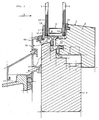
- FIG. 1 shows a vertical section as an example through a window or a French window in the parapet area.
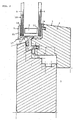
- the lateral sectional views according to FIG 2 and distinguish the view of a section through the fall for the essential elements of the invention not from this view in the parapet area, of course the parapet-specific elements laterally and fall in the fall area. This is however for the expert clear and will not be explained here. So far below each of a window is spoken, so windows are included.
- the sash 1 with the sash 2 carries the multiple glazing.
- this is a double-glazing with the inner pane 4 and the outer pane 5 of the window.
- the inner pane 4 and the outer pane 5 are interconnected via known elements 6 connected, so that a self-stable glazing arises.
- the glazing 4,5,6 is arranged on the sash so that the entire glazing or only part of the glazing Wing frame is upstream.
- Figure 1 is such Example shown, in which the sash 2 with a nose 32 under the front side of the disc 4 and a Part of the connecting element 6 extends. It could but also be so that the sash frame at all does not extend under the glazing, so that the corresponding Nose 32 would not exist.
- the glazing is attached to the casement 2 preferably by gluing, which is represented by the splice 33.
- the Disc 4 is circumferentially along along its edge glued to the sash 2. Such a bond by an adhesive tape or a coatable adhesive known and will not be explained here.
- a sealing profile 34 is related to the installation of the window arranged on the room side.
- a profile 7 is now on attached to the outer pane 5, wherein this profile 7 circulating the edge of the outer pane 5 against the outside or covering the front.
- the profile runs around the whole edge without interruption; if necessary but also a part of the border without profile remain.
- the profile can be a band-shaped profile be, which only front side on the outside 10 of the Disc rests. Preferably, this extends Profile down while training a nose 17 under the face 8 of the disc 5.
- the term "under” is used for the representation of Figure 1, wherein it is clear to those skilled in that the profile 7 at the sides of the sash sideways over the lateral Front side ( Figure 2) and in the fall area above over the upper end side of the glazing 5 extends.
- the profile 7 can not only coplanar with the front 10 the disc 5 can extend downwards but can also angled extending below the end face 8 of the disc 5, as shown in the figures.
- the Profile is thus preferably L-shaped and has next the upright L-beam 21 also has a horizontal L-beam 22 on.
- the preferred L-shaped profile extends preferably further to the sash up to below the connecting element 6 of the glazing.
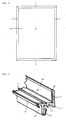
- the profile 7 shows a frame on the disk 5. This is in FIG. 3 shown, with the simplification of the drawing only the disc 5 and the profile 7 is shown, not against it the casement 2.
- the attached to the disc Profile forms an effective protection for the outer edge of the glazing, this protection both in the manufacture of the sash, its transport as well as for the glazing in the finished window is.
- the profile 7 also protects users from the Glaskante, which is particularly important for French windows.
- the profile 7 is attached by gluing to the disc 5, the splice preferably between the upright beams 21 and the front 10 of the disc. 5 lies.
- an adhesive 25 which connect the bar 21 to the front 10 can.
- This adhesive can be in the form of a liquid Adhesive applied, but is preferred an adhesive tape, which will be explained later.
- the bond can also be done on the front side 8, this being the embodiment with the L-shaped profile requires.
- This frontal gluing can additionally or be present instead of the front adhesive.
- FIGS. 1 and 2 show the window sash 1 installed in a window or a French window with the Blendrahmen 3.
- the profile 7th a protruding from the horizontal L-beam 22 arm 26 (FIG 4), which in turn with an angled sealing lip 15 is provided. This sealing lip 15 acted upon with closed sash of the window the frame 3 and forms a seal against this.
- the window In the parapet area is the window with a Weatherboard 20 provided.
- a Weatherboard 20 In the side and lintel area can not or according to differently shaped metal profiles or profiles of composite materials or an additional one Hardwood wear layer of the window provided be.
- the Profiles 20 or the wear layer are on conventional Way attached to the frame 3.
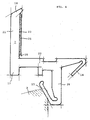
- Figure 4 shows the profile 7 frontally in enlarged view, the profile in the preferred L-shaped embodiment with two sealing lips 14 and 15, of which, however, only one or none could be present.
- the profile is circumferential provided around the glass pane 5, as shown in FIG is shown.
- Profile preferably mitred and e.g. by Welding, or vulcanization or gluing of the profile sections connected.
- the profile pieces can in the Corner but also on each other butt and also by welding, or vulcanization or gluing together be connected.
- an adhesive strip 25 is arranged on the profile such is that he is on the inside 23 of the upright L-beam is already attached by gluing.
- the other, to the glass pane pointing also adhesive side of the adhesive strip 25 is through a peelable protective film 35 covered. Only when applying the profile 7 on the glass 5, this protective film 35 is peeled off.
- the profile 7 is made of a plastic polymer material or an elastomeric material, preferably extruded.
- a material that contains at least one polymer material and at least one elastomeric material in Contains combination and as a thermoplastic elastomer (TPE) is known, especially in the form of a thermoplastic Polyolefins (TPO).
- TPE thermoplastic elastomer
- TPO thermoplastic Polyolefins
- Corresponding profiles are e.g. from the company pbc Polymer Processing AG in CH-5012 Schönenwerd, Switzerland, prepared, e.g. as block copolymers, in particular under the name pbcOPTI.
- this is Profile 7 case of a dyeable polymer and / or Elastomer material, including said preferred material heard so the sash or the disc 5 an arbitrary colored frame through the profile. 7 can be awarded.
- pbcOPTI e.g. from the company pbc Polymer Processing AG in CH-5012 Schönenwerd, Switzerland, prepared, e.g. as block copolymers, in particular under the name pbcOPTI.
- this is Profile 7 case of a dyeable polymer and / or Elastomer material, including said preferred material heard so the sash or the disc 5 an arbitrary colored frame through the profile. 7 can be awarded.
- the profile is preferably also apparent because the window according to FIG.
- the profile 1 is preferably designed such that the profile 7 around the window inside over the profile impinging Gasket 40 protrudes.
- the profile also a circumferential Seal against the frame 3 and the sash by means of the sealing lips 15 and 14.
- the gluing of the profile to the pane can with a conventional liquid adhesive and / or in the manner of a Curing with a heat-activated adhesive done.
- a double-sided adhesive tape can also its one, the profile material facing page have a different adhesive than that of the disc facing side.
- the profile facing Be a heat-activated adhesive page can use acrylate adhesives or double-sided adhesive tapes with such adhesives.
- the profile may be before the application of the adhesive or adhesive tape by a primer or a corona treatment to get prepared.
- the design of the window sash or the Window according to the invention offers building physics Advantages regarding heat conduction and sound insulation and Tightness against classic window constructions with covers by aluminum profiles.
- the profile offers In addition, a UV protection for the glass connection 6.
Landscapes
- Engineering & Computer Science (AREA)
- Civil Engineering (AREA)
- Structural Engineering (AREA)
- Securing Of Glass Panes Or The Like (AREA)
- Magnetic Heads (AREA)
- Liquid Crystal (AREA)
- Specific Sealing Or Ventilating Devices For Doors And Windows (AREA)
- Wing Frames And Configurations (AREA)
Abstract
Description
Claims (20)
- Fensterflügel (1) mit einem Flügelrahmen (2) und einer Mehrfach-Verglasung (4,5,6), deren Aussenscheibe (5) vor dem Flügelrahmen angeordnet ist, dadurch gekennzeichnet, dass an der Aussenscheibe (5) im wesentlichen um deren ganzen Rand umlaufend ein den Rand der Aussenscheibe frontseitig abdeckendes Profil (7) durch ein Klebmittel (25) an der Aussenscheibe (5) befestigt ist.
- Fensterflügel nach Anspruch 1, dadurch gekennzeichnet, dass sich das Profil (7) unter die Stirnseite (8) der Aussenscheibe (5) erstreckt.
- Fensterflügel nach Anspruch 1 oder 2, dadurch gekennzeichnet, dass das Profil (7) durch Klebung an der Frontseite (10) der Aussenscheibe und/oder an der Stirnseite (8) der Aussenscheibe befestigt ist.
- Fensterflügel nach einem der Ansprüche 1 bis 3, dadurch gekennzeichnet, dass sich das Profil (7) unter die Verbindung (6) der Mehrfach-Verglasung erstreckt.
- Fensterflügel nach einem der Ansprüche 1 bis 4, dadurch gekennzeichnet, dass das Profil eine den Flügelrahmen (2, 32) beaufschlagende Dichtlippe (14) aufweist.
- Fensterflügel nach Anspruch 5, dadurch gekennzeichnet, dass die Dichtlippe (14) eine umgeschlagene Dichtlippe ist.
- Fensterflügel nach einem der Ansprüche 1 bis 6, dadurch gekennzeichnet, dass das Profil eine den Flügelrahmen (2) nicht kontaktierende, von diesem weg weisende Dichtlippe (15) aufweist.
- Fensterflügel nach einem der Ansprüche 1 bis 7, dadurch gekennzeichnet, dass das Profil (7) eine sich koplanar zur Fläche (10) der Aussenscheibe (5) erstreckende und über diese hinausragende Nase (17) sowie einen auf der Fläche (10) liegenden abgeschrägten Endbereich (18) aufweist.
- Fensterflügel nach einem der Ansprüche 1 bis 8, dadurch gekennzeichnet, dass das Profil aus einem Kunststoffwerkstoff oder einem Elastomerwerkstoff oder aus einer Kombination solcher Werkstoffe besteht.
- Fensterflügel nach Anspruch 9, dadurch gekennzeichnet, dass das Profil aus einem thermoplastischen Elastomer und insbesondere aus einem thermoplastischen Polyolefin besteht.
- Fensterflügel nach einem der Ansprüche 9 oder 10, dadurch gekennzeichnet, dass das Profil aus einem einfärbbaren Polymerwerkstoff besteht.
- Fensterflügel nach einem der Ansprüche 1 bis 11, dadurch gekennzeichnet, dass die Mehrfach-Verglasung (4,5,6) am Flügelrahmen durch ein Klebmittel (33) befestigt ist.
- Fensterflügel nach Anspruch 12, dadurch gekennzeichnet, dass die Klebung zwischen der Aussenfläche der Innenscheibe (4) der Mehrfach-Verglasung und dem Flügelrahmen (2) erfolgt, wobei dieser insbesondere aus Holz besteht.
- Fenster oder Fenstertüre mit mindestens einem Fensterflügel nach einem der Ansprüche 1 bis 13.
- Fenster oder Fenstertüre nach Anspruch 14, dadurch gekennzeichnet, dass an dessen Blendrahmen (3) ein Metallprofil (20) angeordnet ist, das eine bei geschlossenem Fenster die Aussenseite des Profils (7) beaufschlagende Dichtung (40) aufweist.
- Profil aus einem Kunststoff- und/oder Elastomerwerkstoff mit einem im wesentlichen L-förmigen Querschnitt, bei dem am aufrechten L-Balken (21) innenseitig eine Klebstoffbeschichtung (25) vorgesehen ist, die durch ein abziehbares Schutzband (35) abgedeckt ist, und wobei der liegende L-Balken (22) endseitig mit einer umgeschlagenen Dichtlippe (14) versehen ist.
- Profil nach Anspruch 16, dadurch gekennzeichnet, dass am liegenden L-Balken (22) ein Arm (26) nach aussen absteht, der endseitig mit einer abgewinkelten, sich zum liegenden L-Balken hin erstreckenden Dichtlippe (15) versehen ist.
- Profil nach Anspruch 16 oder 17, dadurch gekennzeichnet, dass dieses aus einem thermoplastischen Elastomer und insbesondere einem thermoplastischen Polyolefin besteht und insbesondere aus einem einfärbbaren thermoplastischen Elastomer besteht.
- Verwendung eines Profils (7) nach einem der Ansprüche 16 bis 18 zur Abdeckung des Randbereiches der äusseren Scheibe (5) einer Mehrfach-Verglasung (4, 5, 6), wobei das Profil mittels der Klebstoff-Beschichtung (25) auf der Aussenseite (10) der Scheibe (5) befestigt ist.
- Verwendung nach Anspruch 19, dadurch gekennzeichnet, dass die Ecken der Profilumrandung auf Gehrung geschnitten und die aneinanderstossenden Profilteile durch Schweissung und/oder Klebung und/oder Vulkanisation miteinander verbunden sind.
Applications Claiming Priority (2)
| Application Number | Priority Date | Filing Date | Title |
|---|---|---|---|
| CH18042003 | 2003-10-22 | ||
| CH01804/03A CH697041A5 (de) | 2003-10-22 | 2003-10-22 | Fensterflügel und Fenster mit demselben sowie ein Profil dafür. |
Publications (4)
| Publication Number | Publication Date |
|---|---|
| EP1528211A2 true EP1528211A2 (de) | 2005-05-04 |
| EP1528211A3 EP1528211A3 (de) | 2005-08-03 |
| EP1528211B1 EP1528211B1 (de) | 2008-11-26 |
| EP1528211B8 EP1528211B8 (de) | 2009-03-04 |
Family
ID=34398346
Family Applications (1)
| Application Number | Title | Priority Date | Filing Date |
|---|---|---|---|
| EP04024479A Expired - Lifetime EP1528211B8 (de) | 2003-10-22 | 2004-10-14 | Fensterflügel und Fenster mit demselben |
Country Status (4)
| Country | Link |
|---|---|
| EP (1) | EP1528211B8 (de) |
| AT (1) | ATE415540T1 (de) |
| CH (1) | CH697041A5 (de) |
| DE (1) | DE502004008519D1 (de) |
Cited By (1)
| Publication number | Priority date | Publication date | Assignee | Title |
|---|---|---|---|---|
| EP1808566A1 (de) | 2006-01-17 | 2007-07-18 | Noah Widmer | Fensterrahmen mit Abdeckung |
Family Cites Families (2)
| Publication number | Priority date | Publication date | Assignee | Title |
|---|---|---|---|---|
| FR2740811B1 (fr) * | 1995-11-03 | 1998-01-02 | Alcan France | Chassis d'ouvrant de fenetre a deux vantaux |
| CH691913A5 (de) * | 1999-12-07 | 2001-11-30 | Wft Fassadentechnik Ag | Fensterflügel und Fenster. |
-
2003
- 2003-10-22 CH CH01804/03A patent/CH697041A5/de not_active IP Right Cessation
-
2004
- 2004-10-14 DE DE502004008519T patent/DE502004008519D1/de not_active Expired - Lifetime
- 2004-10-14 EP EP04024479A patent/EP1528211B8/de not_active Expired - Lifetime
- 2004-10-14 AT AT04024479T patent/ATE415540T1/de active
Cited By (1)
| Publication number | Priority date | Publication date | Assignee | Title |
|---|---|---|---|---|
| EP1808566A1 (de) | 2006-01-17 | 2007-07-18 | Noah Widmer | Fensterrahmen mit Abdeckung |
Also Published As
| Publication number | Publication date |
|---|---|
| DE502004008519D1 (de) | 2009-01-08 |
| EP1528211B1 (de) | 2008-11-26 |
| ATE415540T1 (de) | 2008-12-15 |
| EP1528211B8 (de) | 2009-03-04 |
| EP1528211A3 (de) | 2005-08-03 |
| CH697041A5 (de) | 2008-03-31 |
Similar Documents
| Publication | Publication Date | Title |
|---|---|---|
| DE3618278C2 (de) | ||
| EP1106770B1 (de) | Fensterflügel und Fenster | |
| DE3702402A1 (de) | Hoehenverschiebbare seitenscheibe fuer kraftfahrzeuge | |
| EP2327855B1 (de) | Isolierglaseinheit und Tragkonstruktion mit mindestens einer derartigen Isolierglaseinheit | |
| DE3420224C2 (de) | ||
| EP0852926B1 (de) | Dichtung für eine Duschabtrennung | |
| EP0404199A1 (de) | Profilleiste aus elastischem Material | |
| DE9407166U1 (de) | Anputz- und Schutzleiste für Fensterstöcke, Türstöcke o.dgl. am Übergang zu Putz | |
| EP1744003B1 (de) | Flügel mit Falzgrunddichtung | |
| DE10338861A1 (de) | Kunststofffenster mit eingeklebter Verglasung | |
| DE69522100T2 (de) | Verfahren zur abdeckung | |
| EP1528211B1 (de) | Fensterflügel und Fenster mit demselben | |
| DE3202508C2 (de) | ||
| DE10319278B4 (de) | Fassadenelement zum Verkleiden einer Gebäudewand | |
| EP3647528B1 (de) | Fenster zum einsetzen in eine gebäudeöffnung und gebäude | |
| DE4412414A1 (de) | Glasfalzdichtung, insbesondere für Fenster oder Türen | |
| EP2171175A1 (de) | Putzanschlussleiste für die laibung von fenstern und türen | |
| DE19720940A1 (de) | Fenster- oder Türprofil mit anextrudierter Dichtung | |
| DE4020179A1 (de) | Profilleiste aus elastischem material | |
| DE4421804A1 (de) | Anordnung zur Abdichtung | |
| AT500954B1 (de) | Befestigungsvorrichtung einer türdichtung | |
| DE2458315A1 (de) | Fensterfluegel o.dgl. | |
| DE202007006024U1 (de) | Fensterflügelrahmen und Fensterflügel mit einem solchen | |
| EP3109393A1 (de) | Verfahren zum umrüsten eines bestehenden verglasungssystems sowie ein verglasungssystem | |
| DE2621365A1 (de) | Glasscheibe mit rahmen, der in einem fest angeordneten rahmen gehalten ist |
Legal Events
| Date | Code | Title | Description |
|---|---|---|---|
| PUAI | Public reference made under article 153(3) epc to a published international application that has entered the european phase |
Free format text: ORIGINAL CODE: 0009012 |
|
| AK | Designated contracting states |
Kind code of ref document: A2 Designated state(s): AT BE BG CH CY CZ DE DK EE ES FI FR GB GR HU IE IT LI LU MC NL PL PT RO SE SI SK TR |
|
| AX | Request for extension of the european patent |
Extension state: AL HR LT LV MK |
|
| PUAL | Search report despatched |
Free format text: ORIGINAL CODE: 0009013 |
|
| AK | Designated contracting states |
Kind code of ref document: A3 Designated state(s): AT BE BG CH CY CZ DE DK EE ES FI FR GB GR HU IE IT LI LU MC NL PL PT RO SE SI SK TR |
|
| AX | Request for extension of the european patent |
Extension state: AL HR LT LV MK |
|
| 17P | Request for examination filed |
Effective date: 20060130 |
|
| AKX | Designation fees paid |
Designated state(s): AT BE BG CH CY CZ DE DK EE ES FI FR GB GR HU IE IT LI LU MC NL PL PT RO SE SI SK TR |
|
| 17Q | First examination report despatched |
Effective date: 20071213 |
|
| GRAP | Despatch of communication of intention to grant a patent |
Free format text: ORIGINAL CODE: EPIDOSNIGR1 |
|
| RTI1 | Title (correction) |
Free format text: CASEMENT AND CASEMENT WINDOW |
|
| RTI1 | Title (correction) |
Free format text: WINDOW LEAF AND WINDOW |
|
| GRAS | Grant fee paid |
Free format text: ORIGINAL CODE: EPIDOSNIGR3 |
|
| GRAA | (expected) grant |
Free format text: ORIGINAL CODE: 0009210 |
|
| AK | Designated contracting states |
Kind code of ref document: B1 Designated state(s): AT BE BG CH CY CZ DE DK EE ES FI FR GB GR HU IE IT LI LU MC NL PL PT RO SE SI SK TR |
|
| REG | Reference to a national code |
Ref country code: GB Ref legal event code: FG4D Free format text: NOT ENGLISH |
|
| REG | Reference to a national code |
Ref country code: CH Ref legal event code: EP |
|
| REG | Reference to a national code |
Ref country code: CH Ref legal event code: NV Representative=s name: E. BLUM & CO. AG PATENT- UND MARKENANWAELTE VSP |
|
| REG | Reference to a national code |
Ref country code: IE Ref legal event code: FG4D Free format text: LANGUAGE OF EP DOCUMENT: GERMAN |
|
| RAP2 | Party data changed (patent owner data changed or rights of a patent transferred) |
Owner name: G. BAUMGARTNER AG |
|
| RIN2 | Information on inventor provided after grant (corrected) |
Inventor name: WIDMER NOAH |
|
| REF | Corresponds to: |
Ref document number: 502004008519 Country of ref document: DE Date of ref document: 20090108 Kind code of ref document: P |
|
| NLT2 | Nl: modifications (of names), taken from the european patent patent bulletin |
Owner name: G. BAUMGARTNER AG Effective date: 20090107 |
|
| PG25 | Lapsed in a contracting state [announced via postgrant information from national office to epo] |
Ref country code: ES Free format text: LAPSE BECAUSE OF FAILURE TO SUBMIT A TRANSLATION OF THE DESCRIPTION OR TO PAY THE FEE WITHIN THE PRESCRIBED TIME-LIMIT Effective date: 20090308 |
|
| NLV1 | Nl: lapsed or annulled due to failure to fulfill the requirements of art. 29p and 29m of the patents act | ||
| PG25 | Lapsed in a contracting state [announced via postgrant information from national office to epo] |
Ref country code: PL Free format text: LAPSE BECAUSE OF FAILURE TO SUBMIT A TRANSLATION OF THE DESCRIPTION OR TO PAY THE FEE WITHIN THE PRESCRIBED TIME-LIMIT Effective date: 20081126 Ref country code: SI Free format text: LAPSE BECAUSE OF FAILURE TO SUBMIT A TRANSLATION OF THE DESCRIPTION OR TO PAY THE FEE WITHIN THE PRESCRIBED TIME-LIMIT Effective date: 20081126 Ref country code: FI Free format text: LAPSE BECAUSE OF FAILURE TO SUBMIT A TRANSLATION OF THE DESCRIPTION OR TO PAY THE FEE WITHIN THE PRESCRIBED TIME-LIMIT Effective date: 20081126 Ref country code: NL Free format text: LAPSE BECAUSE OF FAILURE TO SUBMIT A TRANSLATION OF THE DESCRIPTION OR TO PAY THE FEE WITHIN THE PRESCRIBED TIME-LIMIT Effective date: 20081126 |
|
| REG | Reference to a national code |
Ref country code: IE Ref legal event code: FD4D |
|
| PG25 | Lapsed in a contracting state [announced via postgrant information from national office to epo] |
Ref country code: DK Free format text: LAPSE BECAUSE OF FAILURE TO SUBMIT A TRANSLATION OF THE DESCRIPTION OR TO PAY THE FEE WITHIN THE PRESCRIBED TIME-LIMIT Effective date: 20081126 Ref country code: RO Free format text: LAPSE BECAUSE OF FAILURE TO SUBMIT A TRANSLATION OF THE DESCRIPTION OR TO PAY THE FEE WITHIN THE PRESCRIBED TIME-LIMIT Effective date: 20081126 Ref country code: EE Free format text: LAPSE BECAUSE OF FAILURE TO SUBMIT A TRANSLATION OF THE DESCRIPTION OR TO PAY THE FEE WITHIN THE PRESCRIBED TIME-LIMIT Effective date: 20081126 Ref country code: IE Free format text: LAPSE BECAUSE OF FAILURE TO SUBMIT A TRANSLATION OF THE DESCRIPTION OR TO PAY THE FEE WITHIN THE PRESCRIBED TIME-LIMIT Effective date: 20081126 Ref country code: BG Free format text: LAPSE BECAUSE OF FAILURE TO SUBMIT A TRANSLATION OF THE DESCRIPTION OR TO PAY THE FEE WITHIN THE PRESCRIBED TIME-LIMIT Effective date: 20090226 |
|
| PG25 | Lapsed in a contracting state [announced via postgrant information from national office to epo] |
Ref country code: CZ Free format text: LAPSE BECAUSE OF FAILURE TO SUBMIT A TRANSLATION OF THE DESCRIPTION OR TO PAY THE FEE WITHIN THE PRESCRIBED TIME-LIMIT Effective date: 20081126 Ref country code: PT Free format text: LAPSE BECAUSE OF FAILURE TO SUBMIT A TRANSLATION OF THE DESCRIPTION OR TO PAY THE FEE WITHIN THE PRESCRIBED TIME-LIMIT Effective date: 20090427 Ref country code: SE Free format text: LAPSE BECAUSE OF FAILURE TO SUBMIT A TRANSLATION OF THE DESCRIPTION OR TO PAY THE FEE WITHIN THE PRESCRIBED TIME-LIMIT Effective date: 20090226 |
|
| PG25 | Lapsed in a contracting state [announced via postgrant information from national office to epo] |
Ref country code: SK Free format text: LAPSE BECAUSE OF FAILURE TO SUBMIT A TRANSLATION OF THE DESCRIPTION OR TO PAY THE FEE WITHIN THE PRESCRIBED TIME-LIMIT Effective date: 20081126 |
|
| PLBE | No opposition filed within time limit |
Free format text: ORIGINAL CODE: 0009261 |
|
| STAA | Information on the status of an ep patent application or granted ep patent |
Free format text: STATUS: NO OPPOSITION FILED WITHIN TIME LIMIT |
|
| 26N | No opposition filed |
Effective date: 20090827 |
|
| BERE | Be: lapsed |
Owner name: G. BAUMGARTNER A.G. Effective date: 20091031 |
|
| PG25 | Lapsed in a contracting state [announced via postgrant information from national office to epo] |
Ref country code: MC Free format text: LAPSE BECAUSE OF NON-PAYMENT OF DUE FEES Effective date: 20091031 |
|
| REG | Reference to a national code |
Ref country code: FR Ref legal event code: ST Effective date: 20100630 |
|
| PG25 | Lapsed in a contracting state [announced via postgrant information from national office to epo] |
Ref country code: FR Free format text: LAPSE BECAUSE OF NON-PAYMENT OF DUE FEES Effective date: 20091102 |
|
| PG25 | Lapsed in a contracting state [announced via postgrant information from national office to epo] |
Ref country code: BE Free format text: LAPSE BECAUSE OF NON-PAYMENT OF DUE FEES Effective date: 20091031 Ref country code: GR Free format text: LAPSE BECAUSE OF FAILURE TO SUBMIT A TRANSLATION OF THE DESCRIPTION OR TO PAY THE FEE WITHIN THE PRESCRIBED TIME-LIMIT Effective date: 20090227 |
|
| PG25 | Lapsed in a contracting state [announced via postgrant information from national office to epo] |
Ref country code: GB Free format text: LAPSE BECAUSE OF NON-PAYMENT OF DUE FEES Effective date: 20091014 |
|
| PG25 | Lapsed in a contracting state [announced via postgrant information from national office to epo] |
Ref country code: IT Free format text: LAPSE BECAUSE OF FAILURE TO SUBMIT A TRANSLATION OF THE DESCRIPTION OR TO PAY THE FEE WITHIN THE PRESCRIBED TIME-LIMIT Effective date: 20081126 |
|
| PG25 | Lapsed in a contracting state [announced via postgrant information from national office to epo] |
Ref country code: LU Free format text: LAPSE BECAUSE OF NON-PAYMENT OF DUE FEES Effective date: 20091014 |
|
| PG25 | Lapsed in a contracting state [announced via postgrant information from national office to epo] |
Ref country code: HU Free format text: LAPSE BECAUSE OF FAILURE TO SUBMIT A TRANSLATION OF THE DESCRIPTION OR TO PAY THE FEE WITHIN THE PRESCRIBED TIME-LIMIT Effective date: 20090527 |
|
| PG25 | Lapsed in a contracting state [announced via postgrant information from national office to epo] |
Ref country code: TR Free format text: LAPSE BECAUSE OF FAILURE TO SUBMIT A TRANSLATION OF THE DESCRIPTION OR TO PAY THE FEE WITHIN THE PRESCRIBED TIME-LIMIT Effective date: 20081126 |
|
| PG25 | Lapsed in a contracting state [announced via postgrant information from national office to epo] |
Ref country code: CY Free format text: LAPSE BECAUSE OF FAILURE TO SUBMIT A TRANSLATION OF THE DESCRIPTION OR TO PAY THE FEE WITHIN THE PRESCRIBED TIME-LIMIT Effective date: 20081126 |
|
| PGFP | Annual fee paid to national office [announced via postgrant information from national office to epo] |
Ref country code: DE Payment date: 20131021 Year of fee payment: 10 Ref country code: AT Payment date: 20131011 Year of fee payment: 10 |
|
| REG | Reference to a national code |
Ref country code: DE Ref legal event code: R119 Ref document number: 502004008519 Country of ref document: DE |
|
| REG | Reference to a national code |
Ref country code: AT Ref legal event code: MM01 Ref document number: 415540 Country of ref document: AT Kind code of ref document: T Effective date: 20141014 |
|
| PG25 | Lapsed in a contracting state [announced via postgrant information from national office to epo] |
Ref country code: DE Free format text: LAPSE BECAUSE OF NON-PAYMENT OF DUE FEES Effective date: 20150501 |
|
| PG25 | Lapsed in a contracting state [announced via postgrant information from national office to epo] |
Ref country code: AT Free format text: LAPSE BECAUSE OF NON-PAYMENT OF DUE FEES Effective date: 20141014 |
|
| PGFP | Annual fee paid to national office [announced via postgrant information from national office to epo] |
Ref country code: CH Payment date: 20150918 Year of fee payment: 12 |
|
| REG | Reference to a national code |
Ref country code: CH Ref legal event code: PL |
|
| PG25 | Lapsed in a contracting state [announced via postgrant information from national office to epo] |
Ref country code: CH Free format text: LAPSE BECAUSE OF NON-PAYMENT OF DUE FEES Effective date: 20161031 Ref country code: LI Free format text: LAPSE BECAUSE OF NON-PAYMENT OF DUE FEES Effective date: 20161031 |