EP1527398B1 - Systemes et procedes pour etablir et se servir de listes de mots courants - Google Patents
Systemes et procedes pour etablir et se servir de listes de mots courants Download PDFInfo
- Publication number
- EP1527398B1 EP1527398B1 EP20030764867 EP03764867A EP1527398B1 EP 1527398 B1 EP1527398 B1 EP 1527398B1 EP 20030764867 EP20030764867 EP 20030764867 EP 03764867 A EP03764867 A EP 03764867A EP 1527398 B1 EP1527398 B1 EP 1527398B1
- Authority
- EP
- European Patent Office
- Prior art keywords
- word
- text
- weighting
- identified
- word list
- Prior art date
- Legal status (The legal status is an assumption and is not a legal conclusion. Google has not performed a legal analysis and makes no representation as to the accuracy of the status listed.)
- Expired - Lifetime
Links
Images





Classifications
-
- G—PHYSICS
- G06—COMPUTING OR CALCULATING; COUNTING
- G06F—ELECTRIC DIGITAL DATA PROCESSING
- G06F40/00—Handling natural language data
- G06F40/10—Text processing
- G06F40/189—Automatic justification
-
- G—PHYSICS
- G06—COMPUTING OR CALCULATING; COUNTING
- G06F—ELECTRIC DIGITAL DATA PROCESSING
- G06F1/00—Details not covered by groups G06F3/00 - G06F13/00 and G06F21/00
- G06F1/16—Constructional details or arrangements
- G06F1/1613—Constructional details or arrangements for portable computers
- G06F1/1626—Constructional details or arrangements for portable computers with a single-body enclosure integrating a flat display, e.g. Personal Digital Assistants [PDAs]
-
- G—PHYSICS
- G06—COMPUTING OR CALCULATING; COUNTING
- G06F—ELECTRIC DIGITAL DATA PROCESSING
- G06F1/00—Details not covered by groups G06F3/00 - G06F13/00 and G06F21/00
- G06F1/16—Constructional details or arrangements
- G06F1/1613—Constructional details or arrangements for portable computers
- G06F1/1633—Constructional details or arrangements of portable computers not specific to the type of enclosures covered by groups G06F1/1615 - G06F1/1626
- G06F1/1662—Details related to the integrated keyboard
- G06F1/1664—Arrangements for ergonomically adjusting the disposition of keys of the integrated keyboard
-
- G—PHYSICS
- G06—COMPUTING OR CALCULATING; COUNTING
- G06F—ELECTRIC DIGITAL DATA PROCESSING
- G06F3/00—Input arrangements for transferring data to be processed into a form capable of being handled by the computer; Output arrangements for transferring data from processing unit to output unit, e.g. interface arrangements
- G06F3/01—Input arrangements or combined input and output arrangements for interaction between user and computer
- G06F3/02—Input arrangements using manually operated switches, e.g. using keyboards or dials
- G06F3/023—Arrangements for converting discrete items of information into a coded form, e.g. arrangements for interpreting keyboard generated codes as alphanumeric codes, operand codes or instruction codes
- G06F3/0233—Character input methods
- G06F3/0237—Character input methods using prediction or retrieval techniques
-
- G—PHYSICS
- G06—COMPUTING OR CALCULATING; COUNTING
- G06F—ELECTRIC DIGITAL DATA PROCESSING
- G06F40/00—Handling natural language data
- G06F40/10—Text processing
- G06F40/166—Editing, e.g. inserting or deleting
-
- G—PHYSICS
- G06—COMPUTING OR CALCULATING; COUNTING
- G06F—ELECTRIC DIGITAL DATA PROCESSING
- G06F40/00—Handling natural language data
- G06F40/20—Natural language analysis
- G06F40/237—Lexical tools
- G06F40/242—Dictionaries
-
- G—PHYSICS
- G06—COMPUTING OR CALCULATING; COUNTING
- G06F—ELECTRIC DIGITAL DATA PROCESSING
- G06F40/00—Handling natural language data
- G06F40/20—Natural language analysis
- G06F40/274—Converting codes to words; Guess-ahead of partial word inputs
-
- H—ELECTRICITY
- H04—ELECTRIC COMMUNICATION TECHNIQUE
- H04M—TELEPHONIC COMMUNICATION
- H04M1/00—Substation equipment, e.g. for use by subscribers
- H04M1/72—Mobile telephones; Cordless telephones, i.e. devices for establishing wireless links to base stations without route selection
- H04M1/724—User interfaces specially adapted for cordless or mobile telephones
- H04M1/72403—User interfaces specially adapted for cordless or mobile telephones with means for local support of applications that increase the functionality
- H04M1/72409—User interfaces specially adapted for cordless or mobile telephones with means for local support of applications that increase the functionality by interfacing with external accessories
- H04M1/72412—User interfaces specially adapted for cordless or mobile telephones with means for local support of applications that increase the functionality by interfacing with external accessories using two-way short-range wireless interfaces
-
- H—ELECTRICITY
- H04—ELECTRIC COMMUNICATION TECHNIQUE
- H04M—TELEPHONIC COMMUNICATION
- H04M1/00—Substation equipment, e.g. for use by subscribers
- H04M1/72—Mobile telephones; Cordless telephones, i.e. devices for establishing wireless links to base stations without route selection
- H04M1/724—User interfaces specially adapted for cordless or mobile telephones
- H04M1/72403—User interfaces specially adapted for cordless or mobile telephones with means for local support of applications that increase the functionality
- H04M1/7243—User interfaces specially adapted for cordless or mobile telephones with means for local support of applications that increase the functionality with interactive means for internal management of messages
-
- H—ELECTRICITY
- H04—ELECTRIC COMMUNICATION TECHNIQUE
- H04M—TELEPHONIC COMMUNICATION
- H04M1/00—Substation equipment, e.g. for use by subscribers
- H04M1/72—Mobile telephones; Cordless telephones, i.e. devices for establishing wireless links to base stations without route selection
- H04M1/724—User interfaces specially adapted for cordless or mobile telephones
- H04M1/72403—User interfaces specially adapted for cordless or mobile telephones with means for local support of applications that increase the functionality
- H04M1/72445—User interfaces specially adapted for cordless or mobile telephones with means for local support of applications that increase the functionality for supporting Internet browser applications
-
- H—ELECTRICITY
- H04—ELECTRIC COMMUNICATION TECHNIQUE
- H04M—TELEPHONIC COMMUNICATION
- H04M2250/00—Details of telephonic subscriber devices
- H04M2250/70—Details of telephonic subscriber devices methods for entering alphabetical characters, e.g. multi-tap or dictionary disambiguation
-
- Y—GENERAL TAGGING OF NEW TECHNOLOGICAL DEVELOPMENTS; GENERAL TAGGING OF CROSS-SECTIONAL TECHNOLOGIES SPANNING OVER SEVERAL SECTIONS OF THE IPC; TECHNICAL SUBJECTS COVERED BY FORMER USPC CROSS-REFERENCE ART COLLECTIONS [XRACs] AND DIGESTS
- Y10—TECHNICAL SUBJECTS COVERED BY FORMER USPC
- Y10S—TECHNICAL SUBJECTS COVERED BY FORMER USPC CROSS-REFERENCE ART COLLECTIONS [XRACs] AND DIGESTS
- Y10S707/00—Data processing: database and file management or data structures
- Y10S707/99941—Database schema or data structure
- Y10S707/99942—Manipulating data structure, e.g. compression, compaction, compilation
Definitions
- This invention relates generally to the field of text input processing, and in particular to building, using, and maintaining customized word lists for use in text operations.
- Word lists for such operations as spell checking, text replacement, and predicting intended user input are known. These word lists are often used in conjunction with such computer programs as word processing applications, email applications, spreadsheet applications, and other computer programs that require the input of text.
- multi-tap methods can be utilized for so-called reduced QWERTY keyboards, in which the general QWERTY keyboard layout is maintained, but with fewer keys than a standard QWERTY keyboard.
- Predictive text methods have been applied in conjunction with such keypads and keyboards to reduce the reliance on multi-tap methods.
- word lists for these text operations are generated from standard language data, including word and frequency information that does not reflect the actual text usage patterns of many users. Acronyms, names, technical terms, and the like, do not often appear in such word lists, which are therefore of limited value to some users.
- the US patent US6011554 discloses a keyboard disambiguation method based on word selection lists that are listed according to their frequency of use.
- the US patent US6377965 discloses a word completion system that can predict automatically unrestricted word completions for data entries in an unrestricted portion of a data file.
- a method of building a custom word list for use in text operations on an electronic device comprises the steps of scanning a collection of text items associated with a user of the electronic device to identify words in the text items, assigning a weighting to each identified word, and storing each identified word and its corresponding weighting.
- a system for building a custom word list for use in text operations on an electronic device comprises a first data store for storing a collection of text items associated with a user of the electronic device, a scanning module configured to scan the collection of text items to identify words in the text items, a weighting module configured to assign a weighting to each identified word, and a second data store for storing each identified word and its corresponding weighting.
- a method of processing a custom word list for use in text operations on an electronic device comprises the steps of mapping each word to a keystroke sequence on the electronic device, and storing the words and their corresponding weightings and keystroke sequences at the electronic device.
- a system for processing a custom word list for use in text operations on an electronic device the custom word list including words identified in a collection of text items associated with a user of the electronic device and corresponding weightings assigned to the words, according to a related aspect of the invention, comprises a key mapper for mapping each word to a keystroke sequence on the electronic device, and a word list loader configured to receive the custom word list and mapped keystroke sequences, and to store the custom word list and the mapped keystroke sequences at the electronic device.
- a method of using a custom word list in text operations on an electronic device comprises the steps of receiving inputs from a user on the electronic device, and accessing the custom word list to identify words in the word list representing possible variants of the inputs.
- a method of maintaining a custom word list in text operations on an electronic device comprises the steps of detecting that a word entered by a user does not appear in the custom word list, assigning a weighting to the word entered by the user, adding the word entered by the user and its corresponding weighting to the custom word list at the electronic device, and transferring the word entered by the user to the computer system.
- Fig. 1 is a block diagram of a system of building and using a custom word list.
- a custom word list is preferably used in text operations on an electronic device for spell checking, text replacement, predictive text, or some combination thereof.
- the system 10 includes a computer system 12 and an electronic device 14, both of which belong to, or are at least used by, the same user.
- a data store 16, a scanning module 18, a weighting module 22, and a word list store 20 are implemented at the computer system 12, and a word list loader 24, a key mapper 26, a word list store 28, a text processor 30, a keyboard 32, and a display 34 are implemented at the electronic device 14.
- a computer system such as 12 and an electronic device such as 14 typically include components in addition to those shown in Fig. 1 . However, only the components involved in building and using a word list have been shown in Fig. 1 .
- the data store 16 stores text items that are associated with a user of the computer system 12 and the electronic device 14.
- the data store 16 is, for example, one or more storage areas of a local hard disk on the computer system 12 or a removable storage medium such as a floppy disk, CD, or DVD compatible with a reader at the computer system 12.
- the data store 16 may also be implemented at a remote store, at a network server accessible to the computer system 12, for example, or in other types of storage media. It should be apparent that the data store 16 may include storage areas in more than one memory component or medium.
- the scanning module 18 is configured to scan a collection of text items in the data store 16.
- Text items include, for example, sent email messages, documents, acronym lists, and existing word lists.
- the scanning module identifies words in the text items, and is preferably implemented as a software application, utility, or module.
- Scanned text items include all text items in the data store 16, user-selected text items, or predetermined text items.
- the scanning module 18 may be further configured to receive a selection input from a user to select text items to be included in the collection of text items to be scanned.
- the scanning module 18 scans predetermined types of text items in the data store 16, or text items in predetermined directories, folders, or locations in the data store 16. It is also contemplated that the scanning module 18 may scan both a predetermined set of text items as well as a set of text items selected by the user.
- the weighting module 22 also preferably implemented in computer software, assigns a weighting to each word identified by the scanning module. Any of a plurality of weighting schemes may be applied by the weighting module. In one arrangement, the weighting module 22 assigns a weighting based on a frequency of occurrence of each identified word. By determining a number of occurrences of each identified word and identifying a maximum number of occurrences, for example, a relative or normalized frequency of occurrence of each word can be calculated.
- frequency of occurrence is a common weighting factor
- other characteristics of text items may also or instead be used to determine or adjust weightings of identified words.
- different sources of text items may be associated with different priorities or levels of importance. Where the scanning module 18 or the weighting module 22 determines a source of a text item in which each word is identified, then source-based weighting is possible.
- User text item sources such as sent email items or documents that were authored by the user tend to reflect user text usage patterns more closely than "external" text item sources such as received email messages. As such, higher weightings may be assigned to words identified in text items from user text item sources.
- the word list store 20 stores each identified word and its assigned weighting. Like the data store 16, the word list store 20 may be implemented in any of a plurality of storage components or media. In a typical implementation, the word list store 20 and the data store 16 occupy different storage areas on a hard disk of the computer system 12.
- the word list loader 24 is configured to receive the identified words and their corresponding weightings from the word list store 20, and to store the words and weightings to the device word list store 28.
- the connection between the word list loader 24 and the word list store 20 may be a physical link using a serial or Universal Serial Bus (USB) connection, for example, or a wireless link using such interfaces as Infrared Data Association (IrDA) ports, Bluetooth TM modules, 802.11 modules, and wireless transceivers and wireless communication networks.
- IrDA Infrared Data Association
- Bluetooth TM modules Bluetooth TM modules
- 802.11 modules 802.11 modules
- wireless transceivers and wireless communication networks wireless communication networks.
- the key mapper 26 maps each identified word to a keystroke sequence on the keyboard 32 of the electronic device 14.
- the key mapper 26 determines which key in the keyboard 32 is associated with each character of an identified word to generate a keystroke sequence for the identified word.
- a key mapper is also implemented on the computer system, in which case the computer system retrieves information about the keyboard layout of the electronic device from the electronic device and generates the keystroke sequences on the computer system, storing those keystroke sequences in the word list.
- Such keystroke sequence mapping is particularly useful in predictive text operations on a device having a limited or reduced keyboard including keys that are associated with more than one character.
- the text processor 30 is a component of the electronic device 14 that uses the custom word list in text operations.
- the text processor 30 is a software module or utility that is operable in conjunction with one or more functions, systems, or software applications on the electronic device 14.
- the text processor 30 is invoked either automatically when a user performs a text operation on the electronic device 14 or when the user enables or turns on the text processor 30.
- Functionality of the text processor 30 may also or instead be incorporated into software applications that are used to perform text operations.
- the text processor 30 may be a predictive text engine that operates in conjunction with such software applications as an email program and a word processor on an electronic device.
- predictive text functions are particularly useful in conjunction with limited or reduced keyboards in which text inputs may be ambiguous
- the keyboard 32 is either a reduced keyboard or a full text keyboard such as a QWERTY, DVORAK, or other type of keyboard.
- a custom word list has further applications such as spell checking and text replacement that are applicable whether or not text inputs from a keyboard are ambiguous.
- the display 34 is used to present information, such as entered text, to a user of the electronic device 14.
- portable electronic devices such as wireless mobile communication devices, for example, liquid crystal displays (LCDs) are common.
- LCDs liquid crystal displays
- the display 34 is likely a computer monitor.
- the type of display 34 is dependent on the type of the electronic device 14.
- the scanning module 18 scans a collection of text items, in the data store 16, associated with a user of the electronic device 14. If the computer system 12 is used only by the user of the electronic device, as is often the case with a personal computer system, then any text items such as documents and sent email messages stored at the computer system 12 are typically associated with the user. However, if the computer system 12 is used by multiple users, then the scanning module 18 preferably scans text items associated with the user of the electronic device 14. As those skilled in the art will appreciate, each user of a multiple-user computer system typically has a different login or network account or other identity and associated storage areas. Although reference is made herein to text items associated with the user, the association need not necessarily be exclusive.
- the collection of text items may include text items associated with the user of the electronic device 14 as well as other users, such as a corporate word list or a list of commonly used corporate acronyms, for instance.
- the scanning module 18 identifies words in the collection of text items. Words are typically delineated by spaces or punctuation in the text of scanned text items, although the scanning module 18 is preferably configurable to identify phrases or strings as single words.
- Email addresses, hyperlinks, and signature blocks represent examples of types of phrases or strings that a user may wish to identify as single words. Each of these types of phrases or strings has characteristics that allow them to be identified by the scanning module 18.
- Email addresses have a general format of a text string with no spaces, including a user name followed by an "@" symbol and then a domain name with one or more periods. Hyperlinks also have a common general structure. Signature blocks comprise groups of words that frequently occur together at the end of a text item.
- the weighting module 22 determines a weighting for each identified word.
- the weighting module provides the weighting for each word to the scanning module 18, which stores the identified words and their weightings to the word list store 20.
- the scanning module 18 stores the identified words to the word list store 20, and weighting module 22 accesses the identified words in the word list store 20 and writes the corresponding assigned weightings to the word list store 20.
- this word list is further processed for use on the electronic device.
- the word list loader 24 receives the identified words and their weightings from the word list store 20.
- the key mapper 26 determines a sequence of keys on the keyboard 32 that a user operates to enter the word. The identified word is mapped to the keystroke sequence by storing the keystroke sequence to the word list store 28.
- the key mapper 26 provides keystroke sequences to the word list loader 24, which stores the identified words and their corresponding weightings and keystroke sequences to the word list store 28.
- the key mapper 26 may alternatively access the identified words from the word list store 28, determine the corresponding keystroke sequences, and then store the keystroke sequences to the word list store 28.
- Key mapping at the electronic device 14 provides for adapting a single word list for use on any electronic device with a key mapper 26. Different keyboards often have different keystroke sequences corresponding to at least some of the words in a word list. Providing a key mapper 26 on the electronic device 14, adapted to the particular device keyboard 32, allows one word list to be mapped for use on any such device. The user is thereby enabled to port his or her custom word list to all electronic devices that they use. This functionality becomes particularly important when the user acquires a new device with a different keyboard layout, for example.
- device-specific key mapping is performed at the computer system 12.
- a key mapper resides on the computer system 12.
- a key mapper on the computer system 12 is either adapted to one or more particular type of electronic device or configurable to map identified words to any one of a plurality of electronic devices.
- the key mapper is enabled to determine a type of electronic device attempting to load a word list from the word list store 20. The key mapper then maps the identified words accordingly, and transfers the identified words and their corresponding weightings and keystroke sequences to the electronic device.
- the custom word list stored in the word list store 28 is accessed by the text processor 30 in response to user inputs on the keyboard 32.
- the text processor 30 searches the custom word list for words that are mapped to keystroke sequences corresponding to an entered keystroke sequence. In a predictive text function, for example, these words from the custom word list are then presented to the user on the display 34. An input word is then selected based on subsequent user inputs.
- the custom word list may be maintained by adding new user-entered words in the custom word list, adjusting weightings based on usage of words in the custom word list, deleting words from the custom word list, and updating the word list stored in the word list store 20.
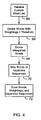
- a flow diagram of a method of building a custom word list is shown.
- a collection of text items associated with a user is scanned to identify words.
- the collection of text items includes predetermined text items or types of text items, text items selected by a user, or both.
- a selection input is made by a user via a keyboard, mouse, or any other input device compatible with either a computer system through which text items are accessible or an electronic device, if the electronic device is connected to or can communicate with the computer, as shown in Fig. 1 .
- the collection of text items may include different types of text items, such as documents, emails and other messages, essays, letters, reports, acronym lists, and existing word lists.
- weightings are assigned at step 44 according to such a weighting scheme as frequency-based weighting, described above.
- frequency-based weighting calculates weightings based on both time and frequency.
- a word is assigned a more significant weighting if the user has used the word recently, as determined by tracking the date and/or time associated with scanned text items.
- the number of times an identified word occurs may be assigned as the weighting at step 44.
- Other weighting schemes will also be apparent to those skilled in the art.
- the identified words and their corresponding assigned weightings are stored.
- Fig. 2 illustrates a basic implementation of custom word list building.
- a method of building a custom word list may also involve further steps and operations.
- the words identified at step 42 may be categorized into categories. Where identified words are categorized, an indicator of the category of each identified word is preferably stored with the word and its corresponding weighting. Categories may include mailing address, email address, name, hyperlink, recurring word grouping, different language categories, acronyms, and user added words, for example.
- Any of several techniques may be used to determine word categories. Some categories are inferred based on characteristics of words in a particular category, as described above for email addresses and hyperlinks.
- Mailing addresses also have a general pattern of capitalized words for name, street, city, state, province, and country, followed by numbers and letters for a postal code or numbers for a zip code. Names are characterized by capital letters, such that words that begin with a capital letter but do not follow a period might be categorized as names.
- Acronyms often include a series of capitalized letters.
- Recurring word groupings such as signature blocks occur in text items together, often in a particular location within a text item, such as at the end of an email message.
- the category indicators from the existing word list could be carried into the custom word list.
- category is inherent in a field of the text item in which the word is identified.
- a "To:" field of an email message contains email addresses, for example. Uses of categories in a custom word list are described in further detail below.
- FIG. 3 is a flow diagram illustrating a method of integrating an existing word list and a custom word list.
- the existing word list is scanned.
- an existing word list may be integrated with a custom word list without necessarily scanning the existing word list.
- a determination is made at step 54 as to whether the predefined weightings in the existing word list and the weighting scheme used for the custom word lists are compatible. For example, where the weighting scheme assigns normalized frequencies of occurrence as the weightings for the custom list, then the determination at step 54 may be made by searching for any predefined weightings of greater than 1. Alternatively, incompatible predefined weightings may be assumed by default. It is also possible that the existing word list has only words, without predefined weightings.
- step 56 in which the predefined weightings for each word in the existing word list are adjusted or converted into converted weightings.
- Conversion functions include, for example, normalizing absolute predefined weightings, assigning weightings where predefined weightings do not exist, or applying a predetermined conversion factor to the predefined weightings.
- Compatible weightings are preferably maintained at step 54.
- both the predefined weightings and the weightings assigned according to the weighting scheme may be converted to a common weighting.
- a check for overlap between the word lists is made, to determine whether any of the words in the custom word list occur in the existing word list, or vice versa.
- the weightings are resolved at step 60, and a resolved weighting is assigned.
- the function of resolving weightings may be accomplished, for example, by calculating the resolved weighting based on the predefined weighting and the weighting in the custom word list, or by selecting one or the other weighting as the resolved weighting.
- a weighting in the custom word list takes precedence over a predefined weighting in an existing word list, and is therefore selected as the resolved weighting in the latter type of resolution mechanism.
- a predefined weighting, an adjusted or converted weighting, or a resolved weighting, and each word from the existing word list that does not occur in the custom word list, are added to the custom word list at step 62.
- Word list integration is performed by either a system at which a custom word list is built, such as the computer system 12 ( Fig. 1 ) or a system at which the custom word list is used, the electronic device 14 in Fig. 1 .
- Fig. 3 refers to only words and weightings, word lists may be integrated after key sequences have been mapped to words in any or all word lists.
- step 62 may determine whether the custom word list has reached a predetermined size before words from the existing list are added at step 62. Whereas it is unlikely that replacing a weighting in a custom list will increase the size of the list, adding a new word and its corresponding weighting results in a larger list. Where the custom list has reached a predetermined size, words having lowest weightings are preferably deleted before the new words are added. Deletion may defer to a user confirmation input to confirm that lowest weighting words should be deleted.
- One possible use for the category indicators described above is to perform category-specific word list deletions.
- Words having lowest weightings in one or more categories may be deleted before new words are added.
- words that have lowest weightings and are not in one or more protected categories could be deleted.
- important words such as those that are entered by a user and marked as protected words or in a protected category in the custom word list are protected from automatic deletion by deleting words having lowest weightings among non-protected words in the custom word list.
- the input word, the replacement word, or both if necessary, and their corresponding weightings and keystroke sequence are added to the custom word list. If a replacement word already occurs in the custom word list, then the replacement word is mapped to the keystroke sequence of its corresponding input word. This mapping may be reflected in the custom word list by appending the keystroke sequence of the input word corresponding to the replacement word to an entry in the custom word list for the replacement word, or by adding a new entry in the custom word list for the replacement word, the new entry including the keystroke sequence of the input word corresponding to the replacement word.
- Integration of a text replacement word list is preferably performed after key mapping, because the text replacement word list effectively maps a replacement word to the keystroke sequence of its corresponding input word. If this integration were performed prior to key mapping, then the replacement word might be mapped to its own keystroke sequence, and text replacement functionality is lost.
- a text replacement word list or function may be maintained separately, such that text input makes use of a custom word list, and input words are then replaced as indicated in the text replacement word list.
- a custom word list that has been loaded onto an electronic device from a system on which the word list was built and then changed on the electronic device is transferred back to the system.
- the system that built the original word list then has an updated custom word list for subsequent use, and possible loading onto other electronic devices.
- Such changes may result from integration of a custom list with an existing word list on the device, or from new words being added to the custom list responsive to user inputs as described in further detail below.
- the custom list as stored on the electronic device includes key sequence mappings
- these mappings are preferably removed from the copy of the custom word list that is transmitted back to the system, either at the electronic device or at the system before the custom word list incorporating the changes is stored at the system.
- updates to the custom word list instead of the entire custom word list, are transferred back to the word list building system.
- Custom word list building at the building system may also be an ongoing process. This function is enabled, for example, by configuring the scanning module 18 and the weighting module 22 ( Fig. 1 ) to scan new documents stored in the data store 16, to adjust weightings or assign new weightings as required, and to update the custom word list in the word list 20. An updated word list, or just updates to the list, is transferred to the electronic device 12.
- Word lists or updates are transferred between the building system and the electronic device as they occur, when the electronic device and the building system are connected or can communicate with each other, at predetermined intervals or times, or as directed by the user. Other update or transfer schemes will be apparent to those skilled in the art.
- Fig. 4 is a flow diagram of a method of processing a custom word list.
- a custom word list is preferably processed when or before it is loaded onto an electronic device.
- the custom word list is received from the building system.
- the processing operations may be performed at either the word list building system or the electronic device on which the custom word list is to be used.
- the building system also uses the custom word list in text operations. Therefore, the step of receiving the custom word list may involve receiving the custom word list from an external word list building system or simply accessing the list from a word list store.
- Fig. 4 other processing operations may be performed when or before a custom word list is loaded onto an electronic device, to reduce the size of the list or to limit the list to relatively frequently used words, for example.
- word having a corresponding weighting below a threshold weighting are detected and deleted from the custom word list.
- a spell check operation on the custom word list detects misspelled words in the custom word list, which are deleted at step 68.
- Such word deletion as described above, may be category-specific or subject to user confirmation.
- the operations at steps 66 and 68 may be performed after key mapping, but are preferably performed before key mapping, as shown in Fig. 4 . This avoids the time and resources associated with mapping infrequently used and misspelled words in the custom word list.
- each word in the custom word list is mapped to a keystroke sequence on a keyboard of the electronic device.
- the keyboard key associated with each character in each word is determined.
- the words and their corresponding weightings and keystroke sequences are then stored at the electronic device at step 72.
- each key is associated with at least one character, although the present invention is also applicable to electronic devices with full keyboards.
- Another optional processing operation is sorting the custom word list based on key mapping. For example, words having the same mapped keystroke sequences are preferably grouped together in the custom word list and then sorted by weighting. This arrangement of words in the custom word list may reduce search time and avoids real-time sorting of words when the word list is used during text operations.
- Fig. 5 is a flow diagram illustrating a method of using and maintaining a custom word list.
- step 74 the user starts or performs a text operation, by opening a text editor, email program, or other software application or function involving some sort of text input or processing, such as composing a document or message.
- step 76 word list functions are enabled. As described above, step 76 may be performed automatically when a text operation or software application is invoked on an electronic device, or as directed by the user.
- User input is received at step 78, when the user begins typing on a keyboard, for example.
- the custom word list is then accessed at step 80 to identify words in the custom word list representing possible variants of the received inputs.
- an input keystroke sequence may be ambiguous, such that more than one word in the custom word list is mapped to the input keystroke sequence.
- the custom word list is used for predictive text, the words mapped to the input keystroke sequence are predictive text variants associated with the received inputs.
- the custom word list is used for word completion, then the variants are word completion variants that are mapped to keystroke sequences that begin with the input keystroke sequence, but possibly extend beyond the input keystroke sequence. Word completion may also be useful in conjunction with full keyboards. In this case, variants may be identified based on input characters instead of mapped key sequences, because each key is associated with one input character.
- a list of variants is displayed to the user at step 82.
- the variants are preferably sorted according to their corresponding weightings in the custom word list to generate a sorted list of variants for display to the user.
- the variants are sorted according to category, or first by category and then by weighting, such that variants in each category are sorted according to their corresponding weightings.
- Categorization of words in the custom word list also enables category-based searching of the custom word list, such that words in one or more categories in the custom word list are accessed at step 80.
- Categories may be used to establish access or searching priority, so that words in certain categories are accessed in some predetermined order, or filtering rules, where only particular categories are accessed or searched.
- Category-based access is useful where certain types of text operation are associated with particular categories. In this instance, a type of text operation being performed and any associated categories are preferably determined, and the associated categories are accessed.
- accessing words in an email address category or sorting words by category may provide a more useful list of variants.
- email addresses may have relatively low weightings
- category-based access, filtering, or sorting provides the most relevant words at or near the top of a list of variants.
- Other types of text operation such as entering text on a form with distinct fields in which particular types of information are normally entered, entering a URL or hyperlink in a browser address line, and replying to a message written in another language, for example, might also be suitable for category-based access, filtering, or sorting.
- the user may also manually enable category-based word list operations when desired.
- Categories might also be inferred from a current context, such that words in an acronym category are accessed when a user inputs two uppercase letters in sequence, words in a name category are accessed when a user inputs an uppercase letter that is not preceded by a period, words in an email address category when a user input of an "@" symbol is not preceded by a space, and words in a hyperlink category are accessed upon user input of other than a space after a period, for instance.
- a variation of category-based custom word list access is "on-the-fly" weighting adjustment. If a current text operation is normally associated with a particular category, then weightings of words in that category are increased, by applying a predetermined adjustment factor to the weightings, for example. Words in the associated category thereby have a more significant weighting during an associated text operation.
- the adjustment factor is selected to achieve a desired effect. A higher adjustment factor ensures that words in the category have higher adjusted weightings than words in other categories, whereas a lower adjustment factor may prevent infrequently used words in the category from displacing more frequently used words in other categories.
- Such on-the-fly weighting adjustments are preferably temporary, persisting only as long as text operations associated with the same category are in progress.
- step 84 it is determined whether a user selects one of the displayed variants as an intended input, by providing a selection input to select a variant.
- the first variant in the displayed list is selected. Punctuation symbols may also be recognized as selection inputs, although in the case of hyperlinks or email addresses, punctuation symbols that are not followed by a space may be allowed.
- the user selects the variant, for instance, by moving a cursor and selecting the variant.
- the weighting of the selected variant is preferably adjusted at step 86. In this manner, the most frequently and recently used words in the custom word list maintain or gain higher weighting than less frequently used words.
- step 80 accesses only variants identified in the custom word list for the preceding keystroke. In this manner, fewer entries in the custom word list are accessed for each subsequent keystroke following a first keystroke in an input sequence, which results in progressively faster access operations as a user types an input word.
- step 80 reverts back to the entire word list, and then proceeds as described above for each keystroke in a current input sequence, until another variant is selected or another new word is entered.
- a weighting is assigned to the new word, its keystroke sequence is mapped (step 90), and the new word, weighting, and keystroke sequence are added to the custom word list at step 92.
- An existing word may be deleted from the word list as described above if the word list reaches a certain size.
- Such an update to the custom word list is also preferably transferred back to the system at which the custom word list was first generated, if the custom word list was not generated at the electronic device on which it is used.
- User entered words are preferably marked as protected words or associated with a protected category so that they are not deleted from the custom word list.
- a user may instead be prompted to determine whether a new entered word should be added to the custom word list, for instance to avoid adding misspelled or very infrequently used words to the custom word list.
- a new word is entered by the user by switching to a manual typing mode, which disables word list operations either temporarily, while a current word is entered, or until subsequently enabled again.
- Manual typing mode is preferably a multi-tap mode on a limited keyboard such as a phone keypad or a reduced QWERTY keyboard.
- the manual mode may utilize a virtual keyboard on a device touchscreen instead of a physical keyboard.
- the manual mode uses character recognition to interpret individual characters written by the user on a touchscreen or touchpad.
- handwriting recognition where the device recognizes full words and text from the user's handwriting on a touchscreen or touchpad.
- the custom word list is preferably searched for the user entered word. If the user-entered word already occurs in the custom word list, then its corresponding weighting is adjusted as described above in conjunction with step 86, and the existing entry is preferably marked as a user added word or a protected word, or associated with a protected category.
- Certain types of text input including email addresses and hyperlinks for example, are often formed from a combination of words, each of which may be in the custom word list separately.
- the custom word list is preferably searched for words having keystroke sequences that, when concatenated, contain a current input sequence of keystrokes. Any such words in the custom word list are then identified as variants.
- an electronic device may include a text replacement dictionary that includes input words mapped to respective replacement words.
- One option for preserving text replacement functionality with a custom word list is to integrate the text replacement dictionary with the custom word list.
- a further option is to integrate searching of the text replacement dictionary searching with custom word list searching.
- the text replacement dictionary is searched for an input word corresponding to each variant that has been identified in the custom word list. Where an input word corresponding a variant is found in the text replacement dictionary, the replacement word to which the input word is mapped is displayed as another variant. Text replacement dictionary searching might instead be performed after a variant has been selected or a new word has been entered. If the text replacement dictionary includes the selected variant or the entered new word as an input word, then the selected variant or new word is replaced with the replacement word to which the input word is mapped.
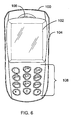
- the keypad 108 is an ITU E 1.161 Standard Key Pad. This keypad has a typical 3x3 layout of keys. Each key represents a single numeric input when the device is in a numeric mode. The numeric keys from 2 to 9 represent a plurality of alphabetic inputs when the device is in text mode. The alphabetic inputs are laid out on the keys in an alphabetic order.
- Fig. 8 is a top plan view of a further alternative device with a reduced QWERTY keyboard.
- the device 120 has a display 122, an auxiliary input device 124, voice communication means 126, and a keypad 128.
- the keypad 128 utilizes a triangular layout of keys that maintains the QWERTY style layout.
- the top row of keys preferably has five keys, the next row has four keys, the following row has three keys, and a space bar forms a bottom row.
- each character input key is associated with at least two alphabetic inputs.
- the keypad sections 136A and 136B are on either side of the display 132.
- the two keypad sections 136A and 136B comprise a plurality of keys surrounding a space button.
- the QWERTY style layout is maintained on the surrounding keys, some of which are associated with more than one character.
- the detailed design of the transceiver 1111 is dependent upon the communication network 1119 in which the device is intended to operate.
- a device 1100 intended to operate in a North American market may include a transceiver 1111 designed to operate with the Mobitex TM or DataTAC TM mobile data communication networks and also designed to operated with any of a variety of voice communication networks, such as AMPS, TDMA, CDMA, PCS, etc., whereas a device 1100 intended for use in Europe may be configured to operate with the General Packet Radio Service (GPRS) data communication network and the GSM voice communication network.
- GPRS General Packet Radio Service
- Other types of data and voice networks, both separate and integrated, may also be utilized with the mobile device 1100.
Landscapes
- Engineering & Computer Science (AREA)
- Theoretical Computer Science (AREA)
- General Engineering & Computer Science (AREA)
- Physics & Mathematics (AREA)
- General Physics & Mathematics (AREA)
- Human Computer Interaction (AREA)
- Computer Hardware Design (AREA)
- Computer Networks & Wireless Communication (AREA)
- Audiology, Speech & Language Pathology (AREA)
- Computational Linguistics (AREA)
- General Health & Medical Sciences (AREA)
- Artificial Intelligence (AREA)
- Health & Medical Sciences (AREA)
- Signal Processing (AREA)
- Business, Economics & Management (AREA)
- General Business, Economics & Management (AREA)
- Input From Keyboards Or The Like (AREA)
- Document Processing Apparatus (AREA)
- Feedback Control In General (AREA)
- Curing Cements, Concrete, And Artificial Stone (AREA)
- Seasonings (AREA)
- Machine Translation (AREA)
- User Interface Of Digital Computer (AREA)
- Control Of Steam Boilers And Waste-Gas Boilers (AREA)
- Electrotherapy Devices (AREA)
- Liquid Crystal Substances (AREA)
Claims (26)
- Procédé de construction d'une liste de mots personnalisée à utiliser dans des opérations de texte sur un dispositif électronique (14), comprenant les étapes consistant à :balayer (42) une collection d'éléments de texte comprenant des éléments de courriel ou des documents créés par un utilisateur du dispositif électronique (14), afin d'identifier des mots dans les éléments de texte ;attribuer (44) une pondération à chaque mot identifié ;stocker (46) chaque mot identifié et sa pondération correspondante ; etdéterminer une source de chaque élément de texte dans la collection d'éléments de texte ;dans lequel les sources d'éléments de texte comprennent une source d'éléments de texte de l'utilisateur, qui inclut des éléments de courriel ou des documents créés par l'utilisateur, et une source extérieure d'éléments de texte ;
dans lequel l'étape d'attribution (44) d'une pondération comprend l'étape consistant à calculer la pondération de chaque mot identifié en se fondant sur la source de l'élément de texte dans lequel le mot a été identifié ; et
dans lequel les éléments de texte provenant de la source d'éléments de texte de l'utilisateur reçoivent une pondération supérieure aux éléments de texte provenant de la source extérieure d'éléments de texte. - Procédé selon la revendication 1, dans lequel la collection d'éléments de texte comprend des éléments de texte stockés dans un système informatique (12).
- Procédé selon la revendication 1, dans lequel la collection d'éléments de texte comprend en outre au moins un type d'élément de texte choisi dans le groupe comprenant des messages envoyés, des documents, des listes d'acronymes et des listes de mots préexistantes.
- Procédé selon la revendication 1, dans lequel l'étape d'attribution (44) d'une pondération comprend l'étape consistant à
calculer une fréquence d'occurrence de chaque mot identifié. - Procédé selon la revendication 4, dans lequel l'étape de calcul d'une fréquence d'occurrence comprend les étapes consistant à :déterminer un nombre d'occurrences de chaque mot identifié dans la collection d'éléments de texte ;identifier un nombre maximal d'occurrences ; etcalculer une fréquence d'occurrence de chaque mot identifié sur la base d'un nombre d'occurrences du mot identifié et du nombre maximal d'occurrences.
- Procédé selon la revendication 1, comprenant en outre l'étape consistant à :ajuster la pondération d'un mot identifié lorsque le mot est utilisé dans des opérations de texte sur le dispositif électronique.
- Procédé selon la revendication 1, comprenant en outre les étapes consistant à :classer les mots identifiés en catégories ; etstocker un indicateur de la catégorie de chaque mot identifié avec le mot et sa pondération correspondante.
- Procédé selon la revendication 7, dans lequel les catégories sont sélectionnées dans le groupe comprenant: adresse, nom, hyperlien, groupe de mots récurrents, différentes catégories de langue, et mots ajoutés par l'utilisateur.
- Procédé selon la revendication 1, dans lequel :la collection d'éléments de texte comprend une liste de mots préexistante contenant des mots et des pondérations prédéfinies ;l'étape d'attribution (44) comprend l'étape consistant à convertir les pondérations prédéfinies en pondérations converties pour chaque mot dans la liste de mots préexistante ; etl'étape de stockage (46) comprend l'étape consistant à stocker chaque mot de la liste de mots préexistante et sa pondération convertie correspondante.
- Procédé selon la revendication 9, dans lequel l'étape de conversion comprend l'étape consistant à normaliser les pondérations prédéfinies.
- Procédé selon la revendication 9, dans lequel l'étape de conversion comprend l'étape consistant à appliquer un facteur de pondération prédéterminé aux pondérations prédéfinies.
- Procédé selon la revendication 1, comprenant en outre l'étape consistant à intégrer chaque mot identifié et sa pondération correspondante dans une liste de mots préexistante comportant des mots et des pondérations prédéfinies.
- Procédé selon la revendication 12, dans lequel l'étape d'intégration comprend l'étape consistant à convertir la pondération de chaque mot identifié en une pondération convertie.
- Procédé selon la revendication 12, dans lequel l'étape d'intégration comprend l'étape consistant à convertir les pondérations prédéfinies en pondérations converties.
- Procédé selon la revendication 12, dans lequel l'étape d'intégration comprend l'étape consistant à convertir la pondération de chaque mot identifié et la pondération prédéfinie de chaque mot dans la liste de mots préexistante en une pondération convertie.
- Procédé selon la revendication 12, dans lequel l'étape d'intégration comprend les étapes consistant à :déterminer (58) si l'un des mots identifiés existe dans la liste de mots préexistante ; etattribuer une pondération résolue (60) aux mots identifiés qui existent dans la liste de mots préexistante.
- Procédé selon la revendication 16, dans lequel la pondération résolue est la pondération du mot identifié.
- Procédé selon la revendication 16, dans lequel la pondération résolue est fondée sur la pondération du mot identifié et sur la pondération prédéfinie du mot identifié dans la liste de mots préexistante.
- Procédé selon la revendication 1, comprenant l'étape consistant à :recevoir une entrée de sélection de l'utilisateur pour sélectionner des éléments de texte à inclure dans la collection d'éléments de texte.
- Procédé selon la revendication 2, dans lequel les étapes de balayage, d'attribution et de stockage sont effectuées sur le système informatique (12) et dans lequel le procédé comprend en outre les étapes consistant à :mapper (70) chaque mot identifié avec une séquence de frappes de touches sur le dispositif électronique (14) ; etstocker (72) les mots identifiés, leurs pondérations correspondantes et les séquences de frappes de touches sur le dispositif électronique (14).
- Procédé selon la revendication 20, comprenant en outre les étapes consistant à :recevoir (78) sur le dispositif électronique un mot saisi par l'utilisateur;mapper (90) le mot saisi par l'utilisateur avec une séquence de frappes de touches sur le dispositif électronique ;attribuer (90) une pondération au mot saisi par l'utilisateur;stocker (92) le mot saisi par l'utilisateur, sa pondération correspondante et sa séquence de frappes de touches sur le dispositif électronique ; ettransférer le mot saisi par l'utilisateur vers le système informatique (12).
- Système destiné à construire une liste de mots personnalisée à utiliser dans des opérations de texte sur un dispositif électronique (14), comprenant :une première mémoire de données (16), destinée à stocker une collection d'éléments de texte comprenant des éléments de courriel ou des documents créés par un utilisateur du dispositif électronique (14) ;un module de balayage (18), configuré pour balayer la collection d'éléments de texte afin d'identifier des mots dans les éléments de texte ;un module de pondération (22), configuré pour attribuer une pondération à chaque mot identifié ;une seconde mémoire de données (20), destinée à stocker chaque mot identifié et sa pondération correspondante ; etun module configuré pour déterminer une source de chaque élément de texte dans la collection d'éléments de texte ;dans lequel les sources d'éléments de texte comprennent une source d'éléments de texte de l'utilisateur, qui inclut des éléments de courriel ou des documents créés par l'utilisateur, et une source extérieure d'éléments de texte ;
dans lequel le module de pondération (22) calcule la pondération de chaque mot identifié en se fondant sur la source de l'élément de texte dans lequel le mot a été identifié ; et
dans lequel les éléments de texte provenant de la source d'éléments de texte de l'utilisateur reçoivent une pondération supérieure aux éléments de texte provenant de la source extérieure d'éléments de texte. - Système selon la revendication 22, dans lequel la première mémoire de données (16) et la seconde mémoire de données (20) sont mises en oeuvre dans un unique composant de mémoire.
- Système selon la revendication 22, dans lequel la première mémoire de données (16) comprend des zones de stockage dans une pluralité de composants de mémoire.
- Système selon la revendication 22, comprenant en outre un mappeur de clavier (26) destiné à mapper chaque mot identifié avec une séquence de frappes de touches sur le dispositif électronique (14).
- Système selon la revendication 22, dans lequel la première mémoire de données (16), le module de balayage (18), le module de pondération (22) et la seconde mémoire de données (20) sont mis en oeuvre sur un système informatique (12), comprenant en outre un chargeur de liste de mots (24) sur le dispositif électronique (14), configuré pour recevoir les mots identifiés et leurs pondérations correspondantes en provenance de la seconde mémoire de données (20) et pour stocker les mots identifiés et leurs pondérations correspondantes sur le dispositif électronique (14).
Priority Applications (2)
| Application Number | Priority Date | Filing Date | Title |
|---|---|---|---|
| EP10174931.5A EP2259197B1 (fr) | 2002-07-23 | 2003-07-23 | Système et procédé pour l'utilisation d'une liste de mots personnalisée |
| EP20090176236 EP2154613A1 (fr) | 2002-07-23 | 2003-07-23 | Systèmes et procédés pour la construction et l'utilisation de listes de mots personnalisées |
Applications Claiming Priority (3)
| Application Number | Priority Date | Filing Date | Title |
|---|---|---|---|
| US39768002P | 2002-07-23 | 2002-07-23 | |
| US397680P | 2002-07-23 | ||
| PCT/CA2003/001103 WO2004010323A2 (fr) | 2002-07-23 | 2003-07-23 | Systemes et procedes pour etablir et se servir de listes de mots courants |
Related Child Applications (1)
| Application Number | Title | Priority Date | Filing Date |
|---|---|---|---|
| EP10174931.5A Division EP2259197B1 (fr) | 2002-07-23 | 2003-07-23 | Système et procédé pour l'utilisation d'une liste de mots personnalisée |
Publications (2)
| Publication Number | Publication Date |
|---|---|
| EP1527398A2 EP1527398A2 (fr) | 2005-05-04 |
| EP1527398B1 true EP1527398B1 (fr) | 2009-11-18 |
Family
ID=30771102
Family Applications (3)
| Application Number | Title | Priority Date | Filing Date |
|---|---|---|---|
| EP20030764867 Expired - Lifetime EP1527398B1 (fr) | 2002-07-23 | 2003-07-23 | Systemes et procedes pour etablir et se servir de listes de mots courants |
| EP20090176236 Ceased EP2154613A1 (fr) | 2002-07-23 | 2003-07-23 | Systèmes et procédés pour la construction et l'utilisation de listes de mots personnalisées |
| EP10174931.5A Expired - Lifetime EP2259197B1 (fr) | 2002-07-23 | 2003-07-23 | Système et procédé pour l'utilisation d'une liste de mots personnalisée |
Family Applications After (2)
| Application Number | Title | Priority Date | Filing Date |
|---|---|---|---|
| EP20090176236 Ceased EP2154613A1 (fr) | 2002-07-23 | 2003-07-23 | Systèmes et procédés pour la construction et l'utilisation de listes de mots personnalisées |
| EP10174931.5A Expired - Lifetime EP2259197B1 (fr) | 2002-07-23 | 2003-07-23 | Système et procédé pour l'utilisation d'une liste de mots personnalisée |
Country Status (8)
| Country | Link |
|---|---|
| US (5) | US7650348B2 (fr) |
| EP (3) | EP1527398B1 (fr) |
| CN (1) | CN1679022B (fr) |
| AT (1) | ATE449382T1 (fr) |
| AU (1) | AU2003250669A1 (fr) |
| CA (1) | CA2493443C (fr) |
| DE (1) | DE60330149D1 (fr) |
| WO (1) | WO2004010323A2 (fr) |
Cited By (1)
| Publication number | Priority date | Publication date | Assignee | Title |
|---|---|---|---|---|
| US9330083B2 (en) * | 2012-02-14 | 2016-05-03 | Facebook, Inc. | Creating customized user dictionary |
Families Citing this family (207)
| Publication number | Priority date | Publication date | Assignee | Title |
|---|---|---|---|---|
| US8645137B2 (en) | 2000-03-16 | 2014-02-04 | Apple Inc. | Fast, language-independent method for user authentication by voice |
| US8706747B2 (en) | 2000-07-06 | 2014-04-22 | Google Inc. | Systems and methods for searching using queries written in a different character-set and/or language from the target pages |
| EP1527398B1 (fr) | 2002-07-23 | 2009-11-18 | Research In Motion Limited | Systemes et procedes pour etablir et se servir de listes de mots courants |
| US20040193557A1 (en) * | 2003-03-25 | 2004-09-30 | Olsen Jesse Dale | Systems and methods for reducing ambiguity of communications |
| BRPI0418249A (pt) | 2003-12-31 | 2007-04-17 | Research In Motion Ltd | disposição de teclado |
| GB0406451D0 (en) * | 2004-03-23 | 2004-04-28 | Patel Sanjay | Keyboards |
| US7827025B2 (en) * | 2004-04-06 | 2010-11-02 | Microsoft Corporation | Efficient capitalization through user modeling |
| USD556191S1 (en) * | 2004-05-17 | 2007-11-27 | Research In Motion Limited | Keyboard for a handheld communication device |
| US20050283357A1 (en) * | 2004-06-22 | 2005-12-22 | Microsoft Corporation | Text mining method |
| US8972444B2 (en) | 2004-06-25 | 2015-03-03 | Google Inc. | Nonstandard locality-based text entry |
| US8392453B2 (en) | 2004-06-25 | 2013-03-05 | Google Inc. | Nonstandard text entry |
| US8239375B2 (en) * | 2004-08-31 | 2012-08-07 | Research In Motion Limited | Method of searching for personal information management (PIM) information and handheld electronic device employing the same |
| US7646375B2 (en) | 2004-08-31 | 2010-01-12 | Research In Motion Limited | Handheld electronic device with text disambiguation |
| US8237663B2 (en) | 2004-08-31 | 2012-08-07 | Research In Motion Limited | Handheld electronic device with text disambiguation |
| EP1630647A1 (fr) * | 2004-08-31 | 2006-03-01 | 2012244 Ontario Inc. | Appareil électronique portatif avec désambiguation des données texte |
| US7952496B2 (en) | 2004-08-31 | 2011-05-31 | Research In Motion Limited | Handheld electronic device and associated method employing a multiple-axis input device and reinitiating a text disambiguation session upon returning to a delimited word |
| US20060156251A1 (en) * | 2004-12-20 | 2006-07-13 | Atiya Suhail | System and method for providing feature customization for a communications device based on an active communications session |
| US20060136212A1 (en) * | 2004-12-22 | 2006-06-22 | Motorola, Inc. | Method and apparatus for improving text-to-speech performance |
| US7630980B2 (en) * | 2005-01-21 | 2009-12-08 | Prashant Parikh | Automatic dynamic contextual data entry completion system |
| US7599830B2 (en) * | 2005-03-16 | 2009-10-06 | Research In Motion Limited | Handheld electronic device with reduced keyboard and associated method of providing quick text entry in a message |
| CN1834865B (zh) * | 2005-03-18 | 2010-04-28 | 马贤亮 | 一种小键盘上数字编码的汉语拼音和注音多字连续输入法 |
| GB0505942D0 (en) * | 2005-03-23 | 2005-04-27 | Patel Sanjay | Human to mobile interfaces |
| GB0505941D0 (en) | 2005-03-23 | 2005-04-27 | Patel Sanjay | Human-to-mobile interfaces |
| US8122034B2 (en) | 2005-06-30 | 2012-02-21 | Veveo, Inc. | Method and system for incremental search with reduced text entry where the relevance of results is a dynamically computed function of user input search string character count |
| EP1907920A4 (fr) * | 2005-07-27 | 2012-12-12 | Nokia Corp | Procede et dispositif permettant de saisir un texte |
| US7788266B2 (en) | 2005-08-26 | 2010-08-31 | Veveo, Inc. | Method and system for processing ambiguous, multi-term search queries |
| US7779011B2 (en) * | 2005-08-26 | 2010-08-17 | Veveo, Inc. | Method and system for dynamically processing ambiguous, reduced text search queries and highlighting results thereof |
| US8677377B2 (en) | 2005-09-08 | 2014-03-18 | Apple Inc. | Method and apparatus for building an intelligent automated assistant |
| US20070076862A1 (en) * | 2005-09-30 | 2007-04-05 | Chatterjee Manjirnath A | System and method for abbreviated text messaging |
| EP1808744A1 (fr) | 2005-12-06 | 2007-07-18 | Research In Motion Limited | Clavier d'ordinateur avec pavé tactile de navigation |
| US7912706B2 (en) | 2006-04-03 | 2011-03-22 | Sony Ericsson Mobile Communications Ab | On-line predictive text dictionary |
| US7683885B2 (en) * | 2006-04-07 | 2010-03-23 | Research In Motion Ltd. | Handheld electronic device providing proposed corrected input in response to erroneous text entry in environment of text requiring multiple sequential actuations of the same key, and associated method |
| US7956844B2 (en) * | 2006-04-07 | 2011-06-07 | Research In Motion Limited | Handheld electronic device providing a learning function to facilitate correction of erroneous text entry in environment of text requiring multiple sequential actuations of the same key, and associated method |
| EP3822819A1 (fr) | 2006-04-20 | 2021-05-19 | Veveo, Inc. | Procedes et systemes d'interface utilisateur de selection et de presentation de contenu en fonction des actions de navigation et de selection de l'utilisateur associees au contenu |
| EP1868064B1 (fr) * | 2006-06-14 | 2018-12-19 | BlackBerry Limited | Dispositif électronique portatif avec entrée de texte assistée utilisant un fil de messages existant et procédé associé |
| US7778957B2 (en) | 2006-06-14 | 2010-08-17 | Research In Motion Limited | Handheld electronic device with assisted text entry using existing message thread, and associated method |
| US7979469B2 (en) * | 2006-06-14 | 2011-07-12 | Research In Motion Limited | Handheld electronic device and associated method employing a multiple-axis input device and arranging words of an existing message thread in various linguistic categories for selection during text entry |
| GB0612627D0 (en) * | 2006-06-26 | 2006-08-02 | Symbian Software Ltd | Contextual prediction |
| US9318108B2 (en) | 2010-01-18 | 2016-04-19 | Apple Inc. | Intelligent automated assistant |
| US20080076472A1 (en) * | 2006-09-22 | 2008-03-27 | Sony Ericsson Mobile Communications Ab | Intelligent Predictive Text Entry |
| US8364468B2 (en) | 2006-09-27 | 2013-01-29 | Academia Sinica | Typing candidate generating method for enhancing typing efficiency |
| US7979425B2 (en) * | 2006-10-25 | 2011-07-12 | Google Inc. | Server-side match |
| US9275036B2 (en) * | 2006-12-21 | 2016-03-01 | International Business Machines Corporation | System and method for adaptive spell checking |
| US8074172B2 (en) | 2007-01-05 | 2011-12-06 | Apple Inc. | Method, system, and graphical user interface for providing word recommendations |
| US8078978B2 (en) | 2007-10-19 | 2011-12-13 | Google Inc. | Method and system for predicting text |
| WO2008120034A2 (fr) * | 2007-03-29 | 2008-10-09 | Nokia Corporation | Facilitation de la communication textuelle |
| US8775931B2 (en) * | 2007-03-30 | 2014-07-08 | Blackberry Limited | Spell check function that applies a preference to a spell check algorithm based upon extensive user selection of spell check results generated by the algorithm, and associated handheld electronic device |
| US8977255B2 (en) | 2007-04-03 | 2015-03-10 | Apple Inc. | Method and system for operating a multi-function portable electronic device using voice-activation |
| US9251137B2 (en) | 2007-06-21 | 2016-02-02 | International Business Machines Corporation | Method of text type-ahead |
| EP2031482A1 (fr) | 2007-08-27 | 2009-03-04 | Research In Motion Limited | Agencement de clé réduit pour dispositif de communication mobile |
| US20090094018A1 (en) * | 2007-10-08 | 2009-04-09 | Nokia Corporation | Flexible Phrasebook |
| US8943539B2 (en) | 2007-11-21 | 2015-01-27 | Rovi Guides, Inc. | Enabling a friend to remotely modify user data |
| EP2241956A4 (fr) * | 2007-12-14 | 2013-09-04 | Sharp Kk | Système d'entrée, terminal portable, dispositif de traitement de données et procédé d'entrée |
| US8176419B2 (en) * | 2007-12-19 | 2012-05-08 | Microsoft Corporation | Self learning contextual spell corrector |
| US9330720B2 (en) | 2008-01-03 | 2016-05-03 | Apple Inc. | Methods and apparatus for altering audio output signals |
| US8232973B2 (en) * | 2008-01-09 | 2012-07-31 | Apple Inc. | Method, device, and graphical user interface providing word recommendations for text input |
| US8316035B2 (en) | 2008-01-16 | 2012-11-20 | International Business Machines Corporation | Systems and arrangements of text type-ahead |
| US20090187401A1 (en) * | 2008-01-17 | 2009-07-23 | Thanh Vuong | Handheld electronic device and associated method for obtaining new language objects for a temporary dictionary used by a disambiguation routine on the device |
| US8996376B2 (en) | 2008-04-05 | 2015-03-31 | Apple Inc. | Intelligent text-to-speech conversion |
| US8359532B2 (en) * | 2008-04-28 | 2013-01-22 | International Business Machines Corporation | Text type-ahead |
| US10496753B2 (en) | 2010-01-18 | 2019-12-03 | Apple Inc. | Automatically adapting user interfaces for hands-free interaction |
| US20100030549A1 (en) | 2008-07-31 | 2010-02-04 | Lee Michael M | Mobile device having human language translation capability with positional feedback |
| US20100053089A1 (en) * | 2008-08-27 | 2010-03-04 | Research In Motion Limited | Portable electronic device including touchscreen and method of controlling the portable electronic device |
| EP2527952A1 (fr) * | 2008-08-27 | 2012-11-28 | Research In Motion Limited | Dispositif électronique portable comprenant un écran tactile et procédé de commande du dispositif électronique portable |
| US8462123B1 (en) | 2008-10-21 | 2013-06-11 | Google Inc. | Constrained keyboard organization |
| WO2010067118A1 (fr) | 2008-12-11 | 2010-06-17 | Novauris Technologies Limited | Reconnaissance de la parole associée à un dispositif mobile |
| EP2211336B1 (fr) * | 2009-01-23 | 2014-10-08 | Harman Becker Automotive Systems GmbH | Entrée améliorée de voix à l'aide d'informations de navigation |
| GB0917753D0 (en) | 2009-10-09 | 2009-11-25 | Touchtype Ltd | System and method for inputting text into electronic devices |
| US9189472B2 (en) | 2009-03-30 | 2015-11-17 | Touchtype Limited | System and method for inputting text into small screen devices |
| GB0905457D0 (en) * | 2009-03-30 | 2009-05-13 | Touchtype Ltd | System and method for inputting text into electronic devices |
| US9424246B2 (en) | 2009-03-30 | 2016-08-23 | Touchtype Ltd. | System and method for inputting text into electronic devices |
| US10191654B2 (en) | 2009-03-30 | 2019-01-29 | Touchtype Limited | System and method for inputting text into electronic devices |
| US10241752B2 (en) | 2011-09-30 | 2019-03-26 | Apple Inc. | Interface for a virtual digital assistant |
| US10241644B2 (en) | 2011-06-03 | 2019-03-26 | Apple Inc. | Actionable reminder entries |
| US10706373B2 (en) | 2011-06-03 | 2020-07-07 | Apple Inc. | Performing actions associated with task items that represent tasks to perform |
| US9858925B2 (en) | 2009-06-05 | 2018-01-02 | Apple Inc. | Using context information to facilitate processing of commands in a virtual assistant |
| US9431006B2 (en) | 2009-07-02 | 2016-08-30 | Apple Inc. | Methods and apparatuses for automatic speech recognition |
| US8766926B2 (en) * | 2009-10-14 | 2014-07-01 | Blackberry Limited | Touch-sensitive display and method of controlling same |
| US8341230B2 (en) * | 2009-10-30 | 2012-12-25 | Research In Motion Limited | Method for predicting messaging addresses for an electronic message composed on an electronic device |
| US8365059B2 (en) * | 2009-11-03 | 2013-01-29 | Oto Technologies, Llc | E-reader semantic text manipulation |
| US10705794B2 (en) | 2010-01-18 | 2020-07-07 | Apple Inc. | Automatically adapting user interfaces for hands-free interaction |
| US10679605B2 (en) | 2010-01-18 | 2020-06-09 | Apple Inc. | Hands-free list-reading by intelligent automated assistant |
| US10553209B2 (en) | 2010-01-18 | 2020-02-04 | Apple Inc. | Systems and methods for hands-free notification summaries |
| US10276170B2 (en) | 2010-01-18 | 2019-04-30 | Apple Inc. | Intelligent automated assistant |
| US8682667B2 (en) | 2010-02-25 | 2014-03-25 | Apple Inc. | User profiling for selecting user specific voice input processing information |
| US10762293B2 (en) | 2010-12-22 | 2020-09-01 | Apple Inc. | Using parts-of-speech tagging and named entity recognition for spelling correction |
| US9262612B2 (en) | 2011-03-21 | 2016-02-16 | Apple Inc. | Device access using voice authentication |
| US10057736B2 (en) | 2011-06-03 | 2018-08-21 | Apple Inc. | Active transport based notifications |
| US8994660B2 (en) | 2011-08-29 | 2015-03-31 | Apple Inc. | Text correction processing |
| US9235565B2 (en) * | 2012-02-14 | 2016-01-12 | Facebook, Inc. | Blending customized user dictionaries |
| US10134385B2 (en) | 2012-03-02 | 2018-11-20 | Apple Inc. | Systems and methods for name pronunciation |
| US9483461B2 (en) | 2012-03-06 | 2016-11-01 | Apple Inc. | Handling speech synthesis of content for multiple languages |
| US9122673B2 (en) * | 2012-03-07 | 2015-09-01 | International Business Machines Corporation | Domain specific natural language normalization |
| US9280610B2 (en) | 2012-05-14 | 2016-03-08 | Apple Inc. | Crowd sourcing information to fulfill user requests |
| US9721563B2 (en) | 2012-06-08 | 2017-08-01 | Apple Inc. | Name recognition system |
| US9495129B2 (en) | 2012-06-29 | 2016-11-15 | Apple Inc. | Device, method, and user interface for voice-activated navigation and browsing of a document |
| US20140025367A1 (en) * | 2012-07-18 | 2014-01-23 | Htc Corporation | Predictive text engine systems and related methods |
| US9218333B2 (en) | 2012-08-31 | 2015-12-22 | Microsoft Technology Licensing, Llc | Context sensitive auto-correction |
| US9576574B2 (en) | 2012-09-10 | 2017-02-21 | Apple Inc. | Context-sensitive handling of interruptions by intelligent digital assistant |
| US9547647B2 (en) | 2012-09-19 | 2017-01-17 | Apple Inc. | Voice-based media searching |
| CN104685493A (zh) * | 2012-09-27 | 2015-06-03 | 日本电气株式会社 | 用于监视文本信息的字典创建装置、用于监视文本信息的字典创建方法和用于监视文本信息的字典创建程序 |
| US9037170B2 (en) * | 2012-10-04 | 2015-05-19 | International Business Machines Corporation | Management of an electronic calendar using short message service (SMS) |
| US8930181B2 (en) | 2012-12-06 | 2015-01-06 | Prashant Parikh | Automatic dynamic contextual data entry completion |
| EP4560630A3 (fr) | 2013-02-07 | 2025-08-06 | Apple Inc. | Déclencheur vocal pour assistant numérique |
| US9368114B2 (en) | 2013-03-14 | 2016-06-14 | Apple Inc. | Context-sensitive handling of interruptions |
| WO2014144579A1 (fr) | 2013-03-15 | 2014-09-18 | Apple Inc. | Système et procédé pour mettre à jour un modèle de reconnaissance de parole adaptatif |
| CN105027197B (zh) | 2013-03-15 | 2018-12-14 | 苹果公司 | 训练至少部分语音命令系统 |
| EP2797009A1 (fr) * | 2013-04-22 | 2014-10-29 | BlackBerry Limited | Correction de mot rétroactif |
| WO2014197336A1 (fr) | 2013-06-07 | 2014-12-11 | Apple Inc. | Système et procédé pour détecter des erreurs dans des interactions avec un assistant numérique utilisant la voix |
| WO2014197334A2 (fr) | 2013-06-07 | 2014-12-11 | Apple Inc. | Système et procédé destinés à une prononciation de mots spécifiée par l'utilisateur dans la synthèse et la reconnaissance de la parole |
| US9582608B2 (en) | 2013-06-07 | 2017-02-28 | Apple Inc. | Unified ranking with entropy-weighted information for phrase-based semantic auto-completion |
| WO2014197335A1 (fr) | 2013-06-08 | 2014-12-11 | Apple Inc. | Interprétation et action sur des commandes qui impliquent un partage d'informations avec des dispositifs distants |
| EP3008641A1 (fr) | 2013-06-09 | 2016-04-20 | Apple Inc. | Dispositif, procédé et interface utilisateur graphique permettant la persistance d'une conversation dans un minimum de deux instances d'un assistant numérique |
| US10176167B2 (en) | 2013-06-09 | 2019-01-08 | Apple Inc. | System and method for inferring user intent from speech inputs |
| HK1220313A1 (zh) | 2013-06-13 | 2017-04-28 | 苹果公司 | 用於由语音命令发起的紧急呼叫的系统和方法 |
| CN105307566B (zh) | 2013-06-18 | 2018-12-25 | 皇家飞利浦有限公司 | 用于预先键入编辑的ecg特征和用于报告解读的自动更新 |
| US10791216B2 (en) | 2013-08-06 | 2020-09-29 | Apple Inc. | Auto-activating smart responses based on activities from remote devices |
| US20150113072A1 (en) * | 2013-10-17 | 2015-04-23 | International Business Machines Corporation | Messaging auto-correction using recipient feedback |
| US9779722B2 (en) * | 2013-11-05 | 2017-10-03 | GM Global Technology Operations LLC | System for adapting speech recognition vocabulary |
| US9741343B1 (en) * | 2013-12-19 | 2017-08-22 | Amazon Technologies, Inc. | Voice interaction application selection |
| US9620105B2 (en) | 2014-05-15 | 2017-04-11 | Apple Inc. | Analyzing audio input for efficient speech and music recognition |
| US10592095B2 (en) | 2014-05-23 | 2020-03-17 | Apple Inc. | Instantaneous speaking of content on touch devices |
| US9502031B2 (en) | 2014-05-27 | 2016-11-22 | Apple Inc. | Method for supporting dynamic grammars in WFST-based ASR |
| US10170123B2 (en) | 2014-05-30 | 2019-01-01 | Apple Inc. | Intelligent assistant for home automation |
| US10204096B2 (en) | 2014-05-30 | 2019-02-12 | Apple Inc. | Device, method, and graphical user interface for a predictive keyboard |
| US9966065B2 (en) | 2014-05-30 | 2018-05-08 | Apple Inc. | Multi-command single utterance input method |
| US9633004B2 (en) | 2014-05-30 | 2017-04-25 | Apple Inc. | Better resolution when referencing to concepts |
| US9785630B2 (en) | 2014-05-30 | 2017-10-10 | Apple Inc. | Text prediction using combined word N-gram and unigram language models |
| US9430463B2 (en) | 2014-05-30 | 2016-08-30 | Apple Inc. | Exemplar-based natural language processing |
| US10078631B2 (en) | 2014-05-30 | 2018-09-18 | Apple Inc. | Entropy-guided text prediction using combined word and character n-gram language models |
| US9842101B2 (en) | 2014-05-30 | 2017-12-12 | Apple Inc. | Predictive conversion of language input |
| US10289433B2 (en) | 2014-05-30 | 2019-05-14 | Apple Inc. | Domain specific language for encoding assistant dialog |
| US9734193B2 (en) | 2014-05-30 | 2017-08-15 | Apple Inc. | Determining domain salience ranking from ambiguous words in natural speech |
| US9760559B2 (en) | 2014-05-30 | 2017-09-12 | Apple Inc. | Predictive text input |
| US9715875B2 (en) | 2014-05-30 | 2017-07-25 | Apple Inc. | Reducing the need for manual start/end-pointing and trigger phrases |
| US9338493B2 (en) | 2014-06-30 | 2016-05-10 | Apple Inc. | Intelligent automated assistant for TV user interactions |
| US10659851B2 (en) | 2014-06-30 | 2020-05-19 | Apple Inc. | Real-time digital assistant knowledge updates |
| US10446141B2 (en) | 2014-08-28 | 2019-10-15 | Apple Inc. | Automatic speech recognition based on user feedback |
| US9818400B2 (en) | 2014-09-11 | 2017-11-14 | Apple Inc. | Method and apparatus for discovering trending terms in speech requests |
| US10789041B2 (en) | 2014-09-12 | 2020-09-29 | Apple Inc. | Dynamic thresholds for always listening speech trigger |
| US9668121B2 (en) | 2014-09-30 | 2017-05-30 | Apple Inc. | Social reminders |
| US9886432B2 (en) | 2014-09-30 | 2018-02-06 | Apple Inc. | Parsimonious handling of word inflection via categorical stem + suffix N-gram language models |
| US10074360B2 (en) | 2014-09-30 | 2018-09-11 | Apple Inc. | Providing an indication of the suitability of speech recognition |
| US10127911B2 (en) | 2014-09-30 | 2018-11-13 | Apple Inc. | Speaker identification and unsupervised speaker adaptation techniques |
| US9646609B2 (en) | 2014-09-30 | 2017-05-09 | Apple Inc. | Caching apparatus for serving phonetic pronunciations |
| US9922015B2 (en) * | 2014-10-09 | 2018-03-20 | International Business Machines Corporation | System for handling abbreviation related text using profiles of the sender and the recipient |
| US10552013B2 (en) | 2014-12-02 | 2020-02-04 | Apple Inc. | Data detection |
| US9711141B2 (en) | 2014-12-09 | 2017-07-18 | Apple Inc. | Disambiguating heteronyms in speech synthesis |
| US9865280B2 (en) | 2015-03-06 | 2018-01-09 | Apple Inc. | Structured dictation using intelligent automated assistants |
| US9721566B2 (en) | 2015-03-08 | 2017-08-01 | Apple Inc. | Competing devices responding to voice triggers |
| US10567477B2 (en) | 2015-03-08 | 2020-02-18 | Apple Inc. | Virtual assistant continuity |
| US9886953B2 (en) | 2015-03-08 | 2018-02-06 | Apple Inc. | Virtual assistant activation |
| US9899019B2 (en) | 2015-03-18 | 2018-02-20 | Apple Inc. | Systems and methods for structured stem and suffix language models |
| US9842105B2 (en) | 2015-04-16 | 2017-12-12 | Apple Inc. | Parsimonious continuous-space phrase representations for natural language processing |
| US10083688B2 (en) | 2015-05-27 | 2018-09-25 | Apple Inc. | Device voice control for selecting a displayed affordance |
| US10127220B2 (en) | 2015-06-04 | 2018-11-13 | Apple Inc. | Language identification from short strings |
| US9578173B2 (en) | 2015-06-05 | 2017-02-21 | Apple Inc. | Virtual assistant aided communication with 3rd party service in a communication session |
| US10101822B2 (en) | 2015-06-05 | 2018-10-16 | Apple Inc. | Language input correction |
| US10255907B2 (en) | 2015-06-07 | 2019-04-09 | Apple Inc. | Automatic accent detection using acoustic models |
| US11025565B2 (en) | 2015-06-07 | 2021-06-01 | Apple Inc. | Personalized prediction of responses for instant messaging |
| US10186254B2 (en) | 2015-06-07 | 2019-01-22 | Apple Inc. | Context-based endpoint detection |
| US10747498B2 (en) | 2015-09-08 | 2020-08-18 | Apple Inc. | Zero latency digital assistant |
| US10671428B2 (en) | 2015-09-08 | 2020-06-02 | Apple Inc. | Distributed personal assistant |
| US9697820B2 (en) | 2015-09-24 | 2017-07-04 | Apple Inc. | Unit-selection text-to-speech synthesis using concatenation-sensitive neural networks |
| US11010550B2 (en) | 2015-09-29 | 2021-05-18 | Apple Inc. | Unified language modeling framework for word prediction, auto-completion and auto-correction |
| US10366158B2 (en) | 2015-09-29 | 2019-07-30 | Apple Inc. | Efficient word encoding for recurrent neural network language models |
| US11587559B2 (en) | 2015-09-30 | 2023-02-21 | Apple Inc. | Intelligent device identification |
| US10691473B2 (en) | 2015-11-06 | 2020-06-23 | Apple Inc. | Intelligent automated assistant in a messaging environment |
| US10049668B2 (en) | 2015-12-02 | 2018-08-14 | Apple Inc. | Applying neural network language models to weighted finite state transducers for automatic speech recognition |
| US10223066B2 (en) | 2015-12-23 | 2019-03-05 | Apple Inc. | Proactive assistance based on dialog communication between devices |
| US10446143B2 (en) | 2016-03-14 | 2019-10-15 | Apple Inc. | Identification of voice inputs providing credentials |
| US20170344531A1 (en) * | 2016-05-25 | 2017-11-30 | Microsoft Technology Licensing, Llc | Providing automatic case suggestion |
| US9934775B2 (en) | 2016-05-26 | 2018-04-03 | Apple Inc. | Unit-selection text-to-speech synthesis based on predicted concatenation parameters |
| US9972304B2 (en) | 2016-06-03 | 2018-05-15 | Apple Inc. | Privacy preserving distributed evaluation framework for embedded personalized systems |
| US10249300B2 (en) | 2016-06-06 | 2019-04-02 | Apple Inc. | Intelligent list reading |
| US10049663B2 (en) | 2016-06-08 | 2018-08-14 | Apple, Inc. | Intelligent automated assistant for media exploration |
| DK179588B1 (en) | 2016-06-09 | 2019-02-22 | Apple Inc. | INTELLIGENT AUTOMATED ASSISTANT IN A HOME ENVIRONMENT |
| US10509862B2 (en) | 2016-06-10 | 2019-12-17 | Apple Inc. | Dynamic phrase expansion of language input |
| US10586535B2 (en) | 2016-06-10 | 2020-03-10 | Apple Inc. | Intelligent digital assistant in a multi-tasking environment |
| US10192552B2 (en) | 2016-06-10 | 2019-01-29 | Apple Inc. | Digital assistant providing whispered speech |
| US10490187B2 (en) | 2016-06-10 | 2019-11-26 | Apple Inc. | Digital assistant providing automated status report |
| US10067938B2 (en) | 2016-06-10 | 2018-09-04 | Apple Inc. | Multilingual word prediction |
| DK201670540A1 (en) | 2016-06-11 | 2018-01-08 | Apple Inc | Application integration with a digital assistant |
| DK179343B1 (en) | 2016-06-11 | 2018-05-14 | Apple Inc | Intelligent task discovery |
| DK179415B1 (en) | 2016-06-11 | 2018-06-14 | Apple Inc | Intelligent device arbitration and control |
| DK179049B1 (en) | 2016-06-11 | 2017-09-18 | Apple Inc | Data driven natural language event detection and classification |
| GB201610984D0 (en) | 2016-06-23 | 2016-08-10 | Microsoft Technology Licensing Llc | Suppression of input images |
| US10043516B2 (en) | 2016-09-23 | 2018-08-07 | Apple Inc. | Intelligent automated assistant |
| US10089297B2 (en) | 2016-12-15 | 2018-10-02 | Microsoft Technology Licensing, Llc | Word order suggestion processing |
| US10593346B2 (en) | 2016-12-22 | 2020-03-17 | Apple Inc. | Rank-reduced token representation for automatic speech recognition |
| US20180188823A1 (en) * | 2017-01-04 | 2018-07-05 | International Business Machines Corporation | Autocorrect with weighted group vocabulary |
| US10268669B1 (en) * | 2017-01-27 | 2019-04-23 | John C. Allen | Intelligent graphical word processing system and method |
| JP6646001B2 (ja) * | 2017-03-22 | 2020-02-14 | 株式会社東芝 | 音声処理装置、音声処理方法およびプログラム |
| JP2018159759A (ja) * | 2017-03-22 | 2018-10-11 | 株式会社東芝 | 音声処理装置、音声処理方法およびプログラム |
| US10535342B2 (en) * | 2017-04-10 | 2020-01-14 | Microsoft Technology Licensing, Llc | Automatic learning of language models |
| DK201770439A1 (en) | 2017-05-11 | 2018-12-13 | Apple Inc. | Offline personal assistant |
| DK179496B1 (en) | 2017-05-12 | 2019-01-15 | Apple Inc. | USER-SPECIFIC Acoustic Models |
| DK179745B1 (en) | 2017-05-12 | 2019-05-01 | Apple Inc. | SYNCHRONIZATION AND TASK DELEGATION OF A DIGITAL ASSISTANT |
| DK201770431A1 (en) | 2017-05-15 | 2018-12-20 | Apple Inc. | Optimizing dialogue policy decisions for digital assistants using implicit feedback |
| DK201770432A1 (en) | 2017-05-15 | 2018-12-21 | Apple Inc. | Hierarchical belief states for digital assistants |
| DK179549B1 (en) | 2017-05-16 | 2019-02-12 | Apple Inc. | FAR-FIELD EXTENSION FOR DIGITAL ASSISTANT SERVICES |
| US10572586B2 (en) * | 2018-02-27 | 2020-02-25 | International Business Machines Corporation | Technique for automatically splitting words |
| CN108763468B (zh) * | 2018-05-29 | 2021-06-22 | 周宇 | 字典排序处理方法、装置及电子学习设备 |
| US11017157B2 (en) | 2019-05-15 | 2021-05-25 | International Business Machines Corporation | Group pattern based electronic dictionary modification and presentation |
| US10929596B2 (en) * | 2019-05-15 | 2021-02-23 | International Business Machines Corporation | Pattern based electronic dictionary modification and presentation |
| US11194467B2 (en) | 2019-06-01 | 2021-12-07 | Apple Inc. | Keyboard management user interfaces |
| CN116860706B (zh) * | 2023-09-04 | 2023-11-24 | 南昌协达科技发展有限公司 | 一种实验数据文本存储方法及系统 |
Family Cites Families (37)
| Publication number | Priority date | Publication date | Assignee | Title |
|---|---|---|---|---|
| US5502774A (en) * | 1992-06-09 | 1996-03-26 | International Business Machines Corporation | Automatic recognition of a consistent message using multiple complimentary sources of information |
| US5390364A (en) * | 1992-11-02 | 1995-02-14 | Harris Corporation | Least-mean squares adaptive digital filter havings variable size loop bandwidth |
| US5920836A (en) * | 1992-11-13 | 1999-07-06 | Dragon Systems, Inc. | Word recognition system using language context at current cursor position to affect recognition probabilities |
| US5623406A (en) * | 1995-03-06 | 1997-04-22 | Jean D. Ichbiah | Method and system for entering text in computer equipment |
| PT842463E (pt) * | 1995-07-26 | 2000-08-31 | Tegic Communications Inc | Sistema de eliminacao de ambiguidades em teclados reduzidos |
| US5838783A (en) * | 1995-12-27 | 1998-11-17 | Lucent Technologies, Inc. | Smart directory management |
| KR100318573B1 (ko) * | 1996-10-16 | 2001-12-28 | 마찌다 가쯔히꼬 | 문자 입력 장치 및 문자 입력 프로그램을 기억한 기록 매체 |
| US5953541A (en) * | 1997-01-24 | 1999-09-14 | Tegic Communications, Inc. | Disambiguating system for disambiguating ambiguous input sequences by displaying objects associated with the generated input sequences in the order of decreasing frequency of use |
| US5937422A (en) * | 1997-04-15 | 1999-08-10 | The United States Of America As Represented By The National Security Agency | Automatically generating a topic description for text and searching and sorting text by topic using the same |
| US6070134A (en) * | 1997-07-31 | 2000-05-30 | Microsoft Corporation | Identifying salient semantic relation paths between two words |
| KR100552085B1 (ko) * | 1997-09-25 | 2006-02-20 | 테직 커뮤니케이션 인코포레이티드 | 감소된 키보드 명확화 시스템 |
| US6377965B1 (en) * | 1997-11-07 | 2002-04-23 | Microsoft Corporation | Automatic word completion system for partially entered data |
| US6272456B1 (en) * | 1998-03-19 | 2001-08-07 | Microsoft Corporation | System and method for identifying the language of written text having a plurality of different length n-gram profiles |
| JP3842913B2 (ja) * | 1998-12-18 | 2006-11-08 | 富士通株式会社 | 文字通信方法及び文字通信システム |
| JP4519381B2 (ja) * | 1999-05-27 | 2010-08-04 | テジック コミュニケーションズ インク | 自動訂正機能を備えたキーボード・システム |
| GB2366010B (en) * | 2000-03-23 | 2004-11-17 | Canon Kk | Machine interface |
| EP1269382A4 (fr) * | 2000-03-30 | 2005-03-02 | I411 Inc | Procedes et systemes permettant la recuperation efficace de donnees a partir de collections de donnees |
| US7017114B2 (en) * | 2000-09-20 | 2006-03-21 | International Business Machines Corporation | Automatic correlation method for generating summaries for text documents |
| CA2323856A1 (fr) * | 2000-10-18 | 2002-04-18 | 602531 British Columbia Ltd. | Methode, systeme et support pour entrer des donnees dans un dispositif informatique personnel |
| US6751614B1 (en) * | 2000-11-09 | 2004-06-15 | Satyam Computer Services Limited Of Mayfair Centre | System and method for topic-based document analysis for information filtering |
| US7136877B2 (en) * | 2000-12-20 | 2006-11-14 | Yanon Volcani | System and method for determining and controlling the impact of text |
| US20020126097A1 (en) * | 2001-03-07 | 2002-09-12 | Savolainen Sampo Jussi Pellervo | Alphanumeric data entry method and apparatus using reduced keyboard and context related dictionaries |
| US7032174B2 (en) * | 2001-03-27 | 2006-04-18 | Microsoft Corporation | Automatically adding proper names to a database |
| US20020198979A1 (en) * | 2001-06-13 | 2002-12-26 | Allen Yu | Weighted decay system and method |
| US7158678B2 (en) * | 2001-07-19 | 2007-01-02 | Motorola, Inc. | Text input method for personal digital assistants and the like |
| US6661409B2 (en) * | 2001-08-22 | 2003-12-09 | Motorola, Inc. | Automatically scrolling handwritten input user interface for personal digital assistants and the like |
| US7836049B2 (en) * | 2001-12-12 | 2010-11-16 | Intel Corporation | Syllabic search engines and related methods |
| US7111248B2 (en) | 2002-01-15 | 2006-09-19 | Openwave Systems Inc. | Alphanumeric information input method |
| US7068723B2 (en) * | 2002-02-28 | 2006-06-27 | Fuji Xerox Co., Ltd. | Method for automatically producing optimal summaries of linear media |
| US20030220913A1 (en) * | 2002-05-24 | 2003-11-27 | International Business Machines Corporation | Techniques for personalized and adaptive search services |
| US7028026B1 (en) * | 2002-05-28 | 2006-04-11 | Ask Jeeves, Inc. | Relevancy-based database retrieval and display techniques |
| EP1527398B1 (fr) | 2002-07-23 | 2009-11-18 | Research In Motion Limited | Systemes et procedes pour etablir et se servir de listes de mots courants |
| US6886009B2 (en) * | 2002-07-31 | 2005-04-26 | International Business Machines Corporation | Query routing based on feature learning of data sources |
| US7548863B2 (en) * | 2002-08-06 | 2009-06-16 | Apple Inc. | Adaptive context sensitive analysis |
| US7836010B2 (en) * | 2003-07-30 | 2010-11-16 | Northwestern University | Method and system for assessing relevant properties of work contexts for use by information services |
| US7617203B2 (en) * | 2003-08-01 | 2009-11-10 | Yahoo! Inc | Listings optimization using a plurality of data sources |
| US7539619B1 (en) * | 2003-09-05 | 2009-05-26 | Spoken Translation Ind. | Speech-enabled language translation system and method enabling interactive user supervision of translation and speech recognition accuracy |
-
2003
- 2003-07-23 EP EP20030764867 patent/EP1527398B1/fr not_active Expired - Lifetime
- 2003-07-23 EP EP20090176236 patent/EP2154613A1/fr not_active Ceased
- 2003-07-23 CN CN038209241A patent/CN1679022B/zh not_active Expired - Lifetime
- 2003-07-23 US US10/522,079 patent/US7650348B2/en not_active Expired - Lifetime
- 2003-07-23 DE DE60330149T patent/DE60330149D1/de not_active Expired - Lifetime
- 2003-07-23 AU AU2003250669A patent/AU2003250669A1/en not_active Abandoned
- 2003-07-23 CA CA 2493443 patent/CA2493443C/fr not_active Expired - Lifetime
- 2003-07-23 EP EP10174931.5A patent/EP2259197B1/fr not_active Expired - Lifetime
- 2003-07-23 AT AT03764867T patent/ATE449382T1/de not_active IP Right Cessation
- 2003-07-23 WO PCT/CA2003/001103 patent/WO2004010323A2/fr not_active Ceased
-
2010
- 2010-01-04 US US12/651,747 patent/US8073835B2/en not_active Expired - Lifetime
-
2011
- 2011-10-31 US US13/285,179 patent/US8380712B2/en not_active Expired - Fee Related
-
2013
- 2013-01-11 US US13/739,021 patent/US8676793B2/en not_active Expired - Fee Related
-
2014
- 2014-01-23 US US14/162,473 patent/US9020935B2/en not_active Expired - Lifetime
Cited By (1)
| Publication number | Priority date | Publication date | Assignee | Title |
|---|---|---|---|---|
| US9330083B2 (en) * | 2012-02-14 | 2016-05-03 | Facebook, Inc. | Creating customized user dictionary |
Also Published As
| Publication number | Publication date |
|---|---|
| US20050246365A1 (en) | 2005-11-03 |
| ATE449382T1 (de) | 2009-12-15 |
| US20140136190A1 (en) | 2014-05-15 |
| EP2259197B1 (fr) | 2018-07-18 |
| AU2003250669A8 (en) | 2004-02-09 |
| CA2493443A1 (fr) | 2004-01-29 |
| EP2154613A1 (fr) | 2010-02-17 |
| US20100161318A1 (en) | 2010-06-24 |
| US20130132073A1 (en) | 2013-05-23 |
| EP1527398A2 (fr) | 2005-05-04 |
| WO2004010323A3 (fr) | 2004-12-29 |
| EP2259197A1 (fr) | 2010-12-08 |
| US8676793B2 (en) | 2014-03-18 |
| US9020935B2 (en) | 2015-04-28 |
| US7650348B2 (en) | 2010-01-19 |
| CA2493443C (fr) | 2011-07-19 |
| US8073835B2 (en) | 2011-12-06 |
| CN1679022B (zh) | 2010-06-09 |
| US20120065962A1 (en) | 2012-03-15 |
| US8380712B2 (en) | 2013-02-19 |
| CN1679022A (zh) | 2005-10-05 |
| AU2003250669A1 (en) | 2004-02-09 |
| WO2004010323A2 (fr) | 2004-01-29 |
| DE60330149D1 (de) | 2009-12-31 |
| HK1080556A1 (en) | 2006-04-28 |
Similar Documents
| Publication | Publication Date | Title |
|---|---|---|
| US8380712B2 (en) | Systems and methods of building and using custom word lists | |
| KR100893447B1 (ko) | 사용자 단어 및 사용자 동작의 컨텍스트 예측 장치 및 방법 | |
| US8775702B2 (en) | System and method for recognizing a keystroke in an electronic device | |
| US7149550B2 (en) | Communication terminal having a text editor application with a word completion feature | |
| US20080182599A1 (en) | Method and apparatus for user input | |
| US20080313182A1 (en) | Methods, devices, and computer program products for predictive text entry in mobile terminals using multiple databases | |
| US20050273724A1 (en) | Method and device for entering words in a user interface of an electronic device | |
| JP2001155014A (ja) | 受信メール表示方法及び絵文字変換機能付き電子メール端末装置並びにメール中継方法 | |
| JP3722359B2 (ja) | 文字入力システム及び通信端末 | |
| US20100149190A1 (en) | Method, apparatus and computer program product for providing an input order independent character input mechanism | |
| CA2568396C (fr) | Systeme et methode d'identification de frappe d'un dispositif electronique | |
| HK1080556B (en) | Systems and methods of building and using custom word lists | |
| KR20070076807A (ko) | 정보 처리 방법 및 장치 | |
| HK1106309A (en) | System and method for recognizing a keystroke in an electronic device |
Legal Events
| Date | Code | Title | Description |
|---|---|---|---|
| PUAI | Public reference made under article 153(3) epc to a published international application that has entered the european phase |
Free format text: ORIGINAL CODE: 0009012 |
|
| 17P | Request for examination filed |
Effective date: 20050223 |
|
| AK | Designated contracting states |
Kind code of ref document: A2 Designated state(s): AT BE BG CH CY CZ DE DK EE ES FI FR GB GR HU IE IT LI LU MC NL PT RO SE SI SK TR |
|
| AX | Request for extension of the european patent |
Extension state: AL LT LV MK |
|
| REG | Reference to a national code |
Ref country code: HK Ref legal event code: DE Ref document number: 1080556 Country of ref document: HK |
|
| RIN1 | Information on inventor provided before grant (corrected) |
Inventor name: LOWLES, ROBERT, J. Inventor name: BROWN, MICHAEL, S. Inventor name: GRIFFIN, JASON, T. |
|
| 17Q | First examination report despatched |
Effective date: 20070814 |
|
| GRAP | Despatch of communication of intention to grant a patent |
Free format text: ORIGINAL CODE: EPIDOSNIGR1 |
|
| GRAS | Grant fee paid |
Free format text: ORIGINAL CODE: EPIDOSNIGR3 |
|
| GRAA | (expected) grant |
Free format text: ORIGINAL CODE: 0009210 |
|
| AK | Designated contracting states |
Kind code of ref document: B1 Designated state(s): AT BE BG CH CY CZ DE DK EE ES FI FR GB GR HU IE IT LI LU MC NL PT RO SE SI SK TR |
|
| AX | Request for extension of the european patent |
Extension state: AL LT LV MK |
|
| REG | Reference to a national code |
Ref country code: GB Ref legal event code: FG4D |
|
| REG | Reference to a national code |
Ref country code: CH Ref legal event code: EP |
|
| REG | Reference to a national code |
Ref country code: IE Ref legal event code: FG4D |
|
| REF | Corresponds to: |
Ref document number: 60330149 Country of ref document: DE Date of ref document: 20091231 Kind code of ref document: P |
|
| REG | Reference to a national code |
Ref country code: NL Ref legal event code: VDEP Effective date: 20091118 |
|
| REG | Reference to a national code |
Ref country code: HK Ref legal event code: GR Ref document number: 1080556 Country of ref document: HK |
|
| LTIE | Lt: invalidation of european patent or patent extension |
Effective date: 20091118 |
|
| PG25 | Lapsed in a contracting state [announced via postgrant information from national office to epo] |
Ref country code: ES Free format text: LAPSE BECAUSE OF FAILURE TO SUBMIT A TRANSLATION OF THE DESCRIPTION OR TO PAY THE FEE WITHIN THE PRESCRIBED TIME-LIMIT Effective date: 20100228 Ref country code: PT Free format text: LAPSE BECAUSE OF FAILURE TO SUBMIT A TRANSLATION OF THE DESCRIPTION OR TO PAY THE FEE WITHIN THE PRESCRIBED TIME-LIMIT Effective date: 20100318 Ref country code: FI Free format text: LAPSE BECAUSE OF FAILURE TO SUBMIT A TRANSLATION OF THE DESCRIPTION OR TO PAY THE FEE WITHIN THE PRESCRIBED TIME-LIMIT Effective date: 20091118 Ref country code: SE Free format text: LAPSE BECAUSE OF FAILURE TO SUBMIT A TRANSLATION OF THE DESCRIPTION OR TO PAY THE FEE WITHIN THE PRESCRIBED TIME-LIMIT Effective date: 20091118 |
|
| PG25 | Lapsed in a contracting state [announced via postgrant information from national office to epo] |
Ref country code: SI Free format text: LAPSE BECAUSE OF FAILURE TO SUBMIT A TRANSLATION OF THE DESCRIPTION OR TO PAY THE FEE WITHIN THE PRESCRIBED TIME-LIMIT Effective date: 20091118 Ref country code: CY Free format text: LAPSE BECAUSE OF FAILURE TO SUBMIT A TRANSLATION OF THE DESCRIPTION OR TO PAY THE FEE WITHIN THE PRESCRIBED TIME-LIMIT Effective date: 20091118 |
|
| PG25 | Lapsed in a contracting state [announced via postgrant information from national office to epo] |
Ref country code: BE Free format text: LAPSE BECAUSE OF FAILURE TO SUBMIT A TRANSLATION OF THE DESCRIPTION OR TO PAY THE FEE WITHIN THE PRESCRIBED TIME-LIMIT Effective date: 20091118 Ref country code: AT Free format text: LAPSE BECAUSE OF FAILURE TO SUBMIT A TRANSLATION OF THE DESCRIPTION OR TO PAY THE FEE WITHIN THE PRESCRIBED TIME-LIMIT Effective date: 20091118 |
|
| PG25 | Lapsed in a contracting state [announced via postgrant information from national office to epo] |
Ref country code: NL Free format text: LAPSE BECAUSE OF FAILURE TO SUBMIT A TRANSLATION OF THE DESCRIPTION OR TO PAY THE FEE WITHIN THE PRESCRIBED TIME-LIMIT Effective date: 20091118 Ref country code: RO Free format text: LAPSE BECAUSE OF FAILURE TO SUBMIT A TRANSLATION OF THE DESCRIPTION OR TO PAY THE FEE WITHIN THE PRESCRIBED TIME-LIMIT Effective date: 20091118 Ref country code: EE Free format text: LAPSE BECAUSE OF FAILURE TO SUBMIT A TRANSLATION OF THE DESCRIPTION OR TO PAY THE FEE WITHIN THE PRESCRIBED TIME-LIMIT Effective date: 20091118 Ref country code: BG Free format text: LAPSE BECAUSE OF FAILURE TO SUBMIT A TRANSLATION OF THE DESCRIPTION OR TO PAY THE FEE WITHIN THE PRESCRIBED TIME-LIMIT Effective date: 20100218 Ref country code: DK Free format text: LAPSE BECAUSE OF FAILURE TO SUBMIT A TRANSLATION OF THE DESCRIPTION OR TO PAY THE FEE WITHIN THE PRESCRIBED TIME-LIMIT Effective date: 20091118 |
|
| PG25 | Lapsed in a contracting state [announced via postgrant information from national office to epo] |
Ref country code: CZ Free format text: LAPSE BECAUSE OF FAILURE TO SUBMIT A TRANSLATION OF THE DESCRIPTION OR TO PAY THE FEE WITHIN THE PRESCRIBED TIME-LIMIT Effective date: 20091118 Ref country code: SK Free format text: LAPSE BECAUSE OF FAILURE TO SUBMIT A TRANSLATION OF THE DESCRIPTION OR TO PAY THE FEE WITHIN THE PRESCRIBED TIME-LIMIT Effective date: 20091118 |
|
| PLBE | No opposition filed within time limit |
Free format text: ORIGINAL CODE: 0009261 |
|
| STAA | Information on the status of an ep patent application or granted ep patent |
Free format text: STATUS: NO OPPOSITION FILED WITHIN TIME LIMIT |
|
| 26N | No opposition filed |
Effective date: 20100819 |
|
| PG25 | Lapsed in a contracting state [announced via postgrant information from national office to epo] |
Ref country code: GR Free format text: LAPSE BECAUSE OF FAILURE TO SUBMIT A TRANSLATION OF THE DESCRIPTION OR TO PAY THE FEE WITHIN THE PRESCRIBED TIME-LIMIT Effective date: 20100219 |
|
| PG25 | Lapsed in a contracting state [announced via postgrant information from national office to epo] |
Ref country code: MC Free format text: LAPSE BECAUSE OF NON-PAYMENT OF DUE FEES Effective date: 20100731 |
|
| REG | Reference to a national code |
Ref country code: CH Ref legal event code: PL |
|
| PG25 | Lapsed in a contracting state [announced via postgrant information from national office to epo] |
Ref country code: IT Free format text: LAPSE BECAUSE OF FAILURE TO SUBMIT A TRANSLATION OF THE DESCRIPTION OR TO PAY THE FEE WITHIN THE PRESCRIBED TIME-LIMIT Effective date: 20091118 |
|
| PG25 | Lapsed in a contracting state [announced via postgrant information from national office to epo] |
Ref country code: LI Free format text: LAPSE BECAUSE OF NON-PAYMENT OF DUE FEES Effective date: 20100731 Ref country code: CH Free format text: LAPSE BECAUSE OF NON-PAYMENT OF DUE FEES Effective date: 20100731 |
|
| PG25 | Lapsed in a contracting state [announced via postgrant information from national office to epo] |
Ref country code: IE Free format text: LAPSE BECAUSE OF NON-PAYMENT OF DUE FEES Effective date: 20100723 |
|
| PG25 | Lapsed in a contracting state [announced via postgrant information from national office to epo] |
Ref country code: HU Free format text: LAPSE BECAUSE OF FAILURE TO SUBMIT A TRANSLATION OF THE DESCRIPTION OR TO PAY THE FEE WITHIN THE PRESCRIBED TIME-LIMIT Effective date: 20100519 Ref country code: LU Free format text: LAPSE BECAUSE OF NON-PAYMENT OF DUE FEES Effective date: 20100723 |
|
| PG25 | Lapsed in a contracting state [announced via postgrant information from national office to epo] |
Ref country code: TR Free format text: LAPSE BECAUSE OF FAILURE TO SUBMIT A TRANSLATION OF THE DESCRIPTION OR TO PAY THE FEE WITHIN THE PRESCRIBED TIME-LIMIT Effective date: 20091118 |
|
| REG | Reference to a national code |
Ref country code: DE Ref legal event code: R082 Ref document number: 60330149 Country of ref document: DE Representative=s name: MERH-IP MATIAS ERNY REICHL HOFFMANN, DE |
|
| REG | Reference to a national code |
Ref country code: DE Ref legal event code: R082 Ref document number: 60330149 Country of ref document: DE Representative=s name: MERH-IP MATIAS ERNY REICHL HOFFMANN, DE Effective date: 20140925 Ref country code: DE Ref legal event code: R081 Ref document number: 60330149 Country of ref document: DE Owner name: BLACKBERRY LIMITED, WATERLOO, CA Free format text: FORMER OWNER: RESEARCH IN MOTION LTD., WATERLOO, ONTARIO, CA Effective date: 20140925 Ref country code: DE Ref legal event code: R082 Ref document number: 60330149 Country of ref document: DE Representative=s name: MERH-IP MATIAS ERNY REICHL HOFFMANN PATENTANWA, DE Effective date: 20140925 |
|
| REG | Reference to a national code |
Ref country code: FR Ref legal event code: PLFP Year of fee payment: 14 |
|
| REG | Reference to a national code |
Ref country code: FR Ref legal event code: PLFP Year of fee payment: 15 |
|
| REG | Reference to a national code |
Ref country code: FR Ref legal event code: PLFP Year of fee payment: 16 |
|
| REG | Reference to a national code |
Ref country code: DE Ref legal event code: R079 Ref document number: 60330149 Country of ref document: DE Free format text: PREVIOUS MAIN CLASS: G06F0017270000 Ipc: G06F0040200000 |
|
| PGFP | Annual fee paid to national office [announced via postgrant information from national office to epo] |
Ref country code: GB Payment date: 20220727 Year of fee payment: 20 Ref country code: DE Payment date: 20220727 Year of fee payment: 20 |
|
| PGFP | Annual fee paid to national office [announced via postgrant information from national office to epo] |
Ref country code: FR Payment date: 20220725 Year of fee payment: 20 |
|
| REG | Reference to a national code |
Ref country code: DE Ref legal event code: R071 Ref document number: 60330149 Country of ref document: DE |
|
| REG | Reference to a national code |
Ref country code: GB Ref legal event code: PE20 Expiry date: 20230722 |
|
| PG25 | Lapsed in a contracting state [announced via postgrant information from national office to epo] |
Ref country code: GB Free format text: LAPSE BECAUSE OF EXPIRATION OF PROTECTION Effective date: 20230722 |