EP1521840B1 - Transformation von pflanzenzellen mittels elektroporation und unterdruck - Google Patents
Transformation von pflanzenzellen mittels elektroporation und unterdruck Download PDFInfo
- Publication number
- EP1521840B1 EP1521840B1 EP03764199A EP03764199A EP1521840B1 EP 1521840 B1 EP1521840 B1 EP 1521840B1 EP 03764199 A EP03764199 A EP 03764199A EP 03764199 A EP03764199 A EP 03764199A EP 1521840 B1 EP1521840 B1 EP 1521840B1
- Authority
- EP
- European Patent Office
- Prior art keywords
- plant
- nucleic acid
- electroporation
- seeds
- container
- Prior art date
- Legal status (The legal status is an assumption and is not a legal conclusion. Google has not performed a legal analysis and makes no representation as to the accuracy of the status listed.)
- Expired - Lifetime
Links
- 238000004520 electroporation Methods 0.000 title claims description 164
- 230000009466 transformation Effects 0.000 title description 28
- 241000196324 Embryophyta Species 0.000 claims description 248
- 150000007523 nucleic acids Chemical class 0.000 claims description 159
- 102000039446 nucleic acids Human genes 0.000 claims description 154
- 108020004707 nucleic acids Proteins 0.000 claims description 154
- 238000000034 method Methods 0.000 claims description 150
- 244000098338 Triticum aestivum Species 0.000 claims description 52
- 235000021307 Triticum Nutrition 0.000 claims description 41
- 240000007594 Oryza sativa Species 0.000 claims description 33
- 235000007164 Oryza sativa Nutrition 0.000 claims description 31
- 235000009566 rice Nutrition 0.000 claims description 28
- 241000219193 Brassicaceae Species 0.000 claims description 16
- 241000209504 Poaceae Species 0.000 claims description 15
- 244000068988 Glycine max Species 0.000 claims description 14
- 235000010469 Glycine max Nutrition 0.000 claims description 14
- 240000003768 Solanum lycopersicum Species 0.000 claims description 13
- 240000008042 Zea mays Species 0.000 claims description 12
- 230000001939 inductive effect Effects 0.000 claims description 12
- 241000207782 Convolvulaceae Species 0.000 claims description 10
- 235000009847 Cucumis melo var cantalupensis Nutrition 0.000 claims description 10
- 241000219104 Cucurbitaceae Species 0.000 claims description 10
- 241000220485 Fabaceae Species 0.000 claims description 10
- 235000007688 Lycopersicon esculentum Nutrition 0.000 claims description 10
- 244000221633 Brassica rapa subsp chinensis Species 0.000 claims description 9
- 235000010149 Brassica rapa subsp chinensis Nutrition 0.000 claims description 9
- 235000000536 Brassica rapa subsp pekinensis Nutrition 0.000 claims description 9
- 241000208292 Solanaceae Species 0.000 claims description 9
- 235000016383 Zea mays subsp huehuetenangensis Nutrition 0.000 claims description 9
- 235000002017 Zea mays subsp mays Nutrition 0.000 claims description 9
- 235000009973 maize Nutrition 0.000 claims description 9
- 240000001549 Ipomoea eriocarpa Species 0.000 claims description 8
- 235000005146 Ipomoea eriocarpa Nutrition 0.000 claims description 8
- 238000004519 manufacturing process Methods 0.000 claims description 7
- 240000002791 Brassica napus Species 0.000 claims description 4
- 244000241257 Cucumis melo Species 0.000 claims description 4
- 235000011293 Brassica napus Nutrition 0.000 claims description 3
- 235000011292 Brassica rapa Nutrition 0.000 claims description 3
- 240000008100 Brassica rapa Species 0.000 claims description 3
- 235000009842 Cucumis melo Nutrition 0.000 claims description 3
- 240000007218 Ipomoea hederacea Species 0.000 claims description 3
- 235000002560 Solanum lycopersicum Nutrition 0.000 claims description 3
- 235000007244 Zea mays Nutrition 0.000 claims description 3
- 210000004027 cell Anatomy 0.000 description 164
- 235000021251 pulses Nutrition 0.000 description 126
- 108090000623 proteins and genes Proteins 0.000 description 125
- XLYOFNOQVPJJNP-UHFFFAOYSA-N water Chemical compound O XLYOFNOQVPJJNP-UHFFFAOYSA-N 0.000 description 95
- 210000001519 tissue Anatomy 0.000 description 88
- 239000007853 buffer solution Substances 0.000 description 84
- 238000012546 transfer Methods 0.000 description 73
- 108020004414 DNA Proteins 0.000 description 65
- BRZYSWJRSDMWLG-CAXSIQPQSA-N geneticin Chemical compound O1C[C@@](O)(C)[C@H](NC)[C@@H](O)[C@H]1O[C@@H]1[C@@H](O)[C@H](O[C@@H]2[C@@H]([C@@H](O)[C@H](O)[C@@H](C(C)O)O2)N)[C@@H](N)C[C@H]1N BRZYSWJRSDMWLG-CAXSIQPQSA-N 0.000 description 36
- 239000013612 plasmid Substances 0.000 description 35
- 239000012153 distilled water Substances 0.000 description 34
- 239000000463 material Substances 0.000 description 33
- 230000014509 gene expression Effects 0.000 description 32
- JXCKZXHCJOVIAV-UHFFFAOYSA-N 6-[(5-bromo-4-chloro-1h-indol-3-yl)oxy]-3,4,5-trihydroxyoxane-2-carboxylic acid;cyclohexanamine Chemical compound [NH3+]C1CCCCC1.O1C(C([O-])=O)C(O)C(O)C(O)C1OC1=CNC2=CC=C(Br)C(Cl)=C12 JXCKZXHCJOVIAV-UHFFFAOYSA-N 0.000 description 26
- 239000000243 solution Substances 0.000 description 26
- 238000010222 PCR analysis Methods 0.000 description 24
- 238000004458 analytical method Methods 0.000 description 23
- 238000002105 Southern blotting Methods 0.000 description 22
- 102000053187 Glucuronidase Human genes 0.000 description 20
- 108010060309 Glucuronidase Proteins 0.000 description 20
- -1 polybutylene terephthalate Polymers 0.000 description 19
- 108091034117 Oligonucleotide Proteins 0.000 description 16
- 238000002474 experimental method Methods 0.000 description 16
- 108091033319 polynucleotide Proteins 0.000 description 16
- 239000002157 polynucleotide Substances 0.000 description 16
- 102000040430 polynucleotide Human genes 0.000 description 16
- BASFCYQUMIYNBI-UHFFFAOYSA-N platinum Chemical compound [Pt] BASFCYQUMIYNBI-UHFFFAOYSA-N 0.000 description 14
- 238000012216 screening Methods 0.000 description 14
- 125000003729 nucleotide group Chemical group 0.000 description 13
- 244000064895 Cucumis melo subsp melo Species 0.000 description 12
- 241001465754 Metazoa Species 0.000 description 12
- 240000008467 Oryza sativa Japonica Group Species 0.000 description 12
- VYPSYNLAJGMNEJ-UHFFFAOYSA-N Silicium dioxide Chemical compound O=[Si]=O VYPSYNLAJGMNEJ-UHFFFAOYSA-N 0.000 description 12
- 239000007864 aqueous solution Substances 0.000 description 12
- 239000000203 mixture Substances 0.000 description 12
- 238000013518 transcription Methods 0.000 description 12
- 230000035897 transcription Effects 0.000 description 12
- JLCPHMBAVCMARE-UHFFFAOYSA-N [3-[[3-[[3-[[3-[[3-[[3-[[3-[[3-[[3-[[3-[[3-[[5-(2-amino-6-oxo-1H-purin-9-yl)-3-[[3-[[3-[[3-[[3-[[3-[[5-(2-amino-6-oxo-1H-purin-9-yl)-3-[[5-(2-amino-6-oxo-1H-purin-9-yl)-3-hydroxyoxolan-2-yl]methoxy-hydroxyphosphoryl]oxyoxolan-2-yl]methoxy-hydroxyphosphoryl]oxy-5-(5-methyl-2,4-dioxopyrimidin-1-yl)oxolan-2-yl]methoxy-hydroxyphosphoryl]oxy-5-(6-aminopurin-9-yl)oxolan-2-yl]methoxy-hydroxyphosphoryl]oxy-5-(6-aminopurin-9-yl)oxolan-2-yl]methoxy-hydroxyphosphoryl]oxy-5-(6-aminopurin-9-yl)oxolan-2-yl]methoxy-hydroxyphosphoryl]oxy-5-(6-aminopurin-9-yl)oxolan-2-yl]methoxy-hydroxyphosphoryl]oxyoxolan-2-yl]methoxy-hydroxyphosphoryl]oxy-5-(5-methyl-2,4-dioxopyrimidin-1-yl)oxolan-2-yl]methoxy-hydroxyphosphoryl]oxy-5-(4-amino-2-oxopyrimidin-1-yl)oxolan-2-yl]methoxy-hydroxyphosphoryl]oxy-5-(5-methyl-2,4-dioxopyrimidin-1-yl)oxolan-2-yl]methoxy-hydroxyphosphoryl]oxy-5-(5-methyl-2,4-dioxopyrimidin-1-yl)oxolan-2-yl]methoxy-hydroxyphosphoryl]oxy-5-(6-aminopurin-9-yl)oxolan-2-yl]methoxy-hydroxyphosphoryl]oxy-5-(6-aminopurin-9-yl)oxolan-2-yl]methoxy-hydroxyphosphoryl]oxy-5-(4-amino-2-oxopyrimidin-1-yl)oxolan-2-yl]methoxy-hydroxyphosphoryl]oxy-5-(4-amino-2-oxopyrimidin-1-yl)oxolan-2-yl]methoxy-hydroxyphosphoryl]oxy-5-(4-amino-2-oxopyrimidin-1-yl)oxolan-2-yl]methoxy-hydroxyphosphoryl]oxy-5-(6-aminopurin-9-yl)oxolan-2-yl]methoxy-hydroxyphosphoryl]oxy-5-(4-amino-2-oxopyrimidin-1-yl)oxolan-2-yl]methyl [5-(6-aminopurin-9-yl)-2-(hydroxymethyl)oxolan-3-yl] hydrogen phosphate Polymers Cc1cn(C2CC(OP(O)(=O)OCC3OC(CC3OP(O)(=O)OCC3OC(CC3O)n3cnc4c3nc(N)[nH]c4=O)n3cnc4c3nc(N)[nH]c4=O)C(COP(O)(=O)OC3CC(OC3COP(O)(=O)OC3CC(OC3COP(O)(=O)OC3CC(OC3COP(O)(=O)OC3CC(OC3COP(O)(=O)OC3CC(OC3COP(O)(=O)OC3CC(OC3COP(O)(=O)OC3CC(OC3COP(O)(=O)OC3CC(OC3COP(O)(=O)OC3CC(OC3COP(O)(=O)OC3CC(OC3COP(O)(=O)OC3CC(OC3COP(O)(=O)OC3CC(OC3COP(O)(=O)OC3CC(OC3COP(O)(=O)OC3CC(OC3COP(O)(=O)OC3CC(OC3COP(O)(=O)OC3CC(OC3COP(O)(=O)OC3CC(OC3CO)n3cnc4c(N)ncnc34)n3ccc(N)nc3=O)n3cnc4c(N)ncnc34)n3ccc(N)nc3=O)n3ccc(N)nc3=O)n3ccc(N)nc3=O)n3cnc4c(N)ncnc34)n3cnc4c(N)ncnc34)n3cc(C)c(=O)[nH]c3=O)n3cc(C)c(=O)[nH]c3=O)n3ccc(N)nc3=O)n3cc(C)c(=O)[nH]c3=O)n3cnc4c3nc(N)[nH]c4=O)n3cnc4c(N)ncnc34)n3cnc4c(N)ncnc34)n3cnc4c(N)ncnc34)n3cnc4c(N)ncnc34)O2)c(=O)[nH]c1=O JLCPHMBAVCMARE-UHFFFAOYSA-N 0.000 description 11
- 239000003242 anti bacterial agent Substances 0.000 description 11
- 229940088710 antibiotic agent Drugs 0.000 description 11
- 239000002773 nucleotide Substances 0.000 description 11
- 238000010186 staining Methods 0.000 description 11
- 239000013598 vector Substances 0.000 description 11
- 206010021033 Hypomenorrhoea Diseases 0.000 description 10
- 101150062179 II gene Proteins 0.000 description 10
- 229920000036 polyvinylpyrrolidone Polymers 0.000 description 10
- 239000001267 polyvinylpyrrolidone Substances 0.000 description 10
- 235000013855 polyvinylpyrrolidone Nutrition 0.000 description 10
- 239000002689 soil Substances 0.000 description 10
- 241000894006 Bacteria Species 0.000 description 9
- 210000002421 cell wall Anatomy 0.000 description 9
- 239000002609 medium Substances 0.000 description 9
- 229920001184 polypeptide Polymers 0.000 description 9
- 230000002265 prevention Effects 0.000 description 9
- 108090000765 processed proteins & peptides Proteins 0.000 description 9
- 102000004196 processed proteins & peptides Human genes 0.000 description 9
- 239000000047 product Substances 0.000 description 9
- 241000219195 Arabidopsis thaliana Species 0.000 description 8
- ZAMOUSCENKQFHK-UHFFFAOYSA-N Chlorine atom Chemical compound [Cl] ZAMOUSCENKQFHK-UHFFFAOYSA-N 0.000 description 8
- 108010043121 Green Fluorescent Proteins Proteins 0.000 description 8
- 102000004144 Green Fluorescent Proteins Human genes 0.000 description 8
- 239000005708 Sodium hypochlorite Substances 0.000 description 8
- 239000000460 chlorine Substances 0.000 description 8
- 229910052801 chlorine Inorganic materials 0.000 description 8
- 230000000694 effects Effects 0.000 description 8
- 235000013601 eggs Nutrition 0.000 description 8
- 239000005090 green fluorescent protein Substances 0.000 description 8
- 210000000056 organ Anatomy 0.000 description 8
- SUKJFIGYRHOWBL-UHFFFAOYSA-N sodium hypochlorite Chemical compound [Na+].Cl[O-] SUKJFIGYRHOWBL-UHFFFAOYSA-N 0.000 description 8
- 241000589158 Agrobacterium Species 0.000 description 7
- 239000004743 Polypropylene Substances 0.000 description 7
- 101150054900 gus gene Proteins 0.000 description 7
- 229910052697 platinum Inorganic materials 0.000 description 7
- 229920001155 polypropylene Polymers 0.000 description 7
- 239000000523 sample Substances 0.000 description 7
- 241000255789 Bombyx mori Species 0.000 description 6
- 238000007400 DNA extraction Methods 0.000 description 6
- 241000588724 Escherichia coli Species 0.000 description 6
- 108091028043 Nucleic acid sequence Proteins 0.000 description 6
- 230000003321 amplification Effects 0.000 description 6
- 239000003623 enhancer Substances 0.000 description 6
- 230000035558 fertility Effects 0.000 description 6
- 239000011521 glass Substances 0.000 description 6
- 238000003199 nucleic acid amplification method Methods 0.000 description 6
- 239000013641 positive control Substances 0.000 description 6
- 230000001105 regulatory effect Effects 0.000 description 6
- 239000008399 tap water Substances 0.000 description 6
- 235000020679 tap water Nutrition 0.000 description 6
- 241000701489 Cauliflower mosaic virus Species 0.000 description 5
- 239000004793 Polystyrene Substances 0.000 description 5
- OPTASPLRGRRNAP-UHFFFAOYSA-N cytosine Chemical group NC=1C=CNC(=O)N=1 OPTASPLRGRRNAP-UHFFFAOYSA-N 0.000 description 5
- 239000013642 negative control Substances 0.000 description 5
- 229920002223 polystyrene Polymers 0.000 description 5
- 238000002360 preparation method Methods 0.000 description 5
- 102000004169 proteins and genes Human genes 0.000 description 5
- 241000894007 species Species 0.000 description 5
- 238000011144 upstream manufacturing Methods 0.000 description 5
- YQYJSBFKSSDGFO-UHFFFAOYSA-N Epihygromycin Natural products OC1C(O)C(C(=O)C)OC1OC(C(=C1)O)=CC=C1C=C(C)C(=O)NC1C(O)C(O)C2OCOC2C1O YQYJSBFKSSDGFO-UHFFFAOYSA-N 0.000 description 4
- 108700039691 Genetic Promoter Regions Proteins 0.000 description 4
- 241000209219 Hordeum Species 0.000 description 4
- 238000000636 Northern blotting Methods 0.000 description 4
- 240000002582 Oryza sativa Indica Group Species 0.000 description 4
- 244000062793 Sorghum vulgare Species 0.000 description 4
- ISAKRJDGNUQOIC-UHFFFAOYSA-N Uracil Chemical group O=C1C=CNC(=O)N1 ISAKRJDGNUQOIC-UHFFFAOYSA-N 0.000 description 4
- 241000251539 Vertebrata <Metazoa> Species 0.000 description 4
- DHKHKXVYLBGOIT-UHFFFAOYSA-N acetaldehyde Diethyl Acetal Natural products CCOC(C)OCC DHKHKXVYLBGOIT-UHFFFAOYSA-N 0.000 description 4
- 210000002257 embryonic structure Anatomy 0.000 description 4
- 210000001161 mammalian embryo Anatomy 0.000 description 4
- 239000003550 marker Substances 0.000 description 4
- 108020004999 messenger RNA Proteins 0.000 description 4
- 230000008569 process Effects 0.000 description 4
- 239000000377 silicon dioxide Substances 0.000 description 4
- 229920002050 silicone resin Polymers 0.000 description 4
- UCSJYZPVAKXKNQ-HZYVHMACSA-N streptomycin Chemical compound CN[C@H]1[C@H](O)[C@@H](O)[C@H](CO)O[C@H]1O[C@@H]1[C@](C=O)(O)[C@H](C)O[C@H]1O[C@@H]1[C@@H](NC(N)=N)[C@H](O)[C@@H](NC(N)=N)[C@H](O)[C@H]1O UCSJYZPVAKXKNQ-HZYVHMACSA-N 0.000 description 4
- 230000009261 transgenic effect Effects 0.000 description 4
- 229920000178 Acrylic resin Polymers 0.000 description 3
- 239000004925 Acrylic resin Substances 0.000 description 3
- 241000219194 Arabidopsis Species 0.000 description 3
- 108020004705 Codon Proteins 0.000 description 3
- 235000015510 Cucumis melo subsp melo Nutrition 0.000 description 3
- 206010059866 Drug resistance Diseases 0.000 description 3
- 241000233866 Fungi Species 0.000 description 3
- 241000282414 Homo sapiens Species 0.000 description 3
- 235000007340 Hordeum vulgare Nutrition 0.000 description 3
- OKKJLVBELUTLKV-UHFFFAOYSA-N Methanol Chemical compound OC OKKJLVBELUTLKV-UHFFFAOYSA-N 0.000 description 3
- 108091093037 Peptide nucleic acid Proteins 0.000 description 3
- 239000004696 Poly ether ether ketone Substances 0.000 description 3
- 239000004952 Polyamide Substances 0.000 description 3
- 239000004695 Polyether sulfone Substances 0.000 description 3
- 239000004697 Polyetherimide Substances 0.000 description 3
- 239000004721 Polyphenylene oxide Substances 0.000 description 3
- 239000004734 Polyphenylene sulfide Substances 0.000 description 3
- PYMYPHUHKUWMLA-LMVFSUKVSA-N Ribose Natural products OC[C@@H](O)[C@@H](O)[C@@H](O)C=O PYMYPHUHKUWMLA-LMVFSUKVSA-N 0.000 description 3
- 241000209056 Secale Species 0.000 description 3
- 235000011684 Sorghum saccharatum Nutrition 0.000 description 3
- FJJCIZWZNKZHII-UHFFFAOYSA-N [4,6-bis(cyanoamino)-1,3,5-triazin-2-yl]cyanamide Chemical compound N#CNC1=NC(NC#N)=NC(NC#N)=N1 FJJCIZWZNKZHII-UHFFFAOYSA-N 0.000 description 3
- 230000009471 action Effects 0.000 description 3
- 230000002776 aggregation Effects 0.000 description 3
- 238000004220 aggregation Methods 0.000 description 3
- HMFHBZSHGGEWLO-UHFFFAOYSA-N alpha-D-Furanose-Ribose Natural products OCC1OC(O)C(O)C1O HMFHBZSHGGEWLO-UHFFFAOYSA-N 0.000 description 3
- 230000008901 benefit Effects 0.000 description 3
- 239000003795 chemical substances by application Substances 0.000 description 3
- 210000000349 chromosome Anatomy 0.000 description 3
- 230000001276 controlling effect Effects 0.000 description 3
- 238000001816 cooling Methods 0.000 description 3
- 239000003822 epoxy resin Substances 0.000 description 3
- 238000010353 genetic engineering Methods 0.000 description 3
- PCHJSUWPFVWCPO-UHFFFAOYSA-N gold Chemical compound [Au] PCHJSUWPFVWCPO-UHFFFAOYSA-N 0.000 description 3
- 239000010931 gold Substances 0.000 description 3
- 229910052737 gold Inorganic materials 0.000 description 3
- 229960000318 kanamycin Drugs 0.000 description 3
- 229930027917 kanamycin Natural products 0.000 description 3
- SBUJHOSQTJFQJX-NOAMYHISSA-N kanamycin Chemical compound O[C@@H]1[C@@H](O)[C@H](O)[C@@H](CN)O[C@@H]1O[C@H]1[C@H](O)[C@@H](O[C@@H]2[C@@H]([C@@H](N)[C@H](O)[C@@H](CO)O2)O)[C@H](N)C[C@@H]1N SBUJHOSQTJFQJX-NOAMYHISSA-N 0.000 description 3
- 229930182823 kanamycin A Natural products 0.000 description 3
- 230000033001 locomotion Effects 0.000 description 3
- 229910052751 metal Inorganic materials 0.000 description 3
- 239000002184 metal Substances 0.000 description 3
- 150000004713 phosphodiesters Chemical class 0.000 description 3
- 229920002647 polyamide Polymers 0.000 description 3
- 229920001230 polyarylate Polymers 0.000 description 3
- 229920001707 polybutylene terephthalate Polymers 0.000 description 3
- 239000004417 polycarbonate Substances 0.000 description 3
- 229920000515 polycarbonate Polymers 0.000 description 3
- 229920000647 polyepoxide Polymers 0.000 description 3
- 229920006393 polyether sulfone Polymers 0.000 description 3
- 229920002530 polyetherether ketone Polymers 0.000 description 3
- 229920001601 polyetherimide Polymers 0.000 description 3
- 229920000139 polyethylene terephthalate Polymers 0.000 description 3
- 239000005020 polyethylene terephthalate Substances 0.000 description 3
- 229920001721 polyimide Polymers 0.000 description 3
- 229920006380 polyphenylene oxide Polymers 0.000 description 3
- 229920000069 polyphenylene sulfide Polymers 0.000 description 3
- 238000012545 processing Methods 0.000 description 3
- 210000001938 protoplast Anatomy 0.000 description 3
- 239000010935 stainless steel Substances 0.000 description 3
- 229910001220 stainless steel Inorganic materials 0.000 description 3
- 238000006467 substitution reaction Methods 0.000 description 3
- 238000011426 transformation method Methods 0.000 description 3
- 238000013519 translation Methods 0.000 description 3
- 108091032973 (ribonucleotides)n+m Proteins 0.000 description 2
- OKTJSMMVPCPJKN-UHFFFAOYSA-N Carbon Chemical compound [C] OKTJSMMVPCPJKN-UHFFFAOYSA-N 0.000 description 2
- 229920001661 Chitosan Polymers 0.000 description 2
- 240000008067 Cucumis sativus Species 0.000 description 2
- 235000010799 Cucumis sativus var sativus Nutrition 0.000 description 2
- 229920002307 Dextran Polymers 0.000 description 2
- 229930182566 Gentamicin Natural products 0.000 description 2
- CEAZRRDELHUEMR-URQXQFDESA-N Gentamicin Chemical compound O1[C@H](C(C)NC)CC[C@@H](N)[C@H]1O[C@H]1[C@H](O)[C@@H](O[C@@H]2[C@@H]([C@@H](NC)[C@@](C)(O)CO2)O)[C@H](N)C[C@@H]1N CEAZRRDELHUEMR-URQXQFDESA-N 0.000 description 2
- 241000238631 Hexapoda Species 0.000 description 2
- 206010020649 Hyperkeratosis Diseases 0.000 description 2
- 239000006142 Luria-Bertani Agar Substances 0.000 description 2
- 239000004640 Melamine resin Substances 0.000 description 2
- 229920000877 Melamine resin Polymers 0.000 description 2
- 239000004677 Nylon Substances 0.000 description 2
- 108700026244 Open Reading Frames Proteins 0.000 description 2
- 239000004698 Polyethylene Substances 0.000 description 2
- 239000004642 Polyimide Substances 0.000 description 2
- 229920002367 Polyisobutene Polymers 0.000 description 2
- 239000004372 Polyvinyl alcohol Substances 0.000 description 2
- 229920001328 Polyvinylidene chloride Polymers 0.000 description 2
- 241000288906 Primates Species 0.000 description 2
- 241000220259 Raphanus Species 0.000 description 2
- 235000007238 Secale cereale Nutrition 0.000 description 2
- 229910052581 Si3N4 Inorganic materials 0.000 description 2
- 229920001807 Urea-formaldehyde Polymers 0.000 description 2
- 238000010521 absorption reaction Methods 0.000 description 2
- 239000011354 acetal resin Substances 0.000 description 2
- 150000001241 acetals Chemical class 0.000 description 2
- XECAHXYUAAWDEL-UHFFFAOYSA-N acrylonitrile butadiene styrene Chemical compound C=CC=C.C=CC#N.C=CC1=CC=CC=C1 XECAHXYUAAWDEL-UHFFFAOYSA-N 0.000 description 2
- 239000004676 acrylonitrile butadiene styrene Substances 0.000 description 2
- 229920000122 acrylonitrile butadiene styrene Polymers 0.000 description 2
- 239000000853 adhesive Substances 0.000 description 2
- 230000001070 adhesive effect Effects 0.000 description 2
- 239000000956 alloy Substances 0.000 description 2
- 229910045601 alloy Inorganic materials 0.000 description 2
- 230000004075 alteration Effects 0.000 description 2
- PNEYBMLMFCGWSK-UHFFFAOYSA-N aluminium oxide Inorganic materials [O-2].[O-2].[O-2].[Al+3].[Al+3] PNEYBMLMFCGWSK-UHFFFAOYSA-N 0.000 description 2
- 229960000723 ampicillin Drugs 0.000 description 2
- AVKUERGKIZMTKX-NJBDSQKTSA-N ampicillin Chemical compound C1([C@@H](N)C(=O)N[C@H]2[C@H]3SC([C@@H](N3C2=O)C(O)=O)(C)C)=CC=CC=C1 AVKUERGKIZMTKX-NJBDSQKTSA-N 0.000 description 2
- 230000003115 biocidal effect Effects 0.000 description 2
- 229910052799 carbon Inorganic materials 0.000 description 2
- 230000001413 cellular effect Effects 0.000 description 2
- 239000001913 cellulose Substances 0.000 description 2
- 229920002678 cellulose Polymers 0.000 description 2
- 239000000919 ceramic Substances 0.000 description 2
- 235000013339 cereals Nutrition 0.000 description 2
- 210000003763 chloroplast Anatomy 0.000 description 2
- 229920001940 conductive polymer Polymers 0.000 description 2
- 238000007796 conventional method Methods 0.000 description 2
- 229940104302 cytosine Drugs 0.000 description 2
- 238000011161 development Methods 0.000 description 2
- 230000018109 developmental process Effects 0.000 description 2
- 201000010099 disease Diseases 0.000 description 2
- 208000037265 diseases, disorders, signs and symptoms Diseases 0.000 description 2
- 235000013399 edible fruits Nutrition 0.000 description 2
- 238000005516 engineering process Methods 0.000 description 2
- 239000013604 expression vector Substances 0.000 description 2
- 239000011888 foil Substances 0.000 description 2
- 229910052839 forsterite Inorganic materials 0.000 description 2
- 239000012634 fragment Substances 0.000 description 2
- 230000002068 genetic effect Effects 0.000 description 2
- 229960002518 gentamicin Drugs 0.000 description 2
- 230000035784 germination Effects 0.000 description 2
- 238000002347 injection Methods 0.000 description 2
- 239000007924 injection Substances 0.000 description 2
- 239000011810 insulating material Substances 0.000 description 2
- HCWCAKKEBCNQJP-UHFFFAOYSA-N magnesium orthosilicate Chemical compound [Mg+2].[Mg+2].[O-][Si]([O-])([O-])[O-] HCWCAKKEBCNQJP-UHFFFAOYSA-N 0.000 description 2
- 150000002739 metals Chemical class 0.000 description 2
- YACKEPLHDIMKIO-UHFFFAOYSA-N methylphosphonic acid Chemical compound CP(O)(O)=O YACKEPLHDIMKIO-UHFFFAOYSA-N 0.000 description 2
- 238000010369 molecular cloning Methods 0.000 description 2
- 108010058731 nopaline synthase Proteins 0.000 description 2
- 229920001778 nylon Polymers 0.000 description 2
- 239000011368 organic material Substances 0.000 description 2
- 239000002245 particle Substances 0.000 description 2
- 244000052769 pathogen Species 0.000 description 2
- 230000001717 pathogenic effect Effects 0.000 description 2
- 239000005011 phenolic resin Substances 0.000 description 2
- PTMHPRAIXMAOOB-UHFFFAOYSA-L phosphoramidate Chemical compound NP([O-])([O-])=O PTMHPRAIXMAOOB-UHFFFAOYSA-L 0.000 description 2
- 229920003023 plastic Polymers 0.000 description 2
- 239000004033 plastic Substances 0.000 description 2
- 229920002285 poly(styrene-co-acrylonitrile) Polymers 0.000 description 2
- 229920002492 poly(sulfone) Polymers 0.000 description 2
- 229920002239 polyacrylonitrile Polymers 0.000 description 2
- 229920000728 polyester Polymers 0.000 description 2
- 229920000573 polyethylene Polymers 0.000 description 2
- 229920006324 polyoxymethylene Polymers 0.000 description 2
- 229920002689 polyvinyl acetate Polymers 0.000 description 2
- 239000011118 polyvinyl acetate Substances 0.000 description 2
- 229920002451 polyvinyl alcohol Polymers 0.000 description 2
- 239000004800 polyvinyl chloride Substances 0.000 description 2
- 229920000915 polyvinyl chloride Polymers 0.000 description 2
- 239000005033 polyvinylidene chloride Substances 0.000 description 2
- 210000001236 prokaryotic cell Anatomy 0.000 description 2
- 238000011160 research Methods 0.000 description 2
- 238000012827 research and development Methods 0.000 description 2
- 239000002336 ribonucleotide Substances 0.000 description 2
- 125000000548 ribosyl group Chemical group C1([C@H](O)[C@H](O)[C@H](O1)CO)* 0.000 description 2
- 244000195895 saibo Species 0.000 description 2
- 229910052594 sapphire Inorganic materials 0.000 description 2
- 239000010980 sapphire Substances 0.000 description 2
- 229910052710 silicon Inorganic materials 0.000 description 2
- 239000010703 silicon Substances 0.000 description 2
- HBMJWWWQQXIZIP-UHFFFAOYSA-N silicon carbide Chemical compound [Si+]#[C-] HBMJWWWQQXIZIP-UHFFFAOYSA-N 0.000 description 2
- 229910010271 silicon carbide Inorganic materials 0.000 description 2
- 235000012239 silicon dioxide Nutrition 0.000 description 2
- HQVNEWCFYHHQES-UHFFFAOYSA-N silicon nitride Chemical compound N12[Si]34N5[Si]62N3[Si]51N64 HQVNEWCFYHHQES-UHFFFAOYSA-N 0.000 description 2
- 229910052814 silicon oxide Inorganic materials 0.000 description 2
- 239000007787 solid Substances 0.000 description 2
- 229960000268 spectinomycin Drugs 0.000 description 2
- UNFWWIHTNXNPBV-WXKVUWSESA-N spectinomycin Chemical compound O([C@@H]1[C@@H](NC)[C@@H](O)[C@H]([C@@H]([C@H]1O1)O)NC)[C@]2(O)[C@H]1O[C@H](C)CC2=O UNFWWIHTNXNPBV-WXKVUWSESA-N 0.000 description 2
- ATHGHQPFGPMSJY-UHFFFAOYSA-N spermidine Chemical compound NCCCCNCCCN ATHGHQPFGPMSJY-UHFFFAOYSA-N 0.000 description 2
- 229960005322 streptomycin Drugs 0.000 description 2
- 239000000725 suspension Substances 0.000 description 2
- 229920001059 synthetic polymer Polymers 0.000 description 2
- RYYWUUFWQRZTIU-UHFFFAOYSA-K thiophosphate Chemical compound [O-]P([O-])([O-])=S RYYWUUFWQRZTIU-UHFFFAOYSA-K 0.000 description 2
- 229920006305 unsaturated polyester Polymers 0.000 description 2
- 229940035893 uracil Drugs 0.000 description 2
- 235000013311 vegetables Nutrition 0.000 description 2
- 229920002554 vinyl polymer Polymers 0.000 description 2
- 238000005406 washing Methods 0.000 description 2
- 238000001262 western blot Methods 0.000 description 2
- FVPXJPVSJNSJBL-UHFFFAOYSA-N 1h-pyrimidine-2,4-dione;1,3-thiazole Chemical compound C1=CSC=N1.O=C1C=CNC(=O)N1 FVPXJPVSJNSJBL-UHFFFAOYSA-N 0.000 description 1
- VGONTNSXDCQUGY-RRKCRQDMSA-N 2'-deoxyinosine Chemical group C1[C@H](O)[C@@H](CO)O[C@H]1N1C(N=CNC2=O)=C2N=C1 VGONTNSXDCQUGY-RRKCRQDMSA-N 0.000 description 1
- 108010021809 Alcohol dehydrogenase Proteins 0.000 description 1
- 241000219317 Amaranthaceae Species 0.000 description 1
- 241000208173 Apiaceae Species 0.000 description 1
- 101100438273 Arabidopsis thaliana CAN1 gene Proteins 0.000 description 1
- 241000238421 Arthropoda Species 0.000 description 1
- 241000208838 Asteraceae Species 0.000 description 1
- 235000007319 Avena orientalis Nutrition 0.000 description 1
- 241000209763 Avena sativa Species 0.000 description 1
- 235000007558 Avena sp Nutrition 0.000 description 1
- 241000271566 Aves Species 0.000 description 1
- 235000011331 Brassica Nutrition 0.000 description 1
- 241000219198 Brassica Species 0.000 description 1
- 240000007124 Brassica oleracea Species 0.000 description 1
- 235000003899 Brassica oleracea var acephala Nutrition 0.000 description 1
- 235000011299 Brassica oleracea var botrytis Nutrition 0.000 description 1
- 235000011301 Brassica oleracea var capitata Nutrition 0.000 description 1
- 235000001169 Brassica oleracea var oleracea Nutrition 0.000 description 1
- 240000003259 Brassica oleracea var. botrytis Species 0.000 description 1
- 235000004977 Brassica sinapistrum Nutrition 0.000 description 1
- UXVMQQNJUSDDNG-UHFFFAOYSA-L Calcium chloride Chemical compound [Cl-].[Cl-].[Ca+2] UXVMQQNJUSDDNG-UHFFFAOYSA-L 0.000 description 1
- 241000220244 Capsella <angiosperm> Species 0.000 description 1
- 235000011305 Capsella bursa pastoris Nutrition 0.000 description 1
- 240000008867 Capsella bursa-pastoris Species 0.000 description 1
- 241000283153 Cetacea Species 0.000 description 1
- LZZYPRNAOMGNLH-UHFFFAOYSA-M Cetrimonium bromide Chemical compound [Br-].CCCCCCCCCCCCCCCC[N+](C)(C)C LZZYPRNAOMGNLH-UHFFFAOYSA-M 0.000 description 1
- 241000258920 Chilopoda Species 0.000 description 1
- 241000288673 Chiroptera Species 0.000 description 1
- 241000251730 Chondrichthyes Species 0.000 description 1
- 244000241235 Citrullus lanatus Species 0.000 description 1
- 235000012828 Citrullus lanatus var citroides Nutrition 0.000 description 1
- 241000251464 Coelacanthiformes Species 0.000 description 1
- 229920000742 Cotton Polymers 0.000 description 1
- 241000238424 Crustacea Species 0.000 description 1
- HMFHBZSHGGEWLO-SOOFDHNKSA-N D-ribofuranose Chemical compound OC[C@H]1OC(O)[C@H](O)[C@@H]1O HMFHBZSHGGEWLO-SOOFDHNKSA-N 0.000 description 1
- 102000004163 DNA-directed RNA polymerases Human genes 0.000 description 1
- 108090000626 DNA-directed RNA polymerases Proteins 0.000 description 1
- 241001416535 Dermoptera Species 0.000 description 1
- 241000258963 Diplopoda Species 0.000 description 1
- 241000390128 Eutrema Species 0.000 description 1
- 108700024394 Exon Proteins 0.000 description 1
- 241000702463 Geminiviridae Species 0.000 description 1
- 244000043261 Hevea brasiliensis Species 0.000 description 1
- DGAQECJNVWCQMB-PUAWFVPOSA-M Ilexoside XXIX Chemical compound C[C@@H]1CC[C@@]2(CC[C@@]3(C(=CC[C@H]4[C@]3(CC[C@@H]5[C@@]4(CC[C@@H](C5(C)C)OS(=O)(=O)[O-])C)C)[C@@H]2[C@]1(C)O)C)C(=O)O[C@H]6[C@@H]([C@H]([C@@H]([C@H](O6)CO)O)O)O.[Na+] DGAQECJNVWCQMB-PUAWFVPOSA-M 0.000 description 1
- 241000500891 Insecta Species 0.000 description 1
- 241000289658 Insectivora Species 0.000 description 1
- 108091092195 Intron Proteins 0.000 description 1
- 244000017020 Ipomoea batatas Species 0.000 description 1
- 235000002678 Ipomoea batatas Nutrition 0.000 description 1
- 108010025815 Kanamycin Kinase Proteins 0.000 description 1
- 241000283953 Lagomorpha Species 0.000 description 1
- 241000255777 Lepidoptera Species 0.000 description 1
- 241000234280 Liliaceae Species 0.000 description 1
- 108060001084 Luciferase Proteins 0.000 description 1
- 241000282564 Macaca fuscata Species 0.000 description 1
- 241000218922 Magnoliophyta Species 0.000 description 1
- 241000219071 Malvaceae Species 0.000 description 1
- 241000289419 Metatheria Species 0.000 description 1
- 241000289390 Monotremata Species 0.000 description 1
- 241000218231 Moraceae Species 0.000 description 1
- 241000251753 Myxiniformes Species 0.000 description 1
- 241001045988 Neogene Species 0.000 description 1
- 244000061176 Nicotiana tabacum Species 0.000 description 1
- 235000002637 Nicotiana tabacum Nutrition 0.000 description 1
- 241000209094 Oryza Species 0.000 description 1
- 241000282577 Pan troglodytes Species 0.000 description 1
- 241000893899 Pauropoda Species 0.000 description 1
- 241000283089 Perissodactyla Species 0.000 description 1
- 241000251540 Petromyzontiformes Species 0.000 description 1
- 235000006089 Phaseolus angularis Nutrition 0.000 description 1
- 244000046052 Phaseolus vulgaris Species 0.000 description 1
- 241000283966 Pholidota <mammal> Species 0.000 description 1
- IAJOBQBIJHVGMQ-UHFFFAOYSA-N Phosphinothricin Natural products CP(O)(=O)CCC(N)C(O)=O IAJOBQBIJHVGMQ-UHFFFAOYSA-N 0.000 description 1
- 239000002202 Polyethylene glycol Substances 0.000 description 1
- 229920001213 Polysorbate 20 Polymers 0.000 description 1
- 241000283080 Proboscidea <mammal> Species 0.000 description 1
- 244000184734 Pyrus japonica Species 0.000 description 1
- 235000006140 Raphanus sativus var sativus Nutrition 0.000 description 1
- 108020004511 Recombinant DNA Proteins 0.000 description 1
- 108700005075 Regulator Genes Proteins 0.000 description 1
- 241000283984 Rodentia Species 0.000 description 1
- 235000004789 Rosa xanthina Nutrition 0.000 description 1
- 241000220222 Rosaceae Species 0.000 description 1
- 241000209051 Saccharum Species 0.000 description 1
- 235000007201 Saccharum officinarum Nutrition 0.000 description 1
- 240000000111 Saccharum officinarum Species 0.000 description 1
- 241000283083 Sirenia Species 0.000 description 1
- 235000002597 Solanum melongena Nutrition 0.000 description 1
- 244000061458 Solanum melongena Species 0.000 description 1
- 244000061456 Solanum tuberosum Species 0.000 description 1
- 235000002595 Solanum tuberosum Nutrition 0.000 description 1
- 241001493546 Suina Species 0.000 description 1
- 241000883295 Symphyla Species 0.000 description 1
- 241000723873 Tobacco mosaic virus Species 0.000 description 1
- 241000209140 Triticum Species 0.000 description 1
- 239000013504 Triton X-100 Substances 0.000 description 1
- 229920004890 Triton X-100 Polymers 0.000 description 1
- 241000282866 Tubulidentata Species 0.000 description 1
- 241000219977 Vigna Species 0.000 description 1
- 240000007098 Vigna angularis Species 0.000 description 1
- 235000010711 Vigna angularis Nutrition 0.000 description 1
- 235000010726 Vigna sinensis Nutrition 0.000 description 1
- 244000195452 Wasabia japonica Species 0.000 description 1
- 235000000760 Wasabia japonica Nutrition 0.000 description 1
- 241000289690 Xenarthra Species 0.000 description 1
- 241000209149 Zea Species 0.000 description 1
- 150000001413 amino acids Chemical class 0.000 description 1
- 210000004102 animal cell Anatomy 0.000 description 1
- 210000001557 animal structure Anatomy 0.000 description 1
- QVGXLLKOCUKJST-UHFFFAOYSA-N atomic oxygen Chemical compound [O] QVGXLLKOCUKJST-UHFFFAOYSA-N 0.000 description 1
- 244000052616 bacterial pathogen Species 0.000 description 1
- 101150103518 bar gene Proteins 0.000 description 1
- 230000015572 biosynthetic process Effects 0.000 description 1
- 210000004204 blood vessel Anatomy 0.000 description 1
- 210000004556 brain Anatomy 0.000 description 1
- 238000009395 breeding Methods 0.000 description 1
- 230000001488 breeding effect Effects 0.000 description 1
- 235000021329 brown rice Nutrition 0.000 description 1
- 239000001110 calcium chloride Substances 0.000 description 1
- 229910001628 calcium chloride Inorganic materials 0.000 description 1
- 238000004364 calculation method Methods 0.000 description 1
- 238000005119 centrifugation Methods 0.000 description 1
- 230000008859 change Effects 0.000 description 1
- 238000006243 chemical reaction Methods 0.000 description 1
- 230000000295 complement effect Effects 0.000 description 1
- 239000002299 complementary DNA Substances 0.000 description 1
- 210000002808 connective tissue Anatomy 0.000 description 1
- 210000004087 cornea Anatomy 0.000 description 1
- 210000004748 cultured cell Anatomy 0.000 description 1
- 238000012258 culturing Methods 0.000 description 1
- 238000012217 deletion Methods 0.000 description 1
- 230000037430 deletion Effects 0.000 description 1
- 230000001419 dependent effect Effects 0.000 description 1
- 238000001514 detection method Methods 0.000 description 1
- 238000010586 diagram Methods 0.000 description 1
- 235000005911 diet Nutrition 0.000 description 1
- 230000037213 diet Effects 0.000 description 1
- 229940079593 drug Drugs 0.000 description 1
- 239000003814 drug Substances 0.000 description 1
- 230000005611 electricity Effects 0.000 description 1
- 210000000981 epithelium Anatomy 0.000 description 1
- 210000003527 eukaryotic cell Anatomy 0.000 description 1
- 235000013305 food Nutrition 0.000 description 1
- 239000000499 gel Substances 0.000 description 1
- 238000012252 genetic analysis Methods 0.000 description 1
- IAJOBQBIJHVGMQ-BYPYZUCNSA-N glufosinate-P Chemical compound CP(O)(=O)CC[C@H](N)C(O)=O IAJOBQBIJHVGMQ-BYPYZUCNSA-N 0.000 description 1
- 210000002216 heart Anatomy 0.000 description 1
- 230000002363 herbicidal effect Effects 0.000 description 1
- 239000004009 herbicide Substances 0.000 description 1
- 230000013632 homeostatic process Effects 0.000 description 1
- 238000009396 hybridization Methods 0.000 description 1
- 101150062015 hyg gene Proteins 0.000 description 1
- 108010002685 hygromycin-B kinase Proteins 0.000 description 1
- 238000005286 illumination Methods 0.000 description 1
- 238000001727 in vivo Methods 0.000 description 1
- 238000011534 incubation Methods 0.000 description 1
- 230000000977 initiatory effect Effects 0.000 description 1
- 229910052500 inorganic mineral Inorganic materials 0.000 description 1
- 238000003780 insertion Methods 0.000 description 1
- 230000037431 insertion Effects 0.000 description 1
- 238000009413 insulation Methods 0.000 description 1
- 210000000936 intestine Anatomy 0.000 description 1
- 238000002955 isolation Methods 0.000 description 1
- 230000000366 juvenile effect Effects 0.000 description 1
- 210000003734 kidney Anatomy 0.000 description 1
- 239000007788 liquid Substances 0.000 description 1
- 210000004185 liver Anatomy 0.000 description 1
- 210000004072 lung Anatomy 0.000 description 1
- 230000007246 mechanism Effects 0.000 description 1
- 230000000442 meristematic effect Effects 0.000 description 1
- 235000019713 millet Nutrition 0.000 description 1
- 239000011707 mineral Substances 0.000 description 1
- 238000012544 monitoring process Methods 0.000 description 1
- 230000003387 muscular Effects 0.000 description 1
- 230000035772 mutation Effects 0.000 description 1
- 101150091879 neo gene Proteins 0.000 description 1
- 235000016709 nutrition Nutrition 0.000 description 1
- 230000035764 nutrition Effects 0.000 description 1
- 235000013348 organic food Nutrition 0.000 description 1
- 230000017448 oviposition Effects 0.000 description 1
- 239000001301 oxygen Substances 0.000 description 1
- 229910052760 oxygen Inorganic materials 0.000 description 1
- 210000000496 pancreas Anatomy 0.000 description 1
- 210000000578 peripheral nerve Anatomy 0.000 description 1
- 239000012466 permeate Substances 0.000 description 1
- 239000008055 phosphate buffer solution Substances 0.000 description 1
- 108010082527 phosphinothricin N-acetyltransferase Proteins 0.000 description 1
- 210000002826 placenta Anatomy 0.000 description 1
- 230000037039 plant physiology Effects 0.000 description 1
- 229920001223 polyethylene glycol Polymers 0.000 description 1
- 239000009719 polyimide resin Substances 0.000 description 1
- 229920000642 polymer Polymers 0.000 description 1
- 239000000256 polyoxyethylene sorbitan monolaurate Substances 0.000 description 1
- 235000010486 polyoxyethylene sorbitan monolaurate Nutrition 0.000 description 1
- 239000011148 porous material Substances 0.000 description 1
- 230000001323 posttranslational effect Effects 0.000 description 1
- 239000000276 potassium ferrocyanide Substances 0.000 description 1
- 238000004382 potting Methods 0.000 description 1
- 244000062645 predators Species 0.000 description 1
- 238000004321 preservation Methods 0.000 description 1
- 230000008929 regeneration Effects 0.000 description 1
- 238000011069 regeneration method Methods 0.000 description 1
- 230000003362 replicative effect Effects 0.000 description 1
- 210000001525 retina Anatomy 0.000 description 1
- 230000010153 self-pollination Effects 0.000 description 1
- 210000003491 skin Anatomy 0.000 description 1
- 239000011734 sodium Substances 0.000 description 1
- 229910052708 sodium Inorganic materials 0.000 description 1
- 229940063673 spermidine Drugs 0.000 description 1
- 108010008664 streptomycin 3''-kinase Proteins 0.000 description 1
- 230000004083 survival effect Effects 0.000 description 1
- 230000002123 temporal effect Effects 0.000 description 1
- 238000012360 testing method Methods 0.000 description 1
- XOGGUFAVLNCTRS-UHFFFAOYSA-N tetrapotassium;iron(2+);hexacyanide Chemical compound [K+].[K+].[K+].[K+].[Fe+2].N#[C-].N#[C-].N#[C-].N#[C-].N#[C-].N#[C-] XOGGUFAVLNCTRS-UHFFFAOYSA-N 0.000 description 1
- 230000014621 translational initiation Effects 0.000 description 1
- 230000005945 translocation Effects 0.000 description 1
- 210000003954 umbilical cord Anatomy 0.000 description 1
- 230000017260 vegetative to reproductive phase transition of meristem Effects 0.000 description 1
- 108700026220 vif Genes Proteins 0.000 description 1
- 238000011179 visual inspection Methods 0.000 description 1
- 210000005253 yeast cell Anatomy 0.000 description 1
Images




Classifications
-
- C—CHEMISTRY; METALLURGY
- C12—BIOCHEMISTRY; BEER; SPIRITS; WINE; VINEGAR; MICROBIOLOGY; ENZYMOLOGY; MUTATION OR GENETIC ENGINEERING
- C12M—APPARATUS FOR ENZYMOLOGY OR MICROBIOLOGY; APPARATUS FOR CULTURING MICROORGANISMS FOR PRODUCING BIOMASS, FOR GROWING CELLS OR FOR OBTAINING FERMENTATION OR METABOLIC PRODUCTS, i.e. BIOREACTORS OR FERMENTERS
- C12M35/00—Means for application of stress for stimulating the growth of microorganisms or the generation of fermentation or metabolic products; Means for electroporation or cell fusion
- C12M35/02—Electrical or electromagnetic means, e.g. for electroporation or for cell fusion
-
- C—CHEMISTRY; METALLURGY
- C12—BIOCHEMISTRY; BEER; SPIRITS; WINE; VINEGAR; MICROBIOLOGY; ENZYMOLOGY; MUTATION OR GENETIC ENGINEERING
- C12M—APPARATUS FOR ENZYMOLOGY OR MICROBIOLOGY; APPARATUS FOR CULTURING MICROORGANISMS FOR PRODUCING BIOMASS, FOR GROWING CELLS OR FOR OBTAINING FERMENTATION OR METABOLIC PRODUCTS, i.e. BIOREACTORS OR FERMENTERS
- C12M35/00—Means for application of stress for stimulating the growth of microorganisms or the generation of fermentation or metabolic products; Means for electroporation or cell fusion
- C12M35/04—Mechanical means, e.g. sonic waves, stretching forces, pressure or shear stimuli
-
- C—CHEMISTRY; METALLURGY
- C12—BIOCHEMISTRY; BEER; SPIRITS; WINE; VINEGAR; MICROBIOLOGY; ENZYMOLOGY; MUTATION OR GENETIC ENGINEERING
- C12N—MICROORGANISMS OR ENZYMES; COMPOSITIONS THEREOF; PROPAGATING, PRESERVING, OR MAINTAINING MICROORGANISMS; MUTATION OR GENETIC ENGINEERING; CULTURE MEDIA
- C12N15/00—Mutation or genetic engineering; DNA or RNA concerning genetic engineering, vectors, e.g. plasmids, or their isolation, preparation or purification; Use of hosts therefor
- C12N15/09—Recombinant DNA-technology
- C12N15/63—Introduction of foreign genetic material using vectors; Vectors; Use of hosts therefor; Regulation of expression
- C12N15/79—Vectors or expression systems specially adapted for eukaryotic hosts
- C12N15/82—Vectors or expression systems specially adapted for eukaryotic hosts for plant cells, e.g. plant artificial chromosomes (PACs)
- C12N15/8201—Methods for introducing genetic material into plant cells, e.g. DNA, RNA, stable or transient incorporation, tissue culture methods adapted for transformation
- C12N15/8206—Methods for introducing genetic material into plant cells, e.g. DNA, RNA, stable or transient incorporation, tissue culture methods adapted for transformation by physical or chemical, i.e. non-biological, means, e.g. electroporation, PEG mediated
-
- C—CHEMISTRY; METALLURGY
- C12—BIOCHEMISTRY; BEER; SPIRITS; WINE; VINEGAR; MICROBIOLOGY; ENZYMOLOGY; MUTATION OR GENETIC ENGINEERING
- C12N—MICROORGANISMS OR ENZYMES; COMPOSITIONS THEREOF; PROPAGATING, PRESERVING, OR MAINTAINING MICROORGANISMS; MUTATION OR GENETIC ENGINEERING; CULTURE MEDIA
- C12N15/00—Mutation or genetic engineering; DNA or RNA concerning genetic engineering, vectors, e.g. plasmids, or their isolation, preparation or purification; Use of hosts therefor
- C12N15/09—Recombinant DNA-technology
- C12N15/87—Introduction of foreign genetic material using processes not otherwise provided for, e.g. co-transformation
Definitions
- the present invention relates to a method for transferring desired nucleic acids into cells or tissue (including plant tissue) using electroporation with depressurization or pressurization to produce nucleic acid-transferred matter (including a transformant).
- Vegetables such as, for example, Chinese cabbage, tomato, cucumber, and the like, are crops which enrich our diet and are vital in terms of nutrition. However, these vegetables are susceptible to various diseases or pathogen damage. If recombinant genetic engineering techniques can be used to confer resistance to disease or pathogen damage, it is possible to achieve stable yields. To meet this demand, methods for isolation of useful genes and transformation using the genes have been developed.
- Examples of direct gene transfer methods include the particle gun method ( Christou P. et al., Bio/Technology, 9:957-962, 1991 ), the polyethylene glycol method ( Datta S. K. et al., Bio/Technology, 8:736-740, 1990 ), an electroporation method ( Shimamoto K. et al., Nature, 338:274-276, 1989 ), and the like. These techniques are utilized for production of transformants. Electroporation is a gene transfer method, in which cells (e.g., plant cells) are placed in a solution containing a desired gene (e.g., DNA), and the gene is introduced into the cells by electrical stimuli.
- a desired gene e.g., DNA
- the direct gene transfer method has an advantage of not requiring tissue culture and preparation of Agrobacterium, or the like, over the indirect gene transfer method.
- the particle gun method which is a direct gene transfer method, has a drawback that the efficiency of regeneration of a transformant (e.g., a transformed whole plant) from transformed tissue is currently low (Hagio, JARQ, 32(4):239-247, 1998).
- the electroporation method has a drawback that applicable cells and tissue are limited. Therefore, the direct gene transfer method has limited applications.
- electroporation is not necessarily an easy method, and requires cost, time, and labor.
- immature embryos have been used ( Weeks J. T. et al. , Plant. Physiol., 102 :1077-1084, 1993 ).
- the plants need to be grown in fields or green houses in order to obtain immature embryos. In fields, it takes 6 to 7 months. In green houses, it takes 3 to 5 months.
- nucleic acid transfer method particularly, a transformation method
- culture and preparation of Agrobacterium or the like are not required, and a sample into which a nucleic acid is to be transferred is readily prepared, and nucleic acid-transferred matter (particularly, a transformant) can be readily obtained after nucleic acid transfer.
- an object of the present invention is to provide a simple and rapid nucleic acid transfer method (particularly, a plant transformation method) having the following features: (i) culture and preparation of Agrobacterium or the like are not required; (ii) preparation of a sample into which a nucleic acid is to be transferred is simple; and (iii) nucleic acid-transferred matter can be readily obtained after nucleic acid transfer.
- the simple and rapid method of the present invention makes it possible to rapidly obtain a large amount of nucleic acid-transferred matter (particularly, a whole transformant plant). Therefore, the present invention can be utilized in an industrial field requiring plant transformants as well as in research and development using plants to easily allow large-scale processing and large-scale analysis. In addition, the present invention triggers dramatic advances in research, potentially leading to the development of innovative recombinant crops.
- the method of the present invention is considerably simple.
- the method of the present invention does not require culture which is conventionally necessary after nucleic acid transfer.
- the present invention has an advantage that nucleic acid transformed matter has no somaclonal variation. It is known that a somaclonal variation inevitably occurs in culture which is required after conventional nucleic acid transfer.
- somaclonal variation refers to a genetic mutation occurring in culture i.e., any sequence alteration (e.g., substitution, deletion, insertion, translocation, inversion, duplication, etc.) occurring in culture in a nucleic acid sequence which is originally possessed by cells into which a nucleic acid is transferred and/or a transferred nucleic acid sequence.
- the present invention further provides an advantage of permitting transformation of plant species which are impossible or considerably difficult to be transformed by conventional gene transfer techniques.
- Norin 61 (wheat variety), which was used in the examples below, is one of the main varieties of wheat in Japan. It is not possible to regenerate this variety to a whole plant by tissue culture, i.e., it is considerably difficult to obtain a transformant by conventional techniques ( Machii et al., Plant Cell, Tissue and Organ Culture, 53:67-74, 1998 ). Further, for example, a redifferentiation technique has not been well established for soybean which was herein used in Example 4. It was considerably difficult to obtain a transformant of soybean.
- the present invention makes it possible to transform plant species which are conventionally impossible or considerably difficult to be made into a transformant.
- the method of the present invention can be applied to any other species which are conventionally impossible or considerably difficult to be made into a transformant.
- the present invention provides the following.
- nucleic acid transfer refers to transferring a nucleic acid into cells or tissue in an artificial manner.
- the phenotype of cells or tissue, into which a nucleic acid has been transferred by “nucleic acid transfer” may or may not alter.
- gene transfer refers to transferring a nucleic acid containing a gene, which is a factor for determining a hereditary trait, into cells or tissue in an artificial manner.
- the phenotype of cells or tissue, into which a nucleic acid containing a gene has been transferred by "gene transfer” may or may not alter.
- transformation refers to alteration of the phenotype of cells or tissue by introduction of a nucleic acid containing a gene into the cells or tissue.
- nucleic acid transfer As used herein, the terms “nucleic acid transfer” , “gene transfer”, and “transformation” may be herein used interchangeably. The meanings of these respective terms are clearly understood by those skilled in the art in the context of the present specification.
- nucleic acid-transferred matter refers to the whole or part of an organism generated from a cell or tissue undergoing nucleic acid transfer, gene transfer, and transformation, respectively.
- nucleic acid-transferred matter refers to the whole or part of an organism generated from a cell or tissue undergoing nucleic acid transfer, gene transfer, and transformation, respectively.
- nucleic acid-transferred matter refers to the whole or part of an organism generated from a cell or tissue undergoing nucleic acid transfer, gene transfer, and transformation, respectively.
- nucleic acid-transferred matter may be herein used interchangeably. The meanings of these respective terms are clearly understood by those skilled in the art in the context of the present specification.
- Nucleic acid-transferred matter, gene-transferred matter, and transformants may be any organisms, including, for example, organisms generated from prokaryotic cells and eukaryotic cells (e.g., plant cells, etc.) or tissue.
- transformant is also referred to as a transformed cell, a transformed tissue, a transformed host, or the like, depending on what is transformed.
- transformant encompasses all of these forms and may refer to a particular form in the particular context. The same applies to the terms “nucleic acid-transferred matter” and “gene-transferred matter”.
- cell refers to a cell from any organism (e.g., any type of multicellular organism (e.g., an animal (e.g., a vertebrate, an invertebrate), a plant (e.g., a monocotyledonous plant, a dicotyledonous plant, etc.), a fungus, etc.), a unicellular organism (e.g., a bacteria, etc.)).
- any organism e.g., any type of multicellular organism (e.g., an animal (e.g., a vertebrate, an invertebrate), a plant (e.g., a monocotyledonous plant, a dicotyledonous plant, etc.), a fungus, etc.), a unicellular organism (e.g., a bacteria, etc.)).
- cells used in the present invention are ones which have a cell wall, particularly preferably plant cells.
- tissue refers to an aggregation of cells having substantially the same function and/or form in a multicellular organism. Tissue is typically an aggregation of cells derived from the same origin, or may be an aggregation of cells derived from different origins if the cells have substantially the same function and/or form. Typically, tissue is a part of an organ. In plants, tissue is roughly divided in various manners, for example, into meristematic tissue and permanent tissue, depending on the developmental state of the element cells; or simple tissue and complex tissue, depending on the type of element cells. Animal tissue is divided into epithelial tissue, connective tissue, muscular tissue, nervous tissue, and the like, depending on the form, function or genetic basis.
- tissue refers to any tissue derived from any organism (e.g., any type of multicellular organism (e.g., an animal (e.g., a vertebrate, an invertebrate), a plant (e.g., a monocotyledonous plant, a dicotyledonous plant, etc.), a fungus, etc.).
- tissue used in the present invention is one which has a cell wall, particularly preferably plant tissue.
- plant tissue include, but are not limited to, dormant tissue, germ plasma, a growing point, and a flower bud.
- dormant tissue include, but are not limited to, a mature seed, an immature seed, a winter bud, and a tuber. Particularly preferable dormant tissue is a mature seed, but is not limited to this.
- organ refers to a structure which is a specific portion of an individual organism where a certain function of the individual organism is locally performed and which is morphologically independent.
- organs are made of several tissues in specific spatial arrangement and tissue is made of a number of cells.
- plant organs include, but are not limited to, root, leaf, stem, flower, and the like.
- animal organs include, but are not limited to, skin, heart, blood vessel, cornea, retina, kidney, liver, pancreas, intestine, placenta, umbilical cord, lung, brain, nerve, peripheral limb, and the like.
- screening refers to distinguishing nucleic acid-transferred matter from non-nucleic acid-transferred matter by an antibiotic-resistance test and/or genetic engineering techniques (e.g., PCR, Southern blotting, northern blotting, and the like).
- screening refers to a step of distinguishing transformed organisms having an introduced drug-resistance gene from untransformed organisms by culturing and/or growing these organisms in the presence of a drug to which the transformed organisms have resistance.
- electroporation refers to a technique for transferring nucleic acid (e.g., a nucleic acid containing a gene) into cells (e.g., plant cells), in which a DC high voltage pulse is applied to the cells to open pores allowing the nucleic acid to enter the cells.
- Conditions for electroporation may be appropriately selected by those skilled in the art, depending on the species, tissue, cells, or the like, which are used.
- a typical voltage used for electroporation is 10 V/cm to 200 V/cm, preferably 20 V/cm to 150 V/cm, more preferably 30 V/cm to 120 V/cm, even more preferably 40 V/cm to 100 V/cm, and most preferably 50 V/cm to 100 V/cm, but is not limited to these values.
- a typical pulse width for electroporation is 1 ⁇ sec to 90 ⁇ sec, preferably 10 ⁇ sec to 90 ⁇ sec, still preferably 20 ⁇ sec to 80 ⁇ sec, still more preferably 30 ⁇ sec to 80 ⁇ sec, still even more preferably 40 ⁇ sec to 70 ⁇ sec, and most preferably 50 ⁇ sec to 60 ⁇ sec, but is not limited to these values.
- a typical number of pulses for electroporation is 1 to 200, preferably 10 to 150, more preferably 20 to 120, even more preferably 30 to 110, and most preferably 40 to 100, but is not limited to these values.
- the phrase "placing a cell (or tissue) and a nucleic acid under conditions capable of inducing electroporation” refers to placing a cell (or tissue) and a nucleic acid in a state which has all conditions (a voltage, a pulse width, the number of pulses, the positional relationship between a cell (or tissue) and a nucleic acid, the running time of electroporation, and the like) essential for inducing electroporation (i.e., the transfer of a nucleic acid into a cell (or tissue)).
- Conditions essential for electroporation are clearly known to those skilled in the art and may be appropriately determined by those skilled in the art.
- electroporation is preferably performed by applying a high voltage pulse to a cell (or tissue) and a nucleic acid in at least two directions.
- This technique may be achieved most simply by applying a high voltage pulse to a cell (or tissue) and a nucleic acid for a predetermined period of time, and thereafter, exchanging the positions of the anode electrode and the cathode electrode and applying a high voltage pulse again.
- This technique may also be achieved using electrode pairs disposed at different positions in an electroporation chamber.
- the present inventors found that when a high voltage pulse is applied to a Cruciferae plant seed and a nucleic acid in two directions, the efficiency of transferring of the nucleic acid into the seed was improved by a factor of about two or more than when a high voltage pulse was applied in only one direction.
- An electroporation chamber used when electroporation is performed in the present invention may have any dimensions as long as the chamber can accommodate a cell and/or tissue which is subjected to nucleic acid transfer.
- an electroporation chamber has a size which allows plant tissue (e. g., a plant seed) to be accommodated.
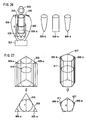
- the electroporation chamber may be of any shape. Examples of such a shape include, but are not limited to, a cube, a rectangular parallelepiped, a cylinder, a tube (e. g., the body has a uniform or non-uniform horizontal section, and the body may or may not taper toward the bottom), and the like.
- the diameter of a largest inscribed circle touching at least three points on the inner wall of the chamber may be, for example, at least about 5 mm or more, preferably at least about 6 mm or more, preferably at least about 7 mm or more, preferably at least about 8 mm or more, preferably at least about 9 mm or more, preferably at least about 1 cm or more, preferably at least about 2 cm or more, preferably at least about 3 cm or more, preferably at least about 4 cm or more, preferably at least about 5 cm or more, preferably at least about 6 cm or more, preferably at least about 7 cm or more, preferably at least about 8 cm or more, preferably at least about 9 cm or more, preferably at least about 10 cm or more, preferably at least about 15 cm or more, and preferably at least about 20 cm or more.
- the upper limit of the diameter of a largest inscribed circle touching at least three points on the inner wall of an electroporation chamber may be, but is not limited to, for example, about 25 cm, about 20 cm, about 15 cm, about 10 cm, about 9 cm, about 8 cm, about 7 cm, about 6 cm, about 5 cm, about 4 cm, about 3 cm, about 2 cm, about 1 cm, about 9 mm, about 8 mm, about 7 mm, or about 6 mm.
- the length may be an intermediate value between these explicitly described values (e. g., 1.5 cm, etc.).
- the term "inscribed circle” refers to any circle touching at least three arbitrary points on the inner wall of a chamber container.
- the electrodes provided in the chamber are also regarded as a portion of the container. Therefore, the inner wall of the chamber container includes a surface of the electrode. Typically, the thickness of the electrode is negligibly small (e. g., 0.1 mm or the like).
- an electroporation chamber suitable for carrying out the method of the present invention has a quadrangular horizontal section and inner dimensions, 1 cm x 2 cm x 2 cm (e. g., length x width x height).
- the electroporation chamber has a circular horizontal section and inner dimensions, 1 cm x 4 cm (e. g., diameter x height).
- the regions occupied by the electrodes are not included in the dimensions of the chamber.
- the thickness of the electrode is negligibly small.
- the term “horizontal section” refers to a cross section perpendicular to the longitudinal direction of a chamber.
- the term “inner dimension” refers to a distance between two arbitrary points on the inner wall of a chamber container.
- an inner dimension refers to the length or width of the horizontal section, or height.
- an inner dimension refers to the diameter of the horizontal section, or height.
- the electroporation chamber may be changed to a size which allows the chamber to accommodate a plant seed.
- the size of the chamber may be changed by any means.
- the size of the chamber may be adjusted to appropriate dimension (s) by means of a screw or the like.
- the electroporation chamber may be formed of any material.
- a material for the electroporation chamber may be any material which can form a solid. Examples of such a material include, but are not limited to, glass, silica, silicon, ceramics, silicon dioxide, plastics, metals (including alloys), native and synthetic polymers (e.g., polystyrene, cellulose, chitosan, dextran, and nylon), and the like.
- the chamber may be formed of layers made of different materials. For example, inorganic insulating materials, such as glass, quartz glass, alumina, sapphire, forsterite, silicon oxide, silicon carbide, silicon nitride, and the like, can be used.
- Organic materials such as polyamide, polycarbonate, (denatured) polyphenylene oxide, polybutylene terephthalate, reinforced polyethylene terephthalate, polyether sulfone, polyphenylene sulfide, polyarylate, polyether imide, polyether etherketone, polyimide, polyester, polyethylene, polypropylene, polyisobutylene, unsaturated polyester, fluororesin, polyvinyl chloride, polyvinylidene chloride, polyvinyl acetate, polyvinyl alcohol, polyvinyl acetal, acrylic resin, polyacrylonitrile, polystyrene, acetal resin, phenol resin, urea resin, epoxy resin, melamine resin, styrene-acrylonitrile copolymer, acrylonitrile-butadiene -styrene copolymer, silicone resin, polysulfone, and the like, may be used.
- the electroporation chamber is capable of resisting a pressure different from an atmospheric pressure (e. g., even when a pressure different from an atmospheric pressure is applied to the chamber, the chamber would not break, rupture or deform).
- the chamber is capable of resisting depressurization.
- the electroporation chamber is formed of polypropylene, silicone resin, and glass, and is provided with electrodes made of platinum or stainless steel.
- the electroporation chamber used to carry out the method of the present invention is provided with a temperature control section.
- the temperature control section may sense a change in temperature using a sensor and may manually or automatically control the temperature of the chamber.
- the temperature control section is representatively a cooling section for reducing the temperature of the chamber.
- the cooling section may be any means which utilizes, for example, ice, cooling gel, or the like.
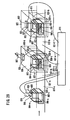
- the electroporation chamber used to carry out the method of the present invention is provided with at least a pair of (two) electrodes. Therefore, the chamber may be provided with more than a pair of (two) electrodes (e. g., two pairs of (four) electrodes, three pairs of (six) electrodes, four pairs of (eight) electrodes, five pairs of (ten) electrodes, or more than five pairs of electrodes).
- a pair of (two) electrodes e. g., two pairs of (four) electrodes, three pairs of (six) electrodes, four pairs of (eight) electrodes, five pairs of (ten) electrodes, or more than five pairs of electrodes.
- two pairs of (four) electrodes can be attached to the chamber.
- an electrode is provided along each of the facing inner side walls, three pairs of (six) electrodes can be attached to the chamber.
- an arbitrary number of pairs of electrodes may be provided in the chamber.
- the electrodes may have an arbitrary spatial positional relationship.
- the distance between electrodes provided in the electroporation chamber used to carry out the method of the present invention may have any length and may vary depending on the size of a cell and/or tissue which is subject to nucleic acid transfer. Particularly preferably, the distance between electrodes is enough to accommodate plant tissue (e. g., a plant seed).
- the enough distance between electrodes to accommodate a plant seed may be, for example, at least about 5mm or more, preferably at least about 6 mm or more, preferably at least about 7 mm or more, preferably at least about 8 mm or more, preferably at least about 9 mm or more, preferably at least about 1 cm or more, preferably at least about 2 cm or more, preferably at least about 3 cm or more, preferably at least about 4 cm or more, preferably at least about 5 cm or more, preferably at least about 6 cm or more, preferably at least about 7 cm or more, preferably at least about 8 cm or more, preferably at least about 9 cm or more, preferably at least about 10 cm or more, preferably at least about 15 cm or more, and preferably at least about 20 cm or more.
- the upper limit of the distance between electrodes may be, but is not limited to, for example, about 25 cm, about 20 cm, about 15 cm, about 10 cm, about 9 cm, about 8 cm, about 7 cm, about 6 cm, about 5 cm, about 4 cm, about 3 cm, about 2 cm, about 1 cm, about 9 mm, about 8 mm, about 7 mm, or about 6 mm.
- the length may be an intermediate value between these explicitly described values (e. g., 1.5 cm, etc.).
- the distance between electrodes may be changed so that a plant seed can be accommodated between the electrodes.
- the distance between electrodes may be changed by any means.
- the distance between electrodes may be adjusted to an appropriate distance by means of a screw or the like.
- the electrode may be made of any material as long as the material has ability to conduct electricity.
- a material for the electrode include, but are not limited to, for example, platinum, gold, stainless steel, carbon, and conductive polymers. Particularly preferably, the electrode is made of platinum.
- An illustrative electroporation chamber is in the shape of a rectangular parallelepiped of length 1 cm x width 2 cm x height 2 cm and is provided with platinum electrodes, where the distance between the platinum electrodes is about 1 cm.
- This electroporation chamber is particular useful for a plant seed (e. g., wheat, rice, maize, etc.) having an intermediate size (about 5 to 15 mm). With this chamber, a number of (e. g., about 10 to 30 grains) intermediate-size plant seeds can be simultaneously treated.
- Another illustrative electroporation chamber is in the shape of a microtube of inner diameter 1 cm x height 4 cm and is provided with stainless electrodes, where the distance between the stainless electrodes is about 1 cm.
- This microtube type chamber may be readily produced by attaching a stainless foil (e.g., about 5 x 40 mm (thickness: about 0.1 mm)) to the inner wall of a commercially available microtube with an adhesive or the like.
- the microtube type chamber can be subjected to centrifugation so that cell, tissue and/or seeds can be precipitated at the bottom of the chamber. Therefore, the exchange of solutions can be readily performed.
- the microtube type chamber is useful particularly when a small size (about 0.1 to 5 mm) plant seed (e.g., Arabidopsis thaliana, etc.) is treated. With this chamber, a number of small-size plant seeds can be simultaneously treated.
- depressurization refers to a step of holding a cell/tissue (including plant tissue (e. g., a seed)) under a pressure lower than an atmospheric pressure for nucleic acid transfer/transformation.
- depressurization is performed under a pressure lower by at least 0.02 MPa than an atmospheric pressure, preferably a pressure lower by 0.04 MPa, more preferably a pressure lower by 0.06 MPa, still more preferably a pressure lower by 0.08 MPa, and most preferably a pressure lower by 0.096 MPa than an atmospheric pressure.
- the running time of depressurization is, but is not limited to, 1 min to 120 min, preferably 10 min to 100 min, more preferably 15 min to 90 min, still more preferably 30 min to 70 min, and most preferably about 60 min.
- pressurization refers to a step of holding a cell/tissue (including plant tissue (e. g., a seed)) under a pressure higher than an atmospheric pressure for nucleic acid transfer/transformation.
- the electroporation apparatus used to carry out the method of the present invention can transfer a nucleic acid into any cell or tissue with significantly high efficiency, and particularly, is useful for nucleic acid transfer into a cell or tissue having a cell wall (e. g., a plant cell or plant tissue) which is conventionally impossible for nucleic acid transfer by electroporation.
- the electroporation apparatus may comprise both a) a section for holding a cell under a pressure different from an atmospheric pressure and b) an electroporation section.
- the section for holding a cell under a pressure different from an atmospheric pressure may be any means capable of performing depressurization and/or pressurization.
- a commercially available depressurization apparatus e. g., a vacuum desiccator, etc.
- Any electroporation means may be utilized.
- a commercially available electroporation means e. g., CUY21EDIT gene transfer apparatus, Nepagene, Ichikawa-shi, Chiba-ken, Japan
- the distance between two electrodes (first electrode and second electrode) provided in the electroporation section is enough to accommodate a plant seed, as defined above.
- An electroporation apparatus comprising two electrodes may be used, where the distance therebetween is enough to accommodate a plant seed.
- the electroporation apparatus is used in combination with means for holding a cell/tissue under a pressure different from an atmospheric pressure.
- the electroporation apparatus and the section for holding a cell/tissue under a pressure different from an atmospheric pressure are not necessarily present in the same housing.
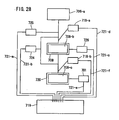
- the electroporation apparatus used to carry out the present invention may be automatically operated.
- the injection and/or exchange of buffer solutions or the like may be performed by an automatic dispensing machine.
- an automatic dispensing machine for example, a commercially available epMotion5070 workstation (Eppendorf Co., Ltd., Higashi-Kanda 3, Chiyoda-ku, Tokyo, Japan) or the like may be used.
- An automatic dispensing machine is not limited to this. Particularly, an automatic dispensing machine may be advantageously used as a section for placing a nucleic acid and/or a cell in a container for placing a mixture containing a nucleic acid and a cell.
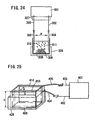
- a first container for placing a mixture containing a nucleic acid and a cell, a second container for holding the cell under a pressure different from an atmospheric pressure, and a third container for applying a high voltage pulse to the mixture containing the nucleic acid and a cell may be any containers. These containers may be the same or different from one another.
- a material for these containers may be any material capable of forming a solid. Examples of such a material include, but are not limited to, glass, silica, silicon, ceramics, silicon dioxide, plastics, metals (including alloys), native and synthetic polymers (e. g., polystyrene, cellulose, chitosan, dextran, and nylon), and the like.
- the container may be formed of layers made of different materials.
- inorganic insulating materials such as glass, quartz glass, alumina, sapphire, forsterite, silicon oxide, silicon carbide, silicon nitride, and the like
- Organic materials such as polyamide, polycarbonate, (denatured) polyphenylene oxide, polybutylene terephthalate, reinforced polyethylene terephthalate, polyether sulfone, polyphenylene sulfide, polyarylate, polyether imide, polyether etherketone, polyimide, polyester, polyethylene, polypropylene, polyisobutylene, unsaturated polyester, fluororesin, polyvinyl chloride, polyvinylidene chloride, polyvinyl acetate, polyvinyl alcohol, polyvinyl acetal, acrylic resin, polyacrylonitrile, polystyrene, acetal resin, phenol resin, urea resin, epoxy resin, melamine resin, styrene-acrylonitrile copolymer, acrylonit
- a first container is produced from a material (e.g., polystyrene) which is highly transparent and facilitates observation of samples.
- a second container is produced from a material (e. g., polyamide, polycarbonate, (denatured) polyphenylene oxide, polybutylene terephthalate, reinforced polyethylene terephthalate, polyether sulfone, polyphenylene sulfide, polyarylate, polyether imide, polyether etherketone, polyimide, and epoxy resin) which is capable of resisting a pressure different from an atmospheric pressure (particularly, depressurization), and more preferably a material (e. g., acrylic resin) which is highly transparent and facilitates observation of samples.
- a material e. g., acrylic resin
- a third container is produced from a material (e. g., polypropylene, silicone resin, and glass) which has affinity for cells, and is provided with electrodes made of platinum, gold, stainless steel, carbon, or a conductive polymer. These materials may be coated with any appropriate material in order to provide a desired property (e. g., insulation of a container, improved conductivity of electrodes, etc.).
- a material e. g., polypropylene, silicone resin, and glass
- electrodes made of platinum, gold, stainless steel, carbon, or a conductive polymer.
- These materials may be coated with any appropriate material in order to provide a desired property (e. g., insulation of a container, improved conductivity of electrodes, etc.).
- the first and second containers for use in the method of the present invention are capable of resisting a pressure different from an atmospheric pressure.
- the first and second containers are capable of resisting depressurization.
- the first container may be housed in the second and/or third container.
- a mixture containing a nucleic acid and a cell is injected from the first container to the second container, (or another container housed therein) and/or the third container (or another container housed therein).
- a belt conveyor or the like may be advantageously used as a section for placing a cell in the second container and a section for placing a mixture containing a nucleic acid and a cell in the third container. Any means may be used. Liquids placed in the first container, the second container, and the third container may be moved by suction/drainage utilizing an automatic pump or the like.
- the electroporation apparatus comprises a power supply apparatus.
- the control apparatus and the power supply apparatus may be installed in the same housing which contains an electroporation apparatus, or may be separated from an electroporation apparatus and may be connected to the electroporation apparatus.
- the seed When a seed is subjected to electroporation, preferably, the seed is immersed in water (e. g., tap water) before depressurization or pressurization.
- water e. g., tap water
- the period of time during which the seed is immersed in water before the treatment is, but is not limited to, 6 h to 48 h, preferably 12 h to 36 h, more preferably 18 h to 30 h, even more preferably 20 h to 26 h, and the most preferably about 24 h.
- nucleic acid transfer of the present invention Illustrative conditions for the nucleic acid transfer of the present invention are described as follows. A seed is immersed in tap water at 25°C over night. On the next day, the seed is placed in a vacuum apparatus, followed by depressurization under a pressure lower by 0.096 MPa, than an atmospheric pressure. Thereafter, a high voltage pulse (100 V, 50 ⁇ sec, the distance between electrodes: 1 cm) is applied about 50 times to the seed treated by depressurization for electroporation, i.e., nucleic acid transfer/gene transfer. The voltage and the number of pulses may vary depending on the crop. Conditions for electroporation may be appropriately selected by those skilled in the art if required. Thereafter, cells or tissue are screened in a medium containing antibiotics, and thereafter, are potted (raised in a pot), thereby making it possible to obtain a normal whole plant.
- the term "plant” is a generic term encompassing organisms belonging to the plant kingdom, characteristically containing chloroplasts, having rigid cell walls, permanently producing abundant embryonic tissue, and lacking the power of locomotion. Plants are categorized in, for example, in "Genshoku Makino Shokubutsu Daizukan [Unabridged Makino's Original Color Illustrated Reference Book of Plants], Hokuryukan (1982), Japan), and the like. All plants described therein may be used in the present invention. Representatively, a plant refers to a flowering plant which forms cell walls and has anabolism by chloroplast. "Plant” includes any of monocotyledonous and dicotyledonous plants.
- Examples of monocotyledonous plants include plants of the family Gramineae.
- Examples of preferable monocotyledonous plants include, but are not limited to, maize, wheat, rice, oat, barley, sorghum, rye, and millet, andmorepreferablymaize, wheat, and rice.
- Examples of wheat include wheat variety Norin 61, which was difficult to transform by conventional methods.
- Examples of dicotyledonous plants include, but are not limited to, plants of the family Cruciferae, Leguminosae, Solanaceae, Cucurbitaceae, and Convolvulaceae.
- Examples of plants of the family Cruciferae include, but are not limited to, Chinese cabbage, rape, cabbage, and cauliflower.
- Preferable Cruciferae plants are Chinese cabbage and rape.
- a particularly preferable Cruciferae plant is rape.
- plants of the family Leguminosae include, but are not limited to, soybean, azuki bean, kidney bean, and cowpea.
- a preferable Leguminosae plant is soybean.
- plants of the family Solanaceas include, but are not limited to, tomato, egg plant, and potato.
- a preferable Solanaceae plant is tomato.
- plants of the family Cucurbitaceae include, but are not limited to, Japanese cantaloupe, cucumber, melon, and water melon.
- a preferable Cucurbitaceae plant is Japanese cantaloupe.
- Examples of plants of the family Convolvulaceae include, but are not limited to, morning glory, sweet potato, and bellbind.
- a preferable Convolvulaceae plant is morning glory.
- a plant means any of whole plants, plant organs, plant tissues, plant cells and seeds unless otherwise specified. Examples of plant organs include root, leaf, stem, flower, and the like. Examples of plant cells include callus and a suspension of cultured cells.
- plants of the families Solanaceae, Gramineae , Cruciferae, Rosaceae , Leguminosae, Cucurbitaceae, Lamiacea , Liliaceae , Chenopodiaceae, Umbelliferae, Convolvulaceae, Compositae, and the like are used, for example.
- plant species used in the present invention include any tree species, any fruit tree species, plants of the family Moraceae (e.g., rubber tree), and plants of the family Malvaceae (e.g., cotton).
- plant tissue including dormant tissue (including a mature seed, an immature seed, a winter bud, and a tuber), germ plasma, a growing point, and a flower bud) is subjected to electroporation.
- a seed is subjected to electroporation.
- a seed is typically composed of three parts, i.e., an embryo, an endosperm, and a seed coat (Yakichi Noguchi and Shinichiro Kawata, supervisors, Nogaku-Daijiten [Unabridged Dictionary of Agriculture], Yokendo (1987), p. 896 (corresponding portion is prepared by Hideo Chizaka)).
- An embryo includes all the genetic information of a plant and grows into a whole plant. All monocotyledonous plants and all dicotyledonous plants have embryos.
- nucleic acid transfer was performed by the electroporation method of the present invention, it was confirmed that the introduced nucleic acid was expressed in the embryo. Therefore, the simplest method of the present invention can be used to readily obtain a nucleic acid transferred whole plant/transformant in any plants which have a seed including an embryo.
- plants in the Cruciferae family include plants in the Raphanus, Brassica, Arabidopsis, Wasabia, and Capsella genera. Specific examples include Japanese white radish, rapeseed, Arabidopsis thaliana, Japanese horseradish, and Shepherd's purse.
- plants in the Gramineae family include plants in the Oryza, Triticum, Hordeum, Secale, Saccharum, Sorghum, and Zea genera. Specific examples include rice, barley, rye, sugar cane, sorghum, and maize.
- animal collectively refers to organisms of the kingdom Animalia, which require oxygen and organic food and differ from plants and minerals in the capacity for locomotion. Animals are divided into vertebrates and invertebrates. As vertebrates, Myxiniformes, Petromyzontiformes, Chondrichthyes, Osteichthyes, amphibian, reptilian, avian, mammalian, and the like, may be used.
- mammalian e.g., Monotremata, Marsupialia, Edentate, Dermoptera, Chiroptera, Carnivore, Insectivore, Proboscidea, Perissodactyla, Artiodactyla, Tubulidentata, Pholidota, Sirenia, Cetacean, Primates, Rodentia, Lagomorpha, etc.
- Primates e.g., chimpanzee, Japanese macaque, human
- cells or organs derived from a human are used.
- insects e.g., Lepidoptera, including a silk worm (Bombyx mori Linnaeus) and the like.
- transgenic organism refers to an organism into which a particular gene is incorporated
- transgenic plant refers to a plant into which a particular gene is incorporated
- transgenic animal refers to an animal into which a particular gene is incorporated.
- Cells and tissue which have been subjected to nucleic acid transfer/transformation by the method of the present invention may be differentiated, grown, and/or multiplied by any known method in the art.
- the step of differentiating, growing, and/or multiplying cells or tissue may be achieved by, for example, cultivating the plant cells or plant tissue or a whole plant including the cells or tissue. Plants can be herein cultivated by any known method in the art.
- Arabidopsis thaliana can be cultivated by soil culture, rockwoolculture, orhydroponics.
- the first flower is born about 4 weeks after dissemination and a seed becomes mature about 16 days after flowering.
- One seedpot contains about 40 to 50 seeds. About 10,000 seeds are obtained before the plant dies about 2 to 3 months after dissemination.
- cells and tissue which have been subjected to nucleic acid transfer/transformation by the method of the present invention may be differentiated, grown, and/or multiplied by any known method in the art (see, for example, Yoshiharu Izumi et al., eds., "Seibutsu Kagaku Jikkenno Tebiki 4. Dobutsu ⁇ Soshiki Jikkenho [Guidelines for Biochemical Experiments 4. Experimental Protocol for Animal. Tissue], Kagaku Dojin, 1987, etc .).
- cells and/or tissue into which a nucleic acid has been transferred by electroporation may be grown with commercially available feed at room temperature (about 25°C).
- a gene to be transferred is formed of polynucleotides.
- polynucleotide As used herein, the terms “polynucleotide”, “oligonucleotide” and “nucleic acid” have the same meaning, referring to a polymer of nucleotides of any length. These terms also include “derivative oligonucleotide” or “derivative polynucleotide”. The terms “derivative oligonucleotide” and “derivative polynucleotide” are interchangeably used to refer to oligonucleotides or polynucleotides containing a derivative of a nucleotide or having a different link between nucleotides from a normal link.
- examples of such oligonucleotides include 2'-O-methyl-ribonucleotide, derivative oligonucleotides in which a phosphodiester linkage is converted to a phosphorothioate linkage, derivative oligonucleotides in which a phosphodiester linkage is converted to a N3'-P5' phosphoramidate linkage, derivative oligonucleotides in which a ribose and a phosphodiester linkage are converted to a peptide nucleic acid linkage, derivative oligonucleotides in which uracil is substituted with C-5 propynyl uracil, derivative oligonucleotides in which uracil is substituted with C-5 thiazole uracil, derivative oligonucleotides in which cytosine is substituted with C-5 propynyl cytosine, derivative oligonucleotides in which cytosine is substituted with C
- nucleic acid sequence also implicitly encompasses conservatively modified variants thereof (e.g., degenerate codon substitutions) and complementary sequences thereof, as well as the sequence explicitly indicated.
- degenerate codon substitutions can be achieved by generating sequences in which the third position of one or more selected (or all) codons is substituted with mixed-base and/or deoxyinosine residues ( Batzer et al., Nucleic Acid Res., 19:5081, 1991 ; Ohtsuka et al. , J. Biol. Chem., 260:2605-2608, 1985 ; Rossolini et al., Mol. Cell. Probes, 8:91-98, 1994 ) .
- nucleic acid is herein used interchangeably with “gene”, “cDNA”, “mRNA”, “oligonucleotide”, and “polynucleotide”.
- a particular nucleic acid sequence also implicitly encompasses “splice variants”.
- a particular protein encoded by a nucleic acid implicitly encompasses any protein encoded by a splice variant of that nucleic acid.
- “Splice variants” are products of alternative splicing of a gene. After transcription, an initial nucleic acid transcript may be spliced such that different (alternate) nucleic acid splice products encode different polypeptides.
- Mechanisms for the production of splice variants vary, but include alternate splicing of exons. Alternate polypeptides derived from the same nucleic acid by read-through transcription are also encompassed by this definition. Any products of a splicing reaction, includingrecombinant forms of the splice products, are included in this definition.
- gene refers to a factor defining a hereditary trait. Genes are usually arranged in a predetermined order on a chromosome. A gene defining the primary structure of a protein is called a structural gene. A gene for controlling expression of a structural gene is called a regulatory gene. As used herein, “gene” also refers to "polynucleotide”, “oligonucleotide”, and “nucleic acid”. As used herein, “homology” of a gene refers to the magnitude of identity between two or more gene sequences. Therefore, the greater the homology between two genes, the greater the identity or similarity between their sequences.
- Whether or not two genes have homology is determined by comparing their sequences directly or by a hybridization method under stringent conditions in the case of a nucleic acid.
- the genes have homology if the DNA sequences of the genes have representatively at least 50%, preferably at least 70%, more preferably at least 80%, 90%, 95%, 96%, 97%, 98%, or 99% identity to each other.
- a comparison of identity between base sequences and a calculation of homology between base sequences are herein calculated using a sequence analyzing tool BLAST with default parameters.
- expression of gene, polynucleotide, polypeptide, or the like indicates that the gene or the like is subjected to a certain action in vivo and converted into another form.
- a gene, a polynucleotide, or the like is subjected to transcription and translation into a polypeptide form, however, production of mRNA by transcription may be an embodiment of expression. More preferably, the form of such a polypeptide may be obtained by posttranslational processing.
- nucleotide may be naturally occurring or non-naturally occurring.
- “Derivative nucleotide” or “nucleotide analog” refers to a nucleotide which is different from a naturally-occurring nucleotide but has a function similar to that of the naturally-occurring nucleotide. Such a derivative nucleotide and nucleotide analog are well known in the art.
- Examples of such a derivative nucleotide and nucleotide analog include, but are not limited to, phosphorothioate, phosphoramidate, methyl-phosphonate, chiral methyl-phosphonate, 2-O-methyl-ribonucleotide, and peptide nucleic acid (PNA).
- PNA peptide nucleic acid
- fragment refers to a polypeptide or polynucleotide having a sequence length of 1 to n-1 with respect to a full-length polypeptide or polynucleotide (its length is n).
- the length of a fragment may be appropriately changed depending on the purpose.
- the lower limit of the length of a polypeptide is, for example, 3, 4, 5, 6, 7, 8, 9, 10, 15, 20, 25, 30, 40, 50 and more amino acids.
- Integers e.g., 11 and the like, which are not herein explicitly illustrated, may also be appropriate as the lower limit.
- the lower limit of a polynucleotide is, for example, 5, 6, 7, 8, 9, 10, 15, 20, 25, 30, 40, 50, 75, 100andmorenucleotides. Integers (e.g., 11 and the like), which are not herein explicitly illustrated, may also be appropriate as the lower limit.
- vector refers to a vehicle capable of introducing a polynucleotide sequence of interest into a target cell.
- a vector includes a vector which is capable of self-replicating in host cells, such as prokaryotic cells, yeast cells, animal cells, plant cells, insect cells, individual animals and plants, preferably in plant cells, or being incorporated into the chromosome thereof, and having a promoter positioned at a site suitable for the transcription of a polynucleotide of the present invention.
- the term "expression vector” refers to a nucleic acid sequence comprising a structural gene and a promoter for regulating expression thereof , and in addition, various regulatory elements in a state that allows them to operate within host cells.
- the regulatory element may include, preferably, terminators, selectable markers such as drug-resistance genes, and enhancers. It is well known to those skilled in the art that the type of an organism (e.g., a plant) expression vector and the type of a regulatory element may vary depending on the host cell.
- selectable markers for screening include, but are not limited to, drug-resistance genes, such as the neo gene encoding the enzyme neomycin phosphotransferase conferring resistance to the antibiotic kanamycin ( Beck et al., Gene, 19 :327, 1982 ); the hyg gene encoding the enzyme hygromycin phosphotransferase conferring resistance to the antibiotic hygromycin ( Gritz and Davies, Gene, 25:179, 1983 ); and the bar gene encoding phosphinothricin acetyl transferase conferring resistance to the herbicide phosphinothricin ( EP 242236 ); the spt gene encoding streptomycin phosphotransferase; a streptomycin resistance gene; and a spectinomycin resistance gene (e.g., H.
- drug-resistance genes such as the neo gene encoding the enzyme neomycin phosphotransferase conferring
- selectable marker genes such as the GUS gene encoding ⁇ -glucuronidase ( Jeffersonetal., Proc. Natl. Acad. Sci. USA, 6:3901, 1986 ), a luciferase gene ( Ow et al., Science, 234: 856, 1986 ), and a GFP (green fluorescent protein) coding gene (available from, for example, Funakoshi Co., Ltd., Hongo, Bunkyo-ku, Tokyo, Japan).
- GUS gene encoding ⁇ -glucuronidase Jeffersonetal., Proc. Natl. Acad. Sci. USA, 6:3901, 1986
- a luciferase gene Ow et al., Science, 234: 856, 1986
- GFP green fluorescent protein
- an agent used for screening in the present invention examples include, but are not limited to, kanamycin, hygromycin, geneticin, gentamicin, streptomycin, and spectinomycin.
- Recombinant vector refers to a vector which can transfer a polynucleotide sequence of interest to a target cell.
- examples of such a vector include vectors which are capable of self replicating or capable of being incorporated into a chromosome within host cells (e.g., plant cells and whole plants), and contain a promoter at a site suitable for transcription of a polynucleotide of the present invention.
- Examples of "recombinant vectors" for plant cells include Ti plasmid, tobacco mosaic virus vector, and Gemini virus vector.
- a “terminator” is a sequence which is located downstream of a protein-encoding region of a gene and which is involved in the termination of transcription when DNA is transcribed into mRNA, and the addition of a poly A sequence. It is known that a terminator contributes to the stability of mRNA, and has an influence on the amount of gene expression. Examples of such a terminator include, but are not limited to, a CaMV35S terminator, a terminator for the nopaline synthase gene (Tnos), and a terminator for the tobacco PR1a gene.
- a “promoter” is a base sequence which determines the initiation site of transcription of a gene and is a DNA region which directly regulates the frequency of transcription.
- a promoter region is usually located within about 2 kbp upstream of the first exon of a putative protein coding region. Therefore, it is possible to estimate a promoter region by predicting a protein coding region in a genomic base sequence using a DNA analyzing software.
- a putative promoter region is usually located upstream of a structural gene. Preferably, a putative promoter region is located within about 2 kbp upstream of the translation initiation site of the first exon.
- site specificity generally refers to the expression specificity of a gene with respect to a site (e.g., in the case of plants; roots, stems, trunks, leaves, flowers, seeds, germs, embryos, fruits, and the like) within an organism (e.g., plants).
- Tempooral specificity refers to the expression specificity of a gene with respect to a developmental stage (e.g., in the case of plants, growth stage, and the number of days after germination) of an organism (e.g., plants). Such specificity can be introduced into a desired organism using an appropriately selected promoter.
- the term "constitutive" for expression of a promoter of the present invention refers to a character of the promoter that the promoter is expressed in a substantially constant amount in all tissues of an organism no matter whether the growth stage of the organism is a juvenile phase or a mature phase. Specifically, when Northern blotting analysis is performed under the same conditions as those described in examples of the present specification, expression is considered to be constitutive according to the definition of the present invention if substantially the same amount of expression is observed at the same or corresponding site at any time (e.g., two or more time points (e.g., day 5 and day 15)), for example. Constitutive promoters are considered to play a role in maintaining the homeostasis of organisms in a normal growth environment.
- stress responsive for promoter expression refers to a character of a promoter that when at least one stress is experienced by an organism, the expression amount of the promoter is changed. Particularly, a character of increasing an expression amount is referred to as “stress inducible”. A character of reducing an expression amount is referred to as “stress suppressible”. "Stress suppressible” expression is based on the premise that expression is observed in a normal situation. Therefore, this concept overlaps with “constitutive” expression. These characters can be determined by extracting RNA from any portion of an organism and analyzing the expression amount of the RNA by Northern blotting or quantitating expressed proteins by Western blotting.
- a stimulator having activity of inducing the promoter can be used to cause the particular gene to be expressed under predetermined conditions.
- the term “enhance” refers to a sequence which is used so as to enhance the expression efficiency of a gene of interest.
- an enhancer region containing an upstream sequence within the CaMV35S promoter is preferable.
- One or more enhancers may be used, or no enhancer may be used.
- operatively linked indicates that a desired sequence is located such that expression (operation) thereof is under control of a transcription and translation regulatory sequence (e.g., a promoter, an enhancer, and the like) or a translation regulatory sequence.
- a transcription and translation regulatory sequence e.g., a promoter, an enhancer, and the like
- a promoter In order for a promoter to be operatively linked to a gene, typically, the promoter is located immediately upstream of the gene. However, intervening sequences may be present between the promoter and the structural gene, so the promoter is not necessarily adjacent to a structural gene.
- the presence of an introduced gene may be confirmed by Southern blotting or PCR. Transcription of an introduced gene may also be detected by Northern blotting or PCR. Expression of a protein, which is a gene product, may be confirmed by, for example, Western blotting, if requried.
- plasmid DNA containing an antibiotics resistant gene and/or the GUS gene was mainly used.
- the present invention is not limited to this.
- the three plasmids below were used.
- pBI221 (Clontech) contain the 35S promoter of the cauliflower mosaic virus (CMV), the ⁇ glucuronidase (GUS) gene, and the terminator of the nopaline synthase gene(NOS). This plasmid was used mainly for the purpose of monitoring the transfer of a gene based on the GUS activity.
- pWI-H5K (its restriction map is shown in Figure 1 ) was constructed by removing the GUS gene from pWI-GUS ( Masashi Ugaki et al., Nucleic Acids Res., 19:371-377, 1991 ) and inserting the NPT II gene thereto.
- pWI-H5K contains hpt (hygromycin resistant gene), the terminator of CMV, NPT II (kanamycin and gentamicin resistant gene), and the 35S promoter and terminator of CMV.
- pBC1 has been developed by Dr. Fromm of Cornel University (USA) (at present Dr. Fromm is of Monsanto company).
- pBC1 contains the promoter and a part of the intron of the alcohol dehydrogenase gene of maize, the GUS gene, the terminator of NOS, the 35S promoter of CMV, and hpt (hygromycin resistant gene), the terminator of NOS ( Hagio et al., Plant Cell Rep., 14:329-334, 1995 ).
- plasmid DNA a plasmid in which the GUS gene in pWI-GUS plasmid is substituted with the GFP (green fluorescent protein) gene, pigA3GFP plasmid ( Tamura, Journal of Sericultural Science of Japan, 69:1-12, 2000 ), or the like, may be used.
- Seed used in the examples were produced by the present inventors or purchased from seed and seedling companies. About 10 to 30 appropriate mature seeds were selected by visual inspection (differing in the size), and were immersed in tap water at 25°C overnight so as to allow the seeds to absorb water.
- tap water used for water absorption contains a sodium hypochlorite aqueous solution for preventing propagation of various bacteria (adjusted to an effective chlorine concentration of about 0.01%).
- water absorption is conducted at 10°C for two nights.
- Electroporation apparatuses used in the present invention may be a commercially available electroporation means (e.g., CUY21EDIT gene transfer apparatus, Nepagene Co., Ltd., Ichikawa-shi, Chiba-ken, Japan).
- CUY21EDIT gene transfer apparatus Nepagene Co., Ltd., Ichikawa-shi, Chiba-ken, Japan.
- an electroporation chamber for use in electroporation may be one having any size such that it can accommodate plant tissue to be transformed.
- a chamber capable of being cooled is preferable.
- a customized electroporation chamber having platinum electrodes and having dimensions of length 1 cm x width 2 cm x height 2 cm was used.
- the buffer solution was composed of 250 mM calcium chloride, 12.5 mM spermidine, 0.5% polyvinyl pyrrolidone, and 0.3% Tween20.
- the buffer solution and the seeds which had begun sprouting were placed in a petri dish of diameter 35 mm x depth 10 mm, followed by depressurization using a pressure 0.096 MPa or 0.06 MPa below an atmospheric pressure for 1h.
- the seeds and the buffer solution were transferred from the petri dish to the chamber which was in turn allowed to stand on ice for 1 min . Thereafter, a pulse voltage of 100 V or 50 V having a pulse width of 50 ⁇ sec (i.e., a rectangular voltage wave where a voltage is applied for 50 ⁇ sec and voltage application is rested for 75 ⁇ sec and this cycle is repeated) was applied between electrodes where the distance between the electrodes was 1 cm. The number of pulses was 50 or 99. The chamber was further allowed to stand on ice for 2 min. Thereafter, the buffer solution was removed and the seeds were placed back into the original petri dish.
- a pulse voltage of 100 V or 50 V having a pulse width of 50 ⁇ sec i.e., a rectangular voltage wave where a voltage is applied for 50 ⁇ sec and voltage application is rested for 75 ⁇ sec and this cycle is repeated
- PVP polyvinyl pyrrolidone
- the petri dish was preserved at 4°C for about 1 h and was allowed to stand at 25°C overnight.
- the buffer solution was removed and 2 ml of a new buffer solution having the same composition was added to the petri dish.
- the petri dish was allowed to stand at 25°C overnight.
- X-Gluc solution 100 mM phosphate buffer solution, pH 7.0, 0.05% X-Gluc (5-bromo-4-chloro-3-indolyl- ⁇ -D-glucuronide cyclohexyl ammonium salt), 0.5 mM potassium ferricyanide, 0.5 mM potassium ferrocyanide, 0.3% Triton X-100, 20% methanol
- X-Gluc solution 100 mM phosphate buffer solution, pH 7.0, 0.05% X-Gluc (5-bromo-4-chloro-3-indolyl- ⁇ -D-glucuronide cyclohexyl ammonium salt
- 0.5 mM potassium ferricyanide 0.5 mM potassium ferrocyanide
- Triton X-100 20% methanol
- the seeds were grown without GUS analysis as follows.
- pots flowerpots
- horticultural soil New Magic Soil; Sakata Seed Corporation, Tsuzuki-ku, Yokohama-shi, Japan
- PCR The transfer of a gene was confirmed with PCR as follows. Leaves and stems were collected from a transformed plant, and DNA was extracted from the leaves and stems. DNA extraction may be achieved by any well-known technique.
- a typical DNA extraction technique is the CTAB technique ( Hirofumi Uchimiya, "Shokubutsu Idenshi Sosa Manyuaru Toransugenikku Shokubutsu no Tsukurikata [Manual of Plant Genetic Engineering; How To Produce Transgenic Plants]", Kodansha Scientific, pp. 71-74, hardcover, 1989 ).
- DNA was extracted from leaves of an individual plant on day 14.
- a pair of primers (5'-ctgcgtgcaatccatcttg-3' (SEQ ID NO.1), 5'-actcgtcaagaaggcgatagaag-3' (SEQ ID NO. 2)) were used in PCR for detection of the NPT II gene.
- Another pair of primers (5'-catgattgaacaagatggattgcacgcaggttctc-3' (SEQ ID NO. 3, 5'-cagaagaactcgtcaagaaggcgatagaaggcgat-3' (SEQ ID NO. 4)) may also be used.
- This primer pair can be more preferably used to detect the NPT II gene in a more specific manner.
- Southern blotting analysis was conducted for DNA derived from an individual plant which had been confirmed by the PCR analysis in (12) to have the introduced gene. Southern blotting is well known in the art and the conditions therefor may be appropriately selected by those skilled in the art if required. In the Southern blotting analysis, a sequence (shown as SEQ ID NO. 5 in the sequence listing) specific to the introduced NPT II gene was used as a probe.
- Mature seeds of wheat (variety: Norin 61) were subjected to experiments. The seeds were allowed to absorb water at 25°C overnight. 2 ml of an electroporation buffer solution containing 30 seeds which had begun sprouting and plasmid DNA (200 ⁇ g/2 ml) of pWI-GUS (for GUS analysis) or pWI-H5K (for growth) were placed in a petri dish. Depressurization was performed at 0.096 MPa below an atmospheric pressure for 1 h. Thereafter, the seeds and the buffer solution were transferred from the petri dish to a chamber. The chamber was placed on ice for 1 min. Thereafter, an electric pulse was applied under the following conditions: the pulse width was 50 ⁇ sec and the number of pulses was 50.
- the chamber was further allowed to stand on ice for 2 min. Thereafter, the seeds and the buffer solution were placed back to the original petri dish. The petri dish was preserved at 4°C for about 1 h, and thereafter, was allowed to stand at 25°C overnight. On the next day, the buffer solution was removed. 2 ml of distilled water was added to the petri dish, which was in turn allowed to stand at 25°C overnight. On the further next day, the distilled water was removed. 2 ml of X-Gluc solution was added to the petri dish, which was in turn allowed to stand at 25°C overnight. The level of expression of the gene was determined using the GUS activity as an index. The result is shown in Table 1 below. Table 1 Voltage (V/cm) Level of Expression of gene Remarks 0 - 10 - 20 - 50 ⁇ 75 ⁇ 100 + 150 - Seeds were browning or dead. 200 - Seeds were browning or dead.
- Figure 2 shows results of electroporation under conditions: the pulse width was 50 ⁇ sec, the number of pulses was 50, the pressure was 0.096 MPa below an atmospheric pressure (depressurization), and the applied voltage was 100 V (A), 50 V (B), 20 V (C), or 0 V (D). When the applied voltage was 100 V, the efficiency of transformation was highest.
- Figure 3 shows a photograph of 1: a wheat seed subjectedtotransformationunderconditions (voltage: 100 V, pulse width: 50 ⁇ sec, the number of pulses: 50, pressure: 0.096 MPa below an atmospheric pressure (depressurization); 2: a wheat seed subjected only to electroporation under conditions (voltage: 100 V, pulse width: 50 ⁇ sec, the number of pulses 50, no depressurization); and 3: a control wheat seed.
- a wheat seed subjectedtotransformationunderconditions voltage: 100 V, pulse width: 50 ⁇ sec, the number of pulses: 50, pressure: 0.096 MPa below an atmospheric pressure (depressurization)
- 2 a wheat seed subjected only to electroporation under conditions (voltage: 100 V, pulse width: 50 ⁇ sec, the number of pulses 50, no depressurization)
- 3 a control wheat seed.
- transformation was achieved only when depressurization and electroporation were combined.
- Seeds for growth were not subjected to a GUS activity experiment, and after depressurization, the seeds were grown in distilled water containing 2000 ppm geneticin (as described in (7) aftertreatment of seeds, (9) screening using antibiotics-containing medium, and (10) growth of transformant). The result is shown in Figure 4 .
- DNA was extracted from the seedlings, followed by PCR so as to confirm the presence of the introduced gene (as described in (11) DNA extraction, and (12) PCR Analysis).
- SEQ ID NOs. 1 and 2 were used to perform PCR. As a result, it was confirmed that the NPT II gene was introduced into a whole plant.
- the seeds had begun sprouting.
- the seeds were well washed with tap water.
- the nucleic acid transfer treatment of the present invention was performed. 2 ml of an electroporation buffer solution containing 30 wheat seeds and pWI-H5K DNA (200 ⁇ g/2 ml) were placed in a petri dish. Depressurization was performed at 0.096 MPa below an atmospheric pressure for 1 h. Thereafter, the seeds and the buffer solution were transferred from the petri dish to a chamber, which was in turn allowed to stand on ice for 1 min.
- an electric pulse was applied under the following conditions: the voltage was 100 V, where the distance between electrodes was 1 cm; the pulse width was 50 ⁇ sec; and the number of pulses was 50.
- the chamber was further placed on ice for 2 min. Thereafter, the seeds and the buffer solution were placed back in the original petri dish. The petri dish was preserved at 4°C for about 1 h, and was allowed to stand at 25°C overnight. On the next day, the buffer solution was removed, and 2 ml of distilled water was added to the petri dish, which was in turn was allowed to stand at 25°C overnight. This process was performed in a total of 5 times, so that a total of 150 wheat seeds were subjected to the nucleic acid transfer treatment of the present invention.
- PVP polyvinyl pyrrolidone
- the geneticin aqueous solution contained a sodium hypochlorite solution for prevention of propagation of various bacteria (adjusted to an effective chlorine concentration of about 0.02%).
- the seeds in the petri dish was allowed to grow for 2 weeks under conditions for vernalization in a culture room (light period: 20°C, 8 h, about 2000 lux; and dark period: 8°C, 16 h).
- surviving wheat plants which sprouted in the above-described screening process using geneticin antibiotics were transplanted into a pot containing soil, and were allowed to grow for about 3 to 4 months. This growth was conducted in the same culture room as described above under conditions (light period: 20°C, 8 h, about 2000 lux; and dark period: 8°C, 16 h). About 1 month after potting, leaves were collected from the grown wheat plants. DNA was extracted from the collected leaves. The extracted DNA was used as a template to perform PCR. As a result, the presence of the introduced gene was confirmed. This PCR analysis was conducted using the primer pair and the amplification conditions described in (12) PCR analysis. The results are shown in Figure 5 .
- nucleic acid transfer method of the present invention can permit an exogenous gene of interest to be incorporated into a genome in a stable manner and the introduced exogenous gene can be transferred to next generations.
- the seeds were allowed to absorb water at 25°C overnight. 2 ml of an electroporation buffer solution containing 30 seeds which had begun sprouting and plasmid DNA (200 ⁇ g/2 ml) of pWI-GUS or pWI-H5K were placed in a petri dish. Depressurization was performed at 0.096 MPa below an atmospheric pressure for 1 h. Thereafter, the seeds and the buffer solution were transferred from the petri dish to a chamber. The chamber was placed on ice for 1 min. Thereafter, an electric pulse was applied under the following conditions: the voltage was 50 V where the distance between electrodes was 1 cm, the pulse width was 50 ⁇ sec, and the number of pulses was 99. The chamber was further allowed to stand on ice for 2 min.
- the seeds and the buffer solution were placed back to the original petri dish.
- the petri dish was preserved at 4°C for about 1h, and thereafter, was allowed to stand at 25°C overnight.
- the buffer solution was removed.
- 2 ml of distilled water was added to the petri dish, which was in turn allowed to stand at 25°C overnight.
- the distilled water was removed.
- 2 ml of X-Gluc solution was added to the petri dish, which was in turn allowed to stand at 25°C overnight.
- the level of expression of the gene was determined using the GUS activity as an index. The result is shown in Table 2 below.
- Table 2 Voltage (V/cm) Level of Expression of gene Remarks 0 - 10 - 20 ⁇ 50 + 75 ⁇ Seeds were browning or poorly growing. 100 - Seeds were browning or dead. 150 - Seeds were browning or dead. 200 - Seeds were browning or dead.
- Figure 9 shows results of electroporation under conditions: the pulse width was 50 ⁇ sec, the number of pulses was 99, the pressure was 0.096 MPa below an atmospheric pressure (depressurization), and the applied voltage was 50 V(A), 20 V (B), 10 V (C), or 0 V (D). When the applied voltage was 50 V, the efficiency of transformation was highest.
- Figure 10 shows a photograph of 1: a rice seed subjected to transformation under conditions (voltage: 50 V, pulse width: 50 ⁇ sec, the number of pulses: 99, pressure: 0.096 MPa below an atmospheric pressure(depressurization); 2: a rice seed subjected only to electroporation under conditions (voltage: 50 V, pulse width: 50 ⁇ sec, the number of pulses 99, no depressurization); and 3: a control rice seed.
- transformation was achieved only when depressurization and electroporation were combined.
- Seeds for growth were not subjected to a GUS activity experiment, and after depressurization, the seeds were grown in distilled water containing 200 ppm geneticin (as described in (7) aftertreatment of seeds, (9) screening using antibiotics-containing medium, and (10) growth of transformant). The result is shown in Figure 11 .
- the nucleic acid transfer treatment of the present invention was performed. 1 ml of an electroporation buffer solution containing 20 rice seeds and pWI-H5K DNA (100 ⁇ g/2 ml) were placed in a petri dish. Depressurization was performed at 0.096 MPa below an atmospheric pressure for 1h. Thereafter, the seeds and the buffer solution were transferred from the petri dish to a chamber, which was in turn allowed to stand on ice for 1 min. Thereafter, an electric pulse was applied by electroporation under the following conditions: the voltage was 50 V where the distance between electrodes was 1 cm; the pulse width was 50 ⁇ sec; and the number of pulses was 99.
- the chamber was further placed on ice for 2 min. Thereafter, the seeds and the buffer solution was placed back in the original petri dish. The petri dish was preserved at 4°C for about 1h, and was allowed to stand at 25°C overnight. On the next day, the buffer solution was removed, and 2 ml of distilled water was added to the petri dish, which was in turn was allowed to stand at 25°C overnight. This process was performed in a total of 5 times, so that a total of 100 rice seeds were subjected to the nucleic acid transfer treatment of the present invention.
- PVP polyvinyl pyrrolidone
- the geneticin aqueous solution contained a sodium hypochlorite solution for prevention of propagation of various bacteria (adjusted to an effective chlorine concentration of about 0.02%).
- the seeds in the petri dish were allowed to grow at 25°C in a light period of 16 h for 2 weeks.
- surviving rice plants which sprouted in the above-described screening process using geneticin antibiotics were transplanted into a pot containing soil, and were allowed to grow for about 3 to 4 months. This growth was conducted at 25°C in a closed green house under typical cultivation conditions. About 1 monthafterpotting, leaves were collected from the grown rice plants. DNA was extracted from the collected leaves. The extracted DNA was used as a template to perform PCR. As a result, the presence of the introduced gene was confirmed. This PCR analysis was conducted using the primer pair and the amplification conditions described in (12) PCR analysis. The PCR analysis confirmed the presence of the NPT II gene.
- the seeds were allowed to absorb water at 25°C overnight. 2 ml of an electroporation buffer solution containing 30 seeds which had begun sprouting and plasmid DNA (200 ⁇ g/2 ml) of pWI-GUS were placed in a petri dish. Depressurization was performed at 0.096 MPa below an atmospheric pressure for 1 h. Thereafter, the seeds and the buffer solution were transferred from the petri dish to a chamber. The chamber was placed on ice for 1 min. Thereafter, an electric pulse was applied under the following conditions: the voltage was 50 V where the distance between electrodes was 1 cm, the pulse width was 50 ⁇ sec, and the number of pulses was 99. The chamber was further allowed to stand on ice for 2 min.
- the seeds were screened using distilled water containing 200 ppm geneticin.
- the petri dish was preserved at 4°C for about 1 h, and thereafter, was allowed to stand at 25°C overnight. On the next day, the buffer solution was removed. 2 ml of distilled water was added to the petri dish, which was in turn allowed to stand at 25°C overnight. On the further next day, the distilled water was removed. 2 ml of X-Gluc solution was added to the petri dish, which was in turn allowed to stand at 25°C overnight. The results in which transformation was successful are shown in Figure 16 .
- Mature seeds of maize (variety: Petercorn) were used as material. The seeds were allowed to absorb water at 25°C overnight. 2 ml of an electroporation buffer solution containing 3 seeds which had begun sprouting and plasmid DNA (100 ⁇ g/2 ml) were placed in a petri dish. Depressurization was performed at 0.096 MPa below an atmospheric pressure for 1 h. Thereafter, the seeds and the buffer solution were transferred from the petri dish to a chamber. The chamber was placed on ice for 1 min. Thereafter, an electric pulse was applied under the following conditions: the voltage was 100 V where the distance between electrodes was 1 cm, the pulse width was 50 ⁇ sec, and the number of pulses was 50. The chamber was further allowed to stand on ice for 2 min.
- the seeds and the buffer solution were placed back to the original petri dish.
- the petri dish was preserved at 4°C for about 1h, and thereaf ter, was allowed to stand at 25°C overnight.
- the buffer solution was removed. 2 ml of distilled water was added to the petri dish, which was in turn allowed to stand at 25°C overnight.
- the distilled water was removed. 2 ml of X-Gluc solution was added to the petri dish, which was in turn allowed to stand at 25°C overnight.
- Mature seeds of Chinese cabbage (variety: Muso) were used as material. The seeds were allowed to absorb water at 25°C overnight. 2 ml of an electroporation buffer solution containing 30 seeds which had begun sprouting and plasmid DNA (100 ⁇ g/2 ml) were placed in a petri dish. Depressurization was performed at 0.096 MPa below an atmospheric pressure for 1 h. Thereafter, the seeds and the buffer solution were transferred from the petri dish to a chamber. The chamber was placed on ice for 1 min. Thereafter, an electric pulse was applied under the following conditions: the voltage was 100 V where the distance between electrodes was 1 cm, the pulse width was 50 ⁇ sec, and the number of pulses was 50. The chamber was further allowed to stand on ice for 2 min.
- Seeds for growth are not subjected to a GUS activity experiment, and after depressurization, the seeds are grown in distilled water containing an appropriate amount of geneticin (as described in (7) aftertreatment of seeds, (9) screening using antibiotics-containing medium, and (10) growth of transformant).
- DNA is extracted from the seedlings, followed by PCR so as to confirm the presence of the introduced gene (as described in (11) DNA extraction, and (12) PCR Analysis). Individuals which show the presence of the introduced gene in PCR are further grown, and thereafter, are subjected to Southern blotting. DNA is extracted from some of the grown individuals which are randomly selected, followed by Southern blotting analysis.
- Mature seeds of tomato (variety: Minicarol) were used as material. The seeds were allowed to absorb water at 25°C overnight. 2 ml of an electroporation buffer solution containing 30 seeds which had begun sprouting and plasmid DNA (100 ⁇ g/2 ml) were placed in a petri dish. Depressurization was performed at 0.096 MPa below an atmospheric pressure for 1 h. Thereafter, the seeds and the buffer solution were transferred from the petri dish to a chamber. The chamber was placed on ice for 1 min. Thereafter, an electric pulse was applied under the following conditions: the voltage was 100 V where the distance between electrodes was 1 cm, the pulse width was 50 ⁇ sec, and the number of pulses was 50. The chamber was further allowed to stand on ice for 2 min.
- Mature seeds of Japanese cantaloupe (variety: Kinsho melon) are used as material. The seeds are allowed to absorb water at 25°C overnight. The seeds begin sprouting.
- an electroporation buffer solution containing 40 seeds and plasmid DNA (100 ⁇ g/2 ml) are placed in a petri dish. Depressurization is performed at 0.096 MPa below an atmospheric pressure for 1 h. Thereafter, the seeds and the buffer solution are transferred from the petri dish to a chamber. The chamber is placed on ice for 1 min. Thereafter, an electric pulse is applied under the following conditions: the voltage is 100 V where the distance between electrodes is 1 cm, the pulse width is 50 ⁇ sec, and the number of pulses is 50.
- the chamber is further allowed to stand on ice for 2 min. Thereafter, the seeds and the buffer solution are placed back to the original petri dish.
- the petri dish is preserved at 4°C for about 1 h, and thereafter, is allowed to stand at 25°C overnight.
- the buffer solution is removed.
- 2 ml of distilled water is added to the petri dish, which is in turn allowed to stand at 25°C overnight.
- the distilled water is removed.
- 2 ml of X-Gluc solution is added to the petri dish, which is in turn allowed to stand at 25°C overnight.
- Mature seeds of morning glory (variety: "Sun Smile” and "Youzirotairin”) were used as material. The seeds were allowed to absorb water at 25°C overnight. 2 ml of an electroporation buffer solution containing 10 seeds which had begun sprouting and plasmid DNA (100 ⁇ g/2 ml) were placed in a petri dish. Depressurization was performed at 0.096 MPa below an atmospheric pressure for 1 h. Thereafter, the seeds and the buffer solution were transferred from the petri dish to a chamber. The chamber was placed on ice for 1 min. Thereafter, an electric pulse was applied under the following conditions: the voltage was 100 V where the distance between electrodes was 1 cm, the pulse width was 50 ⁇ sec, and the number of pulses was 50.
- the chamber was further allowed to stand on ice for 2 min. Thereafter, the seeds and the buffer solution were placed back to the original petri dish. The petri dishwas preserved at 4°C for about 1h, and thereafter, was allowed to stand at 25°C overnight. On the next day, the buffer solution was removed. 2 ml of distilled water was added to the petri dish, which was in turn allowed to stand at 25°C overnight. On the further next day, the distilled water was removed. 2 ml of X-Gluc solution was added to the petri dish, which was in turn allowed to stand at 25°C overnight. The results in which transformation was successful are shown in Figure 19 .
- Mature seeds of Arabidopsis thaliana (variety: Col-0) are used as material. The seeds are allowed to absorb water at 25°C overnight. 2 ml of an electroporation buffer solution containing 1000 seeds which have begun sprouting and plasmid DNA (100 ⁇ g/2 ml) are placed in a petri dish. Depressurization is performed at 0.096 MPa below an atmospheric pressure for 1 h. Thereafter, the seeds and the buffer solution are transferred from the petri dish to a microtube-type chamber. The chamber is placed on ice for 1 min. Thereafter, an electric pulse is applied under the following conditions: the voltage is 100 V where the distance between electrodes is 1 cm, the pulse width is 50 ⁇ sec, and the number of pulses is 50.
- the chamber is further allowed to stand on ice for 2 min. Thereafter, the seeds and the buffer solution are placed back to the original petri dish.
- the petri dish is preservedat 4°C for about 1 h, and thereafter, is allowed to stand at 25°C overnight.
- the buffer solution is removed. 2 ml of distilled water is added to the petri dish, which is in turn allowed to stand at 25°C overnight.
- the distilled water is removed. 2 ml of X-Gluc solution is added to the petri dish, which is in turn allowed to stand at 25°C overnight.
- Seeds for growth are not subjected to a GUS activity experiment, and after depressurization, the seeds are grown in distilled water containing an appropriate amount of geneticin (as described in (7) after treatment of seeds, (9) screening using antibiotics-containing medium, and (10) growth of transformant).
- DNA is extracted from the seedlings, followed by PCR so as to confirm the presence of the introduced gene (as described in (11) DNA extraction, and (12) PCR Analysis). Individuals which show the presence of the introduced gene in PCR are further grown, and thereafter, are subjected to Southern blotting. DNA is extracted from some of the grown individuals which are randomly selected, followed by Southern blotting analysis.
- the Arabidopsis thaliana individuals showing the presence of the introduced gene in Southern blotting analysis are further grown to produce Arabidopsis thaliana individuals had seed fertility.
- Seeds (second generation: T1 generation) obtained from these Arabidopsis thaliana transformants (first generation: T0 generation) are disseminated in soil.
- the seeds are grown to young plants.
- DNA is extracted from leaves of the young plants and is subjected to PCR analysis. As a result, the presence of the introduced gene is determined.
- This PCR analysis is conducted using the primer pair and amplification conditions described in (12) PCR analysis.
- Mature seeds of Japanese cantaloupe (variety: Kinsho melon) were used as material. The seeds were allowed to absorb water at 25°C overnight. 2 ml of an electroporation buffer solution containing 30 seeds which had begun sprouting and plasmid DNA (100 ⁇ g/2 ml) were placed in a petri dish. The seeds were subjected to treatment without depressurization, with depressurization at 0.06 MPa below an atmospheric pressure for 1 h, and with depressurization at 0.096 MPa below an atmospheric pressure for 1 h. Thereafter, the seeds and the buffer solution were transferred from the petri dish to a chamber. The chamber was placed on ice for 1 min.
- an electric pulse was applied under the following conditions: the voltage was 100 V where the distance between electrodes was 1 cm, the pulse width was 50 ⁇ sec, and the number of pulses was 50.
- the chamber was further allowed to stand on ice for 2 min. Thereafter, the seeds and the buffer solution were placed back to the original petri dish. The petri dish was preserved at 4°C for about 1 h, and thereafter, was allowed to stand at 25°C overnight. On the next day, the buffer solution was removed. 2 ml of distilled water was added to the petri dish, which was in turn allowed to stand at 25°C overnight. On the further next day, the distilled water was removed.
- Mature seeds of wheat (variety: Norin 61) were subjected to experiments where conditions for depressurization were compared. The seeds were allowed to absorb water at 25°C overnight. 2 ml of an electroporation buffer solution containing 30 seeds which had begun sprouting and plasmid DNA (100 ⁇ g/2 ml) were placed in a petri dish. Sprouting seeds which were placed in 2 ml of an electroporation buffer solution not containing plasmid DNA were used as controls.
- the seeds were subjected to treatment without depressurization, with depressurization at 0.06 MPa below an atmospheric pressure for 1 h, or with depressurization at 0.096 MPa below an atmospheric pressure for 1 h (note: the control seeds were not subjected to depressurization).
- the seeds and the buffer solution were transferred from the petri dish to a chamber.
- the chamber was placed on ice for 1 min.
- an electric pulse was applied under the following conditions: the voltage was 100 V where the distance between electrodes was 1 cm; the pulse width was 50 ⁇ sec; and the number of pulses was 50.
- the chamber was further allowed to stand on ice for 2 min. Thereafter, the seeds and the buffer solution were placed back to the original petri dish.
- the petri dish was preserved at 4°C for about 1 h, and thereafter, was allowed to stand at 25°C overnight. On the next day, the buffer solution was removed. 2 ml of distilled water was added to the petri dish, which was in turn allowed to stand at 25°C overnight. On the further next day, the distilled water was removed. 2 ml of X-Gluc solution was added to the petri dish, which was in turn allowed to stand at 25°C overnight.
- the results are shown in Figure 20 .
- the level of expression of the gene was determined using the degree of staining with X-Gluc solution as an index. As can be seen from Figure 20 , in the case of wheat, depressurization at about 0.096 MPa below an atmospheric pressure was preferable. Also, in the case of depressurization at about 0.06 MPa below an atmospheric pressure, X-Gluc stain was confirmed for the wheat seeds.
- Mature seeds of Japonicarice (variety: Koshihikari) were subjected to experiments where conditions for depressurization were compared. The seeds were allowed to absorb water at 25°C overnight. 2 ml of an electroporation buffer solution containing 30 seeds which had begun sprouting and plasmid DNA (100 ⁇ g/2 ml) were placed in a petri dish. Sprouting seeds which were placed in 2 ml of an electroporation buffer solution not containing plasmid DNA were used as controls.
- the seeds were subjected to treatment without depressurization, with depressurization at 0.06 MPa below an atmospheric pressure for 1 h, or with depressurization at 0.096 MPa below an atmospheric pressure for 1 h (note: the control seeds were not subjected to depressurization).
- the seeds and the buffer solution were transferred from the petri dish to a chamber.
- the chamber was placed on ice for 1 min.
- an electric pulse was applied under the following conditions: the voltage was 50 V where the distance between electrodes was 1 cm; the pulse width was 50 ⁇ sec; and the number of pulses was 99.
- the chamber was further allowed to stand on ice for 2 min. Thereafter, the seeds and the buffer solution were placed back to the original petri dish.
- the petri dish was preserved at 4°C for about 1 h, and thereafter, was allowed to stand at 25°C overnight. On the next day, the buffer solution was removed. 2 ml of distilled water was added to the petri dish, which was in turn allowed to stand at 25°C overnight. On the further next day, the distilled water was removed. 2 ml of X-Gluc solution was added to the petri dish, which was in turn allowed to stand at 25°C overnight.
- the results are shown in Figure 21 .
- the level of expression of the gene was determined using the degree of staining with X-Gluc solution as an index. As can be seen from Figure 21 , in the case of rice, depressurization at about 0.096 MPa below an atmospheric pressure was preferable. Also, in the case of depressurization at about 0.06 MPa below an atmospheric pressure, X-Gluc stain was confirmed for the rice seeds.
- Eggs of silk worm Bombyx mori Linnaeus of the phylum Arthropoda .
- 2 ml of an electroporation buffer solution containing 50 silk worm eggs which are arbitrarily selected from dormant eggs preserved in a refrigerator, or 50 silk worm eggs which are arbitrarily selected from non-dormant eggs between 0 and 10 days following oviposition, and plasmid DNA (200 ⁇ g/2 ml) are placed in a petri dish.
- plasmid DNA a plasmid, in which the GUS gene in pWI-GUS plasmid is substituted with the GFP (green fluorescent protein) gene, is used.
- pigA3GFP plasmid Tamura, Journal of Sericultural Science of Japan, 69:1-12, 2000 .
- the GFP (green fluorescent protein) coding gene available from, for example, Funakoshi Co., Ltd., Hongo, Bunkyo-ku, Tokyo, Japan) is used.
- Depressurization is performed at 0.096 MPa below an atmospheric pressure for 5 min. Thereafter, the eggs and the buffer solution are transferred from the petri dish to a chamber. The chamber is placed on ice for 1 min. Thereafter, an electric pulse is applied under the following conditions: the voltage is 50 V where the distance between electrodes is 1 cm, the pulse width is 50 ⁇ sec, and the number of pulses is 5. The chamber is further allowed to stand on ice for 2 min.
- Larvae which have been confirmed to emit green fluorescence are allowed to further grow into adults.
- the adults are mated with individuals into which the same nucleic acid have been transferred or the like.
- the next generation individuals are irradiated with ultraviolet or blue light to confirm the inheritance of the introduced nucleic acid by the presence of green fluorescence emitted therefrom.
- E. coli prokaryotic organism
- 2ml of an electroporation buffer solution containing E. coli (about 10 6 to 10 8 cells/ml) and pBC1 plasmid DNA (10 ng/ml) are placed in a petri dish. Depressurization is performed at 0.096 MPa below an atmospheric pressure for 1 min. Thereafter, the E. coli and the buffer solution are transferred from the petri dish to a chamber. The chamber is placed on ice for 1 min. Thereafter, an electric pulse is applied under the following conditions: the voltage is 200 V where the distance between electrodes is 1 cm, the pulse width is 2 ⁇ sec, and the number of pulses is 1. The chamber is further allowed to stand on ice for 2 min.
- E. coli which has been subjected to electroporation are transferred onto LB agar medium supplemented with 100 ppm ampicillin, followed by incubation at 37°C overnight (see, commercially available experimental guidebooks, such as Molecular Cloning, ver. 2 for LB agar medium). Plasmid DNA and genomic DNA are extracted from the E. coli . The presence of the ampicillin resistant gene is confirmed by PCR or the like.
- FIG 22 shows an electroporation apparatus according to an embodiment of the present invention.
- This apparatus comprises a section for holding cells under a pressure different from an atmospheric pressure and an electroporation section. At least a pair of electrodes (104, 105) facing each other are provided in a container (106). Note that although a pair of (two) electrodes (104,105) are depicted in Figure 22 , more than a pair of electrodes may be provided in the container (106).
- the container (106) is provided with a temperature control section (128). Cells to be subjected to nucleic acid transfer (109) and nucleic acid molecules to be transferred (110) are placed in the container (106) optionally along with a buffer solution (111). The container (106) may be placed inside another container (108).
- the internal pressure of the container (108) maybe changed by introducing air into (pressurization), or evacuating air from (depressurization), the container (108) through an air hole (107) using a section for maintaining a pressure different from an atmospheric pressure (126). If the container (106) further comprises a lid which is capable of being sealed and an air hole with a section for maintaining a pressure different from an atmospheric pressure, the container (106) and the container (108) may be the same (i. e., the container (106) may substitute for the container (108)).
- the apparatus further comprises a section for generating a high voltage pulse (101).
- the high voltage pulse generation section (101) is connected via two cords (102,103) to a pair of electrodes (104,105), respectively.
- the electrode (104) and the electrode (105) connected thereto may function as an anode and a cathode, or a cathode and an anode, respectively.
- the high voltage pulse generation section (101) comprises a polarity switching section (127) for reversing the direction of current flow, though it is not necessarily required. By turning the polarity switching section (127) on/off, it is possible to apply a high voltage pulse to the cells (109) and the nucleic acid (110) in two directions.
- FIG 23 shows another example of an electroporation apparatus suitable for carrying out the method of the present invention.
- This apparatus comprises a section for holding cells under a pressure different from an atmospheric pressure and an electroporation section, which are separately installed within a single container (212).
- the section for holding cells under a pressure different from an atmospheric pressure comprises a container (206-a).
- Cells (209) to be subjected to nucleic acid transfer are placed in the container (206-a).
- a nucleic acid to be transferred and/or a buffer solution are optionally placed in the container (206-a) in addition to the cells (209).
- the container (206-a) may be placed within another container (208).
- the inside of the container (208) can be maintained at a pressure different from an atmospheric pressure.
- the internal pressure of the container (208) may be changed by introducing air into (pressurization), or evacuating air from (depressurization), the container (208) through an air hole (207) using a section for maintaining a pressure different from an atmospheric pressure (226). If the container (206-a) further comprises a lid which is capable of being sealed and an air hole with a section for maintaining a pressure different from an atmospheric pressure, the container (206-a) and the container (208) may be the same (i.e., the container (206-a) may substitute for the container (208)).
- the electroporation section comprises a container (206-b).
- the container (206-b) may be the same or different from the container (206-a).
- the container (206-a) used for depressurization and/or pressurization may be used as the container (206-b).
- the containers (206-a, 206-b) are provided with a temperature control section (228-a/228-b). At least one pair of electrodes (204, 205) facing each other are provided inside the container (206-b).
- the apparatus further comprises a section for generating a high voltage pulse (201).
- the high voltage pulse generation section (201) is connected via two cords (202, 203) to a pair of electrodes (204, 205), respectively.
- the electrode (204) and the electrode (205) connected thereto may function as an anode and a cathode, or a cathode and an anode, respectively.
- the high voltage pulse generation section (201) comprises a polarity switching section (227) for reversing the direction of current flow, though it is not necessarily required. By turning the polarity switching section (227) on/off, it is possible to apply a high voltage pulse to the cells (209) and the nucleic acid (210) in two directions.
- FIG 24 shows another electroporation apparatus suitable for carrying out the method of the present invention.
- This apparatus comprises only an electroporation section for transferring a nucleic acid into cells.
- This apparatus is used in combination with holding cells under a pressure different from an atmospheric pressure.
- This apparatus comprises a container (306). At least a pair of electrodes (304,305) are provided inside the container (306). Note that although a pair of (two) electrodes (304,305) are depicted in Figure 24 , more than a pair of electrodes may be provided in the container (306).
- the container (306) is provided with a temperature control section (328).
- the apparatus further comprises a section for generating a high voltage pulse (301).
- the high voltage pulse generation section (301) are connected via two cords (302,303) to a pair of electrodes (304,305), respectively.
- the electrode (304) and the electrode (305) connected thereto may function as an anode and a cathode, or a cathode and an anode, respectively.
- the high voltage pulse generation section (301) comprises a polarity switching section (327) for reversing the direction of current flow, though not necessarily required.
- a polarity switching section (327) for reversing the direction of current flow, though not necessarily required.
- the polarity switching section (327) By turning the polarity switching section (327) on/off, it is possible to apply a high voltage pulse to the cells (309) and the nucleic acid (310) in two directions.
- the distance (a) between the electrode (304) and the electrode (305) is enough to accommodate a plant seed. This distance is defined as described above.
- FIG 25 shows a rectangular parallelepiped electroporation chamber suitable for use in the method of the present invention.
- This chamber is made of a material capable of resisting a pressure different from an atmospheric pressure (e. g., polypropylene or the like).
- At least one pair of electrodes (413,414) facing each other are provided inside an electroporation chamber (406) so that the electrodes are closely attached to the inner wall of the chamber. Note that although a pair of (two) electrodes (413,414) are depicted in Figure 25 , more than a pair of electrodes may be provided in the container (406).
- the electrodes (413,414) are preferably in the form of plates disposed along two inner walls facing each other.
- the line (404) and the line (405) are connected to a cord (402) and a cord (403), respectively, which are connected to a high voltage pulse generation section (401).
- the line (404) and the line (405) may not be provided. If not, the cord (402) and the cord (403) connected to the high voltage pulse generation section (401) maybe connected directly to the electrode (413) and the electrode (414).
- the connected electrode (413) and electrode (414) may function as an anode and a cathode or a cathode and an anode, respectively.
- the chamber has an enough size to accommodate a plant seed.
- the size of the chamber is represented by the inner dimensions, i. e., length (a) x width (b) of a horizontal cross section thereof x height (c).
- the size which permits a plant seed to be accommodated is defined as described above.
- the size of the chamber capable of accommodating a plant seed is length 1 cm x width 2 cm x height 2 cm.
- Cells to be subjected to nucleic acid transfer and nucleic acid molecules to be transferred are placed, optionally along with a buffer solution, in the container (406).
- the container (406) is provided with a temperature control section (428).
- FIG 26 shows a microtube type electroporation chamber suitable for use in the present invention.
- This chamber (506-a) is made of a material capable of resisting a pressure different from an atmospheric pressure (e. g., polypropylene or the like).
- At least one pair of electrodes (504,505) facing each other are provided inside a chamber (506-a) so that the electrodes are closely attached to the inner wall of the chamber. Note that although a pair of (two) electrodes (504,505) are depicted in Figure 26 , more than a pair of electrodes may be provided in the container (506-a).
- the electrodes (504,505) are preferably fabricated by attaching stainless foil (about 5 x 40 mm (thickness: about 0.1 mm)) on the inner wall of the microtube with an adhesive. In a certain embodiment, an end of each electrode (504,505) protrudes from the microtube (506-a).
- the ends of the electrode (504) and the electrode (505) are connected to a cord (502) and a cord (503), respectively, which are connected to a high voltage pulse generation section (501).
- the connected electrode (504) and electrode (505) may function as an anode and a cathode or a cathode and an anode, respectively.
- the chamber has an enough size to accommodate a plant seed.
- the size of the chamber is represented by the inner dimensions, i. e., diameter (e) of a horizontal cross section thereof x height (d).
- the size which permits a plant seed to be accommodated is defined as described above.
- the size of the chamber capable of accommodating a plant seed is diameter 1 cm x height 4 cm.
- Cells to be subjected to nucleic acid transfer and nucleic acid molecules to be transferred are placed, optionally along with a buffer solution, in the container (506-a).
- the microtube (506-a) optionally comprises a lid (515) for hermetically closing the microtube.
- the container (506-a) is provided with a temperature control section (528).
- the microtube (506-a) has a body having a uniform horizontal section and then tapers to the bottom as shown in Figure 26 .
- the microtube type electroporation chamber may be in any other form.
- the microtube chamber may have a body having a non-uniform horizontal cross section and a shape tapering toward the bottom (506-b).
- the chamber may have a body having a uniform horizontal cross section from the top to the bottom (506-c).
- the chamber may have a body having a non-uniform horizontal cross section as shown in 506-d.
- the chamber may be in any shape as long as it has a size which permits it to accommodate a plant seed. Whether or not the chamber has a size which permits it to accommodate a plant seed, may be confirmed by measuring the diameter of an inscribed circle touching the inner wall of the chamber. This inscribed circle touches at least three arbitrary points on the inner wall of the chamber. For example, as shown in Figure 27 , when the chamber is in the shape of a triangular prism (606), the diameter (f) of the greatest inscribed circle (616) touching three points as shown in Figure 27 is the size that permits the chamber to accommodate a plant seed. For example, at least a pair of electrodes (604-a, 605-a) are provided in the triangular prism chamber as shown in Figure 27 .
- a pair of (two) electrodes (604-a, 605-a) are depicted in the triangular prism chamber of Figure 27 , more than a pair of electrodes may be provided in the container (606).
- the diameter (g) of the greatest inscribed circle (617) touching five points as shown in Figure 27 is the size that permits the chamber to accommodate a plant seed.
- at least a pair of electrodes (604-b, 605-b) are provided in the pentangular, prism chamber as shown in Figure 27 .
- a pair of (two) electrodes (604-b, 605-b) are depicted in the pentangular prism chamber of Figure 27 , more than a pair of electrodes may be provided in the container (607).
- a size (diameter) of the greatest inscribed circle is the size which permits the chamber to accommodate a plant seed.
- Figure 28 is a schematic diagram showing an automatic electroporation apparatus suitable for carrying out the method according to the present invention.
- the apparatus comprises :
- the container (706-a) is prepared.
- Cells are injected from the section (725) to the container (706-a).
- nucleic acid molecules may be injected from the section (724) to the same container (706-a) before, substantially simultaneously with, or after injection of the cells.
- the cells (and, optionally, the nucleic acid molecules) or the container (706-a) containing the injected cells, is placed in the container (708) by action of the section (718-a).
- the container (708) is made of a material capable of resisting a pressure different from an atmospheric pressure (e.g., polypropylene, etc.).
- a container (706-b) having the injected cells (and, optionally, nucleic acid molecules) is installed in the container (708).
- the container (708) and the container (706-b) may be the same container.
- the section (726) is activated. With the section (726), the inside of the container (708) is maintained at a pressure different from an atmospheric pressure. Therefore, the cells (and, optionally, nucleic acid molecules) placed in the container (708) are subjected to depressurization and/or pressurization.
- a placement section (718-b) from the container (708) to a container (720)
- 706-c a container containing the cells placed in the container (720)
- the container (706-c) may be the same container
- the nucleic acid molecules are injected from the section (724) to the container (706-b/706-c) before or after actuation of the placement section (718-b).
- a buffer solution may be injected into a container (706-b/706-c) simultaneously, or sequentially with nucleic acid molecules.
- the section (701) is actuated.
- a high voltage pulse is applied to the mixture containing the cells and the nucleic acid molecules in the container (720).
- electroporation occurs between the cells and the nucleic acid molecules.
- the electroporation apparatus further comprises a control section (719) for automatically controlling the above-described sections (724,725, 718-a, 726,718-b, and 701).
- the control section (719) is connected to the sections (724, 725,718-a, 726, 718-b, and 701) via cords (721-a, 721-b, 721-c, 721-d, 721-e, and 721-f) as shown in Figure 28 . Control signals are transmitted through these cords.
- the section (724) and the section (725) may be the same or different from each other.
- the section (718-a) and the section (718-b) are the same or different from each other.
- the container (706-a), the container (706-b), and the container (706-c) may be the same or different from one another.
- depressurization and/or pressurization in the container (708) and electroporation in the container (720) may be performed in any sequence.
- electroporation in the container (720) may be performed after depressurization and/or pressurization in the container (708).
- Figure 29 shows a more specific example of automatic electroporation apparatus suitable for carrying out the method of the present invention.
- cells are initially placed from a section (825) to a container (806-a).
- nucleic acid molecules may be placed from a section (824) to the container (806-a).
- the container (806-a) comprises electrodes (804-a, 805-a).
- the container (806-a) containing the injected cells (and, optionally, nucleic acid molecules) is transferred by a section (818-a), such as a belt conveyer or the like, into a container (808) through an entrance (822-a) of the container (808).
- the container containing the injected cells (and, optionally, nucleic acid molecules), which is placed in the container (808), is indicated by 806-b (and, the electrodes provided in the container (806-b) are indicated by 804-b, 805-b).
- the entrance (822-a) and an exit (822-b) of the container (808) are closed, so that the container (808) is hermetically closed.
- a section (826) is actuated so that the inside of the container (808) is maintained at a pressure different from an atmospheric pressure.
- a pressure different from an atmospheric pressure may be created by by introducing air into (pressurization), or evacuating air from (depressurization), the container (808) through an air hole (807) by action of the section (826).
- the container (806-b) containing the cells (and, optionally, nucleic acid molecules), which have been subjected to depressurization and/or pressurization as described above, is transferred by a section (818-b), such as a belt conveyer or the like, through the exit (822-b) of the container (808) to a container (820). If at this time the container (806-b/806-c) does not contain nucleic acid molecules, nucleic acid molecules are injected into the container (806-b/806-c) during this transferring step.
- the container containing the injected cells and nucleic acid molecules, which has been placed in the container (820), is indicated by 806-c (and the electrodes provided in container (806-c) are indicated by 804-c, 805-c).
- an entrance (823-a) and exit (823-b) of the container (820) are preferably closed.
- the container (820) comprises a section (801) for generating a high voltage pulse.
- the high voltage pulse generation section (801) is connected via two cords (802, 803) to the electrode (804-c) and the electrode (805-c), respectively.
- the connected electrode (804-c) and electrode (805-c) may function as an anode and a cathode or a cathode and an anode.
- the high voltage pulse generation section (801) comprises a polarity switching section (827) for reversing current flow, though it is not necessarily required. By switching the polarity switching section (827) on/off, it is possible to apply a high voltage pulse to the cells (809) and the nucleic acid molecules (810) in two directions.
- the automatic electroporation apparatus comprises a control section (819) for automatically controlling the above-described sections (824,825, 818-a, 826,818-b, 801).
- the control section (819) is connected to the sections (824, 825,818-a, 826,818-b, 801) via respective cords (821-a, 821-b, 821-c, 821-d, 821-e, 821-f) as shown in Figure 29 . Control signals are transmitted through the cords. Note that in Figure 29 , the section (824) for placing nucleic acid molecules into the container (806-a) and the section (825) for placing cells into the container (806-a) are depicted as separate sections, though the sections (824,825) may be the same section (i. e., a single section for placing cells and nucleic acid molecules into the container (806-a)).
- FIG. 29 a pair of (two) electrodes (804-a, 805-a ; 804-b, 805-b ; 804-c, 805-c) are depicted in Figure 29 , more than a pair of electrodes may be provided in the container (806-a; 806-b ; 806-c, respectively). Further, in Figure 29 , the placement sections (818-a, 818-b) are depicted as a single belt conveyer, though the placement sections (818-a, 818-b) may be separate sections.
- the container (808) for changing pressure and/or the container (820) for performing electroporation may be moved on the belt conveyer simultaneously with, or instead of, the movement of the containers (806-a, 806-b, 806-c) containing nucleic acid molecules and/or cells.
- the placement sections may transfer materials/suspensions placed in the container (806-a), the container (806-b), and the container (806-c) by suctioning/drainage using an automatic pump without a belt conveyer or the like.
- the container (806-a), the container (806-b), and the container (806-c) may be the same or different from one another.
- the contents i.e., cells and/or nucleic acid molecules
- the container (806-a) to the container (806-b) and/or from the container (806-b) to the container (806-c), or the like.
- the transfer may be carried out by, for example, simply tilting a container; or suctioning/drainage using an automatic dispenser/automatic pipette/automatic pump or the like.
- the container (806-a, 806-b, 806-c) is provided with a temperature control section (828-a, 828-b, 828-c).
- a simple and rapid nucleic acid transfer method is provided.
- the simple and rapid nucleic acid transfer method of the present invention can be utilized for research and development in the art to easily allow large-scale processing and large-scale analysis.
- the present invention triggers dramatic advances in research, potentially leading to development of innovative recombinanants.
Landscapes
- Health & Medical Sciences (AREA)
- Engineering & Computer Science (AREA)
- Life Sciences & Earth Sciences (AREA)
- Genetics & Genomics (AREA)
- Biotechnology (AREA)
- Zoology (AREA)
- Chemical & Material Sciences (AREA)
- Bioinformatics & Cheminformatics (AREA)
- Biomedical Technology (AREA)
- Organic Chemistry (AREA)
- Wood Science & Technology (AREA)
- General Engineering & Computer Science (AREA)
- General Health & Medical Sciences (AREA)
- Microbiology (AREA)
- Biochemistry (AREA)
- Physics & Mathematics (AREA)
- Cell Biology (AREA)
- Molecular Biology (AREA)
- Sustainable Development (AREA)
- Biophysics (AREA)
- Plant Pathology (AREA)
- Mechanical Engineering (AREA)
- Electromagnetism (AREA)
- Breeding Of Plants And Reproduction By Means Of Culturing (AREA)
- Micro-Organisms Or Cultivation Processes Thereof (AREA)
- Apparatus Associated With Microorganisms And Enzymes (AREA)
Claims (22)
- Verfahren zum Transferieren einer Nucleinsäure in eine Pflanzenzelle, umfassend die folgenden Schritte:a) Durchführen einer Druckverminderung mit der Zelle; undb) Verbringen der Zelle und der Nucleinsäure unter Bedingungen, die Elektroporation zu induzieren vermögen, welche das Anlegen eines Hochspannungsimpulses an die Zelle und Nucleinsäure umfasst,wobei der Druckverminderungsschritt unter einem Druck durchgeführt wird, der um mindestens 0,02 MPa vom Atmosphärendruck herabgesetzt ist.
- Verfahren nach Anspruch 1, wobei die Pflanzenzelle eine Zelle von ruhendem Pflanzengewebe ist.
- Verfahren nach Anspruch 2, wobei das ruhende Pflanzengewebe eine Saat ist.
- Verfahren zur Produktion einer Pflanze, wobei eine Nucleinsäure in Zellen der Pflanze transferiert wird, umfassend die folgenden Schritte:a) Durchführen einer Druckverminderung mit der Zelle; undb) Verbringen der Zelle und der Nucleinsäure unter Bedingungen, die Elektroporation zu induzieren vermögen, welche das Anlegen eines Hochspannungsimpulses an die Zelle und Nucleinsäure umfasst,
wobei der Druckverminderungsschritt unter einem Druck durchgeführt wird, der um mindestens 0,02 MPa vom Atmosphärendruck herabgesetzt ist; undc) Differenzieren, Wachsenlassen und/oder Vervielfältigen der Zelle. - Verfahren nach Anspruch 4, wobei Schritt a) einen Schritt der Durchführung einer Druckverminderung mit einer Saat, die die Zelle enthält, umfasst, und Schritt b) einen Schritt des Verbringens der Saat, die die Zelle und die Nucleinsäure enthält, unter die Bedingungen, die Elektroporation zu induzieren vermögen, umfasst.
- Verfahren nach Anspruch 1 oder 4, wobei die Pflanze oder Pflanzensaat eine monokotyledone Pflanze oder Pflanzensaat ist.
- Verfahren nach Anspruch 6, wobei die monokotyledone Pflanze eine Pflanze der Familie Gramineae ist.
- Verfahren nach Anspruch 7, wobei die Pflanze der Familie Gramineae Weizen (Triticum aestivum L.) ist.
- Verfahren nach Anspruch 7, wobei die Pflanze der Familie Gramineae Reis (Oryza sativa L.) ist.
- Verfahren nach Anspruch 7, wobei die Pflanze der Familie Gramineae Mais (Zea Mays L.) ist.
- Verfahren nach Anspruch 1 oder 4, wobei die Pflanze oder Pflanzensaat eine dikotyledone Pflanze oder Pflanzensaat ist.
- Verfahren nach Anspruch 11, wobei die dikotyledone Pflanze eine Pflanze der Familie Cruciferae ist.
- Verfahren nach Anspruch 12, wobei die Pflanze der Familie Cruciferae Chinakohl (Brassica rapa L.) ist.
- Verfahren nach Anspruch 12, wobei die Pflanze der Familie Cruciferae Raps (Brassica napus L.) ist.
- Verfahren nach Anspruch 11, wobei die dikotyledone Pflanze eine Pflanze der Familie Leguminosae ist.
- Verfahren nach Anspruch 15, wobei die Pflanze der Familie Leguminosae Sojabohne (Glycine max Merr) ist.
- Verfahren nach Anspruch 11, wobei die dikotyledone Pflanze eine Pflanze der Familie Solanaceae ist.
- Verfahren nach Anspruch 17, wobei die Pflanze der Familie Solanaceae Tomate (Lycopersicum esculentum Mill) ist.
- Verfahren nach Anspruch 11, wobei die dikotyledone Pflanze eine Pflanze der Familie Cucurbitaceae ist.
- Verfahren nach Anspruch 19, wobei die Pflanze der Familie Cucurbitaceae Japanische Cantaloup (Cucumis melo) ist.
- Verfahren nach Anspruch 11, wobei die dikotyledone Pflanze eine Pflanze der Familie Convolvulacea ist.
- Verfahren nach Anspruch 21, wobei die Pflanze der Familie Convolvulacea Prachtwinde (Pharbitis nil Choisy) ist.
Applications Claiming Priority (3)
| Application Number | Priority Date | Filing Date | Title |
|---|---|---|---|
| JP2002207611 | 2002-07-16 | ||
| JP2002207611 | 2002-07-16 | ||
| PCT/JP2003/008937 WO2004007736A1 (en) | 2002-07-16 | 2003-07-14 | Electroporation method including the use of depressurization/pressurization |
Publications (2)
| Publication Number | Publication Date |
|---|---|
| EP1521840A1 EP1521840A1 (de) | 2005-04-13 |
| EP1521840B1 true EP1521840B1 (de) | 2010-04-21 |
Family
ID=30112825
Family Applications (1)
| Application Number | Title | Priority Date | Filing Date |
|---|---|---|---|
| EP03764199A Expired - Lifetime EP1521840B1 (de) | 2002-07-16 | 2003-07-14 | Transformation von pflanzenzellen mittels elektroporation und unterdruck |
Country Status (9)
| Country | Link |
|---|---|
| US (1) | US20060188992A1 (de) |
| EP (1) | EP1521840B1 (de) |
| JP (1) | JP4273231B2 (de) |
| KR (2) | KR100859715B1 (de) |
| CN (1) | CN1668752A (de) |
| AU (1) | AU2003249595A1 (de) |
| CA (1) | CA2483524A1 (de) |
| DE (1) | DE60332240D1 (de) |
| WO (1) | WO2004007736A1 (de) |
Cited By (2)
| Publication number | Priority date | Publication date | Assignee | Title |
|---|---|---|---|---|
| US11713465B2 (en) | 2013-11-21 | 2023-08-01 | Monsanto Technology, Llc | Methods for transforming wheat explants and compositions therefor |
| US11807846B2 (en) * | 2012-04-29 | 2023-11-07 | Monsanto Technology Llc | Methods for transforming corn explants |
Families Citing this family (13)
| Publication number | Priority date | Publication date | Assignee | Title |
|---|---|---|---|---|
| JP4788002B2 (ja) * | 2004-10-01 | 2011-10-05 | 独立行政法人農業生物資源研究所 | 減圧処理/加圧処理の使用を含む、アグロバクテリウムを用いる細胞への核酸導入方法 |
| US7704743B2 (en) * | 2005-03-30 | 2010-04-27 | Georgia Tech Research Corporation | Electrosonic cell manipulation device and method of use thereof |
| US8105633B2 (en) * | 2006-03-01 | 2012-01-31 | Spintec Engineering Gmbh | Method and apparatus for extraction of arthropod gland |
| GB2435646A (en) * | 2006-03-01 | 2007-09-05 | Spin Tec Engineering Gmbh | Apparatus and method of extraction of an arthropod gland |
| JP5201497B2 (ja) * | 2006-04-10 | 2013-06-05 | 独立行政法人農業生物資源研究所 | 超音波形質転換法 |
| US20110121485A1 (en) * | 2006-10-30 | 2011-05-26 | Spintec Engineering Gmbh | Method and apparatus for the manufacture of a fiber |
| JP2011234648A (ja) * | 2010-05-07 | 2011-11-24 | National Institute Of Biomedical Innovation | 植物形質転換体の作出方法、及び、植物形質転換体 |
| US10494626B2 (en) * | 2010-05-12 | 2019-12-03 | Cellectis S.A. | Dynamic mixing and electroporation chamber and system |
| JP5738096B2 (ja) * | 2011-06-30 | 2015-06-17 | 前島 福夫 | 飲料容器 |
| US20140221877A1 (en) * | 2013-02-01 | 2014-08-07 | Moshe Ein-Gal | Pressure-assisted irreversible electroporation |
| DE202017100453U1 (de) * | 2017-01-27 | 2018-02-01 | Deutsches Institut Für Lebensmitteltechnik E.V. | Vorrichtung zur kontinuierlichen Behandlung mit gepulstem elektrischem Feld |
| JPWO2019131426A1 (ja) * | 2017-12-26 | 2021-02-18 | 国立大学法人徳島大学 | 電気穿孔法による植物組織への直接核酸導入法およびその成果物 |
| KR102516424B1 (ko) * | 2022-10-07 | 2023-04-07 | 주식회사 컴바인랩 | 진공가압·감압·정압과 다채널 일렉트로포레이션으로 이루어진 하이브리드형 감미수침투챔버식 고당도 과채류생성·포장 자동화장치 및 방법 |
Family Cites Families (10)
| Publication number | Priority date | Publication date | Assignee | Title |
|---|---|---|---|---|
| US2932128A (en) * | 1957-10-14 | 1960-04-12 | Northrup King & Co | Seed impregnation including bacterial and vacuum treatment |
| US5173158A (en) * | 1991-07-22 | 1992-12-22 | Schmukler Robert E | Apparatus and methods for electroporation and electrofusion |
| US5422272A (en) * | 1993-07-14 | 1995-06-06 | Andrew A. Papp | Improvements to apparatus and method for electroporation |
| US5859327A (en) * | 1995-08-22 | 1999-01-12 | Genetronics, Inc. | Electroporation-mediated molecular transfer in intact plants |
| NZ333100A (en) * | 1996-06-13 | 2000-05-26 | Consejo Superior Investigacion | Plant retinoblastoma-associated proteins and their use in modulating the cell cycle of a plant |
| WO2000037663A2 (en) * | 1998-12-23 | 2000-06-29 | The Samuel Roberts Noble Foundation, Inc. | Plant transformation process |
| GB9908681D0 (en) * | 1999-04-16 | 1999-06-09 | Central Research Lab Ltd | Apparatus for, and method of, introducing a substance into an object |
| US6562623B1 (en) * | 1999-07-21 | 2003-05-13 | Immunoporation Ltd | Method for introducing a substance into a cell |
| GB0120311D0 (en) * | 2001-08-21 | 2001-10-17 | Immunoporation Ltd | Treating cells |
| KR20020031139A (ko) * | 2002-03-28 | 2002-04-26 | 임학태 | 무 형질전환 방법과 그에 의해 생산된 만추대성 무품종 육성 |
-
2003
- 2003-07-14 EP EP03764199A patent/EP1521840B1/de not_active Expired - Lifetime
- 2003-07-14 KR KR1020067004606A patent/KR100859715B1/ko not_active Expired - Fee Related
- 2003-07-14 US US10/521,622 patent/US20060188992A1/en not_active Abandoned
- 2003-07-14 AU AU2003249595A patent/AU2003249595A1/en not_active Abandoned
- 2003-07-14 CA CA002483524A patent/CA2483524A1/en not_active Abandoned
- 2003-07-14 KR KR1020047014014A patent/KR100620309B1/ko not_active Expired - Fee Related
- 2003-07-14 CN CN03816759.XA patent/CN1668752A/zh active Pending
- 2003-07-14 WO PCT/JP2003/008937 patent/WO2004007736A1/en not_active Ceased
- 2003-07-14 JP JP2004521208A patent/JP4273231B2/ja not_active Expired - Lifetime
- 2003-07-14 DE DE60332240T patent/DE60332240D1/de not_active Expired - Lifetime
Cited By (2)
| Publication number | Priority date | Publication date | Assignee | Title |
|---|---|---|---|---|
| US11807846B2 (en) * | 2012-04-29 | 2023-11-07 | Monsanto Technology Llc | Methods for transforming corn explants |
| US11713465B2 (en) | 2013-11-21 | 2023-08-01 | Monsanto Technology, Llc | Methods for transforming wheat explants and compositions therefor |
Also Published As
| Publication number | Publication date |
|---|---|
| DE60332240D1 (de) | 2010-06-02 |
| KR100620309B1 (ko) | 2006-09-08 |
| US20060188992A1 (en) | 2006-08-24 |
| WO2004007736A1 (en) | 2004-01-22 |
| KR20060037462A (ko) | 2006-05-03 |
| CN1668752A (zh) | 2005-09-14 |
| CA2483524A1 (en) | 2004-01-22 |
| EP1521840A1 (de) | 2005-04-13 |
| JP4273231B2 (ja) | 2009-06-03 |
| AU2003249595A1 (en) | 2004-02-02 |
| KR100859715B1 (ko) | 2008-09-23 |
| KR20040086480A (ko) | 2004-10-08 |
| JP2005534299A (ja) | 2005-11-17 |
Similar Documents
| Publication | Publication Date | Title |
|---|---|---|
| EP1521840B1 (de) | Transformation von pflanzenzellen mittels elektroporation und unterdruck | |
| CN109153988B (zh) | 植物的基因组编辑方法 | |
| CN117187294B (zh) | BnaC5.ACBP4基因在提高植物耐水淹性中的应用 | |
| CN117089570B (zh) | BnaC2.WRKY22基因在提高植物耐水淹性中的应用 | |
| NZ517583A (en) | Gene regulating plant branching, vector containing the gene, microorganism transformed by the vector, and method for regulating plant branching by using the microorganism | |
| CN109266647B (zh) | 水稻二化螟为害诱导型启动子及其应用 | |
| JP5201497B2 (ja) | 超音波形質転換法 | |
| CN117467696B (zh) | BnaA7.WRKY70基因在提高植物耐水淹性中的应用 | |
| CN102399795A (zh) | 利用颠茄托品酮还原酶i型基因提高颠茄莨菪烷类生物碱含量的方法 | |
| JP4788002B2 (ja) | 減圧処理/加圧処理の使用を含む、アグロバクテリウムを用いる細胞への核酸導入方法 | |
| AU2007254642A1 (en) | Electroporation method including the use of depressurization/pressurization | |
| AU2012201139A1 (en) | Electroporation method including the use of depressurization/pressurization | |
| CN112481264B (zh) | 启动子GmLCLa1在调控基因响应脱落酸处理和水分胁迫中的应用 | |
| CN104651358B (zh) | 从玉米中分离的组织特异性启动子及其应用 | |
| CN104480110A (zh) | 玉米组织特异性启动子及其应用 | |
| CN108795942A (zh) | 一种水稻外因胁迫诱导表达启动子Psubs3及其应用 | |
| CN111454987B (zh) | GhNAC091基因在提高植物光合利用效率和强光耐受中的应用 | |
| Hagio | Direct gene transfer into plant mature seeds via electroporation after vacuum treatment | |
| CN103667291A (zh) | 来源于水稻的胚乳特异性表达启动子及其应用 | |
| CN120249275A (zh) | 一种植物中受高温、高盐及高渗诱导的启动子ProCTL18及其应用 | |
| CN119391704A (zh) | 一种植物中受低温、高盐、高渗或脱落酸诱导的诱导型启动子Pro50640及其应用 | |
| CN104498499B (zh) | 玉米组织特异性启动子及其应用 | |
| CN120192967A (zh) | 一种调控柑橘表皮蜡质含量和柑橘抗逆性的miR1134及其短串联靶标模拟分子和应用 | |
| Turgut-Kara et al. | The optimization of voltage parameter for tissue electroporation in somatic embryos of Astragalus chrysochlorus (Leguminosae) | |
| CN106811448A (zh) | 棉花酪氨酸蛋白磷酸酶GhPTP1及其编码基因和应用 |
Legal Events
| Date | Code | Title | Description |
|---|---|---|---|
| PUAI | Public reference made under article 153(3) epc to a published international application that has entered the european phase |
Free format text: ORIGINAL CODE: 0009012 |
|
| 17P | Request for examination filed |
Effective date: 20041013 |
|
| AK | Designated contracting states |
Kind code of ref document: A1 Designated state(s): AT BE BG CH CY CZ DE DK EE ES FI FR GB GR HU IE IT LI LU MC NL PT RO SE SI SK TR |
|
| AX | Request for extension of the european patent |
Extension state: AL LT LV MK |
|
| 17Q | First examination report despatched |
Effective date: 20050425 |
|
| DAX | Request for extension of the european patent (deleted) | ||
| RBV | Designated contracting states (corrected) |
Designated state(s): DE FR GB |
|
| 17Q | First examination report despatched |
Effective date: 20050425 |
|
| GRAP | Despatch of communication of intention to grant a patent |
Free format text: ORIGINAL CODE: EPIDOSNIGR1 |
|
| RTI1 | Title (correction) |
Free format text: TRANSFORMATION OF PLANT CELLS USING ELECTROPORATION AND DEPRESSURIZATION |
|
| GRAS | Grant fee paid |
Free format text: ORIGINAL CODE: EPIDOSNIGR3 |
|
| GRAA | (expected) grant |
Free format text: ORIGINAL CODE: 0009210 |
|
| AK | Designated contracting states |
Kind code of ref document: B1 Designated state(s): DE FR GB |
|
| REG | Reference to a national code |
Ref country code: GB Ref legal event code: FG4D |
|
| REF | Corresponds to: |
Ref document number: 60332240 Country of ref document: DE Date of ref document: 20100602 Kind code of ref document: P |
|
| PLBE | No opposition filed within time limit |
Free format text: ORIGINAL CODE: 0009261 |
|
| STAA | Information on the status of an ep patent application or granted ep patent |
Free format text: STATUS: NO OPPOSITION FILED WITHIN TIME LIMIT |
|
| 26N | No opposition filed |
Effective date: 20110124 |
|
| PGFP | Annual fee paid to national office [announced via postgrant information from national office to epo] |
Ref country code: FR Payment date: 20110727 Year of fee payment: 9 |
|
| PGFP | Annual fee paid to national office [announced via postgrant information from national office to epo] |
Ref country code: GB Payment date: 20110713 Year of fee payment: 9 Ref country code: DE Payment date: 20110706 Year of fee payment: 9 |
|
| GBPC | Gb: european patent ceased through non-payment of renewal fee |
Effective date: 20120714 |
|
| REG | Reference to a national code |
Ref country code: FR Ref legal event code: ST Effective date: 20130329 |
|
| PG25 | Lapsed in a contracting state [announced via postgrant information from national office to epo] |
Ref country code: FR Free format text: LAPSE BECAUSE OF NON-PAYMENT OF DUE FEES Effective date: 20120731 Ref country code: GB Free format text: LAPSE BECAUSE OF NON-PAYMENT OF DUE FEES Effective date: 20120714 Ref country code: DE Free format text: LAPSE BECAUSE OF NON-PAYMENT OF DUE FEES Effective date: 20130201 |
|
| REG | Reference to a national code |
Ref country code: DE Ref legal event code: R119 Ref document number: 60332240 Country of ref document: DE Effective date: 20130201 |