EP1517248A2 - Informationsverarbeitungsgerät, Steuerungsverfahren dafür, und Programm - Google Patents
Informationsverarbeitungsgerät, Steuerungsverfahren dafür, und Programm Download PDFInfo
- Publication number
- EP1517248A2 EP1517248A2 EP04255594A EP04255594A EP1517248A2 EP 1517248 A2 EP1517248 A2 EP 1517248A2 EP 04255594 A EP04255594 A EP 04255594A EP 04255594 A EP04255594 A EP 04255594A EP 1517248 A2 EP1517248 A2 EP 1517248A2
- Authority
- EP
- European Patent Office
- Prior art keywords
- manipulation
- manipulation device
- source document
- user interface
- description
- Prior art date
- Legal status (The legal status is an assumption and is not a legal conclusion. Google has not performed a legal analysis and makes no representation as to the accuracy of the status listed.)
- Withdrawn
Links
Images












Classifications
-
- G—PHYSICS
- G06—COMPUTING OR CALCULATING; COUNTING
- G06F—ELECTRIC DIGITAL DATA PROCESSING
- G06F8/00—Arrangements for software engineering
- G06F8/30—Creation or generation of source code
- G06F8/38—Creation or generation of source code for implementing user interfaces
-
- G—PHYSICS
- G06—COMPUTING OR CALCULATING; COUNTING
- G06F—ELECTRIC DIGITAL DATA PROCESSING
- G06F40/00—Handling natural language data
- G06F40/10—Text processing
- G06F40/12—Use of codes for handling textual entities
Definitions
- the present invention relates to an information processing apparatus for generating a user interface required for a manipulation device to manipulate a device to be manipulated, its control method, and a program.
- Japanese Patent Laid-Open No. 2001-154852 has proposed a technique that separately describes contents of a user interface on a stylesheet as presentation and interaction, and generates the contents of the user interface using XSLT.
- Japanese Patent Laid-Open No. 2001-344230 has proposed a technique that transforms elements of a logical document on the basis of rules which associates them with those of a style which designates a presentation method.
- the user interface adaptation technique based on the prior art and, especially, the Web contents adaptation technique have as their principal object to mainly customize "display" such as the type of browser, window size, and the like with respect to the properties of a manipulation device, but they cannot customize logic or use modalities as the user interface in consideration of the properties of the manipulation device or user's properties/preferences.
- the above technique cannot cope with adaptation that selects a system-initiative flow for a user who is not familiar with manipulations or a user-initiative flow for a user who is familiar with manipulations.
- adaptation in a multimodal user interface as a combination of a plurality of modalities such as a GUI (graphic user interface), speech, and the like, it is important to dynamically change use modalities (e.g., to provide a speech-based user interface to a vision-impaired person), but such adaptation cannot be made by the prior art.
- An aspect of the present invention provides an information processing apparatus which can improve usability of manipulations to a device to be manipulated, its control method, and program.
- an information processing apparatus for generating a user interface required for a manipulation device to manipulate a device to be manipulated, characterized by comprising:
- the source document, the transformation description components, and the contents of the user interface are described in an XML language.
- transformation description components and the transformation description are described as stylesheets.
- the manipulation device is the information processing apparatus.
- the manipulation device is independent from the device to be manipulated, and the manipulation device comprises:
- the transmission means transmits the profile information input to the manipulation device to the information processing apparatus.
- the transmission means transmits the profile information, which is generated based on a user's manipulation history on the manipulation device, to the information processing apparatus.
- the manipulation device comprises acquisition means for acquiring the profile information corresponding to the user of the manipulation device, and the transmission means transmits the profile information acquired by the acquisition means to the information processing apparatus.
- a method of controlling an information processing apparatus for generating a user interface required for a manipulation device to manipulate a device to be manipulated characterized by comprising:
- a program that implements control of an information processing apparatus for generating a user interface required for a manipulation device to manipulate a device to be manipulated, characterized by comprising:
- Fig. 1 is a block diagram showing the arrangement of an information processing system according to an embodiment of the present invention.
- reference numeral 101 denotes a profile information generation unit, which generates profile information, used as information associated with manipulations of the manipulation device, on the basis of the properties of the manipulation device and the property/preference information of the user, and transmits the generated profile information to a device 200 to be manipulated.
- Reference numeral 108 denotes a contents execution unit of a user interface (UI) that executes the contents of the user interface, which are transmitted from the device 200 to be manipulated and are described in a multimodal markup language (to be abbreviated as MMML hereinafter), using a multimodal browser that allows inputs/outputs by means of speech and GUI.
- UI user interface
- MMML multimodal markup language
- Reference numeral 109 denotes a speech input/output unit which inputs/outputs speech to the contents of the user interface executed by the contents execution unit 108.
- Reference numeral 110 denotes a display unit which displays the contents of the user interface executed by the contents execution unit 108.
- Reference numeral 111 denotes a GUI input unit which makes a GUI input based on the contents of the user interface executed by the contents execution unit 108.
- reference numeral 102 denotes a profile information parsing unit, which parses profile information received from the manipulation device 100.
- Reference numeral 103 denotes a stylesheet generation unit which searches a stylesheet holding unit 104 for stylesheets using the profile information parsed by the profile information parsing unit 102, and combines the found stylesheets.
- Reference numeral 104 denotes a stylesheet holding unit which holds stylesheets that describe modalities of the manipulation device as components.
- Reference numeral 105 denotes a source document selection unit, which selects a source document from a source document holding unit 106 using the profile information parsed by the profile information parsing unit 102.
- Reference numeral 106 denotes a source document holding unit which holds source document that describe flows of system-initiative manipulations, user-initiative manipulations, and the like.
- Reference numeral 107 denotes a transformation unit (XSLT: XSL Transformation), which transforms a source document selected by the source document selection unit 105 into MMML as an XML description language of a multimodal user interface using a stylesheet generated by the stylesheet generation unit 103, and transmits the transformation result to the contents execution unit 108 of the manipulation device 100.
- XSLT XSL Transformation
- the multimodal user interface is a user interface that allows inputs/outputs by means of a plurality of modalities such as speech, GUI, and the like.
- the source document includes a description of abstract manipulation (UI) components, which are independent from concrete manipulation (UI) components (modalities (GUI component and speech input/output components)) required to implement the user interface of the manipulation device 100.
- UI abstract manipulation
- GUI model-input components
- the stylesheet includes a description that transforms abstract manipulation components in the source document into concrete manipulation components of the manipulation device 100.
- Fig. 2 is a block diagram showing the hardware arrangement of the manipulation device according to the embodiment of the present invention.
- reference numeral 201 denotes a CPU which operates a program that implements a flowchart to be described later.
- Reference numeral 202 denotes a RAM which provides a storage area, work area, and data temporary save area required for the operation of the program.
- Reference numeral 203 denotes a ROM which holds the program that implements the flowchart to be described later, and various data.
- Reference numeral 204 denotes a liquid crystal display device (LCD) which displays text, images, and the like. Note that another display device such as a CRT or the like may be used in place of this LCD 204.
- Reference numeral 205 denotes a touch panel which implements various data inputs and manipulations of the user interface. Operations to this touch panel are made by the user's finger or a dedicated pan. In addition to this touch panel 205, a keyboard and pointing device may be equipped.
- Reference numeral 206 denotes a loudspeaker, which outputs synthetic speech.
- Reference numeral 207 denotes a rewritable external storage device.
- a hard disk drive (HDD) is used as the external storage device 207.
- the HDD 207 stores various programs including, e.g., a program of a browser or the like which implements the user interface.
- Reference numeral 208 denotes a microphone used to make a speech input for speech recognition.
- Reference numeral 209 denotes a bus which interconnects the respective building components of the manipulation device 100.
- Fig. 3 is a block diagram showing the hardware arrangement of the device to be manipulated according to the embodiment of the present invention.
- reference numeral 301 denotes a CPU which operates a program that implements a flowchart to be described later.
- Reference numeral 302 denotes a RAM which provides a storage area, work area, and data temporary save area required for the operation of the program.
- Reference numeral 303 denotes a ROM which holds the program that implements the flowchart to be described later, and various data.
- Reference numeral 304 denotes a liquid crystal display device (LCD) which displays text, images, and the like. Note that another display device such as a CRT or the like may be used in place of this LCD 304.
- Reference numeral 305 denotes an input device, which includes, e.g., a ten-key pad and buttons. In addition, a pointing device and keyboard may be used.
- Reference numeral 306 denotes a printing device which comprises, e.g., a laser beam printing device. In addition, an ink-jet printing device or thermal transfer printing device may be used.
- Reference numeral 307 denotes a rewritable external storage device. In this embodiment, a hard disk drive (HDD) is used as the external storage device 307.
- the HDD 307 stores various data such as stylesheets, source documents, and the like.
- Reference numeral 308 denotes a bus which interconnects the building components of the device 200 to be manipulated.
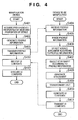
- Fig. 4 is a flowchart showing the process to be executed by the information processing system according to the embodiment of the present invention.
- Fig. 4 will explain a method of transmitting profile information which includes property information that indicates the properties of the manipulation device 100, and user information associated with the properties and preferences of the user to the device 200 to be manipulated, and receiving the contents of the user interface according to the profile information.
- the manipulation device 100 acquires manipulation device/user information including property information indicating the properties of the manipulation device itself and user information associated with the properties and preferences of the user (step S401).
- This embodiment adopts a method of inputting this manipulation device information from an input window implemented by a GUI on the LCD 204 by the user himself or herself.
- the profile information generation unit 101 generates profile information, which describes, in XML, information such as a use language, the screen size of the manipulation device used, familiarity, disability information, and the like, as shown in Fig. 5, using the manipulation device/user information (step S402).
- This profile information is transmitted to the device 200 to be manipulated as a POST request of an HTTP message (step S403).
- the profile information shown in Fig. 5 is a description example which describes: the use language is English ( ⁇ system-language>english ⁇ /system-language>), the screen size of the manipulation device is 400 x 340 ( ⁇ screen-height>400 ⁇ /screen-height>, ⁇ screen-width>340 ⁇ /screen-width>), a browser is a multimodal browser that allows speech and GUI inputs/outputs ( ⁇ browser>MMML-Browser ⁇ /browser>), available modalities are a GUI and speech ( ⁇ gui>yes ⁇ /gui>, ⁇ tts>yes ⁇ /tts>, ⁇ asr>yes... ⁇ /asr>), the type of speech recognition is isolated word speech recognition ( ⁇ asr>yes ⁇ type>isolated-word ⁇ /type> ⁇ /asr>), the familiarity is average ( ⁇ familiarity>average ⁇ /familiality>), and disability information is no,which means that the user is not a disabled person ( ⁇ disability>
- the device 200 to be manipulated receives the profile information from the manipulation device 100 (step S404).
- the profile information parsing unit 102 parses the profile information using an XML parser (step S405).
- the source document selection unit 105 selects an appropriate source document from those which are held in the source document holding unit 106 and describe a flow shown in Fig. 6 in accordance with the profile information (step S406).
- a source document is an XML document which uses XHTML as a container.
- This document describes data models and abstract user interface components (to be referred to as abstract UI components) using XForms (http://www.w3.org/TR/xforms/) as the specification of W3C, and an event-driven flow using XML Events (http://www.w3.org/TR/xml-events/) as the specification of W3C.
- XForms http://www.w3.org/TR/xforms/
- XML Events http://www.w3.org/TR/xml-events/
- the stylesheet holding unit 104 holds components of stylesheets (to be referred to as stylesheet components) used to transform abstract UI components included in a source document (interaction flow description) into concrete UI components (to be referred to as concrete UI components hereinafter).
- stylesheet components used to transform abstract UI components included in a source document (interaction flow description) into concrete UI components (to be referred to as concrete UI components hereinafter).
- each stylesheet component serves as a transformation description component used to transform a description of an abstract UI component in a source document into that of a concrete UI component.
- a source document describes an abstract UI component that selects one of a plurality of options like paper size selection of a copying machine using an element "select1 (XForms)".
- a stylesheet used to transform this component into a concrete UI component such as a GUI pull-down menu, speech input, or the like is a stylesheet component held in the stylesheet holding unit 104 (Fig. 7).
- the stylesheet holding unit 104 holds a set of such stylesheet components.
- the stylesheet generation unit 103 selects appropriate stylesheet components from the set of these stylesheet components in accordance with the profile information (step S407), as shown in Fig. 8.
- a stylesheet component that transforms into a concrete UI component (e.g., speech synthesis/recognition component) is selected.
- the selected stylesheets are integrated to dynamically generate a final stylesheet (transformation description) (step S408).
- rules i.e., which of stylesheet components is to be selected in accordance with the profile information, are described by the developer of the user interface.
- the rules may be directly described using a programming language or may be declaratively described in a predetermined description format.
- the method itself falls outside the scope of the present invention, and a detailed description thereof will be omitted.
- the transformation unit 107 transforms the source document selected in step S406 using the generated stylesheet and an XSLT processor (step S409). In this manner, the final contents of the user interface are dynamically generated (step S410). The generated contents of the user interface are transmitted to the manipulation device 100 (step S411).
- the manipulation device 100 receives the contents from the device 200 to be manipulated (step S412).
- the manipulation device 100 executes the received contents of the user interface by the contents execution unit 108 (step S413).
- the user interface required to manipulate the device 200 to be manipulated in accordance with the properties of the manipulation device 100 and user's properties/preferences can be implemented on the manipulation device.
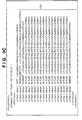
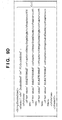
- Figs. 9A to 9E show an example of the source document of the device to be manipulated according to the embodiment of the present invention.
- Figs. 9A to 9E show an example of the source document of the device 200 to be manipulated in case of user-initiative flows.
- (i) is a description of data models, and the number of copies ( ⁇ copier:CopyNum>), paper size ( ⁇ copier:PaperSize>), magnification ( ⁇ copier:Ratio>), double-sided setup ( ⁇ copier:DoubleSided>), and density ( ⁇ copier:CopyDepth>) are describes as models (functions) of the device to be manipulated.
- (iv) is a description associated with the magnification
- (v) is a description associated with the double-sided setup
- (vi) is a description associated with the density setup.
- Stylesheet components held in the stylesheet holding unit 104 will be described in detail below.
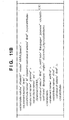
- Figs. 10A and 10B show an example of stylesheet components according to the embodiment of the present invention.
- Figs. 10A and 10B show an example of stylesheet components used to transform abstract UI components in the source document into concrete UI components.
- a template (i) in Fig. 10A is applied to "input" in (ii) of Fig. 9A, which is transformed into an element "input” that means a GUI text box in MMML.
- a template (ii) in Figs. 10A and 10B is applied to "select1" in (iii) of Fig. 9B, which is transformed into an element "select” that means a pull-down menu in MMML.
- Figs. 11A to 11C show an example of stylesheet components according to the embodiment of the present invention.
- Figs. 11A to 11C show an example of stylesheet components used to transform abstract UI components of the source document into a description of a speech input in MMML.
- Fig. 12 shows an example of a stylesheet component according to the embodiment of the present invention.
- Fig. 12 shows an example of a stylesheet component used to generate an MMML description that synchronizes a GUI component and speech input component which are bound to an identical data element in response to an event.
- an action that activates a corresponding speech input (to set in an inputtable state) when the text box is clicked and focused is typical in the multimodal user interface.
- this stylesheet component The role of this stylesheet component is to generate a description of such synchronization. Since MMML of this embodiment defines to describe an event using XML Events, this stylesheet component becomes a set of templates that match respective abstract UI components of the source document and output descriptions of XML Events.
- Fig. 12 is a template which matches an element "input" in (ii) of Fig. 9A, and generates a description of synchronization that activates a speech input component output by (i) in Fig. 11A upon generation of an event "onmousedown" in an MMML GUI component output by (i) in Fig. 10A. Also, (ii) in Fig. 12 is substantially the same as (i) in Fig. 12.
- the stylesheet generation unit 103 selects appropriate stylesheet components from, e.g., the set of stylesheet components shown in Figs. 10A to 12 in accordance with the profile information shown in Fig. 5, and dynamically generates a stylesheet.
- Fig. 13 shows an example of a stylesheet according to the embodiment of the present invention.
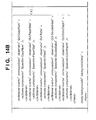
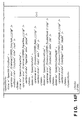
- Figs. 14A to 14F show an example of the contents of the user interface according to the embodiment of the present invention.
- the speech input component upon clicking a GUI form, the speech input component is activated to start speech recognition, and the speech recognition result is bound to parameters to fill the clicked GUI form with the recognition result.
- the form can be filled by direct inputs or selection from a pull-down menu. In this way, a multimodal user interface that allows speech and GUI inputs can be implemented.
- FIG. 15 An example of a display window when the contents shown in Figs. 14A to 14F are executed by the multimodal browser that allows inputs/outputs by means of speech and GUI is as shown in Fig. 15.
- the device to be manipulated dynamically generates logic or use modalities as the user interface of the manipulation device in consideration of the properties of the manipulation device 100 and user properties/preferences, and the manipulation device can implement such user interface.
- a user interface which is appropriately customized for a user who is not familiar with operations or a user such as a vision-impaired person or the like can be provided, thereby improving the usability.
- the use language is not limited to English, and a system which assumes various use language environments can be built by generating profile information corresponding to each use language environment as needed, i.e., a plurality of pieces of different profile information corresponding to a plurality of different use languages.
- the use language is Japanese
- Japanese is set as the use language ( ⁇ system-language>japanese ⁇ /system-language>) in Fig. 5.
- corresponding portions of various source documents are described in Japanese.
- the user interface when the contents of this user interface are executed using the multimodal browser, the user interface can be provided in Japanese. In this manner, the modalities and display can be changed in accordance with the profile information.
- the above embodiment assumes a user who is a normal and has an average familiarity with the device 200 to be manipulated (copying machine), and has exemplified a case wherein a user-initiative UI that allows speech and GUI inputs and makes the user actively fill a text box and pull-down menu is presented on the manipulation device 100 (PDA).
- PDA manipulation device 100
- the present invention is not limited to such specific embodiment.
- a system-initiative UI in which the system makes inquiries about input items and fills items with answers of the user can be presented to a vision-impaired person or a user who has low familiarity, and especially a speech-based system-initiative UI to a vision-impaired person.
- inquiries and answers are made:
- word speech recognition that accepts isolated words such as "five", "A4", and the like is assumed as the type of speech recognition in the manipulation device which executes the contents of the user interface.
- continuous speech recognition that accepts continuous speech as a combination of a plurality of words may be adopted. With this speech recognition, when the user utters "five copies, A4 to A3, darkest", a plurality of corresponding fields can be simultaneously filled.
- a typical stylesheet that transforms an abstract UI component into a concrete UI component, and an application-dependent stylesheet including styles of text and a form, captions, and the like are separated, and the typical stylesheet is described in an application-independent format that can be re-used in other devices other than the device 200 to be manipulated (copying machine), thus further reducing authoring cost.
- style attributes (descriptions that designate the position and size of a GUI component) in attributes of "input” and "select1" respectively have descriptions depending on an application, i.e., the UI of the device 200 to be manipulated (copying machine), as shown in (iii) and (iv) in Fig. 10A.
- Portions other than style attributes are transformed first using a stylesheet shown in Fig. 16 in which (iii) in Fig. 10A is replaced by (i) in Fig. 16 and (iv) in Fig. 10A is replaced by (ii) in Fig. 16 in the stylesheet of Fig. 10A, and the transformation result is transformed using a stylesheet that transforms only the style attributes.
- Fig. 17 shows an example of such stylesheet.
- (i) in Fig. 17 transforms style attributes, and (ii) in Fig. 17 copies the remaining portions other than the style attributes.
- the stylesheet shown in Fig. 16 only a description "an abstract UI component "input” is transformed into a GUI text box, and "select1" into a GUI pull-down menu” or the like remains, and a description that depends on a specific application, i.e., the UI of the device 200 to be manipulated (copying machine) is deleted. That is, the stylesheet shown in Fig. 16 can be used by other applications.
- the profile information is set by the user via the GUI implemented by the manipulation device 100.
- profile information may be dynamically generated based on user's manipulation histories of the manipulation device 100.
- the profile information is manually set by the GUI via the GUI implemented by the manipulation device 100.
- a user ID used to specify the user may be input, and a user information database that manages profile information for each user ID may be accessed using that user ID to acquire profile information corresponding to the user ID.
- this user information database may be managed by, e.g., the manipulation device 100 or by a dedicated server which can be accessed by the manipulation device 100 via a wired/wireless network.
- various programs that implement this embodiment are held in the ROM 203 of the manipulation device 100 and the ROM 303 of the device 200 to be manipulated.
- these programs may be held in an external storage device that can be connected to the manipulation device 100 or device 200 to be manipulated (CD-ROM/R/RW drive, DVD-ROM/RAM/R/RW drive, ZIP drive, MO drive, or memory card (e.g., SD card, MM (multimedia) card, smart media, compact flash@) slot).
- dedicated hardware that implements various programs may be prepared.
- the present invention can be practiced in the forms of a system, apparatus, method, program, storage medium, and the like. Also, the present invention can be applied to either a system constituted by a plurality of devices, or an apparatus consisting of a single equipment.
- the present invention includes a case wherein the invention is achieved by directly or remotely supplying a program of software (a program corresponding to the flowchart shown in Fig. 4 in the embodiment) that implements the functions of the aforementioned embodiments to a system or apparatus, and reading out and executing the supplied program code by a computer of that system or apparatus.
- software need not have the form of program as long as it has the program function.
- the program code itself installed in a computer to implement the functional process of the present invention using the computer implements the present invention. That is, the scope of the claims of the present invention includes the computer program itself for implementing the functional process of the present invention.
- the form of program is not particularly limited, and an object code, a program to be executed by an interpreter, script data to be supplied to an OS, and the like may be used as long as they have the program function.
- a recording medium for supplying the program for example, a floppy® disk, hard disk, optical disk, magnetooptical disk, MO, CD-ROM, CD-R, CD-RW, magnetic tape, nonvolatile memory card, ROM, DVD (DVD-ROM, DVD-R), and the like may be used.
- the program may be supplied by establishing connection to a home page on the Internet using a browser on a client computer, and downloading the computer program itself of the present invention or a compressed file containing an automatic installation function from the home page onto a recording medium such as a hard disk or the like.
- the program code that forms the program of the present invention may be segmented into a plurality of files, which may be downloaded from different home pages. That is, the present invention includes a WWW server which makes a plurality of users download a program file required to implement the functional process of the present invention by the computer.
- a storage medium such as a CD-ROM or the like, which stores the encrypted program of the present invention, may be delivered to the user, the user who has cleared a predetermined condition may be allowed to download key information that decrypts the program from a home page via the Internet, and the encrypted program may be executed using that key information to be installed on a computer, thus implementing the present invention.
- the functions of the aforementioned embodiments may be implemented not only by executing the readout program code by the computer but also by some or all of actual processing operations executed by an OS or the like running on the computer on the basis of an instruction of that program.
- the functions of the aforementioned embodiments may be implemented by some or all of actual processes executed by a CPU or the like arranged in a function extension board or a function extension unit, which is inserted in or connected to the computer, after the program read out from the recording medium is written in a memory of the extension board or unit.
Landscapes
- Engineering & Computer Science (AREA)
- Theoretical Computer Science (AREA)
- General Engineering & Computer Science (AREA)
- Physics & Mathematics (AREA)
- General Physics & Mathematics (AREA)
- Software Systems (AREA)
- Computational Linguistics (AREA)
- General Health & Medical Sciences (AREA)
- Health & Medical Sciences (AREA)
- Audiology, Speech & Language Pathology (AREA)
- Artificial Intelligence (AREA)
- Human Computer Interaction (AREA)
- User Interface Of Digital Computer (AREA)
- Digital Computer Display Output (AREA)
- Stored Programmes (AREA)
Applications Claiming Priority (2)
| Application Number | Priority Date | Filing Date | Title |
|---|---|---|---|
| JP2003324693 | 2003-09-17 | ||
| JP2003324693A JP3938121B2 (ja) | 2003-09-17 | 2003-09-17 | 情報処理装置及びその制御方法、プログラム |
Publications (2)
| Publication Number | Publication Date |
|---|---|
| EP1517248A2 true EP1517248A2 (de) | 2005-03-23 |
| EP1517248A3 EP1517248A3 (de) | 2007-05-02 |
Family
ID=34191313
Family Applications (1)
| Application Number | Title | Priority Date | Filing Date |
|---|---|---|---|
| EP04255594A Withdrawn EP1517248A3 (de) | 2003-09-17 | 2004-09-15 | Informationsverarbeitungsgerät, Steuerungsverfahren dafür, und Programm |
Country Status (4)
| Country | Link |
|---|---|
| US (1) | US20050060046A1 (de) |
| EP (1) | EP1517248A3 (de) |
| JP (1) | JP3938121B2 (de) |
| CN (1) | CN1598768A (de) |
Families Citing this family (70)
| Publication number | Priority date | Publication date | Assignee | Title |
|---|---|---|---|---|
| US7890639B1 (en) | 2002-01-30 | 2011-02-15 | Novell, Inc. | Method and apparatus for controlling access to portal content from outside the portal |
| US7987421B1 (en) * | 2002-01-30 | 2011-07-26 | Boyd H Timothy | Method and apparatus to dynamically provide web content resources in a portal |
| US8120797B2 (en) | 2004-10-08 | 2012-02-21 | Sharp Laboratories Of America, Inc. | Methods and systems for transmitting content to an imaging device |
| US8384925B2 (en) * | 2004-10-08 | 2013-02-26 | Sharp Laboratories Of America, Inc. | Methods and systems for imaging device accounting data management |
| US20060077119A1 (en) * | 2004-10-08 | 2006-04-13 | Sharp Laboratories Of America, Inc. | Methods and systems for receiving content at an imaging device |
| US8065384B2 (en) | 2004-10-08 | 2011-11-22 | Sharp Laboratories Of America, Inc. | Methods and systems for imaging device event notification subscription |
| US8120799B2 (en) | 2004-10-08 | 2012-02-21 | Sharp Laboratories Of America, Inc. | Methods and systems for accessing remote, descriptor-related data at an imaging device |
| US7826081B2 (en) | 2004-10-08 | 2010-11-02 | Sharp Laboratories Of America, Inc. | Methods and systems for receiving localized display elements at an imaging device |
| US8115944B2 (en) * | 2004-10-08 | 2012-02-14 | Sharp Laboratories Of America, Inc. | Methods and systems for local configuration-based imaging device accounting |
| US8230328B2 (en) | 2004-10-08 | 2012-07-24 | Sharp Laboratories Of America, Inc. | Methods and systems for distributing localized display elements to an imaging device |
| US8001586B2 (en) * | 2004-10-08 | 2011-08-16 | Sharp Laboratories Of America, Inc. | Methods and systems for imaging device credential management and authentication |
| US20060077443A1 (en) * | 2004-10-08 | 2006-04-13 | Sharp Laboratories Of America, Inc. | Methods and systems for imaging device display coordination |
| US7966396B2 (en) | 2004-10-08 | 2011-06-21 | Sharp Laboratories Of America, Inc. | Methods and systems for administrating imaging device event notification |
| US8060930B2 (en) | 2004-10-08 | 2011-11-15 | Sharp Laboratories Of America, Inc. | Methods and systems for imaging device credential receipt and authentication |
| US7978618B2 (en) * | 2004-10-08 | 2011-07-12 | Sharp Laboratories Of America, Inc. | Methods and systems for user interface customization |
| US8120798B2 (en) * | 2004-10-08 | 2012-02-21 | Sharp Laboratories Of America, Inc. | Methods and systems for providing access to remote, descriptor-related data at an imaging device |
| US8237946B2 (en) * | 2004-10-08 | 2012-08-07 | Sharp Laboratories Of America, Inc. | Methods and systems for imaging device accounting server redundancy |
| US8171404B2 (en) * | 2004-10-08 | 2012-05-01 | Sharp Laboratories Of America, Inc. | Methods and systems for disassembly and reassembly of examination documents |
| US7873718B2 (en) | 2004-10-08 | 2011-01-18 | Sharp Laboratories Of America, Inc. | Methods and systems for imaging device accounting server recovery |
| US8213034B2 (en) * | 2004-10-08 | 2012-07-03 | Sharp Laboratories Of America, Inc. | Methods and systems for providing remote file structure access on an imaging device |
| US7920101B2 (en) * | 2004-10-08 | 2011-04-05 | Sharp Laboratories Of America, Inc. | Methods and systems for imaging device display standardization |
| US8125666B2 (en) | 2004-10-08 | 2012-02-28 | Sharp Laboratories Of America, Inc. | Methods and systems for imaging device document management |
| US7870185B2 (en) | 2004-10-08 | 2011-01-11 | Sharp Laboratories Of America, Inc. | Methods and systems for imaging device event notification administration |
| US8001183B2 (en) * | 2004-10-08 | 2011-08-16 | Sharp Laboratories Of America, Inc. | Methods and systems for imaging device related event notification |
| US8018610B2 (en) * | 2004-10-08 | 2011-09-13 | Sharp Laboratories Of America, Inc. | Methods and systems for imaging device remote application interaction |
| US8006293B2 (en) * | 2004-10-08 | 2011-08-23 | Sharp Laboratories Of America, Inc. | Methods and systems for imaging device credential acceptance |
| US8049677B2 (en) | 2004-10-08 | 2011-11-01 | Sharp Laboratories Of America, Inc. | Methods and systems for imaging device display element localization |
| US7970813B2 (en) * | 2004-10-08 | 2011-06-28 | Sharp Laboratories Of America, Inc. | Methods and systems for imaging device event notification administration and subscription |
| US8015234B2 (en) * | 2004-10-08 | 2011-09-06 | Sharp Laboratories Of America, Inc. | Methods and systems for administering imaging device notification access control |
| US8023130B2 (en) * | 2004-10-08 | 2011-09-20 | Sharp Laboratories Of America, Inc. | Methods and systems for imaging device accounting data maintenance |
| US8115945B2 (en) * | 2004-10-08 | 2012-02-14 | Sharp Laboratories Of America, Inc. | Methods and systems for imaging device job configuration management |
| US8024792B2 (en) | 2004-10-08 | 2011-09-20 | Sharp Laboratories Of America, Inc. | Methods and systems for imaging device credential submission |
| US8006292B2 (en) | 2004-10-08 | 2011-08-23 | Sharp Laboratories Of America, Inc. | Methods and systems for imaging device credential submission and consolidation |
| US8032579B2 (en) | 2004-10-08 | 2011-10-04 | Sharp Laboratories Of America, Inc. | Methods and systems for obtaining imaging device notification access control |
| US8051125B2 (en) | 2004-10-08 | 2011-11-01 | Sharp Laboratories Of America, Inc. | Methods and systems for obtaining imaging device event notification subscription |
| US8115946B2 (en) | 2004-10-08 | 2012-02-14 | Sharp Laboratories Of America, Inc. | Methods and sytems for imaging device job definition |
| US8051140B2 (en) | 2004-10-08 | 2011-11-01 | Sharp Laboratories Of America, Inc. | Methods and systems for imaging device control |
| US8001587B2 (en) | 2004-10-08 | 2011-08-16 | Sharp Laboratories Of America, Inc. | Methods and systems for imaging device credential management |
| US8120793B2 (en) | 2004-10-08 | 2012-02-21 | Sharp Laboratories Of America, Inc. | Methods and systems for displaying content on an imaging device |
| US7934217B2 (en) * | 2004-10-08 | 2011-04-26 | Sharp Laboratories Of America, Inc. | Methods and systems for providing remote file structure access to an imaging device |
| US8032608B2 (en) | 2004-10-08 | 2011-10-04 | Sharp Laboratories Of America, Inc. | Methods and systems for imaging device notification access control |
| US8006176B2 (en) * | 2004-10-08 | 2011-08-23 | Sharp Laboratories Of America, Inc. | Methods and systems for imaging-device-based form field management |
| US8156424B2 (en) * | 2004-10-08 | 2012-04-10 | Sharp Laboratories Of America, Inc. | Methods and systems for imaging device dynamic document creation and organization |
| US7969596B2 (en) * | 2004-10-08 | 2011-06-28 | Sharp Laboratories Of America, Inc. | Methods and systems for imaging device document translation |
| US8115947B2 (en) * | 2004-10-08 | 2012-02-14 | Sharp Laboratories Of America, Inc. | Methods and systems for providing remote, descriptor-related data to an imaging device |
| US8035831B2 (en) * | 2004-10-08 | 2011-10-11 | Sharp Laboratories Of America, Inc. | Methods and systems for imaging device remote form management |
| US7873553B2 (en) * | 2004-10-08 | 2011-01-18 | Sharp Laboratories Of America, Inc. | Methods and systems for authorizing imaging device concurrent account use |
| US20060085430A1 (en) * | 2004-10-08 | 2006-04-20 | Sharp Laboratories Of America, Inc. | Methods and systems for accessing a remote file structure from an imaging device |
| US20060095536A1 (en) * | 2004-10-08 | 2006-05-04 | Rono Mathieson | Methods and systems for imaging device remote location functions |
| US8060921B2 (en) * | 2004-10-08 | 2011-11-15 | Sharp Laboratories Of America, Inc. | Methods and systems for imaging device credential authentication and communication |
| JP4539293B2 (ja) * | 2004-11-01 | 2010-09-08 | 富士ゼロックス株式会社 | 文書処理システム、文書処理装置、デバイス、文書処理システムのui表示処理方法および表示処理プログラム |
| JP2006135644A (ja) * | 2004-11-05 | 2006-05-25 | Fuji Xerox Co Ltd | 文書処理システムおよびその文書処理方法、文書処理装置、画像入力装置 |
| US8428484B2 (en) * | 2005-03-04 | 2013-04-23 | Sharp Laboratories Of America, Inc. | Methods and systems for peripheral accounting |
| JP4615498B2 (ja) * | 2005-09-22 | 2011-01-19 | シャープ株式会社 | 画像処理装置、画像処理装置の制御システム、画像処理装置の制御方法、プログラム、およびコンピュータ読み取り可能な記録媒体 |
| JP4814039B2 (ja) * | 2005-10-27 | 2011-11-09 | 株式会社リコー | 画像処理装置、画像処理プログラムおよび記録媒体 |
| US20070135945A1 (en) * | 2005-12-14 | 2007-06-14 | Microsoft Corporation | Identifying property relationships |
| JP2007249754A (ja) | 2006-03-17 | 2007-09-27 | Internatl Business Mach Corp <Ibm> | 情報処理装置、情報処理方法およびプログラム |
| JP4280759B2 (ja) | 2006-07-27 | 2009-06-17 | キヤノン株式会社 | 情報処理装置およびユーザインタフェース制御方法 |
| US8345272B2 (en) * | 2006-09-28 | 2013-01-01 | Sharp Laboratories Of America, Inc. | Methods and systems for third-party control of remote imaging jobs |
| DE102008014153B4 (de) * | 2007-03-14 | 2014-10-16 | Phoenix Contact Gmbh & Co. Kg | Verfahren, Steuergerät und Steuerungssystem zur Steuerung eines Automatisierungssystems |
| JP2009110116A (ja) * | 2007-10-26 | 2009-05-21 | Panasonic Electric Works Co Ltd | 画像検査システム |
| JP5256712B2 (ja) * | 2007-11-28 | 2013-08-07 | ブラザー工業株式会社 | インストールプログラムおよび情報処理装置 |
| JP4935658B2 (ja) | 2007-12-11 | 2012-05-23 | ブラザー工業株式会社 | ブラウザプログラムおよび情報処理装置 |
| US20090164285A1 (en) * | 2007-12-20 | 2009-06-25 | International Business Machines Corporation | Auto-cascading clear to build engine for multiple enterprise order level parts management |
| US9015226B2 (en) | 2011-01-06 | 2015-04-21 | Oracle International Corporation | Techniques for detecting new browser windows |
| US8892635B2 (en) | 2011-01-06 | 2014-11-18 | Oracle International Corporation | Techniques for detecting inactive browser windows |
| US9424236B2 (en) | 2011-04-26 | 2016-08-23 | Oracle International Corporation | Filtered Stylesheets |
| CN103488615B (zh) * | 2012-06-12 | 2016-08-24 | 北汽福田汽车股份有限公司 | 一种软硬件接口定义的源文件自动生成方法和装置 |
| JP2015201056A (ja) * | 2014-04-08 | 2015-11-12 | 株式会社リコー | 電子機器、複写機及び情報提示システム |
| JP7042623B2 (ja) | 2018-01-05 | 2022-03-28 | キヤノン株式会社 | 情報処理装置と情報処理システム及び記憶媒体 |
Family Cites Families (3)
| Publication number | Priority date | Publication date | Assignee | Title |
|---|---|---|---|---|
| ATE300834T1 (de) * | 1998-05-07 | 2005-08-15 | Samsung Electronics Co Ltd | Verfahren und vorrichtung für universellen zugriffsbefehl und kontrollinformation in einem netzwerk |
| EP1308856A3 (de) * | 2001-11-01 | 2006-01-18 | Matsushita Electric Industrial Co., Ltd. | Informationsbereitstellungssystem und -gerät zur Verwendung darin, Informationsendgerät und Informationsbereitstellungsverfahren abhängig von einem Benutzerprofil |
| US20030158898A1 (en) * | 2002-01-28 | 2003-08-21 | Canon Kabushiki Kaisha | Information processing apparatus, its control method, and program |
-
2003
- 2003-09-17 JP JP2003324693A patent/JP3938121B2/ja not_active Expired - Fee Related
-
2004
- 2004-09-10 US US10/937,500 patent/US20050060046A1/en not_active Abandoned
- 2004-09-15 EP EP04255594A patent/EP1517248A3/de not_active Withdrawn
- 2004-09-16 CN CNA2004100780067A patent/CN1598768A/zh active Pending
Also Published As
| Publication number | Publication date |
|---|---|
| EP1517248A3 (de) | 2007-05-02 |
| CN1598768A (zh) | 2005-03-23 |
| US20050060046A1 (en) | 2005-03-17 |
| JP3938121B2 (ja) | 2007-06-27 |
| JP2005092504A (ja) | 2005-04-07 |
Similar Documents
| Publication | Publication Date | Title |
|---|---|---|
| US20050060046A1 (en) | Information processing apparatus, its control method, and program | |
| US6996781B1 (en) | System and method for generating XSL transformation documents | |
| US6643668B2 (en) | Method and device for semantic reconciling of complex data models | |
| US7992088B2 (en) | Method and system for copy and paste technology for stylesheet editing | |
| JP4800343B2 (ja) | ブラウザ対応ヒューマンインターフェイスデスクリプションを生成し且つ処理するための方法およびシステム | |
| KR100897635B1 (ko) | 문서 관리 시스템 및 그 방법과 정보 처리 장치 및 그 제어 방법 | |
| CN100449485C (zh) | 信息处理装置和方法 | |
| US20030110442A1 (en) | Developing documents | |
| JP2002244849A (ja) | データ処理装置 | |
| JP2003288143A (ja) | ユーザインタフェースを自動的に生成する方法 | |
| Treviranus et al. | Authoring Tool Accessibility Guidelines | |
| JPH09222974A (ja) | 言語解釈表示方法とその方法を用いた装置およびシステム | |
| JPH09223007A (ja) | 入力シートシステム | |
| JP2025000957A (ja) | ウェブページ処理装置、ウェブページ処理方法、およびプログラム | |
| US7272659B2 (en) | Information rewriting method, recording medium storing information rewriting program and information terminal device | |
| US20070234201A1 (en) | Information Management Device | |
| JP2000076226A (ja) | 文書データの編集システム | |
| JPH09265431A (ja) | ドキュメント編集方法及び装置と、ドキュメント編集装置を含むクライアント装置 | |
| JP2004145736A (ja) | 文字認識装置および文字認識データ出力方法およびプログラムおよび記録媒体 | |
| Cruz et al. | Publication and customization of electronic documents using PANDA | |
| JPWO2005098698A1 (ja) | 文書処理装置 | |
| JP2007183849A (ja) | 文書処理装置 | |
| Rollins et al. | A framework for creating customized multi-modal interfaces for XML documents | |
| AU2002308144B2 (en) | Method and computer system for creating and processing a browser compliant human interface description | |
| Walshe | An alternative audio web browsing solution: viewing web documents through a tree structural approach |
Legal Events
| Date | Code | Title | Description |
|---|---|---|---|
| PUAI | Public reference made under article 153(3) epc to a published international application that has entered the european phase |
Free format text: ORIGINAL CODE: 0009012 |
|
| AK | Designated contracting states |
Kind code of ref document: A2 Designated state(s): AT BE BG CH CY CZ DE DK EE ES FI FR GB GR HU IE IT LI LU MC NL PL PT RO SE SI SK TR |
|
| AX | Request for extension of the european patent |
Extension state: AL HR LT LV MK |
|
| PUAL | Search report despatched |
Free format text: ORIGINAL CODE: 0009013 |
|
| AK | Designated contracting states |
Kind code of ref document: A3 Designated state(s): AT BE BG CH CY CZ DE DK EE ES FI FR GB GR HU IE IT LI LU MC NL PL PT RO SE SI SK TR |
|
| AX | Request for extension of the european patent |
Extension state: AL HR LT LV MK |
|
| RIC1 | Information provided on ipc code assigned before grant |
Ipc: G06F 9/44 20060101AFI20070326BHEP |
|
| 17P | Request for examination filed |
Effective date: 20071102 |
|
| AKX | Designation fees paid |
Designated state(s): DE FR GB |
|
| 17Q | First examination report despatched |
Effective date: 20080124 |
|
| STAA | Information on the status of an ep patent application or granted ep patent |
Free format text: STATUS: THE APPLICATION HAS BEEN WITHDRAWN |
|
| 18W | Application withdrawn |
Effective date: 20081021 |